Tag: negative

  • 3 Things That Turned My Suffering into Blissful Peace

    3 Things That Turned My Suffering into Blissful Peace

    “To experience peace does not mean that your life is always blissful. It means that you are capable of tapping into a blissful state of mind amidst the normal chaos of a hectic life.” ~Jill Bolte Taylor

    I’d just spent over six years trapped in my own worst nightmare. Then in a split second, my whole reality shifted to an experience of exquisite peace and bliss. Walking through the streets of my home city, I seemed to be radiating unconditional love out and into everything around me.

    I didn’t know it then, but I’d just tasted the ultimate state of deep peace and presence that most people on the spiritual path long for.

    Pretty cool, right? But before I give you the low-down on what happened, let’s rewind and put this into context with the rest of my life.

    My first eighteen years on this planet led me to a place of depression, self-hatred, anxiety, and self-harm. After another five years of severe stress and struggle, my body just gave up and my life came to a grinding halt.

    I was in my mid-twenties. Having to rely on state benefits and a team of carers due to severe pain and chronic fatigue syndrome was not what I had in mind for myself.

    So I went from one doctor and alternative therapist to another, hoping that they could fix me. I saw small improvements, but not enough that I could live normally.

    I honestly don’t know how I kept going during those dark days, but I was determined to find the key to my freedom. Through many small insights, I came to see that the answers must be within me, not ‘out there.’ But how could I access them?

    Then one day in 2010, my whole life changed again. A friend gave me a copy of the book A New Earth by Eckhart Tolle. The way he spoke about consciousness and presence infused life into the depths of my exhausted soul. Then a miracle happened.

    One morning, I woke up to that state of total bliss. My mind was silent, the pain and fatigue vanished, and all of my suffering stopped for a full five days. I had just experienced what I really was beyond my mind.

    When that experience ended, I was plunged back into illness and suffering. I knew I had to find a way back home to that incredible deep peace and freedom.

    I spent the next five years devouring countless spiritual books, courses, and YouTube videos. There was a lot of fuzzy talk about that experience, but nothing that told me how to get there.

    The search finally ended when I met a group of monks who taught advanced meditation and consciousness theory. I could feel that exact same blissful peace oozing from every cell of their beings. Knowing they could teach me how to get that state back, I went to Spain to study with them.

    If you want to experience that peace too, you need to understand how to go beyond your mind. Many spiritual teachers talk about this. But what does that really mean?

    1. If you want to find peace, stop believing your thoughts.

    Let me begin with something that may surprise you. You don’t have to stop your thoughts in order to find peace.

    Thoughts don’t interrupt your peace when you learn how to watch them pass through your awareness. The suffering starts when you grab onto them and go off into unconscious thinking.

    When this happens, you’re no longer aware of what’s going on around you in the present moment. The stories in your mind have literally become your reality. Let me explain.

    Have you ever walked a route you know well and when you got to your destination, didn’t remember any of the journey? Instead of paying attention to what was going on around you, you were off thinking about another moment. Maybe it was the fight you had with your spouse that morning or the presentation you’re worried about giving tomorrow.

    Here’s the thing—these thoughts only have power over you if you believe them. If you stop believing the scary thoughts about everything that is going to go wrong, your suffering will immediately stop. Those horror stories aren’t actually happening in the present moment!

    So if you want peace, the first thing you must do is to place your attention on what is real right now.

    Tune into your senses to notice what is going on around you. Give that more attention than whatever your mind is doing. It’ll help you break out of the stress and suffering.

    2. Break the cycle of stress and negative emotions.

    Right now, bring to mind something that makes you happy. Let yourself think about it for a moment. Did that feel good? Maybe you got that warm fuzzy feeling and your body felt lighter.

    Now, think about something you don’t like. How do you feel now? Anxious, angry, stressed, heavy, sluggish, or something else?

    You feel what you focus on, so if you think about good things, you’ll feel good. If you think about painful things, you’ll experience more stress and negative emotions.

    Now, back to the unconscious thinking. Can you see how getting lost in stories about life’s dramas fuels stress and negative emotions?

    Next time you notice you feel bad, see it as a signal that you’ve been off thinking about something you don’t like. Come back to the reality of what’s around you.

    Let the remaining sensations of stress and emotion flow through your body. You should start to feel better within a minute or two.

    But there’s much more available to you than ‘just feeling a bit better.’ The truth is, you can experience peace no matter what is happening in your life. You may wish to reread that statement because the implications are huge!

    3. Connect to the permanent source of peace.

    If you want to access the permanent source of peace, you first need to practice coming back to the present moment whenever you’ve been lost in your mind. Only then will you be able to go beyond your mind entirely and experience what you really are.

    Your true self is the source of that exquisite peace, freedom, and bliss. You are pure conscious awareness, the watcher that’s beyond the mind, negative emotions, and suffering.

    You feel what you focus on. Since what you are is always still and peaceful, if you put your attention there, you’ll feel peaceful.

    You don’t need to stop your thoughts or change anything in your life to do that. You just need to give your thoughts and life circumstances less of your attention. Instead, rest more of your awareness on your true self directly.

    How can you do that? You can use the fact that consciousness is vast and spacious. In fact, it’s the peaceful space in which all things in this Universe exist.

    Look around you now. You may notice lots of objects such as a chair, a lamp, or even the building in which you are sitting. But have you ever stopped to notice the space that these things occupy?

    Right now, put as much attention on the space as you can. Notice the space between you and the objects around you. Then, allow yourself to sense the space in the whole room.

    Now imagine that space within you. Wide, open, scattering your obsessive thoughts so far in the distance you can barely hear them. Do you feel more peaceful?

    If I can connect to that ultimate state of deep peace, I know you can too. We all have the power within us to do this.

    It’s really just a case of remembering to choose where you place your attention. If you forget and get lost in your mind, no worries! Just come back to peace when you do remember.

    The more you practice connecting to the space around you and creating space within you, the more peace you’ll invite into your life. Gradually, the stress and struggle will melt away as you learn a new way of being. Over time you’ll find that you just don’t give as much attention to all the mind drama anymore.

    Keep it light by treating it like a game. Play with being aware of the space as you go through your day. Can you notice the space while you’re brushing your teeth? How about during a conversation?

    For me, this practice has been the gateway to ever deeper levels of peace. By committing to playing with this, I’ve trained my brain to stay in that state for longer periods of time. It’s become easier and easier to pull myself out of any drama when life turns upside down.

    It’s not about perfecting life. It’s about the ability to roll with whatever happens. If I need to take action, I do it from a calm and grounded state of mind. It’s in stark contrast to the desperate struggle I used to experience.

    The answers really had been within me all along. It’s true for you too. This tiny but mighty shift in attention has the power to totally transform your life.

    Since I stopped listening to that voice in my head, I’ve experienced deep and permanent healing. I no longer buy into all the self-criticism, fearful thoughts, or stories about how I’m not good enough. Sure, that stuff pops up from time to time, but I choose to smile and let the thoughts go.

    As it turns out, connecting to my true self was also the key to my body healing. Stress and negativity had been depleting my energy and vitality for years. Now that I’m much calmer, my body has been able to use the extra energy to heal.

    I want you to know that this is not a mystical adventure, reserved for a few lucky people. This experience is for everyone. Living in peace and bliss is your birth right!

    So connect to your own source of peace. I’d love to hear how you get on.

  • 10 Ways to Calm Anxious Thoughts and Soothe Your Nervous System

    10 Ways to Calm Anxious Thoughts and Soothe Your Nervous System

    “Everything you want is on the other side of fear.” ~Jack Canfield

    Freezing in fear is something I have done since I was a child.

    My first home was an unsafe one, living with my alcoholic granddad. Once upon a time, I didn’t know life without fear.

    I learned young to scan for danger. How were everyone’s moods? Were the adults okay today? I would freeze and be still and quiet in an attempt to keep myself safe and control an eruption.

    Unknown to me, between the ages of conception and seven years old, my nervous system was being programmed. The house I grew up in was shaping how safe I felt in my body.

    Living in a house with domestic abuse and alcoholism and losing my beautiful grandmother, who cared for me at five, was enough to make that foundation within me shaky.

    I learned to be on high alert, scanning for danger always, and became incredibly hypervigilant and super sensitive to the moods of others.

    Sometimes this superpower of mine kept me safe as a child. My dad wouldn’t always lose his temper if I was quiet enough. My mum would be available to me if I sensed her mood and provided her with comfort.

    As I grew, this superpower of mine caused me issues.

    I would worry all of the time about the thousand different ways something could go wrong.

    I couldn’t enjoy the moment and what I had right now, as my brain would be scanning for the next problem.

    I couldn’t sleep.

    My anxiety was like this monster in my mind, consumed by all the what-if scenarios, and as a result, I just couldn’t move forward.

    Life didn’t feel safe. Even though I no longer lived in an unsafe environment, my body and my brain were still there.

    This anxiety stopped me from applying for new jobs, challenging myself, dating, healing from the past, changing, and growing.

    I would be frozen by the fear of all that could go wrong. I felt stuck, frustrated with myself, and full of self-hate for living a life that made me miserable.

    The penny dropped one day. I finally realized that this fear was all in my head—99% of the things I worried about didn’t manifest into reality. My anxious thoughts didn’t make anything any better, but they were ruining what I had right now.

    Here are the ten steps that have helped reduce anxiety, fear, and overwhelm and help foster a life of happiness.

    1. Give that anxious, worrying voice in your head a name.

    This creates separation between you and the voice. You are not your thoughts. This is a voice from your ego concerned with survival, and you have the choice to listen or choose a more empowering thought. However, this voice could be sensing real danger, so listen to see if it is a risk to you right now or a potential risk that could happen.

    If real, then of course take action after some deep breaths. Otherwise, continue with the steps.

    2. The minute you hear the voice, recognize it is a sign that your nervous system is dysregulated and moving into fight-or-flight mode.

    Then choose to pause and take a few deep breaths. Coherent breathing can help calm down this response. This means take deep breaths in through your nose, inflating your belly for five seconds, and exhale while deflating your belly for five.

    3. Create a list of tools you can use when your mind and body are about to go down the what-if train.

    This might mean lying on the grass, dancing to your favorite song, EFT (emotional freedom technique) tapping, doing a yoga pose, or journaling to discharge fear. The minute you notice the voice, do something off the list.

    4. Repeat a mantra to calm your nervous system.

    Find a statement that helps calm you down and repeat it when the anxiety voice is back. My favorite is “If X happens, then I will deal with it.”

    5. Get in the present moment.

    What can you hear? What can you see? What can you smell? What can you feel? I like to get outside when I do this. Feel my feet on the grass and take in the moment.

    6. Place your hand on your heart and remind yourself you are safe.

    It probably doesn’t feel that way. But feelings aren’t facts, and your thoughts can only hurt you if you let them.

    7. Notice if you have moved into a freeze state.

    When we first start to worry, our nervous systems go into fight-or-flight mode, and adrenaline and stress hormones pump into our bodies. Then when it all feels too much, we freeze. We’re literally not able to do anything and go into despair.

    You can find the tools that work for you to move from freeze and slowly back up to fight or flight and then up to your calm state. It is a ladder with freeze at the bottom and calm at the top. (It’s called the polyvagal ladder.)

    You can split the list in point three into what helps you through freeze and what helps you out of fight/flight. A great way out of freezing is movement. Even five minutes of jumping jacks will get those stress hormones pumping. Then do something to calm you down, like deep breathing.

    8. Choose to trash the thought.

    Is this something that is a worry for another day? Imagine putting it in a trash bin. Or you can even write it down and put it in the bin physically.

    9. Start to notice your mental state throughout the day.

    Are you calm or triggered by worry? Are you frozen? Or is your heart pumping so your stress response is turned on and you are in fight-or-flight mode? What tool can bring you back to calm or move you up the ladder?

    10. Write what you are grateful for in this moment.

    Noticing what’s going well right now can disarm fear.

    Slowly, these steps can help you to regulate, discharge fear, and allow your nervous system to heal. You may not have been safe as a child, but you have the power to feel safe now.

    You have the power to change your circumstances and remove triggers that are recreating that feeling of unsafety.

    Your fear in your body could be very real and giving you information that maybe a particular relationship, job, or environment is not safe for you. Take notice and make baby steps to create a life that makes you feel safe, as this is the foundation for happiness. Give yourself what you longed for as a child.

    Yes, hypervigilance may be something that got programmed into your nervous system young to help you survive, but you don’t have to let it hold you back now.

    Changing, growing, and healing can feel scary and unsafe, but as you take those baby steps to create a healthier you, your confidence and self-esteem will grow. Your brain will get new evidence that you are safe, and those worrying thoughts will slowly disappear. A new worry may come, but then you can just repeat the process.

    These steps helped me stop living life small and in fear and allowed me to go after my big dreams—finding love, progressing in my career, and even buying a house.

    Anxious thoughts no longer hold me back. I just watch them with curiosity and know the steps I need to take to move through them. I took back the power I lost as a child, and I know you can too!

  • 5 Ways to Use Movement (Not Exercise) to Support Your Mental Health

    5 Ways to Use Movement (Not Exercise) to Support Your Mental Health

    “Nothing is more revealing than movement.” ~Martha Graham

    It seems like only yesterday that I was at home with a newborn, a kindergartener, two dogs, and a husband who, just like me, was working from home, when we were thrown into the unthinkable COVID19 pandemic.

    It didn’t take long for the stress and tension to build in my body. The feeling of instability, uncertainty, and fear, not to mention the post-partum anxiety, took its toll on my body as it became more rigid, bound, immobile, and frozen.

    All the ways I had relied on movement as exercise were taken away, adapted to in-home and Zoom learning, which unfortunately did not work for my schedule or home life. It was the first time in a long time that I was not able to incorporate dance into my week.

    It seemed very hard to expand, stretch, even breathe, and that’s when it hit me. A little voice inside said, “You need to practice what you preach!” I needed to redefine movement and focus it on my mental health; connecting to movement for emotional well-being and not just for physical activity.

    When most of us think of movement we think of exercise. While all exercise is movement, not all movement is exercise.

    There are so many ways our bodies move, even involuntarily, that contribute to not only how we feel but what we think. Science tells us that molecules of emotion exist throughout the body, so wouldn’t it make sense that in order to manage those emotions, we need to tap into all the ways to move the body that houses them?

    First, let’s look at what movement is. Movement is anything that allows the body to change position or relocate. This can be something as grandiose as running a marathon, or a resting heartbeat, blood pumping, even breathing. All of these examples involve parts of the body or the whole body shifting its position.

    So, with this in mind, how are you moving right now? Now ask yourself, how is this movement impacting my mood in this moment? Is it supporting a healthy mindset or perpetuating a habit or behavior that contributes to a negative thought pattern?

    In my case, as mentioned above, my movement was very limited, confined, and rigid. It was often impeded by another person, my newborn, who through no fault of his own needed me for survival. I neglected my own body’s needs and it took a toll on my mental health.

    Changing the way you think or even feel actually comes down to changing how you move. So what can be done? Here are five ways you can use movement to support your mental health.

    1. Focus on your movement right now.

    When we focus on our movement in the present moment, we minimize the anticipation of what’s to come, which is often tied to fear or anxiety. We also mitigate dwelling on the past, which can harbor feelings of guilt and doubt.

    Every movement is an opportunity to be in the moment, because every moment is found in movement.

    Bring to mind one part of your body and simply become aware of its shape, how much space it takes up, if it has any rhythm, or even the lack of movement present. Begin to shift this part of the body in small ways and explore how this part moves.

    I began to recognize that my body was closed and tight. So I intentionally made an effort to check in with my posture, giving myself an opportunity to stretch and expand in my body to counter the negative effects I was experiencing.

    2. Cross the midline of your body.

    When we engage in any cross-lateral movement, like walking, marching, or giving ourselves an embrace, we encourage one hemisphere of the brain to talk with the other. This boosts neural activity across the corpus collosum, which increases neuralplasticity, otherwise known as the brain’s ability to change. This allows new pathways to develop which directly corresponds to our emotional resilience, ability to problem solve, and think critically.

    Begin by giving yourself a big hug or simply touching opposite hand to opposite knee. You could also try exercises or yoga poses that require you to cross your midline, like side bends, windmills, or bicycling while lying on your back.

    3. Move your spine.

    When you engage in movement of your spine, you tap into your self-awareness. This vertical plane of the body houses our core; beliefs, identity, moral compass. Bringing attention to the spine and any way it is able to move gives us the opportunity to become more aware of our inner world, how we feel, and what we need.

    Keep in mind that you do not have to be flexible, but gently explore all the ways you are able to move your spine, rib cage, and even hips.

    I like to start my day from the comfort of my bed, lying on my back, bringing my knees into my chest, and hugging my legs. As I tuck my chin, this allows my spine to curve as I attempt to connect head and tail.

    4. Play with timing and space.

    We move in familiar ways because we like comfort, even it that comes at a price for our mental health.

    Our bodies tend to stick to a certain timing, pace, and even shape as we move through our world. When we change up the timing and shape or the space our bodies take up, we begin to challenge our minds by moving out of our comfort zone. This can be uncomfortable, but done in small bouts and with ease, can increase our window of tolerance or ability to manage stress.

    Notice the natural pace of our movement (walk, gesture, etc.) and try speeding it up and/or slowing it down. Same thing with space, can you take up more space? How does that feel?

    5. Move more, not better!

    Increasing all the movements at our disposal makes us more resilient in our minds. When you only move in so many ways, then you can only think in so many ways.

    When we move our bodies more, in new and unfamiliar ways, building a robust movement vocabulary, we increase our ability to transition through life, manage challenges, or at the very least, begin to connect with ourselves in a different way. This can lead toward more self-compassion and empathy.

    When I began moving more throughout my daily life, I had more compassion for myself and my children, who were also struggling to make sense of the world, just like me. I could model my own need for regulation and safety in my body, and as a family we were better for it.

    Your body, and its movement, is your greatest resource for emotional well-being and mental wellness. It often starts with noticing all the ways your body currently moves and inviting in new ways of moving whenever possible.

    There is no wrong way to do this, as it is an individualized practice designed to harness your own mind-body connection. Furthermore, it’s not the movement alone that matters but the execution as well. Being mindful and intentional as you engage in this practice is vital.

    Integrating the aforementioned tips into your lifestyle is a guaranteed way to A.C.E. your mental health. By becoming more AWARE of our movement, we can CHALLENGE our current behaviors and EXPAND our minds in order to live more emotionally regulated lives.

  • 3 Reasons to Stop Worrying About Your Negative Thoughts

    3 Reasons to Stop Worrying About Your Negative Thoughts

    Negative Thoughts

    “Whatever you fight, you strengthen, and what you resist, persists.” ~Eckhart Tolle

    Do you ever catch yourself being critical, judgmental, or full of fear and worry? And do you ever worry about how many negative thoughts you have? If you do, this post is for you.

    We’re taught that negative thoughts are bad, that they’re “toxic,” they “lower your vibration,” keep you stuck, and so on.

    We’re taught that in order to feel self-assured and confident, we should banish negative thoughts from our lives. Kind of like, goodbye, negative thoughts; hello, higher vibration, better boyfriend, nicer car, inner peace, and so on.

    So what do you do with all that negative junk in your head? How do you make it stop? And is trying to jam a positive thought over a negative one really the best way to manage the situation?

    The reason I’m thinking about this today is that it’s 7:30am and for the past three hours I’ve been watching Mad Men. Yep. Instead of setting myself up for the day with a restful sleep, I’ve been watching T.V. for half the night.
    To be fair, it’s an unusual thing for me to do, but still, you should hear the rubbish my mind is telling me:

    You’re such a lazy little missy. 

    You’re going to have a bad day.

    You’re not going to get anywhere like this. 

    Yikes.

    People often advise you to trade a negative thought for a positive one using techniques like affirmations. Quick, quell those negative thoughts! But is this really the best way forward?

    Most people misunderstand this whole negative thinking debacle because they misunderstand what thoughts are in the first place.

    Happiness doesn’t depend on how few negative thoughts you have, but on what you do with the ones you have.

    This brings me to the first piece of good news: (more…)

  • Hurt by Negative People? How to Stop Taking Things Personally

    Hurt by Negative People? How to Stop Taking Things Personally

    “Some people are in such utter darkness that they will burn you just to see a light. Try not to take it personally.” ~Kamand Kojouri

    The saying goes that money makes the world go round, but of course that’s not true.

    It’s our relationships.

    How we relate to other people and how they relate to us keeps our world turning. When things go well, all’s right with our world. When things go badly, it can feel as though our world has ground to a halt.

    This is exactly how I felt whenever I had a difficult experience with a loved one or friend.

    Whenever they lashed out at me for no real reason, it felt as if I couldn’t move on again until their negativity or bad temper had blown over. Until that happened, I replayed the scenarios in my mind, trying to work out where I was to blame for their behavior, and feeling awful in the meantime.

    That’s why our relationships will always be the most important thing in our lives—they have such a strong impact on us, both good and bad.

    That is also why it serves us well to try to have the best possible relationship with others, as well as ourselves. That includes improving the connections we have with the difficult and less-than-positive people in our lives and strengthening our boundaries in the process.

    We probably all have several negative people in our lives—those who criticize, complain, belittle us and other people, and say or do cruel things. They can be the closest to us, people we have known all our lives, and that makes their negativity harder to escape and endure.

    I had a family member who was very negative about pretty much everything. Spending time in their company was usually a draining and disheartening experience due to their complaining and sniping comments.

    This person made it very clear whenever I met them that they had little time or affection for me, which of course made family get-togethers less than enjoyable.

    I was also puzzled as to why they were like that: we’d never argued, and I had never, to my knowledge, done or said anything mean to them. Yet, they still acted in a negative way toward me, especially if I mentioned affirmative life experiences such as a great holiday or a new exciting project.

    Unsurprisingly, I responded to their negativity with a sense of apprehension, frustration, and confusion, which stopped me from enjoying the company of my other relatives. It also made me wary about fully expressing myself or talking about my life. And my uneasiness undoubtedly made the atmosphere between my family member and me even more negative.

    We all Have Emotional Scars from the Past

    I eventually recognized that I was hurt by my relative’s treatment in large part because I took it personally and allowed it to affect my self-image and self-esteem—as if I somehow deserved it. Then I realized something that changed everything for me.

    We all have a self-image shaped in large part by other people. Family, friends, and partners, who’ve likely scarred us through anger, resentment, jealousy, judgment, neglect, or even outright abuse. And this affects how we show up in the world.

    Everyone, including the people who have wronged you or been negative toward you in some way, has scars from their past too.

    Maybe your critical mother doesn’t know any better because her mother was critical. Maybe your absent father never knew his father either. Maybe your backstabbing friend was jealous of you for reasons only known to them. Perhaps your cheating partner had abusive parents, and your partner sabotages relationships because they don’t believe anyone can love them.

    Each and every one of us carries around our scars, going out into the world to meet other people who have scars, and when we connect, these combined scars can sometimes tear open.

    We all See Ourselves Through Others’ Eyes

    We all tend to see ourselves through our loved ones’ eyes—starting with our parents when we’re young—because we assume their perceptions of us are accurate and blame ourselves if they’re not flattering. Our self-image can alter based on their comments, emotions, and actions—positive and negative.

    This is a classic case of our relationships shaping our sense of self, an ongoing shaping that begins even before we can fully understand the meanings of what other people say or do to us.

    We are each the result of our experiences within our multiple relationships and interactions. How other people relate to us affects our image of ourselves, but that doesn’t mean we are helpless in the face of other people’s behavior toward us.

    We may not have had much of a choice as a child, but it’s a different matter once we’re adults. With awareness, we’re now able to protect ourselves far better from others’ negativity toward us and set necessary boundaries.

    Learning to Connect in a Different Way

    If you’re dealing with a negative or painful relationship that leaves you feeling bad about yourself, you can of course choose to distance yourself from the person and limit contact. Sometimes, however, this isn’t possible, so you have to learn how to connect in a different way while safeguarding yourself from their negative impact on you.

    I decided I had to respond differently to my family member and their negativity for the sake of my well-being. I began to look beyond their behavior and actions, and in doing so I started to piece together an idea of what might be the real cause of their pain and unhappiness.

    I recalled they had often moaned about how much they hated their job, how they disliked the town they lived in and their neighbors, and they also often complained of tiredness and physical aches and pains.

    I began to see that this person’s negativity—even if it was aimed at me, maybe due to their feelings of envy—wasn’t really about me. They were unhappy with their life in general. Negative people are often unhappy on many levels.

    It also helped me to remember we all have emotional scars, as mentioned before. When you approach people from a place of understanding, compassion, and empathy, you no longer see them as cheats, liars, betrayers, or “bad” people out to get you—even though they might cheat, lie, or betray you. You instead begin to see beyond their behavior and recognize that they’re in pain.

    When you do that a lot of their power over you starts to fade. You begin to see them as vulnerable, like everyone else. You start to realize that their negative actions toward you reflect far more on them than they do on you.

    People often hurt each other because of their own deep pain and because they don’t know any other way to act. This is often a painful lesson to learn.

    But when you finally grasp this difficult truth, you become more accepting of what happened, more forgiving, and ready to let go and move on. You realize you do not need to take on their negativity, brood about it, or feel you are the cause of it.

    That doesn’t mean you have to condone or accept mistreatment. And that’s not to say people’s negativity toward you won’t bother or hurt you ever again, but the effect won’t be so intense. You’ll realize that the situation isn’t really about you at all. Any pain they try to inflict on you is simply a reflection of what they feel inside; it no longer feels so personal.

    When I stopped taking my relative’s negativity personally, I was able to interact with them in a different way. I was much more relaxed in their company and able to enjoy family gatherings much more.

    When you stop taking other people’s negativity personally, you cease to be so susceptible to creating your self-image through their eyes. In fact, you start to focus far more on how you view them.

    Then you’re also free to focus less on their negativity and bad behavior and more on how you respond to it. That might mean setting boundaries and limiting your contact with them, and that’s okay. Sometimes you have to understand and empathize from afar to take good care of yourself.

    We’re All in the Same “Life” Boat

    Essentially, we’re all in the same “life” boat, bobbing up and down on the vast ocean of existence.

    We are all fallible. We all inflict hurt on others, intentionally and unintentionally.

    We all experience negative situations and inevitable suffering, and we simply have to accept this. Without pain and suffering we might not value joy or experience spiritual growth. If we never experienced adversity, we might not appreciate our strength.

    And without negative people we might not be truly grateful for or cherish the loving, supportive people we have in our lives.

  • When You Feel Bad About Feeling Sad and Anxious

    When You Feel Bad About Feeling Sad and Anxious

    “You don’t have to be brave all of the time. You are not damaged or defeated. Have patience. Give yourself permission to grieve, to cry, and to heal. Allow a bit of compassion, you’re doing the best you can. We all are.” ~Unknown

    Growing up, I received the message that everything had to look a certain way. It was only okay to feel positive emotions, and any expression of unruly emotions was totally unacceptable.

    It wasn’t that anyone directly said this to me. I wasn’t given a written set of rules to follow. I wasn’t given any speeches or trainings about how to present myself in public. But the message came across.

    It was relayed to me in phrases like “Don’t cry, you’re fine,” “Relax, people are watching,” “Just ignore them,” and “Don’t let things bother you.” It was conveyed to me through subtle criticisms of my reactions, which in my mind translated to “You aren’t good enough if you feel bad.”

    In many ways, I was raised to feel uncomfortable with my emotions. I came to believe that negative emotions were a defect within me rather than a natural and essential part of my being. It wasn’t anything my parents did deliberately to try and hurt me. In fact, they were probably trying to avoid seeing me in pain. They were simply following what most people and parents do.

    We advise others to avoid their pain and upset feelings. To snap back into shape, even after immense tragedy. 

    We hear things like “Your cousin died? Well, he’s in heaven now.” “You had to put your dog to sleep? Well, he’s just crossed the rainbow bridge; and anyway, you can always get another dog.”

    People don’t advise you to sit with uncomfortable emotions. They don’t tell you it’s okay to feel sad, hurt, or scared.

    As a young and impressionable little person, I internalized my parents’ messages and fought against every “negative” emotion I had. That is, until the feelings I was trying so hard to avoid took over my body and manifested themselves as a series of seemingly unexplainable health issues and panic attacks.

    As I got older, I became so anxious that I couldn’t hide it anymore. Once I reached the point of being uncontrollably uncomfortable, I set out on a journey of self-exploration.

    I came to realize that my only choice was to examine what I was feeling and explore what those feelings could tell me about myself. For the first time in my life, I decided to figure out what my emotions were really about. I decided to find out why I was so damn anxious.

    Many of us are embarrassed and ashamed of our own feelings and thoughts. 

    We think our unfavorable emotions make us weak, and we worry that other people would think less of us if they knew how bad we actually felt. If we allow dominant ideas about tough emotions to take over our own thoughts, we can wind up feeling shame for the rest of our lives.

    When we’re emotional, we can feel completely powerless, like we’re never going to gain any kind of control over our thoughts, bodies, or surroundings. It can feel so uncomfortable to be upset that we choose to numb ourselves rather than risk feeling any pain.

    For so many years, I had it all wrong. But once it clicked, everything changed.

    The point of being alive isn’t to numb our feelings; we’re always going to feel something, and sadness is always going to try expressing itself in our lives. That’s a fact of life. We can try to avoid it all we want, but the more we distance ourselves from this reality, the more control it gains over us. 

    Freedom comes when we can feel our tough emotions expressing themselves, but no longer let them rule our lives. 

    The more we try to avoid our true nature, the more whatever we don’t want to feel shows up with a vengeance.

    The more I tried to rid myself of worry, sadness, negative thoughts, and panic attacks, the more they seemed to persist. The more they persisted, the more reactive I got to feeling anxiety. And the more reactive I became, the more power anxiety had over my life.

    When we try to get rid of anything in life, we create resistance; and the more we resist something, the more it shows up. Famous psychologist Carl Jung stated that “what you resist not only persists, but will grow in size.” So, the goal here isn’t to get rid of anxiety, panic attacks, or sadness, it’s to work on our intolerance of those feelings. It’s to learn how to manage ourselves through the discomfort of it all.

    We don’t gain comfort, self-compassion, and calm by resisting or wishing things were different; we reach true calm by letting it be okay when we’re sad and anxious, and then letting it go.

    The more you fight it, the more it will show up; the more you let it be, the less power it will have over you.

    This is, of course, easier said than done. It’s a natural instinct to try banishing anything that feels uncomfortable. However, by continuously practicing deep acceptance for what is, we put ourselves in the best position to change it, or even achieve freedom from it, so that we can move past it.

    Here’s what I did to pull myself back from numbing myself and stumble into my new world with tolerance of my emotions:

    1. Know that it’s okay to be anxious and upset.

    Without a doubt, the most important thing to remember is that it’s okay to feel overwhelmed and stressed out. It’s okay to feel lost and unsure. It’s alright to have no idea how you’re going to hold it together sometimes. We put so much pressure on ourselves to be happy all the time. It’s okay to acknowledge when times are tough. It’s alright to feel anxious, even if it’s uncomfortable.

    2. Become an observer of your life.

    Instead of judging and getting angry with myself for feeling a certain way, I decided to be an observer of my emotions and environment. I chose to slow down and watch. I remind myself that when we’re busy judging ourselves for the way we feel, we aren’t honoring ourselves.

    Our emotions are involuntary; we have no control over them. However, what we do have control over is how we decide to respond to those emotions. When we accept our emotions as they come, take ownership of them, and avoid taking them out on the people we love, we train ourselves to manage our emotions from within.

    3. Decide who you want to be.

    I’ve found that it’s much easier to be happy, nice, and upbeat when your life is going well. It’s a lot harder to hold onto yourself when stress and anxiety are high. Knowing this, I work at trying to stay true to who I am, even in unfortunate situations. Even if I’m feeling agitated or upset, I know I can choose to respond in ways that allow me to shine through. Just because I’m not feeling so great, doesn’t mean I need to take it out on anyone I care about.

    4. Know it’s okay to feel strong emotions.

    During hard times our emotions can feel more intense. We may lose hope or be more reactive. Even though it’s totally fine to maintain an optimistic perspective of life, it’s also important to allow ourselves to process and feel the full spectrum of emotions.

    5. Remember that even negative emotions have a place in our lives.

    Sadness, anger, frustration, boredom, anxiety etc. all have a place in our lives. The key is not to avoid or numb these emotions, but to experience them and learn to manage them effectively so they don’t run our lives.

    Unfortunately, many of us don’t know how to manage our negative feelings—in part, because we’ve been taught to repress them. As children, many of us are told not to cry, which leads us to believe that crying is bad.

    As adults, when we experience emotions like depression or anxiety, our natural impulse is usually to mask those feelings. We may have an inner voice telling us to forget about it; we may even turn to drugs, food restriction, or binge eating to distract us from our emotions.

    As human beings, we’re simply incapable of numbing a select set of emotions. So, when we numb sadness, we also numb happiness, joy, and other positive emotions. What’s worse is that as we struggle with our own negative emotions, we may create even more suffering. It’s hard work to deny something we’re truly feeling. It takes energy; it wears us down. So rather than try to ignore our feelings, it better serves us to work on observing them.

    It’s alright to admit that you’re hurting or struggling. We all go through hard times. And maybe we can find a bit of comfort in remembering that we aren’t alone. But first, we must accept what’s happening. Then we can decide how we want to best deal with it.

  • 3 Approaches to the Coronavirus (and Which Is Smartest)

    3 Approaches to the Coronavirus (and Which Is Smartest)

    EDITOR’S NOTE: You can find a number of helpful coronavirus resources and all related Tiny Buddha articles here.

    “Don’t try to calm the storm. Calm yourself. The storm will pass.” ~Buddha

    As we all now know, the coronavirus (COVID-19) has been spreading globally. It is a serious threat, less because of the raw numbers involved (as of March 22, 2020, there are less than 340,000 known infected cases with a global population of over 7 billion people), but more because the trajectory is dangerous, the spread is exponential, and the growth occurs very quickly.

    The virus contained would not have been that big of a deal. The virus spreading is a big deal. It is now clear the virus is spreading far and wide quickly.

    The main issue is that the hospitals in affected areas don’t have the capacity to treat the huge spike in coronavirus cases.

    We have already seen this in Italy: People are dying because there are not enough ventilators and other medical resources to keep them alive.

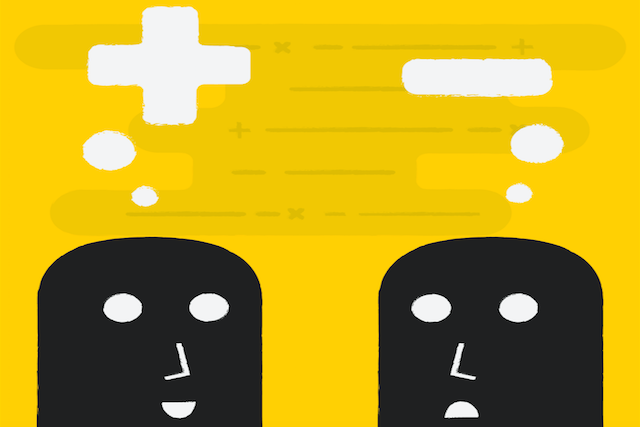
    Yogically, we are trained to make decisions from a place called “neutral mind.” There are three yogic mind centers: positive mind, negative mind, and neutral mind. Ideally, we activate and use all three minds, but the best decisions come from a place of neutrality. This neutrality helps maintain balance.

    Below is an overview of these three mind states and how they might influence your decisions relating to the coronavirus.

    The Negative (or Protective) Mind is given for survival. It is reactive, protective, and searches for potential danger. It is sensitive to pain, and it seeks to shield you from the forces that may disrupt or destroy.

    The negative mind might say:

    -I’m buying toilet paper, bottled water, face masks, surgical gloves, and rations for the next six months. I’m hiding all these rations and developing a plan to fend off my neighbors. If I hear that hospitals are short of face masks and surgical gloves, I’ll ignore it. I need to keep these things for the future. Things are probably going to get ugly—I need to take care of myself first and worry about my community later.

    -The virus is increasing in my area, so I’m going to leave and go outside the city to sit things out for a while. And if the new place gets too many cases of the virus, I’ll leave there too. My plan will be to stay a step ahead of the virus and leave whenever I notice the number of confirmed cases is getting high.

    -I’ll check the local and national news from the big mainstream sources every hour to get an update on the spread of the virus. I’ll update my Facebook feed each hour with whatever I learn. And I know if I add lots of exclamation marks, more people will read what I wrote, so I’ll make sure each post starts with READ THIS!!!!!!!!!!!!

    -I know the virus can travel through the air, so I will stay indoors with the windows closed and the blinds down until the virus is contained. Despite the fact I have a private, enclosed backyard, I won’t use it or even look at it. You just never know…

    It is easy to see how our negative mind can spin out of control. The worldwide spread of the coronavirus is extremely serious. Panic and over-reactivity are not just counterproductive, they are potentially dangerous.

    Hoarding resources when others are in dire need may cost lives. Undermining government efforts for containment is dangerous and may cost lives. If free movement hasn’t been taken away in your area, it means you need to be even more diligent and responsible about your actions. Your poor judgment may cost lives.

    The Positive (or Expansive) Mind searches for pleasure, fulfillment and possibility in how you can utilize things in your experience. It is constructive, risk-taking and active.

    This mind might say:

    -Self-isolate/shelter-in-place means I can work from home. Apart from that, I can still go out and do my regular things.  I’ll try to rally my running group for a run and since most restaurants are closed, I’ll invite my friends over to my house for dinner. If I do this right, shelter-in-place can be a great socializing tool!

    -I feel 100% fine. There is no way I have the virus. And if I get the virus, then I get the virus. I’ll risk it. I’m healthy and young, so I’m going to carry on with my business as usual. Vulnerable people should stay in, but since I’m not in that category, I’m going to take a more relaxed attitude.

    -I don’t personally know anyone who has the virus. I understand it is an issue, but I don’t think I have it in my community or my social groups. And keeping our mental well-being is important too. I’m going to continue to hold my events until someone I know falls ill.

    In the environment of the coronavirus, the positive mind can be dangerous. It is important to understand the big picture and how your positive mind might actually endanger other people during this period. We are in the middle of a serious worldwide crisis battling an infectious disease. It is everyone’s job to get educated, accept the reality of the situation, and exercise personal responsibility. Lives are at stake.

    The Neutral (or Meditative) Mind is the mind that judges and assesses without attachment in relation to your own purpose and reality. The Neutral Mind observes the actions of both the Negative and Positive Mind and judges both in relation to your higher self. 

    In order to maintain balance, this is the mind we need to use when making decisions. The neutral mind might suggest:

    -I’m taking self-isolation seriously and not going out unless it is a mission-critical task. I’m keeping my immune system healthy, keeping a rhythm to my days, and staying as productive as possible. This too shall pass, but it might be months, not weeks.

    -I’m studying the virus growth trends but not obsessively. I want to stay informed, but I understand focusing on bad news I can’t control over an extended period of time is bad for my immune system. Instead, I’m exercising extreme self-care. I’m eating well. I’m making my environment comfortable and nurturing. I’m working out and staying connected with people who are close to me through video and calls. In fact, I’ve even reconnected with some people I haven’t spoken with in a while.

    I continue to be mindful of my news sources as I read about the virus. I’m not getting pulled into sensationalism by going to mainstream news sources to get an update on the coronavirus. That would be misguided. I’m triangulating sources between the Center for Disease Control and Prevention, World Health Organization, and my own county or country’s health organization to stay current on the spread of the virus.

    -When I get invited to do something by someone else, I remind them that I am staying in because I understand the gravity of the situation. I remind them:

    1. The fact they are “feeling fine” is irrelevant. The virus can pass asymptomatically (with no symptoms).
    2. The virus can live on surfaces in excess of seventy-two hours.
    3. The virus can pass through the air for over three hours.

    I understand that unless I’m extremely careful, I might start the day without the virus and end it with the virus because of someplace I went or something I touched.

    I don’t yell and scream at my friends who want to get together, but I help them understand the situation more clearly. And most importantly, I am staying in.

    -I understand the virus can pass through the air, but I’ve done my research carefully and I understand I can go outside, alone, and maintain appropriate distance from other people. I’ll try to use my own yard as much as possible, but if I exercise the right precautions, I understand I could take a walk outside while minimizing my risk.

    -I’m trying to find ways to be useful and of benefit during this period. Lots of people are struggling. I wonder if I can help them.

    -I’m realistic this virus has ushered in a new way of life. I’m focusing on how I can succeed and thrive in this new environment. I’m researching new ways to do business online, and I’m using this time to sharpen my skills. I’m not focusing on when we can get back to “business as usual” because I understand there no longer is business as usual. I’m staying open and alert for opportunities that are heading my way as a result of this new world we are in.

    I write this because I’m observing a lot of chaotic thinking and everything that goes along with that. There seems to be a worldwide mix of the negative mind in overdrive and the positive mind in denial.

    The coronavirus also gives us a great opportunity to exercise more balanced thinking. Scientists predict more situations like this over the next decades from extreme weather and natural disasters, to widespread disease and epidemics. If we are going to survive and thrive in this new world we’ve created, we are going to need to learn to access, cultivate, and exercise our neutral mind.

    Thank you for reading this. Stay safe.

  • An Exercise That May Help You Make a Big, Scary Life Change

    An Exercise That May Help You Make a Big, Scary Life Change

    “Change your thoughts and you can change your world.” ~Norman Vincent Peale

    Making a major life change, such as changing careers or moving to a new state, can be really scary.

    Even if our hearts are pulling us in one direction, we may still be plagued with doubt, fear, and anxious thoughts, such as: How do I know if I’m making the right decision? What will my family think if I do this? Will I regret this?

    Even after we make the change, doubts and worries can still linger.

    In 2016, I was on the brink of a major life change. At the time, I was enrolled in a doctorate program in psychology. I had always dreamed of getting my doctorate. But after two semesters in the program, I realized the path I was on was making me miserable. While my advisor was passionate about his research, I didn’t feel anything close to passion.

    I came to realize I wasn’t in graduate school for the right reasons. I wasn’t there because I wanted to contribute to the field. What I wanted was to win the support and approval of my family.

    Once I realized that, I knew pursuing a doctorate wasn’t the right path for me. However, even though my intuition was screaming at me to leave, I didn’t trust those feelings. I fought with myself. I kept coming up with rational reasons for staying: I worked so hard to get here. I should be here. I’m smart enough to be here—I even passed the comprehensive exams in only my third semester!

    But no matter how hard my rational self struggled to sway me, my inner voice kept reminding me how unhappy and unfulfilled I was.

    I vacillated between leaving and staying. Deep down, I knew what I wanted to do. But I was terrified. My self-worth had always been linked to academic achievements. Without my status as a graduate student, I worried I’d feel worthless. Plus, what would my family and professors think if I left?

    Soon the pull of my intuition became too strong to ignore. I decided to leave my program. While my husband was very supportive of my decision, my family was not supportive—just as I feared. I tried to reassure myself. I continually reminded myself that I had left for the right reasons: to prioritize my happiness and pursue a more fulfilling life path.

    But the doubts and negative self-talk lingered. I started to believe that I was a failure, a loser. My family even said as much. A former professor was also disappointed with me.

    I became so wrapped up in my doubts and negative self-talk that I lost sight of the reasons why I left in the first place.

    Then serendipity hit.

    For some time, I had a side project in writing uplifting letters to strangers. I would write positive messages and leave them in places I thought would be helpful, such as inside self-help books at used bookstores.

    One day, while writing a letter, I suddenly got the idea to write a letter to myself, a letter reminding myself that in leaving graduate school, I was doing what was right for me—being true to myself and prioritizing my happiness.

    “Dear You,” I began. I spent the next hour crafting a letter to myself. I wrote as if I were a compassionate friend writing to myself.

    In the first paragraph, I briefly acknowledged my doubts and feelings.

    Next, I told myself to stop being so hard on myself—I had left graduate school to do what was right for me and my happiness.

    Then I wrote about why I knew graduate school was the wrong path for me. I recalled how happy I was before starting graduate school, and that my happiness rapidly declined since pursuing this path. I reminded myself that I was now free to let happiness back into my life. In the end, the letter ran to just under one thousand words.

    After particularly hard days, I would read the letter. What I found was remarkable: the letter instantaneously swept away all of the self-critical thoughts I had about leaving graduate school. It broke the pattern of my thinking negatively about myself and made me see, in my own words, why what I had done was right.

    Each time I finished the letter, I would be confident about my decision again and proud of my choice.

    But then, a day or two later, something would trigger me to feel badly again. The negative thoughts and fears and doubts would return. In the evening, I’d read the letter again and feel confident once more.

    Clearly, reading the letter was helpful in boosting my mood and confidence in the moment. So I thought: What if I started reading the letter every day? Would it help me feel better about my decision in the long-term? And so I started reading the letter every morning. It was often one of the first things I did after I woke up. In the beginning, I read it several times a day.

    Reading the letter every day proved to be powerful. Within a couple of weeks, I noticed that the things that had triggered me to feel badly, no longer had that effect. Instead, when confronted with these triggers, I found myself automatically thinking about the sentiments I had expressed in my letter.

    After a month of reading the letter every single day, my thought patterns had completely changed. No longer did I think less of myself for leaving my graduate program. Instead, I felt proud.

    In leaving my doctorate program, I had done what was right for me. I had listened to my intuition and bravely made a move toward pursuing a more fulfilling path. Sure, I was more than capable of being in graduate school and finishing the program, but it wasn’t the right path for me, and that was okay.

    And my letter had helped me stay on the path that was right for me.

    Are you facing a major life change and struggling with doubt, fear, or negative self-talk? If so, writing a letter to yourself and reading it consistently may be helpful in transforming your thoughts.

    Tips on Writing a Letter to Yourself

    1. Acknowledge your current thoughts and feelings.

    In the first paragraph, you might start off by acknowledging your current feelings or thoughts. For example, I started off my letter by writing, “I know you may be doubting yourself right now…” Reading this made me feel comforted and soothed, as if I were reading a letter from a friend who completely understood where I was coming from.

    2. If you’re having trouble coming up with reassuring thoughts to include in your letter, talk over your situation with a supportive friend.

    I talked over my situation constantly with my husband. I thought that my being sad to let go of my program was evidence that I was about to make the wrong decision. But he reminded me that it was normal to feel that way; after all it was a dream I had held for so long. It made sense that it would be a little sad to let that go, even if I knew it wasn’t right for me. This sentiment made its way into my letter.

    3. Make it conversational.

    I found my letter more impactful when it was written in a conversational way. Don’t worry so much about spelling or grammar. It doesn’t need to read like an essay.

    4. Use positive words.

    In her studies of the subconscious mind, Dr. Sherry Buffington found that the subconscious can only understand words that produce a mental image or picture. Words such as don’t, not, and no do not form an image or picture. Therefore, the subconscious doesn’t recognize them.

    For example, when you write, “You are not weak,” your subconscious only recognizes you and weak, and interprets this statement as, “You are weak.” Yikes! That’s not at all what you meant! If you use positive words, your subconscious will recognize the words and interpret the statement correctly. In this example, if you write, “You are strong,” your subconscious sees exactly as you intend: “You are strong.”

    5. Make it accessible.

    I wrote the letter in a Google Doc, which is stored within my Google Drive. That way I could access it easily on my phone. This might be helpful for you, or you may prefer a handwritten letter instead. Ultimately, you want to choose a method that will allow you easy access every day.

    6. Be open to revision.

    I know that my letter is just right when I feel comforted and soothed when reading it. If a sentence or paragraph doesn’t have the right effect, you may need to revise it a little.

    7. Read it every single day!

    For the letter to help you stay the course, it’s important to read it every day—for as long as you need to.

    Making a big life change can trigger a lot of fear, doubt, and negative self-talk. These overwhelming feelings and thoughts can become so habitual that you can feel stuck and unable to break free from them.

    Writing an empathetic, empowering letter to yourself can remind you why making a life change is so important to your happiness and well-being. And reading it regularly can help reprogram your thought patterns and keep you on the right track.

  • Growing in the Dark: Why “Negative Feelings” Matter

    Growing in the Dark: Why “Negative Feelings” Matter

    “Only to the extent that we expose ourselves over and over to annihilation can that which is indestructible in us be found.” ~Pema Chodron

    Pop spirituality and our cultural attitude would have you think it best to banish negativity from your life. Give it the quarantine treatment until it gets better and can rejoin our polite, positive, placative society.

    We are encouraged to cleanse negativity, a blanket descriptor of things that don’t feel good. Push it away with an exhale and inhale positivity. Anger, sadness, and critical thinking can all be forms of “bad vibes” that are sought to be avoided.

    This banishment of negativity is so simplistic. We are humans, capable of such a wonderful range of emotion and experience. Who are we to banish some of the low, dark, hollow notes from our octaves of existence? Too much cleansing makes us dry, brittle, and sterile.

    When joy and exuberance are out for too long, they get stale. When you are always bathing in the light, the light bulb begins to wane and eventually will dim and burn out. A life of constant light is not sustainable. It’s also not possible. Life is much more wonderfully and tragically complicated. Some of the richest parts linger in the shadows or even in the deepest, dark corners of our lives.

    It’s quite easy to sleep through happiness. A good, easy-going life does little to keep us awake and alive. The darker feelings bring us right into the present. The physicality of crying, shaking, with quaky breath and a hot face brings us into our bodies. To our emotional life. To our knees like no other. Darkness is what pops our eyes open to your life. It’s the catalyst for change and renewal.

    At this juncture in my life, I am spending a lot of time in grief and anger. I do not wish to get into all of the intimate details of it, but the gist is that I am going through a divorce. An icky, shattering, tearing asunder of the life I once knew and the dreams I had for the life of my family.

    It’s been tempting to push my feelings aside and pretend I’m okay. But a very small part of me recognizes there is this opportunity for something new. Renewal. Rebirth.

    While I haven’t given birth myself, I have been in the room during a birth. Birth isn’t only the beginning of a delicate, new life. It is deep and wrenching pain. Pain that steals your breath and turns your voice into a howl. It is uncertainty and a dark intensity that knocks at your ability to stand on your feet. It is sitting among blood, sweat, and tears and still finding deep, undisturbed joy.

    I can’t begin the process of rebirth by dimming the less favorable facets of the undertaking. If a rebirth is what I seek, then I am in line for one of the most wholly altering, body-shaking processes in our existence.

    So, here is what I am doing: I am leaning in. I am sitting upon the jagged surfaces of grief and anger, and I am not moving. I am listening to what they have to say.

    I am listening to anger proclaim my sense of self-worth. It rises each time I feel my innate human value has been violated. It reminds me to maintain a protective boundary around my sense of self.

    I am watching grief slice into my heart and reveal its contents. The reason I feel loss is because I have loved and still possess a capacity to love. My grief reminds me of just how much I truly value and hold dear.

    I am engulfed by the ravaging, purifying flames of my anger. I am lying in the center of my dark pool of sorrow.

    I am a human. Delicate and strong. Tender and powerful. I am built for this. I am made to stand in the center of howling storms sent by mother nature and witness devastating wreckage. My skin pummeled by rain. My feet lifted by wind.

    I am also made for watching the storm ease up and transform into calm. I am made for sunlight on my face and the joy of birdsong. The storm isn’t the ending. Neither is the birdsong.

    Your pain matters. Your anger, sadness, discomfort, grief, confusion. All of those dark feelings matter. They matter just as much to your growth as your happiness and gratitude journals. Without fully allowing the dark feelings, the lighter feelings will be kept at bay. When you close off pain, you close off to the full dynamism that is human existence.

    Discarding the hard shell that protects your heart can feel threatening and unsafe. I have been shucked open and shredded by life. I put my wholeness at stake and I am now piecemeal, the shards of my heart spread across the landscape of my experience. This allows my permeability. My walls are down which means I can allow the outer world in and allow my inner world out.

    Things strike me. I am easily moved. I get attached. I cleave and for a time I don’t want to let go—of people, places, moments. The interesting thing is that this piecemeal version of me is actually more whole, more fully alive, more human the the version of me that protected and held it together.

    At the moment, I am gutted. All my sensitive parts are outside of me. I have been opened and torn into with love and cruelty. But, if I can stay with this dark, wounded part of myself, watch the wounds bleed, redden, and pus, then I will also witness the end of the oozing. The healing of the infection. The beginning of scar tissue. A slow, soft mending. An offering to my tender history. A testament to my future strength.

  • You Don’t Suck at Life: How to Stop Believing Your Inner Bully

    You Don’t Suck at Life: How to Stop Believing Your Inner Bully

    “You’re too fat to wear that tight shirt to the gym.”

    “You’re not smart enough to take the lead on that project at work.”

    “You’re definitely going to screw up the vacation plans.”

    “You’re not good enough, cool enough, likable enough.” 

    “You suck.”

    If we talked like this to anyone, it would be considered bullying.

    And yet we talk to ourselves like this all the time.

    We talk to ourselves in a way we would never talk to people we care about. We take these words to heart and believe them as truth.

    We turn these words into our core belief system, holding ourselves back from growth, fulfillment, and happiness.

    We set high expectations for ourselves, and if we don’t meet them it comes out in unfair, untrue, and flat-out mean judgments.

    We say “treat others the way you’d like to be treated” but don’t follow that advice when it comes to how we treat ourselves.

    I certainly didn’t.

    I was a Grade A self-bully for years.

    Every day when I left work, I’d hear this voice in my head telling me, “They’re going to figure out you’re a fraud and don’t know what you’re doing. Anyone can do this job better than you. They’re going to fire you. You’re an embarrassment.”

    I never had many friends, but when the few I had would invite me out somewhere, I’d think, “They just pity me. They’re only inviting me because they feel obligated. I’m not as pretty as they are and don’t fit in. I never know the right thing to say. I’m going to screw this up.”

    I always imagined how disappointed my parents would be in me if they saw how messy my house was, or what they’d think of me leaving a well-paying job to start my own business, or if they knew that I lost that stock certificate and now had to pay a stupid amount of money to get it replaced. I’d think, “They’ll judge me and think that I’ve failed them, and that I’m not as good as they expected me to be.”

    I told myself how unlikeable I was, and that’s why I didn’t have more friends.

    I told myself how I’d never be successful because I never had any good ideas.

    I told myself how ugly I was. How boring I was. How awkward I was.

    I was constantly putting myself down, partly because I was a perfectionist, and partly because I worried way too much about what other people thought of me and never felt I was good enough to meet their standards.

    But that was the old me.

    I’ve come a long way since then. I slip up on occasion, but I’m much better equipped now to course correct using the steps below.

    Changing my relationship with my inner bully took me a few years of studying, training, and practicing.

    If you’ve been bullying yourself for years, it will likely take you time to change your habit, as well. But these six key strategies will make a lot easier to be kind to yourself.

    Step 1: Say hello.

    When we hear that self-bully talk, we tend to instantly believe it without recognizing what’s going on or questioning it. We see it as truth. We fully experience it.

    The first step to quieting your inner bully is to say hello. That is, mindfully recognize that this is self-bully talk happening. Maybe even personify it by giving it a name or even a gender.

    I like to minimize my inner bully by giving her a silly name: Cupcake.

    When I hear inner talk like “Ugh, you suck at this,” I notice this and say, “Oh, hi Cupcake. Welcome to the party.”

    This allows me to step back from the voice. Just like I do when I’m watching a scary movie and I don’t want to get too scared. I step back and recognize that these are actors on a screen, they are reading scripts, there are cameras and lights pointing at them.

    I go from being fully absorbed in the movie, like I’m in it, to noticing that I’m watching a movie. It’s a subtle but profound shift.

    From this place, we can create space, which enables us to make change in the next step.

    Step 2: Change how you experience your bully.

    We experience thoughts as pictures, sounds, or feelings. Most people experience their inner bully thoughts as sound, like hearing a voice telling them “you suck.”

    Here’s a fun trick to change how you experience your inner bully. Change the sound of the “voice.”

    When I hear that voice telling me that I suck, I say, “Hi Cupcake, what do you have to say again?”

    Then I repeat her words in a funny cartoon voice. Now she sounds like Mickey Mouse and I can’t even take her seriously.

    If you’re a visual type and “you suck” comes to you in a picture—perhaps one of you at a time in your life when you felt like you failed—you can try a different tactic (or both even).

    Since I named her “Cupcake,” I can also picture her as such.

    Now I see a cupcake with a Mickey Mouse voice telling me “you suck.” Which, of course, is adorable and hilarious.

    This helps me step further out of that negative mind frame so I can take the next step. 

    Step 3: Find the positive intent.

    Everything we do has a positive intent. Even when we’re being mean to ourselves.

    When I was telling myself that I was no good at my job, my bully was really trying to push me to do better so I wouldn’t get fired, and trying to protect me from being caught off-guard if that happened. She was also trying to tell me where I still had and opportunity to grow and learn.

    When I find myself procrastinating on a project because my bully is telling me that I’m not going to do a good job anyway, I know she’s just trying to protect me from failure.

    She didn’t choose the most helpful method, but she meant well.

    I can now say, “Thanks, Cupcake. I can take it from here.”

    And then I move onto the next step.

    Step 4: Choose a neutral or positive thought instead.

    Sometimes it can feel like a big leap to go from a negative to a positive. Going from “I’m a failure” to “I’m a success” might feel false to you considering the circumstances.

    In this case, try a neutral thought instead. See how it feels to go from “I’m a failure” to “I’m not a failure at everything.”

    In my case, at work I would often think “I can’t do this.” (This was usually when someone asked me to analyze some data, which wasn’t my strong suit.)

    To get myself out of self-bully mode, I would slightly alter the statement “I can’t do this” by adding “yet.”

    “I can’t do this… yet.”

    Sometimes I could even replace it with “I can do this,” just to try it out and see how it felt. More often than not, it actually felt true. I just hadn’t thought of that idea yet.

    And over time I did get better at analyzing data.

    The point is, you can choose what thoughts to think.

    Step 5: Give yourself permission to be imperfect.

    (Note, this step is only applicable if you identify as a human.)

    Our inner bullies come out of the woodwork when we do something that we consider “imperfect.”

    We don’t look perfect. We didn’t execute something perfectly. We didn’t make the perfect choice.

    The phrase “I’m only human” is another way of saying, by nature, I will make mistakes. Mistakes are allowed. Not only allowed but expected.

    Write yourself a permission slip to be imperfect. Just see how it feels.

    “I, Sandy, give myself permission to write a blog post about self-bullying and not write it perfectly.”

    That felt pretty good. 🙂

    Step 6: Know that you are not alone and can ask for help if you need it.

    Over time, negative self-talk becomes a habit, and as we’ve all experienced, habits are hard to form or break.

    If you’re having trouble breaking your self-bullying habit, even using these steps, you don’t have to go it alone, and you shouldn’t be afraid or ashamed to ask for help.

    Working with a supportive therapist or coach, or even just confiding in a friend, can make a huge difference. An unbiased outsider is able to hear our thoughts, what we’re saying and not saying, and reflect those back to us when we don’t notice them.

    They provide us with support and accountability to keep us on track toward our goals and cheer us on along the way. They ask us tough questions, that we wouldn’t think to ask ourselves.

    They also help remind us that we’re not alone in feeling how we feel. That it’s not only common, but people can see improvement, which is incredibly reassuring. Odds are, everyone you’ve ever met has struggled with this too, and still does on occasion.

    Personally, I reached out for help much later in my own journey because I was embarrassed. My inner bully told me that if I went to someone for help, it meant I was weak. And that they would tell me there’s nothing wrong with me and to suck it up (our inner bullies tend to lie to us).

    I don’t have regrets in my life. Every experience has made me who I am today, and I love who I am. I’m sure the tougher path I took made me stronger along the way.

    But I also think I would have reached freedom from my inner-bully more quickly had I put my ego aside and opened up to someone sooner.

    Know that you are not alone. Everyone feels or has felt the way you do, and like you, they struggle with this at times and see progress at others. So try to be good to yourself—and aim for progress, not perfection.

    Much love and light on your journey, my friend.

  • How Embracing and Loving My “Negative” Emotions Helped Heal My Pain

    How Embracing and Loving My “Negative” Emotions Helped Heal My Pain

    “Do not fight against pain; do not fight against irritation or jealousy. Embrace them with great tenderness, as though you were embracing a little baby. Your anger is yourself, and you should not be violent toward it. The same thing goes for all your emotions.” ~Thich Nhat Hanh

    For a long time, heaviness and dark feelings were very familiar to me. In a strange way they were comforting; I felt safe in darkness. The light felt more painful to me, but I also wanted to change because I wanted to free myself from the limitations of staying in the dark.

    I first started struggling with depression when I was young. From an early age my mother told me there was something wrong with me, particularly when I dared to express “negative” feelings, like anger. It became a mantra that filled my mind all the time. This one statement pervaded my entire life and dramatically affected the choices I made and didn’t make, well into adulthood.

    In my early forties, after much searching, I hit rock bottom. I was lying in bed, wanting to die, my thoughts telling me how wrong I was as a human being, when another thought popped into my mind: “What if depression is a gift?”

    Depression had felt like this never-ending darkness that clouded everything in my life. Even at times that I should have seen as positive, the depression prevented me from enjoying them. Depression was an old friend, one I not only tolerated but believed was the whole of who I was.

    I found my identity in feeling like a failure, and not moving forward meant that my identity was correct; I was confirming that this was who I was—until I understood that I was meant to be so much more than this depressed woman, sad, sorrowful, constantly grieving and frustrated. There had to be more to life.

    Instead of looking at what was wrong with myself, I started looking at the feelings that came up, noticing that my aversion to them was not only perpetuating them, but was affirming that I was not worthy of love, acceptance, or even acknowledgement.

    I could no longer fight who I was. I had to start looking at myself as a whole, including the pain and trauma, so I started to imagine that my repressed emotions were small children—and not just any small children, but orphans.

    They lived in a large orphanage, where nobody cared for them and the only adults that came in to see them were mean, critical ones who would beat them if they showed anger or leave them to cry if they were sad.

    There were many children in there, cowering in their cribs, with no one to hold them or reassure them that they were safe.

    Some of my “orphaned children” were shame and embarrassment. I’d felt these feelings many times in my life, and they’d prevented me from sharing my skills or even recognizing that I had any at all.

    I also had angry orphaned children who had been made to believe that anger was negative and bad, not positive fuel for creativity and healthy boundaries.

    And then there were my sad orphaned children, who had not properly grieved the loss of their father, who’d passed in my late twenties.

    These parts of me didn’t need to be alienated; they needed my love, care, and attention.

    I’d orphaned these feelings because I didn’t want them to be part of me, but because of this, I lived a half-life for a long time. Rejecting my feelings, ironically, fueled my depression, because you can’t selectively numb your emotions. When you numb any, you numb all.

    Instead of embracing these suffering children, I’d created diversions to avoid them.

    As a child, I used food to avoid feeling lonely, rejected, and broken. In my teens and early twenties, I was a binge drinker, consuming huge amounts of alcohol four days a week to repress my emotions. As an adult, this meant too much coffee and sugar, or I overworked to avoid feeling anything.

    At one point I used “positive thinking” to distract myself from these neglected aspects of myself. This was probably the most powerful distraction, because by thinking I needed to be grateful and happy all of the time, I was automatically rejecting all other emotions.

    It was easier to pretend than to make friends with these aspects of myself.

    I eventually realized that I couldn’t do this to myself anymore. I no longer wanted to lie or consider a huge part of my nature, my shadow, wrong.

    Self-compassion and self-acceptance are so important if we are to be balanced human beings. If we are unable to acknowledge and accept the pain inside of ourselves, how can we ever expect that things will change? How can we be less judgmental of other people if we judge ourselves harshly most of the time?

    Embracing pain isn’t easy. It takes courage and commitment to take this transformative path, to begin to reframe depression and other mental health issues as a gift, as an awakening, to help us return to who we really are, which is loving, kind, compassionate, and accepting.

    Though the darkness had felt safe, I eventually realized that I was afraid of the light because it illuminated those dark corners where my orphaned emotions live.

    It was time to stop fighting my feelings and give them a new home in my heart. Here’s how I did just that.

    Embracing My “Orphaned” Emotions

    1. Acknowledge.

    The first thing I had to do was to acknowledge that I had been avoiding my pain, and to accept that it was okay that I did this. If I beat myself up for deserting parts of myself for so long I’d just be putting further shame or blame into that orphanage.

    I had to accept that sadness, fear, anger, and rage were healthy emotional experiences, sometimes necessary, and that I’d previously rejected these feelings as a way to protect myself until I was ready to face who I truly am.

    If you’ve also abandoned your most wounded, fragile parts, decide to break the cycle now. Acknowledge what you did but also why, and have compassion for yourself.

    2. Get to know your feelings.

    Take the time to get to know these pain feelings, but do so as an unconditional mother would, without judgment, without needing to fix or make the feelings anything other than what they are. When sadness or sorrow comes up, take a quiet moment to witness this child within with loving attention.

    3. Accept them as gifts.

    Our feelings are not there to make our lives miserable; they’re there to show us what may not be working in our lives, or what needs to change.

    When I accepted that depression was a gift, I began judging myself less harshly and embracing the feelings I’d repressed for so long. Essentially, I started accepting all of myself.

    I’d gotten comfortable viewing myself as a failure, and I thought my unconventional life confirmed that’s what I was. I was living with my best friend who was in his seventies. I was single, poor in my eyes, and unattractive. I believed that because I didn’t have my life together in my forties—I didn’t have a home of my own, a partner, or a successful career—I wasn’t acceptable or enough as I was.

    My depression was a sign that I needed to change how I viewed myself. This enabled me to see not only that I am enough as I am, but others are enough, exactly as they are right now.

    Instead of stuffing down your depression, anxiety, shame, loneliness—or whatever emotion you’re tempted to resist—ask yourself: What message is it trying to send to me? What would I do differently in my life if I listened to this emotion instead of suppressing it?

    4. Remember it’s not a race.

    When I first started owning my shadow I found it challenging to stop my avoidance practices, but I initially tried to rush through this process. I thought I could immediately accept all feelings, whenever they arose, without ever giving in to my old habits.

    I eventually realized I had to be kind to myself and to take each new step as mindfully as possible. I also had to understand that I would probably fall back into old habits at times and accept this was all part of the healing process.

    It takes regular practice and persistence to welcome those unwanted emotions time and time again. It takes time to internalize that it’s not about getting rid of any feelings, but about welcoming them as part of self-love and personal growth.

    5. It’s all about trust.

    Becoming aware of our painful emotions is only one step. Until we are able to fully welcome and embrace them, life will trigger us to love them further. Things will happen that evoke all the feelings we want to avoid—challenges in our work, relationships, and other aspects of our lives.

    We can turn back and ignore the triggers, or we can trust that whatever shows up is meant to teach us unconditional love. It takes faith and trust to love shame, anger, and fear. We need to trust that this is worthwhile and that we’re capable of re-parenting ourselves in a more wholesome way.

    I know that my old ways of avoiding and distracting myself from the pain never worked—that I had to go through it to go beyond it, and that going beyond it does not mean I will never feel sad or despairing again. I will, but I can do so from a place of trust, knowing I will be okay, because I now understand that all of me is lovable, and I am enough exactly as I am right now.

  • What Your “Negative” Emotions Are Trying to Tell You

    What Your “Negative” Emotions Are Trying to Tell You

    “Life will only change when you become more committed to your dreams than you are to your comfort zone.” ~Billy Cox

    It might sound like a senseless paradox to say that the “bad” or “dark” things about you are actually your “light” or “positive” qualities. However, this isn’t just a feel-good platitude; it’s literally true. The things we struggle with the most are our greatest sources of empowerment.

    Because this process is not exactly front and center of modern mental health and wellness movements, committing to your own healing can seem daunting and hopeless. Few people have truly learned how to welcome their painful, suppressed emotions, listen to what they have to say, and come out the other side stronger.

    But in today’s world, it’s become increasingly difficult to avoid, suppress, and force ourselves into fake states of positivity. Clearly, our “negative” emotions are bubbling to the surface where they cannot be ignored any longer.

    We see anger and pain overflowing into the social and political sphere, in schools where violence occurs, and all over the news. According to ScienceDaily, “121 million people worldwide are impacted by depression, and 850,000 commit suicide every year.”

    It’s no wonder so many of us get stuck in apathy, pessimism, and distractions. Life is challenging us right now, and the first necessary step is to actually acknowledge that we are in pain. This sounds incredibly simple, yet so many people choose to fight their symptoms rather than committing to understanding them.

    On social media I see a lot of hashtags exemplifying our resistance to pain, like #depressionwarrior and #fightanxiety. And while it’s totally understandable to want to conquer the pain you’ve felt for so long, mental illness is not something to be battled and conquered. It doesn’t need to be fought, but rather, listened to and respected.

    Just as the physical body has innate intelligence, so does the emotional system. We don’t want to wage war against the very emotions that are trying to alert us of a problem and walk us through the solution. From a basic state of resistance, no healing can occur.

    In 2018, I gave up on a painful relationship, moved to a new apartment, started a new job, and finished writing my first real book. I grew up in so many ways, and processed more trauma and healed more aspects of myself than I ever thought possible. For the first time, my growth and progress were unmistakable—I didn’t need to squint to see that I had become wiser, stronger, and more capable in the real world.

    But my radical transformation was not exciting or easy. It wasn’t a fight, and it sure wasn’t the kind of glamorous story of triumph that goes viral nowadays. My life circumstances pushed me into a sort of hibernation—a state where I spent most of my time reading, meditating, resting, crying, and just doing whatever I had to do.

    This is the thing: True healing doesn’t look cool. It’s not a fighting and a conquering, but a softer, more intuitive process. This is why society resists it so much.

    True healing requires us to be counter-cultural. It requires us to be awkward, to stay in on Friday nights, to take strange trips or buy strange things that we can’t quite explain to other people.

    Healing requires vulnerability and radical allegiance to yourself.

    This is why much of my healing took so long. Prior to 2018, I wasn’t ready to commit to myself no matter what. I was too impressionable and willing to change for other people.

    The biggest lesson I learned is that my mental “illness” was not really illness or dysfunction at all. In truth, my emotions were messengers I had been ignoring, judging harshly, and trying to get rid of. My negative emotions were on my side, not against me.

    Negative emotions are not something you need to fight or fix any more than you’d need to fight or fix your immune system as it tries to ward off an infection. This is the great misunderstanding of our time.

    Many people never heal from mental illness because they mistake the symptoms for the problem. The symptoms are your obvious negative emotions, but the root problems are hidden. For example, you may be depressed because you don’t express yourself freely. On top of this, you may have a deep-seated fear that if you express yourself, you’ll be scolded.

    There are often several layers of negative beliefs and fears in our subconscious (or “shadow”), but all we ever see are the symptoms (e.g. depression, anxiety, etc.). I lived much of my life trying to solve my emotions until I learned a much more effective approach: listening to my emotions.

    So how do we actually heal?

    1. Listen to your mental “illness.”

    This is the simplest first step you can take. Every time you feel unpleasant symptoms arise, no matter what they are, make time that day to stop and listen. You can do this through a simple meditation in which you quiet your mind and let the emotions have space to express themselves.

    If it suits you better, you can also write all your current negative emotions on a page. There’s no need to worry about any emotion besides what is activated in the moment. What are you currently struggling with? Oftentimes, it will be connected to your other issues any way. Let that particular emotion speak.

    2. Ask your mental “illness” questions.

    Another thing I learned is how surprisingly easy it is to get answers from your subconscious mind. As soon as these emotions are given time, space, attention, and unconditional love, they waste no time revealing what you need to know.

    Maybe the message is simply that you need more time in your day to rest, or that you need to leave a serious relationship. Whether big or small, the guidance you receive will help you shift your life in a way that soothes your symptoms. This is the beginning of true healing.

    3. Practice gratitude for your symptoms.

    This is probably the most challenging thing on the list. Your symptoms really are guiding you and alerting you to what is out of alignment in your life. However, we’ve spent so much time suppressing and denying them that they’ve caused us significant pain.

    Our symptoms are like children throwing tantrums. If we don’t listen, they get louder and angrier. This is why we need to “make up” with our symptoms just as we would with a friend with whom we had a fight.

    Once you literally start to notice how your symptoms are subtly guiding you toward solutions, it becomes much easier to feel grateful for them (and trust them!). This step took me a bit of practice, but over time I found that I could have gratitude for my symptoms without any effort or forcing.

    4. Commit to the long haul.

    At first this may seem discouraging. But when I look back, I see that most of my wasted time was spent desperately trying to rush to the “perfect” life. I wanted to magically arrive at a place where I had no emotional or physical issues, and everything looked pristine on the surface. It was during these periods that I felt the most dissatisfaction and pain.

    Committing to the long haul means you have decided that no matter what, you will not abandon yourself. You will not try to skip out on true progress and growth for a quick and easy “fix.” You will not try to appear perfect from the outside.

    Once you make this commitment, your healing can occur faster and with more joy and ease throughout the process.

    So if you are at your wits end, pause. Stop resisting your circumstances and try a new approach. What if your emotions weren’t out to get you? What if they honestly wanted to help move you forward?

  • Be Kind, Retrain Your Mind: 3 Tips to Overcome Negative Self-Talk

    Be Kind, Retrain Your Mind: 3 Tips to Overcome Negative Self-Talk

    “You yourself, as much as anybody in the entire universe, deserve your love and affection.” ~Buddha

    In 1990, in an early encounter between the Dalai Lama, the foremost Tibetan teacher of Buddhism, and Western students, the Dalai Lama was asked a question about how to deal with self-hatred. He was confused and didn’t understand the question. The translator translated the question again, and still the Dalai Lama was confused.

    Finally, the Dalai Lama understood that the question was about how to manage negative feelings about the self. This was a new concept to him: he knew that people had negative feelings about others, but he had not encountered the challenge of self-hatred.

    I wish I could say that I had never encountered the problem of self-hatred, but I’d be lying. Like so many people, even if I didn’t necessarily recognize my self-talk as such, I was inundated with internal negative self-talk.

    My process of coming first to recognize what that voice was up to, then to listen to it with more compassion, and finally, once and for all, to ask it to grow up and step out of the room has been a journey of self-acceptance, growth, and ultimately, freedom.

    Here are three steps to deal with your own inner negative self-talk:

    The first step is to become aware of the negativity of your internal voice. 

    For the first twenty-eight years of my life, I was so familiar with my negative voice that I didn’t even recognize it.

    I’ve been told that people with tinnitus, a constant ringing sound in the ears, grow used to it and learn to live with it so successfully that they’re no longer really even aware the ringing’s there. That was the case with my negative voice: it was a kind of background hum.

    If I did pay attention to it, I was tricked into thinking that its particular message mattered.

    At sixteen, it might have been the enormous, overly sweet corn muffin I’d eaten on the way home from school that was a sign of my failure.

    At twenty-six, it might have been that an essay I wrote hadn’t been accepted for publication; this was a sign, I was sure, that nothing I’d ever write would ever be fully understood.

    It wasn’t until I’d been in therapy for a while and had a real mindfulness practice that I even began to notice the daily hum of background voices and to notice that the particulars of the negative voice I did hear were less important, actually, than the larger pattern it was a part of.

    Any mindfulness practice can help you become more aware of the negative self-talk in your head. You can try guided meditations, deep breathing exercises, or mindful walking, or simply spend time tuning into your senses. When you become conscious of the present moment, it’s easier to recognize what’s going on internally.

    The second step is to listen a little more deeply.

    What was important was not so much what the voice was saying as what was under the voice. Often the negativity was there to distract me from something else.

    Was the corn muffin or the publication rejection really the problem?

    I learned not to take what I said to myself at face value.

    After all, I was often shocked at what was going on inside my own head. I said what to myself? I would never say that to anyone else!

    Though I had a PhD in literature and was a published creative writer, skilled at using language in all kinds of sophisticated ways, often the voice inside my head was stuck only at a toddler level.

    When I was frustrated or upset, rather than slowing down and parsing out what I was really feeling, I’d lash out with simple and ultimately inaccurate phrases, phrases like “I hate myself.”

    The negative statements were largely self-protective, a big blanket over deeper layers of hurt or pain. Often what those negative words were really expressing (even if they didn’t have the appropriate words to do so) was not I’ve done something wrong, but I’m worried, I feel alone, I feel uncertain, I feel lost or scared or hurt. 

    I learned to react to the feelings under that negativity with compassion.

    I came to understand better what situations triggered me and why, in fact, some situations threw me back to being a three-year-old inside again.

    Therapy, mindfulness, writing, and meditation all helped me heal and embrace those wounded parts of myself that were speaking in such negative terms. I learned to listen more carefully to what I was really feeling and to re-parent my inner child.

    I learned to send myself loving-kindness and compassion.

    My inner voice became less likely to be critical, less likely to lash out at myself. I was more able to express more uncomfortable things internally, like I’m feeling really insecure right now.

    Take some time to dig beneath the surface of your negative self-talk. Peel back the layers to find the feelings and fears so you can offer compassion to these fragile parts of yourself.

    When I first started doing this, I felt happier. I had more energy. I was able to communicate better not only to myself but also to others.

    I’d made lots of progress. But to my own regret, sometimes that inner negativity was still more powerful than me.

    I’d lash out at myself with negative self-talk in ways that I couldn’t fully control.

    What was the next step in healing? I meditated more. I listened with more compassion.

    And yet, I still had that negative inner voice that could say some really mean things. If I woke in the middle of the night, the negativity was particularly strong.

    Until one day, I decided I’d had enough.

    The third step is to realize that the inner negative voice really isn’t helpful and to actively disrupt it.

    I want to be clear here: don’t jump over step two. Most of us have not been fully listened to. We need to learn to listen to what is beneath our negative self-talk and not simply silence ourselves.

    But after a while, we understand that our negativity is usually an expression of our hurt. We understand that we can listen to ourselves. And we want to be freed from this negativity; it’s not serving us.

    I also understood that my healthy self no longer believed what the negativity was saying. It just didn’t make sense to talk to myself in ways I would never talk to anyone else.

    And if I had compassion for other people, it didn’t make sense for me not to extend it to myself.

    I came to see my inner dialogue as lagging behind my own development as a person: I was stuck in old habits that I had largely moved beyond.

    So what to do?

    I disrupted the habit.

    Because I had done step one, I could notice the voices when they came up. And because I had done step two, I didn’t feel that I was in denial or perpetuating old patterns of not being listened to.

    So when the negative voice came up, I immediately interrupted it.

    I used and still use an Emotional Freedom Tapping code that takes roughly thirty seconds. EFT is a system in which you tap on particular pressure points on the body. Every time that voice starts in with its negativity, I do that code, either mentally or manually.

    The code activates my mind and memory, and also my body awareness and physical memory.

    You can disrupt your negative voice with a mantra or even by reciting a poem, but bringing the body into the practice helps establish new patterns more quickly.

    The important thing is that when the negative voice comes up, you do/say something else instead of getting caught up in it.

    I realized that I didn’t need to put up with the toddler-style tantrums anymore. I could also establish some boundaries in my own inner life. I could disrupt the tantrum, take the child out of the room, and give her something else to occupy her.

    This system works wonders! I no longer wake up plagued by those negative voices. I have so much more mental and emotional space.

    The Dalai Lama had never heard of self-hatred. For many of us, this may seem surprising; we may even come to feel that we must accept our negative thoughts about ourselves and accept our negative self-talk as something that we just need to learn to embrace with compassion.

    But we can retrain our habits.

    I’d trained as a writer to be skillful about the words I put on the page, and I could also train myself to be more skillful with and not be at the mercy of the words I use internally.

    I learned to use my inner language mindfully and to retrain myself to speak an inner language of love. It’s possible, and it’s deeply rewarding.

    Because when we no longer allow those negative voices to take up our inner space, we can experience more freedom and not only more self-love but also more love for others.

  • How to Take Back Control from the Negative Script in Your Head

    How to Take Back Control from the Negative Script in Your Head

    “You don’t have to control your thoughts. You just have to stop letting them control you.” ~Dan Millman

    I’d love to say I had an “Eat, Pray, Love” moment where sitting sobbing in the bathroom I received divine guidance to leave my husband and go traveling the world eating amazing food. But sadly, it wasn’t quite that profound.

    It was more a long series of nights sobbing in the bathroom, looking at myself in the mirror, and concluding “You’re broken.”

    I wasn’t depressed and hadn’t been for a long time. My anxiety, a lifelong companion, was under control. So what was wrong?

    A general feeling of discontent, a lack of energy and enthusiasm to do more, a loss of my spark, a quietening and turning inward, and these overwhelming onslaughts of negativity and tears whenever I felt criticized or something went wrong, which was often. A sense of resentment and frustration that I’m sure ensured those around me felt less inclined toward being loving and giving me the care that I needed.

    So all those nights in the bathroom crying didn’t lead me to any insight, but thankfully the universe did send me guidance in other ways.

    Someone posted a video to a Facebook group I was part of by a guy named Richard Wilkins. It was called “My F*ck It Jeans.”

    Richard is well in his sixties, yet here he was making a Facebook video about how he doesn’t let his age dictate how he feels, acts, dresses, or his enjoyment of life. He doesn’t worry about others’ opinions or society’s views of how someone his age should be, but instead lives true to himself, and has never been happier. And here I was in my early thirties, feeling wiped out and like my spark for life had been put out before I’d even realized I had one!

    Over the next year I followed Richard on Facebook, and was drawn to drive one fateful Saturday morning to Northampton, to his Recharge Day.

    Richard always says, “The reason you are there is never the reason you are there.” This certainly proved true for me. I thought I was there to find out if the course would help my husband, but after I cried myself through the first half of the morning, I quickly realized I needed to be there for me.

    “You are not broken.” Richard’s words cut into my thoughts.

    Did I hear him right? Did he say I’m not broken? Did I dare to believe that? And how did he know that’s how I felt? There were over 200 people in the room. Was it possible that some of them also felt broken? If so, was it likely that I was the only one who really was?

    It was this question that led me to turn up on Richard’s front door step a few months later to attend a five-day Broadband Consciousness (BC) course with him and his partner, Liz, and seven other strangers, who have now become friends.

    For the next five days I shared things I’d not shared with anyone before. Then I shared more.

    I listened and didn’t jump in with advice. I made no plan for what I must do when I got back from the course. I didn’t look at my phone.

    I struggled, then I had a breakthrough, then I struggled harder. I spoke up when I did and found others had the same struggles. I supported others and they supported me in return.

    I woke up easily and full of energy. I laughed. I cried. I ate lots of biscuits and didn’t care. I felt like a very heavy weight had been lifted from my back. I felt like life didn’t have to be so damn hard anymore.

    I learned a way of separating that negative voice in my head (which BC calls “the script”) from the real me.

    I learned that the script is anything that doesn’t serve me and I would not choose.

    I learned to recognize the real me.

    I learned that the script is just thoughts based on incorrect beliefs, and that they are not true.

    I learned that if I’m not choosing my experiences, my actions, and my feelings, the script will choose for me.

    I learned that it’s not necessary to listen to, analyze, or try to change the script. All I need to do is recognize when it is the script talking and not me. And not believe it. And not act on it.

    And I learned this not from talking about myself but from witnessing other people and the script in their heads. Because guess what? The script told them they were broken too. And useless. And they always get it wrong. And they are fat and ugly. And they are not good enough. And they are not loved. And on and on… We were literally all reading from the same script!

    Since returning from the course, the impact has stayed with me and grown. After over thirty years of listening to the script, for every month I spend not believing it I get to know the real me more and ignore the script more easily.

    So how can we all take steps to turn away from the script and tune into our true selves?

    First off, you have to recognize the script and be open to the possibility that what it’s saying isn’t true.

    In fact, make it your job to discredit the script, to prove what it’s saying to be fake news.

    Remember that time it said you were dying because you were having a panic attack? Not true!

    What about the time it said you couldn’t do that thing, but then you did it? Yup, it was lying!

    Oh, this is a good one—how about that time it said you were worthless and no one would hire you? Ho ho ho!

    Once you recognize the script you will be surprised by how many times it pops up!

    Secondly, remember that you are not the script.

    Think of the script as a physical book. It has many chapters documenting every mistake we’ve ever made, all the bad things that could or have happened, detailing how we ‘should’ behave, think, and feel about every situation under the sun.

    The script also has an audio version, which is what we can hear in our heads each day. But it is not us. It is just the script being read to us.

    If the script says you are useless, this is not true, nor relevant. It is just the script’s opinion.

    Mentally put down the script and accept that, although we can’t change what’s in it or get rid of it, we don’t need to read it all day long, and we certainly don’t need to act upon what it says.

    Lastly, choose! Don’t let the script sit in the driver’s seat.

    The script lives in our reptilian brain and is much faster at responding than our conscious brain. If we don’t consciously choose thoughts, feelings, and actions, the script will jump in and choose for us.

    Start with small things: What would I choose to eat? What activities do I love? Be mindful of what you say. Cut off the script and choose to think of something else. Get out of bed at the time you planned to. Choose not to engage in arguments. Choose to take a bath or read a book.

    Every small choice moves us away from the script and strengthens our choosing muscles.

    Here are my top tips for doing so:

    1. Laugh or smile.

    I recently went to a laughter yoga class for the first time and learned that your body and mind don’t understand the difference between forced laughter and natural laughter.

    When you smile or make a laughter sound it makes you feel better. It strengthens your relationship with your true self and draws you away from the script. So as well as remembering to smile and laugh for no reason, building opportunities to laugh into your life can also be a real help.

    2. Focus on what the script doesn’t see.

    When you’re walking down the street, the script is on high alert for potential threats. It’s trained to look out for all the negatives and potential problems. If you (your higher self) are not alert, you will listen to all the bad things the script has spotted, not just in the street but in your job, your relationship, the activity you’re doing, your children’s behaviour, your body… and on and on.

    One way to practice disconnecting from the script and tuning into the real you is to focus in on all the good stuff the script filters out (in BC we call these “pearls”). Pearls don’t have to be anything huge. It could be a text from a friend, a hug for your child, a chance to grab a cup of tea in silence, or a warm bed at the end of a long day.

    3. Be mindful of your language.

    The more we look for something, the more it will show up in our life. This is true not just in terms of what we see in the world but also the stories we tell ourselves.

    The reptilian brain (where the script lives) doesn’t take time to fact-check what it tells us, yet because it’s coming from inside our own head we tend to believe it. It’s like taking in a headline but not reading or researching the article, then accepting that headline as fact and maybe even repeating it to others.

    So, if someone asks you how you are and you immediately jump in with “tired” or “stressed,” this is what you will believe and therefore how you will feel. If you moan about your partner or say critical things to them, you are repeatedly telling yourself that your partner isn’t good enough. How do you think this affects how you feel and act toward them? And the response you get in return?

    4. Choose.

    Start choosing instead of allowing the script to choose for you.

    Choose food you know will make you feel good. Arrange activities that bring you joy. Say no to that event you don’t really want to go to. Choose to go for a walk at lunchtime. Choose to give your opinion or choose to forget the ironing and take a bath.

    Do whatever you feel called to do when you really tune into your feelings rather than letting autopilot or society’s demands take over.

    5. Let it pass.

    A food craving lasts three minutes, so if you can ignore it for that long it will be gone. I’ve found it’s the same with the script.

    When something triggers the script and you suddenly feel angry, sad, or inundated with critical thoughts, it will generally abate after a few minutes. No need to act on the script either by saying something or doing something. Let it pass, then, when you’re no longer in the script, decide if you need to act.

    Also, remember that whatever triggered the script is not responsible for your subsequent feelings, it is the script making you feel bad, not your colleague, partner, or the guy who cut in front of you in the line.

    6. Share. Learn. Explore.

    The world of self-development can be overwhelming. The script will always tell you that you need to learn more, fix this problem, work on yourself just a bit more. Be conscious of this and instead stick to readings and learnings that align with the simple practices I have mentioned above.

    Focus on sharing as you learn rather than feeling drawn to learn more and more and more. This will reinforce the messages and in turn, you will learn through the telling.

    Be aware of your learning style. If you learn from sharing, then talk to people about what you have learned here. If you learn from writing, write about your experiences or doodle your own version of how to explain the script to a stranger.

    When we share what we have learned and help others, we move away from ourselves and our own problems, and this prevents us from dwelling and drawing more problems to us.

    7. Exercise.

    Everyone says this, but it’s for good reason. Exercising for twenty minutes a day is as effective in boosting your mood as some antidepressants. So whether you’re depressed or not, that has got to be good for you! It gets you out of your head, where the script is, and into your body.

    By getting into your body, you can tune into your conscious mind, and you’ll likely find that ideas, inspiration, and solutions to your problems present themselves.

    8. Listen to music that uplifts you.

    Similarly, use music to get yourself out of your head and into a chosen state. Choose music that reminds you of happy times, or music that gets you energized and ready for inspired action.

    9. Get competitive but not angry.

    Try to avoid getting angry with the script, since it’s only trying to help, although ineffectively. Instead, develop a healthy competition with it.

    If the script thinks you are too lazy to go for a walk, do it.

    If the script thinks you are too scared to do something you’d love to do, do it anyway.

    If the script thinks you should say no to an amazing opportunity, ignore it.

    If the script wants you to lose it with your partner, choose not to.

    Thank the script for its input, but remind it that your real self has the resources, experiences, and skills to deal with life without its help.

    10. Keep asking, “Is this true? Would I choose this?”

    Odds are, once you tune into your higher self, you’re realize the answer is no. And you’ll be able to choose for yourself instead of letting the script run the show.

  • How I Escaped the Negative Thought Loop That Kept Me Down and Stuck

    How I Escaped the Negative Thought Loop That Kept Me Down and Stuck

    “You will never be free until you free yourself from the prison of your own false thoughts.” ~Philip Arnold

    Do you ever doubt yourself? As if no matter how hard you try, it’s never enough.

    Do you always tell yourself that you could do more? Or that somebody else is doing more, so why aren’t you on their level?

    I’m not good enough.

    Do you keep your thoughts to yourself because you feel as though your opinion doesn’t matter?

    I’m not smart enough.

    Or how about when you’re casually scrolling through social media? You see beautiful people taking such awesome photos and they look so happy.

    I’m not attractive enough.

    These rapid-fire negative thoughts incessantly remind us of our faults and flaws. These negative thought loops are like water to fish. We’re swimming through them. Every day. All the time.

    This year I was practically drowning in negative thought loops. My grandmother died. Shortly after, I navigated my parents through a draining divorce process. Post-divorce, my fiancé and I moved back in with my mom to support her. Money was scarce.

    I downward-spiraled into negative thought loops, constantly blaming myself for being a disappointing grandson, son, and partner, and an overall disappointment.

    I didn’t like myself, and you needed more than a powerful microscope to find an inkling of self-esteem within me.

    Negative thoughts that loop on replay are dangerous because when you say something over and over again, you believe it.

    And, if you’re like me, these beliefs can be paralyzing.

    The Comparison Trap

    In today’s age of technology and social media, scrolling is second nature to us.

    Is it really surprising?

    After all, you get to see all the awesome things that other people are doing. Incredible photos and videos taken by beautiful people doing amazing things.

    I wish that were me.

    That awe instantly transforms into envy, and suddenly you feel like your life is lacking.

    But we keep doing it. Every day, we scroll, seeking out our next hit of dopamine and envy—which social media offers in abundance.

    I did this every single day, multiple times a day, and mostly as an escape.

    I immersed myself in somebody else’s carefully curated life to distract myself from mourning my grandmother or quenching the fires of my parents’ divorce.

    From waking up in the morning to going to bed at night, I would scroll endlessly, comparing my life to the lives of others.

    I had fallen into the comparison trap. Like a moth to a flame, I was hopelessly addicted and in awe of the lives that other people lead.

    Why can’t I be happy like that person?

    It’s a terrible thought loop to replay in your mind. To believe that your life is lacking simply because your life is different from somebody else’s life—it’s an awful way to live.

    Struggling to See the Positive

    What’s difficult about negative thought loops is that sometimes you don’t feel like you’re deserving of your victories.

    This year I graduated college, but I didn’t attend my walking ceremony because I didn’t feel proud of myself.

    I don’t deserve this.

    Also, I started working for a law firm, the first of many steps in building my career, but I never celebrated when I got the job because I didn’t feel worthy of it.

    I’m not good enough.

    It’s just so sad that I was unable to celebrate my blessings simply because my mind was flooded with sorrow and disillusionment from tending to my family.

    Instead, I sunk into a miserable slump.

    I think the best way to describe this feeling is like walking through life in haze. Everywhere you look is foggy and distorted. I was unable to realize my victories or be grateful for my blessings because a veil of negativity was draped over my eyes.

    It wasn’t until a conversation with an old friend that the haze cleared and I could see life with clarity.

    Learned Helplessness

    We met for lunch and she shared with me something she’d learned in class.

    Psychologist Carol Dweck performed an experiment in which a fifth-grade classroom was split into two groups to solve a given problem.

    The twist was that one group of students were given a set of unsolvable problems. No matter how hard these students tried, they were unable to succeed at the task.

    In the next round, when they were given a set of easy problems, many students either took longer than the average or gave up entirely.

    What happened?

    The earlier round with unsolvable problems caused the students to equate trying with failing. Helplessness became a learned behavior.

    I think a lot of times we do this to ourselves with our thoughts.

    I would tell myself repeatedly I can’t do this. I can’t do this. I can’t do this. And when it was my turn to bat, I’d run away and quit because I knew that I’d strike out anyway.

    I was entrapped in a fixed mindset.

    I convinced myself that no matter what I did, I would always be destined for failure. That my life would never amount to anything meaningful and I would never be happy.

    It wasn’t long before my frustrations with myself transformed into anger over the unfairness of it all.

    My job performance declined. My relationships suffered. I was at a loss. My moods swung back and forth between flatlined indifference and anxiety-wracked mania.

    I needed to shift from a fixed mindset to a growth mindset—to understand that the past doesn’t have to repeat itself, and that I have a say in what happens if I choose to learn and grow. But I didn’t know that then.

    At this point I realized it was time to seek therapy. This was one of the best choices I made this year because it opened a gateway to the wonders of mindfulness and gratitude.

    Finding Gratitude

    Who knew something as small as practicing gratitude could transform my thought process entirely?

    Too often we allow our negative thought loops to overwhelm and consume us. And it’s because we convince us we are our thoughts.

    However, we are not our thoughts. They’re just ideas floating through our heads that’s we don’t have to believe.

    Practicing gratitude helps you escape the negative thought loop because it encourages you to seek out what is good and right and beautiful in your life.

    With each day I counted my blessings, I was slowly releasing myself from the negativity that had shackled me for several months.

    Life will always be riddled with hardships. It’s inevitable. But to still summon the resilience to tell yourself that everything is okay, things will get better, you have people who love you, you know that you are strong; and most importantly, to truly believe that you have the courage and ability to create a positive shift in your life because you can still practice gratitude despite your struggles… it’s beyond empowering.

    Surround Yourself with People Who Uplift You

    “You cannot change the people around you, but you can change the people you choose to be around.” ~Unknown

    I recently discovered this quote while listening to a podcast, and it resonated with me.

    You really can’t change the people around you. If you try, you’ll end up disappointed. How other people behave, how they feel, what they think—these things are all beyond your control.

    But you can control who you surround yourself with.

    It’s been said that you’re the average of the five people you spend the most time with.

    If you’re mostly around people who complain a lot then, chances are, that you will complain a lot.

    I was exactly this type of person. And these were the type of people I surrounded myself with.

    I would always be moody. I was a true pessimist. I would combat every silver lining with criticism and some statement about how unfair life is.

    And to tell you the truth, being negative sucks. It’s exhausting.

    After hearing this quote, I tried something outside my comfort zone: I met new people.

    Being highly introverted and shy, this was difficult for me. But I did it. I joined clubs at school. I met positive and ambitious people with dreams and goals.

    I am convinced that positivity is contagious. The warm aura gained by practicing gratitude and welcoming abundance in your life touches the people around you. And this gratitude and abundance mindset slowly replaces those negative thought loops.

    I didn’t want to be in a slump anymore. I wanted to be driven, motivated, and well… happy. I learned that the key to achieving this is to seek out other people who want the same things you do.

    A Better Headspace

    It’s reaching the end of the year, and I’m faring far better than I did at the beginning. If I had to name one thing I think you and everybody should do more of, it’s this:

    Be kind to yourself.

    There’s a lot of truth to whoever said that we are our own worst critics. That is why I advocate that we also be our own best fans.

    Every time you criticize yourself, praise yourself for something else.

    Also, practice gratitude and remember your countless blessings instead of comparing your life to others’ lives.

    And realize the past doesn’t have to repeat itself. You can learn, you can grow, and you can do more than you think.

    Reflecting on this year, I now see that I am beyond blessed. I have a college degree. I’m soon to be married to the love of my life. I’m steadily working on my career.

    There are so many things in my life that are going so beautifully right, and so much that is possible.

    The same is likely true for you. You just need to shift your focus.

  • Why “Focus on the Bright Side” Isn’t Helpful Advice

    Why “Focus on the Bright Side” Isn’t Helpful Advice

    There are so many memes and quotes out there that say, “Be positive, not negative. Focus on the bright side.” I’ve never been very good at ignoring the negatives and focusing on the positives.

    Call me a critical, over-analytical over-thinker if you want, but at no point in my journey of self-love and self-discovery have I learned to ignore all my flaws, all my mistakes, all my regrets. At no point in my journey of compassion have I learned to ignore all the times that someone has hurt me or all the destruction caused by abuse. That never felt right to me. And you know something? It hasn’t actually been necessary.

    Rewind to six years ago when I was staring at my makeupless face in the mirror. My thoughts said, “Ugly. Horrible. Pale. Look at those blemishes. Look at those hairs. Disgusting. Revolting. Put a bag over your head and hide.” But I kept looking.

    I couldn’t unsee those blemishes. There they were. I couldn’t unsee those hairs. There they were too. Plain as day. I also couldn’t stop myself from thinking that these were disgusting and revolting. Those thoughts were certainly there too! And no amount of positive self-talk was going to make them go away.

    What happened next was fascinating. In addition to observing those hairs, those blemishes, and those thoughts, I saw something else. I saw my face as pure visual information—the way I’d perceive the colors and shapes in an abstract painting. I was giving my face meaning, and I was seeing it as something meaningless.

    Those moments revolutionized my relationship with myself. I didn’t erase my negative self-image. I just added a new perspective. That new perspective balanced my view of myself.

    I think balance is a key word. What bothers me about the whole “be positive, ignore the negatives” idea is that I was abused by some very mentally unstable people in my childhood who did that very thing. They refused to see how they hurt others. They focused only on their good intentions.

    A certain amount of self-criticism, self-judgment, and self-doubt is absolutely essential. It’s what makes us apologize for hurting someone. It’s what makes us improve the areas of our lives that are lacking. It’s what makes us question idealistic, romanticized notions of the world and see things clearly. The so-called “dark side” is essential. It isn’t bad at all.

    A few years ago, my partner and I were in an argument. He was very angry, and the way he was expressing his anger to me was extremely triggering. I felt victimized, oppressed, disgusted. I thought, “I would never do this to you.”

    But then, something happened. Beneath his unhelpful delivery, I saw something. I saw him trying to communicate something about my behavior toward him. Something that hurt me to see. A huge blow to my ego. And he was trying to tell me about it. He was trying to say, “I don’t do this to you.”

    Sure, he wasn’t communicating about it well. But he was communicating something important. We ended the conversation temporarily and went to our separate corners.

    Alone, shame and self-hatred suddenly returned to me, like old friends who don’t bother to knock. My thoughts said, you’re a horrible human being. Look what you’ve done to your boyfriend. Look at how patient he’s been all this time with your intolerable actions, and look at how you treated him for trying to tell you about it.

    Extreme. It was all so extreme. And I couldn’t delete the extremism! I couldn’t remove my self-judgment, and I couldn’t remove my resentment for his angry words. All I could do was find balance.

    I told myself that just because I had made mistakes doesn’t mean I’m a horrible person. I told myself that I could acknowledge that I had room to grow and also respect myself as a human being. I could do both.

    As for him, I could admit that he had something valuable to say and that his communication needed some work. I could see our argument as something that contained pain alongside valuable feedback. It wasn’t good or bad. It was both. It was neither. It just was.

    These moments pop up for me all the time. Last month, when I was travelling, I had something stolen. I felt betrayed, angry, lost. I didn’t try to stop all those feelings, but I also didn’t stop with feeling them. I continued to explore my experience until I found new perspectives on the situation. So being robbed turned into an amazing learning experience! Not because I ignored the pain but because I balanced that pain with lessons.

    Life is paradoxical. Where there’s joy, there’s sadness. Where there is control, there is surrender. Where there is speech, there is silence. Where there’s destruction, there is growth. We do not need to ignore the so-called dark side. It’s an essential part of the way things are. We only need to add an awareness of the other side: what we call the “light.”

    I think this is especially important in these times of political and social unrest. When we try to replace darkness with light, red with blue, wrong with right, we create war. Because what we call dark and wrong exists for a reason. Sometimes, it exists because it is meant to serve us in some way. Sometimes, it exists because it’s a symptom of some bigger issue.

    No matter how much we try to triumph over and defeat our enemies (including our inner enemies), if we do not understand where they come from, they will keep returning in different forms. We need to wage peace, not war, and peace comes from understanding.

    My perfectionism, which destroyed me for many years, was not a malignant tumor to cut out of my experience. It is a helpful pattern. Sure, it doesn’t help when I’m looking at my face or my mistakes. But as I’ve learned to embrace the art of continuously perfecting something (without ever expecting it to be perfect), I’ve become a better writer and a better editor.

    My self-judgment, which almost brought me to an early death, was not a disease. It was overgrown, but it wasn’t unnecessary. My ability to look critically at things helps me expand my perspectives, open my mind, and understand people better. My ability to look critically at myself helps me work on myself, admit my mistakes, and constantly improve.

    My bouts of intense, debilitating self-loathing weren’t useless either. They always had a message. Sometimes, I hadn’t taken a break in months. Sometimes, I was ignoring my own needs while codependently following the desires of the people around me. Sometimes, I had allowed my anxiety to spiral endlessly for weeks and weeks, and my mind had just become tired. I realize now that, in my suicidal moments, I didn’t really want to die. I just wanted to rest. I wanted a break from it all.

    I’ve learned that there is no good or bad. There is only what is most helpful and useful at the time. The answers, as they say, are all within you. They are. And this also means that, in any given situation, some of your inner answers will be more appropriate than others. Everything has its time and place. Everything is a valuable part of your experience.

    This doesn’t mean we should condone rape, murder, or violence. But this attitude can help us understand these tragic occurrences more than judgment can. Why do some people feel like the right answer is to hurt someone else? I think this line of questioning will bring us to a more helpful place than calling those people heartless monsters. It can actually help us work toward solving those social issues.

    And learning to look at ourselves and, instead of asking, “How can I get rid of this horrible part of me? How can I stop doing this unhelpful thing?” We can instead ask, “What could this mean? Which needs might I be meeting with my actions, and how could I meet those needs in a way that serves me more?” We can focus on holistically understanding why something has happened and allowing ourselves to explore different, new solutions to the puzzles of our existence.

    I suppose what I’ve learned over the past six years has been more than self-love. I’ve learned balance. I’ve learned that real happiness is being unafraid of my emotions. I can be sad, angry, happy. I can feel it all, whenever it comes, and know that I won’t get stuck on it. I will let myself experience all the available emotions, and then I will come to peace.

    Instead of trying to focus on the bright side, my task is to let myself see all the sides, remove my judgment about what they mean, and try to appreciate the complexity of my experiences.

    That is the power we have as human beings. We can let ourselves be curious instead of always fearful. We can choose to work on understanding who we are instead of always trying to be who we think we should be. We can let ourselves see what is there and not only what we are used to seeing. We can choose to understand better. We can choose to be aware.

  • Think You Should Be Happy? It’s Okay to Feel Bad

    Think You Should Be Happy? It’s Okay to Feel Bad

    “We have so little faith in the ebb and flow of life, of love, of relationships. We leap at the flow of the tide and resist in terror its ebb.” ~Anne Morrow Lindbergh

    From an early age, most of us get the message that we should be happy—from well-meaning parents, teachers, and even perfect strangers. “Smile!” we are told. “Why the long face?” we are asked. It’s no wonder we grow up with the idea that feeling anything less than sunny 24/7 is somehow wrong.

    We’re ashamed to admit, even to ourselves, that sometimes we feel down. It seems that somehow we’ve failed, or that life is cheating us of our due. Facebook and Instagram certainly don’t provide a more balanced view: Everyone else is seemingly on the constant high that has become our society’s norm.

    The trouble is, life’s not really like that, and when we expect it to be we only end up feeling worse. There’s almost a sense of panic when a less-than-euphoric period lasts too long (and I’m not talking about clinical depression here, just a garden-variety restlessness or boredom). We just don’t tolerate the lows very well anymore, craving a continuous fix of what the ego calls “happiness.”

    I’ve personally bought in to the continuous happiness myth many times, and still have to remind myself that it is just that—a myth.

    From true valley experiences like sickness or divorce, to the days when life feels just plain old “blah,” my first reaction is usually to try to “fix it.” Something must be wrong, right? I shouldn’t feel this way—I should be happy!

    Something that has helped me a great deal is to substitute another word for “happiness,” a term that’s broad enough to encompass a more normal range of emotion: well-being. 

    You can continue to have a sense of well-being even in the midst of a low period. Well-being simply recognizes that life is a series of peaks and valleys, both in the macro view and on a daily basis. It is artificial (and impossible) to insist on a constantly in-flowing tide.

    So how do we cultivate a sense of well-being? It starts with self-talk. Most of our emotional reactions to life come from the way we label our experience. The ego will jump to conclusions on very little evidence and then hit the panic button: “Oh, no! Depression alert! Not feeling good—this is a problem!!”

    Try this instead: “Hmmm. I’m feeling a little down lately. I wonder what’s up with that?” And then simply sit with the feeling, and allow it to run its course. The panicky ego wants you to do something to fix what it sees as a problem. It is not comfortable simply experiencing what it considers a “bad” feeling, and will urge you to either suppress it or run away from it.

    There are lots of ways to do this (and I’ve tried them all): shopping, having a glass or two of wine, watching TV, surfing the web, and so on. None of these activities is “wrong,” unless you use it to avoid or deny your true feelings. Our emotions, besides simply being a valid part of the human experience, hold important messages for us—messages that we can’t receive when we’re running away.

    So let’s say you are allowing yourself to have the experience of feeling a bit down. It might even last for a season, but you tell yourself: “It’s okay. I know that this will pass too. I can let myself have this feeling and still be perfectly fine.” That’s well-being.

    With well-being, you can continue to enjoy all that is good in your life and treat yourself tenderly while simply letting your experience evolve naturally. And it will evolve. The beauty of allowing yourself to feel your feelings rather than stuffing them is that they then can deliver their messages and pass on through.

    Maybe the message is: You need to slow down a bit. Maybe it’s: The work you’re doing doesn’t feel meaningful anymore. Or maybe you never “figure it out.” Your body or spirit might just need a little healing or integration time. With a sense of well-being, you can trust that life is giving you just what you need, even if it doesn’t make sense or make your ego happy.

    Well-being is very similar to the Buddhist concept of equanimity, which means serenity or imperturbability. Buddhism teaches that you don’t grasp at the “good” or flee from the “bad,” but accept each as it comes.

    The Western mind often mistakes this for passivity, but it is not the same. With both equanimity and well-being, appropriate action is taken—naturally and calmly. As a bonus, action removed from the drama of the ego is often much more effective!

    And there’s another benefit to accepting the so-called “negative” experiences of life: They actually allow you to experience and appreciate the good times far more.

    When we try to go from one peak to another, we keep raising the ante: What was once satisfying is now boring; what was once a huge win doesn’t seem so impressive anymore. There’s a kind of “happiness inflation” going on that devalues what you have and makes you constantly reach for bigger and better.

    It’s counter-intuitive, but the more you experience emotions like sadness or disappointment, the more you can truly feel joy and gratitude when it comes. The poet Kahlil Gibran wrote: “The deeper that sorrow carves into your being, the more joy you can contain.”

    Hard times also temper us, making us stronger, more resilient, and more compassionate. Usually we see this only in retrospect, but we can also use self-talk to remind ourselves of it in the thick of those trying times: “This isn’t much fun, but I know I’m learning and growing from it.”

    Feeling “bad,” far from being something to flee, offers so much to those who are willing to embrace the experience. You’ll have to buck the messages of the ego and of society, but you will gain much more in richness of life when you welcome both phases of the tide, the ebb as well as the flow.

  • How to Let Go When You’re Dwelling on Negative Thoughts

    How to Let Go When You’re Dwelling on Negative Thoughts

    “There is nothing more important to true growth than realizing that you are not the voice of the mind—you are the one who hears it.” ~Michael Singer

    My husband and I recently moved into a new home. Shortly after we moved in, I left a wooden cutting board in the sink, where it was submerged in water.

    My husband told me, in a tentative voice, that he didn’t want to upset me, but I really shouldn’t leave the cutting board in the water like that, because it would get warped and destroyed.

    In case you couldn’t tell, my husband was actually nervous to tell me he wanted me to do something differently.

    Sure, in this case I didn’t take any offense to his comment—why should I, really? But the disappointing truth is that I often react by becoming sullen and moody and sometimes even defensive and argumentative.

    Luckily, shortly before this conversation I’d been listening to a podcast the subject of letting go, about how our minds are not our souls; they’re our psyches.

    In other words, I was in a pretty peaceful place, easily able to see how any thoughts about how he was wrong or he shouldn’t have said that to me or that I was a horrible person for leaving a cutting board in the sink were very, very easy to let go of.

    It felt great. I didn’t get upset, I didn’t say anything mean; I just said no problem and moved on. Not just on the outside, but on the inside, too.

    It’s still not always that way for me, though.

    In fact, a very recent interaction with my husband was a different story entirely. I’d gone to the store for a few last minute things before Thanksgiving, and when I came home my husband could see that I had purchased a tube of toothpaste—the wrong kind.

    As soon as I walked through the door he said, “Crest? Why did you get Crest? We always get Colgate!” And, at least from my perspective, he didn’t say it in all that friendly of a tone.

    I immediately got defensive and took on his tone and told him he didn’t have to use it if he didn’t want to, then I went into the kitchen and went back and forth between seething and hating myself.

    Luckily, somewhere in that process, I was able to, just for a moment, name what was going on inside my body and mind instead of being completely sucked into it.

    I said to myself, as though I was describing symptoms to a doctor, what was going on. “I feel all jumbled up in my chest, and my stomach feels nervous. I notice that I am feeling really bad about something small, and I’m really, really blowing it out of proportion.”

    To be upset about something so insignificant is probably indicative of a larger problem, of course; in this case, the fact that I was stressed about holiday prep and my upcoming birthday and, well the list could have gone on, I’m sure.

    Still, this is an absolutely perfect example of how the smallest things can unhinge us, even when we’re walking a spiritual path or doing our best to improve ourselves and our lives.

    I know I’m not alone. I see it in my husband, I see it in co-workers and friends.

    We’re so busy trying to be right, trying to keep our egos and sense of self safe, that we don’t let things go. We let thoughts take over our hearts and minds, and often ruin relationships in the process.

    I feel so frustrated at myself when I look back at all the times I’ve not been able to let things go and have reacted negatively, but that doesn’t help me move forward, either.

    How can I consistently be calm? How can I consistently let go of the things, both big and small, that cause so much internal turmoil?

    Always, always return to the stillness inside me, for one. I know it’s there, I’ve felt it. I’m just better at accessing it sometimes more than others.

    That stillness is the place from which I believe our true selves speak, and that true self is not concerned with small things, or worried about keeping our egos afloat.

    I know taking three deep breaths helps me do it. I know simply telling myself that “these thoughts are not me” helps me do it.

    Besides accessing the stillness, naming what I’m feeling, as I mentioned earlier, really helps. It puts a distance between me and the thoughts pulsing through my head, again helping me to remember that I am not my thoughts.

    Acknowledging that I’m spiraling or feeling sorry for myself helps, too. I think it’s something about knocking back that part of me that always has to be right and telling it I see it and I want it to go away.

    Another way to let go is to ask myself if this will matter in an hour, a day, a week, a month, a year. Usually it won’t matter, and that, too, allows me to give myself some space to move on.

    I know there are certain things in life that do need to be dealt with, that are bigger than a tussle over toothpaste. I still think those are best dealt with by first letting go of that negative, insistent voice, though.

    I think back to when I was in my early twenties and a job I was supposed to have was given to a guy who’d recently returned to the inn where I worked, even though he’d abruptly disappeared for another job and left the inn owner in a bind.

    I was so mad, so angry, that I stormed out, packed all of my stuff (I lived on premises), went back to the office, quit, and then drove away.

    I’m not saying quitting wasn’t the right option for me, because it probably was. The owner of the inn was new to the game and extraordinarily disorganized, and I probably would have been miserable for the whole winter.

    Still, there was a better, calmer way to handle things that would have left me feeling more balanced and sure about myself and my decisions.

    If I could go back fifteen years, I think I’d tell myself to take a few deep breaths. To be still. I wasn’t meditating yet, or even aware that I was in charge of my thoughts, but I would tell that younger woman to find her center and go from there.

    I’m genuinely tired of letting my mind run my life. I want to let go, to let decisions come from the deepest part of myself. I think by remembering to find the stillness and let the negative thoughts pass by, and to find any way possible to separate myself from them whenever possible, my life will be much closer to peaceful.

  • Train Your Mind: Overcoming Negative Thoughts Is Half the Battle

    Train Your Mind: Overcoming Negative Thoughts Is Half the Battle

    “Believe you can and you’re halfway there.” ~Theodore Roosevelt

    I could not find the bottom of the pool.

    The task seemed simple enough: Wearing no more than twenty pounds worth of gear, swim to the bottom of an eight-foot pool, remove your gear, and swim back up.

    My feet combed for something—anything—solid beneath me, to no avail. A shock of fear struck through my veins, clouding my head. Panic. I reached a point of sheer, utter, uncontrollable panic.

    Panic is an interesting beast. It is designed to trigger the flight-or-fight mechanism in the human body; it is for survival at all costs. Yet, it tends to override any form of rationality. So, with twenty pounds dragging me down into the depths, I attempted desperately to swim back up to the surface.

    In swimming, there are three places you can be, and only one of which is dangerous. The first is above water, where you can breathe. The second is on the bottom, where you can use momentum to push yourself up. The dangerous one is in between. In purgatory. This is where I found myself.

    I had not struggled with any aspect of training while at the U.S. Military Academy. I was not the smartest of the bunch, but I was a hard worker, and I was willing to sacrifice sleep; this earned me decent grades. I was not the strongest, but I was willing to put in work every day at the gym; this earned me good physical stamina.

    I had always heard about how everyone experiences a crucible event at the academy, during which they were stopped dead in their tracks and given two choices: give in, or do everything you can to claw and scratch your way to success. I, however, was complacent.

    Time slowed down as I fought tooth and nail to reach the surface. When people are drowning and in a state of panic, they do what is called “shelfing.” It is a fruitless attempt to push the water below them with their arms to get their head to air.

    I felt a moment of cold as my hand punched above the surface one last time, clawing for air, before my lungs began burning so badly that my body went limp. I watched the world around me begin to close to black. Pictures of my family and my life flipped across my thoughts like a film reel.

    Just as I began to lose consciousness, a shepherd’s hook was thrust in my direction, pulling me to the surface, where I quickly clutched the side of the pool, panting, my heart pounding in my throat. I looked up at my combat survival swimming instructor, my eyes swirling with fear.

    “Go in and do it again,” he said.

    From that point on, this course became the bane of my existence. I writhed with anxiety before each session. I continued not to pass the swim tests. The dark cloud of failure lingered over my head. This was a mandatory class. If I failed, it put my graduation in jeopardy.

    Here I stood, in the second semester of my junior year at West Point, with an enormous, unexpected mountain in front of me. This was my crucible. This was where I would rise or fall, and it would change the course of my existence.

    It is important to mention that at this point, I had failed every single “survival gate.” I started going to every extra help session I could, continuously attempting to retest. It all seemed futile because the moment I began to sink in any capacity, my mind went into overdrive, and the panic would set in. Once the panic set in, I was finished.

    Buddha once said, “Rule your mind or it will rule you.” I was in good physical shape. I knew how to swim. This was not a question of capability; it was a question of mindset. And I had to fix it.

    Up until this time in my life, I always used a brute force approach to challenges or adversities. I did not consider the mind as a muscle requiring growth and exercise, like the body. My mind had never acted against what my body and heart wanted to do. For the first time, I experienced uncontrolled thoughts that were influencing my actions.

    Every time I attempted to swim, as soon as my hips would begin to drop under or my head plunged beneath unexpectedly, my inner voice wailed, “It’s over. You are drowning.” Like clockwork, I would let my body become vertical, and I would sink beneath the surface, splashing desperately for the center ropes or the edge.

    Something had to change. The water absorbed brute force like it was nothing, and it was more than willing to swallow me into its depths, no matter how much I flailed. I had to find a different way to stop myself from panicking.

    I started small. I looked in the mirror before class and told myself, “You can do this. You are strong.” I played motivational songs before class. I made a deliberate attempt to get myself excited, while inside, my stomach was squirming with dread.

    Then one morning, while I was wearing my full kit and attempting to breaststroke across a twenty-five-meter lane, I felt my hips begin to sink. The flush of fear stung my cheeks, and my breathing became staggered.

    “You are drowning! You cannot do it!” the voice of panic screamed in my head. I felt my shoulders go under. Then I could no longer breathe.

    My eyes squeezed shut as my arms began to wave wildly. But, at that moment, my mind training seemed to kick in. “You are alright.” The small, timid words of reason attempted to push away the panic. “You can save yourself.”

    I stopped flailing. I brought my arms to my sides and allowed myself to sink all the way to the bottom of the pool.

    “You are okay.” I felt the bottom of the pool with my boots and pushed as hard as I could against it, sending myself shooting upwards. With a gasp of relief, my head burst out of the water, and I swam to the end. I met the lifeguard’s eye; he had been waiting by the edge of the pool, ready to act.

    “Hey, good job!” he told me with a smile. “You saved yourself!”

    This was the beginning of a change. I could learn to challenge the negative thoughts.

    From then on, when I swam with my gear, I repeated the mantra, “You are okay. You are okay.” When I jumped off the 6-meter diving board and plunged into the depths of the pool, I told myself, “You will make it.” When I slid down into the wave pool, headfirst, in my gear, clutching my rubber rifle to my chest, I said, “You will finish.”

    The swell of panic that consistently grew in me could be quelled by this quiet, steady focus that simply refused to give up. In the end, I retested every single survival gate multiple times and finally scored the minimum requirements to pass the class—on the very last day.

    This experience changed my outlook on life and myself. The mind is an incredible tool that you can train to accomplish amazing feats. It can be your worst enemy, or, with practice and understanding, your best weapon.

    It is vital to realize that everyone—you included—will go through a crucible in life. It will be a defining moment during which you teeter on the bridge between triumph and defeat, and you will have the choice. That choice and the choices you make every time you are faced with a hurdle will build the habits that ultimately will come to define how you will live your entire life.

    You cannot fully prepare for a crucible in life, no matter how much you try. It will sneak up on you, and it will grab you by the neck and pull you under if you let it.

    The key lies in your way of thinking. Every single time I got in the water, I was filled with a sensation of impending doom. My internal monologue told me of certain failure. However, you can change your inner voice. Make a deliberate effort to tell yourself a different story than the one that has been drowning you. Change the way you speak to yourself. When your mind is right, your actions can follow.

    This is not a story of becoming the most successful swimmer ever. I scraped by with a single mark above failing.

    This is a story of training your mind, and making the deliberate decision to fight the negative monologue that has overpowered you. Whether it be a crucible of health, school, physical activity, sports, or money, the first step toward overcoming is to convince yourself it is not only possible, but you will.

    The negative thoughts are next to impossible to fully stop. Instead, you must train your mind to answer them with stronger, more positive thoughts. Learn to trust yourself through positive self-talk. This is not a skill to learn in a single day, but you can train yourself before your crucible strikes.

    The best step you can possibly take for yourself at this very moment is to practice the subtle art of training your mind and thoughts. Meditate on it. When you hear yourself complaining, counter your negative thought with an empowering one. Smile more often, even when you do not feel like it. Feel your fears and doubts, but go for it anyways. Compliment yourself daily. Practice gratitude and mindfulness.

    Ask yourself the question, “Who do you want to be?” and use the answer to thwart any thoughts that keep you from becoming that person.

    You do not have to let yourself drown to find your mental strength.

  • 7 Misconceptions That Keep You from Achieving Peace of Mind

    7 Misconceptions That Keep You from Achieving Peace of Mind

    “There is no greater wealth in this world than peace of mind.” ~Unknown

    Achieving (and keeping) peace of mind is high on my priority list, yet my choices didn’t always reflect this, particularly when it pertained to my work.

    Over time, I realized that I needed to change to live a more peaceful life.

    If you’re feeling stressed, overwhelmed, and frustrated, it may be time to bust a few misapprehensions. Here are a few of the main ones that compromised my peace of mind.

    1. Money will make me happy.

    I formerly considered money and material possessions to be the ultimate sources of happiness, and my life’s aim was to earn and acquire as much as I possibly could. Because of this, my professional commitments were constantly eating into my personal time with my loved ones, and vice versa.

    There I was, trying to give my best at work while simultaneously catering to the needs of my family to the greatest extent possible. I was trying to excel at everything, but I wasn’t doing justice to either of my roles. And I wasn’t enjoying any aspect of my life.

    There came a point when I realized my schedule was depleting me, and I could not serve from an empty vessel. Now, I’ve come to understand that money can buy you fancy things but not happiness.

    There can be no happiness without peace of mind, and materialistic things can’t provide that. Indulging in a certain degree of hedonistic pleasure will do you good, but happiness comes from feeling at peace with who you are and how you spend your time.

    Also, spending wisely can make a huge difference to your peace of mind. Today, investing in meaningful and memorable social interactions such as family vacations, sporting events with friends, and concerts with near and dear ones brings me more satisfaction than spending money on a pair of designer shoes ever did.

    2. There’s no room for mistakes.

    It’s hard to feel peaceful if you punish yourself for making mistakes. You may even end up avoiding risks and new experiences to escape the pain of your own self-judgment. Remember, trying new things not only opens up avenues for you, but also brings a sense of fulfillment in life.

    The key is to perceive mistakes as lessons rather than failures. I could easily get down on myself for, consciously or unconsciously, choosing material gains over all-round prosperity. But, choosing to learn from experience worked wonders in speeding up my healing process.

    Now, instead of focusing on my errors, I pay attention to the feedback received and the experience gained.

    Instead of feeling bad for focusing too much on money and things, I focus on learning from my past, letting it go, and making my present better.

    At the time, my near and dear ones told me that they missed my presence and attention. They also mentioned how they worried about me neglecting my needs while trying to double my earning capacity.

    So, these things had to change for sure, and over time, I did find balance through conscious efforts. I feel so much more in control of my destiny now, which brings me inner peace. I didn’t think bouncing back from supposed failures would feel this empowering, but it does.

    Think about it; if you learn from mistakes, you end up a much wiser and happier person, so really, mistakes are valuable.

    3. Shunning negative emotions brings peace of mind.

    When my mind was troubled, I often experienced bouts of anger, frustration, anxiety, and other negative emotions. And I tried hard to fight them.

    There were times when I masked them under the guise of a fake smile, indulged in a lot of retail therapy, and even overate to make myself feel better. I wanted to get rid of my demons by any means possible.

    After all, that’s what you’re expected to do, right—keep your real feelings to yourself and plaster a smile on your face to appear happy and successful? However, as Carl Jung said, “What you resist persists.”

    Emotions don’t go away when we hide them. If anything, they control us even more; we just don’t realize it. Also, emotions are what make us human. Not feeling them means we’ve become robots.

    Avoiding negative emotions can give you the feeling of being trapped in a prison, because when you can’t accept them, you can’t deal with them. You deny yourself the opportunity to resolve those feelings permanently and feel free.

    I’ve found healthy ways to come to terms with my emotions with the help of mindfulness, meditation, and even by writing them down. Peace doesn’t come from suppressing your feelings; it comes from working through them.

    4. Getting ahead in life is all that matters.

    In our quest to stay ahead in the rat race, we forget that no amount of getting ahead will ever feel like enough. And more importantly, by pushing to get ahead in one part of our life, we “fall behind” in others.

    When I was focusing on money and material pleasures, I missed family milestones and cancelled on friends’ get-togethers just so I could work more. This, in turn, made me stay late at office, even though I was well aware that my family awaited my return so we could spend some valuable time together.

    I thought I’d make up for lost time later on. Little did I know that ignoring my needs would affect my relationships, physical health, and mental state. I’m glad I realized my true priorities sooner rather than later and that I made a conscious effort to create balance.

    We often undermine the importance of balance. We cannot expect to find peace if we’re constantly chasing our dreams and neglecting ourselves and our relationships. A lot of people are under the impression that only achievement will bring them happiness and peace. However, this is far from the truth.

    Sure, secure finances are crucial to our peace of mind, but we need to draw a line between what we need and what we want and focus more on the former. Only then will we know real peace.

    5. I need to hold on to my past and think about the future.

    No, you really don’t! We can experience peace of mind only in the here and in the now. I live in the present and this is where I find my peace. This is where the answers to all my pressing questions are.

    If I keep going back to the choices I made in the past, I will never be able to move on. I believe that I made the kind of progress that I did because I chose to let go of my former decisions and lifestyle, and I stopped thinking about the money I was going to have in the future. I consciously became more concerned with what I was achieving in my present.

    Holding on to your past will only allow it to control your present. Everyone has experienced a mix of happy and hard moments. While reminiscing about the good times once in a while is fine, you need to let go of memories and moments that hold you back or instill fear in you.

    Thinking about the future, on the other hand, will lead you to daydream and imagine potential outcomes, which may be far worse than the reality. So pondering too much over what’s to come won’t help much either.

    Life always happens in the present, and it’s only by truly experiencing it that we can find peace of mind.

    6. To express my feelings is to be weak.

    Being in the situation that I was in (and knowing that I’d brought it upon myself), I wanted to talk about how I was feeling and seek help for dealing with it. And it’s not like I didn’t have an audience. I knew I could always speak to my family and friends, and they’d offer me an ear and a kind shoulder to cry on. However, I was too afraid of being perceived as weak or vulnerable, which reinforced my silence. After all, I was supposed to be the pillar of strength to them, and not the other way around.

    A lot of us feel uncomfortable expressing ourselves. This is especially true of people like me, who grew up in a family that didn’t encourage open expression of emotions.

    I had a hard time opening up to my family about the hardships I was facing, but when I did, I experienced a catharsis of sorts. It was liberating to not have to carry the anxiety and frustration alone. You can experience this too.

    We need to realize that expressing our emotions in a healthy manner is a sign of strength rather than weakness. It takes a brave person to be honest about his or her feelings. More often than not, the bravado is rewarded with peace of mind.

    7. I need to be or feel a certain way.

    There was a time when I thought I needed to be visibly successful to gain approval from those around me, but all that did was make me unhappy. I was always too preoccupied with trying to receive validation.

    The truth is, you really don’t need to be anyone other than yourself or do anything you don’t want to do. We all have this image of our “ideal” selves and we try to live up to that as best as possible. But, this can sometimes mean setting ourselves up to be someone we’re not. How can that bring peace?

    Accepting ourselves, on the other hand, can be immeasurably liberating. When we accept ourselves and our values and build our lives around what’s actually important to us, peace inevitably follows.

    Achieving peace of mind is a gradual and a continuous process, and it’s not just about knowing what to do, but also understanding what not to do. Start with busting these misconceptions and you’ll be well on your way to peace, happiness, and contentment.