Tag: needy

  • 6 Reasons We Ignore Our Needs and How to Stop

    6 Reasons We Ignore Our Needs and How to Stop

    “If you feel that you are missing out on fulfillment and happiness, but cannot put your finger on why, perhaps there is something deeper going on. Believe it or not, anyone can develop an unconscious habit of self-deprivation. Usually, this habit begins in childhood.” ~Mike Bundrant

    For all my adolescence and over a decade of my adult life, I was what men (and I’m guessing some female friends as well) would refer to as “emotionally needy.” And some did. To my face. With a sense of condescension and judgment.

    They were right. I was clingy, insecure, and fragile. I needed regular reassurance. And I was constantly on the lookout for signs that someone might reject or abandon me.

    I was also highly dependent on external validation because I didn’t believe I was worthy or good enough. And I treated myself like I wasn’t.

    I frequently deprived myself of the things that might make me feel happy and whole while numbing myself with other things that made me feel worse about myself and even more depleted.

    Instead of expressing my feelings about things that had hurt me, I attempted to drown and burn my emotions with booze, cigarettes, and weed.

    Instead of sharing myself authentically and pursuing relationships with people who seemed receptive and trustworthy, I shapeshifted and chased one emotionally unavailable person after another—repeating a humiliating pattern of rejection and neglect that felt painful yet familiar.

    And then there were the many ways I ignored my physical needs. Like pushing myself to work more when I really needed a break—so I could achieve something big enough to feel I was worthy of love. Or forcing myself to exercise when I really needed to rest—so I wouldn’t become big enough to attract the same abuse I’d endured as a bullied kid.

    I can’t remember exactly when it happened, but I eventually realized I was so needy because I didn’t value or honor my own needs—so I looked to someone else to do it. It was the ultimate in disempowerment. I was a fragile shell of a human being who desperately hoped someone would fill me up, and convince me I deserved it.

    But the irony is that when you don’t believe you deserve good things, you’re likely to sabotage or reject them when they come your way. If you even put yourself in the position to attain them.

    And the truth is that no one else can be responsible for meeting all our needs. And most people who try (and inevitably fail) are dealing with their own wounds—fulfilling some kind of savior complex that resulted from childhood trauma. Another pattern I know all too well.

    If we want to feel happy, worthy, and loved, we have to take responsibility for meeting those needs for ourselves.

    That doesn’t mean we can’t also form relationships with people who see our worth. Just that we won’t depend on their perception to maintain our own. And we won’t require anything (or much) from them to fill our own cup. Because we’ll not only have the awareness and tools to do it ourselves but the confidence that we deserve it.

    If you can relate to any of my story or even just some, there’s a good chance you also struggle with recognizing and honoring your needs. And this likely affects more than just your relationships.

    It might manifest as deteriorating mental or physical health. It might result in professional burnout if you push yourself to do too much, especially within a toxic work culture. It could also lead to a sense of emptiness and purposelessness if you continually ignore the voice inside that tells you you’re unfulfilled.

    The first step to changing all of that is to recognize that you’re devaluing and deprioritizing your needs and do some soul-searching to understand why.

    When we understand the conditioning and beliefs that have shaped us, we’re able to work on the type of internal healing that can lead to major external change.

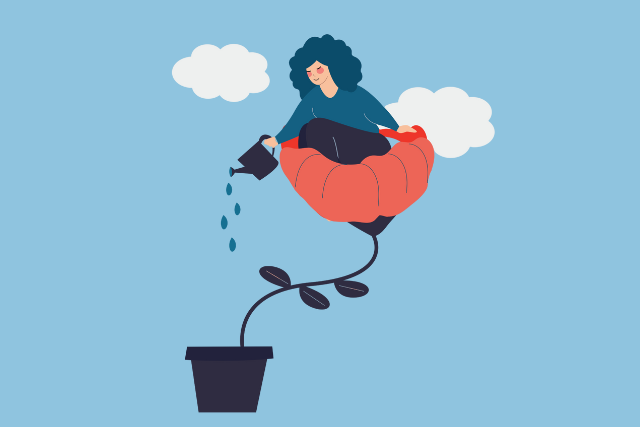
    It was only when I healed my deepest core wounds that I was able to change my patterns because I was no longer building from a foundation built on trauma but rather one erected in its place from self-love. Self-love that started as the tiniest seed and eventually grew into a mighty tree—much like the one at the top of this site.

    Not sure why you ignore your needs? Perhaps, like me, you’ve experienced some of the following.

    6 Reasons We Ignore Our Needs

     1. You grew up watching other people putting themselves last.

    If your parents or caregivers constantly neglected themselves while trying to please other people, you might have learned from their example that it’s selfish or wrong to put yourself first.

    They probably thought the same, and maybe for the same reason. Patterns of self-neglect, self-sabotage, and self-destruction often get passed on from generation to generation until someone says, “No more” and does the work to break the cycle.

    2. You learned, by how you were treated growing up, that your needs aren’t important, or as important as other people’s.

    If your parents or caregivers ignored or neglected your needs, regularly or as a form of punishment, you might have concluded that you’re not worthy of having your needs met, or that you deserve to be deprived in some way whenever you make a mistake.

    You likely didn’t realize as a kid that when your parents failed to show up as you needed them to, it was because they were wrong, not you.

    This doesn’t mean they were bad people or even horrible parents. Once again, they were likely repeating what they experienced as kids because they didn’t know any better. (But now you do.)

    3. You believe that having needs is somehow wrong or a sign of weakness.

    You might mistakenly assume that having needs is the same as being needy—perhaps because someone else ingrained this belief in you, directly or indirectly. Maybe by invalidating your feelings, gaslighting you when you spoke up for yourself, or shaming you for asking for help.

    But as I realized, there’s a huge distinction between having needs and being needy. And more importantly, when you’re able to recognize and honor your own needs, you’re not dependent on other people to do it for you. Which is the exact opposite of being needy.

    4. You believe prioritizing yourself is unsafe because other people might hurt, judge, or abandon you.

    If you were hurt, judged, and abandoned as a result of trying to honor your needs in the past, you might carry a subconscious fear that this could happen again. Consequently, you might feel panic even thinking about honoring your needs.

    And if you’re anything like I used to be, you probably don’t realize you’re better off losing anyone you could lose by speaking up for your needs.

    5. You believe you need to earn good things and that you haven’t done enough to deserve them yet.

    In our achievement-focused culture, it’s easy to conclude that you’re not good enough if you haven’t accomplished something impressive. If this is true for you, you might be putting most of your needs on hold until you achieve something that makes you feel worthy.

    In my twenties I spent many days and nights glued to a computer, thinking everything would be better in my life if I could just find a way to make a mark—and some decent money in the process. It didn’t occur to me that I could feel better right in that moment by stepping away, taking care of my needs, and allowing myself to be present while doing something I enjoyed.

    6. You’re living in survival mode, and your needs aren’t even on your radar because you’re focused on getting through the day.

    If you’re living in a state of chronic stress, due to trauma, grief, or burnout, you’re quite possibly doing the bare minimum,  just trying to keep your head above water. When you’re in survival mode, you have no energy left to focus on your needs, big or small.

    I experienced this when I was at my worst mentally and physically, struggling with depression and bulimia while also suppressing deep trauma. And I went through something similar (but far less life-threatening) as a chronically sleep-deprived new mother, without a village.

    If you were nodding your head while reading any of the above, you now have a good starting point for changing your patterns.

    The next step is to regularly check in with yourself and ask yourself two questions:

    • What do I need right now—physically, mentally, and/or emotionally—to feel and be my best?
    • What false beliefs do I need to challenge in order to meet that need?

    The first question requires you to get really honest with yourself and to let go of the instinct to judge your needs. Because they might be different from other people’s.

    You might need to share your feelings in a trusting space while someone else might not require the same type of emotional support in a similar situation.

    You might need to get up and move your body while someone else might be able to continue with the task at hand for longer.

    You might need time to yourself to recharge while someone else might be fine and even content with socializing for longer.

    The important thing to remember is you’re not them, and that’s not only okay but beautiful! Because honoring your unique needs allows you to show up as the best version of your unique self.

    As for the second question, when you pause and really think about why you might choose to deprive yourself, you give yourself the opportunity to challenge your instinctive behavior and overcome your conditioning.

    I’ve found that a tiny pause can be huge.

    In tiny pauses, I’ve realized I need to let myself cry instead of stuffing my painful feelings down, burying all hopes of joy with them. That this isn’t wrong or a sign of weakness but rather a precursor to feeling stronger.

    In tiny pauses, I’ve recognized that I need to get outside instead of isolating myself or forcing myself to be productive. That I don’t need to accomplish anything to be worthy of relief and connection.

    And in pauses somewhat longer, I’ve found the strength to speak up when someone mistreats or devalues me. Because I remember that, contrary to what I concluded when I was younger, I am worthy of love and respect.

    Knowing this is the key to honoring our needs. Because honoring our needs is the number one way we give these things to ourselves.
  • What You Need to Do If You Feel Insecure in Relationships

    What You Need to Do If You Feel Insecure in Relationships

    “The key is in learning how to live a healthy, satisfying, and serene life without being dependent on another person for happiness.” ~Robin Norwood

    When it comes to relationships, people can call you “crazy” and “needy” all they want. I can only guess some people don’t know how crazy it feels when every cell in your body feels like the only way to breathe is to stop this person you desire from abandoning you right now.

    You may not realize it as the emotions hijack your mind and body, but unconsciously, you only have one job in that moment—to stop history from repeating itself by keeping this person close. And so, you do and say everything you can to try and control the situation: the incessant texting, questioning, crying, overthinking, over-pleasing, phone checking, and the list goes on.

    Of course, in most cases, this person cannot leave you because they were never with you in the first place, either physically or emotionally. Either way, as soon as you get even the slightest hint of rejection and abandonment, you experience what I call “The Emotional Takeover.”

    Now, not for one second am I defending the unhealthy behaviors that you have in place in that instant, but I do understand them.

    Because it used to be me. I used to feel so insecure when I felt there was even the slightest threat to my relationship, and I would become preoccupied with ‘fixing’ the situation in any way I could. It was draining, upsetting, and hugely unsettling.

    I know you are not crazy because who you are in those times is not you. You must know that, while it is you that has not yet learned how to break free from that toxic pattern, how to walk away from people who are no good for you, or the art of self-soothing, it is not you.

    Sadly, you might not realize that, because it is likely you don’t know who the real you is. You’ve lost yourself to the fear of abandonment.

    If you relate to this, it is highly possible that, like me, you fall into the attachment style that is “anxious attachment.”

    We tend to experience anxious attachment when we had inconsistent love as a child. It is likely your relationship with your caregivers was unpredictable. As an adult, you struggle with feeling secure in relationships and may find that you experience a ‘need’ to be wanted and intense emotions of anxiety and jealousy when you sense this is being taken away from you.

    In a bid to keep people from leaving you, even the wrong ones, your internal blueprint is designed to put others first, to take on their feelings as your own, to prioritize what they want and need, to ‘fix’ them, to mother them, and to do what needs to be done in order to never be abandoned.

    I can honestly tell you the science of adult attachment styles has transformed my life. Not only does everything now make more sense to me, but I now understand that my perception of love was totally warped.

    For the anxiously attached, it’s hard to know what love is. Chances are, you haven’t had much experience of stability in love, especially from those you desired it most.

    It’s probably fair to say you’ve felt intense feelings you believed to be true love. You may have even felt this with one person and become fixated on them, or you may have felt this many times in your life, with different people. Yet there is always a question mark over it because deep down, you know that the love hurts and/or is not reciprocated.

    That is often what makes this attachment style so hard: the excruciating moments when you know you are being treated poorly, the times you consider you are in the wrong relationship, and the lack the belief you could ever leave.

    What makes it even tougher is how skilled you are at pushing that truth back down and fully convincing yourself that this person does love you back, and if you just work harder, it will eventually turn it to the right relationship.

    Often, the anxiously attached are attracted to the avoidants (hot and cold, suddenly not interested, giving you crumbs), and this makes for an incredibly difficult time. It’s not a match made in heaven because you have very different intimacy needs, and much to your dismay, you cannot change the way they feel about you or love.

    Trust me, I know how much that hurts to hear, but it’s best you hear it before you meet the next one, or the same one comes back around (again).

    I have come across many others with the same attachment style as me, all with a very distorted view of what love is, and I can’t help but notice just how much we love love.

    We love it so much, we think that without it, we are not worthy. Without it, we cannot be happy.

    That is why you settle for people who don’t meet your needs or chase the person that doesn’t see you or never allow yourself time to just be on your own.

    As impossible as it sometimes feels, I can tell you with absolute certainty that you can break free of this pattern.

    I’m not saying I’m perfect, and that I don’t feel the feels or drop the ball from time to time, but I now know how to manage the intense emotions, how to recognize the unavailable guy before I’m in too deep, and how to live life as securely as possible (note: secure attachment is considered the healthy style).

    You are no different than me; you too can tap into the mind-set of the secure attachment style so you can be happy on your own, invite in sustainable love, or where possible, save your relationship.

    Below, you will find the top seven tips that have helped me to become happy in myself and more secure in my relationships:

    1. Try to resist overthinking.

    If you’re insecure in love, one pattern we have in common is overthinking. Thinking about the potential of the person you ‘love’, overthinking why it ended, overthinking why they haven’t texted, overthinking why they canceled on you, overthinking their latest Instagram post, overthinking how you can get them back, overthinking what they really feel… overthinking.

    Your brain feels threatened, and you are trying to think of every single reason this could be happening and of every single solution to solve it. But it’s an impossible job because there is nothing to figure out right now. Remind yourself that the stories you are making up are adding to your stress, and as much as you can, be in reality rather than wasting your precious time searching for closure or answers that do not exist.

    2. Beware of chemistry.

    You know when you’re with someone and you have that rush of love and excitement even though you hardly know them or they are treating you poorly? That feeling is not love.

    That feeling is what you perceive to be love, but it is not love. It’s the rush of an activated attachment system, the feeling of familiarity. Feel like you’ve met this person before? You have, in many of your other relationships from childhood through to now.

    It’s your job to re-wire your pathways to see that this feeling is not love. That ‘chemistry’ you feel must instead become your warning sign that this may be the kind of person you need to consider backing away from.

    3. Give up on the love you desire most.

    This is usually the love of a parent. No matter how many of these people you attract, they will never be the love you desire the most. I know that’s sad, but I can’t sugar-coat it for you (us). I’m not saying miracles don’t happen, but I just think you have so much potential in this life, and seeking that love and approval is holding you back.

    We all know how parents and caregivers ‘should’ love, but it is simply true that not everyone is able to or knows how to. Rather than try and fix the past or change your past experience with love, your time is better spent figuring out a more realistic and secure view on love. You cannot change your past, but you can influence your future.

    4. Pick yourself.

    If you ever felt in any way that one or both of your parents did not pick you, you may find you have a mission to get picked now.

    Ever feel like you are second best to the person you desire? You are attracted to that. On a subconscious level, you have found a person where you can continue your fight to be picked.

    Deep down, way beyond any conscious level, you believe that if you can get this person to pick you then it undoes the very abandonment that got you here in the first place.

    As a child, I wanted to be picked over drugs. As an adult, I found people who were ‘too busy’ with work, sports, and/or drinking. I spent my time trying to make them pick me because I thought I needed that to prove my worth.

    Learning to pick myself and quit seeking that external validation meant I am able to live my life confidently and not settle with anyone that has a highly different values system to me.

    5. Master the art of emotional intelligence.

    Here’s the thing, those with anxious attachments styles do possess a very unique skill in noticing when there is a slight shift or indication that there is a threat to the relationship. As soon as that is noticed, you get triggered, the old familiar feelings take over your whole being, and your only mission is to do what you can to save this relationship.

    You must come to understand that the emotion you feel is simply a stored memory from your past. This is your bodily response to abandonment.

    Take time to notice where you feel it in your body, and what happens to you physically, and name the emotions that you feel in those times. These symptoms should become your greatest warning sign that your anxious attachment system is activated, and it’s time to soothe yourself, the same way you would a child who is feeling overwhelmed because their mother has popped to the kitchen for five minutes.

    6. Own your needs.

    It’s time to get real about your own needs because I have news for you, your needs count too.

    Life isn’t enjoyable for anyone that goes through it without their own needs being met.
    So, get to work and write out what needs you have in your relationships.

    Not only will this exercise highlight to your subconscious mind that you actually have needs, it will make it more likely that you admit it to yourself when they aren’t being met—so when you do find yourself back in the unhealthy pattern, it will be harder to lie to yourself about what this person brings to the table and how real this relationship really is.

    It will become less likely that you will stay in the situation when you are working on this kind of conscious level and understanding.

    7. Create something bigger for yourself.

    I call this “Following Your Fire.” Whether you know it or not, you have a purpose, you have desires, and you have unique gifts to bring to this world.

    When it comes to experiencing a real level of contentment and being able to walk away from crumbs, finding what lights me up as an individual has been the greatest move I have ever made.

    I created a life that I care about. I nurtured the right relationships, I found the activities that I truly enjoy on a soul level, and I followed my deepest dreams that I had otherwise buried. While a healthy love is something I desire, I know for sure that my life is way more than that. That makes it so much easier to walk away from what does not serve me.

    ***

    When you begin to practice the tips above, you likely won’t see progress straight away, but every now and then you will have monumental moments where you’ll see your growth and give yourself a high five.

    When you get to know your attachment style and build a life that you adore, your confidence and self-worth will grow, and you’ll find yourself at a point where you won’t sacrifice your happiness for a person that doesn’t see your value.

    You’ll decide that being single is nowhere near as bad as the anxiety that comes from the unhealthy relationships you’re used to. The fear of spending your life with someone who cannot meet your needs will become scarier than being single.

    We may always be anxiously attached, but we can learn to live a secure life. So what are you waiting for?

  • How to Develop Self-Love and Why This Will Strengthen Your Relationship

    How to Develop Self-Love and Why This Will Strengthen Your Relationship

    Happy Couple

    “An outstanding love doesn’t come from two half-fulfilled people coming together to make one whole, complete life. Outstanding love comes from two whole people coming together to share and enhance their already full and beautiful lives.” ~Pia Scade

    My partner and I were having a conversation about our relationship recently.

    We both told each other just how much we loved the relationship. We weren’t talking about how much we love each other, but about how much we enjoy this shared space between us, this thing we call our relationship.

    We enjoy giving to it and nurturing it. We enjoy receiving from it. It challenges us on a regular basis, but ultimately those challenges make us better people.

    We feel that the relationship enhances us as individuals and makes us happy. We don’t need it, we don’t depend on it, but we sure do want to keep it.

    It wasn’t always like this for me. With past girlfriends things always started out well, but over time my insecurities would take over.

    I would lose my sense of self and become absorbed into the relationship. I would come to depend on the partnership for satisfaction, happiness, validation, and self-worth. My other half was often equally struggling.

    The result was that the positive energy in the space between us got drained. The more needy we both became the more toxic it got.

    We clung on because we thought we needed each other but we became resentful and started to hate the relationship. Neither of us was doing anything to nurture our love. We hung on until it got so bad that somebody snapped, and then it ended.

    The difference between then and now is self-love. In the past I was insecure and needy, and I didn’t yet know who I was or what I wanted from life and from love. My partners had similar problems and inevitably my relationships would eventually turn sour.

    Now, after a lot of personal growth and self-actualization, with a partner who has also done the same, I can genuinely say that I love myself and I am glad to be me.

    Self-love means now that I also love my relationship. I don’t depend on it, as I did in the past, and it doesn’t take away my individuality. It enhances me.

    It seems like such a simple concept but it was a big epiphany when we both came to realize it in our recent conversation.

    We love ourselves, we love each other, but long after the rose tinted glasses have come off, we love this thing called “us.” As partners, teammates, friends, and lovers we think the space between us is awesome.

    Learning Self-love While In A Relationship

    It can be difficult to be in a relationship if you don’t have a great deal of self-love. Often the insecurities will lead to conflict, and sometimes the conflict will lead to a breakup.

    A common piece of advice is that you have to learn to love yourself before you even get into a relationship.

    But what if you are already with someone? Does it mean you have to part in order to do the work on yourself before finding love again? Do you have to meet some arbitrary self-love prerequisite before you qualify for a relationship?

    Of course it helps to be entering a relationship with a strong feeling of self-love. But I also think that if you are in a partnership where self-love is lacking, and the space between you is needy, irritating, and harmful, things can be turned around.

    Learning self-love is an ongoing process. It’s not a switch you can just flick on. Even couples who have a healthy amount of self-love could have more.

    How To Develop Self-Love If You Are In A Relationship

    1. Maintain a degree of space and independence.

    It’s unhealthy to allow the relationship to absorb your identity and to lose yourself as a person. Keep your own rituals, your own activities, and your own friends. Spend a healthy time apart doing your own thing to nurture your soul.

    2. Remember you are the master of your own happiness.

    Your partner can’t make you happy. Only you can do that. He or she can enhance the happiness that you nurture in yourself, but it is not their responsibility to make you happy. If you rely on them for happiness you will drain the space between you. Make sure you take the responsibility yourself.

    This isn’t an easy thing to do and is a habit that you need to develop over time. It starts with adopting a mindset that happiness is a choice, meaning you give yourself the power to cultivate happiness for yourself. It’s difficult and it’s hard work, but it’s liberating because you refuse to allow your happiness to be dictated by your circumstances or by other people.

    Choosing happiness means accepting the truism that the only person you can change is you. Instead of looking to change others, you work on yourself and make sure you meet your own needs.

    Another way to take responsibility for your own happiness is to choose to be present. If you wait for the perfect conditions before you allow yourself to be happy, then you will always be waiting.

    Instead of saying, “I’ll be happy when…” you choose happiness now. You quiet thoughts of the past or the future and decide to be happy in the moment.

    Doing the little things that make you happy helps with this. Embrace the small daily moments you have to nurture yourself, like sitting down with a cup of tea or taking ten minutes to meditate. This can help quiet your mind, allowing you be present and to find a moment of joy in your day.

    Working through your baggage from the past can also help you feel lighter and more present and makes it easier to choose happiness. Yet working through past pain is an ongoing process, and while it’s good to do it, it doesn’t have to hold you back from choosing happiness.

    It doesn’t have to be, “I’ll be happy once I overcome my baggage.” You can be happy right now.

    3. See in yourself what your partner sees in you.

    Insecure people struggle to see anything good in themselves and are often dismissive of the positive things their partner sees.

    Ask you partner what they see in you and what it is about you that they love. This is a great date night exercise for couples. Write a list of twenty things you love about each other and take turns reading them out.

    If you do this regularly you will slowly take it onboard and internalize it and start to believe it about yourself.

    For example, I used to be critical of myself for being too reserved and boring. But I’ve come to realize that my partner really appreciates my ability to keep an even keel when in rough emotional waters.

    My highs aren’t that high but my lows aren’t that low. Instead of seeing this as me being boring and something to be critical of, I now see it as a sign of strength and something valuable that I bring to the relationship.

    In a relationship you aren’t just learning about the other person, you are also learning about yourself.

    4. Don’t get disheartened when you see your flaws.

    On the other hand a relationship will also hold up a mirror to your flaws. Things you have learned to live with about yourself may irritate your partner.

    We all have our flaws. Some things can be ignored; others might be something you want to work on. Either way, don’t let it get you down or get in the way of self-love.

    Exposing flaws is a natural part of a relationship; it doesn’t mean you are a terrible person or that you are unlovable.

    5. Forgive yourself for your failings.

    Holding a grudge against yourself gets in the way of self-love. It’s inevitable in a relationship that there will be times you say or do things that you regret. Don’t beat yourself up about it.

    6. Remember love is an action, not a feeling.

    Wise minds have always maintained that love is something you choose to do, not an emotion that you feel. This is often said about loving another but the same is true about loving yourself.

    Even if you don’t feel like you love yourself, choose to act in a self-loving way. Make time to nurture yourself and fulfill your own needs.

    The best way to do this is to schedule “me time” everyday. This is a period where you put yourself first over any other commitments or other people. Do simple activities that you enjoy. For me it’s going to the gym, reading the news, and eating a quiet breakfast. Some like to meditate, do yoga, or read.

    It’s all about creating a little self-love ritual. One session might not make a big difference, but if you can make it a regular daily habit then the cumulative benefits will add up.

    I’ve been won over by the early riser brigade that the morning is the best time to schedule this, as there are no other distractions. Every day for the last year I have woken up an hour earlier than normal so that I have my daily self-love time. You may prefer to do it in the evening as a wind down before bed, but either way, make it a priority.

    Remember that self-love is important for enjoying a happy, healthy, and respectful relationship. When you are secure, confident, and feeling good about yourself you feed positive energy into the space between you.

    If you are feel that you are struggling in your relationship, focus on yourself, work on self-love, and you will see things improve.

    Happy couple image via Shutterstock

  • Why Self-Love Is The Key To Finding True Love

    Why Self-Love Is The Key To Finding True Love

    “The way you treat yourself sets the standard for others.” ~Sonya Friedman

    The moon was shining brightly that balmy summer’s night in the park. He’d arranged a meeting to “sort things out.” Little did he know I’d finally built the courage to walk away. And that’s exactly what I did.

    I was devastated but mostly relieved. Finally, I was free.

    For the longest time I’d craved his love. I needed his approval. I wanted the happy ending so badly.

    Why? I meant something when I was with him. I felt worthy and kind of secure.

    But I wasn’t. I’d given away all of my power. I was dependent on him to feel love.

    And he knew it, so he treated me however he wanted. For him it was a game, and every problem in our relationship somehow always came back to me.

    I was needy, insecure, and completely out of touch with who I was and what I really wanted. I’d sacrificed everything about me in an effort to try to please another being.

    He told me I wasn’t sexy enough, so I read book after book about how to be more feminine and alluring. He told me I was too quiet, so I went out of my way to be outgoing, happy, and bubbly. He told me I took up too much time, so I made other plans and disappeared for a while.

    He could have told me anything and I would have accepted it. There wasn’t an ounce of self-respect in my bones. My misery was born from this very fact.

    I’d let this happen for so long. It wasn’t entirely his fault. My neediness and lack of self-worth had created and perpetuated our problems. But for some reason that I can’t explain, that evening a spark had been ignited and I’d finally had enough.

    I’d reached my pain threshold. I was completely done with feeling miserable, doubting myself, and feeling disrespected. I was so over letting someone else control my decisions, emotions, and self-worth.

    I’d begun to love myself a little more than I loved him. A butterfly was emerging from the cold, dark cocoon I’d been hiding in my whole life. It felt new and scary but ridiculously empowering and liberating.

    In a moment of clarity a string of epiphanies melted my confusion:

    • Deep love comes from within.
    • I’ll never be satisfied just with love from someone else.
    • If I don’t authentically love myself, I can’t expect anyone else to truly love me.
    • The way I treat myself shows others how I expect to be treated.

    That evening I vowed to put myself first and to be kind, loving, and generous with myself. This is the way I wanted to be treated. Out of self-respect and needing a fresh start, I walked away. From that point on it was my intention to live my life on my terms.

    It might sound selfish, but it was completely the opposite. And it eventually led me to the life-long relationship of my dreams.

    What’s The Real Impact Of Neediness On Relationships?

    I wholeheartedly believe that sharing the joys and wonder of life with another being who lights up your world is absolutely priceless. There’s nothing like it. It’s one of the greatest joys on Earth, and something every human being deserves to experience.

    But it’s extremely hard to find this happiness with another if you’re in a relationship with a need to be filled up by someone else.

    Being needy, insecure, and trying to gain approval and a sense of self-worth from your partner puts a huge amount of pressure on them, and it’s a major turn-off.

    It’s an unachievable task because feeling inherently loved and worthy comes from within. Not from your partner.

    An outstanding love doesn’t come from two half-fulfilled people coming together to make one whole, complete life. Outstanding love comes from two whole people coming together to share and enhance their already full and beautiful lives.

    An amazing relationship comes about when we own and appreciate who we are and completely accept the other person for who they are.

    So loving and putting you first is not selfish, it’s necessary. It’s imperative to creating the wonderful love and life we all desire. And let’s get something straight—loving yourself doesn’t deplete the love tank; it actually fills it up so we have even more to give.

    What Does Self-Love Really Look Like?

    It’s prioritizing your dreams and making an effort to do things that inspire and light you up.

    It’s saying no to things you don’t agree with or that don’t fit in with your plans.

    It’s deciding to spend time with people who support, encourage, and motivate you to be the best version of you.

    It’s owning your thoughts and opinions and refusing to be swayed in order to please others.

    It’s being gentle with and talking kindly and sweetly to yourself.

    It’s having the courage to try new things that you’ve always wanted to experience.

    It’s taking time out to nourish your mind, body, and soul—exercise, eating well, alone time.

    It’s trusting your intuition and honoring your own truth.

    It’s spending money on things that make you feel amazing while investing in your future.

    It’s daring to believe that you’re capable of achieving and creating the life you visualize.

    It’s choosing to see the good and refusing to let others bring you down.

    It’s gifting yourself forgiveness and accepting yourself for all of your beautiful and not-so-cool quirks and qualities.

    How Does Self-Love Create A Great Relationship?

    When we truly love and respect ourselves, we’re free from doubt and endless worry, so we trust our feelings and decisions. It allows us to be courageous and authentic.

    We begin to live from the heart and play a bigger, kinder, more generous version of life. We forget our self-imposed boundaries and dare to dream larger and wilder.

    We stop focusing on negativity and become present to the beauty and possibilities within and outside of ourselves. We realize how great our lives are and open the doors for gratitude to flow in abundance.

    We start to emanate happiness, confidence, playfulness, peace, and positivity.

    It’s electric and like a powerful magnet to others. Your ideal partner will be drawn to you like a bear fresh out of hibernation looking for his first meal.

    And once you find that special one, love will be easy.

    It’ll be natural. It’ll flow freely without judgment or pretense. It’ll inspire and nourish you. Your lives will be even richer, happier, and more vibrant than ever.

    And you’ll wonder why you didn’t take the time to fall radically in love with you just a little bit sooner.

  • Learning to Stop Clinging to People: Know That You Are Loved

    Learning to Stop Clinging to People: Know That You Are Loved

    “As long as you make an identity for yourself out of pain, you cannot be free of it.”   ~Eckhart Tolle

    I have a heart condition. Not one that you could see on an x-ray, or even one that you would find in a medical textbook.

    For as long as I can remember, I have felt like my heart has had a gaping hole in it—and I’ve been stuffing anyone, anything into that space to try and feel a little less empty. A little less alone.

    The first day of my freshman year, I met a girl.

    We spent the rest of the day together and discovered we had an uncanny amount in common, including our values and a passion for the violin. We even had the same name. So I decided then and there that she would be that college friend that everyone talks about, that friend with whom you share everything and never lose touch, even after you’re both old and gray.

    I had decided she was the perfect shape to fill the hole in my heart.

    I then proceeded to spend as much time as possible with her and her friends, ignoring the people I had grown close to in my dorm. I even declined invitations from classmates to go out to eat, get a coffee, or even just go with them to the library; I wanted to be available in case she and her friends decided they wanted to do something with me.

    Yet even though I thought I had finally found a group of people that made me feel complete, there was always this underlying fear—a fear that they were just pretending to like me, that I was a second-class citizen in this clique.

    And then she broke the news to me. “You make our group dynamic awkward,” she said. “We think you should go find some other friends.”

    I was devastated.

    My heart now felt even more empty and alone than it did before I met her, because I had built an identity for myself based on a friendship I had forced—a relationship I had made fit simply because it was there and available.

    After that, I slowly started spending time with my other friends and started enjoying their company again, but I still withdrew and isolated myself.

    I couldn’t imagine that anyone would want to spend time with me if she and her friends didn’t, and that perception made it almost impossible to believe anything good anyone said about me. (more…)

  • You Deserve Love, Including Your Own

    You Deserve Love, Including Your Own

    “The amount of happiness that you have depends on the amount of freedom you have in your heart.” ~Thich Nhat Hanh

    Several years ago, I was in an unhealthy and unhappy relationship. It didn’t start out that way, of course. During the first year that we were together, I was in heaven. I was blissfully happy and everything seemed perfect.

    My partner and I were so in love and happy just to be together; you couldn’t keep us apart.

    It was years later that the trouble started. It was when my husband reconnected with a woman from his past that our marriage started to fall apart. It is hard to say if things would have fallen apart in time anyway, but this other woman certainly contributed to bringing us unstuck.

    My husband told me that they had never been a couple, but that he used to be extremely attracted to this woman. She had recently moved to our city so he offered to help her out and get her familiar with the surroundings. I thought nothing of it at first because I thought I could trust my partner completely.

    Eventually though, I noticed that he was spending more time with her, and when I would ask him about it, he always made it seem like I was a bad person for being suspicious.

    I started reading messages on his phone when he was asleep because my gut instinct was telling me that something was not right.

    When I confronted him with the incriminating messages, he got very angry. He denied everything and berated me for having so little faith in him. All of this made me quite depressed, and eventually I became very bitter. We were fighting almost constantly over the smallest things.

    I was bitter with the world and, yes, I became bitter with myself. I did not like the person I had become.

    I was always stressed out, suspicious, and unhappy. I blamed myself for the status of our relationship. I started believing that I was the one at fault and that he was the injured party.

    After some time, his affair with the woman finally came to light and we broke up. Even after having confirmed that all my suspicions were correct and that I had done myself a favor by ending the relationship, I was still extremely unhappy. I still carried a lot of bitterness inside me.

    I could not understand why something so bad could happen to a good person like me. I was angry with my ex and was equally angry at the world. (more…)