Tag: needs

  • 11 Important Things I’ve Learned in 11 Years of Marriage

    11 Important Things I’ve Learned in 11 Years of Marriage

    “A great marriage is not when the ‘perfect couple’ comes together. It is when an imperfect couple learns to enjoy their differences.” ~Dave Meurer 

    My husband and I will soon be celebrating our eleventh anniversary. By no means do we have the perfect marriage or are we the perfect couple. Over our eleven years of marriage, I’ve recognized a few critical areas needed to build a solid and lasting union as a couple.

    Here are eleven things I’ve learned in eleven years of marriage.

    1. Communicate.

    In the early days of my marriage, I was terrible at communicating my feelings with my husband. Rather than sharing what was bothering me, I suppressed my feelings, hoping he would read my mind.

    Over the years, I’ve learned that my spouse is not a mind reader, and if something is bothering me, I need to talk to him about it so change can occur.

    Both parties must be willing to communicate openly for a marriage to succeed.

    Admit when you both are not aligned with each other. You don’t always have to compromise or give in, as doing this will make only one of you happy. Instead, find common ground by communicating your feelings honestly and looking at things from each other’s perspectives.

    2. Support each other.

    As a couple, we’ve always supported each other’s dreams—big or small.

    Last year, my husband needed to move across three provinces for work.

    While I didn’t see that in our future and wasn’t a fan of moving, I knew what it meant for him.

    He’s always been an enormous support and constantly encourages my growth in business and my personal life. Without a shadow of a doubt, I knew I needed to stand by him and make a move, so we did!

    Even when difficult, we must give each other support to grow.

    3. Apologize to each other.

    I’m not always the best at apologizing, but I’ve improved over the years. I’m mature enough today to say, “I’m sorry” or “I apologize for XYZ.”

    In the past, I was way too proud to say I was sorry or even acknowledge I was wrong, but over the years, I’ve learned to apologize rather than start a small conversation and carry on as usual without owning or acknowledging the argument.

    Saying I’m sorry shows that we validate each other’s feeling and are willing to work through our disagreements.

    Saying I’m sorry also promotes that we are a mistake-making couple, willing to improve ourselves while lifting each other up.

    4. Set boundaries with relatives.

    Relatives love giving their two cents in relationships.

    We had a lot of comments from relatives regarding when we should start a family. The choice to exclusively breastfeed both of our kids also got a lot of criticism (especially with the first one).

    The most recent was when my spouse had to move across the country due to work, his parents suggested he shouldn’t.

    We learned the importance of setting boundaries with family members early as a couple—being brave and bold enough to say, “Thanks for the advice; however, we will make a decision best suited for our season of life and our family.”

    5. Have common goals.

    My spouse and I are total opposites. But I believe that our differences complement each other.

    Not all of our goals are the same. My husband has his personal goals, and so do I. But we, as a couple, have common goals and key areas we agree upon. For example: how we raise our kids, invest our money, spend our time, plan vacations, give gifts, and so forth.

    6. Make time for each other.

    As a couple with two young kids, we are constantly interrupted. That’s the season of life we are in, and we openly embrace that.

    In fact, we enjoy incorporating our kids into almost everything we do, spending as much time as possible with them.

    However, once the kids are asleep, we spend an hour or so every night intentionally chatting and catching up before heading to bed.

    7. Don’t judge or criticize each other.

    After eleven years of marriage, I’ve realized there’s always going to be something he does that irritates me. Likewise, some of my actions will annoy him. It’s an inevitable part of being married.

    I no longer get frustrated when he changes and leaves his PJs on the bed. Instead, I put them in the hamper for him.

    Paying attention to all your spouse’s quirks and quickly getting annoyed will only hinder you from seeing their endless good qualities.

    8. Show interest in learning more about each other.

    When you’ve been with someone a long time, it’s easy to assume you know everything about them, but there’s always more to learn and understand, and curiosity can keep a relationship fresh and exciting.

    Even though we’ve been married for over a decade, there’s still so much to be known.

    I’m always interested in learning more about my spouse, listening attentively to him, and noticing what triggers him when he’s looking at the news, or what is of interest to him when he’s playing a game, watching a movie, or playing with the kids.

    9. Choose not to keep score.

    Tit for tat never works well and is quite unhealthy for any relationship.

    Of course, both people should have time and the ability to nurture their own interests. But if you think you need to find a new adventure as some sort of payback for your partner golfing all afternoon, you’re probably breeding resentment.

    10. Avoid running to your parents or best friend to complain about trivial matters.

    Arguments in marriage are inevitable, and disagreements can be healthy. I believe they provide an opportunity to learn something new about each other.

    The more people you involve in your affairs, the more complicated things get because it’s tempting to let them influence you instead of making the choice that’s right for you and your relationship.

    When spouses sit together and have an honest, open, thoughtful conversation, they can understand each other better.

    11. Be playful.

    Over eleven years of marriage, I’ve recognized the importance of not always talking about mundane activities and things happening worldwide. Our hearts can easily become heavy when we focus on everything that’s going on in the world.

    As a couple, you must take a moment and indulge in life’s light-hearted, playful side. Sometimes, for us, this involves looking at funny TikTok videos together or sending funny text messages to one another.

    This allows us to add joy and bring a much-needed sparkle into our life.

    Marriages are not always easy. We’ve got stats to prove it, right?!

    Today, I feel blessed and thankful to be entering another year of marriage with my husband.

    I’m ready to learn, grow, and aspire to be the best version of myself while supporting him to be the best version of himself.
  • The Best Approach to Self-Care: How to Attend to Your Unmet Needs

    The Best Approach to Self-Care: How to Attend to Your Unmet Needs

    “Caring for your body, mind, and spirit is your greatest and grandest responsibility. It’s about listening to the needs of your soul and then honoring them.” ~Kristi Ling 

    There’s something I haven’t told many people. I kept it to myself because it clashed with my “identity” and the image I hoped to project (hello, ego!).

    I’ve been creating content and working in the spirituality and personal development fields for a number of years. Although I don’t strive to become like Buddha, there’s a part of me (call it my spiritual ego) that expects certain things of me, such as to remain at peace, content, and emotionally well-regulated most of the time. After all, isn’t it what meditating daily is supposed to do?

    Well, last year, I did not feel that content or peaceful. I felt quite depressed, and rarely did meditation make me feel better.

    So I turned to wine. Most evenings, I had a couple of glasses of wine (sometimes three or even four) to forget how bored and unhappy I was.

    “I’m a fraud,” I kept thinking while sipping on the red liquid.

    I tried other things (besides wine) to feel better that helped, like gratitude journaling and spending more time in nature. Although these things did improve my mood, there was still a void within me that even gratitude didn’t manage to fill.

    It was when I read an article about humanistic psychology and the use of Maslow’s Pyramid of Needs in therapy that I became aware of the real cause of my “wine habit”: unmet needs.

    “What do I really need?” I started asking myself every time the impulse to pour a glass of wine arose.

    At first, I’d still give in to the wine, probably out of habit. But eventually, using Maslow’s Pyramid of Needs as a guiding tool, I was able to identify which of my needs weren’t satisfied and what actions I needed to take to fulfill them.

    That’s true self-care,” I thought.

    I realized that a self-care plan requires more than a checklist downloaded from Pinterest. It demands a life inventory, identifying our unmet needs, and taking the right actions to fulfill them.

    Simply put, a bubble bath isn’t the best solution for everyone or any issue.

    I’d like to share with you my new approach to self-care that aims to satisfy our deepest needs rather than providing short-lived comfort.

    Step 1: Become aware of your unmet needs.

    The first step is awareness. Although it’s not necessary to use Maslow’s Pyramid of Needs to identify what we want, it provides a helpful framework to guide our reflections.

    I recommend going through each level of the pyramid and taking the time to reflect on your life. A good way to do this is through journaling.

    Below are a few reflection questions for each category of needs to help you identify what’s missing in your life and may be preventing you from thriving.

    Physiological Needs

    These include basic physical needs like eating, drinking water, and sleeping. Self-care at this level comprises rest and giving our bodies the proper fuel and nutrients to function optimally. You could ask yourself:

    • Am I eating enough whole and nutritious food to nourish my body?
    • Do I feel rested when I wake up in the morning?
    • On a scale of 0-10, what’s my energy level most of the time?

    Although most of us have no issue feeding ourselves, a deficiency in rest and nutrients is fairly common. For example, after running a few blood tests, I discovered that my iron levels were too low, which explained my low energy. After supplementing for a few weeks, I started feeling better.

    Security and Safety Needs

    Safety includes income and job security, health, and the environment in which we live. Questions you could ask yourself are:

    • Do I have sufficient financial resources to sustain myself and feel comfortable?
    • Do I often feel stressed and anxious? Do I have tools to help me relax?
    • What’s the state of my physical, mental, and emotional health?
    • Overall, do I feel safe?

    Social Needs

    These are the needs for love, acceptance, and belonging, which include friendships, romantic love and intimacy, and family life.

    The void I felt in the past two or three years mostly came from unmet needs in this category. Several people I knew moved away, and my relationship with a partner ended. Plus, after a year of isolation, I forgot how to connect with people, and the idea of socializing almost gave me anxiety (even though that’s what I needed the most).

    Here are a few questions you could ask yourself to uncover unfulfilled needs in this category:

    • Are there people around me whom I can count on?
    • Do I feel accepted and supported by the people around me?
    • Do I regularly interact and bond with people, or do I often feel lonely?
    • Overall, are my relationships satisfying to me?

    Esteem Needs

    These are the needs for appreciation and respect, which include having a healthy sense of self-worth and feeling valued.

    I worked hard in my twenties and early thirties on improving my self-esteem, but I can still remember the destructive impact of low self-worth on my quality of life when I was younger. Self-esteem needs are foundational for having healthy relationships, taking care of our bodies, and pursuing our goals and dreams.

    Questions you could ask yourself are:

    • Do I feel appreciated at work, at home, and within my group of friends?
    • Is my self-talk mainly positive or negative?
    • Do I believe I have good qualities? Do others appreciate those qualities?
    • Overall, do I feel good about myself at work, at home, and in social circles?

    Self-Actualization Needs

    Maslow defined self-actualization as “fulfilling our potential.” It includes feeling a sense of purpose and growing and evolving as a person.

    For most of my life, I had “purpose anxiety.” Nowadays, living my purpose is one of the most important aspects of my life and what sustains me in difficult times.

    Doing what we love and using our gifts toward a vision that matters to us gives us fuel to move through challenges.

    You could ask yourself:

    • Do I feel like my life is meaningful and has a purpose?
    • Does the work I do fulfill me?
    • Am I using my skills and natural strengths in ways that are enjoyable to me?
    • Am I constantly growing and evolving?

    Self-Transcendence Needs

    Self-transcendence is about feeling connected to others and all life and acting accordingly. At this level, we have a desire for contribution, service, and impact. The need for a spiritual practice and connecting to a higher power are also part of self-transcendence.

    Questions you could ask yourself are:

    • Am I making a positive impact on others and the world?
    • Do I feel connected to others, nature, and perhaps a higher power?
    • Am I satisfied with my spiritual practice and/or the legacy I’m leaving?

    Leisure Needs

    I’ve added this category to the list because I believe play is another important contributing aspect to our well-being.

    A lack of fun and laughter can negatively impact our mental health—at least, that’s been my experience in the past few years. Along with unmet social needs, a lack of play was my biggest source of dissatisfaction. I had become overly serious and forgot how to have fun. I couldn’t even remember that last time I had laughed.

    Questions you could ask yourself are:

    • Do I have fun at work, at home, and in my free time?
    • How often do I laugh?

    Step 2: Identify what requires your immediate attention.

    After going through these questions, I rated each category of needs on a scale of 0 to 10, assigning 10 to the areas that most required my attention. For me, those areas were leisure and social needs.

    This meant that doubling down on my meditation practice or having a daily green smoothie would likely not be enough to break my “wine habit.” Or, better said, they weren’t what I truly needed.

    I needed to have more fun, laugh, and play. I needed to bond with people more, have deep and meaningful conversations, and expand my social circle.

    Once you’ve identified which of your needs aren’t fulfilled, you’re ready to brainstorm solutions.

    Step 3: Brainstorm ways to fulfill unmet needs.

    Once we know what’s “off,” we can think of ways to improve the situation.

    “How can I have more fun?” I asked myself.

    I reflected upon times when I had the most fun in the past and wrote those down. I also wrote any other ideas that came to mind, from watching funny dog videos to going to a comedy show. I made a list of ways to have more fun in my journal and made an effort to do at least a few of them every week.

    Step 4: Choose one small action and schedule it.

    After brainstorming, it’s time to take action. I recommend picking at least one idea on your list and scheduling it.

    A few weeks ago, I decided to attend a Kundalini yoga class followed by a dinner with the teacher and fellow students. It was an opportunity to meet new people.

    I knew that, as an introvert, the risk I would cancel at the last minute was high. Therefore, I immediately purchased the ticket and scheduled the class in my planner. I’m glad I did; I met new people, laughed, and had interesting conversations.

    Self-care activities are more likely to happen when we schedule them.

    . . .

    I could summarize this article with one question: “What do you really need?”

    Taking the time to make a life inventory, identify our unfulfilled needs, and then take action to satisfy them—that’s proper self-care.

    The difficulty is that, sometimes, we don’t even know what we need! I find Maslow’s Pyramid of Needs a helpful tool to guide our self-reflection.

    I hope it can help you too.

  • How to Deal With Low Moods: A 4-Step Plan to Help You Feel Better

    How to Deal With Low Moods: A 4-Step Plan to Help You Feel Better

    “And some days life is just hard. And some days are just rough. And some days you just gotta cry before you move forward. And all of that is okay.” ~Unknown

    I have always struggled with low moods. I guess that considering that I spent close to twenty years of my life inactive and depressed, this could be seen as progress. But that still didn’t feel good enough.

    I wanted to feel more balanced, light, and happy, and I wanted to achieve it in natural ways without having to take any kind of medication since that hadn’t worked for me in the past.

    So I began to research. I asked around. I read books. I watched videos. I became a psychotherapist.

    Most people can’t tell you how you shift out of low or bad moods. Sit with it, they say.

    And sure, that is a huge help because, up until that point, I would beat myself up over being in a low mood, which just made things worse.

    So ditching that beating-myself-up habit did help a lot.

    But here’s how I went further with it.

    During my studies and my experiences as a psychotherapist, I realized that everything has a cause. It might look random, but it never is. So there had to be a reason for my low moods. It was time for a lot of self-observation and self-exploration.

    Funnily enough, my work with my clients helped me uncover what I was looking for. It is, after all, always so much easier to see it in other people than it is to find it in yourself.
    I discovered that my moods were primarily linked to two things.

    The first one was needs, or more accurately, unmet needs.

    The second one was feelings, unexpressed feelings.

    Before my healing journey, there was no way for me to change my mood in any way because I wasn’t aware of my needs, and all I ever did was suppress and inhibit my feelings.

    Both of these things logically result in low moods.

    So why didn’t I meet my needs or feel my feelings? These simply weren’t things I had been taught how to do. In fact, suppressing my feelings was encouraged. No, it was demanded.

    If I didn’t, I would get punished. I would get hit. And a child learns very quickly how to keep themselves safe, so that’s what I did.

    I remember this one time I got bullied really badly. As I walked into the family home, I collapsed on the floor and cried. This was not something I had ever done before. It was a rare occasion. I had a proper breakdown.

    My mother looked at me in disgust, stepped over me, and carried on with cleaning the house.

    I don’t exactly remember how long I lay there, but it must have been a long time because she repeatedly stepped over me and ignored me in my pain.

    So that’s what I learned to do to myself.
    Whatever was going on, I ignored it.

    I never stopped to ask myself what I needed or how I felt. I didn’t give myself any reassurance or encouragement. I didn’t help myself in any way, so my only go-to point was depression or a low mood.

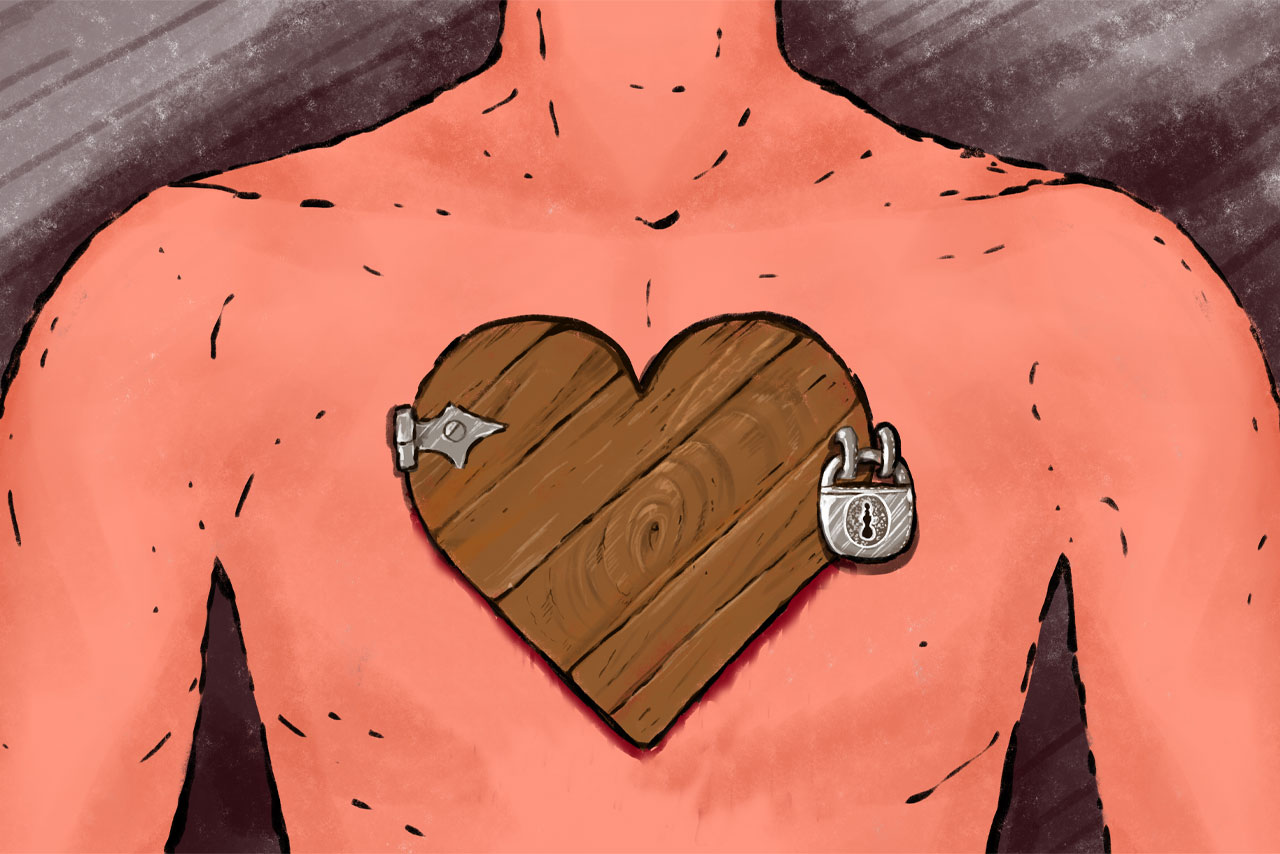
    On the inside, I kept my loudly screaming needs and feelings locked up in a tiny little jar just waiting to explode. I had to keep my moods low to keep the pressure down. I had to be quiet to make sure I didn’t accidentally unlock the biggest scream the world had ever heard.

    Today, I realize that my low moods were symptoms of me ignoring myself, not feeling my feelings, and not meeting my needs.

    I didn’t know how to honor my feelings and needs then, but I learned how during my work and healing journey.

    When a low mood visits me today, I don’t step over myself. I don’t repeat the patterns of the past. I don’t repeat the lack of kindness and warmth. Instead, I do these four things:
    1. I dig deep instead of surrendering to my low mood.

    I no longer just leave myself in it. I don’t just tolerate it.

    I notice it, stay with it, and love myself too much to not do anything about it.

    Instead, I get curious.

    2. I accept instead of fighting my low mood.

    There’s no point in putting yourself down when you’re already feeling low.

    You’re not doing anything wrong when you feel bad.

    It’s just a sign that you need to check in with yourself and figure out what’s going on for you so that you can take care of yourself in a healthy and loving way.

    So that’s what I do.

    3. I ask, “What’s going on for me?

    Sometimes it’s obvious what’s impacting my mood. It could be a bad night’s sleep, an argument, or a cold.

    Sometimes it’s harder to figure out what’s going on, but then it’s important that I stay with it and don’t just shrug it off.

    In my experience, mood management has a lot to do with emotional self-care.

    I ask myself:

    • What feelings might I be suppressing?
    • In what ways might I be inhibiting or censoring myself?
    • Am I staying in the wrong kinds of relationships for me?
    • Do I forget to set boundaries?
    • Am I not having enough fun or variety?
    • Do I need to stretch myself more and grow?

    Learning how to meet my needs and feel my feelings were the two most important aspects of my healing journey. So much started to make sense once I knew what to do about my feelings or needs.

    My moods weren’t just random anymore. They made sense. And if they didn’t, I knew that I hadn’t found all of the puzzle pieces yet.

    4. I have compassion for myself.

    It’s wonderful to be a human. It’s also hard.

    We have feelings and moods and needs and relationships and dreams and fears and so much else going on.

    It’s not simple, and it’s not easy.

    We have to give ourselves some credit for all the great things that we achieve and do.

    But most of all, we have to appreciate who we are and how we are.

    We want to improve things. We want to feel better and be better for ourselves and for others. That alone needs to be celebrated!

    The not giving up. The striving to grow. The commitment to healing. All of that needs to be acknowledged.

    And all of you deserves compassion. Low mood or not.

  • 10 Signs You’re Being True to Yourself

    10 Signs You’re Being True to Yourself

    “The most confused we ever get is when we try to convince our heads of something that we know in our hearts is a lie.” ~Karen Moning

    It’s painful and stressful to feel like you’re living a lie. Like you’re hiding how you really feel, saying what you think other people want to hear, and doing things you don’t actually want to do—just because you think you’re supposed to.

    But sometimes we don’t recognize we’re doing this. We just know we feel off, or something feels wrong, and we’re not sure how to change it.

    It makes sense that a lot of us struggle with being true to ourselves.

    From a young age, we’re taught to be good, fall in line, and avoid making any waves—to lower our voices, do as we’re told, and quit our crying (or they’ll give us something to cry about).

    And most of us don’t get the opportunity to foster or follow our curiosity. Instead, we learn all the same things as our peers, at the exact same time, and we live a life consumed by the mastery of these things, our bodies restless from long hours of seated study and our minds overwhelmed with memorized facts that leave very little room for free thinking.

    To make things even worse, we learn to compare our accomplishments and progress—often, at things we don’t even really care about—to those of everyone around us. So we learn it’s more important to appear successful in relation to others than to feel excited or fulfilled within ourselves.

    This was my experience both growing up and in my twenties. A people-pleaser who was always looking to prove that I mattered, I was like a chameleon, and I constantly felt paralyzed about which choices to make because all I knew was that they needed to be impressive.

    I never knew what I really thought or felt because I was too busy suffocating my mind with fears and numbing my emotions to develop even a modicum of self-awareness.

    This meant I had no idea what I needed. I only knew I didn’t feel seen or heard. I felt like no one really knew me. But how could they when I didn’t even know myself?

    I know I’ve made a lot of progress with this over the years, and I have a mile-long list of unconventional choices to back that up, as well as a number of authentic, fulfilling relationships. But I’ve recently recognized some areas where I’ve shape-shifted in an attempt to please others, and in some cases, without even realizing it.

    I don’t want to be the kind of person who panders to popular opinion or lets other people dictate my choices. I don’t want to waste even one minute trying to be good enough for others instead of doing what feels good to me.

    I want to make my own rules, live on my own terms, and be bold, wild, and free.

    This means peeling away the layers of fear and conditioning and being true to what I believe is right. But it’s hard to do this, because sometimes those layers are pretty heavy, or so transparent we don’t even realize they’re there.

    With this in mind, I decided to create this reminder of what it looks and feels like to be true to myself so I can refer back to it if ever I think I’ve lost my way.

    If you also value authenticity and freedom over conformity and approval, perhaps this will be useful to you too.

    You know you’re being true to yourself if….

    1. You’re honest with yourself about what you think, feel, want, and need.

    You understand that you have to be honest with yourself before you can be honest with anyone else. This means you make space in your life to connect with yourself, perhaps through meditation, journaling, or time in nature.

    This also means you face the harsh realities you may be tempted to avoid. You’re self-aware when faced with hard choices—like whether or not to leave a relationship that doesn’t feel right—so you can get to the root of your fear.

    You might not always do this right away, or easily, but you’re willing to ask yourself the tough questions most of us spend our lives avoiding: Why am I doing this? What am I getting from this? And what would serve me better?

    2. You freely share your thoughts and feelings.

    Even if you’re afraid of judgment or tempted to lie just to keep the peace, you push yourself to speak up when you have something that needs to be said.

    And you refuse to stuff your feelings down just to make other people feel comfortable. You’re willing to risk feeling vulnerable and embarrassed because you know that your feelings are valid, and that sharing them is the key to healing what’s hurting or fixing what isn’t working.

    3. You honor your needs and say no to requests that conflict with them.

    You know what you need to feel physically, mentally, and emotionally balanced, and you prioritize those things, even if this means saying no to other people.

    Sure, you might sometimes make sacrifices, but you understand it’s not selfish to honor your needs and make them a priority.

    You also know your needs don’t have to look like anyone else’s. It’s irrelevant to you if someone else can function on four hours of sleep, work around the clock, or pack their schedule with social engagements. You do what’s right for you and take good care of yourself because you recognize you’re the only one who can.

    4. Some people like you, some people don’t, and you’re okay with that.

    Though you may wish, at times, you could please everyone—because it feels a lot safer to receive validation than disapproval—you understand that being disliked by some is a natural byproduct of being genuine.

    This doesn’t mean you justify being rude and disrespectful, because hey, you’re just being yourself! It just means you know you’re not for everyone; you’d rather be disliked for who you are than liked for who you’re not; and you understand the only way to find “your tribe” is to weed out the ones who belong in someone else’s.

    5. You surround yourself with people who respect and support you just as you are.

    You understand that the people around you affect you, so you surround yourself with people who respect and support you, which motivates you to continue being true to yourself.

    You may have people in your life who don’t do these things, but if you do, you understand their issues with you are just that—their issues. And you set boundaries with them so that they don’t get in your head and convince you there’s something wrong with you or your choices.

    6. You focus more on your own values than what society deems acceptable.

    You’ve read the script for a socially acceptable life—climb the corporate ladder, have a lavish wedding, buy a big house, and make some babies—but you’ve seriously questioned whether this is right for you. Maybe it is, but if you go this route, it’s because this plan aligns with your own values, not because it’s what you’re supposed to do.

    You know your values are your compass in life, and that they change over time. So you check in with yourself regularly to be sure you’re living a life that doesn’t just look good on paper but also feels good in your heart.

    7. You listen to your intuition and trust that you know what’s best for yourself.

    You not only hear the voice inside that says, “Nope, not right for you,” you trust it. Because you’ve spent a lot of time learning to distinguish between the voice of truth and fear, you recognize the difference between holding yourself back and waiting for what feels right.

    You might not always make this distinction immediately, and you might sometimes be swayed by well-meaning people who want to protect you from the risks of thinking outside the box. But eventually, you tune out the noise and hone in on the only voice that truly knows what’s best for you.

    8. You do what feels right for you, even if that means risking disapproval from the people around you.

    Not only do you trust that you know what’s best for you, you do it. Even if it’s not a popular choice. Even if people question your judgment, vision, or sanity. You recognize that no one else is living your life, and no one else has to live with the consequences of your choices, so you make them for you and let the chips fall where they may when it comes to public perception.

    This doesn’t necessarily mean you have everything you want in life. It just means you hear the beat of your own drum, even if it’s silent like a dog whistle to everyone else, and you march to it—maybe slowly or awkwardly, but with your freak flag raised nice and high.

    9. You allow yourself to change your mind if you recognize you made a choice that wasn’t right for you.

    You may feel embarrassed to admit you’re changing directions, but you do it anyway because you’d rather risk being judged than accept a reality that just plain feels wrong for you.

    Whether it’s a move that you realize you made for the wrong reasons, a job that isn’t what you expected, or a commitment you know you can’t honor in good conscience, you find the courage to say, “This isn’t right, so I’m going to make another change.”

    10. You allow yourself to evolve and let go of what you’ve outgrown.

    This is probably the hardest one of all because it’s not just about being true to yourself; it’s also about letting go. It’s about recognizing when something has run its course and being brave enough to end the chapter, even if you don’t know yet what’s coming next. Even if the void feels dark and scary.

    But you, you recognize that the void can also feel light and thrilling. That empty space isn’t always a bad thing because it’s the breeding ground for new possibilities—for fulfillment, excitement, passion, and joy. And you’re more interested in seeing who else you can be and what else you can do than languishing forever in a comfortable life that now feels like someone else’s.

    As with all things in life, we each exist on a spectrum. Every last one of us lives in the grey area, so odds are you do some of these things some of the time, and probably never perfectly. And you may go through periods when you do few or none of these things, without even realizing you’ve slipped.

    That’s how it’s been for me. I’ve gone through phases when I’ve felt completely in alignment and other times when I’ve gotten lost. I’ve had times when I’ve felt so overwhelmed by conflicting wants, needs, and beliefs—my own and other people’s—that I’ve shut down and lost touch with myself.

    It happens to all of us. And that’s okay. The important thing is that we keep coming home to ourselves, and we eventually ask ourselves the hard questions that decide the kind of lives we lead: What am I hiding? What am I lying about? And what truth would set me free?

  • How My Anger Helped Me Learn to Speak Up About My Needs

    How My Anger Helped Me Learn to Speak Up About My Needs

    “If we are holding back from any part of our experience, if our heart shuts out any part of who we are and what we feel, we are fueling the fears and feelings of separation that sustain the trance of unworthiness.” ~Tara Brach

    This morning I received a WhatsApp message, and I found myself immediately blown into a state of fury. On the surface the message didn’t seem inflammatory or dramatic; it was a simple request from another parent asking me to do something that wasn’t convenient for me. On the surface it didn’t seem like this message warranted such rage.

    The anger exploded inside my body, and I immediately wanted to ring the person who had messaged me. I wanted to shout and scream at them. And I wanted to blame.

    I didn’t ring them. I hate the anger, but what I hate more is conflict. To ring someone up and start throwing blame and anger at them would be deeply terrifying to me.

    I also wanted to stomp and shout, “This isn’t fair! I hate you! Why are you so selfish?”

    I didn’t do that either because I felt so silly having this reaction to a small, insignificant message. The flood of judgment was quick to come: “Why should I, a grown woman, get so ridiculously upset over a small social arrangement organized over text message? What kind of stupid person am I?”

    Oh, how emotions can judge and belittle!

    In the back of my mind, in a small but annoyingly reasonable voice, someone was saying, “You’re angry. Even if you want to shout at that person, it wouldn’t help. The anger isn’t about them really, is it? You know that about emotion, don’t you? Don’t you…?!”

    The anger was so alive in my body, I would have loved to punch something, or scream, but I started pacing instead. I started ranting in a small, quiet, but persistent way, about how annoying and horrible this person was. I attempted to talk to my husband to get some relief from the pressure inside me, hoping he’d say, “Oh, they are awful! You’re right.”

    But he was working. And to be honest, I should have been too.

    But still, this anger that was in my body—so uncomfortable! So unpleasant! I find it so scary to have the energy in my body because to let it out feels so wildly dangerous. Yet to confine it inside me feels like a bull smashing a china shop to smithereens.

    After a while I settled into myself and started actually doing what I know to do with anger—feel it and work with it instead of trying to remove it from my body by complaining or ranting. I stopped focusing on the situation that activated the anger and instead started to notice how it was playing out in my body.

    What I know about anger, and all emotions, is that they are rarely caused by what’s happening in the present. The emotion is there before a situation activates it. If we don’t work to release it, it will be there after the situation, waiting for something else to activate it, on the off chance we’ll finally pay proper attention to it and release it in another way.

    No one is making us angry. That’s not to say people don’t do hurtful things sometimes, but they are not to blame for the unprocessed emotion that was already there. Not even the person who sent me the text message that screamed to me of selfishness.

    Emotions come up over and over, usually around the same frustrations and challenges in our lives. When we don’t know how to release an emotion, it gets stuck in our body and is activated again and again, because we don’t work deeply, at the very core, to release it.

    Emotions often get activated where there are unmet needs. Because this feeling of anger has come up again and again over this same issue, I know that on the other side of my anger, something is waiting to be attended to. There is a need that I have that I am not acknowledging or expressing.

    The anger was so physically uncomfortable that I stood up—I needed space to fidget and move around—and I tuned into the sensations in my body. I thought about how the anger was showing up.

    It felt like there were a thousand fires in my chest. All raging with big intense energy. Underneath the fires, it felt like a bottomless pit of fear and sadness.

    This was all so uncomfortable, so to help me stay with these sensations, to have the opportunity to work with this feeling, I started to hold myself and rub my arms. I gave myself a lot of tenderness, love, empathy, and comfort.

    “I’m here for you,” I said to myself. “This is really tough, Di. I totally get how uncomfortable this anger is in your body. I get how hard this situation is for you, how it brings up such big, deep, old feelings.”

    And as I was holding myself and giving myself love, the sensations started to shift. A little.

    I put my hand on my heart and allowed myself to be with it all. The horror of the anger. The deep, nauseating sensations of fear.

    All emotions want to be held; they want to be seen and heard. And they need to be felt. But in our society, feeling emotions is uncommon. When we tell a friend we are feeling sad, they try to cheer us up. When we feel upset, we might try and distract ourselves. When we hear our partners are upset, we might try to convince them out of it.

    Or we often blame and judge others: They made me upset! They irritated me! They scared me! We rant and complain. Or we suppress ourselves, ignore the emotions. Run far, far away from them.

    The truth of it, though, is that the feelings just want to be felt. They want us to say, “I see you! I’ll stay with you.” Emotions want to just be allowed to show up in our bodies and to move through them, like clouds in the sky. This is the really tricky, painful, or scary part for most of us—learning to be with those sensations that emotions bring.

    As I stayed with the feeling of anger and met it with love and patience instead of judgment, the intensity of it lessened.

    As the fires of the anger started to fade, I asked it what it was trying to tell me. And I heard that it was trying to tell me to stand up for myself, to say to the person who messaged me, “No, I am not happy with that arrangement.”

    I have learned that so often my anger is trying to give me the courage to say “no.”

    It wasn’t about blaming another person; it wasn’t about forcing someone to do what I want or disagreeing with their requests. There was nothing I could do about anyone expressing themselves, and that’s okay. My anger just wants me to state in a clear, strong voice, “No thanks, that doesn’t work for me.”

    My anger wanted me to be comfortable expressing what I wanted and needed. That’s what the anger was trying to help me do.

    I saw, though, that the reason I didn’t just say what I wanted and needed was because underneath the anger there was fear—fear of saying what I needed.

    I saw how much I wanted to say what I wanted, but how scary it felt in my body. But why would I feel scared about saying what I wanted? What I needed?

    Many of us, myself included, learned to deal with our emotions and needs in early childhood by not expressing what we wanted. We learned to defer to other people’s emotions and needs, to allow their  emotions to take up more space. It felt safer, and still feels safer, to think about other people’s needs and emotions rather than our own.

    But our emotions don’t want us to defer to others; they don’t want us to not express ourselves. They want us to be fully expressed humans who say what we need and who we are.

    And that is why anger kept showing up in my life over and over again when I was asked to do things for people—because my default would be to agree and do whatever anyone asked of me. And anger wanted me to say instead “NO!”

    Until I listened to the anger, until I started to say what I wanted, this anger around being asked to do things would keep going on repeat.

    I saw that I needed to spend time tending to myself, working with my emotions, and helping myself become more comfortable with saying what I deeply, truly wanted to say.

    To be all that I am in the midst of these emotions. Authentically me.

    I checked in with my body again and felt the anger had subsided somewhat; the flames were small now, just a little pile of glowing embers. There was a small pool of sadness and fear still near the fire, and I walked over and sat with it.

    I said, “Fear, I get it. I get why you feel like this. It’s hard. Thank you for trying to protect me. I get why you don’t want to say what I need. You’re afraid I will be rejected, right? Well, I really need to say what I need, even if there is the chance of rejection. Otherwise, I will feel angry again.”

    In this admission of what I needed to do, the fear and sadness seemed to breathe a sigh of relief, and all at once the emotions eased out of my body. The fire was gone, the nausea and bottomless pits. All gone.

    I sat with myself, put my hand on my heart, took a deep breath, and calmly and confidently replied to the message.

  • The Unconscious Vows We Make to Ourselves So the World Can’t Hurt Us

    The Unconscious Vows We Make to Ourselves So the World Can’t Hurt Us

    “You cannot protect yourself from sadness without protecting yourself from happiness.” ~Jonathan Safron Foer

    Are you aware that we all make unconscious vows early on, and they become our internal blueprint for life? These vows dictate who we can be and are often deeply engrained.

    Our vows are attached to a deeper need we’re trying to meet—the need for love, acceptance, safety, connection, and security. They’re not bad or wrong, and neither are we for having them; they come from a smart part of us that’s trying to help us feel safe.

    Vows are more than a belief; vows are a “never again” thing or “this is the only way to be because my survival is at stake.” 

    What is a vow, you may ask? Well, let me paint a picture for you.

    When I was a little girl, I was teased for being fat, stupid, and ugly. Soon enough, I started blaming my body for being hurt and teased. I thought that because I was “fat, stupid, and ugly” there was something wrong with me, and that was why I didn’t have any friends.

    At age thirteen my doctor told me to go on a diet, and that’s when I started to believe that I was a “defect” because I was fat. At that point I made a vow: “I will never be fat again.”

    I started cutting back on my food, I became a maniac exerciser, and being thin became the only thing that mattered

    Then, at age fifteen, I entered my first hospital for anorexia, and for over twenty-three years I was in therapy and numerous hospitals and treatment centers. No matter how much weight I gained in these programs, when I left, I went right back to losing weight by limiting my food intake and exercising excessively because I’d vowed to myself “I’ll never be fat again.”

    The process of gaining weight only added to the trauma and fears I was already experiencing. Instead of being compassionate and understanding and helping me offer love to the parts of myself that were hurting, staffers “punished” me when I didn’t eat my whole tray of food by taking away my privileges and upping my meds.

    When we experience trauma like I did as a child, it’s not what happened to us that stays with us; it’s the vows we made and what we concluded it meant about ourselves, others, and life in general that stay.

    We concluded who we needed to be in order to be loved and accepted by our family, and that became our unconscious blueprint that started dictating our thoughts, feelings, and actions.

    “I will never be fat again because if I am I won’t be loved and accepted” was a trauma response, which turned into a vow that carried a lot of fear and anxiety. I used undereating and compulsive exercising as survival tools, and I would not let go of this pattern no matter how much anyone told me I needed to.

    If I couldn’t exercise, especially after I ate, my heart would race and I would panic, sweat, and shake. Those symptoms were my body signaling to me that I needed to exercise so I wouldn’t get fat

    This was the only way I knew how to be. I was living in a trance, an automatic conditioned response. And no matter how much conscious effort I exerted to change my habitual ways, something inside would bring me back to limiting my food intake and exercising excessively.

    When we’re forced to let go of our survival mechanisms without healing the inner affliction, it feels like jumping out of an airplane with no parachute; it’s scary and overwhelming. This was why I became suicidal, too, especially when I perceived I was getting fat again; I would rather leave my body than be traumatized and teased.

    Eating disorders, addictions, depression, anxiety, pain, or illness are often symptoms showing us where our energy is frozen in time, where we’re carrying deep wounds and holding onto vows we made from traumatic or painful experiences.

    When someone is anxious or depressed, it may be because they’re not living their truth, and this may be because they feel they’re not allowed to. They may think they need to meet everyone else’s expectations, because if they don’t, they may be punished and/or abandoned. 

    They may use food, drugs, smoking, or drinking as a way to find ease with what they’re feeling and experiencing. They may be using a substance to numb the pain stemming from traumatic experiences or from the idea of not being “perfect” or not feeling “good enough.”

    Why is it hard for some people to love themselves and ask for what they want and need? Because, if you’re like me, you may have been screamed at or called selfish for doing these things when you were a child, so you may have made the unconscious vow “I’m not allowed to ask for anything or take care of or love myself.”

    The habits and behaviors we can’t stop engaging in, no matter how hard we try and how destructive or limiting they may be, are meeting a need. The goal isn’t to override our impulses and change the behavior; instead, a better approach is to understand why they exist in the first place and help that part of ourselves feel loved and safe.

    No matter how many affirmations we say or how much mindset work we do, our survival mechanisms and vows are more powerful, so a part of us will resist change even if it’s healthy.

    Often, when I’m working with a client who struggles with addiction, anxiety, depression, and/or loving themselves and allowing themselves to have fun, when we go inside and find the root cause, it’s because of a vow they made when they were little, when they were either being screamed at, teased, left alone, or punished.

    They concluded that they were bad or wrong for being true to themselves, asking for things, or wanting to be held and loved. They learned that having needs and acting naturally wasn’t okay, so they started suppressing that energy, which created their symptoms as adults.

    “I don’t need anyone; I’m fine alone” may be a vow and a way to protect ourselves from being hurt again. The challenge with this is that, as humans, we need approval and validation; we need love and caring. This is healthy and what helps us thrive and survive as human beings.

    When trauma gets stored in our body, we feel unsafe. Until we resolve it and reconnect with a feeling of safety in the area(s) where we were traumatized, we’ll remain in a constant state of fight/flight/freeze, be hypersensitive and overreactive, take everything personally, and seek potential threats, which makes it difficult to move on from the initial occurrence.

    So, how do we see what vows are dictating our life journey?

    We can notice our unconscious vows by being with the parts of ourselves that are afraid. They often come as feelings or symptoms in the body. For instance, I would panic, sweat, and shake if I couldn’t exercise, especially after I ate.

    When I sat with this part of myself with unconditional love and acceptance and a desire to understand where it originated, instead of using exercise to run away, it communicated to me why it was afraid. It brought me back to where it all began and said, “If I’m fat I’ll be teased, abandoned, and rejected, and I want to be loved and accepted.”

    Healing is about releasing that pent up energy that’s stored in the body and making peace with ourselves and our traumas.

    Healing is about reminding our bodies that the painful/traumatic event(s) are no longer happening; it’s learning how to comfort ourselves when we’re afraid and learning emotional regulation.

    Healing is about getting clear about where the hurt is coming from; otherwise, we’ll spend our time going over the details and continuously get triggered because we never get to the real source.

    Healing is not about forcing; it’s about accepting what’s happening. It’s a kind, gentle, and loving approach. We’re working with tender parts that have been traumatized and hurt. These parts don’t need to be pushed or told how to be. They need compassion; they need to be seen, heard, loved, and accepted; they need our loving attention so they can feel safe and at ease.

    They’ve been hiding; in a sense they’ve been disconnected. When we acknowledge them and bring them into our hearts, we experience a loving integration. When we experience a loving integration we experience a true homecoming, and in that we experience a sense of inner peace. Then we more naturally start taking loving care of ourselves and making healthy choices.

  • A Simple, Super Effective Shortcut to Loving and Respecting Yourself

    A Simple, Super Effective Shortcut to Loving and Respecting Yourself

    “Love is loving things that sometimes you don’t like.” ~Ajahn Brahm

    You’ve probably heard the saying “You can’t find love until you learn to love yourself.” What this really means is that when you love yourself, you’re also fully able to accept another’s love for you because you know that you deserve it.

    Unfortunately, some people misunderstand this saying to mean that you’re basically not worthy of love unless you love yourself. And that’s a load of toxic rubbish.

    If it were true, any number of people with trauma or certain mental illnesses would never stand a chance of finding love. And that’s simply not true.

    However, it’s certainly *nice* to love yourself. It makes you feel at home in your own skin, less dependent on others’ approval, and even happy. It also helps you attract people who treat you with love and respect.

    Not loving yourself or respecting your own needs and wishes tends to make you vulnerable to other people who don’t respect you either. From my own experience, I can tell you: it sucks. It hurts like hell, and of course, it also tears your already shaky self-respect down further.

    I know because this is an issue I’ve carried around with me for most of my life.

    Apart from the pain and humiliation of being disrespected, the worst part is that people kept telling me: “What others think of you shouldn’t concern you. Just ignore them!”, as though I didn’t know, in theory, that my self-worth doesn’t depend on other people’s perception or treatment of me.

    The knowledge didn’t make any difference, though, and was as useful as telling someone to stop bleeding after they’d been stabbed with a knife.

    The Roots of Missing Self-Love and Self-Respect

    Before I continue, I’d like to point out that I’m well aware love and respect aren’t the same thing. But they function in similar ways in this particular context. For some people, the issue is a lack of self-love; others, like me, struggle more with respect.

    Lack of self-love or self-respect manifests in all sorts of struggles and behaviors, from eating disorders and addiction to anxiety and depression: You name the dysfunctional behavior, a psychologist can show you how it results from a reduced ability to love and/or respect yourself. In most cases, like mine, it goes back to one’s childhood.

    I had a seemingly idyllic childhood in a loving family, but there was dysfunction also, and I’m highly sensitive. I was also the youngest child by a large margin and therefore ended up rather alone when I was very young, without anyone who would take me seriously. At best, they found me cute and silly.

    Nobody meant to hurt me, but when they laughed at my “art” and my early attempts at writing, it didn’t exactly build my self-confidence. This left me wide open to being truly hurt by the usual school-years experiences of being mocked or teased by classmates, which most others seemed to simply shrug off.

    It took many years for me to realize that even as an adult, even going into middle age, I still had very little respect for myself. I also continued to draw people into my life who didn’t take me seriously. When the connection to my childhood began to dawn on me, I knew something had to change.

    “Just Love Her”

    There are few things more daunting than trying to heal trauma, overcome a mental illness, or simply shake off the lifelong re-enforcement of unhelpful beliefs and behaviors. I’m not saying it’s not possible, but it’s usually a long process that takes years. It’s absolutely worth it, but I’ve found there’s no need to wait for it to be done in order to start loving and respecting oneself.

    That’s right: There’s a shortcut.

    In his famous book 7 Habits of Highly Effective People, Stephen Covey tells a story about a man who came to him and said that he no longer loved his wife. Covey told him to simply “love her.” To which the guy responded, you don’t understand, I just said I don’t anymore.

    Covey went on to explain that love is a verb, and instead of waiting for a feeling to appear, he should just act in a loving way toward his wife. The short of the long story is that apparently, this saved the man’s marriage.

    And this is where it clicked for me. Maybe I didn’t feel a lot of self-respect, but I could certainly act as though I did! I admit that this is one of those things that sound too simple to be true. I can tell you from my own experience, though, it’s also one of the things that really are as simple as they sound.

    Fake It Until You Become It

    What you do—what I did—is first brainstorm ways your current behavior doesn’t reflect self-love or self-respect. If this is difficult, imagine another person, like your best friend. Anything you do or say that you wouldn’t do or say to your best friend, is probably not respectful or loving behavior.

    Examples:

    • Yelling at yourself (“Stupid me,” “I’m such a clutz,” etc.), either out loud or in your mind
    • Not doing what you know is good for you, even if you actually enjoy it (such as going for a walk or eating a yummy, healthy meal, as though you didn’t deserve it)
    • Not doing what lights you up (as in, you love playing the piano, but you catch yourself scrolling through social media for two hours instead)
    • Staying in jobs and relationships that aren’t nourishing you
    • Tolerating disrespectful or toxic behavior by others, even when you have an option of removing yourself from the situation

    Watch out for these behaviors, and when you catch yourself at them, say “Stop!” out loud. Then immediately do something that nourishes yourself. This might be any number of things; again, think of what you would do to reassure or nurture someone you love, like your best friend or maybe your child.

    From my own experience as well as my work with my clients, I know that kindness and gentleness beat “tough love” any day. Here are a few ways to establish new, loving, and respectful behaviors and habits.

    1. Gently ask yourself what you need at this precise moment.

    This sounds weird and at first, and you might not get anywhere. Persist, though, and after some days or weeks, you will get an answer. Then, resist the urge to tell yourself you can’t or shouldn’t or don’t deserve it, and do whatever your need is (a nap/cup of tea/hug/bath/etc.).

    2. Remember that you are worth the effort to…

    …be comfortable where you sit, wear comfortable clothes, be clean and healthy, get plenty of sleep, eat the food you love, do things you enjoy, and take care of yourself. Remind yourself of this every day. And then make the effort.

    3. Treat yourself.

    Instead of splashing out on expensive luxury items, select a few, meaningful items that make you feel good about yourself, such as a lovingly hand-sewn dress from a tailor on Etsy or an organic home-cooked meal. This is a simple way to reinforce that you deserve your own love and kindness.

    Grand gestures might feel good in the moment, but in order to truly change your perception of yourself, you need to perform lots of small, seemingly insignificant acts of love and self-compassion. It works like magic.

    These days, I still feel myself slipping sometimes, but I catch it early and course-correct— so that I feel better about myself and attract more people who give me the respect I deserve. The change it has made, in terms of the quality of my life and my levels of happiness, is astonishing.

  • How I’ve Stopped Attracting One-Sided Relationships That Leave Me Feeling Empty

    How I’ve Stopped Attracting One-Sided Relationships That Leave Me Feeling Empty

    “Curiosity will save your soul.” ~Danielle LaPorte

    When I was a young girl, about age five, my mother volunteered weekly at a nursing home. Because she was a stay-at-home mom, I was required to tag along with her.

    While she would wheel all the residents into the front room and sing prayers and read devotionals, I simply couldn’t sit still for 2.5 seconds. I was a busy girl with an agenda. I had people to see and things to do.

    Weekly, I would pop in and out of residents’ rooms while my mom banged on the piano down the hall. In and out of each room I would float, loaded with question upon question for each resident.

    At the ripe age of five, I knew something about these people that many struggle to see. I didn’t see them as sick, helpless people preparing to leave this world.

    Oh, I was fully aware that their last and final days would be spent in this place. I was fully aware that many of the folks sat day after day with no visitors, no family, and no sense of community. And while that broke my heart, I saw these people as productive individuals—teachers, attorneys, homemakers, and accountants who had stories to share and things to offer.

    I saw them as humans who had contributed to society, using their gifts and talents to leave the world a better place.  

    I loved cruising those dark and dim hallways just to see who would make eye contact with me so I could strike up a conversation.

    My curiosity wasn’t just contained to the hallways of the nursing homes. Many times, my mother would find me at a neighbor’s house down the street, following them along while they tilled or pulled weeds in their garden, asking question upon question to experience just a snippet of their worldview and hear their life stories.

    Often, I think my mom was taken aback by this behavior, thinking it was intrusive rather than a gift. Many times, I was told not to bother folks or to be quiet. She didn’t do it to be coldhearted or cruel; I think sometimes my endless curiosity and questions just felt exhausting to her.

    While I have come to see my curiosity as a beautiful gift and one of my strongest skills, I didn’t always see it that way.

    In school, I was often told I was too social, too talkative, by teachers and coaches. My love and curiosity for others weren’t things a lot of other people appreciated. As a child who was also highly empathic, I felt everything. I was very attuned to other people’s feelings and emotions.

    I didn’t really know what my boundaries were, and so I often was overly attuned to others and took responsibility for their emotions, neglecting my own needs and preferences.

    Looking back, I can see how I have always been the cheerleader and the “yes girl” within my friend groups. I was the one who would rally the girls and include everyone because I believed from an early age that everyone mattered, and everyone’s story mattered.

    And frankly, I am not willing to stop using this precious gift of mine. Holding back on using my curiosity in my relationships would be out of integrity for me and mean not showing up as my authentic self.

    However, over these past few years my curiosity led me to realize that these relationships I seemed to care about so deeply were beginning to feel a bit one-sided. Most folks love being around me. I am fun, vibrant, always asking questions and always holding space for others. I love deep conversations and getting to know someone’s heart.

    However, I started to realize that while I was getting to know someone, they really weren’t getting to know me.  

    I started to pay attention to how I felt after being around certain people. It was evident that when I would return home after time with particular friends, I felt empty. Sure, we may have had a “good time,” a few good laughs, but for me, something was missing.

    I turned my own gift of curiosity on myself to explore what that might be.

    I began to realize that many of my relationships were, in fact, one-sided. In order for a relationship to be healthy and to deepen, it has to go both ways.

    While I love getting to know people and deeply understanding them, I crave and need to be known by the other person too.

    I need my relationships to be two-sided.

    Because that is a sign of a healthy relationship. Give and take. Two-sided. Holding space for one another.

    It’s easy for me to allow my curiosity to run rampant when building relationships, but now that I am aware of this deep need within myself there are a few questions I ask myself before giving my time and energy away. Maybe these will be helpful to you too.

    1. Do you take turns sharing about various aspects of your lives?

    2. Do they know about your interests or struggles, just as you know about theirs?

    3. Does this person reach out to you? Or are you the only one initiating?

    If you want to develop healthy relationships, the first thing you have to do is to identify the unhealthy ones. It’s hard to forge healthy friendships if you’re spending all your time and energy on dead-end relationships. So while it never feels good to release old friendships, in order to make room for the new, sometimes you have to release the old.  

    Healthy relationships aren’t created by luck. They are created by knowing what you need and what matters to you and then seeking out or asking for that in your relationships.

    Knowing and communicating our needs is key to intimacy and honesty in our relationships. When we take this step, we are actually teaching people how to be successful in a relationship with us. They get to decide if they have the capacity or desire to meet our needs. Their feedback is all we need to know to either move forward and create greater depth or back away, understanding that this may not be a friendship we want to invest a lot of energy into.

    The truth is that for us recovering people-pleasers, we were often taught to:

    • Be nice.
    • Get along with others.
    • Be polite.
    • Never rock the boat.

    However, being nice, having good manners, and working to make the waters smooth for other people is not how you make good friends. It’s how you become a wonderful houseguest.

    I want more. And I want more for you.

    I want us to learn how to move far away from toxic relationships and pull in healthy ones.

    I want us to have friends who share in our heartaches and celebrate our successes.

    I want us to have friends who know us inside and out.

    In order to have relationships like that—even just one relationship like that—we are going to need to decide we deserve two-way relationships with people who cherish and adore us for who we are, and we’re not willing to settle for less.

  • 3 Reasons Why It’s Hard to Set Boundaries and What to Do About It

    3 Reasons Why It’s Hard to Set Boundaries and What to Do About It

    “Care what other people think, and you will forever be their prisoner.” ~Lao Tzu

    I love this quote because it is such truth. But I also recognize the difficulty and the uncomfortable feelings that arise when working toward living this quote.

    There’s a reason why it feels so hard to set healthy boundaries, and that is what this article is going to show you.

    Discovery #1: Understanding our hard wiring

    Our minds were not created to care about healthy boundaries. Say what? Let me explain.

    From the beginning of time, we humans were hard wired for connection. We are not solitary creatures; we are similar to herd animals. Back in the caveman days, we needed a hive or a pack because we were more powerful when we were together. If we didn’t lean on our tribe, we were eaten by a saber tooth tiger.

    We were built to care about others, to rely on others, to let others watch out for our safety and for us to watch out for them too. Staying in our herd, our hive, our pack, our tribe is how we stayed safe. And it worked!

    Our tribe was important to us back then for our survival. If your pack wasn’t happy with you, you were outta there. Your tribe is what kept you alive, and so the human brain learned, “Oh, we must keep people happy with us and then we get to live.”

    If you struggle with people-pleasing, I hope you will understand that we come by our people-pleasing instincts naturally. They are quite literally part of our survival set up. It is part of being human. It is perfectly normal to have the urge to people-please.

    Wanting to serve and please others is a perfectly good and often wonderful thing. The problem with people-pleasing in today’s world is when we don’t have good boundaries to go with it.

    Our brain today says, “Let’s do whatever keeps the tribe happy. Let’s do whatever we need to, to be part of the gang.” Most of the time that looks like acquiescing, going along to get along, and doing whatever we can to “not upset the apple cart.”

    As children we gain information from all types of sources around us—our traumas, personality, health status, our race, ethnicity, gender, family of origin, our class, economic status, and more! Each one of these alone comes with a handbag of rules that instruct us how to behave, act, what to think and what to say in order to please our tribe. Our poor mind has to put all of these pieces together somehow in a way that makes sense and keeps us alive.

    Discovery #2: The Rulebook

    In essence, our sweet mind creates a sort of rule book in terms of what will keep us safe. We start to notice from the time we are small that if our people are not happy with us, we do not feel safe. We start to notice this in our bodies, our feelings, the look on someone’s face, the tone, what is not being said, the iciness of the room.

    When we are children, we are 100% dependent on our caregivers. They are quite literally everything to us. Remember the tribe, the pack, the hive that I talked about earlier? Well, to our little toddler minds, they are our first tribe.

    It is our caregivers’ job to mirror to us who we are in the world. And hopefully with healthy caregivers, we are shown that we are loved, cherished, worthy, important. This is what creates our self-esteem. This is what relays the message to us that we matter.

    This gets written into the rule book or the rolodex file of our little child brain.

    However, many folks did not grow up this way. Those of us who may have grown up with caregivers who were harsh, unloving, absent, unpredictable, neglectful, and even abusive, their little, sweet mind recorded a whole different set of rules into the rulebook of life.

    It may sound something like I am not loveable, I don’t matter, I’m a nuisance, I am a bother, I should never take up space. It might sound like I’m loved as long as I’m good, or performing, or agreeable.

    (Please note, much of the time our parents did the best they could with the skills and tools that they had in their awareness. However, to our innocent, little, childlike selves, it simply wasn’t the message that we needed. The message was misconstrued, and we wound up feeling as though we somehow did not matter).

    Often this gets passed down generation after generation.

    So now are you starting to understand that the mind’s idea of boundaries is to do whatever it needs to do to keep you alive?

    Perhaps when you were little, if you were constantly told to be quiet, that you were too loud, too much, or to simply go away, then the mind created a belief that came into agreement with this. A rule was filed away that it was better to not disrespect your elders and continue to be loud or to take up space.

    The problem is that of course this is nonsense (you were just being a sweet and normal child), but you never questioned the rule. You questioned Santa Claus, the Easter Bunny, and the Tooth Fairy. Yet, you never stopped or questioned your rules or beliefs about yourself. You wrote those things in the rule book as absolute truth.

    Your mind doesn’t care that you are older now and that the situation is different now. To the mind, a rule is a rule. And remember what happened to humans who questioned the rules in the past? They didn’t survive!

    Let me tell you a little bit about my own rulebook…

    Several years ago, I was deeply terrified of what other people thought of me. Growing up in a small town, it was written in my rulebook that all eyes were on you. Boundaries were one of my biggest struggles because it meant breaking free of the people-pleasing pattern in order to speak my truth.

    Having struggled with codependent patterns and low self-esteem, I didn’t even know what my truth was, what my needs and values were, or what mattered to me.

    What I did know was that I needed people to like me, to not talk ill of me and to think of me in a certain way—nice, kind, giving, good.

    I couldn’t excuse myself from a phone conversation.

    I couldn’t end playdates at the time I needed to even if my kids were throwing a full-blown temper tantrum.

    I couldn’t remove myself from a conversation that made me uncomfortable because of the topic.

    I laughed at jokes that, deep down, I found offensive.

    I agreed with others’ opinions because I either didn’t know my opinion or if I did, I didn’t feel confident sharing it.

    I talked incessantly because silence felt unbearable.

    I couldn’t even be on time, because I was rushing from one activity to the next, just trying to show face and that I was doing my part to be the nice girl and make everyone around me feel good.

    Speaking my truth was so uncomfortable that many years ago I actually had a seven-hour coffee date.  I didn’t want a seven-hour coffee date. The idea was come over for a couple hours, chit chat a bit, and move on with our day.

    However, this woman arrived promptly right after the kiddos left on the school bus in the morning and was still there when they got home on said school bus at 3:30pm.

    I can recall the massive headache I felt because I wanted so badly to ask her leave and tell her I had things to do, but I couldn’t.

    I remember that I never invited her back again, even though she was a great gal in many ways. I was clueless in how to handle these situations, so my answer was to cut the relationship off and move forward by avoiding her.

    At the time I was a young mom with a husband who worked long hours, and I often felt lonely. I wanted so badly to connect with other women and be a part of a community, and I thought the way to connection was through self-abandoning any of my needs so that I could focus on appeasing what other people in my life needed.

    This was all written in my rulebook. All of this worrying about what others thought and not wanting to upset anyone caused me severe stress, anxiety, and overwhelm.

    I was trying to function on fried adrenals and walking on eggshells. I was unhappy, and it showed up in my relationship with my partner, my kids, and mostly, the relationship I had with myself. But there was something always driving me to keep pleasing, keep appeasing, and that leads me to our next discovery.

    Discovery #3: But why do I always feel so guilty?

    Why do we feel so darn guilty when we try to set a boundary? Well, anytime we step outside the rulebook, the mind pushes a great big, huge alarm bell.

    Remember, our mind thinks that this is a rule created for our safety. I share this because hopefully you can start to relax and realize that there is absolutely nothing wrong with you. The mind simply is perceiving danger.

    From there we may experience bodily reactions—our palms get sweaty, we have a million butterflies in our stomach, our temperature rises, our throat constricts.

    Our brain’s one and only job is to keep us alive, so it often uses guilt to get us to acquiesce and once again, go along to get along.

    How many times have you been invited to a baby shower or a barbecue on a Saturday and absolutely dreaded it? You’ve worked fifty hours this week, you coached soccer two nights, ran the carpool this week, and are utterly exhausted. You know you need a day to get caught up, sleep in, and take a little time to yourself. But there it is—guilt lurking around the corner, “What will Aunt Betty think if you don’t show your face at Cousin Amy’s shower?”

    That guilt pushes on you, making you feel as if you are doing something wrong. So, what do you do? You RSVP that you will gladly be there. Oh, and you will also make and bring the punch.

    Pretty effective strategy to get you to follow the rules, right?

    This is why boundaries feel so challenging. Because they are not part of our original hardwiring.

    So where do we start if we want to set healthy boundaries?

    1. Understand that boundaries are first and foremost an internal job.

    Yes, we create parameters and limits with institutions and people. But ultimately, before we can ever do that, we have to start on the inside.

    When we aren’t taught how to properly do the internal work, our boundaries come off as rigid walls and we are left isolated and lonely. I have been that person because I didn’t understand what boundaries were, how to set them, and I certainly wasn’t going to entertain any sort of an uncomfortable conversation that looked like any type of repair or reconciliation work. I was left alone and miserable.

    Boundary work starts by addressing our own issues. And as the inner work is done and healing occurs, it organically flows into changed outer behaviors, habits, and choices. We can be empowered to have loving and compassionate conversations that build bridges of connection rather than walls of isolation.

    2. You have to realize that boundaries are in fact healthy.

    If you don’t believe this then it will be hard to lean into them. Make the agreement right now, or work toward believing, that setting boundaries is healthy for you to do.

    3. You have to know your needs.

    Do you know your needs? Have you ever thought about them? Many people don’t, so if you haven’t, know that it’s not uncommon.

    Start by thinking of what a “good” parent would do for their child. What needs do they help their child remember to meet? I.E., even if the child does not want to go to bed, they help them to calm down and go to sleep. Start by making a list of the needs a good parent will help a child to meet.

    When you’re done with that list, circle the needs that you are not meeting for yourself (or inconsistently meeting).

    For each circled need, respond to the following questions:

    • How do I respond to this need?
    • What gets in the way of responsiveness or consistency?
    • How do I respond to other people when they have this need?
    • How would my life improve if I responded to this need?

    For each need, create an intention that you will honor by setting boundaries if necessary. Focus on one intention a week to get a need met more fully and consistently. I know you want to do more, but remember, your mind will fight you because it wants you simply to stay safe and alive. It will douse you with that guilt working you toward acquiescing and shape shifting, so let’s just focus on nailing one for now. Keeping it simple is key!

    Write out your intentions weekly by finishing the sentence stem:

    My intentions are:

    If you’re working to build up the strength to bring more integrity to your relationships and set healthy boundaries, please understand that you don’t have to go it alone. Be consistent and trust that your hard work in your boundary journey will pay off.

  • How to Overcome Ultra-Independence and Receive Love and Support

    How to Overcome Ultra-Independence and Receive Love and Support

    “Ultra independence is a coping mechanism we develop when we’ve learned it’s not safe to trust love or when we are terrified to lose ourselves in another. We aren’t meant to go it alone. We are wounded in relationship and we heal in relationship.” ~Rising Woman

    Do you feel like you have to do everything on your own?

    Is it difficult for you to ask for and receive help in fear of being let down?

    Have you ever heard the expression “Ultra-independence may be a trauma response”?

    If this is you, I get it; that was me too.

    Please know there isn’t anything wrong with you. I lived most of my life this way. This way of being was a survival strategy that kept me safe, but it was also very lonely. I lived in a constant state of anxiety, and it wore me out physically because I thought I had to do everything myself.

    We often become ultra-independent because we don’t trust others and/or we may not feel worthy of being loved and supported. Or, we may believe that by denying support from others and doing things ourselves we’ll gain love and acceptance, because we’re not being a burden.

    Maintaining connections and receiving support from others are basic human needs. If we’re saying we don’t need anybody, that’s often coming from a part of ourselves that wants to protect us from hurt, abuse, criticism, disappointment, or rejection.

    If we even consider the possibility of wanting, needing, and/or receiving support from other people, something in us may say, “No way, it’s not safe,” so we keep these thoughts at bay.

    We may think that if we ask for anything then we’re weak or being too needy, and that’s codependency. But we’re not meant to do everything on our own; there is such a thing as healthy codependency.

    Ultra-independence may also be an extreme unspoken boundary, so, what may be important is to learn how to set healthy boundaries so we can feel safe in situations where we thought we’d lose ourselves.

    Sometimes we feel the need to be ultra-independent because we don’t feel safe being vulnerable and letting people in, because if we do, they may see our flaws and insecurities, or they may trigger our unresolved traumas and wounds.

    We may be carrying deep shame, and we don’t want to feel it or have others see it, so we stay away from connecting with and receiving support from other human beings.

    One of the hardest things to fathom is that, although we’ve been hurt in relationships, in supportive relationships we can experience healing and a sense of safety. 

    That didn’t make sense to me, because in my relationships I often experienced criticism, hurt, rejection, and being screamed at for having natural human feelings and needs.

    A part of me wanted support and connections, but another part of me was afraid, because as a child it made my father angry when I asked  for anything. It was hard living in a world where I felt all alone, believing I had to do everything on my own while watching everyone else receive support and connect with their family and friends.

    For me, being ultra-independent eventually led to denying and suppressing my needs and feelings because it got too overwhelming to try to do everything on my own, especially at such a young age.

    At age fifteen I became anorexic, and I struggled with depression, anxiety, and self-harm for over twenty-three years.

    In the midst of that, at age twenty, I let my guard down and got a boyfriend, who I thought loved me because he bought me anything I wanted, but there were strings attached. If I didn’t do what he wanted he would take back the gifts. He became obsessed with me, waited outside of my house when I wouldn’t talk to him, and would draw me in again with gifts and words of seduction.

    This left me confused. “Do I only receive support and things when I’m a slave to somebody?” I wondered. After I finally broke up with him, I made a vow to myself that I would never receive anything from anyone again. 

    I got the opportunity to heal that vow later in my life when I went to Palm Springs with a friend. We were playing the slot machines and he put in $20. I told him “It’s your money if we win.” We won $200 on the first spin, and he told me, “Cash out, you won.”

    When I cashed out, I chased him around the casino, trying to put the money in his pocket. I didn’t want to receive from him because I thought, “Then I owe him, and he owns me.”

    Thankfully, he’s someone I can share anything with, and we talked about it. He told me he knew my struggle, that he didn’t want anything in return, and that it makes him happy to give to his friends and family. This experience helped me see things differently.

    My healing journey really began at age forty when I started learning how to reconnect with myself, my needs, and my feelings and started healing the trauma I was carrying. I also learned how to ask for support, which wasn’t easy at the beginning; some people got mad at me, and some people were happy to fulfill my requests and needs.

    Instead of blaming and shaming myself for believing I had to do everything on my own, I made peace with the part of me that felt it didn’t need anybody. By listening to its fears I started understanding why it thought I needed protecting.

    It revealed to me the pain it felt of being rejected, hurt, and screamed at for having human feelings and needs, and that it didn’t want to experience that pain again.

    As I listened to this part of myself with compassion, I acknowledged and validated the fear and pain it experienced, thanked it for doing what it was doing, and let it know it was now loved and safe.

    I asked it what it really wanted, and it said, “I want to have true connections. I want to feel safe with and receive support from others, but I’m afraid.”

    This younger part of me was stuck in perspective from my childhood wounding and the experience with the guy I was dating. By giving this part of me a chance to speak and tell me its intentions, I was able to help it/me have a new understanding and feel loved and safe.

    I also began to have a more realistic view of who is and who isn’t safe, instead of seeing no one as safe based on outdated neuro programming stemming from my past traumas, hurts, and pains.

    Being ultra-independent did help me heal from all those years of struggling with anorexia, depression, and anxiety. Even after twenty-three years of going in and out of hospitals and treatment centers and doing traditional therapy and nothing working, I finally took my healing into my own hands, and yes, I did most of it on my own.

    However, even doing it on my own, I found it was also helpful to be in a loving and supportive environment with people who didn’t try to fix, control, or save me.

    We’re not meant to be or do life alone, but being alone can be comforting if we fear being hurt by others. 

    This doesn’t mean we should force ourselves to ask for and receive support from others, especially if we’re afraid; it means we need to create a loving and caring relationship with ourselves and understand where the need to be ultra-independent is coming from as a first step toward letting people in.

    A great question to ask yourself is “Why is it not okay for me to receive support?” Be with that part of you, allow it to show you what it believes, and take time to listen with compassion. Then ask it what it really wants and needs.

    Receiving support isn’t about being totally dependent on others, that’s just a setup for frustration and disappointment; it’s also important to learn how to be independent and meet our needs. This isn’t either/or, it’s both.

    Learning how to connect with our feelings and needs and how to communicate them and make requests is also important.

    For instance, if you’re going through a challenge and you would like support from someone, you can say, “I’m having a hard time right now, and I would really like someone who I can talk to, someone who will just listen without trying to change me or my situation. Is that something you would be willing to do?”

    If this feels impossible for you, it might help to repeat some affirmations related to letting people in and receiving support. If some of these don’t resonate yet, instead of using “I am” start with “I like the idea of…”

    I am worthy of being supported and loved.

    I am worthy of having heartfelt connections.

    It’s safe for me to have this experience.

    I am worthy of being seen, heard, and accepted,

    I am worthy of being loved and cared for by myself and others.

    I am worthy of shining authentically,

    I am worthy of receiving help and support.

    There isn’t anything you need to earn or prove. You are worthy because you are beautiful and amazing you.

    If you’re shutting people out because of your past traumas, as I once did, know that you don’t need to do everything on your own just because you were hurt in the past. Some people may let you down, but there are plenty of good people out there who want to love and support you—you just have to let them in.

  • How Meeting and Re-Parenting My Inner Child Helped Me Love Myself

    How Meeting and Re-Parenting My Inner Child Helped Me Love Myself

    “To love oneself is the beginning of a lifelong romance.” ~Oscar Wilde

    The journey to meeting, loving, and re-parenting my inner child was a long time coming.

    In 2018, I went through a devastating breakup. I’d been through breakups before. They suck, they hurt, some of them left me in deep abysses of sadness for a long time, but this one was something different.

    I can honestly say I felt levels of pain I did not know were survivable for a human being. Many days, I did not want to survive; I couldn’t imagine continuing to be in that level of pain for another moment. It is indeed a miracle I survived and came out on the other side thriving!

    So, what was the cause of so much pain?

    Well, it wasn’t him, I’ll tell you that much. While I loved that man more deeply than I previously knew possible to love someone, and so it made sense for it to be more painful, it didn’t make sense for me to be crying non-stop for months. I felt like I was being ripped to shreds from the inside out. The pain was relentless and wasn’t lifting even a tiny bit as time went on.

    So, I sought help to get to the root issue. The real cause of my pain was the tremendous amount of unresolved trauma I was carrying, a complete inability to love myself—in fact, I had no real understanding of what it meant to love oneself—and a massively wounded and scared little girl running the show at my core.

    To sum up: I had a great amount of sexual trauma, abandonment trauma, complex PTSD, and low self-worth, and I only understood validation as coming from outside of me. This breakup unearthed all these issues in one violent movement, like ripping a Band-Aid off a scab.

    All this ugly, unhealed stuff was exposed and shot into my awareness like a volcanic eruption, and I had no means of escape. All I could do was deal and heal. So that’s what I did.

    There were a lot of things I did, and still do, to facilitate this healing. Therapies, somatic healing modalities, and spiritual methods. None are necessarily better than the other. They all worked together to weave a rich tapestry of healing approaches to choose from at any moment.

    But since this is about inner child work, that’s what I am going to talk about.

    I believe many of us have wounded inner children running the show. Everyone we meet has an inner child expressing themselves through adult bodies. To what degree that inner child is wounded ranges on a wide spectrum, mostly based on how well their needs were met by their caregivers.

    My therapist suggested I purchase The Abandonment Recovery Workbook by Susan Anderson and begin working through it on my own in between our sessions. I furiously raced through the chapters, hoping that once I finished, I could date and find someone to hopefully mitigate the unrelenting pain. However, as I worked through and neared the end of the book, it became clear to me that I was in no way ready for someone else yet.

    The workbook contains several exercises, but there were a few dedicated specifically to identifying, visualizing, or meeting your inner child—a younger, more tender, innocent version of yourself that just needed to be seen, heard, and accepted for who they are.

    It helped for me to find photographs of myself from three to five years of age to aid in visualizing this child. Looking at that little girl and imagining she still lived inside me, deep inside my being.

    Once adult me was able to see her, I had to learn how to hear her and how to communicate with her. Via meditation, I’d visualize her and ask her questions:

    What does she need right now?

    How can I make things better for her right now?

    What is she feeling about this situation?

    I’d have to sit until I received an answer from her. This came as a thought or a feeling, sometimes a visual image or memory. Oftentimes, all she wanted was to be held, so I’d visualize my adult-self holding this small girl and giving her the comfort and compassion she desperately needed.

    This is the re-parenting. The part where we respond to ourselves in the ways that we would have wanted or needed when we were small children. To be seen and heard, rather than molded to act or behave a certain way. To be truly responded to, based on the needs we were expressing.

    The dialogue exercises with my little girl continued daily, sometimes multiple times in a day. It just depended on how intensely my inner child needed something from me that day, or how intently I was listening at the time.

    Sometime after I’d begun this dialogue, I was at work and delivered a small thank-you token to a colleague for doing a quick project for my office. He kissed me on the forehead in return. It made me very uncomfortable, and I quickly exited his workspace.

    I walked out to the street to run an errand, and within me, my little girl was raging. It felt like there was an inferno of anger brewing within my gut. I recognized in that moment I was not listening to my inner child, and she wasn’t having it, now that we had begun communicating with each other.

    So, I stopped. I tuned in. I asked her what she needed.

    She told me this man had violated her space and she felt unsafe, and I’d promised, capital “P” promised, she said, stomping her feet as young children often do, that I would take care of her from now on, and I hadn’t when I allowed someone to violate my physical space without saying something. She would not be appeased until the matter was resolved.

    The inferno continued to rage inside my belly until I walked back down the street, back into his office, and told him, “I do not want to be kissed by my coworkers. I’m sure others may not be bothered by it, but this is a boundary for me.”

    Of course, he apologized profusely, and we have never had any inappropriate run-ins again. But more importantly, immediately upon taking care of myself and my little girl, the inferno subsided.

    I took care of her and made her feel safe and secure. I continue to do so in my day-to-day life now.

    The above example was an extreme one. She is not always so easily heard. Sometimes I ask her what she needs, and it’s just to move the body, go for a walk. Other times it’s a cookie she wants. Often, it’s just to be acknowledged. Validated. To be told, “I hear you, I see you, your feelings matter.”

    As with any relationship, the needs, communication, and dynamics are ever-evolving.

    But I can say without a doubt, the connection between my adult-self and my inner child is the most valuable relationship I have, and today the amount of love I have for myself, due to inner child work, is above and beyond anything I could have ever imagined.

    I used to feel, most of the time, that I was not enough. Since doing this healing work, I now know I am enough, in all situations and places.

    Where there was typically a sense of impending doom and danger, there is now a lightness and delight and a true, deep happiness that has nothing to do with outside circumstances—just the pure joy of an inner wholeness I never even could have dreamed of.

    That’s what happens when we truly see and hear our inner child and respond to their needs without judgment. We feel love and safety like we’ve never known, and we finally realize we deserve nothing less.

  • What No One Tells You About Setting Boundaries: The Good, Bad, and Ugly

    What No One Tells You About Setting Boundaries: The Good, Bad, and Ugly

    “Yesterday I was clever, so I wanted to change the world. Today I am wise, so I am changing myself.” ~Rumi

    Three years back was the first time I dared to set a boundary and be assertive in a friendship, and guess what? She blocked me on her phone, and we stopped being friends.

    It came as a rude shock because I was quite invested in the friendship. Not only did we have good times together, but I had helped her search for and find a job and even babysat her kid for a long while free of charge. I felt betrayed and hurt. It made me feel like I was the one in the wrong, the bad person, and like I had no right to say what felt right to me.

    I admit that I was early in my journey of being assertive and learning how to set boundaries, so my skill set wasn’t the best. But despite the mayhem and chaos it caused, it was a good thing for me.

    We were similar in many ways, and I knew she was a lovely person. Still, I didn’t particularly appreciate that she always wanted to be in charge, acted as though she knew it all, only wanted her way, and behaved as though she had the world’s worst problems.

    I empathized with her because she shared her struggles with me. But I didn’t share mine back partly because I wasn’t comfortable and partly because I felt there was no place for me; it was only about her. So, one day, when I’d had enough, I exploded and said what I had to say, rudely, and that ended the relationship.

    Three years later, when the dust settled, we started talking. We are cordial, civilized, and respectful now. We share laughs and anecdotes, but it’ll never be the same because we’ve both changed, and our relationship has changed as well.

    After taking this journey, I’ve concluded that being assertive and setting boundaries is not as easy as it sounds. But it’s the only way to regain your sense of self, sanity, and self-love.

    What are the Benefits of Maintaining Boundaries?

    Boundaries are limits between us and other people that enable us to honor our feelings, wants, and needs and take good care of ourselves. We need to set boundaries because:

    • Boundaries offer protection against people who habitually do things that leave us feeling uncomfortable.
    • Correcting troublesome behavior and letting other people know what’s acceptable or not, where we stand, and what we are willing to tolerate drastically improves our sense of self.
    • Setting boundaries helps us trust ourselves and, in turn, trust others.
    • It helps us treat ourselves and others as equal with respect and dignity.
    • It teaches us what’s essential for us and gives us the courage to stand up for it.
    • It builds our confidence as we work on our assertiveness muscle.
    • Boundary-setting is generous to others because it allows them to grow and take responsibility for themselves, their actions, and their issues.

    So, if boundary-setting is such a good thing, what’s the problem?

    The problem is that it’s hard, especially for people who are not used to setting boundaries. It can make you question yourself and your intentions and turn your world topsy-turvy.

    Why Is Boundary-Setting So Difficult?

    Most people with weak boundaries:

    • Are not aware of their needs, and this takes lots of time and practice.
    • Are afraid to stand up for themselves.
    • Don’t believe that they deserve to have their boundaries recognized and honored.
    • Are afraid that people will think they are selfish.
    • Think it is wrong to think about themselves because of various cultural or religious influences.
    • Believe that what they want is unreasonable.

    How Do You Start Setting Boundaries?

    1. Take inventory.

    Have you ever been in a situation where you felt like you were being taken advantage of, taken for granted, or treated disrespectfully? When you feel any of these things, you need to ask yourself:

    • What are you feeling? Is it anger, hurt, betrayal?
    • What brought about those feelings? What did the other person do? Did they disregard your feelings or act dismissive? Did they cross a line you’d rather no one cross?
    • How did you react to the situation? Did you ignore it, make an excuse for them, or get angry and resentful but fake a smile?
    • Why did you tolerate this behavior and respond this way? What were you afraid of?

    So, the first step is being conscious of what happened and what you’re feeling.

    This is essential because it helps you become aware of your needs, wants, and limits; notice when someone is neglecting or violating them; and reflect on how you usually respond—and why.

    2. Be honest and courageous.

    The second step is being honest about what you would like to do in the situation and reflecting so you can find the fairest and healthiest way to respond.

    Then comes the hardest part: finding the courage to act even if it may displease, anger, or irritate the other person.

    Everything inside you might scream that this is a mistake. You may feel scared, anxious, and even unsafe speaking up. But remember that ignoring the issue is not a solution because you will just end up feeling resentful if you continually avoid saying what you really want to say.

     What No One Tells You About Setting Boundaries

    1. You may feel guilty.

    Somewhere down the line, you may have learned that your needs, feelings, and wants are less important than others’. When you start making changes, it may feel like you are embarking on a journey of selfishness and betraying the very core of your being.

    2. You will likely make mistakes.

    You are learning a new skill, and mistakes are bound to happen. You may overreact to minor issues or fail to communicate your feelings and needs accurately or clearly. There’s no right or wrong here, only a learning curve. You can always change your decision or apologize later if you realize that your decision wasn’t the best.

    3. It sometimes feels like you are at war with yourself.

    To some extent, that’s what this is. A war with what you once believed to be true but isn’t anymore, a war against your default responses.

    4.  It is not easy.

    It will sometimes mean wrong turns, slip-ups, and lost relationships. But if you’re honest with yourself, you may realize that those relationships were already dead to begin with; you were trying to nurture doomed relationships because you were afraid to let them go.

    5. It makes you confront demons you didn’t know you had.

    Your insecurity, your feelings of low self-worth, your fear of being rejected or alone—all this and more bubbles to the surface when you get honest about why you’ve struggled with boundary-setting and start pushing past your blocks.

    6. It takes all you have, tears you up, and breaks you down.

    But when it’s all done and over, you build strength, wisdom, and trust in yourself. You learn to give your feelings more credence, knowing they’re an internal signal that something is off and you need to investigate them further so you can decide what’s really best for you.

    So yes, boundaries can be life-changing, but the emotional upheaval that often accompanies them isn’t for the fainthearted. Changing yourself, getting out of your comfort zone, and doing what is right for you can trigger your reptilian brain, which craves safety, making you feel like you are doing something wrong. Arnold Bennett rightly says that all change, even for the better, is accompanied by discomfort.

    Deepak Chopra said that “All great changes are preceded by chaos.” I believe the benefits of maintaining boundaries make the chaos worth it.

  • How I Stopped Putting Everyone Else’s Needs Above My Own

    How I Stopped Putting Everyone Else’s Needs Above My Own

    “Never feel sorry for choosing yourself.” ~Unknown

    I was eleven years old, possibly twelve, the day I first discovered my mother’s betrayal. I assume she didn’t hear me when I walked in the door after school. The distant voices in the finished basement room of our home drew me in. My mother’s voice was soft as she spoke to her friend. What was she hiding that she didn’t want me to hear?

    I leaned in a little bit closer to the opening of the stairs… She was talking about a man she’d met. Her voice changed when she spoke of him. The tone of dreamy wonder when you discover something that makes your heart race. She talked about the way they touched and how she felt being with him.

    I felt my body go weak. I could not tell if it was sorrow or rage. All I knew was, she had lied to me.

    Several months prior, my parents had announced their divorce. My mother told me the decision was my father’s choice. She told me he was the one breaking up our family. She told me she wanted nothing more than to stay with us and be together.

    And now I heard her revealing that was not true. She wanted to leave. She was not choosing me. She was choosing him.

    Since I was nine months old, my mother had been in and out of doctor’s offices, hospitals, psychiatrist’s and therapist’s offices trying to find the cure of her mental and emotional instability.

    When I was a young child, she began to share her frustrations and sorrows with me. I became her support and the keeper of her pain. She had nicknamed me her “little psychiatrist.” It was my job to help her. I had to. I needed her stable so I could survive.

    I don’t remember when or if she told us that she was seeing someone. I just remember she was gone a lot after that day. She spent her time with her new boyfriend out of the house. As the parentified child who she had inadvertently made her caretaker, it felt like she was betraying me. She left me for him.

    I was no longer the chosen one—he was.

    I hated him for it. When my mother moved in with him, I refused to meet him. I didn’t want to get to know or like this man she left me for.

    I saw them one day in the parking lot outside of a shopping plaza. I watched them walking together and hid behind a large concrete pillar so they wouldn’t see me. The friend I was with asked if I wanted to say hello. I scowled at the thought. I despised him.

    Within the same year, his own compromised mental health spiraled, and they broke up. He moved out of their apartment. I didn’t know why or what happened. I only knew my mother was sad. Shortly after their breakup, he took his own life. From what we heard, he had done so in a disturbingly torturous way. It was clear his self-loathing and pain was deep.

    My mother was devastated. She mourned the loss of her love and the traumatic way he exited. She stopped taking her medication, and her own mental health began to spiral. My father received a phone call that her car had been abandoned several states away. I’m unsure what she was doing there, but she had some issues and took a taxi back home.

    He later received a call stating that my mother had been arrested for playing her music too loud in her apartment. Perhaps to drown out the voices in her head. She was later taken to the hospital without her consent and was admitted due to her mental instability.

    After several days of attempting to rebalance her brain chemistry with medication, my mother began to sound grounded again. The family decided she would move in with her parents a few states away from us and live with them until she was stable again.

    A few days after Christmas she called me to tell me how sad she was. She grieved her dead boyfriend. I was short with her. I was still angry for her betrayal. I didn’t want to continue being used as her therapist. The imbalance in our relationship was significant, and my resentment was huge.

    I loved her, but I could not fall back into the role of being her support without any support back. It was life-sucking. And I didn’t care that he was dead. She chose him over me. I was fine with him being gone.

    I don’t recall feeling any guilt when I got off the phone that day. I felt good that I had chosen myself and put a boundary in place to not get sucked into her sorrow. I was fourteen years old, less than a week shy of fifteen. I just wanted to be a kid.

    The next day, my mother chose to make more decisions for me and for herself. These were more final. She told her parents she was taking a nap and intentionally overdosed on the medication meant to save her. She died quietly to relieve herself from her pain and left me forever.

    That choice—my own and hers—would change the course of my life.

    The day my mother freed herself from this world was the same day I learned to become imprisoned in mine. I was imprinted with a fear that would dictate my life. I became quietly terrified of hurting other people. I feared their discomfort and feeling it was my fault. From that day forward I would live with the silent fear of choosing myself.

    My rational mind told me it was not my fault. I did not open the bottle. I did not force her to swallow the pills. I did not end her life. But I also did not save it.

    I learned that day that creating a boundary to preserve myself not only was unsafe, it was dangerous. When I chose me, people not only could or would abandon me, they could die.

    Of course, I never saw this in my teenage mind. Nor did I see it in my twenties, thirties or the beginning of my forties. I only saw my big, loving heart give myself away over and over again at the cost of myself.

    I felt my body tighten up when I feared someone would be mad at me. I heard myself use words to make things okay in situations that were not okay. I said yes far too many times when my heart screamed no. All because I was afraid to choose myself.

    The pattern and fear only strengthened with time. I learned to squirm my way out of hurting others and discovered passive-aggressive and deceptive approaches to get my needs met. My body shook in situations where conflict seemed imminent, and I learned to avoid that too.

    What I didn’t see was that this avoidance had a high price. I was living a life where I was scared to be myself.

    On the outside I played the part. The woman who had it all together. Vocal, passionate, confident, and ambitious. But on the inside, I held in more secrets than I knew what to do with. I wasn’t living as me. My fear of being judged and rejected or not having my needs met was silently ruling my life.

    So many have developed this fear over time. Starting with our own insecurities of not feeling good enough and then having multiple experiences that solidified this belief. The experiences and memories differ, but the feelings accompanying them are very much the same.

    The fear of choosing ourselves, our desires, our truths, all deeply hidden under the masks of “I’m fine. It’s fine.” When in reality, we learn to give way more than we receive and wonder why we live unsatisfied, resentful, and with chronic disappointment. Nothing ever feels enough, and if it does, it’s short-lived.

    The memories and feelings become imprints in our bodies and in our minds that convince us we can’t trust ourselves. That we can’t trust others. That we must stay in control in order to keep us safe. We learn to manipulate situations and people to save ourselves from the opinions and judgments outside of us. We learn to protect ourselves by giving in, in order to not feel the pain of being left out.

    We shelter ourselves with lies that we are indifferent or it’s not a big deal in order to shield ourselves from the truth that we want more. We crave more, but we are too scared to ask for it. The repercussions feel too risky. The fear of loneliness too great.

    In the end, our fear of choosing ourselves even convinces us we can live with less. That we are meant to live with less, and we need to be grateful for whatever that is.

    Do we? Why?

    What if we learned to own our fear? What if we accepted that we were scared, and it was reasonable? What would happen if we acknowledged to our partners, families, friends, and even strangers that we, too, were scared of not being good enough? Of being discarded, rejected, and left behind.

    What would it be like if we shared our stories and exposed our insecurities to free them instead of locking them up to be hidden in the dark shadows of ourselves?

    I’m so curious.

    Where in your past can you see that choosing yourself left a mark? What silenced you, shamed you, discouraged you from choosing your needs over another’s? When were you rejected for not doing what someone else wanted you to do? And how has that fear dictated your life?

    Choosing ourselves starts with awareness. Looking at the ways you keep quiet out of fear or don’t make choices that include your needs. Seeing where this fear shows up in your life gives you the opportunity to change it. The more you see it, the more you can make another choice.

    Start with looking at the areas of life where you hold on to the most resentment and anger. Who or what situations frustrate you? Anger often indicates where imbalances lie or when a boundary has been crossed. It shows us where we feel powerless.

    Make a list of the situations that annoy you and then ask yourself, what’s in your control and what’s not? What can you directly address or ask for help with?

    Note the ways you may be manipulating others to get your needs met in those situations and how that feels. Note also what you may be avoiding and why.

    How would it feel to be more direct and assertive? What feelings or fears come up for you?

    Then start with one small thing you could do differently. Include who you could ask for help with this step, if anyone.

    As for me, I have found myself in situations where I lied or remained silent to avoid being judged, in an attempt to manipulate how others see me. I have felt my body cringe with sadness and shame each time. It doesn’t matter how big or small the lie, it assaults my body the same.

    I have learned that speaking my truth, no matter how seemingly small or insignificant, saves my body from feeling abused by the secrets it must keep. Choosing me is choosing self-honesty; identifying what is true for me and what is not based on the way my body responds. I am not in control of others’ judgments of me, but I am in control of the way I continue to set myself up to judge myself.

    I have also found myself agreeing to do things I didn’t want to do in order to win the approval of others, then becoming resentful toward them because I refused to speak up for myself.

    Choosing me in these scenarios is honoring the fact that I will still be scared to ask for what I need, as my fears are real and valid, but asking anyway, even when the stakes feel high. It’s scary to feel that someone may abandon us if we choose ourselves, but it’s scarier to lose ourselves to earn a love built on a brittle foundation of fear.

    l cannot control the past where I have left myself behind, but I can control today, the way I forgive myself for falling victim to my human fear, and the way I choose to love myself moving forward. When I choose me, I have more love to give to others. Today I can take a small step toward change.

    Taking these small steps and building on them will help us to show ourselves that we can make progress in bite size amounts and prove to ourselves we are going to be okay. The small bites are digestible and give us proof that we can do it. This helps us build our ability to do more over time, while also decreasing our fear.

    If we look at our past, we will see the majority of our big fears do not come to fruition, and if they did, we survived them and gained knowledge or strength in the process.

    It’s not the action holding us back, but the memory of the discomfort we still live with. The more we move through these fears, the more that discomfort will decrease, and the more we will trust that we will be okay no matter what.

  • I Was Addicted to Helping People – Here’s Why It Made Me Miserable

    I Was Addicted to Helping People – Here’s Why It Made Me Miserable

    “As you grow older, you will discover that you have two hands, one for helping yourself, the other for helping others.” ~Maya Angelou

    Growing up in Africa, I was told that the virtue and worth of a woman lies in her ability to take care of everyone around her; that a woman was considered good or worthy when everyone around her was happy and pleased with her. I took this advice to heart, especially since I watched my mother meet this standard to a T. Putting everyone else, including strangers, above herself.

    Most of the Things We Learn as Kids Shape Us

    As a kid, I was taught how to cook, clean, and care for others. As a teenager, I got a lot of practice caring for my younger siblings; at first, it was great, being a caregiver, being the one who everyone went to when they needed something. I loved being needed, and I relished in the label I was given as dependable.

    Family, friends, and even strangers knew that I was the go-to girl for whatever they wanted. If I couldn’t help them with whatever they needed, I would find someone who could. I was determined to never leave anyone high and dry. I loved being needed, and if anyone needed me, I believed that I was their last resort.

    The Joy of Giving

    You see, one thing about giving is that it feels good… until it doesn’t. The moment you get to a place where giving doesn’t feel good anymore, it means that you need to turn the giving around and start giving to yourself. But how does someone who is addicted to being needed realize this?

    When helping people started feeling more exhausting than exhilarating, my first instinct was to give more because I believed that the more I gave to others, the more I would receive from them. But that was not the case. The more I gave, the less I received, and this prompted me to label most of my friends as bad friends because I wasn’t getting as much as I was giving to them.

    When I became isolated from cutting friends off because they were “bad” to me, I realized the problem wasn’t that I was not getting as much as I was giving; the problem was that I was giving to everyone but myself. I had put myself in the back burner and abandoned myself. How can I abandon myself and not expect others to abandon me?

    The Guilt That Comes with Giving to Yourself

    Realizing my deep-seated issues was easy, but addressing them was a whole other thing. Because I was conditioned to believe that my worth was in pleasing others, I always said yes to everyone who needed my help; saying no was extremely difficult.

    This was because I was suppressed by intense guilt and ended up caving in to finding help for the person at my own expense. Everything changed for me when a former classmate said to me out of the blue: “You are nobody’s last resort.”

    You are nobody’s last resort, no matter how bad it is. If you cannot help someone with their problem, another person will. And more importantly, it’s not your responsibility to ensure they get the help they need—it’s theirs.

    This was a turning point in my life because now I knew that telling someone no because I needed the time to invest in my own needs did not mean that they were never going to get help.

    The guilt was still there, but little by little, I persevered in choosing myself over and over again. I started with little things, like saying no to helping a friend walk their dog to stay at home, to take a long bath and read a book (I enjoy reading). And over time I was able to get better at saying no to larger requests that would have been draining and would have negatively impacted my mental health.

    Give to Yourself and You Won’t Expect Too Much From Others

    Slowly but surely, I learned that my worth is determined by me and me alone—by how much love and care I direct toward myself. Guilt still visits me sometimes, but it is not as intense as it used to be.

    I know now it is better to feel guilty for taking care of yourself than to expect others to anticipate your needs and take care of you. News flash: if you don’t take care of yourself from the inside out, no one will.

    Don’t get me wrong, I still take care of my loved ones and help others as well as I can, but I now do it from a complete place, a place of wholeness, knowing that I will be fine whether they invest in me or not.

    I don’t expect much from people, and I don’t get disappointed much because I have learned to prioritize myself. Frankly speaking, I have noticed that the people around me enjoy me more now that I am not a self-righteous person who resents her giving and selflessness.

    “I give and give and give, and what do I get? Nothing.” If you have heard yourself say or think these words, then you are expecting people to make you happy just because you are bending over backwards to make them happy. If you keep bending backwards to make others happy, one day you will break your back. A broken back is very painful to bear, take note.

    Life’s a Journey, Not a Race

    This is not an overnight process; it will take time and patience. I have learned that part of taking care of myself is being nice to myself, whether I’m making progress or not. I’m done talking down to myself. Everything I wouldn’t do or say to another person, I’ve vowed never to do or say to myself.

    There is no glory in stomping all over yourself to please the world, there is no glory in self-deprecation and self-hate. It is not humble to call yourself terrible names or to live in suffering because you don’t want to hurt some else’s feeling or because you want to be called a nice/polite person.

    Our feelings and needs matter as much as anyone else’s, but we can only honor them if we recognize this and prioritize them.

  • How I Overcame My Debilitating Gut Issues by Digesting My Emotions

    How I Overcame My Debilitating Gut Issues by Digesting My Emotions

    “I do not fix problems. I fix my thinking. Then problems fix themselves.” ~Louise Hay

    Here’s my secret: In order to fully heal over a decade of debilitating digestive disorders, I had to stop trying to heal. Instead, I had to do nothing. What, do nothing? Yes, that’s exactly right—I had to let go of the search for the perfect cure. Let me explain.

    I developed chronic gut problems at age fourteen—such a precious age! After being dismissed by doctors (“It’s all in your head; it’s a girl problem”), overprescribed antibiotics for years on end, or just given hopelessly ambiguous, catch-all diagnoses like IBS, gastroparesis, candida, h. pylori, and leaky gut (as any sufferer of gut problems can relate to!), I became my own wellness warrior.

    For twelve years, I was on a crusade to find the “right” answer: the right elimination diet, the right supplements, the right doctor, the right healer, the right yoga poses, the right amount of water for my body weight, the right breathing techniques, the right blogger, the right retreat, the right fix that would heal my gut once and for all.

    In truth, I was stuck in a healing loop, and healing became my identity. Sound familiar? I let myself believe that I could never be truly healed, so that I would always be chasing the next popular protocol or promise—paradoxically, it was almost easier that way. “Healing,” which is one of the most profound inner transformations we can undergo, had become a completely disembodied, intellectual exercise.

    I have to be gentle with myself. My quest was not deliberate self-sabotage. You see, I was desperate to get better.

    To not be afraid that any given food, no matter how “healthy,” could set off a land mine of symptoms. To not keep living small so that I could be close to a bathroom and heating pad at a moment’s notice. To stop being defined by my “stomach problems,” and start living fully, or living at all. Until the gut problems led to a cascade of other health problems, and I had to wake up.

    In my healing loop, I was cut off from my inner voice, from my inner guidance, my compass. No wonder I couldn’t get off the loop to a place of true equanimity, balance, and wholeness, in all areas of my life.

    I had no access to my gut intuition.

    Now, I can’t say for sure what came first: suppression of this intuition, which led to gut issues, or the onset of my gut issues themselves, which led to further suppression of my intuition.

    Either way, indigestion, in any form, is literally the inability to let go of the past, of experiences and events that are transient, but that we choose to let define us. Our guts are where our will, personal power, and courage reside. Or, when imbalanced or compromised, our guts are where fear, inaction, and indecision take hold.

    We know this on the same instinctual level that leads us to say, “She’s got guts; trust your gut; I have a bad gut feeling about him; be more gutsy!” But what if we actually listened and trusted our guts? What does that even mean?

    Similarly, we’ve all heard about the mighty microbiome—how we are basically superorganisms composed of trillions of gut bacteria that support everything from immunity to serotonin production. But how does this information translate into the beautiful unification of mind, heart, and belly that leads to quantum healing?

    Sure, we know to take probiotics and eat fermented foods to feed our good gut bugs, but how often do we hear about the metaphysical roots of gut problems—fear, dread, anxiety—and how to weed them out?

    Beginning to Digest My Emotions

    Eventually, when I was twenty-six, I became so depleted from outsourcing my healing powers to “experts,” that the only wounded healer I was left with was myself. Sicker than ever, I realized that no elimination diet would ever work, because there was something else eating away at me.

    What was I not digesting? After twelve years of gut problems, I began to ask myself this question. A wonderful massage therapist told me to start talking to my belly, to ask her what she needed.

    Every day, I lay down with my hands resting on my stomach, and I simply said, “I am willing to feel what is ready to be felt. I am ready to digest my emotions.” That’s all I did. I lay there and waited for my emotions to arise.

    My belly was so tightly contracted, so afraid of herself, that at first, nothing came up at all. I felt completely detached from my entire digestive tract. After all, I’d been beating her up for years, admonishing her for making me sick, feeling completely helpless and victimized in the face of symptoms.

    So I just kept my hands on my belly and trusted. I spoke to her softly. “I am well. What I need to heal is already within. I am willing to feel what is ready to be felt.”

    Little by little, tears came. I imagined the pain was dissolving as black smoke and floating out of my body. Days passed, then weeks. My belly began to give in. I began to digest. And when I did, my whole body shook with the emotion I was most afraid of, fear itself.

    Fear—of failure, of success, of my power, of my weaknesses, of not being enough, of being too much, of the future, of the past, of what was not and what would never be.

    I was holding a lifetime of fear in my stomach, and my stomach was contracting around it, protecting that fear like my life depended on it. My life did depend on it—as a defense mechanism from the vulnerability and open-hearted living that lies beyond fear.

    That fear was slowly depleting me of my life force, of my ability to assimilate anything positive, from nutrients to joy.

    At first, facing a fear so elemental and ingrained can literally seem like dying. And a death of sorts is taking place.

    A deeply somatic, cellular release is underway. All the body needs is support to let the process unfold. S/he needs love, rest, and compassion. S/he needs to know she is safe—and s/he will do the rest.

    It was in that space of not trying to heal, of doing nothing, where healing really began. Because ‘nothing’ is where the little voice of gut intuition can take form. That little voice, what I call the Inner Wise Woman (or Man), can emerge—first quiet, wounded, and confused, and then a little more resilient each day.

    Begin to recognize that voice. Listen to its timbre, its intonations. Learn to trust it. S/he is never wrong. And beyond that voice is where true healing, and true living, begins.

    How to Practice Emotional Digestion

    How do you digest fear? How do you sit with a belly full of fearful thoughts long enough to witness and dissolve them?

    This is the process of emotional digestion that healed my gut after twelve years of incessant pain and discomfort. It is a powerful practice of learning to trust yourself and your intuition, and, if done regularly, will transform much more than just physical pain.

    1. Listen

    Each symptom is a sign, a messenger, of an inner imbalance at play. You have to get quiet enough to listen to the messages.

    Lie on your back in a comfortable position where you can fully relax and release. Place your hands on your belly. Don’t do anything—don’t think about the pain, or what could be causing it, or how to fix it.

    Just breathe and be. Trust that the information you need will surface at the perfect moment, when the body is ready to impart his or her wisdom.

    After you have brought your mind-body into a state of peace and coherence, send your body a signal of safety by repeating an affirmation:

    “I am well. I am whole. I love you and I’m listening.”

    You may lie here for half an hour, or for hours. You may be ready to tune in after a few minutes, or you may need to repeat this practice every day.

    Know that wherever you are is perfect, and everything you need to heal is already within. All you have to do is listen.

    2. Ask

    Once you have become comfortable with the practice of simply listening to your body, you are ready to ask him or her what s/he needs. Tell your belly (or whichever part of your GI tract is in pain), either aloud or in your head:

    I am fully ready and willing to feel what needs to be felt.

    And just see what comes up. Breathe into the answer.

    It may be a resounding voice in your head, or a wellspring of emotion, or a very subtle shift in perception. The more you practice, the more refined your intuition will become. Once feelings have begun to arise, ask your belly:

    What messages are you sending me through these symptoms?

    What feelings can I release from my gut, so I can receive what I need in this moment?

    What information do I need to know to heal?

    Meditate on the answers. Again, depending on the duration of your symptoms, this process may take months or years for answers to fully reveal themselves.

    Don’t worry. Everything is unfolding in perfect time.

    3. Shift

    You have listened to your body’s innate wisdom and asked for answers. Now it is time to shift this knowledge into deep healing. You are literally transmuting the pain so you can make space for more beauty, grace, health, harmony, and peace in your life.

    If you have been storing fear in your belly, call upon courage and belief.

    If you have been storing scarcity mindset and inaction, call upon abundance and willingness.

    If you have been storing low self-worth, call upon gratitude and peace.

    There are many ways to shift a physical manifestation of a metaphysical imbalance—both somatic and emotional. Here are some potent and practical ideas.

    Write through whatever answers arose in your emotional digestion, meditation, and self-inquiry practices. Ask your belly to write what s/he really needs to you/through you. Then, do not judge the words—just let them flow. You may be surprised what comes up.

    Repeat a positive, present-tense statement daily for a month. For indigestion, author and healer Louise Hay suggests the following: “I digest and assimilate all new experiences peacefully and joyously.”

    Move the energy through you. Dancing, shaking, and yoga are among the many powerful ways to literally shift your energy by moving it out of your body, and calling in more refreshing, open, and higher vibrations.

    Try energy healing. Sometimes, the support of an intuitive energy healer, reiki practitioner, or bodyworker is fundamental to releasing stored psychospiritual blockages from the body.

    Once you have listened, asked, and shifted the energy of fear, pain, indecision, lack of will, or whatever arises from your gut, you make space for a radical, new capacity: your intuition. Your inner knowing. Your Inner Wise Woman or Man.

    Next time pain arises, instead of trying to heal, ask your intuition: What does my body need to heal?

    And listen as s/he tells you the perfect medicine for your unique body vessel.

  • Feel Hurt in Your Relationship? How to Get Your Needs Met and Feel Closer

    Feel Hurt in Your Relationship? How to Get Your Needs Met and Feel Closer

    “The less you open your heart to others, the more your heart suffers.” ~Deepak Chopra

    I used to handle hurtful situations in relationships the same way. I’d get angry, shut down, get irritated, or just give my partner the silent treatment. This just led to more of what I didn’t want—separation, loneliness, and frustration.

    So one day I made up my mind. I was going to change my approach and try something different. Cause we’ve all heard that famous saying from Albert Einstein: “The definition of insanity is doing the same thing over and over again and expecting different results.”

    I was tired of not getting the level of intimacy in my relationships that I longed for. I was tired of feeling alone, frustrated, and separated from my partner, especially during the moments when I felt most hurt.

    It all turned around in one single moment.

    People think that change happens incrementally over time, but in my experience it’s often a defining moment in time where you make a new decision that changes everything.

    Turning Separation into Intimacy

    Let me take you back to this moment… I was upset, lying in bed next to my partner. Earlier that evening we had attended a birthday party, and my partner’s ex was there. Truth to be told, it made me jealous.

    Looking back, I had no real reason to be jealous, but that’s the innate nature of jealousy—it’s never rational, it’s emotional. On instinct, I handled the situation as I always did when I felt jealous, inferior, or threatened. I shut down, got irritated and cold, and gave him the silent treatment.

    “What’s the matter?” my boyfriend asked for probably the hundredth time that evening. (Have you ever been in a situation where your partner asks you the same question over and over again, and you repeat the same answer over and over again, secretly wishing that he’d read your mind?)

    “It’s nothing,” I replied with a cold tone, and turned my back on him. That’s where I started to ask myself what was really going on. What I realized was this: At the core, I was not really angry, upset, or irritated. I was hurt and afraid. I felt exposed and rejected.

    So I made a new choice there and then. I told him what the situation was really about: me not feeling pretty enough, not lovable enough, scared that he would choose someone else and leave me. And believe me, it was extremely scary to be vulnerable and expose myself in that way. I was way outside of my comfort zone, but it was truly worth it.

    When I dared to communicate honestly from my heart, I received what I needed: love, connection, and confirmation. This shift that I made during the conflict changed everything and made us, as a couple, closer than ever before. It opened up the door to a new level of communication and intimacy.

    Today, instead of pointing fingers at each other, we always try to take responsibility for our own thoughts, actions, and emotions. To stay honest and vulnerable, even when the stormy weather of negative emotions desperately tries to separate us and impose conflict.

    Assuming you’re in a healthy relationship with someone who would never intentionally hurt you, you too can turn conflict into deeper intimacy and not only feel closer to your partner, but also better meet your needs. Here’s the process that I follow to turn hurtful situations into intimacy:

    1. Stop and notice your emotions.

    The first step is to become aware of your emotions. Just stop and catch yourself when you feel hurt, angry, disappointed, jealous, irritated, lonely, etc. Don’t beat yourself up for having those emotions. To become aware of them is the first vital step in the process.

    For me, it was feelings of jealousy, irritation, anger, and separation that came over me.

    2. Ask yourself what story you’re telling yourself about the situation.

    What thoughts and beliefs do you have? It’s often very helpful to write down your story. The story in your head generates the emotions in your body, and it’s therefore crucial to become aware of your specific story.

    In my case, the story was the following: “My boyfriend still has feelings for his ex. He’s mean and doesn’t respect me. I don’t want to be close to him. I want to punish him and make him suffer. Also, I knew it; I can’t trust people, they always leave and hurt me.”

    3. Scrutinize your story.

    The stories that we play in our minds are often influenced by past memories and experiences. And they tend to trigger strong emotions, which makes us blindfolded; we aren’t capable of acting or thinking rationally.

    So, what we need to do is to scrutinize and question our story. Is this really true? Do I know for sure that this is the way it is? What are guesses, assumptions, and projections, and what are the actual facts?

    In my case, I had very few facts. My boyfriend had not left me, nor had he said or done anything that implied that he had feelings for his ex. When I scrutinized my negative and destructive story, I realized that there was little evidence to support it.

    4. Identify the root cause.

    Ask yourself what it’s really about. What are you not willing to see or feel that needs to be seen or felt?

    In my case, the root cause was me not feeling pretty enough, not lovable enough, and scared that he would choose someone else and leave me.

    This can be a tough one, but give yourself some love and credit for being brave enough to acknowledge your shadow. It’s key to be kind toward yourself, because this stage requires vulnerability. Trust me, the reward of doing so is immense!

    5. Reveal your true needs.

    When you know the root cause, ask yourself: “What is the underlying need that is not being met right now?” Is it to be loved? To feel connection? To feel special and significant? To feel safe? To tell what your heart is experiencing?

    Also, separate the needs that stem from fear and the needs that stem from love.

    Instinctively, I would have answered that I needed space and some time alone to think and reflect. That may sound rational and sound, but that was only my ego trying to avoid facing the real issue and pain. That only increased the distance and separation between me and my partner. To help you navigate this and to find the real, underlying need, ask yourself, “Is this need based on love or fear?”

    For me, the underlying needs were love and connection. I needed to feel my boyfriend’s love and presence. What I desperately longed for was a hug from him. A sincere hug that made me feel safe and seen. A loving hug that ultimately made me feel loved, significant. and special.

    6. Dare to be vulnerable with the other person.

    “Vulnerability is not winning or losing; it’s having the courage to show up and be seen when we have no control over the outcome. Vulnerability is not weakness; it’s our greatest measure of courage.” ~Brené Brown

    If this is a person that you truly want in your life, that you like a lot or love, then you have to take the risk of being vulnerable. You have to open up and tell the other person what you really feel. But really take time and contemplate this one. Not everyone deserves your vulnerable communication.

    I know that this can be very scary. The first time I did it, I stumbled on my words and I wasn’t able to look my partner in the eye. That’s how scared I was. But I did it anyway. And the reward was huge.

    So take a deep breath and speak your truth, tell the other person how you’re experiencing the situation right now, and dare to express your real underlying need(s).

    7. Take responsibility and own your thoughts and feelings.

    See the situation as an opportunity to acknowledge what you need to work on in life. See it as an opportunity to get closer to yourself and other people. Most importantly, don’t expect others to fix you.

    On my side, I realized that I have a hard time loving myself. But that was not my partner’s problem to fix. At the end of the day, I had to find a way to love myself, with or without his love.

    Next time you are in a situation where you feel hurt, stop and reflect. Use the steps outlined above to move from separation to intimacy with the people you love.

    And remember to be loving and kind to yourself while you do it. No one is perfect, and you show courage by even wanting to look at the situation from a new angle. So stay curious and compassionate toward yourself and others. You got this!

  • How to Set Difficult Boundaries in a Compassionate Way

    How to Set Difficult Boundaries in a Compassionate Way

    “We can say what we need to say. We can gently, but assertively, speak our mind. We do not need to be judgmental, tactless, blaming, or cruel when we speak our thoughts.” ~Melody Beattie

    When I first learned about the concept of boundaries, I imagined how freeing it would feel to finally be able to say an empowered “no” at every turn. I imagined myself turning down drinks from leering strangers at bars, denying eager clipboard-carriers’ requests for money, and rejecting requests to do more than my fair share of work projects.

    “‘No’ is a complete sentence” would be my anthem.

    Eventually, though, I began to understand that boundaries are more complicated than simply saying no to strangers. Sometimes setting boundaries meant having awkward, painful conversations with loved ones about dynamics in our relationship that no longer served me.

    For example: I needed to ask a friend to leave more space for me in our conversations. I needed to ask a family member to please stop complaining to me about another family member. And I needed to have a talk with my partner about my dissatisfaction with the division of emotional labor in our relationship.

    And the thought of having these conversations filled me with discomfort.

    Intellectually, I knew that I had every right to set healthy boundaries with my loved ones. Emotionally, though, the thought of actually having these conversations elicited anxiety—and a great deal more of fear than I originally imagined.

    Within the past decade, conversations about boundary-setting have taken center stage in mental health discourse. Being able to set boundaries around our time, space, and bodies is a critical skill for maintaining mental health, recovering from addiction, and building healthy relationships with others. But boundary-setting can also prompt very real, very intense discomfort for both the boundary-setter and boundary receiver.

    As I contemplated my discomfort, I wondered: How can I set boundaries authentically when I’m afraid of hurting someone I care about? How can I simultaneously set boundaries while letting the recipient know that I really, truly care about their feelings? 

    These questions inspired me to consider an approach to boundary-setting that made these difficult conversations a little less… difficult.

    In my experience, most boundaries can be divided into two distinct categories: Shield boundaries and sandbox boundaries.

    Sometimes boundaries are like shields: moments of verbal self-defense that protect us from others’ unwanted behavior. Shield boundaries ward off unwanted physical touch, defend against others’ anger or cruelty, or protect our time, belongings, and material goods.

    Shield boundaries might take the form of “Don’t touch me like that,” or “I’m sorry, but you can’t borrow $20,” or “I can’t volunteer at the phone bank next week.” Generally, they’re simple, short, and clear-cut—variations on saying “no.”

    Some boundaries feel less like self-defense and more like letting go: detaching from old patterns, feelings, and relationships that no longer serve us.

    Imagine a sandbox that is filled with various things belonging to various people. You reach down and pick up only the items that belong to you. You avoid picking up your mother’s guilt, your partner’s debt, your boss’s anxiety, and your friend’s insecurity. They are not yours to carry.

    Having healthy sandbox boundaries means that you only carry your “stuff” out of the sandbox—nobody else’s. They distinguish your emotions and responsibilities from others’ emotions and responsibilities.

    Of the two, sandbox boundaries are especially challenging for recovering people-pleasers because we are accustomed to carrying everyone’s stuff out of the sandbox—not just our own. Historically, we’ve assumed responsibility for others’ happiness, health, finances, relationships, addictions, and so on. (By the same token, many of us have probably under-assumed responsibility for our own health, happiness, and beyond.)

    When we set sandbox boundaries and break these patterns of over-giving, we literally rewrite the status quo. We let go of the roles we’ve played in our relationships for years or even decades. We may have become so accustomed to acting like others’ caretakers, fixers, or de facto therapists that letting go of these roles can bring a great deal of fear.

    We may wonder, “Will he still love me if I’m no longer willing to caretake?” or “Will she think I’m selfish if I ask for more attention?” We might think, “What will she like about me when I’m not fixing her problems?” or “What if they don’t care what I have to say?”

    In order to set boundaries that allow our relationships to continue in new and healthy ways, we need to face these fears head-on. In fact, these fears can be gateways to authentic and meaningful boundary-setting. Here’s how:

    Radically Transparent Boundary-Setting

    Radically transparent boundary-setting gives you permission to honor your feelings in the moment, fear and all, and invites the boundary-recipient in instead of pushing them away.

    You don’t have to pretend to be cold, stoic, or flawlessly confident in order to set a successful boundary. In fact, by acknowledging that boundary-setting is unfamiliar or even scary, you can create a vulnerable container that invites the boundary-receiver in for a meaningful, compassionate conversation.

    Radically transparent boundary-setting includes three key ingredients:

    1. Acknowledge your fear or discomfort around setting the boundary
    2. Express the “why” behind the boundary
    3. Set a clear, direct boundary

    Imagine, for example, that you have a dear friend who regularly consults you to process her family drama. You’re beginning to feel frustrated that your conversations revolve entirely around her, and you realize you’re no longer willing to assume the role of her therapist. In this case, you might use the Radical Transparency approach like this:

    Example 1: “It’s hard for me to say this, but I want to be honest with you: I feel upset that so many of our conversations revolve around your family trouble because it makes me feel less like a friend and more like a therapist. Can we practice making our conversations closer to 50/50?”

    Example 2: “I know that in the past I’ve offered advice and support around your family issues, but I’m trying to take better care of myself now, so I can’t continue to be the person you come to with your family trouble. I need our friendship to be more balanced.”

    Example 3: “I’m afraid of hurting you, but the health of our friendship is important to me, so I want you to know that I can’t continue to be the only person you come to with your family trouble. Our friendship has begun to feel imbalanced, and it’s important for me to have friendships in which I feel seen and valued.”

    Example 4: “I’m nervous to say this, but I’m making an effort to communicate more authentically with those close to me, so I need to tell you that I’m feeling sad about how imbalanced our conversations have been. I feel like you don’t make an effort to ask me about my life. Can we discuss how to fix this?”

    Radical transparency has two key benefits.

    First, by naming your fear or discomfort around setting the boundary, you acknowledge that you’re initiating a difficult conversation that can elicit mixed feelings⁠—for both of you. This also helps the recipient understand that you’ve taken into account the impact this boundary could have on their feelings.

    Second, by expressing the “why” behind your boundary, you remind the recipient that your boundary isn’t an attempt to control their behavior, but rather an attempt to protect yourself, be it your body, integrity, mental health, time, resources, or material goods. You might also emphasize your desire for honesty, authenticity, or openness in the relationship, each of which conveys a genuine intention to keep your relationship healthy.

    Radically transparent boundary-setting gives me permission to be fully authentic while helping my loved ones feel considered.

    Of course, this approach isn’t appropriate for all scenarios. I use this method to set difficult boundaries with close friends, family, and partners⁠—individuals with whom I generally feel safe, have a certain degree of emotional intimacy, and have a vested interest in continuing our relationship. (I don’t use this approach when I’m setting boundaries with casual acquaintances, with folks who make me feel emotionally unsafe, or when I’m enforcing a previously established boundary that the recipient has ignored.)

    Ultimately, we can’t control how others respond to our boundaries. Even if we state them with the utmost compassion, the recipient may still feel hurt, insulted, or confused—and that’s okay. If we avoid these critical conversations, we create conditions in which resentment, anger, and frustration seethe and boil over, unaddressed⁠—which is almost always more devastating to the relationship than the boundary conversation would have been.

    It is not only our right, but our responsibility to set healthy boundaries in our relationships with loved ones. Even when it’s uncomfortable. Even when it’s scary. It’s our responsibility to communicate our needs and limitations in our relationships because, if we don’t, we leave others with the burden of mind-reading our needs⁠—a burden no person should have to bear.

    Like marriage and family therapist Vienna Pharaon writes: “You cannot stay quiet and expect people to show up the way you need them to. Your words are the gateway to your needs getting met.”

  • How to Tell If Your Relationship is Codependent (and What to Do About It)

    How to Tell If Your Relationship is Codependent (and What to Do About It)

    “Love rests on two pillars: surrender and autonomy. Our need for togetherness exists alongside our need for separateness.” ~ Esther Perel

    Healthy relationships require a delicate balance of intimacy and autonomy, giving and receiving, self and other.

    As we struggle to walk this delicate tightrope, we might feel less like graceful acrobats and more like pendulums swaying recklessly from side to side. As I reflect on my own romantic journey, I notice a trend: I got very close to past partners, losing myself in them entirely, and then emerged from the codependent haze terrified and self-abandoned.

    “Never again!” I would vow. “I’d rather be alone than lose myself in a relationship!” So I’d spend a few months embracing utter independence —dating sporadically, not getting attached, heart under lock and key—until my loneliness sent me into the arms of another partner.

    So wherein lies the balance? The answer can be found in the idea of interdependence: relationships that rely on mutual intimacy and mutual separateness.

    Licensed professional counselor Jodi Clark explains that “an interdependent person recognizes the value of vulnerability, being able to turn to their partner in meaningful ways to create emotional intimacy. They also value a sense of self that allows them and their partner to be themselves without any need to compromise who they are or their values system” (emphasis added).

    In contrast, codependent relationships exist between partners who rely predominantly on each other for their sense of value or purpose. People in codependent relationships tend to neglect themselves while over-prioritizing their partners’ values, needs, and dreams. The result? A painful and tangible loss of self.

    So how can we walk the tightrope of togetherness and separateness gracefully? After all, attachment to others isn’t wrong—it’s natural and necessary. But how much is too much? How can you tell if your relationship is codependent or interdependent?

    Here are 7 key points that differentiate codependent from interdependent relationships:

    1. Codependent relationships: I use my partner’s love to fill a void of self-love.
    Interdependent relationships: I love myself and my partner at the same time.

    In codependent relationships, it may feel like there’s not enough love to go around —because there’s not. A codependent partner may make up for her own lack of self-love by attempting to fill her empty well strictly with her partner’s love. She may be hyper-vigilant, scouring for scraps of love the way a vulture might.

    That’s how I felt before I entered codependency recovery. My love for myself was so scarce that I felt like a starving castaway, desperate for anything that resembled sustenance. My desperation made me more likely to accept meager substitutes for love. I craved attention—even if it was of the negative variety.

    In interdependent relationships, we replace that scarcity mentality with an abundance mentality. There is plenty of love to go around. We have a wellspring of self-love and—icing on the cake!—love from a partner who cares for us deeply.

    2. Codependent relationships: I under-communicate my own needs in order to prioritize my partner’s needs.
    Interdependent relationships: I’m free to express my needs and I am receptive to my partner’s needs.

    Healthy interdependent relationships do not require partners to shrink, minimize, or subjugate themselves. They allow for free expression by both parties.

    This isn’t to say that everyone’s needs are met 100% of the time. However, both partners understand that they are complex, unique beings with a diverse array of needs and preferences. A difference in opinion doesn’t have to threaten the safety of the relationship.

    As the saying goes: “Any relationship you have that could be ruined by having a conversation about your feelings, standards, or expectations wasn’t really stable enough to begin with.”

    3. Codependent relationships: I use time with my partner to avoid being alone.
    Interdependent relationships: I enjoy alone time and time spent with my partner.

    If we can’t find peace or pleasure in our own company, we’ll place unrealistic burdens on our relationships to be our sole providers of happiness.

    Years ago, the stretch of hours that separated the end of the workday from seeing my partner stretched on like an infinite desert. I felt terribly anxious in my own company and used any numbing agent I could to pass the time: shots of vodka at 4pm, binge-watching Girls, whatever. When I could see my partner, my night finally began in earnest. My then-partner could sense this, of course, and felt justifiably burdened by my absence of a private life.

    Enjoying our own company allows us to enjoy time with our partners without using that time to escape from our own anxiety. It also allows our partners to feel valued for who they are⁠—not for the negative emotions they prevent us from feeling.

    4. Codependent relationships: My relationship is responsible for making me happy.
    Interdependent relationships: I am responsible for my own happiness and love co-creating joy with my partner.

    Can romantic partnerships make us happy? Absolutely.

    Will we be happy if our romantic relationships are our sole source of happiness? Absolutely not.

    Where our happiness or mental health is concerned, we can’t put all of our eggs in one basket. The risks are too great.

    I still remember the days when having a disagreement with my then-partner felt like the end of the world. When we were arguing, everything was wrong. The single spout that distributed my happiness was broken! This was not the recipe for a grounded or balanced life.

    My tunnel-vision meant that I was more likely to be reactive in arguments, less likely to give my partner space when he needed it, and more likely to respond to small differences of opinion as if they were catastrophes —which leads me to Point 5…

    5. Codependent relationships: I cannot tolerate intense emotions. In order to calm down, I need my partner to soothe me.
    Interdependent relationships: I can soothe myself when I’m distressed, and I ask for help when I’d like support.

    Learning how to self-soothe when distressed provides us a powerful foundation of resilience, inner strength, and self-trust.

    When I’m distressed, I follow a personal blueprint. Depending on my mood, I might rest in bed and wait for my nervous system to calm, go for a run to release my energy, or journal. I also have a shortlist of folks I feel comfortable calling that includes a few dear friends, my sponsor, my family, and my partner. My partner is one ofmy sources of self-soothing; he is not the only source.

    If my partner doesn’t have the capacity to soothe me in a given moment, he knows that I can meet that need in other ways. He doesn’t feel like he must neglect his own needs in order to protect my mental or emotional health. When one partner must neglect their own well-being to soothe another, resentment inevitably follows.

    6. Codependent relationships: I prioritize my partner or my partnership at the expense of my own goals and dreams.
    Interdependent relationships: I feel free to pursue my own goals and dreams and can build a life with my partner.

    All relationships require some degree of compromise. However, we can only compromise so much before our sense of self begins to erode. If you find yourself sacrificing the bulk of your dreams and desires to benefit your partnership, you’re probably not truly meeting in the middle.

    Sacrificing our goals can have unintended and disastrous consequences on the very relationships we sacrificed them for. Separated from our dreams, we are divorced from a core component of who we are. We lose the lifeblood, the motivation, and the energy that propel us forward in the world. The unique skills and gifts we possess rust and decay from underuse. Like clockwork, our sense of purpose, value, and self-worth decline.

    If your partnership is totally at odds with your own vision for the future, think carefully. Your partner can simultaneously be a fantastic person and completely misaligned with your goals.

    7. Codependent relationships: I can’t imagine leaving my partner under any circumstances.
    Interdependent relationships: I am deeply invested in my partnership and I know that I can walk away if it becomes toxic or unhealthy.

    Both partners must be willing to leave a relationship should it ever become toxic or unhealthy.

    “But wait,” you might be thinking, “doesn’t that mean that they’re just not really committed to each other?”

    Not at all. Being able to persevere through a period of disagreement, tension, or stagnancy is essentially a prerequisite for a long-term relationship. Subjecting yourself to an unhealthy or toxic dynamic, though, is another thing entirely. Unwillingness to leave a toxic partnership (when otherwise able to do so financially and logistically) demonstrates a profound lack of self-love and self-advocacy.

    Even when deeply unhappy in their partnerships, many codependent folks feel incapable of leaving —or of setting effective boundaries with their partners. This paralysis is often driven by beliefs such as “Life would be meaningless without them,” “I could never find anyone else,” “I’ll be alone forever,” or “It’s better to be unhappily married than single and alone.”

    It’s easy to see how a lack of self-love contributes to this scarcity mentality.

    If you recognize yourself in the above depictions of codependent relationships, don’t be discouraged. I have been in deeply codependent partnerships before and now find myself agreeing with every interdependent statement on this list. With effort and practice, it is possible to outgrow our codependent conditioning and find healthy, interdependent relationships.

    At its core, codependency is a dysfunctional relationship with the self that stems from a lack of self-worth—and is generally the result of being raised in a neglectful or dysfunctional family. When we rediscover our own sense of purpose, value, and self-compassion, we no longer need to rely on our partners for our sole sense of self-worth. We can engage in our relationships in balanced, grounded, other-loving, and self-loving ways.

  • 9 Powerful Lessons from People-Pleasers Around the World

    9 Powerful Lessons from People-Pleasers Around the World

    A woman struggles to tell her boss that no, she won’t work overtime for the third day this week.

    A man feels resentful in his relationship because he always gives, and his partner always takes.

    A woman wants to stop faking pleasure in the bedroom but doesn’t know how.

    Though their stories differ, these folks share a painful secret. They worry that if they are truly and authentically themselves, they will not be loved or accepted. They have spent their lives morphing into smaller, more “acceptable” versions of who they are, sacrificing their authenticity along the way.

    I, too, am a recovering people-pleaser. In my teens and early twenties, I listened in envy as my friends splattered their unfiltered truths across our conversations like fistfuls of finger paint. Meanwhile, every time I needed to turn down an invitation to a party, World War III raged in my chest as I was racked with nerves and guilt. The thought of disappointing others terrified me.

    I used to feel terribly alone in my predicament. Specifically, I was convinced that 1) I was the only one who struggled with this degree of people-pleasing, 2) there was something dreadfully wrong with me, and 3) I would be that way forever.

    In the years since, my work has led me to speak with recovering people-pleasers, recovering codependent folks, highly sensitive people, empaths, and chronic caregivers around the world. From Ireland to Yemen, India to Malaysia, France to South Africa and more, I’ve spoken with folks who are conquering the people-pleasing pattern, setting empowered boundaries, and mastering the art of speaking their truth.

    Their stories taught me that people-pleasing is a very common—and entirely breakable—pattern. From hundreds of conversations, here are the nine most valuable lessons I learned:

    1. If you don’t speak your truth, your truth will speak through you.

    At first, staying silent to keep the peace sounds like a good idea. Why speak our truth and deal with others’ negative reactions when we could stomach our own discomfort like champs? Those of us who played the role of peacekeeper in our families of origin will find this approach familiar, maybe even comfortable.

    But people-pleasers around the world agree: external peace does necessitate inner peace. When you stay silent, the folks around you might be blissfully ignorant, but you feel the repercussions emotionally and physically. Debilitating anxiety, depression, jaw tension, and stomach aches, for example, are common symptoms folks report when they stifle their voice over an extended period of time.

    Recovering people-pleasers around the world recommend: Recognize that speaking your truth isn’t some corny self-help mantra: it’s a necessary prescription for a psychologically and physically healthy life.

    2. If it’s hard for you to access your wants and needs, a great first step is to tune into your body’s simple physical desires.

    Even those of us who have long histories of people-pleasing can access the sacred whispers of our inner selves through our bodies. As Martha Graham famously wrote, “The body never lies.” We can begin living our truth by listening for our bodies’ cues for food, sleep, movement, sex, dance, and play.

    Recovering people-pleasers around the world recommend: Sleep when you’re tired. Don’t eat food you don’t like. Don’t have sex if you’re not in the mood. Dance when you want to dance. The more you practice listening for these simple wants, the more complex desires will arise.

    3. Expecting others to mind-read your needs is a recipe for resentment.

    In the past, I spent undue time and energy analyzing others for cues of their likes and dislikes. I was a bonafide chameleon, tailoring my colors in whatever way I believed would please others most.

    Given my hyper-vigilance to others’ preferences, I believed that if people really knew me and really loved me, they would predict my needs, too. Unfortunately, you can’t love your way into being a mind reader, and I was regularly disappointed when folks didn’t show me care in the way I wanted.

    When we assume that others should automatically know how to take care of us, we assume that we all share the same definition of being cared for. You might need your partner to say, “I love you,” but your partner might show her love by rewiring your toaster.

    Gary Chapman’s book The 5 Love Languages depicts five distinct ways folks show love, including words of affirmation, quality time, gifts, acts of service, or physical touch. Avoid the guessing game and explicitly communicate your needs often.

    Recovering people-pleasers around the world recommend: Explain your needs to loved ones to avoid mixed messages that could lead to painful miscommunications.

    4. Caregiving can be selfish when we don’t have a strong foundation of self-love.

    Many people-pleasers take care of others because it gives us a sense of value. We structure our identities around being reliable, generous, good listeners, and maybe even sacrificial. However, if we give care to others without taking care of ourselves—without developing our own interests—we may find that we need to be needed to feel a sense of purpose. This means that we may insist on caregiving even when our efforts are no longer required, requested, or welcome, which can violate someone else’s boundaries and autonomy.⠀

    Recovering people-pleasers around the world recommend: Give yourself the degree of love and care you’d regularly give to others. Pay your bills. Go to the doctor. Take quiet time. Treat yourself to a nice dinner. This way, when you do make the decision to take care of others, you can do so with no strings attached.

    5. Just because it feels awkward to state your needs and take up space doesn’t mean it’s wrong. It means it’s new.

    Many of the folks I spoke with remembered how scary it felt to state their needs and take up space at first. To them, it felt “impossible,” “terrifying,” and “overwhelming.” Can you relate?

    That discomfort is a natural growing pain. After all, breaking the people-pleasing pattern means rewriting the scripts you’ve followed since childhood. Maybe as a kid you were told that speaking your truth made you unlovable. Perhaps you were bullied in school for being different and made fierce efforts to blend in as a result. Regardless, you are breaking a years- or decades-long pattern of making yourself small. It will feel less challenging with practice.

    Recovering people-pleasers around the world recommend: Instead of interpreting anxiety as a sign that you’re doing something wrong, reframe it as an affirmation that you’re doing something new—and growing as a result.

    6. It’s totally normal to feel mean, guilty, or overwhelmed after setting a healthy boundary.

    If you grew up in an environment where you were punished or neglected when you expressed your true feelings, learning the art of honest expression is a radical act. The simple act of setting a boundary may feel like an enormous emotional upheaval. You are learning how to stand up for yourself, and like any new skill, it takes practice. 

    After setting a boundary, you might wonder if you’re a bad friend/mother/colleague/[insert role here]. You’re not, of course, but your nervous system needs to learn that with time.

    Recovering people-pleasers around the world recommend: Acknowledge that by setting a boundary, you’ve just done some serious emotional work. Hold yourself with compassion and give yourself permission to rest and recuperate.

    7. If you struggle to set boundaries, you might have a tendency to cut people out when resentments arise. Learning to set boundaries will help you maintain your relationships through moments of conflict.

    For much of my life, I was unable to maintain a single close friendship for more than a year. It seemed that every friendship eventually withered away—not with a bang, but a whimper.

    When I sat down and reflected on this pattern, I realized that when conflicts arose—and conflicts will naturally arise in all meaningful relationships—I had chosen to let the friendships fade instead of addressing, and resolving, my grievances.

    People-pleasers might cut folks out when we don’t have the tools to communicate how we really feel. When we break the people-pleasing habit, we develop the ability to have difficult conversations with friends and loved ones—which enables us to nurture and strengthen those relationships.

    Recovering people-pleasers around the world recommend: Contrary to popular belief, boundaries are an invitation to connect. Remember to consider the many ways that setting boundaries will benefit, instead of threatening, your relationships.

    8. Sometimes extroversion is just people-pleasing at a social scale. For some of us, breaking the people-pleasing pattern means learning to embrace our own introversion.

    As people-pleasers, we regularly act against our instincts to become a version of ourselves we believe is lovable. For many of us, the bubbly extrovert we present in social settings is really just an unconscious performance. In my conversations with many people-pleasers, I was shocked to hear gregarious, fast-talking folks share that all they wanted was permission to be quiet. “I want to trust that I’m worthy of love even when I’m not entertaining others,” they would say.

    As children, we may have received love only when we actively acted in an outgoing, cheerful manner. If our parents were addicts or suffered from mental illness, we may have acted as their de facto caretakers, providing sunshine, reassurance, and good spirits. As a result, we feel that in order to be loved, we must be constantly happy or outgoing—and we are exhausted by it. In adulthood, we’re tired of performing and we crave inner peace.

    Recovering people-pleasers around the world recommend: Practice giving yourself permission to not always be “on” around others.

    9. There is no “right” way to feel after leaving a toxic relationship.

    I had to leave a platonic relationship recently. It was a friendship that had many beautiful parts and many toxic parts, and my decision to leave was fraught with indecision.

    In the aftermath, I felt a hundred ways about it. I felt grief at the loss. I felt empowered for advocating for myself. I felt anger at the circumstances that led to our dissolution. I felt compassion for my friend’s limitations, as well as my own. I felt self-doubt and found myself second-guessing whether I handled the conflict properly. I felt hopeful for friendships yet to come. And I really missed my friend.

    There is no right way to feel after leaving a toxic relationship. Relationships are never one-dimensional, and so our emotions when they end will rarely be one-dimensional, either. You can simultaneously be certain you had to leave and miss the person terribly.

    Recovering people-pleasers around the world recommend: When you leave a toxic relationship, recognize that all of your feelings are legitimate. You don’t need to pick just one.

    ⁠—-

    Years and hundreds of conversations later, my initial understanding of people-pleasing has shifted entirely:

    The myth: “I am the only one who struggles with this degree of people-pleasing.”

    The truth: If you are a recovering people-pleaser, you are far from alone. Millions of folks worldwide are doing the challenging and rewarding work of learning to speak their truth. There are even Facebook support groups like this one designed specifically for folks who are working to conquer the people-pleasing pattern.

    The myth: “There is something dreadfully wrong with me.”

    The truth: As a kid, people-pleasing was likely how you secured love and affection from distant, neglectful, or self-centered caregivers. It was a survival strategy. Now, you can give yourself permission to let it go.

    The myth: “I will be this way forever.”

    The truth: People-pleasing is not a life sentence; it is a pattern that you can break with practice and intention. You can seek support from friends, therapists, and coaches as your practice the art of radical self-expression.

    As hundreds of folks around the world made clear: With time and intention, you can master the art of speaking your truth and find the strength, authenticity, and inner peace you’ve been waiting for.