Tag: needs

  • 5 Surefire Signs You Grew Up with an Emotionally Immature Parent

    5 Surefire Signs You Grew Up with an Emotionally Immature Parent

    “There’s no such thing as a ‘bad kid’—just angry, hurt, tired, scared, confused, impulsive ones expressing their feelings and needs the only way they know how. We owe it to every single one of them to always remember that.” ~Dr. Jessica Stephens 

    All children look up to their parents from the moment they enter this world. They have this beautiful, pure, unconditional love pouring out of them. Parents are on a pedestal. They are the ones who know what’s best! They are the grownups showing us how to do life!

    We don’t think for one moment that they could be showing us the wrong way.

    I, like many others, adored both my mum and dad. I could not see their flaws, their pains, or their trauma. I just loved them and wanted to spend time with them. If they shouted at me and told me I was wrong, I trusted that they were right, no question.

    When I had non-existent self-esteem, anxiety, and suicidal ideation because I believed I was not good enough, I blamed that 100% on myself. I had unconsciously recorded all those moments when their behavior had made me feel not good enough as my own fault for being ‘bad,’ not considering they could have had something going on themselves.

    When I struggled in romantic relationships, always chasing unavailable men, I held myself responsible and never for one minute thought that this pattern of behavior stemmed from my relationship with my parents. I believed what they had told me in different ways—that I was the problem!

    The reason I struggled in relationships, I later discovered, was that my parents were not actually okay when they were parenting me because of their own traumas and were emotionally immature.

    Here are five signs you had emotionally immature parents and how may it impact you.

    1. Their feelings and needs were more important than yours.

    Emotionally immature parents can be incredibly self-absorbed and distracted by their own feelings and emotions, and they want their child, you, to regulate them.

    For example, when my mum was upset, I would be affectionate toward her and soothe her. As I got older, she would be angry with me if I was not there to soothe her when she needed it, saying I was selfish and she had no one. I believed her.

    I was off playing with my friends and being a child, but this was not allowed if it meant I couldn’t meet her needs and calm her emotions. As a result, I learned it was not safe to choose my needs over hers, as she would withdraw her love from me, which felt so scary. My heart would race, and I would feel terror take over my body.

    As an adult, this meant I believed I was responsible for other people’s emotions, and if they were angry or upset, it was my fault. So I would always walk around on eggshells just in case someone might attack me for upsetting them. Because I believed everyone’s pain was my fault, I attracted more relationships like the one with my mum. These relationships made me feel powerless.

    2. Expressing your feelings or needs was not safe.

    When you expressed a feeling and it was met with a negative reaction from your parent, it created a world of panic inside your body. For example, sharing how you were struggling could have been met with a comment about how their lives were so much worse and you should stop being so dramatic.

    Expressing a need, like asking for a ride somewhere, could have launched an attack about how selfish you were—and didn’t you realize how hard your parents were working!

    So what happened? You stopped expressing your feelings and needs and buried them deep. (For me, I topped them with ice cream and sugar for comfort.) As an adult, you may now be so cut off from your own emotions and needs that you act as if you don’t have any.

    3. They did not take responsibility for their actions.

    They’d say or do something that really hurt you, but they wouldn’t acknowledge it, nor apologize. In fact, they may have just carried on as normal.

    Your relationship with them was not repaired as a result. You may have tried to resolve the situation, but you were the only one trying, and you may even have found yourself blamed for something you didn’t even do. The whole situation would leave you feeling crazy and like you didn’t know what’s true. You may even have started thinking it was your own fault.

    As an adult, you might repeat this dynamic in other relationships, feeling powerless to repair and resolve issues that arise. This leads to resentment and staying in unhappy relationships because you don’t know it can be any other way.

    4. They have no idea how to regulate their emotions.

    They walked around triggered by their emotions all day. They had no idea how to bring themselves back into balance. They’d come home exhausted from work, but rather than doing something to discharge from the day, they’d get stuck in their chores and then take out their emotions on others due to resentment over being so tired.

    They also might have had no idea what they were feeling. Maybe they were constantly angry because they lacked the self-awareness to recognize they were really feeling sad or anxious or overwhelmed. And because they didn’t know what they were feeling, they had no idea what they needed to do to feel better.

    5. You were forced to grow up before your time.

    It wasn’t okay for you to be a child. They found it way too stressful, so you were encouraged to be a little adult. Maybe even a little adult that parented them. It was also not safe for you to be a child. You couldn’t be loud or silly, as they could have lost their temper, so you walked around on high alert waiting for this. You may have learned to be the calm one because your parents weren’t.

    I found myself getting involved in their very grown-up arguments as a child just to try and keep the peace in the house. This is not the role of a child. If you had the same experience, you may find yourself attracting similarly codependent relationships as an adult.

    If this childhood sounds like yours, you are not alone. There are many of us. There is an inner child within you that missed out on so much love, nurturing, encouragement, and balance, which could be the reason you are struggling now as an adult.

    It is not because you are not good enough or because you are to blame for everything. It is because you were raised by emotionally immature parents. Effectively, you were raised by children in adult bodies.

    You could still be dealing with these patterns as an adult with your parents, as they could be children in even older bodies now!

    Learning how to be emotionally mature yourself so you don’t repeat the patterns with your own children is a wonderful gift to be able to give them, but also it means you can have healthy relationships and find peace within. Healing and reparenting your inner child means you will be able to express your emotions and have boundaries so others don’t think it is okay to do the same to you.

    I used to feel powerless when people treated me like this, not just with my parents but in other relationships too. I would try to be whatever they wanted me to be, but they would still react in the same ways no matter what I did. Stepping back from them and focusing on healing my inner child, understanding her feelings and needs, and holding space for her has changed my life. I was able to become the parent I always longed for.

    I understand now that my parents were emotionally immature, as they were raised by emotionally immature parents too. They were mature with money and jobs, but with emotions, they were out of their depth because no one showed them how to manage them, and unfortunately, they never learned.

    But we can be the generation that breaks this pattern by being the emotionally mature parent we needed. We can be the example of healthy relationship dynamics that we never had.

    **This post was originally published in 2022.
  • How Understanding Complex Trauma Deepened My Ability to Love Myself

    How Understanding Complex Trauma Deepened My Ability to Love Myself

    “Being present for your own life is the most radical act of self-compassion you can offer yourself.” ~Sylvia Boorstein

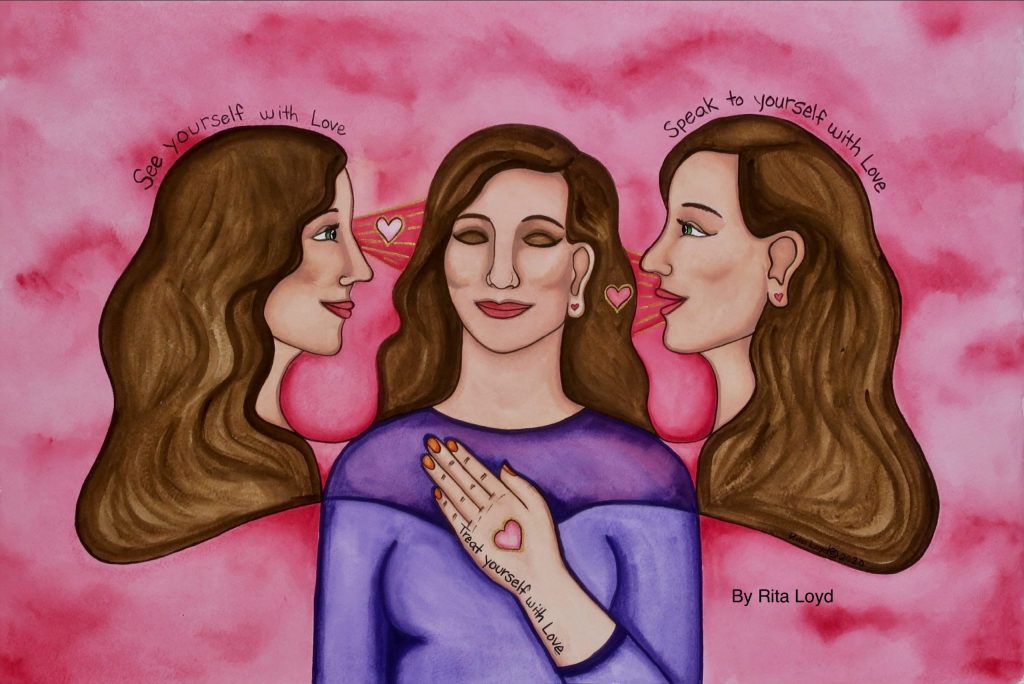
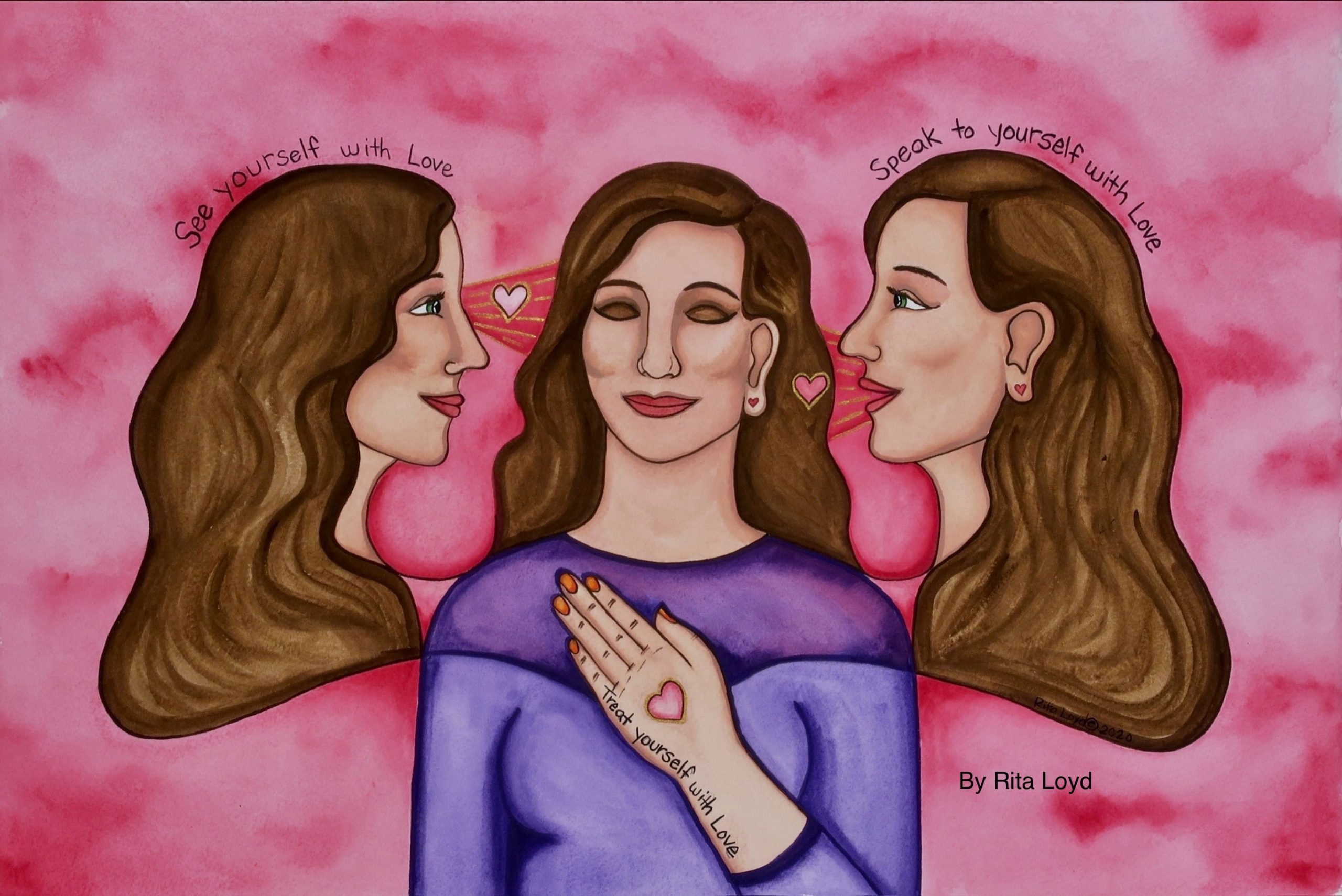
    In 2004, I experienced a powerful breakthrough in understanding what it meant to love myself. I could finally understand that self-love is about the relationship that you have with yourself, and that relationship is expressed in how you speak to yourself, treat yourself, and see yourself. I also understood that self-love is about knowing yourself and paying attention to what you need.

    These discoveries, and others, changed my life and led me into a new direction. But as the years went by, I began to feel exhausted by life. Despite all that I had learned, I could feel myself burning out. It became clear to me then that there was a depth of self-love and healing I still wasn’t able to reach.

    What I didn’t realize yet was that I had been living with complex trauma my entire life. It stemmed from a painful childhood, and it had created blind spots in how I saw myself and others. Because of complex trauma, I moved through life in a fog—feeling lost, disconnected from myself, and seeking self-worth through external validations.

    So, I continued on with life—struggling, yet still hoping to find my answers. Then one day the fog began to lift, and the healing process began. I couldn’t see it all at once, but little by little, it became clear what I needed to learn in order to reach a deeper level of self-love and healing. Here’s a glimpse into my journey.

    From 2011, I spent the next five years helping my dad take care of my mom because she had advanced Alzheimer’s disease. I was helping three to four days a week, even though I was dealing with chronic health issues and severe anxiety. This was an extremely difficult time that pushed me past my limits—yet it was a sacred time as well.

    Six months after my mom died in 2016, my health collapsed due to a serious fungal infection in my esophagus. I had never felt so broken—physically, mentally, and emotionally. I was desperately searching for ways to recover my health, I was grieving the death of my mom, and I was struggling with a lost sense of identity. Because of this, and more, the goals and dreams I once had for my life vanished—as if the grief had caused some kind of amnesia.

    A few years later, I had my first breakthrough. I was texting with a friend, and he was complaining to me about his ex-girlfriend, who has narcissistic personality traits.

    He told me about the gaslighting, manipulation, ghosting, lack of empathy, occasional love-bombing, devaluing, discarding, and her attempts to pull him back in without taking accountability for the ways that she had mistreated him.

    His description sounded oddly familiar. It reminded me of the dynamic I had with many of my family members in different variations. I had always sensed that something was off in the way my family treated me, but I was so conditioned to normalize their behavior that I couldn’t quite put my finger on what was wrong.

    Once I became aware of narcissistic personality traits, I started doing my own research by listening to narcissistic behavior experts such as Dr.Ramani Durvasula, and it was very liberating.

    I learned that parents who have narcissistic personality traits, often treat their children in ways that serve their own emotional needs instead of meeting the emotional needs of their children. And this can cause negative programming in the way those children think about themselves and others.

    For example, since my dad treated me like my emotional needs didn’t matter, this may have modeled to the rest of my family to treat me in the same way. And it most definitely taught me how to treat myself, especially when I was around my family.

    I also learned that narcissistic relationships can cause you to lose yourself, because they can systematically break down your identity, confidence, and state of reality.

    At the same time, I also learned that narcissistic behavior often stems from a deep sense of insecurity, usually rooted in a painful and abusive childhood. Recognizing this helped me to see my family members through a more compassionate lens—not to excuse their behavior, but to understand where it might be coming from.

    Learning about narcissistic personality traits has deepened my ability to love myself because of the clarity it has given me. I finally understand my family dynamic and how I used to abandon myself when I was around them.

    I would always give them my full and undivided attention, hoping it would be reciprocated, but it never was. Instead, in their presence, I became invisible—as if what I thought, felt, or needed didn’t matter. Around them, I learned to silence myself in order to stay connected, even if it meant disconnecting from myself.

    Understanding narcissistic patterns and the impact that they can have helped me to face reality. My family members were unlikely to ever change, and I would always need to protect my emotional well-being when I was around them.

    As I learned about narcissistic personality traits, I started to come across information about other related topics, such as complex trauma and how it can dysregulate the nervous system. Peter Levine and Gabor Maté are two of my favorite teachers on this subject.

    I discovered that many of my health issues—including inflammation of the stomach, panic attacks, chronic anxiety, chronic fatigue, depression, lowered immune function, pain, and chemical sensitivities—could be linked to a dysregulated nervous system.

    This can happen when the nervous system is chronically stuck in survival mode. In survival mode, the body deprioritizes functions like digestion in order to stay alert and survive. Over time, this can cause fatigue and other problems by draining energy and disrupting key systems needed for rest, repair, and vitality.

    Learning about complex trauma has deepened my ability to love myself because it has opened my understanding to why I might be chronically ill and always in a state of anxiety. Knowing this gives me clues in how I can help myself.

    I also learned that complex trauma is caused less by the traumatic events themselves and more by how those events are processed in the nervous system and in the mind.

    According to the experts, if you are not given context, connection, and choice during traumatic events—especially when those events occur repeatedly or over an extended period of time—it’s more likely to result in complex trauma.

    For example, if during my own childhood, it had been explained to me why my dad was always so angry and sometimes violent… and if I would have had someone to talk to about how his words and actions affected me and made me feel unsafe… and if I would have been given a choice in the matter and wasn’t stuck in harm’s way, then I would have been much less likely to have walked away with complex trauma.

    But since those needs were not met, I internalized the message that I wasn’t safe in the world, which caused my nervous system to become stuck in a state of dysregulation. As a result, constant fear became an undercurrent in my daily life—often stronger than I knew how to manage.

    When I wasn’t in school, I would often retreat into my wild imagination—daydreaming of a perfect fairy tale life one minute and scaring myself with worst-case scenario fears the next. Fortunately, my wild imagination also fueled my creativity and artistic expression, which was my greatest solace. To protect myself, I developed the ability to fawn and to people-please. All of these survival responses have been with me ever since.

    Before I learned about complex trauma, I was told that the only course of action you can take in regard to healing from past emotional abuse was to forgive those who have abused you. But that’s not correct. Forgiveness is fine if you feel like forgiving, but it doesn’t magically rewire years of complex trauma and nervous system dysregulation. The real course of action is to identify and to gently work on healing the damage that was caused by the abuse.

    As I explored the internet in search of ways to begin healing my dysregulated nervous system, I came across two insightful teachers, Deb Dana and Sarah Baldwin. They teach nervous system regulation using polyvagal theory, and I found their classes and Deb Dana’s books to be extremely informative.

    Polyvagal theory, developed by neuroscientist Dr. Stephen Porges, helps people to understand and befriend their nervous systems so they can create a sense of safety within themselves.

    Learning about polyvagal theory has deepened my ability to love myself by teaching me how my nervous system works and by helping me understand why I feel the way I feel. It also teaches exercises that help me to send signals of safety to my body, gently communicating to my nervous system that it doesn’t need to stay in survival mode all of the time.

    Nervous system rewiring is a slow process, and while I still have a long way to go before I get to where I want to be, I’m already feeling subtle shifts in the way I respond to stressful situations. This breakthrough has given me new hope for healing and has provided a new path forward.

    I also learned from complex trauma experts that fawning and people-pleasing can actually be trauma responses. These responses were the reason why I was so willing to sacrifice my health to help my dad take care of my mom. It was because I had been conditioned to always please my parents and to put their needs ahead of my own.

    Learning about how fawning and people-pleasing can be trauma responses has deepened my ability to love myself by giving me new insight into my own behavior. In the past, it had always bothered me if I thought anyone didn’t like me, and now I can understand why I felt that way. It was because those thoughts triggered old feelings of fear from childhood, when not pleasing my dad felt dangerous. This taught me to never say ‘no’ to people in order to always feel safe.

    By becoming aware of these trauma responses and wanting to reclaim my power, I have gained the ability to say ‘no’ with much more ease, and I’m much better at setting healthy boundaries. I’m also learning to accept that not everyone is going to like me or think well of me—and that’s okay.

    During the later years of my dad’s life, we developed a much better relationship. Both my mom and dad were grateful for the help I gave to them when my mom was sick.

    After my dad died in 2023, I no longer had the buffer of his presence to ease the stress of family visits. But I also no longer felt obligated to be around family members for the sake of pleasing my dad. So, a few months after his passing, when I received disturbing correspondence from a certain family member, I was able to make the difficult decision to go no contact. Spending time with family members had become too destabilizing for my nervous system—and to be completely honest with you, I had absolutely nothing left inside of me to give.

    At first, I felt a lot of guilt and shame for going no contact, being the people-pleaser and fawner that I have been. But then I learned from complex trauma experts that guilt and shame can also be trauma responses.

    When we are guilted and shamed in our childhoods for speaking up for ourselves, it can teach us that it’s not safe to go against the ideology of the family, that we should only do what is expected of us, and that our true voices and opinions don’t matter. This kind of programming is meant to keep us small—so that we are less likely to stand up for ourselves and more likely to remain convenient and free resources for the benefit of others.

    I experienced a lot of rumination and intrusive thoughts the first year of going no contact, but with time and support I was able to get through the hardest parts. Watching Facebook and Instagram reels from insightful teachers, such as Lorna Dougan, were incredibly helpful and kept me strong.

    A truth I had to keep reminding myself of was that my well-being was just as important as theirs, and that it was okay for me to prioritize my mental health—even if they could never understand.

    Giving myself permission to go no contact with family members has deepened my ability to love myself because it has allowed me to help myself in a way that I had never been able to do before.

    I now have a real chance to protect my mental health, to heal my nervous system, and to live the life that is most meaningful for me and for my husband. I no longer have to drain my last ounce of energy on family visits and then ruminate about how they treated me for the next 72 hours. It has also opened up my capacity to deal with other challenges in my life, like facing the new political landscape that is now emerging.

    In conclusion, it was only when I began to tend to my complex trauma and examine my family relationships that I was finally able to recognize and understand the blind spots that had obscured my ability to know and to love myself more deeply.

    Looking back on my journey, I’m grateful for how far I have come:

    I now know and understand myself better. I have a greater understanding of what I need in order to heal.

    I am able to think for myself and make decisions that align with my core values.

    I like myself again, and I know that I’m a good person. I no longer believe that I’m too much or too sensitive—I just need to be around people who are compatible.

    I am able to set healthy boundaries and to choose my own chosen family—people who treat me with genuine kindness and respect.

    And I feel more confident facing life’s challenges now that I know how to turn inward and support my nervous system with compassion and care.

  • Why I Learned to Stay Quiet to Be “Good”

    Why I Learned to Stay Quiet to Be “Good”

     “Your silence will not protect you.” ~Audre Lorde

    When I was little, I learned that being “good” meant being quiet.

    Not just with my voice, but with my needs. My emotions. Even the space I took up.

    I don’t remember anyone sitting me down and saying, “Don’t speak unless spoken to.” But I felt it—in the flinches when I was too loud, the tension when I cried, the subtle praise when I stayed calm, agreeable, small. I felt it in the way adults sighed with relief when I didn’t make a fuss. I felt it in the way I stopped asking for what I wanted.

    Goodness, to me, became about not rocking the boat.

    I remember once being told, “You’re such a good girl—you never complain.” And I carried that like a medal. I remember crying in my room instead of speaking up at dinner. Saying “I’m fine” even when my chest hurt with unsaid words. I didn’t want to cause trouble. I wanted to be easy to love.

    So I smiled through discomfort. Nodded when I wanted to say no. Bit my tongue when I had something true to say. I became pleasant, adaptable, well-liked.

    And utterly disconnected from myself.

    The Body Keeps the Quiet

    For a long time, I thought this was just a personality trait. I told myself I was just easygoing. Sensitive. A peacemaker.

    But the truth is, I had internalized a nervous system survival strategy: fawning. A subtle, often invisible adaptation where safety is sought not through flight or fight but through appeasement. Becoming who others want you to be. Saying what they want to hear.

    In my body, this looked like:

    • Holding my breath in tense conversations
    • Smiling when I felt anxious
    • Swallowing words that rose in my throat
    • Feeling exhausted after social interactions, not knowing why

    It wasn’t just social anxiety or shyness. It was a deeply ingrained survival pattern—one that shaped everything from how I moved in the world to how I related to others.

    I didn’t yet have the language for what was happening. But I could feel the cost.

    The silence I carried started to ache—not just emotionally, but physically.

    My jaw clenched. My shoulders rounded forward.  My chest felt like a locked room. I felt foggy in conversations, distant in relationships, unsure of where I began and ended.

    It turns out, when you chronically silence yourself to stay safe, your body starts whispering what your voice can’t say.

    The First Time I Said “No”

    It wasn’t a dramatic moment. There was no shouting or storming out.

    It was a quiet dinner with someone I didn’t feel fully safe around. They asked for something that crossed a line. And for the first time in my adult life, instead of automatically saying yes, I paused.

    I heard the old script start to run: Be nice. Don’t upset them. Just say yes, it’s easier.

    But something in me—a wiser, quieter part—held steady.

    I took a breath. I said, “No, I’m not okay with that.”

    And even though my body trembled, I didn’t crumble. Nothing catastrophic happened. I went home and cried—not from fear, but from relief.

    It was one of the first moments I realized I could choose myself. Even when it felt unnatural. Even when I wasn’t sure what would happen next.

    That one moment changed something in me. Not overnight. But it planted a seed.

    Reclaiming My Voice, One Breath at a Time

    Reclaiming my voice hasn’t been a big, bold revolution. It’s been a slow unfolding.

    It looks like:

    • Taking a few seconds before I respond, even if silence feels uncomfortable
    • Letting myself speak with emotion, not filtering everything to sound “reasonable”
    • Naming what I need, even if my voice shakes
    • Resting after interactions that leave me drained—honoring the impact
    • Journaling the things I wanted to say, even if I never say them out loud

    Some days I still go quiet. I still feel the old fear that speaking truth will cause rupture, rejection, or harm. Sometimes I still rehearse what I want to say five times before I say it once.

    But I’ve learned that every time I listen to myself, even if just with a hand on my heart, I’m creating safety from the inside out.

    And slowly, my body began to shift. I stood a little taller. My breath came a little easier. I started to feel more here—more like myself, not just a reflection of who I thought I needed to be.

    What Helped Me Begin

    Sometimes, what rises first isn’t courage but grief. Grief for all the moments we didn’t speak, for the versions of ourselves that held it all inside. I had to learn to meet that grief gently, not as failure, but as evidence of how hard I was trying to stay safe.

    This journey didn’t begin with confidence—it began with compassion.

    Noticing the times I silenced myself with curiosity instead of shame.

    Asking: What did I fear might happen if I spoke? What used to happen?

    Placing a hand on my chest and saying gently, “You’re not bad for being quiet. You were trying to stay safe.”

    And then, when I felt ready, experimenting with small expansions:

    • Leaving a voice note for a friend instead of texting
    • Telling someone “I need a moment to think” instead of rushing an answer
    • Saying “I actually disagree” in a conversation where I normally would’ve nodded along

    None of these were big leaps. But each one taught my nervous system a new truth: it’s safe to have a voice.

    If You’ve Been Quiet Too

    If you’re reading this and recognizing your own silence, I want you to know:

    You’re not bad for going quiet. You were wise. Your nervous system was doing its best to keep you safe.

    And if you’re beginning to feel the tug to speak—to take up a little more space, to say “no” or “I don’t know” or “I need a moment”—you can trust that too.

    You don’t need to become loud or forceful. Reclaiming voice doesn’t mean overpowering anyone else. It just means including yourself. Honoring your truth. Letting your body exhale.

    You are allowed to be heard. You are allowed to pause. You are allowed to unfold, one breath at a time.

    Your voice is not a threat. It’s a bridge—back to yourself. Your silence once kept you safe. But now, your truth might set you free.

  • The Small, Simple Acts That Shifted Me Out of Survival Mode

    The Small, Simple Acts That Shifted Me Out of Survival Mode

    “True healing is not a straight line. It is a spiral. You come back to things you thought you understood and see deeper truths.” ~Barry H. Gillespie

    I used to believe healing would be obvious. Like a movie montage of breakthroughs… laughter through tears, epiphanies in therapy, and early morning jogs that end with a sunrise and a changed life. But that’s not what healing looked like for me.

    It looked like dragging myself out of bed with puffy eyes after staying up too late crying. It looked like brushing my teeth when everything in me whispered, “Why bother?” It looked like answering a text when I didn’t feel lovable or worth responding to.

    Healing, I’ve learned, is quieter than I expected. It’s not a climax. It’s a practice.

    Three years ago, I hit what I can only describe as emotional gridlock. I wasn’t in crisis, at least not the kind that gets dramatic music. I was in the kind that feels like cement. I was tired all the time. My fuse was short. I wasn’t sleeping, wasn’t eating regularly, and the woman in the mirror didn’t look like someone I recognized anymore.

    If you had asked me what was wrong, I wouldn’t have had an answer. It wasn’t a single event. It was a slow erosion of self, life chipping away piece by piece until I felt like a ghost of who I used to be.

    One night, after snapping at my kids over something insignificant and crying in the shower, I sat on the edge of my bed and thought: I don’t want to live like this anymore.

    Not “I want to disappear.” Not “I want to run away.” But this version of life, the one that felt like survival mode on loop, had to change.

    So, I did something radical:

    I took one deep breath. I unclenched my jaw. I drank a glass of water.

    And that was day one.

    There was no fanfare. No overnight shift. Just a decision to start with what I could reach: my breath, my body, the next kind choice.

    The next morning, I made breakfast. Not for anyone else, just for me. Eggs and spinach. It sounds small, but it felt like reclaiming something. I was so used to skipping meals or eating standing up like my needs were interruptions.

    That day, I walked around the block after lunch instead of scrolling. It wasn’t even a workout. I didn’t track it. But the sun hit my shoulders, and for the first time in a long time, I felt here.

    That walk was healing.

    So was every moment I chose presence over performance.

    I started keeping a mental list of all the tiny things I did in a day that felt like medicine. A bath instead of another task. A journal entry that made no sense but helped me feel less like I might explode. Drinking water before coffee. Asking myself “What do I need?” and then actually listening for the answer.

    Sometimes the answer was a nap. Sometimes it was a good cry with no rush to wipe my face. Sometimes it was texting a friend and saying, “I’m not okay right now,” even when I worried I might sound dramatic.

    And sometimes, the answer was just silence.

    Letting myself be… without the need to improve, perform, or explain.

    Over the next year, healing became a practice of showing up differently.

    Not dramatically.

    Consistently.

    I started listening to my body instead of overriding it. I rested when I needed to instead of proving I could push through. I said no even when my people-pleasing screamed at me to just say yes and make it easier for everyone else.

    And the thing about consistency? It’s boring. It doesn’t get applause. But it works.

    Healing is in the repetition of small kindnesses to yourself. The boring, brave acts of resistance against self-neglect.

    It wasn’t linear, either. I fell back into old patterns. I had days where I numbed out with my phone, skipped meals, and snapped at everyone in the house. But I stopped making those days mean that I was back at square one.

    You can fall down and still be healing.

    You can feel stuck and still be progressing.

    One of the most freeing things I ever learned was that healing isn’t a destination you arrive at. It’s a relationship you build with yourself. One rooted in trust.

    And trust is earned in the small, quiet moments.

    What I didn’t know then, but deeply understand now, is that our nervous systems aren’t waiting for one massive overhaul. They’re waiting for safety, predictability, and care. You rebuild your sense of self the same way you build trust with another person: One consistent action at a time.

    It’s brushing your hair instead of pulling it up in frustration. It’s putting your phone down and drinking tea. It’s crying when the tears come instead of swallowing them down.

    These things don’t look revolutionary. But they are. Because every small act of care tells your body and mind, “You matter. I’m here. I’ve got you now.”

    I remember one day vividly.

    It was pouring rain. My toddler had just thrown oatmeal across the room. I was already touched out, overstimulated, and dangerously close to tears. My instinct was to throw the day away, to turn on cartoons and pour coffee over my anxiety and call it survival.

    But instead, I sat on the floor. I scooped my screaming child into my lap, pressed my forehead to his, and whispered, “We’re okay. We’re safe.”

    I took a breath. Then another. And something in me softened.

    That moment didn’t fix my life. But it reminded me of my power. That was healing, too.

    If you’re in a season where everything feels off, where you feel numb or exhausted or like the spark you used to have is buried under obligation, I want you to know this:

    You don’t need a ten-step plan. You need one small thing you can do today that feels like care.

    A breath. A meal. A walk. A text to someone safe. A cry you’ve been holding in.

    That is healing. Not a dramatic rebirth, but a quiet reweaving of yourself, thread by sacred thread.

    A Few Things That Helped Me

    • Lower the bar. Healing isn’t about being your best self every day. Some days it’s just about not abandoning yourself. Start there.
    • Romanticize the boring. Light the candle. Make the tea. Put on the cozy socks. Small rituals matter. They remind you that your life is worth living even when it’s messy.
    • Give yourself credit. Every time you choose presence over autopilot, you’re rewiring something. That’s no small thing.
    • Befriend your body. It’s not broken. It’s responding to years of survival. Treat it like a loyal companion, not a machine that’s malfunctioning.
    • Talk to yourself like someone you love. When you mess up. When you overreact. When you don’t meet your own expectations. Especially then.
    • Keep showing up. Even if it’s not glamorous. Especially when it’s not.

    You won’t always feel the shift. But you’ll wake up one day and realize: you’re softer. Kinder. Less reactive. More you.

    That’s what healing does.

    Quietly. Faithfully. Cell by cell.

  • How to Embrace Elective (not Mandatory) Forgiveness After Trauma

    How to Embrace Elective (not Mandatory) Forgiveness After Trauma

    Do I need to forgive my abusive mother to let go of the past?

    This is the question I found myself grappling with when I started to recover from the pain of childhood neglect. For most of my childhood, I did not have access to a consistent adult who valued me. As a result, I believed that I had no value, and I lived my life according to this belief.

    I treated myself as an invaluable being by denying my needs, catering to everyone else’s, and engaging in relationships with people who sought to benefit from my low self-worth. My physical and mental health suffered. I felt trapped in a cage that I hadn’t built as a child but had taken up residency in as an adult.

    My childhood trauma had negatively impacted my life for over thirty years, and I desperately needed to discover what would help me to move forward. So many people praised forgiveness as a cure-all with moral superiority. They all encouraged  me to forgive my mother.

    Was forgiveness needed to recover from trauma? I turned to experts—therapists, psychologists, psychiatrists, and doctors—to find an answer. Their responses? Mixed.

    One therapist told me, “If you can forgive, you should. Forgiveness is the key to healing.”

    A psychologist admitted, “I’ve seen clients who forgave and those who didn’t, and honestly, I haven’t noticed a difference in outcomes.”

    A doctor insisted, “Everyone needs to forgive. Holding grudges harms your mental and physical health.”

    And a psychiatrist offered a more nuanced view: “It all depends on what you need. If forgiveness were a proven cure-all, we’d recommend it universally.”

    The lack of consensus was frustrating. I was desperate to move forward, to let go of the past, and I needed to know—was forgiveness the answer? For the next three years, I delved into this question, interviewing clinicians, scholars, religious leaders, and trauma survivors.

    Here’s what I discovered: Forgiveness is not a one-size-fits-all solution, and it’s never something you should feel pressured or obligated to do. In fact, if you are forced into forgiving, it doesn’t work at all.

    The Power of Elective Forgiveness

    What I learned is that forgiveness can be incredibly freeing—but only if it’s optional, not a requirement. Elective forgiveness is about giving yourself permission to decide what’s best for you. It means you can forgive, not forgive, or even find that forgiveness happens naturally over time without the intention to forgive.

    For me, elective forgiveness became a way to take back control of my healing journey. I stopped worrying about whether I should forgive and instead focused on what I needed to feel safe, process my emotions, and move forward. This approach lifted the weight of mandatory forgiveness off my shoulders and allowed me to make space for whatever felt authentic in my recovery.

    How to Embrace Elective Forgiveness

    If you’re wondering how elective forgiveness might help you let go of the past, here are a few steps that worked for me:

    1. Prioritize your safety.

    For years, I didn’t feel safe having contact with my mother. To protect myself, I chose to establish boundaries, including a five-year estrangement, while we both worked on ourselves in therapy. Only when I felt safe did I consider reconnecting, and even then, forgiveness wasn’t on the table until I felt ready.

    To assess your safety, ask yourself:

    • Am I prioritizing my need to feel safe over the pressure to forgive?
    • Do I understand that forgiveness isn’t the same as reconciliation? (You can forgive without reconciling and vice versa.)
    • What boundaries do I need to feel safe, and how can I communicate them to my offender?

    2. Welcome unforgiveness.
    At one point, I questioned if my inability to forgive was a sign of failure. But I eventually realized that unforgiveness wasn’t a “stage” to get through—it was a valid and necessary part of my recovery.

    Unforgiveness can be a place to rest, reflect, and process your emotions. It doesn’t have to lead to forgiveness—it can be the endpoint or simply part of the journey. The key is to allow yourself to be where you are without judgment.

    3. Let yourself feel anger.

    For a long time, I suppressed my anger because I was taught it was a “bad” emotion. But denying my anger only kept me stuck. Once I gave myself permission to feel it, my anger began to evolve into grief and, eventually, a sense of peace.

    Here’s how you can work with anger:

    • Write a letter to the person who hurt you, expressing your anger. (You don’t need to send it.)
    • Notice where anger shows up in your body. Is it in your chest, your stomach, your fists? What happened when you notice how anger feels in your body?
    • Move your body in ways that match your anger—punch a pillow, stomp your feet, or go for a run. Ask your body, “What do you want to do with this anger?”

    4. Trust the process.

    I’ll admit I’m annoyed when I hear therapists say, “Trust the process.” I want to trust the outcome! But recovery doesn’t work like that. Elective forgiveness isn’t about achieving a specific result—it’s about allowing yourself to explore, feel, and grow without knowing exactly where you’ll end up.

    For me, trusting the process meant accepting that I might never forgive my mother, and I may also forgive her if that’s what I need. I’ve let go of my anger and found some empathy for her, but I don’t love her, and I don’t want her in my life. Is that forgiveness? Maybe, maybe not.

    The more important question is: Do I need to forgive to let go of the past? For me, the answer is no. I’ve let go without forgiving. What do you need to let go of your past?

    Finding What Works for You

    Your healing journey is your own, and no one can tell you what you need to do. There is not one experience or method that works for everyone. Forgiveness might be part of your process—or it might not. What matters most is that you honor your needs, your boundaries, and your emotions. Letting go of the past isn’t about following someone else’s roadmap—it’s about creating your own.

  • 5 Hidden Ways Codependency Is Sabotaging Your Relationships

    5 Hidden Ways Codependency Is Sabotaging Your Relationships

    “We rescue people from their responsibilities. We take care of people’s responsibilities for them. Later we get mad at them for what we’ve done. Then we feel used and sorry for ourselves. That is the pattern, the triangle.” ~ Melody Beattie

    I first uncovered codependency and how it was ruining my relationships back in 2019 after ending my relationship of four years.

    At the time, I didn’t know the first thing about myself—except that I didn’t know myself at all. I had no idea what I needed or desired. All I knew was that I hated being alone and longed for someone to come in and save me from myself. Little did I know, I was deep in the grip of my codependency patterns.

    Without anyone to validate or console me, I was forced to confront the uncomfortable truth about my role in the relationship’s dysfunction.

    For so long, I had blamed my partner for everything that was “wrong”—the lack of connection, the emotional exhaustion, and the resentment that weighed me down. I felt drained, unappreciated, and frustrated, but in my mind, they were the problem. I believed that if they just changed, everything would be better.

    It wasn’t until I started looking inward that the truth began to unfold. I saw how my codependent behaviors were fueling the very issues I was complaining about. I had been pouring so much of myself into trying to fix them and the relationship that I had neglected my own needs, boundaries, and well-being.

    Once I became aware of these patterns, everything started to shift. I began showing up differently—not just for them, but for myself. That awareness was the key to turning the relationship around.

    When we got back together, everything was like night and day. The dynamics had completely shifted. Instead of feeling drained and frustrated, we were both able to show up more fully and authentically in the relationship. I created a unique framework that bridges shadow work and inner child healing, and I now use it in my relationship whenever I’m triggered or blaming my partner.

    After recently celebrating ten-plus years together, our relationship is now based on mutual respect, healthy boundaries, and emotional safety—creating something stronger and more fulfilling than we ever had before.

    But here’s the thing—before I could create that shift, I first had to become aware of the hidden ways codependency was sabotaging my relationship. These behaviors are sneaky and often disguised as care or concern, but they can have a destructive impact on how we show up in our relationships.

    If you’re wondering how codependency might be negatively impacting your relationship, here are some of the ways it can show up.

    1. You need to be needed.

    I learned that my sense of worthiness was dependent on how much other people needed me.

    When we’re codependent, our purpose, self-worth, and good feelings about ourselves become dependent on how much another person needs us. This makes sense, since many of us watched mothers who were self-sacrificing, as though the sacrifice equated to love.

    This pattern satisfies the person with codependency because it can soothe their fear of abandonment and rejection. If the other person in the relationship becomes dependent on me to take care of their needs, they think, then they won’t leave me. (Spoiler alert: This often leads to resentment in the long run.)

    2. You struggle with identifying your own needs and feelings.

    I realized that I had a difficult time recognizing and identifying my own needs and feelings because I was constantly perceiving the needs and feelings of others and making choices based on my desire to be liked.

    This behavior can show up as people-pleasing and doing what you think other people want you to do. It stems from a lack of safety, likely originating in childhood, that tells you that perceiving the needs and feelings of others will protect you from pain. Unfortunately, this can leave you with a lost sense of self, leading to an inability to name your own needs and feelings, which contributes to them feeling unmet in your adult relationships.

    3. You have constant anxiety.

    For months, I was waking up in the middle of the night with extreme pain in my chest. My anxiety had gotten so bad that I was waking with painful panic attacks that felt like heart attacks, so much so that I ended up in the ER.

    I had constant anxiety because I was always trying to make other people happy, but I didn’t realize that it was at the expense of my own well-being.

    The fear of betrayal or abandonment can be so debilitating, and the anxiety from that can leave you self-sacrificing in hopes of making others happy so that they don’t leave. Consequently, those of us who experience codependency will stay in relationships even if we are aware that our partners are doing harmful things because we have attached our safety and security to this person rather than sourcing that safety for ourselves.

    4. You feel disrespected or not valued. 

    After years of being everything to my partner, I reached a point of deep resentment. I realized that I overextended myself because I had this unconscious agenda, or desire, that they would do the same for me. And every time they didn’t, I felt unappreciated, invisible, and not cared for.

    For people in codependent relationships, resentment often bubbles up later on, when the patterns of constantly over-giving and self-sacrificing build up. This tendency to over-give and become resentful can stem from low self-worth and self-esteem and our fears of abandonment.

    I learned that I was really just afraid to set healthy boundaries and ask for what I needed because I believed that they would think I was too much or selfish and then leave me. So, instead of speaking up, I continually hoped they would guess my needs and continued to be disappointed and let down.

    5. You feel selfish when you take time to be with yourself (or you avoid self-care).

    Many people, especially mothers, feel guilty and selfish when taking time for themselves. But why should other people be more important than you? I know I struggled with this deep fear of being negatively perceived until I realized that I have no control over what people think about me, and quite frankly, what other people think about me is none of my business!

    Those of us who struggle with codependency may feel like we are asking for too much, or that we are too much, so we make ourselves small and avoid taking up space due to fear of how we will be perceived.

    Healing from codependency starts with awareness. Once you recognize the subtle patterns and behaviors that are sabotaging your relationships, you can begin to shift the dynamic.

    It’s not about fixing the other person; it’s about healing yourself—understanding your needs, setting healthy boundaries, and showing up authentically. By taking responsibility for your role in the relationship and committing to your own healing, you create space for deep, meaningful connection and more joy.

    Remember, healing is not about never experiencing these patterns or triggers again; it’s about how you hold yourself when they come up.

  • What I Do Now Instead of Trying to Rescue People

    What I Do Now Instead of Trying to Rescue People

    “A leader leads by example whether he intends to or not.” ~Unknown

    This past year has been a journey—one that cracked me open in ways I never expected.

    It began with life-changing news: I was pregnant with my third child. In August, I welcomed my baby, and as I held that tiny, precious life in my arms, the weight of reality crashed over me. Something had to give. I could not keep moving at the same relentless pace, endlessly pouring myself into others, holding their pain as if it were my own, and giving until there was nothing left. If I continued like this, I would become a shell of myself—a zombie mom, moving through life on vibrate mode, disconnected, exhausted, and lost.

    For years, I had been the person everyone leaned on. The healer, the fixer, the one who never said no. As a therapist, it felt natural to care deeply, to hold space, and to offer whatever I had to those in need. I became so adept at giving that I forgot how to hold anything back for myself.

    I thought that was love. I thought that was worthiness—being the person who could carry it all. But with another baby on the way, I finally saw the truth: If I didn’t change, I would be consumed. I couldn’t keep running on empty, sacrificing myself at every turn, and still be the mother my children deserved. I couldn’t be lost to burnout and depletion.

    So, I made a promise to myself. I would protect my energy. I would honor my own needs. I would stop trying to be a savior.

    “I am not a savior; I am a leader.” This became my mantra, my anchor in moments of doubt and old patterns.

    It reminded me that my worth wasn’t tied to how much I gave or how many burdens I carried. Real healing wasn’t about sacrificing myself; it was about guiding and empowering others—without losing who I was in the process.

    But breaking free of old habits isn’t easy. The reflex to jump in, to rescue, to absorb others’ pain is deeply ingrained. It’s part of who I’ve been for so long that choosing differently feels unnatural, even selfish at times.

    Recently, a friend reached out in distress. Every instinct screamed at me to drop everything and save her. That’s what I always did—rush in, fix it, try to make everything better, even if it meant leaving myself drained and overwhelmed.

    But this time, I paused. I took a breath. I reminded myself: “I am not a savior.” So, instead of absorbing her crisis, I encouraged her to lean on other supports and tap into her own resources. I stayed present, but I didn’t make myself the solution.

    And let me tell you, it was hard. Guilt clawed at me. Doubt whispered that I was abandoning her, that I was failing her. I felt my inner child—the one who learned love was earned through fixing—screaming that I was making a mistake.

    There were moments when it felt like I might break. Watching her struggle triggered every fear and insecurity I carried. But then something remarkable happened—she found her way. She leaned on others, drew on her own resilience, and overcame the challenge.

    By stepping back, I hadn’t let her down—I had lifted her up. I had given her the space to find her strength, to be her own hero. And in doing so, I had freed myself from carrying a burden that was never truly mine to hold.

    The realization left me breathless. By not being the rescuer, I had broken a cycle—a cycle that kept me drained and others dependent. I had shown up in a different way, and it felt terrifyingly unfamiliar but profoundly right.

    I felt pride, relief, and a deep, aching grief. I grieved for all the times I had sacrificed myself, believing it was the only way to be worthy. I grieved for the younger me who thought love could only be earned through self-sacrifice. But I also felt hope—hope that I could lead with compassion and strength without losing myself.

    This journey isn’t easy. The pull to rescue, to absorb, to fix is always there, whispering that I need to be more, to do more. But I’m learning to listen to a different voice—the one that tells me my needs matter too. That I am worthy of care and boundaries. That I can lead without sacrificing myself.

    As I hold my new baby and navigate life with three children, I know there will be times when I slip. Times when I fall back into old patterns, when guilt gnaws at me, and when I feel the weight of everyone else’s needs pressing down. But I’m committed to choosing differently. I refuse to become the zombie mom, lost in everyone else’s expectations and needs. I deserve more. My children deserve more.

    When I protect my energy and honor my needs, I become the mother I want to be. I show up with love, patience, and presence. I am not a savior. I am a leader. And when I choose to break these cycles, I give others permission to do the same. I create space for those around me to find their strength. I lead by example—not by sacrificing myself, but by showing what it means to love deeply without losing who you are.

    So, I keep going. I choose myself, even when it feels hard. I break old patterns, even when it hurts. Because I deserve to be whole. I deserve to be honored. And those I care for deserve a version of me who leads with strength, compassion, and presence—not a shadow of who I used to be. I am not a savior. I am a leader. And that, for the first time in a long time, feels like more than enough.

  • It’s Okay to Disappoint People When You’re Honoring Yourself

    It’s Okay to Disappoint People When You’re Honoring Yourself

    “Daring to set boundaries is about having the courage to love ourselves, even when we risk disappointing others.” ~Brené Brown

    On a recent day trip to the Yuba River with my daughter and two friends, unexpected tensions arose, offering me a chance to reflect on a lifelong pattern that has often complicated my relationships. It was a beautiful day, and I’d been looking forward to soaking up the sun and relaxing by the water—but my friend had a more adventurous day in mind.

    Though a footbridge led to a clear trail, she suggested we take a more difficult route over steep boulders. Despite my initial hesitation, I went along, wanting to be open to her plans. But as I navigated the rocks with weak knees and slippery Birkenstocks, I started to regret my choice.

    Each step required more balance and focus than I’d anticipated, and as I struggled to keep my footing, I worried about disappointing my friend if I suggested another path. I often find myself accommodating others at the expense of my own comfort—a pattern I’ve been working to untangle for years. Eventually, I did speak up, and as we turned back, I felt pleased reflecting on my growth in honoring my own needs, even though it felt vulnerable.

    However, just as we reached the stairs that would take us to the footbridge, my friend pivoted again. This time, she suggested wading across the river and scaling the rocky bank on the other side. The idea didn’t make sense to me, and I really didn’t want to take this route—but guilt crept in, knowing I’d already resisted one of her suggestions. Feeling that familiar tug of people-pleasing, I once again overrode my own preference.

    So, we waded across, balancing our backpacks and climbing over slippery rocks to reach the opposite bank—which was steep and hazardous. My daughter scrambled up the cliff-like bank with my friend’s help, but as I struggled to find my footing, I could see the anxiety in her eyes.

    In that moment, I realized I was pushing myself to do something that didn’t feel safe for either of us. What was I trying to prove? Why was I putting myself in this stressful situation when it would have been so much easier to just cross the footbridge?

    Ultimately, rather than risk the steep climb, my other friend and I decided to turn back. We waded across the river again and took the stairs to the footbridge I had wanted to follow all along. Reuniting with my daughter and our friend on the other side, we finally embarked on the trail.

    I felt a sense of satisfaction in once again recognizing my pattern of people-pleasing and choosing to change course. However, irritation soon followed—despite passing many perfectly nice spots, we continued hiking as our friend was determined to find a pristine, isolated area to swim. While I appreciated her vision for an adventurous day, I began to feel confined by it, realizing I was still prioritizing her desires over my own.

    We wound up stumbling upon a crowded nude beach—and while I have no judgment against nudity, the situation was uncomfortable for my teenage daughter. My friend tried to convince us to swim past the bathers to find a quieter place, but I knew this wasn’t right for my daughter. This time, I didn’t hesitate. It felt incredibly uncomfortable, but I firmly said no.

    I told my friends I wanted us all to enjoy ourselves at our own pace. So, I encouraged them to keep adventuring while my daughter and I turned back to where we’d started—a spot that had always felt perfectly fine for swimming. My friend seemed disappointed, and guilt once again crept in, but I felt grateful for my decision.

    How often do we let ourselves be swept up by others’ desires, ignoring our own?

    Years ago, I might have felt annoyed or even resentful that my day wasn’t unfolding as I’d imagined. I might have blamed my friend for being “pushy” and not listening. This time, however, I focused on observing my inner reactions rather than letting them take control.

    Each obstacle became an opportunity to examine my responses. I noticed again and again how easily I slip into accommodating others, even at the expense of my own comfort—a pattern rooted in a fear of losing connection.

    I felt no resentment toward my friend; I know she’s simply adventurous and eager to create memorable experiences. Alongside my love for her and trust in her good intentions, I’ve engaged in considerable shadow work. I recognize that judgment and blame are often projections, ways we avoid taking responsibility for our own feelings and needs.

    So, when that familiar pull to please others arose, instead of giving in to resentment or going along just to keep the peace, I practiced something different: listening to my inner voice and aligning my actions with what I truly wanted.

    It took three instances of going along before I finally gained clarity. While openness and flexibility are valuable traits, we must also be willing to risk disappointing others to honor our own needs. Far from weakening our connections, this kind of self-honoring fosters genuine relationships with ourselves and others.

    My daughter and I ended up having a relaxing time in our chosen spot while our friends enjoyed their adventure. When they returned, we all took a final swim together, diving into the cool water and drying off on the warm, sunbaked rocks. On the way home, we shared a fun conversation and even stopped at a roadside stand for some of the best key lime pie any of us had ever had. It turned out to be a wonderful day filled with connection after all.

    Reflecting on this experience highlights common patterns we often encounter: the tendency to please others, the fear of disappointing them, and the guilt that can arise when asserting our needs.

    My relationships and enjoyment of life have significantly improved as I’ve learned to witness and navigate these conditioned responses, ultimately becoming more authentic. This doesn’t mean I no longer face challenges, like the ones I encountered on my day at the river. However, I now navigate these situations with greater ease, and my increased self-awareness has led to continuous growth and a deeper sense of freedom beyond old patterns.

    Based on my experiences, here are some insights that may support you in similar situations—especially when you feel torn between your own desires and the fear of disappointing those around you:

    Pay Attention.

    Notice what’s happening internally and get curious about what triggers you. Identify your inner conflicts—such as discomfort with disappointing others or fear of being seen as selfish. This self-awareness is crucial for navigating your responses authentically.

    Stay Present.

    Focus on the current moment rather than your expectations. Embracing what is allows you to align your choices with reality instead of how you wish things would unfold. Redirect any frustration from unmet ideals into fully engaging with the experience at hand.

    Take Responsibility.

    Avoid blaming others, focusing instead on your own feelings and needs. This empowers you to advocate for yourself in alignment with your values, free from resentment or guilt. By slowing down and reflecting on your choices, you gain clarity and self-compassion. Ask yourself: What do I truly want now?

    Speak Up with Grace.

    Clearly and kindly express your needs and preferences to foster open communication while maintaining connection. Speaking up may feel daunting, but setting boundaries is a vital act of self-love. Trust that your needs are valid and worth sharing and it’s okay to voice them.

    Navigating our experiences in a way that honors our true selves is an ongoing practice. By listening to our inner voice, staying curious about our reactions, and letting go of blame, we create space to pursue our desires without guilt. Each choice becomes a step toward authentic alignment, freeing us from the weight of others’ expectations.

  • An Unexpected Lesson on Boundaries and Putting Yourself First

    An Unexpected Lesson on Boundaries and Putting Yourself First

    I just dropped off a rider—her name is Mariel.

    When I picked her up, she got into the car and said she was headed downtown. I casually mentioned that I live downtown, near the Walt Disney Concert Hall. She smiled, said, “That’s fire,” and then, just like that, she put on her headphones.

    And I got angry. Yeah, I’m admitting it. That stupid, bubbling rage started to rise. Why? Because I’m insecure.

    My mind started spinning: How could she put on her headphones like I don’t matter? Isn’t that rude? I caught myself thinking she should be giving me attention, talking to me—acknowledging me. I mean, wasn’t I the one driving her, providing a service, doing her a favor? But then it hit me. No, I wasn’t doing her a favor. I was doing my job.

    Mariel didn’t do a damn thing to hurt me. She wasn’t out to snub me or make me feel small. She wasn’t dismissing me at all. You know what she was doing? She was putting herself first, unapologetically. She just wanted to rock out to her music, enjoy the ride her way. She did what we all should be doing—taking care of herself without worrying about how it looked to others.

    It was a gut check moment for me. I felt exposed—my need for validation, my desire to be seen and acknowledged, all laid bare in a single interaction. But why? Why did I care so much that this stranger wasn’t engaging with me?

    The truth is, it wasn’t really about Mariel at all. It was about me, about this bottomless well of neediness that I hadn’t fully acknowledged before. I’ve been feeding off other people’s attention like a vampire, needing their smiles, their laughter, their words to feel okay about myself. And Mariel, without saying a word, held up a mirror and made me see it.

    Mariel’s Magic: The Art of Not Giving a Damn

    Mariel didn’t give a damn about what I thought, or at least didn’t seem like she did, and that’s exactly what made her so powerful. She was living her truth, moment by moment. Maybe she’d had a long day and just needed to zone out. Maybe she was lost in some existential daydream, pondering the meaning of life, or maybe she was just tired and wanted to listen to her favorite playlist. Whatever the reason, she didn’t owe me anything beyond the basic courtesy of “hello” and “goodbye.” And why should she?

    Too often, I’ve found myself stuck in a loop of trying to please everyone around me. I’m like a shapeshifter, bending myself into whatever form I think someone else wants me to be. I tell myself I’m being kind, considerate, attentive. But in reality, it’s just fear—a desperate attempt to be liked, to be needed, to be seen. But Mariel? She wasn’t playing that game. She was the antidote to the people-pleasing poison I’d been sipping on for years.

    Mariel was a masterclass in boundaries, and I was the desperate student trying to graduate to her level. She wasn’t being rude or dismissive. She was being herself—no masks, no filters. And I envied her for that. I envied her for not feeling like she needed to make small talk or placate me with some half-assed conversation. She was just doing her, and I was left to deal with my own insecurities.

    A Lesson in Self-Respect

    Here’s what I learned from Mariel: Putting yourself first isn’t selfish—it’s necessary. It’s about knowing your limits and respecting your own needs enough to honor them. It’s about having the guts to say, “This is what I need right now, and I’m not going to compromise it just to make you feel better.” It’s about being honest, not just with others but with yourself.

    And the truth is, I haven’t been honest with myself. I’ve been bending over backwards to be the “nice guy,” the “good listener,” the “friendly driver,” all the while secretly resenting the people who didn’t reciprocate.

    It’s a game I’ve been playing for so long, I didn’t even realize I was playing it. But Mariel made me see it. She shone a light on the dark corners of my neediness, my fear of rejection, my deep-seated belief that I’m not enough unless I’m being validated by someone else.

    Mariel didn’t need my validation. And she sure as hell didn’t need to validate me. She was in her own world, taking care of herself, and in doing so, she showed me the way. She showed me that it’s okay to say, “This is what I need right now, and I’m going to take it, unapologetically.” She showed me that true self-respect doesn’t come from getting others to see your worth. It comes from seeing your own worth and not compromising it for anyone.

    Unapologetic Self-Care: The Mariel Method

    So, here’s to you, Mariel. Thank you for the lesson I didn’t know I needed. You taught me that self-care isn’t just bubble baths and meditation. It’s also having the courage to say, “No, I’m not engaging right now because I need this time for me.” You showed me that it’s okay to be a little self-centered, a little guarded with your energy. And that it’s not my job—or anyone else’s—to take care of someone else’s feelings at the expense of my own.

    We’re all so caught up in this idea that we have to be everything to everyone, that we have to be likable, agreeable, pleasant. But what if we just… stopped? What if we took a page out of Mariel’s book and decided to live on our own terms, without explanation, without apology? What if we gave ourselves the freedom to just be?

    Mariel didn’t do anything extraordinary. She didn’t cure cancer or climb Mount Everest. She didn’t give some inspirational TED Talk. All she did was put on her headphones and tune out the world. But in that simple act, she gave me a gift. She gave me permission to stop trying so hard to be everything for everyone. To stop performing. To just exist.

    The Real Hero’s Journey

    I think, in a way, we’re all looking for permission to be ourselves. We’re all waiting for someone to say, “It’s okay. You don’t have to be perfect. You don’t have to be everything for everyone. You just have to be you.”

    But the truth is, that permission has to come from within. We have to be our own gatekeepers, our own liberators. And that’s what Mariel showed me. She wasn’t looking for anyone’s approval. She wasn’t waiting for anyone to give her permission. She just took it.

    And that’s what I want to do. I want to take that permission and run with it. I want to live unapologetically. I want to put myself first, not in a selfish way, but in a way that honors my own needs and boundaries. I want to stop needing everyone to like me, to validate me, to make me feel worthy. Because the truth is, I am worthy. Just as I am. Without the masks, without the performances, without the need for anyone else’s approval.

    The Takeaway

    So, here’s to you, Mariel. You, with your headphones and your unapologetic self-care. You, who probably didn’t even know you were teaching me something profound. Thank you for showing me what it means to put yourself first, to live authentically, to honor your needs in a world that demands we give, give, give until there’s nothing left. Thanks for reminding me that it’s okay to take up space, to put ourselves first, to just be.

  • Choosing Yourself: How to Prioritize Your Personal Well-Being

    Choosing Yourself: How to Prioritize Your Personal Well-Being

    “To love oneself is the beginning of a lifelong romance.” ~Oscar Wilde

    “Choose me!” I heard the voice clearly as I sat across from my therapist one day in her office.

    It was my fourth visit, and we were working through this feeling I had, like I was crying on the inside but nothing was coming out on the outside. I was explaining how this feeling had been recurring quite frequently lately and how my response was to ignore it and push through it.

    In response to this, my therapist asked me, “What would happen if you attended to this feeling instead of pushing through?”

    And that’s when it happened. A voice as clear as the greatest truth you’ve ever heard called out from my crying heart: “Choose me!” All the tears I had been crying on the inside began to fall down my cheeks.

    From a young age, we are taught to consider others and put their needs above our own. Especially if we are raised in certain religious or cultural settings, this message can be prevalent from the beginning.

    As babies, when we needed something, we’d cry, and our needs would be met. However, as we grew older, we started to receive messaging around being polite, not being selfish, or treating others as we wanted to be treated. Slowly, our needs became less important than the needs of those around us, and we learned to become more attuned to their needs than our own.

    We learned that we were responsible for the well-being and happiness of others. Putting ourselves first became selfish and irresponsible and was met with resistance.

    It’s a message we have been receiving for generations, which is why it is so hard to imagine choosing ourselves over others. It’s especially hard for women, who are often taught to put the needs of their family and community before their own.

    The longer we ignore ourselves, the greater the toll it takes on our physical, emotional, and spiritual well-being.

    According to Deloitte’s Women @ Work: A Global Outlook report, 50% of women in this year’s survey describe their stress levels as higher than a year ago, and a similar number say they’re concerned or very concerned about their mental health.

    Half of women who live with a partner and have children at home bear the most responsibility for childcare, which is up from 46% last year. And nearly 60% of women who are involved in the care of another adult say they take the greatest responsibility for this, a significant increase from the 44% who said so in 2023.

    Given these alarming statistics, it’s no wonder that we feel exhausted, burnt out, and emotionally unwell. So how do we make a change? How do we heed the call of our inner knowing that longs for us to choose ourselves?

    Let’s walk through the five steps that I took when I heard the call, which I continue to take every day to attend to my own well-being.

    Make space for your interests.

    “Play is the stick that stirs the drink. It is the basis of all art, games, books, sports, movies, fashion, fun, and wonder—in short, the basis of what we think of as civilization. Play is the vital essence of life. It is what makes life lively.” ~Stuart Brown

    Stuart Brown has written a wonderful book called Play: How It Shapes the Brain, Opens the Imagination, and Invigorates the Soul. In it, he walks through the science of play and how it fuels our happiness in life.

    To witness this in your own life, take a walk around your neighborhood and observe children playing—running, hiding, screaming, and laughing. Their sense of freedom and inhibition is inspiring. Now think back to your childhood. What did you used to enjoy doing? What made you laugh? What made you feel alive? What made you lose track of time? What makes you feel calm now? What brings you joy?

    Give yourself permission to find your interests and passions again. Make space for them in your day or week and watch yourself come alive.

    Make space for stillness and reflection.

    “When everything is moving and shifting, the only way to counteract chaos is stillness. When things feel extraordinary, strive for ordinary. When the surface is wavy, dive deeper for quieter waters.” ~Kristin Armstrong

    Making space in my day for stillness and reflection has become a key contributor to my overall well-being. This never used to be the case, but almost every day for the past six months, I’ve started my day with a ten-minute meditation and thirty minutes of journaling.

    I wake up an hour before the rest of the family to fit this in, and it has become such a special time of my day that I find myself jumping out of bed instead of crawling.

    There are numerous studies on how meditation and journaling are good for mental health, reducing our stress, enhancing our self-awareness, improving our sleep, and so on. I find that the more I take this time for myself, the more I crave it. Diving deeper into the quiet waters before the day begins keeps me grounded for the day ahead.

    Make space for self-care.

    “If you don’t love yourself, nobody will. Not only that, you won’t be good at loving anyone else. Loving starts with the self.” ~Wayne Dyer

    To counteract the messaging of giving to others, we need to remember the power in giving care to ourselves. In the words of Lalah Delia, “Self-care is how you take your power back.” We cannot continue to give and give and give until our well runs dry. That will benefit no one.

    Dr. Kristin Neff is a research psychologist who studies self-compassion. Her book Self-Compassion: The Proven Power of Being Kind to Yourself was a game-changer for me and showed me how closely self-care and self-esteem were related. It introduced me to the practice of treating myself with the same care and compassion I would offer a good friend.

    In practice, self-care can look like adopting healthy lifestyle habits like going for walks, eating a healthy diet, getting a good amount of sleep, and following treatment plans. For me, it includes meditation, journaling, walking, getting regularly scheduled massages, having spa days, and spending time in nature. Find what works for you and build it into your schedule as best as possible.

    Make space for pushing your limits.

    “You are confined only by the walls you build yourself.” ~Andrew Murphy

    When I think of limits, there are two questions that come to mind:

    1. Where am I getting too comfortable, and how can I push myself out of that comfort zone?
    2. What beliefs do I have about myself or my situation that are holding me back?

    The first question challenges me to think about situations that would force me to be uncomfortable but would also enable me to grow.

    In the words of Dr. Brené Brown, “Courage is like—it’s a habitus, a habit, a virtue: You get it by courageous acts. It’s like you learn to swim by swimming. You learn courage by couraging.” Read that one more time. You learn courage by couraging. Pushing your limits takes courage, but it’s only by doing this that we will learn how much bigger, stronger, and more powerful we can grow.

    The second question challenges me to think about my own limiting beliefs. For this, I look to the work of Byron Katie, who challenges me to ask, “Is it true? Can I absolutely know that it’s true? How do I react when I believe that thought? Who would I be without that thought?” This framework has been life-changing for me and is an exercise I often bring to my journal. I encourage you to explore your thoughts and try to determine which beliefs are holding you back.

    Make space for envisioning how you want your life to be.

    “Your vision will become clear only when you can look into your own heart. Who looks outside, dreams; who looks inside, awakes.” ~Carl Jung

    I recently did a “future me” vision exercise that I found in the book Playing Big: Practical Wisdom for Women Who Want to Speak Up, Create, and Lead. Going through this exercise, I was introduced to my future self—where she lives, what she looks like, how she behaves, and how she got to where she is in life. It was a truly eye-opening experience and provided me with a vision of my true and higher Self. This is the me I wanted to be in twenty years, and now I had an example to follow.

    Another way to create a vision for the life you want is to create a vision board. A vision board is a collection of images, drawings, and other visuals that represent your goals, dreams, and aspirations for your life. It’s something that you can pin on your wall or even keep on your phone to refer back to on a regular basis in order to keep you connected with who you want to be. It’s a powerful reminder to keep you on track.

    In Summary

    Six months ago, I heard my inner wisdom calling out, “Choose me!” This marked the beginning of a transformative journey of unlearning societal norms and embracing the power of self-love. It has been a path of making space for myself—my play, my rest, my care, my beliefs, and my vision. While it may seem selfish on the surface, deep down, I feel my soul being nourished and my mind finding peace.

    By prioritizing my well-being, I have discovered that I am more capable of showing up fully for those in my life—my partner, my child, my parents, my friends, and my community. Choosing yourself is not about neglecting others; it’s about ensuring you have the strength and clarity to be there for them. This journey has taught me that self-love is the foundation of a fulfilling and balanced life.

    After all, isn’t that what it’s all about? Being the best version of ourselves so we can truly contribute to the well-being of those we love.

  • Why I Deprioritized Myself and What I Now Know About Boundaries

    Why I Deprioritized Myself and What I Now Know About Boundaries

    “If you do not have needs, you once did.” ~ Marshall Rosenberg

    When I was born, my mother did not want me. In the northern part of India, there is still a very strong preference for having a male child. A female child is often seen as a burden because of the social and economic traditions of patriarchy.

    Because of this initial rejection, I became highly sensitive to my parents’ inner worlds. In my deep longing to be loved and accepted, I mastered the subtle art of sensing their needs and feelings, becoming a natural caretaker.

    I would come back from school and notice my mother’s overwhelmed face. Her days were always busy and full with myriad responsibilities. Before I knew it, I slid into the role of mothering my younger brother. And so, growing up, due to circumstances and adaptation, my favorite thing in the world became making someone feel at home.

    In my twenties, designing emotionally safe spaces became the core of my work. First as a university teacher and eventually as a wellness coach, I became a professional caretaker. Along with my students, I experienced the deepest textures of fulfillment and intimacy at work. My work became a nest for rebirthing and nurturing. Non-judgment, emotional safety, and warmth were its key tenets. It was an experience of inclusion, ease, and belongingness.

    One day, I faced the decision to let go of a student who had been emotionally aggressive toward me. I felt fragmented into parts: one part feeling hurt for myself, and the other part feeling care and protectiveness toward the student who had crossed the line. In all honesty, I was more attuned and identified with the latter part.

    For days, I suffered. I tried to find a way for these parts to coexist, but they couldn’t. I had to face the emotional reality of chaos and discomfort. As they say, if it is hysterical, it must be historical; during this internal churning, I had a significant insight. I realized that my favorite thing originated from my least favorite thing in the world.

    I never wanted to subject anyone to the experience of feeling emotionally walled out, rejected, homeless, and undesired. This tenderness, stemming from my early childhood experience, made me highly attuned to anyone who might feel similarly.

    Ironically, in designing a non-hierarchical classroom and workplace where everyone shared power, I was not taking my own needs and feelings into account. I was not listening to my own needs and feelings. To quote the late American psychologist Marshall Rosenberg, “If you do not have needs, you once did.”

    It awakened me to the awareness that I had learned to neglect my needs to the point where they did not matter as much as someone else’s. This was a learned behavior, an adaptation I made very early in my life.

    This prevented me from drawing boundaries, even when necessary to protect my vitality and life spark. In trying to embody elements of an emotionally safe home, I was tuned out to my own personal truths, especially the subtle ones. It was through this experience of conflict that I could see the contest between these different parts.

    In that moment of insight, my heart felt lighter after days of heaviness. I could see the beauty and dignity of my needs again. The part of me that did not receive unconditional acceptance from her primary caretakers had birthed the part that valued deep care and emotional safety for others. I was trying to soothe my grieving part by breathing life into others.

    From a spiritual dimension, it was beautiful to witness that others were a part of me in this cosmic adaptation. However, in this material realm, it was important to acknowledge separation as a prerequisite for co-existence.

    My learning was to first breathe life into my own abandoned part, nurturing it back to richness, ease, and wholeness, and then share my gifts from that choiceful place. 

    Another simple question helped me: Every night, why do I lock the door of my apartment? It is to protect my space from strangers. Similarly, for me to embody emotional safety at my workplace, I need to first feel safe.

    I saw the light and shadow meet at the horizon. Boundaries, which once seemed like rude, disruptive, and violent borders separating people, suddenly felt like love lines inside my body, helping me to love better, richer, and more honestly.

    Learning to set boundaries was not easy. It required me to slow down and witness uncomfortable truths about my past and present. I had to learn to honestly understand where my giving was coming from and learn to heal and nurture my own grief.

    It was only when I came in touch with that initial rupture that I could become more capable of giving genuine care and support to others without depleting myself.

    This journey freed me from my savior syndrome and taught me to be self-compassionate and create a more authentic and nurturing environment for others.

    Boundaries allowed me to reclaim my sense of self. They became a way for me to define what was acceptable and what was not, to express my limits, and to protect my emotional and mental health. This process also taught me the difference between passion and obsession. 

    Today, I am more attuned to my own needs and feelings. I understand that setting boundaries is an ongoing practice, not a one-time event. It involves continually checking in with myself and adjusting as necessary. This dynamic process has brought more inner peace and honesty in my actions.

    In essence, my journey of overcoming guilt and shame around drawing boundaries has been an inner journey of healing and integration. It allows me the choice to create a life that honors my personal truths, and in doing so, I am better equipped to support and nurture others in a healthy, sustainable way.

  • How to Stop Prioritizing Everyone and Everything Else at Your Own Expense

    How to Stop Prioritizing Everyone and Everything Else at Your Own Expense

    “Agreeing to things just to keep the peace is actually a trauma response. When you do this you’re disrespecting your boundaries. No more making yourself uncomfortable for others to feel comfortable. You have control now. You run your life. Take up space and use your voice.” ~Dj Love Light

    I read the text from my stepmother inviting everyone to the holiday dinner at her house, and my stomach began to churn. I did not want to attend, but I was instantly flooded with guilt at the thought of saying no.

    “How to kindly decline an invite” I typed and hit search.

    I felt like I should go to their dinner, even though I didn’t want to. My stepparents were always disappointed when some of us RSVPed no. Would they be mad if I said no this time? Would they ask why my family couldn’t come?

    Also, my sister was coming to town for the holiday, and I didn’t want her to be disappointed that my family wasn’t there. All kinds of scenarios were playing out in my head, fueling my shame, while my guilt dug in its heels.

    The following day I replied to the group, “The Montgomerys can’t make it. Have a happy holiday,” and let out a nervous sigh while I tried to let myself off the hook. I’d been so overwhelmed lately; I just needed a break.

    I’ve spent most of my life being conditioned to believe that my needs do not matter. My mother got breast cancer when I was eight, and she and my stepfather kept it a secret to ‘protect’ the kids. All that did was rob me of being able to express my fears and be comforted.

    I was told to put a smile on my face when we’d visit her in the hospital—“Don’t cry. You don’t want to upset your mother”—teaching me that my sadness was irrelevant, and I should focus on my mother’s happiness instead.

    She died when I was twelve, and even then, as I sat in the backseat on the drive home, I was handed a tissue to wipe the tears off my face without so much as a hug or a comforting word.

    When my stepfather remarried, my stepmother’s narcissism only solidified the notion that my needs were unimportant. Her kids mattered; I did not. Her feelings took priority; mine were an inconvenience. I learned that conceding to my stepparents’ wants and preferences, even at my own discomfort, equaled safety.

    My stepparents were emotionally and verbally abusive. My stepfather was a screamer and used rage as a weapon. My stepmother was a narcissist with a powerful sense of entitlement and superiority. They demanded compliance.

    I buried my needs and made myself small as a means of survival. I became a people-pleaser to endure the trauma. I spent decades in survival mode, never having a voice, never taking up space.

    In my mid-thirties, I finally realized that the narrative I had been told, “you don’t matter,” simply wasn’t true. After years of therapy and establishing a happy, healthy family of my own, I came to understand that I do matter, and my needs are valid.

    Even into my adult years, with marriage and kids, I continued to try to foster a relationship with my stepparents. I tolerated their abuse and made excuses. “That’s just how they are,” or, “We have to go; they’re family.”

    I finally hit my breaking point after my stepparents stood me up for the second time. We were supposed to have lunch, and they didn’t show. It had happened the previous month as well, but I gave them the benefit of the doubt. This was the final straw.

    I had spent so much time and effort trying to get them to be a part of my and my children’s lives with invitations that were ignored, all while being required to show up for them whether it worked for our schedules or not.

    I decided that I would go low contact. I would no longer reach out to them and would only attend holidays or birthdays when I was available and felt like it. I did not want to go full no contact, because I still wanted to interact with my siblings and their families.

    The boundaries I put in place were extremely helpful. They decreased the harm my stepparents inflicted upon me and my family. Anytime we gathered with them, and a cruel comment or snarky remark was made, I found it had lost its power. Instead of bringing me to tears, I would now say, “That’s just how they are,” with a shrug and an eye roll.

    I refused to give my power away to them anymore. Their attempts to hurt me failed now. I no longer subscribe to their narrative of me.

    The boundaries and reclaiming my voice are now my norm; however, I still have moments when the feeling of I don’t matter creeps back in, and I go back to my factory setting of being a people-pleaser. Trauma is tricky that way.

    When I find myself in people-pleaser mode, shoving my needs aside to take care of everyone and everything else, those are the times when I need to remember how prioritizing others at my expense ends in exhaustion and resentment. I remind myself that I have control of my life, I matter, and my needs are valid.

    Prioritizing your needs and developing boundaries can be daunting when you are not accustomed to using your voice and taking up space. To stop putting others’ comfort above your own, try the following.

    1. Assess the situation.

    • Check in with yourself: How are you feeling? Are your needs being met?
    • If/then: If you are exhausted and your needs are not being met, then what needs to change?
    • Be mindful: What people/places are challenging for you?

    2. Create an actionable plan.

    • Having my needs met looks like: going for a daily walk and saying no when I’m overwhelmed.
    • Challenging people/places: Establish boundaries and eliminate toxic environments.
    • Reminders: Be kind to yourself, respond as if you were talking with a friend, and no shaming.

    3. Adjust and continue.

    • What worked: Setting a boundary of helping neighbor only when free went well.
    • What went wrong: Family getting upset with boundary caused guilt and shame.
    • Pivot: Practice giving yourself grace and remember that “No” is a complete sentence.
    • Learn: It gets easier; you can do it again; you are not responsible for other’s reactions.

    The saying “you can’t pour from an empty cup” is popular for a reason. Give yourself some grace as you reclaim your value and worth. Use your voice and take up space. You matter.

  • 20 Self-Care Quotes to Keep You Mentally and Emotionally Strong

    20 Self-Care Quotes to Keep You Mentally and Emotionally Strong

    It’s a new week, and that can bring with it a sense of excitement and possibility or a sense of dread about your overwhelming responsibilities. Sometimes for me it’s both.

    And not just because I have a lot to do, but also because, like most of us, I have a lot going in my head and my heart at any given time. And it’s not always easy to be a feeling human in a busy world that won’t slow down when it all seems like too much. Which means sometimes we need to stop instead.

    Stop pushing ourselves. Stop ignoring our needs. Stop suppressing our emotions. Stop expecting more from ourselves than we’d ever demand from anyone we love. And start listening to the voice inside that knows what’s good for us so we can feel and be our best.

    Whatever you’re feeling today, whatever you’re dealing with, whatever happened this weekend, whatever’s coming in the days ahead, take a few minutes to set the intention to take good care of yourself, and let these messages be your guide.

  • 6 Reasons We Ignore Our Needs and How to Stop

    6 Reasons We Ignore Our Needs and How to Stop

    “If you feel that you are missing out on fulfillment and happiness, but cannot put your finger on why, perhaps there is something deeper going on. Believe it or not, anyone can develop an unconscious habit of self-deprivation. Usually, this habit begins in childhood.” ~Mike Bundrant

    For all my adolescence and over a decade of my adult life, I was what men (and I’m guessing some female friends as well) would refer to as “emotionally needy.” And some did. To my face. With a sense of condescension and judgment.

    They were right. I was clingy, insecure, and fragile. I needed regular reassurance. And I was constantly on the lookout for signs that someone might reject or abandon me.

    I was also highly dependent on external validation because I didn’t believe I was worthy or good enough. And I treated myself like I wasn’t.

    I frequently deprived myself of the things that might make me feel happy and whole while numbing myself with other things that made me feel worse about myself and even more depleted.

    Instead of expressing my feelings about things that had hurt me, I attempted to drown and burn my emotions with booze, cigarettes, and weed.

    Instead of sharing myself authentically and pursuing relationships with people who seemed receptive and trustworthy, I shapeshifted and chased one emotionally unavailable person after another—repeating a humiliating pattern of rejection and neglect that felt painful yet familiar.

    And then there were the many ways I ignored my physical needs. Like pushing myself to work more when I really needed a break—so I could achieve something big enough to feel I was worthy of love. Or forcing myself to exercise when I really needed to rest—so I wouldn’t become big enough to attract the same abuse I’d endured as a bullied kid.

    I can’t remember exactly when it happened, but I eventually realized I was so needy because I didn’t value or honor my own needs—so I looked to someone else to do it. It was the ultimate in disempowerment. I was a fragile shell of a human being who desperately hoped someone would fill me up, and convince me I deserved it.

    But the irony is that when you don’t believe you deserve good things, you’re likely to sabotage or reject them when they come your way. If you even put yourself in the position to attain them.

    And the truth is that no one else can be responsible for meeting all our needs. And most people who try (and inevitably fail) are dealing with their own wounds—fulfilling some kind of savior complex that resulted from childhood trauma. Another pattern I know all too well.

    If we want to feel happy, worthy, and loved, we have to take responsibility for meeting those needs for ourselves.

    That doesn’t mean we can’t also form relationships with people who see our worth. Just that we won’t depend on their perception to maintain our own. And we won’t require anything (or much) from them to fill our own cup. Because we’ll not only have the awareness and tools to do it ourselves but the confidence that we deserve it.

    If you can relate to any of my story or even just some, there’s a good chance you also struggle with recognizing and honoring your needs. And this likely affects more than just your relationships.

    It might manifest as deteriorating mental or physical health. It might result in professional burnout if you push yourself to do too much, especially within a toxic work culture. It could also lead to a sense of emptiness and purposelessness if you continually ignore the voice inside that tells you you’re unfulfilled.

    The first step to changing all of that is to recognize that you’re devaluing and deprioritizing your needs and do some soul-searching to understand why.

    When we understand the conditioning and beliefs that have shaped us, we’re able to work on the type of internal healing that can lead to major external change.

    It was only when I healed my deepest core wounds that I was able to change my patterns because I was no longer building from a foundation built on trauma but rather one erected in its place from self-love. Self-love that started as the tiniest seed and eventually grew into a mighty tree—much like the one at the top of this site.

    Not sure why you ignore your needs? Perhaps, like me, you’ve experienced some of the following.

    6 Reasons We Ignore Our Needs

     1. You grew up watching other people putting themselves last.

    If your parents or caregivers constantly neglected themselves while trying to please other people, you might have learned from their example that it’s selfish or wrong to put yourself first.

    They probably thought the same, and maybe for the same reason. Patterns of self-neglect, self-sabotage, and self-destruction often get passed on from generation to generation until someone says, “No more” and does the work to break the cycle.

    2. You learned, by how you were treated growing up, that your needs aren’t important, or as important as other people’s.

    If your parents or caregivers ignored or neglected your needs, regularly or as a form of punishment, you might have concluded that you’re not worthy of having your needs met, or that you deserve to be deprived in some way whenever you make a mistake.

    You likely didn’t realize as a kid that when your parents failed to show up as you needed them to, it was because they were wrong, not you.

    This doesn’t mean they were bad people or even horrible parents. Once again, they were likely repeating what they experienced as kids because they didn’t know any better. (But now you do.)

    3. You believe that having needs is somehow wrong or a sign of weakness.

    You might mistakenly assume that having needs is the same as being needy—perhaps because someone else ingrained this belief in you, directly or indirectly. Maybe by invalidating your feelings, gaslighting you when you spoke up for yourself, or shaming you for asking for help.

    But as I realized, there’s a huge distinction between having needs and being needy. And more importantly, when you’re able to recognize and honor your own needs, you’re not dependent on other people to do it for you. Which is the exact opposite of being needy.

    4. You believe prioritizing yourself is unsafe because other people might hurt, judge, or abandon you.

    If you were hurt, judged, and abandoned as a result of trying to honor your needs in the past, you might carry a subconscious fear that this could happen again. Consequently, you might feel panic even thinking about honoring your needs.

    And if you’re anything like I used to be, you probably don’t realize you’re better off losing anyone you could lose by speaking up for your needs.

    5. You believe you need to earn good things and that you haven’t done enough to deserve them yet.

    In our achievement-focused culture, it’s easy to conclude that you’re not good enough if you haven’t accomplished something impressive. If this is true for you, you might be putting most of your needs on hold until you achieve something that makes you feel worthy.

    In my twenties I spent many days and nights glued to a computer, thinking everything would be better in my life if I could just find a way to make a mark—and some decent money in the process. It didn’t occur to me that I could feel better right in that moment by stepping away, taking care of my needs, and allowing myself to be present while doing something I enjoyed.

    6. You’re living in survival mode, and your needs aren’t even on your radar because you’re focused on getting through the day.

    If you’re living in a state of chronic stress, due to trauma, grief, or burnout, you’re quite possibly doing the bare minimum,  just trying to keep your head above water. When you’re in survival mode, you have no energy left to focus on your needs, big or small.

    I experienced this when I was at my worst mentally and physically, struggling with depression and bulimia while also suppressing deep trauma. And I went through something similar (but far less life-threatening) as a chronically sleep-deprived new mother, without a village.

    If you were nodding your head while reading any of the above, you now have a good starting point for changing your patterns.

    The next step is to regularly check in with yourself and ask yourself two questions:

    • What do I need right now—physically, mentally, and/or emotionally—to feel and be my best?
    • What false beliefs do I need to challenge in order to meet that need?

    The first question requires you to get really honest with yourself and to let go of the instinct to judge your needs. Because they might be different from other people’s.

    You might need to share your feelings in a trusting space while someone else might not require the same type of emotional support in a similar situation.

    You might need to get up and move your body while someone else might be able to continue with the task at hand for longer.

    You might need time to yourself to recharge while someone else might be fine and even content with socializing for longer.

    The important thing to remember is you’re not them, and that’s not only okay but beautiful! Because honoring your unique needs allows you to show up as the best version of your unique self.

    As for the second question, when you pause and really think about why you might choose to deprive yourself, you give yourself the opportunity to challenge your instinctive behavior and overcome your conditioning.

    I’ve found that a tiny pause can be huge.

    In tiny pauses, I’ve realized I need to let myself cry instead of stuffing my painful feelings down, burying all hopes of joy with them. That this isn’t wrong or a sign of weakness but rather a precursor to feeling stronger.

    In tiny pauses, I’ve recognized that I need to get outside instead of isolating myself or forcing myself to be productive. That I don’t need to accomplish anything to be worthy of relief and connection.

    And in pauses somewhat longer, I’ve found the strength to speak up when someone mistreats or devalues me. Because I remember that, contrary to what I concluded when I was younger, I am worthy of love and respect.

    Knowing this is the key to honoring our needs. Because honoring our needs is the number one way we give these things to ourselves.

  • How to Start Speaking Up: Find Your Voice and Be Heard

    How to Start Speaking Up: Find Your Voice and Be Heard

    “Your voice is the most potent magic in existence.” ~Michael Bassey Johnson

    In a noisy, crowded world, in a culture that promotes service to others and putting others’ needs before our own, how do we find the courage to share our own voice?

    I’ll admit, I’m still navigating this journey. There are times when a writer can write from a place of knowing. A place where they feel like they have something figured out and want to share it with the world. This is not one of those times.

    This is a sharing of information from a place where I am still figuring it out. What I do know is that this is an important topic, and I don’t want to shy away from it just because I don’t have it all figured out.

    Despite the guilt, selfishness, and fear of disharmony speaking out may cause, the fact is that getting our needs met is fundamental to our well-being, and we can’t get them met without using our voice.

    The Quiet One

    “It took me quite a long time to develop a voice, and now that I have it, I am not going to be silent.” ~Madeleine K. Albright

    Growing up, I was often the quiet one, content to let others speak for me. My mom likes to tell a story of when I was little and my brother would act as my voice, asking for what I (supposedly) wanted or needed, which more often than not was a cookie or some sort of sweet. I’m not sure if I did actually want the cookie or if he did (it was probably both), but nevertheless, he would be my voice.

    As I moved into my teen years, I recall that expressing my desires was sometimes met with skepticism and criticism. My dreams of playing softball were at times dismissed, reinforcing the notion that my aspirations were inconsequential.

    While people were well-intentioned and coming from a place of care for my future, my teenage brain heard that what I wanted didn’t matter and that I should question my wants and needs (especially when, years later, my softball dreams ended up fizzling out).

    These experiences instilled a belief that questioning my own desires was necessary, and self-expression came with the risk of rejection. It’s a mindset I’m still working to overcome. 

    Why Speaking Up Is Essential

    “Self-actualization is realizing personal potential, self-fulfillment, seeking personal growth and peak experiences. It is a desire to become everything one is capable of becoming.” ~Abraham Maslow

    According to Maslow’s hierarchy of needs, physiological and safety needs come first, followed by psychological needs. This includes intimate relationships, friendships, and esteem needs (esteem for oneself and the desire for reputation or respect from others).

    As we get these needs met, we keep moving up the pyramid toward what is known as self-actualization, or becoming who we are meant to become. However, one of the big stumbling blocks in our relationships and in getting our esteem needs met is our hesitancy to use our voice to express what we truly need or want.

    We hold back. We justify all the reasons why we should not speak up. We feel guilty or selfish. We want to maintain harmony. We don’t think we’re deserving of it. Or we expect others to know what we need and for them to just give it to us. This can lead to exhaustion, resentment, and unhappiness.

    Most of us feel comfortable expressing our needs when it comes to our physical health—I need food, sleep, a walk outside. However, expressing our emotional and spiritual needs feels vulnerable. What if the person in front of us says no, laughs, or dismisses us in any other way?

    The struggle and complexity of this is real, and it goes deep. But, on the other hand, how else can you make your needs and wants known? How else can you truly show up as your most authentic self?

    As the author Edith Layton said, “No one else in the wide world, since the dawn of time, has ever seen the world as you do, or can explain it as you can. This is what you have to offer that no one else can.”

    How to Find Your Voice

    “Stand before the people you fear and speak your mind—even if your voice shakes.” ~Maggie Kuhn

    Maslow outlined several behaviors that lead to self-actualization. Two of these behaviors include listening to your own feelings in evaluating experiences instead of the voice of tradition, authority, or the majority and being prepared to be unpopular if your views do not coincide with those of the majority.

    Taking this into account, I have outlined four steps below that I feel are important in finding our voice.

    Step 1: Get clear on what you want and need.

    You can do this through meditation, contemplation, journaling, and pausing each day to ask yourself: “What do I need right now—physically, mentally, and/or emotionally?” Check in with yourself without judging yourself, knowing that whatever you need is valid. This will help get you in touch with your needs and access that wisdom on a regular basis. 

    Step 2: Reflect on where in your life you can start asking for what you need.

    This might mean asking for assistance when getting the kids ready for school, asking for more focus time at work, or asking a friend for help. Think of one small thing and start asking for it on a regular basis.

    Step 3: Question what holds you back from asking for what you need.

    Reflect on childhood or adult experiences where you didn’t think your voice was heard or acknowledged, and how that impacts your voice now. I know feeling ignored is a huge trigger for me, but I’m starting to learn how triggers point to those places within us that still need healing. Take that information and use it to grow.

    Step 4: Practice.

    Sometimes people will comply with our requests, but sometimes they won’t. Sometimes people will agree with our opinions, and sometimes they won’t. Understand that people don’t have to give you anything and learn how to be okay with that. Ask for what you need, but don’t expect anything. Create a self-love practice that you can fall back on so that, no matter what, you can support yourself.

    And if someone regularly deprioritizes and disregards your needs, consider whether it’s in your best interest to maintain a relationship with them. Although no one has to give you anything, people who truly care will want to step up when they can. 

    Let Your Truth Be Heard

    “Find your voice and inspire others to find theirs.” ~Stephen Covey

    In a world where the volume of voices can drown out our own, finding the courage to speak our truth is a revolutionary act. Each of us holds within us a unique perspective, a story waiting to be told. Embracing our voice is not just an act of self-expression; it’s a declaration of our worthiness, our authenticity, and our right to be heard.

    As you navigate your own journey toward self-expression, remember that your voice matters. Your thoughts, your feelings, your desires—they are valid and deserving of acknowledgment. So dare to speak up, even when your voice shakes. Dare to share your truth, for it is in the sharing that we find connection, understanding, and growth.

    Let your truth be heard. Let your voice resonate with the world. For in doing so, you not only honor your own journey but also inspire others to find the courage to do the same.

  • 7 Self-Reflection Questions to Create Your Own Happiness This Year

    7 Self-Reflection Questions to Create Your Own Happiness This Year

    “Self-reflection is necessary to dig beneath our own layers and visit the inner crevices of our heart and mind to develop an understanding of life.” ~Unknown

    This year, I’ve not set New Year’s resolutions nor planned to completely “reinvent” myself or my life.

    The past three years have brought up many unresolved issues, emotions to release, and wounds to heal. It’s been quite a rollercoaster ride, and I want to be gentle with myself.

    Instead of setting resolutions, I sat down with a simple moleskin journal and pondered a few questions to create my own happiness this year based on what matters most to me.

    I’d like to share bits of this process with you—seven questions—to help you achieve the same in your life. Because, let’s face it, we deserve it!

    You may grab your journal or any notebook and a cup of your favorite beverage (mine was a mocha latte), play a music playlist that inspires you, and take some time to reflect upon your life and how you want it to look and feel like moving forward.

    1. What is meaningful to you?

    Or, put another way, what gives your life meaning right now? I say “right now” because it can change over time.

    My mom and I were reflecting on the past three years the other day, sharing how certain things have lost their importance and meaning while other aspects of our lives have become almost vital.

    Conversation topics, activities, and even certain relationships are not fulfilling anymore. As we talked, we realized we’ve been grieving them quite painfully for the past couple of years.

    For example, I’ve become more sensitive, and shallow relationships don’t satisfy me anymore. I want deep and honest conversations and heartful connections. I seek fewer distractions and spend more time in contemplation.

    Although change can be painful, it always opens doors to new horizons. It’s not that nothing has meaning anymore, but that not the same things do, and it’s to us to find what those are.

    So, what is meaningful to you right now? Nurture it.

    2. What’s your most critical need?

    Last year, I realized the importance of regularly identifying and addressing unmet needs as a form of self-care. So, after experiencing mild to moderate feelings of depression for several months—and finding comfort in neither meditation nor bubble baths (nor red wine)—I dug deeper to discover the source of my unhappiness.

    The search began with a question: “What do I need (really) right now?”

    At that time, I was craving social connections and laughter. Once I became aware of it, I started taking the necessary actions to fulfill those needs and soon felt better.

     What’s your most critical need?

    Once you’ve identified it, you could ask yourself, “What’s preventing me from meeting that need today? And how could I start attending to it?”

    3. How would you like to feel this year?

    In the end, we’re all seeking to feel good. “Good” can come in many flavors, like at peace, alive, or loved. Your favorite flavor may change from day to day, but there’s likely one feeling you crave more than others in this season of your life.

    What is it?

    Mine is playful. I’ve been too serious for too long, and my soul is calling for a good laugh.

    What about you?

    Once you’ve identified your top one to three feelings, you may ask yourself, “When do I tend to feel that way?” Think of the past week, month, and even several years, and identify the moments when you experienced those feelings. Try to replicate those moments (or similar ones) more often.

    4. What are your top three priorities this year?

    Greg McKeown wrote in Essentialism, “If you don’t prioritize your life, someone else will.”

    Essentialism, as described in the book, is to do fewer things—the most important ones—and do them better. Less in quantity, more in quality.

    It’s about being clear on your priorities and designing your life around them. Doing so makes you feel more satisfied and at peace with yourself and your life. You also experience less stress and overwhelm because your life isn’t cluttered with activities that drain your energy.

    So, where do you want to focus most of your attention and energy this year? Think of no more than one to three aspects of your life.

    If you have difficulty identifying your priorities, another question I ask myself every few months is, “If my life came to an end right now, what would I regret not having done, experienced, accomplished, and become?”

    Almost every time I reflect on this question, the first answer to arise is “not having attained a higher level of consciousness.” And every time, it reminds me to make more room in my schedule for my spiritual practice rather than filling it up with work. It helps me get my priorities straight.

    5. What are your top three goals?

    I used to ignore setting clear goals because having measurable targets to attain made me feel more anxious than excited. ‘That’s until I realized I was going in circles.

    Year after year until my mid-thirties, I found myself in the same place I was the previous year, especially with my creative projects. I wasn’t making any progress, and it got frustrating.

    Eventually, I understood and accepted the value of setting goals: it gives our minds a clear direction to move toward. It helps us to stay focused and avoid constantly getting distracted and sidetracked.

    As Yogi Berra famously said, “If you don’t know where you are going, you’ll end up someplace else.”

    Setting too many goals is rarely effective and can feel overwhelming and stressful. However, I find that having three main ones and perhaps a few smaller objectives is a good number.

    So, what are your top three goals this year?

    6. What are three actions you’ll take to achieve each of these goals?

    That’s the most practical question of the lot, and it invites us to be proactive and think of how we can start tackling those goals.

    I’m very “Vata”—the creative personality type of Ayurveda. Vata is heady, gets easily distracted, and constantly changes its mind. It wants to take all paths and often ends up getting nowhere.

    Defining my priorities, setting goals, and defining three actions to start accomplishing those goals helps me stay focused on what matters and avoid wasting time and energy on what doesn’t. Plus, clarity reduces stress, and it’s a powerful antidote to procrastination. You’re more likely to do something if it’s clear in your mind.

    What three actions will you take to tackle your goals for this year?

    7. What are twelve new things you want to try, learn, or explore?

    Every year, I choose twelve experiments—things I’m curious to try and explore—one for each month. I started doing this a few years ago, at a time when my life felt sort of bland and uninspiring.

    So far, I have attended a cacao ceremony, had a reading with a medium, tried Deepak Chopra’s 21-Day Abundance Meditation challenge, participated in a laughter yoga class, tried ecstatic dancing, had a Quantum Healing Hypnosis session, and experimented with a bunch of other things.

    Doing experiments is a great way to discover new interests that could become passions. It also allows you to meet new people and uncover aspects of yourself—like desires and personality traits—that you didn’t even know existed. Overall, it makes your life richer!

    You just have to pick twelve experiments and assign each to a month of the year. Then, after each experiment, ask yourself, “Did I like it? Do I want to do it again?”

    I hope you’ll find value in some of these ideas and that they’ll inspire you to create your own happiness.

    May this year bring you experiences that make you come alive or give you more of the feelings your soul craves the most in this season of your life.