Tag: nature

  • 6 Lessons from Nature on Living a Peaceful, Fulfilling Life

    6 Lessons from Nature on Living a Peaceful, Fulfilling Life

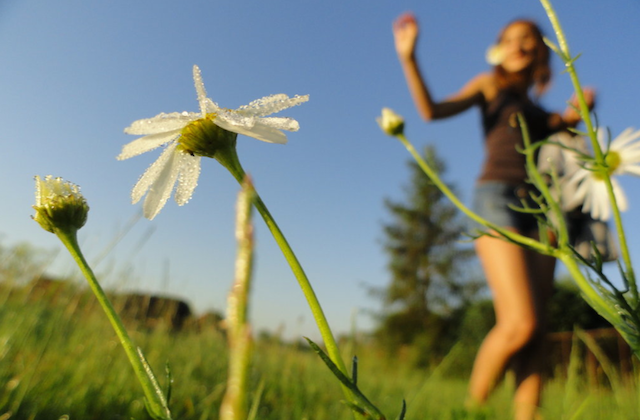
    Dancing in a Field of Flowers

    “Nature does not hurry, yet everything is accomplished.” ~Lao Tzu

    Five years ago, I was feeling really stressed (like millions of other people in the world). I was working full time in a job that was draining me of every single ounce of energy I had.

    I had nothing left to give to myself or those I loved at the end of each working day; life had turned into an incessant cycle of getting up, going to work, coming home, working, and going to bed.

    During this time, I read about so many people who were also unhappy with their lives. People who had reflected upon their existence and realized that this was not harmonious with who they were.

    I read about these people who inspired me with awe yet at the same time felt a sense of desperation. That could never, would never, be me, I thought. And while these conflicting thoughts existed, I became increasingly stressed out and more and more unhappy.

    There were things I enjoyed about my job (and still do). I became a teacher because I felt fortunate in having had such amazing support throughout my own education and wanted to offer young people that same help and guidance in return.

    But at the same time, I was changing as a person and I wasn’t the same being I had been six years previously when I had chosen that path. For my own sanity, health, happiness, and the happiness of those I loved, I knew something had to change.

    And then it did. My partner and I decided to move to a rural area of Herefordshire and buy a hundred-year-old cottage.

    There is no quick fix for happiness and I realized that the most important way to become less stressed was to change my way of thinking. But living in the countryside has undoubtedly contributed to my increased levels of calm.

    There is nothing like walking down a tranquil country lane, whatever the season, and just observing the sounds, smells, and landscape.

    I walk the same route regularly but this never bores me. With every single day, let alone season, something has changed and yet there is also a sense of constancy in nature, which I find incredibly comforting.

    The Lao Tzu quote about nature not hurrying embodies something I find I’m continually trying to work on—slowing down my daily pace. All too often we rush through our days, anxious to get things done at the fastest speed.

    When I’m aware that this is happening, I make myself stop and think: Why am I doing this?

    The pace of our world is frantic and seems to be constantly increasing. Despite this, I support the belief that life is not a race. 

    Going faster doesn’t necessarily equate with accomplishing more or better. In actual fact, the opposite is usually true. If you slow down, you make fewer mistakes, are able to think more clearly, and act with purpose.

    For me, this also results in feeling calmer and being more aware of my surroundings and those around me. This can only be a good thing.

    Frequently, we might tell ourselves that we must do such and such but in most cases, this feeling of having to do something is only a result of pressure from within.

    I personally believe that it’s important for our own sanity and health to slow down (and I apply this to driving, walking, and breathing on a regular basis).

    So this quote got me thinking about what we can learn from nature…

    1. Determination

    Nature is pretty hard to stop. Weeds and grass grow with dogged determination (much to the frustration of the lazy or time-pressed gardener). Many baby birds and other young offspring grow up against a huge number of odds; they are determined to survive.

    With determination, it doesn’t matter how fast (or slowly) you move through life. If you are determined, if you have a goal and a plan to reach that goal, you’re already a long way toward it.

    2. Strength in adversity

    Have you ever pruned or cut back a plant only to wonder whether you ever actually did, because now the greenery has exploded into an amazing array? I used to be reluctant to cut any plants back until someone told me that they actually ‘like’ it.

    I suppose it’s nature’s fight for survival; you cut it so it puts even greater energy into growing more.

    Nature could decide to give in and plants could just shrivel up and die. But they don’t. In life, when things seem tough, we usually have two choices: give in or give more.

    Choose to mirror nature and decide to face problems rather than run from them.

    3. Adaptability

    Nature can be incredibly adaptable. Just think about the four seasons. Animals and plants alike adjust to cope with the changes in climate and meteorological factors.

    Humans are no different. We put on an extra sweater or two in the winter but can be less adept at managing with changing circumstances. Since change is one of the only certain things in life, try to accept this and see it as a positive thing as far as possible.

    You might not be able to control life events, but what you can control is how you respond to them.

    4. Storing inner strength

    When autumn arrives, nature seemingly goes into shut down. But actually, wonderful things are going on, ready for when the plant and animal kingdom come into full swing once more.

    Take a leaf out of nature’s book and nurture inner strength when times seem sunny so that when the clouds appear, you don’t give in.

    5. Collaboration

    One thing nature does really well is working together. Bees and flowers are just one of the many examples of this. Bees collect nectar from flowers to make their honey while the flowers get a good deal out of it by their pollen being spread by their furry winged companions.

    You might be a real people person or perhaps you prefer your own space. Either way, the world is one huge partnership of human beings.

    There are so many things that we simply could not do without the help of others. Look around you; everything you see has been thought of by a human, designed by a human, made by a human (okay, perhaps with the help of a machine, but still). I find that thought pretty amazing.

    I’ll never meet most of the people who somehow are connected to my life, but knowing that every single thing I do I am able to do because of someone else is pretty awe-inspiring. In so far as you can, see people as teammates rather than competitors or adversaries.

    6. Consistency

    With the exception of an extreme weather occurrence, nature is pretty darn consistent. Want to be a super fit runner? Jogging every three months isn’t going to get you there; try to stick to a once weekly routine.

    It doesn’t matter if the day or time has to change as long as you hit that road/treadmill/country lane once a week. Maybe you want your garden to look pristine and something to be proud of. Again, get out there regularly rather than spend five hours slogging away once a month.

    Whatever your thing, be consistent.

    Whether you live in a rural area, town, or city, nature is all around us. Harness the power of nature to live your life and slowly accomplish your dreams.

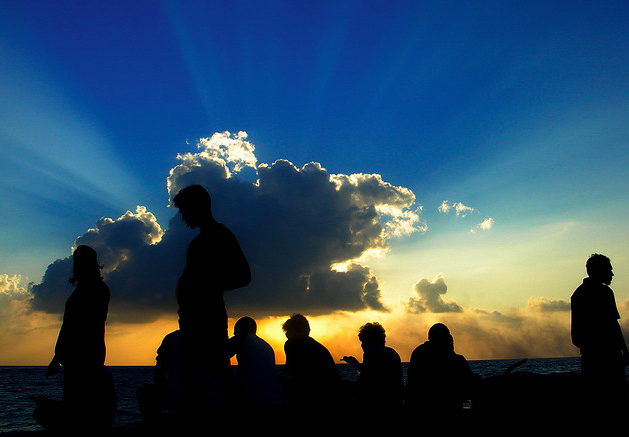
    Photo by Mint-Flower
  • The Hunger for More: What We Really Want and Need

    The Hunger for More: What We Really Want and Need

    Screen shot 2013-04-24 at 10.19.02 AM

    “Instead of complaining that the rose bush is full of thorns, be happy the thorn bush has roses.” ~Proverb

    As a child, I was obsessed with other worlds—reading about alien planets, writing fantasy stories, or just playing video games. As a teenager, I longed to know as much as possible— who we were, why we are here, the meaning of life.

    Later on, I started traveling. There was so much to see, so much to do, so many ways to look at the world. I wanted to see it all, touch it all, experience it all.

    This need for more has existed throughout my life in its many forms, and I can thank it for always driving me to do great, exciting things. But at the same time, it has never allowed me to stay still, to just enjoy myself the way so many people seem to.

    When I ignore this feeling, it starts gnawing away at me from the inside. It tells me that I am not doing enough, that I’m lazy, a time-waster. Some would call the feeling a feeling of becoming stir-crazy, cabin fever, ennui.

    I look at it as a hunger. When I ignore that hunger, when I stop traveling or learning or creating or just doing, the weight of the world piles up on me and life suddenly feels like a suffocating, restricting place.

    If I continue to ignore it, I tend to slip into depression or sadness; the smallest of stresses will bring me to tears.

    But what is that hunger? Do we all have it, to some degree? Without the human desire for knowledge and development, we might all still be living in caves.

    Without it, we wouldn’t have medical and technological developments, and we wouldn’t have art or poetry, perhaps. But on the other hand, we might not have war, hatred, and greed.

    That hunger takes different forms depending on how it is channelled.

    Given the right circumstances, we get creativity, ambition, and invention. Given the wrong ones, we get that dark, burning need to amass more and more money and power—that greed that can be seen in so many people throughout our history.

    We often try feeding that hunger with money, power, knowledge, creative output, food, sex, or drugs. We desperately try everything to fill that void, apart from what we really need.

    Four years ago, when I was on the verge of depression, a friend suggested that I try mindfulness. In short, the art of being in the here and now, of focusing on the senses instead of the thoughts, and of looking at thoughts objectively.

    It took a while, but what my most successful moments of mindfulness showed me is that it is possible to be still, to absorb a moment fully, without that restlessness, that hunger, starting to tap its foot and demand to know what on earth I think I’m doing.

    Quieting the nagging voice in my head has become an art of its own, now.

    The most powerful moments are found walking through nature, just listening to the variety of bird song, or feeling the ancient strength of a tree against my back.

    In those moments, another, older feeling comes to me. That feeling is of being one; one with myself, one with nature, one with everything. The flowers, the trees and the birds are just a part of it.

    In the heart of a forest I realize something so true, so powerful, that it brings tears to my eyes.

    We are animals. We are part of the earth, just as any animal or plant is. Somewhere along the line, we evolved to crave more, to be aware of our surroundings, and to think about ways to improve it. That craving brought us the modern comforts that we know now, but it also brought with it a world of suffering.

    In our haste to become more, to know and to create, we also felt that it was our destiny to conquer not only each other, but also nature. But this very act of cutting ourselves off from our roots has had disastrous consequences for many.

    Most of us crave companionship, whether we seek it by clinging to romantic partners or through a string of disconnected, drunken nights. We are addicted to social networking, perhaps not because of the technology itself but because it substitutes for that feeling of oneness, of connection, that we have lost.

    We, in the developing world, are starving ourselves. This fast-paced, technology-based life, focused only on the acquiring of money and status is a twisted manifestation of a hunger that exists deep down in every one of us.

    But what that hunger really is, what that calling inside us really is, is a call back to oneness, to our roots, which we ignore.

    One way to describe it is that we all have souls, and that our souls are connected to the earth and everything on it. Or, you could say, every atom in your body was once part of something else on this earth, and will be again.

    Without nature, we cannot eat or breathe, and yet we lock ourselves up in man-made cubicles and unquestioningly buy food from packets.

    We also need to connect to each other. We might seem to connect online, but it is at the cost of face-to-face interaction, which is far better for us.

    It worries me to see children glued to phones and games, ignoring the people around them. If we aren’t even teaching people to connect to each other and to their world, then there’s little wonder that so many people are unhappy.

    Ironically, people slave away unhappily so that, one day, they can relax in the countryside or on the beach. That retirement dream might be nothing more than recognition that we need to surround ourselves with a more natural environment, not in some distant future but right now.

    I’m not saying that we should abandon all human progress and go back to living in caves. Some inventions have saved lives and made it possible for us to live much longer and healthier lives. However, we need to look at the mental health problem we’re facing and consider all other possibilities before throwing drugs at people.

    Nature therapy and mindfulness are growing industries, and have been shown to treat everything from substance abuse to depression and anxiety.

    You can see the effects yourself; just sit in a park and close your eyes, listening to the birds or the running water. Turn off your phone and let yourself just BE.

    Recognize that you were created by nature; that you are part of it and it is part of you. I have been so much happier since I honoured this core part of myself, and I want to share it with everyone.

    I believe the hunger is a calling—a calling back to where we came from. We are each one tiny part of a massive picture, and when we disconnect ourselves from it we are denying ourselves the beautiful, meaningful feeling that comes from recognizing that we are all part of the same amazing world.

    Photo by notsogoodphotography

  • Creating Peace by Finding a Connection to the Earth

    Creating Peace by Finding a Connection to the Earth

    “You get peace of mind not by thinking about it or imagining it, but by quietening and relaxing the restless mind.” ~Remez Sasson

    In a world that constantly barrages us with information, it becomes a daily struggle to unplug and find peace. The “need to” and “should do” and “must do” of our ever-frantic lives overwhelms us and creates a stress that threatens to unravel.

    As a child my happiest days were those spent outdoors. Even then, peace came while watching the flowers bend in the wind and the clouds stretch across the sky.

    As an adult it became a struggle to unplug and “justify” time to do these simple, fulfilling activities that truly are life’s happiest moments. Even hiking in the mountains close to home, I couldn’t get away from myself and my thoughts about “hurry up and get back to”… the email, business, website, or whatever was waiting on my desk.

    So in order to find true quiet I ventured to the ends of the Earth. The answer for me to find this peace was to become an explorer, seeking peace over the edges of the world, the literal edge of human existence. My soul sought the extreme.

    There is a line that marks the edge of the survival zone of our species. I found that stepping over that edge is both the scariest thing in the world and the most peaceful. The knowing that I am “beyond” allows me to release all “human” thoughts and concentrate on simply “being.”

    In my search, I have found four of the most incomparable and inhospitable places on earth that represent “over the edge” for me. Being in these places, means truly disconnecting with “man’s world” and fully embracing and connecting to the natural world and its rhythms.

    It is immensely powerful and a strange dichotomy, balancing on that line, more alive than ever, yet so near to possible death.    (more…)

  • 5 Ways to Find Happiness in Nature

    5 Ways to Find Happiness in Nature

    “Turn your face toward the sun and the shadows will fall behind you.” ~Māori Proverb

    Imagine a graph showing the number of hours the average person spends out of doors today compared with 50 years ago. Imagine another graph showing how many people suffer from depression, stress, and anxiety compared to 50 years ago.

    I’m confident that there would be a direct correlation between the two graphs; as one has declined the other has risen.

    As we’ve turned our backs on nature we’ve lost our natural source of happiness. By turning our faces back toward the sun we find lasting happiness and more.

    My life has led me into nature, away from it and back into the heart of nature again. Now I know there are simple ways we can all reconnect with nature whether we live in the city, the woods, or somewhere in between.

    I grew up on the west coast of Scotland between Atlantic waves and rolling hills. The tiny hamlet where I spent the first 17 years of my life had a population of 17 people, and we were 60 miles from the closest cinema or swimming pool.

    The primary school population peaked one year when we had 12 pupils gathered from a 10 mile radius. Aged 5–12 we were taught in one classroom by one teacher. They shut the school the year after I went to high school because there was only one pupil left.

    I couldn’t wait to swap wild countryside for a different kind of wild. As I grew up, I craved boys, bright lights, big city, excitement, and culture, so I gravitated to London.

    On a daily basis my senses were assailed by the buzz of city life.

    I stared wide-eyed at advertising posters pasted on the underground and hordes of people who bustled past me in an eclectic mix of style, race, and age. I absorbed myself in the pulsing heart of the vibrant city and forgot about the countryside I’d left behind. (more…)