Tag: narcissistic

  • How I Broke Free from a Narcissistic Family System

    How I Broke Free from a Narcissistic Family System

    “Your vision will become clear only when you can look into your own heart. Who looks outside, dreams; who looks inside, awakes.”~ Carl Jung

    My mom had always been invested in real estate. I remember snacking on open house charcuterie years before we finally purchased a house to flip—the first of four. By the time I was eighteen, we’d moved five times.

    I knew our family was falling apart by renovation number three.

    I had spent the previous few years experiencing suicidal ideation and was now on a strict cocktail of seven or so psychiatric and neurological medications.

    My brother was in his sophomore year of college, on academic probation, and coping by mixing alcohol with benzodiazepines.

    My mother was expanding a highly ranked vocational services program while struggling with hyperthyroidism and unidentifiable gut health issues.

    My father was often missing, either executing his latest scam (upcharging my friends’ parents on cases of local wine) or pursuing the buyer of our latest fixer-upper, who eventually became his second wife.

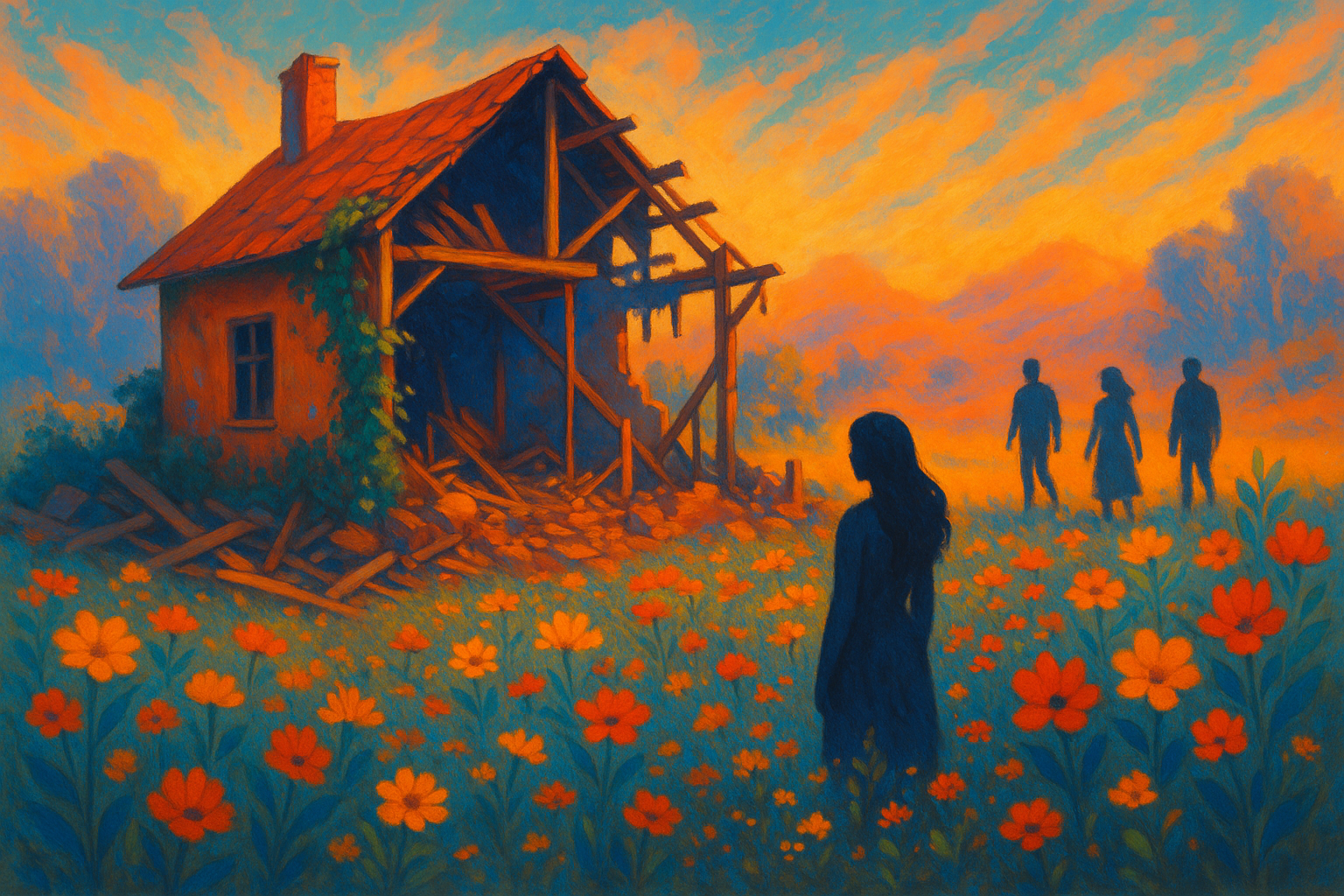
    I couldn’t see the difference between a faulty house and my faulty family. There were constant leaks (tears), water damage (resentment), and cracks in the foundation (domestic violence), and yet there was character, familiarity, and history worth saving.

    My family would have rather remained in denial of our structural instabilities, but the increasing severity of my suicidal ideations left me no choice. If I were to survive, I had to dig through the walls of our house and remove whatever was making me sick.

    The Inspection

    The first step in the renovation process is identifying the problem areas: what can be saved and what must be removed.

    Growing up in a narcissistic family system leaves a child with no baseline to compare to. Narcissistic abuse often isolates physical violence to certain people or excludes it entirely, so traditional models of domestic abuse are not comparable.

    Identifying narcissistic abuse is an act of decoding a series of games and behaviors that mimic that of an infant. Pathological narcissists are psychologically frozen in the primordial mind, exclusively concerned with getting their needs met without concern for their effect on others.

    My father’s unpredictable conduct was like a mold that had spread into every room of the house: insidious, nearly undetectable. He was rarely physically violent but constantly psychologically toying with us.

    Common behaviors included hiding necessities, like keys and wallets; ignoring calls, texts, or even our physical existence; triangulating arguments between family members; and harshly punishing mistakes while finding serious offences humorous. The effects of his volatility appeared in a variety of health issues amongst the rest of us. My brother developed a chronic stomach illness, my mom started losing circulation in her hands, and I began experiencing pseudoseizures.

    For the sake of my health, I could not continue living in a mold-infested home; both my physical and psychological well-being were compromised. By the end of my inspection, it had become clear that exterminating my father from the home was integral to my recovery. Too much damage had been done. Gutting the house was the only chance I had at saving it.

    Demolition Day

    There is no clean or precious way to demolish a house. Ripping out vinyl flooring and knocking down drywall is a messy process. Dust scatters everywhere, glass breaks, and rodent feces are found within walls. If one wishes to undergo such a renovation, they must accept that a mess will be made and cleaned up later.

    Identifying my father as a narcissistic abuser released me of the narrative that I was mystifyingly crazy, but it also made him crazier. He became firmly unapologetic, insults and neglect were more pointed, and the physical violence amplified. I was rebelling—as normal teenagers do—but my dad responded with harassment, physical intimidation, and complete emotional abandonment.

    My compulsive self-loathing morphed into rage. The harm I had been inflicting inward began unfolding outward in bouts of verbal assault, criticism, and bullying. I remember once screaming profanities and threatening suicide to my ex-boyfriend after I had found out he had been hanging out with a group of our friends without telling me. No one was safe from my wrath.

    The threads of my father’s personality that were embedded within me had to be explored in their entirety. They had to be acted out and mirrored back at him for the illusion to be shattered.

    In defense of my autonomy, I weaponized his insecurities, verbally recognized him as an abuser, and learned to play his game. I was not the character he had made of me: the cowardly, mentally tortured weakling. I could be volatile, ferocious, and wicked. I could be like him.

    By the last renovation, my father’s mental illness had become undeniable. The fighting was constant and precisely unveiled his intemperate nature. After we sold the house, my mom filed for divorce from my dad, and I cut all contact with him. This August, it will be ten years since I’ve spoken to him.

    When I finally finished tearing through every wall, counter, and cabinet, I discovered the mold was not the only issue; the foundation was rotten too. Cutting contact with my father did not cure my depression or anxiety because he was only one cog in a faulty machine.

    Weak Bones

    To properly inspect the foundation of a house, one must calculate how each pillar supports the others. For a house to be stable, the materials must be solid, the architecture perfectly calculated, and the ground level.

    In systems of abuse, the abuser is not simply a bug that infiltrates and poisons what would be a normally functioning software; the players within these systems are puzzle pieces, all equally contributing to a complete picture. Identifying the role each member plays is integral to deconstructing the family system and potentially saving it from collapse.

    After four or five years of therapy and self-study, I accurately identified each family member’s role in the system: The Narcissist, The Enabler, The Golden Child, and The Scapegoat.

    One of the burdens of the Scapegoat in the family system is they’re the only participant living in the shared reality yet surrounded by people motivated to remain in a delusion.

    The Narcissist trains each member of the group to deny their reality in favor of his or her perception, which makes it difficult for all parties to differentiate reality from fantasy.

    The Scapegoat’s ego strength is usually underdeveloped, making it difficult to maintain the position that they can see through the familial matrix. But the pain of abuse makes reality less deniable for them than, say, the Enabler, who believes they can escape the abuse by remaining in denial, or the Golden Child, who is championed and protected for validating the Narcissist’s perception.

    Whether they adhere to the delusion or not, the Scapegoat is never rewarded by the Narcissist, nor allied by the other family members.

    This is also the best part about being the Scapegoat. They are the most overtly abused and yet the most likely to recover. There is no value in pleasing or maintaining a connection to the Narcissist nor upholding the false narrative they’ve crafted.

    There is no motivation to remain in the fantasy, therefore they have nothing to lose in destroying it. If the Scapegoat can deconstruct the self-loathing, victimized role they’ve been cast in, they can escape the system.

    Removing the Narcissist does not necessarily unbind each character from their role. Just as my self-identification with mental illness had assisted my father in creating a Scapegoat of me, my mother’s martyrdom made an Enabler of her, and my brother’s mirroring of the behavior made a Golden Child of him. Once the Narcissist is excavated from the system, each member has to deconstruct their relational patterns and personal identity to properly engage in healthy relationships.

    For years, my role as the Scapegoat exempted my family from embracing their own responsibility in fostering my father’s verbal and psychological abuses. Even after my father was ostracized, my identification with “mental illness” made me an easy patsy for my family member’s own dysfunction.

    They didn’t need to look within themselves to find a leaky pipe; they could point to my hospitalizations, failing grades, and diagnoses. In order to save myself from the dysfunction, I had to become healthy, so undeniably healthy that the damage could not possibly be coming from me.

    Starting from Scratch

    Tearing down the residual structure is quicker but just as messy as the demolition process. Every trace of the familial programming within the child must be broken down and examined. Homogenous relationships coined by codependency and self-destruction must be excavated from their life.

    The child has to accurately differentiate appropriate and inappropriate behavior from both themselves and those around them before walls can be built to protect them from compulsively engaging in more unhealthy behavior.

    Building the frame of oneself is an act of identifying core values and beliefs: “What matters most to me? How do I expect to be treated? What will I not stand for?”

    I had to swing to the other end of the pendulum to discover which bits of my upbringing were authentic. Every trace of my upbringing had to be removed from my sense of self: politics, humor, religious beliefs. I became artistic where my family was business-minded, empathetic towards those they would have laughed at, and honest when they would have lied.

    I became unrecognizable; the preppy, conservative, private school girl morphed into an edgy leftist with a theater degree. I moved from coast to coast, desperate to escape any identification with my past self. I successfully removed an array of self-destructive habits: boundaryless friendships, hypersexuality, and self-identification with mental illness. The house I had built was sturdy and spotless.

    In the end, I discovered that my family members and I don’t entirely share the same values, we do not follow the same moral code, and we are not driven by the same aims, but we are not total opposites. New builds are stable but sterile. I needed to sift through the parts of myself I had thrown away in order to feel complete.

    Scavenging the Rubble 

    After the construction is finalized, the few remaining remnants of the previous house are piled in the lawn, waiting to be sorted. Some of it is junk, but other bits are sentimental relics of the old home, too precious to leave behind. Beams of original hardwood, vintage furniture, and iron bookends are saved and repurposed as charming decor.

    Children of narcissistic family systems grow up not as themselves but as a projection of the narcissist’s experience of the child. The child’s honest self isn’t just neglected; it is punished and suffocated. Even identifying preferences is a difficult task.

    When I first began searching for my true self beneath the programming, I would have preferred to have found I have nothing in common with my family or the holographic self that had been projected onto me. It’s tempting to order everything new. It can feel clean and picturesque, but truthfully, I couldn’t decorate myself from scratch. If I were to live authentically, I would need to integrate the parts of myself I would have rather abandoned.

    In order to determine which remains could be repurposed, I had to ask myself, “Is this piece mine or something that was instilled in me?”

    It’s been almost a year since I moved back to my hometown, and I’ve found that these streets that contain my childhood are also beacons leading me back to my missing parts. My charm, my humor, and even my storytelling abilities are all traces of my family members. The timid, morose young girl formed by my upbringing is a character that contributes to my depth. To remove either from my personality would be a denial of my own complexity.

    I am still in the process of completing my home, and there is comfort in knowing that it will never end. I may shut a door too hard, causing a frame to fall and need replacing. I may inherit silver from my grandmother that needs polishing. A house needs constant updating and maintenance; we are always renovating ourselves with new experiences, information, and outlooks.

    What’s important now is that I have a place of my own. I am not a living projection created by my upbringing, and I can recognize what is mine and what has been given to me. I am a stable, individual structure with my own design and shape, all of which come from within me and nowhere else.
  • To My Narcissistic Friend: Thanks for Being My Toxic Mirror

    To My Narcissistic Friend: Thanks for Being My Toxic Mirror

    “It’s okay to let go of those who couldn’t love you. Those who didn’t know how to. Those who failed to even try. It’s okay to outgrow them, because that means you filled the empty space in you with self-love instead. You’re outgrowing them because you’re growing into you. And that’s more than okay; that’s something to celebrate.” ~Angelica Moone

    I’ve had the most unusual, baffling, and frustrating experience with someone recently. And yet, it’s also been a massive catalyst for growth. I’ve seen myself more clearly by observing the behavior of someone who, in some ways, is a lot like me.

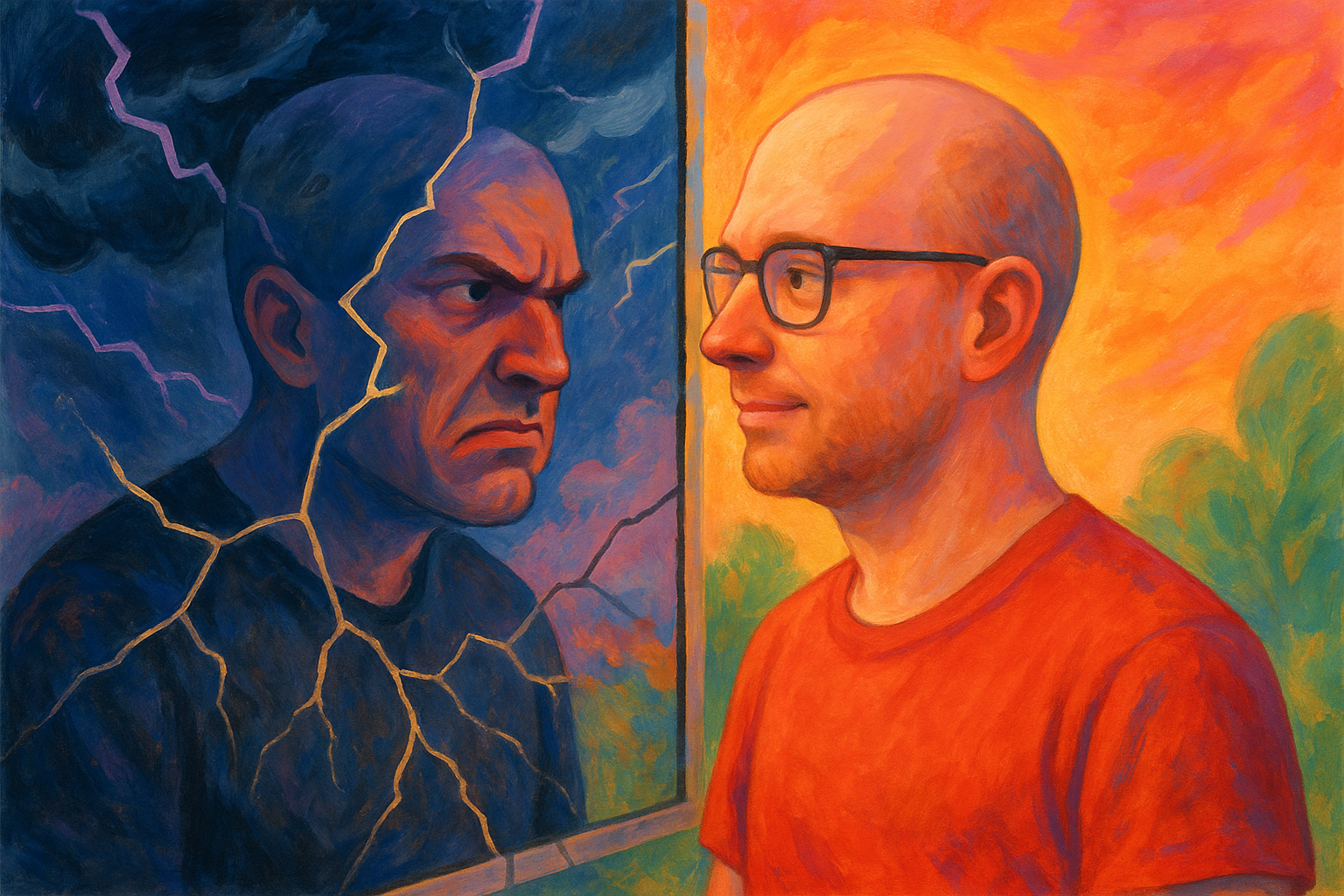
    For me, it’s been the purest demonstration of the phrase “Others are your mirror.”

    This person—let’s call him Simon—has been incredibly toxic.

    He’s insulted me deeply, hurled cruel names, and used gaslighting, manipulation, and blame-shifting to twist reality.

    At times, he cloaked control in false compassion, pretending to help while subtly undermining me.

    He projected his insecurities onto me so persistently, I began to doubt my own sanity—wondering if I really was as terrible as he claimed.

    Thankfully, I’m in a strong place mentally right now. I can see how someone more vulnerable could be shattered by Simon. In fact, I know he’s left a trail of broken relationships behind him. People abandon him left, right, and center—the moment they get close, his toxicity flares.

    At his worst, Simon has been absolutely vile. He ticks nearly every box for narcissistic traits. He can’t handle even mild criticism. When I offered gentle, constructive feedback, his ego erupted, and he lashed out with shocking viciousness. He claims to want self-improvement, but when real opportunities arise, his ego slams shut. Growth is blocked at the gates.

    And yet, despite all this, I feel deep compassion for him. I’ve read enough about narcissists to understand where this behavior might come from. He’s going through hell: job loss, depression, drug use. I’ve been in a scarily similar place. So my empathy kicks in hard. Even though he’s been monstrous, I see pieces of myself in him.

    After clashing with him multiple times, I gave it one final try. I knew by then that avoiding narcissists is usually the wisest route—they rarely change—but I extended one last olive branch.

    It lasted less than a day. He snapped it in half and flung it back in my face.

    It feels like I’m some kind of unbearable truth agent to Simon. His soul just isn’t open enough to withstand my presence. I’m far from perfect, but I’ve worked hard on myself. I try to stay humble, self-reflective, and growth-oriented—and that’s like kryptonite to someone with such a fragile, inflamed ego.

    So now, Simon is blocked. I’m proud I tried. It didn’t work. And for my own well-being, I had to let go.

    I’ve grieved the friendship that might have been. Because, believe it or not, Simon has redeeming traits in spades. He’s brilliant, creative, charismatic. He seems to care about others—though I wonder if that’s driven more by ego than empathy.

    So what good came out of all this chaos? Watching Simon’s worst traits has helped me examine my own.

    Don’t get me wrong—I’m pretty sure I’m not a narcissist, and I don’t think I’ve ever been as vile as Simon.

    But. I have lashed out. Especially when my ego’s taken a hit.

    Back when I was addicted to drugs, I had a devastating fallout with one of my oldest friends—let’s call him Anthony. He was deeply concerned about my behavior. He had a young son, and didn’t trust me—with good reason.

    I’d promised I wouldn’t take drugs on a lads’ holiday, then did it anyway. I betrayed his trust. Later, when we tried to arrange a meetup, Anthony did something incredibly difficult: he told me I wasn’t welcome at his home. He couldn’t risk me having drugs on me—in case his son found them.

    Anthony tried to handle it with kindness and care. But it crushed my ego. My best friend thought I was a danger to his child.

    I exploded. I did a Musk. In a blaze of rage, I told my best friend to go F himself.

    That ended a fifteen-year friendship. I was already depressed, but after that, I spiraled into suicidal depths. Deep down, I knew I was to blame—but my ego couldn’t take it. Blaming Anthony was easier than facing myself.

    He wouldn’t speak to me for years. Eventually, we reconciled, but something had died. The warmth was gone. He kept me at arm’s length, understandably. Now, we don’t speak at all. It’s clear he’s given up on me again. That still stings, but I accept it.

    So can you see why I felt a connection to my new friend Simon?

    Watching him lash out recently awakened something primal in me. It reminded me of my worst moments. And I never want to go there again. I want to master myself; build emotional intelligence; stop letting my volatility hurt people.

    Simon showed me how bad it can get when you’re spiraling—and it’s terrifying.

    All my life, I’ve struggled with emotional volatility. I don’t lose my temper often, but when I do, it’s nuclear. Words are my sword, and when I swing carelessly, the damage is brutal.

    Which brings me to a truth I’ve come to believe: Strong men don’t lack the capacity for destruction—they master it.

    They walk with a sheathed sword, drawing it only when absolutely necessary. It’s restraint, not weakness. It’s honor. It’s the way of the gentleman, the noble warrior. My blade is my voice—sharp, but it’s best when kept in check.

    Weak men lash out at the slightest wound. I refuse to be a weak man.

    Meeting someone as damaged as Simon has clarified my mission. I must continue to heal. I must shed the worst parts of myself. I saw my shadow in him—distorted and exaggerated. It horrified me. And it inspired me to rise above it.

    I’ve started psychotherapy. I’ve even been using ChatGPT as a kind of therapist—surprisingly helpful. This past month has been a surge of self-development. And I have Simon, of all people, to thank.

    Is he doomed to remain toxic? Maybe. The scientific literature suggests that the odds aren’t good. But it’s not my burden anymore. He didn’t want my help. I have to put my own well-being first.

    By cutting him off, I protect myself from future pain.

    And in doing so, I’ve gained greater empathy for those who once cut me off. They saw someone chaotic, unsafe, emotionally destructive. I wish they could see how much I’ve changed in the last ten years. But I respect their choice to keep their distance.

    We can’t change the past. Some bridges are too obliterated and irradiated to ever rebuild.

    But if we choose humility and self-reflection, we can always choose to grow.

  • How My Narcissist Ex Was a Catalyst to My Healing and Self-Love

    How My Narcissist Ex Was a Catalyst to My Healing and Self-Love

    “It’s okay to let go of those who couldn’t love you. Those who didn’t know how to. Those who failed to even try. It’s okay to outgrow them, because that means you filled the empty space in you with self-love instead. You’re outgrowing them because you’re growing into you. And that’s more than okay, that’s something to celebrate.” ~Angelica Moone

    I thought I had married the love of my life. I had never felt a connection so strong before. I was sure he was my soul mate, and I thoroughly believed he was my twin flame—my one and only.

    I can’t even begin to tell you the horror that started to unfold after we got married. The accusations that my beloved other started to hurtle at me. That I didn’t care about him and I didn’t love him enough. He was convinced I was having affairs behind his back, and conspiring against him, and was clearly out to take his money.

    I was not just perplexed by this, I was shattered. How could he not see that I loved him unwaveringly, without question, and that I never even considered having eyes for anyone else? And trying to take his money? That was incredibly bizarre because I discovered, contrary to his initial proclamations, that he hardly had any.

    Yet I didn’t care. I loved him. I tried to love him, and I was convinced that my love would be enough—that he would know that I loved him, and we would soon return to the comfort and the knowing that our love for each other was real, safe, and forever.

    No matter how much I tried to love him, things were spiraling out of control. I couldn’t be five minutes late from the supermarket without suffering his wrath. Life outside of “us” was getting smaller and smaller.

    If I looked out the window, I was thinking the wrong thing or looking at something the wrong way. If I didn’t take his hand when we were together, I was advertising that I was single. Visiting friends or family or working outside of the property became as possible as flying to the moon.

    Eventually it happened: I stopped trying to love us back to unity and fought back. Initially to try to stop the despair that he didn’t trust me, then for my literal sanity, freedom, and autonomy. Without these things I was losing my soul.

    None of it worked. As my attachment to him became more panicked and devastated and I was losing control of my reactions, his abuse accelerated, and then I realized I was coming close to losing my life.

    I had complicated post-traumatic stress disorder. I shook. I sweat. I couldn’t eat. I could barely sleep. Everything and everyone I cared about was turning away from me.

    I had married a narcissist. I didn’t realize it at first, because back then, fifteen years ago, not many people were talking about narcissism.

    I had always believed that narcissists were arrogant people who were “up on themselves.” I had no idea that they were people who presented in our lives offering the love, total acceptance, validation, and “life” that we thought we had wanted our entire life. I had no idea that someone like this could enter my life and they would feel so right to fall in love with.

    The day that the word “narcissist” popped into my head, and I googled it, I nearly fell off my chair. I was ticking every point that was so “him” off a list of traits and behaviors. I was in shock.

    Entitled—tick. Can’t take personal responsibility for wrongdoings—tick. Has hair-trigger reactions to things that most adults don’t get bent out of shape about—tick. Argues in circles in ways that make your head spin—tick. Pathologically lies while looking you straight in the eye—tick … and on and on the list went. I needed to get to the punch line: Could a person like this be fixed? Could they get well from this disease?

    I searched high and low; I turned over every possibility and read all the research I could find. The answer was a flat “no.” Then, believing there is always a solution, I was determined to heal him, to fix our marriage, to return to the dream of the “one and only” that I just knew he must have been.

    It didn’t turn out well. In fact, it turned out terribly. Now I was experiencing things I never believed I could or would: Mental and emotional abuse that had me curled up in a corner. Physical abuse that had me fearing for my life. Financial abuse that was ripping my life to shreds. At times, for self-preservation, I had to escape. Eventually, I left him and relocated.

    But I wasn’t getting better away from him. I was totally unprepared for feeling so haunted. By the fact that he was in the home I had bought, seeing other women and seemingly having a great life while I was so empty, devastated, and traumatized that it hurt to breathe, it hurt to live, and I thought that I was going to die.

    I returned to him countless times. Either because he would contact me and promise to change, or I missed him so much I couldn’t function.

    Every time I returned, it got worse. The makeup periods were briefer, and the explosions more damaging and horrifying. Then, I broke. I had a complete psychotic and adrenal breakdown. I was told I would never heal from it and would need three anti-psychotics to be able to function, but I would never be the same again. I was told I now had permanent brain and nervous system damage.

    Of course, he didn’t care. He did what he had always done when I needed him—he discarded me. It was then that I decided to die. So, I started trying to formulate how to do this in the kindest way for my family and son.

    However, my soul had a different idea for me. A voice in my head kept insisting, “No, there is another way.” I thought it was just my madness speaking. I argued with it, but it wouldn’t let up. In desperation I walked into my bathroom, fell on the mat, put my hands in the air, and shrieked, “Help me, I can’t do this anymore!”

    In that moment the most incredible thing happened. It was like my head parted and the blinding truth entered me. I had never known such clarity in my entire life. Maybe you have to be “out of your mind” to really know the truth?

    The voice in my head told me that my husband was a catalyst. He was never meant to grant me my “self” and my “life”; rather he had come into my life to show me the parts of myself that were unhealed, that I hadn’t healed yet, to generate my true self and true life.

    A whirl of incidents and truths flashed into my mind. The ways I was so hard on myself and was always needing more, saying to myself, “Melanie, I can’t even like you (let alone love you) if you don’t get your to-do list all done, if you don’t lose ten pounds, if you don’t look like this or that … “ and how he had treated me the same—as not good enough, right, or acceptable.

    How I had always kept busy rather than “be” with myself, care, validate, and love myself. How I had terminally self-avoided and self-abandoned my inner being, and how I had yelled at him, “You don’t even know who I really am!” yet had never taken the time to have a real relationship with myself.

    On and on, the realizations came hard and fast. And I knew, he hadn’t treated me how I had treated him; he had treated me how I had really felt about and treated myself.

    I knew that if I let go of him, healed, and came home to my inner self, I would recover. I would save my sanity, life, and soul. I knew I could heal, get better, and do better. I knew that finally my life and love could be real and work.

    I knew this because in this divine intervention experience, I had been thrust into a vision in the future where I was healed and whole, and I had felt it for real. I saw who I was. I saw what I had and most importantly, I felt who I had become.

    He wasn’t the healer of my wounds; he was the messenger of them instead.

    I let go. I turned inward. I healed.

    This I now know at the highest level of truth: A twin flame, as the nemesis who reflects back to us our unhealed parts in intensely painful ways, offers the greatest love of all—the returning home to ourselves. From there my life has blossomed, from this true relationship with myself, life, and others in ways that I could never have previously imagined.

    I am love. I am self-acceptance. I am free.

  • Healing from the Trauma of Narcissistic Abuse

    Healing from the Trauma of Narcissistic Abuse

    “Don’t blame a clown for acting like a clown. Ask yourself why you keep going to the circus.” ~Unknown

    When I first experienced narcissistic abuse as an adult, it was at a time when the term “narcissistic abuse” was not so heard of or understood.

    I had met a handsome, intelligent, charismatic, and charming man, and as is typical in abusive relationships, had been completely overwhelmed by the intensity and ‘love’-overload of the early stages.

    Before I could catch my breath, though, the nitpicking started, and so did the heated arguments, the jealousy, the cutting contact, and disappearing for days on end—shortly followed by dramatic make-ups, apologies, gifts, and promises.

    And so had begun the emotional roller coaster ride that is dating a narcissist.

    Many months later, I found myself becoming a different person. I was stressed, anxious, paranoid, increasingly isolated, and cranky. I was totally lost and felt like nobody understood. Friends couldn’t understand why we couldn’t just end things. We were hooked in a destructive bond.

    At the worst points, being caught in a toxic relationship feels utterly maddening. After months of relationship highs and lows, of it being on and off, the gaslighting, accusations, and coercive control, I honestly began to believe I was losing my mind.

    I was stuck trying to make sense of my experience, and the logical part of my mind was desperately searching for answers to so many questions:

    Why did he cheat?
    What was so wrong with me?
    Why did he lie?
    What were lies, and what was the truth?
    Was any of it real?
    Did he ever really say the things he said?
    Was he even capable of love?
    How could things have been different?
    What else could or should I have done?

    These are some of the same questions I hear my clients ask now when they come to me for support in healing from narcissistic abuse.

    The Journey of Healing

    My own recovery started one particularly frantic night. I was incredibly upset and desperate to make sense of what was going on. Searching online, I happened to come across information about sociopaths and narcissists and this particular kind of psychological abuse.

    This was a pivotal moment. I had never heard anybody use the term “narcissistic abuse,” and at that time (this was many years ago), there was hardly any information around about it. But I knew, the moment I read this, that this was it. It shifted my whole perspective. It was shocking and confusing, although overall, an unbelievable relief. I realized this was a ‘thing’ and that, for the first time, other people understood. More importantly, there was a way out.

    Reading more about psychological abuse, I arrived at my first key point in healing:

    I Realized It’s Not Me—I’m Not Crazy!

    Toxic relationships will leave you feeling like you are mad. Often abusive partners will reinforce this by never taking responsibility and constantly telling you in various ways that it is your fault or your issues.

    My narcissistic partner would criticize and undermine me in all sorts of strange and subtle ways, including judgments or ‘suggestions.’ He would often communicate in ways that would leave me doubting or questioning myself. As is the power of being with a narcissist, at the time, I was eager to please and impress.

    If I ever pulled him up on any of the criticisms, he accused me of being negative, told me he was trying to support my personal growth, that I was being sensitive, paranoid, that I was over-reacting, or that I had issues. This kind of abuse in itself is maddening. I realized that all of what I had been feeling was in itself the symptom of being in an emotionally abusive relationship.

    I was not and am not mad, but I was in a mad relationship. I found as I cut contact and removed myself from the toxic dynamic that my sense of sanity swiftly returned. This is something that many sufferers I work with now also experience. You are not crazy, but if you are in an abusive relationship, you are in a relationship dynamic that will leave you feeling like you are.

    Letting Go of the Need to Understand and Know

    It’s our mind’s natural tendency to want to make sense of our experience; however, with narcissism and narcissistic behavior, there is no sense. You can’t apply logic to illogical actions. I created a lot of distress for myself in the early part of my recovery by desperately clinging onto the fantasy that I somehow could understand all the whats and whys.

    Being able to let go of this need to know is a big step in recovery. This was not easy at the time, but I managed this by practicing mindfulness and learning to recognize when my thoughts or attention would drift to the narcissist or on trying to work out the answers or understand the non-existent logic.

    As I became aware of my thoughts drifting to such a futile task, I would then try and tune into my feelings in that moment and ask myself, “How am I feeling right now?”

    I’d mentally label the emotion and any physical sensations that went along with it.

    Then, knowing more clearly how I was feeling (sad, angry, etc.), I would ask myself “What do I need? What can I do for myself right now that is a loving and supportive thing to do?”

    Sometimes this would be to allow myself to cry, punch a pillow, reach out to a friend, or go and treat myself to something nice—to practice self-care. It was a step-by-step process to find ways in which I could gently feel my feelings and attend to my own needs. This also included the feelings I had about not having answers and accepting that maybe I never will. You can gently let go with this refocus and self-care. Make a choice about what may be harmful or helpful to your healing and recovery.

    Considering My Own Narcissism

    I laugh now that my breakup lasted longer than the actual relationship did! The toxic dynamic was addictive and really hard to let go of from both sides.

    An empath will care, forgive, understand, and put a narcissist’s needs before their own. A narcissist will crave the attention, contact, and power. It becomes a dance.

    Narcissists tend to have a disorganized attachment style. Relationships will be push and pull, on and off, up and down. Being in a relationship with a narcissist is a lot like being on an emotional roller coaster ride. It’s exhilarating and draining, but if you stay on, going round and round for long enough, you will get sick!

    Because of the attachment style, the moment a narcissist senses you are pulling away, they will instinctively aim to pull you back in again, throwing all sorts of bait in order to hook you back.

    I was hooked back again and again by broken promises and wanting to believe the fantasy of how things could be.

    I was also hooked by believing that somehow, I could be the one to change him, to make him see, to help him love and feel loved, to make things different, to help him be the person I hoped and believed he could be.

    Truth be told, I wanted to be the one to capture and hold his attention and interest. However, such are the demands of narcissistic supply that it’s impossible that there can ever be one person forever.

    Quite frankly, I had to recognize the narcissism in this. To see the narcissistic fantasy in my idea about somehow possessing some magical powers to help him heal and change. I can’t. In fact, nobody can.

    A narcissist’s healing and actions are their responsibility only—nobody else’s.

    Believing on some level you can be ‘the one’ to change a narcissist is narcissistic to some extent in itself. This doesn’t mean somebody who has this hope has narcissistic personality disorder! It’s just helpful to recognize the ill-placed hope and fantasy.

    Narcissism is one of the most difficult clinical presentations for highly experienced specialists to treat. You do not have the ability or power to change or help an abuser. More to the point, why would you want to?

    Let Go of Fantasy Thinking and Ground Yourself in Reality

    Many people who’ve experienced narcissistic abuse become trapped in an elusive fantasy. Fantasy thinking is clinging onto the hope of how you believe things could be, not how they actually are.

    One of the most confusing things I experienced when in a relationship with a narcissist was distinguishing the difference between fantasy and reality. With this there can be a discrepancy between body and mind. For example, my ex constantly told me that he was being supportive. However, I didn’t feel supported.

    Like in many abusive relationships, the words and the actions do not match. Nobody can really mean the words “I love you” and be violent, critical, or abusive at the same time.

    In recovery, it is vital to distinguish between the hope and fantasy of how things could be and the reality of how things actually are. I often hear people describe the longing for things to be like they were “in the beginning.”

    The start of an abusive relationship can be incredibly intense and powerful. This is the time the manipulator will ‘love-bomb,’ and it can feel exhilarating, romantic, powerful, and highly addictive.

    Intensity is not the same as intimacy, though. Real intimacy takes time and is balanced. Intensity can give you a high that you continue to crave.

    If you suspect you are in an unhealthy relationship, it’s important to take an honest and objective inventory of the current reality, not your ideal of how things were or could be. Right now, how safe and secure do you feel? Currently, what are the actions of your partner or ex?

    It can be helpful to take pen to paper and list the current behaviors or circumstances to help regain some more realistic perspective. Perhaps asking friends or family their view too.

    Take Responsibility

    One of the things I feel most grateful about from my experience of narcissistic abuse is that I really had to learn to take complete responsibility for myself. I had to become fully responsible for myself and my actions: my recovery, my efforts, my self-care, my finances, my health, my well-being, my life… everything.

    Something I see many people do while in a toxic relationship, and even following the end of one, is to become stuck with focusing their efforts and attentions on the narcissist. Over-concerning themselves with what they are now doing, or not doing, or still trying to get them to see things another way, or holding out for an apology from them, or hoping they will change or fulfill all their promises, and so on.

    A particular hook I often hear about in my work now is the abusive partner dangling a ‘carrot on a stick’ when their partner attempts to end the relationship. This can be highly abusive as they step up the promises of providing you with whatever it is they know you wish for, be it proper commitment, a family, a secure home situation, financial purchases, or more.

    I have honestly yet to hear an account of when any of these promises have been honored. Instead, partners are left wasting months and years, even decades, holding on to the fantasy and hope that a partner will provide them with what they need.

    I think it’s important to recognize the bigger perspective. If there are things you want in life, then you take complete responsibility for making them happen.

    Remember, too much focus on the narcissist is a big part of the problem in the first place!

    Healing comes with returning your focus to yourself, acknowledging your own feelings and emotional experience, recognizing your own wants and needs, and gently attending to those yourself.

    I truly believe that healthy relationships begin with the one we have with ourselves. That includes taking full responsibility for all aspects of ourselves and our lives.

    Gratitude

    When I was in the midst of the insanity of narcissistic abuse, I felt like I was in a living hell! At the time, I absolutely would never have entertained the concept of applying gratitude to the experience! Now, though, many years later, I can truly say I am deeply grateful for the experience.

    When I became aware of this particular kind of psychological and emotional abuse, the sheer depths of the pain I was experiencing propelled me to embark on a deep journey of exploration, healing, and recovery and vast personal growth, which I am now eternally grateful for.

    I actively practiced writing about what I could be grateful for in each part of the experience, and—as difficult as that was at the time—it helped to assist my healing.

    I learned about narcissistic abuse. I learned how to spot the signs of both overt and covert narcissism so now I can spot this a mile off. With awareness, I have a choice.

    I had to take a good look at my part in the dynamic, my issues of codependency. I learned boundaries. I’ve learned healthy communication. I worked with a therapist and support group to feel and heal the family origins of some issues that related to why we attract or repeat unhealthy relationship patterns in the first place.

    I learned how to tune into and trust myself and my gut instinct; I always stay close to that now. I learned a huge amount about myself. I know what healthy relationships are and enjoy many of them in my life now. I’m a better, wiser, and more grateful person for going through it all.

    Don’t get me wrong, I would never want to experience it ever again! But I rest confident now that, because of a full recovery, I absolutely will never need to. I do not attract that kind of person anymore. In fact, I can be quite the narcissist repellant because I recognize the warning signs. As well as spotting the signs on the outside and recognizing the abusive actions of others, I now have clear boundaries and the self-esteem to communicate them.

    I have also worked on what needed to be healed inside of me, and for that I am grateful.

  • Breaking Free from Manipulative, Narcissistic Parents

    Breaking Free from Manipulative, Narcissistic Parents

    “Authenticity is the daily practice of letting go of who we think we’re supposed to be and embracing who we are.” ~Brené Brown

    I happened to catch the last scene of the movie Moonstruck on TV a few nights ago. The scene marks the happy resolution of various plot threads, and yet I felt as if I was witnessing the sinking of the Titanic.

    It was like watching a demonstration of what I have come to understand as the two ways of being in this world: dominating vs. accepting, narcissism or bullying vs. kindness.

    Having come from a narcissistic family myself, it felt as if the movie was peering straight into my soul.

    In the movie, Loretta Castorini is engaged to Johnny Cammareri, an aging mama’s boy who never married, out of ‘consideration’ for his ailing mother in Sicily.

    In this scene, he bursts in, announcing that he can’t marry Loretta because it would kill his mother, and asks for his engagement ring back. In the next moment, Johnny’s brother, Ronny, promptly proposes to Loretta, borrowing Johnny’s ring to seal the deal.

    The movie centers on Ronny and Loretta, yet seeing the last scene isolated from the rest of the movie drew me to Johnny’s experience.

    There he was, controlled by his mother long-distance from Sicily, giving up his marriage in deference to his mother’s script about who he needed to be in order to support her needs.

    The confusion on Johnny’s face as his brother claims the prize of Loretta’s hand in marriage is heartbreaking. Johnny isn’t quite sure what is happening, and yet he dare not question his mother’s love, nor break free of his supporting role in his mother’s drama.

    His life has been spent, and, unless he wakes up, will continue to be spent, in service to her, at a great cost to him.

    I see myself in Johnny. I was well into middle age before I was able to break free of my father’s domination of my life, and I suspect that, like me, many people delay the beginning of their own lives out of misplaced fealty to the stories their parents scripted for them.

    For years, whether rebelling against my dad’s criticisms or craving approval from outside myself, I had, on a deep level, ceded the central role in my life to my dad.

    Whether we were close or miles apart, communicating or no contact, he was the sun, and I was orbiting his solar system. This is exactly how he wanted it, and I fell into place within the structures and systems of his universe.

    There is so much truth in humor. Johnny’s mother’s threats are played for laughs, and yet they are more than mere melodramatic manipulation.

    An acquaintance of mine energetically supported her narcissistic mother for decades. When she became aware of the family dynamic, she chose to withdraw her energetic support of her mother, and for the first time in her life, focus on herself as an individual.

    The potentially intimidating part is that her mother actually became ill.

    This is not to imply that my acquaintance should have continued to support her mother, it is simply to say that the energetic connection is real, and removing it, as necessary as it may be, is like removing a crutch someone has grown dependent upon.

    It sparks an enormous upheaval and rebalancing for both parties, and yet it must be done in order to achieve greater health and freedom on both sides.

    The saddest part for children of narcissistic parents, and also for partners of narcissists, is losing confidence in our own authentic feelings, hopes, and dreams. The narcissist’s insistence upon pretense, and the demand to suppress authentic experience can be very painful.

    The younger brother, Ronny, was lucky to have been the black sheep of the family; at least he was distanced from his mother’s demands. Nonetheless, he, too, was damaged.

    When we first encounter him in the basement of his bakery, he looks like a hurt animal hiding in his lair. He has a wooden prosthetic hand, as Loretta says, “like a wolf that has chewed off his own paw to escape a trap.”

    To narcissistic parents, a child is not a full-fledged individual, but rather a character in their story, and the roles they offer their offspring are severely limited.

    Whether a “golden child” who can do no wrong, or the “failure” who can do no right, in either role the child will feel that he must perform in order to try to keep or win the parent’s love.

    This is not love at all, but rather a form of abuse, which is worse for being invisible to all but those directly involved. The child is asked to give up her own feelings, thoughts, and needs in order to support the parents’ version of reality.

    The child, meanwhile, resists facing the direness of the situation—the truth of a manipulative or even an unloving parent—for she intuits that she needs her parents’ love in order to survive.

    At the same time, she may feel excruciatingly uncomfortable living inside the parents’ stories. Like Johnny, she may end up not knowing who she really is and what she really wants, having given up her own thoughts, emotions, and needs for so long.

    In the movie, neither brother escapes unscathed: Johnny, the golden child, was hobbled, tied to his mother’s apron strings, and Ronny, the black sheep, was also wounded and cut off from the rest of humanity.

    Like so many rebels among us, Ronny finds solace in the arts, in his case, opera. As a child, my passion for dance sustained me. It was an outlet for self-expression, and an opening for the magic I needed in order to survive.

    Funny to speak of all this in the context of a romantic comedy, yet perhaps the power of the story stems from its basis in profound truth.

    At the end of the final scene, Johnny sits alone as the family excitedly gathers to toast the new couple. He looks stunned, isolated, and lost amid the celebration. Then the grandfather approaches Johnny and extends a glass of champagne, offering the last line in the movie: “You’re part of the family.”

    And with that, Johnny is embraced in the warmth of the family, and I burst into tears. How different is this warm embrace compared to the demands of the narcissistic parent.

    Johnny is played as a buffoonish character, and the audience is fully rooting for Ronny and Loretta. Yet even clownish Johnny is embraced.

    This is love. This is real acceptance.

    This is the tenderness of the movie. This is its big heart, which is depicted, not just in the romantic passion of Ronny and Loretta, but more importantly, in the inclusion of Johnny in the celebration. As the credits begin to roll a toast is raised: “La famiglia!” To family!

    This is the archetypical image of the loving family. And yet many of us did not experience that. And many of us hide a secret shame that our families aren’t like that. I know that I was deeply ashamed for a long time that my story wasn’t pretty like that, until one day I realized that it was not my fault.

    On the day that I accepted my family as it was, and realized that I wasn’t responsible, and rejected the stories they told. On that day I reclaimed my right to my truth about what happened, what I felt, what I thought, and what I experienced.

    Reclaiming our stories—our truth—is how we take our power back.

    If any of this speaks to you, go watch Moonstruck. Johnny hasn’t woken up yet from the spell his mother cast over him. Ronny, with the help of Loretta’s love, breaks out of his hurt isolation and reclaims his life.

    Wake up and face your truth. Sometimes facing the ugliness is the route we must take in order to reclaim our own beauty and power.