Tag: narcissist

  • How Understanding Complex Trauma Deepened My Ability to Love Myself

    How Understanding Complex Trauma Deepened My Ability to Love Myself

    “Being present for your own life is the most radical act of self-compassion you can offer yourself.” ~Sylvia Boorstein

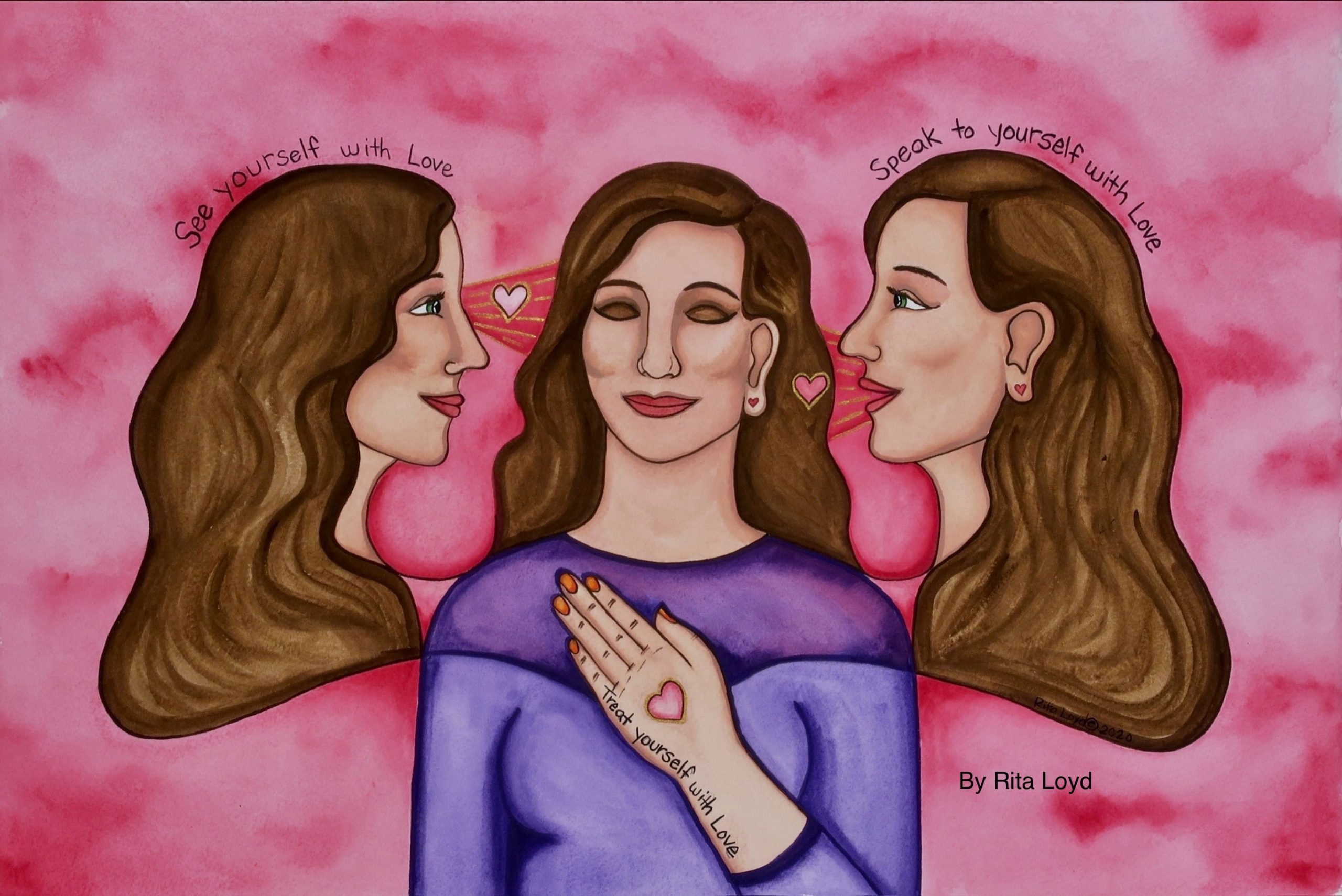
    In 2004, I experienced a powerful breakthrough in understanding what it meant to love myself. I could finally understand that self-love is about the relationship that you have with yourself, and that relationship is expressed in how you speak to yourself, treat yourself, and see yourself. I also understood that self-love is about knowing yourself and paying attention to what you need.

    These discoveries, and others, changed my life and led me into a new direction. But as the years went by, I began to feel exhausted by life. Despite all that I had learned, I could feel myself burning out. It became clear to me then that there was a depth of self-love and healing I still wasn’t able to reach.

    What I didn’t realize yet was that I had been living with complex trauma my entire life. It stemmed from a painful childhood, and it had created blind spots in how I saw myself and others. Because of complex trauma, I moved through life in a fog—feeling lost, disconnected from myself, and seeking self-worth through external validations.

    So, I continued on with life—struggling, yet still hoping to find my answers. Then one day the fog began to lift, and the healing process began. I couldn’t see it all at once, but little by little, it became clear what I needed to learn in order to reach a deeper level of self-love and healing. Here’s a glimpse into my journey.

    From 2011, I spent the next five years helping my dad take care of my mom because she had advanced Alzheimer’s disease. I was helping three to four days a week, even though I was dealing with chronic health issues and severe anxiety. This was an extremely difficult time that pushed me past my limits—yet it was a sacred time as well.

    Six months after my mom died in 2016, my health collapsed due to a serious fungal infection in my esophagus. I had never felt so broken—physically, mentally, and emotionally. I was desperately searching for ways to recover my health, I was grieving the death of my mom, and I was struggling with a lost sense of identity. Because of this, and more, the goals and dreams I once had for my life vanished—as if the grief had caused some kind of amnesia.

    A few years later, I had my first breakthrough. I was texting with a friend, and he was complaining to me about his ex-girlfriend, who has narcissistic personality traits.

    He told me about the gaslighting, manipulation, ghosting, lack of empathy, occasional love-bombing, devaluing, discarding, and her attempts to pull him back in without taking accountability for the ways that she had mistreated him.

    His description sounded oddly familiar. It reminded me of the dynamic I had with many of my family members in different variations. I had always sensed that something was off in the way my family treated me, but I was so conditioned to normalize their behavior that I couldn’t quite put my finger on what was wrong.

    Once I became aware of narcissistic personality traits, I started doing my own research by listening to narcissistic behavior experts such as Dr.Ramani Durvasula, and it was very liberating.

    I learned that parents who have narcissistic personality traits, often treat their children in ways that serve their own emotional needs instead of meeting the emotional needs of their children. And this can cause negative programming in the way those children think about themselves and others.

    For example, since my dad treated me like my emotional needs didn’t matter, this may have modeled to the rest of my family to treat me in the same way. And it most definitely taught me how to treat myself, especially when I was around my family.

    I also learned that narcissistic relationships can cause you to lose yourself, because they can systematically break down your identity, confidence, and state of reality.

    At the same time, I also learned that narcissistic behavior often stems from a deep sense of insecurity, usually rooted in a painful and abusive childhood. Recognizing this helped me to see my family members through a more compassionate lens—not to excuse their behavior, but to understand where it might be coming from.

    Learning about narcissistic personality traits has deepened my ability to love myself because of the clarity it has given me. I finally understand my family dynamic and how I used to abandon myself when I was around them.

    I would always give them my full and undivided attention, hoping it would be reciprocated, but it never was. Instead, in their presence, I became invisible—as if what I thought, felt, or needed didn’t matter. Around them, I learned to silence myself in order to stay connected, even if it meant disconnecting from myself.

    Understanding narcissistic patterns and the impact that they can have helped me to face reality. My family members were unlikely to ever change, and I would always need to protect my emotional well-being when I was around them.

    As I learned about narcissistic personality traits, I started to come across information about other related topics, such as complex trauma and how it can dysregulate the nervous system. Peter Levine and Gabor Maté are two of my favorite teachers on this subject.

    I discovered that many of my health issues—including inflammation of the stomach, panic attacks, chronic anxiety, chronic fatigue, depression, lowered immune function, pain, and chemical sensitivities—could be linked to a dysregulated nervous system.

    This can happen when the nervous system is chronically stuck in survival mode. In survival mode, the body deprioritizes functions like digestion in order to stay alert and survive. Over time, this can cause fatigue and other problems by draining energy and disrupting key systems needed for rest, repair, and vitality.

    Learning about complex trauma has deepened my ability to love myself because it has opened my understanding to why I might be chronically ill and always in a state of anxiety. Knowing this gives me clues in how I can help myself.

    I also learned that complex trauma is caused less by the traumatic events themselves and more by how those events are processed in the nervous system and in the mind.

    According to the experts, if you are not given context, connection, and choice during traumatic events—especially when those events occur repeatedly or over an extended period of time—it’s more likely to result in complex trauma.

    For example, if during my own childhood, it had been explained to me why my dad was always so angry and sometimes violent… and if I would have had someone to talk to about how his words and actions affected me and made me feel unsafe… and if I would have been given a choice in the matter and wasn’t stuck in harm’s way, then I would have been much less likely to have walked away with complex trauma.

    But since those needs were not met, I internalized the message that I wasn’t safe in the world, which caused my nervous system to become stuck in a state of dysregulation. As a result, constant fear became an undercurrent in my daily life—often stronger than I knew how to manage.

    When I wasn’t in school, I would often retreat into my wild imagination—daydreaming of a perfect fairy tale life one minute and scaring myself with worst-case scenario fears the next. Fortunately, my wild imagination also fueled my creativity and artistic expression, which was my greatest solace. To protect myself, I developed the ability to fawn and to people-please. All of these survival responses have been with me ever since.

    Before I learned about complex trauma, I was told that the only course of action you can take in regard to healing from past emotional abuse was to forgive those who have abused you. But that’s not correct. Forgiveness is fine if you feel like forgiving, but it doesn’t magically rewire years of complex trauma and nervous system dysregulation. The real course of action is to identify and to gently work on healing the damage that was caused by the abuse.

    As I explored the internet in search of ways to begin healing my dysregulated nervous system, I came across two insightful teachers, Deb Dana and Sarah Baldwin. They teach nervous system regulation using polyvagal theory, and I found their classes and Deb Dana’s books to be extremely informative.

    Polyvagal theory, developed by neuroscientist Dr. Stephen Porges, helps people to understand and befriend their nervous systems so they can create a sense of safety within themselves.

    Learning about polyvagal theory has deepened my ability to love myself by teaching me how my nervous system works and by helping me understand why I feel the way I feel. It also teaches exercises that help me to send signals of safety to my body, gently communicating to my nervous system that it doesn’t need to stay in survival mode all of the time.

    Nervous system rewiring is a slow process, and while I still have a long way to go before I get to where I want to be, I’m already feeling subtle shifts in the way I respond to stressful situations. This breakthrough has given me new hope for healing and has provided a new path forward.

    I also learned from complex trauma experts that fawning and people-pleasing can actually be trauma responses. These responses were the reason why I was so willing to sacrifice my health to help my dad take care of my mom. It was because I had been conditioned to always please my parents and to put their needs ahead of my own.

    Learning about how fawning and people-pleasing can be trauma responses has deepened my ability to love myself by giving me new insight into my own behavior. In the past, it had always bothered me if I thought anyone didn’t like me, and now I can understand why I felt that way. It was because those thoughts triggered old feelings of fear from childhood, when not pleasing my dad felt dangerous. This taught me to never say ‘no’ to people in order to always feel safe.

    By becoming aware of these trauma responses and wanting to reclaim my power, I have gained the ability to say ‘no’ with much more ease, and I’m much better at setting healthy boundaries. I’m also learning to accept that not everyone is going to like me or think well of me—and that’s okay.

    During the later years of my dad’s life, we developed a much better relationship. Both my mom and dad were grateful for the help I gave to them when my mom was sick.

    After my dad died in 2023, I no longer had the buffer of his presence to ease the stress of family visits. But I also no longer felt obligated to be around family members for the sake of pleasing my dad. So, a few months after his passing, when I received disturbing correspondence from a certain family member, I was able to make the difficult decision to go no contact. Spending time with family members had become too destabilizing for my nervous system—and to be completely honest with you, I had absolutely nothing left inside of me to give.

    At first, I felt a lot of guilt and shame for going no contact, being the people-pleaser and fawner that I have been. But then I learned from complex trauma experts that guilt and shame can also be trauma responses.

    When we are guilted and shamed in our childhoods for speaking up for ourselves, it can teach us that it’s not safe to go against the ideology of the family, that we should only do what is expected of us, and that our true voices and opinions don’t matter. This kind of programming is meant to keep us small—so that we are less likely to stand up for ourselves and more likely to remain convenient and free resources for the benefit of others.

    I experienced a lot of rumination and intrusive thoughts the first year of going no contact, but with time and support I was able to get through the hardest parts. Watching Facebook and Instagram reels from insightful teachers, such as Lorna Dougan, were incredibly helpful and kept me strong.

    A truth I had to keep reminding myself of was that my well-being was just as important as theirs, and that it was okay for me to prioritize my mental health—even if they could never understand.

    Giving myself permission to go no contact with family members has deepened my ability to love myself because it has allowed me to help myself in a way that I had never been able to do before.

    I now have a real chance to protect my mental health, to heal my nervous system, and to live the life that is most meaningful for me and for my husband. I no longer have to drain my last ounce of energy on family visits and then ruminate about how they treated me for the next 72 hours. It has also opened up my capacity to deal with other challenges in my life, like facing the new political landscape that is now emerging.

    In conclusion, it was only when I began to tend to my complex trauma and examine my family relationships that I was finally able to recognize and understand the blind spots that had obscured my ability to know and to love myself more deeply.

    Looking back on my journey, I’m grateful for how far I have come:

    I now know and understand myself better. I have a greater understanding of what I need in order to heal.

    I am able to think for myself and make decisions that align with my core values.

    I like myself again, and I know that I’m a good person. I no longer believe that I’m too much or too sensitive—I just need to be around people who are compatible.

    I am able to set healthy boundaries and to choose my own chosen family—people who treat me with genuine kindness and respect.

    And I feel more confident facing life’s challenges now that I know how to turn inward and support my nervous system with compassion and care.
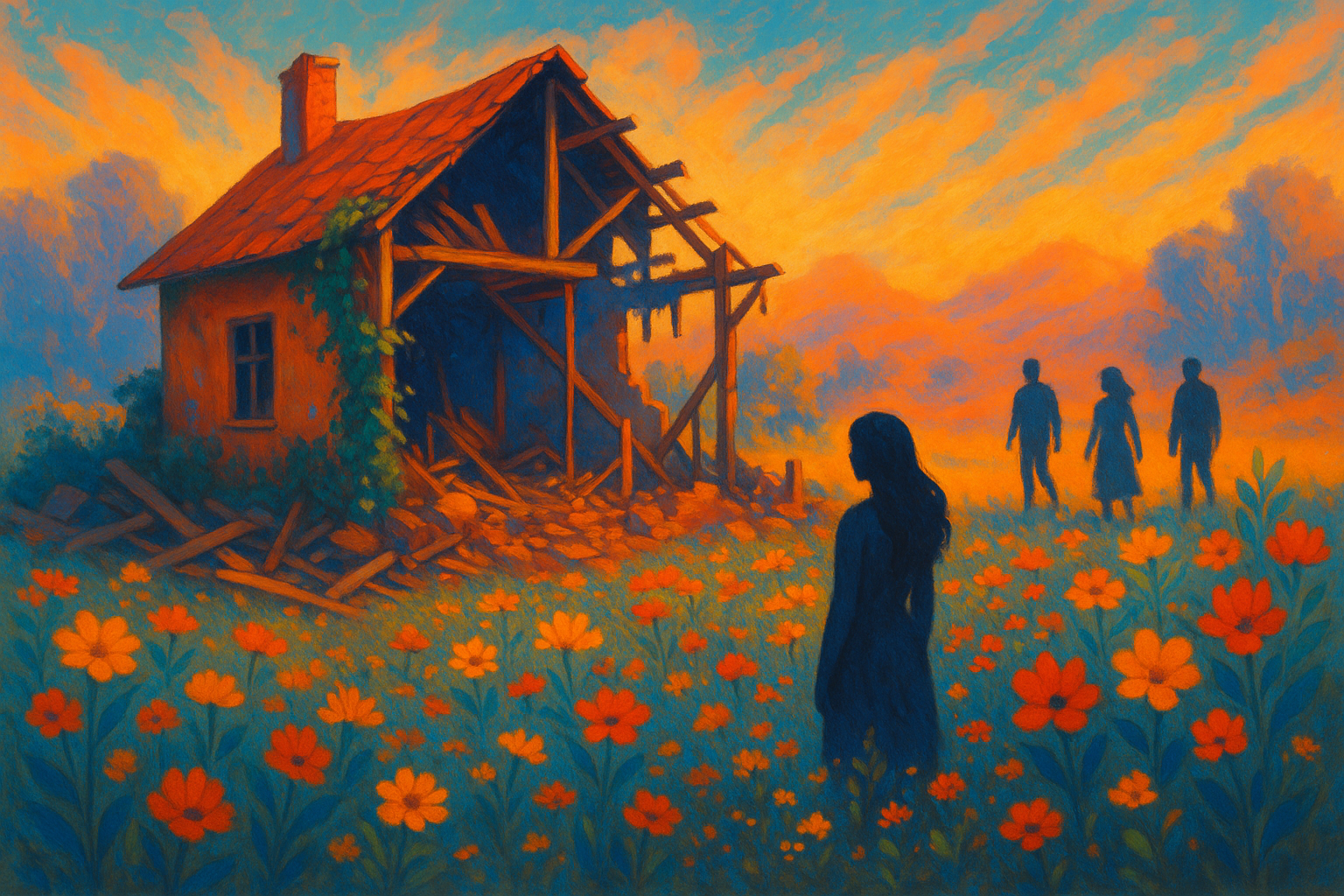
  • How I Broke Free from a Narcissistic Family System

    How I Broke Free from a Narcissistic Family System

    “Your vision will become clear only when you can look into your own heart. Who looks outside, dreams; who looks inside, awakes.”~ Carl Jung

    My mom had always been invested in real estate. I remember snacking on open house charcuterie years before we finally purchased a house to flip—the first of four. By the time I was eighteen, we’d moved five times.

    I knew our family was falling apart by renovation number three.

    I had spent the previous few years experiencing suicidal ideation and was now on a strict cocktail of seven or so psychiatric and neurological medications.

    My brother was in his sophomore year of college, on academic probation, and coping by mixing alcohol with benzodiazepines.

    My mother was expanding a highly ranked vocational services program while struggling with hyperthyroidism and unidentifiable gut health issues.

    My father was often missing, either executing his latest scam (upcharging my friends’ parents on cases of local wine) or pursuing the buyer of our latest fixer-upper, who eventually became his second wife.

    I couldn’t see the difference between a faulty house and my faulty family. There were constant leaks (tears), water damage (resentment), and cracks in the foundation (domestic violence), and yet there was character, familiarity, and history worth saving.

    My family would have rather remained in denial of our structural instabilities, but the increasing severity of my suicidal ideations left me no choice. If I were to survive, I had to dig through the walls of our house and remove whatever was making me sick.

    The Inspection

    The first step in the renovation process is identifying the problem areas: what can be saved and what must be removed.

    Growing up in a narcissistic family system leaves a child with no baseline to compare to. Narcissistic abuse often isolates physical violence to certain people or excludes it entirely, so traditional models of domestic abuse are not comparable.

    Identifying narcissistic abuse is an act of decoding a series of games and behaviors that mimic that of an infant. Pathological narcissists are psychologically frozen in the primordial mind, exclusively concerned with getting their needs met without concern for their effect on others.

    My father’s unpredictable conduct was like a mold that had spread into every room of the house: insidious, nearly undetectable. He was rarely physically violent but constantly psychologically toying with us.

    Common behaviors included hiding necessities, like keys and wallets; ignoring calls, texts, or even our physical existence; triangulating arguments between family members; and harshly punishing mistakes while finding serious offences humorous. The effects of his volatility appeared in a variety of health issues amongst the rest of us. My brother developed a chronic stomach illness, my mom started losing circulation in her hands, and I began experiencing pseudoseizures.

    For the sake of my health, I could not continue living in a mold-infested home; both my physical and psychological well-being were compromised. By the end of my inspection, it had become clear that exterminating my father from the home was integral to my recovery. Too much damage had been done. Gutting the house was the only chance I had at saving it.

    Demolition Day

    There is no clean or precious way to demolish a house. Ripping out vinyl flooring and knocking down drywall is a messy process. Dust scatters everywhere, glass breaks, and rodent feces are found within walls. If one wishes to undergo such a renovation, they must accept that a mess will be made and cleaned up later.

    Identifying my father as a narcissistic abuser released me of the narrative that I was mystifyingly crazy, but it also made him crazier. He became firmly unapologetic, insults and neglect were more pointed, and the physical violence amplified. I was rebelling—as normal teenagers do—but my dad responded with harassment, physical intimidation, and complete emotional abandonment.

    My compulsive self-loathing morphed into rage. The harm I had been inflicting inward began unfolding outward in bouts of verbal assault, criticism, and bullying. I remember once screaming profanities and threatening suicide to my ex-boyfriend after I had found out he had been hanging out with a group of our friends without telling me. No one was safe from my wrath.

    The threads of my father’s personality that were embedded within me had to be explored in their entirety. They had to be acted out and mirrored back at him for the illusion to be shattered.

    In defense of my autonomy, I weaponized his insecurities, verbally recognized him as an abuser, and learned to play his game. I was not the character he had made of me: the cowardly, mentally tortured weakling. I could be volatile, ferocious, and wicked. I could be like him.

    By the last renovation, my father’s mental illness had become undeniable. The fighting was constant and precisely unveiled his intemperate nature. After we sold the house, my mom filed for divorce from my dad, and I cut all contact with him. This August, it will be ten years since I’ve spoken to him.

    When I finally finished tearing through every wall, counter, and cabinet, I discovered the mold was not the only issue; the foundation was rotten too. Cutting contact with my father did not cure my depression or anxiety because he was only one cog in a faulty machine.

    Weak Bones

    To properly inspect the foundation of a house, one must calculate how each pillar supports the others. For a house to be stable, the materials must be solid, the architecture perfectly calculated, and the ground level.

    In systems of abuse, the abuser is not simply a bug that infiltrates and poisons what would be a normally functioning software; the players within these systems are puzzle pieces, all equally contributing to a complete picture. Identifying the role each member plays is integral to deconstructing the family system and potentially saving it from collapse.

    After four or five years of therapy and self-study, I accurately identified each family member’s role in the system: The Narcissist, The Enabler, The Golden Child, and The Scapegoat.

    One of the burdens of the Scapegoat in the family system is they’re the only participant living in the shared reality yet surrounded by people motivated to remain in a delusion.

    The Narcissist trains each member of the group to deny their reality in favor of his or her perception, which makes it difficult for all parties to differentiate reality from fantasy.

    The Scapegoat’s ego strength is usually underdeveloped, making it difficult to maintain the position that they can see through the familial matrix. But the pain of abuse makes reality less deniable for them than, say, the Enabler, who believes they can escape the abuse by remaining in denial, or the Golden Child, who is championed and protected for validating the Narcissist’s perception.

    Whether they adhere to the delusion or not, the Scapegoat is never rewarded by the Narcissist, nor allied by the other family members.

    This is also the best part about being the Scapegoat. They are the most overtly abused and yet the most likely to recover. There is no value in pleasing or maintaining a connection to the Narcissist nor upholding the false narrative they’ve crafted.

    There is no motivation to remain in the fantasy, therefore they have nothing to lose in destroying it. If the Scapegoat can deconstruct the self-loathing, victimized role they’ve been cast in, they can escape the system.

    Removing the Narcissist does not necessarily unbind each character from their role. Just as my self-identification with mental illness had assisted my father in creating a Scapegoat of me, my mother’s martyrdom made an Enabler of her, and my brother’s mirroring of the behavior made a Golden Child of him. Once the Narcissist is excavated from the system, each member has to deconstruct their relational patterns and personal identity to properly engage in healthy relationships.

    For years, my role as the Scapegoat exempted my family from embracing their own responsibility in fostering my father’s verbal and psychological abuses. Even after my father was ostracized, my identification with “mental illness” made me an easy patsy for my family member’s own dysfunction.

    They didn’t need to look within themselves to find a leaky pipe; they could point to my hospitalizations, failing grades, and diagnoses. In order to save myself from the dysfunction, I had to become healthy, so undeniably healthy that the damage could not possibly be coming from me.

    Starting from Scratch

    Tearing down the residual structure is quicker but just as messy as the demolition process. Every trace of the familial programming within the child must be broken down and examined. Homogenous relationships coined by codependency and self-destruction must be excavated from their life.

    The child has to accurately differentiate appropriate and inappropriate behavior from both themselves and those around them before walls can be built to protect them from compulsively engaging in more unhealthy behavior.

    Building the frame of oneself is an act of identifying core values and beliefs: “What matters most to me? How do I expect to be treated? What will I not stand for?”

    I had to swing to the other end of the pendulum to discover which bits of my upbringing were authentic. Every trace of my upbringing had to be removed from my sense of self: politics, humor, religious beliefs. I became artistic where my family was business-minded, empathetic towards those they would have laughed at, and honest when they would have lied.

    I became unrecognizable; the preppy, conservative, private school girl morphed into an edgy leftist with a theater degree. I moved from coast to coast, desperate to escape any identification with my past self. I successfully removed an array of self-destructive habits: boundaryless friendships, hypersexuality, and self-identification with mental illness. The house I had built was sturdy and spotless.

    In the end, I discovered that my family members and I don’t entirely share the same values, we do not follow the same moral code, and we are not driven by the same aims, but we are not total opposites. New builds are stable but sterile. I needed to sift through the parts of myself I had thrown away in order to feel complete.

    Scavenging the Rubble 

    After the construction is finalized, the few remaining remnants of the previous house are piled in the lawn, waiting to be sorted. Some of it is junk, but other bits are sentimental relics of the old home, too precious to leave behind. Beams of original hardwood, vintage furniture, and iron bookends are saved and repurposed as charming decor.

    Children of narcissistic family systems grow up not as themselves but as a projection of the narcissist’s experience of the child. The child’s honest self isn’t just neglected; it is punished and suffocated. Even identifying preferences is a difficult task.

    When I first began searching for my true self beneath the programming, I would have preferred to have found I have nothing in common with my family or the holographic self that had been projected onto me. It’s tempting to order everything new. It can feel clean and picturesque, but truthfully, I couldn’t decorate myself from scratch. If I were to live authentically, I would need to integrate the parts of myself I would have rather abandoned.

    In order to determine which remains could be repurposed, I had to ask myself, “Is this piece mine or something that was instilled in me?”

    It’s been almost a year since I moved back to my hometown, and I’ve found that these streets that contain my childhood are also beacons leading me back to my missing parts. My charm, my humor, and even my storytelling abilities are all traces of my family members. The timid, morose young girl formed by my upbringing is a character that contributes to my depth. To remove either from my personality would be a denial of my own complexity.

    I am still in the process of completing my home, and there is comfort in knowing that it will never end. I may shut a door too hard, causing a frame to fall and need replacing. I may inherit silver from my grandmother that needs polishing. A house needs constant updating and maintenance; we are always renovating ourselves with new experiences, information, and outlooks.

    What’s important now is that I have a place of my own. I am not a living projection created by my upbringing, and I can recognize what is mine and what has been given to me. I am a stable, individual structure with my own design and shape, all of which come from within me and nowhere else.

  • To My Narcissistic Friend: Thanks for Being My Toxic Mirror

    To My Narcissistic Friend: Thanks for Being My Toxic Mirror

    “It’s okay to let go of those who couldn’t love you. Those who didn’t know how to. Those who failed to even try. It’s okay to outgrow them, because that means you filled the empty space in you with self-love instead. You’re outgrowing them because you’re growing into you. And that’s more than okay; that’s something to celebrate.” ~Angelica Moone

    I’ve had the most unusual, baffling, and frustrating experience with someone recently. And yet, it’s also been a massive catalyst for growth. I’ve seen myself more clearly by observing the behavior of someone who, in some ways, is a lot like me.

    For me, it’s been the purest demonstration of the phrase “Others are your mirror.”

    This person—let’s call him Simon—has been incredibly toxic.

    He’s insulted me deeply, hurled cruel names, and used gaslighting, manipulation, and blame-shifting to twist reality.

    At times, he cloaked control in false compassion, pretending to help while subtly undermining me.

    He projected his insecurities onto me so persistently, I began to doubt my own sanity—wondering if I really was as terrible as he claimed.

    Thankfully, I’m in a strong place mentally right now. I can see how someone more vulnerable could be shattered by Simon. In fact, I know he’s left a trail of broken relationships behind him. People abandon him left, right, and center—the moment they get close, his toxicity flares.

    At his worst, Simon has been absolutely vile. He ticks nearly every box for narcissistic traits. He can’t handle even mild criticism. When I offered gentle, constructive feedback, his ego erupted, and he lashed out with shocking viciousness. He claims to want self-improvement, but when real opportunities arise, his ego slams shut. Growth is blocked at the gates.

    And yet, despite all this, I feel deep compassion for him. I’ve read enough about narcissists to understand where this behavior might come from. He’s going through hell: job loss, depression, drug use. I’ve been in a scarily similar place. So my empathy kicks in hard. Even though he’s been monstrous, I see pieces of myself in him.

    After clashing with him multiple times, I gave it one final try. I knew by then that avoiding narcissists is usually the wisest route—they rarely change—but I extended one last olive branch.

    It lasted less than a day. He snapped it in half and flung it back in my face.

    It feels like I’m some kind of unbearable truth agent to Simon. His soul just isn’t open enough to withstand my presence. I’m far from perfect, but I’ve worked hard on myself. I try to stay humble, self-reflective, and growth-oriented—and that’s like kryptonite to someone with such a fragile, inflamed ego.

    So now, Simon is blocked. I’m proud I tried. It didn’t work. And for my own well-being, I had to let go.

    I’ve grieved the friendship that might have been. Because, believe it or not, Simon has redeeming traits in spades. He’s brilliant, creative, charismatic. He seems to care about others—though I wonder if that’s driven more by ego than empathy.

    So what good came out of all this chaos? Watching Simon’s worst traits has helped me examine my own.

    Don’t get me wrong—I’m pretty sure I’m not a narcissist, and I don’t think I’ve ever been as vile as Simon.

    But. I have lashed out. Especially when my ego’s taken a hit.

    Back when I was addicted to drugs, I had a devastating fallout with one of my oldest friends—let’s call him Anthony. He was deeply concerned about my behavior. He had a young son, and didn’t trust me—with good reason.

    I’d promised I wouldn’t take drugs on a lads’ holiday, then did it anyway. I betrayed his trust. Later, when we tried to arrange a meetup, Anthony did something incredibly difficult: he told me I wasn’t welcome at his home. He couldn’t risk me having drugs on me—in case his son found them.

    Anthony tried to handle it with kindness and care. But it crushed my ego. My best friend thought I was a danger to his child.

    I exploded. I did a Musk. In a blaze of rage, I told my best friend to go F himself.

    That ended a fifteen-year friendship. I was already depressed, but after that, I spiraled into suicidal depths. Deep down, I knew I was to blame—but my ego couldn’t take it. Blaming Anthony was easier than facing myself.

    He wouldn’t speak to me for years. Eventually, we reconciled, but something had died. The warmth was gone. He kept me at arm’s length, understandably. Now, we don’t speak at all. It’s clear he’s given up on me again. That still stings, but I accept it.

    So can you see why I felt a connection to my new friend Simon?

    Watching him lash out recently awakened something primal in me. It reminded me of my worst moments. And I never want to go there again. I want to master myself; build emotional intelligence; stop letting my volatility hurt people.

    Simon showed me how bad it can get when you’re spiraling—and it’s terrifying.

    All my life, I’ve struggled with emotional volatility. I don’t lose my temper often, but when I do, it’s nuclear. Words are my sword, and when I swing carelessly, the damage is brutal.

    Which brings me to a truth I’ve come to believe: Strong men don’t lack the capacity for destruction—they master it.

    They walk with a sheathed sword, drawing it only when absolutely necessary. It’s restraint, not weakness. It’s honor. It’s the way of the gentleman, the noble warrior. My blade is my voice—sharp, but it’s best when kept in check.

    Weak men lash out at the slightest wound. I refuse to be a weak man.

    Meeting someone as damaged as Simon has clarified my mission. I must continue to heal. I must shed the worst parts of myself. I saw my shadow in him—distorted and exaggerated. It horrified me. And it inspired me to rise above it.

    I’ve started psychotherapy. I’ve even been using ChatGPT as a kind of therapist—surprisingly helpful. This past month has been a surge of self-development. And I have Simon, of all people, to thank.

    Is he doomed to remain toxic? Maybe. The scientific literature suggests that the odds aren’t good. But it’s not my burden anymore. He didn’t want my help. I have to put my own well-being first.

    By cutting him off, I protect myself from future pain.

    And in doing so, I’ve gained greater empathy for those who once cut me off. They saw someone chaotic, unsafe, emotionally destructive. I wish they could see how much I’ve changed in the last ten years. But I respect their choice to keep their distance.

    We can’t change the past. Some bridges are too obliterated and irradiated to ever rebuild.

    But if we choose humility and self-reflection, we can always choose to grow.

  • “Am I the Narcissist?” How to Tell If It’s You

    “Am I the Narcissist?” How to Tell If It’s You

    “Narcissism is voluntary blindness, an agreement not to look beneath the surface.” ~Sam Keen

    Have you ever found yourself wondering, “Am I the narcissist in this relationship?” If so, you’re not alone. This question can feel heavy and unsettling, especially if you’ve spent years tangled in a toxic dynamic. The more you try to figure things out, the more confusing it becomes.

    But here’s something to hold onto: The very fact that you’re asking this question is a sign that you probably aren’t narcissistic.

    Am I the Narcissist?

    Victims of narcissistic abuse often find themselves questioning their actions, replaying conversations, and overanalyzing their behavior. Meanwhile, the real narcissist rarely, if ever, stops to consider whether they might be at fault.

    Why? Because self-reflection is not in their nature. Narcissists are too wrapped up in protecting their fragile egos and carefully crafted personas to even entertain the idea that they might be the problem.

    So, if you’ve been second-guessing yourself, it’s time to stop. The very act of self-reflection shows that you’re capable of empathy and accountability—two traits a true narcissist lacks.

    My Story

    Throughout our thirty-year marriage, my ex-husband would, out of nowhere, accuse me of cheating. It was absurd. I wasn’t cheating—never had, never would. But time and again, he’d cast doubt on my every move, picking apart my behavior as if it were proof of something sinister. Each confrontation left me baffled. I wasn’t having an affair—I didn’t even have the time or energy for that!

    So why would the man I loved constantly question my loyalty?

    I convinced myself it had to be my fault. Maybe I wasn’t doing enough as a wife, and that’s why he felt so insecure, so suspicious of me.

    At the time, I had no idea I was married to a narcissist. I didn’t understand how narcissists operate, or how they twist reality. More importantly, I didn’t realize how they manipulate you into believing that you’re the problem, not them.

    “Mirror, Mirror on the Wall… Am I Perfect After All?”

    Narcissists have their own version of the enchanted mirror from Snow White—only, instead of seeking the truth, their mirror feeds them the comforting lie they desperately want to hear: “You’re perfect, flawless, and never at fault.”

    This is where narcissistic behavior thrives. While you’re stuck analyzing your every move, they’re busy basking in the reflection of their own grandiosity.

    More Than Being Self-Centered

    Narcissistic Personality Disorder (NPD) isn’t just about someone being self-centered. It’s a deep-rooted personality disorder defined by traits like an inflated sense of self-importance, a desperate need for admiration, and a shocking lack of empathy. Narcissists wear masks of confidence, but underneath, they’re terrified of facing any feelings of inadequacy.

    So why don’t they ask, “Am I the narcissist?”

    They Can’t Handle the Truth

    The truth is, they can’t handle the answer. Their egos are protected by layers of defense mechanisms—denial, projection, and a refusal to accept responsibility. Admitting they might be flawed would shatter the fragile image they’ve built, and that’s not something a narcissist is willing to risk.

    Meanwhile, people like you—who have empathy and care deeply about relationships—are naturally prone to self-reflection. You take accountability for your actions and genuinely want to improve, which is exactly why you’re asking yourself tough questions. And while you’re busy looking in the mirror wondering what you can do better, the narcissist? Well, they’ve already convinced themselves they’re the fairest of them all.

    A Truth Revealed

    Eventually, I uncovered the ugly truth—my ex-husband wasn’t just accusing me out of insecurity; he was projecting his own guilt. He had cheated on me—multiple times. In fact, over fifty times.

    In his twisted logic, he’d convinced himself that if he could pin an affair on me, it would somehow clear his conscience. But when his accusations didn’t stick, he switched tactics, offering up three audacious claims:

    1. His cheating was my fault because I didn’t satisfy him.

    2. I should be grateful he “only” cheated physically, and never emotionally.

    3. I needed to stay quiet about it because everyone would just blame me anyway (he was just looking out for me, of course).

    What didn’t I hear? An apology. Not even close.

    Instead, I was bombarded with deflections, denials, and outright lies.

    He tried to flip the narrative—suddenly, I was the bad guy. According to him, I was the narcissist because I couldn’t see how “wonderful” he was. I was being stubborn for staying angry when forgiveness, in his eyes, was the obvious solution. And his lies? They were all to protect me because, of course, he was such a “great” person.

    Classic narcissist move.

    The Narcissist’s Tactics: Dodging Responsibility Like a Pro

    Narcissists are experts at shifting the blame, turning the tables, and making you question your reality. When things start to fall apart, they’ll do anything to avoid being the “bad guy,” and instead, they’ll paint you as the problem. Let’s break down some of their go-to tactics:

    Projection: “You’re the one who’s selfish!”

    Narcissists often accuse you of the very behavior they’re guilty of. It’s called projection, and it works to distract you from their faults while making you feel responsible. You might hear things like:

    • “You’re so controlling!”
    • “All you care about is yourself!”
    • “You’re the one who’s toxic, not me!”

    This clever tactic puts you on the defensive, and before you know it, you’re questioning your own behavior instead of seeing theirs for what it is.

    My narcissist projected his own guilt onto me, twisting reality to fit his narrative. He even had the audacity to “forgive” me—just in case I had cheated and wasn’t confessing to it. In his mind, he was the noble one, magnanimously overlooking my imagined sins, while I was painted as the villain. He created an alternate reality where he was the hero and I was the problem.

    Blame Shifting: “I wouldn’t act this way if you didn’t push me!”

    Blame shifting is another favorite tool. Narcissists twist situations to make their reactions seem like your fault. They’ll say things like:

    • “If you didn’t make me so mad, I wouldn’t have yelled.”
    • “I only lied because you wouldn’t understand.”
    • “You always make me act this way.”

    By blaming you for their behavior, they avoid taking responsibility and leave you feeling guilty for things you didn’t cause. Narcissists blur the lines between what’s right and wrong, often making you feel like you can’t do anything right.

    My ex-husband didn’t just blame me for his cheating—he actually tried to twist the situation so he could get praise for his behavior.

    During therapy, we uncovered that he was addicted to porn, and that addiction warped his entire view of what a healthy relationship should look like. Once the label of “addict” was slapped on him, he leaned into it, casting himself as the real victim and expecting me to be more understanding and accepting of his choices.

    Even now, he refuses to take any responsibility. Instead, he continues to shift the blame onto me, parading his addiction as an excuse while claiming victimhood.

    Emotional Manipulation: “You’re the reason this relationship is falling apart.”

    Narcissists love to emotionally manipulate you into feeling like you’re responsible for every problem in the relationship. They’ll use guilt and shame to keep you doubting yourself. Expect phrases like:

    • “I’m trying my best, but you keep ruining everything.”
    • “This is all on you. I’ve done nothing wrong.”
    • “If you don’t change, this will never work.”

    By making you feel overly responsible, they deflect attention from their own toxic behavior and keep you stuck in a cycle of self-blame. Narcissists train you to question yourself so often that it becomes second nature.

    After enduring narcissistic abuse, it’s no wonder you’re left feeling confused and full of self-doubt. Narcissists are masters at eroding your sense of self, making it hard to trust your own judgment.

    When my narcissist first cautioned me not to share the news that he was a cheater, I was drowning so thoroughly in his contrived world that I believed the lie that other people would blame me for his cheating. How messed up is that?

    Clear Signs You’re Not a Narcissist

    ✔️Self-Awareness

    You recognize when something is wrong, and you’re willing to reflect on your words, thoughts, and actions. Narcissists, on the other hand, never admit fault.

    ✔️Empathy

    You genuinely care about others’ feelings and how your behavior impacts them. Narcissists lack this trait entirely.

    ✔️Willingness to Change

    You’re open to feedback and want to grow. A narcissist resists any form of personal growth or accountability.

    Time to Stop Questioning and Start Healing

    It’s time to put the doubts to rest and start focusing on your healing. You’ve spent too long in the shadow of someone else’s manipulation, but now it’s your turn to reclaim your sense of self.

    1. Recognize the manipulation.

    Acknowledge that the doubts and self-blame you feel are the result of narcissistic tactics, not reality.

    2. Rebuild your self-esteem.

    Start setting healthy boundaries and practicing self-compassion. You are worthy of kindness—from others and, most importantly, from yourself.

    3. Seek support.

    Don’t be afraid to reach out to a therapist or a support group. Surround yourself with people who validate your experience and can guide you through your healing process.

    The very fact that you’re reflecting, questioning, and growing means you are not the narcissist. You deserve to trust yourself and live free from self-doubt. Start rebuilding your life, and remember—healing is not only possible, but you are already on your way.

    I Am Not a Narcissist!

    After years of living in the shadow of my ex-husband’s narcissistic abuse, I’ve finally stepped into the light—reclaiming my self-confidence piece by piece. It wasn’t easy. It took time, energy, and relentless effort, but I got here by following three crucial steps: recognizing, rebuilding, and reaching out.

    First, I recognized the manipulation for what it was. Then, I began the long process of rebuilding my shattered sense of self. But the most important part? I reached out. My friends and therapists became lifelines, helping me see the truth and guiding me toward healing.

    Now, it’s your turn.

    Time to Believe in Yourself

    If you’ve been asking yourself, “Am I the narcissist?” it’s a strong indication that you are not. It’s time to trust yourself again. You’ve been through the emotional wringer, but now you have the chance to reclaim your confidence and rebuild your self-worth.

    Healing from narcissistic abuse is a journey, but every step you take brings you closer to a life free from manipulation and self-doubt. Remember, you are not the problem—you are capable of change, growth, and, ultimately, healing.

  • How I Changed My Life by Becoming a Thought Snob

    How I Changed My Life by Becoming a Thought Snob

    “Loving people live in a loving world. Hostile people live in a hostile world. Same world. ~Wayne Dyer

    Driving home from another visit to the pediatrician, Mother reiterated how puny I was: “You’re just like Mommy. She was so frail. You get sick easily.” I’d say I was five years old when I wholeheartedly accepted this hogwash as fact. I’m not exaggerating when I tell you I stayed sick for three decades because I truly believed I was prone to illness.

    I come from a long line of women who never got what they wanted. They settled, conformed, and were submissive to their male spouses. I recall when I was probably eight and witnessed a heated knock-down drag-out between my parents.

    Those fights used to scare me, and I always ended up resenting my father because my mother was no match for him physically or intellectually. As she cleaned up the black mascara that had bled underneath her eyes, she told me something that ended up shaping my relationships with men.

    “Paula, if you care about a man, he’ll treat you like dirt beneath his feet.”

    And just like that, my perspective of men and where I stood with them was ill-fated. My teenage and adult relationships with men mirrored that belief that I accepted as fact when I was still getting bad perms. The bad perms were evidential proof that my brain wasn’t fully developed, so I was far too young to accept any beliefs as facts.

    Let’s flash forward a few years to when my father decided he was too much of a man for one woman. I was eighteen when my parents divorced. Two new women entered and filled our shoes one week after Mother and I left the brick-and-mortar institution we had called home.

    My father had taken on a girlfriend who had a daughter. The daughter set up shop in my bedroom and quickly adapted to answering to my nickname, “Little One.” I felt like I had been replaced because I had been. Very brutally and in true narcissistic form.

    At eighteen, I wasn’t equipped with the emotional intelligence of Mother Teresa, so I blamed myself for not being lovable, a subconscious belief that controlled my behaviors for the next twelve to thirteen years.

    During that time, I went from a size six to sixteen, bought property in Hell on Earth, and dated a drug-addicted criminal with multiple personalities, a mentally ill redneck who self-medicated, and a sex-addicted politician who had five out of the nine defining narcissistic traits. Believing I was unlovable created a string of unlovable experiences.

    At thirty, I realized I had experienced more heartache than love, and I was sick of living a life that wasn’t worth living.

    A couple of years prior, I was introduced to Dr. Wayne Dyer and was evaluating why my life looked the way it did. One day, I heard Dr. Dyer say something that changed the trajectory of my life: “Loving people live in a loving world. Hostile people live in a hostile world. Same world.”

    Holy shit. That’s when I put two and two together and realized I had been a victim of a downbringing, but that didn’t mean I had to stay a victim. Downbringing is a word I created to describe a socialization that taught me how to live in havoc instead of happiness.

    You might be wondering, “Well, Paula, what defines a downbringing versus an upbringing?”

    A downbringing happens when a young person accepts the subjective opinions (aka lies) of the people who influence them most without questioning or awareness of what is actually true (aka objective). In turn, the subjective beliefs creep into their subconscious minds and control their behaviors before they even realize what has happened. After many years, their mind is like a landfill because they have allowed any thought to live there rent-free.

    Using myself to demonstrate what a downbringing does to the mind, here is an overview of my belief systems during the first three decades of my life:

    • Women getting abused by men was normal.
    • Backstabbing friends and family members was normal.
    • Anyone who looked different than me was of lesser importance.
    • People are born lucky or unlucky, and no one has control over that.
    • I was more susceptible to sickness than others, and there wasn’t anything I could do about that.
    • Drinking excessive amounts of alcohol was normal.
    • There was one way to make money, so I had to take any job I could find, whether I liked it or not.
    • Women aren’t capable of making as much money as men.
    • Everyone was better than me.
    • It was wrong to want more. Wanting more meant I was a stuck-up snob.
    • Jealousy is a healthy response to anyone who looks better or has more.
    • Anger is totally acceptable in any situation when someone presents opposing beliefs.
    • The amount of money someone has makes them superior, and they earn the right to control people who have fewer material assets.

    I can keep going, but I think this list is the perfect Polaroid. Notice that what I stated about wanting more meant I was a stuck-up snob. There was something that was said to me repeatedly when I was still getting bad perms and on up until I was in my thirties.

    Whenever I mentioned wanting a better life, I was told I was getting above my raising. If I mentioned admiring someone who was wealthy, highly educated, or beautiful, I was quickly shot down with that statement, usually with a belly laugh from the person who said it.

    Have you ever been around someone who always found a way to humiliate the living daylights out of you? I have. I was raised by a man who used humiliation as a disciplinary tool, and he loved to pull that tool out of his pocket and use it strategically, especially when he had an audience.

    For many years, I stopped vocalizing my big dreams out of fear that he would embarrass me with a cruel, disempowering lie (aka subjective opinion), but one day, I responded differently to his humiliation tactics. This was a few years into my personal growth evolution, and I had figured out the key to living the best life possible. I wasn’t quite there yet, but I had figured it out and was heading toward a better life at the speed of an Amtrak train.

    He was intimidated by that because he could no longer intimidate me. On this day, he told me I was getting above my raising, and I loudly said, “God, I hope so.” His eyes got as big as two cannonballs, and at that moment, I transitioned from a thought slob to a thought snob.

    As I write this article, I am forty-seven. I have spent the last twenty years living the opposite of how I was taught to live. And guess what?

    I’m not frail at all. As a matter of fact, not only am I in optimal health, but I am also asymptomatic from a rare bladder condition called interstitial cystitis that is supposedly incurable. There’s more.

    My husband is the kindest, most supportive person I’ve ever known. I walked away from an employer who wanted to own my soul for a couple of bucks and thrived in my female-owned business. As it turns out, the people I was jealous of ended up being my greatest teachers because it was those people that I admired.

    If I continued behaving like a thought slob, accepting everyone’s opinions as absolute truths, something irreversible would have happened. This inner knowing caused me to pivot from my long, fruitful career in fundraising to helping people overcome a downbringing. While I worked to figure out this career change, I reflected on my past, and the core memories that surfaced made me realize two things.

    1. Young Paula’s mindset was rooted in self-loathing, and that blocked the better life I wanted.

    2. My self-loathing was the outcome of accepting the subjective opinions of others as facts.

    “Whoa,” I thought. “How simple yet so complex.”

    When I analyzed every aspect of my past existence, one word came to mind: slob. Physically speaking, I didn’t look like the stereotypical definition of a slob because I was very well put together and had excellent personal hygiene; however, I had neglected my brain hygiene for almost thirty years. It was corroded with filthy thoughts that nearly destroyed my life.

    “So, if I used to be a slob, what am I now?” As I thought through that, I came to the conclusion that what I had always wanted was better, but instead, I chose self-loathing because of how I viewed the world and my role in it. My newfound awareness led to the creation of two acronyms:

    • SLOB – Self-Loathing Overrides Better
    • SNOB – See New Objective Beliefs

    BAM! There it was—the perfect way to describe my transformation—from Thought Slob to Thought Snob. I had officially gotten above my raising.

    Awareness is the foundation of all change. When I started behaving with mindful awareness, I was able to interrupt thoughts that would turn into some crazy, scary story.

    Here is an example of how I used my Thought Snob method to reprogram my subconscious mind and train my brain to migrate away from negativity bias and toward thoughts and feelings that lifted me up instead of bringing me down.

    Before I met my husband, I had been alone for quite some time, healing from the tormented relationships I had tolerated and endured. During that time, I thought about what I had been taught as a child. Caring about a man is equated to being treated poorly.

    My awakening came from asking one question: Is this true? Always? Do all men treat women badly? Are all women punished for loving a man? The answer to all of these questions was a hard “NO!”

    I am telling you the moment I started viewing my life objectively (aka, looking at the facts), everything changed. I moved out of the hostile world I had always lived in into a loving world and sold that property I bought in Hell on Earth. I became so snobby with what I allowed my five senses to take in that I let go of 90% of the people, places, and things that had once helped create my identity.

    Bye, Felicia.

    Start here if your life isn’t how you want it to be. Examine your beliefs about the most important things to you. For demonstrative purposes only, let’s use money. If you’re broke and you desire wealth, what are your beliefs about money?

    Let’s say you discovered that you don’t believe you are capable of obtaining wealth because you were taught to believe that money was hard to come by. As you self-reflect, you find yourself feeling resentment toward wealthy people because you grew up in a household where people badmouthed the wealthy.

    Now, use SNOB and answer those questions objectively. For example, was it hard to come by when you received money for your birthday? No, it was easy.

    Are all wealthy people bad? No, they aren’t. The truth is, there are some wonderful wealthy people, and resentment comes from wanting what they have.

    Building self-awareness leads to asking self-reflection questions, and the answers that come reveal the culprit. The culprit is the lies you accepted as truths before your brain was fully developed. Those lies have controlled your behaviors, but here’s the good news.

    You’re an infinite choice-maker. At any moment, you can choose peace or hostility. That’s a fact.

    Here’s what I want you to do: Start practicing mindful awareness. Examine your whole life through an objective lens. When you see new objective beliefs, your self-loathing will no longer override better.

    Examine your life without judgment. You know where your beliefs came from. Show yourself tremendous compassion and move forward mindfully with a desire to change.

  • Breaking Free from the Shadow of a Narcissistic Parent

    Breaking Free from the Shadow of a Narcissistic Parent

    “One of the greatest awakenings comes when you realize that not everybody changes. Some people never change. And that’s their journey. It’s not yours to try to fix for them.” ~Unknown

    In the journey of life, we often encounter pivotal moments that force us to confront harsh truths about ourselves and the world around us. For me, one of these moments came with the profound realization that not everybody changes, especially not those who wield the toxic traits of narcissism.

    Raised by a father whose larger-than-life persona concealed a darker reality, I embarked on a journey of self-discovery marked by illusions shattered, wounds healed, and the enduring quest for authenticity.

    As a child, I idolized my father. He was the epitome of success in my eyes—charismatic, accomplished, and seemingly flawless. His love, however, came with conditions attached, contingent upon my athletic and academic achievements.

    Behind closed doors, his warmth turned to coldness, and his affection became a reward for meeting his standards of excellence. Meanwhile, my mother silently bore the brunt of his infidelities, her suffering hidden behind a facade of familial perfection.

    In this environment, I learned that abuse should remain unacknowledged and that the pursuit of outward appearances trumped the preservation of inner peace.

    As I navigated adulthood, the scars of my upbringing continued to shape my perceptions and behaviors.

    Seeking validation from partners who mirrored my father’s traits, I found myself trapped in a cycle of self-doubt and emotional turmoil. The quest for perfection, fueled by the belief that I was never good enough, became ingrained in my psyche. Each relationship seemed to reinforce the notion that love was conditional and that I was destined to repeat the patterns of my past.

    Amidst the darkness, a glimmer of hope emerged—a profound shift that propelled me toward a spiritual awakening. Desperate for solace, I delved into a myriad of healing modalities, immersing myself in practices that spoke to my soul.

    It was through these experiences that I began to peel back the layers of generational trauma, confronting the shadows that had long haunted my psyche. In the embrace of reiki, sound therapy, and crystal healing, I discovered a newfound sense of self—resilient, luminous, and unapologetically authentic.

    Buoyed by my personal growth, I embarked on a journey to reconnect with my estranged father and brother, hopeful that they too had undergone a transformation. Yet, my optimism was met with harsh reality as I found myself ensnared in familiar patterns of dysfunction.

    Despite my best efforts to bridge the chasm between us, I was met with resistance and disappointment. It was a stark reminder that not everyone evolves, and some wounds run too deep to heal.

    Amidst the depths of despair, as I teetered on the brink of losing myself entirely to depression and deteriorating health, a beacon of hope illuminated my path. It was in these moments of darkness that I realized the necessity of returning to basics—of carving out quiet moments for introspection and listening intently to the whispers of my higher self and the universe.

    What I heard was a resounding message echoing through the chambers of my soul: “This is the lesson. Every tumultuous relationship, every heartache, every moment of despair was but a precursor to this pivotal juncture.”

    With newfound resolve, I immersed myself in energetic healing and chakra alignment, allowing the vibrational frequencies of love and light to permeate every fiber of my being. And then, armed with courage and clarity, I made the decision to confront the specter of my past—my father.

    Summoning the strength of a thousand suns, I approached him not with anger or resentment, but with love. “I love you,” I uttered, the words heavy with the weight of years of longing and unspoken truths.

    His response was not one of reconciliation or remorse, but of rage. And in that moment, I realized the futility of seeking validation from a source so devoid of compassion and empathy. Yet, unlike before, his words failed to wound me to the core. For I had reclaimed my power, my sense of self, and my unwavering love for myself and my children. If anything, his outburst served as a testament to the depths of his own woundedness, a reflection of the pain he carried within.

    Do I think about that encounter often? Yes, I do. But not with regret or bitterness. Rather, with a sense of profound gratitude for the lessons it imparted. For in choosing to respond with love, I unwittingly severed the ties that bound me to his toxicity. And as he raged on, I stood tall, my heart brimming with a newfound sense of freedom and self-love.

    In the end, I realized that he was the lesson—a catalyst for my growth, a mirror reflecting back the parts of myself I needed to heal. And the work I had done, the journey I had embarked upon to counteract his behavior throughout my life, had prepared me for this moment of liberation.

    As he removed himself from my energetic field, I was left basking in the glow of newfound freedom, surrounded by the boundless love that radiated from within.

    To anyone grappling with the shadows of their past or the specter of a narcissistic parent, I offer this simple truth: You are stronger than you know, and you are deserving of love beyond measure. Embrace your journey with courage and compassion, knowing that every trial and tribulation is but a stepping stone on the path to self-discovery and healing. And remember, in the face of darkness, the light of your own love will always guide you home.

    In the crucible of adversity, I discovered the power of self-love and resilience. Through the trials and tribulations of my journey, I emerged stronger, wiser, and more attuned to the depths of my being.

    Though the road to healing may be fraught with obstacles, it is a journey worth embarking upon. For in the pursuit of authenticity lies the truest expression of our humanity—imperfect yet infinitely beautiful.

    To those who walk a similar path, I offer these words of solace: You are not alone. Though the shadows may loom large, know that within you resides the light of resilience and the power of self-discovery. Embrace your journey with courage and compassion, for it is through our darkest moments that we find the strength to shine brightest. And remember, the greatest awakening comes not from fixing others but from embracing ourselves in all our imperfect glory.

  • How I’ve Navigated My Grief and Guilt Since Losing My Narcissistic Father

    How I’ve Navigated My Grief and Guilt Since Losing My Narcissistic Father

    “One of the greatest awakenings comes when you realize that not everybody changes.  Some people never change.  And thats their journey.  Its not yours to try and fix it for them.” ~Unknown

    In 2021 my father died. Cancer of… so many things.

    Most of the events during that time are a blur, but the emotions that came with them are vivid and unrelenting.

    I was the first in my family to find out.

    My mother and sister had gone on an off-grid week-long getaway up the West Coast of South Africa, where there’s nothing but sand, shore, and shrubs.

    I was living in China (where I continue to live today), and we were under Covid lockdown.

    He called me on WhatsApp (which was rare) from the Middle East, where he lived with his new wife. Asian and half his age.

    The cliche of the aging white man in a full-blown-late-midlife crisis. Gaudy bling and all.

    He looked gaunt and ashen-faced. That’s what people look like when they’re delivering bad news. He dropped the bomb.

    “I have cancer.”

    What I am about to admit haunts me to this day: I cared about him in the way one human cares for the well-being of any other human. But at the time, I never cared at the level that a son should care for a father. I had built a fortress around myself that protected me from him over the years.

    He’d never really been a parent to me. He wasn’t estranged physically, but emotionally, he’d never been there.

    He was emotionally absent. He always had been.

    I was the weird gay kid with piercings, tattoos, and performance art pieces.

    He was a military man. The rugby-watching, beer-drinking, logically minded man’s man.

    We were polar opposites—opposite sides of completely different currencies.

    I sat with the bomb that had just been delivered so hastily into my arms and ears. Information that I didn’t know what to do with. It felt empty. I didn’t know how to feel or how to respond. 

    Six years earlier, in 2015, I had flown back to South Africa to sit with my mother on her sofa for two weeks while she grappled with the complexity of the emotions of being recently divorced after forty-something years of marriage.

    My mother and I always had been close. She had spent her life dedicated to a narcissistic man who had cheated on her more than once, who was absent a lot of the time during our childhood because of his job in the Navy, and from whom she had shielded my sister and me.

    He had hurt her again. And I hated him for it.

    She had been devoted to him. Committed to their marriage. Gave him the freedom to work abroad while she kept the home fires burning. She’d faithfully maintained those home fires for over a decade already. She had planned their whole future together since she was sixteen years old and pregnant with my sister, who’s five years old than me.

    And this is how he repaid her.

    He’d taken it all away from her and left her alone in the house they’d built together before I was born.  Haunted by the shadows of future plans abandoned in the corners.

    She descended into a spiral of anxiety and depression, resulting in two weeks of inpatient care at a recovery clinic with a dual diagnosis of depression and addiction (alcoholism) that wasn’t entirely her fault.

    He caused that.

    I remember lying in bed when I was about six or seven years old; I was meant to be asleep, the room in deep blue darkness. Hearing my father in the living room say, “That boy has the brains of a gnat.”

    I assume I hadn’t grasped some primary math homework or forgotten to tidy something away. Things that I was prone to. Things that annoyed him to the point of frustrated outbursts and anger.

    “Ssh! He can hear you,” my mother replied. I still hear the remorseful tone of her voice.

    He was logical and mechanical. I am not.

    I don’t remember my crime that day, but I still suffer the penalty of negative self-talk, a lack of confidence, and a fear of being considered “less than” by others.

    It’s one of my earliest memories.

    And there, in 2021, I sat with the news of his diagnosis. I didn’t know what to feel.

    Guilty for not having the emotional response I knew I was meant to be having?

    Shouldn’t I be crying? Shouldn’t I be distraught?

    How do other people react to this kind of news?

    I’ve always been a highly sensitive person. It’s my superpower. The power of extreme empathy. But there I sat, empty.

    I felt trapped.

    I was in China in 2021, and we were under Covid lockdown. There were zero flights.

    I was emotionally and physically trapped.

    Gradually, more feelings started surfacing.

    At first, I felt compassion for a fellow human facing something utterly devastating.

    Then I started to feel fear for my mom, who had held onto the idea that maybe, one day, they’d get back together.

    I was terrified about how she would take this news when she returned from her holiday.

    Within a few weeks, a “family” Facebook group was set up—cousins, uncles, people I’d never met before, myself, my sister, and my mother.

    And the “other woman” and her kids from previous relationships, none of whom we’d ever met.

    Phrases like “no matter how far apart we are, family always sticks together” were pinging in the group chat.

    I didn’t know how to absorb those sentiments.

    Family always sticks together? Didn’t you tear our family apart? Where were you when I was lying in a hospital bed in 2011 with a massive abdominal tumor?  Family always sticks together? What a convenient idea in your hour of need.  

    More guilt. How could I be so jaded?

    A month later, in January 2021, he passed away.

    It happened so quickly, and for that, I am grateful. No human should ever suffer if there is no hope of survival.

    That’s when the floodgates of emotions opened.

    I cried for weeks.

    I cried for the misery and suffering he caused my family, my mother’s despair, and my sister’s loss. I shed tears for my grandfather, who had lost two of his three sons and wife. I wept for my uncle, who had lost another brother.

    I cried for the future my mom had planned but would never have.

    And I cried for the father I never had and the hope of a relationship that would never be.

    I sobbed from the guilt of not crying for him.

    Then I got angry. Really, really angry.

    I got angry with him for never being the father I needed. I got mad for the hurt he caused my mom. I blamed him for never accepting me for me. I was angry with him because I was the child, and he was the adult.

    Being accepted by him was never my responsibility.

    In the weeks and months that followed, the wounds got deeper. My mother’s drinking got worse, to the point of (a very emotional and ugly) intervention.

    We found out that my father had left his military pension (to the tune of millions) to his new, younger wife of less than a year and her four children from different men. 

    While I want to take the moral high ground and tell you it’s not about the money—it’s solely about the final message of not caring for his biological children in life or death—I’d be lying.

    My sister and I have been struggling financially for years, and that extra monthly money would’ve offered us peace of mind, good medical insurance, or just a sense that he did care about our well-being after all.

    But there’s no use ruminating on it.

    Accept the things you cannot change.

    It’s been two years since he passed away.

    I’ve bounced between grief, anger, and acceptance, like that little white ball rocketing chaotically around a pinball machine, piercing my emotions with soul-blinding lights and sound.

    The word “dad” never meant anything to me. To me, it was a verb, not a noun. It never translated into the tangible world.

    My mother once said, “Now I know you were a child who needed more hugs.”

    She hugged me often.

    But I also needed his hugs.

    I’ve found a way to accept that he would never have been the father I needed. I will never have a relationship with my father. Even if he were still alive, he would never have been capable of loving us the way we needed him to.

    You cannot give what you don’t have.

    He was a narcissist. Confirmed by a therapist in the weeks and months after their sudden divorce.

    He was never going to change. He didn’t know how to.

    Using NLP (neuro-linguistic programming) techniques, I’ve been able to reframe the childhood memories I have about my father.

    That fateful night all those years ago, lying in bed, hearing those words that have undermined my confidence and self-worth for thirty-four years: “That boy has the brains of a gnat.”

    Through visualization and mental imagery, I’ve found a pathway to healing.

    Through NLP, I became the observer in the room of that memory. I could give that little boy lying in bed, his head under the sheets, the comfort, protection, and acceptance he needed.

    I wrapped golden wings around that little boy and protected him.

    I became my own guardian angel.

    During the same session, my NLP coach gently encouraged me to look into the living room where my father sat that night.

    What I saw in my mind’s eye took my breath away.

    I saw a broken and withered man. His legs were drawn up close to his chest. I saw the pain inside him. I saw a man who didn’t know how to love or be loved.

    I saw a man who was scared, confused, and deprived.

    In that moment of being the observer, the guardian angel in the next room, a brilliant light forcefully rushed from me and coiled around him. A luminous cord of golden energy.

    I don’t know if the surge of energy wrapped around him was to heal or restrain him. Frankly, it doesn’t matter. It was pure love, compassion, and light. And it was coming from me: I was my own Guardian Angel.

    At that moment, all the past yearning for his love, acceptance, and approval dissipated. I didn’t need it from him; I needed to give it to him—filled with empathy and compassion. I needed to release him from the anger, hurt, and pain he had caused.

    I needed to do it for myself, but I also needed to do it for him.

    I’ve accepted him for who he was.

    It took a lot of journaling, visualization, mindfulness and meditation, listening to Buddhist teachings (Thich Nhat Hanh in particular), and sitting with the emotions.

    It took the desire to heal myself and him—to be happy and whole again.

    He was painfully human. But aren’t we all?

    He was a narcissist. He drank too much, cheated on his wife, never took the time to have any meaningful connection with his kids, and loved Sudoku.

    He caused my mother pain that still haunts her to this day.

    She still dreams about him.

    I like to think that if he had one more chance to reach out from The Great Beyond, he might say something along the lines of what Teresa Shanti once said:

    “To my children,  I’m sorry for the unhealed parts of me that in turn hurt you.  It was never my lack of love for you.  Only a lack of love for myself.”

    He was a deeply flawed man—but he was my father.

  • “But He Never Hit Me!” – How I Ignored My Abuse for 30 Years

    “But He Never Hit Me!” – How I Ignored My Abuse for 30 Years

    “People only see what they are prepared to see.” ~Ralph Waldo Emerson

    Abuse is a funny thing. I don’t mean humorous, of course.

    I mean the other definition of funny: difficult to explain or understand.

    Abuse shouldn’t be difficult to understand. If someone is mistreated, we should be able to clearly point a finger and proclaim, “That is wrong.”

    But not all abuse is obvious or clear-cut.

    I was abused for most of my adult life and didn’t know it.

    Crazy, right?

    Let me state it again: I was abused and didn’t know it.

    I only saw what I was prepared to see.

    Is That Really Abuse?

    I’ve read enough biographies and seen enough movies based on true events to know what physical abuse looks like. But broken bones and bruises are only one kind of abuse.

    Through deep discovery with a therapist who cradled me protectively, I can now say with certainty that I have suffered abuse in several forms:

    • Emotional
    • Financial
    • Sexual
    • Spiritual

    Yes, abuse comes in many forms.

    It is often invisible.

    My abuser was my husband—the very person who was supposed to love me more than anyone.

    A man I started dating when I was seventeen years old and married when I was twenty-two years old. We were married for thirty-one years.

    He never was physically violent. He never screamed at me or called me names. That abuse would have been more obvious.

    His abuse was subtle and manipulative.

    Invisible.

    What People See

    Imagine you stand outside to watch the day end with a beautiful sunset.

    A friend stands next to you and remarks, “What a beautiful green sun.”

    “Green?” You scoff, “The sun is orange and yellow like a big ball of fire. It isn’t green. Maybe you should get your eyes checked.”

    A neighbor overhears your conversation and joins in. “It certainly does look magnificent tonight. That is my favorite color. Emerald green with shades of lime.”

    You wonder why two people suddenly think the sunset is green. Could they be playing a joke?

    You squint your eyes, looking at the sun critically. You see an orange ball surrounded by yellow haze shooting out until it blends into the ocean-blue sky.

    No green.

    You overhear more conversations around you. Everyone is talking about the green sun.

    A kid cruises by on his bike. “Look how green the sun is today!” He shouts and points up in the sky. Everyone murmurs their appreciation of the view.

    You slowly begin to think maybe you are the one that is confused. Maybe you aren’t seeing things right.

    You keep hearing that the sun is green, but you don’t see it. Maybe there is something wrong with your eyes.

    And just like that, your perception has changed. The next time you look at a sunset, you look at it differently. You’re going to be looking for green instead of the oranges or yellows.

    You only see what you are prepared to see.

    Abuse is a lot like that.

    The more you are told something, the more you believe it.

    I was told I was worthless, and I believed it. I didn’t argue against it. I didn’t see it as abuse because it didn’t fit in with my idea of abuse.

    My Abuse

    The abuse I suffered was so manipulative and deceitful that I didn’t see it coming. I was belittled and bullied. I slowly lost who I was while I fed my husband’s constant need for validation.

    These are the words I often heard:

    • You’re too emotional.
    • That’s not what I said. You never remember things right.
    • Are you cheating on me?
    • You’re too sensitive.
    • The husband’s role is harder than the wife’s.
    • It’s a good thing you have me–who else would love you?
    • I never said that. Why do you always twist my words?
    • Your body doesn’t belong to you, it belongs to me.
    • Why do you always make me feel bad about myself?
    • Remember when you messed up that one time? Let’s talk about that again.
    • Most women are better… and I got stuck with you.
    • Women just aren’t as smart as men.

    Thirty years of these statements left me feeling inadequate. Worthless. Hopeless.

    I wondered why I couldn’t be a good enough wife.

    If you read through those sentences above, you may see the obvious gaslighting that was going on.

    Classic gaslighting.

    My husband made me think I was ‘wrong’ about everything in life. I was too emotional and sensitive. I had a good body but didn’t want to have sex 24/7. (He called that false advertising.)

    I was not allowed to ask him questions about things like our finances and savings … or I was questioning his manhood.

    If I asked an innocent question, such as if he was going to have to work on Christmas Eve, he would chastise me for making him feel bad.

    My husband used my faith to control me. He would cherry-pick bible verses and common ideologies to support his authority over me.

    And then he made me feel like I was overreacting and ridiculous.

    What’s worse, I began gaslighting myself!

    I would chastise myself for not being his ‘ideal’ woman.

    I blamed myself for not being a perfect wife who could take care of everything in the home, raise three children, hold down a job, and take care of his mother who lived with us… all while fighting lupus—a progressive autoimmune disease.

    I felt like a failure.

    And then something happened…

    The House of Lies Falls

    Thirty years is a long time to live in ignorance. When I finally realized what was happening, my whole world collapsed around me like a brick building in an earthquake.

    The blindfold was finally taken off my eyes.

    In the span of four months, I discovered every heartbreaking lie my husband told me. And there were mountains of lies.

    First, he hadn’t had a job in over fifteen years.

    Every day he would tell me goodbye and go to a “job” he didn’t really have. He had lied about his job so convincingly that he had made up fictitious friends and co-workers, and even told stories about them.

    We didn’t have health insurance. He hadn’t filed taxes. He hadn’t filled out financial aid for our college-aged children. We didn’t even have car insurance.

    We had no savings. No retirement. We had been living on my meager income. We made ends meet because we were living with his mother.

    He missed many events because of his “job”: soccer games for the kids, concerts, school programs, church events. I lived like a single mother because his non-existent “job” demanded so much of his time.

    He has never given me an answer as to why he did this. But honestly, could there be an answer that would be forgivable?

    He confessed he had a porn addiction. He was watching porn every day. This skewed his sense of reality.

    This is why I was never good enough for him. He expected a porn star for a wife.

    Then came the infidelity…

    The Final Straw

    It’s not going to be a surprise to hear he was cheating on me.

    When I first learned of all the lies, my husband tried to maintain that he had been faithful to me. Well, when everything about him was revealed to be a lie, I couldn’t blindly believe him anymore.

    He finally broke down and confessed that he had been cheating on me since we began dating over thirty years ago.

    He thought he should win some brownie points because he never had a girlfriend, so he hadn’t cheated emotionally. I wasn’t too impressed.

    He had sex with over fifty people. Fifty!

    I can’t count how many times over the years he accused me of cheating on him. Now I understand why; it’s called projecting. He was projecting his own guilt on me. All the things he did, he assumed I must have been doing as well.

    And the cherry on top? He said he cheated because I didn’t fulfill him.

    In a nutshell, he cheated, accused me of cheating, and then blamed me for his cheating.

    There is no coming back from that.

    A Shift in My Thinking

    My ex-husband has narcissistic personality disorder (NPD). He is a pathological liar and a sex addict.

    He can’t think beyond taking care of his immediate needs and desires.

    But here is where I had to change my thinking: He didn’t act maliciously. Atrociously and carelessly, yes. But not with malice.

    There is something wrong in his brain, a disconnect. His emotional intellect is a cross of a horny teenager and a petulant child.

    I know I’ll never get a sincere apology from him. (How can you really be sorry about lying for thirty years?) I will never fully understand the way he thinks because his brain doesn’t work the way most people’s do.

    And that’s okay.

    I don’t have to understand him to heal, move on, and live a peaceful life.

    My perception has changed. I do not accept the blame for his issues and shortfalls. It is not my fault.

    This shift in my perception did not come overnight. It has taken a lot of time, and I was helped by an awesome therapist.

    In fact, during one session, my therapist had me write in big letters on a piece of paper: I didn’t do this. That visual reminder helps me view the situation through a new lens. Now:

    I no longer accept abuse.

    I no longer ignore abuse.

    I will never again be abused.

    No one can convince me that the sunset is green today. I see the golden oranges and yellows as they really are. I am prepared to see clearly.

    But He Never Hit Me

    Remember the second definition of funny: Difficult to explain or understand.

    This whole situation is funny; it is impossible to explain or understand.

    It’s abusive.

    The only good thing to come of this is the shift in my perspective. I am now important in my life. I am the top priority.

    I remember telling my story to a friend. He listened kindly, and then asked THE question in hushed tones. “Did he ever hit you?”

    Dumbfounded, I shook my head no.

    “Well, thank God he didn’t cross that line. Then you’d have so much more to heal from.”

    This friend wasn’t being flippant. He just spoke out loud what many people think: Abuse is visible.

    But I now see abuse as it really is—hurt, harm, and mistreatment that can be visible but is often invisible.

    Scars of Abuse

    I wish I could show the marks his abuse has left on me.

    I’d love to reveal how my self-worth has been chipped down to sawdust. Or how my self-confidence has been beaten down by fear and panic.

    The wounds on my heart are deep and scored like an ancient oak tree; no amount of repair work can erase the damage that has been done.

    The bones of my joy have been broken and re-broken too many times to properly set anymore.

    Scars sheathe the joints of my freedom from the bondage of “til death do us part.”

    And the gentlest, softest part of my soul is shaded dark by bruises.

    No, he never hit me. But great damage has been done all the same.

    I am an abused woman.

    I am a victim.

    But I am a survivor.

    And my story is just beginning. I walked away from my abuser and am embracing a new life, a life where I am in charge.

    I call the shots.

    My scars may not be visible to the eyes of people who don’t know what to look for. But they have forged a new woman who is strong, courageous, and much, much happier.

  • 4 Things I Needed to Accept to Let Go and Heal After Trauma

    4 Things I Needed to Accept to Let Go and Heal After Trauma

    TRIGGER WARNING: This post references sexual abuse and may be triggered to some people.

    The truth is, unless you let go, unless you forgive yourself, unless you forgive the situation, unless you realize that the situation is over, you cannot move forward.” ~Steve Maraboli

    My family immigrated to the U.S. from India when I was sixteen. Being Indian, my traditional family expected me to have an arranged marriage.

    At twenty-two, as a graduate music student, I fell in love with an American man. When my family found out about our secret relationship, they took me back to India and put me under house arrest. For a year.

    That year of imprisonment and isolation was severely traumatizing. I shut down from my acute distress and pain. I dissociated from myself, my truth, my power, my body, my heart, and my sexuality.

    Two years after they let me out, I escaped to the US but was emotionally imprisoned by my past. I lived dissociated, afraid, and ashamed for eighteen years. Eventually, I broke free from an abusive marriage and my family.

    Since then, I have been on a path of healing and empowerment.

    Beginning my healing journey was like walking through a long, dark tunnel. I was and felt like a victim but was determined to heal.

    To heal from dissociation, I needed to feel again. I felt the bottomless grief, loss, and heartbreak of all that I didn’t get to experience and enjoy.

    I faced and began to address my childhood history of sexual abuse.

    I set boundaries with my family. I started therapy and studied psychology. I learned my mother is a narcissist and my father an enabler.

    Coming from a traditional patriarchal, colonial culture, I had grown up with codes of obedience, sacrifice, and duty. I questioned and challenged my deep internalized beliefs of who I am, what I can do, and what is possible for me as a person of color.

    I learned about my rights. Growing up in India, I had a very different understanding of my rights than those born in Western countries.

    Therapy helped me reconnect with my body, with my needs, wants, and desires. I learned to identify and feel my sensations and emotions. I learned to discern who and what was safe and what wasn’t safe.

    I learned to listen to and trust myself and become more embodied through my dance practice. This allowed me to dance out my rage, shame, grief, and everything I had disconnected from and suppressed. I came alive and opened to pleasure and passion.

    I’ve struggled with low self-worth, people-pleasing, caretaking, perfectionism, fear, shame, guilt, and codependency. One of my most painful realizations was that my inner critic had become as severe as those who abused me. I continue to practice being kind and gentle to myself, loving myself and my inner child and encouraging my artistic self.

    In relationships, it has been hard for me to discern whom to trust and not trust. I had an emotionally abusive marriage and have given my power away in relationships. In romantic relationships, I projected my goodness and integrity and supported my partners’ dreams instead of my own.

    I have finally learned that I can choose myself and honor my needs, wants, desires, dreams, and goals. I continue to shed other people’s projections that I internalized. I am realizing that I am worthy of and can have, dream, aspire for, and achieve what white women can. And finally, I believe in my goodness, of others, and of life.

    Having emerged from the long, dark tunnel of healing, every day is a triumph for my freedom and a priceless gift. Every day I have the opportunity to be true to myself, face a fear, shift a perspective, and love, encourage, and enjoy myself.

    Acceptance

    There are so many steps and milestones on the journey of healing. Of the five stages of grief, acceptance is the final one.

    Acceptance is a choice and a practice. Acceptance is letting go, forgiving yourself and others, and honoring, claiming, and loving every twist and turn of your journey. Acceptance is treasuring all you have learned from your experience no matter how painful it was and how meaningless it seemed.

    Here are some things I have learned to accept.

    Accept the deep impact of trauma

    Coming from a family and culture that valued perfectionism and purity, I wasn’t aware of and wanted to gloss over and hide my trauma, shadow, and coping behaviors. Because I could live a life that seemed relatively high-functioning, I was ashamed to admit and address my childhood sexual trauma to myself for years. I was afraid and ashamed to share my trauma with others because I didn’t want to be seen as broken, damaged, or crazy.

    Once I acknowledged and faced my sexual trauma, I began my healing journey. Healing and acceptance mean seeing, claiming, and loving each and every part of ourselves, however broken or ashamed we feel. As we do that, we liberate ourselves from believing we needed to fit into other people’s ideas to be loved and accepted.

    When we don’t admit and accept our traumas, we can cycle through life alive but not living, succeeding but not fulfilled, and live according to programs we’ve inherited but not from our truths. As a result, joy, pleasure, passion, and true power escape us.

    Accepting that I didn’t get to have the life and dreams I expected

    As a victim, I was stuck in grief, loss, anger, denial, disillusionment, blame, and resentment. Life seemed unfair.

    These feelings are natural after trauma, especially extended severe trauma. But despite years of therapy and healing, I continued to cycle and swim in them and didn’t know how to not have those feelings.

    I was fighting to accept what I had lost. I kept ruminating on who I might have been and what my life would have been like had it not been interrupted or derailed. It was how my subconscious mind tried to control and “correct” the past to have the outcome I desired and stay connected to my past dreams.

    I was tightly holding on to what I had lost—to who I was then and my dreams. I was terrified that if I let go of what was most precious, I would be left with nothing.

    But the reverse happened. When I decided to let go of my past dreams, regrets, and lost opportunities, I stepped into the river of life anew, afresh, and in the now. I opened to who I am now and what is possible now.

    We don’t let go of trauma because, on a deep level, we believe we will condone what happened, and forget or lose what was so precious.

    Not letting go keeps us stuck like a monkey clutching peanuts in a narrow-mouthed jar. We don’t want to let go of what we had then for fear that we will be left with nothing at all. It keeps us stuck in blame and resentment. It keeps us from joy, pleasure, and possibility.

    But to live and breathe and come alive again, we need to unclench our past. By no means is this forgetting, or condoning, but allowing, receiving, and welcoming new, fresh beginnings, possibilities, and life.

    Accepting the character, mental illness, and wounds of my abusers

    Though my family had been brutal, my inner child wanted to believe in their goodness. I couldn’t accept that people I loved, who were supposed to love, care for, and protect me, could treat me that way.

    I was in a trauma bond and in denial. I had to come to terms with and accept that my mother is a narcissist and my father an enabler. And that the rest of my family only looked the other way.

    I had to let go of my illusion of my family, see through the fog of gaslighting, and accept the truth of who they are.

    Acceptance is learning to see our abusers with clear eyes beyond our expectations, illusions, and stories of what we needed and desired from them, and who we want them to be.

    No matter what was done to or happened to me, I am responsible for my life.

    Staying stuck in a cycle of blame, resentment, and anger told me I wasn’t taking responsibility for myself.

    After severe trauma, it’s painful and challenging to look at ourselves and realize that we played a part in it. Trauma is something that happens to us, but we are the ones who make conclusions about ourselves, others, and life because of it. My beliefs and perspectives about myself, especially about my self-worth, self-esteem, body, and sexuality, drastically changed after the trauma.

    I had to take responsibility for creating my beliefs. I needed to accept every time I didn’t choose, value, and honor myself and my gifts. I realized that just as I had adopted others’ projections of myself, creating a negative self-perception, I could shift to regard myself in a positive light.

    Accepting my part in my trauma set me free from blame and resentment. And it set me free from the power my abusers had over me and my connection to them.

    Acknowledge what I don’t have control over

    My inner child and I wanted to believe in the goodness, love, and protectiveness of my family and partners. But I have no control over who my parents, family, and culture are, or their mental health, values, and behaviors. I had no control over my culture’s beliefs and attitudes toward women and sexuality.

    Because of deep shame from childhood abuse, I felt bad at my core and had a low sense of self-worth. Subconsciously, I tried to control how I was seen. I lived a life acceptable to my family and culture and followed what the world defined as successful, believing it would make me feel good about myself and be accepted and loved.

    But my happiness, freedom, and success lie in my own truth. I learned to honor and follow that. I learned to mother and father myself. I learned about mental illness and mental health and reached out for support from therapists and friends.

    As I let go of trying to please others, pursuing my own needs, talents, and interests, I found myself, my joy, and my purpose.

    Forgive myself

    Looking back, I see so many roads I could have taken but didn’t. I see many ways I could have taken help but didn’t. I was filled with regret for past choices and decisions. I was angry with and judged myself.

    We can be our own harshest critics. I needed to forgive myself.

    I learned to see and be compassionate with my inner child and younger self, steeped as she was in family binds and cultural beliefs. I learned to hold her with tenderness and love for all the ways she didn’t know how to protect and choose herself. And for all she wanted but didn’t know how to reach for and have, for what she wanted to say and do but couldn’t or didn’t.

    As I held my younger selves with understanding, compassion, and love, and forgave them, they began to trust me and offer their gifts, which allowed me to open to joy, innocence, freedom, and play again.

  • My Mother’s Abuse and the Two Things That Have Helped Me Heal

    My Mother’s Abuse and the Two Things That Have Helped Me Heal

    “I love when people that have been through hell walk out of the flames carrying buckets of water for those still consumed by the fire.” ~Stephanie Sparkles

    I have a tattoo on my back of Charles Bukowski’s quote “What matters most is how well you walk through the fire.” It spoke to me as I had been walking, often crawling, through a fire for much of my life.

    At times, I took different paths, skipping through fields of flowers, but eventually I would find my way back to what I knew, which gave me a strange sense of comfort—the fire whose roots had begun in childhood, with my abusive mother.

    I used to be consumed by this fire. I have another tattoo on my foot that reads “Breathe.” For years I lived with a very dysregulated nervous system, constantly alerting me to the threats of the flames forming around me, and breath was something that eluded me.

    How could I breathe when at any moment she could walk up the stairs and find something to lash out at me over?

    How could I breathe when no one wanted to hear how I felt, and my emotions were something I did not understand, nor know how to handle?

    How could I breathe when everything was so frightening?

    How could I breathe when no one ever showed me how?

    Those entrusted to my care were in their own fires that they had never learned to come out of. So of course, as I grew, I felt unsafe and uneasy. And I learned to ignore my breath, ignore that others were able to feel it move through their body, and learned to see only flames everywhere. 

    I grew up in a traditional home as a child of immigrants who had come to the USA for work and to give their children a better life. I went to Catholic school, where I threw myself into academics as a way to be seen, and excelled. My parents were excellent cooks and displayed their love for us through the kitchen table. I had all of my physical and academic needs met.

    I spent my early childhood playing with my brother, who I latched onto as a support system. My mother’s inability to soothe us as babies and toddlers created very sensitive, shy children, deeply afraid of the world around us and deeply connected to each other.

    Unfortunately, my brother and I began to distance during our preteen years. We had created different survival strategies to navigate my parents, and he began to view me as the problem, as my mother was teaching him. I then began to view myself through the same lens.

    I was ridiculed, abandoned emotionally, shamed, and made to believe the dysfunction of the family lay entirely on me. There was a period of physical abuse as well, but during these situations, I at least felt seen.

    I was gaslit to question everything I believed to be true and found myself in imposed isolation in my childhood and teen years, later self-imposed. The world felt too frightening to face. As I grew older, I rebelled against the isolation by looking to others to help soothe me, especially romantic relationships.

    If they didn’t soothe me as I wanted, I grew angry and hurt, isolating myself more and more, or lashing out internally or externally.

    I looked to ease the suffering inside with external gratifications, shopping, traveling, and sex. Unfortunately, nothing could soothe the pain I was feeling.

    In my early twenties I went to a therapist and could do nothing but cry. After a few months of not being able to communicate, she insisted I take benzodiazepines or we would be unable to continue working together.

    My symptoms worsened both emotionally and physically, and I now needed “saving” from both. The helplessness I learned early on continued, as did my need to have others make me feel safe. Both my body and brain became impossible to withstand, and proved to me that I was a victim of life and no one cared about me.

    I found relationships to validate this idea, with addicts, narcissists, and codependents who all eventually grew tired of my need to be loved and soothed out of my pain.

    I was attracting the familiar in these people, who could not show me the love and safety I needed. In other words, I was attaching myself to others to regulate, but they too were stuck in a cycle of dysregulation.

    I found various ways to hurt myself, overspending, starving myself, overexercising, and on more than one occasion taking too many medications to calm myself down, and finding myself in an emergency room. The familiar was living in my nervous system and demanded to be entertained.

    After decades of chronic health issues due to emotional and physical trauma, they finally hit a peak when I was forty-seven and no longer able to work, the one area of my life I’d had some control of. I had to learn to breathe or be completely extinguished by the flames. During this time, I began to learn how to put out the fires.

    I worked hard on retraining my nervous system out of the fight-or-flight state it had entered when I was not soothed as a baby, and rewiring thoughts and behavior patterns created as an extension of that state. In this process, I found the authentic part of myself, the inner child, which brought a deep peace, the peace of integration.

    An integral part of my healing came from practices of forgiveness and compassion. As I rewired old patterns living in my nervous system, I learned about how the brain works, how trauma is stored there, and how our realities are shaped by early experiences.

    Each day in my practices I discovered new associations, when new thoughts and behaviors had started, and had to look at these strategies and their results with self-compassion and forgiveness.

    At first, this was difficult, as it was new to my brain, but as I practiced it became easier, and I started feeling self-compassion and self-love for the first time.

    As I worked with my own toxic personality in these practices, I experienced deep grief for the past and what I was not able to enjoy as a result. Anger was holding on, and I knew it was time to let go. So, I began a practice of curious empathy for the woman who had started my fires, my mother. Awareness of my own dysfunction, self-compassion, and now self-forgiveness allowed me to do the same for others, including her.

    In this case, curious empathy meant becoming aware of her patterns and where they came from by connecting to my own experiences and empathy.

    I had observed her throughout my life to learn about what I was experiencing and how to navigate her, as well as others in the world. I also read tons of self-help books about personality disorders and toxic people, but cognitive knowledge wasn’t enough to understand my mother.

    I watched, listened, and heard stories from my father about my mother’s childhood. I drew upon my own strategies and where they originated. I opened myself up to curiously knowing her, at first from a distance (during this time of healing), and then I incrementally exposed my healing nervous system to her with empathy.

    When I felt balanced and regulated enough, I rejoined our relationship, but with strict boundaries—for both of us. And I found a somewhat different human in front of me, one who had softened in her old age but still retained old behaviors when “triggered.”

    I began to identify her triggers and remained strong when she reacted. I now knew no other way; my nervous system and heart had been retrained into compassion.

    I came to understand that she had created toxic survival strategies because of an inability to communicate and soothe emotions and needs in an effective way. She had been stuck in a fight-or-flight state that prevented her from seeing the world as it was, and seeing the motivations of others clearly.

    And I had learned (and now unlearned) similar methods of interacting with the world.

    I often pictured her as a child or a teen and connected with this version of her through my own inner child. In the moment, I was able to change the hurt and anger I felt to compassion for the way she was trying to get what she needed. This was followed by an inner forgiveness and releasing of the negative emotions.

    I made it clearly known what I would accept, and often joked with her about the way she was acting. She responded with smiling or laughter.

    It became clear that she reacted when she felt vulnerable, and I understood that throughout her childhood, vulnerability was not acceptable, and she was shamed in it. 

    In identifying her methods of showing love, I felt loved and seen, and it was easier to react to her with forgiveness and compassion. It became natural to me to speak as the “parent” (adult) when her old armor of defense came up.

    In daily forgiveness and compassion practices, I find enormous love for the woman still stuck in a fight-or-flight state created in her childhood. There are times I pull away to reinforce that her behavior is unacceptable, but these times are not as prevalent as before.

    As I changed my behavior toward her, she began to change hers toward me. As I regulated my nervous system into safety, it seemed to soothe hers, and she inched closer to the idea of vulnerability with me.  As I let go and replaced the anger with compassion, she felt safe. It is with this safety that she is able to chip away a tiny piece of her armor in our interactions.

    I cannot ever change her, and she will pass with the trauma state she is in as her identity. But, for my own well-being, I chose forgiveness and compassion, to bring her a small drop of water each time I see her. Remaining in the fire with her, by being angry, was not an option any longer. 

    I found my way out of a fire that had nearly taken my life and hope to continue sharing my experience of healing. These days I find myself skipping through fields of flowers on a regular basis, and feel it is a blessing to share it with those who have not yet gotten there—and those who may never.

    **I am not suggesting that anyone should keep people in their lives that they feel are “toxic.” We all need to do what we feel is best for us based on our own unique experience.

  • How to Spot Abusive People and Stop Getting into Toxic Relationships

    How to Spot Abusive People and Stop Getting into Toxic Relationships

    “No one can make you feel inferior without your consent.” ~Eleanor Roosevelt

    When it comes to dating, I have always been drawn to people who made me work for their love and validation. Despite the fact that I, like anyone else, wish to be with somebody that loves and supports me, I have always somehow managed to attract the opposite.

    My relationship history has been fraught with rejection, feeling unworthy, and trying harder to win love and approval. Every time I felt criticized or undervalued, I would look inward and ask myself what I could do to make my partner love me more. I always felt as if it was my fault, and when in doubt, I would blame myself.

    I’m an overthinker and would spend a lot of time in self-reflection. I came to understand that the trauma I had experienced as a child played a large part in my relationship choices.

    Experiencing trauma as a young child leaves a faulty wiring imprint on your nervous system. Instead of developing a secure attachment, the trauma/abuse/neglect causes the brain to develop differently.

    I grew up with very little love and affection and never felt valued by my parents.

    Children who grow up without consistent care and love learn to cope in various ways. They become hypervigilant of people’s moods around them (so that they can stay out of the way of an angry/moody parent, for example), and they can also learn to disassociate from their feelings because they cannot escape the situation.

    Trauma as a child often leads to an anxious attachment style or an ambivalent attachment style, and this affects adult attachment styles too.

    I know for sure that I have an anxious attachment style, and I also have low self-belief and self-confidence. This makes me a prime target for toxic partners such as narcissists or other abusive individuals.

    It is commonly known that narcissistic types attract co-dependent, insecure types. The root cause of co-dependency is the fear of being abandoned. Co-dependents work hard in relationships to avoid the threat of abandonment. Toxic people, however, don’t respond to more love and attention; it just fuels their abuse.

    I knew I needed to break this pattern, or I would never be happy in love. I am now quite adept at recognizing the signs of a toxic person.

    Here are the common signs that you’re in a toxic relationship:

    They tend to lack empathy (although they know how to fake it for at least the first three to six months) and the world revolves around them, not you.

    Of course, people on the autistic spectrum can seem to lack empathy, so this isn’t a guaranteed science, but it is still a sign to consider. My ex found it virtually impossible to put himself in my shoes. He would sometimes say the right things, but his words never really came from the heart.

    My ex abandoned me at Heathrow airport because there was an unexpected issue with my passport. Instead of considering how I might feel, he swore loudly and kicked the baggage around and then said he had to go without me because he didn’t want his birthday ruined.

    We had planned to fly via Singapore to Sydney. I should have known then that this was the start of many awful episodes to come. Thankfully, I joined him twenty-four hours later after hastily getting a new passport issued, but he dumped me (for the first time) four weeks later.

    They will always be at the center of everything they do, and your needs will be unimportant.

    Their time and needs take priority over yours. Relationships are all about compromise and consideration for each other. When the give-get ratio is imbalanced it is often a sign that the relationship will not be equal.

    If you confront them about this one-sided dynamic, they will either dismiss what you say, ignore you, or turn the conversation around and begin to play the victim.

    When I would confront my ex about his selfishness, he would sometimes breakdown and cry and say, “I know I am a terrible boyfriend,” but then he would soon stop crying and life would carry on as it did before.

    They will justify cheating on you and lie about it.

    A friend told me over lunch one day that she had seen my ex on Match.com for the previous nine months. I felt sick, and when I confronted him, he said that it was only ”light window shopping.” I was an idiot and I stayed. I only had myself to blame for allowing this to continue.

    Toxic individuals regard others as objects to be used. I felt replaceable and never felt fully secure in the relationship. Ironically, the one thing that attracted me to my ex in the very beginning was how keen he was on me. I love the way he chased me and the very next day after our first date he called and said, “At the risk of seeming too keen, I was wondering if you’d like to join me again tonight?”

    I was flattered, but of course this is a common sign of a toxic individual. They move in fast; they gain your affection and trust very quickly. Once you’re hooked the manipulation and the control begins.

    Another thing to look out for is subtle or overt criticism.

    My ex would comment on my posture at the dinner table, the way I spoke to friends, the way I cooked, as well as the tidiness of my house. He didn’t like it if I watched television too much and would treat me like a child. He was very controlling, but he never saw that in himself.

    Once, on a journey in the car, I saw the funny side (thank goodness I had humor to help get me through) when he said, “I am not controlling, but don’t ever use the word ‘controlling’ to describe me.”

    A friend of mine remarked at a later date, “That’s like saying ‘I don’t f#%@ing swear’.” Utter madness!

    Emotional abuse can also occur in the absence of criticism, selfishness, and controlling behavior.

    Being ignored can be just as painful. When I was stone-walled or felt neglected, it triggered my childhood trauma and transported me back to the feeling that nothing I did was good enough.

    In fact, my ex triggered me a lot and made me realize how dysfunctional the relationship was. It’s an interesting cycle that I have come across numerous times: childhood trauma and subsequent toxic adult relationships.

    This is what I have learned since finally moving on from my toxic ex-partner:

    If someone is too smooth in the very beginning and tries to fast-forward the relationship, I am wary. I would far rather be with someone who was slightly clumsy and forgetful than someone who is super slick.

    If they lack friends, that can be a red flag.

    Again, this doesn’t happen in every situation, but it can be a sign of trouble to come. My ex-partner had very few friends. He didn’t seem to understand the value of connection and keeping in touch with people unless he needed something from them.

    Underneath all of the bravado was someone who was quite insecure and had high standards for himself. I’m not sure that he actually even really liked himself. He would act extremely confident around others and was able to charm others especially when he wanted something from them. Toxic people often boast about their achievements and seem to think they are more entitled to things than others.

    What I Have Learned from My Past Relationships

    All of my failures in relationships have taught me that the old cliché of loving yourself first is actually true. Instead of planning my life around somebody else’s, I made choices about where I wanted to be and what was important to me going forward.

    I have built a strong foundation from which to explore the world. My strong foundation is built on self-awareness of my strengths and weaknesses. I understand why I sought out toxic individuals and have worked on my self-belief and self-esteem. The inner bully (the negative voice inside) is still there trying to tell me what I can’t do and why I need to be fearful on my own but I’m learning to tune it out.

    I have made more time for people and experiences that uplift and inspire me as well as focusing on inspirational podcasts and videos. What you focus on becomes your reality, and it ultimately affects your quality of life. I’ve become less accommodating to people who make me feel bad about myself.

    Feeling bad about myself is familiar, and I am convinced that previous childhood trauma altered my way of thinking and behaving, and over time it became a habit. The good news is that habits can be changed. We can’t change the past, but we can certainly update our beliefs about what happened and how we wish to see ourselves now.

    When you like and value yourself you will be far less likely to take abuse from others. You will also be more inclined to have healthy boundaries and ensure that there are consequences for those that violate them.

    Know what you will and won’t accept from others and let others know when they have overstepped the mark. If they are decent, they will be upset that they have hurt you and will make an effort to consider your needs. If, however, they dismiss your needs and feelings, that should tell you all you need to know.

  • Growing Up with a Narcissist: How I’m Healing from the Abuse

    Growing Up with a Narcissist: How I’m Healing from the Abuse

    “You could have grown cold, but you grew courageous instead. You could have given up, but you kept on going. You could have seen obstacles, but you called them adventures. You could have called them weeds, but instead you called them wildflower. You could have died a caterpillar, but you fought on to be a butterfly. You could have denied yourself goodness, but instead you chose to show yourself some self-love. You could have defined yourself by the dark days, but instead through them you realized your light.” ~S.C. Lourie

    As the memories of my childhood flash within my mind, I am brought back to a place in which I did not know if I was ever going to be happy. Happiness, stability, and love seemed so far away and out of reach that I met each day with overwhelming sadness. I longed for peace, I longed for someone to understand, and I longed for someone to save me.

    No one really knew what was going on behind closed doors with my mom. She was a tyrant who emotionally demolished anyone who got in her path. My siblings and I were her constant targets. Due to her nature, she isolated us from family and friends and only brought us around to make her look good and build up her ego. The classic case of a narcissist.

    You see, it was not until many years later during my adult life that my mom was officially diagnosed with narcissistic personality disorder.

    If you are unfamiliar with this diagnosis, it is someone who lacks empathy and is unable to show love. They appear to have a superficial life, and they are always concerned with how things look to others.

    She was incapable of being loving and nurturing, things we look for mothers to provide. While I was a child, I was always grasping for answers to the constant emotional, verbal, and physical abuse that plagued my household.

    I learned very early on that I was to be seen, not heard, and that any challenge or inquiry of fun would be met with a tongue-lashing and/or strike to my body. When you are the daughter of a narcissistic mother, you internalize every strike and every word laid upon you. You feel dismissed and discounted. You never feel good enough.

    I remember moments in which I wished for the mother-daughter bond that my friends experienced. I would cry whenever I would read about it in books or see it on television.

    When you are a victim of abuse, you always feel as if what you desire is out of reach because you believe you don’t deserve it. How could someone who gave birth to me inflict so much pain? This question flooded my brain on a daily basis.

    Motherhood is a sacred act of love that was not provided to me, and therefore, I suffered. I suffered with lack of confidence, limited beliefs, fear of failure, anxiety, perfectionism, and lack of emotional closeness with romantic relationships and friendships.

    It was at the age of nineteen that I decided that I no longer wanted to be a part of this life. I made up my mind that this cloak of darkness would no longer plague me. I left.

    I left with all my belongings in a laundry bag as well as what little light I had within me and moved in with my now-spouse’s family. I was grateful that they welcomed me with open arms and that I was safe. Little did I know that the real healing began once I decided to step into it.

    Trauma leaves not only emotional scars but also tiny imprints that influence your thoughts and decisions. I was an adult who knew nothing about adulting and lacked the guidance from a parental figure: I was terrified.

    But I realized that sometimes you must mother yourself. In the chaos you learn how to give yourself the love and affection you longed for in your most powerless moments. 

    I needed to show up for myself and the little girl within me that didn’t have a chance to enjoy life. It was time for me to take my power back and ignite my inner being.

    I started becoming increasingly curious and hopeful about this transition I was beginning to step into, so there were a few steps that I began to implement on this journey of transformation. I hope you may find them useful when you are ready.

    Distance yourself from the toxic behavior.

    Sometimes distance and time help heal and give clarity as well as peace.

    I’ve had to take myself out of situations where I knew I had to protect myself. This allowed me to take time out to really focus on what I wanted and the direction I desired to go in.

    At times this meant limited communication, geographic distance, or emotional distance. This is not always easy, but it will help keep you on track if you constantly remind yourself that it is for the development of your highest good and your healing.

    Surround yourself with people who can lift you up and pour into you.

    Coming from a household where love and warmth were not present can leave you feeling empty. Surround yourself with friends or other family that can lift you up while you are sorting things out. Being around people who were able to showcase this for me provided me with the motivation to continue creating it within myself.

    Develop and nurture a spiritual practice.

    Faith and hope were the two driving forces behind my motivation to leave. I just knew deep down that this was not the direction that I wanted my life to go in, and there were better things out there for me.

    Developing a spiritual practice helped me to gain inner peace when moments of fear, anxiety, and doubt heavily crept in. It comforted me when I had no idea if taking a leap would work out, but the valuable lesson that I learned was that when you take a leap, the net will appear. Meditation, prayer, and connecting to a higher power can create stillness within the chaos.

    Start with unconditional love toward yourself.

    Surviving verbal and physical abuse is no easy feat and can tarnish what little confidence you may have had, which is why beginning to develop that within yourself is super important.

    I had to learn that if I loved myself, I could feel more confident in my abilities and continue pushing forward.

    Give yourself those motivational pep talks, read dozens of books, work with a professional, listen to uplifting music or podcasts. Pour into yourself and become your own best friend. No one can take that away from you.

    Give yourself time.

    There is no one-size-fits-all solution to healing. It is a journey that loops and curves, but it all leads to a transformation.

    It can take time to unravel all that you experienced, but be compassionate with yourself as you figure it all out. Set the intention of working toward a positive transformation and gather the tools necessary to facilitate the change.

    It took me years of trial and error to get to the place that I am in right now, but my intention was always to become better than I was yesterday. Nurture your healing; there is a breakthrough on the other side.

    Continue to make that conscious choice every day to grow, heal, and reach transformation. Don’t shy away from the healing necessary to set yourself free and live the life you deserve to live. You have to shed the old in order to let in the new and no longer allow fear to have a strong hold on you.

    There is beauty in discovering a life of inward and outward victory. Throughout my transformation my breakthrough consisted of this one powerful mantra:

    I am not a victim of my circumstance. I am victorious.

    You are too.

  • Simple Truths About Toxic Mothers I Wish I Knew Growing Up

    Simple Truths About Toxic Mothers I Wish I Knew Growing Up

    “Don’t be reckless with other people’s hearts, and don’t put up with people that are reckless with yours.” ~Mary Schmich

    After Mom passed away two years ago, I returned home to take care of the remnants of her earthly life.

    Clothes and shoes, books with her notes in the margins, old cookware and medication leftovers. Tableware, sewing utensils, knitting needles and thread. And at the very end, the most private part of Mom’s life, something I’d been avoiding for as long as I could: photographs, letters, diaries, and notes. These deeply personal belongings took me on an emotional roller coaster ride a few months long.

    Sweet notes penned by my dad at age twenty-one to Mom at the hospital, where she was recovering after a complicated delivery of their only child … me. Written in his clumsy, dear handwriting, and Mom’s short replies underneath, her handwriting as neat as always.

    Letters from Mom’s ex-boyfriends, before my father’s time (why did I always assume that she didn’t have any?). And emotional messages from me, sent from a summer camp to the address I knew by heart since I was three. My letters to Mozambique, where my parents worked in the early 1980s, and postcards from my travels. A few envelopes from my son, whom Mom loved deeply, in a way she could never love me. Or so I thought.

    She kept them all.

    Seventy years of Mom’s memories written on paper she didn’t even remember she had. And even if she’d known, she wouldn’t be able to read them because of her illness.

    But the most profound emotional moment of all was still waiting to come: letters from Mom to a younger me. Letters she wrote but never sent—I will never know why. What was she afraid of?

    I read these letters with tears streaming down my cheeks like two spring creeks down the hill. The letters were imbued with love, like a forest glade with sunshine on a hot summer day. They were full of compassion I didn’t realize Mom possessed.

    She kept these letters because they were vital to her. And I know now that she loved me. Always.

    But for a significant part of my life, I wasn’t even sure that Mom wanted me. When I was little, she treated me like her property, as if she owned me—my body, my thoughts, and my feelings. When I grew older, we fought and struggled, hurting one another in an attempt to protect the scared and lonely little girl inside each of us.

    It took me decades to heal and forgive Mom. It took a debilitating illness for her to tear down the mighty walls she’d built around her soul and embrace the love that had always smouldered in her heart

    I’ve lived long enough to learn a great deal about human psychology; I even made it my profession. And I see that history repeats itself: Women like my mom pass on their family’s legacy of abuse. Why? Because they either don’t know how to change it, don’t dare to, or lack the necessary resources and support to break the pattern.

    As a result, new generations of kids grow up suffering, feeling unloved. And trauma celebrates its new victory on their account.

    But it doesn’t have to continue, because today we know so much more.

    We no longer stigmatize people with emotional problems and mental illnesses. We understand that children, too, suffer from anxiety and depression—something that in my “happy” childhood was unthinkable to suggest. We didn’t have psychologists in schools to help us make sense out of the distorted reality of our homes.

    We were alone with our pain.

    Sometimes I wish I could meet a younger me and tell her what I know today. To help her and other youth quietly suffering in their dysfunctional families to see the truth, relieve their pain, and encourage them to enjoy their lives more.

    What would I tell to a younger me if I could meet her today?

    Here it is:

    You are not alone.

    The worst memory of my childhood and young adulthood was feeling lonely. I was unable to tell anyone about my family life because mothers were believed to be made of pure gold. In fact, I even thought that my life was quite normal.

    I wish I’d known back then that not all mothers are good. Some are sick and fighting their own demons. Below the surface, they don’t love themselves, and they don’t know how to love their children. Children who suffer in silence, just like me … and just like you.

    There’s nothing wrong with you.

    For decades I felt confused when Mom told me I was the one with a problem. According to her, I couldn’t do anything right, not even remember things the way they really happened. She told me I had a “lively imagination” or even called me a “little liar” because what I remembered had never taken place. And I believed her—no wonder all of my all senses were disorganized.

    So let me tell you this: It’s not you with the problem, it’s your mother, and she’s unable to admit it. She gaslights you using toxic “amnesia” to confuse your senses and create doubt. No matter how much you try to be the best in school, cook dinner for the family, and be there to support your mom’s emotional needs, it’s not going to change her perception of you.

    Don’t bother trying to impress her. The only person you need to impress is you. Be yourself.

    You are good enough as you are.

    Do you desperately want to be loved and cherished by your mom? Do you long for her approval, like I did? Do you try your hardest, but no matter what you do, it’s never good enough?

    I have good and bad news. The bad news is that it probably will never change. And the good news is, you are good enough already, so stop working so hard trying to prove it to your mother. There’s no need.

    Protect yourself.

    I was vulnerable to Mom’s intermittent reinforcements for most of my adult life. As soon as she acted cordially, I would do anything for her. I believed she’d changed, only to be disappointed again and again.

    So when your mother suddenly becomes lovely and cheerful with you, and you feel like your life has finally turned around, remember that it hasn’t. Not for long, anyway.

    Don’t start immediately sharing your deepest secrets and feelings with her, because they will almost certainly be turned against you a few hours later. Enjoy the moment, but stay on guard.

    Don’t try to change your mom.

    I tried to reason with Mom and explain to her what her behavior was doing to me. But every time, she would feel wronged, react angrily, and start a fight. Eventually, she did change her behavior, but not until much later and at the most unexpected time ever.

    Will your mother ever change? Probably not, so don’t waste your life waiting for that. It’s your mother’s life and responsibility, not yours. Focus on improving your own behavior and live a joyful, fulfilling life of your own. This is the only chance that your mother might follow your lead.

    Worry less and appreciate your life.

    It’s okay to be happy, no matter what your mother tells you. Life isn’t meant to be 24/7 hard work and suffering in the process, as my mother sadly believed.

    There’s a place for fun and joy every day—always remember that.

    Here are my favorite activities to cope with worries and help to de-stress:

    • Keep busy doing what you love to do.
    • Stay physically active—go to the gym, take a walk or go hiking, play games outside, swim or run. Pick your favorite and start moving.
    • Play and sing a favorite song.
    • Play a musical instrument if you can.
    • Solve a puzzle.
    • Use the tapping technique, together with anti-stress and anti-worry affirmations.
    • Plan your next day.
    • Limit your presence on social media and the Internet.
    • Don’t watch the news.
    • Use your creative powers or enjoy the creations of others.

    Think for yourself.

    Growing up with difficult, critical mothers, we have trouble trusting ourselves. But trust can be learned.

    Remind yourself that you’re good enough the way you are—just as good (and as bad) as anyone else! Care less about what others might think or say. Love and trust yourself to make your own decisions. Don’t be afraid to be confident and appreciate your life.

    Have a goal and work hard to make it happen.

    Ask yourself, what do you want your life to be like five years from now? Do you want to work with animals, help people, or be a rocket scientist? Find out what you like, what makes you excited and gives you a sense of purpose.

    Then, get an education or find a job in that field, and don’t allow others to interfere with your plans. Start investing in your future.

    Distance yourself emotionally from your mother.

    Distancing yourself will protect you from feeling hurt and help you to learn more about your mom. You’ll begin to see that she projects her own insecurities, worries, and fears on you because she doesn’t know better. To be honest, she never really grew up. That little unloved, lonely girl inside her still steers her life.

    Distancing yourself helps you avoid enmeshing with your mom’s feelings and stops her from influencing yours.

    Learn to trust other people.

    Because if you don’t trust anyone, you will be lonely. Start inviting people into your life—there are many good men and women out there.

    That said, choose your friends (and partners) with care. Don’t strive to be part of the popular crowd but instead look for honesty and kindness in others. Look for someone who has the potential to genuinely care about you. A therapist may be one of these people.

    Some people are lucky enough to have mature parents who know how to love their kids, and some are not. Some of us have better health, and some have more money than others. There are many things in life we can’t control or change. We have what we have, and it’s probably for a reason—after all, who would we be if we didn’t have challenges to overcome? If everything we wished for came served on a golden plate?

    We would never grow and develop as humans. We’d be living the lives of plankton forever, feeding and being eaten.

    So by definition, life is not easy or fair. And when the little girl inside me feels scared, I hug her and say, “Don’t worry so much, love. You will be alright, and your life will be full. You will turn challenges into adventures, weaknesses into strengths, and learn to find joy even in difficult times. You’re a great kid! Stay cheerful, curious and kind as you are. Take care of yourself.”

    What do you say to your inner child?

  • I Thought It Was Love, But It Was Actually Abuse

    I Thought It Was Love, But It Was Actually Abuse

    “Alone doesn’t always mean lonely. Relationship doesn’t always mean happy. Being alone will never cause as much loneliness as being in the wrong relationship.” ~Unknown

    I don’t know if it’s the conditioning of Disney movies that makes every young girl dream of finding her Prince Charming, but that was my experience. My prince entered my life just like that, saving me from my boredom and taking me on a roller coaster of excitement. He assured me that our love was going to last forever, and the naivety of being sixteen made me believe him.

    It didn’t take long for his true colors to emerge; sadly, it took me longer to see them.

    I thought the control was over-protectiveness. I thought he cared when he told me what to wear, who I could associate with, and where I could go. The Neanderthal behavior must have touched something primitive in me, and I was overwhelmed with the urge to please.

    Quickly, I went from princess to property. He shouted at me, berated me, and mentally tortured me. And I thought I was being loved.

    To anyone who has never been in this situation, the words “run, Forest, run” might come to mind. However, we say this from an adult perspective, older and wiser. When you’ve been brainwashed since you were sixteen, it takes more than a quote from a movie to see sense.

    Everything became an argument. Every argument taught me to walk on eggshells. If I didn’t conform, he would ignore me. If I refused to listen, he would isolate me. If I cried, he would scream at me. If I had no emotion, he would play the victim.

    I thought I could make him better. I thought he would receive the love from me that he was lacking elsewhere and that this would make him change.

    I thought wrong.

    Nearly fifteen years later, I am the one who holds a lifetime worth of memories that I can’t forget, and I’ve had to recondition myself into believing that this is not my fault. No amount of “what ifs” can change a person’s innate morality. Mentally and emotionally healthy people do not try to make others feel unworthy of love and dress it up to be love.

    If you asked me to define love, I would tell you it is the ability to be unselfish. To be willing to put others first and sacrifice your needs and desires at times. More importantly, love needs to be reciprocated.

    But when I was with my ex, I felt as though I had to work hard to receive love. I needed to shut myself, my thoughts, and my feelings down and simply become a doormat, or else he’d emotionally abandon me.

    So, I tried that. I became a “yes” woman. I lost myself in the world of conformity, and it still wasn’t enough. He accused me of being unfeeling, emotionless, and devoid of passion. So, I changed again. I tried to become more like him. I would scream and shout to try and gain control, and then he called me manipulative and psychotic.

    I tried to combine the two. I tried to be religious. I tried to be a party-goer. I tried to be dominant. I tried to be submissive.

    Nothing worked.

    I cried, begged, and pleaded to be treated like a human. I asked for compassion but received cruelty. I asked for love and had to be satisfied with lust. I wanted hope but felt hopeless. Until I realized that I was asking for something that he was unable to give me.

    A narcissist is incapable of recognizing the needs of another. He/she cannot fathom that people have emotions, unless they are used as a method of control. They thrive on the idea that you believe in them and, rather than granting you equality, they manipulate you into believing that the scraps they throw you are the only ones you deserve.

    He told me countless times that he loved me, so why have I spent the last decade and a half repeatedly asking the same question, “Do you really love me?”

    If he loved me, how could he not understand my pain? How could he be okay with knowing I felt so low? How could he constantly betray me? Why couldn’t he make the same sacrifices as me? Why couldn’t he just be the person I first fell in love with?

    The answer to those questions is simple: The narcissist is a multi-faceted creature, a chameleon who adapts to your weaknesses and uses them to maintain a position of strength. Because of their personality disorder, they are lacking in the qualities that make you who you are.

    They are determined to keep you in a position of subordination because this feeds their need to feel superior, and when you fight to break out of that role, they leave.

    They show you good times to ensure that you feel indebted to them and to make you yearn for them once again. They make up and break up with you so often that you may find it hard to move on. If you do, you likely feel distrusting of people, making you an incomplete partner for a mentally and emotionally healthy human being.

    After a breakup, we often try to make ourselves whole by seeking another, the biggest mistake we could possibly make. Would you purchase an item with pieces missing?

    It’s a little crude to compare a human being to an object, but we cannot expect to ‘move on’ if we are seeking to replace the void left by a narcissist.

    Moving on shouldn’t mean jumping into a relationship with another human. It should mean taking responsibility for why we stayed in this unhealthy situation, recognizing what needs to be addressed and healed within ourselves, and moving on mentally from our trauma.

    My trauma originated from never knowing my father. I yearned for someone who would fulfill the role of a protector. At the beginning, my ex did. It didn’t matter how many times we argued, I knew that he would always fight in my corner, and that made me feel safe. Eventually, the cons outweighed the pros and I knew that I had to break free.

    Now that I’m on my own, I have days when I wake up and forget that I am no longer in this toxicity, I have days where I remember the good times, and I have days when I regret laying eyes on him. However, my days are no longer concerned with how I stand in relation to him.

    I wake up and wonder what I am going to do today. I actively pursue my dreams of being a writer, or I focus on other ways I can improve my life. I research my MARs (Masters by research) topic, I cook the food I like, I wear the clothes that I look good in. Small victories for some, milestones for a victim of narcissism.

    I pray, I meditate, I exercise, and I write. Most importantly, every day I heal. I take back a part of my life that I lost because I made the mistake of trusting the wrong person with my heart.

    I rebuild the relationships I lost when I gave in to his attempts to isolate me from my friends and family—because I didn’t want to argue and because I was ashamed that, for all my outward strength and intellect, I couldn’t find the courage to leave.

    I cut out the unhealthy influences from my life, and if I can’t, I distance myself from them. I refuse to regress to the lost teenage girl and instead, harness the energy of a strong, powerful, and determined woman. I refuse to conform to the idea that a woman is “past her sell by date” and reject the notions of commodifying humans.

    I also reconnect with who I am beyond my roles. I’m more than someone’s mother, daughter, niece, and grandchild. I am a writer. I am a creator. I am a dreamer.

    There is a difference between being alone and lonely. Sometimes we need to be alone to truly rediscover ourselves. The relationship between you and yourself is more important than any other.

  • From the Spouse of a Narcissist: Here’s What You Need to Know

    From the Spouse of a Narcissist: Here’s What You Need to Know

    “You can recognize survivors of abuse by their courage. When silence is so very inviting, they step forward and share their truth so others know they aren’t alone.” ~Jeanne McElvaney, Healing Insights: Effects of Abuse for Adults Abused as Children 

    When I first met my husband, when he had just started medical school at a large university, I thought he was just insecure. I believed that he would grow out of his need to be the center of attention, receive constant validation, and appear correct and knowledgeable about everything.

    I believed he would become surer of himself and would develop the capacity to listen, love, and be empathetic.

    I humored him by listening to him talk, I tried to help boost his self-esteem by giving him compliments and asking him questions I already knew the answer to, and I expressed pride in his accomplishments.

    His lack of empathy was a concern, but he told me that this is how people in his culture are, and I believed him. I convinced myself that he would get to a place in his life where he would have space for me. I continued to love and support him despite how he treated me.

    As years passed, I began to think that he had Asperger’s. This explained why he lacked empathy and why he behaved the way he did, didn’t it? When I brought this up with him, he got angry and convinced me that I was the problem in our relationship. He even managed to convince our marriage counselor of this.

    I continued to support and listen to everything he had to say, although he rarely reciprocated. When I would bring this up as a concern, he would state that he knew how I would respond because I’m a liberal, and they always respond like X or think like Y.

    In social situations he would demean me and make fun of me, and then call me too sensitive and ask me why I couldn’t take a joke.

    He would justify his actions by saying he thought people would find it funny, even though he was insulting me. When I was firm about the fact that I would not tolerate this behavior, he went out of his way to ensure that I felt invisible. When I brought this up with him, he would tell me that I was boring.

    I was tolerant of this behavior because I grew up in an abusive home, so verbal abuse felt normal.

    I did so much work preparing for social gatherings in the hopes of hosting a fun evening with my friends, but it always ended the same way: with my husband being the center of attention and impeding others from talking and connecting.

    After these events, my friends would often feel hurt about something he said or did. I would bring this up with him, and he would play the victim and tell me that they didn’t have the right to an apology because of what they said or did to him.

    Many times my friends and family would tell me to leave him and would try and show me how his behavior was hurting me, but I wasn’t ready to see it. I didn’t believe them because he had convinced me that I deserved to be treated poorly.

    He burned bridges with my friends and family, and I found myself justifying his actions in an attempt to keep the peace. In order to save these relationships, I asked my friends and family if they felt comfortable around him, and if they didn’t, I would spend time with them when he wasn’t around. This hurt, but these relationships meant so much to me that I could not afford to lose them.

    Whenever I tried to assert boundaries, we would fight, and he’d blame me for trying to set boundaries that went across his. I started surrendering space to him and giving in, even though it hurt, because it felt better than fighting.

    I started to become used to not being seen, not being able to have boundaries, not being treated with dignity and respect. I became used to feeling shut down and drained.

    I looked forward to times he worked out of town so that I could get enough sleep, be alone with my thoughts, do what I needed to do for my health and well-being, and start to feel like myself again.

    The Realization

    One day as I was doing research for my PhD, I came across an article on personality. As I read about narcissistic personality disorder, it hit me like a wave of understanding. He does not have Asperger’s; he is a narcissist. This explains his lack of empathy, his inability to love people, and his inability to be present in situations.

    It explained why he has to be the center of attention—because he needs something called “narcissistic supply” to feel whole. Narcissistic supply can be thought of as a drug in the form of social admiration and attention.

    This explained why he always picked fights and/or tried to make me feel down on my birthday, my convocation, and other events that meant a lot to me. It explained why he would leave events that didn’t allow him to be the center of attention and sulk and go on and on about how bored he was.

    His NPD explains why he cannot be present with me and why he has to go on and on about anything and at the same time nothing. It also explains why trying to connect with him means putting on an invisibility cloak and giving him all my attention and energy.

    The more I read about NPD, the more I began to understand my husband. The literature indicates that people with NPD do not change and do not feel that they have a problem. Adults with NPD have been described as “children who are forever emotionally trapped.” Therapy is not often successful for people with NPD, if they are even willing to go.

    Spouses of people with NPD are encouraged to end the relationship as safely as they can. I know from my own experience that leaving is not always possible and is much more complex than the abuse itself.

    If you are like me, the thought of giving up on another person can be heartbreaking. Sometimes giving up on a relationship can feel like giving up on a part of yourself. So hope, empathy, and compassion propel the relationship onward.

    Also, the thought of being alone can be terrifying. If you’ve been in a relationship with a narcissist long enough, you need time to gain confidence and reclaim your self-esteem.

    If your relationship has been like mine, you have likely been told that you are incompetent, that you are incapable of caring for yourself, and maybe a part of you believes these lies. So don’t rush unless you are in physical danger. Then please, for your own safety, get out! Give yourself time and trust that you will know how to move your life forward.

    I have taken the advice of these authors and have created a life for myself away from my spouse. I engage in meaningful hobbies, have friendships outside the relationship, and take time for myself every day to meditate and recharge. I have stopped feeling guilty for excluding him from parts of my life. This is what I have to do, and I am reasonably happy.

    The more I read and learn about NPD, the more I start to grieve. I grieve for the person I thought he was and what I hoped he would become. I grieve for the relationship I longed for, a relationship with empathy, reciprocity, support, and shared space both physically and ideologically.

    Slowly, I have forgiven myself for enabling him, for giving him supply, and for subjecting my friends and family to his behavior, and I’ve stopped blaming myself for the issues in our relationship.

    Relationships involve more than one person, and both parties are responsible for what arises. Sadly, spouses of people with NPD often carry all the responsibility for the relationship.

    I have stopped telling him sensitive things about my life because he uses them to bring me down or as a source of narcissistic supply. I don’t owe him access to my innermost thoughts and feelings.

    Also, I am in the process of acknowledging the role my past played in this relationship.

    Growing up in a home with verbally abusive parents, I never learned to love or respect myself. Verbal abuse was a normal part of my daily life. As a result, I was conditioned to accept derogation, living without healthy boundaries, and being treated without dignity and respect. Because of my past, I was blind to abuse.

    The future will be different; it has to be. For the first time in our relationship of over fifteen years, I see my husband for who he really is, not who he has led me to believe he was.

    As I see him, I try to have empathy for him. I have learned that people with NPD feel empty inside when they are not seeking supply, and beneath the façade they try so desperately to protect is a person who feels insecure, a person who does not love themselves and is ashamed of who they really are, although they will never admit this to anyone, not even themselves.

    I don’t know what I want to do about the relationship, so I’m giving myself time and permission to reflect and grow. My downfall is that I don’t like to give up on people, but sometimes you need to give up on someone because, if you don’t, it means giving up on yourself.

    I can’t live my life on edge. I can’t be either invisible or demeaned and insulted on a daily basis, and I will not go on feeling sleep-deprived, shut down, and in a state of physical and psychological distress.

    For Anyone Who’s in a Relationship with a Narcissist

    Know it is not your fault.

    You are not too sensitive or needy. You have been told these things by a person who cannot feel deeply the way you do.

    Trust yourself.

    People may have told you to leave, but you need to trust yourself to know what is right for you, and when. In time, you will know.

    Educate yourself.

    Read books and articles on NPD; there are many helpful resources available, such as the Gray Rock method, which allows me to protect my time.

    Find support.

    Your friends and family might not understand what you are going through because narcissists often wear a mask, and the person they are in public can be very different from who they are behind closed doors.

    Seek out support from a therapist who has experience with narcissistic emotional abuse. This individual can provide you with coping strategies, education, and resources that will make your life a little better.

    If this isn’t an option for you, join a social media support group, such as the Facebook group Living with Narcissistic Emotional Abuse (where I am now an administrator). Facebook groups for spouses of narcissists continue to be a source of comfort to me because I have connected with people who understand my experience in a way that friends cannot.

    Keep a journal.

    Narcissists try to twist facts to make themselves look good or make you appear crazy. This is called gaslighting. In order to give yourself validation, keep a journal of events that happen. If you feel comfortable, show this to someone you trust who can validate these situations. This will help you regain confidence in your lived experiences of events.

    Be prepared.

    If you need to confront the narcissist, script what you are going to say first. Write it down, memorize it, and follow it exactly as you have written it. It can be useful to have someone you trust look it over because the narcissist will often try and accuse you of being abusive or unfair in order to suppress your ability to call them out on their behaviors.

    Get clear about your boundaries.

    This may take time. For me, it involved noticing what triggered me when I was with the narcissist. Know what you will and will not tolerate, as well as consequences for violating each boundary. For example, if the narcissist insults you at events, tell them that you will not invite them to join you the next time you go out.

    Do not allow yourself to become drained, and do not feel guilty for needing to take time away to recharge.

    It can take a large amount of energy to be with a narcissist, and you need to invest some of this energy in yourself and in your healthier relationships. Remember that you don’t owe anyone all your time and emotional energy. You aren’t selfish for taking time for you.

    Try to find something joyful in every day.

    Narcissists can be very negative people, and they can suck the joy out of your life. Try to do something you love every day. I go for a walk in nature or watch animal videos, as this reminds me about the joys of life. I also play with my cat.

    Control your own finances.

    Some narcissists try to control their spouses through money, and this can limit your ability to do things you need to do for yourself. Have some money saved and/or obtain a source of income that the narcissist does not know about.

    Be good to yourself.

    Don’t blame yourself for what you could not see before. This can take some of us years. Narcissists are good at wearing a mask. Just educate yourself, and you will peel off the mask and see the narcissists with new eyes.

    As the Spouse of a Narcissist

    As the spouse of a narcissist, I have someone who talks at me, not with me. Someone who needs me but does not respect me. A child who demands attention and has tantrums if he does not get it. A person who does not listen and does not feel what others feel, or understand how others are affected by his behaviors.

    As the spouse of a narcissist, I must walk alone through my struggles, silently feeling my pain while no one sees it, no one sees him.

    Nothing is mine or can be about me; he has to be the center of attention.

    In public, he wears a mask that no one can see through, but at home, the mask comes off and I am subjected to emotional abuse.

    As the spouse of a narcissist, I am the one with the problem—the one who is too sensitive, the one who cannot take a joke. I am the one who needs help, not him. He is not the problem; I am. I am because I see him for who he is, and I cannot pretend anymore, and that is a problem.

    As the spouse of a narcissist, I need to be strong and educate the people around me about narcissistic emotional abuse so that they might never fall prey and never feel my pain.

    As spouses of narcissists, we cannot keep silent because the pain of being with a narcissist can be prevented.

  • Breaking Free from Manipulative, Narcissistic Parents

    Breaking Free from Manipulative, Narcissistic Parents

    “Authenticity is the daily practice of letting go of who we think we’re supposed to be and embracing who we are.” ~Brené Brown

    I happened to catch the last scene of the movie Moonstruck on TV a few nights ago. The scene marks the happy resolution of various plot threads, and yet I felt as if I was witnessing the sinking of the Titanic.

    It was like watching a demonstration of what I have come to understand as the two ways of being in this world: dominating vs. accepting, narcissism or bullying vs. kindness.

    Having come from a narcissistic family myself, it felt as if the movie was peering straight into my soul.

    In the movie, Loretta Castorini is engaged to Johnny Cammareri, an aging mama’s boy who never married, out of ‘consideration’ for his ailing mother in Sicily.

    In this scene, he bursts in, announcing that he can’t marry Loretta because it would kill his mother, and asks for his engagement ring back. In the next moment, Johnny’s brother, Ronny, promptly proposes to Loretta, borrowing Johnny’s ring to seal the deal.

    The movie centers on Ronny and Loretta, yet seeing the last scene isolated from the rest of the movie drew me to Johnny’s experience.

    There he was, controlled by his mother long-distance from Sicily, giving up his marriage in deference to his mother’s script about who he needed to be in order to support her needs.

    The confusion on Johnny’s face as his brother claims the prize of Loretta’s hand in marriage is heartbreaking. Johnny isn’t quite sure what is happening, and yet he dare not question his mother’s love, nor break free of his supporting role in his mother’s drama.

    His life has been spent, and, unless he wakes up, will continue to be spent, in service to her, at a great cost to him.

    I see myself in Johnny. I was well into middle age before I was able to break free of my father’s domination of my life, and I suspect that, like me, many people delay the beginning of their own lives out of misplaced fealty to the stories their parents scripted for them.

    For years, whether rebelling against my dad’s criticisms or craving approval from outside myself, I had, on a deep level, ceded the central role in my life to my dad.

    Whether we were close or miles apart, communicating or no contact, he was the sun, and I was orbiting his solar system. This is exactly how he wanted it, and I fell into place within the structures and systems of his universe.

    There is so much truth in humor. Johnny’s mother’s threats are played for laughs, and yet they are more than mere melodramatic manipulation.

    An acquaintance of mine energetically supported her narcissistic mother for decades. When she became aware of the family dynamic, she chose to withdraw her energetic support of her mother, and for the first time in her life, focus on herself as an individual.

    The potentially intimidating part is that her mother actually became ill.

    This is not to imply that my acquaintance should have continued to support her mother, it is simply to say that the energetic connection is real, and removing it, as necessary as it may be, is like removing a crutch someone has grown dependent upon.

    It sparks an enormous upheaval and rebalancing for both parties, and yet it must be done in order to achieve greater health and freedom on both sides.

    The saddest part for children of narcissistic parents, and also for partners of narcissists, is losing confidence in our own authentic feelings, hopes, and dreams. The narcissist’s insistence upon pretense, and the demand to suppress authentic experience can be very painful.

    The younger brother, Ronny, was lucky to have been the black sheep of the family; at least he was distanced from his mother’s demands. Nonetheless, he, too, was damaged.

    When we first encounter him in the basement of his bakery, he looks like a hurt animal hiding in his lair. He has a wooden prosthetic hand, as Loretta says, “like a wolf that has chewed off his own paw to escape a trap.”

    To narcissistic parents, a child is not a full-fledged individual, but rather a character in their story, and the roles they offer their offspring are severely limited.

    Whether a “golden child” who can do no wrong, or the “failure” who can do no right, in either role the child will feel that he must perform in order to try to keep or win the parent’s love.

    This is not love at all, but rather a form of abuse, which is worse for being invisible to all but those directly involved. The child is asked to give up her own feelings, thoughts, and needs in order to support the parents’ version of reality.

    The child, meanwhile, resists facing the direness of the situation—the truth of a manipulative or even an unloving parent—for she intuits that she needs her parents’ love in order to survive.

    At the same time, she may feel excruciatingly uncomfortable living inside the parents’ stories. Like Johnny, she may end up not knowing who she really is and what she really wants, having given up her own thoughts, emotions, and needs for so long.

    In the movie, neither brother escapes unscathed: Johnny, the golden child, was hobbled, tied to his mother’s apron strings, and Ronny, the black sheep, was also wounded and cut off from the rest of humanity.

    Like so many rebels among us, Ronny finds solace in the arts, in his case, opera. As a child, my passion for dance sustained me. It was an outlet for self-expression, and an opening for the magic I needed in order to survive.

    Funny to speak of all this in the context of a romantic comedy, yet perhaps the power of the story stems from its basis in profound truth.

    At the end of the final scene, Johnny sits alone as the family excitedly gathers to toast the new couple. He looks stunned, isolated, and lost amid the celebration. Then the grandfather approaches Johnny and extends a glass of champagne, offering the last line in the movie: “You’re part of the family.”

    And with that, Johnny is embraced in the warmth of the family, and I burst into tears. How different is this warm embrace compared to the demands of the narcissistic parent.

    Johnny is played as a buffoonish character, and the audience is fully rooting for Ronny and Loretta. Yet even clownish Johnny is embraced.

    This is love. This is real acceptance.

    This is the tenderness of the movie. This is its big heart, which is depicted, not just in the romantic passion of Ronny and Loretta, but more importantly, in the inclusion of Johnny in the celebration. As the credits begin to roll a toast is raised: “La famiglia!” To family!

    This is the archetypical image of the loving family. And yet many of us did not experience that. And many of us hide a secret shame that our families aren’t like that. I know that I was deeply ashamed for a long time that my story wasn’t pretty like that, until one day I realized that it was not my fault.

    On the day that I accepted my family as it was, and realized that I wasn’t responsible, and rejected the stories they told. On that day I reclaimed my right to my truth about what happened, what I felt, what I thought, and what I experienced.

    Reclaiming our stories—our truth—is how we take our power back.

    If any of this speaks to you, go watch Moonstruck. Johnny hasn’t woken up yet from the spell his mother cast over him. Ronny, with the help of Loretta’s love, breaks out of his hurt isolation and reclaims his life.

    Wake up and face your truth. Sometimes facing the ugliness is the route we must take in order to reclaim our own beauty and power.