Tag: narcissism

  • “Am I the Narcissist?” How to Tell If It’s You

    “Am I the Narcissist?” How to Tell If It’s You

    “Narcissism is voluntary blindness, an agreement not to look beneath the surface.” ~Sam Keen

    Have you ever found yourself wondering, “Am I the narcissist in this relationship?” If so, you’re not alone. This question can feel heavy and unsettling, especially if you’ve spent years tangled in a toxic dynamic. The more you try to figure things out, the more confusing it becomes.

    But here’s something to hold onto: The very fact that you’re asking this question is a sign that you probably aren’t narcissistic.

    Am I the Narcissist?

    Victims of narcissistic abuse often find themselves questioning their actions, replaying conversations, and overanalyzing their behavior. Meanwhile, the real narcissist rarely, if ever, stops to consider whether they might be at fault.

    Why? Because self-reflection is not in their nature. Narcissists are too wrapped up in protecting their fragile egos and carefully crafted personas to even entertain the idea that they might be the problem.

    So, if you’ve been second-guessing yourself, it’s time to stop. The very act of self-reflection shows that you’re capable of empathy and accountability—two traits a true narcissist lacks.

    My Story

    Throughout our thirty-year marriage, my ex-husband would, out of nowhere, accuse me of cheating. It was absurd. I wasn’t cheating—never had, never would. But time and again, he’d cast doubt on my every move, picking apart my behavior as if it were proof of something sinister. Each confrontation left me baffled. I wasn’t having an affair—I didn’t even have the time or energy for that!

    So why would the man I loved constantly question my loyalty?

    I convinced myself it had to be my fault. Maybe I wasn’t doing enough as a wife, and that’s why he felt so insecure, so suspicious of me.

    At the time, I had no idea I was married to a narcissist. I didn’t understand how narcissists operate, or how they twist reality. More importantly, I didn’t realize how they manipulate you into believing that you’re the problem, not them.

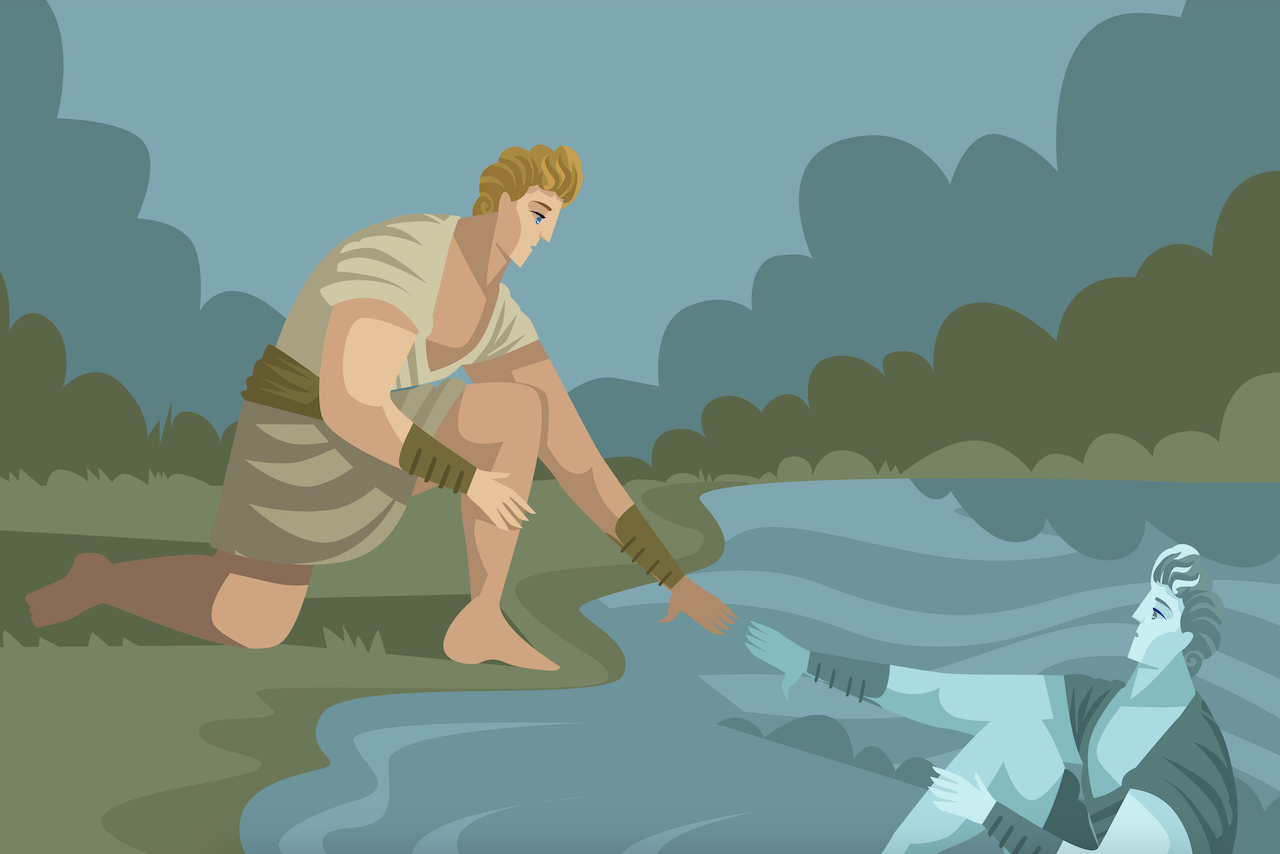
    “Mirror, Mirror on the Wall… Am I Perfect After All?”

    Narcissists have their own version of the enchanted mirror from Snow White—only, instead of seeking the truth, their mirror feeds them the comforting lie they desperately want to hear: “You’re perfect, flawless, and never at fault.”

    This is where narcissistic behavior thrives. While you’re stuck analyzing your every move, they’re busy basking in the reflection of their own grandiosity.

    More Than Being Self-Centered

    Narcissistic Personality Disorder (NPD) isn’t just about someone being self-centered. It’s a deep-rooted personality disorder defined by traits like an inflated sense of self-importance, a desperate need for admiration, and a shocking lack of empathy. Narcissists wear masks of confidence, but underneath, they’re terrified of facing any feelings of inadequacy.

    So why don’t they ask, “Am I the narcissist?”

    They Can’t Handle the Truth

    The truth is, they can’t handle the answer. Their egos are protected by layers of defense mechanisms—denial, projection, and a refusal to accept responsibility. Admitting they might be flawed would shatter the fragile image they’ve built, and that’s not something a narcissist is willing to risk.

    Meanwhile, people like you—who have empathy and care deeply about relationships—are naturally prone to self-reflection. You take accountability for your actions and genuinely want to improve, which is exactly why you’re asking yourself tough questions. And while you’re busy looking in the mirror wondering what you can do better, the narcissist? Well, they’ve already convinced themselves they’re the fairest of them all.

    A Truth Revealed

    Eventually, I uncovered the ugly truth—my ex-husband wasn’t just accusing me out of insecurity; he was projecting his own guilt. He had cheated on me—multiple times. In fact, over fifty times.

    In his twisted logic, he’d convinced himself that if he could pin an affair on me, it would somehow clear his conscience. But when his accusations didn’t stick, he switched tactics, offering up three audacious claims:

    1. His cheating was my fault because I didn’t satisfy him.

    2. I should be grateful he “only” cheated physically, and never emotionally.

    3. I needed to stay quiet about it because everyone would just blame me anyway (he was just looking out for me, of course).

    What didn’t I hear? An apology. Not even close.

    Instead, I was bombarded with deflections, denials, and outright lies.

    He tried to flip the narrative—suddenly, I was the bad guy. According to him, I was the narcissist because I couldn’t see how “wonderful” he was. I was being stubborn for staying angry when forgiveness, in his eyes, was the obvious solution. And his lies? They were all to protect me because, of course, he was such a “great” person.

    Classic narcissist move.

    The Narcissist’s Tactics: Dodging Responsibility Like a Pro

    Narcissists are experts at shifting the blame, turning the tables, and making you question your reality. When things start to fall apart, they’ll do anything to avoid being the “bad guy,” and instead, they’ll paint you as the problem. Let’s break down some of their go-to tactics:

    Projection: “You’re the one who’s selfish!”

    Narcissists often accuse you of the very behavior they’re guilty of. It’s called projection, and it works to distract you from their faults while making you feel responsible. You might hear things like:

    • “You’re so controlling!”
    • “All you care about is yourself!”
    • “You’re the one who’s toxic, not me!”

    This clever tactic puts you on the defensive, and before you know it, you’re questioning your own behavior instead of seeing theirs for what it is.

    My narcissist projected his own guilt onto me, twisting reality to fit his narrative. He even had the audacity to “forgive” me—just in case I had cheated and wasn’t confessing to it. In his mind, he was the noble one, magnanimously overlooking my imagined sins, while I was painted as the villain. He created an alternate reality where he was the hero and I was the problem.

    Blame Shifting: “I wouldn’t act this way if you didn’t push me!”

    Blame shifting is another favorite tool. Narcissists twist situations to make their reactions seem like your fault. They’ll say things like:

    • “If you didn’t make me so mad, I wouldn’t have yelled.”
    • “I only lied because you wouldn’t understand.”
    • “You always make me act this way.”

    By blaming you for their behavior, they avoid taking responsibility and leave you feeling guilty for things you didn’t cause. Narcissists blur the lines between what’s right and wrong, often making you feel like you can’t do anything right.

    My ex-husband didn’t just blame me for his cheating—he actually tried to twist the situation so he could get praise for his behavior.

    During therapy, we uncovered that he was addicted to porn, and that addiction warped his entire view of what a healthy relationship should look like. Once the label of “addict” was slapped on him, he leaned into it, casting himself as the real victim and expecting me to be more understanding and accepting of his choices.

    Even now, he refuses to take any responsibility. Instead, he continues to shift the blame onto me, parading his addiction as an excuse while claiming victimhood.

    Emotional Manipulation: “You’re the reason this relationship is falling apart.”

    Narcissists love to emotionally manipulate you into feeling like you’re responsible for every problem in the relationship. They’ll use guilt and shame to keep you doubting yourself. Expect phrases like:

    • “I’m trying my best, but you keep ruining everything.”
    • “This is all on you. I’ve done nothing wrong.”
    • “If you don’t change, this will never work.”

    By making you feel overly responsible, they deflect attention from their own toxic behavior and keep you stuck in a cycle of self-blame. Narcissists train you to question yourself so often that it becomes second nature.

    After enduring narcissistic abuse, it’s no wonder you’re left feeling confused and full of self-doubt. Narcissists are masters at eroding your sense of self, making it hard to trust your own judgment.

    When my narcissist first cautioned me not to share the news that he was a cheater, I was drowning so thoroughly in his contrived world that I believed the lie that other people would blame me for his cheating. How messed up is that?

    Clear Signs You’re Not a Narcissist

    ✔️Self-Awareness

    You recognize when something is wrong, and you’re willing to reflect on your words, thoughts, and actions. Narcissists, on the other hand, never admit fault.

    ✔️Empathy

    You genuinely care about others’ feelings and how your behavior impacts them. Narcissists lack this trait entirely.

    ✔️Willingness to Change

    You’re open to feedback and want to grow. A narcissist resists any form of personal growth or accountability.

    Time to Stop Questioning and Start Healing

    It’s time to put the doubts to rest and start focusing on your healing. You’ve spent too long in the shadow of someone else’s manipulation, but now it’s your turn to reclaim your sense of self.

    1. Recognize the manipulation.

    Acknowledge that the doubts and self-blame you feel are the result of narcissistic tactics, not reality.

    2. Rebuild your self-esteem.

    Start setting healthy boundaries and practicing self-compassion. You are worthy of kindness—from others and, most importantly, from yourself.

    3. Seek support.

    Don’t be afraid to reach out to a therapist or a support group. Surround yourself with people who validate your experience and can guide you through your healing process.

    The very fact that you’re reflecting, questioning, and growing means you are not the narcissist. You deserve to trust yourself and live free from self-doubt. Start rebuilding your life, and remember—healing is not only possible, but you are already on your way.

    I Am Not a Narcissist!

    After years of living in the shadow of my ex-husband’s narcissistic abuse, I’ve finally stepped into the light—reclaiming my self-confidence piece by piece. It wasn’t easy. It took time, energy, and relentless effort, but I got here by following three crucial steps: recognizing, rebuilding, and reaching out.

    First, I recognized the manipulation for what it was. Then, I began the long process of rebuilding my shattered sense of self. But the most important part? I reached out. My friends and therapists became lifelines, helping me see the truth and guiding me toward healing.

    Now, it’s your turn.

    Time to Believe in Yourself

    If you’ve been asking yourself, “Am I the narcissist?” it’s a strong indication that you are not. It’s time to trust yourself again. You’ve been through the emotional wringer, but now you have the chance to reclaim your confidence and rebuild your self-worth.

    Healing from narcissistic abuse is a journey, but every step you take brings you closer to a life free from manipulation and self-doubt. Remember, you are not the problem—you are capable of change, growth, and, ultimately, healing.
  • Breaking Free from the Shadow of a Narcissistic Parent

    Breaking Free from the Shadow of a Narcissistic Parent

    “One of the greatest awakenings comes when you realize that not everybody changes. Some people never change. And that’s their journey. It’s not yours to try to fix for them.” ~Unknown

    In the journey of life, we often encounter pivotal moments that force us to confront harsh truths about ourselves and the world around us. For me, one of these moments came with the profound realization that not everybody changes, especially not those who wield the toxic traits of narcissism.

    Raised by a father whose larger-than-life persona concealed a darker reality, I embarked on a journey of self-discovery marked by illusions shattered, wounds healed, and the enduring quest for authenticity.

    As a child, I idolized my father. He was the epitome of success in my eyes—charismatic, accomplished, and seemingly flawless. His love, however, came with conditions attached, contingent upon my athletic and academic achievements.

    Behind closed doors, his warmth turned to coldness, and his affection became a reward for meeting his standards of excellence. Meanwhile, my mother silently bore the brunt of his infidelities, her suffering hidden behind a facade of familial perfection.

    In this environment, I learned that abuse should remain unacknowledged and that the pursuit of outward appearances trumped the preservation of inner peace.

    As I navigated adulthood, the scars of my upbringing continued to shape my perceptions and behaviors.

    Seeking validation from partners who mirrored my father’s traits, I found myself trapped in a cycle of self-doubt and emotional turmoil. The quest for perfection, fueled by the belief that I was never good enough, became ingrained in my psyche. Each relationship seemed to reinforce the notion that love was conditional and that I was destined to repeat the patterns of my past.

    Amidst the darkness, a glimmer of hope emerged—a profound shift that propelled me toward a spiritual awakening. Desperate for solace, I delved into a myriad of healing modalities, immersing myself in practices that spoke to my soul.

    It was through these experiences that I began to peel back the layers of generational trauma, confronting the shadows that had long haunted my psyche. In the embrace of reiki, sound therapy, and crystal healing, I discovered a newfound sense of self—resilient, luminous, and unapologetically authentic.

    Buoyed by my personal growth, I embarked on a journey to reconnect with my estranged father and brother, hopeful that they too had undergone a transformation. Yet, my optimism was met with harsh reality as I found myself ensnared in familiar patterns of dysfunction.

    Despite my best efforts to bridge the chasm between us, I was met with resistance and disappointment. It was a stark reminder that not everyone evolves, and some wounds run too deep to heal.

    Amidst the depths of despair, as I teetered on the brink of losing myself entirely to depression and deteriorating health, a beacon of hope illuminated my path. It was in these moments of darkness that I realized the necessity of returning to basics—of carving out quiet moments for introspection and listening intently to the whispers of my higher self and the universe.

    What I heard was a resounding message echoing through the chambers of my soul: “This is the lesson. Every tumultuous relationship, every heartache, every moment of despair was but a precursor to this pivotal juncture.”

    With newfound resolve, I immersed myself in energetic healing and chakra alignment, allowing the vibrational frequencies of love and light to permeate every fiber of my being. And then, armed with courage and clarity, I made the decision to confront the specter of my past—my father.

    Summoning the strength of a thousand suns, I approached him not with anger or resentment, but with love. “I love you,” I uttered, the words heavy with the weight of years of longing and unspoken truths.

    His response was not one of reconciliation or remorse, but of rage. And in that moment, I realized the futility of seeking validation from a source so devoid of compassion and empathy. Yet, unlike before, his words failed to wound me to the core. For I had reclaimed my power, my sense of self, and my unwavering love for myself and my children. If anything, his outburst served as a testament to the depths of his own woundedness, a reflection of the pain he carried within.

    Do I think about that encounter often? Yes, I do. But not with regret or bitterness. Rather, with a sense of profound gratitude for the lessons it imparted. For in choosing to respond with love, I unwittingly severed the ties that bound me to his toxicity. And as he raged on, I stood tall, my heart brimming with a newfound sense of freedom and self-love.

    In the end, I realized that he was the lesson—a catalyst for my growth, a mirror reflecting back the parts of myself I needed to heal. And the work I had done, the journey I had embarked upon to counteract his behavior throughout my life, had prepared me for this moment of liberation.

    As he removed himself from my energetic field, I was left basking in the glow of newfound freedom, surrounded by the boundless love that radiated from within.

    To anyone grappling with the shadows of their past or the specter of a narcissistic parent, I offer this simple truth: You are stronger than you know, and you are deserving of love beyond measure. Embrace your journey with courage and compassion, knowing that every trial and tribulation is but a stepping stone on the path to self-discovery and healing. And remember, in the face of darkness, the light of your own love will always guide you home.

    In the crucible of adversity, I discovered the power of self-love and resilience. Through the trials and tribulations of my journey, I emerged stronger, wiser, and more attuned to the depths of my being.

    Though the road to healing may be fraught with obstacles, it is a journey worth embarking upon. For in the pursuit of authenticity lies the truest expression of our humanity—imperfect yet infinitely beautiful.

    To those who walk a similar path, I offer these words of solace: You are not alone. Though the shadows may loom large, know that within you resides the light of resilience and the power of self-discovery. Embrace your journey with courage and compassion, for it is through our darkest moments that we find the strength to shine brightest. And remember, the greatest awakening comes not from fixing others but from embracing ourselves in all our imperfect glory.

  • How I’ve Navigated My Grief and Guilt Since Losing My Narcissistic Father

    How I’ve Navigated My Grief and Guilt Since Losing My Narcissistic Father

    “One of the greatest awakenings comes when you realize that not everybody changes.  Some people never change.  And thats their journey.  Its not yours to try and fix it for them.” ~Unknown

    In 2021 my father died. Cancer of… so many things.

    Most of the events during that time are a blur, but the emotions that came with them are vivid and unrelenting.

    I was the first in my family to find out.

    My mother and sister had gone on an off-grid week-long getaway up the West Coast of South Africa, where there’s nothing but sand, shore, and shrubs.

    I was living in China (where I continue to live today), and we were under Covid lockdown.

    He called me on WhatsApp (which was rare) from the Middle East, where he lived with his new wife. Asian and half his age.

    The cliche of the aging white man in a full-blown-late-midlife crisis. Gaudy bling and all.

    He looked gaunt and ashen-faced. That’s what people look like when they’re delivering bad news. He dropped the bomb.

    “I have cancer.”

    What I am about to admit haunts me to this day: I cared about him in the way one human cares for the well-being of any other human. But at the time, I never cared at the level that a son should care for a father. I had built a fortress around myself that protected me from him over the years.

    He’d never really been a parent to me. He wasn’t estranged physically, but emotionally, he’d never been there.

    He was emotionally absent. He always had been.

    I was the weird gay kid with piercings, tattoos, and performance art pieces.

    He was a military man. The rugby-watching, beer-drinking, logically minded man’s man.

    We were polar opposites—opposite sides of completely different currencies.

    I sat with the bomb that had just been delivered so hastily into my arms and ears. Information that I didn’t know what to do with. It felt empty. I didn’t know how to feel or how to respond. 

    Six years earlier, in 2015, I had flown back to South Africa to sit with my mother on her sofa for two weeks while she grappled with the complexity of the emotions of being recently divorced after forty-something years of marriage.

    My mother and I always had been close. She had spent her life dedicated to a narcissistic man who had cheated on her more than once, who was absent a lot of the time during our childhood because of his job in the Navy, and from whom she had shielded my sister and me.

    He had hurt her again. And I hated him for it.

    She had been devoted to him. Committed to their marriage. Gave him the freedom to work abroad while she kept the home fires burning. She’d faithfully maintained those home fires for over a decade already. She had planned their whole future together since she was sixteen years old and pregnant with my sister, who’s five years old than me.

    And this is how he repaid her.

    He’d taken it all away from her and left her alone in the house they’d built together before I was born.  Haunted by the shadows of future plans abandoned in the corners.

    She descended into a spiral of anxiety and depression, resulting in two weeks of inpatient care at a recovery clinic with a dual diagnosis of depression and addiction (alcoholism) that wasn’t entirely her fault.

    He caused that.

    I remember lying in bed when I was about six or seven years old; I was meant to be asleep, the room in deep blue darkness. Hearing my father in the living room say, “That boy has the brains of a gnat.”

    I assume I hadn’t grasped some primary math homework or forgotten to tidy something away. Things that I was prone to. Things that annoyed him to the point of frustrated outbursts and anger.

    “Ssh! He can hear you,” my mother replied. I still hear the remorseful tone of her voice.

    He was logical and mechanical. I am not.

    I don’t remember my crime that day, but I still suffer the penalty of negative self-talk, a lack of confidence, and a fear of being considered “less than” by others.

    It’s one of my earliest memories.

    And there, in 2021, I sat with the news of his diagnosis. I didn’t know what to feel.

    Guilty for not having the emotional response I knew I was meant to be having?

    Shouldn’t I be crying? Shouldn’t I be distraught?

    How do other people react to this kind of news?

    I’ve always been a highly sensitive person. It’s my superpower. The power of extreme empathy. But there I sat, empty.

    I felt trapped.

    I was in China in 2021, and we were under Covid lockdown. There were zero flights.

    I was emotionally and physically trapped.

    Gradually, more feelings started surfacing.

    At first, I felt compassion for a fellow human facing something utterly devastating.

    Then I started to feel fear for my mom, who had held onto the idea that maybe, one day, they’d get back together.

    I was terrified about how she would take this news when she returned from her holiday.

    Within a few weeks, a “family” Facebook group was set up—cousins, uncles, people I’d never met before, myself, my sister, and my mother.

    And the “other woman” and her kids from previous relationships, none of whom we’d ever met.

    Phrases like “no matter how far apart we are, family always sticks together” were pinging in the group chat.

    I didn’t know how to absorb those sentiments.

    Family always sticks together? Didn’t you tear our family apart? Where were you when I was lying in a hospital bed in 2011 with a massive abdominal tumor?  Family always sticks together? What a convenient idea in your hour of need.  

    More guilt. How could I be so jaded?

    A month later, in January 2021, he passed away.

    It happened so quickly, and for that, I am grateful. No human should ever suffer if there is no hope of survival.

    That’s when the floodgates of emotions opened.

    I cried for weeks.

    I cried for the misery and suffering he caused my family, my mother’s despair, and my sister’s loss. I shed tears for my grandfather, who had lost two of his three sons and wife. I wept for my uncle, who had lost another brother.

    I cried for the future my mom had planned but would never have.

    And I cried for the father I never had and the hope of a relationship that would never be.

    I sobbed from the guilt of not crying for him.

    Then I got angry. Really, really angry.

    I got angry with him for never being the father I needed. I got mad for the hurt he caused my mom. I blamed him for never accepting me for me. I was angry with him because I was the child, and he was the adult.

    Being accepted by him was never my responsibility.

    In the weeks and months that followed, the wounds got deeper. My mother’s drinking got worse, to the point of (a very emotional and ugly) intervention.

    We found out that my father had left his military pension (to the tune of millions) to his new, younger wife of less than a year and her four children from different men. 

    While I want to take the moral high ground and tell you it’s not about the money—it’s solely about the final message of not caring for his biological children in life or death—I’d be lying.

    My sister and I have been struggling financially for years, and that extra monthly money would’ve offered us peace of mind, good medical insurance, or just a sense that he did care about our well-being after all.

    But there’s no use ruminating on it.

    Accept the things you cannot change.

    It’s been two years since he passed away.

    I’ve bounced between grief, anger, and acceptance, like that little white ball rocketing chaotically around a pinball machine, piercing my emotions with soul-blinding lights and sound.

    The word “dad” never meant anything to me. To me, it was a verb, not a noun. It never translated into the tangible world.

    My mother once said, “Now I know you were a child who needed more hugs.”

    She hugged me often.

    But I also needed his hugs.

    I’ve found a way to accept that he would never have been the father I needed. I will never have a relationship with my father. Even if he were still alive, he would never have been capable of loving us the way we needed him to.

    You cannot give what you don’t have.

    He was a narcissist. Confirmed by a therapist in the weeks and months after their sudden divorce.

    He was never going to change. He didn’t know how to.

    Using NLP (neuro-linguistic programming) techniques, I’ve been able to reframe the childhood memories I have about my father.

    That fateful night all those years ago, lying in bed, hearing those words that have undermined my confidence and self-worth for thirty-four years: “That boy has the brains of a gnat.”

    Through visualization and mental imagery, I’ve found a pathway to healing.

    Through NLP, I became the observer in the room of that memory. I could give that little boy lying in bed, his head under the sheets, the comfort, protection, and acceptance he needed.

    I wrapped golden wings around that little boy and protected him.

    I became my own guardian angel.

    During the same session, my NLP coach gently encouraged me to look into the living room where my father sat that night.

    What I saw in my mind’s eye took my breath away.

    I saw a broken and withered man. His legs were drawn up close to his chest. I saw the pain inside him. I saw a man who didn’t know how to love or be loved.

    I saw a man who was scared, confused, and deprived.

    In that moment of being the observer, the guardian angel in the next room, a brilliant light forcefully rushed from me and coiled around him. A luminous cord of golden energy.

    I don’t know if the surge of energy wrapped around him was to heal or restrain him. Frankly, it doesn’t matter. It was pure love, compassion, and light. And it was coming from me: I was my own Guardian Angel.

    At that moment, all the past yearning for his love, acceptance, and approval dissipated. I didn’t need it from him; I needed to give it to him—filled with empathy and compassion. I needed to release him from the anger, hurt, and pain he had caused.

    I needed to do it for myself, but I also needed to do it for him.

    I’ve accepted him for who he was.

    It took a lot of journaling, visualization, mindfulness and meditation, listening to Buddhist teachings (Thich Nhat Hanh in particular), and sitting with the emotions.

    It took the desire to heal myself and him—to be happy and whole again.

    He was painfully human. But aren’t we all?

    He was a narcissist. He drank too much, cheated on his wife, never took the time to have any meaningful connection with his kids, and loved Sudoku.

    He caused my mother pain that still haunts her to this day.

    She still dreams about him.

    I like to think that if he had one more chance to reach out from The Great Beyond, he might say something along the lines of what Teresa Shanti once said:

    “To my children,  I’m sorry for the unhealed parts of me that in turn hurt you.  It was never my lack of love for you.  Only a lack of love for myself.”

    He was a deeply flawed man—but he was my father.

  • How My Narcissist Ex Was a Catalyst to My Healing and Self-Love

    How My Narcissist Ex Was a Catalyst to My Healing and Self-Love

    “It’s okay to let go of those who couldn’t love you. Those who didn’t know how to. Those who failed to even try. It’s okay to outgrow them, because that means you filled the empty space in you with self-love instead. You’re outgrowing them because you’re growing into you. And that’s more than okay, that’s something to celebrate.” ~Angelica Moone

    I thought I had married the love of my life. I had never felt a connection so strong before. I was sure he was my soul mate, and I thoroughly believed he was my twin flame—my one and only.

    I can’t even begin to tell you the horror that started to unfold after we got married. The accusations that my beloved other started to hurtle at me. That I didn’t care about him and I didn’t love him enough. He was convinced I was having affairs behind his back, and conspiring against him, and was clearly out to take his money.

    I was not just perplexed by this, I was shattered. How could he not see that I loved him unwaveringly, without question, and that I never even considered having eyes for anyone else? And trying to take his money? That was incredibly bizarre because I discovered, contrary to his initial proclamations, that he hardly had any.

    Yet I didn’t care. I loved him. I tried to love him, and I was convinced that my love would be enough—that he would know that I loved him, and we would soon return to the comfort and the knowing that our love for each other was real, safe, and forever.

    No matter how much I tried to love him, things were spiraling out of control. I couldn’t be five minutes late from the supermarket without suffering his wrath. Life outside of “us” was getting smaller and smaller.

    If I looked out the window, I was thinking the wrong thing or looking at something the wrong way. If I didn’t take his hand when we were together, I was advertising that I was single. Visiting friends or family or working outside of the property became as possible as flying to the moon.

    Eventually it happened: I stopped trying to love us back to unity and fought back. Initially to try to stop the despair that he didn’t trust me, then for my literal sanity, freedom, and autonomy. Without these things I was losing my soul.

    None of it worked. As my attachment to him became more panicked and devastated and I was losing control of my reactions, his abuse accelerated, and then I realized I was coming close to losing my life.

    I had complicated post-traumatic stress disorder. I shook. I sweat. I couldn’t eat. I could barely sleep. Everything and everyone I cared about was turning away from me.

    I had married a narcissist. I didn’t realize it at first, because back then, fifteen years ago, not many people were talking about narcissism.

    I had always believed that narcissists were arrogant people who were “up on themselves.” I had no idea that they were people who presented in our lives offering the love, total acceptance, validation, and “life” that we thought we had wanted our entire life. I had no idea that someone like this could enter my life and they would feel so right to fall in love with.

    The day that the word “narcissist” popped into my head, and I googled it, I nearly fell off my chair. I was ticking every point that was so “him” off a list of traits and behaviors. I was in shock.

    Entitled—tick. Can’t take personal responsibility for wrongdoings—tick. Has hair-trigger reactions to things that most adults don’t get bent out of shape about—tick. Argues in circles in ways that make your head spin—tick. Pathologically lies while looking you straight in the eye—tick … and on and on the list went. I needed to get to the punch line: Could a person like this be fixed? Could they get well from this disease?

    I searched high and low; I turned over every possibility and read all the research I could find. The answer was a flat “no.” Then, believing there is always a solution, I was determined to heal him, to fix our marriage, to return to the dream of the “one and only” that I just knew he must have been.

    It didn’t turn out well. In fact, it turned out terribly. Now I was experiencing things I never believed I could or would: Mental and emotional abuse that had me curled up in a corner. Physical abuse that had me fearing for my life. Financial abuse that was ripping my life to shreds. At times, for self-preservation, I had to escape. Eventually, I left him and relocated.

    But I wasn’t getting better away from him. I was totally unprepared for feeling so haunted. By the fact that he was in the home I had bought, seeing other women and seemingly having a great life while I was so empty, devastated, and traumatized that it hurt to breathe, it hurt to live, and I thought that I was going to die.

    I returned to him countless times. Either because he would contact me and promise to change, or I missed him so much I couldn’t function.

    Every time I returned, it got worse. The makeup periods were briefer, and the explosions more damaging and horrifying. Then, I broke. I had a complete psychotic and adrenal breakdown. I was told I would never heal from it and would need three anti-psychotics to be able to function, but I would never be the same again. I was told I now had permanent brain and nervous system damage.

    Of course, he didn’t care. He did what he had always done when I needed him—he discarded me. It was then that I decided to die. So, I started trying to formulate how to do this in the kindest way for my family and son.

    However, my soul had a different idea for me. A voice in my head kept insisting, “No, there is another way.” I thought it was just my madness speaking. I argued with it, but it wouldn’t let up. In desperation I walked into my bathroom, fell on the mat, put my hands in the air, and shrieked, “Help me, I can’t do this anymore!”

    In that moment the most incredible thing happened. It was like my head parted and the blinding truth entered me. I had never known such clarity in my entire life. Maybe you have to be “out of your mind” to really know the truth?

    The voice in my head told me that my husband was a catalyst. He was never meant to grant me my “self” and my “life”; rather he had come into my life to show me the parts of myself that were unhealed, that I hadn’t healed yet, to generate my true self and true life.

    A whirl of incidents and truths flashed into my mind. The ways I was so hard on myself and was always needing more, saying to myself, “Melanie, I can’t even like you (let alone love you) if you don’t get your to-do list all done, if you don’t lose ten pounds, if you don’t look like this or that … “ and how he had treated me the same—as not good enough, right, or acceptable.

    How I had always kept busy rather than “be” with myself, care, validate, and love myself. How I had terminally self-avoided and self-abandoned my inner being, and how I had yelled at him, “You don’t even know who I really am!” yet had never taken the time to have a real relationship with myself.

    On and on, the realizations came hard and fast. And I knew, he hadn’t treated me how I had treated him; he had treated me how I had really felt about and treated myself.

    I knew that if I let go of him, healed, and came home to my inner self, I would recover. I would save my sanity, life, and soul. I knew I could heal, get better, and do better. I knew that finally my life and love could be real and work.

    I knew this because in this divine intervention experience, I had been thrust into a vision in the future where I was healed and whole, and I had felt it for real. I saw who I was. I saw what I had and most importantly, I felt who I had become.

    He wasn’t the healer of my wounds; he was the messenger of them instead.

    I let go. I turned inward. I healed.

    This I now know at the highest level of truth: A twin flame, as the nemesis who reflects back to us our unhealed parts in intensely painful ways, offers the greatest love of all—the returning home to ourselves. From there my life has blossomed, from this true relationship with myself, life, and others in ways that I could never have previously imagined.

    I am love. I am self-acceptance. I am free.

  • My Mother’s Abuse and the Two Things That Have Helped Me Heal

    My Mother’s Abuse and the Two Things That Have Helped Me Heal

    “I love when people that have been through hell walk out of the flames carrying buckets of water for those still consumed by the fire.” ~Stephanie Sparkles

    I have a tattoo on my back of Charles Bukowski’s quote “What matters most is how well you walk through the fire.” It spoke to me as I had been walking, often crawling, through a fire for much of my life.

    At times, I took different paths, skipping through fields of flowers, but eventually I would find my way back to what I knew, which gave me a strange sense of comfort—the fire whose roots had begun in childhood, with my abusive mother.

    I used to be consumed by this fire. I have another tattoo on my foot that reads “Breathe.” For years I lived with a very dysregulated nervous system, constantly alerting me to the threats of the flames forming around me, and breath was something that eluded me.

    How could I breathe when at any moment she could walk up the stairs and find something to lash out at me over?

    How could I breathe when no one wanted to hear how I felt, and my emotions were something I did not understand, nor know how to handle?

    How could I breathe when everything was so frightening?

    How could I breathe when no one ever showed me how?

    Those entrusted to my care were in their own fires that they had never learned to come out of. So of course, as I grew, I felt unsafe and uneasy. And I learned to ignore my breath, ignore that others were able to feel it move through their body, and learned to see only flames everywhere. 

    I grew up in a traditional home as a child of immigrants who had come to the USA for work and to give their children a better life. I went to Catholic school, where I threw myself into academics as a way to be seen, and excelled. My parents were excellent cooks and displayed their love for us through the kitchen table. I had all of my physical and academic needs met.

    I spent my early childhood playing with my brother, who I latched onto as a support system. My mother’s inability to soothe us as babies and toddlers created very sensitive, shy children, deeply afraid of the world around us and deeply connected to each other.

    Unfortunately, my brother and I began to distance during our preteen years. We had created different survival strategies to navigate my parents, and he began to view me as the problem, as my mother was teaching him. I then began to view myself through the same lens.

    I was ridiculed, abandoned emotionally, shamed, and made to believe the dysfunction of the family lay entirely on me. There was a period of physical abuse as well, but during these situations, I at least felt seen.

    I was gaslit to question everything I believed to be true and found myself in imposed isolation in my childhood and teen years, later self-imposed. The world felt too frightening to face. As I grew older, I rebelled against the isolation by looking to others to help soothe me, especially romantic relationships.

    If they didn’t soothe me as I wanted, I grew angry and hurt, isolating myself more and more, or lashing out internally or externally.

    I looked to ease the suffering inside with external gratifications, shopping, traveling, and sex. Unfortunately, nothing could soothe the pain I was feeling.

    In my early twenties I went to a therapist and could do nothing but cry. After a few months of not being able to communicate, she insisted I take benzodiazepines or we would be unable to continue working together.

    My symptoms worsened both emotionally and physically, and I now needed “saving” from both. The helplessness I learned early on continued, as did my need to have others make me feel safe. Both my body and brain became impossible to withstand, and proved to me that I was a victim of life and no one cared about me.

    I found relationships to validate this idea, with addicts, narcissists, and codependents who all eventually grew tired of my need to be loved and soothed out of my pain.

    I was attracting the familiar in these people, who could not show me the love and safety I needed. In other words, I was attaching myself to others to regulate, but they too were stuck in a cycle of dysregulation.

    I found various ways to hurt myself, overspending, starving myself, overexercising, and on more than one occasion taking too many medications to calm myself down, and finding myself in an emergency room. The familiar was living in my nervous system and demanded to be entertained.

    After decades of chronic health issues due to emotional and physical trauma, they finally hit a peak when I was forty-seven and no longer able to work, the one area of my life I’d had some control of. I had to learn to breathe or be completely extinguished by the flames. During this time, I began to learn how to put out the fires.

    I worked hard on retraining my nervous system out of the fight-or-flight state it had entered when I was not soothed as a baby, and rewiring thoughts and behavior patterns created as an extension of that state. In this process, I found the authentic part of myself, the inner child, which brought a deep peace, the peace of integration.

    An integral part of my healing came from practices of forgiveness and compassion. As I rewired old patterns living in my nervous system, I learned about how the brain works, how trauma is stored there, and how our realities are shaped by early experiences.

    Each day in my practices I discovered new associations, when new thoughts and behaviors had started, and had to look at these strategies and their results with self-compassion and forgiveness.

    At first, this was difficult, as it was new to my brain, but as I practiced it became easier, and I started feeling self-compassion and self-love for the first time.

    As I worked with my own toxic personality in these practices, I experienced deep grief for the past and what I was not able to enjoy as a result. Anger was holding on, and I knew it was time to let go. So, I began a practice of curious empathy for the woman who had started my fires, my mother. Awareness of my own dysfunction, self-compassion, and now self-forgiveness allowed me to do the same for others, including her.

    In this case, curious empathy meant becoming aware of her patterns and where they came from by connecting to my own experiences and empathy.

    I had observed her throughout my life to learn about what I was experiencing and how to navigate her, as well as others in the world. I also read tons of self-help books about personality disorders and toxic people, but cognitive knowledge wasn’t enough to understand my mother.

    I watched, listened, and heard stories from my father about my mother’s childhood. I drew upon my own strategies and where they originated. I opened myself up to curiously knowing her, at first from a distance (during this time of healing), and then I incrementally exposed my healing nervous system to her with empathy.

    When I felt balanced and regulated enough, I rejoined our relationship, but with strict boundaries—for both of us. And I found a somewhat different human in front of me, one who had softened in her old age but still retained old behaviors when “triggered.”

    I began to identify her triggers and remained strong when she reacted. I now knew no other way; my nervous system and heart had been retrained into compassion.

    I came to understand that she had created toxic survival strategies because of an inability to communicate and soothe emotions and needs in an effective way. She had been stuck in a fight-or-flight state that prevented her from seeing the world as it was, and seeing the motivations of others clearly.

    And I had learned (and now unlearned) similar methods of interacting with the world.

    I often pictured her as a child or a teen and connected with this version of her through my own inner child. In the moment, I was able to change the hurt and anger I felt to compassion for the way she was trying to get what she needed. This was followed by an inner forgiveness and releasing of the negative emotions.

    I made it clearly known what I would accept, and often joked with her about the way she was acting. She responded with smiling or laughter.

    It became clear that she reacted when she felt vulnerable, and I understood that throughout her childhood, vulnerability was not acceptable, and she was shamed in it. 

    In identifying her methods of showing love, I felt loved and seen, and it was easier to react to her with forgiveness and compassion. It became natural to me to speak as the “parent” (adult) when her old armor of defense came up.

    In daily forgiveness and compassion practices, I find enormous love for the woman still stuck in a fight-or-flight state created in her childhood. There are times I pull away to reinforce that her behavior is unacceptable, but these times are not as prevalent as before.

    As I changed my behavior toward her, she began to change hers toward me. As I regulated my nervous system into safety, it seemed to soothe hers, and she inched closer to the idea of vulnerability with me.  As I let go and replaced the anger with compassion, she felt safe. It is with this safety that she is able to chip away a tiny piece of her armor in our interactions.

    I cannot ever change her, and she will pass with the trauma state she is in as her identity. But, for my own well-being, I chose forgiveness and compassion, to bring her a small drop of water each time I see her. Remaining in the fire with her, by being angry, was not an option any longer. 

    I found my way out of a fire that had nearly taken my life and hope to continue sharing my experience of healing. These days I find myself skipping through fields of flowers on a regular basis, and feel it is a blessing to share it with those who have not yet gotten there—and those who may never.

    **I am not suggesting that anyone should keep people in their lives that they feel are “toxic.” We all need to do what we feel is best for us based on our own unique experience.

  • From the Spouse of a Narcissist: Here’s What You Need to Know

    From the Spouse of a Narcissist: Here’s What You Need to Know

    “You can recognize survivors of abuse by their courage. When silence is so very inviting, they step forward and share their truth so others know they aren’t alone.” ~Jeanne McElvaney, Healing Insights: Effects of Abuse for Adults Abused as Children 

    When I first met my husband, when he had just started medical school at a large university, I thought he was just insecure. I believed that he would grow out of his need to be the center of attention, receive constant validation, and appear correct and knowledgeable about everything.

    I believed he would become surer of himself and would develop the capacity to listen, love, and be empathetic.

    I humored him by listening to him talk, I tried to help boost his self-esteem by giving him compliments and asking him questions I already knew the answer to, and I expressed pride in his accomplishments.

    His lack of empathy was a concern, but he told me that this is how people in his culture are, and I believed him. I convinced myself that he would get to a place in his life where he would have space for me. I continued to love and support him despite how he treated me.

    As years passed, I began to think that he had Asperger’s. This explained why he lacked empathy and why he behaved the way he did, didn’t it? When I brought this up with him, he got angry and convinced me that I was the problem in our relationship. He even managed to convince our marriage counselor of this.

    I continued to support and listen to everything he had to say, although he rarely reciprocated. When I would bring this up as a concern, he would state that he knew how I would respond because I’m a liberal, and they always respond like X or think like Y.

    In social situations he would demean me and make fun of me, and then call me too sensitive and ask me why I couldn’t take a joke.

    He would justify his actions by saying he thought people would find it funny, even though he was insulting me. When I was firm about the fact that I would not tolerate this behavior, he went out of his way to ensure that I felt invisible. When I brought this up with him, he would tell me that I was boring.

    I was tolerant of this behavior because I grew up in an abusive home, so verbal abuse felt normal.

    I did so much work preparing for social gatherings in the hopes of hosting a fun evening with my friends, but it always ended the same way: with my husband being the center of attention and impeding others from talking and connecting.

    After these events, my friends would often feel hurt about something he said or did. I would bring this up with him, and he would play the victim and tell me that they didn’t have the right to an apology because of what they said or did to him.

    Many times my friends and family would tell me to leave him and would try and show me how his behavior was hurting me, but I wasn’t ready to see it. I didn’t believe them because he had convinced me that I deserved to be treated poorly.

    He burned bridges with my friends and family, and I found myself justifying his actions in an attempt to keep the peace. In order to save these relationships, I asked my friends and family if they felt comfortable around him, and if they didn’t, I would spend time with them when he wasn’t around. This hurt, but these relationships meant so much to me that I could not afford to lose them.

    Whenever I tried to assert boundaries, we would fight, and he’d blame me for trying to set boundaries that went across his. I started surrendering space to him and giving in, even though it hurt, because it felt better than fighting.

    I started to become used to not being seen, not being able to have boundaries, not being treated with dignity and respect. I became used to feeling shut down and drained.

    I looked forward to times he worked out of town so that I could get enough sleep, be alone with my thoughts, do what I needed to do for my health and well-being, and start to feel like myself again.

    The Realization

    One day as I was doing research for my PhD, I came across an article on personality. As I read about narcissistic personality disorder, it hit me like a wave of understanding. He does not have Asperger’s; he is a narcissist. This explains his lack of empathy, his inability to love people, and his inability to be present in situations.

    It explained why he has to be the center of attention—because he needs something called “narcissistic supply” to feel whole. Narcissistic supply can be thought of as a drug in the form of social admiration and attention.

    This explained why he always picked fights and/or tried to make me feel down on my birthday, my convocation, and other events that meant a lot to me. It explained why he would leave events that didn’t allow him to be the center of attention and sulk and go on and on about how bored he was.

    His NPD explains why he cannot be present with me and why he has to go on and on about anything and at the same time nothing. It also explains why trying to connect with him means putting on an invisibility cloak and giving him all my attention and energy.

    The more I read about NPD, the more I began to understand my husband. The literature indicates that people with NPD do not change and do not feel that they have a problem. Adults with NPD have been described as “children who are forever emotionally trapped.” Therapy is not often successful for people with NPD, if they are even willing to go.

    Spouses of people with NPD are encouraged to end the relationship as safely as they can. I know from my own experience that leaving is not always possible and is much more complex than the abuse itself.

    If you are like me, the thought of giving up on another person can be heartbreaking. Sometimes giving up on a relationship can feel like giving up on a part of yourself. So hope, empathy, and compassion propel the relationship onward.

    Also, the thought of being alone can be terrifying. If you’ve been in a relationship with a narcissist long enough, you need time to gain confidence and reclaim your self-esteem.

    If your relationship has been like mine, you have likely been told that you are incompetent, that you are incapable of caring for yourself, and maybe a part of you believes these lies. So don’t rush unless you are in physical danger. Then please, for your own safety, get out! Give yourself time and trust that you will know how to move your life forward.

    I have taken the advice of these authors and have created a life for myself away from my spouse. I engage in meaningful hobbies, have friendships outside the relationship, and take time for myself every day to meditate and recharge. I have stopped feeling guilty for excluding him from parts of my life. This is what I have to do, and I am reasonably happy.

    The more I read and learn about NPD, the more I start to grieve. I grieve for the person I thought he was and what I hoped he would become. I grieve for the relationship I longed for, a relationship with empathy, reciprocity, support, and shared space both physically and ideologically.

    Slowly, I have forgiven myself for enabling him, for giving him supply, and for subjecting my friends and family to his behavior, and I’ve stopped blaming myself for the issues in our relationship.

    Relationships involve more than one person, and both parties are responsible for what arises. Sadly, spouses of people with NPD often carry all the responsibility for the relationship.

    I have stopped telling him sensitive things about my life because he uses them to bring me down or as a source of narcissistic supply. I don’t owe him access to my innermost thoughts and feelings.

    Also, I am in the process of acknowledging the role my past played in this relationship.

    Growing up in a home with verbally abusive parents, I never learned to love or respect myself. Verbal abuse was a normal part of my daily life. As a result, I was conditioned to accept derogation, living without healthy boundaries, and being treated without dignity and respect. Because of my past, I was blind to abuse.

    The future will be different; it has to be. For the first time in our relationship of over fifteen years, I see my husband for who he really is, not who he has led me to believe he was.

    As I see him, I try to have empathy for him. I have learned that people with NPD feel empty inside when they are not seeking supply, and beneath the façade they try so desperately to protect is a person who feels insecure, a person who does not love themselves and is ashamed of who they really are, although they will never admit this to anyone, not even themselves.

    I don’t know what I want to do about the relationship, so I’m giving myself time and permission to reflect and grow. My downfall is that I don’t like to give up on people, but sometimes you need to give up on someone because, if you don’t, it means giving up on yourself.

    I can’t live my life on edge. I can’t be either invisible or demeaned and insulted on a daily basis, and I will not go on feeling sleep-deprived, shut down, and in a state of physical and psychological distress.

    For Anyone Who’s in a Relationship with a Narcissist

    Know it is not your fault.

    You are not too sensitive or needy. You have been told these things by a person who cannot feel deeply the way you do.

    Trust yourself.

    People may have told you to leave, but you need to trust yourself to know what is right for you, and when. In time, you will know.

    Educate yourself.

    Read books and articles on NPD; there are many helpful resources available, such as the Gray Rock method, which allows me to protect my time.

    Find support.

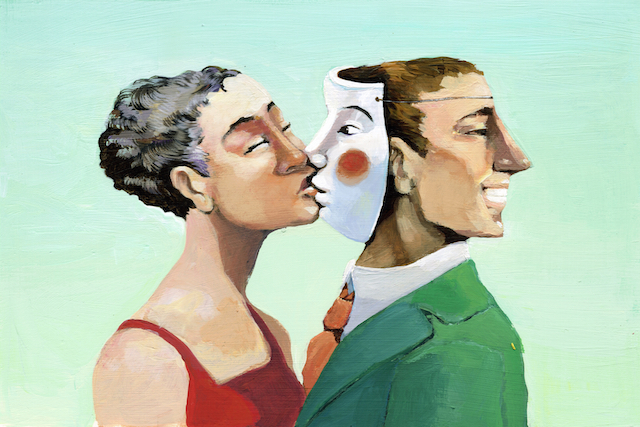
    Your friends and family might not understand what you are going through because narcissists often wear a mask, and the person they are in public can be very different from who they are behind closed doors.

    Seek out support from a therapist who has experience with narcissistic emotional abuse. This individual can provide you with coping strategies, education, and resources that will make your life a little better.

    If this isn’t an option for you, join a social media support group, such as the Facebook group Living with Narcissistic Emotional Abuse (where I am now an administrator). Facebook groups for spouses of narcissists continue to be a source of comfort to me because I have connected with people who understand my experience in a way that friends cannot.

    Keep a journal.

    Narcissists try to twist facts to make themselves look good or make you appear crazy. This is called gaslighting. In order to give yourself validation, keep a journal of events that happen. If you feel comfortable, show this to someone you trust who can validate these situations. This will help you regain confidence in your lived experiences of events.

    Be prepared.

    If you need to confront the narcissist, script what you are going to say first. Write it down, memorize it, and follow it exactly as you have written it. It can be useful to have someone you trust look it over because the narcissist will often try and accuse you of being abusive or unfair in order to suppress your ability to call them out on their behaviors.

    Get clear about your boundaries.

    This may take time. For me, it involved noticing what triggered me when I was with the narcissist. Know what you will and will not tolerate, as well as consequences for violating each boundary. For example, if the narcissist insults you at events, tell them that you will not invite them to join you the next time you go out.

    Do not allow yourself to become drained, and do not feel guilty for needing to take time away to recharge.

    It can take a large amount of energy to be with a narcissist, and you need to invest some of this energy in yourself and in your healthier relationships. Remember that you don’t owe anyone all your time and emotional energy. You aren’t selfish for taking time for you.

    Try to find something joyful in every day.

    Narcissists can be very negative people, and they can suck the joy out of your life. Try to do something you love every day. I go for a walk in nature or watch animal videos, as this reminds me about the joys of life. I also play with my cat.

    Control your own finances.

    Some narcissists try to control their spouses through money, and this can limit your ability to do things you need to do for yourself. Have some money saved and/or obtain a source of income that the narcissist does not know about.

    Be good to yourself.

    Don’t blame yourself for what you could not see before. This can take some of us years. Narcissists are good at wearing a mask. Just educate yourself, and you will peel off the mask and see the narcissists with new eyes.

    As the Spouse of a Narcissist

    As the spouse of a narcissist, I have someone who talks at me, not with me. Someone who needs me but does not respect me. A child who demands attention and has tantrums if he does not get it. A person who does not listen and does not feel what others feel, or understand how others are affected by his behaviors.

    As the spouse of a narcissist, I must walk alone through my struggles, silently feeling my pain while no one sees it, no one sees him.

    Nothing is mine or can be about me; he has to be the center of attention.

    In public, he wears a mask that no one can see through, but at home, the mask comes off and I am subjected to emotional abuse.

    As the spouse of a narcissist, I am the one with the problem—the one who is too sensitive, the one who cannot take a joke. I am the one who needs help, not him. He is not the problem; I am. I am because I see him for who he is, and I cannot pretend anymore, and that is a problem.

    As the spouse of a narcissist, I need to be strong and educate the people around me about narcissistic emotional abuse so that they might never fall prey and never feel my pain.

    As spouses of narcissists, we cannot keep silent because the pain of being with a narcissist can be prevented.