Tag: music

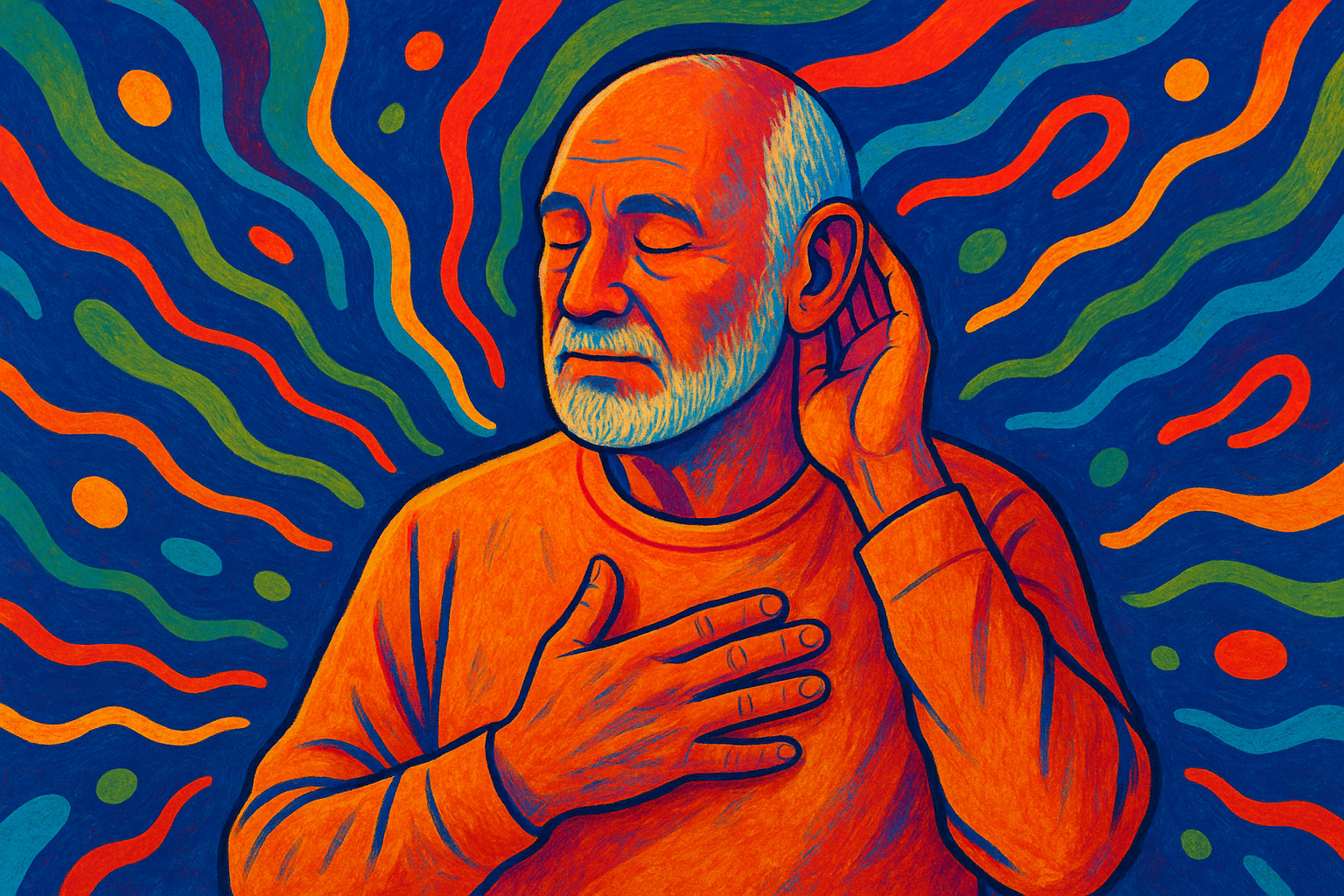
  • The Song That Surprisingly Brought Me Back to Life

    The Song That Surprisingly Brought Me Back to Life

    “Music was my refuge. I could crawl into the space between the notes and curl my back to loneliness.” ~Maya Angelou

    I used to believe that healing and personal transformation required a lot of effort—writing page after page in a journal or getting up at the crack of dawn to carry out a morning routine, to name a couple.

    When I moved through a phase of numbness—or the tunnel of darkness, as I now call it—it was frightening, and there seemed to be no end in sight. But one song found me at the right moment and changed everything.

    In under five minutes, it achieved what all the tools and knowledge I had couldn’t: it made me feel something.

    That moment reminded me that healing and moving forward don’t always need rituals or words—sometimes, all it takes is the right sound at the right time.

    Before that moment of awakening, my life felt like a loop. Day in and day out, everything was the same. My being was on mute—nothing resonated, and I walked through life hollow, flat, and disengaged.
    Each day felt like the one before. I was disconnected but longing to feel something. I put pressure on myself to fix whatever this was. And when it didn’t work, I pushed harder and harder.

    I tried all the things I had learned over the years: deep breathing, meditation that only amplified the noise in my head, journaling until my hand ached, lighting salt candles, and still, I couldn’t seem to connect with myself.

    There was only stillness, but it didn’t feel peaceful. It felt strange and disorienting—a kind of stuckness. A sense of being that portrayed me not as a person anymore, but just a body moving through the motions.

    Yet nothing changed. None of the knowledge I had made a difference. The tunnel seemed to cave in on me, leaving me feeling like I was nothing—like I’d never get anywhere again.

    Then, one day, I pressed play on “Wild Flower” by RM of BTS. I can’t remember exactly how I found it, but I do remember being alone, just trying to de-stress.

    It was one of those moments where you click on something without really knowing why—just a quiet, inner nudge. BTS had come into my life a few months earlier, and I was most drawn to RM. That day, something in me—the part that still carried hope—asked me to click on this song, this video. And within seconds, everything shifted.

    In an instant, my body stopped and took notice. From the opening that hit me like a firework to the first notes and spoken words (in Korean, which I didn’t understand), I felt something again. I couldn’t believe it.

    I went from numbness—from nothing—to goosebumps, tears streaming down my face, and tension leaving my body.

    The emotion in RM’s voice, the chorus sung by Youjeen, and the sound of the music itself—it was the reminder I needed that I was still alive. Still here.

    That song became the catalyst for me to open up, to feel again, and to realize there was a way out—a way back to myself.

    At first, I didn’t understand the lyrics, and I didn’t even try, because it didn’t matter. What mattered was the rawness in the delivery, his voice full of emotion that anyone could understand. The longing, the ache, the release—all of it was enough.

    Later, when I looked up the words, it only deepened the meaning. Sentences like “When your own heart underestimates you” and “Grounded on my own two feet” felt like direct messages to my soul. Like someone finally saw me—not for who I was pretending to be, but who I was beneath all the effort.

    In that moment, I realized I didn’t need to do more. It was about opening up just a little more and receiving what this song was giving me.

    I didn’t need to journal, dive deeper into personal development, fix myself, or hustle. That moment reminded me: just being with the music was enough.

    While journaling gives me insight into myself and my life, music gives me the emotion I need to feel in order to start healing.

    And then a quiet question rose up in me: “What if healing doesn’t have to be earned or hustled for?”

    What if we don’t need to constantly work on ourselves to be okay? What if some parts of healing are actually about stopping, softening, and letting something bigger hold us, even just for a moment?

    That one song became that moment for me. It cracked something open. And once it did, I didn’t fall apart. I began to come alive again, slowly, quietly, but surely.

    I still love journaling—it’s a consistent part of my life—but now I know that healing can begin in silence, in sound, and in surrender.

    Since then, I’ve had many other moments where music became the medicine I didn’t know I needed.

    Sometimes it’s a gentle white noise—a crackling fire mixed with rain. Other times, it’s a beat that makes me move, cry, or sing.

    But “Wild Flower” was the beginning, the song that reminded me feeling is possible again. That numbness isn’t permanent. And that sometimes, we don’t need to search for the right words. We just need to listen.

    I encourage you to notice what songs find you and how they make you feel. Because maybe today, your healing begins with listening.
  • Beyond the Yips: How to Reclaim Your Creative Confidence

    Beyond the Yips: How to Reclaim Your Creative Confidence

    “You gain strength, courage and confidence by every experience in which you really stop to look fear in the face.” ~Eleanor Roosevelt

    There’s a quiet moment before the spotlight hits when everything in your body wants to run.

    Your hands tremble. Your voice tightens. Your breath shortens, even though the room is still. You love what you do—you’ve trained, practiced, prepared—but suddenly, it’s like someone else is in your body. Your skills vanish. Your confidence implodes.

    That’s the yips.

    And if you’re an artist, musician, writer, teacher—anyone whose work lives in public view—you’ve probably met them too.

    The First Collapse

    For me, the first time the yips showed up, I was about ten years old, standing on a Little League pitcher’s mound. I had a strong arm and a real love for the game, so they made me the pitcher.

    It felt like an honor—until it became a nightmare.

    I couldn’t throw a strike. Not one. I walked batter after batter. The harder I tried, the worse it got. My coaches shouted. My teammates rolled their eyes. And worst of all, I didn’t know why it was happening. I knew how to pitch. I wanted to pitch. But my body wouldn’t cooperate.

    My confidence didn’t just erode—it imploded.

    That experience carved something into me, and years later, it returned in a different form—on stage, with a viola in my hands.

    But I eventually learned the yips aren’t just nerves. They’re the clash between who we believe we are and what’s happening in the moment.

    The Yips in Music

    I had taken up guitar earlier and played in public a few times. A little nerves, sure, but nothing overwhelming. But the viola was different.

    The viola wasn’t just an instrument—it was a commitment. I loved the sound, the subtlety, the range. But the moment I sat down to play chamber music or solo pieces—especially in front of discerning classical audiences—I froze.

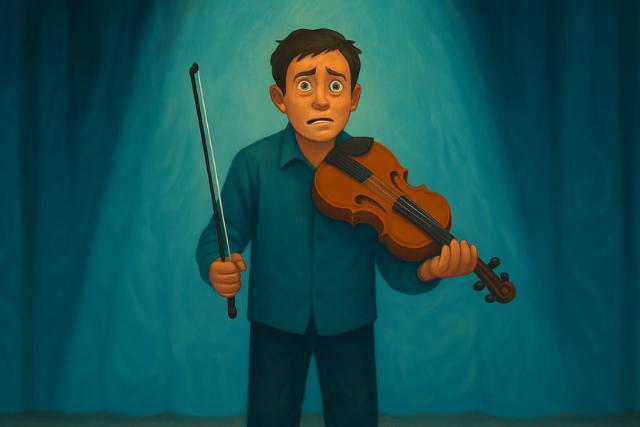
    My bow hand would shake uncontrollably. My tone would collapse. My breath shortened. My fingers, steady in rehearsal, betrayed me under pressure. It wasn’t just a little stage fright. It was full-body paralysis. And I wasn’t just nervous—I was ashamed.

    I could feel the others around me adjusting their playing, trying to stay in sync, politely pretending not to notice the scraping sound of my trembling bow. I wasn’t just failing myself—I felt like I was slowly unraveling something beautiful we had built together.

    That shame lasted longer than any applause ever could.

    Eventually, I stopped performing. It hurt too much.

    But Then, a Different Tune

    What’s strange is that I can still play old-time fiddle music in public. Ozark waltzes, hoedowns, reels—I can play those in front of a crowd with energy and joy.

    Why?

    Because people are moving. They’re dancing. They’re smiling. There’s an exchange happening—call and response, energy to energy. No one’s looking to critique every phrase. They just want to feel alive.

    That shift—from judgment to participation—made all the difference.

    It was my first clue that the problem wasn’t just about nerves. It was about dissonance.

    When Belief and Experience Clash

    What I didn’t understand as a kid—but see now in myself, my students, and even my own children—is that the yips aren’t just performance anxiety. They’re the outward symptoms of cognitive dissonance: the mental and emotional strain that happens when who we believe we are doesn’t match what we’re experiencing.

    This dissonance doesn’t just trip us up. It can make us doubt the very core of our identity. And in creative work, that doubt can be devastating.

    Common Creative Cognitive Dissonances

    Over the years—as a filmmaker, teacher, and musician—I’ve seen these patterns again and again:

    1. “I’m passionate and skilled” vs. “I just froze in front of everyone.”

    You know you’re good. But in that crucial moment, something inside shuts down. The disconnect feels like failure, even if it’s just fear.

    2. “I believe in creative freedom” vs. “I censor myself when others are watching.”

    We crave authenticity. But the moment we feel observed, we retreat into safe ideas and bland choices.

    3. “I want to create something meaningful” vs. “No one will care about this.”

    You believe in the work, but a voice in your head tells you it’s not important. That voice keeps you from finishing—or from starting at all.

    4. “I value growth” vs. “I should already be good at this.”

    Even lifelong learners fall into this trap. Especially those of us with experience. We forget how to be beginners again.

    5. “I’m a creative person” vs. “I can’t seem to finish anything.”

    The inner identity and the outer reality don’t match. That gap becomes shame—and shame leads to silence.

    How to Work with the Yips, Not Against Them

    Here’s what I’ve learned after a lifetime of living with this pattern: You don’t conquer the yips by trying harder. You heal them by listening deeper.

    That means meeting the fear—not with force, but with care.

    Here’s how I begin again, every time:

    1. Lead with compassion.

    That part of you that’s scared? It’s also the part that loves what you’re doing. Be gentle. Speak kindly to yourself.

    2. Accept the body’s message.

    Trembling hands, dry mouth, racing thoughts—these are just signs that you care. Breathe through them. Don’t resist them. Let them pass like weather.

    3. Reframe the story.

    Not: “I choked.”
    But: “I hit a growth edge.” Or: “I’m learning to stay present when it matters.” That shift matters.

    4. Find reciprocal environments.

    Play for dancers. Share writing with friends. Teach in spaces where people reflect, nod, laugh, respond. It’s hard to heal in front of a wall of silence.

    5. Focus on presence, not perfection.

    When I play fiddle now, I don’t aim to impress. I aim to connect. That intention rewires everything.

    6. Return to joy.

    What first drew you to your work? The sound? The rhythm? The curiosity? The spark? Go back there. That’s where your real voice lives.

    A Life Beyond the Yips

    These days, I still feel the yips. Sometimes when I teach. Sometimes when I perform. Sometimes when I write something that matters to me.

    But now, I recognize them for what they are: a signal that I’m doing something vulnerable and real.

    If you’re an artist, musician, teacher, maker—and you’ve gotten stuck—you’re not alone. And you’re not broken.

    You’re simply standing at the edge of the gap between who you were and who you’re becoming.

    The work is to stay in the room. Gently. Bravely. Again and again.

    And little by little, you’ll find your way back—not to where you started, but to something deeper.

    To a self that trusts its voice again. To a body that remembers how to move. To a joy that doesn’t depend on perfection.

    To the quiet truth that you were never really lost at all.

    The yips may still show up—but so will your music, your words, and your true self.

  • How I Learned to Be Present—One Sound at a Time

    How I Learned to Be Present—One Sound at a Time

    “Time isn’t the main thing. It’s the only thing.” ~Miles Davis

    When I first read that quote, it hit me right in the chest. Not because it sounded profound—but because it was something I had been slowly, painfully learning over the course of a very quiet, very long year.

    Time used to feel like a race. Or maybe a shadow. Or a trickster. Some days, it slipped through my fingers like water. Other days, it dragged me along like a heavy cart. But always, it was something outside me—something I was chasing or trying to escape.

    I spent much of my life impatient. Not in the obvious, tapping-your-foot kind of way, but in the quiet, internal kind of way: the constant sense that something should be happening, or happening faster, or already have happened by now. I measured life by milestones—achievements, breakthroughs, arrivals. I told myself I was being productive, but really, I was just uncomfortable with stillness.

    The Turning Point: Time Isn’t Linear

    Before all this, I thought of sound as something external—music, noise, conversation. But Nada Yoga transformed that understanding. In the stillness of those long days, sound became an anchor. Even the hum of the heater or the ticking of the clock became companions. When I gave them my full attention, they stopped being background noise and became part of the present moment.

    This is when I began to understand that time isn’t as linear as I had always believed. The past and future were ideas playing out in my mind, but the sound of now—the tone, the breath, the subtle vibration in my chest—was undeniable. And every time I tuned into it, I found myself grounded again.

    Physics agrees in strange ways. Einstein called time a “stubbornly persistent illusion,” and in the language of relativity, time doesn’t pass in the way we feel it does. Some physicists believe that the past, present, and future all exist at once—that time isn’t a straight line, but more like a landscape we move through. What we experience as “now” depends on where we’re standing, so to speak—our frame of reference.

    It’s not that time isn’t real—it’s that our experience of it is shaped by attention, memory, and movement.

    This insight doesn’t make time feel less urgent, but it reframes it. If time is an illusion, it may be less about seconds ticking by and more about awareness itself. What we call “now” isn’t a slice between before and after—it’s a field we enter through presence. That’s why mindfulness and Nada Yoga matter here: they’re not just techniques for coping—they’re ways of seeing.

    In the teachings of the Eightfold Path, this felt most connected to Right Mindfulness and Right Concentration. But instead of striving to perfect these steps, I simply allowed sound to lead me there. Following the thread of vibration was a practice in presence. It didn’t matter what time the clock said. The only real moment was the one I could hear, feel, and meet with openness.

    When Time Moves Too Fast

    Eventually, I began to feel better. My body regained strength, and my thinking was clearer. I started doing more, breathing more slowly, walking farther, making plans. But with that return came a different kind of challenge: the speed of life.

    It’s incredible how quickly we can forget stillness once momentum kicks back in. Emails. Errands. The endless list of things we should’ve already done. I was “back,” but I noticed something curious—I missed the slow time. Not the discomfort, but the spaciousness. The simplicity. The depth I had discovered when life wasn’t asking me to move so fast.

    I tried to hold onto what I’d learned. I’d remind myself that presence doesn’t need to be complicated—listening to a soft drone or resting in the inner hum I could still feel when I paid attention. That tiny ritual became a way to soften the edges of my days. It reminded me that even when life is loud and fast, there is still something quiet underneath, waiting.

    And once again, I turned to the Eightfold Path, this time to Right Effort. Not effort as in struggle, but the gentle discipline to return, to listen, to not forget myself in the rush. Patience, it turns out, isn’t something you master once and for all. It’s something you practice again and again in small, quiet ways.

    The Sound of Patience

    What surprised me most was realizing that patience has a sound. It’s not always silence.

    Sometimes, it’s the low hum of the fridge at midnight. Sometimes, it’s the steady beat of a distant drum in a piece of music. Sometimes, it’s just my own breath or heartbeat or pulse, reminding me that I am here.

    And presence has its own rhythm too. The more I tuned in, the more I saw how much time opens up when I stop resisting it. A few mindful minutes can feel full and rich. A rushed hour can feel like nothing at all.

    We say “time flies” when we’re enjoying ourselves—but I’ve found something deeper: time expands when we’re fully present. When I listen—really listen—to what is here, I don’t feel late. I don’t feel behind. I feel whole.

    This doesn’t mean I’ve figured it all out. I still lose patience. I still check the clock too much. But now, I have a practice to return to—a practice built not on perfection, but on sound, breath, and the quiet trust that everything unfolds in its own time.

    The longer I walk this path, the more I see that my suffering around time wasn’t really about minutes or hours. It was about resistance. It was about the belief that the present moment was never quite enough. That I had to get somewhere, become someone, achieve something before I could rest.

    But through mindfulness, and especially through the practice of listening—whether to the soft whispering tones of the wind in Nada Yoga or to the ordinary sounds of daily life—I’ve discovered a gentler truth:

    The present moment isn’t something we earn. It’s something we enter.

    And when we do, when we stop fighting time and start listening to it, we find something unexpected—not emptiness, but richness. Not waiting, but arrival.

    A Closing Reflection

    There’s a soft drone of reticulated sounds playing as I write this now. A deep tone that barely shifts but somehow holds me steady. It reminds me to breathe. It reminds me to slow down. It reminds me that I am not behind—I am here.

    I think that’s the real gift of both mindfulness and Nada Yoga. Not to help us “make the most of our time,” but to help us feel time differently—not as a pressure, but as a presence.

    And so I leave you with this:

    Next time you feel rushed or restless, stop. Close your eyes. Listen for the quietest sound in the room—or in you. It might not be music, or even beautiful, but it will be real. And in that sound, however small, you might find a doorway to now.

    And now, as Miles Davis said, time is not just the main thing—it’s the only thing.

  • How a Numb, Phony Zombie Started Singing Her Own Song

    How a Numb, Phony Zombie Started Singing Her Own Song

    “Alas for those that never sing, but die with all their music in them!” ~Oliver Wendell Holmes

    Six years ago, I came across a line from an old poem that punctured my present moment so profoundly it seemed to stop time.

    On an average Tuesday, there I was, sitting at my desk, ignoring the stack of papers I was responsible for inputting into a spreadsheet and procrastinating as usual on the Internet instead.

    At this particular time, Pinterest was my drug of choice—anyone else?

    As I was aimlessly scrolling through wacky theme party ideas and spicy margarita recipes, suddenly, here came this old-school poet Oliver Wendell Holmes with these words that leapt off of my laptop screen and stung me like fourteen different bee stings to the heart:

    “Alas for those that never sing, but die with all their music in them!”

    I was floored. It was as if Oliver’s invisible hand had reached into my day and popped the protective bubble of my well-established comfort zone, sending me crashing down to the ground of an uncertain reality that I had so expertly managed to hover above for years.

    When I landed inside of the truth of my life for the first time in a long time, here’s what I saw:

    A recent college grad whose dad had died in the first few weeks of her “adulthood,” who took a job in the marketing department of a reputable company because it “looked good,” who spent her time outrunning looming fears of growing up and grief by seeking refuge in extraneous purchases, greasy slices of pizza, late nights under laser lights, and the bottoms of bottles of wine.

    A numb, phony zombie in red lipstick who had forgotten her own song.

    As a little girl, effortless music oozed from my pores. I could laugh, cry, dream, question, create, and believe in magic, and other people, and myself, with such abandon; it was like I was a tiny conductor leading a spontaneous orchestra of full self-expression, always unrehearsed and totally freestyle.

    And I didn’t just speak, I SANG! And I didn’t just walk, I DANCED!

    Had I put no soundproof walls up around my being then? I could recall what it was like to feel that free. But the memory of my smaller, wilder self marching proudly to the beat of her own drum felt so distant from where and how I was living.

    So instead of continuing on with the endless spreadsheet that I was responsible for completing that afternoon, I decided to take a break. A long break. I found a sunny bench outside of my building where I could go to sit and think.

    Then suddenly, The Little Mermaid swam right into my stream of thought. I closed my eyes and saw the scene where Ariel trades in her powerful voice to the evil sea witch, Ursula, for a pair of legs. She is so certain that becoming a part of the human world is more important to her than speaking her own truth and singing her own song. And I wondered…

    In what ways am I living at the expense of my own inner music? 

    I began to examine the situations in my life where I found myself exchanging an authentic piece of who I was out of fear, in order to achieve a particular outcome in the world. Here are just a few places in my life where I discovered this was so:

    I’d sacrificed my passion, by accepting a job I merely tolerated, because I was afraid of failing and wanted to give the appearance of being successful.

    I’d pushed down my grief, numbing it with shopping, food, and alcohol, because I was afraid of breaking down and wanted to give the appearance of being “fine.”

    I’d sacrificed authentic connection for toxic friendships because I was afraid of being lonely while I found the right friends and wanted to give the appearance of being liked.

    I’d sacrificed my authenticity and ended up living a small life because I was afraid of vulnerability and wanted to give the appearance of being in control.

    That was the moment when I decided I was ready to ditch the legs—everything that was just about appearances—and dive deeply into my own true passion, grief, and longings for connection and authenticity.

    I quit my job and enrolled in a spiritual studies certification and celebrant ordination program.

    I hired a therapist to help me heal and a coach to help me dream; these two women would become some of the fiercest advocates for me and my inner music that I’d ever meet.

    I started taking courses in personal development, joined a business mastermind, and got myself into as many meditation circles and yoga classes as I could.

    I began to play around with my expression again, belting my favorite songs from my childhood, wearing colors that sparked aliveness in me, scribbling lines of poetry till I fell in love with my own heart’s language again, and dipping my fingers in rainbows of paint without a plan.

    It felt so good to seek for the sake of seeking, and to create for the sake of creating!

    I finally started to let some of the people that I loved and trusted in enough to really see, hear, and hold me.

    And I got present, like really, really present, slowing down for long enough to fully inhabit whatever moment I was in. From that place, it became so natural to tap into the very real magic that had always existed within and around me.

    I recognized the miraculousness of my two feet on the ground, the blessing of my breath, and the rhythm of my heartbeat. I started to notice the sound and sensation of my full-body NO and YES. This new level of awareness polished my lens of perception, allowing me to see my life through my child self’s eyes once again—from a place of curiosity, excitement, imagination, and hope!

    My dive has brought me to terrifying places where I’ve wanted to sell myself out to the sea-witch over and over again, but still, I keep on swimming.

    For my song cannot be silenced, and neither can yours, though both of us will spend months, if not years living in fear of what it will take to truly sing.

    There is so much music inside of you and me. And to be the highest expression of who we are here to be, we’ve gotta sing our songs and sing em’ loud! But to live like that, we’re going to have to give ourselves permission to feel, say, and do what’s true.

    So, maybe owning your truth doesn’t look like finally quitting a job or grieving the loss of a loved one. But I challenge you to really take some time to stop and scan through your life with no judgment, just wide-open eyes and a loving heart, and ask yourself:

    What do I desire? What fear arises in the face of my desire? Where am I selling myself out to run/hide from my fear? And what must I do to express the full potential and possibility of achieving my desire?

    Do you remember the fierce and fearless drive that you had as a child to learn and grow? Can you imagine how many times the little you tried and failed and tried again at mastering the skills you needed to really engage with life—walking, reading, writing, using your words to ask for what you want, feeding yourself, tying your shoes, wiping your own bum, etc.? Where does that invincible tenacity go?

    The answer is: YOU’VE STILL GOT IT!

    It has been and always will be within you. You and I have the capacity to thrive in any and all areas of our lives. How? By becoming brave enough to stop and listen to our own music, then allowing ourselves to be truly guided by it as we go!

    Belt out your song like your life and the lives of future generations depend on it, because they do. And if you miss a beat or sing a note or two out of tune, don’t be afraid to own it. It’s all just a part of the dance. 

    If you’re looking for me, I’ll be here, diving deep into the depths of my being, tuning into my own music, swimming through fear, and daring myself to sing. Over and over and over again until my very last breath.

    And you? It is my hope that you will have the courage and the willingness to go deep and begin unleashing the divine music that only you were born to sing.

  • How to Access Your Intuition by Listening to Your Favorite Music

    How to Access Your Intuition by Listening to Your Favorite Music

    “Sometimes music is the only thing that takes your mind off everything else.” ~Unknown

    All major art forms can be a way to experience a deeper part of ourselves, but there is something unique about music. Perhaps it’s because music is a frequency with no physical form, so it can easily become a pathway to the formless realms of intuition and our higher selves or soul. We may never know for sure, but it is clear that music has a powerful effect.

    I have had experiences of feeling whole, connected, and complete when listening to music. However, I was not consciously aware of these experiences for a long time.

    I can remember driving my car, listening to my favorite songs, and being “transported” someplace. It was an experience of complete euphoria and wholeness. At the time, these were mainly subconscious experiences, and all I was aware of while listening was that I felt good.

    As I started to develop and use my intuitive abilities, I began to have many conscious experiences of my higher self. Only with this reference point did I become aware of how many times I connected with my higher self while listening to music. It was the same experience!

    Not all music will feel like a spiritual experience, and the pieces that do will be specific to the person listening, as we’re all unique. You may have said, without thinking much about it, that a particular song “speaks to your soul.” It does, and you will want to listen for its helpful guidance.

    Have you ever heard a song and then put it on repeat for the whole day or even a week? I sure have, many times. It seems like each time I play a favorite tune, it opens my heart a bit more to reveal hidden emotions and desires. These are the types of moments and songs you will want to observe to see what your inner wisdom is showing you.

    Over the past four months, I have been atypically listening to some of my favorite music from the 1980s; “Time After Time” by Cyndi Lauper, “Hazy Shade of Winter” by The Bangles, “Cherish” by Madonna, to name a few. Even current songs with an ’80’s feel find themselves first on my playlists.

    I began to internally investigate why the sudden ’80s music craze in my life when I received a knowing from my higher self that I was homesick and needed to talk more with family. I then started to recall childhood scenes of me playing with the family and neighborhood friends.

    I was in my formative years during this decade, and my siblings were still living at home. The ’80s was the only decade my entire family lived in the house before my older siblings moved away. It was a fun and joyful time in my life.

    My whole family now lives all over the country, and I live in Hawaii. We usually travel several times a year to see each other, but not this year because of the pandemic. I have been suppressing sadness about not being able to travel easily and safely to see my loved ones for many months without realizing it.

    The ’80s binge I’ve been experiencing these past few months was a way for me to emote this sadness and experience the childhood nostalgia associated with this music genre. Once my higher self revealed the deeper feelings around my recent propensity towards ’80 music, I began to reach out to my family more, which has helped with my feelings of isolation.

    Next time while listening to this music, take some time to reflect internally on what is happening and if any high levels of intuitive information are coming through. What I mean by high levels is direct guidance coming from your higher self or soul.

    There are ways to tell if you are getting intuitive guidance from your higher self while listening to music. You can observe specific characteristics right away that indicate you are receiving soul-level information.

    For example, intuitive information from your higher self is always accepting and loving. This loving feeling is inclusive and leaves none of you feeling left out or unworthy. Soul-level guidance will not come with harsh judgments and guilt trips.

    Another characteristic of soul-level information is that it will often come in very quietly. You may have heard phrases like “whispers of the soul” or “the still inner voice.” This is often the case when your soul is speaking. Music naturally stills your mind, which creates a quieter internal environment for higher guidance to come through.

    Guidance from your higher self is enveloped in peace. I notice that this peace is often present when listening to music I love. Even if a song’s message is heartbreaking, it still rides on a wave of peace if it’s speaking to my soul.

    Being in motion while listening to music, like on a bike ride or dancing, can heighten this experience of connecting to soul-level intuitive information. Movement helps “loosen” your spiritual body so you can become more open and receptive. Intuitive information will often become conscious when the physical body moves, especially if you are relaxed.

    If you’ve ever had an epiphany with your earbuds in, on a jog or an elliptical—with your mind clear, blood pumping, and heart open—you know what I mean.

    A relaxed nervous system is vital for hearing high levels of intuitive information. If the nervous system is on high alert, your internal environment will be very noisy. Information coming from the higher self is gentle and quiet, so having a relaxed nervous system will foster a space within you to hear your soul’s guidance.

    Listening to music while exercising outdoors is a great combo for hearing your intuition. We are intimately connected to the natural environment, and exercising outside in beautiful areas will naturally quiet and relax your body’s nervous system.

    I’m guessing you may have already experienced this as well. You’re at the beach, or in a park, your earbuds creating a perfect soundtrack to the beautiful, peaceful scenery, and suddenly life becomes clearer.

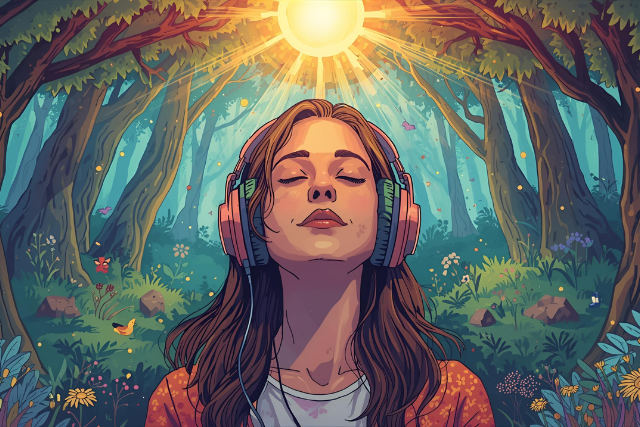
    If you don’t live in a place with a lot of natural outdoor beauty, put on some relaxing or heart-opening music in headphones and go for a walk. Do what you can to create a peaceful inner environment as you move around.

    Additionally, if moving around is something you can’t do, try taking a long bath or sit next to a body of water. Make the environment pleasant by lighting a candle or putting on your favorite soothing music. Water is a strong current for intuitive information. You may be surprised how much intuitive guidance will come through in these therapeutic settings.

    I have had many revelations in the tub or after a dip in the ocean. I often will get into a body of water when I’m feeling scattered, anxious, or confused. After soaking for a while, my nerves and mind will relax, and the next step I am looking for will appear.

    Whether you listen to music while exercising, at a concert, or just lounging around the house, I encourage you to think about the kinds of intuitive messages you get while listening. Is your higher self calling you to hold a different perspective, forgive, or acknowledge your true feelings about something?

    If you love lyrics, pay attention to words you’re drawn to and note what is happening in your life at that moment. Do the two relate? I tend to gravitate toward listening to instrumental songs. I feel they give me a blank canvas to interpret soul-level guidance more clearly. You may find that too.

    You will want to write down the soul-level information you receive while listening to music, apply it to your life, and then see if it has value for you. You can measure value by whether something is uplifting, useful, and helps you grow in character.

    Remember that if you closely observe your internal environment while listening to your favorite songs, you can intuitively reveal what your soul is saying to you. And then you can act on it and change your life.

  • Giveaway: Dalai Lama’s “Inner World,” Mantras & Teachings Set to Music

    Giveaway: Dalai Lama’s “Inner World,” Mantras & Teachings Set to Music

    The winners for this giveaway are:

    If your name is listed above, please email your address to me at email@tinybuddha.com so I can get your CD set out to you!

    Hi friends! I’m excited to share that the Dalai Lama has released his first music offering, an 11-track album of mantras and teachings set to music, and I have five free CD sets to give away to the Tiny Buddha community!

    The CD set was actually released just recently on my birthday, August 28th, after a July 6th release on digital platforms to honor the Dalai Lama’s 85th birthday. Upon the digital release, Inner World debuted at No.1 on Billboard’s New Age Album chart.

    The set features 2 CDs in a beautiful, case-bound, hardcover package, along with a 28-page booklet with stunning artwork and explanations of the mantras and their benefits.

    CD 1 is the standard Inner World album while CD 2 features a disc of album instrumentals.

    “The messages couldn’t be more poignant for our current social climate and needs as humanity.” ~USA Today

    “A genuinely enjoyable, enriching experience…” ~Clash

    “Fusing music with Buddhist chants, His Holiness uses his resounding voice as an instrument, reciting traditional Tibetan Buddhist prayers and presenting teachings on issues close to his heart.” ~Tricycle

    About Inner World

    The origins of Inner World began in 2015, when one of the project’s co-executive producers and a longtime student of The Dalai Lama, Junelle Kunin, wrote to him requesting his participation. She felt that an album by such a compassionate and wise being would help people who struggle with emotional stress. And he agreed.

    She and her husband, Abraham Kunin, spent the next five years working with a small team to bring the project to life.

    The Dalai Lama’s recordings have been thread through music composed by Abraham and performed on thirty-plus instruments by himself and a cast of collaborators from around the world. The composer integrated the live performances with artful programming and production, building a peaceful bedrock for these sacred offerings.

    Net proceeds from the sales of Inner World will go to The Gaden Phodrang Foundation of the Dalai Lama, chosen program: Social, Emotional, and Ethical Learning, an international K-12 education program.

    How to Enter the Giveaway

    To enter to win one of 5 free CD/booklet sets, leave a comment below before midnight PST on Tuesday, September  8th.

    You don’t need to write anything specific, but if you’d like, you can share your favorite quote or affirmation to inspire other community members who scroll through the comments.

    I will list the winners’ names at the top of this post on Wednesday, September 9th. Please note you’ll need to check back here then to see if you’ve won so you can email me your address.

    If you’d like to order Inner World now, you can get the 2CD and book edition here.

    Happy Friday, friends!

  • A New Podcast for Creative People, From Tiny Buddha Productions

    A New Podcast for Creative People, From Tiny Buddha Productions

    Hi friends! Lori here. As you may know if you read my blog post from this Monday—How to Keep Going When You’re Not Good at Something New—I recently helped launch a new podcast called Next Creator Up.

    Hosted by Ehren Prudhel, my partner in life and many things, this podcast means a lot to me personally, and of course, to Ehren as well.

    First, a little about what this podcast is and who it’s for, and then I’ll elaborate on why we decided to co-produce this together.

    What Next Creator Up Is All About

    Next Creator Up is a weekly show that features established and emerging creators in various creative fields—music, screenwriting, and blogging, to name a few.

    The goal is to learn about their work and process and uncover the tools, lessons, and insights that have helped them overcome their internal and external blocks.

    Blocks like:

    • Life responsibilities
    • Time limitations
    • Competing desires
    • Doubts
    • Fears
    • Insecurities

    We hope that each episode will provide both inspiration and motivation to help you get out of your own way and create what you want to create.

    Who This Podcast Is For

    Next Creator Up is for you if:

    • You’ve fantasized about creating something of your own—a book, a blog, a podcast, an album, a cooking vlog, or a jewelry line, for example
    • You’re currently working on your own project, but need a little help staying on track
    • You enjoy hearing from creative people who are doing inspiring things
    • You need help sparking your imagination and triggering new ideas

    Why This Podcast Means So Much to Us

    Ehren and I are both creative souls who know what it’s like to get in your own way. We also know the unique frustration that comes from wanting to do something, but feeling either powerless or clueless as to how to make it happen.

    We live in LA and have fantasized about filmmaking for years—and even have a completed screenplay we’d like to produce together—but we’ve struggled because we have limited time, resources, energy, and knowledge.

    We’re both juggling a lot professionally and personally, and have a new baby—our first—coming into the world this Monday.

    We’ve doubted our talents, our efforts, and our potential, and we’ve felt overwhelmed by everything competing for our attention.

    We are two artists who’ve long lived without the palettes we’ve most craved, but we’re now on a mission to change that.

    We’re on a mission to do what we can, with the time we have, to create what we want to create and be the people we want to be.

    We know we can’t do everything all at once. We know we’ll continue to have setbacks. We know we’ll have to make choices and compromises, and adapt our plans as we move forward and make decisions that best support our growing family.

    But in spite of that, we are going to create. We are going to create podcast episodes. We are going to create blog posts. We are going to create new offerings together to share through Tiny Buddha. And we’ll continue to learn about filmmaking and producing, with the goal of one day seeing our screenplay come to life.

    As we do all these things, we’re going to need continued motivation, inspiration, and encouragement—which we’ve both gotten in spades from the dozen interviews Ehren has already completed for season one of Next Creator Up.

    To be honest, I wasn’t sure what kind of interest we’d get from the Tiny Buddha community.

    I haven’t focused much on creativity over the years, mostly because I assumed you, the readers, were more interested in personal development topics—posts related to self-love, healing, relationships, anxiety, depression, and the issues that threaten our peace of mind.

    But I believe creativity is a vehicle to improve everything else in our lives.

    When we create something bigger than ourselves, it helps us:

    • Get out of our own heads
    • Connect and collaborate with other people
    • Feel proud of the difference we’re making in the world
    • Feel seen, heard, and valued
    • Heal pains from the past
    • Recycle that pain into something useful for others
    • Grow and learn about ourselves and what we need to feel fulfilled and at peace
    • Shift from mindless consuming (which usually just exacerbates the emptiness inside us) to active creating (which fills that void with a sense of pride, passion, and purpose)

    I hope this podcast can help you create something that will provide you with all these benefits, and more.

    You can find the first episode, with folk singer/songwriter Kelley McRae, here. In this episode, Kelley talks about her music, her creative process, and the healing power of sharing our stories through songs.

    And now, I ask a favor of you. Since this is a new podcast, we could use all the support we could get. If you enjoy the first episode, would you please rate and review on iTunes? You don’t need to write anything lengthy—just a sentence would do the trick!

    And if you have any recommendations for the show—perhaps a guest suggestion for Season 2—we welcome that!

    Feel free to contact me at email(AT)tinybuddha(DOT)com, and I’ll write back ASAP… assuming I don’t go into early labor, in which case I will read your email from my iPhone and then fight to get it back from Ehren as he reminds to shut off from work every now and then.

    Thank you for being part of the community, thank you for tuning in, and thank you for your support!

  • The Anchoring: Audio Visual Meditation by Anna Shelley

    The Anchoring is an interpretation of what seems to be a growing global pattern: We are collectively increasing our awareness of our impact on our land and gravitating toward ancient practices from the many indigenous cultures of the Earth. By returning to these practices that help sustain our environment, we’re once again becoming honorable custodians of the Earth. You can hear this concept reflected in the high ambient cosmic melody, which gradually merges with a lower more earthy melody.

    As with all my music, I improvised this in one take. All I did was set the intention of anchoring the new thought concepts with the ancient practices of the original custodians of our lands, and let the flute turn this into sound frequencies.

    I set this music to the sri yantra image, which represents all of the elements of the concept of the music. The sri yantra represents merging of the cosmos and the Earth, the feminine and masculine, as within so without, and the concept of harmony that can be obtained when we accept all parts of ourselves and choose to see that we can create harmony through the dissonance of life.

    The sri yantra is layered with a watercolor painting I did in which you can interpret the different layers and movement in alignment with the music and symbolism.

  • Siddhartha (Running Water) by Syne

    Ever since I can remember, I have loved creating. There’s something about the process of making something out of nothing that drives the universe and satisfies the soul like not many other things can.

    This is my passion.

    I was fortunate to have been brought up with unconditional love and kindness, surrounded by the most dedicated and loving family one could ask for. They taught me to be curious and kind, and they helped me paint a beautiful picture of the world in my eyes.

    This is my inspiration.

    But as I grew up, I became exposed to the harsher realities of the world, to see the other side of people—the ignorance, the hatred, the apathy that plagues many, the division between us, the things we do to harm the planet and its innocent, defenseless beings.

    This is my motivation.

    My painting was tainted.

    The more I grew up, the more powerless and defeated I felt, the more complacent and cynical I could feel myself becoming. But out of my affliction, I began to realize that I could contribute to the painting. 
I had a great vehicle of change at my disposal and I could use it.

    So I decided to use my music and art for good, to try and impact whomever I could, and help spread the kindness, compassion, and curiosity that my family had ingrained in me.

    This is my mission.

    Please enjoy my first music video, Siddhartha (Running Water). It is about learning to accept change—a struggle that most of us deal with at one point or another—told through the story of Siddhartha Gautama, the man who would eventually become known as the Buddha.

    I dedicate it to anyone who has ever gone through this struggle. If you can, watch it on a large screen with some good headphones or speakers to get the best experience out of it as possible.

    I hope you enjoy.

  • Chalk Marks in the Rain by Maddie Southorn

    I wrote this song, Chalk Marks in the Rain, after a devastating breakdown of a long-term relationship. My whole life changed in an instant, and I needed to capture those emotions and share them as honestly as I could. The song is entirely made up of my voice; I wanted to be the instrument and create layers and textures that mirrored the words.

  • March by Anna Shelley

    March is my favorite track to date, and it is a procession of all the elements of the self, as it marches forth into being. All of our emotions, our memories, our personality traits, our talents, our intuition—our multifaceted self that comes together to form the magic that we are here on Earth.

    Conceptual in thought process, I do better conveying via sound frequencies than words. As with all my pieces, this is improvised in one take. I set the intention of what my soul wishes to convey, and the music plays itself.

  • Music for Painters by Michael Spivack

    As a composer and producer I’ve always felt my path would lead to some kind of deeper connection with the mindfulness movement and that my work was meant to provide healing and nourishment to others while offering me the joyous vehicle of benevolent creation.

    The seed for my recently debuted functional ambient music project, Music for Painters, was planted in early 2006 when I ran into a simple problem: I needed to find a way to use music as a protective bubble so that I could focus on pen and ink drawings in busy parks, coffee shops, and subway cars in New York City.

    I noticed that listening to music on my headphones helped drown out the noise but could have other undesirable effects depending on what I was listening to. Pop music pulled my attention and emotional awareness in too many directions, while hip hop, trance, jazz, and EDM all modulated my moods in ways that I found counterproductive to the art.

    After weeks of research, I stumbled upon Brian Eno’s genre-defining ambient works from the late 1970’s. The first time I sat down with my sketchpad and put on “Ambient 1: Music for Airports” I knew I was on the right track.

    The non-invasive, neutral yet beautiful soundscapes seemed to activate a force field of pleasant equanimity around my brain. It provided the right amount of stimulation and aesthetic smoothness to serve the function I needed it to. Soon after, I set my course on developing a methodology that would lead to numerous sonic sculptures that would become my project’s seminal works.

    Twelve years and a career in pop music production later, I’ve finally debuted Music for Painters publically with the premier of “Sitting on a Pale Blue Dot,” a thirty-minute musical sculpture inspired by the iconic 1990 photograph from the Voyager 1 mission which inspired the title of the late astrophysicist and humanitarian Carl Sagan’s 1994 book exploring mankind’s place in the universe.

    The exercise of perspective, in this case the perspective of our home planet as one unified ball of light, is a very powerful tool in cultivating mindfulness and allowing a break in the habitual negative thought cycles that can drain our daily energy reservoirs and threaten our ability to feel grateful; one of the pillars of true happiness.

    I’ve learned on my own spiritual journey that it takes conscious attention each day to cultivate a sense of connection to the gratefulness that already exists inside of me. Music for Painters is my offering to people looking for a healthy aide towards a better sense of connection with themselves.

    By providing stable textural spaces designed to allow the conscious mind to slow down, create space, and to express itself freely, it can be used as a meditative or self-reflective aide; a safe place to focus on mindfulness practices or discover personal truths that may be obscured by the noise of daily life. Try listening in different environments and see how your observations change.

  • Music Coloring Page from Tiny Buddha’s Worry Journal

    Music Coloring Page from Tiny Buddha’s Worry Journal

    Hi friends! Since Tiny Buddha’s Worry Journal officially launches a month from tomorrow, I decided to start sharing some of the coloring pages on the blog, twice a week, until then.

    I was thrilled to once again work with the talented Rose Hwang, the illustrator for Tiny Buddha’s Gratitude Journal, and her work this time is just as beautiful.

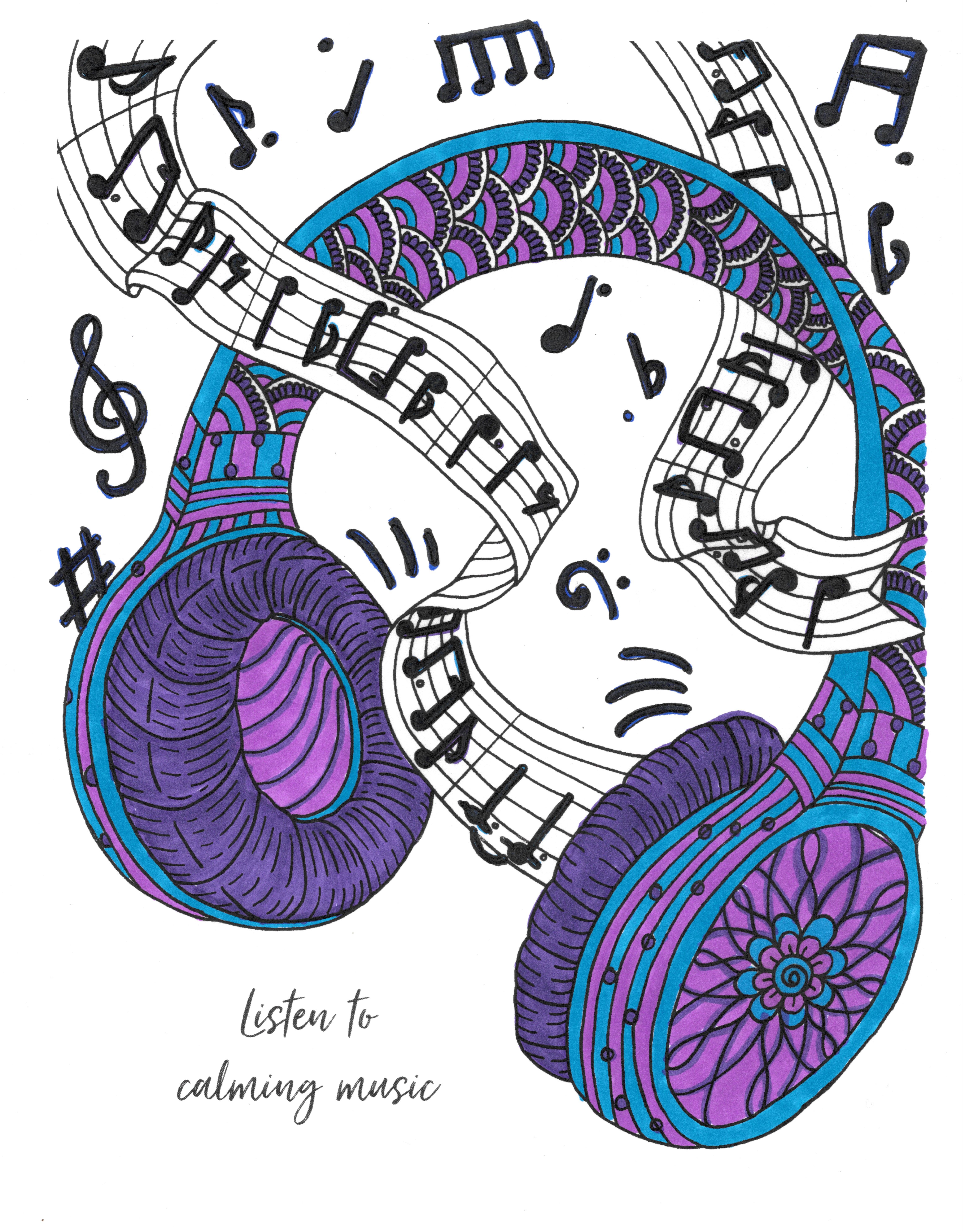
    Each page depicts one simple thing we can do to help ease anxiety.

    Today’s tip: listen to calming music.

    Music can be so transformative. The right song can instantly transport you to a different time, remind you of someone or somewhere you love, or communicate everything you’re feeling but can’t put into words.

    It can simultaneously calm your mind, heal your heart, and lift your spirits.

    And it’s the ultimate tool for mindfulness. It’s hard to dwell on the past or worry about the future when you’re lost in a melody, eyes closed, the beat reverberating deep in your chest, the lyrics drowning out the repetitive thoughts in your head.

    There have even been studies to show how healing music can be—it can boost brain activity and the mood enhancing chemical serotonin, lower blood pressure and the stress hormone cortisol, and slow our heart rate, creating an overall calming effect.

    I know I always feel more centered and at ease when I take even just a few minutes to listen to my “peace playlist,” which includes:

    -A selection of movie theme songs (far too many to list!)

    -Musical soundtracks, some of the newest of which include The Greatest Showman and La La Land (specifically: A Million Dreams and Here’s to the Ones Who Dream)

    -Songs from Bob Marley, The Beatles, The Rolling Stones, Radiohead, Coldplay, The Lumineers, The Fray, Augustana, David Gray, Ben Folds, Gary Jules, Josh Ritter, and Ray LaMontagne, to name some of my favorites

    What are some of the songs that calm your mind? Which songs help you relax and unwind after a long, stressful day? Feel free to share an album name, a song title, or a link. You never know whose day you could brighten by sharing your playlist for peace.

    From now until June 26th, you’ll get three bonus gifts, including a guided meditation series on letting go, when you pre-order Tiny Buddha’s Worry Journal. All you need to do is order a copy here and forward your purchase confirmation email to worryjournal@tinybuddha.com

  • Music Coloring Page from Tiny Buddha’s Gratitude Journal

    Music Coloring Page from Tiny Buddha’s Gratitude Journal

    Hi everyone! This is my fifth week sharing coloring pages from the soon-to-be-released Tiny Buddha’s Gratitude Journal (available for pre-order now). Previously, I shared:

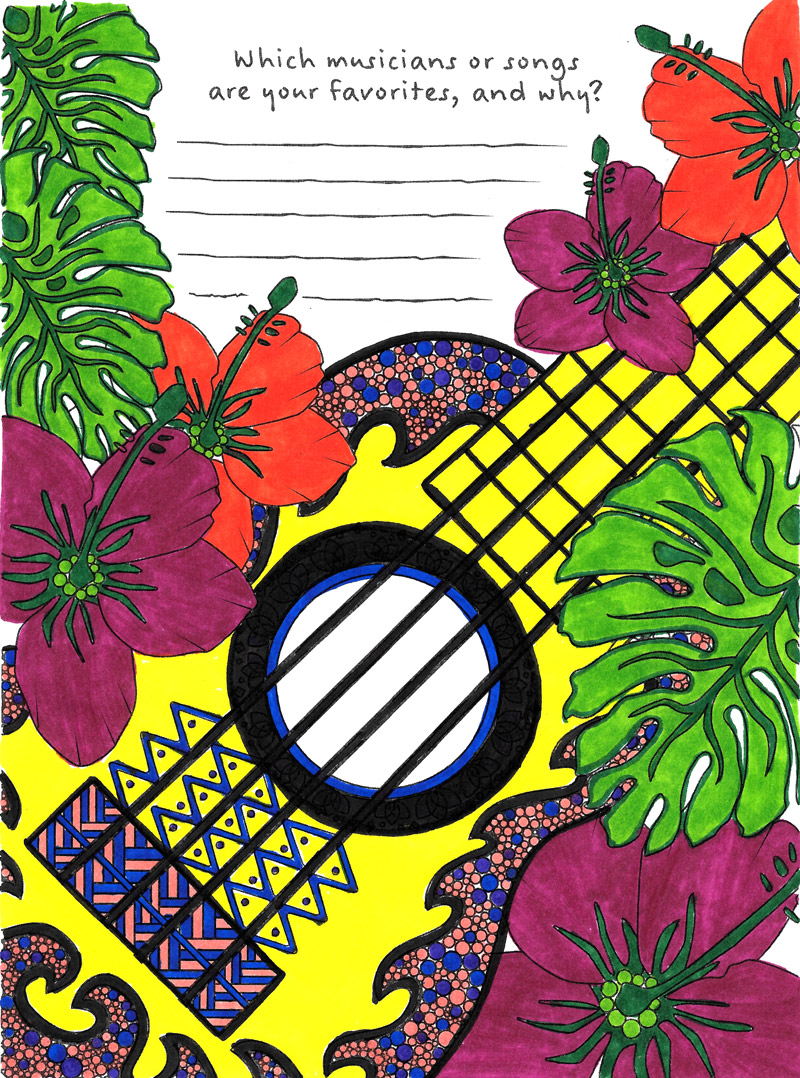
    How would you answer the question in the middle?

    It’s hard to narrow down my favorite music, as I imagine is true for most of us. But there are certain songs that are particularly meaningful to me because of the memories they evoke, including:

    1. Wonderwall, by Oasis (which I played on repeat, with friends, for much of my sophomore year of high school)

    2. So This is Christmas, by John Lennon (one of my favorite holiday songs, and the finale number of one of the most memorable regional shows I did in college)

    3. Mad World (the song my boyfriend sang at karaoke the night we met, a song I already loved from Donnie Darko)

    4. Cheer Up, Sleepy Jean (a song we often sing to commemorate my late grandmother Jeanne, when my aunt pulls out the karaoke machine)

    5. Sweet Caroline (a song I’ve sung while jumping many times at karaoke, and a few times with fellow Red Sox fans near my hometown in Massachusetts)

    6. Pretty much everything from The Beatles, The Rolling Stones, Pink Floyd, Coldplay, RadioheadDavid Gray, and Ray LaMontagne, for far too many reasons to list.

    Now I’d like to hear from you! What songs and musicians do you most appreciate, and why?

    If you haven’t already, pre-order your copy of Tiny Buddha’s Gratitude Journal here, then forward your purchase confirmation email to bookbonus@tinybuddha.com to receive three free bonus gifts!