Tag: movies

  • Help Bring Tiny Buddha Productions to Life

    Help Bring Tiny Buddha Productions to Life

    Tiny Buddha Productions

    When I was a little girl, I could watch movies for hours on end.

    I would lie underneath my blanket fort and get lost in The Neverending Story, The Princess Bride, and The Goonies—movies that bring the hero on a fantastic adventure far beyond the restrictive world they know.

    My life felt small and limited, and not always bright or easy. Movies gave me an escape from that, and a sense of freedom within the expansiveness of my imagination.

    As I got older, I gravitated toward mysteries and psychological thrillers—such as Identity, Memento, and Black Swan—movies that bring you deep into the psyche of complex minds, tempting you to try to understand what compels some people to do what they do.

    I consumed these movies voraciously, addicted to the heart-pumping, adrenaline-racing journey into madness. I was always looking to pierce the sheen of formality that prevents most of us from disclosing the darkest parts of ourselves. Shining a light on the darkness somehow gave me peace.

    And I’ve always been a sucker for inspirational films. Watching George Bailey grapple with his fears and finally grasp his worth, seeing Andy Dufresne hold onto hope against seemingly insurmountable odds and fight his way to freedom, following Will Hunting as he heals from childhood abuse and embraces his full potential—these journeys awakened something powerful within me, a part of me that wanted to believe that I too could triumph, despite my struggles and my demons.

    Through it all, I’ve maintained a passion for the hero’s journey, modeling my life after Forrest Gump—moving from one distinct chapter to the next, trying to hold onto my innocence, my goodness, and my belief in the goodness of people.

    In college, I thought I would one day be a storyteller. While studying acting and writing, I envisioned penning and starring in my own plays or movies. And I was slated to spend my final semester in Los Angeles, where I’d intern for a network or studio.

    As often happens, though, life had other plans.

    After struggling for a decade with depression and bulimia, I spent my senior year in and out of hospitals. And I received my diploma months after my class graduated, since I was in a long-term residential treatment center when my peers were donning their caps and gowns.

    I lost my confidence somewhere in or around that journey through crisis.

    I don’t think it was missing opportunities for involvement in college, or missing out on the type of friendships you form when you’re not completely consumed by self-destruction, or missing my graduation.

    No, I think it was in the several years that followed, when I was no longer slowly dying but too afraid to really live. When I tried tons of different career paths because I was too scared to do the things I really wanted to do. When I convinced myself I wasn’t good enough to succeed in theater or film.

    I don’t regret those years, though. Those years of shame and hiding led me directly to this site, where many of us have healed and grown together. And I am so grateful for, and proud of, what Tiny Buddha has become.

    But now, seven years after immersing myself in the world of self-help—after spending all of my adolescence and twenties traveling a path of recovery—I am ready to do what I’ve always wanted to do.

    I want to create films that inspire people to see life through a new, more empowering lens.

    I want to create characters that touch us, inspire us, reveal parts of ourselves we didn’t know were there, and help us better understand each other.

    And I want to do it with you, if you want to work with me.

    I am back in Los Angeles after spending three years away, and I am now in the beginning stages of creating Tiny Buddha Productions, in partnership with my fiancé, and fellow screenwriter, Ehren Prudhel.

    Our goal is to start with a series of inspiring short films, and to eventually write and produce our own feature film for theatrical release, possibly crowdfunded.

    We both bring a unique set of skills and experience to the table—along with the reach, and hopefully the support, of the Tiny Buddha community.

    I have a deep passion for this dream. And to be honest, I’m a little scared of what I don’t know. But if the past has taught me anything, it’s that there’s nothing wrong with being at the beginning of a journey.

    The opening image is just as important as the final one. It’s the promise of what’s to come. It’s where the magic starts. And I am ready to begin.

    Want to join me? Read more here and fill out the form if you’d like to get involved. Have any advice, feedback, helpful resources, or contacts to share? Email me here.

    This is an entirely self-funded venture at this point, so I can’t promise it will be lucrative—at least not at first. But I can promise it will be an adventure, that there’s limitless potential, and that I’m fully invested in taking this as far as it can go.

    Thank you for reading, for being part of this community, and for joining me on this journey!

    Update: Our first film is now live! I hope you’ll enjoy it as much as we enjoyed making it!
  • Old Movie Dance Scene Mash-Up to Uptown Funk

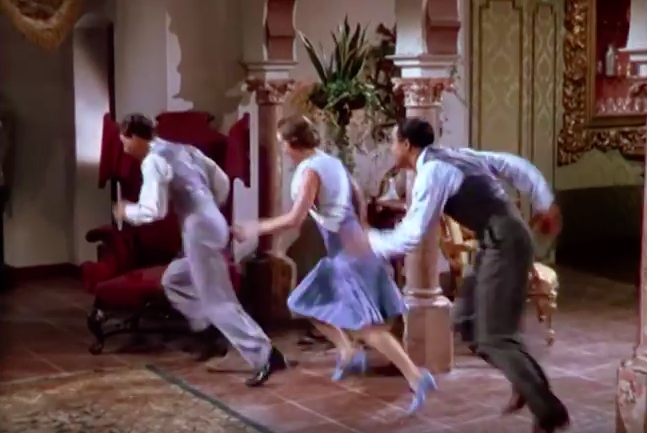
    Old Movie Dance Scene Mash-Up to Uptown Funk

    I’m a huge movie buff, and I love me a good classic. I also get giddy when I watch a talented dancer moving their body like I only wish I could. If you’re anything like me, you too will appreciate this awesome mash-up of old movie dance scenes, set to Uptown Funk, by Bruno Mars.

  • 5 Ways to Experience the Kind of Love You See in the Movies

    5 Ways to Experience the Kind of Love You See in the Movies

    Love Is in the Air

    “Maybe it’s not about the happy ending. Maybe it’s about the story.” ~Unknown

    Growing up, I often pretended my life was a movie, and created quite a few awkward situations by trying to force real life to look like a romantic comedy.

    In the movies, everything was so electric.

    People didn’t just care about each other; they adored each other. They didn’t just date; they had a montage of amazing memories, complete with tandem biking, skipping, hand-in-hand, in a field of flowers, and dancing in the rain.

    That’s the kind of love I wanted—the intense, always exciting, never disappointing, made-for-the-big-screen kind.

    And I was willing to fake it ‘til I made it.

    I remember this one time when I was dating someone who quite obviously didn’t care for me. (I gravitated toward a lot of men like that back then. My Pavlovian response to disinterest? Obsession, every time.)

    I told him I didn’t think we should see each other anymore, hoping he’d put his finger on my lips to silence me, then kiss me after realizing what a huge mistake it would be to let me go.

    That didn’t happen, but I still held out hope for a cinematic realization that we were meant to be.

    I left his family-owned restaurant, got ten feet down the street, then turned around, ran back in, leapt into his arms, and said something horrifyingly cheesy, like, “You complete me! I’ll never let go!”

    I didn’t have to. He let go. And then pushed me away. And probably filed me under “crazy stalker” in a mental folder for girls he’d never call again.

    (Somehow those lines sound a lot less worthy of a restraining order when said by Renee and Kate.)

    I’ve since realized that I fixated on romantic love because I was trying to fill a massive void that stemmed from low self-esteem. And I inadvertently repelled men with my neediness, obsessive behaviors, and lack of self-awareness.

    I’ve also come to learn that the type of romance depicted in these comedies differs from real love—and that we need to complete ourselves first if we ever hope to experience it.

    Real love isn’t about finding your one and only soul mate, sweeping them off their feet, and maintaining a fantasy worthy of popcorn, soda, and waterproof mascara.

    Real love is messy. It takes effort, sacrifice, and compromise. It entails both highs and lows—moments both extraordinary and ordinary.

    And it’s not reserved from romantic relationships. It’s what inspires us to hold a door for an injured stranger, hold a friend’s hair when she’s battling cancer, and hold a parent’s hand when he’s taking his last breaths.

    It all comes from love. Different flavors, of course, but love nonetheless.

    All this being said, I still want to experience the kind of love you see in the movies. Not the romantic kind (though I’ve always wanted to dance in the rain).

    I’m talking about something altogether different, but equally magical and transformative.

    It’s the kind of love that creates a world so beautiful, we don’t need escapist fantasies.

    The kind of love that fills us with something far greater than lust and euphoria.

    It’s something we can all experience by doing these five things, and in doing so, create a better, kinder, more loving world.

    How to Experience the Kind of Love You See in the Movies

    1. Save the cat.

    In his definitive guide to screenwriting, the late Blake Snyder instructs writers to introduce their movie hero with a “save the cat” moment—meaning the hero does something kind, which makes the audience like and sympathize with him or her.

    While there’s no one whose sympathies we need to earn, because we’re (hopefully) not being watched, we can all create a better, more loving world by looking for these “save the cat” moments.

    It’s when you step in to defend someone who’s being bullied, or grab an extra sandwich for the homeless person sitting outside, or take a little time out of your busy day to help someone who’s struggling—with anything; homework, a heavy bag, or a heavy heart.

    The best way to experience love is to be willing to give it. We can do this every day—no field of flowers required.

    2. See the good in people.

    In a world where we’re constantly bombarded with bad news, it’s easy to become jaded. It’s tempting to assume the worst in people and live behind a metaphorical suit of armor, ever ready for someone to do something that justifies our cynicism.

    But when we constantly look for the worst in others, we miss out on the best.

    You can certainly find your fair share of cynics in the movies, but for most Scrooges, there’s a transformation—a shift in their fundamental beliefs that changes how they engage with the world, thereby changing the world they experience.

    If we want to see a world of beauty, hope, and kindness, we need to be willing to look for these things.

    This doesn’t mean we should ignore the harsh realities of life; to create positive change, we need to first acknowledge what needs changing.

    It just means we open our eyes to see those “save the cat” moments when they happen. People do good things every day. If we want to nurture a loving heart, we have to recognize and appreciate them.

    3. Inspire the best in others.

    We’re more likely to see the best in others if we proactively aim to inspire it. It’s not always easy to do this; unlike in the movies, the Jerry Maguires of the world don’t always get the business and the girl in the end.

    But we’re all drawn to people with visions—people who put other people before profits, people for whom integrity is more important than notoriety.

    When someone stands for something good—something that benefits not just that person individually, but the world at large—it touches something inside us, and motivates us to devote ourselves to a purpose that can help create a better world.

    Choose a purpose—maybe not for your lifetime, but for this time in your life. Write your “mission statement.” Wrap your love around a cause. Aspire to make a difference, no matter how big or small, and you will.

    4. Check your ego.

    As story consultant Jen Grisanti wrote in her Tiny Buddha post, in the best movies, the protagonist starts with an ego-based desire—to get the job, or revenge, or adoration and admiration—and ultimately reevaluates their goal to better serve and connect with others.

    It’s when Bruce Almighty stops obsessing on being a successful news anchor and instead, becomes a loving, attentive partner to his fiancé, and someone who actually appreciates reporting on good people doing good things.

    We all have goals and ambitions, even those of us who consider ourselves spiritual. For some of us, those ambitions might be more about making a living or making ends meet than making a name for ourselves.

    But many of us are chasing a feeling, whether we hope to feel worthy, valued, or important. Ironically, the things we chase, when caught, often leave us feeling emptier than when we started.

    To truly feel fulfilled, we need to set goals that reflect not only what we want to gain, but what we want to give.

    I used to think “you get what you give” referred to reciprocity, but I now know this means that the giving itself is the getting. If you’ve ever experienced profound joy after helping someone else, you know this too.

    5. Believe in love (and love yourself).

    In the movies, a protagonist might not believe in love from the get-go, but if not, that’s his or her journey—to open to the possibility of love again, despite having been hurt or betrayed.

    Then there are those heroes who start their journey obsessed with finding love, much like my former self, only to realize they first need to heal and learn to love themselves.

    We’ve all been wounded in some way, and most of us have learned to either push people away or cling to them in attempt to lessen our pain.

    Real love is neither fearful nor needy. It’s not about broken people completing each other. It’s about coming to each other healed and whole, ready to complement each other.

    To experience this kind of love, we need to let go of how we’ve been hurt in the past, and believe that there are people out there who will treat us with care, kindness, and respect, if only we give them the chance.

    And we need to show ourselves we’re worthy of this kind of love by treating ourselves the same way, and letting go of people who don’t.

    Real love isn’t a fairy tale, but it’s so worth it, and possible if we work for it.

    I still like to think of my life like a movie, but not because I’m waiting for someone to ride off into the sunset with me.

    I think of my life like a movie because I want to be inspired. I want to be kind, I want to see the best in people, and I want to do my part to create the kind a world where we all inspire the best in each other.

    The goal isn’t a happy ending. It’s to live a happier story. And that starts with how well we give and receive love.

    **If you enjoyed this post, you may also enjoy the upcoming book Tiny Buddha’s 365 Tiny Love Challenges, launching October 6th. Pre-order now and you’ll instantly receive $300+ in free bonus gifts, including several eBooks, eCourses, and meditations on love and relationships.**

    Love is in the air image via Shutterstock

  • Meditation Remixed: Movies, Pop Culture, and Inner Peace

    Meditation Remixed: Movies, Pop Culture, and Inner Peace

    DJ/VJ and Audio Visual Artist Brett Belcastro created an awesome remix video using over 80 scenes from movies and TV shows to entertain and inspire viewers to find peace within their minds. And entertain and inspire it does!

    As a huge movie buff, I appreciate how Brett used pop culture to share the power and importance of meditation.

    From the Vimeo page:

    “The idea for this video remix came to mind about a year ago while I was listening to a guided meditation by the Deepak Chopra. I was so inspired after attending his ‘Seduction of Spirit’ seminar this past April that had decided to create this video.

    In April of 2012 I myself had such a ‘spiritual awakening,’ a dramatic shift of perception in my conscious awareness during the 3rd time I had ever mediated, that I just knew I had to share the experience.

    Since that moment it has a personal mission of mine to share my new found passion for meditation with this many people as I can.”

    It’s my pleasure to help support that mission…enjoy!

  • The Key to Accomplishing Goals: Moving from Ego to Spirit

    The Key to Accomplishing Goals: Moving from Ego to Spirit

    “Change is inevitable. Growth is intentional.” ~Glenda Cloud

    My life is over.

    That’s what I thought when I got the news that I’d lost my job after fifteen years with two sister companies. I loved this job. I was on the road to becoming everything I thought I wanted to be—a Hollywood studio vice president, well on my way to running a studio someday.

    I was doing something I loved, developing stories. And now it was all over.

    Have you ever had a moment like that? When the end of something in your life felt like the end of your life? You’re not just being overdramatic—when we lose a job or relationship or role, we do experience loss. So how do we pick ourselves up and move on?

    For me, even though my Hollywood job had ended, in a way it was Hollywood that saved me, too. I realized that I needed to shift my perspective. Losing this job wasn’t the end of my story; it was the difficult middle.

    Think of all the movies you’ve seen where, at the midpoint of the story, the hero starts to run into some serious obstacles. It’s at this moment when she starts to see the weakness in her approach to her problems.

    She has to go through an “all is lost moment” before she can reach the “aha” moment when she realizes what she really has to do to achieve her goals.

    In the best stories, this moment represents a shift from ego to spirit.

    For example, in The King’s Speech, it’s not until our hero Bertie’s brother gives up the throne, forcing Bertie to do the thing he fears most—speak in public—that he changes his perspective.

    Instead of focusing on his own ego and his fear of humiliation, he learns to focus on leading his people. When Bertie makes this shift from the ego to the spirit, he realizes how achieving his goal of conquering his stutter is really about serving others. 

    When I looked at losing my job through the lens of story, I realized that I, too, had been too attached to my ego.

    I was so focused on that end goal of running a studio someday that I’d become blind to the way my work was affecting me on a spiritual level.

    I had started doing things that went against my true values. I had stopped listening to my colleagues, because my ego didn’t want to hear anyone else’s ideas. But my story wasn’t over—this was just the difficult middle.

    Changing my perspective would change the story of my life.

    When you hit obstacles in your life story, you may find yourself humbled. But at that moment you have a choice: Will you stick with your old ego-driven perspective, or will you transcend it? Is your story over, or is this just the difficult middle?

    When you experience this kind of loss, putting your ego aside will help you figure out the next chapter in your story. There are three steps involved in making this mental shift:

    • Recognition
    • Action
    • Accomplishment

    Recognizing that we’ve been driven by ego is the first step toward resolving the problem.

    Understanding how my attachment to ego had led to the end of my job helped me pick myself up and redefine my goals. I decided to use my experience to help others achieve their dreams instead of continuing to strive for personal gain. 

    Once you’ve recognized the role of your ego, you need to take action to change the direction of your story.

    Let your spirit guide your actions instead of your ego. Instead of focusing inward and dwelling on your loss, reach outward. Redefine your goals to make them more about connecting and serving others.

    I’ve found that pursuing a goal that’s about connection to others is much more fulfilling than pursuing a goal that’s about glorifying my ego. I believe if you find a spirit-driven goal, you’re more likely to feel like you’re moving toward a happy ending.

    Spirit-guided action will actually make it easier for you to accomplish your goals. When we’re consumed by our own desires, we don’t allow room for other people’s perspectives. We don’t see how our actions might affect others. Other people become obstacles instead of potential partners.

    True communication with yourself and with others will put you in harmony with your spirit and the world around you. Acting out of this harmony will create the momentum you need to achieve your goals.

    Let the obstacles you face prompt you to reevaluate your goals. Is your spirit setting your agenda, or your ego? How will letting go of your ego help you connect to others? How might that connection change the way you define your intentions?

    When we feel connected instead of isolated and detached, we transcend our own small egos. And just like the heroes of our favorite stories, when we transcend our own perspectives, we ultimately find greater fulfillment.

    If you look at your life as a story, you’ll see that obstacles push you toward growth. That loss or change isn’t the end of your story—it’s just the beginning of your new chapter.

    Lori’s Note: I was thrilled to interview Jen Grisanti for my first ever eCourse. Learn more about the course, Recreate Your Life Story: Change the Script and Be the Hero, here.