Tag: mourn

  • The Truth About Grieving: There Are No Rules for Healing

    The Truth About Grieving: There Are No Rules for Healing

    Here’s what I know about grief: There is no measuring stick.

    The loss of a mother, father, sister, brother (or all of the above), the loss of a husband, wife, lover, boyfriend, girlfriend, or life partner, the loss of a best friend, dear friend, or close friend, the loss of a mentor, teacher, guider, inspirer… Who’s to measure? Who’s to say how profoundly those losses may or may not break our hearts?

    There are no rules.

    The loss of a happy, loving relationship may be far easier to survive than the loss of a troubled one.

    A lover may feel overwhelmed by sadness years after a husband remarries and starts a family.

    A close friend may feel as much loss and sorrow as a best friend.

    When a person dies, they may have 10, 100, 1,000 friends, or even more grieving them. When Judy Garland died, so many people in the gay community grieved her loss that it was a contributor to the Stonewall riots and the beginning of the gay rights movement.

    At first, when you lose someone, friends, distant and otherwise, shower you with messages and cards saying things like “This, too, shall pass” and “You are strong; you will get through this.” The Jewish religion gives you a week to “sit shiva.” You cover the mirrors. (Who wants to look at such a sad face anyway?!) You wear slippers. People bring you casseroles. You are expected to spend an entire week crying.

    Two, maybe three weeks later, no one asks, “How are you feeling?” No more cards come in the mail. No more “May her memory be a blessing” messages on Facebook. Some friends avoid you for months, saying they “want to give you time to mourn.”

    The overwhelming message feels like, “Times up! Move on! Cheer up!”

    No one seems comfortable around grief.

    Two weeks after I lost my mother, my girlfriend at the time decided to break up with me. She said she loved me (is that love?), but she loved the happy, fun, cheerful Rossi she met, not this sad, brooding, blonde mess.

    I love NOT being with her anymore.

    As much as people like to set limits, there is no time limit on grief.

    I lost my mother, Harriet, thirty-three years ago. A Jewish mother’s love can be suffocating, yes, but also like a vast ocean of endless warmth. I wish I could swim in that ocean one more time.

    “Get over it; she was just a friend.”Just?

    I still mourn the loss of my mentor and friend Catherine Hopper, who passed away five decades ago. I was only eight years old when Catherine died. I can still smell the powder foundation she slapped on her face with abandon.

    Some people feel they are in a grief competition. They downplay your grief by talking up their own (far superior) grief. What is this, the Grief Olympics? What is the medal, a lifetime supply of tissues?

    2022 was my death year. I may always think of it that way. I lost my dear friend Kathryn, my best friend since childhood, Suzy, my friend and co-worker BB, and my sister, Yaya. I thought I was done with death after 2022, but I lost my brother, Mendel, on Halloween the following year.

    I’d like to say that I took the time to mourn each loss and move on before the next came, but it felt more like standing in the ocean getting toppled by a wave. Each time I came up for air, I was toppled by another.

    Most people assumed I would have the hardest time losing my sister and brother. I had more trouble losing Suzy. She was the person I most likely would have been talking to about losing my sister and my brother. She’d known them both since we were children.

    At fifty-nine years old, I found myself to be the last surviving member of my family. My mother used to call herself “The Last of the Mohicans.” At the age of forty-six, she was the last surviving member of her family. Yet another thing my mother and I have in common. This is not a baton I want to carry.

    For eighteen years, BB was the person I could lean on professionally. If I were inclined to call in sick (something I rarely do), it would be okay because BB would be there. I think of our van rides to events together like the rings in a tree. I can trace where I was in my life and in our friendship by the depth of our van chats. Our first rides together, we talked about lemons, limes, and rosemary focaccia. Our last rides together, we talked about heartbreak and love.

    My relationship with my brother, Mendel, was problematic and troubled, riddled with the hypocrisy that often accompanies extreme religion. In some ways, his loss has been the hardest. I mourn the brother I never had as much as the brother I did have.

    I watched a movie on a JetBlue flight in which the main character was crying. His son asked him why he was crying, and he said, “Because I used to be a brother.” He had lost not only his siblings but also his identity as a brother.

    I started crying too, much to the discomfort of the frazzled woman sitting next to me. I used to be a sister. I used to be a daughter.

    In all the many words meant to support and comfort me these last few years, the ones that made me feel the most loved were when my partner, Lyla, decided weeks and months later to start each morning by saying, “Good morning, Honey. I love you. How is your heart?”

    All had gone quiet, but not my morning messages: How is your heart?

    These days, when friends have traumatic losses, I offer love, but more importantly, I check in with them a month or months later when society has revoked their permission to keep feeling sad and ask, “How is your heart?”

    Life is hard. We like to say otherwise, because only Debbie Downers walk around saying things like “Life is hard.” But let’s face it: LIFE IS HARD.

    We hope to have a life filled with love. Aren’t the best things in life about love? But the price of love is loss.

    I like inside pockets, always have. Secret little places to tuck a pair of keys, a tissue, a lipstick, and a $20 bill.

    My heart has inside pockets. I carry my mother there. She wanted to take my whole heart over, but I asked her to make room for Yaya, Mendel, Suzy, Kathryn, BB, and Catherine Hopper and her powdery foundation, too.

    Folks talk a lot about the five stages of grief. I tell those five stages to screw off! No two people are alike. No two losses are alike. My grief is like no other grief.

    My sister, Yaya, maintained a childlike abandon all of her life. She loved to put an “S” in front of words that started with “N.” It was one of the adorable Yayaisms I miss the most.

    In the face of profound loss, I hear her voice. “S’NOT SNICE.”

    In some ways, Yaya was the smartest person I knew.

    That’s right, Yaya. S’not S’nice.
  • How I’ve Navigated My Grief and Guilt Since Losing My Narcissistic Father

    How I’ve Navigated My Grief and Guilt Since Losing My Narcissistic Father

    “One of the greatest awakenings comes when you realize that not everybody changes.  Some people never change.  And thats their journey.  Its not yours to try and fix it for them.” ~Unknown

    In 2021 my father died. Cancer of… so many things.

    Most of the events during that time are a blur, but the emotions that came with them are vivid and unrelenting.

    I was the first in my family to find out.

    My mother and sister had gone on an off-grid week-long getaway up the West Coast of South Africa, where there’s nothing but sand, shore, and shrubs.

    I was living in China (where I continue to live today), and we were under Covid lockdown.

    He called me on WhatsApp (which was rare) from the Middle East, where he lived with his new wife. Asian and half his age.

    The cliche of the aging white man in a full-blown-late-midlife crisis. Gaudy bling and all.

    He looked gaunt and ashen-faced. That’s what people look like when they’re delivering bad news. He dropped the bomb.

    “I have cancer.”

    What I am about to admit haunts me to this day: I cared about him in the way one human cares for the well-being of any other human. But at the time, I never cared at the level that a son should care for a father. I had built a fortress around myself that protected me from him over the years.

    He’d never really been a parent to me. He wasn’t estranged physically, but emotionally, he’d never been there.

    He was emotionally absent. He always had been.

    I was the weird gay kid with piercings, tattoos, and performance art pieces.

    He was a military man. The rugby-watching, beer-drinking, logically minded man’s man.

    We were polar opposites—opposite sides of completely different currencies.

    I sat with the bomb that had just been delivered so hastily into my arms and ears. Information that I didn’t know what to do with. It felt empty. I didn’t know how to feel or how to respond. 

    Six years earlier, in 2015, I had flown back to South Africa to sit with my mother on her sofa for two weeks while she grappled with the complexity of the emotions of being recently divorced after forty-something years of marriage.

    My mother and I always had been close. She had spent her life dedicated to a narcissistic man who had cheated on her more than once, who was absent a lot of the time during our childhood because of his job in the Navy, and from whom she had shielded my sister and me.

    He had hurt her again. And I hated him for it.

    She had been devoted to him. Committed to their marriage. Gave him the freedom to work abroad while she kept the home fires burning. She’d faithfully maintained those home fires for over a decade already. She had planned their whole future together since she was sixteen years old and pregnant with my sister, who’s five years old than me.

    And this is how he repaid her.

    He’d taken it all away from her and left her alone in the house they’d built together before I was born.  Haunted by the shadows of future plans abandoned in the corners.

    She descended into a spiral of anxiety and depression, resulting in two weeks of inpatient care at a recovery clinic with a dual diagnosis of depression and addiction (alcoholism) that wasn’t entirely her fault.

    He caused that.

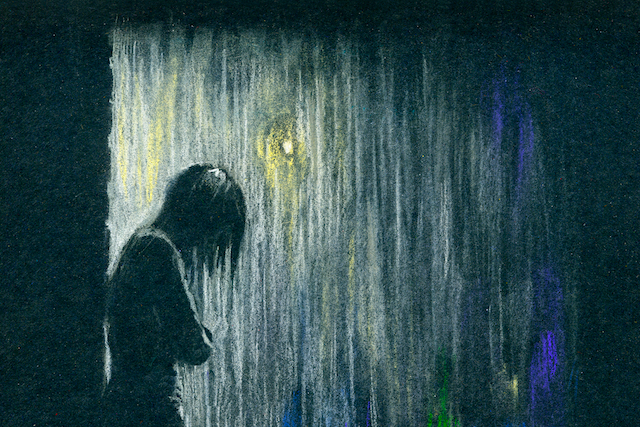
    I remember lying in bed when I was about six or seven years old; I was meant to be asleep, the room in deep blue darkness. Hearing my father in the living room say, “That boy has the brains of a gnat.”

    I assume I hadn’t grasped some primary math homework or forgotten to tidy something away. Things that I was prone to. Things that annoyed him to the point of frustrated outbursts and anger.

    “Ssh! He can hear you,” my mother replied. I still hear the remorseful tone of her voice.
    He was logical and mechanical. I am not.

    I don’t remember my crime that day, but I still suffer the penalty of negative self-talk, a lack of confidence, and a fear of being considered “less than” by others.

    It’s one of my earliest memories.

    And there, in 2021, I sat with the news of his diagnosis. I didn’t know what to feel.

    Guilty for not having the emotional response I knew I was meant to be having?

    Shouldn’t I be crying? Shouldn’t I be distraught?

    How do other people react to this kind of news?

    I’ve always been a highly sensitive person. It’s my superpower. The power of extreme empathy. But there I sat, empty.

    I felt trapped.

    I was in China in 2021, and we were under Covid lockdown. There were zero flights.

    I was emotionally and physically trapped.

    Gradually, more feelings started surfacing.

    At first, I felt compassion for a fellow human facing something utterly devastating.

    Then I started to feel fear for my mom, who had held onto the idea that maybe, one day, they’d get back together.

    I was terrified about how she would take this news when she returned from her holiday.

    Within a few weeks, a “family” Facebook group was set up—cousins, uncles, people I’d never met before, myself, my sister, and my mother.

    And the “other woman” and her kids from previous relationships, none of whom we’d ever met.

    Phrases like “no matter how far apart we are, family always sticks together” were pinging in the group chat.

    I didn’t know how to absorb those sentiments.

    Family always sticks together? Didn’t you tear our family apart? Where were you when I was lying in a hospital bed in 2011 with a massive abdominal tumor?  Family always sticks together? What a convenient idea in your hour of need.  

    More guilt. How could I be so jaded?

    A month later, in January 2021, he passed away.

    It happened so quickly, and for that, I am grateful. No human should ever suffer if there is no hope of survival.

    That’s when the floodgates of emotions opened.

    I cried for weeks.

    I cried for the misery and suffering he caused my family, my mother’s despair, and my sister’s loss. I shed tears for my grandfather, who had lost two of his three sons and wife. I wept for my uncle, who had lost another brother.

    I cried for the future my mom had planned but would never have.

    And I cried for the father I never had and the hope of a relationship that would never be.

    I sobbed from the guilt of not crying for him.

    Then I got angry. Really, really angry.

    I got angry with him for never being the father I needed. I got mad for the hurt he caused my mom. I blamed him for never accepting me for me. I was angry with him because I was the child, and he was the adult.

    Being accepted by him was never my responsibility.

    In the weeks and months that followed, the wounds got deeper. My mother’s drinking got worse, to the point of (a very emotional and ugly) intervention.

    We found out that my father had left his military pension (to the tune of millions) to his new, younger wife of less than a year and her four children from different men. 

    While I want to take the moral high ground and tell you it’s not about the money—it’s solely about the final message of not caring for his biological children in life or death—I’d be lying.

    My sister and I have been struggling financially for years, and that extra monthly money would’ve offered us peace of mind, good medical insurance, or just a sense that he did care about our well-being after all.

    But there’s no use ruminating on it.

    Accept the things you cannot change.

    It’s been two years since he passed away.

    I’ve bounced between grief, anger, and acceptance, like that little white ball rocketing chaotically around a pinball machine, piercing my emotions with soul-blinding lights and sound.

    The word “dad” never meant anything to me. To me, it was a verb, not a noun. It never translated into the tangible world.

    My mother once said, “Now I know you were a child who needed more hugs.”

    She hugged me often.

    But I also needed his hugs.

    I’ve found a way to accept that he would never have been the father I needed. I will never have a relationship with my father. Even if he were still alive, he would never have been capable of loving us the way we needed him to.

    You cannot give what you don’t have.

    He was a narcissist. Confirmed by a therapist in the weeks and months after their sudden divorce.
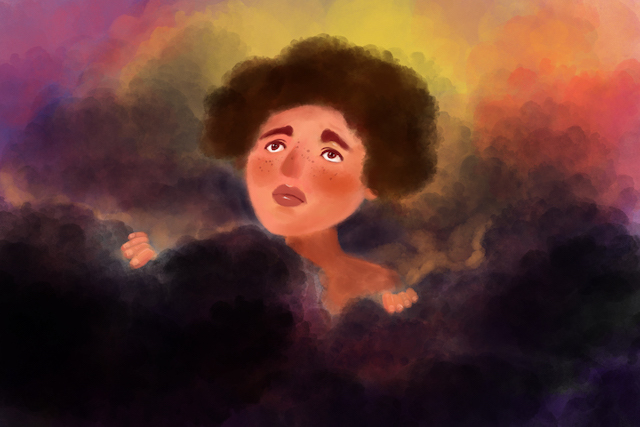
    He was never going to change. He didn’t know how to.
    Using NLP (neuro-linguistic programming) techniques, I’ve been able to reframe the childhood memories I have about my father.

    That fateful night all those years ago, lying in bed, hearing those words that have undermined my confidence and self-worth for thirty-four years: “That boy has the brains of a gnat.”

    Through visualization and mental imagery, I’ve found a pathway to healing.

    Through NLP, I became the observer in the room of that memory. I could give that little boy lying in bed, his head under the sheets, the comfort, protection, and acceptance he needed.

    I wrapped golden wings around that little boy and protected him.

    I became my own guardian angel.

    During the same session, my NLP coach gently encouraged me to look into the living room where my father sat that night.

    What I saw in my mind’s eye took my breath away.

    I saw a broken and withered man. His legs were drawn up close to his chest. I saw the pain inside him. I saw a man who didn’t know how to love or be loved.

    I saw a man who was scared, confused, and deprived.

    In that moment of being the observer, the guardian angel in the next room, a brilliant light forcefully rushed from me and coiled around him. A luminous cord of golden energy.

    I don’t know if the surge of energy wrapped around him was to heal or restrain him. Frankly, it doesn’t matter. It was pure love, compassion, and light. And it was coming from me: I was my own Guardian Angel.

    At that moment, all the past yearning for his love, acceptance, and approval dissipated. I didn’t need it from him; I needed to give it to him—filled with empathy and compassion. I needed to release him from the anger, hurt, and pain he had caused.

    I needed to do it for myself, but I also needed to do it for him.

    I’ve accepted him for who he was.

    It took a lot of journaling, visualization, mindfulness and meditation, listening to Buddhist teachings (Thich Nhat Hanh in particular), and sitting with the emotions.

    It took the desire to heal myself and him—to be happy and whole again.

    He was painfully human. But aren’t we all?

    He was a narcissist. He drank too much, cheated on his wife, never took the time to have any meaningful connection with his kids, and loved Sudoku.

    He caused my mother pain that still haunts her to this day.

    She still dreams about him.

    I like to think that if he had one more chance to reach out from The Great Beyond, he might say something along the lines of what Teresa Shanti once said:

    “To my children,  I’m sorry for the unhealed parts of me that in turn hurt you.  It was never my lack of love for you.  Only a lack of love for myself.”

    He was a deeply flawed man—but he was my father.

  • One Missing Ingredient in My Recovery and Why I Relapsed

    One Missing Ingredient in My Recovery and Why I Relapsed

    “The Phoenix must burn to emerge.” ~Janet Fitch

    Many people were shocked when I relapsed after twenty-three years of recovery. After all, I was the model of doing it right. I did everything I was told: went to treatment, followed instructions, prayed for help, and completed the assignments.

    After returning home from treatment, I joined a recovery program and went to therapy. Once again, I followed all the suggestions, which worked when it came to staying sober. I had no desire to drink or do drugs—well, at least for a long while.

    When I went to treatment, I was an emotional wreck. I would have done anything to get rid of the pain. But substances only intensified the pain and prevented healing.

    The worse I felt, the more I needed to medicate those emotions, but it was only causing the ache in my heart to be prolonged, driving me to suicidal thoughts. The moment I stopped using substances, the pain immediately subsided. I’d gone from struggling to get out of bed to engaging in my life fully.

    But going to treatment was only the tip of the iceberg. There was something much deeper underneath my addiction that I wrongly thought a relationship could fix. There was an underlying malaise and sense of shame I couldn’t identify. I knew something was wrong, so I kept searching for answers but couldn’t find the magic formula.

    Without the solution, relapse was inevitable.

    Most recovery programs address a single addiction, but I had many. After two years of sobriety, I stopped smoking but then started compulsive exercising. I didn’t eat right, spent too much, was codependent with needy people, and went from one addictive relationship to the next, never healthy enough to attract someone who could problem solve with me.

    I didn’t realize I was still substituting addictions for love.

    I wanted to make up for my troubled childhood, and I thought getting married and having kids would fix the problem, but after several attempts, it only made me feel more inadequate. Worse, I was a therapist and felt like a hypocrite. It wasn’t like I didn’t work at getting better; self-help was like a part-time job

    I spent decades in different kinds of therapy, not only as a patient but expanding my education in other modalities. I attended dozens of workshops and seminars doing inner-child work. I fully immersed myself in over twenty years of therapy, including psychoanalysis. My toolbox was overflowing, but I still felt disconnected for some reason.

    I didn’t realize those tools weren’t teaching me how to love myself.

    My journey took me on a lifelong spiritual quest. I found a higher power in recovery. I attended various churches and did some mission work in Haiti. I went to Brazil to be healed by John of God (later convicted of multiple cases of sexual abuse), on to a spiritual quest in Peru, on a visit to the Holy Land in Israel, and to Fiji to find my destiny but still felt something was missing.

    I read every spirituality book I could get my hands on and studied A Course in Miracles, but I was still disconnected from myself and others.

    Discouraged, I began to drift further away from all sources of help. I resigned myself to being an unhealed healer.

    I didn’t realize that all the therapy and spirituality were simply another form of addiction for me.

    Relapse began when I got breast cancer and was prescribed opiates after surgery. I got a taste of that forgotten high and made sure I took all the pills, whether I needed them or not. I also forgot how mood-altering substances affected my judgment.

    Instead of facing my fears about being ill and moving forward with my life, I reconciled with my ex-husband. I had little to no regard for how this affected my children. Like a piece of dust suctioned into a vacuum, despite feeling uncomfortable, I allowed my thoughts to suck me back into unhealthy choices—all the while in therapy.

    The next seven years were dark. Another divorce was followed by my former husband’s death, though I was grateful to bring him to our home and care for him until he passed. Then, a fire turned our newly renovated home into a mass of black and burnt-out walls, forcing another relocation for myself and youngest. Soon after, one of my businesses suffered severe damage from another fire resulting in six months of work and restoration.

    Three devastating hurricanes over two years damaged our home and business. One caused the foyer ceiling to cave in, another landed a large tree on our roof, and the third made our yard look like it had been run through a giant blender. One of my businesses was twice flooded and everything had to be thrown away.

    Soon after, our home was ransacked and burglarized. The stress of managing repairs, insurance claims, child-rearing, and working full-time felt like I was repeatedly set on fire and drowned.

    I kept trying to get better but felt emotionally shredded from the struggle. Desperate for support, poor decisions kept me in a whirlwind of insanity—more bad relationships. I was tired of trying, sick of hurting, and anger brewed within me.

    I stopped therapy, recovery meetings, and my spiritual quest, and decided to throw it all away. I went on a rebellious rampage. I’d been married at age sixteen and had a child, and now I was entirely alone. I decided to return to my pre-recovery lifestyle and live it up.

    Looking back, I lived a dual life of selfishness and a thirty-year career of helping others. I was self-will run riot but couldn’t see myself. I’d lived a life of making things happen and simultaneously wondered why my higher power didn’t deliver everything I wanted.

    Spirituality is a tricky thing. It’s so easy to think that God or some higher power is in control, but I believe, with free will, it’s a collaborative effort. Do the footwork and wait… if only I’d waited; impatience was my Achilles heel.

    My party life added a new heap of problems: disappointed children, bad judgment, and wrecked relationships. It didn’t take long to wind up in the same place that took me to treatment twenty-three years earlier, an emotional bottom. But this time, I was ready for the miracle of change.

    I finally found the missing ingredient to a happy life.

    The night was pitch black as I drove around emotionally deranged from grief and substances. After a near accident, I pulled into a parking lot and sobbed uncontrollably. I railed, “Whatever you are out there, why did you abandon me? Why haven’t you helped me? Why don’t you love me?”

    Immediately, a thought shot through my brain like an arrow through a cloud. “It’s not me that doesn’t love you. You don’t love yourself.” And for the first time in my life, I realized two things: I didn’t love myself and didn’t know what loving myself even meant.

    How would I learn to love myself? It never occurred to me that I didn’t. But now, I was armed with the missing ingredient to my happiness, and I intended to figure it out.

    Psychoanalysts are taught the importance of an infant’s basic needs for nurturing and bonding, but I’d never applied any of those concepts to myself. There were some missing parts in my childhood, so I had to learn how to provide for my physical, emotional, and spiritual needs,  as well as get proper nutrition, rest, and activity, in addition to responsibilities, play time, creative and quiet time, gratitude and appreciation, and loss of tolerance for unkind behavior (to and from others), all of which places I started the journey to self-love.

    I let go of what I wanted and focused on doing the next right thing for myself and others. The results were miraculous; peace engulfed me for the first time. By being the love I’d always wanted, I felt loved.

    I was always a doer and thought that spirituality was like getting a degree. Follow the steps, and everything will be okay. Whether or not that’s true, there’s a lot more to staying sober than following a set of directions. It’s important to find a higher power, clean up our act, apologize to those we’ve hurt, and stop using, but that won’t keep us sober if we don’t know how to love ourselves. My higher power became love.

    Correct behavior and self-love are not the same. Loving oneself starts with giving thanks to the sunrise and the sunset, cuddling with your pillow and those you love, acknowledging a universal intelligence and trusting guidance from your conscience, discovering and loving your mission, and nourishing your body, mind, and soul.

    Feed your body with nontoxic food; feed your mind with positive, stimulating information; and feed your soul with nature, good friends, healthy partners, and a higher power (of your own understanding) that inspires and uplifts you.

    If you’ve struggled with staying sober, you probably haven’t learned to love yourself. It’s never too late to start. When I started loving myself like a small child, I lost all substitutes for that godly love, and I finally began to blossom and grow.

    It took decades of failure to discover the missing ingredient to staying sober. I had to learn that love isn’t something I get. Love is an action I give to myself and others.

    Through being the love that I want, I then receive love. There’s a difference between staying sober and recovering. For all like me, who failed to stay sober, learn how to love yourself and then you will recover from the lack of self-love at the root of this tragic disease.

    It’s not enough to just stay sober, and life without happiness makes no sense. You were meant to have a life of love and joy. If you’ve tried everything and something’s still missing, try learning how to love.

  • How I Found Hope in my Father’s Terminal Cancer

    How I Found Hope in my Father’s Terminal Cancer

    “Without realizing it, the individual composes his life according to the laws of beauty, even in times of greatest distress.” ~Milan Kundera

    When my father received a terminal cancer diagnosis, I went through a wave of different emotions. Fear, anger, sadness. It opened a completely new dictionary that I had not had access to before. A realm of experiences, thoughts, and emotions that lie at the very bedrock of human life was suddenly revealed to me.

    After the initial horror and dread at hearing the news had subsided, I was surprised to find a new sense of meaning and connection in the world around me.

    In part, dealing with this news has been profoundly lonely. But the truth is, cancer is a human experience, and it’s been overwhelming and humbling to walk into a reality shared by so many people across the world.

    I was immediately confronted with how much I had avoided other people’s experiences because cancer frightened me.

    Our minds are fickle when confronted with terminal illness. It can be difficult to untangle the horror and pain we associate with cancer from someone’s very rich and dignified life despite it. 

    We see cancer as a deviation from what human life is supposed to offer. A part of this can be found in the values we hold in our culture and our idealization of productivity as proof of our worthiness, with pleasure as the ultimate symbol of success. In this fast-paced, luxury-crazed world, there’s no room for hurt, pain, and mortality.

    On a personal level, I understand that it can be difficult to avoid thinking of cancer as an evil intruder that steals away the ones we love, that disrupts any chance at a good life with its debilitating symptoms and treatments. Cancer is a frightening reminder of limitations and loss.

    I was greatly affected by my expectations of cancer, in that when I found out about my father’s terminal diagnosis, I instantly began grieving a person who was still very much alive. As if life with cancer wasn’t really a life at all.

    After all, terminal means there is no cure. It means that if left untreated, it kills you. It also means that treatment won’t keep you alive forever. You will die of it, unless you die of something else in the meantime, which is likely, considering the risk of infection and complication associated with the aggressive treatment and a deteriorating immune system. It’s a death sentence.

    My first reaction to the news was that my parents had to make the most of the time they had left together. They have always been ardent travelers, and as far back as I can remember, talked excitedly about the trips they were going to take when they were older.

    I instinctively felt existential dread on their behalf and encouraged them to take out their bucket list and start packing their suitcases, to start traveling while they still had the chance.

    Now I see how misplaced my reaction was. To my parents, the whole appeal of traveling vanished when it was motivated by the ticking clock of imminent death. In telling them to go travel, all they heard was “you’re going to die, and you haven’t gotten to the end of your bucket list!”

    It turns out, life is so much more than the collection of ideas we have about what we’re going to do and where we’re going to go. Life is not about getting through a list. Sometimes only the gravest of situations can show us what is sacred in our lives. 

    By living through a pandemic and then receiving a cancer diagnosis, my father’s life came to a bit of a standstill. But despite my original anxiety on his behalf, it wasn’t really the sad ordeal I thought it would be.

    On the contrary. My father woke up from a life of constant traveling and planning for the future, only to find that he loves the life he is already living in the present moment.

    The abundance of life is not out there on a beach in Spain, it’s in the first home he ever owned, next to the forest he loves, where on a wind-still day you can hear the ocean; it’s drinking coffee in the garden with his wife, and reading books in the company of a devoted, purring cat; it’s using the fine china for breakfast and playing board games on rainy evenings.

    I’m sure that my father has moments of fear about his disease and about death, but for the most part, he’s just dealing with the existential and human need of wanting to be treated with dignity, of being more than a disease he happens to have, being more than a symbol of a death that comes to us all eventually anyway.

    Cancer brings with it a whole new world of thoughts and feelings; a lot of it is heavy, a lot of it is fear and pain, but there is also dignity, humility, connection, love, and acceptance. It demands new ideas about life and death, about people, about where we come from and who we are. 

    I cannot imagine anything more human and more dignified than that.

    As I led with, I have gone through a wave of emotions since I found out that one of my favorite people in the world has terminal cancer. It has in no way been easy, but life doesn’t always have to be easy to be good. I have journeyed somewhere deep and unfamiliar and found something there that I never expected to find—hope.

    Hope doesn’t always mean the promise of a better future or of finding a cure to our physical and psychological ailments. Hope is knowing that we are flawed, that we suffer, that we are finite. It dictates that every moment is sacred, and every life has dignity.

    Before we die, we live. The cause of our deaths will be any number of things. Cancer could be one of the reasons we die. We might have cancer and die of something else. That’s not what defines us. And we must make sure not to define each other by it either.

    When someone looks at you and utters the word “terminal,” you might be surprised to find hope. Hope, it turns out, wears many hats. Personally, I found it in the insurmountable evidence of human dignity.

  • Looking Back: The Silver Linings of the Pandemic and Why I’m Grateful

    Looking Back: The Silver Linings of the Pandemic and Why I’m Grateful

    “You gotta look for the good in the bad, the happy in the sad, the gain in your pain, and what makes you grateful, not hateful.” ~Karen Salmansohn

    The 2010 decade was difficult for me. Hardly a year went by without someone close to me passing away.

    When the tragic decade started, I was in the midst of my residency training and free time was a luxury I did not have. When I graduated and became an attending physician, I was too busy caring for patients on my own to take a break.

    In 2018, my world was shattered when one of my best friends died unexpectedly. The sudden shock of it left me feeling helpless. To counter my feeling of despair, I worked even harder to take care of patients in need.

    Shortly afterward, my father-in-law was diagnosed with a recurrence of his cancer. Over the next year, my husband and I spent whatever free time we had flying across the country to see him. We watched as he slowly deteriorated until he took his last breath in 2019.

    Instead of slowing down, I kept on. It seemed like the more I needed a mental health break to grieve, the harder I worked to suppress my grief.

    When the world stopped due to COVID-19, I too was forced to take a pause. With the whole world quarantined, I finally had the time to heal my broken heart.

    With more time at home, my husband and I found ourselves taking more walks, cooking more meals, and openly talking about our feelings. We visited with family over FaceTime and Zoom and shared stories about those who were now gone.

    We found joy in the small things: a sunrise, a bird’s song, and even just a cup of tea. With the past vastly different from what we were living through and the future feeling so uncertain, we were finally living in the present.

    Though the pandemic brought with it so much suffering and sadness, I found unexpected gratitude in the midst of it:

    Gratitude for the time that we had with our lost loved ones before COVID-19.

    Gratitude for the extra time to spend with one another now.

    Gratitude for the technology that allowed us to stay connected with our family and friends.

    Gratitude for the reminder that life is fragile and that “taking it slow” is sometimes necessary.

    Gratitude for the chance to take a step back and reflect on the important things in life.

    Surprisingly, I realized that I felt gratitude for COVID-19.

    It’s been the darkest of times. I’m devastated by all the lives lost and all the other losses people have experienced. The course of humanity has changed, and likely not for the better.

    But I’ve found solace in the silver linings that have emerged from the pandemic—things that will stay with me long after the virus has passed. I am far more grateful today than I have ever been and with it comes a sense of peace and a newfound strength to carry on.

    My father-in-law, for instance, died peacefully at home surrounded by his loved ones. For a year, we were able to join him at his medical appointments and also create new memories. We arranged for a family trip to Mexico so he could enjoy warmth in the wintertime with his sons and brothers.

    These otherwise normal events would not have been possible during the beginning of the pandemic. If he had passed away a year later, we wouldn’t have been able to say goodbye the way we did. I’m grateful for the quality time we had.

    During the pandemic, I finally grieved my best friend’s death. Instead of keeping myself busy to distract from it as I had done before, I now had time to truly process and feel his loss through the five stages of grief. I think about him at least once a day but instead of feeling sorrow, I’m usually thinking about how he would guide me through this new normal.

    While the pandemic is not something to celebrate, it has certainly opened my mind. I never would have thought that something so awful could bring about so much healing and hope.

    COVID-19 made it very clear that life is too short to worry about the little things. Life is too precious not to enjoy every moment, especially with our loved ones. When we choose to be grateful for all that we have, we open ourselves up to more joy, peace, and connection.

    While we may not be able to control our circumstances, we can control how we react to them. We can choose kindness, understanding, and empathy for ourselves and others.

    Did someone just cut me off in traffic? It’s okay, maybe they’re rushing to the hospital to see a loved one. I hope they make it there safely!

    Is the Wifi connection poor again? No worries, I can use this time to read a book.

    Did I make the wrong decision? It’s okay, I’ll learn from it and make a better choice next time.

    Reframing our thoughts to focus on the good, no matter how small, can have a powerful effect on our mood and outlook. Things that would otherwise be frustrating or upsetting are suddenly not so bad.

    For all of us, COVID-19 has taken away so much. But if we can find a way to look for the positive and cultivate gratitude then we can find happiness amid hardship. We can come out of this stronger, kinder, and more connected to the people and things that matter most.

    I’ve developed several good habits during the pandemic. I now journal every day writing about all the things that made me happy. Whenever I spend time with friends and family, I give them my undivided attention. I enjoy my work—I treat my patients as I would my family and consider it a privilege to be part of their care. I’ve also been taking more time for self-care and nurturing my creative pursuits.

    The world has changed and so have I. I am grateful for the life lessons and growth.

  • Stop Waiting for Perfection and Fall in Love with Your Life Now

    Stop Waiting for Perfection and Fall in Love with Your Life Now

    I know, so cliché, right? I can practically hear your eyes roll. But hear me out.

    In a society driven by results, achievements, and ideals of perfection, there is a huge pitfall that I am becoming increasingly aware of—that we can be so focused on trying to achieve our “best life” that life itself could pass us by and we would have missed it. Missed the beauty of just being here.

    We’ve all heard the sayings “Slow down and smell the roses” and “Life is a journey, not a destination.” We hear these sayings and pass them off as embroidery on a quaint pillow, but what if we didn’t? What if life really is in the details?

    I mean, how many of us will ever actually attain the “perfect life” we are being sold? Are we just trapped in never-ending, self-defeating cycles of diets, bad habits, and perpetual “self-improvement”?

    What if we just paused for a second. Took a break from social media. Blocked out all the outside noise. Just got quiet. What would your inner voice, your subconscious, tell you?

    What makes you truly happy? What feeds your soul? Makes you tick? Even reading that back I realize I sound very “new age,” but what I mean is, aren’t we done with being told what will make us happy? And why does life have to be spectacular to be fulfilling? Can’t what we have just be enough?

    Recently, I lost my dad after a very short and aggressive battle with cancer. I didn’t see it coming. I thought he would go on forever.

    I had been estranged from my dad for a few years before he got sick. We had drifted apart for lots of reasons but mainly because he was never there for me. Our relationship was very one-sided and usually consisted of me running after him, wanting him to notice me, to give me the love and approval I so badly felt I needed from him.

    He wasn’t any of the things a father should be. He wasn’t reliable or safe or protective or even present, and I resented him for abandoning me when I was little.

    But when it came down to it, when I faced losing him, when I saw him in his hospital bed and he told me he “wasn’t long for this world,” all of that melted away and I longed desperately for more time.

    I wish I had let go of my expectations, my resentment, and my pride and just accepted him and salvaged a relationship with him. I loved my dad, and I wish I had spent more time just being with him. Now, that time has passed.

    His loss taught me something. Life is precious. We don’t have forever. We have now. This moment. We can choose to love our lives now.

    Don’t wait until you’re skinner, prettier, fitter, earning more money, famous, a millionaire. (Most of us will never be those last two things.)

    If your life is particularly hard right now and your needs aren’t being met, work to change what isn’t working. But don’t get so focused on what you want that you forget what you already have.

    Let’s stop wasting the precious time we have here with the people we love, who make our life beautiful.

    Appreciate all the little things that make you happy.

    For me, it’s coffee shops and lazy mornings, walks by the river or in nature, grabbing lunch with my friends or dancing the night away, cuddles on the sofa, spending time with my kids, those few precious moments with my partner in the morning before the day begins.

    These things are what make a life. While we are striving to “live our best life,” we run the real risk of completely missing the one we are already living.

    My one wish is that we all wake up and start appreciating the life we have right now. That we reject the notion that we have to have perfect bodies, perfect faces, perfect houses, families, relationships, to have a truly happy life.

    Wake up to the fact that we are being sold this lie purely so that we buy more stuff, work more hours, keep striving for the mythical pot of gold at the end of the rainbow.

    Love your life now. Fall in love with all the little things. Happiness doesn’t come from physical possessions. It comes from appreciating everything money can’t buy. You could already be living your “best life” without even trying.

  • How ‘Griefcations’ Helped Me Heal from Loss and How Travel Could Help You Too

    How ‘Griefcations’ Helped Me Heal from Loss and How Travel Could Help You Too

    “To travel is to take a journey into yourself.” ~Danny Kaye

    The brochure read, “Mermaid tail, optional.” What forty-something mom doesn’t have a shimmering fish tail tucked in her closet for just the right occasion? Not me. I live in Minnesota. I’d borrow one when I got there.

    I took a flight from Minneapolis to Panama City, and then a water taxi to a backpackers’ resort. Not the kind with frozen cocktails and bad DJs. The next thing I knew, I was on a sailboat, swinging from an aerial circus hoop suspended over the sparkling Caribbean Sea, dressed as a mermaid.

    I felt free and alive and playful in my body.

    How did I, a grieving daughter, sister, and mother, end up there? That’s what I was asking myself. It’s both a long and short story.

    After a few years marked by death and loss, an “aerial and sail” retreat called to me. It would be a gift to my wounded self. That’s the short take.

    The longer explanation is the most painful, but probably speaks to why so many of us chase adventure or time away from our routines and responsibilities. We’ve got to work on ourselves outside of our regular lives. I certainly did.

    After losing my dad to cancer and my brother to suicide within a span of six months, I then had to say goodbye to the daughter we’d made part of our family for four years. We thought we would adopt her, but she went to live with another family.

    In my grief, I’ve redesigned my approach to life.

    It’s grief that pulls me to say, “Yes, I’ll try that.” Travel. The flying trapeze. Mermaid tails.

    An unexpected gift of grief is being cracked open and feeling the urgency of these opportunities. They are too fleeting and too precious to pass up. I’ve also embraced play and movement and taken up circus arts. The retreat offered some of the best aerial coaches out there.

    But aside from honing a skill, I craved an escape from the underpinnings of my everyday life and the frequent reminders of my missing family.

    Losing loved ones is something we will all experience, no doubt many times over. How each of us grieves is individual, but what I can say from experience—as a trauma psychologist and as someone living in grief—is that taking a journey out of one’s comfort zone can be profoundly healing.

    A “griefcation” won’t cure the pain, but meaningful travels can help us cope, possibly even heal.

    When I last Googled “griefcation,” it appeared just over 400 times on the search engine, with the earliest hits dated from 2017. That’s not a lot when you compare it to “staycation,” which appeared in more than 100 million articles. But I believe that travel is a conscious way to grieve that yanks us out of a funk of isolation and provides an opportunity for relief, insight, healing, peace, and transformation.

    Travel forces us to be in the moment, hyper-aware of new surroundings as we read a map, find a hotel, hail a cab (or look for an uber), and mentally calculate currency exchanges. All of this is a welcome reprieve from the overthinking and overwhelm that comes with grief.

    These days there are “grief cruises” and bereavement boats, with a chaplain on call. If you want to dip your toe into a travel experience, instead of fully diving in, retreats—mini-vacations, if you will—can be a good and less pricey alternative.

    I’m living in grief, but I am also lucky and privileged to work for myself, with flexible time off and enough travel points accumulated from business trips to orbit the planet. For others, your grief vacation might be closer to home or shorter in duration.

    I first sought out a short griefcation in the year after my dad and brother died. I had an urge to be with others who were grieving: those who would just know that I had no words for how I was feeling. I found a “Grief Dancer” retreat in Big Sur with a description that spoke to me: We invite you to a weekend retreat to hold together what should not be held alone.

    I flew to San Francisco and then drove the Pacific Coast Highway to what I affectionately called a “hippie’s paradise,” where primal music, soulful rhythm, and unselfconscious dancing helped me find joy in judgment-free movement.

    Ever since my dad and brother died, I’ve sought out places to travel, sometimes to escape traditions that now trigger me.

    My dad loved the gaudy, over-the-top nature of Christmas celebrations and would string twinkly rainbow lights all over our house in southern California. He collected singing snowmen from Hallmark, too. He had a dozen of them. He’d terrorize us, his grown children, by switching them on all at once so they’d each sing a different Christmas carol, competing for cheery seasonal supremacy.

    My dad died from cancer in November and after an early December memorial, my mom and my surviving brother retreated to our respective corners of the country to grieve alone. I hunkered down with my husband and two boys, hibernating in the dark cold of Minneapolis.

    And just like that, my family stopped gathering for Christmas. In its absence, I’ve worked to build a new holiday tradition for my sons that has a travel experience at its core. We now routinely head to sunny beaches to relax, read books, play together, and create special moments to remember those we’ve lost. No matter where we find ourselves on Christmas Day, we always set a place at the table for my dad and brother.

    I’ve learned that it’s possible to be living in grief, but also experience profound joy. Grief is an invitation to deeply value the moments of your life and find joy where you can, because of a renewed sense of how fleeting they are.

    We can travel to escape our grief, or we can focus on our loss as a significant component of the travel experience, creating activities to honor the lives of those we’ve lost.

    Dr. Karen Wyatt, a hospice physician and the founder of End-of-Life University Blog, has written extensively about the “safe container” that travel can provide to heal grief and loss. She defined six categories of grief travel to consider when making plans. Restorative. Contemplative. Physically active. Commemorative. Informative. Intuitive.

    Before a significant grief anniversary, I took another retreat, this time to Morocco with my husband and other entrepreneurs, to experience “radical self-awareness while leaving our comfort zones in a wild, extraordinary place.” While I wasn’t there to grieve specifically, I am always on that journey. There, my experience—to borrow categories from Wyatt—was contemplative, intuitive, physically active, informative. And commemorative.

    In the Sahara Desert near the border with Algeria, I honored the fourth anniversary of the death of my dad. It was a day of beauty and reflection. The shifting sand was a meditation on the transient nature of life. The stark nature of the landscape was an affirmation that life is never guaranteed to be long, and survival is not assured.

    The stunning beauty of the place, and the company I was with, was an invitation to honor the magic of this one “wild and precious life”—to borrow from poet Mary Oliver. It was both an embodied and soulful experience to dwell in grief. To hold in my body and spirit the importance of Dad’s memory. I grabbed handfuls of his ashes and sand and flung them into the air. Releasing. Weeping. Celebrating.

    You can’t live every day like it’s your last—if I did, I’d be broke, exhausted, and probably in prison—but you can do what makes you truly happy as often as possible.

    Travel, like grief, takes you to different lands, where life seems more precious and urgent. If you’re lucky, you will find joy amid the sadness, as I did. The memories stay with you forever.

  • How I Learned the True Meaning of Strength After My Son’s Death

    How I Learned the True Meaning of Strength After My Son’s Death

    “Breathe. Let go. And remind yourself that this very moment is the only one you know you have for sure.” ~Oprah Winfrey

    I tried to stay strong after my fifteen-year-old son Brendan died in an accident. It shattered my world. The shock of it numbed me but when that wore off, I knew I needed to be there for my husband and two other children. Zack and Lizzie were only ten and thirteen and needed my strength. So, I built a wall around my heart and pushed through my day. I went back to work, teaching piano students in my studio.

    But at night my throat burned from unshed tears. My neck muscles ached from holding myself rigid. I had half-moon bruises across my palms; I didn’t even realize I spent the day with my hands clenched in fists, my nails digging into my flesh.

    Still, I stayed strong. Until Matthew ran into my piano studio and I discovered the real meaning of strength.

    Each week he burst into the room, eager to play me his new song. He was a six-year-old boy with freckles bouncing across his cheeks. He threw his bag onto the table, uncaring that books and pencils slid out. He wiggled onto the bench and grinned at me before crashing his hands into the keys.

    He played me his own story about aliens and a spaceship that hopped from planet to planet. He threw his whole body into his song, attacking the keys until he built a wall of sound that screamed throughout the room.

    I smiled. “I love your story.” I gave him a sticker that he proudly placed on his shirt. But then I reached for my lion.

    Leo the Lion was a stuffed animal that sat on the shelf above my piano. He was so soft that students couldn’t resist reaching up and stroking his velvety fur. His arms and legs—filled with tiny beans—drooped over the shelf.

    Sometimes, he sat on the side of the piano, listening to a student play when they felt a little shy. Other times, I put him on a student’s shoulders. Make him fall asleep, I’d whisper, a gentle reminder to keep their shoulders relaxed and down.

    With Matthew, I reached for the lion so I could teach him how to play loud and soft. Playing soft requires a lot of control. Students lean in gently, their fingers brushing the keys, like tickling with a feather. They’re so tentative they barely make a sound. But not when it comes to playing forte.

    Most students love to play loudly. They crashed their fingers into the keys, digging into the note until it sounded like a punch. I wanted the note to sound full and rich, but not like a scream.

    I pulled down Leo and wiggled him so that his arms flopped around. I lifted one lion arm up and let it drop down on its own. “Leo doesn’t try to attack the  keys,” I said. “He just lets the weight of his arm fall into the keys.”

    I let his paw fall a few times on Matthew’s arm so he could feel the weight. Then I put a rubber bracelet around Matthew’s wrist and gently lifted his arm up by the bracelet. I held it up in the air. “Don’t try to fight it when I let go. Just let your arm fall.”

    It was hard for him to let me direct his arm. He couldn’t let it just flop around. “You have to give up control,” I said. “Let me move your arm and then just let it go.” After a few times, he surrendered to the weight of his arm and let it fall into the keys. He looked up at me and grinned.

    “That’s the secret to playing forte,” I said. “Forte actually means strength in Italian. And in order to play a note with strength, we need to give up control. We lift our arm and then let go.”

    And that’s when I realized I was doing strength all wrong

    I tried to stay strong by controlling my grief. I stood tall and stiffened my shoulders, my muscles tight. I swallowed my sorrow until I could barely breathe. And still, I didn’t surrender to the weight of grief. I stayed strong. And if I couldn’t, I hid inside my house and let myself shatter. I refused to let anyone see me without my shields.

    But Leo the Lion reminded me that I had the wrong definition of strength. Staying strong can mean surrendering to the pain. It can mean being strong enough to let go and show my heart even when it’s filled with sorrow.

    I needed to learn how to let go. It didn’t come easy for me. Just like Matthew, it was something I needed to practice over and over.

    I started with becoming more aware. I scanned my body for signs of tension, knowing it was a sign of emotions trapped within my tissues. I stayed patient with myself, just like I did when Matthew played with too much force. I reminded myself to be aware of the tension without judging it.

    I no longer swallowed my emotions. Instead, I leaned into them, naming each one, acknowledging their presence. I felt the tension in my shoulders. Yes, this is grief. I felt the muscles in my arms quiver. Yes, this is anger. I felt my stomach tied in knots. Yes, this is anxiety.

    Once I acknowledged my emotions, it became easier to release them. Some days, I meditated and then journaled. Or I walked in the forest, listening to the leaves whispering in the wind. I wrapped myself in a blanket and listened to music, sinking into each note until it melted away some of my feelings. And some days, I simply let myself sit in sorrow without judging it as a “bad day.”

    I’m not perfect. There are days I forget and put on my mask of strength and pretend everything is fine. But just like my students, I’ve learned it’s a practice. When I forget, I remind myself to stay patient. And I keep Leo the Lion on my shelf as my reminder what strength really means. I stop trying to stay in control. I surrender to my feelings.

    I stay strong by letting go.

  • My Dying Friend’s Woke Wake and Why We Need to Talk About Death

    My Dying Friend’s Woke Wake and Why We Need to Talk About Death

    “Death smiles at us all; all we can do is smile back.” ~Marcus Aurelius

    Recently, on a beautiful blue-sky Saturday, I attended my first “woke wake.”

    My dear friend has welcomed in the love and care of hospice, and she and her family wanted to host a celebration.

    The meaning of “woke” signals an awareness of social action, with a focus on racism and bias in our culture. She also wanted to be “awoke” to the experience of her wake. More importantly, her party was an honest expression that she will die soon. Her acknowledgement was courageous.

    We share so openly about birth, and yes, there is deep sorrow with death, but doesn’t it deserve as much open acknowledgement? Silence only makes the journey that much more difficult. 

    In her rose-rimmed glasses, moving about the party with such grace, she held her truth with pride. Her heart is full yet has become so weak.

    There were plates of delicacies with brie decorating beets, fall fruit bowls adorned with persimmons and pomegranate, plates of pumpkin brownies and breads, chips finding dips, laughter finding tears.

    She preferred we didn’t clink cups and share stories. Instead, it was both a “Bon Voyage” and “Welcome Home” celebration. The voyage is universal for all of us. Home becomes the outstretched arms of loving community and, as Ram Dass wrote, “We are all just walking each other home.”

    The morning my father passed away just shy of ninety-five, I spoke with him by phone as he lay in his hospital bed. The last thing he said in his forever strong but raspy voice, before hanging up the phone, was “Well, gotta go honey.”

    We all “gotta go,” but the privilege some of us have to plan for how we go is a gift. Many do not have that luxury due to economic, social, and possible cultural differences.

    But for many, there are concrete plans we can make as we compose our wills, designating our medical power of attorney, our financial executor, DNR, and life support decisions. We can designate who will inherit our wares and heirlooms. We can decide specifics in regard to a traditional burial, cremation, or even body composting, which is a process that transforms the body into soil to be then returned to the earth.

    Getting our affairs in order in concrete ways seems easier than having a conversation about our own death or that of our friends, family, and aging parents.

    Melanie Klein, a well-known British psychologist, believes the fear of death is the crux of anxiety. Whether one believes in this premise or not isn’t that important. But the truth is that often our feelings about death are kept deep inside. Yet discussion can ease our anxiety as we face the existential concerns about our mortality.

    I’m in an intimate group with six other women where we discuss aging, living, and dying. Sometimes we discuss the book we are reading, but more often than not, we share our hopes, dreams, and fears about the future. As our skin softens with age, our “thin skin” makes us more sensitive to issues around death.

    Often, there are concerns about being dependent and a wish to not burden those who care for us. And who will care for us? Will we be okay financially? How will our bodies and minds hold up in the years to come? We also discuss worry about those we’ll leave behind. How will children cope?

    These are difficult topics. But being in community while voicing our feelings and asking these questions can make us feel less alone. If possible, opening up the discussion with loved ones is important. And the hope is that when our time comes, we will all be better prepared and have had some of our questions answered.

    Those who die before us often become our teachers. As we attend memorials and wakes, we face that we will continue to say farewell to loved ones and inevitably ourselves. How those before us handle the farewell often educates us as to how we would like to end our journey in both similar and dissimilar ways. But this takes conversation, something too often avoided.

    My friend has taught me so much and especially about her devotion to and her honesty with her grown children. I will want my children to know they are going to be just fine in the world no matter the twists and turns in their life. And that I promise I will never be far away.

    It is said that accepting the inevitability of death helps us accept we are all just visiting for a short while. That recognition reminds us to appreciate life and make it a good visit.

    I hugged my friend goodbye and thanked her for hosting a lovely celebration. It was a good visit with a table of bounty. Maybe that is what we can all hope for as the party ends and the lights go out.

  • The 5 Happiness Zappers and What Helps Me Cope with Them

    The 5 Happiness Zappers and What Helps Me Cope with Them

    “Emotion in itself is not unhappiness. Only emotion plus an unhappy story is unhappiness.” ~Eckhart Tolle

    When my mother told me, “Honey, you don’t understand; you can’t,” initially I felt like she was being condescending.

    It was Mother’s Day and, unbeknownst to me, the last time I’d see her before her final hospital visit.

    We’d spent that Saturday updating her computer, watching waves at the beach, and picking up seashells, then eating dinner at a popular local restaurant frequented by travelers, including famous musicians on tour buses because of its location off of the interstate.

    By early evening, we were lying on her bed talking mostly about nothing important. However, when she mentioned that she was organizing all her pictures in zip lock bags for her two sisters, my brother, and me, it sounded strange yet significant.

    “Why?” I asked.

    “I’m not going to live forever,” she said.

    “But you’re doing fine right now,” I responded referring to her health at the moment. Her health challenges in the past few years had made it necessary for her to move to live closer to her older sister.

    The conversation segued to how much she missed her mother, my nanny, who’d passed away twenty-two years earlier. The emotional angst in her voice caught me off guard. I was close to my nanny and missed her too but could tell that my mom missed her at a deeper emotional level than I understood.

    I asked questions, trying to understand exactly what she missed. Did she miss talking to her? Her cooking? Her laugh? But she didn’t or couldn’t answer. Instead, she looked into my eyes with one of those motherly looks that said, “enough of the questions.” Then she said, “Honey, you don’t understand. You can’t.”

    I knew it was time to change the subject, so we watched TV and continued chatting about lighthearted nothings before going to sleep.

    Although the conversation felt unsettling, I did what most of us do when something rattles our gut—I ignored it.

    Three months later, I received a call from my aunt telling me that my brother and I needed to get there quickly because my mom was in the hospital. After two surgeries and almost three weeks in ICU on a ventilator, she passed.

    That’s when the journey started and I’d finally be able to understand the meaning of my mother’s haunting words.

    It’s been almost eighteen years since she passed. Even now, there are moments when grief shows up and her loss feels as painful as the day she left. When that happens, I replay the conversation we had on Mother’s Day in my head and realize how right she was. Then I cry more because I want to tell her how right she was but can’t.

    There are some things you can’t really understand until you experience them. You can imagine how you’d feel in a situation, how you’d react to it. That’s empathy. Or you can just know the experience would feel awful. That’s sympathy. However, you can’t really understand until you experience it.

    As the founder of the Society of Happy People, I’ve spent a lot of time understanding happiness. I even identified thirty-one types of happiness because I wanted people to recognize all of the happiness that they might not notice or take for granted.

    However, after losing my mom, I also realized what is really obvious yet not always acknowledged—all unhappiness isn’t the same. There’s a huge difference in grieving a loss and being stressed because you’re late for a lunch date due to traffic annoyances.

    Although both cause you to feel bad or unhappy in the moment, their lingering effects are vastly different. All experiences that make us feel unhappy are not equal. Yet we’ve been taught to think if we aren’t happy, we’re simply unhappy. It’s an oversimplification of our emotional experiences.

    I started thinking of experiences that took me away from feeling good as Happiness Zappers.

    Then I started categorizing them: unhappiness, stress, fear, chaos, and annoyances.

    Then, depending on the type of Happiness Zapper, I’d decide how to manage it. Some zappers simply didn’t have the same effects as others. However, in all cases if I didn’t acknowledge the zapper, it would manage me instead of me managing it.

    Each day, every single human being on the planet will experience different Happiness Zappers. How we choose to manage them significantly impacts how long they impact us and our lack of happiness.

    The five types of Happiness Zappers are:

    1. Unhappiness

    Unhappiness is most often connected to loss when we must create a new normal over time.

    Obviously, the death of someone or a pet we love is the ultimate loss.

    Yet other losses redefine our lives, too: unwanted career changes, health challenges, friend or family estrangements, and other normal, expected, or even unexpected life changes such as aging, empty-nesting, caretaking, or retiring.

    Unhappiness results from experiences that we rarely have control over and probably didn’t want to happen yet have to learn to live with. It takes time to adjust to life with the missing piece or changes we have to make due to circumstances beyond our control. And there may always be moments even after we think we’ve adjusted or healed from a loss when the void is triggered, and it can shoot a pang in our heart that makes us feel sad again.

    While the ongoing pangs of pain from loss usually reduce over time, the scars they leave can flare up without notice and we feel the sad, hurt, and loss all over again.

    2. Stress

    Stress is when we feel pressure or tension from things that require a response from us that can impact us mentally, emotionally, physically, and spiritually.

    Most of us feel stressed more than once most days. Although everyone has different stressors, some common ones include having too many tasks, facing too much uncertainty, making decisions, coping with difficult situations, or dealing with difficult people/events.

    Whatever the source of our stress, it’s important that we learn to manage it because it adversely impacts our overall health when we don’t. Of course, managing stress is different for everyone and every situation. Sometimes, a situation needs to change. Other times, it’s about utilizing tools that soothe our hearts, minds, and souls, such as meditation, exercise, aromatherapy, a thinking walk, a hot bath, or any fun activity.

    The situations that create stress are fluid—which means once one is gone, another one shows up. That’s why it’s important to understand your stress triggers and the tools that help you manage your stressors.

    3. Fear

    Fear creates a physiological change that influences our behavior when we are threatened by a dangerous situation or we believe something may threaten our physical or emotional safety in the future.

    While some fears are real—your home is in the path of a hurricane landing, or you’re being abused, for example—the majority of our fears pertain to “what could happen,” and they’re usually worst-case instead of best-case scenarios.

    When we don’t manage the fears in our mind, they often lead to regret. They stop us from trying new things, meeting new people, and doing things we’ve dreamed about. As Henry Wadsworth Longfellow said, “A man’s life is the history of his fears.”

    Sometimes, simply doing something that triggers a fear—like eating at a restaurant alone, applying for a job, or going to a party where you don’t know many people—regardless of the outcome, is our success. And successful is one of the Society of Happy People’s thirty-one types of happiness.

    4. Chaos

    Chaos happens when things are in disarray, unorganized, and confusing.

    Chaos could be anything from your alarm going off late, an unexpected guest showing up, or your boss changing your day’s to-do list, to dealing with an act of mother nature in your neighborhood.

    It’s in those moments when you really aren’t in control that you simply have to move into a triage mode of tasks and priorities based on the current situation.

    The best thing to remember when in the middle of a chaotic situation is that the actual chaotic moments are usually temporary. The chaos will subside. There may be lingering stressors after the actual chaos, but the heightened emotionally charged moments end.

    5. Annoyances

    Annoyances are when someone or something irritates or bothers us to the point that our mood is adversely affected.

    What annoys you one day may not annoy you another day. Annoyances are subjective to what’s going on around you at any given moment.

    However, they have a common theme—you probably won’t remember them a year from now. So you need to ask yourself, “Is this really worth taking away from my happiness now?”

    My mom’s death taught me many things. One of the most important lessons was that unhappiness isn’t everything that makes you feel bad. There are varying degrees of feeling bad. Real unhappiness is usually centered around loss and grieving, and not only deaths.

    Acknowledging loss and grief empowers us to manage it. It gives us permission to feel our myriad of feelings when our grief is triggered. It gives us permission to cry, to be angry, to feel numb, to mourn. Although unhappiness feels lonely, in most cases there are others who’ve been in similar places who can help us navigate our experience if we reach out.

    Our other happiness zapping experiences—stress, fear, chaos, and annoyances—rarely have lingering pains. In most cases we get to manage these Happiness Zappers and to a degree determine how long we will allow them to zap our happiness.

    Unhappiness comes from experiences that most likely changed us and our lives in a way we didn’t want changed. Then it becomes part of us and will revisit our heart from time to time. The more we understand what unhappiness actually is and how it works in our lives, the better we can manage it.

  • Children’s Movies are Obsessed with Death, but Don’t Show Healthy Grief

    Children’s Movies are Obsessed with Death, but Don’t Show Healthy Grief

    “Grief is really just love. It’s all the love you want to give, but cannot. All that unspent love gathers up in the corners of your eyes, the lump in your throat, and in that hollow part of your chest. Grief is just love with no place to go.” ~Jamie Anderson

    I knew my son was watching me. We were inhaling fistfuls of popcorn while Frozen 2 played on the screen above. (Spoiler alert…)

    Anna has just realized her sister, Elsa, is dead, frozen solid at the bottom of a river. Anna must carry on life without her.

    My son turned his body and looked directly at me, ignoring the film. He knew what was coming. I began to weep. This is what he expected. He patted my arm with his little hand, which was buttery from popcorn and sticky from sour gummy worms.

    Anna’s body slumps over, and her broken voice begins a haunting song of grief: You’ve gone to a place I cannot find. This grief has a gravity. It pulls me down.

    I’m frozen, too, within memories of the death of my brother Dave by suicide just months earlier. Cartoon Anna and I together mourned our lost siblings. 

    My young son comforted me while I cried. As I think about it, it is such a twisted scene. Can’t we just go to the movies, eat a bunch of crappy food, have a couple of laughs, and call it a night?

    None of us intended for me to have a grief spiral in an animated film with a talking snowman and a plot line featuring a guy who is enmeshed with his reindeer. But the film is all about grief.

    It is about one daughter’s quest to heal intergenerational trauma and right the wrongs of the past. It is about another daughter trying to learn the stories of her lost parents, and in so doing, she enters a space that is unsafe and threatens her life, too.

    I guess it is completely predictable that this story would remind me so much of my own family.

    Six months before Dave killed himself, our dad had died of esophageal cancer. My son certainly saw my tears coming. He’s nine now. He knows that he has a mother who lives in grief. He knows that his mother has a wound where her brother and father once were and that the wound gets reopened from time to time. He’s seen me cry more than I ever imagined he would.

    Have you ever thought about how many children’s films feature the death of a parent or sibling? Here are the ones that come to mind off the top of my head: The Lion King, Frozen, Big Hero 6, The Land Before Time, Finding Nemo, How to Train Your Dragon 2, Bambi, Abominable, Vivo, Batman, the entire Star Wars franchise. This year’s Lightyear. You get the picture.

    Death is so pervasive in children’s films that a team of Canadian researchers looked at the prevalence of death in this genre and concluded that two-thirds of kids’ movies depicted the death of an important character while only half of films for adults did.

    The researchers also found that the main characters in children’s films were two and a half times more likely to die, and three times more likely to be murdered than the main characters in films marketed to adults.

    So, if my kids watched a movie a week, they’d see thirty-four deaths a year—usually the death of a parent or close family member. What is up with that?

    It is an easy plot device. What better way to thrust a character into a scenario in which they heroically redeem a terrible tragedy by going on a journey, taking back the throne, restoring the family name, and so on? The point of the movie becomes the main character rising again in the face of loss. It is the quintessential hero’s journey.

    I don’t have issues with kids being exposed to death. I’ve had lots of open conversations about it with my kids. When children’s films show children thriving after terrible events, there may be some psychological benefit to that, by helping kids know that there is indeed life after death.

    But I am worried about how the pervasiveness of these stories is shaping our expectations about grief.

    It’s an important conversation to have, especially when more than one million Americans have so far died from COVID. The impact on children has been immense. From April 1, 2020 to June 30, 2021, data in Pediatrics estimated more than 140,000 children under age 18 in the U.S. lost a parent, custodial grandparent, or grandparent caregiver.

    Children see death over and over, but there is very little treatment of grief in popular culture. In most instances, a film shows the hero standing with head bowed beside an open grave. The audience may observe a tear or a nod toward a period of sadness, but the character is back in action within sixty seconds, fighting the dragon, building the robot, or saving the world. 

    The other alternative is that prolonged grief drives one to become a villain. If loss is not quickly translated into action, it seems to fester into vengeance and evil. I’m thinking of the Kingpin from Spiderman, Dr. Callaghan from Big Hero 6, Anakin Skywalker (a.k.a. Darth Vader) from Star Wars, Magneto from X-Men, among others.

    These films are telling a story about grief that is a disservice to us all. Our society counts on a bereaved person bouncing back to action almost immediately. And if they don’t, in a prompt, timely manner, the suspicion is that the grief has ruined them.

    These films help craft a society that has no model for the emotion of loss. For the slowness of it. For the darkness of it. Especially in the lives of children.

    During the season of my loved ones’ deaths, my children were twelve, eight, and eight. They were tender and sweet. And young. But also, old enough.

    There was a lot of talk about cancer at our house. The kids knew the science. They shared a house with my dad while he went through his first round of chemo. They knew it was miserable.

    Early on I let them know that this cancer would probably cause Grandpa to die. I explained the size and location of the various tumors. I let them know that our time with him would probably be two or three years.

    I believe in being honest with children in a way they can understand. I didn’t want them to be afraid that Grandpa would die. I wanted to let them in on the secret that Grandpa was going to die. No need to keep anyone in suspense.

    I was with my dad when he died in California. My children were at home in Minnesota. A few minutes after he died, I called them on the phone. My husband, Rob, sat with them, and I told them one by one. I talked to them while Rob held them.

    When my brother died, Rob and I both sat with the children. We told the youngest and the oldest together. They were once again tender and fearful. Surprised. Wide eyed. We held them.

    They didn’t say much. Uncharacteristically, they didn’t ask any questions. They knew that Uncle Dave was mysteriously sick.

    My brother’s death was much more difficult to talk about with my children. They knew that he struggled with alcohol. They knew the word addiction. They knew that he had been in and out of the hospital. The problem with suicide is that there’s no good way to make the logic work for children.

    I can just imagine the torrent of questions: How much sadness is too much sadness? How much pain is too much pain? When the cat dies? When my best friend is mad at me? What makes your heart hurt so much that dying is the logical step? When does one reach that point?

    Psychologically speaking, talking with my children about Dave’s death was so hard because it threatened to dismantle their basic assumptions about the goodness, safety, and predictability of the world.

    In my conversation with my children, I didn’t want their sense of goodness, justice, and safety to be shattered. The world is no longer a predictable, good place when someone kind and loving experiences such darkness and ultimately a horrible, self-inflicted death.

    The world is no longer meaningful when there is no simple, rational explanation for how such a thing happened. The self may no longer be worthy of happiness and joy if someone like Uncle Dave could not find happiness and joy.

    Everything in me is organized against my children understanding this logic. I didn’t want it to enter their minds or their hearts.

    But it has. It will. They will come to know the full story of their soft-spoken uncle with the beautiful blue eyes. They will remember him on our couch and in the park and in the kitchen and at the lake. They will know the truth about him and how he was lost.

    And there is no way around the reality of suicide, the reality that the truth is beyond the careful, thoughtful, simple explanations of their mother. I can’t make it neat or easily digestible for them. It is too messy.

    My children have been up close and personal with grief these past years. They’ve held human ashes in their hands. They anticipate that I will cry during a movie scene in which a character loses a sibling. They know all about cancer. They’ve attended memorials

    It isn’t what I would have chosen for them—to be in a movie theater, comforting Mommy because the cartoon reminds her of her dead brother. That isn’t what I ever pictured when

    I first held their tiny baby bodies in my arms and my heart swore to protect them with every cell in my body. Sometimes I apologize to them in whispers: “I’m sorry that our lives have unfolded like this.”

    There is a way to use the deaths of children’s movies to facilitate conversations about grief and loss.

    A 2021 study in Cognitive Development found that animated films may provide the opportunity for parent-child conversations about death, because parents often watch these films with their children. However, according to researchers, few parents take advantage of this opportunity to talk about death with their children. I encourage parents to take advantage of these teachable moments.

    For my children, who have seen grief up close, my only hope is that they are learning about the reality of grief. They are seeing a more realistic picture than Disney will show them. They’re seeing me go to work, make pancakes, drive the carpool, laugh with my friends. They are seeing me live. And they’re seeing me cry.

    They are also seeing that the duration of grief is not five minutes of screen time but that it is years.

    When they came into my world, I didn’t anticipate that grief would be such a prominent lesson in their childhood. But after watching Dave implode, alongside the loss of our dad, perhaps grief, real grief, is a more essential lesson that I anticipated.

    Perhaps watching me slog through it will help my children navigate out of their own darkness one day. Disney is introducing them to death. It’s my job to show them the reality of grief.

  • The Circle of Love: How I Paid It Forward After My Mom’s Death

    The Circle of Love: How I Paid It Forward After My Mom’s Death

    “If you feel like you’re losing everything, remember that trees lose their leaves every year and they still stand tall and wait for better days to come.” ~Unknown

    Years ago, I was a young housewife, raising two children, and still practically a child myself. When my mother fell ill, we realized it was chronic and I felt the blow.

    Mom had been my closest friend and supporter throughout my entire life. I was still her baby, even though I had babies of my own. And it was a point of pride with me.

    As Mom gradually diminished into a shell of her former self, I tried to help take care of her. There were months of dialysis, hospitalizations, home health care, and finally, both of her legs were amputated.

    To say this was devastating is an understatement. Mom had always been active, a go-getter, and a great tennis player. And how she did love wearing her pretty shoes!

    My dad, brothers, and I grieved with Mom, along with everyone else who loved her. The core of our family was heavily damaged. We did not know which way to turn.

    As time passed, the wonderful nurses of East 3 showed us how to care for Mom. We brushed her teeth, fixed her hair, tempted her with treats, and whatever else we could do to make her happy.

    Nothing worked. As Mom grew sicker, we finally realized what was coming. The overwhelming sense of loss when she passed was indescribable.

    It was a double loss for me. Not only did I lose my mother, but also my best friend. How would I survive without her?

    Would my babies remember her? Would I forget her? What would happen to our family?

    However, the loss pulled my family together and we planned a funeral, burial, and dealt with the onslaught of family and friends.

    On the day of her funeral, I informed my dad I wanted to go to nursing school. He was not encouraging. In fact, he informed me how much he hated to hear it because he had seen how hard nurses worked and the way they were treated.

    I was adamant. Even though I was not known for my science knowledge or my people skills, I went to school.

    Along the way, I experienced another pregnancy and the birth of a daughter. The following day, I was back in class to take an Anatomy and Physiology test.

    My test score was 86. I discovered I was an extremely determined individual. Nothing was going to stop me from getting that nursing diploma!

    After four years of classes and clinical rotations, I graduated as co-salutatorian of my class. Thank heavens for my husband, who kept the home fires burning while I studied!

    Upon graduating, I went to work on South 10, in Oncology, the treatment of cancer patients. We had a lot of patient overflow from other floors. So the clinical experience during my time there was amazing!

    However, the challenges of being short-staffed, overwhelmed with too many patients and insufficient support, did not help my anxiety level! As a result, I did not feel that I handled my job very well.

    I was nervous around others in the workplace, even though I wanted to help them. It was terrifying to think I could make a mistake and end up harming someone or lose the nursing license for which I worked so hard.

    And I did make some mistakes. Thankfully, none that resulted in significant harm. Of course, this did nothing for my fledgling confidence and anxiety.

    I thought about quitting. I hated feeling trapped. In the mornings before work, I would throw up from nervousness.

    I was outside my comfort zone. But I kept returning to work. After the schooling, hours spent studying, and monetary investment involved, how could I throw it all away?

    Undoubtedly, I was scared. It was horrifying to feel so frightened in such a noble profession. The anxiety almost crippled me. I became fatigued. Irritable. My self-esteem, which had been a struggle my entire life, was at an all-time low.

    Then came a very busy day when I was nearing the end of my shift. I was mentally and physically exhausted and looking forward to going home soon.

    When the charge nurse informed me that I was getting an end of shift transfer, I wanted to cry. In this particular case, I needed to perform end-of-life care. And would also have to complete a ton of paperwork.

    The patient was an elderly man coming from MICU (Medical Intensive Care Unit). His end was near, and he was coming to me to die.

    Obviously, I was not thrilled to be dealing with such a patient at the end of the day. Notably, my attitude was not good.

    Yet I had made an oath to care for others and I was committed to that oath.

    So I did not show my bad attitude to anyone and instead hid it inside my heart.

    Shortly afterward, the patient was transported to his new room on South 10. He had a nasogastric tube going into his nose, down his esophagus, and into his stomach. It was to suck out the toxins and poisons building up in his system.

    Also present was a catheter, which drained the urine from his bladder.

    As the man’s family wanted to continue feeding him, IV nutrition was still in place. This meant blood sugar checks were to be performed four time a day. These checks measured the sugar content in his bloodstream to see if it was a healthy level.

    In other words, my new patient required a lot of care.

    The man’s wife and daughter were with him and not quite ready to let him go. But the patient had been made a DNR. (Do Not Resuscitate). This meant no life saving measures were to be used.

    It was simply his time to go.

    The patient was unresponsive, and the daughter convinced her weary mother to leave for a while and get some rest.

    Meanwhile, I monitored the patient, kept him comfortable, and answered his daughter’s many questions carefully and thoughtfully.

    Unbidden, this was a reminder of a painful situation years earlier when it was my mother in that bed. At that time, it was me depending upon the nurse to take care of my dying mother.

    Those nurses had offered comfort. They had helped me cope with Mom’s pain and end of life. Now, it was my turn to do the same thing for someone else.

    I was with another patient when my new patient’s emergency alarm went off. I walked out into the hallway where the charge nurse met me and instructed me to go into his room. Sure enough, my new patient was gone.

    His daughter was beside him when he left his tired body behind. She looked so forlorn and alone. My instinct was to reach out and give her a hug.

    She hugged me back and kept holding onto me as if I were her lifeline. I suppose I was in that moment.

    So for a long time, I sat and listened to her while she talked. She told me about her dad and how much she loved him

    When I eventually rose to leave the room, the daughter said to me, “God brought my dad to this floor to die because he was bringing us to you.” Then she added, “Thank you.”

    Her words filled me with pride. Sometimes, you just instinctively know the right words to say in a situation and when to listen. I learned that I have this skill in the very darkest moments of life.

    And it is a skill of which I am very proud.

    With my self-confidence restored, I, once again, was proud of myself and of my profession. I had eased one of the most painful times in a daughter’s life and brought her comfort.

    I had come full circle.

  • Don’t Wait to Open Your Heart: There Is Only Time For Love

    Don’t Wait to Open Your Heart: There Is Only Time For Love

    “Be soft. Do not let the world make you hard. Do not let the pain make you hate. Do not let the bitterness steal your sweetness.” ~Iain Thomas

    Looking back, my most cherished childhood memories can be traced back to my rosy mother.

    Intricate forts in the backyard with Spice Girls playing in the background. Sleepovers using Limited Too’s finest sparkly lotion, eyeshadow, and lip gloss. Rainy afternoons filled with friendship bracelets and Lisa Frank activity sheets. Children and teachers showing off their wild side at my mothers’ signature talent shows at the local theatre. Arts and crafts in a room surrounded by floral couches and mauve wallpaper. Flea market field trips to select the perfect charm bracelet. And, loads of buttery birthday cakes with the words Be With Your Dreams written all over them.

    Sadly, we grew apart during middle school when she abruptly uprooted our sunlit lives in exchange for a nomadic lifestyle. After traveling with her to two states, I grew tired of the “new kid” title and moved in with my father.

    With each of her subsequent moves, my resentment morphed into a towering boulder that blocked her love to seep through. Our tug-of-war relationship continued for six years into early adulthood.

    I still remember the day that everything changed.

    I was at a work conference when I received an unexpected call from her. I grudgingly called her back in a crowded hallway.

    What?!” I said in a pompous tone.

    She whispered, “I’m so sorry to hound you but I need to tell you something. I have cancer.

    What do you mean?” I said as my throat sealed.

    “I’ve been diagnosed with ovarian cancer—I am so sorry.”

    A few days later, I visited her home in Key West, Florida. I can still picture her galloping towards me as I exited the puddle-jumper. She had a mop of loose curls, a wide smile, torn army green cargo pants, and a swollen belly that resembled pregnancy.

    For the first time in years, we bonded without the heaviness of the future.

    We became giggly movie critics. We strolled the shoreline in search of magical conch shells. We frequented our favorite Cuban restaurant and oohed and aahed over zesty soup. We bought vintage aqua blue tea sets for future tea parties. We swapped stories that were once forgotten.

    Instead of cowering in embarrassment, I encouraged her roaring laugh in public. I embraced her hippy lifestyle as we basked in the sun, with Key Lime Pie sticks in hand. I co-directed one of her renowned talent shows featuring local YMCA kids. Her trailer became a treasure trove filled with wispy white pillows, the aroma of velvety hazelnut coffee, and new beginnings.

    With each day that passed, the towering boulder of resentment I once had dissipated into raw love.

    She didn’t have standard health insurance, but she saved black pilot whales in her free time. She didn’t have a steady job, but she made others smile as she sold handmade bottlecap jewelry at Mallory Square. You see—if you’re fixated on expectations of who someone should be according to your standards, you can’t love them for who they really are.

    My mother once wrote me:

    “Those stressful days are gone, and I don’t think I’ll ever see them again. I don’t have the meetings and high-powered days like I used to. I drift to work somehow gazing at the blazing sun, aqua blue ocean, hibiscus blossoms, and the marshmallow clouds. I wear island dresses in the endless cool breezes with my hair in a wet bun. Most of the time, I hide my bathing suit underneath it all so I can hit the beach right after.  I’m dreaming of my toes in the sand, laughing, giggling, and snoozing while listening to music and chirping birds. Remember, life is beautiful. You need to find your happy – promise?!

    My mother appreciated every moment, even if the highlight of her day was glancing through a window in a sterile hallway. She described the hospital’s cuisine as divine. Although she could barely walk, she somehow dragged her flimsy wheelchair through sand, just to inhale a whiff of the salty ocean air. And at every opportunity, she looked up at the clouds in awe of being alive.

    As her soft body turned into brittle bones, I learned the importance of her famous motto, Be With Your Dreams. She taught me how to live an idyllic life filled with nature, wonderment, and positivity. She proved that having a raw, openhearted approach to life was superior than any cookie-cutter mold I once envisioned for her.

    In my mother’s last days, she shared tenderly, “Britt, I think of how I left you behind sometimes. I know I wasn’t a perfect mother, but I’ve always loved you so much, baby girl.”

    I waited for that moment for fifteen years. And in that moment, I felt nothing. Zilch. Nada.

    Time was the only thing I longed for. As tears streamed down my face, I wondered how many more memories we would’ve had, had I learned to appreciate her for who she was years ago.

    Most of us wait to resolve our conflicts “later.” The unfortunate part is that minutes and days turn into months and years. There’s a good chance we’re missing out on a relationship right now that could change our entire lives. So…

    Open the door to your heart and choose love. Be kind instead of right. Remember the good times. Let go of pain disguised as indifference. Take responsibility for your part. Stop the judgment. Be the bigger person. Forgive the small things.

    For goodness sakes, say or do something! Pick up the phone. Write an apology letter. Drive to their house. Plan a trip. Text a nostalgic memory.

    Don’t you see… there’s only time for love. And, who knows—if you’re lucky enough, they might just show you how to Be With Your Dreams.

  • Dealing with a Big Disappointment: How to Soften the Blow and Move On

    Dealing with a Big Disappointment: How to Soften the Blow and Move On

    “New beginnings are often disguised as painful endings.” ~Lao Tzu

    In the middle of a storm, it is difficult to see any way out. But on the other side, we usually can recognize a silver lining—something we gained from the experience that enhanced our lives in some way.

    When my husband unexpectedly died and left me a single mother to three young children, I could not conceptualize anything good coming out of it.

    Yet, years later, I am here to tell you that the gutting, heart-wrenching experience taught me invaluable lessons that have helped me to not just survive but actually thrive, finding more happiness when I never thought I would again. Although I wish that experience never happened, I also would never trade the person I am today. Life is funny in that way.

    There have been many setbacks and impending feelings of disappointment. Losing loved ones, the end of relationships, professional rejections and mishaps, parenting flops, general life blunders. All of it.

    Each time I survive a setback, I learn something new and I get better. I become wiser when I seek to understand the lesson and reflect on the experience. I realize that these moments of disappointment have a lot to offer me in personal growth.

    However, in order to get to this place, you must take care of your disappointment. It helps to study human nature and the common responses during these emotions, so you can recognize the pitfalls and be proactive about responding to your disappointment in a nurturing, positive way.

    Most recently, when a relationship ended, I knew immediately that I had to make sure my disappointment didn’t turn into something bigger and darker. I learned from previous experiences what not to do.

    Disappointment—what happens when your expectations are not aligned with reality—can be emotionally and physically painful. But when it turns into devastation, it becomes destructive and crushing, potentially putting you in danger.

    Disappointment is a little hole you can jump over or fill in with some effort. Devastation is a deep trench that is difficult to escape and will require monumental effort. The trick is to take care of it before it becomes insurmountable.

    After my husband passed away, it felt like my wings had been clipped. In a second, I lost my best friend, partner, colleague, and source of unfaltering support. I suddenly found myself having to stand on my own two feet with nobody to root me on, and I felt unconfident and unworthy.

    It took me a while to consider dating. When I did meet someone, I had high hopes for that first relationship. I wanted so badly to experience the security of a stable relationship with a committed partner, the kind I had with my husband. I overlooked the fact that not everyone shared those expectations.

    Unfortunately, this person wasn’t the right one. It was disappointing to feel like I’d wasted my time on someone with whom the stars did not align. I was not prepared to deal with the letdown.

    I felt wronged by the universe for being in a predicament that I thought shouldn’t have happened in the first place. If only my husband hadn’t passed away, I wouldn’t be in this ridiculous, embarrassing situation of trying to re-enter the dating field as a single mother in the early years of her middle age.

    I spiraled into self-pity, wondering why me and why not other people. It was triggering to see others in relationships and wonder why they didn’t have to suffer the way I felt our family had. It can feel isolating and lonely when nobody in your social circles is in the same boat.

    That’s the thing about disappointment. We take it so personally. In reality, everyone has their own share of it; we just aren’t privy to seeing all of the ways it manifests in other people’s lives. We have tunnel vision with the realities we spin in our minds.

    That relationship riddled me with self-doubt, which felt embarrassing because I knew I had already experienced more serious loss than that. Still, I wanted to dissect all of the details and ruminate over what happened, what could have happened, and what might have happened.

    I let it linger too long instead of severing ties when I should have. I let the experience reinforce negative thoughts, like the ones where I told myself that I would never find anyone, that I wasn’t good enough, or that I didn’t deserve another chapter.

    This was a classic case of me not taking care of my disappointment. I let my expectations go wild and I took the disappointment as a crushing blow to my ego. I internalized the pain and let it grow, feeding it irrational thoughts and reactions to perpetuate the negative emotions.

    There is a better approach.

    Disappointment is inevitable and natural, but there are ways we can soften the blow to help ourselves heal and move through the feelings instead of getting stuck in them. When we learn to not hold on so tight and let go, seek joy, and imagine the road ahead, we help ourselves dilute the disappointment until it no longer hurts us.

    Letting Go

    First and foremost, learn to accept what you can control and what you can not. This is paramount to taking care of your disappointment. Holding on to a reality that does not exist only makes your wounds fester.

    I keep a journal, and it serves as an outlet for me to dump my thoughts into. I can go back to previous entries, and it is usually then that I make connections and realize that the grass was not always greener. I did this recently with a breakup, and I read, in my own words, about the red flags that I didn’t heed, which helped give me perspective as I processed what happened.

    When we feel disappointed, our levels of neurotransmitters (serotonin, dopamine) go down. We experience emotional and sometimes physical pain as a result. The first night after my most recent breakup, my chest felt heavy, making it difficult to breathe as I struggled to fall asleep that night.

    Even though I knew on an intellectual level that it was absolutely for the best, I couldn’t get over the feeling that I had done something wrong and, even worse, that I had wasted my time again. I find myself defaulting to toxic habits: lashing out, looking for ways to hold on, giving the situation too much benefit of the doubt, and trying to rescue something that was not there anymore. In a disappointed state, we tend to fall into irrational thinking and unsavory reactions in an effort to make the pain stop.

    We have to learn to wrap our minds around the impermanence of disappointment—it won’t hurt this bad forever—and let it go, instead of desperately digging in our heels. At this stage, there’s nothing more important than acknowledging how you feel, but then moving on and adjusting your expectations.

    Find Varied Sources of Joy

    The old adage “don’t put all of your eggs in one basket” applies here. The person that got away, the job you lost, or whatever happened to cause your disappointment was not the only source of your joy. Or at least it shouldn’t have been. You are a person with many interests, and you are going to find your dopamine and serotonin elsewhere.

    If you don’t have any hobbies, now is the time to explore and perhaps learn something new. This will help redirect your attention away from the disappointment and also make you feel good. It’s always a good idea to fill your happiness bucket, and now is the perfect time.

    Some questions to consider:

    • What did you used to do in the past that made you happy?
    • What have you always wanted to do?
    • What can you do now that you couldn’t do before?

    For me, I decided I wanted to finish some projects I had kept on the backburner when I was busy in a relationship, and I decided to learn pickleball to meet new people and go back to pilates, which I had stopped pre-pandemic and never resumed.

    Conceptualize the Road Ahead

    Disappointment is not the end of your road. You are not stuck in a dead end. You simply encountered a bump in the road and there is a way out.

    First, figure out what you want in your life in terms of priorities and values. I spend a lot of time doing this, but when I encounter disappointment, I still find myself swerving off the path and bombarding myself with negative thoughts. I have to consciously separate the disappointment from my identity, and keep reminding myself that I am not what I lost.

    I remind myself of the goals I have, ones that still exist even in the face of loss. Sometimes we need to adjust these goals and find other plans or even go in new directions, but you are still a person with aspirations, hopes, and dreams that belong to you. Disappointment doesn’t get to take that away from you.

    It helps me to create lists of the small action steps I need to take to achieve these goals. I call them “bite-size” actions. Teeny, tiny steps.

    For example, I made a “glow” list after my most recent breakup, with all of the things I wanted to do to enhance and better my life. It included tasks as small as getting my nails done and as big as setting up an investment account. Check items off your list and build your grit and perseverance as you prove to yourself how strong you are.

    Also, embrace an abundance mindset. There are more fish in the ocean. There will be job opportunities you can’t even conceptualize right now. Trust they are out there and be open to these possibilities. Seek them out.

    When I get a writing rejection, I try to reframe it as a learning opportunity, trusting that there will be more opportunities to submit my work and I will get better with practice. You don’t get one shot and you’re done. There are an infinite amount of opportunities still waiting for you to explore.

    Bottom line: Disappointment is an opportunity to grow your emotional resilience. It’s a chance to get stronger and intentional about your life, evolving into a better version of who you were yesterday.

    One way to approach your disappointment is to remember seven-year-old you. How would you talk to that child? What advice would you tell seven-year-old you?

    Treating yourself with compassion and patience, while firmly steering yourself back into a positive direction, will help you overcome the many forms of disappointment you will inevitably encounter.

    I’m human, so disappointment still stings even with all of the work I have done. But utilizing these tools have helped me navigate through negative feelings, enabling me to heal more quickly and move on toward new sources of joy.

    I like this quote by Peter Marshall. He said, “When we long for life without difficulties, remind us that oaks grow strong in contrary winds and diamonds are made under pressure.”

    Never forget that you are a diamond, nothing less.

  • My Dad Died From Depression: This Is How I Coped with His Suicide

    My Dad Died From Depression: This Is How I Coped with His Suicide

    “Grief is really just love. It’s all the love you want to give, but cannot. All that unspent love gathers up in the corners of your eyes, the lump in your throat, and in that hollow part of your chest. Grief is just love with no place to go.” ~Jamie Anderson

    When I was seventeen, my dad died from depression. This is now almost twenty-two years ago.

    The first fifteen years after his death, however, I’d say he died from a disease—which is true, I just didn’t want to say it was a psychological disease. Cancer, people probably assumed.

    I didn’t want to know anything about his “disease.” I ran away from anything that even remotely smelled like mental health issues.

    Instead, I placed him on a pedestal. He was my fallen angel that would stay with me my whole life. It wasn’t his fault he left me. It was the disease’s fault.

    The Great Wall of Jessica

    But no, my dad died by suicide. He chose to leave this life behind. He chose to leave me behind. At least, that’s what I felt whenever the anger took over.

    And boy, was I angry. Sometimes, I’d take a towel, wrap it up in my hands, and just towel-whip the shit out of everything in my room.

    But how can you be angry with a man who is a victim himself? You can’t. So I got angry at the world instead and built a wall ten stories high. I don’t think I let anyone truly inside, even the people closest to me.

    How could I? I didn’t even know what “inside” was. For a long time, my inside was just a deep, dark hole.

    Sure, I was still Jessica. A girl that loved rainbows and glitter. A girl that just wanted to feel joyful.

    And I was. Whenever I was out in nature. I didn’t realize it at the time, but whenever I was on the beach, in a forest, or even in a park, I’d be content and calm.

    Whenever I was inside between four walls, however, I felt restless, lonely, and agitated. This lasted for a very long time. I’d say for about twenty years—which, according to some therapists, is a pretty “normal” timespan for some people to really make peace with the traumatic death of a parent.

    But during that time, alcohol and partying were my only coping mechanisms. I partied my bum off for a few years. I’d drink all night until I puked, and then continue drinking. Couldn’t remember half of the time how I got home or what happened that night.

    Hello Darkness, My Old Friend

    Unfortunately, all that alcohol came with a price. I had the world’s worst hangovers—not only physically but also mentally. At twenty-one, hungover and alone at home, I had my first panic attack. Many more followed, and I developed a panic disorder.

    I became afraid of being afraid. I didn’t tell anyone, because I was scared they would think I was crazy.

    Those periods of anxiety never lasted longer than a few months. But they were usually followed by a sort of winter depression. In my worst moments, I felt like the one and only person that understood me was gone. I felt like nobody loved me, not as much as my dad did. And I did think about death myself. Not that I actually wanted to die, but at times, it seemed like a nice “break” from all the pain.

    Acceptance and Spiritual Healing

    Finally, in my mid-twenties, I went to see a therapist. She helped me tremendously and made me realize that the panic attacks were nothing more than a physical reaction to stress. Yet, it wasn’t until I did a yoga teacher training a few years later that I finally learned how to stop those panic attacks for good.

    Wanting to know more about the mechanisms of the body and mind, I dove into mental and physical well-being, and started researching and writing about mental health.

    I understand now that self-love, or at least self-acceptance, and a solid self-esteem are crucial for our mental health. And I know that people with mental health issues find it so, so hard to ask for help. Their lack of self-love makes them think they are a burden.

    I understand that, at that moment, my dad didn’t see any other solution for his suffering than stepping out of this life. It did not mean that he didn’t love me or my family.

    The pain from losing my dad actually opened the door for me to spiritual healing. It brought me to where I am now. It taught me to live life to the fullest.

    It taught me to follow my heart because life is too precious to be stuck anywhere and feel like crap. And it made me want to help others by sharing my story.

    I have accepted myself as I am now. I know that I’m enough. I’ve learned what stability feels like, and how to stay relaxed, even though my body is wired to stress out about the smallest things due to childhood trauma.

    Let’s Share Our Demons and Kill Them Together

    But honestly, the pain from losing him will stay with me for the rest of my life. And sometimes it’s as present as it was twenty years ago. I don’t feel like covering that up with some positive, “unicorny” endnote.

    I feel like being raw, honest, and open instead. Depression and suicide f@cking suck. What I do want to do, however, is to help open up the conversation about this topic. I want to make it normal to talk about our mental health, as normal as it is to talk about our physical health.

    There are way too many people living in the dark, due to stigmatization and fear. Life is cruel sometimes. And every single human on this planet has to deal with shit. It would be so good if we could be real about it and share our stories so other people can relate and find solace.

    I do hope that my story helps in some way.

  • How I Healed My Mother Wound and My Daughters Are Healing Theirs

    How I Healed My Mother Wound and My Daughters Are Healing Theirs

    “Your children are not your children. They are the sons and daughters of Life’s longing for itself… You may give them your love but not your thoughts, for they have their own thoughts. You may house their bodies but not their souls, for their souls dwell in the house of tomorrow…” ~Kahlil Gibran

    Now that my daughters are in therapy trying to heal their relationship with me, I have more compassion than ever for my mom. I haven’t felt angry at her in years. But when I was a teen, I earnestly desired to kill her more than once.

    I was in my forties when my mom died. Afterward, I had frequent dreams about her chasing me around, telling me I wasn’t good enough. The dreams lasted nightly for about six months and occurred for a few more years when I felt stressed. The last one I remember, she was chasing me under the covers of the bed, screaming my worst fears—that I was unlovable and unworthy—reinforcing my wounded child.

    About twelve years after she died, I was able to come to a place of comfort with her. While in deep meditation I saw a vision of her spirit bathed with light and love. Freed from her mental and physical sufferings, I saw her as I had seen her when I was a child—my universe.

    Unfortunately, she couldn’t see herself as I did in those days. I knew that she was beautiful. I remember thinking about it as a young child, and when she was dying. How often I’d searched her face, looking for her to see me.

    Like my dad, I have prominent facial features. I wished I had her cute small nose and her pretty lips that always looked beautiful in her Berry Berry Avon lipstick. She had blue eyes, which I rarely saw straight on. She was uncomfortable with her looks. I don’t remember any direct eye contact with her unless she was angry, though I realized there must have been.

    She was born with a crossed eye. Her story was that her parents were accused of having a sexually transmitted disease that caused it, which brought great shame. My mom was also dyslexic. Sometimes at school, she had to wear a dunce cap and stand in the corner or hall because she couldn’t spell. These challenges shaped her self-worth from a young age.

    I loved looking at pictures of her in her twenties with long dark wavy hair, stylish glasses, and a beautiful smile.

    When she died, I didn’t cry. I proclaimed that her reign of terror had ended, and I held on to my anger for twelve more years. That day in meditation, when I was able to break through the veil of outrage that kept me in my darkness, I saw her as a bright light in my life. 

    I had known for years that some of my healing depended on letting go of the story of my time with my mom—one of mental health issues, abuse, and unhappiness. I needed to take time to process our relationship and see her beyond her earthly life. When I was finally able to, I felt better than I expected.

    Through my experience and my work with other women, I’ve learned that the mother wound—our unresolved anger at the flawed woman who birthed or raised us—is two or threefold.

    Our first challenge is processing the actual events that happened as we were growing up.

    The second is letting go of our reluctance to be fully responsible for our mental and physical health as adults.

    And, if we have children, the third is not wounding ourselves—realizing that there was never a scenario where we could be the perfect parent we had hoped to be, no matter how self-sacrificing we were.

    Processing Our Childhood

    Our work as adults is to make a conscious effort to process the hurt, anger, and betrayal that we endured from the female authority figure that raised us (or the figure who was our primary caregiver).

    Even if we resolve that our mother did her best, we are still left to sort through our shame over not feeling loveable or good enough, and the feeling that we missed out on the experience we should have had growing up. Processing and healing could mean seeing a therapist, journaling, or even stopping all contact with our mother.

    I moved far away from my mom, which minimized my contact and gave me space to process. But I kept the past alive in my thoughts. Now when I look back, I see that holding on to my anger well into adulthood added to the years of feeling like I was missing out on a normal life. In the end, I was responsible for my own healing, and it didn’t happen overnight.

    Now, at this place in my life journey, I see the hard parts of my life as the foundation for my life’s purpose, and I don’t feel like I’m missing out.

    I’ve met enough people to know that even those who had the perfect parents—like we all wanted—also have challenges as adults. My work to heal has led me to a deep understanding of the human condition and fueled my passion to love and to help uplift the suffering of all.

    How Our Commitment to Self-Care Helps Heal Our Mother Wound

    We looked to our mother to provide emotional and physical nourishment. Her inability to do this (or do it consistently) created our feeling that we were wronged by our mother. Now, as adults, we need to let go of thinking our mother will take care of us and do our own nurturing work for ourselves. That might seem like a harsh statement, but it enables us to move on.

    The second part of healing my mother wound was letting go of the part of me that doesn’t take care of myself. That little voice in my head that apathetically whispers, “I don’t care” about little things that would improve my health, help me sleep better, or feel successful.

    That little voice doesn’t have as much power over me anymore. So instead of overeating in the evening, which would affect my ability to sleep well, I can override it—most days. I’m also able to notice that when I don’t take care of myself, I open myself up to being the wounded child again.

    We didn’t have a choice when we were young, but now the choice is ours. We need to decide when and how we take up the torch.

    When Our Mother Wound Becomes a Mothering Wound

    My mother wound turned into a mothering wound when I didn’t live up to my hopes of being a perfect parent. Of course, I had intended to be the loving, nurturing, protecting mother, who produced adults without any challenges, but alas, I was not. How could this happen? I tried so hard. 

    I was able to find alternatives to the punitive, violent punishments, shaming, and blaming tactics that my mother used, but as a young parent, I was still challenged with low self-worth issues and an eating disorder.

    Although some of the things that occurred during the three marriages and two divorces that my daughters and I experienced together were horrific, we were luckily able to process a lot of them in real time with therapy and tears.

    Now, with their adult awareness, my daughters are processing their childhood, including my addictions, insecurities, and mistakes. It is almost torture to watch them do that, even though I know they must. And they are so busy with their lives now—as they should be. I miss them.

    To weather this time of my life and continue to grow, I need to employ my practices of understanding, compassion, and detachment, and take deep care of myself. Continuing to love my daughters deeply, to be on call whenever they need me, and at the same time be detached from needing them, has called me to deeper depths of my character.

    We all deserve to be treated respectfully and kindly. As daughters and mothers, we can role model compassion—empathy in action—and boundaries with our mother and our children. We can strive to create relationships that mutually nourish loving-kindness.

    We can focus on healing our past and taking care of our future. We all need to communicate this clearly to our mothers, partners, and children. And, although we can’t walk away from our underage children, we can set boundaries that facilitate healthy relationships now.

    We can be clear—our children don’t need their lives or their mother to be perfect. They need to know that they are loved, and they need to see us love ourselves. Holding on to this love for them and for ourselves when our children are troubled, distant, or even estranged is one of our biggest tests as parents. My heart goes out to any mother dealing with these challenges, especially if you are dealing with them alone.

    I never stopped wanting my mom to be happy. She is now at peace, maybe even joyful. I strive to let myself be at peace. I let myself live in this place of deep tenderness for her—and now for me. I understand that my experience is universal. I needn’t feel alone.

    I realized that this confident and peaceful version of me is the best I can do for my daughters as they heal their mother wounds and take care of themselves, as I am doing for myself.

    To heal our mother wound is to remember that it is ultimately a spiritual journey. Not only are we trying to figure out the depths of our own purpose, but we are bound to the journeys of our kin.

    As with all spiritual journeys, there will be rough passages that tear our heart open and ask us to become more. The journey of the mother is the journey of love. We need to remember, no matter what rough journey is behind us, we are the designers of the path ahead.

  • The Surprising Lesson I Learned About Why People Leave Us

    The Surprising Lesson I Learned About Why People Leave Us

    “When the student is ready, the teacher will appear.” ~Lao Tzu

    While this Lao Tzu quote may sound familiar, I recently learned there is a second portion of that quote that often gets omitted.

    “When the student is truly ready…the teacher will disappear.”

    The first part of this quote was a healing anchor for me as I went through what I call a thirteen, or a divine storm.

    In one year’s time, I went through a devastating divorce, was robbed, got in two car accidents, and lost a dear friend to a heart attack. I felt like I was watching everything in my life burn to ash, including my deepest desire of having a family, and found myself on my knees doing something I had never done before: asking for help.

    I realized the way I had been living my life wasn’t working anymore and I needed to learn, so I became the student and opened my palms to the sky asking for guidance.

    So many teachers came. I found a therapist who helped me heal from my divorce, I found spiritual guidance after being lost, I met other divorcees, and found meditation, which was a loving balm to my broken heart. I was ready, so the teachers appeared.

    Each teacher that came forward instilled in me the importance and effectiveness of the right support, and as I faced all the challenges of building a new life, I continued to seek help. What I learned allowed me to find my life partner, one who desired creating a family as much as I did.

    As my life transformed and I opened my heart to love again, I thought the first part of this quote was the full lesson.

    Until recently, when I encountered the second part on a quote website.

    Staring at the words on my screen, my whole body stopped. Tears fell down my face as I realized all these years I’ve spoken about the teachers that arrived in the face of my divorce, but hadn’t really spoken about the teachers that left.

    Specifically, the biggest teacher, my ex. For the purpose of this post, we will call him Jon.

    When Jon dropped the bomb on Thanksgiving Day of 2012, and said he didn’t love me anymore, I honestly thought I could stop it. I thought I could save the marriage. But nothing worked. Not couple’s counseling, not locking myself in the bedroom and refusing to eat, or crawling under the hide-a-bed he was sleeping on in the living room, pleading for him to stay.

    Jon’s refusal to work on the marriage left me with something I hadn’t spent real time with in my thirty-seven years. His refusal left me with myself.

    And the truth was, I had been lying to everyone around me for years. I had been in an on and off again affair and swayed violently between immense shame for my actions and complete confusion as to why I kept going back to a man I didn’t really love.

    I didn’t understand what I was doing or why.

    I would cover up the shame and confusion with overdrinking, lots of TV, and listening to constant music. I would cry in the shower, so afraid I would be found out. I was convinced my friends and family would all stop loving me.

    But something had been alive for a long time. In fact, it was alive when Jon and I were engaged in college.

    I was a musical theater major, and in my last year of school, when I was planning my wedding, I threw myself at two men I was in shows with. Nothing happened with the first guy, but with the second, we kissed, and I immediately felt ashamed and appalled. What was I doing?

    So I told Jon, and he asked me a powerful question, “Do you want to postpone the wedding?” I told him no. I told him I loved him. I apologized and promised this would never happen again.

    So the wedding went forward, except a week before I walked down the aisle, I felt scared again and asked my mom if this was a good idea. She thought it was just nerves and talked me back into getting married.

    Our first year of marriage was both exciting and tumultuous. We were both actors, and very passionate, and many times would have escalating fights filling our small Queens apartment with our voices. My parents came to visit, and my mother pulled me aside, concerned about how we were speaking to each other.

    I told her this was what actual communication was like, not just staying silent like she did with my father.

    So the yelling continued, as did all the excitement of our careers, and we spent a lot of time apart as we worked at different theaters. Even though I thought we were on the same page about having a family eventually, the years went on and on.

    Until my thirty-sixth birthday, when I finally got off the pill. I was terrified. I never thought I would wait this long to have a family, and as the months went on and my period continued to come, I heard again and again how scared Jon was too. Nothing I said would make any difference, and the fights were getting uglier and uglier.

    I felt so alone.

    And a panic was rising in me. A panic that he didn’t want to have a family. That I was married to a man who didn’t want to be a father.

    Then he kneeled in front of me a year later and confirmed my panic. Turns out, everything I felt was actually true.

    “When the student is truly ready…the teacher disappears.”

    Jon was my teacher for nineteen years. I met him when I was eighteen, wide eyed and madly in love. But now it was time. Time for me to learn what it looked and felt like to be with a partner who shared my deepest desire.

    Time to learn what a healthy relationship is, and what healthy and loving communication sounds like.

    Time to learn how to honor my instincts and process strong emotions, and especially my anger at being in my late thirties with no children.

    He didn’t need to be there anymore, because I was finally waking up and ready to learn the lesson he was in my life to teach me.

    He could leave, and actually had to leave in order for me to grow.

    Lao Tzu was speaking to one of the most profound teachings we have, that change is constant. People come in and out of our lives for different purposes, and our deepest suffering arises when we try to control every outcome. We try to control our relationships, our friendships, and the people we believe have to always be there.

    But what if each teacher is here for the time needed, and when they leave, it’s actually a reflection of what you are ready for?

    What if people leaving, relationships ending, is actually a reflection of your readiness for transformation?

    What if your heartbreak of any kind, romantic or personal, is a moment of sacred alchemy?

    Take a moment today to honor the teachers who have left. Perhaps write in your journal around this question: What did you learn when they were gone?

    For me, I sat down on the floor and cried. I felt a great wave of relief recognizing Jon left because I was ready.

    And I would not have known otherwise.

    You are so much stronger than you know, and your greatest learning comes when you claim the wisdom of those teachers who have left.

  • 5 Questions I Ask Myself Nightly Since My Father’s Sudden Death

    5 Questions I Ask Myself Nightly Since My Father’s Sudden Death

    “Life is for the living. Death is for the dead. Let life be like music. And death a note unsaid.” ~Langston Hughes

    Nine years ago, I was sitting mindlessly in my office cubicle in Omaha, Nebraska, when the receptionist called to inform me that my dad was in the lobby.

    I walked out to greet him: He was happy, smiling, and donning one of his favorite double-breasted suits. He was there because he needed my signature on some tax preparation forms before he handed them over to his accountant. My dad always took care of things like that.

    It was a Friday in February, late morning. We briefly discussed getting lunch but ultimately decided not to in the interest of time. We would see each other over the weekend, anyway. After all, we were planning a trip.

    A week prior, my dad told me he wanted to take me to Vegas for my thirtieth birthday. I’d never been to Vegas. There were things to discuss, hotel rooms to book, concert tickets to buy.

    I signed the tax forms, thanked my dad, and walked back to my cubicle. I don’t remember anything else about this day. It was, in fact, just like any other day. It was ordinary. Humdrum, you might say.

    But the next day…

    The next day is forever seared into the pathways of my hippocampus, every detail a tattoo on my mind’s eye.

    Because the next day…

    That’s the day my dad died.

    I remember the morning phone call I got from my sister.

    9:38 a.m.

    I remember running to my car, half a block up Howard Street, and then another block down 12th. I remember the whipping wind and the stinging cold. I remember the saplings lining the streets of downtown, their branches brittle and bare, scratching the ether like an old lady’s fingers.

    I remember the seventeen-minute drive to the hospital.

    I remember the hospital, the stairs, the front desk, the waiting room, the faces, the hugs, the tears, the complete and utter shock.

    I remember that my mom wasn’t there.

    Three times we called. Where is she? Why isn’t she answering? Who’s going to tell her?

    It seems like our lives are defined by days, even moments, like these—the most joyous or the most unbearably tragic.

    I miss my dad.

    I miss his ridiculously big heart, which we were told was the thing that killed him.

    I miss the lingering scent of his cologne, a sort of woodsy, leathery blend that comes in a classic green bottle. I miss his laugh, which could range from a barely discernible chuckle to a jolly, high-pitched guffaw. I miss seeing him in my clothes—the shirts and shoes and jeans that I wanted to throw away because they were clearly going out of style.

    I miss the things I never thought I’d miss, the quirks and ticks and peccadillos that drove me crazy—like the way he’d crunch his ice cubes or noisily suck on a piece of hard candy in an otherwise quiet movie theater.

    I wonder if I chose to write this today instead of tomorrow because writing it tomorrow could prove too difficult. Or if I chose to write this after nine years instead of ten years because ten years is one of those nice, round numbers we use for milestone birthdays and anniversaries and other such occasions we’re supposed to celebrate. Or maybe because ten years is a whole decade and a whole goddamn decade without my dad just seems too strange to fathom.

    When I think of the last time I spoke with my dad, I can’t help but also think of that Benjamin Franklin quote—the one about how nothing is certain except death and taxes.

    But only one of those things comes with any sort of predictability.

    Studies have shown that our brains are wired to prevent us from thinking about our own mortality. Our brains shield us from the existential thought of death and view it as something that happens to others but not ourselves.

    So, most of us, perhaps because of our biological wiring, rarely even think about the unfortunate truth that we’re going to die, and we have no idea how or when.

    On the other hand, some of our greatest ancient philosophers actually practiced reflecting on the impermanence of life—otherwise known as Memento Mori, which literally translates to Remember you must die.

    “You could leave life right now,” wrote Marcus Aurelius in his Meditations. “Let that determine what you do and say and think.”

    Personally, I don’t think about my own demise a whole hell of a lot.

    But there’s a reason I decided to pack up my things and move to a new city six years ago.

    There’s a reason I decided to make a career pivot five years ago.

    There’s a reason I decided to quit my day job at almost forty years old and start working for myself two years ago.

    Because nine years ago, death did a number on me. I had one of those unbearably tragic days that seems to define our lives.

    And now, before I go to bed each night, I ask myself:

    Was I a decent person today?

    Did I challenge myself today?

    Did I have any fun today?

    What am I grateful for today?

    If I were on my deathbed, would I have regrets?

    Asking myself these things helps me live a more fulfilling life—the kind of life that I want to live. And I’m proud of what I’m doing here, right now. I think—at least I hope—my dad would be too.

    I still haven’t been to Vegas, though.

  • The Enduring Pain of Losing Someone You Love to Suicide

    The Enduring Pain of Losing Someone You Love to Suicide

    “The reality is that you will grieve forever.” ~Elizabeth Kubler-Ross and David Kessler

    March is always hard for me. Has been since March 21, 2017. That’s the day my eldest son, then twenty-seven, found his father hanging in our basement. I apologize for being so brutal.  But it was.

    What no one tells you about grief, what catches you by surprise, is the fact that you can be five years out and still, when March comes around, you can find yourself in a fetal position on the ceramic floor of your kitchen—howling like a wounded dog because a memory slashed unbidden across your brain and cut you so deep that your legs couldn’t hold your heavy, heavy weight. And you wonder—no, you know—that this will go on for the rest. Of. Your. Life.

    How to describe what it’s like when your heart breaks… It’s something I’ve been trying to do for five years. Not out loud anymore because others tire of it. More so, I try to describe it to myself. Hoping that by describing it I can move forward, categorize it, and store it; put it away, out of sight, out of mind.

    Sure, I’ll go on. Most of us do. Muscle memory accounts for 90% of how you go on, trust me. In those first days I would say the percentage is even higher. Sleep, get up, make food, eat, feed the dog, put clothes in washer, clean the dirty dishes, put out the garbage, sleep, get up, make food…

    Suicide loss, I’ve found, is unlike any other loss. Oh, this is not a contest of feelings. No, every loss of a loved one is felt deeply, profoundly. No contest. Suicide loss, however, results in countless unending ripples of devastation for the survivors every single day of the rest of their lives.

    I think of my sons. Always. The oldest is forever altered. His father was his best friend. Their relationship had just achieved that rewarding maturity of mutual respect. They enjoyed each other’s company. The youngest, twenty-three, was still working out childhood resentments, but I could see the potential for closeness. He was spared seeing his father’s lifeless body.

    We all now live with the special baggage of suicide survivors: guilt (why weren’t we there? I could have prevented it.), shame, anger (how could he?!), rage, trauma, fear (will my sons, will my mother, will my brother…), regret and deep sorrow for yesterday, today, and what will never be. Every anniversary, every milestone, every holiday, every celebration will rip the Band-Aid off again and again.

    Sometimes, the full impact of a loss takes time. For me, the first year was a “roller-coaster of emotions”—a common, but completely accurate phrase.

    To the outside world, I was pretty darn normal: keeping house, inviting people over, laughing, going about my business. Few, if any, noticed the cracks: gradual isolation, bathing only twice a week, forgetting things more than usual, horrible financial decisions, sudden breakdowns, crying in the grocery store, in traffic, in the shower, on the phone, in the middle of a conversation. Five years out and many of those symptoms remain.

    By year two the full weight of not just the loss, but the way of the loss, the reasons for the loss, the eternity of the loss hit me—a full body slam of something too heavy to survive. Or so it seemed.

    I found a therapist. She let me talk and weep. I was prescribed antidepressants. Nothing helped. I moved through days, functioned at a primal level showing the outside world only the version of myself that made them comfortable.

    No one, I don’t care how well-meaning they are, can understand this loss other than another suicide survivor. It’s true. Just as the surviving parents of a lost child know a uniquely singular, searing pain, so, too, does the suicide survivor.

    It’s important to seek out those who understand our pain. I recommend it. And grief counselors. And therapists who are especially trained in PTSD. Seek them out.

    I found a group of suicide survivors that met monthly. Hearing about their losses, especially the loss of sons and daughters, allowed me to appreciate the importance of finding a community of people who understand. In the hollowness of these survivors’ eyes, however, even as we embraced, I could see the singularity of their respective journeys. We may share, but we are alone in our pain.

    Memories do sustain me, as others so helpfully say. Sunny days at the beach are calming (unless the crashing waves remind me of past vacations with my husband and sons years ago).  Drinks and drugs provide a temporary escape (when I can resist the deadly seduction of blissful nothingness). The company of others can keep my mind from the endless cycles of black thoughts. Music can be helpful. Or dangerous.

    “Stay active! Meet new people! Get out and do something! Time to move on! Get over it!” I can hear the words of concerned family and friends.

    People mostly mean well. Time will pass. Things happen. Kids grow. Other cherished loved ones will die. I have come to understand that death is relentless, and that I must bear other cruel deaths as well as this one. 

    My sons are my reasons for living. Period. In my most desperate times the thought of their pain has been the only thing between me and oblivion. I will never do that to them. And they, in turn, know that either one of their deaths would mean my end. I have no doubt that I could not survive that. I need for them to be okay.

    I will, as they say, put one foot in front of the other every single day, if not for myself, for my sons. Even though they are grown. Even though they have their own lives of which I am but an infinitesimally small part. I have to stay alive because they have already suffered enough.  Suicide survivors understand that.

    And so, I hate March. I begin to dread it in January. By February I am coming up with excuses to stay home. And, on any given night in March, I am balled-up on the ceramic tile of my kitchen floor howling like the wounded animal that I am. But I get up the next day and I try again.

  • How I’m Coping with Grief by Finding Meaning in My Father’s Death

    How I’m Coping with Grief by Finding Meaning in My Father’s Death

    “Life has to end, love doesn’t.” ~Mitch Albom

    Before we dive into the dark subject of death, let me assure you, this is a happy read. It is not about how losing a loved one is a blessing but how it can be a catalyst to you unlocking big lessons in your life.

    Or maybe it is—you decide.

    To me, this is just about a perspective, a coping mechanism, and a process that I am personally employing to get over the loss of a loved one.

    My dad and I were best buds till I became a teenager. Then my hormones and “cool life” became a barrier between our relationship. I became busy and distant, and so did he. It continued until recently.

    My dad’s health went downhill fast in a couple of months.

    I could see him waning away, losing himself, losing this incessant war against so many diseases all alone. We (my family and friends) were there for him, trying to support him with whatever means possible.

    But maybe it was his time

    The last time I saw my father he was in a hospital bed, plugged into different machines, unable to breathe, very weak. It felt like I was in a movie—one of the ones with tragic endings. And the ending was indeed tragic.

    I clearly remember every single detail of the day my dad passed away. I remember how he looked, what the doctor said, who was around me, how my family was, and how fast it all happened.

    It shattered me. Losing a parent is something you can never prepare yourself for, ever.

    I was broken. I had people around holding me together, but I could only feel either of the two feelings: anger or sadness.

    Where did he go? How fragile are we humans? Did he want to say something to me that day? Was he in pain? Was there something I could have done for him? Why is death so bizarre? Why do people we love die and leave this huge vacuum in our lives?

    It’s been four months since he passed away. And now, I think I see why.

    I have come to the realization—due to the support of my therapist, my family, my partner, and my friends—that death is meaningless until you give it a meaning.

    Let me explain that.

    Usually, after experiencing the loss of a loved one, we go through a phase of grief. How we deal with death and experience grief is a very personal and subjective experience.

    I cannot outline tips for all; maybe your therapist or a mental health professional can guide you better on this.

    But, in my experience, grieving and dealing with death come with a bag full of opportunities. I don’t mean to give death a happy twist. To set the record straight, I believe death sucks.

    Losing a loved one feels like losing a part of yourself. It is a difficult, painful, deeply shaking experience that no one can prepare you for.

    However, in my experience, grieving is a process with many paths. A few common paths are:

    • I experienced losing a loved one, so I will now respect life even more.
    • I experienced losing a loved one, and it was awful, everything is awful, and I wish I was dead too.
    • I experienced losing a loved one, and I don’t know how to feel about this yet.

    I was on the third path.

    I constantly felt the need to be sad, to grieve, to lie in bed and cry all day

    But interestingly, there were also days when I felt that I needed to forget what had happened, live my life, and enjoy it as much as I could, because #YOLO (You Only Live Once).

    I felt the pressure to behave and act a certain way. Now that my dad was no more, I needed to act serious, mature, responsible. Now that my dad was no more, I needed to stop focusing on going out, partying, and taking trips with friends and instead save money, settle down, and take better care of my family’s health.

    I did not know how I was supposed to feel or to grieve.

    Then one night, the realization hit me. (Of course, all deep realizations happen during nighttime, you know it.)

    Maybe death is meaningless until I provide it a meaning—a meaning that serves me to cope, to grow, and to let go.

    After reading several books, sharing this with loved ones, talking to my therapist, and journaling about this realization for several days, I realized another significant thing.

    The process of finding meaning in death is like any other endeavor—you try several things until one works out.

    So, I laid out all possible meanings that seemed logically or emotionally sound to me.

    And here came the third great realization: Our loved ones want nothing but the best for us. Honoring yourself, investing in yourself, making yourself a better version of yourself is the best way to honor your lost loved ones.

    No matter how complicated our relationships with them were, people who genuinely loved and cared about us would want us to love and take care of ourselves.

    My dad cannot say it to prove me right on this, but I am pretty sure all he wanted was to see his family happy. See me working on myself, getting better at taking care of myself, and growing into a better human being.

    So, after this perspective shift, things became simpler.

    Now, death is no longer meaningless to me.

    My dad’s death brought me the golden realization that it’s time to upgrade myself, make myself better, and maybe implement some of his best values into my value system.

    I have reflected upon this for weeks. I have started working on this too.

    On a micro level, I am aware and conscious of how sucky death is. I saw it pretty close, but I now grasp the value of life. I am grateful for this newfound respect for life, however cliched that might sound. And on a macro level, I also know that even my death can also serve a purpose to someone’s life; it could help them ponder, reflect, and probably set things right for themselves.

    The moral of the story is that death is dark and sad but can also be beautiful. It is just a matter of perspective.

    It can be the storm that rocks your boat and makes you drown, but it can also be the light that guides you back to your purpose.

    This last section is for people who are grieving right now. I am aware that I cannot fathom what you are going through; losing a loved one is personal and subjective. But I wish to help you out in whatever little capacity I can.

    Here’s a quick list of things that are helping me. If you do decide to give these things a try, please share your experience in the comments.

    Write everything down—your memories, your frustrations, your feelings.

    Every time you think of that person, pull that thought out of your mind and put it onto the paper, even if it is just in one line. When faced with a loss, we often shut down and avoid our feelings instead of acknowledging how the trauma of losing a loved one is affecting us. Putting your feelings onto paper will help you work through them so you’re better prepared to handle the next set of challenges life has in store for you.

    Seek professional help in whatever form you can.

    Why? Because a professional is much better equipped than your friends and family. You can see a therapist and reach out to your friends for help too.

    Do what you feel more than you feel what you do.

    There will be times when you feel like doing something unexpected and fun, but once you start doing it, you will feel guilt, shame, and self-judgment. Doing what you feel like doing and not overthinking about how you are feeling while doing it allows you to let go. Read this again to understand it better.

    Keep track to remain patient.

    Grieving and getting over a loved one’s death requires a long process for many of us. It can get frustrating to constantly and consciously work on it. But if you can maintain a log of your progress— your tiny steps like making an effort to socialize, sitting with your feelings, or writing about your thoughts and sharing this with someone you trust—this can keep you aware, grounded, and patient for the long ride.

    Lastly, live your life.

    Circling back to the original theme, your loved ones just want you to be happy. So do things that make you happy. This could be as simple as getting an ice cream from the same place you used to visit together and reminiscing on the good times. Or as radical as getting your ducks in a row, showing up for that job interview, taking care of your body, joining the gym, and working on your mental health as well.

    At the end of the day (or life), we are all going to be floating in a pool of our memories, so make memories and enjoy life.

    And try finding the meaning of death. Ensure that meaning makes you rise one step above and closer to the person your loved ones imagined you to be. #YOLO