Tag: Mistakes
-
Why Striving For Perfection Is Actually Holding You Back
“The thing that is really hard, and really amazing, is giving up on being perfect and beginning the work of becoming yourself.” ~Anna Quindlen
I used to strive for perfection in every aspect of my life. I thought perfection would make me “acceptable” to others.
Deep down, I felt inadequate, insecure, and not enough. And subconsciously, I decided that if I could just achieve perfection with myself, my body, and my life, than I would finally feel the deep love and inner acceptance I longed for inside of myself.
As a kid, I demanded a perfect report card: only straight A’s would suffice. I spent hours upon hours studying in high school and college, doing extra credit, attending office hours any chance I could get, all in a desperate attempt to maintain a 4.0 GPA.
As a young adult, I agonized over what career path to pick, wanting to pick the perfect job that would be my dream career. I was desperate to be the best, wanting to be the perfect employee, and giving nothing less than 150% in every project I worked on and presentation I did.
I was terrified to make a mistake and required excellence in every task. I was afraid of others judging me. I didn’t see it my mistakes as learning experiences; I saw them as a way of others seeing what I didn’t want them to see: that I was flawed, imperfect, and somehow not enough.
I demanded perfection in every part of my life. But the area I struggled the most with was the desire for body perfection.
As a teenager, I decided that 110 pounds was the “perfect” body. I spent years trying to whittle my body down with exercise, diets, and restriction in an attempt to get the figure I deemed flawless.
The pressure I put on myself to be a size 2, to eat only 1200 calories a day, to spend at least 45 minutes at the gym daily was agonizing. I lived and breathed this obsession of needing and wanting to be perfect.
Looking back, I can see how detrimental this drive was to living and enjoying my life. In my chase for perfection, I put unnecessary pressure on myself to be something I was not. I wasted hours and hours trying to be someone different and wishing I was somewhere other than where I currently was.
But the biggest lesson of all was that in my quest for perfection, I wasn’t really living.
The reality is that striving for perfection holds us back. We spend so much time doing, striving, achieving, in an endless quest to get it all “perfect,” and we end up missing out on what life is really about: being in each moment and experiencing life where we are, as we are.
I vividly remember New Year’s Eve in 2007. One of the dear friends I had met living abroad in Thailand was in town and wanted to see me. She wanted to do dinner with a group of people, then head out dancing for the ball drop.
I agonized over this decision to go or not. I remember wanting to meet up with her, but feeling so awful about my body not being “perfect” that I didn’t want to go out and have to “hide” my body in baggy clothes.
It pains me to say that I didn’t go. I gave up a chance to catch up with this dear friend, to have fun with others, and to dance the night away because I was unhappy with my body. I stayed home that night and ran on the treadmill in my parents’ basement.
It was the ultimate low in my quest for body perfection: I decided that I needed to burn off what I had eaten that day and work to “fix” myself into a smaller size.
The anxiety I felt about eating more calories at a restaurant, when I already felt “fat” in my body, pushed me to stay home and run on the treadmill. It was a moment of life that I missed out on because I was desperately pursing a perfect body.
When we’re caught up in the pursuit of achieving the perfect body, finding the perfect mate, landing the perfect job, or being the perfect person, it actually hinders us from seeing how beautifully our journey is unfolding right before our eyes.
Perfection detracts you from the incredible life path you’re on and prevents you from seeing the gifts that are always in front of us. So the next time you get caught up in the endless pursuit of perfection, here are three things to remember:
1. Perfection isn’t attainable.
We try so hard to achieve an ideal in our lives that is next to impossible. There really is no perfect body, perfect job, or perfect life. It isn’t possible to have our lives be happy, joyous, and 100% problem free. Unexpected tragedies happen. Something doesn’t turn out as you hoped it would. Someone you love disappoints you.
When you understand that perfection isn’t actually something you can achieve and maintain forever, you can let go of the never-ending quest for your job, your body, your parenting skills, or your relationship to be perfect.
Letting go of this unattainable goal is a huge sigh of relief. We don’t have to try to be perfect, because it’s impossible anyway! Once we relax into the idea of letting go of perfection, life becomes easier, less stressful, and a lot more fun.
Perfection leaves little room for error and joy, and while life can sometimes be messy, it’s during these times where we learn and grow (and have some adventure along the way).
2. Perfection isn’t authentic.
When you’re always striving to be perfect, you miss out on showing the world who you truly are. Years ago, when I was in the throes of dieting and restriction, trying to be “perfect” in my eating and my body, I wasn’t being true to myself. I was hiding from the world, desperately trying to conceal what I thought were imperfections.
In the drive to be perfect, I never allowed myself to be vulnerable—to show up and let myself be seen. I thought when I’d reached perfection, I’d find approval and acceptance. But since the pursuit of perfection is an endless chase, the approval and acceptance never came.
It was only when I had the courage to drop my unattainable goals and bring my true self to the world, imperfections and all, when I began to find the inner acceptance I had wanted all along.
It was scary to show up as who I was without wearing a mask or pretending to be someone I was not. But I began making decisions for and from me.
I quit my job and traveled for a year without an agenda (giving up a well-paying, secure job in the process). I ended a relationship that was no longer serving me (letting go of a man who was also my best friend). I took Spanish classes, wore a bikini to the beach without a cover up, told friends I wasn’t into partying anymore, and began to speak up for what I wanted and what I thought.
It wasn’t easy or comfortable, but it was incredibly freeing. I felt vulnerable and naked, but as I began to express my honest opinion to others, voice what I needed or wanted, follow my own preferences instead of what was expected of me, and show more of who I was to the world without hiding, it got easier and easier.
Your imperfect self is enough. Allow yourself to show up in the world as you are. When we’ve demanded perfection from ourselves for years, it can be scary to let go of our ideal and let the world see us as we are. But this is where your true, authentic beauty resides. Not in perfection, but in bringing all of who you are to the world.
3. Perfection is stagnation.
No one is meant to be perfect in any area of life, whether it’s your body, relationships, personal growth, habits, or your career, because in a “perfect” world, everything is stagnant. There is no growth and no evolution. It is only through mistakes, missteps, and experimentation that we learn and grow.
Looking back on my life, most of my decisions that seemed irrational or didn’t make sense in the traditional way ended up leading me to a path that was a perfect fit for what I needed and wanted. Life is funny that way.
I quit a stable job, but had incredible adventures traveling South America for a year. I left my hometown to move cross county without a plan, but ended up starting a business that is my true passion. I mistakenly got thrown into a role that I didn’t want at a job, but learned so much about fundraising and development that I ended up enjoying it.
These “mistakes” allowed me to see how perfection would have actually held me back. If I had followed the “perfect” path, the path without risk, without chance of failure, and the path that felt safe and easy, I never would have had these life-changing personal growth experiences.
Many people who are striving for perfection in their life path, wanting to plan it all out and have it go exactly how they think it should, end up missing out on some of life’s best surprises and most meaningful moments.
It is a refreshing way to view life. To allow ourselves to make mistakes is a relief, whether it’s messing up our food plan, getting into a fight with a family member, expressing emotions to a close friend and having it come out all wrong, or experimenting with a new hobby knowing you’ll likely mess up trying to master it. It’s these “mistakes” that allow us to incorporate feedback and chart a new course.
If we’re constantly striving for perfection, we end up missing out on the lessons we most need to learn. In the pursuit of being flawless, our eyes are always looking three steps ahead of where we are. And as we’re consistently living a few steps ahead, we end up missing out on life’s most precious moment: now.
Perfection isn’t something you can achieve because it doesn’t actually exist. So the next time you find yourself striving to be a more perfect version of yourself, remember that the imperfect, flawed, vulnerable you is perfectly enough.
-
How We Can Use Our Painful Emotions for Good
“The great gift of human beings is that we have the power of empathy.” ~Meryl Streep
Growing up I spent a lot of time on the Internet browsing websites and looking at images. One image that stuck with me as a child showed an old man lying on a hospital bed, with tubes running into his mouth. In his hand, he held a “no smoking” sign.
As I stared at that image I began to think what it must be like to face the horrible consequences of failing health. I imagined the pain, the regret, and the desperation for a second chance. He wouldn’t get a second chance, though.
I lost myself in that moment, becoming the old man. Embodying his pain, regret, and his desire to warn others as a way to ease his pain. I learned through his experience, instead of my own, not to smoke.
Deconstructing the Lesson
By seeing the old man on his deathbed, we understand his mistake intellectually. However, through empathy, we can learn much more deeply. Through empathy, we create a painful association in our mind, much like classical conditioning, to a behavior.
This experience led me to avoid cigarettes because I associate them with pain, regret, and desperation. The old man used his painful emotions for good: He gave others a chance to learn from his mistakes. Now, I want to share my story, so that others can learn from my mistakes.
Painful Emotions
In middle school, I dreaded gym class. Not because I hated exercise, but because having the entire class stare at me while I finished the run last was humiliating. Being overweight most my life, this was my reality.
For me, being overweight made me feel that people didn’t want to be seen with me. For me, running was reserved for other people. Being overweight meant low self-esteem, low confidence, and shame; I hated it.
Unlike the old man, I still had time to change.
Each night after dinner, I would grab my mp3 player and go outside for a walk. The mp3 player had songs that stirred up my emotions and gave me motivation.
Focusing on all the pain that comes with being overweight, I drove myself to change. I vividly imagined myself finishing last, over and over. I decided that would never happen ever again.
Night after night, I walked and walked. Finally, I started to ride my bike, and slowly, I started to notice I was losing weight.
Months later, on a walk home, I decided I was going to run back. Running in my free time was not typical for me, as you can imagine, but surprisingly, as I broke into a run, I felt stronger than I had ever before.
The feeling of the air rushing by me was incredible. For the first time in my life, I associated running with pleasure. It felt like I was flying, so I put my arms out like an airplane and smiled.
Deconstructing the Lesson
A lot of people say exercise takes discipline, but I say it takes empathy. In my story I empathized with myself—my future self. I wanted a better quality of life for myself in the future.
I wanted an escape from all the painful emotions of being overweight. I didn’t even know what it was like to feel the air rush by when running. Being in shape showed me that being overweight feels like you are cemented to the ground by comparison.
The purpose of my story is to shed light on being overweight. If you are healthy, don’t take your health for granted; don’t go through what I went through.
I enjoy this quote by Tony Robbins: “Success doesn’t just show up one day. Failure doesn’t just show up one day, it adds up from all the little things. Failure to make the call, failure to check the books, it’s failure to say I’m sorry. It’s failure to push yourself to do something. All those little failures add up and one day something cataclysmic shows up, and you blame that, but it’s because all the little stuff added up.”
We don’t just run once and say, “Alright, I’m fit for life now!” Each day we make the little decisions that add up to our outcomes. I learned that lesson the hard way, but I used my painful emotions to bring positive change.
Sharing Your Painful Experiences
By sharing our stories, we give others a chance to learn from our mistakes instead of letting them learn the same way we did. Viktor Frankl is a great example of this kindness.
In his book, Man’s Search for Meaning, Frankl chronicled his experiences as an Auschwitz concentration camp inmate during World War II. He describes how we all have freedom over our minds, and how we can leverage that freedom to decide the meaning of our experiences.
Viktor decided that he would survive the concentration camp to make sure that something like this would never happen ever again. That decision to give his experience an empowering meaning gave him the willpower he needed to survive.
Deconstructing the Lesson
Sharing our painful stories with each other is not being weak; I believe it’s being strong and considerate. I believe that we should not be ashamed to be vulnerable and share our darkest times.
We can choose to use empathy to learn from others and help them, and we can use our painful emotions to help others learn from our mistakes. Both approaches give painful emotions a new usefulness in our lives.
For example, if we find ourselves grieving the loss of a loved one, a breakup, or other unfortunate event, we can decide the meaning of our experience, as Victor Frankl did.
We can change the meaning of losing a loved one from loss, to discovering a new appreciation for all the loved ones we still have. Similarly, we can change the meaning of a break-up from disappointment, to new opportunities and insight.
Just as I imagined the pain of being overweight to bring positive change, imagine the consequences of prolonged grief. If we don’t change the meaning of these tragedies, our life may begin to suffer.
If we re-live the breakup over and over, we may decide to never open up again, for fear of another disappointment. Imagining the pain of living life that way can serve as the impetus for change.
In the same way as I did, we can imagine the emotions our future self may feel if we don’t make a change.
Through these events, we grow in our ability to control our emotions, and to help others who will inevitably face these same challenges.
While we wouldn’t desire these emotions, nor seek them out, we can view them as learning experiences for ourselves, and others. In Man’s Search for Meaning, we learn that through our suffering we may discover our purpose in life.
For Victor Frankl, his purpose is to share his story to ensure that nothing like that ever happened again. For me, I want to share my story to show that our painful emotions can be used for positive change.
-

20 Life Lessons I Learned In My Twenties
Photo: Osha Key “The Universe is not outside of you. Look inside yourself; everything that you want, you are already that.” ~Rumi
I remember when I was a kid, “thirty years old” sounded very old and mature. “Someone who is thirty clearly knows everything about life and has it all figured out.” That was my assumption.
Life taught me that not only thirty-year olds, but most people in general have no clue what they’re doing with their lives and why they’re here.
Although I’m far away from knowing all the answers to life’s biggest questions, I feel like my twenties have been such a learning curve.
I lived in eight different countries, changed careers, started my own business, transformed my body several times, met my soul mate, overcame major challenges, and it feels like I’ve become a completely different person.
I recently turned thirty and it made me reflect on the last decade. Although it often seems like life doesn’t change much and every day is the same as the last, when I look back at my life it feels like I’ve traveled to a parallel universe.
I’d love to share the life lessons I learned in my twenties.
1. How other people judge us is none of our business. We won’t please everyone anyway.
I spent my teen years and early twenties worrying about what other people thought and said about me. But later in life I realized that it could only affect me if I allowed it to.
What other people say or think of us is a reflection of them—their values, expectations, insecurities, and standards—and has nothing or very little to do with us.
People who are wise and/or know who we truly are will not judge us, as they see and know our essence. And those who don’t, we can’t control their thoughts and actions.
2. Admitting mistakes and apologizing is a sign of strength, not weakness.
I used to think that apologizing was a sign of weakness and used to play cool and ignore my mistakes. But now I think that the sign of weakness is being full of yourself, having a huge ego, and trying to pretend to be right, no matter what.
When I noticed how much I respect people who admit they are wrong and apologize, I embraced this behavior myself. It feels liberating.
3. No one is perfect; we’re all works in progress.
People might seem like they have their lives together and live perfectly, especially if you judge them by their Instagram pictures. However, when you get to know people more intimately and they open up, you see that even the most successful and seemingly perfect people have insecurities and problems. Some of them have even more than you could ever imagine.
My life, too, may seem perfect on the outside: I love what I do, travel a lot, live in the tropics, and have an amazing partner. But I still have plenty of challenges and ups and downs in my life—you just won’t find about them on my Instagram account.
4. Living according to our values and truth is the most satisfying thing in life.
Determining my main values in life (which are currently health, freedom, connection, and contribution) has put me on a journey to growth. It’s given me clarity and strength to make difficult decisions, like moving countries, ending relationships, and changing careers.
No matter what you do, if you let your values and truth guide your decisions, it will turn out well, even though at times making these decisions might feel scary and make you feel vulnerable.
5. Money is just a form of energy.
I went through periods when I put too much importance on money, as well as times when I criticized money as not being spiritual. It turns out money is just a tool that enables us to do certain things, and it can even help us grow spiritually if we face our patterns or limiting beliefs.
At the end of the day, money is just a form of energy. The more energy and value you give, the more it comes back (although there’s often a time gap between giving and getting).
6. We’re not stuck in our reality, our identity, or our story.
Our sense of self, or identity, is a conceptual fabrication. It’s nothing more than a summation of what everybody else—our parents, teachers, mentors, friends, and society—told us we were, and we accepted as truth.
We can change instantly if we choose to, although most people unconsciously choose not to. The only thing that keeps us stuck is our own mind. Investing time and effort in mind training, aka meditation, has been one of the most valuable things I’ve done in my life.
7. Outside circumstances are usually a reflection of our inside.
Negativity could never affect us unless there was negativity inside of us in the first place.
Anything that triggers us is a gift, as it points out the areas that we haven’t dealt with or things that are unhealed.
8. Health is more important than appearances.
I want to be in great shape because being healthy and fit improves the quality of my life, not because I need to look hot to impress others.
Although I tried to convince myself that I shouldn’t care about what other people think of me, I still cared a lot—until I learned how to love myself and realized that all I ever needed was a genuine acceptance and appreciation from myself, not others.
Once we know who we are and are confident about it, external approval becomes less and less important.
9. Forgiveness is the key to freedom.
We’re all going through life and doing the best we can with the resources and knowledge that we have at any given time. Let go of anger and grudges, and forgive others and yourself for being an imperfect human.
10. I’m biased (and so are you) and I know it (and so should you).
We’re all biased, and realizing that our perspective is neither better nor worse than someone else’s has been both scary and liberating. Letting go of the need to be right and understood has accelerated my growth and allowed me to see the world from many different perspectives.
11. Loving-kindness moves mountains.
Whenever I walk with loving-kindness, in my heart, the whole world smiles at me. I mean it literally, not just metaphorically.
If the world seems like a sad, scary, or unfair place, practice loving-kindness and compassion, and you’ll see from a different perspective.
12. Listening to our heart, even if it looks ridiculous from a logical perspective, will never fail us.
All my best decisions in life didn’t make sense. From the outside perspective, I looked like a mad person when I made some of my choices. But there was this inner voice saying, “Even if you don’t know how exactly it’s going to turn out, all is going to be okay.”
We all have this inner voice; we just need to remove the distractions that hinder us from hearing it, and most importantly, find the courage to listen to it and act on it.
13. Plans are for adjusting.
Nothing has ever turned out exactly how I planned. But I believe life always gives us what we ask for. It might not be in the exact form we ask for, though. If you ask for patience, you’ll get a queue in a bank. Life will give you people, opportunities, and circumstances to learn what you need to learn the most.
14. If we want our relationships to succeed, we have to leave our ego behind.
Relationships challenge us and facilitate growth. My romantic relationship taught me that trying to be right or holding your pride just doesn’t work if you want it to succeed.
You have to see a relationship as one ship. If you try to fight and argue and win the “battle,” you’re trying to sink the ship you’re on, so it’s best to see the common goal and common good. This was very challenging in my early twenties but probably the best lesson I’ve learned in life.
15. Connections are the key to happiness.
We’re social beings and we long for connection.
No matter how many cool and amazing things you have going on in your life, if you don’t have people to share it with, you won’t be as happy.
Surround yourself with people who make you feel your best and recognize who you truly are.
16. Comparing ourselves to others is the fastest way to feel anxious and unfulfilled.
It takes practice and self-love to be able to celebrate others’ success, especially when things are not going the way you want to in your own life. But understanding that we’re all on our own journeys has helped me stop comparing myself to others and instead be inspired by others’ journeys and success.
17. Learning and investing in our skills is the best strategy for future success.
Physical things, money, even people in our life come and go. The knowledge and skills we’ve acquired is what we carry with us.
18. Don’t take things personally.
We suffer when we identify with things, people, circumstances, situations, job titles, and relationship statuses. Embracing the attitude that nothing belongs to us and “all just is” has been very liberating and has brought ease and joy to my life.
19. Other people don’t always want our help.
We have to stop forcing our beliefs or trying to help if our help is not welcome.
I made this mistake way too many times in my early twenties. I was always passionate about helping people, but it took some time and bad experiences to realize that if someone’s not ready for your help, they will not accept it, and you might even do damage rather than service.
20. Building healthy habits will pay off one hundredfold.
When I was twenty, I used to smoke, drink alcohol, consume excess caffeine, and eat foods that were unhealthy for my body. And I was fine for a while. When you’re that young, your body can handle anything. But later your body starts tolerating these habits less and less, plus they add stress and your body starts to break down.
Becoming healthy and changing my lifestyle has been one of the best things I’ve done in life. It gives me so much energy and I feel amazing every single day, thanks to a healthy lifestyle I lead.
Chances are that on my fortieth birthday I’ll look at these lessons from my twenties and think that I had no clue about life whatsoever. That’s okay. The only constant is change, and humans are consistently inconsistent. I’m can’t wait to see what my thirties will teach me and what kind of person I’ll to become.
-

We Deserve Love Even When We Do Things We Regret
“You are imperfect, you are wired for struggle, but you are worthy of love and belonging.” ~Brené Brown
Do you have parts of yourself that you’d like to change? Maybe even parts of your personality you’re a little embarrassed by?
I do.
And if I started to list them I probably wouldn’t know where to stop.
I can be a complainer and whiner. Even worse, I sometimes turn into a martyr and feel sorry for myself. Other times I’m overly impulsive and have been known to have a really erratic temper.
But the thing is, we’re not our behavior. Often we know when we’re not acting our best and if you’re like me, you’re exceptionally hard on yourself.
In the past when these less than noble parts of myself raised their whiny heads, I cringed and felt ashamed. It seemed proof that I had not traveled far at all on the road of self-discovery.
For instance, I often write about mindful living.
Yet in the past year I alienated an editor and lost a writing gig by not thinking before I fired off a rather rude email.
I hurt a friend when I wasn’t sensitive to the things happening in her life.
I’m an advocate of eating healthy, organic food yet twice in the past month I bought a bag of Fritos and devoured it.
Who the f*&% am I to be writing about mindfulness and healthy living?
Oh, yeah, and I swear too much.
If I indulged myself, I would start to think why even bother trying to be my best? Nothing is going to work out anyway. I’ll be the same sorry loser I always was. But that kind of thinking gets us nowhere. And when we’re feeling bad, our lesser selves often rise to the surface.
When we sink into these places of despair it can be so hard to crawl back out.
But we have to. We need to recognize when despair first begins to wrap its slimy arms around our necks and threatens to pull us into that dark hole of depression.
We need to develop tools and learn to call on them in times of crisis. We may need to see a doctor and get medication. It’s nothing to be ashamed of.
We can change how we act. It’s not easy. It takes a lot of work but it can be done.
And something happens when we change our behavior. We begin to change inside as well.
Who are your ignoble selves? We all have them.
- Do you judge others?
- Do you feel like you could tell everyone a thing or two about religion, politics or life?
- Do you make fun of people for doing or saying things you find unintelligent?
Our judgment usually comes for a sense of inadequacy in our own lives. We all do this from time to time, so you don’t need to judge yourself for doing it. But you can leverage this awareness to change your thoughts and behavior. The key is to work toward change from a place of self-compassion instead of motivating yourself with shame. How do we do that?
Practice acceptance.
If I could choose one word that has helped me to live with my ignoble selves it would be acceptance.
It’s a simple concept, yet hard to practice. But acceptance has been far more helpful to me than either love or forgiveness.
The truth is, there are people in my life I have a hard time forgiving or loving, but I’ve been able to create positive change in my life by accepting what they’ve done.
I really can’t forgive my grandfather who molested me as a young child. And I certainly feel no love for him.
I’m not sure I’ve forgiven my sweet, scared, and skittish mother for not seeing the deep, acute pain I was in and doing something about it, but I will always love her just the same.
Acceptance has led me along the path of love and forgiveness, but I couldn’t get there without first accepting the reality of life as it is: imperfect and painful as well as fulfilling and full of joy. Both realities are accurate.
Acceptance ultimately comes back to accepting ourselves as we are with all our beautiful imperfections. Once we truly accept who we are for what we are, we open the way to change.
Forgive yourself.
We often forgive others much more easily than we forgive ourselves, but after acceptance, forgiving yourself may be the next most important step.
Forgive yourself for your imperfections.
Forgive yourself for your less than noble behavior.
Forgive yourself for not being the person you think your lover or friends or family want you to be.
Forgive yourself if you’re still not living the life you think you should live.
Life is not easy on any of us.
We’ve all had traumas and losses. We all have personality traits that are less than stellar.
But if we begin with acceptance and move onto forgiveness, we will inevitably come to the ultimate goal: love.
And when we truly love ourselves, we’ll find our ignoble selves become less and less dominant. They’ll still show up from time to time. That’s just the nature of things, but with love we can kindly refuse to indulge them.
Love brings laughter back into our lives and helps us turn our ignoble selves into one perfectly flawed being alive with joy and love.
Sad woman image via Shutterstock
-

28 Ways We Sabotage Our Happiness (And How to Stop)
“The simplest things in life are the most extraordinary.” ~Paul Coelho
Life can be frustrating. Things don’t always go according to plan.
People let you down, your loved ones seem insufficiently appreciative, the future seems uncertain, demands pile up, and stress invades your life.
You start to beat yourself up over mistakes. You might even start to question if you are worthy of love. Life loses its shine.
You’re not alone. Hundreds of millions of people feel this way. But pause for a little while to consider this story.
A personable young man approached me at a gathering and introduced himself. I had known his father professionally. Some weeks later, to my surprise, I was invited to participate in a benefit concert for this same young man.
He had been in a sports accident only weeks after we met. In an instant, he was paralyzed from the neck down. He was flown to a leading center for such severe injuries.
I was doubly horrified, as a parent, because our own children were not much younger than he was. Such an accident might crush anyone’s spirit, I thought.
I recalled my own childhood. Sometimes my parents would speak words of appreciation, but more often they would criticize me. For years, I remained eager to win their approval and feel worthy.
After years of driving myself hard to win accolades, I eventually adopted a more self-assured way of living. This brought me more fulfilment, joy, and peace of mind. But this youngster’s wings were cruelly clipped just as he was on the verge of adulthood.
I then lost track of him for a few years. One day I opened a glossy magazine and found him smiling out at me, sitting in a wheelchair and looking radiant in his tuxedo. He’s now happily married and a champion of better opportunities for people with disabilities.
A culture that worships status and wealth can tend to disrespect or patronize people with disabilities. But if abilities, achievements, and wealth are what make us worthy of respect and love, then our own worth remains precarious. That’s why this young man, with his invincible spirit, is such an inspiration.
His attitudes gave him wings to transcend his predicament, even though he was permanently paralyzed and confined to a wheelchair. My past attitudes had been like a ball and chain to me, weighing me down inwardly despite my outward success. It made me reflect on the importance of our inner attitude.
Here are twenty-eight unhelpful beliefs and behaviors that hinder happiness. Don’t let them be a ball and chain in your life.
1. Stop thinking that you have to be just like someone else, or to match their apparent success.
Instead, recognize that you are unique. Form your own personalized criteria of success.
2. Stop thinking that wealth, looks, intelligence, talent, and status equate to fulfillment.
Instead, make room for criteria such as peace of mind, joy, family happiness, love, and self-actualization.
3. Stop thinking that you need to be perfect in order to be lovable.
Instead, accept your faults and mistakes but believe they cannot rob you of your intrinsic dignity. Think of a mother pouring all her love into her little baby. That love is not dependent on the baby being perfect. It is a profound, unshakable love based on the baby simply existing.
Each of us is like that baby, a child of the Universe, fashioned by love and inherently worthy of love. Affirm that to yourself regularly and you will start to rejoice in your humanity, warts and all.
4. Stop judging yourself harshly.
Instead, recognize that all human beings stumble. Become a more forgiving and sympathetic friend to yourself; learn from your mistakes but move on.
5. Stop being hungry for approval.
Instead, recognize your own power, as a human being, to appreciate, encourage, and build up others.
Once you accept that you are inherently and unshakably lovable, your hunger for approval will be tamed. This confidence will allow you to look beyond yourself. You will become a dispenser of approval more than a seeker of it.
6. Stop thinking that your happiness depends on how others feel about you.
Instead, cultivate your own stable inner source of peace and joy. Take up some absorbing creative activity that fits your talents, pray or meditate, find something that reliably engages you and recharges you.
7. Stop thinking that achievements are a measure of your worth.
Don’t chase too many “rabbits” at one time (the many little things that bring more worry than fulfillment). As the proverb says, “Anyone who chases too many rabbits won’t catch any.”
Instead, focus on the few “elephants” that will contribute most to your personalized criteria of success (the few goals that fit in best with what you value).
8. Stop rehashing past mistakes or fearing future failures.
Instead, be more fully present in each moment.
Don’t burden yourself with trying to work it all out from moment to moment. Set apart planning time regularly, where you can solve problems and translate your cherished values into simple steps. If, for example, peace of mind is important to you, then a simple step might be to practice prayer or meditation for a few minutes each day.
Throw yourself into your simple next steps, without rumination over the past or worry over the future. That’s how you can build a fulfilling, enjoyable life.
9. Stop obsessing over outcomes.
Instead, do whatever needs to be done, with all your heart. You’ll live more calmly, courageously, and vigorously, with outcomes that surprise you.
Immerse yourself in the process and trust that you’ll be okay whatever happens.
10. Stop thinking that every small risk will lead to disaster.
Instead, reach courageously for more fulfillment. Don’t imprison yourself or curb your potential.
11. Stop thinking that failure in an endeavor means that you’re a failure as a person.
Instead, congratulate yourself for stretching beyond your comfort zone. Sometimes you win and sometimes you lose; that’s okay.
12. Stop ruminating about what can’t be changed.
Whenever discouraged, try to remember people who suffer sudden, permanent paralysis—and still find ways to create a fulfilling life.
13. Stop pretending that you’re just a machine.
Instead, make some time regularly to be still, and experience the joy of spirituality. This will enhance your capacity to respect, befriend, and love others.
14. Stop thinking that being alone means being unhappy.
Instead, cultivate a richer inner life that can sustain you whether or not you happen to be alone.
Your leisure time is a good place to start. Devote some of it to developing the life of the mind and soul: read some classics, challenge yourself to learn something new, absorb lessons from great teachers through the ages, open your eyes to the beauty of nature, your ears to the beauty of great music. Find sources of joy and drink deeply.
15. Stop pretending that other people own your time.
Instead, live more intentionally—in your work, play, voluntary service, socialization, and relaxation. Allocate your time instead of drifting.
16. Stop thinking that you have to say “yes” to every request.
Instead, establish your own policies and be more confidently picky. Just say “I don’t do that,” or simply “No,” whenever required.
17. Stop acting as if your romantic partner is completely fused with you.
Instead, nurture your self-respect and individuality. It will help keep the electricity of romance alive.
18. Stop clinging to resentment.
It will eat you up inside. Instead, be more eager to understand and forgive.
Whenever it seems difficult to forgive, remember that our actions and omissions have deep roots. They spring partly from our genes, our upbringing, our opportunities or lack thereof, our successes and failures, our past wounds, and so much more. If we were to exchange places with the offender, who can be sure that we would behave any better?
19. Stop thinking you can lash out when angry and still get what you want.
Instead, take time out and speak once you’re calmer. You’ll get more of what you really value.
20. Stop pretending that you have no self-control.
Instead, take up regular exercise, work at a skill, or take up some other disciplined yet intrinsically rewarding activity. This will help build your self-control in all areas of life.
21. Stop thinking it’s a sign of weakness to reach out for help.
Instead, recognize that vulnerability often elicits compassion, friendship, and support.
22. Stop mistaking disagreement by others as a sign of them disliking you.
Instead, cultivate mutual respect and cultivate confidence in your own worth. This can withstand differences of opinion.
23. Stop acting as if the world will end if you miss a deadline.
Instead, decline or ignore unrealistic demands. Keep progressing toward important goals, but without sacrificing your well-being.
24. Stop thinking that you have to navigate office politics on your own.
If you’re pursuing career goals, try to identify and cultivate a powerful mentor. They can help steer you through minefields.
25. Stop pretending your current job is your only option.
Instead, keep an eye open for more fulfilling opportunities. That will help you to avoid being swamped by work.
26. Stop thinking you’re incapable of creativity.
When you create anything (an essay, a drawing, a crafted object, music, etc.), you affirm that you can rise above the chaos of life. Instead of being a piece of driftwood in the water, you become, for a while, the surfer who rides the breakers.
27. Stop pretending you have no time to enjoy healthy meals.
Make mealtimes pleasant and nourishing so that you can more easily avoid unhealthy snacks. Be good to your brain and body, and they will be good to you.
28. Stop thinking your education has ended, no matter how old you are.
Those who keep learning, informally or formally, boost their sense of purpose in life.
—
You don’t have to tackle all these things at once. Make a start with whatever speaks the most to you. Life will soon become less frustrating and more fulfilling.
Remember you are worthy of respect, love, and joy, whatever your shortcomings and mistakes. Choose your thoughts and actions wisely and feel the difference.
Happy people silhouette via Shutterstock
-

How to Be Your Own Hero When Faced With a Hopeless Challenge
“You are very powerful, provided you know how powerful you are.” ~Yogi Bhajan
Can you remember a time when you felt completely helpless?
I do. It was the day my daughter was diagnosed with a serious digestive illness. The doctor told us in the hospital chapel, and he acted like it was a death sentence. His one and only solution was to hand us sets of harsh prescriptions.
I was in shock, and I knew deep down that something just didn’t add up. Her symptoms hadn’t even been that severe, although she had lost a significant amount of weight. What was happening to my little girl?
I turned to some of the most highly respected specialists, hoping to stumble upon one who was willing and able to think outside the prescription pad. Instead, the best any of them could do was offer a pill of a different color.
At that point, doctors seemed more like villains than the heroes I was hoping for. So, I took matters into my own hands.
The journey was long, and we had many ups and downs. With every step forward, we had to take a step back. I became concerned that my daughter would never lead a normal life, but we kept going and never gave up.
Then, something amazing happened. After four long years, we finally found the missing piece of her complicated health puzzle. Not only did our persistence and determination pay off, but my daughter got her life back! Her digestive system had healed, and the future was bright once again.
It was a true miracle.
After that experience, I realized that I could overcome almost any obstacle, as long as I set my mind to it. Now I know that no matter how unbearable or hopeless a situation may initially seem, I have the power to do something about it.
You do, too.
Here’s how to unleash your inner superhero, if and when you’re faced with a serious challenge of your own.
1. Act like a sea star, not a wounded bird.
While a wounded bird usually can’t heal on its own, a sea star regenerates its own limbs. It doesn’t have to wait for another sea star, or a human, to come to the rescue.
Doctors backed me into a corner when they implied there was no alternative to their short sighted, one-size-fits-all solution. One even accused me of being a bad mom. That’s when I knew that I had to empower myself to help my daughter as best I could.
The bottom line:
You don’t always need someone or something else to help you overcome your obstacle. Yes, outside help can be beneficial. But you have the power within you to seek and potentially find solutions to your problem. First, you must acknowledge that you have tremendous power within. Then, and only then, can you take steps to unleash it.
2. Remember: the world is your oyster.
Did you know that oysters form pearls as a way to protect themselves from foreign substances, such as sand? Well, you could say that you have “pearls of wisdom” that give you the power to protect yourself and your loved ones.
It all starts with trusting your gut instincts. If I had ignored mine early on, then I would have missed an important clue that doctors’ advice could be more harmful than helpful to my daughter. And I would not have given myself a chance to connect the many dots that ultimately set her health free.
The bottom line:
Listen to your inner voice. Not only is it there to protect you, but it can guide you toward people, places, information, and ideas that can transform your life.
3. Dive deep into the research.
Just think about how many expert opinions, and stories of real and imaginary people who have walked in similar shoes, are available in books and online resources. But the best ones are not always easy to find.
I can’t tell you how many books and articles I’ve read ever since my daughter was diagnosed. Some were helpful; others were not. But there was one book that truly changed, and quite possibly even saved, my daughter’s life. And countless others as well.
The bottom line:
To become your own hero, go above and beyond surface level information. Reading the right book or article can not only relieve stress, but also provide you with valuable guidance that you probably won’t find anywhere else.
4. Avoid becoming overwhelmed.
On the other hand, so much information is available these days that exposing yourself to too much of it can actually work against you. Confusion can lead to indecision, which can easily prevent you from moving forward.
I caught myself going down the rabbit hole many times during those four years. Eventually, I learned to nip it in the bud, using simple stress-reduction techniques. I would practice deep breathing, go for a walk, listen to music, cook, or write. The time away allowed me to see things with a fresh perspective.
The bottom line:
Stress relief is crucial during challenging times, and especially when negative thinking patterns set in. Try different techniques, and set aside time for them every day, even if it’s only for a few minutes. The mental break will do you good, so don’t feel guilty taking it.
5. Learn from your mistakes. (We all make them!)
While every decision and action may seem like a monumental task, in reality, you will likely go through a lot of trial and error before you find a complete solution. Be patient with yourself.
During our four-year journey, I made decisions based upon the limited information I had at the time. Nothing was ever clear-cut. I moved forward, knowing I’d make mistakes. And in the end, those mistakes allowed me to connect important dots and make the necessary adjustments.
The bottom line:
Do not strive for perfection. Learn from mistakes and move on. Fully immerse yourself in the journey, without allowing fear to paralyze you along the way.
6. Don’t be afraid to ask for help.
Sometimes, life can get so challenging that we isolate ourselves. And while a certain amount of alone time can be transformative, you should find a source of emotional support as well.
This was a tough one for me since most of my friends and family members just didn’t understand what I was going through, and seeing my daughter experience the same thing at such an awkward age was heartbreaking. But I got a lot of support from a handful of people, including some forward-thinking health care providers. I couldn’t have gotten through those four years without their help.
The bottom line:
Do what you need to do on your own, but don’t be afraid to ask for personal and/or professional support. Seek out people who lift you up, rather than pull you down.
7. Make gratitude a daily habit.
When you stop and think about everything you have to be thankful for, the situation seems a lot less bleak. A little gratitude can go a long way. And true hero power cannot be unleashed without it!
It was my gratitude for having been blessed with such a wonderful family that fueled my every action during our four-year journey. I was reminded of it every day, when I looked at my two beautiful children. At times, I felt like a lion protecting her cub. Love motivated me from the core of my soul, each and every day.
The bottom line:
Every day, count on one hand five good things that are happening in your life. May they remind you of the five arms of a sea star. Jot them down in a journal, so you can revisit them anytime.
—
Do you believe you can become your own hero?
It’s not as hard as you might think.
And you don’t have to risk your life to do so.
Looking back on my experience with my daughter, it wasn’t any one grand, heroic gesture that turned her life around. It was small, consistent actions taken by both of us that ultimately got us where we needed to go.
It was our faith in a positive outcome, even when the path was unclear.
So, if and when life ever throws you a hopeless challenge, know that you can face it head on and make it through to the other side.
All you have to do is have faith in yourself, and make the decision to try.
Because no matter how difficult a situation may be and how helpless you may initially feel, there’s always hope. Even if you’ve hit rock bottom and have lost all faith in many of the people around you, the one person you can always count on is you.
As a true American hero, Theodore Roosevelt once said, “Believe you can, and you’re halfway there.”
If you believe in yourself, there’s nothing you can’t do!
Superhero image via Shutterstock
-
How to Stop Beating Yourself Up Over the Little Things
“You are perfect just as you are and you could use a little improvement.” ~Shunryu Suzuki-roshi
A few weeks ago, I had a day that I felt like an utter failure.
I had eaten junk food even though I was trying to get healthy. I’d skipped out on going to the gym for no good reason. I forgot to call my parents even though I promised them I would. I didn’t meet my daily writing goals and ended up watching two movies I’d already seen.
In other words, I slid into a lot of bad habits all at once.
I think we all know the feeling you get after a day like that.
I was spinning out of control, losing hold on everything I’d managed to build so carefully over so many months.
My grip on order felt slippery at best, like trying to catch a determined fish with your bare hands. I remember sitting down on the floor and just crying, full of the shame that comes with letting yourself down.
The worst part? It was the third day in a row I’d felt this way. It was the third in a series of days in which I’d gone to bed feeling like my life was falling apart on my watch.
I felt like the ultimate letdown, consistently messing up something that I knew was in my control. It was my life! Why was I having so much trouble getting a handle on it?
Then I remembered someone long ago who had said to me, “You are perfect just as you are, but you are still growing.”
I don’t remember who said that or in what context this little olive branch was offered to my soul, but like all integral memories, it surfaced at just the right time. I got off the floor, brushed myself off, and said, “I’ll do better tomorrow.”
And I did.
As a writer, I let myself down all the time. I don’t reach my word quota. I watch too much TV when I should be working. I forget my house chores, the gym, the cat. I eat badly because I’m eager to get back to work, or I take a long lunch to procrastinate something important.
But even before I was writing, back when I was in the medical field, I remember that there wasn’t a day that passed where I wouldn’t let myself down in some small way. Forgot to take out the trash. Said something thoughtless or rude. Ate more than my fill.
This wormhole is a tempting one to enter, the I’m-not-good-enough black spiral of thoughts that can suck you in forever. Your brain is always happy to supply an infinite list of reasons that you’re not good enough, smart enough, loving enough, witty enough, pretty enough, and so on.
And if you feed that cycle, fixating on all the tiny ways you failed, then it comes back. You condition your brain to think that you want those thoughts, so it offers more of them.
Trust me, I’ve been there.
What if we all forgave ourselves for the little failures? What if we let go of the tiny mishaps that happen in a day and focus instead on what went well? What if we released the shame and pain of all the ways we didn’t measure up and allowed ourselves to relish in everything we already are?
It’s an old argument, but it bears repeating because it’s a practice that must be rehearsed every day. I know I’m human. I know I’ll fail. I’m not perfect, and that’s part of the beauty of life. I am perfectly imperfect, an exquisite human specimen who’s doing the best with what she’s got.
However, accepting that doesn’t mean we are allowed to stagnate, because we are still improving. We can fail today and aim to do better tomorrow.
We need not feel ashamed or inferior because of slip-ups. All we need to feel is normal, accepting the challenges of a life on this Earth with patience and grace.
Taking it one day at a time, we can always do better tomorrow.
I started focusing on this practice after my meltdown week. Ever since then, I’ve tried focusing on doing the best that I can on a given day.
I give every task my all, give all my love to my friends and family, pour all my energy into whatever I’m doing. And I don’t (or at least try not to) focus on how I fall short. I do the best that I can that day, and when I feel like it didn’t bring me as close to my goal as I wanted it to, I simply say “I’ll do better tomorrow.”
Because that’s all I can do.
In this bustling, high-speed country, I think we all strive for our slice of perfection. We fight for the perfect body, marriage, home, kids, job, etc. without any real idea of what that fight is doing to our psyche.
What’s the point in pursuing perfection if we don’t get to enjoy the journey there? And the shame we gather in not reaching the ludicrously unattainable goals we set for ourselves dulls the bright colors of our life.
This toxic feeling of inadequacy is a poison that will ruin the pleasure of striving for a goal. Not only that, shame will make the pursuit of a goal that much more difficult. Negative reinforcement and mentally beating yourself up will halt any progress in its tracks, and that will only push the spiral deeper.
Fight this venom before it ruins your days.
Self-forgiveness and acceptance are the counter-wind to that inner tornado.
Allowing yourself to be human, perfect as you are, enough will bring you far more joy than focusing on all the ways you are insufficient.
Don’t be ashamed of what you’re not, be joyful in what you are! You are a human being, struggling to be better, but whole and perfect in this moment.
And we’re all right there with you.
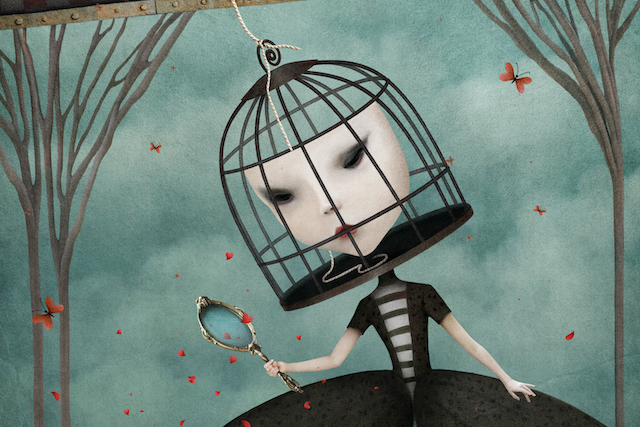
Woman in a cage image via Shutterstock
-

4 Mistakes That Are Built into Your Brain
“Cognitive bias is the biggest self-imposed obstacle to progress, not only for oneself but in the end, for all mankind.” ~Unknown
On a beautiful Pittsburgh morning in 1995, McArthur Wheeler decided to rob a bank. Not just one bank, but two. McArthur had a secret plan, one that he thought would make him exceptionally successful. It involved something very sour, a lemon.
McArthur had just recently discovered the “invisible ink,” a substance commonly used in elementary science class. Lemon juice, when used as ink on paper and dried, only appears visible when heated. Unfortunately for McArthur, his ingenious plan involved covering his face in lemon juice and then robbing two banks.
The fact that his face was not made of paper didn’t discourage McArthur from employing his reasoning that some lemon juice on his face would make him invisible to all the surveillance cameras.
Unsurprisingly, several hours after the two robberies McArthur was in custody. To his astonishment his plan was unsuccessful. He even objected to detectives, “But I wore the juice.”
Although most of us have never been this ignorant, our lives are still full of examples of ignorance. Whether we want to acknowledge it or not, some mistakes just never go away.
I have personally struggled with my own mistakes throughout my life. Not because I am scared of them, but rather because I seem to keep encountering the same problems. How can I make the same mistake over and over again? Am I just stupid? Why don’t I see other people making the same mistakes?
We all know that we need to approach these errors as learning opportunities, but that is much easier said than done.
The truth is that some of these mistakes are built into our brains. We are programmed by birth to make cognitive shortcuts. These are quick jumps in our thinking that often leave us making poor judgments and even worse, faulty decisions.
Let me explain.
Our brains are remarkably wondrous things that have evolved for one simple reason—survival. They have morphed into supercomputers that can take the unending sea of information in the world and make it simple. To be conscious of even a small percentage of all the information that our brains take in would be blinding.
Instead, our brains take in everything and only stream the information that fits within our model of the world. This is referred to as “mental accounting.” A good accountant doesn’t bore you with every detail of the process, but rather gives you the final product, which you care about. Our brains work the same.
Why Are We Always Right and Everyone Else Is Wrong
Have you ever had an argument with someone so frustrating you wanted to smash your head on the wall? Other people’s biases are always ripe for judgment, but rarely do we afford ourselves with the same pleasure. The brain is biased toward protecting our own beliefs and avoiding contradictory information.
If your beliefs are like a house, you must support your structure. You can’t go digging around the foundation looking for inconsistencies or contradictory beliefs. We have a vested interest in ignorance, which makes us naturally resistant to seeing our mistakes. Instead, we often try to justify our decisions and prove to others they are wrong.
Seeing Your Mistakes Is a Recipe for Growth and Clarity
Acknowledging your mistakes is a powerful method for seeing how easily we are influenced and biased. Looking at our decisions will provide clarity and create compassion for others around us.
Today we’re going to look at four mistakes we make in our daily living. These are wired into us; if you look hard enough you’ll see them everywhere.
Confirmation Bias – Why We Always Need To Be Right
Last week I was arguing with my girlfriend about something that I later realized was trivial and inconsequential. We had both entrenched ourselves in our opinions on the matter, and before we knew it we were shooting off a list of examples and reasons why the other party was wrong and we were both right.
This is the bias that makes arguing with people really annoying. Why? Because most people think they know what they are talking about. The problem is you also think you know what you are talking about.
So what usually happens when you encounter this dilemma? Naturally, the next logical step is assuming that they are either a) unfair/stupid/biased/illogical, or b) purposely being stubborn.
How can they not see the clear, impeccable logic of my argument and see that I am clearly correct?!
This is a slippery slope, and chances are both of you are suffering from the confirmation bias. We look for confirmation of our beliefs/philosophy or opinion in any context or situation. We find scenarios that support it and then stick to those, regardless of how terrible our argument may be.
Calling someone “closed minded” would be a manifestation of the confirmation bias. The confirmation bias is so fundamental to your development and your reality. We look for evidence that supports our beliefs and opinions about the world, but excludes those that run contrary to our own. Confirmation bias is the support structure that holds our beliefs into place.
You find examples of what you want to believe and ignore those that don’t fit.
Sunk Cost Fallacy – Why You Just Can’t Give Up on Things You Should Give Up On
When I was younger I got myself stuck in a long five-year relationship that I knew deep down was an absolute waste of time. We were not right for each other and on two totally different trajectories in life, but I still persisted. I kept thinking we had already spent so much time together, how could I possibly quit now?
This is the sunk cost fallacy, when we use past decisions to justify irrational current decisions. Basically, we justify putting more time/effort/money into something because we have done so in the past, despite the fact that evidence indicates continuing the decision will outweigh future rewards.
Sound familiar? We can see it everywhere. From business to our love lives none of us are safe from this pervasive little mistake. Sunk cost isn’t just a hyper persistent behavior, but rather persistence in the face of certain overwhelming evidence of potential future failure.
Money isn’t the sole factor that can escalate levels of commitment. Any form of pressure may contribute to an irrational level of commitment. Social pressure or psychological pressure are also powerful escalators.
Think of a relationship, one that you shouldn’t be in. I’m sure many of you have experienced that. How many times have you seen two people together and thought why the hell are they together? It’s pretty hard to pull the plug on something that you’ve spent so much time in, especially if you still hold an irrational hope that things will change.
The same goes with a job that you’ve done for years. You feel hesitant and scared to try something new. You’ve already spent so much time working hard; you can’t just leave now.
Fundamental Attribution Error – Why We Judge So Quickly
The driver in front of me is so slow. What is he or she doing? It must be an elderly person who can’t even see over the steering wheel. You increase your speed and catch up beside them wanting to satisfy your curiosity with a glance into the passenger window. You are surprised to find a young women talking on her cell phone.
It works like this: John is late, so therefore, John is inconsiderate and always late.
A small observation (regardless of how inaccurate it is) leads to a wide generalization. All further judgments are fixed with that label. Assigning fixed states or characteristics due to singular events is an automatic process that we use to simply the world.
The world is a complicated place, and the amount of sensory and social stimuli that our brains have to process is beyond our comprehension. This is the brain’s way of categorizing things, very fast and very inaccurately.
I know you are probably thinking of how unfair this is. Fairness is not an issue when faced with our intrinsic need to create a world that is both safe and controlled.
We want to make things understandable and safe, and consequently, easier to assign blame. Attributing failure to personality causes, as opposed to situational causes, is a wonderful way to accomplish this.
The truth is there is no way we can understand a fraction of the events that contributed to an event occurring; most of the time it’s simply pure speculation. Believing that things are tidy and neat satisfies our need to see the world as fair and encourages the illusion that we have control.
The fundamental attribution error is more than just judging a book by its cover; it’s represents a fundamental need to see the world as simple and easily understandable.
Availability Heuristic – Why You Never Consider the Long Term
I recently decided to wear a helmet while biking. I had never done this before, but after seeing a local news article about an accident I figured now would be a good time to start.
As I get older my ability to forget things has continued to amaze me. Time spent with friends and relatives seem to blur. Annual events come by and I am left shocked, thinking that I was in the same place at the same time last year doing the same thing. It somehow feels close and yet far away at the same time.
Our memory isn’t optimized to remember things in the past in incredible detail and clarity. We are biologically wired for the now. Our survival instincts have evolved to be hyperactive pattern detection machines that focus on the here and now.
Our vast experience and history is not automatically factored into our decision making process, rather we weigh our judgments to the present information. This is the availability heuristic; we overly value recent events over past events.
Good decision-making means using past experience and knowledge as a reference point for future decision-making, rather than using whatever random information you have recently encountered to form a decision. However, availability bias skips this step.
Why is it so hard to think clearly when you are emotional?
The answer is simple. Anything that is vivid, unusual, or packed with emotional latent material is given first class priority by our brains.
These upgraded passengers are pretty big and may even require an extra few seats on the plane, much to the chagrin of our more rationally minded smaller passengers. Decisions made in a more rational state of mind are quickly forgotten when an emotionally charged situation arises.
That’s why the ol’ walk around the block once and cool off trick usually works.
Bottom Line
These are just four of the many systemic mistakes that are built into our brains. Remember they aren’t evil or necessarily bad; in many cases they are necessary for healthy living. However, they do represent a fundamental method for simplifying the world and making it more understandable.
I think the biggest takeaway from these four mistakes is that understanding them builds compassion. Understanding others needs to start on an individual level—understanding yourself. Knowing how easy it is to make these kinds of mistakes allows us to be more compassionate when seeing others encounter the same issues.
What are the mistakes you find yourself constantly making? Drop a comment and let us know.
Thinking brain image via Shutterstock
-
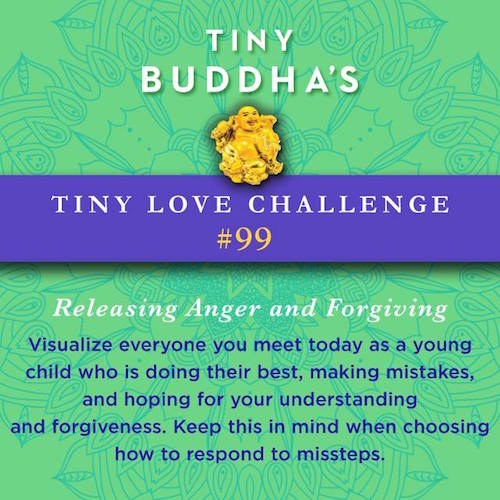
Love Challenge #99: Responding to Other People’s Mistakes
How do you respond when a child makes a mistake? Do you respond differently when it’s an adult?
(This challenge comes from the upcoming book Tiny Buddha’s 365 Tiny Love Challenges. Pre-order before October 6th and get $300+ in free bonus gifts!)
-
The Truth About Failure: How Hitting Hurdles Makes You Successful
“There are no failures. Just experiences and your reactions to them.” ~Tom Krause
I had spent years training for this race. This was the big one. If I won and made the qualifying time, I would go on to compete in the Canadian National Track and Field Championships.
I was burning to win. Only the winner of this race would qualify. Second place wouldn’t cut it.
Competing at the national level could lead to all kinds of opportunities: sponsorship, athletic scholarships, and a career in athletics.
My favorite form of self-torture was the 110-meter hurdles. I lived and breathed sprinting and hurdles. Track and field was my life in my last year at high school. In fact, track was probably the only reason I even showed up at class.
I was good at it too. I had run the fastest time in my event that season and I was on target to win the Provincial Championships.
I trained four to five days a week on the track, plus I hit the gym two to three times a week. I was in peak form and ready to destroy my competition.
I was laser-focused on the day of the event in Vancouver, Canada, at the Provincial Track and Field Championships. In my races, I was usually the first one out of the blocks and this race was no different. I exploded out of the starting blocks and was the first one to reach the first hurdle.
The hurdles for my age category were thirty-nine inches tall (three inches lower than Olympic height), made of thick wood, and were weighted with a metal base. When you hit them, they resist and they don’t move much.
Best if you don’t hit them.
I felt powerful in this race. By the third hurdle, I was already taking the race. At no time was anyone in front of me.
Then, I started hitting hurdles. A lot of them. Each time you hit a hurdle, it dramatically slows you down.
Some hurdles I smashed into with my knee, while others I hooked with my foot. Painful every time.
And I didn’t just graze the hurdles. I really clobbered most of them. At times, it almost brought me to a complete stop.
I hit five hurdles that day. There are ten hurdles in total. It was the worst race I had that season.
Despite hitting so many hurdles, I still came in second place. I could have touched the winner with my arm, it was that close.
If I had run a clean race like I usually did, I would have shattered my previous fastest time. I would have easily run the fastest time that year in the province and I would have qualified for the Canadian National Track & Field Championships.
I was devastated after that race. All my training for nothing. I wasn’t going to get a chance to compete nationally. Game over. Done. I felt like all the life had drained out of me.
That was the last time I ever jumped over a hurdle.
I spent the rest of the summer partying and hanging out with friends. I became a bit directionless and I no longer had much interest in going to university (the only reason I was thinking about going was so that I could compete in athletics).
At the end of summer, I started working full-time in a supermarket and saved up cash. By spring of the following year, I was on a four-month trip around Europe with one of my best friends.
After that trip, the demands of life took over. I got stuck in low-paying jobs for a few years.
I had an unhealthy diet and I would sometimes get drunk on the weekends. I barely had time or energy to even go for a short jog once a week.
Failure Hangs Heavy
That race is still my biggest failure in life. Seems silly but there it is.
Over the years, I occasionally thought back to my track and field days.
“That race was mine and I should have won that. If I had won, maybe I would have gotten sponsored by a sports company. Maybe I would have gotten an athletics scholarship. I might have had a sports career. I totally screwed up my big chance.”
The concept of failure is very pervasive in most modern cultures. It’s also responsible for a lot stress, poor health and well…basically crazy, unbalanced behavior.
In our culture, the attitude of “Second place is the first loser” is prevalent. You’re either a winner or you’re a loser. Not much in between.
We equate “winning” and success with achieving certain milestones such as having high salaries, being in a relationship, or having high-status roles in life. For many of us, not achieving these external successes means we’re failures.
Additionally, “mistakes” are often not tolerated at work or in relationships with people. There is usually a background, gnawing pressure to always say and do the right thing.
Failing can feel like an imminently dangerous threat that we must avoid at all costs, and cover it up when it does happen.
But it doesn’t have to be this way. If we just shift our focus, we can use failure to propel us towards our goals.
You Must Fail to Have Success
Quite often, when learning something new, we think that we have to nail it right off the bat. Who wants to look like a rookie, right? A clueless beginner?
Nope, not me.
Everyone wants to avoid mistakes and failure. But it is precisely through the path of making mistakes and “failing” that we learn.
You will hit hurdles in your life. You’ve been hitting them. What matters is what you do after you hit one.
In my case, I focused on my failure. I focused on hopelessness and I identified myself as being a failure just because I had a bad race.
I didn’t value coming in second. I ignored what was good and I was dismissive of anything positive that I had achieved.
I even gave up doing something I really loved doing.
You can see how dangerous having a “win or lose mindset” is, right? It shuts down our learning, closes off options and causes us to suffer emotionally.
We need to focus on our little successes, on what we did right and on how to keep learning and improving.
Let’s get comfortable with the idea that we’re going to make “mistakes” and that we might not always run perfect races.
If you take on the challenge of cultivating an improvement-oriented mindset, this will help you in all areas of your life.
You’ll become curious about your mistakes, observing yourself kind of like a scientist might: How can I do this better? What could I do differently so that I can avoid making that same mistake?
Winners and No More Losers
I still cringe sometimes when I say or do the “wrong” thing, but I usually catch myself and resolve to do something different the next time.
If I feel ashamed about making a mistake (or bombing big time), I try to move on as quickly as possible.
I recognize that my mind is my greatest ally; I’m the one who defines my own version of success, and I re-frame my experiences in a healthy, positive way, whenever I can.
Everyone deserves to “win” in life, and everyone is capable of reaching their goals in a way that is emotionally and physically healthy.
Can everyone really be a winner in life?
Yes, definitely…and you don’t need to come in first place or be the “best” to be a winner. When you love what you’re doing and when you’re focused on learning and making small improvements, anything is possible.
That’s winning.
Woman jumping hurdles image via Shutterstock
-

Stop Beating Yourself Up: 40 Ways to Silence Your Inner Critic
“To be beautiful means to be yourself. You don’t need to be accepted by others. You need to accept yourself.” ~Thich Nhat Hanh
If you’re anything like I used to be, your inner critic packs a powerful punch.
You’ve got a vicious voice bad mouthing you for much of the day. And when it’s in one of those moods, wow, are you going to suffer.
It’s no wonder you feel small, disappointed, and ashamed of who you are.
It’s the reason you lie in bed at night feeling like a failure, convinced you’re a nobody, certain you’re a serial mistake maker.
It was exactly why I used to just lie in the dark, a lot. Most days in fact. Not sleeping, not even thinking, just lying.
I was forever longing for my life to go away. I’d gotten so good at beating myself up that each day seemed to present more opportunities to fail, to feel insignificant and never good enough.
Alone in the dark, I could pretend that all my problems disappeared and that I was free of the stress. I could make-believe that the pressure had evaporated.
You see, I’d taken on one of those jobs, one of those supposed leaps up the career ladder. But hell, being the head of a college department turned out to be a bad life choice … given my oh-so critical inner voice.
Every day added to my imagined portfolio of failures. Every day blew another hole in my smokescreen of having any confidence in my ability. And every day, I became more fearful of being exposed as the ‘fake’ I believed I was.
I felt like I was constantly aching yet feeling numb at the same time, which became too painful to bear. I dragged my shameful self into the college and quit. I left my entire library of books on the table along with my resignation.
Four years on, even though I’d tried to move on, even changing countries, I still felt the same. No more confident and no less self-critical.
That’s when I learned that even if I hadn’t packed any belongings, I still took a devastating amount of baggage with me. Even worse, I’d allowed my inner critic to ride passenger.
That voice—that mean, vicious, ever-present voice—had to go if life was going to be worth living.
Consciously and patiently, I set out to understand why this self-critical person had become such a huge part of me. I learned how to recognize and counter the habitual negative messages and destructive behavior patterns. I learned how to beat my inner critic, for the most part.
And now it’s your turn.
Because it’s time you felt free from the pain of constant self-criticism as well. It’s time you finally stopped beating yourself up over everything you say or do. And it’s time you were able to breathe, smile, and be pleased with yourself, just as you are.
How? With one simple, small action at a time.
Some of these ideas will speak to you; some will shout. Others will only mumble. Try a handful that grab your imagination. Add in others from the list over time as you learn to build them into an inner-critic-beating habit.
1. Keep a self-praise journal.
Pocket-size is best. Each time you feel pleased by something you’ve done or said, jot it down. Flip through the pages every time you feel your critical voice starting to pipe up.
2. Write a positive self-message.
Use a permanent marker and inscribe it on the inside of your shoes.
3. Diminish your inner critic’s power.
Repeat a negative thought back in a silly voice.
4. Update your Facebook status:
“Happy to be me. Work in progress.”
5. Send yourself a loving text.
Keep it, and re-read it often. Appreciate yourself.
6. Add a positive self-message to an image.
Put it on your phone and laptop.
7. Draw a caricature.
Give your inner critic a silly feature that makes you laugh. Stick it on your fridge.
8. Make a face or blow a raspberry.
At your inner critic, not yourself!
9. Visualize your inner critic.
Imagine it as an evil gremlin squatting on your shoulder. Each time it speaks up, turn and flick it away.
10. Look in the mirror.
Smile and compliment yourself on one quality or trait you like.
11. Keep a list of self-forgiveness quotes.
Or sign up to receive daily emails from Tiny Buddha.
12. Write a list of qualities others like about you.
Keep it in your purse or wallet.
13. Write a list of qualities you like about yourself.
Add it to your purse or wallet as well.
14. Remind yourself:
“No one can do everything, but everyone can do something.” ~Unknown.
15. End each negative thought with a positive.
For example, “But I’m human and I can learn not to make the same mistake,” or, “But I have the power to change this.”
16. Jot down one thing you’d like to be better at.
Then take one tiny step toward that.
17. Remember “not good enough” doesn’t exist.
“I don’t know a perfect person, I only know flawed people who are still worth loving.” ~John Green
18. Ask yourself why you think you should be good at everything.
We all have our strengths and weaknesses. Concentrate on your strengths.
19. Find one thing each day to reward yourself for.
Make it something you truly look forward to.
20. Apologize to yourself.
Do this every time you recognize self-criticism (tell yourself you’re sorry out loud if you can).
21. Ring someone you haven’t spoken to in ages.
Tell them how much they mean to you. The best way to feel better about yourself is to make someone else feel better.
22. Remember that self-hate is not an option.
You’re the only person you can guarantee you’ll be in a relationship with from birth to death, so learn to love yourself.
23. Remember there’s no shame in messing up.
You’re trying to do something, grow, and contribute.
24. Break the cycle.
Admit you made a mistake and ask, “Now what can I do about it?”
25. Look at a mistake or “failure” in context.
Will it really matter in a week, a year, or ten years from now?
26. Recognize that you make fewer mistakes than you think.
You just criticize yourself repeatedly for the same few.
27. Drown out your inner critic.
Put on your favorite feel-good music.
28. Stop trying to do too much.
Strike one task from your to-do list that won’t stop Earth from revolving if it isn’t done.
29. Reflect on how you’re only on this planet for a short time.
You can either spend it beating yourself up and being miserable or learn to love yourself and be happy.
30. Stop focusing on the one thing you got wrong.
Focus on the many things you got right.
31. Recognize the good you do for others.
The more you beat yourself up, the less good you do.
32. Keep a daily, written tally of positive self-messages.
Increase this by at least one each day.
33. Physically pat yourself on the back.
Do this for everything you’ve done well this week.
34. Look at a satellite image of the earth.
Realize that you are an important part of this amazing creation.
35. Realize that over six billion people in the world don’t care.
Only you care that you made a mistake.
36. Think of a fun, positive adjective.
Adopt this as your middle name so that every time you criticize yourself by name, you’ve described yourself in a positive way.
37. Buy a houseplant.
When you tend it remind yourself you need this much love and attention.
38. Note down kind words from others.
Write them on slips of paper and keep them in a compliment jar. Dip into this whenever you need to counter a negative self-message.
39. Halt a negative self-thought.
Use an act of self-care. For example apply hand cream, or give yourself a neck rub.
40. Stop comparing yourself to others.
Remember Dr. Seuss: “Today you are You, that is truer than true. There is no one alive who is Youer than You!”
Stop Beating Yourself Up Once and for All
Beating yourself up leaves you feeling horrible.
All that constant self-criticism is exhausting. It leaves you aching inside.
Small, simple actions can bring great leaps in breaking this negative cycle—for good.
Let these ideas speak to you. Pick the ones that shout loudest.
Defeat self-depreciating thoughts you’ve heard over and over with conscious, positive acts of self-compassion.
Stop letting your inner critic overpower you. Fight back with self-love.