Tag: mindset

  • A Transracial Adoption Story of Love and Resilience

    A Transracial Adoption Story of Love and Resilience

    “Make it a great day that ends with a smile in your heart.”

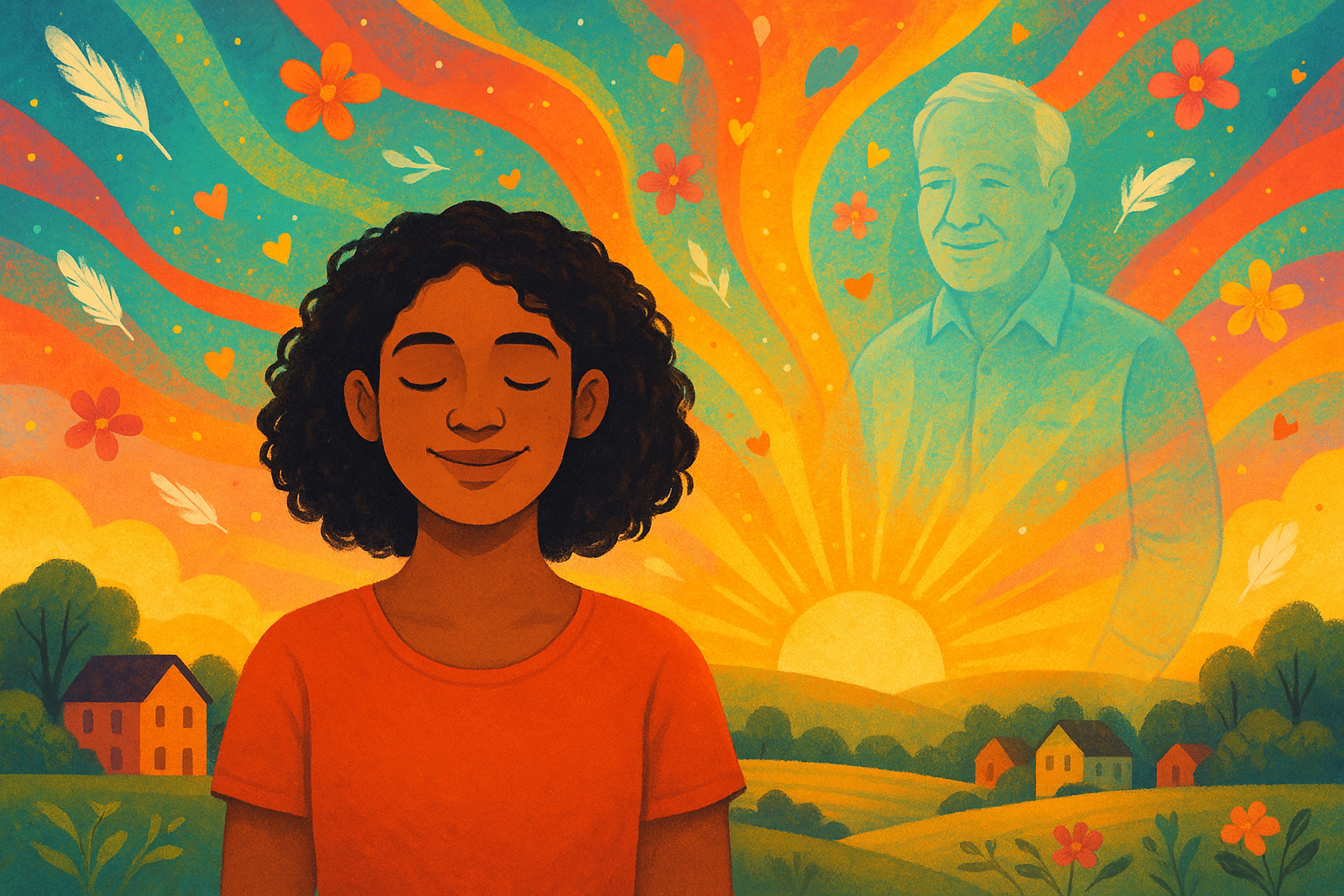
    Growing up, I always heard my father speak variations of these words. They’ve always sort of been ingrained in my head, but now more than ever are forever planted. He lived by them. He breathed them. And in doing so, he instilled them in me so naturally.

    They weren’t just encouragement—they were a way of life, his life, and how he chose to show up each day. He was naturally positive, uplifting, and, without exaggeration, the best human I’ve ever known.

    From a very early age, I understood that how you show up is a choice. But, along with that too, every day is a second chance, which were both powerful lessons that have shaped my resilient nature.

    Whether it’s in moments of challenge or joy, I believe the responsibility for your mindset and actions is completely in your hands. You choose how to respond to situations, people, and yourself. 

    Life, though, doesn’t have to be a series of irreversible moments; instead, each new day offers a clean slate. Whether you learn from the past or are trapped by it is a choice. And even when you face setbacks or make mistakes, you have the opportunity to reset and approach things differently the next day—you just have to do it. This belief in daily renewal is a cornerstone of resilience and gives me hope and motivation to keep moving forward, even when things seem tough.

    My story began in a small Ohio town many years ago, with a phone call that changed two families’ lives forever.

    I’m a biracial female (white and Black) who was placed for adoption and came home to a white family that loved me deeply. It was considered a transracial, open adoption thirty-nine years ago. From the moment my new family laid eyes on me, I was theirs and so deeply loved. I completed their family of five, being the only girl, the only adopted child, and the youngest.

    But life doesn’t always unfold predictably.

    When I was just eight months old, my adoptive mother passed away from liver cancer, leaving my father to raise three young children on his own for many years to come. His profound loss was immense, but he didn’t let grief define him. Instead, he poured every ounce of love into me and my brothers, ensuring we never felt a void he couldn’t fill. He not only surrounded us with his love but also made sure we were supported by the love of our community.

    All three of us share a different relationship with our dad, but the depth of our bond that he and I shared was immense. He was my rock, my greatest cheerleader, the person who saw my potential long before I recognized it in myself. He taught me resilience in the face of adversity and instilled a belief in myself that has carried me through even the most uncertain times. I am who I am because of him.

    For as long as I can remember, I’ve identified as Black because of the color of my skin, though I’ve always known that I am also half white. Understanding my identity, however, has always been a challenge—and I believe it’s a struggle that many transracial adoptees can relate to.

    Raised in a small, predominantly white town until fifth grade, I was often the only person of color in my circle. This made it difficult to understand where I fit in. The complexities of identity are immense when you find yourself in situations like this, and being biracial adds an extra layer of nuance. It becomes especially important to understand and embrace all sides of who you are. But how do you do that?

    I remember seeing Ebony Magazine around the house, something that might seem small to some, but for me, it was powerful. I would just flip through it as a little girl and look at the pictures, but it showed me people who looked like me.

    I also had a big sister through Big Brothers Big Sisters for several years, and there was never a moment when we shied away from discussing race or my adoption story. My dad, too, was always committed to understanding and supporting me—he continually read and educated himself on raising biracial children, even into my adult years.

    Being white, he was intentional about ensuring I never felt alone in my experiences. How he did this, as a white man himself, is truly special. He understood his privileges and my disadvantages, yet he made it his mission to learn everything he could about raising a biracial child in a world where kids—and adults, in my case—could be cruel.

    He could rarely (if ever) relate to the nuances of my reality, but he made it his life’s work to make sure I knew my worth in every possible way. That’s what made him so unbelievably special.

    When I came home in tears because classmates questioned why I “acted white, but I was Black,” he reassured me that I didn’t need to fit anyone’s definition of who I was “supposed to be.”

    After remarrying my wonderful stepmom and moving to a more diverse town, he was excited when I chose to attend a more culturally diverse high school. But when I struggled because of kids poking fun of my hair not being done or ignorant remarks from strangers, he stood by me with unwavering support, ensuring the trauma I faced was addressed head-on and talked through, because it was all part of my story.

    By the time I reached adulthood, I still often grappled with the complexities of my identity. But these words echoed in my mind: “It’s not meant for them to understand” and “Sometimes, there’s no reasoning with people like that.”

    These simple truths have continued to free me in times when I struggle to let go of things that don’t serve me. I didn’t need to explain myself to people who weren’t willing to listen. I only needed to be true to myself. And even today, I sometimes forget that in the moment, but I always come back to it when those moments happen.

    At thirty-eight, I was forced, for the first time, to truly find my own path and face things head-on. In May of 2024, my father passed away suddenly.

    Grief is heavy and unpredictable, and I find myself reaching for the phone to call him, only to remember he’s not physically here anymore. His voice, his lessons, and his love and zest for a better, more fulfilling life live in me now.

    One of the things that my dad and I shared was a love for the Tiny Buddha blogs. This was the only publication we ever read together consistently. It seemed only fitting to me, in the wake of his passing, to submit this post on the anniversary of his death. Through the blogs, we learned about resilience, about finding yourself when you’re lost, and about facing life’s challenges with the absolute best intention.

    My father was always the messenger of these lessons. He would say, “Life is tough, but it doesn’t have to break you.” Facing challenges, and even trauma, is essential to growth. Trauma doesn’t always have to stem from family—it can come from anyone and anything in your formative years and beyond. But what matters is how you choose to process and overcome it.

    Life is unpredictable. It will challenge you, stretch you, and break you down when you least expect it. But within those moments, there is also love, resilience, and the opportunity to define your own path and start anew. My father taught me that. He would always say, “Tomorrow is a new day.” And in his absence, I am choosing to live by the words he gifted me:

    Make it a great day that ends with a smile in your heart.

    Because no matter what life throws our way, we have the power to choose how we respond. We have the power to create joy, to uplift others, to choose to see the glass half full, and to find meaning even in the hardest moments.

    That is the legacy he left me. And that is the lesson I hope to pass on.
  • The Powerful Realizations That Helped Me Heal from Chronic Illness

    The Powerful Realizations That Helped Me Heal from Chronic Illness

    “No one is more influential in your life than you are because no one talks to you more than you do.” ~Dr. Paul David Tripp

    Living with chronic illness can seem like an insurmountable challenge. I felt completely broken and helpless. Amidst my tumultuous journey, I found that mindset is critical to restore vitality.

    For years I dealt with debilitating fatigue, severe joint pain, vertigo, loss of balance, and sleepless nights. I pleaded for help over and over, usually in tears. Oftentimes, people blamed my physical symptoms on my mental health. “You need to get more sleep.” “You are probably depressed.” “You are too anxious.”

    Ironically, I was in the prime of my life, feeling on top of the world. I had a great career, a wonderful husband, and three beautiful little girls. I couldn’t (and didn’t) ask for anything else.

    Eventually, each symptom intensified. Over the course of eight years, I was referred to specialist after specialist. My long list of diagnoses was growing rapidly. Raynaud’s syndrome, lupus, rheumatoid arthritis, neurological Lyme, and hypoactive thyroid.

    A short while later, there I was, with MS in a wheelchair, unable to care for myself let alone my family. I was missing the milestones in my children’s lives. After countless steroids and immunosuppressants, I gained forty pounds of fluid and lost vision in one eye. I developed kidney disease so severe that I was expected to be put on the kidney transplant list within six months. I developed an aggressive tumor leading to complex regional pain syndrome. I nearly died.

    Having a chronic illness changes you. Almost losing your life changes you. At first, I had a new outlook. I was more grateful for the little things. I reprioritized my life without even realizing it. Suddenly, the dishes being put away didn’t matter as much as it used to.

    At the same time, I became angry and resentful. Angry with the practitioners. Why couldn’t they help me? Infuriated with the medical system. Hurt by the lack of actions and phone calls from friends and family. Devastated by others’ judgments while I was secretly aching for their understanding and compassion.

    Ultimately, I healed my body. I stopped taking what I read at face value. I began to explore the research presented on the internet, podcasts, and influencer platforms. I found that my body was severely depleted in nutrients and that I needed to detoxify the low-grade pathogens and environmental toxins I had been exposed to.

    I got out of the wheelchair and even avoided the kidney transplant list, but my soul was still shattered. I hadn’t yet worked on healing my mind. This inadvertently left the door open for a reoccurrence of disease.

    Initially, life went back to normal. I felt renewed and grateful to be alive. But I still felt profound anger and resentment, and I still hadn’t learned how to navigate overwhelm. Then it happened. Another tumor popped up, and my MS symptoms started to return.

    Choosing to focus on my mindset and my thoughts ultimately played a profound role in my healing and recovery. In our fast-paced world, I don’t think we generally appreciate how significant a role this plays in our well-being.

    Your Life Is Always Moving in the Direction of Your Strongest Thoughts

    I often read in scientific literature that humans have a negativity bias, and that negative events imprint on our brains more quickly. Like a well-walked path, once you think a negative thought it’s easier to think that thought again.

    When someone is dealing with chronic illness resulting in a significantly decreased quality of life, the negative events are easy to attach to. Especially when you were never taught to think about what you are thinking.

    In hindsight, I see that I internalized my illness. I let it define me as who I was as a person, which led me into a continuous negative loop. The ongoing self-talk, the thoughts I said to myself over and over, created negative neural pathways and, very literally for me, negativity became a habit.

    This isn’t fair. I hate my body. My body is attacking itself. I am so lonely. I have no friends. I must be a terrible person. What an awful wife I am. My kids deserve a better mom. I am so ugly now. I cost us our home. I am no fun to be around now. I should have eaten better, acted better, known better, did something better… This became my constant inner dialogue.

    If there is one concept I wish I was taught before I became ill, it’s this: What you think impacts what you believe, which impacts how you feel, which impacts what you do and the results you get.

    This one truth was the final piece of healing. Learning to be a witness and inquire about my own thinking took conscious effort. I had to learn to think on purpose, questioning my thoughts to see things differently.

    With big emotions comes big work. It takes time, space, and commitment to work through and identify the (sometimes subconscious) thoughts behind an emotion. But this is the work that broke my overwhelm and need to control. This is the work that disarmed my negativity and has brought me peace. I believe it has helped me remain disease-free for over four years now.

    While the following realizations helped me navigate my beliefs around my chronic illness, they have now become foundational in all areas of my life.

    1. Everyone else’s opinions and actions have everything to do with them and nothing to do with me. If their opinions and actions were based on me, then everyone’s response would be the exact same. 

    Realizing this was liberating. The time I spent thinking about and trying to work around a stranger’s possible judgment of me took me away from being present in the moment with my husband and children.

    Rather than trying to figure how Iong I could walk through a store using a shopping cart instead of my wheelchair, trying on a dozen different pants to cover the swelling in my legs or the eight-inch scar on my knee, and trying to conceal the rashes on my face and hide my thinning hair, I could have been playing with my kids. I used up all that time I will never get back on the chance that one person might make a judgement of me that really had nothing to do with me at all.

    2. Our deep-seated belief systems are subjective, but we get so convinced about the rightness of how we feel that we don’t realize that we see things as WE are and not as THEY are.

    I believed that my family and friends should have checked in more often than they did. I felt lonely and isolated not being able to leave the house. This loneliness hurt deeply. In my mind, I thought that if someone I loved was sick, I would visit often. I would call weekly. But that was my standard. My subjective metric that I placed upon them. It was a belief system I didn’t realize that I had.

    I felt so deeply hurt and lonely that I was convinced I must have been right. I saw everything as I was, not as reality was.

    In reality, I had no idea why there were less visitors than I expected. Their standard was fulfilled for them according to their beliefs. My standard may have been too high compared to another’s. It could have been too low. Struggles behind closed doors could have been occurring that I was unaware of. My negativity could have been too much for another to bear. Being around someone ill could have been uncomfortable. The possibilities are endless.

    3. Arguing with reality is pointless. It just brings suffering. Learning to accept what is brings peace.

    You might say that learning to accept a chronic illness or, in my case, a terminal illness, is unthinkable. I never made it to the point of having to do the thought work to accept that. With each diagnosis and every morbid prognosis given, I recognized it as the doctor’s limiting belief. At the time I was in the mindset of my diagnosis being a barrier that had to be overcome.

    My suffering stemmed from all the other realities around chronic illness. I recognized this every time I said the word “should.” Doctors should be more open minded. I shouldn’t be sick. The health care system should bring in more holistic treatments. My body shouldn’t be compartmentalized when addressing disease.

    Each time I used the word “should,” I sat down and did the thought work to create a new belief that brought me a feeling a comfort instead of dis-ease.

    I conceded that I had no control over an entire health care system or the way someone thinks. But I could find a practitioner who was open to alternative treatments, and I could review the literature myself and make a decision about my care. I could accept what is because hopelessly trying to change the world according to my “shoulds” wouldn’t solve my problem.

    4. Freeing your mind is not about never having a negative thought. It’s about opening up to what else could be true.

    One of the most damaging experiences I had was being told to think, feel, and be positive. This toxic or false positivity dismissed the profound turmoil I was going through emotionally and physically. I ended up feeling more alone. I wondered, why can’t I be positive? I added this lacking skill to the list of things of what was wrong with me.

    The physical pain of my diseases put it in the forefront of my mind. How could I not have a negative thought about pain? How on earth was I supposed to be positive about being in pain?

    This consumed me until I realized what else is true about physical pain. When we feel pain, it’s supposed to be there! It’s our body’s way of communicating that something is wrong and needs our attention. Recognizing that there was another truth brought peace because I could let go of that fight to be positive and believe something I wasn’t ready to. It was a stepping stone to get me out of the negative loop and into a neutral state of mind.

    5. We cannot judge our way into healing. It’s all about compassion.

    As human beings we judge. It helps keep us safe as we assess a potentially dangerous situation; it helps us decide who to keep around us, how we navigate our careers, what medical treatments we’ll undergo, and even what vehicle we drive.

    Unfortunately, we are usually our own worst inner critic. When that inner critic is not driven by an open mind and curiosity, it can derail our healing both emotionally and physically.

    Having compassion allows a sense of grace to guide our thoughts and decisions. Instead of forcing, it implies allowing things to unfold naturally and responding with patience and kindness. I like to say, “Pave your path with grace.” First, identify what your judgment is. Can you absolutely know that it is 100% true? Next, ask: Is it helpful? Is it kind? Would you believe this if it were about someone else?

    Restored and Revitalized

    Everything we take in becomes us on a cellular level. Our food, our products, our environment, and even our thoughts impact the chemical reactions in our cells.

    To recover from chronic illness, I had to put out the fire with nutrition and lifestyle first. Only then could I do the work to deconstruct my fundamental beliefs. Once accomplished, my thoughts about the events and people involved in my diseases lost their power over me. Suddenly, I felt freer than I have in my entire life. I felt empowered and I regained the energy of my twenty-five-year-old self.

    In the beginning I looked to the outside world to make me better. I tried to control everything around me, and it brought me a false sense of joy. Now I look to the inside. As a result, I went from a woman riddled with despair and chronic illness to a woman that became filled with love and appreciation.

    I’m not suggesting that changing our mindset can keep our bodies disease-free, or that all people who are sick are focused on the negative. But shifting the way we think can change the choices we make. And sometimes the smallest choices can make the biggest difference for our health and well-being.

  • Mindful Forgiveness: 4 Steps to Unlock the Healing Power of Your Mind

    Mindful Forgiveness: 4 Steps to Unlock the Healing Power of Your Mind

    “The truth is, unless you let go, unless you forgive yourself, unless you forgive the situation, unless you realize that the situation is over, you cannot move forward.” ~Steve Maraboli

    The key to healing is learning to let go of negative thoughts and feelings. Mindfulness will allow you to be aware of your thoughts and feelings; forgiveness will help in letting them go.

    Simple as it is in theory, putting it into practice may be harder.

    Mindfulness, being aware of your thoughts and feelings in the present moment, is not that difficult. But the trick is to do it amidst the chaos of our modern way of living.

    Forgiveness is even harder. Our mind sees the events of the past as lessons that are beneficial for our survival and wants to hold on to painful and irritating memories.

    But in the modern world, we rarely need this primal safety mechanism, and the grudges we hold hurt us more than they do good.

    What’s worse, the things we have done, or others have done to us, often make us angry. Anger can be a severely damaging mental condition; not only damaging to our minds but also to our bodies.

    However, taking the time to consciously combine mindfulness with forgiveness will open the way to profound emotional and physical healing, and will eventually lead to a joyful and healthy life.

    Being mindful of your thoughts and feelings will allow you to confront them instead of repressing them. Once confronted, the events that cause those thoughts and feelings can be examined and forgiven.

    I learned this the hard way, but now I want to share what I know so that you can skip the painful part.

    Pain is Often a Prompt to Grow

    Just a few years ago, I thought I had life figured out. I had done everything ‘right,’ succeeded in achieving my goals, and therefore, I expected to be happy.

    After years of rigorous studying, I landed a job at a corporate bank. It was everything I had ever dreamed of. I could finally afford a fancy car. I was surrounded by amazing people. I went to parties, traveled, and had fun. Life was (supposed to be) pretty sweet.

    As fun as it was, it was not healthy in any way. My health started to deteriorate quickly. I gained over thirty pounds, started to have pains in my back and legs, and was always tired.

    What’s worse is that no matter what I did, I could not be happy. I was constantly irritated or anxious and had no idea what was causing these feelings.

    Then one day a realization hit me: I was completely miserable.

    Why was I not feeling any joy in life? I could not understand what the matter was. There was no reason for me to feel how I did. I was doing everything that I had learned was supposed to bring me happiness, yet I still wasn’t happy.

    So there I was: a young man in my mid-thirties, gaining weight, feeling miserable, and losing my mental and physical health in the process.

    I had no idea how to deal with any of this. How was I supposed to deal with my anxious and angry mind when I had never learned to deal with my emotions, let alone express them in a healthy way? The only solution for me was to not confront my feelings at all.

    Before long, I developed a heart arrhythmia, which felt really uncomfortable, especially when trying to sleep. My pulse rate went up to 120 bpm and did not come down no matter how I tried to relax. Sometimes it felt like my heart would stop beating for brief periods of time.

    So I went to a hospital, but the doctor who examined me told me that he couldn’t determine the cause. Physically I was fine, and my EKG was perfect. Like taken from the pages of an anatomy textbook.

    This was, of course, very puzzling. How could my heart seem to be healthy when I was clearly suffering from arrhythmias?

    Lying there in the hospital bed, I had time to think deeply about life. And after some pondering, the answer became obvious.

    Illness Is Created First in the Mind

    My condition was psychosomatic. I understood that my inability to deal with my emotions was piling up negative thoughts and beliefs in my mind, which caused my body to react in a negative way. I had refused to be mindful of my thoughts and feelings, thus being unable to let go of them.

    Only when I was forced to stop and listen to how I truly felt could I find this answer. It was a hard and mandatory lesson in mindfulness, one that still sticks with me today.

    So I decided to confront my negative thoughts and emotions. The process was simple: Stop and take a deep breath. Be still and focus on breathing in and out slowly. Then tune in to how I feel. What are these feelings? Why am I feeling them? What are they trying to tell me?

    I noticed that under the surface, my most dominant feeling was anger.

    I was angry with myself. Why was I not able to deal with my emotions? Why hadn’t I listened to how I felt and tried to repress my emotions instead? Why did I let the situation get so bad?

    I was angry with my parents and teachers. Why didn’t they show me how to express emotions in a healthy way? All I was ever told was “crying is weakness,” and “being angry is not okay; go to your room until you calm down.” Sometimes it was not even okay to show love or affection. So I learned to repress my emotions.

    I was also angry with society. I felt that the only thing I had ever heard about how to be happy was wrong. I did not find happiness by achieving goals or getting material wealth, as is so often taught by society (and everyone else around us for that matter). I had the education, the career, the money, the car, and so on. Yet I was miserable.

    But I knew that it was not necessary to be angry with myself or others. I was only doing what I had learned was right. Likewise, what others had taught me about life, feelings, and happiness was what they had learned themselves. They did not know any better, and their intentions were good.

    So I decided to start forgiving. I used mindfulness meditation to connect to my thoughts and feelings.

    And when I was deeply immersed in my mindfulness meditation and focused on a feeling, often a memory popped into my mind. It was something that someone had said or done that had made me feel angry or afraid.

    I then “healed the memory” through an exercise where I forgave the people involved.

    And wouldn’t you know it, when I started to forgive the things that I or others had done in the past, I healed almost instantly.

    I got rid of all the pain in my mind and body, and there was no sign of arrhythmia anymore. I almost couldn’t believe it. With this simple combination of mindfully identifying thoughts and feelings, then forgiving the people that caused them, I healed my body in two days.

    Two days. That’s all it took to heal over ten years of neglect.

    I also found my mental well-being improving by leaps and bounds. I felt peaceful and happy. I started to see the joy in everyday moments, which I hadn’t for years. I realized that the opportunity to feel joyful was always there, but I’d been so occupied with the past and the future that I was unable to see it.

    The 4 Levels of Forgiveness

    This is what I did, and you can try this too.

    1. Forgive yourself for what you did to yourself.
    2. Forgive yourself for what you did to someone else.
    3. Forgive others for what they did to you.
    4. Forgive others for everything they have done.

    Start with level one and work your way through the levels. With this exercise, you will start to feel better in a matter of days.

    For levels one and two, forgiving yourself, try this simple exercise:

    Think about something you regret. Stand in front of a mirror, look yourself in the eyes, and say, “I forgive you. You did the best you could at the moment. You didn’t know any better.” Repeat this in your mind, or even better, say it out loud. Do it at least five times. After you are done, close your eyes and take a deep breath. Relax.

    This might be the hardest one of the exercises. For some reason, we tend to hold a grudge against our past selves. But it doesn’t do any good to be unforgiving. For a long time, I was guilty of thinking, “I’ll never forgive myself for what I did!” But as I started to do this exercise just once a day, I quickly started to feel like a weight was being lifted off my shoulders.

    For levels three and four, forgiving others, try this quick meditation:

    Close your eyes and relax. Breathe in and out slowly three times. Think about a memory that’s bothering you. Imagine the situation as vividly as possible and pay close attention to the person that’s the cause of your negative feeling.

    Then, imagine the scene you are in starts to fill with bright, warm light. Like the midday sun on a beautiful summer day. Imagine yourself approaching the person that’s causing the suffering and saying to them, “I forgive you. You did the best you could at the moment. You didn’t know any better.” Then imagine giving them a warm, loving, forgiving hug.

    If you feel like you need help with this, you can imagine anyone you want, even multiple people, there with you to give their support. If you so choose, you may even bring to the scene a higher power to help you.

    Done! Open your eyes and take a deep breath. Relax. You may already feel a little lighter, but don’t worry if this takes several tries. It may not be instantaneous or easy, but it’s definitely worth it.

    Everyone Is Doing Their Best (Including You)

    Forgive yourself for not knowing any better at the time. Forgive others for acting the only way they knew how. You acted the way you had learned, and so did everyone else. Please don’t blame yourself and try to forgive others for their behavior. By holding on to fear, anger, or hate, you will ultimately hurt yourself.

    Forgiveness will give you peace of mind. It will allow you to live mindfully and enjoy the moment, which you now understand as a perfect opportunity to express who you are. You will be able to let go of the past and stop worrying about the future, and your life will start to fill with peace and joy.

  • The One Thought That Killed My Crippling Fear of Other People’s Opinions

    The One Thought That Killed My Crippling Fear of Other People’s Opinions

    “Don’t worry if someone does not like you. Most people are struggling to like themselves.” ~Unknown

    For as long as I can remember, I have been deathly afraid of what other people thought of me.

    I remember looking at all the other girls in third grade and wondering why I didn’t have a flat stomach like them. I was ashamed of my body and didn’t want other people to look at me. This is not a thought that a ten-year-old girl should have, but unfortunately, it’s all too common.

    Every single woman I know has voiced this same struggle. That other people’s opinions have too much weight in their lives and are something to be feared. For most of us women, there is nothing worse than someone else judging our appearance.

    After that fear first came to me in third grade, I carried it with me every day throughout high school, college, and into my twenties. This led me to trying every diet imaginable and going through cycles of restricting and binging. I just wanted to lose those pesky fifteen pounds so I could finally feel better about myself and not be scared of attention.

    There was no better feeling than getting a new diet book in the mail and vowing that I would start the next day. Following every rule perfectly and never straying from the list of acceptable foods. I stopped going to restaurants and having meals with friends because I wouldn’t know the exact calorie count.

    All this chasing new diets and strict workouts was because of one simple thought that I carried for years. I just assumed everyone was judging my body and would like me more if I lost weight. I was constantly comparing my body to every other woman around me.

    This fear of what other people thought also led me to have a complicated relationship with alcohol in my late teens and early twenties. At my core I am naturally sensitive, observant, even-keeled, and sometimes quiet. But I didn’t like this about me; I wanted to be the outgoing party girl that was the center of attention.

    The first time I got drunk in high school I realized that this could be my one-way ticket to achieve my desired personality. With alcohol I was carefree, funny, and spontaneous, and I loved that I could get endless attention. I was finally the life of the party, and no one could take it away from me.

    I wanted everyone to think that party-girl me was the real me, not the sensitive and loving person that I was desperately trying to hide. Classmates were actually quite shocked if they saw me at a party because I was so different than how I appeared in school. It was exciting to unveil this persona to every new person I met.

    But the thing with diets and alcohol was that this feeling of freedom was only temporary. When the alcohol wore off or the new-diet excitement faded, I was back to the same feelings. In fact, I found that I was even more concerned about what people thought of me if the diet didn’t work or the alcohol wasn’t as strong. I feared that they would discover the real me.

    The irony was that whenever I drank, I felt worse about myself after the alcohol left my system. I felt physically and emotionally ill from the poison I was putting into my body. I would often be embarrassed about not remembering the night before or fearing that I said something I shouldn’t have. It was a nightmare of a rollercoaster that I no longer wanted to be a part of.

    I decided in my mid-twenties that alcohol would no longer have power over me. That I wouldn’t rely on it to feel confident and instead work on loving the real me. I decided to break up with alcohol and put it on the back burner. I was moving to a new city where I didn’t know anyone, so I figured this would be a good time to start fresh.

    Once I moved and started my new life, those same familiar fears and pangs of shame started to show up again. If I wasn’t the loud party girl, who would I be? What would people think of me if I wanted to stay in and read instead of partying? I wasn’t confident in my authentic self yet, and I was desperately looking for a new personality to adopt. That’s when I turned back to a familiar friend for help: dieting.

    In the span of five years, I tried every major diet out there: paleo, keto, vegetarian, vegan, counting macros and calories, you name it. I dedicated all my free time to absorbing all the information I could so I could perfect my diet even more. At one point I was eating chicken, broccoli, and sweet potatoes for every single meal. My body was screaming at me for nutrients, but I continued to ignore it.

    Then one day I hit that illustrious number on the scale and finally felt happy. Well, I assumed I would feel happy, but I was far from it. I felt like absolute crap. My hair was falling out, I had trouble sleeping for the first time in my life, my digestion was ruined, and I had crippling fatigue. I finally lost the fifteen pounds, but my health was the worst it had ever been.

    I felt betrayed. The scale was where I wanted it, but I wasn’t happy. I was more self-conscious of my body than ever before. I didn’t want people to look at me and notice my weight loss. That little girl that cared about what people thought was still ruling my life. I had to make a change, and I had to start loving the girl in the mirror no matter what I looked like. My life depended on it.

    It was during one of those nights where I felt so confused and lost that I stumbled into the world of self-development. I bought my very first journal and the first sentence I wrote was: “Self-love, what does it mean and how do I find it?” I vowed to myself that I would turn inward and get to know the real me for the first time in my life. 

    This new journey felt uncomfortable and scary and pushed me completely outside my comfort zone. I couldn’t just hide behind external sources anymore like I did with alcohol and strict diets. I had to get to know authentic Annie and show the world who she was.

    It was in this journey that I found my love of writing and inspiring people. I decided to follow my dreams and get certified as a life coach and finally make my writing public. But when I went to hit publish on my first post, that same fear reared its ugly head.

    This time I was deathly afraid of what my coworkers and friends would think. They would see the real me, the sensitive soul that had deep feelings and wanted to inspire other people. This fear caused me to deny who I was for far too long, again.

    I hesitated for years to share my writing because this fear stopped me. But this time I wasn’t going to let it have control over me anymore. One day this thought popped into my head and stopped me dead in my tracks. It was an enormous epiphany and one I couldn’t ignore. The thought was:

    When I am eighty years old and looking back on my life, what do I want to remember? That I followed the same path as everyone else or I followed my heart?

    As soon as that thought came to me it was like I was hit over the head. For the first time in my life, I understood it. I realized that if I kept living my life in fear of other people’s opinions, I wasn’t really living my own life.

    Every human is here to be unique and serve out their own purpose, not to just follow the crowds blindly. I couldn’t live out my purpose if I wanted to hide away.

    Self-acceptance and self-love come from knowing and respecting all parts of myself. It comes from acknowledging my shadow sides and still putting myself out there regardless of opinions. It comes from going after big and scary goals and having fun along the way. Because the absolute truth is this: other people’s opinions are not going to matter in one year. They won’t even matter five minutes from now.

    So now I want you to ask yourself the same question: What do you want to remember most about your life when you are at the end of it?

  • When You’re Ready for Change: You Need to Believe in Your Future Self

    When You’re Ready for Change: You Need to Believe in Your Future Self

    “Growth is uncomfortable because you’ve never been here before. You’ve never seen this version of you. So give yourself a little grace and breathe through it.” ~Kristin Lohr

    I was kinda sorta showing up.

    To the outside world, it looked like I was doing all of the things. I was smiling. I was talking about exercise and eating well. I was posting happy, positive vibe quotes, but I wasn’t really showing up for myself.

    I had experienced a miscarriage at thirteen weeks. This was supposed to be the safe zone. I had told family and friends. My husband and I even had names ready to go. This was baby number four, so I thought I was a pro.

    I was in a toxic work environment, but I kept going. Even after my miscarriage, I felt I had to be back there quickly so others didn’t need to deal with my responsibilities.

    After experiencing this loss, I spent quite a long time kinda sorta being serious about my well-being. But let’s be honest, I pretended for years. I was hearing “Take care of YOU!” on repeat. It was well intentioned, but I had absolutely no clue how to do that. Nobody told me how to take care of myself.

    I knew all of the shoulds and suppose-tos. But I was overwhelmed by those concepts as I added them all to my to-do list. I knew I should eat healthy and move my body, but what was I going to do about these negative thoughts of not being good enough floating through my brain every single day? The guilt was overflowing, but I just smiled.

    I took on more responsibility and wore so many different hats that it looked like I was able to do it all. In reality, I was so stressed that it was coming out physically through an annoying eye tick.

    I made an excuse of being tired when people noticed it. I defended that excuse because I needed to believe it. I wasn’t sleeping well. I was eating junk in between the occasional healthy meals kick. I was moving, but not on a regular basis. I continued to smile, make excuses, and pretend all was good.

    One morning, I realized that I couldn’t keep doing this. I opened my eyes and accepted that I was only kinda sorta showing up for myself and that I couldn’t keep sustaining this lifestyle without causing irreversible damage to those I loved and to myself. So I said the scariest words: “No, sorry. I can’t.”

    Admittedly, I only whispered these words to myself at first. Then something powerful happened: I started to say them out loud to other people.

    First, it was only to my inner circle, and then it started spilling out everywhere. I was talking about taking my power back. I was talking about an exit strategy from my toxic work environment. I was talking about how my miscarriage did, in fact, hit me hard. It rocked me to my core.

    I was open about my feelings. I was letting myself experience all of my emotions. I was shifting. I was becoming a new woman—a similar version to the happy and healthy woman I once was. I was emotional. It was scary. It was worth it. It took a lot of work and guidance. It’s still evolving. In many ways, I expect to always be growing and shifting.

    I told myself: Believe in your future self. That sounds like it should be easy to do, but it’s tough for most people. Chances are you are afraid of change. We all are. And it might be hard on your ego to admit you need to do something different.

    As humans, we want to be right. We don’t want to admit a choice we made was the wrong one. We may have second thoughts and see lots of red flags going up all over the place, but we still hate to admit we made the wrong decision. So we stick with what we’re doing even if it feels wrong.

    I have a little secret to tell you: The most successful people are the ones who push through the fear of change and do it anyway—even if it’s hard on their pride. It can be done. It will be messy in the middle, but you’ll get through it. When self-doubt creeps in, you need to follow two steps to make a change.

    1. A mindset shift

    You absolutely must believe that you can and will be successful to become successful. No matter what the goal is, you must believe in yourself and see the success as a real possibility.

    For example, if you want to move your muscles more through exercise, start your morning off with the mantra of “I am making my health a priority. I will move my muscles today.” Start acting like someone who exercises. Make decisions like a person who moves on a regular basis. Schedule it in. Talk about it.

    If you want to be happier and healthier, use these I am statements to help get you there: “I am enough.” “I am worthy of happiness every day!” Many people say they want to feel happier but don’t believe they deserve it, so they end up sabotaging themselves. Say those statements out loud. Write them down. Get to the root of any traumas or past conditioning that prevent you from believing them.

    Once you shift your mindset, your choices and path will align with the new you. You will reach your goals, or at least make progress toward them. You may experience imposter syndrome along the way. Keep going. That is a part of the mindset shift process. Talk back. If you believe you can do the things you want to do, you will.

    2. A strategy

    The second part of your success journey is the roadmap to move you forward. You cannot just wish and hope for things to happen. You must do the work.

    If you’ve shifted your mindset, now you need to travel the miles to get where you want to go. How do you do this? Set realistic goals. Make a plan. Follow the plan and stay consistent. You’ll need guidance along the way. Surround yourself with people who are doing what you’d like to do. Listen to the advice of those who have traveled this road before you. Ask for help to stay accountable.

    Do not assume that this will be an easy path to travel. Most things worth having require a good bit of work. Expect roadblocks and push past them.

    Know that not everyone in your current circle will be ready for you to shift. Change is scary on a personal level. When others change around you, it’s frightening if you aren’t shifting alongside them. In some cases, your change will create positive ripple effects for those closest to you, but it will happen for them once the timing is correct.

    Your future self is waiting to meet you—you just need to get moving. The path will not be all sunshine and rainbows, but you can travel it. You can make a change, even a great big one.

    Once you are on the other side, you’ll wonder why it took you so long to get there. You’ll be happier. You’ll be healthier. Other people will ask you how you did it! Take that first step and keep going. I promise you it’s better on the other side.

  • The Power of Reframing: 3 Ways to Feel Better About Life

    The Power of Reframing: 3 Ways to Feel Better About Life

    “Some people could be given an entire field of roses and only see the thorns in it. Others could be given a single weed and only see the wildflower in it. Perception is a key component to gratitude. And gratitude a key component to joy.” ~Amy Weatherly

    I grew up in a deeply negative environment. My parents separated acrimoniously when I was seven, and they were a grim example of how not to do divorce.

    They brought out the worst in each other, and sadly, over time, they also brought out the worst in me. I was depressed as a teen, and had been conditioned to believe that my problems were an unfortunate family trait—one that I had simply to accept and live with.

    And I did, for many years. But of course, I was not happy. And yet I didn’t know enough about the world to understand that my environment and upbringing were very largely to blame.

    I now know that while genetics can account for up to around 40% of the happiness we experience, the rest is within our control.

    I’m aware of this because studies have shown it to be the case. But I know it because I’ve also lived it.

    Deciding to Change My Life

    Over the last ten years, I’ve dramatically changed my life, and I’m the most at peace I’ve ever been.

    When my eldest daughter was a baby, I finally had an important enough reason to want better. I was determined that she would grow up in a fun and positive home. And if I was going to make that a reality, I had to put in the work to make it happen.

    Plus, it had become especially vital at that time since my daughter’s difficult delivery had been traumatic and left me with extreme postnatal anxiety. I was in a very bad place, and I needed to get out of it; I needed, in fact, to get out of my own head. And I didn’t want to rely on medication for that.

    While my husband had already saved me in many ways, the rest was my responsibility—my state of mind, my outlook.

    Desperate but determined, I began an activity that, over time, changed my life.

    While I appreciate that sounds like an exaggeration, it’s really not. Because my life truly has changed. Although it also hasn’t. Allow me to explain…

    The Power of Reframing

    I inadvertently learned how to reframe, and it’s possibly the most profound skill there is for increasing happiness.

    It’s so incredibly powerful because it can change your experience of life—without changing your actual circumstances.

    Here are a few examples of how reframing helped me to feel more positive about my own life…

    A few weeks ago my dad moved, and I planned to visit with my girls during half term to take him a plant.

    We live in the UK, and while the weather is changeable, it’s usually fairly mild. But on the day it so happened to be spectacularly windy. I told my dad we’d make our way and I’d let him know if we couldn’t get there.

    We made it! And after dropping off my dad’s plant, we drove a short way to a restaurant.

    Before we’d even ordered drinks, the winds brought down a pylon and there was a power cut. The kitchen closed, and my young daughters ate crisps for lunch, and I still had to get us safely home.

    But, instead of being mad that the entire day turned into a farce (we encountered fallen trees on the way home!), I was glad I’d made the effort. Most importantly, we were safe, but also it reinforced to my dad that we cared enough to get there despite the challenges.

    Another example is that since Christmas we’ve had one illness after another in our home. First was COVID, and since then we’ve had viruses and two bouts of chicken pox.

    When my eldest succumbed to COVID, I was worried about her, but also on a practical level how I’d get my youngest daughter to school (until my husband also tested positive, at which point I was able to leave the house). The fear that had been silently there for two years had finally caught up with us, and it had the potential to be an enormous source of stress.

    But during the COVID episode—and later with chicken pox too—school mums stepped up without me even asking. I’d never really felt like I’d integrated with the school mum crowd, but as it turned out, I was wrong:

    They totally had my back.

    I felt and continue to feel so incredibly grateful not only for them, but also knowing that I have a support network I did not even realize was there.

    These are just a couple of recent examples which spring to mind, of situations that previously I probably would have experienced negatively and complained about—but I’m now able to reframe to find the silver living.

    So you see, my life is different in terms of how I experience the world, and yet it’s really the very same as it always was. But I feel vastly different.

    I feel at peace.

    And now I want to share my process so others can also learn how to do this for themselves, because it’s basically free therapy, available to everyone, that we can implement alone, and without guidance.

    But how did I do it, without professional help—and without medication?

    How to Tap Into the Benefits of Reframing

    For me, there were really three steps to my journey, which happen to work together in perfect harmony.

    1. Practicing gratitude

    First, I began writing gratitude lists.

    With no comprehension of their value—but with a deep desire to start appreciating the good things in my life, and a desperate hope it was a good starting point. Good enough to help me do better for my daughter.

    I started writing a list of the positive things that had happened each week. Not realizing that this is actually an effective therapeutic exercise, I wasn’t expecting very much to happen.

    But I knew that the fundamental change I wanted to see in my life was more positivity. So I figured the “fake it till you make it” approach might just be beneficial.

    Incredibly, it didn’t just help—it was the turning point of my life to such a degree that it now feels like before and after.

    Writing gratitude lists isn’t difficult. It can be as simple as jotting down three, or five, or ten things you’re thankful for. This can be done when you wake up, to start the day on a positive note, or at the end of each day if you prefer.

    If you have a hectic schedule and can’t find time to do this daily, just be sure to do it regularly.

    And if writing it down seems like too much effort at the end of the day, you could try saying your list of things for the day quietly and privately in your own mind.

    It doesn’t need to a formal practice; it just needs to something you do practice. Because over time, something magical happens…

    2. Positivity

    As time goes by and you continue to acknowledge the good in your life, your default mindset will begin to switch over to a more positive one.

    For me, it was like a spiritual awakening, and I like to use an analogy to describe my experience.

    The idea of rose-tinted glasses is a familiar one for most people. But sometimes they’re actually a blessing. After spending several months practicing gratitude regularly, I felt like I’d removed the only pair of glasses I’d ever known, and the world suddenly looked brighter.

    I also began to appreciate that positivity is often a self-fulfilling prophecy: the harder you look for it, the more you will find.

    And your mood tends to be reflected back to you by others, too. Just as negativity is draining, positive people energize those around them!

    I was recently waxing lyrical to somebody about the positive impacts of gratitude and reframing, but they insisted that offloading onto friends or family is necessary sometimes. I didn’t completely disagree, but I had something important to add:

    By default, increased positivity leads to a decrease in negative experiences, which in turn leads to less often feeling a need to offload. And that’s the magic of this whole concept.

    There’s one final step in my toolkit…

    3. Journaling

    Unfortunately, when you’ve grown up in a negative environment, it can be all too easy to slide back into ingrained behaviors—old habits die hard.

    For that reason, even though I feel very mentally robust these days, I know that if I stop practicing these new skills, it’s almost inevitable that I’ll return to the mindset I developed as a child. (I’ve learned this the hard way.)

    Journaling is my favorite way to stay on track and accountable, because it can easily incorporate each of the above ideas, plus so many more.

    Depending on my mood, I love journaling for its mindfulness, or state of flow, or as a creative outlet. Or all of the above!

    Essentially, these skills each feed into and reinforce one another. And together, they really are life-changing.


  • You’re Bent, Not Broken: A Mindset Shift That Can Change Your Life

    You’re Bent, Not Broken: A Mindset Shift That Can Change Your Life

    Bent but never broken; down but never out.” ~Annetta Ribken

    I lived for a long time thinking I was broken beyond repair.

    Let me rephrase: I thought I was unloved, unworthy, scarred, and broken. What a package, right?

    It started young, never feeling like I was good enough for anything I did. Being the youngest of the typical modern recomposed family in the eighties, I never knew on which foot to dance and always thought I needed to bend left and right to be seen and loved.

    I carried this baggage under my badge of anxiety, feeling like no one and nothing could ever make me happy, that no one could love the real me, that nothing could ever make me feel worthy.

    It reached a point as I was entering my forties when all I wanted to do was disappear. I wanted to not be who I was. I wanted to die.

    I thought that was my only solution.

    I believed the world would be better without me.

    What I didn’t understand then is that by thinking I was broken, unworthy, unloved, and all the other awful things I told myself daily, I was pouring salt into old wounds that had no chance to mend until I stopped the self-loathing.

    The more I told myself I was broken, the more I was breaking my soul. The more I told myself I was unloved, the less I loved others and opened myself up to love. The more I told myself I was unworthy, the more I interpreted others’ words to mean the same.

    I didn’t know what I could do. I didn’t know how to get out of the storm I was stuck in. I didn’t know what could help me live in the moment and stop hurting from the past or getting scared of the future.

    How do you get out of hurting so much you want to die?

    For me: writing.

    It was the only thing I could do.

    I was losing friends left and right, closing up like an oyster, hurting myself and others with my words and actions—but my pen and paper were my salvation.

    I bled tears and words until the day I could take a step back.

    The pain, the feeling of being broken and unworthy was still here; I could barely look at myself in a mirror, even less love anyone properly. But as I was playing with my pencil not finding words for a poem I needed to write to survive, I kept pushing into a crack it had. And I pushed my nails into it, and I played with it, and picked at it and some more not really thinking what I was doing, desperately trying to find words, until the pencil broke in two.

    No, let me take responsibility—until I broke the pencil in two.

    I looked at the two pieces in my hand.

    I had played with that pencil’s crack until I broke it.

    My fingers kind of hurt, but I smiled.

    This wasn’t me. This couldn’t be me. I really didn’t want this to become me.

    I wasn’t two parts of one entity.

    I was still one.

    And if I was still one, I wasn’t broken, I was just scarred. I was just bent.

    From that moment on, everything shifted.

    I wasn’t broken, just bent. I could learn to love myself again.

    It became like a mantra I repeated daily.

    And if I wasn’t broken, just bent, then maybe I wasn’t unlovable but loved by the wrong people. And maybe I wasn’t unworthy but only surrounded by people who didn’t recognize my worth, or maybe I was blind to my awesomeness.

    And if I wasn’t broken, if I stopped playing with my wounds, then maybe the healed scars could tell a story. And if I could tell my story and help others in any way, maybe, just maybe my pain and hardship and years of anxiety and depression could become more than a feeling of brokenness.

    So maybe I wasn’t broken. Maybe I was indeed just bent.

    It was hard to say it out loud, it was hard to explain, but the moment I shifted my mindset, I felt a relief.

    I knew then I could rise from the traumas I’d gone through. Even the smallest ones.

    I could give myself a second chance at life by healing and sharing my story.

    I wasn’t broken; I was made to break the shell of my past and show that if I could do it, you could too.

    Because here is my biggest secret: I am no one, and I am everyone.

    My story is the same story as most of yours. I didn’t deal with my traumas, and they caught up. I thought I had dealt with the past by putting a bandage on it when I really needed an open soul surgery.

    I thought I could wear a mask and be loved for who I thought people wanted me to be, but this made me feel unloved to the core.

    I thought I was broken when I was only bent by circumstances I needed to untangle. I thought I was unworthy but I was capable of creating art with my scars and shining a light on the most common depression story ever to tell others they weren’t alone and could get out of it too.

    So don’t tell yourself that you are broken.

    Don’t think you need an extraordinary story to help others find their light.

    Don’t believe you are no one, because we are all no one, and we are everyone.

    I’m not a life coach, I’m not selling classes, I’m not even trying to save your soul. I’m just like you, trying to find a light of love and joy. And together, we are healing, and we have a story to write. A story about the power of choosing to see yourself as someone with strength, value, and purpose.

    Change your mindset today. See yourself as just bent, and don’t try to straighten yourself up.

    Allow yourself to be bent, and let the shift happen.

    Broken is irreparable.

    Bent is not.

    It’s not a big difference, but it might change your life.

  • How Overthinking Ruined my Relationships and How I Overcame It

    How Overthinking Ruined my Relationships and How I Overcame It

    “Overthinking ruins you. It ruins the situation. And it twists things around. It makes you worry. Plus, it just makes everything worse than it actually is.” ~Karen Salmansohn

    I grew up with parents who believed a kid shouldn’t have friends and should be indoors always. Because of that, I never had real friends in my childhood, except those I met in school and church.

    Since my early teenage years, loneliness has been my forte, and I have learned to pay too much attention to details. When people talk, I look at them, how they react, their facial expressions, etc. I try to draw out details from the tiniest cues and put a lot of thought in them.

    Conversations, of course, are meant to be enjoyed; however, for me, that isn’t the case. During a discussion, I think of a million ways it could go wrong. I wonder what I’ll say next after I get a reply. And a slight change in a listener’s facial expressions makes me think I’m bothering them—they dislike me, I’m boring, I need to stop talking.

    Having real friends has been difficult for me. I find it challenging to maintain a friendship for long. When I meet with someone for the first time and we both “connect,” I start fantasizing about how we might become everyday gist mates, lifetime buddies, and even in a romantic relationship (for ladies).

    Sometimes, I get tired and want to stop overthinking, but it always seems impossible. The tiniest of details always want to be thought of and processed. And instead of taking action on what I think, I continue thinking about it.

    So many opportunities have slipped through my fingers, making me not confident enough to take action. Except this one time I wanted to enroll in a writing competition. I tried every possible way to discourage myself from applying. I reminded myself of harsh critics and writing rejections I’ve faced in the past, but I never gave in to the voice. I tried to shut it up and applied for the competition—and I won.

    I don’t think I’ll ever fully stop overthinking. I’ve accepted it as a part of me I have to live with, but I’ve also made great progress in getting past it.

    If overthinking has affected your confidence and held you back as well, perhaps some of my techniques will help.

    1. Acknowledge that you’re overthinking.

    When overthinking starts ruining your mood or stops you from taking action, acknowledge it. Don’t beat yourself up or hate yourself for it.

    If you’re anxious to do something because you’ve been obsessing about it, acknowledge that you’re afraid. When we acknowledge something, our brain has a way of providing solutions for us.

    In fact, I started making real progress when I accepted myself as a big overthinker and this helped me love and accept myself instead of hating myself.

    2. Declutter your mind regularly.

    Decluttering your brain is the key to having a settled mind. You could speak to someone—it helps—or write down every thought running through your mind (my favorite technique to calm my mind).

    If, for instance, someone offends you and you can’t get it off your mind, talk to them about it. If you’re obsessing about an interaction with someone you can’t talk to, journal about it. The goal is always to take action whenever possible instead of ruminating on things that are bothering or worrying you.

    3. Don’t expect too much from people.

    The truth is, people will disappoint you. And this will hurt you even more when you place high hopes on them.

    To be on the safer side, don’t place so many expectations on people. People change; things happen, and people go back on their words.

    If you expect that people will disappoint you sometimes, you’ll be less likely to overthink things when they do. Instead of wondering why it happened and if you did anything to contribute to the situation, or if you should have done something differently, you’ll simply accept that people often don’t keep their promises, and you don’t need to take it personally.

    4. Work on developing self-confidence.

    Most times, overthinking is caused by a lack of self-confidence.

    There were times when I found it hard to connect with people. I believed I was a boring conversationalist, so whenever I was talking with someone, I’d always try hard to prove my belief wrong—sometimes unnaturally—to keep a pointless conversation going when I could end it.

    If you aren’t confident in what you bring to the table, you will always overthink your way into believing it’s always your fault if a conversation or something doesn’t go as expected. So instead of telling yourself that you’re lacking in some way, work on believing in your worth, and this will help you question yourself less in difficult situations.

    5. Know when to take a break.

    During a stressful day, it’s normal to have a lot running through your mind.

    Whenever you start worrying about mistakes you’ve made with other people or find the thoughts in your head feel overwhelming, take a break. Take nap, take a walk, practice deep breathing, or do an activity you enjoy to help you get out of your head.

    6. Resist the urge to impress people.

    Most overthinkers have a strong urge to impress and please other people. When in a conversation, they may carefully pick their words, and then obsess about whether they’ve said anything stupid or wrong.

    That said, a friendship based on trying to impress or please another person will be one-sided and may not last.

    People don’t want to feel like they’re being worshipped in a friendship. They want to know the real you—both the exciting and boring parts of you—so it turns them off when you make a conversation about them alone.

    When talking with people, say what you mean in the way you want to say it and trust that the right people won’t pick apart everything you say and will actually appreciate you for being you.

    7. Accept that you can’t be friends with everyone.

    Even as you try to make friends, you should know that not everyone will like you.

    You may try hard to make someone acknowledge you and be friends, but you won’t click with everyone, and you don’t have to overthink it.

    You aren’t meant for everyone, so if someone disrespects or ignores you, it isn’t your fault. You have to find people who like you and let go of the ones who don’t.

    8. Enjoy the moment and try not to think about tomorrow.

    In all you do, make sure you’re present in it. You can’t be in two places at the same time. In the same way, you can’t expect to enjoy the present if you worry too much about the past and future.

    Make it a rule to always be in the moment, focusing on the people right in front of you. If you let yourself be fully in the moment with them, you’ll worry a lot less about what they’re thinking of you (and about everything else, for that matter).

    Ever since I started practicing all I mentioned above, I’ve been happier in life than ever before. Making friends with people and holding conversations has become much easier for me.

    I failed many times when trying to rewire my brain, but I never gave in. I made the end goal, to make good friends and enjoy life as much as possible, my mantra. Now I overthink a lot less and connect with people more, and I believe you can do it, too!

  • Choose Joy and You’ll See the World with a Brighter Perspective

    Choose Joy and You’ll See the World with a Brighter Perspective

    “We cannot cure the world of sorrows, but we can choose to live in joy.” ~Joseph Campbell

    It’s been just under five years now since I had a head injury that changed my life forever.

    Unfortunately, I spent more than two years going to multiple kinds of therapy and doctors several days a week and ultimately had to stop working. I was devastated.

    I loved my career as a special educator and school administrator. I’d been in classrooms since I was twenty years old, and here I was at fifty-seven, suddenly unable to return to a school in any capacity because of a head injury.

    The first two years, when I wasn’t being transported to therapies and doctors, I was mostly in bed or on the sofa.

    To be honest, it wasn’t just because I was physically hurting so bad—it was because I was emotionally hurting, too.

    I have had a headache every day since that horrible day almost five years ago when the head injury occurred. I have problems with dizziness, vertigo, fatigue, and sleep.

    A neuropsychologist diagnosed me with executive functioning, processing, memory, and recall delays.

    But even these problems were not as bad as the emotional anguish, and the hurt in my soul, once I realized I would never be able to go into a classroom again.

    And sadly, I learned the hard way.

    It was the first Grandparents’ Day at my grandson’s school after my head injury. My husband took off work and picked me up from home, dropped me off at the school doors, parked the car, and then escorted me to our grandson’s classroom.

    I always loved Grandparents’ Day at schools where I worked, as well as at our grandchildren’s schools. I loved greeting the grandparents when they arrived at my schools; some of my most treasured moments were when students would introduce me to their grandparents.

    We always made a big deal out of Grandparent’s Day with our own grandchildren, and I was thrilled to be attending this year because it was one of my first ventures out of the house for anything other than medical appointments.

    I continued to have balance problems, anxiety, panic attacks, vision issues, headaches, and other symptoms from post concussive syndrome and post traumatic stress disorder.

    But my husband was my best support person, so I thought I’d be okay for this outing.

    Until I found myself backed into the corner of a crowded classroom with dozens of grandparents and students, and no way to get out.  And I had a full-blown panic attack.

    Difficulty breathing, sweating, shaking—and near syncope.

    My husband excused us quickly and escorted me through the crowd and out of the classroom immediately.

    I was unable to stay.

    I was devastated.

    The next time it happened, I was attending a basketball game at our granddaughters’ school where they were cheerleading and dancing.

    I thought I could handle the crowds until suddenly the stands started filling up around me and another panic attack left me sweating, shaking, and having trouble breathing.

    Again, my husband escorted me through the crowd and out the building—unable to stay.

    As the appointments became fewer and farther between over time, and the doctors claimed I was improving, I continued my counseling appointments for PTSD.

    I was becoming much better at using coping skills we had practiced weekly for more than two years. But I still struggled.

    I was now doing my physical therapy and vision therapy at home, so I didn’t go to those appointments anymore. I wasn’t seeing the specialists or doctors as often as before.

    I was seeing my counselor remotely because of the pandemic, so I didn’t even get out of the house for that weekly appointment.

    Around the two-year mark, I knew something had to change. The joy in my heart and soul had suffered long enough. In fact, it was probably lost for a while. I needed to find it again.

    I was living half of a life. My career was over because of the head injury, and I was going to retire. My social life was stagnant because I couldn’t drive or be in large crowds.

    But I knew my life was not over and I had much to live for.

    I made the conscious decision to crawl out from under my rock! I was done living a life of seclusion and self-pity without joy in my heart and soul.

    I knew I had to find, and choose joy, from here forward. I was going to work hard on changing my mindset and not allowing what happened to me to control my life.

    As I was coming out from under my rock, friends and family noticed a change. I would explain that I was taking back my life and choosing joy again. People were super proud of me. In fact, I was proud of me.

    But I sometimes discovered that the concept of choosing joy didn’t always resonate with people. They didn’t seem to have the spiritual foundation necessary to understand what I meant.

    So, I started explaining exactly what I was doing—choosing joy as a lifestyle. I shifted my attention and mindset from what had happened to me to all the wonderful things around me—flowers, animals, music, sunshine, and smiles.

    I practiced compartmentalizing like I had done as a school administrator. I used strategies from my counselor to help me put what happened behind me. I had to focus on positive things rather than negative things.

    I made it a point to laugh more—watching more comedies and scheduling time with fun people. It took a lot for me to ask friends or family to drive because I was always the driver—but I did it.

    I even laughed about the mess my house had become during my down time and decided to just pronounce “Bless this mess!”

    Little by little, I worked on cleaning the house and getting organized again. Fortunately, my husband was very patient and understanding during those difficult times. Clothes piled up, bills piled up, and mess piled up.

    I focused on an attitude of gratitude and controlling what I could control—my attitude, my words, my behavior, and my responses to life. I also accepted my imperfections rather than beat myself up for not being perfect (or being able to work anymore).

    The more I talked about choosing joy, the more empowered I felt to take back my life. And I could see and feel more joy around me every day.

    I spent time outside and spent quality time with my family (and my cats). I planned family get-togethers again and learned to live with my headaches and panic attacks.

    I accepted that IT’S OKAY TO NOT BE OKAY.  If I had to cancel something because I was having a bad day, the world would not fall apart. I accepted this fact. And so did my family and friends.

    My whole life shifted.

    My mindset shifted.

    And I felt the joy return to my heart and soul.

    I have now been able to see the value of being retired and love it! I have started making jewelry again. My house is cleaner and more organized than it’s been in twenty years. And I am more functional than I’ve been since the head injury.

    Not because I’m all better but because I have a better mindset. I am choosing joy and it changes everything!

    Some days are better than others.

    It’s still like that.

    Almost five years later.

    But I no longer live under a rock—or in bed under my covers!

    I’ve learned through it all that choosing joy is a lifestyle concept. And I’ve been living it as I recover from my head injury and take back my life.

    I’ve become empowered and confident again because I control how I see the world.

    Joy is a lens through which you see the world. Choose joy and you will see the world from a new perspective.