Tag: mind

  • You Don’t Have to Believe Your Negative Thoughts About Yourself

    You Don’t Have to Believe Your Negative Thoughts About Yourself

    “The outer conditions of a person’s life will always be found to reflect their inner beliefs.” ~ James Allen

    We all have a picture of ourselves in our minds. A picture of what we believe we are like. A picture we choose to believe no matter what.

    We can cling to this idea about ourselves all we want, but that will not make it true. This is not as easy to realize and even harder to accept, but it’s an important step toward a conscious life.

    I believe we all go through dark phases when our image of ourselves breaks and we start thinking less of ourselves. This phase can pass after some time if we let it, but if we insist on clinging to the picture of  ourselves in our minds, it will be harder to get through it.

    The good news is: You are whoever you choose to be.

    It’s not a coincidence that all the great spiritual masters spoke about detaching from our thoughts. Our thoughts do not represent reality. We are the ones who choose to believe that they are real, when, in fact, they have nothing to do with reality.

    No matter what situation life presents us, we can always choose to view ourselves the way we want.

    You can either view yourself as a victim or as the hero who lived through all the controversy. It’s all a matter of perspective.

    Whichever you choose you will become, since you believe that is who you really are, so you will ultimately behave that way.

    This has nothing to do with the person you actually are; it solely depends on how you choose to view yourself.

    I was an anxious person all my life. Anxiety, panic attacks, depression, phobia—you name it, I had it. I had so many issues that it was hard to view myself as sane.

    I had to realize that these feelings were never my identity; they could never define me because how I chose to see myself, despite my feelings, was my choice.

    I remember sitting on the couch and making myself sad by thinking about what a horrible person I was.

    I used to believe that I was somehow not normal and that I didn’t belong here. I chose to stay at home all the time because I believed that if I went out and lived the life of a normal person, something horrible would happen and I’d end up hurting others or myself.

    I also felt pity for my husband, because he had to spend his life with such a horrible person.

    I was not insane or different, no matter how much I believed that I belonged in a mental institution. It took me a long time to realize that what I thought of myself had nothing to do with reality, and an even longer time to apply this knowledge in my life.

    I was not perfect, I’m still not, and I never will be, but nobody else is either. We tend to believe that we are the only people struggling. Always remember that you are not alone. When you feel horrible, know that there are countless people out there who feel just like you do.

    If you feel alone and different from everybody else, this is just a thought; it’s not real. We can choose to believe it is, or we can choose to see that we are never really alone, and so many people share our feelings.

    Just because you believe something does not make it true.

    People who promote positive thinking would advise you to start thinking positively. I think this is obviously better than negative thinking, but it’s still not the solution. I believe in letting thoughts go.

    Let go of all the destructive thoughts you hold about yourself. Once you are able to accept that you are not what your thoughts are telling you, you will become free.

    You will no longer limit yourself with your thinking because you will accept that your thoughts are faulty.

    Once you realize that your thoughts are faulty, there will be nothing else standing in your way. And when you realize that there is nothing standing in your way, you will see it was your thoughts that were holding you back from being who you wanted to be this whole time.

    When I look back at how I used to be, I see a girl who was always such a nice, kind-hearted person, but for some reason chose to believe that she was something completely different and, therefore, isolated herself from the world.

    I hold no false ideas about myself nowadays. Since I acknowledged that all my opinions about myself are just thoughts that have nothing to do with reality, I realized I am who I choose to be. Nothing and no one, not even myself, can stop me from being the person I want to be.

    I embrace who I am now. I love being outside, enjoying the company of people and nature, and I know that I can bring a smile to people’s faces with my kind and loving attitude. I care for my husband even more because I know that my love and attention is valuable.

    I even started writing my first fiction novel, which is something I always wanted to do. I envied the authors who could come up with magical worlds and could use their minds to build up something beautiful. I thought that my mind was not a place of wonder, but since I let that thought go, I’ve started to build the wondrous world I never thought I could.

    I still have thoughts in my mind that I sometimes think shouldn’t be there, but that is also a part of me. As long as I can identify them for what they are, they can do no harm. I know now that nothing can control my actions, only me.

    Don’t let your mind push you around—just let it go.

  • 6 Ways Your Mind Tries to Control Your Life

    6 Ways Your Mind Tries to Control Your Life

    Hand on Head

    “I know but one freedom and that is the freedom of the mind.” ~Antoine de Saint-Exupery

    Our mind is a funny thing. On the one hand, it’s awesome. But on the other, it can pulverize us more quickly and ruthlessly than anything else.

    Our mind is inherently scared. That’s its job, to be cautious—to keep us alive, to have us cross roads safely and not get eaten by a lion. But left unchecked, it can become paralyzed with fear and meaner than a cornered crocodile.

    And it’s incredibly bossy.

    The mind’s tendency to want to control is so strong and so habitual that we often don’t realize when it tries to push our inner wisdom and natural sense of ease and love aside.

    The bad news is there is no book or course that will change the nature of our mind. The good news? We don’t have to change it. The problem isn’t our mind but how we use it.

    We feel anxious, fearful, sad, or resentful when we give our mind too much power, when we follow its dopey ideas against our better judgment.

    Here’s how to spot when your mind is trying to take over.

    1. When you ignore your natural inclination.

    Your mind is smart. Not wise smart but computer smart.

    Your mind isn’t into all that woolly intuition jazz. It wants facts. It likes making calculations. Running the odds.

    Say you want to call a friend you haven’t thought of in years. But then your mind says, “Don’t be silly. He’s probably not home. He won’t remember me.”

    So you don’t call.

    But have you ever followed one of those inclinations and then looked back and seen, wow, look at everything that happened after?

    And what about decisions like what to do with your life? The logical way is listen to experts or copy what works for other people. Your mind loves this.

    This is why we ignore the little voice that says, “You should be a writer,” and choose instead to study statistics, because there are plenty of jobs for statisticians. Or we train to be a dancer because we’re “good at that.”

    Except you aren’t “other people.” And experts aren’t as expert about you as you are. And just because you’re “good at something” doesn’t mean it’s what you want to do.

    2. When you want to say no but you end up saying yes.

    Do you have trouble saying no?

    I used to. I didn’t even see it as a serious option until I was age twenty-three and so strung out from months of overdoing that I went for five nights without sleep in the middle of finals.

    It was messy.

    I thought there were rules more important than my deep desire not to do something. Rules like be a good friend, be a good student, go to lots of parties.

    It took me months to recover.

    This is, of course, a total mind thing. Your mind wants to be liked and it thinks everything is important.

    Your mind doesn’t realize that saying “no” isn’t a big deal, or even a medium deal. Or that your intuition is where wisdom lies.

    Not only is it your right to do as you genuinely desire, it benefits everyone when you do.

    I was watching An Angel at My Table recently, based on the autobiography of Janet Frame, one of New Zealand’s favorite authors. Janet spent eight years in a psychiatric hospital, had two hundred electroshock treatments, and narrowly escaped a lobotomy only to learn years later that she wasn’t unwell; she just didn’t like being very social, and if she did what she felt like doing, she was fine.

    3. When you constantly text or check your phone, email, or Facebook status.

    I love the Internet and email and reading comments on my blog. Just love it. What an awesome world we live in.

    But often I feel off balance because of it. Or rather, because of how I use it.

    And it’s not like I don’t know why I get so hooked on it. I do. I’m looking for approval.

    The need for approval goes deep. Not only is it a natural trait of the mind, it’s entrenched by our schooling system.

    But it’s dangerous. It keeps you distracted from the present moment and trains you to worry when people disapprove. Which they will.

    The modern hyper-connected world is addictive. To the mind it’s like candy.

    So what’s the answer? Give it all up?

    Personally, heck no. But setting limits and removing temptation keeps things in check.

    4. When you think, “It’s all very well for them.”

    Have you ever heard an inspirational story and thought, “It’s all very well for him, he came from a rowing family. It’s easy for him to row the Northwest Passage.”

    You see it all the time and it’s a classic case of your mind resisting change, worried you’ll want to make some leap of your own.

    Take Elizabeth Gilbert and her book, Eat, Pray, Love.

    It wasn’t a story about traveling around the world. Not really. It was about survival and courage and how one woman used the resources she had to save herself.

    Thinking, as a few did, that it’s all very well for her she could afford to travel around the world is missing the point.

    We all have the ability to get up off our metaphorical bathroom floor. And we all have our own unique set of resources to help us. When your mind is quickly dismissive and judgmental, it’s trying to stop you from seeing this.

    5. When you try and control someone else.

    Have you ever thought you knew better than someone else and tried to get them to do things your way?

    Just like dozens of times a day, right?

    Your mind is certain you have to intervene. You don’t. Your mind thinks it knows best. It doesn’t.

    Trying to control other people, in small and big matters, is not only annoying and disrespectful, it stops the flow of life. You miss out.

    I don’t know how many times I’ve experienced a profound and unexpected pleasure after I’ve ignored the urge to butt in.

    6. When you feel inadequate for being “too negative.”

    We’re inundated with messages telling us we should be grateful and positive and the like. They’re well meaning, but ultimately unhelpful.

    Because here’s the catch.

    Your mind regards these ideas as rules and is critical when you fail, as you invariably will. Because seriously, who’s positive or grateful all the time?

    A few years ago a friend told me I was a negative person.

    My response: “Okay, so how do I change that?”

    “You don’t,” he said. “You probably won’t always be this way. It’s just how you are right now.”

    Whenever you feel inadequate, this is your mind pushing you to “follow the rules.” It’s well intentioned, but misguided.

    Accepting how you are, no matter how you are, is the most loving and genuinely positive thing you can do.

    And yes, this applies to when you’re being controlling.

    It’s your mind’s nature to seek control. It’s neither a good or bad thing, it just is. Sometimes you’ll succumb, other times you won’t. And it’s all perfectly okay.

    Photo by threephin

  • 5 Surprising Things I Learned During a Year of Silence

    5 Surprising Things I Learned During a Year of Silence

    “Freedom is instantaneous the moment we accept things as they are.” ~Karen Maezen Miller

    Four years ago I spent the better part of a year being silent.

    A friend had told me that in silence, the bits of you that need healing heal themselves. He was talking about the bits of me that had pushed me until I was sick and depressed, too anxious to answer the door.

    I call it my year of silence, but it was more like a year of “doing nothing” because I wasn’t silently reading a book or silently reorganizing my cutlery drawer; I was just sitting. The not doing was the really challenging part.

    Much of what I learned from that year was different to what I’d expected. Five things that surprised me the most were:

    1. A unique meditation

    My brief going in was “The less you do, the better.” Things I’d considered useful and productive—reading, writing, talking, cooking, and even cleaning—were now distractions. “Let your thoughts run,” my friend said. “Notice them if you want to, but leave them to themselves.”

    And so, I just sat.

    After five days I called and said, “I feel like I used to when I meditated.”

    I didn’t get it. Meditation is when you focus on one thing; I was letting my mind leap about. But when you sit without distractions you start to see your thoughts for what they are, just thoughts, and as you do, you reconnect with the you beneath your thoughts.

    It felt like meditation because it was meditation.

    I saw a poster recently that said, “I missed meditation today, which makes seven years in a row.” That’s pretty much how I used to feel too.

    Now I know that every time I just sit, without distraction, even if it’s for half an hour, it’s meditation.

    2. The din of silence

    Being silent sounds peaceful, right?

    It’s not.

    It’s like pulling up a chair with your harshest, most foul-mouthed critic and saying, “Okay, tell me what you really think?”

    And while there were some “I’m connected to all things” times, there were also the “I want to stab myself” times. (I’m only half kidding.)

    Think of your mind as a spoiled child indulged with toys and shiny objects its whole life— books to read, things to watch, goals to work toward, scrabble.

    When you do nothing, there are no toys.

    Here’s a poem I wrote in one of my sneaky, writing moments.

    Having a Knees Up
    The only place my
    head wants to be, is
    under the covers
    close to my knees.

    There is no uplifting message to this point; just wanted to say, it can get gnarly.

    3. A year of minutes

    Your mind is a doing things junkie. It almost doesn’t care what you do.

    It’s like a heroin addict. No heroin? I’ll take crack. Finished the last episode of Walking Dead; I’ll take the video of the cat in a shark suit.

    I began this not doing lark for just one day, but I carried on because, for the first time in a long time, it felt right. My mind, however, thought I was a loser. It said things like:

    “How are you going to get anywhere like this?!”
    “Let’s start a blog and write about this.”
    “Elizabeth Gilbert went to India. You should go to India.”
    “Oh, learn Māori. You’ve always wanted to do that.”

    The urge to do was gargantuan. It was also epic. Mighty. And colossal. Thank you thesaurus, I think we’ve made our point.

    And it was made worse by all the cool ideas I was having. Silence does that. And a few of them were actually cool.

    My mind was relentless.

    Early on I realized the challenge wasn’t doing this for a year, but hanging-in until lunchtime.

    The only way through was minute by minute. Not in thinking how awesomely silent I’d been the day before—nice thought—or thinking about what lay ahead, but by being present in the moment.

    As time went on it got easier. My mind got tired of being ignored and stopped talking so much.

    4. The wrong guy for the job

    There is nothing like watching your mind to really get to know it.

    I hadn’t realized how bossy it was. How much it worried. Or that it’s so terrified of change it’ll do anything to maintain the status quo, even when the status quo is you being too anxious to answer the door, or whatever hole/habit you might be stuck in.

    I began to understand my mind’s basic nature. And how the most important thing to the mind is to be alert for danger.

    I realized that the problem wasn’t my mind—it was me. I’d given it the wrong job. I’d mistakenly put it in charge of my life.

    When my body told me to rest, my mind said, “No, try harder,” so I did.

    When I had an idea to do something, my mind said, “But no one else does it like that.” And so I didn’t either.

    I constantly allowed my mind to overrule deeper wisdom and natural desire. I didn’t allow the rhythm and energy of life to flow through me; I tried to control it.

    Letting your mind rule your life is like asking your inner eight year old to organize the next presidential campaign; she doesn’t know how and spends most of her time trying to look good in front of her friends. 

    5. The holy grail—acceptance

    Silence helps you find balance.

    Silence comes in different shapes. Silence is meditation. Silence is doing nothing. Silence can be standing in line without checking your phone.

    Silence helps you see your mind is just one part of you. Silence helps you hear your wise inner voice.

    But I also learned something far deeper and even more important; the cat inside the shark suit…

    Human beings try hard. At everything. For instance, at one stage I tried so hard at doing nothing that I became phobic. (Yep.) And you might be thinking, if I were silent for a year I could be as calm and relaxed as Lisa is.

    Firstly, ha ha about me feeling calm all the time. Secondly, that’s your mind talking.

    The key to feeling self-assured and peaceful doesn’t come from some arduous journey, like being silent for a year, but in living life day to day.

    People often ask me, but how do I feel calm and “positive” all the time? The answer: you don’t. Stop trying to. And when you do, gradually the moments that feel good start to expand and the ones that don’t start to recede.

    When you have a clear moment, you have a clear moment. But those other non-clear moments, they’re perfectly fine too.

    When you have a positive, life-affirming thought, this is fine, but so are all those cranky not so life-affirming thoughts.

    Practicing acceptance is the master key.

  • How to Find Your Purpose When Your Life Is a Mess

    How to Find Your Purpose When Your Life Is a Mess

    “What is my purpose here and how may I serve…in the midst of all this confusion?” ~Wayne Dyer

    Your life is a mess and you can’t do anything about it, right?

    Wrong.

    You may be closer to the answers than you think, even while right in the middle of the chaos that showed up.

    You ask yourself, “What happened to the life I had where I knew my purpose?”

    All you know is that a rug you didn’t know you were standing on was pulled out from underneath you, leaving you in a heap. You want a magic carpet to take you out of this craziness so you can find yourself a new world that’s nicer to you.

    Not long ago, that’s what I wanted too.

    One day I was minding my own business, feeling on purpose, and the next…

    California called my name and I listened. I felt all smug and purposeful in the sand and sun of Los Angeles as a stay-at-home mom. I knew my purpose as a mother after spending years in a corporate financial cubicle in New York, and I loved it.

    Along came the cyclone of lost spousal income and a dry job market. The dark winds of change (and a landlord that wanted his rent) moved us over to the shores of New Jersey. A better job was waiting.

    But the jobs didn’t work out, and the mailbox filled with eviction letters and power shut off notices. The nights got cold, and as I lay bundled near my children, I knew something had to change fast. Only I didn’t know what to do first.

    I just wanted the confusion and chaos to end so I could figure out what my purpose in all this was.

    Does this sound familiar? Do you believe you can find your purpose while in chaos?

    The following three steps will help you stop focusing on your problems and make room in your life for your purpose to reveal itself.

    1. Give away your time for free.

    Clear your mind of your problems for a moment by finding someone or some organization that needs a skill you have, and offer it for free, even if just for an hour.

    This may sound like you are being irresponsible; shouldn’t you be spending all your time finding a solution to your life—a job, or a loan perhaps? No. Take a break and step away from the spinning mind; it will be there when you get back.

    The Result: Volunteering makes you feel purposeful and grateful for what you do have, what you can offer. Service and gratitude are a magical combination that comes back to help you tenfold.

    You may even gain some new perspective about your life and purpose. Perhaps you will network, or be inspired to apply for a job you have not thought about before.

    2. Get moving.

    You can easily feel immobile when going through a crisis. Close your eyes and imagine a white light coursing through your blood to every part of your body, energizing it.

    If you can, get down on the ground and do a few pushups, or do some jumping jacks. Head out the door and walk until your feet hurt, or turn some music on and move, no excuses and no equipment needed.

    Choose an easy workout ritual to follow daily.

    The Result: The energy in your body gets shaken and shifted, and endorphins start to flow. You then crave healthy food, leading to a clear mind.

    The depressing thoughts disappear when you work out, and in this moment of clarity you can plan your next step. Perhaps you’ll think of someone that can help to call, or you’ll begin getting ideas about what your purpose is and how to go about living it.

    3. Stop and listen.

    Go to a place where you can sit in solitude and connect with your soul. Your soul is your partner forever and it needs attention; it will give you back as much as you give it.

    Sit under a tree, or on a bench in a busy city, or simply at a window, and breathe. Deeply.

    The Result: You are allowing your soul to guide you to the answers that your mind cannot seem to find about where this chaos is leading you.

    Deep in your soul is a knowing of what your purpose may be. Stop and listen to it. 

    These are the steps I took. I realized that I needed to get out of my mind and connect with my body and soul.

    • I started a four-minute workout every morning called The Peaceful Warrior Workout by Dan Millman. It’s awesome. Best part: it’s only four minutes. Every morning after doing this workout I felt better, good enough to reach out to anyone I thought could help me.
    • I spent time sitting alone on my steps at night, looking up at the stars, to consciously make soul contact. I felt peaceful, and I usually came inside with ideas that I could follow up on the next day.
    • I emailed twenty local recovery centers in my area and offered to do anything they needed for one hour a week. For free. (I am trained as a Holistic Addiction and Recovery Coach.)

    I got one response and started leading a weekly half-hour recovery meeting. The men and women in the meetings inspired me with their hope, strength, and courage exactly when I needed it. They saved me as much as I saved them.

    Their courage led me to write about it, and the essay ended up being published on the website for a magazine I dreamed of writing for all my life. I found my purpose as a writer once again, and the hopeless feelings disappeared.

    Life did not magically change, but when you know you are not staring down a scary path from a distance but are walking on the path, you access ideas and courage you did not have before. You feel deep down that you are living on purpose again.

    Your Path to Purpose

    Choose an area where you think you may want to serve and send out emails or make phone call offers. There are nursing homes full of people needing visitors, children in need of tutoring, and social service agencies available to guide you. Community gardens need gardening helpers and small businesses need an extra hand.

    Add a little workout ritual, maybe visualizing energy coursing through your blood while doing a few yoga poses or jogging outside. Or put music on at home and move around until you break a sweat.

    Find peace looking up at the sky, or out at passersby, or sitting in a park.

    You will realize that it’s a relief to take a break from thinking about your chaotic situation—and it’s productive. Stopping to calm your mind and connect with your body and soul is actually doing something!

    So go ahead and take a leap of faith. Have faith that you can find your purpose in the midst of confusion and chaos.

    And if you don’t have faith, pretend you do. Even a drop will do.

    When taking a step outside of your mind and connecting with your body and soul, your purpose may sneak up on you. So let it.

  • The 3 Pieces of Recovery from Addiction or Depression

    The 3 Pieces of Recovery from Addiction or Depression

    Mind Body Spirit

    “I now see how owning our story and loving ourselves through that process is the bravest thing that we will ever do.” ~Brené Brown

    When I started graduate school, it was safe to say that I was running away from things. I’d recently ended a nine-year relationship and I wasn’t planning on dealing with it.

    Upon the birth of my nephew, my father, a long-term addict, had begun rekindling his relationships with his three daughters. I didn’t recognize, though I should have, that this needed dealing with too.

    I began school so that I’d have something to pour my energy and feelings into wholeheartedly. And I did. It worked, at least for a while. I soon began to notice that I was increasingly unhappy in my new student position.

    While I had things I looked forward to, like teaching and program events, I spent my time alone watching television in bed and wishing I could be anywhere else, though I didn’t know where that might be.

    It was the closest I could ever remember feeling to depressed, a word that had long been whispered, though never addressed, in my family.

    There are few perks to being a graduate student, at least on paper, but one of them, for me, was school-funded student health insurance that included mental health care.

    I should mention that, although my family history certainly warrants mental health care, no one had ever sought it. If ongoing drug and alcohol addictions, divorce, and teenage pregnancy apparently didn’t warrant it, perhaps nothing would. But I was feeling pretty bad, and it was free.

    On the day I walked into the counselor’s office, I found two people from my very small program sitting in there.

    It was at first awkward and then comforting—each of us had found ourselves in a similar situation, and something about that Tuesday had summoned us to the office.

    Inside, I met with Krishna, a soft-spoken therapist who identified my family immediately as co-dependent and prone to addiction.

    I felt better already. She recommended that I be around animals and begin practicing yoga. I committed to both and began seeing Krishna every other week.

    Since I was a busy student and unable to commit to a pet, I decided to volunteer at a local animal shelter. Every Friday, I woke up at 6am to walk dogs for an hour before I went to teach. It was inspiring for a few reasons—one, it reminded me that things could be worse, and two, puppies.

    The animal capacity for cuteness and kindness is extraordinary, and I certainly felt better for having been around them.

    It is often said that volunteer work is a selfish task, designed to make the volunteer feel better for having done it. I don’t object to this, nor do I see anything wrong with it. Those dogs got me through graduate school.

    Next, I set out to learn to practice yoga. This was a scary goal because it seemed to showcase many of my fears and insecurities.

    I was self-conscious about my body and asked to put on body hugging clothes. I was uncomfortable being watched, and the eyes of the class would often be on me. Also, I’d never done yoga before and the thought of all of those skinny, stretchy people terrified me.

    With one of the girls I’d run into at the counselor’s office, I searched for a nonthreatening yoga class that I thought would meet my needs.

    Upon the recommendation of a friend, I joined a group with a focus on restorative yoga, mostly stretching, snacks at the end.

    I found a community of like-minded men and women interested in finding a mind/body/spirit balance to treat the various issues we were all dealing with. Is there anything that hurts today, our teacher would ask, mind or body?

    Because I come from a family of somewhat functional alcoholics going back as far as I can remember, I know that these parts of me may just be hidden, dormant for now.

    Yoga has allowed me to channel these possible proclivities into an activity that promotes physical and mental health, an activity that is no longer scary. It’s also my way of acknowledging that there is something outside of me, something larger than me, at work in the universe.

    Yoga is, for me, the acknowledgment of spirit.

    Recovery (from anything, addiction, depression, physical illness) requires the addressing of a triangle in its entirety—mind, body, and spirit. While counseling began to address the mind, yoga and puppies addressed both body and spirit. Learning this felt like my whole body sighing.

    While I’m not an addict, I can see how yoga would be useful there, too. A positive community, a refocus on the body, an attention to self-restraint and awareness that is hard to replicate.

    For me, breaking down the barriers and walls my family had tried so long create was no small feat. In acknowledging my own capacity for mental illness, I was able to begin a road to recovery that improved my health in many ways. That recognition and verbalization of ill feelings was, for me, essential to the healing process.

    In my professional life, I deal with this all the time—men and women struggling with mental disease, often accompanied by addiction, that lack the approval of families to move forward with treatment.

    For me, it was easier to say then to do. Eventually, though, it became a part of myself (this history of mental illness) that I was happy to disclose because it meant that I had begun recovery.

    Then, I suspected that I was alone. Now, I realize that it’s common to fear that acknowledging there’s a problem is failure.

    Be vocal, be active, be spiritual in any way that you find productive. Be alive.

    I have a triangle tattooed on my left foot to remind me that everything that goes to pieces also happens in pieces, even recovery. One, two, three: mind, body, spirit.

    Photo by HartwigHKD

  • How Your Mind Sabotages Your Life and How to Stop It

    How Your Mind Sabotages Your Life and How to Stop It

    Screen shot 2013-04-23 at 5.04.05 PM

    “What we see is mainly what we look for.” ~Anonymous

    A few weeks ago, my aunt was visiting for a family holiday. I hadn’t seen her in a few years so we were catching up, talking about life, and talking about the projects we were each working on.

    “So I’m still working on my PhD dissertation,” she said. “It’s really exhausting, you know, having five kids and doing my PhD all while working. It’s just exhausting.”

    “And the problem is that these professors are constantly approving or denying my thesis subjects, so I’ll begin to research it and then they tell me I need to switch. It’s like all these people are against me.”

    “We’ve also got some debt from our last house that I lost in the divorce and I’m still trying to manage that while….”

    She went on for about 15 minutes, without me even being able to say a word, until her husband finally came in and said:

    “Karen, stop gettin’ in your own way, will ya? The way you talk is enough to give a sane person a nervous breakdown.” 

    And that’s when it clicked.

    The Secret Enemy Sabotaging Our Lives

    Have you ever gone into a job interview and then couldn’t stop replaying the mental image of yourself messing up? (Like telling yourself, “There are tons of more qualified candidates. I don’t know how they’ll find me….”)

    Have you ever changed how you treated someone based on what they looked like, before you even knew them? (Like a random salesman coming up to your door?)

    Have you ever gotten upset at your spouse over something that, as it turns out, was entirely in your head? (Like blaming her/him for a mess, when it turns out it was the kids?)

    If you’ve done one of these things, then you may be falling prey to this secret enemy called your mind.

    Why Happiness, Contentment, and Even Success Originate in Our Mind 

    I’ve learned there’s one thing that holds us back from doing as well as we want: our mind.

    When we’re not doing as well as we want, it’s usually because of made-up dramas that happen in our mind all day long.

    Like the belief that we can’t be successful and happy.

    Or the belief that it takes a lot of money to start a business.

    Or the belief that all successful people are highly intelligent prodigies.

    Guess what! None of these are facts. They are merely beliefs that hold us back.

    Remember my aunt who thought that the whole world was conspiring against her? It took her own husband saying, “Stop getting in your own way!” for her to even remotely realize it wasn’t a “fact,” but merely her own thoughts affecting her behavior.

    So what do you do when your mind is getting in your own way? 

    Whether it’s messing with your relationship, how you view your job, or just preventing you from being happy, there is one key practice you can do.

    Ask yourself: Is this really true?

    Try to be a little scientist, and ask yourself “Is this really true?” Do it 100 times a day. Try to find experiences or people that contradict this idea in your head. I’ll show you how.

    Example #1: The whole world is against me, I can’t find a job, nothing ever works out, and people are untrustworthy.

    When I graduated from college, it was during one of the worst times to go looking for a job.

    I talked to many people about it, and I usually ended up saying something like this:

    Assumption: “The economy is just so bad. All of the jobs are taken and it’s going to be very difficult for me to find any job (let alone a good one). My college degree means nothing, and I’m going to have to work in Starbucks to pay for my bills. The last two job interviews went horribly. Nothing ever works out for me.”

    The Question: Is this really true? What would an observer see?

    1. Yes, there are fewer open jobs, based on statistics.
    2. A college degree is useful, but there are many other competitors with college degrees too.
    3. Yes, the past two job interviews didn’t lead to a job.

    But I chose to blame the economy instead of figuring out a novel way to find a job (like through personal connections or learning a brand new skill). 

    I chose to believe that a college degree is the only way to be competitive in a tough job market.

    I chose to believe that life had a personal vendetta against me, when in reality, the only objective fact was that I didn’t get the last two jobs I’d interviewed for.

    All of these assumptions were poisoning my mind and creating a filter through which I viewed the world.

    And all of these things prevented me from doing the only thing that mattered: seeing reality for what it was and taking the next step forward.

    Example #2: “In order to get fit, I’ve heard you have to work out two hours a day and just eat lettuce. I could never do that.”

    My dad, a guy who is in his late 50s who loves watching MMA (mixed martial arts), figured he should start taking better care of his health. Unfortunately, he had a lot of emotional and mental baggage:

    Assumption: “In order to get fit you need to work out two or more hours a day like these MMA guys and just eat super clean. You need iron willpower to never eat sweets and maintain that kind of workout plan. I could never do that. You’ve really got to be in the peak of your life.”

    The Question: Is this really true?

    The easiest way to find the objective truth for this would be to ask someone who did it.

    Fortunately a family friend who is a doctor recently had a success story to compare to:

    1. Do you need to workout two hours a day? “I only worked out forty-five minutes, four times a week.”
    2. Do you need to eat only lettuce? “Actually, I ate plenty of meat, veggies, nuts, and fruits (and wine!), and was rarely hungry.”
    3. Do you need to restrict all the foods you enjoy? “I had one cheat day: it turned out to be Saturdays when I had free-reign on tiramisu and red wine.”

    So how do you think my dad’s behavior changed when he learned that his former “belief” was not a fact?

    He felt liberated. He felt in control. He felt like he had the reigns in his own life. It’s incredibly empowering.

    When he learned that maybe it’s a little more realistic than he thought, that dramatically improved the chances that he’d change his behavior for the better.

    What does this mean for you?

    Many of us today don’t feel in control of our lives and feel like there is a game being played around us.

    But what we don’t realize is that it is our mind skewing reality—and the moment we learn to control our mind, we have more control over our reality.

    Next time you get into an argument with someone, ask yourself: Is my mind controlling my reality?

    You’ll suddenly wake up with this incredible realization that you are much more capable and in control than you think.

    Photo by herecomestherooster

  • The Real Secret About the Power of the Mind

    The Real Secret About the Power of the Mind

    “What we are today comes from our thoughts of yesterday, and our present thoughts build our life of tomorrow: Our life is the creation of our mind.”  ~Buddha

    Unless you spent the last decade in a Tibetan monastery or under a rock, you probably know about Rhonda Byrne’s book/DVD The Secret.

    This 2006 self-help volume, highly endorsed by the likes of Oprah Winfrey, erroneously educated readers on “The Law Of Attraction,” a hypothesis that suggests we have the power to influence events and circumstances of our live in three simple steps:

    1.Ask the Universe for what you want.” In essence, get your desires very clear in your mind. (Do not limit yourself to any possibility.)

    2. Believe. “Act, speak, and think as though you have already received what you’ve asked for.” When you emit the frequency of having received it, the law of attraction moves people, events, and circumstances for you to receive.

    3. Receive. “Feel the way you will feel once your desire has manifested.” Feeling good now puts you on the frequency of what you want.

    The general public accepted this get-thin/rich/famous/talented-quick scheme and ate it up like a bowl of Cherry Garcia ice-cream.

    One interesting characteristic about people who believe anything they’re told without the benefits of research is that they tend to have a very fickle belief system. So countless people believed The Secret, then slumped into devastated depressions when asking the Universe to make them skinny didn’t actually make those size two skinny jeans glide on and button up.

    But instead of people blaming the gurus who presented this misinformation, they took it personally, given they’d also been told that if their wishes weren’t quickly granted, it was because the wisher just wasn’t wishing hard enough. (more…)

  • Healing Depression by Taking Care of Your Mind, Body, and Spirit

    Healing Depression by Taking Care of Your Mind, Body, and Spirit

    “Suffering is not caused by pain but by resisting pain.”~Unknown

    Prior to my twenty-second birthday I was spiraling down a self-destructive path, partying at all hours of the morning and drinking excessively to numb my pain. I was a rebel with a cause, as the lure of the nightlife kept me away from my dysfunctional home.

    I was searching for love and happiness in all of the wrong places, but the universe stopped me dead in my tracks, both literally and figuratively, when my brother committed suicide.

    Devastated by the loss of his presence in my life and the close bond we once shared, I felt utterly alone. I couldn’t fathom my life without my beloved brother. His death was not something I anticipated.

    I needed answers and some sort of explanation as to how a happy-go-lucky young man had changed into a moody and depressive person.

    In my grief-stricken state, I went to the public library and retrieved books on suicide and mental illness. I needed to categorize his disease. Was it bipolar, schizophrenia?

    Coincidently, I had a medical appointment with a general practitioner. I was a new patient and had never met this doctor before. But I immediately felt at ease with him, and though I went in for a physical reason, I left his office with a plan for self-healing.

    After a few sessions with the doctor, I learned about depression, dysfunction, abuse, and addiction. Initially I didn’t know what those terms had to do with me and my brother’s death.

    I was completely overwhelmed, and as I excavated my past, I plummeted even deeper in my darkness. I remained stuck in stage four of the grieving process—depression.

    My pain was so unbearable I even contemplated my own death. When the doctor offered antidepressants, I declined.

    I chose talk therapy as opposed to antidepressants, not because of any stigma, but because I envisioned myself in a vegetated state for the rest of my life.

    I already had family members in this predicament and I vowed that it was not going to me. So I was quite aware that I was genetically predisposed to manic or bipolar depression.

    After one year of dealing with my issues, I abandoned my own treatment. I was caught up in a whirlwind romance with my prince charming. We got married and built a life that my girlfriends dreamed of.

    Yet, I was still unhappy and, after a nine-year relationship, I found myself divorced, picking up the pieces of my life, and headed back to the doctor’s office.

    I was severely depressed and diagnosed with bipolar tendencies. Still, I stubbornly refused antidepressants. (more…)

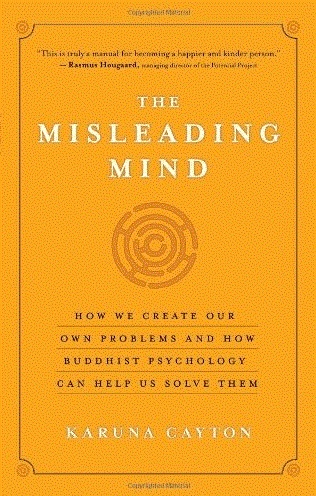
  • Giveaway and Author Interview: The Misleading Mind

    Giveaway and Author Interview: The Misleading Mind

    Note: The winners for this giveaway have already been chosen. Subscribe to Tiny Buddha for free daily or weekly emails and to learn about future giveaways!

    The Winners:

    Have you ever felt like your mind was controlling you, dragging you along for a persistently bumpy ride?

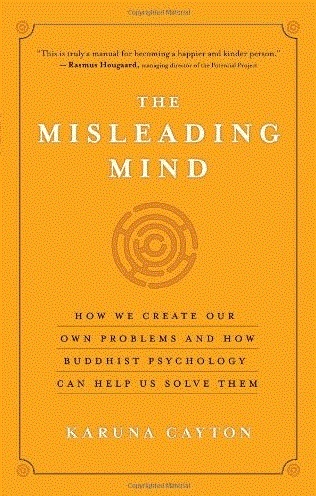
    Research shows the majority of us feel this way, but the good news is that we can do something about—and Karuna Cayton’s book The Misleading Mind teaches us how.

    A psychotherapist and practicing Buddhist, Karuna has written an easily digestible book that offers solutions to the mental anguish we often perpetuate through misguided thinking.

    Its full title is The Misleading Mind: How We Create Our Own Problems and How Buddhist Psychology Can Help Us Solve Them, and it delivers on that promise.

    I’m thrilled to share this long but illuminating interview and offer two free copies as a giveaway!

    The Giveaway

    To enter to win 1 of 2 free copies of The Misleading Mind:

    • Leave a comment below.
    • Tweet: RT @tinybuddha Book GIVEAWAY & Interview: The Misleading Mind http://bit.ly/K8UDcj

    If you don’t have a Twitter account, you can still enter by completing the first step. You can enter until midnight PST on Friday, June 1st. (more…)

  • Integrating Mind and Body: Be Present, Reduce Stress

    Integrating Mind and Body: Be Present, Reduce Stress


    “Don’t let your mind bully your body into believing it must carry the burden of its worries.” ~Astrid Alauda

    I don’t believe in the mind/body divide. I can see the gap between them, the one that we put there, but I have little faith in it. In the past month, I’ve learned that in order to live fully, I need to overcome that self-imposed gap.

    We all have different mental, emotional, and physical capacities. You could probably run a 5k race, but I’d struggle to even walk it. I know I can work through some of the most difficult decisions, like knowing when to end my pets’ suffering, but you might find that extremely hard to come to terms with.

    The thing that we have in common, though, is that we all work at different levels, and whether we choose to believe it or not, our minds and bodies sit together, with each of us.

    I took up yoga last month, and I love it. The benefits of getting out for an hour to relax are endless, and I’ve started taking the practice home with me to reap these benefits throughout my week.

    I’m headstrong, so I push myself a bit further than I should. Sometimes I go too far and I exhaust myself, or I stretch beyond what my body can manage and end up with extra painful muscles for days.

    What’s going on here? It’s that gap between my mind and body. (more…)