Tag: mental health

  • When You Lose a Loved One to Suicide: Healing from the Guilt and Trauma

    When You Lose a Loved One to Suicide: Healing from the Guilt and Trauma

    “You will survive, and you will find purpose in the chaos. Moving on doesn’t mean letting go.” ~Mary VanHaute

    I was ten years old when I discovered the truth. He didn’t fall. He wasn’t pushed. It wasn’t an accident.

    He jumped.

    Suicide isn’t a concept easily explained to a six-year-old, much less her younger siblings, so I grew up believing that my father’s drowning was an unfortunate freak accident. It was “just one of those things,” the cruel way of the world, and there was nothing anyone could have done about it.

    This explanation more than satisfied me and, other than a fear of open water and a slight pang of sadness whenever he was mentioned, I suffered no grievous trauma for the rest of my early childhood.

    But at ten years old I learnt the truth—that it wasn’t some divine entity or ill-fated catastrophe that took him from me. He had, in fact, ripped himself from the earth and left everyone he loved behind. Left me behind.

    Was it something I did?

    That’s the first question I asked.

    “Of course not,” my mother said. “He was just sad.”

    The idea that suicide was a simple cure for sadness became the first of many dangerous cognitive distortions I adopted. It would take no more than a dropped ice-cream cone or trivial friendship fall-out for me to declare my sadness overwhelming, to the point where, at the age of eleven, I drank a whole bottle of cough medicine in the belief that it would kill me.

    I was sad, I said, just like him. And if he could do it, why couldn’t I?

    As I grew into my teenage years, the possibility that I was the driving force behind my father’s suicide began to plague me, albeit subconsciously. I reasoned that the bullies at school hated me so, naturally, my father must have hated me too.

    Maybe I wasn’t smart enough or polite enough. Maybe I was unlovable. Maybe everyone I loved would leave me eventually.

    This pattern of thinking would slowly poison my mind, laying the foundations for what would later become borderline personality disorder. I suffered from intense fears of abandonment, codependency, emotional instability, and suicidal ideation, believing that I was an innately horrible person who drove people away.

    I refused to talk about my problems and allowed them to fester, harboring so much anger, guilt, shame, and sadness that eventually it would erupt out of me. It was only in my mid-twenties that I realized just how deeply my father’s suicide had affected me and the course of my whole life.

    I sought help and, slowly, I began to heal.

    Coping with The Stigma

    “Mental illness is nothing to be ashamed of, but stigma and bias shame us all.” ~Bill Clinton.

    Selfishness, cowardice, and damnation are toxic convictions that permeate the topic of suicide, adding to the anger, guilt, shame, and isolation that survivors feel. Growing up, I hid the truth of how my father died under fear of judgment or ridicule, scared that the knowledge would not only tarnish his humanity, but paint me with the same black brush.

    I still remember the words of a girl in high school, “Well, you shouldn’t feel sorry for people who do it, it was their choice after all.”

    Understanding the intricacies of mental illness and just how destructively they can distort the mind allowed me to come to terms with my father’s death. I was able to accept that his suicide was born not out of selfish weakness, but from lengthy suffering and pain, carried out by a mind that was consumed by darkness and void of the ability to think rationally.

    Letting Go of The Need for Answers

    “Why?”

    It is a question that only the person who took their life can answer—but they often leave us without any sense of understanding. In the absence of a detailed note or some definitive explanation we find ourselves trapped in an endless spiral of rumination, speculating, criticizing, and self-blaming, to no avail.

    It becomes a grievance, a desperate yearning for closure that weighs heavily on our hearts. After all, not only did they leave us, but they left us in the dark.

    It is completely natural to want an answer to the question of “why.” We feel as though an answer will provide closure, which in turn will ease our confusion, pain, and guilt. However, because there is usually no singular reason for a suicide attempt, we will always be left with questions that will go unanswered.

    Fully accepting that I was never going to get the answers I craved freed me from the constant rumination of “why.”

    Releasing the Guilt

    To quote Jeffery Jackson, “Human nature subconsciously resists so strongly the idea that we cannot control all the events of our lives that we would rather fault ourselves for a tragic occurrence than accept our inability to prevent it.”

    As survivors, we tend to magnify our contributing role to the suicide, tormenting ourselves with “what if’s,” as though the antidote to their pain lay in our pockets.

    We feel guilty for not seeing the signs, even when there were no signs to see. We feel guilty for not being grateful enough or attentive enough, for not picking up the phone or pushing harder when they said, “I’m fine.” Even as a child I felt an overwhelming guilt, wondering whether I could have prevented my father’s suicide simply by saying please-and-thank-you more often than I had.

    It wasn’t my fault. And it isn’t yours either.

    The truth is that we cannot control the actions of others, nor can we foresee them. Sometimes there are warning signs, sometimes there are not, but it is an act that often defies prediction. It is likely that we did as much as we could with the limited knowledge we had at the time.

    Healing takes acceptance, patience, self-exploration, and a lot of forgiveness as you navigate your way through a whirlwind of emotions. However, there is a light at the end of the tunnel of grief. Although we may never fully move on from the suicide of a loved one, in time we will realize that they were so much more than the way in which they died.

    To quote Darcie Sims, “May love be what you remember most.”
  • Easing Anxiety: How Painting Helps Me Stop Worrying

    Easing Anxiety: How Painting Helps Me Stop Worrying

    “Our anxiety does not come from thinking about the future, but from wanting to control it.” ~Kahlil Gibran

    Anxiety has followed me around like a lost dog looking for a bone for years now.

    I feel it the most acutely when I’m worried about my health or my daughter’s health. I notice a strange rash or feel an unusual sensation and all of a sudden: panic!

    My worries are not limited to health concerns though, and my ruminations go in the direction of dread about the future of the world, worries about my finances, and fears that I’m not good enough.

    Is my anxiety warranted? My mind tells me it is.

    “Remember how you had that bad reaction to a medication? It could happen again!”

    “You know how your daughter had that febrile seizure two years ago? You never know what could happen next!”

    “Think back to that time you and your family had a slow winter and were extremely worried about money. That could be just around the corner!”

    And on and on my mind goes. I know I shouldn’t believe what it tells me, but sometimes I get sucked under and can’t help it.

    I don’t think I was anxious like this when I was a kid. I think these underpinnings of nervousness started when I was older, probably my late twenties. I suppose by then I’d lived enough life to know that things can and do go wrong.

    I don’t like feeling anxious. I don’t like the way my body feels jangly and my mind races. I don’t like it when I can’t focus on the thing I’m supposed to be doing.

    But this is not a sad story, it’s a story of tiny improvements and little steps forward. It’s a journey of finding peace in the middle of a storm.

    For me that peace began with painting.

    Let me go back a few decades, back to when anxiety wasn’t part of my life. When I was a child, I loved art. I drew, I colored, I took extra art classes on the weekends because that’s what I enjoyed.

    I went to college to become an art teacher, switching to a graphic design track later. When I finished school in May of 2001, I had a part-time design job, and after the events of September 2001, I knew I needed to travel, to get out of the safe life I was living in my hometown.

    That’s when my creative practices fell by the wayside. I would never give up those years of travel and camping and working random jobs, but when I look back, I see this is where I stopped making art.

    Luckily, after the birth of my daughter in 2014, the desire to create came roaring back. At first, I was using a tiny corner of a bedroom in our small mountaintop rental house to paint. Eventually we bought a house, and I had the space to spread out, to keep my supplies on top of my desk, ready to paint whenever the urge struck.

    That’s when I started noticing something important: Painting stilled me in a way that nothing else did. It eased my fears and anxieties in a way other practices (deep breathing, meditating) did not, at least not as consistently.

    Painting is my peaceful place. Painting brings me directly into the moment, quickly and easily. You know how you’re supposed to stay mindful and present? That’s what painting does for me, no tips or tricks or timers or mantras needed.

    Yes, I use other methods to quell my anxiety, but painting is my absolute favorite. I get to bring forth something new. I get to flow with wherever the brush takes me. I get to be still inside while the rest of the world drops away, all while allowing something beautiful to emerge.

    When anxious thoughts start to swirl, I know what to do. I head into my studio, grab some materials, and start creating. Soon enough, the spiraling worries are gone and instead my mind is quiet.

    Even if you aren’t artistic, even if you don’t have a creative bone in your body, I still think you can achieve the stillness I achieve when painting. You might not have a brush in your hand, though!

    First things first: If you struggle with anxiety, you should seek the help of a licensed professional. As helpful as painting is, I also see a counselor, and the tools she’s given me are absolutely priceless.

    Now that we’ve gotten that out of the way, here are the other ways I think stillness and peace can be found, even if you’re not meditating or breathing deeply while counting to ten.

    Think back to what brought you joy and the feeling of flow when you were a child. Maybe for you it was playing sports or a musical instrument; writing your own sketches or training your dog to roll over. Whatever it was, look for ways to add more of it back into your life now.

    Start paying attention to your life as an adult and what activities make you forget about the time. When are you fully immersed? When do you fully let go? Maybe it’s during a yoga or meditation class, but maybe it’s when you’re preparing a meal for your family or writing up a budget for work.

    Still your mind any time you remember. I do this now, especially when I’m not painting. I know that a still mind releases my anxiety, and I also know I can’t paint all hours of the day. Simply noticing the feeling of my body on the chair below me or listening to the sounds in the room around me helps my mind to quiet.

    I think the reason painting is so helpful for my anxiety is that, in order for me to be anxious, I have to be worrying about the future and what it holds. When I’m doing an activity that requires my full concentration, I have to be in the moment; there is no other choice.

    All of the practices that we can use to find calm, whether it’s changing our thoughts, following our breath, repeating a prayer or mantra, they all rely on the same thing: bringing our presence to the now.

    What activity brings you into the now? What makes you feel fully alive and entwined with the moment? It doesn’t matter if you’re artistic. It doesn’t matter if you like making things. The only thing that matters is finding a way to be here, in the now, instead of in the unknowable future.

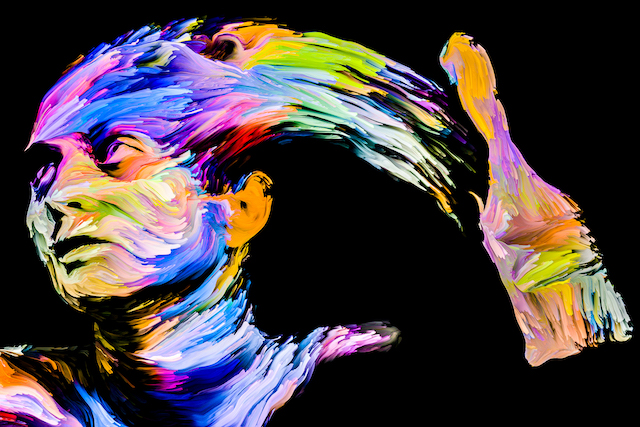
    **Artwork by the author, Jen Picicci

  • Congruent Depression: What It Is and How to Overcome It

    Congruent Depression: What It Is and How to Overcome It

    “Not all of the depression that people experience is an illness… Unlike clinical depression, congruent depression is actually appropriate to your situation.” ~Dr. K

    ​Every day is the same. Every day I’m stiff. Every day I’m tired. These are the two main things that people with fibromyalgia deal with. It’s been like that for a couple of years now. Six to be exact.

    I’ve faced so much hardship all at one time: no job, no income, no friends, dealing with an emotionally immature/narcissistic mother, and not living where I want to live. All of this is making me sleep poorly.

    It’s all been chaotic and stressful and hasn’t helped my fibro or been helpful since discovering my highly sensitive personality trait a year and a half ago.

    I read that when you have fibro, you’re often depressed. However, anyone would feel mentally down in the dumps if they experienced these painful sensations all the time. Then for a little while, I started to believe that maybe I ​was​ truly depressed. I met all the criteria, after all.

    So I hopped onto the free listener service, 7 Cups. I’ve been using it for almost two months, and it’s helped me somewhat. It‘s good to have somewhere safe to vent, to feel heard and validated. It’s also nice to know someone is actively listening to what you’re saying. Still, despite this intervention I’ve had days where I’ve felt down.

    However, today, the clouds parted.

    I watched a video on YouTube by Dr. K on congruent depression.

    It’s a type of affective depression that occurs​:

    -When you’re in circumstances that you can’t control or have little control over

    -When you have no fulfilling purpose

    -When something is lacking from your life

    This type of depression is actually normal. You’re experiencing a very human reaction to a slew of negative situations that you feel you have no power over. It is your body telling you that something needs to change.

    It can also happen if you feel you have no direction, or the paths you’ve taken have always led to bad outcomes.

    ​Congruent depression can be remedied if one does the following​:

    1. Find purpose of some kind.

    Life purpose is complex nowadays, and our brains haven’t caught up. There’s very little physical labor needed to survive. Most of us don’t have to chop wood, work in fields, or trudge back and forth to a well, and I’m pretty sure no one rides horses on dirt roads. It’s harder to find true purpose when you don’t really need to do anything because everything is done by a machine.

    But we can still find purpose by working on something that matters to us personally, fighting for causes that we believe in, finding ways to help other people, and pursuing our interests and passions.

    2. Connect with people (to deflect loneliness).

    As humans, we are wired to be social/connect, but our modern digital world doesn’t help with this. We’re the most connected we could have ever possibly imagined, yet we are very disconnected. I believe this, aside from social media, is also another factor in the increasing rates of suicide.

    We need to connect with friends and family—face to face. And we need to really be present with them, honest with them, and open to their honest feelings so we can connect on a deeper level. When we can’t connect face to face, virtual connecting works just fine, so long as physical distance doesn’t turn into emotional distance. This is why I’m trying to post more to social media—so I can genuinely connect with people and feel less alienated.

    3. Find some way to deal with mind-numbing boredom (that doesn’t involve gaming, binge watching, social media, etc.).

    Our leisure activities in the hyper-digital age are all about consumption, not creation. There’s less painting, playing instruments, working with our hands—the kind of things that bring pleasure and joy to the person and society at large.

    Find a hobby that you can immerse yourself in, something physically engaging and maybe even creative—something that will get you out of your head and into a state of flow.

    4. Address the issues that contribute to your feeling of helplessness.

    Re-locate, find another job, or break off toxic relationships, if these things are contributing to your depression. None of these things are easy, but just taking steps to create positive change can help you feel empowered and more in control of your life.

    I’m actually considering moving at some point, pending COVID updates and my health, because I know this would go a long way toward improving my state of mind.

    5. Focus on self-discovery/self-help.

    Uncover your past traumas and commit yourself to healing. Work on identifying and overcoming limiting beliefs. Discover how you’re sabotaging yourself or holding yourself back so you can get past the blocks that keep you stuck.

    It’s only by learning about oneself, without the input of others prejudices or judgments, that one can find peace and happiness.

    *Self-help resources are free and plentiful nowadays. There are eBooks, podcasts, YouTube channels, blogs, websites, and Facebook groups to help with your personal development. You can also use astrology, the Myers-Briggs Type Indicator, and the enneagram to get a better look at yourself on an individual level. I personally have been using astrology and tarot to understand myself and have found both very helpful, and I’m loving the book Becoming Bulletproof by Evy Poumpouras.

    You can take all the prescriptions you want, do all the therapy there is out there, but for many, these are costly, time-consuming Band-Aids. They are not fixing what’s actually wrong—the drudgery of working a dead-end job you hate, the pain of staying with an abusive spouse, etc.

    That’s not to say taking medication or doing therapy is wrong. However, if you’re doing therapy and taking medication and nothing seems to improve, then you need to do more. You have to make actual changes in relationships, jobs, and lifestyles, to really feel different.

    Medication and therapies are simply aids to help you regain a better footing in the physiological and psychological sense. The rest is truly up to you.

  • 4 Ways to Overcome Alienation and Loneliness

    4 Ways to Overcome Alienation and Loneliness

    “What should young people do with their lives today? Many things, obviously. But the most daring thing is to create stable communities in which the terrible disease of loneliness can be cured.” ~Kurt Vonnegut

    Have you ever felt like a stranger in your own life? Watching other people like you were separated by some invisible wall?

    Most of us have felt it from time to time and understand all too well how detrimental loneliness can be if it doesn’t go away. In fact, research has shown that loneliness is worse than smoking or obesity to a person’s health.

    Yet we live in a world that is more connected than it has ever been. How is it that so many of us feel lonely?

    I’ve recently discovered the work of Gabor Maté, whose teachings on addiction and connection has inspired me deeply.

    He discusses the mind-body connection (particularly the deadliness of suppressing emotions) and how social connections can accelerate healing.

    When he speaks it makes so much sense it’s hard to believe this is not mainstream knowledge. How are we still treating the mind separate from the body? When someone develops cardiovascular disease, why are we not asking questions beyond their diet? Why are these people not supported holistically?

    It makes complete sense to me that someone who develops a chronic illness or disease and is socially isolated will not be able to heal as quickly as someone who feels connected to his or her community. What’s frightening is that our society is almost built on this artificial sense of connection that only creates feelings of alienation. I suppose it’s because it’s good for business.

    Alienation is a term originally coined by Karl Marx. His theory of alienation describes the “social alienation of people from aspects of their human nature as a consequence of living in a society of stratified social classes.” It occurs when a person withdraws or becomes isolated from their environment or from other people.

    People who show symptoms of alienation will often reject loved ones, society, and even aspects of themselves. It’s a very disorienting sense of exclusion and separation. It’s also lethal for human animals who thrive and prosper when they are connected and feel like they belong.

    Below are four types of alienation that pertain to our modern lives and how to combat each of them.

    Alienation from Nature

    It’s no surprise that alienation from nature contributes to our loneliness. We kill a part of ourselves when we destroy rainforests and dispose large amounts of garbage in our oceans. The movement to protect our earth is one that requires compassion and empathy for life beyond ourselves. It’s also a recognition that we are all connected.

    I don’t mean this in a ‘kumbaya’ sense, I mean it literally. The oil and coal we burn will become the air we breathe, just as the tiny microbes of plastic will become infested in the fish we eat. How people can deny this is infuriating. If we destroy our planet, we destroy ourselves. The planet is a large organism that has gone through many dramatic makeovers across its lifespan of 4.5 billion years. It does need us, we need it.

    I feel the best way to gain respect for our earth (if, for whatever reason, you don’t already) is to spend more time in the great outdoors. To leave the city and man-made buildings behind and spend time in nature.

    How can you not fall in love with our planet when you listen to rush of a waterfall? Or feel the aliveness and buzzing of a forest? We are nature, after all. We came from it and we will return to it. Connection to the earth is, in a sense, connecting to our truest sense of self.

    Alienation from People

    Many of us are no longer connected to others in a meaningful way. Social media has largely replaced social interaction and created an artificial sense of connection. We are wired to connect to others face to face, eye to eye, not through our phones.

    Social media is not only about connecting with others, but also an opportunity for companies to sell their products. There is an incentive for these platforms to keep you on longer and longer, stealing your precious attention.

    There is a reason why you open your phone and suddenly get pulled into a vortex of bright red notifications and an endless newsfeed. There are top psychologists and behavioural scientists working to keep you on your phone longer. I recommend watching The Great Hack or The Social Dilemma for more on this topic.

    This loss of attention causes us to become less present in the moment and more concentrated on what’s next, contributing to anxiety and depression. The effects of phone usage on our mental health are still being uncovered as are the laws around it. We are living in blurred lines, not quite sure how this will pan out. It’s like the era that our parents had with smoking before they connected the dots and accepted that it caused cancer.

    If there is a loss of genuine social connection in your life, I know how hard it can feel to connect with others. It can be an uncomfortable and vulnerable to seek friendships with people. Where do we start as adults? It was so much easier when we were in kids.

    Well, we can start by getting out more. Find hobbies, workshops, classes and meet people who share the same interests as you. During lockdown it’s obviously a bit harder, but there are also so many online communities that have popped up as a result. While it’s not the same as meeting in person, online groups of genuine sharing and connecting are the next best thing. Putting yourself out there is hard, but the risk is worth the reward.

    Alienation from Work

    When we do work that is just a means to an end and fulfills no purpose in our soul, it will slowly kill us. It reminds me of the quote, “The cost of not following your heart is spending the rest of your life wishing you had.” Doing some dead-end job because we are afraid to follow our dreams is painful.

    We all have gifts inside of ourselves, and the task is to find out how we can make a living out of them. Of course, this comes with a level of pragmatism, we simply can’t quit our well-paid office job and decide to become a puppeteer. There are intelligent and careful ways of getting where we want to go if we have the determination. Every day is an opportunity to take steps in the right direction.

    Go wherever you feel most alive and invigorated, it is always worth it. If you don’t believe me, look up “things people regret most on their deathbed.

    Alienation from Self

    Last but not least, the disconnection from ourselves. Our true selves. The person we were when we first entered this world. Wild and free, happy to be. Then we got our light dimmed by our parents, society, and culture to follow the well-laid path and do what everyone else does. It’s not surprising that so many of us forget our inner child. But it’s not lost, it’s just lying under those layers and layers of who we needed to be.

    I know I have disconnected from myself at times in my life. It hurts to go against my authentic self just to be liked or accepted. It’s like looking at my inner child and saying in her face, “You aren’t good enough. Change.” It breaks my heart.

    The saddest thing is those who have completely lost touch with their youngest self. They remind me of Robin William’s Character in Hook before he realizes he is Peter Pan. He grew up only to become an overweight, miserable lawyer who was obsessed with work. He was completely disconnected from his family, nature, and of course, himself.

    If only we all had a little Julia Roberts fairy to yank us out of our boring adult selves and remind us of our inner Peter Pan!

    Imagine the zest for life we’d all have if we had to go undergo training to reconnect with our true self? Healing and transformation begin by developing a deep relationship to ourselves. How? Through meditation, journaling, therapy, being in nature, connecting genuinely with others. It will also require vulnerability, patience, courage, and the willingness to change.

    We don’t need to keep our loneliness to ourselves. Ironically, it’s something we all have experienced and can relate to. If we can find ways to reconnect with nature, connect meaningfully to our friends and community, find fulling work that is aligned with our values, and connect to ourselves, the wall of loneliness will have no choice but to simply crumble away.

  • I Got Fired for Struggling with Depression, and It’s Not Okay

    I Got Fired for Struggling with Depression, and It’s Not Okay

    About all you can do in life is be who you are. Some people will love you for you. Most will love you for what you can do for them, and some won’t like you at all.” ~Rita Mae Brown

    The stigma associated with mental illness has improved in recent years, but there is still work to be done.

    I am a certified life coach and a certified personal trainer. As an employee of a major global fitness studio chain, I was once discriminated against for my mental health issues.

    I have always been an athlete, and I love sports. Before deciding to go to college for engineering, I thought I’d take the medical school route with the goal of becoming an orthopedic surgeon—I was always fascinated with the body’s structure and how all of the muscles, ligaments, and tendons worked together. But I chose the engineering path and kept my athletic pursuits and fascination with body mechanics and such as hobbies.

    When I was going through my divorce, I decided to get my personal trainer certificate. I had been a stay-at-home mom and part-time photographer since my first child was born, and divorcing meant I would need to go back to work. However, I was not interested in a corporate cubicle job.

    I studied hard, took the exam, and quickly landed my first training job as a coach for a global fitness studio chain. The classes at this particular chain were basically high-intensity interval based, combining treadmill running, rowing, and strength training. The classes of up to thirty-something athletes were coached by one trainer who timed the intervals and explained the workouts.

    It was a very high-energy workout and atmosphere with loud, pumping music and drill-sergeant-like yellings of encouragement.

    The training for this position was an intense week-long ordeal. I worked my butt off during that week with no guarantee of a job (which they neglected to tell us until the week of training was almost over).

    When I was ready to teach my first class, I was excited and nervous, but I ended up loving coaching the classes. There were many unfit individuals who barely knew how to do a squat, and I loved not only teaching them but encouraging them and helping them believe that they could master these exercises and become good at them.

    I helped many people see themselves as athletes when they went from barely being able to walk for three minutes straight to actually running for three minutes straight.

    We had member challenges, including a weight loss challenge. I loved it, and given my background battling an eating disorder, this was my chance to come at weight loss from a place of healthy living—not losing weight to measure up to some ridiculous standard.

    After each class, members of my team would stay after to ask questions about nutrition, exercise, and recovery. I loved sharing my knowledge with them as well as cheering them on. I knew they could reach their goals, and they did. My team won the challenge.

    During this period of time working for this company, I was struggling with my own personal hell. I would show up to class to coach and put on my high-energy, happy face, blast the music, and yell those firm, but loving words of encouragement for my athletes to give it everything they had during each interval. But inside, I felt like I was dying.

    I lived with a sinking, sick pit in my stomach. I’d often leave the studio and cry in my car before going back to the lonely home that once housed a family.

    During my tenure at the studio, I was hospitalized for severe depression twice. Both times required me to take a short leave of absence—a few days the first time, and nearly a week the second time.

    I also took a last-minute trip on Christmas Day back home to see my family so I would have some family support for that first Christmas without my kids (they were with their dad that year). I got someone else to cover the class I was scheduled to teach.

    When I returned from my trip, I came back to work and taught my scheduled classes. As I was leaving, the head trainer and one of the main investors of all Maryland franchises made me stay so they could fire me.

    They told me that my performance wasn’t up to par and that they had to let me go.  

    Funny, I had never had anyone give me any indication that I needed to improve anything to keep my job. Not even in my evaluation with the head trainer—she gave me some constructive feedback but also indicated that I was doing a good job. There had been zero warning signs.

    After my departure, a large number of my students reached out to me asking where I was and why I wasn’t teaching anymore. When I told them the reason, they were appalled and angry. One or two even canceled their membership.

    They loved my classes and would come because they liked my style of teaching. I asked to see member surveys for my classes, but management refused to show them to me stating that “surveys don’t tell the whole story.”

    Other trainers, including another head trainer who had been with the Maryland franchises since the first location opened, thought the whole thing was absurd and offered that I could come back and teach at his location. As much as I loved coaching, I was still too upset at the way the company had handled my dismissal to take him up on his offer.

    I tell this story because what happened to me was cruel and heartless and should never happen to anyone who is genuinely giving their best effort in a job. It should never happen to anyone without proper warning.

    I was struggling on a level I doubt either the twenty-something head trainer or bougie investor ever had to endure, and they let me go for some made-up reason that, below the surface, really came back to my mental health struggle.

    Authenticity is a topic that is near and dear to my heart, and I feel that authenticity in the workplace is sorely lacking.

    All too often, we feel like we can’t show up as our authentic selves for fear of looking weak or incompetent. We need to be competitive and not show any sign that we aren’t anything but perfect for fear someone else might get ahead because of an incorrect perception (one that is wrongly distorted by mental health struggles) that others have of our ability to get the job done.

    I did my job as a coach and trainer, and I did it well. Ask any of my students. But on some level, management sensed my weakness and decided I didn’t fit the “brand image” of this very popular and trendy international fitness studio chain because I was struggling with mental illness.

    If you asked them, I am quite certain that they would argue their reasoning had to do with other factors, but the facts just don’t add up.

    I had never been let go from a job in my life. This added to my depression and anxiety. I understand that if I had not been able to perform my duties, that would have been grounds for dismissal. But I gave it my all and never received any negative feedback indicative of my job being in jeopardy.

    My struggle with depression at that time was no different than someone struggling with a physical illness.

    If I was undergoing treatment for cancer, I am quite certain this scenario would have gone quite differently. I am certain there would have at least been a conversation about the situation, rather than just flat-out making up an excuse that my performance wasn’t up to par and firing a single mom without another job to go to.

    We have to remove the stigma mental illness has in the workplace. We have to make it okay for people to show up and say, “Hey, I’m struggling right now. I am doing my best, but I’m having a hard time.” That shouldn’t be a weakness. If anything, it’s a strength to admit when you’re struggling and need some help.

    Are strides being made? Yes. But the disparity between the perception of physical illness and mental illness is still too great. This needs to change.

    How could my former employer have handled this differently?

    First of all, if they didn’t think my performance was good enough, they should have given me a chance to improve. They should have told me that I needed to change something, because I’m the type of person that, when given feedback, will do everything possible to nail it. At that point in my life, I was still firmly rooted in perfectionist mode, and the very thought of someone thinking I’m not perfect would have been enough to send me into a frenzied mission to correct that perception.

    If they were not thrilled with the time I had to take off for my hospitalizations and my last-minute trip where I had someone else cover one class, the head trainer should have communicated to me that it was unacceptable and given me a warning. That would have given me a chance to have an honest conversation about the struggles I was having.

    In even a minimally caring environment, it makes more sense to help employees succeed rather than throw them away the moment you don’t like them. It’s much more expensive to go through training a new employee than to try to improve one you already have.

    In the fitness industry in particular, I feel that there is little room for perceived imperfection, and there is even less room for a flawed trainer or coach. The fitness industry perpetuates the lie that trainers and coaches have their sh*t together—that’s why they’re the ones training you. That’s why you can’t get these results yourself—because you’re not perfect and you don’t know how to be perfect.

    Authenticity in any workplace is so important. When we are afraid to show up as ourselves with not only our flaws but also our gifts and talents, that’s where creativity ends. When we aren’t able to exercise our creativity, innovation is thwarted. And when innovation stops, that’s where everyone gets stuck.

    Looking back, I now know that I never want to be employed by such shallow and uncompassionate people, but I also know that just wasn’t the place for me. There is no place I want to be where I can’t show up as my true self and say, “Hey, I can bring a lot to the table, but I’m also flawed and I’m okay with that.”

    The reaction should be “Yeah, me too. Welcome to the club,”

    Because we are all imperfect. And that’s a fact.

  • What Happened When I Stopped Drinking Alcohol Every Night

    What Happened When I Stopped Drinking Alcohol Every Night

    “First you take a drink, then the drink takes a drink, then the drink takes you.” ~F. Scott Fitzgerald

    I love Sophia Loren. There’s a picture of her in my home looking eternally youthful and refreshed. From what I’ve been told, it’s due to her nine to ten hours of sleep each night.

    When I look at this picture, I see someone who revels in the delights of life. Food, laughter, sex, work, motherhood, and self-care. Not long ago I stared at that picture thinking, “How could I admire someone so much and live my life in such a different way from hers?”

    Have you heard of the halo effect? It’s when you do the things you know are right for your body, mind, and spirit, and in doing so you begin to exude this powerfully beautiful and enticing energy others can’t get enough of. I now realize my relationship with the daily habit of alcohol was actually diminishing the glow of my halo. It was essentially stealing my joy, time, money, looks, well-being, and especially my slumber.

    Who knew that for so long my beauty sleep was being hijacked by alcohol!

    Puffy face, dark circles, dry mouth, red eyes, weight gain, and not to mention the headache, elevated heartbeat, anxiety… these are just a few of the lovely side effects I experienced with overindulging in the bottle.

    In trying to reduce overwhelm, I inadvertently was fueling it through interrupted sleep and the fuzzy feeling the following day. 

    Do I think alcohol is bad or that drinking is off-limits? No.

    I do know for myself that the daily two, sometimes three, glasses of wine took a toll. It stole any type of focus and motivation the next day to follow through on all the things I said I would accomplish the night before, basking in the embrace of my main squeeze, Mr. P (Pinot Noir, that is.)

    My relationship with alcohol was stealing my ability to step into the life I claimed to desire.

    I wanted to release weight.

    I wanted to make more money.

    I wanted to write my book.

    Until I released the hold Mr. P had on me, I knew deep down I would never come close to achieving any of those dreams.

    Every morning I wake up and ask myself three things:

    1. How do I want to feel today?
    2. What is one thing I can do to love myself today?
    3. What can I give to others today?

    My answer to #2 was often…

    “Drink more water.”

    “Start weight training.”

    “Let go of gluten.”

    The truth was the one true voice within was quietly and patiently saying day after day, “Take a break from alcohol.”

    I just wasn’t ready to listen.

    A phone call eventually prompted an experiment in courage.

    For ninety days I promised a friend I would join her on an alcohol reset. After I hung up that fateful Sunday, I went to the calendar to mark the ninetieth day. Immediately fear crept in with thoughts like “You’ve tried this before, and it didn’t work” and “You won’t even make it through tonight.”

    Fortunately, in that moment, something other than myself took over. It was as if I was whisked into something beyond my own comprehension, because the next 120 days flew by. In fact, after day twenty-one I stopped counting. I no longer was ticking off the calendar to when I could finally have a drink. Why? Probably because I knew in my heart the steady drip of wine each night was simply not serving me, my purpose, my body, or my pocketbook.

    Why was this time different? Because I looked at it as something I “got” to do rather than “had” to do. I viewed it as a gift rather than a cleanse.

    What is on the other side of a toxic relationship with alcohol? More than I could imagine. Every morning I wake up and think, “I am so lucky.” It’s as though I’ve captured more time in my day, and each moment holds a sense of sacredness.

    I’ve seen sunrises by candlelight, baked banana bread before bed, and gotten more done by 8am than I ever did after 5pm.

    I’ve finished a Netflix show without falling asleep… and actually remembered what I watched.

    I’ve released twenty pounds.

    I wake up hydrated.

    My skin seems to have reversed in time a la Benjamin Button.

    The list goes on and on.

    The other day my mother gave me a compliment that made me cry… in a good way.

    She said, “You know, it’s like your skin, your hair… you look like you used to look when you were younger.”

    For so long I was using wine to push down the unwanted feelings of anxiety and overwhelm. While I thought I was “taking the edge off,” I was actually making myself edgy!

    These days, I plan my fun based on how I want to feel the next morning. What I’ve discovered is that taking a break from happy hour can literally transform not only the other twenty-four hours of your day but your life as well.

    When you have enough energy and vitality to embrace the day, you start to find little miracles everywhere in the form of simple pleasures, a pleasant conversation with a friend, or a moment that might have sent you into a tailspin… but now you breathe through it with patience and grace.

    People often ask me, “Do you ever have a glass of wine… ever?”

    Probably every two weeks or so if I am being social (and socially distancing) with family or friends. Do I enjoy it? Yes and no. In fact, the few times I have had a glass or two, it no longer held any energy for me. It’s now a “take it or leave it” kind of thing.

    In fact, it’s as if moderation moves you toward abstinence.

    Why? Because I am no longer willing to sacrifice how good I feel the next morning for alcohol.

    I also revel in the reduction of anxiety! Why would I want to go back to something that was creating the exact experience that was causing me to emotionally suffer?

    Yes, there are people who can drink daily and function fine, and there are those who can’t drink at all. And then there are people like me who know alcohol isn’t the kind of friend they want to hang out with every day but perhaps in very small doses every so often.

    Drinking is marketed as sexy, elegant, and unifying.

    Is slurring your words sexy? Is stumbling out of a restaurant elegant? Is not remembering the conversation you had with a friend unifying?

    The reality for me was alcohol made me feel drained, grumpy, and even a wee bit nauseous. How you feel is creating your day and, in essence, your life. So, if you feel cluttered and haphazard waking up, you are creating a cluttered and haphazard day. 

    I used to wake up and run to the kitchen. Waiting for me was the one thing that would decide if I needed to beat myself up or pat myself on the back. Like the scale, the opened bottle of wine oftentimes determined if I was “good” or “bad” the previous day.

    Only one-fourth of the bottle left? Bad girl!

    Three-quarters left? Good girl!

    So much time, energy, and thinking put into the act of drinking!

    In the end, bedtime is the best of all.

    Four hours of alcohol-free sleep is WAY more rejuvenating than nine hours of alcohol-infused sleep. Waking up feeling your body buzzing (in a good way!) is the best high of all.

    If your inner voice is asking for a break, maybe it’s time to listen.

    Sweet dreams.

  • How to Make Everything Easier by Accepting the Present Moment

    How to Make Everything Easier by Accepting the Present Moment

    “The power of now can only be realized now. It requires no time and effort. Effort means you’re trying hard to get somewhere and so you are not present, welcoming this moment as it is.” ~Eckhart Tolle

    Eight years ago, I was very depressed. I wanted nothing more than to stop feeling this way and dreamed of escaping my body. I had struggled with depression for many years, and I was terrified that I might feel that way forever.

    Someone recommended I do a mindfulness-based course. This turned out to be the one of the most helpful parts of my journey. The therapist suggested I needed to learn to sit with my feelings instead of resisting them, but this terrified me. I was afraid of my feelings, and I thought that accepting them meant accepting they would be there forever.

    But as I practiced the skills of mindfulness and distress tolerance, I noticed that when I accepted my emotions they often shifted more easily. Or at least I didn’t make them worse by worrying about them. I realized that I had been making the depression and anxiety worse by resisting my feelings.

    Connect to the Present Moment

    I’m guessing this is a common struggle, and the solution can feel counter-intuitive. Many people fear that if they let themselves feel their emotions they will be taken over by them. However, when I make space for my emotions without acting on them, sometimes there is pain and I might cry, but it is a clean pain rather than a mental anguish, and it doesn’t last as long.

    I also find that connecting to the present moment helps me create a little space in my mind when my thoughts start stressing me out.

    It’s easy to get caught up thinking about the past, worrying about the future, or wishing the future would hurry up and arrive. When I notice this happening now, I ground myself in the present moment by listening to the sounds around me, noticing my feet touching the ground and my breath flowing in and out, and I feel calmer.

    Observe Your Thoughts and Emotions

    I’ve learned to observe my thoughts instead of attaching a story to them. Emotions can’t last forever on their own. I heard that the natural lifespan of an emotion is about ninety seconds. But we can keep them alive for longer by thinking about them, being afraid of them, and resisting them. Emotions, like everything else in life, come and go.

    Once I had the ability to create distance from my thoughts and not be consumed by my emotions, I was able to take action to make my life better, even when I didn’t feel like it. I did my best to embrace life as it was instead of focusing on how I would like it to be.

    This doesn’t mean I didn’t still struggle at times, but embracing the present moment helps me get through these times more constructively. I don’t think my relationship with my partner would have worked if I hadn’t already started learning these skills before we met.

    Stop Resisting the Present

    Fast forward a few years and I am in Colombia, South America, where my partner is from. I was visiting his family when Covid-19 hit.

    Like many people, I no longer had the freedom and independence that I was used to. Instead of living in the city like we had expected, we were staying in his parents’ town, and my partner was working from home. I didn’t have the option to join a Spanish class or get a job like I had planned, and at times I felt lost. After six months of this I was getting desperate, but I couldn’t travel home to Australia even if I wanted to.

    During a tearful conversation, my partner suggested that maybe I was resisting the situation too much. There was nothing we could do about it, and I was just making it worse for myself by resisting reality.

    The next day my sister suggested I read The Power of Now, by Eckhart Tolle. It totally changed my perspective. I was reminded that in the present moment in front of me everything was actually okay. It was when I thought about the future that I got into a dark place.

    Stop the Mental Time Traveling

    Just like when I was depressed, I thought, “I can’t take this anymore! How long is this going to go on?” And just like then, when I accepted the current situation it didn’t seem as bad. I started to enjoy the free time and relish my time there knowing that nothing lasts forever, good or bad.

    I read books, did yoga, lay in the hammock, and studied Spanish. These were all the things that I was doing before, but it felt different. I wasn’t resisting being in Colombia anymore, I was just there. I stopped wishing to be back home or worrying how long it would be. And that allowed me to enjoy the beautiful, unique things about that season.

    I slowed down and let myself stare up at the trees and listen to the birds. I enjoyed the chance to get to know my in-laws and my fiancé’s culture. Sometimes now, when I stop and listen to the silence, I feel a deep sense of peace and joy.

    Take Action When You Can

    Now, if there had been something that I could have done to change things, of course I would have done it. I’m not advocating for passive submission or fatalism. Sometimes we need to take action, set boundaries, and be proactive. In fact, when you stop resisting the present it allows you to see things as they truly are. This can empower you to focus on the actions you can take right now rather than focusing on the future.

    But when there is nothing we can do, accepting this present moment is often more powerful than worrying about all the moments to come. You’ll know what to do when the time to act arrives.

    Surrendering Saves Energy

    If you are struggling with a situation that you can’t control, can you come back to your body and what is around you here and now? Can you make space for any emotions that are present and allow them to move through you? Focus on the one breath you are taking right now. What can you feel, see, smell, taste, and hear?

    Surrendering to the present is like floating on your back instead of thrashing around in the water trying to get out. Trust that eventually you will drift safely to shore. This not only saves energy, it allows you to enjoy any positives in your current situation, because just like the difficult things the good things won’t last forever either. The present moment is all we have, and in a way it’s all that is real.

    It’s a Practice

    I’m not naive enough to think that I won’t have any more bad days. That’s part of being human, especially when we’re tired, hormonal, or stressed. I may forget this lesson and need to learn it again in a new context. I suspect it’s something I will be practicing for the rest of my life, and that’s okay. But I hope that next time I will be able to catch myself a little sooner when I am resisting instead of simply being in the present moment—where I inevitably find peace.

  • What We Need to Do Before Asking “Are You OK?”

    What We Need to Do Before Asking “Are You OK?”

    “Connection gives purpose and meaning to our lives.” ~Brené Brown

    R U OK Day is a crucial campaign to address mental health problems in our community. Even prior to the pandemic, isolation, loneliness, and disconnection from each other meant that the simple act of asking “Are you OK?” needed to be prompted.

    We may go days, weeks without seeing each other in person, instead relying on sporadic whatsapp messages, emojis, or comments on each other’s social media posts. We may spend all our time at our work places, but not make time to see our friends and family.

    So, what are we missing? Well it’s that face-to-face, daily interaction where we read each other’s emotional cues, have spontaneous and natural flowing conversations, plenty of eye contact and laughing, chatter, and crying together. Simply put—the human experience of sharing our unique energy with one another.

    So, is asking “R U OK” enough? No, definitely not. It is one piece of the empathy and connection puzzle.

    In most cases, you have to be emotionally ready for the answer that may await you on the other end of that question. Do you have the time, energy, or motivation to listen to the answer? What if someone says they are not OK, but you have already judged that their life is totally fine—why would they not be OK? What if they tell you that they are struggling, but you feel that you are struggling more? What if they say they are OK, even though they really are not?

    In the above cases, your ideas of what a person may answer and your judgment of their situation will greatly influence the way you respond. But also, if you don’t have a prior, strong connection to that person, their ability to open up to you is also greatly diminished.

    So, when I think about what this boils down to, I feel it’s about building long-lasting, trusting. and deep connections with the people around us. Without that, we cannot possibly expect real emotions to be shared, and for responses from that person to be loving and supportive.

    I think about my own experiences of trying to share difficult emotions with various people in my life.

    There was a time when I was a new parent to my second child who was very unsettled, was only managing very broken and limited sleep, looking after two children under five years old, co-running a business, and working part-time during the week.

    I remember many instances of sharing my feelings of being so alone, exhausted, isolated. and needing support, only to be invalidated and dismissed by well-meaning individuals, or the person didn’t know how to respond, so therefore detached and moved on from the conversation.

    I also recall the confidante being in so much pain themselves, it became a competition about whose pain was worse.

    I remember being honest about not coping during stressful periods in my life, resulting in the perception that I was weak and incompetent, and me thus being treated that way.

    These reactions can be very hurtful and harmful and can detract us from seeking the help we need. In many cases, that person may not even realize that is the effect of their actions. In fact, their reaction is commonly a mirror to how they may judge themselves.

    So the “R U OK” campaign is a great idea, but it’s not the whole solution.

    Before we ask that question, we need to foster a relationship in which we make space for the other person.

    This starts with being incredibly accepting of ourselves first, including awareness of our emotions and struggles. We then need to be attentive, loving, supportive, and non-judgmental to those we choose to have in our lives. And there has to be deep trust that the person who you are sharing with will only come from a place of acceptance and love.

    Only then can “R U OK” be most effective in reaching its purpose. The purpose being: when you are not OK, when you are in pain and are having trouble dealing with it, that person will help you accept these emotions, guide and support you, and make you feel genuinely and authentically loved, in a moment when you may need it the most. For them to remind you that your emotions will pass, but their friendship will not.

    Let’s create and foster these connections with one another daily, consciously building our tribes, and reach out often to each other. Let’s intentionally create space and time for these relationships in our busy lives.

    We can also get creative about how we meet as couples, friends, families or communities, whether it be regular catch-ups working toward a common goal, meeting up to exercise, play sports and dance, cook together, or group meets at parks to walk and talk (with masks and social distancing as long as necessary, of course).

    Let’s also be open to opening up our lives to new people who also need this support. Because not everyone has been lucky to find these connections, or has been able to build their tribes yet.

    And finally, if we are always present and conscious with ourselves and our loved ones, asking, “Are you OK?” will come naturally—and so will our response when they inevitably one day say “no.”

  • The Simple Tools That Have Saved My Mental Health

    The Simple Tools That Have Saved My Mental Health

    “Think of the world…you carry within yourself and set it above everything that you notice about you. Your inmost happening is worth your whole love, that is what you must somehow work at, and not lose too much time and too much courage in explaining your attitude to people.” ~Rainer Maria Rilke

    My twenties taught me many things about navigating the outside world as an adult. Ironically, the biggest lesson was learning to pay close attention to my inner world.

    I turned thirty years young this year. Being on the cusp of a new decade feels momentous.

    Over these last ten years, I have struggled with depression, anxiety, and a crippling lack of self-confidence. On more than one occasion, I have looked down the dark abyss that awaits anyone with mental health issues. I even underwent counseling and therapy, sought recourse in medication, opened up to friends, and plunged myself unapologetically into the “self-help” universe.

    As I share my own battle, this frankness and willingness to be vulnerable may come as a surprise to some. Even in the modern world, the stigma of mental health illness remains omnipresent. We are conditioned to just “deal with it as a passing phase,” “snap out of it,” or, “toughen up.”

    Men, especially, are forced into a unidimensional version of masculinity—any outward display of emotion is a weakness.

    We are indoctrinated with the notion that illnesses of the mind are illegitimate and unworthy of public discourse.

    Despite limiting beliefs around open conversation, very few are spared from mental illness in their private lives. Once others see a possibility for dialogue, they begin to share too.

    Showing your bleeding wounds to another human being requires courage. But authenticity is infectious. We might inspire others with our determination to remain vulnerable and ask for help. Over these last few months, several friends and acquaintances have shared their personal struggles with me.

    Every time another person tells me they feel overwhelmed by their brains, my heart breaks a little. Incessant dark thoughts and emotions have taken over their daily lives.

    The problem of mental ailments, like depression and anxiety, is that unshakeable feeling of helplessness and hopelessness. You feel that there is no way out and, no matter what happens, the bad feelings will never go away. This distorted version of the truth presented by our brains convinces us that we have no agency.

    I know that numbed, broken version of one’s self that emerges as a result of these illnesses. But things can get better and, sure, it is not instantaneous; recovery may require several approaches. Today, I want to share what I have learned through my own experience.

    Wisdom is nothing but the ability to offer a piece of yourself to another human being. I wish I could reach out to every person in the world who is suffering from a mental health problem. I want to tell you that there is hope, lurking even within the shadows. To summarize the common tools that have helped me feel better, I list three. And remember, none of these take time: they actually make time—better use of your time.

    1. Meditation

    A few years ago, I started meditating daily. It has changed my life. I started out with cynicism (like many people): How can I sit so still when I feel so empty and tired? How will I quieten my constant mental chatter? Don’t I first need to feel calm to even think about meditation? Does it even work?

    The response to all of the above questions and any others that are keeping you from meditation is: just do it and keep at it. Yes! You don’t need all the answers beforehand. You don’t need to be spiritual. You don’t need to join a retreat, become a yogi, or spend hours.

    You don’t need perfection, you need practice.

    Find a quiet place, close your eyes, put on earphones, and follow a guided meditation. Or if you prefer, do one yourself. And let go of the worry about doing it right, there is no such thing! It is time you take for yourself, and what can be better than making yourself a priority?

    Meditation helps refresh my mind-space amidst the darkest spells. It has brought me closer to my inner self. It has led me to observe my thoughts, not alter, judge, or arrest them—just observe them like traveling clouds. Meditation has taught me to look inward and enjoy the stillness in my core, despite all the worries and anxiety in the foreground.

    Honestly, just try it; you’ll find it addictive once you begin to build the muscle of meditation. Remember to stick with it though—meditating is a habit, a journey and not an intrinsic skill. No one is “made” for meditation, we all learn it. So be patient with yourself.

    2. Mindfulness

    Writer Eckhart Tolle talks about the tendency of our minds to forever escape the present moment. We are too much in the past or too much in the future. In his life-altering book The Power of Now, he says all our worries, fears, and anxieties stem from this predisposition. Mindfulness is the practice of grounding of one’s self in the now, in this moment: this breath, just as it is.

    Easier said than done? I agree! Also why I believe that, like meditation, mindful awareness is a practice, a discipline.

    That said, each one of us has experienced mindfulness presence without realizing it. Every time a sunset, a panorama, a movie, a song, or a loved one takes your breath away and you are suspended in bliss—you are mindfully present. You are nowhere else but in that moment of joy. Doing this even without the positive stimulus is the challenge.

    A key element in mindfulness is acceptance or surrender: not adding to the suffering of a moment by wishing it were otherwise.

    When we resist reality, our present life-situation, we unconsciously build up resistance to what is, the “is-ness” of this moment. And resistance isn’t bad—on the contrary, resistance is what we can use to become mindful and present! However, surrender does not mean inaction; it means accepting what exists as true before deciding if action is necessary. Reaction is impulsive, mindful action is deliberate and, in my case, wiser and calmer.

    Preventatively drawing my attention to the present, at regular intervals during the day, has helped me strengthen my awareness.

    Sometimes when I am walking, I quietly try to observe my physical body, my breath and my energy. My aliveness. Mindfulness means becoming the witness: noticing that you’re noticing. Thoughts will pop like bubble-wrap but if you don’t engage with them, don’t build a story or try to use words and labels, they will slide away.

    Focus on the sensations, the feelings you’re feeling; not the noise in your mind. The witness inside is the mindful, true Me. When I glimpse that dimension, free from mind and outer body, even for a split second, I know I am free and at peace.

    3. Self-love and gratitude

    Like many, I grew up with a brittle sense of self. Growing up I was the model student. Yet, in my teens and early twenties, I began to spiral into shame and self-hate. As I navigated different cultures, countries, languages, and expectations over the last decade, I often found myself feeling stuck. I felt inferior, unworthy, inadequate, different and “foreign.” Feeling like an outsider only reinforced my innate lack of self-esteem.

    I still struggle with those feelings of not being good enough, tall enough, smart enough, successful enough, handsome enough, rich enough, white enough, and the list goes on. I have to remind myself, consciously and repeatedly, that I am enough. No matter where I live, what I do or look like, I am complete and I am okay.

    Self-love might sound selfish and egotistic. But in fact, the most important person in your life is you! You need to be okay to help and love others. Self-love means being gentle to yourself, not insulting yourself when you fall or make mistakes.

    I had to learn to take care of myself as I would a close friend or loved one. It doesn’t come easy because we are raised in a culture where putting your own sense of self last is virtuous, a thing to be proud of.

    I believe we all need to learn to love ourselves, just the way we are. I would go so far as to say, that is the whole game. It’s a tricky one to win, but we ought to keep trying. Start simply: Check your thoughts when you pity yourself or put yourself down (yes, you know that negative self-talk where your brain tells you how slow/fat/ugly/poor/lonely/unloved/silly you are!).

    When we can look at ourselves in the mirror and feel genuine love for the person we see—true deep affection for our whole selves, with all the bad and good —that’s unconditional self-love. I told you, it won’t be easy, but it is rewarding. When you can be fully you, life is simpler.

    While self-care has taught me to appreciate myself, exactly as I am, daily gratitude has helped expand that compassion to a wider range of things. Every day I give thanks for being alive, healthy, able-bodied, young, loved, taken care of, with comforts (food, water, shelter, money), luxury, and freedom.

    Gratitude radically changes my perspective—from focusing on deprivation, on what’s missing, it throws light on what I do have. It can make us connected to reality in a more balanced and harmonious way. Gratitude, for myself or life, has helped me come unstuck when everything feels wretched and uphill.

    Growing up is a process, life a constant journey. Along the way, these practices are helping me understand that I can feel better and be better. Ultimately, we all wish to experience joy and be at peace with ourselves. This is a reminder for me and you—to reach out and proactively work towards our own well-being. Talk and share with others. Stay open.

    Next time things aren’t going well, try to meditate or maybe focus on the present moment. Or give thanks for all that you do have and be kind to yourself. Speak to a friend or a specialist. And if it helps, read this again.

  • How Empaths Can Stop Sacrificing Their Needs for Other People

    How Empaths Can Stop Sacrificing Their Needs for Other People

    “Sometimes you don’t realize you’re actually drowning when you’re trying to be everyone else’s anchor.” ~Unknown

    Have you ever felt trapped?

    No, actually, have you ever felt absolutely paralyzed? Like you’re fearful of making any choices at all? It feels like any step you take could end in utter catastrophe.

    Five years ago, that was me.

    I was living in a small, run-down house in Peru, in a city that I didn’t want to be in, far away from family and friends, and I was in a relationship that wasn’t working.

    At the time I worried that any decision I made would determine not only my fate, but also my ex-partner’s fate, and that of our housemates, who happened to be family members.

    My monkey mind was telling me that if I left, it would mean everyone would have to go back to their respective cities and it would be the end of the house, a business, and the world (they did and it wasn’t).

    As an empath, I lived on the assumption that it was important for me to make sure everyone else was okay. I let myself get trapped in a thick forest of stories about other people’s emotions and well-being.

    It was torture, and ultimately, at the end of the day, I was wrong. There was no way I could know the future. I needed to do what I believed was best for me. My obsessive man-management was not my job to take on. On some level, I was simply trying to be the hero.

    My intentions, for the most part, came from the right place. But I had taken on a role that wasn’t mine in the first place, and truthfully the perceived burden made me frustrated, resentful, and all in all, a less enjoyable person to be around.

    If you are an empath and you’ve found yourself stuck in a situation where you are sacrificing your needs and mental health for other people, then it’s time to stop doing so. When you are free from the weight of trying to save others from potential pain and discomfort you will have the energy to be present for them.

    Here are five ways that you can stop sacrificing your needs for other people.

    1. Recognize that you don’t know what’s going on in their head.

    A lot of the time when we try to help others, we paint detailed images in our mind about the past, present, and future. This may include what they’re thinking, what they once thought, what they’re feeling, how they once felt, how they acted in the past, and how they will act in the future. The problem with all of these mental images is, we can never truly know!

    I thought, for example, that if I left the situation, my roommate was going to be mad at me. When I finally left so did he, and in reality he was very happy to move on. My imaginary story about how he would act was completely off the mark.

    2. See where it’s making you secretly resent people.

    Try and notice when you are starting to resent people because of your obsession with helping them. If you feel agitated, frustrated, or annoyed by the burden of managing their feelings and needs, this is usually a clear indication that you, as an empath, need to take a step back.

    When we build these ideas and storylines about the way things are, they inevitably clash with reality. Why? Because the map is not the territory.

    If we can be mature enough to drop our attachment to stories about ourselves and others, then our frustrations over how a situation is playing out can be seen for what they are—just ideas.

    My feeling of being trapped was entirely self-imposed, but when I was smack bang in the middle of it, the story was that it was everyone else’s fault—as if they were reaching inside my mind and making me prioritize (what I perceived to be) their best interests over my own.

    3. In the case of an emergency, put on your own safety mask first.

    You can’t help anyone if you can’t help yourself. When you notice that your health is starting to suffer as a result of your attempt to help other people, you need to take some guilt-free time for yourself. When your batteries are recharged, then maybe you can try and lend a helping hand again, but until then, focus on self-care. You have a limited amount of energy; use it wisely.

    4. Realize that it’s not your job.

    Empathetic people tend to look around at the difficulties in the world and think, “If I don’t help them, who will?” I know I’ve done this, time and time again.

    We do this because we project our feelings onto someone else’s situation, making it seem worse than it is. We think, “If I were in their shoes, I’d feel…” But they’re not us, and we can’t possibly know what they feel and what they need unless they tell us. And even then, we’re not responsible for managing their feelings or meeting their needs.

    It’s hard to realize, but it’s not your job to save the world, and oftentimes people don’t actually need saving.

    I thought that my leaving the relationship would ruin everyone’s life, but truthfully I was only fearful that it would ruin mine. My ideas about the world made me see everyone else as vulnerable, but they were going to be just fine.

    5. Trust other people to solve their own problems.

    At times throughout my life, I have had an unnecessary need to control situations. When I was in a fearful mind-state, this habit tended to amplify.

    We don’t realize that we can control a lot less than we think, and that’s okay. You can never control what another person does, or thinks, or how their life ends up. To do so will only make you tired, and them frustrated. Give them some space to breathe and let them take the wheel. Trust that they can handle themselves. Things will work themselves out.

    Since I left that situation I’ve learned that it’s not my job to be the hero. Most of my attempts at controlling other people, and trying to make sure they don’t suffer, have stemmed from my fears. People tend to be stronger than we think, and our mental projections about the world are always less reliable than we take them to be.

    Remember, in the case of an emergency, put your own safety mask on first.

    Have you ever felt that as an empath your mental health has suffered?

  • The Healing Power of Nature: How Walking in the Rain Saved My Life

    The Healing Power of Nature: How Walking in the Rain Saved My Life

    All truly great thoughts are conceived by walking.” ~Nietzsche

    A recent study by the National Academy of Sciences found that a ninety-minute walk in nature slows our worried, troublesome thoughts about ourselves and our lives. Even better, it reduces the neural activity in parts of the brain linked to mental illness.

    On the other hand, if you spend your time walking down city sidewalks, don’t expect much. The science says you’ll have no change whatsoever in your neural activity. Or even in your thoughts about yourself.

    This means that if you’re inclined to be anxious, depressed, grieving, or harried, go find the nearest nature trail.

    But I could have told you that.

    I road tested this concept at the very worst moment in my life, in the year following the sudden death of my daughter. At the time my life had fallen apart completely. Not only had my daughter just dropped dead from a medically unexplainable cardiac arrest, but a few months earlier I lost my relationship and the home that came with it.

    I’d also recently closed a successful business that had pushed me to the point of burnout. So not only did I need to grieve, I needed everything to grind to a halt. Then I needed to do a radical reboot of my entire life.

    Unable to fathom how to even begin, I found my way north to the country. Once there, I moved in with a friend.

    A nearby park with rambling blackberry lined paths beckoned to me—even in the rain soaked northern California winter. Unable to even keep two thoughts in my head at the time, the only thing I could do was to walk.

    Every day, I would pull on my rain gear and my big rubber rain boots and walk along the park’s muddy trails for hours. It was a rough and tumble place, but it was beautiful, as well. More importantly, I was alone out there as I slowly memorized every dormant blackberry bush, every rain puddle rut, and every sweeping field of grizzled grape vines.

    Sometimes I sobbed as I walked. Sometimes I smiled at the pileup of bittersweet memories that poured through my body. Sometimes unexpected ideas would pop up for things I wanted to write, or places I wanted to go. Sometimes I’d remember lost wisps of memory from my childhood, things once said to me or stories I’d been told.

    These walks became nothing less than a time of reckoning.

    Most of the time, I just needed the active motion of my legs pumping and my feet moving through the mud. I needed to feel my feet on the ground in order to somehow get a grip—and to be reminded, perhaps, that everything would eventually be okay.

    By the time summer came, I knew every path, every rock, and every tree. Gradually, my grief began to lift as my walks in nature gradually worked their magic.

    I felt held out there by something bigger than myself. More importantly, I reveled in the sheer predictability of my surroundings. It was important that I walked in this park, at this time, down these paths every day. In the absence of a job, walking these trails and letting my thoughts and feelings pour through me became my work.

    Turns out there is science behind my random decision to hike in the rain.

    Stanford University researchers have found that walking of any kind—outdoors or on a treadmill—increases our ability to hatch creative ideas. Yet, they’ve also found walking in nature actually produces the most high-quality, unique ideas. Not only that, the effect lasts when you sit down to do your work afterwards.

    I happened to have proof for this as well. Because as I walked, ideas would descend on me. I’d stew over things that bothered me. But then I found myself plumbing those experiences for some sort of meaning or lesson learned. As I uncovered these insights, I realized I needed to share them. So I began to unravel the mystery of what was to come next.

    Each day as I came back to our house, renewed and rain-soaked, I would I sit down at my computer. Then I’d write through what I’d discovered. By the following fall, I was working again in earnest. The ideas that had drifted into my consciousness as I walked now fomented into something real and tangible. So, slowly, I began again.

    These days I live in a city, though I still walk several times a week. But researchers say that’s okay, too.

    Just a stroll in a nearby park will help to clear your head. Yet, if you can’t get to the park, views of green space can also help. Simply gazing out a window at nature has been proven to yield better memory,

    This could be why the first thing I did every morning during that bleak period was to spend several moments just looking at the meadow behind my friend’s house. In the winter, a natural pond would pop up, becoming home to all manner of visiting birds.

    The scene was simple and serene, and it was so beautiful to see a white snow goose come flying in and land to take a drink. Little did I know my neurons were appreciating this as well.

    The NAS study suggests that having access to nature may become increasingly critical to our mental health as the years go on. All I know is that I now rely on a regular walk to carry me through my day. And not just any walk.

    I walk where there is natural beauty, even if it’s the small lake in the middle of my city. I’ve found it to be nothing short of a healing miracle. This truly is one that anyone can enjoy.