Tag: mental health

  • How I Claimed My Right to Belong While Dealing with Imposter Syndrome

    How I Claimed My Right to Belong While Dealing with Imposter Syndrome

    TRIGGER WARNING: This post briefly references sexual abuse.

    “Never hold yourself back from trying something new just because you’re afraid you won’t be good enough. You’ll never get the opportunity to do your best work if you’re not willing to first do your worst and then let yourself learn and grow.” ~Lori Deschene

    The year 2022 was the hardest of my life. And I survived a brain tumor before that.

    My thirtieth year started off innocently enough. I was living with my then-boyfriend in Long Beach and had a nice ring on my finger. The relationship had developed quickly, but it seemed like kismet. Unfortunately, we broke up around June. And that’s when the madness began.

    I believe it to be the extreme heat of the summer that somehow wrought this buried pain from underneath my pores to come up. Except the pain didn’t evaporate. It stayed stagnant, and I felt suffocated.

    There were excruciating memories of being sexually abused as a child. Feelings of intense helplessness came along. I had nightmares every night, and worse, a feeling of horrendous shame when I woke up. All of this made me suicidal.

    Before I knew it, every two weeks I was being hospitalized for powerful bouts of depression, PTSD, and the most severe anxiety that riddled my bones.

    This intense, almost trance-like experience of going in and out of hospitals seemed like the only way to cope with life. I felt broken, beyond repair. I gained a lot of weight and shaved my head and then regretted it. My self-esteem plummeted.

    I felt like I didn’t belong to society anymore. I’d had superficial thoughts like this before, growing up in the punk scene, but the experience of constantly being in and out of mental hospitals was beyond being “fringe.” I felt extremely alienated.

    With many hospitalizations in 2022, I was losing myself. Conservatorship was now on the table. I was terrified and angry at the circumstances fate had bestowed upon me.

    In my final hospitalization in December, I suffered tortuously. I was taken off most of the benzos I was on, and I was withdrawing terribly, alone in a room at the psych ward. My hands and feet were constantly glazed in a cold sweat.

    I was so on-edge that every sound outside my door jerked my head up. The girl next door would sob super loud, in real “boo-hoos,” and do so for hours on end. It eroded me. I would scream at her to stop, but she would then cry louder.

    If there was a hell on earth, this was it. I told myself, with gritted teeth, staring out the window, that this would be my last time in a psych ward. No matter how miserable I was, I would just cope with it. I didn’t want to deal with this anymore.

    So I made a commitment to myself to really try to get better. Hope was hatched by that intense amount of pain. I knew I had a long journey ahead to heal, but that there was no other way but up.

    After that final hospitalization, I joined a residential program that helped me form new habits. There was a sense of healing and community there. I felt a mentorship connection with one of the workers, who was a recovered drug addict.

    I was glad I was finally doing a little better. I realized I shouldn’t have gone to the hospital so much and perhaps should have plugged into one of the residential places first.

    This year has been easier as a result of sticking to treatment and addressing some of the issues that were plaguing me. I now have better coping mechanisms to deal with symptoms of PTSD, as well as some better grounding techniques.

    As a result, I’ve been able to go back to work, despite still dealing with intense anxiety. For the first time in a while, I feel hopeful for my life. But I can’t help but getting hit with a barrage of thoughts before I go to work.

    This whole thing I’m going through is commonly known as “imposter syndrome.” Basically, it feels like I don’t belong where I’m going in order to make the quality of my life better. I feel like a fake or a phony, afraid my coworkers will understand who I really am—someone who has struggled with PTSD and depression.

    As a result, some days are more difficult than others when it comes to showing up at work. I’ll have mini panic attacks in the restroom. There’s an overwhelming feeling of surrealness.

    Although I’m glad to have gotten out of the merry-go-round of doom, putting on a happy face and attempting to appear as a healthy, well-adjusted person is too much sometimes.

    And I know it’s not just in my situation that people experience imposter syndrome. Some people that were once extremely overweight feel out of place once they’ve lost their extra pounds. Others who are the minority in race or gender where they work can also feel like they don’t belong.

    I’ve come to realize this is a universal experience, the feeling of “not belonging.” It’s also a syndrome of lack of self-worth. I try to tackle this in baby steps every day.

    Here are some things I try to live by to feel more secure where I’m trying to thrive.

    I ask myself, “Why NOT me?”

    There’s a Buddhist quote that suggests, when you’re suffering, instead of asking, “Why me?”, you’re supposed to humble yourself by asking, “Why NOT me?” But I think this is also relevant to feelings of belonging.

    When you feel like you don’t belong, ask yourself, “Why NOT me?” Why wouldn’t you deserve to belong, when everyone else does, despite their varied challenges? This sort of thinking levels the playing field.

    I remind myself of my worth.

    I could spend hours thinking about why I’m not adequate or deserving. But I try to think about why I do have a right to be there. I deserve to get a paycheck like everyone else. I deserve to work, no matter what I’ve been through, and to value the sense of belonging offered through my coworkers.

    I try to power through my inner resistance.

    Many days this is more difficult than others, but I know if my greater goal is improving my life and feeling like I belong to society again, its worth challenging all the mental resistance I feel. I also know that my feelings will change over time if I keep pushing through them.

    Cherish the times of connection.

    There are times at work where I feel really connected to my coworkers, even though I doubt we have the same psychiatric history. I try to savor those times of connection because they keep me going. Since we are social beings, it is important to us to feel connected.

    Take comfort in knowing this will fade.

    Already, having just worked a few weeks at this job, my feelings of imposter syndrome are starting to fade. If I had known this would happen in the beginning, I wouldn’t have put so much anxiety on myself. If you’re going through this too in any capacity, just remember that the feelings are only temporary and will pass as you find your footing.

    Make peace with your past.

    Everyone has a past, some that may feel more shameful than others. But don’t conflate that with your right to belong and be a contributing member of society. Sure, some things are harder to rebound from than others, but that doesn’t mean that you can’t get past them. And that doesn’t mean you need to be defined or limited by your past challenges.

    Validate your feelings of struggle.

    Although it would be nice to just use denial to move forward, that’s not possible since you know the truth. You know what you’ve been through and how it’s affected you. I validate my experience in the struggle by going to support groups after work. That way I’m not gaslighting myself, pretending I’m fine. It’s just about knowing there’s a time and place for that unheard, marginalized part of yourself.

    We all put on a brave face to be accepted, but we all deserve to belong, regardless of how we’ve struggled.

    Don’t let your struggles define you. Instead, validate the fact that they have given you the strength to get where you are now.
  • Thinner is Not Better – Healthy, Connected, and Happy Is

    Thinner is Not Better – Healthy, Connected, and Happy Is

    “Standards of beauty are arbitrary. Body shame exists only to the extent that our physiques don’t match our own beliefs about how we should look.” ~Martha Beck

    I have so many women around me right now—friends, mothers, clients that are on a diet—constantly talking about their weight and how their bodies look, struggling with body image.

    I am profoundly sad about the frequency and theme of those discussions.

    At the same time, I deeply get it; it is hard to detach from our conditioning.

    I too struggled with body image at one point in my life, and for a very long time. I suffered from anorexia in my late teens and early twenties. I was skinny as a rail and thought I was not thin enough. I hated the way I looked. I was never perfect enough.

    I controlled my food intake as a way to regain control over my life, as a way to maybe one day be perfect enough that I might feel loved. I almost ended up in the hospital, as my weight impacted my health, physically and mentally. I had no period, no healthy bowel movement. I was so unhappy and depressed. I had no energy.

    The messed-up thing is that the skinnier I looked, the more compliments I received from a lot of people, from family to friends: “You are so slim and gorgeous.” To me, this just validated the way I treated my body—and myself—with control, self-criticism, and harshness.

    Then there were the magazines, showing skinny models, getting so much positive attention. I was obsessed. The more my body looked like those magazine pictures, the better; though I could never quite get to a point where I looked at myself in the mirror and liked what I saw. It was an endless circle of judgment, control, and unhappiness. 

    It took me many years to change the way I saw my body and debunk the standards created by “society” for women.

    For many years I bit my tongue each time I would hear other women around me comparing and judging their body size and shape, repeating the same narrative of needing to lose weight. These conversations felt like an unbearable ringing in my ears, a knot in my stomach, the story in my head of “I am not good enough.”

    I was in the process of creating a new set of standards for myself, of what it was to be a woman in this world, but the old stories were hard to escape and easier to follow because they were the gold standard. I did not have any role models of women out there, younger or older, loving their body just the way it was.

    There was a point, though, when it was just too draining. I noticed that it was not the striving to get to a perfect body that brought me love. What brought me love was being vulnerable, authentic, sharing my inner life, supporting others, having deep talks, being kind with myself and others, and doing the things I loved.

    From then on, I started to soften and release all those standards that had been gifted to me. I allowed myself to be okay with how my body looked, to enjoy food, to enjoy movement, to enjoy my body. I learned to truly love my body, and with that came a different type of respect: I learned to rest when my body was tired. I learned to eat really nourishing food. I learned to move every day in a way that was respectful to my body and that I enjoyed.

    Thinner is not better. Healthy, connected, and happy is.

    Practicing yoga helped me so much in embodying this new belief, and studying neuro-linguistic programming as well.

    The truth is we are “society”—all of us, women and men—which means we are the agents of change. So let’s pause, reflect, and choose new standards. Is this constant need to lose weight healthy or serving anyone?

    There are a few different things to separate and highlight here.

    If your weight negatively impacts your health or your life, if you feel heavy in an unhealthy way and can’t do the activities you’d like to do, that is a different story; and yes, please, take care of your body, through what you think will work best for you: exercise, nutrition, mindset, support.

    Your body is your vessel to experience life, so finding your way to a healthy body is a worthwhile investment. And daily movement and good nutrition will have such a positive impact on your vitality and health, physical and mental, so yes, go for it, with love, softness and kindness—no control, judgment, or harshness.

    But if you feel that your body is strong and healthy, but you don’t like the way it looks… I feel you. I was there. I felt the shame, the discomfort, the sadness, the feeling of not being good enough. Allow yourself to feel this pain. It is okay, and human nature, to feel concerned about your appearance. We all want to be part of the tribe, to be loved and admired.

    But then, ask yourself, is it me that does not like the way my body looks, or is it because of society’s beauty standards? Is it because of all the noise from my friends, constantly talking about weight and looks? Do I want to transmit those standards to the next generation? To my sons? To my daughters? Is it really the most important thing for us women, to look thin and good? Is this story serving us all? Is it love?

    No, it is not love, and it serves no one. Not the women suffering in silence because they believe their body is not slim enough. Not the partners of those women who can’t appreciate their true beauty and fullness. Not the daughters that will believe the same messages and suffer as well. Not the sons that will not know how to recognize beauty in its diverse shapes and forms. Not society as a whole, which will be robbed of having a happy, compassionate, loving, self-confident population.

    So let’s choose differently. Let’s celebrate our different body shapes and weights and strength. Let’s feel good and enjoy life, movement, and food without counting and restricting and denying love to our bodies and selves.

    Let’s stop talking about our weight constantly and find other ways to connect.

    Some might say that I am too slim to really speak about this subject, that I have it easy. This is not quite true. My body has changed so much throughout the years. I went from an ultra-skinny teenager and twenty-year-old with anorexia, to a healthy weight in my thirties, to ups and downs with weight throughout my two pregnancies and breastfeeding journeys. I have seen my body change quite a lot and have been judged for how I looked oh so many times. I have been judged for being skinny, or envied for being slim, and I have been judged for gaining weight.

    Today I am forty-three. My body is not as slim as it used to be. I have a bit of fat around my belly, and my breasts are not as round and firm as they once were, but I feel strong and healthy. And I am SO grateful for my body for enabling me to experience life so far, and for creating life and feeding life, that I don’t want to ever criticize or shame my body again.

    I have learned to love every scar, my stretch marks, my extra skin, because they are the witness of my life, my loves, my years.

    So thank you, body, for everything you allow me to experience.

    The alternative to loving my body—the constant internal criticism and self-doubt—is too draining.

    We, as humans, are society, so let’s change this conditioning. Let’s never transmit this idea of what a woman’s body should look like to our daughters, to our sons. Let’s invent a world where it does not matter what you weigh as long as you feel healthy and good within. Let’s change the chattering from what diet we are on to how our heart is feeling.

    Let’s celebrate bodies, in their diverse beauty and forms.

  • How to Ease the Pain of Being Human: From Breakdown to Breakthrough

    How to Ease the Pain of Being Human: From Breakdown to Breakthrough

    “Nothing ever goes away until it has taught us what we need to know” ~Pema Chödrön

    We are all works in progress.

    We all have skeletons in our closets that we may wish to never come out. We have all made mistakes. We will all make mistakes in the future. We all have our scars.

    None of us are close to reaching that mythical ‘perfect’ status. Never will be.

    None of us should consider ourselves fully evolved. Not even close. There will always be space for improving an area of our lives.

    Truth be told, most of us are a contradictory mix of elements that make us, us. Life is not all black or white. There are many shades of grey in between.

    Being human isn’t always simple, tidy, or pretty. Being human involves trying to adapt to the ups, the downs, the challenges, the heartache, the struggles, the loss. We are given no manual on how to live our precious lives. No hacks or shortcuts will help us through some of the tough times.

    Breakdown or Breakthrough? Personal Challenges and Scars of Battle

    I want to share a story here that I have not shared elsewhere in writing.

    Over the course of a few months, at the end of 2021 and into early 2022, I had what can rightfully be described as a full-blown breakdown.

    Over this period, I was cloaked in a blanket of darkness, seemingly of my own making.

    The breakdown had me in a sleep-deprived, paranoid state where I started to have auditory hallucinations (i.e., hearing voices). At certain points I convinced myself I was tapped into some paranormal world and able to communicate through my mind with others that were trying to harm me and my loved ones.

    I was normally a considered and pretty thoughtful person, but my mind had started to work against me.

    This is the first, and hopefully last, time anything like this has happened to me. I have had no such experiences like this in the past, not even close.

    Scariest of all, at the time, to me at least, this experience seemed to come as a total bolt from the blue.

    In retrospect, however, the signs something was coming were there. I just failed to see them or heed their warning in real time.

    What happened?

    I was burnt out emotionally and physically. I had been running on cortisol and stress for too long, and my body had enough. My subconscious had enough. So they started to shut down on me in the most unexpected and alarming of ways.

    Subsequent internal work I have done also indicates that I had tried to repress emotions, including anger and sadness, without fully dealing with them. Some of these feelings had festered for a long time, so they came back to me to let me know they were not quite done with me.

    Dealing with Pressure

    Writing is a passion for me, but it only pays some of my bills. My other career is acting as an independent consultant to organizations that need help delivering and simplifying projects and increasing performance in existing teams.

    This work is often high-pressure and time-bound. Alongside this, I can also put myself under pressure even if my clients do not. Doing my job well is important to me, but sometimes my own expectations of what I can do can bite back at me.

    For a series of many months before the mental health episode, I had been pushing hard, without letting up. Running toward a finish line that kept moving.

    I had started to hold tension in my body (chest tight, shoulders hunched, breath shallow). My body was giving me clear signs it was not happy, but still I pushed through.

    My energy was not where it should be. A general sense of fatigue and tiredness followed me, however early I went to bed. My enthusiasm for things I normally enjoyed started to wane. I became more agitated, irritable, and quick to blow my fuse.

    I was feeling like I needed a break. Not just wanting one but really feeling I needed one. A long break, at that.

    These signs were all there. What did I do? I tried to push through them, push harder. I tried to repress them, believing I could just tough them out. Drink more coffee. Push. Meet the next deadline. Push. The team needs me. Push. The client needs me. Push.

    Rather than acknowledging my body and mind were telling me they needed deep rest, not just the weekend off, I pushed on. And I paid a heavy price. But I was lucky because it could have been heavier. For other people it is heavier if they are unable to escape this cycle.

    Coming Out the Other Side

    Where am I now?

    I am pleased to say I got that rest I needed (I took three months off to travel). I sought professional help in the guise of a therapist (not something I ever thought I would need) and other healthcare professionals.

    I leaned on my wife and family for support rather than believing I had to do this all alone. I shared my struggle with friends.

    I doubled down on my efforts to take my self-care practices seriously. I introduced new self-care techniques into my life (breathing techniques, formal meditation, as well as walking meditations). I now make this time a priority in my life.

    I took, and continue to take, a hard look at my life to shed what was not serving me in a positive way. Peeling back layers of conditioning. Trying to understand myself more fully. Trying to identify and acknowledge triggers more acutely so I could explore what they might be telling me.

    I now feel more energized. I got my spark back. I get excited about the things that used to excite me again, like music, writing, exercising, being in nature, and taking long walks.

    In short, I feel like myself again.

    While I do not want to be defined by that singular experience, I also do not want to forget the lessons it holds. I want the experience to make me stronger, not break me. Part of that means accepting that this did happen to me. And it could happen to any of us. How I respond is now up to me. And I am determined to respond in a positive fashion by making changes that will serve me in the future.

    I was lucky. Others are not so fortunate.

    Making Our Way in Life

    The inconvenient truth is that life is struggle. Life can be hard. We will all face significant challenges. None of us can escape that.

    Yours will be different than mine, but you will face your own demons at times.

    So what can we do?

    We can do our best to put one foot in front of the other and make progress—understanding that sometimes that progress will be slow, sometimes the steps forward will be small, and sometimes we will also feel stuck. Sometimes just not losing ground is the win we need most.

    We can try to learn lessons from the past but commit to the now. Focusing on developing and supporting our future selves. Focusing on being true to ourselves.
    We can celebrate our successes, large and small.

    We can be grateful for all we have.

    We can live a life of contribution, finding small ways to be of service to the world around us in our own unique way. We can find purpose and value in our days.

    We can invest in our own development so we have the necessary internal tools to support us in living our best lives. We can adopt practices that support us living this type of life.

    We can take our self-care seriously. Planning and making time for techniques that serve us. We can commit to protecting this time as the valuable investment it is, understanding that, to help and show up for others, we must first show up for ourselves.

    We can lean on others when we need to. Not seeing this as a weakness to be avoided but as a necessary component of the human condition. We can lean into our ‘tribe.’

    We can continue to learn and be curious about our own emotional state and feelings, asking ourselves questions: Why do we feel a certain way? What are our emotions telling us? Is this just a passing feeling, or is it really trying to tell us something or protect us in some way?

    We can get to know ourselves on a deeper level.

    We can embrace the light, share our light, and be a light for others.

    We can love and live the best way we know how.

    We can try to make peace with the fact that to struggle is to be human. The journey isn’t easy for any of us, but there is much reward and joy to be found along the way.

  • How Yoga Helped Heal My Anxiety and Quiet My Overactive Mind

    How Yoga Helped Heal My Anxiety and Quiet My Overactive Mind

    “The privilege of a lifetime is to become who you really are” ~Carl Jung

    Yoga is often celebrated for its physical benefits: greater flexibility, increased strength, improved circulation, and so on. But nothing could have prepared me for the transformational effect that yoga has had on my mental health and well-being.

    I was diagnosed with anxiety and depression when I was fourteen, and I have struggled with both for most of my life. My mind was my worst enemy, constantly worrying and criticizing to the point where it became hard to do anything. Even the things I really wanted to do became too overwhelming.

    I knew about the positive impact of exercise and healthy living on mental health, and I had dabbled in yoga classes at the gym for years in an attempt to drag myself out of this hole I was in.

    I did notice some small changes in my mood and energy levels. I couldn’t explain it, but I would always feel a certain buzz after a great yoga class.

    So, in 2022, I decided to take this yoga thing seriously. I began practicing daily and even studied for a yoga teacher training qualification.

    Since then, I have noticed significant changes in not only my physical body and well-being but in my mental health too. Most notably, my anxiety levels have significantly decreased. Of course, I still have moments of anxiety, but I feel better equipped to cope with them and less likely to allow them to pull me into a downward spiral.

    Disclaimer: This is not medical health advice; it is simply my own experience. If you are struggling with your mental health, please seek a medical health professional.

    How Yoga Can Help with Anxiety

    Yoga helps you recognize your emotions and triggers.

    The first thing to know about yoga is that it is not a series of complicated poses used to make you look a certain way or increase your flexibility.

    Instead, it is an inner practice where we unite our body, mind, and spirit and become one with the universal life force energy that sustains all of life.

    Meditation and breathwork are just as important parts of yoga as the poses (known as asana).

    With this knowledge, yoga has the power to transform your mental state from a place of stress and anxiety to complete peace with yourself and the world around you.

    It allows you to notice how you’re feeling and what you’re thinking without judging yourself. It allows you to understand your body, how it works, and what messages it’s trying to communicate to you about your health and your needs.

    By learning to recognize when I felt anxious and why, yoga provided a safe space to release those triggers and emotions that I would ordinarily suppress.

    Yoga regulates your nervous system.

    When we experience high levels of anxiety, we are constantly living in fight-or-flight mode. The fight-or-flight response is designed to switch on in moments of danger and stress to protect you and then return to homeostasis once the threat has gone.

    However, in this day and age, many people are experiencing an overactive fight-or-flight response due to an increasingly stressful lifestyle. And many live in a constant state of hypervigilance as a result of trauma or abuse.

    Living in fight-or-flight mode takes up an enormous amount of energy, and our bodies cannot keep up with the demands long term. Over time, the body and mind begin to shut down and we get illness and disease as a result.

    This is what happened to me. My body could not cope with the pressure I was putting it under daily, so my mental health suffered.

    Practicing yoga allows you to calm your nervous system and creates a space where the mind and body feel safe to exit fight-or-flight mode and actually relax.

    One way to do this is through practicing breathwork, also known as pranayama.

    Yogic philosophy believes that the breath is how we can harness our energy and the energy of the universe. We can alter our emotions, energy levels, and even physiological responses, such as the fight-or-flight response, with just the breath.

    When I notice I am starting to feel anxious, I breathe deeply into my stomach for the count of four, hold it for four, and then slowly exhale for the count of four, also known as belly breathing.

    While this may sound trivial, it really helps me to feel calm in moments of stress and anxiety.

    Breathing slowly and deeply activates our parasympathetic nervous system. This sends signals to the brain that there is no danger here and the fight-or-flight response does not need to be activated.

    Yoga teaches you new coping mechanisms.

    Yoga taught me different techniques to cope with my anxiety and panic attacks.

    Firstly, yoga teaches that you are not your mind. You are not your thoughts, your beliefs, or even your body.

    When we study the five koshas (layers of the self) we can see our physical being is just a vehicle to navigate this world in; it is not who we are as a whole. For example, the koshas teach us that our essence cannot be entirely in our physical body because physical bodies are subject to change, yet who we are remains.

    This mindset applies to our thoughts too. Once I started acknowledging that my thoughts did not always come from me, they began to hold less weight. Most of our thoughts are just ‘re-runs’ of things we are told as a child or things we repeatedly hear from society that get internalized. They are not necessarily representative of who we truly are.

    This knowledge allowed me to distance myself from my anxious thoughts instead of letting them consume me.

    Secondly, through pranayama and meditation, both essential aspects of yoga, I learned to recognize how I was feeling and allow those feelings to exist within me, without trying to change them or distract myself from them.

    When we don’t allow our emotions space to be there, we are instead rejecting that aspect of ourselves. We push these feelings deeper and deeper down as a way to avoid dealing with them, without realizing we are actually ingraining them deeper into our psyche.

    By giving our emotions space to be felt, we can release them from our mind and body so we don’t have to carry them with us through our life.

    Yoga helps you be more present.

    To practice yoga, you need to be focused and in the present moment. To hold balance poses like tree pose or to get into the correct alignment of warrior 1, you need to be paying attention to what is happening around you right now.
    If your mind drifts while you’re holding a balance pose, you can bet your body will lose all balance too.

    Yoga forces you to be in the present moment, to be fully engaged in what you are doing, and doesn’t allow room to think about anything else.

    For me, this is exactly what I needed to get out of my anxiety-ridden head. One of my main struggles with anxiety was that I could not stop myself from thinking. The incessant noise of my own mind was exhausting to live with.

    However, when I am in a yoga flow, the noise stops. The mind chatter about future scenarios that will probably never happen is no longer there, as I am using all my focus to get into the proper alignment of the pose.

    The more you practice focusing, the easier it is to apply this in your daily life. I can now notice when my mind is overactive and instead re-direct it to the task at hand. By giving our full attention to the thing we are doing, we can quieten that anxious voice within and begin to enjoy the present moment.

    Yoga has so many incredible benefits physically, mentally, and spiritually. Since sticking to a consistent yoga practice, I have noticed my anxiety decrease dramatically and I am able to live a full and happy life without my mind controlling me.

  • 8 Ways You Can Help Fight the Loneliness Epidemic

    8 Ways You Can Help Fight the Loneliness Epidemic

    “The antidote to loneliness isn’t just being around random people indiscriminately, the antidote to loneliness is emotional security.” ~Benedict Wells

    Emotional security. The feeling of being at home in the presence of another. Safe to be who you are, good times or bad. Feeling seen and seeing the other clearly, accepting the other’s whole lovely mess. It’s good stuff, and it can be hard to find.

    In fact, ever-increasing loneliness stats have led many experts to describe the problem as epidemic. You might assume it was caused by the pandemic, but it was a crisis long before lockdowns and social distancing.

    In 2018, Cigna conducted a survey of U.S. adults and found that loneliness was at 54%, already at epidemic levels. Since then, it shot up to 61% in 2019, with three in five Americans reporting feeling lonely, and now sits at 58%—we’ve got ourselves a big problem. And it’s not just the fact that it’s unpleasant to feel disconnected from others and not have anyone to talk to; research also shows it’s also bad for our health.

    As someone who went thirty-seven years not knowing I’m autistic, for most of my life I’ve hidden a lot of who I am (masking), making it impossible to feel truly connected and seen. So, despite formerly frequent socializing, I’ve been exceedingly familiar with feeling lonely for most of my life.

    However, when health issues took me out of the day-to-day world altogether in 2015, I was surprised at how much worse it got. At first, rarely interacting with others was largely a much-needed relief, but a few months in, things got dark. I was communicating with the people I knew so little—sometimes it’d be months—that I felt ungrounded, like I could just disappear, or die, and no one would even know I was gone.

    When I did get to talk to the people who I then considered close, it often felt like I wasn’t really allowed to talk about my life anymore because it’d become too sad. (So cringe. Positive vibes only.)

    Even with the support of a therapist, feeling so alone in what I was going through made me feel like my life didn’t matter. And it’s not that I was associating with awful humans, it’s just how we’re socially conditioned. Society prioritizes seeming-pleasantness to a severe degree, and as a result most folks have no idea how to hold space for the hard stuff. We just aren’t taught to be emotionally equipped for providing that kind of support; instead, the general example is to repress and deflect.

    It’s like we’ve decided compassion is inefficient and awkward, instead honoring placid insensitivity as a virtue. And, as a result, people feel like it’s not safe to talk about what’s really going on in their lives, what they’re really thinking and feeling. This, of course, creates loneliness.

    Eventually, after half a decade of dealing with severe health and life trauma in isolation, I was diagnosed with autism, which was amazing in many ways… but also a core-shaking thing to handle with only the support of online groups and a telehealth therapist who had dozens of other clients. It was too much to process, and I had a nervous breakdown.

    Afterward, I accepted that I needed to work harder to find people I could regularly and, especially, authentically connect with. It took some time, but I eventually found aligned friends via reaching out to people I didn’t actually know all that well (yet) but had met through very authentic circumstances.

    Routinely talking and connecting with them has changed my life. I’m still homebound for health reasons, and it’s still hard, but despite still being without human company like 95% of the time, I don’t feel like I could just float away anymore; I now feel warmly and safely connected, even seen and understood.

    Honestly assessing if I had people with the bandwidth to connect regularly, that also know how to hold the kind of safe-feeling emotional space I need, was the first step to having consistent connection with people who let me be my whole self; relationships that do provide that precious and hard-to-find feeling of emotional security—progressively replacing my loneliness with connected perspective, understanding, and acceptance.

    If your honest self-assessment comes to the same conclusion as mine—“I need to confront this loneliness thing”—these sorts of authentic-connection-seeking efforts can do the same for you.

    8 Ways to Combat the Loneliness Epidemic

    1. Honestly assess your needs.

    Do you feel lonely? What do you need to feel socially connected? Which interactions leave you feeling drained and which ones lift you up, making you feel less alone? Do you feel safe to be your whole self with the people in your life? What are some characteristics of those who’ve made you feel safe?

    2. Reach out (and reach back).

    Once you’ve got an idea of what you need, reach out to someone who makes you feel relaxed, safe to just be you, and see if they want to catch up. Maybe they’ll be down for it, and maybe they won’t, but keep trying.

    If you don’t really know anyone you feel safe to be authentic with, try joining like-minded activity groups or using a platonic friend-finding app. And if someone who seems safe reaches out, don’t let fear stop you from reaching back.

    3. Set and respect boundaries.

    What you need from someone and what they’re able to provide might not mesh. It’s important to understand that some of us are comfortable with having open, potentially vulnerable, conversations, and others prefer to stick to more shallow waters. And the same is true for the reverse.

    It’s okay to prioritize time with those who connect in a harmonious way and also to distance yourself where needed. Life is pretty demanding and people can only do so much, so try not to take it personally if people can’t meet what you need, and let others (gently) know when you can’t meet theirs.

    4. Practice ‘holding space.’

    Make sure you’re present enough to really listen and ensure you’ve understood and/or been understood (we rely far too much on easily misinterpreted nonverbal communication).

    Learning to stay in the moment—resisting deflection, going into judgment or fix-it mode—is crucial to creating authentic connection in your life (and that includes holding space for your own honest, but difficult, emotions).

    It can be scary to hold space, and/or ask someone to, but we need to get over our societal fear of awkward experiences; isn’t it worth it when it could lead to connection, growth, and clarity?

    5. Resist the pressure to lean on small talk.

    It can be tempting to stick to trivial matters, but it’s not without harm. I concur with the take on small talk that Natasha Lyonne shared on an early February episode of Late Night with Seth Meyers:

    “I don’t believe in it. I would say I aggressively don’t like it. I think it’s damaging to society as a whole… it’s like John Lennon said, just gimme some truth. I think it’s really dangerous because when you ask a person ‘How are you?’ their only option is to lie aggressively, right? Society says you’re supposed to say, ‘Oh, I’m good’ and keep it moving, but you’re not good, are you?”

    It’s isolating that we’re expected to talk in pleasantries, especially since it often happens even in relationships considered close.

    6. Gossip doesn’t count as connection.

    In the same interview, Meyers fights for small talk as a segue into shit-talk, and Lyonne suggests that maybe instead of talking about other people they could segue into some other talk (she suggests inanimate objects, which I don’t hate).

    Our society depends on gossip far too much. People very often rely on it to judge another’s trustworthiness, a fact that is manipulated all the time. And if you’ve ever played the game “telephone,” you know it’s not exactly a science to depend on hearsay.

    Real conversations, asking direct questions, can be intimidating—but it’s a hell of a lot better than writing someone off because of what so-in-so told so-in-so. Also, gossip isn’t connection. It might feel like fleeting togetherness à la “we hate them,” but you know your shite-talking cohort’s talking about you as well. It’s fake. If gossip’s the primary mode of convo, you’re just flapping jaws.

    7. Reflect on and articulate your feels.

    When we don’t understand why we feel alone, it makes it much harder to address, so it’s unfortunate that introspection is underrated in our society (sometimes even ridiculed, which is revealing).

    Gaining emotional awareness and being able to express our feelings is key to reducing loneliness. To quote sociological researcher Brené Brown, “The more difficult it is for us to articulate our experiences of loss, longing, and feeling lost to the people around us, the more disconnected and alone we feel.”

    When we don’t have the words to describe our emotional experience, emotional communication becomes foreign—but by gaining emotional awareness and vocabulary, that kind of connection becomes possible.

    Crucially, we must know that it’s okay to feel whatever it is that we feel, as many of us are taught that emotions like anger or fear aren’t okay. They are. Using tools like the emotion wheel, journaling, and therapy can be of great assistance, as well as opening up to trusted others and holding space when they open up to you.

    8. Know (and love) yourself to connect authentically.

    Finding relationships where I felt supported the way I needed to be involved a lot more time getting to know myself than I thought it would; tons of self-reflection and, ironically, solitude were necessary for me to find the self-acceptance it takes to have any shot at finding authentic support.

    To again quote Brené Brown, “Love is not something we give or get; it is something that we nurture and grow, a connection that can only be cultivated between two people when it exists within each one of them—we can only love others as much as we love ourselves.”

    As far as how to get started on fostering self-love, I think all love grows from appreciation, something many of us find hardest when it’s pointed in our own direction. Appreciate your efforts to choose growth by reading articles on a website like this over mindless scrolling, or reaching out for connection instead of your favorite escape. And acknowledge your needs in addition to your efforts. You deserve love (the whole you).

    Self-reflection and cultivating emotionally secure relationships inherently involves vulnerability, but our social norms dictate staying away from that—safe in the shallows of small talk, leaving the depths to be explored in fifty-minute therapy slots by a complete stranger who won’t have the same security with you (if you’re lucky enough to have the coverage).

    While therapy can be very helpful, emotional support shouldn’t primarily be found at a price as one of many clients on a therapist’s roster. We need to have the emotional tools to express our feelings and support another’s.

    And, in addition to our individual efforts toward authentic connection, we, as a society, need to recognize the costs of mass loneliness and prioritize having a populace that knows how to be there for each other in good times and bad. It’s time to learn how to allow space for authentic connection in our lives and relationships. We need it, we deserve it, and we can do it.

  • How I Learned the Power of Letting Go After My Father Developed Dementia

    How I Learned the Power of Letting Go After My Father Developed Dementia

    “There is beauty in everything, even in silence and darkness.” ~Helen Keller

    When I was eleven years old, I would force myself to stay awake until the wee hours of the morning.

    I was severely anorexic at a time when eating disorders were considered an “inconvenience” you brought on yourself. Anorexia was dismissed as a rich, white girl’s disease (although we were certainly not rich)—a disease that was easily curable with a prescription for a chocolate cake.

    Although my emaciated body was a dead giveaway of my condition, it was school that noticed the change in me first. My once stellar grades began to slip, and I was falling behind in the advanced academic and art program I was a part of.

    “Just eat already,” my teachers would tell me, and when I tossed my lunch into the garbage, I’d be sent to the nurse’s office to watch The Best Little Girl in the World. Again.

    At home, grape-flavored bubble gum and bouillon cubes were my foods of choice. I did toe-touches, crunches, and jogged at least four times a day, passed out some mornings, and hid my body under layers of flannel shirts on the hottest August days. But even as my disease raged, home was still my refuge, a place where my eating disorder could take its hair down and run wild.

    Thankfully, both my parents worked full-time and often through dinner, so mealtimes weren’t much of a struggle. And when we did eat together, I became as much of a master at hiding my food as I was at hiding my body.

    I was also smart. Or maybe conniving is a better word. A weekly trip to Friendly’s for ice cream (the irony of that name!) fooled my overworked parents into believing that I was fine.

    Puberty had simply shaved off any “baby fat” I had, they reasoned. What they didn’t know was that puberty never had a chance with me. No sooner did my period appear, I starved it away.

    But even with the ice cream trips and their growing awareness, I still felt fairly safe at home.

    Until that one moment that changed everything.

    On a sunny, unremarkable fall day (Isn’t that what Joan Didion tells us? We are most surprised by those tragedies and traumas that happen on “normal” and “beautiful” days…?), my father surprised me by picking me up early from school.

    Hurrying to the office for dismissal, there was a tiny, naive part of my eleven-year-old self that thought maybe he was surprising me with a trip to Disney World.

    That’s what happened to my friend, Mary, the previous year. When she returned from her impromptu trip, she was sporting tanned skin and a perpetual grin. She then spent most of our fifth-grade year with mouse ears glued to the top of her head.

    But there was no Magic Kingdom for me. Instead, without so much as an inkling as to where we were going, my father hustled me into his car, and we drove away. Sitting next to my father, a man who held all the power over me, my stomach ached as I wondered what was about to happen.

    My weak heart pounded in my chest, and as we drove, I prayed it wouldn’t give out. Catching a glimpse of my ashen skin and white, cracked lips in the rearview, I knew that I was nothing more than a stray dog in a shelter, ripped from my cage by a complete stranger, wondering if I was about to be put down, thrown into a fight, or worse.

    Finally, we arrived at our destination, a medical center in a strip mall. As soon as we walked through the front door, I gagged on the thick scent of medicine and grape lollipops that hung in the air. Without a second to catch my breath, I was whisked into a doctor’s office and onto a scale.

    Looking down her nose at me, the doctor snapped, “You’re too skinny. You need to gain weight.” While I stood there on the scale, she turned to my father and diagnosed anorexia nervosa.

    Then she looked at me. “If you don’t eat,” she warned in a sharp tone, “we’ll have you put in a place for ‘girls like you’.” She then informed me that once I was locked in that wretched prison of force-feedings and shackles (as I imagined it), I wouldn’t see my family again until I was “fixed.”

    When we returned to the car, my father spoke the first words he had said to me all day: “So? Will you gain weight?”

    “Yes,” I answered, too frightened to fight. Too scared to advocate for myself. Too terrified to tell him that this wasn’t a choice. I wasn’t choosing to starve myself; I was sick.

    But even if I had spoken, he wouldn’t have understood. No one did.

    From that moment on, I knew that I was completely alone. That’s when I began to stay up way past midnight, quietly jogging in place. I’d stop only to press an ear to the door, straining to hear what my parents were saying. Would they send me away? To that place?

    “I’ll never let it happen,” I assured myself. I would die before I’d go to a place where I was literally stripped of myself.

    For the next few years, the games continued, and although there were always doctors and threats, I kept myself just alive enough to stay out of that particular treatment center.

    ****

    Flash-forward almost forty years, and today, my father is an old man with dementia.

    As the Universe sometimes works in strange ways, I am now one of his primary caretakers. Although our relationship was strained for many years and I missed out on the experience of having a strong male figure in my life that I could trust, he did walk me down the aisle, and I am here for him now that he needs help.

    My father doesn’t remember that day that will forever be burned into my brain. He doesn’t remember the hell I went through the years that followed—the fear, the insecurities, the isolation, and the self-inflicted bruises I sported because I hated myself so very much. More than anything, he was, and is, clueless of the real battle scars—the ones that lay deep inside.

    He doesn’t know that that one “unremarkable fall day” when he pulled me from school started a negative spiral in my life, a time when I began aligning with damaging beliefs and inflicting self-harm.

    All he knows now is what his dementia allows him to—if the sun is out, if the squirrels ate the peanuts he tossed to them, and whether or not I am there to help him; to deliver his groceries, to take him out on drives, and to care for him.

    Yes, this could easily be the ultimate story of revenge, but years of teaching and practicing yoga have brought me down a different path.

    The path I have chosen is the path of letting go.

    Truthfully, my father’s dementia has left me no choice but to let go, at least of some parts of my life. I’ve needed to let go of expectations, of attachments to the outcome, and even, sometimes, like in those moments when he calls me “Sally,” my own name and identity.

    But in letting go, I have found that his disease has brought some gifts as well. I’ve learned to slow down and appreciate the daisy he wants to admire, the flock of chickadees darting in and out of a bush he’s watching, and the feel of the cool fall air on my face as I help him to and from a doctor’s appointment.

    Letting go has allowed me to experience all those things that I was previously too busy to appreciate. As Helen Keller said, “There is beauty in everything, even in silence and darkness.”

    But letting go because of his dementia wasn’t enough.

    I had to let go for me, too.

    To let go of the toxic weight from the past, I released that moment when everything changed, all those years ago.

    How? By simply deciding to put the weight down—and not just with regard to that event, but in all aspects of my life.

    Was it easy? No. But it was doable.

    In letting go, I didn’t worry about forgiving (although it is an important step for healing), or seeing someone else’s perspective. I simply unhanded my tight grip on all the “wrongs” I had endured and still carried with me, as well as all those things for which I blamed myself.

    Every one of us will live through events, some that we consider positive, and others, not. The only control we have is in how we deal with the circumstances we’ve been given.

    We can choose not to shoulder the burden, and to unpack those weights we’ve been carrying. We can close our eyes, breathe deeply, and tell ourselves, “I will put that weight down.”

    That’s where our true power lies.

    Have I forgotten my past? Of course not. But I have let it go, and in letting go, I have reclaimed an important relationship with my father, and more importantly, with myself.

    By letting go, I have released my suffocating grip on life, and reclaimed my personal power.

  • How I’ve Redefined Success Since ‘Failing’ by Traditional Standards

    How I’ve Redefined Success Since ‘Failing’ by Traditional Standards

    “Once you choose hope, anything is possible.” ~Christopher Reeve

    When I was a child, I wanted to save the world. My mom found me crying in my bedroom one day. She asked what was wrong, and I said, “I haven’t done anything yet!” I couldn’t wait to grow up so I could try to make a difference.

    At fourteen, I joined a youth group that supported adults with disabilities. We hosted dances and ran a buddy program. I helped with projects at state institutions and left saddened by the conditions for the residents. I planned to work at a state institution.

    As a senior in high school, I was voted most likely to succeed. It was unexpected, like so many things in my life. I hoped to find meaningful work that helped others.

    My first year at Ohio State, I fell head over heels in love and married the boy next door. A month after my wedding, newly nineteen, I started my first full-time job as manager of a group home for men with developmental disabilities. I never finished college.

    At twenty-three, I was officially diagnosed with depression after my first baby, but the doctor didn’t tell me. I read the diagnosis in my medical record a few years later. I grew up in the sixties with negative stereotypes of mental illness. I didn’t understand it, and I thought depression meant being weak and ungrateful. I loved being a new mom, and I wanted the doctor to be wrong.

    I was a stay-at-home mom with three young children at the time of my ten-year high school reunion. The event booklet included bios. For mine, I wrote something a bit defensive about the value of being a mom since I didn’t feel successful in any traditional way.

    At thirty, I experienced daily headaches for the first time. I tried natural cures and refused all medication, even over-the-counter ones, while the headaches progressed to a constant mild level. I kept up with three busy kids, taught literacy to residents with multiple disabilities at a state institution, and barreled on. I thought I understood challenges.

    At forty, I went to a pain clinic at Ohio State and received another depression diagnosis. This time it made sense. The diagnosis still made me feel vaguely ashamed, weak. Still, I rationalized it away.

    Which came first, the depression or the headache? Maybe it was the headache’s fault. Anti-depressants were diagnosed for the first time, which managed my depression. Until…

    When I was forty-two, I fell asleep at the wheel with my youngest daughter Beth in the passenger seat. She sustained a spinal cord injury that left her paralyzed from the chest down. I quit my job at the institution to be her round-the-clock caregiver.

    Beth was only fourteen when she was injured. However, she carried me forward, since between the two of us, she was the emotionally stable one. She focused on regaining her independence, despite her quadriplegia. I let her make the decisions about her care and her future. Sometimes we need someone strong to lead the way.

    Every day, every hour, every minute of our new life felt impossibly uncertain. New guilt and anxiety merged with my old issues of chronic pain and depression. Increased doses of my anti-depressants did not prevent me from spiraling down. There was no light at the end of the tunnel. No hope of light.

    I put a tight lid on my feelings, which was a challenge by itself. I didn’t want to give the people I loved more to worry about. I also felt that if I gave in to my emotions, I wouldn’t be able to function. And I desperately needed to help Beth. That’s what mattered the most.

    I started counseling several months after the car accident. At the first session, I thought I would find a little peace, with more ahead. It wasn’t that simple. I felt like a failure, and thought I failed at counseling, too, since I didn’t improve for some time. I should have reached out for help right after Beth’s injury.

    Weekly counseling helped me, along with my husband always being there for me. However, Beth was the one who showed me how to choose hope. I watched her succeed after failing again and again, over and over, on her quest to be independent.

    Beth and I shared unexpected adventures, from our small town in Ohio to Harvard and around the world. She has had the most exciting life of anyone I know. She’s also the happiest person I know because she finds joy in ordinary life, and that’s the best kind of success.
    Since I was voted most likely to succeed in 1976, I learned that success encompasses so much more than I originally thought. Things like being married for forty-five years to my best friend. Raising three great kids. Working meaningful jobs and helping others. Volunteering and mentoring. And learning meditation to better cope with chronic pain.

    Today, my depression is mostly managed with prescriptions, which also feels like a kind of success. I’m no longer ashamed of my depression. It’s part of who I am, and I know for a fact that I’m not weak or ungrateful. There’s light at the end of the tunnel, a bright light.

    Hope is an incredibly powerful thing. And if you never give up? Hope wins.

  • How I Got Sober and What I Now Know About the Impacts of Alcohol

    How I Got Sober and What I Now Know About the Impacts of Alcohol

    “Sometimes deciding who you are is deciding who you’ll never be again.” ~Anonymous

    May 13th, 2011. I finally surrendered to the fact that I had a drinking problem and desperately needed help. The comments from acquaintances, the concern from friends, the complaints from my flatmates, the intensity of my depression, the conversations with my therapist—they all culminated in the decision that I had to break the chains from my liquid abuser.

    It was one of the hardest decisions of my life, one that entailed waving goodbye to the life that I had led before and diving into a new one where I didn’t have any points of reference and safety handles to grasp.

    At that time, the only option I thought was available to me was AA, so I emailed their helpline on that Friday at 2:43 p.m. Only an hour later I received a response from someone who seemed to care and understood my turmoil and despair, who took the time to share some of her own story, which I could relate to.

    I began going to meetings right away, and my friend Federica held my hand for the first two. I felt blessed to have her calming and loving presence next to me while I was full of fear and confusion. I will forever be grateful to her.

    Stopping

    I stopped drinking as soon as I joined AA. I started going to three meetings a week. I was aware that my levels of drinking were quite below the average threshold of most of the fellowship members, but I was advised to look at the similarities, not the differences, so I did.

    My quiver was now equipped with shimmering new arrows: I had the strength of my resolution, my meetings to go to, the opportunity to mix and match them when I wanted to, a whole community of people I could connect with, and, very quickly, a steady group of friends to go out with after our regular meetings and on weekends.

    I had found almost everything I was lacking and more in the space of a few weeks. I know that finding those people was what made it so easy for me to stay sober, because we enjoyed each other’s company and everything we did was not alcohol-related; also, I was never physically dependent. I was an “emotionally dependent” drinker.

    What I didn’t know then was that this bubble I had created was a very fragile one because it lacked my personal foundations of sobriety.

    Nine months after I quit drinking, on a dating website, I met the man that would become my beloved life companion and husband. I made space for him in my bubble, and he opened up to me the portal to his life.

    I became part of an outside world that I had not interacted with and had unintentionally kept at distance since I had quit drinking. I started to feel like the odd one out, and I began to resent everyone else who “could” drink.

    I could recognize other people who were problem drinkers but had not made the same decision as me, and I felt it was unfair that they got away with it, that they were the ones considered normal, and that I was the one with the problem.

    I was a ball of anger that was seeping out toward everyone, but I didn’t know how to process it. I had also started a job that was very demanding, and most of the time I was out of my depth.

    Gradually, I convinced myself that I could revisit that decision I made on that day in May and that I was ready to welcome alcohol back into my life, but in smaller and more reasonable doses.

    The day I decided to drink again was so uneventful that I don’t even remember it. I know it was almost two years after I had quit and that I had a small glass of wine. I didn’t even enjoy the feeling of being tipsy, and I took that as an assurance that alcohol would have never turned into my nemesis, but a presence that I could keep at bay and out of my life when I wanted to. I was proved wrong. Again.

    Breaking

    After approximately six months, those synaptic pathways had been retriggered. I was self-medicating my stress and depression caused by a job that I could not stomach, and the familiar shortcut was in a liquor store.

    What I later learned is that I didn’t start drinking again because I had a disease. I started for the same reason that I was able to ride a bike years after I last rode one.

    On one hand, I had learned through repetition that the quickest way to find relief from my problems was to drink alcohol, and that the pleasure I gained from it activated the reward circuit in my brain; this motivated me to repeat that behavior over and over again by reactivating the neuropathways that had already been established many years before.

    On the other hand, I had not built new, healthier ways to address those problems, I had not created new habits, and that’s why I was back standing in the alcohol aisle.

    I don’t know how I managed to drink heavily, still holding down that job successfully and completing a one-year life coaching training program. But I did both, and when I moved from London to a smaller town on the coast, I solemnly promised myself and my husband that my drinking would change.

    I had left the job I hated so much, and I was studying, searching for employment, and living in a town that I loved. I had no more excuses this time. But, instead of decreasing, my drinking increased because I didn’t have the constraints and responsibility of a job, and that freed up more time.

    My Way Out

    This time around, though, I knew I didn’t want to resort to AA because I felt that it wasn’t the right solution for me. I saw AA as a Band-Aid to stem the bleeding of my alcohol use, and if it were torn off, the wound would start bleeding again.

    AA also did not delve into the reasons I was making these poor decisions, nor did it prepare the future me for an alcohol-free life. I also was not comfortable with the idea of being in recovery and going to meetings forever; I wanted to be free.

    I didn’t know what my solution was going to look like, but I was open to trying other ways. I made a decision to stop and contacted a local organization. I got myself an appointment, had a brief assessment, and was invited to attend groups and activities there.

    I attended a women’s group a handful of times, but I felt in my bones that it wasn’t an environment where my sobriety would have thrived. But by contacting them, I had made the official step to accept and see my problem in full scale before my eyes, and, in my mind, I could not backtrack after that.

    The second step was to educate myself on what alcohol really was, and I dove into anything I could find—books, podcasts, courses, videos, and online communities—like a fish to water.

    I learned the impact alcohol has on our physical and mental health; the extent to which it interferes with the neurotransmitters in our brain and affects our central nervous system; how, as a consequence, it causes anxiety and depression; how it kills our confidence bit by bit under the mask of giving us “courage.”

    I understood that it’s a solution to a problem, and that the problem can be different for any one of us. And that some people decide to suppress their problem with alcohol, others with food, shopping, or other substances.

    I learned that alcohol is a toxin, a carcinogenic psychoactive drug, and a highly addictive substance, and that the reason we get emotionally addicted to it is because it taps on the reward system in the brain.

    I came to understand that the effect it had on me was the result of a chemical reaction, not a disease, and it is explained by science, and that it developed into a problem because it was the easiest shortcut I had to solve my issue.

    The third step was attending to my emotional recovery and looking at the problems that alcohol had solved for me. This, for me, was the key where freedom from alcohol truly lay.

    Setting my sobriety against something that was outside of me and being dependent on a structure to maintain it was one of the things that pushed me away from AA. So, for me, there was only one thing to do. Go back to the source, me, and understand where the pull of alcohol came from.

    A few months before I stopped drinking, as part of my endeavor to find a career that had purpose and meaning for me, I had completed the EFT (Emotional Freedom Techniques) certification. As part of my training, I had to carry out practice sessions with other certified colleagues.

    I met a lady who introduced me to the concept of being a “highly sensitive person” and realized that I was one too. I finally found the validation of my being “too emotional,” “too intense,” and “too sensitive,” epithets that had been used to describe me and that made me feel wrong.

    In my sessions with her, she helped me to uncover layer after layer of emotions, thoughts, and memories that were connected to my drinking and to the pain that I was trying to erase with it.

    We started with the most superficial ones, then reached the deeper and most ancient, which is the safest and recommended protocol to use EFT.

    The work I did by myself, with her, and with other colleagues along the way helped me to relieve my cravings when I had them and release the triggers that used to make me run to the liquor store like a brainless bullet. It also helped me recognize when I’d started to believe that alcohol turned me into the confident and self-assured person I struggled and strived to be.

    I experienced numerous shifts along the way. One of them is that I no longer resent people who drink. I can still recognize when someone has an unhealthy relationship with alcohol, but instead of feeling like they got away with it, my perception has changed. I feel like I am the lucky one who got away because alcohol has no place in my life, and there is not one tiny cell of me that would ever want to drink again.

    I know that there is nothing positive that alcohol can add to my life and that all I need is within me.

    I would like to show this to people who struggle with alcohol and tell them how wonderful, rich, rewarding, fun, and relaxing life is without it. And that their body has the capability to do all of the above without it, and that the fun, the excitement, or the relaxation they find in it is short-lived, but the consequences are not.

    But I know that we all have our own journeys, and it’s not my place to interfere with theirs.

    I already told the most important person I needed to tell, and that is my younger self.

    When I went to find her in my memories, I told her that she didn’t need alcohol to be the amazing and lovely girl that she was. I told her that I loved her with all my heart, and that she had all the resources she needed within her to find her way back to herself.

    She cried, then she smiled and thanked me for reminding her and for believing in her.

  • 4 Things I Needed to Accept to Let Go and Heal After Trauma

    4 Things I Needed to Accept to Let Go and Heal After Trauma

    TRIGGER WARNING: This post references sexual abuse and may be triggered to some people.

    The truth is, unless you let go, unless you forgive yourself, unless you forgive the situation, unless you realize that the situation is over, you cannot move forward.” ~Steve Maraboli

    My family immigrated to the U.S. from India when I was sixteen. Being Indian, my traditional family expected me to have an arranged marriage.

    At twenty-two, as a graduate music student, I fell in love with an American man. When my family found out about our secret relationship, they took me back to India and put me under house arrest. For a year.

    That year of imprisonment and isolation was severely traumatizing. I shut down from my acute distress and pain. I dissociated from myself, my truth, my power, my body, my heart, and my sexuality.

    Two years after they let me out, I escaped to the US but was emotionally imprisoned by my past. I lived dissociated, afraid, and ashamed for eighteen years. Eventually, I broke free from an abusive marriage and my family.

    Since then, I have been on a path of healing and empowerment.

    Beginning my healing journey was like walking through a long, dark tunnel. I was and felt like a victim but was determined to heal.

    To heal from dissociation, I needed to feel again. I felt the bottomless grief, loss, and heartbreak of all that I didn’t get to experience and enjoy.

    I faced and began to address my childhood history of sexual abuse.

    I set boundaries with my family. I started therapy and studied psychology. I learned my mother is a narcissist and my father an enabler.

    Coming from a traditional patriarchal, colonial culture, I had grown up with codes of obedience, sacrifice, and duty. I questioned and challenged my deep internalized beliefs of who I am, what I can do, and what is possible for me as a person of color.

    I learned about my rights. Growing up in India, I had a very different understanding of my rights than those born in Western countries.

    Therapy helped me reconnect with my body, with my needs, wants, and desires. I learned to identify and feel my sensations and emotions. I learned to discern who and what was safe and what wasn’t safe.

    I learned to listen to and trust myself and become more embodied through my dance practice. This allowed me to dance out my rage, shame, grief, and everything I had disconnected from and suppressed. I came alive and opened to pleasure and passion.

    I’ve struggled with low self-worth, people-pleasing, caretaking, perfectionism, fear, shame, guilt, and codependency. One of my most painful realizations was that my inner critic had become as severe as those who abused me. I continue to practice being kind and gentle to myself, loving myself and my inner child and encouraging my artistic self.

    In relationships, it has been hard for me to discern whom to trust and not trust. I had an emotionally abusive marriage and have given my power away in relationships. In romantic relationships, I projected my goodness and integrity and supported my partners’ dreams instead of my own.

    I have finally learned that I can choose myself and honor my needs, wants, desires, dreams, and goals. I continue to shed other people’s projections that I internalized. I am realizing that I am worthy of and can have, dream, aspire for, and achieve what white women can. And finally, I believe in my goodness, of others, and of life.

    Having emerged from the long, dark tunnel of healing, every day is a triumph for my freedom and a priceless gift. Every day I have the opportunity to be true to myself, face a fear, shift a perspective, and love, encourage, and enjoy myself.

    Acceptance

    There are so many steps and milestones on the journey of healing. Of the five stages of grief, acceptance is the final one.

    Acceptance is a choice and a practice. Acceptance is letting go, forgiving yourself and others, and honoring, claiming, and loving every twist and turn of your journey. Acceptance is treasuring all you have learned from your experience no matter how painful it was and how meaningless it seemed.

    Here are some things I have learned to accept.

    Accept the deep impact of trauma

    Coming from a family and culture that valued perfectionism and purity, I wasn’t aware of and wanted to gloss over and hide my trauma, shadow, and coping behaviors. Because I could live a life that seemed relatively high-functioning, I was ashamed to admit and address my childhood sexual trauma to myself for years. I was afraid and ashamed to share my trauma with others because I didn’t want to be seen as broken, damaged, or crazy.

    Once I acknowledged and faced my sexual trauma, I began my healing journey. Healing and acceptance mean seeing, claiming, and loving each and every part of ourselves, however broken or ashamed we feel. As we do that, we liberate ourselves from believing we needed to fit into other people’s ideas to be loved and accepted.

    When we don’t admit and accept our traumas, we can cycle through life alive but not living, succeeding but not fulfilled, and live according to programs we’ve inherited but not from our truths. As a result, joy, pleasure, passion, and true power escape us.

    Accepting that I didn’t get to have the life and dreams I expected

    As a victim, I was stuck in grief, loss, anger, denial, disillusionment, blame, and resentment. Life seemed unfair.

    These feelings are natural after trauma, especially extended severe trauma. But despite years of therapy and healing, I continued to cycle and swim in them and didn’t know how to not have those feelings.

    I was fighting to accept what I had lost. I kept ruminating on who I might have been and what my life would have been like had it not been interrupted or derailed. It was how my subconscious mind tried to control and “correct” the past to have the outcome I desired and stay connected to my past dreams.

    I was tightly holding on to what I had lost—to who I was then and my dreams. I was terrified that if I let go of what was most precious, I would be left with nothing.

    But the reverse happened. When I decided to let go of my past dreams, regrets, and lost opportunities, I stepped into the river of life anew, afresh, and in the now. I opened to who I am now and what is possible now.
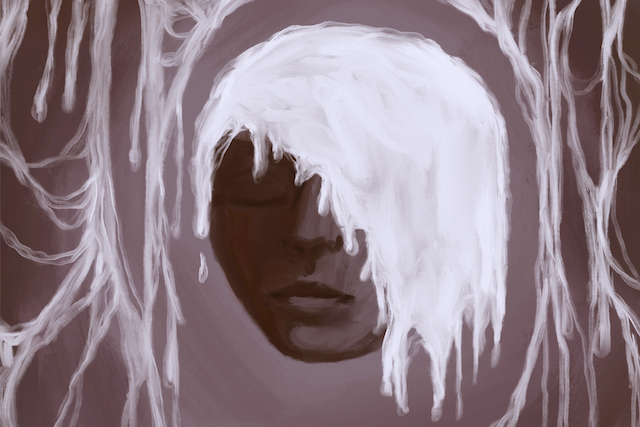
    We don’t let go of trauma because, on a deep level, we believe we will condone what happened, and forget or lose what was so precious.

    Not letting go keeps us stuck like a monkey clutching peanuts in a narrow-mouthed jar. We don’t want to let go of what we had then for fear that we will be left with nothing at all. It keeps us stuck in blame and resentment. It keeps us from joy, pleasure, and possibility.

    But to live and breathe and come alive again, we need to unclench our past. By no means is this forgetting, or condoning, but allowing, receiving, and welcoming new, fresh beginnings, possibilities, and life.

    Accepting the character, mental illness, and wounds of my abusers

    Though my family had been brutal, my inner child wanted to believe in their goodness. I couldn’t accept that people I loved, who were supposed to love, care for, and protect me, could treat me that way.

    I was in a trauma bond and in denial. I had to come to terms with and accept that my mother is a narcissist and my father an enabler. And that the rest of my family only looked the other way.

    I had to let go of my illusion of my family, see through the fog of gaslighting, and accept the truth of who they are.

    Acceptance is learning to see our abusers with clear eyes beyond our expectations, illusions, and stories of what we needed and desired from them, and who we want them to be.

    No matter what was done to or happened to me, I am responsible for my life.

    Staying stuck in a cycle of blame, resentment, and anger told me I wasn’t taking responsibility for myself.

    After severe trauma, it’s painful and challenging to look at ourselves and realize that we played a part in it. Trauma is something that happens to us, but we are the ones who make conclusions about ourselves, others, and life because of it. My beliefs and perspectives about myself, especially about my self-worth, self-esteem, body, and sexuality, drastically changed after the trauma.

    I had to take responsibility for creating my beliefs. I needed to accept every time I didn’t choose, value, and honor myself and my gifts. I realized that just as I had adopted others’ projections of myself, creating a negative self-perception, I could shift to regard myself in a positive light.

    Accepting my part in my trauma set me free from blame and resentment. And it set me free from the power my abusers had over me and my connection to them.

    Acknowledge what I don’t have control over

    My inner child and I wanted to believe in the goodness, love, and protectiveness of my family and partners. But I have no control over who my parents, family, and culture are, or their mental health, values, and behaviors. I had no control over my culture’s beliefs and attitudes toward women and sexuality.

    Because of deep shame from childhood abuse, I felt bad at my core and had a low sense of self-worth. Subconsciously, I tried to control how I was seen. I lived a life acceptable to my family and culture and followed what the world defined as successful, believing it would make me feel good about myself and be accepted and loved.

    But my happiness, freedom, and success lie in my own truth. I learned to honor and follow that. I learned to mother and father myself. I learned about mental illness and mental health and reached out for support from therapists and friends.

    As I let go of trying to please others, pursuing my own needs, talents, and interests, I found myself, my joy, and my purpose.

    Forgive myself

    Looking back, I see so many roads I could have taken but didn’t. I see many ways I could have taken help but didn’t. I was filled with regret for past choices and decisions. I was angry with and judged myself.

    We can be our own harshest critics. I needed to forgive myself.

    I learned to see and be compassionate with my inner child and younger self, steeped as she was in family binds and cultural beliefs. I learned to hold her with tenderness and love for all the ways she didn’t know how to protect and choose herself. And for all she wanted but didn’t know how to reach for and have, for what she wanted to say and do but couldn’t or didn’t.

    As I held my younger selves with understanding, compassion, and love, and forgave them, they began to trust me and offer their gifts, which allowed me to open to joy, innocence, freedom, and play again.

  • The Best Approach to Self-Care: How to Attend to Your Unmet Needs

    The Best Approach to Self-Care: How to Attend to Your Unmet Needs

    “Caring for your body, mind, and spirit is your greatest and grandest responsibility. It’s about listening to the needs of your soul and then honoring them.” ~Kristi Ling 

    There’s something I haven’t told many people. I kept it to myself because it clashed with my “identity” and the image I hoped to project (hello, ego!).

    I’ve been creating content and working in the spirituality and personal development fields for a number of years. Although I don’t strive to become like Buddha, there’s a part of me (call it my spiritual ego) that expects certain things of me, such as to remain at peace, content, and emotionally well-regulated most of the time. After all, isn’t it what meditating daily is supposed to do?

    Well, last year, I did not feel that content or peaceful. I felt quite depressed, and rarely did meditation make me feel better.

    So I turned to wine. Most evenings, I had a couple of glasses of wine (sometimes three or even four) to forget how bored and unhappy I was.

    “I’m a fraud,” I kept thinking while sipping on the red liquid.

    I tried other things (besides wine) to feel better that helped, like gratitude journaling and spending more time in nature. Although these things did improve my mood, there was still a void within me that even gratitude didn’t manage to fill.

    It was when I read an article about humanistic psychology and the use of Maslow’s Pyramid of Needs in therapy that I became aware of the real cause of my “wine habit”: unmet needs.

    “What do I really need?” I started asking myself every time the impulse to pour a glass of wine arose.

    At first, I’d still give in to the wine, probably out of habit. But eventually, using Maslow’s Pyramid of Needs as a guiding tool, I was able to identify which of my needs weren’t satisfied and what actions I needed to take to fulfill them.

    That’s true self-care,” I thought.

    I realized that a self-care plan requires more than a checklist downloaded from Pinterest. It demands a life inventory, identifying our unmet needs, and taking the right actions to fulfill them.

    Simply put, a bubble bath isn’t the best solution for everyone or any issue.

    I’d like to share with you my new approach to self-care that aims to satisfy our deepest needs rather than providing short-lived comfort.

    Step 1: Become aware of your unmet needs.

    The first step is awareness. Although it’s not necessary to use Maslow’s Pyramid of Needs to identify what we want, it provides a helpful framework to guide our reflections.

    I recommend going through each level of the pyramid and taking the time to reflect on your life. A good way to do this is through journaling.

    Below are a few reflection questions for each category of needs to help you identify what’s missing in your life and may be preventing you from thriving.

    Physiological Needs

    These include basic physical needs like eating, drinking water, and sleeping. Self-care at this level comprises rest and giving our bodies the proper fuel and nutrients to function optimally. You could ask yourself:

    • Am I eating enough whole and nutritious food to nourish my body?
    • Do I feel rested when I wake up in the morning?
    • On a scale of 0-10, what’s my energy level most of the time?

    Although most of us have no issue feeding ourselves, a deficiency in rest and nutrients is fairly common. For example, after running a few blood tests, I discovered that my iron levels were too low, which explained my low energy. After supplementing for a few weeks, I started feeling better.

    Security and Safety Needs

    Safety includes income and job security, health, and the environment in which we live. Questions you could ask yourself are:

    • Do I have sufficient financial resources to sustain myself and feel comfortable?
    • Do I often feel stressed and anxious? Do I have tools to help me relax?
    • What’s the state of my physical, mental, and emotional health?
    • Overall, do I feel safe?

    Social Needs

    These are the needs for love, acceptance, and belonging, which include friendships, romantic love and intimacy, and family life.

    The void I felt in the past two or three years mostly came from unmet needs in this category. Several people I knew moved away, and my relationship with a partner ended. Plus, after a year of isolation, I forgot how to connect with people, and the idea of socializing almost gave me anxiety (even though that’s what I needed the most).

    Here are a few questions you could ask yourself to uncover unfulfilled needs in this category:

    • Are there people around me whom I can count on?
    • Do I feel accepted and supported by the people around me?
    • Do I regularly interact and bond with people, or do I often feel lonely?
    • Overall, are my relationships satisfying to me?

    Esteem Needs

    These are the needs for appreciation and respect, which include having a healthy sense of self-worth and feeling valued.

    I worked hard in my twenties and early thirties on improving my self-esteem, but I can still remember the destructive impact of low self-worth on my quality of life when I was younger. Self-esteem needs are foundational for having healthy relationships, taking care of our bodies, and pursuing our goals and dreams.

    Questions you could ask yourself are:

    • Do I feel appreciated at work, at home, and within my group of friends?
    • Is my self-talk mainly positive or negative?
    • Do I believe I have good qualities? Do others appreciate those qualities?
    • Overall, do I feel good about myself at work, at home, and in social circles?

    Self-Actualization Needs

    Maslow defined self-actualization as “fulfilling our potential.” It includes feeling a sense of purpose and growing and evolving as a person.

    For most of my life, I had “purpose anxiety.” Nowadays, living my purpose is one of the most important aspects of my life and what sustains me in difficult times.

    Doing what we love and using our gifts toward a vision that matters to us gives us fuel to move through challenges.

    You could ask yourself:

    • Do I feel like my life is meaningful and has a purpose?
    • Does the work I do fulfill me?
    • Am I using my skills and natural strengths in ways that are enjoyable to me?
    • Am I constantly growing and evolving?

    Self-Transcendence Needs

    Self-transcendence is about feeling connected to others and all life and acting accordingly. At this level, we have a desire for contribution, service, and impact. The need for a spiritual practice and connecting to a higher power are also part of self-transcendence.

    Questions you could ask yourself are:

    • Am I making a positive impact on others and the world?
    • Do I feel connected to others, nature, and perhaps a higher power?
    • Am I satisfied with my spiritual practice and/or the legacy I’m leaving?

    Leisure Needs

    I’ve added this category to the list because I believe play is another important contributing aspect to our well-being.

    A lack of fun and laughter can negatively impact our mental health—at least, that’s been my experience in the past few years. Along with unmet social needs, a lack of play was my biggest source of dissatisfaction. I had become overly serious and forgot how to have fun. I couldn’t even remember that last time I had laughed.

    Questions you could ask yourself are:

    • Do I have fun at work, at home, and in my free time?
    • How often do I laugh?

    Step 2: Identify what requires your immediate attention.

    After going through these questions, I rated each category of needs on a scale of 0 to 10, assigning 10 to the areas that most required my attention. For me, those areas were leisure and social needs.

    This meant that doubling down on my meditation practice or having a daily green smoothie would likely not be enough to break my “wine habit.” Or, better said, they weren’t what I truly needed.

    I needed to have more fun, laugh, and play. I needed to bond with people more, have deep and meaningful conversations, and expand my social circle.

    Once you’ve identified which of your needs aren’t fulfilled, you’re ready to brainstorm solutions.

    Step 3: Brainstorm ways to fulfill unmet needs.

    Once we know what’s “off,” we can think of ways to improve the situation.

    “How can I have more fun?” I asked myself.

    I reflected upon times when I had the most fun in the past and wrote those down. I also wrote any other ideas that came to mind, from watching funny dog videos to going to a comedy show. I made a list of ways to have more fun in my journal and made an effort to do at least a few of them every week.

    Step 4: Choose one small action and schedule it.

    After brainstorming, it’s time to take action. I recommend picking at least one idea on your list and scheduling it.

    A few weeks ago, I decided to attend a Kundalini yoga class followed by a dinner with the teacher and fellow students. It was an opportunity to meet new people.

    I knew that, as an introvert, the risk I would cancel at the last minute was high. Therefore, I immediately purchased the ticket and scheduled the class in my planner. I’m glad I did; I met new people, laughed, and had interesting conversations.

    Self-care activities are more likely to happen when we schedule them.

    . . .

    I could summarize this article with one question: “What do you really need?”

    Taking the time to make a life inventory, identify our unfulfilled needs, and then take action to satisfy them—that’s proper self-care.

    The difficulty is that, sometimes, we don’t even know what we need! I find Maslow’s Pyramid of Needs a helpful tool to guide our self-reflection.

    I hope it can help you too.

  • The One Thought That Killed My Crippling Fear of Other People’s Opinions

    The One Thought That Killed My Crippling Fear of Other People’s Opinions

    “Don’t worry if someone does not like you. Most people are struggling to like themselves.” ~Unknown

    For as long as I can remember, I have been deathly afraid of what other people thought of me.

    I remember looking at all the other girls in third grade and wondering why I didn’t have a flat stomach like them. I was ashamed of my body and didn’t want other people to look at me. This is not a thought that a ten-year-old girl should have, but unfortunately, it’s all too common.

    Every single woman I know has voiced this same struggle. That other people’s opinions have too much weight in their lives and are something to be feared. For most of us women, there is nothing worse than someone else judging our appearance.

    After that fear first came to me in third grade, I carried it with me every day throughout high school, college, and into my twenties. This led me to trying every diet imaginable and going through cycles of restricting and binging. I just wanted to lose those pesky fifteen pounds so I could finally feel better about myself and not be scared of attention.

    There was no better feeling than getting a new diet book in the mail and vowing that I would start the next day. Following every rule perfectly and never straying from the list of acceptable foods. I stopped going to restaurants and having meals with friends because I wouldn’t know the exact calorie count.

    All this chasing new diets and strict workouts was because of one simple thought that I carried for years. I just assumed everyone was judging my body and would like me more if I lost weight. I was constantly comparing my body to every other woman around me.

    This fear of what other people thought also led me to have a complicated relationship with alcohol in my late teens and early twenties. At my core I am naturally sensitive, observant, even-keeled, and sometimes quiet. But I didn’t like this about me; I wanted to be the outgoing party girl that was the center of attention.

    The first time I got drunk in high school I realized that this could be my one-way ticket to achieve my desired personality. With alcohol I was carefree, funny, and spontaneous, and I loved that I could get endless attention. I was finally the life of the party, and no one could take it away from me.

    I wanted everyone to think that party-girl me was the real me, not the sensitive and loving person that I was desperately trying to hide. Classmates were actually quite shocked if they saw me at a party because I was so different than how I appeared in school. It was exciting to unveil this persona to every new person I met.

    But the thing with diets and alcohol was that this feeling of freedom was only temporary. When the alcohol wore off or the new-diet excitement faded, I was back to the same feelings. In fact, I found that I was even more concerned about what people thought of me if the diet didn’t work or the alcohol wasn’t as strong. I feared that they would discover the real me.

    The irony was that whenever I drank, I felt worse about myself after the alcohol left my system. I felt physically and emotionally ill from the poison I was putting into my body. I would often be embarrassed about not remembering the night before or fearing that I said something I shouldn’t have. It was a nightmare of a rollercoaster that I no longer wanted to be a part of.

    I decided in my mid-twenties that alcohol would no longer have power over me. That I wouldn’t rely on it to feel confident and instead work on loving the real me. I decided to break up with alcohol and put it on the back burner. I was moving to a new city where I didn’t know anyone, so I figured this would be a good time to start fresh.

    Once I moved and started my new life, those same familiar fears and pangs of shame started to show up again. If I wasn’t the loud party girl, who would I be? What would people think of me if I wanted to stay in and read instead of partying? I wasn’t confident in my authentic self yet, and I was desperately looking for a new personality to adopt. That’s when I turned back to a familiar friend for help: dieting.

    In the span of five years, I tried every major diet out there: paleo, keto, vegetarian, vegan, counting macros and calories, you name it. I dedicated all my free time to absorbing all the information I could so I could perfect my diet even more. At one point I was eating chicken, broccoli, and sweet potatoes for every single meal. My body was screaming at me for nutrients, but I continued to ignore it.

    Then one day I hit that illustrious number on the scale and finally felt happy. Well, I assumed I would feel happy, but I was far from it. I felt like absolute crap. My hair was falling out, I had trouble sleeping for the first time in my life, my digestion was ruined, and I had crippling fatigue. I finally lost the fifteen pounds, but my health was the worst it had ever been.

    I felt betrayed. The scale was where I wanted it, but I wasn’t happy. I was more self-conscious of my body than ever before. I didn’t want people to look at me and notice my weight loss. That little girl that cared about what people thought was still ruling my life. I had to make a change, and I had to start loving the girl in the mirror no matter what I looked like. My life depended on it.

    It was during one of those nights where I felt so confused and lost that I stumbled into the world of self-development. I bought my very first journal and the first sentence I wrote was: “Self-love, what does it mean and how do I find it?” I vowed to myself that I would turn inward and get to know the real me for the first time in my life. 

    This new journey felt uncomfortable and scary and pushed me completely outside my comfort zone. I couldn’t just hide behind external sources anymore like I did with alcohol and strict diets. I had to get to know authentic Annie and show the world who she was.

    It was in this journey that I found my love of writing and inspiring people. I decided to follow my dreams and get certified as a life coach and finally make my writing public. But when I went to hit publish on my first post, that same fear reared its ugly head.

    This time I was deathly afraid of what my coworkers and friends would think. They would see the real me, the sensitive soul that had deep feelings and wanted to inspire other people. This fear caused me to deny who I was for far too long, again.

    I hesitated for years to share my writing because this fear stopped me. But this time I wasn’t going to let it have control over me anymore. One day this thought popped into my head and stopped me dead in my tracks. It was an enormous epiphany and one I couldn’t ignore. The thought was:

    When I am eighty years old and looking back on my life, what do I want to remember? That I followed the same path as everyone else or I followed my heart?

    As soon as that thought came to me it was like I was hit over the head. For the first time in my life, I understood it. I realized that if I kept living my life in fear of other people’s opinions, I wasn’t really living my own life.

    Every human is here to be unique and serve out their own purpose, not to just follow the crowds blindly. I couldn’t live out my purpose if I wanted to hide away.

    Self-acceptance and self-love come from knowing and respecting all parts of myself. It comes from acknowledging my shadow sides and still putting myself out there regardless of opinions. It comes from going after big and scary goals and having fun along the way. Because the absolute truth is this: other people’s opinions are not going to matter in one year. They won’t even matter five minutes from now.

    So now I want you to ask yourself the same question: What do you want to remember most about your life when you are at the end of it?

  • 10 Ways to Calm Anxious Thoughts and Soothe Your Nervous System

    10 Ways to Calm Anxious Thoughts and Soothe Your Nervous System

    “Everything you want is on the other side of fear.” ~Jack Canfield

    Freezing in fear is something I have done since I was a child.

    My first home was an unsafe one, living with my alcoholic granddad. Once upon a time, I didn’t know life without fear.

    I learned young to scan for danger. How were everyone’s moods? Were the adults okay today? I would freeze and be still and quiet in an attempt to keep myself safe and control an eruption.

    Unknown to me, between the ages of conception and seven years old, my nervous system was being programmed. The house I grew up in was shaping how safe I felt in my body.

    Living in a house with domestic abuse and alcoholism and losing my beautiful grandmother, who cared for me at five, was enough to make that foundation within me shaky.

    I learned to be on high alert, scanning for danger always, and became incredibly hypervigilant and super sensitive to the moods of others.

    Sometimes this superpower of mine kept me safe as a child. My dad wouldn’t always lose his temper if I was quiet enough. My mum would be available to me if I sensed her mood and provided her with comfort.

    As I grew, this superpower of mine caused me issues.

    I would worry all of the time about the thousand different ways something could go wrong.

    I couldn’t enjoy the moment and what I had right now, as my brain would be scanning for the next problem.

    I couldn’t sleep.

    My anxiety was like this monster in my mind, consumed by all the what-if scenarios, and as a result, I just couldn’t move forward.

    Life didn’t feel safe. Even though I no longer lived in an unsafe environment, my body and my brain were still there.

    This anxiety stopped me from applying for new jobs, challenging myself, dating, healing from the past, changing, and growing.

    I would be frozen by the fear of all that could go wrong. I felt stuck, frustrated with myself, and full of self-hate for living a life that made me miserable.

    The penny dropped one day. I finally realized that this fear was all in my head—99% of the things I worried about didn’t manifest into reality. My anxious thoughts didn’t make anything any better, but they were ruining what I had right now.

    Here are the ten steps that have helped reduce anxiety, fear, and overwhelm and help foster a life of happiness.

    1. Give that anxious, worrying voice in your head a name.

    This creates separation between you and the voice. You are not your thoughts. This is a voice from your ego concerned with survival, and you have the choice to listen or choose a more empowering thought. However, this voice could be sensing real danger, so listen to see if it is a risk to you right now or a potential risk that could happen.

    If real, then of course take action after some deep breaths. Otherwise, continue with the steps.

    2. The minute you hear the voice, recognize it is a sign that your nervous system is dysregulated and moving into fight-or-flight mode.

    Then choose to pause and take a few deep breaths. Coherent breathing can help calm down this response. This means take deep breaths in through your nose, inflating your belly for five seconds, and exhale while deflating your belly for five.

    3. Create a list of tools you can use when your mind and body are about to go down the what-if train.

    This might mean lying on the grass, dancing to your favorite song, EFT (emotional freedom technique) tapping, doing a yoga pose, or journaling to discharge fear. The minute you notice the voice, do something off the list.

    4. Repeat a mantra to calm your nervous system.

    Find a statement that helps calm you down and repeat it when the anxiety voice is back. My favorite is “If X happens, then I will deal with it.”

    5. Get in the present moment.

    What can you hear? What can you see? What can you smell? What can you feel? I like to get outside when I do this. Feel my feet on the grass and take in the moment.

    6. Place your hand on your heart and remind yourself you are safe.

    It probably doesn’t feel that way. But feelings aren’t facts, and your thoughts can only hurt you if you let them.

    7. Notice if you have moved into a freeze state.

    When we first start to worry, our nervous systems go into fight-or-flight mode, and adrenaline and stress hormones pump into our bodies. Then when it all feels too much, we freeze. We’re literally not able to do anything and go into despair.

    You can find the tools that work for you to move from freeze and slowly back up to fight or flight and then up to your calm state. It is a ladder with freeze at the bottom and calm at the top. (It’s called the polyvagal ladder.)

    You can split the list in point three into what helps you through freeze and what helps you out of fight/flight. A great way out of freezing is movement. Even five minutes of jumping jacks will get those stress hormones pumping. Then do something to calm you down, like deep breathing.

    8. Choose to trash the thought.

    Is this something that is a worry for another day? Imagine putting it in a trash bin. Or you can even write it down and put it in the bin physically.

    9. Start to notice your mental state throughout the day.

    Are you calm or triggered by worry? Are you frozen? Or is your heart pumping so your stress response is turned on and you are in fight-or-flight mode? What tool can bring you back to calm or move you up the ladder?

    10. Write what you are grateful for in this moment.

    Noticing what’s going well right now can disarm fear.

    Slowly, these steps can help you to regulate, discharge fear, and allow your nervous system to heal. You may not have been safe as a child, but you have the power to feel safe now.

    You have the power to change your circumstances and remove triggers that are recreating that feeling of unsafety.

    Your fear in your body could be very real and giving you information that maybe a particular relationship, job, or environment is not safe for you. Take notice and make baby steps to create a life that makes you feel safe, as this is the foundation for happiness. Give yourself what you longed for as a child.

    Yes, hypervigilance may be something that got programmed into your nervous system young to help you survive, but you don’t have to let it hold you back now.

    Changing, growing, and healing can feel scary and unsafe, but as you take those baby steps to create a healthier you, your confidence and self-esteem will grow. Your brain will get new evidence that you are safe, and those worrying thoughts will slowly disappear. A new worry may come, but then you can just repeat the process.

    These steps helped me stop living life small and in fear and allowed me to go after my big dreams—finding love, progressing in my career, and even buying a house.

    Anxious thoughts no longer hold me back. I just watch them with curiosity and know the steps I need to take to move through them. I took back the power I lost as a child, and I know you can too!

  • 5 Life Lessons from a Brain Tumor That Could Have Killed Me

    5 Life Lessons from a Brain Tumor That Could Have Killed Me

    “Life is a balance between what we can control and what we cannot. I am learning to live between effort and surrender.” ~Danielle Orner

    I was slumped against a wall at Oxford Circus Station early one Sunday evening when an irritated male voice suddenly barked, “MOVE!”

    Moments beforehand, I had lost my vision.

    Without conscious thought, I muttered, “RUDE!” and staggered off without clearly seeing where I was going.

    It was only months later, on retracing my steps at Oxford Circus, that I realized I’d been blocking his view of some street art.

    I’d allowed a guy to bully me out of the way while in a vulnerable state so that he could take a picture for social media.

    Lesson 1: Not all disabilities are visible.

    We can never fully know what someone else is experiencing. Mental health, chronic pain, and disabilities are not always apparent. So, when we come from a place of not knowing and are patient with others by default, we open up a window of possibility that exists outside of our judgment.

    Minutes prior, I’d stepped off an underground train and onto an upward escalator. A pain hit my right temple like a bullet. It took my breath away, everything went black, and I felt I might faint.

    Desperately, I clung to the railing. And as the top of the escalator approached, my right foot went floppy, and my vision disappeared. I could see light and color, but the world was blurry, lacking definition.

    I used what little vision I had to follow the distinctive white curve of Regent Street down to a spot where I’d arranged to meet a friend

    Panic finally set in when I realized that my friend was walking toward me, and I could recognize his voice but I could not see his face at all.

    We sat down in a restaurant, and a concerned waitress brought a sugary drink.

    My mind went into overdrive: “Had I cycled too much? Was my blood sugar low? Had I eaten/drank enough? Given myself a stroke? Was I just stressed?”

    Twenty minutes later, my vision slowly returned.

    Relieved but freaked out, I asked my friend if he thought I should go to A&E (ER). He said, “Only if you think you need to.” I felt silly. Scared to take up space. Afraid of being a drama queen. I didn’t trust myself or my experience.

    LESSON 2: Don’t seek external validation.

    The opinions of others are helpful, but only you see and experience life from your own unique perspective. Learning to trust and validate our own experience first and foremost is how we step in our power.

    Later I went back home but couldn’t shake it off.

    The next morning, I visited my doctor, who sent me straight to A&E (ER). The hospital admitted me overnight, concerned it was a mini stroke or aneurysm. But the following morning they discharged me, citing dehydration as the cause.

    One week later, I was back in A&E. More dizziness, more foot numbness, more blurred vision. A doctor described it as “classic Migraine Aura.”

    My gut leapt; that didn’t feel right. “I don’t get headaches,” I protested. “I rarely take painkillers. Why so many all of a sudden?”

    They seemed confident it wasn’t serious, but booked an MRI scan, just to be certain.

    Twenty-five minutes of buzzing, clanking, and humming later, I glided out of an MRI scanner.

    I thanked the technician. “All good?” I asked.

    “It’s very clear,” she replied.

    LESSON 3: Listen to your gut.

    If your gut says that something is off, listen to it. A gut feeling is typically a lurch from your stomach rather than chatter from the mind.

    My gut knew it wasn’t migraines; it told me so, and if I hadn’t strongly advocated for myself, then I may not have got that MRI scan.

    A week later, I was back with my local doctor, experiencing vertigo and earache.

    Did I have an ear infection? Was that the issue all along, some sort of horrible virus affecting my sight and balance?

    The GP opened my records up on his computer and his face immediately dropped.

    “Do you mind if I take a moment to read this?”

    “Of course,” I said.

    He composed himself but his face was ashen.

    “Has anyone spoken to you about your MRI result?” he ventured at last.

    I found myself detaching from reality, like I was watching a movie.

    He told me that they’d found a lesion on my brain and there was a possibility of brain cancer. “I’m so sorry,” he offered finally.

    I left and immediately burst into tears.

    Six days I lived with the idea of having brain cancer.

    Had it spread? How would they treat it? Could they treat it?

    More dizziness, more vertigo ensued, and a wise friend firmly told me to go back to the emergency room and refuse to leave until I got answers.

    Reluctantly, I entered A&E (ER) for the third time.

    After a long wait, a neurologist sprang from nowhere, took me to a room, and showed me my MRI scan. I was shocked by the large white circle in the middle of it.

    “How big is that?” I gasped.

    “About the size of a pea,” the doctor said casually. “I believe it’s a colloid cyst, a rare, benign, non-cancerous tumor. It can be removed by operation, using a minimally invasive, endoscopic camera.”

    Relief flowed through me. “It’s not cancer?”

    After reassuring me it was not, the doctor sent me away, telling me to await further news.

    Outside the hospital I hung around updating loved ones by phone. Suddenly a withheld number rang.

    It was the neurologist: “I’ve spoken with neurosurgeons, and they think you should be admitted to the hospital for emergency surgery. If the cyst bursts you have one to two hours max, or that’s it.”

    “Okay,” I stammered. “I’m actually still at the hospital.”

    “Not this hospital,” he said. “A different one.”

    A taxi ride later, it was 5 p.m., and I was in an emergency room for the second time that day and fourth time that month. Despite the chaos around me, I eventually curled up and got a little sleep.

    Suddenly it was 3.30 a.m. and I was still in A&E. Staff rushed in, grabbed my bed, and hurtled me through corridors. Bright lights from London’s skyscrapers flashed past windows, everything surreal and movie-like again

    The next day, surgeons explained that they wouldn’t be sure that they could reach the tumor until they operated, and there were four different options for surgery, ranging from a minimal endoscopic camera through to opening my skull up with major surgery.

    I hoped and prayed for endoscopy but wouldn’t know the outcome until I woke up.

    The operation was planned for 8 a.m. the following morning. I said an emotional goodnight to my sister. Suddenly a lady interrupted us and said, “I hope you don’t mind me saying, but I saw you earlier and you don’t look sick enough to be on this ward.”

    And there it was—the trigger again, the gift, the insight, the lightbulb moment:

    “Despite how bad I feel on the inside, I don’t look ill enough to have a brain tumor.”

    I didn’t look ill enough to the guy at Oxford Circus taking a selfie.

    I didn’t look ill enough to my friend.

    I didn’t look ill enough to the doctors who turned me away initially.

    And now I didn’t look ill enough for this lady’s expectations of who should be in a head trauma ward.

    I breathed into that pain. Into the feeling of not being seen. Of not being heard.  Of not being validated. Of feeling like a fraud, an imposter. Of not deserving to take up space. Of not trusting my experience.

    And when I found my center, I quietly replied, “Actually, I’m having surgery to remove a brain tumor tomorrow morning.”

    Her face fell, then she wished me luck and moved on.

    LESSON 4: Our triggers are our gifts.

    When we are triggered, it shows us what needs to heal.

    It was me who felt unworthy of taking up space. It was me who felt like a fraud. She was simply my mirror. It’s up to me to heal those aspects within myself and to believe that I’m worthy of taking up space—and to then take it.

    The next morning, my operation got pushed back. It was a major trauma hospital, and bigger emergencies took precedent. I engaged in mindfulness to stay centered.

    I did an hour of breathwork to calm my nervous system. I listened to uplifting music to raise my vibration. I watched emotionally safe movies to collect warm, fuzzy vibes. I drew on my iPad and alchemized my head tumor into a cute pea cartoon character—benign, polite, and cute, not threatening at all.

    A porter arrived at 5.30 p.m. and whisked me away for surgery. After weeks of surrendering to the unknown, it was now time for the ultimate surrender of any illusion of control. I took a deep breath as anesthetic filled my veins.

    LESSON 5: Surrender.

    We can’t always control what happens to us or the outcome. We can only control what happens inside of us and how we choose to show up. We take our power back when we lean into the unknown and surrender. When we resist our current reality, we suffer more.

    I woke up two hours later and got sick.

    My brain was rebalancing after months of increased head pressure. Clutching a blue plastic bag, I looked up to see one of London’s best neurosurgeons waving cheerfully at me. “Your operation is over. We used an endoscope. Minimal invasion. We think we got it all, and it’s not likely to come back.”

    Relief, nausea, and gratitude flowed in abundance.

    I dozed a little while morphine played tricks on my mind. Delicious little dreams filled my head, and I saw the world as one big, animated garden with flowers as cartoon characters.

    I giggled at the thought of plants acting as humans do and imagined an aggressive rose bush declaring war on all of the other plants and throwing bombs. It seemed ridiculous. Humans should be more like flowers, I thought—less ego, just growing, flourishing, blooming.

    I enjoyed this magical trip a little longer, a welcome respite from the hell of the last month, and eventually they wheeled me back to the ward.

    I arrived in time to see the sun setting across London from the twelfth floor.

    It was magnificent. Its beauty, color, and intensity moved my weary body to tears.

    A nurse came to check that I was okay, and I assured her that I was crying happy tears.

    I silently watched the sun as it made its final slip over the horizon, safe in the knowledge that I’d survived another day.

  • How to Protect Our Kids from a Lifetime of Food, Weight, and Body Image Issues

    How to Protect Our Kids from a Lifetime of Food, Weight, and Body Image Issues

    I went on my first diet when I was around fourteen or so because, as they often do in growing teens, my jeans started getting tight.

    And because I grew up in the same anti-fat culture we all have, I hated myself for it.

    Around the same time, an adult in my life who was always obsessed with “eating healthy” gave me a copy of the new book she was reading outlining the healthiest way to eat.

    It was a book on the Atkins/low-carb diet.

    The author spent the bulk of the book demonizing carbs, explaining in convincing-sounding detail all the science he supposedly had about not only how harmful carbs were but how they were the cause of weight gain.

    Three things happened from reading that book.

    1. I became scared of eating carbs and started trying to eliminate them because, while of course I wanted to be healthy, I was terrified of gaining weight.

    2. Instead of losing the five pounds or so that I wanted to lose, I gained about five pounds and a slow progression of weight gain continued for years. Because the harder I tried to eliminate the carbs, the more I craved and obsessed over them; always eventually caving, eating them, and then hating myself for it and promising to start “being good tomorrow.

    Eventually the caving led to overeating them because “as long as I was being bad anyway, I may as well eat them all and get them out of the house so I won’t be tempted when I start being good again.”

    3. An almost three-decades-long war with my weight, my body, myself, and food began. A war that resulted in a hospitalization in my early thirties, after my first foray into the world of “it’s not a diet; it’s clean, healthy eating,” for bulimia so severe I often felt like I was going to eat myself to death.

    And the whole time, I blamed myself for it. I believed I was stupid, weak, pathetic, a pig who needed to try harder to control myself.

    So I kept trying. For more than half my life I tried, and it almost killed me.

    I’ve been working with women around the whole weight and food thing in one form or another for over fifteen years now. I started sharing my story because after listening to other women describe their histories with food and weight, I realized that my story is not unique.

    Varying degrees of my story are the norm, and they all start in basically the same seemingly innocent ways.

    We want to lose weight or “eat healthier,” so we do what we’re taught we’re supposed to.

    We start a diet or “healthy eating plan” of some sort that tells us what we “should” and “shouldn’t be” eating. This leads to a lifetime of trying to control our intake and our bodies, which results in disordered eating patterns, weight cycling, and self-loathing.

    I regularly hear from women in their seventies or eighties who have spent their entire lives fighting this losing battle with themselves to “eat right” and lose weight.

    In one survey of US women a few years ago, 75% reported disordered eating behaviors or symptoms consistent with eating disorders.

    My recovery didn’t start until I realized a few basic truths.

    First, if I had any hope of healing, I had to figure out what was causing my eating issues. Ultimately, it came down to my conditioning: patterns of thoughts, beliefs, and behaviors that had developed over the course of my life as a result of many different things, not the least of which being:

    1. The stories I had learned to believe about bodies and the people in them: Big ones are bad, unhealthy, undisciplined, and lazy. Small ones are good, healthy, and disciplined, and they work hard.

    These misguided beliefs taught me not only to live in fear of weight gain and the harsh judgment of others if I gained weight, but also to judge myself and my body harshly when I did so. This contributed to not only the decades of weight gain and disordered eating but ultimately the eating disorder.

    2. The stories I’d learned about food: These are the good foods, the healthy foods, the foods you should be eating, and those are the bad foods, the unhealthy ones, the ones that cause all manner of disease, poor health, and weight gain. Those are the foods you have to give up forever, or only allow in moderation.

    These misguided beliefs taught me to live in fear of food and my body becoming unhealthy or fat if I dared to eat the “wrong” thing. This created the never-ending pattern of promising myself I was going to “be good” only to end up craving, caving, hating myself, and starting over that I felt trapped in for so many years.

    3. Disconnection with myself, my body, and my own needs: As long as I was trying to make myself eat or do the things I thought I “should” do in order to control my body and my food intake, I was stuck in my head. Stuck in fear. Disconnected from myself, my body, and even the decision-making part of my brain. Ruminating, promising, obsessing, hating.

    In that state, I had no ability to understand the messages my body was constantly sending me about what it needed, nor did I have any concept that my body was something that could be trusted to tell me that. I saw it as an enemy to be ruled over, controlled, and beaten into submission… rather than the ally, healer, and communicator that it is.

    4. Self-loathing: I didn’t like, love, trust, or value myself, so my entire self-worth and relationship with myself relied on what my body looked like and my need to control how others saw me.

    The second truth I had to realize: if I had any hope of recovering and making peace with myself, my body, and food, I had to change the things that were causing the war.

    That meant giving up the obsession with my weight and eating or looking perfect.

    I had to recognize those things for what they were—distractions that kept me from dealing with the issues that were causing the problems in the first place and were making matters worse.

    So I put all my energy into changing the causes.

    It didn’t happen overnight, but one day I realized I couldn’t remember the last time I’d engaged in compensatory behaviors. The binges were getting fewer and farther between.

    And then I couldn’t remember the last time I binged or even overate, and I couldn’t even imagine ever doing it again.

    It’s been many years since those things were my daily reality, and I’m thrilled to say they simply don’t exist in me anymore because I changed the conditioning that was causing them. I learned to reconnect with and trust my body when it tells me what it needs or wants, and I learned to value myself enough that I cannot imagine treating myself or my body poorly anymore.

    Recovery and peace are blessings that I don’t take for granted for a second and I’m still grateful for every minute of the day.

    But disordered eating and eating disorder recovery are unbelievably difficult, prone to multiple relapses, and many aren’t so lucky.

    This brings me to my main points because the simplest solution to disordered eating or eating disorder recovery is to prevent those things from ever starting in the first place.

    That’s my dream, to save future generations from growing up with the disordered eating patterns/eating disorders and horrible body/self-images that ours has grown up with.

    It starts with us, as parents.

    What I Wish Parents Understood

    Living with disordered eating patterns or an eating disorder is a special kind of hell that I wouldn’t wish on anyone.

    It’s like living with the meanest, most self-destructive monster in your head one can imagine.

    You know the things you’re thinking and the choices you’re making are harming you, you know they’re making you miserable, you’re desperate to stop, and yet… no matter how hard you try, you can’t.

    You feel powerless. Hopeless. Helpless. Trapped.

    Recovery was one of the hardest things I’ve ever done in my life—and I’ve not had an easy life, so that says a lot.

    Given this, it’s my view that in addition to helping those struggling recover, prevention at an early age needs to be a top priority.

    And parents, I’m not trying to place blame, but after fifteen years of hearing women talk about their struggles, I’ve come to realize that we are often a big part of the cause, although not purposely of course.

    We all have our kids’ best interests in mind.

    We want our kids to be the healthiest, most confident versions of themselves, and we’re all doing the best we can to help them get there.

    We want them to maintain healthy bodies and eat nutritious foods. Nobody doubts that we all want the best for our children and are doing our best.

    But the way we’re approaching it is almost guaranteeing that our kids are going to struggle with the same food issues, eating disorders, or a lifetime of disordered eating and failed diet attempts that so many in our generation have.

    They’re learning to fight the same wars we have in the same ways we learned to fight them.

    All the things we typically do to try to help encourage health (restricting “bad” foods, teaching them that some are “good” and some are “bad,” encouraging them to lose weight or even acknowledging their weight) are among the worst things we can do for the health of our children.

    It’s difficult to overstate the damage that weight and food shame does to adults, and that damage is worse in children.

    We also have to remember that they learn from us. If your kids watch you struggle with food and your weight, if they see you tie your mood and your self-worth to your scale, they are going to be at a significantly higher risk for developing an eating disorder or living with those same struggles themselves.

    So this is what I want parents everywhere to know: encouraging weight loss, labeling or restricting their food intake (good vs bad, allowed vs not allowed), discussing weight, restricting foods, and dieting yourself—all of those things that millions of us are doing every single day that diet and healthy eating cultures have taught us is expected or accepted—they’re putting our children at risk.

    Research has shown that the younger girls are when they go on their first diet, the more likely they are to engage in extreme weight control behaviors like vomiting and laxatives (that’s an eating disorder), abusing drugs and alcohol, and becoming overweight by the time they reach their thirties.

    One out of four dieters will develop some type of eating disorder. That’s a number that’s doubled in the last twenty years. And the majority of the rest develop very disordered eating patterns.

    Eating disorders are widely recognized to have the highest mortality rate of all mental illness, while also being among the most underdiagnosed and under/poorly treated.

    Not even to mention the levels of anxiety, depression, and self-loathing that typically come from years of living with disordered eating and battling with our weight.

    There is a better way.

    Encouraging Healthy Choices Without the Risk

    DON’Ts

    Don’t discuss weight, size, or bodies—not yours, not theirs, not anyone else’s.

    Don’t let other people discuss their weight in front of them—not their doctor, not relatives, no one.

    Don’t label foods—no good, no bad, no healthy, no unhealthy… no food labels. At all. Binary food labels can cause shame, create self-punishing behaviors, destroy our relationship with food, and contribute to overeat/binge/restrict cycles that can take years to heal.

    Don’t tell them they are what they eat—our food choices don’t determine our worth.

    Don’t restrict foods—let them eat what they want. Restriction leads to guilt, shame, overeating, or bingeing and fuels disconnection.

    Don’t force exercise or “burning off calories”—encouraging exercise as a means of weight loss is setting them up for trouble.

    DOs

    Do encourage them to consider how their food choices make their body feel. How does that big mac and fries make their body feel when they’re done eating? What about the candy for breakfast? Do they feel good when they’re done eating? Or do they feel sick? Would they rather feel good, or sick? How does skipping a meal make their body feel? Do they want to feel that way? Do they really want to ignore their body’s most basic human needs with restriction? Why?

    Do encourage them to consider why they’re eating. Are they physically hungry? No? Are they emotionally hungry? Teach them the difference and help them learn to accept, honor, and express the emotions they’re trying to feed or soothe rather than ignore or numb them.

    Do teach them the value of understanding the why behind the choices they’re making and how their choices are often a result of their relationship with themselves.

    Do teach them that the relationships they have with themselves, food, and their bodies are the most important relationships they’ll ever have in their lives and to protect and nurture them.

    Do lift them up, teach them to value themselves exactly as they are, for who they are, not what they look like, weigh, or how they eat. Teach them to value and respect others, no matter what size they are.

    Do teach them about self-acceptance, kindness, authenticity, self-compassion, and the power of mindful living.

    Do teach them to appreciate the wonder and magic of their bodies, no matter what size they are. Teach them how to stay present in the moment and in their bodies, so they learn to listen to and trust their own bodies.

    Do teach them humans come in all shapes and sizes—and that no one shape or size is any better than another.

    Teach them that they are enough, exactly as they are, and that neither their bodies nor their food choices define their worth.

    And that will all be way easier if you learn it for yourself first.

  • How I Kept Going When I Wanted to End My Life

    How I Kept Going When I Wanted to End My Life

    “When you’ve reached rock bottom, there’s only one way to go, and that’s up!” ~Buster Moon, from the movie Sing

    When I first heard this saying, as I was watching the movie Sing on my way to another continent, a small light bulb lit up inside me. As I sat with this sentence, I came to the conclusion that I couldn’t agree more.

    After hitting my own rock bottom a couple of years ago, I know that once you get there, there is no place you can go that is lower. It’s the final breaking point.

    And if there is anything I have learned about the final breaking point, it’s that you have two choices: either give up or start over.

    This theory can apply to many aspects of life, like when you’re in a job or career that is no longer working, so you hit rock bottom in a health crisis or a mental breakdown. You have a choice: Be insane and keep going, when you know deep in your heart and gut that this decision isn’t right, or “give up” and finally pursue the career or job that you have always wanted.

    Sometimes, rock bottom gives us a good reflection point on what is no longer working in our life, as well as the opportunity to change. But what happens when your rock bottom is wanting to end your life?

    I remember it clear as day. It was summer 2020, during the Covid-19 pandemic, and I was working remotely from home, like many others. Nothing was unique about my situation, except the fact that I had ended a very toxic, karmic relationship just three weeks into a global pandemic.

    The things that most people do in order to get over a breakup—like see friends and go out and have fun—were all things the whole world had to put on pause. Oh, and top of that, I was worried about dying from Covid.

    I never realized the effects lockdown could have on my mental health. While I am naturally introverted, there is a significant difference between being forced to stay in and choosing to do so.

    I realized that I had hit rock bottom during a beautiful summer day. I was outside, staring into my backyard, when I realized that I felt nothing. I no longer wanted to live, and I could no longer see the beauty and miracles of everyday life.

    I was disappointed that I woke up every single morning, because that meant another day that I had to muscle through. Another day that I had to survive. While I’ve had bouts of depression my entire life, I never came as low as I did then.

    By the end of the summer, I knew I had two options: I was either going to save my life or end it. But I also came to a humbling moment when I knew I couldn’t do it myself. I needed therapy. No one else could help me through this except a professional that could help me dissect my feelings, trauma, and emotions, as well as myself.

    Starting therapy was a blow to my ego, as I imagine it is for many. It’s sitting there, across from your therapist, when they ask you, “Why are you here?” knowing damn well that you are there so that you don’t die. That you don’t want to suffer anymore. That you are wondering, “Why am I even suffering? Am I just being overdramatic?”

    There are so many hard truths that you learn about yourself through therapy. But also, so many enlightening things, like the fact that it wasn’t your fault you endured abuse, gaslighting, and manipulation in past relationships. Even though you thought it was.

    Or that trauma literally shuts off the frontal cortex of your brain, especially when you are in “fight or flight” mode, because your body is just trying to survive. This is why there are so many memories that, to this day, I cannot remember. They are little black holes in my brain history.

    When you’re in therapy, you don’t notice the gradual changes at first. It’s not until months down the line that you start to notice that little things are bringing you joy once again.

    How the sun, in the cold harsh winter, after days of cloudiness, brought a small smile to your face. Or how you realize that you no longer partake in OCD behaviors that you thought you could never break before starting therapy. Or how your irrational fears are no longer at the forefront of your mind anymore.

    While not everyone will notice these changes, you will. And you will then start to think about how and why you didn’t start therapy sooner. How and why you didn’t choose yourself sooner. Do not berate yourself; this was all part of your journey.

    If there is anything that I have learned by wanting to die, it was that inadvertently, I also wanted to live. I just no longer wanted to live my life through the same suffering and stories. The body, mind, and soul can only sustain pain for so long before it can no longer do it anymore.

    One of the most pivotal things about my life, hands down, was my rock bottom because, as the saying goes, I could only go up from there.

    Up doesn’t mean that you change your life drastically in one day, or even a couple of months.

    Sometimes up is showering after a week of not having the energy to do it. Sometimes up is allowing yourself to feel a slight feeling of joy again, after months and months of darkness. Sometimes up is remembering to eat again, because you never had the appetite to eat when you were at your lowest.

    If you’re struggling right now and can’t get out bed, I’m not telling you that you are wasting your life. You are not. Even in the depths of suffering, this is all a part of your journey.

    But I can tell you this: Living—not merely existing—is a choice made of lots of little choices. Like the choice to get help. The choice to believe things can get better. The choice to do the little things that help you feel better. And the choice to recognize the small wins along the way.

    Other people can support you, but no one can make these choices for you but you.

  • 5 Ways to Use Movement (Not Exercise) to Support Your Mental Health

    5 Ways to Use Movement (Not Exercise) to Support Your Mental Health

    “Nothing is more revealing than movement.” ~Martha Graham

    It seems like only yesterday that I was at home with a newborn, a kindergartener, two dogs, and a husband who, just like me, was working from home, when we were thrown into the unthinkable COVID19 pandemic.

    It didn’t take long for the stress and tension to build in my body. The feeling of instability, uncertainty, and fear, not to mention the post-partum anxiety, took its toll on my body as it became more rigid, bound, immobile, and frozen.

    All the ways I had relied on movement as exercise were taken away, adapted to in-home and Zoom learning, which unfortunately did not work for my schedule or home life. It was the first time in a long time that I was not able to incorporate dance into my week.

    It seemed very hard to expand, stretch, even breathe, and that’s when it hit me. A little voice inside said, “You need to practice what you preach!” I needed to redefine movement and focus it on my mental health; connecting to movement for emotional well-being and not just for physical activity.

    When most of us think of movement we think of exercise. While all exercise is movement, not all movement is exercise.

    There are so many ways our bodies move, even involuntarily, that contribute to not only how we feel but what we think. Science tells us that molecules of emotion exist throughout the body, so wouldn’t it make sense that in order to manage those emotions, we need to tap into all the ways to move the body that houses them?

    First, let’s look at what movement is. Movement is anything that allows the body to change position or relocate. This can be something as grandiose as running a marathon, or a resting heartbeat, blood pumping, even breathing. All of these examples involve parts of the body or the whole body shifting its position.

    So, with this in mind, how are you moving right now? Now ask yourself, how is this movement impacting my mood in this moment? Is it supporting a healthy mindset or perpetuating a habit or behavior that contributes to a negative thought pattern?

    In my case, as mentioned above, my movement was very limited, confined, and rigid. It was often impeded by another person, my newborn, who through no fault of his own needed me for survival. I neglected my own body’s needs and it took a toll on my mental health.

    Changing the way you think or even feel actually comes down to changing how you move. So what can be done? Here are five ways you can use movement to support your mental health.

    1. Focus on your movement right now.

    When we focus on our movement in the present moment, we minimize the anticipation of what’s to come, which is often tied to fear or anxiety. We also mitigate dwelling on the past, which can harbor feelings of guilt and doubt.

    Every movement is an opportunity to be in the moment, because every moment is found in movement.

    Bring to mind one part of your body and simply become aware of its shape, how much space it takes up, if it has any rhythm, or even the lack of movement present. Begin to shift this part of the body in small ways and explore how this part moves.

    I began to recognize that my body was closed and tight. So I intentionally made an effort to check in with my posture, giving myself an opportunity to stretch and expand in my body to counter the negative effects I was experiencing.

    2. Cross the midline of your body.

    When we engage in any cross-lateral movement, like walking, marching, or giving ourselves an embrace, we encourage one hemisphere of the brain to talk with the other. This boosts neural activity across the corpus collosum, which increases neuralplasticity, otherwise known as the brain’s ability to change. This allows new pathways to develop which directly corresponds to our emotional resilience, ability to problem solve, and think critically.

    Begin by giving yourself a big hug or simply touching opposite hand to opposite knee. You could also try exercises or yoga poses that require you to cross your midline, like side bends, windmills, or bicycling while lying on your back.

    3. Move your spine.

    When you engage in movement of your spine, you tap into your self-awareness. This vertical plane of the body houses our core; beliefs, identity, moral compass. Bringing attention to the spine and any way it is able to move gives us the opportunity to become more aware of our inner world, how we feel, and what we need.

    Keep in mind that you do not have to be flexible, but gently explore all the ways you are able to move your spine, rib cage, and even hips.

    I like to start my day from the comfort of my bed, lying on my back, bringing my knees into my chest, and hugging my legs. As I tuck my chin, this allows my spine to curve as I attempt to connect head and tail.

    4. Play with timing and space.

    We move in familiar ways because we like comfort, even it that comes at a price for our mental health.

    Our bodies tend to stick to a certain timing, pace, and even shape as we move through our world. When we change up the timing and shape or the space our bodies take up, we begin to challenge our minds by moving out of our comfort zone. This can be uncomfortable, but done in small bouts and with ease, can increase our window of tolerance or ability to manage stress.

    Notice the natural pace of our movement (walk, gesture, etc.) and try speeding it up and/or slowing it down. Same thing with space, can you take up more space? How does that feel?

    5. Move more, not better!

    Increasing all the movements at our disposal makes us more resilient in our minds. When you only move in so many ways, then you can only think in so many ways.

    When we move our bodies more, in new and unfamiliar ways, building a robust movement vocabulary, we increase our ability to transition through life, manage challenges, or at the very least, begin to connect with ourselves in a different way. This can lead toward more self-compassion and empathy.

    When I began moving more throughout my daily life, I had more compassion for myself and my children, who were also struggling to make sense of the world, just like me. I could model my own need for regulation and safety in my body, and as a family we were better for it.

    Your body, and its movement, is your greatest resource for emotional well-being and mental wellness. It often starts with noticing all the ways your body currently moves and inviting in new ways of moving whenever possible.

    There is no wrong way to do this, as it is an individualized practice designed to harness your own mind-body connection. Furthermore, it’s not the movement alone that matters but the execution as well. Being mindful and intentional as you engage in this practice is vital.

    Integrating the aforementioned tips into your lifestyle is a guaranteed way to A.C.E. your mental health. By becoming more AWARE of our movement, we can CHALLENGE our current behaviors and EXPAND our minds in order to live more emotionally regulated lives.

  • 5 Simple Yet Essential Self-Care Tips That Can Change Your Life

    5 Simple Yet Essential Self-Care Tips That Can Change Your Life

    “Never be ashamed to say, ‘I’m worn out. I’ve had enough. I need some time for myself.’ That isn’t being selfish. That isn’t being weak. That’s being human.” ~Topher Kearby

    Years ago, my extended family, who I am very close with, migrated from Vietnam to America as permanent residents. Four separate families had a couple of kids in each family. They are nice, kind, and loving people, and their kids were super cute and respectful.

    My relationship with my extended family has taught me a lot of lessons throughout my life so far, but this was one of the most impactful ones to date.

    Throughout the first few years of their residency here in the USA, they struggled with the language barrier and navigating an unfamiliar setting. As with most people who choose to migrate to another country, it was challenging for them to learn how to adapt to their new normal here in the United States.

    I couldn’t bear seeing them struggle, so I decided to step in to help them through this huge transition they were facing. I took them to most of their doctor’s appointments, brought them to work on time, helped them out with school conferences for their kids, and supported them in the completion of other tasks that they weren’t able to do on their own.

    I didn’t see this as a burden at all. In fact, I was having fun helping them because I love them so much.

    If you’re like me, you will understand this. When I am helping people that I care about, I tend to forget about taking care of myself. Slowly, this began to be the case.      

    The love I have for my family fueled my energy, which made me overlook the importance of caring for myself. Sure enough, after a while of supporting and caring for my family through their transition, I started to feel emotionally depressed and physically drained.

    I couldn’t find an explanation for why I was feeling this way, so I decided to check in with my doctor. My doctor explained that I had nothing to worry about regarding my physical health.

    After determining that I was healthy, I realized that there must have been a deeper explanation for why I was feeling that way. That’s when I knew my exhaustion was coming from overly helping and caring for my family. After all, I was taking on responsibility for everything in their lives from the little things to the important things.

    At this point, there was a little voice inside my head saying that it was time to sit down with myself and re-evaluate how I was spending my time and energy. Deep down I knew that this would be the only way for me to feel healthier and happier.

    For the sake of my well-being, I decided to implement positive change in my life, Once I did, I was amazed at how my physical and emotional well-being began to improve.

    I didn’t want to leave my family hanging, so I made sure that I took the time to show their kids what they needed to know so that they could help their parents and themselves. I knew that they had other family members that were willing to step in when they needed assistance with tasks.

    It took me a while to make this decision because I didn’t want to leave them without ensuring that they would be cared for. Thankfully, their children were confident taking over some of the tasks and helping their parents and their own families with the transitions that they were making.

    Sometimes, setting healthy boundaries with the people you care about also comes with setting a boundary with yourself.

    You cannot control how other people will react to your choices, no matter how badly you would like to be able to. With that said, it will bring you comfort knowing that you are doing what is best for you.

    In my case, I knew I needed to take better care of myself. I also took comfort in knowing that the choices I made for myself wouldn’t bring harm to anyone else. In time, I hope that my family will come to understand; but if they don’t, that’s okay too.

    I will always be wishing the best for them and sending them the brightest blessings in their life, regardless of if it is from a distance or up close.

    It was through this experience that I learned that the best way to care for others is to begin with caring for yourself. This may seem selfish or unnatural at first. However, with time, you will find that you are more capable of adequately caring for others when you are well cared for yourself.

    Once you master the art of self-care, you will find that you have more time and positive energy to put toward caring for those around you. Here are a few tips on where to begin on your journey toward self-care.

    1. Stay in touch with your feelings.

    If you’re honest with yourself about how you feel, you’ll be better able to meet your needs. It can be a challenge to be truthful with yourself and others about your feelings, but if you don’t, you’ll end up burnt out and resentful. This was my first step toward taking care of myself: telling my family I was feeling depleted.

    Ask yourself: How do I feel about how I currently spend my time? Am I honoring my needs and priorities? How do I feel about how much I give in my relationships? Am I overextending myself or giving more than I receive?

    2. Spend time with others.

    You can’t spend all of your time alone and remain emotionally healthy. Part of self-care is surrounding yourself with people who uplift, encourage, and support you.

    The ideal amount of human contact varies greatly from one person to another. No matter how much of a loner you might be, though, spending time with others matters because human connection brings happiness, joy, and belonging.

    When I realized I needed more time for reciprocal relationships, I set out a schedule to hang out with some of my closest friends.

    Call some of your friend or relatives to catch up, and ask them to get together. You’ll feel more connected, and if you open up about what’s going on in your life, you’ll be able to receive support instead of always being the one who gives it.

    3. Spend quality time alone.

    When you spend time alone, you’re able to get in touch with yourself on a deeper level. You get to reflect, introspect, and make a plan for anything that needs to change in your life. This will help you accomplish your goals, and you’ll feel more grounded as a person.

    Again, how much time you need to spend alone is an individual preference. It can be hard to refuse requests or say no to gatherings, but if you find the right balance for you, you can stay connected to other people while keeping up with your personal goals.

    4. Exercise regularly.

    When I decided to prioritize myself, I committed to keeping myself active and in shape. I personally enjoy weight training, pilates, dancing, and taking long walks by the lake. Not only do I feel physically stronger, I have more energy and get a boost of feel-good chemicals every time I exercise.

    Any physical activity is better than nothing, but you’ll feel a lot better if you can devote thirty minutes each day to movement, whether you play a sport, dance, or participate in a group exercise class. Your body is designed to move, so when it’s not using its potential, it creates stagnation.

    5. Manage stress.

    Take frequent breaks throughout the day to relieve tension and restore your energy before tackling your next task. Check in with yourself regularly to look for signs of stress, including physical exhaustion, getting irritated easily, having a lack of focus, and mindlessly eating junk food.

    When you notice your stress level rising, practice deep breathing or utilize any other relaxation methods that work for you.

    I generally like to get a massage, go for a walk, meditate, and journal. I like to write out all the stress on paper and burn it away.

    Another stress relief practice that I often do is chanting. It’s a healing method to help you clear any worries, stress, fears. When I chant for a period of time, my energy always shifts, bringing me back to a more grounded state.

    If you take on other people’s energy, you may want to practice energy cord cutting. This can be as simple as visualizing yourself detaching a cord connecting you to someone who drains you.

    Practicing forgiveness for yourself and others is also a powerful stress-release method. I highly recommend the Ho’opononopo practice; if you’re not familiar with it, you can go on YouTube and look it up.

    The quality of your self-care is a great barometer of your overall well-being, and it can keep you firing on all cylinders. If you’re feeling down and out, give extra attention to your self-care. You deserve the time and attention. A regular self-care practice also demonstrates that you truly recognize your own worth.

  • How to Be a Lot Happier: A Simple Solution

    How to Be a Lot Happier: A Simple Solution

    “Simplicity is the ultimate sophistication.” ~Leonardo da Vinci

    There’s a funny thing with us humans.

    We spend our lives trying desperately to find happiness, and yet we don’t even know what it is. We can’t explain, describe, or define it. We just know that we want it because it’ll make everything peachy. Time and time again, though, studies have shown that our never-ending quest for happiness is quite often the very thing that makes us miserable.

    Trying to find happiness is an exercise in futility. This is a truth I did not easily come to realize. It took a succession of major depressive episodes, the sudden death of my father, a cross-country move, a broken heart, and countless hours reading airy-fairy, self-help nonsense for me to understand that instead of trying to find happiness, I should consciously take steps that let happiness find me.

    Suffice it to say, you will no longer find me spinning my wheels, dejectedly searching for answers and chasing the abstract. You will no longer find me on a never-ending quest for happiness.

    But given my endless fascination with the subject, my work as a coach, and my ever-present desire for more street cred, I recently found myself immersed in a year-long Psychology of Happiness certification program created by best-selling author and former Harvard professor Dr. Tal Ben-Shahar.

    During the program, we were asked:

    What was one of the happiest periods of your life?
    What did you do during that period that made it so good?
    How can you generate more happiness in your life?

    I had a profoundly difficult time answering these questions, particularly the first two. But the more I scanned through my mental scrapbook, the more I kept thinking about the months between ninth and tenth grade—my last romp as a camper at the sleepaway camp I’d been going to for six consecutive summers.

    It wasn’t so much what I did—or what we­ did—that made it so good. I think, perhaps, it was what we didn’t do.

    There were no smartphones. So, there were no screens to stare at, no calls to make, no messages to check, no constant dinging notifications.

    There was no social media. There were no Facebook rants, no Twitter trolls, no outlandishly phony Instagram influencers to drum up our insecurities.

    We weren’t constantly comparing ourselves to others while looking at the carefully curated highlight reels from their lives.

    No, we were making our own highlight reels in the middle of nowhere—or, more accurately, in the middle of northern Wisconsin. We hadn’t the slightest idea what anyone else was doing, and we didn’t care.

    There were no dating apps, no heads to swipe on for hours at a time. There was no ghosting, no haunting, no orbiting, no zombieing, no submarining, no breadcrumbing, no roaching. These hyper-specific subtypes of appalling human behavior simply didn’t exist.

    And despite our raging hormones, there was no palpable desperation. You either “hooked up” with someone the night before or you didn’t. Then, you moved on with your life.

    Nobody gave a damn who was president, either. We just knew it was some old, white guy just like it was the year before, and the year before that, and the year before that. He sat in his office, and signed some papers, and maybe spoke to the country every few months and that was it.

    There was nobody on the far left trying to ruin the life of anyone who’s ever made a mildly offensive quip. There was nobody on the far right trying to accelerate conflict and build some kind of white ethnostate. There were no conspiracy theorists trying to convince the world that celebrities run pedophile rings out of pizza parlors or that Jewish folks crisscross the country to start wildfires with space lasers.

    Oh, but Tony, you might be saying to yourself. There were definitely people like that back then! And you get no argument from me.

    But we never heard from them. They didn’t have public platforms. There were no 24/7/365 news channels, there were no online news magazines, and there was no YouTube; so, they just kind of kept their crazy crap to themselves.

    It’s no wonder that one of the happiest periods of my life was the summer of 1997, in the middle of nowhere in northern Wisconsin. We spent all of our time in nature, laughing and singing and bonding and playing frisbee.

    One could theorize that we were happier purely because we were kids, but I’m not so sure. From what I can tell, kids today are lost, distracted, and isolated. They spend most of their time indoors, glued to their devices. They are overstimulated, oversensitive, and overprotected. They are riddled with anxiety and depression as they deal with the psychological trappings of growing up in a technological world.

    Twenty-five years ago, during the summer of 1997, life was just…simpler.

    That’s what made it so good.

    And I don’t think that life in general will ever be that simple again.

    But every time I simplify my own life, even just a little bit, I’m a little bit happier.

    Every time I de-clutter, I’m a little bit happier.

    Every time I delete a dating app, I’m a little bit happier.

    Every time I forgo watching the news or sign off social media, I’m a little bit happier.

    Every time I turn my phone on Do Not Disturb, I’m a little bit happier.

    Every time I have a real conversation in real life with a real person I really care about, I’m a little bit happier.

    Every time I go outside and walk around and do nothing but look at the sky, and the trees, and the architecture, I’m a little bit happier.

    Every time I sit in silence and meditate and let my thoughts pass by like the weather, I’m a little bit happier.

    So, how can you generate more happiness in your life?

    Well, I don’t have a whole lot of street cred. But if I had to take a stab at it: Stop doing the things that cause you unhappiness. Simplify, simplify, simplify. And maybe find a summer camp for adults.

  • How Trauma Can Cause Mental Illness (It’s Not Just a Chemical Imbalance)

    How Trauma Can Cause Mental Illness (It’s Not Just a Chemical Imbalance)

    “What seems to be clear is that we humans are an accumulation of our traumatic experiences, that each trauma contributes to our biology, and that this biology determines, to some extent, how we respond to further traumatic events as they emerge in our lives.” ~Shaili Jain

    The stigma of mental health is decreasing. That’s wonderful, but the way we’re doing it is wrong and damaging. We are ignoring the trauma that is so prevalent and pervasive in our society.

    Think about how many times you’ve read something equating mental illness to cancer or some other disease. People say that taking medication for mental illness should be considered the same as taking medicine for blood pressure, cholesterol, or other medical issues.

    The phrase “chemical imbalance” is used quite often when referring to mental illness. There is a connection, but there’s so much more to mental illness than that.

    When we say that mental illness is simply a result of a chemical imbalance, we are pretending our trauma isn’t what causes so many of our mental health struggles. Most of us have had more than enough of others invalidating our trauma and the mental illnesses resulting from it.

    Now, before anybody starts screaming that their mental illness is purely a result of a chemical imbalance, hear me out. I do believe it is possible to have a genetic chemical imbalance.

    At the same time, I think that possibility needs to include a look at epigenetics. I’m not going into detail about that. Take yourself on over to Google for that.

    What I will say about epigenetics is that I believe these “genetic chemical imbalances” come from trauma that is inherited from each generation. It has been proven that trauma can change our DNA.

    That is probably why scientists have shown that some have a genetic predisposition to mental illness. The brain has a chemical imbalance as a result of epigenetics.

    Now, back to simply labeling mental illness as a chemical imbalance. I suppose it feels like a softer blow for some to believe that’s why they have a mental illness.

    This allows them to think that they and/or their experiences have nothing to do with their mental illness. Let me just take this pill to fix my brain.

    When I hear or read that anywhere, I get incredibly frustrated. It is minimizing or completely ignoring the fact that mental illness is typically a result of trauma.

    My father was a depressed alcoholic who died of cirrhosis nine years ago. I experienced a good bit of trauma as a result of his drunken rages on top of him being absent for a large part of my childhood.

    Not only that, but I had the additional trauma of my mother pretending there was nothing wrong with him. I was also taught to pretend the violence wasn’t a big deal.

    It was incredibly confusing for me as a little girl because my mind and body knew those experiences were traumatic, but I heard otherwise.

    I got a double whammy when it came to mental illness. Unfortunately for me, my mother was not emotionally available. I needed a parent who would validate my feelings and allow me to express what I was feeling.

    So, I had the genetic predisposition to depression from my father and probably my mother as well since she stayed with him for many years. However, I also had severe depression and anxiety as a result of my childhood trauma.

    I believed my depression was simply genetic and a chemical imbalance until I began therapy. As it became clearer that my childhood trauma was the biggest reason I struggled with my mental health, that way-too-simple theory began to piss me off.

    If a genetic chemical imbalance was the sole reason I was depressed and had anxiety, that meant my trauma shouldn’t have affected me the way it did. That didn’t sit well with me.

    How could a genetic chemical imbalance result in my thinking that I was worthless and unlovable? How could it be the reason I never felt safe, emotionally or physically? It just was not possible in my mind!

    A genetic chemical imbalance wouldn’t cause those negative, false beliefs. It would make me feel depressed or anxious overall, but not linked to any particular event.

    Witnessing violence in my home was the reason I had anxiety. I never felt physically safe after the first episode. I was always creating plans of what I could do to be safe if this or that happened.

    When I was little, there was a roof over a storage shed outside my window. If I heard my father throwing furniture or screaming violently, I could go out my window, slide down the roof, and run into the woods behind my house.

    I had escape plans for every room in my house. I also used to sleep with a portable phone so that I could call 911 if I was ever somehow brave enough to do that.

    Hearing that the violence I witnessed was not a big deal and being told not to talk to anybody about it resulted in a very confused little girl.

    I felt intense sadness because I believed that my father didn’t love me enough to quit drinking. When I would voice that sadness, I was told that I didn’t have a reason to be sad. So then I thought there was something really wrong with me.

    Why am I so sad if I don’t have a reason to be? Why should I feel unlovable if that’s stupid to say or feel?

    Once I began therapy, I learned that all of those thoughts and feelings resulted from my trauma. So, even if I didn’t have that predisposition to a genetic chemical imbalance, I would still have had depression and anxiety.

    Any child who experienced anything similar to what I experienced would have depression and anxiety. That genetic chemical imbalance garbage was keeping me from acknowledging the fact that trauma was the cause.

    As I mentioned earlier, I hear a lot of people saying they need medication for mental illness simply because they have a chemical imbalance. In my opinion, that is incredibly dangerous and prevents people from healing.

    It typically results in people thinking a pill will solve all of their mental health struggles. I’ve yet to hear about anybody who took a pill that completely removed all symptoms of mental illness.

    Now, I’m not saying the medication does not help. It most certainly does for many people. However, there is much more to mental illness.

    Not only that, but the chemical imbalance can also be a result of trauma. There is much more needed to heal trauma than just a pill.

    In my late teens and into my early twenties, I tried tons of different medications for depression, but I knew I needed more than that.

    Also, each medication only helped a little bit, and only with the day-to-day functioning to get my work done. I was just going through the motions, though. I never even had moments of peace or happiness.

    There was no medication that changed my feelings of worthlessness. I still felt unlovable. If I heard or saw certain things, I would get triggered with anxiety. Quickly, my mind would return to that childhood fear that I wasn’t safe emotionally or physically.

    If my mental illness wasn’t a result of trauma, then the medications would’ve cured it all.

    Oh, how I wish those medications would’ve been the answer for me. That would’ve saved me a lot of time, energy, and money in therapy.

    Therapists wouldn’t even exist if mental illness were nothing but a simple chemical imbalance. Medications for mental illness truly would be “happy” pills.

    It just doesn’t work that way. Mental illness typically results from years of trauma, covered up or not processed.

    Trauma needs intense therapy in order for the brain to get rewired. Trauma also needs to be acknowledged and validated for people to function in a healthier way and begin the healing process.

    Saying mental illness is just a chemical imbalance sends the message that your brain is just screwed up and some loose screws need to be tightened.

    Equating mental illness to cancer or any other medical illness or disease is denying the major damage trauma causes.

    For me, I had enough people downplay my childhood trauma. I’ve also heard way too many people downplay their own.

    So, let’s stop doing that. Let’s start naming trauma as equally damaging, if not more, than a simple chemical imbalance.

    Name the traumas that resulted in your mental illness. Acknowledge the significant impact that trauma has had on your life and the ways it continues to affect you on a daily basis. And find a good therapist who can guide you through processing your trauma, as I did, so you can heal. Your mind, body, and soul need you to do that.