Tag: meditate

  • The Benefits of Meditation: 10 Minutes to Peace, Clarity, and Focus

    The Benefits of Meditation: 10 Minutes to Peace, Clarity, and Focus

    “Meditation teaches us to cure what need not be endured and endure what cannot be cured.” ~Unknown

    Do you feel overwhelmed at times? Or slightly lost? Do you struggle with anger, anxiety, or low self-esteem? Are you left with a mind that doesn’t seem to want to slow down?

    If the answer is yes, rest assured that you are not the only one. There are many who feel the same way.

    This is exactly how I felt five years ago. I was working hard as a musician, and I felt like I’d hit a brick wall. The harder I pushed with gigging, practicing, and writing, the more I felt my creativity take a dip and my overall happiness decline.

    I remember feeling exhausted, and my life feeling heavy and serious. I felt burnt out, and the worst part was that the harder I tried, the more disconnected I felt. It was a classic case of burning the candle at both ends.

    I was trying to be more creative and found that the opposite was happening.

    Overwhelming, worrisome thoughts and feelings would arise, and I wouldn’t know what to do with them. One after the other, they kept coming.

    I was very critical of myself at this time. I felt frustrated, stressed, and often, very low, with fear constantly knocking at the door.

    I started wondering, “Am I the only one feeling like this? Why do I feel this way? What’s going on?”

    Society had taught me that once I achieved what I wanted, I would be eternally happy. But I met people who had achieved their goals and amassed great wealth, and were still hugely stressed and unhappy. How could this be?

    In Our Lowest Moment Lies an Opportunity for Personal Transformation

    I recognized then that I was constantly blaming the outside world for things not going the way I wanted. I believed that life should make me happy. I slowly began to see this was far from the truth.

    One day, I said, “Enough! Stop blaming other people and circumstances and take a good long look in the mirror.” This was hard at first, as a part of me still wanted to point the finger, but I knew this wasn’t going to serve or help anyone, least of all me.

    I started reading a load of books, taking courses, and researching human behavior, covering topics such as psychology, self-help/development, emotional intelligence, spirituality, biology, and more.

    After all this research, I realized that in order for me to be happier and more productive and have a better quality of life, I had to take a step back and realize that being busy isn’t cool, it’s a lack of priorities; that being stressed and feeling sorry for myself wasn’t the right path; that happiness is actually closer than I may have thought. The journey had begun…

    An Inner Win to a Greater Outer Win

    I have discovered that we can overcome our negative thoughts and feelings and deal with all of our challenges with a greater understanding and a sense of ease.

    The secret is that first we must feeling centered within (our thoughts, feelings, and emotions), and then we can move to what our outer purpose is. This enables us to deal with challenges from a place of inner calm.

    If the mind and body are working together, we have a much greater chance of knowing what we want and how to face it, rather than constantly trying to fill the void within with external gratification. External gratification can be beautiful, but first we need a strong foundation, anchoring our drive so that it can serve us and the people around us in an authentic way.

    You deserve to live an amazing life. You deserve to be inspired. You deserve to be free and to live a life on your terms. And you can do all these things.

    Transformation starts with ourselves, so in order for us to move into a happier state of being, we first need to be kind to ourselves, and to have a little bit of discipline and the willingness to awaken our greatest selves.

    Creating Some Well Deserved Headspace

    Imagine you’re watching your favorite play. During the show many different scenes occur; there’s a love scene and moments of anger, tragedy, and betrayal, along with a whole load of excitement.

    Now, imagine that during the play, you run onto the stage and cause a load of confrontation because you don’t like one of the scenes and want to stop it.

    Once you jumped up there you’d probably feel a little foolish, and might leave with your tail between your legs, feeling baffled and confused after turning and seeing an angry audience now wanting their money back.

    Well, what if you viewed the mind in the same way? Let’s say you’re sitting at home, minding your own business, when an angry thought suddenly arises.

    It may have a character and there may be a storyline within it—something that happened that bothered you or something someone did that upset you. What do you do? A lot of the time, we get sucked into our negative, angry thoughts and are left feeling worse than we originally felt.

    We have metaphorically run onto the stage in our minds, and the angry audience is usually our close family or friends.

    Now what if I told you that you don’t even have to go into the angry thought? You can simply watch it and let it play, like you would at the cinema or the theater. You simply see it, with little judgment, and let it pass. The seeing of the thought is the beginning of liberation.

    This is one of the first major steps toward a healthier, happier mind. By simply seeing the thought, we begin to disassociate with it, leaving space for it to pass while we continue with our day.

    Mindfulness Meditation

    Mindfulness is the day-to-day seeing of the mind, called “awareness” in many circles. If we are mindful, we see our thoughts and let them come and go like scenes in a show.

    By simply seeing the thought, we are then left with a choice: to let it go or hold onto it. We then need to ask ourselves, do I want to react angrily, or do I want to let it go and deal with the situation constructively?

    Meditation is training for situations like these. This can simply be a ten-minute space in your day where you may sit, or a part of the day where your attention is focused entirely on what you are doing.

    You may have already had moments like this when you exercise, when you are in an intense state of creativity, or when you’re entranced by a beautiful sunset.

    You are focused, present, and not distracted. If we can develop this in our practice, we’ll be better prepared to handle challenges in our everyday life.

    Meditation can be seen as a little woo woo. The thought of a bunch of monks in robes come to mind, or maybe lit candles, bells, gongs, and floating off to some eternal bliss. We need to let go of the clichés to realize how much benefit it really has. The value it can add to your life is immense.

    Who Is Using It and What Are The Benefits?

    Mindfulness and meditation have really taken off in the west, with major businesses, military centers, schools, and celebrities all getting involved. The big question is “why?” Why does a major company like Google have its own meditation rooms and courses?

    Let’s dig a little deeper into the health benefits so you can see the potential of just taking ten minutes out of your day for your great self.

    10 Ways Meditation Benefits Your Day-to-Day Life, Work, and Relationships

    1. It lowers your stress level and improves your focus and attention.

    2. It reduces worry, anxiety, and impulsivity.

    3. It increases empathy and helps you develop positive relationships.

    4. It can improve your information processing and decision-making skills.

    5. It increases positive emotions.

    6. It improves your memory.

    7. It enhances your ability to set aside mental chatter.

    8. It decreases feelings of loneliness and helps reduce social isolation.

    9. It increases feelings of compassion.

    10. It increases grey matter in keys areas of the brain associated with compassion and awareness.

    Getting Started

    What do I do? Where do I start? What type of meditation do I do?

    I asked all these questions when I sat down to do my first meditation. There’s so much information out there, and it can be overwhelming at times, so I want to keep it simple and actionable.

    First, find a comfortable place to sit; it can be a chair or the end of your bed. If you can find somewhere that has few distractions, that will be helpful. Next, close your eyes and begin to focus on your breath.

    Write on your to-do list when you intend to meditate, or couple it with something you do regularly (i.e.: brushing your teeth, before/after a shower). This will help you make meditation a habit.

    3 Tips for Once You Begin Meditating

    1. Expectation

    Don’t expect the mind to stop. The point of meditation is not to stop your thoughts, but rather to clearly see the mind with clarity and non-judgment.

    Think of your thoughts as passing cars on the road or clouds in the sky. Remember, it’s a skill, so at first you may be a little shocked by how many thoughts there are. But don’t worry—this is perfectly normal. The mind will, with time, begin to free up a little and the thoughts will lessen. Ahh, peace!

    2. Effort—Finding the Balance

    We can’t force our mind to be quiet. Think about when you can’t sleep, so you say to yourself, “I can’t sleep,” and you start to try harder. What happens? Ironically, you struggle to sleep. So the idea is to have a nice amount of attention and focus but an equal balance of relaxation and rest.

    3. Unveiling Happiness in the Now

    Once we have a healthy balance of expectation and effort, we can then move to the realization of stillness. This is the realization that happiness is already here, in this moment now. This will become clearer once you are into regular exercises.

    Rather than trying to create peace within, we simply realize it’s already here. This is one of the first steps toward internal mastery.

    When Should You Do It?

    I normally recommend you do it first thing in the morning, but that’s only if that works for you. Everyone has different schedules, so choose a time when you know you’ll have ten minutes free.

    Common Road Blocks

    Watch out for the classic excuses, such as “I don’t have time to do it.” Yes, you do! As Tony Robbins once famously said, “If you don’t have ten minutes, you don’t have a life.” If you want to awaken your greatest self, give yourself that well-deserved mini break, so when you come back to your routine you’re rejuvenated and ready for the rest of the day.

    “I’ll do it tomorrow” is another classic, and it never happens. There is no time like the present, so just do it!

    And finally, the ultimate excuse: “This all sounds to be good to be true; this will never work for me.” We now have so many scientific studies to back up the benefits, so give it a go, follow it along, and enjoy them.

    Whatever the excuse may be, I promise you that slowing yourself down for ten minutes can begin to change your whole world dramatically.

    I don’t know anyone who wouldn’t like a bit more peace, focus, and clarity in their life, and it’s all here for us, right here, right now.

  • The Importance of Doing Nothing (and No, You’re Not Too Busy)

    The Importance of Doing Nothing (and No, You’re Not Too Busy)

    Relaxing

    “Doing nothing is better than being busy doing nothing.” ~Lao Tzu

    Whether it’s chores or children, to-do lists or bucket lists—let alone work—modern life moves at a demanding pace. It’s a hamster wheel and, unlike our beloved family pet, we’ve decided it’s not fun.

    But as a society we revel in being busy all the time. We consider those who do nothing on the weekend to be dull or lazy. We don’t have time to chew the cud. If William Henry Davies thought his lot “had no time to stop and stare,” he should turn in his grave and see what’s happened since.

    Somewhere along the lines, it’s become more than acceptable to live at an unhealthy pace—it’s become “cool.” Instead of saying, “Very well, thanks,” when people ask how we are, today we roll our eyes and reply proudly, “Hectic!”

    Where we live, lots of mothers rock up at school, claiming they’ve had four hours of sleep, have no time to walk the dog, and have already been to the gym at 6am. They set the bar high! I feel inadequate if I’m not still replying to emails at 8pm. My phone stays on all night next to my bed in case someone needs me. Every day. Even on holiday. Especially on holiday.

    Our house burned down a few years ago—moments after we’d left with our new baby. The fire started in our bedroom where her cot was at the end of our bed.

    A lot of the very important stuff we’d gathered around us was lost—clothes, photos, furniture. We knew our attachment to our losses would cause us pain, despite having walked our spiritual path for years.

    Buddhism teaches us that attachment causes suffering, so our lesson here was to let go. Our belief system helped avoid the useless “Why me?” type questions that plague us when things don’t seem fair.

    No one was hurt. We dug deep, counted our blessings, and tried to go with the flow of things. And we realized (because it was months before we missed “that pair of shoes” or “my favorite” CD) that most of the things we battle for, in the end, we don’t miss at all.

    I also realized that much of what I busy myself with all day does matter, but much of it does not. If I don’t do it, it makes no difference. No one notices! But for me, and many people I know, because our poor addled brains are never allowed to switch off, we are often unable to see which is which.

    This way of living is not good for us. Trying to juggle everyone’s balls is not good for me! Coloring with my five year old is—if I’m doing it wholeheartedly, mindfully, rather than keeping half an eye on the clock and the other half on the mobile attached to my side. She can color inside the lines; I can’t because I’m not concentrating.

    Cortisol, the stress hormone, is as addictive as adrenaline and long been indicated in serious diseases like cancer and stroke. It keeps you awake at night, depletes the adrenal glands, and leads to chronic fatigue.

    My husband, once a gym obsessed high-flyer in the corporate world, collapsed burnt out before he was thirty.

    He had to completely reassess the demands he made on his body and mind and dramatically scale back both his work commitments (which saw him constantly flying all over the world) and his fitness regime. He learned to relax, something he was not good at.

    It has taken him years of practice to heal, and he still suffers chronic fatigue if faced with long, stressful situations.

    A wise man once told us, “The mind is like a bucket of dirty water. The more you stir it, the harder it is to see what is in there. If you stop stirring and let it settle, the muck will fall to the bottom and you will be able to see the clear water.”

    But admitting that you want to settle isn’t easy in a society that only respects those who can keep it up 24/7. When everyone else is competing to see who’s the busiest, it’s hard to say, “I’m not doing anything this weekend.” People think we’re rude or that something’s wrong.

    But it’s vital to rest your brain and body. So here’s my advice. Start small. Start now. You have five minutes to spare. (Yes, you do). Only five minutes of meditating can help calm your mind so you can comfortably relax and do nothing, without feeling anxious.

    Meditating is as simple as breathing. You can do it before breakfast, in the bathroom, in your garage. Focus on the flow of breath in and out of your body, the movement of air, the rise and fall of your chest.

    When a thought creeps into your head (and it will), acknowledge it and release it. Bring your focus back to your breath.

    The more you practice this technique, the easier it will become and the longer you will go without such thoughts bothering you. At some point they will slow down and the quiet space between them will grow. You can do it anywhere, whenever you sit still for five minutes—on the train, in the bath.

    Breathe and watch the muck fall to the bottom of the bucket.

    Learning the precious art of being un-busy will calm you. It will give you greater clarity, focus, and concentration for times when you need the energy. It will improve the health of your mind and body, and probably even your bank balance.

    So, do you have five minutes?

  • How to Get Started with Meditation

    How to Get Started with Meditation

    “Attention is the rarest and purest form of generosity.” ~Simone Weil

    It’s so easy in our busy, results-driven world to lose track of ourselves in a drive to address the needs of others. What with your work performance demands, evening dinner preparation, the Facebook post from a friend that requires your response before the sender gets upset… Wow, I’m feeling overwhelmed just writing about it!

    The world demands our constant attention, and we willingly give it. But what about attention to ourselves?

    Underneath every hood is an engine, behind any piece of artwork is the artist, and beneath your ability to respond to the world is your mental and physical energy stores.

    Have you ever said or heard someone say that you just “don’t have the energy”? Well, it may not be as metaphorical as you think. Giving attention to the ‘noise’ in your daily life takes energy, and unless you devote time to a restorative practice, such as meditation, your energy stores run low.

    So, if you’re like me and have nurtured the compulsive desire to cast the majority of your attention outward rather than inward, what happened? What was the result of your mental energy running low?

    After focusing most of my energy outward for years, I developed a series of self-destructive traits.

    I became short-tempered and negative, lost hope and mental drive, became ungrateful, introverted, and moody, lacked energy, and was in an unhappy and unproductive state for much of my day.

    All this changed when I discovered meditation. It was the dose of self-love and attention that I needed to recharge my emotional tank so I could determine what was important, get the most out of my day, and achieve the success that I wanted, not what others wanted from me.

    Aside from a mental recharge, there are plenty of other benefits that I’ve experienced from my practice, including:

    • Relief of anxiety
    • Providing clearer thoughts
    • Slowing down reaction to stimulation—being more patient
    • Increase recognition of compulsive behavior patterns
    • Gain in confidence and self-assurance
    • Increase in productivity
    • A happier, more positive outlook

    Meditation really is, in many ways, maintenance for the mind. Think of your mind as your car. You could put off changing the oil, thinking, “Well, if I just let it go another few weeks to save some money, it’ll be fine.”

    Yes, it could be fine, but chances are you’re going to keep putting it off again and again, since you’ve had no reason to worry so far.

    What you can’t see is that your oil accumulates carbon and wear particles, and undergoes degradation so that eventually, it causes a critical failure of your car. You haven’t given your car the attention it requires to serve you effectively, and as such, the poor oil quality has led to a ‘meltdown’ of the engine.

    Your mind requires similar attention—maintenance to keep it running effectively, efficiently, and without risk of a ‘meltdown’ (think depression or anxiety attack).

    How can you expect to access your true inner brilliance if you constantly have a mess bouncing around inside of your head? The key is to quiet the buzz with the attention your mind deserves through meditation, and let the quality thoughts roam free in the space that’s created.

    5 Foolproof Steps to Meditation

    There are many types of popular meditation practices, but the one that I use is a form of mindfulness and Zen meditation based on the book The 8-Minute Meditation, by Victor Davich. The following is a step-by-step guide that I use each and every morning, with excellent results.

    1. Clear your mind.

    As part of my morning routine, I like to perform stretching in the form of the yoga Sun Salutation sequence. This releases the tension in my body and enriches my blood with fresh flowing oxygen, which is essential for building strong neuron bonds in my brain. This assists in clearing my mind before my meditation practice.

     2. Get seated.

    You may think meditation is all about being cross-legged on pillows, surrounded by candles and the strong smell of burning incense. Not true.

    I find a comfortable, quiet place to sit normally and comfortably so that I don’t become overwhelmed with tingling in my legs, sore muscles, or anything else that may prove a distraction. My favorite places are either a flat chair or the edge of my bed.

    3. Set your goal.

    I use a stopwatch app on my phone to set the duration of my meditation practice at ten minutes. I’m busy, as I’m sure you are too, so I don’t like to sit and meditate for long periods of time. I’ve got stuff to do!

    I recommend starting out small at first. If you think you can meditate for five minutes, go for three instead. Picking a goal that lies below your expectations sets you up to win, which is important when building a new habit.

    After two years meditating, I find that ten minutes works well, and longer is even better (if you have time for it). You’ll achieve noticeable results at five minutes and above. TIP: Make sure your phone is on Airplane Mode to ensure you’re not interrupted.

    4. Relax into position.

    Once you’ve set your stopwatch, get seated and relax into position. Sit with a straight back, relaxed limbs, feet flat on the floor, palms face down resting on your knees. Part of meditation is creating a sense of grounding yourself with the here and now, so focus on the pressure applied through your buttocks and feet as they intercept the physical world.

    Do a few neck rotations and when you’re ready, start your stopwatch, gently close your eyes, and relax.

     5. Meditate. (Warning: Your mind will wander, and that’s perfectly fine.)

    In the early stages of developing your practice, be patient. You will likely encounter resistance from your busy mind as it rejects your attempts at finding peace. If you’re finding it hard to stay focused on your practice:

    • Pretend you’re cross-eyed and staring at the end of your nose. This is used in yoga as a point of focus, and it can help centralize your thinking, bringing it back to neutral.
    • Focus on your breath. Pretend you’re watching air enter your nostrils. Feel its cool, oxygen-rich presence as you inhale and exhale slowly and steadily.
    • Watch your pressure points. The pressure you’re applying to the physical world is another great focal point to centralize your thoughts. While you’re sitting, these might be the soles of your feet, the palms of your hands, and your buttocks. Notice how the pressure feels, and picture its integration with the earth to which you are intimately connected.
    • Picture yourself from above. If you find yourself caught up in a thought, practice pressing pause and then picturing yourself looking down from a high location, say from a hot air balloon. As you watch, place your thought inside a bubble, and watch it float up toward you, then pop it, making it disappear. In doing this you’re seeing yourself from an outside perspective, and removing yourself from the thought.

    You Need Self-Love and Attention; Meditation Is the Answer

    If you thought meditation was an airy-fairy thing that only spiritual people or monks do, think again. There are many successful people that have realized the power of a meditation practice in their daily lives, including Oprah Winfrey and Steve Jobs, and many more that attribute their success to this essential morning habit.

    Meditation will recharge your mental tank and give you the edge. It is a purposeful time in the day for you to focus on nothing in particular and in the process, give your mind some much needed time off.

    Above all, giving yourself attention through meditation is the only way to truly recharge your mental capacity and address the root cause of your destiny—your power of thought and decision.

    The silence will help you gain perspective on what’s truly important in the moment, and prioritize your time according to thoughts of success, not of mayhem.

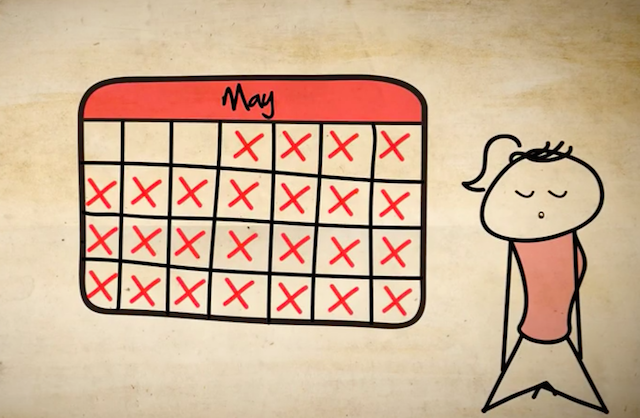
  • Get Mindful in May and Pause for a Great Cause

    Get Mindful in May and Pause for a Great Cause

    Mindful in May

    When your mind is scattered, your head full of worries, and your heart full of fears and doubts, the world is a stressful, sometimes terrifying place.

    When you take time to clear your mental space, suddenly everything feels easier. Without the heavy burden of anxiety and rumination, you’re free to simply be—and to see.

    It’s like cleaning a dirty window; all of a sudden, the light comes in, light you didn’t even realize was there.

    What provides this cleaning, clarifying magic? Meditation, and even just ten minutes a day.

    My whole life transformed when I learned that I could free myself from my bully brain, if I made a little time in my daily schedule to be still and silent.

    And that’s not the only benefit of meditation. When practiced regularly, meditation can lead to:

    • Structural changes in the brain associated with enhanced mental performance
    • Reduced stress and its negative impact on the body and mind
    • Improved physical and mental well-being
    • Reduced genetic aging through its protective impact on gene expression and degeneration
    • Increased happiness
    • Enhanced immune function

    If, like me, you want to continually reap these benefits, I highly recommend joining Mindful in May—a one-month campaign starting on May 1, which teaches you to meditate and at the same time helps bring clean water to those in developing countries.

    The Program Includes:

    • Daily guidance with clear, accessible tips on mindfulness meditation
    • Weekly audio meditations
    • Daily motivation and coaching to support your new mindful habit
    • Exclusive interviews with leaders in mindfulness across the globe
    • Your own meditation journal to track your month
    • A one-month curation of inspiring content to nourish your soul and introduce you to world leaders in well-being
    • Healthy, quick recipes to support your wellness and inspire the practice of mindful eating

    If you’d like, you can check out a sample 10-minute meditation here.

    The Cause: Charity Water

    As part of the challenge, you’ll be able to invite friends and family members to sponsor you. One hundred percent of their donations will help bring clean water to the one out of nine people who don’t have access to it.

    As Mindful in May Founder Elise Bialylew wrote:

    In the developed world most of us have our survival needs met, but it’s our minds that can cause so much of our suffering. The World Health Organization predicts that depression will be the second-leading cause of global disability burden by 2020.

    In the developing world, it’s something as basic as a lack of access to clean, safe water that causes so much suffering. Contaminated water is still one of the leading causes of disease and death in the developing world. 

    Last year, participants from twelve counties raised nearly $200,000 for Charity Water, enabling the construction of five wells near Ethiopia and Nepal. This year’s fundraising efforts will bring clean water to Rwanda.

    You can learn more about where your fundraising money goes here.

    Ready to help yourself—and others? Join Mindful and May, tell your friends and family to sponsor you, and help spread this mindful ripple.

  • 5 Unusual Ways to Meditate for Simple Daily De-stressing

    5 Unusual Ways to Meditate for Simple Daily De-stressing

    Dancing Meditation

    “Every day brings a choice: to practice stress or to practice peace.” ~Joan Borysenko

    Meditating even for just two minutes every day could help reduce your anxiety, calm your mind, and energize the senses. That’s two minutes of your twenty-four hours. Two minutes that could lengthen your life as you get rid of the negative energy surrounding you and welcome the positive.

    Contrary to what you may think, meditation doesn’t have to be in an empty house or room overlooking gorgeous scenery. It would be a bonus, yes, but I have proven that you can clear your mind even while doing these seemingly mundane tasks.

    Let me share with you my not-so-secret ways of meditating that have always drawn more than their fair share of curiosity simply because they’re not among the most common practice.

    1. Riding the bus or train to work.

    I used to commute a lot. On some days, I would people-watch—create stories in my head about the people I commute with. Most of the time, I would listen to music. Until one day, while one of my favorite songs was playing, my mind just drifted away.

    I wasn’t even concentrating, not even paying attention to my breathing. I just felt a sense of calm wash over me. That has been one of the most peaceful five minutes of my life.

    Use long stretches of travel to meditate. A five-minute journey into your self wouldn’t make you miss your stop. Instead, it will help reduce the noises of life so you can easily receive the signals that have meaning.

    2. Eating a meal.

    How could you meditate while eating a meal? I can hear that question in your head. For some of us who are used to eating with the whole family, or with a big group during lunch at work, it may seem highly unlikely, as we love exchanging stories and how-our-day-has-beens.

    You don’t have to keep quiet when you meditate while eating, though. You can be with family and friends but still be able to achieve that calm to silence any turbulent thoughts you may have. Eating has become a hurried, mindless task for most of us that it has been reduced to open mouth, shove food, and swallow.

    Smell your food, feel its texture as you chew slowly. Is it tangy, too sweet, or too salty? The trick is to be in the moment, being aware of the sumptuous feast before you. Savor it. Enjoy it as it goes down to your body to nourish it. Eating is not a race; slow down.

    Once you have mastered this, you’ll find that eating has become more pleasurable. You’ll also discover that you’ll eat less, as you are more in tune with your body’s needs.

    3. Taking long showers.

    They say some of the best ideas come up in the shower. Maybe it’s because showers don’t only cleanse our physical body but our mental state as well. The spray of the shower, the smell of your favorite shampoo scent all these contribute to the wonderful feeling of being one with the universe.

    When I am feeling particularly troubled, I soak in the tub for a good fifteen minutes to soothe tired muscles and confused mind. The warm water entices the soul, helping draw the bad energy away so you are left with renewed spirits, being able to welcome great ideas.

    4. Dancing to your favorite tune.

    Dance or kundali meditation is one of the more popular, albeit a little unusual, ways to meditate. No, it doesn’t involve chanting or keeping still, but it gives you the chance to break free from whatever’s ailing you.

    Dancing, while not one of my strongest suits, allows you to let go of the tension building inside your body and get in touch with your inner self. There are actually dancing meditation soundtracks you can move to, but I would recommend something familiar that you could actually sing along with or better associate with for the full experience.

    5. Creating Lego figures.

    As I have mentioned above, mechanical activities imitate the meditative quality of chanting. I have found, during one of those rare times I actually sat down and tinkered with my Lego pieces again, that it’s a great way to lose one’s self.

    Once you have poured all your attention into all the details of your creation, you block out noise and ignore the rest of the world. We practice meditation to promote relaxation and build internal energy or life force. Taking all your Lego pieces to assemble something out of it is a great and fun way to de-stress.

    See, not too bad, yes? We can all have the time to take leisurely baths or take pleasure while having dinner. Commuting doesn’t have to be such a torture. We can use these activities to go deeper into the recesses of our mind and body and find that inner peace we need to be more productive and energetic.

    Photo by Misha Masha

  • What to Do When You Feel Caged: The Key to Lasting Freedom

    What to Do When You Feel Caged: The Key to Lasting Freedom

    Flying Free

    “Wherever you go, there you are.” ~Confucius

    Everything I do is about living and sharing freedom. But what is freedom anyway?

    To understand freedom, it’s helpful to understand its opposite. The opposite of freedom is feeling caged, constricted, and ruled by guidelines you don’t believe in.

    For many people, their job feels like jail. For some people, their community feels like jail. For others, school feels like jail.

    I’ve been in all those jails. And for the most part, I was in those jails because I didn’t know there was an alternative. Now that I know the alternative, I have consciously created a life of freedom, but it wasn’t always this way.

    I grew up in very religious schools, which felt like a jail, mentally and physically. There were strict rules governing what you could wear and eat and what was expected from you. Living in that jail mentality was stifling, and my need for freedom was bursting at the seams of my soul.

    For several years I was curiously obsessed with social justice and the prison system. I now recognize that my fascination stemmed from my feelings about living in a jail of sorts during my youth.

    At seventeen I left my hometown and embarked upon finding freedom and discovering who I was.

    When you live in a jail-mentality for the bulk of your life, you get out into the big wide world and feel utterly lost. That was me—lost, and essentially going from one jail to another.

    From the strict schools of my youth, I went straight to University, not knowing about the other options that were out there. And once again I felt caged. I felt jailed by the confines of my schedule and limited resources.

    I was desperate to break free, so I found a summer job in New Hampshire that would give me room, board, pay, and a new experience.

    I was taken by New Hampshire the moment I read the state’s license plate: Live Free Or Die. I knew I had landed in the right place. There, I met people from all over the world who had a similar freedom-travel-spirit mentality.

    Coincidentally, I met someone there who shared my intrigue with the prison system and social justice, and informed me that I could talk to prisoners on death row.

    While communicating with one inmate through letters, I learned that true freedom is in the mind.

    That shook me.

    I had heard that phrase before, but it wasn’t until I heard it from somebody who was really locked up that it hit home and touched my soul.

    Imagine being constrained to solitary confinement. Imagine being thrown into the prison “hole,” a place of pure darkness, without the freedom to see. Imagine having your every move watched, being told when you can eat, shower, and sleep. And imagine even after all that, recognizing that you can still have freedom because it is in the mind. That’s a powerful awareness.

    I knew that I was the only one putting the shackles on me. Although this message penetrated, it would take me several years to fully understand it.

    After I left New Hampshire, I had a string of adventures and travels that allowed me freedom, possibility, and a life outside the status quo.

    For several years all the outward travel fed my need for freedom. But there came a point where it was no longer freeing. I was starting to fall back into feeling jailed, despite making free and adventurous choices.

    I knew I had to start moving inward if I was to find true freedom. So began my inner journey.

    I started seeking out spiritual books from Deepak Chopra and Louise Hay, and reading the words from John Kabat Zinn, which resonated with me more than anything else. His book Wherever You Go, There You Are was like lightning hitting my heart.

    That line was exactly what I had experienced—despite all my travels, where I searched for freedom on the outside, wherever I went, I was still there. I still had to deal with my own limitations and the blocks that I was creating within my own mind.

    These limitations pertained to my self-confidence and self-worth—how I thought about myself, and what I believed about my ability to go after what I wanted and succeed. In perpetually thinking I couldn’t do things I wanted to do and that I wasn’t worthy of them, I paralyzed myself with fear.

    You need to believe you can do something before you can find the motivation to take action on it. And my beliefs were limiting my actions. Although I was traveling from place to place, my internal limitations came with me.

    It’s been a decade since I got that book, which focused heavily on meditation. I have since found the practice of pure presence to be one of the most powerful gateways to freedom. Meditation has this uncanny ability to break away the false self—the self-sabotaging thoughts and limiting beliefs.

    So where is freedom? Is it inside us? Is it about our outside choices?

    For many years the outward journey did the trick for me. It had an effect on my soul, although I did not have the understanding to recognize it at the time. However, the outward journey only took me so far.

    I have found that ultimately it’s the inner journey that leads to lasting freedom.

    I still enjoy “getting away” and having adventures. But I have come to recognize that in the confines of the outward journey I can still feel caged. It is only through going inward, specifically through practices of meditation and being present, that I can access long lasting freedom that endures, regardless of my outward circumstances.

    If you are looking to enhance the freedom in your life, take some time to pause from your day and practice being fully present with the moment as it is.

    Ironically, this is likely why travel is such a great way to feel free. When we travel, we’re more present by virtue of the newness around us—the change of culture or scenery. Everything is so new, so we are like babies enthralled by our surroundings and naturally we get out of our head and are deeply connected to the moment. It is, in effect, living a meditation.

    The magic of a meditation practice (and yes, five minutes will do the trick!) is that you can train yourself to strengthen the muscle of presence in your everyday life, so that you can have access to that freedom no matter where you are.

    Although five minutes may sound simple, it can still be challenging, so I recommend committing to a specific time, such as first thing in the morning, to ensure you do it.

    Then, any time that you feel constricted, scared, stifled, or confused, you can tap into the practice of meditation to help you reconnect with yourself, and reconnect with an inner sense of freedom. This won’t change physical circumstances that may feel constricting, but when you free yourself of mental limitations, it’s a lot easier to find solutions to physical ones.

    Meditation is a vehicle to freedom because it often gives us clarity, and allows us to free our mind from our blocks and limitations. Meditation helps us access our intuition, which can guide us to the things that will help us live a more purposeful, freedom-filled life.

    Freedom truly is in the mind. If you feel caged in yours, remember, presence is the key.

    Photo by Kamil Porembiński

  • A Letter from Your Future Self

    A Letter from Your Future Self

    “The place to be happy is here. The time to be happy is now.” ~Robert G. Ingersoll

    Dear Past Me,

    Remember that day when you thought all was lost? When you thought there was barely any point in carrying on?

    The bank account was dangerously low.

    You were arguing with everyone close to you.

    The roof was leaking.

    It felt like everything was a struggle and the so-called abundance of the Universe was nowhere to be seen.

    You were going over the mistakes you’d made.

    The money you had lost.

    The opportunities you had missed.

    You were going over angry conversations and thinking about how right you were and how wrong they were.

    You were searching for forgiveness but holding onto the unfairness of it all.

    Remember how low you felt?

    You actually spent more time than you care to admit wishing you didn’t exist.

    You thought at least that way, nobody would miss you and you wouldn’t cause them any pain if you had never existed.

    Dude.

    Seriously?

    You do realize now that you wasted a bit of time with that ridiculousness, right?

    You wished for a lightning bolt of awareness to hit you in the head.

    You were hoping for a finely tuned droplet of self-aware genius to magically transform your heart.

    The Universe provided because in the next few moments, you read this:

    The average person lives to be 76 years of age, which is approximately 28,000 days.

    28,000 days.

    That’s when it hit you.

    Every day is truly precious.

    Months seemed to come and go.

    Years flew by.

    But days. Days were made up of habits.

    You woke up to your own habits at that point.

    How much time had you wasted drifting into jealousy?

    How many hours had been lost sinking with regret or crying over disappointment?

    If you added up the hours you’d filled with worry, regret, anger, sorrow, and guilt, how many days would it equal?

    It was terrifying to even consider.

    You shifted.

    You found three ways to live in each day that have changed you forever.

    1. You are not your feelings.

    When anger or hurt hits your heart like a ton of bricks on a hot summer day, it can feel like it consumes you.

    The more you resist, the more you fight it, the bigger it gets.

    Allow the pain to be there. Talk to it. Realize that you are the witness that is doing the talking.

    2. Meditation.

    It seems like everyone talks about meditating.

    Once you made it a non-negotiable part of your life, everything else shifted for you.

    Think of it like brushing your teeth or taking a shower.

    You can sit quietly anywhere. In your car. At your desk. Just close your eyes and breathe.

    It will help you to be in the day.

    3. Forgiveness.

    As much as you’re struggling with your own crapola, everyone else is going through his or her own lessons as well.

    As soon as you leaned into forgiveness, you felt better.

    You stopped resisting.

    Forgiveness gives you flow.

    And when you flow, BOOM—you’re in the present moment again.

    I want you to wake up to what you have right now!

    I want you to know that no matter what, today is beautiful.

    It doesn’t matter if it’s pouring rain, pounding snow, or penetrating sunshine.

    Weather is neither good nor bad. It just is.

    Today is what you make it, and I want you know that here and now, in this future moment that I’m writing you from, love is the only thing that lasts.

    Whether your current moment is filled with sorrow or bursting with joy, this too shall pass.

    Find ways to make today into a beautiful painting of kindness toward yourself and toward others, and you will reach the end of your 28,000 days with a knowingness that you lived well.

    What day is it today?

    It’s the best day ever.

    Love,
    Future Me

  • Forming Healthy Habits: 3 Tiny Choices That Create Huge Change

    Forming Healthy Habits: 3 Tiny Choices That Create Huge Change

    Im Free

    “It is better to make many small steps in the right direction than to make a great leap forward only to stumble backward.” ~Proverb

    Seven years ago I was a sedentary, over-caffeinated, unmindful, somewhat neurotic meat-eater with a bit of a drinking problem. My meals came out of boxes with chemical compounds for ingredients and had little in the way of anything that grew outside or came from a field.

    I made excuses for not exercising, but in reality I was so insecure that I didn’t think I was strong enough to be athletic. I was afraid of making an utter fool of myself. And I was afraid that if I sat still long enough to look inward, I would loathe myself more than I already did.

    Today I am a mostly vegetarian running nut. I’m always training and gaining strength for the next race. For the most part my meals are fresh and made from scratch, containing less animal meat and more leaves.

    I still indulge in coffee and Coke, but find comfort and clarity in tea and a glass of water. I meditate regularly for my spiritual practice. Mindfulness is a part of my everyday life, and wine is no longer a stress-reliever.

    There are countless Cinderella stories like these out there, stories of couch potato turned to vegan Ironman, stories of people who turned terrible habits into wholesome ones. People who lost weight, kicked an addiction, stared their fears in the face, and made their lives better.

    But for people who are still in the Couch Potato Stage, these changes feel astronomical. You may as well ask them to leap across the Grand Canyon and land on the other side on both feet. 

    So how does a person go from being a lump to a marathoner?

    I did something quite simple that anybody who wants to change their life can do without stumbling and feeling like a failure.

    Each day, I made one small decision to make a healthier choice.

    Each choice was manageable. Rather than making grandiose plans to alter my diet and routine in massive ways, I made one small choice every day to make my life healthier.

    This slow change began seven years ago, when a small idea was planted in my mind and began to grow.

    Food.

    I realized that my diet depended heavily on processed food. I needed a Chemistry degree to understand what I was putting into my body. By watching an ex-boyfriend in the kitchen, I learned how to cook.

    Then every Sunday evening, I cooked a nice meal for myself, nothing too fancy. I became curious about different recipes and new foods. I soon found sanctuary in chopping vegetables, the aroma of fresh herbs, and gently simmering a sauce.

    I felt a sense of accomplishment in creating a nutritious and tasty meal, and before long I was cooking for myself three to four times a week.

    At lunch I chose to eat a piece of fruit and to drink water instead of a soda. At restaurants I chose salad instead of French fries and a veggie burger instead of a hamburger. When I got tired at work, I turned to water instead of coffee.

    I was still eating meat, but I was eating a lot less of it, and fruit was a regular snack.

    You don’t need to completely change your diet. You just need to start with one healthy choice.  Every small choice adds up.

    Exercise.

    After changing my diet, it took another three years to change my level of activity. I was going through major stress at work and in my personal life. I felt I needed intense physical activity that burned off pent up energy. I didn’t want to spend a lot of money on fancy equipment, so I started running.

    For a long time I wanted to try running, but I was afraid that I would look stupid. One day I thought to myself, screw it—everyone feels stupid on their first run.

    On a quiet Sunday morning, I went on my first jog/walk. I felt so amazing that I bought a decent pair of running shoes. I haven’t stopped running since.

    That single choice to simply try exercise has lead me to three half marathons, a marathon, and a relay race. Running has helped me face myself in ways that I never imagined and find strength I didn’t think I had.

    You don’t need to run a marathon today, or even a mile. You simply can make the choice to do something, no matter how small, to be physically active.

    Meditation.

    Around the time I started running, I also tried meditation. I heard accounts of the benefits of meditations, such as reduced stress and clarity of mind, but I was afraid of finding what was hidden deep inside of me.

    I chose to simply try it. I sat for periods of ten minutes a few times a week. After trying that for a couple weeks, I felt like I needed guidance. So I searched for meditation services in my community. My first time sitting meditation at the Zen center, the silence and stillness of meditation brought me ease. I kept going back.

    I now use mindfulness and meditation as a regular part of my spiritual practice. It takes a lot of work to see my fears as they truly are.

    I’ve worked through jackal voices that tell me I’m not good enough. When I sit meditations, the stillness shows me that those are just voices and that they’re trying to protect me from life’s disappointments. And what keeps me going is the awareness that I don’t have to have all the answers right now.

    You don’t need to meditate for hours at a time. All you have to do is sit in silence for a few moments each day to be more peaceful and present.

    Seven years since I chose not to eat something out of a box, I live my life each day making choices that don’t feel like sacrifices. Eating vegetables doesn’t feel like I’m denying myself potato chips. It feels as if I’m eating something that I enjoy. Going for a run doesn’t feel like I’m torturing myself for thirty minutes. It’s a choice that makes me feel invigorated.

    Each moment, you have an opportunity to make a choice. You can choose the same harmful habits that you always choose. Or you can choose a better habit that treats your body the way it deserves to be treated.

    Today, I am still making changes and am a constant work in progress. A year ago my drinking habit changed from two to three drinks per day to two to three drinks per month.

    Recognizing that this was a destructive habit, I reached a place where I was ready to let go of my dependence.

    I came home from a visit with my family (the side that doesn’t drink), and I was already on a five-day hiatus from drinking alcohol. Five days became six and then seven. I still struggle with those urges, but then I ask myself, what choice do I want to make?

    Photo by Tomás Fano

  • 5 Meditation Tips for People Who Don’t (Yet) Like to Meditate

    5 Meditation Tips for People Who Don’t (Yet) Like to Meditate

    “Don’t wait for your feelings to change to take the action. Take the action and your feelings will change.” ~Barbara Baron

    I own a series of CDs called “Classical Music for People Who Hate Classical Music.” We know we should like and listen to classical music—they’re the classics after all! But when I actually find time to listen to music, I reach for Mumford & Sons, not Mozart.

    Some of us have a similar relationship with meditation.

    We know we should meditate—it has so many mental, emotional, and physical benefits, and who couldn’t use a bit of slowing down in their busy life? But when we actually find that bit of time to ourselves that could be used for meditation, we instead turn on the TV, reach for the iPad, or mindlessly page through a magazine.

    When I first became interested in establishing a meditation and mindfulness practice, I approached it intellectually: I read a lot of books, downloaded apps for meditation, and even considered taking a class at a local Zen meditation center.

    The more I learned about it, the more I knew I had to incorporate these practices into my life. So I read even more, and I did so much reading that I didn’t actually meditate!

    Why not? Well, honestly, meditation seemed a bit boring. And I didn’t think I was very good at it. I’d close my eyes, count my breath, and then start making grocery lists in my head and worrying about the un-crossed-off items on my to-do list.

    I found I loved the idea of meditation, but I didn’t want to practice meditation. I consider myself a left-brain, idea-loving gal, and if I have some free time, I want engage my mind, not quiet it!

    Has this happened to you? Is meditation your equivalent of a great classic of literature, which Mark Twain once described as something that everyone wants to have read, but no one wants to actually read?

    Ultimately, I came to develop a meditation practice in conjunction with my therapy for depression and anxiety, and it has changed my life for the better. I’ve learned that with meditation, the process of doing it, is the whole point, not checking the “done” box.

    I would like to share some tips to help those of you who, like I did, want to meditate, but don’t actually want to start meditating! Each tip combats one of the reasons we may give for not starting a meditation practice.

    1. I don’t have time!

    Yes, we are busy with careers, children, homes, and social obligations, but we all have five minutes to stop during our day and breathe.

    If you wanted to train to run a 5K, you probably wouldn’t start your first workout with a thirty-minute hard run. To begin a meditation practice, start slowly. Start with five minutes a day, then work up to eight, then to ten, and so on.

    You can also practice mindfulness meditation while eating (paying attention to the tastes and sensations as you eat), walking, cleaning, or any other task you do in your busy day. Can you find times in your day to bring meditative and mindful attention to what you are already doing?

    Additionally, you may find that regular meditation actually saves you time. By becoming more mindful, you’ll be less likely to make forgetful mistakes that take even more of your precious time to fix!

    2. It’s so boring! If I’m going to take time for myself, I am going to read and think!

    Yes, we love to think, but there is also beauty in quieting the mind. If you really want to get your thinking fix through meditation, however, there are meditative practices that engage your mind.

    For example, you could meditate on a short reading or scripture, or focus on a mantra for your meditation. Meditation and mindfulness are not just “sitting there thinking of nothing.” There are a variety of ways to practice.

    You can also find plenty of guided meditations online that give you something to focus on and help you develop your practice.

    3. I’m not good at it!

    Well, that’s kind of the point! Meditation is not about “emptying the mind,” but about observing the mind.

    If you find in your meditation session that your mind has wandered to the events of the day, or planning for the future, you simply bring your attention back to the breath. And the fact that you have noticed that your mind is wandering is great!

    It means you are good at it. You observed the actions of your mind. You are become more mindful. (And there’s a reason it’s called a practice—it’s something you’ll continually work on improving.)

    4. But when my mind wanders, it’s to planning, and worrying, and that seems far more important than meditation.

    Yes, we have to live in the world. We have to plan and organize—but not all the time. A strategy that has been effective for me (especially in yoga class) is to allow myself about five to ten minutes for the planning, thinking about what I need to do when I get home, or whatever else is occupying my mind.

    By getting it out of the way, I can then focus mindfully on my practice. When you sit down to meditate, write down those concerns or the to-do list items before you begin. Then set them aside—they’ll still be there when you’re done, and you can approach them with a fresh perspective!

    5. I don’t know where to begin!

    Take your cue from Nike and Just Do It! You won’t improve your cardiovascular health by reading about Zumba classes, you won’t start liking classical music if that CD collects dust on your shelf, and you won’t experience the amazing benefits of meditation until you begin your practice.

    Start small and go easy on yourself. In fact, it might be easier if you change Nike’s advice: don’t just do something; sit there!

    And just like with exercising, you may find that after a few weeks of continuous practice, meditation doesn’t feel like effort, but it becomes something you want to do, and something you truly like doing. Maybe even while listening to classical music.

  • How Taking Quiet Time for Yourself Helps People Around You

    How Taking Quiet Time for Yourself Helps People Around You

    sitting

    “I wish I could show you, when you are lonely or in darkness, the astonishing light of your own being.” ~Hafiz of of Shiraz

    “What I wouldn’t give for a few moments of silence.”

    “I really should start meditating.”

    “I know it’s important to take breaks, but I just don’t have time.”

    We’ve all heard (or made) comments like these at some point. Implicit in these statements is the idea that resting in stillness is beneficial…for the individual.

    But what if such a practice of peace is more than that? What if it’s beneficial for others in your family, your community, in every life you touch?

    When I worked as a live-in caregiver for adults with intellectual disabilities at L’Arche, I often rose early to help my housemates with their morning routines. (L’Arche is a non-profit that creates homes wherein people with and without intellectual disabilities share life together in community.)

    I came to live there after college, and it was a wonderful challenge for an introvert like me to live and work with fourteen housemates for two years.

    When I wasn’t assigned to help my housemates with their morning routines, however, I had a ritual of my own. I’d pad down the staircase in slippers, my journal in hand. I’d assemble some breakfast, and then sit down in a living room chair that faced the house’s front windows.

    Morning light would warm my skin and my spirit too. I’d sip my coffee and stare silently, content to take it all in.

    My housemates would move through their routines around me; my morning oasis was, after all, right in the midst of a fourteen-person household. I would greet them with a smile, then duck my head and keep silent. (more…)

  • 5 Meditation Myths and the Benefits of Starting Today

    5 Meditation Myths and the Benefits of Starting Today

    “Freedom is instantaneous the moment we accept things as they are.” ~Karen Maezen Miller

    My personal rock-bottom wake-up call came a few years ago when, despite having achieved all of my personal and business goals, I found that I still wasn’t content or experiencing peace of mind.

    Feeling frustrated, I realized that I could no longer rely on my future to fulfill me. I knew continuing to work so hard to accomplish bigger and better goals wasn’t going to relieve my eternal itch that there must be more to life than this.

    To make matters worse, my increasing frustration led to a rocky time in my relationship, which inevitably ended with my partner leaving. Along with the beautiful child I’d been raising, the great house I was living in, the fancy car I was driving, and the pile of money we’d jointly secured as projects fell away too.

    Rock bottom, needing peace, I started exploring alternative ways of thinking, being, and living.

    It was around about that time when I met a group of meditation teachers that changed my life. I saw in their eyes a peace and joy that I had rarely seen before. And the more I spent time with them, the more it became obvious to me that their inner peace was consistent.

    Hungry to experience the same, I packed my bag and headed off to meditate with them for a few months. I spent ten weeks on the island of Patmos in Greece, followed by a further fourteen weeks in the mountains of Mexico.  

    During my time meditating I had a total turnaround in thinking. I discovered the real cause of my persistent problems had never been my failings at “thinking positively.”

    Instead, my habit of thinking was the ultimate cause of my problems. When I was busy thinking, I was missing the peace that’s always present. And by learning to think less and be present, I found life much more enjoyable.

    Meditation serves many purposes, from stress relief to self-awakening. Personally, I started meditating because I was fed up with my mind working overtime. I wanted peace, and through meditating regularly I have become less focused on the movement of my mind and more aware of the pristine peace that is always present. (more…)

  • How to Meditate at Any Time without Meditating

    How to Meditate at Any Time without Meditating

    “If we are not fully ourselves, truly in the present moment, we miss everything.” ~Thich Nhat Hanh

    Flour. Salt. Water. Yeast. As I push the warm, soft dough against my palm, I feel the cold stone countertop underneath. I feel my hips leaning up against the cabinets. I hear my breath inside my head.

    As I knead the dough, it changes. The dough becomes more elastic and flexible, ready to rise and be baked into a crusty loaf.

    As I make bread, I change. My thoughts go quiet. I come into the now.

    I have struggled with an inconsistent meditation practice for months. In those moments when I successfully meditate and clear my mind, I feel such a sense of accomplishment and peace.

    But as any beginning meditator knows, those moments are few and far between.

    Usually, my scattered mind is split between keeping track of the time, trying to quiet the voice in my head, and chastizing my body for fidgeting. 

    I struggled and pushed myself to meditate properly with little success, until I realized that any act can be a meditation.

    I discovered this fundamental insight through books by Eckhart Tolle and Thich Nhat Hanh. It is not so important to sit with a perfectly erect spine for twenty minutes per day in meditative bliss. What is important is to be here, in the now. Living your life. Noticing what is. Noticing life.

    So often throughout our days we are lost in our thoughts. We may be on the train or in the shower, but in our heads we are already giving that important presentation, having the difficult conversation, worrying about and planning for what might happen next. (more…)

  • 8 Ways to Make Meditation Easy and Fun

    8 Ways to Make Meditation Easy and Fun

    “The only Zen you find on the tops of mountains is the Zen you bring up there.” ~Robert M. Pirsig

    I know meditation is good for me. I know it can do wonders for my mind, body, and spirit. I deeply desire having a daily meditation practice. Yet I can go months without meditating. I’ll think randomly, “I should really meditate sometime,” but when it comes down to it, I don’t.

    My thing is this: I know meditating is good for me, and yet I don’t do it. I suspect I’m not the only one who feels this way.

    I’ve read countless books on how to meditate. I have gone to so many meditation retreats and classes it’s not funny.

    I know the meditation routines. I know the old staring at a candle flame one. I know the stilling your mind thing. I know the nose-breathing-in-and-out thing. I know about making your own visualization.

    I also know that they feel like work. They feel like something I have to work at. It feels hard.

    I know I’m not lazy. If you’re like me, I know you’re not, either. It’s just that we haven’t found the right way of meditating for us yet.

    Here are some ways to make meditation less of a chore and more like a fun, doable thing for you. (more…)

  • How to Correct Your Mind to Get Out of a Funk

    How to Correct Your Mind to Get Out of a Funk

    Correct Your Mind

    “If you correct your mind, the rest of your life will fall into place.” -Lao Tzu

    You’re stuck.

    We’ve all been there. Even the things that normally make you happy begin to bring you down. Worst of all, you can’t seem to understand why.

    So you give it time, let it take its course, and just when you think you’ve escaped the funk, something drags you back in. You know it’s happening but you can’t stop from slipping back under.

    What’s happening here is simple. Something—be it your job, peers, or general lifestyle—is contaminating your mind. You’ve lost track of the calmness you know you possess and it’s like your mind’s been tricked.

    You’re stuck in a painful and decisive delusion that causes everything to be toxic.

    It’s time to wake up. Seriously, the snooze button is off-limits.

    You only come to find yourself in these types of negative situations because you’ve let your mind take control. It may seem like other people and circumstances are to blame, but everyone is responsible for their own mental state.

    Life will never stop throwing you curve balls. The only solution is to change how you internalize and deal with them.

    Since completely escaping your mind may seem a bit radical, at the very least, you must correct your thinking. (more…)