Tag: meaning

  • 6 Ways to Cope with a Miserable Job

    6 Ways to Cope with a Miserable Job

    “Instead of complaining that the rose bush is full of thorns, be happy that the thorn bush has roses.” ~Proverb

    If you’re feeling miserable in your current job or career, wondering when you’ll be able to do something that makes your heart sing, I know exactly how you feel.

    I spent nearly a decade of my life working in jobs that I despised, having to dig deep every day to make it through another eight hours. All the while, my soul felt like it was dying inside.

    I remember writing one-page memos and having to wait a month while they worked their way through the bureaucracy. Every manager would return the memos, requesting a small, pointless change. By the time the memos were released, I barely recognized the words as my own.

    I knew that I had to get out, that I had to find something more meaningful, something where I could actually make a difference. But getting out of these jobs was hard. Really hard.

    One time, three years into a job, I knew that I needed to make a change. But it took me another three years to save up the money and find the courage to actually walk away. Meanwhile, I struggled to make it through the daily grind.

    Perhaps you’re in a similar situation and wondering how you can continue going to a job you hate, day after day after day, not knowing when or if you’ll be able do something more meaningful.

    I don’t want you to go through what I went through. So here are my suggestions for how to cope when you’re stuck in a career or job and find yourself feeling miserable.

    1. Figure out why you’re miserable and change what you can.

    People can feel miserable for all sorts of reasons. One of the first things you can do is to reflect on why you personally feel miserable in your current situation.

    Perhaps you don’t feel challenged enough in your current position. Or maybe you find the job too stressful. Or perhaps your current work team isn’t a good fit for your personality.

    Rather than accepting your current situation “as-is,” be proactive and work toward improving it. Can you ask your boss for more challenging projects? Can you be transferred to a different team?

    2. Change the stories you tell yourself about your career.

    Most jobs or careers aren’t inherently miserable. We often feel miserable because of the stories we tell ourselves. Your stories about your job are a creation of your mind and are neither true nor false. They’re simply stories.

    Misery is created when we create and cling to stories such as “I can’t stand this,” “This is awful,” or “I should be doing something else with my life.”

    If you want to feel less miserable in your current situation, then change your stories to something neutral or even positive. For example, you could tell yourself “This isn’t really that bad” or “I will continue working toward a meaningful career. What I’m doing right now is only temporary.”

    Those stories are equally as “true” as the negative stories that you’re currently telling yourself. Next time you catch yourself repeating one of your negative stories, see if you can replace it with a more positive story.

    3. Shift your perspective—it’s not as bad as you think.

    Throughout the world, there are millions and millions of people who would be confused if you told them that you were miserable in your current job. They’re making a lot less money, while working longer hours, and often in far worse conditions. They’d change positions with you in a heartbeat.

    When you’re feeling miserable in your job or your career, try thinking about these people and remembering that your situation may not be as bad as you think. Things may be far from ideal, but they could also be much, more worse.

    4. Build meaning however you can.

    While it may be easier for you to create meaning in some careers than others, you can always create meaning right where you are. Find the one or two things that you like about you current job situation and focus your time and energy on those.

    For example, I’ve worked in many government jobs that I found boring and repetitive. But I always had co-workers that I enjoyed talking to and spending time with. Those relationships were what provided me with meaning and helped me cope with the day to day drudgery.

    5. Connect your job to other values.

    If you can’t find anything meaningful about your current job, then try connecting your job to other values.

    For example, if you value providing financial support to your family, then focus on how your current job allows you to fill that value. Put up photos wherever you can of your family and periodically look at those photos and remind yourself how important it is for you to support them.

    Or perhaps your job provides you with ample time off to pursue other activities that you value. Again, focus on how lucky you are to have a job that provides you with that opportunity.

    6. Focus on other parts of your life.

    Finally, if nothing else works, you can always focus your energy on other parts of your life. Simply accept that it will take time to move to a more meaningful career. And that for now, your work won’t be a primary source of meaning in your life.

    And then put your focus and energy into creating meaning in other parts of your life.

    Build the best, most meaningful relationships that you can. Explore all sorts of different hobbies or explore one hobby in-depth. Get involved in volunteer activities that provide you with a sense of meaning.

    There’s absolutely nothing wrong with wanting to change careers in order to do something that you personally find meaningful. I’ve done it several times myself. But making a career change can take time.

    There’s no reason for you to be miserable where you are right now, always waiting for a better future to arrive. Try using some of the suggestions above and see if you can improve your current situation while also taking steps toward a more meaningful, future career.

  • When You Feel Purposeless and Fear You’re Wasting Time

    When You Feel Purposeless and Fear You’re Wasting Time

    “Life isn’t about finding yourself. Life is about creating yourself.” ~George Bernard Shaw

    I wanted a guarantee.

    I wanted to know for sure that if I tried to do something, I would like it; if I devoted my limited time to it, I’d end up somewhere good.

    I had no idea what I wanted to do with my life, and I felt certain this was a phenomenal failing—because if you don’t know right now what you need to do to make your life count, life will pass you by before you’ve ever had a chance to do something meaningful or valuable. At least, that’s what I thought back then.

    So I sat around thinking, analyzing, trying to identify something big enough or good enough, terrified that maybe I’d spend the rest of my days feeling purposeless, useless, on the fringe; doing the same thing in my professional life as I’d always done in my personal life: feeling like I was on the outside looking in.

    When you’re sitting amid a vast expanse of possibilities, in the pressure cooker of expectations and impatience, it can feel almost paralyzing.

    What step do you take when you have a hunch but no solid sense of direction? If it’s only a hunch, then maybe it’s the wrong direction.

    And what if you go in the wrong direction? Then you will have wasted time, and time is finite. And everyone else is so far ahead. Everyone else seems happy and successful. Everyone else is climbing the ladder, earning more money, making a difference, mattering.

    What if you never matter? What if you never do anything important? And worst of all, what if you never have more than a hunch about what’s important to you?

    What if you never feel a spark, a purpose, that elusive “why” that so many people write about?

    What if you never care about anything so strongly that it becomes the bliss you have to follow?

    Sitting in the Times Square Internet café over a decade ago, searching Craigslist for jobs and gigs, I felt a sense of panic and urgency. I needed to figure it out, and fast.

    I was blinded by the fear of never finding what I was looking for, and that made the looking awfully ineffective.

    I thought there was something wrong with me for being so uncertain, so resistant, so unable to identify and commit to any path.

    In retrospect, I see there was nothing wrong with me, or where I was in life. And there was nothing wrong with living in the maybe, looking for new possibilities.

    I wasn’t ineffective because I didn’t yet feel a strong internal pull. I was ineffective because I consistently marinated my brain in anxious, self-judging thoughts.

    My biggest obstacle wasn’t that I felt lost; it was that I felt I shouldn’t be. I felt I should have known, right then, not only what I wanted to do but also how I was going to do it.

    Because without knowing those two things, I felt adrift and incredibly out of control. How can you let yourself ease into the moment if you can’t be sure it’s leading to a better one?

    If I were to walk into that Internet café and approach my younger self, she would probably ignore me, immersed as she was in her frantic searching.

    But if I somehow had the power to command her attention, I’d tell her a few things that maybe, just maybe, could relieve her constant worrying and provide both peace of mind and focus.

    You’ll never be effective if you’re convinced tomorrow needs to be better than today, because this belief stems from resistance to the present—and the present is where your power lies.

    If you’re looking for purpose from a place of inadequacy, you will likely be too overwhelmed by the need to do something big, that matters to the world at large, to identify what matters to you personally and start taking tiny steps toward it.

    Instead of looking for a guarantee that tomorrow will be valuable, know that today is valuable—that you’re not wasting time because you don’t yet feel a sense of purpose. You’re using time well by starting (or continuing) the process of discovering it.

    There’s simply no shortcut to “figuring things out”—for anyone. Instead of being hard on yourself for not having clarity, be proud of yourself for moving forward on a foggy road when you could easily find a cloudless, well-beaten path to follow…to certain dissatisfaction.

    There’s no set timeframe for doing anything.

    You truly can do things in your own time without having to worry about being “behind.” Sometimes it’s the things we do that feel like “stalling” or “getting off track” that end up being the most helpful for our growth.

    And besides, what story will be more interesting to flash before your eyes in the end: one that unfolded in ways you never expected, with unique twists and turns; or, one that followed a specific, predetermined timeline with predictable steps from milestone to milestone?

    The best way to find direction is to trust your instincts instead of forcing yourself to do things because you think you “should.”

    Your intuition is a powerful compass, and even if you think you aren’t making progress, if you’re following your instincts, you are.

    There are always going to be opportunities that look good on paper, and that little, scared voice within may tell you that your life will only matter if you take them.

    Other people may also tell you this, if not directly, indirectly; or, you may assume they’re thinking this, when really, they’re too immersed in their own confusing journey to pass judgment on yours for long.

    But sometimes the best opportunities are the ones you don’t take, leaving yourself open for choices that better align with your own values and priorities.

    I know this may sound as impossible as growing another lung, but try not to worry so much about what other people might think. They may have expectations, but they aren’t living inside your mind, or feeling your instincts.

    The only one who can make wise decisions for you is you. And even if it makes you feel anxious at times, you will eventually thank yourself for being brave enough to follow your heart, not someone else’s head.

    When it comes to creating purpose, there truly is no “wrong” decision.

    You may think you only have one purpose and that you need to push yourself to find it. And you can continue thinking this, if you’re okay with feeling chronically pressured and scared.

    Or, instead of aiming to discover the one thing you’re supposed to do with your life, you could focus on discovering the one thing you want to try right now, knowing that you can change direction any time. And that changing direction won’t be something to be ashamed of; it won’t mean you failed at discovering your purpose before. It will mean you had one purpose then, and now your purpose has evolved.

    It will mean you’re brave enough to let yourself evolve, repeatedly undertaking the sometimes terrifying process of discovering what else you can do.

    Maybe that in itself can be a purpose—to live life in that vulnerable, uncertain place where you’re not boxed into one way of being; unencumbered by the need to define yourself and your place in the world; free to roam when it would feel much safer to tether yourself to one role.

    Ten years ago I thought I was a failure because I hadn’t done anything that felt important. I now know it was all important, and not just because it brought me to this site.

    All those steps were important because those steps were my life. And my life is valuable and worth enjoying regardless of what I do professionally.

    Ironically, adopting this mindset makes it so much easier to create meaning in life, because suddenly it’s not about what you have to do. It’s about what you want to do. It’s about where your heart’s pulling you in this moment.

    And that’s what it means to find direction—to follow those pulls, without a guarantee, knowing that the goal isn’t to end up somewhere good but to learn to recognize the good in this very moment.

    This moment isn’t merely the bridge to where you want to be. This moment—this crucial part of the process—is a destination in itself, and now is your only opportunity to appreciate it, and appreciate yourself for living it.

    Photo by h. koppdelaney

  • Moving Beyond Pain to Find Happiness and Meaning

    Moving Beyond Pain to Find Happiness and Meaning

    Happy

    “When something bad happens you have three choices. You can let it define you, let it destroy you, or you can let it strengthen you.” ~ Unknown

    Most of us have experienced a day or event in our life that changes us forever.

    I remember that day vividly, and it still invokes incredible pain in my heart. It was the middle of the night in February. I was twelve years old, and I awoke to my mother screaming and crying to my brother that our dad was dying. He died in his sleep from a massive heart attack.

    I will never forget watching the paramedics carry his lifeless body down the stairs into the ambulance.

    Things happened fast after that: a quick trip to the hospital, watching the priest enter the room where my dad’s body was, and returning home where we congregated in the living room. No one wanted to go upstairs, and no one slept the remainder of the night.

    That was the day that changed the course of my life forever. My happy, carefree existence abruptly ended with my dad’s death. Instead of looking forward to a bright future, I fell into depression that I struggled with for decades.

    I let my dad’s death define me and my life. It was a horrible, tragic event, but life does continue after losing a loved one. That’s the part no one ever told me—that it was okay to go on living and be happy again. Instead, I gave up and felt that life was not worth living.

    Life at home was not the safe, comfortable place it had once been. Now it was full of endless arguments between my mother and brother. I hated being there.

    My once perfect grades were now mediocre, I lost friends, I dropped hobbies, and stopped playing sports. I was no longer interested in life because all I could see and all I could feel were hurt and hopelessness. It wouldn’t go away.

    For the next two decades (yes, decades), I drifted through my life as though I was simply a spectator in it.

    Nothing brought lasting joy or happiness; I always chose the safe, responsible path with the predicable outcome. Paths that would never hurt me, where I would never fail, where my heart would not be broken.

    Where did that get me? Absolutely nowhere. I was as miserable as ever. There were a handful of unfortunate times where I thought suicide was a viable option.

    I briefly sought treatment for depression, but quickly quit when I didn’t see immediate results. Quitting was a common occurrence in my life if I didn’t see results or feel happiness fast enough. As you can imagine, I started and then quit a lot of things in my life, usually quitting when the going got tough.

    I searched for happiness through the usual channels: shopping, eating, drinking, smoking. Nothing worked because I wasn’t looking in the right places. Depression is relentless, but I vowed to move past it and live a happier life.

    I still felt sad, angry, and scared, but I was beginning to feel hope for my future. Or maybe I was just tired of feeling miserable. I definitely was tired of feeling like a victim in my own life.

    I never had a light bulb moment, but I did have perseverance. I consider myself to be a survivor. That’s the only thing that kept me going.

    Life experiences brought new lessons for me. Some were fun, some were not, but they offered an opportunity to learn about myself. It wasn’t always easy to accept when things didn’t go my way, but it provided growth and wisdom that I needed. They always say that life gives you what you need, not what you want.

    Slowly (very slowly), I began to build a life for myself. Fate brought me together with the love of my life, and marriage is one of the best things that has ever happened to me. I’m fortunate to have found such a great partner to share my life with. Sharing my life with pets has offered endless amounts of unconditional love.

    More recently, I quit a job that I hated. My past history of journaling developed into a love of writing. I self-published two eBooks and created a blog that serves as an outlet to share ideas that mean the most to me.

    Managing life’s ups and downs is always challenging, but through it all, I have learned more about myself and found better ways to cope. The list below is what I work on daily to bring more happiness and meaning to my life.

    Accept yourself for who you are.

    I am an introvert and at times have been made to feel that something is wrong with me because I am quiet, reserved, and sensitive. It’s taken a long time to accept that there is nothing wrong with my desire for quiet, alone time to think and reflect.

    Do things at your own pace.

    Never feel rushed or that you need to go at someone else’s pace. It took me a long time to process the sadness I was feeling, but I spent too much time continuing to wallow in past hurt.

    Don’t make the same mistake. This is your life; you have to learn, experience, and grow to get the most of this journey. Deal with things in your own way, take your time, but don’t make it an opportunity to live in the past.

    Don’t fear change (and don’t fear the future).

    Life doesn’t stay the same; change is inevitable. Fear of the unknown can paralyze us to never take action, to never live the best life we can have. Know that you have the strength to deal with whatever will happen.

    Pursue passions.

    This is the only way to add value and find meaning in your life. Cultivate creativity, help others, do anything that feeds your soul and is important to you.

    Practice gratitude.

    Remind yourself daily of the good things in your life: be it a spouse, partner, family, friends, pets, gratifying work, a comfortable home, or food in your kitchen. Never take for granted the things that matter most, for they can be gone in a heartbeat.

    For years, I waited for wonderful things to come into my life to restore happiness. It has been a long journey of discovering that only I can control my happiness.

    My life and everything in it is up to me alone. That was a hard lesson to learn. I regretted wasting so many years waiting for good things to happen, when I had the power to make things better all along.

    The answers are not outside of us, but inside, waiting to be discovered.

    Photo by Laura

  • Breaking the Rust: 7 Tips to Move Forward When You Feel Stuck

    Breaking the Rust: 7 Tips to Move Forward When You Feel Stuck

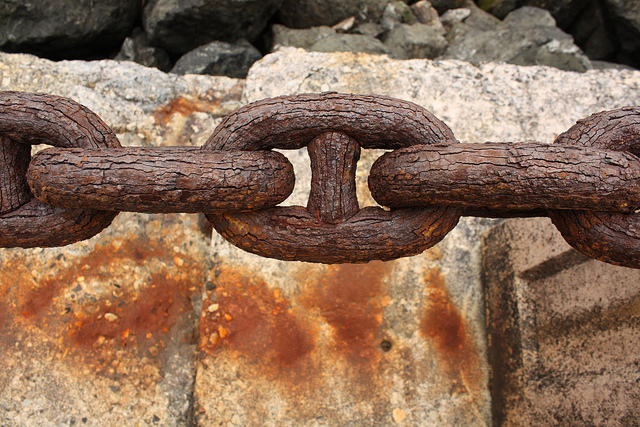
    Rusty Chain

    “Change is inevitable. Growth is intentional.” ~Glenda Cloud

    The squeak emanating from my office chair had finally become unbearable. Like a slow drip of acid on the surface of my psyche, it had finally burned its way into my head.

    I stopped working on the article I was writing and strode into the garage to retrieve my toolbox. Time to replace that rusted out wheel with the shiny new one that I’d bought months ago.

    I leapt into action purposefully. Today, things would change.

    Three of the four bolts holding the wheel in place were out when things ground to a halt, as the last bolt was stuck.

    How many times do you find yourself embarking on a path of change when you are stopped dead in your tracks? You find something has rusted over time and does not want to move.

    You try various methods to loosen that one bolt—you curse it, try several different types of pliers, stop multiple times to make sure you’re actually turning the bolt the correct way. (God forbid you’re tightening it!) Why is this one bolt frustrating your attempts at transformation?

    So what happens?

    You put the bolts back in, liberally apply some WD-40 to the wheel to make the offending sound go away for now, and go on with your life, even though you know the irritation will be back soon enough.

    This scenario surfaces time and time again in my personal life.

    I am a person who does not like conflict and usually tries to find the smoothest path out of drama; I have been called a peacemaker.

    I toiled for years in several jobs that did not allow me to chase my own dreams. I kept my dreams buried under layers of personal rust. On the outside I appeared to be the dutiful husband, father, and employee while on the inside I was languishing. 

    I would decide it’s time to fix my issues only to be turned back by some preconceived notion that had frozen me into an uncomfortable position.

    My first marriage fell apart, a casualty to my own emotional stagnation. My wife pointed it out several times but I refused to change. I was stuck on a path I never wanted to be on. I was unfulfilled and it showed to those closest to me.

    My daughters grew up from infants to beautiful young ladies, yet I still didn’t follow my own path. I listened to the accumulated voices in my head telling me to follow the rules, don’t rock the boat. 

    The ultimate irony was that while I was stuck, I was telling my daughters to follow their dreams. At nights I would lay awake dreaming about the path I had abandoned but was too afraid to follow.

    I met a fascinating woman who challenged all of my ideas of what a partner could be. She dared me, pushed me, loved me, and encouraged me to listen to my heart.

    My first wife loved me, but unfortunately my frustrations—my rust—had helped drive her away. I vowed not repeat my earlier mistakes and slowly learned to trust my heart. In time, I found myself starting to loosen the stuck bolts holding my own squeaky wheel in place.

    How many times in life have you allowed the rust to accumulate around your happiness without realizing it?

    You approach the issue with resolve, vowing that this time you will make that change you’ve been thinking about (finding a new job, moving into a new department, going back to school, chasing a dream you thought was impossible).

    Yet you allow yourself to be turned back due to something that you perceive as being out of our control. You quietly shake your fist at the sky and curse the gods.

    How do you break the rust? How do you move forward in your development and inner peace?

    1. Figure out what the rust is composed of.

    The rust is inside you; you created it, and it’s inside your own head. Figure out what the issues are that allow you not to make this change you so desperately want to make.

    Retreat to a place where you can relax and search your soul. Define your goals, dreams, and aspirations, and realistically list all of the pros and cons for each.

    2. Conquer the “everybody’s.”

    In the book Finding Your Own North Star, author Martha Beck talks about the forces that limit us and hold us back. She refers to these forces as the “everybody’s”—as in “everybody says that is a bad idea,” “everybody tells me to stay in my current job,” “everybody says I am lucky to be doing what I am doing.”

    The question you have to ask yourself is: Who are these people? Are they real or a figment of your imagination? Often, they are the accumulated detritus of messages that have touched upon your psyche over the years.

    Write out your goals, things that make you happy, things you deserve in a fulfilled life, and then create two columns underneath each item. In the left column write down who would want you to achieve your ideals and in the right column, the people who would not want you to succeed in them.

    Hopefully there are no names on the left hand side, but if there are you have some serious soul searching to do. Who are the people restraining you? Do they really not want you to be fulfilled? Do they like seeing you unhappy or are they more encouraging than you give them credit for?

    Talk to them and find out what they really feel. I bet you will soon be able to move their name to the right hand side of your ledger of contentment. If you still have a few names on the left, ask yourself if you should let them direct your life choices. Who would you rather listen to, the large roster of supporters on the right or the few on the left?

    When you find yourself looking at your list you’ll soon realize who is holding you back—it’s you.

    3. Become a positive feedback junkie.

    Remove yourself from negative influences and surround yourself with people and situations that keep you focused on your ultimate goal. Become your own cheerleading squad. I kept a notebook where I recorded my inner thoughts—lists of what made me happy, daily victories, and the eventual objective.

    4. Build up your professional network.

    There are numerous individuals and organizations looking for forward-focused people. Linked In is a powerful tool in today’s business world. Dive into it.

    5. Ask for help.

    Many have changed their lives and are happy to help you. You will be surprised by how many people will step up. It’s human nature to want to help others.

    6. Realize it’s going to be hard, damn hard.

    Only you can change your path. Work on it after work, on weekend, before bed, anywhere you have free time. You owe it to yourself and your loved ones. Remember the age-old question: How do you eat an elephant? The answer: one bite at a time.

    7. Imagine the end result, focus on the good, not the bad, and keep going.

    As Winston Churchill said, “Don’t give up, don’t ever give up.”

    Recently I decided to leave a job I had been out for eight years. I enjoyed my coworkers but found myself uninspired and stagnant. My career had stalled.

    I did not come to this decision easily. It took months and months of soul searching to realize it was time to break the rust and move in a different direction. I gave notice and have not looked back since.

    I am in control of my destiny. My network is pointing out leads for me, inspiring me and advising me.

    What I have found is that people I meet are happy for me and ask how they can help. I’m excited about following the new path in front of me even if a little nervous about the potential to take a wrong turn.

    I am feeling more complete than ever before in my life, but I have to continually watch for fresh rust amassing.

    What a great feeling it is when you’re able to sit back into that favorite chair of yours and know once and for all that you have fixed the annoying squeak that was not allowing you to enjoy it anymore. Imagine a life and career where you are happy. It can happen. Just break that rust.

    Photo by Calsidyrose

  • The 3 Most Important Questions to Ask Yourself Every Day

    The 3 Most Important Questions to Ask Yourself Every Day

    “At the end of life, our questions are very simple: Did I live fully? Did I love well?” ~Jack Kornfield

    When I was seven years old, I almost died.

    My family and I were at Central Station in Sydney, Australia to celebrate the last steam train to ever depart the station.

    It was about eight at night, and I remember it so clearly.

    The train was stationary at the platform, about to depart. I heard the whistle from the engine as the wheels started to chug and move ever so slowly.

    My older brother and I were excited, and we decided that it would be a great idea to race the train. We told mum and dad, and they mentioned that they would meet us at the car outside afterward.

    The train started picking up some speed, so my brother and I started to jog beside it. Before we knew it, we were running. Shortly after that, we were sprinting.

    I remember ever so clearly watching the train as I was running along the platform. The carriages were a dark brown wooden color, and some of the windows were open. I remember one of the doors at the end of a carriage clanging open and shut with each jolt of the train.

    Then, I was out.

    The next thing I knew, I was huddled up in a crouched position with the wheels of the train literally centimeters from my face. I noticed that I was leaning hard against something firm. Then I realized it was the platform.

    I had somehow fallen in the gap between the platform and the train.

    I thought to myself, “How did I end up here?”

    The wheels continued to roll past me, and I could feel the breeze like it was trying to suck me in. I crouched there, staring at the end of the train, waiting for it to finally pass me by.

    After what seemed to be an eternity, the train finally moved past me and I was left there, crouching in the open with everything around me starting to go quiet.

    I quickly stood up and turned to the platform to see an older lady sitting on a bench, hands cupped around her mouth and eyes wide open. She was completely in shock.

    Before I knew it, my brother was with me and he pulled me up from the tracks onto the platform.

    He put his arm around me as started to move hastily back to my parents. However, he quickly removed his arm from around me and I noticed it had blood all over it. I realized I was bleeding heavily from the head.

    My parents were back at the car, and as we raced toward them they looked a little confused, not sure why I was crying and why my brother looked shocked. My brother started speaking really fast:

    “We were racing the train, and I was ahead of Brendan. I was getting toward the end of the platform so I stopped, and Brendan just ran into me! He went rolling along the platform and hit his head on the train and fell next to the tracks!”

    We rushed to hospital and got everything sorted. I was extremely lucky. The doctor mentioned that if it were an electric train I would have most likely died.

    As I went through this experience, I had a number of thoughts running through my head. Am I going to die? Do I have brain damage? Am I still going to be able to do the things I want to do?

    I then had some more thoughts that really hit me harder. What have I done in my life? Have I told everyone how much I love them? Has my life even mattered?

    I was only seven years old, but these thoughts and this experience had a profound impact on the way I conducted my life from then onward.

    I realized that I was blessed to have a second chance at life. I wanted to make sure that my life did matter. I wanted to make sure that I did achieve something and that I did tell those closest to me that I love them.

    I started focusing on my own personal development. Throughout school I was determined to get good grades and perform well at sports, as to me, this was success. I was always fascinated by the mind and throughout these years had a dream of running my own business, training people on human behavior and performance.

    However, I took on the advice of my parents and of society in general and ended up taking a safe job in the corporate world.

    There were so many days while working in the organization where I asked myself, “Am I really making a difference?” and “Am I living fully?” And you know what? I wasn’t happy with my answer.

    As the days went by and I asked myself these questions, I realized that I needed to make a change and make good on the promise I made to myself when I was seven years old.

    Although not an easy step, I have since left the corporate world and have a feeling of living more fully, making more of a difference, and loving more openly in this world. I’m proud of that.

    These are questions I still live by today and they guide me in everything I do. I believe they are the questions that everyone will ask when they are near the end of their time, and I encourage you to consider these questions today and regularly moving forward.

    Have you loved fully?

    I believe that the people in your life are the most important thing to your happiness, well-being, and your ability to cope through change in life. It is the people in your life that have made you who you are today.

    Don’t be afraid to tell those closest to you how much they mean to you. The more love and appreciation you show to others, the more love and appreciation you will get in return, compounding its positive effect on your life and on those around you.

    Have you lived fully?

    I believe that we all have the strength and ability to do the things that matter most to us, every single day.

    Don’t be afraid to do the things that you want to do. Take risks and live your life how you have always dreamed it to be.

    It can be challenging to do so, but with careful planning, support, and some steps in the right direction, you will be able to live more fully in the way you desire. Experience life in all it has to offer. Take challenges, expand your comfort zone, and be the best you can be in this world.

    Have you made a difference?

    I believe that we are all here to make a difference in this world.

    I believe that we all have something—be it wisdom, wealth, or love—that we can share with those around us.

    Don’t be afraid to stand up for what you believe in and don’t be afraid to make yourself vulnerable. It’s this vulnerability that enables you to be who you truly are and demonstrate to the world what you believe in. There are others in this world that can benefit from what you can do or what you have to say.

    Life is an amazing journey in which we are here to make a difference and support one another.

    You don’t need to wait for a near-death experience to realize this. You can ask yourself these questions now. I can certainly say it’s worth it.

  • How to Fill the Emptiness in Your Life

    How to Fill the Emptiness in Your Life

    Helping

    “Find your Calcutta.” ~Mother Teresa

    Something is missing in your life, isn’t it?

    You’re working hard, trying to get ahead, doing everything you possibly can to make life just a little bit better. You’re trying to keep it all balanced, though. You won’t be one of those people who commits every waking second to work and the pursuit of a career.
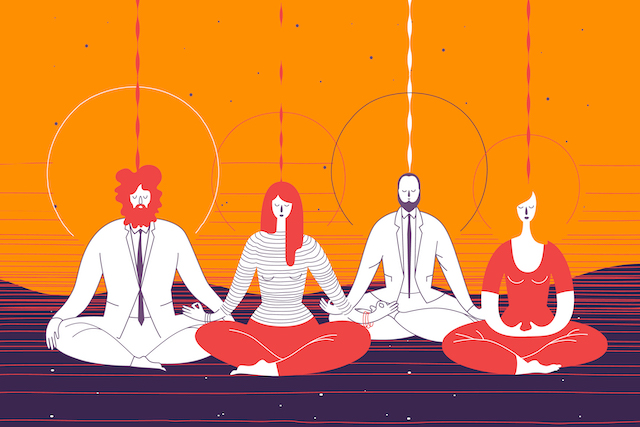
    Not you. You’ve got it figured out. You even make time to exercise, eat right, meditate, or maybe spend time with friends and family.

    You’ve got it all figured out—except for that one stupid thing that keeps tugging at your heart. You don’t really know what it is, but it is there, and it is driving you a little crazy.

    Yeah, I know. I get that feeling sometimes too.

    It is often mistaken as unhappiness, fatigue, depression, or being stuck in a rut. Many people will go off and do wild vacations or try things they would never try in a million years just to see if those activities settle the strange, inexplicable emptiness they feel inside.

    When they return to the real world, though, the problem is still there, still nagging at them.

    Maybe they think they didn’t go “extreme” enough and will push themselves harder. Or maybe they take it in a totally different direction and put more time into meditation, or even trying to manifest happiness in their lives.

    Sound familiar?

    Or do you have it under control? I’m guessing since you’re still reading, you don’t. It’s okay. Neither do I.

    In fact, neither do most people.

    So, what is this mysterious thing that is pulling at you, leaving you feeling empty and unfulfilled in a life that would, from the outside, seem all but amazing? It’s the pursuit of happiness.

    Before you click away from the page, thinking that this is another article about how when you stop pursuing things, that is when they come to you, don’t.

    It’s not about that at all.

    We are constantly presented with things that we believe will make us happy. New cars, flashier televisions, prettier women or men, houses, furniture, more money, exotic vacations, and a myriad of things that go along with that stuff.

    We are pounded by books, blogs, and billboards about how we can get everything we want in life and live happier, better, and wealthier.

    The simple truth is, we are so focused on getting what we want that we forget about everyone else in the world around us. And therein lies the key to that empty feeling inside.

    Right now, there are people who are hungry. And not just in Africa or India. They might be within a square mile of you. There are kids who don’t have a decent place to sleep.

    Let me tell you a quick story.

    Recently, a friend of mine (a former high school teacher) passed away. He had been fighting leukemia and eventually cancer for a long time. He was 74 years old.

    When I met him, I thought he was one of the most energetic people I’d ever come across. Of course, I was only 16 at the time. His Italian ancestry only added to the natural charisma he displayed on a daily basis.

    This teacher started a program at my high school called Project 5000. It was an initiative aimed at collecting five thousand canned goods to distribute to needy families in our area. I can still remember seeing the boxes of food under the auditorium stage. 

    Not only did our little school of 300 kids collect five thousand cans, we collected far more. And every single year, the number grew, surpassing multiple tens of thousands every year.

    Because of his efforts, many needy families got to have a few good meals around Thanksgiving, even if it was just a few.

    My friend also helped out at a place called the Chambliss Home, a transitional facility for kids similar to an orphanage. He organized a Christmas program there every year so that, at least for a night, those kids could actually be kids.

    Why am I telling you about this?

    Because this teacher always had a smile on his face. He always had tons of energy. And because of one very important thing he told me in relation to the problem I discussed earlier. 

    He said that if you live your life providing a service to others, you will have the most fulfilling life possible.

    And there it is. We’ve been so focused on getting what we want in this world that we forget that there are people who have desperate needs. You don’t have to look far to find them either.

    They could be right up the street, in a local school, a homeless shelter, a nursing home, or any number of places.

    At the moment, I work in a school that has a student body that is 100% on free and reduced lunch. Basically, that means it is a school of kids from low-income homes. I work there as a school counselor and as the boys’ soccer coach.

    My commute sucks, nearly an hour each way. The hours suck (since my best energy times are not waking up at 5:30 and working until 5:00 in the afternoon).

    When my friends ask me why I don’t quit or find a job closer to home at a better school, I explain to them that it is my Calcutta. While sometimes the work is not stimulating, and the kids can be a little rough around the edges, it is a place where there is a great need.

    Ever since I started looking at it that way, I have been a lot happier in the rest of my life. I am more fulfilled because I know that I am providing a service to people in need and not just living for myself.

    When I get home, I have more energy, a happier demeanor, and I feel like I have done something good.

    The bottom line is, helping others energizes you and fills you with good feelings.

    Where can you find your Calcutta? It could be as simple as donating a piece of furniture to a needy family. Or you could give a few hours a month at the local soup kitchen. Are you an expert at something that could help solve a problem for people? Find a way to do that on a semi-regular basis. It can literally be almost anything.

    The point is that you serve someone. And by serving others, you will begin to notice that strange, empty feeling begin to dissipate until one day, you find yourself smiling all the time.

    Photo by Shisheido USA

  • How to Activate the Life Purpose That’s Right Under Your Nose

    How to Activate the Life Purpose That’s Right Under Your Nose

    “Our obligation is to give meaning to life, and in doing so to overcome the passive, indifferent life.” ~Elie Wiesel

    After surveying 3,000 people, psychologist Cynthia Kersey discovered that 94% had no clue as to their purpose in life—94%!

    As painful as this statistic is, it’s even more painful in light of how relatively simple it is to discover a worthy and fulfilling life purpose.

    For most of us, a meaningful purpose lurks just beneath the surface of conscious awareness and can be discovered in a few minutes.

    This is the easy part. What happens after you discover your life purpose is the plague of humanity.

    I discovered my life purpose in high school psychology class at age seventeen. A local therapist visited our class and asked us to sit on the floor in a large circle. We cleared out the desks and sat. Then he said the following:

    “You’re trapped in a cave with the rest of this class. Only a few of you will make it out alive before the cave collapses. A few at the front of the line will make it. Those in the rear will be crushed. Now, as we go around the circle, I want each of you to explain to the class why you need to get out alive. Tell us why you should be at the front of the line.”

    One of my classmates raised her hand. “What if we don’t want to be at the front of the line?” she asked.

    “Then say so, if you really feel that way,” the therapist conceded. (Therapists can be such pushovers.)

    I was on the opposite side of the room and listened, one by one, as more than twenty kids declined the opportunity to state what they wanted to live for and merely said, “I’ll just be at the back of the line.”

    On my turn, I took the risk and said, “I wouldn’t want to be responsible for someone else not getting to live, but since you asked why I need to get out alive, I’ll answer your question.

    I want to live and make something of my life. I am being raised by a single mother who has made sacrifices to see that I get an education and stay out of trouble. I don’t want to let my mother down. I feel I owe it to her to make the most of myself. If I can do something really great in life, it will make her sacrifice worthwhile.”

    I caught the nod of respect from the therapist and noticed a few of the girls in the class looking misty-eyed and—right there—I knew my purpose. I knew that if I could help people discover something great within themselves, like I had just discovered, I’d live a meaningful life!

    That was easy compared to what came next.

    I fought it. I failed out of college the first time around. I passed on great opportunities to advance my education and career by telling myself, “You can’t do it. You are not worthy. You’re a fake.”

    I looked for shortcuts. I refused to cooperate with my supervisors because, even though I was plagued with self-doubt, I still thought they were stupid.

    If you looked at my life, you’d wonder just how I was manifesting any purpose that had to do with helping myself and others grow.

    One step forward, two steps back! That was me.

    Later, when I did find opportunities to advance my career by teaching workshops, I made it horrendously difficult. I demanded perfection of myself at every performance, which created unbearable anxiety.

    I often walked to the front of a lecture room just knowing I would have a full-blown panic attack and be carted out on a stretcher and never be invited to speak anywhere again.

    I just couldn’t give myself a break. My purpose in life not only lacked fulfillment, but also became a source of personal torment.

    I know what it is like to fight your purpose in life. I’ve been there. In fact, I now believe that most people who are not living a life of purpose are sabotaging their efforts as I was.

    Many people give up on their purpose because of all the perceived trouble that comes with making it real.

    My parents won’t approve.
    It is too difficult.
    I can’t do it.

    It’s not realistic.
    I won’t fit in with my friends anymore.
    Where I come from people don’t do that.
    I’ll never be able to pay the bills.
    I am sure I will fail in the end and be right back where I started.
    It’s just not worth it.
    It’s too late.
    I am comfortable where I am.

    And so the story goes. We resist a more meaningful life because we get in our own way. This is the saddest story ever told!

    Worse, so many have written off their purpose to such a degree that they don’t know where to begin to find it.

    It is right under your nose.

    If you’ll take a few minutes to do the following experiment, you are very likely to discover something wonderful that might serve as a purpose for your life.

    Take a few minutes alone to simply breathe and think. When you are relaxed, ask yourself some simple insight questions per the following examples.

    When you’ve gotten greater insight as a result of the questions, ask yourself how the insights apply to a potential life purpose. This is the application question mentioned below.

    Insight Questions

    What do I love?
    Why do I love this?

    What talents has the universe given me?
    Why are these talents important?

    What are my dreams?
    Why are these dreams important?

    When and where have I found joy in my life?
    Why did I find joy in that?

    What have I always found meaningful?
    Why is this so meaningful to me?

    Write down the answers to the insight questions that appeal to you. Remember, this is just you. Imagine for a moment that nobody else in the world matters. No one has any say here but you.

    As you are writing, notice how you are feeling. Which particular words cause you to surge with positive energy? These words are a major clue as to your purpose in life. 

    Application Question

    While in that positive state, ask yourself the application question.

    How might the answers to any of the above be part of your life purpose?

    For example, imagine you are writing about a particularly meaningful experience that came to mind as a result of an insight question. Let’s say you remembered when you were meditating and felt a deep connection to the universe.

    You asked yourself, “Why was this so meaningful to me?”

    The answer came, “Because that is what life is all about—connection.”

    Next, you asked the question, “How might connection be part of my life purpose?”

    So many ideas might flow from there:

    Your purpose may be to simply stay connected! Whatever you do in life, you remain open to the possible connections to others and beyond.

    It may be that you feel a desire to help others connect to the universe—a great life purpose.

    Perhaps your purpose is to help children experience greater connection.

    The possibilities are limitless! If you center your life around staying connected and helping others to do so, you will surely experience the fulfillment that comes with a clear life purpose.

    How can you make your purpose real? There are a million ways. The better question is how are you likely to get in your own way? How do you subconsciously protest having a purpose? How might you attempt to devalue your purpose?

    Learn your purpose. Learn the ways in which you sabotage it. Get out of your own way and follow your heart.

    Life can be complicated. Sometimes we convince ourselves that what we want is impossible. This is where education and a compassionate, intelligent outsider’s perspective can be a life purpose saver.

    To the life purpose under your nose….

  • You May Have a Super Power You Never Knew You Had

    You May Have a Super Power You Never Knew You Had

    Not sure you have a gift or anything special to offer humanity? After watching this you may have a whole new perspective on how you make a difference.

  • You Can Make a Difference: Just Open Your Eyes

    You Can Make a Difference: Just Open Your Eyes

    See the World

    “Act as if what you do makes a difference. It does.” ~William James

    My mind wasn’t able to percieve the reality around me. It had been ten days since I’d woken up with a feeling of constant energy flowing through my whole body.

    It was so intense that I didn’t want to let it go. But I wasn’t ready for it. It was way too much for my unprepared body and mind. I didn’t even know what it was back then.

    Everything had happened so fast. I was on the way to Chicago with my friends after seeming to check out mentally. They wanted to help me by bringing me to a clinic, but the fear was stronger.

    Suddenly it grabbed me and made me jump out of the car. I started running in the opposite direction. Then I saw the fast moving vehicle coming…

    The highway was dark and cold. My body was lying down on the pavement and I was looking at it from above. My friends were crying around it, and I left the world.

    In the next moment I had reached my final destination, the place of pure love, bliss, and unity with all that exists. The place that we can not even explain with our limited-by-the-physical-reality minds. The place where we are all one.

    Then I felt a mighty force that drew me back.

    There was a light in the tunnel, with thousands of small episodes of my previous life on the walls. Tiny memories of who I was before leaving the world of forms as we know it.

    It was so beautiful. Then I got back into my physical body and opened my eyes. The pain was incredible, yet somehow distant. I was in a fast moving ambulance on the way to Springfield, Illinois.

    “What am I doing back here?” was my first conscious thought.

    I had no memories at all. I was all wiped out, like a brand new hard drive that just came out of the factory. I learned that some of my forehead was missing and my right knee was smashed.

    Doctors told my parents and my friends that I wouldn’t make it. I disagreed. I love this beautiful life too much to leave it.

    Four hours with a great team of surgeons followed, and another trip back to this unexplainable place beyond the perception of our minds. And again, there was this force that needed to send me back to Earth, as I didn’t really want to leave.

    A huge smile on my face. My first titanium peace was on. “Yeah! I’ll be like Ironman,” were my words before going in for surgery. I will never forget the look on the surgeon’s face after he heard that.

    It was quite funny not to know what to do with the spoon the nurse gave me for my first meal after the operation. She showed me how to hold it. Everything was so delicious.

    Miracles occurred. The doctors couldn’t believe I was so happy and smiling so widely.

    Then my parents came and the doctors let me go after a few consultations with the psychiatric department. My mind was clear like never before. This was one of my gifts, along with the energy that was, and still is, inside of me.

    I was passing twenty miles a day on my bike two weeks after the accident, doing hundreds of pushups and pull-ups afterwards. The energy inside my body was so incredibly powerful that I simply had to use it.

    My memories were coming back slowly. With every passing day I was putting more and more of them together—and I’m still remembering today.

    I received more than seventy thousand dollars worth of bills in the mail. Still, there was a smile on my face. I knew my only choice was bankruptcy, but I didn’t let it get me down—I was starting over.

    I’ve learned that even when things seem impossible, there is always a way. When there is a will, there is a way. We just need to let go of the fears that keep us stuck. Fear doesn’t serve us. It limits us and prevents us from reaching our full potential. 

    My heart is still filled with gratitude for all those men and women who took care of my body.

    I sent them my blessings, and then I left. Bye bye US. It was a pleasure. I bought a one-way ticket back to Eastern Europe. Welcome to Bulgaria, the country where I was born. It was almost five years since I had last seen it last. Family and friends met me at the airport with smiles and warm hugs.

    Years of meditation and self-observation followed. I had to find out what exactly happened. And I did.

    I was dwelling on my doubts and losing faith in myself. I wasn’t feeling unity with the people and the world around me. I was crying and giving up sometimes, but rising up again and continuing forward.

    You will most probably feel the same at times.

    We’re all on own unique path to self-realization. It’s a process. But if you keep walking, no matter how slow it appears sometimes, you will reach your destination. Then you can choose your next one and keep going toward it again, far stronger than you were before.

    There was struggling. There was irritation. There was love. There was compassion. There was pain. There were tears. There was laughter. There was pride. There was fear. There was courage. And sometimes it wasn’t so clear.

    It was a snowy Sunday when I went to my first self-development workshop. At the end I had the chance to share part of my story. It was the most satisfying feeling of all. Then everything started falling into place. I knew what I needed to do.

    One morning I started writing. And I wrote and wrote and wrote, day and night. My first book was on the way. It came out one year later.

    In the meantime, I spent hours preparing to be a speaker. Nothing happens without putting in time and effort. There is no shortcut to achieving your goals. You need to work on your skills and develop them as best as you can. And keep doing it after. Every day.

    Workshops followed lectures and speeches. Two blogs in two different languages. A second book, too. Great people, places, and moments of love, abundance, and gratitude.

    But most of all there was belief, a belief in my self. There was a knowing—that I have something unique to share with the world around me.

    And you have too. Yes, I’m talking to you. Don’t look behind your back. I really mean you.

    You are simply amazing. Right here, right now. You have some extraordinary experience you can share with us too. Please do. We all need it.

    We all need you to reach inside yourself, remember your deepest dreams and desires, and share your passion, as life is meant to be shared.

    Many times I thought about how insignificant I am. Have you done the same? It’s a lie that we’ve been told many times. It’s time for it to go away. You don’t need it anymore.

    You are great and you have something important to share. Remember? It comes back slowly, I know. I’ve been there. It takes time to break the program and wipe the slate clean of all the negative beliefs. But it’s worth it, every single moment.

    Are you ready? To see things differently? Just open your eyes.

    Photo by Rareclass

  • What Would Happen If You Did? (And Other Questions That Can Change Your Life)

    What Would Happen If You Did? (And Other Questions That Can Change Your Life)

    “If it’s still in your mind, it is worth taking the risk.” ~ Paulo Coelho

    I felt stuck. Why could I never achieve anything? Why could I never do anything tangible?

    Everyone else seemed to have no problem. You see, my friends could both work hard and grow themselves at the same time.

    Not me.

    I felt stuck.

    Every day when I came home after work I was just exhausted. I had no energy whatsoever to study my Chinese Mandarin (a long-term project of mine) or to go for a jog in the nearby forest. All my energy had been put into a job I didn’t even enjoy that much.

    I just knew I could get more out of life. What I really wanted was to spend time on my own projects—to do what I love the most. Well, to me, the only way I could shift my reality was to basically to change priorities—to put life before work.

    But how? How does one do that?

    In practice, the only tangible solution I could see was to wake up early in the morning. Really, really early. That way I would be able to pour all my fresh energy into what is most important to me.

    But I can’t do that. It’s crazy, right? That would change my entire way of living. It simply doesn’t fit the rest of the world.

    So I decided it was crazy and went on with my life. Until one day when speaking to a colleague. We came upon the topic and after a while he asked me…

    “What would happen if you did?”

    I was silent.

    “Yeah, what would really happen if I did?” I thought.

    And he continued on the same path and said: “What wouldn’t happen if you did?”

    I was silent again. I was thinking.

    I could actually only see positive things happening from making this change in my life. Previously, I hadn’t even had the courage to really get out of the box of the problem and see what choices I had.

    This question expanded my view of the world and literally changed my life. I was not so stuck anymore. And I realized that I had been so focused on the problem that I had been unable to see anything else.

    I guess you can relate to those few moments in life when we finally are able to see something for what it really is. It doesn’t have to happen through a big life-changing question. Sometimes a simple question is enough.

    So with focus on solving my problem I gave it a try, waking up early in the morning. And you see, when I do something, I like to do it big. So I set my goal to rise at 4:00 every morning.

    That would give more than three hours of doing whatever I want with a fresh mind and relaxed body. Hopefully.

    Now, I don’t want you to think that it’s that easy to basically “change time zone” and become an early riser, but with the right mindset anyone is able to.

    For me, it was the question that made it all possible. The question that changed my life.

    I think the main reason this question helped me was because I was brutally honest with myself. There are so many things that actually would (or at least could) happen if I did. At the same time, I realized that none of this would happen unless I went for it.

    For example, I would be able to…

    • Finally start that website of my own.
    • Keep a daily exercise routine without anything getting in my way.
    • Prepare romantic breakfasts for my fiancée, at least once in a while 😉
    • De-stress my entire life by having a few things “under my belt” when work starts already
    • Take a big leap forward in my Chinese studies

    And most important of all, I would be able to…

    • Set the direction of my own life, instead of being just lead down the road life takes me.

    And before I tell you if all this really happened, let’s dig into that questions a little bit more.

    The Question Explained

    I have discovered that this question I mentioned above can actually be part of a bigger pattern. You see, there are four alternatives to this question:

    • What would happen if you did?
    • What would happen if you didn’t?
    • What wouldn’t happen if you did?
    • What wouldn’t happen if you didn’t?

    I like to imagine these questions laid out like four quadrants in a matrix. Usually, we are all stuck in the quadrant “What would happen if you didn’t?”—focusing on the problem at hand.

    What all the other three questions help us to do is to move ourselves away from there and into the other quadrants. You might be able to find that these new quadrants lead to new perspectives and new insights.

    Isn’t that powerful?

    I mean, if you can think of a problem or troublesome situation you have in your life, then you will be able to come out much stronger on the other side after running it through these questions. You can, can you not?

    I have at least realized that by asking myself open and strong questions I can open up my life to more and more possibilities. Asking the questions is just the beginning, but often times getting momentum is the biggest challenge we face.

    So I urge everyone to ask yourself this question as soon as you find yourself stuck. It helped me in one situation and continues to expand my view of the world every day.

    So Does It Really Work?

    It’s not a magic question. But for the purpose of giving me new alternatives of how to live my life, it sure worked well. You see, those things I mentioned before that would happen if I did, that was just the top of the ice berg.

    In fact, I wrote down three full pages, hand written, about how my life could change. And that has been my main source of motivation ever since.

    I can understand if you feel that becoming an early riser is not a really serious life change and that I didn’t have a really tough problem to begin with. If that’s the case, then I encourage you to use this question on ever bigger problems.

    Use it to make real life changes.

    At least I put my life before work nowadays and I feel that I achieve something for me, every single day. That was what the question helped me to do.

    I am now an early riser, speak pretty darn well Chinese, have set up several websites, and am able to take those morning runs almost every day.

    You see, this question literally changed my life.

  • The Secret to Staying Motivated (and Motivating Other People)

    The Secret to Staying Motivated (and Motivating Other People)

    Samovar

    “Don’t be pushed by your problems; be led by your dreams.” ~Unknown

    As the founder and owner of Samovar Tea Lounge in San Francisco, I’ve gone through my share of ups and downs over the past twelve years.

    One of the hardest challenges I face every day is how to create motivation. How to motivate myself to keep going, even when things get hard. How to motivate staff to serve and lead with enthusiasm. How to motivate vendors to work with me. And the list goes on.

    No matter who you are, everyone is trying to motivate someone. Parents try to motivate their children to practice piano. Bosses try to motivate their employees to work faster. People try to motivate themselves to lose weight.

    Unfortunately, motivation sucks. It’s an external force that requires either a threat or a reward. But once that carrot or stick is removed, everything falls apart. Or it may work for a while, but soon you’ll need an even bigger carrot or stick to keep it going. It’s a downward spiral, like a car spinning its wheels in the mud, only to become even more stuck.

    On the other hand, some people and social movements have such momentum that they seem to soar effortlessly. What’s the difference?

    For us at Samovar, the secret is not an external force, but an internal superpower: inspiration.

    How to Create Inspiration

    1. Find a mission.

    Inspiration is the fire that wells within. When you’re inspired, you’re filled with life. You don’t need an alarm clock to wake up; you wake up before the alarm ready to dive into a new day. When you’re inspired, you don’t need to be told what to do at work; you’re already thinking of ways to make your work even better.

    How do you create inspiration within yourself or your company? It comes from doing something that matters, and knowing that you’re a part of something bigger than yourself.

    At Samovar, our mission is to create positive human connection. It’s not about selling tea; it’s about creating a movement. Find a mission that resonates deep in your heart, and you’ll find a deep well of enthusiasm and energy.

    2. Share the mission, not the action.

    It’s much easier to share a mission than make a demand. When I let go of the need to “manage” staff, and instead empower them to fulfill this vision, then the magic happens.

    Instead dealing with of a bunch of robots that need to be monitored closely to make sure they meet the minimum work requirements, I’m surrounded by passionate ambassadors of the company vision.

    Sharing a mission is also more effective than demands. My staff face a million different scenarios every day, most of which I can’t anticipate.

    It’s impossible to make a protocol for every single issue that pops up. But if my team truly believes in our mission, they can solve problems creatively, using our core vision and principles.

    3. Fuel your inspiration.

    Inspiration is contagious. When you hang out with inspiring people, you become inspired. And unlike motivation, which requires increasingly bigger rewards, inspiration is a self-propelling force that grows bigger and bigger.

    I also fuel my inspiration by reading books by inspiring people. Here are a few notable authors with insights on inspiration:

    4. Breathe.

    Sure, I still have tough days when I feel discouraged. But at those times I simply pause. I brew a pot of tea and take a few breaths (the word “inspire” comes from the Latin word meaning “to breathe”).

    Breathing gives me space to reflect and remember. Every satisfied customer who leaves with a smile on their face, every staff person who shares their excitement about the connections they created, and every meeting I have with inspiring people buoys me up.

    Find a mission and share it. Breathe it in, and breathe it out until it infuses every cell of your body. Soon you’ll be filled with life, passion, and joy that no carrot-or-stick motivation could compete with.

  • Discover Your True Joy: 5 Ways To Find What You’re Really Chasing

    Discover Your True Joy: 5 Ways To Find What You’re Really Chasing

    Running

    “Above all, be true to yourself, and if you cannot put your heart in it, take yourself out of it.” ~Unknown

    When my last relationship ended, I found myself suddenly questioning what my goals honestly meant to me. I had focused my past five years steadily chasing a very specific dream with this woman (creating joy, art, and a community in NYC, adopting some dogs, and eventually moving back to California to start a family together).

    At least that’s what we thought we were chasing.

    When we realized that our lives together had become static, that we lacked engaging dynamics, and that we only rarely brought out true joy in each other, our roads abruptly veered and I found myself sans lover, best friend, and collaborator. I also was given a huge opportunity to view my life with fresh eyes.

    I saw that by limiting our vision and chasing only our one shared dream, we were effectively shutting ourselves off from exactly those varied personal experiences that it would take to build our joy, inspire our art, and create that dynamic life we both desired.

    We allowed ourselves to be held back from a meaningful life by chasing the goals we thought it would take to get there. We had gotten stuck in chasing the wrong things for a right reason.

    I began examining what I had been busy chasing in all the aspects of my life. Chasing in my career, chasing in my suddenly newly blossomed singles life, and in the personal identity of who I was now that I wasn’t defined by this external relationship.

    I realized that it was time to shake things up and experience the unexpected.

    Here are some steps to discover what you are truly chasing in life. Try to answer in less than twenty seconds, with the first thing that comes to mind. You might be surprised.

    1. What makes you lose track of time?

    I’ve always liked fixing things and working with my hands. Broken pieces fascinate me as my mind wraps around how they tick. I know there’s a reason if I could only find it. It’s a great puzzle, but sometimes the minuets crawl by. By chasing the outcome (to make it work), I stopped being in the present.

    I discovered that I never feel rushed drawing or painting. No matter how long it takes me to choose a color, from the instant I pick up the brush to the second I put, it down feels like one fluid moment.

    2. What makes you happy?

    It might be sunshine, dogs, laughter, passion, collaboration, or music. I chased my career goals in the music industry by working in a studio without windows or sunlight for ten hours a day, and while it was rewarding to help people realize their dreams and create their art, I realized I was chasing the wrong thing.

    What made me happy wasn’t just making music sound better or tweaking knobs; it was helping people discover and release their albums. When I realized that I was made happy by sharing, by making art, then my goals shifted to be more people and connection focused and left me feeling more fulfilled.

    3. If you didn’t have any bills to pay, what would you do?

    You might sit on a private island by the beach, or maybe start a free service for the less fortunate. I personally realized that I have to create.

    The idea of “free-time” scared me silly, and everything I focused on in life stems back to this deep-seated need to be creating something. Even sitting quietly was creating peace. Once I realized what my driving force was, it became much easier to make choices based on what I knew my true desire to be.

    4. When you are old, what will matter the most?

    You might be chasing things, people, rewards, or achievements that seem huge and important now. You’ve given your all to reach this point, so why give up now? Ask yourself how deeply will it touch people in twenty years, thirty years, fifty years. If I get a gold record, it’s a huge achievement, but I don’t want to be remembered for a plaque on a wall.

    I’d like to be remembered as a warm, living, loving, heartfelt person full of optimism and enthusiasm. A gold sales award doesn’t commemorate that.

    5. What are you really after?

    Honestly ask yourself, what are you getting when you reach the end of this chase? I was chasing goals that I thought would help build the future for my love life, or would help advance my career—there was my “reason”—but having a more advanced career didn’t help me to connect deeply with artists. It wasn’t in tune with my true desires.

    Our relationship appeared to be chasing similar goals, but in the end our chase was actually blocking us from reaching our true selves. Ask yourself if you are chasing out of habit or just for the sake of the chase; be sure you are genuinely working towards your true goals.

    I’ve realized that a lot of what we focus on in life isn’t what’s in line with our true desire. Since then, I’ve cut my time commitment to work in half, and I now use that time to create art and build connections with people who also value the creative life I want to live. It has breathed new life into my actions and helped me understand the deeper reasons for my choices.

    Without walking the long and often painful road, we rarely discover the true reasons why we’re chasing our dreams, even if we have those dreams well defined.

    The only constant is that it never goes according to plan. Let your heart be open to the unexpected and stay flexible and free. Like a dog running after a ball when a squirrel suddenly appears, gleefully embrace the opportunity for a fresh chase and leap onto your new road with joy.

    Photo by Hartwig HKD

  • Let the Energy of Unhappiness Power Your Purpose

    Let the Energy of Unhappiness Power Your Purpose

    Energy

    “The obstacles of your past can become the gateways that lead to new beginnings.” ~Ralph Blum

    The summer of 2007 was simply terrible. I wish I could find something positive to say about it but there really was nothing that I can think of. I was underemployed, the economy was tanking, and I was in a shame spiral of depression and self-hatred.

    Following a fight with my husband, I found myself driving aimlessly, snot and tears running down my face. I’m not comfortable saying I was on a mission to stop living, but the thought had definitely crossed my mind.

    It was just a bank advertisement that caught my eye as I drove, but seeing the billboard took my breath away. “YOU MATTER.” The image of those huge letters is burned into my mind.

    I wish I could say that billboard changed my life in a big way. It didn’t. But what it did do was change my life in a subtle way. The four years that followed that day in 2007 were similarly difficult. I was depressed, borderline alcoholic, and more deeply unhappy than I thought possible.

    But somewhere in the back of my mind was the image of those letters: “YOU MATTER.”

    By the fall of 2011 I hit my low point and I sought conventional counseling. I can attest that it was one of the best decisions I ever made. But there was a secondary emotional and spiritual journey that made an equally important impact on the quality of my life.

    That journey started with the image of the billboard coming back to me in moments of quiet. At first, I couldn’t help asking “Do I really matter?” whenever I thought of those words.

    Slowly, but surely, the answer became “Yes, I do matter!” Eventually it was not only “I MATTER!” but also “Maybe I have a purpose!”

    Professional help is so incredibly beneficial. But the truth is, it lifts a veil that reveals unexpected “stuff” to deal with. There were times when this felt like a vicious cycle to me.

    In other words, depression and anxiety… seek professional help… uncover some inner junk… inner junk causes unhappiness and despair… circle back to depression and anxiety.

    So, what can you do about that vicious cycle? What’s the point of having a purpose when you’re caught in a whirlwind of your own issues? The best way to describe the solution I found was to snag the energy from that cycle and harness its power for better things.

    The thing is, unhappiness and despair take energy. In fact any emotion takes energy, but unhappiness often feels like hard physical labor. Would you rather wear yourself out on something unproductive, or use your energy to do something productive?

    In order to harness the energy of your unhappiness and despair, remember that the energy isn’t a bad thing. It just is.

    If you subscribe to the theory that the whole universe consists of energy that is neither good nor bad, it’s easier to imagine a shift in more productive use of your energy.

    Think of emotional energy like an electrical wire. If a live wire is broken and lying in the street it is useless at best, and quite dangerous at worst. But when it is properly connected it provides us with power to make our lives easier.

    My spiritual and emotional journey led me to wonder if I could unhook the metaphorical power line feeding my unhappiness and install it somewhere else. What if I fed that energy into something productive? Something with a purpose?

    Connecting your energy to a purpose can take many forms. Throughout my own emotional and spiritual healing, I focused on hobbies. I learned that knitting can be incredibly meditative. I also improved my yoga practice.

    Carrying for a loved one or a pet, tackling a challenging project (cluttered closets, rejoice!), working for a social/community cause, or learning a new skill are other positive ways of diverting energy away from unhappiness.

    Taking the first step toward using your energy differently can sometimes be a challenge. Finding the motivation to pull yourself away from your own “stuff” to use your energy elsewhere can require some ingenuity.

    It helps to get in the habit of seeking that motivation to invest yourself in something new. In each day there is always at least one opportunity to be inspired. At least one chance to be reminded that you are not alone and that you matter.

    It may be subtle. It may be fleeting. But it is important to seize that moment and use it to leverage the energy you have at your disposal. Once you start looking, it becomes easier and easier to find those moments.

    Today I was feeling a bit melancholy. But I noticed the sky was an exquisite shade of blue and the sun was warm and bright. I was grateful to have witnessed that beauty.

    I held that moment in my mind and used it to channel the energy of my sadness toward a more useful purpose. In this case, it was my writing goals for the day. I felt much better for accomplishing something.

    Look at unhappiness and despair as opportunities. Start by revising your understanding of energy and know that it’s a free agent. Then, look for a beautiful moment in each day to serve as a reminder, and direct your energy toward doing something with purpose.

    Don’t forget to plant that roadside billboard in your mind. YOU MATTER—let it become your reminder!

    Photo by Crysis Rubel

  • When You Don’t Have a Clear Purpose: 4 Helpful Mantras to Adopt

    When You Don’t Have a Clear Purpose: 4 Helpful Mantras to Adopt

    “Don’t take life too seriously. You’ll never get out alive.” ~Elbert Hubbard

    I have always defined my life by my career. I think that was my first mistake.
    For the last six years, I worked at a publicity firm in Los Angeles.

    It was a job where your email is the first thing you check in the morning before getting out of bed. A job where you are on your phone while eating your dinner. A job where your boss calls you out of a funeral in order to send out a press release. Frequent travel, evening events to attend, and not a lot of free time. Not any free time.

    The problem was that this job became my life. I went from work, to home, to bed, each day.

    Seven months ago, I quit my job. In fact, not only did I quit my job, I moved out of my Los Angeles apartment and hopped on a one-way flight to Puerto Rico all in one week.

    I had met someone who opened my eyes to thinking differently and who let me see that I should try and find a life where I was happy.

    I realized that this job was not bringing me the life that I wanted to experience. My hair was falling out due to stress; I had migraines each week. My doctor even advised for a change.

    My first weeks in Puerto Rico were paradise. I lay on the beach, learned to dive, and got on a surfboard. I went to waterfalls, drank pina coladas, and I was in love. Soon, however, I started to come down off my high. I started to get anxiety.

    I realized what happened. When I took away my job, I took away 90% of the only thing I knew to be my life. I had a big hole inside of me now. I didn’t know what I enjoyed doing, what my hobbies were, or who I was as a person.

    Keeping busy through work never allowed me time to think about things like that. Now that I had no job filling my time, I was overwhelmed with thinking. The thinking soon led to over-analyzing, which then led to anxiety.

    I woke up each day with a knot in my stomach. What was I doing? Am I going to be happy today? What am I going to do for a career? What is my life going to be like in Puerto Rico?

    Often I would worry that my new relationship would fail. My boyfriend fell in love with me because of my independence, my drive, and my passion—all of which he observed through my former job. Now that the job was gone, I felt I had lost all of those traits as well and that he soon would fall out of love with me.

    What I came to realize was that “I” was not my career. That wasn’t what defined me. I still had all of those traits and more. I was putting these thoughts and worries into my head that didn’t need to be there.

    People fantasize about living on a tropical island. Seeing the ocean each morning when you wake up. Walking beaches with not a single other person on the sand. So why, in the land of paradise, was I causing myself so much worry and stress?

    If I couldn’t cease my worries here, I certainly had no hope anywhere else.

    So I made it my mission to not take life so seriously and to learn to be present each day in order to find happiness within myself and for my new life. These were my daily mantras:

    1. Give yourself some credit.

    I took a big risk when I quit my job. I took an even bigger risk moving to an island. Rather than being down on myself for not having a career at the moment or not feeling like my life has a purpose, I give myself credit for the little things: learning Spanish a bit more, attempting to surf, taking pilates each week at a local studio, meeting new people.

    When you are focusing on what you see as bad things, you are preventing the good from shining through.

    Don’t be so hard on yourself. Take ten minutes of meditation time each day and thank yourself for it afterward. Get up early and make a healthy breakfast. Talk to someone new in line at the coffee shop. Notice the little things you are already doing each day for yourself.

    2. Stop thinking so much.

    Think of nothing for two whole minutes. Clear your mind. Don’t put effort into thinking about things that haven’t happened yet. It will just cause you worry. It’s too much for one little mind and it’s a waste of your time and energy.

    I still catch myself in a whirlwind of thoughts each day and every time this happens, I stop, I take three deep breaths, I think about something positive, and I smile. There is always a reason to smile and less of a reason to worry.

    3. It’s okay to take a break.

    My family asked me why I was wasting a college degree and why I spent my 401k to move to an island. I didn’t have a straight answer for them, but I did know that I worked harder than I ever had for six years of my life, for almost twelve hours each day and put up with a lack of appreciation for what I did.

    So it was okay if I took some time to do nothing. You don’t have to be achieving scientific discovery every day. It’s okay to take time to simply be and to experience life.

    4. You don’t have to find your life purpose tomorrow.

    I used to hate the saying “find what you love and go do it.” As if it’s so easy. But each day, don’t be afraid to attempt something new. In Puerto Rico, I have learned that I actually like oysters. I love being in the water. I am more creative than I thought I could be.

    I still haven’t found what I love in life or what my “purpose” is, but trying is the only way to find it.

  • 5 Lessons from Death to Help You Create Joy, Passion, and Meaning

    5 Lessons from Death to Help You Create Joy, Passion, and Meaning

    Joyful

    “One day your life will flash before your eyes. Make sure it’s worth watching.” ~Unknown.

    Death is something many of us fear. Perhaps not so much our own death, but the mere thought of losing a loved one can be heartbreaking.

    On Sunday May 5th, my grandma had a large stroke. She’d baked her last cake, shared her final story, and within the blink of an eye, she was gone. Six days later her life ended, in a hospital bed, surrounded by her loved ones.

    She was not only my grandmother, but also the grandmother to five others, a great-grandmother, a mother of three, and the soul mate to her life partner.

    During the final week of her life, I was abruptly reminded just how fragile life really is, and how everything can change in a second. Here is what I’ve learned:

    1. It’s not what you are; it’s who you are.

    Wealth, status, and career are irrelevant when you are on your deathbed. The only thing that truly matters at the end of your life is how many people loved you for who you were, not what you did for a living.

    My nan had a brilliant sense of humor, countless tales to make us laugh, an abundance of love, and delicious home-cooked food to share. She was always a joy to be around.

    When you look back on your life, it’s not about the amount of money you’ve made, or how many letters you have accumulated after your name; it’s the human beings whose hearts you have touched.

    2. Now is the only time that really matters.

    Don’t put off something that can be done today, as your tomorrow may never arrive.

    Thankfully, my nan had lived a very fulfilling life and had reached the great age of 88. However, death can call for any one of us, at any time.

    Whatever your age, you need to ask yourself: Are you really living your life to its full potential, or constantly waiting for a better tomorrow?

    If you are unhappy with something, change it. If you need to resolve a difference with another person, work on it. Life really is too precious and too fragile to wait for another moment that isn’t now.

    3. Life is too short to be anything but happy.

    Life does have its ups and downs, and it is impossible to be happy all of the time. But, when those joyous moments do arise, enjoy them, savor them, and find a special place for them.

    During the last years of my nan’s life, she found it a struggle to get around. But what she lacked in mobility, she made up for with great wisdom, sharing fond memories and amusing anecdotes from her past.

    As we go through life, we create our own stories and live through countless experiences. Make your today a day that will bring you joy over and over again, when you look back on your life in many years to come.

    4. Share your gifts with the world.

    Everyone knew that our grandma made delicious cakes. But it wasn’t just any old mixture of sugar, butter, flour, and eggs. It was her unique way to share a slice of happiness with her loved ones through her special gift of baking.

    Whatever your talent may be, don’t keep it just for yourself. Share it with others.

    If you’re a great cook, make a fantastic meal for family or friends. If you’re an aspiring artist, make a piece of art for that special person. If you can write, express yourself through a blog and reach out. If you can sing or play an instrument, make an effort to get yourself heard.

    Life is all about sharing. Give back more than what you take. Inspire others, and share your own individual gifts with the people in your world and beyond.

    5. Make a living bucket list.

    You enter this world with nothing, and you leave with nothing. What you accumulate in the middle, the “stuff” you own, does not even come close to defining your worth as a person.

    Material possessions come and go throughout life, but life experiences stay with you until your dying day, bringing smiles and laughter to those listening around you.

    While you are able to live your life to the fullest, do so. If you have always dreamed of visiting that amazing destination, go travel. If you wish to be more creative, find inspiration. Or if you simply want more fun in your life, get out there, connect with people, and enjoy yourself.

    Start your living bucket list today; don’t wait until your days are numbered to start living your dreams.

    Photo by geralt

  • Make a Tough Situation Good: One Question That Changes Everything

    Make a Tough Situation Good: One Question That Changes Everything

    Thinking Man

    “The last of one’s freedoms is to choose one’s attitude in any given circumstance.” ~Viktor E. Frankl

    For my livelihood, I lead workshops on how to let go of stress and experience deeper happiness. My occupation makes my occasional meltdowns all the more embarrassing. Fortunately, a meltdown I had last year led me to a question that completely changed how I view difficult situations in my life.

    As I was checking in at the airport a few months ago, I was told I did not have a ticket for my cross-country flight. Fortunately, I had my confirmation number with me—which I promptly gave to the agent.

    “I’m sorry,” she said. “Although you have a confirmation number, you’re not in our system. You can’t board this flight.”

    A wave of self-pity, anger, and anxiety seared through my body. Fifty people were expecting me in New York City the next morning to talk about how to be happier. Yet, here I was fully stressed out and making this situation mean I’m an unlucky hypocrite.

    I asked the ticket agent if there were any more tickets available.

    “Yes,” she said enthusiastically as she typed away on her keyboard.

    “Okay,” I thought. “Maybe it’s not going to be such a bad day after all. I’ve been saved.”

    She continued, “But if you buy the same ticket you had before, instead of $600 round trip, it will cost you $3200.”

    “I was right the first time,” I thought. “This means I’ve been totally screwed.”

    I needed to get to New York ASAP, so I reluctantly, angrily, and self-righteously bought the stupid ticket.

    The irony of the situation did not escape me. Here I was feeling self-pity and totally stressed out while buying a ticket to lead a workshop on happiness. The universe definitely has a sense of humor.

    For a long time I’ve known I can choose my attitude and the meaning I give the events in my life. Yet, there is a difference between knowing something intellectually and knowing it when the crap hits the fan.

    Fortunately, the “ticket fiasco” I went through that day led me to create a simple question I can ask myself that has greatly impacted my daily life.

    To make a long story short, I got to New York on time and led the workshop the next morning. That night I talked to the folks at United Air Lines and they confessed that my not “being in the system” was totally their fault.

    In fact, they decided to refund the $3200 fare I had paid that day plus what I had previously paid for my ticket.

    I actually ended up making $600. Now I was feeling like life is a bowl of cherries and everything works out for the best. It seemed like I had gone through a lot of bad feelings for nothing.

    Then it hit me. I realized I often get “worked up” about things that frequently end up working out for the best. I wondered if there was a way to short-circuit this process so I didn’t spend so much time being unnecessarily stressed. 

    As I pondered this situation, I wondered, “What question could I ask myself that would help me when faced with difficult situations?” I saw that when things occur that I don’t like, I’m basically asking myself “What could be bad about this?”

    Since I ask that question, my brain feels obliged to give me many reasons why something sucks.

    So I wondered what it would be like to ask myself, “What could (potentially) be good about this?” when facing challenging situations.

    In retrospect, I realized that had I asked this question when finding out I had no ticket, I might have come up with a couple of good answers.

    I might have guessed it would ultimately lead to a good story, or a new technique—or even a refund beyond what I had paid. Of course, that’s what ended up happening, but it would have saved me a lot of grief had I imagined that outcome while in the ticket line.

    Of course, no one knows what the future holds. Yet, it seems we habitually make the challenging events of our life mean things that lead to bad feelings.

    If you’re going to make up things about the future, you may as well come up with a meaning that empowers you—rather than stresses you out.

    For better or worse, over the next few weeks I had plenty of opportunities to practice this simple method. For example, when my tax bill was unexpectedly high, I asked, “What could be good about this?”

    That answer was easy. It could mean I’m making more money than ever before; it could mean I get to help contribute to the government so they can provide services to people less fortunate than I.

    When I got sick, I asked, “What could potentially be good about this?”

    Begrudgingly I answered, “It’s a helpful wake up reminder that I need to take my vitamins and not work too many hours.” Though still sick, I immediately felt better now that I had attached an empowering meaning to my illness.

    The ability to quickly create a positive meaning to the events in our life is a great aid to being happy. Yet, this is the exact opposite of what our mind normally does. We normally create negative, disempowering meanings whenever things seemingly “go wrong.”

    The question, “What could (potentially) be good about this?” is a simple way to change how we interpret each situation in our life. So when you get in an argument with your partner, you can see that disagreement as a doorway to deeper intimacy—rather than a doorway to depression.

    When the argument is over, you don’t really know what the future holds. You may as well create a meaning that empowers you. Through such empowerment, you’ll feel better and you’ll be more likely to act in a helpful manner.

    Nowadays, I frequently ask myself, “What could be good about this?” I always come up with at least two answers, even if I don’t believe them. I find that it immediately makes me feel better—and more empowered.

    Instead of life feeling like a battle I need to put up with, it feels like I’m being given useful challenges that will eventually lead to a happy ending. It’s a much better way to live than being the victim of a mind that always delivers bad news.

    Photo by wesleynitsckie

  • 4 Lessons on How to Find the Right Direction in Life

    4 Lessons on How to Find the Right Direction in Life


    “Life’s blows cannot break a person whose spirit is warmed by the fire of enthusiasm.” ~Norman Vincent Peale

    “Something just doesn’t feel right,” I thought to myself as I walked into my house after a long commute from work, being greeted by my exhausted spouse, who was trying to manage the kids after putting in a long day at her own job.

    Work hard, save money, buy a house, and live happily ever after. The formula I grew up with didn’t seem all that great anymore. Was it broken? I mean, I worked at a good job but felt as though I was meant to do more.

    My stress and anxiety were heightened by the increasing uncertainty in my career, the unpredictability of events, and the complicated, fast nature of life, especially over the last few years.

    I became stuck, frozen, and paralyzed by the chaos of life and work I felt all around me.  

    With no reasonable approach apparent I stood still. Examining my life, overthinking all the various life paths in front of me, presented a scary picture. Each path looked worse than the other, inhibiting any possible action I might take.

    As I was spinning down this spiral of anxiety, my life stagnated and I just felt hopeless.

    Then one day, I took an unexpected trip that changed my life and led me down an unpredictable path, where I learned, adapted, and grew to understand myself better. It also led me toward a life purpose that was neither grand nor perfect, but it seemed to fit. It just made sense, and I discovered it by chance.

    Or was it by chance?

    Breathing fresh air into a stagnant soul, I felt alive again, traveling on a road despite the uncertainty existing around me.

    Over the last few years, through my journey of trying to figure out which path to follow, I learned a lot about those factors that led me to ultimately discover what I think I’m meant to do.

    As a result, I am currently in the middle of a major life change, going from a twenty-year corporate career to being an author, speaker, and career counselor. While I am not sure how the next few years will go, I am at last open to new possibilities.

    Here are four lessons I learned on how to find the right direction in life:

    1. Stop overthinking.

    So much of our stress and anxiety about the future stems from all the analysis and thinking we do as adults. We ask ourselves all sorts of questions. I recall countless nights lying awake, entertaining ideas, and wrestling with my soul. I tried so hard to figure out where I would end up that I often felt defeated before I even began.

    But all the overanalysis got me nowhere; it just burned more time.

    The reality is that no matter how smart we may be, we cannot predict the future. Things are moving so fast and we’re so interconnected that it is impossible to predict where you’ll end up five years from now.

    You just don’t know. And that’s not necessarily a bad thing, because you will not be basing your choice of direction on a forecast that’s likely to be wrong.

    You’ll be making your choice on what’s really important to you, right here and right now, not tomorrow.

    By recognizing and ultimately accepting the unpredictable nature of life, we can stop overthinking and overanalyzing, and start living more in the present moment. This helps to open the mind up to the possibilities of today.

    2. Try anything. Do something.

    When you take action and start doing things, you begin to feel better almost immediately. Instead of thinking about some far-off place in your head, full of uncertainty, you will be working on something that is really certain: your actions.

    So many times, I got caught up in the chaos of life and was consumed by it, until I realized that, while I cannot control what will happen tomorrow, I can control the actions I take every single day.

    That’s the real beauty of life—knowing that you have absolute control over each of your thoughts, words, and actions.

    And by trying, moving, asking, engaging, experimenting, and walking forward, you are one step further than where you were yesterday. And you just never know where that one step will lead you.

    3. Follow your inner voice.

    I used to feel that if only I knew more, I would be able to make a better decision about the direction I wanted to take in life. But as I dug deeper trying to get more information, the hole got so deep that I found myself buried.

    Confused and overwhelmed by so much information, some of it conflicting, I just didn’t know what or whom to believe.

    Then, I just let go. I let go of all evidence and started following my gut.

    I took chances; I took small steps walking forward in the dark. I stumbled, fell, but got back up and went in a different direction. Then again, and again, and again. As they say, the first step was the hardest, but I eventually found my way, not because some data point on a career chart showed me which way to go, but because I started to trust my inner voice.

    Sure, it was often wrong, but it got better eventually because I was out there doing and learning—not sitting and waiting.

    4. Believe in yourself.

    When I first started exploring new opportunities to find the right direction in my life, I found myself overwhelmed by the competition. There were so many others just like me trying to do what I was doing.

    Turning to my friends didn’t offer any respite, because, instead of encouraging me to try new avenues, some of them brought me back to where I began. “Why don’t you be more pragmatic?”

    With such seeds of self-doubt sown within me, it took me some time to recover my momentum. It was in the positive voices of so many others, in blogs such as this, in videos, and in social media, that I found encouragement to keep at it. It felt like these voices were talking about me.

    And in that positive lens, I found the light inside of me to bring forward the resiliency that until then had lain dormant.

    No longer suppressed by someone else’s ideas of the way things “ought to be,” I continued on my newly discovered path. The more I focused on my own voice and the voices of encouraging friends, the more I grew to believe in myself.

    Although for some, finding the right direction might require the journey of a lifetime, I do believe there is one direction in which we are all meant to go: forward.

    By taking small steps each and every day, putting aside overthinking, and realizing that you have everything you need deep within, you can find the right direction in your life. And while it may not be the direction you expected, it will work out just fine.

    Photo by katiaromanova

  • How Mindfulness Can Help You Discover What You Want to Do in Life

    How Mindfulness Can Help You Discover What You Want to Do in Life

    “Nothing is a waste of time if you use the experience wisely.” ~Rodin

    When I was in college, I knew what to do and everything clicked along.

    But as graduation approached, I got nervous.

    I’d always assumed that some “good job” would turn up when I got out of school. But now it was in my face that I had no idea where I was going.

    I took a career workshop where we figured out our favorite interests and best skills. What the class didn’t provide was any follow-up to help me actually find the dream job.

    I didn’t know how to ask for help in putting these ideas into practice. Or even who to ask.

    I floundered.

    For the next three years I drifted through a series of little jobs. The bills got paid with some money I inherited from my father, but this cushion was getting thin.

    And I still didn’t know how to get a decent job.

    At some point I heard that people were always looking for reliable house cleaners. “I may not be able to do much,” I thought, “but at least I can clean a house.”

    So I started a housecleaning business.

    There were a number of great things about this job. The money was good. The part-time hours were good. I was my own boss. But I hated the work.

    So I decided quite randomly that a career in professional sales was the thing to pursue. Never mind that it held no interest for me. It seemed that I’d be good at it. (more…)

  • Changing Direction: It’s Not Too Late to Be Who You Want to Be

    Changing Direction: It’s Not Too Late to Be Who You Want to Be

    “You are never too old to set another goal or to dream a new dream.” ~C.S. Lewis

    Growing up, people always saw me as the over-achiever and said, “That girl is really going to make something of herself one day.”

    I often felt the pressure of having to live up to these expectations.

    I recently turned 30 and it was a day of reflection for me. I always had this idea that by the time I turned 30, I’d be one of the top celebrities in South Africa, living the life of a talented singer, a self-made millionaire, driving a fancy car, living in a big mansion—the works!

    I realized I was merely living up to an idea I had in my head of what success meant to me.

    Perhaps what I wanted was a tad unrealistic.

    I’ve always been told to dream big and have gone through many ups and downs working toward these goals, but at some point I decided to change my direction.

    I had to grow up and realize that perhaps these things I wanted just weren’t in the cards for me, and that maybe, in realizing my true potential, I first had to be content with that notion.

    When I did this, I realized what I definitely wanted in my life, and it couldn’t have happened at a more perfect time.

    I have my day job (of course); I work in the web industry as a developer and I love it. I enjoy the people I work with and I’m excited to come to work every day.

    It’s just that lately, I’ve started thinking about where my life is headed and how I want contribute to this world and do my part to make it a better place. (more…)

  • Create Meaning By Helping Others (Without Doing it for Validation)

    Create Meaning By Helping Others (Without Doing it for Validation)

    Helping Hand

    “If you light a lamp for someone else it will also brighten your path.” ~Buddha

    Why are you here on this earth? What is your purpose? What are you supposed to be doing with your life? These deep questions burn in all of us. Our souls’ desire is to lead fulfilling lives that have meaning.

    My life’s journey has always been linked to helping other people; I just never saw it as serving them. As I have grown to know myself, I have discovered that I have this huge heart that wants the best for myself and for others. I now live to serve, and this brings me great fulfillment.

    The Difference Between Seeking Validation and Serving

    It wasn’t always easy for me. I spent a great deal of my life questioning why I was here and what my life was all about. I had been through so much pain and had suffered at the hands of others. I couldn’t understand it all until I took a stand. Enough was enough. I needed to be different.

    Little did I know that being different meant discovering myself and not simply changing my circumstances.

    I was always a helpful person, but it was about seeking validation for what I did, not about the difference I could make in others’ lives when coming from a place of inner strength.

    I started learning about who I was and why I was behaving the way I did. I would often be so angry with myself for doing things for other people that I really didn’t want to do.

    I was angry that I didn’t say no when I really wanted to. I was seeking validation in these moments and wanting to be liked. I realized that I could say no, and that I’d been saying no to the wrong person. I needed to start saying yes to me, and that meant no to others.

    I also wanted to be sure that I wasn’t being mean and hurtful to others by saying no to certain requests, and so I started asking them. I realized quickly that true friends are the ones who tell you what you need to hear, not what you want to hear.

    I wanted more of that in my life, and I knew if I were open and honest with others in this same way, I would help them discover something great about themselves. This was true servitude, and it came from a more empowered place.

    The focus was on serving them and not seeking validation for myself. (more…)