Tag: mean

  • The Mean Instinct: Why We Exclude Others and How to Stop

    The Mean Instinct: Why We Exclude Others and How to Stop

    “In a world where you can be anything, be kind.” ~Unknown

    “Girls are mean!” I nodded knowingly as my boss struggled to explain the difference between raising boys and girls. I couldn’t speak to raising boys, but I remembered all too well what it was like when my daughters were growing up.

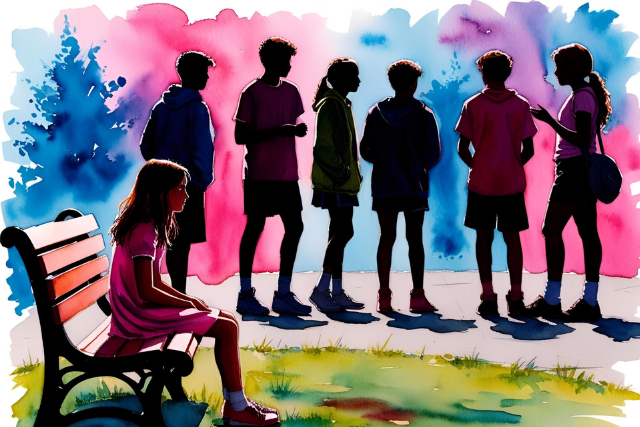
    Girls traveled in packs, always with a leader at the helm. And almost every week, one of the lesser-ranked members was cast out, ostracized from the group. More often than not, it was one of my daughters. I distinctly recall their heartbreak—the kind of deep, inconsolable sorrow that only a child can feel when their world is upended.

    Then, just as suddenly as they had been exiled, the social winds would shift. They’d be welcomed back into the fold, all smiles and laughter, as if the agony of rejection had never happened. And just like that, it was another poor girl’s turn to bear the brunt of exclusion. My daughters, now safely back in favor, never hesitated to play along, inflicting the same pain they had so recently endured—all in an effort to stay in the leader’s good graces.

    It’s easy to think of this as just ‘girl drama,’ but is it really? I found myself wondering: is meanness learned, or is it wired into us? And oddly enough, my horse helped me answer that question.

    From Outcast to Enforcer

    A few years ago, I moved her to a new home, where she had to integrate into an unfamiliar herd. The top mare wasted no time making it clear—she didn’t like my mare. For two weeks, every time I arrived, I’d find her standing alone on the outskirts, gazing longingly at the hay she wasn’t allowed near. And every time, she would run to me, silently pleading for help.

    It reminded me so much of my daughters. It broke my heart.

    But then, something shifted. Slowly, she earned her place. She ingratiated herself with the top mare. They became inseparable—best friends. And soon enough, it was my mare turning on the others, asserting her own dominance.

    Watching my mare transform from the outcast to the enforcer unsettled me. I realized—this wasn’t cruelty. It was instinct. The unspoken rules of survival. And the more I thought about it, the more I saw those same rules playing out in my own life.

    Sure, we may not bite or chase each other away from the hay, but we have our own ways of keeping the social hierarchy in check. The whispers. The inside jokes are at someone else’s expense. The subtle shifts in who gets included and who doesn’t.

    Had I been any different? Had I, too, learned to play the game—shifting, adapting, and excluding, not out of cruelty but out of the same deep, instinctual need to belong?

    Were We the Mean Girls?

    I don’t really remember the “mean girls” when I was in school. But looking back… that probably means I was one.

    I never thought of myself as particularly cruel, but I do remember moments that make me wince now. One in particular stands out.

    There was a girl in my class—let’s call her Claire. She was bright and talented, and she attended speech and drama classes. One day, in a rare moment of vulnerability, she opened up to us. She admitted that when she was younger, her parents had sent her to those classes because she had a speech impediment. She had worked hard to overcome it, and in that moment, she was trusting us with a piece of her story.

    And how did we respond?

    We laughed. And worse—we turned it into a joke. Every time she was in earshot, we’d start singing “Words Don’t Come Easy.” It was meant to be funny, just harmless teasing. At least, that’s what I told myself at the time. But now, I cringe at the memory.

    She had been brave enough to share something real, and instead of honoring that courage, we used it against her.

    At the time, I didn’t think of myself as mean. I wasn’t the ringleader, just someone going along with the joke. But does that really make it any better? Looking back, I realize that staying silent—or worse, laughing along—makes you just as much a part of the problem.

    If anyone I went to school with happens to read this—especially Claire—I’m sorry.

    Do We Grow Out of It?

    I’d like to believe that kind of behavior is just a phase—something we grow out of as we mature, as our empathy deepens, as we learn to control our baser instincts. After all, kids can be cruel, but their brains aren’t fully developed. They act on impulse, driven more by the need to belong than by a true desire to hurt anyone.

    Surely, then, adulthood brings wisdom. Surely, we learn to be better.

    Sadly, that’s not always the case.

    We like to think we’ve evolved beyond schoolyard cliques, but the truth is, meanness just becomes more subtle. Instead of playground exclusions, it’s office gossip. Instead of outright teasing, it’s backhanded compliments and judgmental whispers. The tactics change, but the instinct remains.

    How to Break the Cycle and Choose Kindness

    The instinct to exclude, judge, or tear others down may be wired into us, but unlike my mare, we have something powerful: awareness and choice. We don’t have to follow our instincts—we can rise above them. Here’s how.

    1. Recognize the pattern.

    The first step to change is awareness. Meanness doesn’t always look like outright bullying—it can be as subtle as rolling your eyes at someone’s success or staying silent when a friend is being excluded. Start paying attention to the moments when judgment, gossip, or exclusion creep in. Ask yourself:

    • Why am I doing this?
    • What am I gaining?
    • How would I feel if I were on the receiving end?

    2. Challenge the scarcity mindset.

    Much of our instinctive meanness comes from a deep-seated belief that success, beauty, or belonging is limited—that if another woman shines, it somehow dims our light. But that’s simply not true. There is enough success, happiness, and love to go around. Lifting others up doesn’t take anything away from you—it strengthens everyone.

    3. Replace gossip with encouragement.

    Gossip is a social bonding tool—we do it to feel connected. But there’s a better way. Next time you’re tempted to tear someone down in conversation, flip the script.

    Instead of:

    “Did you see what she was wearing?”

    Say:

    “I love how confident she is to wear that!”

    Compliments—especially when given freely, without expectation—have a way of shifting the energy in a room.

    4. Make kindness a habit.

    Kindness isn’t just about grand gestures—it’s in the small, daily choices.

    • Smile at a stranger.
    • Invite the quiet colleague to lunch.
    • Defend the person being talked about behind their back.
    • Support your friends’ successes without comparison.

    The more you practice, the more natural it becomes.

    5. Teach the next generation.

    If you have children, especially daughters, talk to them about social dynamics. Share your own experiences. Show them what healthy friendships look like.

    When they come home upset because they were left out—or because they left someone else out—help them navigate those feelings with empathy and self-awareness.

    6. Be the one who makes room at the table.

    In every social group, workplace, or community, there are people on the outskirts—just like my mare once was. You have the power to invite them in. Inclusion is a choice. So, the next time you see someone being left out, be the person who makes space for them.

    Final Reflection: Who Do You Want to Be?

    Every day, we have a choice. Not just in grand, dramatic moments—but in the quiet, ordinary ones.

    The choice to include.

    The choice to uplift.

    The choice to be better.

    So today, ask yourself: Who needs a seat at your table? And will you make room?
  • Standing Up for Yourself Doesn’t Make You Any Less Kind

    Standing Up for Yourself Doesn’t Make You Any Less Kind

    “Being a good person doesn’t mean being a doormat… You can be kind, giving, and full of love, but that doesn’t mean you have to accept disrespect or allow your boundaries to be crossed.” ~Unknown

    I can still vividly remember sitting in my seventh-grade classroom, forcing a laugh as my classmates made jokes at my expense. My cheeks would burn red, but I’d smile along, desperately wanting to belong. For years, I mistook my silence for kindness, my nervous laughter for good nature. I didn’t realize that by laughing at myself, I was slowly chipping away at my own self-worth.

    Growing up, I was the “nice kid”—the one who never caused trouble, never talked back, and always tried to keep the peace. When someone would make a cutting remark about my appearance or mock the way I spoke, I’d respond with a practiced smile and a halfhearted chuckle. I thought this made me mature, diplomatic even. “Just brush it off,” my mother would say. “They’re only joking.” But deep inside, each laugh felt like a small betrayal of myself.

    The pattern continued well into my teenage years. In every social circle, I became the designated “good sport”—the one who could take any joke, no matter how sharp its edges. I wore this label like a badge of honor, never realizing it was actually a shield I was hiding behind. My inability to stand up for myself wasn’t kindness; it was fear dressed up as politeness.

    The turning point came during my first year of college. During a group project, a teammate made a particularly cruel joke about my work ethic. As usual, I started to laugh, but something inside me snapped.

    Years of suppressed feelings bubbled to the surface, and for the first time, I heard how hollow my laughter sounded. In that moment, I realized I wasn’t being nice—I was being complicit in my own diminishment.

    This revelation led me down a path of self-discovery and personal growth. Through therapy, self-help books, and countless conversations with trusted friends, I began to understand the difference between being kind and being a doormat. I learned that standing up for yourself doesn’t make you mean or confrontational—it makes you self-respecting.

    Here are the vital lessons I learned along my journey:

    The first step was the hardest: acknowledging that my laughter was a defense mechanism, not a sign of resilience. I had to accept that it’s okay to not find hurtful comments funny. Real strength isn’t in laughing off insults; it’s in acknowledging when something hurts and addressing it directly.

    I started practicing simple phrases in front of the mirror: “I don’t find that funny,” “That comment was inappropriate,” or simply, “Please don’t speak to me that way.” At first, these words felt foreign on my tongue, but gradually, they became part of my vocabulary. I learned that confrontation doesn’t have to be aggressive—it can be calm, dignified, and firm.

    The most surprising discovery was how many people respected me more when I started setting boundaries. Those who truly cared about me adjusted their behavior. Those who didn’t, well, they showed their true colors, and I learned that not every relationship needs to be preserved at the cost of your self-respect.

    Today, I still consider myself a kind person, but my kindness no longer comes at the expense of my dignity. I’ve learned that true niceness isn’t about accepting poor treatment; it’s about treating others—and yourself—with respect.

    When someone makes a hurtful comment now, I no longer reach for laughter as a shield. Instead, I stand tall in my truth and speak up with compassion and clarity.

    To those who recognize themselves in my story—those who laugh when they want to cry, who smile when they want to scream—I want you to know that your feelings matter. Your discomfort is valid. Your voice deserves to be heard. Being nice doesn’t mean being silent, and standing up for yourself doesn’t make you any less kind.

    The journey from forced laughter to authentic self-expression isn’t easy. It’s filled with uncomfortable moments and challenging conversations. But with each small act of standing up for yourself, you rebuild your self-worth piece by piece. You learn that the strongest form of kindness is the kind you show yourself.

    Remember: You can be both nice and strong, both kind and assertive. The real magic happens when you find that balance—when you can face the world with a genuine smile, knowing you’ll never again laugh at the expense of your own dignity.

  • 3 Important Things to Remember When People Are Mean

    3 Important Things to Remember When People Are Mean

    “Be kind. Be thoughtful. Be genuine. But most of all, be thankful.” ~Unknown

    Nobody is spared from being on the receiving end of a mean comment at some point or another. And it’s been said time and time again that allowing a mean person to get under your skin only serves to let them control you. The wiser thing to do is recognize that their comment about you is uninformed and get on with your day.

    Still, it’s far easier to know that wisdom than it is to truly feel and live it.

    I remember one instance in particular: A coworker (who I had never been fond of) had recently returned from an extended leave and was seeing me for the first time in several months. Upon encountering me in the hallway, she looked me up and down and said, “You’ve… been eating well.”

    I was so stung that I couldn’t respond. I wanted to respond defensively. Later, I wished I had responded rudely. Every time I thought about it, a new wave of sassy retorts I should have made populated my brain, and I found my jaw tensing and my fists clenching. I even wondered if it was too late to complain to HR. How dare she say something so rude and unprofessional to me?

    I was fully aware that weight is an emotionally fraught subject in my world, as it is for many people. My weight often fluctuated dramatically based on the other circumstances of my life, and I had been through the gamut of not-so-healthy dieting and short-lived attempts at fitness that many of us know all too well.

    Therefore, I was also fully aware that her comment only stung so hard because of my personal journey with weight; that she didn’t know about that journey; that she may belong to a culture or community in which “eating well” is not necessarily offensive; and that if she had judged me on some other aspect, I very possibly could have rolled my eyes and banked this as additional confirmation that yes, she is someone I don’t like.

    I was aware of all this, and yet my blood still boiled at the very thought of her.

    I decided that because this wasn’t the first time a mean comment had had this great of an effect on me, and it wouldn’t be the last, maybe I could compile some mental pointers to help me through these moments, if only for my own sanity. Here is what I came up with:

    1. Never do anything when your blood is boiling.

    Though I was speechless at first, the urge to make a mean comment back at her (if even a few days later) was all-consuming and felt perfectly justified. After all, I’m only human. Yet I’m ultimately glad I kept my cool.

    First off, being mean can majorly backfire—what if she had complained to our supervisor or decided to make my work environment unbearable in retaliation? And secondly, if I decided to reverse our roles, I would appear no better than her—the very person whose actions I scorned.

    But more importantly, I know that while emotions are important and deserve to be honored to their fullest extent, in the heat of the moment, they don’t represent our true nature and are not reliable signals. Instead, they are best expressed when paired with wisdom, which can often only be gleaned with some distance and pause.

    When I gave myself that pause and thought about it, I realized I don’t really want to be the kind of person who combats meanness by going even lower—I know I don’t believe in that. And I also don’t believe in digging deeper holes by starting an unprofessional feud.

    What I do believe is that my outer actions should align with my inner values. This means honoring my emotions with fairness and self-compassion while still maintaining external grace.

    This is really hard—it requires a lot of practice and patience.

    To start, I could process my experience of being hurt through a framework of self-love rather than a framework of spite. This could mean discussing my hurt feelings with a friend or mentor, writing about them, releasing the tension through physical activity or breathwork, or even reminding myself of all my positive qualities and assets that have the power to render one unimportant criticism negligible.

    2. Being civil doesn’t mean I have to like everyone.

    I didn’t want my silence to indicate that I was okay with, or passive to, being treated rudely. But in the professional space, where my focus is supposed to be on getting work done, civility enabled me to meet my goals and contribute to a well-functioning team. There was no reason why my relationship with this coworker had to take on any further form.

    Being civil did not translate to spending more time with her than required, engaging in conversation unrelated to work, inquiring about her life and sharing details about mine, talking to her at staff events, out of the office, or even in the parking lot; those are things I have the freedom to do with people I like. I appreciate the people in my life who bring me personal satisfaction and make me feel valuable, and I recognize that it’s a gift to find and spend time with these people.

    On the flip side, it is totally normal and possible to coexist with people who don’t make us feel fantastic and who we don’t choose to engage with, while still maintaining polite conduct for the sake of the task, event, or other item du jour.

    If a coworker’s behavior crossed into bullying or harassment, I know of formal steps I could take to advocate for myself. However, there is significant gray territory that is often inhabited by the people we simply don’t like—people whose actions we don’t appreciate, who we wouldn’t willingly group ourselves with.

    I gained a lot of relief when I understood that I have the skill and self-control to work on a professional task with someone in this category, but at the same time, I am under no obligation to welcome their presence and energy into other parts of my life.

    It was liberating and empowering to realize that treating everyone with basic civility is the wiser choice, only up until a certain point, and after that point, I have control over who I bring into closer orbit and how.

    3. You learn as much from the people you don’t want to be like as you do from the people you do want to be like.

    It’s joyful to look back and remember an inspirational teacher, friend, coach, or even a kind stranger who touched us with their positive qualities and thus impacted our personal trajectory. On the contrary, it’s painful to look back and remember people who were mean, inconsiderate, cruel, or any one of the innumerable undesirable qualities we inevitably come across. However, those people inevitably impacted our personal trajectory in much the same way.

    A great teacher of mine once said that gratitude does not mean that you are okay with everything; rather, it means that you are grateful for everything you’ve been taught. In other words, we can be grateful for each seemingly negative experience because it helped us confirm that we want something different.

    I see the potential for gratitude toward everybody who brings me into awareness of how I want to live and how I want to treat others, and that list includes coworkers making unprofessional digs.

    Nobody is perfect; just like nobody is spared from receiving a mean comment, at other times, nobody is spared from accidentally (or intentionally) making one.

    So, the next time it entered my mind to make a not-so-kind or not-so-necessary comment, I could remember what I learned from this experience and reconsider my actions.

    This reconsideration and ability to take a different course would be a tiny step toward cultivating the kinder, more considerate world that I want. And for that ability, I owe gratitude to my coworker and to everyone else who made me feel hurt or stung. They have brought me to the awareness that I desire a different action.

    Our interactions with others are unpredictable, and we never know when somebody is going to catch us off guard with a comment or action that stings or angers us. As a result, developing the ability to recognize, ingrain, and respond with some of the ideas I outlined, rather than with our initial experience of shock and raw emotion, is an arduous and, at times, unsatisfying process.

    But this dissatisfaction is often limited to the short term and fades when we do the hard work toward processing emotions. In the long term, doing the harder thing usually aligns with the more satisfying course of action and also aligns with our deeper values and beliefs on how life should be lived.

  • When People Are Mean and Refuse to Admit It or Apologize

    When People Are Mean and Refuse to Admit It or Apologize

    “Life becomes easier when you learn to accept an apology you never got.” ~Robert Brault

    I’ve always tried to distance myself from people who are rude, overly aggressive, and mean. But sometimes we become tied to people who might not have our best interests at heart.

    One summer I became involved with a coworker who was at a bad spot in his life. I thought I could help him through this tough time, but just like a swimmer drowning in a pool, he grabbed on and ended up drowning me when I reached out and tried to save him.

    After several months of verbal and psychological abuse, I finally realized that the situation was out of my control. That night, after I got up to get a glass of water, he followed me into the kitchen and started yelling at me to get back into his room.

    I did as I was told but I was not happy about it. He noticed my shift in mood and asked what was wrong. But when I told him it was because of how he’d treated me, he was surprised—a surprise which soon turned into a second wave of intense anger.

    He could not understand that his actions had directly impacted me, and it seemed ridiculous to him that I would feel anything at all. When I started to cry, he was confused and started pawing at me to try to roll me on my back. It felt like I was being attacked by a bear who wasn’t quite sure if I was edible or not.

    When I finally ended things, I told him I was not okay. That his behavior toward me was unacceptable. That I was very hurt by the hateful way he had treated me. That I could not and did not want be involved with him because he did not respect me as a person.

    But this didn’t make sense to him. He told me that he didn’t have anything against me and that I should choose to feel differently. That I couldn’t possibly feel hurt because he didn’t feel hurt. He felt pretty good about things, and I should have felt that way too.

    He couldn’t recognize that his actions were causing me pain, even when I directly laid it out in front of him.

    I even used examples from his life of things that had hurt him and then tried to make the comparison that the same things that hurt him also hurt me.

    I told him that I needed a lot of time, a lot of space, and a lot of compassion if we wanted to set things right and be on friendly terms at work. That he had to be nice to me and recognize that it would take a long time for me to feel okay. He agreed, and I thought we understood each other.

    The next time I saw him was a few weeks later at a work party. He sat next to me on the couch, pulled out his laptop, and started to show me the weather forecast for the next ten days. I politely evaded and tried to end the conversation as soon as possible. I was not ready, and I did not want our first conversation as ‘friends’ to be a lecture on meteorology.

    Shortly after that he started sending me hateful messages on Facebook, threatening that if I couldn’t get over it, I might as well find somewhere else to work. I tried to explain to him I was not ready, and that sending me hate mails was not getting me any closer to being ready. But he just responded with more hate.

    After several weeks of silence and a trip out of the state for me, we restarted the conversation and we were actually able to address some of the issues. I reiterated again what I needed: compassion, patience, understanding, and kindness (and a face-to-face apology would be great too).

    He agreed, and I finally had faith that things would get better. But these things never happened.

    He never apologized, and shortly after our series of talks he returned to the mindset that I deserved to be treated that way, and that I was the one at fault.

    The disrespectful behavior returned and, exhausted, I decided it would be easiest to just avoid him. After a few months of tactful evasion, I found somewhere else to work.

    I could spend a lifetime showing him the evidence, bringing up witnesses who had seen what was going on, and explaining to him why it is not okay to treat people that way. I could bring in a professional psychologist, our manager, our coworkers, and our friends to verify that I was 100% entitled to an apology and deserved respect at work.

    But would I ever convince him? Probably not.

    People only change if they want to change. You cannot force someone to respect you. You cannot force someone to admit they were wrong or apologize. Only they have the power to shift their perspective. And sometimes, it’s just not going to happen.

    I finally realized that sometimes, people are just mean. And there is absolutely nothing you can do about it.

    I made the mistake of thinking that I could change him with compassion, patience, and understanding. But he did not want to change, so instead, I ended up breaking myself against his rock-hard resolve.

    When someone is proactively threatening you and your happiness, seriously ask yourself: Is the juice worth the squeeze? Does this person respect me? Do they genuinely feel compassion for me? Do they want me to be happy? Or are they a drowning swimmer pushing me under just so they can breathe a little easier?

    I don’t like to quit a project that I’ve started. But I learned that if this ‘project’ is an unhealthy or toxic relationship that is causing me damage, sometimes the best choice is to just walk away.

    If you think you might be in a toxic or unhealthy relationship, seriously ask yourself: Is this good for me? Is this making me happy? Is this making me feel validated as a person? If the answer is no, end it. The best choice for you is the best choice of all.

  • Why People Are Rude and Unkind (and Why It’s Not About You)

    Why People Are Rude and Unkind (and Why It’s Not About You)

    “How people treat other people is a direct reflection of how they feel about themselves.” ~Paulo Coelho

    By nature, I am a happy, optimistic, idealistic person. I have always been one to look on the bright side and see the good in people. My usual philosophy in life is that the world is full of brightness, love, and possibilities to seize.

    Recently, though, my philosophy began to fade in the face of a mild depression.

    I began to cry a lot and retreat into myself rather than being social and opening up, which only furthered the problem. I felt alone, miserable, and, try as I might, I could not regain that feeling of the world being beautiful.

    I felt like something had crawled into my brain and flipped all the positive switches off and the negative ones on. I felt hopeless, like it was more of a disease than a feeling.

    Before the depression, I was a kind, gentle, and compassionate person. Sometimes I was even too gentle, afraid to bring up anything that might offend someone else or damage our relationship.

    I didn’t understand how other people could be mean, rude, or offensive toward strangers or friends. I took it personally when people affronted me or were curt with me, believing they were truly out to get me for something I’d done.

    When people were mean, I figured it was a personal choice, that it was a conscious decision to stop caring about other people’s feelings and opinions.

    When I became depressed, though, my temper shortened and I felt far more irritable.

    I had little patience for anything, and I lived in a constant state of anxiety about social interactions. Whenever I engaged in conversation with someone else, I assumed they found me boring, annoying, or self-obsessed, and it sent me even further into my sadness.

    I started to become rude and unkind myself. I lashed out at people, or, more commonly, gave them passive aggressive excuses for distancing myself from them.

    I even became prone to insulting people as a way of protecting myself if they didn’t like me.

    I didn’t make a conscious decision to be mean. I didn’t wake up in the morning and think, “Today, I am going to hurt someone’s feelings.” It just happened in the moment when I was feeling especially down on myself.

    Most of the people I was rude to were actually friends of mine, people I liked and had nothing against.

    This is no excuse for rudeness, offensive behavior, or being unkind to other individuals. I am not proud of the way I’ve acted, and I’m not suggesting you follow in my footsteps, but it did give me a new perspective on other people I come across who are less than kind.

    When someone is rude for no reason, especially a stranger, it’s rarely a personal assault, even if you accidentally did something to irritate them.

    People aren’t mean for the sport of it, or because they are against you; people are mean to cope.

    Being unkind, more often than not, is a reaction to anger with ourselves or our perceived inadequacy. When I was rude to other people, it was because I was afraid they wouldn’t like the nice me. I didn’t mind if they were angry at the fake, unkind me, because it really wasn’t me.

    I felt unlovable, undesirable, and antisocial, and I needed a way to cope with these feelings by giving myself an alter ego that deserved to be disliked for reasons I could understand.

    When you find that people are being rude to you in your everyday life, they are really being mean to themselves.

    They have likely convinced themselves that they are unworthy of love, and that is the biggest tragedy of all.

    You don’t have to tolerate it when others are not nice, but it’s not something to take personally.

    You don’t have to internalize the meanness as a fault of your own. You can simply recognize that the person being rude is struggling with their own problems, and needs a way to cope with them.

    You cannot control the actions and behaviors of others, only your personal reactions to them.

    If you yourself are the one who has been unkind, it is time for self-reflection. Why do you attack people? What are you trying to protect yourself from?

    In my case, I got depressed because I felt socially awkward and I began losing friends. After that, I shied away from social gatherings, only augmenting the problem.

    I constantly thought negative things, such as “Nobody likes you,” “Who would want to be your friend?” and “You are not worthy of the friends you have.” I created a toxic environment inside my own head, and it wasn’t based in reality.

    I knew I had to change my outlook, so I pushed myself to see the good in myself and the reasons why I’m likable; as a result, I began to see the good in others again too.

    It’s not an easy process, and for many, it requires therapy and months of time. However, you can begin your journey back to kindness by being kinder to yourself.

    Listen closely to your destructive, self-critical thoughts. Are they based in reality, or are you fabricating them?

    If you criticize yourself because you feel guilty about things you did in the past, work on nurturing self-forgiveness, just as you’d forgive a loved one for those same mistakes.

    If you criticize yourself because you were raised to believe you were a bad person, recognize this isn’t true, and know that you can choose to heal and challenge this belief as an adult.

    Try to look at yourself from an outside perspective and remind yourself of all the unique and beautiful qualities you possess and have the ability to share with the world.

    With enough time and effort, you will begin to see the pattern in your unkind behavior and its link to your own anger at yourself.

    Once you can hone in on your feelings about yourself, you can begin to make conscious decisions to be kind to others instead of lashing out as a coping mechanism.

    I have always unfalteringly held the belief that people are inherently good, and only do bad things in reaction to bad situations.

    The most important thing to remember, whether you are receiving or giving unkindness, is that you are inherently good, too, and deserve to be loved, no matter what you or someone else tells you.

  • Hurt by Negative People? How to Stop Taking Things Personally

    Hurt by Negative People? How to Stop Taking Things Personally

    “Some people are in such utter darkness that they will burn you just to see a light. Try not to take it personally.” ~Kamand Kojouri

    The saying goes that money makes the world go round, but of course that’s not true.

    It’s our relationships.

    How we relate to other people and how they relate to us keeps our world turning. When things go well, all’s right with our world. When things go badly, it can feel as though our world has ground to a halt.

    This is exactly how I felt whenever I had a difficult experience with a loved one or friend.

    Whenever they lashed out at me for no real reason, it felt as if I couldn’t move on again until their negativity or bad temper had blown over. Until that happened, I replayed the scenarios in my mind, trying to work out where I was to blame for their behavior, and feeling awful in the meantime.

    That’s why our relationships will always be the most important thing in our lives—they have such a strong impact on us, both good and bad.

    That is also why it serves us well to try to have the best possible relationship with others, as well as ourselves. That includes improving the connections we have with the difficult and less-than-positive people in our lives and strengthening our boundaries in the process.

    We probably all have several negative people in our lives—those who criticize, complain, belittle us and other people, and say or do cruel things. They can be the closest to us, people we have known all our lives, and that makes their negativity harder to escape and endure.

    I had a family member who was very negative about pretty much everything. Spending time in their company was usually a draining and disheartening experience due to their complaining and sniping comments.

    This person made it very clear whenever I met them that they had little time or affection for me, which of course made family get-togethers less than enjoyable.

    I was also puzzled as to why they were like that: we’d never argued, and I had never, to my knowledge, done or said anything mean to them. Yet, they still acted in a negative way toward me, especially if I mentioned affirmative life experiences such as a great holiday or a new exciting project.

    Unsurprisingly, I responded to their negativity with a sense of apprehension, frustration, and confusion, which stopped me from enjoying the company of my other relatives. It also made me wary about fully expressing myself or talking about my life. And my uneasiness undoubtedly made the atmosphere between my family member and me even more negative.

    We all Have Emotional Scars from the Past

    I eventually recognized that I was hurt by my relative’s treatment in large part because I took it personally and allowed it to affect my self-image and self-esteem—as if I somehow deserved it. Then I realized something that changed everything for me.

    We all have a self-image shaped in large part by other people. Family, friends, and partners, who’ve likely scarred us through anger, resentment, jealousy, judgment, neglect, or even outright abuse. And this affects how we show up in the world.

    Everyone, including the people who have wronged you or been negative toward you in some way, has scars from their past too.

    Maybe your critical mother doesn’t know any better because her mother was critical. Maybe your absent father never knew his father either. Maybe your backstabbing friend was jealous of you for reasons only known to them. Perhaps your cheating partner had abusive parents, and your partner sabotages relationships because they don’t believe anyone can love them.

    Each and every one of us carries around our scars, going out into the world to meet other people who have scars, and when we connect, these combined scars can sometimes tear open.

    We all See Ourselves Through Others’ Eyes

    We all tend to see ourselves through our loved ones’ eyes—starting with our parents when we’re young—because we assume their perceptions of us are accurate and blame ourselves if they’re not flattering. Our self-image can alter based on their comments, emotions, and actions—positive and negative.

    This is a classic case of our relationships shaping our sense of self, an ongoing shaping that begins even before we can fully understand the meanings of what other people say or do to us.

    We are each the result of our experiences within our multiple relationships and interactions. How other people relate to us affects our image of ourselves, but that doesn’t mean we are helpless in the face of other people’s behavior toward us.

    We may not have had much of a choice as a child, but it’s a different matter once we’re adults. With awareness, we’re now able to protect ourselves far better from others’ negativity toward us and set necessary boundaries.

    Learning to Connect in a Different Way

    If you’re dealing with a negative or painful relationship that leaves you feeling bad about yourself, you can of course choose to distance yourself from the person and limit contact. Sometimes, however, this isn’t possible, so you have to learn how to connect in a different way while safeguarding yourself from their negative impact on you.

    I decided I had to respond differently to my family member and their negativity for the sake of my well-being. I began to look beyond their behavior and actions, and in doing so I started to piece together an idea of what might be the real cause of their pain and unhappiness.

    I recalled they had often moaned about how much they hated their job, how they disliked the town they lived in and their neighbors, and they also often complained of tiredness and physical aches and pains.

    I began to see that this person’s negativity—even if it was aimed at me, maybe due to their feelings of envy—wasn’t really about me. They were unhappy with their life in general. Negative people are often unhappy on many levels.

    It also helped me to remember we all have emotional scars, as mentioned before. When you approach people from a place of understanding, compassion, and empathy, you no longer see them as cheats, liars, betrayers, or “bad” people out to get you—even though they might cheat, lie, or betray you. You instead begin to see beyond their behavior and recognize that they’re in pain.

    When you do that a lot of their power over you starts to fade. You begin to see them as vulnerable, like everyone else. You start to realize that their negative actions toward you reflect far more on them than they do on you.

    People often hurt each other because of their own deep pain and because they don’t know any other way to act. This is often a painful lesson to learn.

    But when you finally grasp this difficult truth, you become more accepting of what happened, more forgiving, and ready to let go and move on. You realize you do not need to take on their negativity, brood about it, or feel you are the cause of it.

    That doesn’t mean you have to condone or accept mistreatment. And that’s not to say people’s negativity toward you won’t bother or hurt you ever again, but the effect won’t be so intense. You’ll realize that the situation isn’t really about you at all. Any pain they try to inflict on you is simply a reflection of what they feel inside; it no longer feels so personal.

    When I stopped taking my relative’s negativity personally, I was able to interact with them in a different way. I was much more relaxed in their company and able to enjoy family gatherings much more.

    When you stop taking other people’s negativity personally, you cease to be so susceptible to creating your self-image through their eyes. In fact, you start to focus far more on how you view them.

    Then you’re also free to focus less on their negativity and bad behavior and more on how you respond to it. That might mean setting boundaries and limiting your contact with them, and that’s okay. Sometimes you have to understand and empathize from afar to take good care of yourself.

    We’re All in the Same “Life” Boat

    Essentially, we’re all in the same “life” boat, bobbing up and down on the vast ocean of existence.

    We are all fallible. We all inflict hurt on others, intentionally and unintentionally.

    We all experience negative situations and inevitable suffering, and we simply have to accept this. Without pain and suffering we might not value joy or experience spiritual growth. If we never experienced adversity, we might not appreciate our strength.

    And without negative people we might not be truly grateful for or cherish the loving, supportive people we have in our lives.

  • You Don’t Suck at Life: How to Stop Believing Your Inner Bully

    You Don’t Suck at Life: How to Stop Believing Your Inner Bully

    “You’re too fat to wear that tight shirt to the gym.”

    “You’re not smart enough to take the lead on that project at work.”

    “You’re definitely going to screw up the vacation plans.”

    “You’re not good enough, cool enough, likable enough.” 

    “You suck.”

    If we talked like this to anyone, it would be considered bullying.

    And yet we talk to ourselves like this all the time.

    We talk to ourselves in a way we would never talk to people we care about. We take these words to heart and believe them as truth.

    We turn these words into our core belief system, holding ourselves back from growth, fulfillment, and happiness.

    We set high expectations for ourselves, and if we don’t meet them it comes out in unfair, untrue, and flat-out mean judgments.

    We say “treat others the way you’d like to be treated” but don’t follow that advice when it comes to how we treat ourselves.

    I certainly didn’t.

    I was a Grade A self-bully for years.

    Every day when I left work, I’d hear this voice in my head telling me, “They’re going to figure out you’re a fraud and don’t know what you’re doing. Anyone can do this job better than you. They’re going to fire you. You’re an embarrassment.”

    I never had many friends, but when the few I had would invite me out somewhere, I’d think, “They just pity me. They’re only inviting me because they feel obligated. I’m not as pretty as they are and don’t fit in. I never know the right thing to say. I’m going to screw this up.”

    I always imagined how disappointed my parents would be in me if they saw how messy my house was, or what they’d think of me leaving a well-paying job to start my own business, or if they knew that I lost that stock certificate and now had to pay a stupid amount of money to get it replaced. I’d think, “They’ll judge me and think that I’ve failed them, and that I’m not as good as they expected me to be.”

    I told myself how unlikeable I was, and that’s why I didn’t have more friends.

    I told myself how I’d never be successful because I never had any good ideas.

    I told myself how ugly I was. How boring I was. How awkward I was.

    I was constantly putting myself down, partly because I was a perfectionist, and partly because I worried way too much about what other people thought of me and never felt I was good enough to meet their standards.

    But that was the old me.

    I’ve come a long way since then. I slip up on occasion, but I’m much better equipped now to course correct using the steps below.

    Changing my relationship with my inner bully took me a few years of studying, training, and practicing.

    If you’ve been bullying yourself for years, it will likely take you time to change your habit, as well. But these six key strategies will make a lot easier to be kind to yourself.

    Step 1: Say hello.

    When we hear that self-bully talk, we tend to instantly believe it without recognizing what’s going on or questioning it. We see it as truth. We fully experience it.

    The first step to quieting your inner bully is to say hello. That is, mindfully recognize that this is self-bully talk happening. Maybe even personify it by giving it a name or even a gender.

    I like to minimize my inner bully by giving her a silly name: Cupcake.

    When I hear inner talk like “Ugh, you suck at this,” I notice this and say, “Oh, hi Cupcake. Welcome to the party.”

    This allows me to step back from the voice. Just like I do when I’m watching a scary movie and I don’t want to get too scared. I step back and recognize that these are actors on a screen, they are reading scripts, there are cameras and lights pointing at them.

    I go from being fully absorbed in the movie, like I’m in it, to noticing that I’m watching a movie. It’s a subtle but profound shift.

    From this place, we can create space, which enables us to make change in the next step.

    Step 2: Change how you experience your bully.

    We experience thoughts as pictures, sounds, or feelings. Most people experience their inner bully thoughts as sound, like hearing a voice telling them “you suck.”

    Here’s a fun trick to change how you experience your inner bully. Change the sound of the “voice.”

    When I hear that voice telling me that I suck, I say, “Hi Cupcake, what do you have to say again?”

    Then I repeat her words in a funny cartoon voice. Now she sounds like Mickey Mouse and I can’t even take her seriously.

    If you’re a visual type and “you suck” comes to you in a picture—perhaps one of you at a time in your life when you felt like you failed—you can try a different tactic (or both even).

    Since I named her “Cupcake,” I can also picture her as such.

    Now I see a cupcake with a Mickey Mouse voice telling me “you suck.” Which, of course, is adorable and hilarious.

    This helps me step further out of that negative mind frame so I can take the next step. 

    Step 3: Find the positive intent.

    Everything we do has a positive intent. Even when we’re being mean to ourselves.

    When I was telling myself that I was no good at my job, my bully was really trying to push me to do better so I wouldn’t get fired, and trying to protect me from being caught off-guard if that happened. She was also trying to tell me where I still had and opportunity to grow and learn.

    When I find myself procrastinating on a project because my bully is telling me that I’m not going to do a good job anyway, I know she’s just trying to protect me from failure.

    She didn’t choose the most helpful method, but she meant well.

    I can now say, “Thanks, Cupcake. I can take it from here.”

    And then I move onto the next step.

    Step 4: Choose a neutral or positive thought instead.

    Sometimes it can feel like a big leap to go from a negative to a positive. Going from “I’m a failure” to “I’m a success” might feel false to you considering the circumstances.

    In this case, try a neutral thought instead. See how it feels to go from “I’m a failure” to “I’m not a failure at everything.”

    In my case, at work I would often think “I can’t do this.” (This was usually when someone asked me to analyze some data, which wasn’t my strong suit.)

    To get myself out of self-bully mode, I would slightly alter the statement “I can’t do this” by adding “yet.”

    “I can’t do this… yet.”

    Sometimes I could even replace it with “I can do this,” just to try it out and see how it felt. More often than not, it actually felt true. I just hadn’t thought of that idea yet.

    And over time I did get better at analyzing data.

    The point is, you can choose what thoughts to think.

    Step 5: Give yourself permission to be imperfect.

    (Note, this step is only applicable if you identify as a human.)

    Our inner bullies come out of the woodwork when we do something that we consider “imperfect.”

    We don’t look perfect. We didn’t execute something perfectly. We didn’t make the perfect choice.

    The phrase “I’m only human” is another way of saying, by nature, I will make mistakes. Mistakes are allowed. Not only allowed but expected.

    Write yourself a permission slip to be imperfect. Just see how it feels.

    “I, Sandy, give myself permission to write a blog post about self-bullying and not write it perfectly.”

    That felt pretty good. 🙂

    Step 6: Know that you are not alone and can ask for help if you need it.

    Over time, negative self-talk becomes a habit, and as we’ve all experienced, habits are hard to form or break.

    If you’re having trouble breaking your self-bullying habit, even using these steps, you don’t have to go it alone, and you shouldn’t be afraid or ashamed to ask for help.

    Working with a supportive therapist or coach, or even just confiding in a friend, can make a huge difference. An unbiased outsider is able to hear our thoughts, what we’re saying and not saying, and reflect those back to us when we don’t notice them.

    They provide us with support and accountability to keep us on track toward our goals and cheer us on along the way. They ask us tough questions, that we wouldn’t think to ask ourselves.

    They also help remind us that we’re not alone in feeling how we feel. That it’s not only common, but people can see improvement, which is incredibly reassuring. Odds are, everyone you’ve ever met has struggled with this too, and still does on occasion.

    Personally, I reached out for help much later in my own journey because I was embarrassed. My inner bully told me that if I went to someone for help, it meant I was weak. And that they would tell me there’s nothing wrong with me and to suck it up (our inner bullies tend to lie to us).

    I don’t have regrets in my life. Every experience has made me who I am today, and I love who I am. I’m sure the tougher path I took made me stronger along the way.

    But I also think I would have reached freedom from my inner-bully more quickly had I put my ego aside and opened up to someone sooner.

    Know that you are not alone. Everyone feels or has felt the way you do, and like you, they struggle with this at times and see progress at others. So try to be good to yourself—and aim for progress, not perfection.

    Much love and light on your journey, my friend.

  • Dealing with Bullies: How to Cope When People Are Cruel

    Dealing with Bullies: How to Cope When People Are Cruel

    “How people treat you is their karma; how you react is yours.” ~Dr. Wayne Dyer

    I was the quintessential late bloomer, not hitting my growth spurt until my junior year of high school. I’m six feet tall now, but for all of middle school and the first half of high school, I was one of the shortest kids in the entire school.

    Additionally, some thought I had a slight lisp. I was extremely self-conscious about it after a few people unkindly pointed it out to me. During my senior year I wore Invisalign braces, which corrected my teeth and improved my speech mannerisms, but for many years I was embarrassed about my pronunciation of certain words.

    I was frequently bullied for how short I was and the way I spoke. Since I had low self-esteem already, I felt like I was fundamentally flawed and unworthy as a person. It’s safe to say high school was an extremely difficult time.

    When I went to a small liberal arts school called McDaniel College down in Westminster, Maryland, I was ready to start over. I was especially looking forward to meeting new people and leaving the days of being bullied behind. That’s when I met Tom (name changed to protect his privacy).

    The Worst Bully I Ever Had to Face

    Tom was on my college baseball team. He was the meanest, nastiest, cruelest bully I’ve ever had to face in my life.

    Tom hated my guts, and to this day I don’t know why. I’m an analytical and observant person, so here’s my educated guess: One of my values is kindness, so when I meet people, I’m friendly. Perhaps Tom didn’t think I was one of the cool kids because I was “too nice.”

    Tom hung around fellow bullies, people who enjoyed making fun of people. There’s nothing Tom enjoyed more than disrespecting others and making them feel unworthy, it seemed, perhaps because it made him feel better about himself.

    Tom didn’t bully me for my height or for the way I spoke; he bullied me because of my general lack of confidence. I was afraid of him, and he knew it.

    At one party, he told me to go hide in the closet. At another party, he made me feel so unwelcome and embarrassed that I left the party. At the gym once, he purposely bumped into me in an aggressive way and then walked away.

    Why did I do nothing while he treated me like this?

    Two main reasons: One, no one ever taught me how to properly stand up for myself. I did not have the skills, tools, or know-how to assert myself. Two, during my senior year of high school, I came incredibly close to committing suicide. There was still a part of me wondering if I belonged on this planet.

    I had acne that wouldn’t go away, and because I didn’t like myself, I subconsciously thought maybe I deserved to be treated like garbage. Ridiculous, I know, but my self-esteem was low at that point in my life. Bullies like Tom prey on people with low self-esteem, and I was his prime target.

    I stopped going to any baseball parties or social functions. I sat in my room by myself on Friday and Saturday nights. While my teammates were partying, I was letting my social anxiety get the best of me.

    My anxiety ran sky-high when the thought of Tom crossed my mind. I was letting this one person dominate my life. I became depressed because I never would have expected bullying to continue into college. I wondered if things would ever get better.

    The Silver Lining

    After some dark and isolated nights—made easier thanks to phone calls with my awesome younger sister, Annemarie—I realized I had to stop letting Tom ruin my college experience. I started to introduce myself to other people on the campus. I joined other groups and made all sorts of new friends.

    I only saw Tom and the rest of my baseball teammates during a practice, game, or mandatory team function. Many of the other players on the team looked up to Tom as the leader of the pack, the tough guy they admired, so they weren’t people I felt comfortable being around.

    While I chose McDaniel College to continue my baseball career, I decided to stop spending time with people who didn’t think highly of me whenever I could. I made many great friends at my college, and very few of them were on the baseball team.

    I ended up having a great college experience because of this. If not for my experience with Tom, I may not have extended my social circle that far.

    So I have two words for Tom: thank you. Thank you for redirecting me toward kinder, more loving people. Thank you for giving me the motivation to introduce myself to new people instead of limiting myself to some silly clique.

    Eventually, some of the other players on the team noticed how many people I knew at the school. A few of them even said I was popular. I realized something profound then: When you are rejected by a person or group of people, life has given you an opportunity to expand your horizons, meet new people, and make new friends.

    My senior year of college, with my confidence finally starting to rise, I had the guts to go tailgate with my baseball teammates during a school football game. Tom punched me square in the face and then immediately left before I had a chance to say or do anything.

    A week later, I saw him at the library. Rather than retaliate or seek revenge, I asked to have a discussion with him, and he agreed.

    He told me he’d punched me because I was drinking his friend’s beer—the beer that was supposedly for all the players on the baseball team, except for me, that is. I was the only one on the team harassed for this.

    Tom went on to say that during freshman year he didn’t think I was one of the cool kids. He explained that he didn’t hate me as a person, but he didn’t agree with a lot of the things I did.

    “Everyone has their own opinions,” he said. I had no idea what he meant, as in my freshman year of college I was always kind and respectful to others, but rather than inquire further into his inner world, I kept the discussion brief. More than anything else, I was glad the feud was likely coming to an end.

    I don’t know what made Tom become kinder than usual in this final conversation of ours, but as we made eye contact, he could see the big black eye he gave me. He didn’t outright apologize to me, but he clearly felt sorry for what he did. His words and actions were conciliatory.

    Perhaps he respected that I had just spent two semesters abroad, studying at McDaniel’s satellite campus in Budapest, Hungary, as he did mention my travels in our discussion. He probably realized I’d made the most of my opportunities and had an enriching college experience, despite his continual and incessant disrespect.

    To my surprise, he ended the conversation by shaking my hand. We then peacefully went our separate ways. By that point he had quit the baseball team, and I no longer had to see him every day. He never bothered me again.

    How to Move Beyond Bullying

    Dealing with bullying is never easy or pleasant, but it comes with the territory of being human. Bullying happens not only on sports teams and in schools but also in the workplace and other organizations. I hope these tips will help you deal with the cruel people in your life and come out on top.

    Have Compassion

    It can be difficult to have compassion for your bullies, but it helps to remember that hurt people hurt people.

    Bullies want to make you think there is something wrong with you. The truth is there is nothing wrong with you, and they’re the ones with the problem. Deep down inside they feel scared and unworthy, and they believe the only way to build themselves up is to tear someone else down.

    Truly, feel bad for people like this. As I recently learned from my friend Evan Carmichael during a YouTube live discussion with him, this does not mean you must say out loud that you have compassion for them. It’s something you can do within your mind, heart, and soul. Practicing compassion makes it easier to not take things personally and to not react emotionally.

    Don’t Let Their Opinion Define Your Reality

    Tom thought I wasn’t worth hanging out with, but the truth is I have a lot to offer people. Despite Tom’s opinion of me, I ended up making plenty of friends.

    In what parts of your life are you letting cruel naysayers limit you? You are not defined by what other people think; you are defined by your actions and what you think of yourself.

    Don’t let a bully change the way you view yourself. The next time a bully says something to you that isn’t true, pause. Then calmly say, Oh, really? Shrug your shoulders and move on with your day. The bully will most likely be neutralized.

    They are looking to get a reaction out of you and feed off your defensiveness. When you show them that their opinion means little to you, they tend to leave you alone.

    Meet New People

    A bully is one person. There are lots of great people out there in the world for you to meet. Don’t let one bad egg, or a few bad eggs, spoil the bunch.

    If you are in school, join other groups that interest you. If you are in the workplace, attend networking events and other kinds of social outings outside of work each month. The person who will change your life in a positive way is one step beyond your biggest doubt. Don’t be afraid to get outside your comfort zone because it will show you that the world is filled with awesome people.

    Talk to a Close Friend or Family Member

    When I was all alone on a Saturday night in my dorm room, isolated from my teammates, and before I met new people at my college, talking to my sister on the phone helped to remind me of all that was good about me and my life.

    You are only alone if you choose to be alone. Reach out to a trusted friend or family member you feel comfortable with and vent your innermost thoughts and feelings to them. It feels good to have a listening ear, someone who reminds us of our value. Sometimes, we get so caught up in our problems that we forget about the wonderful person we are.

    Don’t Cross the Line Just Because They Do

    My sophomore year of college, while I was drunk, without thinking I went to Tom’s dorm room with a friend, knocked on the door, and went in. It was confrontational, but more than anything else it was an insecure “let’s be friends” kind of thing.

    My incoherence, coupled with the fact that he really didn’t like me, made this a really bad and immature idea. By doing this, I opened up old wounds. His inexcusable actions were definitely on him, but it was not the right time, and I was not in the right state to talk to him. We didn’t get into a fight that night, and he was actually pretty calm in the moment, but it gave him more incentive to bully me in the future, since I’d invaded his private space.

    Remember that just because someone else crosses the line, that doesn’t mean you have to cross it as well. You’re not responsible for what someone else does to you, but you are responsible for how you respond to it.

    Assert Yourself Without Overreacting

    When dealing with a bully who won’t leave you alone, sometimes you need to assert yourself without overreacting. To respond in an even-keeled way, focus on asserting how you feel. Use “I” statements rather than “you” statements as much as you can.

    When you accuse the bully, it will egg them on to keep going. But when you focus on how you feel, it will point out to the bully that they’ve crossed the line. Here are some examples. Try to do this during one-on-one conversations, but say it in the moment if necessary:

    • I don’t like the disrespect. Please stop.
    • I feel frustrated that I’m not getting my space. I’m not getting any respect.
    • I don’t like how our conversations are always one-sided. I need to share my thoughts too.
    • I don’t deserve this. I deserve better.
    • I’m not happy with this. The negativity is pointless. Stop it, or we’re done.

    These tactics did not work with Tom for many years, but they might work with a less extreme bully.

    Send Them Love and Forgiveness

    The late, great Susan Jeffers created an exercise I absolutely love. When you are alone, imagine the bully you are dealing with as a child. Surround them with light and love, and repeat in your mind, I send them love, I send them love, I send them love.

    I was so afraid of Tom that he became a monster in my mind, dictating my actions around my college campus for a while. The truth is, he is a person like the rest of us, and something went seriously wrong in his upbringing. You don’t know what the bully has been through; they’ve become this way because they are hurting on the inside. Send them love and forgiveness.

    Go to the Authorities When Needed

    Be the bigger person, but only do so up to your limits. After Tom physically attacked me with a strong punch that left me with a bruised eye, I was at my limit. In one last attempt to end it, I peacefully confronted him face-to-face, and it worked.

    I don’t believe in retaliation or violence, so I stuck to my values even after he physically hurt me. With that said, if he attacked or threatened me even one more time, I would have gone to my coach and the campus authorities.

    When a bully turns into a criminal, please do not ever be afraid to take action. The bully wants you to live in a prison of fear, but when they see you will not tolerate their actions, they will stop. The last resort before turning it over to the authorities is to tell them directly, “If this doesn’t stop, I’m going to [person in position of authority].”

    They may try to make you feel like less of a person for doing this, but remember that their opinion doesn’t matter. All that matters is that you do what you need to do to find a solution.

    Putting It All Together

    Bullying is an international epidemic, and it needs to stop. But before the world comes to its senses, we’re going to have to learn how to deal with nasty, difficult people.

    The truth is we can’t control how other people act, but we can control how we respond to those other people. By sending our bullies compassion, asserting ourselves, and choosing not to be defined by their opinions, we can create a happy ending for ourselves.

    The experience itself may be a nightmare, but you can peacefully move on with your life knowing you are a person of integrity and values.

    You can move beyond the bullying you are experiencing, or have already experienced. You can find the silver lining and come out on top.

  • What to Do When Words Hurt You (Just Like Sticks and Stones)

    What to Do When Words Hurt You (Just Like Sticks and Stones)

    Mean Words

    “I will not let anyone walk through my mind with their dirty feet.” ~Gandhi

    Sticks and stones may break my bones, but words will never hurt me.

    Do you remember this saying from childhood? It was one I heard often and wanted to believe. The saying states that physical acts can hurt us, but no one’s words can.

    There’s nothing that seems further from the truth. Words hurt, and they stick with us far beyond the time of their telling.

    It was in elementary school where my hair color was a joke. I was a carrot top, and my peers didn’t look kindly on this rare trait.

    They insulted me with disgust and laughter, and I believed the things they said. I wished that I had hair like the other kids. If I were the same as them, they couldn’t say anything mean about me.

    They also insulted me for being flat chested, stupid, a snob, and more. I let the words stick with me and affect my self-perception.

    Fast forward to adulthood, I’m a quiet introvert enjoying my solitude. I’m not one to put myself forward. I’m not a snob, the complete opposite actually, but I’ve been called it on more than one occasion.

    I learned to walk around feeling that in my solitude I was doing something wrong. I was actually hurt by these people’s words and judgments. The words hurt.

    Or so I thought…

    Here’s how it works: Someone says something to us that isn’t very nice, we hear from a friend that a co-worker has insulted our new hairstyle or personality, or we walk down the street and we see someone pointing at us and whispering.

    Someone has spoken harsh words to us or about us, and even though we don’t want to be, we’re hurt.

    We’ve taken these words and ingested them. They are now harboring somewhere deep within us.

    We feed them with worry and anger. We contemplate the words, trying to dissect their meaning. We absorb their negative energy. Then, to make it even worse, we hold on to them, allowing them to fester for days, weeks, or maybe even years to come.

    Why do we allow these seemingly meaningless words to stick with us?

    We rely heavily on the support and acceptance from the people in our life. We feel the pressure to please those around us and to be accepted. We thrive on others’ attention as a confirmation of our own self-worth.

    What we fail to consider is why someone could be using their words against us.

    More than likely, these people are projecting onto us a negative belief or fear they have about themselves.

    Perhaps they’ve ingested too many negative words directed at them. We need to take this into consideration before we allow others’ words to negatively affect our self-perception.

    In truth, words can’t hurt. They are only words. The words cannot live without us feeding them with our thoughts. Without thoughts put behind them, they mean nothing.

    It has taken me some time to realize this, and the way I did it was by becoming a sieve.

    Let me explain what being a sieve means.

    We hear and see things hundreds of times a day.

    We hear a train whistle. We step on a leaf. We hear the words “thank you.” We watch a cat jump on a fence. Our days are filled with sensory input.

    We take it all in at the moment, then we allow it to pass. We still may hold on to the memory, but this experience hasn’t affected us. We allowed them to pass right through us.

    Then there are things that we don’t allow to pass: the judgmental glare, the insinuation that we ate too much, the lack of appreciation, the insult from a nearby driver.

    These instances stick with us. We didn’t let them pass like we did with the cat jumping over the fence. Instead, we fed these experiences with thought after thought, dissecting and defining. We absorbed it all.

    Why? Why do we hold on to some things and allow others to stay with us?

    We think about and keep alive certain experiences. Some are good, like the passionate kiss we received from a lover or a simple smile from a passing stranger. Keep these ones that feel good. Let them nourish you.

    But when you come across an experience that doesn’t feel good, be a sieve. Let what feels bad go straight through you. Don’t hesitate. Don’t let the thoughts or anger take over.

    Here are the extremely simple yet life-changing steps to letting go.

    1. Recognize the bad feeling that comes from words directed at you. Here you have the choice to feed the experience with thoughts or to just let them go.
    1. If you are willing to let the experience go, imagine yourself as a sieve. Now see the bad words and thoughts pass right through you.

    For example, let’s say a friend tells you that a mutual acquaintance said something negative about you, and you immediately feel hurt and angry.

    You could spend the next ten minutes to a week, or even more, dissecting what was said and keeping it alive. Or, you could consider that it’s not personal—that the other person may have been having a bad day, or projecting their own issues onto you—and then choose to let it pass right through you.

    I don’t know about you, but I think the second option would feel a lot better.

    After some practice, being a sieve will become second nature, and all that negativity you once experienced will disappear and go right through you, floating away to be transmuted into something better.

    Maybe the old adage is valid. Sticks and stones can break your bones, but words can never hurt you—so long as you don’t let them.

    Be a sieve and filter it out.

    *This post is referring to occasional rude, ignorant, or insensitive comments, not ongoing verbal abuse. You can read a little more about verbal abuse, and how to respond to it, here.

  • An Open Letter To My Bullies: Thank You For Making Me Strong

    An Open Letter To My Bullies: Thank You For Making Me Strong

    “The heart is like a garden: it can grow compassion or fear, resentment or love. What seeds will you plant there?” ~Jack Kornfield

    Dear Bullies,

    To be honest, I didn’t think I would ever write you a letter. As far as I was concerned, the amount of suffering I went through during my school years was enough to make me bitter.

    I didn’t forgive you, and I most certainly wasn’t about to forget.

    I remember those years like it was yesterday—the cruel name calling; the scrutinizing of how I looked, what I said, and what I did; the public humiliation and cornering on the bus rides home.

    Wrong face. Wrong size. Wrong skin color. Wrong personality.

    No matter how hard I tried to understand it all, it felt like the world was telling me that I didn’t belong, and I never would.

    I remember the hours spent locked in my room crying after school, while my mother paced around the house anxiously. Back then I didn’t know how to communicate to her how I was feeling, and she felt at a loss how to help. I felt paralyzed and confused.

    In the schoolyard I was the good girl who never spoke badly of anyone, the quiet student who worked hard and who hated getting into trouble.

    I remember the laughter, my cheeks burning as I walked from class to class, wishing that the earth would just swallow me up.

    Dear bullies, I really remember that laughter.

    I remember the times you refused to sit next to me, “that thing” in the class photos, deeming me too ugly to sit next to, unworthy of sharing your personal space.

    I felt crushed that day.

    Or the times you used pens and sharp objects to write cruel nicknames over all of my school books and stationery while I was home sick.

    And yet every time my family moved to a new city to follow my father’s job, I always held hope that somehow this next new school would be different, I would be different.

    I would be finally accepted.

    But that day never seemed to come, and it wasn’t long before flip top cell phones without color, instant messenger, and social media websites arrived, sending messages that made my insides squirm.

    You were my so called “friends.” You were strangers who found an easy target in a girl who was too afraid to use her voice.

    I remember it all.

    When I finally escaped school in my teenage years, I thought I was free. Instead, a suffocating depression and crippling anxiety knocked heavily on my door, as I withdrew from the world, convinced that “you” would be everywhere.

    I hastily took your critical voices and directed it inward. You became my internal radio station, one that I couldn’t quite figure out how to change or even switch off.

    But this is not where my story ends.

    By being forced to go within, I began to slowly gather puzzle pieces out of a dark and challenging place.

    I explored every nook and corner, searching for long lost parts of me, parts that hadn’t been seen in quite some time.

    I learned how to face myself without fear, but rather with a growing sense of maturity that helped me to look beyond my pain and start to become aware of yours.

    You see, we humans are merely a reflection of one another.

    For you to project words so broken and so laced with anger, you had to have been battling your very own storms within.

    Genuinely happy people don’t pull others down, and for that, you have taught me the art of compassion.

    You have taught me how to connect fully with others from all walks of life; I look around me, and I see beyond the superficial, the carefully put up walls, and I see something else:

    I see that behind every face, behind every pair of eyes filled with experiences, there is a story to be told, if we just took more time to stop and listen.

    And even though some of your stories are now forever linked with mine, they’re now the gritty, rough drafts that add to the chapters rather than take away from it.

    Because, you see, despite the hurt, you truly did contribute to the biggest gift of all:

    The gift of learning to genuinely love and accept the child that I was and the woman I am becoming.

    And for that, I only have a few words for you:

    Thank you for making me strong.

    Kind regards,

    Rachel

  • Dealing with “Haters”: How to Rise Above the Negative

    Dealing with “Haters”: How to Rise Above the Negative

    Angry Egg

    “The final proof of greatness lies in being about to endure criticism without resentment.” ~Elbert Hubbard

    A splash of tequila to the unsuspecting open eyes is a brutal way to learn that someone has a problem with you.

    My brother’s girlfriend was drunk at the time, and laughing so hard at the sting of my agony that she had a bathroom accident. I hadn’t provoked her in any way. It was just one of those things that make you wonder.

    Later I would come to find out how much she secretly detested my academic success.

    I didn’t understand it at first. I thought she loved me as if I were her younger sister. It eventually was revealed that she was one of those people who smiled to your face and talked badly about you to other people. Especially when you were in a place to shine.

    That was the first time I realized that no matter what I did, there would people in this world who would seethe on the inside, just because I was who I was.

    Does any of this sound familiar?

    So, you’ve managed to kick start the old social dynamics domino effect of your success. The people who love you will support you and sing your praises. They will defend you in the sight of defamation, be there to toast your victories, and wipe your tears during your defeats.

    And just when you really begin to shine, you hear it on the wind: someone has a problem with the way you look, the way you sing, dance, or flip veggie burgers. Maybe he or she even has a problem with the way you express yourself.

    Our society calls them “haters.” Labeling these individuals as one-dimensional blots of hatred isn’t really the answer. Many of them have problems and are lost and misguided.

    And some of them may even be good people who just happen to be succumbing to the twinge of the ego.

    Here is where some of you are probably thinking, “that’s not my problem.”

    My answer to this is simple. It will be your problem if you let it be. And for many years, I let it be my problem. The tequila thrower wasn’t the only instance, and I burdened myself with what I did to deserve such negative feedback.

    Why didn’t these people like me? What could I do to stop them from “hating” on me? It took me years of inner spiritual exploration to discover one important fact:

    If you zero in on the negativity of these people when they are in the throes of their negative spin, you will be anchoring yourself to their personal baggage and participating in their internal struggle.

    In essence, you will be making their problem, your problem.

    But to rise above the darkness is a little tough. Many times, it will seem that these people will do anything and everything to make you feel bad about yourself. In fact, you have to be a pretty secure person to be able to withstand any onslaught that is less than warm and fuzzy.

    So how does one move forward in the face of ugliness?

    For me it took a flip of perspective. I had to toughen up and see that people who throw tequila in your face when you’ve done nothing wrong are a part of our life’s transformative process.

    1. Negative people will make you grow.

    How many times have you cried yourself to sleep because of something one of these people said or did? How many times after did you pick yourself up and vow to get better, stronger, and less accessible to emotional pain by the hands of others? Whenever a “hater” becomes active in the energy of their negativity toward you, this becomes your time for growth.

    You may fall down crying again or get angry. But you will often find a way to get better and grow beyond their criticism just to make certain that there is no validity in their claims.

    2. They secretly want to be like you.

    Envy is a special kind of cruelty serum. When a person becomes envious of another, it is always because they have admired a beloved trait in that person. Unfortunately, when they turn their focus inward in hopes of replicating your desirable characteristic, they find lack in their own lives.

    It can be a pretty hard thing to want something that others have and believe that there is little chance that you can create this experience in your own reality. Instead of bringing out the best in themselves, they will often fixate on the object that reflects their inadequacies.

    3. They are your success indicators.

    If you’ve attracted the attention of people who take pleasure in criticizing your every move, chances are that you are a shining star and the world has started to take notice. People who have it in them to try to knock you off your high horse are telling you something on the soul level.

    What are they saying?

    “You are a trendsetter, a trailblazer, a person who leads and conquers. And since you’ve decided to make a name for yourself and step up with the big boys, I’m going to have to challenge your fortitude.”

    4. They are your teachers.

    Have you ever heard the expression that we pick our teachers? It is believed by many who thrive in awakened circles that we choose the people who will help us to grow the most in our lifetime.

    We live in a physical world of polarities. In the expression of our physical experience, there is no light without dark, no good without evil.

    The opposing forces in the world serve to give dimension, color, and context to our earthly experience. Under this perception, we can see that there can be no friend without the adversary. For what is a friend without the adversary to use as a comparative backdrop?

    And it is the adversary that will give us some of our greatest lessons in our lives.

    They will teach us to love ourselves, cause us to muster our strength and grow far beyond our perceived shortcomings. The truth is, these people come in all shapes and mentalities. We can talk about personal traits such as prejudice, ignorance, and natural born cruelty to name a few, that could be seen as the true causes of “hateration,” but all of this just falls into the category of the person’s inner darkness and lack of personal evolution.

    The fact is this: Either they will purge through their garbage and learn to bring light inside of themselves, or they will stay stuck in their internal war. Either way you’ve got to find a way to deal with them while keeping your own light protected.

    So how do we deal with the negativity? It’s all fun and games when we talk about it, but how do we actually begin to overcome when the negativity rears its head? It helps to start with this:

    1. Free yourself of judgment.

    Relinquish the desire to form an opinion about what these people are saying or doing. Attempt to see their actions as neither good nor bad, just background chatter of their internal struggle that has little to do with you and everything to do with them. Try not to take their criticisms personally.

    2. Lead with compassion.

    Understand that because of their negativity, they have a lot of internal work to do to become a whole person. See that they may potentially be in the midst of their own suffering, which is spawning their criticism. Realize that their negativity probably affects their relationships and their ability to transform and receive true inner wisdom.

    That’s gotta suck.

    3. Keep your eyes on the road.

    You’ve been put on the planet for an important reason. You’ve gotten as far as you have by focusing on what you need to do. Anyone who is threatened by your positive performance is indicating that you’re doing things right.

    Don’t look to the left. Don’t look to the right. Just stay grounded on your path and continue to surround yourself with people who build you up.

    4. Forgive.

    Forgive these people for raining on your parade and forgive yourself for forgetting your umbrella.

    It’s okay to emote and react sometimes. You’re human. Cut yourself some slack. And if you’re really grown up, try to cut them some slack as well. We were not all created with the same level of pain tolerance, emotional endurance, and maturity level.

    Now remember, these are just some guidelines that you may want to add to your toolbox. I have found that the most important thing to remember is that all of this is just part of the journey of discovering the self.

    Angry egg image via Shutterstock

  • Dealing with Verbal Attacks: 6 Ways to Take the Sting Out of an Insult

    Dealing with Verbal Attacks: 6 Ways to Take the Sting Out of an Insult

    Man Yelling

    “Pain can change you, but that doesn’t mean it has to be a bad change. Take that pain and turn it into wisdom.” ~Unknown

    Sometimes other people’s words can stir up very painful emotions in us.

    Do you remember when you felt so disempowered by someone’s remarks that you froze on the spot and couldn’t think of anything to say back to them?

    Or maybe you did say something, but it was so lame that you wished afterward you’d kept your mouth shut and just sucked it all up.

    This happened to me recently when I was helping someone and, instead of gratitude, I received verbal abuse. I learned a valuable lesson from it that I would like to share with you.

    When Words Make You Speechless

    As part of my job, I provided home care for an elderly lady, and from day one I had a feeling we would clash.

    She was eccentric, quick to judge, and unafraid about voicing her opinions. Being a timid person, I always tried to avoid conflicts with such people.

    One seemingly unremarkable day, as I was finishing my duties at her house, I began to engage in small talk with her. I was stunned when she replied out of the blue, “You are so stupid! Your whole being, and the way you are!”

    Within a split second I was swimming in negative emotions, so shocked that I literally froze in my tracks. I stood there in disbelief, unable to say a single word, wrapped in embarrassment and shame.

    Then came the internal chatter. “How could she be so insensitive? Does she realize how hurt I feel? I should say something back, but I just can’t think what.”

    From deep pain to personal empowerment

    I walked away that day vowing never to feel so weakened by someone’s statements again.

    I went over this episode in my mind, looking for answers. Within a few weeks, I no longer felt hurt. Instead, I had developed a new perspective—I needed this experience to resolve something within myself.

    I have had similar incidents since then, and my reaction is now completely different. I’m freer and stronger.

    You can be, too.

    It can take a while, but determination and conscious effort will bring you the gift of a new perspective, just as it did for me.

    Taking the Sting out of Insulting Words

    Being verbally abused hurts. It’s perfectly natural to react defensively—but once the initial shock has worn off, here are six ways you can turn your reaction into something positive.

    1. Allow yourself to ruminate in a healthy way.

    It’s normal to replay upsetting events in your mind to get a handle on them. Done right, introspection is a valuable device for personal growth and empowerment.

    Thoughts and images from a hurtful episode will pop up time and again as long as it still bothers you. So instead of suppressing them, allow them to surface. Observe them—but without obsessing and getting stuck in a mental loop.

    Then, each time memories of the event surface, ask yourself if you are ready to let go of the shame that accompanies them. Think of this process as using an eraser; every time you rub away, the pain will start to fade and soon only a faint mark will remain.

    2. Identify the other person’s (possible) motive.

    In situations like this, convincing yourself you’ve done something wrong can be an automatic reaction.

    Although you’ll never know for sure why someone gains pleasure from dishing out verbal abuse, you can make some educated guesses. Unless the person is a total stranger, you’ll have some understanding about them and you can figure out if they are intentionally malicious or just thoughtless and not worth wasting your energy on.

    But don’t just rely on your own intuition—get a second opinion. Be a detective and quiz mutual acquaintances. They’ll likely share similar stories, and might even add insights that will help relieve more of your emotional burden. (This is not gossip—it’s for your own peace of mind.)

    When I spoke to friends about my experience, I heard nearly identical tales of how this woman had bullied and intimidated others. I knew that bullies are usually suffering themselves, so these stories confirmed to me that she had acted from a state of pain herself, meaning that her words were not true reflections of me.

     3. Turn the spotlight inward.

    To better prepare yourself for the next time you are insulted, spend a little time reflecting on why you are so affected by the words of others in the first place. What beliefs do you hold that contribute to your reactions?

    Think about how, in the heat of the moment, you are so swallowed up by emotions that you can’t think clearly. What creates this storm inside you?

    For me this answer took a while, but I now think it was about pride—I felt my identity was under threat. I was attached to the idea that everyone should treat me kindly, so my world was shattered when someone didn’t.

    Upon reflection, I figured I’d do myself a favor if I didn’t expect to be liked by everybody and instead embraced the possibility that conflicts might occur.

    What beliefs do you hold that might be counterproductive to your emotional wellbeing?

    4. Know what words really are.

    Another thing I learned on this journey was that words by themselves are not harmful. It’s the meanings they carry that make them powerful.

    Imagine having a conversation with someone who speaks a different language than you. Nothing the other person says to you makes sense. You look at them blankly, trying to piece some meaning together out of the jumble of sounds you hear. It wouldn’t matter if they were cursing or flirting—you wouldn’t know the difference.

    So why is it that once you are aware of what these words mean, they have the potential to hurt? At some point you learned to associate words with meanings, but in reality they are just sounds. It’s up to you what you make of them.

    5. Own your vulnerability.

    Open your heart to the possibility of being wounded by others’ words. Life is never a smooth ride, and sometimes other people will hurt you with what they say. They may even render you silent when you’d rather stand up for yourself.

    Remember that a small bump in the road doesn’t mean you’ve failed or that you have to hide. Accept that you sometimes won’t have the courage to act, but you can change over time.

    The key, I’ve found, is slowly opening up. Share your true self with others. The more you admit your ”imperfections,” the more others will respect and accept you. Talking things over with friends, family, or even someone neutral makes you more human and relatable.

    As researcher, author, and speaker Brené Brown has said, “Shame derives its power from being unspeakable.” Therefore, to prove your shame wrong, go out there and talk about it. After a while it will diminish and go away.

    6. Resolve to speak up next time.

    All this insight can help you deal with past insults, but what about the next time someone verbally attacks you? After all your reflection and internalizing the importance of bravery, will you be ready to stand up for yourself and fight back?

    Sure enough, I didn’t have to wait too long for another round of insults by someone else. She was big, bold, and brash.

    This time the stakes were higher—we were in the company of other people whom I knew and respected. And this woman didn’t just aim a word or sentence at me; it was an entire barrage of accusations intended to undermine my persona.

    I waited until we were in private. Then I said my piece with real force and emphasis. The end result? She never treated me like that again. And I grew enormously in my own eyes.

    You can do this, too.

    Reclaim Your Inborn Power

    We were all born with a perfect system to take on life’s challenges, be that running away from a tiger or standing up for ourselves.

    If you believe you’ve lost the ability to stand firm in the face of insults, it’s never too late to get it back.

    You’re perfect as you are now, warts, vulnerabilities, and all.

    So don’t let a little wobble like someone’s words throw you off track. Take it in stride and remember they are just sounds that you are giving certain meanings to.

    Because insulting words don’t just have the potential for hurt. They also have immense power to change your life for the better.

    The question is, are you ready to use the verbal attacks of others as fuel for personal growth?

    I was a timid person and I did it—so I know you can, too.

    Man yelling image via Shutterstock

  • Start Believing in Yourself: How To Adopt A Language of Love

    Start Believing in Yourself: How To Adopt A Language of Love

    “Once you have learned to love, you will have learned to live.” ~Unknown

    We are powerful, vivacious, brilliant creatures. Our thoughts and ideas create the very world around us. We constantly, and often unconsciously, exude and radiate palpable energy that permeates through every crack and crevasse of our lives.

    Our words hold especially powerful energy and the ability to uplift and inspire others and ourselves, or send us spiraling down the ladder to Bummersville. Learning to recognize our inner Negative Nancy allows us to pump up the volume on our love lingo to bring us back to a place of clarity, peace, and happiness.

    As a young woman in my early twenties, I am no stranger to the pitfalls of self-criticism. As a child of divorced parents, I grew up with the belief that I was somehow imperfect. Inadequate. Just shy of being good enough

    My teenage years proved to be of little consolation, as I was suddenly introduced to the world of comparisons. The desire to be as thin as, rich as, and cool as whoever was entirely consuming. I validated this belief of not being good enough with constant self-judgment.

    I clouded every move I made with the veil of criticism. No goal or achievement was ever really celebrated, just held up in comparison to someone else’s triumphs.

    Finally, after being introduced to the idea of self-love, I did an experiment in which I tried to mentally note each time I said something negative about myself in one day. Holy eye-opener. Before I even finished breakfast I had already torn myself apart with self-criticism and harsh judgment.

    I would never think to speak to someone I dislike in the way that I was thought-bashing myself.

    It’s no wonder I didn’t feel enthusiastic or passionate about anything. All of that garbage mind chatter was blocking my ability to see the reality: I am outrageously perfect. I have purpose. My life has meaning. I am an integral part of the whole.

    I still struggle from time to time to tune out my inner critic and embrace my inner cheerleader; beliefs that we hold onto for a long time as truths are never easy to let go of. But I have found that there is a distinct correlation with the words I use as a part of my regular vocabulary and the way that I feel.

    Adopting a language of love is essential in keeping me aligned with my highest self. 

    Here are my no-no’s and big YES!’s when it comes to speaking the language de amor:

    • Stop saying, “I can’t.” You can; you just haven’t done it yet or you haven’t tried.
    • Stop saying, “Always.” Actually, just stop generalizing. Nothing is black and white.
    • Stop saying, “They did, he did, she did…” It’s a subtle (or sometimes not-so-subtle) form of blame. Observe your current situation and ask, “What can I do now? How can I make this better?”
    • Stop saying, “I wish this or that.” Instead say, “I want this and these are the steps I am going to take to get me there.”
    • Really stop saying “I am not good enough. I am fat. I am ugly. I’ve made too many poor choices. I’ve tried before and it didn’t work out.”

    I like to imagine that I am made up of a team. I’ve got inspiration, truth, gratitude, enthusiasm, ambition, worry, deprecation, blame, and sadness. The game’s all tied up, this is the crucial moment that decides whether my team moves forward or is left behind.

    Who am I gonna put in the game? Who’s gonna be on the bench? This isn’t practice…this is life! Keep worry, deprecation, blame, and sadness off the court. They’re gonna lose the game.

    Adopting a language of love is not about positive affirmations. It’s not about trying to convince yourself that you feel something else other than what you feel, or that a situation is something other than what it is.

    It’s about consciously choosing thoughts and words with uplifting energy. It’s about embracing what is intrinsically true and inherent: You got this. 

    Whatever your situation, whatever your roadblock or mental block or financial block, you’ll figure it out. How do I know? Because we all contain inside of us the capacity to manifest our deepest desires and stay the course all the way to the end.

    Let’s adjust our thinking and speaking to reflect that, shall we?

    May love become our new modus operandi.

    Photo by aussiegal

  • 5 Immediate and Easy Ways to Silence Your Inner Critic

    5 Immediate and Easy Ways to Silence Your Inner Critic

    “There is nothing either good or bad, but thinking makes it so.” ~William Shakespeare

    I love to paint. I’m not a professional artist. I have no technique, and I am not trained. But I love how the brush feels as it dips into color and moves across a white page.

    Painting allows me to be free, to have fun and play. It also does something else: It shows me how I judge myself and how I can get in my own way. It reveals what I believe about myself that stops me from creating whatever I want.

    Even as I take joy in the process of painting I still hear the inner-critic in my head:

    “This flower is not pretty enough. It should be purple, not red.”

    “Make this face look good so others can recognize what a good painter you are.”

    “You can’t paint just for the sheer joy of it—you need to be doing more productive things with your time.”

    “It’s ugly, and when people see it, they’re going to think you’re weird.”

    The judge inside me likes to tell me how bad I am. He mocks me, teases me, and pushes me around. He’s mean, insensitive, and determined to hold me back.

    When we engage in a project, whether it is the beginning, the middle, or the end, the judge loves to get involved. Although the judge is very unoriginal and speaks to each of us very much the same, his judgments take on hundreds of forms.

    The judge is most definitely a thief, robbing us of our innate goodness, worth, talent, values, and ability. He makes us believe in illusions, wreaks havoc on our spirit, and causes chaos in our mind.

    He likes to break our ego and tell us we are not enough and bad. He likes to tell us we are not loved and not cared about—that we don’t matter.

    He even likes to stroke our ego and puff us up, telling us how good we are, how special and how unique. “Look how beautiful that purple flower is. Look how very talented you are. When people see this, they’re going to find you very special.”

    He loves to break us and stroke us. He loves to seduce us and tempt us. He loves to make us doubt ourselves.

    So how do we silence this inner critic and put him in his place? (more…)