Tag: mask

  • How to Wake Up from the Painful Trance of Unworthiness

    How to Wake Up from the Painful Trance of Unworthiness

    “When we experience our lives through this lens of personal insufficiency, we are imprisoned in what I call the trance of unworthiness. Trapped in this trance, we are unable to perceive the truth of who we really are.” ~Tara Brach

    Breaking free from the trance of unworthiness is a key part of our evolution process, both at an individual and collective level.

    Let me explain why.

    What I observe with clients and what resonates with my own experiences is that most (if not all) triggers, limitations we impose on ourselves, and fears of failure or success stem from a deep and profound trance we all find ourselves in at various points in our lives: the trance of feeling “not good enough.”

    Once we’re enmeshed in this trance, where we truly feel that low vibration of unworthiness, and the shame that comes with it, we want to hide.

    We want to ensure that no one discovers our perceived worthlessness, because that would mean rejection. And rejection is oh so painful. Because we still feel it as being abandoned from the tribe in our emotional body, emotion that’s imprinted during our formative years when our samskaras (impressions or patterns of thinking/feeling/reacting) are being created.

    Therefore, humans naturally want to avoid rejection as much as possible.

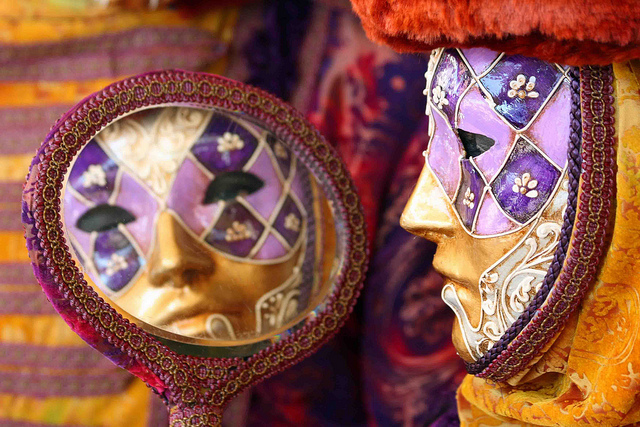
    From then on, we mask. We hide. We reject our true selves and put on a façade that we believe is valuable to the tribe, thinking that we’ll be loved for it. There are different types of masks we can opt for depending on our “culturescape” and family patterns of beliefs.

    Your mask might resemble being an achiever. Constantly doing, constantly setting yourself up for success in whatever way your tribe defines it (a university degree, money in your bank account, the size of your house…).

    Or your mask might be that of a “good girl” or “good boy,” a people pleaser. Staying nice, acting nice, not too ambitious, not too lazy, making sure you do not make mistakes or get in trouble because getting in trouble would be bad.

    Or it could be a mask of service. You serve others, forgetting yourself in the process because thinking of yourself might be seen as selfish.

    But all masks have limits. There comes a time when your mask does not serve you, or them. It serves no one because it is not you. So you end up fooling yourself and others into believing that the mask is you. And this misalignment feels awkward, tight, rigid, and stressful because it is stressful not to be yourself. It takes effort to constantly put on an act. It is tiring.

    So there comes a time when you get really tired of it. Maybe you call this the mid-life crisis or the dark night of the soul.

    It’s just that your soul is tired of the constant acting.

    But your mask is really holding on, fearing that if it were to fall off, everyone would discover how worthless you are. So it works hard to stay and punishes you with harsh self-criticism each time you go off track and maybe show a bit more vulnerability, a bit more of yourself.

    So how do you remove your mask? Well, it’s not easy. It takes effort and dedication. It’s a long, non-linear journey, more like a spiraling up and down movement. But it’s oh so worth it.

    I too had a big mask on for a long time, and figuring out who I was without it was uncomfortable. So much resistance. So much fear. So many limiting beliefs.

    I wore a perfectionist mask to keep myself safe for years.

    I had a perfect body (according to the standards that were imposed on me at the time through magazines, society’s comments, women’s comments on their bodies), a perfect level of fitness (monitoring what I ate, struggling with anorexia), a perfect job (engineering, as per my family’s expectations).

    I was a feminist, working woman (the strict version of feminism that was transmitted to me was to work full-time and not be at home because it was not valued) and an independent woman (able to do everything myself).

    On the other side of the trance of unworthiness, life is so different from what your mask was expecting you to live. Maybe the big house you live in is not what lights you up anymore, or maybe it is. But you might find more joy and love in the small moments of life.

    It’s so much nicer on the other side, so much more authentic; more energizing, fluid, and beautiful. Not all happy. But authenticity brings some lightness to your life even in the midst of life’s messiness.

    Here are a few key steps to practice to break free from the trance and rediscover your true self.

    1. Check in with your readiness.

    First you need to be ready for it. You need to be willing. You need a strong energy of yes to change and no to staying the same, in that loop of constant self-doubt and feeling unworthy.

    2. Practice radical honesty.

    Be radically honest with yourself that you have been wearing a mask that kept you safe for a while but was inauthentic.

    Feel the mask in your body. How do you feel when you wear it? What physical sensations do you experience? What’s the voice in your head like? What is your inner critic telling you?

    Observe all of it. Each time you are back in this sensation, with this inner voice, catch it. Thank it for all the good work and beautiful protective intention all those years but be firm: you are in charge now.

    3. Allow the feeling of discomfort.

    Spend some time in the discomfort of removing the mask and being formless. Feel the resistance. Observe the internal battle. Feel it in your body.

    After the internal resistance, there will be grief. Feel the grief fully. You are letting go of a part of yourself that defined you for most of your life. You will need to feel the loss. Take your time. There is no rushing grief.

    4. Ask yourself: Who do I choose to be?

    In your redefinition process, ask yourself who you want to be, what quality of being you want to embody. What lit you up when you were young, and what is lighting you up now? How do you want to show up in the world? How do you want to feel? You have the power to be whoever you want to be. What will you choose?

    5. Remember your inherent worth.

    Remember that you are inherently worthy of love. You were born worthy—a little newborn, a bubble of love. And you still are. Just as worthy of love, regardless of your age and the mistakes you made along the way. You are worthy of love because you exist.

    6. Embrace forgiveness.

    Forgive yourself for your mistakes. Forgive yourself for abandoning yourself so many times. Forgive others for anything they said or did that caused you to want to hide.

    7. Decide that it’s time to shine.

    It’s time to wear that new skin. It will feel weird for a while, but it will settle into something beautiful and relaxing. Eventually. Like when you meet someone you can be yourself with, it feels so easy and beautiful. Same feeling.

    The world needs the whole of you. Your unique identity. Your unique vibration. Live authentically. Cry when you need to cry. Share how you feel with love and courage, without blaming others. Shine brightly when you feel that energy. Follow those steps that take you toward the vision of yourself you’ve set, those inspiring, energizing steps.

    The journey is not going to be all rosy, but acknowledge the impermanence of the ebbs and flows in life so you can move through the challenging parts with trust.

    8. Do what lights you up.

    Do the things that make you feel awesome, whatever they are. For me, it’s yoga, walks, nature, spending time with good friends, and connecting with my kids.

    9. Spend time in nature.

    Nature brings out our authentic nature, our worthy nature, because nature is non-judgmental. Nature is authentic. Nature is powerfully beautiful. Nature is healing.

    10. Surround yourself with a supportive tribe.

    As you remove your masks, as you grow and heal, your relationships will shift. You might find that you cannot hang out with the same people you used to—because they might still be wearing their masks, and because they might struggle with your “new” vibration. That is okay and part of the process. Learn to let go. This will create space for new relationships to come through.

    Find a tribe where you feel worthy and valued!

    11. Be compassionate to yourself. 

    Because the mask will want to come back for a while, on and off, in different forms. Your inner critic will get loud. Be patient. Hold this part of yourself and the part s/he is protecting tight. You got this… until the next time where you peel another layer and release another mask.

    Don’t forget, the journey isn’t meant to be tackled alone. Getting support from friends, a coach, or therapist is incredibly valuable. It speeds up growth and makes it easier to have someone to guide and cheer you on along the way.
  • What I Really Mean When I Say I’m Fine (Spoiler: I’m Not)

    What I Really Mean When I Say I’m Fine (Spoiler: I’m Not)

    “Tears are words that need to be written.” ~Paulo Coelho

    It was lovely to see you today. I haven’t seen you in such a long time. So much has happened since the last time we saw each other.

    You asked me how I was. I politely replied, “I’m fine” and forced a smile that I hoped would be believable. It must have worked. You smiled back and said, “I’m so glad to hear that. You look great.”

    But I’m not really fine. I haven’t been fine for a very long time, and I wonder if I will ever know what “fine” actually feels like again.

    Some days are good, some not so good. I’m doing my best to stay optimistic and to keep faith that tomorrow will be better. Sometimes it is, sometimes it’s worse. I’m never prepared for either outcome.

    I’m doing my best to pretend I’m fine.

    The mask I wear hides my pain very well. I’ve been wearing it for so long now that no one can see through it anymore. It’s my new face, and it smiles on demand.

    Some days I wish I didn’t have to pretend to smile. I long for the day when it will come naturally, sincerely, and genuinely.

    When I say I’m fine this is what I really mean…

    I’m sad. I’m really having a hard time right now. I wish I could tell you. I’d like to think that you might even care. And maybe you do truly care. But I don’t want to tell you. I don’t want to bother or burden anyone with my troubles.

    My troubles are big and ugly. I can’t burden you with them. You are facing demons of your own. You don’t need to be exposed to mine. That would be so selfish of me. To think that your demons are not as important or debilitating as mine.

    So I just tell you I’m fine. I’m protecting you when I say I’m fine. Because I’m afraid my pain is just more toxicity.

    I want to tell you my troubles. I want you to take them away. I wish someone could fix everything that hurts, though I no one else can do that for me. Still, I wonder, does anyone have all the answers to these questions that are pounding in my head and causing me grief and anxiety?

    Anyone?

    There’s a tightness in my chest that won’t go away. There’s a darkness in the pit of my stomach that makes me nauseous. My shoulders feel weighted and my arms long for human touch. A body to wrap around tightly to comfort me and ensure me that everything will be okay.

    My troubles have completely consumed my life.

    Inside, I’m crying all the time. My soul is crushed, and my heart is full of holes that I’m desperately trying to patch up as best I can.

    I’m full of anxiety inside, and no matter how hard I try to find peace, it eludes me. I feel there are a million demons inside of me, and I don’t know which one needs my attention the most.

    So I ignore them all. It’s too much for me to bear most days.

    When I say I’m fine I really wish you could hear my inner voice screaming, “I’m not fine, and I need help. Please stay and talk to me, comfort me, help make this overwhelming pain stop.” I want to say this to you. But I open my mouth, and “I’m fine” comes out instead.

    I’m not really fine. I’m not sure how to handle today, and I fear what tomorrow may bring. It’s constant anxiety. I wish it would go away if only for a day.

    I want to be fine, honest I do.

    One day I would love to sincerely tell you how fine I am. That all my anxieties, worries, and fears are gone, or at least less overpowering. That I walk with a skip in my step and a song in my heart. I want to feel that. I may have felt this once before a long time ago, but I don’t really remember it.

    Every day I’m doing my best to smile and make the day better. I’m thinking positively, I’m taking big deep breaths when I need to. I’m reading inspirational blogs and quotes. I’m even listening to guided meditations.

    Today I went shopping and bought myself something nice. I know, a temporary fix. But it worked.

    It all works. For the moment. And then the moment is gone, and it all comes flooding back. All the turmoil, the anguish, the anxiety, the pain. I breathe deeply again. And I’m okay for a few more minutes.

    But for now, I’m doing my best. I know that everything in life is temporary. The good, the bad. Even life. It’s all temporary. If I can just get through today, I’ll be fine.

    I’m doing my best to see the bright side. I can see it some days. But it doesn’t take away the turmoil brewing inside of me. It only masks it with a Band-Aid. A temporary fix.

    Everything is just a temporary fix until I finally become brave enough to get to the bottom of my demons. I need to face them one at a time. I need to bring them to the surface, dust them off, address them, heal from them, and then let them go.

    This I know. But it’s such a daunting task. Just thinking about doing that is overwhelming and causes me a great deal of anxiety. I know it’s up to me to be able to say, “I’m fine” and really mean it.

    One day I will. When I feel strong enough to do so. Until then, I may say I’m fine when I’m really not. But I will try to find the courage to say, “Actually, I’m sad,” even though I know you don’t have a magic wand to take all my troubles away.

    Maybe just opening up and letting you support me will help. Maybe if I stop painting a smile on my face and telling you “I’m fine, really I am,” one day soon I will be.

  • How I Stopped Feeling Unworthy of Love (And Finally Learned to Receive It)

    How I Stopped Feeling Unworthy of Love (And Finally Learned to Receive It)

    “I hope you find love, but more importantly, I hope you’re strong enough to walk away from what love isn’t.” ~Tiffany Tomiko

    When I was in my early thirties, I briefly dated someone right after my divorce.

    It was one of those fast and furious things that had no label and left me wondering if I made most of it up in my head.

    It wasn’t the first time and it wouldn’t be the last. How many times had I ended up feeling rejected and abandoned? I was trying so hard to impress a partner, but no matter what I did, I only seemed to push them away.

    Tearfully, I shared my pain with a spiritual advisor and psychic and asked for her guidance.

    She suggested I consider the joy that might come out of pleasurable and easeful partnerships. She asked me, “Briana, why don’t you shift your energy and focus to that aim?”

    But it wasn’t so easy. I was attached and hung up on this guy. Why didn’t he love me like I loved him?

    Another thought popped into my head, which I hadn’t realized was there before.

    Before I could voice it out loud, she said, “Oooohhhh, Briana. I can hear you already. You think if you’re not in pain, then your art and other creative works won’t be any good.”

    I burst out into another round of sobs.

    Because it was true. I did think that way.

    I thought I performed at my best when I was at my most miserable, and if you took away my misery, I would not only be common, but worse yet… mediocre. I would truly be the bad artist I always thought I was.

    Every aspect of creative expression would become cliched, trite, and uninteresting. There wouldn’t be anything special about me.

    And so I would become unlovable.

    The drama proved my worth, one way or the other; the drama of performing well enough to earn love. 

    It wasn’t until four years after that conversation that I finally stopped clinging to my pain.

    Because I realized that pain didn’t make something (love) more authentic—it just made it more difficult.

    Maybe you know where I’m coming from. Maybe you feel that you, too, need to “chase” a relationship and suffer for it to really matter. For you to really matter.

    That’s just not true. There is a far better way to build relationships, and that’s what I would previously have called “boring” and “too easy,” but actually is about respecting your own, authentic self and opening up to love.

    Here’s what I’ve learned about letting go of feeling unworthy of love and finally learning how to receive it.

    1. Take off your mask.

    Like me, you might believe that to attract a lover and be worthy of love, you have to pretend to be a perfect partner, through things like making them feel wanted and desired, looking beautiful, and being funny, witty, smart, and interesting all the time.

    All of these tactics might very well appeal to a potential partner. Certainly, it might make them interested enough to get to know you better, and maybe even date you for a while.

    But none of that means it will soften their heart and make them fall into a soul-shaking relationship with you.

    In fact, while I used to think that I needed to pretend that I was something I wasn’t so that I’d be worthy of love, I just kept deterring the other person.

    Why?

    Because while the glitz and glamour are appealing, it also, on a deeper level, left me completely unavailable.

    In the same way, you are pushing away a partner by performing all the time.

    You see, your partner is going to feel as if they have to perform just as well, and while that may be exciting in the beginning, unless the mask comes off, it also gets exhausting very quickly.

    A loving partner will be less concerned about how many degrees you hold or how much you make at your job and more concerned that you’re passionate about what you’re doing.

    A loving partner doesn’t care how many facts you can recite. They may enjoy your company if you’re a great conversationalist, but that won’t necessarily make them feel something for you.

    The way to a partner’s heart is to make them feel safe enough to explore and experience their own authentic self.

    You do that by feeling safe enough to express yourself—without someone else’s permission.

    Because if you don’t communicate that you’re comfortable in your own skin, this partner won’t feel comfortable or safe opening up to you, either.

    And if a person can’t open up to you, warts and all, they can’t fall in love with you. It’s as simple as that.

    When you put on a performance instead of taking off your mask, you unconsciously communicate a fantasy of reality, because that feels safer than vulnerability. And then you energetically and non-verbally tell your partner that you can’t handle their vulnerability, either.

    And isn’t it freeing? You, in all your vulnerability, are the person they want and need in order to be their own, true self.

    2. Get in touch with your own feelings.

    What many of us do when we feel unworthy of love is numb our emotions and pretend we feel something other than we actually do.

    But a loving partner wants to know you’re angry when you’re angry and why you’re angry.

    Guess what happens if you’re acting one way, while feeling something else? That’s right, drama.

    If they think you’re angry, but they are not sure, because you’re trying hard to plaster a smile on your face, say, “I’m fine,” and stuff it down, you’re not really fooling anyone, just confusing them.

    Your energy and your verbal expressions are going to contradict one another, and that is the seed of dramatic conflict.

    And this type of drama is so annoying because you are effectively keeping a partner at bay, and refusing to connect with them, for fear that they wouldn’t like the “real” you.

    But because they can’t access “the real” you, there’s no real glue holding them there, and they wind up leaving you anyway.

    So show them what you feel, while letting go of the fear that they will reject you for doing so. By reconnecting with your emotions, you show up as your authentic self and make it safe for them to love you.

    3. Be open to meeting someone with the same level of consciousness.

    Around the end of August last year, I started dating someone. He wasn’t originally what I would have imagined for myself, but he turned out to be exactly what I need.

    Right from the get-go, things went really well; we talked for hours on end, and I felt an instant connection.

    There were butterflies, yes, but not the kind of gut-twisting, obsessive sensations I have had in the past, which usually means I should run.

    This was more like, “Ah, you fit nicely… and kinda feel like home. What took you so long?”

    He shows up with fresh flowers, texts me “good morning,” and sees the humor in situations like that time my cat got jealous and bit him when he tried to kiss me.

    While before, I would have instantly dismissed this type of relationship as being too easy (and the lack of drama would have shown me that it wasn’t real love), I now see it for what it is:

    A relationship in which partners join together from a place of inspiration, as opposed to a fear-based need to be filled up with the other.

    This is a partner who already has a higher level of consciousness and is looking for purposeful building. There’s no drama, there’s no chasing, and there are no games or acts.

    This is the key to feeling worthy of and receiving love—finding a partner who is open to the same. The criterion for attracting such a partner, however, is that you are ready to meet them.

    I wasn’t ready four years ago. It took me that long to go from believing that relationships had to be a rollercoaster of emotions to opening up to a loving partnership.

    Ultimately, it’s about you finding your authentic self and realizing that this version of you (the real version) is so worthy of love and should be loved. That’s the premise for a relationship that, instead of being soul-sucking and anxiety-ridden, is the perfect space for self-growth and joy.

  • Drop the Mask: The Freedom of Living an Authentic Life

    Drop the Mask: The Freedom of Living an Authentic Life

    “It takes courage to grow up and become who you really are.” ~e.e Cummings

    Here is an unsettling idea: Most of us are not who we think we are. We are not the people we bring to work; we are not the people we show to our parents and children; and sometimes we are not the people we show our friends.

    Most of us go through our entire lives wearing a series of masks.

    We have different masks for different purposes and occasions: the “perfect” mask of someone who’s always strong, positive, and together; the professional mask for today’s meeting; the expert mask that we put on when teaching or advising; the malleable and energetic one we put on when selling our skills or flogging our wares.

    Our masks become so comfortable we lose awareness that we are wearing them. But make no mistake, the masks we wear are not who we are.

    Those masks that we put on to protect ourselves, that we reach for to be taken seriously, that we don because we think we should be that soft-spoken, outgoing, or strong, these masks are not who we are.

    Beneath our masks are real, sentient human beings, people with opinions and passions, people who can be angry and impatient; human beings who can be deeply empathetic and compassionate.

    If we want to be reminded of what a real-life, uncensored human looks like, spend some time with a baby. These little cherubs laugh with their whole bodies, and they do it frequently and loudly. They cry with gusto, their bellies expanding like a balloon when they are building up to a real howl.

    If they are already talking, they voice their opinions clearly and honestly. “Don’t like it. Want more. No, not going.”  

    Their questions are beautiful and profound because of their honesty and completely untarnished way of experiencing the world.

    Most of all, when watching these little humans, we can observe that wherever they are, whatever they are doing, they are fully in it. We work our whole lives to recapture this authenticity and ability to be present.

    Some time early in our development, something tragic happens. Maybe it happens the first time we are given signals that being jealous of a sibling is not appropriate, that crying when we are hurt is being dramatic, or that being loud is annoying. We get signals that the way we are behaving is not making the adults around us happy.

    Little by little, bit by bit, we adopt socially acceptable behaviors, facial expressions, voice volumes, and agreeable ideas that harden into a series of masks.

    In any given moment, our truth lies beneath the masks we wear, sometimes screaming for oxygen. We work really hard to stuff our truth down, to temper ourselves to fit in, to follow the rather rigid rules of social acceptability.

    We need to be authentic to fully express ourselves in the world. When we try to stuff down our inner voice or pretend it doesn’t exist, it fights back. Stuffed inside our body, repressed feelings can lead to depression, insomnia, physical pain, and if we continue, diseases like cancer and heart disease. This is real. Inauthenticity makes us sick.

    Thankfully, our authentic selves have enormous strength. I say thankfully because these breakdowns of our coping mechanisms often lead us to our greatest insights about ourselves.

    The people I know who are fully and authentically themselves have been led there by difficult events, by a crisis that shook their world, by insights that have loosened their masks long enough to reveal the people underneath waiting to breathe and live life fully.

    This has definitely been my experience. My divorce was a crisis point. Although it was over a decade ago, it remains the most transforming single event of my life. In an instant, any ideas that my former life had created were blown to smithereens.

    I saw with glaring clarity how the married person I had become was a role I was playing. For years I had been editing my behavior and my dreams to fit what I thought I was supposed to be. I wasn’t even sure who that person was, but I knew she was more patient and her energy was smaller, and it didn’t overwhelm people.

    Worse, I began to understand that I didn’t even know who I was. I’d been wearing the mask of Olympic athlete, public figure, wife, and mother for so long that I wondered if I was still in there.

    When my marriage blew up, I was possessed with renewed energy. This wasn’t because my husband was a rotten guy who had kept me under his thumb; this was because the pain, the upheaval, and the shock of what had happened broke my mask in one fell swoop. A life crisis put me back on the path of discovering my authenticity.

    If all this sounds a little hokey to you, think about something really difficult you have experienced, like the loss of a loved one, the loss of a job, or the end of a primary relationship. Often in these times of extreme crisis, we make deep connections with others—the friends that support us, the sister who holds our hand by a parent’s deathbed. In crisis, people can drop their masks and simply reach out for one another, human to human.

    There is something so magical and refreshing about this connection that many people never come back fully into their mask-wearing afterward. Life has new meaning, and the desire to live connected and live authentically becomes a motto for life.

    When I shredded the masks I was wearing, I found myself filled with creative energy. It turns out that all that pretending is pretty exhausting. When I stopped trying to be who I thought I was supposed to be, it was like I plugged my soul into a current of electric life energy. I started writing books, taking courses, painting, studying yoga, and doing all sorts of things I didn’t consciously know I wanted to do.

    Through the pain of upheaval and loss, I freed myself of the personas that I’d layered on top of my authenticity for decades.

    Reconnecting with my truth was a new and exciting adventure as well as a coming home. In terms of my mental and physical health, I believe coming home to myself saved my life. It could save yours.

    So say what you really feel. Make the choices you really want to make. Forget who you think you’re supposed to be and let yourself be as you are. At the very least, finding the courage to reconnect with the self inside yourself could be the single most liberating act of your life.

  • Drop the Mask: How to Slowly Lower Your Guard and Change Your Life

    Drop the Mask: How to Slowly Lower Your Guard and Change Your Life

    Man with Mask

    “The less you open your heart to others, the more your heart suffers.” ~Deepak Chopra

    The root of my inability to be open stems from my childhood. (I guess much of who we are comes from childhood, right?)

    I remember around the time I was eight years old going to a party at my aunt’s house. Even though I don’t remember the details of the party, I do remember what happened after.

    We got home that night and my dad asked me, ”Don’t you think you should be a little more reserved or have a little mystery to you?”

    I was thinking, “Huh?” What did I say or express at this party that made him say that?

    I’m sure I needed to hear that, because who knows what the heck I was saying. And I do believe having some boundaries is important.

    But I was a little expressive girl sharing my insides and sharing what I saw and experienced. I don’t believe we should share everything with everybody and “emotionally vomit” on people, but for some reason, that moment really defined me.

    I looked up to my father, and since I grew up without a mother, I looked to him for guidance.

    But now as an adult, I realize that my father was a private, closed person himself. So he was projecting that onto me.

    As I got older, I continued little by little closing parts of me off.

    People used to always tell me, “Lisa, you are such a great listener.” And yes, that is one of my best qualities, and I truly do enjoy people and want to see and hear them. But I rarely give people the chance to see me and hear me.

    If someone I don’t know very deeply asks me a question, I usually think before answering and feel uncomfortable talking about myself. Even if there is an opening or opportunity to share one of my experiences in a social setting, sometimes I choose not to.

    Why? Some guesses I have are:

    • I didn’t want to give up the illusion of having it all together.
    • I didn’t want to be seen as weak or needy.
    • I didn’t want to be vulnerable.

    And I’m an extrovert! I have always made friends easily and have always had friends. But recently, I took a look at my adult friendships, and I discovered that I only have a handful of friends that I would consider deep and extremely connected and meaningful, where I can totally be myself and feel comfortable completely trusting them with everything.

    Yes, I know many people say they don’t need a lot of deep relationships and only need a few. But is that BS we tell ourselves? Is that really true?

    Why can’t every relationship we have be as deep and connected? Aren’t most of us mirrors of each other and struggling for the same things?

    The reality is that I don’t want distance between me and anyone in my life. What I really crave is closeness to others and my community and many real connections.

    Being more open at the same time I feel vulnerable is like learning a second language for me.

    I know I will never be the person to spill my guts and be expressive the way others can be, and I’m okay with that.

    But I know it’s possible to open up your blinds for all people to see while remaining authentic.

    Here are a few strategies that have worked for me that may also work for you.

    1. Determine what masks you wear and why you truly are guarded.

    Did you have a bad experience as a child? When you open up, do people receive it negatively? Do you have certain insecurities that hold you back? Are you an introvert and really have a different process for connecting with people?

    Asking yourself these questions will help you get to the root of your insecurities. Just like doctors don’t treat illnesses before they understand the cause of your symptoms, you can’t change yourself without knowing why you are the way you are.

    Take some time—whether it’s just a half hour or a full weekend—to self-reflect. Consider writing down your feelings if you think it will help. Use this time to learn more about yourself and figure out why you’re guarded.

    2. Notice when you become closed, shutdown or guarded.

    Now that you know why you’re guarded, it’s time to become attentive to it.

    A few months ago, I went to a conference and had the opportunity to meet all kinds of amazing people. When the part came toward the end of the first day to “network” and talk and meet people, I ended up going to get a drink with someone I already knew because it was easier and I didn’t have to meet anyone new.

    But what made this time different was that I noticed and became aware of it in the moment. I completely shifted my mindset while I was there, and I can’t say I regret it.

    I met the most amazing people. We got past surface and business talk quickly, and I still keep up with many of them.

    You may find similar experiences equally rewarding. If you can’t work up the courage to take action yet, that’s okay. At this point, it’s about becoming aware of yourself.

    3. Let go of control.

    It sounds counterintuitive. How can you take off your masks if you aren’t in control? Let me explain.

    I’m reading this book called Courage: The Joy of Living Dangerously by Osho. In it, Osho says:

    “If you understand, insecurity is an intrinsic part of life—and good that it is so, because it makes life a freedom, it makes life a continuous surprise. One never knows what is going to happen.

    It keeps you continuously in wonder. Don’t call it uncertainty—call it WONDER. Don’t call it insecurity—call it FREEDOM.”

    It takes courage to dig into who you really are and share that with other people, to completely cut yourself open to others. But it means you have to let go of being in any kind of control and trying to predict the outcome of what happens.

    When you’re in control, fear consumes you, and you follow it. Be courageous and let the situation control itself. Then your fears and masks will subside on their own.

    4. Be unattached to the possible outcomes when sharing your thoughts and feelings.

    It’s one thing to let go of control. It’s another to become unattached to the outcomes.

    It’s tough, I know, but when fears of what might happen next are holding you back, you have to stop worrying about the outcomes.

    It’s not about what people think of you. It’s not about whether they judge you because you are stating a truth and being yourself.

    It’s about your own personal growth. The only outcome that matters is the strength you gain from opening up. Remind yourself of that and all other possible outcomes will worry you less.

    Share yourself and your voice and let go.

    5. Take action in small steps until you become more comfortable.

    The tips above simply won’t happen overnight. You aren’t expected to let your guard down immediately and magically become willing to share your feelings and your voice. It’s going to take time.

    That’s where baby steps can help you.

    Instead of throwing yourself head-on into sharing your feelings or conversing with strangers, start out small:

    • Attend a social event, such as a party or conference, but bring a friend along for support. Make it a point to pitch in a comment or a strong opinion and talk to someone you don’t know.
    • Make it a habit to write in a journal every day for two weeks. Then, read excerpts to someone close to you so you can practice sharing the deeper things that you are thinking about.
    • Join a group where sharing is part of the platform, such as a business mastermind or hobby associated group.

    As you get more comfortable in these situations, take bigger steps:

    • Strike up a one-on-one conversation with a stranger. If this scares you, you can minimize some of your fears by talking to someone you know you’ll never see again. That way, the possible outcomes won’t scare you as much.
    • Share your story with a group of people. Talking with a supportive group of people or to your spiritual leader is a good place to start because these are safe environments where people won’t judge you.
    • Write about your experience and share it online—even if you publish it anonymously or under a pseudonym.
    • Write an article for a community like Tiny Buddha about an experience you want to share.

    Lowering your guard and being completely vulnerable in a meaningful way is incredibly difficult for people like me. But when you have a desire to change and you look inside yourself for courage, becoming the person you want to be is far less frightening.

    Man with mask image via Shutterstock

  • Take Off the Mask: 6 Tips to Be More Authentic

    Take Off the Mask: 6 Tips to Be More Authentic

    “Being who you are is another way of accepting yourself.” ~Unknown

    Years ago I struggled to be authentic. I was a consultant who worked with senior people in big organizations. As a black female fresh out of graduate school, I was frequently the youngest, the only woman, and the only minority in the room.

    Because I was so different from those around me, at least on the surface, I was concerned about how other might perceive me. So I put a lot of effort into portraying myself in ways that I thought would increase the odds of others accepting me.

    To make sure others wouldn’t underestimate me, I led with my intelligence, saying things to let them know how smart and knowledgeable I was and downplaying my fun-loving side.

    To make sure I wasn’t seen as militant or overly sensitive, I stayed quiet in response to comments that ranged from a little over the line to blatantly offensive.

    To make sure others felt at ease, whenever I was asked to talk about myself, I stuck with the most innocuous and middle-of-the-road stories that I knew were most similar to the other person’s life experiences.

    And here is a small, but classic example: Even though I had been yearning to own a snazzy smartphone case for years, I stayed with a neutral black one so I would be seen as suitably conservative instead of too girly or flamboyant. (Yes, I had it bad!)

    The irony of all of this was that, although this approach caused me to be seen as someone who was bright, competent, and capable, it didn’t exactly help me forge deep connections with other people.

    After all, how could it? The person they were connecting with was only a tiny fragment of who I was and, in some cases, a completely inaccurate portrayal.

    When I reflected on it, I realized that, while it was convenient to be able to say that I was behaving that way due to the demands of being in an unwelcoming corporate environment, the truth is, I did it in other places as well.

    Every time I agreed to do something I didn’t really want to do out of a sense of obligation, I was being inauthentic.

    Every time I didn’t ask for what I needed in a relationship, I was betraying myself.

    Every time I put on an aura of having it all together when in reality, I was feeling vulnerable and scared, I was putting on a mask.

    One day, after biting my tongue for the nth time at work regarding an innovative idea I had that I thought others wouldn’t agree with, I decided enough was enough. At that moment I committed to stop hiding “this little light of mine” under a bushel.

    Instead, I was going to unleash my true self into the world.

    Okay, perhaps unleash is a little inaccurate—it’s not like I became Sasha Fierce over night. But what I did do was take what felt like little risks in displaying my authentic self.

    I experimented by being more assertive and sharing my true opinions.

    I let my humorous side come out and told funny stories about my family and my life when I was at work.

    I said no to things I didn’t feel like doing—even a party that was going to be thrown in my honor that I didn’t really want to attend.

    I put a hot pink rhinestone case on my smartphone.

    So, what happened? Honestly, not much on the negative side of things. There might have been the odd person who felt a bit of discomfort in the moment when I disagreed with him, but it certainly wasn’t anything long-lasting or life-shattering.

    Instead, the results have been overwhelmingly positive.

    I feel lighter and more true to myself. I have deeper relationships, because it’s as if a veil has been lifted, and the people around me get to see who I really am. I’m more likely to get my needs met because I’m not relying on the other person having ESP to figure them out.

    And at work, instead of making others uncomfortable, being more authentic allowed me to build deeper connections. Instead of just seeing me as a brain in a jar, others began to see me as a whole person, a thought leader from whom they could learn, who had interesting things to talk about.

    It has made all the difference in my life and created a richer, happier, more fulfilling existence.

    If you are struggling to let your authentic self shine, here are some tips you might find useful.

    1. Imagine your older self sharing life lessons with you.

    Imagine your older self having a conversation with your present self. Perhaps this older version of yourself is on his or her deathbed, and s/he is giving you advice about how to live a fulfilling life.

    What would s/he say to you? Would s/he suggest that you spend the rest of your life dulling your shine, or would s/he tell you to be true to yourself?

    2. Check in with yourself.

    If you have been behaving inauthentically for a long time, you might feel out of touch with your true feelings and desires. Journal and meditate to get back in touch with yourself.

    Allow yourself to feel your emotions, and be curious about them. What are they telling you that you need to do? How can you become more of your true self?

    3. Start small.

    Commit to taking small steps toward being more authentic. Speak up about things you normally wouldn’t. Assert yourself. Ask for something you want. You don’t have to transform yourself overnight. Recognize that it’s a process.

    4. Be prepared for others’ reactions.

    Remember that others are likely unaware of the extent to which you might be stifling yourself. So, as you behave differently, recognize that they may need to adjust to the new you. While the responses I got were overwhelmingly positive, sometimes others didn’t quite know what to make of it. That’s okay.

    5. Don’t use authenticity as an excuse for bad behavior.

    I have worked with some clients who have been rude or disrespectful to others, and explained it away, saying, “I’m just being honest” or “I have to be authentic.” You can be authentic and kind at the same time. Be respectful.

    6. Recognize you can tolerate discomfort.

    Research shows we tend to overestimate how long and intense our unpleasant feelings will be in response to a negative event. So, even if others don’t respond positively to everything you do, know that it probably won’t be as bad as you are anticipating.

    Finally, keep in mind this wonderful quote by Oscar Wilde, “Be yourself; everyone else is taken.”

  • Unbecoming Who You Are and Embracing Your True Self

    Unbecoming Who You Are and Embracing Your True Self

    Woman Silhouette Reflection

    “View your life with kindsight. Stop beating yourself up about things from your past. Instead of slapping your forehead and asking, ‘What was I thinking,’ breathe and ask yourself the kinder question, ‘What was I learning?’” ~Karen Salmonsohn

    I’ve never been particularly risk adverse.

    If you asked my friends or family, they’d tell you I’d be the first person to try something new and challenging. I did things in my twenties with very little thought about the consequences and dove headlong into many situations without batting an eyelid.

    Except, I was avoiding one thing and that was the real me. Each time I signed up for the latest challenge, I upped and moved home for the fifteenth time, or I jumped into a new relationship thinking this would be “the one,” I carried one huge secret with me.

    That secret was my overwhelming fear of being vulnerable.

    I know what you are thinking: “How could I take so many risks, dare to do what other people couldn’t, without being vulnerable?”

    It was easy, the whole time I was pretending to be someone I wasn’t. I wore a mask—a mask of someone who pretended to be adventurous, who lived by the seat of her pants, to make herself look interesting, and who in the end couldn’t pretend any more.

    When you try so hard to be someone you’re not, you lose sight of yourself. You end up doing things to please other people, resulting in living by their expectations. In the end, you become what they want you to be, which can lead anyone down the wrong path to self-destruction.

    I didn’t love myself enough to say, “No, this isn’t me” or “No, I won’t do that because that’s not what I want to do.” I just didn’t feel worthy enough to make my own decisions, to be happy with who I was, so I lived in fear never showing my true self.

    Being vulnerable was opposite to who I was. It mean showing myself to the world, even those bits I didn’t like. It meant expressing my true feelings and taking risks, even with no guarantees. When it came to risking it all in love, I just couldn’t do it.

    Then one day I couldn’t pretend anymore. I remember the moment: I was sitting on my bed crying, I was in yet another disastrous relationship, I was doing a job that sucked the very life out of me, I didn’t have the right people around me, and I was heading for a future of more fear.

    It had to stop now, so I did just that.

    I took off the mask. I ended the relationship, I quit my job, I sold nearly everything I owned, and I moved back home to my mother’s house. I knew I had to start over from scratch, to be reborn and learn how to be me again.

    I started exploring what really made me tick, what I was passionate about and what I loved to do. I ended friendships, I moved away from negative environments, and I worked hard at taking care of myself. I had to become “undone” to do that, to go back to basics and start again.

    It wasn’t easy. It has been a lonely journey at times and very painful, but I’ve come out the other side and I have to say I’ve never been happier. I’ve found a side to myself I never knew existed. I am creative, I am passionate, I am happy to be me, and, most of all, I am single and proud of it.

    Here are a few things I had to do to do to get me to this point and what I have learned.

    It’s possible to be single and happy.

    It’s funny, but each time I ended a relationship I always felt a sense of release, like it was always meant to be that way. I guess for years I thought that I had to have someone else to be happy, yet it turns out that it’s not my only avenue for joy and purpose.

    Since I got single, I’ve learned to love myself. I rely on myself and I no longer look to others to decide my future.

    It’s gotten to the point where I am so focused on my own life that I don’t think I’d have time right now for a partner. The main thing is I that I learned to be happy without being in a relationship, and when it does happen, it will be because it’s right.

    Singleness can be celebrated, as it allows us to truly reconnect with who we really are and uncover who we were all along.

    Sometimes we need to go back to our roots.

    I chose to go back home because it just seemed right. I had no money, my mum was happy to have me back, and I knew it would give me time to work out what I wanted to do with my life.

    I still feel this way today, now six months on, but it hasn’t been easy. Old feelings have come up, past resentments and disagreements.

    But what has been most apparent is the reflecting I have done about my relationship with my mum and myself. It has taught me that trying to change people is fruitless, and that if a situation is going to change, it’s up to me and how I respond to it.

    We don’t all need to move back home, but sometimes we need to go back to our roots to move forward. When we heal old wounds, forgive, and let go of the past, we create space for transformation to occur.

    Loneliness can be the beginning of true connection.

    I didn’t choose to be lonely; it just happened. I had no money, so I had to decide where my priorities were—and spending the money I didn’t have on nights out or other such frivolous things weren’t at the top of the list!

    I had to turn down many an invite out with friends, and the more I did that, the fewer people asked until in the end I never went out.

    That period of time was my lowest point. I’d never felt that lonely, but it taught me so many things. It taught me about those who were there for me, and those who weren’t. It taught me about how I dealt with those feelings, to rely on myself more; yet, in the same breath, it also spurred me on to find other people who got me and accepted the person I was becoming.

    I believe that the people we meet come into our lives to teach us things about ourselves. Some stay for the long haul, while others come and then go just as fast. Being lonely is never easy, but if you decide that it’s not forever and it’s all part of the process, then you’ll be at peace with it.

    Today, I still live at home. I am still gloriously single, but now I hardly ever get lonely. I am still on this journey, except now I am no longer unbecoming who I was; I am finally becoming the person I was all along.

    If you feel that you’ve been pretending for too long, fitting in with those around you, perhaps now is the time to take some steps to change that, to un-become who you are.

    My steps where mine alone, they may not be for you. They were, however, the best things I have done, and I am grateful for that.

    Woman and reflection image via Shutterstock

  • Peeling Back the Mask: Reconnect With Your Authentic Self

    Peeling Back the Mask: Reconnect With Your Authentic Self

    Wearing a Mask

    “You cannot find yourself by going into the past. You can find yourself by coming into the present.” ~Eckhart Tolle           

    It was 3PM on a Wednesday and I had nothing to do. An empty schedule with limitless potential. 

    I was miles from home in the freezing fog of San Francisco. The bustle of traffic reminded me of my hectic life back home, but I wasn’t bothered. I had nowhere to be and nobody to answer to, just like the day before and the next day. I was free.

    I brought my favorite travel companion along with me to aid in my journey of self-discovery: me. Not the busy Account-Manager-me. My true self.

    Last year was painful for me. Like many others, I found myself ebbing and flowing with the tide that is the nine-to-five. Living for the weekend so I could escape the grind and live outside the snow globe even if just for a moment.

    Life is more than clocking in and out with dead eyes and a slack jaw while counting the milliseconds as they fade toward your Friday night. I’m on this earth to be—not to be someone else for a paycheck.

    In recognizing that I needed a vacation, I downed a bottle of wine and booked a two-week trip to my city by the bay. Fourteen days of sweet liberation.

    Maybe you can relate to my reality.

    Back home, Rebecca in accounting is a constant complainer. She brings you down like an iron pair of boots. You’ve got to grin and bear it because she processes your expense reports and you see her every day. You’ve gotten so adept at feigning interest that you’re losing sight of what’s underneath the mask.

    Rebecca gets the sympathy mask. Your boss gets the I’m-passionate-about-my-job mask. Jackie in distribution gets the I-like-politics-because-you-like-politics mask. We wear whichever we have to in order to make things easier. Nathaniel Hawthorne said it best: 

    “No man, for any considerable period, can wear one face to himself and another to the multitude, without finally getting bewildered as to which may be the true.” ~The Scarlet Letter

    Two psychological terms stand out as they relate to being someone you’re not: cognitive dissonance and the act of compartmentalization.

    They go together like a cerebral peanut butter and jelly sandwich. To understand our challenges, we must first define them. Enter Merriam-Webster:

    Cognitive Dissonance: Psychological conflict resulting from incongruous beliefs and attitudes held simultaneously

    Compartmentalization: Isolation or splitting off of part of the personality or mind with lack of communication and consistency between the parts

    When was the last time you spent an entire day doing exactly what you wanted to do? Said exactly what you wanted to say? You have a belief system, a rule set. Stuffing these things in a box and being someone else makes you exactly that. Someone else. This is compartmentalization.

    It’s a defense mechanism to combat the cognitive dissonance you feel when you have conflicting personalities—when there’s a difference between who you are and who you become in certain situations.

    When faced with a challenging situation, a compartmentalized person has to decide how to act. Quelling the reaction most natural to their authentic self, they respond inauthentically because they’ve developed a completely separate personality.

    We must be mindful of who we really are—and we get to decide who that is.

    “We are our thoughts” isn’t just Eastern voodoo wisdom. The word “brainwashing” has a negative connotation, so let’s call it brain painting. Painting your mind with things you love is a surefire way to become a happy you. This is nothing more than surrounding yourself with people, books, subjects, and thoughts that make you smile. Be selective and consistent with what you allow in.

    It’s important to take time to foster your own well-being in a world that demands so much. Almost two thousand years ago, stoic philosophers like Seneca and Marcus Aurelius told us to retire into ourselves. Frequent self-examination has been a practice for thousands of years.

    Being comfortable with and conscious of what you find is the definition of knowing who you are. Constantly look within and connect with your mask-less you. We can nurture our inner authenticity by being mindful every day.

    • Meditate. You don’t have to have an Om tattoo and a stick of incense to find a quiet place to look inside. Take a twenty-minute vacation inside your own soul. Be cognizant of what you find.
    • Observe. Take a walk and leave your phone at home. Look at everything around you with child’s eyes. Notice the beauty in the trees or the vastness of space. Be a living part of your surroundings.
    • Create. Doodle something while your coffee brews in the morning. Take a few minutes to write something meaningful. It doesn’t matter what you do as long as it comes from your own creativity. Exercise your mind, amigo. You’ll be surprised at how out of shape its gotten.

    Traveling solo isn’t an escape. It’s a small opportunity to delete distraction. Lucius Seneca said, “All of your problems are with you.” Running away from them is impossible. But we can, for a time, run away inside our own soul.

    I spent my favorite day in San Francisco walking through the residential Noe Valley and Dolores Heights. A simple stroll down sidewalk after sidewalk, without a boss barking orders or my phone buzzing with e-mails. Just me and my smile to enjoy the cool breeze.

    It wasn’t so much the city I enjoyed, as it was the chipping away at my mask. Each footstep, a small victory at finding myself underneath it all. I remembered not who I was, but who I am.

    Though I’m back to the doldrum routine of my everyday life, I’m still the same human I was in San Francisco. Underneath the demands of a challenging career lies the same person that wandered those sidewalks so many weeks ago. A smiling nomad. He who digs coffee shops. The one who loves wine.

    We have the tools and presence of mind to make our journey for authenticity a daily practice. Recognizing when we’ve strayed from our true selves is the first step to staying the course. No one can be you better than you can. Look inside, befriend yourself, and be free.

    Photo by Frank Kovalchek