Tag: marriage

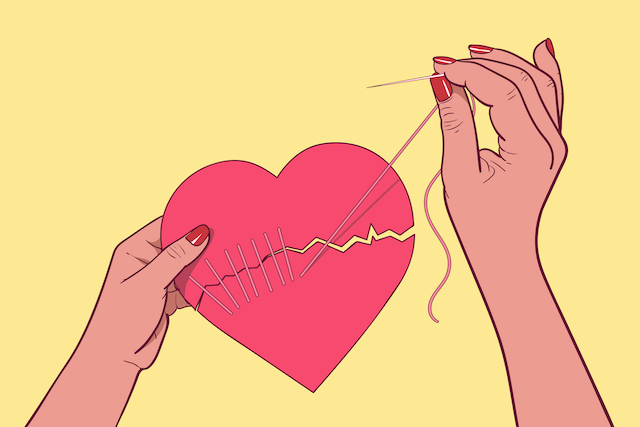
  • Easing a Broken Heart: 5 Ways to Reframe Rejection

    Easing a Broken Heart: 5 Ways to Reframe Rejection

    “When the wrong people leave your life, the right things start to happen.” ~Zig Ziglar

    The end of a relationship triggers many grief emotions, but when a couple breaks up because one person decides that it’s over, there is a very distinct pain: the sting of rejection. It doesn’t matter whether things had been difficult for some time or if the split came out of the blue; either way, rejection feels cruel.

    At the end of my marriage eight years ago, I had no idea that the breakup was coming. On top of the shock that the relationship was suddenly over, I carried the intense and overwhelming feeling of rejection; I was no longer valued, wanted, or needed.

    Rejection can trigger feelings of shame, low self-esteem. and diminished confidence as well as helplessness and victimization. If you are left for another person (which was my experience) the intensity of rejection increases further. I experienced anger and resentment about betrayal; this makes healing feel much harder than in those cases where a decision to split is mutual.

    When I began move through my initial grief, I found that the biggest shift in moving forward came through changing how I viewed rejection. I realized that by identifying with the feeling of rejection I was telling myself that something was wrong with me; that the marriage was over because I hadn’t come up to scratch and, therefore, needed to be let go.

    Of course, this was not true but in the mind of the injured party, it was natural to feel this way. By shifting my perspective, I eventually began to realize that my husband’s decision to leave was not a reflection on me.

    It is always hugely important to acknowledge and process feelings of grief; reframing is not about burying your emotions. However, as I’ve learned from my experience, rather than simply waiting for time to be your healer, you can move through pain far sooner and more effectively by viewing your situation in a different way.

    Here are five ways I helped myself reframe the rejection.

    1. It’s not necessarily about you.

    It’s almost impossible not to take rejection personally. My ex-husband said he left because he wasn’t getting what he needed from our relationship; he needed to follow his “truth,” which no longer included me. His narrative of the breakup became about my inability to be what he needed.

    This is where shame really kicks in. Rejection tells you that you weren’t enough to keep your partner from leaving and, in some cases, you’ve been replaced with someone who can make them happy.

    But what if it’s not all you? As personal and hurtful as the rejection feels, sometimes it happens because the other person is unable to give enough or be enough of what the relationship needs. When someone is unable to love you fully, they will either reject you, or stay in the relationship and treat you badly or indifferently enough until you decide to end it.

    We are all human and it’s very rare that one person is flawless within a relationship. I felt far less rejected when I realized that my ex-husband had his own considerable struggles and issues that led him to choose to leave; it wasn’t all about me.

    2. Relationships are assignments.

    There is a spiritual school of thought that views the people in our lives as lessons. The theory goes that we meet no one by accident; we are all in relationship to further our growth and deepen our connection to ourselves and the universe/each other. Partnerships with a significant other are huge vehicles for growth, but when the learning has gone as far as it can go with one person, it must end.

    Sometimes people leave our lives naturally and comfortably, other times we face the pain of rejection. The lesson is not always obvious at first, especially through the pain of grief, but what is initially perceived as rejection can also be viewed as a release from a completed assignment and an opportunity to learn.

    Consider that you still have much more to achieve with your life, and maybe your partner was not the person to show you the way. Perhaps being released from your relationship will allow you to find what you really need to become the person you are meant to be.

    This reframe can be wonderfully comforting if you choose to find love again in the future. If you learn your difficult lessons from the old relationship, you will grow, and the person you share the next stage of your path with will bring more fulfilment and easier challenges.

    3. Change the ending.

    When someone chooses to leave you, they not only decide that the relationship is over, they also determine “the story” of why it ended. So, why did my marriage end? The event that ultimately broke us apart was his leaving to be with someone else. However, on another level, there was more to it than that.

    I had changed within the marriage; I had been working through a deep personal issue a year or so previously, and had come out of the other side stronger, more content with life, and ready for a happier future with our family. I had grown, but my husband had not changed with me.

    When I became aware of this, I started to view the ending as less about rejection and more about an incompatibility between who we both were. It was an empowering reframe because it allowed me to feel far less victimized. The way he ended the marriage was not excusable, but it held far less of an emotional grip over me.

    Think about ways that you might have been rejected, not for anything you did “wrong,” but for something that altered the nature of the relationship.

    • Did you refuse to have your boundaries crossed or to put up with certain behavior?
    • Have you changed for the better in a way that your ex-partner could not handle?
    • Were you simply yourself and refused to change to please them?

    If you can view the ending in a way that empowers you, even a little bit, it can really ease your pain.

    4. Remember you are still whole.

    The feeling of rejection is greatly fuelled by the beautiful, romantic idea that two people “complete” each other. The conclusion is quite demoralizing; are we are no longer complete because someone doesn’t want us? What is our role in life now that we are not required to complete the other person?

    Losing a partner is painful and the grief of loss is real, but the pain is heightened and prolonged unnecessarily when we believe that we have been rejected by “the other half of ourselves.” It can feel like life has no purpose or meaning anymore. When I began to accept that I was still whole and valuable, it took away the feeling of despair that I was somehow diminished and “less than” because my husband had decided to walk away.

    5. Focus on gratitude.

    I love using gratitude as a tool for helping to shift into a more positive state of mind. Admittedly, in the early days of grieving, it’s not easy to feel grateful for anything at all, so I found it easier to start with making a list each day of the small blessings in my life—the day-to-day things we usually take for granted. I really recommend this as a practice.

    As your mindset starts to shift, you will come to realize that there are genuine reasons to be grateful that you were rejected. Mine included:

    • Finding out about my husband’s affair and my divorce. Who knows how long I could have remained unaware, believing my marriage was something it wasn’t?
    • The chance to learn to value myself more highly and to become aware of how resilient I am.
    • The new life opportunities which came my way once I began to see the loss as an opportunity to have a better life; I know for certain that I would not have the career, and sense of purpose which I have now, without that crisis in my life.
    • The chance to understand myself more fully and begin a new healthier and happier relationship.

    A heart broken by rejection can be a perfect example of a blessing in disguise. The best way to move forward is to allow yourself to feel the pain, then go on to reframe the loss as an opportunity. Trust that the right things will start to come!

  • He Left, But I Will Not Give Up On Myself

    He Left, But I Will Not Give Up On Myself

    “I now see how owning our story and loving ourselves through that process is the bravest thing that we will ever do. “ ~Brené Brown

    He just left our home.

    After eighteen years together, fifteen of them being married, he left as we had planned, as we had gently and lovingly discussed.

    We are on a break, a trial separation. What you hear about separation and divorce is all so achingly true. It feels like a death, a chasm where all the worst feelings imaginable pile in on you, where you can’t quite breathe right.

    The pain is visceral—like someone sliced right through your core, the heartache deep enough to make the bones ache, the weariness that makes your head feel heavy and weighted, the primal twists in your gut that cannot be fully appreciated until they are forced upon you unexpectedly.

    My eyes are completely dried out and sore, begging for a reprieve from the ocean of tears.

    I did not see this coming. I wasn’t blindsided completely, as there have been whispers and ghosts of unpleasant truths that had been squashed down for years: all those inner, intimate workings of a marriage that didn’t always flow smoothly, undetectable to the outside world. The ebbs and flows, the dark thoughts that sprout up on a sleepless night, a human experience in all its shared, bumpy glory.

    Through all that, there was purity and goodness, what makes a marriage so rewarding and rich: a deeply rooted friendship, strong as anything I have ever felt with someone in my life. I was connected, heard, understood.

    I had a witness to my life’s journey in all its madness, monotony, and triumph. My person. My love. The person who got it without having to say a word. That steady presence even when we were physically apart. I felt secure and safe, and my feet were firmly planted on the ground.

    So much time, so much history, so much togetherness feels like it has been wiped out in the span of a few months. It disappeared up in smoke with only the ashes to remain. I am untethered, rudderless, a sail desperately trying to right itself in the tempest.

    There is no faultfinding, no hatred, just a crushing sadness with a generous dose of regret. Regret for all the times we didn’t tune into each other or communicate when things urgently needed to be said and handled with proper care. Care that would heal wounds instead of allowing them to fester.

    Regret for retreating into our respective corners and hiding, survival skills carried over from tumultuous childhoods. We landed in the gray area of life where feelings subtly shift over time and don’t course correct in healthy ways.

    That dreaded place where human emotions get murky, cloudy, and raw, allowing vulnerability and disconnect to cause you to do things you never thought you would. In turn, you make futile efforts for control when there is none. You don’t want to let go but you must. Your hands are too raw and bloody from the struggle to hang on for dear life. I know what it means to surrender now.

    It is gone. I am unsure it will ever be back. If it comes back, I hope it is stronger and more lovingly powerful than before, impenetrable from any slings and arrows that may try to dent and poison it. We will nourish and nurture it to make it right, whole, solid—not let it wither away so easily on the vine.

    I won’t mind the battle scars, as they will serve to remind me of what we can endure, how we cope, how we survive, and what loss really feels like in your soul. It will remind me to cherish the feeling of home, the safe haven of togetherness. We will mourn the death of our old marriage and pave a path for a new one that is healing, bright, and hopeful, permanently altered for the better.

    Right now, I am alone, terrified, vulnerable, standing on the edge of an abyss. All I have is myself, and I have to believe that I am enough. My mantra is “I will get through this,” and I repeat it often. It comforts me sometimes.

    I know there are things I didn’t want to acknowledge about myself: I became complacent, didn’t take full advantage of my days of freedom, chose the easy way out on many occasions, ignored my creative leanings, and became more dependent than I would ever care to admit.

    I numbed myself with monotony, allowing seemingly benign things from the past to insidiously take root and work their way to the surface, infecting everything in its path.

    Now it is all there, right in front of me, not so much taunting me but in my face, reminding me I have some work to do. Life lessons that need to be understood and imbibed to my core so I don’t keep repeating them. Not to put myself in such a place of insecurity ever again. I must own all of this, my part. Digest it painfully and slowly but knowing it will fortify me in the future.

    Where will I be in six months, a year? How will this unfold? Will I make hugely gratifying changes that smooth everything over? Will he? Will I take this time to get back to myself? Will I be all too human and fail miserably? Will I numb myself yet again to all of this? Maybe. Maybe not. It is unknowable right now.

    I know what I will be doing every day until the answers come. And they will come whether I like them or not. I will get up each morning. I will take care of my body and mind. I will shower, wash my hair, put on makeup, and get dressed.

    I will face the days, whether they feel short and uneventful or impossibly long, full of loneliness, despair, and isolation. I will cry until I feel depleted and then cry again. I will not sleep well. My stomach will feel like someone is gripping it tightly in their fist.

    But I will take long walks, and inhale clean, fresh air. I will try to eat well, be kind to myself, stay open, soft, and not wear bitterness like a mask or feel my chest constrict with impotent rage. I will remember that it is okay to be afraid. I will reach out to people when I need to and be alone when I need to.

    I will try to laugh every day and remember all the good things I have. I will drink red wine and dance spontaneously to remind myself I am alive in this body. I will not give up on myself, though I will want to. I will not break even though I am fragile as fine china. I will throw many balls in the air and see if one lands on a treasured feeling of possibility.

    I will let this exquisite pain be my greatest teacher. I will give it time—that magical elixir that taunts and teases on its own schedule. I will become the woman I know I am deep inside, even though she got lost along the way—the woman of my dreams, who is capable and strong. It has been eighteen years of building one life, and now I will begin building a new one.

    The most important thing I have learned through this period of profound change is that you need to show up for yourself—always. To be your own champion and best friend. To know with absolute certainty that you are the only person you can count on in order to move forward and build the life of your dreams, with or without someone else. And knowing that is worth everything.

  • Having Doubts Doesn’t Mean Your Relationship Is Doomed

    Having Doubts Doesn’t Mean Your Relationship Is Doomed

    “When we can talk about our feelings, they become less overwhelming, less upsetting, and less scary.” ~Fred Rogers

    There aren’t many clichés I resent more than this old chestnut about finding true love: “When you know, you know.”

    As a late bloomer and skeptic who took her sweet time to get into a relationship, after decades of singleness and observation, nothing made me feel more like an outsider than the idea that love is an unexplainable phenomenon reserved for people who “know.”

    In my early years of singledom, I believed I “knew” things. I had unwavering faith in a myriad of beliefs, and when doubts cropped up in my mind, I dismissed them or stuffed them back down into my subconscious.

    The most liberating day of my life was the day I embraced doubt as a friend. Confronted with an idea that conflicted with one of my beliefs, I said to myself, “I do not know the answer, and I will not pretend to.”

    Everything changed then, but life didn’t become scarier without “knowing” the answers. On the contrary, a world of possibilities opened up, along with the appearance of many fellow voyagers who were on the same path as me. I hadn’t noticed them before because my “knowing” had scared them off.

    Years later, I’ve turned my gaze to the phenomenon of love and the myth of “knowing” as it relates to relationships.

    This message is everywhere. Pop culture makes doubts synonymous with warning signs, red flags. “If you have cold feet on your wedding day, then it’s probably because you shouldn’t be getting married in the first place.”

    That’s not to say that doubts are never red flags. Of course they can be and often are. If you chose someone you’re not compatible with to avoid being alone, or you’ve had to compromise yourself, your morals, or your needs, then your doubts likely are red flags.

    But it’s important to set a distinction between a gut feeling that says, “This is not the right person” and one that says, “I didn’t fall in love at first sight, so I must be wrong.”

    In movies, doubts are presented as indicators that our partners are irretrievably flawed and do not deserve our love. Rarely do we see a tale where doubt is an invitation to look more closely at our complex feelings, or a natural consequence of comparing our relationship to someone else’s.

    If our doubts make us cut and run, then the message remains that we must “know” and not doubt. If a question arises, you must leave, so therefore you must not question.

    This breeds a vicious cycle of ignoring our feelings and pretending not to feel them. “If other people don’t have doubts, then there must be something wrong with me. I can’t let them see that!”

    The cycle begets a lonely existence. And it’s unnecessarily lonely. Everyone has doubts and fears, and the most meaningful connections we can make with each other come from being brave enough to share them.

    I can still feel the way my heart starts to race before saying something out loud that I’ve only thought silently in my head. It could be something as simple as, “You know, I’m not really sure that everything happens for a reason,” which, in some circles could be considered a scandalous belief.

    You say the words, heart and tongue racing, fear of judgment impending, and then that trusted friend reassures you. “Oh my goodness, I thought it was just me! I feel the same way!”

    This is where the gold is. We find people we feel brave enough to be real with, and when we open up, they embrace us. They don’t judge us, and we discover that we aren’t alone.

    An unexamined, untested life does not interest me. The same is true of love.

    When my relationship began, neither one of us knew what we were doing. Beginners that we were, we shared our thoughts with each other in a way that was unmarred by years of dating and learning how to “play the game.”

    We did not “know” the moment we first saw each other that we would be anything more than coworkers or friends. We did not experience love at first sight, and even as our relationship began, we weren’t sure what to call our feelings for each other.

    And we did not pretend to “know” or understand those feelings. We said, “I’m not sure what this is, but we’ll figure it out.” And it took some time, but we did just that, with honesty and grace helping us along the way.

    Together, we learned that true love isn’t an instant or constant feeling. It may sound romantic, but real love is something you build and have to work at.

    When my nieces ask me on my wedding day how I knew that I wanted to marry my fiancé, I will see it as an opportunity. I won’t say, “Oh, I just knew. Someday you will too.” I will tell them that he is good and kind, and that together we have grown and overcome, and that we make each other feel safe, loved, and supported.

    That’s the message I want them to take to heart as their own concept of love takes shape. “Just knowing” might sound pretty, but it’s dangerous. The myth encourages us to chase a feeling rather than seeing ourselves, our partners, and our relationships in a clear light.

    People may feel inexplicably warm feelings for someone who treats them terribly or is physically abusive, and that feeling might seem like “just knowing.” Having been told so many times that that is what love is, who could question that feeling or choose to leave it behind?

    The people (especially the children) around us see and hear the way we define love, and it shapes their own definitions. We are all a patchwork quilt of the various influences around us, and I try to take that role seriously. If I can set an example that helps the next generation seek out love that helps them grow safely, doubts, fears, warts and all, then I will have done my small part.

  • Healing After an Affair: How to Get Through the Pain of Infidelity

    Healing After an Affair: How to Get Through the Pain of Infidelity

    “I will breathe. I will think of solutions, I will not let my worry control me. I will not let my stress level break me. I will simply breathe. And it will be okay. Because I don’t quit.” ~Shayne McClendon

    It was a Wednesday afternoon in late July, and I felt like my entire world was coming to an end. My husband of almost eleven years had become distant, and during a phone call on my lunch break he told me he couldn’t do this anymore. That evening he told me he no longer loved me and wanted a divorce.

    It wasn’t until several weeks later that I learned about another woman and reached a low I never thought possible. What just happened to my life? Just a few short weeks ago I was laughing, smiling, and enjoying my life to the fullest. Now I could barely get out of bed.

    I spent the next several months feeling like I had no control over my own emotions.

    I’d see pictures in our home where he no longer lived and break down sobbing.

    I’d hear songs while driving and literally have to pull over until I could pull myself together.

    I’d hide in my room for hours at a time so our children didn’t see mommy crying.

    I wasn’t eating, I wasn’t sleeping, my work was suffering, and I was barely making it through my day. I wanted to make this pain stop, to sleep until I figured out that this was all a bad dream. It never happened.

    I had to face the fact no matter how much I wanted it to change, the facts were the facts: My husband was having an affair and I had no idea what to do.

    I had spent my whole life saying if I were ever cheated on, I just kick him to the curb and never look back. So why was I feeling like I didn’t want my marriage to end? No one ever tells you that this conflict might come up, and no one tells you this is completely normal.

    I began reading everything I could find. I was desperately trying to make sense of a situation that made absolutely no sense to me.

    We were happy. We were the couple everyone wanted to be. I beat myself up wondering how I missed this coming. I wondered why I even cared, and why I would want to save a relationship that was causing me so much pain.

    Was I so selfish that I never saw how unhappy he was? Could I have prevented it from happening? How was I going to become a single mom? How were our kids going to get through this? And the biggest question: Am I going to just give up without a fight?

    That question changed everything for me. I decided, right then and there, that I would not just give up.

    I was a fighter, and no matter the outcome, I would give my all. While I knew I couldn’t make any choices for him, I also knew I couldn’t live with just giving up on him and my family. This man I knew and loved for so long had to be hurting too.

    The information about affairs online is absolutely overwhelming. My search engine became my best friend. As the questions came, I would type them in and search through the thousands of articles for hours and hours. Below are the top ten things that would ultimately give me back control over my own life.

    1. Stop and breathe.

    It sounds so simple, yet when you feel like you’ve just been punched in the gut, breathing can seem like the hardest thing in the world to do.

    When strong emotions came up, I learned to count backwards from a hundred by threes. A hundred (big breath in through the nose), ninety-seven (exhale through the mouth), ninety-four (big breath in through the nose). Counting by threes forces your brain to focus on something other than the intruding thoughts and worries.

    I did this a lot of this throughout the days to come. After a while, I finally felt as though I could control my own breathing no matter what was happening around me. At a time when I felt as if I had no control over anything, I finally discovered that I could control something: I could control myself.

    2. Start writing.

    Get a pen and paper, grab your computer, or put a journal app on your phone. Whatever works best for you, just start doing it. There is something about writing down whatever you are feeling that allows you to release some of the emotion behind it.

    In the beginning I felt like I didn’t have the energy to do this. Once I started writing, I realized how much of my energy I could get back by releasing some of the pain I was feeling.

    3. Eat.

    I literally stopped eating. The thought of food made me sick to my stomach. I had no energy and dropped an entire pant size in two short weeks.

    Eat anything. Soup and watermelon became my lifeline. Make it simple, make it nutritious, but make it happen.

    You need your energy to get through this, and I promise, you will get through this. I began to notice that when my body was getting the nutrition it needed, I was able to think more clearly and sleep more soundly, which leads me to the next tip.

    4. Sleep.

    Maybe you’re like me. All you want to do is sleep, yet when it comes time to go to bed you are haunted by thoughts and emotions you never knew existed. For me, going to bed was just a reminder that my husband was not there. We used to cuddle every night before falling asleep, and suddenly I was left with an empty bed.

    I learned about guided meditation and would use it to drift off to sleep. If I awoke in the middle of the night, I stopped fighting it, got up, and wrote, and allowed myself to cry. I would write and cry for hours until I had nothing left to say or feel and drifted back to sleep.

    5. Talk.

    I never realized how creative my brain was and how many false ideas and images it could conjure up on its own. We want to believe we know what is happening, and when we don’t, our brains create some pretty convincing visuals.

    Find someone, anyone that you can talk to. Make your intentions clear. I wanted to save my marriage. I didn’t want people telling me to forget about him, that I deserve better, to just move on. So I stopped talking to anyone.

    When we only have our own voice, we have no choice but to believe all the lies we tell ourselves. I would tell myself I must not be good enough, I must have been doing something wrong, maybe I’m not pretty enough, smart enough. The list is endless. We need our people now more than ever.

    I needed someone who could ground me when my brain was running wild. Whether that’s a friend, coach, therapist, or family member, just find someone you can talk openly with. Find someone who will listen without judgment.

    6. Get active.

    Maybe you already exercise daily, and that is great. I never exercised, ever. I hated it and I still do. But during this time I found the value in it.

    Yoga was easy and relaxing, and so was walking. I realized that it gave me some me time. It allowed space to clear my head if only for a few minutes, and those minutes were glorious. It didn’t always work. Some days I just couldn’t clear my head, and I learned that is okay too.

    I learned how to give myself grace. I learned that there is no perfect way to do or get through this. Just take one step at a time, keep putting one foot in front of the other, and don’t stop trying.

    7. Know that whatever you are feeling is normal.

    You will experience a rollercoaster of emotions that you never thought were possible. How can you possibly love and hate someone so much at the same time? How can you go from laughing to crying in a matter of seconds?

    You may feel embarrassment, shame, guilt, love, hope, and everything in between. The rollercoaster is real, and you know what, it is completely normal. This realization was one of the most freeing.

    No matter how you are feeling at this very moment, it will change, I promise. No matter what you are feeling, it’s normal. There is no right or wrong way to feel with this, it just is. It is just how you are feeling right now, and that’s okay.

    8. Know that this has nothing to do with you.

    It was all too easy for me to blame myself. It was my fault that he no longer loved me. I would learn that this never had anything to do with me.

    I did not make these choices for him. I did not do anything to cause him to make these choices. He didn’t ask me ahead of time. He didn’t even tell me that he was unhappy. These were choices that he made completely on his own.

    He was suffering, and when someone else boosted his self-esteem, he latched on as if it were his only lifeline. He didn’t realize how much he had been hurting over the years. All he knew was that he wanted to feel good, and because he didn’t know why hadn’t felt good before, he blamed me for his years of misery.

    He eventually learned that it was never about me. He learned that no matter how far he ran, he couldn’t out run his own demons.

    I later learned that while we can all work to improve how we show up in our relationships, nothing we are doing or not doing excuses an affair. However, since I wanted to save my marriage, I had to take a long hard look at myself and see where I could show up better in my marriage.

    I learned how to be a better listener. I learned how to be more compassionate and understanding when my husband was going through a difficult time. I learned the art of patience. And I learned what unconditional love really means.

    9. Make time for you.

    What did you enjoy doing before you were a couple? What hobbies or activities do you have on your own? If you don’t have any now is a great time to find one.

    Look at what is being offered in your community. Look at local schools. Did you always want to learn to cook? Take a cooking class. How about sewing, yoga, finances, painting, or computers? Take a class. Whatever it is for you, find something. Find something you can do at least one night a week and commit to it.

    Sometimes in marriage we forget who we are as an individual. Now is the time to rediscover that person. The added bonus to this if you are looking to save your marriage is that your spouse fell in love with who you were as an individual. Bringing that person back can be eye opening for the one who left.

    10. Give it time.

    Last, but definitely not least, know that this will take time. Research shows it takes an average two years to heal from the pain of an affair. I hated this advice in the beginning because I wanted to feel better right then. But time has helped me realize that it really is the best medicine.

    Right now all you can do is decide how you will spend that time. You can fight to find the blessings in disguise and learn and grow, or you can choose to become bitter and allow yourself to remain the victim of the cards that were dealt to you.

    I choose to fight, I choose to learn, I choose to grow.

    Change and healing didn’t happen overnight. Both my husband and I had to put in a lot of hard work. We read and listened to more information than I ever thought possible. We sought out therapy as a couple and as individuals to heal our past hurts and coaching to help move us in the direction we wanted to go.

    Ultimately, we learned that our communication had to improve. He needed to be able to communicate when he was upset about things, and I needed to be able to receive this information without becoming confrontational or defensive. His openness and honesty allowed us to begin our healing process and start restoring trust in our relationship.

    One day it dawned on me that I hadn’t thought about the affair at all for several days. I wept as I realized I had my life back, only it wasn’t the life I had thought I wanted a few years ago. It was a life that had become better than anything I could have ever imagined.

    Three short years later and both my husband and I will tell you we are happier than we have ever been. Our marriage is stronger than it ever was. Our connection is greater and our communication is better.

    Looking back on that day when I thought my life was coming to an end I now smile, realizing that for us, it was the start of a new beginning. While I never wish the pain we endured on anyone, I have learned that sometimes the greatest pain brings us the greatest blessings.

  • 7 Vital Choices for Happy Relationships

    7 Vital Choices for Happy Relationships

    Happy Couple Jumping

    “Being deeply loved by someone gives you strength, while loving someone deeply gives you courage.” ~Lao Tzu

    A little over a decade ago I thought I was going to marry my college sweetheart and become a young bride, which made it all the more devastating when happily ever after didn’t pan out. When we broke up, I felt literally like I lost a limb, complete with phantom sensations of his hand in mine.

    It didn’t take long for a dark guilt to bubble up—a constant festering reminder of all the mistakes I’d made. I was highly unstable and insecure back then, and most of my relationships revolved around holding me up.

    In the ruins of that romance, I didn’t know what scared me more—that someone else might hurt me again, or that I might hurt them enough first to deserve it.

    I simultaneously felt an aching need to fill in the hole where he’d been and an overwhelming sense of nausea at the thought of being with someone else. (more…)

  • 5 Love Lessons to Help Your Relationship Thrive

    5 Love Lessons to Help Your Relationship Thrive

    Couple Silhouette

    “Some people come into your life as blessings. Others come into your life as lessons.” ~Mother Teresa

    Going by experience, I should have been petrified of men and marriage.

    Forced into an arranged marriage at twenty, something that is common in India, it took me over a decade to draw up the courage to leave a toxic, abusive situation and to chart my own path in a conservative society, with two little kids to fend for.

    But due to an inner conviction in the workings of a larger universe, I somehow made it through with my sense of wonder (and humor) alive.

    Despite the social stigma, the day-to-day struggle of being a single mom, and the hardship of my first full-time job, I was driven by hope, not fear. When I look back at those difficult, grey years now, I see the magic, not the misery.

    Because, you see, I was optimistic when it came to life and love. A voice inside me constantly said, “Life is meant to be joyful. Relationships are meant to make you whole.” I was convinced that my first experience had been an exception, not the rule.

    On cue, I met a man who expected his woman to be strong, independent, and to take care of herself. He expected an equal partner, not a legal slave.

    We had a torrid romance with no thought whatsoever of the future, and then decided to marry like good Indian folks (and save on the rent).

    And so, it’s the vows of matrimony again for me. But this time, I am not the blind, impotent, self-styled victim of the first time around. Every day brings with it lessons—wholeness is a process, after all—as well as blessings.

    Here is what I have learnt about love and relationships.

    Accept everything.

    There’s a lot that comes along with a committed relationship besides a new nameplate on the door. Hers is the face you see first thing in the morning when you wake up. His is the mess in the kitchen you clean up after he’s done making fish curry. Hers is the laptop that is never put on charge until you do it.

    What’s the solution? Acceptance. What you resist persists, and what you accept doesn’t bother you anymore.

    Accept your partner, wholeheartedly, warts and all, for better or for worse.

    I used lessons learnt from motherhood and applied them to my relationship with my life partner. Like my child, no matter what my husband does, he is mine after all. Love is best served unconditional.

    Honor yourself.

    Keep in mind there is a difference between accepting your partner and accepting abuse.

    I walked out on my first husband because I could not accept him as the man with supreme spiritual and legal right over my body and life. In a healthy relationship, both people feel empowered and free.

    Respect who you are, your dreams, and your passions. Do not compromise on any of them. Only when we respect and honor ourselves can we truly respect and honor others.

    You’re potatoes in a sack.

    Relationships and living together cause friction, like potatoes rubbing up against one another in a sack. But the thing to remember is that the bump and grind serve an important purpose; they polish us, peel the dirt off our beings, and clean us out.

    Every time your partner behaves in a way that bothers you, use it to search where in your being your anger begins. Every time your partner hurts you, use it to discover your deepest sore spots. Your partner is just the trigger; the anger or hurt is already within you, craving to be heard.

    Kids and partners and parents can be irritating to live with, but we must be grateful for the opportunity they give us to become cleaner, shinier versions of ourselves; to uncover our oldest suppressed wounds; and to rid ourselves of them once and for all. (Of course, nothing is permanent but let’s save that for another post.)

    Your partner is a reflection of you.

    This is a difficult lesson to learn: that your partner is a reflection of who you are. In that case, I must have been a terrible person in my first marriage and I must be a very admirable person this time around.

    But, no. I’m the same person. What has changed is the way I see myself.

    Our relationships aren’t about our partners. They’re about us. We make happy marriages when we are happy people, when we love ourselves, when we respect our own needs and desires.

    We make unhappy marriages when we’re bruised inside, when we devalue ourselves, and when we abuse our own sacredness.

    So the most significant way of ensuring a long, happy love life is to love yourself first, above all else.

    We do not become whole because our partner is in our life. On the contrary, our partner is in our life because we are whole. (And because wholeness is a process, our partner then makes us more whole. Go figure.)

    Love is a verb.

    Love is hard work. Love is gritting your teeth because he left the toilet seat down, shaking your head because the bills weren’t paid on time, clenching your fists because she is immersed in his phone during ‘us-time’—and then forgiving it all because you know you’re not perfect either.

    Love is giving your best shot, showing up, being there, hugging for no reason, making up after a fight, and doing the laundry in the middle of the night. Not because you have to, but because it’s yet another way of demonstrating your love, and you just can’t get enough of those.

    A decade ago, I walked out of a toxic relationship, stoically seeing it as a lesson I needed to learn. Today, I count both my relationships among my blessings—the bad one taught me to value the good one.

    That’s the thing about love: it starts from within and works equally in all directions—ourselves, our lovers, our families, our exes, our friends, our past, our future. When we open our hearts to love, love opens the world to us.

    Couple silhouette via Shutterstock

  • Fairy Tale Endings Don’t Exist (but Real Love Can Be Better)

    Fairy Tale Endings Don’t Exist (but Real Love Can Be Better)

    Fairy Tale

    “You cannot live with expectations because life has no obligation to fulfill your desires. You can live with an open heart, but you cannot live with expectations.” ~Osho

    Will you marry me?

    These four life-changing words have been haunting me for a while. Like many other girls in long-term relationships, I waited anxiously for the day I’d get to say yes. But does anyone really know what they’re saying yes to?

    When you’re in your late twenties, it seems your entire network of friends and acquaintances pair up, some in a desperate frenzy to not end up alone. And not a beat too late, Facebook obnoxiously fills your smartphone with photos of rings, babies, and every wedding-related detail you never cared to know.

    You’d like to just stop checking. But you can’t. You feel happy for some. But for others, you wonder why they’re getting a fairy tale ending and you’re not. Well, they’re not either.

    Fairy tale endings don’t exist. At least not in the way we think. And a wedding certainly doesn’t mean anyone is “ending up” anywhere. 

    My husband’s appendix burst one year before our wedding. It was a long, paranoia-filled recovery, but we got through it.

    Then my grandmother passed away.

    Then we lost a battle with a poison sumac bush.

    Our basement bathroom flooded with dirty toilet water a few weeks after we moved in.

    We fought. Intensely.

    Two weeks before our wedding, my husband had to get a second surgery for his appendix because it had miraculously grown back and gotten itself infected again.

    The doctors were just as shocked as we were. Apparently, they never took the appendix out the first time because they simply couldn’t find it, assuming it had exploded. They found it this time.

    I was grateful that we were getting through all the hard stuff before the wedding. I was grateful we’d still get our happy ending even if he wasn’t able to dance at the reception. The Universe would surely give us a break after the wedding, I thought. I was terribly mistaken.

    After we got married, there were suddenly a million things I wanted to change about my husband. The way he dealt with problems, the way he made empty promises to do chores, the way he spent his time, the way he slept, the way he ate, the way he breathed.

    I didn’t really understand it because I had known him for over five years already. I knew who I was marrying. And after all that had happened, you’d think I wouldn’t care so much about the small stuff. But I cared. A lot.

    The aftermath of the second surgery was still taunting us and I was tired of being supportive. This was not what I imagined married life to be.

    My expectations of marriage were drowning me in disappointment. I’d become one of those women who want to “fix” their husbands. It was making both of us miserable.

    It occurred to me that I was feeling this way because I was scared out of my mind. How did I end up with someone who leaves dirty laundry lying around? How did I end up with someone who does dishes differently than I do? How did I end up with someone who can’t read my mind?

    I was panicking because I thought this was it. This is where my story ends and I haven’t figured everything out yet. I began to imagine having the same fights in twenty or thirty years. I couldn’t accept it.

    The thing is, your story doesn’t end when you get married, nor does it begin. It continues just as your life has always continued.

    Some people have this terribly skewed idea of what it’s like to be married. As though they’ll finally have made it. As though they’ll cross this river of success and will happily enjoy adulthood on the other side.

    Marriage is by no means an answer to any of life’s questions. It does not equate to happiness. It does not mean you’ve made it.

    It’s one of the oldest and most difficult to understand institutions in the world. And it will only thrive when you stop having expectations society has given you, expectations you didn’t even know you had until they come out one day in a terribly ugly display of disappointment.

    I’ve only now begun to realize that this isn’t “it.”

    Being a wife doesn’t define me. Being a husband certainly doesn’t define him. We’re still two people feeling our way through life, just as we were when we first met. But we’ve decided to put on paper that we’d do it together. That’s all it is.

    In the same way people say that you’re never really ready for a baby, you’re never really ready for marriage either. And it’s not because you don’t love the person or don’t enjoy their company.

    It’s not because you don’t feel joy at the idea of spending every day and night with them doing everything you’ve ever wanted to do, as though you’re on an extended vacation together that’s going to last forever and ever.

    It’s not because you didn’t mean it when you promised in front of everyone to be with this person in sickness and in health for as long as you both shall live.

    It’s all very sweet and romantic to think about when you’re in love with someone. But marriage isn’t about being with someone you’re madly in love with because you happen to only see their best traits.

    Marriage is about being with a person who is as complex and imperfect as you are, and accepting them for it.

    Marriage is about being with someone whose ability to bring out both the best and worst in you brings you to your knees.

    Marriage is humbling. It’s scary. It’s messy. It’s unpredictable. And for those who figure out how to make it work through all the adversities you will find yourselves in, marriage becomes a testament of truth and of love. At least that’s what I’m hoping for.

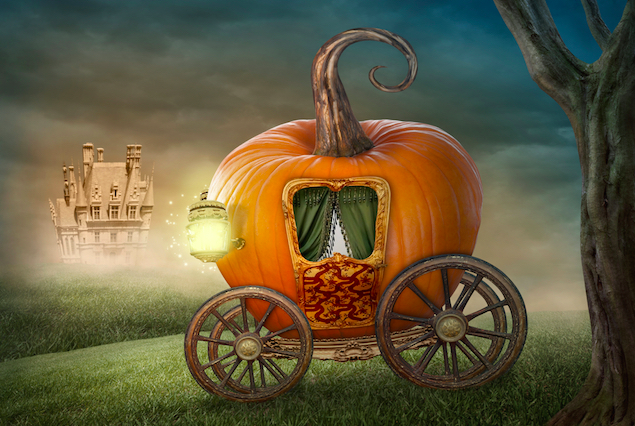
    Pumpkin carriage image via Shutterstock

  • How to Make Ordinary Relationships Extraordinary

    How to Make Ordinary Relationships Extraordinary

    Happy Couple

    “In the end, who among us does not choose to be a little less right to be a little less lonely.” ~Robert Braul

    I’ve been married to my wife for almost ten years, most of them involving struggle and drama.

    I had two failed marriages before that.

    This qualifies me to give relationship advice because, well, let’s just say I’ve made every mistake someone could possibly make while attempting to be in a relationship, so I’ve definitely figured out how not to do it.

    Blunders, confusion, and oversights, not to mention abject failures, have bludgeoned me into a few realizations—the most important one was that being a self-absorbed, insensitive jerk wasn’t exactly working for either one of us.

    For so many years, the best relationship I can remember having was with my dog.

    The thing is, watching Beauregard chase sticks, or sitting on the couch together watching football while he scratched himself behind the ear, was hardly going to be the next best-selling romance novel.

    Don’t get me wrong; it wasn’t terrible. I mean, my wife Jeannie and I have never fought very much, but there was always an undercurrent of dissatisfaction and frustration.

    It wasn’t terrible, but then again, it wasn’t great either.

    Shouldn’t it be great?

    Almost ten years into my third marriage, I decided that’s it’s never too late to take responsibility and be the catalyst for change.

    My wife is a sensitive, caring, nurturing woman who loves her children and, I believe, loves me.

    And I love her. I’m a devoted, faithful husband. So what was the problem?

    Well, we had begun moving in our own little worlds. Together but separate. Our own interests and separate friends. We’d pass each other in the hallway occasionally.

    Taking her for granted just snuck up on me. She deserved better, and I knew it.

    Looking back, I can’t believe the amount of resentment and heartache I put her through, yet there she was almost ten years later—despite the frustration and bitterness, she was hanging in there with never a thought of giving up.

    Then I had an epiphany.

    If I were going to have the kind of extraordinary, fulfilling relationship with my wife that I knew we were capable of and deserved, I’d have to bring some focus and intention to the situation.

    How to Become the Partner Your Significant Other Deserves

    Bringing her flowers or cooking him his favorite steak dinner once every six months is kind of like putting a Band-Aid on a broken leg. It’s a nice gesture, but ultimately it won’t fix the problem.

    No, I decided to take a more fundamental approach—changing my attitudes and behaviors so as to create a different paradigm to work from.

    Here are the changes that had the greatest impact on transforming our relationship.

    Give in once in a while (even if you think you’re right).

    Picking your battles can relieve a lot of pressure. It dawned on me that I just didn’t need to be right about everything.

    I stopped digging my heels in and standing my ground about things that didn’t make that much difference in the first place.

    Sure, I still needed to set my boundaries, but now I make certain it’s something that’s truly worth fighting for. I found that most of the things we were getting upset over really weren’t that important for me to be right about.

    I found that if you can just let go and give up your addiction to being right all the time, things will smooth out substantially.

    You know the old saying. “Would you rather be right or happy?”

    Forgive yourself.

    Sometimes I feel like a mistake machine waiting to be turned up to nine on the screw-up-o-meter.

    We all charge off in the wrong direction occasionally, but some of the rock-headed things I’ve managed to pull off have been world class!

    I concluded that the only way to feel good about myself was to forgive myself.

    Once you’ve forgiven yourself, you can then ask your partner to forgive you. This will allow for a fresh start, and you can begin relating to each other in a more open and loving way.

    Tell the truth (but maybe not every fact down to the smallest detail).

    Being honest and forthright is the only way forward.

    I’ve always been faithful, and I’ve been honest about the big stuff.

    It was the $100 power drill purchase or the traffic ticket for sliding through the stop sign that I’d sweep under the table occasionally.

    I’ve learned that it’s about integrity and how you feel about yourself.

    Now I try to be open and aboveboard about everything I do. Even if I think it’s trivial and unimportant.

    That being said, its best to be more sensitive to your partner’s feelings by not needing to share every detail about things in the past that have no bearing on the present or future.

    For instance, things like the intimate details of prior relationships.

    (There is a big difference between being open and honest and insensitively over-sharing.)

    Practice random kindness and generosity.

    I know I mentioned earlier about how bringing her flowers or cooking him a nice dinner was just a Band-Aid.

    Be that as it may, I’ve found that occasionally surprising your partner with something great can move the needle toward extraordinary quite quickly.

    It doesn’t have to be anything expensive. (Or, it could be if it makes financial sense.) Just do something nice.

    You know your partner, so you know what that thing is.

    You’ll be amazed at how good it will make you feel to do something nice for somebody just because that person is your best friend, and they deserve it.

    The reaction you get just might be extraordinary

    Giving your all is the key.

    It can be very frustrating to feel that you’ve given your all to a relationship and not gotten as much (or anything) in return.

    It’s been my experience that you can’t change or “fix” the other person unless that person really wants to change. But if you can stay in good communication with your partner, make sure your boundaries are set, and most importantly (if the relationship is important to you), don’t give up, there is an excellent chance your partner will sooner or later have an epiphany like mine.

    This is what Jeannie did, and it’s one of the main things that eventually led to me waking up like I did.

    The most important realization was that I needed to give much more to the relationship than I had been giving.

    It’s Never Too Late

    Every relationship is different, but I believe that if you practice the above advice, as well as maintain good-quality two-way communication, your relationship will move from ordinary to extraordinary.

    All that’s required is a little focus and intention.

    Jeannie and I could have muddled along the way we were, and things would have been okay, but I chose to make an effort to make it extraordinary.

    What about you?

    Embracing couple image via Shutterstock

  • You Are My Sunshine – 66 Years of Love

    You Are My Sunshine – 66 Years of Love

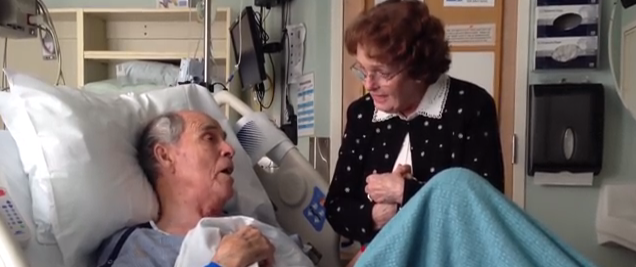
    Colleen Pinnegar spent three months by her husband’s side after he broke his hip (helping a ninety-year old neighbor who’d fallen) and then contracted an infection in the hospital.

    In this touching video, taken at a time when James suspected the end was near, they sing “You Are My Sunshine,” their theme song for over sixty years of marriage.

  • 7 Ways to Put Life Back into Your Relationship

    7 Ways to Put Life Back into Your Relationship

    Couple Jumping

    “Eventually you will come to realize that love heals everything, and love is all there is.” ~Gary Zukav

    I was always a hopeless romantic. Since I was a little girl, I craved love and the fairy tale romance.

    Growing up in a two-parent home, I was very fortunate to see that it was, in fact, possible. In my teen years, I remember fantasizing about the cute boy with the dimples and how he would take me to prom and eventually carry me over the threshold after our wedding night.

    I thought that all relationships were unicorns and rainbows, but after a series of failed relationships and two marriages by the tender age of thirty-two, I realized that relationships are hard work, and that in order for it to be successful, it has to be a two way street.

    You can’t force someone to love you. You can’t force someone to change. And you can’t push your values, beliefs, goals, dreams, and visions on someone else. Unfortunately, I learned that the hard way.

    The reality is that relationships are a series of ups and downs, and sometimes, they are downright confusing. Before you throw in the towel, remember why you started. If you’re going through a rough patch in your relationship, try these seven things to help bring it back to life.

    1. Stay positive.

    I know it’s hard to keep a positive spirit when you feel like your relationship is falling apart. Take the time to really focus on what’s right, the things you love, the stuff that’s going well, and the good times you’ve had together.

    When you’re discussing your relationship, highlight the good stuff and minimize the bad. You’ll feel better, and so will your partner.

    I used to tell all my girlfriends about all the wrong my partner was doing and found that the more I looked for the bad, the more it showed up. But when I focused on the good things about him and why I still loved him, it made me appreciate him that much more.

    Now, this doesn’t mean that you don’t deal with pressing issues or forget the problems at hand; it just means that you change the conversation to one that’s empowering to the relationship.

    Let go of your anger and annoyance about small things that irritate you. It won’t be easy, but every moment you hold on to poisonous feelings is another moment that will steal your chance to be happy with the person you love.

    2. Remember that no one is perfect.

    You must always remember that no one is perfect—not even you. As long as you and your partner are trying and open to growth, there is still hope.

    Remind yourself why you fell in love with them in the first place. We all have our own quirks and bad habits, and we expect our partners to love us despite all of that. Give them that same respect and understanding.

    The downfall of my failed relationships was always that I demanded control. I wanted to be right in every situation. I wanted to prove something, and I failed miserably every time. No one won, and the relationships turned sour as resentment built. It’s not about being right or wrong; it’s about opening up, listening and understanding where your partner is coming from.

    3. Love yourself first.

    Loving yourself and working on yourself is the beginning of all change, whether the change is in you or in someone else. Simply put, you can’t change someone else, but you can encourage change in those around you by the love, positivity, radiance, and growth you reflect.

    Spending your energy on pushing others to become what you want them to be will only detract from your own growth. Instead, focus on yourself and progressing in your own way. Live as an example for what you want to see in those around you.

    4. Make decisions from the heart.

    Ask yourself what you’re really trying to achieve in your relationship; ask yourself why you are with this person. If you really love your partner, is that reflected in how you act toward them, speak to them, or treat them? If someone were to see how you act in your relationship, would they be able to see a couple that really loves each other?

    If not, it may be time to start making decisions and actions based on the love and respect you have for your partner. Just like in the previous tip, you can’t just think you want something; you have to have action and feeling behind it.

    If you love your partner and really want to make it work, then take the necessary steps and commit. But know that both of you have to be on the same page. A relationship can’t be one sided. If you do the best you can to make it work and it still doesn’t, at least you tried.

    5. Lead by example.

    Take responsibility for your wrongdoings in the relationship. We are all so quick to blame our partners for why things went wrong. Look at yourself first. Take a day (or two) to observe your own behavior. Be honest about whether you have a mean edge in your voice or a condescending tone when you talk to your partner.

    Try to think before you speak to your partner, take a few deep breaths, and then say what you need to say coming from a place of love. Fully engage with your partner and really listen when he speaks. You really do get what you give.

    6. Start doing things you love.

    Find what makes you feel loved. Find what makes you feel alive and invite your partner to be a part of it. People that really love each other want to see their partner light up, have success, have fun, and live life.

    Likewise, help your partner discover what lights them up and fills them with joy. Sharing these experiences together can spark up a dull flame, especially after years of just existing in the relationship.

    This could be something simple, like doing starting a hobby or a club together, or something big, like starting a business with your partner.

    I remember when my partner and I started our clothing business together. It brought us so much closer. We worked together and thrived in the business, and were able to bring that into the relationship. We had things to talk and strategize about and were able to bring those skills into our marriage.

    7. Go on an adventure.

    Take risks. Do something fun. Do something scary. Try something new together. Think outside the box and take the relationship to a whole new level.

    Try skydiving, bungee jumping, or take trapeze or surfing lessons together. Infuse fun and adventure back into the relationship. These moments will be sacred and last forever. The thrill, the adrenaline, the rush of doing something out of the ordinary can bring more life into a relationship than you can imagine.

    If you want to salvage your relationship, you have to be willing to do the hard work, self-reflect, and then take action to balance your partner’s needs with your own. When things start to slide back, always remember to bring out your best self and treat your partner respectfully.

    Relationships are meant for growth, not comfort, and even if you try all of these tips, it still may not work. The beauty of it all is that you are preparing for the best relationship of your life, whether it be with your current partner or a future one.

    Every relationship happens for a reason. When you live and love with intention, awesome things start to happen.

    Jumping couple image via Shutterstock

  • Dealing with a Relationship Crisis: How a Little Distance Can Bring You Closer

    Dealing with a Relationship Crisis: How a Little Distance Can Bring You Closer

    Break Up

    “Getting over a painful experience is much like crossing monkey bars. You have to let go at some point in order to go forward.” ~C.S. Lewis

    When you’re in the middle of any sort of relationship crisis, the very last thing you want to do is let go. Conflict with someone you love often makes you want to do the very opposite, especially when the other person is already doubting the future of the relationship.

    When we’re feeling threated by the loss of someone we love, we act from a place of fear. Our stress hormones sky rocket as we react with our fight or flight instinct. Suddenly we hold tighter, talk more, do more, and think of nothing else.

    However, with a little space and hindsight, it is easy to see this sort of intensity around a negative situation only works to amplify the anger and resentment that both parties being feel.

    When you are mid-crisis and fighting though, it is very hard to see that the very thing you are doing to try and resolve the situation is actually making everything far worse.

    When I packed my toddler in the car and drove away from my husband six months ago, I fully believed I would not be returning. I honestly thought that if it had become so bad that we had to separate, that we would not ever reconcile our problems.

    To my surprise, it was the act of letting go that allowed us both some space to re-evaluate our relationship, and helped us to finally realize that none of our disagreements were worth losing our family for.

    Don’t get me wrong; I’m not saying that any of it was easy. It was ugly and dark and messy. It took us both to rock bottom, and to a place we never thought we’d come back from.

    But it was this very darkness that forced us to focus on our own thoughts and actions rather than our external conflict with each other. Looking at ourselves was exactly what we needed to start viewing our arguments from each other’s perspective so we could finally move past them.

    For me, the process of grieving the loss of what we had in our relationship shone a light on all of the things I had done to contribute to us falling apart.

    At first, this was in an angry and disparaging way, but as I realized I had to start looking after myself in order to move forward, I saw the need to own my own part in what had happened, without negative judgment.

    Realizing what I had done wrong was empowering. It gave me the opportunity to approach my partner in a new way. And it was clear from his response that he had been doing some very similar soul searching in the time he spent on his own.

    When we started to reconnect, we came from a place of understanding and love, rather than resentment and hurt. As you can imagine, this drastically changed our interactions. And rather than spiralling into our past negative cycle, we were able to create new positive experiences to share.

    Even now, this mindset is one that requires conscious effort to maintain. It’s too easy to get caught up in the negative annoyances that pop up when you are so close to someone, so we have to work hard to make sure we don’t allow ourselves to get stuck in that cycle again.

    Especially when we’ve both hurt each other badly in the past, it would be all too easy to keep dragging that up with each petty argument that arises.

    But we’ve both been to that dark place, and the feeling of losing something that we value so much remains a reminder of why we work so hard to maintain what we have. Why it is important to always speak from a place of love, not a place of hurt, annoyance, anger, or, the amplifier of all, exhaustion.

    While the drastic step of separation is exactly what helped us reconnect, it didn’t need to go that far.

    If only we’d had the awareness to step back from each other and view our relationship from a place of love, rather than fear, we may have been able to save ourselves the incredibly painful experience of letting go.

    Instead of grasping, fighting, and reacting (all fear based responses) and focusing on our own pain, we might have been able to use love to see and understand the hurt that the other person was feeling.

    Rather than continuing on our negative spiral of conflict, focusing only the wrongs that had been done to us, we needed to step back and be honest with ourselves about our own roles in the relationship conflict.

    We both needed to realize that our own behavior is the only thing we can control, and it was our own actions that needed to change to move us to a better place.

    Hindsight is a beautiful thing, isn’t it?

    So, if you have been fighting and reacting from a place of fear in your relationship, try stepping back and giving yourself some space to look at the real issues.

    Give yourself the distance you need to view the conflict from a place of love and give yourselves the chance to find your way back to each other, without having to let go.

    Divided couple image via Shutterstock

  • Find Yourself Before You Find Love

    Find Yourself Before You Find Love

    “Waking up to who you are requires letting go of who you imagine yourself to be.” ~Alan Watts

    After a few years of living through the betrayal and anger of my divorce, my friends decided it was time for me to start dating again.

    They took me out to the bars, dressed me up, bought me drinks, and showed all the men how cute I was.

    I didn’t feel cute. I felt like a fraud.

    The bar scene was not for me. I felt like a piece of meat wrapped in cellophane on the shelf waiting for a man to decide which one he’d like to eat.

    I dressed up in my newly skinny body and looked the part of the fun loving girl, but inside all I felt was desperation.

    I put on makeup so men would think I was pretty.

    I exercised so my body would look good for others to gaze at.

    I smiled and giggled so men would think I was fun and funny.

    I didn’t feel fun, funny, pretty, or like I wanted to be looked at. I felt scared.

    I kept grasping at a portrait of who I wanted everyone to think I was. I so wanted to be this picture perfect representation that I thought men wanted. I wanted a man to like me so I could feel loved and validated.

    I finally realized my imaginary self-portrait was who others wanted, not who I wanted to be now. I was not being true to my new self.

    So I trashed the portrait, went home, and got my act together.

    I wanted to find love again but not like this. Not by picking up someone in a bar who was looking for love in all the wrong places, just like I was doing. I needed to learn to love myself, because no one else could do it for me.

    I wanted to find love by knowing who I was. Then I could find someone who complemented me. So I stopped going out and started to learn who I was, what I wanted in life, and what I deserved in a man.

    What I did learn from speaking to men in bars is that real men want real women. I decided to learn how to be real. Learning how to be real would require some investigative research on my part. I had lost myself in my marriage. It was time to find me.

    I decided to step out of my proverbial box. I had to try new things and figure out what activities I liked, and which ones I needed to stay away from.

    I traveled to developing countries. I had my palm read and visited a mind reader. I went kayaking, took up road biking, hiked on volcanoes, rode zip lines through the rain forest, joined book clubs, learned to meditate, I found out what tai chi was.

    I started to visit international restaurants. I went to museums and hung out in coffee shops. I got my yoga teacher certification and started to teach. I tried things I had always wanted to do but never could while I was married.

    I had fun. I learned that I favored Thai food over Italian food. I learned that I can ride thirty-five miles on a bike and love it. I learned things about me I never knew.

    I stopped wearing most of the makeup I had worn thinking it made me look good so men would like me. Instead, I decided to look good for myself.

    I stared at myself in the mirror and told myself over and over that I am beautiful, even though I didn’t believe it. The more I told myself I was beautiful, the more I began to feel good about myself. 

    I wanted my beauty to be defined by my self-confidence, which began to return when I started to truly believe in what I began to represent.

    I started to dress the way I wanted to felt, not the way I wanted to be looked at. I wanted free flowing clothes that I could move in. I wanted to be able to feel my body, not the clothes pinching me.

    I started to exercise because it made me feel good, not so I would look good. I accomplished both by doing what I wanted for me, not for them. I found exercise that I loved to do. I increased my yoga practice and kept on walking. I took up rowing and increased my biking.

    I stopped going to bars to meet men. Instead, I went to the occasional bar to hang out with friends and to be social.

    I stopped looking at men as the answer to my problems and started looking at myself to solve them.

    I realized I needed to know what my interests were if I wanted to attract a man who shared them.

    When I learned what I liked, I became happier than I had ever been before. I learned to be true to myself, not someone else.

    I realized that I had been incomplete without the self-knowledge required to define my own boundaries, my likes, and my dislikes. Without knowing what my boundaries were, I could never attract a person into my life that could live within them. I had never known how to define and stand up for my own beliefs.

    When I felt confident with my new self, I joined a dating site. I was far more aware of the kind of person I wanted to attract because I knew who I was.

    Writing my profile specifically for what I wanted and how I wanted a man to treat me was far better than telling someone to take me on a romantic date, when I couldn’t define what I thought a romantic date was.

    So get on with it. What are you waiting for? Get out there and experience life. Find out who and what you are. Live life by yourself. Be happy by yourself. It’s your life; make it what you want. Don’t look for someone else to do it for you, because they can’t. Only you can know who you really are.

  • When Love Is Not Enough: 4 Tips for a Strong Relationship

    When Love Is Not Enough: 4 Tips for a Strong Relationship

    “Good relationships don’t just happen. They take time, patience and two people who truly want to be together.” ~JnK Davis

    My husband and I were going through a difficult time a few years ago. It felt like a pivotal time in our relationship. People say that marriage isn’t easy and you have your ups and downs. Well, we were definitely experiencing a low point.

    We had been together for several years; we had been high school sweethearts and were each other’s best friends.

    During this time we had several issues going on in our life, one of which was my husband being out of work, and suffering with anxiety, depression, and a lack of self-esteem and confidence as a result. Our relationship was in a bad place and we were being tested.

    We were not spending any quality time together, nor were we going out together as a couple (my husband didn’t want to face anyone, including friends and family).

    We didn’t feel like each other’s friends, let alone the lovers and best friends we had grown to be. At times we even felt like strangers—or even worse, each other’s enemies. We were forever fighting, bickering, and whining at each other.

    After a lot of heartache and many heated arguments, we realized we could no longer go on like this. When we stopped to analyze the situation, we asked ourselves several questions:

    Did we still love each other? Did we still want to be married? Had everything changed so much that we just couldn’t work things out?

    Once we decided we wanted to be in our marriage, we each made a commitment to start treating each other differently.

    We hoped that, with a new perspective and our mutual love and respect for each other, we could start working together and make the change we so desperately needed. We hoped that a change in attitude and behavior would salvage our marriage.

    The following four elements became very critical in our relationship and led to us saving our marriage, as well as making it stronger for the future.

    1. Communication.

    During this rough period we stopped communicating clearly. It’s funny how, as human beings, we withdraw from each other when there is a sign of trouble or misunderstanding.

    We decided to consciously work on our communication. We spoke in “I” statements rather than “you” statements.

    We expressed how we felt rather than blaming a situation on the other person. “I” statements work because they show how you feel, whereas “you” statements create a sense of accusation and blame.

    This helped us be open with how we felt, stopped us from shutting each out, and allowed us to talk about our issues in a productive and efficient way.

    2. Appreciation.

    We were feeling a lot of resentment toward each other, and not feeling loved and appreciated, so we put in place a daily appreciation diary. Keeping a personal gratitude journal is a great asset; it makes you focus on the positive in your life and leads to happiness.

    Keeping a gratitude diary as a couple had the same benefits and gave us hope. It forced us to focus on the positives of the day and not just the negative events or what the other person did or didn’t say. It made us appreciate the other person and see them for the person we fell in love with.

    It also made us feel good to be acknowledged and appreciated for what we had done on a daily basis. It helped to hear the other person say thank you, even though we were being thanked for doing our expected roles—me, for going to work full time and my husband, for taking over the home duties.

    It was important for us to hear the gratitude from the other person so we didn’t feel like we were being taken for granted.

    3. Quality time as a couple.

    It was also helpful for us to schedule quality time with each other—getting out of the house and spending time together away from all the issues of our life; taking the step back and just being with each other.

    It’s important to set some time aside to just be a couple; spend quality time together regularly, but especially during hard times. This doesn’t need to involve money; just a walk down the park together or along the beach will help. Just taking yourself out of your home environment will be beneficial.

    We enjoyed each other’s company once again and started to feel more happiness as a couple.

    4. Showing love as the other person wants to receive it.

    We both still loved each other, but didn’t really feel that we were loved. I’ve read books and articles about how people receive and give love differently. Your partner may not perceive love in the same way as you; and remember, someone’s perception is their reality.

    How your partner receives your love is important. You can’t assume the other person knows that you love them.

    For myself, I feel loved when people spend quality time with me, making the effort to talk to me and listen. My husband, on the other hand, receives love by affirmations, people giving him compliments and positive statements.

    With this in mind we made an effort to show each other love in ways that we knew would make each other feel loved on a regular basis.

    By doing all of this we started to feel like we were in a loving marriage and that weren’t battling through our difficult life on our own. We had each other there for the support we needed. 

    We look back on this time as a lesson learned. We feel proud that we got through it and grateful that our relationship is stronger. We faced the challenge and came out on top.

    We now practice these simple things every day to grow together and maintain a good and loving relationship.

    We can be confident that by using these simple techniques, we can face the many challenges life throws at us together, such as having a miscarriage last year and our ongoing quest to start our own family.

    If you are fortunate enough to share your life with someone you love, then you owe it to yourself and your partner to make an effort every day in your relationship.

    They say love conquers all and that all you need is love, but unfortunately a solid relationship needs more than that. It requires being there for each other, showing support, feeling loved, being grateful that you are sharing your lives together, and above all, showing your appreciation every day.

    Photo by Jeanne

  • You Have to Know What Kind of Love You Deserve to Attract It

    You Have to Know What Kind of Love You Deserve to Attract It

    “Your task is not to seek love, but merely to seek and find all barriers within yourself that you have built against it.” ~Rumi

    My ex used to stomp out of the house every time we had an argument.

    Literally, he would leave. And usually before he left he’d smash something. One time it was a lamp; another time it was a cast iron skillet and the tile floor it landed on.

    He would stay away for about an hour, driving his sports car really fast to let off steam.

    I know this because when he returned, he’d tell me that his sports car helped him deal with the frustrations I caused him.

    I frustrated him.

    I didn’t mean to frustrate him. I certainly didn’t mean to make him angry.

    All I wanted to do was talk. I was having a problem and I was under the impression that people in a relationship were supposed to solve problems by discussing them.

    But somehow, our discussions would turn into arguments.

    And maybe a third of the way through the argument, I would have no idea what the initial discussion was about. The conversation would have turned so many corners that I’d need a map to get out. And the argument would usually end by me not understanding his feelings.

    It was very confusing to me.

    I found it hard to maintain a civil conversation when I wasn’t even sure what we were talking about. (more…)

  • A Lesson About Love Learned from Both Joy and Tragedy

    A Lesson About Love Learned from Both Joy and Tragedy

    Holding Hands

    “There are only two ways to live your life. One is as though nothing is a miracle. The other is as though everything is a miracle.” ~Albert Einstein

    A couple of months ago, I had one of the best and worst weekends in a very long time.

    My best friend for the last 15 years was getting married, and I was in the wedding party. We spent most of the weekend eating, drinking, laughing, and reminiscing, and above all celebrating a beautiful love story of two very wonderful people.

    It was particularly special to me, as earlier this year my boyfriend and I moved a thousand miles away, to Austin, Texas. Since 2010 I’d lived a three-hour drive from my Chicago area childhood home, but now I felt exceptionally far from most of the people I love.

    Emotions were high on the day of my friend’s wedding, and beyond the obvious excitement, we all felt a little nervous for her, as she’d expressed anxiety about walking down the aisle in front of so many people.

    Based on her smiles and laughter, the day went by without a hitch, until ten minutes before the ceremony was set to start. My friend’s mother was holding up her veil and fanning her; she was feeling lightheaded. It seemed to be a combination of nerves and the fact that she’d forgotten to eat anything that day.

    The bridesmaids and groomsmen (all 18 of us!) alternated between doting on her and giving her more space. We kept anxiously glancing at each other, silently asking, “What should we do?”

    Then her mother started to sing. “Goooing to the chapel, and we’re gonna get maaaarried.” We all joined in.

    We sang 60’s Motown, 90’s boy bands, every Disney song we could think of. When we couldn’t remember the words to a song, someone would shout out the beginning of a new one.

    My friend got up and danced with her soon-to-be husband, and by the end of it all, she was smiling. I choked back tears, feeling the love fill the room. When the wedding planner told us it was time to line up, the bride was ready to go.

    After the ceremony, I enjoyed the company of some old friends I hadn’t seen in years, danced and danced for hours, and shed a few more tears at some of the speeches in my friend’s honor. The next morning I woke up with a lost voice and leg cramps from dancing that didn’t go away for two days. (more…)

  • Marry Yourself: How to Commit to Self-Love and Say “I Do” to You

    Marry Yourself: How to Commit to Self-Love and Say “I Do” to You

    “You, yourself, as much as anybody in the entire universe, deserve your love and affection.” ~Buddha

    I married myself at the age of thirty-seven in a quiet ceremony of one near a waterfall in Big Sur, California.

    I had prepared my “soul vows.” These vows were my deepest commitment to love, cherish, and deeply care for all parts of myself, in sickness and in health, until my time on the planet comes to an end.

    My soul vows became an ode to honoring my highest self always, and remembering that seeking love outside myself will never bring fulfillment unless I possess radical, unshakable love for myself.

    With that knowing, these are some of my soul vows:

    I vow to comfort myself during times of hopelessness, despair, depression, disillusionment, or any difficulty that arises.

    I vow to be my beloved always and in all ways.

    I vow to never settle or abandon myself in romantic partnerships again.

    I vow to live in the faith my life unfolds in mysterious divine perfection.

    I vow to honor my spiritual path and create an amazing life whether I am ever legally married or not.

    I vow to honor my calling and live my life as a work of art.

    Some vows were tender and some fierce, some private, and some to be shared with the world.

    All vows were an expression of my soul’s calling and a deep desire to love myself and care for myself at the deepest possible level in all areas of my life.

    These vows were the gateway into a life that was deeper, richer, and more connected to my soul’s guidance.

    Nearly nine months later, I have a birthed a new life. Many of the visions I had for a decade are starting to come true.

    These visions include attracting a loving partner, spending time in my beloved Bali, and feeling a deeper sense of purpose and passion for my work. (more…)

  • Letting Go and Starting Over When It’s Hard

    Letting Go and Starting Over When It’s Hard

    “Letting go isn’t the end of the world; it’s the beginning of a new life.” ~Unknown

    This June marked twelve years since I got divorced and moved 1,000 miles away from my hometown. It’s an anniversary that I usually remember, but not one that I tend to dwell on… until this year.

    This year, the memories of the demise of my first marriage were hovering at the forefront of my mind.

    Maybe it’s because I saw a friend who is roughly the same age I was, going through similar hard decisions. Maybe it’s because my spouse and I were struggling to make a hard decision about an external relationship that isn’t going well.

    Whatever the reason, it caused me to reflect on what I’ve learned in the last decade or so.

    My ex-husband and I met in high school, when we were seventeen, and had been dating for seven years when we got engaged.

    I think on some level we knew, even then, that we shouldn’t get married, that things weren’t that great, but people were starting to ask, and everyone (including us) assumed that we would get married. So we did what we were “supposed” to do.

    Things were okay for a little while, and outwardly we seemed happy. Inside, however, things were crumbling. We kept trying to put the pieces back together, but every time we tried to hold tighter, things dissolved into another argument, each cutting more deeply than the last.

    By the end we barely spoke, each retreating to separate rooms for the evening. Eventually, I got up the nerve to call it quits. He agreed, and for the most part, the split was amicable.

    Honestly, I think my decision to move away was harder for him to accept than the divorce. Maybe because it made things seem more final.

    So here I am, twelve years later, older and hopefully wiser, looking back at that time in my life and thinking… (more…)