Tag: mad

  • Dealing with Anger Storms Without Causing Destruction

    Dealing with Anger Storms Without Causing Destruction

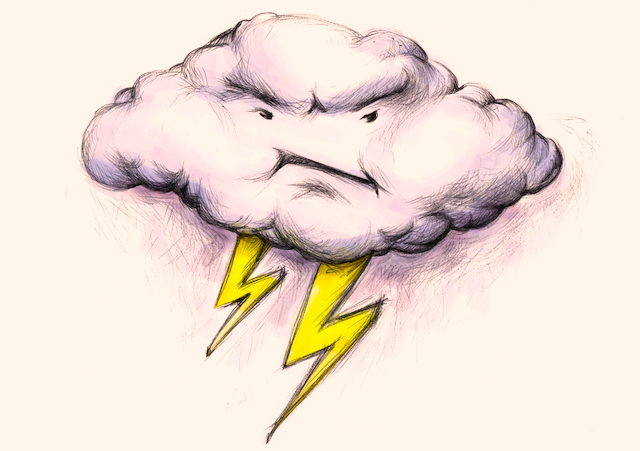
    Angry Thundercloud

    “Anger is like a storm rising up from the bottom of your consciousness. When you feel it coming, turn your focus to your breath.” ~Thich Nhat Hanh

    There is an elderly lady—I’ll call her Ms. A—living in my mum’s village. She regularly shouts at people as they pass by her house walking their dogs.

    She can be quite intimidating really. She even followed my mother up the road on one occasion, much to Mum’s alarm. My mum, unlike me, now avoids walking past her house, even though it’s a good route for her to take when walking her dog.

    Ms. A has also shouted at me and called me names on a number of occasions. The thing is, I know Ms. A has mental health issues, and I have remarked to my mum how much she must be suffering, poor lady, and needs our understanding rather than our condemnation.

    But on this particular day, all my good thoughts and intentions went right out the window.

    I’m embarrassed to say that when she came over to shout at me, instead of walking by like I usually do, I went right up to her and shouted angrily back.

    I became the intimidator then, telling her, in no uncertain terms, that she really must leave my mum alone and also stop shouting at me and calling me rude names when I walk by on the public road. I said I would report her for harassment if she didn’t stop.

    She shouted back at me, of course. She also looked rather alarmed.

    After I finished my rant, I resumed my walk, shaking. I felt absolutely rotten—guilty, ashamed, sad, and embarrassed. I was horrified at my reaction.

    It was an uncomfortable walk home to my mum’s that day. I knew I hadn’t helped the situation at all. So much for my understanding and compassion!

    So what went wrong? When I looked within, I realized I’d approached the house thinking a number of unhelpful thoughts due to my desire to protect my mum and my perception of being wronged. Some of my thoughts included:

    How dare this woman intimidate my mum?! I really should put her in her place and stop her from doing it again. And how dare she say those rude things to me?!

    It’s a public road; I’m doing nothing wrong by walking here. She’s the one in the wrong, not me, so I have the moral high ground! Yes, I’ll sort this situation out once and for all—I’ll tell her!

    All these stormy thoughts were racing around my head as I neared her house. Looking back, I also realize how much I always dreaded walking by there. I didn’t like getting shouted at, but I didn’t want to change my route either, as that seemed unfair.

    All this was a heady mix of thoughts and emotions, and more than enough to initiate a storm.

    By the time I reached her house, where she was standing, seemingly waiting for me, the storm hit, and I was lost to it.

    It certainly wasn’t my finest hour, but I learned a lot about myself in the subsequent analysis of the whole sorry incident.

    I realized that my reaction had come from a place of darkness, a place where my own distress lurked, and that shining a light on it would help to illuminate a much better way to respond in the future.

    I also realized that it had been a premeditated outburst, in the sense that my thoughts had helped whip it up. I saw too that I had gotten it all wrong: my thinking and perceptions were faulty. Ms. A was limited in her ability to control herself, due to her mental illness, and she really wasn’t a threat to either my mum or to me.

    I could also see and understand why this storm had arisen and what was at the root of it. This led to me feel more compassion for myself, which in turn helped me to face, and also own up to, my angry outburst.

    I once wrote about a tree I had walked by in the forest. It was crowded by other trees, and it had curved its way around them to reach up to the available sky. I realized that this curved tree hadn’t gotten caught up in how unfair the situation was; it had just gotten on with things and found the light it needed.

    This nature lesson advises us to ‘curve around’ more when a situation calls for it.

    By this I mean refusing to get caught up in a “that’s not fair!” mentality or get worked up over things that are of little consequence in the big scheme of things. This isn’t a helpful way to live our lives: it causes a lot of unnecessary stress.

    I’m not saying that we should just roll over or back down all the time; rather that it would be much better for us to not rush into situations without thinking things through carefully and dispassionately beforehand. I’m all for being (calmly) assertive when it’s required.

    It’s about looking at the bigger picture and taking a more balanced and less inflexible approach to life.

    Thinking about Mother Nature and anger storms, another lesson occurs to me: nature doesn’t take revenge.

    Even though we can sometimes think that nature must be angry with us and is hitting back at us with devastating storms, floods, and hurricanes, in reality it is just in the process of bringing balance back to the planet.

    Please note, I am not denying the immense human and animal suffering such events cause. My point is that nature bears no dark ulterior motive—it isn’t taking its revenge on us.

    Nature doesn’t think to itself that we need bringing down a peg or two; that we are getting out of hand and need to be punished. It isn’t reacting from a place of aggression. It just does what it needs to do to survive the best way it can. These storms are not sent as a personal attack on us.

    And that’s the problem with our own angry reactions; they often come about because we take things so personally.

    We can feel that we are personally under attack in some way and then go on the attack ourselves. Tit for tat. Not a good idea, as things escalate—they always do!

    If we can learn to step back and realize that someone’s anger has everything to do with their own suffering, rather than with us, we may be able to take things less personally and not feel the need for revenge.

    We may (or may not) need to take some action, but if we do, we can do it from a place of non-aggression, like Mother Nature. We can also do it from a place of clarity and calm. For this, we need to stop, focus on our breath, and let the storm clouds pass.

    I learned a lot about myself that day, stuff I didn’t really want to own up to. But I did, and I’m grateful for the lessons.

    Next time I will be more mindful of my thoughts and not let them whip up an unnecessary storm. And if storm clouds start to rise up, I’ll focus on my breath and walk on by. I’ll look at what’s happening inside me and remember, too, to take on board the other person’s distress.

    I’ll also take a leaf out of nature’s book on responding to stressful situations: I’ll curve around when I think it’s the best approach and try not take things so personally.

    Angry thundercloud image via Shutterstock

  • Get Past It Instead of Getting Even: Revenge Isn’t Winning

    Get Past It Instead of Getting Even: Revenge Isn’t Winning

    For every minute you are angry you lose sixty seconds of happiness.”  ~Ralph Waldo Emerson

    The first thing many of us think of after someone has wronged or disrespected us is how to get even—how to hand out a dose of that person’s own medicine in an attempt to feel totally vindicated.

    Most of us have thought about revenge at one point or another.

    Maybe it’s a co-worker, a classmate, a family member, or even a boyfriend or girlfriend, but regardless of the relationship it’s often an instinctive reaction when someone attacks the deepest, most fragile part of ourselves

    Does this really accomplish anything positive?

    We might gain some personal, though temporary satisfaction, but it does little to ease the pain others have inflicted upon us.

    I recently received an unexpected email. While the sender was certainly a surprise, the content of the message and its motivation were not.

    The sender was my father, and in what has become my parents’ only way of communicating with me over the last few years, it was a familiar message filled with anger, blame, and defensiveness.

    Though this wasn’t the first time my parents had defamed me in this way, it still saddened me for much of the next few days.

    Children, especially adolescents, are known for “mouthing off” to their parents while growing up, but it’s hard to imagine this coming from someone who taught you that this was disrespectful.

    My relationship with my parents has become difficult to maintain as a free-thinking adult.

    I suppose some might say that we should always forgive family members for their faults, especially parents.

    But regardless of the relation, at some point you grow tired of others not telling the entire truth; tired of having to defend yourself; tired of being referred to as the cause of someone else’s issues.  

    Growing up I had a great deal of respect for my parents. They provided for all of my worldly needs, taught me invaluable lessons and skills, and maintained a true sense of family and tradition within the walls of our home.

    Yet something was missing for me, as I was burdened by an inner need to always seek my parents’ approval and acceptance, which rendered me incredibly insecure and anxious growing up.

    Eventually, I became completely dependent on them for emotional stability and continual guidance. I didn’t love and trust myself enough to be the keeper of myself, so I allowed my parents to fill that role for me.

    As I evolved into an adult, found someone who loved me without conditions, and began to develop a deep appreciation for the person I was, I realized I no longer needed the family dynamic that I was so dependent on for so long.

    My parents, however, had a difficult time understanding that I was no longer that insecure, anxious, easily manipulated little boy trying to find his place in the world. I was now an adult, ready to chart his own course.

    We started arguing regularly, and many times rather than deal with the repercussions, I would just say I was sorry and return to how our relationship had always been.

    This dynamic continued on for many years until one day I offered my opinion and perspective on a complex, delicate matter they were considering. I questioned their motivation and feared the possible outcome, and thought voicing my concern would be appreciated.

    I was truly stunned by their reaction.

    Letters, emails, character attacks—they even posted hateful comments on a newspaper’s website I contributed to frequently, dragging my name through the proverbial mud in an effort to convince people that I wasn’t the man I proclaimed to be.

    I never expected something so heinous from my own parents. I was so taken aback, hurt and angry that my first thought was how to get back at them—to do a little mud-slinging of my own in an attempt at destroying their character, just as they had done to mine.

    Then I stumbled upon the following quote, and suddenly everything I thought I understood changed.

    “An eye for an eye only ends up making the whole world blind.” ~Gandhi

    How could I possibly be so naïve to believe that seeking revenge on my own parents would make my actions any better than theirs, let alone change the course of what had already been done?

    My revenge would only keep the wound open longer, perpetuating my bitterness and squandering my time on something I couldn’t change. Though never easy, acceptance is key in putting the pain behind you and moving forward with your life.

    I began to ask myself: Will I find any inner solace by propagating my anger? If I succeed at getting even, will it really change my reality? Does it make me the better person to do to them what they’ve done to me?

    As difficult as it was, instead of arguing and trying to defend myself, I simply said nothing. No replies, no rebuttals, no communication, nothing to engage us in the kind of negative confrontations we were accustomed to.

    I’ve learned that living without the drama that so many people thrive on is the only way to live a meaningful life.

    I’m far from perfect and those feelings of retribution still creep up now and then, especially when I get an email or letter as I did the other day. But each time the thought pops into my head, I begin to realize something:

    Regardless of how justified you might believe you are in seeking your revenge, it’s important to remember that life isn’t a game and simply getting even doesn’t mean you’ve won the battle; it just means you’ve lost your self-respect.

    It’s taken me a while to accept that I probably will never see my parents again. Yes, there will be times when I miss the family unit I remember from when I was a little boy; but then I’m forced to remind myself that things will never be as they were again.

    It saddens me that my parents are missing out on getting to know the man I truly am, instead of the insecure, anxious little boy they’re convinced still exists.

    In truth, I would not be the person I am today without them—a person of character and integrity who’s managed to touch the lives of many, even theirs I’m sure.

    In my heart I forgive them for everything that’s gone on, and the peace that provides me is much greater than the fleeting satisfaction of seeking revenge.

    Though it might seem impossible, even the bad things that happen in life have a funny way of leading us to a better place. At least, they did for me.

    Photo by joybot

  • 20 Things to Do When You’re Feeling Angry with Someone

    20 Things to Do When You’re Feeling Angry with Someone

    “If you are patient in one moment of anger, you will escape a hundred days of sorrow.” ~Chinese proverb

    As Tiny Buddha grows larger, I find there are a lot more people emailing me with requests. The people-pleaser in me wants to say yes to everyone, but the reality is that there is only so much time in the day—and we all have a right to allocate our time as best supports our intentions, needs, and goals.

    Recently someone contacted me with a request that I was unable to honor. After I communicated that, he made a sweeping judgment about my intentions and character, ending his email with “Buddha would be appalled.”

    As ironic as this may sound given the context of this site, I felt angry.

    I felt angry because I have always struggled with saying no, and this was exactly the type of uncomfortable encounter I generally aim to avoid.

    I felt angry because I felt misunderstood and judged, and I wanted him to realize that he was wrong about me.

    I felt angry because I assumed he intended to be hurtful, and I didn’t feel like I deserved that.

    I ended up responding to his email fairly quickly with a little bit of defensiveness, albeit with restraint. After I pressed send, I felt a little angry with myself for letting this bother me. Then I realized that this was a wonderful exercise in learning to deal with anger.

    It’s inevitable that I’ll feel that way again—and many times, with people I know well and love. We all will. We’ll all have lots of misunderstandings and annoyances, and lots of opportunities to practice responding to anger calmly and productively.

    If we’re mindful, we can use these situations to better ourselves and our relationships. (more…)