Tag: lying

  • Why People-Pleasers Lie and What We Gain When We Share Our Truth

    Why People-Pleasers Lie and What We Gain When We Share Our Truth

    “You’re a liar. People-pleasers are liars,” a friend said to me. I felt like I was punched in the gut. “You say yes when you mean no. You say it’s okay when it’s not okay.” My friend challenged me, “In your gentle way, begin to be more honest.”

    I believed the lie that pleasing people would make my relationships better. It didn’t.

    I decided to take my friend’s challenge to tell the truth. People didn’t have a relationship with me; they had a relationship with another version of someone else. They didn’t know me.

    People-pleasing was safe; it was how I hid and protected myself so I could belong. Besides wanting to belong, pleasing-people is a bargain for love. If I kept people happy, I believed I would be loved. If I took care of others, I believed I would be loved.

    Showing up differently in relationships is like learning a new dance. You may feel clumsy and awkward at first, but the old dance, while comfortable, is unhealthy. The old dance creates overwhelm, frustration, and resentment.

    I am now a recovering people-pleaser. My journey started when I faced the truth that I was a liar. The first step in change begins with self-awareness. Once you are aware, you can learn new dance steps. The new dance looked like saying no, tolerating less, and telling my truth.

    As I told the truth, here’s what I noticed in my relationships:

    First, I experienced true intimacy.

    As I was more engaged in being honest, others began to know me, not a fake version of me.

    In his book, Seven Levels of Intimacy, Matthew Kelly describes intimacy as “In-to-me-see.” I started saying things I’d never felt comfortable saying before—like “I see things differently” and “that doesn’t work for me.” Secret-keeping was killing my soul, so I also started opening up about the pain and brokenness I felt regarding my former spouse’s addiction and how I’d protected him at a cost to myself.

    When we share more of who we are with others, then we are known and loved, which is a powerful need in humans. I was not broken as a people-pleaser but broken open. I allowed myself to receive the love of others as I allowed them to see me. As a result, I experienced intimacy in a new way.

    Secondly, when we stop lying to others and ourselves, it builds trust.

    It is hard to love someone when you don’t trust them. Trust is the foundation of all relationships. When we are real, others trust our words and actions, and we become more trustworthy. We are no longer chameleons, adapting and saying what others want to hear when interacting with us, and trust grows.

    Lastly, when we pay attention to being more real, we are more fully engaged in our relationships.

    We are wired for connection. When we are engaged in bringing a greater depth to our relationships, the investment pays off. It’s like we are making a deposit in the relationship when we allow others to “see us,” and they in turn feel closer to us. As I began to share more in my relationships, it helped others to open up. One friend said, “Keep sharing; it helps us too!”

    Being more honest in our relationships is a dance worth learning. It improves intimacy, trust, and closeness in our relationships. After all, the alternative is being called a liar!

  • How to Love a Lying, Cheating Heart

    How to Love a Lying, Cheating Heart

    Brett’s name flits onto my screen with an incoming email.

    “Call you right back,” I say, hanging up on a friend.

    Last time I talked to Brett, the Obama family lived in the White House. Last time I thought of him? Last year, as Melania took her third crack at presidential Christmas décor, and I failed to muster enough spirit to fetch our pre-lit tree from the garage.

    Brett’s message came in through the contact form on my website. He invited me to meet for coffee; full respect if I decline.

    Four years ago, it was me who reached out to Brett. On a dreary morning in early December 2015, I called his office to report that our spouses had been having an affair.

    The receptionist had put me on hold. I held my breath, rehearsing: I don’t know if you remember me. My husband Sean used to work with Rebekah—

    A soft click, then Brett’s voice on the line, “Jess.” He held that syllable of my name as if it were a preemie, just born. “I’m so sorry about Sean.”

    I slumped on the sofa. Five weeks in, I was still surprised to be greeted with condolences. “Thanks, Brett.” I said. “And I’m sorry for what I’m about to tell you.”

    A heart attack claimed Sean, in the Houston airport, on November 4, 2015. I woke up that morning a stay-at-home mom whose super-achieving husband was about to become CEO of a mid-sized company. By lunchtime, I was an unemployed widow, and sole parent of a heartbroken nine-year-old.

    My love story with Sean had begun in 1995. He was my biggest supporter, my closest confidante, and the co-author of a lifetime of inside jokes. When Sean died, I lost my best friend in the world. Two weeks later, when a good friend—who thought I already knew—let slip that Sean and Rebekah had been having an affair… I lost him again.

    I knew I was a mess, and resisted the urge to ricochet my pain onto Brett. But I finally decided to call him once I’d cottoned on to Sam Harris: “By lying, we deny others a view of the world as it is. Our dishonesty not only influences the choices they make, it often determines the choices they can make… Every lie is a direct assault upon the autonomy of the person we lie to.” Bingo.

    Years earlier, newly enchanted lovers Sean and Rebekah had set up dinner with Brett and me at Redwater Grille. I got to know Brett a little that night, and (since she didn’t attend Sean’s funeral) that evening was the last time I saw Rebekah. We sat next to each other in the leather booth. She took a bite of her salad, then held her French-manicured fingertips in front of her lips, “I fink I broke my toof.” Her cheeks were flushed pink. She looked timid and wide-eyed, like an anime character.

    “Lemme see,” I said, and she lowered her hand a little. The white porcelain veneers on her two front teeth were chipped, revealing a black half-moon and craggy yellowed ridges. “It’s not that bad,” I said, patting her arm as she scooted past me toward the washroom. “You can barely notice.”

    Sam Harris would not have been impressed with me that day.

    I told Brett about the affair in order to show him the respect I wished I’d been given. That doesn’t mean he welcomed my call. He never took me up on my offer to provide phone records or boutique hotel receipts. I don’t know what happened next in Brett’s world. Maybe he forgave his wife.

    Not me. A couple weeks after talking to Brett, I went for revenge. No public shaming. No, “You banged my husband—prepare to die.”  I owed Rebekah a few medical details, and I felt I owed myself the gratification of parceling them in unpleasantries and delivering them at a wildly inconvenient time.

    Christmas Eve 2015: I dropped off my son to sleep over with a cousin, walked my dogs by the river, and then settled into an armchair under a cozy blanket at home. In the late afternoon twilight, I pulled out my phone and fired off an onslaught of text messages.

    I felt like a boss for eight seconds, then realized how easily she could have thwarted me: Block caller—pass the eggnog. Damn.

    I re-sent the messages to Rebekah’s Skype account, instructing her to let me know she got them. No response.

    I paced, stared out the window. Lights twinkled at my neighbors’ houses. Smoke plumed out from their fireplaces. I called Rebekah’s cell. Called family’s landline. Nothing. I looked at my car keys, hanging next to the garage door. If Rebekah didn’t acknowledge me by midnight, I’d be crashing down their bloody chimney.

    Around the time that each of us should have been eating Santa’s cookies and going to bed, it occurred to me that Sean had once been Rebekah’s boss. I logged into Sean’s personal email account and wrote to Rebekah’s work account with the subject line, “Immediate action required: Possible HR concern.” Instant reply. She shot back, saying she’d sue for me harassment.

    I deleted her empty threat. Boom, bitch.

    Four years later, I’m curious how Brett’s life has unfolded. I’m keen to know how my revenge plan landed at Rebekah’s end, and I just want to ask Brett what the hell happened?

    For me, shrieking, “How could you?” toward Sean’s side of our empty bed turned out to be pretty unsatisfying. The only answers I’ve ever gotten are the ones I’ve cobbled together with my Nancy Drew skills. Brett’s email invitation said, “A LOT has happened since Sean’s passing (and the events around his life which somewhat entwined us.)” He’s right—we’re entwined. I can’t wait to talk to him.

    Brett’s late. He texts: Urgent call from his son’s school. I order a latte and grab the last free table—a tall two-seater, inches from other patrons.

    I stand up when Brett arrives and walk to meet him near the door. Brett’s tall, broad-shouldered, and athletic. We’ve both aged in the eight years since we last saw each other, but he’s still young-looking for his early fifties, and an attractive guy. We hug and say hello. I gesture across the crowded cafe, point out the lack of privacy and say, “You wanna get outta here?”

    He gives me a quizzical look. I burst out laughing, realizing what I’ve said. We end up in the sunroom of a quiet restaurant. It’s the mid-afternoon lull, and we have the place almost to ourselves. Our table is directly under a blazing patio heater. I tuck my winter parka into the corner of the booth and settle in. I order a burger and an iced tea. He gets a cranberry soda.

    Brett tells me that when I called him back in 2015, he and Rebekah were 90% down the road to divorce. He hadn’t been a perfect husband. She’d been happy to lay all the blame on him. He says that his conversation with me was a light at the end of the tunnel. It’s been a long process, but their divorce will be finalized soon.

    Brett mentions that he’s writing a book. Same here. He’s had a lot of physical pain and health problems from the stress of all this. Me too. He’s been learning mindfulness practices in order to heal. The enemy of my enemy is my new bestie. The server checks to see if we want drink refills. We do.

    Many years ago, I knew a fitness fanatic who followed a zero-sugar diet, but one Saturday each month he’d go to the movies, sneak in a bag of Goodie Rings and a bag of Twizzlers, and polish off the cookies and red liquorice while watching the show.

    I feel like that guy, watching Fatal Attraction, when Brett starts dishing about Rebekah.

    “She’s got these kinks in the bedroom…” (om nom nom)

    “She’s pretty much slept with all her bosses…” (nom nom nom)

    “Our son suspected her of cheating on me. He confronted her, and she tore a strip off him so deep, she cut him right to the core.”

    (gulp)

    My text onslaught to Rebekah had ended with: “My Christmas wish? That your children find out what a worthless, selfish, life-destroying coward their mother really is.” A pang of guilt flares in my belly. I take a sip of iced tea.

    I tell Brett about a three-day trauma release workshop I recently completed. “There was a dead ringer for Rebekah in that class. I could barely look at her. She looked exactly like her, but ten years younger.”

    “Ten years? Coulda been her. You should see what she spends on plastic surgery.”

    I raise an eyebrow.

    “Well, she kinda has to—a lot of people see her naked.” (Nom nom nom)

    When it’s time to pick up our kids, we thank each other for the meeting. I zip up my parka. Brett says, “I hope this was half as good for you as it was for me.”

    It was better. I’m giddy on a schadenfreude rush.

    One morning a week, I venture into Rebekah’s neighborhood to see my physical therapist. When I get to the stop light near the hospital, I always hold my breath, worried that she’s in a nearby vehicle, scoffing at me in my fourteen-year-old minivan. After today, I’ll never be nervous about bumping into Rebekah again.

    That night, my stomach hurts. Snippets from my conversation with Brett bubble up.

    He told me that Rebekah’s family emigrated from Hungary. I’ve spent the last two years learning as much as I can about healing trauma. One of my teachers is Dr. Gabor Maté, who was born in Budapest. He was two months old when the Nazis invaded. His grandparents were killed in Auschwitz, his father was sent to a forced labor camp. He and his mother starved. He speaks about the long-ranging impact of those experiences on his own life, and the rippling impact on his relationships, on his children.

    Dr. Maté’s story shapes an outline of what might also be true for Rebekah’s parents.

    Brett said Rebekah’s father was a problem drinker. Mine too. Colorful details self-populate into my imagined picture of Rebekah’s early life.

    One area of trauma research that I’ve been particularly drawn to is epigenetics. Our bodies contain molecules that prompt genes to either express or to remain dormant. That’s why some people with genetic markers for cancer will develop the disease and some won’t.

    Traumatic experiences can be a stimulus for gene expression, and, beyond that, traumatic experiences code into our genetic material to help our offspring recognize threats.

    When children live through trauma, they stop coding for connection and start coding for protection. This can affect the way they’re able to relate to others. I can’t know if any of this is true specifically for Rebekah, but when I attacked her, I sensed that pain point.

    The first eleventy-bazilion views of Brené Brown’s TEDx talk The Power of Vulnerability—those were mostly me. Listening to Brown, I could see the people in my life filing into two camps: On one side were those who believed they were worthy of love and belonging, and on the other: the tortured, the troubled, the pain-in-the-ass people with whom having a relationship felt like driving a pot-hole riddled road. The erosive force that kept those people lonely, insecure and disconnected: shame.

    When I assaulted Rebekah’s worthiness, I was trying to crush her f*cking windpipe. I wished for her children to see her as a coward because that was the most hurtful thing I could think to say. I wanted her to die of shame.

    I picture the scene Brett told me about: Their teenage son confronting Rebekah about the affair. I can see her yelling, red-faced, her finger pointing into his chest. Her big blues eyes are narrow with contempt.

    I imagine the boy shrinking back. His nervous system floods with chemicals that will help him build neural pathways to avoid this danger in the future. He’s coding for protection. He’s learning to doubt himself.

    My wish has come true. This boy has seen his mother wearing the coward’s ugliest face: the bully. I wished for something that has hurt a child. If I’d eaten a bag of Goodie Rings and a bag of Twizzlers I could purge that feeling from my system, but I have to lie here in the gurgling awareness that the pain is being passed to another generation.

    The next day I feel achy and drained. Brett follows up with a text, thanking me for meeting. I thank him back. He told Rebekah that we met for lunch, and she wasn’t pleased. He adds: “It appears she feels no remorse toward what she did to you and me.” That should piss me off, but it doesn’t. I read Brett’s text again, trying to spark some outrage. Nothing.

    The way Brett’s framed it for me, expecting Rebekah’s contrition looks like a baited steel-jawed trap. I don’t feel outrage because I can see the hazard, and I’m not caught.

    It dawns on me that I’ve been able to come to terms with Sean—against admittedly long odds—partly because I relinquished the requirement that he apologize. Of course I wanted Sean to be sorry, but given, y’know, the circumstances I don’t get to hear him say those words. I’ve wanted Rebekah to be sorry too, and she’s alive. She could make amends if she chose, but if Brett and I need that, we’re giving her the power to withhold it.

    Brett and I did not deserve to be betrayed. We didn’t deserve to be lied to. But the most hurtful lie of an affair is the romantic whopper that nobody ever apologizes for: That two people are moved by an overwhelming chemistry—the whole world falls away . . .

    Raise your hand if you fell away while your partner was sneaking around with someone else. Hey—would ya look at that. We were all still here.

    The chemistry of an affair is a complex chain reaction. Bonds are broken. New bonds are formed. Highly reactive, unstable isotopes are created. When Rebekah took up with my husband, she also created a relationship with me—not as an unfortunate byproduct, but as an inevitability. To this day, she tries to ignore that fact. I started off unaware that she was a force in my life, but her impact was perceptible, long before I knew what was causing the change.

    Rebekah’s instinct is to erase me from her world. That’s not so different from my attempt to snuff out her life force in a stranglehold of shame. It’s not easy to find common ground with someone who wants to banish you from existence.

    At lunch that day, Brett gave me the piece that changed the equation: He was upstairs in their bedroom when Rebekah got the call that Sean had died. He heard a sound coming from the kitchen, an animal wail he didn’t recognize as Rebekah’s voice—until she started sobbing. I know the sound he means. My body emitted that same tortured cry over the loss of the same man.

    That kind of pain isn’t just common ground; it’s primordial, alchemical. We couldn’t see one another, but Rebekah and I were in that pain-place together.

    That’s enough for me. I want to stop contributing to the suffering. My well-being doesn’t depend on anyone’s remorse; it depends on my decision not to create more pain.

    It’s not Christmas Eve, but somewhere in the cosmos right now, there’s a shooting star, a streak of light making its way through the darkness. In Rebekah’s real name, I wish upon that star:

    May your children know you as worthy, generous, creative, and brave.

    When I sent that hateful message to Rebekah, I thought I was taking my power back. I imagined my spite as a ballistic missile, swift and on target. Now, I see a reeling, desperate woman—all alone—waving a word-slingshot like a maniac.

    I’m stronger now.

    This new wish? There’s a mushroom cloud over it. Shockwaves ripple out from its epicenter. This wish is seeping into the groundwater.

    May you know yourself as worthy, generous, creative, and brave.

    May we all.

    Boom, fellow bitch.
  • If You Want To Know Love, Stop Lying

    If You Want To Know Love, Stop Lying

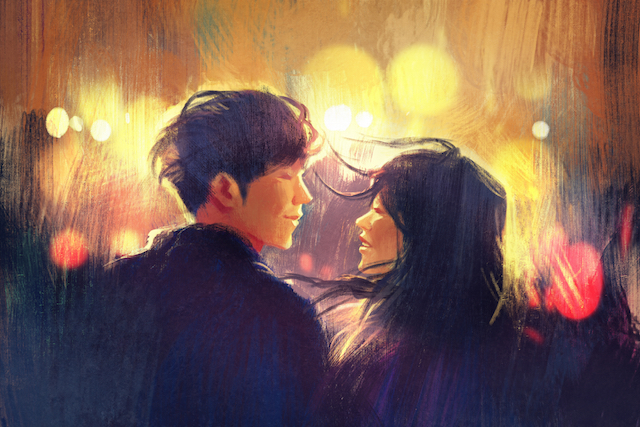
    young couple in love outdoor,illustration,digital painting

    “Lies may make people feel better, but they do not help them to know love.” ~Bell Hooks

    I was once a liar. I didn’t know I was a liar at the time. I didn’t consciously tell an untruth. Instead, my entire being did.

    Lying isn’t just something that is done with words. We can lie with our actions. We can lie with our silence. We can lie with our complicity. We can lie by pretending to be who we aren’t.

    I was the lie.

    I played dress up for most of my life. It didn’t happen all at once. I didn’t walk into someone else’s closet and come out with a new wardrobe. It happened slowly, over time.

    Each time I said or did something that didn’t get approval from the world around me, I chose to pull a garment from the imaginary closet of people who are lovable. By the time I was twenty, my true self was so far hidden that even I didn’t know where she was.

    It first began by disappearing. I felt rejected by my peers in grade school. It felt like so much work to be liked and popular. So I decided to give up trying. But instead of just being myself, I decided to hide away. Being unnoticed seemed easier than being seen for who I was.

    College was my opportunity to reinvent myself. But when I got there I found out I couldn’t force myself into being outgoing or easily likable. So I turned awkward. I was hyper self-conscious that I was not being myself, but I didn’t know how to let myself just be. So my body got stiff, my movements fidgety, and my voice uncertain.

    I began to watch other people and would, in the slightest ways, begin to mimic them. I’d adopt someone’s laugh, another person’s style, and someone else’s slang. This mishmash of what I thought it meant to be likable only kept me further away from the truth of who I really was.

    I had friends, but no one really knew me. I was lost and lying about who I was. I pretended like I had it all figured out because admitting that I was clueless would mean my world would come crashing down.

    When we build identities for ourselves we can’t risk allowing them to crumble. So we lie. We create more masks to wear and keep ourselves further from the truth. Our egos know that if one brick loosens, everything we’ve worked so hard for will be ruined.

    When we choose to deny who we truly are, we are lying. Lying is a choice, one that deeply harms ourselves and oftentimes, those around us. And even though it is a choice, it’s one that is very easy to hide from. In our search for love we will do almost anything to attain our goal even if it means denying ourselves the truth.

    The irony, though, is that love itself is impossible without honesty. If you find yourself desperate to know what love really is, take a deep breath and look at how honest you are about you.

    Do you really know yourself? Do you share who you are with the world? Are you overly concerned with what other people think about you? Will you change yourself to be accepted by others? These are all great questions to help you recognize how comfortable you are with your true self.

    Uncovering yourself is part of the path. It’s okay to share with people that you don’t know. That you’re confused. That you’re lost. That you feel pain. That you’re in the process of getting to know yourself.

    You don’t have to use all your energy to put on the facade that you’ve got it all figured out. It’s okay to not have it all together. When you begin to open up and communicate with others about who you truly are, you begin the opportunity to discover what love is.

    The people who open their hearts to you will create a beautiful container for love to grow. Those who are triggered by who you are will move their own way. Let them go. Stay connected to your truth and keep sharing with the people in your life.

    As I began to test the waters in my friendships I started to open up about my feelings of shame and guilt.

    I have one memory of sitting at the kitchen table with a girlfriend and telling her something I had never told anyone. I could feel the space opening between us as she acknowledged my feelings and matched them with her own experiences of similar feelings.

    Sharing ourselves allows us to know love. Love makes us feel safe and wanted. It makes us feel connected and like we belong.

    We often lie when we’re afraid of the truth. When we lie about who we are, we tend to be afraid that who we are isn’t lovable. If we show our true selves and we aren’t loved and accepted, we don’t know how we’ll recover.

    We recover by loving ourselves. But you can’t love yourself if you don’t know who you are. You can’t love yourself if you’re using all your energy to put on an act for everyone else. And other people can’t love you when they don’t know who you are.

    So if you want to know love, show yourself. Take off the mask. Let go of all the energy it takes to be someone else and use it to discover who it is you truly are. Love that person up and watch as the world loves you back.

  • Lessons from a Former Liar: The Power of Owning Our Stories

    Lessons from a Former Liar: The Power of Owning Our Stories

    Standing in the Sun

    “I now see how owning our story and loving ourselves through that process is the bravest thing that we will ever do.” ~Brené Brown

    I don’t know about you, but I used to lie. I used to lie a lot. I remember one particular instance when I lied about being a passenger in a drive-by.

    I lied about my age, my weight, and the reason for the injuries on my body. Sure, I’d just bruised myself by walking into a table, but it made a much more seductive story if I told people that I’d fallen from the rooftop of a friend’s house and lived to tell the tale.

    I reached the peak of lying around the age of 12, which was when I kept the infamous drive-by tale in circulation. At that point, everything that came out of my mouth was a complete fabrication and not a well-crafted one. After all, I was in grade seven and I didn’t really shoot people, nor did I know anyone who did, nor would I have known where to find them.

    At that point, it was easy to keep lying because, after all, I had no friends. When you have no friends, you can lie about anything and everything. No one holds you accountable, because no one really knows anything about you.

    When you have friends, you can’t really go around telling people that you were in a drive-by last Thursday. Your friend will call your bluff because, after all, you can’t be in a drive-by while having a cup of tea a few blocks away.

    So, I got some friends and the preposterous-factor in my tales decreased. Still, I continued to exaggerate. I would say five when it was really two. I would say “everyone” when it was really just my mom. I would say it happened to me when it really happened on television.

    When I was in acting school, I did some extra work for Degrassi. That’s when you get paid exactly minimum wage to sit in a room for ten hours and spend about an hour of that, off and on, walking around behind real actors who had speaking parts. Then, they blur you out. It wasn’t the worst job, but it certainly was not a major, regular part on a national television show.

    The most interesting thing I detect, looking back on my blatant and not-so-blatant lies, was that I selected them by the emotions that they produced. Like a farmer picking her crop, I picked my stories by how well I thought they’d do in the market.

    Every story I ever told would get one of three responses: “That is such a lie!”, nothing (which I assume now is a stand-in for “That is such a lie!”), and open-mouthed, wide-eyed shock and pity. The latter, I lived for.

    I wasn’t sure why I wanted it so badly, but I did. I wanted it, needed it, craved it. I was like a moth to the flame of attention and everyone knew it. Yes, I was that girl, the one none of us want to be.

    Recovering from my cluelessness was largely correlated to my forming close relationships with other human beings. The closer I got, the less I had to lie. These people, it seemed, liked me for just who I was and not this fabricated, nonsensical version of myself.

    At some point, I got the courage to tell my story. My real story. The one with no drive-bys and no star television appearances. It was the real-live tale of what I’d been through.

    I still remember the open-mouthed, wide-eyed shock and pity.

    Then, I felt a combination of ravenous embarrassment and gleeful hope. Oh, I thought, this is much easier than keeping up with all those story lines. 

    Looking back on my past, it was difficult, at first, not to judge that girl I used to be.

    I would cringe thinking about how obvious my lies were and how horribly desperate I was for attention. That is, until I realized that I was hungry for something that we’re all hungry for—that feeling of being seen, really seen, and accepted.

    The more I’ve told my story and the more I’ve helped others tell their stories, the more I’ve realized that the girl I used to be isn’t just an embarrassing part of my life that I can sweep under the carpet.

    That sort of desperate hunger for love and acceptance runs silently and rampantly through our society destroying our courage and our relationships with one another.

    If we’re ever going to be happy, we’ve got to come back to the truth about ourselves. That journey starts individually. It starts with accepting and sharing those parts of the human condition that we all know about, but we’re too afraid to share.

    Those parts of our past that make us cringe are, paradoxically, the very parts of ourselves that we should be showing to people.

    When I first set out to be an author, I tried to write about things in a distant, authoritative sort of tone. Here’s a top ten list of how you can be more authentic, I’d say.

    At the end of the day, no one really wanted to read that. However, everyone wanted to hear the open-hearted, vulnerable pieces of my soul. Everyone wanted to see the courage that it takes to be true, honest, and authentic, because it gives them that courage as well.

    If you’re struggling for authenticity, struggling to live a completely honest existence, I’ll share with you a secret: it gets easier.

    It gets easier not just because of practice, but because the willingness to go out there and be yourself in a world that is constantly shoving into your face ready-made formulas for how to be someone else, that inspires people.

    And, if there’s one thing I’ve learned from my experiences as both a pathological liar and a completely authentic human being, it’s this: inspiring people is much more worthwhile than shocking them.

    Photo by Matthias

  • 4 Tips to Tell the Truth About Yourself and to Yourself

    4 Tips to Tell the Truth About Yourself and to Yourself

    “Our lives improve only when we take chances and the first and most difficult risk we can take is to be honest with ourselves.” ~Walter Anderson

    There’s almost nothing I hate more than honesty.

    I’ll give you a moment to let that sink in. You may be doing a double-take, thinking “did she mean there’s nothing she hates more than lying?”

    I wish.

    Most people probably think I’m an honest person, and in general, I suppose that’s true. I am honest with many people. However, I’m rarely honest with the person who matters most—myself.

    As someone whose drug of choice is food, I’m familiar with all matters of sneaky and lying behavior. The best I can pin-point, this probably started for me around the age of six. In other words, I’ve had a long time to practice.

    And I have to admit, I got pretty damn good.

    I could wolf down an entire meal from McDonald’s on my way home from work, dispose of the trash on my way, and then sit down and eat another dinner when I got home.

    I wasn’t as good at hiding candy wrappers when I was a kid—stashing them behind the couch where, surprisingly, my mom did occasionally clean. But I perfected the art over time, learning how to wrap one inside another inside another and then squish them down to make them look like one—instead of fifteen.

    Come to think of it, I’m pretty sure I’ve even started a new art form called Trash Arranging. (I should probably trademark that.)

    Here’s the thing: I like hiding. I don’t like spilling the beans about myself to a new friend (aka someone I’ve known for five years). I’m squeamish about social events, and if I can avoid the details of where I’ve been or what I’ve been doing, I will.

    I realize what you’ve read until now makes it sound like I’ll soon have my own reality show akin to Hoarders, but I promise that’s not the case. What I’ve discovered about my own issues is that we all have them.

    Mine’s food, but yours might be something else—shutting down at the holidays, drinking too much coffee, or working just a little (an extra 35 hours per week) too much.

    Over the past few years, I’ve started to lift the rock up off my life. With the help of therapy, life coaching, more journaling than anyone probably thought was possible, and an extremely patient partner, I’m taking some steps into the sun of my own experience. (more…)