Tag: loving

  • The Art of Nurturing Self-Talk: How to Tell Yourself What You Need to Hear

    The Art of Nurturing Self-Talk: How to Tell Yourself What You Need to Hear

    “You will never speak to anyone more than you speak to yourself in your head. Be kind to yourself.” ~Unknown

    Talking to ourselves in a nurturing way can be a challenge if we rarely heard nurturing words in the early formative years of our lives. In fact, if we were often criticized or neglected, we probably learned to criticize and neglect ourselves instead.

    When I was growing up, my mom was a dedicated wife and mother, but she suffered from deep depression, anxiety, and low self-esteem. She didn’t know how to be encouraging or nurturing because she was never nurtured or encouraged by her parents while she was growing up. So her words to me reflected the negativity that she felt about life and herself.

    I have forgiven my mother for all the mistakes she made in my childhood, and, in fact, we ended up extremely close during her last years of life. But that doesn’t mean that there wasn’t work for me to do on myself in order to heal the self-hatred that had been unconsciously passed down.

    Growing up as I did, I struggled with low self-esteem, I was deeply depressed, I found myself in an abusive marriage with my first husband, I depended on other people for approval, and I neglected my dreams, since I didn’t believe in myself.

    Over the years I’ve done a lot of work to heal and have made significant progress in all these areas. I’ve discovered the meaning of unconditional self-love. I’ve learned to set healthy boundaries and accept myself as I am, without needing approval to feel good about myself. And I’ve educated myself so I’m able to handle stress and face my problems in healthier ways.

    Most importantly, I’ve learned to speak to myself in a more loving and nurturing way. In fact, just recently, I learned how to find those words more easily by using the following exercise.

    First, I made a list of all the influential people from my childhood and early adulthood. Then I asked myself, “What loving words did I need or want to hear from each person even if I don’t think I still need to hear those words today.”

    Then, I wrote down everything that I wished I could have heard them tell me from a loving and understanding place in their hearts. And if someone in my life had spoken to me in a loving and supportive way, I wrote those words too.

    Here is the list of influential people from my childhood and adulthood: Mom, Dad, brothers, sister, relatives, neighbors, friends, teachers, coaches, ministers, therapists, doctors, bosses, co-workers, and spouses.

    As I began to make the list of statements that I wish I could have heard from these people, I could feel that these were words that my heart still needed to hear today, but now from myself.

    It’s interesting how appropriate these statements feel even after I switch the person speaking them, to be from me. For example, when I read the statement that I wished I could have heard from my mother, “You are so talented and creative,” and then switch the giver of the statement to be from me, I felt a rise of recognition lift inside of my chest as if I was being seen and heard for the first time.

    When I work on this exercise, I let go of any judgment toward the people on my list because I realize that everyone did as well as they could, considering the stress they were under and the state of mind they were in.

    This exercise is not about them, it’s about me and my healing; it’s about taking the time to listen to the neglected person inside of me and allowing her voice to speak up about what she has needed for so long but has rarely received from others or from herself.

    Then the exercise shifts into being about giving and receiving these words to and from myself, in a loving way, so that I can learn how to nurture myself on a deeper level.

    Here are a few of the statements that I wish I could have heard from my mother in my early years:

    • I cherish you.
    • I want the best for you.
    • You are a good person.
    • I want you to keep growing.
    • You are smart and creative.
    • I see so much good in you.
    • I respect your opinion.
    • I believe you.
    • I trust you.
    • I appreciate how hard you try.
    • I admire you.
    • I am here for you.
    • I appreciate your help.
    • You can depend on me.

    At first, I wrote the statements in a stream of consciousness, without editing. I kept asking myself, “What words did the little girl inside of me need to hear from others when I was so young and vulnerable? What did the young woman inside of me need to hear in order to feel valuable and confident in herself?”

    I allowed myself to take breaks in my writing and return when I felt ready to continue. I found that each time I came back to the exercise, I always thought of something new to write, and as I wrote it, I would feel a sense of relief inside of me.

    Once the names on the list were all addressed, I began to gently edit the statements so that they became more appropriate for my life now. For example, I changed the statement I wrote from my brother, “I am sorry I didn’t play with you,” to read, “I allow myself to play now and have fun.”

    For the sentences that clearly did not fit, I looked to see if they had a message of their own that could be worded in another way.

    Here is an example statement from my P.E. Teacher: “I see your potential to become a strong athlete.” My first response was to delete this sentence since I am no longer involved in sports. But then I chose to rewrite it to read, “I see your potential to grow physically stronger,” which is helpful to me now since I struggle with chronic fatigue syndrome.

    I think there will always be at least a seed of something valuable to work with from each statement you’ve written.

    Once I got into the rhythm of this exercise, it woke up other nurturing thoughts in my mind that I also needed to hear. So I wrote those messages too.

    After I edited all the statements, I kept a master list and then made another copy to work with further. With this new working copy, I removed all the names that I first started with and then combined all of the statement together.

    Next, I wrote beside each statement what kind of statement it was: apology, praise, a question, or a statement of truth. Then I grouped the statements into these four categories.

    Each group has its own healing benefit. For example, the apology statements reflect the areas in my life that I may have felt neglected in. With each apology statement, I ask myself if I still neglect myself in this same area.

    For example, after I read the apology statement “I am sorry I let you down,” I can ask myself, “In what areas of my life do I let myself down now?” Or the apology statement “I am sorry I scared you.” I can ask myself, “Do I scare myself today by the way I speak to myself? Do I worry myself into a state of depression?”

    The group of question statements is a helpful list to use later as a source of inner reflection as it pertains to my life currently.

    Here are some example questions that I wrote on my list:

    • Tell me how you feel?
    • Tell me what is on your mind?
    • Tell me what you dream about?
    • Tell me what you want for your life?
    • Tell me what you believe in?
    • How can I best support you?

    Now with the two groups remaining, the praise statements and statements of truth, I used them to create my master list of nurturing things to tell myself. As I edited the statements, I either wrote them so they were speaking to me or as if I was speaking to myself, depending on what felt better. For example, “You are a precious person to me” or “I am a precious person.”

    Here are some examples of my new nurturing self-talk statements:

    • I care about myself.
    • My health is important to me.
    • I love myself.
    • I believe in myself.
    • I see my future with confidence and trust.
    • I am grateful for my life.
    • I am safe and loved.
    • I am a creative and caring person.
    • I allow myself to grow.
    • I am a smart and resourceful person.
    • I cherish the happy moments in life.
    • I appreciate kindness.
    • Life is beautiful in so many ways.
    • There is always something new to discover.
    • Never give up hope for a better day.
    • My life is guided by love.

    When I finished this exercise of nurturing statements to tell myself, I had a few hundred statements written and some were duplicates, so I chose to only keep the statements that really spoke to me and deleted the others, making it a stronger and more powerful master list.

    Now that I have made my master list, it has become an empowering tool that I can use every day. The more time I take to read and nurture myself with these loving words, the more peaceful and grounded I feel.

    And by speaking to myself more kindly, I am better able to practice unconditional self-love and make healthy choices for myself.

    You can also use this exercise as a way to build your inner sanctuary—a place you can go to in order to find nourishment and rejuvenation. This inner place of refuge will become stronger and more dependable the more you practice loving exercises like this one.

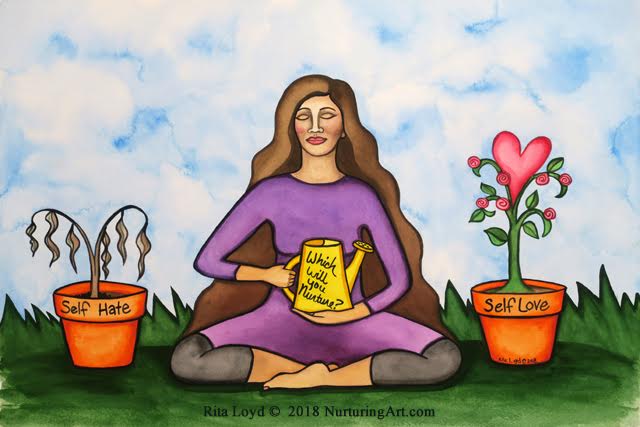
    Artwork by the author, Rita Loyd
  • What to Do When Your Partner Disappoints or Frustrates You

    What to Do When Your Partner Disappoints or Frustrates You

    Upset Couple

    “Good relationships don’t just happen. They take time, patience, and two people who truly want to be together.” ~Unknown

    We are wired to seek “the right one,” the ever-supportive partner, and the loving relationship.

    If we get all three, it’s like winning the lottery of life. When we meet someone, we dream of him/her being our soul mate. When we are in a relationship, we hope they’ll love and support us unconditionally, and the relationship will be loving and everlasting.

    That would be the ideal world, and, unfortunately, the ideal world isn’t the one we live in.

    It took me a divorce and a few failed relationships to learn what real love is. Strong, lasting love is not being with “the right one” or being in a relationship that is effortlessly wonderful all the time. That’s a disempowering way of living, just like waiting for life to be perfect.

    I came to understand that true love is a daily commitment to make the relationship great by being loving and attentive in our action and our words.

    With the exception of cases whereby our partner is purposefully being physically/verbally abusive or emotionally manipulative, to love is to commit to being loving even when our partner unintentionally disappoints, frustrates, or hurt us.

    On days when it’s difficult to fulfill this commitment, I apply these five steps and they help me avoid getting caught up in passive-aggressive spirals with my partner.

    1. Get real and see the whole picture.

    When our partner lets us down, it can hurt so bad that we become blinded from everything else that matters.

    In defense of our wounded ego, we overreact by blowing the issue out of proportion and getting argumentative beyond reason. Our logic gets hijacked and we forget to see the whole picture—that in most cases, what we fight about isn’t truly important.

    During times like these, I ask myself, “Is it the end of the world, or the relationship, that this problem happened because of his insensitivity/immaturity/irresponsibility? Or is it a passing storm that ravages, but we can rebuild from there and learn lessons for the future?”

    2. Dig out the “I am loved” list.

    Reason flies out the window of our mind whenever we’re in pain or experiencing rage. Our mind focuses on how we’re being victimized and blacks out the times when our partners acted lovingly toward us.

    Whenever I find myself reacting like this, I dig deep in my “I am loved” list. It’s a list I keep of all the big and small loving things my partner regularly does and recently did for me.

    For instance, I may recall that when I was feeling stressed and exhausted, despite finishing work late himself, he traveled a long way to my place, got me dinner, went grocery shopping, and stocked my fridge with my favorite nourishing food items.

    I’ll also recall the regular acts of love he does, such as texting me first thing after he wakes up and last thing before he goes to bed each day, getting me coffee in bed, giving me massages when I’ve been working long hours, and cheering me up whenever I feel down.

    3. Picture his/her plate and realize how full/heavy it is.

    In the ideal scenario, our partner is loving, caring, attentive, and affectionate 24/7. That said, it’s easy to be so when we are not bounded by life’s stresses, problems, and burdens.

    Whenever my partner is acting in an unloving way, I try to counter my feelings of anger, hurt, and disappointment by putting myself in his shoes and picturing the responsibilities, issues, and worries that are in his life at that point.

    This simple exercise helps me see things from his perspective and enables me to be understanding on days when he isn’t able to act in ways a “good” partner would. Instead of focusing on how he can be loving toward me, this practice gives me the opportunity to identify how I can be loving and supportive of him.

    4. Get aware of how your response perpetuates your partner’s unloving behavior.

    It takes two hands to clap. When our partner isn’t being loving, the ego’s response is to think, “I don’t deserve this, so I’m going to retaliate and claim back my power.” Such a reaction only traps us in a lose-lose cycle.

    We pit ourselves against each other, when deep down all we want is to feel that our partner cherishes us and is on our side as our biggest supporter.

    Whenever I feel tempted to react negatively, I take a deep breath and direct my thoughts to how I can break the vicious cycle. I’ll ask myself, “How can I communicate my boundaries on unacceptable behavior without angry words of blame, judgment, and criticism?”

    The challenge is to swap the unconstructive reflex of finger pointing with the constructive practice of educating our partners on the right way to treat us.

    5. Be loving, but keep healthy expectations and boundaries.

    While it’s important to be the right person in a relationship, rather than wait for one, it’s critical that we maintain firm boundaries. Being loving should not happen at the expense of our sense of self-worth.

    It’s healthy to expect our partners to treat us with respect, to prioritize us, to communicate their feelings to us, and to show appreciation. When our partners start to take us for granted, we need to communicate in a firm but non-confrontational way that we will not accept that behavior.

    How do you respond when your partner is acting in unkind and unloving ways? Do you think these tips could help?

    Upset couple image via Shutterstock

  • 25 Loving, Supportive Things to Tell Yourself Today

    25 Loving, Supportive Things to Tell Yourself Today

    Happy Woman

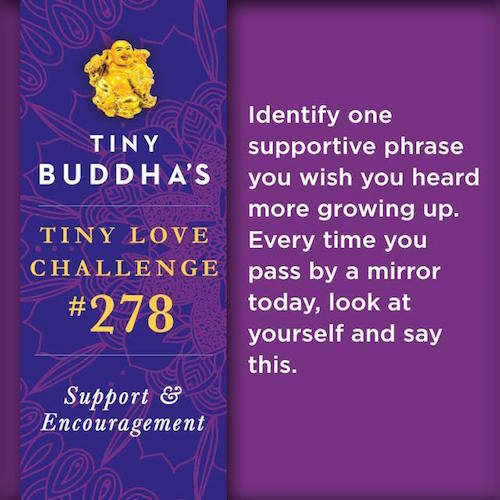
    “Identify one supportive phrase you wish you heard more growing up. Every time you pass by a mirror today, look at yourself and say that.” ~from Tiny Buddha’s 365 Tiny Love Challenges

    When I was a kid, an authority figure once told me, “If I was your age, I wouldn’t be your friend.”

    I tried to act like I didn’t care so I wouldn’t give that person the satisfaction of knowing how deeply they hurt me.

    But it hit me hard, and it stayed with me for years. Someone who was supposed to like me didn’t, so why would anyone else ever love me?

    There was something fundamentally wrong with me. And I wasn’t good enough at anything I did. Even when I did my best, I was never the best, so that meant I was a failure.

    These beliefs guided my childhood and adolescence. When I got to adulthood, I frequently sabotaged relationships thinking, “They won’t want to spend time with me. Why would they? I wouldn’t if I were them.”

    And I regularly overextended myself, only to beat myself up when I inevitably failed at juggling far more than any one person should have to carry.

    The voice in my head was callous and cruel. It took me years to realize it wasn’t even mine.

    Growing up, many of us heard more about what we were doing wrong than what we were doing right (from people who had the same experience growing up). And for a lot of us, there were more punishments than rewards, at home and in school.

    It makes sense, then, that so many of us grew into anxious, insecure adolescents, and then matured into fearful, self-doubting adults.

    But we’re not kids anymore, and we know better now than to believe everything we’re told.

    More importantly, we don’t have to continue hurting and criticizing ourselves. We don’t have to bully ourselves over our perceived shortcomings. We can stop the cycle.

    If you follow Tiny Buddha on Facebook, you’ve likely seen the “love challenge” graphics I’ve been sharing for the last month.

    Each one offers something simple you can do to improve your relationships, open yourself up to new ones, or nurture your relationship with yourself.

    And each one comes from my upcoming book, Tiny Buddha’s 365 Tiny Love Challenges.

    Recently, I posted the challenge below and asked Facebook followers to share what phrase they wished they heard more as kids.

    One Supportive Phrase

    Their responses reminded me that we all have the power, every day, to give ourselves the same kind of love and support we’d want from other people. In fact, it’s a prerequisite to getting love and support from others, because we’re only ever open to receiving what we believe we deserve.

    We all deserve to hear these things—from others and ourselves:

    1. I love you just the way you are.

    2. When you need something to believe in, start with yourself.

    3. I’ll always be here for you. I love you unconditionally.

    4. You deserve to be happy.

    5. You look beautiful.

    6. Don’t be afraid—you are good enough.

    7. I believe you are very capable of taking care of yourself, with or without someone else to take care of you.

    8. Anything you can imagine is possible. The only thing to fear is fear itself.

    9. Everything will be okay. Even if its not, it will be.

    10. You are enough as you are.

    11. You are an individual and are perfect the way you are now.

    12. You can do anything you set your mind to.

    13. It’s okay to make a mistake.

    14. I believe in you.

    15. You tried—that’s good enough.

    16. I’m proud of you.

    17. You don’t need permission from anyone to dream and explore your interests and passions.

    18. You have a beautiful soul.

    19. You are safe.

    20. You’re doing great.

    21. You can do anything.

    22. I want the best for you.

    23. You’re handling it beautifully.

    24. You are awesome, kid.

    25. I love and accept you no matter what.

    Imagine what the world would be like if we all told ourselves these things every day.

    Imagine a world full of people who believe in themselves, encourage themselves, and forgive themselves for their mistakes.

    Imagine a world full of people who speak to themselves kindly and look in the mirror and see nothing but love—and then take the positive, loving energy into their interactions with others.

    I’d like to be part of that world. And I know it starts with me—and you.

    Happy woman image via Shutterstock

  • 4 Secrets to Falling in Love Every Day

    4 Secrets to Falling in Love Every Day

    Girl with Heart Shaped Glasses

    “It is astonishing how little one feels alone when one loves.” ~John Bulwer

    I am very fortunate to have come from a loving family. My family members have a wide range of personalities, and even though they’re all very opinionated, they are not judgmental in the least.

    Growing up around these amazing people allowed me to recognize that superficial differences don’t matter much when people share a profound love.

    Regardless of whether you’ve experienced this type of bond, you’re probably familiar with the benefits of love.

    Love acts as a buffer against stress and helps you avoid being overcome by negative emotions.

    Even when you feel frustrated, anxious, or annoyed, you can still be aware of a certain blissfulness that exists outside your current mood. Studies have shown that love helps you feel more nurturing, socially connected, motivated, and inspired; it also fosters a feeling of overall happiness.

    What Is That Loving Feeling?

    All these benefits are amazing, but what about romantic love? You know, that heart-pounding, butterflies-in-your-stomach feeling you get when you’re around your beloved? Those romantic sensations come from the brain’s dopamine-rich reward center. Romantic love also triggers brain regions rich in oxytocin, which is a chemical that helps us bond with others.

    These areas of the brain are the same as those associated with desire, addiction, and euphoric states, so it’s no surprise that new love really can feel like being under the influence of a drug.

    Now, you might think that love—or the feeling that we perceive as love—doesn’t last.

    Just as your body builds up a tolerance to a drug, the feelings of arousal, fear, and reward that come with the anticipation of something new can fade as a relationship matures. However, to say that the feeling of love itself disappears would be a mistake in perception.

    As time goes on, those butterflies are replaced by more trust. It’s still love, but it’s a different stage of love.

    Your initial focus on compatibility turns to a more complex understanding of what you like and don’t like about your partner as you get to know him or her better. The process of falling in love is really meant to serve as a way into this deeper, more complex understanding of another human being.

    How to Fall in Love Every Day

    Staying in a loving state isn’t a matter of finding your soul mate; it’s a state of mind or being. It’s a willingness to purposefully connect with another person, and it’s not nearly as difficult as it sounds. If you want to feel connected and in love every single day:

    1. Look for the good.

    Deliberately focus on things you like about three to five people in your life, and write down those things. This act of gratitude can boost your happiness, and focusing on what you like about a person can bring you closer to love by triggering positive feelings.

    2. Find commonalities.

    Sometimes I joke that I want to hug everyone at an airport. On a literal level, this sounds a little intrusive, but it’s just a metaphor for my delight in the connections we have to one another. When you recognize your connections to other people, the love you feel for them is the same love you feel for your family and friends.

    Ask yourself what you have in common with the people with whom you spend a lot of time, either in a personal setting or a professional one. This will help your brain feel more synchronized and in a state of harmony.

    3. Pay attention.

    Too often, we take important people for granted. If you already have someone you love in your life, deliberately attend to him or her in person, or keep a reminder of your love nearby. Deliberate attention stimulates the brain’s reward center and makes us feel good.

    4. Meditate.

    Meditation calms the mental chatter and helps your brain feel less anxious. Love will come more easily as you find yourself at peace with the world through this practice.

    Imagine the beauty of a world where people experienced love daily, a world in which the connection between beings was recognized and celebrated by all. That world would be filled with people who were engaged, tolerant, and less violent.

    The idea of “falling in love” is most valuable if we view it in terms of how we are all connected by a unified consciousness. Use the above techniques to find greater compassion in challenging circumstances or simply as your contribution to improving a world in need.

    This is not a fake state of pretending to be connected, but rather a genuine effort to express the full power of connection that you possess. Love is the gateway to a much larger consciousness if you use it to transcend rather than simply appease the self.

    Girl with heart-shaped glasses image via Shutterstock

  • The Key to Loving Yourself, Other People, and Life

    The Key to Loving Yourself, Other People, and Life

    Love

    “Has it ever occurred to you that you can only love when you are alone?” ~Anthony De Mello

    I was sitting in my therapist’s waiting room when I looked over at an assortment of books sitting on the coffee table. One caught my attention right away: The Way to Love, by Anthony de Mello.

    “This looks like something I should read right about now.” I giggled a little with that thought.

    I was, after all, sitting in a psychotherapist’s waiting room because he was the only thing keeping me from a nervous breakdown. My marriage was falling apart and I felt so utterly lost. Perhaps a book about love would help me navigate this painful period of my life.

    I finished my session and hurried home to my iPad. Within seconds, the book came alive on my screen. I perused the chapters at first but stopped dead in my tracks on page 137:

    Has it ever occurred to you that you can only love when you are alone? What does it mean to love? It means to see a person, a thing, a situation, as it really is and not as you imagine it to be, and to give it the response it deserves. You cannot love what you do not even see.

    “This makes no sense at all! How can I love only when I’m alone?” I put the book down.

    I had no idea what De Mello was saying, but that first sentence stayed in my mind and heart.

    Then came some alone time. A lot of it.

    For the next two years, I lived in solitude. My days were filled with meditation, long hikes in nature, writing, introspection, and at times, a deep loneliness.

    I accepted all that life was bringing me. I embraced the hours upon hours of silence and no human contact. In fact, this solitude was self-imposed.

    The disintegration of my marriage had brought some ingrained subconscious patterns to light.

    In the past, whenever life sent something painful my way, I would take refuge in my outer world—friends, bars, alcohol, sex, traveling. They all served as distractions because I was deeply afraid of looking inward. My inner world seemed too complex and dark to even touch.

    Yet, distracting myself with things on the outside hadn’t protected me from pain. In fact, I finally realized the opposite was true: life always mirrors your internal environment back to you.

    If you want to keep your pain, anger, and darkness hidden, life will bring you painful, angry, dark events.

    It’s really that simple. 

    With that realization, I decided to resist the temptations that often follow a break-up, hence my self-imposed solitude.

    I didn’t move to the jungle. I still saw family and some friends. But I made a conscious decision to spend the majority of my days alone, in silence.

    And then one day I got it. I understood what De Mello said in that book. I was living it.

    Solitude had taught me how to love, and with an intensity I never thought possible.

    I learned to love from the inside out. And that love took three forms.

    Love of Myself

    Self-love came first. I had always used people or things outside myself to sustain my dismally fragile self-esteem. Being alone forces you to look inward and see what lies in your inner world.

    Make no mistake: this can be a difficult and painful process.

    But seeing and accepting your inner world is the only way to love the glorious being that dwells beneath all the mental layers.

    This may take some time, and it may bring a swirl of emotions to the surface. That’s okay. Just let them be.

    Let it all see the light of day, without judgment. No matter what lies in your inner world, always remember to put your hand on your heart and tell yourself “I love you.”

    We’re all trying the best we can at any given moment. Cut yourself some slack and let go of the “could have, should have…”

    See your inner world. Accept everything that lies within, without judgment. Through it all, put your hand on your chest and tell yourself “I love you.” That’s it.

    I realize that seeing and accepting our inner world may not be easy at first. For me, the trick was daily meditation.

    This quieted my mind significantly. Since it’s the mind or ego that judges, once the internal chatter calmed down, it became easier to use my awareness to see the beauty of my heart.

    For you it can be different. Perhaps your mind quiets down with exercise or a walk in the park. Just remember: a quiet mind is the foundation for self-love.

    Self-love then becomes an internal light that you shine in all directions as you walk through life. And that is how you end up loving others.

    Love of Others

    Even with all that alone time, I still managed to fall in love again. This time it was different. Because I loved myself, the love I could give another was purer, stronger, and completely unconditional. I loved without attachment. 

    I also felt a different love for my family and friends. I began to love people for who they were. I loved them in freedom.

    Loving people without attachment was a monumental milestone for me. It was the process of self-love that had enabled me to reach this milestone.

    In learning to love myself, I realized I used people as emotional crutches in order to sustain my sense of worth.

    Once I recognized this pattern and sat with the temporary guilt it elicited, I began to feel lighter. The lighter I felt, the more I loved myself. And the more I loved myself, the more I loved others.

    I no longer needed them. I was now standing on my own, without crutches. In this newly found independence, there were no conditions. My happiness no longer depended on what others did or said.

    Without crutches, your hands are free to extend to others. And that’s really what it means to love without attachment.

    Love of Life

    Solitude showed me the beauty of the present moment. I realized how life was glorious, intense, and alive!

    The little moments became memorable. Seeing a bird fly or a flower bloom was a miracle. Because I no longer focused my attention on mental drama, I could experience the fullness of life.

    Experiencing this fullness meant that I trusted life. I knew that what came to me was there for my evolution.

    Loving life meant that I loved everything that came my way.

    Can you learn to love without being physically alone? Yes. Fortunately, solitude can be experienced without running off to a deserted island!

    You can experience solitude in your heart. That is essentially what De Mello was referring to in his quote. In my experience, solitude is a synonym of non-attachment.

    Experiencing solitude in your heart means that you do not depend on anyone or anything in order to bring you happiness or love. You live with the knowing that what you may desire from another is always available to you.

    What you may desire from the outside world is already within.

    This knowing is then naturally reflected in your outer world. You can live solitude in your heart while surrounded by people.

    And it is this solitude that ultimately allows you to genuinely love. Love yourself. Love others. Love life.

    Love image via Shutterstock

  • How to Stop Shaming and Start Loving Yourself

    How to Stop Shaming and Start Loving Yourself

    Shame

    “Never bend your head. Always hold it high. Look the world straight in the face.” ~Helen Keller

    It’s discouraging, isn’t it?

    Walking around every day feeling as if you’re never enough?

    Comparing yourself to others and continually coming up short?

    You feel as if you’re not smart enough, talented enough, organized enough, or disciplined enough. You’ve made mistakes, some small and some big but all of them embarrassing.

    Fortunately, you and I are gloriously human and perfectly imperfect. We falter and fly, fall and triumph, cry, laugh, forget, remember, hurt, heal, dream, and love. Our one-of-a-kind uniqueness is amazing, really.

    I couldn’t appreciate this earlier in life due to a childhood in which I was too skinny, too clumsy, too emotional, too shy, too sensitive, too everything.

    When I was in kindergarten, I wanted nothing more than to stay inside alone and draw at recess. You can probably imagine how that went over.

    The teacher called my mother and informed her that I needed to go outside and play with the other children because I would never develop my large motor muscles.

    I already knew how to swing on the monkey bars, and I craved some quiet time. At the tender age of five, I decided there was something horribly wrong with me because too much noise and chaos set my nerves on edge.

    My secret guilt and shame for being so flawed began to unravel when I became a mother. Three babies in four years taught me more about love than I could ever have imagined.

    I wanted to protect and cherish the tender senses of self in my care, so I began reading every self-help book I could get my hands on. The more I honored the perfection in my children, the more generosity of spirit I developed for myself.

    My journey inward included books about dreams, intuition, and spiritual development, and in time I realized that my sensitive and nurturing nature was actually my greatest gift and not a trait to be deeply ashamed of.

    I can talk about it now from a genuine place of self-acceptance, but the pilgrimage from there to here was far from easy.

    What I have learned so far.

    It’s not about you.

    Stop taking it all personally. In the journey toward self-acceptance, this is rule number one. How others see you is largely a projection and has little to do with you.

    A great example of this is any politician. She may be viewed as an inspirational hero or incompetent fool depending on the person describing her. Same person just being viewed through vastly different lenses.

    If you have ever been brave enough to play the game where you ask several people who know you to describe you with one word, you’ve already seen the diverse range of perceptions people have about you.

    How people perceive you is more a reflection of the lens they are peering through than it is about you.

    Once you truly embrace this concept, it will free you from the weight of other’s opinions or judgments. How you feel and what you know to be true of yourself is what matters.

    Perfect people are annoying.

    Don’t try to be one of them. Nearly everyone I know and those I have consulted with have something about their pasts or their personalities they are deeply ashamed of or embarrassed by. It may be a dysfunctional family, failed relationships, or financial difficulties.

    We all hide our secrets convinced that if others knew, they would criticize, or worse, disown us. Some of us spend inordinate amounts of emotional energy trying to hide our embarrassing flaws, carrying around deep shame and guilt over our perceived shortcomings and mistakes.

    Unfortunate choices, bad hair days, saying too much, saying too little, getting jealous, and losing things are all part of what makes you gloriously human. Your mishaps are what make you relatable and loveable.

    None of us want picture-perfect friends because, frankly, they’re intimidating. We crave genuine friends. Friends who lock their keys in the car, fall for Mr. or Mrs. Wrong, and tangle up their Christmas lights.

    Embrace your weird self.

    I find it fascinating that billions of people walk the Earth and no two are exactly alike. If you are human, let’s face it, you have a few loveable quirks.

    Bask in your strangeness and you’ll attract your tribe. When you stop pouring energy into being someone you’re not, you have more time and energy to be who you are.

    In honor of my kindergarten teacher, I now stay inside and draw whenever I don’t feel like playing outside. So there.

    Words can and do hurt you.

    “Don’t be silly. You can’t do it. You mess everything up.” Sound familiar? If it wasn’t a harsh parent or teacher wagging a disapproving finger, it might have been coming from your own head.

    Stop the madness.

    If you wouldn’t dream of uttering such things to your best friend or child, then for Heaven’s sake stop saying them to yourself. “Oops cancel that” halts my negative self-talk in its tracks and helps me laugh at myself rather than heaping on more shame.

    A miraculous shift occurred when I began extending compassion and patience toward myself. I noticed that others began to mirror my improved inner attitude. My harshest critics were nowhere in sight, and my new friends were oddly fond of solitude.

    Now just imagine it. You make a mistake at work, at home, or in a relationship. This time, instead of beating yourself up, you calmly tell yourself that you’ll know better and do better next time because mistakes are great teachers.

    Doesn’t that feel better?

    Imagine being able to laugh at your blunders and accept your peculiarities.

    Go ahead, right now.

    Toss the burden of worry, shame, and guilt off your back.

    Sit up straight, toss your hair back, and say, “I am enough.”

    Ashamed girl image via Shutterstock

  • 4 Ways to Have More Affectionate, Loving Relationships

    4 Ways to Have More Affectionate, Loving Relationships

    Couple Hugging

    “Attention is the rarest and purest form of generosity.” ~Simone Weil

    This morning I was busy French pressing coffee for my husband and me. Everything was going great; I was happily humming along, looking forward to starting my day. My lovely husband came up behind me and bear hugged me gently.

    Now, I’ll admit that I don’t usually take this well when I’m in the middle of something. If I’m cooking (which I’m particularly serious about), I’ve been known to push him away and say something along the lines of “I’m cooking! Back!”

    This is not sensitive or caring. It’s more of a “get-off-me-I’m-working” reaction that I’ve been working on.

    To my husband’s credit, he usually responds fine and continues about his business seemingly undeterred from future affection. I apologize later, and he doesn’t seem to take offense.

    After an interaction like this, I feel embarrassed and ashamed of how I’ve responded to his attempts at closeness. I worry that if I keep pushing him away, eventually he’ll just stay away for good. The very idea itself makes me feel sad and repentant.

    Today, however, when he came over and hugged me from behind, I had enough good sense not to push him away.

    I took the opportunity for some bonding time with him, which made my morning. I actually had to have the conscious thought that I should stop the urge to push him away and instead be receptive.

    Instead of getting caught up in what I was doing, I stopped myself and let him foster closeness between us.

    Today, I was receptive.

    Today, I let myself get swept up in the moment instead of worrying about the coffee getting cold, or burning dinner, or the myriad of other little nagging things that seem more important in the sweet little moments like this.

    My priorities are woefully out of whack if I think that preventing my coffee from getting cold is more important than connecting with someone who isn’t afraid to come over to me for the 4,345 time when I’m in the middle of something, even though he knows he’s likely to get the cold shoulder.

    What if one day he gives up? I’ll admit, I probably would have given up already if I were him. It’s embarrassing to admit that my skin isn’t nearly as thick as his has been when it comes to affection.

    In fact, so often, haven’t I shown through my actions that a deeper connection was not my priority?

    That admission stings. If I’m really honest, in the past, a lack of mindfulness about how I handle affection has led me to prioritize tons of things above my relationships. I have allowed things of little importance to often take priority over connecting with the people who I love most.

    How often do we push our partners away and refuse to connect without quite seeing it that way? How often do we reject their advances, when if we thought about it, we actually desire more closeness? How long do we have before we push the other person away forever, only to wonder later what went wrong?

    Of course, I never consciously intend to make my partner feel rejected, but how often do I reject him anyway, bumbling through our life together? How often could I be nicer, or less stressed, or more receptive?

    How often do the people in our lives who are most important to us suffer because we are too busy, or too clueless to notice?

    No matter what the reason is, what if we’re sacrificing the everyday events that have lasting potential to bring us closer?

    I can do big things that are meant to connect with my partner. For example, I can suggest and plan out a weekly date nights, but if I’m downright cold and repellant in the tender, everyday moments that are his idea, pretty soon, I will drive away the very connection that I truly long for.

    It won’t matter if we try to formally “plan” times to be affectionate or if I make sure to approach him often on my own terms.

    What if we’re doing this not just with our intimate partners, but also with the rest of the important people in our lives? What if we’re providing negative reinforcement when, if we were more conscious of it, we would actually want to allow more closeness?

    It’s so common to take the closest relationships in our lives for granted. That’s why it’s so vitally important to take the time to nurture the little connections that we have with each other, every day. In this way, love is a practice, just like connection takes practice.

    It’s the small things, once again, that truly matter with someone we love. It’s taking the time to listen to them when we’re tired and would rather do something else. It’s not shutting them down when they show us little acts of affection. It’s receptivity and openness to connection, as well as getting our priorities straight.

    Since I’ve been struggling to change this reluctance to connect on someone else’s terms, here are four things that I’ve learned help to bring someone closer in the moment.

    1. Awareness.

    Notice the ways, both small and large, in which others try to create connections with you. If we wait for them to approach us perfectly or in the exact moments we’re thinking about it, we miss so much.

    2. Receptivity.

    Being aware is important, but so is being receptive to a connection. If we acknowledge and then open ourselves to connecting with others, it’s clearly going to foster more connection than if we are aware but not receptive (like my cooking example above).

    Being receptive involves staying aware of the greater good in our most important relationships, namely saying “yes” to more love, more connection, and more closeness from others. It’s not turning down the hug or pushing someone away in the moment. It’s apologizing if we fail at these things.

    3. Appreciation.

    Appreciation is key to positively reinforcing someone’s attempts to get closer to us. If I allow myself to be selfish or distracted and fail to positively acknowledge my partner’s attempts to connect with me, I’m not only pushing him away in that moment, but I’m effectively blocking future connection.

    If I don’t nurture the connections that matter the most to me, I won’t have connections with the people I love. That is the inevitable, preventable, awful consequence of failing to provide positive reinforcement.

    This is about recognizing the little things, with heartfelt thank you’s and big hugs. It’s having an eye toward acknowledging people’s efforts, and providing them with a positive experience when they interact with me.

    4. Reciprocity.

    Rather than saving up our affection and positive attention for when we’re really feeling it (or say, date night), maybe it’s better to make a practice of reciprocating our partner’s affections even when we’re tired, distracted, or not quite interested.

    Giving them the gift of our attention is such a strong tool for nurturing them and the relationship that it shouldn’t be saved for the exact, right moment when we feel like sharing our affections. Maybe it’s more effective to resolve to share and connect with the people we care about whenever they reach out to us.

    And… try not to push your spouse away when they’re happily giving you a bear hug.

    Couple hugging image via Shutterstock

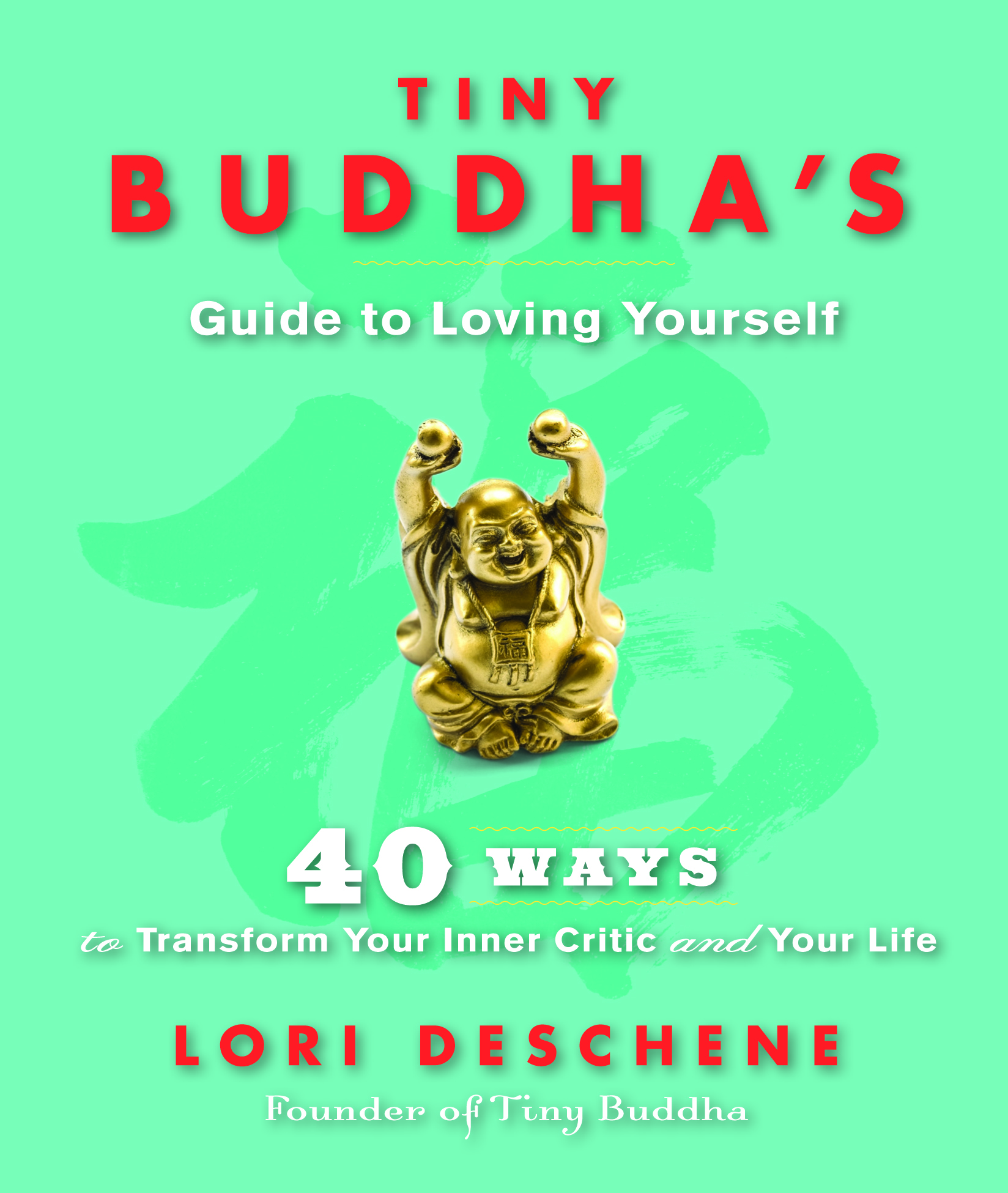
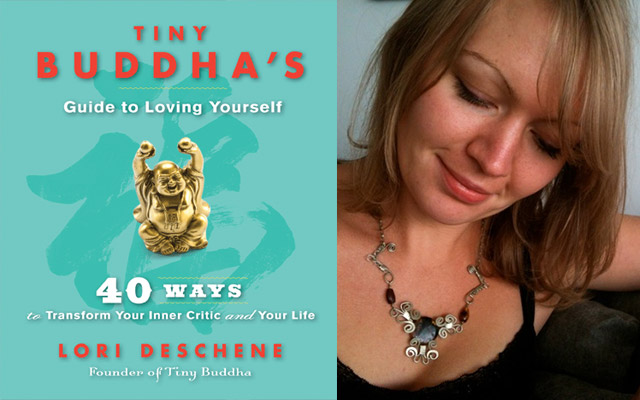
  • Win a Free Copy of Tiny Buddha’s Guide to Loving Yourself

    Win a Free Copy of Tiny Buddha’s Guide to Loving Yourself

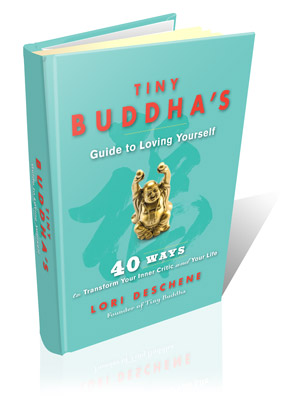
    Tiny Buddhas Guide Cover 3D

    UPDATE: The winners for this giveaway have already been chosen. 

    The winners:

    • Antwanette Miller
    • Rebecca

    This may seem like Déjà vu, because I published an almost identical post last Friday. It’s now a new week (soon to be weekend) and a new chance to win a copy of Tiny Buddha’s Guide to Loving Yourself!

    For those of you who already bought a copy, I hope you’re enjoying it!

    And I have a special request for you: Since it’s brand new, there are currently only four reviews on Amazon. (Thank you so much to those of you who responded to my request last week and wrote one!)

    Those reviews go a long way in influencing people who may benefit from the book.

    If you’ve found the site and the book helpful, I would be so grateful if you would take five or ten minutes out of your day to support me and the site by reviewing Tiny Buddha’s Guide to Loving Yourself

    Whether you write two words, two sentences, or more, it will make a tremendous difference.

    Now on to today’s giveaway!

    This one’s a little different, in that you won’t be entering to win a copy for yourself; instead, its an opportunity to have a copy mailed to someone you love, directly from my publisher, with a special note from you. 

    About Tiny Buddha’s Guide to Loving Yourself

    Tiny Buddha’s Guide to Loving Yourself is a collaborative book featuring a collection of stories from Tiny Buddha contributors, along with tips to help you feel good about yourself and your life.

    The book shares 40 unique perspectives and insights on topics related to loving yourself. It will help you:

    • Release shame about your past and the limiting beliefs that keep you stuck
    • See yourself as beautiful and valuable, with all your flaws and weaknesses
    • Accept yourself more and judge yourself less
    • Forgive yourself for your mistakes and stop being hard on yourself
    • Minimize the need for approval to feel more confident
    • Let go of the comparisons that keep you feeling inferior
    • Feel complete so that you no longer look to others to fill a void within yourself
    • Find the courage to share your authentic self for deeper connections with others
    • Learn to take care of yourself instead of putting everyone else’s needs first
    • Believe that you’re valuable so you can start creating a life you love

    I started Tiny Buddha and created this book because I believe there is a healing power in recognizing that we are never alone with our challenges.

    And there’s nothing wrong with us for what we’ve been through or what we’re going through.

    No matter how we’ve struggled, no matter what our flaws or weaknesses, we are worthy of being fully seen—and we can make a difference in the world by doing it.

    I hope this books helps you remember, in times of doubt, that you are beautiful, imperfections and all, and you can thrive not in spite of them, but because of them.

    The Giveaway

    To enter to win one of two free copies of Tiny Buddha’s Guide to Loving Yourself, to be mailed to someone you love with a special note from you:

    • Leave a comment on the post sharing one thing you think other people appreciate about you
    • Tweet: RT @tinybuddha Enter to win a free copy of Tiny Buddha’s Guide to Loving Yourself! http://bit.ly/16yY2ru

    If you don’t have a Twitter account, you can still enter by completing the first step.

    You can enter until midnight PST on Monday, October 28th. Have a great weekend everyone!

  • Book Giveaway: Tiny Buddha’s Guide to Loving Yourself

    Book Giveaway: Tiny Buddha’s Guide to Loving Yourself

    Tiny Buddhas Guide Cover 3DUPDATE: The winners for this giveaway have already been chosen. They are:

    • Sunny Kharbanda
    • UnicaPoet

    It’s been 10 days since the launch of Tiny Buddha’s Guide to Loving Yourself, and I’m excited to share that the book has been a bestseller in Amazon’s self-esteem category since then.

    For those of you who already bought a copy, I hope you’re enjoying it!

    And I have a special request for you: Since it’s brand new, there’s currently only one review on Amazon. Those reviews go a long way in influencing people who may benefit from the book.

    If you’ve found the site and the book helpful, I would be so grateful if you would take five or ten minutes out of your day to support me and the site by reviewing Tiny Buddha’s Guide to Loving Yourself

    Whether you write two words, two sentences, or more, it will make a tremendous difference.

    Now on to today’s giveaway!

    This one’s a little different, in that you won’t be entering to win a copy for yourself; instead, its an opportunity to have a copy mailed to someone you love, directly from my publisher, with a special note from you. 

    About Tiny Buddha’s Guide to Loving Yourself

    Tiny Buddha’s Guide to Loving Yourself is a collaborative book featuring a collection of stories from Tiny Buddha contributors, along with tips to help you feel good about yourself and your life.

    The book shares 40 unique perspectives and insights on topics related to loving yourself. It will help you:

    • Release shame about your past and the limiting beliefs that keep you stuck
    • See yourself as beautiful and valuable, with all your flaws and weaknesses
    • Accept yourself more and judge yourself less
    • Forgive yourself for your mistakes and stop being hard on yourself
    • Minimize the need for approval to feel more confident
    • Let go of the comparisons that keep you feeling inferior
    • Feel complete so that you no longer look to others to fill a void within yourself
    • Find the courage to share your authentic self for deeper connections with others
    • Learn to take care of yourself instead of putting everyone else’s needs first
    • Believe that you’re valuable so you can start creating a life you love

    I started Tiny Buddha and created this book because I believe there is a healing power in recognizing that we are never alone with our challenges.

    And there’s nothing wrong with us for what we’ve been through or what we’re going through.

    No matter how we’ve struggled, no matter what our flaws or weaknesses, we are worthy of being fully seen—and we can make a difference in the world by doing it.

    I hope this books helps you remember, in times of doubt, that you are beautiful, imperfections and all, and you can thrive not in spite of them, but because of them.

    The Giveaway

    To enter to win one of two free copies of Tiny Buddha’s Guide to Loving Yourself, to be mailed to someone you love with a special note from you:

    • Leave a comment on the post sharing one thing you love about yourself
    • Tweet: RT @tinybuddha Enter to win a free copy of Tiny Buddha’s Guide to Loving Yourself! http://bit.ly/GTjqRC

    If you don’t have a Twitter account, you can still enter by completing the first step.

    You can enter until midnight PST on Monday, October 21st. Have a great weekend everyone!

  • Tiny Buddha’s Guide to Loving Yourself Interview: Mary Dunlop

    Tiny Buddha’s Guide to Loving Yourself Interview: Mary Dunlop

    Mary

    This month we’re celebrating the upcoming launch of Tiny Buddha’s Guide to Loving Yourself, a book about taming your inner critic that features 40 stories from Tiny Buddha contributors. 

    Throughout September, you’ll have a chance to meet some of them through daily interviews here on the blog.

    Today’s featured contributor is Mary Dunlop, a writer and passionate student of life who believes we all have a special gift.

    In her contribution for the book, she shares how she learned to be comfortable in her own skin, and how we can learn to accept and embrace ourselves, just as we are.

    A little more about Mary…

    1. Tell us a little about yourself and your self-love journey.

    My name is Mary. I am a forty-seven year old writer. And, to me, self-love did not come naturally. I really had to work at it until finally finding my way through meditation.

    2. Have you ever felt there’s “something wrong with you”? If so, why, and what’s helped you change your perception?

    Yes, until I began connecting with myself in meditation I never felt my beauty and, no matter how much validation I received from others, I always felt uncomfortable and self-conscious.

    3. Have you ever thought something was a flaw only to realize that other people actually appreciate that about you? What was the “flaw”?

    Yes, sometimes, my lack of pretense. I had been pretending so much in my life that when I finally let that go and worked toward becoming more authentic, I feared some people would view this as a lack of polish.

    However, it felt good to smile widely and laugh loudly, and soon I discovered that one of the keys to my personal happiness lied in my ability to be myself and feel good about it.  Reaching that level of awareness also helped me attract people who appreciate me and like me just for me.

    4. What was your biggest mistake (that you’re willing to share), and what helped you forgive yourself?

    One of my biggest mistakes was constantly comparing myself to others and often viewing myself as inferior.

    I spent more than a few years of my life doing that, more time than I put into cultivating my strengths and dreams. Sometimes, I feel badly about that lost time and, when I do, I forgive myself quickly by remembering that at every given time I was doing my best with whatever level of awareness I was at.

    5. Complete this sentence: When other people don’t like me, I… 

    I’ve noticed that the more I like myself the more other people like me too, or at least, I tend to attract those who do. However, every now and then an instance will occur where someone may not like me or speak negatively about me.

    When something like this happens, I quickly remind myself of first three paragraphs of Don Miguel Ruiz’s second agreement from his book, The Four Agreements:

    “Nothing others do is because of you. What others say and do is a projection of their own dream. When you are immune to the opinions and actions of others, you won’t be the victim of needless suffering.

    We take things personally when we agree with what others have said. If we didn’t agree, the things that others say would not affect us emotionally.  If we did not care about what others think about us, their words or behavior could not affect us.

    Even if someone yells at you, gossips about you, harms you or yours, it still is not about you!  Their actions and words are based on what they believe in their personal dream. ”

    6. What are some areas in your life where you’ve compared yourself to other people, and what’s helped you let go of these comparisons?

    For me, the biggest problem was feeling comfortable in my skin, so to be comfortable with others I always had to look a certain way.

    If, God forbid, I had a bad hair day or a couple of extra pounds, I would view everyone else as beautiful swans and me the ugly duckling. Finally, I began to focus within through meditation, more specifically heart centered meditation, and slowly this self-consciousness melted away as I began to see myself in a different light.

    7. What’s one thing you would tell your younger self about looking to other people to complete you?

    I would say meditate, look within, find your sacred place! Another person can complement you but they can never complete you. Completeness can only be found in having a loving, healthy relationship with yourself.

    Society places much emphasis on being coupled, on finding that one soul mate, but don’t worry about that. Focus instead on your personal development and, once you’ve grown to a certain point and reached a certain place within, you will find the right mate, or rather, the right mate will find you.

    8. Have you ever felt afraid to show people your “real” self? Why—and what’s helped you move beyond that?

    I used to have a fear of people finding me to be “not enough”—not pretty enough, not smart enough, not sophisticated enough, not successful enough. So, as a result, I would become the world’s greatest actress and show people someone other than me.

    What helped me get past that was taking the time I needed to get to know the real me—my likes, my dislikes, my passions, my talents, and my dreams.

    9. What are the top three things you personally need to do to take good of yourself, mentally and emotionally?

    To take good care of myself mentally and emotionally, I need to take good care of myself spiritually. Consequently, for me, the top three things are:

    • Meditation
    • Running
    • Writing

    Through my journey I discovered that, as long as I don’t neglect it, my highly creative soul will always help me find a way to be happy.

    *Note: I edited this post to remove info about the pre-order promotion, which ended on October 8, 2013. You can learn more about Tiny Buddha’s Guide to Loving Yourself here.

  • Tiny Buddha’s Guide to Loving Yourself Interview: Sam Russell

    Tiny Buddha’s Guide to Loving Yourself Interview: Sam Russell

    sam-russell

    This month we’re celebrating the upcoming launch of Tiny Buddha’s Guide to Loving Yourself, a book about taming your inner critic that features 40 stories from Tiny Buddha contributors. 

    Throughout September, you’ll have a chance to meet some of them through daily interviews here on the blog.

    Today’s featured contributor is Sam E.A.B. Russell, a UK-based writer and photographer who considers himself a cynic by nature but tries to prove through his writing that cynics can be happy and positive too.

    In his contribution for the book, he shares some of the common defeatist, limiting beliefs that stand in the way of happiness.

    A little more about Sam…

    1. Tell us a little about yourself and your self-love journey.

    I’m a writer and photographer and I live with a smorgasbord of mental health difficulties. I started to develop love for myself when I realized that a) it’s okay for me to be different and b) only I can change my circumstances. That sounds so easy: be cool with yourself and take charge. The thing is, love’s not easy.

    Hate and anger—those are easy. They’re easy and comfortable, though painful, which is why it took me a long while to get myself on the path that I’m on today. Accepting my difference means accepting my flaws. Changing my circumstances means developing courage. Doing those things means looking in the mirror and loving the person who looks back, even on my worst days.

    2. Have you ever felt there’s “something wrong with you”? If so, why, and what’s helped you change your perception?

    Yes. I’ve grown up feeling “wrong.” Then I figured out that “inside me” didn’t match “outside me.” I was living the wrong gender for most of my life, which is no easy thing to do.

    I didn’t fit the typical gender role I was raised in and I couldn’t access the one I felt more at home in. I was suspended in a very lonely grey area for what felt like forever.

    The hardest thing was figuring that out, getting the language to express how I felt, but wow! What a great feeling when I did realize it and find those words. Now I’m on the path that feels right for me. I’ve got the love and support of my family and friends, which is all I need to do this.

    3. Have you ever thought something was a flaw only to realize that other people actually appreciate that about you? What was the “flaw”?

    I’ve always perceived and thought about things differently to others. I was the kid in the class who always used to ask the really weird and awkward questions. I used to get bullied for it by kids and adults alike.

    As an adult, I’m the one who turns the everyday into the surreal when I write. I have a habit of saying the wrong thing too, though I don’t mean anything by it.

    I still get criticized for it and some people have been unbelievably cruel to me. I’m lucky that most now recognize that how I see the world is unique and encourage me in my writing and photography.

    4. What was your biggest mistake (that you’re willing to share), and what helped you forgive yourself?

    Ugh, not sorting my awful relationship with my Mum before she died. The last thing I felt for her was resentment. I knew things were bad and I was too busy being angry with her to see that she was sick and needed me more than ever.

    I didn’t take the time to say sorry or care or do anything that would have shown her that she wasn’t without me.

    It’s not been easy but I’ve come to terms with this by first forgiving myself. I recognize that I was in a bad place at the time, and that my feelings toward our relationship were a part of that. Forgiving myself means understanding this.

    I’ve spoken to my sister a lot about how Mum loved me regardless of the arguments we had.

    We laugh about the mental things she used to get up to and share the grief of our loss. My sister is a great comfort to me, and usually the first to remind me that, despite the way I felt then, it’s not the way I feel now.

    5. Complete this sentence: When other people don’t like me, I…

    …instantly get upset and confused but later think, “Eh, there are billions of people on this planet. They can’t all like me.”

    6. What are some areas in your life where you’ve compared yourself to other people, and what’s helped you let go of these comparisons?

    Always with my writing and education. I study so hard and never feel good enough compared to others. I read my favorite authors, find a perfect sentence, and sink into despair. I look at how much work they’ve done, how successful they are and the legacy they’re going to leave behind and think: I can never achieve or live up to that.

    But then I step back, see my life, my illnesses, and my work and think, “Mate, you’re doing damn fine!”

    I’m only able to do this because I read. I’ve been fortunate enough to study writing as a skill so am able to understand how books work, so that helps me get some perspective on my gloomy feelings.

    7. What’s one thing you would tell your younger self about looking to other people to complete you?

    Nothing is ever complete. Being incomplete is being impermanent, which is being a part of the constant change, the flux called life. It’s better to be complemented, that is reflected and contrasted by another person, than completed by them.

    8. Have you ever felt afraid to show people your “real” self? Why—and what’s helped you move beyond that?

    I’m an unusual person, mostly quiet but prone to articulate outbursts on particular subjects close to my heart. I’m intense and emotionally needy but also loyal and generous. This leaves me vulnerable, and so I hide.

    I don’t go out that much and I have a very tight circle of friends. When I have to engage with others who I’m unfamiliar with, I often put on a mask. Several masks, actually. Layer after layer of unseen protection.

    I take risks when I let people in. I remind myself, in the face of fear and uncertainty, that it’s better to have loved and lost than never to have loved at all.

    9. What are the top three things you personally need to do to take good of yourself, mentally and emotionally?

    • Read
    • Eat
    • Create

    I need mental and intellectual stimuli or else I fall apart. The hardest thing for me has been coping without an academic environment since I finished my Masters Degree in 2011. I’ve not been doing a good job of it so it’s even more important that those three things remain constant and strong in my life.

    10. What’s something you do regularly that makes you feel proud of the difference you’re making in the world?

    Probably being honest, and true to myself. If you go through life lying to yourself, you’re lying to the world too and that kind of deceit benefits no one.

    *Note: I edited this post to remove info about the pre-order promotion, which ended on October 8, 2013. You can learn more about Tiny Buddha’s Guide to Loving Yourself here.

  • Tiny Buddha’s Guide to Loving Yourself Interview: Alexandra Heather Foss

    Tiny Buddha’s Guide to Loving Yourself Interview: Alexandra Heather Foss

    Heather

    This month we’re celebrating the upcoming launch of Tiny Buddha’s Guide to Loving Yourself, a book about taming your inner critic that features 40 stories from Tiny Buddha contributors. 

    Throughout September, you’ll have a chance to meet some of them through daily interviews here on the blog.

    Today’s featured contributor is Alexandra Heather Foss. A freelance writer who has overcome countless difficulties—from childhood trauma to health issues—she values both her tears and smiles, because both have made her who she is.

    In her contribution for the book, she shares why she sees beauty in her scars, and how we can learn to value ourselves not in spite of our pain, but because of it.

    A little more about Alexandra…

    1. Tell us a little about yourself and your self-love journey.

    Perhaps not during early childhood but certainly for the majority of my life self-love has been one of my greatest struggles. Lists full of flaws and insecurities about myself, these are easy to fill, but to have reverence for who I am is a challenge.

    I get there sometimes and then I regress, and this cycle continues season after season. That said, I would not choose another path, not even if it were easier, for I own my journey.

    It is the cycles up and down that have taught me about balance, beauty, even breath. When I breathe in, I see an artist, someone who loves the luscious curves of letters and the words they form. I see a creative spark that is untamed by the most torturous traumas, I see potential, excitement, lyricism, adventure.

    I am someone who has never given up on myself. I am my most loyal companion, a plucky island lover who smiles up at the moon and washes away persistent tears with seawater.

    These are my soul trophies, the shining glories that make me believe I am as worthy of love as any other, especially from myself. And I am grateful for the perilous moments when self-love has been absent, for the lack afforded me contrast, the ability to see that I am as beautiful as I can at times be ugly.

    2. Have you ever felt there’s “something wrong with you”? If so, why, and what’s helped you change your perception?

    Of course I have, for most my life actually. I think because of the traumas I have known, I adopted at a very early age the false belief that I must have deserved pain on some fundamental level, that there was something fundamentally wrong with me.

    I felt corrupted and I could not believe that it was the sole result of abuse. That seemed like a convenient excuse for something deeper, but therein was the lie. I can tend to wrong just like I can tend to right, as is true for us all I believe, but I am not wrong just for being alive.

    My perception has changed simply because I have devoted myself to self-work. I spend time—in the tub, at the market, when I am writing, sleeping, talking, traveling—trying to better understand my motivations and quite simply the puzzle that is me.

    The larger goal was to understand others, or at least that is what started me down this journey, probably around the time I knew first real pain, but now the quest is of a far more spiritual, and certainly personal nature.

    With every question I ask of myself, or others ask of me, I have to go a little deeper, and the more I learn the more I know I may be wrong sometimes, but I am not wrong.

    3. Have you ever thought something was a flaw only to realize that other people actually appreciate that about you? What was the “flaw”?

    Yes, many times with many flaws, but what feels most relevant to this question will seem strange in that it is certainly not by definition a flaw. Over half my life I believed I was flawed because I was a woman. There was a lot of sexism where I grew up and I felt my femininity was fundamentally flawed.

    It has taken a lot of work to accept the divine feminine within me, to see my emotions as strengths, to believe without doubt that I am not part of an inferior group of people, deserving of objectification and disrespect.

    Through my writing especially, my readers of various genders have showed their appreciation, seeing the beauty in something I never should have believed was a flaw but sadly did, and I am so grateful.

    4. What was your biggest mistake (that you’re willing to share), and what helped you forgive yourself?

    In an effort to fit in during childhood I lied one night to be with the popular kids. There were these woods where kids used to hang out and I traversed them, by myself, to for once feel as if I were normal.

    That night turned into one of the worst in my life. It was the night my innocence was taken from me, when my soul retracted so far inwards I thought I would never recover it, and I have been trying to forgive myself that foolish decision, the decision to abandon myself for the acceptance of others, ever since.

    5. Complete this sentence: When other people don’t like me, I…

    …feel insecure and vulnerable, and often I hurt myself in an effort to understand.

    6. What are some areas in your life where you’ve compared yourself to other people, and what’s helped you let go of these comparisons?

    I compare myself all the time to others—with looks, career decisions and achievements, with life choices. I cannot say I have yet let go of comparison, but I am most certainly working on it.

    I know I would not want the life of anyone other than myself but that does not mean when I think about a celebrity I admire, or someone I once knew, I am devoid of fear, worry, or judgment.

    I think comparison can be healthy, in that it can help us learn more about how we truly feel when we measure ourselves against others, noticing how we respond after trying on a certain life path, even just via daydream, but it can also be dangerous.

    Whenever something threatens us to lose ourselves, we have to be especially careful. The way I redirect when I get into a toxic comparative session, whether it be on a social media site or after a fight, is to try and think about something I love about myself.

    So if I feel like I am paralyzed compared to someone I consider mobile, let’s say with career, I go rollerblading, charging myself from the inside with positive energy, and I feel a little less stuck.

    7. What’s one thing you would tell your younger self about looking to other people to complete you?

    Good question! I would very gently shake myself out of that philosophy. So much time I wasted feeling like I am not good enough as I am, that I need, the way I need water or air, someone else to integrate all the pieces, to make me feel valuable and complete.

    I may not have been born perfect, and I do love the company of others, especially those I am closest with, but I was born complete—completely me, and that is a beautiful thing.

    8. Have you ever felt afraid to show people your “real” self? Why—and what’s helped you move beyond that?

    Yes! All the time! Because there are all these “flaws” I see in myself, things I think others will not like if they really knew me. For instance, I can be bossy, and picky, I have lots of psychic and physical wounds that are not especially attractive, I do not laugh nearly enough, or they can be “flaws” others have expressed about me.

    I had one boyfriend who hated my knees, another my feet, hundreds of people throughout the years have criticized my career path, and refusal to conform; even the fact that I am a woman has been a problem for many.

    I struggle expressing my honest self because the society I have known has discouraged my honesty, it decidedly unwelcome.

    Someone asks how I am, and I say “sad,” and they squirm in their seat, sloughing off some remark about the weather to change the subject, so I have had to decide whether to lie and say “fine” when I’m not, or only share the company of those who actually want to know, even if the truth is unpleasant.

    It can be lonely and confusing, feeling like who I am really is not preferable to who others wish me to be, but I’ve spent too much time lying to avoid judgment. I am still working on it but I think realizing that people are going to judge one way or another helps me to accept and project more honestly my “real” self.

    9. What are the top three things you personally need to do to take good of yourself, mentally and emotionally?

    • Treat myself as I do my closest loved ones (have empathy for myself)
    • Spend more time in silent solitude
    • Honor the things I love most—travel, nature, creativity…

    10. What’s something you do regularly that makes you feel proud of the difference you’re making in the world?

    My writing makes me feel proud. Hearing from others the impact my words have had on them, it lifts my spirit. I can only hope this feeling continues always.

    *Note: I edited this post to remove info about the pre-order promotion, which ended on October 8, 2013. You can learn more about Tiny Buddha’s Guide to Loving Yourself here.

  • Tiny Buddha’s Guide to Loving Yourself Interview: Madison Sonnier

    Tiny Buddha’s Guide to Loving Yourself Interview: Madison Sonnier

    Madison

    This month we’re celebrating the impending launch of Tiny Buddha’s Guide to Loving Yourself, a book about taming your inner critic that features 40 stories from Tiny Buddha contributors. 

    Throughout September, you’ll have chance to meet some of the book’s contributors through daily interviews here on the blog.

    Today’s featured contributor is Madison Sonnier, who has overcome obsessive-compulsive disorder and depression, and now strives to help others through her writing.

    In her contribution for the book, she offers a few tips to believe in our worth and ourselves and find the right path for us.

    A little more about Madison… 

    1. Tell us a little about yourself and your self-love journey.

    My self-love journey is constant. I’m still learning, growing, and becoming. I struggle with self-love sometimes, but I am adamant about learning to be nicer to myself on a day-to-day basis.

    2. Have you ever felt there’s “something wrong with you”? If so, why, and what’s helped you change your perception?

    Absolutely. I would describe myself as a very unorthodox person. I don’t really live by “rules” and traditional standards. I’m also quite simply a bit strange, although I say that with love.

    I’m self-employed, extremely frugal, and have no idea what I’m doing half the time. I didn’t go to college. I don’t socialize much. I live my life at a slower pace than most people I know. I’m uncharacteristically anxious a lot of the time. I have weird habits such as frolicking around my kitchen and carrying on conversations with myself in my head…The list goes on.

    Because of all the things that made me different from my family and friends, I felt like a black sheep or an ugly duckling. But I’ve slowly learned over the years that what makes you different is a gift, not a curse.

    3. Have you ever thought something was a flaw only to realize that other people actually appreciate that about you? What was the “flaw”?

    I used to think not having much to say was a flaw, but I think some people appreciate that I’m thoughtful and a good listener. I’m not always on the edge of my seat waiting to blurt out my two cents in the middle of a conversation.

    4. Complete this sentence: When other people don’t like me, I…

    …I become very anxious and hurt before eventually remembering that what other people think of me is none of my business anyway. 

    5. What are some areas in your life where you’ve compared yourself to other people, and what’s helped you let go of these comparisons?

    I most often compare my progression in life to other people’s. I also compare my reserved personality and my tendency to become incredibly anxious to other people’s outgoing personalities and fearlessness.

    I tell myself that I should be less anxious, more outgoing, at a different level of growth, etc. I have a habit of looking down on the areas of my life that are less ideal and less celebrated.

    I constantly have to remind myself that beating myself up never leads to positive growth. We’re all unique human beings, and we all progress at our own rate. When we accept who we are and are patient with ourselves, life inevitably unfolds exactly as it should.

    It helps to remind myself that there is nothing wrong with me and that I’m where I need to be at this moment in time. No two journeys are the same.        

    6. What’s one thing you would tell your younger self about looking to other people to complete you? 

    One of the biggest things I’ve come to learn over the years is that other people cannot give you what you’re not giving yourself. It will never feel like enough, and you will feel perpetually frustrated and confused about that.

    When other people tell me they’re proud of me or that I did a good job on something, I have a hard time believing them unless I feel proud of myself and truly believe that I did a good job.

    When other people tell me I’m lovable, I have a hard time believing them unless I view myself as lovable in that particular moment.

    I’ve learned that other people cannot complete the parts of me that I’m not actively completing on my own. No one can fill your inner void except you.

    7. What are the top three things you personally need to do to take good care of yourself, mentally and emotionally?

    • I need to write. Writing gives me a creative and emotional outlet, and I do it every day.
    • I also need an adequate amount of solitude because I function better when I have alone time.
    • And lastly, I think spending time with my dogs or simply spending time with people who make me feel happy and good about myself is essential to my well-being.

    8. What’s something you do regularly that makes you feel proud of the difference you’re making in the world?

    Whenever I consider what kind of good I’m doing in the world, I always think of my writing and how many people have been positively affected by it. Even if I hand out inspiration in smaller doses, I feel like I’m making some kind of difference.

    Writing gives me a voice and an opportunity to let other people know that they’re not alone.

    *Note: I edited this post to remove info about the pre-order promotion, which ended on October 8, 2013. You can learn more about Tiny Buddha’s Guide to Loving Yourself here.

  • Tiny Buddha’s Guide to Loving Yourself Interview: Hannah Braime

    Tiny Buddha’s Guide to Loving Yourself Interview: Hannah Braime

    Hannah

    This month we’re celebrating the upcoming launch of Tiny Buddha’s Guide to Loving Yourself, a book about taming your inner critic that features 40 stories from Tiny Buddha contributors. 

    Throughout September, you’ll have a chance to meet some of them through daily interviews here on the blog.

    Today’s featured contributor is blogger and life coach Hannah Braime. Formerly self-destructive and dependent on external validation and achievement, she turned her life around by embracing authenticity and spending her time doing things that bring her whole-hearted joy.

    In her contribution for the book, she explores why we so often find it hard to do things that are good for us—and how we can work with our resistance, not against it.

    A little more about Hannah… 

    1. Tell us a little about yourself and your self-love journey.

    My name is Hannah and I run Becoming Who You Are, the guide to authentic living. I created BWYA in 2010 as a way to process my thoughts and feelings about different personal development material I was reading at the time. Now, I’m passionate about providing tools and resources for people who are creating the lives they want from the inside out.

    My journey into self-love has been long and rocky. I experienced many years of crippling self-doubt, a vocal inner critic, and a general sense of not being good enough in any way, shape, or form. During that time, I struggled with self-harm, addiction, and depression. At one point in 2007, I even considered suicide as a viable option for escaping myself and my life.

    Coming out of that dark time was a huge turning point for me. For the first time, I decided to put my well-being first.

    I started therapy, disengaged from toxic and dysfunctional relationships, and started devouring personal development books and resources. I learned about internal dialogue, Non-Violent Communication, and dedicated time, energy, and resources to nurturing my self-care, inside and out.

    Right now, I’m happy, healthy, and have never been more satisfied with the adventurous life I’m creating.

    2. Have you ever felt there’s “something wrong with you”? If so, why, and what’s helped you change your perception?

    One of the most challenging thought patterns I’ve wrestled with, and still have to watch, is the “If only…then things would be different” fallacy. This typically goes something like: “If only I was skinnier/had different clothes/was better at X/had more money/etc., then things would be different.”

    This used to be a perpetual thought for me, and I approached life from the default position that I wasn’t enough and needed to change.

    Through therapy and counseling, I found that a lot of the negative beliefs I had about myself weren’t really mine—no one is born believing they are somehow inherently flawed or lacking. I had internalized a lack of acceptance I felt from people around me and turned that on myself.

    When I was able to examine these beliefs and their origins, I could see them for what they really were, without automatically accepting them as hard truth or acting on them. I also came to realize that I was now responsible for re-inflicting this lack of acceptance on myself and, therefore, I alone was responsible for changing that.

    3. Have you ever thought something was a flaw only to realize that other people actually appreciate that about you? What was the “flaw”?

    One of the biggest “flaws” I’ve come to realize, that other people actually appreciate, is my introversion. I used to believe that, in order for people to like me, I had to pretend to be someone I wasn’t, and I carried this belief for years until I met my partner.

    He introduced me to the Myers-Briggs personality types and it literally changed the way I perceived myself overnight. I’m not pro-labeling and I can appreciate why some people don’t like being put in a personality-shaped box, but recognizing myself as an introvert increased my self-acceptance tenfold.

    Once my self-acceptance in this area increased, I was more open to seeing other people’s appreciation of it. My partner, who identifies as an extrovert, has expressed a lot of appreciation for the way I process the world around me, especially because it’s so different to his own.

    Equally, friends and clients have commented on my listening and reflective skills, as well as my self-awareness and level of introspection. Before, I was so mired in self-doubt and the idea that I needed to be different around other people, I was closed off to this kind of feedback.

    4. What was your biggest mistake (that you’re willing to share), and what helped you forgive yourself?

    While I was at university, I got back together with an ex-boyfriend who owed me a lot of money—not because I loved him, but because I was broke. We moved back in together and, unsurprisingly, it was a disaster. The end of the relationship was traumatic, there was a lot of drama, and he never paid me back.

    I felt embarrassed and ashamed for being dishonest about my motivations for reuniting with him and judged myself harshly for not acting with integrity.

    What helped me forgive myself for this was thinking about my choice from a place of compassion, rather than criticism. In particular, I thought about how I’d feel if a friend was telling me this story, and that helped me connect to the empathy that I was struggling to feel for myself.

    5. Complete this sentence: When other people don’t like me, I…

    …trust that their absence leaves room in my life for people who do.

    6. What are some areas in your life where you’ve compared yourself to other people, and what’s helped you let go of these comparisons?

    Hmm, what areas haven’t I compared myself to others?! When I was younger, I didn’t really feel like I fit in anywhere and comparing myself to other people became my barometer for judging whether I was “normal” or not. Therefore, I’ve probably compared myself to other people in pretty much every area at some point or another.

    Self-acceptance has been instrumental in letting go of these comparisons. Once I started feeling inherently okay as myself, what other people were doing stopped mattering so much. When I find myself comparing now, it’s usually because I’m struggling to accept myself in one way or another.

    7. What’s one thing you would tell your younger self about looking to other people to complete you?

    You have everything you need; the right people will complement that.

    8. Have you ever felt afraid to show people your “real” self? Why—and what’s helped you move beyond that?

    Yes, mainly for the reasons I mentioned above. Therapy, personal development, and journaling have all helped me move beyond that, as has remembering that it’s a day-by-day process.

    When I first started my self-love journey, I thought the end goal was to be 100% authentic in every situation. Over time, I’ve come to realize that’s not the goal for me; what’s more important is for me to accept myself as I am, including the fact that I might still struggle to show my “real” self from time to time. When I accept that, it becomes a lot easier to be real.

    9. What are the top three things you personally need to do to take good of yourself, mentally and emotionally?

    • Get enough sleep: It’s the single thing that’s made the biggest difference to my quality of life.
    • Journal: It helps me process the world and my experiences
    • Exercise: I feel a lot better, physically and mentally, when I make time to be active.

    10. What’s something you do regularly that makes you feel proud of the difference you’re making in the world?

    I feel proud of my website. Although the Internet is crowded, climbing onto the digital soapbox and sharing my thoughts and opinions feels like a very vulnerable thing to do at times.

    I also find it easy to convince myself that I’m not really sharing anything that people don’t already know, so when I receive an email from someone who has had a “click” moment or feels inspired by something they’ve read on Becoming Who You Are, it’s incredibly rewarding.

    Even if there’s just one person who can take away something that resonates, that they can use to be more real with themselves and the world around them, then it’s worth the time and energy.

    *Note: I edited this post to remove info about the pre-order promotion, which ended on October 8, 2013. You can learn more about Tiny Buddha’s Guide to Loving Yourself here.