Tag: lost

  • What You Need to Know About Motherhood If You Feel Lost

    What You Need to Know About Motherhood If You Feel Lost

    “Being a mother is learning about strengths you didn’t know you had and dealing with fears you never knew existed.” ~Linda Wooten

    It was October of 2016 and there I was staring at the wall after yet another sleepless night, nursing my one-year-old, and feeling like a total failure because this motherhood thing still didn’t feel at all natural to me. Why couldn’t I tap easily into my motherly instinct? Why did I feel that, instead of completing me, becoming a mom was actually making me fall apart?

    I always knew I wanted to be a mother. It was a given in my case. And, like many little girls, I grew up romanticizing the idea. I couldn’t wait to be one.

    Even when I began to understand that things could get hard (because babies don’t sleep right?), I was still confident that with my love, strength, and sheer drive I could surmount it all. Like many of us, I believed being a mom comes naturally to women, that we’re born to be mothers, so even when we struggle, our instinct eventually kicks in and we’re able to figure it out.

    Fast forward to a year later and I can honestly tell you that my love, strength, and drive were simply not enough. The truth was that becoming a mom ripped my identity apart. It made me question everything. I didn’t recognize myself anymore and my self-confidence was in the dump. I felt I had broken into a million pieces and I didn’t know how to put them back together.

    It took eighteen months of total overwhelm and endless questions without answers for me to finally understand that the old me was never coming back. Everything had shifted.

    For the longest time it felt like I was drowning, desperately looking for a lifeline. What I was really looking for was my own permission to want more than being a mother and the courage and self-love to go for it. I realized my identity had been lost to mothering and it was time to take it back.

    I reached out for help, went to therapy, and hired a coach. I gave myself the space to mourn the loss of my old self and began to slowly redefine myself as a mom and a woman. Throughout my journey I’ve worked endlessly to boost my strength, courage, and self-confidence and to build my self-worth and step into the world as a new me.

    Here are five things I learned about motherhood in that journey that I wish someone had told me back then when I was feeling so lost:

    1. It’s not you. You’re not the problem. It’s not in your head.

    As I struggled to understand what was happening to me when I became a mom, I sincerely thought that I was the only one feeling this way. That I would never be able to measure up and be both the old and the new me. That it was only me who was always feeling less than regardless of what I did. But as I dug deeper into how other mothers felt, I realized that there are actual terms for what we mothers experience. I never felt so relieved and validated than when I first learned about them.

    The academic study of the transformation of woman to mother is referred to as matrescence, a term first coined back in 1973 by medical anthropologist Dana Raphael. Matrescence is the complete transformation (physical, mental, emotional, social, and spiritual) a woman experiences when she becomes a mother.

    Think of it like adolescence. Remember being a teenager when hormones were all over the place, you were questioning everything, and you didn’t feel like yourself anymore? Pretty much the same thing is happening when you become a mom, only this time around you’re expected to be cool and happy about it, not awkward and lost.

    And the inner split in matrescence refers to the feeling of being divided between the person we used to be and the mother we are becoming. It’s not just us or in our heads. It’s a REAL identity shift and the reason why we constantly feel pulled in every direction except the one we want to go in.

    2. The expectations the world places on mothers and women are at odds.

    On top of our individual struggles in becoming a mom, we also have an added layer of the expectations and beliefs society as a whole has placed on us as women and mothers that don’t support us in this journey.

    There’s a huge pressure for us to strive to have it all: to lean into a successful career and at the same time be a great and dedicated mother and partner at home—not to mention an endless array of other shoulds. But if you look at them closely, the expectations we all have of what a good mother should be versus what a successful woman must do are at complete odds.

    For me, this was my biggest source of guilt. Always trying to be loving, dedicated, and almost martyr-like for my kids, while simultaneously trying to have a successful career that I needed to be equally dedicated to. Needless to say, I felt like I was falling short on all fronts.

    It wasn’t until I understood that I was using external definitions of success to measure myself that I began to look at what being a good mother and successful woman really meant to me. And when I started giving myself the permission to only do what felt right for me, I started feeling more at peace with my daily decisions.

    3. Motherhood is hard. You’re not alone. It’s a shared experience yet few speak of it that way.

    Motherhood is full of contradictions. There’s no right or wrong. Joy, love, guilt, sadness, and anger coexist side by side. The daily shuffle can feel like a grind or a blessing. Yet none of us feel safe expressing this. Nobody has told us that what we’re feeling is not only normal but also expected given the massive identity shift that we’re experiencing when becoming moms. And since nobody talks about this, we don’t realize it’s actually a shared experience by all mothers around the world.

    We need to allow women to express the full spectrum of emotions when it comes to motherhood. No mother should feel alone in this journey. I’ve learned that this is why sharing our stories is so important. And why reaching out, speaking up, and building a community of other mom friends that can help and lift each other up is vital to our journey.

    4. Feeling guilty for wanting more may be a good sign.

    Oh, mom guilt. All moms know that’s one ugly sucker to be stuck in. You feel guilty for not wanting to be a mom all the time. For not being present with your kids when you are with them. For not being the perfect partner. For needing to mentally check out of your daily life every once in a while. For craving space. For taking space! And the list goes on and on.

    My guilt used to eat me up. It would paralyze me and prevent me from taking action. My days were flying by without me enjoying anything for me, for my own sake, because I felt so guilty not doing what I thought I was supposed to do. As I began my healing journey, I realized that if I continued this way, my guilt would turn into resentment and to move out of resentment is much harder to do than from guilt.

    Nowadays, I view my guilt differently. I take it as a sign that I’m not in alignment with what I really want or need. It’s just one more way my soul is calling me out and telling me I’m ready to start moving forward with what I actually want in life.

    When I feel my guilt creeping up, I take a pause and remind myself that I’m more than just a mom, than a partner, than my job. That there’s nothing wrong with wanting more than what I’ve got. And after a deep breath I ask myself, “What do I really need?” and I go do it.

    5. This is your chance to completely redefine yourself.

    Probably the most important thing I’ve learned is that motherhood can be a catalyst for change. The loss of identity I felt when I became a mother embarked me on a journey of self-discovery.

    I’ve had to shatter old beliefs and expectations on what I should be and do. Step by step, I’ve rebuilt my self-confidence and redefined who I am now. I work daily on ensuring that I’m aligned with what I really need and want to feel vibrant, balanced, and free.

    Motherhood is a journey of unraveling, redefining, and rebuilding, and no mom should feel alone, unseen, and unheard in what probably is her greatest challenge to date: the discovery of who she’s really meant to be.
  • What I’ve Learned Since My Years Feeling Stuck and Unlovable

    What I’ve Learned Since My Years Feeling Stuck and Unlovable

    This writing is in memory of my father, who—without knowing it—helped make me the man I am today.

    When I was a young boy, my father seemed bigger than life, like most fathers seem to young sons. I looked at him in the same way that I imagine my son Jeremiah looked at me at that age—like a superhero, a towering giant who could fix anything, do anything, and make anything seem better than it was. We see what we want to see, until we don’t.

    Life took him away from me very early in my life, so we never got to have the kinds of deep conversations that my son and I have had. We never shared a beer together. We never ran a half marathon together, never traveled the world together, never went camping, never attended baseball or football games together. My memories of him are very few, but I have one that will never fade.

    I was about seven years old, and we were returning home from somewhere. We were laughing when he pulled into the driveway. He was good at making me laugh.

    As we got out, and I looked at him over the roof of the car, all I could see was his head. My superhero dad seemed so small, with only a head and no body. As I chuckled, I slammed the car door shut with my thumb still in the door. Screaming at the top of my lungs, crying for him to fix it, I stood frozen, unable to move. What he did next remains forever etched in my mind.

    Calmly and gently, but firmly, my father said, “JOSEPH—OPEN THE DOOR.”

    At that point in my seven-year life, I had fallen, bumped, smashed, crashed, and broken quite a few objects and body parts. On those occasions when I’d hurt myself, I’d had seen the alarm in his eyes, sometimes panic. This time it was different. His eyes were still, quiet, and wise, as if he knew that he was passing down an important lesson, from a father to his son.

    Life guarantees that things will go wrong and we’ll get hurt. Sometimes in those moments, we freeze or panic. The lesson that my father taught me is, when those things happen, get calm, breathe—and OPEN THE DOOR. 

    My dad reminded me that I have the knowledge, the ability, and the strength to handle the situation. So, I did, I opened the door and I was free.

    Thanks, Dad. 

    But, despite his lesson, I wasn’t always free. For much of my life, I was painfully stuck.

    I was conceived by two people who loved each other enough to deliver my brother and me into the world and create a family. Out of his sons, I was my father’s favorite. As it turned out, he and my mother discovered that they weren’t right for each other and chose separate paths. It’s a very familiar story.

    Some in my family have suggested that my father was not equipped, not in the state of mind to be the best example for me. I’ll never know. He took the divorce very hard and was not allowed to see us after they separated. My last memories of him were watching him sit in his car crying outside of our house.  Without my father, I felt alone.

    We moved every year. My mother struggled to raise two boys in Los Angeles, California, on a secretary’s salary. Most landlords wouldn’t allow us to renew the lease, since most months we were late with rent. My brother and I never knew about that—her way of protecting us.

    Being the new kid meant you were bullied—unless the other kids thought you were crazy, in which case, they’d leave you alone. I learned early on to pick a fight with the biggest kid on the playground on the first day of school, even if I’d get pulverized, which was the case a fair amount of the time.

    I ran away from home a few times. I thought, If I could just find my dad then everything would be alright. I hadn’t yet been told that he was dead. 

    The cause listed on his death certificate I would later find was suicide.

    Alcohol and sleeping pills were apparently somewhat common during that era. I found out three years after he died, when I was in ninth grade—again, my mother’s way of protecting us.

    Although I was a decent student—passing my freshman year with a B+ average—I didn’t feel good enough, ever. When I was fifteen, my mother dropped me off at the local police station. From there, I was sent to juvenile hall and sent to live at a boy’s home for troubled youth, called, at the time, The Pacific Lodge Boys Home.

    Woodland Hills, California was a strange place for a boy’s home. We attended the local public high school, for some sense of normal life. That worked in theory, but kids can be very cruel. We were referred to as “the Lodge Boys” by the other kids and reminded daily that we were not “normal” kids.

    Friends were hard to come by, unless they were from the Lodge. So, most of us just hung out with each other; it created a bond between us. If someone from school messed with a Lodge Boy—and they usually did—we all came running. We called ourselves The Band of Wayward Brothers.

    The daily schedule at the Lodge was designed around individual counseling and occasional family group counseling sessions, with the eventual goal of reuniting each boy into his family unit. I knew I’d never be allowed to return home, that I’d live at the Lodge until I turned eighteen, alone, with no family, no tribe, and no one to belong to—a throw-away child no one wanted.

    One minute you belonged to something—be it healthy or dysfunctional, it’s your tribe, your family—and the next minute, it’s taken away. You’re suddenly, unexpectedly, bewilderedly alone. After losing my dad as a child, I felt alone. Now I truly was lost.

    The multiple-dorm residential facility had several counselors who worked and slept there during their shifts. One of my counselors, Cane, was a social worker. He was a warm, laid-back surfer guy, and was always nice.

    Cane seemed to genuinely care and never judged us. I was horrible to him. Most of us were. We were a group of angry, hurt boys who felt alone in the world, deposited in a home for troubled youth.

    Out of the hundred or so kids at the Lodge that Christmas, only two of us were not welcomed to be with our family for the holiday. My friend Patrick and I wouldn’t be going home, which meant that our counselor Cane, whose shift was that night, had to stay at the dorm with just the two of us, instead being of home for Christmas with his family.

    Little did we know, Cane had asked, and was granted permission, to take Patrick and me off campus for Christmas. We didn’t know what we were getting into, but it was better than being at the Lodge.

    Cane picked us up on Christmas Eve, and off we went on what he called “Cane’s Christmas Present Run,” visiting friends of his to exchange presents and holiday wishes. Not once did any one of them make us feel awkward for being there, even though they knew where we were from.

    The day ended at his mother’s house with a homemade Christmas dinner and all the fixings. It was a real family meal with lots of food and lots of people, none of whom made either of us feel left out or unwelcome.

    Cane and his mother gave presents to Patrick and me—no ugly sweaters or generic or cheap items; genuine gifts they put thought into selecting just for us. I had never known that kind of generosity.  I didn’t understand it. I’ll never forget that day for as long as I live.

    When he brought us back the next day, I asked him why he was being so nice to me.  He said, “My job, Joe, is to love you enough, until the day comes when you are able to love yourself that much.”

    I have never forgotten his words, though I did not know what they meant at that time. Children tend to blame themselves when they’re abandoned, studies have found. The overwhelming feelings of not being worth loving and not having enough value to another can, and do, severely affect a child’s sense of worth and self.

    My life changed that day. That day Cane planted a tiny seed in the back of my mind that maybe, just maybe, I was lovable. That maybe, if I loved myself enough first, someone would love the man I had grown into.

    And there was my father’s lesson again: I just had to open the door and let love in, from others and myself.

    I have had my ups and my downs.

    I’ve been homeless to homeowner. Not an easy task in California.

    Unemployable to a nationally recognized business owner.

    Poor and broke, to not having to worry about being evicted.

    A fifteen-year-old throwaway child to a sitting board member of the San Diego Center for Children I affectionately call The Pacific Lodge Boys Home South.

    A lost boy, to world traveler, knowing now that not all those who wander are lost.

    To the next generation of Wayward Brothers and Sisters, or anybody who feels lost or stuck, here is what I have learned along the way. I hope it helps you.

    1. Good people make bad decisions; that doesn’t make them bad people, it just makes it a bad decision.

    2. Forgive easily and often, others and especially yourself. I enjoy an amazing relationship with my mother today. Refer to rule number 1.

    3. You are not broken, and therefore do not need “fixing.” You are perfect, just the way you are. Just as Cane pointed out, I was worth loving. And so are you!

    4. Life rewards the brave, so be brave. Take a chance, on yourself and others. It would have been extremely easy to sink into a hole and let my life go sideways and blame others for it. Bravery is choosing not to be a victim of your circumstances and instead, proactively create your life.

    5. Love yourself first with all your heart and be your own best friend. Those around you will benefit.

    6. Just because someone says it, doesn’t mean it’s true. They have the right to an opinion, but you also have the right to choose to not believe it. Life told me I was unlovable. Cane proved them wrong.

    7. Happiness is a choice, not a place, thing, moment, or a person. Only you can make you happy.

    8. Everything happens for a reason, so figure out why. There are no mistakes in life, only lessons.

    9. Lastly, and most importantly, OPEN THE DOOR AND SET YOURSELF FREE!

  • What I Did When I Felt Lost and Purposeless

    What I Did When I Felt Lost and Purposeless

    “A good traveler has no fixed plans and is not intent on arriving.”  ~Lao Tzu

    About a year ago, I came across an e-course titled “Find Your Purpose in 15 Minutes.” I found this course during a time when purpose was something I was actively looking for. For the first time in my life, I wasn’t sure what to do next, and without anything to work toward I was looking for a new motivation to pull me forward.

    The e-course I stumbled upon represents a society increasingly concerned with fulfilling its destiny. There is an unsettling pressure, particularly from the self-help community, to live a life of purpose. And when I couldn’t find my destiny, let alone fulfill it, a sense of failure washed over me.

    Now, I cannot tell you whether it is possible to find your purpose in 15 minutes, because I never purchased the e-course. But I can say it is entirely possible to find meaning in a purposeless life.

    The Appeal of Purpose

    Purpose can provide an answer to the question “Why am I here?” It can give you a sense of direction and drive forward in life.

    Some people might find purpose in meaningful work, using their skills and talent to serve the needs of the world. Others find purpose in raising a family, caring for loved ones, or being an active member of their community.

    Having a purpose will make you feel like you are doing what you’re supposed to do. Like you are living out your life’s mission and making a contribution.

    In a world where most of our basic human needs are met, I suppose it’s no wonder that we are now looking to become more deeply fulfilled. When you no longer have to struggle for mere survival, it’s only natural that you pause and ask yourself what it’s all for.

    The Problem with Purpose

    Living a purposeful life sounds wonderful, and I’m not here to devalue anyone’s purposeful existence. Rather, I would like to remind those that haven’t found purpose yet that life can be meaningful and fulfilling without it.

    The problem with purpose is not at all the actual purpose, but rather our intense attachment to finding it. Doing work we love, contributing to the world in a meaningful way, and leaving our mark has become such a prized endeavor that I can often sense a deep existential worry creep into conversations with my peers.

    For example, I’ve noticed that many of my friends feel angsty when they don’t know what to do next in life or when they aren’t sure if their current endeavors are what they’re meant to do. I too have felt uncomfortable with the fact that I am not serving the world in big and meaningful ways.

    We seem to collectively feel that if we don’t have some grand end-goal to fulfill we are somehow failing at life. And with this, we are passing on the opportunity to create a meaningful life without having a purpose.

    The Alternative to Purpose

    This is where I would like to offer an alternative. Not to purpose itself, but to the glorification of purpose and the frantic gold-rush that we have embarked on to find that one thing in life that will bring us meaning and fulfillment.

    I do believe that living a meaningful life is important. Having no sense of why you are even on this planet can feel restless at best and nihilist at worst. But instead of anchoring yourself in finding purpose, I suggest you anchor yourself in values instead.

    Personal values are guides that can help you navigate the road map of life, even if you don’t know where you’re heading. More importantly, they’re a lot easier to find than purpose.

    Think of a few people you admire. What values do they exemplify? Courage, empathy, ambition? If you look up to anyone, it’s most likely not because of their achievements, but rather their character, which has helped them reach those achievements. What in their character would you like to improve in yours?

    Personal values allow you to live anchored in what is meaningful to you, whether that’s serving others, being brave, or taking radical responsibility for your life. Values, unlike purpose, allow you to infuse meaning into every present moment rather than only finding meaning in one noble cause.

    If you value kindness, for example, then living from a place of kindness can transform mundane daily activities into opportunities to be kind. A boring job can become a playground where you practice your kindness. And an annoying family member becomes your opportunity to show up with compassion and consideration.

    My Journey with Purposelessness

    I used to navigate life with a sense of urgency, always moving forward in an attempt to fulfill my mission in life. I would set goal after goal, convinced that once I had achieved them a sense of meaning would arise.

    But as I worked through the common milestones in life, the meaningfulness never came. So I would continue to set new goals, certain that I just hadn’t found the one thing yet that would make me feel whole.

    When I was stuck at a major crossroads last year, I slowly shifted my focus from finding my purpose to adding meaning to the everyday. A year later, I still don’t know what I am meant to do in life, but I am content to live in the question for now. To sit with purposelessness.

    In the meantime, I find meaning in cultivating my character by living out my values. Personally, I value courage, tenderness, and depth at the moment, so I use everyday activities and challenges to put these values to practice.

    The value of tenderness, for example, encourages me to soften my inner self and stay open to life in the face of hardships. I try to cultivate this part of my character by always being compassionate with others, particularly those who challenge me. I also practice tenderness through self-compassion, allowing myself to be weak and vulnerable at times when staying strong is not the compassionate option.

    I live a life of courage not only by doing things that scare me, but also by truly listening to what my heart wants and speaking my truth. Nurturing courage has faced me with some nerve-racking situations, such as quitting a job that no longer fulfilled me, but rising to those situations has given me the strength to forge a life that feels true to who I am.

    Lastly, I try to cultivate a sense of depth in my life. Rather than scrolling through Instagram, I often spend hours getting my teeth stuck in an interesting book. And rather than traveling the world, I have made it my mission to revisit old favorites over and over again. To get into the nooks and crannies of a city I know well, sucking out the last little marrow from its foundations, offers me a deeper way of traveling not found in weekend getaways or exotic backpacking trips.

    Nurturing these values has given me the chance to see each and every moment as an opportunity to grow and develop my character. While I’m figuring out the why for my life, values keep me on track with the how. And, unlike purpose, I can swap out and play with my set of values as much as I’d like.

    Perhaps one day I will stumble upon my purpose. Or perhaps I will look back on my life in old age and finally recognize that I had been living my purpose all along, and finally understand what it was all for. But for now I am simply curious to experience life as it unfolds, finding meaning along the way by anchoring myself in values.

    If you’re currently feeling a little lost in life, then know that it is okay to sit with that feeling. Know that it is okay to not fix away this feeling in 15 minutes. And know that if you simply show up every day with an open mind and unfold your soul into the tapestry of possibilities, your path will be full of meaning and wonderment, even without that illusive thing called purpose.

  • What to Ask Yourself When You Feel Lost, Unsure, or Confused

    What to Ask Yourself When You Feel Lost, Unsure, or Confused

    “The quality of your life is a direct reflection of the quality of the questions you are asking yourself.” ~Tony Robbins

    I am naturally inclined to do—to go, to move, to take action. Slowing down takes a lot of patience for me. But I often find that moving too quickly actually causes me more confusion.

    One day, my head felt overwhelmed with questions. What had started with a simple idea of little ole me living in a tiny house on wheels (one of those under 200 square feet homes built on a trailer) had turned into a big undertaking of building a tiny house community.

    I had just driven across the country towing a twenty-nine-foot Airstream trailer. It was my first ever purchase on eBay. I had another tiny house in the process of being built and yet another I was about to pick up.

    Things were moving. But I felt like inside I was battling with a doubt that wanted me to come to a screeching halt.

    The predominant question that kept pounding in my mind was: Is this going to work?

    Then I just gave in, sat down, and started to write.

    I wrote down this question and all of the related and unrelated questions that were circulating in the cloud of doubt in my mind.

    In that moment, I discovered a personal practice that I’ve used many times since when I feel lost, doubtful, or unsure of which way to go. It helps me take intentional action toward my goals, and it’s really quite simple:

    I evaluate the questions I’m asking about my work and life and change them to questions that empower me instead of stressing me out.

    We all want something in common, and that is clarityWe want to move forward with integrity and purpose.

    No matter if your life feels like a roller coaster or it’s running as smoothly as ever, there is one thing that never changes: You will always ask yourself questions.

    I personally believe that when you are stretching yourself to grow and pursue a dream, you will have more than one question floating around your mind. They may even bombard you most of the day.

    Questions aren’t inherently bad; they can help us go deeper to understand what we need to do to move forward—if, that is, we ask ourselves the right questions.

    A lot of times, we ask ourselves questions that undermine our confidence in our ability to do the things we know we need to do.

    Some undermining questions include:

    • Is this going to work?
    • Why can’t I figure this out?
    • What’s wrong with me?
    • Why does it seem easier for everyone else?
    • How do I get this person/these people to think/do xyz?

    The problem with the above questions is that they place you in a victim or scarcity mindset instead of giving you a sense of control and empowering you to take responsibility.

    You know a question is undermining if it meets the following criteria:

    1. It makes you feel bad.

    Although empowering questions can be challenging, they won’t make you feel like crap about yourself. An undermining question makes you find fault with yourself, others, or your situation. An empowering question prompts you to focus on patterns that are causing or contributing to your challenges, and it also helps you find a solution.

    One way to convert an undermining question is to flip it to the opposite.

    For example, change “What is wrong with me?” to “What is right with me?” or “What behavior can I improve?” This helps you focus on your strengths, what’s working, and how you can learn and grow.

    2. You can answer it simply “yes” or “no.”

    This might seem counterintuitive, because we ask ourselves questions to find clarity, and what can be clearer than “yes” or “no”? But the reason you are asking the question in the first place is because there’s more to it than that.

    Often we just want a quick answer because it feels uncomfortable being in uncertainty. But there’s something more to explore, and there is greater power in a deeper answer.

    Another way you can convert an undermining question to an empowering one is to change it to something that requires a thoughtful answer.

    For example, like the undermining question I was asking myself about my tiny house community, change “Is this going to work?” to “How is this going to work?” By changing the question, you are presupposing that it will work—you simply need to figure out how.

    3. It defers the power to someone else rather than yourself.

    We all fall into potholes where we defer power, blame, and control to someone else, even those of us far down the path of personal development. When we ask questions to figure out what other people will think about us or how to get someone or a group of people to do something, we are placing our problem-solving energy outside of ourselves, where we have little leverage.

    A way to convert this kind of undermining question to an empowering one is to change the focus to yourself.

    For example, change “How do I get this group of people to do what I want them to do?” to “What actions do I need to take to achieve what I want to accomplish?” This allows you to lead by example, putting all of the power back in your court.

    Changing your undermining questions to empowering ones can help create a lot more peace, expansion, and clarity. And when you answer those empowering questions for yourself, you may feel like you just unloaded a bag of bricks from your head.

    Try this Exercise…

    Here is a simple process for unloading, examining, and finding answers to your own questions:

    Step 1: Unload

    Grab your journal and write down every question you are asking yourself about your business, work, relationships, and life right now. Write until you cannot think of any more questions and you start repeating yourself.

    Step 2: Examine

    Look through your questions. Are any of them undermining? If so, convert them to empowering questions, using the tools above.

    Step 3: Answer

    For the questions you have remaining, take time to journal your own answer to each one. Don’t think, just write and see what comes out.

    You can do this process as often as you like. I find when I do it, I feel clear for a substantial amount of time, and confident, because I know I have a process I can use whenever I feel lost.

  • When You Feel Like You’re Going Nowhere and Life Has No Point

    When You Feel Like You’re Going Nowhere and Life Has No Point

    “If you change the way you look at things, the things you look at change.” ~Wayne Dyer

    How many days do you wake up feeling like you’re a hamster on a wheel? You brush your teeth, take a shower, drink your coffee, go to work, come home, eat dinner, watch television, go to bed, and rinse and repeat.

    Do you wonder how you can keep going and keep everything together when it feels like you’re doing nothing, going nowhere, and living some life you weren’t meant for?

    Do you ever wonder what to do on those days where you feel like you can’t go on? On days where life seems to have no point? You’re going through the motions, but there is always an empty pit somewhere inside your soul that never seems to fill.

    It seems that no matter how hard you try, you end up in the same spot, in the same position having to start all over again, and your inability to change your messed up emotional patterns starts taking an excruciating toll.

    You wonder and think and read and try to break free from the subconscious battles within your mind, but the negative stranglehold has a strong grip and does not want to release you so easily.

    Maybe the pain has become intolerable, and instead of going away it has continued to eat away at your peace of mind bit by bit. But, then another day dawns and you’re still here and you live to start again.

    I have been in a cycle of rinse and repeat for more years than I care to remember. I have changed jobs at least ten times, apartments and locations twenty-three times, and boyfriends six times. I’ve had the same happy hour and the same weekends and the same soul-searching periods over and over and over again.

    I have tried to change all these external things because I figured changing the outside would change the inside. But like they always say, “Wherever you go, there you are.”

    Despite traveling the world, changing jobs, moving, and having relationships, I live my life in a little bubble because I feel safe there, and staying safe means being resistant to any real transformation. It doesn’t matter that I’ve changed my circumstances; the end result is always the same: I feel bored and empty and lost and alone.

    You feel bored and empty and lost and alone because you never really do anything different. Whether you stay stuck because you’re an introvert or you have social anxiety or you’re depressed or you’re lazy doesn’t matter. The fact of the matter is, change nothing and nothing will change.

    Look, I get it. I am a tried and true introvert, so developing relationships is exhausting. People think I’m extroverted because I can talk quite a bit one-on-one, but put me in a group and I’ll clam up. I become super anxious at parties or in large groups of people, preferring one-on-one in-depth interactions. Being an introvert makes life a little more challenging in a world that embraces and rewards extroversion.

    So, maybe there are days when you feel like you’re going nowhere and you don’t fit in and life has no point. But, you can change it, even if just a little. There are some little things you can do to change your patterns and your life.

    How Do You Keep Trying?

    First, you get up every damn day and say, “Today is a day for change” and you do your best and face the world, whether you want to or not. Every day you fight for yourself because if you don’t, no one else will. I know it’s hard and I know some days you want to stay in bed with the covers over your head. But, don’t do it. Get up. Go for a walk. Do something. Anything.

    Some days I force myself to get in the car and drive to the beach (okay, it’s only four miles) because I’m so comfortable in my apartment. Every time I get there I’m happy I did. I roll out my towels and read a book while listening to the waves crash, or I walk along the water’s edge watching the sand between my toes and squishing those weird little seaweed blobs.

    Second, you start becoming aware of the negative thought patterns in your mind and how they affect you when you get caught up in them. The truth is, you are reacting to events in your life in a way that is detrimental rather than helpful. Negativity breeds more negativity and keeps you stuck on that hamster wheel.

    I’m not saying it’s easy. I get it. Some days when I’m trying super hard to think positively, my mind says, “Yeah, I don’t care. I am going to feel or think this way anyway, so deal with it.” Some days I simply need to embrace how I feel instead of forcing myself to be positive. But I know I need to eventually shift my mindset or I’ll always be stuck. So, I keep trying. If you can’t change the way you see the world, then the world you see will never change.

    Recently I found myself on the verge of a breakup, a move, a deploying boyfriend, and no job. My head went into a tailspin worrying about what I would do or where I would go and why this was happening. But, with all the work I’ve been doing on myself, I decided to see everything in a new light.

    Maybe this was an opportunity for positive change instead of a devastating loss. I stopped worrying and started believing I would be okay. I was only able to do this because I have been practicing changing my perspective. Think of your mind as a muscle. If you strengthen it and work it out, it becomes stronger. If you let it sit there and wallow in self-pity, it never grows.

    I stopped focusing on the worst-case scenario, and do you know what happened? We didn’t break up. He signed for an apartment us, and I got a job within a week of his departure. I know things won’t always work out how I want them to just because I think positively, but I now believe I will be okay no matter what happens, and that’s making a huge difference.

    The same can be true for you.

    You may face unexpected challenges. We all do. Changing your mindset won’t guarantee that everything will be okay. But it will give you the insight and strength to believe that you will be okay and that you can handle what life dishes up. And it will also help you create a life that feels more fulfilling and less empty.

    The first step in any change is recognition. You can’t change what you don’t acknowledge. Start to notice that you have a negative pattern of thinking that keeps you stuck. I’m guessing you will probably be amazed at how much and how often your mind wanders toward the negative.

    From there, start practicing mindfulness, which basically means you are aware of what you’re thinking, but you don’t get caught up in your thoughts. See if you can separate the negative thoughts from your being. Anyone who has studied meditation will tell you that you can use a technique to distance yourself from your thoughts. Try to place them in a balloon and watch them fly away.

    You are not your thoughts and feelings. You experience thoughts and feelings, but they don’t need to own you. I know this isn’t easy, but it is doable.

    Personally, my mind always sees deficit instead of abundance. Whether this came from years of sexual abuse or family upbringing or genetic coding, I’m not sure, and at this point I don’t really care why. What matters is that I want to change it because it has become exhausting to always be so unsatisfied.

    How Do You Effect All This Change?

    Tony Robbins says that change can happen in an instant, but I think that statement needs a little tweaking. I think the ability to change can happen in an instant. When you decide you want more or you deserve better or you become sick and tired of being sick and tired, then you have now opened the door to change.

    One way to start creating change is to change the words you use to describe how you’re feeling. Our language affects our emotions, and our emotions influence our choices. Tony Robbins offers a 10-Day Challenge that can help with this.

    I love this challenge because it forces you to take a hard, deep look at how you speak to yourself and how you treat yourself daily and even hourly.

    Next, try to cultivate more happiness in your life a little bit at a time. Research has shown that happiness is, in fact, a choice, and although you may have a certain “set point” of happiness, you do have the ability to make yourself happier by doing things like:

    Start meditating.

    Everyone must be spouting the benefits of meditation for a reason, right? Well, studies have shown that meditation can improve our health mentally and physically by reducing stress.

    You don’t have to turn into Buddha and sit under a tree for hours, but even five to ten minutes per day will give you a few moments of insightful reflection and peace. If you’re like me and have a wandering mind, start out with guided meditation because they’ll keep you more focused.

    A few of my favorites are The Honest Guys and Jason Stephenson.

    Begin a gratitude journal.

    Studies have shown that writing down three specific things you are grateful for every day for just twenty-one days will increase your happiness. Tiny Buddha has a great gratitude journal to get you started.

    Volunteer or find a way to help someone.

    Volunteering connects us to other people, and it can give us a sense of purpose. It can also be fun and enjoyable, if you choose something based on your interests, like working with kids in the arts or baking birthday cakes for underprivileged youth. Maybe you love animals but can’t afford one or aren’t home enough to take care of one, but you can take some time to volunteer at an animal shelter and help them find a furever home!

    You can likely find something that interests you at VolunteerMatch.org.

    Get out there and exercise.

    I love endorphins! If you’re type A and have a lot of energy, then the more energy you expend during exercise the happier you’ll be. If you hate the gym (like me), find something you enjoy doing whether it’s walking in the woods, doing yoga in the privacy of your own home, or joining a kayaking team. The options are endless.

    What about becoming a bad-ass by learning Krav Maga or starting martial arts? I mean, who doesn’t want to be as Zen as Bruce Lee?

    Figure out what you’re good at and start doing it.

    We all have strengths, and we feel a lot more fulfilled when we use them instead of sitting around, focusing on our weaknesses. If you’re not sure what your strengths are, take the character strengths survey here.

    Create a social support network.

    They say that people who have at least five strong social connections are the happiest. Many of us feel so lost and alone because we have Facebook connections, but no real or genuine face-to-face interactions with friends on a regular basis. If you’re an introvert it will be hard and you’ll have to work at it, but the reward will be worth it. Meetup is a great place to start.

    Write or scrapbook or create something.

    Being creative opens your mind to new experiences and new possibilities. Color in an adult color book, start a blog, knit, crochet, sculpt or paint, write a children’s book, or journal every night. Medium.com will allow you to publish your writing without starting a formal blog. Get your mind engaged in anything other than thinking!

    Don’t try to do everything at once or you’ll likely become overwhelmed and feel like you’re failing. Pick one thing and do it for a week or ten days, then maybe add another and so on. Every little thing you add will build up like pebbles of sand on the beach, and over time you will have created something beautiful.

    We live in a society that wants immediate gratification, and when we don’t get it we tend to give up and move onto something else and blame the activity for not making us happy. Give it some time, be kind to yourself, take it a step at a time, and slowly you will see progress.

    If you struggle with something you’ve decided to start, shift your focus to one of the other ideas instead of being hard on yourself.

    Example: I signed up for a self-defense class to see if I wanted to join. Of course, I cancelled it before going. I told myself I wasn’t sure if I could afford it right now and I should wait. In part this is true, but in part I dreaded going to the class. However, I’m not going to beat myself up about it. I’ll try some other things right now and then I’ll put myself back out there and try again.

    For now, I re-started meditation, which allows me a few moments to reflect and set new intentions. I’ve also started writing more, which provides a creative outlet and gives me a sense of accomplishment.

    Beyond that, I’m keeping a gratitude journal and started a new exercise program. The gratitude journal is great for helping you focus on the positive rather than the negative, and exercise is a general stress reliever. I’m taking baby steps, and when I’m ready I’ll try something more social. It’s okay to go at your own pace.

    Regardless of what you choose, the point is to live more in the world and less in your head. Just try it.

    I promise there won’t be a day where you say, “Jeez, I wish I didn’t exercise” or “I wish I didn’t go for a walk” or “Helping someone really sucked.” But I guarantee if you don’t do anything you will regret it, and you will wake up one day wondering where your life went and how you got to the place you are. And that, my friend, is not what you want.

    On this day you can choose life. You can choose a new path and things can change.

  • A Daily Self-Care Ritual for Anyone Who Feels Lost in Life

    A Daily Self-Care Ritual for Anyone Who Feels Lost in Life

    “When you recover or discover something that nourishes your soul and brings joy, care enough about yourself to make room for it in your life.” ~Jean Shinoda Bolen

    We all get lost sometimes.

    So lost that we lose track of who we are, where we’re going, what we want, and how to give ourselves what we need to feel nourished and healthy.

    I’ve been there many times, enough times to realize that it’s an inevitable part of life, to realize that it’s okay to get lost.

    The triggers? They’re never predictable.

    Some are subtle and prolonged; some are brief but so huge they knock me off my feet and leave me reeling from shock: the pain of not fitting in at school as a teenager, the sudden death of my father when I was away at university, my first serious breakup, the time I found myself in an emotionally abusive relationship but couldn’t work up the courage to leave, a betrayal by a friend that made me question if everything that we shared was even real.

    At times like these, when I find myself down on my knees, the first thing to go out the window is my motivation to take care of myself.

    I either eat too much or stop eating. I stay in bed all day. I don’t drink enough water. I drink too much alcohol. I become unkind to myself. I lose patience with myself and others.

    It just feels easier to not care.

    It was only in recent years, when I hit my mid-thirties, that I became aware of how repeating this cycle of behaviors wasn’t serving me in any way. In fact, they were keeping me stuck in a negative place and holding me back from healing and moving forward.

    It’s been during this time that I decided to break that cycle and give my intuition the voice and attention it deserved by making the following self-care steps a part of my life.

    I give myself permission to not feel motivated all the time.

    I always thought that motivation was this bright, powerful flame of desire that would drive me to do what was good for me, no matter what.

    After all, if something was important enough, I should want to do it all the time, right?

    Not really.

    As time passed and I gained more experience in life, I came to realize that there will be highs and there will be lows where I’ll feel like jumping off the moving train because it feels like too much work to stay on it.

    It’s important that you recognize this and allow yourself to be in this place without feeling guilty about it. Give yourself the space you need to breathe and be still, then gradually start easing yourself into taking the steps you need to get to where you want to be.

    I set an intention for the day the minute I wake up.

    When life has knocked you off your feet and you aren’t sure where to go, the thoughts that go through your head in the first few minutes of your day can mean the difference between getting closer to the path of healing or drifting further away from it.

    Instead of allowing negative thoughts to take center stage in my mind the way they used to, I now guide my thoughts to these two steps the minute I wake up:

    • I think of three things that I’m grateful for, and then…
    • I set an intention for the day ahead. This can be something as simple as keeping my spirits up throughout the day, or something more challenging, such as coming up with ten actionable solutions for a difficult situation that I may be facing.

    Your intention doesn’t have to be difficult or complicated. It just has to be meaningful to you.

    I prioritize getting enough restful sleep.

    Over the past few years, I experienced several violent break-ins into my home, and at the same time was struggling to deal with an emotionally abusive relationship.

    As a result, anxiety became a constant companion, making it difficult for me to fall and stay asleep.

    Now as I heal, doing my best to make sure that I get enough sleep each night has become a priority for me, and this means having a pre-sleep ritual in place:

    • I make sure my computer is turned off by 8 p.m. and that I head to bed at the same time every night.
    • I don’t drink coffee, but I love tea, so I stick to caffeine-free teas after 4 p.m..
    • I spend an hour before I plan to go to bed doing something that helps me let go of the stresses, excitement, and chaos of the day, and this typically means spending time with my dog and family, reading, talking to a friend, or going through a soothing yoga sequence. Within this hour, I also spend five to ten minutes questioning any stressful thoughts that I might have, with the help of Byron Katie’s “The Work” so that they have less power over me and are less likely to keep me up during the night.

    If you’re finding it difficult to sleep restfully for at least seven hours a night, I encourage you to start putting together a pre-sleep routine that will help calm your mind and body down to make falling and staying asleep feel easier.

    I focus on building mindfulness.

    Having been an emotional eater since my teens, it can be easy for me to fall back into my old pattern of turning to food for comfort when stress and anxiety get the better of me.

    This is why nurturing mindfulness is an important part of my daily routine, especially when things get rough.

    Rather than numb myself with food, alcohol, compulsive shopping, or some other habit that helps me avoid facing the difficult emotions I’m experiencing, I acknowledge their presence, the discomfort that they’re stirring up in me, and what the old me used to do when they came up.

    I then consciously make the decision to not give in to those old habits—habits that I know will ultimately drag me down and hold me back from getting back on my feet.

    If you’re struggling to give up a habit that you know isn’t good for you, here’s my challenge to you: Every time you’re tempted to say yes to that box of donuts, bottle of wine, or pity party, ask yourself, “Is this going to make me stronger?” If your answer is no, move away from it.

    I make gentle movement a part of my day.

    I know I can’t be happy and capable if my body isn’t healthy and strong, so I make time three to five times a week to exercise.

    If I’m not in a good place and am running low on energy, I can’t make it through an intense workout that involves heavy equipment, so I shift gears and go slow with my own body weight instead.

    Fitness isn’t always about going hard and fast all the time or getting flat abs—it also means being able to listen to your body and spirit so that you can add purposeful movement into your day that helps you build the resilience you need to deal with the anxieties of everyday life.

    I learn something new that will strengthen me from the inside out every day.

    Whenever I feel stuck in a rut or painful place, I often have my gut telling me that it’s because I may not yet have the necessary skills, insights, or right mindset to heal and break free from it.

    This is why I set a goal to learn one new thing every single day by reading a book, blog post, listening to a podcast, or even connecting with someone who has more experience than I do so I can approach life or a particular situation that I’m in from a fresh perspective.

    The internal shifts that happen don’t have to be huge, but they do add up in a way that makes a significant difference to my life: I gradually become stronger, gain more clarity, and start feeling more confident about taking that first step in a new, healthier direction.

    No matter how low or lost you feel right now, I want you to know this: There’s always a way out and up, and it will always start from within you.

  • Why It’s Okay to Feel Lost (And How to Find Your Way Again)

    Why It’s Okay to Feel Lost (And How to Find Your Way Again)

    “Feeling lost, crazy and desperate belongs to a good life as much as optimism, certainty and reason.” ~Alain de Botton

    Do you feel lost and alone?

    Adrift and confused about which way to go?

    Do you long for “something more” but have no clue what’s missing?

    Maybe you’re not miserable exactly, but you’re not animated and in love with life either.

    Your circumstances may even look pretty good on the outside.

    But on the inside, where truth resides, you are bored to tears, unfulfilled, and restless.

    Or maybe you are miserable, stuck in a painful place, silently suffering.

    Trust me; I know what that feels like.

    I felt lost as an introverted, highly sensitive soul struggling to conform to my environment.

    I felt lost as I endured the shame of a teen pregnancy and years of pent-up grief over the adoption of my baby.

    And I felt completely lost when I realized that I had spent over twenty years pursuing work that was utterly wrong for me.

    For decades, I tried to just ignore the disturbing aspects of my life. I became good at distracting myself with routines and habits that brought me a sense of peace, however superficial.

    Some of these habits even turned into addictions I had to overcome, but that’s another story.

    With no real sense of identity or direction, I mostly did as I was told, stayed on the periphery of things, and focused on giving others what I thought they wanted from me.

    Until I became so weary with my soul-crushing job and so depleted by not honoring my true nature that I felt like I’d die if I didn’t make a change.

    But if I wasn’t going to do this work anymore, what was I going to do?

    And how would I honor my true nature when I didn’t even know who I was or what I really wanted?

    I sure have lost my way a lot in life.

    It’s scary. But it’s okay. Because feeling lost can be a good thing. Let me show you why.

    Why It’s Okay to Feel Lost

    It means something better is waiting for you.

    All feelings arise to show you something about yourself and your life.

    Feeling lost doesn’t mean you’re doomed or that your life is hopeless. It simply means that something better is waiting for you.

    Maybe you’ve been conducting your life based on what others believe is right, and you lost sight of what you really want.

    Maybe you’ve been valuing the opinions of others over your own inner knowing.

    Maybe you’ve been spending too much time with people who drag you down rather than lift you up.

    These are all behaviors that, sooner or later, lead to discomfort. And they are all signs that something new and more suitable will ultimately happen.

    It’s an opportunity to rekindle your curiosity.

    Remember the sheer joy of discovery you experienced as a child when you learned things just because you were curious? Well, you can keep doing that as an adult, and it can be just as much fun.

    Genuine curiosity—the persistent pursuit of understanding that leads to awareness and improvement—is an invitation to look into something not only with your mind but also with your heart and soul.

    Asking lots of questions sparks interesting ideas and creates all kinds of connections; it opens up more options and opportunities.

    It gives you a chance to reconnect with yourself.

    Many of us have struggled to conform to our environment or life roles and lost sight of who we truly are.

    Feeling lost is an opportunity to slow down the hectic busyness of your life, listen to your heart, and discover what matters most to you.

    You can take time to rediscover your natural talents, the elements of your personality that have always been there. You can identify your deepest needs, values, and wishes.

    The more you understand yourself, the easier you can detect what wants to happen next.

    It can turn into an excellent adventure.

    We humans have a strong need to control, fix, and influence everything.

    The problem with thinking we know all the answers and trying to manage outcomes is that we end up shrinking, or getting stuck in place, rather than growing.

    Feeling lost and confused isn’t meant to stop you in your tracks. It’s meant to beckon you forward along the path intended especially for you.

    Venturing into this unknown territory can have an enchanting sense of possibility and freedom to it.

    Life is meant to be an adventure in becoming, a blossoming into who you are meant to be. The most excellent adventure of all.

    How to Find Your Way Again

    Remember that you are not alone.

    We’ve all struggled at one time or another with not knowing who we are, what we really want, or where we’re headed. Lessen your discomfort by reaching out to a friend you trust for empathy and gentle listening.

    A good friend can serve as a sacred container, especially during life’s transitions. Through dialogue and honest sharing, friends can often reach a higher level of insight together.

    Also remember that we belong to a larger universe that supports us and is an unwavering source of unconditional love, wisdom, and healing.

    Use prayer or any other practice you enjoy to build your personal connection to your higher power. This reliable connection can stabilize you during times of uncertainty.

    Practice calming your mind and your body.

    Meditation, deep breathing, quiet time in nature, yoga, journaling, arts, crafts, and exercise. These are all proven ways to increase well-being. Choose something that works for you, and do it every day.

    Stillness and silence are especially nurturing, and you can keep it simple. Try the following short breathing exercise.

    Close your eyes and focus your attention on your breath passing in and out through your nostrils. Smile as you breathe, and within a few moments, your whole body will start to relax.

    Several times a day, take sixty seconds to do this. That’s all—just sixty seconds. Allow your breath to take you to your quiet, calm center.

    “In the attitude of silence, the soul finds the path in a clearer light,” said Mahatma Gandhi, “and what is elusive and deceptive resolves itself into crystal clearness.”

    Explore, dream, discover.

    Reawaken your curiosity, your childlike sense of wonder and openness.

    The world is a fascinating place, and there are so many interesting things to learn about. Look around for inspiration and new interests.

    Stretch out of your comfort zone by trying new things and meeting new people.

    Use curiosity for self-understanding too. Ask yourself meaningful questions, and write about, draw, paint, or make a collage around anything that comes to you.

    The following questions can get you started:

    • What is something I’ve done that I’d love to do more of?
    • What do I want to learn? What skills do I want to master?
    • What do I know but don’t yet live?
    • What have I been avoiding that needs to change?
    • What could I do to make the world a better place?

    Access your authentic power.

    What does it mean to be a truly powerful human being?

    In the words of spiritual teacher Gary Zukaz, “Authentic power is energy that is formed by the intentions of the soul. And, you are only as powerful as that for which you stand.”

    So ask yourself, “What do I stand for?” And listen to your heart. You might also ask, “Who do I want to become?”

    It’s okay if the answers don’t come right away. Just keep asking and listening for as long as necessary. It will be worth the wait.

    Because the answers to those vital questions will reveal the very best you, the strongest, most generous you.

    Remember that no matter what your circumstances or how lost you feel, you have the power to choose your direction and how to use your energy.

    It’s Right Around the Corner

    One fine day you will find your way from confusion to clarity.

    Until then, stand tall in your unique personal power, and trust that all will be revealed to you when the timing is right.

    You are moving, changing, and growing at the exact right pace.

    Stay curious, and be gentle with yourself.

    Your something better is right around the corner, inspiring and surprising, just waiting to be found.

  • 10 Things to Remember When You Feel Lost and Alone

    10 Things to Remember When You Feel Lost and Alone

    “Accept what is, let go of what was, and have faith in what will be.” ~Sonia Ricotti

    I would lie awake at night aching for rest and relief from my racing mind. Hot milk with honey, yoga postures with my feet above my head, no chocolate after three in the afternoon—I had tried it all.

    I was weaning myself off sleeping pills. Wrenching myself from my love affair with the tiny white disc. I’d pop it under my tongue to slide from the shackles of adrenaline. They felt impossible to escape.

    I’d started using sleeping pills in my last semester of university, having begged my doctor for a prescription to stop the torture of lying awake night after night. One day running straight into the next, and the next, and the next. An endless horror-film loop.

    I felt lost.

    And alone.

    It wasn’t a new feeling. I’d felt that way for years.

    I’d lie awake and wonder why I didn’t feel better, wish I could feel like everyone else seemed to—content, confident, happy. Why wasn’t that my life?

    And then, one day, I decided to see what else was possible. If I could feel a different way. If I could feel better.

    It took time. And patience. Self-exploration. And courage. But I did get there.

    If you’re feeling like I felt then, here are ten things to remember.

    1. We’re all in this together.

    I’ve felt that way. All of my closest friends have felt that way. Family members of mine have felt that way. And, people who read Tiny Buddha—just like you—have felt that way. Or are feeling that way right now.

    One day a friend of mine surprised me. She was someone who always seemed positive and upbeat. Always sunny.

    I said to her, “Some days I just feel so alone, like nothing is okay.” She said: “Me too.” It made me feel better, and less alone. We’re all in this together.

    2. People share the highlights, not the lowlights.

    We can feel anxious, sad, and unhappy after going on Facebook or Instagram. We can end up feeling like we don’t have an awesome enough life;, like, if we don’t have a glamorous event to photograph and share, we suck.

    But people share the highlights, not the lowlights. I’ve talked with so many people whose lives look amazing on Facebook and Instagram who tell me, “I feel sad. I feel like no one cares. I feel alone.”

    3. It’s okay to be right where you are.

    Sometimes we think we need to be making progress and moving forward, that we need to be a shining ray of light all the time. But the truth is, we need times when we’re pausing.

    Those times are often when we feel more lost and alone. We’re figuring things out, re-evaluating what we thought we wanted. It helps to let ourselves rest in the knowledge that this time is natural and normal, rather than tell ourselves we need to be making progress and moving forward.

    4. Change happens in the mess.

    The truth is that we often can’t feel better until we have a little meltdown. Or a big one. Change means shifting into something different, and to do that we may need to let go of some things and allow them melt away. This can get messy.

    I had to let go of the thought that I needed to be what everyone else thought I should be. To do this, I started to notice my thinking, especially thoughts that included the words “should” and “have to.” Then I got myself to question those thoughts: Is that absolutely true? Do you have to?

    When I gave myself the time and space to explore those questions, a freedom came. It was the experience of being able to question my own thinking, which helped me see that I didn’t need to believe all of my thoughts. From there, I was able to choose other thoughts. From there, I was able to choose other actions.

    That change wouldn’t have happened without me getting messy, having a meltdown, and letting go of some things.

    5. New beginnings can feel like endings.

    Do you remember a time when you started something new? A new school year? A new summer break? A new relationship?

    I bet if you look back you’ll recognize that there was an ending that happened before that new beginning. And during that ending you might have been sad and felt alone. But eventually, those feelings transformed when the ending gave way to a new beginning.

    6. It’s easier if you let it be there.

    The harder we fight the way we’re feeling, the harder it is to feel that way. The more we let it be there, the easier it gets to feel that way. The feeling no longer feels scary, or like something we need to try to avoid.

    And often, as a result, the feeling will fade away. Sometimes quickly. But resisting the feeling can make it feel bigger and harder to handle.

    7. Being alone can bring you peace.

    When we’re alone, we’re faced with our feelings and our thoughts. It’s harder to distract ourselves.

    If we let these times of feeling lost and alone be all that they can be—messy, uncomfortable, hard—we can learn to handle them. We can learn that they don’t need to be avoided. And that helps us feel stronger, like we can handle anything, and that can bring us peace.

    8. Feelings can heal you.

    All of the emotions that arise when we feel lost and alone can point to what we need to heal within ourselves. They can be like signposts on the road to freedom, saying, “Look over here. Go this way.”

    The sadness I felt when I felt most alone was pointing my attention toward expectations I had of myself: that I had to be in a relationship in order to be happy, that I had to be busy and socializing all of the time in order to be like other people, that I had to live an exciting-all-the-time life.

    Letting go of those expectations helped me heal those misunderstandings within myself. Without the sadness, I wouldn’t have spotted them.

    9. It doesn’t mean anything is wrong with you.

    I hesitated to write this in this way. And I don’t mean it to sound harsh or unfeeling.

    Accepting that life is kind of sucky sometimes can help us get through the times where we feel lost and alone. It doesn’t mean anything is wrong with you. It’s just part of being alive.

    10. The sun will come out tomorrow.

    Okay, I know it might actually rain. But what will happen for sure is that a new day will dawn. And in the dawn of a new day, you might feel better.

    Also, be gentle. Be soft. Be caring. We’re all in this together. And there are other people who feel exactly the same way.

    Editor’s note: Lindsey has offered to give away two copies of her new book. From Darkness to Light: Devil Wears Prada meets Eat Pray Love. An uplifting story of personal transformation, travel, and starting over. To enter to win a free copy, leave a comment below.

  • In a Rut? Your Second-Grade Self Knows What to Do

    In a Rut? Your Second-Grade Self Knows What to Do

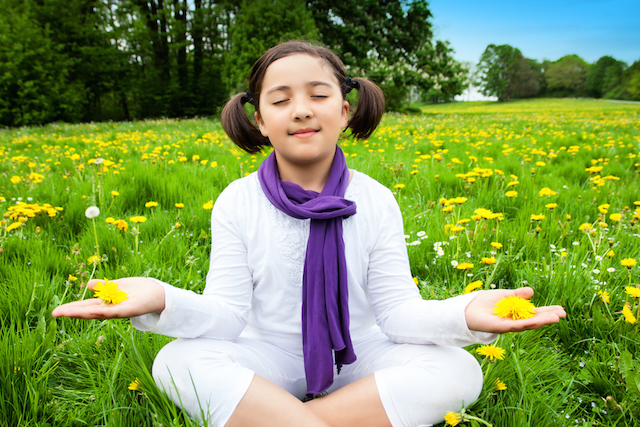
    Little Girl Meditating

    “Every child is an artist. The problem is how to remain an artist once he grows up.” ~Pablo Picasso

    It amazes me how often our personalities, habits, and interests as adults resemble the same ones that we had as elementary-aged kids. In fact, I’m convinced that when we are feeling lost, in a rut, or at a crossroads, we should consider the wisdom we had as eight-year-olds.

    I first became aware of my love for writing when I was in second grade. When my teacher created a class newspaper, giving each student an individual piece of paper on which to write stories of our choosing, I was in Heaven.

    She then arranged each story like a jigsaw puzzle onto multiple pages in order to make copies for each of us. Seeing my handwritten stories “published” onto paper for the entire class left me practically swooning.

    It was during this same time that my infatuation with music developed, and I first started using music to express myself.

    When my neighborhood boyfriend and I broke up, I did what any second-grade, romantically-inclined and musically-obsessed child would do. I danced and sang “Don’t Turn Around” by Ace of Base in my driveway.

    Imagining I was singing, “Don’t turn around, ‘cause you’re gonna see my heart breaking. Don’t turn around, I don’t want you seeing me cry,” to my long-lost/four-houses-down love interest felt like the best possible way of expressing my feelings. Plus, I felt like a rock star—which, I can report back, is a great way to boost spirits.

    While my elementary-school boyfriend choices never lasted and I have yet to become a famous Ace of Base cover singer, I still consider music and writing to be my deepest passions. Whether I’m writing articles, sending emails to friends, or merely jotting thoughts in a journal, I feel like I’m in the flow.

    Similarly, going to concerts, listening to music, writing music, singing along to my iPod in the car, and playing musical instruments fills me with such joy that it’s hard to contain all that passion without it giving me goosebumps.

    Nobody ever told me to like music and writing. For whatever reason, it just became something that I was passionate about. Yet, I still went through many years of racking my brain for clues about what I should do “when I grow up” before I started to take seriously my interests back in the second grade.

    When I stopped trying to ignore those deep-seated passions, that same bliss from my days of writing for my classroom newspaper or singing in the driveway came right back.

    If you, likewise, are currently in a position of trying to imagine your future without much luck, try looking backward first. What were you passionate about in elementary school? What were the hobbies that you chose for yourself that nobody told you to do?

    Did you have a serious rock collection? Perhaps you’d enjoy geology. Couldn’t keep your hands out of the dirt? Maybe you’d love being a horticulturist or a farmer.

    Were you never able to walk past a dog or a cat in your neighborhood without stopping to pet them? I bet you’d thrive at being a veterinarian or an animal trainer.

    Of course, we probably all went through phases of being interested in something as kids that we have no desire to do anymore. Despite my interest in Pogs, Boondoggles, and Giga Pets circa the sixth grade, I’m not about to deplete my savings to start my very own Pog-Boondoggle-Giga Pet Emporium (though I have to admit, that does sound pretty tempting).

    Still, there may be pieces of your history that have been forgotten; if you uncovered them now, implementing them even in small ways, they may be just the ticket to bring you a renewed sense of enthusiasm or creativity.

    If you loved art more than anything else as a kid but are not in a position to leave your desk job, then maybe you could see if there are community art classes you could sign up for on the weekend, or you could create a weekly craft night with your friends.

    If animals always made your heart skip a beat but your landlord won’t allow pets, perhaps volunteering at an animal shelter would satiate that need for four-legged friendship.

    If you were the class clown growing up but feel like you aren’t laughing as much anymore, maybe you’d enjoy catching some comedians at the local comedy club. Or even doing some stand-up yourself.

    As we all continue to age and expand our ever-growing knowledge, I believe it would be smart to remind ourselves every once in a while of the innate wisdom we had as kids, when we were free to play and explore our interests without wondering what they said about us or how prestigious they seemed to others.

    There may be hidden truths about your passions buried in your childhood that needs rediscovering, and digging them out may be just the thing you need to create an exciting new path for yourself. (Or at the very least, you can remind yourself and be proud of how impressive that Pog collection was.)

    Girl meditating image via Shutterstock

  • A Message for Those Who Feel Lost and Are Looking for Answers

    A Message for Those Who Feel Lost and Are Looking for Answers

    “Wherever you go, there you are.” ~Jon Kabat-Zinn

    On June 24th I got in a cab at the corner of 72nd and Broadway headed to JFK, hauling two huge suitcases full of medications, bug spray, sunscreen, gluten-free foods, a bug tent (really), and cheap cotton clothing.

    I checked in, made my way to the gate, and embarked on a twenty-four-hour flight to Ho Chi Minh City, Vietnam.

    Months of confusion and identity crisis brought me here.

    Almost a full year ago, after returning from performing with a national tour that ended up being a lot less fun than I’d dreamed and having a foot surgery right after, thanks to a doctor who made just a little mistake, I decided I wanted to try going off of Zoloft. I had been on it for the better part of six years to help with anxiety and depression.

    This marked the beginning of what I am now referring to as my “quarter-life crisis.”

    I started working with a life coach, began a dedicated daily meditation practice, joined a yoga studio, broke up with my boyfriend of three years, and read Brené BrownMark NepoTara Brach, and Byron Katie.

    I went to a million and one auditions, suffered some major loneliness and isolation living in a studio apartment in a Manhattan winter, began letting my ex-boyfriend back into my life, and after several months of this, working so hard to keep myself afloat, I felt 100% lost.

    I began asking hard questions, like “Why are you in showbiz? Are you just trying to prove something? Was this ever what you really wanted to do? Do you even like New York anymore?”

    I sat in my apartment and ruminated, oscillating between feeling God profoundly (life is beautiful! Look—God is in that steam coming out of your humidifier!) and feeling painfully hopeless.

    On one of my few gigs last spring, I was chatting with the make-up artist about her travels to Southeast Asia the previous summer.

    She told me about the nonprofit organization she taught English with. Before she went to Vietnam, she felt uninspired and “over it”; after, she felt like a new person. A light went off inside—maybe this is what I need to do!

    In May I applied, and within weeks I had been interviewed and invited to join the trip to Duc Linh, a rural region about 100 miles northeast of Ho Chi Minh City. I had five weeks to make up my mind, get my act together, and either board the plane or not.

    I was terrified, but I said yes. I hoped that this trip would bring me some answers and force me to grow in the ways I needed to in order to make it through this no-mans-land of confusion, and into the next chapter of my life.

    Duc Linh was nothing like I imagined and nothing like described. I taught English to a group of teenagers and some adults, and spent afternoons playing with little kids of all ages. They absolutely embraced me; it was unconditional love at first sight.

    I felt simultaneously alone and isolated there, as well as overwhelmed by human interaction. The kids would yell “LOW-RAH!” as I walked by, run up to me, adorn me with flowers, touch my clothes, touch my hair, touch my armpits, and hold my hand, all while chattering away in Vietnamese.

    I kept a blog and drafted posts that I assumed I would fully write and publish in a week or two, once I had learned some amazing, life-changing, clarifying lessons.

    I couldn’t wait for several Oprah-worthy “aha!” moments. Those drafts remain drafts, and the “aha” moments came in smaller, less expected ways.

    There was no “Aha! I want to be a (insert amazing profession that totally makes sense and clearly was my calling all this time)!”

    It was more like “Aha! I can ride on the back of a bike with a fifteen-year-old kid who doesn’t speak my language, have no idea where we are going, and have an amazing adventure in a rambutan garden!”

    Or, “Aha! I can become ‘big sister’ to a little girl and boy (Chi and Bao) without having a single conversation.”

    And, probably the biggest one, “Aha! You are enough just as you are. They don’t care that the National Anthem you sang for them on the Fourth of July was totally off-key and had some improvised lyrics; they don’t care that you are a sweaty, frizzy mess; they don’t even care that you can’t speak their language: they love you just for being here.”

    For the first time in my privileged life, I was exposed to an impoverished world, to kids who had no idea what the heck I was talking about when I said “Broadway!?” and who looked at photos of Central Park and said “Wow! It’s like a resort!”

    They wore the same clothes every day and played outside barefoot in the dirt. They slept in houses with tin or straw roofs and anywhere from one to four walls.

    But they were happy. They were beautiful, and giving, and constantly smiling. I realized that the things I thought were important and necessary were not. I realized that the first world doesn’t hold the key to happiness anymore than the third world does.

    My concerns in Vietnam were much more immediate than my American QLC (Quarter Life Crisis) concerns.

    I recalled my QLC problems and thought man, what a luxury to be able to think about that nonsense! If I had a working shower and a bed and a quiet space, I would be perfectly happy!

    After spending a month in Vietnam, I became completely amazed at the life I live.

    In Man’s Search for Meaning Viktor Frankl writes, “A man’s suffering is similar to the behavior of gas. If a certain quantity of gas is pumped into an empty chamber, it will fill the chamber completely and evenly, no matter how big the chamber. Thus suffering completely fills the human soul and conscious mind, no matter whether the suffering is great or little. Therefore the ‘size’ of human suffering is absolutely relative.”

    When I first returned from Vietnam I was overwhelmed with gratitude for my life, but over time the normal anxieties crept back in.

    The confusion I experienced before I left Vietnam was still there, waiting for me in my apartment on 72nd and Broadway, saying, “What, you think you can just leave me here all summer and I would move out?”

    Before I left for Vietnam, I had a great plan of how the following months would play out. I would learn a lot, grow heaps, and hopefully figure out my life purpose over the course of the month spent there (so reasonable).

    Afterward, I would return to the city a new woman with new dreams and plans and a clear sense of purpose and direction. I would write a captivating article all about my transformation and it would be inspiring, motivational, and amazing.

    Everything in my life up to that point would make sense, and I would look back on the last few years and say, “Ahhh, I see why all that happened. It was all to bring me here to this amazing place of self-actualization and peace.”

    Alas, there is no amazing conclusion, no way to tie this piece with a clarifying bow.

    Of all the lessons learned this summer, the greatest one may be “Wherever you go, there you are.”

    I’m still here, confused, and lost and scared—but maybe that’s okay.

    Maybe all we can do is be where we are, do our best, and go out on a few limbs, not for the sake of finding answers, but for the sake of fully living.

  • 5 Lessons from a Breakdown: How to Make Hard Times Easier

    5 Lessons from a Breakdown: How to Make Hard Times Easier

    Depressed Man

    “Never apologize for showing feelings. When you do so, you apologize for the truth.” ~Benjamin Disraeli

    Three years ago, at twenty-five, I had a breakdown that stole over two years of my life and almost killed me.

    People often think of breakdowns like car accidents—one almighty crash that results in the dissolution of that person’s being. But for most of us, breakdowns are a slow descent into madness. They creep up on you. They change you one small step at a time until you no longer recognize yourself.

    You get exhausted walking around the supermarket for your weekly shopping. You have a panic attack because you’re supposed to go out with friends but can’t face them. You’re reduced to tears because even getting dressed feels overwhelming.

    I went from someone who was strong into someone I didn’t know; I existed, but I wasn’t there.

    I couldn’t leave my bed, didn’t eat, and could barely even talk at times. Though I had suffered with depression since I was thirteen, I had never known pain like this. I wanted so desperately to end my life but had no energy to do so, which only added to my misery.

    I felt lost, stuck, and hopeless, and believe I would never find myself again.

    Though I’m still left with remnants of my breakdown, including post-traumatic stress disorder, I can appreciate the lessons it taught me, however difficult they were to learn at the time. If you’re going through hard times yourself, you may find these lessons helpful.

    1. Let your friends be there for you.

    The saying goes that when you are at your lowest point in life, you will discover your true friends, and I am blessed to have discovered mine. The ones who would allow me to Skype from my bed so that we could enjoy breakfast together. The ones who understood when I couldn’t face them for dinner like we had enjoyed so many times before. The ones who would say nothing, but lie on my bed and hug me when I couldn’t talk.

    Friends often don’t know how to help you when you’re struggling, so you have to ask for what you need. Allowing them to be there for you in this way can really strengthen your relationship. It shows that you can count on each other when times get tough.

    2. Learn to say “no.”

    Instead of accepting things that were no good for me, be it other people’s negative behavior or situations that upset me, I began to say “no” and walk away.

    If friendships were bringing me down instead of lifting me up, I ended them, and instead of feeling obliged to attend gatherings, I cancelled because I recognized I needed time to look after myself.

    We are conditioned by society to believe that saying “no” to invitations or commitments is selfish, but when you are struggling so intensely, you need to get selfish. Learn to look after yourself in the smallest of ways and evaluate what works and doesn’t work so you can eliminate the latter.

    3. Stop worrying about what others think.

    Mental health (or lack of it) can be a difficult concept for others who’ve never struggled with it to understand.

    If you have cancer or physical symptoms, such as a broken leg, you can explain a lot of your mood away, but when your pain is neatly wrapped up in your head and you have nothing to show for your illness, you find yourself having to justify not being able to get out of bed. So I stopped worrying about what others thought.

    As long as you know your truth, nothing (and no one) else matters. While we often seek acceptance from others, if you can accept that you are not “crazy” and that you are sick, needing help, it can often take away the guilt and embarrassment you may feel.

    4. Become grateful and proud for the small things.

    As a healthy person, we really do take the most routine and mundane things for granted; it’s not until we can’t do them that we realize just how treasured they are.

    Simple things, such as reading a book, become impossible because you can’t finish a sentence without forgetting the beginning of it. You have no energy to leave the house even when it’s sunny. You can’t bring yourself to go out to dinner with friends you’ve known for years.

    When you are able to read a whole page of the book, walk to the shop for some milk, or spend an hour with a friend, be proud of yourself!

    Don’t beat yourself up because you couldn’t leave the house; be proud that you managed to get out of bed, even if it was to sit on the couch. Every little thing becomes a big achievement, and one you should be proud of.

    5. Listen to yourself and look after your needs first.

    Being depressed made me incredibly introspective and therefore, very in tune with my body and what I craved on a daily basis. Sometimes I needed company, so a friend would visit to offer their love and comfort. On other days I needed to be alone and cry until my head hurt.

    Your needs will change daily, and that’s okay. Some days you might want to go for a walk in the sun with a friend, but other days you might just want to snuggle up at home with your phone off and a good movie. You should remember that both are different ways of looking after yourself.

    As Winston Churchill once said, “If you’re going through hell, keep going.” And I did. Every day I woke up (despite not always wanting to) and I survived.

    My breakdown changed me in ways I couldn’t hope to put into words. Though I wouldn’t want anyone else to go through the despair that I did, I’m thankful for the painful, yet necessary, lessons it taught me, and the person it has made me become.

    Depressed man image via Shutterstock

  • Feeling Lost and How It Can Help You Find Yourself

    Feeling Lost and How It Can Help You Find Yourself

    Lost

    “Not until we are lost do we begin to understand ourselves.” ~Henry David Thoreau

    Another day, another class missed, another alarm turned off. No motivation but to turn the pillow over to its colder side and lay there half asleep, unanswered questions gliding in and out of my mind.

    This was how most of my mornings went in my last days of college. I had never been too motivated by the promise of college, even in high school, but it had always been set in my head that a college degree was my goal, my path to that elusive happiness we all crave.

    It was my belief, and perhaps my parents’ as well, that I would head off to have the proverbial college experience and in the process I would become a lawyer or some sort of government official. That I would just wake up one day and say, “Aha! I know what I want to do for the rest of my life!” But that morning epiphany never came.

    All that happened was a continuous cycle of partying, all night study sessions, followed by a complete and utter lack of fulfillment. So I dropped out. I moved back home with no degree, disappointed parents, and a deep sense of failure and confusion.

    It was one of the most trying times in my life simply because I realized that my life had been on autopilot.

    Everything about my future was ambiguously assumed. I would get into debt by going to college, then I would be forced to get a job to pay off that debt, while still getting into more and more debt by buying a house and a car. It seemed like a never-ending cycle that had no place for the possibility of a dream.

    I wanted more—but not necessarily in the material sense of personal wealth and success. I wanted more out of life. I wanted a passion, a conceptual dream that wouldn’t let me sleep out of pure excitement. I wanted to spring out of bed in the morning, rain or shine, and have that zest for life that seemed so intrinsic in early childhood. (more…)