Tag: lonely

  • When Healing Feels Lonely: What I Now Know About Peace

    When Healing Feels Lonely: What I Now Know About Peace

    “Avoiding your triggers isn’t healing. Healing happens when you’re triggered and you’re able to move through the pain, the pattern, and the story, and walk your way to a different ending.” ~Vienna Pharaon

    I thought I had figured it out.

    For a year, I had been doing the “inner work”—meditating daily, practicing breathwork, journaling, doing yoga. I had read all the books. I had deconditioned so many behaviors that weren’t serving me: my need to prove, my need to compare, my negative thought patterns. My self-awareness was through the roof. I had hit that deep, deep place in meditation I read about in the spiritual texts. I met my soul.

    I had stripped my life down to the essentials: no coffee, no alcohol, no meat, no distractions. My morning routine was bulletproof: journal, read a spiritual text, do yoga and breathwork, meditate.

    I distanced myself from many—putting up boundaries to some of the closest people to me because they “didn’t understand.” I spent my days mainly in nature, alone, in so much stillness and presence. I had finally found peace. Or at least, I thought I had.

    And then I went to a silent retreat in Bali.

    I flew across the world, ready to spend eleven days in complete silence, fully immersed in my inner world. I thought it would deepen my peace, open me up to even more divine inspiration, that it would solidify all the healing I had done.

    I had no idea it was about to rip me open.

    For the first three days, I was in heaven. I was more present than I had ever been in my life. The sound of the river, the feeling of the breeze on my skin—it was intoxicating. I felt like I could stay there forever. I felt like I was home, internally and externally.

    But on day four, everything cracked wide open.

    Suddenly, the emotions I thought I had healed—the ones I had spent months working through—came flooding back like a tidal wave. It all started with comparison. Comparing myself to other people at the retreat. Comparing my body, my flexibility in yoga class, my skin, my beauty.

    I was so confused—I had the awareness to know this wasn’t “good.” I had the awareness to realize this was me defaulting to all these old thoughts and behaviors.

    My mind started battling itself—and then I dove right into the “worst” behavior I thought I had healed: judgment. Judgment of others and judgment of myself.

    What was going on?! Hadn’t I already done this work? Why was I back here again?

    More and more emotions started coming up. I felt so unworthy again, like I hadn’t done enough work on myself. Like this past year was done all wrong, like it was wasted. Like I misunderstood the assignment.

    And that’s when it hit me: I had mistaken solitude for healing.

    Those few months before the silent retreat, I had wrapped myself in solitude like a safety blanket. I had avoided anything that triggered me—situations, people, even certain thoughts. I had created boundaries—not just with others, but with life itself.

    I was at peace… but I wasn’t living.

    I had gone so far into solitude, into stillness, that I had disconnected from the very thing that makes life meaningful—other people. I had tricked myself into thinking I had found peace when, really, I had just found another version of control.

    But control isn’t healing—it’s just another way of trying to feel safe.

    Turns out, I wasn’t at peace—I was chasing again. And this time, I was chasing enlightenment. It looked different from my old pursuits—more noble, more spiritual—but it was still a chase. And I will say honestly (and not egotistically), I reached enlightenment. I know I did. I reached Samadhi, consciousness, pure bliss. But then I started chasing that state, trying to make sure I was always in it. And the only way I could stay in it was by being alone.

    That’s where the control came in. I thought I had relinquished my need for control. I thought I was free. And in some ways, I was. But in other ways, I was meticulously curating every single detail of my life to make sure I could always remain in that blissful state. Control had woven its tentacles into my spiritual practice, and I didn’t even realize it.

    I needed to be isolated, as much as possible, to maintain my peace. I had convinced myself that this was my purpose. That this was my highest path.

    But that also made life so… lonely. Yes, it was peaceful. But suddenly I realized I missed my friendships. I missed my family. I missed all the people who triggered the heck out of me.

    Because in complete silence and solitude, I saw the truth—what makes life “life” is being in relation to something or someone.

    The truth is, real peace isn’t found in avoiding life—it’s found in moving through it. It’s found in the moments when we feel everything, when we get hurt, when we love, when we mess up, when we forgive.

    That’s what life is. That’s what healing is.

    And go figure—it took complete silence to show me that.

    On my second-to-last day at the retreat, I sat by the river and watched a single leaf fall into the water. Those beautiful big leaves that look so thick and robust, so durable. The current swept it along, pushing it under rocks, pulling it back up, flipping it over, tearing its edges on twigs lodged in the riverbed.

    But here’s the thing—no matter what, the leaf kept moving. It got stuck every now and then, but somehow, it would dislodge—a bit more broken and bruised but still moving.

    And so do we.

    No matter how much life twists us, no matter how many emotions hit us like waves, we are meant to flow with it, not run from it. Not avoid it.

    What Silence Taught Me About Real Peace

    1. Solitude is a tool, not a destination.

    Alone time is valuable, but true healing happens in relationship—with people, with challenges, with the messiness of life.

    2. Emotions are a gift, not a burden.

    I thought I had reached enlightenment by avoiding pain, but real peace comes from feeling everything—joy, sorrow, frustration, love—and moving through it.

    3. You can’t control your way into peace.

    I thought if I just kept my environment “pure,” I could protect my sense of calm. But life isn’t about control; it’s about trust.

    Flow with life, even when it hurts. That leaf in the river reminded me—life will push, pull, and test you, but you are meant to navigate it, not resist it.

    So yes, silence is important. Solitude is powerful. But the work? The real work is out there. In the messy, beautiful, heart-wrenching, soul-expanding experience of being human.

    And that’s the lesson I carried with me—not just when I finally opened my mouth to speak again, but into every moment of life that followed.

  • How Being Alone Made Me Fall in Love with Myself

    How Being Alone Made Me Fall in Love with Myself

    “Solitude is where one discovers one is not alone.” ~Marty Rubin

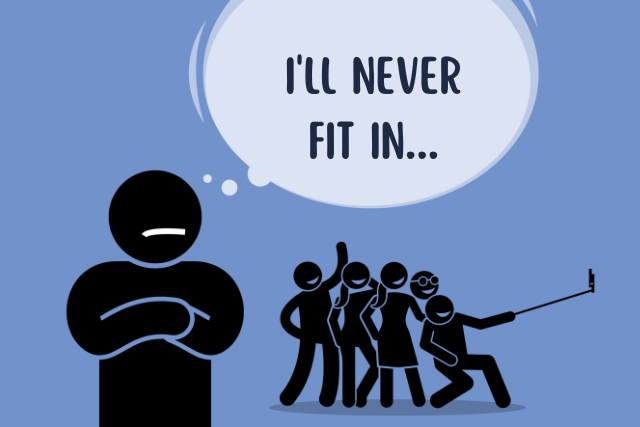
    “No one invites me to their party.” That’s what middle school was like for me, anyway. No matter how hard I tried, I could never really fit in with any friend groups.

    It seemed like everyone got the instructions on who to hang with and where to sit except me.

    I was the serious, quiet type. And the gossipers and sleepover crews didn’t want serious and reserved. So I bounced around, making a buddy here and there. But I was never fully brought into the social scene.
    At first, I figured it would sort itself out and I’d find my people. But middle school turned into high school. And high school turned into my first year of college.

    I was still on the outside looking in.

    No matter how often I put myself out there to try and squeeze into different circles, I’d end up alone again before long—feeling even more lonely than when I just kept to myself.

    The worst part was when I pretended to be someone else, just trying to fit in. And it would work…for a minute. Then I couldn’t keep up the act anymore.

    I was back to being an outsider. But now I also felt like I lost some inner part of me that made me, me. I was drained. I was bummed.
    Eventually, I realized I had hit rock bottom. I was tired of criticizing myself and trying to contort into someone I was not just to please people who didn’t actually care about me.

    I had already chased after so many groups and friends, desperate for that connection, but all I was left with was emptiness.

    Finally, one day, I asked myself, “Who has been here through it all? The highs and lows, wins and losses?”

    The answer was me, myself, and I. ‘I’ was the constant.

    ‘I’ was the one listening and providing answers when I talked myself through difficult situations. ‘I’ was the one patting myself on the back when I succeeded at something.

    That realization—that I already had the most loyal companion imaginable—brought me more comfort than any superficial friendship or party invite could. I had myself, and I was enough.

    I decided to stop begging for validation or acceptance from others. I was going to validate myself.

    I started actively spending more time alone, without distractions or social media. Reading, writing, and taking myself on solo dates.

    I discovered so much about my interests and strengths. I found inspiration and magic in solitude I had never known before.

    For the first time in ages, I was at peace. I felt whole, not like some fractured version of myself. I was alone but not lonely. I was independent yet fulfilled.

    I became my own best friend. And that made all the difference.

    It taught me that I alone am enough, even if others don’t see my worth. Their approval is meaningless unless I have self-approval first.

    Further, an interesting thing happened once I stopped desperately chasing friendships—I started attracting people who liked me for me. Turns out when you’re confident and self-assured, you give off good vibes that draw others in.

    I made some fantastic friends in college who didn’t care that I was an introvert. And you know what’s the best part? I even found my love partner! Everyone valued my insight and quiet persistence.

    For the first time, I felt like I belonged while still being fully myself.

    I learned four vital lessons from my lonely middle school days:

    1. You are your own best friend or worst critic. How you talk to yourself matters. Build yourself up rather than tear yourself down.

    2. Embrace what makes you different. Don’t hide your unique gifts and talents away in some quest to fit in. The right people will appreciate them.

    3. Connections can’t be forced. Friendships and relationships worth having tend to come when you least expect them. Stop chasing and let things unfold.

    4. It’s better to be “alone” than in bad company. Having toxic or fake friends is far lonelier than having just yourself.

    My middle school self would never believe me if I told him one day, he’d have true friends and a partner who adores his little quirks.

    But by making peace with being alone, I found the relationships I had craved for so long and discovered that all the acceptance I needed was my own.

    I still consider myself an introvert. I enjoy my solo time and quiet hobbies. But now I don’t feel pressured to be someone I’m not just to keep friends around. The connections I do have are based on authenticity from both sides.

    And when I need advice or just someone to listen, I turn inward. I explore my feelings through journaling. I tap into my inner wisdom through long, contemplative walks alone. I’ve become my own counselor and cheerleader.

    I’m so grateful that the younger me kept striving to find his place. All that perseverance led me right where I needed to be—firmly rooted in myself.

    If you’ve been going through something similar, I see you. And I want you to know that you are enough, exactly as you are. You don’t need to earn a spot at anyone’s table for your life to have meaning.

    The people who will love you most deeply are on their way. For now, love yourself. Treat yourself kindly. Pursue your passions unapologetically.

    Speak encouraging words into the mirror each morning. Put in the work to be your best friend.

    And know that wherever you end up in life—surrounded by a tribe of people who adore everything that makes you different or embracing solitude and forging your own singular path—you can’t lose as long as you have yourself.

    I am my own closest companion. You can be your own, too.

    Whatever stage you’re at in your journey of self-discovery, keep going. Know that the loneliness and feelings of not belonging won’t last forever.

    Have faith that things will get better, especially when you nurture your relationship with yourself above all else.

    Maybe today is an awkward day where you’re struggling to find your place. That’s okay. Breathe through it. Tomorrow holds new possibilities.

    Maybe you’re entering a season of solitude that first feels uncomfortable but will ultimately lead to profound growth. Lean into it entirely rather than resist it. There is a treasure to uncover.

    Or maybe you have finally attracted a “tribe” that appreciates the unique shades of who you are. Congrats! But never lose sight of your own worth that exists with or without them.

    Wherever you’re at, you’ve got this. And you’ve got yourself. That’s all you’ll ever really need.

    So stay true to yourself. Don’t shrink parts of you to appease others. Keep taking chances on yourself, even when no one else will.

    Trust that by being loyal to your own soul, you will find both inner fullness and meaningful connections with time.

    For now, chin up, sweet soul. I’m proud of you for how far you’ve come. How far you’ll go from here is breathtaking. Onward.

  • Why I Love My Sober Life: Everything I Gained When I Quit Drinking

    Why I Love My Sober Life: Everything I Gained When I Quit Drinking

    “Sobriety was the greatest gift I ever gave myself.” ~Rob Lowe

    I tried and failed to have a fabulous relationship with alcohol for many years.

    When my children were tiny, I drank far more than was good for me, thinking I was relaxing, unwinding, socializing, and having fun. I’d seen my life shrink down from a world with lots of freedom and vibrancy to a socially restricted void, and I wanted to feel normal. I wanted to join in with everyone else.

    All my birthday cards had bottles of gin or glasses of fizz on them, all the Friday afternoon memes on social media were about “wine o’clock,” and I wanted to be part of that world.

    The opening of a bottle in the evening had me thinking I was changing gear, moving from stressed to relaxed, and treating myself to some self-care. Nothing could have been further from the truth; the alcohol made me wake during the night and gave me low-level anxiety and an almost permanent brain fog.

    I’m not proud of the drinking I did when the kids were small. I now feel a deep sense of shame about that time. I’d created such a happy life for myself—lovely husband and kids, nice house in a great town, wonderful friends. What was I drinking to escape from?

    On the outside I looked like I had it all, but I didn’t—I had overwhelm.

    I was a wife and family member, a mum to two small children, an employee, and a freelancer… I had all the roles I’d longed for, and yet it was all too much.

    I didn’t know how to let go of some of my responsibilities, and I didn’t know how to cope with everything that was going on in my life. Alcohol felt like the treat I deserved. It took me a while to figure out that alcohol was the common theme in my rubbish decision-making, tiredness, and grumpiness.

    I’d spent a long time feeling trapped and stuck. I knew I wanted to stop drinking, but I was worried about what others would think of me, how I would feel at parties without a drink in my hand, and whether I’d be able to relax properly at the weekends.

    I kept going back and forth, deciding I’d stop, then changing my mind, thinking I wouldn’t or couldn’t. It was a hellish merry-go-round. When I was forty-one, I finally made the decision to quit alcohol for a year as a little life experiment. I wanted to see how I would feel without it for an extended period of time.

    I decided to take a bold action in autumn 2019. I told a group of online friends that I was not going to drink alcohol for the whole of 2020, and once I had said it out loud, I knew I would have to do it.

    This step toward accountability really helped me to move forward with my sober mission. I started to count down to 2020 (still binge drinking), wondering how this experiment was going to go!

    Toward the end of 2019, my mindset began to shift. Instead of dreading the start of 2020, I started to look forward to it. I made plans that I knew would lead to a successful sober year. I read books about quitting, listened to inspiring podcasts, and watched films or documentaries that didn’t show alcohol consumption in a glamorous light. I followed people who were a few steps ahead of me on their sober journey. I asked questions and I followed advice.

    I had my last drink on Dec 8th, 2019—nothing monumental, out with a few friends and no hangover the next day. It was a total non-event!

    I wanted to have a year without alcohol to know if life would be stressful, lonely, or boring like I’d led myself to believe, or if it was possible to relax, connect with others, and have fun without a drink. The hangovers and brain fog were getting worse. In my late thirties and early forties, I just couldn’t get away with it like I had in my twenties.

    I wanted to be a more patient parent—no more selfishly rushing the kids through bedtime because I wanted to get back downstairs to my drink.

    I wanted hangover-free weekends to enjoy my time away from work.

    I wanted to maximize my nutritional choices—no more rubbish food choices dictated by low-level hangovers, or high-level ones for that matter.

    I wanted to sleep deeply and wake up feeling rested and ready for the day ahead.

    I wanted to know I was giving myself the best chance at not getting high blood pressure, heart disease, liver disease, cancer, dementia, or a compromised immune system.

    I went through the whole of 2020 without a drink. There were some tough days to navigate, some challenging events to negotiate, and awkward conversations to have with friends, but I did it all, and I did it all sober.

    When 2021 rolled around, I knew I wasn’t going to go back to how I’d drunk before. I had changed my relationship with alcohol for the better. I was physically, emotionally, and spiritually a different person, and I didn’t want to go back to numbing my feelings.

    It’s easy to name all the benefits to our bodies and minds when we cut alcohol out—deeper sleep, clearer skin, better mood, more energy, and less anxiety, to name a few—but for me, the real shift has come a couple of years down the line. I feel more spiritually open than I’ve ever felt before, and I cannot wait to see what unfolds next for all of those of us on this sober-curious journey.

  • How a Rescue Dog Helped Heal My Lonely, Longing Heart

    How a Rescue Dog Helped Heal My Lonely, Longing Heart

    “Maybe it’s time for the fighter to be fought for, the holder to be held, and the lover to be loved.” ~Unknown

    There’s this cheesy saying I heard once—“Dog, when spelled backwards, is god.” As a companion to my dog, I can honestly say this is truer than you might ever imagine it to be.

    There is something special about dogs or perhaps animals in general. They are not plugged into the matrix of human dramas and suffering the way we are entrenched in it. And because they are out of that cycle, in a way, they become our bodhisattvas.

    I Was Blessed with a Runway Before Takeoff

    It all started when I moved into a shared home with four other strangers. One of them had an eight-year-old pit bull named Kima.

    Until this point, I never thought I could live with a dog. They’re dirty, they shed everywhere, it’s too much work, it’s too expensive, and it’s a lot of commitment. Essentially, dogs would ruin my independence and make my pristine little life very inconvenient. But that’s exactly what I needed—I needed stability, and I needed someone to shake up my self-centered world.

    Basically, all the things I needed in my life were the very things I resisted. Don’t we all do this?

    Kima taught me every day that life with a dog wasn’t so bad. Her wiggly butt, her tendency to contort herself into a tiny ball to fit into my 5’2’’ sitting frame, and her awoooo howls were things I looked forward to every day.

    Things like shedding, smells, and minor annoyances didn’t seem to bother me as much as I thought they would. So naturally, when I moved out of that shared house and into my gorgeous loft, I started fostering dogs.

    Sometimes we become the very people we thought we would never be, and that can be a good thing.

    Keep in mind I was still very commitment phobic. So fostering puppies was perfect—love them, train them, and give them away. To say that fostering was one of the most challenging things I’ve ever done is an understatement. It triggered my nervousness, anxiety, anger, shame, low self-esteem, and guilt—all the things I thought I had “fixed” in myself.

    If they peed on my rug, I’d be blinded with rage on the inside. If they got sick, I thought I had failed as a human. If they were fearful of a leaf, I thought it was because I didn’t make them feel safe. I made all their problems a reflection of myself—no surprise here; it’s a tendency I’ve had my whole life.

    Serendipity Moves In

    Three foster dogs later, I was waiting for my fourth foster to arrive. He was a puppy being driven to Seattle from California. Except the driver’s car kept having issues and breaking down. I was getting impatient. I had been waiting for this foster to arrive for over a week. So I asked my case manager to assign me to another foster, and she in turn asked me to pick a foster from the dogs in line.

    I looked online and saw this beautiful caramel-brindled, light-brownish gold gentle-eyed soul named Cappuccino. I couldn’t believe he wasn’t picked up to foster yet. Yet I didn’t sign up to foster immediately. Looking back, it was fear. But in the moment, I thought it would be good to wait for my assigned foster instead. I thought I should be patient and just wait.

    How our mind rationalizes things away to keep us from really feeling our feelings, eh?

    I kept checking the website trying to see if Cappuccino had been picked up to foster. Subconsciously, though, I was waiting for an excuse not to foster him. “See? Someone else fostered him, so now I have no choice but to wait for my assigned foster.”

    Isn’t it interesting how sometimes we wait for the universe to decide for us so we can avoid taking responsibility for our big feelings and our big destiny?

    I don’t know what came over me, but one day, before I knew it, I had signed up to take Cappuccino instead.

    The Gentleman Monk Arrives

    As soon as Cappuccino arrived, I fell in love with him. He was everything my intuition had picked up on when I first saw his picture online—he was a gentleman monk. But I was very clear that I was going to enjoy being with him, train him, and then give him away.

    Within the first few days of his arrival, it was clear he had a gut infection, which led to bloody diarrhea. He was uncomfortable all the time. He pooped on my carpet. He was terrified of everything, from cars to the wind. He tripped me a few times from getting spooked by nothing. And worst of all, he didn’t seem to like me. He didn’t wag his tail at me. He never seemed excited to see me. In short, he triggered every wound in my heart.

    When the time came to write his bio for his adoption profile, I just couldn’t do it. I wanted to keep him just a little while longer, so I did. But then “a little while longer” came and went. That’s when I started panic-calling everyone I knew. My secret desire was for them to tell me why I would be a good human companion for a dog. In short, I was asking for validation and for permission to adopt him.

    Most people I called did validate me, but it fell on deaf ears. It’s just that I couldn’t believe them. The permission I was seeking came in an unexpected way.

    One friend said, “If it doesn’t work out, you can always give him back up for adoption.” That thought entered my body like a frozen icicle. I would never, ever give him up, no matter what. My passionate commitment came as a surprise to me.

    Another friend said, “You know having a dog is a big responsibility. It’s really tough. They’re expensive too. And you don’t want to be tied down.” These were my own inner thoughts being reflected to me through someone else’s mouth. I heard my own inherent fear and doubt hidden in those rational statements. And I found them to be silly.

    In February 2022, I made the decision to adopt Cappuccino. I named him Azar—a variation of the word Atar, which in Avestan (Zoroastrian) means holy fire, son of god, light, or the visible presence of the divine. Because that is who he is to me.

    Adopting a rescue dog is a heroine’s/hero’s journey, a quest, and an activation.

    A lot of us single people are hurting.

    We don’t feel well-met by the world, we cannot find partners, we start self-obsessing (in the form of self-doubt, self-criticism, etc.), and we can’t find anything about ourselves that we love. The vicious cycle is that, for a lot of us, the longer we stay single, the more entrenched we get in this state of loneliness, longing, and heart emptiness. And the longer we stay in this space devoid of intimate, reciprocal love, the longer we stay single.

    A dog companion can start to chip away at our loneliness, longing, and heart emptiness. And that chipping away begins a whole new life for us.

    Having our dog by our side gives us safety in relationship.

    For many of us, our relationship with our dog may very well be the first relationship we’ve ever felt safe in. It doesn’t matter if it’s not a human one. What matters is that it’s one relationship that just gives to you and feeds your heart.

    Azar taught me that I’m just a much better person when I’m around people who are self-assured, sensitive, playful, goofy, and at peace.

    When I’m around Azar, I don’t feel put upon or burdened by his state of being. He taught me that any other qualities were just not as important to me as I thought they were—qualities like intelligence, ambition, and edginess. I began to prioritize my relationships based on whether they made me feel a similar way Azar did.

    Having our dog by our side challenges us in safe ways to explore our shadows and wounds. 

    Dogs are so forgiving and accepting. They don’t hold mistakes against you. You see all your own shadowy crevices as soon as you begin to take care of a dog. At first, this process is uncomfortable, like all growth is. The purity of their mirror reflects you in your entirety. You’re motivated to address your shadows more than ever before and in a much gentler, more self-accepting way.

    Azar challenged me to address my rage. He’s such a sensitive and fearful dog that the slightest irritation in my mood makes him shake. I didn’t want him to feel that way. So I began to figure out what techniques work for me to address my rage and channel it productively.

    Having our dog by our side combats our strong, independent person archetype.

    This archetype is mostly a mask for how hurt we have been in relationships. We take on hyper-independence to avoid hurting and being betrayed. Our dogs give us stability in the form of something reliable we can commit to. We begin to be happily interdependent with another being.

    With Azar, I found myself more ready and willing to ask for help. I no longer see asking for help as weakness. I see it as a mandatory part of being healthy in this world. On the flip side, I also feel more ready and able to help others. My cup is so full now that I’m no longer guarding what few drops are left in an almost empty vessel.

    Having our dog by our side enhances our understanding of true commitment.

    We begin to see that true commitment sets us free on the inside. That is the feeling we were looking for all along anyway. It doesn’t matter anymore if we’re not able to go certain places or do certain things. Because those things cease being important to us. We’ve reversed our relationship to freedom. Instead of looking for it on the outside to give us the liberation on the inside, we’ve now felt it on the inside and it spills out on the outside.

    For example, if you told me even one year ago that I would drive hundreds of miles doing the nomad life with just me, my dog, and my two-door Honda, I would have said you didn’t know me at all.

    You see, I used to detest driving. I used to feel insecure with the thought of having no home. I used to be terrified of all the potential obstacles of such a risky lifestyle. Yet Azar by my side freed me up to think of the wide-open road as a friend and as a guide.

    I’ll leave you with this: 

    You have much to give. You just need a chance to give it in your own special way. Dogs will learn your love language just as much as you will learn theirs.

    I’m not saying go out and buy a dog just so you will feel better. I am saying that if or when the opportunity arises to have a fur baby by your side, just do it.

    You don’t have to commit to a lifelong dog companion. Maybe all you do is foster. Or maybe all you do is volunteer at a dog shelter to take dogs on walks. Or maybe you pet sit for a friend.

    Don’t be afraid. Start slow. Walk a dog. Play fetch. And watch how your presence alone is enough to give a being peace and joy.

    Much love to you on this journey.

  • Navigating Social Anxiety: 10 Powerful NLP Tools for Personal Growth

    Navigating Social Anxiety: 10 Powerful NLP Tools for Personal Growth

    “We need each other, deeper than anyone ever dares to admit even to themselves. I think it is a genetic imperative that we huddle together and hold on to each other.” ~Patch Adams

    A few years ago, I was invited to a work event. When I received the invitation a few months before, the idea seemed fun—a friendly gathering with colleagues, filled with vibrant conversations and laughter, enabling me to create human connections in the workplace.

    As the day approached, a familiar knot tightened in my stomach, I couldn’t breathe deeply, and an overwhelming sense of unease took hold. I was caught in the hand of social anxiety.

    Close to the event, the mere thought of attending sent my mind spiralling into millions of anxious thoughts and self-doubt. The fear of being judged, saying something embarrassing, or feeling awkward became all-consuming. Every scenario played out in my mind, each one more terrifying than the last. My mind went to “making up excuses” mode: from getting sick to imagining the event would be boring—anything to cancel.

    As the day of the event arrived, the intensity of my anxiety escalated. The butterflies in my stomach intensified, my heart raced, and I battled against the urge to retreat into the safety of my home and decline the invitation.

    During the event itself, I found myself on an emotional rollercoaster. Every interaction became a high-stakes performance. My mind raced, searching for the right words, the funny words, the smart words, analyzing every gesture and facial expression.

    My ability to express myself authentically was numbed by a fear of judgment and rejection. I felt like an outsider, trapped in a room filled with people who seemed to effortlessly navigate social situations, which felt utterly foreign to me. This masking left me mentally exhausted and emotionally drained.

    After the event, a wave of relief washed over me as I finally escaped the social arena. I retreated back home, alone, to my safe haven. Unfortunately, my mind was not done racing, as it replayed every conversation and interaction. Self-doubt and self-criticism crept back in, overshadowing any moments of genuine connection or enjoyment I may have experienced.

    Luckily, my story doesn’t end there. This is not me today. I’ve learned to regain control over my inner state and find genuine enjoyment in social interactions with others (even at work). I am also very clear on which social interactions I actually want to join and which are not for me, and I am connected enough to my body that I can choose to say no to fun events on days I need to rest.

    It was through my journey of self-discovery and exploration with the approaches I now coach with, teach, and live by—neuro-linguistic programming (NLP) techniques, yoga, and energy healing—that I began to accept, explore, and then transcend my social (and general) anxiety. Of course, there are still days I have to work harder on it, but overall, I feel in control of my state of being.

    A therapist once gave me this definition of anxiety, which I love and keep using in my life and coaching:

    Anxiety is your level of perceived stress or “danger” over your perceived ability to handle that situation.

    When you perceive a situation as dangerous or stressful and you don’t believe you can handle it, your anxiety will be high and your nervous system in fight-or-flight mode…. potentially chronically.

    Therefore, navigating social anxiety is about lowering your level of perceived stress and strengthening your confidence in your ability to handle life and social interactions, however nourishing or awkward they might be.

    Here are the most important insights I’ve formed, and some practical techniques rooted in NLP and mindfulness that have helped me navigate social anxiety.

    1. Practice self-awareness.

    The first step in overcoming social anxiety is developing self-awareness. Take time to reflect on the situations that trigger your anxiety. Is it speaking in public, meeting new people, or being at work or in general? Or being the center of attention? By clearly identifying these triggers and their contexts, you can begin to understand the underlying thought patterns and beliefs that contribute to your anxiety.

    Practice somatic awareness: Where do you feel those sensations in your body? What colors are they and what texture do they have, if any? Are they warm or cold, stuck or moving? Take a deep breath and allow those feelings to be felt and flow, without judging them.

    Be compassionate with yourself, with your emotions, with the different parts showing up in those moments. Overcoming social anxiety takes time, compassion, and the willingness to change!

    2. Get curious about your habitual thinking patterns and limiting beliefs.

    There are underlying beliefs and habitual thinking patterns underneath the fear of being around people. Ask yourself:

    • What about being around others makes you anxious? Is it a fear of judgment or rejection?
    • Are you imagining the worst that could happen?
    • What beliefs are creating this internal response?
    • What do you think it would it say about you if you could not form a good connection with others during interactions?
    • Do you trust others?
    • Do you trust yourself to be able to handle the situation and whatever comes up? If not, what limiting beliefs underly your mistrust?

    When you recognize that your fear stems from untrue beliefs, it reduces the perceived danger of the social interaction and increases your perceived ability to handle it.

    3. Reframe unhelpful self-talk.

    Unhelpful self-talk can be a relentless companion for individuals with social anxiety. NLP encourages us to challenge and reframe these negative thoughts and limiting beliefs into more empowering ones.

    For instance, instead of thinking, “Everyone will judge me,” reframe it as, “People are just people, looking for real connection just like me.”

    Instead of imagining the worst that could happen, see the interaction’s potential: an opportunity for fun, learning, and connection.

    Transcend your internal dialogue with outward curiosity: What am I interested in learning from this or that person?

    After a social interaction, instead of ruminating about the potential silliness of the things you said or did not say, and how people might have judged you, release the need to be validated by others. And celebrate that you put yourself out there and the moments when you were present and had fun. Replace your inner critic with your inner cheerleader, your inner best friend.

    The next suggestions are approaches to learn to master your state of being and therefore increase your perceived ability to handle the social interactions.

    4. Use mindful awareness and breathing techniques.

    During the social event or interaction, if you feel triggered or overwhelmed, stay tuned in to your body, your breath. If you need a short break, take the time to recharge alone for a few minutes (in an outdoor area, on a patio, maybe in the restroom…). Take a few deep breaths. Remember your reframes, set an intention for joy and connection, remember people are just people, and go back in there!

    5. Access and develop your self-confidence.

    NLP utilizes the concept of anchoring to associate a specific physical or mental state with confidence and calmness.

    Identify a moment when you felt truly confident and at ease. Relive that experience vividly in your mind and body, focusing on the positive emotions and sensations associated with it. Amplify that state by adding colors, sound, and smells to the movie you are creating in your mind. Then, create an anchor, such as touching your thumb and index finger together, to trigger those feelings whenever you need them before or during the social event.

    6. Try mental rehearsal visualization.

    This is a powerful tool in NLP that allows us to mentally rehearse social situations and build confidence. Imagine yourself engaging in a social event with ease, grace, and enjoyment. Visualize positive interactions, with you feeling relaxed and radiating confidence. By repeatedly practicing this visualization exercise, you can train your mind to associate social situations with positive outcomes.

    7. Adopt a powerful body language.

    Our body language communicates more than words ever can. In social situations, pay attention to your posture, breathing, and facial expressions. Stand tall, maintain relaxed breathing, and make eye contact. By adopting a powerful physiology, you not only project confidence to others but also influence your own state of mind.

    8. Gradually increase your exposure to social situations.

    While it may be tempting to avoid social situations altogether, facing your fears is crucial for overcoming social anxiety and living a full life. You want to allow yourself to enjoy the social interactions that you actually deeply want to be part of.

    Gradually expose yourself to increasingly challenging social scenarios. Start with small steps, such as striking up conversations with strangers or attending social gatherings with trusted friends. As you accumulate positive experiences, your confidence will naturally grow.

    9. Be mindful of your language patterns.

    NLP emphasizes the importance of using language patterns that establish rapport and foster positive connections. Practice active listening, ask open-ended questions, and show genuine interest in others. By focusing on the needs and perspectives of those around you, you shift your attention away from your own anxiety and create a supportive social environment.

    10. Nourish your nervous system.

    Remember that anxiety in the body is created by your thought patterns and beliefs, which are creating a chronic fight-and-flight mode within your nervous system. It is paramount that you regulate your nervous system with activities that nourish it on a daily basis: yoga, nature, walks, sleep, nourishing food… Make this a priority if it’s not already. This will make a huge difference in your life and how you manage your perceived stress and, therefore, your anxiety.

    Even the most deeply introverted personalities need social interaction. We are humans. We need others; we need connection to live wholesomely. It is a basis for our well-being and happiness, so it’s important to learn to transcend your social anxiety and balance your need for solitude with social connection.

    This might be hard to do on your own, and that’s okay. You can always find a therapist or coach to support you in your journey to freedom from your limiting beliefs and mind patterns.

    Take a deep breath, implement these strategies, be kind to yourself, and get out there!

  • How I Stopped Feeling Like an Outsider by Being Honest with Myself

    How I Stopped Feeling Like an Outsider by Being Honest with Myself

    “Be who you are and say what you feel, because those who mind don’t matter, and those who matter don’t mind.” ~Bernard M. Baruch

    As a young boy, maybe in fourth or fifth grade, I came to the realization that I was an outsider.

    I didn’t like playing video games after school, I played basketball while the other boys played soccer, and most of all, I didn’t like the unpleasant and sometimes bullying tone that had formed amongst my good friends.

    One good friend in particular—let’s call him Theo—I considered to be my best friend.

    For years, we celebrated birthdays, played together, laughed together, and held each other’s hands walking from school to the after-school club. I was proud to say that he was my best friend, and I was his, but lately I had sensed a change in Theo’s behavior towards me.

    One day, walking the usual half-a-mile-long walk to the afterschool club, our other friend Sebastian tagged along. Sebastian and Theo lived in the same neighborhood, their parents knew each other well, and they even played on the same soccer team.

    Trudging down the narrow sidewalk, I let the two of them walk side by side in front of me as they laughed and pushed each other jokingly as young boys that age do, and suddenly I was hit by a wave of sadness. It felt like they had completely forgotten about my presence.

    I felt invisible.

    I decided to gradually sag behind to see if they would notice that I was no longer walking behind them.

    My assumption had been confirmed. I was invisible, and to make matters worse, I realized in that moment that my best friend was no longer my best friend.

    I detached from the usual route and walked to a small treehouse near the after-school club that we built earlier in the year. The tree house was unoccupied because of a fine rain that quietly fell from the gray clouds that day.

    I threw my bag on the ground and climbed the tree effortlessly. Here, I sat on a branch in silence, watching innocent tears trickle down my cheeks and splash onto the ground. I felt overwhelmed with the realization that I was somehow different.

    Something inside me, very close to the core of who I am, was no longer accepted or appreciated by my closest friends. But why? I was always kind and caring. Patient and tolerant. Compassionate. And now I was lonely—an outsider; an old soul caught in a crowd of young boys.

    So… what do children do when they realize they don’t fit in? They adapt. They become whoever they need to become to “survive.”

    This is a simple defense mechanism that all human beings possess that is deeply rooted in the subconscious mind to protect themselves from additional hurt.

    As a teenager, I recall the daily challenge of fitting in. I altered the way I talked, the clothes I wore, and my opinions and personal values. Depending on who I was talking to, I would change my words to meet their expectations and kept my true self in hiding from myself and the world around me.

    A big part of me feared that if I showed my true, gentle nature, I would be called a wimp, get bullied, or ostracized; it was a profound fear that pushed me to blend in anywhere as best as I could—even if it meant I had to lie, be rude, or a little violent.

    I got so used to putting on different masks that they became my identity, and my true, loving self was concealed behind a hurt child.

    What is interesting is that all of this took place on a subconscious level. I wasn’t overtly telling myself to alter my actions just to fit in. In fact, I didn’t even realize that this was happening until years later.

    It wasn’t until a few months ago that I, like a flash from the past, remembered this image of a young boy sitting in a tree, and I have been thinking about its significance ever since.

    That boy went through something that all people go through sooner or later…

    It’s called heartbreak.

    Heartbreak is an inevitable part of the human experience. It might just be the most important part because heartbreak teaches us how to deal with pain.

    Pain is natural, but pain that we hold on to becomes suffering, and suffering is a choice because we always have the ability to work through the pain.

    As adults, we hold the power and responsibility to examine the pain we experienced as children. We are presented with a choice: To work through the pain or hide behind it? To suppress our internalized fears or express them?

    To heal and reconnect with our true selves again—our “inner child”—we must look inward and courageously face the pain of the past, however uncomfortable this may be.

    Why?

    Because we cannot heal if we do not admit that we are bleeding.

    For me, things changed when I made one transformational decision: I started being brutally honest with myself.

    Suddenly, I started noticing when I altered my behavior simply to meet the expectations of others. I noticed when I twisted a truth to make myself look better. I noticed my overarching fear of exclusion. And then I finally accepted the uncomfortable truth that I was so afraid of what others thought of me, always people-pleasing and seeking acceptance.

    When I didn’t find that acceptance, fear would set in, and enter: defense mechanism.

    The best thing you can do when you feel fear is to question it. Analyze it, and ask: “Why does this harmless thing trigger me so deeply?”

    I also noticed how draining not being my true self was. I would leave conversations energetically drained or avoid certain people because I knew I would have to “put on a show.” Acting is tiring, and I was tired of being tired.

    I got the idea to make a list of all the things that I do during a full day, and I crossed off the things that I knew wasn’t in alignment with the person I wanted to become. I also asked myself which activities bring me peace, passion, and positive energy.

    Journaling, meditation, and yoga became a part of my daily routine, and so did practices like honesty, integrity, and compassion. I found myself in the depths of a spiritual awakening, and the finding of my true self was resurfacing. It felt empowering and inspiring!

    On my growth journey, I discovered many new things about myself that I had never acknowledged before. I learned about my love for music, books, reading, and writing, and my growing passion for sharing my knowledge with the world around me to make a difference—even if it’s just a small one.

    And finally, I reached the paradoxical truth: The moment I stopped trying to fit in was the moment I stopped feeling like an outsider.

  • 8 Ways You Can Help Fight the Loneliness Epidemic

    8 Ways You Can Help Fight the Loneliness Epidemic

    “The antidote to loneliness isn’t just being around random people indiscriminately, the antidote to loneliness is emotional security.” ~Benedict Wells

    Emotional security. The feeling of being at home in the presence of another. Safe to be who you are, good times or bad. Feeling seen and seeing the other clearly, accepting the other’s whole lovely mess. It’s good stuff, and it can be hard to find.

    In fact, ever-increasing loneliness stats have led many experts to describe the problem as epidemic. You might assume it was caused by the pandemic, but it was a crisis long before lockdowns and social distancing.

    In 2018, Cigna conducted a survey of U.S. adults and found that loneliness was at 54%, already at epidemic levels. Since then, it shot up to 61% in 2019, with three in five Americans reporting feeling lonely, and now sits at 58%—we’ve got ourselves a big problem. And it’s not just the fact that it’s unpleasant to feel disconnected from others and not have anyone to talk to; research also shows it’s also bad for our health.

    As someone who went thirty-seven years not knowing I’m autistic, for most of my life I’ve hidden a lot of who I am (masking), making it impossible to feel truly connected and seen. So, despite formerly frequent socializing, I’ve been exceedingly familiar with feeling lonely for most of my life.

    However, when health issues took me out of the day-to-day world altogether in 2015, I was surprised at how much worse it got. At first, rarely interacting with others was largely a much-needed relief, but a few months in, things got dark. I was communicating with the people I knew so little—sometimes it’d be months—that I felt ungrounded, like I could just disappear, or die, and no one would even know I was gone.

    When I did get to talk to the people who I then considered close, it often felt like I wasn’t really allowed to talk about my life anymore because it’d become too sad. (So cringe. Positive vibes only.)

    Even with the support of a therapist, feeling so alone in what I was going through made me feel like my life didn’t matter. And it’s not that I was associating with awful humans, it’s just how we’re socially conditioned. Society prioritizes seeming-pleasantness to a severe degree, and as a result most folks have no idea how to hold space for the hard stuff. We just aren’t taught to be emotionally equipped for providing that kind of support; instead, the general example is to repress and deflect.

    It’s like we’ve decided compassion is inefficient and awkward, instead honoring placid insensitivity as a virtue. And, as a result, people feel like it’s not safe to talk about what’s really going on in their lives, what they’re really thinking and feeling. This, of course, creates loneliness.

    Eventually, after half a decade of dealing with severe health and life trauma in isolation, I was diagnosed with autism, which was amazing in many ways… but also a core-shaking thing to handle with only the support of online groups and a telehealth therapist who had dozens of other clients. It was too much to process, and I had a nervous breakdown.

    Afterward, I accepted that I needed to work harder to find people I could regularly and, especially, authentically connect with. It took some time, but I eventually found aligned friends via reaching out to people I didn’t actually know all that well (yet) but had met through very authentic circumstances.

    Routinely talking and connecting with them has changed my life. I’m still homebound for health reasons, and it’s still hard, but despite still being without human company like 95% of the time, I don’t feel like I could just float away anymore; I now feel warmly and safely connected, even seen and understood.

    Honestly assessing if I had people with the bandwidth to connect regularly, that also know how to hold the kind of safe-feeling emotional space I need, was the first step to having consistent connection with people who let me be my whole self; relationships that do provide that precious and hard-to-find feeling of emotional security—progressively replacing my loneliness with connected perspective, understanding, and acceptance.

    If your honest self-assessment comes to the same conclusion as mine—“I need to confront this loneliness thing”—these sorts of authentic-connection-seeking efforts can do the same for you.

    8 Ways to Combat the Loneliness Epidemic

    1. Honestly assess your needs.

    Do you feel lonely? What do you need to feel socially connected? Which interactions leave you feeling drained and which ones lift you up, making you feel less alone? Do you feel safe to be your whole self with the people in your life? What are some characteristics of those who’ve made you feel safe?

    2. Reach out (and reach back).

    Once you’ve got an idea of what you need, reach out to someone who makes you feel relaxed, safe to just be you, and see if they want to catch up. Maybe they’ll be down for it, and maybe they won’t, but keep trying.

    If you don’t really know anyone you feel safe to be authentic with, try joining like-minded activity groups or using a platonic friend-finding app. And if someone who seems safe reaches out, don’t let fear stop you from reaching back.

    3. Set and respect boundaries.

    What you need from someone and what they’re able to provide might not mesh. It’s important to understand that some of us are comfortable with having open, potentially vulnerable, conversations, and others prefer to stick to more shallow waters. And the same is true for the reverse.

    It’s okay to prioritize time with those who connect in a harmonious way and also to distance yourself where needed. Life is pretty demanding and people can only do so much, so try not to take it personally if people can’t meet what you need, and let others (gently) know when you can’t meet theirs.

    4. Practice ‘holding space.’

    Make sure you’re present enough to really listen and ensure you’ve understood and/or been understood (we rely far too much on easily misinterpreted nonverbal communication).

    Learning to stay in the moment—resisting deflection, going into judgment or fix-it mode—is crucial to creating authentic connection in your life (and that includes holding space for your own honest, but difficult, emotions).

    It can be scary to hold space, and/or ask someone to, but we need to get over our societal fear of awkward experiences; isn’t it worth it when it could lead to connection, growth, and clarity?

    5. Resist the pressure to lean on small talk.

    It can be tempting to stick to trivial matters, but it’s not without harm. I concur with the take on small talk that Natasha Lyonne shared on an early February episode of Late Night with Seth Meyers:

    “I don’t believe in it. I would say I aggressively don’t like it. I think it’s damaging to society as a whole… it’s like John Lennon said, just gimme some truth. I think it’s really dangerous because when you ask a person ‘How are you?’ their only option is to lie aggressively, right? Society says you’re supposed to say, ‘Oh, I’m good’ and keep it moving, but you’re not good, are you?”

    It’s isolating that we’re expected to talk in pleasantries, especially since it often happens even in relationships considered close.

    6. Gossip doesn’t count as connection.

    In the same interview, Meyers fights for small talk as a segue into shit-talk, and Lyonne suggests that maybe instead of talking about other people they could segue into some other talk (she suggests inanimate objects, which I don’t hate).

    Our society depends on gossip far too much. People very often rely on it to judge another’s trustworthiness, a fact that is manipulated all the time. And if you’ve ever played the game “telephone,” you know it’s not exactly a science to depend on hearsay.

    Real conversations, asking direct questions, can be intimidating—but it’s a hell of a lot better than writing someone off because of what so-in-so told so-in-so. Also, gossip isn’t connection. It might feel like fleeting togetherness à la “we hate them,” but you know your shite-talking cohort’s talking about you as well. It’s fake. If gossip’s the primary mode of convo, you’re just flapping jaws.

    7. Reflect on and articulate your feels.

    When we don’t understand why we feel alone, it makes it much harder to address, so it’s unfortunate that introspection is underrated in our society (sometimes even ridiculed, which is revealing).

    Gaining emotional awareness and being able to express our feelings is key to reducing loneliness. To quote sociological researcher Brené Brown, “The more difficult it is for us to articulate our experiences of loss, longing, and feeling lost to the people around us, the more disconnected and alone we feel.”

    When we don’t have the words to describe our emotional experience, emotional communication becomes foreign—but by gaining emotional awareness and vocabulary, that kind of connection becomes possible.

    Crucially, we must know that it’s okay to feel whatever it is that we feel, as many of us are taught that emotions like anger or fear aren’t okay. They are. Using tools like the emotion wheel, journaling, and therapy can be of great assistance, as well as opening up to trusted others and holding space when they open up to you.

    8. Know (and love) yourself to connect authentically.

    Finding relationships where I felt supported the way I needed to be involved a lot more time getting to know myself than I thought it would; tons of self-reflection and, ironically, solitude were necessary for me to find the self-acceptance it takes to have any shot at finding authentic support.

    To again quote Brené Brown, “Love is not something we give or get; it is something that we nurture and grow, a connection that can only be cultivated between two people when it exists within each one of them—we can only love others as much as we love ourselves.”

    As far as how to get started on fostering self-love, I think all love grows from appreciation, something many of us find hardest when it’s pointed in our own direction. Appreciate your efforts to choose growth by reading articles on a website like this over mindless scrolling, or reaching out for connection instead of your favorite escape. And acknowledge your needs in addition to your efforts. You deserve love (the whole you).

    Self-reflection and cultivating emotionally secure relationships inherently involves vulnerability, but our social norms dictate staying away from that—safe in the shallows of small talk, leaving the depths to be explored in fifty-minute therapy slots by a complete stranger who won’t have the same security with you (if you’re lucky enough to have the coverage).

    While therapy can be very helpful, emotional support shouldn’t primarily be found at a price as one of many clients on a therapist’s roster. We need to have the emotional tools to express our feelings and support another’s.

    And, in addition to our individual efforts toward authentic connection, we, as a society, need to recognize the costs of mass loneliness and prioritize having a populace that knows how to be there for each other in good times and bad. It’s time to learn how to allow space for authentic connection in our lives and relationships. We need it, we deserve it, and we can do it.

  • How I Stopped Feeling Embarrassed and Ashamed of Being Single

    How I Stopped Feeling Embarrassed and Ashamed of Being Single

    “Be proud of who you are, not ashamed of how someone else sees you.” ~Unknown

    “When was your last relationship?” my hairdresser asked as she twisted the curling wand into my freshly blow-dried hair.

    “Erm, around two years ago.” I lied.

    “Why did you break up?” she asked.

    “Oh, he had a lot of issues. It wasn’t really working out.” I lied again.

    I had gotten quite good at this, lying to hide my shame over being in my early thirties and never having been in a serious relationship. I had learned to think on my feet; that way, no one would ever call me out. The last thing I needed was people’s pity and judgment.

    I sat in my chair thinking about what she might say. Should I have told her that I have never been in a serious relationship? Would she be compassionate or judgmental? Would she feel sorry for me and think there was something wrong with me? That was a risk I was not willing to take.

    I felt so much shame and embarrassment around my relationship status that I would avoid discussions about it at all costs. Or I’d lie or get defensive with family and friends who would bring it up, to the point that they noticed it was a sore subject and would avoid asking about my love life.

    I learned to recognize how shame manifested in my physical body—the anxiety I felt when someone would ignorantly ask when I would be having children, the rapid heartbeat when asked if I would be bringing a plus-one to gatherings, and the knots in my stomach when I would be invited places that would consist of mainly couples.

    The shame I felt around my relationship status had always prevented me from speaking my truth because I was afraid I would be judged harshly.

    I felt like someone with an addiction who was in denial. I was so ashamed that I couldn’t bring myself to say the words “I’ve never had a serious relationship” to anyone, not even my closest friends and family, despite them knowing deep down.

    The Quest to Find Love

    I felt aggrieved that I had gotten to my early thirties without ever being in a serious relationship. The creator didn’t love me; it had forgotten about me. I desperately wanted a loving relationship, as I was tired of being alone, and I wanted to experience true love.

    I had a warped belief that being in love meant that I would feel happier, content, and life would genuinely be easier. After all, this is what we are told in fairy tales—the princess gets her knight in shining armor and they live happily ever after!

    Over the years, I delved into the dating scene, trying dating apps, and keeping an active social life so I could meet people. Time went by, and I dated multiple unavailable men who ran when they sensed I wanted something serious.

    This eventually got tiresome, and it took a toll on my self-esteem and confidence. I felt undesirable and not good enough.

    I couldn’t understand what I was doing wrong! Was I being punished? I was well-educated, with a good career and prospects, and I wasn’t bad looking at all. And more importantly, I was considered kind, outgoing, and friendly by those who knew me.

    Enough Is Enough

    I was exhausted and frustrated and had no more energy left in me to keep looking for a good match.

    I was so fed up with being met with disappointment and feeling bad about myself that I slowly began to give up on love.

    I convinced myself that I would never find the right partner, that I wouldn’t experience the over-glamorized idea of love I had conjured up in my head from early childhood.

    This only heightened my feelings of shame. It told me that not only was I not good enough to have a partner, I wasn’t capable of seeing something through until the end, and I didn’t possess the courage to ‘tough it out.’ Shame told me I was a bad person, unworthy of love.

    Sulking into my pillow on a Sunday afternoon, I had a sudden thought: Maybe it’s not them, maybe it’s you. I got angry at this thought. How could I possibly be to blame? I’ve done nothing wrong. The only thing I am guilty of is wanting to be loved.

    Another thought came: Maybe you can do something to change your experiences. This thought didn’t get me as angry, and after reflecting on it for a day or two, I concluded that I had to take some responsibility for the kind of men I was attracting.

    I took a step back from finding ‘the one’ and put my energy and focus on working on myself. I concluded that most of the qualities I wanted in a man I didn’t even have in myself—for example, confidence and assertiveness.

    Compassion Over Everything

    I learned that shame can be ‘killed’ when it’s met with compassion, so I started being kinder and less critical of myself. I made a conscious effort to avoid negative thoughts, praised myself as often as I could, and tried not to be too hard on myself.

    I confided in my close friends about the shame I felt around my single status, despite it taking much courage to do so. The more I admitted to people that I had never been in a serious relationship, the better I felt and the more I began to accept it.

    Being vulnerable with those I loved was like a weight being lifted off my shoulders. What’s even better was that I wasn’t judged harshly or pitied as I anticipated, and instead, I was shown love and compassion.

    I remember telling a new colleague that I hadn’t been in a serious relationship, and she said, “Me too.” My fear of how she would react quickly turned to relief that there were people just like me, that I had nothing to be ashamed of.

    I was, however, choosy about whom I told my story to, as not everyone is deserving of seeing me at my most vulnerable. I knew I had to be careful because if I was not met with compassion and was judged and ridiculed, this could have exacerbated the shame I already felt.

    Love is Love, No Matter Where It Comes From

    I began to realize that love is love, and regardless of my relationship status, I had plenty of it. I didn’t need a partner to feel loved, and love isn’t less valuable because it doesn’t come from a relationship.

    We can be shown love by our friends, family, colleagues, ourselves, and even strangers. This love is just as special and meaningful as the love you experience in a relationship.

    With this in mind, I began to cultivate more self-love in order to boost my confidence and self-esteem. After all, the best relationship I’ll ever have is the one I have with myself.

    I started being kind to myself and saying nice things about myself through daily affirmations. I also accepted compliments when I was given them, took time out for self-care, and put boundaries in place where needed.

    As a result, my confidence and self-esteem grew, and I started to understand my worth and value.

    Letting Go of the Need to Find Love

    Over time, I began to let go of the need to find love. I hadn’t noticed that it had completely taken over every part of my being. I wasn’t closed off to finding love; in fact, I was very open about finding a potential partner. Only this time, I was okay with it if it didn’t happen.

    I let go of the idea that someone would be coming to rescue me, and I concluded that I could be my own hero and best friend.

    I let go of the idea that I needed to be in a relationship to be happy and made a conscious decision to be happy at that very moment. As a result, I began to feel free, liberated, and completely content with where I was in life.

    When I let go, I noticed that the shame I felt around my relationship status had stemmed from fear. I was scared of what people would think of me because I wasn’t meeting the status quo. I was scared that I wouldn’t be able to start a family.

    Where I Am Now

    I still haven’t met ‘the one,’ and I’m okay with this. I am now at peace, joyful, and enjoying my life as it is in this present moment.

    I no longer feel the shame I once felt around my relationship status or the fear that I have been left behind. I understand that I don’t have to be ashamed, as there are plenty of others just like me.

    I choose to see my single status as my superpower. I get to use this time to learn and grow. I embrace and appreciate every moment of being single, as I know that when I do get into a relationship (which I will), I will miss moments of being single and having no one to answer to.

    There are, of course, times when negative thoughts and behaviors try to rear their ugly head, but I simply remember who I am and ask myself, “Does this thought or behavior align with what I want or who I want to be?” If it doesn’t, I simply let it go.

    For anyone reading this who’s experiencing feelings of shame and fear because they do not have a partner, remember you’re still worthy single, and you deserve your own compassion and love. Once you give these things to yourself, you set yourself free.

  • All the Wrong Reasons I Slept with Men Before and Why I’m Changing Now

    All the Wrong Reasons I Slept with Men Before and Why I’m Changing Now

    “We think we want sex, but it’s not always about sex. It’s intimacy we want. To be touched. Looked at. Admired. Smiled at. Laugh with someone. Feel safe. Feel like someone’s really got you. That’s what we crave.” ~Anonymous

    I have not had sex in years. I was meditating one day, and my mind was silent (an extremely rare event), then I heard “Do not have sex until you are married.” Something I heard often growing up as a southern Baptist.

    I started breathing fast, and my thoughts immediately started racing. I am pretty sure I cried, if not in that moment, later on. I felt I had been given clear instructions on what to do to take my life to another level.

    The problem was that marriage was not on my to-do list. I do like the idea of monogamy, but I don’t like the idea of being legally bonded to someone for life. Then, if for whatever reason that does not work out, I have to go through the legal system for my breakup.

    I also thought that would mean I would never have sex again, so my mind was all over the place. Fear had taken over. But then I actually listened to that message.

    The first thing I became clear about was how, on a subconscious level, I was having sex with men before I was ready because I lacked the confidence to say no. I had a fear that if I did not have sex with them, they would not like me or stick around. 

    I also learned that I was using sex to get my needs met. Sometimes I was just lonely and wanted to cuddle or be held, but I would not communicate that. I felt that no one would give me that, so ultimately, I would end up knocking boots with someone.

    I learned that I had a belief that my value was tied to my sexuality. I also learned that when I have sex with someone, I develop a strong attachment to them. I was not able to think clearly. It no longer became about growth or love but about ego. Are they going to call me? Do they like me? I never asked myself if I liked them.

    Although I have no clue as to when I will be sexually active again, I do know this: I have redefined my definition of marriage to one of a spiritual partnership. A union, not legally bound but soulfully bound for whatever time period it flows. And that’s what I’m waiting for now.

    To me, this non-legal marriage is about growth. It is a safe space to evaluate whether or not the relationship should continue. Maybe with a weekly or monthly check in. If it feels right, you keep going forward; if someone decides it’s not working for whatever reason, you move on. People grow and change. Sometimes you grow together, sometimes you grow apart. There is not this underlining pressure to stay bonded to someone your twenty-year-old self attracted.

    A spiritual partnership is a place where it is safe for us to be our authentic selves. We encourage each other, support one another. Explore our sexuality. There is a comfort in telling the other person what feels good and what does not. It is safe to say and share what we think and feel. I think we may find this type of spiritual partnership ends up lasting much longer than most marriages.

    Another lesson I have learned since I received the message about not having sex is that I always thought sex was something that you had to do. I didn’t think a person could function without it. Turns out you can. I have become more familiar with my body and what I like and what feels good to me. I have become more confident and learned that my worth and value is not at all related to my sexuality.

    I have also learned patience, trust, and surrender. We have a tendency to settle because of fear. This is something I want to challenge.

    I want to see what it is like to wait. To be patient and trust that I will form a meaningful relationship in time if I don’t jump on anyone who shows interest in me because I’m afraid of being alone. I have a feeling it will be much more rewarding than I can imagine. 

    I have learned that my body is sacred, that I want to share this with one person and give this to them as gift. I want to wait to have sex until I am in a spiritual partnership not because someone told me to but because that feels right for me. Not having sex helped me learn to love my self, develop my own set of beliefs outside the religion I was raised in, and flourish into someone that I like and respect.

    If you find yourself having thoughts like “Men are always taking advantage of me” or “There are no good men out there” or maybe “I feel like I am being used,” I highly recommend getting quiet with yourself and asking yourself: What role am I playing in this? What am I doing to create this reality for myself? What can I do differently to get different results?

  • A Gentle Reminder to Anyone Who’s Struggling This Holiday Season

    A Gentle Reminder to Anyone Who’s Struggling This Holiday Season

    “It’s okay to want to be alone. It’s okay to take time for yourself.” ~Kate Allan

    It’s the holiday season, the most wonderful time of the year, they say, but it’s not for all of us. For those of us coping with the loss of a loved one, family estrangement, loneliness, financial difficulties, or health struggles, the holidays can be one of the hardest times of the year.

    For some of us the holidays can feel as if we have been cast out in the cold. As if we are forced to look through a window of a happy, loving family.

    Many of us are filled with feelings of longing for things that can never be, such as more time with a loved one we have lost or a supportive family. We find ourselves swept into memories of holidays past or lost in fantasies about what the holidays would be like if we had a different life.

    We find ourselves feeling pressured to hide our problems, bake a dozen cookies, put on a happy smile and an ugly Christmas sweater, and attend that office holiday party. There, we smile and engage in exhausting small talk, and do our best to avoid the subject of what we are doing for the holidays.

    These events can leave us feeling totally depleted. We buy obligatory gifts for our friends or coworkers, and we spend hours trying to figure out what they might like. After the gift is purchased, we second guess ourselves and worry that we missed the mark.

    Some of us might host parties and obsess over making our tree look absolutely perfect in a desperate effort to please others and give people the impression that everything is fine.

    Society has filled our heads with unrealistic notions about perfect gifts, immaculate homes decorated with lavish matching decorations, endless resources to spend, and happy times spent with family. Some of us find ourselves exhausted and stressed trying to live up to social pressures or expectations of others.

    Over the years, as I have struggled with various losses in my life or felt cast aside by family members, I have learned that the most important thing we can do over the holidays is take care of ourselves.

    As an altruistic person who goes out of the way to please everyone, taking care of myself does not come easily to me. In the past I felt guilty for putting my own needs first, but over the years I’ve learned that our own needs are just as important as everyone else’s. If we sacrifice ourselves to please others, it can not only be harmful to ourselves but those around us as well.

    If you are struggling this holiday season, take time to reflect on how you would like to spend the holidays. Remember, you don’t have to buy the perfect gift for everyone, put up a tree, decorate the entire house, spend hours baking cookies, or even attend that family gathering.

    If you are worried that a friend will be disappointed that you are not attending an event, you can suggest that you meet up for coffee when you’re feeling up to it.

    In the past I worried that a friend would judge me for not attending a holiday event. However, over the years I have learned that true friends are empathetic and do not judge us for needing to take time for ourselves.

    The most important thing you can do if you are struggling during the holiday season is pay attention to your own needs and do what you feel is best for you.

    If you feel like curling up on the couch with Netflix or a good book and a pet instead of going to a party or a family gathering, give yourself permission. It can sometimes be better for our health and well-being to decline an invitation and rest.

    If you are someone who is used to keeping busy, the holidays can become more difficult because our workplaces are often closed or slower than other times of the year.

    In order to cope, I create a to-do list filled with new recipes I want to cook or bake, household cleaning that would be helpful to do, movies/shows I want to watch, places I want to go to see Christmas lights, and other things I have wanted to do. I also buy myself something that I have always wanted but don’t necessarily need as a form of self-love and self-affirmation.

    I also engage in volunteer work because when I am helping others I feel less alone and have less time to ruminate about the past or events that are outside of my control.

    I have discarded holiday traditions that did not bring me joy. I don’t go to church or make desserts with dried fruit or decorate my tree with handmade ornaments that are unsafe for my pets. I try not to buy material gifts for all of my friends. Instead, I treat friends to events such as concerts, art gallery exhibits, or museum shows we can enjoy together.

    I have held onto a few traditions that have made me happy. A childhood friend used to buy me a hallmark ornament as a gift, and now I buy one for myself. I donate to a charity, and I buy a gift for a for a child in need.

    I have also started to create my own traditions such as making my favorite cake and taking a break from digital communication. Each day I take time to feel grateful for the things that I have and the people and pets that help to make my life magical.

    I don’t force myself to do anything I am not feeling up for, and I do not spend time with people I do not feel comfortable being around. Once I started doing this, the holidays stopped being draining, exhausting, and socially challenging and started to become relaxing and peaceful.

    When I find myself feeling down, I remind myself that all situations are temporary, and the future could look very different. There may be other holiday seasons when I feel upbeat, excited, and eager to spend time with people who love me. But for now, I need to love myself, and that means doing what’s best for me.

    The best thing that any of us can do this holiday season is be kind to ourselves and take care of ourselves like we would our closest friend. This is the best holiday gift we can give ourselves.

  • A Simple Guide for Introverts: How to Embrace Your Personality

    A Simple Guide for Introverts: How to Embrace Your Personality

    “To be yourself in a world that is constantly trying to make you something else is the greatest accomplishment.” ~Ralph Waldo Emerson

    The world has a preference for the extroverted among us. In school we learn public speaking, and we are expected to raise our hand and participate in discussions. We act as if what we hear and see from a person can tell us everything there is to know about them. But what about the unspoken, that magical light that lives within us?

    Here’s what I’ve learned about being an introvert that has helped me embrace, value, and honor myself.

    1. It’s okay not to love small talk.

    As an introvert, I grew up sometimes wondering why I was different. Quiet time felt like sustenance for my soul. I would relish in the serene morning glow, breathing in the fresh stillness in glorious solitude.

    Then I would go about my day. Often, I could get lost in my thoughts, which were then suddenly interrupted by small talk and chatter from those around me. It took me a while to learn how to do small talk in a way that felt comfortable but still authentic to who I am.

    It’s not that I don’t have a personality or don’t enjoy (meaningful) conversations with other people; it’s just that there is a rich, inner world inside that needs tending, like a garden needs water.

    2. Don’t feel pressured to change who you are.

    “You’re really funny when you come out of your shell!” my classmate told me. Wait? Does that mean I need to change? Should I try to be funny more often? It’s not uncommon for these types of comments to be directed at introverted personality types, like me.

    My classmate had the type of personality that was loud, boisterous, but also charming at times. A much more outgoing personality type, definitely. Luckily, the world has room for all of us, I learned. Not only that, but it needs all of us.

    “Why are you so quiet?” a new acquaintance asked. I tried to make some conversation but felt an awkward pressure to find just the right thing to say.

    I now know there’s nothing wrong with being quiet. It’s just the way I am, and I don’t need to analyze or defend it.

    3. Sometimes silence is best.

    A friend was telling me about the death of her father. Unfortunately, I know this kind of pain and loss myself. No words could change or take away those emotions for her, so I simply sat with her in the silence, just existing and letting it be.

    “I know this is hard,” I said. “Thank you,” she said. There was no more to say at that moment. Only the silence could speak just then. It said enough, and there was no need to interrupt it.

    Introverts don’t shy away from silence, which makes us well equipped to hold space for other people when others might attempt to talk them out of their feelings.

    4. A quiet presence can be powerful.

    While in training to become a teacher, I was told to “be more authoritative” and commanding. At the time I felt hurt by this comment. Now, years later, I look back at that and realize that who I am at my core is not in line with that type of persona. And that’s okay.

    It’s not even a bad thing. It’s just a misunderstood thing. Introversion is not good or bad. It’s just an orientation. The world doesn’t need only extroverts or only introverts. We need each other.

    Now, rather than feeling ashamed of my quiet presence, I know that the world values and needs my good listening skills. I’m good at making observations about people and the world around me. I think deeply and carefully craft what I say.

    5. Choose your environment and your people wisely.

    In college, I spent some time working in a busy restaurant that required a lot of juggling, constant interaction with many different people, and multi-tasking. I learned quickly that this was not the type of environment I could thrive in. It would take me an hour or more after coming home to just feel myself come out of the overwhelm.

    Now, I know that that was a good learning experience about the type of work atmosphere that isn’t compatible with my long-term happiness. I like working with people, but if I fully deplete my battery at work and then use my free time to recover from that, it’s an exhausting way to live.

    The time that we spend at work, at home, and with friends is precious. Choose where you spend your energy and invest wisely. Understand what overstimulates you and where you thrive. Keeping that balance helps to protect you from too much stress and overwhelm.

    6. Be kind to yourself.

    As an introvert, I spend a lot of time with my thoughts. Sometimes these thoughts can feel self-critical. We all have this tendency to be down on ourselves at times. It can feel easy to do this, especially when people are telling you to be more outgoing.

    Rather than being down on myself and self-critical about my skills, I try to leave more room for self-compassion and awareness. I may have a different style or way of being, but there’s just as much room for me in the world as there is for more extroverted types.

    7. Dare to be yourself.

    To my fellow introverts out there, know that you are enough and your rich inner world is beautiful. Don’t let the world pressure you into feeling that you should be louder, more outgoing, or different than you are. It’s the rich diversity of people and personalities that makes the world interesting.

    Also, be sure to take care of yourself so you can be your best. As an introvert, quiet and solitude recharge and energize you—it’s how you’re wired. It’s okay to tend to your need for space and quiet contemplation . Having enough alone time is as important of a need as sleep, food, or other areas of replenishment in your life.

    Sometimes living in a world of extroverted personality types can feel challenging or draining to navigate as an introvert. It’s okay to be different and allow space for that part of you. With time, those special extroverts around you may even get to know you and learn to respect and value you for just the skills and qualities that make you unique.

    “Introverts are collectors of thoughts, and solitude is where the collection is curated and rearranged to make sense of the present and future.” ~Laurie Helgoe

  • All the Ways I Tried to Numb My Loneliness and What Actually Helped

    All the Ways I Tried to Numb My Loneliness and What Actually Helped

    “A season of loneliness and isolation is when the caterpillar gets its wings.” ~Mandy Hale

    I feel so alone right now. Like, crawling out of my skin, I’ll do anything I can do to not feel this way alone.

    I haven’t felt this way in a long time. Thank goodness I have tools to take care of myself. Let me explain.

    My earliest childhood memory is my mother’s empty bed. The sheets are white, untucked, and messy.  The duvet cover is loose and hanging halfway on the floor. The room is quiet, there’s no sign of mom, and I am all alone.

    That’s when I met loneliness for the first time. When I was three-and-a-half years old and my mom had just passed away.

    Loneliness came upon me before I could understand what was going on. It came upon me when I was unprotected and exposed, when I was vulnerable and needy, and it pierced me to my core.

    As I got older, loneliness made me feel unworthy and different—as if I was the only person in the world that felt that way. It made me feel flawed and defective, and it liked to catch me off guard.

    Being in this headspace was so intense and overwhelming, I would do anything I could to make it go away. I would binge watch television, emotionally eat, play video games, and watch pornography (yes, I just admitted that).

    I didn’t have the emotional tools to ride out the discomfort of feeling alone, so I made myself feel better the only way I knew how—by numbing out.

    If I had a tough day at work, I’d come home and “escape” my feelings with television. If a girl I was interested in didn’t show interest in me, I’d watch porn so I didn’t have to deal with my fear of abandonment and loneliness.

    Upon first look, the solution seemed simple: learn to be comfortable in solitude. Ha! That’s like telling someone who wants to lose weight “Just eat less and move more.”

    If letting go of our patterns were that easy, none of us would suffer. This is why healing and self-intimacy aren’t for the faint of heart.

    It’s called inner work for a reason. I digress.

    What I discovered was that my “pattern” of escaping was actually a coping mechanism. I was trying to help myself, albeit in a not-so-healthy way.

    My fear of being alone felt too big to meet, so instead, I used television, food, video games, and porn to help manage it. To squelch the inner anxiety going on inside of me.

    And it wasn’t even conscious. I didn’t wake up each day thinking, “I’ll watch porn today to escape my feeling of loneliness.”

    In fact, it was the opposite. I would go to bed each night saying I was done with this type of behavior only to repeat the pattern the next day.

    It was default programming that was running on its own—until I slowed down to be with what was running it. As soon as I courageously did this, my patterns shifted.

    With the help of a mentor, I’ve developed a practice where I connect with loneliness rather than run away from it. After all, loneliness is part of the cast of characters that live inside each and every one of us.

    Any time I feel this way, I come up with a list of five to ten questions, like: Why are you here? What are you here to teach me? Will I be okay if I just sit in the discomfort of what’s coming up for me? I then invite loneliness to pull up a chair next to me and I interview my greatest fear. I work on the relationship rather than running away from it.

    When I sit with my loneliness I remember I am whole and complete, just the way I am. I often think about my mom during this time and have gone back to that place as a little boy to let him know that he is okay and remind him that his mother loves him very much.

    In the beginning I shed many tears, but after a while I was no longer plagued by a constant sense of longing. In fact, I began to enjoy being alone. Go figure!

    This got me thinking—what if our patterns of binge watching TV, checking out on social media, watching pornography, etc. are well-intentioned? What if they are here for us?

    We humans play this game all the time. We try to manage our feelings through acts of busyness, distraction, overwhelm, food, alcohol, pornography, work, and more. We use something outside of us in order for us to feel better on the inside.

    What I’ve realized is that management is a defense—a protector trying to help. It’s innocent and wonderful in its own way. Yet, real help only comes when we go within and meet what’s going on inside of us.

    Loneliness doesn’t go away. It’s a part of who we are.

    It’s a normal human emotion and can teach us a lot about ourselves. It can teach us patience and the importance of self-love.

    Building a relationship with this part of you takes time. It’s a process.

    So the next time you feel the twinge of loneliness creeping in, don’t try and run from it. Rather, lean into it and see how your life changes for the better.

    Loneliness created the urge to numb my emotions. Learning to be comfortable in solitude strengthened my esteem.

    It’s your choice. Self-pity or self-love.

    Today I intentionally shift this relationship. Take the beginning of this article for example.

    My wife is away on a work trip for the next twelve days, and I’m feeling isolated and alone. Rather than binge watch television or escape via porn, I’m going to reconnect with loneliness by simply sitting with it and see what it has to teach me.

    Where are you managing your fears and feelings? And how can you meet them instead?

  • How to Get Comfortable Being Alone and Get the Most Out of Solitude

    How to Get Comfortable Being Alone and Get the Most Out of Solitude

    “The act of sitting down is an act of revolution. By sitting down, you stop that state of being: losing yourself, not being yourself. And when you sit down, you connect to yourself. And you don’t need an iPhone or a computer to do that. You just need to sit down mindfully and breathe in mindfully.” ~Thich Nhat Hanh

    The day my ex-wife moved out was also the day when our dog moved out and when I was laid off from my bankrupt ex-company. It felt like everything around me had suddenly died. Many of our common friends and loved ones distanced themselves from me, and I felt abandoned.

    As I took my first few steps through the rubble, I felt the full force of this new solitude that was now forced upon me. And it wasn’t going anywhere soon.

    I immediately lost my appetite and my desire to cook. I started taking irresponsibly long hot showers and baths till my skin burned. I decluttered. I threw away pictures and memorabilia, love notes and cutlery, teabags and cushion covers. I stopped vacuuming.

    But I continued running. I started reading. I read anything that looked like it held a secret to end my suffering.

    I lost interest in my job. I’d wake up every morning with dread, sometimes not sleeping entire nights.

    I kept running. I got faster and stronger. I also got injured and had to stop. The darkness stayed even as the days started to get longer. While I lived abroad, the second wave of covid had just hit back home. One of my best friends from childhood died. Also a cousin. A friend lost his father and never saw the body. My dad got very sick and almost died. I sank further.

    But I kept meditating in solitude. Every time the void of existence hit me with boredom, anxiety, and restlessness, something deep within forced me to continue sitting through it. It started feeling familiar. And I slowly started to come back to life. My sense of taste returned. I started cooking again. I started having friends over.

    Still, some days I would collapse on the floor and cry till I got thirsty. Then I’d hydrate and go back to my laptop to run the next zoom meeting, smiling through it.

    I realized what a shell of a person I was now that my ex-wife had left me. At the same time, I continued to befriend the solitude and get comfortable with my aching heart—to sit with it, have a conversation with it, and see what it had to say and what it had learned.

    I was starting to get to know myself from a brand new perspective. It was almost like getting to know this new person who had been living in the basement all these years and I had no idea! And this person sure was interesting!

    The solitude soaked in all my tears so I could laugh again with people. It became my duvet in the winters, my picnic blanket in the summer. The solitude and I would often do karaoke at 7:00 on a Sunday morning till the neighbors started complaining. We went on bike trips together, dipped in cold lakes, went to eat at buffets, and sat through boring dates.

    It became my best friend when there was no one around. It taught me to write, to read, to think, to philosophize, to know what’s good for me, to love everyone unconditionally, and to be kind.

    It showed me things as they truly are and caught me when I was being judgmental. It took away my anger and my desperation. It carried my dreams and filled me with hope.

    Solitude has the power to teach us about ourselves. It is the gym where we must go to train.

    A century ago, people would look forward to solitary periods of relaxation on their porch after a long day of work. But today, we devote most of our conscious time to the pursuit of feeling connected with other people, either offline or online. A simple notification instantly pulls us away from the present moment. We are constantly everywhere but here and now. But our true self lives in the here and now, though we seem to spend less and less time with it.

    In the raw moments of loneliness that succeed a breakup or a bereavement, when we have nowhere to run, we encounter our true self. Like I did. And it was scary. It felt like sitting in the corner of a dungeon with a chain locked around my ankle as a stranger towered over me. I wanted to run away, but there was nowhere good enough to run to. I went scuba diving in the tropics, but my broken, ghost-of-a-self found me under water too.

    The key to cultivating fearlessness in these moments is getting to know yourself through solitude. It means deliberately taking time out to sit alone so you feel comfortable with yourself, connected to yourself, and at peace with yourself.

    To practice solitude, try this.

    1. Think of your favorite meditative activity.

    Ideally, it should involve interaction with physical objects, not digital ones. And definitely not a phone or something with a screen. It should be mundane and not involve rational thinking. This provides the ideal setting for your true self to emerge. An example is doing the dishes, focusing on your breath, or just sitting out in the garden, hearing and seeing what’s around you.

    2. Set aside a fixed time during the day.

    This is especially important if you are just starting out, because a strict regime is helpful to cultivate a habit. A good time is early in the morning. A recent study showed that early morning is the ideal time for alpha wave activity in the brain, which is associated with restful attentiveness. But depending on your schedule or your routine, any other time of the day is good enough to start with. Start with ten minutes and slowly make your way up to an hour. There’s no right or wrong duration, but the more the better.

    3. Start with an intention.

    Make a decision to consciously choose solitude. Embrace it like it’s your best friend. Know that it is good for you, that it is the right thing for you. That there is nothing better you’d rather do right now, and no one more important to talk to than yourself.

    Most importantly, don’t get too serious. Develop a sense of joy, a sense of humor about the whole thing.

    Sometimes it all may seem impossible, especially when painful memories and a sense of loss come back with profound pain. It may feel hopeless as the thoughts and feelings overwhelm you. But believe that those thoughts and feelings are like a movie playing in your head. They do not define your reality in the present moment. Do not let them consume you.

    Believe you are the mountain in the storm. And when the thoughts and feelings eventually pass, which they will, come back to your practice. Develop almost a blind devotion to it in the beginning, because it may take many sittings to feel the first signs of solidity and bliss coming back.

    If you are finding it tough to start by yourself, go to a local yoga or meditation class and work on your basic form. Then come back and try it again.

    4. Start enjoying your company whenever the opportunity arises.

    As you start building a regiment for solitude, you will start to appreciate moments to yourself. While you wait for your friend at the subway before you head to that party together. While you wait for your favorite burger to arrive after deciding to eat out by yourself.

    Think of those fleeting minutes as a gift, as an opportunity to see if you can appreciate the world around you. Wait before you flip out your phone or put on your music. Can you see how solid and calm you feel now, compared to before? How rich the world around you is? Give yourself a high-five for putting in all those hours of solitude practice.

    And if by chance that solitude is forced upon you by a tragedy or unforeseen event, even better! Because when your heart is broken it’s the most open, and ripe for new wisdom and the richness of the world to take root. Acclaimed author and Buddhist nun Pema Chödrön says, “To stay with that shakiness—to stay with a broken heart, with a rumbling stomach, with the feeling of hopelessness and wanting to get revenge—that is the path of true awakening,”

    Be deliberate. Be disciplined. And you will soon get to know the most interesting person you have ever met! One who will always be with you, no matter what else you lose.

  • How I Found Peace and Self-Love After a Toxic Relationship

    How I Found Peace and Self-Love After a Toxic Relationship

    “Bravery is leaving a toxic relationship and knowing that you deserve better.” ~Unknown

    When my marriage ended, it left a huge void that I desperately needed to fill, and quickly.

    Along with my divorce came the unbearable feelings of rejection and being unlovable. To avoid these feelings, fill the void, and distract myself, I turned to dating. And it turns out, it was much too soon.

    What seemed like a harmless distraction soon became what I needed to feel wanted and loved. This was a way to avoid doing the harder work of learning to love myself instead of needing outside validation to feel good about myself.

    The online dating scene was a complete circus that I didn’t know how to navigate with all of my wounding. I ended up falling for a guy—let’s call him Steve.

    Steve seemed nice enough when I met him. He was quiet and seemed like he may have been a little too passive for me, but he was really into me, so I kept coming back for more. It was nice to feel wanted again.

    We had some things in common, and he was handsome and sweet. We had fun together, and he was always texting me to say hello and chat—again, that made me feel wanted.

    Eventually, Steve grew more distant. When I brought it up, it only seemed to get worse. But at this point, I was addicted to the feeling of being with someone again. I was addicted to feeling wanted and loved, so leaving wasn’t an option I was willing to entertain.

    The unconscious programming in my brain that would do anything to avoid rejection kicked in. I began to justify everything that should have been a red flag. I found myself constantly doing whatever I thought I needed to do to keep Steve from rejecting me, but it never seemed to be enough. I became unconsciously obsessed with being who I thought I needed to be to win his love and approval.

    Steve and I had both been through divorces and were both dealing with mental health issues. The relationship became very codependent, and I began putting my own needs aside to be his caretaker. He would never return the favor unless it was convenient for him, so I would just try harder to get him to want to return the favor.

    It never worked.

    As each day went by, I was becoming less and less of myself to be loved and accepted by someone who would never be able to give me what I wanted or needed. He just wasn’t capable of it. There was no possible way that I would ever be enough for him.

    He ended up breaking up with me, but shortly after we resumed our relationship on a casual basis. Deep down, I didn’t feel this was showing myself respect, but I allowed it to happen because again, I was trying to be who he wanted me to be—a casual friend-with-benefits.

    Our relationship eventually started to get more serious again, and it seemed we were headed back to exclusive relationship status when I found out he was dating other women behind my back. I’m so thankful I found out about this because it was the singular event that made me stop and get intentional about respecting myself.

    I realized how completely I had lost myself in this dysfunctional, codependent, and toxic relationship, where my only concern was avoiding feelings of rejection and being unlovable. It was the last straw for me, and I decided I was done tolerating it. I was done abandoning myself to get something he was never going to give me.

    I cut off all contact with Steve that day.

    You’d think that it would be easy to leave a relationship that is toxic. I mean, who wants toxicity? But the truth is, it isn’t easy.

    Why do we get into these tricky situations in the first place?

    My divorce had left me in so much pain, feeling rejected and unloved, that I was willing to do anything to avoid those feelings. Instead of being discerning and heeding the red flags that were, in hindsight, obvious, I jumped in and continued the pattern of proving that I was worthy of love.

    When you’re always trying to feel loved and accepted, you’ll ask yourself questions like, “Who do you need me to be to love me?” You’ll shape-shift to fit someone else’s needs and abandon your own. You may over-give, or shower your partner with gifts and affection, all in an effort to win their love so you can feel loved.

    The end result is similar to being rejected because you end up feeling alone—except this time it’s because you’ve abandoned yourself and your truth.

    You lose yourself, which, in the end, can be just as lonely as feeling rejected and unloved. That’s how it was for me. I spent so much time trying to prove my worth that I lost sight of who I was and what I deserved.

    I didn’t realize at the time that I needed to come home to myself first and love and accept myself before anyone else could ever give that to me.

    It turned out that leaving that relationship was an act of self-love and the beginning of finding peace.

    Was it easy? No. There were so many feelings that came up for me when I left the relationship. There was embarrassment that I had chosen him over myself so many times. There was the loneliness and pain that go along with the end of any relationship. And, of course, there was fear that I would never find that love and acceptance that I craved so desperately.

    So how did I do it? How did I find inner peace after leaving that toxic relationship?

    What it really came down to was finding peace within myself.

    When there is a void of some sort, we naturally want to try to fill it with something else. But when you try to fill the void with something external, it never works.

    If I had kept looking to fill that void with things outside of myself after my relationship ended, I would have likely bounced from one toxic relationship to another until I learned to turn inward and fill myself up from the inside.

    So how do you turn inward? Part of the reason you’ve gotten into a toxic relationship in the first place is that you don’t know how to do that.

    The act of leaving the relationship was the first step for me. It was a huge step. The feeling you get when you decide you’re no longer going to pretend you’re someone you’re not in order to gain someone’s love is empowering, and gives you a little boost of confidence that you’ve got your own back.

    It’s an act of love toward yourself.

    At the time, I didn’t think of it as an act of love, but in unpacking it later, I can see that it was. It was the first step in rebuilding my relationship with myself.

    The next part of the process for me was to reconnect with myself.

    We tend to get our identities tangled up with our partners’, and it’s easy to forget who we are without our relationships. That happened to me after seventeen years of marriage, and bouncing right into an unhealthy relationship didn’t help. I spent so much time worrying about who I was being and if I was good enough to be loved that I totally lost sight of my true self.

    Reconnecting with myself meant spending a lot of time with myself. I had become great at staying busy to avoid loneliness, but I knew I needed to learn how to sit with the discomfort of being alone in order to heal.

    I spent a lot of time connecting with nature. I started taking myself out on solo dinner dates and I went to movies by myself. And when the loneliness didn’t feel good, I sat with it while I cried tears of sadness, learning how to show myself compassion for what I was feeling instead of pushing the feelings away.

    For someone who has spent a lot of time avoiding rejection, being alone can be difficult. But it’s a necessary part of reconnecting with your truth, and you will learn, like I did, that it’s really not that bad. It’s actually refreshing and beautiful to have time with yourself.

    I also reconnected with my support system. When I was in the relationship with Steve, I didn’t make my friends and family as much of a priority as I once had. In my quest for feeling loved, I became so focused on the relationship that I not only abandoned myself but also some of the most important people in my life. I made some questionable choices when I was being who I thought I needed to be for him, and after leaving the relationship, it was time for me to reconnect with my true support system.

    But the most important thing I did to find peace after this toxic relationship was to learn to love myself.

    I started with a list of all of the reasons I didn’t deserve to be treated the way Steve had treated me, written with dry-erase marker on my bathroom mirror. Every time I looked in the mirror, I was reminded of why I deserved more. I also kept a list of all the things I wanted to believe about myself. I wrote a new list each day and eventually, one by one, I started to believe the things on that list.

    I made the decision not to date for a while so I could focus on strengthening my confidence in who I am without someone else. Through therapy and working with a life coach, I learned that my self-love issues were rooted in perfectionism, so I worked to lower the expectations I had for myself to a more realistic level.

    I learned that I was much happier when I was just focusing on enjoying the moment being an average human. In fact, I adopted the idea that we are all just average human beings. We all have unique gifts and talents, and there is no need to compete with one another to be exceptional. Average is a fine place to be, and I found embracing this attitude helped me navigate life with more compassion toward myself and others.

    The most important step I took toward self-love was learning how to surrender and accept the present moment as it is. If I was feeling a lack of self-love, I learned to sit with it and send love to the part of me that was feeling that way. I learned to not get hung up on the what-ifs and to appreciate who I am being in this very moment, which is all I know I have for certain.

    The journey to loving yourself is the most important one you will ever make. Self-love is a work in progress, of course, but knowing where you’re headed helps to know who you are, know your worth, and remind you to always choose yourself unapologetically.

    While the relationship with Steve was traumatic in many ways, I am grateful for it because I learned and grew so much from it. Needing to heal from the codependency and toxicity of the relationship created a beautiful space in which I was able to ground myself and find peace in knowing that no matter what, I always have my own back and I will always choose myself.

    It’s a serene feeling and I wish this for you too.

  • How Mindfulness Made Me an Empowered Introvert (and How It Can Help You)

    How Mindfulness Made Me an Empowered Introvert (and How It Can Help You)

    “Introverts live in two worlds: We visit the world of people, but solitude and the inner world will always be our home.” ~Jenn Granneman, The Secret Lives of Introverts: Inside Our Hidden World

    Never at any point in my life did I think I was an introvert. I always thought I was just a regular kid flowing with life’s experiences just like everyone else, and there was nothing strange about me.

    That was until I started being told I was too quiet, serious-faced, shy, and a nerd. I liked, and still do like, my own space and doing things by myself or with a very close friend. Spending time at home surfing the web, learning new things, and obsessing over the latest technology has always been my thing.

    I never liked the idea of being around groups of people, attending parties, and socializing for long periods of time because I felt weighed down and lacked energy for such activities.

    I would always feel anxious and self-conscious walking outside, and whenever someone approached and started talking to me, things would end up being awkward no matter how hard I tried to keep a steady conversation going.

    Such was my life. As I kept growing, it became so much of a bother that it started affecting how I perceived myself.

    I became more anxious—stressed about socializing and being outside, making friends, and even expressing myself in serious situations like job interviews.

    I also had a bad temper back then, and whenever I got angry, I turned into this ugly and angry bear that could not be calmed down by anyone. After my moments of anger, regret would slowly creep in, and I would chew myself up for all the mean things I’d said and done to others.

    “This is not the kind of life I want to live to my old age,” I thought to myself. Being the introverted nerd I was, I decided to do deep research and look for permanent solutions to change the situation for the better.

    In the research phase I stumbled upon the practice of mindfulness. The idea of training your mind to remain in the present moment and being aware of your thoughts, feelings, and sensations was kind of interesting to me, and I felt it could work for me.

    So, I took up the responsibility of learning about mindfulness and how I could get started and use it to improve upon myself.

    A few years down the line, after immersing myself in the practice and doing it daily, I have seen much improvement in my life and how I do things, and I couldn’t be prouder of myself.

    I have become more empowered and equipped to handle the aspects of my life that I had problems with before, and I’ve seen good results with them.

    5 Ways Mindfulness Empowered Me as an Introvert

    Here are the five ways mindfulness changed and improved my life for the better.

    1. Mindfulness made me feel comfortable in my introvert skin.

    Initially, I thought the only way my life was going to improve was by training myself to be extroverted.

    I had even created a strategy of how I would slowly become more talkative and vulnerable—how I would force myself to attend more social events, talk to as many people as I could, and tell them everything about my life. Then they would feel I’m being open with them and in turn open up to me, and life would become amazing.

    Looking back, that strategy was designed to help me live a lie. It was supposed to teach me to be everything besides myself, and I’m glad I didn’t get to execute the plan because I discovered mindfulness shortly after considering it.

    After practicing mindfulness for a while, I became aware of my nature as an introvert and how I did things in my life. I noticed that while there were many drawbacks to introversion, there were also many advantages.

    And extroverts face problems that spring from their extroversion just as introverts get criticized for their introversion.

    As an introvert, I often appeared to be boring and quiet, so many people disliked me, but a friend told me that because he was an extrovert, he had many fake friends who hurt him.

    That’s when I discovered no side is better than the other. Introversion and extroversion both had advantages and disadvantages.

    With that realization, I became comfortable being the introvert I was, and I thought to myself, “I’m going to hold onto my nature as an introvert. It may not be perfect, but at least I won’t be living a lie by pretending to be someone I’m not.”

    2. Mindfulness made me more confident.

    Self-acceptance is perhaps the best thing I got from mindfulness because it helped me feel comfortable with who I was, and as a result, my confidence increased.

    I no longer believed that it was bad to be an introvert and instead, focused more on the positive side of it. I also came to learn that extroverts envied me just as I envied them.

    While I thought being an extrovert was cool, I remembered that extroverted friends had once told me they wished they were like me. They thought my quietness gave me a mysterious personality, and being comfortable staying alone for long periods also made me powerful and independent. Remembering this added to my overall confidence and self-acceptance.

    I went from “Man, I wish I was more social and talkative!” to “Man, I love how I’m quiet and comfortable being alone!”

    Also, being aware of the anxious and stressful thoughts and feelings I had when I was among people helped me realize that they were baseless, and they were just that—thoughts and feelings. Things that would keep coming and going.

    They were neither the reality nor the truth.

    I had created exaggerated scenarios in my mind, which made me feel anxious and awkward around people. By simply being aware of them, without doing anything, they became powerless and the social anxiety slowly disappeared from my life.

    3. Mindfulness gave me mental clarity and focus.

    By learning to be aware of my thoughts, sensations, and feelings in the present moment, I had fewer thoughts and was also able to have more control over my feelings. Fewer thoughts, especially the anxiety-inducing thoughts, translated to more mental clarity and focus.

    Instead of having negative thoughts about how other people perceived me when I was interacting with them, or about how awkward I felt talking to them, I became more open and aware of the experience of speaking with people, and began going out more without overthinking it.

    That slight change of approach made it possible for me to look people in the eye when talking to them and keep a normal and steady conversation without someone realizing I was once a “socially disabled” introvert.

    On top of that, the reduction of distracting thoughts and the emotional control I got from the practice helped me improve my level of productivity in my education and work.

    It turns out when you have fewer thoughts to explore, your mind can maintain focus for a long period and your attention span increases.

    4. Mindfulness increased my self-awareness.

    By being constantly mindful throughout the day, I was able to understand myself better. I discovered the specific areas in my life I was good at as well as those I needed to work on.

    For instance, I noticed that when speaking to people, I would think before I spoke. This helped me avoid the embarrassment of saying thoughtless words that would make me look like a fool or hurt the person I was conversing with.

    I also realized that while I was strong with my communication, I lacked when it came to taking action. I took many thoughtless actions, which got me into trouble.

    With the tiny observations I made, and through the reflection of better approaches combined with determined and disciplined effort, I was able to improve and became a better person.

    5. Mindfulness brought me peace and inner harmony.

    Within a couple of years, I went from a socially awkward, constantly anxious, self-loathing person to a self-loving, more confident, mentally and emotionally stable person, which helped me feel more peaceful and in sync with myself.

    I didn’t have to pretend or think and do things from an extrovert’s point of view so that I would be accepted. I accepted myself as I was and discovered how other people love my introverted traits, and this brought me a feeling of satisfaction with myself.

    Moreover, I was free to think and act according to my nature, and that has made everything in my life work in harmony.

    How I Made Mindfulness Work in My Life (And How You Can Too)

    After researching and reading articles, watching videos, and listening to podcasts and teachings on mindfulness, I decided to take action.

    I began with mindfulness meditation because it is the easiest and most rewarding first step to mindfulness. It not only helps you learn how mindfulness feels and how to cultivate it but also trains you to be mindful without much effort.

    It is even more rewarding when you use guided meditations for mindfulness meditation. I worked with guided meditations for a couple of months before I could begin meditating on my own, and I saw good results.

    A guided mindfulness meditation will walk you through your whole experience, with the help of an expert who’ll explain how to relax your mind and body so you can have a fulfilling session.

    It’s simply the best place to start building mindfulness in your life.

    I began meditating for one or two minutes and increased the duration to five minutes, then ten, and then twenty as I felt more at ease with the practice.

    After I got comfortable with meditating, I started incorporating mindfulness into my daily life, practicing while eating, listening and speaking, showering, walking, and working.

    These techniques really improved my level of mindfulness and helped me be more aware of myself. The best approach is to begin incorporating these techniques into your life one by one. Begin with the one you feel is easiest to work with and stick to it for a few weeks. Then take up another technique and do the same until you find it natural to do all of them throughout the day.

    The goal is to do the regular activities more mindfully, and as a result, increase your moments of mindfulness through the day.

    I have seen mindfulness turn my life around as an introvert, and if I was able to become that empowered through it, I believe you can too. I invite you to work closely with mindfulness and see how it can spice up your life.

  • The Surprising Lesson I Learned About Why People Leave Us

    The Surprising Lesson I Learned About Why People Leave Us

    “When the student is ready, the teacher will appear.” ~Lao Tzu

    While this Lao Tzu quote may sound familiar, I recently learned there is a second portion of that quote that often gets omitted.

    “When the student is truly ready…the teacher will disappear.”

    The first part of this quote was a healing anchor for me as I went through what I call a thirteen, or a divine storm.

    In one year’s time, I went through a devastating divorce, was robbed, got in two car accidents, and lost a dear friend to a heart attack. I felt like I was watching everything in my life burn to ash, including my deepest desire of having a family, and found myself on my knees doing something I had never done before: asking for help.

    I realized the way I had been living my life wasn’t working anymore and I needed to learn, so I became the student and opened my palms to the sky asking for guidance.

    So many teachers came. I found a therapist who helped me heal from my divorce, I found spiritual guidance after being lost, I met other divorcees, and found meditation, which was a loving balm to my broken heart. I was ready, so the teachers appeared.

    Each teacher that came forward instilled in me the importance and effectiveness of the right support, and as I faced all the challenges of building a new life, I continued to seek help. What I learned allowed me to find my life partner, one who desired creating a family as much as I did.

    As my life transformed and I opened my heart to love again, I thought the first part of this quote was the full lesson.

    Until recently, when I encountered the second part on a quote website.

    Staring at the words on my screen, my whole body stopped. Tears fell down my face as I realized all these years I’ve spoken about the teachers that arrived in the face of my divorce, but hadn’t really spoken about the teachers that left.

    Specifically, the biggest teacher, my ex. For the purpose of this post, we will call him Jon.

    When Jon dropped the bomb on Thanksgiving Day of 2012, and said he didn’t love me anymore, I honestly thought I could stop it. I thought I could save the marriage. But nothing worked. Not couple’s counseling, not locking myself in the bedroom and refusing to eat, or crawling under the hide-a-bed he was sleeping on in the living room, pleading for him to stay.

    Jon’s refusal to work on the marriage left me with something I hadn’t spent real time with in my thirty-seven years. His refusal left me with myself.

    And the truth was, I had been lying to everyone around me for years. I had been in an on and off again affair and swayed violently between immense shame for my actions and complete confusion as to why I kept going back to a man I didn’t really love.

    I didn’t understand what I was doing or why.

    I would cover up the shame and confusion with overdrinking, lots of TV, and listening to constant music. I would cry in the shower, so afraid I would be found out. I was convinced my friends and family would all stop loving me.

    But something had been alive for a long time. In fact, it was alive when Jon and I were engaged in college.

    I was a musical theater major, and in my last year of school, when I was planning my wedding, I threw myself at two men I was in shows with. Nothing happened with the first guy, but with the second, we kissed, and I immediately felt ashamed and appalled. What was I doing?

    So I told Jon, and he asked me a powerful question, “Do you want to postpone the wedding?” I told him no. I told him I loved him. I apologized and promised this would never happen again.

    So the wedding went forward, except a week before I walked down the aisle, I felt scared again and asked my mom if this was a good idea. She thought it was just nerves and talked me back into getting married.

    Our first year of marriage was both exciting and tumultuous. We were both actors, and very passionate, and many times would have escalating fights filling our small Queens apartment with our voices. My parents came to visit, and my mother pulled me aside, concerned about how we were speaking to each other.

    I told her this was what actual communication was like, not just staying silent like she did with my father.

    So the yelling continued, as did all the excitement of our careers, and we spent a lot of time apart as we worked at different theaters. Even though I thought we were on the same page about having a family eventually, the years went on and on.

    Until my thirty-sixth birthday, when I finally got off the pill. I was terrified. I never thought I would wait this long to have a family, and as the months went on and my period continued to come, I heard again and again how scared Jon was too. Nothing I said would make any difference, and the fights were getting uglier and uglier.

    I felt so alone.

    And a panic was rising in me. A panic that he didn’t want to have a family. That I was married to a man who didn’t want to be a father.

    Then he kneeled in front of me a year later and confirmed my panic. Turns out, everything I felt was actually true.

    “When the student is truly ready…the teacher disappears.”

    Jon was my teacher for nineteen years. I met him when I was eighteen, wide eyed and madly in love. But now it was time. Time for me to learn what it looked and felt like to be with a partner who shared my deepest desire.

    Time to learn what a healthy relationship is, and what healthy and loving communication sounds like.

    Time to learn how to honor my instincts and process strong emotions, and especially my anger at being in my late thirties with no children.

    He didn’t need to be there anymore, because I was finally waking up and ready to learn the lesson he was in my life to teach me.

    He could leave, and actually had to leave in order for me to grow.

    Lao Tzu was speaking to one of the most profound teachings we have, that change is constant. People come in and out of our lives for different purposes, and our deepest suffering arises when we try to control every outcome. We try to control our relationships, our friendships, and the people we believe have to always be there.

    But what if each teacher is here for the time needed, and when they leave, it’s actually a reflection of what you are ready for?

    What if people leaving, relationships ending, is actually a reflection of your readiness for transformation?

    What if your heartbreak of any kind, romantic or personal, is a moment of sacred alchemy?

    Take a moment today to honor the teachers who have left. Perhaps write in your journal around this question: What did you learn when they were gone?

    For me, I sat down on the floor and cried. I felt a great wave of relief recognizing Jon left because I was ready.

    And I would not have known otherwise.

    You are so much stronger than you know, and your greatest learning comes when you claim the wisdom of those teachers who have left.

  • Alone Doesn’t Have to Mean Lonely: How to Be Happy by Yourself

    Alone Doesn’t Have to Mean Lonely: How to Be Happy by Yourself

    “Sometimes, you need to be alone. Not to be lonely, but to enjoy your free time being yourself.” ~Unknown

    First, let’s be clear, being alone is different than feeling lonely. The feeling of loneliness can arise even if you are not alone, or you can be alone and not feel lonely. It all comes down to the meaning your mind creates at that moment in time.

    In my twenties being alone was something so triggering that I would find any distractions I could come up with to avoid it: partying, unhealthy relationships, constantly being on the go and busy… Being alone meant not being good enough—not good enough to have friends, not good enough to be in a relationship, not good enough to be loved…

    I have learned over the years to truly enjoy my own company and now find being alone rejuvenating—most of the time. However, during the time of isolation and disconnection we have all lived in the past couple years, my old patterns and limiting beliefs around being alone have brought back that old, familiar discomfort with solitude on a couple of occasions.

    Even if you’ve gotten to a point where you enjoy being alone most of the time, solitude can trigger some discomfort. Let’s explore ways to stop the mind from creating unnecessary pain, and learn how to enjoy being alone in those triggering moments.

    1. Honor those feelings.

    First and foremost, listen to what is happening within. As soon as you feel that a situation triggers difficult emotions (sadness, discomfort, anxiety…), take a breath and observe what the trigger was.

    Maybe you came home from work to an empty apartment. Maybe you saw a happy family on the street, and you are going through a divorce. Maybe you spent some time on social media and saw families reunited for holidays, whereas you are away from family.

    2. Do not distract yourself.

    Take a breath and choose not to turn to whatever habits you might have developed to distract yourself from those uncomfortable feelings. Maybe you tend to open the fridge and eat, maybe you tend to turn on your mobile phone and scroll on social media, maybe you numb with alcohol, TV, or anything else.

    Just pause.

    Take a breath. Or two. Or three.

    3. Trust.

    Trust that you can handle the emotions that are there to be felt.

    Observe the emotions’ flow, the movement of energy, with no resistance. Observe with curiosity and kindness the sensations within the body. Where are they located? Do they have a certain texture or color? What type of sensations arise? Tightness? Contraction? Sweating? Your heart beating faster?

    4. Observe the thoughts and beliefs that make the feeling worse.

    Observe where you mind goes.

    Maybe you equate being alone with being miserable.

    Maybe you think being alone means “nobody loves me.”

    Maybe you equate being alone with being a failure or a burden.

    Maybe you think being alone means “I will always be alone.”

    As I mentioned before, I associated being alone with not being good enough.

    All our beliefs come from what we’ve experienced or learned in the past. Maybe your grandmother was alone and perceived as a burden because everyone had to take care of her. Maybe in your family there was a big emphasis on being social, outgoing, and fun, going out and having friends around, and being alone meant being some type of loser.

    Maybe your expectations are coming from the culture of the society you live in, expecting you to be married, having kids; and if this is not the model you are living, you might feel disappointed or you might think others might be.

    Maybe it’s the optics that bother you most. “What would people think if I spend New Year’s Eve alone? What would people think if I am not married by thirty-five?”

    5. Reframe what being alone means to you.

    Once you observe those thoughts and beliefs and the negative impact they have on your state of being, give yourself permission to choose different beliefs.

    Are those beliefs absolute truth? Or are they a construct of your mind and society? Are those constructs serving you well? Do you know someone who is single and happy? Do you know someone who chose to be alone for New Year’s Eve and enjoyed it? Are any of your single friends happy and free? Don’t you long sometimes to be alone, quiet, at peace

    Are you ready to let go of those beliefs? If so, take a breath and make the decision that those beliefs are gone for good. Visualize them dissipating into the air as you breathe out.

    Maybe reframe being alone as being free. Doing anything you would like to do, when you want to do it. Maybe being alone means being strong and independent.

    Maybe being alone means being quiet, being at peace. Maybe being alone is simply giving yourself time to rest and rejuvenate.

    The truth is that being alone only has the meaning you create for it, so choose a better belief. A belief that serves you right here, right now.

    6. Do more of the things that energize you.

    Now that you’re not attaching a meaning to being alone, learn to enjoy your own company by doing things you love to do, on your own.

    • Go for a walk in nature. Nature has a way of bringing you back to your true self, your natural self, to a state of balance and peace. Nature is non-judgmental. Nature is beautiful. And you are nature. So spend time outside. In winter, in summer, on a rainy or sunny day. Breathe, look, observe, feel.
    • Read an inspiring book from one of your favorite authors or spiritual teachers.
    • Listen to the music you love and give yourself permission to dance.
    • find a guided meditation that you truly enjoy and cultivate a peaceful, elevated state of being.
    • Move your body. Yoga is one of my favorites because it is a full mind-body-spirit practice, but anything from rock climbing to dancing could work—or any type of exercise you enjoy. Get the energy flowing.
    • Sign up for something you always wanted to do or learn, online or offline, like painting classes or singing lessons.

    Being alone doesn’t have to mean being lonely if you stop judging yourself and let yourself enjoy your solitude.

  • How Overthinking Ruined my Relationships and How I Overcame It

    How Overthinking Ruined my Relationships and How I Overcame It

    “Overthinking ruins you. It ruins the situation. And it twists things around. It makes you worry. Plus, it just makes everything worse than it actually is.” ~Karen Salmansohn

    I grew up with parents who believed a kid shouldn’t have friends and should be indoors always. Because of that, I never had real friends in my childhood, except those I met in school and church.

    Since my early teenage years, loneliness has been my forte, and I have learned to pay too much attention to details. When people talk, I look at them, how they react, their facial expressions, etc. I try to draw out details from the tiniest cues and put a lot of thought in them.

    Conversations, of course, are meant to be enjoyed; however, for me, that isn’t the case. During a discussion, I think of a million ways it could go wrong. I wonder what I’ll say next after I get a reply. And a slight change in a listener’s facial expressions makes me think I’m bothering them—they dislike me, I’m boring, I need to stop talking.

    Having real friends has been difficult for me. I find it challenging to maintain a friendship for long. When I meet with someone for the first time and we both “connect,” I start fantasizing about how we might become everyday gist mates, lifetime buddies, and even in a romantic relationship (for ladies).

    Sometimes, I get tired and want to stop overthinking, but it always seems impossible. The tiniest of details always want to be thought of and processed. And instead of taking action on what I think, I continue thinking about it.

    So many opportunities have slipped through my fingers, making me not confident enough to take action. Except this one time I wanted to enroll in a writing competition. I tried every possible way to discourage myself from applying. I reminded myself of harsh critics and writing rejections I’ve faced in the past, but I never gave in to the voice. I tried to shut it up and applied for the competition—and I won.

    I don’t think I’ll ever fully stop overthinking. I’ve accepted it as a part of me I have to live with, but I’ve also made great progress in getting past it.

    If overthinking has affected your confidence and held you back as well, perhaps some of my techniques will help.

    1. Acknowledge that you’re overthinking.

    When overthinking starts ruining your mood or stops you from taking action, acknowledge it. Don’t beat yourself up or hate yourself for it.

    If you’re anxious to do something because you’ve been obsessing about it, acknowledge that you’re afraid. When we acknowledge something, our brain has a way of providing solutions for us.

    In fact, I started making real progress when I accepted myself as a big overthinker and this helped me love and accept myself instead of hating myself.

    2. Declutter your mind regularly.

    Decluttering your brain is the key to having a settled mind. You could speak to someone—it helps—or write down every thought running through your mind (my favorite technique to calm my mind).

    If, for instance, someone offends you and you can’t get it off your mind, talk to them about it. If you’re obsessing about an interaction with someone you can’t talk to, journal about it. The goal is always to take action whenever possible instead of ruminating on things that are bothering or worrying you.

    3. Don’t expect too much from people.

    The truth is, people will disappoint you. And this will hurt you even more when you place high hopes on them.

    To be on the safer side, don’t place so many expectations on people. People change; things happen, and people go back on their words.

    If you expect that people will disappoint you sometimes, you’ll be less likely to overthink things when they do. Instead of wondering why it happened and if you did anything to contribute to the situation, or if you should have done something differently, you’ll simply accept that people often don’t keep their promises, and you don’t need to take it personally.

    4. Work on developing self-confidence.

    Most times, overthinking is caused by a lack of self-confidence.

    There were times when I found it hard to connect with people. I believed I was a boring conversationalist, so whenever I was talking with someone, I’d always try hard to prove my belief wrong—sometimes unnaturally—to keep a pointless conversation going when I could end it.

    If you aren’t confident in what you bring to the table, you will always overthink your way into believing it’s always your fault if a conversation or something doesn’t go as expected. So instead of telling yourself that you’re lacking in some way, work on believing in your worth, and this will help you question yourself less in difficult situations.

    5. Know when to take a break.

    During a stressful day, it’s normal to have a lot running through your mind.

    Whenever you start worrying about mistakes you’ve made with other people or find the thoughts in your head feel overwhelming, take a break. Take nap, take a walk, practice deep breathing, or do an activity you enjoy to help you get out of your head.

    6. Resist the urge to impress people.

    Most overthinkers have a strong urge to impress and please other people. When in a conversation, they may carefully pick their words, and then obsess about whether they’ve said anything stupid or wrong.

    That said, a friendship based on trying to impress or please another person will be one-sided and may not last.

    People don’t want to feel like they’re being worshipped in a friendship. They want to know the real you—both the exciting and boring parts of you—so it turns them off when you make a conversation about them alone.

    When talking with people, say what you mean in the way you want to say it and trust that the right people won’t pick apart everything you say and will actually appreciate you for being you.

    7. Accept that you can’t be friends with everyone.

    Even as you try to make friends, you should know that not everyone will like you.

    You may try hard to make someone acknowledge you and be friends, but you won’t click with everyone, and you don’t have to overthink it.

    You aren’t meant for everyone, so if someone disrespects or ignores you, it isn’t your fault. You have to find people who like you and let go of the ones who don’t.

    8. Enjoy the moment and try not to think about tomorrow.

    In all you do, make sure you’re present in it. You can’t be in two places at the same time. In the same way, you can’t expect to enjoy the present if you worry too much about the past and future.

    Make it a rule to always be in the moment, focusing on the people right in front of you. If you let yourself be fully in the moment with them, you’ll worry a lot less about what they’re thinking of you (and about everything else, for that matter).

    Ever since I started practicing all I mentioned above, I’ve been happier in life than ever before. Making friends with people and holding conversations has become much easier for me.

    I failed many times when trying to rewire my brain, but I never gave in. I made the end goal, to make good friends and enjoy life as much as possible, my mantra. Now I overthink a lot less and connect with people more, and I believe you can do it, too!

  • The Benefits of Solitude and How to Get the Most from Your Alone Time

    The Benefits of Solitude and How to Get the Most from Your Alone Time

    “Understand that healing and growing can distance you from people who you once had a bond with, and it can also bring you closer to those who will heal and grow with you. The time in between can be difficult, but there is so much to learn in solitude.” ~ @themoontarot

    There have been many occasions in my life where I’ve felt lonely. Some of these times I remember as incredibly painful; other times, I’ve relished in my solitude.

    During some periods, I’ve even forced myself into seclusion, which comes easily to me as an introvert.

    One thing all of these solo experiences have taught me is that it’s okay to be alone. In fact, with solitude, there’s a lot of self-growth to be had.

    In today’s day and age, we’re expected to be social creatures. With the rise of instant messaging and social media, it’s easy (and addicting) to stay connected all the time.

    This doesn’t mean it’s healthy, though. In fact, I’ve come to realize that solitude can be incredibly rewarding in a vast number of ways.

    The Benefits of Solitude

    Many nights of solitude have brought me epiphany moments. Ones where I have figured out what I actually want to do with my life. Ones where I’ve realized my spiritual path, and ones that have fueled new, exciting creative ideas.

    Many authors, artists, musicians, and philosophers have attributed their best work to time spent in solitude. As Aldous Huxley once said, “The more powerful and original a mind, the more it will incline towards the religion of solitude.”

    We need time alone because…

    1. We can gain a deeper sense of self-knowledge when we are alone and can see what is important for us as well as what we need.
    2. We are better able to acknowledge our feelings and deep desires when nothing external, such as other people’s thoughts, perceptions, or expectations, stands in our way.
    3. We get space to quietly reflect and reassess, asking ourselves the questions that truly matter.
    4. We recuperate and recharge (especially necessary for introverts) when alone, which allows us to be more present with others when socializing.
    5. We can tap into our intuition and learn to trust ourselves and our decision-making.

    By no means am I encouraging isolation. It’s not healthy to spend all our time alone.

    However, I do want to challenge those feelings of discomfort that often arise when thinking of solitude.

    Why Are So Many People Fearful of Solitude?

    There’s no denying that for some, the idea of spending a day alone, without interaction, isn’t appealing whatsoever. Why is this?

    Being busy, out and about with others, is a good distraction technique. When we’re surrounded by people, engaged in activity, we don’t face to face ourselves or our feelings.

    Are you the type of person who has to be on the phone with others when walking to the store? Or, perhaps you feel a strong sense of disconnection after a few hours of no in-person interaction. Either way, you’re not alone.

    Many people fear solitude because it’s unfamiliar. We don’t know what will happen when we finally face ourselves and are left alone with our thoughts and feelings, so we avoid it. But when we avoid being alone, we miss out on all the growth, healing, and creative inspiration that solitude can facilitate.

    So, how do we move away from a place of fear when thinking about solitude to embracing its possibilities?

    My Own Experience of Solitude

    As a child, I was often content spending time alone drawing, writing, reading, and exploring the great outdoors.

    During my school years I leaned into spending time with others, growing neglectful of my time with myself. The pressures of friendship groups, being sociable, and even ‘normal’ all took over my love for being alone.

    By the time I’d graduated from university and stepped into the working world, I was so accustomed to spending time surrounded by people, I barely knew who I was anymore.

    Coupled with confusion surrounding my career, a few failed relationships, and trauma from my childhood, I found myself in my mid-twenties reaching a pit of despair.

    Following a messy breakup after a toxic relationship, living back at my parents’ house with no money, no job, and no self-love, I was forced into solitude.

    I found myself alone in one of the darkest periods of my life, and it led to what I believed at the time to be an inescapable depression.

    Each morning I’d wake up and lock myself away in my parents’ spare bedroom. I had few friends in town since I’d previously moved away to London, and I didn’t reach out to those I was still connected with because I was afraid they’d judge me.

    It was just me and my cat spending hours alone in a small, dark bedroom. I cried a lot and I continually isolated myself. I hated the feeling of being alone, but in hindsight I needed solitude.

    I was about to discover something magical—my inner strength and an infinite love of the universe.

    What Solitude Brought into My Life

    My story of the most profound period of solitude in my life isn’t a necessarily pleasant one, but I now recognize it as a turning point in my life.

    When my depression hit rock bottom and I was feeling suicidal, I was overwhelmed with this inner strength that seemed to come from nowhere. It urged me to listen to what solitude was trying to teach me and helped me reconnect with my true self.

    I had a new determination to pull myself out of my current state of despair and step into new territory. Unbeknown to me, I was about to enhance my spiritual journey and discover peace.

    It was during a meditation session one night that I felt a warmth and deep love within me. I knew that there was a way out of my sadness, that being alone had the potential to teach me more than any book could.

    In the days following my realization and connection with a power I still can’t describe to this day, I gained the courage to step outside the house.

    I started noticing things around me on my solo walks like the vividness of nature’s colors, the soothing sounds of the river, and the tangible beauty everywhere around me.

    I also noticed for the first time that everything is connected. All that is in the universe, is the universe itself.

    How to Embrace Solitude

    Even if you live with family, a partner, or roommates, there is always an opportunity to implement some intentional alone time.

    For the most experienced spiritual folk, silence and solitude go hand in hand. However, for the sake of accustoming yourself to the intentional practice of solitude, you can start with the basics.

    Here are three practices that can heighten your alone time:

    1. Meditation

    Meditating in solitude can be an extraordinary experience. It enhances your ability to be present as you focus on just being.

    Sitting in silence and stillness can also decrease your stress, boost your mental health, increase your self-awareness, help you foster self-acceptance, and deepen your self-compassion.

    For me, meditation has been an ongoing practice, though not always consistent, that has brought about a deeper connection with myself and the universe.

    2. Journaling

    Daily writing is a wonderful practice to enhance your solitude. Writing leads to self-awareness and personal insight and facilitates creativity because inspiration often arises during quiet moments of reflection.

    Writing allows you to listen to the quiet voice inside your head, and it encourages you to ask yourself questions about what you truly want.

    Journaling continues to be one of the biggest tools I use in my moments of solitude. I gain creative insights and feel attuned to my emotions thanks to penning my journal each day.

    3. Connect with nature

    Taking a meditative walk in nature is soothing for the soul and a guaranteed way to perk up our mood.

    It may also lead to a greater sense of spiritual connection as you consider the larger, powerful natural force behind everything within the universe.

    A lot of my inner happiness is dependent on the time I spend outdoors alone. I find I’m at my most peaceful when walking in the woods or by the sea.

    However you choose to practice solitude, I encourage you to do the following.

    1. Get rid of distractions

    When you choose to spend time alone, really commit to your solitude. It’s tempting to grab your phone and mindlessly scroll social media or watch a YouTube video, but be disciplined and keep distractions at bay.

    Your time in solitude won’t be valuable if you’re just distracting yourself. Instead, lean into spending time on your own and what the space can teach you.

    2. Make it a priority.

    Everyone has the time to dedicate to themselves. Even if it feels uncomfortable, or you feel strange rejecting a social invitation, don’t make excuses to avoid being with yourself.

    The more comfortable you get with spending time alone doing things you love and reconnecting with yourself, the more connected you’ll feel to others. Self-love comes from solitude and with this love, you can give more to those you want to share it with.

    I Challenge You to Spend Time Alone Intentionally

    It probably won’t feel great the first time, and you’re likely to look for a way out of it, but spending time alone is one of the greatest gifts you can give yourself.

    There is so much self-growth to be had when you spend time nourishing the relationship you have with yourself.

    I’m sending you the warmest wishes and all the good vibes as you embark upon spending (and loving) your time in solitude.