Tag: limits

  • The Silent Struggle: When Saying “No” Is Not That Simple

    The Silent Struggle: When Saying “No” Is Not That Simple

    “The first step toward change is awareness. The second step is acceptance.” ~Nathaniel Branden

    I vividly recall a morning when my son was just five years old. My husband wanted to leave the country we were living in again, this time to escape what he believed was the imminent collapse of society due to COVID.

    After years of constant relocations, I had finally started to build a community of friends, my son was settled in school, and I was beginning to feel some sense of normalcy. But he couldn’t stand it. My growing independence seemed to threaten him, and I could sense his unease.

    His anxiety about the constantly shifting COVID situation only seemed to intensify his need for control. Approaching me in the kitchen with an intense expression, he declared, “We need to leave the country now, before they close the borders for good,” his voice sharp and urgent. I knew that his desire to relocate us to a non-English-speaking country would not only deepen my isolation but also render me wholly dependent on him once more.

    “No, I don’t want to move again,” I responded cautiously. My heart raced as I braced for his reaction. I had experienced this countless times before, moments where a simple “no” would set off a storm.

    Sure enough, the guilt-tripping began immediately. “You care more about your friends than your own family,” he snarled, his words filled with contempt. “You’re just selfish, and you’re too scared to see the truth.” He knew exactly how to manipulate my emotions and to make me feel small.

    For weeks, he harassed me about the move, following me around the house and bombarding me with articles on “government control.” Eventually, he involved our son in the manipulation. “Wouldn’t you love to move to a warmer country with lots of beaches?” he asked our child. “Tell Mummy how much you want to go.”

    The High Cost of “No”

    The cost of saying “no” was always too high. It wasn’t just the exhaustion of defending my decisions, but the way he would target my self-worth. He accused me of being weak and too scared to live a full life, and of harming our son by denying him the experiences he deemed essential for his development.

    “If you don’t agree, I’ll take our son and go without you,” he threatened, leaving me feeling cornered. There was no room for compromise—only submission.

    In these moments, my identity became tied to his criticisms, and I began to internalize the belief that my needs and desires were unworthy of consideration. My self-worth eroded with every encounter, and I started to question whether I deserved the stability and independence I longed for.

    The Silent Battle of Coercive Control

    At the time, I didn’t realize I was living in a situation defined by coercive control. This form of abuse is often subtle, insidious, and far-reaching, characterized by patterns of manipulation designed to strip away a victim’s autonomy and self-worth.

    Coercive control doesn’t always manifest through physical violence, making it difficult for victims to recognize it as abuse. Instead, it erodes your personal freedom, your ability to make decisions, and ultimately, your sense of self.

    Saying “no” in a coercive relationship feels like striking a match near gasoline. The abuser thrives on control, and when that control is threatened, they will go to any lengths to regain it. For me, that meant enduring relentless verbal abuse, where my husband attacked my intelligence, character, and mothering.

    When insults didn’t work, he turned to emotional manipulation, saying things like, “I just want what’s best for our family. Why are you so against that?” When emotional appeals failed, he reminded me of his financial power, ensuring I was aware of my complete dependence on him.

    I used to think if I could just explain my reasoning clearly enough, he would understand. But abusers don’t operate on logic or empathy—they operate on power and control. My refusal wasn’t just an inconvenience to him; it was a direct challenge to his authority.

    When “No” Feels Impossible

    What many don’t understand is that saying “no” to an abuser isn’t just difficult—it’s dangerous. While my husband never physically harmed me, the psychological torment was equally devastating. Saying “no” was never worth the emotional fallout—the days of walking on eggshells, the cold stares, and the endless nights of lectures designed to break me down.

    As domestic abuse expert Evan Stark explains, “Coercive control is the perpetrator establishing in the mind of the victim the price of her resistance.” In my case, every “no” brought with it a whirlwind of accusations, guilt, and threats. His constant barrage of manipulation made defiance feel like an insurmountable risk, leading me to internalize the belief that my resistance would only result in greater harm.

    Reclaiming My Power

    It took me years to understand that saying “no” in a coercive relationship is never just about a single decision—it’s about power. Every time I caved, I surrendered a little more of my autonomy. But everything shifted when I faced the prospect of moving countries again. Something clicked. I began reaching out to friends and family—something I had been too afraid to do before. I started to recognize the patterns of abuse that had controlled my life.

    The turning point came when I started seeing a therapist. She helped me untangle the manipulation I had been living under and see my situation for what it was. For the first time, I understood the depth of the emotional toll it was taking on me. It became increasingly clear that I couldn’t continue in an environment where my needs were consistently disregarded and my well-being compromised.

    Ultimately, I made the decision to leave my abusive marriage. It wasn’t easy, but I realized that leaving was the only way to prioritize my safety and reclaim my life. The thought of remaining in a situation that perpetuated my isolation and dependence became unbearable, and I knew that reclaiming my freedom would start with that crucial decision.

    Lessons for Those Still in the Fight

    I remember the countless times I thought, “If I just avoid confrontation, things will be okay.” I often complied quietly, not because I agreed but because it felt safer to maintain the peace. But over time, I realized that this approach wasn’t just eroding my autonomy—it was eroding my self-worth. If you find yourself in a similar situation, know that taking small steps toward regaining your autonomy is possible.

    Cultivating internal resilience is one of the first ways to begin. Even if saying “no” out loud feels too dangerous, you can start by protecting yourself emotionally. When my husband belittled me, I would mentally counter his words by affirming my worth, telling myself, “I know my value, and this isn’t true.” Over time, I began separating his harmful words from my inner truth and reclaiming my sense of self from within.

    You might also consider setting small, manageable boundaries. Look for moments where you can say “no” to minor requests that are unlikely to provoke a major reaction. It doesn’t have to be about asserting yourself in every situation. Start with boundaries that feel comfortable and build from there. It’s not about winning every battle—it’s about taking back the power that’s been taken from you, one step at a time.

    When It Becomes a Matter of Survival

    The truth is, when saying “no” feels unsafe, it may be time to question whether staying in the relationship is truly an option. If asserting even the smallest boundaries leads to verbal attacks or threats, your emotional and psychological safety may be at risk. I know how easy it is to convince yourself that the abuse is manageable—that by avoiding certain triggers, you can keep the peace. But here’s what I learned: When you can’t safely say “no,” it’s not about conflict anymore—it’s about survival.

    If you find yourself feeling increasingly anxious or afraid, it might be time to consider leaving. I know the decision to leave can feel overwhelming, but reclaiming your autonomy is vital to protecting your mental health. Sometimes, leaving isn’t an immediate, all-or-nothing decision—it’s a gradual process. Gathering resources, building a support network, and planning your exit carefully can be small but essential acts of self-care.

    Ultimately, the journey to reclaim your freedom starts with recognizing your worth. The first step is acknowledging that you deserve more than a life lived in fear or doubt. For me, it wasn’t about trying to fix the relationship or hoping my husband would change. It was about prioritizing myself and my child.

    You deserve to feel safe, valued, and loved—by yourself and by others. This realization may not come overnight, but accepting the reality of your situation, even when it’s painful, is the beginning of true freedom and self-worth.

  • 5 Ways to Be Productive with Chronic Illness: How I Built a Business from Bed

    5 Ways to Be Productive with Chronic Illness: How I Built a Business from Bed

    “The master leads by weakening their ambition and toughening their resolve.” ~Tao Te Ching

    How much of productivity advice is ableist? Sure, there are lots of good ideas and concepts in there, but most of it is healthy-body-focused.

    Advice like:

    “Be sure to exercise in the morning.”

    “Get up early before anyone else.”

    “Keep a consistent morning routine of meditation, journaling.”

    “Set aside fixed times in the day to do deep work.”

    “Get dressed and do your hair even if you work from home.”

    “Set goals and stick to them.”

    “Work harder than anyone else around you.”

    I have built a business entirely from bed, entirely from my pajamas, without ever getting up early, without knowing what time my body is willing to get up and function each day, with no schedule at all due to daily changing physical and schedule needs.

    I set goals, but they only get done when they can; I cannot force my body to make anything happen. I might have a few hours a day average of usable time, some days it’s barely usable at all.

    I’m 95-99% bedbound and have been for the last eight years since I started my business. Two of those years I was homeless living in tents, and I spent three more moving from B&B to B&B or hotel to hotel.

    My illness threatens to end everything on a biweekly basis, sending me into a few days of complete inability to function, followed by a trauma shutdown state for a day or two more.

    This is how I have been able to build a successful business in the midst of that, while learning from productivity teachers and adjusting the advice to these circumstances of chronic illness.

    1. Let go of the stress.

    The stress of working is one of the main things that prevents people with serious chronic illness from holding a job or running a business. Having a job that is super flexible has been key to my survival and success. Being able to take on tasks on my own time when I am able, without a deadline, is definitely central.

    But still, it’s been vitally important that I’ve worked on letting go of stress around my work.

    I was very much influenced by a video by Eckhart Tolle on how our thoughts make the situation what it is. It’s the thoughts and engrained associations with those tasks that create stress in the body making some of those tasks more difficult.

    For example, typing a letter to a friend versus typing an easy email for work is technically the same job. Watching a movie that takes concentration versus watching an educational video for work is technically the same job. By remembering this, work-related tasks feel less daunting.

    This is the most difficult item on the list for me, but I’ve made progress. I am still working on it!

    2. Let go of perfectionism.

    Banish this to outer space immediately! This was the best thing I ever did. I don’t have to keep going on a task until it’s done or until it’s perfect. I can keep many moving parts going without needing to do them all perfectly.

    I do focus on excellence in the research and writing for my job, but anything that doesn’t need to be done perfectly, I don’t. If it’s good enough then it’s done.

    You can’t be super productive in very little time and get caught up on anything that isn’t needed.

    3. On that note, let go of any and every task that isn’t necessary.

    This is the only way I have found time to work and is another big thing that can hold someone back.

    Emails that don’t 100% need to be sent or replied to? I don’t do it.

    PMs and messages? I don’t reply to almost all of them.

    Social events (online or even emails) that I can’t make it to, I don’t.

    Keeping up with email newsletters? I don’t.

    Keeping up with the news, nope, can’t do that either.

    Any task that comes my way regarding an account issue, to an order I need to put in, to something I need to clear up or fix with a company or provider, I ask myself if not doing it will not have any consequence. If not, it’s not getting done.

    I have faced the most misunderstanding on the point of not responding to messages. But it’s a matter of survival. I cannot do all of those things and also make enough money to eat and pay my enormous illness-related bills.

    4. Make time in a way that makes sense for you.

    I don’t have very much control over my schedule, but I do have some. I don’t know if my body will function on a given day; I often urgently need to arrange getting medical appointments, medication, or other items needed for survival, and these things can throw off so many of my days.

    But I still arrange my weeks in a way that allows for the best chance of streamlining my schedule and creating time for deep work.

    I ask my caregivers to either come every second day, or at worst, take one day off per week. Some of those off days will coordinate with a “good day” for my body and will result in some time to dig into the larger chunks of work.

    5. Organize tasks by ability.

    I can’t know what my abilities will be like on any given day, so I always have a running tally of at least ten tasks that need to be done that vary in their length, cognitive ability required, concentration ability needed, and stress or annoyance level.

    I usually have about three that are at the top of the list ready to go for good days. My best moments are reserved for deep research and writing, with the smallest tasks reserved for the sickest days, the days with the least amount of concentration ability, or days where I know I will be interrupted a lot.

    I always do something, though, even if it’s just a ten-minute task that day. My entire business success is based on this “just do what I can approach.” But I never choose not to do anything just because it’s a day when I don’t feel great or have good cognitive ability.

    I take some time to think through the tasks at night in the bath and in the morning before I get up from bed.

    Those are my secrets to building a business from bed, and most of these strategies are a far cry from the conventional advice on how you need to schedule your day to be successful.

    A “productive” schedule is one where you can accomplish what you want to in any way or at any speed that you need to.

  • What No One Tells You About Setting Boundaries: The Good, Bad, and Ugly

    What No One Tells You About Setting Boundaries: The Good, Bad, and Ugly

    “Yesterday I was clever, so I wanted to change the world. Today I am wise, so I am changing myself.” ~Rumi

    Three years back was the first time I dared to set a boundary and be assertive in a friendship, and guess what? She blocked me on her phone, and we stopped being friends.

    It came as a rude shock because I was quite invested in the friendship. Not only did we have good times together, but I had helped her search for and find a job and even babysat her kid for a long while free of charge. I felt betrayed and hurt. It made me feel like I was the one in the wrong, the bad person, and like I had no right to say what felt right to me.

    I admit that I was early in my journey of being assertive and learning how to set boundaries, so my skill set wasn’t the best. But despite the mayhem and chaos it caused, it was a good thing for me.

    We were similar in many ways, and I knew she was a lovely person. Still, I didn’t particularly appreciate that she always wanted to be in charge, acted as though she knew it all, only wanted her way, and behaved as though she had the world’s worst problems.

    I empathized with her because she shared her struggles with me. But I didn’t share mine back partly because I wasn’t comfortable and partly because I felt there was no place for me; it was only about her. So, one day, when I’d had enough, I exploded and said what I had to say, rudely, and that ended the relationship.

    Three years later, when the dust settled, we started talking. We are cordial, civilized, and respectful now. We share laughs and anecdotes, but it’ll never be the same because we’ve both changed, and our relationship has changed as well.

    After taking this journey, I’ve concluded that being assertive and setting boundaries is not as easy as it sounds. But it’s the only way to regain your sense of self, sanity, and self-love.

    What are the Benefits of Maintaining Boundaries?

    Boundaries are limits between us and other people that enable us to honor our feelings, wants, and needs and take good care of ourselves. We need to set boundaries because:

    • Boundaries offer protection against people who habitually do things that leave us feeling uncomfortable.
    • Correcting troublesome behavior and letting other people know what’s acceptable or not, where we stand, and what we are willing to tolerate drastically improves our sense of self.
    • Setting boundaries helps us trust ourselves and, in turn, trust others.
    • It helps us treat ourselves and others as equal with respect and dignity.
    • It teaches us what’s essential for us and gives us the courage to stand up for it.
    • It builds our confidence as we work on our assertiveness muscle.
    • Boundary-setting is generous to others because it allows them to grow and take responsibility for themselves, their actions, and their issues.

    So, if boundary-setting is such a good thing, what’s the problem?

    The problem is that it’s hard, especially for people who are not used to setting boundaries. It can make you question yourself and your intentions and turn your world topsy-turvy.

    Why Is Boundary-Setting So Difficult?

    Most people with weak boundaries:

    • Are not aware of their needs, and this takes lots of time and practice.
    • Are afraid to stand up for themselves.
    • Don’t believe that they deserve to have their boundaries recognized and honored.
    • Are afraid that people will think they are selfish.
    • Think it is wrong to think about themselves because of various cultural or religious influences.
    • Believe that what they want is unreasonable.

    How Do You Start Setting Boundaries?

    1. Take inventory.

    Have you ever been in a situation where you felt like you were being taken advantage of, taken for granted, or treated disrespectfully? When you feel any of these things, you need to ask yourself:

    • What are you feeling? Is it anger, hurt, betrayal?
    • What brought about those feelings? What did the other person do? Did they disregard your feelings or act dismissive? Did they cross a line you’d rather no one cross?
    • How did you react to the situation? Did you ignore it, make an excuse for them, or get angry and resentful but fake a smile?
    • Why did you tolerate this behavior and respond this way? What were you afraid of?

    So, the first step is being conscious of what happened and what you’re feeling.

    This is essential because it helps you become aware of your needs, wants, and limits; notice when someone is neglecting or violating them; and reflect on how you usually respond—and why.

    2. Be honest and courageous.

    The second step is being honest about what you would like to do in the situation and reflecting so you can find the fairest and healthiest way to respond.

    Then comes the hardest part: finding the courage to act even if it may displease, anger, or irritate the other person.

    Everything inside you might scream that this is a mistake. You may feel scared, anxious, and even unsafe speaking up. But remember that ignoring the issue is not a solution because you will just end up feeling resentful if you continually avoid saying what you really want to say.

     What No One Tells You About Setting Boundaries

    1. You may feel guilty.

    Somewhere down the line, you may have learned that your needs, feelings, and wants are less important than others’. When you start making changes, it may feel like you are embarking on a journey of selfishness and betraying the very core of your being.

    2. You will likely make mistakes.

    You are learning a new skill, and mistakes are bound to happen. You may overreact to minor issues or fail to communicate your feelings and needs accurately or clearly. There’s no right or wrong here, only a learning curve. You can always change your decision or apologize later if you realize that your decision wasn’t the best.

    3. It sometimes feels like you are at war with yourself.

    To some extent, that’s what this is. A war with what you once believed to be true but isn’t anymore, a war against your default responses.

    4.  It is not easy.

    It will sometimes mean wrong turns, slip-ups, and lost relationships. But if you’re honest with yourself, you may realize that those relationships were already dead to begin with; you were trying to nurture doomed relationships because you were afraid to let them go.

    5. It makes you confront demons you didn’t know you had.

    Your insecurity, your feelings of low self-worth, your fear of being rejected or alone—all this and more bubbles to the surface when you get honest about why you’ve struggled with boundary-setting and start pushing past your blocks.

    6. It takes all you have, tears you up, and breaks you down.

    But when it’s all done and over, you build strength, wisdom, and trust in yourself. You learn to give your feelings more credence, knowing they’re an internal signal that something is off and you need to investigate them further so you can decide what’s really best for you.

    So yes, boundaries can be life-changing, but the emotional upheaval that often accompanies them isn’t for the fainthearted. Changing yourself, getting out of your comfort zone, and doing what is right for you can trigger your reptilian brain, which craves safety, making you feel like you are doing something wrong. Arnold Bennett rightly says that all change, even for the better, is accompanied by discomfort.

    Deepak Chopra said that “All great changes are preceded by chaos.” I believe the benefits of maintaining boundaries make the chaos worth it.

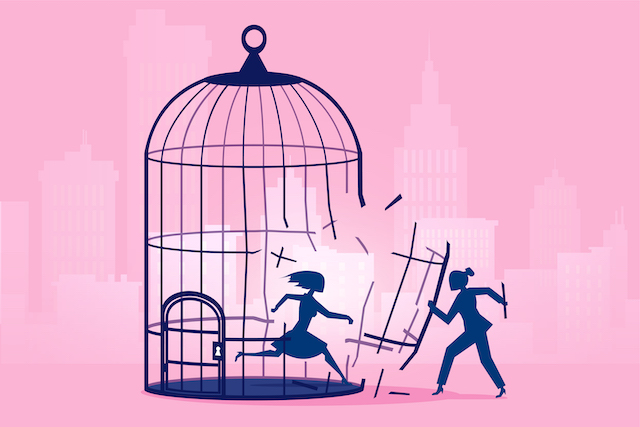
  • The Cages We Live In and What It Means to Be Free

    The Cages We Live In and What It Means to Be Free

    “Cages aren’t made or iron, they’re made of thoughts.” ~Unknown

    I recently read Glennon Doyle’s Untamed, and like many who have read it, I felt as if it had changed my life—but not because it made me think of all the things I was capable of (as was the case with many of friends who read it), but because it made me realize how capable I had already been.

    The book on the whole is beautiful and inspiring, but the part that stuck with me the most was the story about Tabitha, a beautiful cheetah that Glennon and her kids saw at a safari park and a lab named Minnie that had been raised alongside Tabitha, as her best friend, to help tame Tabitha.

    Glennon watched as Minnie sprinted out of her cage and chased a dirt pink bunny that was tied to a jeep.  Shortly after, Tabitha, who had been watching Minnie, ran out of her cage and chased the “dirty pink bunny” just like her best friend had just done.

    Born as a magnificent, wild beast, Tabitha had lost her wild by being caged. She had forgotten her own power, her own strength, her own identity, and had become tamed by watching her best friend. But remnants of Tabitha’s inner wild came back to life when she walked away from the pink bunny toward the perimeter of the fence that was keeping her caged in. The closer she was to the perimeter, the more fierce and regal Tabitha became.

    Glennon insightfully notes in the book that if a wild animal like a “cheetah can be tamed to forget her wild, certainly a woman can too.” And that’s when I wondered, had I also forgotten my own inner wild?  Was I spending my time trapped inside a cage when I could be pacing the perimeter instead?

    I beat myself up over that story for days while desperately trying to think of how I could break free of my metaphorical cage so I could find my way to the seemingly elusive perimeter that others seemed to have easily found and were already pacing.

    I questioned why I hadn’t worked harder, pushed further, and done more to create the life I truly wanted, especially when it became painfully clear that the one I was living didn’t fit that description.  And that’s when it suddenly hit me. Like a ton of bricks falling on me out of nowhere:

    I didn’t need to make my way to the perimeter. I was already there. Truth be told, I had been there for most of my life, and it was so familiar to me that I didn’t even notice it anymore.

    As I sat there in the midst of this comprehension, I looked back on my life and suddenly the steps to the perimeter all seemed to fall in place.

    When I fell in a bucket of boiling water at two years old and put aside my own discomfort to comfort my mother who had broken down at the sight of my burned body, I took a step towards the perimeter.

    When I moved to America at the age of seven and couldn’t understand the language and was instantly labeled as “stupid” but kept going anyway, refusing to let them define who I was, I took another step towards that perimeter.

    When I watched my younger sister die of an incurable illness and kept her light alive inside of me by recognizing the beauty of her life and not just the heartache of her death, I moved closer to the perimeter.

    When I said no to becoming a teacher or a doctor—an unfathomable and disgraceful choice for women of my culture during those times—I took another step toward the perimeter.

    When I refused an arranged marriage, again disgracing my family in the process, the perimeter was directly in my sight.

    By the time I took off for law school (much to my parents’ continuing dismay), the perimeter and I were practically face to face.

    For a while I stayed at the perimeter, quietly stalking my surroundings with the same pride and inner fierceness as the cheetah who inspired these ramblings. But I now realize I was never meant to stay at the perimeter—I was always meant to go beyond it.

    Until I did, I would remain trapped inside my own inner chaos. And the calm I was so desperately seeking would continue to evade me. That inner restlessness that just wouldn’t go away, that indescribable lack of fulfillment and the hollow feeling in the pit of my stomach… those were all signs that I was ready to move beyond the perimeter. I was ready to uncage more than just myself—I was ready to uncage my soul.

    That’s why I was repeatedly drawn back to certain people, programs, and even books. I was ready to free myself of all restrictions and for that matter, all perimeters.

    The process hasn’t been easy. And at times, it has been beyond lonely. But it has also been rewarding, deeply healing, and transformative at the same time. And perhaps most importantly of all, it has allowed me to understand that in one way or another, we are all here to break free of the cages that have encased most of us for the majority of our life.

    Some cages are imposed upon us by the thoughts and ideas of those around us, and other times we put ourselves into them, willingly. So we can avoid discomfort, pain, suffering, change, growth, and our own rebirth.

    Sometimes they can even be helpful, but other times they do nothing but hold us back. The steel cages often tell us who to be, where to live, what we “should” do for a living, how to behave, and even who to like or dislike.

    Often, the cages come in different colors, shapes, and sizes. Some are made of gold and filled with expensive toys and bribes to keep us from going outside of them.  Their allure is simply too hard to resist for some people, even though they are often accompanied by gold shackles.

    Others are sparkly and filled with all that glitters. The shine is so intense that their occupants don’t even know they’re in a cage. They’re so fixated with the glitter that they spend their entire lives confined inside and never even realize they’re no freer than the people they’ve been looking down on as being “trapped.”

    And of course, there are some who live in small, dark, and dingy cages that they desperately want to escape but dare not try to because they’re so convinced that it’s safer, easier, and more comfortable to just stay.

    Those are the people that are so afraid of their own power and the taste of true freedom that they probably wouldn’t leave even if the cage door was opened for them.

    And then there are the brave. Those that are truly courageous and have no desire to be confined by any cage or any limits. Those are the people who will do whatever it takes to break the cage so they can set themselves and all of humanity free.

    Those are the people who are roaming beyond the perimeter and have uncaged far more than their physical body—they have uncaged their very soul, and along with it, the many lifetimes of memories, wisdom, and truth it holds inside.

    Those are the people I want to run with. Those are the people I want to call my tribe. Those are the people that, when I meet them, I’ll know I have found my home.

  • My Powerful Personal Code for a Limitless Life

    My Powerful Personal Code for a Limitless Life

    “There is nothing outside of yourself that can ever enable you to get better, stronger, richer, quicker, or smarter. Everything is within. Everything exists. Seek nothing outside of yourself.” ~Miyamoto Musashi

    This post is about a code of life. There isn’t a single code, and everyone must choose their own truth. I’ve been searching for my truth in the face of many books and since I haven’t founnd it anywhere I decided to write it myself.

    What is the Limitless Life?

    When I was young, my father told me, “Son, all limits exist only in your head.”

    These words stuck with me throughout my life, and I saw endless proof of their truthfulness. Things that I considered impossible, too awkward, out of common sense, someone else just did. I felt unbearable feelings around what these people did, but these feelings were unbearable to me, not to them.

    As a little boy I was told I was a smart boy, a capable boy, I could do things others couldn’t, I was special, I did only good, I was exemplary. And I believed all this. I took this in as my own truth and started living it.

    I believe that the people who taught me these notions were trying to boost my confidence and my abilities and give me a good head start in life. But, later in my life, these boosters turned out to be boundaries, or limits.

    If I’m smart, I thought, I can’t do things that make me look not smart; If I’m capable, I can’t do things that make me look incapable; if I’m exemplary, I can’t do the wrong thing, I can’t make someone upset, I can’t get angry, I can’t make a mistake. Not really boosters, are they?

    I don’t know what the meaning of life is. Most probably, there is no single meaning, and everyone decides what it is for themselves. We tend to search our whole lives, looking for The Answer, but in truth we are the ones that need to coin it. This article will not give you your answer. It will only show you mine, and it might help you find yours.

    The answer I reached was that I wanted to live a limitless life, to be free.

    But how? The first question I needed to answer was: What are my limits?

    When I hear the word “limits,” the first thing that comes to my mind is fear. I am afraid to do many things and to not do other things.

    In our current society we are expected to go to school, get a degree, respect everyone, get a job, get married, have kids, listen to the news,  vote, know about the world’s history, know science, know many arbitrary facts, have friends and be social, etc.—you name it. Not doing some of the requirements raises fear, and doing something outside of them does the same.

    So, we are living in limits both for our actions and inactions. But why? Why are we afraid to cross the boundaries? The answer is punishment and reward.

    If we do the wrong things we get punished, we get disapproval, we get rejected and avoided, and if we do the right things, we get awards, praise, attention, approval, and support. In other words, if we play our cards right, we get love, and if we mess up we are deprived of love.

    So the answer to the big question of what is limiting us is our desire for love.

    We spend our whole lives trying to be rich, be famous, please everyone around us, do something extraordinary, be someone exceptional, create a masterpiece, contribute to the world; we want to matter, all in the name of love.

    All we do is seek love. But no matter what we do, we never seem to get enough, we never seem to be enough. We do something good, the world gives us love; we do something bad, the world takes the love back. And no matter what we do, the love the world gives us will always be conditional.

    You might say, “My family and friends give me unconditional love.” But do they? You get a marriage but do the wrong thing and you get a divorce. You get best friends but do the wrong thing, and the next thing you know you’re not invited to the last party everyone is talking about. Some bonds are tighter and harder to break, but there is a condition anyway. And if there is a condition, there is a limit.

    You might say, “Maybe the limits aren’t a bad thing after all. If they are keeping the families and friends together, if they are making you support society, why not live with them?”

    Well, I can give you a better answer, but I’ll start with the simplest one I’ve found for myself: Limits suffocate me.

    Every day there are thousands of things I shouldn’t do, or I could mess up. I must be so many things and I have to avoid being so many things that it feels like constantly walking on a rope. And all I get is a round of applause at certain moments, and then the struggle goes on.

    Limits might keep us with our families, but they also keep us miserable, keep us from doing the things we would like to do that might upset our families. Limits might make us contribute to society, but because of them we often contribute much less than we could.

    Our desire is to live a life full of love, joy, and happiness. But how can this happen when we are struggling each and every day to get a pinch of love by doing all the things that are required and being careful to not do something wrong?

    The answer is rather simple actually. We need to get the love from a more reliable source.

    If we fulfill the need for love in some other way, then all the limits we have will be gone. And if you have read enough self-help books and listen to modern gurus and leaders, you probably have guessed by now that this love cannot come from outside of yourself. You cannot control your life, you cannot control others, you cannot control reality. What you can control is yourself and your own thoughts.

    The question is, is it enough if I love myself? Don’t I need the love of others as well?

    Let’s think about what happens when we mess up something and get disapproval. What happens in our minds? We start to agree with the others, we give ourselves disapproval as well. What’s more, we start beating ourselves up more rigorously than anyone else would ever do.

    And when we get approval and admiration from others by achieving a big goal, what happens inside is that we give approval to ourselves, we give love to ourselves, and this makes us feel good. As you can see, everything we do is actually to earn our own love and acknowledgement. It was never about the others.

    Whatever you do in life, no matter how many people approve of you, you will have twice as many that disapprove. But when you hear the approval of the first group of people, and you give approval to yourself, you no longer care about the countless people that don’t like you. This only confirms that the love every one of us needs is the love we give ourselves.

    The code of life I’ve reached to is the following:

    Be there for yourself! Love yourself if you get rich, love yourself if you can’t afford to even buy food. Love yourself when you succeed, love yourself when you fail. Support yourself when you try, show compassion when you don’t. Don’t beat yourself up for not doing something or for doing something wrong.

    Nothing in this world matters if you are not by your side. Be your best friend, be your own brother or sister, be your own biggest fan. Give yourself unconditional and endless love and be ready to live a limitless life.

  • The Power of “No”: Better Boundaries Lead to a Better Life

    The Power of “No”: Better Boundaries Lead to a Better Life

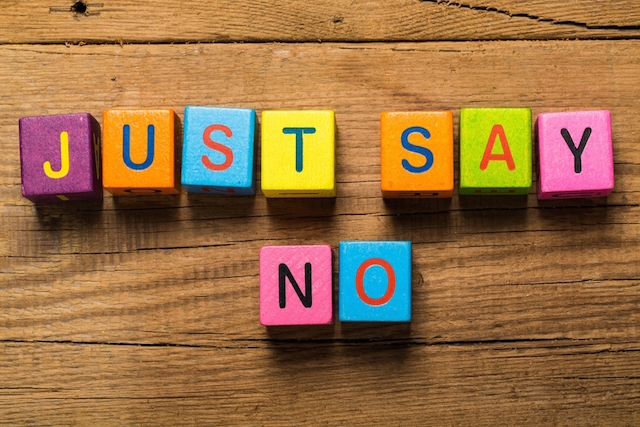
    Just Say No

    “’No’ is a complete sentence.” ~Anne Lamott

    When I went to counseling for the first time, my therapist told me I needed better boundaries. I had no idea what he was talking about, and although the book he lent me on the subject helped a little, I still didn’t really get it.

    I tried here and there to integrate the few concepts I’d picked up from the book into my life, but mostly I stayed away from anything that could be considered boundary setting, as I still couldn’t quite figure out what it meant.

    A decade after my first introduction to the concept, though, two life coaches I admire happened to be teaching a free class on the subject, and I jumped at the chance to take my learning to the next level.

    After hearing what they had to say, things finally started to click. I began to understand that it wasn’t about trying to control someone else’s actions, but rather about being clear on what action I would take if and when my boundaries were crossed.

    Still, it was hard for me to set boundaries, because I felt very uncertain of myself and my worth. Was it okay to tell someone no? Or that I wasn’t satisfied with the way things were?

    Since the world works in mysterious ways, chances to test my boundaries continue appearing in my life whether I want them to or not.

    Most recently, it came up with my child, an area where I’d never realized boundaries would be necessary (silly, but true).

    My mother and I were out to lunch with my toddler, and I spent most of the wait for our food walking around bouncing my daughter, trying to keep her entertained. After the food came I was barely able to eat, because my little girl wanted to be held and would not stay in her high chair.

    After that experience, my mom sent me an email. She thought I needed to start setting some gentle boundaries with my daughter, and was buying me a book that she thought would help. I burst out crying because I knew she was right.

    As soon and I started reading the book, I finally got it. Everything that I’d been trying to understand about boundaries for the last fifteen years finally made sense, and I finally started believing it was okay for me to get my needs met, and that it was totally acceptable to say no sometimes.

    This change with my daughter has come more easily than I imagined, and, thankfully, it’s starting to impact how I interact with adults, too.

    I have a feeling I’m going to need another fifteen years to become an expert at setting boundaries, but here are some things I’ve learned so far.

    1. Most of us are socialized to actively not have boundaries.

    We’re taught that we shouldn’t say no, and that it would be impolite to ignore another person’s wishes.

    This point was driven home for me the other day when I saw a kid’s TV program that made it clear that even the youngest members of our society are being taught they should always do what other people want.

    In the program, one character (a bear) was watching TV, but then a second character (a little girl) came in and wanted to watch something else. She gave the bear big, sad, puppy dog eyes, and, even though he clearly didn’t want to, he gave up the TV.

    As the girl watched TV, the bear paced back and forth, wishing he was watching his program. He kept hoping she would fall asleep, or go play outside, so he could get back to what he really wanted to be doing.

    This is exactly how we start learning that it’s not okay to say exactly what we want. When we’re young and impressionable, we’re taught that it’s rude to be clear on what we do and do not like.

    2. Not having clear boundaries keeps us in lives that are subpar.

    In my own life not having boundaries has been a huge problem. It’s allowed me to stay in unhealthy relationships (both the romantic kind and the friend kind), made me a doormat, and made me anxious and unhappy.

    Setting a boundary simply means saying no if I don’t want to do something (instead of feeling guilty and obligated). It means telling my husband what I need rather than getting mad when he doesn’t read my mind. It means only working the hours I’ve set for myself rather than running myself ragged trying to do “enough.”

    3. When you refuse to set a boundary, it leads to anger and resentment.

    It can tear relationships apart, keep you in a role at work that doesn’t suit you, and cause you to feel badly about yourself.

    Looking back on a relationship I had in college, I can see how not having boundaries set us up for failure. My boyfriend at the time was involved in a couple of activities that made me very uncomfortable, but I wouldn’t set a boundary with him, so instead I just lashed out with anger and jealousy, which just made things worse.

    The healthiest thing I could have done for myself would have been to say, “I’m not okay with you doing that. If that’s something you’re going to continue doing, I am going to have to remove myself from this relationship.” I was too fearful of the consequences, though, so it took me a long time to end things.

    One caveat when setting boundaries like this: You must be sure you’re not setting a limit in order to control or change someone. You must be truly ready to walk away from the relationship, and you absolutely must be setting the boundary from a place of love and respect for yourself, rather than a place of fear and control toward someone else.

    4. Setting boundaries is going to be uncomfortable sometimes.

    If you always say yes to everything, or let your parents or neighbors come over unannounced even though it really annoys you, or always clean up after your spouse because you don’t want to upset him or her by requesting they clean up after themselves, you’re going to have to take some scary steps to start drawing lines in the sand.

    The uncomfortable feelings don’t mean you shouldn’t follow through with boundary setting, though. In the long run everyone will be happier if you set better boundaries, and if they’re not, it’s really and truly their own issue, not yours.

    5. Boundaries are never about trying to change someone else’s actions or behaviors.

    This one gets kind of tricky for me, but think of it like this: If you’re in the car and someone is speeding, your boundary wouldn’t be “stop driving so fast,” it would be “I am very scared that you’re driving this fast; if you’re not going to slow down, I need you stop and to let me out of the car.”

    You’re not trying to make them stop speeding, you’re telling them you won’t allow yourself to be in the speeding car.

    Boundaries are about getting your needs met, but not by getting someone else to sacrifice their own needs. You have to decide what you really want for your own life, and then go about setting limits that serve these goals.

    Just say no image via Shutterstock

  • Stop Pushing Yourself: 10 Crucial Steps to Avoid Burnout

    Stop Pushing Yourself: 10 Crucial Steps to Avoid Burnout

    “I actually think burnout is the wrong description of it. I think it’s ‘burn up.’ Physiologically, that is what you are doing because of the chronic stress being placed on your body.” ~Richard Boyatzis

    Some years ago, when my mother told me that a friend of hers had experienced burnout, I didn’t really listen. Actually, I didn’t want to hear about it. I even felt irritated because she felt sorry for people who got burned out.

    My opinion was that they were just being ridiculous and exaggerating.

    It was an excuse, supported by a medical certificate from some doctor they knew well, so that they could stay home, plant basil in the garden, drink tea, and read good books in front of the fire. They were simply lazy folks who just couldn’t be bothered working.

    Some lessons are learned the hard way. Others, really hard. A last few change you for life.

    For me, burnout was life-changing; it turned my aggressive skepticism into factual knowledge. Almost annihilated by the beast of burnout, I’ve recovered, humbled and grateful to be alive.

    The other day I sat down and flipped through my journals from the past years. It was overwhelming. I felt so heartbreakingly sad for myself, for what I’ve put myself through.

    There was page after page of me worrying about alarming issues and symptoms I was experiencing, for a period of several years. There were lists of points I raised with my doctor, trying to figure out what was wrong with me. He kept saying the same thing over and over, but it was impossible for me to take it in.

    He said, “Be careful, Mrs. Torneryd. You have all the symptoms of a textbook burnout.” My answer was always the same: “I cannot get burned out. It can’t happen to me; I’m not that type of person.”

    Some of the points from my diary:

    • When in bed, I can’t remember if I’ve brushed my teeth.
    • I feel panic while driving; other cars are getting too close to me.
    • My skin is a mess, and my hair looks dead.
    • I’ve experienced three double-sided pneumonias over the past eleven months.
    • I have constant ringing in my ears.
    • Even when I sleep, I don’t let my head rest on the pillow.
    • I wake up around twenty times per night (cramp, sweat, pee).
    • I feel pressure over my chest, and I can’t breathe properly.
    • My heart is very often offbeat.
    • My intestines are destroyed; I look eight months pregnant ten minutes after every meal. I even pooped myself in the super-market—with no premonition.
    • My gallstones are stuck in the bile duct, requiring surgery.

    I was in a constant state of “I can’t do this anymore,” but there was nothing major I could change for instant relief. It was a combination of circumstances: the aftermath of bad choices, my workload, and my competitive character.

    Every part of me—body, mind, and soul—was desperate to stop the life-drenching feeling of having nothing left in me to give or take from. I was wasted, worn-out, and destroyed.

    Even so, I just kept going, repeating to myself, “When you’re down and out, there’s always 20% of your strength left” (a quote from martial art trainer). And I kept using my remaining strength over and over again.

    People talk about “hitting the wall.” I hit that wall about five years ago—full speed, head first.

    Since then, I’ve been forcing forward through concrete, screws, electric wires, and bricks. Then it happened: I made it through that thick wall, only to realize that on the other side was nothing but a fathomless, evil black hole. I fell until I crash landed, and then there was nothing left of me.

    On the 17th of February 2014, my body collapsed. I had my first full-blown panic attack, immediately followed by a second one.

    At first, it felt like my spine muscle cramped. I tried stretching and rubbing against a door post, in vain. I couldn’t breathe properly.

    My lungs started pumping frenetically, and I could do nothing to stop it. It felt like I was suffocating. I seriously thought that I was having a heart attack and would die. Eventually, I passed out.

    I finally accepted the message my body had been trying to communicate to me for years—I needed to make monumental changes in my situation, then and there, or I would lose my sanity, at the least.

    For the first four weeks of my sick leave, I did nothing but sleep. It was not by choice. I simply collapsed—on the sofa, my bed, and even on the floor. I just couldn’t stay awake.

    After the sleep marathon came sadness. I felt so incredibly sad, alone, and abandoned. I felt betrayed by society and my employer.

    When I didn’t feel any more sadness, I started my healing journey to peace and acceptance and began reading self-help books. Every day I made an effort to rescue myself.

    Eventually, a shift took place. Step-by-step, I built myself a ladder, careful not to go back to the wall I’d fallen out of, and I started to see the light at the top of that horrid black hole.

    You don’t need to push yourself to this point—not if you follow these steps to avoid an imminent burnout:

    1. Accept your limits.

    It is not admirable to push yourself when your body and mind beg you to stop.

    2. Clarify major energy thieves and avoid them.

    Limit your contact with people who drain you, make hurtful comments, and complain. Pay your bills on time. Clean your home so you feel calm there, not stressed and surrounded by chaos. Eat fresh food and spend less time distracting yourself with technology.

    3. Value yourself first.

    Fear of rejection is also self-rejection; stop worrying about others’ opinions.

    4. Get support and perspective.

    Trust someone close with your feelings and challenges.

    5. Ask for help.

    It actually feels quite wonderful to receive.

    6. Make choices that are good for you and make you happier, healthier, and stronger.

    Get enough sleep to keep cortisol (the stress hormone) levels down, and don’t skip breakfast!

    7. Get twenty minutes of sun every day.

    This gives your body the Vitamin D it needs to function properly, though you can also get it from a supplement.

    8. Get low-impact exercise three times per week.

    When we exercise, the brain releases the “happy hormone” endorphin.

    9. Don’t push yourself too far for the sake of progress.

    Strive to improve, but never push yourself if you feel it’s hurting you.

    10. Never ignore your intuition.

    Listen to your body and do all you can to be kind to yourself.

    Obviously, burnout is not some fake thing lazy folks pretend to have so they can stay home from work.

    It is a force that can knock you out completely, making it difficult to deal with the simplest of tasks, like taking a shower or cooking a meal; and almost impossible to handle normal things, like leaving your home, shopping for food, and answering phone calls.

    I officially apologize for all my previously judgmental thoughts on this area.

    You don’t get burned out because you’re too weak. You get burned out because you’ve tried to stay strong for way too long!

  • Who Do You Think You Are and Is It Limiting You?

    Who Do You Think You Are and Is It Limiting You?

    “To be fully alive, fully human, and completely awake is to be continually thrown out of the nest.” ~Pema Chodron

    One of my yoga teachers, Johanna Aldrich, inspired me to inspect what I “thought” I was.

    “This is what I am, this is what I am not, this is what I do, this is what I don’t do, this is what I like, that is what I don’t like.” All the stories and behavior patterns gathered in 40+ years that I had created to define myself.

    Of course, I had reasons and whys behind all of these things I “thought” I was. I had tried a few of those things and long ago made my decisions but in some cases had never even tried. Some of the reasons were real and some were imagined.

    But what are these things really but just stories?

    They’re the stories that we tell ourselves over and over again in order to feel comfortable or hide from difficult realities. I avoided many things with my stories so I wouldn’t have to experience failure and disappointment—just wanting to feel loved, good enough, part of something. 

    It’s interesting to me how the mind wants to have everything figured out. It provides us some sort of comfort. This can also be seen in victims of trauma and violence in a much more heightened way, but all of us have used our stories to try to gain ease of mind.

    So I spent 2012 intentionally doing the opposite of what I would normally do. I tried for the first time and also re-tried many things with a beginner’s mind. I: (more…)

  • How to Experience True Freedom to Live a Life with Fewer Limits

    How to Experience True Freedom to Live a Life with Fewer Limits

    “I know but one freedom and that is the freedom of the mind.” ~Antoine de Saint-Exupery

    I don’t know about anyone else, but sometimes I can be a prisoner to my own thoughts and forget that I have the freedom to choose. Choose a different thought. Choose a different experience. Choose a different interpretation.

    I remember having a coach that used to listen to me rant. I would be sure I was the victim of something that was happening to me, and I would tell her all about it expecting sympathy.

    She would listen patiently and then say, “Yeah? And what’s another way you could look at it?” I would pause to come up with some different interpretation. And then she would say, “Good. And what’s another way you could look at it?”

    I would really have to stretch, because I was sure that the first way I told her was the only way it happened.

    Her point, of course, was that there are a number of ways you can interpret things. And we have to watch our stores—the stories we tell ourselves. (more…)