
Tag: limiting beliefs

  • Permission to Rest: What Happened When I Embraced Stillness

    Permission to Rest: What Happened When I Embraced Stillness

    “If you are continually judging and criticizing yourself while trying to be kind to others, you are drawing artificial boundaries and distinctions that only lead to feelings of separation and isolation.” ~Kristin Neff

    I was lying on my couch again, Netflix playing in the background, when I heard my husband’s footsteps on the stairs. Instinctively, I reached for my phone, desperate to appear busy—productive—anything but resting.

    For months, that had been my routine. As the severe anemia from my adenomyosis and fibroids worsened, I found myself increasingly couch-bound, dizzy, and exhausted. Yet each time my husband entered the room, I’d grab my phone and pretend to be working. Not because he expected it, but because I couldn’t bear to seem “lazy.”

    But this particular day, three weeks after my hysterectomy, something shifted. When he walked in, I didn’t reach for my phone. I just stayed still, watching my show, drowning in guilt.

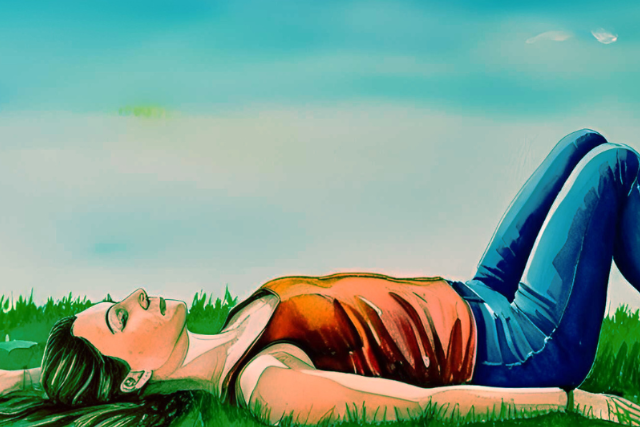
    He smiled and said something so simple: “It’s good to see you resting.”

    That’s when it hit me—a realization that would transform how I understood my own worth: I’m not a burden. I’m healing. I’m allowed to rest. He didn’t marry me for my productivity.

    It shouldn’t have been a revelation, but it was.

    The Productivity Trap

    I’d always been in motion. Walking, working, cleaning, planning, doing. Even after having my son in 2019, I prioritized outings and experiences, determined to give him what financial limitations had prevented in my own childhood.

    My husband and I had carefully divided our family responsibilities—he worked longer hours at his job, and I took on more household management, childcare, and projects. We focused on each contributing equal time to our family’s needs. It was balanced and fair, and it worked.

    Until my body stopped cooperating.

    What began as increasingly heavy periods evolved into daily bleeding so severe I couldn’t stand without dizziness. I fought against it at first, pushing through fatigue to maintain my “contribution.” I’d drag myself through household tasks, schedule outdoor activities for my son, and maintain appearances—all while growing weaker.

    “If I’m not productive or contributing, then what good am I?” This thought haunted me as I sank deeper into the couch and further from the capable person I identified as.

    When the doctor reviewed my iron levels, he said if his were that low, he “wouldn’t have been able to get off the floor,” yet I still resisted treatment (the iron infusions cost over $1,000). Only when our insurance changed did I relent, but by then, it was like adding drops to an empty bucket.

    The diagnosis was clear: adenomyosis and large fibroids, a family legacy I’d inherited. Surgery—a hysterectomy—was inevitable, though I mourned the loss of having another child.

    The six-month wait for surgery stretched my identity to its breaking point. Who was I if not the doer, the organizer, the capable one? What was my value when I couldn’t contribute?

    The Hidden Voice

    Growing up, I’d absorbed messages about worth from my father, who seemed physically incapable of sitting still. “If you have time to lean, you have time to clean” was the household mantra. Rest was for the weak, the lazy, the unworthy.

    I’d spent a decade in personal growth work, deliberately unwinding these beliefs. Or so I thought.

    But physical vulnerability has a way of stripping us back to our core programming. In pain, exhausted, and feeling useless, I reverted to that critical inner voice:

    “You’re a burden. Everyone is suffering because of you. He’ll resent you for not doing your share. What value do you even have now?”

    This voice—let’s call her Task-Master Tina—had been with me so long I didn’t recognize her as separate from my authentic self. Her criticisms felt like objective truth, not the outdated programming they actually were.

    The surgery I thought would fix everything instead brought new lessons in surrender. The pain was excruciating. The recovery, slower than I’d imagined. And each time I attempted to rush back to “normal,” my body forced me back to the couch with unmistakable clarity.

    That’s when I realized I needed tools to navigate this self-worth crisis—not just for recovery, but for the rest of my life.

    Three Practices That Changed Everything

    Through trial, error, and many Netflix documentaries watched from my couch, I discovered three practices that transformed my relationship with myself.

    1. Name your inner critic.

    That voice telling you you’re worthless without productivity isn’t actually you—it’s a critic you’ve internalized from past experiences. By naming this voice (mine was “Task-Master Tina”), you create distance between your authentic self and these automatic thoughts.

    When I caught myself thinking, “I’m so lazy just lying here,” I’d pause and think, “That’s just Tina talking. She was programmed by my father’s workaholism. Her opinions aren’t facts.”

    This simple act of naming created space between the thought and my response—what I later learned to call the “magic gap” where choice lives.

    2. Challenge your limiting core belief.

    Behind every critical thought is a core belief. Mine was: “My worth depends on what I contribute.”

    To challenge this, I wrote down concrete evidence contradicting this belief:

    • My husband married me for who I am, not what I do.
    • Friends seek my company for connection, not productivity.
    • I would never measure a loved one’s worth by their output.
    • Worth is inherent in being human, not earned through action.

    This wasn’t just positive thinking—it was deliberately examining whether my belief stood up to rational scrutiny. It didn’t.

    3. Write yourself a permission slip.

    Remember those permission slips from school? It turns out adults need them too.

    I literally wrote on a piece of paper, “I, Sandy, give myself permission to rest without guilt while healing. I give myself permission to receive help without feeling like a burden.”

    I placed it on my nightstand where I’d see it daily. Something about the physical act of writing and seeing this permission made it real in a way that thinking alone couldn’t accomplish.

    When guilt surfaced, I’d read it aloud, reminding myself that I had authorized this behavior. It sounds simple, but this tangible permission slip became a powerful anchor during recovery.

    The Deeper Lesson

    As my physical strength gradually returned, I realized this experience had given me something invaluable: a new understanding of worth.

    Worth isn’t something we earn through productivity or contribution. Worth is inherent. We don’t question a baby’s right to exist without producing anything. We don’t measure a loved one’s value by their output. Yet somehow, we apply different standards to ourselves.

    I understand now that worthiness isn’t about productivity—it’s about authenticity. About aligning with your unique true nature rather than living your life to meet others’ expectations based on their personal values.

    Compassion ranks high among my personal values, yet for years, I’d excluded myself from receiving this compassion. I’d created an exception clause where everyone deserved kindness except me.

    Physical limitation forced me to extend to myself the same compassion I readily offered others. It wasn’t easy. It still isn’t. Old programming runs deep, and “Task-Master Tina” still visits occasionally.

    But now, when she arrives, I have tools. I recognize her voice as separate from my truth. I challenge her outdated beliefs with evidence. And I have standing permission to prioritize healing and rest without apology.

    This isn’t just about recovery from surgery. It’s about recovering the authentic self beneath layers of “shoulds” and external measures of value.

    When we define worth through productivity, we live in constant fear of the inevitable moments when illness, age, or circumstance limit our output. When we anchor worth in authenticity instead, nothing can diminish our inherent value.

    That’s the permission slip we all need but rarely give ourselves: permission to be worthy, just as we are, no matter what we produce.
  • The One Hidden Belief That Was Sabotaging My Business

    The One Hidden Belief That Was Sabotaging My Business

    “If you accept a limiting belief, then it will become a truth for you.” ~Louise Hay

    When I first set out to create my business, I poured all my hopes and energy into it working tirelessly, learning, refining, and investing. Since childhood, I knew I wanted to do my own thing. Something that felt meaningful to me. But despite all my best efforts, the success and sense of support and steadiness I longed for always felt out of reach.

    I chalked it to timing, or not doing enough, or missing something others had that I couldn’t put my finger on. But all along, what was behind the stuckness was a force I’d never considered—conditioning.

    Conditioning is the learned behaviors and beliefs we adopt as children to feel safe, loved, and accepted. These patterns become so ingrained that we don’t realize they follow us into adulthood. But do they ever, shaping how we approach everything, including our ambitions and relationships.

    My own deconditioning journey has spanned years and, my goodness, the layers… but one of the densest and most sabotaging was this: I was raised to believe that being misunderstood was unsafe.

    My childhood experiences taught me that expressing myself with honesty or assertiveness could come at a mega cost, and I carried this lesson into my life and business (like nobody’s business), without even realizing it.

    As I began to share my work with the world, I felt an anxious compulsion to prove myself and my approach exhaustively. I couldn’t shake the picture of a hostile audience judging every word I wrote or spoke, so instead of focusing on how my work could solve a problem for potential clients, I was caught up in an endless loop of over-explaining, justifying, and defending my ideas—before anyone even questioned them.

    I wasn’t marketing my work as much as I was making a case in a courtroom of my own projection. It was the worst. It drained my energy, sabotaged my business, and made showing up for it feel like a rerun of a past I thought I’d outgrown.

    Seeing this and other aspects of my conditioning for what it was (distinct from me and a coping mechanism from the past) took a lot work. My unique path included estranging from toxic family dynamics, moving from Brooklyn to a very calm corner of Italy, quitting alcohol and cigarettes, and hiring a coach who understood where I came from and where I wanted to go and could go as deep with me as I knew was required.

    I don’t believe it’s a fair ask to release aspects of our conditioning (regardless of how limiting they are) when our lives and relationships don’t feel safe, and it took creating safety, cogency, and self-trust to start seeing all at the ways coping had kept me from thriving.

    The first step toward breaking free of the anxious over-explaining pattern was noticing how it felt in my body. I’d feel the anxiety rise, and then survival mode would take over whenever I tried to communicate my work with directness.

    More than once, my jaw would lock, my head would go fuzzy, and my throat would collapse if too much truth, confidence, or opinion came to the surface.

    This wasn’t a personality quirk; it was an echo of the past, manifesting in the present.

    Inner child work was the medicine for this—when those feelings welled up and the impulse to shut down or over-explain would come up, I’d picture little me sitting on my lap and I’d hold her through the fear, reminding her that she was feeling the past, not the present. That she wasn’t alone in this and wouldn’t be ever again. And then I’d lean in and say the thing.

    As I sat with those feelings, acknowledging them instead of letting them direct my actions, something shifted. I was re-parenting that vulnerable part of me that had once believed it was dangerous to be seen and heard and showing her that we could walk past those fear thresholds together. And so, we have, more and more every day.

    Letting go of this need to defend myself, I found both clarity and a sturdier sense of being safe in my own skin than when I only had the conditioning to protect me.

    And when it came to my work and business, my focus could center on what truly mattered: serving my clients and making my work clear and accessible, not to the critic within but to people, real people who are looking for change.

    The impact was immediate. Communicating with clients became smoother, and even tasks I’d once dreaded—like getting on sales calls—felt natural, grounded, and friendly. It opened the door to a new kind of productivity, one fueled by purpose rather than “headless chicken” survival. Thank heavens. Really.

    If you’re finding it difficult to make things happen as you envisioned them, it may not be about working harder or finding the perfect moment. It could be that unseen patterns of conditioning are guiding your actions, just as they were guiding mine.

    The beauty of recognizing these patterns is the freedom that opens up.

    When you let go of outdated beliefs and create space to move forward from a grounded, present, clear-eyed place, ambitions start to feel within reach because the truth is, they kind of are.

    What can feel impossible or out of reach or alignment becomes so much less charged and so much more achievable when we’re no longer fighting these unseen barriers.

    It isn’t always easy work, and it requires a commitment to challenge familiar beliefs, reach for support, and sometimes make some big changes. But if you’re willing to face your hidden patterns, you might just find that what you want is far closer than it once seemed.

  • The Hidden Reasons You’re Stuck (And What to Do When Conventional Advice Fails)

    The Hidden Reasons You’re Stuck (And What to Do When Conventional Advice Fails)

    “The truth is that our finest moments are most likely to occur when we are feeling deeply uncomfortable, unhappy, or unfulfilled. For it is only in such moments, propelled by our discomfort, that we are likely to step out of our ruts and start searching for different ways or truer answers.” ~M. Scott Peck

    Have you ever been in a situation or a stage in your life where you’ve felt physically stuck, as if you’ve fallen into some kind of invisible quicksand that you can’t get out of?

    Or maybe it’s felt more like you have a thick, invisible elastic band around your waist, and no matter how hard you push forward, it pulls against you, holding you in place? Or maybe it’s like a sky-high brick wall that you can’t find your way through, around, or over?

    Getting stuck in life can feel frustrating, annoying, upsetting, and confusing. And if you’ve been stuck for too long or at a time when you really need to move forward, you’ve probably found yourself panicking and feeling afraid because if you don’t take action, it may seem like your life will collapse—that you may end up financially destitute, homeless, alone, or a failure.

    The Place Where You Are Stuck is Your Growing Edge

    Everyone gets stuck at times. It tends to occur when you arrive on the threshold of a new direction, taking a risk, doing something new, or needing to leave something behind and launch yourself into the unknown.

    I’ve been stuck many times in my life, sometimes briefly and sometimes for longer periods when I’ve had to accept that I needed to make big changes to my life and along with them, make choices and difficult decisions or learn something deeply and powerfully.

    This place where you are stuck is your growing edge. It is the threshold between the known and the unknown, who you are and who you’re becoming.

    Sometimes you might have no idea why you’re stuck, only that you can’t move forward. It’s a place that you may consciously or unconsciously try to escape by either avoiding your stuckness or trying to get over your edge and out of the discomfort too quickly.

    Sometimes we get stuck unnecessarily for way too long because we keep hitting the edge and avoiding it or keep applying strategies to get unstuck that don’t address the real cause.

    We often think of getting stuck as a problem to solve, but in my experience, it usually holds a bounty of insight, gifts, power to reclaim, and healing. It can even serve the unfolding of your life by keeping you aligned with your destiny and soul’s callings (or greater purpose, if you don’t believe in those things).

    Why Conventional Advice Didn’t Help You Get Unstuck

    Much has been written about how to get unstuck, but I’ve found that a lot of the advice is based on unnamed assumptions about the reasons you are stuck.

    A common assumption is that it is a mindset issue, so a lot of the advice relates to changing your thoughts and conscious beliefs, cultivating different attitudes and positive mindsets, or using willpower to keep going and find the next step.

    If you have followed any of this type of advice but failed to get unstuck, you may feel like something is wrong with you. But I want to lovingly tell you that there isn’t anything wrong with you. The problem is in the solution that simply didn’t address the root of your stuckness.

    My Experience of Being Stuck

    My most recent bout of stuckness was pretty painful and at times frightening in the context of my life. After pushing hard over several days to write a heap of content for my business, I woke up the next morning feeling depleted, empty, and sad. And I couldn’t write again for weeks.

    If I was writing for fun, then maybe I could have just completely surrendered and waited for the words to return, but as a self-employed business owner, writing forms a large part of my work. I write all of my own website, blog, and marketing content. Not being able to write was scary because it put my business at risk.

    Initially, I tried all the usual things: surrender, acceptance, movement, doing something fun, positive self-talk and encouragement, believing in myself, and looking for the next small step I could take. While these things were helpful, especially in terms of alleviating stress, they didn’t help me get unstuck because when I came back to writing, I was still blocked.

    The Real Reasons I Was Stuck and How I Discovered Them

    When the usual things didn’t help me get unstuck, I sat down with my journal to start inquiring in a loving, gentle way about was happening in my experience and inside me.

    To begin, I did some slow, deep belly breathing with one hand on my heart and the other on my belly. This is a polyvagal breathing exercise that helps to bring your nervous system into a state of relaxation and increases your sense of safety.

    Then I sat with my experience of stuckness and the uncomfortable feelings that arose and noticed what was happening inside me. A conversation with my body and soul unfolded that continued on and off over many days.

    This is what I discovered about why I was stuck.

    1. I had become too immersed in masculine energy in my approach to my writing: linear, direct, and factual.

    I had made it a problem to be solved, a task to be completed. While I cared about writing well and my audience, I had disconnected from the deeper voice within me that held the poetry, beauty, and wisdom of what I truly wanted to say. I call this my soul voice. Essentially, I was trying to write from my head and not my heart.

    2. I was trying to write what I thought others wanted to know or read, in a way I thought I should do it, which wasn’t congruent with what my soul wanted to express through me.

    I believed that I had to write in a certain way to connect with people and be liked rather than just write as myself. I was trying to people-please, which is an old trauma response.

    3. Different parts of me were in conflict, and their conflict needed to be listened to and resolved.

    My sensitive parts didn’t like my overly practical approach to writing and were actively pushing against the “let’s get on with it” part that was trying to get it done. You could think of it like my heart pushing back against my head in opposition, saying “this isn’t the way to proceed.”

    4. Less obvious was an inner critic that redirected me to write from my head.

    Its voice was quiet, blended in my thoughts. It was trying to stop me from writing as my true self to protect me from the risk of criticism that a young innocent part of me would find devastating—an old trauma.

    Once I recognized and sat with all of my insights about why I was stuck, I was able to hear my deeper self and find my way back into writing by listening to what my heart and soul wanted to express, while reassuring my anxious parts.

    I shared little chunks of writing on social media that I felt inspired to share, not because I thought I should or wanted to please anyone but myself. This trickle eventually found its way to become a greater river. My writer’s block ceased. My stuckness was gone.

    The Hidden Reasons You’re Stuck

    The reason you’re stuck is not necessarily a result of your mindset, attitude, or willpower, or solely because of your beliefs. The reasons you are stuck are deeper than that.

    They’re often hidden, obscure, or unobvious because they’re hanging out in your unconscious where you haven’t looked or been able to see them. They can be entangled and intertwined.

    We get stuck because of deep inner conflicts between parts of ourselves that we aren’t aware of or listening to, limiting beliefs created and held by young parts of ourselves, and trauma that has been protectively pushed down but may surface.

    We get stuck when we try to ignore or avoid difficult feelings, or when we’re scared of going for the thing that we want or need to do that our nervous system perceives as dangerous, sending us into a fight, flight, freeze or even fawn response to try and make unworkable situations work.

    Your conscious mind might think you want what you say you want, but unconscious parts of you say no.

    You might have inner critical figures meanly berating you or quietly discouraging you in a way that seems helpful or loving but isn’t. You might not have enough inner or outer allies to help you take the step you want to take or cultivate the skills you need to cultivate.

    You can also get stuck when the thing you’re trying to do isn’t aligned with your destiny or soul’s calling and your stuckness is a symptom of higher intervention.

    How to Find the Hidden Reasons You’re Stuck

    1. Offer yourself love and compassion, coupled with gentle curiosity about your stuckness.

    This will help your body relax and feel safe. You won’t discover what you are looking for by being forceful or unfeeling toward yourself.

    2. Befriend it.

    Before you can get out of your stuckness you must be willing to be with it and relate to it. Even if you try to detour your way around it or avoid it, the lessons that lie within it will appear again at another time in your life because you’re here to learn and grow.

    Life lessons we need to learn repeat. What you learn will serve you for the rest of your life.

    3. If you feel stressed and anxious about your situation, try some polyvagal breathing exercises to bring your nervous system into a state of rest and digest so you’ll feel safer.

    It’s hard to think and see clearly if your body is very activated or stressed or even in a freeze or shutdown.

    4. Find time to consciously hang out with your stuckness, breathe with it, and if you are able to, tune into your body.

    Ask, listen, and see what bubbles up and what you notice is going on beneath the surface. For me, meditation and journaling worked, but they’re not for everyone. Maybe intentional walking, dancing, praying, or talking into your phone is better for you.

    Here, you must be kind, gentle, and welcoming. Digging for answers and clues, especially in a forceful or problem-solving way, can make your sensitive inner world and young parts freeze up and not reveal anything because they feel unsafe.

    5. Hang out and breathe with your insights so you feel safe.

    This can often be enough for your stuckness to unfreeze or for you to form insights about your next step.

    Other times you will need to do some work to process emotions, work through inner conflicts and limiting beliefs, and heal your young parts and traumas. You may need therapeutic support for this.

    6. If you’ve tried the above and you’re still stuck, seek the help of a therapeutic practitioner or safe, compassionately honest loved one.

    We all have blind spots where we can’t see things clearly about ourselves. It’s human nature.

    You may have painful experiences kept out of your conscious awareness that need healing.

    Sometimes you just need help and a safe space to discover what you can’t see and to be held safely with your experience and what arises.

  • How I Stopped Being Everything I Hated About My Parents

    How I Stopped Being Everything I Hated About My Parents

    “The beautiful thing about life is that you always change, grow, and get better. You aren’t defined by your past. You aren’t your mistakes.” ~Unknown

    When I was an angsty fourteen-year-old, I remember screaming at my parents that I never (ever!) wanted to become like either of them. And I meant it.

    My dad was a workaholic who was never at home. When he was at home, he was emotionally unavailable, arguing with my mother, or he’d escape the stress of our house by going to the betting shop to gamble.

    My mother had erratic mood swings, did not allow me to have age-appropriate boundaries, and would talk to me about the lack of intimacy between her and my father. These were, unfortunately, not role models that inspired me.

    As I entered my twenties and experienced adult life for the first time, I continued to carry the ideation that my life would be different. I was determined not to become my parents. And for many years, I naively lived life proudly thinking I had not turned into them.

    Then, one day, I opened my mouth and heard my mother’s voice come out. I can’t even remember what I said, but I recall the feeling of utter despair. Despite all my thinking and wishing over the years, I had become my parents. This prompted me to reflect on my life so far, and I realized that I had repeated many of my parents’ patterns.

    I had become a workaholic to avoid feeling my emotions, was in an abusive relationship but didn’t realize this until well after it had ended, and I struggled to know how to develop healthy friendships due to difficulties setting boundaries.

    Shit. Damn. Bugger it.

    I’d accidentally become my parents! Why was all my thinking and wishing over the years not enough to stop this from happening? I thought that I had more control over my life than this.

    During my own self-discovery journey, I found that there are many reasons why we repeat the same family patterns. I also learned that we can change them.

    Humans learn from watching and copying other people’s behavior, and children are sponges that soak up everything in their environment.

    For example, when I was a child, I remember my dad ordering a meal at a restaurant, and the vegetables on his plate were stone cold. Instead of sending the meal back and asking for hot veggies, he complained about how terrible the restaurant was and ate the cold meal. When I became an adult, I struggled to assert myself in similar situations, which led to a lot of anger and resentment.

    Learned behavior is not just a one-time thing. It is passed down from generation to generation.

    For instance, my paternal grandparents lived through the Great Depression in the 1930s, before my dad was born.

    They taught my dad that food was a scarce resource, so he carried this belief with him into his adulthood, and subsequently passed this down to me through not being able to model assertive behaviors.

    This is called intergenerational trauma because the unhealthy family dynamics continue throughout new generations. Generally, intergenerational trauma is defined by events that affect people profoundly, such as child abuse, parental incarceration, poverty, war, natural disasters, etc.

    Sometimes, we aren’t even aware that our family dynamics are unhealthy, or we might be aware but are too scared to change. This is usually because humans have a strong desire to be accepted and belong. In fact, this is very important for our survival.

    For some people, repeating those family dynamics means that they continue to be a part of the family unit.

    From a young age, I was often labelled as the ‘black sheep’ of the family, because I voiced the unspoken, toxic family rules. It became easier for me to distance myself from my family rather than remain enmeshed in a family environment that was detrimental to my mental health and well-being.

    The good news is we can change our patterns so that we don’t become (or continue to be) our parents.

    The first step is to be aware of the unhelpful patterns that you’re carrying with you. Without awareness, we cannot change.

    I started by asking myself what emotions I experienced frequently and whether they ever seemed like they were out of context or disproportionate to the situation.

    One emotion I often struggled with was jealousy. Whenever a friend would share something positive about their life—if they got a new car, got a promotion at work, or won a competition—my go-to emotion was jealousy.

    This impacted my friendships, as I was constantly comparing my life to theirs and driving them away by trying to find ways to make sure my life was more successful. This led to perfectionism in everything that I did, and let me tell you, it was exhausting! I couldn’t maintain this lifestyle, and I felt like I was drowning.

    When I hit a low point after my relationship ended, I sought therapy. Through therapy, I learned that the reason I compared myself to other people so frequently was due to the beliefs I held about myself. I didn’t feel like I was good enough as I was. This made a lot of sense when we explored the relationship I had with my parents.

    They regularly compared me to other kids and were only proud of me when I performed better than anyone else. It made sense that, as an adult, I would experience strong feelings of jealousy toward other people. Jealousy meant that I was constantly trying to prove my worth to other people rather than living life on my own terms.

    I then looked at my beliefs about this situation/emotion and thought about where and when those beliefs developed. Identifying the patterns behind my behavior was a positive first step in my inner healing journey, because you can’t heal what you don’t know.

    Because I wasn’t taught what emotions were or how to understand my emotions as a kid, I needed to learn how to do this as an adult.

    My therapist helped me to better understand the motivations behind our emotions and develop new strategies to cope with these.

    For example, with my jealousy, I learned that this was a response from fear and insecurity. I was able to learn to identify my thoughts, and when I realized that I wasn’t actually unworthy but rather that was the story I had learned from my parents, I was able to choose different behaviors instead of continuing to follow the same old patterns as before.

    I recognized that perfectionism meant I worked too much, so I learnt how to slow down through mindfulness and yoga. Once I was able to recognize my emotions for what they were, rather than reacting to them without awareness, I was able to make better choices about how I wanted to respond to that emotion.

    Having that space to understand my emotions meant that I could move out of the comparing myself to other people situation, and I was able to step into the entrepreneurial space and create a business that I love. I wouldn’t have been able to do that if I hadn’t done the inner work to change and not become my parents.

    I learned this was why my wishful thinking didn’t work. I knew I didn’t want to be like my parents, but without additional support from a therapist, I didn’t know what to do instead! Therapy helped me learn how to deal with old patterns in new ways.

    From there, it was all about practice. These habits and patterns existed for many, many years. I knew they would not change overnight. However, with perseverance and practice, I was able to make meaningful changes in my life. I found it helpful to keep a journal to record my progress so that I didn’t forget how far I’d come.

    Finally, it was important for me to remember that my parents are human too. In addition to recognizing the unhelpful habits they taught me, I found it useful to remember some of the positive traits or experiences I’ve gained.

    Even though my dad was a workaholic, he instilled a strong work ethic in me, which has helped me when creating my own business. My mother loved to travel, and she has definitely passed that love to me as well.

    Reminding myself of these things allows me to acknowledge my parents’ humanness, especially in moments where I find it hard to offer them grace. For me, reminding myself of the positives is a way to honor my need to have compassion for myself.

  • How I Stopped Feeling Embarrassed and Ashamed of Being Single

    How I Stopped Feeling Embarrassed and Ashamed of Being Single

    “Be proud of who you are, not ashamed of how someone else sees you.” ~Unknown

    “When was your last relationship?” my hairdresser asked as she twisted the curling wand into my freshly blow-dried hair.

    “Erm, around two years ago.” I lied.

    “Why did you break up?” she asked.

    “Oh, he had a lot of issues. It wasn’t really working out.” I lied again.

    I had gotten quite good at this, lying to hide my shame over being in my early thirties and never having been in a serious relationship. I had learned to think on my feet; that way, no one would ever call me out. The last thing I needed was people’s pity and judgment.

    I sat in my chair thinking about what she might say. Should I have told her that I have never been in a serious relationship? Would she be compassionate or judgmental? Would she feel sorry for me and think there was something wrong with me? That was a risk I was not willing to take.

    I felt so much shame and embarrassment around my relationship status that I would avoid discussions about it at all costs. Or I’d lie or get defensive with family and friends who would bring it up, to the point that they noticed it was a sore subject and would avoid asking about my love life.

    I learned to recognize how shame manifested in my physical body—the anxiety I felt when someone would ignorantly ask when I would be having children, the rapid heartbeat when asked if I would be bringing a plus-one to gatherings, and the knots in my stomach when I would be invited places that would consist of mainly couples.

    The shame I felt around my relationship status had always prevented me from speaking my truth because I was afraid I would be judged harshly.

    I felt like someone with an addiction who was in denial. I was so ashamed that I couldn’t bring myself to say the words “I’ve never had a serious relationship” to anyone, not even my closest friends and family, despite them knowing deep down.

    The Quest to Find Love

    I felt aggrieved that I had gotten to my early thirties without ever being in a serious relationship. The creator didn’t love me; it had forgotten about me. I desperately wanted a loving relationship, as I was tired of being alone, and I wanted to experience true love.

    I had a warped belief that being in love meant that I would feel happier, content, and life would genuinely be easier. After all, this is what we are told in fairy tales—the princess gets her knight in shining armor and they live happily ever after!

    Over the years, I delved into the dating scene, trying dating apps, and keeping an active social life so I could meet people. Time went by, and I dated multiple unavailable men who ran when they sensed I wanted something serious.

    This eventually got tiresome, and it took a toll on my self-esteem and confidence. I felt undesirable and not good enough.

    I couldn’t understand what I was doing wrong! Was I being punished? I was well-educated, with a good career and prospects, and I wasn’t bad looking at all. And more importantly, I was considered kind, outgoing, and friendly by those who knew me.

    Enough Is Enough

    I was exhausted and frustrated and had no more energy left in me to keep looking for a good match.

    I was so fed up with being met with disappointment and feeling bad about myself that I slowly began to give up on love.

    I convinced myself that I would never find the right partner, that I wouldn’t experience the over-glamorized idea of love I had conjured up in my head from early childhood.

    This only heightened my feelings of shame. It told me that not only was I not good enough to have a partner, I wasn’t capable of seeing something through until the end, and I didn’t possess the courage to ‘tough it out.’ Shame told me I was a bad person, unworthy of love.

    Sulking into my pillow on a Sunday afternoon, I had a sudden thought: Maybe it’s not them, maybe it’s you. I got angry at this thought. How could I possibly be to blame? I’ve done nothing wrong. The only thing I am guilty of is wanting to be loved.

    Another thought came: Maybe you can do something to change your experiences. This thought didn’t get me as angry, and after reflecting on it for a day or two, I concluded that I had to take some responsibility for the kind of men I was attracting.

    I took a step back from finding ‘the one’ and put my energy and focus on working on myself. I concluded that most of the qualities I wanted in a man I didn’t even have in myself—for example, confidence and assertiveness.

    Compassion Over Everything

    I learned that shame can be ‘killed’ when it’s met with compassion, so I started being kinder and less critical of myself. I made a conscious effort to avoid negative thoughts, praised myself as often as I could, and tried not to be too hard on myself.

    I confided in my close friends about the shame I felt around my single status, despite it taking much courage to do so. The more I admitted to people that I had never been in a serious relationship, the better I felt and the more I began to accept it.

    Being vulnerable with those I loved was like a weight being lifted off my shoulders. What’s even better was that I wasn’t judged harshly or pitied as I anticipated, and instead, I was shown love and compassion.

    I remember telling a new colleague that I hadn’t been in a serious relationship, and she said, “Me too.” My fear of how she would react quickly turned to relief that there were people just like me, that I had nothing to be ashamed of.

    I was, however, choosy about whom I told my story to, as not everyone is deserving of seeing me at my most vulnerable. I knew I had to be careful because if I was not met with compassion and was judged and ridiculed, this could have exacerbated the shame I already felt.

    Love is Love, No Matter Where It Comes From

    I began to realize that love is love, and regardless of my relationship status, I had plenty of it. I didn’t need a partner to feel loved, and love isn’t less valuable because it doesn’t come from a relationship.

    We can be shown love by our friends, family, colleagues, ourselves, and even strangers. This love is just as special and meaningful as the love you experience in a relationship.

    With this in mind, I began to cultivate more self-love in order to boost my confidence and self-esteem. After all, the best relationship I’ll ever have is the one I have with myself.

    I started being kind to myself and saying nice things about myself through daily affirmations. I also accepted compliments when I was given them, took time out for self-care, and put boundaries in place where needed.

    As a result, my confidence and self-esteem grew, and I started to understand my worth and value.

    Letting Go of the Need to Find Love

    Over time, I began to let go of the need to find love. I hadn’t noticed that it had completely taken over every part of my being. I wasn’t closed off to finding love; in fact, I was very open about finding a potential partner. Only this time, I was okay with it if it didn’t happen.

    I let go of the idea that someone would be coming to rescue me, and I concluded that I could be my own hero and best friend.

    I let go of the idea that I needed to be in a relationship to be happy and made a conscious decision to be happy at that very moment. As a result, I began to feel free, liberated, and completely content with where I was in life.

    When I let go, I noticed that the shame I felt around my relationship status had stemmed from fear. I was scared of what people would think of me because I wasn’t meeting the status quo. I was scared that I wouldn’t be able to start a family.

    Where I Am Now

    I still haven’t met ‘the one,’ and I’m okay with this. I am now at peace, joyful, and enjoying my life as it is in this present moment.

    I no longer feel the shame I once felt around my relationship status or the fear that I have been left behind. I understand that I don’t have to be ashamed, as there are plenty of others just like me.

    I choose to see my single status as my superpower. I get to use this time to learn and grow. I embrace and appreciate every moment of being single, as I know that when I do get into a relationship (which I will), I will miss moments of being single and having no one to answer to.

    There are, of course, times when negative thoughts and behaviors try to rear their ugly head, but I simply remember who I am and ask myself, “Does this thought or behavior align with what I want or who I want to be?” If it doesn’t, I simply let it go.

    For anyone reading this who’s experiencing feelings of shame and fear because they do not have a partner, remember you’re still worthy single, and you deserve your own compassion and love. Once you give these things to yourself, you set yourself free.

  • How I Healed from Childhood Trauma and Stopped Sabotaging My Happiness

    How I Healed from Childhood Trauma and Stopped Sabotaging My Happiness

    “We can all make powerful choices. We can all take back control by not blaming chance, fate, or anyone else for our outcome. It’s within our ability to cause everything to change. Rather than letting past hurtful experiences sap our energy and sabotage our success, we can use them to fuel positive, constructive change.” ~Darren Hardy

    I parked my car and began to walk toward the mall while covering my puffy eyes with black sunglasses. I was fresh out of a session with my therapist, where I had hit a breaking point. We both came to the conclusion that I use self-punishment as an approach to almost all of life.

    As I was crossing the parking lot, all I could think of was: “How could I not see it? How could I be so oblivious to my inner dialogue and the actions I take to punish myself? Am I a hidden masochist without any sense of awareness? I should do better than this!”

    Considering that I used self-sabotage as one of my survival behaviors, coming down on myself for not doing better wasn’t the healthiest next step I could take. This time, I was able to recognize it and had one of the biggest epiphanies about how my trauma impacts my life. It was scary and liberating at the same time.

    When we grow up believing that we don’t deserve a lot, or at least not a lot of good stuff, we will subconsciously sabotage anything that creates a vision of a brighter future. Since the subconscious is programmed to validate any limiting beliefs we hold about ourselves, without awareness, our self-sabotaging behavior thrives.

    For the longest time, I couldn’t wrap my head around it. The logical part of my brain understood what was best for me. However, I still chose the self-destructive road of drama, self-judgment, complaining, victimization, and never walking my talk. 

    For example, to walk away from a marriage that mentally drained me would be a healthy thing to do. However, I stayed in a toxic partnership for as long as I could bear until I got so numb that I couldn’t feel anything. Since self-love was a concept I wasn’t familiar with, I found my significance in being disrespected, controlled, and emotionally abused.

    My logic told me to pack my stuff up and run as far as I could, but my survival mode kept me in. Although I was highly uncomfortable and most of the time in pain, at least I was familiar with the discomfort. I knew this place of constant self-sabotage and self-hatred.

    To the outside world, it didn’t make sense. To the left hemisphere of my brain, it didn’t make sense either. But to my trauma wiring, it felt like home. It was all that I knew existed and was available to me.

    When we experience domestic violence, whether as a direct victim or as a witness, our subconscious mind adopts self-destructive beliefs about ourselves and the world. Feelings of unworthiness and self-punishment paralyze us, and therefore keep everything the same.

    Although I kept tolerating situations I didn’t like far more than I felt comfortable admitting, I couldn’t let one question go: “Why do so many of us want to change, but no matter what we do, always end up in the same place with the same drama and same people? Why isn’t logic enough, and what defines true transformation?”

    I set out on a mission and began researching everything about domestic violence and its impact on children. I knew that my childhood wasn’t the best foundation for a happy and healthy life, but this time I decided to go deeper and get to the root of the problem.

    I learned that seeing my mum covered in bruises created feelings of fear, that struggling with her alcohol abuse brought feelings of unworthiness, and that the rough side of my father with his overly disciplined attitude, that lacked empathy, made me believe I wasn’t enough to be loved by him.

    As children, we interpret these experiences differently than adults. For the most part, an adult can step back and reevaluate whether this behavior is about them or the other person. Unfortunately, children don’t have this ability since their brains aren’t fully developed to understand it. Instead, they internalize these experiences and begin to believe that they are unlovable, not enough, and never safe, and they start to hustle for love.

    Since I grew up with these beliefs and didn’t address them for most of my life, I subconsciously sabotaged things I wanted because I didn’t believe I deserved them.

    On the outside, I wanted to build my business and position myself as a coach, while on the inside, I procrastinated because I highly doubted that I could ever make it. Or I would seek toxic relationships full of drama and toxicity. Since I didn’t believe that I was good enough for anything healthy and loving, I would stick around to validate my limiting beliefs of unworthiness. Self-sabotage and self-punishment were my way of life.

    After I began to understand the importance of our brain’s wiring in everything we do and how traumatic experiences define our lives if we let them, I knew that only thinking and understanding wouldn’t cut it. I would need to take serious action if I wanted to stop the self-sabotage and significantly transform my life.

    If you grew up in a household with domestic violence, you’ve experienced trauma of some sort that impacts the healthy development of your brain. You may find yourself in a constant battle between knowing what is good for you and doing the complete opposite.

    Although the trauma’s impact on our well-being is inevitable, so is the healing that takes place if we commit to it and work through it. Here’s how I did just that.

    1. Combining meditation and science to rewire my brain

    I was familiar with the work of Dr. Joe Dispenza for a while. After I read one of his first books, You Are The Placebo, I started to understand the power and importance of rewiring my brain.

    I learned that when we meditate, we lower our brain waves and become present. Once our mind is relaxed, almost half asleep, we can use visualization to bring up emotions such as love or compassion, which promotes healing. Or, we can visualize our desired goals while feeling the excitement and confidence that comes from achieving them.

    Since meditation allows us to go deeper and access the mind on a subconscious level, over time we can change or create new neuropathways, form new habits, and transform our belief system.

    Many scientific studies have shown how meditation improves sleep, reduces stress, and allows us to self-regulate, which is especially useful when working through trauma.

    I started practicing Joe Dispenza’s meditations and set a goal: Every day for the next thirty days, I must do a forty-minute meditation. No excuses, no procrastination. The game was on, and I knew that I had to commit fully to this process.

    It’s been eight months since I started, and I haven’t stopped my meditations since. Occasionally, I skip a day or two, but then I remind myself of the mission I am on and how important it is to stay committed to healing. It’s not a secret that self-discipline is the highest form of self-love.

    2. Getting a therapist

    To understand why I use self-sabotage, I decided to get a therapist. I needed to address my past and use self-awareness as a stepping stone to change.

    From the beginning, we focused on addressing the sexual assault I experienced. The biggest highlight of my therapy was understanding that I subconsciously punish myself and live in deep states of guilt and shame. For the first time, I started learning about my self-destructive tendencies and how to stop them.

    My favorite part of therapy was learning self-soothing techniques. One that I use regularly is wrapping myself into a blanket while drinking peppermint tea and breathing deeply.

    Many of us who have experienced domestic violence or other forms of trauma and abuse don’t know what love or compassion is. Since we hustled for survival and discounted ourselves as worthless and not enough, self-soothing is a foreign concept to us. Although you may find it weird and uncomfortable at first, it will gradually change how you see and take care of yourself.

    3. Practicing self-awareness and challenging myself

    A few months ago, I decided to take a three-day intense self-development course that many of my friends were raving about. I didn’t expect any significant transformation until the second day of the workshop, when everything started to shift.

    I became aware of stories I have created about my parents, who I am as a person, how I see myself, and how I live in a deep place of victimization and inauthenticity.

    Although I grew up with domestic violence, so did my mother and father. It was time to break the generational curse and take full ownership of my triggers, insecurities, desperation, and toxic tendencies that resulted from the abuse. I couldn’t play the victim card anymore since the only person I was playing was myself.

    4. Addressing my shadows

    Befriending parts of my personality that I despised was probably the biggest challenge, and frankly, it’s still in the making. However, I found the courage to look at my self-sabotaging behaviors—how I dislike disrespect and abuse but willingly go for more, and how I manipulate people or fear connections. That’s when I began to defeat the monster of self-sabotage and recognized the opportunity of healing.

    We are so eager to find the light that we forget about the dark side of ourselves that often holds us back. We want to look away and forget about everything traumatic that happened to us since our resilience to face the truth may be weakened at first. However, learning to accept those shameful and hurtful experiences and love who we became as a result of a trauma or abuse provides us an opportunity to grow into the warrior we never thought we could become.

    After two years of intense healing and personal growth, I concluded that the only thing that can save us and truly heal us is to learn how to love ourselves, not in spite of what we’ve been through or who we are but because of it.

    Today I understand that the resilience I had as a child who faced horrific or traumatic experiences is the same resilience that’s available to me now to help me heal and thrive in life. I am learning every day what it means to live from the inside out and how the power and strength I often looked for on the outside has been within me all along.

  • How I Turned My Disability into Desirability with a Simple Perspective Change

    How I Turned My Disability into Desirability with a Simple Perspective Change

    “Stop thinking in terms of limitations and start thinking in terms of possibilities.” ~Terry Josephson 

    I was affected by the deadly poliovirus when I was six months old. Most people infected with it die. Even today, there is no cure for it. I miraculously survived, but lost my ability to walk.

    During the first twenty years of my life, I evolved through crawling on the floor, lifting my leg with my hands, wearing prosthetics, using canes, and finally learning to walk, painfully, with crutches. As I grew up, I experienced post-polio syndrome, which weakened the other parts of my body.

    Some forty-five years ago, there were no educational or medical facilities in the remote area of India where I lived. That slimmed my chances of getting any education. When I reached the age to go to school, the only way possible was to wear prosthetic braces weighing forty-five pounds on my leg, which was more than my weight. It was incredibly painful to walk while wearing them. In those braces, I could barely take one baby step at a time.

    Experiencing Victim Mode

    The result was me being bullied, left behind, and teased by my classmates all the time. There were times when I had to drag my iron-casted leg back home alone for over a mile using the strength of my stomach muscles. It used to take me two hours, which felt like a lifetime. That cycle repeated for many years, and my emotional pain grew more and more.

    Every time, I asked, “Why me?” The more I asked, the more unpleasant the answers got in my mind.

    Stepping into Fighter Mode

    That misery got me into a fighter mode. I remember that many of the motivational books I read stressed one thing: “Break the walls.” So I secretly subjected myself to the harshest physical exercises, torturing myself, hoping someday I would get better at my disability. But the more I tried, the more my emotional and physical problems escalated—to the point of a breakdown. Charged with much willpower, I did not realize that perhaps I was fighting against the wrong wall. I failed.

    As I see it now, the actual wall that was limiting me was less my physical disability and more my self-limiting beliefs. I had made up unreal, perceived walls in my mind, thinking that I wouldn’t be accepted unless I walked like ordinary people.

    These made-up walls were the ones that were actually stopping me. I was doubly disabled—externally and internally.

    Spotting the Windows

    Every time I was left behind, I made a pact with myself: If I couldn’t walk with my legs, I would walk faster with something else. But the big question was: with what? But then, a simple perspective shift I call “windows through the wallschanged my life and put me on the path of personal transformation to achieve excellence.

    I gradually realized that my disability gave me some gifts I did not recognize earlier. I had no social interruptions, no spoiler friends, and not much mobility. Because of those three things, I had plenty of distraction-free time at my disposal, which was a gifted environment. What could I do with this unique leverage?

    Reading books was the best thing I could do while being contained in a chair. I remember the first book I read, by Dale Carnegie, was much ahead of my age. Soon I mastered poetry, physics, palmistry, psychology, and philosophy while reading any book I could afford to buy or borrow.

    By rigorous reading and learning through science books, I became an engineer at the age of twenty-one, and a year later, I became a technology scientist. It stunned the people who never believed I could do so. The hunger to learn faster led me to earn two doctorates, more than 100 international credentials, and some of the world’s highest certifications.

    “I couldn’t walk with legs—now I teach people how to walk faster in what they do.”

    My lack of speed made me obsessed with gaining it in another area. That became the unique expertise that took me places. I became a performance scientist, helping people speed up their learning and performance skills.

    Not only this, I leveraged my ability to learn and started sharing my learnings with others. My social isolation did not persist, and soon I had one of the largest friendship circles around.

    With my circumstances, I could engage in daydreams that developed my vivid imagination. Soon, a writer inside me woke up. I wrote dramas, stories, poetry, articles, and many things at a very young age. While I could not afford to buy one book then, I have authored twenty books now.

    While glued to that chair, I had similar leverage as other kids—that is, my hands. I developed my skills in painting, drawing, and sketching and received an international award for my art from back then.

    As I reflect back on it, my disability hardly ever got in my way while achieving these things. Rather, it helped me go faster. When I saw my crisis, my disability, my limitations, I did not see them as walls that I should break. Instead, I chose to spot windows among them—windows of opportunities, leverages, and advantages. I’ve leveraged everything my limitations ever offered me.

    Two Important Lessons

    I learned two important lessons in my journey.

    First, not all the walls that seem to be limiting us are real. We need to find the wall that indeed is limiting us and then break it.

    Second, we don’t always need to break every wall because some have windows. No matter the circumstances, we all should focus on spotting the windows.

    Once we change our perspective, we will be surprised at the number of advantages we find in our adversities, desirability in our disabilities, and leverages in our limitations.

    Are We Enough?

    When we experience a loss, we may feel less than others. That’s okay. Sometimes, the crutch I use as an aid for walking reminds me of what I lack. But that’s okay because I wouldn’t be where I am today if it was not for my disability. I think my loss, my disability, defines who I was yesterday, who I am today, and who I am going to be tomorrow.

    However, some of us have been groomed to chant motivational mantras like “I am enough.” It is like convincing our minds that the glass is full, so our minds might stop looking for possibilities.

    But when we realize our glass is half-empty, we become hungry to find windows of leverages in our misfortunes or limitations to fill it up somehow. That’s when we create new possibilities for ourselves.

    Leverage Your Losses

    Think about the losses that you have experienced due to your adversities, failures, or misfortunes. How could you leverage these losses to go from feeling less than others to being a lesson for others?

  • For More Love in Your Relationship, Love Yourself More (5 Tips)

    For More Love in Your Relationship, Love Yourself More (5 Tips)

    “If you don’t love yourself, you’ll always be looking for someone else to fill the void inside you, but no one will ever be able to do it.” ~Lori Deschene

    Two years ago, I sat in my basement with tears streaming down my face. I had just found a copy of an old letter I’d written to an old boyfriend years before. In it, I was practically begging for his love, and also complaining and even shaming him for not loving me well.

    As I read, I was overcome by three insights, all of which brought up big emotions:

    The first was that for well over the first half of my life, I had been so hungry for love, so needy for it, that in this and subsequent relationships, including my first marriage, I created a lot of pain and discord.

    I was so desperate to feel loved that I constantly focused on how I wasn’t being cared for enough, how my current romantic partner was not loving me right.

    Then I’d try to get him to do better by complaining, criticizing, having multiple-hour long talks explaining what I wanted, and crying to him so he’d see how deeply I needed his love and he’d finally change and give me the adoration I so wanted–which inevitably led to conflict, disconnection, and feeling less loved and connected!

    The second insight was that I did all of this because I simply didn’t love myself well. So the only way I could feel the love I needed (because we all need love) was from outside—which made it my partner’s job to fill that emptiness inside me. (I have since learned this is not a job anyone wants to do for too long, as it becomes burdensome, exhausting, and restricting, nor are many people well-equipped to do it!)

    My big tears really came from this second insight. And such deep compassion for that old me. Tears of forgiveness, tears of remembering the pain I was in for many years, tears of joy, too, that I no longer suffer the way my old self did.

    Because I now have such true love for this woman that I am, with all my human imperfections. 

    The third insight was that I was now so happy—years into my second marriage—not because my husband was the most adoring of men, but because I loved myself enough that I was able to recognize and receive his love in the natural way he gave it!

    In other words, I was able to feel it, to take in his love deeply, because I knew myself to be so lovable. Because I love myself so much. So I was no longer pushing away the love I love. I just enjoyed it deeply!

    After I processed all this, and the tears of recognition and forgiveness and love were complete, I walked out of that basement with such a sense of accomplishment. Really in triumph.

    Because I had chosen to do the work it takes to learn how to really love myself. And it had paid off in such beautiful ways.

    The thing is, we humans don’t come naturally wired to love ourselves. We don’t come into this world feeling all warm and cozy about ourselves. To naturally feel great about who we are, it takes a kind of nurturing in the early days of our lives by caregivers—and then a consistent modeling of self-love as we grow—that is rare in this world.

    Many of us don’t get that. And we are never taught how to love and deeply admire ourselves (in large part because our caregivers were not modeled that, themselves!).

    It is even harder for highly sensitive people, like myself.

    As youngin’s we often get the signal from the world around us that we’re a little weird, a little abnormal—that something’s a bit wrong with us—and this makes it even harder for us to feel good about ourselves.

    So, as adults, we need to actually learn how to have deep fondness for the humans that we are.

    I am happy to say that loving myself now feels natural to me.

    To be clear, this doesn’t mean I smittenly stare at myself in the mirror, or that I think I’m better than anyone. But I truly enjoy who I am. I know I can rely on myself for a sense of security. And I feel truly lovable whether others find me so or not.

    This makes it so much easier to love and feel loved in my marriage: to do the work and take the risks it takes to have one of the most ever-evolving, deeply loving, fun, joyful, passionate marriages I know of.

    I spend a lot of time simply enjoying the love I feel from my husband, and the love I am easily able to feel for him, because I am so rooted in love for myself.

    I want the same for you in your relationship!

    I notice that many highly sensitive people know they should love themselves more, but many say they don’t know how.

    If you feel the same, I want to help take the mystery out of it for you.

    Here are five pieces of the process I used to develop real love for myself.

    1. Understand where self-love comes from.

    Loving or not loving yourself starts in the thoughts you have about who you are, what you believe about your goodness and worthiness (or lack of it), and ideas you have about what makes a person lovable or not.

    Of course, most of the non-loving thoughts you currently think about yourself come from what you were taught to believe about yourself by caregivers, teachers, friends, and acquaintances—even magazines and movies!

    As young, impressionable beings, we unconsciously take on other people’s ideas about us, and messages we receive from our society—many of which are simply misperceptions and misunderstandings—and these ideas harden into who we think we are.

    For example, many highly sensitive people think they’re “too sensitive” or “too emotional.” We got that message from others! But when we think that about ourselves, we feel self-aversion, not self-love.

    The amazing news is that your thoughts, ideas, and beliefs are not fixed, and they are not fact. Even though we all have a natural negativity bias (meaning it’s easy for our brains to find fault with ourselves) we do not need to believe what our brains tell us. Nor do we need to continue to regurgitate other people’s critical, judgmental—and frankly wrong—ideas about ourselves, now that we are grown adults.

    You can decide what you want to believe about yourself—no matter what others have implied about you, and no matter what you have believed about yourself up until today. The choice is truly yours.

    2. Supervise your old thinking.

    Start by disbelieving all the crappy things your brain tells you about yourself, like: ”You’re too anti-social, too grouchy, etc.,” or the sneakier first-person version, like: “I’m not smart enough. I’m too reactive. Something’s wrong with me.

    To start “disbelieving” such things, take some time to question the negative beliefs you’ve adopted about yourself that came from others, as well as the ones that come from the flaw-seeking part of your brain.

    For example, my parents told me I was the “artistic one” while my brother was the “intellectual one.” Though they didn’t intend any harm, I took that to mean I wasn’t smart. That was something I told myself for thirty-five more years of my life, until I took the time to investigate how true that was. Turns out, I’m both artistic and intellectually smart.

    Your turn: Ask yourself, “Whose negative thoughts about me am I believing without questioning?” And “How were they wrong about me?” (I promise, they were wrong! Remember, they had flaw-seeking brains, too, that overlooked so much of your amazingness.)

    When those negative thoughts about yourself come up again (and they will, because they’ve been programmed in there), gently keep de-programming them by telling yourself some version of this: “There goes my flaw-seeking brain again in judgment-mode.” Or “That’s an old, outdated, painful thought. But it’s just a thought, not a truth.”

    3. Create a “soft landing” inside yourself for the moments when hard feelings flare.

    Think of this as a friendly zone in your own head and heart reserved for meeting yourself with the warmth you would give a dear friend when she’s upset or hurting. A metaphoric place you can retreat to comfort yourself. As if you had the coziest snuggly blanket inside your heart you could wrap yourself in when needed.

    So then, even when you’ve made a mistake, like we all do, or said something you regret, failed at a goal, been judged by someone—or even yourself!—or you’ve done something you don’t feel good about, you can turn toward yourself and be met with kindness and warmth from within.

    To begin to create that for yourself, answer these questions: How would I be there for my best friend or child if they were hurting? What would my attitude be toward them? What would I say? How would I be with them?

    Then do and say these exact things to yourself when something’s gone “wrong.” This will help you build a loving relationship with yourself even when you aren’t living up to any of your higher standards. This is the beginning of unconditional self-love.

    4. Choose to focus on what you appreciate and enjoy about yourself.

    It can be as simple as asking yourself, “In what ways am I likable (or lovable)—to me?” Let your brain go looking for lots of little answers. Nothing is too small.

    As you find things to admire about yourself, you will feel more good feelings toward yourself, since emotion follows thought.

    You’ll need to be intentional about all this for many weeks or months. Over time, this will rewire your brain so you naturally and effortlessly see your goodness and feel really good about who you are. If you are an HSP like me, this article will give you some great starting places.

    5. Set small, achievable goals for yourself that prove it’s possible to become someone you love and admire more and more.

    Keep in mind, you do not need to improve yourself to love yourself. You are lovable exactly who and how you are right now.

    But, not only is it a gesture of self-love to follow through on your goals for yourself, becoming more of who you want to be grows your confidence and pride in yourself by leaps and bounds, and naturally inspires more self-love.

    For example, if you’d feel great about being a more patient person with your loved ones, purposefully grow your patience, perhaps by putting yourself in some situations that gently test and strengthen your patience muscles. (i.e., playing a board game with a four-year-old). I’ve had three of them, so lots of patience-strengthening-practice and now more reason to feel good about myself!

    Has learning how to love myself made it so that I never worry or feel awkward? Or that my husband and I never have conflict? Or that we have a perfect sense of love and joy all the time?

    Of course not.

    But I love myself through all of it. I know I always have my own safe, gentle arms to turn back to for absolute support and love through the good times and the bad.

    And I can give my husband love way more freely because I have so much of it inside myself, and I’m not needing to get it from him all the time (like that hurting younger me did.)

    I can focus on being the person I want to be, and on loving him as he is fully. So he feels free and safe and happy around me (no shaming criticisms landing on him), which ironically has him loving me all the more obviously day in and day out!

    Learning how to love myself has also made a major impact on other areas that deeply matter to me in my life. I can do courageous things in the world that I used to back away from—like hosting my own podcast and helping people in way bigger ways than I ever would have before.

    I’ve also genuinely healed relationships with some of the more challenging people in my life, like my father, and old lovers who for so long I’d thought had done me wrong. And instead of feeling sadness, hurt, or longing when I think of these people, I feel love. Which feels so fulfilling and good.

    All because I chose to learn self-love, and keep choosing it every day.

    This is all possible for you, too, when you put in the intentional effort to learn to love yourself.

  • How Embracing a Good Enough Life Gave Me the Life of My Dreams

    How Embracing a Good Enough Life Gave Me the Life of My Dreams

    Acknowledging the good that you already have in your life is the foundation for all abundance.” ~Eckart Tolle

    It was perfect. Well, almost.

    I was doing the work I love, with someone I love, my two boys were thriving, and we seemed to finally be on the road to retirement. What could possibly be wrong with this picture?

    A lot, apparently.

    I was waking up worried and unsatisfied. Always feeling like life was missing something, like I was missing something, not doing enough, asking: How can my business be better? What will my kids do next year? Is my partner gaining weight? Did I run yesterday?

    Anxiety crept into my mind and contracted my body before I had a chance to get ahead of it. It was an unease that something just wasn’t quite right. And if it was, then it wouldn’t be for long.

    I knew enough about neuroscience and anxiety to know what was happening.

    Negative thoughts are a protective pattern that come from scanning our environment for potential threats.

    Our ancestors were wired this way to survive, thankfully, and we are probably in the first generation that can even talk about the word “abundance,” at least in this part of the world. The intergenerational trauma of feeling unsafe is in the recent past and runs deep in our DNA, especially for women.

    But even armed with all the knowledge of trauma and all the best practices of breathing, meditation, and yoga, there was still a missing link.

    My worries seemed trivial given the war that was raging in the world. It seemed self-indulgent to want more, to even consider that this was not enough. Even when it felt enough, it was because all the factors were lining up in that moment, but it felt precarious, like a house of cards—even though I knew it wasn’t.

    All the self-help books promised I could “reach for my dreams” and “have my best life ever” if I only changed my habits and my mindset and lived like I thought all the people around me were.

    In fact, I was so busy working on my life that I felt exhausted and still felt like I wasn’t doing or giving enough. Even when deciding what charity to donate to, to help those in need, I felt like I had to choose the “right” one!

    It was through my work with people in chronic pain that one day something shifted. I was teaching about the difference between acceptance and giving up in the search for a cure, and I said something like “It’s not so much what you are doing but how you are doing it.”

    Doing something from a place of pressure and intensity, with a worry about making a mistake or not getting it right, creates fear. Fear creates more fear in the end, and it creates pain.

    My inner perfectionist gasped and took a step back. She was outed.

    Not only did I see how my inner perfectionist had been running the show, I knew that if I wanted to negotiate with her, I was going to have to come from a different energy other than “getting this right.”

    She had helped me; she had worked so hard to stay on top of everything and got me through some tough times.

    She had guilted me when I felt like a bad mother, a bad friend, a less-than therapist, or a mediocre spouse and showed me all the ways I could be better. She even lent her expertise to my family, telling them how they should behave, what they should eat and not eat, and how they should conduct their lives.

    This was sometimes done directly, but she also worked coercively behind the scenes through people-pleasing, manipulation, and other passive-aggressive behaviors.

    She was based in fear and shame as a trauma response, learned early on in my childhood years, that told me my authentic self was clearly not good enough. So I employed her services to keep me safe, help me fit in at school, get good marks, and be an all around “good girl” on the outside. But the inner pressure of a perfectionist is unbearable and soon morphed into an eating disorder when life felt out of control.

    Many of us live in a nasty triangle that can be difficult to see and even more difficult to disrupt. It goes: shame-inner critic-perfection, and it balances itself precariously inside our mind and body leaving its imprint of “not good enough” to guide our lives.

    This is compounded by a culture that primes us to feel like we’re not okay and there is always something to buy, change, or fix, because it is not normal to just be okay.

    Even though my trauma happened decades ago, the vestiges remained. I could not quite relax into my life without something or someone, mostly myself, feeling “not quite good enough.” I also found this same core belief to be at the root of many if not all of my clients’ struggles with anxiety, depression, and chronic pain.

    It was the constant feeling of being here but wanting to be… somewhere or someone else. A knee-jerk resistance to life or an inability to truly sink into all life has to offer without finding fault or a hiccup somewhere. Or worse, thinking that I had to earn my worth by doing more and being more, and all without effort!

    Not. Good. Enough.

    Not good enough for what? For whom? This is an unanswerable question because it is a lie. But it is one thing to know that and another to let my inner perfectionist know I was safe now and she could take a backseat because, well, I’m good enough.

    I thought about the times I felt free and at peace.

    I thought about the people I knew whose lives had the biggest impact on me.

    I had a chat with my future self twenty years from now about the qualities she had, how she moved, and what she valued.

    And it came down to a word: simplicity.

    Here is where I had to tread carefully. My inner perfectionist would make finding simplicity very, very complicated and approach it with an all-in attitude, as she did everything: live in a tiny house, two chairs, two sets of cutlery, and a bed.

    No, there had to be another way, an easier way.

    It turns out, it was the easiest way possible: Embrace what is here now.

    What if everything was good enough, just as it is, in this moment? What if I was good enough, just as I am, in this moment? What if my body, my health, my relationships, all the ways I tried, were just good enough?

    It felt radical, revolutionary. It felt like I was disrupting all my programming about what it means to live a good life. It was not the energy of giving up or rationalizing that I didn’t deserve more and I should settle for less. It wasn’t even the energy of gratitude or appreciating what I have and how privileged I am.

    It was the opposite.

    Embracing my life as good enough busted the myth of inferiority and superiority that tells us some people are more or less worthy than others. It let me relax into the fact that we are all doing the best we can with what we know at that moment. If I was good enough, then others were too.

    It busted the myth of needing more and being more, because I didn’t have anything to prove to anyone. It also busted the myth that if I truly accepted my life as it is, I would just lie down on the couch and never get up. Again, the opposite happened.

    Energy was freed up for more of what I love, not what I should do. Worry and struggle were replaced with self-forgiveness.

    Embracing my life as good enough gave me the doorway I needed to a quality of life I couldn’t imagine.

    I realized I was good enough to show up just as I am.

    I realized I was good enough to set boundaries around what and who aligned with me.

    I realized I could write, speak, and create in a messy, fun, good enough way.

    I realized I was good enough to rest.

    I realized I was good enough to embrace my own wants, needs, and desires.

    I realized I was already good enough for pleasure right here and now in a million ways I couldn’t see before.

    I realized my life was not about being better, improved, fixed… it was about being who I am, and that was enough.

    I realized I could work less and make more money.

    I realized my body was a remarkable organism that was to be loved and held, not manipulated.

    I realized that every decision I made was right for me because it was good enough.

    I realized that struggle was never meant to be my life, but giving, loving, and contributing were.

    I realized I was already good enough to live a life of joy, comfort, and ease.

    One of the most beautiful parts of this is looking in my children’s eyes and knowing that they, too, are so perfectly good enough just as they are. They don’t need to prove their worth to anyone.

    Embracing my good enough life has allowed me to enter my life, just as I am, and has turned “good enough” into “how good can it get?” It gave me the safety I needed to “do what I can, with what I have, where I am” (Theodore Roosevelt).

    Can you imagine a world where everyone knew they were just good enough? Where we all lived life from a place of forgiveness, grace, and compassion for ourselves?

    What are you already good enough for that life is just waiting to give you?

  • The Unconscious Vows We Make to Ourselves So the World Can’t Hurt Us

    The Unconscious Vows We Make to Ourselves So the World Can’t Hurt Us

    “You cannot protect yourself from sadness without protecting yourself from happiness.” ~Jonathan Safron Foer

    Are you aware that we all make unconscious vows early on, and they become our internal blueprint for life? These vows dictate who we can be and are often deeply engrained.

    Our vows are attached to a deeper need we’re trying to meet—the need for love, acceptance, safety, connection, and security. They’re not bad or wrong, and neither are we for having them; they come from a smart part of us that’s trying to help us feel safe.

    Vows are more than a belief; vows are a “never again” thing or “this is the only way to be because my survival is at stake.” 

    What is a vow, you may ask? Well, let me paint a picture for you.

    When I was a little girl, I was teased for being fat, stupid, and ugly. Soon enough, I started blaming my body for being hurt and teased. I thought that because I was “fat, stupid, and ugly” there was something wrong with me, and that was why I didn’t have any friends.

    At age thirteen my doctor told me to go on a diet, and that’s when I started to believe that I was a “defect” because I was fat. At that point I made a vow: “I will never be fat again.”

    I started cutting back on my food, I became a maniac exerciser, and being thin became the only thing that mattered

    Then, at age fifteen, I entered my first hospital for anorexia, and for over twenty-three years I was in therapy and numerous hospitals and treatment centers. No matter how much weight I gained in these programs, when I left, I went right back to losing weight by limiting my food intake and exercising excessively because I’d vowed to myself “I’ll never be fat again.”

    The process of gaining weight only added to the trauma and fears I was already experiencing. Instead of being compassionate and understanding and helping me offer love to the parts of myself that were hurting, staffers “punished” me when I didn’t eat my whole tray of food by taking away my privileges and upping my meds.

    When we experience trauma like I did as a child, it’s not what happened to us that stays with us; it’s the vows we made and what we concluded it meant about ourselves, others, and life in general that stay.

    We concluded who we needed to be in order to be loved and accepted by our family, and that became our unconscious blueprint that started dictating our thoughts, feelings, and actions.

    “I will never be fat again because if I am I won’t be loved and accepted” was a trauma response, which turned into a vow that carried a lot of fear and anxiety. I used undereating and compulsive exercising as survival tools, and I would not let go of this pattern no matter how much anyone told me I needed to.

    If I couldn’t exercise, especially after I ate, my heart would race and I would panic, sweat, and shake. Those symptoms were my body signaling to me that I needed to exercise so I wouldn’t get fat

    This was the only way I knew how to be. I was living in a trance, an automatic conditioned response. And no matter how much conscious effort I exerted to change my habitual ways, something inside would bring me back to limiting my food intake and exercising excessively.

    When we’re forced to let go of our survival mechanisms without healing the inner affliction, it feels like jumping out of an airplane with no parachute; it’s scary and overwhelming. This was why I became suicidal, too, especially when I perceived I was getting fat again; I would rather leave my body than be traumatized and teased.

    Eating disorders, addictions, depression, anxiety, pain, or illness are often symptoms showing us where our energy is frozen in time, where we’re carrying deep wounds and holding onto vows we made from traumatic or painful experiences.

    When someone is anxious or depressed, it may be because they’re not living their truth, and this may be because they feel they’re not allowed to. They may think they need to meet everyone else’s expectations, because if they don’t, they may be punished and/or abandoned. 

    They may use food, drugs, smoking, or drinking as a way to find ease with what they’re feeling and experiencing. They may be using a substance to numb the pain stemming from traumatic experiences or from the idea of not being “perfect” or not feeling “good enough.”

    Why is it hard for some people to love themselves and ask for what they want and need? Because, if you’re like me, you may have been screamed at or called selfish for doing these things when you were a child, so you may have made the unconscious vow “I’m not allowed to ask for anything or take care of or love myself.”

    The habits and behaviors we can’t stop engaging in, no matter how hard we try and how destructive or limiting they may be, are meeting a need. The goal isn’t to override our impulses and change the behavior; instead, a better approach is to understand why they exist in the first place and help that part of ourselves feel loved and safe.

    No matter how many affirmations we say or how much mindset work we do, our survival mechanisms and vows are more powerful, so a part of us will resist change even if it’s healthy.

    Often, when I’m working with a client who struggles with addiction, anxiety, depression, and/or loving themselves and allowing themselves to have fun, when we go inside and find the root cause, it’s because of a vow they made when they were little, when they were either being screamed at, teased, left alone, or punished.

    They concluded that they were bad or wrong for being true to themselves, asking for things, or wanting to be held and loved. They learned that having needs and acting naturally wasn’t okay, so they started suppressing that energy, which created their symptoms as adults.

    “I don’t need anyone; I’m fine alone” may be a vow and a way to protect ourselves from being hurt again. The challenge with this is that, as humans, we need approval and validation; we need love and caring. This is healthy and what helps us thrive and survive as human beings.

    When trauma gets stored in our body, we feel unsafe. Until we resolve it and reconnect with a feeling of safety in the area(s) where we were traumatized, we’ll remain in a constant state of fight/flight/freeze, be hypersensitive and overreactive, take everything personally, and seek potential threats, which makes it difficult to move on from the initial occurrence.

    So, how do we see what vows are dictating our life journey?

    We can notice our unconscious vows by being with the parts of ourselves that are afraid. They often come as feelings or symptoms in the body. For instance, I would panic, sweat, and shake if I couldn’t exercise, especially after I ate.

    When I sat with this part of myself with unconditional love and acceptance and a desire to understand where it originated, instead of using exercise to run away, it communicated to me why it was afraid. It brought me back to where it all began and said, “If I’m fat I’ll be teased, abandoned, and rejected, and I want to be loved and accepted.”

    Healing is about releasing that pent up energy that’s stored in the body and making peace with ourselves and our traumas.

    Healing is about reminding our bodies that the painful/traumatic event(s) are no longer happening; it’s learning how to comfort ourselves when we’re afraid and learning emotional regulation.

    Healing is about getting clear about where the hurt is coming from; otherwise, we’ll spend our time going over the details and continuously get triggered because we never get to the real source.

    Healing is not about forcing; it’s about accepting what’s happening. It’s a kind, gentle, and loving approach. We’re working with tender parts that have been traumatized and hurt. These parts don’t need to be pushed or told how to be. They need compassion; they need to be seen, heard, loved, and accepted; they need our loving attention so they can feel safe and at ease.

    They’ve been hiding; in a sense they’ve been disconnected. When we acknowledge them and bring them into our hearts, we experience a loving integration. When we experience a loving integration we experience a true homecoming, and in that we experience a sense of inner peace. Then we more naturally start taking loving care of ourselves and making healthy choices.

  • Alone Doesn’t Have to Mean Lonely: How to Be Happy by Yourself

    Alone Doesn’t Have to Mean Lonely: How to Be Happy by Yourself

    “Sometimes, you need to be alone. Not to be lonely, but to enjoy your free time being yourself.” ~Unknown

    First, let’s be clear, being alone is different than feeling lonely. The feeling of loneliness can arise even if you are not alone, or you can be alone and not feel lonely. It all comes down to the meaning your mind creates at that moment in time.

    In my twenties being alone was something so triggering that I would find any distractions I could come up with to avoid it: partying, unhealthy relationships, constantly being on the go and busy… Being alone meant not being good enough—not good enough to have friends, not good enough to be in a relationship, not good enough to be loved…

    I have learned over the years to truly enjoy my own company and now find being alone rejuvenating—most of the time. However, during the time of isolation and disconnection we have all lived in the past couple years, my old patterns and limiting beliefs around being alone have brought back that old, familiar discomfort with solitude on a couple of occasions.

    Even if you’ve gotten to a point where you enjoy being alone most of the time, solitude can trigger some discomfort. Let’s explore ways to stop the mind from creating unnecessary pain, and learn how to enjoy being alone in those triggering moments.

    1. Honor those feelings.

    First and foremost, listen to what is happening within. As soon as you feel that a situation triggers difficult emotions (sadness, discomfort, anxiety…), take a breath and observe what the trigger was.

    Maybe you came home from work to an empty apartment. Maybe you saw a happy family on the street, and you are going through a divorce. Maybe you spent some time on social media and saw families reunited for holidays, whereas you are away from family.

    2. Do not distract yourself.

    Take a breath and choose not to turn to whatever habits you might have developed to distract yourself from those uncomfortable feelings. Maybe you tend to open the fridge and eat, maybe you tend to turn on your mobile phone and scroll on social media, maybe you numb with alcohol, TV, or anything else.

    Just pause.

    Take a breath. Or two. Or three.

    3. Trust.

    Trust that you can handle the emotions that are there to be felt.

    Observe the emotions’ flow, the movement of energy, with no resistance. Observe with curiosity and kindness the sensations within the body. Where are they located? Do they have a certain texture or color? What type of sensations arise? Tightness? Contraction? Sweating? Your heart beating faster?

    4. Observe the thoughts and beliefs that make the feeling worse.

    Observe where you mind goes.

    Maybe you equate being alone with being miserable.

    Maybe you think being alone means “nobody loves me.”

    Maybe you equate being alone with being a failure or a burden.

    Maybe you think being alone means “I will always be alone.”

    As I mentioned before, I associated being alone with not being good enough.

    All our beliefs come from what we’ve experienced or learned in the past. Maybe your grandmother was alone and perceived as a burden because everyone had to take care of her. Maybe in your family there was a big emphasis on being social, outgoing, and fun, going out and having friends around, and being alone meant being some type of loser.

    Maybe your expectations are coming from the culture of the society you live in, expecting you to be married, having kids; and if this is not the model you are living, you might feel disappointed or you might think others might be.

    Maybe it’s the optics that bother you most. “What would people think if I spend New Year’s Eve alone? What would people think if I am not married by thirty-five?”

    5. Reframe what being alone means to you.

    Once you observe those thoughts and beliefs and the negative impact they have on your state of being, give yourself permission to choose different beliefs.

    Are those beliefs absolute truth? Or are they a construct of your mind and society? Are those constructs serving you well? Do you know someone who is single and happy? Do you know someone who chose to be alone for New Year’s Eve and enjoyed it? Are any of your single friends happy and free? Don’t you long sometimes to be alone, quiet, at peace

    Are you ready to let go of those beliefs? If so, take a breath and make the decision that those beliefs are gone for good. Visualize them dissipating into the air as you breathe out.

    Maybe reframe being alone as being free. Doing anything you would like to do, when you want to do it. Maybe being alone means being strong and independent.

    Maybe being alone means being quiet, being at peace. Maybe being alone is simply giving yourself time to rest and rejuvenate.

    The truth is that being alone only has the meaning you create for it, so choose a better belief. A belief that serves you right here, right now.

    6. Do more of the things that energize you.

    Now that you’re not attaching a meaning to being alone, learn to enjoy your own company by doing things you love to do, on your own.

    • Go for a walk in nature. Nature has a way of bringing you back to your true self, your natural self, to a state of balance and peace. Nature is non-judgmental. Nature is beautiful. And you are nature. So spend time outside. In winter, in summer, on a rainy or sunny day. Breathe, look, observe, feel.
    • Read an inspiring book from one of your favorite authors or spiritual teachers.
    • Listen to the music you love and give yourself permission to dance.
    • find a guided meditation that you truly enjoy and cultivate a peaceful, elevated state of being.
    • Move your body. Yoga is one of my favorites because it is a full mind-body-spirit practice, but anything from rock climbing to dancing could work—or any type of exercise you enjoy. Get the energy flowing.
    • Sign up for something you always wanted to do or learn, online or offline, like painting classes or singing lessons.

    Being alone doesn’t have to mean being lonely if you stop judging yourself and let yourself enjoy your solitude.

  • Congruent Depression: What It Is and How to Overcome It

    Congruent Depression: What It Is and How to Overcome It

    “Not all of the depression that people experience is an illness… Unlike clinical depression, congruent depression is actually appropriate to your situation.” ~Dr. K

    ​Every day is the same. Every day I’m stiff. Every day I’m tired. These are the two main things that people with fibromyalgia deal with. It’s been like that for a couple of years now. Six to be exact.

    I’ve faced so much hardship all at one time: no job, no income, no friends, dealing with an emotionally immature/narcissistic mother, and not living where I want to live. All of this is making me sleep poorly.

    It’s all been chaotic and stressful and hasn’t helped my fibro or been helpful since discovering my highly sensitive personality trait a year and a half ago.

    I read that when you have fibro, you’re often depressed. However, anyone would feel mentally down in the dumps if they experienced these painful sensations all the time. Then for a little while, I started to believe that maybe I ​was​ truly depressed. I met all the criteria, after all.

    So I hopped onto the free listener service, 7 Cups. I’ve been using it for almost two months, and it’s helped me somewhat. It‘s good to have somewhere safe to vent, to feel heard and validated. It’s also nice to know someone is actively listening to what you’re saying. Still, despite this intervention I’ve had days where I’ve felt down.

    However, today, the clouds parted.

    I watched a video on YouTube by Dr. K on congruent depression.

    It’s a type of affective depression that occurs​:

    -When you’re in circumstances that you can’t control or have little control over

    -When you have no fulfilling purpose

    -When something is lacking from your life

    This type of depression is actually normal. You’re experiencing a very human reaction to a slew of negative situations that you feel you have no power over. It is your body telling you that something needs to change.

    It can also happen if you feel you have no direction, or the paths you’ve taken have always led to bad outcomes.

    ​Congruent depression can be remedied if one does the following​:

    1. Find purpose of some kind.

    Life purpose is complex nowadays, and our brains haven’t caught up. There’s very little physical labor needed to survive. Most of us don’t have to chop wood, work in fields, or trudge back and forth to a well, and I’m pretty sure no one rides horses on dirt roads. It’s harder to find true purpose when you don’t really need to do anything because everything is done by a machine.

    But we can still find purpose by working on something that matters to us personally, fighting for causes that we believe in, finding ways to help other people, and pursuing our interests and passions.

    2. Connect with people (to deflect loneliness).

    As humans, we are wired to be social/connect, but our modern digital world doesn’t help with this. We’re the most connected we could have ever possibly imagined, yet we are very disconnected. I believe this, aside from social media, is also another factor in the increasing rates of suicide.

    We need to connect with friends and family—face to face. And we need to really be present with them, honest with them, and open to their honest feelings so we can connect on a deeper level. When we can’t connect face to face, virtual connecting works just fine, so long as physical distance doesn’t turn into emotional distance. This is why I’m trying to post more to social media—so I can genuinely connect with people and feel less alienated.

    3. Find some way to deal with mind-numbing boredom (that doesn’t involve gaming, binge watching, social media, etc.).

    Our leisure activities in the hyper-digital age are all about consumption, not creation. There’s less painting, playing instruments, working with our hands—the kind of things that bring pleasure and joy to the person and society at large.

    Find a hobby that you can immerse yourself in, something physically engaging and maybe even creative—something that will get you out of your head and into a state of flow.

    4. Address the issues that contribute to your feeling of helplessness.

    Re-locate, find another job, or break off toxic relationships, if these things are contributing to your depression. None of these things are easy, but just taking steps to create positive change can help you feel empowered and more in control of your life.

    I’m actually considering moving at some point, pending COVID updates and my health, because I know this would go a long way toward improving my state of mind.

    5. Focus on self-discovery/self-help.

    Uncover your past traumas and commit yourself to healing. Work on identifying and overcoming limiting beliefs. Discover how you’re sabotaging yourself or holding yourself back so you can get past the blocks that keep you stuck.

    It’s only by learning about oneself, without the input of others prejudices or judgments, that one can find peace and happiness.

    *Self-help resources are free and plentiful nowadays. There are eBooks, podcasts, YouTube channels, blogs, websites, and Facebook groups to help with your personal development. You can also use astrology, the Myers-Briggs Type Indicator, and the enneagram to get a better look at yourself on an individual level. I personally have been using astrology and tarot to understand myself and have found both very helpful, and I’m loving the book Becoming Bulletproof by Evy Poumpouras.

    You can take all the prescriptions you want, do all the therapy there is out there, but for many, these are costly, time-consuming Band-Aids. They are not fixing what’s actually wrong—the drudgery of working a dead-end job you hate, the pain of staying with an abusive spouse, etc.

    That’s not to say taking medication or doing therapy is wrong. However, if you’re doing therapy and taking medication and nothing seems to improve, then you need to do more. You have to make actual changes in relationships, jobs, and lifestyles, to really feel different.

    Medication and therapies are simply aids to help you regain a better footing in the physiological and psychological sense. The rest is truly up to you.