Tag: light

  • The Prowler in My Mind: Learning to Live with Depression

    The Prowler in My Mind: Learning to Live with Depression

    “There is a crack in everything, that’s how the light gets in.” ~Leonard Cohen

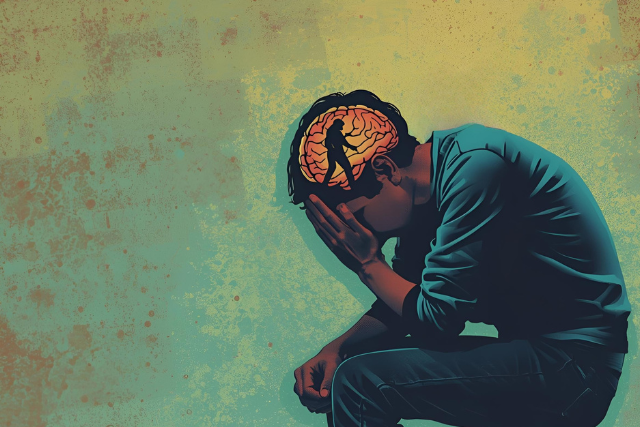
    When depression comes, I feel it like a prowler gliding through my body. My chest tightens, my head fills with dark whispers, and even the day feels like night. The prowler has no face, no clear shape, but its presence is heavy. Sometimes it circles in silence within me. Other times it presses in until I don’t know how to respond.

    In those moments, I feel caught between two choices: do I lie still, hoping it passes by, or do I rise and face it? Often, I choose lying down—not out of paralysis but patience. Sometimes the only way to coexist with the shadow is to rest, to surrender for a while, to let sleep take me. And sometimes, when I wake, I feel a little lighter. Not free of the prowler but reminded that it is possible to live alongside it.

    Carl Jung once wrote, “Everyone carries a shadow, and the less it is embodied in our conscious life, the blacker and denser it is.” I know this to be true. The more I try to push my depression away, the heavier it becomes. But when I bring awareness—even reluctant awareness—its power weakens.

    The Shadow as Teacher

    The shadow is not only my enemy. It also serves as a teacher. Depression forces me to face the parts of myself I would rather outrun: shame, grief, fear, anger, discontent. But it also carries hidden truths. Jung suggested that the shadow holds not just what we reject but also forgotten strengths and possibilities.

    For me, the shadow’s message is humility. It reminds me I am not in control, that I can’t polish myself into perfection. It pushes me to listen more deeply—to the pain I carry and the struggles I see in others. It insists that healing doesn’t come from pretending the darkness isn’t there. It comes from being willing to see it.

    Buddhism and the Prowler

    Buddhism gives me another way to see this. The Buddha taught that suffering doesn’t just come from clinging to what we crave; it also comes from turning away from what we don’t want to face. That turning away is called aversion.

    When the prowler moves through me, my instinct is always to turn away. I want to push it out, distract myself, pretend it isn’t there. But each time I run from it, the shadow grows stronger.

    In meditation, I practice staying. I sit and breathe, whispering silently, “May I be free from fear. May I be at peace.” I’ll be honest, sometimes these words feel empty or even silly. They don’t always lift me. But saying them creates a pause—a moment of willingness to stay instead of running. The prowler doesn’t vanish, but it softens a little under the light of compassion.

    Creativity and the Shadow

    I’ve also discovered that my documentary work—filmmaking, writing, teaching—is only authentic when I acknowledge the shadow. My camera becomes a mirror. When I pretend everything is light, the images feel flat. But when I allow the complexity of shadow into my seeing, the work has depth.

    When I sit with people to listen to their stories, I often sense their shadows too—grief unspoken, fear beneath the surface, contradictions in how they see themselves. I can recognize those shadows because I have lived with mine. Facing my own shadow allows me to meet others with greater truth and compassion.

    To create honestly means letting the shadow into the frame. Without it, there’s no contrast, no tension, no truth.

    Caregiving as Light

    One of the greatest gifts in my life now is caregiving for my ninety-six-year-old mother. These small daily acts bring moments of unexpected reprieve.

    I remember one morning, bringing her a simple breakfast—just toast and tea. She looked at me and smiled, her face lighting up with gratitude. In that moment, the prowler loosened its grip. It was such a small thing, yet it fed the part of me that wanted to live.

    Playing her old-time tunes on my Gibson mandolin does the same. When I see her foot tapping or hear her hum along, something shifts inside me. Caregiving sheds light into the darker places of my heart. The simplicity of preparing food or sharing music reminds me that love and service are stronger than despair. These acts don’t erase the shadow, but they bring balance, showing me I am more than my depression.

    Feeding the Shadow, Feeding the Light

    I’ve come to see that I sometimes feed my depression. Not on purpose, but through worry, anxiety, and rumination. Each time I circle the same fears, I am handing the prowler a meal.

    And then there are other times when I feed something else. The words of meditation may feel hollow, the wolf story may sound idealistic, but the simple acts are real: making my mother breakfast, playing her a mandolin tune, writing with honesty, or even just breathing one steady breath.

    It reminds me of the well-known story of two wolves: A grandfather told his grandson that inside each of us are two wolves. One is fierce and destructive, filled with anger, envy, fear, and despair. The other is peaceful and life-giving, filled with compassion, hope, and love. The boy asked, “Which one will win?” The grandfather replied, “The one you feed.”

    For me, both wolves are real. The prowler and the peaceful one live side by side. I don’t deny my depression. I know it is part of me. But I also know I can choose, moment by moment, which one I will feed.

    Presence with the Shadow

    The prowler still comes. I suspect it always will. Some days it circles silently like a vulture. Other days it urges me to lie down and surrender. And sometimes, when I wake, I feel a small relief—a reminder that coexistence is possible.

    This is what presence has come to mean for me. Presence is not escaping into light or denying the dark. Presence is staying with what is—the prowler, the heaviness, the caregiving, the fear. It means breathing with it, resting with it, even sleeping with it, without running away.

    Both Jung and the Buddha point in this direction. Jung says we cannot become whole without making the darkness conscious. The Buddha says we cannot be free if we turn away in aversion. And I have learned that I cannot create or care for others or live fully if I refuse to face the prowler inside me.

    So I continue step by step. I breathe. I stay. I rest. I create. I bring my mother breakfast. I play her mandolin tunes. I feed the peaceful wolf. I coexist. The shadow still prowls, but I am here too—more awake, more human, more present.
  • The Most Important Pieces of My Cancer Coping Plan

    The Most Important Pieces of My Cancer Coping Plan

    “Health is the greatest possession. Contentment is the greatest treasure. Confidence is the greatest friend.” ~Lao Tzu

    When dealing with a serious health issue or life challenge, we can choose to navigate through it to the light or bury ourselves in its darkness. While it’s not always easy to find the light, it’s a much easier place to survive in and, in the long run, is much healthier. This way of being has helped me on my recent health journeys.

    Twice in the past twenty-three years, I have received the news of a breast cancer diagnosis. Both incidences were completely different and unrelated. This is my story, and how looking for the light is so important in the face of adversity.

    My first cancer diagnosis was in 2001 when I was forty-seven, received days before the horrific events of 9/11.

    DCIS, an early form of breast cancer, was discovered through my annual mammogram. I was given the choice to have a lumpectomy and radiation or a mastectomy and reconstruction. I opted for the latter because I didn’t want to spend subsequent days, months, and years worrying about a possible recurrence. Plus, back then, radiation was more dangerous and not as refined and focused as it is today.

    At the time, I was living in a small town in Florida and decided to travel to California for the best doctor to treat this type of cancer. It wasn’t easy being separated from my three children under the age of eighteen. In the end, it was the right choice and eventually led to a subsequent move to California, the place of my dreams. So sometimes going through difficult challenges can lead to better things.

    After I had surgery, my husband Simon and I stayed in California for two weeks before returning home to Florida. I slowly got used to my new body’s landscape since my diagnosis and diligently continued to go for my annual mammograms, watching my only breast being squished between those two sheets of glass.

    Tears would trickle down my face, triggered by the loss of the breast that fed my three children. During my meditations, I expressed gratitude for my life and remaining breast.

    I tried to bring the light into my life whenever possible by engaging in self-care activities. I surrounded myself with loving and thoughtful people and tried to disconnect from those who had less hopeful attitudes.

    Five years later, during a routine blood test, I found out that I had multiple myeloma, a rare type of blood cancer affecting the plasma cells. In short, it turns healthy cells into unhealthy ones.

    I had no symptoms at the time, but was told that I’d need bloodwork every three months to make sure that the disease did not progress, and that down the road there was a chance I would need to undergo treatment for this incurable type of blood cancer.

    The fear of enduring another cancer overcame me, and I researched the best integrative physicians in Los Angeles to help me navigate this new terrain. For eighteen years my myeloma was what was called “smoldering” because I had no symptoms, but my blood test continued to show high protein levels—a sign that the disease was present.

    Each day I swallowed handfuls of vitamins to ward off any further disease progression. I met and consulted with the best doctors and researchers at the Mayo Clinic and Cedar Sinai Hospital in Los Angeles. I was told that everybody’s case was different, but at one point treatment would be unavoidable.

    My second breast cancer diagnosis came in 2024, not long before celebrating my seventieth birthday. I was feeling fine, and it was still a few months before my scheduled annual mammogram when I noticed that my right nipple had inverted.

    A mammogram, biopsy, and MRI revealed lobular breast cancer, which is more aggressive than DCIS. I ended up having another mastectomy and reconstruction. Much to my chagrin, I also needed radiation. Thankfully, because my Onco Type DX Score—a score given from 0 to 100 indicating the likelihood of breast cancer returning—was low at only 9, I did not need chemotherapy.

    I am not generally a fearful person, although I am prone to depression and holding feelings in. I continued to try to keep clear of those who were living more in the light than in the dark because it triggered feelings of depression. The entire experience triggered reminders of my first breast cancer experience, coupled with increasing fear and sadness.

    Once again, I had to get used to my new personal physical landscape of implants taking the place of my real breasts. Much had evolved surgically in the twenty-three years since my last surgery, and the recovery seemed easier.

    The radiation, however, took a lot out of me. In addition to shrink-wrapping my newly constructed breast, I encountered sheer exhaustion during the six weeks of radiation five days a week.

    Unfortunately, during my hospitalization for this second mastectomy and reconstruction, my hemoglobin dropped significantly. This signaled to my doctors that my myeloma might be becoming active.

    They scheduled a bone marrow biopsy and found that 90% of my marrow had cancer cells. This was shocking news. My oncologist had been suggesting treatment to ward off progression, but I declined and said that I would rather wait until I was symptomatic.

    He had been very patient with me wanting to do it my way, combining Eastern and Western medicine, mainly because he knew that each case was different, and he honored my intuition about my body. However, he did tell me that there would be a time when he would say that I had no choice but to begin treatment, and unfortunately, it had arrived. He suggested I heal from my surgery before beginning.

    The hemoglobin drop made me feel very uncharacteristically tired. I had been an active person, hiking and working out with a trainer, so having no energy was very difficult for me, plus being active is also a way to fend off depression.

    I’d always been an advocate of listening to my body, and now I felt that my body was telling me that it was time for treatment that involved weekly injections at the hospital and taking a handful of medications at home to fend off any side effects.

    I never really understood the concept of “chemo brain” until now, but I truly feel I cannot think clearly. It challenges my lifelong passion for writing and creating.

    I’ve decided to continue to listen to my body—to rest when it asks to rest and move when it’s time to move.

    During the course of my three cancers, I went from being mad at my body for putting me through all of this to respecting the temple that has kept me alive. I’ve accepted that I cannot be as productive, and that spending a day with one or all of my six grandchildren was more healing than writing any article or a book.

    All in all, my healing had many layers—emotional, psychological, and physical. Compounding that with the fact that I was to live with an incurable cancer that would probably need treatment for the rest of my life, I was left feeling quite depressed.

    I decided I could not manage alone without the assistance of an antidepressant, which would just keep my head above water. I wanted to thrive and just needed that little bit of support.

    I maintained my sanity by deferring to self-care modalities, many of which I used in my younger years and during challenging times in my life, such as writing, meditation, listening to music, exercising, and connecting with friends.

    There’s one song that inspired my way of being, and that was Gloria Gaynor’s song, “I Will Survive.” The lyrics became my mantra.

    Cancer survivors can wear many faces. We might have a public face, and we might have a private face. True healing and recovery depend on the support of loved ones and trusted medical professionals.

    My physicians were very caring and kind, and I’ll never forget the words of my first oncologist when he gave me my diagnosis: “If this experience doesn’t rivet you, nothing will. You’ll never look at life in the same way.” He was right.

    My oncologist’s words continue to echo in my mind. From a physical standpoint, I can acknowledge and accept that my body will never look and feel the same. My daily glances in the mirror are a constant reminder of my journey. In spite of looking a little better when I’m dressed, when I’m unclothed, there’s no escaping the fact that I’ve had breast cancer—I have the scars to prove it.

    I can hide under my clothing, my covers, or in my closet, but in the shower and during lovemaking, I cannot hide, so I’ve taught myself to accept my newly transformed body.

    People say that scars give us character, and I’ve worked hard to convince myself of this supposed truth. I tell myself that the scars don’t really matter because the important thing is that I’ve survived, even though the moment I heard my doctor’s words, all I wanted to do was hide.

    As survivors, we go through many mood changes, but in the end, I believe in the old adage, “From all bad comes good.” I’m cognizant of the importance of being mindful of life’s priorities.

    As mentioned earlier, I’ve come to realize that my writing grounds me, makes me happy, and helps me survive. I also know that I need to surround myself with people who make me feel good about myself and who provide healing energy.

    I suppose this is what intuitively happens when you come face-to-face with your own mortality—you try not to allow people into your life who drain you of the vital life force that is essential for your own healing. For me, doing so made me feel that I was shoring up my spirit’s natural defense mechanisms.

    I’d always been a productive person, and my first cancer diagnosis brought with it a new sense of urgency to continue my writing practice and to share my words and passions with the universe.

    While working on my latest memoir, I made a point of trying to relax and remind myself not to overdo it. I made sure to meditate and work out every day and get a massage and/or acupuncture when I was able to fit these forms of healing into my schedule.

    I decided to express gratitude for my life and all the things I’d taken for granted, such as my family, friends, home, and the time I was able to spend in nature. Given my lifelong commitment to the care of others (I was trained as a registered nurse), I decided to turn that compassion inward and indulge in more self-care. For years I’d put everyone else’s needs first, so it felt good to offer gratitude and kindness to myself.

    Of course, when we’re diagnosed with something like cancer, the possibility of a recurrence is always in the back of our minds—but we have no way to predict the future, so we can only do our best and be compassionate with ourselves and others.

    I have repeatedly told myself that cancer was no longer welcome in my life. I realized that I would thrive as long as I continued to love and, like what psychic Sonia Choquette says, “When you name it, you claim it.” And I am naming to be in the light. That’s my choice.

  • Free to Shine: How I’m Rediscovering My Inner Light

    Free to Shine: How I’m Rediscovering My Inner Light

    “When a flower doesn’t bloom, you fix the environment it grows in, not the flower.” ~Alexander Den Heijer

    I remember the girl I used to be. Light, full of life, and constantly in motion—like a little twirl of joy spinning through the house. There was this rhythm inside me, an effortless dance between curiosity and wonder. I’d tap dance through the kitchen, counting how many twirls I could do before I lost my balance.

    The world felt vast, endless, and open. I didn’t just see beauty in big, grand things. I found it in small moments and delicate objects, like that little glass bird on the sofa table, a tiny piece of my world that always felt so fragile, so full of wonder.

    As a child, I never doubted that there was more to life than what I could see. I had this deep connection to the world, to the beauty hidden within it. I would hold that bird in my hands while doing my chores, dusting around it with care. It was simple, transparent, nothing extraordinary, but in my eyes, it shimmered with significance.

    That lightness, that sense of awe, stayed with me for a long time. But somewhere along the way, things started to shift.

    By the time I was in my thirties, I had built a life that looked perfect on the outside. I worked hard to create it. I was meticulous, structured, dedicated. I followed the steps I thought I was supposed to: high-paying corporate job, beautiful house, two kids, vacations—the kind of life people admire.

    On Facebook, we looked like the ideal family, smiling on beaches, posting about our Florida trips, standing in front of our towering house with that sparkling SUV in the driveway. But beneath the surface, I was crumbling.

    The lightness, the sense of wonder that had once danced so freely within me, was gone. I had replaced it with structure, control, and a constant need to keep everything in check.

    I would lie awake at night, my mind spinning with numbers, running the calculations over and over. The debt we had accumulated was crushing, and every bonus I earned was already spent before it even hit the account. I would total up the bills in my head, again and again, hoping that if I recalculated just one more time, the numbers would somehow change, the debt would somehow shrink, but it never did. I was suffocating under the weight of it all.

    On the outside, I kept up the facade. I went to work, managed my family, kept the smile in place. But behind closed doors, I was breaking.

    I’d cry in the shower so no one could hear me. I’d cry in the car, on my way to work, during moments where I was supposed to be “on,” a career woman with it all together. And then at night, after my husband and kids had fallen asleep, I’d lie in bed, silently crying into my pillow, overwhelmed by the crushing realization that despite everything I had built, I was miserable.

    There was a day, driving to work early one morning, when I saw the sun just beginning to rise. The sky was that deep, almost-black shade of pre-dawn, and then, there it was—the light. The same light I had seen thousands of times before, but this time, it hit me differently.

    I remember thinking, At least one day I’ll die. At least one day, I won’t have to feel like this anymore. The idea of my mortality didn’t scare me—it brought me comfort. The idea that this pain, this life that felt like a trap, wouldn’t last forever… it felt like relief.

    In that moment, a quiet truth began to take shape: something had to change. I couldn’t keep living this way, reaching for comfort in places that only deepened my pain. Somewhere, I had lost myself, drifting in an unhappy, unstable marriage, bound by a fear of judgment, a lack of self-worth, and the overwhelming weight of needing to please everyone but myself.

    The thought of leaving felt paralyzing, so I searched for solace anywhere I could find it. In moments of darkness, thoughts of my own mortality, and even fleeting thoughts about my husband’s, seemed to offer a strange sense of release. But I knew these weren’t answers—they were signals of how lost and trapped I had become, craving a way to ease the suffering but not knowing how.

    The truth was, it wasn’t freedom from my life I needed; it was freedom from the suffering within it. What I wanted wasn’t an escape but to find my light again, that part of me that once danced through life, open and filled with joy.

    She was still there, buried beneath years of silence and strain, waiting to be rediscovered. I knew that if I didn’t make a change, I risked losing her—losing myself—forever. And so, that realization became a turning point, a call to rise from within and seek out the light I thought I had lost.

    It took years—therapy, coaching calls, long coffee dates with friends, journaling, crying, and rediscovering who I am—but slowly, I started peeling back the layers. The walls I had built around my heart, the ones I thought were protecting me, were actually suffocating me. Piece by piece, I took them down, and with every wall that crumbled, more light began to shine through.

    Then, I met my now-husband. He wasn’t part of the plan. I had been so focused on fixing myself, on healing, that I didn’t expect to find someone who would see me, truly see me, in the midst of it all. But there he was, with love and patience, willing to walk alongside me on this journey. And with him, I learned to let even more light in.

    But life wasn’t done testing me. After all the healing, all the rebuilding, I lost my dad. His death was like another wall coming down, not in the way the others had fallen—this one was different. It wasn’t a wall I had built, but it was one that kept me tethered to the past, to who I was before.

    Sorting through his things, going through the house I had grown up in, I found that little glass bird. Still intact. After all these years, all the moves, all the changes, that tiny, fragile bird was still there. And I realized something: I’m still here too.

    I had been through so much—divorce, rebuilding, loss—but my light, the one that had been buried for so long, was still there. It had always been there. And now, after all the pain, after all the walls had crumbled, that light was finally free to shine again.

    I am the light. The light that had been hidden, buried under years of expectations and pain, was always within me. And now, after all the healing, all the self-work, I can see it so clearly. The light is me, and it is you. We all have that light within us, no matter how deep it’s buried, no matter how dark it feels. It’s there, waiting for us to let it shine.

    This is your moment. Your light is waiting, just like mine was. It’s always been there, and it always will be. All you have to do is let the walls come down, piece by piece, and watch as your light shines brighter than you ever imagined.

  • We Are Both Darkness and Light: How to Reconcile Them and Grow

    We Are Both Darkness and Light: How to Reconcile Them and Grow

    “We have to bear our own toxicity. Only by facing our own shadows can we eventually become more light. Yes, you are kind. But youre also cruel. You are thoughtful. But youre also selfish. You are both light and shadow. I want authenticity. I want real. I claim both my light and my shadow.” ~Kerry Mangis

    Many of us can recall the painful moments that have shaped us. As we grow older, we become intimately aware of all the ways we were hurt, wronged, or betrayed. I think it’s a natural impulse, to number these moments and process them in order to heal.

    I reflected on this when on my way to the California River Delta—a peaceful marsh-land setting located between the Bay Area and Sacramento that I often sought refuge in.

    The night before I’d watched an episode of Thirteen Reasons Why that had dealt with the theme of the contradictory elements that live inside each of us. How difficult it is to arrive at a clean summary of good or bad once you’re made privy to all a person has been through, every feeling they’ve experienced or thought that’s run through their mind.

    My own list of hurts floats in and out of my mind, activating more on some days than on others. When I’m doing well emotionally, it largely fades to the background. When stress is higher and sleep has failed to restore me, it’s likelier to make an appearance.

    Here’s a little glimpse into how it reads:

    It started for you at the age of five, when you learned that the girl you’d considered your best friend  wasn’t as attached to you as you were to her. 

    In sixth grade your core group told you, seemingly out of the blue one day, that you could no longer sit with them. You didnt know why. You only knew that for whatever reason, people you’d trusted didn’t want you around anymore. Traits and mannerisms you hadn’t previously questioned were suddenly suspect now, and subject to intense self-scrutiny.

    The way you talked. Your interests. The sound of your voice. You just didn’t know. It could have been any of these. Or maybe all of them.

    Regardless of what that thing was, the message that resonated loudest of all was “Not good enough. Not worth keeping around.”

    A year later, self-esteem beaten down, you forged a friendship with a girl who showered you with positive attention one day and shoved you so hard you’d bleed (“jokingly” though) the next. This girl told you that you were selfish in order to get you to pay for things and comply to her wants.

    She rolled her eyes and called you “Dr. Phil” when you told her this hurt your feelings. Whenever you spoke up for yourself, it would lead to a fight. You’d sense this was toxic, years before learning what that word even means, but you’d also blame yourself, thinking maybe this was just what you deserved, or was the best you could do. Especially when there was no one else to turn to.

    Years later, dating hurt your heart too many times to count. You let down your guard and began to trust, only to realize you made a choice that wasn’t smart. Rinse and repeat.

    Your feelings were dismissed more times than you can count—sometimes because you were too afraid to be upfront about them; other times, even when you were. You felt like the carpet had been pulled out from under you, over and over and over again like a sinister movie on repeat.

    **

    I realized that day, as I drove to the California River Delta, that this narrative I’d carried for years wasn’t altogether wrong. Acknowledging those moments is an act of self-compassion. Once we validate what we went through, we can then begin to heal it.

    It was just that this narrative was incomplete. What I had yet to incorporate into my story was the harm that I too had left in my wake—and the way both of these, input and output, fed each other in a repeating cycle.

    And so, as I looked out at the blue-grey water after parking my car, my brain began expanding its narrative.

    You carried those childhood scars with you. They slept, only to activate. When they did, you saw from your vantage point and yours only, blinded to others’.

    You said hurtful things when at your breaking point, lashing out at friends and the people you dated. Consumed by your own issues, you sometimes failed to fully be there or show up for others in their time of need.

    You attached yourself to people and relationships, putting unconscious pressure and expectations onto them without their consent.

    You stayed with women you claimed had let you down, hoping they’d change, or trying to change them. You refused to accept the present moment on its own terms, instead insisting on seeing it for how you wanted it to be.

    Small acts of inconsideration built over the years, even when you weren’t blatantly mistreating someone or behaving in an overtly harmful way.

    My mind had briefly ventured to these uncomfortable places before—but that day, with only itself and the bucolic scenery to contend with, it stayed there for longer than its customary five or ten minutes.

    As I looked out at the water, I considered what attitudes, beliefs, and cognitive-road blocks often stop us from going here.

    How might we learn to move through (rather than away from) thoughts or memories of our mistakes when they surface? I wondered. Because taking accountability benefits not just the harmed person, but our own souls too.

    **

    I was able to see that shame is a big contributor. Brené Brown has said that when held back by this all-encompassing emotion, we cease to grow. So long as we remain stuck in its slog, we’re ironically more likely to repeat the very mistakes that pulled us down there to begin with.

    The character Bojack Horseman (from the Netflix show)—who hurts his friends, strings a good woman along, and even commits sexual assault—is one example of a person (er, horse) undoubtedly stuck in this cycle. He doesn’t see how his own conception of himself as irrevocably damaged largely contributes to the continuation of his harmful behaviors. If you’re just bad and there’s nothing you can do about it, then harming others is inevitable—so why even try to change?

    And so Bojack keeps drinking. He keeps hurting people. He keeps making the same mistakes. He himself continues to suffer. By shrouding himself in the shame robe, he self-protects—both from the hard work of change and from the extreme discomfort of examining the insecurities that underly his destructive actions.

    Those with trauma in our pasts developed coping mechanisms in response to what happened to us, often many years before fully understanding and contextualizing our pain. These defenses resulted in some level of collateral damage on the people around us.

    Some of us thought there was just something wrong with us. Or that these behaviors stemmed from character flaws we’d have to learn how to hide. We didn’t recognize them as signs pointing us toward what needed to be healed.

    Nor did we understand that rather than stay stuck in guilt and shame, we could allow it to guide us. That, when a fork in the road presented itself, we could let the sting of remembering direct us onto the kinder path.

    Black-and-white thinking also keeps us away from full acknowledgement of the past. We may think that if we’ve done bad things, it must mean we’re bad people. But it’s entirely within our control to learn from our past actions and become better every day.

    It took some wonderful people years of fumbling missteps to arrive at who they are today. If we were all judged solely by the single worst thing we’d done, many of us would be on our own right now.

    Sometimes we don’t acknowledge the past because it doesn’t line up with our image of ourselves as good people. Even though merely envisioning oneself as a loyal person or good friend doesn’t guarantee we’ll never act in ways that are hurtful.

    **

    Owning up to our role in past events doesn’t mean we’re forgoing self-compassion. I’ve found I can hold myself accountable and learn healthier replacements for destructive defenses while also maintaining compassion for what my younger self went through, and the struggles she didn’t yet understand.

    I wasn’t taught emotional regulation back when I was in school. Nor how to process my experiences. It’s hard to practice what you haven’t been taught. I remind myself, though, that I now have the tools to teach myself. That I can be that person to heal the hurting younger self who still lives somewhere inside me.

    Rather than allow the shame swamp of my past to ensnare me, I can seek to understand the unmet needs and unprocessed pain that prompted my negative behavior.

    We can extract the debris that led to insensitive actions until eventually we come upon that better and kinder self. The one who exists inside all of us.

    In my own journey, confronting regret hasn’t come without pain—but it has motivated change. Reminders compel me to be better now, to the people in my life currently. They also compel me to be a much better friend to myself.

    I’ve realized that acknowledging what was done to me is just one side of the coin when it comes to full healing and self-actualization. The other side is self-awareness and honesty. Looking not just at what’s most convenient, but also at our impact on others.

    That day on the dock, I gathered a few stones—each representing a person I’d harmed in some way. I held each one in my hands. I wished each person well and imagined filling them with a protective circle of love.

    And then I sent each stone on its way. Watched it fly through the air and land in the water with a small and almost imperceptible splash.

    Each of us is capable of so much better than the worst thing we’ve ever done. Yet much of how we strip those mistakes of their long-lasting power is by owning up to them—while at the same time, forgiving ourselves.

  • 4 Simple, Heart-Opening Exercises to Fill You with Joy, Love, and Light

    4 Simple, Heart-Opening Exercises to Fill You with Joy, Love, and Light

    “Why are you so enchanted by this world, when a mine of gold lies within you?” ~Rumi

    Happiness, love, and joy—we spend our lives in search of them. We often look to external things to fulfill our desire to experience them. A relationship, a trip abroad, a career, or maybe that shiny new car. We can spend our lives chasing these desires and believing that once we check everything off our list of life accomplishments, we will experience them all.

    But what if I shared with you that all of this—happiness, love, and joy—exists in you right now? That you are the source, not the external items. What if I told you that living in a perpetual state of love and joy is your natural state of being?

    Would you think I’m full of BS? That I’m living in a hippie Never-Never Land?

    Please let me share with you a few simple exercises that showed me my true self.

    Exercise #1: The Love Wave

    Close your eyes and take a minute to connect in your heart with a person in your life that could use a little love. Feel yourself smiling into their eyes and embracing them in a giant, warm hug.

    Allow the love to flow. Sit in this love. Let it grow in strength and surround you both. Then send it out into the world, creating a wave of love. Know that you can come back to this place of flowing love at any time.

    Try this now and then read on.

    Hopefully, you just had a wonderful experience of love. Now I have a question for you. Where did the love originate from? The person you were thinking of, or you?

    It was from you. The person you pictured just helped you unlock the love. You are love. You can actually imagine many different things to unlock it. Try a smiling baby, or playtime with a pet, or a concept such as world peace. These things are just the keys that unlock the true love that is in your heart.

    You can access this love any time you want. You are just tapping into your true being. It is who you are.

    I like to start my day off with this exercise. I tend to do it in the peacefulness of the morning light, right after my morning meditation. Just open your front door or a window and feel the fresh air on your face, then close your eyes and start. It is a beautiful way to begin the day.

    Exercise #2: The Gift of Giving

    One day I was browsing in a bookstore when an old man approached me. He had snow white hair and was wearing a threadbare, beige sweater. He handed me a chocolate rose and said, “Have a beautiful day,” I was taken aback. Who was this man? Was he trying to poison me? Was he hitting on me? I reluctantly took the chocolate rose and said, “Thank you.”

    The clerk noticed my discomfort and told me that the man buys a dozen chocolate roses every day and hands them out to random strangers. I suddenly felt special.

    This incident happened many years ago. Even though my initial reaction was one of unease, I remember this man with fondness. When he finally passed away the entire town mourned. There was a glowing write up in the local newspaper about him. He had brightened the days of countless residents with his gift of a chocolate rose.

    I invite you to pick a day this week and give everyone you meet that day a gift. It doesn’t have to be a physical gift, though it can be. It could also be a compliment, your undivided attention, or a heartfelt smile.

    Don’t expect anything in return. Remember my reaction to the old man? You might not always be met with gratitude. Just practice the act of giving.

    At the end of the day, notice how you feel. You spent the day leaving heart prints everywhere you went. Did this bring you joy? Is the joy within you or did you take it from the people you met?

    Exercise #3: The Vulcan Mind Meld

    We all have goals and expectations. They are important. But what happens when we can’t fulfill them? If we don’t get that promotion or find our perfect mate? We can become disheartened and depressed. How do we prevent this?

    Close your eyes and imagine yourself ten years from now. Give your future self that thing you believe will bring you happiness. Maybe it’s kids, money, power, or something else entirely. Notice how you feel. You might feel confident and secure. Or perhaps loved and important. Whatever you feel, allow it to expand and grow. Sit in it. Enjoy it.

    Then, while keeping your attention on the way you feel, bring back the image of yourself today. Think about what you already have that fulfills you.

    Maybe you don’t have kids, but you have amazing friends. Maybe you wanted a better income, but you can afford things you enjoy already. Look for the abundance within you now. Keep going until your “present self” feels the same as your “future self.”

    It’s almost like a mind meld—make those two beings one. Again, sit in the wonderfulness of it all. When you are ready, open your eyes.

    Try this out before reading further.

    Do you feel happy?

    When we live our lives from a place of lack we experience suffering and discontentment. We are always searching for the external thing that will make us happy. Rather than focusing on the things you don’t have, try living from a place of fullness. You already have an abundance of things to enjoy and appreciate—you just have to change your perspective.

    All that security, love, confidence, happiness, and joy you saw in the vision of your “future self” is accessible right now. Everything you experienced is within you today. Recognizing the abundance or fullness of your life is the key to happiness. If you experience that abundance, not meeting a goal or expectation becomes a minor bump on the road.

    I refer to the belief that we need external things to be happy as “the big lie.” Because when we finally finish off our checklist of life’s “wants,” we often experience “the great disappointment.” The list doesn’t bring us the happiness we thought it would. It’s not the source. We are.

    This frequently happens when people become suddenly wealthy. They think that they will be happier. They are surprised when they aren’t. In fact, having a lot of money comes with its own set of problems.

    Exercise #4: A Gratitude Nap

    This exercise imprints you with the beauty of your life as it is now.

    Lie down and get comfortable. Use as many pillows and blankets as you like.

    Set a timer for three minutes.

    For those three minutes, state out loud things you are grateful for. It’s a bit difficult at first. Please know every item does not have to be deep. Be grateful for the couch you’re lying on, the length of your hair, sand on the beach. Anything goes.

    After the three minutes, set an intention to be open to whatever is there for you to receive. Surrender as much as you can.

    Rest for ten minutes. Notice at the end of the “nap” how you feel. I’m willing to bet you feel a lot lighter after basking in the glow of all your life’s goodness.

    We spend so much of our time dealing with the pressures of life that we forget to do the things that unlock our love and joy. Our true nature gets covered by layers of life experiences and traumas.

    There is an Ayurvedic concept that you can shine with so much light that the darkness has no place to take hold. That light is within you now. It is your true state of being. It just needs to be set free.

    Tips to help access the joy, love, and light of your true being:

    1. Start your day with the love wave exercise.
    2. Make it a priority to do one thing each day that unlocks your joy.
    3. Live life from a place of fullness and abundance rather than from a place of lack.
    4. Practice gratitude.

    I would like to thank all of my teachers who have shared these beautiful exercises with me. Please feel free to share them too.

    Namaste.

  • It’s Not All Love and Light: Why We Can’t Ignore the Dark and Just “Be Positive”

    It’s Not All Love and Light: Why We Can’t Ignore the Dark and Just “Be Positive”

    “The dark night of the soul comes just before revelation.” ~Joseph Campbell

    If you frequent Instagram or any other social media platform these days, you may notice countless posts about positivity, self-help, yoga, and green juice. And gluten-free everything.

    Most of us equate these messages with spirituality and good vibes. I won’t disagree. These messages do promote good vibes. But, the problem is these posts don’t tell the whole story, and once we log off, many of us still feel incomplete, fearful, and insecure because all of these “influencers” and gurus seem to have it all figured out.

    I’m going to let you in on a little secret: None of us has it all figured out. We cannot possibly summarize the complexity and fluidity of our lives in one post or yoga pose. And from experience, I can tell you that before you get to the love and light part, there’s a lot to muddle through. As they say, Instagram posts are oftentimes just someone’s highlight reel.

    It’s easy to get enticed by gurus because they seem to have all the answers and to always be positive no matter what. When I followed a few well-known, self-proclaimed spiritual teachers, I put them on a pedestal and ignored my own inner guru. I also constantly compared myself to them because I wasn’t blissful 24/7, as they seemed to be.

    Thankfully, that was short-lived. While I honor and respect everyone’s journey, I now realize that I resonate with a vibe of authenticity, not one that only allows others to see the positive without ever discussing the dark side of life.

    I’m inspired by the teachers who share their struggles and transmute them in the name of love and healing, not the ones who claim to always be happy and positive, or who claim they have all the answers.

    The spiritual journey is extremely personal. It leads you to connect to your true essence so you can start making choices from your highest self. The self that’s rich with love, joy, and wisdom. The self that knows which course is best for you. The self that wants you to learn self-love and self-fulfillment and to experience joy and overcome challenges with grace.

    You cannot capture all of this on Instagram, I promise you.

    On this journey, every day is a new discovery and adventure, and yes, there will be days where you feel completely off and perfectly human. So, don’t stress; you are still on a spiritual journey even if there are times when you seem “negative” or swear off positive practices like yoga.

    You are still precious.

    You are still loved.

    You are still so incredibly worthy.

    The beauty of the spiritual journey is that while you discover the infinite love inside of you and tap into your beauty and uniqueness, you also fall in love with your humanness. You start to accept that you are meant to feel all emotions, while also finding ways to be in alignment with what feels good to you.

    In my experience, the work—returning home to yourself—begins by simply acknowledging that something is missing and that you feel disconnected, off, or incomplete. From there, you need to lean into the darkness instead of denying it with positivity (what’s known as a “spiritual bypass”).

    The journey will involve facing your beliefs head on and learning to release and reshape the ones that don’t serve you.

    It will ask you to visit parts of your life and mind that you are ashamed of and would rather ignore or kill off.

    It will ask you to release old wounds and drop the revenge-like mentality against people and circumstances that have hurt you.

    It will require you to visit painful memories and comfort that inner child in you who needs to be nurtured.

    It will require you to be honest with yourself about how committed you are to change.

    These are just some of the questions that I have had to answer thus far:

    Am I truly willing to forgive and move on? Am I willing to see a past hurt as a messenger or a lesson?

    Am I willing to make new mistakes with the understanding that no one is perfect?

    Am I willing to question the beliefs that keep me stuck and feeling depleted?

    Am I willing to let go of relationships that drain me?

    Am I willing to change my lifestyle in the name of healing?

    Am I willing to trust life, accept what needs to go, and embrace what needs to stay?

    The answers came with many tears, and there were many days that I didn’t want to get out of bed because all I could do was relive my mistakes. I was cleansing my soul and at times reliving some painful moments.

    I embarked on this journey to connect with myself again, to connect with my divine essence and the joy that had previously eluded me.

    This connection didn’t magically appear. I had some homework to do. I started to slowly change my diet, although I still struggle with that, I had uncomfortable conversations when I needed to speak my truth, and I found new routines that helped me stay connected with my body, including qigong.

    I found peaceful ways to be creative and have fun, like painting. I also showed up to every coaching session with an open heart, an eagerness to learn something new about myself, and a willingness to release old patterns, habits, and thoughts that were keeping me trapped.

    Though I will continuously evolve every day that I am alive, I feel much closer to my personal truth. And I feel more comfortable expressing it. That’s the true journey.

    Many realizations came to me when I slowed down enough to connect with myself. For example, I realized I’d lived my entire life as an extrovert when in fact my deep essence is stillness and introversion. I recharge in the quiet spaces and I nourish myself when I disconnect for a bit.

    This was not an overnight revelation, but a long journey with many layers. I got to my truth (just the tip of it for now) by releasing emotions and beliefs that were just plain heavy and rooted in fear and doubt.

    This took time.

    So, the truth is that no matter how much green juice you drink or how many yoga poses keep you in shape, if the emotional release is not part of the routine, it will be challenging to maintain lasting change. The emotional healing is the hardest part. It’s the part that I resisted for a long time until I became comfortable facing my shortcomings, my past traumas, and my conditioning.

    Change only occurred when I developed a genuine curiosity about my life and how I live it. I was eager to meet my traumas and brave enough to understand my triggers.

    While I have not magically eradicated all of my fears, I have a new perspective and I maintain a daily routine that keeps me feeling loved and protected so that when challenges arise—because they will—I have a foundation of self-love and self-compassion, knowing that we all struggle.

    I try to eat well to balance my moods. I stay creative every day. I pick one tool daily—mantras, my own customized prayers, salt baths, sitting and breathing, walking in nature—to help me with any challenges. And I try to move my body daily. These little efforts keep me centered.

    It’s easy to recite positive mantras and flash the peace sign, but the real transformation begins inside. Once you expose the darkness, love and light can then enter. And when darkness comes to visit again, the light within you will give you strength to face any challenge.

    The light in you will always guide you home. Keep moving—you’re doing great!

  • Why “Focus on the Bright Side” Isn’t Helpful Advice

    Why “Focus on the Bright Side” Isn’t Helpful Advice

    There are so many memes and quotes out there that say, “Be positive, not negative. Focus on the bright side.” I’ve never been very good at ignoring the negatives and focusing on the positives.

    Call me a critical, over-analytical over-thinker if you want, but at no point in my journey of self-love and self-discovery have I learned to ignore all my flaws, all my mistakes, all my regrets. At no point in my journey of compassion have I learned to ignore all the times that someone has hurt me or all the destruction caused by abuse. That never felt right to me. And you know something? It hasn’t actually been necessary.

    Rewind to six years ago when I was staring at my makeupless face in the mirror. My thoughts said, “Ugly. Horrible. Pale. Look at those blemishes. Look at those hairs. Disgusting. Revolting. Put a bag over your head and hide.” But I kept looking.

    I couldn’t unsee those blemishes. There they were. I couldn’t unsee those hairs. There they were too. Plain as day. I also couldn’t stop myself from thinking that these were disgusting and revolting. Those thoughts were certainly there too! And no amount of positive self-talk was going to make them go away.

    What happened next was fascinating. In addition to observing those hairs, those blemishes, and those thoughts, I saw something else. I saw my face as pure visual information—the way I’d perceive the colors and shapes in an abstract painting. I was giving my face meaning, and I was seeing it as something meaningless.

    Those moments revolutionized my relationship with myself. I didn’t erase my negative self-image. I just added a new perspective. That new perspective balanced my view of myself.

    I think balance is a key word. What bothers me about the whole “be positive, ignore the negatives” idea is that I was abused by some very mentally unstable people in my childhood who did that very thing. They refused to see how they hurt others. They focused only on their good intentions.

    A certain amount of self-criticism, self-judgment, and self-doubt is absolutely essential. It’s what makes us apologize for hurting someone. It’s what makes us improve the areas of our lives that are lacking. It’s what makes us question idealistic, romanticized notions of the world and see things clearly. The so-called “dark side” is essential. It isn’t bad at all.

    A few years ago, my partner and I were in an argument. He was very angry, and the way he was expressing his anger to me was extremely triggering. I felt victimized, oppressed, disgusted. I thought, “I would never do this to you.”

    But then, something happened. Beneath his unhelpful delivery, I saw something. I saw him trying to communicate something about my behavior toward him. Something that hurt me to see. A huge blow to my ego. And he was trying to tell me about it. He was trying to say, “I don’t do this to you.”

    Sure, he wasn’t communicating about it well. But he was communicating something important. We ended the conversation temporarily and went to our separate corners.

    Alone, shame and self-hatred suddenly returned to me, like old friends who don’t bother to knock. My thoughts said, you’re a horrible human being. Look what you’ve done to your boyfriend. Look at how patient he’s been all this time with your intolerable actions, and look at how you treated him for trying to tell you about it.

    Extreme. It was all so extreme. And I couldn’t delete the extremism! I couldn’t remove my self-judgment, and I couldn’t remove my resentment for his angry words. All I could do was find balance.

    I told myself that just because I had made mistakes doesn’t mean I’m a horrible person. I told myself that I could acknowledge that I had room to grow and also respect myself as a human being. I could do both.

    As for him, I could admit that he had something valuable to say and that his communication needed some work. I could see our argument as something that contained pain alongside valuable feedback. It wasn’t good or bad. It was both. It was neither. It just was.

    These moments pop up for me all the time. Last month, when I was travelling, I had something stolen. I felt betrayed, angry, lost. I didn’t try to stop all those feelings, but I also didn’t stop with feeling them. I continued to explore my experience until I found new perspectives on the situation. So being robbed turned into an amazing learning experience! Not because I ignored the pain but because I balanced that pain with lessons.

    Life is paradoxical. Where there’s joy, there’s sadness. Where there is control, there is surrender. Where there is speech, there is silence. Where there’s destruction, there is growth. We do not need to ignore the so-called dark side. It’s an essential part of the way things are. We only need to add an awareness of the other side: what we call the “light.”

    I think this is especially important in these times of political and social unrest. When we try to replace darkness with light, red with blue, wrong with right, we create war. Because what we call dark and wrong exists for a reason. Sometimes, it exists because it is meant to serve us in some way. Sometimes, it exists because it’s a symptom of some bigger issue.

    No matter how much we try to triumph over and defeat our enemies (including our inner enemies), if we do not understand where they come from, they will keep returning in different forms. We need to wage peace, not war, and peace comes from understanding.

    My perfectionism, which destroyed me for many years, was not a malignant tumor to cut out of my experience. It is a helpful pattern. Sure, it doesn’t help when I’m looking at my face or my mistakes. But as I’ve learned to embrace the art of continuously perfecting something (without ever expecting it to be perfect), I’ve become a better writer and a better editor.

    My self-judgment, which almost brought me to an early death, was not a disease. It was overgrown, but it wasn’t unnecessary. My ability to look critically at things helps me expand my perspectives, open my mind, and understand people better. My ability to look critically at myself helps me work on myself, admit my mistakes, and constantly improve.

    My bouts of intense, debilitating self-loathing weren’t useless either. They always had a message. Sometimes, I hadn’t taken a break in months. Sometimes, I was ignoring my own needs while codependently following the desires of the people around me. Sometimes, I had allowed my anxiety to spiral endlessly for weeks and weeks, and my mind had just become tired. I realize now that, in my suicidal moments, I didn’t really want to die. I just wanted to rest. I wanted a break from it all.

    I’ve learned that there is no good or bad. There is only what is most helpful and useful at the time. The answers, as they say, are all within you. They are. And this also means that, in any given situation, some of your inner answers will be more appropriate than others. Everything has its time and place. Everything is a valuable part of your experience.

    This doesn’t mean we should condone rape, murder, or violence. But this attitude can help us understand these tragic occurrences more than judgment can. Why do some people feel like the right answer is to hurt someone else? I think this line of questioning will bring us to a more helpful place than calling those people heartless monsters. It can actually help us work toward solving those social issues.

    And learning to look at ourselves and, instead of asking, “How can I get rid of this horrible part of me? How can I stop doing this unhelpful thing?” We can instead ask, “What could this mean? Which needs might I be meeting with my actions, and how could I meet those needs in a way that serves me more?” We can focus on holistically understanding why something has happened and allowing ourselves to explore different, new solutions to the puzzles of our existence.

    I suppose what I’ve learned over the past six years has been more than self-love. I’ve learned balance. I’ve learned that real happiness is being unafraid of my emotions. I can be sad, angry, happy. I can feel it all, whenever it comes, and know that I won’t get stuck on it. I will let myself experience all the available emotions, and then I will come to peace.

    Instead of trying to focus on the bright side, my task is to let myself see all the sides, remove my judgment about what they mean, and try to appreciate the complexity of my experiences.

    That is the power we have as human beings. We can let ourselves be curious instead of always fearful. We can choose to work on understanding who we are instead of always trying to be who we think we should be. We can let ourselves see what is there and not only what we are used to seeing. We can choose to understand better. We can choose to be aware.

  • Stop Focusing on Your “Flaws” and Let Your Light Shine Bright

    Stop Focusing on Your “Flaws” and Let Your Light Shine Bright

    Glowing woman

    “Vulnerability is about having the courage to show up and be seen.” ~Brene Brown

    When I was twenty-seven someone told me I had old looking skin.

    Up until I heard this comment, I had never given much thought to my skin. Ever since, however, it’s been the only thing I see when I look in the mirror.

    Lately, I have been diving deeper into the inner areas of my life that still need further integration. Making themselves most apparent as top priorities are self-love and acceptance.

    A good friend recently told me that she has started to look at herself in the mirror every day and say “I love you,” and really mean it.

    She said when she first started this exercise, all she could see was the line that was between her eyebrows. Her one flaw.

    Before my friend mentioned this line in her face, I had never really noticed it.

    My friend has big, beautiful, blue eyes, and those are all I see every time I talk to her.

    This conversation was quite eye opening. It made me admit that I do the same thing.

    The only things I see in the mirror are the lines in my face, and I think, “maybe I need to get a facelift.”

    I am committed to loving and accepting myself fully and changing this behavior pattern.

    My friend said, “Polly, you have to see your lines in a different way. Your lines tell the story of who you are! Your lines show all of your many adventures, all the time you have spent outside kayaking, surfing, and cycling. This is the story your lines tell. Your lines have made you who you are. Love your lines!”

    AMAZING!

    Love my lines! Really?

    Love my biggest insecurity? Accept my flaws as they are?

    What if I loved my lines? What if I saw them like she did?

    They are the story of who I really am.

    I have not been wrapped up in cotton wool, sitting in a cubicle, and my face shows it.

    What if I even honored my lines and said thank you?

    Thank you for taking on the elements.

    Thank you for protecting me and allowing me to do all the sports I love outside for hours in the sun.

    Thank you, lines!

    Well, this is revolutionary!

    Self-acceptance, gratitude, compassion, and forgiveness are my practices today. I forgive myself for letting someone else’s opinion of me dominate me. For giving away my power, and allowing my sense of self to come from outside of me.

    In his book The Presence Process, Michael Brown says:

    “The behaviors we generate in order to feel safe and accepted in the world are a substitute for real peace and aren’t who we are. By embracing responsibility for our experiences, we embrace the capacity to change them.”

    In taking responsibility for my life and experiences I can see that I have allowed my worth and value to be dictated by one person’s superficial observation of my appearance.

    I now take back my power. I now change my story. I can choose a different path. I can love and have gratitude. I can forgive this person and myself. I can focus on my gifts instead of my imperfections.

    It is commonly believed that the eyes are the mirrors of the soul.

    When I talk to people I always look in their eyes. When I look at myself I hardly ever look in my own eyes.

    Why? What would I see if I looked beyond the surface? What have I been distracting myself with by only focusing on my skin?

    What if I saw who I truly am? What if I saw my own soul? What if I let my light really shine?

    Digging deeper, I see that perhaps Marianne Williamson is right when she says,

    “Our deepest fear is not that we are inadequate. Our deepest fear is that we are powerful beyond measure. It is our light, not our darkness that most frightens us. We ask ourselves, who am I to be brilliant, gorgeous, talented, fabulous?’ Actually, who are you not to be?”

    If I fully accept and embrace my imperfection, and believe Marianne Williamson, then what?

    Is my deepest fear that I am powerful?

    Does my light scare me?

    What if I truly let my light shine?

    What an amazing gift this would be! To myself and to the world.

    This is all I really want.

    To be my most authentic, whole, true self. To let my light shine. To be comfortable in my own skin.

    I believe this is the point of life, and that my inner work is to see beyond my lines—to see who I truly am.

    I now am showing up and having the courage to really be seen. Lines and all!

    I know that if I honestly allow this, I will be free.

    That no one outside of me can do this for me.

    I have begun to edit video footage that I took of myself last year, when I was on a self-searching walk by myself. I spent thirty-two days alone in the wilderness and recorded my journey on video. I haven’t shared these videos because I was self-conscious about my skin, and, as a result, I have been holding back the potential of letting my light shine.

    Letting my light truly shine means following my heart and inspiration. Allowing my gut instinct to rule, even when I don’t know why. Smiling big. Saying hello to people with my heart open. Seeing others as a reflection of myself. Asking, “What can I give?” rather than “What can I get?” and being present with everyone I come into contact with.

    If I feel like dancing, I get up and dance.

    Shining my light means sharing my gifts with generosity, and getting out of my own way. Putting myself out there and allowing my voice to be heard. Through writing, dance, film, art, and by simply being my whole, authentic, true self.

    It is well and truly time. Time to get over the insecurity, the reverse vanity, and practice self-love and acceptance.

    The only one who needs to love and accept me is me, and I know that once I do this what you think of me really doesn’t matter.

    We can all let our light shine bright—you too.

    Stop focusing on your perceived imperfections and recognize your inner light.

    Look yourself in the eyes in the mirror and say “I love you” or “You are amazing,” and really mean it!

    See yourself as your friends see you (without honing in on physical flaws).

    “Show up,” however that looks for you, and allow yourself to be seen.

    Call back in your power—from all people, places, and situations where you may have given it away.

    We owe it to ourselves and to the world to step into our full power, and shine our full brightness. Allowing ourselves to be, express, and create gives others the room to do the same.

    Our unique, authentic selves are here now, ready, and waiting for our permission to shine!

  • Choose to Shine: Your Smile Is More Powerful Than You Think

    Choose to Shine: Your Smile Is More Powerful Than You Think

    Beautiful black girl with her chalked drawing

    “Shine like the whole Universe is yours.” ~Rumi

    I had a revolutionary experience at a grocery store. Yes, a grocery store. I’ll never forget that day.

    I believe that some of the most mundane and unimportant places I’ve visited have been the bedrock of my spiritual growth.

    There is so much to witness at a store: people frantically trying to load up for the weekend, elderly in their motorized carts, people in line glued to their smart phones, and then of course the workers that 90% of the time seem achingly miserable and sad.

    It was like any other day as I stepped foot into my local store to pick up up a few essentials.

    I was walking in with the intention of getting some food for the week and ended up walking out with so much more.

    Once inside, I saw a man standing at the front of the store with the biggest smile on his face. It was as bright as the sun. It was the kind of joy that you could easily tell was radiating from within.

    I did what I habitually do: looked him in the eye, smiled, and called him by his name. As I grabbed my cart and glanced back up, I stopped dead in my tracks.

    I had a huge rush of awareness: No one was noticing this man. Not a single person in my ten-minute stare down paid attention to him. No one.

    He waved, with a big ole grin, to every single soul that entered the store. You see, his job was to acknowledge every person that walked through the front door. He was the “greeter” at a local store, and the best darn one I’ve ever seen.

    This immediately fueled anger inside of me. It was as if he was invisible.

    Why was no one seeing this man? Why didn’t they wave back—say hi, and enjoy his presence?

    Why? Why? Why?

    I wanted to stand right up there with him, get in people’s faces, and make them see us. But instead, I took a breath and allowed myself to get calm and centered before I did anything.

    I decided to shift my attention to the entrance to actually see who was walking inside.

    First, I noticed a businessman that kept glancing at his watch; it looked like he was in a real hurry. Who knows—he may have been late picking up donuts for his next meeting (that he was running).

    Next, I observed a mother who had a cart full of kids that were kicking and screaming. She was rummaging through her purse; I bet it was hard to find that grocery list while managing to keep “all arms and legs inside of a moving vehicle.”

    She may have even been a single mom, and her only option was to take them with her (hardest job in the world—I watched my mom raise five).

    I then witnessed a couple who seemed to have been so in love that even if the greeter was standing there with a sign that had their names in bright red, they still wouldn’t have seen.

    They encapsulated my attention all together. I just love seeing love, and my heart skips a beat seeing others that love each other so much, they live in worlds of their own. Smiling into one another’s eyes, how could they possibly have noticed him?

    Soon after I stopped watching, I turned my attention back to the greeter. He was an unbelievable man.

    It didn’t matter who walked through the door, or what baggage they were bringing with them—he treated each of them the same. He was so awake to life, so kind and conscious to the real meaning of love (little did he know).

    His arms were open, ready to pour into anyone, no matter who they were. Even though he was being ignored.

    I learned an incredible lesson that day, or lessons, I should say. And I’ll never forget these simply yet mighty realizations that are now imparted into my everyday life.

    On days when I find myself judging others, and when my patience is awfully low, I think of this man. On days when I feel unappreciated and unnoticed, I think of him too.

    I remember that he gave of himself, without any expectation of return. I remember how his smiled wasn’t dependent on if others smiled back.

    I think of how his joy radiated from the inside out and how others, including me, were still affected by his actions, even if it didn’t seem so.

    So that “greeter” is perhaps the embodiment of truth. This is what life is about: giving others the benefit of the doubt, because you make mistakes too. Understanding other people’s suffering instead of judging them, because you have suffered also.

    I would encourage you to wake up to the world around you and realize that people are simply doing the best that they can. They really are.

    Next time you feel the temptation to judge others for what you can only see on the outside, try seeing it from another angle.

    Attempt to contemplate what they may be going through or the suffering you may not be able to see on the surface. Pass a silent blessing onto them and try to see yourself in them.

    This will happen to you. You will show love and get nothing in return. You will smile and not get one back. You might even be completely ignored. You’ll open your heart and people will pass you by.

    At the end of the day, it’s not about how others receive you or what adversity you may face; it’s about one thing and one thing only: choosing to shine your light anyway.

    I truly believe that the Universe can be ours, if we can see things from the whole and complete oneness. In a world that seems to be full of hate, rage, and anger, we must never forget that we are all in this together.

  • How to Reconnect with the Inner Light Below Your Pain

    How to Reconnect with the Inner Light Below Your Pain

    Carefree woman

    TRIGGER WARNING: This post deals with an account of physical abuse and may be triggering to some people.

    “What hurts you blesses you, darkness is your candle.” ~Rumi

    We are all born with it. The beautiful bright light in our soul, filled with love and happiness.

    I remember having that feeling of being so alive and free and untouched by fear or worry.

    This is who we are at the core of our being. This is our true authentic self, from before the world told us who we needed to be and negative outside circumstances started to tear down our self-worth and self-esteem.

    I can tell you exactly what age I was when the light inside of me started to fade. I was seven years old and there was physical abuse at home with belts and hangers.

    From the very first moment it happened, I remember being in my bed and hugging my Snoopy doll, questioning what love and trust really meant.

    Worst of all, I started to believe that I was not worthy of safety and security, and decided I must be a really unlovable girl.

    Having this negative belief about myself, I could no longer hear anything positive from anyone. No matter what compliment someone offered or how much someone would try to show me love, I would go back to this now instilled belief: “You are not worth it. No one will love you. You are supposed to feel pain if love is involved.”

    This false self-perception led me down many dark paths into self-destruction and self-sabotage, and my world in my mind became very small.

    I was attracting circumstances and people in my life that would reaffirm my low self-worth so that I could tell myself, each and every time I was abandoned, rejected, or broken up with, “See, what you think is true—you are not worth it.”

    This eventually turned into a huge black abyss in my soul, and there was no light in sight.

    I tried to fill it with alcohol, drugs, relationships, sleeping pills, and whatever I thought might help me escape this deep darkness that was now my everyday existence, but nothing helped.

    After many years of struggling, running, and numbing, I saw a quote by the great poet Rumi that read, “What hurts you blesses you. Darkness is your candle.” That was it!

    I realized that my pain was not a punishment, and that I could see all this pain as a candle, a guide to bring me back to who I was before I decided I wasn’t worthy or lovable.

    My journey into spirituality began, and I was able to come up with a process that allowed me to heal from each painful incident, no matter how bad it was.

    Here are the steps that I have taken to heal some of my deepest wounds:

    Identify what, exactly, is causing the pain.

    I needed to go back to the beginning, before fear took the place of love in my heart, and remember the specific events that I allowed to negatively affect me. I created a timeline and wrote down everything that had ever hurt me up until my current age.

    Take a quiet moment and sit in a place where you won’t be interrupted. Take out your journal or a piece of paper, and then sit with your eyes closed.

    Bring yourself back to your past and try to recall a time when you felt hurt, scared, or fearful. Write down what happened and how you felt. This process is not an easy one, but the only way we can heal it is to reveal it.

    Acknowledge the pain in the present.
    After allowing myself to get clear about what had hurt me and caused me great suffering, I needed to fully acknowledge how each incident was affecting me in the present.
    Once you retrieve the memory of what caused you this pain, sit with it and visualize yourself saying, “Okay, I am in fear/distress/pain/extreme sadness, and I am going to be okay.”

    You are now acknowledging your feelings in this moment because you felt very alone and helpless before. This allows you to comfort yourself, which will bring you a feeling of peace.

    Accept the pain.

    What I was resisting, numbing, and avoiding was causing my suffering. My detour away from my light happened because I refused to accept that these incidents had so much power over me. I didn’t realize then that acceptance can set you free. I didn’t have to condone or like what happened; I just needed to accept it. 

    It will be a freeing exercise for you to now write, “I fully accept this situation as being exactly how it was supposed to be. I am a stronger person because of this.”

    This will alleviate the hold the pain has on you because you’ll be shifting your belief about what you experienced. Instead of feeling victimized, and consequently hurt or ashamed, you’ll feel empowered for having gained strength and wisdom through your experience. You can do this any time you feel you are holding on to something that is upsetting you.

    Release, forgive, and let go of the pain.

    Before I acknowledged the pain and brought it to consciousness, I didn’t think I had a choice, so the pain became part of my identity. Now I can release it. If I decide to visit it again and identify with it, I know that will be choosing to suffer.

    Now is the time when you can release the situation and the hold it has had on you. In order to do this, you need to forgive yourself for carrying around the dark and heavy emotions.

    You also need to forgive anyone who hurt you. It might help to consider that they, too, were hurting, and that’s why they did what they did. Recognizing that hurt people cause others pain, you now have an even stronger motivation to do this work to heal your own.

    Envision yourself in the situation(s) you revisited with a beautiful white light surrounding you, protecting you, and allowing you to see that you are safe.

    Picture yourself telling the fearful you that it’s okay to let this go because you are not there anymore. You are free from what you hurt you in the past, and it doesn’t mean anything about you or your worth. What happened wasn’t your fault, and you don’t deserve to live a life defined by that pain and shame.

    This is where you detach from your story and choose not to identify with the painful situations.

    You can now write out, “Universe, I am now fully releasing this situation and forgiving (whoever was involved) and myself. I am free from this pain. Thank you for taking this from me.”

    The good news is that once we make the courageous decision to bring these painful memories and emotions into the open, and decide we need to confront the pain head on, we can start this healing process.

    This is not a process that you will only do one time. This is something you will do over and over again until you feel the heaviness lifted from your heart and a sense of inner peace wash over you.

    By shining light on our deepest and darkest wounds, we allow them to come to the surface so we can go through the necessary steps to turn our greatest pain into our greatest power and strength.

    If your goal is to reconnect with your inner light and realign with who you truly are, I invite you on this healing journey that has forever changed my life.

  • Put Down the Heavy Burden of Worrying

    Put Down the Heavy Burden of Worrying

    Woman with Umbrella

    “People become attached to their burdens sometimes more than the burdens are attached to them.” ~George Bernard Shaw

    You could say I had a type. Most girls I’ve dated have had a few things in common. Historically, I’ve been attracted to dark-haired deep thinkers—old souls with just a tinge of sadness in their eyes. Emotional pain is a sign of character.

    There is nothing like looking into a woman’s eyes and exploring decades (if not centuries) of wonder and worry hidden beneath a stoic, classic composure. There is an attractiveness to being slightly worn down by the road.

    But Jane was different. Jane was light.

    Is it better to date someone similar to you, or do opposites attract? Jane and I were an experiment in opposites.

    In conversation I have a tendency to wade through heavy philosophical banter. Where is America heading? If there is free will, why do individuals lean toward conformity? What is the meaning of life?

    But Jane merely laughed and changed the subject. She was absolutely free, and had the singular objective of living each day to the fullest. Without trying, Jane innocently pushed me outside my comfort zone into a place far sunnier than I was accustomed to being.

    My thoughts couldn’t be burdensome with Jane because she didn’t speak my common language of doubt and regret. She shed light on every dark corner my mind would wander.

    The Unbearable Heaviness of Being

    Having been born on the frozen tundra of Minnesota, a place molded by practical values and a sense of solemn responsibility, I had been conditioned to see life as something heavy.

    Maybe it’s the infamous winters, or an unspoken guilt still lingering from the 1860’s Sioux massacres, or maybe it’s the perpetual bad luck of the Minnesota Vikings. Whatever the origins of the struggle, the attitude is clear—too much fun is not to be trusted. We hold our worries close to our chest.

    Jane made me rethink everything. For her, having fun was life’s highest virtue. Problems brushed off her like breeze off a tulip. The ease with which she lived didn’t make sense to my ego.

    “Life is hard,” my ego would say. “There is so much I need to worry about. What if I run out of money? What if I lose my job? What if people think I’m stupid? My burden is heavy. I can’t take life lightly because if I put my guard down everything will fall apart. I need my problems. Having burdens validates my existence.”

    Whenever my ego started pontificating about life’s hardships, I heard Jane’s polite rebuttal.

    “Stop being so dramatic,” she would say. “You invent problems to justify your heaviness. But heaviness itself is the problem. Let go of the weight you are carrying. Life is a story we tell ourselves. So make the story good. Nothing—and I mean nothing—is serious enough to sacrifice the enjoyment of the present moment.”

    Burden is a choice. Sure, problems come and go. But it’s our reaction to these problems that defines us. We can take problems heavily or we can take them lightly. Heaviness won’t make your problems easier; it will make them harder. Lightness sets us free.

    Life is a roller coaster. Once you are strapped in, you’re off. You can either tighten up and be miserable during the process of life, or you can let go and enjoy the ride.

    Stop Making Sense

    “I dance for no reason. For reason, you can’t dance.” ~Saul Williams

    I think too much. In fact, most people I know think too much. Human intelligence, as amazing and useful as it is, has a dark side. When we over-think life, we create narratives that cut ourselves off from the true north of our higher self.

    You are not your thoughts. You are the consciousness from which your thoughts arise.

    The smoke and mirrors of mental analysis make us miss the great connection of consciousness surrounding us. We can’t see the forest because we’re fixated on the bark of a single tree. Maybe this is a universal consequence of the ego. Or maybe I just know a lot of nerds.

    The reality of consciousness goes beyond logic. What does this mean? It means that every person has an energetic vibration. The energy we radiate communicates more deeply than our actions and words.

    Your very presence is a vibrational state that communicates with everyone around you, openly and honestly, as effortlessly as oxygen from a plant. Try as you may, you can’t hide it.

    Is your energy heavy or light? A heavy vibrational state is draining. Light vibrations uplift.

    Heaviness repels synchronicity. Lightness attracts.

    Heaviness is the glorification of self because taking life too seriously makes the ego feel important. But by placing your own concerns on a pedestal, you isolate yourself from others and become separated from the whole of existence.

    “Smart people are not happy,” the ego says. “When you analyze life, there are too many rational reasons to be concerned. The infrastructure of society is crumbling. The wealth gap is at an all time high. How can I simply let it all go and enjoy my life?”

    “Burden is a choice,” the higher self says. “Sure, there are problems. But taking problems too seriously only makes them worse. Is it logical to let go of worry? Not always. But dancing is also not logical. When you dance, you choose to value experience over the logical implications. We dance for no reason. But once we begin, the rhythm clicks. It all makes sense.”

    Of course, not every experience in life should be taken lightly. When facing tragedies such as illness, injury, death, and addiction, a serious approach should be taken. Sometime we need help from others, and it’s important to acknowledge when this is so.

    But in the course of daily life, life tends to come to us more easily when we come to life more easily.

    If It’s Heavy, Put It Down

    When the student is ready, the teacher will come. Our teachers sometimes appear in ways we least expect. Jane was a teacher. She gave me a glimpse of what it means to love life without worry or judgment.

    Our breakup was amicable. Our polar worldviews held the relationship in equilibrium—for a while. But the balancing act of lightness and heaviness eventually become too tedious to manage. It was inevitable.

    Love is bright. When it shines on our scars we feel exposed. The lightness of being can be painful, but it’s the only way to heal our inner darkness.

    Burden is a choice. When we release the attachment to our burden, the weight is lifted. All too briefly, Jane showed me how to rise above the heaviness of life. And I’m still learning how to remain there.

    On our last night together, I rolled over in bed and finally asked her the question I had been thinking for months. “Your life is effortless,” I said. “How do you float the way you do?”

    Jane laughed. “Because I take myself lightly,” she said.

    Woman with umbrella image via Shutterstock

  • The Art of Pain: Why the Dark Times Make Life Beautiful

    The Art of Pain: Why the Dark Times Make Life Beautiful

    Couple on the Beach Painting

    “In each of us lie good and bad, light and dark, art and pain, choice and regret, cruelty and sacrifice… No one can live in the light all the time.” ~Libba Bray

    Happiness, and the quest for it, is not all it’s cracked up to be. What I mean is that I think we’re making a mistake in reaching only for happiness, lightness, good days, and good moods.

    I think that we’re restricting ourselves.

    We’re fishing in an ocean of emotions, looking to only reel in one or two kinds, throwing back the ones we don’t want without even noticing how shockingly beautiful they can be in their strange, confusing way, much like the fascinatingly mysterious fish of the deep sea.

    There was a long time in my life when I wanted happiness, so I avoided pain. I wanted to call myself brave, so I didn’t admit I was afraid.

    In my search for joy, I pushed away the other emotions I didn’t like, thinking I’d be left with only happiness.

    But something was still wrong. I wasn’t full. By denying myself the plethora of emotions and feelings we, as human beings, are supposed to experience, I was only connecting with myself on a surface level.

    I spent many of my days trying to achieve a persistent state of peace and happiness, and I wasn’t being honest with myself.

    How could I just be happy when my heart was broken in two? When my own dad wouldn’t talk to me anymore? When I was uncertain and afraid of the future and the path I decided to take.

    Yet all I wanted was happiness, and I kept pushing away anything else I felt that wasn’t “good.”

    It took me a while to realize that I didn’t feel like myself anymore. And that was because I wasn’t. I was pretending to be a flat placard of peace and joy, which isn’t very real, is it?

    I realized I was robbing my soul of all the emotions and feelings and desires it should have.

    Every feeling and all the changes we go through become precious when we realize they are all necessary, and they create contrasting beauty in our lives.

    Would you rather be happy, or would you rather be full inside?

    Happiness is fleeting. It flits in and out of our days like a bird, singing a beautiful song that we want to revel in all our life, for one moment while the sky is blue, not to be found on the days with dark clouds, heavy winds, and gray skies.

    But fullness—that is deep in our soul. When we have that, it never leaves. Fullness encompasses everything. It’s what allows us to be fully human in all the raw, real ways.

    We need the contrasts that fullness, not just happiness, provides us. How else can we know true joy if we have never known sorrow? How can we feel and trust the deepest kind of love if we have never felt heartbreak?

    In art, this is called chiaroscuro. It’s the play of light and dark within a picture, the idea that you need dark shading on one side in order to notice where the light is supposed to hit on the other.

    I believe that art reflects life.

    I think that by suppressing emotions we don’t like, such as fear and uncertainty and pain, we are taking away the shading of our own image. We’re denying ourselves the beautiful picture that needs the contrasts and shadows in order to be complete.

    Sometimes, two seemingly conflicting emotions can fit together and coexist. Have you ever felt that? Maybe you have pain inside you that you suppressed, and suddenly another person finds a way to gently bring it to the surface.

    That person and their kind eyes bring warmth to your heart, even while the pain is being laid bare.

    Happiness can fill your chest and sadness can well in your eyes until they are entwined in a beautifully poignant harmony. This is chiaroscuro in its most desired form—the shadow contrasting with the brilliant light, creating a depth and fullness that couldn’t be reached any other way.

    Don’t ever think that being so paralyzed by fear you don’t know how to take a step, or feeling angry and betrayed, or sobbing while your heart is in shreds, or feeling lonely or confused or uncertain or whatever you feel, is wrong or not good.

    It’s your shading, your shadows, making up the complete, beautifully exquisite image of your soul and your life.

    Couple on the beach painting via Shutterstock

  • The Gift Of Unsoothable Pain: Darkness Can Lead to Light

    The Gift Of Unsoothable Pain: Darkness Can Lead to Light

    Darkness Leads to Light

    “Blessed are the cracked for they shall let in the light.” ~Groucho Marx

    In 2008, after ten years of marriage, my former husband and I decided to divorce.

    It came as a shock to those who knew us. We were living what most would consider the American dream: two healthy children, beautiful home, great friends, strong careers, two incomes—the works.

    Though my ex-husband and I got along well, the marriage was missing an intimate, heartfelt connection.

    Loneliness and longing grew with each passing year until I could no longer ignore them. I knew the kind of intimacy for which I yearned was not possible in my marriage, so I asked for a divorce.

    Because my ex-husband and I led mostly separate lives, I assumed the transition through divorce would be fairly smooth. Boy, was I in for a rude awakening!

    Divorce, like most significant losses, takes the safe and familiar contour of our lives and blows it to smithereens, leaving us vulnerable and unprotected until the new shape forms. It is easy to underestimate the comfort we draw from what is known; I sure did.

    Shortly after the separation, much like a Ficus tree seems to all but die when moved from its familiar spot, I went into a state of shock.

    It was as if my nerve endings were relocated outside my skin, perturbed at even the slightest agitation. Once-routine tasks, like getting out of bed or going to the grocery store, seemed barely doable. 

    I spent the days toggling between two modes: “about to cry” and “full-on blubbering.”

    I told myself it was not okay to feel the pain because it was a consequence of my own choices. My emotional suitcases were so heavy with fear, shame, and self-doubt, I thought these feelings defined me.

    One night, the struggle reached a crescendo. Sadness and dread filled my entire body, from the inside out, until I was heaving with sobs and howling like a trapped animal. I was convinced the pain would either not stop or that it would kill me. I secretly wished for the latter.

    It was in this moment I realized that some pain is, quite literally, unsoothable: there is no one, no place, and nothing in that moment that can make it better.

    The only way out of unsoothable pain is to go straight through it. Even with this awareness, however, I still wanted to run.

    At first, I tried to numb the pain with limerence. The new relationship went about like any would go between two wounded people lacking awareness; like a train wreck. What’s more, I convinced myself I needed that train wreck to work to prove I wasn’t a failure.

    When we tell ourselves that we need something, we inadvertently look for it in places we are guaranteed not find it.

    This is life’s clever way of showing us, again and again, what needs our own loving attention. If I kept numbing the pain of loss with romantic love, I would keep choosing unsustainable relationships.

    At the base of every true heart connection is acceptance. We cannot offer acceptance to others until we can accept ourselves, wrenched heart and all.   

    Three years and two failed relationships later, I decided it was time to stop trying to soothe the unsoothable, to face grief, and to build a solid life on my own.

    I eschewed romantic relationships for well over a year, devoting that time to friendships and long-neglected passions, like skiing and music. I felt lonely and frequently got scared, but fear was outmatched by a deeply held conviction to stay the course.

    Though I once hoped it would, I am happy to report unsoothable pain did not kill me. In fact, the willingness to push through its contractions has increased my confidence to handle life’s loss and uncertainty. The same can be true for anyone willing to face his/her own darkness.

    If you are experiencing unsoothable pain, you may be tempted to reach for something or someone to numb yourself.

    Avoidance is a way of inviting into your life more of the very thing you are attempting to banish; resistance is futile. Your feelings are intense because something important is happening, so keep going!

    Sometimes unsoothable pain presents itself as fear, telling us the struggle won’t end.

    Sometimes it assumes the voice of self-doubt, convincing us we can’t do it.

    Sometimes pain is accompanied by shame, which cajoles us into believing there is something fundamentally wrong with us because we are hurting.

    Fear, self-doubt, and shame are the normal, temporary emotional byproducts of significant change. Do not believe their stories; they are untrue. Unsoothable pain is the threshold over which we must cross to access more love and more light within ourselves.

    While masking its symptoms won’t cure the disease, taking good emotional, spiritual, and physical care of yourself goes a long way. Here are a few things to consider:

    1. Slow down and breathe.

    It may feel like you are dying when you pause for a bit, but I encourage you to do it anyway. When we slow down and sit with hard feelings, we are taking a brave step toward showing ourselves that we are stronger than pain.

    2. Create small goals.

    During the darkest times, the idea of getting through an entire day felt like a lot, so I broke the day into small chunks to make it more manageable. My goal list looked like “Shower and put on makeup” or “Make it to lunch time.”

    3. Celebrate achievements. 

    When I reached each milestone, I would sometimes say, out loud and in my goofiest cheerleader voice, “Woot! You made it to bedtime! Another day is history!” (Sidebar: always laugh at yourself—the alternative is too unpleasant to consider).

    It may feel silly to celebrate events that seem otherwise unremarkable but, when your nerves are inside out, even the simplest of tasks can feel like a big deal.

    4. Trust more and confide often.

    Make a short list of the people in your life you feel safe falling apart with and let yourself fall apart with them.

    There is nothing shameful about unsoothable pain—it is our vulnerability that allows us to create meaningful bonds with other humans. Sometimes a supportive comment or gesture from a trusted friend can be the encouragement you need to keep going.

    5. Move around.

    You don’t have to qualify for the Boston Marathon, but please do move your body at least once per day.

    Whether your preferred movement is yoga, walking, running, dancing, hiking, or biking, remember that emotions are physical events—we can literally move through them sometimes. If this idea seems like too much, start with your mailbox and work your way out from there (see #2).

    6. Do something that scares you.

    Keeping health and safety in mind, figure out two or three small things you can do that are outside of your comfort zone.

    I wanted to reconnect with my musical side, so I joined a group of singers and songwriters. It wasn’t easy (I cried in the car all the way to the first gathering), but it eventually got easier and the strangers in that group eventually became friends.

    7. Speak kindly to yourself. 

    We are more likely to advocate for people we like so, when you are in pain, speak to yourself as if you are a valued friend. It is when we are hurting that we are most deserving of tenderness. Gently remind yourself that you are doing your best to take care of you.

    8. Be patient. 

    Building a new life shape takes time, so give it the time it deserves. Acting hastily merely increases your chances of having to start over later.

    Building a friendlier relationship with discomfort can eventually diminish its strength and frequency.

    In the meantime, it may help to remember that unsoothable pain is often the sign of a well-lived life—it proves you were courageous enough to risk, to love, and to be affected by loss. After all, it is when the shapes of our lives are wide open that the most light can get in.

    Man walking into the light image via Shutterstock

  • Light Up Your Life

    Light Up Your Life

    This cute stop motion video offers a powerful reminder about finding the light when the world feels dark.

  • Keep Shining Your Light, Even When You Feel Broken

    Keep Shining Your Light, Even When You Feel Broken

    “I wish I could show you, when you are lonely or in darkness, the astonishing light of your own being.” ~Hafiz

    I keep a prism hanging near the entrance to my home. Its beauty, made possible only by the broken nature of the glass from which it is constructed, serves as a constant reminder that even the broken pieces within each and every one of us can serve as a source of light. It’s a lesson that took me some time to learn.

    Shortly after graduating from college, I took a long, brutally honest look at my life and realized that it had become stagnant and nearly joyless. I was entrenched in a profoundly unhappy relationship, working too much, and laughing too little. I decided then to make a change.

    I acknowledged that the lies I told myself—that I was unlovable, somehow broken, or a victim of an abusive past—had created a world in which deep happiness was seen only in glimpses.

    I accepted as truth that I had not just a right to find happiness but a duty to do so, and I dedicated myself to its pursuit. I ended that relationship, negotiated better hours at work, and set my mind to finding joy. 

    On an academic level, I did everything I could to ensure the growth of my spirit: I cultivated meaningful relationships, I kept a gratitude journal, I did yoga. I read and discussed countless books and articles about age-old wisdom and the secrets of happiness.

    Through dedicated action and a commitment to growth, I was able to rewire my brain to invite and accept happiness in myriad ways.

    But, on a personal level, my path was less clear. Some days I was astonished by the sheer beauty of life and felt fully connected and present. I had profound moments of clarity in which I knew that I was a part of the great fabric of the universe and, as such, deeply beautiful.
    But some days old patterns of dysfunctional thought would creep in. 

    I was astounded to find that my perception of my appearance could throw an entire morning off, or that I still struggled to understand why any person should love me.

    I battled disappointment and sadness as I grappled with those unwelcome thoughts. In those moments of darkness, I began to question whether I had grown at all.

    Meanwhile, friends, family members, and acquaintances would confide in me that my approach to life, cheerful nature, and natural light was an inspiration to them. As I shared some of the wisdom that I had learned during my journey toward self-discovery, I helped those around me ease their own suffering. Yet, still I questioned myself.

    I wondered, “How can I help anyone else when I don’t feel whole?” 

    It was during one of those moments of deep uncertainty that a dear friend urged me to acknowledge my own light.

    He asked me to imagine a world in which I hadn’t shared my joy, a place devoid of the little transformations I had made.

    I had to admit that if I had allowed those moments of darkness to overshadow the clarity I had achieved, the world would be a tiny bit less bright. I acknowledged that it was my duty to prevent that.

    I had to set aside fear—fear that I was not good enough, not complete enough—in order to allow my light to shine.

    There is a quote by Stephen Cope, from The Great Work of Your Life, that I have hanging in my bedroom. It reads, “Each of us feels some aspect of the world’s suffering acutely. And we must pay attention. We must act. This little corner of the world is ours to transform. This little corner of the world is ours to save.”

    With that in mind, I am able to actto offer love, support, help, and kindness when I can. I am able to shine. It is, in fact, our suffering that allows us to transform the little corner of the world that is ours.

    The path to self-growth is not linear. It is a meandering journey through mountains and valleys, and occasionally there are more lows than highs. But it is a journey ever onward, and it is our light—that same light that exists in every one of us—that guides the way, if only we allow it to shine.

    Invite yourself to embrace every aspect of your being. Perhaps there will be times that you feel less than whole, but when those moments come, encourage yourself to remember a time when you made the world a more positive place. Regardless of where you are on your path, that moment mattered.

    The moment you share your light, the world becomes a brighter place.

  • Finding Your Inner Light to Get Through Dark Times

    Finding Your Inner Light to Get Through Dark Times

    Buddha Light

    “I wish I could show you, when you are lonely or in darkness, the astonishing light of your own being.” ~Hafiz of Shiraz

    One week before my twenty-ninth birthday, the love of my life broke up with me. The pain of it was agonizing, heart-stopping. I could not think. I could not eat. I could not sleep. I could not breathe.

    I expressed and released pain, anger, denial, guilt, sadness, and on and on, until I exhausted myself. The bottom had dropped out of my life, and my sense of self was left shattered.

    If I could be so wrong about something I had felt such certainty about, I thought, then there was nothing that I could possibly be right about. I was tragically flawed and inevitably doomed.

    So I did something desperate and extreme. I dropped out of graduate school, gave away all my furniture, threw away most of my belongings, and moved across the country.

    My intention was escape: to run from the darkness, as far and as fast as possible, and to somehow exchange my old, broken life for a shiny new one.

    It didn’t work the way I expected it to.

    Instead of the dynamic new life in a vibrant city I had envisioned, I created instead an involuntary retreat into solitude and self-reflection.  

    Moving far away changed only my environment; it didn’t change my internal landscape at all. After the excitement of change of scene faded, I was left with the one thing I couldn’t leave behind: me.

    Because I didn’t know anyone, I spent a lot of time alone. This was back in the days before social media, before the Internet was what it is now, and way before smartphones.

    I put pen to paper and wrote, a lot, just to purge the thoughts from my head. Many days passed for me in silence, simply because there was no one to talk to.

    In my search to understand why something so unbearably horrible had happened to me, I embraced with passionate zeal every tradition or tool for healing and self-knowledge I could find.

    I meditated, I did yoga, I breathed; I learned about the Saturn Return, the chakras, flower essences, fasting, mantras, shamanism, dream work, the I Ching.

    All of this helped, but still, I was left with the dull, leaden weight of my loneliness.

    I didn’t know how, but I was determined to find a way out. I clung to that intention for dear life: not the belief that it would get better—I wasn’t quite there yet— just the possibility that it could.

    After a few months of existing from moment to moment with my solitude, I began to see myself more clearly, stripped as I was of everything familiar and alienated from everyone I loved. And slowly, surprisingly, and strangely, I began to notice qualities in myself that I didn’t know I possessed.

    Because I did everything by myself, I learned self-reliance. If I got lost while driving, I had to navigate my way out of it. If my car broke down (which it did), there was no friend I could call for help.

    I learned to take risks. Because everything I did was fraught with uncertainty, I realized that I could go out on a limb and figure out how to deal with it.

    But even more than that: I found out that eating one perfectly ripe peach on the way back from the farmers’ market was an exquisite experience when performed solo and in silence. I could enjoy watching a fantastic movie even if I had no one to talk to about it when it was over. I could walk on a beach at sunset and appreciate the beauty without aching for someone to share it with.

    My internal landscape had become, to my amazement, rich, complex, and interesting. The gradually dawning knowledge that I could not just survive alone, but feel whole and happy—even in small bursts—was a revelation to me.

    Out of the ashes of a devastating personal loss, I found an unlooked-for self-respect and a renewed excitement about living my life. Gradually, a vision of myself emerged, contrasted against the darkness that had enveloped me.

    Since then, of course I’ve had other experiences that have pushed me to an edge, but I’ve found my way back to center each time by drawing on the essence of who I am.

    It doesn’t mean I’ve lost all my flaws or figured it all out. I am always me in those ways, too. I can still be critical of myself or get distracted by life’s endless dramas or get wrapped up in anxiety and worry. But I know that I have a map that can get me back to where I want to be instead of being stuck someplace awful.

    It can take time to find the way back, but you can be sure of the way by keeping just a few things in mind.

    When something unthinkable happens, the question isn’t Why? The question is Who?

    Who are you? That’s the only thing you can really know. Let what is inexplicable be inexplicable. You can’t change what has happened and you can’t control other people. But you can choose to let adversity teach you something about yourself.

    If you lose everything, you are still you.

    Nothing that happens, no matter how bad, can erase who you are. You are always you, no matter what happens. Experiences may change you, but deep inside there is always that shining seed of self, the blueprint of who you truly are, guaranteeing the possibility of renewal.

    Loss allows space for something else to take root in you. You can let it be wisdom, not bitterness.

    When everything else has been taken away, you have a choice to mend the pieces that are left or to stay in the shadowlands. When you move in the direction of wholeness, the power of your intention can ignite your own personal revolution.

    An open mind and an open heart can turn the key.

    It is hard work to generate gratitude and serenity when you are suffering. Luckily, just wanting to be that kind of person can be enoughWith your intentions set in the right direction, peace and contentment will find you.

    In persevering through my own darkness, I found a self—call it my authentic self, my immortal soul, core being, my heart center and sanctuary—who can survive whatever life throws at me.

    My experience has taught me that the human capacity to endure—and to do it with grace, courage, and joy—does not really depend on anything outside of ourselves. Even when life seems impossible, the brilliant light inside yourself is enough to see your way through your own darkest nights.

    Photo by Angela Marie Henriette