Tag: lies

  • The Lies We Tell Ourselves About Our Worth and How I’ve Let Them Go

    The Lies We Tell Ourselves About Our Worth and How I’ve Let Them Go

    “You either walk inside your story and own it or you stand outside and hustle for your worthiness.” Brene Brown

    I was shaking and sweating with fear as I stood in front of my graduate professor for the final test of the semester. I was twenty-two years old at the time and felt like a fish out of water in my graduate program. I dreamed of being a professor, studying, and writing, but deep down I thought, “I’m not smart enough. I don’t fit in here.  No one likes me.”

    When my religion professor announced that the final wasn’t a sit-down, bubble-in quiz, but a one-on-one translation, and I’d need to answer questions aloud, I knew I’d fail it epically, and I did. To add oil to the fire, I ran out of the room in tears.

    I failed it before I even started because my fear was so great. My hands were shaking, and soon my teacher would know the truth: I didn’t belong there.

    My professor was incredibly intelligent, and I was intimidated from our first meeting. The way I thought he spoke down to others, probably because his tone, diction, and vocabulary were academic (whether intentional or not), triggered a deep wound.

    Since childhood I had developed a limiting belief: “I am not intelligent.” This followed me wherever I went.

    In school, at work, and in relationships, I constantly trusted others to make decisions and discounted my own opinion. I looked to others for the answers and then compared myself to them. This left me feeling insecure and dependent on others. Not at all the leader I envisioned for myself.

    It was the root of the shame I felt, and I allowed it to mean that I was stupid, I wasn’t worthy, and I would never succeed. My inner critic was loud and eager to prove to me why I was less-than.

    There are a few memories I have from childhood that I can recognize as the start of this limiting belief.

    I remember my first-grade teacher passing back a math worksheet. I received a zero at the top in red letters. I still remember that red marker, the questions, and feeling unworthy. I didn’t understand the questions or why my classmates got ten out of ten, and I was too shy to ask or listen to the answer.

    This happened throughout my schooling. It took me more time than my classmates to understand concepts. I wanted to ask questions but was afraid I would look stupid or that I still wouldn’t understand, so I just avoided traditional learning all together.

    I always looked around and thought, “If they understand it, so should I.” In other words, there is something wrong with me.

    Growing up in the nineties, I was teased for being blonde and ditzy. I was friendly, silly, and loved to laugh, so I was labeled as a stereotype blonde airhead. It hurt my feelings more than I ever let on.

    Even when the teasing was lighthearted and done by friends who loved me, it reinforced my belief that I wasn’t smart or good enough. This belief made me feel small and kept me locked in a cage because no matter what I achieved and how much love I received, I still felt like a failure.

    This limiting belief even made its way into my friendships because I held this insecurity about myself and felt that I could not be my truest self in front of others. I wanted to please my friends by listening, supporting, and championing their dreams rather than risk showing my leadership abilities and the intellectual pursuits I yearned for deep within me.

    Looking back now, I see that I was capable of excelling at school and in relationships, but due to my misconceptions about my worth, it felt safer not to stand out. Drawing attention to myself was too dangerous for my nervous system, which was always in survival mode.

    I preferred to fly under the radar and pass classes without anyone noticing me. I preferred to focus on my friends’ problems and dreams because it felt safer than vulnerably sharing my own.

    I never attended my graduate school graduation, nor did I complete all my finals. I still passed, but I didn’t celebrate my accomplishment.

    In fact, I wanted to write a thesis, but my guidance counselor (a different professor) discouraged me. She told me how much work it would be and that it wasn’t necessary to pass instead of motivating me to challenge myself. Since writing was always important to me, I actually wanted to do it but never spoke up or believed in myself enough to tell her.

    I have heard from many people like me and know that I am one of many sensitive souls that have been discouraged by a teacher. I mistakenly thought my differences made me less capable than others, but I am happy to say that none of these experiences stopped me from moving forward.

    With time and building awareness I took steps to heal these wounds and to change my limiting beliefs about myself.

    Learning about shame is the biggest step you can take to change this for yourself. Whether the shame you carry is from childhood, a traumatic event, struggles with addiction, coming out with your sexuality, or anything else, there is healing to be done here, and you are not alone.

    At the present moment, I don’t allow this feeling of shame to run my life. I am aware of it when it arises and no longer value its protection. I have done the inner work to heal.

    The first step I took was talking to someone about it. Letting it out. Shining a light down upon it. If we want to heal or change anything in our lives, we have to be honest about what we want and what we’re afraid of.

    Once I did that I realized many other people had the same fear and that it wasn’t true.

    It wasn’t true that I wasn’t smart enough. I had evidence that proved this. I’d been accepted to programs; I’d passed classes; I understood challenging ideas. I liked research and writing and was open to feedback in order to improve. I even had a graduate degree.

    I was able to learn new skills in environments that felt safe and supportive to me and my sensitive nervous system. I realized I did better in small groups and with one-on-one support.

    Knowing that didn’t mean the wound was no longer triggered, but it meant that I had the awareness to soothe myself when it was.

    It meant that it hurt, but I didn’t allow it to stop me from moving forward. Instead, I let myself feel the pain while supporting myself and reminding myself of the truth: that I am unlimited and worthy of love, acceptance, and approval.

    Whenever we believe a lie about ourselves it creates major internal pain for us. That pain is an invitation to dig deeper, expose the lie, challenge it, and adopt a new belief that makes us feel proud instead of ashamed.

    The person that I most longed for approval from was myself. I had to be the one that finally accepted my differences without labeling myself as unworthy. I had to love myself even if I felt unsafe or unsure. Once I did that, it was reflected back to me tenfold.

    We all have fears and limiting beliefs and carry the burden of shame within us. These are human qualities, meaning this is a natural challenge shared by all healthy people.

    Instead of hiding them, numbing them, and burying them deep within, share them in a safe space, shine a light on them so the truth can emerge, and take your power back by feeling the emotions while knowing the truth: No matter what lies you’ve told yourself, you are good enough and worthy of love.
  • Why I Was Addicted to Attention, Lies, and Drama

    Why I Was Addicted to Attention, Lies, and Drama

    I’ve done a lot of things for attention that I’m not proud of. I’ve created drama. I’ve bragged. I’ve exaggerated. I’ve hurt people. I’ve hurt myself. I’ve lied and lied and lied.

    No one wants to be labeled as an “attention seeker.” When people say, “She’s just doing it for attention,” they don’t mean it as a compliment. I knew this. And I knew that people said these things about me.

    And still, I couldn’t stop.

    I spend a lot of time around animals, especially cats. It’s easy to see which ones have experienced starvation. They have constant anxiety about food. They meow and meow when it’s feeding time. They scarf their portions down without breathing. If the bowl is left full, they’ll eat whatever’s there—even if it’s a week’s worth of food!

    I was that cat with attention. I could never get enough.

    But compulsive behaviors aren’t about what we’re consuming. Attention seeking isn’t about attention. Food addiction isn’t about food. Really, it’s about control.

    When you’ve been starved of something, you develop a fear of losing it. You begin to cling to every morsel of what you’re desperately afraid to live without. Survival mode.

    That’s what it was like for me: constant survival mode. I felt like, at any moment, I was going to be abandoned, left alone, forgotten. I fought to be noticed. Fought to be heard. Fought to be “loved.”

    But despite my constant attention-seeking efforts, I never got what I truly wanted. I never felt loved for exactly who I was because I never showed her to anyone! I showed the world the person I thought it wanted to see, and I used other people as characters in my personal drama.

    So that is the biggest irony: because I was so desperately hungry for love, I couldn’t have it. Because I so deeply craved attention, I repelled people away from me. Then, these experiences reaffirmed my biggest fear: there wasn’t enough. I wasn’t enough. So I’d grasp more, cling more, lie more.

    Too often, people talk about attention seeking like it’s a character flaw. I see it as an addiction.

    When we’re trying to fill a love-sized hole, it doesn’t matter what we’re trying to stuff into it: drugs, money, alcohol, approval, sex. If it’s not love, it won’t truly satisfy us. We’ll keep wanting more and more.

    My journey of healing my attention-seeking patterns has been long and painful. One of the most painful things has been realizing that most people weren’t reacting to me the way I thought they were.

    I used to brag loudly in public, imagining people around me admiring and envying me. Now, I realize that most of them were either ignoring me or annoyed by my antics.

    I used to stretch every accomplishment, imagining people respecting me. If it was two, I’d say five. If it was 100, I’d say 300. If it was one minute, I’d say an hour. Now, I realize that most people either didn’t believe me or used my lies to reinforce their own insecurities.

    I used to make a tragedy out of every pain and a drama out of every inconvenience, imagining people pitying me. Now, I know that most people either felt stuck in the cloud of toxicity that surrounded me (because of their own unhealed traumas), or they avoided that cloud like the plague.

    The world, I’ve discovered, isn’t quite the place I thought it was.

    I was so busy talking and talking, lying and lying, that I never sat down just to listen. And that is what helped me heal: looking within myself, looking around me, and embracing reality.

    Attention seeking, for me, was a kind of self-protection. On my journey of healing myself, I’ve found that self-love and self-protection aren’t the same thing. I had to remove my armor and my mask. I had to face the truth.

    Beneath my defense mechanisms, I found a fragile, wounded part of me that was traumatized by childhood experiences—by emotional starvation. But this part of me wasn’t fragile because of the wounds I incurred as a kid. It was fragile because I tried to protect it.

    After I got hurt, I tried to hide myself away. I tried to create an elaborate fantasy world to protect myself from rejection and abandonment. I piled layers and layers of bandages on top of my wounds, but wounds need air to heal. I tried to keep myself safe, but I ended up suffocating myself instead.

    I wasn’t lying and creating drama “just for attention.” I was doing it to survive. I was grasping for scraps of approval to replace my desperate hunger for real love, for authenticity, for happiness.

    On the outside, it seemed like I wanted other people’s attention. That’s what I thought I needed too. But what I really needed was to pay attention—to be able to just exist in each moment without struggling. To be able to look at myself without running away. To look at people without being afraid of them. To have peace of mind.

    Maybe you know someone who’s stuck in these patterns. Maybe that someone is you. However this applies to you, I hope to communicate one important thing: attention seeking is a symptom of a bigger cause.

    It’s not something to be dismissed. It’s also not something to be judged and criticized. It’s something to be accepted, understood, unraveled, and forgiven.

    Healing these patterns takes time. Every step along the way, it’s been difficult for me to invite reality to replace my delusions. It’s been hard to allow myself to be raw and open instead of trying to protect myself from pain.

    But this healing journey has also allowed me to enjoy real affection: from myself and from others. And that has been worth all the hard work.

  • Why Positive Affirmations Don’t Always Work (and What Does)

    Why Positive Affirmations Don’t Always Work (and What Does)

    “Three things cannot be long hidden: the sun, the moon, and the truth.” ~Buddha

    My final exam is tomorrow.

    It’s a big one—one that covers a lot of material with a major grade component—and my body is clenched with anxiety.

    I pick up my book, flick through my notes, and scan a few scribbles. The anxiety builds like a wave. Cresting on top of that wave? Negative, self-critical thoughts.

    I’m never going to retain all this material during the exam. I won’t be able to answer the questions fast enough. I have to be a lot smarter to pass…

    I should have studied more. I’m such a loser. Everyone’s gonna think I’m such a failure.

    Fast-forward thirty minutes: I’m sitting amidst a pile of empty candy wrappers and potato chip bags, the aftermath of a stress-induced binge.

    Stuffing my face feels like the only way to numb my fear. For a few minutes, it works. Until it doesn’t.

    I move on, seeking another distraction. Flipping through a magazine? Nope. Music? No way. A walk around the block? Please.

    I decide to drown out my feelings with a few hours of TV. First up? A mid-day talk show with a motivational speaker who is supposedly going to change my life.

    “You can achieve anything you put your mind to,” the guest says.

    “Just tell yourself that you can. When you feel like you can’t do something, think positive thoughts. Use affirmations. Remember: your thoughts shape your reality.”

    Smiling broadly, she encourages her viewers to create a positive affirmation, right then, on the spot.

    I start talking out loud, trying a few affirmations on for size:

    I make beautiful eating choices.

    I have a healthy, strong body. 

    I love the way that I look.

    Saying the words, I feel better. Like, a lot better. I feel empowered, like I’ve found the “magic words” to change my life, at last.

    The happy feeling of “empowerment” continues for several days…until I get hit with a tidal wave of anxiety again.

    This time, it’s not an exam; it’s something else. My computer gets a virus and I lose a ton of crucial work. Then, all of my clothes in the laundry machine mysteriously turn blue! Minor setbacks, in the grand scheme of things, but it’s enough to send me running to the freezer, scarfing down three giant bowls of ice cream.

    My “positive affirmations” are no match for the overwhelming emotions that I’m feeling. The affirmations are like gentle breezes, compared with a violent storm. They just can’t fight back.

    And of course, my merciless inner critic takes the floor, once again:

    You’re so stupid, you can’t even do positive affirmations correctly. You didn’t say them properly. That’s why they didn’t work. You don’t deserve to have them work.

    Many years, tons of self-help books, and a PhD in psychology later, I finally figured out why my positive affirmations never led to permanent transformation. Because they were, essentially, lies. And lies don’t heal us.

    Only love, self-respect, and honesty can do that.

    When I used to say, “I love my gorgeous body” after an eating binge, it was a lie, because I really didn’t. That particular affirmation wasn’t going to lead to lasting change. That statement was untrue. And sooner or later, my smart lil’ mind figured it out—and angrily lashed back.

    I learned, the hard and slow way, that affirmations need to be scripted with total honesty in order for them to work.

    Like this:

    I am frustrated by my eating habits, but I am learning to treat myself with the respect I deserve. I am learning to do better. 

    I am sad about the fact that I’m still single, but I am learning how to relate with men in a more open, brave, and vulnerable way. I am learning to do better.

    I am scared about handling this big, new project, but I am learning to have confidence in my ability to achieve my goals. I am learning to do better.

    These statements aren’t “empty self-praise” or temporary “mood-boosters.”

    They’re honest, self-respecting assessments about where we’re at, what we’re learning, and what we’re capable of becoming. They are affirmations of truth—and the truth will set you free.

  • Letting Go of the Lies That Make Us Feel Bad About Ourselves

    Letting Go of the Lies That Make Us Feel Bad About Ourselves

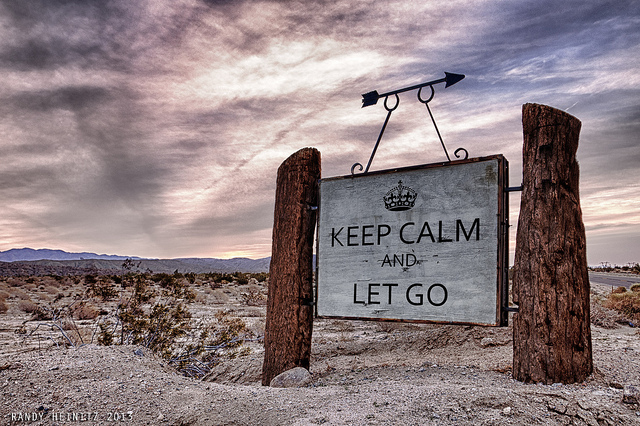
    Keep Calm and Let Go

    “Genuine forgiveness does not deny anger but faces it head-on.” ~Alice Duer Miller

    The man who I thought was my soul mate walked out on me fourteen years ago. He immediately remarried a lovely, beautiful woman who was everything I was not.

    I am desperate to fall in love. I’m thirty-eight. I want a baby. I want a relationship. I feel alone.

    A year ago, I fell unexpectedly in love with my photographer. Yes, star-struck romantics, it was just like the movies. Shy, awkward woman gets pictures taken for her brand-building website, and she is completely unraveled by his boyish sweetness and the power of his lens.

    I had never felt so beautiful, so free, so seen, so celebrated. It was a wham-bam-thank-you-mam whirlwind romance. We “hung” out only four times.

    But I had felt the life times between us, even if he didn’t.  And he didn’t. He didn’t choose me. But that didn’t stop me from becoming a crazy woman. Obsessed.

    I cried every other day, made up stories, fantasies. Of course we had shared past lives together. He was my “real” soul mate.

    Even if my mind was making up the stories, my body remembered. Why else would I be so upset? I felt like I was dying, my heart was being squeezed into blackness, and all I could do to get past the tears was scream.

    I had many, many moments that looked like this:

    Imagine me, on my bed, with a box of tissues, crying from the pit of my soul. Snot coming out my nose and spit out my mouth, all dripping into a sticky pool on my bed. I’m angrily screaming out and yelling “Why?!? Haven’t I suffered enough pain? I’ve done what I thought was right. I’ve prayed. Meditated. Done good deeds. Challenged myself. Don’t I deserve love? The man I want? What can I do differently? What is wrong with me? Why am I not blessed? What do I have to DO-O-O-O-O-O-O-O?!”

    Not a pretty scene.

    It was gut-wrenchingly painful being in that victim hell realm. I had to get out. But how?

    How do you get out of your own way? How do you survive when you are drowning in a pit of dreadful dark emotions and thoughts? All I could think about was that penetrating question, “Universe, what do I have to do??

    Do? What do I have to do, right? Because obviously, I did something wrong or didn’t do something right to win his love.

    In this two-lettered word, do, I realized everything. It wasn’t about doing. It was about surrendering, letting go, and trusting in the organic flow of life.

    Not easy.

    I constantly forget this, and the universe kindly reminded me of my sticky attachments to the external, yet again. Then, to make matters worse, that little voice crept up and said in its annoying voice, “You need to look inside for love, not on the outside.”

    Who’s heard that before?

    And I say back defiantly, “Easy for you to say. I’m only human. I’m not an enlightened being. I want love, damn-it. Love!”

    Then, I stopped. I took a breath, dropped into my body, and surrendered. And then surrendered some more.

    Finally, I said to myself, “It’s okay to want love. It makes me a loving human being. It’s even okay that I became a crazed, angry woman, mad at the world, making up fantastical, delusional stories. It happens. But, mainly it’s okay because deep, deep down inside myself there was a lie I was telling myself.

    (Breathe)

    I was telling myself that it was my fault for being so unlovable, so broken that these men didn’t choose me. And of course, I know that’s not true.

    At first, I felt like an idiot. Geez, not the stupid loathing-lack-of self-love-thing again. But then I remembered to give myself empathy. I forgave myself for my lie because I know that many of us on this planet have the same one.

    That is what makes us human.

    Self-acceptance, forgiveness, and self-love washed over me. And I felt a little bit better, lighter. I felt like I was thrown a divine rope to pull me out of that pit of despair.

    I went through this routine about 100 more times, until one day, months later, I felt normal, clearer, and joy eventually snuck in again. I haven’t met Mr. Right yet, but I’m hopeful. I’m more grounded, more open, more trusting, and less attached.

    And when I start to feel the chatter of my mind and those icky feelings bubble up again, I remind myself of what I learned months before. There is a universal process of forgiving and letting go. We each have our own way of describing it, but mine goes something like this.

    1. Acknowledge what you are feeling, your anger, your sadness, and your pain.

    2. Release it. Express it (safely, away from blunt objects, and in the comforts of your home). Don’t hold it in your body to fester and turn into disease!

    3. Ask yourself the tough questions, and answer truthfully until you get to the very bottom of your pit of despair. There, you will find the treasure: the lie you have been telling yourself.

    4. Be gentle. Accept your lie. Forgive yourself for telling it.

    5. Lovingly let it go and rewrite your story. For me, it was: “I’m not unlovable. I’m lovable, and love will come to me in its perfect timing! Yahooo!”

    6. Finally, chuckle at the absurdity of it all, and remind someone else of this human process of death, rebirth, and growth through your own sharing, storytelling, and your art.

    Breathe. Breathe. Breathe. And smile.

    Photo by Randy Heinitz

  • Develop Self-Confidence: 7 Lies You Need to Stop Telling Yourself

    Develop Self-Confidence: 7 Lies You Need to Stop Telling Yourself

    “Be honest with yourself, and you will find the motivation to do what you advise others to do.” ~Vince Poscente

    What if you could only tell—and more importantly, only believe—the truth? Not the half-truth, the white lies, or the other grey in between, but the pure, beautiful, and unadulterated truth.

    If I had to pick one super power, it would be to know the liars from the truth-tellers. I would walk around in public places, eavesdrop on conversations, and know immediately if someone is lying or being honest.

    I would go to social events and exercise my super power by posing my burning questions to friends and strangers alike. I would sit in the courtrooms of the world, and know instantly if the victim is lying or telling the truth. How fascinating, how disconcerting, how shocking it would all be!

    Most of all, though, I would use my super power to listen to the voices that I hear in my own head, from the loud inner critic, the large ego full of opinions, and the years of social conditioning and upbringing; and I would be able to tell, without a shadow of a doubt, the lies from the truths. Oh yes!

    I grew up in Tehran, and witnessed not only the horrible 1979 Iranian revolution but also the terrible war that ensued between Iran and Iraq. Even though I was very small, I remember the horror, the bombings, the sirens, and the oppression.

    Mostly, I remember the way our teachers would brainwash our small little minds and fill it with the new regime’s lies. I remember that our families needed to play it safe while still helping us draw some faint distinction between those lies and the truth.

    I moved to America when I was 15 years old, and today, even though I know the difference between a lie and the beautiful truth, some days the inner critic returns and insists on the lie.

    But I don’t think I am alone. We tell ourselves lies, half-truths, and anything but the pure truth every day.

    We are paying for them, you know? They create new doubts in our mind and new fears out of thin air. (more…)