Tag: liar

  • If You Want To Know Love, Stop Lying

    If You Want To Know Love, Stop Lying

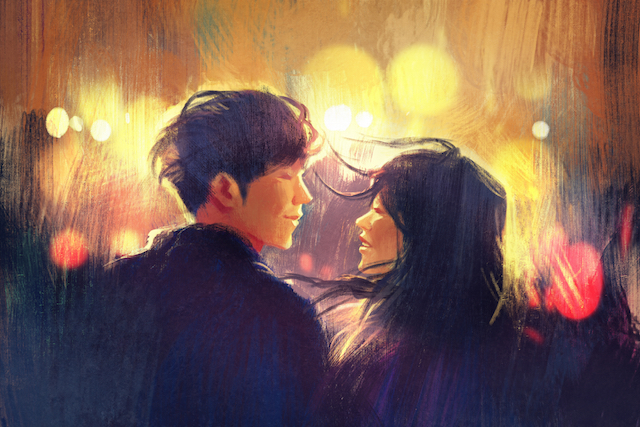
    young couple in love outdoor,illustration,digital painting

    “Lies may make people feel better, but they do not help them to know love.” ~Bell Hooks

    I was once a liar. I didn’t know I was a liar at the time. I didn’t consciously tell an untruth. Instead, my entire being did.

    Lying isn’t just something that is done with words. We can lie with our actions. We can lie with our silence. We can lie with our complicity. We can lie by pretending to be who we aren’t.

    I was the lie.

    I played dress up for most of my life. It didn’t happen all at once. I didn’t walk into someone else’s closet and come out with a new wardrobe. It happened slowly, over time.

    Each time I said or did something that didn’t get approval from the world around me, I chose to pull a garment from the imaginary closet of people who are lovable. By the time I was twenty, my true self was so far hidden that even I didn’t know where she was.

    It first began by disappearing. I felt rejected by my peers in grade school. It felt like so much work to be liked and popular. So I decided to give up trying. But instead of just being myself, I decided to hide away. Being unnoticed seemed easier than being seen for who I was.

    College was my opportunity to reinvent myself. But when I got there I found out I couldn’t force myself into being outgoing or easily likable. So I turned awkward. I was hyper self-conscious that I was not being myself, but I didn’t know how to let myself just be. So my body got stiff, my movements fidgety, and my voice uncertain.

    I began to watch other people and would, in the slightest ways, begin to mimic them. I’d adopt someone’s laugh, another person’s style, and someone else’s slang. This mishmash of what I thought it meant to be likable only kept me further away from the truth of who I really was.

    I had friends, but no one really knew me. I was lost and lying about who I was. I pretended like I had it all figured out because admitting that I was clueless would mean my world would come crashing down.

    When we build identities for ourselves we can’t risk allowing them to crumble. So we lie. We create more masks to wear and keep ourselves further from the truth. Our egos know that if one brick loosens, everything we’ve worked so hard for will be ruined.

    When we choose to deny who we truly are, we are lying. Lying is a choice, one that deeply harms ourselves and oftentimes, those around us. And even though it is a choice, it’s one that is very easy to hide from. In our search for love we will do almost anything to attain our goal even if it means denying ourselves the truth.

    The irony, though, is that love itself is impossible without honesty. If you find yourself desperate to know what love really is, take a deep breath and look at how honest you are about you.

    Do you really know yourself? Do you share who you are with the world? Are you overly concerned with what other people think about you? Will you change yourself to be accepted by others? These are all great questions to help you recognize how comfortable you are with your true self.

    Uncovering yourself is part of the path. It’s okay to share with people that you don’t know. That you’re confused. That you’re lost. That you feel pain. That you’re in the process of getting to know yourself.

    You don’t have to use all your energy to put on the facade that you’ve got it all figured out. It’s okay to not have it all together. When you begin to open up and communicate with others about who you truly are, you begin the opportunity to discover what love is.

    The people who open their hearts to you will create a beautiful container for love to grow. Those who are triggered by who you are will move their own way. Let them go. Stay connected to your truth and keep sharing with the people in your life.

    As I began to test the waters in my friendships I started to open up about my feelings of shame and guilt.

    I have one memory of sitting at the kitchen table with a girlfriend and telling her something I had never told anyone. I could feel the space opening between us as she acknowledged my feelings and matched them with her own experiences of similar feelings.

    Sharing ourselves allows us to know love. Love makes us feel safe and wanted. It makes us feel connected and like we belong.

    We often lie when we’re afraid of the truth. When we lie about who we are, we tend to be afraid that who we are isn’t lovable. If we show our true selves and we aren’t loved and accepted, we don’t know how we’ll recover.

    We recover by loving ourselves. But you can’t love yourself if you don’t know who you are. You can’t love yourself if you’re using all your energy to put on an act for everyone else. And other people can’t love you when they don’t know who you are.

    So if you want to know love, show yourself. Take off the mask. Let go of all the energy it takes to be someone else and use it to discover who it is you truly are. Love that person up and watch as the world loves you back.
  • Lessons from a Former Liar: The Power of Owning Our Stories

    Lessons from a Former Liar: The Power of Owning Our Stories

    Standing in the Sun

    “I now see how owning our story and loving ourselves through that process is the bravest thing that we will ever do.” ~Brené Brown

    I don’t know about you, but I used to lie. I used to lie a lot. I remember one particular instance when I lied about being a passenger in a drive-by.

    I lied about my age, my weight, and the reason for the injuries on my body. Sure, I’d just bruised myself by walking into a table, but it made a much more seductive story if I told people that I’d fallen from the rooftop of a friend’s house and lived to tell the tale.

    I reached the peak of lying around the age of 12, which was when I kept the infamous drive-by tale in circulation. At that point, everything that came out of my mouth was a complete fabrication and not a well-crafted one. After all, I was in grade seven and I didn’t really shoot people, nor did I know anyone who did, nor would I have known where to find them.

    At that point, it was easy to keep lying because, after all, I had no friends. When you have no friends, you can lie about anything and everything. No one holds you accountable, because no one really knows anything about you.

    When you have friends, you can’t really go around telling people that you were in a drive-by last Thursday. Your friend will call your bluff because, after all, you can’t be in a drive-by while having a cup of tea a few blocks away.

    So, I got some friends and the preposterous-factor in my tales decreased. Still, I continued to exaggerate. I would say five when it was really two. I would say “everyone” when it was really just my mom. I would say it happened to me when it really happened on television.

    When I was in acting school, I did some extra work for Degrassi. That’s when you get paid exactly minimum wage to sit in a room for ten hours and spend about an hour of that, off and on, walking around behind real actors who had speaking parts. Then, they blur you out. It wasn’t the worst job, but it certainly was not a major, regular part on a national television show.

    The most interesting thing I detect, looking back on my blatant and not-so-blatant lies, was that I selected them by the emotions that they produced. Like a farmer picking her crop, I picked my stories by how well I thought they’d do in the market.

    Every story I ever told would get one of three responses: “That is such a lie!”, nothing (which I assume now is a stand-in for “That is such a lie!”), and open-mouthed, wide-eyed shock and pity. The latter, I lived for.

    I wasn’t sure why I wanted it so badly, but I did. I wanted it, needed it, craved it. I was like a moth to the flame of attention and everyone knew it. Yes, I was that girl, the one none of us want to be.

    Recovering from my cluelessness was largely correlated to my forming close relationships with other human beings. The closer I got, the less I had to lie. These people, it seemed, liked me for just who I was and not this fabricated, nonsensical version of myself.

    At some point, I got the courage to tell my story. My real story. The one with no drive-bys and no star television appearances. It was the real-live tale of what I’d been through.

    I still remember the open-mouthed, wide-eyed shock and pity.

    Then, I felt a combination of ravenous embarrassment and gleeful hope. Oh, I thought, this is much easier than keeping up with all those story lines. 

    Looking back on my past, it was difficult, at first, not to judge that girl I used to be.

    I would cringe thinking about how obvious my lies were and how horribly desperate I was for attention. That is, until I realized that I was hungry for something that we’re all hungry for—that feeling of being seen, really seen, and accepted.

    The more I’ve told my story and the more I’ve helped others tell their stories, the more I’ve realized that the girl I used to be isn’t just an embarrassing part of my life that I can sweep under the carpet.

    That sort of desperate hunger for love and acceptance runs silently and rampantly through our society destroying our courage and our relationships with one another.

    If we’re ever going to be happy, we’ve got to come back to the truth about ourselves. That journey starts individually. It starts with accepting and sharing those parts of the human condition that we all know about, but we’re too afraid to share.

    Those parts of our past that make us cringe are, paradoxically, the very parts of ourselves that we should be showing to people.

    When I first set out to be an author, I tried to write about things in a distant, authoritative sort of tone. Here’s a top ten list of how you can be more authentic, I’d say.

    At the end of the day, no one really wanted to read that. However, everyone wanted to hear the open-hearted, vulnerable pieces of my soul. Everyone wanted to see the courage that it takes to be true, honest, and authentic, because it gives them that courage as well.

    If you’re struggling for authenticity, struggling to live a completely honest existence, I’ll share with you a secret: it gets easier.

    It gets easier not just because of practice, but because the willingness to go out there and be yourself in a world that is constantly shoving into your face ready-made formulas for how to be someone else, that inspires people.

    And, if there’s one thing I’ve learned from my experiences as both a pathological liar and a completely authentic human being, it’s this: inspiring people is much more worthwhile than shocking them.

    Photo by Matthias