Tag: lessons

  • A Letter to a Kindergartener: 7 Lessons for a Life Well-Lived

    A Letter to a Kindergartener: 7 Lessons for a Life Well-Lived

    Happy Child

    “Great is the human who has not lost his childlike heart.” ~Mencius

    I have an amazing sister who is currently in kindergarten. I wrote her a letter summarizing everything I’d like her to know as she goes through life. It occurred to me that these lessons are things we could all stand to remember, so I’ve decided to share it here.

    Dear Natasha,

    Times are hectic now. It won’t be long until I leave home and move to a magical place we seniors call “college.”

    I have one semester left to learn from amazing teachers, one season left to wrestle and lift my heart out, and one chance left to live a high school life. It’s safe to say that I’m pretty sentimental right now.

    I’m about to leave the system that you’re just entering. By the time you read this letter, you will not know me as a grade school student. Before I miss this opportunity, I’m going to share with you some brotherly advice as a non-adult.

    1. Maintain a childlike imagination.

    When I was your age, I would make living room forts out of blankets and couches. I was an unsung hero fighting bad guys that didn’t exist. Imagination was my world, as it is for most of us as kids, but we naturally lose our imagination when we get older.

    Imagination is the key ingredient to creativity, innovation, and making dreams come true. With imagination, educators can develop more inspiring teaching methods. With imagination, physicists can come up with a world-changing theory. With imagination, authors can write classic novels. The world needs imaginative people. Even Einstein stressed imagination over knowledge.

    Schools tend to underemphasize creativity. Whatever you do—whether music, art, or poetry—find a creative outlet and don’t let go of it. Challenge reality. Change it. Create it. Write your story and share it with the world.

     2. Try new things.

    Every time you try something new, you broaden your horizons. At the age of five, that might mean eating something other than macaroni and cheese. However, as you grow up, you’ll have countless opportunities to try new things. Sports. Hangouts. Musical instruments. The list goes on.

    If you go out and experiment with many new experiences, I can promise that you will find something surprising that you’ll love. Even if you don’t like new experiences, trying new things will help you grow as a person.

    People naturally fear the unknown. That’s a silly fear if you ask me. Imagine a world without new experiences. Life would be drab and without risks. Exploring and discovering yourself is an exhilarating part of life, and I hope that you will grow up with many interests and passions.

    3. Write down your goals and dreams.

    Writing your goals will motivate you, focus your mind, keep you accountable, and arm you with purpose. Pick up a pen. Find something to write on. Tape it somewhere you visit every day. My hope is that, when looking at your written goals, you will recognize that you are in control.

    Goals are important because they help accomplish dreams, and dreams are important because they influence action. At the start of every big human accomplishment is a dream that has yet to happen.

    The Wright Brothers did not have government funding or a ton of cash, but they did not let that stop them. They financed themselves with a humble bicycle shop and became the first humans to accomplish flight. It all started with imagination, an inspiring dream, and well-planned goals.

    Whatever your dreams may be, I hope you set goals and have the initiative to pursue them. A lot of people are capable of doing great things. Some people dream of doing so. Not many people set the goals to do so.

    4. Make things happen.

    There is nothing wrong with living an ordinary life, but I see a lot of people with big dreams that never happen because they do not take the initiative to make things happen.

    True dreamers are those who make their own opportunities, pave their own paths, and follow through with sheer fervor. If you ever get stuck without knowing what to do, look for places to start. Life favors those who live actively. Bottom line, if you ever want to do something, go do it.

    5. Don’t stop at failure.

    Failure does not happen when you fall down. Failure happens when you refuse to get up. Life is full of obstacles both big and small, and everyone has experienced these difficulties before.

    Stephen Hawking was diagnosed with ALS and given only two years to live; yet he persevered to become one of the greatest theoretical physicists in history.

    Martin Luther King Jr. managed to love the very people who hated him.

    Helen Keller, despite her blindness and deafness, managed to change the world with her activism.

    Whatever hurdles you face, realize that you are greater than your obstacles.

    6. Time is more valuable than money.

    Money is not the key to happiness. It’s replaceable and unfulfilling. If you’re a materialist, you likely won’t feel grateful or happy because you’ll always want more.

    Unlike money, you can’t replace time when it’s gone. Once you spend it, time exists only as a memory. Use your time well. Do things that matter to you, things that are priceless. Create unforgettable memories. Time is your life; money is not.

    7. Be yourself. Have fun. Do what you love.

    I think I have a good formula for a happy life: make the most out of my college life and education, become an engineer, write a book, pay for a stranger’s groceries, continue aging my cheese, take my future family out for some gelato at Wisconsin Dells, and do something great for society.

    I won’t measure my life’s success by wealth and social status; rather, I’ll measure myself by happiness.

    I hope you approach life with a similar attitude. Explore your surroundings. Make some meaningful friends. Live your own life. Everyone is born with different traits, tastes, and skills. It is up to you to find out what makes you happy.

    As meaningful as I take my brotherly advice to be, I’m just one person with a strong opinion. I can’t explain everything. No one can. It’s up to you to search for answers and define yourself.

    Your awesome brother,

    Kevin

    Happy child image via Shutterstock

  • 10 Things Everyone Should Learn as a Kid

    10 Things Everyone Should Learn as a Kid

    Smiling Kid

    “There are only two lasting bequests we can hope to give our children. One of these is roots, the other wings.” ~Johann Wolfang von Goethe

    In 2010 two major life events marked my life forever: my father lost his battle with melanoma and I become a mother.

    Both events came unexpectedly. My father was only fifty-six years old and had never been sick for one day of his entire life. Also, I had other plans at the time, focusing heavily on my career, so I did not want to have a baby just yet.

    But life is what actually happens to us while we are making all those plans. I remember being six months pregnant at my dad’s funeral, and my baby did not move at all throughout the entire day. It’s like she wanted to stay quiet so that she would allow me to focus on my grief.

    In 2010 I lost someone I loved and then I gained someone else. Here I am now, four years later, enjoying my life as a mother, simply adoring my daughter and being very clear about all the things I want her to know. And still, so desperately, missing my father.

    This is my list. I could add another 100 things, of course, but I learned to keep things simple. And really meaningful. So here it is:

    1. Cherish every moment you spend with your loved ones, and don’t take them for granted.

    To say “I’m sorry” or “I love you” to a picture on a grave is the most painful experience ever. Be careful to not get there.

    2. Sometimes, your only available transportation will be a giant leap of faith.

    Take a deep breath and take that leap.

    3. Other times you’ll be afraid of failure.

    It’s okay, we all are. Just go for it. You’ll either succeed or you won’t. Either way, you’ll not live with the regret of never trying.

    4. Do more of those things you enjoy doing.

    Explore as many activities as you can. Finding your passion is not a myth, but it is surely not as easy as it sounds, so be open and curious. Experiment. Learn.

    5. Embrace challenges.

    And don’t be afraid of change. Look for opportunities all around you.

    6. Happiness is a right you give yourself.

    Be happy with who you are. Accept yourself, have patience with yourself, and love yourself unconditionally.

    7. What you see in the movies about love is not all the truth.

    Love is not only about passion and romance. It is also about doing the dishes together after a Christmas family dinner and then falling asleep exhausted in each other’s arms.

    8. Nobody is perfect.

    So don’t look for the perfect person. Just look for the flawed one who still makes your heart sing.

    9. Be present.

    Go only to those events or meetings  you actually want to attend. Saying no will not hurt other as much as you’d think. They will get over it. What you can’t do is recover a lost moment of time.

    10. Don’t settle.

    If you are not satisfied with one result, take action, go deeper, or try a new approach. Don’t do anything only because “you have to” or because others expect that of you.

    You can’t avoid pain; it comes with life. The only thing you can control is how you react to it. This is one of the most important life lessons I learned back in 2010. I will never forget my father. And I will continue to teach the lessons above to my daughter for as long as I live.

    Smiling boy image via Shutterstock

  • Rethinking Mistakes and Recognizing the Good in “Bad” Choices

    Rethinking Mistakes and Recognizing the Good in “Bad” Choices

    Thinking Woman

    “Sometimes the wrong choices bring us to the right places.” ~Unknown

    For most of my life, I’ve seen the world in black and white, and I’ve felt constricted and pained as a result.

    When I was a young girl, I believed there were good people and bad people, and I believed I was bad.

    When I was an adolescent, I believed there was good food and bad food, and because everything tasty fell into the latter category, I channeled the shame from feeling bad into bulimia.

    And when I grew into adulthood, I believed there were good decisions and bad decisions, which may sound like a healthy belief system, but this created extreme anxiety about the potential to make the “wrong” choice.

    When you see life as a giant chess game, with the possibility of winning or losing, it’s easy to get caught up in your head, analyzing, strategizing, and putting all your energy into coming out victorious.

    Back then, I thought for sure that if I made a misstep, I’d end up unhappy and unfulfilled, not to mention unworthy and unlovable—because there was a right path and a wrong path, and it was disgraceful to not know the difference.

    One pointed toward success and bliss (which I desperately wanted to follow), and one led to certain doom.

    With this in mind, I thought long and hard before moving to Spokane, Washington, at twenty-two. To live with a stranger I’d met on the Internet. And had only known for two months and met in person once.

    Okay, so I didn’t really think long and hard. But I felt in my gut, when we first connected, that this was the right choice for me.

    In fact, I felt certain, something I rarely felt about anything (except my innate bad-ness).

    He told me we were soul mates, which was exactly what I wanted to hear, especially after spending six months bouncing from hospital to hospital, trying find the worth and substance locked somewhere within my cage of bones.

    It made sense to me that, if I had a soul mate, he wouldn’t live right next door.

    Disney may tell us it’s a small world, but it’s not; and I thought for sure there was something big awaiting me 3,000 miles from my hometown near Boston.

    People told me I was making a mistake when I shared the details of my plan.

    Some said I was too fragile to move out of my parents’ house, even if I’d planned to move close to home.

    Some said I was a fool to think this man was my soul mate, or that I had one at all.

    Some said I’d one day regret this choice and that they’d have to say “I told you so.”

    But I felt absolutely confident in my decision—until he came to Massachusetts, two weeks before I was scheduled to move, to meet me for the first time.

    I knew right then it was wrong, somewhere in my gut. I didn’t feel even the slightest spark, but my “soul mate” and I had already planned a new life together. Before we’d even met.

    And I didn’t want to admit I’d made the wrong choice—not to him, who I was sure would be devastated, and not to the others, who I feared would be smug and self-righteous.

    So I moved across the country anyway, thinking that maybe I’d feel differently after getting to know him better.

    If you’ve ever seen a movie, you know exactly how things didn’t pan out. Since life isn’t a romantic comedy, I didn’t eventually realize he was my soul mate and fall madly in love.

    Instead, our individual demons battled with each other, we fought for the better part of six months, and we eventually broke each other’s spirits, broke down, and then broke up.

    You could say, after reading this, that I had made the wrong choice—especially knowing that I knew, the day I met him, that he wasn’t the man for me.

    You could say I’d chosen a bad path, running away from home in a misguided attempt to outrun who I had been.

    These are things I assumed I’d think if I ever decided it was time to leave.

    And yet I didn’t think these things at all. In fact, this was the very first time I broadened my vision to see not just shades of grey, but a whole rainbow of vibrant colors.

    Yes, I’d made an impulsive choice, largely driven by fear and fantasy. Yes, I’d acted against my instincts. And yet I knew, beyond a shadow of a doubt, that it had not been the “wrong” choice.

    Because right then, I realized that, despite things not working out as I planned, I’d learned and grown through the experience, and it had served a purpose, even if not the one I originally envisioned.

    Our demons colliding was a blessing, not a curse, because it forced us both to more closely examine how our issues affected our relationships—mine being toxic shame and destructive tendencies, and his being his business, and not for public consumption.

    Moving so far away was valuable, not shameful, because it taught me the difference between running away from what I didn’t want and running toward what I did—a lesson I struggled to apply for many more years, but, nonetheless, now understood.

    And acting against my instinct was a good thing, not a bad thing, because it taught me to listen to my intuition in the future, even if I might disappoint someone else—a lesson I may never have fully embraced without having had this experience.

    That’s the thing about “wrong” choices; they usually teach us things we need to know to make the right choices for ourselves going forward, things we can only learn in this way.

    Notice that I wrote “the right choices for ourselves”—not the “right choices.” Because the thing is, there are no right choices.

    There isn’t one single way that we should live our lives, or else we’ll be unhappy. There isn’t one path that will lead us to success, bliss, and fulfillment.

    There isn’t a straight ladder we’re meant to climb, hitting milestone after milestone until we emerge at the top, victorious, with the view to show for it.

    There’s just a long, winding road of possibilities, each with lessons contained within it—lessons that can help us heal the broken parts of ourselves and find beautiful pieces we never knew existed. Pieces we couldn’t know existed until we made choices and saw how we felt.

    If there’s one thing I’ve learned since that very first move, over a decade ago, it’s that life never offers any guarantees. And it can also be incredibly ironic.

    Sometimes the people who seem to make all the right choices are the least happy with the people they’re being and the lives they’re leading.

    We could spend our whole lives looking for external validation that we’re following a path that’s “good”—living in a narrow, black-and-white world, feeling terrified of making mistakes.

    Or, we could commit to finding something good in every step along the way, knowing that the only real mistake is the choice not to grow.

    I don’t know if this is right for everyone. But I know this is right for me.

    On this Technicolor journey of unknown destination, I am not good nor bad, not right nor wrong, but most importantly, not restricted. In this world of infinite possibility, at all turns, I am free.

    Thinking woman image via Shutterstock
  • Releasing the Need for Certainty and Trusting Our Decisions

    Releasing the Need for Certainty and Trusting Our Decisions

    Peaceful Woman

    If you worry about what might be, and wonder what might have been, you will ignore what is.” ~Unknown

    If you’re like me, you’re hard on yourself—and I mean hard.

    You analyze your decisions and try to somehow calculate the results of your actions to feel a sense of certainty. Little did you know that searching for the certainty causes all of your insides to do flips and only causes more uneasiness.

    What I always wonder is where did the need to know come from? I remember being a free spirit with no worries as a child (as I’m sure most of us were—the beauty of naivety), but never did I have the need to just know first so I could be happy second.

    Where does this need to know come from? 

    I’ve recently been reading a few books by Don Miguel Ruiz, the most current being The Voice of Knowledge.

    A chapter in the book talks about our personal stories we have in our heads—the truths we tell ourselves based on our past experiences and overall beliefs about ourselves. We all have them, and we all utilize them to interpret the world in our own way. 

    These stories have become so ingrained within us that we almost don’t notice we’re still holding onto the things that no longer serve us.

    They teach us “because this happened in the past, this will happen again.” Even though the situation could be entirely different, we hold on to these “truths” for some surefire way to predict an outcome before we even know what it will be.

    We no longer trust ourselves to make the right choice because we want the certainty that it will work out the way we want it to, so we can avoid any hurt or disappointment. I’ve learned that this is actually the quickest way to disappointment, hurt, and unhappiness.

    We put so much of our energy and tie so much of our happiness into the outcome of this one decision, and we then beat ourselves up when it doesn’t turn out “right.”

    I’ve been there many times before, and I have to say, it’s still a work in progress toward fully understanding this concept and practicing its lessons. This has been most apparent as it pertains to my relationships.

    For a long time I was torn from a past relationship. I analyzed every bit of it until I had no clue what I was looking at. (Haven’t we all been there?) I closed myself off in fear because a part of me wanted to avoid making a wrong decision and ending up in a similar predicament where I had allowed myself to be hurt.

    Now that I’ve moved on, I’ve found that at times I still carry that fear of uncertainty with me, the fear that trusting myself isn’t enough to know what is right. And that is why I say I’m still a work in progress. I’ve had to learn to let go of these “truths” and stories in order to see things fresh.

    Realizations don’t always lead to immediate changes, but recognizing is the first step.

    I’ve gone a little bit easier on myself over time, but I’ve tried to remember that happiness doesn’t come from knowing; it comes from living through what life gives us.

    It can’t be about figuring out some correct equation to all, because one equation can never fit any and every situation.

    At the end of the day, the best thing you can do for yourself is trust in what feels good to your soul, but first open the space within yourself to receiving these feelings. If you close yourself off emotionally and get caught in your head, you won’t know how to feel anymore.

    So as a reminder to me and as a reminder to you, go easy on yourself. Respect the space within you that desires the freedom to live, without the need to know right at this moment.

    There is never a true state of knowing because we are constantly learning; there is just a state of trusting and accepting the choices we make and knowing every outcome is a lesson—even if we’re still opening ourselves to receive it.

    Photo by Giuseppe Chirico

  • Life Lessons on What Really Matters from a Dying Man

    Life Lessons on What Really Matters from a Dying Man

    All We Need Is Love

    “Live as if you were to die tomorrow. Learn as if you were to live forever.” ~Mahatma Gandhi

    You know how you can remember exactly when you found out that Michael Jackson died? I think it’s called flashbulb memory. It’s when something traumatic happens and because of that, you remember everything else that was occurring at the time. I was on a bus in Santorini after watching an amazing sunset in Oia.

    The day I found out my boyfriend was dying was just like that, but worse. I remember everything.

    Let me digress.

    We spent the week leading up to the surgery that was his last chance at life at Vancouver General Hospital, where we passed the days planning our casual beach wedding in Tulum.

    We pictured it down to the last very last detail. I would walk down the aisle (barefoot of course) to Bob Marley’s “Turn Your Lights Down Low” and a mariachi band would serenade us at dinner. It gave him hope and something positive to think about when the pangs of hunger threatened his usually calm demeanor.

    They made him fast for days as we waited for a surgery room to finally open.

    According to the doctors, the likelihood of him surviving the surgery was only 50%. We savored each moment as best we could, enjoying each other’s company and focusing on love.

    When the nurse came to tell us it was time, I was taking a very rare moment in the hospital cafeteria, as I didn’t want to eat in front of him. I rushed up the elevator and made just in time to accompany him downstairs.

    It was one of the only times I cried in front of him. I didn’t know if I should say goodbye, just in case.

    I looked into his brave eyes. I told him I loved him. I held his hand until I was no longer allowed. The doctor told me not to cry.

    I made my way to the family room where my best friend and our families waited. I felt loved. And scared to death. I remember thinking that this is what it means when they say “blood curdling fear.” I got it and I thought it was fascinating.

    The surgery was supposed to take about five hours, so my best friend took me to my dad’s hotel so I could take shower and a break. I lasted about fifteen minutes before I needed to go back.

    That’s the way it was in those days. Every cell in my entire being simply needed to be there. When I returned, I noticed a bridal magazine in waiting room. I flipped through and found my most beautiful dream dress. I hoped it was a good omen.

    Two hours later, the doctor came in. He looked defeated. I could barely stand up.

    He sat down and with a tremendous amount of compassion (and tears in his eyes), he told me that they had found Benito’s liver completely covered in tumors and therefore a resection or transplant was not possible.

    I remember the moment when courage and fear collided. I asked, “Is he gonna die?”

    And, I remember the doctor’s answer, “We’ve done a bit to make him more comfortable, but there is nothing else we can do.”

    I curled up into a tiny ball on the hospital chair with my head between my legs and sobbed.

    The doctor assigned me the task of telling Benito. He said it would be better coming from me.

    I remember sitting in the corridor holding his mom’s hand. Waiting. Doctors rushed passed with patients on stretchers. I thought of my mom. At the time, she was MIA in Costa Rica. She didn’t even know he was sick. I didn’t even know she was alive. I wanted her to hold me.

    When I saw him, lying there like a helpless child covered in tubes, my breath escaped me for a moment. But I told myself to stay calm. This next part was about him. It was all about him.

    He was groggy from the anesthesia, but he looked at me. With jolt of last minute courage, I put my hand on his boney shoulder and I told him everything. He was too high to really get it.

    He went in and out of consciousness. Each time he woke up, he asked in almost a joking way, “Am I dying? Am I really dying?” I retold the story, barely holding it together. He told jokes. One time, much to the nurse’s amusement, he even belted out an AC/DC tune while attempting a feeble air guitar. He was awesome.

    But two things he said that day, while moving in and out of drug-induced sleep, have shaped my life forever. The first was, “If I only I had ten more years, just think of all the good I could do.” And the second was, “I feel sorry for you.”

    I was shocked, so I asked him why. He said, “Because your boyfriend is dying. We were supposed to get married and adopt babies from Peru” followed by a joke of course, just to cheer me up.

    He said, “Now don’t go dating any of my friends while I’m gone. You’re hot and I know them. They’re gonna try.” Like I said, awesome.

    I think of these two things often in my life—that compassion for others and that strong drive to make a difference in the world.

    Turns out, when a thirty-one-year old party-boy finds out he’s dying, compassion for others and making a difference is the driving force. And, making the entire recovery room laugh of course.

    This is a lesson I’ll never forget. I got my ten more years. And perhaps you will too.

    What can you do today that will make a difference?

    How can you have more compassion for others?

    How can you bring in laughter?

    Perhaps this is what it’s all about.

    Photo by Bethauthau

  • Kid President’s Letter to a Person on Their First Day Being Alive

    Kid President’s Letter to a Person on Their First Day Being Alive

    It’s hard to be a person sometimes. That’s where Soul Pancake’s Kid President comes in. In this short video, he lays it all out–everything we need to know to be an awesome person. No matter how far is from your first day on Earth, this is one worth watching!

  • How Relationship Issues Can Lead to Growth (and Why It’s a Daily Process)

    How Relationship Issues Can Lead to Growth (and Why It’s a Daily Process)

    “When something bad happens you have three choices. You can let it define you, let it destroy you, or you can let it strengthen you.” ~Unknown

    Relationships are tough. Even more difficult is maintaining healthy boundaries within a relationship.

    My head hurts and I feel like I’m going to throw up. Let me explain. I’m in a loving, healthy relationship with a beautiful woman, and I’m proud to call her my partner.

    Great, so why do I feel like I want to throw up? Well, because last night was a tough night for us, for me, and today I have an emotional hangover.

    Here’s the breakdown. She was going to her girlfriend’s house for dinner and girl time. Great. I was home cooking myself dinner and doing a little reading and television viewing. Great again.

    I sent her a text at 9:40 asking if she was having a good time. No response. Okay, no worries. An hour and a half later, worries—a head full of them.

    Is she okay? Why no reply? Did I do something wrong?

    She always replies to my texts. Always. So why not now?

    Good question.

    A healthy response would’ve been to tell myself she’s having a great time and will call when she’s on her way home. I didn’t have a healthy response.

    I leaked. Leaked all over the place. Leaked as in my boundaries were nowhere to be found, and hence what should have been kept in my head instead leaked all over our relationship.

    I texted a pissy good night text saying I was going to bed and hoped she was having fun. Tough to tell tone via text, but anyone could have seen that I was pissy. 

    A leak = poor containment. I wasn’t containing.

    She replied!

    She said she was having a blast and that I was entitled to be upset. Not good enough. By now I was shaking.

    Containment breach! Containment breach! We have leak in the dam.

    I couldn’t stop. I texted her saying her behavior was anything but normal. That she always texted me back.

    This didn’t help. Stop Zach! I couldn’t.

    The scared, wounded little kid had his hands on the steering wheel. He was in charge, not me.

    I called her. Told her how she had hurt me, that her lack of communication triggered my abandonment issues.

    I blamed her for my own stuff. Great boyfriend I am. Actually, I am a good boyfriend; I just had a tough night.

    My lack of containment led to my leaking all over the place, all over her. Bad boundaries, it happens to the best of us.

    Here’s the growth. Yes growth. There’s growth all over this and I’m thankful for the opportunity.

    Today I can own my part, which was assuming, taking things personally, lack of containment, and blaming. My breach of containment led to all of this. There’s growth because I can see my part, learn, and make amends.

    There’s growth because although I have an emotional hangover, I know in my heart that the relationship is not over. In years past I would have shut down and never recovered from something like this. Not the case today.

    As my therapist told me (yes, I texted him about this), we have to make mistakes to learn and grow.

    Sometimes containment means holding back our own crazy and being the functional adult who can move beyond it. Other times we leak looking for the other person to be responsible for us. It’s about practice and progress, not perfection.

    Relationships are tough, but I’d rather say relationships are rewarding if we’re willing to look at our part and do the work. It’s a daily practice. And not just with a significant other.

    I’m talking about relationships in all areas of our lives: work relationships, sibling relationships., relationships with our parents—all of this and so much more. The biggest for me is relationship with self. I wasn’t taught growing up how to like and love myself.

    I was taught that everything is my fault and that I don’t matter. Makes having a loving relationship with myself tough work. It’s a daily practice, as mentioned.

    If daily is what’s needed, then daily it is. Some days are better than others but still daily, nonetheless.

    I call it re-parenting.

    I call it love.

  • Make Peace with Your Past: Find the Good and Embrace the Lessons

    Make Peace with Your Past: Find the Good and Embrace the Lessons

    “It’s not the events of our lives that shape us but our beliefs as to what those events mean.” ~Tony Robbins

    Daughter of an alcoholic. Welfare recipient. Teenage mother. Non-college attendee. Poor decision maker. Unhealthy relationship participant. Financial disaster. Evictee.

    All of these statements described me. They also propelled me into action, transforming me into an over-achieving perfectionist. Yet they still weighed me down because I felt like I had to constantly prove I was better than my past—better than the circumstances from which I came.

    It took a lot of effort.

    It took a lot of energy.

    It was a burden.

    I gained a lot of knowledge, built a tremendous skill set, and developed expertise. I was successful on the outside, but on the inside I felt like nothing more than a fraud. 

    I avoided events where the question of what college I attended may surface.

    I avoided situations that would put me in the company of highly educated people, for fear that their vocabulary would be beyond my understanding and I would appear stupid.

    I avoided conversations about any topic that I did not feel a level of expertise in discussing.

    I avoided talking about my past and my history.

    Avoidance became a whole new skill set—one that I executed with a level of mastery. At some point I began to realize this game of charades was not in alignment with my core values of honesty and integrity.

    I began to realize that the energy I was putting into creating a false image of myself was taking away my ability to live my life fully and openly.

    I began to realize that in order to move forward, I had to come to terms with my past, to extract the good, to carry forward the lessons learned, but to leave behind the all of the garbage I’d outgrown.

    Good like…

    The kindness and generosity shown by to me strangers, neighbors, family, and friends when I was in the greatest need. The people who cheered me on and believed in me when I did not believe in myself. The few who knew my biggest, darkest secrets and loved me anyway.

    Lessons like…

    Understanding that no matter how much you want something for someone else, the only person you have control over—that you can change—is yourself.

    Accepting the fact that when you blame other people for what is wrong with your life, nothing is ever going to get better.

    Realizing that no matter how bad a situation seems in the moment, someone else is surviving, sometimes even thriving, in much more difficult circumstances.

    And also…

    What you believe about yourself and your limitations will become a self-fulfilling prophecy.

    And, it doesn’t matter how “successful” you seem on the outside if you are miserable on the inside.

    When my perception shifted, so did my life. Today I embrace who I am—all of me—the good, the bad, and the ugly. 

    I am grateful for all of the experiences I’ve encountered.

    I realize that I was judging myself far more harshly that anyone else ever could.

    I let go of the belief that I had to hide from my past.

    I let go of the belief that I was “less than.”

    I let go of the belief that I was not worthy.

    I no longer pretend.

    I share openly and, in claiming my story, it not only helps me but also helps others on their journey. It gives them the courage to share their truth, to stop hiding and start living.

    Recovering perfectionist. Student of life. Woman of strength. Overcomer of obstacles. Seeker of growth. Embracer of truth. These are the descriptors I’ve added to my life story. The rich and messy truth of my past makes possible the true success of my todays.

    What beliefs are you clinging to that are holding you back? Where in your life are you feeling like a fraud? What are the tough and painful lessons that you can be grateful for today when you look through this new lens of perspective?

    Reflect. Journal. Dig deep and find the answers. It’s in this process—in your truth—that you will find true happiness, success, and self-acceptance. It’s where healing begins. It’s where you will find peace.

  • Two Strangers in a Sandbox: Lessons for Life

    Two Strangers in a Sandbox: Lessons for Life

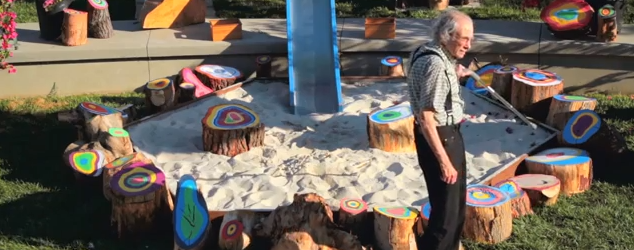
    Soul Pancake, one of my favorite sites, built a sandbox with the sole purpose of connecting strangers and enabling them to share life lessons. Though it certainly makes it more fun, you don’t need a slide to ask yourself: what do you wish you knew as a child?

  • Stop Being Hard on Yourself: 5 Tips for Learning Life Lessons

    Stop Being Hard on Yourself: 5 Tips for Learning Life Lessons

    women sunset landscapes

    “When we can no longer change a situation, we are challenged to change ourselves.” ~Viktor Frankl

    I learned a big lesson this week. It’s been a lingering challenge that has popped up in many ways recently. Mostly it’s presented itself in other people, or rather, in the qualities of other people.

    Over the last few months, I’ve been introduced to quite a few new acquaintances, and I’ve continuously come up against traits that I considered ugly, like arrogance, materialism, insecurity, and ignorance.

    It really riled me up to the point that I felt a physical change in myself.

    I interpreted their taste for expensive things as a sign that they were hiding behind material objects. I interpreted their obvious mask to the world as another hiding mechanism. And what I perceived as stupid life choices I thought were a form of escaping their real selves.

    In essence, I felt that all of these traits were an attempt to cover up their own insecurities, for fear of not being accepted completely for who they are, who they really are.

    Why were these people so…unaware?

    It infuriated me.

    Each time I was triggered by a person with these traits I would think to myself “Not this again. When will I finally be rid of this uncomfortable feeling?”

    Then it hit me. Several times.

    I realized that the traits I noticed in others were just a reflection of myself. The traits that really peeved me off were traits I did not accept within myself.

    I also like to buy nice, expensive things sometimes. There are moments in my life where I wear a mask to not reveal all of myself. And in the past, I made some decisions to avoid what I was really feeling within.

    This was shocking to me because it meant I was passing judgment, not just on the other person but also on myself. It meant that I was not accepting myself fully, completely, wholly.

    And trust me, just accepting that fact was a lot to take in.

    I’ve always thought myself to be a person with confidence and a great belief in myself. But apparently, there were a few more things that I needed to learn about loving and accepting myself.

    No one is perfect. And we need to accept ourselves as we are, flaws and all.

    As we go through life, challenges arise to help us keep growing. We’re human and we have layers. Just when we think we’ve learned something, life comes along and shows us there’s more.

    Here are some tips that have helped me accept and grow with my most recent life lesson.

    1. Don’t beat yourself up.

    No matter how easy it is to say to yourself, “Why can’t you just get over this?” allow yourself the time to learn the lesson at your own pace. Challenges can hit a raw nerve within us. Sometimes we need to take it step by step and nurture ourselves in the process. Be nice and gentle to yourself!

    2. Observe your thoughts and emotions.

    Awareness is the first step in acknowledging any life challenge. How are you responding to a particular event, circumstance, or person? What are your initial feelings? And why are you feeling this way?

    Asking yourself some important questions can help you understand why you are having such a profound response to something. Don’t censor yourself to sound like a good person. Be truthful. It’s the only way to find out what’s really beneath it all.

    3. Shift the focus back to you.

    Our outer world is a reflection of what’s going on within us because we project our own thoughts and feelings onto other people and events. We give it our own meaning.

    Remember, we can’t change other people, the past, or circumstances out of our control. All we can change is ourselves. Shift your focus back onto yourself and realize that you have the power to change your life.

    4. Accept what you cannot change.

    I know it’s easy to resist your circumstances, and blame other people and events. Sometimes we just have to accept it, breathe through it, and know that this is happening because it’s time for us to grow.

    5. Celebrate your growth.

    When you’ve learned the life lesson, celebrate! After all, you’ve just taken another step in evolving as a human being. Rejoice in the fact that you can handle whatever life throws at you and become a better person because of it.

    Life is pretty amazing. We all hit a few road bumps along the way, but eventually the road gets smooth again. As long as we’re learning lessons as we go, there’s no reason we can’t sit back and enjoy.

    Photo here

  • Use Self-Acceptance to Learn from the Past and Let It Go

    Use Self-Acceptance to Learn from the Past and Let It Go

    Let Go

    “The obstacles of your past can become the gateways that lead to new beginnings.” ~Ralph Blum

    We are all familiar with the concept of “releasing the past.”

    As one who has experienced lots of events in my life that I’ve been anxious, at times, to let go of, I’m very familiar with this concept.

    We want to be present to fully experience everything in our lives, without being tethered to what has already occurred; we want to be ready, willing, and in the moment so we can take what comes at its face value. (Just in case you’re wondering, for me it’s a work in progress!)

    We do not want to evaluate our current and future experiences based on a past that we may, or may not have, enjoyed.

    I didn’t start to seriously consider my own desire to let go of the past until I came out of a really bad relationship.

    Part of my personal process of healing was some intense internal questioning and exploration of the experience. I started considering what I might actually want from a relationship, and what qualities I’d prefer in a partner.

    I realized I was thinking of what I wanted in terms of what I didn’t want.

    These “don’t wants” were all things I’d already experienced in the previous relationship. I recognized that I was actually anxious and nervous at the idea of the “don’t wants” occurring again, and that’s when I realized it was time to let go.

    This experience, and others, also helped me to realize that the desire to “release the past” is at odds with the common admonishment that we learn from it.

    When we are small, we learn by trying over and over (and sometimes over and over and over) again. We did not use a spoon correctly on the first attempt; nor did we walk without falling on our diapered butts many times. This is an absolutely normal part of the learning process.

    We were not born with the tendency to judge ourselves for how many times over we try; that came later. At some point, “attempts” became “mistakes,” and the self-judgment kicked in.

    This occurs in conjunction with recognizing the cultural belief that responsible people learn from their mistakes. This is a concept we value very highly in our human tribe. There is often great negative judgment placed on people who, it is perceived, make the same “mistakes” over and over.

    Most of us want to avoid feeling judged (by ourselves and others) and the unpleasant emotions that come with it, so we readily accept that we must learn from our errors.

    One of the ways we try to do this is by maintaining the related images and inner dialogue of the past in our present consciousness. Think of it as the past being front and center, right in our faces.

    It’s tough to let go of something that we are also maintaining a hold on so we do not forget it, and therefore repeat it.

    How can we move forward, both with releasing the past, and learning from it?

    Self-acceptance.

    When we consciously desire to let go of an old experience, what we are often actually saying is, “I’m not okay with what happened and I want to pretend it never occurred.” Not a lot of acceptance in that sentence, self or otherwise.

    What if we replace it with, “I’m not happy with what happened, but I accept that it did, it’s done, and I trust myself enough to leave it in the past, where it is.”

    Re-framing the “I’m not okay…” phrase with a little self-acceptance has a very different sound and feel.

    Similarly, it’s tough to learn from our mistakes when we are busy beating ourselves up over them.

    Acceptance of whatever occurred (your own bad behavior or someone else’s) can ease the process.

    There is a huge difference between learning from one’s mistakes and constantly berating oneself about said mistakes in an effort not to repeat them.

    I think we all want to live in the now—enjoying, noticing, appreciating, learning, and embracing our lives without the miscellaneous paraphernalia of the past coloring our perspectives and creating expectations that don’t support us.

    Stepping fully into the present is a wonderful gift to give ourselves. What are some tools you’ve found helpful when letting go of the past?

    Photo by truds09

  • The Top 10 Tiny Buddha Insights from 2012

    The Top 10 Tiny Buddha Insights from 2012

    Buddha

    Happy almost 2013!

    It seems like just yesterday I wrote “Happy almost 2012!” before summarizing the top lessons from 2011.

    I’m not one for New Year’s resolutions, as I like to think that any moment is an ideal time to make a change, but I always appreciate looking back and recognizing progress and growth.

    The site grew by leaps and bounds this year, surpassing two million monthly page views. However, what I’ve found most exciting is the increased interest in contributing to the blog.

    Each month, I’ve received more submissions than the month before, but what inspires me isn’t the number of posts that people have submitted; it’s the honesty and passion that people have put into them.

    Ultimately, I think we all want more than knowledge; we want to know that we’re not alone, and we want not just to be helped, but also to help others.

    I’m proud and grateful that this is a space where we can all do both—where we can connect with each other based on our shared experiences and feelings, and can both learn from each other and share what we’ve learned.

    The top ten insights from posts written this year (based on page views and comments) include: (more…)

  • Moving on from a Mistake: 5 Tips to Relieve Your Pain

    Moving on from a Mistake: 5 Tips to Relieve Your Pain

    “The greatest mistake you can make in life is to be continually fearing you will make one.” ~Elbert Hubbard

    We all make mistakes, but sometimes it’s hard to remember that when we’re in the midst of them. We try to avoid them at all costs because the pain and price can be high.

    It can cost us our jobs, our reputations, or our driving records.

    In their election ads, political candidates often focus on their opponents’ negative aspects in order to make us vote for them instead. It’s almost as if we’re voting for the person least likely to mess up.

    My boyfriend and I used to make jokes about the negative ads because we know they’re ridiculous; we know that they are half-truths and lies.

    We’re always going to make mistakes, so I think the most important thing is to focus on our intentions and moral compasses. We can try to do our best, but we will never be perfect.

    Just think about watching a gymnast slip off the balance beam at the Olympics. It’s so painful to watch! We know that she’s trained her entire life, hours upon hours every day to get there—and now she’s messed up!

    We wonder to ourselves, how will she ever get over that mistake? Will it plague her thoughts for the rest of her life? It almost makes us glad we’re not in her shoes.

    No matter how hard we practice, we will occasionally trip up. And we have to accept that.

    We have to somehow pick up the pieces after that painful reminder of our humanity and fallibility. We have to piece together our egos and deal with a varying array of emotions.

    And the emotions can vary greatly when our egos have been bruised. We can be mad at ourselves for making the mistake. We can feel upset with others because they judge us.

    We all want to be accepted and loved, and mistakes can make us feel unlovable and flawed. We forget that everyone’s been there before and will be there again.

    I’ve made many mistakes in my life. One time, I got into a wreck because I turned at an intersection too soon. The sun blinded me at sunset and I wasn’t wearing heavy-duty sunglasses.

    As a result, another car sideswiped me. I sat there crying, upset at what had just happened. How was I going to tell my parents? What were they going to say to me?

    Although no one was physically hurt, the pain lingered in my heart. I blamed myself and carried around that weight for weeks. My car was totaled and I had to drive my parents’ car to and from work each day.

    I felt like a failure. My insurance rates went up. My driving record was tarnished.

    I was scared to drive. But then I reminded myself of a few things that helped me get some perspective. (more…)

  • The Wisdom of Learning What’s Right and True for You

    The Wisdom of Learning What’s Right and True for You

    “Knowing others is intelligence; knowing yourself is true wisdom.” ~Lao-tzu

    There seems to be a common perception in our culture that knowledge equals wisdom; however, I don’t believe this is true.

    I would say that wisdom is what knowledge becomes when we have brought it into our hearts and experienced it as true.

    Wisdom cannot be gained by passively accepting what we read or by believing what another person tells us. We must take an idea or thought and test it, truly investigate it, before it can become wisdom.

    Wisdom requires awareness and a willingness to ask ourselves—and experience firsthand—what is true for each of us.

    We’ve all read a book, or heard someone speak, and learned ideas and theories that sounded really great; but this information cannot be wisdom until it has been tested in our own experiences.

    In other words, wisdom comes from walking the walk, not just talking the talk.

    According to Buddha, we cannot believe something just because it is written in a book, or because the person who said it is well-known, or a teacher, or an elder. He said to only believe something after you have tested it in your own heart and found it to be true.

    He states, “Those who recite many scriptures but fail to practice their teachings are like a cowherd counting another’s cows.”

    In my early years as a therapist I felt as though I needed to be the “expert.” I would offer my clients, and friends, and family, and people I barely knew, what I thought were wise phrases hoping to impress and impact them with my “wisdom.”

    I thought that I could gain the assurance I was looking for by demonstrating how smart I was, relying purely on my education and the knowledge I had attained from teachers and supervisors.

    However, the harder I tried to prove myself, the less confident and effective I felt. I would stumble over my words, trying to recite some theory that would end up just coming out like advice-giving, leaving the other person feeling confused and uncertain.  

    I thought wisdom meant knowing all the answers all the time. I had been in my own therapy for years and had a high level of insight and awareness of myself; however, I had not yet really begun practicing the principles I was preaching of compassion and self-acceptance. As a result, I felt a bit like a fraud.

    What I’ve since realized is that wisdom does not mean “knowing” all of the answers.

    Wisdom is a state of mind, specifically, an openness of mind, that has explored and experienced truth.  Wisdom requires action.

    Wisdom does not have set answers for everything, but instead has a willingness to learn. Rather than trying to resist or hide my not-knowing, I have learned to embrace it with compassion and use it as an opportunity to consider a new way of understanding something. (more…)

  • 11 Lessons for a Life Filled with Peace, Love, and Happiness

    11 Lessons for a Life Filled with Peace, Love, and Happiness

    woman holding hot cup of coffee, with heart shape

    “A man is not old until regrets take the place of his dreams.” ~Proverb

    When Lori wrote her list of thirty-three lessons she’d learned in life (one for each of her years) to celebrate her recent birthday, she gave us some amazing insights (thirty-three to be exact) for someone so young.

    It got me thinking of what wisdom I could possibly add to the list from the extra years of life I’ve led, eleven extra years to be exact. (Did I just admit that!)

    As someone still so young (well, sort of), I’m still learning too, and hope to keep learning up until the day I die (preferably as someone very old, but still young at heart). In the meantime, I offer the lessons I’ve learned to go with the wrinkles.

    So following on from Lori’s astute final observation that “what we do matters,” here is my list of extras:

    1. What we think matters.

    We can let our thoughts control our lives, or we can choose not to attach to them and listen to our gut instead. Our thoughts will keep us small; our inner wisdom is rather large!

    2. Pain is mostly in our heads.

    Of course we can suffer terrible physical pain and losses that seem unbearable. Without discounting this suffering, it’s the stuff we manufacture for ourselves in our minds that is often most painful— guilt, resentment, bitterness. We relive pain over and over in our heads. Pretty silly. Enough.

    3. There really is no black and white.

    The yin yang symbol may be black and white, but each segment of the circle is constantly merging into the other. We perceive dark because of the absence of light; night becomes day—they are complements, not opposites. Without one we could not appreciate the other. And then there is hot, warm, cool, cold, tepid, freezing etc. Look for the degrees in life (the shades of grey if you like). (more…)

  • Peace Is Learning the Lesson

    Peace Is Learning the Lesson

    “No matter how hard the past, you can always begin again.” ~Buddha

    It’s strange to feel peace while a part of your heart is being chipped away.

    I’m in the middle of a heart chipping, but the longer it goes on, the more I’m realizing that it needs to be removed before it hardens the rest of the organ. Maybe the chipping is kind of like pruning a diseased tree so the remainder grows stronger and more resilient.

    The cuts hurt like hell though.

    The last few months have been some of the most difficult of my life. I’ve been trying to stand firm while my girlfriend determines whether she will stay in our three-year relationship or return to her former life.

    Like it or not, and I really don’t, my own personal pruning must occur. I keep telling myself it will be worth it. I try to keep my highest prayer in mind, which is love, always love.

    The pruning hurts like hell.

    I’ve come to believe that love sometimes wraps itself around a process of letting go.

    I don’t let go easily or often, but love helps me loosen my grip so that when I’m finally prepared, my knuckles are not quite so white from hanging on for dear life.

    The pruning process of letting go releases the insanity in my life.

    For me, the pockets where insanity lies—where I can’t tell the difference between what’s working for me and what’s not—nearly always involves a relationship of some kind.

    Let me be clear: The process of releasing doesn’t necessarily mean letting go of the person. Sometimes, the pruning is about trimming back feelings.

    The trimming hurts like hell.

    Right now, I am totally messed up because the relationship with my girlfriend is the most significant in my life. We’re each highly invested and more than a little enmeshed. There’s certainly a lot of insanity mixed in with all the love!   (more…)

  • Uplifting Depression: 15 Unexpected Lessons from Adversity

    Uplifting Depression: 15 Unexpected Lessons from Adversity

    “Whenever something negative happens to you, there is a deep lesson concealed within it.” ~Eckhart Tolle

    Two years ago, reading this quote, I would smirk and think, “What a cliché.”

    In the last two years, I would read this quote and be in utter disbelief that anything can be learned when one is in the depths of hell.

    Today, I read this quote and resonate confidently, that yes, even though I tried to end my life, even though I had to quit a high paying job, even though I still suffer from major depression, good has come out of my negative experience, and I have learned the lesson to take care of myself and listen to my body, albeit the hard way.

    Around November 2009, my doctor said to me, “Noch, I think you are burned out. Your migraines are most probably due to stress. Please go see a psychologist.”

    My fiancé dragged a reluctant me into the shrink’s office, and I came out, diagnosed with major depression. I had no idea what it meant or what would become of me. I just felt extremely unmotivated, had no appetite, only had negative thoughts in my little head, and was excruciatingly tired of life.

    I was immensely frustrated with myself. I didn’t know why I was depressed, or burned out. I thought I had it all: the executive job, high on the corporate ladder at the young age of twenty-eight.

    I spoke a few languages, lived all around the world, had a man who loved me for who I was, had my few soul mates and a wide network of friends. So what happened to me?

    Indeed, I felt really ungrateful to be sick at all.

    All the people who passed me everyday in the misty smog of Beijing seemed to live much harder lives, scraping by the wayside. So, who was I to be unhappy about my life? I had no answer. And the more I thought about it, the more I got caught in my web of negative thoughts and unreasonable reasoning of life.

    I closed myself off from the rest of the world and disappeared off the social radar. I was forced to take medical leave from work, being physically unable to do any work or concentrate.

    The few close friends who knew of my plight tried to console me.

    “It’s a challenge and test, to make you stronger,” they’d say. They gave me examples of all these great leaders of the world who had to go through trials and tribulations to get to where they were. There was something in store for me, and it would end up a positive life changing experience, they reassured me. (more…)

  • 10 Journaling Tips to Help You Heal, Grow and Thrive

    10 Journaling Tips to Help You Heal, Grow and Thrive

    “The more light you allow within you, the brighter the world you live in will be.” ~Shakti Gawain

    Keeping a journal has many positive benefits. Journaling can help with personal growth and development. By regularly recording your thoughts you will gain insight into your behaviors and moods.

    Journaling can be used for problem-solving and stress reduction. It’s been proven to improve mental and physical health. It can lead to increased self-esteem.

    Dr. John Grohol, CEO of Psych Central, estimates that one in three people suffer from a mental illness.  Anxiety disorders, mood disorders and substance abuse can be treated with a combination of medication and counseling.

    In addition, writing in a journal is an effective tool for use in the healing process.

    I started keeping a diary at age 8. As I grew up, I wrote the normal kinds of teen angst entries but eventually I turned journaling into a more sophisticated practice. In my 20’s I read all of Anais Nin’s Diaries.

    I studied Ira Progoff’s At a Journal Workshop and implemented his methods—an elaborate design for generating the energy for change. Using his methods I was able to sort through turbulent emotions during the divorce from my first husband and discover hidden lessons from the experience.

    To this day I continue to use some of his techniques as well as others I’ve learned. Recently I’ve discovered a new creative world in art journaling. Using mixed media has helped me express myself in refreshing and unusual ways.

    There is a lot of power in the written word but occasionally words are hard to find. By drawing or making a collage I have been able to create a representation of how I feel that moves beyond my analytical writing.

    Writing has helped me to process not only failed relationships but also to recover from grief and loss. 

    Reading back through my journals has helped me reflect on where I used to be and where I am now in my life. It’s a method of allowing the light of understanding and compassion to shine on my past.

    In The Artist’s Way Julia Cameron suggests writing three handwritten pages or 750 words every morning.  At first there is a lot of “dumping” but eventually little jewels of wisdom and direction emerge.  I found myself creatively energized when I participated with a group for 12 weeks using her book as a guide.

    If you want to improve your perspective on life and clarify issues, start writing in a journal. 

    You can’t know where you’re going if you don’t know where you are. Be sure your journal will remain private or write online so that you are writing for your eyes only.

    Here are 10 tips to get started: (more…)

  • 60 Life Lessons: Insights from Oprah’s Life Class

    60 Life Lessons: Insights from Oprah’s Life Class

    Call me a traitor to my gender, but I didn’t grow up watching Oprah. I didn’t have parties with other ladies that involved a television and tissues. I didn’t fill my library according to her book club recommendations. And I didn’t live my life around the question, “What would Oprah do?”

    Considering my penchant for drama back then, I was more likely to curl up to Jerry Springer than a show without paternity tests and chair throwing.

    But recently Oprah called to me. Literally.

    It started when the network reached out to my friend Mastin Kipp of The Daily Love to include him in a webcast for Oprah’s Life Class. I read his excited blog posts about receiving this opportunity, and I was thrilled for him, but having never gotten into her first chapter, I didn’t feel drawn to her next.

    I also wondered if sometimes Oprah’s celebrity overpowers the messages.

    Then I watched the webcast, and I realized there is something very powerful going on within this movement.

    I fell in love with Oprah’s Life Class—both because Oprah leads with humility and authenticity, and because she’s attracted a vibrant community of people learning to let go of pain and open up to joy.

    As I absorbed myself in the archives of webcasts, I watched people forming new insights, having mini epiphanies, and most importantly, bonding with each other through their common struggles and potential. I wanted to be part of that.

    Just after my marathon Life Class session, Oprah’s people called and invited me to attend a live taping of her webcast, on Mastin’s recommendation. I’d now have a chance to be part of it, up close.

    While there were certain spiritual conversations that created a bit of a disconnect for me, I walked away from the experience feeling touched, inspired, and eager to share the work they’re doing there.

    I considered giving you the highlights of the webcasts from this season, but you can easily watch those yourself.

    So instead, I’d like to share some of the most profound insights I gleaned from Oprah’s community of “students” in their answers to one of her pre-show questions. (Submitted to her anonymously, unless otherwise indicated): (more…)

  • When Struggles Keep Reappearing: How to Learn the Lesson and Move On

    When Struggles Keep Reappearing: How to Learn the Lesson and Move On

    “Nothing ever goes away until it has taught us what we need to know.” ~Pema Chodron

    I’ve been self-employed for many years now. This is no accident. I’ve always liked to do things my own way. I like to arrange my diary in exactly the way I want to and make my own mind up about how I do things. I like to work without having to justify anything to a manager.

    I’m not always comfortable in working relationships where the other person is “higher up” than me—when they’re in authority. You could say that I’m a teensy bit of a control-freak.

    I used to work for a big corporation, and my relationships with my managers weren’t always easy. I was very critical of the way they did things, and if they criticized me I sometimes got very defensive. I learned a great deal from a couple of good managers, but I also spent a lot of time resenting being “told what to do.”

    Recently, I decided to embark upon training to become a Buddhist minister. This involves having a “supervisor” who is responsible for my spiritual training, and who will ultimately be responsible for deciding whether or not I “make the grade” and ordain.

    Last month, my supervisor asked me a question in an email and I felt immediately attacked and defensive. I felt annoyed. I complained to my friend. I sent her a long and rambling reply, outlining all the reasons why she shouldn’t be asking the question. We exchanged a few emails, and the situation got more and more confused.

    I thought I’d managed to avoid conflict with people senior to me when I became self-employed. I didn’t have a manager anymore, so what was the problem?

    The problem is that, as Pema Chodron says, nothing ever goes away until it has taught us what we need to know. (more…)