Tag: less

  • The Beautiful Losses of a Childhood Moved to the Philippines

    The Beautiful Losses of a Childhood Moved to the Philippines

    “The only way to make sense out of change is to plunge into it, move with it, and join the dance.” ~Alan Watts

    I must admit, dear reader, that I wasn’t always a fan of change—not even a little. I wouldn’t say I entered this world naturally inclined toward new or unfamiliar things.

    Like many children, I found comfort in routine—the joy that comes from ordinary moments repeating themselves. Whether we realize it or not, repetition builds a mental framework that quietly defines our comfort zones.

    Maybe that’s where identity begins, slowly shaped over time. And perhaps that’s why, while others struggle to recall their earliest years, I remember mine so clearly—because the foundation of my childhood was disrupted early on by a dramatic shift.

    You see, my early years were divided between two drastically different parts of the world. One chapter unfolded in the familiar calm of the United States; the next, in the chaotic hum of a developing country.

    It’s not the most typical of childhood stories, but I was pulled from my life in San Francisco and thrown into the Philippines as a six-year-old girl. My story begins just before that life-changing move—in the heart of a city I called home.

    Simple Days

    My first memories of San Francisco are filled with pigeons on sidewalks, ice cream at Pier 39, sunshine in Yerba Buena Park, and seafood dinners with buckets of crab, shrimp, and fish. My parents ran a small corner store beneath our apartment while holding full-time jobs.

    That shop was the source of many joyful moments—snacking on candy, hotdogs, and whatever treats we could get. I can still remember the layout of our three-bedroom apartment, the party room where my grandfather handed out chips, and the rooftop playground where we rollerbladed and played tag.

    As a child, I was energetic and loud, especially in school. I often got in trouble—not for anything serious, but for being talkative, fidgety, or overly enthusiastic.

    That trait hasn’t gone away. I still get excited easily—so much so that people sometimes question whether my enthusiasm is real.

    But I never wanted to tone it down. Maybe I watched too many Robin Williams movies. Then again, it was the nineties.

    Those were the simple, happy days I’ve always cherished—before everything changed.

    Into Chaos

    Picture a six-year-old who had just started first grade, still talking about Disneyland, now sitting on a plane heading to the other side of the world. The irony wasn’t lost on me—traveling to my family’s country of origin and yet feeling like a stranger to it.

    All I had was the unknown ahead of me—and a handful of roasted peanuts to calm my nerves.

    But it didn’t take long for the new reality to hit. I was thrown into a completely different world—fast, loud, and all at once.

    Gone were the paved sidewalks. In their place: dusty roads with no curbs. The rivers I once knew were now polluted waterways, lined with trash and a lingering smell that hung in the air.

    Dust rose with every passing vehicle. The traffic moved like chaos—cars weaving, horns blaring, people changing “lanes” at will. Looking back, it felt like a game of MarioKart—motorcycles, jeepneys, trucks all racing without rules.

    And seatbelts? Nonexistent. People clung to the backs of buses, fingers gripping metal bars for balance. Honestly, even Mario Kart had more order.

    The hardest part, though, was adjusting to the humble conditions of our new home. There was no hot water, so my mother would boil it in a kettle and pour it into a basin every day.

    Power outages were common, and when it rained, the streets often flooded—sometimes with rodents or worse floating past as we walked home. Cockroaches flew through the air, and lizards skittered across the walls during breakfast.

    Sure enough, words like “disturbed,” “terrified,” or “confused” don’t quite capture how I felt.

    Homesick

    It’s only natural to feel overwhelmed in that kind of environment at such a young age. I remember the shock vividly and how much I missed the world I had left behind.

    If I’d been younger, maybe I wouldn’t have noticed. But I was already aware of the world and my place in it.

    I’d learned to observe, mimic, and ask questions. I was sensitive and curious—and all of that made the transition harder.

    I missed San Francisco—my school, my classmates, the little things that made life feel normal.

    And though I’m not proud of it, I saw myself as different from the people around me. That discomfort became my first lesson in how flawed ideas of “otherness” truly are—a lesson that would grow with me over time.

    But there was still so much more to learn.

    Slow Opening

    When you resist a situation, it becomes easy to judge everything around you. That judgment breeds negativity, and before long, it colors your entire experience. At some point, the only way forward is acceptance.

    Somehow, I found the strength to stop resisting and take things one step at a time. Because wherever you are in the world, the need for human connection never changes.

    So I went along with it. I showed up to school, even when I couldn’t understand my classmates’ language.

    I tried. Every day, I tried—slowly picking up words, watching how people spoke, doing my best to be open.

    Eventually, the language began to make sense. I started to come out of my shell.

    With my siblings, I explored the street food that showed up each week in our neighborhood—ice creams in local flavors served with magic chocolate, hot cheesy corn, sour mangoes with fermented fish paste, salty pork and beef barbecue skewers, fried fish balls with oyster sauce, and caramelized bananas. Strange at first, but so delicious.

    One unforgettable moment I can still recall was when our entire building lost power for several hours. These “brownouts,” as the locals called them, happened often and without warning.

    It was always inconvenient, but on that particular night, large groups of kids and parents came out of their homes during the outage. Despite the darkness, candles and battery-powered lights lined up the edges of the open spaces, imbuing the entire building with a warm glow.

    I can still remember enjoying the cozy atmosphere they made along with the background sounds of small talk and guitar music while meeting other neighbor kids for the first time. Little did I know that a few of them would become some of my closest friends and playmates for several years to come.

    That night changed something in me, and not just from the possibility of new friendships, but because it was the first time in my life that I saw how a begrudging inconvenience could be transformed into a beautiful moment of connection.

    Small World

    After that, my energy returned, though with more caution. After all, it was still life in a third-world country I was dealing with, and it was not very difficult to get hurt at random, like someone running your foot over with their car by accident.

    Still, before long, I was speaking fluently, playing after school, and venturing out to buy snacks in the neighborhood. It was common for families to hang signs of what they were selling outside their homes.

    With just a few coins, I could buy candy, pastries, or a soft drink tied in a plastic bag. It wasn’t the usual way to drink, but on hot days, it felt like a treat.

    There were plenty of local sights that stayed with me—boys climbing coconut trees, old men puzzled by Halloween. But there were also shared experiences: Gameboys, Nokia phones, WWE wrestling, karaoke, and pop music from Britney to Eminem. At this point, it was the 2000s.

    In many ways, I started to see how big and small the world can be all at once—how culture spreads and how much we share, no matter the distance.

    Lasting Lessons

    We spent four years in the Philippines. By the end, I felt at home in a lifestyle that once felt impossible.

    But eventually, we returned. And when I sat in a California fifth-grade classroom again, it felt surreal.

    There were well-dressed teachers, Costco cupcakes, and cubbies painted in bright colors. Everything looked polished—and yet, I felt like I had lived a secret life.

    It’s hard to describe. Maybe it’s something you can only understand if you’ve lived it. It felt like carrying two childhoods inside one life.

    My personality shifted. I became more grounded, more grateful—for electricity, hot water, and the simplest comforts.

    I learned to value what truly matters: connection, community, and confidence—not built on material things but earned through effort and heart. That’s the lesson that’s stayed with me, and I carried it into my teenage years, into teaching English in the Czech Republic, and into my current life here in Finland.

    I’ll be forever grateful for my childhood years in the Philippines. It taught me that abundance and scarcity can live side by side—and that sometimes, in embracing the art of less, you discover so much more.
  • How Doing Less Can Help You Have More of What Matters

    How Doing Less Can Help You Have More of What Matters

    “Clarity about what matters provides clarity about what does not.” ~Cal Newport

    Our culture celebrates the image of being able to get it all done. Having it all. Juggling work and life, while being a massive success at both. Having the big house, the shiny new car, the wife or husband, kids, and pets waiting for us with big smiles at the end of each and every day. Always being happy. Feeling constantly fulfilled. Living a life packed full of sunshine, light, and adventure in every single moment.

    It’s a nice image. It’s pretty intoxicating. It’s also largely a myth. A myth that can lead us down a dangerous path. In response to the message that we can have it all, many of us try to do it all.

    We try to get too many things done at once. Chasing many goals at the same time. Multi-tasking, mental juggling, plate spinning, and general tail chasing soon follows. As it does, we begin to live in a state of constant distraction, getting further away from achieving anything of real value.

    Starting is so much easier than finishing, so we take on more and more, even though we are already overloaded. We exhaust ourselves. We start to feel flat. We know there must be a better way, but we’ve lost our sense of what that may look like along the way. We’ve gotten lost in busyness.

    A Different Way – Narrow Focus

    What if we tried going in a different direction? Instead of chasing more, we could choose to intentionally concentrate on less.

    We could commit to focusing on things more tightly. Shutting out the noise and discarding the distractions as best we can. We could focus on one thing at a time, get it done, then start on whatever’s next. Replace multi-tasking with single-tasking. Stop chasing the shiny and new and pursuing variety, for the sake of distraction, as we reconnect with the ability to focus deeply.

    The narrow and deep approach is becoming rarer in a world so attracted to distracted. Many of us are losing touch with our ability to sit and truly focus on one thing at a time. Instead of an inch-wide, mile-deep approach we go in the opposite direction. Spreading ourselves wide but rarely deeply.

    We face an overwhelming amount of information each and every day. Just switching on our smartphone opens up the world—quite literally. Alerts and pings tell us another incoming message is here, and we feel a mini-endorphin rush with each one. We meet friends for lunch but can’t resist the impulse to check our tiny screens every five minutes. We rush from this commitment to the next, never really feeling like we’re truly on top of things or present.

    We’re busy, no doubt, but what exactly are we getting done?

    The truth is these distractions are here to stay. If anything, they are likely to increase. We need to tap into our ability to focus deeply, in spite of the distractions. We need to take control back and appreciate the power of positive constraints.

    My Story: Hitting the Wall and Coming Back

    I appreciate the innate power of narrowing our focus because for a large chunk of my life, I lived another way.

    I worked long days. I kept a to-do list that got longer and longer. I covered the workload of ‘team’ members, either too lazy or incapable of doing their own work, and I definitely started earlier and stayed later.

    I woke up in the middle of the night thinking about the next deadline. I lived in urgent mode, a constant state of reaction. Caffeine helped fuel this state. Like a 100m sprinter waiting for the gun to go, I’d anticipate and be waiting for the next bang. And then, as you may have guessed, I suffered something of a burn out!

    I was exhausted, both physically and mentally. Not just tired but spent. Externally, I projected a sense of calm and being in control, but underneath I had been paddling too hard for too long. I needed to reset. I was on a path that definitely did not feel like my path.

    I knew there must be a better way. I knew this had become my life but couldn’t be my life. I wanted something different. More than that, I needed something different to thrive. So I took action.

    What followed was a paring down period. A commitment to simplifying my life and my approach to my work.

    I cut my to-do lists into pieces. Instead of trying to get everything done at once, I focused simply and purely on one or two main tasks a day. Once I got those done, I then gave myself permission to move on. I batched repeat tasks (phone calls, meetings, email, etc.) but refused to be imprisoned by inboxes any longer. I really started to purpose my days. I focused on less but ironically got more done.

    I was so committed and determined to make this new path, and the associated changes, stick that I went all in. Normally habit changing ‘experts’ recommend making small changes over time to let new habits ingrain. While this is sound advice on the surface, I knew I needed more immediate change. I had tried the other way and it had led me here. Here (at the time) was not where I wanted to be. I didn’t want to live my life constantly burnt out and stuck in reactive mode.

    So I continued down the rabbit hole of simplifying my commitments.

    I learned and used the power of “no.” I coached, mentored, and supported team members but stopped short of doing their work and thinking for them. I learned that doing the right things (and sometimes the tough things) up front, can mean other tasks no longer need doing at all. I realized someone else’s urgent doesn’t always make it my urgent.

    I embraced the power of 80/20 thinking and realized not everything needs doing. That means I concentrated on who and what means the most to me—the 20% of my life that provides 80% of the value—and let other demands on my time go.

    I got the white space back in my days and no longer felt I needed to rush from this to that. I got time back, I got energy back, I got my life back.

    And a funny thing happened in tandem. More so than ever before, other people started to notice that I was someone who got things done. Words like “organized,” “focused” and “takes his responsibilities seriously” regularly appeared in feedback.

    I became known for meeting deadlines with minimal fuss, someone who was trusted to prioritize my own workload and the workload of others.

    I became known as someone who could navigate complex projects and environments, focusing effort on where it matters most.

    Emboldened, I began to double down on my approach. I became self-employed and started using these skills to help organizations achieve their goals. I enjoyed my work more, and my rewards for that work increased. My freedom and flexibility in my work increased. I now had much more say in how I worked, my time and labors no longer completely at the mercy of others.

    My health, mindset, and outlook all improved. I got ‘me’ back.

    That was nearly ten years ago. If I can do it, I’m sure you can do it. Your journey will be your own, of course, but if you’ve hit the point where commitments are crowding in on you, and your time no longer feels like your time, it is time to pause and reset.

    Words will not do justice to how tough this process can be, depending on your circumstances. However, I promise you something, the effort will be worth it. If you do this, you’ll never want to look back.

    Letting Go of Having It All and Chasing It All

    Narrowing our focus means we have to give attention to a select few areas of our lives, at the expense of others.

    We identify the handful of things that mean most to us in life (relationships with loved ones, our health, our work, self-improvement, contribution) and we prioritize them. We let some of the other stuff go, or set very clear boundaries.

    In our working space, we identify the areas where we can offer our best point of contribution and we try our best to focus on those areas. Maybe that means less time in our inbox and less time in meetings (if that’s an option) so we have more time to plan, strategize, or create. Maybe it means something else.

    In our lives, it means we make time for those that matter most to us. We make this quality time and turn up truly present and fully invested. We listen, we share, we love, we contribute. We also make time for our passion projects and hobbies. We invest in our physical, mental, and spiritual well-being. We challenge ourselves but are also kind to ourselves.

    Choosing to Chase Less

    We can all use the power of positive constraints to chase less but focus more.

    Take on less but get more done.

    We can all take small steps to try to schedule our days for success.

    The result may be that we get more back than we ever thought possible. Personally and professionally, we may approach a point of our highest contribution. We may find that doing less, but doing it better, sets us free to be the best versions of ourselves.

  • When Too Much Stuff Gets in the Way of All the Good Stuff

    When Too Much Stuff Gets in the Way of All the Good Stuff

    “The secret of happiness, you see, is not found in seeking more, but in developing the capacity to enjoy less.” ~Socrates

    When Hans and I relocated from Chicago to Ann Arbor, we wanted to live in a house with a big yard so we could plant flowers and get a dog.

    There were two backstories feeding these wants. I grew up on a farm and we always had a dog or two. And having lived in Chicago three-flats for a decade, I was ready for some green grass.

    There were other things on our wish list, including enough space (to live in and for our stuff) and a garage (for the car and more stuff). And I think granite countertops might have been mentioned.

    After looking at a dozen houses, we found our home. By today’s standards, it was actually on the small side at 1,400 square feet (compared to the average size home of 2,500 square feet).

    There was a living room, family room, dining room, and kitchen. There were four bedrooms and two and a half baths. We don’t have kids, so that’s two bedrooms and a bathroom each—with half a bath left over!

    We earmarked a room for my home office, a workout room for the elliptical, a room at the far end of the house for Hans to loudly watch hockey…

    It seemed there was a separate room designated for every possible activity. And with so many rooms to choose from, it’s a wonder we ever ended up in the same room at the same time.

    Filling the Space

    Conventional wisdom says when you have space, you fill it up. And we did.

    We brought furniture from Chicago and we bought furniture in Ann Arbor. We went to home stores and container stores and hardware stores. We acquired things to fill the space.

    Whether we needed all that stuff wasn’t really discussed. We had the space and it needed to be filled (or so I thought back then).

    But a funny thing happened as we settled into our new home after years of apartment dwelling. We realized a couple things that would have been nice to have figured out beforehand.

    First, we hated yard work. Mowing the lawn felt like a huge waste of a weekend afternoon. My would-be green thumb forgot how much I dislike getting sweaty and dirty and toiling in the soil.

    And the dog? Yes, we really wanted a dog to love and pet and love some more. It would’ve been easy to just focus on the wonderfulness of having a chocolate lab…

    But as we started to notice the disconnect between the dream of a big yard and the reality, we realized the doggie dream was much the same.

    What Freedom Feels Like

    We started to embrace this about ourselves: The less commitment and obligation in our lives, the freer—and better—we feel.

    Initially, this was really uncomfortable for me to admit. I worried not wanting responsibility and obligations made me less of an adult.

    But as soon as I have that thought, the record skips and I say WHHHAAAT?!

    Because I’ve realized being a mature adult is knowing who you are, what makes you comfortable in your own skin and at peace in your own mind—and then designing your life around what’s true for you.

    In our more-is-better consumer culture, it’s easy to buy into all the messages about what we’re supposed to want and supposed to have. But what if you get those things and … meh … they just don’t resonate. Then what?

    Because that’s what happened to Hans and me.

    Everything looked great from the outside, but just didn’t feel quite right. It took us awhile to figure out the disconnect between what we thought we wanted and what we really wanted.

    So, after the first year in our home, no flowers were planted. We paid someone to take care of the lawn. And I made sure to pet other people’s dogs whenever I got the chance.

    But… we couldn’t unknow what we now knew: We’re not house people. Or the landscaping-on-the-weekends type. And while we’re totally dog people, we’re dog lovers—not dog owners.

    So Now What?

    Hans and I started to have the conversation:

    • If we’re not house people, who are we?
    • If we’re starting to have a different relationship to space and stuff, what does that mean?
    • If we quiet the voices about how we’re supposed to live and what we’re supposed to want, what do we hear that’s really true for us?

    We began to realize we wanted less. Less space and less stuff. Less housework and less upkeep. Less overhead and less oversight.

    If you’re on your own, making a life-altering change can be a solo decision. But when you’re partnered up, it would be a tough compromise if one of you wants the McMansion and the other wants to go live in a Tiny House.

    Luckily, Hans and I were on the same page: We had a short list of new wants.

    We wanted to downsize.

    For us, this meant we wanted to significantly reduce our square footage. We made a conscious choice to define “enough” for ourselves.

    We rejected “more is better” as a default and really thought about how much space we need to be comfortable and how many rooms we want to clean.

    All in all, we went from a house of 1,400 square feet to a hotel room of 300 (for six months while our apartment was under construction) to our current abode of 733 square feet. We have a kitchen, living room, bedroom, and bathroom.

    And I can honestly say we’ve never been happier or felt closer. In fact, Hans and I joke that we could easily go lower, perhaps to 500 square feet. But, for now, our 733 square feet is home sweet home.

    We wanted to rent, not own.

    Home ownership has historically been something you’re supposed to want, save, and strive for. For me, renting an apartment equals freedom. Freedom from maintenance, but also the freedom to decide next month I want to move to Denver or Sweden.

    Home ownership, on the other hand, feels locked in, less fluid.

    I’m frequently asked: Don’t you feel like you’re just wasting money renting? Don’t you think you’ll regret not building up equity?

    My answer: No and no. We’re paying rent to buy a lifestyle that works for us. And while we’re not building up equity, day-to-day peace of mind is priceless.

    Of course, I’m not advocating apartment renting over home ownership for everyone. I’m only speaking to what I’ve come to realize is true for me—even as it goes against the societal norm.

    We wanted less stuff. 

    When you halve your square footage it follows you’ll need to do the same with your belongings. In our case, we also gave up a garage (aka: three walls lined with large blue storage bins), which meant dramatically reducing our possessions.

    In a smaller living space, every possession needs to earn its keep. Less square footage necessarily raises the bar for what comes into your home.

    I found these questions useful for deciding what to keep versus what to get rid of:

    • Do I love it? Is it beautiful? Does it enhance my well-being?
    • Is it functional? Do I use it?
    • Does it reflect who I am today and where I’m headed—rather than keep me rooted in the past?
    • Do I only have this out of guilt or obligation?
    • Am I okay with the price I pay for owning it—the overhead to maintain, the time to clean, the cost to insure, etc.?

    I also noticed this about downsizing: Stuff is not just stuff.

    We have all kinds of complicated relationships with the things we own. In fact, at times it can feel like our stuff owns us rather than the other way around.

    When we decided to downsize, I realized I had to stop coping with life’s boo-boos, disappointments, and frustrations by acquiring more stuff. It’s easy to stuff feelings with stuff. They don’t call it “retail therapy” for nothing.

    I also had to untangle my relationship to my belongings. For instance, if I get rid of something my grandmother gave me, does that mean I didn’t love her? Of course not, but it can be challenging to look at items objectively and separate the person from the thing.

    We wanted to live in a walkable downtown.

    When we decided to downsize we were lucky to already be living in a city with great walkability. In fact, Ann Arbor is often rated as one of the most walkable communities in the country.

    We wanted to be able to stroll to a nearby restaurant for dinner on Friday night and walk to the farmer’s market on Saturday morning. We wanted to be able to walk to the post office, library, cafes, and movie theaters.

    We all value different things, so walkability won’t be at the top of everyone’s list.

    The key is taking time to really consider what’s most important and be intentional about the kind of life you create around that.

    We wanted to be car-free.  

    In some ways living without a car has been even more interesting than downsizing. I’ve had a driver’s license and a car since I was sixteen years old. While Hans lived for a time in New York and L.A. without a car, he’d become accustomed to the convenience of 24/7 access to his own set of wheels.

    So why did we want to be car free? We could just have easily changed our living situation and kept our car.

    It was simply the answer to this question “How much overhead do we want to support?” Because even when you own your car (as we did), there’s the ongoing overhead of gas, insurance, registration, maintenance, repairs, parking, etc.

    It comes back to knowing ourselves and embracing who we really are. I’ll say it again: Hans and I are not big on too much responsibility and obligation. Owning a car feels like both.

    If public transportation or walking are not options, we get a Zip car for an hour or two or book a rental car for longer weekend trips.

    We make living without a car an adventure rather than a sacrifice. There’s something fun about figuring out how to get from Point A to Point B when you can’t just step outside and hop in your car.

    And I never say, We don’t have a car—as if it’s about scarcity. I always say, We are car-free to emphasize it’s a choice, an intentional act.

    The capacity to enjoy less 

    Our journey of downsizing and living with less stuff has been one of redefining “enough.” Of figuring out the disconnect between what we thought we wanted and what we really wanted.

    We have far fewer possessions and so much more time and freedom. With less square footage, we have less housework, less upkeep—and less stress.

    Can you say less really is more?

    Here are ten journaling prompts to help you explore your relationship to your stuff and your space.

    1. What do you believe about how much living space you need? Where do those beliefs come from? Have they changed over the years?

    2. Look around your home. Is everything useful or beautiful?

    3. What truth about yourself are you on the verge of embracing? What will be different or possible when you embace this truth?

    4. Do you think we live in a more-is-better consumer culture? How does this play out—or not—in your life? In what ways is less more?

    5. Is there anything about your life that looks great on the outside, but doesn’t feel so great on the inside? What can you do to close this gap?

    6. What is your definition of “enough”?

    7. “Stuff is not just stuff. In fact, at times it can feel like our stuff owns us rather than the other way around.” Agree or disagree? Be specific by stating why.

    8. Have you ever tried to shop away boredom, worry, or pain? What’s your experience with “retail therapy”?

    9. What five factors are most important when it comes to your lifestyle wish list?

    10. We don’t have a car versus We are car-free. How can you use this type of distinction in your own life to emphasize choice and intention?

  • The Joy of Doing Less: 3 Ways to Reclaim Your Time

    The Joy of Doing Less: 3 Ways to Reclaim Your Time

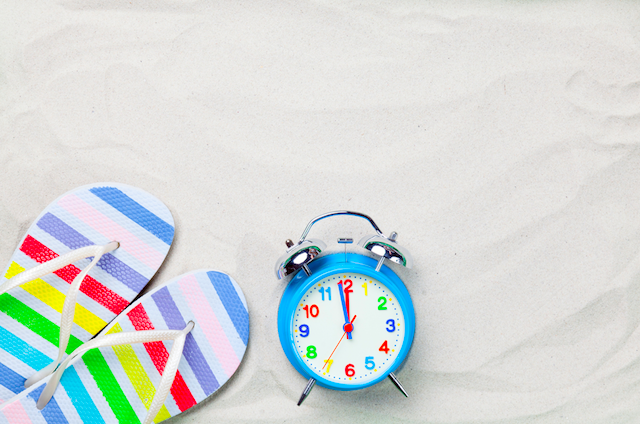
    Clock and Flip Flops

    “Edit your life frequently and ruthlessly. It’s your masterpiece after all.” ~Nathan W. Morris

    I began 2015 by cleaning out my closet. I sold and donated and trashed the pieces that weren’t serving me anymore. Embarrassingly enough, I purged nearly 100 items. It felt great. Getting rid of stuff and seeing beauty behind the clutter was incredible. But this story isn’t really about my closet.

    It’s also not about my desk drawers, my linen closet, or my kitchen, which all came next. As it turns out, getting rid of clutter and extra things was just the tip of the iceberg. In the same way that buying things didn’t make me feel better, getting rid of things wasn’t really the solution, either.

    What I initially imagined as an exercise in clothing minimalism has turned into a pursuit of “better, but less” across all areas of my life. So I started thinking about what it was that I valued most, that I wanted more of most. The answer? Time.

    I wanted time to finish what I started. I wanted time with my most important people. I wanted time for pleasure and healing. And I wanted time to go slowly. After nearly a year, the result is more joy, more freedom, more space for what matters.

    So how can you declutter your schedule and create better priorities? It’s about crafting joy through not just having less, but doing less. Here are some ideas on how to make it happen:

    Honestly look at what you’re already committed to.

    None of this works if you aren’t honest about what’s already in your schedule. From major work commitments to how much time you’re choosing to be on Facebook, keep a candid journal on where your time goes. Watch this for a little while. Try not to judge yourself, but look at what you’re prioritizing, consciously or unconsciously.

    Once you see what you’re committed to and how you’re spending your time, you can start to edit. Does what’s on your schedule line up with your values and goals? Or is it time to make a shift?

    I realized that I was committed to far too many projects, and that I wasn’t able to do them all well. I also acknowledged that I needed what I call “integration time”—a buffer where I could process new lessons or emotional events.

    Since then, I’ve signed up for fewer classes and scheduled more time for myself to integrate what I’m learning.

    I’ve scaled back the number of happy hours I attend in exchange for coffee dates during the day. This leaves me quiet evenings at home for reading, crafting, and relaxing.

    I’ve also pared back the number of political causes I’m a part of, choosing to focus on one or two important projects at a time.

    Follow the “three thing” rule.

    It’s like the old saying: “If everything is a priority, then nothing is.” Choose three things that are the real priorities in your life. Start small. What are the three things you want to accomplish today? Start with those as the skeleton of your day, and build everything else around them.

    You might not do those three things first, chronologically, but arrange your day so that you’re sure they’ll happen. Or, you may find that unless you make time for reading, meditation, or exercise before work, that it won’t happen.

    I’ve noticed that this “three thing” rule is also a good boundary for understanding when I’ve done “enough.” As someone who has a hard time switching off sometimes, using the three thing rule as a guidepost can help me to know when to call it a day. If I’ve accomplished what I absolutely need to, then maybe I can afford stop work to go for a walk or make a great home-cooked meal.

    Honing in on only three things helps us to clear the noise and distractions so that we can focus on what feels most meaningful. You can start to extrapolate, too: what are the three things you want to make sure happen this week? This month? This year? Choosing only three makes sure that we are ruthlessly clear on what matters most.

    Start saying no.

    This one is pretty simple. If it’s not supporting your values, your priorities, your “three things” or your inner well-being, it has to be a no.

    I suggest that for a set period of time (two weeks tends to do the trick), everything that isn’t already on your plate is a no. This gives your brain and schedule a break from more input before you dive in again.

    Of course, there are times when it’s not reasonable to drop everything, such as if you’re caring for a child or aging parents. If this is the case, it’s even more important to pare down the nonessential, and maybe even ask for help.

    The ability to craft elegant boundaries and a good rubric for new commitments can be a process. But over time, you’ll learn to trust your intuition. In the meantime, get some practice in confidently saying no. People in your life will also learn how to hear your no, and respect it.

    If lots of noes seem awkward to you, just remember that you’re actually saying yes to what you really want.

    When I was caring for my mom when she was ill a few years ago, I needed a lot of time to recharge in between visits. Some friends were offended when I turned down plans; others actually responded with offers of support.

    Just by being honest, and a little vulnerable, with what I needed (time and space to digest), I was able to get it. What a novel concept!

    I’ve spent the last year rigorously employing these tactics to free myself from overwhelm and commitments that stopped feeling good. This has meant paring back my volunteer commitments and some community classes where I’d been involved. It’s meant saying no to enticing invitations and choosing not to sign up for fascinating opportunities.

    This might have been awkward, but I find that most people are familiar with that feeling of overwhelm. They recognize it in themselves. Most people actually respect that I’m choosing to honor my well-being in this way, and that I’m interested in quality over quantity.

    The results of scaling back were really surprising to me. Doing less not only gives me more space for my own care, but it actually allows me to make a greater impact. I’m doing less, but I’m doing it with more grace and accountability. I do what I say I’m going to do. I have the time and space to follow through well on my commitments.

    By doing less, I’m able to show up more present for the people in my life and be more grounded in the present moment. By focusing on fewer projects, commitments and calendar-clutter, I’m doing less, but I’m doing everything fully—and with far more joy.

    Clock and flip flops image via Shutterstock

  • Getting More Out of Life When You Have Less Money

    Getting More Out of Life When You Have Less Money

    Couple Walking

    “The real measure of your wealth is how much you’d be worth if you lost all your money.” ~Unknown

    When we find ourselves not having “enough,” times may be rough; however, this is only our first glance, our perceived perception.

    Not all who have little are poor. None who live simply fit into the status quo. And none of us deserves to be judged for what we do or do not own.

    Poverty lines are a general measure of separating the classes, but they fail to feel emotions, see our genuine qualities, or tell the stories of our lives.

    They quantify our income, encourage us to strive for more, but more of what? More money to engage in better opportunities? More cash to buy more stuff?

    Numbers have a tendency to lose their meaning when they don’t add up—a well-paying job with no time for family is no better or worse than barely scraping by without savings, yet having no debt.

    There are many lessons to be learned from being poor. If you have ever been on your last coin, or more than once, chances are good that you may have experienced an enlightened state of being.

    Voluntarily choosing to live with less is quite different than being born into poverty, yet the paths overlap and intersect on so many levels.

    Searching for the silver lining of a free fall into a greatly reduced income, of which my husband and I caught the winds of almost a decade ago, we discovered the concepts of minimalism and simplicity.

    At first I was terrified at the aspect of living off of so little money, coming from a consumer culture that defines worth in terms of income. However, rationality quickly stepped in after that initial panic, and feelings of being lost without monetary stability were replaced by a desire to live well within our means.

    There was no denying the change of mindset that was rapidly taking place.

    We made a tiny handful of money (way below poverty measures) that allowed us to go to the grocery store a couple of times a month for food; the rest we had to acquire for ourselves in other ways—learning to forage, trading, growing…

    Every coin we made went toward nourishing our bodies, because good health is the most important aspect of survival.

    When we couldn’t afford electricity for eight months, we lit the kitchen with a few beeswax candles. When they burnt out we went to bed early, only to wake up with the sun.

    Employment was nowhere to be found in the countryside. We had no Internet connection and it seemed that life was on standby. Months and years went by, and it was hard. We didn’t buy anything we couldn’t afford, we didn’t want what we couldn’t attain, and all the while we didn’t complain.

    The last part confused a lot of people. We didn’t complain because we accepted the situation we were in, and rather than fight it, we decided to learn from it.

    It is possible to live well, well below the poverty line. Much of it depends on your state of mind, part of it comes from where you enter the phase of living with less; but wherever life takes you, lessons are waiting to be found:

    1. You may already have enough.

    In our past we had acquired all the things we needed for survival, and then some. Clothes “out of fashion,” but definitely not out of use. Pots, pans, dishes, music, games. Though we didn’t have the ability to buy things anew, we certainly did not go without. 

    When you have little, you may still have more than you realize at first glance. Set possessions aside and focus on life that surrounds you. Friends, family, your health—foster those intangible, yet all important connections.

    Most importantly, make peace with patience. Slowly moves the world without flowing cash or access to the Internet, and it still remains a beautiful place to be.

    2. Less time with electronic gadgets leaves you more room for people.

    Physical relationships are the ones that foster real laughter, genuine love, and lasting memories. Conversations flourish in the absence of technology.

    We can relearn to have meaningful discussions without a cell phone on the table; they only serve as a distraction at the dinner table and attest to our shortening attention spans.

    3. Solitude gives you time to delve into your emotions.

    It gives you time to think about life. Inner reflection is hard to focus on when we are busy day and night, so get un-busy and make more time for dreaming, questioning, and contemplating. Find quiet activities to let your mind expand to new horizons; you have the time.

    4. Nature provides us with much beauty, energy, and inspiration.

    No money for a concert? Great! Go listen to the night song of crickets in summertime, listen to frogs bellow, listen to birds or running water. Hike, walk, bike—get out of your four corners and find freedom in the “wild.” 

    5. Self-reliance will foster an unending sense of independence.

    Spend time reading books; volunteer your time to learn and teach new skills, meeting new people and creating opportunities for advancement as you go about daily life. See the connections, and feel what is important for your personal growth.

    Rather than feel guilty that we couldn’t afford to eat out, we chose to develop our cooking skills and embrace the art of slow food. We grew vegetables in the garden to preserve for winter, we baked our own pies and pastries, we relished in our growing confidence of all matters related to providing for oneself.

    In eight years one can acquire immense knowledge, and our wealth grows with our ever-increasing set of useful skills (from knitting to felting to cobbing to shoe making) that we can apply over many aspects of life.

    6. Happiness cannot be bought.

    It can be grown, cultivated, tended, nurtured, but you won’t find it on a store shelf or a screen. Happiness comes when you are at peace with who you are, right in this moment—with your job or lack of it, with your salary or lack of it, with your friends or lack of them, with your wants fulfilled or lack of that.

    Struggles can bring out the worst or the best in us! Living with less money than “ideal” is certainly a challenge and if we haven’t been there ourselves, we certainly know someone who has been financially in need. You can be rich and poor or poor and rich, depending on where you place your values.

    Wanting less speaks volumes about your personality. It has nothing to do with charts and graphs that society creates, but it has everything to do with you—the way you treat yourself and the much-deserved attention you give to others around you.

    The next time you take a pay cut, voluntarily or not, remember the advantages of more time, more meaningful experiences, and a whole lot less stuff to store along the way. You are not defined by your past; you and your thoughts are the future. Learn, let go, and move on.

    You can live with much less than you ever thought possible and find many uplifting winds to carry you on your way.

    Photo by Tony Alter

  • Where True Happiness Comes From: How We Gain by Having Less

    Where True Happiness Comes From: How We Gain by Having Less

    “The things you own end up owning you. It’s only after you lose everything that you’re free to do anything.” ~Chuck Palahniuk

    Small is the new big. That is to say, minimalism and living with less is becoming a growing movement in America and it’s starting to catch on over here in the UK too.

    With the global economic crisis and changes in social attitudes, people are starting to realize that the more stuff we have, the more miserable and trapped we become. After all, stuff leads to debt, stress, and even increases our carbon footprint.

    Plus, living in larger homes with space we don’t really need only equals more stuff, more spending, and more worry. Then, when we run out of space, we move to a bigger property—or even rent storage space.

    Enough.

    Stuff doesn’t make us happy. We might get that initial glow of excitement when we purchase new things, but it doesn’t last. 

    True meaning and happiness come from experiences. From family and friends. From hobbies. It comes from the things that we do, rather than the things we own.

    Like most people, I followed the American Dream. I wanted the big house and garden. The nice car. The expensive clothes. I also wanted to portray an air of success to “get ahead” in the business world.

    As someone who runs their own business, there’s a perception that if you’re not moving along a certain path, you’re not considered to be successful. That if you don’t turn up to a meeting in a decent car or wearing expensive clothes, you won’t be taken seriously. That you’re not worth the money you’re charging.

    I guess this perception of wealth extends to our self-worth and confidence. We feel more empowered if we’re attending a meeting wearing the right clothes and carrying the right handbag, for instance.

    But then this false sentiment extends to our private lives, as well. We want our peers to think we’re successful. We’re embarrassed, for example, if we’re driving an old car or wearing last season’s fashions. We feel like we’re going backward rather than forward if we’re not “keeping up.”

    Of course, it’s easy to fall into this trap—assuming that we really must drive expensive cars, wear designer clothes, and buy things we don’t really need.

    It’s the way brands and big companies want us to feel. They want us to spend money, constantly consume, and place all our self-worth, confidence, and happiness on “stuff.”

    They want us to be on an endless mission to be happy through consumption and spending. I’m just relieved I’ve worked this out now and discovered the truth.

    Through my own endless pursuit to be happy and seemingly successful, I was miserable and constantly running on a treadmill to keep up with my excessive lifestyle. When I say excessive, it probably wouldn’t seem that way to others. Most people would see this typical way of life as pretty normal.

    At some point though, it stopped being normal to us and we had a “Eureka!” moment. We realized that we didn’t need all that space, let alone all that stuff. So, we sold our big house, got rid of our expensive car, and started to think about minimal living.

    What could we get by without? What did we really need anyway?

    Well, we’ve just bought a 600 square foot apartment in the city. It’s got one bedroom, one bathroom, an open-plan living space, and a little balcony.

    We’ve downsized our stuff and now only have what we need. Sure, there are a few luxuries but for the most part we’re a lot lighter than we used to be.

    How do we feel? We have no debt, we have less stress, and we don’t have to work as hard to maintain our lifestyle. Because we live in such a small space, housework takes no time at all. And with no garden, we don’t spend hours maintaining a lawn or borders.

    This means we have more time. And that time is dedicated to ourselves. To hobbies, experiences, and family and friends. We also have more money to spend on doing things like travel, concerts, or even French lessons.

    Because of our new lifestyle, we’ve never been happier or more comfortable. Our lives are rich with meaningful experiences and relationships. And many others who are following this minimalist lifestyle are enjoying the same benefits.

    I personally think the age of consuming could be coming to an end. It’s certainly starting to lose momentum. People are realizing there’s a big difference between “want” and “need.”

    And with an increasing population and higher land prices, the future could be quite small compared to the way we live now. It might be that minimalism becomes a necessity rather than a lifestyle choice.

    Do you feel like you’re weighed down by your things? Do you find yourself constantly working to pay for the expensive things you own? Are you lying awake at night stressed and worried about debt? 

    Why not try a little minimalism? You don’t have to go to the extremes I’ve gone to. You could just downsize a few bits and bobs. Buy less stuff. Or even swap your car for a cheaper mode of transport?

    And instead of spending money on things, why not invest in experiences? In relationships? In the times that set your soul on fire and make you jump for joy? Why not create those precious memories that have you grinning from ear to ear every time you recall them?

    Because you know what they say: You can’t take it with you. But you can certainly be satisfied that you lived a wonderful life.

    The Good Life painting by Tracy Booth

  • 3 Ways to Redesign Your Life by Shedding the Excess

    3 Ways to Redesign Your Life by Shedding the Excess

    “Don’t let your happiness depend on something you may lose.” ~C.S. Lewis

    For as long as I can remember, “more” has always been better, but the word “more” is no longer what it used to be.

    Five years ago, I started exercising for the first time in my life. At first, I counted down the minutes until my workout was over. As I got stronger, though, I started staying at the gym longer and longer.

    For a while, I burned more calories than I consumed during meals. It didn’t matter. I worked out as much as I could because I liked the effects it had on my body and mind. I felt healthy and vibrantly energetic.

    But I hardly had time for much more in my life.

    I was burnt out. Some of my other favorite activities—like reading or making plans with friends—took a backseat to putting in hours at the gym. But working out in less time scared me, as silly as that sounds now. Would less time in the gym slow down my health and energy level? Would I lose momentum?

    When my loved ones started complaining, I knew I had to make a change.

    I found I could do more with less at the gym. I found that my body appreciated the extra rest more than I ever expected. I found that, by finding a balance, my life felt more at ease.

    Over time, I discovered that in many areas of my life, less is more. Carrying the excess of my life felt like pulling around a parachute, making every step more strained.

    Focusing on the necessary, on the positive, on the essential may grant you the freedom you desire. Here are three areas in your life you can redesign:

    1. Your Relationships

    Growing up, my friends and I counted and compared how many toys we had, how many books we read, how many good grades we achieved. Only now, decades later, have I dropped that habit of thinking “more” is better.

    When I quit my job and started my own business, I never thought that my biggest obstacle would be the people I chose to accompany me on that path. Once I hit that roadblock, it took great courage to cut the ties that were holding me back.

    The people we come across and spend time with become a part of our lives. That doesn’t mean they necessarily should. It’s up to you to choose.

    Jim Rohn once said, “You are the average of the five people you spend the most time with.” If that is true, could your relationships serve you better? If you could choose, what kind of people would you surround yourself with?

    2. Your Material Goods

    Someone once told me, “The fastest way to get a pay raise is to spend less money.”

    Quitting my job last year meant watching how I spent money. This was a blessing in disguise.

    Every single time I browsed the web for a beautiful new handbag, I stopped myself, thinking: “What am I trying to find in this handbag? What am I looking to feel by buying this?”

    Over time, this spread to the material goods I already have, not just the ones I hoped to purchase. I gave away some things that would be more useful to people in need. Living in a third-world country made that process easier, giving me a chance to give back to the communities around me.

    The items we hold around us pile up over time, but the purpose of that is not always clear. What are you looking for within those items: happiness, status, or is it something else?

    If you are interested in living a life with less stress, try asking yourself why you hold dear the possessions around you.

    3. Your Expectations

    For much of my life, I gave in to my emotions. With a blindfold over my eyes, I stumbled through life at the whim of my mood swings.

    Very often, I spent my days feeling angry, jealous, or doubtful. I was unaware of the reason behind these emotions. I let them run free, untethered inside my heart and mind.

    Until someone introduced me to a book called Man’s Search For Meaning by Viktor E. Frankl.

    In his book, he writes:

    “A man’s suffering is similar to the behavior of gas. If a certain quantity of gas is pumped into an empty chamber, it will fill the chamber completely and evenly, no matter how big the chamber. Thus, suffering completely fills the human soul and conscious mind.”

    Whether the situation is big or small, every single person decides just how much to suffer for it. When faced with the same situation, each of us decides just how to frame and feel that situation.

    The biggest reason I let my emotions run wild was because I was not aware of my expectations. I imagined life to be a certain way, and I was torn when reality didn’t match up.

    Wiping my mind clean of how life should play out, I allow myself to accept each moment as it comes, for better or for worse. The calm I feel at shedding expectations is extraordinary.

    When I set out to redesign my life— quitting my job, starting my own mini-business, spending more time writing—I never thought I would also start a quest to shed many parts of my life.

    None of this is easy, but it is worth it. I grapple with it everyday, but that grappling makes all the difference.

    Are you looking to redesign your life? Share your stories in the comments.

    Photo by The Green Party

  • A Few Less Steps to Bliss

    A Few Less Steps to Bliss

    “Don’t use a lot where a little will do.” ~Proverb

    My fears around becoming a mother for the first time were validated. Giving birth did hurt, though in an empowering, “hear me roar” kind of way.

    There is stiff competition now for my husband’s attention, but mine is captivated as well. And our spontaneous, hedonistic, freewheeling lifestyle is permanently cramped—but into this cozy fetal position of child-friendly rhythm and routine.

    Though we have been pacified into a relatively mundane existence, my morphing into a mama bear that’s hell bent on protecting her cubs from excess has helped keep things spicy. Excess in the form of stuff, noise, and activities that attempt to encroach on our home and our time to connect, distancing us from our core values.

    There is a therapeutic benefit to this extreme nesting to the kids and adults in our family alike.  My kids are imaginative, calm, and pleasant to hang out with, and I find myself with more energy, creativity, and overall bliss than I have ever experienced before.

    With this keen selectivity of what is enough, we gift our minds and hearts the room to expand, explore, then retreat again for restorative contemplation and rest.

    Less leads us closer to more bliss and here are just three ways to get there:

    Step One: Less Stuff

    Take for instance the visual pollution surrounding us. Coming into a space that is clear of clutter can release us from the immediate but subtle sense of anxiety we feel due to the responsibility of ownership—the need to repair, organize, share, and account for.

    With kids in the house, we’ve found it necessary to do a seasonal or at least twice yearly purge of items that no longer serve us. Since we have limited storage space, we need to clear out the many quickly outgrown clothes, toys, and the occasional toddler toilet paraphernalia. (more…)

  • Need Less, Have More: Life Expands When We Eliminate the Excess

    Need Less, Have More: Life Expands When We Eliminate the Excess

    “Knowledge is learning something new every day.  Wisdom is letting go of something every day” ~Zen Saying

    Simplicity, at its heart, comes down to eliminating the excess in our lives.

    Excess needs, wants, possessions. The list goes on.

    Society tries to sell us on the idea that having more in our lives should be the goal and is the answer. But is more really improving the quality of our lives?

    Do more possessions beyond a certain point really add value to our lives?

    Do more commitments in our diaries really help us feel less stressed and rushed?

    Does always wanting the latest gadget really improve the quality of what we have now?

    Is more even feasible for many of us who are struggling just to make ends meet and pay basic bills in these challenging economic times? Many can barely afford enough, let alone more.

    Living in the Moment

    Having more in our lives or buying into the concept that more is better can mean we miss living in the moment. We’re constantly waiting for our lives to be complete with more and striving for a day that will never come.

    We’re in a state of deferred living. Always assuming what we have now is not enough. Always wanting more.

    My Journey to Simpler and Less

    My own path to wanting to live a simpler life is, I’m sure, fairly typical.

    Around four to five years ago my life was going pretty well with little to complain about in the grand scheme of things. I had great friends and family, a good job, a roof over my head, and certainly knew where my next meals were coming from.

    However, I had also started to accumulate more in my life. More material possessions, more commitments, more meetings, more financial responsibilities, more hassle. Alongside this I felt like less and less of my time was, well my time.

    The quality of my time was decreasing as more was added to it.

    I was busy and in motion a lot of the time but wasn’t really getting what I truly wanted out of life. I had bought into the concept of more and that more would be the answer. I had lost track of my own goals a little.

    A period of reflection followed. In this period of reflecting, I started to identify more of what I truly wanted in life. I also started to uncover those things in life I would rather be without.

    I started to seek out books on the subjects of simpler living and lifestyle redesign. I had the good fortune to come across the work of some truly great authors and thinkers (Leo Babauta, Chris Guillebeau, and Tim Ferriss, amongst a few). These books challenged my thinking but also encouraged me further into the rabbit hole I was starting to disappear down.

    I also started to take action.

    I started to peel back and eliminate what didn’t matter.

    I started extracting myself from commitments and meetings I really had no interest in being at or didn’t feel I could add value to.

    I learned the value and power of a polite “no thanks” when requests on my time (meetings, social gatherings) didn’t excite me, add value, or help my goals along in some way. Importantly, I started to feel less guilt about saying no in these cases.

    I started to see that conventional wisdom doesn’t always have to be followed.

    I started to remove distractions and excuses I was making to myself.

    I started to focus more on the things and people that were important to me.

    I realized I value freedom and flexibility over the ability to just earn more and started to try to seek out ways of living accordingly.

    I started to accumulate fewer material possessions but enjoyed my money more (holidays, events, great dinners, etc.).

    In short, the quality of my life has improved since I have sought to simplify things and intentionally live with less.

    Was Making the Change Easy?

    In short, no. This is very much a journey and not an overnight fix. However, in my own case the process of working toward a focus on less has already made some powerful changes in my life. It has meant:

    I have set up my own one-man consulting company rather than chasing the corporate dream that never seemed to fulfil me with each climb up the ladder. This gives me an increased sense of flexibility, empowerment, and freedom in my work.

    Because I’ve spent less on stuff, I have been able to travel more for fun in the past two years than at any other time in my life (and the more amazing places I travel to the more I want to travel).

    I have realized that life can be rich and full of small pleasures without having to spend lots or buy more. For example, I love taking early morning, long walks before dawn breaks and then coming back to a make some freshly brewed coffee.

    I feel like I have more time to do what I want to do and to spend with the people I want to spend time with. (In reality, I have the same amount of time available to me but have been more selective in how I fill my time and what I say yes to.)

    For you, the list will of course look very different depending on your own circumstances and goals. However, a commitment to banishing the “more is better” mindset will, I’m sure, improve the quality of your own life in equally significant ways.

    Eliminate the Excess

    Eliminating the excess means living a life that can be slightly unconventional by modern standards.

    Perhaps we don’t change to the latest smartphone every other week.

    Perhaps we don’t fill our homes with clutter.

    Perhaps we don’t check our email obsessively.

    Perhaps we focus on and are grateful for what we do have rather than on what we don’t.

    Perhaps we think more carefully about clothes we purchase going for quality over quantity (or indeed have a very simple wardrobe of a few clothes we enjoy).

    Perhaps we intentionally create space in our diaries and life so you can breathe a little and enjoy the moment.

    Making changes is not necessarily easy initially. We are so programmed to think a certain way that making changes can involve a significant shift in thinking. However, what we get back by eliminating these false wants and needs makes any initial effort more than worthwhile. It can literally transform our lives for the better. It can mean:

    • More free time to do what we want to do (hobbies, passions, etc.)
    • More quality time with those we care about
    • Less stress
    • Less spending
    • Ironically, more quality possessions that we truly enjoy and give us value
    • More savings (for holidays and other things you enjoy doing)
    • Less pressure to keep up with those around us

    Now ask yourself, what is stopping you trying to find your own path to less and forever banishing the more is better mindset?