“I monitor my self-talk, making sure it is supportive and uplifting for myself and others.” ~ Louise Hay
Three years ago, I ended up with no work in a foreign country. I was almost depressed, as I didn’t know what to say when people asked questions about my profession. The idea of making no income injected my mind with a wide repertoire of worries, fears, and concerns.
I was lost and stuck, and the way I was labeling myself at the time felt quite painful: unemployed. Not only did it look like I had a serious problem to deal with, I was starting to feel like I was a problem, myself.
We all perceive the reality of our experiences filtered through our own lenses, the expectations we set on ourselves and others, and our individual system of belief. To some people, being unemployed is a fact. Not good or bad, normal or abnormal, right or wrong. To me, it held a strong negative connotation. In a world that generally validates our self-worth through what we do for a living, being left with no work made me feel like a total failure.
Thanks to Wayne Dyer, one of the spiritual teachers who helped me grow into who I am today, I managed to change my perspective and see things in a much different light. Here’s what I remember him saying in an interview on YouTube: “Your only problem is your belief that you have a problem. When you change the way you look at things, the things you look at change.”
His words spoke to me from the inside out. It came like thunder: a wake-up call that was going to shift my entire experience. The moment I decided to look at the situation from another angle, everything changed.
I decided to eliminate the word “unemployed” from my vocabulary, and I went for more empowering words instead. I was “job hunting,” and “looking for better employment opportunities” while being “in transition to a new career.”
Those feelings of frustration and sadness, which came with a deep sense of unworthiness and identity loss, got replaced by a much cleaner space of possibilities, hope, and curiosity for a fresh start.
By changing my perspective and the language I was using to describe my experience, I stopped feeling like a victim. Things were not imposed on me any longer, and I had power.
All of a sudden, I could see the bright side of the situation. When I was busy with work, always running somewhere, working overtime to reach goals and fulfill my duties, I so much wanted to get more time. When I was left with no job, I accused life of being unfair. It wasn’t.
I realized I had all the time in the world—and what a precious gift that was, because time never comes back! I had enough savings to rely on and a supportive husband, as well. And I had a dream to pursue—to do soul work with people and make this world a much better place. One year later, I got certified as a coach.
Today, I know that was a real blessing in disguise. “Unemployed” was not a weakness, but an opportunity for me to grow professionally and build a new career from scratch.
I have also learned that failing with anything doesn’t make me a failure, because I am not what I do. Being left with no work was an experience, and it didn’t have to define me or lower my self-worth unless I allowed it to.
One more time, Wayne Dyer was right: I am a “human being,” not a “human doing.”
You see, the thoughts we think and the words we speak have tremendous power. Words are a form of energy, and their vibration has a high impact on the way we feel and think; they can either empower us or put us down.
I invite you to try the following exercise: think of a situation in your life that looks like a problem. Stay for a moment with that and get mindful of how that feels in your body.
Now, think of the same situation as if that was an issue or a topic for you to brainstorm, reflect, and deal with. Can you see the difference and how much lighter you feel?
You’ve done nothing else but replacing the word “problem” (which feels like a burden, something heavy for you to carry) with “issue” (much lighter, something that you could find a solution to).
When I was a child, my mother advised me always to pay attention to my words. “One can kill or save another with only one word,” she said. I didn’t get what she meant at that time, but now I do.
Looking back on my life, I came to realize I spent many years punishing myself with disempowering words about who I was. Thinking I wasn’t good enough, perceiving myself as a failure when I was making mistakes, taking myself for granted, unable to acknowledge my achievements, as if “anyone could do that” or “it wasn’t anything big or special.”
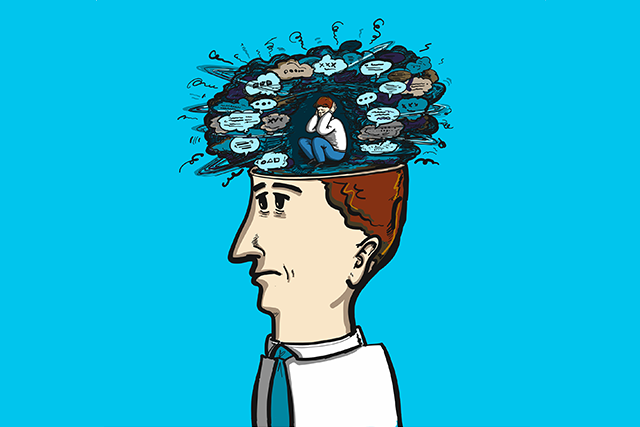
“Stupid me!” “I’m not good enough.” “I’ll never get this.” “This is too big for me.” “I am average.” That’s how the voices in my head used to sound.
Years later, thanks to the beautiful work of Louise Hay, I have learned that being mindful of my self-talk is one of the best forms of self-care and self-respect.
“You’ve been criticizing yourself for years, and it hasn’t worked. Try approving of yourself and see what happens.“ ~Louise Hay
I knew I would have never told my best friend what an idiot she was for doing this or saying that. And if she were to consider herself ugly or stupid, I would have never encouraged such an idea. I would have supported her in the best way I could.
It took me a while to understand how unfair I was to myself: talking to others kindly and showing them compassion while putting myself down every day. Just like everyone else, I was also a person, worthy of being seen and listened to, appreciated, understood, forgiven, respected, acknowledged, nurtured, and loved.
The day I stopped making myself small with my self-talk, my life transformed, and here’s what I know to be true today:
I am whatever I believe myself to be. If I think I am smart, beautiful, ugly, or stupid, that’s what my reality becomes. We all get to shape our own story by the way we feel, act, and think.
Besides that, I don’t have any weaknesses; I only have areas for growth.
While I am aware of the things I need to work on (do less and be more, become more patient and sometimes calmer, talk less and listen more and so on), the very fact that I have replaced the word “weakness” by “area for growth” is empowering. Like everyone else, I am on a journey called Life, and that’s all about learning.
My husband and I moved to Mexico a few months ago. We can understand Spanish, but neither of us can speak it. I could see this as a weakness, but I choose not to. This is nothing but an area for growth: we are both going to acquire new skills, expand our knowledge, and grow as individuals. We’ve already started to take lessons.
The words we use in our everyday life have power. They can either destroy or build relationships with ourselves and other people. Getting mindful of our self-talk is one of the best forms of self-love and self-compassion. Let us choose our words wisely.
“Language shapes our behavior, and each word we use is imbued with multitudes of personal meaning. The right words spoken in the right way can bring us love, money, and respect, while the wrong words—or even the right words spoken in the wrong way—can lead to a country of war. We must carefully orchestrate our speech if we want to achieve our goals and bring our dreams to fruition.” – Dr. Andrew Newberg, Words Can Change Your Brain
And now, I would like to hear from you. If there were one single disempowering word for you to eliminate from your vocabulary, what would that be?