Tag: kind

  • The Power of Kindness: Life-Changing Advice About Creating Happiness

    The Power of Kindness: Life-Changing Advice About Creating Happiness

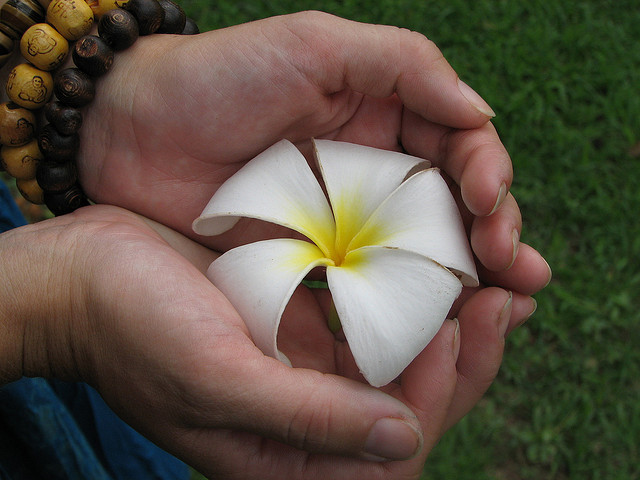
    Flower for You

    “We make a living by what we get, but we make a life by what we give.” ~Winston Churchill

    It was a beautiful winter’s day in Sydney. Having returned home after working for two years in Singapore and traveling through Asia, I felt like I owed it to myself to do something I loved.

    My heart has always been in fitness and travel. When there was a job opening at my local travel agency, I applied, went for the interview, and got the position. I was a happy girl—but only for a short while.

    Two months into my job, it didn’t feel right. I felt something was missing. And suddenly, everything that I thought I knew about my love for traveling went astray. I wasn’t satisfied with my job.

    I had to decide if I wanted to stay or leave. I didn’t have a wealth of options. If I were to quit, I would be jobless for a while. The best I could have done was to spread my love and knowledge of fitness to my average of fifty daily blog visitors.

    If I were to stay, I would have had to suck this up, being unhappy and unsatisfied.

    I took the road less travelled and sent in my letter of resignation a few days after.

    For weeks after that, I felt lost and uncertain. I wished I hadn’t resigned. I wondered: What am I going to eat? How am I going to sustain myself?

    And then it happened, when I least expected it.

    A seventy-five-year old lady came in on a rainy day. She had a medium sized stature, and she was of Asian descent with a rather intimidating face. She told me her name was Chan and that she would like to inquire about a trip to London to visit her daughter.

    I was rather reluctant at first to help her out, thinking it might be yet another empty inquiry, but I thought about how I would feel if my parents were the ones walking into a travel agent, being treated unfairly.

    I sat down at my desk, on my second-to-last day, with a genuine smile on my face.

    My “empty inquiry” thoughts turned out to be true. Two hours into her consultation, she said she needed to think about everything I’d proposed. I told myself it was okay. The sale wasn’t meant to be; at least I’d helped her as much as I could.

    Before she left, I had to tell her that it was my second-to-last day at work, and if she were to come in several days later, I wouldn’t be around to help her.

    I thought she wouldn’t really care, but to my surprise, Mrs. Chan sat back down on her seat.

    She started questioning me. She asked me where I was going, why was I quitting, and what my plans were after this.

    I tried to be as honest as I could, telling her that the job wasn’t right for me and I didn’t have any concrete direction. All I had was my Physiology degree and a burning passion for fitness. I was half-hearted. My eyes got wetter and she could sense the doubts in my voice.

    Like an angel sent from above, she held my hands and looked into my eyes.

    “My dear, sometimes in life we’re being tested. We’re given directions and options and we have to weigh them. And sometimes, even after weighing on a multitude of scales, lengths, and units, it is perfectly normal not to be sure of anything.”

    I kept silent. I was listening, my brain was processing.

    “I just turned seventy-five last week. I want to book a trip to London to surprise my daughter who has been living there for three years. Three years ago, she was at the exact same position as you. The only difference is she was made redundant.”

    Still listening, I was a tad surprised she was opening up about her life.

    “Before I go on, I want to thank you for helping me through this inquiry. I am always skeptical about travel agents, but you proved that not all of you are the same. It’s a pity that this company is going to lose an exceptional young lady like you, but I’m happy for you. I could see it through your eyes as soon as I stepped into the store that you would be better off elsewhere. And I was right!” Mrs. Chan chuckled.

    It was unbelievable hearing her speak when she’d seemed cold for the past two hours. Still, I continued listening.

    “Now I’m going to tell you exactly what I told my daughter three years ago. If you’re doing anything in life that is making you unhappy, you should stop as soon as you can. You’re young. Set yourself free. Don’t waste time doing things you don’t enjoy doing.”

    “Great, now she’s reading my mind,” I silently thought, still waiting for her next words.

    “You might not know at this point in time if this is the right thing you’re doing. You might fail. You might be disappointed you left a good-paying job. But a good-paying job is nothing if you’re not happy.”

    She continued, “Finish your duties here and step into the unknown world. You never know what you might discover. You should be out there seeing the world and helping people with your beautiful smile and kind soul.”

    The tears I was vainly holding back started to roll down my cheeks.

    “And if life hits you hard one day, remember you made the effort to pursue your dreams. You made memories. And you chased after what you loved the most. You will be okay.”

    Her words hit me hard. I never knew I needed them until that moment. It was the most perfect timing in my life.

    “That is all I can say to you. Like a seventy-five-year old knows any better!” she joked.

    I wiped my tears and walked her out of the door. I wanted to hug her and just stay there in her arms, the arms of a stranger that I only knew for two hours, but I held myself back.

    “And remember this—no matter what you do, be kind to others. That should be the fundamental base of all your actions.”

    Stunned for the millionth time, I stood there, speechless. She left. I saw her walk away. I don’t even know her full name. Or her contact details.

    I went home that night and hugged my mother. I needed it. I needed her. And I never knew I needed Mrs. Chan and her words.

    It came to me because I was kind. And it came to me when I least expected it.

    Being kind is the fundamental base of all my actions. And I will remember that for the rest of my life. 

    Sometimes in life we meet people who are there to help and guide us, but we have to be open to receive it. Whether or not we choose to accept it, everyone wins when we’re all kind to one another.

    Never underestimate the power of kindness. You never know how much happiness you can bring to someone’s life.

    Photo by Kietaparta
  • 3 Ways to Be Kind and Make Someone’s Day

    3 Ways to Be Kind and Make Someone’s Day

    Smiling Together

    “The smallest act of kindness is worth more than the grandest intention.” ~Oscar Wilde

    It’s the small, everyday things that can make or break a day for us.

    While we celebrate the role models who inspire thousands (in person or on Facebook!), for most of us everyday moments—a stranger jostling us in the shops, a driver cutting us up at a light, someone pushing in front of us in line at the post office—can upset us out of all proportion.

    But the flip side is that we can also be disproportionately pleased by the small actions of a stranger.

    On a bad day recently, rushing down the road in Chiang Mai, Thailand, late for an appointment, I dropped my bag and things spilled all over the road. I looked at my possessions spread out in the dust beneath me and held back tears.

    As I stood there, a Thai woman, tending a food cart at the side of the road, walked over and carefully helped me pick everything up. Then she smiled at me, patted my hand, and walked back to her stall.

    This small act of kindness from a stranger reminded me to be kind to myself, and I took a breath before continuing with my day, lighter in heart and mind.

    Be that stranger. Here are three small acts of kindness you can carry out today.

    Offer your help.

    Last year I met someone who challenged himself to offer his help to one person every day.

    One day, I was really ill, in a foreign country, alone. I had no way of getting to the shops. He offered his help and brought me groceries. It was a small thing for him. But I was hugely grateful, and it made a real impact on me, this almost-stranger providing practical help.

    Now I try and offer my help more often.

    At first I used to think no one would be interested in my help, or they’d be suspicious, or dozens of other reasons that stopped me from offering. But even when people don’t need it, they appreciate being offered help.

    I offered someone help with something they were carrying yesterday, and while he turned me down, we exchanged a joke and a few words, and both of us went on our way happier.

    And when people do need the help, you’ll be amazed at the long-lasting impact it can have.

    Be of service. Offer assistance.

    Say thank you.

    You might say thank you 100 times a day. It’s a politeness, a courtesy. But how many times do you actually mean it? How many times are you still engaged in the conversation when you say it, and not turning away toward the next thing?

    I have a friend who doesn’t just write the usual “To Sarah, Happy Birthday, Love Mary,” on birthday cards but instead takes the time to write a more heartfelt message. She includes some of the things she appreciates her friend for doing for her that year.

    Getting a card from her doesn’t feel like a formality, it feels like a true connection. And her cards are the ones I remember.

    Today, say thank you like you mean it. Catch the other person’s eye and say it firmly. “Thank you. I really appreciate your help.” It could be to the girl who serves you your caramel macchiato in Starbucks, or your dad for helping you out by putting that shelf up for you.

    Or, if it feels too personal or intimate to say it face-to-face, write a letter or a card to a friend thanking them for something specific they contributed to the friendship last year—their joy, their lightness of touch, the great presents they always buy you, their sense of humor.

    Be grateful, and share that gratitude with the other person.

    Compliment someone.

    We judge others in our head all the time, just as we judge ourselves all the time. I hate that dress she’s wearing. I look fat in that mirror. I can’t believe she just said that. That nail  polish is awful. He really can’t do that yoga pose… It’s a constant narrative.

    But we also think positive things in the same way: I love that skirt. I wish my hair was that color. Those shoes are great. He does a great downward dog; I wish I was that confident.

    In my last job, particularly when I was feeling negative (and knew it might leak out), I used to push myself to articulate the compliments I usually just said in my head. Sometimes the person I was complimenting was a little taken aback, but they were always pleased.

    Put your focus on the positive by expressing it. Tell someone what you like, admire, and appreciate. Share the love.

    These actions might seem small, but not only do they make others’ lives better, they are also directly nourishing for you. Being kind is good is not only good for your heart, it’s good for your health.

  • How to Improve Your Relationships and Make a Kinder World

    How to Improve Your Relationships and Make a Kinder World

    kindness

    “If you propose to speak, always ask yourself, is it true, is it necessary, is it kind.” ~Buddha

    I once attended a lecture given by a world-renowned expert on post-traumatic stress disorder. The lecture made two points that I have never forgotten. I call them “brain tricks.”

    1. Given a choice, our primitive brain will naturally select for the negative. It’s a survival thing.

    2. When in crisis, the part of our brain that conceptualizes time and space goes off line. In other words, our brain increases the urgency of the problem by making us think the crisis will never end.

    Fortunately, these tricks, while at times necessary to protect us, are the activity of our primitive mind and we do not have to be at the mercy of them.

    Through awareness and a desire not be reactive, we can shift to our more evolved brain and get an accurate perspective, enabling us to respond in a more equitable manner.

    I’m concerned that we may be unknowingly generating those “brain tricks.” There seems to be a strong movement toward trolling for what’s “wrong” on just about every level. It appears that popular culture’s collective brain is a giant reflection of a society in crisis.

    We live in a reactive world that would choose to focus on what is wrong rather than what is right, even when there is so much that is right.

    The term “snarky” has become an attribute to be admired. Being witty at someone else’s expense can leave us with a feeling of authority and control. Egos get a boost and identities get clarified when what we disagree with gets isolated.

    However, problems arise when this penchant for sarcasm, cynicism, and criticism takes a leap into our relationships.

    I believe this sanctioned attack on others is one of the primary reasons generalized anxiety is on the rise and long-term relationships are on the decline.

    There is a better way to strengthen egos and that is by embodying the art of common courtesy. Wouldn’t it be sweet if being kind and thoughtful was the “new” witty—the new identity booster and clarifier?

    Common courtesy begins with positive regard for all humanity. Though we may have differences, we have more similarities.

    Because our brains naturally select for the negative, we have to train our minds to proactively look for the positive and for what we have in common.

    Respecting others is an offshoot of positive regard. It’s not flattery, nor is it following orders.

    It is honoring people’s right to be themselves, along with their beliefs, and the way they want to live their lives. It requires empathy, not necessarily agreement.

    Treating a person as less valuable or worthy in any way shows disrespect and leads to conflict, both inward and outward. It is false pride to feel good when treating someone with disdain.

    Common courtesy shows you can look beyond yourself. It demonstrates caring, generosity, good will, and the valuing of others.

    I learned my lesson not long ago while out to dinner in a nice restaurant with my family. We were having a delightful evening, enjoying our food, and discussing plans for a possible European vacation.

    My two sons expressed an interest in going, but were having trouble seeing how their university schedules could accommodate a three-week vacation. One son was particularly snarky in his communication.

    I immediately got on the defensive, and returned his snarkiness with my own.

    “You know,” I said, “you can be really difficult to get along with.” As soon as the words left my mouth, heaviness spread throughout the room. The night was ruined.

    I felt both shame and anger. In my mind I determined we would not be spending any money on a European vacation, at least not one that included ungrateful sons. I went home and to bed, but not before my husband told me I had been too harsh.

    The next morning I woke up with a guilt hangover. I thought deeply about the night before. The light went off in my head when I asked myself how I would’ve felt if someone had told me I was hard to get along with.

    Ouch! That would’ve cut deep, and I said those words to someone I love very much. In fact, I love him so much I was planning an expensive vacation so that his mind could be expanded. Ironic, huh?

    The truth is, I could’ve conveyed my frustration in a more courteous manner. For example, I could have said:

    “I can see this is going to be complicated. Why don’t you give it some thought and we can talk more about it next week when we have more information.”

    Immediately, I texted him, “Please forgive me for the harsh words I said to you last night at dinner. I realize they were hurtful and it hurts my heart to know I caused you pain.” I heard back from him in seconds: ”No worries Mom. I love you.”

    Here’s what I’ve learned about building a kinder world through common courtesy:

    Greet others.

    When you make eye contact with anyone, say hello, smile, or wave. Everybody wants to be recognized, included, and acknowledged.

    Say please and thank you.

    Being polite sends a safety message. It shows positive regard and respect.

    Be courteous in conversation.

    Ask people questions about themselves to show a genuine interest in what’s important to them. Then fully listen. Show people you value and respect what they say, even if you disagree with them.

    Apologize.

    Admit when you are wrong and apologize.

    Build people up instead of tearing them down.

    Let people know what you admire about them. Give genuine compliments freely. Tell them you believe in them and share their good qualities with others.

    Go the extra mile.

    Show people you care by going out of your way to perform acts of kindness.

    The bottom line is: Follow The Golden Rule. It is no surprise that some form of it is found in every culture; it is a universal law. Treat others as you would like to be treated. It’s that simple.

    If we don’t like to be criticized, we shouldn’t criticize others.

    If we don’t appreciate someone rolling their eyes at us, we shouldn’t roll our eyes at others.

    If we don’t want people mocking us to others, we shouldn’t mock other people or gossip.

    If we are tired of people not respecting our values and choices, we need to respect others’ values and choices.

    If we don’t want to be the target of someone’s snarkiness, we need to stop being snarky ourselves.

    In the immortal words of Mahatma Gandhi, “Be the change you want to see in the world.”

    Photo by Ed Yourdon

  • Why Giving to Others Is Also Giving to Ourselves

    Why Giving to Others Is Also Giving to Ourselves

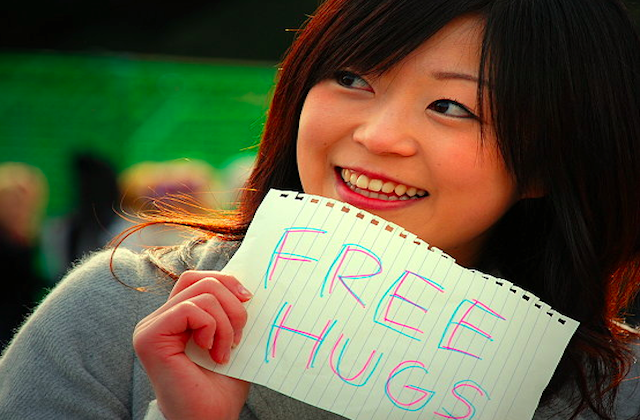
    Free Hugs

    “Don’t wait for extraordinary opportunities.  Seize common occasions and make them great.” ~Orison Swett Marde

    I stood at the library counter waiting to check out a stack of books when I overheard an overworked woman explain to the librarian why her books were late.

    “My boss has me running his errands after hours. It’s a miracle I made it on time to pick up my daughter from daycare,” she said.

    “Are you a personal assistant?” the librarian asked.

    “No, I’m a paralegal,” the woman explained. “But staffing is tight, and if I don’t take on the extra tasks I might lose my job. I can’t be picky in this economy.”

    I understood the woman. Years ago, when my children were younger, I took on extra tasks both because I needed money and because I could not say no. I connected with her story and wanted to do something to let her know she was not alone.

    But what could I offer her?

    The desire to give to others spontaneously was as reflexive as smiling. I had learned it over the years by watching others give to me when I was in no position to give back to them.

    I rummaged in my purse and found two tickets to the movies I had earned from working overtime. I abandoned my books at the counter and followed the woman and her child outside.

    “Excuse me,” I said. “I couldn’t help overhear your conversation about work. I understand what you’re going through because I’ve gone through it myself, and I want you to know I appreciate you even if your boss doesn’t.”

    I handed her the tickets. “Take your daughter to a movie,” I said.

    Her eyes widened and filled with tears. “Thank you,” she said. “You’ve just made my week.”

    That small gesture of solidarity, understanding, and generosity made me feel as close to the woman as I could get to my twenty-two-year old self who worked too many ungrateful hours for too many ungrateful bosses just to help my family survive.

    PBS’s special, “This Emotional Life,” explores the healing power of giving through volunteerism and philanthropy.

    Research shows that once people have enough to meet their needs, additional money and time do not increase their happiness. It’s only when the donor gives away the additional money and time that the donor’s happiness is increased.

    According to Emma M. Seppala, Ph.D., people benefit from giving by connecting with others.

    Humans have a built-in need to relate, resonate, and mirror each other. In a world increasingly dependent on technology, the gift of giving of oneself increases intimacy and reduces the likelihood of loneliness.

    Giving ripples out in waves like a stone plunked into still waters. It connects us in a tangible way. It makes us realize we are not alone.

    Giving doesn’t have to be complicated or grand. It can be an encouraging smile or a gentle hug. Fifteen minutes of attentive listening can be as valuable as a one-hour massage.

    After all, it’s not how much we give, but how we give.

    If we give from the heart, in a desire to connect, then we seize a common occasion and make it special, which is much different than if we give to a great cause out of obligation or self-importance.

    You also don’t have to have a structured system of volunteering and philanthropy to enjoy the benefits of giving. It can become a habit you develop over time until it becomes an integral part of your life.

    Start by paying closer attention to the people you encounter during the day. Soon you will recognize an opportunity to give.

    If you’re leaving a crowded parking lot and notice someone driving around looking for a spot, you can signal for the person to take your parking spot.

    If you see an overwhelmed waitress struggling to keep up with your table’s demands, you can leave a larger tip to show your appreciation. If you notice someone walking around with a permanent frown, you can flash your comforting smile and shine a tiny light on that person’s dark heart.

    Generosity isn’t only for strangers. You can weed a neighbor’s garden, cook a meal for your parents, or pay a visit to someone you haven’t seen in a while. Giving to those you know and love the most prevents you from taking them for granted.

    An odd by-product of giving freely out of compassion and love is how it makes the giver feel. The more you give from a place of unconditional generosity, the more joy you feel. Giving makes you realize how much power you have to make others feel better about themselves and their lives.

    Go out and give whatever you have to whoever needs it. Seek ordinary moments and make them extraordinary. Life truly is a special occasion.

    Photo by Jesslee Cuizon

  • Make the Homeless Smile

    Make the Homeless Smile

    It’s the little things we do in this world that make a big difference. What if we made kindness a trend?

  • Are You Stressed, Rushed, and Aggravated?

    Are You Stressed, Rushed, and Aggravated?

    Walking Through Airport

    “Meaning is not what you start with but what you end up with.” ~Peter Elbow

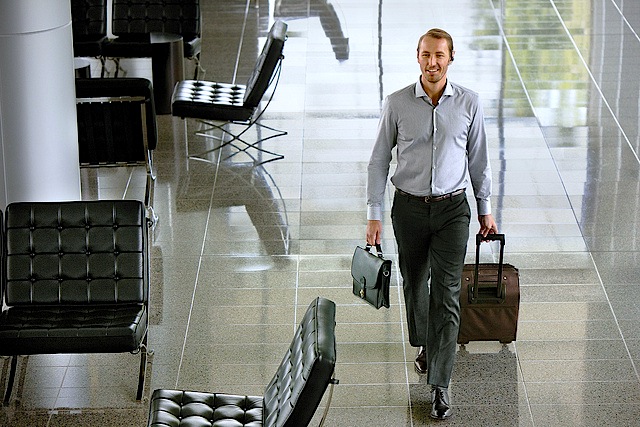
    As a boy, I had a romantic notion about having a job where I traveled for business. It sounded so important and stylish. I liked the idea of dashing through airports to my next big meeting.

    I thought it meant that mine would be a wider world. And so it was.

    Be Careful What You Wish For

    As often happens, what you think about comes into being. I found myself on my very first “business trip.” I was going to the exotic location of Moline, Illinois.

    In my fantasies I was thinking more along the lines of NYC or London, but hey, it involved an airplane. Actually, it wasn’t even a jet; it was this very loud, somewhat cramped prop plane.

    So a couple hours later, after flying at a surprisingly low altitude and slow rate of speed, I had traveled from a semi-rural location with corn and cows to…another semi-rural location with corn and cows. It seems my dreams of importance and style were still in my future.

    Dashing Didn’t Turn Out To Be So Dashing

    My life and work continued down this same path, so occasionally schedules were tight. Once, I remember literally running through an airport so as not to miss a flight.

    It looks good in the television commercials but let me tell you, running in a suit and tie, toting a briefcase and an overnight bag isn’t so sexy. It’s more sweaty and disheveling. I must confess, I felt less than debonair.

    The Illusion of the “Good Seat”

    Every flight (and there were many), I vied for a good seat with the rest of my fellow business travelers. I gloated over my exit row seat or my aisle seat. I glared enviously at the first class passengers, already seated with their complimentary mimosas.

    When it came time to disembark, I leaped to my feet the moment the “Remain Seated” sign went out. I mean, you’re supposed to. At least you must be, because that’s what everyone else was doing.

    I told myself it was important that I leave the plane immediately. After all, I had pressing business. That’s why I’m flying.

    And Then I Woke Up

    This dream of being a business traveler turned out to be not so dreamy after all. Traveling is a hassle with the hotels and cabs and parking garages and strange cities and expense reports. Airplane seats are tight and fellow travelers are sometimes surly.

    This isn’t what I signed up for. I started to wonder about the ground rules I had assumed regarding flying for a living.

    Questioning the Unstated

    What is a good seat? I’ll tell you. There’s only one on the plane: it’s the one the pilot sits in.

    The rest of us, no matter where we sit, are getting basically the same experience. Once I accepted that, I have never had a bad seat.

    What’s the rush to get off the plane? When I wait until everyone else has cleared out around me, it is far easier to collect my things. I don’t hack anyone else off by getting in their way to rush off the plane either.

    I generally go for the window seat now, not because I prefer it particularly. It just means I am not in any hurried person’s way when it comes time to deplane.

    This leisurely attitude means I spend perhaps 10 more minutes aboard if I am seated near the front. If I am seated near the back, it costs me virtually no time at all. And I still get to the baggage claim area before my bags.

    I get to airports early. I check in and kick back. Did you know they put bars in airports? I find this highly convenient for this back kicking.

    I pack light. I generally travel to places that sell just about anything I regularly use. I have found that even developing countries have food and toiletries for sale.

    Sharing My New Found Travel Ease

    Once I found myself on an overbooked flight. Five people were in front of me in line trying to get boarding passes. As each one of them in turn berated the gate agent, all she could do was apologize and say she couldn’t give them a boarding pass at this time.

    When it was my turn, I saw her steel herself for the next verbal assault. But I figured something out as I stood in line: berating the poor lass wasn’t resulting in a boarding pass for anyone.

    So I just said, “Tough day, huh? Listen, if you can get me on this flight I would really appreciate it. Just do the best you can.”

    Five minutes before they closed the jet way doors, she called one name to give out a single boarding pass—mine.

    I wanted to throw a fit as much as the next guy as I stood in line. But what would be the point of ranting at the last person who could help me who, incidentally, was not responsible for causing my problem?

    I didn’t see one glimmer of recognition out there amongst those envious faces of the grounded either. They all had the same chance as me and they had it first. We make our own reality. Own it, or don’t.

    The Traveler, Well Seasoned

    The bottom line is this: air travel, or anything else, is what you make it. I got to live my illusions until I decided they no longer served me.

    I have a far different experience now, even though the external details remain basically the same. I have no stress and I get where I want to go when and if I have a notion to go anywhere at all.

    I am a fan of destinations, but the journey happens too. While I may not have always taken the road less traveled, these days I always choose the travel encounter less experienced.

    Photo by plantronicsgermany

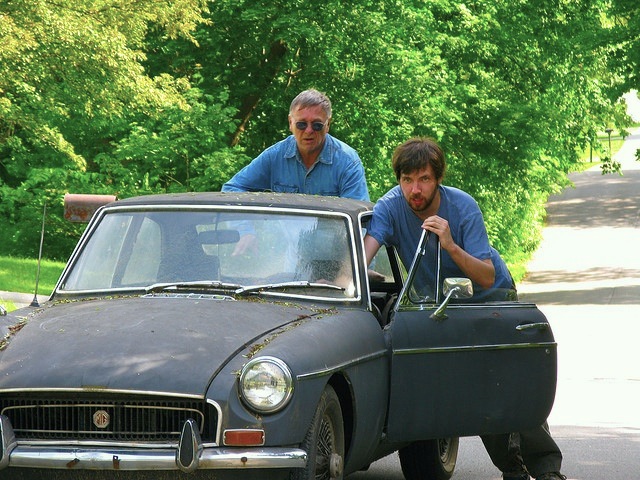
  • You Have the Power to Change Someone’s Day for the Better

    You Have the Power to Change Someone’s Day for the Better

    Pushing Car

    “It is one of the most beautiful compensations of life that no man can sincerely try to help another without helping himself.” ~Ralph Waldo Emerson

    It’s a feeling of dread. Maybe you’ve experienced it before.

    You’re driving down the highway and suddenly something goes wrong. You’re stepping on the gas pedal but nothing is happening.

    All the little lights on the dashboard come on and you notice one particular gauge you’ve been meaning to address sooner.

    The needle is just past the E. You’re out of gas. 

    It’s a helpless feeling. Desperation flashes through your mind as the wheels begin to slow. Other cars start passing you as you attempt to merge over to the emergency lane to get out of the way, the whole time hoping you can coast just a little farther, ever closer to the oasis of fuel at the next exit.

    Maybe that isn’t how it felt for you or perhaps you’ve never been through this little peril. But that’s how it felt when I ran out of gas recently.

    I was four or five miles from home, cruising down a long hill on the interstate when I realized my car wasn’t responding to my foot’s orders. 

    Fortunately, I was able to get over and coast all the way to the next exit and even up the ramp.  My mind raced, wondering how far I was going to have to push the car, and worse, if it would be uphill.

    When my vehicle’s momentum finally slowed to a stop, I was relieved to see the gas station only a few hundred yards away and that I’d only have to overcome a slight incline to get there.

    So, I got out and started pushing. As I grunted and heaved I was unpleasantly surprised at how heavy my little car was on a relatively flat stretch of road. But I pressed on, inching my way towards the plastic gas station sign that signaled my salvation. 

    My muscles strained against the heavy burden, legs and arms burning from the exertion. I thought about the times I’d seen other people who were out of gas. I always felt bad for them, maybe even a little embarrassed for them.

    Now I felt the shame I’d always imagined those people felt.

    More than a few times, I’d actually stopped and helped them push their vehicles to the nearest station. While I lumbered forward, one particular instance popped into my head from several years before.

    I was in Austin, Texas for a convention. A friend and I had been hopping around to different bars (like any good convention-goers) when, from the sidewalk, we saw a guy pushing a monstrosity of a car. It was a big convertible from the 1970s. 

    I don’t recall what make or model the behemoth was. All I know is that it was the heaviest object I’ve ever tried to move in my life.

    Still, my friend and I started pushing with the guy. He hadn’t seen us at first and was surprised that his task had been suddenly lightened. He smiled back at my buddy and I as we kept pounding our feet across the pavement, one foot in front of the other.

    “Just steer,” I told him as we kept easing the car towards a section of the road that began to slope downhill. “Once you get to where it starts slanting down you’ll be fine,” I said. 

    After several exhausting minutes, we reached the crest in the road and the car began to coast on its own. The driver thanked us and offered us money, which we declined. He waved back to us as he hopped in and guided the wheeled boat to the station.

    We went on about the rest of our night and didn’t give the event much thought. In fact, I hadn’t thought about it in years.

    Now here I was, in the same predicament, out of gas and trying to reach a little section of the road up ahead where it started to slope downward, the whole time trying to steer and push, a difficult pair to manage at once.

    Suddenly, the car felt like it was half its weight. I first looked down to see if I’d reached some kind of a little down slope or something. Then I heard a guy’s voice from behind me. 

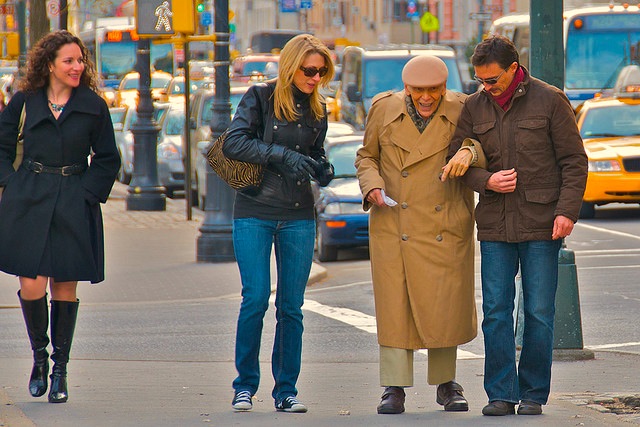
    “Thought you could use a little help.”

    I turned around to see a total stranger, in his mid-thirties, pushing hard against the back end of my car. I smiled broadly. “Thanks man!” I shouted over the passing traffic.

    He had parked his truck just off the exit, probably as soon as he had seen my plight. He hadn’t hesitated or thought about helping me for more than a second. His instant thought had been to help.

    “You should be okay once we get to that little down slope up ahead,” he commented. 

    Inside, I laughed, remembering how I’d said those exact words to the guy in Austin a few years before.

    A minute or so later, we reached the downhill section of road and my car began coast itself towards its haven. “I think you’re good,” he yelled and waved.

    I thanked the man again and hopped in my car, steering it into the station on nothing but gravity’s sweet momentum.

    I don’t know much about karma, but I do know this: life presents us with opportunities, little moments where we can make the world a better place with a simple action.

    That stranger made my day better by lending a hand. He lightened my load and thus, lifted my spirits.

    Had he not helped, I may have become annoyed at the situation and more easily bothered the rest of the day, even irritable. I could have returned home less happy and let those feelings pass from me to the people around me, making their day worse.

    You have an extraordinary power to change someone’s day for better or worse, and you have no idea how far reaching that impact will be. 

    Another thing I took away from the gas incident is that good deeds never seem to go un-repaid.  It is an indelible truth that I’ve noticed time and again. Call it karma or mitzvah or comeuppance, it all works the same way.

    I kept smiling as I filled up my tank. I felt grateful that a random stranger had helped me. It gave me a good feeling inside, a sense that everything would be okay, no matter what.

    I started to replace the gas cap when I heard a familiar sound on the other side of the pump. A police officer in an old, beat-up pickup truck was trying in vain to get the engine to turn over.

    “Battery dead?” I asked. “If you need a jump, I have some jumper cables in the trunk,” I offered.  The man’s frustration visibly eased a little.

    “Thanks man,” he replied.  “I’d appreciate that.”

    “No problem,” I said as I reached in the trunk and grabbed the cables. “It’s always good to help someone out.”

    Photo Geoffrey Callaway

  • How to Be Kind to Yourself in a Busy World

    How to Be Kind to Yourself in a Busy World

    Relaxing

    “The time to relax is when you don’t have time for it.” ~Sydney J. Harris

    A few weeks ago, I had a panic attack. It was the first time in my life that I had experienced such unfamiliar feelings of intense fear and debilitating terror. As each prolonged minute painfully elapsed, I honestly thought that I was dying.

    At the time, of course, I had no idea what was happening to my body.

    I did not know why my heart was racing, why my face was numb, or why my tongue felt like it was choking me. Why my hands and feet were tingling, why my arms felt heavy, why my head was spinning. Or why I felt absolutely certain that my body was shutting down.

    I had convinced myself that what I was experiencing was unquestionably my central nervous system failing. I needed to seek medical attention immediately. I couldn’t allow myself to die right here in my kitchen.

    So, I called an ambulance.

    The paramedics ran a few tests, assuring me that, thankfully, I was not about to die and my condition was far from my self-diagnosed critical state.

    As I started to calm down, regaining control of my breathing, the physical symptoms slowly dispersed. I began to realize that the problem that had suddenly overpowered my entire body, was in fact, all in my head.

    My mind was suffering from extreme exhaustion.

    The troubling thing was that panic attack had happened to me out of the blue with absolutely no warning signs. It was a seemingly average day; I was getting ready for work after a morning of studying and visiting the gym. I could not identify the obvious trigger.

    Over the days that followed, I felt physically and mentally drained.

    My body ached, muscles felt tense and sore, to the extent that I even lost control of my tongue, making the simple act of speaking a tiresome struggle. My head was working hard to make sense of it all, while trying to sift through the relentless negative thoughts I was constantly creating.

    During those weeks afterward, I learned how much the mind can affect the body, and vice versa. I also learned how vitally important it is to take care of your mind, reduce stress, and be kind to yourself.

    The world is full of stress inducing scenarios; it’s how we react to them that really matters.

    Listen to your body.

    Your body is your greatest teacher. It knows you better than any standardized text book or generic medical advice.

    I learned that prescribed antidepressant medication did not work well in my body; however, daily relaxation techniques through yoga and meditation invited a little bit of mental clarity into my day.

    Only you know what works best in your body, and what makes your heart sing.

    Just be.

    We need to understand that we are human-beings, not human-doings.

    Taking time out of the busyness of everyday life to just be is good medicine for the body and soul. By disconnecting from the influx of social media updates, the steady stream of e-mails, and instant text-messaging communication, we can recharge naturally away from the buzz of the electronic world.

    The best thing is, we don’t actually need to do anything—so put down the books, turn off the guided relaxation CD, and just feel content with just being where you are, in this very moment.

    Trust the process.

    Sometimes we push too hard to make things happen.

    In the weeks leading up to my panic attack, I was driven by the fear of failure. Everyday, I was overexerting my brain, force-feeding it information to get ahead in my studies, reasoning with myself this was the only route to success. Consequently, I had very little time to relax and absorb this new acquired knowledge.

    Trust that where you are right now is exactly where you are supposed to be. Learn that life becomes much easier when you stop fighting against the resistance of your own limitations, just relax, and go with the flow.

    Be open to change.

    We all know that nothing stays the same forever. However, problems arise when we become attached to the way things are.

    Accept that life is a series of ever-changing events and situations. And new opportunities will present themselves to you from time to time. The end of your job in one company simply means the beginning of a brand new set of life experiences waiting for you in another.

    Embrace uncertainty by switching off the worrying mind, replacing the prospect of the unknown with positive anticipation.

    Be kind.

    Emotions that are cultivated in the mind often manifest themselves somewhere on the human body.

    A dull ache in the stomach can translate to a gut full of worries. Similarly, a sore throat may relate to communication and self-expression issues.

    By becoming aware of the sensations in your body and allowing them to reach their full expression, you can learn to send kindness the physical problem. This, in turn, brings a sense of clarity and calmness into your mental world.

    Moreover, if we take good care of our bodies through gentle exercise, nutritious food choices, massage, or just having a long relaxing soak in the bath, our minds will become less chaotic and more of a comfortable pleasant place to stay.

    Photo by GerryT

  • 8 Easy Ways To Spread Happiness Around You

    8 Easy Ways To Spread Happiness Around You

    Happy Days

    “All the flowers of all the tomorrows are in the seeds of today.” ~Proverb

    For as long as I can remember, I’ve wanted to contribute to the world somehow. I’ve always dreamed of starting a charity organization. I bet that, just like me, you walk around with some sort of wish in your heart to change the world in some way, but you might not do anything about it. How come?

    My excuses were time, money, fears, and not knowing how to go about it. I’m guessing you have similar hindrances.

    Until recently I held on to the limiting belief that someday, one perfect day, when I’m done being busy with pursuing my masters degree, working my current part-time job in a call center, and raising two small kids under five, I’ll follow my heart and contribute to this world. Someday.

    It’s a myth!

    Through my job in a call center, I witness lots of tragedies that happen to people, and they’ve been wakeup calls for me.

    I’ve understood something life-changing: all I really have is today. And I better make it count.

    So I made a conscious decision, a choice, to throw all my fears away and start spreading happiness.

    I thought, I might not be able to start a charity now, but I can take a tiny step and start as a volunteer in some existing organization. So I joined hospital clown project, where I do the small, practical stuff for them.

    I also decided to spread happiness around my inner circle—my husband, my two kids, my family, friends, and colleagues, with small things. (more…)

  • 5 Principles to Live by When Life Doesn’t Go Your Way

    5 Principles to Live by When Life Doesn’t Go Your Way

    “You may not control all the events that happen to you, but you can decide not to be reduced by them.” ~ Maya Angelou

    We all have our stories, don’t we?

    Some stories merely create a ripple in our lives, while others go deeper. So much so that they can change the course of our lives. Dramatically.

    Mine is such a story. It’s no sadder or deeper than anyone else’s. It’s just life, and how I choose to respond to it, I have realized, is what really matters.

    My story was (and still is) big enough to change the course of my life, though.

    I chose to respond to it holistically, and by letting go of control and trusting what the universe has in store for me.

    It wasn’t as easy as that, however. It never is. And I certainly didn’t decide to respond in such a way overnight.

    What is my life-changing story?

    My story is of endometriosis and infertility. With the pain that visited me every month, I had always suspected I had endometriosis. It’s not usually something a person really investigates, however—unless, of course, she’s trying to start a family, without any success.

    Which is exactly what happened in my case when my husband and I decided it was time to grow the clan from two to three.

    After a year of trying, it was time to take a look at what was going on. What followed in the next year was a mixture of failure, heartbreak, frustration, anger, and disappointment.

    In all my adulthood, I had been in control of the key events in my life and was very successful. I did well in my studies, held great jobs, bought myself a home, traveled to destinations I wanted to see, and married the person I love.

    Now, for the first time, something that is considered so integral to life wasn’t going to come so easily into mine.

    And I was soon to learn that infertility has more consequences than the obvious one of not being able to have a child.

    I had to question everything I thought I knew about life: (more…)

  • How to Stop Betting Against Yourself: 7 Keys for Personal Freedom

    How to Stop Betting Against Yourself: 7 Keys for Personal Freedom

    “Nothing reduces the odds against you like ignoring them.” ~Robert Brault

    Do you ever wake up feeling like you’re battling yourself?

    What’s worse is waking up in that battle and feeling like you’ve already lost before you’ve even started the day.

    But think about that for a second: isn’t living this way crazy? We think it’s normal to be fighting ourselves. We’re taught we need to grind it out and make something of ourselves to be successful. We’re taught we need to become something.

    And the underlying message is this: who we are right now isn’t good enough.

    We’re starving for acceptance, but see ourselves as flawed, and we end up spending our lives in a quest to prove ourselves to the world and to ourselves.

    The Fallacy of Needing to Earn Your Freedom

    When I was a kid I felt radically wild and free. And I bet you did too. But I also would bet that something changed and you don’t feel as free as you once did.

    As a curious, adventurous lad, I felt like I could do anything, be anything, and create whatever I wanted. My imagination was my only limit.

    But then somewhere along the way I started to hear the voices of my parents, teachers, and adults around me send contrary messages.

    I needed to…

    • Get good grades to prove my intelligence (and my worth).
    • Do what’s right (follow the pages of an old book) and not misbehave to prove my goodness.
    • Conform to socially-approved behavior to show that I was a valuable member of society. (more…)
  • Empower Others and Make a Positive Difference in Their Day

    Empower Others and Make a Positive Difference in Their Day

    Helping Hand

    “Praise is like sunlight to the human spirit. We cannot flower and grow without it.” ~Jess lair

    One of the more important lessons I learned as a child came from my father.

    One day a beggar knocked on our door looking for a giving hand. Though I was a small child, I still remember how he looked. He was old, with an untamed beard and tattered clothes. He had a wretched odor; I imagine he hadn’t showered in months. He was, more likely than not, homeless.

    I remember how my father treated him. I remember my father inviting him into our home, seating him in our kitchen, opening the fridge, and feeding him a hearty meal. I don’t remember much more than that, yet my father’s actions that day taught me an important lesson. It was a lesson about how to treat others. It was a lesson about empowerment.

    Recently, I have gone on a journey in the world of altruism. I sought out “good people” in order to understand the characteristics that define them. What piqued my interest were not just their acts of kindness, but also an understanding of their inner world.

    The inspiring, kind people who I met throughout my journey are incredibly influential teachers. It is worthwhile understanding their insights, the way they approach life, and more specifically the way they treat others. Meeting them has had a profound effect on my life.

    One of the lessons I learned through my interaction with them was the importance of empowering others.

    Each of our inner circles is growing and encompassing more people: children, significant others, friends, colleagues, and random people we meet and don’t know as intimately. As the circle grows, so too does our influence.

    Every nod, every smile, every interaction can completely change the course of someone else’s day. We can either wield that influence in a positive or negative way. The people who I met chose the former.

    The following I would like to dedicate to those special people who identify with their fellowmen, and use their influence to empower them. (more…)

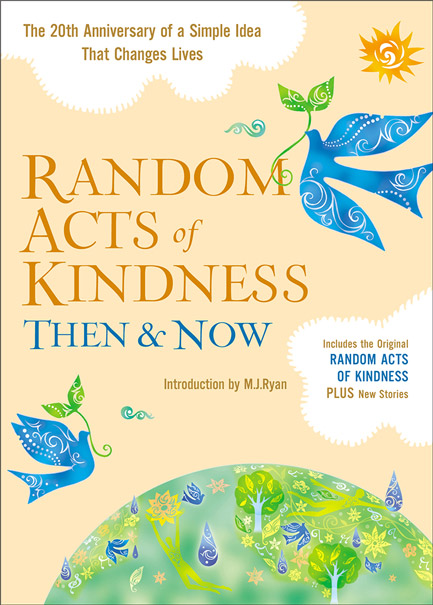
  • Book Giveaway – Random Acts of Kindness: Then and Now

    Book Giveaway – Random Acts of Kindness: Then and Now

    Random Acts of Kindness

    Note: The winners for this giveaway have already been chosen. Subscribe to Tiny Buddha to receive free daily or weekly emails and to learn about future giveaways!

    The Winners:

    “Practice random acts of kindness and senseless acts of love.” ~Ann Herbert

    An unsolicited financial donation right when you need it. Roadside assistance from a stranger after your car breaks down.  An anonymous gift when you’re struggling and in desperate need of a smile.

    These are just a few random acts of kindness that can transform your day and renew your faith in people, and just a small sampling of the type of stories you’ll find in Random Acts of Kindness: Then and Now.

    Twenty years back, Conari Press published the first Random Acts of Kindness book, highlighting stories of people looking out for one another in their daily lives.

    As the book inspired a movement, Conari started the Random Acts of Kindness Foundation, which works with schools and communities to spread kindness.

    Every February for the past two decades, the foundation has spearheaded Kindness week, which runs from the 11th through the 17th.

    To celebrate the week and the book’s anniversary, Conari has offered five copies of the updated book for Tiny Buddha readers.

    Including the original book and new stories sourced through social media, Random Acts of Kindness: Then and Now is an inspiring, feel-good compilation that encourages a more generous, caring, compassionate world.

    The Giveaway 

    To enter to win 1 of 5 free copies of Random Acts of Kindness: Then And Now

    • Leave a comment below, sharing an act of kindness you’ve recently offered or received
    • For an extra entry, tweet: RT @tinybuddha Book Giveaway – Random Acts of Kindness: Then and Now http://bit.ly/Y7Oo9p

    You can enter until midnight PST on Monday, February 18th.

    Learn more about Random Acts of Kindness: Then and Now on Amazon.

  • The World Is a Kinder Place When You’re Kind

    The World Is a Kinder Place When You’re Kind

    Friends

    “Don’t wait for people to be friendly. Show them how.” ~Unknown

    Sometimes I stop to think about how in the world I ended up where I have. I started off with very little, and somehow along the way I have ended up generally happy and on my own two feet.

    My adolescence up to my early twenties had its share of dark days. Whether or not we are lucky enough to have a small handful of people that stick by us no matter what, more often than not we can find ourselves feeling incredibly lonely.

    For a long time through my rough days, I held a sort of grudge against the rest of the world. I had convinced myself that everyone was only looking out for themselves, and I had lost faith in the idea that people were mostly good.

    Where was that feeling of community? Or helping out your neighbors? What about equality and accepting others’ differences?

    The world felt large, dark, and lonely. I felt very let down.

    What I didn’t realize at the time was that as much as those close to me have influenced my growth and my life, those I consider strangers have made just as strong an impact. By closing out the rest of the world, I was really hindering my growth and happiness. Let me explain.

    I had an accident a few years back, and unfortunately, I was far from home and by myself when the incident occurred.

    Many strangers witnessed the accident and casually passed by. Two people who could have just as easily done the same, leaving the accident for someone else to take care of, chose to step in and come to my aide.

    They had no obligation to help, and in fact, had places to be. Instead, they stopped to help me, waited until the paramedics arrived, helped to contact someone I knew, and confirmed that I would be okay.

    I was shocked that people who didn’t even know my name were spending so much time taking precautions to ensure my safety.

    My world was jolted—and I kind of liked it. (more…)

  • Small Acts of Love and Compassion Can Change the World

    Small Acts of Love and Compassion Can Change the World

    “All great changes are preceded by chaos.” ~Deepak Chopra

    We live in an eternally pregnant present, full of possibilities for a bright future. I believe it has always been that way throughout the history of the world. That’s just how the universe works. Unfortunately, we haven’t always experienced our lives the way the universe intended, especially right now.

    Humanity seems to be forever in a time of chaos, marked by violence against one another, and most of us do not know how we got that way or when it will end.

    I admit that sometimes I long for the good old days of the status quo, when I could navigate daily ugliness with a shrug and sit through dicey evening news with a steadfast, glassy stare. It was easy to ignore my feelings and stay mired in dark indifference. I just turned off my heart to survive it all. It was safer that way.

    But it is also very clear to me that the days of dark indifference are over. I think you might feel it too. Yes, life is filled with the same old problems and yes, life is fast. But we now move too quickly to rely on the same old solutions. Our survival tools are obsolete because humanity has upgraded. We are becoming more balanced. We are becoming our better selves.

    Six years ago, when my small family moved to Denver for my husband’s job, I fought it tooth and nail. I hated the harsh, dry climate that made my nose bleed and the 1100-mile distance that kept me from the rest of my family and friends. The culture shock and the intense high altitude sun forced me to retreat, literally, to the inside of my house and the inside of my soul for comfort.

    That was the beginning of creating my own better self. I read, meditated, and read some more. And I finally started to learn to balance my head and my heart.

    My effort started an inward journey that continues still, even though my days in Denver are long gone from my personal map. But the experience of relying on my heart to inform my thoughts forced me to evolve.

    I suspect the entire world is evolving, one person at a time. We are reaching a critical mass, a beautiful tipping point for humanity. We are leaving behind the outdated Handbook of Life, with all its heavy-handed solution of war, judgment, and oppression, and writing a new one from our hearts. (more…)

  • 10 Ways to Be Great Today

    10 Ways to Be Great Today

    Earlier this week I wrote a post about the pursuit of greatness. I highlighted how it can sometimes create stress when it manifests as fear that we’re not good enough and might never be.

    In reviewing the reader comments, I felt a sense of deep appreciation for knowing so many truly great people. And I imagined there were far more of them who didn’t comment—some who may not realize just how great they are.

    I decided to put together this list based on some of my favorite related quotes. If you’re looking to nurture greatness, these tips may help you do just that—or they may help you recognize the extraordinary impact you already have on the people around you.

    1. Be a source of kindness.

    “Men are only as great as they are kind.” ~Elbert Hubbard

    We all want to live in a world where people are compassionate, understanding, and kind. Every time we treat someone this way, we do our part to create that kind of world.

    2. Treat everyone equally.

    “The true measure of a man is how he treats someone who does him absolutely no good.” ~Samuel Johnson

    There’s another saying that suggests we should be nice to people on the way up because they’re the same people we’ll meet on the way down. But there’s a more important reason to treat people well: We all thrive together when we stop fixating on “up” and “down” and choose to stand beside each other.

    3. Remember that actions speak louder than words.

    “Great thoughts speak only to the thoughtful mind, but great actions speak to all mankind.” ~Theodore Roosevelt

    Most of us have ideas to make a difference in the world—and we can do these things if we’re willing to act as much as we think and talk. Take your plans out of your head and off the page, even if with just one small step. Wherever you are in the process, that’s the opportunity to be great. (more…)

  • We Need to Be Giving: Kindness Can Be a Win-Win Situation

    We Need to Be Giving: Kindness Can Be a Win-Win Situation

    “We make a living by what we get, but we make a life by what we give” ~Winston Churchill

    When asked what his religion is, the Dalai Lama tends to respond with one word: kindness.

    In the world we live in today it’s easy for us to get so caught up in our goals and commitments that we overlook the suffering or needs of those around us.

    Kindness may sometimes be put to the bottom of our to-do list when we feel a desperate need to survive, which seems to be increasing with all that is going on globally at the moment.

    Many of us have lost our jobs, are renting our homes from the banks, and are just about scraping by for the daily necessities.

    The paradox there is that now is the very time we need to be kind to one another because we need one another more than ever.

    And the old proverb “give to receive” is possibly the guiding light that we are meant to follow.

    Having recently returned from India where I spent six weeks in Dharamsala, alongside my Tibetan friends, they taught me a thing or two about the benefits of giving.

    My line of work takes me into the lives of Tibetan monks. These monks are my friends and really want what I am doing to succeed. As a result, they open up and welcome me and my friends without thinking twice.

    For example we were celebrating the birthday of one of our friends. It is not the tradition for Tibetan monks to celebrate birthdays, only that of the Dalai Lama’s, so they were not so sure what to do.

    I rounded up cakes and drinks and asked the monks if we could have our little get together in their working space, to which they readily agreed.

    We did the typical happy birthday song and cut the cake while a handful of the monks watched on slightly bemused at our Western ways. Slowly the rest of the monks wandered in and each of them instantly dropped the work they were doing and sat down to take part.

    Despite their lack of understanding of our unusual rituals they could see this was important to us and that seemed to be enough for them to make time for us.

    As a way of saying thank you for all they had done, I donated a hot water tank for the monastery which meant no more cold bucket showers for the monks when temperatures drop below freezing, as they easily do high up in the Himalayan foothills.  (more…)

  • Being Kinder in What You Say, One Word at a Time

    Being Kinder in What You Say, One Word at a Time

    “The smallest act of kindness is worth more than the grandest intention.” ~Oscar Wilde

    I believe in kindness.

    I am not, by nature, a kind person.

    But I’m trying to be.

    My tongue is sharp. I’m far too often the first to come back with a sharp retort.

    Sarcasm and I were old companions, until about four years ago, when I had what I thought was just a casual conversation with a friend. But the next time I saw her, there was a distance between us.

    I finally had a chance to speak with her alone, and asked what was the matter.

    “You always have get a shot in.”

    Oh.

    I couldn’t even remember what we’d been talking about. Nothing important, really.

    I did know I hadn’t meant to be cruel. That whatever it was I’d said, I’d only meant it as teasing, or a friendly poke. A chance to be clever, witty.

    But I’ve learned that it’s better to be kind than clever.

    That too often what I think is wit is closer to hurtful.

    I may think we’re playing, trading silly jests, but I don’t know how the other person is feeling that day. Something that may normally ride lightly on them may strike an unknown injury, remind them of another hurt.

    A game that I played for my own amusement isn’t worth the risks.

    I don’t really want to be the person who always gets a shot in. The person my friends are hesitant to chat with, because they don’t know if they’re going to be next to be teased.

    So I’m willing to work at nurturing kindness in my speech, and in my actions. I haven’t changed my entire life yet, but drop-by-drop, word-by-word, lots of little things add up.

    Here are some of my “daily drops,” should you wish to incorporate them into your life, as well: (more…)

  • Are You Too Nice? How to Be Kind and Be Good to Yourself

    Are You Too Nice? How to Be Kind and Be Good to Yourself

    Nice girl

    “We must each lead a way of life with self-awareness and compassion, to do as much as we can. Then, whatever happens we will have no regrets.” ~Dalai Lama

    I finally decided that I would call my friend. By then, our lunch plans wouldn’t have made any sense since it was getting close to midnight.

    She answered and started speaking immediately. “Hey, I lost track of time. I’ve been running a lot of errands today. Oh, did you hear about this new job opportunity I’m getting? No? Let me tell you about it…”

    I felt a wave of emotion within me.

    This was the third time she had flaked on me this week, and it always ended with me calling her to find out what had happened. I noticed myself looking down at my feet at the end of our conversation, holding the phone in my hand as I said cheerily, “No, it’s totally fine! Don’t worry, I completely understand. I hope you have a good night!”

    When I was younger, I would tell people proudly that one of my strong points was that I would never get mad.

    “Have I ever been angry?” I would ask, knowing full well my reputation for being mellow. However, as time went on, I began to lose track of what being nice really meant.

    When faced with challenges or confrontations with other people, I would automatically be agreeable, regardless of what I was feeling. However, on the inside I felt depressed and anxious.

    I didn’t allow myself to share my thoughts and feelings, and this finally came to a climax when I was unable to speak my mind during my four-year relationship.

    For me, being agreeable had transformed into something ugly and submissive, where at times I didn’t recognize myself. During arguments, I would attempt to be accommodating; however, when alone, I was caught up in self-pity and resentment.

    I didn’t recognize this then, but I had made myself feel completely powerless. As I started to think about my day-to-day experiences with other people, I realized that I was being taken for granted.

    People assumed that I would not speak out if I were upset. Whether I liked it or not, I had limited myself, and was having less genuine relationships with others. (more…)

  • No Act of Kindness is Too Small

    No Act of Kindness is Too Small

    “There are two ways to live: you can live as if nothing is a miracle, or you can live as if everything is a miracle.” ~Albert Einstein

    One of the key ways to bring about greater harmony and peace in our lives is through understanding—looking at a situation and taking the time to put ourselves into the minds and hearts of others.

    And the key to understanding begins with the seed of compassion. Sounds so simple, right? So why don’t we do it?

    As people living in the west, we can sometimes be in too much of a rush to be kind—particularly when we’re dealing with deadlines and pressures.

    Can you think of a time when you brushed passed a certain situation and later regretted it? Feeling afterward that somehow you should have lent a helping hand, no matter how big or how small?

    In Northern India I am very fortunate to have what I call my Tibetan family within a monastery there. The monks have welcomed me into their world, and as they go about their daily business, I’m right there with them spending time.

    The benefits of this unique and special opportunity range from attending wonderful sacred events to sitting watching TV together as they serve me momos (dumplings).

    One night, while relaxing with the monks after a nice meal, I received a late call and learned that my cat back home in London was sick.

    The monks stopped what they were doing—one was even dragged back out of bed—and did an impromptu prayer session for my furry friend without a second thought.

    There they were, five of them chanting away. It blew my mind, because it demonstrated to me that they understood my fears and concerns and held my cat’s health in great importance.  (more…)