Tag: kind

  • 4 Ways to Change Your World by Being Kind

    4 Ways to Change Your World by Being Kind

    “Respond kindly to someone who is unkind to you.” ~Lori Deschene (from Tiny Buddha’s 365 Tiny Love Challenges, January 15)

    Growing up with an alcoholic father, I was often on the receiving end of his anger. As a child, I didn’t realize his behavior was a reflection of how he felt inside and wasn’t about me at all.

    I thought he was angry because I wasn’t good enough or I had done something wrong. I felt like if I could just be perfect enough, maybe he would love me. I tried and tried, but trying to be perfect didn’t work.

    As I got older, I learned to react to everyone around me. If someone was rude, I was rude back. If someone yelled at me, I yelled back. This harmed my relationships and caused a lot of isolation in my life.

    I wanted to be alone because I felt like everyone hurt me. But, I discovered, that is not the answer.

    It’s taken me years to realize that I’m responsible for my own behavior and can’t control others. I now focus on behaving with kindness to everyone and my relationships have improved as a result.

    It’s not always easy, but the following tools have helped.

    If someone triggers fear and anxiety, don’t respond until you are calm.

    Reacting to what someone is saying rather than responding from a place of calm rarely goes well. I’ve learned that I don’t have to answer every question. I can say, “I don’t want to talk about that right now,” and come back later in a better frame of mind.

    When another person projects their fear onto you, it’s okay to walk away.

    I came to the realization that I was walking into my parents’ house in a state of agitation and defensiveness; I was adding my anger and anxiety to the negative energy in the house.

    An amazing thing happened when I stopped walking in the door that way; it seemed to positively affect everyone’s energy. There is a sense of peace in our interactions that wasn’t there before.

    Now, when I walk into any situation at work or with family, I check my attitude when I walk in the door. Often, that makes a big difference.

    When you don’t add your fuel to the fire, sometimes the fire goes out.

    Don’t make up stories about the motivations of others.

    I’ve come to understand that a lot of the things I think in my head aren’t true.

    If a friend calls and cancels, I tell myself it’s because she doesn’t want to hang out with me. If my husband is in a bad mood, I tell myself it’s because he’s unhappy with me.

    I don’t know any of those things. They are only stories in my head. These stories create defensiveness in me, which creates conflict where none exists.

    There are a million reasons people might cancel plans or be in a bad mood. Most of the time, it has nothing to do with you.

    You can’t make another person happy or unhappy. Another person cannot make you happy or unhappy. A person’s happiness comes from their own thoughts and behavior, not what someone else is doing.

    The next time someone does something and you assume you know why, question whether you really know if that’s true.

    Try love first.

    Most people are doing the best they can from their level of consciousness. We are all in this together and at our core, we are basically good.

    Hatred and anger cannot wipe out hatred and anger. But sometimes love and understanding can.

    I was always waiting for an apology or a change in behavior from the other person. Sometimes it has to begin with you. Sometimes, you have to accept the fact that the other person may never change.

    What is hurting you most is your behavior toward them. Changing that will help you feel better.

    Resentment will poison you from the inside. Forgive the other person for yourself. Let the anger go.

    Amazingly, sometimes that also changes the other person. But you have to go first.

    Love is worth a try. Give it a shot.

    Set boundaries when needed.

    Part of learning to love yourself is learning to listen to your gut and speak your truth.

    If someone is being unkind to you, say something.

    Don’t let others treat you poorly. Treat yourself with love and compassion.

    Don’t blame, criticize, or complain. Calmly state your boundaries.

    Sometimes, relationships don’t work out. Sometimes, you need stronger boundaries.

    But changing your behavior instead of waiting for the world to change gives you back your personal power.

    Come from kindness and watch your world change.
  • 5 Unexpected Benefits of Being Friendly

    5 Unexpected Benefits of Being Friendly

    Smiling Gingerbread

    “A good character is the best tombstone. Those who loved you and were helped by you will remember you when forget-me-nots have withered. Carve your name on hearts, not on marble.” ~Charles H. Spurgeon

    What are the benefits of being friendly? Some might argue that there aren’t many advantages to it. These people might even tell you that you should mind your own business instead of trying to please everyone.

    But is friendliness really just an attempt to please others? Is it really a sign of insecurity or even weakness?

    I believe friendliness is a sign of inner strength and balance.

    Just a year ago, I was confronted with an extremely negative person at work. At first, I believed she acted as she did because she was struggling with he burdens we all have to bear from time to time.

    I thought the problem would eventually resolve itself, but it didn’t. Only in retrospect I am beginning to understand that unresolved underlying pain could have influenced her behavior.

    Unfortunately, I didn’t consider this possibility back then. In my ignorance I assumed the worst of her, thinking her behavior was a cold and calculating attempt to manipulate everyone around her.

    I judged her based on her actions, without considering the underlying motives. She was igniting conflicts wherever she went, so I assumed she felt more comfortable in an unstable environment.

    Usually, I try to stay calm in situations like this. But there are some people who know exactly how to push your buttons. She was one of them.

    I had already decided to confront her when something unexpected happened. Apparently, she had found one of my colleagues’ sensitive spots, which led him to burst out yelling at her in front of our boss.

    Our boss wasn’t too happy about that, demanding my colleague take anger management training.

    The whole experience taught me an important lesson. It showed me that calmness and understanding are the only healthy options you have when you’re confronted with someone who’s dealing with underlying pain.

    Here’s what I learned about the advantages of being friendly.

    1. You can make a difference with friendliness.

    Sometimes it feels as if the world is filled with impolite or angry people. As a result of this misperception, we’ve learned to raise our shields to the maximum. Instead of being open to people we don’t know yet, we do our best to avoid the risk of being vulnerable.

    You can make a difference in this world by making the first step toward a potential relationship with others. Or, as Scott Berkun, former manager at Microsoft, has put it: “Initiating a positive exchange is a hallmark of a difference maker.”

    Just imagine what could have happened if I had the courage to make the first step with my not so polite colleague. It would have given me at least the chance of discovering the underlying cause of her behavior, and maybe even helping her.

    Instead, I was so preoccupied with defending myself that I didn’t even consider honest friendliness as a possible means to resolve the issue. This was the moment when I realized that I could only make a difference by being kind and helpful to other people.

    2. You’ll strengthen your willpower.

    Let’s face it, there will always be people who test your limits. It’s not easy to treat others with respect in such situations.

    We all know how difficult it can be to be kind to certain people. However, we shouldn’t use their misbehavior as an excuse to treat them just as badly.

    Allowing someone to make us behave impolitely only makes the situation worse. On the other hand, if we have the courage and willpower to keep our balance, we can contribute a great deal toward the easing of the situation.

    I experienced this firsthand, when my boss was yelling at me for a mistake I’d made. Instead of arguing at the same level of aggression, I chose to remain calm and tried to explain what had led to my mistake. Surprisingly, this not only helped calm him down, but it also helped me resolve the problem quickly.

    These are the situations that both test our limits and strengthen our willpower, if we choose not to give in to the temptation of treating others as they treat us.

    3. Good deeds add meaning to your life.

    Friendliness isn’t just about treating others with respect, it’s also about caring for others: You treat others friendly because you care about them and their well-being. You help others because you see yourself in them.

    Kindness doesn’t have to be limited to people we know. Instead, it’s the universal willingness to treat each individual the way we would like to be treated.

    Being friendly and helping others will add significance and meaning to your life. Knowing that you are helping to make this world a better place is one of the most rewarding experiences.

    4. It makes you feel good.

    Being friendly to others doesn’t just help them, it works in your favor as well. Friendliness will instantly boost your happiness.

    Whenever I’m being kind to another being, I feel good about myself.

    Just recently I was buying a train ticket at a vending machine when I noticed the man standing beside me at the other machine didn’t have enough change to pay for his ticket. He had already thrown in many coins, but seemed a little helpless when he realized that there weren’t enough in his wallet.

    I asked him if he needed more coins. It turned out that it wasn’t much, so I gave him what he needed.

    The man’s response truly warmed my heart. You could see the happiness and relief in his face, and that made me happy as well.

    5. It will likely come back to you.

    Should we be friendly just so that other people will reciprocate the favor in our time of need? I think that would be rather selfish. True kindness and friendliness can only be expressed when we let go of the need to gain something from it.

    Still, I believe that if you’re a genuinely friendly person, you’re more likely to be surrounded by people who are also friendly and accommodating. Kindness attracts kindness, just as rudeness often attracts rudeness.

    It really feels as if I receive that which I send out to another person. And that makes me feel appreciated, accepted, and respected for who I am.

    We all face challenges, and it’s not always easy to be friendly and polite, but doing so can make a profound difference—for others and for ourselves.

    Gingerbread man and woman image via Shutterstock

  • Your Kindness Could Help Someone Find Hope in the Darkness

    Your Kindness Could Help Someone Find Hope in the Darkness

    “Remember there’s no such thing as a small act of kindness. Every act creates a ripple with no logical end.” ~Scott Adams

    I was ten years old and growing up in a home that I can only describe as hellish. Among other things, our father forced us to stand against the wall for long periods of time until we shook from exhaustion. On one such day, he sent me to McDonald’s to buy him a cup of coffee.

    I was happy to get out of the house and escape my punishment momentarily. As I headed to McDonald’s, I wondered what it would be like to never have to go back home. I hoped that I would have a better life someday, but I could not see how.

    When I arrived at my destination and opened my mouth to order the coffee, I burst into tears. I just could not hold them back any longer and they came pouring out right there at the counter in McDonald’s.

    As I stood there, a sobbing, broken little ten-year-old girl, a lady came out of nowhere. She said, “Sweetheart, would you like something for yourself? I will buy you anything you want. Just tell me what it is and I will get if for you.”

    I was so touched by her kindness that I cried even harder. There was nothing on that menu I wanted. I wanted a better life. I wanted never to have to go home again.

    Eventually I stopped crying and went home with the coffee, but I never forgot that lady or her kindness to me. I’ve often wished that I could find her and thank her for what she did that day.

    We interact with so many people every day, in traffic, at the office, and online. If you walk down the sidewalk in a major city you will walk past hundreds of people. The next time you do this, look at them. Really look at them.

    Every single one of these people has had his or her heart broken at one time or another. Guaranteed. You never know what other people are dealing with.

    The person who cut you off in traffic may be struggling with a difficult child or spouse. He or she may have just gotten fired. Of course, it’s possible that they’re simply rude, but you never know. We can’t always be at our best, but we can try.

    It is not always possible to know why people act the way they do, but I can guarantee that you will feel better if you give people the benefit of the doubt more often than not.

    When in doubt, be kind. It doesn’t cost anything to be kind.

    Can you express concern for someone today? Will you take a minute to hold the door for someone or let them in front of you in traffic?

    Why not pick up the phone and call a friend who could use a kind word? You could send a quick email or text to someone you’ve been thinking of. If you want to go all-out, send a hand-written note or card to someone.

    When you encounter a person who is less than charming, consider taking a deep breath and trying to understand where he or she is coming from. Do they have a point? Can you let it go?

    Instead of rushing through your day, try slowing down and seeing how you can be of assistance. Be open to being of service, even in small ways. Instead of worrying because you’re too busy at work to volunteer on a regular basis, you could just volunteer for an hour or two.

    You can make an enormous impact on someone’s life, even with one small kindness. I still struggle to find the words to describe how much that simple act of compassion meant to me all those years ago.

    I went back home and life was still hard. Nothing changed for a very long time, but I had a tiny seed of hope in my heart that began to grow.

    I went to bed that night knowing that there is kindness in this world. Good things were possible and all was not lost. Somehow, it would be okay because there are good people in the world.

    Even today when I’m struggling with something and all seems lost, I remember that day. I remember that there’s always hope. I send a silent thank you to my would-be benefactor.

    You don’t have to be Mother Teresa or Abraham Lincoln to make an impact in someone’s life. You can simply take a minute out of your day to encourage someone. You never know how much of a difference you can make with one small act of kindness.

    If you lived in the south suburbs of Chicago in the late seventies and offered to buy something for a crying girl at McDonald’s, I want to send you a very belated thank you. This post is dedicated to you.

  • The Guru of Caumsett: Simple Yet Profound Lessons from a Kind Stranger

    The Guru of Caumsett: Simple Yet Profound Lessons from a Kind Stranger

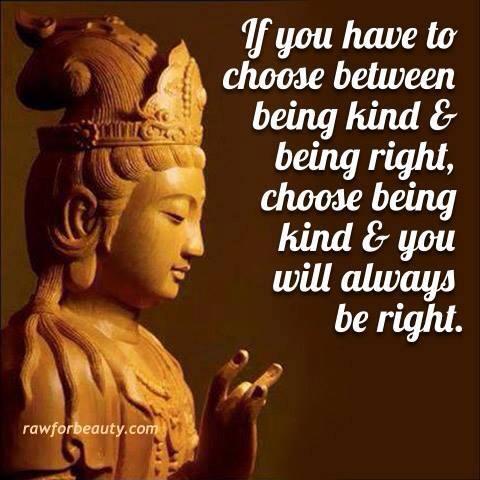
    Buddha

    “See the light in others, and treat them as if that is all you see.” ~Dr. Wayne Dyer

    It was about a month after my son was born that I was introduced to the man I have come to think of, only somewhat facetiously, as “The Guru of Caumsett.”

    My husband and I were at the park with our newborn son when a man I’d never seen before began waving as he strode determinedly—despite a pronounced limp that caused him to drag, ever-so-slightly, one leg behind the other—past us.

    “How are you doing?” my husband called, waving back while I smiled and nodded my hello.

    “Just great! It’s a beautiful day. You enjoy it!” he encouraged, never stopping completely, but all the while holding my gaze and smiling brightly at us, as if he’d just bumped into long lost friends.

    I questioned my husband as to how he knew him, and he explained that he didn’t. But he saw him every time he was at the park, and the man always greeted not only him but everyone he passed on the path the same way.

    A month or so later I was back at the park. It was to be another scorching mid-summer day, as was evident by the tightness in my lungs and frizziness of my hair.

    But I was determined to run just one full lap around the path before submitting to the heat. It had been many months since I had attempted such a feat. And within only a matter of a few yards, I realized that I had grossly overestimated my body’s readiness for such a challenge.

    Not more than eight weeks prior I had been lying in the hospital after enduring twenty-eight hours of arduous labor that culminated in the emergency Cesarean surgery from which I was still recovering. In fact, from which I had only just begun to truly recover.

    Sadly, like many women, my birthing experience, although successful in that our precious baby boy was born healthy, ended up being a rather traumatic event for me due to circumstances out of everyone’s control.

    As a result, those first few weeks at home were filled with unexpected feelings of inadequacy and, at times, an overwhelming sense of fear that I’d only begun to be able to understand and move through.

    Exercise, I was sure, would help shed not only the remaining baby weight, but also some of the anxiety I had so uncharacteristically been carrying. So when my attempt at running was sabotaged by my still ravaged body and the oppressive humidity, I felt nothing short of despair. 

    The paved path at Caumsett State Park is a three-mile loop. I had made it exactly to the halfway point when I could no longer maintain even the painful shuffle to which my usually fine runner’s stride had devolved.

    Winded and with my clothes plastered with sweat to my still swollen body, I conceded. But I still had to walk the additional mile and a half back to my car.

    As I leaned into the steep incline of the final hill, I was alarmed by the extent of exhaustion and weakness I felt. I began to wonder if I would ever again feel the same strength and comfort in my body that I had been so used to prior to my pregnancy.

    And that’s when I saw him. Just as I was arriving at the top of the hill he was beginning his descent. Without a trace of sweat on his brow—and limp be damned—he moved past me with enviable ease.

    With barely enough breath in my lungs to keep me moving, I managed only a small wave and smile. Without missing a beat and with his face beaming, he said, “Good Morning! You’re doing great. You look terrific!”

    Despite my sweaty clothes and heavier frame, my labored breathing and negative thoughts, I simply stopped in my tracks and said, “Thank you! You have no idea how much I needed that.”

    In the West, the word guru is most simply and often defined as “teacher.” However, when the word is broken into two syllables, its deeper meaning can be better understood.

    Gu denotes a spiritual ignorance or a state of darkness that so many of us experience and unfortunately, dwell within. Ru represents the light of spiritual knowledge that dispels the spiritual ignorance.

    In short, a guru is one who dispels the darkness of spiritual ignorance and lights the way toward spiritual knowledge.

    So you see, with only a few kind words and his genuine goodwill, my guru of Caumsett managed to illuminate for me a new way of thinking and experiencing the situation in which I had found myself.

    I quickly went from feeling frustrated and defeated to being able to recognize all I had so recently been through, and I became excited, proud even, of how well I was doing only a short eight weeks later. He shone his light into my darkness for no other reason except because he could.

    For the most part, I’m sure he is just a regular guy. But to me and everyone else who is lucky enough to meet him along their way, he is a personification and great reminder of some of life’s most simple yet profound lessons.

    Smile at each other. Offer some kind words and a genuine caring for those around you. Build people up instead of knocking them down.

    Work to see your perceived obstacles instead as opportunities. And let nothing stand in your way of realizing just how blessed you truly are.

    Smiling Buddha image via Shutterstock

  • A Tiny Act of Kindness Can Help Someone in a Big Way

    A Tiny Act of Kindness Can Help Someone in a Big Way

    No Act of Kindness Is Wasted

    I started working in the food industry when I was just twelve years old.

    I couldn’t drive, stay out past 11:00pm, or do algebra, but I could easily fill a bag with bagels at a business owned by a close family friend. And so I did, every weekend.

    It was a simple job, working the dozen counter. I didn’t even have to ask people how many they wanted (thirteen, a baker’s dozen—that’s just good business!) I only had to ask what kind they wanted, then hand it to them, make change, and send them off with a “Have a nice day!”

    I tried, as often as I could, to stay neatly tucked behind the register, but every now and then someone asked me to help with something unrelated to my one responsibility.

    I knew it would reflect poorly on the business—and would erode my self-esteem—if I responded to those requests with, “I don’t know how to do that—I’m just a kid,” so I often tried to do things I’d never been trained to do. Like make coffee.

    Sounds easy, right? It should have been. Except I didn’t know the commercial coffee maker wouldn’t light up after I hit the “twelve cups” button, to register that it was, in fact, brewing. So I hit that button five times, flooding the coffee island in the middle of the restaurant.

    I remember the angry looks on customers’ faces, and I remember feeling both embarrassed and bad about myself. I’d failed at a simple job, and people weren’t happy with me.

    That kind of thing happened a lot, and not just when I worked at the bagel shop.

    A couple years later I worked with a few friends at a dinner theater fundraiser for my community theater group.

    We all wanted to raise money to do Grease, and we thought serving would be good practice for adulthood, when we’d likely wait tables between endless rejections (at least, that’s what I thought). So we were eager to work the event.

    Even though there wasn’t a coffee maker in sight (I didn’t have to go too deep into the kitchen) once again things went less than smoothly.

    Since the cooks were amateurs too, it took a while to get all the food prepared and plated. As table by table received their heaping piles of pasta, the patrons in my section appeared to get a little antsy. So I worried, once again, that they were annoyed and angry with me.

    When their food was finally ready, I loaded it all onto one massive tray so no one would have to wait a second longer for their saucy carbs, and then hoisted the tray above my head.

    I made it just a few feet shy of the table before it all came crashing down. On me.

    I’m not sure if it was the sight of me fighting back tears or the knowledge that I was only fourteen, but the patrons didn’t act annoyed. In fact, they got up and helped me clean the mess.

    I was amazed that they weren’t infuriated, especially knowing they’d have to wait even longer to eat. They were patient, kind, and giving, as I learned at the end of the night when a man slipped a twenty in my hand and said, “You did a good job—thanks!”

    He was lying, I knew, as I cleaned sauce out of my hair, but it didn’t matter. These people didn’t focus on what I’d done wrong. They saw how I’d struggled and they chose to respond with understanding and compassion.

    In doing so, they helped me show myself understanding and compassion—yet one more thing I haven’t always done well.

    I’ve reflected on this experience many times over the years when I’ve encountered servers or workers in other businesses who’ve done less than stellar jobs, and I’ve tried to show them the same kindness a group of strangers once showed me.

    They may not all be minors with tears in their eyes and spaghetti in their hair, but they are, no doubt, hard working people who are carrying a lot around—and I don’t just mean their trays.

    They all have struggles, and dreams, and goals, and responsibilities, and they too could benefit from someone showing them patience, kindness, and understanding if they’re a little slow or less than friendly.

    I’m not saying it’s not reasonable to expect good service, just that the world is a better place when we see people beyond their nametags, and visualize everyone as a kid who truly is doing their best.

    As you may have seen on the site or Tiny Buddha’s social media pages, I recently wrote a book titled Tiny Buddha’s 365 Tiny Love Challenges (on sale October 6th), with the help of seventy Tiny Buddha contributors, that shares numerous stories just like this.

    Reading through these stories reminded me how similar we all really are.

    We’re all a little scared and a little rough around the edges.

    We’re all looking for love, support, acceptance, and appreciation.

    And we can all get and give these things every day, one tiny act at a time.

    I’ve seen the power of tiny acts of kindness, forgiveness, and acceptance countless times in my own life, and as the title suggests, I’ve created 365 of these small acts that we can all do, including this one from the seventh month:

    Be patient and understanding with people who serve you, especially if they have a lot of customers to tend to.

    It may seem like a tiny thing, but sometimes the tiny things are the big things.

    Empathizing instead of criticizing is a big thing. Getting up to help instead of sitting back and judging is a big thing.

    And it’s big things like these that help us all feel seen, appreciated, and loved—and far happier for it.

    Kindness quote image via Shutterstock (attribution: Aesop)

  • We All Have Bad Days and All Need a Little Kindness

    We All Have Bad Days and All Need a Little Kindness

    ”Be kind to unkind people. They need it the most.” ~Unknown

    A couple weeks back I had what Alexander would call a no good, terrible, very bad day.

    I’d slept poorly the night before—possibly because I had caffeine, which I usually avoid, somewhat late in the day, and possibly because I have a toddler-sized bladder that doesn’t seem to understand or care about REM cycles.

    In addition to being physically exhausted, I was feeling emotionally spent. I’d been dealing with a high level of uncertainty, as my boyfriend and I were preparing to move yet again, after months of discussion about where we’d live long term.

    Also, I was feeling a little disappointed with myself. I’d recently slowed my work down a bit, both to allow myself space to process my feelings related to the move and to work on some new creative projects.

    Turns out, it’s poor logic to expect that I can simultaneously allow a tidal wave of emotion to wash over me and create something completely unrelated to those feelings.

    So on top of fear and worry about the future, I was feeling guilty about “wasting time.”

    In an attempt to improve my mood, I asked my boyfriend if he wanted to get lunch, but first I needed to stop at the post office to mail a package.

    The line looked like something you’d see at Disneyland, except without the enthusiastic banter you usually hear when people are inching closer to Space Mountain.

    My patience was right there with my bladder—the size of a toddler’s—and I really wanted to leave; but the sooner I mailed that package, the sooner I could stop telling myself, “Why are you doing nothing? You have to mail that package!”

    I thought, “It will go quickly,” without any good reason to believe this was true other than wishful thinking. I couldn’t have been more wrong.

    There were three people working at the counter: one helping people with passports, one giving mail to people who were picking it up, and one working with a customer who seemed to be mailing holiday gifts—five years’ worth, to friends, friends of friends, and friends of those people too.

    I was four people away from the front of the line when it hit me—I really had to pee. But I’d already written on a padded envelope I’d gotten from their retail area. I couldn’t leave; I had to pay for it.

    Sweating, with the sun beating down on me through the window, I started shifting my weight from leg to leg, texting my boyfriend in the car to let him know I’d be a while.

    I felt annoyed with everyone—the postal workers, for not working more quickly; the other customers, for not having fewer things to mail; the manufacturer of my shirt, for not making it more breathable.

    By the time I finally got to the front of the line, I felt ready to explode. I hoped this would be quick—here’s my package, mail it cheaply, have a nice day.

    That’s not what happened.

    The woman behind the counter told me I didn’t write the city legibly, and then began to write, even less legibly, on top of it.

    Since I’m a perfectionist, and because this package and the recipient were important to me, this really bothered me—that it looked like I spelled “round” wrong the first time, then scribbled over it and said, “Yup, this looks good to go.”

    Exasperated, I told the postal worker, “That looks horrible. I don’t want it to look like I can’t spell ‘round.’ Can I just get a new envelope?”

    I ran to grab one, then looked at the winding line and panicked. What if she took another customer while I was writing, and it was someone else with a half-hour worth of stuff to do?

    Then, while pressing the pen so hard it almost broke in my hand, I heard “Next in line.”

    “Could you just wait one second?” I implored. It’s just such a long line, and I waited so long, and I’m like three pen strokes from done.”

    She obliged, equally annoyed—after all, the winding line had greater implications for her than me. Then, after beginning to process my package, she said, “You have the wrong zip code.”

    Thus began a ridiculous back-and-forth discussion about who was right—her computer, or my post-it note, backed by Google.

    I really didn’t want to have to come back, and I didn’t want the package to get returned to me—at a place I wouldn’t be living at for long.

    So finally, after arguing for a bit, while shifting from leg to leg and wiping sweat from my brow, I said, “Never mind. I’ll just pay for my two envelopes and go.”

    I hadn’t yelled at her. I hadn’t insulted her. But I’d been rude. I’d been frustrated, impatient, and impolite. I’d vomited “bad day vibes” all over her, then left in a huff.

    And I felt terrible about it.

    I returned home and emailed the recipient to verify the zip code, and it turns out the postal worker was right—the recipient had given me the wrong one. It showed as the right address in Google because Round Rock has multiple zip codes.

    I felt even worse then.

    “This was so un-Tiny-Buddha-like,” I thought. “I should be better than this.”

    Should. There was that word again. What’s the worst thing you can do when you’re having a bad day? Pile on reasons to feel bad.

    So I decided to cut myself some slack. Did the postal worker deserve my attitude? Nope. Could I have been less volatile? Sure. Would it do any good to beat myself up over it? Absolutely not.

    The next day, after getting a better night’s sleep, I went back to the post office again, armed with the correct address. This time, there was no line. I immediately saw the postal worker from the day before, rearranging some packing material in the retail area.

    “Excuse me, “ I said, “Do you remember me? I was here yesterday…”

    She seemed to arm herself emotionally, glancing at me, then quickly away, before saying, “Um, yeah.”

    “I was rude to you yesterday,” I said, “and I’m sorry.”

    It felt strange and vulnerable to say this to a stranger, but I was sorry.

    I was sorry because I imagine her job isn’t easy. And the sun was beating down on her too. And she didn’t get to run out when I did, to eat lunch, go home, and decompress.

    She was doing her job—and a good job at that—and I was sorry I treated her poorly.

    She looked at me, her body softened, then she reached out for a hug. I doubt she knew it, but I really appreciated that hug. I needed it.

    “It’s okay,” she said. “I know how it is when you have an important package to mail.”

    “I was just having a really bad day,” I said, “and you were right. I had the wrong zip code.”

    “It’s okay,” she said again. “We all have bad days.”

    Where I stood just yesterday, feeling rude and ashamed, I now stood feeling kind and proud. I doubt she knew it, but she gave me a tremendous gift. She reminded me that my worst moment didn’t have to define me.

    I could choose to do something different. I could choose to take responsibility, admit my shortcomings, and do better today than yesterday.

    I don’t know about you, but I’ve come to realize I’m a lot like that scribbled “Round Rock”—messy and far from perfect. I make mistakes. I’m not always kind or polite. Sometimes I let my emotions get the best of me. Sometimes I don’t deal well.

    But maybe these little mistakes are big opportunities. Maybe the worst of humanity can give way to the best.

    Maybe every moment of rudeness is a hug waiting to happen. Okay, so that’s kind of cheesy, and maybe a little idealistic. And I realize there are situations when people are far ruder than I was, and far less understanding than she.

    But I know next time I encounter someone who seems impolite, I’ll remember how I felt that day. I’ll remember I’m likely not seeing them at their best, and this doesn’t define who they are.

    Then I’ll look them in the eye and think to myself, “It’s okay. I know how it is. We all have bad days.”

  • “Toxic” People Often Need Compassion the Most

    “Toxic” People Often Need Compassion the Most

    “Be kind, for everyone you meet is fighting a hard battle.” ~Plato

    By all standard definitions, I used to be an energy vampire. I lived in my own self-created drama, prone to rages, complaints, and self-pity. I exhausted the people around me and played games of control, superiority, and victimhood.

    I’ve heard this bundle of behaviors called a “personality type,” and I think that is as obscene as saying that a hungry person has a “Hungry Personality Type.”

    An energy vampire, by definition, is someone who cannot create or sustain their own positive energy, so they take it from others. An energy vampire, by my own experience of that definition, is someone lacking in self-love and trying to pull that love out of others.

    Such a person is simply hungry, not inherently flawed.

    I’ve been there.

    A few years ago, I began hearing voices and feeling suicidal. I had drained the people around me dry and I was all alone. I was trying to drain myself, but I had nothing left to give. I had to choose: change or die.

    When I started to change, I realized just how much I hated myself, how much I judged myself, how many impossible standards I set for my own acceptance. I began to work on accepting and loving myself just as I was.

    Bit by bit, I opened up to the beauty of my face, the beauty of nature, the beauty of the human smile.

    I began to fall deeply in love with everything and everyone. After years of hunger, years of being a love vampire, biting others to get it, I realized that I could feed myself. I didn’t have to hurt myself or anyone else.

    In that awareness, I remembered the people who had accepted me when I was “toxic.” These people became my teachers. Their kindness and love, which was invisible to me in a state of desperate love hunger, suddenly became crystal clear in my newfound self-awareness.

    It hurts me to confess that some of these people never got to see me get better. All they knew was my darkness and they gave as much as they could before they left. And they are still my greatest teachers.

    After I healed my mind and replenished my self-love tank, I began to reach out to others on the same journey.

    I’ve met so many people who have been abandoned by everyone around them, because they’re “energy vampires.” I found these people in my family. I found them in my old circles of friends.

    It hasn’t been easy, but I’ve really tried to give back what was given to me. I’ve tried my best to be loving and supportive to people who only know how to take (at least, right now).

    And it’s been worth it.

    A few years ago, I kept meeting up with one person that everyone around me told me was toxic. I was always exhausted after hanging around her and I knew that, deep down, she resented me. She treated me just like I used to treat people.

    I didn’t “cut ties” or “protect myself” from her as all the articles say. I gave her some of my time—not all of it, but some of it. I took care of myself enough that I could heal from any emotional pain I got in our meetings.

    Eventually, she stopped talking to me. We didn’t speak for close to five months and, the other day, she suddenly called me to ask if we could meet up.

    When I saw her, her eyes were sparkling and her smile shone for miles. She couldn’t stop talking about all the epiphanies she’d had and all the ways she’d healed. She had stumbled across some powerful lessons in a program she enrolled in and it changed her life.

    She kept saying, “Now, I understand.” Everything I would talk about that she eyed suspiciously—now, she understood.

    After a long conversation about her new, joyful life, she paused, looked away, and said, “I hated you, you know. I couldn’t believe anything you said and I just didn’t understand that happiness like this was possible. I thought you were lying. I was such a jerk to you. Why did you keep talking to me?”

    I smiled and said the words that I’d used to defend her behind her back when others would interrogate me with the same question: “You deserve it. I saw myself in you. You weren’t a jerk. You were hungry. I knew you’d wake up one day and, when you did, you’d remember this, remember me. And, one day, you’d be that person for someone else.”

    And, now, she is.

    I’m not saying we should all surround ourselves with people who make us feel bad. I’m not saying that we should spend all our time giving compassion to others at our own demise.

    What I am saying is this: Oftentimes the “toxic” people are the ones that need compassion the most.

    And although you probably won’t get a “Thank You” from them in that moment, being kind, seeing them from a compassionate perspective, and refusing to resort to negative adjectives, that could really change a person’s life.

    Your acts of kindness, though they may not be immediately rewarded, are never wasted. They will sit inside the recipient’s mind, outside the walls of their self-imposed limiting beliefs, awaiting their awakening.

    And, if they do awaken, they will remember you and they will learn from you. And your acts will have contributed to a more loving world with fewer “energy vampires” and more people who love themselves and love others.

  • Surprise Makeovers for Some Very Grateful Seniors

    Surprise Makeovers for Some Very Grateful Seniors

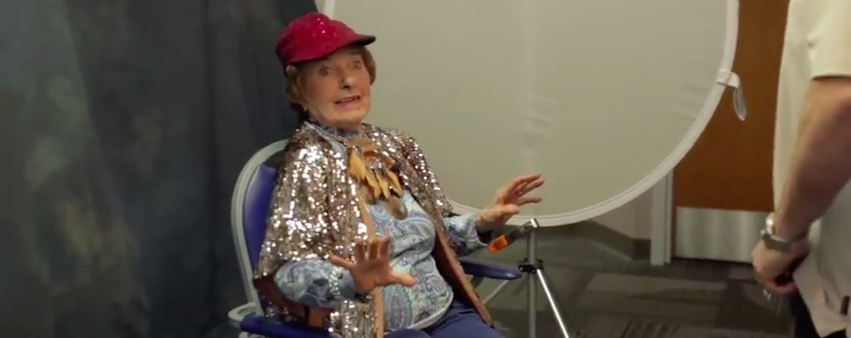
    So often, people of a certain age feels less important or forgotten, but not these women from Mount Olivet Senior Care Center.

    Volunteers from the group I Am Kindness surprised them with glamorous makeovers, and they all look absolutely beautiful. But it’s not the makeup or bling that did it. It’s the light that shines through their eyes, and that’s the power of love, kindness, and attention.

  • 7 Lessons to Learn If You Want to Thrive in Life

    7 Lessons to Learn If You Want to Thrive in Life

    Strong, Confident Woman

    “Embrace each challenge in your life as an opportunity for self-transformation.” ~Bernie S. Siegel

    I’d been having mild pain for about a week—a consistent, dull ache in the center of my chest.

    I’m thirty-nine years old with no personal history of heart disease, or of anything else for that matter. Worry hadn’t yet consumed me, but I was keeping an eye on the pain to see if it got better or worse.

    Once a week I drive ninety Los Angeles miles round trip for work. I say “Los Angeles” miles because I should theoretically be able to make the journey there and back in just over two hours, but it can take up to five, since I spend almost the entire commute on the perpetually traffic-ensnarled 405 freeway.

    It was during this commute that the pain began to feel more intense. I thought my left hand felt tingly. My mind, always a little bit anxious when driving in LA, ratcheted up the worry ten-fold.

    I envisioned having a full-on heart attack while driving in rush hour traffic. I made a mental laundry list of the ensuing consequences, such as passing out and losing control of the car or what would happen to all of my debt if I died. Whose lives would be irrevocably changed for the worse?

    I managed to calm myself down enough to make it home, but once there my dutiful and pragmatic husband suggested a trip to the Emergency Room. I was in no shape to argue, and truthfully was grateful that he echoed my own escalating concern.

    During my visit to the ER and the subsequent overnight hospital stay, I had lots of opportunities to overreact and feel sorry for myself. I’m sure I did quite a bit of both. But I also saw it as an opportunity to remember and to practice some of the hard-won lessons I’ve learned over the years.

    1. The most important things in life are worth waiting for.

    It’s no surprise that the name for someone receiving medical care is the same as the word for tolerating delays without becoming annoyed or anxious.

    The ER was so busy the intake nurse joked that they must be running a special she didn’t know about. After taking my vitals and determining that I was not having a heart attack at that very moment, I was sent to the lobby where I waited for over five hours to be seen.

    I almost talked myself into leaving several times, convinced that if I really was experiencing something serious they would have seen me right away. But I have a family history of heart disease, and the pain wasn’t going away, so I opted to stay.

    It turns out that I (thankfully) don’t have a heart problem, but that was not for me to determine.

    In our modern age of instant gratification, exercising patience can be a real challenge, especially because we’ve become accustomed to getting what we want right away. But there’s a reason why people often say the most important things in life are worth waiting for—they are. Particularly when your well-being is at stake.

    2. A little kindness can go a long way.

    “Be nice to others and they will be nice to you” doesn’t always pan out, but when you’re in a busy hospital with doctors and nurses who are stretched to their limits and beyond, a little kindness goes a long way. That doesn’t mean you shouldn’t be firm when necessary, but remember the person you’re talking to is a human being.

    Be respectful. In most cases, you’ll find that respect is reciprocated. Everyone has feelings, and most people are doing the best they can with the tools and resources they have.

    3. What works for others may not work for you.

    If learned nothing else from this incident, it is that nitroglycerin is not my friend. Yes, nitro is a life-saving wonder drug that opens blood vessels so blood can continue to flow through damaged heart tissue. But if you are prone to migraine headaches as I am, taking a nitro tablet as a precaution is just plain awful.

    Nitroglycerin did nothing for my chest pain, but it did give me an instant, crushing headache that lingered for three days. If nitro is going to save my life, I will certainly take it. But if I’m taking it as a precaution, I will think twice in the future.

    There is no one-size-fits-all solution to every problem. Sometimes knowing what doesn’t work is just as important as knowing what does. It can literally save you a headache or two down the line.

    4. Happiness is being grateful for the small things.

    I was finally admitted to a room at 2AM, with a roommate restlessly snoring in the next bed.

    I felt dehydrated and a little nauseated from taking a cocktail of meds on an empty stomach. All I could think about was how much better I would feel if I could just eat a cracker, so I asked the nurse who brought me to my room if she could possibly bring me one.

    A few moments later she returned with not one, but eight crackers—and two cups of apple juice! I almost cried with relief and gratitude. I think I thanked her four times, which she seemed to appreciate.

    I also asked if she might have any earplugs, when I noticed a small box on the bedside table. It not only contained earplugs, but also a face mask, a book of crossword puzzles, a pencil, and—what felt like the best thing in the whole world—ChapStick! I actually squealed “OOO, CHAPSTICK!” out loud with delight.

    I gave a silent “thank you!” to the genius that thought to include ChapStick in that box while I slathered the stuff on my lips and downed the crackers and juice. I popped in the earplugs and fell asleep with lubricated lips and a stomach that was no longer doing gymnastics.

    It’s the small things, people. Finding joy in the seemingly insignificant moments and the small gifts is how to find happiness every day, even in the most trying circumstances. I think the choice to be happy is one of the most transformational decisions a person can ever make.

    5. Laughter is the best medicine.

    I did not sleep well that night. The earplugs didn’t really help to cancel out the various noises coming from my roommate, including the spa piano music she was playing to help her sleep.

    But as I lay there listening to her snore, she suddenly blurted out in a thick Polish accent, “Wrong chef!” She then mumbled something under her breath and continued the buzz saw serenade. I laughed out loud, wondering what she could possibly be dreaming about.

    Amusing things happen every day. Don’t get so caught up in the serious moments that you can’t have a laugh or two. Studies show laughter actually improves health, and will most certainly lighten your mood.

    6. We could all use a little compassion.

    While it could have been easy to be seriously annoyed by my roommate, I chose instead to practice compassion. Yes, she was an obstacle preventing me from getting rest. But she was also in the hospital because she wasn’t feeling well.

    Couldn’t we all use a little extra compassion from others when we aren’t feeling our best? Letting go of my irritation not only allowed her to continue doing whatever it was she felt she needed to do in order to feel better, it actually made me feel better.

    One night of poor sleep isn’t a big deal in the grand scheme of things. Being compassionate is.

    7. Now is the time to prepare.

    There really is no feeling worse than knowing you are woefully underprepared for serious circumstances.

    This isn’t to say you should be constantly worrying about the future, but having the courage to face the inevitable consequence of life (which is, of course, death), can mitigate much of that worry. I don’t want my loved ones to be left in the lurch with my passing.

    It’s finally time to admit that I’m a grown-up and I need to act like one, which means obtaining life insurance so my family doesn’t find themselves saddled with financial responsibility they aren’t prepared to handle when I’m gone.

    Sometimes it takes big, scary moments to remind us that the quality of our lives is not determined by what happens to us, but by how we react to those experiences.

    Why wait until you’re confronted with a serious situation to adopt one or more of these behaviors? Not only will it make your daily life richer and more meaningful, but it’ll also give you the tools you need to survive and thrive when life takes an unexpected turn.

    Strong, confident woman image via Shutterstock

  • Choose to Be Kind When It’s Easier to Be Snarky

    Choose to Be Kind When It’s Easier to Be Snarky

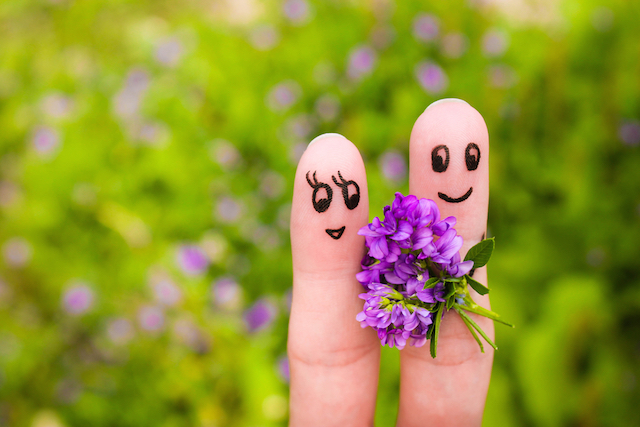
    Finger Art Couple

    “Tart words make no friends; a spoonful of honey will catch more flies than a gallon of vinegar.” ~Ben Franklin

    While I was pregnant, a friend told me to prioritize, in this order: self, marriage, kids.

    My priorities tend to be backward: kids above all else, maybe a date night once in a while, and self-care only when there’s an important meeting at work, so momma finally makes a point of grooming her eyebrows.

    So far, I appreciate the wisdom to try and shift priorities whenever I can. I feel mildly successful at putting marriage first, and it seems to be having rewards.

    My hubby and I tenderly call our survival plan “Kind Words and Old Fashioneds.”

    Making fancy cocktails isn’t a regular occurrence, and it usually looks more like a splash of bourbon or glass of wine only half drank before dragging ourselves exhaustedly to bed, after putting the baby to sleep.

    Parenting is tough on both of us, and methods of relaxation are essential by any means possible. But we try to make kind words a more regular occurrence.

    We came up with this simple phrase after I returned to work because I often got frustrated and lashed out at my husband over small things, and ended up feeling guilty.

    He could do nine out of ten things right, plus some bonus items I didn’t ask him to do (like paperwork—I detest filling out forms, and it turns out parenting comes with a lot of them), and I would fume about the one thing he didn’t get to.

    We can’t take out our stress on our children, our pets, our co-workers, or our in-laws; so oftentimes, the brunt of it falls on our partner.

    I would get agitated and do the dishes “for the umpteenth time this week” or be the “only person in this house” to fill the cat’s water bowl.

    In uttering snarky words, I may have vented some frustration in the middle of a long week, but I usually felt guilty after seeing my husband’s wounded look when my words got too unkind.

    One time, when I was apologizing, I realized I would rather be saying kind words out of appreciation for the amazing partner and wonderful father he has turned out to be. So, that turned into my New Year’s resolution: kill the snark and choose kind words whenever possible!

    It’s a tough thing to practice, but it embodies most of what I envision a healthy marriage to be.

    After years of attempting to play the piano, I know practice doesn’t make perfect, but perseverance and persistence sure do help.

    Seeing my husband smile makes me smile. Kind words make that happen more than mean ones. That can seem like an obvious statement, but the proof is in the pudding.

    We have to work on being the best versions of ourselves, and that can be tough when juggling so many competing priorities.

    We have to measure our work in inch pebbles rather than milestones, and that can seem less motivating.

    We have to practice the things most vital to our survival, and sometimes that means digging deep to find that last kernel of patience. We have to choose kindness over wrath, warmth over brusqueness, love over stress. That and Old Fashioneds seem to make for a happier marriage. At least, that’s what I’m learning as a new parent.

    In the midst of all this, I got my husband to paint our powder room. I chose lime green and he put it on the walls. It’s a little bit hideous, but I love it.

    A family member gave us a large canvas that covers a part of one of the walls, and it fits perfectly in this brightly colored little nook of our house. On it, gold sparkles spell out the words we sang at our wedding, “All you need is love.”

    Perhaps it’s a quaint notion, but it’s a great reminder to choose kindness.

    Finger art couple image via Shutterstock

  • Being Kind to Others Is Being Kind to Yourself

    Being Kind to Others Is Being Kind to Yourself

    Kindness

    “There is no exercise better for the heart than reaching down and lifting people up.” ~John Holmes

    I moved to Vermont to work at a ski lodge the day after I turned twenty-two.

    I had finished college six months earlier; September 11th had made finding a “real” job in my field pretty much impossible, and I was ready for adventure.

    Somehow I had been hired to be the head waitress in the lodge’s basement eatery, where we served family-style meals every single morning and six nights a week.

    I had no waitressing experience whatsoever; I’m pretty sure I was hired for this position because I was older than some of the other employees, had a college degree (uh, in studio art), and had worked at a concession stand at the beach for three summers during college. I mean, at least I had handled food before, right?

    Up until this point, my customer service skills were severely stunted. I barely tolerated customers; I rarely even spoke to them. The extent of my “service” skills involved making sure they got the right kind of soda and correct change.
    In fact, at my very first job, as a cashier at a big box store where I had to wear a blue vest, a customer actually complained about me to management. I didn’t smile, I wasn’t friendly, and I wasn’t helpful. (In my defense, I was sixteen. And wearing a blue vest.)

    One night at the ski lodge, I’ll never forget this, a couple who had come to stay every single year for the past decade pulled me aside so the husband could tell me something in private. “Your attitude comes off as very distant and aloof. I can tell you’re just shy, but you seem very unfriendly.”

    Whoa.

    For some reason having this older gentleman tell me how I seemed to outsiders absolutely, completely turned me and my attitude around.

    He was right—I was shy, and also uncertain about myself. I was afraid to be friendly, afraid to come out of my shell and potentially embarrass myself.

    But I didn’t want to be seen as unfriendly and aloof. I wanted to connect with people, I just didn’t know how.

    As the ski season went on, I did my best to make little changes: more eye contact, more smiles, more conversation. I can’t say I immediately saw a huge shift, but I was trying.

    Fast-forward another couple of years: after traveling around the country for a while (even living in a tent at one point; aren’t your twenties great?), I ended up back at the ski lodge again. This time, I was hired to work at the front desk.

    The front desk?? Where all the people were? All the time?

    Yup, that front desk.

    By this time the lodge had changed hands, and the new owner said something to me about how to talk on the phone with customers that left a lasting impression. She said, “Smile when you talk, because customers can hear it all the way through the phone.”

    She was so right. I still think about that any time I’m on the phone with a customer or client.

    I can’t tell you exactly what happened to me during that ski season, but by the time my parents came up for a visit in the spring and saw me in action, they were impressed with how friendly and confident I was with guests, but not nearly as impressed (and happy) as I was.

    All of a sudden I loved helping people. I was thrilled when guests came to check in, adored giving restaurant recommendations, and was elated to tell prospective clients all that our area had to offer.

    Suddenly, I realized how wonderful it was to be kind—being friendly to others actually made me happier!

    I don’t know why for all those years I had thought keeping silent or being disgruntled was good for me—I guess I just didn’t know any different.

    After a year in Vermont, I moved down to the mountains of North Carolina (just as pretty; a whole lot warmer), where I landed myself another hotel job, this time at an historic inn. Within a year or so I was running the front desk and was managing events, and I loved it!

    Friday afternoons when we got a crush of people, ready to kick off their relaxing visit? Pure bliss for me!

    Sunday mornings, when guests were checking out and wanted to reminisce about their weekend? Utter satisfaction!

    A brunch where the quiche turned out just right and the hostess had properly impressed her friends? My work was done!

    New Year’s Eve? Best night of the year! I actually put myself on for the late night shift (I was in charge of scheduling) so my employees could be off, but I could be part of the fun.

    The same group of guests came to celebrate every year, and I’d walk the hallways, being invited into open rooms for a bite of fancy cheese or a swig of champagne.

    I don’t know how to explain it, other than being kind and helping others completed something in me I didn’t even know was missing.

    If you’ve ever felt like you wanted to connect more with others, to offer kindness and support, but feel too shy or nervous about the possibility of being rejected, I want to tell you that stepping out of your shell, even just a little bit, can bring enormous rewards.

    Pick something that feels easy and comfortable to you. Do you have to be on the phone frequently for your job? Try smiling when you’re talking on the phone, even if you feel a little silly, even if the person on the other end is being difficult or unfriendly. I bet you’ll feel really good when you hang up.

    Perhaps you notice a new participant in your yoga class, someone who seems uncertain and hangs in the back. Do whatever feels best—smile, wave, walk over and introduce yourself. Imagine if you were in the same position; wouldn’t it feel great for someone to reach out to you?

    Ask coworkers if they need a hand with anything. Ask friendly questions of your new neighbor. Volunteer for a local charity or library.

    Anything that connects you with others and allows you to flex your kindness muscle will do. You’ll be amazed to see that being kind makes other people happy, but brings an even greater joy to you.

    After working at the inn for a few years I moved on to a hospitality job at the local airport, and from there realized that I wanted to expand my kindness and help others on an even more profound level, but there’s a part of me that will always miss working at a hotel.

    Interacting with guests taught me so much about myself. It gave me so much confidence, and it taught me one of the most important lessons of my life: to be kind to others was to be kind to myself. I hope you’ll open your heart to learning the same lesson.

    Kindness image via Shutterstock

  • Create a Kinder World: What to Do Instead of Judging

    Create a Kinder World: What to Do Instead of Judging

    Arms wide open

    “When you judge another, you do not define them. You define yourself.” ~Wayne Dyer

    I’ve always been judgmental. I will judge someone else’s buying habits, looks, grammar, or political beliefs and get some perverse pleasure in it. It’s very painful for me to admit that.

    You see, I strive to be kind and compassionate toward myself and toward others. That’s why I have turned much of my personal development focus this year to letting go of judgments.

    When I first started seeing a therapist, in college, we spent quite a bit of time talking about a particular family member of mine. After describing this person, my therapist said that it sounded like they may have had a superiority complex, and that all superiority complexes are built on top of inferiority complexes.

    Now I look at myself and wonder: Is that what’s going on with me? Do I judge others negatively because I need to feel better about myself? Am I so insecure in my own place in this world that I have to build my own self-esteem on top of other people’s perceived shortcomings?

    I don’t want to be that person.

    It’s weird, because I’ve always felt I was put on the earth to help people. And I don’t feel judgment toward those that I help. I love them. So why is it so easy for me to judge strangers and friends of friends?

    I know I have a long way to go, and I know I have to work on both letting go of my judgments toward others as well as toward myself.

    This past week I tried something, and it made my heart feel light and my face feel happy: I made observations instead of judgments.

    Let me give you an example.

    I was out and about and I saw a woman with a baby. I also have a baby, for the record.

    At first I noticed that I was making judgments about her based on her appearance and the way she spoke. It made me feel sad and, well, icky, inside.

    But I stopped. I realized this was a perfect time to try doing something different.

    So I took a mental step back and looked at her for the absolutely perfect human she was (and is).

    I observed the way she looked with no attachment to it as right or wrong, good or bad.

    I observed the way she spoke with no disdain or criticisms.

    And I felt love. I felt peace. I felt wonderful.

    This is how I want to live. This is how I want to feel.

    You see, I know rationally that we are all these wonderful, gorgeous creatures of the universe. Sitting here at my desk typing, I am 100% sure of this. Yet, somehow, out in the world, I lose sight of this. I forget.

    And it hurts me. Judging others makes my life worse, not better.

    I am completely committed to shifting all of my thoughts away from judgment and toward kind, gentle, unattached observation. I know it’s going to take practice, but almost everything worth doing takes time and energy.

    If you’d like to make the same shifts in your own life, I have a few suggestions based on my short time entering the No Judgment Zone.

    First, you’ll have to admit that you judge others. It may be painful, as it was for me. It’s okay; acknowledging this is the only way to recover from it.

    Next, decide that you want to actively give up judging others. You may do it more often than you’re even aware, and without a conscious effort, it will be difficult to avoid.

    Now, start paying attention to how judging others feels in your body. If you’re like me, you’ll feel the corners of your mouth pulling down in sadness, and may feel a pit in your stomach. It’s good to know how your body feels so that you can start to identify when you’re judging others without even noticing.

    It’s time now to practice the act of observing instead of judging. The next time you notice yourself judging someone else, do what I did: Stop, take a step back, and describe the situation with no inflection of tone that casts a negative light.

    Instead of “Wow, now that’s an interesting outfit,” try “that woman is wearing leopard print pants with pink sparkly boots and a bedazzled tank top.”

    Take the judgment out of it. Observe it. Find the beauty in the other person or situation.

    Now you just have to practice. Over, and over, and over again. I am still very much in the early stages of becoming aware and observing instead of judging; this is not an overnight change!

    To really make a permanent shift, stay away from places where others are judgmental for fun—websites that attack others for their beliefs or way of living, TV shows that humiliate, and friends on social media that love to make loud proclamations about others are some good places to start.

    Now is a good time to mention that there will certainly be occasions when it is not judgment that I am experiencing, but discernment.

    If I see someone being verbally abused by their partner, or someone harming an animal, or someone stealing, it is not the time to step back and just observe and try to find love and beauty. On those occasions, I hope that my good sense allows me to help in any way possible.

    Above all, it’s about creating peace, both in my own mind, and for others as well.

    I am sorry if I have ever judged you. I am sorry if someone judging you has ever hurt you. Together, let’s create a world where we are kind and compassionate to everyone we encounter.

    Friends pointing and laughing image via Shutterstock

  • Practicing Loving-Kindness Even When (Especially When) You Are Hurting

    Practicing Loving-Kindness Even When (Especially When) You Are Hurting

    Hand Heart

    “Have a heart that never hardens, and a temper that never tires, and a touch that never hurts.” ~Charles Dickens   

    All of us have been hurt or angered by someone’s words at some point. Some words are blatantly cruel, and others are deceptive, appearing to be in our best interest but only ever leading us astray. These are the messages that leave us questioning who we are or how we should be.

    I’ve been labeled timid and stuck-up. Speak up more, but stop interrupting. Be more assertive, but don’t complain. Be more outgoing, but be authentic.

    I’ve been called careless and a lousy role model and then questioned about why I am such a perfectionist. Lighten up. Don’t apologize so much.

    And my all-time favorite: your voice is off-putting and might scare the children.

    These are painful messages, and historically I’ve taken them to heart.

    When we’ve been hurt, we might try to get rid of the feelings by distancing ourselves or fighting back. It can be hard to regard these feelings as reflecting our desire for connection.

    We also try our hand at shapeshifting, becoming who we think we ought to be. This approach to connection can actually backfire. While we could feel more connected in the short term, we’ve also reinforced the message that who we are isn’t enough. Any guesses about what that does to us over time?

    Lashing out, hiding away, or conforming do not bring us any closer to connection nor do they leave us feeling validated or loved.

    For me, this is a big lesson in loving-kindness. Loving-kindness is a sense of benevolent affection, unwavering connection, and compassion for ourselves and others, even the difficult people in our lives.

    This lesson has taken a while and is admittedly still a work in progress, but it is powerful nonetheless.

    Loving-kindness does not leave us immune to negative emotions, but it is most potent when called upon in our less than loving or kind moments. Loving-kindness also does not leave us impervious to hurtful messages, though it can lessen their impact.

    When we are hurting or angry, loving-kindness can be especially challenging. It is therefore empowering to practice loving-kindness not simply in spite of feeling hurt but because we have been hurt.

    Finding loving-kindness relies on three things: our ability to love and be loved, maintaining our composure, and acting with good will.

    Have a heart that never hardens.

    Loving-kindness involves wishing peace, joy, and tenderness for others. It means celebrating successes, easing suffering, and cultivating feelings of friendliness and affection.

    We cannot do this with a hardened heart.

    A hardened heart is closed or blocked off. It may expect the worst or interpret hostile intent. A hardened heart is surrounded by not merely a wall but by a fortress of steal.

    With a heart that never hardens, there is ample room for warmth, forgiveness, patience, and compassion. Having a heart that never hardens also reflects our ability to love and be loved.

    Yes, being loved is actually an ability. Let me be clear. By ability to be loved, I don’t mean lovability or worthiness of love. I mean being able to allow others to love you.

    We make decisions about vulnerability, trust, and love when we’ve been hurt. We protect against vulnerability or we try again, decide that people are or are not to be trusted, and either open ourselves up to or block ourselves off from love.

    The key to having a heart that never hardens is to remember that your heart is strengthened, not scarred, by heartache. When words sting, know that this pain reveals an open heart.

    Trust in yourself to be able to handle it if and when you are hurt. Treat yourself with compassion in life’s painful moments, and take a healthy risk on vulnerability even when you’ve been hurt in the past. Allow yourself to be at peace when you are hurting or angry, and cultivate benevolence and goodwill rather than stewing in bitterness or breeding ill-will.

    Have a temper that never tires.

    Composure is another major component of loving-kindness. We all vary in our natural ability to keep a level head in the face of pain or anger.

    Anger is normal and natural, and it is even helpful when understood. Anger lets us know when something is amiss. It alerts us to threat or injustice.

    In truth, you will probably get ruffled from time to time. That’s just part of being human. However, this does not mean that you need to lose your temper.

    When we lose our tempers, we say and do things that we don’t mean. We can lash out, blame, and deny. This usually leads us to do anything but communicate.

    Acting without thinking often makes a bad situation worse. Not only do we still have the triggering event to contend with, but we now have the fallout from whatever we said or did when we lost our temper. It can become difficult to resolve the situation, and rather than cultivating peace, we create a crisis.

    Losing our temper doesn’t just harm those around us but also ourselves. We can experience regret and shame after losing our temper, and we ruminate about it later and work ourselves up further.

    Loving-kindness allows us to recognize our anger and breathe warmth and peace into it. It gives us a bit of extra reaction time and reminds us of our connection to this person pushing our buttons.

    To have a temper that never tires, know your triggers. Common triggers for anger are feeling threatened or vulnerable, having our goals blocked, and feeling mistreated.

    Also pay attention to the times when you are more susceptible to losing your temper. It may be when you are feeling overworked, overtired, and underfed, or you may be under the pressure of high expectations or demands.

    To keep your temper, knowledge is power, and knowledge plus acceptance is even more powerful. Acceptance doesn’t mean agreement, simply acknowledgement. Acceptance that it is what it is can go a long way toward defusing your anger and redirecting that energy toward positive action or loving-kindness.

    Have a touch that never hurts.

    Acting with tenderness and good will is the third component of loving-kindness. You can’t have a touch that never hurts if you have a hardened heart or a quick temper.

    A harmful touch can have two main functions: getting rid of pain and inflicting pain.

    Quite often, anger is secondary to pain. Somehow it seems easier to be angry than to be hurting. When we’re angry, we can place blame on someone other than ourselves and act out accordingly.

    When we are hurting, we can also turn our anger inward. We can inflict pain on ourselves in a variety of ways and for a variety of reasons.

    In contrast to this, loving-kindness is benevolent and gentle. It is approaching others with sympathy and care and using your touch to heal and comfort yourself and others.

    Having a touch that never hurts refers to both physical and emotional harm. Certainly, our hands can be used as weapons, but so can our words and our actions.

    When you are hurting, resist the temptation to hurt someone back through name-calling, gossip, or blame. Put revenge aside and focus on moving forward.

    Use your touch for healing, not hurting. Reach out to hold the hand of someone you care about. Scratch their back, give a massage, or high five. Extend a loving gesture toward yourself by putting your hands over your heart and simply breathing.

    Using your hands to build or create can also help you cultivate loving-kindness. Try writing a caring note to a friend, pitching in through volunteering, or simply creating something for your own enjoyment.

    Hand heart image via Shutterstock

  • 3 Tips to Help You Stop Saying Things You Regret

    3 Tips to Help You Stop Saying Things You Regret

    Woman with hand over her mouth

    “If you propose to speak, always ask yourself, is it true, is it necessary, is it kind.” ~Buddha

    I initially saw this quote and, in true ego-first fashion, thought of my kids: this’ll be perfect for them. I’ll put it up in the kitchen as a regular reminder to stop pestering each other.

    But then, something a bit deeper poked me gently. Riiight, just for the kids, is it? You’ve got this mastered, then. I guess my true self is not afraid to use sarcasm when it needs to.

    My true self was right (as it always is). When I began to think about those small regrets that plague my running thoughts, so many of them came about because I didn’t adhere to the Buddha’s sage advice.

    Here are a few examples that spring to mind:

    The times I’ve blurted and blathered random nonsense to other parents while waiting for my kids to appear at the school gate.

    The times I’ve made a negative comment about someone.

    The words I’ve chosen when pestering my kids to get things done.

    All my many miserable rants about the usual annoyances in life.

    When I thought about it, I decided there are common themes to the things I say which I later regret. They usually fit into one of three categories:

    • I speak to avoid the discomfort of silence.
    • I speak to unload an ego-driven thought.
    • I speak with negative emotion like frustration or anger.

    Let’s drill down to see where each of these breaks one of the precepts of speaking only good words.

    I speak to remove the discomfort of silence.

    So many times I’ve been in the presence of people when there is an uncomfortable silence and I am desperate to break it. But why? And is it really uncomfortable, or is that just me?

    Inevitably, I end up speaking things that may well be true and kind, but are certainly not necessary. And I end up feeling like a blathering fool.

    Speaking just for the sake of speaking doesn’t help. And sometimes it can hurt, if I’m speaking in a rush, without thinking. So, the next time I’m standing with someone and conversation isn’t flowing, I will always stop myself and ask: is this necessary?

    I speak to unload an ego-driven thought.

    By ego-driven, I mean a thought that makes my self-image feel bigger and better. Gossip fits well into this category. Or bragging. Complaining about a negative situation is another. (Because in the complaining, I’m pointing out what everyone else is doing wrong.)

    If I speak these thoughts aloud, I usually do so with someone I can trust, like my husband, but that does not make it better. Vocalizing something negative about someone else always makes me feel worse, even if I can trust the person I’m sharing it with. It’s just not worth it.

    I speak with frustration or anger.

    This one’s a bit more nuanced, and often comes down to tone. Even if the words themselves are true and necessary (such as: “because you dilly dallied over breakfast, we’re now going to be late for school”), they are not kind. The unkindness often comes through in the tone, if not the words themselves.

    As usual, sage advice seems so simple but is not at all easy to put into practice!

    Here are some strategies to try:

    1. Breathe.

    Take a moment for a conscious breath before speaking. It’s an imperceptible pause, but it allows you the space to consider your comment before it is spoken. Not only does it give you space for second thought, it can somehow magically reframe the situation.

    I’ve found that noticing the simple miracle of breath can cause me to see the current situation in a completely different light.

    2. Respond; don’t react.

    There is a huge difference between a thoughtful response and a knee-jerk reaction. Often, the knee-jerk reaction is fueled by subconscious anxieties.

    Enabling yourself (via #1) to have a thoughtful response means taking control of the situation and not letting your subconscious run your life.

    3. Reflect.

    Use the lapses in judgment when you’ve said something regrettable to consider why you responded the way you did.

    The trigger is usually only half of the problem. It’s worth considering what in ourselves, deep down, was irritated enough to strike back. Being aware of these personal vulnerabilities is what contributes to tremendous personal growth over the long run.

    Ideally the transformation would occur at the level of thought, so words would never have to be checked at the door, as it were. Oh, to have only true, kind and necessary thoughts!

    Until then, this quote is going up on our fridge as a regular reminder for me to tick all three boxes before speaking. I’ll take it one day at a time. (Heck, one hour at a time!) If it rubs off on the kids, all the better.

    Woman holding mouth image via Shutterstock

  • 10 Ways to Make the World a Nicer Place

    10 Ways to Make the World a Nicer Place

    Kind Kid

    “There are two primary choices in life: to accept conditions as they exist, or accept responsibility for changing them.” ~Denis Waitley  

    I was spending some time with my nephews not too long ago. This is one of my favorite things to do because we have a lot of fun together. They’re silly and loving and inquisitive, and it’s easy to make them laugh.

    Spending time with them reminds me that fun and laughter should be a part of my everyday life, and also makes me feel like a kid again.

    When we were together that day, I asked them what they want to be when they grow up. My five-year-old nephew said, “I want to be a police so I can make the world a nicer place for everyone.”

    I thought that was just about the sweetest and cutest thing he could possibly say, even though the thought of him becoming a police officer made me nervous. Why couldn’t he choose something safer?

    Over the next few days, I couldn’t get that conversation out of my head because I realized that I don’t want him, as a five-year-old, taking on the responsibility of making the world a nicer place.

    I want him to be focused on having fun and making friends and learning new things in school. I don’t think any child should have to worry about that.

    I started thinking about the actions I could take to make the world a nicer place so that he can experience that right now. Many of us are already doing things that have a positive impact on the world, but we don’t always recognize or acknowledge them.

    We can all make a difference by doing these simple actions more frequently and accepting the responsibility for a nicer world as our own.

    1. Smile at others.

    Smiling makes others feel good when they see us doing it and it makes us feel good, too. It allows us to feel connected to other people, and this improves all of our moods. When I smile at people in the store and I get smiles in return, I notice that I get an immediate mood boost.

    2. Make eye contact with people.

    Many times we look at the ground or our phones instead of acknowledging the people around us. We avoid talking to people in line with us at the grocery store, and we act like we don’t see other people when we pass by them on the street. When we make eye contact instead of ignoring people, we make them feel seen and worthy of our attention—something we all want and appreciate.

    3. Take care of our environment.

    We all want to live in a clean and beautiful environment. The first step is to recycle and take care of our resources instead of being wasteful. Doing this ensures we leave our children a world they can take pride in and enjoy comfortably.

    4. Compliment other people.

    It’s important that we tell others how they make a difference in our lives and that we see all the amazing things they do. We can make a tremendous difference in their lives by sharing our gratitude instead of just thinking about it. I make an effort to compliment others about their work and let them know how important they are to me because I know that everyone wants to know that they matter.

    5. Be positive.

    Everyone benefits when we stop complaining and find the positive instead of focusing on the negative. We can make life easier for ourselves, and the people around us, if we stop worrying about the worst-case scenarios and try to make the best of our situations. When we cultivate a positive mindset, we not only feel more positive, we’re also more likely to create more positive circumstances.

    6. Help others.

    We often help others expecting something in return, but this can lead to disappointment and resentment. The alternative is to help others, especially those who are struggling, simply because we want to live in a world where people look out for each other.

    7. Be kinder to ourselves.

    Forgiving ourselves for any mistakes we make is much kinder than always mentally beating ourselves up, and being kind to ourselves is crucial if we want the world to be a nicer place. When we’re kind and caring to ourselves, we’re more open to kindness from others and more likely to treat others well.

    8. Stay mindful in the present moment.

    If we stop dwelling on things that have happened in the past and worrying about what might happen in the future, we’ll be able to experience all of the wonderful things that are happening in the present. When my mind wanders, I bring myself back to the now with three deep breaths. Mindfulness is a powerful way to increase our happiness, and that can have a massive ripple effect on the world around us.

    9. Express gratitude daily.

    Acknowledging all of the amazing things that we have happened to us puts us in a positive mindset, and it also provides us with the opportunity to thank others for all they’ve done. I practice gratitude daily by recording at least three things that I’m grateful for at the end of the night, and I’ve noticed it makes a tremendous difference in my mood and my relationships.

    10. Have fun!

    A lot of times we make situations out to be more much more serious than they need to be and we forget to actually let go and have fun. Let’s make sure that enjoying life is a priority so that we can actually take advantage of living in a nicer world!

    Photo by Juhan Sonin

  • The Gift of Kindness: A Simple Reason to Give What We Can

    The Gift of Kindness: A Simple Reason to Give What We Can

    Helping the Homeless

    “Love and compassion are necessities, not luxuries. Without them, humanity cannot survive.” ~Dalai Lama

    “Look at that guy,” I said to my wife.

    We were circling the block looking for parking when I spotted him on the sidewalk in front of the bank. For some reason he stood out from the other people in the area.

    “Seems off,” I thought to myself.

    As I passed by, I kept an eye on him. He didn’t seem to be going anywhere, just walking back and forth along the sidewalk in front of the bank.

    He was looking around and moving around like he was waiting for someone, but clearly he was alone.

    We came back around the block and I parked in a loading/unloading zone.

    “Make sure they don’t tow me,” I joked to my wife. I hopped out of the car and made my way to the bank’s ATM on the sidewalk.

    Halfway through the transaction I heard a very small voice coming from behind me.

    “Can I have two dollars? I need two dollars for the bus.”

    The voice was so small that at first I wasn’t sure if he was talking to me or someone else. I continued with my transaction without acknowledging the question.

    “That’s awesome. You’re ignoring me,” he continued.

    At this point I realized that he was talking to me. I didn’t respond.

    The voice got smaller and turned into mumbling. I couldn’t understand what he was saying.

    I finished the transaction and turned back toward my car. He was standing near my car but not in the way.

    I looked at him.

    In front of me was a disheveled, forty-something man. The years appeared cut into his face in the form of deep wrinkles accentuated with dirt.

    The wrinkles could have meant a man much older, but his overall demeanor suggested youth. He still had the aura of a younger person.

    His hair was very short and he was holding a coffee.

    As I walked toward my car he stopped talking. I got around to the driver side and opened the door.

    “No,” I said loudly and resolutely while looking at him. It was the answer to his earlier question, and also an answer to him in general.

    He didn’t respond.

    Driving away I felt uneasy and my mind replayed the situation a few times.

    I have given money to people in the past. It hasn’t happened often, but sometimes.

    My problem with this man was that I felt he didn’t need the money. It was the coffee that bothered me. He had a cup of coffee in his hands. Premium coffee.

    Coffee, I later learned, would be our connection.

    I had forgotten about him by the next day while I was waiting in the Starbucks drive-through line. We reached the service window.

    “Hi! The car in front of you paid for you,” the barista said.

    “What?” I replied. I was caught off guard.

    “Your order has been paid for,” she reiterated. She handed us our items. “You’re good to go.”

    “Thanks,” I replied reaching for the items.

    My daughter asked me why I was shaking my head as we pulled forward.

    “The universe is always teaching me lessons,” I said smilingly.

    She looked at me blankly.

    That’s what I call it when stuff like this happens—the universe teaching me lessons.

    Over the years I have learned to pick up on this phenomena. The lessons are broad and typically focus on topics like compassion, forgiveness, understanding, and renewal. They always emerge through the random coupling of everyday events.

    Some lessons are blatant, but others can be very subtle. The subtle ones are the best. Sometimes I will only “get it” after a couple of days letting it sink in.

    This one I considered blatant. The lesson being:

    Share what you have. Give—even if they don’t need it.

    I didn’t give that man any money because I didn’t believe he needed it. My assumption was that earlier that day he had traded some of his money for that coffee he was holding.

    If he really needed two dollars, then he shouldn’t have spent his money on that coffee.

    But, that reaction is totally contrary to the lesson.

    Later, as I stewed on the lesson, a couple of thoughts occurred to me: Maybe there was no coffee in that cup. Maybe he was collecting change with it. Maybe the cup was empty. Maybe the cup only had water in it.

    The point was that I didn’t know. I assumed.

    The bigger point was that it didn’t matter whether the cup was filled with premium coffee, gold coins, or anything else.

    Giving is not about the other person’s perceived need; it’s about the act itself.

    We are choosing to be the best version of ourselves when our actions demonstrate the best within us.

    Do you remember how you felt the last time you gave? I am willing to bet you felt good about yourself, and good about the act. And that’s great!

    Now, was that good feeling because you filled a need, or because of the act in general?

    Think about it. You can say it was both, but I am also willing to bet that you would feel just as good if you gave to someone who didn’t really need it.

    The good feeling comes because giving is an act of kindness.

    The person in front of me in the drive-through that day could have looked in her rearview mirror and concluded that I didn’t need it.

    After all, I am driving a newer car, my clothes were clean, and the assumption is that I can afford a coffee since I am already in the drive through line.

    Her gift to me was not because I needed it.

    Her gift to me was about kindness. It was about doing that extra little bit to lift someone else up.

    Lesson taught. Lesson understood.

    Photo by Ed Yourdon

  • 6 Lessons from a Brave Little Girl About Living a Love-Filled Life

    6 Lessons from a Brave Little Girl About Living a Love-Filled Life

    Friends Heart

    “One word frees us of all the weight and pain of life: that word is love.” ~Sophocles

    I can’t believe it was almost four years ago that I met *Holly. Her story is still deeply embedded into my heart. Who would have thought that one can learn so much from a ten-year-old child?

    At the time, I was working in Kenya as a children’s rights researcher. Knowing about my psychology background, the principal of a primary school I was working at asked me if I could talk to one of their students. Since I would only be able to meet her for a few shorts months, and I thought I was not qualified enough, I was hesitant at first.

    Then I remembered: always ask the question, “How can I serve?” in every situation

    I knew it was a place for me to serve. So even though I lacked an official therapist license in my home country, I agreed to meet with Holly.

    For that winter I became her volunteer counselor. I gave her my full attention while I listened to her stories, I provided her full support, and most importantly, I gave her my unconditional love. But in the end, she gave me so much more back.

    When she was only four years old, Holly was raped by her father, contracting an STD that caused her all sorts of health problems, including visible rashes all over her skin.

    It is not only that her rashes were itching and made her feel uncomfortable, but children at school, especially boys, continuously abused her for it.

    “Children throw stones at me. They say I have HIV. They say I am not a child anymore but a prostitute. But I am a child. I want to be a child,” she told me once.

    At home, her life was not better: living in the slums, she was facing extreme poverty. Her emotionally removed mother neglected her and made her responsible for all home tasks, from cooking to taking care of young siblings. Also, she was afraid of her alcoholic uncle visiting them on a regular basis. The list of her sorrows went on and on.

    Holly desperately wanted to be loved and cared for. She was always so thankful for anyone who was there for her, and she radiated kindness and love at all times through her beautiful smile.

    Being on the ground as a researcher on the topic of violence against children, I knew that Holly was not alone. She was not the only child that opened her heart to me. But she was one of the youngest, yet one of the most influential among them.

    Holly has taught me some life lessons that I believe are universal regardless of our life circumstances.

    1. Never give up.

    Holly went through so much yet she never gave up hoping, dreaming, and trying. She spoke about her future as if she believed things could get better.

    As long as we are alive, we have the choice to keep trying to improve our life.

    Sometimes we give up on our dream too early because we don’t believe we can succeed. Giving up guarantees we won’t.

    But what if we fail, you may wonder. In my dictionary there is no such thing as failure: only successes and lessons. Even if we don’t accomplish our goal, we will grow and learn throughout the process—and this growth sometimes provides more than a successful end result.

    2. Use your imagination.

    Holly imagined a better life for herself and she created stories, poetry, and drawings to capture her dreams. She was so clear in her art that it was as if she were already living in her beautiful future.

    Children have wild imaginations. As adults we often forget about this wonderful tool, being overwhelmed with work, family, and other responsibilities in life.

    If we want to create the life of our dreams it is essential that we use our imagination, because it allows us to experience anything we want. Visualizing new possibilities is a first step to creating our future.

    3. Share.

    One day Holly showed up with a few pieces of candy that she got from a volunteer at the school. She offered to share them with me. She didn’t have much—in fact, she had very little—yet she wanted to share that little with others.

    She also shared her life with me. Sharing her stories, her sadness, her joy, her dreams, and her art meant the world to me. I felt love and I loved her back.

    Sharing is caring, sharing creates connection, sharing creates love. You can share so much with the world: you can donate to charities, you can share a meal with your friends and family, you can share your stories through a blog, you can share your experiences over a coffee, you can share your joy, and you can share your love. Show your love—share what you have.

    4. Accept support.

    Holly recognized that she needed support to get out of her situation, and she accepted any support she could get. She accepted financial support through donations from volunteers. And she accepted  emotional support through friendships from anyone who offered it.

    She never felt bad about accepting support. She knew in her heart that someday she would pay it forward, helping children in similar situation. For the present moment, she gave back what she could—her love and gratitude.

    Accepting support is not a sign of weakness. We can’t always do it alone. Accept support if you need it and be grateful. Karma goes around. You can help out someone the next time around.

    5. Be kind.

    Holly was a tiny, fragile girl who received pain from every direction in life, yet she always smiled. Often, I was amazed how much kindness she was able to offer.

    Kindness was her radical response to suffering. I think she innately believed that if she offered kindness, good karma would come back to her to help her life turn around. I know that being kind also made her incredibly happy because she was able to bring joy to others.

    The world needs kindness and there can never be too much of it. It can also be one of the biggest presents to someone because it is a sign of caring, love, and happiness. When you have a choice: always choose kind.

    6. Love.

    Holly had the biggest heart. I seriously believe that this little girl always came from the perspective of love.

    We are all born with enormous amount of love and as children we are more likely to openly share it with the world. Growing up, we close more and more doors in our heart and we get hardened by our experiences. Then we have a difficult time expressing our love as adults.

    I urge you to open up those doors. Let your heart shine to the world and express your love.

    Expressing love doesn’t have to be difficult: a smile, a hug, a loving note, a kind email, a home-cooked meal, a flower, a small surprise, or similar small actions can work. Of course, the words “I love you” can be the most powerful when lovingly coming from our heart.

    There can be never too much love in this world. So choose love, be love, live love, just love, always love.

    Due to confidentiality I was not able to follow Holly’s life-story. I am not sure what happened to her. I don’t even know if she is alive. But I will forever remember her story, her smile, her love, and the lessons she taught me.

    Holly, wherever you are, you are in my heart and sending you some loving vibes.

    *Name changed to protect her privacy. Photo by Sharky