Tag: kind
-
It Doesn’t Cost Anything to Be Kind
Renée is one of 20 Tiny Buddha contributors involved in a special New Year’s package. Details coming soon!
-
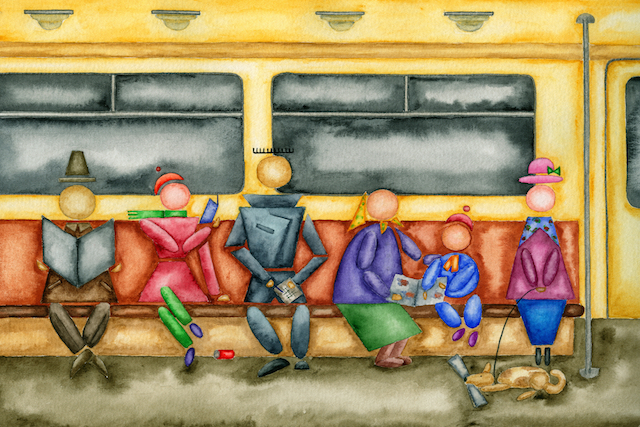
Why I’m Trying Harder to Be Kind to Strangers
“Too often we underestimate the power of a touch, a smile, a kind word, a listening ear, an honest compliment, or the smallest act of caring, all of which have the potential to turn a life around.” ~Leo Buscaglia
From uttering unkind words to sleeping with unkind men, I’ve had many moments of shame in my life. Still, there is one particular moment of shame that stands out from the crowd. It happened at least ten years ago, but I remember it as if it were yesterday.
I was strolling around downtown Toronto with a visiting friend when a rough-looking fella suddenly approached me. What he was planning to do or say to me, I’ll never know, because my knee-jerk reaction was to take the widest of wide births in order to avoid a face-to-face interaction.
My girlfriend laughed at how quickly I’d dodged him. While she managed to keep her observation light and non-judgmental, I knew she wasn’t just talking about my ability to spin on a dime. Rather, she was commenting on how this human being had so obviously scared the living crap out of me.
It’s not as if we were walking down a deserted alleyway. It wasn’t dark outside. The guy wasn’t wielding a knife or coming at me with raised fists. For all I know, he wanted a quarter, or a cigarette, or directions.
Maybe he wanted to hurl some verbal abuse at a stranger because he was having a bad day. Possibly, or quite likely, he was a resident of the mental health facility across the street. Is that a crime? The fact is, I didn’t know. So I chose to pretend that this human being wasn’t even being.
How often do you walk down the street and avoid the gaze of a stranger because it feels uncomfortable?
Here’s what I’ve realized in the years since that incident.
My discomfort is nothing compared to the discomfort of the panhandler who’s parked day after day in his wheelchair outside my local grocery store because finding work is tricky when you have no legs.
It’s nothing compared to the discomfort of the physically disfigured man who can’t hold somebody’s gaze for longer than a couple of seconds and knows exactly why.
And it’s nothing compared to the discomfort of the lonely old woman who wants but fails to find someone to chat with on the bus because when she gets home, there’ll be nobody to talk to. For hours. Maybe days.
My big moment of shame has been top of mind since returning from vacation.
My husband and I have just come back from Newfoundland, where we spent one of seven nights bunked up in a teeny blue cabin looking onto a fisherman’s wharf. The cabin was sweet. The view before us was stellar. The community was one I would never choose to live in.
Behind and adjacent to our cabin were twenty or so simple homes. None had the charm of our picture-perfect Airbnb. As I sat outside sipping wine, enjoying the view before me, and contemplating life, an older, heavy-set, weathered-looking woman stopped at the end of our driveway and started chatting.
I could barely understand her, partly due to the noisy ocean waves and partly due to her thick Newfie accent, so I rose from my Muskoka chair and greeted her halfway down the drive.
Her name was Patricia, she told me. She loves it when new guests check into the blue cabin. “Yesterday, there was a couple from France. I meet all kinds of people. I love meeting people.”
She asked me where I was from. I answered, “Toronto.” Detecting my accent, she responded, “that’s where you’ve come from but is that where you were born?” I explained that I was born in Toronto but grew up in London, England, and moved back to Canada as an adult.
She held her hand to her chest. “Seriously, you and your husband are from England?” I nodded yes. She beamed a big grin. “For the love of God!” I’d blown her mind.
Patricia insisted that I step inside her humble house. She wanted to show me something she was positive I’d never seen ever before.
After walking through her gloomy vestibule and being greeted by Charlie the dog, I saw no fewer than 500 coffee mugs. About 450 were hanging on her kitchen wall. Fifty or so had been relegated to a table in her living room because real estate was lacking.
I laughed with delight. Patricia laughed with me. “Crazy, right?” she said. Crazy hadn’t even entered my head. Charming had. I was instantly smitten by Patricia and the cups that adorned her bright orange, wood-panelled walls.
I had Patricia pegged for eighty or so. She told me she was sixty-six and that she’d lived in that house since birth. She was raised by her dad after her mother died when she was five months old. Her dad died twenty-five years ago. She’s lived alone ever since.
The nearest shop is fifty kilometres away. Patricia pays someone to pick up groceries for her. It’s a pain, she admitted. And lonely. That’s why she loves it when the tourists come to stay.
I asked if she had ever considered leaving her small community. “God, no!” she said. “I love it here. In two weeks, the whales will come into the bay. When you walk to the end of that pier, you can feel the spray from their blow holes, they come in that close.”
Did I mention Patricia has no teeth?
I didn’t? Well, now you know. Patricia has no teeth.
After our most memorable encounter, I imagined a similar but different scenario.
I’m on the streetcar in Toronto, heading downtown. A heavy-set women gets on carrying a large plastic bag. Her skin looks old and leathery.
She’s wearing an orange Dollar Store T-shirt. If she’s wearing a bra, it’s not a good one; her breasts hang low and heavy. She plops herself down in the seat next to me.
I can smell the cigarette she just stubbed out. She smiles a big toothless grin and asks if she can show me what’s in the bag. What do I do?
Do I say yes and then make eye contact with other passengers to ensure someone sees me engaging with this ‘crazy’ woman. You know, just in case she decides to grab my purse and run?
Do I pretend I didn’t hear her and just keep checking my Instagram?
Do I ring the streetcar bell, get off at the next stop and jump on the one that’s following close behind?
Or, do I respond to her exactly as I responded to Patricia? By that I mean do I give her my full attention, embrace her with curiosity, and treat her like a human being?
Because here’s the thing. Whether she’s living in the cabin next door to my hut by the beach or sitting beside me on a streetcar, she’s exactly the same woman reaching out for exactly the same thing: just a little human warmth.
Be kind to strangers.
-
There Are a Gazillion Little Ways to Be Kind (and It Benefits You Too)
“The place to improve the world is first in one’s own heart and head and hands.” ~Robert M. Pirsig
One day while grocery shopping I was reaching for a head of lettuce when I heard a shrill, high-pitched wail from a few aisles over. It sent shivers up my spine. It was one of those sounds that grabs your breath and pulls it to your heart.
It brought me back to a time I had long forgotten—a memory engrained in my brain from about twenty-two years ago when my children were toddlers. I remember those days of being exhausted and trying to wrap up the weekly shopping trip before the tantrum.
Most people in the store tried to ignore it, but the shrieks came like contractions about every six minutes. People started rolling their eyes. One lady commented that children shouldn’t be allowed in stores. I felt really bad for this parent. I mean, we were all children once, right? It’s pretty rude to fault the parent for something that occurs naturally as a part of being human.
Eventually, as I filled my cart, I ended up in the same aisle as the mom and child. Mom was spent. There was a Ziploc bag of Cheerios tucked next to the child and a stuffed animal that had probably been picked up off the floor of the aisle about fifty times.
It is during times like these when we, as humans, need to pause and show some compassion. As a woman, I wanted to support a fellow sister. As a parent, I wanted to support a fellow parent. As a human, I wanted to let her know that stuff like this happens and it’s okay, and in a few years she’ll laugh telling stories like these.
What I wanted to convey is that this was simply a very human moment.
I think we’ve conditioned ourselves to overlook many things in life—to shrug it off, roll our eyes, and simply walk away. We evade interaction on a very basic level. We miss so many opportunities to extend our human kindness to each other.
We live in a fast-paced world; we’re always on the go. We’re too worried about getting from Point A to Point B. Our brains are filled with thoughts and worries. We’re trying to stay two steps ahead of ourselves. Often this results in the failure to stop and do something nice for someone else.
I think what’s happened in the world today is that we see poverty, abuse, disease, war, hunger, bullying, and violence so often that it is overwhelming. We feel dispirited. What we must remember, no matter how distressing the news is, that we have the power to make a change. It starts with us understanding that because we are human we have been bestowed with the power to change the world with kindness.
What we need to remember is that when we offer kindness to strangers, we not only brighten their day, we brighten our own. When we express kindness to each other we establish or strengthen connections with each other. Sometimes it’s just a fabulous reminder of our humanness.
The beautiful thing about kindness is that it lives in your heart. It’s always there waiting to come out and make an appearance. You always know it’s a true kindness when you don’t expect anything in return, like gratitude or reciprocation; you simply want to make someone feel better.
Also, kindness is good for your health. Being kind regulates our heart rate; we get a warm, cozy feeling. Our brain releases dopamine, serotonin, oxytocin, and endorphins, all of which make us happy. And oxytocin also reduces inflammation in the heart, so kindness is literally good for your heart!
Committing regular acts of kindness or simply showing kindness to others on a regular basis lowers blood pressure and reduces your chances of dying early.
Regular practice of kindness also decreases pain and anxiety while giving your energy a boost.
What are the human benefits of kindness?
* Kindness builds empathy. It can help us to put ourselves in another’s shoes. It encourages us to do nice things for others because we would like others to do nice things for us.
* Kindness builds gratitude. We look at the situations others are experiencing and we become grateful for what we have. Even when it’s not a lot, we can find the gratitude easier when we are kind to others.
* Kindness creates a ripple effect of kindness. One simple act of kindness can put a smile on someone’s face for the rest of the day. It can make someone feel good. In their energy of feeling better that they, chances are they are going to say something nice or do something good for another person, and that baton of good feelings will get handed to another as the days go on.
* Kindness gives a boost to our own self-worth as well as to the self-worth of the person we are giving the kindness.
* Kindness is calming. It gives a new perspective for us to step away from a woe and allow that warm, cozy feeling to run through our veins.
* When we are kind, we become a better human. Everything about us changes. Our demeanor, outlook, and our way of thinking. We become a conduit of hope.
As for me in the grocery store? I played peak-a-boo for two aisles. I managed to get a smile and the baby’s tears dried up. She even offered me a Cheerio, which I pretended to eat.
Something as simple as a childhood game relieved a bit of stress for another parent. It was a very simple act of kindness that didn’t cost a thing. To the mom, it was an unsaid acknowledgement of “You’re not alone and I understand what you’re going through.” It really is that simple.
What did I walk away with? Well… I had pulled up some memories from a quarter century ago that made me smile. That evening when I got home I actually pulled out the kids old photo albums and started to recall my own adventures with them. I felt good knowing that I didn’t add to someone else’s stress by being rude or uncaring, and I made a child smile. I think that’s a pretty good day.
You don’t have to wait until you see a screaming child in the grocery store; there are a gazillion little ways to spread kindness:
Hold the door for someone (even if you are running late).
Smile at people.
Give up your seat on the bus or train.
When you see a homeless person, look them in the eye and offer them a meal.
Stop at an accident to see if anyone needs help.
Help a parent get their baby stroller up the stairs.
Volunteer somewhere.
Let someone ahead of you in traffic without complaining.
Help someone reach something off the high shelf.
Visit an elderly neighbor.
Buy lemonade from a child’s stand.
Tell someone you love their outfit or hair.
Tell someone they are a good parent.
Leave a generous tip.
Offer someone a tissue if they are crying.
Do you have anything to add to the list?
-
No Matter What Life Takes Away, You Still Have Everything You Need
“What wisdom can you find that is greater than kindness?” ~Jean-Jacques Rousseau
On February 21, 2009, I received a phone call that would alter the course of my life. It was my sister, and I could barely make out what she was saying. My mom was in the hospital and had received a diagnosis of terminal pancreatic cancer.
My body absorbed the news before my brain did. Since I had lost my ability to reason, from someplace beyond me I found a way to keep functioning. I asked my sister to put my mom on the phone.
What could I say?
Nothing.
There was nothing to say to comfort her. She was heading into the final unknown of life and I couldn’t do a thing to help her.
As soon as we hung up, I was out the door to the airport.
I hate to fly.
Somehow, I made the trip and two remarkable friends greeted me. I hadn’t seen them in a long time.
It didn’t matter. This was a crisis. What do you do in a crisis? You show up.
They hugged me and we headed to their car. My sad, little carry-on luggage trailed behind me in a precarious zigzag. The ice of the Midwest was testing my luggage’s mettle while the end of everything tested mine.
I was a complete mess. I had to constantly reach within myself to get to the beyondness carrying me through.
This “beyondness,” as I don’t really know how else to describe it, guided me. It was directive but kind. It kept showing me the whole picture.
You need the whole picture if you are going to walk with your mom through the end of her days.
The beyondness told me to ask about my friends. It said that, though my life seemed over in this instant, nothing is permanent. Not life, not grief, not anything.
Make the most of the moments with people you don’t often see, it told me. Ask them what’s on their minds and feel the truths in their hearts. You don’t need to be perfect in how you inquire about them, but do your best, it said.
I did my best. As I sat in the back of the car with the streetlights zipping past, I asked them about their lives. I also expressed my gratitude for the ride to the hospital.
It was what I needed. Somehow the beyondness knew that I needed to turn my attention outward right then. It helped. The beyondness always knows what is in your best interest if you quiet your mind enough to hear it.
I had been to this hospital before. Years ago, my sister had given birth to both of my nieces here. They are Irish twins, so I had visited here on two separate, remarkably happy occasions.
I had never visited it with my stomach locked in a death knell of knots.
As I headed into the entrance, I still had that stupid, mind-of-its-own luggage wreaking having on my extended arm.
I have never hated luggage more.
The beyondness reminded me that hating inanimate objects doesn’t change reality. It said hating animate objects and random people you meet on this journey will only make a bad day worse.
I did not need worse. Learning my mom was dying already had that in spades.
I needed better, so I had to choose kindness again and again. Even when I wanted to scream and yell and cry and scream some more. Forgive my luggage now, throw it across the room later.
Kindness first, meltdown later.
Got it.
Even though I had absolutely no idea what I was doing, I marched with tremendous urgency through the halls of the hospital to find my mom. When I located her room I allowed one small self-pity breath, squared my shoulders, and stepped over the threshold.
I immediately became the default matriarch. I say “default” because I wasn’t even nominated! Honestly, the beyondness took over, and I knew I had to follow its lead.
First things first: Hug my mom as if life depended on it, because it did. Cry, only a little, as I processed her trying to process her imminent death.
After a while, I made sure all the visitors were acknowledged, hugged, and validated. This helped me because many of them understood the depth of the grief that blanketed the hospital room. A hug here, a tissue there, and finally, a plan for me to stay and permission for everyone else to leave.
Here’s the thing about beyondness: It allows you the strength to head straight into the center of terror when almost everyone else has to flee.
Then it was just me and my mom.
I have never talked much about what it was like to be with her on diagnosis night. Mostly because it makes me deeply sad, but also, it has felt too sacred.
Until now, the beyondness told me to get over myself.
We sat side by side and cried.
After some of the tears had subsided, we talked.
We didn’t hold back any punches. I told her that I was going to miss her. Maybe that was the wrong thing to say, but I wanted to be honest.
I wanted her to know that she meant the world to me.
She told me that if I ever needed her when she was gone, to still talk to her and ask her questions. I would know what the answers would be. I had spent my life up until that point learning the lessons she had taught me and learning from her example, I would know what was what.
I would be okay.
You know, that has been the one constant in my life as I navigated her loss. I do ask her questions, and I do know what she would say.
It helps.
As we curled around each other in a ball of despair, denial inevitably found its way to us. Don’t knock it ‘til you try it.
Denial will help you function. It’s different than beyondness because it alters the truth. Beyondness tells it like it is; it’s still kind, but it deals with facts. Denial suspends your grief until you are better able to handle it. It lies to you like crazy. I am grateful to both.
In our little bubble of denial, we discussed ways to prolong her life. There were some palliative options that seemed reasonable. We thought we were looking at months. We weren’t. We were looking at days.
Days.
Yes, from diagnosis to death only seventeen days would pass.
Denial breaks down quickly at this high rate of speed.
All that I had to sustain me was the beyondness. Normally, in a harrowing situation like this, I would turn to my mom.
This was no longer an option for me. This was the test to prepare me for the rest of my life.
I would not fail her.
The beyondness helped me through. It helped me anticipate her needs before she said them. It kept giving me the big picture and reminded me kindness, kindness, kindness first.
Always kindness.
Do not kill the messenger. Embrace the messenger. Do not get snippy with the nurses. Embrace the nurses.
I was so good about this most of the time. There was one particularly awful day and one particularly awful nurse.
I tried kindness. I was so tired that day. So very tired, and I wanted someone, anyone, to make my mom’s pain stop. This particular nurse did not take me seriously. She did not take my mom’s pain seriously.
This was not a good day.
The beyondness forgave me for my angry meltdown. As long as I remembered kindness most of the time, I was doing my job.
The beyondness kept showing me that in time, I was going to heal. I was going to be able to walk around on the planet and actually find reasons to smile.
Nothing lasts. Not life, not grief, not anything.
Be kind.
Through this kindness I connected with some of the hospital staff. Even though my heart had cracked wide open with despair, the beyondness knew lashing out at others would get me nowhere.
Instead, I chose to be kind—both for their benefit and my own.
Despite everything—the fear, the hurt, the sadness—I knew keeping my frayed heart open would come back to me and my mom tenfold. This led to an overall better quality of care for my mother.
I wasn’t winning the day by any stretch, but sometimes I’d win an extra blanket if my mom felt cold. The blanket would arrive promptly, handed over with a smile.
To receive love, we must give love first. The more we give away, the more it comes back to us.
In our time at the hospital, my mom had to move floors and change rooms. I made an effort to get to know our roommates. I say ours because I spent every night my mom was in the hospital with her.
We slept in the same bed. Side by side.
It was the least I could do.
In getting to know our roommates, I learned that often their circumstances were more harrowing than my mother’s.
How is that possible? She at least had loved ones surrounding her. Some of the patients I met had no one.
I bought a young woman battling cervical cancer a gift for her baby. It was a teddy bear.
She slept with it clutched to her chest each night.
She needed that bear more than her baby at home did.
Kindness first. Always the kindness.
This is how you will survive the darkest moments of your life. When all power feels stripped away as life drifts from the dream you had painted in your mind, you can choose to be kind.
Life may take away what you cherish the most, but it cannot take away your power to choose how you face what is lost.
I knew I couldn’t control what was happening to my mother, but I could control how I responded to each situation, each day. This little bit of power was my shining gem of hope in the darkness.
Still, it wasn’t always easy to keep going. Family and friends helped. My husband showing up once denial was completely obliterated helped. Knowing I had two boys at home that loved me as much as I loved my mom helped.
The beyondness said tragedy strips away the unnecessary. What remains is truth. The truth shows you who has your back. Watch and learn.
The truth helped me know when I could rest my weary head, heart, and body. The truth knew who would hold my mom’s hand when I didn’t have the strength left in me to do so.
I had an inkling who my true-heart warrior people were, but like beyondness said, tragedy whittled away the unnecessary. What remained for me was a treasure trove of exceptional people. I thank each and every one of them for their calls, their visits, their kindness, and their love.
Thank you.
In addition to these astounding people, it was the beyondness that helped sustain me. It was the energy that surrounded my mom and me when all was quiet. Its buzzing became so loud I didn’t understand why I was the only one who could hear it.
Yes, I had to walk with my mom through the valley of the shadow of death. But maybe because I did, I was able to walk through the gates of heaven even if only for a little while.
Precious.
All of it precious.
Thank you, Mom.
-
We Can Make the World a Better Place, One Interaction at a Time
“Waste no more time arguing about what a good man should be. Be one.” ~Marcus Aurelius
Now more than ever, the world needs good people.
While driving home from a job interview the other day, I listened to Joe Rogan talking about how he treats strangers who act mean or hostile to him, for apparently no reason at all.
His modus operandi is essentially, “Let it go. You never know what kind of day the other person is having.”
This resonated with me exceptionally well. It’s one of the big things I’ve been focusing on in the latter half of 2017—being nice to people no matter what the scenario.
I consider myself an above average kind person. I’m always appreciative and friendly with servers at restaurants. I thank the pilot every time I walk off a flight (after all, for a few brief hours he is 100% in control of my life). And, I smile when greeted by a stranger.
But, I am beautifully flawed much like the rest. Occasionally, emotions get the best of me. When my ego gets offended, instead of acting with love and kindness, my gut reaction turns to anger and “how dare he!”
I’ve practiced being a good human being for as long as I can remember. Now, I’m determined to keep that persona, regardless of the situation.
My Dance with the Devil
A few short weeks ago, I just so happened to be in a scenario that tested my new philosophy.
It may shock you when I say that I was driving a vehicle when this happened. Road rage is so uncommon these days, right?
Anyways, my fiancé and I had just pulled into the parking lot of the Target a few minutes down the road. We were in a hurry to travel to her parents’ place in the mountains, kicking off a relaxing weekend away from home.
The plan was to drop her off at the front then park the car. We were just stopping in for coffee and a few little things for our journey.
As I pulled up to the pedestrian crosswalk, the mega-sized truck in front of me slammed on its brakes, forcing me to do the same.
Instinctively, I threw my right arm in front of my fiancé while simultaneously blurting out an expletive. In the blink of an eye, my anxiety went from a one to an eight.
I looked around to find the cause for his sudden stop, but I saw nothing. No pedestrians. No other cars (besides me). No stray animals.
As the truck turned left and the driver came into clear view, I did something that immediately made me feel like a bad person: I flipped him the middle finger.
Making the World a Better Place, One Interaction at a Time
With all the hate, corruption, violence, and bullying that goes on in the world, why add more fuel to the fire?
Did I really need to flick that guy driving the truck off? I mean, what if he had just gotten a phone call that shook his world? My ignorant act of hatred might be the exact opposite of what that guy needed in that moment.
As Joe Rogan and many other individuals wiser than me would say, you never really know what kind of day that person is having.
I felt terrible for doing it. I still feel bad about it, but I know I need to move on. In quite literally a millisecond of weakness, I slipped up.
We all have egos that demand people treat us with respect. When the ego gets bruised, it’s extremely important to take a brief moment to decide how you want to respond instead of reacting impulsively.
The world doesn’t need more hate. It needs more love, compassion, and kindness.
If the other person was mean to you, it’s not a reflection of who you are as a human being; it’s likely something going on in their life. That person might be the happiest, most loving individual on the planet and could just be having the worst day ever.
By choosing to respond with kindness, you make the world a better place. Maybe that person realizes the error of his ways. Maybe he doesn’t. It really doesn’t matter.
What matters is that you took on an act of unkindness and refused to give it more power.
You want to improve the world we live in? Don’t focus on solving world peace, global hunger, or stopping corrupt politicians. Instead, focus on the day to day interactions you have with everyone around you.
Just imagine if all the rest of us would do the same.
How I Started Being Better
Being someone who responds to hate in a loving way is by no means a simple task. Your ego will want to defend itself, and you will find yourself reacting poorly, like I did.
There were a few things I started doing that helped make me a better person, but one thing stood above them all. Practicing mindfulness, primarily through meditation, was the game-changer for me.
Mindfulness gives you the extra “pause” you need in your life to properly defuse those tricky situations.
It’s not really something that can be explained, but you’ll know what I’m talking about when you begin your own practice.
My experience with meditation has always been a rollercoaster, practicing consistently at times and falling off the wagon at others. But now, I’ve made it a point to meditate every day.
Among plenty of other benefits, it makes me a better person, and that’s something I’ll never take for granted again.
-
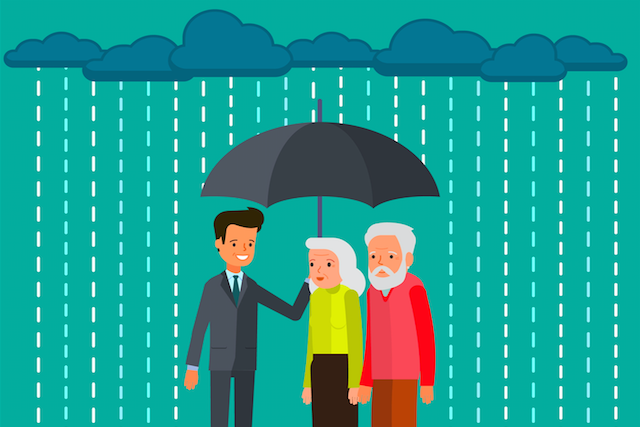
Kindness Isn’t Weakness (and We Need It to Survive)

“Too often we underestimate the power of a touch, a smile, a kind word, a listening ear, an honest compliment, or the smallest act of caring, all of which have the potential to turn a life around.” ~Leo Buscaglia
Many of us are brought up today to look after number one, to go out and get what we want—and the more of it we can have, the better.
Our society preaches survival of the fittest and often encourages us to succeed at the expense of others.
I was no different, and while I noticed a tendency to feel sorry for others and want to help, I was too busy lining my own pockets and chasing my own success to act on these impulses. I worried that kindness was me being soft and, therefore, a weakness that may hamper my progress, especially at work as I moved up the ranks.
It was only when I quit my corporate career, after years of unhappiness, to realign my values and rebuild a life around my passions that I learned the true value of kindness and how it has impacted my life since.
I volunteered overseas with those less fortunate. I lived in yoga ashrams and spent time with Buddhist nuns and monks across many different countries. I learned how compassion and kindness can be a source of strength, and since then I’ve applied this wisdom, with success, repeatedly into my own life.
Our natural response to seeing someone in distress is to want to help. We care about the suffering of others and we feel good when that suffering is released. This applies if we do it ourselves, see it in a movie, or witness it in real life. It makes us feel good. Feeling like we’re making a difference in the world and helping those who need it brings us joy; it gives us meaning.
My grandma was the most giving person I ever knew.
When her weekly pension arrived she delighted in giving the grandchildren money, even though it meant having little to spend on herself.
Family members would get upset that they bought her lovely gifts, which she then re-gifted to others, often less fortunate. Over the years I began to understand that it if she gifted it to someone else, it meant that she liked it and thought it was worthy of sharing.
Knowing the pleasure she got from giving to others and that she wasn’t in the position to buy things herself, I saw it as her getting the gift twice: the pleasure of receiving it but then also the pleasure she got from being able to give it to someone else. The recipients were always grateful and touched by her kindness too.
Buddhists say, “All the happiness there is in the world comes from us wishing others to be happy.” When we do good deeds for others it makes us feel good.
James Baraz quotes statistics on why giving is good for you in his book Awakening Joy. “According to the measures of Social Capital Community Benchmark survey, those who gave contributions of time or money were 42% more likely to be happy than those who didn’t.”
Psychologists even have a term for the state of euphoria reported by those who give. It’s called “helpers high,” and it’s based on the theory that neuroscience is now backing up: Giving produces endorphins in the brain that make us feel good. This activates the same part of the brain as receiving rewards or experiencing pleasure does.
Practicing kindness also helps train the mind to be more positive and see more good in the world. There’s plenty of it out there; it just doesn’t seem like it because, while the kind acts outnumber the bad, they don’t make as many headlines.
When I think back to how life was before, I realize that I wasn’t even being kind to myself, so it makes sense that I didn’t value kindness for others. I’ve learned it’s about self-respect first, and from there it’s much easier to respect others. Kindness as a skill taps into our true strength. We can respect ourselves when we are being kind to others and to our planet.
Friends would warn me I was too soft and that people would walk all over me. Whether I was buying a coffee for a homeless man (he should get a job and buy his own coffee) or letting someone else go in the queue before me (you were here first, don’t let them push in).
Sometimes I think this comes from fear, or a sense of entitlement and protection of one’s self. I guess that’s the ego at play.
Most of us are kind. I believe it’s part of our innate nature. It just gets a bit lost sometimes or drowned out by all the noise of a more selfish sense of being—particularly in our consumer-driven society where we’re taught we must have things for ourselves, and the more we can get, the better. Where money is such a force and where we put up fences rather than inviting people to share in what we have.
In business as a senior manager, I used to think that any signs of kindness would be viewed as weak. I used to dumb down skills like empathy and try to act like the tough business leader I thought the world expected me to be. In more recent years I’ve noticed that having time to be kind builds trust and relationships and garners the sort of respect that leads to strength in a leader.
Don’t get me wrong, it is not about being lenient, giving in, and not holding people accountable. It’s about being reasonable, fair, open, and trustworthy; supporting others, empathizing with them, recognizing them when they’ve done well, and showing you care. Not by overpaying them or extending their deadlines, but by asking how their weekend was, getting to know what motivates them, how they feel and who they are.
It’s too easy to justify desire, self-indulgence, and miserliness with the survival of the fittest mentality. We tell ourselves this is based on Darwinian evolution and competition to survive. What we have overlooked is that a fundamental part of our survival is cooperation, working together, looking after each other.
Humans did not evolve to be big and strong or with big fangs. We survived because we helped each other. Look how ancient tribes lived. They didn’t see competition as a priority but thrived on cooperation. It is the essential nature of living things to cooperate, not dominate. Yes, there’s competition in nature, but the basis is cooperation. In The Descent of Man Darwin did mention survival of the fittest (twice), but he also mentioned love (over ninety times).
I’m not suggesting we all need to donate our savings to charity or move overseas to rebuild huts in poor villages. There are many small gestures and so many opportunities every day: getting coffee for a coworker who’s struggling, helping a mother with her shopping, holding the door open for someone, smiling at a stranger, or asking the store assistant how their day is going.
It makes people feel good when they are on the receiving end, but also it makes us feel good because we are being kind and connecting with others on a genuine level. Kindness increases our sense of fulfillment and joy, it helps us build resilience, and it’s also a source of strength, as well as a skill that aids our success.