Tag: kind

  • The Mean Instinct: Why We Exclude Others and How to Stop

    The Mean Instinct: Why We Exclude Others and How to Stop

    “In a world where you can be anything, be kind.” ~Unknown

    “Girls are mean!” I nodded knowingly as my boss struggled to explain the difference between raising boys and girls. I couldn’t speak to raising boys, but I remembered all too well what it was like when my daughters were growing up.

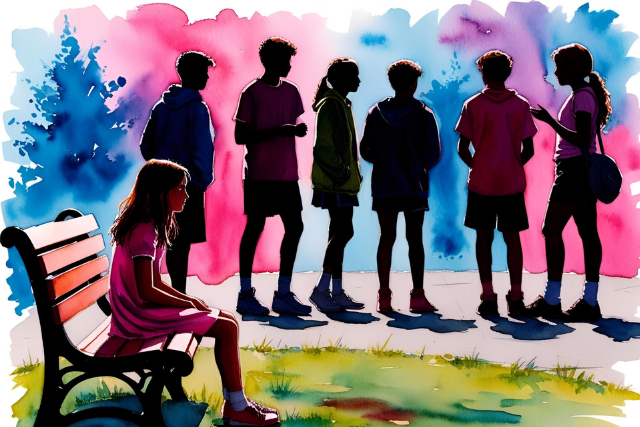
    Girls traveled in packs, always with a leader at the helm. And almost every week, one of the lesser-ranked members was cast out, ostracized from the group. More often than not, it was one of my daughters. I distinctly recall their heartbreak—the kind of deep, inconsolable sorrow that only a child can feel when their world is upended.

    Then, just as suddenly as they had been exiled, the social winds would shift. They’d be welcomed back into the fold, all smiles and laughter, as if the agony of rejection had never happened. And just like that, it was another poor girl’s turn to bear the brunt of exclusion. My daughters, now safely back in favor, never hesitated to play along, inflicting the same pain they had so recently endured—all in an effort to stay in the leader’s good graces.

    It’s easy to think of this as just ‘girl drama,’ but is it really? I found myself wondering: is meanness learned, or is it wired into us? And oddly enough, my horse helped me answer that question.

    From Outcast to Enforcer

    A few years ago, I moved her to a new home, where she had to integrate into an unfamiliar herd. The top mare wasted no time making it clear—she didn’t like my mare. For two weeks, every time I arrived, I’d find her standing alone on the outskirts, gazing longingly at the hay she wasn’t allowed near. And every time, she would run to me, silently pleading for help.

    It reminded me so much of my daughters. It broke my heart.

    But then, something shifted. Slowly, she earned her place. She ingratiated herself with the top mare. They became inseparable—best friends. And soon enough, it was my mare turning on the others, asserting her own dominance.

    Watching my mare transform from the outcast to the enforcer unsettled me. I realized—this wasn’t cruelty. It was instinct. The unspoken rules of survival. And the more I thought about it, the more I saw those same rules playing out in my own life.

    Sure, we may not bite or chase each other away from the hay, but we have our own ways of keeping the social hierarchy in check. The whispers. The inside jokes are at someone else’s expense. The subtle shifts in who gets included and who doesn’t.

    Had I been any different? Had I, too, learned to play the game—shifting, adapting, and excluding, not out of cruelty but out of the same deep, instinctual need to belong?

    Were We the Mean Girls?

    I don’t really remember the “mean girls” when I was in school. But looking back… that probably means I was one.

    I never thought of myself as particularly cruel, but I do remember moments that make me wince now. One in particular stands out.

    There was a girl in my class—let’s call her Claire. She was bright and talented, and she attended speech and drama classes. One day, in a rare moment of vulnerability, she opened up to us. She admitted that when she was younger, her parents had sent her to those classes because she had a speech impediment. She had worked hard to overcome it, and in that moment, she was trusting us with a piece of her story.

    And how did we respond?

    We laughed. And worse—we turned it into a joke. Every time she was in earshot, we’d start singing “Words Don’t Come Easy.” It was meant to be funny, just harmless teasing. At least, that’s what I told myself at the time. But now, I cringe at the memory.

    She had been brave enough to share something real, and instead of honoring that courage, we used it against her.

    At the time, I didn’t think of myself as mean. I wasn’t the ringleader, just someone going along with the joke. But does that really make it any better? Looking back, I realize that staying silent—or worse, laughing along—makes you just as much a part of the problem.

    If anyone I went to school with happens to read this—especially Claire—I’m sorry.

    Do We Grow Out of It?

    I’d like to believe that kind of behavior is just a phase—something we grow out of as we mature, as our empathy deepens, as we learn to control our baser instincts. After all, kids can be cruel, but their brains aren’t fully developed. They act on impulse, driven more by the need to belong than by a true desire to hurt anyone.

    Surely, then, adulthood brings wisdom. Surely, we learn to be better.

    Sadly, that’s not always the case.

    We like to think we’ve evolved beyond schoolyard cliques, but the truth is, meanness just becomes more subtle. Instead of playground exclusions, it’s office gossip. Instead of outright teasing, it’s backhanded compliments and judgmental whispers. The tactics change, but the instinct remains.

    How to Break the Cycle and Choose Kindness

    The instinct to exclude, judge, or tear others down may be wired into us, but unlike my mare, we have something powerful: awareness and choice. We don’t have to follow our instincts—we can rise above them. Here’s how.

    1. Recognize the pattern.

    The first step to change is awareness. Meanness doesn’t always look like outright bullying—it can be as subtle as rolling your eyes at someone’s success or staying silent when a friend is being excluded. Start paying attention to the moments when judgment, gossip, or exclusion creep in. Ask yourself:

    • Why am I doing this?
    • What am I gaining?
    • How would I feel if I were on the receiving end?

    2. Challenge the scarcity mindset.

    Much of our instinctive meanness comes from a deep-seated belief that success, beauty, or belonging is limited—that if another woman shines, it somehow dims our light. But that’s simply not true. There is enough success, happiness, and love to go around. Lifting others up doesn’t take anything away from you—it strengthens everyone.

    3. Replace gossip with encouragement.

    Gossip is a social bonding tool—we do it to feel connected. But there’s a better way. Next time you’re tempted to tear someone down in conversation, flip the script.

    Instead of:

    “Did you see what she was wearing?”

    Say:

    “I love how confident she is to wear that!”

    Compliments—especially when given freely, without expectation—have a way of shifting the energy in a room.

    4. Make kindness a habit.

    Kindness isn’t just about grand gestures—it’s in the small, daily choices.

    • Smile at a stranger.
    • Invite the quiet colleague to lunch.
    • Defend the person being talked about behind their back.
    • Support your friends’ successes without comparison.

    The more you practice, the more natural it becomes.

    5. Teach the next generation.

    If you have children, especially daughters, talk to them about social dynamics. Share your own experiences. Show them what healthy friendships look like.

    When they come home upset because they were left out—or because they left someone else out—help them navigate those feelings with empathy and self-awareness.

    6. Be the one who makes room at the table.

    In every social group, workplace, or community, there are people on the outskirts—just like my mare once was. You have the power to invite them in. Inclusion is a choice. So, the next time you see someone being left out, be the person who makes space for them.

    Final Reflection: Who Do You Want to Be?

    Every day, we have a choice. Not just in grand, dramatic moments—but in the quiet, ordinary ones.

    The choice to include.

    The choice to uplift.

    The choice to be better.

    So today, ask yourself: Who needs a seat at your table? And will you make room?
  • Standing Up for Yourself Doesn’t Make You Any Less Kind

    Standing Up for Yourself Doesn’t Make You Any Less Kind

    “Being a good person doesn’t mean being a doormat… You can be kind, giving, and full of love, but that doesn’t mean you have to accept disrespect or allow your boundaries to be crossed.” ~Unknown

    I can still vividly remember sitting in my seventh-grade classroom, forcing a laugh as my classmates made jokes at my expense. My cheeks would burn red, but I’d smile along, desperately wanting to belong. For years, I mistook my silence for kindness, my nervous laughter for good nature. I didn’t realize that by laughing at myself, I was slowly chipping away at my own self-worth.

    Growing up, I was the “nice kid”—the one who never caused trouble, never talked back, and always tried to keep the peace. When someone would make a cutting remark about my appearance or mock the way I spoke, I’d respond with a practiced smile and a halfhearted chuckle. I thought this made me mature, diplomatic even. “Just brush it off,” my mother would say. “They’re only joking.” But deep inside, each laugh felt like a small betrayal of myself.

    The pattern continued well into my teenage years. In every social circle, I became the designated “good sport”—the one who could take any joke, no matter how sharp its edges. I wore this label like a badge of honor, never realizing it was actually a shield I was hiding behind. My inability to stand up for myself wasn’t kindness; it was fear dressed up as politeness.

    The turning point came during my first year of college. During a group project, a teammate made a particularly cruel joke about my work ethic. As usual, I started to laugh, but something inside me snapped.

    Years of suppressed feelings bubbled to the surface, and for the first time, I heard how hollow my laughter sounded. In that moment, I realized I wasn’t being nice—I was being complicit in my own diminishment.

    This revelation led me down a path of self-discovery and personal growth. Through therapy, self-help books, and countless conversations with trusted friends, I began to understand the difference between being kind and being a doormat. I learned that standing up for yourself doesn’t make you mean or confrontational—it makes you self-respecting.

    Here are the vital lessons I learned along my journey:

    The first step was the hardest: acknowledging that my laughter was a defense mechanism, not a sign of resilience. I had to accept that it’s okay to not find hurtful comments funny. Real strength isn’t in laughing off insults; it’s in acknowledging when something hurts and addressing it directly.

    I started practicing simple phrases in front of the mirror: “I don’t find that funny,” “That comment was inappropriate,” or simply, “Please don’t speak to me that way.” At first, these words felt foreign on my tongue, but gradually, they became part of my vocabulary. I learned that confrontation doesn’t have to be aggressive—it can be calm, dignified, and firm.

    The most surprising discovery was how many people respected me more when I started setting boundaries. Those who truly cared about me adjusted their behavior. Those who didn’t, well, they showed their true colors, and I learned that not every relationship needs to be preserved at the cost of your self-respect.

    Today, I still consider myself a kind person, but my kindness no longer comes at the expense of my dignity. I’ve learned that true niceness isn’t about accepting poor treatment; it’s about treating others—and yourself—with respect.

    When someone makes a hurtful comment now, I no longer reach for laughter as a shield. Instead, I stand tall in my truth and speak up with compassion and clarity.

    To those who recognize themselves in my story—those who laugh when they want to cry, who smile when they want to scream—I want you to know that your feelings matter. Your discomfort is valid. Your voice deserves to be heard. Being nice doesn’t mean being silent, and standing up for yourself doesn’t make you any less kind.

    The journey from forced laughter to authentic self-expression isn’t easy. It’s filled with uncomfortable moments and challenging conversations. But with each small act of standing up for yourself, you rebuild your self-worth piece by piece. You learn that the strongest form of kindness is the kind you show yourself.

    Remember: You can be both nice and strong, both kind and assertive. The real magic happens when you find that balance—when you can face the world with a genuine smile, knowing you’ll never again laugh at the expense of your own dignity.

  • A Beautiful Reminder of How Powerful We Are

    A Beautiful Reminder of How Powerful We Are

    “No kind action ever stops with itself. One kind action leads to another… A single act of kindness throws out roots in all directions, and the roots spring up and make new trees. The greatest work that kindness does to others is that it makes them kind themselves.” ~Amelia Earhart

    When you’re having a particularly rough day, it’s tempting to hang your head in defeat and conclude it’s a cruel world where nothing matters. I had a day like that last month.

    A good friend was diagnosed with a horrendous disease. The horse I had been training with for years was sold and relocated across the country with almost no notice. A shady car mechanic almost had me convinced to replace four perfectly good tires.

    All this in one day.

    Yet that’s not all that happened that day.

    I also went to the bank to use the cash machine. I hadn’t been to that location in months. When I arrived, there was a security guard outside. I said hello. It seemed like he recognized me as having been there before. I completed my transaction and started walking back toward my car. And that’s when the security guard said, “When’s the next free hug day?”

    As it turned out, he remembered me from several months ago when I was wearing a t-shirt with Elmo on the front and the words “free hugs” in big letters. At that time, I had completely forgotten I was wearing that shirt. In fact, I was so caught up in my thoughts that day that I didn’t even notice the security guard standing there until I heard a voice say, “I’ll take you up on that shirt.” That was months ago.

    That small act of kindness—a single hug several months ago—had made an impact. I was getting a beautiful reminder of that now.

    So when the security guard asked, “When’s the next free hug day?” I immediately snapped out of my defeated state of mind and cheerfully answered “every day,” and we hugged for the second time.

    “Thanks, I needed that,” he said. And I guess so did I.

    That’s the power of one person. Each of us has within us the potential to make a positive impact on the world.

    We don’t need to start a non-profit or donate all our possessions to charity (although those things are awesome) to make a difference. Making a positive difference can happen with our every thought, word, and action—no matter how small.

    My interaction with the security guard at the bank was a beautiful reminder that something as small and fleeting as a hug, a smile, or a kind word can have a profound and lasting effect.

    “There’s no such thing as a small act of kindness. Every act creates a ripple with no logical end.” ~Scott Adams

    The truth is, we’ll never know just how far the ripples of one small kindness extend. Maybe that initial hug with the security guard months ago put him in a more lighthearted mood for the rest of the day, which influenced how he interacted with his family that evening, which in turn influenced their actions and outlook the next day, and so on, and so on.

    Maybe the second hug reminded him that the world is full of friendly people, and all that it takes is a tiny, initial gesture to break the ice.

    “The very nature of kindness is to spread. If you are kind to others, today they will be kind to you, and tomorrow to somebody else.” ~Sri Chinmoy

    Although we can never know just how far the goodness of one kind act can spread to others, what we can experience firsthand are the effects a kind act has on ourselves. Studies have repeatedly shown that the person doing the kind act receives as much benefit to their mood and outlook as does the receiver—oftentimes even more so.

    What’s more amazing is that this double benefit is not limited to our kind words and deeds. It applies to our thoughts as well.

    That’s right. Our thoughts are powerful. The quality and quantity of our thoughts affect our physical, mental, and emotional health.

    That’s why things like the placebo effect work. If we wholeheartedly believe the sugar pill the doctor gives us is a powerful medicine to help what ails us, our body will respond according to that belief. Our thoughts directly influence how our body functions.

    Our thoughts also extend out to others.

    Because thoughts, like everything else, are energy, they are broadcast nonstop, twenty-four hours a day, to everyone and everything around us. That’s why things like distant healing and prayer groups can promote healing and positive change. When two or more people synchronize and focus their thoughts, the positive effects are magnified.

    Even in our day-to-day activities, our thoughts have an impact on others. Although we may not be able to read the mind of the sales clerk who approaches us in the store, for instance, on some level we can feel them.

    Our body senses the energy fields of others.

    That’s how we are able to get an immediate sense of someone when we meet them for the first time. Even before either person says a word, we receive an energetic impression of that person. Whether that first impression is positive or negative has a lot to do with their (and our) thoughts.

    We live in an interconnected, interdependent universe. My interaction with the security guard at the bank that day was a beautiful reminder of this.

    So, while we may often feel alone or distracted in this increasingly busy world, it is empowering to realize we can connect with anyone, anywhere, with our thoughts, our words, and our actions. All it takes is intention and attention. That’s how powerful we are.

    We can set an intention to embody kindness and compassion and be a positive force in the world. Then we can give it attention by regularly monitoring our thoughts to ensure they are in alignment with our intention to be the best version of ourselves.

  • The Simple, Old-School Acts of Kindness Our World Badly Needs

    The Simple, Old-School Acts of Kindness Our World Badly Needs

    “Whatever is in memory is also in soul.” ~Saint Augustine, Confessions

    Memories of my father are etched deeply in me—not for what he accomplished as a surgeon, a pilot, and an outdoorsman, but for what he was about, a truly gentle and generous man. Ironically, one of the most important lessons I learned from and about him came from a stranger.

    I was alone in my family’s large Victorian-style house in the heart of the Midwest on a muggy Saturday afternoon. My mother had taken my siblings to a summer reading program at the public library, and my dad had been called to the emergency room of the local hospital. But I was not alone for long.

    While watching The Game of the Week with Dizzy Dean and Pee Wee Reese, I heard a thunderous noise at the front door. The power and volume of repeated pounding frightened me. I scampered to the front entry way but was too afraid to show my face from behind the beveled glass panels of the door.

    But I managed to peek outside and saw a giant of a man, dressed in mud-stained overalls, a sweaty blue long-sleeved work shirt, and a beat-up old hat—the kind that train engineers once wore. He was now wiping his hands and neck with a wadded-up red bandana, as though taking a time out before assaulting the front door again.

    I froze in place, for surely this monster-man was a stranger to me. His rough features and seeming impatience made me wonder if I should answer the door at all. But soon, garnering what courage I could as a shy ten-year-old boy, I slowly pulled the heavy walnut door open just a crack, and nearly whispered, “Yes, can I help you?”

    Without pause, the man bellowed with an unmistakable country drawl, “Hey, boy! Is the Docta home? I got somethin’ for him.”

    Still wondering who he was or what he wanted, I meagerly replied, “No, and my mom isn’t here either.” I realized in a flash that I had violated my parents’ warning to never let anyone in the house when no one else was home. Now it was just me, a man that might be some kind of deranged mental case, and an open door between us.

    “Well, son. I bet your dad is out fishin’ or somethin’. It’s a Saturday and hope he’s not workin’ cause he does too much as it is. Two months ago, my missus had to drive me to the ‘horspital’ on a Sunday because my appendix was killing me. Oh, Lord did it hurt!

    “Your dad come down there in his work clothes. Before I know’d it, I was wakin’ up in a horspital room. And there was your dad standin’ at the foot of my bed tellin’ me I was gonna be fine.

    “I come to his office a couple of weeks later to get a checkup. I told him I wanted to pay my bill, but things were a little thin, as the flood had ruined the corn crop that spring.

    “Well, sir. He just told me not to worry about the bill at all—that he knew all about floods and droughts, and what it was like to grow up on a farm, especially in bad times. I’m tellin’ you son, that dad of yours is somethin’ special. I’ll never forget it.

    “Well … now I got somethin’ here—you give it to your mom, but you tell your dad that Ole Jim from Wever dropped by. My place is down by Highway 61 near the Skunk River. He’ll know—he likes to duck hunt there in the fall.”

    Before I could say a word, he bent over and slid a huge bushel basket through the front door to my feet. It was brimming with ears of Iowa sweet corn, clusters of ripe tomatoes, bunches of carrots and beets with their green tops, several large cantaloupe melons, a head of cabbage, and a large bag of green beans. And a small sunflower was tucked in the middle of this cornucopia—a perfect touch that no doubt came from Ole Jim’s wife.

    Without another word, he swiveled and quickly made it to his rusted GM pickup truck and backed it down the driveway and set course out of our private lane. With the grinding of gears and belches of exhaust from the tailpipe of his pickup, he was gone. But he waved goodbye to me, as only farmers can do, with the subtle lift of his right index finger in my direction, his eyes staring straight ahead.

    I was relieved he was gone and felt embarrassed by how out of place I felt with him, as our home was expensive and sat across the lane from the country club. I could tell he didn’t have much money and from the location of his farm, I knew it was “bottomland,” which was sandy soil in a flood plain—not worth all that much. But I could tell he was a proud man and had enormous respect for my dad.

    Over the years I have replayed this moment with Ole Jim many times, and I’ve come to realize how much the generosity of my dad and the old farmer down by the Skunk River have affected me.

    Bartering goods for services was an accepted way of doing business in an era gone by. But in today’s world of corporate medicine and mandatory co-pays, it is difficult to imagine how millions in our country get medical treatment without cash or a credit card, let alone have a costly treatment given as a gift, simply because it was the right thing to do.

    I was blessed to live on my grandparents’ farm during summers, and many times I watched simple acts of kindness and home-grown goods exchanged with neighbors and townspeople. This struck me then simply as their way of life; but now I see more clearly these exchanges were also transactions of the heart. But you would never know it, as generosity was given without fanfare or notice—simply bestowed as subtly as a single index figure raised to say hello or goodbye.

    My dad was like that. He never lectured me about the responsibility to treat others equally, and with respect and dignity. Nor did he draw attention to his many gestures of charity or a quiet helping hand to friends, patients, and complete strangers. But I caught him in the act many times, and often heard stories about his generosity and gentle way in dealing with others.

    He simply acted with kindness and good faith to everyone he met. I am sure he was that way because it was how he was raised, not formally taught how to be his best self, but modeled in that way by my grandparents: humble, charitable, and understated—old school.

    Maybe that’s the only way we can learn about what is most important in life—by example, not by books or lectures. The ineffable qualities of goodness and kindness may stream to us from our ancestors if we are lucky to have had such men and women come before us. We are doubly lucky when those qualities quietly stream through us to our children.

    I am a psychotherapist and I have a set fee policy on my website. But when I can tell that a prospective client cannot pay $150/hour, I make it clear I am not in the therapy business just to make a buck. I often let the client set the fee they can afford, even if they cannot pay a dime, and then quickly move on to the work. No fuss.

    In those moments, I can feel their gratitude, as well as their surprise. I often flash back to Ole Jim’s best way to express his gratitude and pay what he could afford. As for my dad, he never talked of such things, even though every now and then, a string of fish would be sitting in an old ice-chest on the back porch, or a gift certificate to the downtown rod and gun store would arrive in the mail without a name.

    Such memories and lessons speak to my soul. I see more clearly today that these simple acts of kindness and generosity—so badly needed in today’s world—were indeed acts of grace. Pure, simple, and subtle, like the farmer’s wave. Old school.

  • 30 Ways to Be Kind: Simple Ways to Spread a Little Love

    30 Ways to Be Kind: Simple Ways to Spread a Little Love

    Can you remember the last time someone was unexpectedly kind to you?

    I’m guessing at least some of the people in your life are kind to you on a regular basis. Or at least I hope they are! But maybe their kindness feels commonplace because it’s made up of lots of little things that they do often… like asking if you want a cup of coffee when they’re getting their own, or saying, “I love you” in that rote way we do before hanging up the phone.

    Small gestures like this are always valuable and worth appreciating and acknowledging. But there’s something about an unexpected act of kindness that can jolt us awake from the trance of daily living and make us feel seen, valued, and loved.

    I’ve been reflecting on kindness a lot lately since revisiting Brad Aronson’s book HumanKind (which is in itself an act of kindness, since all author royalties support the non-profit Big Brothers Big Sisters).

    The book shares some truly inspiring stories about kindness and its impacts, and it’s full of simple but powerful ideas to make a positive impact in someone’s life.

    It’s the kind of book that makes you want to stop whatever you’re doing and find some way to help someone else, whether that means encouraging them, supporting them, or simply believing in them when they’re struggling to believe in themselves.

    So, in that spirit of giving, I decided to make a list of kindness ideas and do one a day for the next thirty days.

    If you’d like to join me in spreading a little love, take this list and make it your own! Do one, do some, or do all; adapt them as you please; expand them if you feel inclined to do more, or scale some back if you want to do a little less. Any act of kindness, no matter how small, can have a massive ripple effect.

    Since we can’t give from an empty cup, I started with ways we can be kind to ourselves. I then thought of some simple ways we can be kind to our loved ones, strangers (or friends we’ve yet to get to know), people online, and people who serve us.

    I hope something in this list inspires you to share a little extra love today and in the days ahead!

    Kindness to Yourself

    1. Look in the mirror and compliment yourself on how much you’ve grown and how far you’ve come. So often we think of what we want to be and where we want to go, or what we think we’re doing wrong, and we don’t take the time to think about and appreciate all the progress we’ve already made.

    2. Make a list of things you appreciate about yourself or, if this is hard, reasons someone else might appreciate you.

    3. Let yourself enjoy something you usually rush or multitask—for example, savor a meal, drink your coffee in a peaceful spot, or take a mindful shower.

    4. Make time for a passion today instead of putting joy on the bottom of your to-do list (if you ever add it to your list at all).

    5. Validate your feelings instead of judging or shaming yourself for being angry, frustrated, overwhelmed, or anything else that doesn’t seem “positive.”

    6. Check in with yourself every hour or two and ask yourself, “What do I need right now?” Then do what you can to meet that need, whether that means moving your body, taking deep breaths, or writing your thoughts and feelings in a journal. (And remember, it’s okay if you have to say no to someone else to say yes to yourself in this way!)

    Kindness to Your Loved Ones

    7. Think of someone who’s going through a hard time and offer to do something specific to lighten their load. It doesn’t need to be anything big or perfect. Just knowing you care enough to offer will make them feel seen and supported.

    8. Write a hand-written note of appreciation to someone who’s made a big difference in your life.

    9. Put your phone down when someone is talking and practice active listening—making eye contact, repeating what they’ve told you to show you understand them, and empathizing with what they’re saying.

    10. See the wounded child in someone who’s lashing out emotionally and offer them an ear or a hug. (Note: by “lashing out emotionally,” I mean being testy, not abusive.)

    11. Pause before you lash out emotionally to take a few deep breaths, reflect on why you’re really upset, and consciously choose how you want to respond.

    12. Ask someone what their love language is—words of affirmation, acts of service, receiving gifts, quality time, and physical touch—so you can do something that’s likely to make them feel loved and appreciated.

    Kindness to Strangers

    13. Compliment a stranger on something non-physical—for example, compliment a mother on her patience or tell someone you love their laugh.

    14. Give someone on the road or the street the benefit of the doubt. Consider that the driver who cut you off might be rushing home to deal with a crisis, or that the surly man who didn’t hold the door for you is grieving the loss of someone they love. This is also an act of self-kindness, because it keeps us from getting frustrated!

    15. Help a stranger with something they’re struggling with—for example, guide them into a tough parking spot, make silly faces to help entertain a fidgety baby, and offer to take a pic when they’re trying to get a group selfie.

    16. Give something you don’t use or need to a homeless person that will help them get through the winter—for example, an old coat or warm socks.

    17. Leave a book that helped or inspired you in your local Little Free Library, with an encouraging note to the next reader.

    18. Write a letter to an isolated elderly person to make them feel less alone or send a card to a sick child.

    Kindness Online

    19. Write something kind to someone who’s struggling online, whether they’ve directly shared what they’re going through or they seem emotionally reactive (which is often a sign of deep pain).

    20. Disagree respectfully instead of getting annoyed or defensive or telling someone they’re wrong. For example, you could write, “Though I see things differently, I understand why you’d hold that perspective.”

    21. Share a helpful resource with someone who needs it. For example, email a link to a relevant article or podcast with someone who’s seeking help or advice.

    22. Leave a positive review for a product or service you’ve enjoyed—and even better, be someone’s first review to reassure them they’re making a difference, even if it doesn’t feel that way.

    23. Support an online fundraiser with a small donation or contribute to a gift for a child who might not otherwise receive a holiday present, through One Simple Wish. If you can’t afford to donate, share a fundraiser for a cause that matters to you with your friends and family on social media.

    24. Congratulate someone on an accomplishment they’ve shared publicly—a degree, a month sober, or even just a mental health day for someone who usually pushes themselves too hard—and include something specific about why you’re proud of them or inspired by them.

    Kindness to People Who Serve You

    25. Be patient with someone who’s serving you, like a barista or cashier, and tell them to take their time.

    26. Put a sticky note with the words “thank you” on your mailbox to thank your mail carrier for a job well-done. If you can afford it, leave a $5 gift card to a local coffee shop.

    27. Compliment someone who serves you in some way on how well they do their job, with a specific example.

    28. Start a call with a customer service rep by saying, “I imagine this isn’t an easy job, so first things first, thank you for what you do and for helping me today.”

    29. Note something you appreciated about a service worker’s efforts—perhaps a retail associate, flight attendant, or bank teller—and email their manager to commend their work.

    30. Add a “Thank you” with a smiley face when you sign your next credit card receipt. (I usually put two exclamation points after “thank you” and make the dots the eyes for the smiley.)

    If you enjoyed this list and you’re feeling all jazzed up about spreading a little extra love, I highly recommend you check out HumanKind by Brad Aronson!

    He has a special stocking stuffer deal going on right now, offering the book for only $8.50 when you buy five or more, and a single copy is currently 25% off on Amazon. He’s also offering the eBook for only $.99 for a limited time.

    Treat yourself to an uplifting afternoon read and keep the kindness chain going by gifting a copy to someone who could use a little light. You never know what could grow from a simple seed of kindness and love.

  • An Unexpected Place to Find Kindness: What Made Me Feel Like I Belong

    An Unexpected Place to Find Kindness: What Made Me Feel Like I Belong

    “Not all of us can do great things. But we can do small things with great love.” ~Mother Teresa

    Routines are important to me. I rely on certain things to bring me back home to myself; to feel clear and open in my mind, body, and heart.

    One of the activities that bring steadiness to my life is swimming. It’s one of my greatest pleasures. There is something magical to me about the feeling of water on my skin, the repetition of the arm strokes that calm my mind, the sound of my breath that relaxes my body, and the rays of sunlight that reflect off the water.

    I rely on swimming three mornings a week. I like to say it gets me back in my lane or it keeps me out of the others’ lanes.

    I showed up to my local pool several weeks ago—pool closed due to mechanical issues.

    It was just supposed to be for a few days. I told myself that it was a gift to give my body a rest from swimming. Over the next few days, I told myself that this time allowed me to help a loved one who needed extra care. But as more time passed, I couldn’t find a reason to find peace without swimming. I missed it.

    I found another pool a bit farther away from my home. Though I felt irritated that I had to go to another pool and create a new routine, I chose my love for swimming over any of the inconveniences.

    After my first swim, an employee ran over to me and said, “I’d like to introduce myself and welcome you to our pool. It’s wonderful to have more lap swimmers here.” We connected over our love for swimming.

    I left feeling a little more cheerful than I usually do after a swim, and I am already pretty cheerful after swimming.

    I came back the following week, and after finishing my swim was greeted by the water aerobics women. As I got out of the pool, they chatted with me about swimming and how they want to learn to do laps.

    Over the next few weeks, I began to notice that every time I left swimming, I was a bit more cheerful.

    One morning, as the aerobics women came into the pool, I noticed that they greeted each other with hugs and kisses (yes, in the pool at 9:00 a.m.).  I asked the lifeguard, “Does this always happen?” 

    He replied, “Sure does.”

    In the locker room women hum songs, tell me to have a blessed day, and chat with me about all sorts of things as I shower. I don’t know anyone personally, and yet they are undeniably kind and warm to me.

    Just this past week a woman belted out in the locker room I AM BEAUTIFUL. I couldn’t help but feel completely overjoyed at this women’s confidence and radiance.

    I have been noticing how I’ve been feeling after swimming, and I have become curious about what’s contributed to the fact I haven’t checked if my pool has reopened.

    It’s the women. It’s the kindness. It’s the singing. It’s the joyful greetings. It’s the curiosity.

    While I only know two women by name, they know even less about me and how the things they have been doing for many years have been bringing an extra dose of cheer into my life.

    It has not been easy for me living in a neighborhood that is known for intergenerational legacies of families living here. I didn’t come from this neighborhood. Even though I have been here for eighteen years, feeling like I fit in has been a private struggle that I don’t often share with others.

    In this pool, a short drive from my home, in another neighborhood, I have found a place that I need more of in my life. 

    We all want to find our people; we all want to belong.

    Sometimes we don’t actually know how much pain we hold until we are blessed with the one thing that has been missing—kindness.

    And with that kindness, the protection starts to soften and the hurts come to the surface. We realize that’s just what our heart was holding all of these years.

    In my mind, I’ve known the story of the past eighteen years of living in a place I don’t really feel like I fit.

    I’ve worked with the beliefs. I’ve taken responsibility for what is mine to learn, heal, and grow from. I’ve also come to accept that this was what life gave me and that even in not feeling like I belong, there have been tremendous gifts and blessings these past years.

    But it is also true that we need to give words to our truth. I want to belong. It is a human birthright to belong. We are designed to belong to groups of human beings.

    We see people through our own lens and make up stories about them that aren’t necessarily true. I am grateful that these women at the pool didn’t make up a story about me and instead treated me with kindness.

    They could have easily made up a story about me. They are black, and I am white. They know I am not from their neighborhood, but instead, they saw past what I looked like and opened their hearts to me. They sang to me in the shower, blessed my day with prayers, and wished me well for the rest of my day.

    None of us know the story of someone’s insides. None of us know how simple acts of kindness and inclusion can make someone feel like they belong.

    Sometimes the people that we least expect to make a difference in our lives do. We are all capable of this.

    We all live with a protected heart in some ways; none of us are free from hurts. If I hadn’t sat with the pain of not belonging and feeling disappointed in past relationships, my heart may have been impenetrable. I had to learn to be there for myself with kindness before I could allow others to be there for me. I think this is true for all of us.

    Sometimes the simple gesture of placing your hand on your heart and saying to yourself, “I am here for you” is a great act of kindness and allows the unexpected joys of life to be felt when you least expect them.

  • If You Really Want to Change the World: 4 Ways to Be Kind

    If You Really Want to Change the World: 4 Ways to Be Kind

    “I’ve learned that people will forget what you said, people will forget what you did, but people will never forget how you made them feel.” ~Maya Angelou

    I’ve now reached the age in my life when every so often, I get an email or text informing me that someone I know has died. Some of the people who have passed away have been former supervisors or teachers from high school. Others have been the parents of friends or elderly members of my church.

    At one time, the news that someone had died was shocking to me. Now it’s nearly a monthly occurrence, and I’ve become accustomed to it.

    Whenever I receive one of these texts or emails, I always go in search of the obituary. This may sound macabre, but I love a good obituary. I like to learn what people chose to do with this one life that they were given. I particularly like the obituaries in which you get a sense of who the person was. Aside from their accomplishments, what was that person really like?

    Because the reality is that your accomplishments aren’t what will have mattered most about your life.  Instead, what matters about your life is how you made people feel, as so aptly put by Maya Angelou. Another way of putting it is this: Were you kind to others?

    Why does kindness matter so much? Because kindness is the only real way to change the world for the better. For example, I can give you $20, and you can use that to buy one meal. Certainly, that is a nice gesture.

    But what if I encourage you? What if I take the time to specifically identify your gifts and talents? What if I explain to you that you have the ability to do great things with your life? Then my kindness potentially has changed your life.

    Kindness is powerful. In fact, being kind is the most important thing that we do in life.

    Below are ways to start incorporating kindness into your daily life. If you make kind acts part of your daily routine, you’ll end up being someone who changes the world in the most beautiful way.

    To Be Kind, Be an Encourager

    We live in a very critical world. Sadly, people are quick to criticize, and they are reluctant to offer praise. Given the harshness of our world, it’s no small wonder that so many people lack confidence in themselves.

    Kind people are our only hope to fight the world’s negativity. That is because kind people encourage others. They are the type of people who go out of their way to comment when someone does something well. And they readily point out others’ gifts and talents.

    But realize that encouraging others is something that we have to intentionally choose to do. For example, often a complimentary thought will float through my head. “Her hair looks great today.” Or “That was a terrific presentation.” But unless I catch myself, that idea will float out of my head just as quickly as it floated in! As a result, I try to make an effort to say those complimentary thoughts out loud whenever I can.

    Realize that being an encourager has to be a conscious choice. Otherwise, those complimentary thoughts will just stay inside our brains. And the other person won’t benefit from those precious words of encouragement.

    So choose to be kind by choosing complimenting over criticizing. Build others up instead of tearing them down. If you do, you’ll make the world a far more pleasant place to be for everyone.

    Be Helpful in the “Right” Way

    Most of us strive to be helpful. After all, that is what good people do—we help others! But the problem is that so often we help others in the wrong way.

    For example, I learned many years ago that to be a good mother, I had to help my daughter in the ways that she wanted help.

    The issue came to the fore one day when her room was messy. I thought I would help her out by tidying it up. Later that day, she returned home from school and wanted help with her homework. However, by that point, I felt worn out because I’d already cleaned up her room. She then said to me, “But Mom, I can clean up my own room. I didn’t ask you to do that for me. What I need help with is my homework.”

    She was right. That moment was a turning point for me. I tend to think that I know what is best for everyone! But after that experience, I came to realize that even if I think I know best, I need to help others in the ways that they want help.

    Because if you help people in the way that you think is best for them, you aren’t respecting them. You effectively are saying, “I know better than you what you really need.” And that attitude diminishes people.

    So part of being kind to others is helping them in a respectful manner. If you want to want to help someone (or give them a gift), find out what that person wants. You aren’t being truly kind and helpful if you simply help them in a paternalistic fashion in which you convey that you know best. Instead, be kind by helping others in the right way.

    To be Kind, Choose Compassion Over Judgment

    Unfortunately, it’s human nature to judge others. After all, how often do we walk by a homeless person and think, “That person needs to get a job!” Or we may have a family member with an alcohol addiction, and we’ll say, “For heaven’s sake, just stop drinking! Pull your life together.” Or we may have a child who is failing math, and we’ll tell the child, “These bad grades are your fault. You need to study more and stop goofing off.”

    But being kind means offering compassion, even when it is oh so easy to judge. I find that the best way to avoid the “judgment trap” is to say this to myself on a regular basis: “But for the grace of God go I.”

    What that means is that some of us get lucky in life. We may have been blessed with a stable upbringing, or with good genetics. Or we may have been born with a gender, skin color, or nationality (or all three!) that simply makes our lives a lot easier than other people’s lives.

    Given that some folks are just dealt a better hand in life than others, it makes sense that we should interact with people who are struggling by coming to them from a place of compassion rather than judgment. Our attitude should be “I’m so sorry that you are suffering. Let’s figure out a way to fix this situation.”

    I’ll concede that it is frustrating when people make big mistakes that negatively affect our lives and the lives of others. Nevertheless, be kind. Remember that to be kind means to be compassionate, even when it is so much easier to judge.

    Value Kindness Over Being Right

    Years ago, I hosted a family gathering in which there was a heated argument about politics. Angry words were said. People insulted each other. And everyone left the gathering feeling terrible.

    What was particularly stupid about the whole thing was that the argument was pointless. Not one of us worked in politics. And not one of us had any sway over politics outside of our one vote in each election. So we didn’t change the world by arguing. We simply damaged our relationships with each other.

    I’ve had a similar experience when it comes to discussions about other hot button topics, like religion. For instance, I happen to go to church. Now, I never try to inflict my religious views on anyone. Rather, I consider religion to be a deeply personal matter.

    Yet, every so often, I’ll receive a snide, insulting remark about my religious faith from people who are atheists or agnostics. I choose not to argue back when I hear those remarks, but I always think to myself, “What was the point of that remark? How did that remark make the world a better place?”

    Realize that problems arise when we are more concerned about being right than we are about being kind. Of course, there are times when we need to voice our concerns. For instance, we should always speak up when we see someone being treated unjustly. But that is different from demanding that others see the world in the exactly same way that we do.

    To treat others with kindness, we have to be willing to agree to disagree. We can’t bully others into our point of view. Instead, we have to value being kind over being right.

    If you really want to change the world, the simplest thing you can do is be kind. Be kind consistently. Strive to be kind, even when you don’t feel like it. Be kind because it is the easiest thing that you can do to make the world a better place.

  • The Joy of Unexpected Kindness and 3 Reasons It’s Hard to Be Kind

    The Joy of Unexpected Kindness and 3 Reasons It’s Hard to Be Kind

    “Small acts, when multiplied by millions of people, can transform the world.” ~Howard Zinn 

    Have you ever experienced an unexpected act of kindness that completely changed your day?

    I have, and I sincerely hope you have too.

    Please pause for a moment and try to remember the last time that happened. How were you feeling before? What happened? And how did the act of kindness impact you?

    If I look back on my own life, I can find countless moments where the suddenness, the unexpectedness of an act of kindness, shook me awake.

    It might sound strange, but this seems to have been especially so when it came from a stranger.

    That’s not to say that the kindness of those close to us isn’t important, because it is. The kindness of our friends, family, and colleagues can keep us going when life throws challenges in our way, and their joy in our happiness makes the good moments radiate even stronger.

    But there is something about an act of kindness from an unexpected source that causes its healing ripples to be especially powerful.

    And most of the time this isn’t some great or inspiring act but just a very small gesture: a smile, a friendly greeting, a sincere question, a few words from someone who genuinely seems to wish you a good day.

    I remember the first time I went backpacking, feeling lost in a city, staring at my map, when a random stranger offered me his help in pointing out the way.

    I remember feeling tired and lost in thought after a long drive, stopping for gas and a quick bite, and the man working behind the counter at the restaurant clearing my mind with the pleasure he took in his work, smiling with a disarming friendliness.

    I remember sitting in a train in Thailand for fourteen hours, anxiously moving toward my first month-long meditation retreat, and suddenly getting a few genuine words of encouragement and advice from a pair sitting across the aisle.

    I remember a woman sitting in her car, rolling down her window to share her joy in seeing my son race down a hill on his bike.

    I remember yesterday, when the cook at our canteen advised me on what to choose, doing her best to prepare my dish with full attention and then sincerely wishing me a good day.

    In all these situations I was not only left with a feeling of joy, but also a sense of connection.

    Kindness can bring a short moment of relaxation in an otherwise busy day, or a complete change from feeling stressed and chagrined to feeling elated, open, and interconnected with the world.

    Kindness is just that powerful.

    And the beautiful thing is that we all have the chance, every single day, to contribute to this kindness in the world.

    So, again, pause for a moment and this time think about the last time when you were the kind stranger. When was that? How did it make you feel?

    To start with the second question, my guess would be that it made you feel good. The first question might be more difficult to answer. Looking at myself, although I would love to say “today,” that just isn’t true.

    Interesting, isn’t it.

    So, kindness is very powerful and important, it helps us and others, it doesn’t cost us anything, yet it still is difficult to give every day.

    I can think of many reasons why it is difficult, but to keep it simple I’ll list three:

    1. You can only give what you have.

    If you want to give somebody money, you must first have money in your bank account. If you want to give kindness, you must first practice being kind to yourself.

    That is why, for example, Buddhist meditation on loving-kindness (mettā) begins by giving loving-kindness to yourself, and only then to others.

    But don’t worry, you don’t have to spend hours each day meditating; just start with a few minutes every morning (or any other time that fits your schedule) by wishing yourself and those close to you happiness and health. Then try to act on this throughout the day by honoring your needs and prioritizing things that bring you peace and joy.

    It’s okay to wish yourself happiness; it’s not selfish. If you are happy you will be able to radiate that happiness outward, making spontaneous acts of kindness easier to do.

    As your ability to do so strengthens, you can always add a few minutes to wish the same to people you know but about whom you do not have a specific feeling, or a neutral feeling. If that gets easier and easier you can even start adding people you dislike, strengthening the power of your kindness further and further.

    2. You have to see the other person.

    If you are anything like me, then you probably live most of your life in a form of zombie state. Moving from place to place, working, talking, acting on what’s happening, checking your smartphone way too often, all without any form of true consciousness or mindfulness.

    You can do the following test to check this for yourself.

    At the end of the day, look into the mirror and ask yourself how often that day you truly noticed how and what you were doing. That’s all.

    Chances are the honest conclusion will be that you just rushed through the day (again).

    If you don’t notice how you are during the day, if you are not mindful of your own state of mind, if you do not see yourself, then how can you truly see another person?

    It all comes down to how much conscious space we have—how open our mind is toward ourselves and those around us.

    Consciousness tends to expand when we harbor wholesome qualities such as patience, energy, calm, and so on, and it tends to narrow when we harbor unwholesome qualities such as anger, desire, envy, and so on.

    Fundamentally, these mental qualities depend strongly on mindfulness, on our ability to see our mind for what it is.

    If you let a goat loose in a field of grass it will just do whatever it pleases and eat wherever it pleases. If you tie the goat to a pole, the goat will only eat the grass within the circumference of the rope and pole.

    Mindfulness is like the rope that binds our mind to ourselves, keeping it within. Keeping the mind within prevents it from creating all kinds of illusions and personal realities that cause the unwholesome aspects of your mind to arise.

    Keeping the mind within helps bring calm and contentment.

    To strengthen your mindfulness, you do not necessarily have to sit down on a meditation cushion as is often suggested. Mindfulness is something you can practice every day, whatever you are doing.

    Just pick a few routines you do every day and cultivate the intention to do them as mindfully as possible. Do only what you are doing, with all your attention, and if you find your mind drifting off bring it back to your task.

    The more you practice this, the more it will become an ingrained aspect of your mind, bringing with it the experience of calm and openness—and the better you’ll be able to really see other people and recognize opportunities for kindness,

    3. You have to practice regularly and be patient with yourself.

    In the end, kindness isn’t different from other skills. Every human possesses the potential to be kind, but you have to practice it in order to bring that potential to fruition.

    Research by the University of Wisconsin showed that compassion can be learned. Just like a muscle can be trained by weightlifting, people can build up their compassion.

    The most direct route I know of is training through meditation—by practicing loving-kindness meditation and the practice of being mindful, as mentioned about, even if it is only for a few minutes every day.

    But don’t go at it with the businessman’s approach most of us grew up with. A businessman’s approach means expecting results relative to the time you invest. Developing the mind, developing kindness, doesn’t work that way.

    We all have our own personal qualities and hindrances, and just as with other skills, to some it comes natural, while others need more time and effort.

    Don’t worry too much about the results; getting on the path to becoming a kinder person is the most important thing. If you keep practicing patiently you will develop the power of kindness within yourself sooner or later. And it will become second nature to offer those small gestures of support, appreciation, and encouragement that can completely change someone’s day.