Tag: judgment

  • People Aren’t Always Out to Get Us: The Good Beyond Appearances

    People Aren’t Always Out to Get Us: The Good Beyond Appearances

    Waiting for the Train

    “If you judge people, you have no time to love them.” ~Mother Theresa

    Last year, I was on the CTA (Chicago’s public transit) heading to class to take an exam. Rather, I should say that I was rushing to class. I wasn’t running late, but I often got caught up in the hustle and bustle of Chicago during morning rush hour.

    Something about the “rush hour” energy made me feel a bit anxious; and, although I, along with others, am at the mercy of the CTA with its frequent delays, rarely do riders strike up conversations with fellow passengers.

    After making my usual transfer to another train line, I was able to find a free seat (which is hard to come by during rush hour), and I sat down.

    I acknowledged the woman I was sitting near just enough to immediately write her off as being someone I wanted to ignore. She looked at me and smiled, and I gave a half smile back but turned slightly away to make it clear that I didn’t want to engage in chit-chat.

    I am a warm person, hardly ever without a smile, and usually very open, but I was having a day where I just felt nonchalant toward other people, and the last thing I wanted was to feel “trapped” in a conversation with a “lowly” woman on the train who might pester me for money.

    I pulled out my textbook, clutch in hand, to begin “reviewing” for my exam.

    She began engaging me in small talk, and, after a few minutes, my disposition changed. My short answers became longer, and I became genuinely interested in what she had to say.

    A year or so later, I have forgotten the specifics of everything she said to me, but I remember getting off the train feeling light-hearted after she told me a bit about her life. We had a short but beautiful conversation.

    I got off at my stop, walked the couple of blocks to class, and entered the classroom when I realized I left my clutch on the train.

    No time is a good time to lose your wallet, but I was leaving for the Middle East soon and would have to replace everything before my trip.

    Well-played. (more…)
  • A Creative Way to Judge Less and Appreciate Life More

    A Creative Way to Judge Less and Appreciate Life More

    “Judgments prevent us from seeing the good that lies beyond appearances.” ~Wayne Dyer

    I am one of the millions of people in the world obsessed with photography. My camera is almost always with me, and when it isn’t, my trusty iPhone works pretty well.

    But photography for me is much more than a fun hobby, and it is much more than taking pretty pictures that I can sell.

    Photography helps me notice and appreciate my life.

    I practice what is called a meditative or contemplative form of photography. It’s about being present and open to life as it is, without judgment. It’s about being open to what the world offers up to me rather than looking for a particular shot.

    How can we be open to life without judgment? Isn’t judgment part of life?

    Well, if we are photographing life as it is, there is no room for judgment. If we are photographing reality, it stands on its own.

    We don’t have to label it interesting or boring, beautiful or ugly. What we perceive as beautiful or ugly is highly subjective and often prevents us from seeing the complexity, the wholeness of what is actually there.

    Let’s face it. We don’t like to be judged. And we are complex people—interesting to some but not everyone, sometimes kind, generous, and compassionate, and sometimes not.

    Rainy days are one example I like to use when it comes to judgment. How many times have you heard someone say what a terrible day it was because of the rain? I’ll bet we’ve all done it.

    Rainy days can be inconvenient, interrupting our plans and causing our mood to match the gloominess of the day. Yet, rainy days are also necessary and nourishing, cleansing and cooling.

    As someone who practices contemplative photography, I have learned to appreciate (almost) every day, rainy or not. I have photographed drops on leaves and reflections in puddles that are a wonder.

    Rain 2

    (more…)

  • We Belong When We Connect with Each Other

    We Belong When We Connect with Each Other

    “When you live on a round planet, there’s no choosing sides.” ~Wayne Dyer 

    Te holiday season is a time to connect with others, to celebrate our common humanity, even if the holidays we celebrate are different.

    Instead sadly people all over the world are still taking sides. They seek to identify with one “side” or another (tribe, culture, religion, politics, nationality). They seek to belong by being distinct from others.

    They seek to belong by hating the other side, sometimes by killing the other side.

    But finding identity in reinforcing our differences will never give us a true sense of belonging, a real sense of connection. We are already connected; we are already one. We are all just individual expressions of the same universal energy.

    We need to work out how to stay united—connected in our diversity, rather than divided by our differences.

    When my husband and I were suffering infertility (infertility is still there, we just choose not to suffer anymore), I desperately wanted to belong to the Mother’s club.

    But instead of reaching out to friends and colleagues who were mothers (every woman around me, it seemed) I chose to disconnect. I let my insane jealousy drive a wedge in friendships, and my mom friends walked on eggshells around me.

    As I put distance between us, it was easy for them to drift away.

    We embarked on a long and arduous (and ultimately unsuccessful) IVF journey, and I remember walking out of our first information session feeling like I was already branded—infertile, guilty as charged.

    I stared into the faces of the other couples in the room, but I chose not to see them. I didn’t want to identify with them. I didn’t want to join the IVF patients club.

    So we became patients, but didn’t seek connection with other couples. We didn’t offer them compassion, nor seek solace in our own struggles. And running away from the shared sense of consolation we might have had only left us alone.  (more…)

  • How We Judge Others Is How We Judge Ourselves

    How We Judge Others Is How We Judge Ourselves

    “Judge nothing, you will be happy. Forgive everything, you will be happier. Love everything, you will be happiest.” ~Sri Chinmoy

    Oh yeah, this has been a big one for me. Huge.

    I’ve had a long, tedious journey toward recognizing that many of my thoughts were based in judgments of others. I didn’t realize it for years.

    I used to think I had strong opinions, was decisive, and able to “evaluate” others. I “got” people. I understood where they were coming from, their motivations, and why they said what they said and did what they did.

    I was a highly skilled definer, and an even better dismisser. Once I’d figured you out, my opinions were set in stone. I didn’t leave much room for changing those opinions either. Once I’d decided, that was it. You were what you were, according to me.

    With the benefit of time and hindsight, I’ve come to realize that since I was actively embracing a life of personal growth (or “working on my stuff,” as I like to call it), I somehow felt that gave me free rein to comment on what others were doing.

    I’ve also realized this is a common behavior in those of us on the personal growth path.

    When we are seeking change for ourselves, we sometimes feel we can comment on (or seek change for) the lives of others—about how they should behave, about what is acceptable for them, and so on.

    I had some inexplicable sense of entitlement that validated my judgmental parts in behaving this way.

    This criticizing behavior was, for the most part, restricted to my thoughts. Outwardly, I was generally a pretty nice gal—helpful, polite, and funny; and I had plenty of friends who liked spending time with me.

    Internally though, my thoughts could be pretty acidic. The judgmental parts of me were constantly criticizing, sizing up, dismissing, and diminishing those around me.

    I slowly started to become more knowledgeable about the internal criticizers as my awareness grew and my judgments diminished in response to some other issues I was tackling.

    While that was a huge relief, I started to realize just how much mental space and energy I was giving those internal judges. I was shocked to recognize just how bossy and mean they could be.

    I also began to wonder how much criticism these internal judges had of me. And man, was I amazed when I started paying attention. I realized I had a pretty constant stream of internal dialogue that was just as critical of me as it was of the outside world. (more…)

  • Being Sick Doesn’t Mean You’re Wrong: Enabling Real Healing

    Being Sick Doesn’t Mean You’re Wrong: Enabling Real Healing

    “You must love in such a way that the person you love feels free.” ~Thich Nhat Hanh

    A lot of people I know who have had chronic illness, including myself, have had a hard time letting go of the feeling of “wrongness” that arises with it, in the mind.

    I sometimes wonder where this comes from. When I look at our culture I get a feeling for where we get these messages. It doesn’t, generally, seem to emmanate non-judgmental compassion!

    In our age of consumerism, photoshopped bodies, and a million-ways-to-look-young-and-feel-great-forever, the body’s propensity to get ill is generally seen as some kind of mistake. This may not be the spoken message, but it’s there in the subtext.

    We are encouraged to believe that we can (and should) control our material universe, including our bodies, to be exactly the way we want.

    When attached to, these beliefs and ideals can lead to misery.

    If you’re sick, for example.

    Why?

    Because when it is taken as an absolute truth, we start to feel an uncomfortable stirring in the heart. A quake in the depths of ego. It usually goes something like this:

    “I’m creating these conditions. It’s my fault. I must be wrong because of this.”

    And if feeling like crap physically wasn’t enough, the ego-mind and the energy body join in on the party. Cue depression, self-hate, and often, a worsening of symptoms.

    With a bit of perspective, it’s easy to see that this is not wisdom. This is self-harm. From the inside though, it can feel absolutely real, especially when we’ve got some teaching or another to back it up. The voice of some guru in our head whispering, “It’s your fault. You just don’t want to be healthy enough.”

    Hmmm…

    Luckily, in deep teachings, and in the presence of beautiful people, you never find this sort of thing.

    What do you find?

    You find real compassion. (more…)

  • How To Overcome Self-Doubt: 8 Tips to Boost Your Confidence

    How To Overcome Self-Doubt: 8 Tips to Boost Your Confidence

    Sad Woman

    “Nobody can give you wiser advice than yourself.” ~Cicero

    At one point or another, we all question whether or not we are doing enough, making enough money, or if we are going to be “successful” enough. I know this firsthand, as I’ve spent long periods of my young adult life in a persistent state of fear and self-doubt.

    When I graduated from college, I worked sixty, seventy, even eighty hours a week in a corporate setting climbing the proverbial ladder. In my mind, I thought that was success, even though it wasn’t what I truly wanted for myself.

    I held onto dead-end jobs, toxic relationships, and draining friendships because I thought that if I left them, I’d be a quitter.

    I doubted myself to the point that I was making my decisions based on what others wanted of me, not what I wanted for myself. I was constantly struggling with confidence and always second-guessing myself.

    What I’ve learned from my experiences is that if I don’t nip the self-limiting thoughts in the bud right away, this “woe is me” mindset can become debilitating.

    I’ve discovered a few things that help with self-doubt and boost my confidence that may help you too:

    1. Stop comparing your accomplishments to your friends’ and colleagues’ accomplishments.

    I find that I doubt myself the most when I’m comparing what I’m doing with what other people are doing. When I compare my accomplishments to a colleague’s, I start feeling inadequate. Your colleague’s accomplishments are not a litmus test to grade your own success.

    One key thing to remember when you find yourself in this mental pattern is that everyone is on his or her own journey.

    I find that I am most successful in my personal and professional life when I am following what works for me and what makes me feel good, even if it is different from what someone I look up to is doing. (more…)

  • Do You Judge the Person You Used to Be?

    Do You Judge the Person You Used to Be?

    “If you judge people, you have no time to love them.” ~Mother Theresa

    It was the second time I’d gone out to lunch with a new friend I met through this site.

    We’d experienced some of the same things in life, and I instantly admired her attitude and perspective.

    Sometimes when I meet up with people I’ve met through Tiny Buddha, I feel a sense of inner conflict. One the one hand, I want to live up to everything I imagine they expect of me.

    I want to be positive, present, and upbeat—all qualities I aspire to embody in my life and through my work.

    But I also want to be free to just be, in whatever state I find myself on that given day, without worrying about how I’m perceived.

    That’s been my lifelong journey—learning to show up as I am, without fearing whether or not other people will accept that.

    My greatest drive in my life is to be authentic. But if I’m not mindful, I can easily get in my own way.

    As we sat chatting, I found myself feeling more and more comfortable, and relieved that after all the years I’d spent isolating myself, I’d finally learned to relax and be myself in the company of new people.

    We broached the topic of crowds, something I’m pretty vocal about disliking. I made a sarcastic comment, something along the lines of “People are best in small doses.” I meant that I prefer intimate groups of people, but I immediately questioned how it came across.

    That didn’t sound very Tiny Buddha-ish, I thought. Then I reminded myself, “She’ll know what I mean. Clearly I don’t hate people.”

    I wasn’t quite so confident when she said, “Are people best from a computer screen, when you’re sitting alone in your living room?”

    This hit me like a jolt to the stomach, completely knocking the wind out of me. (more…)

  • Help People Feel Better: The Power of Understanding

    Help People Feel Better: The Power of Understanding

    “When you judge another, you do not define them. You define yourself.” ~Wayne Dyer

    I used to be someone who always gave my opinion, or confronted issues in relationships regardless of whether someone was in the mood for what I had to say.

    I always brought up whatever was bothering me or said my opinion, perhaps in not so tactful ways. Needless to say, this led to a lot of emotional confrontations and blowouts with friends and family members, sometimes destroying important relationships.

    I justified my actions by thinking that people deserved to hear the truth, no matter what.

    Despite my strong opinions, loved ones still came to me for advice or help when they were in need. This might have been because I seemed like a well-grounded person with strong convictions—someone who knew what to do.

    When giving my opinion or advice, I would always think to myself, “Well, they are coming to me for the truth, so they deserve to hear it no matter how bad it might sound.”

    While I thought my advice came from a place of caring, it would take years before I realized how selfish and thoughtless I was being.

    Sometimes my sister would talk to me about issues she had with friends, and I’d say, “Why don’t you just tell them what’s bothering you. Why not tell them the truth?”

    It would frustrate me to see my sister upset with such friends, putting on a happy (or, what I thought was, fake) face, and going on with life.

    What I had yet to realize was that by being patient and understanding with her friends, my sister was avoiding confrontations for situations she may eventually let go of with time and understanding.

    My attitude only began to change after a series of big mistakes that I made. These painful events pushed me to take a big look within. I saw that I’d made a lot of judgments or criticisms of my loved ones for things they had done, when meanwhile, I had done the exact same things!

    I thought about how I had moments when loved ones came to me in pain or in need of a friend, and instead of being there for them or listening, I would give my opinion, for better or worse—even if it made them feel worse off.

    After I made my mistakes and sought advice from others, some of the things I heard really hurt me, and I would think to myself, “Wow, is that how I sounded?”

    Around the same time I had these realizations, I was doing a lot of traveling, and meeting people from all walks of life. I really started to appreciate the beauty in people’s stories, including their blunders. (more…)

  • Constructive Criticism Is a Sign of Your Potential

    Constructive Criticism Is a Sign of Your Potential

    “Criticism is something you can easily avoid by saying nothing, doing nothing, and being nothing.” ~Aristotle

    Like a lot of kids, I grew up watching sports. Every Sunday afternoon, our family would gather around the big screen TV to watch the Pittsburgh Steelers play.

    As a result, I began to idolize some of my favorite players and wanted to play the sport that brought them such fame, but little did I know that the coaching would be so brutal.

    In middle school, I went out for the football team wanting to earn the privilege of wearing the glorious hoodies that only the athletes were allowed to wear. I was fortunate to be among the ones who would survive tryouts, and was even given the opportunity to start at strong-safety and tight end.

    Being a seventh grader starting at two positions would mean my coach would also have the opportunity to “coach me up” on both sides of the field.

    The week before the first game, the head coach just kept barking at me. Either my routes weren’t crisp enough, I didn’t hold my block long enough, or should have recognized the situation faster to make a better defensive play.

    No matter what I was doing, it just wasn’t enough to meet his high standards.

    I may never in the rest of my entire life amass as many pushups as I had to do that week,

    Moreover, I remember walking to the car with my head hanging, as if it weighed as much as a ton of bricks, and my dad asking what was wrong.

    I vented about how my coach was riding me more than the other players and that it was messing with my confidence. My dad began to tell me that it was a good thing that he was coaching me so hard.

    He said, “When people stop giving you constructive criticism, they have most likely given up on you.”

    I took my dad’s words of wisdom and went into the next practices assured that my coach was merely trying to make me the best player possible, because I had the potential to do better than what I was currently doing. (more…)

  • Tiny Steps to Overcome the Fear of Judgment

    Tiny Steps to Overcome the Fear of Judgment

    “Courage is not the absence of fear, but rather the judgment that something else is more important than fear.” ~Ambrose Redmoon

    A couple weeks back, I had my first singing lesson in over 15 years. I’ve been hoping to get back into musical theater, so this seemed like a perfect compliment to the acting classes I planned to start soon (which I began this past weekend).

    Unlike in in my childhood voice lessons, the instructor did not play piano, opting instead to use instrumental music from an iPad.

    This meant he looked right at me while I sang On My Own from Les Miserables—a vastly different experience than singing in the shower, or at a karaoke bar after a couple of drinks—and he even took notes, since his hands were free.

    I felt like my vocal cords were gripped in a vice. The experience of singing, while sitting alone, with someone I just met staring at me, made me feel far more vulnerable than I ever feel when I press publish here.

    It felt even more intimidating because I knew he was an accomplished singer. He was better than me.

    He was watching, focusing, assessing—and that felt terrifying.

    Then I asked myself, “Why is this terrifying?”

    He may have been watching, but that is, in fact, what happens when you perform. He may have been focusing, but would I really have preferred my teacher to be distracted? And he may have been assessing, but that didn’t mean he was judging.

    He was taking notes so he could help me, not tear me down. It simply wasn’t his intention.

    And he wasn’t conveying a sense of superiority. In fact, when we exchanged emails before the lesson, he made a point to compliment me on this site. We each had different strengths—and he was willing to share his to help me hone mine.

    This was an eye-opening experience for me, because in that moment, that song was everything I tell myself not to do or say in fear of how it may be received. And he was everyone I worry about impressing in fear they won’t accept me.

    He was the potential friend who I sometimes worry may not recognize my worth.

    He was the potential employer who I sometimes fear may not recognize my ability.

    And he was everyone I may fail to fully see while stressing about how they’re seeing me. (more…)

  • Life Isn’t Good or Bad; It Just Is

    Life Isn’t Good or Bad; It Just Is

    Ankh scale

    “Freedom is instantaneous the moment we accept things as they are.” ~Karen Maezen Miller

    Seemingly for months now, upon learning anything new, my seven-year-old daughter has asked me, “Is it good or bad?”

    Not brushing at night—good or bad? One hundred degree temperatures—good or bad? Water leak in the furnace—good or bad?

    Some things are more obvious than others, but it’s the stuff in the middle that requires a more subtle explanation, especially as I go through life with the stress and anxiety of trying to both deal with uncertainty and figure out life in the “new normal” called chaos.

    I wrestled with trying to make her understand that sometimes life is neither good nor bad—it just is.

    But like any child trying to adjust the settings on her moral compass, she had difficulty in trying to understand that there can be some things that fall neither in the good nor the bad category.

    Recently something happened that tested this notion and, in some strangely profound way, might have helped me find a way to explain life (as I understand it) to my seven-year-old.

    My wife’s grandmother passed away.

    Having been raised by her grandmother for most of her young life in India, my wife was distraught and sad. Although my daughter had very little contact with her great-grandmother, given the vast ocean that separated them, she could tell that her passing affected her mom deeply.

    At first we didn’t know how to explain the passing to our chirpy and inquisitive child. So we didn’t, for a day. We avoided it. But then, as seven-year-olds do, she overheard me on the cell phone explaining to someone what had happened.

    Almost instantly, a happy-go-lucky child became eerily quiet upon hearing that her mom’s grandmother died. She didn’t have to ask if it was good or bad. It was bad.

    But is it? (more…)

  • Judge Less, Accept More, and Restore Your Happiness

    Judge Less, Accept More, and Restore Your Happiness

    “Judge nothing, you will be happy. Forgive everything, you will be happier. Love everything, you will be happiest.” ~Sri Chinmoy

    A few years back, the husband of an acquaintance spoke curtly—dare I sound judgmental and say rudely—to his mother-in-law in front of me, his wife, his daughter, and a few others.

    Each time I thought about what he said, a wave of judgmental thoughts came into my mind: How could he speak to her like that? How could he be so disrespectful? And, what a poor example he was setting for his daughter…

    These negative thoughts stayed with me for a few days until I asked myself: “Have I ever spoken curtly or rudely to someone?”

    The answer was, of course, “Yes.” And, although I didn’t want to make excuses, I asked myself if someone had been watching me at that moment, if there were a reason that would make that person understand where I was coming from or what I was going through. The answer was, “Usually, yes.”

    As soon as I turned my attention away from him and looked at myself, all of the negative thoughts I was having about him faded away. Instantly, I felt so much better.

    Beyond that, it provided a good opportunity for me to start looking at myself, why I judged others, and how I could stop it.

    My meditation teacher, Giziben, has said, “Judge, but don’t condemn. If you hear that someone has done something terrible, judge that you will not do that. But don’t condemn the other, as that ignites the desire for revenge and kills the love within.”

    The reasons why we judge are fairly easy to identify. Often we judge others when we’re jealous of them in some way, because they have something, like a position, status, or role, which we don’t.

    We also judge when our desires or expectations aren’t met and then we think, “How could they do that?” It can also just become a habit to complain and find fault. (more…)

  • When Friends Fear We May Judge Them

    When Friends Fear We May Judge Them

    “When you judge another, you do not define them. You define yourself.” ~Wayne Dwyer

    One of the times I felt my lowest was when I found out a best friend didn’t tell me something important that had happened in her life. I felt about an inch tall when she said she feared I would judge her if she told me, and that’s why she kept it a secret.

    At that point, I broke down. Do all my friends feel this way? Why? I’ve always felt very protective of them and tried my best to be a great friend.

    I’m an only child. I’ve spent a lot of time with my parents. They’re wonderful and they’ve done a lot for me, but one thing they’ve passed on is a sort of judgmental, sarcastic type of humor.

    So as much as I joke around and I suppose, judge what others do, I always thought my friends knew that I would always accept them.

    I catch myself gossiping and talking about others, essentially judging them. I’ll admit there are times when I feel as if I’m better than someone. But who am I to think that? I’ve made mistakes. I don’t always do or say the right things. I’m by no means perfect or better than anyone else.

    Suddenly, I somewhat understood what my friend meant. Even though I hoped she knew that I would never judge her choices and I’d always be there for her—and as much as it pains me—I could see why she was afraid to tell me.

    I didn’t want to define myself as a judgmental person who people couldn’t trust to talk about important issues. Not even for one second. So I vowed to change. (more…)

  • The Freedom of Not Needing To Be Right

    The Freedom of Not Needing To Be Right

    “You have your way. I have my way. As for the right way, the correct way, and the only way, it does not exist.” ~Friedrich Nietzsche

    Yesterday I drove my mother and father to the VA hospital in Albuquerque for a doctor’s appointment. I had never been to a VA hospital before. I guess I should have expected the numbers of crutches and canes, armless and legless veterans, young and weathered faces alike.

    I was personally witnessing the costs endured when humans war against each other.

    “Isn’t it odd,” I said to my mother, “that human beings war with each other?”

    Why in the world do we do that?

    Then I considered the ways in which we war on an interpersonal level. We humans war to varying degrees with our partners, our friends, our bosses, our co-workers, our siblings, our parents—pretty much all in the name of our need to be “right” or the need not to be wrong.

    We war over ideas and beliefs that we often have never questioned. These include ideas from our upbringings, our religions, our scars and wounds, and our existential need to identify ourselves in some way.

    How early did we lose our childlike wonder? When did we lose that innocent state in which we did not judge others, nor need to be “right”—when we saw the best in everything and everyone, and when it did not matter that someone was Christian, Muslim, Buddhist, atheist, republican, democrat, omnivorous, vegetarian, gay, or of a different race?

    When I observe my ten-year-old grandson, he appears to have no tendency to judge other people, not yet anyway. He has no need to diminish others, nor does he feel threatened by them.

    Would we, as children, have told lies about someone just because we wanted to win an election? Would we have been dismissive or even cruel to someone because they were of another race or religion? I don’t think so.

    As little children we only cared that we were loved. And we were still curious about everything.

    Somewhere along the way we lose our innocence and start to judge others. This becomes a primary source of our social anxiety and the undermining of our self-esteem, because if we are judging others, we fear that we are also being judged. (more…)
  • How to Feel More Loved: 9 Tips for Deep Connection

    How to Feel More Loved: 9 Tips for Deep Connection

    “It is astonishing how little one feels alone when one loves.” ~John Bulwer

    If there’s one thing we all want, it’s to feel loved.

    We want to feel deeply connected to other people, fully seen and appreciated by them, and secure in those relationships.

    We can have a million and one acquaintances online, but if none of our connections feel intimate and meaningful, we will ultimately feel alone.

    There’s actually some interesting research that shows we tend to value physical possessions less when we feel loved and accepted by others, because relationships can provide a sense of comfort, insurance, and protection. They truly are the most valuable things in our lives.

    I remember when I completed my last promotional tour. It’s something I used to do for work—travel around the country promoting products at sporting events, concerts, and retail locations. I chose this career partly because it seemed adventurous, and partly because it allowed me to distract myself with constant change and motion.

    Although there were more than twenty people on the tour, I frequently stayed in separate hotels because my responsibility was to care for the tour dog, and the group often stayed in places that didn’t allow pets.

    I’d just decided to leave NYC shortly before this job, after slowly climbing out of years of self-loathing, depression, and isolation. I wanted nothing more than to make real friendships, but I simply didn’t know how.

    I saw it happening all around me. I saw women forming bonds that I knew would last for years, while I frequently felt awkward and insecure. I saw romantic relationships blossoming, while I had a superficial fling with someone I hardly knew, who hardly knew me back.

    Though I was trying to open up to people and create space for them to open up as well, I still felt alone, love-deprived, and terrified that these feelings would endure. As a consequence, I frequently sabotaged myself and potential connections. (more…)

  • Live Every Day Like You Travel: 4 Lessons from the Road

    Live Every Day Like You Travel: 4 Lessons from the Road

    “Our greatness lies not so much in being able to remake the world as being able to remake ourselves.” ~ Gandhi

    What if we lived the way we travel?

    It’s been my experience that we let go of many things when we travel. I’d like to propose that those things—the things we loosen our grip on while travelling—are things that don’t need to be held quite so firmly.

    1. Notice. Slow down. Reflect.

    San Miguel de Allende is one of my favorite places on earth. I’ve visited nine or ten times. If asked to describe heaven, I’d say that it was a long weekend in San Miguel.

    After a gorgeous night’s sleep in Room number eight, I’d start to see things differently. I’d become absorbed by the way the golden light fell across our bed. I’d notice the specks of dust in the light shaft, like tiny astronauts travelling between the earth and the sun.

    In the town, I’d observe the dogs walking on the shaded side of the street and follow their example. Everything in my path seemed beautiful and noteworthy: the way that rain drops hit the cobblestone streets, the crayola-colors of folk art in store windows, and the markets that smelled like cheese and chicken feet.

    We sit at a cafe, content to drink limonada, and people-watch for hours.

    We rarely do this at home because we believe there are very important things that must be accomplished, and that we can’t waste time at cafes. Vacations help us understand that we’re not quite as essential to our workplace as we thought. They’re getting by just fine without us.

    Noticing leads to slowing down which allows us to reflect. We spend time observing the shape of things. Life exhales and rolls out ahead of us. We dream. (more…)
  • The Foundation of Love: Releasing Judgments and Expectations

    The Foundation of Love: Releasing Judgments and Expectations

    “Love is saying, ‘I feel differently’ instead of ‘you’re wrong.’” ~Unknown

    We seek it, want it, need it, yet it eludes so many of us: genuine, heart-felt, unconditional love. Not infatuation, lust, or what you think makes you happy, but true intimacy at the level of your soul.

    How do we create deep authentic connections with those who matter most? Love seems to come in precious moments that we can’t seem to grasp before time and our busy lives takes their toll. Must we try so hard to make love work? Doesn’t love just flow?

    We hear about unconditional love, that we must love ourselves first before we can love another. It requires something so simple, yet difficult in practice: letting go of making ourselves, and others, wrong.

    When you make someone else wrong, you hold the energy of needing to correct, convince, control, or change someone else (the 4 C’s, as I call them). Someone should be or do the way you expect. Blaming, complaining, or condemning becomes acceptable.

    When you make yourself wrong, you hold thoughts of how you should be, and end up feeling not good enough. We now see ourselves and others as objects or problems that need to be fixed.

    I grew up in the most loving, caring, stable family environment, with three brothers and two sisters. Being the eldest girl, I followed the rules and learned what was right and wrong.

    My parents, both physicians, worked hard and instilled strong values of kindness, respect, and education. It was critical we each have an independent profession. It made sense, and we became three physicians, two MBAs, and me, a Chartered Accountant.

    We all lead happy personal and professional lives. All married with fifteen children among us, we get along with virtually zero drama or conflict, and have the most amazing family get-togethers. We look forward to the holidays, and numerous birthday celebrations. Surprisingly, it turned out we are the exception.

    I attribute the harmony we experience to my mother who gives of herself like no other with an uncanny ability to not complain about anything. She is one smart, highly productive woman.

    Logical with astounding common sense, she instilled high self-esteem—the secret ingredient to happiness. What about love? It didn’t need to be expressed to certainly know I was loved. Yet something was missing. (more…)
  • You Are Good Enough and You Deserve the Best

    You Are Good Enough and You Deserve the Best

    “What other people think of me is none of my business.” ~Wayne Dyer

    We sometimes make excuses as to why we don’t deserve the best.

    We say that our relationship with our partner is good enough and that other people have much worse relationships. We don’t reach for our dreams because doing so would make us feel too selfish.

    Isn’t it time you stopped letting fear run your life? That you stopped making excuses for why things aren’t better in your life?

    Fear is an ugly word. It keeps us from true happiness because it prevents us from taking risks. We avoid anything slightly painful, even though staying in the current situation hurts more.

    When I was younger I was afraid of being myself. I constantly wanted to conform to others in order to be liked and appreciated.

     I just wanted to be liked for myself, but I wasn’t letting people see that person.

    I’ve learned that if you show the real you, not everyone will like you, and that’s okay. The people who are worth your time will appreciate you for who you are. And you will have deeper, more meaningful relationships as a result.

    I was afraid to think for myself, was not confident in my decisions, and let others decide what I should be doing according to their beliefs. I felt like a toy boat being tossed about in the ocean, and it was exhausting.

    In high school we aren’t taught what healthy relationships look like and what is and isn’t acceptable.  We make excuses for other people’s behavior, even though it is hurtful to us. We hope that they will change and think that perhaps we can mold them into better people. (more…)
  • Why We Sometimes Choose Judgment Instead of Compassion

    Why We Sometimes Choose Judgment Instead of Compassion

    “In separateness lies the world’s great misery, in compassion lies the world’s true strength.” ~Buddha

    We talk about boys these days at our dinner table.

    Boys are sneaking into our home now—or at least the idea of boys. Although I love watching my daughters grow up—it’s much more fun (and much more challenging) than I ever could have imagined—I sometimes feel a certain sadness as their days of early childhood innocence slip behind us.

    Their battalion of stuffed animals, for example, who were accustomed to a life of travel and adventure—and a well-dressed one at that—often live in boredom now, with only an occasional new scarf or hairdo. But I know this is the natural turn of events. I’ll get over it.

    In fact, there is a juicy energy that our daughters bring back with them from their encounters with life these days.  As their view of life becomes more complex and inclusive, their struggles become richer, and I am honored to both witness and participate in this process of growing up with them. And that is what it often feels like to me—growing up with them.

    I know I am “the grown up” but, to be honest, I’m not always up to that title.

    I often struggle with the same kind of things that they do, though my struggles may be less visible and my excuses more sophisticated. Here’s an example of what I mean.

    One Saturday morning we all identified some family contributions that we were going to make. (Thanks to Parenting on Track, we now “make contributions” rather than “do chores”). One of my daughter’s contributions was to bring five pieces of wood in from the mud room for the woodstove.

    We each went about our work independently, with a plan to go sledding once everyone was finished with their list.  Later on, both girls let us know that they were all finished and ready to sled, so that’s what we did.

    But when Gregg was beginning to make a fire that evening, he realized that all the wood at the stove were the logs that he had brought in earlier.

    I heard him ask the question, “You brought in five pieces of wood?” And again, she confirmed she had. “Can you point to the ones you brought in?” he asked her. She was quiet for a moment and then said, “Oh, well…maybe I forgot to bring them in.” And when asked further, she admitted that she had lied.

    I felt disappointed. While this lie was in the minor league of lies, it still was a deliberate attempt to mislead us and avoid responsibility. How long would it have taken to bring in the wood? How should I respond to this lie? When was the last time that I lied?  (more…)
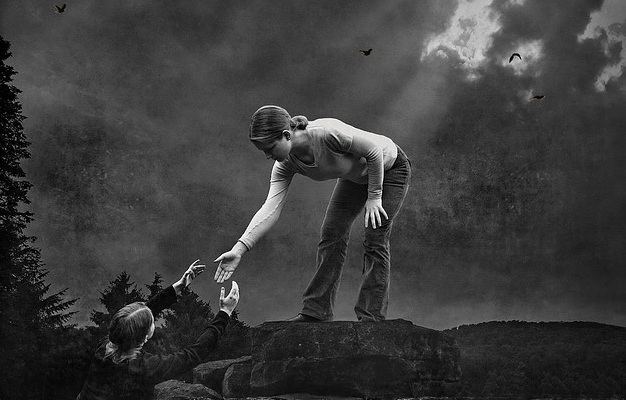
  • 6 ways to Deal with “I Should Be Better” Syndrome

    6 ways to Deal with “I Should Be Better” Syndrome

    “When you realize there is nothing lacking, the whole world belongs to you.” ~Lao Tzu

    Pretty much everyone I know thinks they should be doing better in some way, at least sometimes.

    Are you totally and completely satisfied with what you’ve done so far in life? No little part of you thinks, maybe I should have more money in the bank? Or maybe I should have a more professional wardrobe, or a book contract, or a dog that’s housebroken?

    The word “should” isn’t exactly enlightened or peaceful, nor is the practice of judging yourself or believing that you’re not exactly where you’re meant to be. But we’re human, so our thoughts inevitably go there from time to time.

    We judge ourselves. We hold ourselves to standards that someone else made up—standards that may not even make sense for our current life.

    I often hear people say things like:

    • “I can’t believe I’m in my forties and still don’t have matching luggage.”
    • “Shouldn’t my child be reading by now?”
    • “I always assumed I’d exercise regularly after I finished college.”
    • “I can’t believe I don’t have better health insurance at this stage in my career.”

    I have to wonder, whose beliefs are those? Whose standards are they, really? It’s not like we wake up at forty and suddenly crave matching luggage. Someone fed us that expectation somewhere along the way, and we forgot it wasn’t our own.

    Would the mother feel genuine concern for her child’s reading skills if they lived on a deserted island? Or is the pressure external, based on what others say, think, and read, and she simply doesn’t realize those thoughts aren’t hers?

    And I, too, have thoughts like these all the time. Not those exactly, but ones like them.

    Like how I should be famous by now. Really. The ship has sailed for being on Oprah, but isn’t someone going to beg me to come on their show?  And how I always thought that by age thirty-four I’d own a home with a yard, not a small condo in the city. Or how I still buy all my clothes on sale and I don’t have a decent wardrobe. And how I still say “like” and “awesome” way too much for an adult.

    So it’s starting to look like we’re all in the same boat with this I-should-be-doing -better stuff.

    Since it’s such a universal human issue, maybe we can make a collective pact to just stop with the shoulds? Can we collectively agree to be just a little kinder to ourselves? Can we set aside the judgments and be proud of ourselves, right this minute, not when we achieve something we haven’t yet achieved? (more…)