Tag: judge

  • Focus on Yourself Instead of Trying to Change Someone Else

    Focus on Yourself Instead of Trying to Change Someone Else

    “If you can’t change the circumstances, change your perspective.” ~Unknown

    I was the one who was the designated driver in high school and college. I wanted to be in control of how I arrived and left a party. Besides, the taste of alcohol did not please, so it was a win-win situation in my mind.

    Then, a decade later, I found myself dating someone who was addicted to drugs. I thought if he could just hang around me, see how I found joy without being altered by substances and bask in my love, then he could stay sober.

    In the midst of it, I didn’t see that I wanted to have control over him.

    I didn’t see that my annoyance with his victim mentality, blaming external relationships and circumstances for his situation, reflected my own victim mentality and judgment.

    And the joy I wanted him to emulate from me was really just tears of the clown, because I wasn’t aligned with my true self.

    Pain is a Mirror Image

    The pain I felt was a mirror to his pain. He felt shame and judged himself harshly for using; I felt shame and judged myself harshly for not being where I thought I should be in my career, and for the way I looked as I packed on the pounds of responsibility he never asked me to take.

    It wasn’t until I gave up on wanting him to change that I found peace. I realized I wasn’t in pain because I loved this person. I was in pain because he wasn’t acting how I wanted him to act. I was in pain because I deemed a specific path to joy and expansion, and he wasn’t taking it.

    Accept the Other, Accept Yourself

    After I realized that I could be at peace by accepting who he was and his choices, I could finally accept my responsibility for our relationship and for bringing him into my life. I decided to love him for the being he was, and most importantly, to love myself.

    My relief was astounding. I started meditating daily and allowed myself to listen to my truth. I let go of the weight of trying to be his savior, and that translated into inches off of my body. It was like dense matter had seamlessly transformed into light.

    When I began to love myself, I empowered myself to make healthy choices. Since I knew I couldn’t change him, I figured out that it was my preference to no longer be around that environment. So I decided to leave it.

    I understood that he used drugs to obtain relief and to be soothed from his troubles, which is what we all try to do in different forms when we experience that contrast from where we are and where we want to be.

    But I was closing that contrast gap for myself, and where I was and where he was energetically could not be in the same space for too long. I was still there for him as a friend, but as I grew one way our phone conversations became less and less.

    This man has been one of my greatest teachers. He recently passed away, and ever since I learned of this, I have been hearing one of his favorite songs consistently on the radio, Levon, written by Elton John and Bernie Taupin.

    This teacher of mine used to sit in his favorite chair and laugh and cry to that song. The protagonist, Levon, was a man seeped in tradition. He was born poor, and once he started making money, he became attached to it.

    My ex saw himself as Levon’s son, who would blow up balloons all day (how his father made money) and watch them fly away. The son was a dreamer who wanted to go to Venus.

    My friend, my love, did fly away in his physical form. I don’t know the circumstances that surrounded his death. I think he finally found in the non-physical what I learned to do in the physical—to love himself and find relief.

    Getting to That Better Feeling Place

    If you too are waiting on someone else, hoping they’ll change and realize their “potential,” and you’re feeling miserable as a result, it may help to do the following:

    1. Realize that the only person you can change is yourself.

    You can be a guide and an example, but ultimately change comes from within.

    2. Accept the situation didn’t “just happen to you.”

    You made a choice to enter this situation. When you accept responsibility for your part, thoughts, and reactions, you will be empowered to transform.

    3. Accept the person for who they are and where they are.

    By doing this, you will be living in the present moment and not putting blame for what happened yesterday and creating stories about what could happen in the future.

    4. Connect with the feeling of relief.

    Realize that underneath it all, the person is just trying to feel better, even though it might be in a harmful way, and you don’t approve of their choices.

    5. Write down your dreams and preferences.

    Focus on your inner world and what thoughts bring you to a place of joy. Decide how you choose to live and what’s healthy for you.

    6. Be consistent.

    And after you make this a consistent practice, the situation must change—either the person will start moving to where you are, or you will exit each other’s lives.

    I certainly needed to take these steps and learn these lessons. I learned from him to go to Venus and dream. To listen to my true self and to follow a path that was aligned with thoughts of joy and smiles of inspiration.

    When I became clear on my dreams and aligned with them, that gave me the motivation to move by the ocean and to take the first steps to leaving a legal career behind. I finally accepted myself. I finally felt like I knew who I was.

    I am so grateful for where I am now, and I thank him for nudging me out of my comfort zone and for helping me learn acceptance, allowance, and awareness of who I really am. And now when I find myself thinking thoughts of those opposites, I can now blow up balloons, put those thoughts in them, and watch them fly away—with a smile, in my favorite chair.

  • Get Past Disappointment: Release Expectations and Live Your Own Life

    Get Past Disappointment: Release Expectations and Live Your Own Life

    Free Man

    “Serenity comes when you trade expectations for acceptance.” ~Unknown

    Several years ago, I decided I had issues with surrender. I was often angry or resentful believing my life was not playing out as it should have been.

    I found a great measure of peace by performing a wonderful exercise I first learned of in Abraham-Hicks material.

    I took a large rectangular piece of paper and drew a vertical line, top to bottom, down the middle. On the left side, I listed things I felt responsible for and on the right side, I listed what needed to be turned over to a higher power (universal intelligence).

    It was an odd take on the idea of a job description, but it worked for me. I considered what types of things I had power over and surrendered much of the rest. When I did this, life became much easier.

    I did not let go of my tendency for disappointment, though, and I started looking at types of situations where I became disappointed.

    I found that my thinking fell into five main traps. My core issue seemed to revolve around having expectations for how other people should behave.

    1. I’d think, “Please be happy (sad, proud, indignant…) with me so I can feel justified having my feelings.”

    I recognized that I had a tendency to look to other people to validate my own feelings. When I would go to the movies with a friend, I would direct my glance away from the screen frequently to see if my friend was enjoying the same parts of the movie I liked.

    When I achieved a professional or financial goal, I remembered wanting my family to be proud “for me” and to congratulate me on things that made me feel proud.

    I wanted other people to mirror my emotional state, and I had to remind myself that they own their emotions and expressions, and I own mine.

    I learned that I cannot depend on other people to validate my feelings. I also understood that my feelings cannot be expressed by anyone except myself.

    Now, rather than look for others to validate my emotions, I realize I should simply experience them more fully.

    It’s good to laugh or cry or smile to ourselves whether someone else can see us or not.

    2. I’d think, “If I support you emotionally, you should support me.”

    If Emotional Intelligence were a highly regarded requirement for college entrance, I would have gone to an Ivy League institution, for sure. I have a knack for soothing ruffled feelings and for getting people to talk about things they want to talk about but can’t seem to express directly.

    I have often wished others could do this for me.

    But I have learned that we can’t expect this. We have to remember that we own our feelings, expressions, and abilities, and other people own theirs. Not everyone has the ability to make people feel better by attentive listening.

    Instead of being disappointed with giving more than I get, I try to look at how I can apply my sensitivity to mitigate my own hurts.

    3. I’d think, “People should act kindly toward others because I want everyone to get along.”

    Sometimes, I’ve observed myself recoiling if I witness a restaurant patron acting unkindly to a waitress or a driver cutting off another driver a hundred feet ahead of me. Again, I have to remind myself that I am responsible for my feelings, actions, and expressions, and other people are responsible for theirs.

    We are not personally responsible for making up the shortfall in simple acts of kindness someone else might experience. We can only aim to be examples of compassion, humor, patience, and any quality we would like to see more of in the world.

    4. I’d tell myself, “I am not ‘judging’ anything or anyone. I am simply refining a preference.”

    I rather not think of myself as judgmental. Yet, judgments flow through my mind constantly.

    I’ll tell myself that I need to make some judgments in order to make satisfying choices. I’ll tell myself that I’m not making judgments. I’m just refining preferences.

    I have to acknowledge, though, that I don’t always confine my thoughts about what is good or bad, what is “preferable” or not, to me and my life. I’ll think this person should lose weight, or that person should drink less alcohol, or this person should treat his children better.

    When the judgment first forms in my mind, I will feel a natural sort of entitlement to the opinion. After all, I have good values, maybe an enlightened perspective in some matters. But the judgments will still lead to disappointment and suffering.

    Why should I feel entitled to have any expectations on how someone else should live? This, too, is a practice of remembrance. I have to remember I own my feelings, emotions, and expressions, and other people own theirs.

    If I believe in moderation, I can give attention to not over-eating or drinking. If I believe in kindness, I can form an intention to ask after people or respectfully offer help.

    5. I’ll tell myself that I’m entitled to feel my feelings and use this as an excuse to spend extra energy holding on to an experience.

    There is often an interesting line to navigate between allowing myself to grieve a possibility not coming to fruition and romanticizing the loss. Truly, the loss is real, but it’s temporal.

    While acknowledging that it’s okay to feel sad, I do not want to give the feeling extra energy either.

    For me, holding on to an experience, or feelings about an experience, is fueling an expectation. I’ll get to thinking that things will always be a certain way or that I will always have the same feelings about something.

    But situations and moods are temporary, and an expectation that they’re permanent or probable can inhibit us from living life and enjoying the present.

    I’ve learned that getting beyond disappointments often involves moving beyond expectations and taking responsibility for living our own lives; owning our actions and emotions and letting others own theirs.

    Photo by yimmy149

  • How to Stop Fearing Disapproval: 3 Lessons from Accepting Judgment

    How to Stop Fearing Disapproval: 3 Lessons from Accepting Judgment

    Lean too much on the approval of people, and it becomes a bed of thorns.” ~Tehyi Hsieh

    I remember reading somewhere that the best way to face a fear is through repeated exposure.

    In the case of my lifelong need for approval, I have found this to be true.

    For as long as I can remember, I have wanted, needed everyone to like me. And not just like me, but agree with and sanction my every choice through obvious signs of validation.

    I remember auditioning for a community theater production of Annie when I was twelve.

    My older sister, Tara—thinner, more popular, and, by my estimation, more talented—sang before me, and seemed to knock it out of the park.

    With a bold, Ethel Merman-like voice and a petite, 5’1” frame, you might have expected to see a hefty female ventriloquist offstage, throwing her voice while Tara lip-synced.

    But that was, in fact, her voice. It was larger than life, like her—and decidedly unlike me. I may have seemed like a quiet, shrinking violet type, but you’d likely have concluded otherwise if you heard the boisterous noise in my head.

    I believed everyone was constantly judging me, and I was terrified of those thoughts I couldn’t hear.

    By the time Tara belted out “You’re only a day away,” I had nearly collapsed into a hysterical ball of panic within a corner of my mind.

    I dreaded following her, both because I knew she was superior in every way possible and I hated being critiqued.

    Within five seconds of starting my song, I felt a quiver in my voice that seemed like it might have been a ripple effect of the trembling in my knees. Except it wasn’t. It was just sheer terror.

    Everyone was watching me—which people do when you’re on stage. And a part of me craved that, needed that. I desperately wanted them to like me, to cheer for me, to believe in me and want me there.

    That’s not what I felt was happening right then. I was sure that everyone would laugh at me behind my back because I plain and simply wasn’t good enough.

    It felt all but certain in the next instant, when I attempted a belting, vibrato-like note and instead cracked loudly and obviously.

    Right then—that’s the moment when I decided that a woman named Sandy, soon to be cast as Miss Hannigan, hated me. And why?

    She hated me, I concluded, because she gave me “a look.” Crack + look = repulsion and revulsion, at least to my twelve-year-old mind.

    Never mind that I couldn’t be certain that she did, in fact, look any different than usual. And forget for a minute the perhaps obvious alternative—that if she did look different, it may have actually been compassion.

    To me, her facial features melted together into an expression of absolute condemnation, and it was the physical representation of what I imagined everyone else was thinking, too: I was a pathetic joke.

    Flash forward many years later, and I’d learned to stuff down my insecurity with a long list of self-destructive behaviors, from bulimic rituals to occasional acts of self-harm.

    I frequently tortured and punished myself for reasons varied enough to fill more than a decade of therapy, but I think it was mostly an attempt to beat other people to it.

    It plain and simply hurts less to be rejected if you’ve already rejected yourself, and you’re already hurting.

    I was always hurting.

    Over the years, I was less often rejected, primarily because I minimized opportunities. It was a tactic I learned when dealing with intense bullying in school—it’s a lot safer to just not show up.

    I remember many times sitting in my room, looking at my window and imagining it was a TV screen. That’s what life outside it felt like—something to watch, not join.

    I’ve written quite a bit about the time between deciding to be part of the world and now, but in case you haven’t read any of it, here’s a haiku that sums up those experiences:

    I wanted a life
    I took risks and sometimes stumbled
    And I learned and grew

    By the time I started my first blog, I’d come a long way, but I was more “feeling the fear and doing it anyway” than experiencing relief from the fears.

    The first time I published a blog post, I watched the comments like the proverbial not-yet-boiling kettle—hoping for a little sizzle but afraid of getting burned.

    When the comments started coming in, it was feast or famine. I felt either a rush of acceptance-and-approval-triggered endorphins or the overwhelming anxiety of not being able to fight or flee in the face of judgment and criticism.

    It was magic or misery, the experience of writing online—instant gratification or self-recrimination.

    And that’s how I knew I needed to keep at it, to share my struggles, successes, and lessons even though I was far from perfect; perhaps I could be good for others and in doing so be good for me.

    On some level, I craved the joy of knowing I’d created something others liked. But somewhere inside, I also craved the criticism.

    No, I’m not a total masochist. I craved it because I knew that each time I confronted it, I could get better at dealing with it.

    As I look back on the past several years, and the almost two-decade journey of insecurity and growth before it, I am amazed to realize I have. I have gotten better at dealing with it.

    I’m by no means impervious to feelings of self-doubt, but as a consequence of putting myself out there in varied ways over and over again, out there feels a lot less scary. And here is why that is…

    1. I’ve learned that the “looks” are sometimes in our head—and when they’re not, we often have no idea what’s really behind them.

    Someone’s disapproval might be completely unrelated to us.

    Since we can’t know what’s on someone else’s mind unless they tell us, we can either offer a compassionate look back in case they need it, or take a curious look within to explore our own reaction.

    Anything else is a waste of energy—and over something we likely won’t remember for long.

    2. I’ve learned that people will sometimes vocalize their opinions harshly and insensitively.

    Conventional wisdom may suggest ignoring them—not letting “the haters” get us down.

    More often than not, it won’t be about hate. It will be about pain—theirs.

    We can feed off that and add to our own, or we can hear them out, look for seeds of truth, and leave behind whatever won’t help us grow.

    3. Lastly, I’ve learned that it’s impossible to avoid messing up, and consequently, feeling judged.

    We all “crack” every now and then, in one way or another. Outsiders may poke those shattered parts, right when we’re most vulnerable.

    But those fissures don’t have to mean anything about us, regardless of what others conclude. If anything, they can mean we have an opportunity to learn, grow, and prosper. As Leonard Cohen wrote, “There’s a crack in everything. That’s how the light gets in.”

    Equally important, that’s how the light gets out.

    Perhaps that’s the greatest gift of this whole repeated exposure thing, the cyclical nature of it all—we’re all on both sides of this coin, showing up and being shown up for, seeing and being seen.

    We’re all powerful and fragile, breakable and strong. We each have the potential to hurt and to heal. Sometimes, oftentimes, it all blends together.

    And that’s something I’ve learned to like more than knowing you like me: the inevitability of all of us helping each other, whether we intend to or not.

    Growth is a consequence of doing, trying, risking, and making an effort, even if we’re terrified—especially if we’re terrified. The fear may never completely go away, but it ebbs, flows, and fades.

    So here’s to showing up, repeatedly. Here’s to being seen. And here’s to forgiving ourselves when we hide so we can let it go and then show up again.

    We don’t always need to stand center stage. We just need to know we gain more than we lose when we’re open to the light.

  • People We Don’t Like: When Others Push Our Buttons

    People We Don’t Like: When Others Push Our Buttons

    I have a confession to make: there’s someone I know who I really don’t like.

    I know this isn’t exactly front-page news. It’s not like I’m the first person to ever dislike someone else. But this situation has brought me face to face with all my strongest relationship triggers.

    I find it incredibly difficult to do all the things I’ve written about when it comes to this person. Let’s call him Harry. (I’ve never in my life met a single person named Harry, but let’s just roll with it.)

    I regularly find myself wanting to judge Harry before giving him the benefit of the doubt—even though I know I’d want that courtesy if I did the things he did. But that line of thought brings me back to judgment, because I remind myself, “I would never do the things he does.”

    I find it easy to suspect him of poor intentions and conclude that maybe “he’s just a jerk,” even though I know that I get to decide what meaning to give his actions, and I also know that things are rarely black and white.

    In dealing with Harry—and perhaps more importantly, my reactions to him—I’ve found myself considering three important questions:

    • We’re always talking about letting go of judgments; is it possible that sometimes, someone is just a jerk?
    • Is it judgmental to decide someone’s actions are “wrong” when you feel strongly opposed to them?
    • Just because we know there are emotional triggers influencing our response to someone, does that mean they shouldn’t be accountable for their actions?

    I’ve decided to break these down, one by one, to see what there is to learn in this situation.

    We’re always talking about letting go of judgments; is it possible that sometimes, someone is just a jerk?

    I’ve wanted to use this label for Harry because of assumptions I’ve formed about his behavior: that he thinks he’s better than other people; that he’s really selfish, despite pretending to be caring and well-intentioned; and that all of this amounts to unfairness.

    When I break this down, I realize the “he thinks he’s better than me” assumption goes back to my childhood experiences with being bullied, when I felt inferior to most of my peers—and their actions seemed to reinforce that.

    The “he’s selfish” belief is a projection of my own fear that I’m actually a selfish person (something I’ve wrestled with all my life, no matter how giving I try to be).

    And the conclusion about “unfairness” relates to my life-long aversion to all things unjust—both a response to my childhood and a natural human reaction.

    When I pull it all apart like this, I realize I’m having a strong emotional reaction based on lots of things that aren’t solely related to him.

    So my desire to sum my feelings up with one harsh label isn’t only about his actions. It’s also about my past experience.

    And when I really think about it, whenever I’ve wanted to label anyone as a “jerk” (or something stronger), I’ve dealt with these same (and other related) triggers.

    That doesn’t mean no one has ever done anything to justify my anger. It’s just that usually, when I feel unable to access even a shred of understanding or compassion, it’s because there are strong layers of resistance, reinforced by years of my own pain, in the way.

    I suspect that’s true for most of us: the more tempting it feels to give someone one reductionist label, the deeper and more complex the triggers.

    This brings me to the next question…

    Is it judgmental to decide someone’s actions are “wrong” when you feel strongly opposed to them?

    While I realize there’s a lot more contributing to my feelings than his actions, that doesn’t change that I don’t agree with everything he says and does.

    Once I peel away the layers of my complex response to him, I can then objectively ask myself, “Which of the choices he makes don’t feel right for me?”

    This isn’t judgment—it’s discernment. It’s forming an assessment without the emotional weight behind it. And it’s essential to maintaining my own moral compass and forming boundaries within my relationships.

    That means I don’t need to label him anymore. Instead I can say, “I wouldn’t make the choices as he makes, and I don’t want someone in my life who makes them.”

    It’s not about me deciding he’s a “bad person” and, therefore, feeling better than him; it’s about me realizing he’s a bad match for a friendship and then feeling better about the situation.

    The positive consequence: I give him far less power over me and my emotions. He’s not wrong—just wrong for me.

    And then that brings me to the last question…

    Just because we know that someone’s actions trigger us, does that mean they shouldn’t be accountable for their actions?

    Now that I’ve accepted responsibility for my reaction to him, and acknowledged that his choices can make him “wrong” for a friendship with me without making him universally “wrong,” I no longer need to “hold him accountable.”

    But if I were to want to maintain a friendship with him, I’d have two choices: accept him as he is, or share my reactions to his choices and let him into my process.

    I know from past experience that people rarely respond well when they feel judged or attacked.

    But people sometimes surprise us when we explain how we feel in response to the things they do—not because they’re responsible for our feelings, but because they care about them.

    And if they don’t care, well, this brings us back to the first two parts: It doesn’t make them jerks. It just gives us a reason to be discerning about whether or not we want to care about them.

    So where has all this left me? I’m going to continue peeling away the layers of my issues around others “being better than me” and my fears of “being selfish.” And I’m going to silently thank Harry for reminding me to continue doing this work.

    Then I’m going to stop communicating with him. Because as much as I value the gifts he’s given me, I value myself enough to realize he’s given a lot more that I don’t want to receive.

    Have you ever felt a strong reaction to someone else and realized it had a lot to do with your own triggers?

  • Listen Instead of Correcting Others: What We Gain and Give

    Listen Instead of Correcting Others: What We Gain and Give

    Two friends talking

    “When you judge another, you do not define them. You define yourself.” ~Wayne Dyer

    I have a tendency to want to show off what I know, and in the worst cases, correct other people.

    Instead of listening and connecting I unconsciously try to sell to others an image of myself that I wish to project. Some part of me believes that if people are impressed with me then they’ll like me and be interested in my knowledge and point of view.

    In this way I fall into the trap of constructing the false self. This is the person I wish for others to see, a person without vulnerabilities, incorrect knowledge, or who makes mistakes. A thing that is more of a product than a person.

    Many of us fashion these false selves not only as an idealized version of ourselves, but also to keep other people’s judgments of us at bay. Before we realize what has happened, we have made our skills and knowledge into weapons that we wield on others while all the while we hide our true selves behind a shield. Without planning to, we have declared war.

    The constructed, false self is a one-way gate. Like a character in a stage play, the false self puts sights and sounds out to the audience while all the while it stands behind the fourth wall of separation from the observers. The audience sees the character, but the character doesn’t see the audience.

    I have someone in my life who deals with a fairly severe mental illness. Through most of my life I have tried to help him by showing him what was “wrong” with his thinking and actions. I wanted to use my logic and knowledge to set his perceptions straight.

    I didn’t realize it at the time, but I was mostly lecturing him. I did not listen and understand his point of view, but instead stayed behind my shield and wielded my weapons of logic at him. I thought I was being a good influence.

    Constructive influence, though, flows through positive human connections. When we judge others we sever those connections and directly destroy our chances of influencing others with our best information and ideas.

    But real, positive influence travels in both directions. Discovering wisdom works best as a collaboration formed through the conduit of relationships. There is give and take and neither person needs to be “the right one.”

    When we give others space to make mistakes, to have different skills and expertise than our own, then we also give ourselves space for the same things. No one of us is an expert at everything, but when we come together we close the gaps into a working whole.

    A few years ago, while preparing for a volunteer program, I took some training in listening. I learned that it’s more valuable to reflect back what people say, and to show understanding of them without judgment.

    I learned that if I showed understanding of the other person’s feelings and thoughts, that alone would ease their burden and do worlds of good.

    I learned that acceptance and understanding aren’t necessarily the same things as approval and agreement.

    We needn’t be afraid that we are compromising our own views or knowledge when we simply choose to understand another’s. In fact, the openness of understanding can strengthen our own point of view.

    We must receive what we wish to give and give what we wish to receive. If we want to be listened to, then we must listen to others. If we want to be valued for what we know, then we must value others for what they know.

    And if we want to be forgiven and loved, then we must forgive and love others.

    Lately I’ve been applying my new listening skills in conversations with my mentally ill loved one. I allow myself to relate to difficult things he experiences and have even tried to be brave enough to be honest when I see a bit of myself in him, when I see the same passions, fears, and mistakes.

    The funny thing is that by backing off I’ve gained more of his trust. By not pretending to have all the answers for him, I’ve strengthened our bond.

    Now I only give him my opinion if he asks for it. Sometimes this comes after a long spell of silence, when we are simply being together. And I’m honest enough to tell him when I don’t have a clue how to answer his question.

    And you know, I’ve learned a whole lot from him, too.

    Photo by pedrosimoes7

  • 7 Realizations to Help You Deal with Feeling Judged

    7 Realizations to Help You Deal with Feeling Judged

    “Judge nothing, you will be happy. Forgive everything, you will be happier. Love everything, you will be happiest.” ~Sri Chinmoy

    Are you judgmental? Not many people would be aware if they were, let alone admit to being so, but it’s so easy to form an opinion about a person or situation without knowing all the facts.

    What if the conclusions people spring to could really hurt someone? I like to think there are very few people who would actively want to upset others. Has someone passed judgment on you? What can you do if you feel misunderstood?

    I want to share with you an unpleasant situation I was in recently, which has had a great impact upon my personal growth.

    A few years ago in my thirties, I was in a car accident that caused me some spinal damage and exacerbated a pre-existing pelvic condition, subsequently leaving me initially in a wheelchair.

    Currently, I am at a stage where I can now stand unaided and potter around a bit, but I still rely on a wheelchair or crutches for more than short periods of standing or walking.

    One evening my partner surprised me with theater tickets. I hadn’t been getting out much—outings now need to be meticulously planned—so I was really excited.

    We were lucky enough to be able to park in the disabled bays right outside the venue (I am registered disabled and have a badge). We sat in the car and discussed whether I should take my crutches inside, as I was quite anxious about blocking the aisles. We decided that with his support I would manage the few steps inside without them.

    The first upset of the evening was getting out of the car. A man queuing for a space behind wound down his car window and shouted that we should be ashamed of ourselves for parking there. We clearly didn’t “look” disabled, and we literally “made him sick.” Hmmm.

    This wasn’t the first time something like this had happened. I have a hidden disability, and unless I am in a wheelchair or using an aid, I look perfectly “normal” and am (relatively) young.

    I tried to concentrate on the show for the first half, but the evening had been ruined for me by then. In the interval I needed the bathroom. The female bathrooms are down two flights of stairs (no elevator), which I couldn’t manage, so I went into the disabled bathroom on the ground floor.

    When I came out, there was a queue of old ladies.

    The first lady in the queue took one look at me and declared to her friend in a loud voice, “Young people are so lazy nowadays.” She looked at me and said, “There’s nothing wrong with your legs,” and rapped me across my ankles with her walking stick! I went home in tears.

    This evening affected me emotionally for weeks. (more…)

  • People Aren’t Always Out to Get Us: The Good Beyond Appearances

    People Aren’t Always Out to Get Us: The Good Beyond Appearances

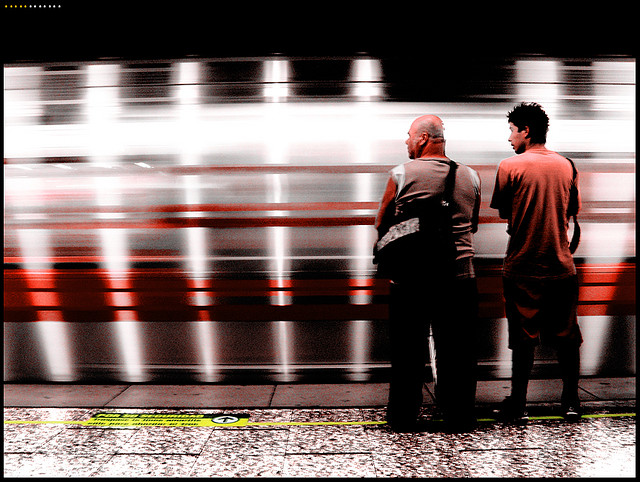
    Waiting for the Train

    “If you judge people, you have no time to love them.” ~Mother Theresa

    Last year, I was on the CTA (Chicago’s public transit) heading to class to take an exam. Rather, I should say that I was rushing to class. I wasn’t running late, but I often got caught up in the hustle and bustle of Chicago during morning rush hour.

    Something about the “rush hour” energy made me feel a bit anxious; and, although I, along with others, am at the mercy of the CTA with its frequent delays, rarely do riders strike up conversations with fellow passengers.

    After making my usual transfer to another train line, I was able to find a free seat (which is hard to come by during rush hour), and I sat down.

    I acknowledged the woman I was sitting near just enough to immediately write her off as being someone I wanted to ignore. She looked at me and smiled, and I gave a half smile back but turned slightly away to make it clear that I didn’t want to engage in chit-chat.

    I am a warm person, hardly ever without a smile, and usually very open, but I was having a day where I just felt nonchalant toward other people, and the last thing I wanted was to feel “trapped” in a conversation with a “lowly” woman on the train who might pester me for money.

    I pulled out my textbook, clutch in hand, to begin “reviewing” for my exam.

    She began engaging me in small talk, and, after a few minutes, my disposition changed. My short answers became longer, and I became genuinely interested in what she had to say.

    A year or so later, I have forgotten the specifics of everything she said to me, but I remember getting off the train feeling light-hearted after she told me a bit about her life. We had a short but beautiful conversation.

    I got off at my stop, walked the couple of blocks to class, and entered the classroom when I realized I left my clutch on the train.

    No time is a good time to lose your wallet, but I was leaving for the Middle East soon and would have to replace everything before my trip.

    Well-played. (more…)

  • How We Judge Others Is How We Judge Ourselves

    How We Judge Others Is How We Judge Ourselves

    “Judge nothing, you will be happy. Forgive everything, you will be happier. Love everything, you will be happiest.” ~Sri Chinmoy

    Oh yeah, this has been a big one for me. Huge.

    I’ve had a long, tedious journey toward recognizing that many of my thoughts were based in judgments of others. I didn’t realize it for years.

    I used to think I had strong opinions, was decisive, and able to “evaluate” others. I “got” people. I understood where they were coming from, their motivations, and why they said what they said and did what they did.

    I was a highly skilled definer, and an even better dismisser. Once I’d figured you out, my opinions were set in stone. I didn’t leave much room for changing those opinions either. Once I’d decided, that was it. You were what you were, according to me.

    With the benefit of time and hindsight, I’ve come to realize that since I was actively embracing a life of personal growth (or “working on my stuff,” as I like to call it), I somehow felt that gave me free rein to comment on what others were doing.

    I’ve also realized this is a common behavior in those of us on the personal growth path.

    When we are seeking change for ourselves, we sometimes feel we can comment on (or seek change for) the lives of others—about how they should behave, about what is acceptable for them, and so on.

    I had some inexplicable sense of entitlement that validated my judgmental parts in behaving this way.

    This criticizing behavior was, for the most part, restricted to my thoughts. Outwardly, I was generally a pretty nice gal—helpful, polite, and funny; and I had plenty of friends who liked spending time with me.

    Internally though, my thoughts could be pretty acidic. The judgmental parts of me were constantly criticizing, sizing up, dismissing, and diminishing those around me.

    I slowly started to become more knowledgeable about the internal criticizers as my awareness grew and my judgments diminished in response to some other issues I was tackling.

    While that was a huge relief, I started to realize just how much mental space and energy I was giving those internal judges. I was shocked to recognize just how bossy and mean they could be.

    I also began to wonder how much criticism these internal judges had of me. And man, was I amazed when I started paying attention. I realized I had a pretty constant stream of internal dialogue that was just as critical of me as it was of the outside world. (more…)

  • How To Overcome Self-Doubt: 8 Tips to Boost Your Confidence

    How To Overcome Self-Doubt: 8 Tips to Boost Your Confidence

    Sad Woman

    “Nobody can give you wiser advice than yourself.” ~Cicero

    At one point or another, we all question whether or not we are doing enough, making enough money, or if we are going to be “successful” enough. I know this firsthand, as I’ve spent long periods of my young adult life in a persistent state of fear and self-doubt.

    When I graduated from college, I worked sixty, seventy, even eighty hours a week in a corporate setting climbing the proverbial ladder. In my mind, I thought that was success, even though it wasn’t what I truly wanted for myself.

    I held onto dead-end jobs, toxic relationships, and draining friendships because I thought that if I left them, I’d be a quitter.

    I doubted myself to the point that I was making my decisions based on what others wanted of me, not what I wanted for myself. I was constantly struggling with confidence and always second-guessing myself.

    What I’ve learned from my experiences is that if I don’t nip the self-limiting thoughts in the bud right away, this “woe is me” mindset can become debilitating.

    I’ve discovered a few things that help with self-doubt and boost my confidence that may help you too:

    1. Stop comparing your accomplishments to your friends’ and colleagues’ accomplishments.

    I find that I doubt myself the most when I’m comparing what I’m doing with what other people are doing. When I compare my accomplishments to a colleague’s, I start feeling inadequate. Your colleague’s accomplishments are not a litmus test to grade your own success.

    One key thing to remember when you find yourself in this mental pattern is that everyone is on his or her own journey.

    I find that I am most successful in my personal and professional life when I am following what works for me and what makes me feel good, even if it is different from what someone I look up to is doing. (more…)

  • Do You Judge the Person You Used to Be?

    Do You Judge the Person You Used to Be?

    “If you judge people, you have no time to love them.” ~Mother Theresa

    It was the second time I’d gone out to lunch with a new friend I met through this site.

    We’d experienced some of the same things in life, and I instantly admired her attitude and perspective.

    Sometimes when I meet up with people I’ve met through Tiny Buddha, I feel a sense of inner conflict. One the one hand, I want to live up to everything I imagine they expect of me.

    I want to be positive, present, and upbeat—all qualities I aspire to embody in my life and through my work.

    But I also want to be free to just be, in whatever state I find myself on that given day, without worrying about how I’m perceived.

    That’s been my lifelong journey—learning to show up as I am, without fearing whether or not other people will accept that.

    My greatest drive in my life is to be authentic. But if I’m not mindful, I can easily get in my own way.

    As we sat chatting, I found myself feeling more and more comfortable, and relieved that after all the years I’d spent isolating myself, I’d finally learned to relax and be myself in the company of new people.

    We broached the topic of crowds, something I’m pretty vocal about disliking. I made a sarcastic comment, something along the lines of “People are best in small doses.” I meant that I prefer intimate groups of people, but I immediately questioned how it came across.

    That didn’t sound very Tiny Buddha-ish, I thought. Then I reminded myself, “She’ll know what I mean. Clearly I don’t hate people.”

    I wasn’t quite so confident when she said, “Are people best from a computer screen, when you’re sitting alone in your living room?”

    This hit me like a jolt to the stomach, completely knocking the wind out of me. (more…)

  • Help People Feel Better: The Power of Understanding

    Help People Feel Better: The Power of Understanding

    “When you judge another, you do not define them. You define yourself.” ~Wayne Dyer

    I used to be someone who always gave my opinion, or confronted issues in relationships regardless of whether someone was in the mood for what I had to say.

    I always brought up whatever was bothering me or said my opinion, perhaps in not so tactful ways. Needless to say, this led to a lot of emotional confrontations and blowouts with friends and family members, sometimes destroying important relationships.

    I justified my actions by thinking that people deserved to hear the truth, no matter what.

    Despite my strong opinions, loved ones still came to me for advice or help when they were in need. This might have been because I seemed like a well-grounded person with strong convictions—someone who knew what to do.

    When giving my opinion or advice, I would always think to myself, “Well, they are coming to me for the truth, so they deserve to hear it no matter how bad it might sound.”

    While I thought my advice came from a place of caring, it would take years before I realized how selfish and thoughtless I was being.

    Sometimes my sister would talk to me about issues she had with friends, and I’d say, “Why don’t you just tell them what’s bothering you. Why not tell them the truth?”

    It would frustrate me to see my sister upset with such friends, putting on a happy (or, what I thought was, fake) face, and going on with life.

    What I had yet to realize was that by being patient and understanding with her friends, my sister was avoiding confrontations for situations she may eventually let go of with time and understanding.

    My attitude only began to change after a series of big mistakes that I made. These painful events pushed me to take a big look within. I saw that I’d made a lot of judgments or criticisms of my loved ones for things they had done, when meanwhile, I had done the exact same things!

    I thought about how I had moments when loved ones came to me in pain or in need of a friend, and instead of being there for them or listening, I would give my opinion, for better or worse—even if it made them feel worse off.

    After I made my mistakes and sought advice from others, some of the things I heard really hurt me, and I would think to myself, “Wow, is that how I sounded?”

    Around the same time I had these realizations, I was doing a lot of traveling, and meeting people from all walks of life. I really started to appreciate the beauty in people’s stories, including their blunders. (more…)

  • Non-Dual Thinking: There Are Things We Don’t Know

    Non-Dual Thinking: There Are Things We Don’t Know

    “Nothing is either good or bad but thinking makes it so.” ~Shakespeare

    It is not possible to grasp the infinite from a position that is finite. Seems like a good place to start.

    “Dual” thinking, as I understand it, is the idea that something has to be “either/or.” That it’s either good or bad. Right or wrong.

    Here’s another way describing it: The concept of up and down seems to make sense from an earthly or gravitational perspective, but if you are somewhere out in space, it suddenly makes no sense at all. There is no up or down.

    The list of these polar opposites goes on and on, but they all have one thing in common—they are often laced with judgment, and the need for resolution.

    I find myself doing it all the time—making judgments or assumptions about the people I come into contact with on a daily basis.

    The waiter who doesn’t treat me as I deserve to be treated. The inconsiderate driver who cuts me off in traffic. The rude person on the phone that is completely unreasonable. My wife who has her own way of navigating through life.

    Why don’t they see things my way, the way they are?

    The fact is that dual thinking has become integrated in how I process things, and it is rooted in fear—fear of what I don’t know, fear of what I don’t understand, and fear of what I can’t control. A feeling of lack. Being right seems to quiet the screaming monkeys, at least temporarily.

    And when I think in black and white, I miss all the shades of grey in between. Someone has to be wrong for me to be right. My relationships have suffered because they are stuck in “defending a position” mode.

    I am so concerned about being right, of making sure that my viewpoint is heard, that I miss all the magic, learning, wisdom, and connection that are waiting to be discovered.

    And if my relationships are based in this “either/or” way of thinking, is it any wonder that I continue to feel separate and isolated, from myself and others?

    How can dual thinking represent “truth” when something can be right for one person, but wrong for another?

    Truth is simply a matter of perspective, and no one person can be the judge and jury on that.

    It is a very narrow, disrespectful, arrogant, and un-evolved way of thinking that I know does not serve me, or any of us.  (more…)

  • Life Isn’t Good or Bad; It Just Is

    Life Isn’t Good or Bad; It Just Is

    Ankh scale

    “Freedom is instantaneous the moment we accept things as they are.” ~Karen Maezen Miller

    Seemingly for months now, upon learning anything new, my seven-year-old daughter has asked me, “Is it good or bad?”

    Not brushing at night—good or bad? One hundred degree temperatures—good or bad? Water leak in the furnace—good or bad?

    Some things are more obvious than others, but it’s the stuff in the middle that requires a more subtle explanation, especially as I go through life with the stress and anxiety of trying to both deal with uncertainty and figure out life in the “new normal” called chaos.

    I wrestled with trying to make her understand that sometimes life is neither good nor bad—it just is.

    But like any child trying to adjust the settings on her moral compass, she had difficulty in trying to understand that there can be some things that fall neither in the good nor the bad category.

    Recently something happened that tested this notion and, in some strangely profound way, might have helped me find a way to explain life (as I understand it) to my seven-year-old.

    My wife’s grandmother passed away.

    Having been raised by her grandmother for most of her young life in India, my wife was distraught and sad. Although my daughter had very little contact with her great-grandmother, given the vast ocean that separated them, she could tell that her passing affected her mom deeply.

    At first we didn’t know how to explain the passing to our chirpy and inquisitive child. So we didn’t, for a day. We avoided it. But then, as seven-year-olds do, she overheard me on the cell phone explaining to someone what had happened.

    Almost instantly, a happy-go-lucky child became eerily quiet upon hearing that her mom’s grandmother died. She didn’t have to ask if it was good or bad. It was bad.

    But is it? (more…)

  • Judge Less, Accept More, and Restore Your Happiness

    Judge Less, Accept More, and Restore Your Happiness

    “Judge nothing, you will be happy. Forgive everything, you will be happier. Love everything, you will be happiest.” ~Sri Chinmoy

    A few years back, the husband of an acquaintance spoke curtly—dare I sound judgmental and say rudely—to his mother-in-law in front of me, his wife, his daughter, and a few others.

    Each time I thought about what he said, a wave of judgmental thoughts came into my mind: How could he speak to her like that? How could he be so disrespectful? And, what a poor example he was setting for his daughter…

    These negative thoughts stayed with me for a few days until I asked myself: “Have I ever spoken curtly or rudely to someone?”

    The answer was, of course, “Yes.” And, although I didn’t want to make excuses, I asked myself if someone had been watching me at that moment, if there were a reason that would make that person understand where I was coming from or what I was going through. The answer was, “Usually, yes.”

    As soon as I turned my attention away from him and looked at myself, all of the negative thoughts I was having about him faded away. Instantly, I felt so much better.

    Beyond that, it provided a good opportunity for me to start looking at myself, why I judged others, and how I could stop it.

    My meditation teacher, Giziben, has said, “Judge, but don’t condemn. If you hear that someone has done something terrible, judge that you will not do that. But don’t condemn the other, as that ignites the desire for revenge and kills the love within.”

    The reasons why we judge are fairly easy to identify. Often we judge others when we’re jealous of them in some way, because they have something, like a position, status, or role, which we don’t.

    We also judge when our desires or expectations aren’t met and then we think, “How could they do that?” It can also just become a habit to complain and find fault. (more…)

  • When Friends Fear We May Judge Them

    When Friends Fear We May Judge Them

    “When you judge another, you do not define them. You define yourself.” ~Wayne Dwyer

    One of the times I felt my lowest was when I found out a best friend didn’t tell me something important that had happened in her life. I felt about an inch tall when she said she feared I would judge her if she told me, and that’s why she kept it a secret.

    At that point, I broke down. Do all my friends feel this way? Why? I’ve always felt very protective of them and tried my best to be a great friend.

    I’m an only child. I’ve spent a lot of time with my parents. They’re wonderful and they’ve done a lot for me, but one thing they’ve passed on is a sort of judgmental, sarcastic type of humor.

    So as much as I joke around and I suppose, judge what others do, I always thought my friends knew that I would always accept them.

    I catch myself gossiping and talking about others, essentially judging them. I’ll admit there are times when I feel as if I’m better than someone. But who am I to think that? I’ve made mistakes. I don’t always do or say the right things. I’m by no means perfect or better than anyone else.

    Suddenly, I somewhat understood what my friend meant. Even though I hoped she knew that I would never judge her choices and I’d always be there for her—and as much as it pains me—I could see why she was afraid to tell me.

    I didn’t want to define myself as a judgmental person who people couldn’t trust to talk about important issues. Not even for one second. So I vowed to change. (more…)

  • The Freedom of Not Needing To Be Right

    The Freedom of Not Needing To Be Right

    “You have your way. I have my way. As for the right way, the correct way, and the only way, it does not exist.” ~Friedrich Nietzsche

    Yesterday I drove my mother and father to the VA hospital in Albuquerque for a doctor’s appointment. I had never been to a VA hospital before. I guess I should have expected the numbers of crutches and canes, armless and legless veterans, young and weathered faces alike.

    I was personally witnessing the costs endured when humans war against each other.

    “Isn’t it odd,” I said to my mother, “that human beings war with each other?”

    Why in the world do we do that?

    Then I considered the ways in which we war on an interpersonal level. We humans war to varying degrees with our partners, our friends, our bosses, our co-workers, our siblings, our parents—pretty much all in the name of our need to be “right” or the need not to be wrong.

    We war over ideas and beliefs that we often have never questioned. These include ideas from our upbringings, our religions, our scars and wounds, and our existential need to identify ourselves in some way.

    How early did we lose our childlike wonder? When did we lose that innocent state in which we did not judge others, nor need to be “right”—when we saw the best in everything and everyone, and when it did not matter that someone was Christian, Muslim, Buddhist, atheist, republican, democrat, omnivorous, vegetarian, gay, or of a different race?

    When I observe my ten-year-old grandson, he appears to have no tendency to judge other people, not yet anyway. He has no need to diminish others, nor does he feel threatened by them.

    Would we, as children, have told lies about someone just because we wanted to win an election? Would we have been dismissive or even cruel to someone because they were of another race or religion? I don’t think so.

    As little children we only cared that we were loved. And we were still curious about everything.

    Somewhere along the way we lose our innocence and start to judge others. This becomes a primary source of our social anxiety and the undermining of our self-esteem, because if we are judging others, we fear that we are also being judged. (more…)

  • Releasing Judgment and Allowing Others to Have Their Process

    Releasing Judgment and Allowing Others to Have Their Process

     “Judge nothing, you will be happy. Forgive everything, you will be happier. Love everything, you will be happiest.”  ~Sri Chinmoy

    We live in a world of judgment. We qualify everything in varying degrees of right and wrong, good and bad, pretty and ugly.

    We are taught from earliest childhood to judge everything and everyone. We label our days consistently, using adjectives like “beautiful” or “horrible.” Even the weather is not immune!

    The presence of judgment is pervasive in our lives, yet subtle enough in some cases to pass unnoticed. 

    I have worked for years at ridding my life of all judgment, but it’s far easier said than done! Just when I begin to think I’ve eradicated all traces of the poison, it pops up again, wearing a new disguise.

    One of the most valuable lessons of my life was witnessing the presence of judgment when I least expected it…

    Many of us on a so-called “spiritual path” find ourselves sorely challenged when we observe the suffering of those around us. This was especially true for me when my mother was dying.

    In the last days of my mother’s life, she was in severe, physical pain.  It’s hard for me to put into words the extent of my discomfort as I watched her, and the effect it had on my personal belief system.

    For years, I had lived with the belief that “all is well,” that regardless of any appearance of disharmony, there is a destiny, a plan, order in this great universe of ours. As my mother lay dying, I could not reconcile the image of her suffering with that belief system.  (more…)

  • 5 Immediate and Easy Ways to Silence Your Inner Critic

    5 Immediate and Easy Ways to Silence Your Inner Critic

    “There is nothing either good or bad, but thinking makes it so.” ~William Shakespeare

    I love to paint. I’m not a professional artist. I have no technique, and I am not trained. But I love how the brush feels as it dips into color and moves across a white page.

    Painting allows me to be free, to have fun and play. It also does something else: It shows me how I judge myself and how I can get in my own way. It reveals what I believe about myself that stops me from creating whatever I want.

    Even as I take joy in the process of painting I still hear the inner-critic in my head:

    “This flower is not pretty enough. It should be purple, not red.”

    “Make this face look good so others can recognize what a good painter you are.”

    “You can’t paint just for the sheer joy of it—you need to be doing more productive things with your time.”

    “It’s ugly, and when people see it, they’re going to think you’re weird.”

    The judge inside me likes to tell me how bad I am. He mocks me, teases me, and pushes me around. He’s mean, insensitive, and determined to hold me back.

    When we engage in a project, whether it is the beginning, the middle, or the end, the judge loves to get involved. Although the judge is very unoriginal and speaks to each of us very much the same, his judgments take on hundreds of forms.

    The judge is most definitely a thief, robbing us of our innate goodness, worth, talent, values, and ability. He makes us believe in illusions, wreaks havoc on our spirit, and causes chaos in our mind.

    He likes to break our ego and tell us we are not enough and bad. He likes to tell us we are not loved and not cared about—that we don’t matter.

    He even likes to stroke our ego and puff us up, telling us how good we are, how special and how unique. “Look how beautiful that purple flower is. Look how very talented you are. When people see this, they’re going to find you very special.”

    He loves to break us and stroke us. He loves to seduce us and tempt us. He loves to make us doubt ourselves.

    So how do we silence this inner critic and put him in his place? (more…)

  • Why Judging People Makes Us Unhappy

    Why Judging People Makes Us Unhappy

    “It’s not what you look at that matters, it’s what you see.” ~Henry David Thoreau

    A friend of mine likes to joke that dying will be a relief because it will put an end to the “heavy burden of judging,” as she calls it. She envisions herself lying in a hospital bed and, moments before death, noticing the ceiling and thinking, “What a hideous green.”

    Here’s a modest proposal: Vow that for the rest of the day, you won’t judge your friends and you won’t judge any strangers you happen to see. This would include a friend who’s a non-stop talker; it would include a friend who’s always complaining about his life. It would include the strangers you pass on the street or see in a waiting room.

    I call it a modest proposal because I’m not even addressing the issue of self-judgment, let alone BP or Gaddafi. No. I’m just asking you not to judge friends or strangers.

    It’s entirely possible you won’t make it past a few minutes without judging someone!

    So, why not just judge away?

    To answer that, let me start by drawing a distinction between judgment and discernment.

    Discernment means perceiving the way things are, period.

    Judgment is what we add to discernment when we make a comparison (implicit or explicit) between how things or people are and how we think they ought to be. So, in judgment, there’s an element of dissatisfaction with the way things are and a desire to have things be the way we want them to be. (more…)

  • On Dealing with Fear: Stop Judging Yourself and Be

    On Dealing with Fear: Stop Judging Yourself and Be

    Spider

    “Fear is a natural reaction to moving closer to the truth.” ~Pema Chodron

    I’m arachnophobic. Last night, a large spider took up residence on the wall in my room. The shock of seeing its dark mass seated comfortably against the stark white of the paint made the blood drain from my head.

    I have ways of dealing with my fears. Sometimes I ignore them and plunge in head-first without thinking; sometimes I avoid them altogether and run for the hills. When it comes to spiders though, I humanize the situation.

    I gave Richie, as I named my new roommate, the same courtesy I give to all animals.

    After a bit of careful planning, I took a deep breath and eased Richie into his temporary residence, ready for relocation to the floating garden. He was evidently more terrified than I was, although he had no reason to be. Even though he felt mortally threatened, I treated him with the same kindness and respect that I show my pets.

    I realized then I needed to do the same for myself. I needed to give myself a little kindness and accept that my fears aren’t necessarily based in reality. (more…)