Tag: judge

  • Why We Need to Stop Judging Our Feelings

    Why We Need to Stop Judging Our Feelings

    Sad woman

    Your emotions are meant to fluctuate, just like your blood pressure is meant to fluctuate. It’s a system that’s supposed to move back and forth, between happy and unhappy. That’s how the system guides you through the world.” ~Daniel Gilbert

    As a highly sensitive person I experience emotions very deeply, though it’s not usually obvious to others that I’m having such strong internal reactions.

    For those not familiar with this trait, high sensitivity is not a defect or a personality flaw; it simply means that you experience sensory and emotional input more strongly than non-sensitive people.

    Of course, this is not to say that humans are really that bipolar in terms of their emotional and physical experiences; sensitivity is a spectrum, and I’ve found myself leaning to the more sensitive side.

    High sensitivity has wonderful benefits: it facilitates deep insightfulness, fosters a drive for authenticity and creative expression, and enriches the sensory experiences of life. It’s a double-edged sword, however, because just as the positive aspects are magnified, so too are the negative aspects.

    Just like with most aspects of life, this is a delicate balancing act, because it can be difficult not to become overwhelmed by emotion, whether positive or negative.

    Embodying this trait throughout my life has been a challenge: I’m always super aware of my environment (both external and internal), and processing that information on a deep level pretty much all the time.

    This causes me to have a preference for quiet environments (yet I live in New York City!), and also to need lots of alone time to recharge. This is not to say I’m a hermit or that I hate people; quite the contrary: I crave authentic connection and love engaging deeply with others.

    It’s been crucial to learn to accept this trait, to pinpoint my needs without feeling guilty for them, and to have the courage to express those needs to my loved ones.

    One of the most beneficial things I’ve been learning is the importance of non-judgment. For every high there is a low, and the only thing making a low “bad” is that we judge it as so.

    Everyone experiences a full range of emotions, and a highly sensitive person will feel it even more intensely. However, fluctuating emotions are part of life. They’re not something to be avoided at all costs, as I believed I should be able to do in order to achieve an imagined and unattainable level of perfection, which didn’t include messy emotions that only get in the way.

    When I feel “negative” emotions such as anxiety, anger, and sadness, I berate myself for succumbing to such “bad” feelings and feel the need to make them go away as soon as possible. Needless to say, this reaction does little to alleviate the distress caused by these emotions, and usually only exacerbates them.

    What I’ve realized is that it isn’t the emotions themselves causing me to suffer—it’s my judgment of those emotions and my desire to rid myself of them.

    When I am unable to make the feelings go away, it feeds my anxiety and I retreat even deeper into myself instead of allowing the emotional wave to pass and expressing my feelings to others.

    Judgments are thoughts about emotions. Emotions are simply fleeting currents that come and go and provide a compass for us to fully feel and address whatever issues may be under the surface.

    Though thoughts and emotions are related, they’re different things, and we can learn to manage both of those experiences.

    In order to do this, I practice mindfulness exercises in which I simply allow my thoughts to stream and recognize that these thoughts don’t define me unless I give them that power; I’m the one in control of my experiences.

    I also allow myself to fully feel my emotion, without judgment, sometimes naming them as they pop up if that helps.

    Self-understanding and a connection with our intuition are essential for strengthening our emotional intelligence, and this is an instance in which high sensitivity is a major benefit, because it’s highly conducive to deep introspection.

    I continually practice being mindful of my thoughts and how they cause emotions so that I can catch any spirals before they snowball.

    This act alone has had tremendous benefits for my overall well-being, as well as my ability to manage, and most importantly, accept, all the emotions that come with being human.

    A recent experience of unrequited love has demonstrated to me how far I’ve come in terms of riding the emotional waves without added layers of judgment and criticism.

    At my gym, I met a very attractive man with beautiful chin-length blond hair, deep expressive blue eyes, and a sweet disposition.

    I developed a little crush and tried my hardest to be more open, but also to accept that I do get shy and I’m slow to warm up to new people.

    I didn’t judge myself negatively for it, but rather was proud of myself for my efforts to maintain eye contact, smile, and initiate conversation.

    Unfortunately, as I was beginning to think the feeling might be mutual and trying to work up the courage to ask for a date, I saw him with another girl who frequents the same gym. It was obvious they had something going on.

    Although it felt like I had been punched hard in the gut to see them together, in the past a situation like this would have also made me spiral into a deep hole of self-hatred. I would have criticized myself for being too shy, for failing, for missing an opportunity, and for allowing another woman to snatch up my crush.

    These thoughts would then fuel intense regret, anxiety, fear, despair, and anger—which are emotions in response to thoughts, not in response to the actual situation. Then I’d criticize myself for allowing these feelings to get so out of control, and the vicious cycle would progress ad infinitum.

    But that isn’t what happened this time.

    Instead, I allowed myself to completely feel every emotion that came with this experience, not with thoughts about the experience.

    A twinge of sadness, a pang of despair, loneliness, frustration, jealousy, defeat, embarrassment, desire, anxiety, lust, and anger all passed through me in waves every time I saw them together or felt how much I still liked him and wished I could have had a chance with him.

    Without the layer of judgmental thoughts, these feelings became manageable. I’ve also developed a sense of gratitude for all the things I feel, because this is what it means to be human, and vulnerability is a beautiful thing that can connect us directly with our inner selves.

    We hurt because we love, so hurt is a sign that you’ve let love in.

    I’ve used this experience to learn more about myself, and I’m thankful that it can help facilitate my continued emotional intelligence training.

    As I began to praise myself for my efforts rather than only criticizing myself for failing and letting my emotions consume me, I began to cultivate self-love as well. Since love for others stems from love for self, I found that this not only diminished anger toward myself, but naturally flows outward to others.

    Compassion for others begins with compassion for ourselves, and high sensitivity facilitates this process.

    I’ve also learned that how we react to events is far more important than what actually happens to us.

    Unrequited love is usually seen as a negative thing, and it truly does hurt, but it’s also a window to deeper understanding and compassion. For that reason, I’m grateful to have had this experience, even though it’s painful.

    Pain has a purpose. It shines light on the most important issues we must face, as well as our biggest opportunities for growth and learning. True, my crush doesn’t reciprocate my feelings, but I still have a loving family, I still love myself, and I love being alive to have all these experiences.

    When I think about it like this, I’m grateful, and I’ve learned to love myself throughout all the fleeting emotional experiences that ultimately don’t define me anyway.

    We just have to ride the waves and recognize that our thoughts are not always an accurate depiction of reality, our emotions are fleeting, and it’s completely okay to feel the entire spectrum of them.

    We are human, and as the perfectly imperfect beings that we are, feeling the spectrum is what we are here to do.

  • 20 Life Lessons I Learned In My Twenties

    20 Life Lessons I Learned In My Twenties

    Osha Key
    Photo: Osha Key

    “The Universe is not outside of you. Look inside yourself; everything that you want, you are already that.” ~Rumi

    I remember when I was a kid, “thirty years old” sounded very old and mature. “Someone who is thirty clearly knows everything about life and has it all figured out.” That was my assumption.

    Life taught me that not only thirty-year olds, but most people in general have no clue what they’re doing with their lives and why they’re here.

    Although I’m far away from knowing all the answers to life’s biggest questions, I feel like my twenties have been such a learning curve.

    I lived in eight different countries, changed careers, started my own business, transformed my body several times, met my soul mate, overcame major challenges, and it feels like I’ve become a completely different person.

    I recently turned thirty and it made me reflect on the last decade. Although it often seems like life doesn’t change much and every day is the same as the last, when I look back at my life it feels like I’ve traveled to a parallel universe.

    I’d love to share the life lessons I learned in my twenties.

    1. How other people judge us is none of our business. We won’t please everyone anyway.

    I spent my teen years and early twenties worrying about what other people thought and said about me. But later in life I realized that it could only affect me if I allowed it to.

    What other people say or think of us is a reflection of them—their values, expectations, insecurities, and standards—and has nothing or very little to do with us.

    People who are wise and/or know who we truly are will not judge us, as they see and know our essence. And those who don’t, we can’t control their thoughts and actions.

    2. Admitting mistakes and apologizing is a sign of strength, not weakness.

    I used to think that apologizing was a sign of weakness and used to play cool and ignore my mistakes. But now I think that the sign of weakness is being full of yourself, having a huge ego, and trying to pretend to be right, no matter what.

    When I noticed how much I respect people who admit they are wrong and apologize, I embraced this behavior myself. It feels liberating.

    3. No one is perfect; we’re all works in progress.

    People might seem like they have their lives together and live perfectly, especially if you judge them by their Instagram pictures. However, when you get to know people more intimately and they open up, you see that even the most successful and seemingly perfect people have insecurities and problems. Some of them have even more than you could ever imagine.

    My life, too, may seem perfect on the outside: I love what I do, travel a lot, live in the tropics, and have an amazing partner. But I still have plenty of challenges and ups and downs in my life—you just won’t find about them on my Instagram account.

    4. Living according to our values and truth is the most satisfying thing in life.

    Determining my main values in life (which are currently health, freedom, connection, and contribution) has put me on a journey to growth. It’s given me clarity and strength to make difficult decisions, like moving countries, ending relationships, and changing careers.

    No matter what you do, if you let your values and truth guide your decisions, it will turn out well, even though at times making these decisions might feel scary and make you feel vulnerable.

    5. Money is just a form of energy.

    I went through periods when I put too much importance on money, as well as times when I criticized money as not being spiritual. It turns out money is just a tool that enables us to do certain things, and it can even help us grow spiritually if we face our patterns or limiting beliefs.

    At the end of the day, money is just a form of energy. The more energy and value you give, the more it comes back (although there’s often a time gap between giving and getting).

    6. We’re not stuck in our reality, our identity, or our story.

    Our sense of self, or identity, is a conceptual fabrication. It’s nothing more than a summation of what everybody else—our parents, teachers, mentors, friends, and society—told us we were, and we accepted as truth.

    We can change instantly if we choose to, although most people unconsciously choose not to. The only thing that keeps us stuck is our own mind. Investing time and effort in mind training, aka meditation, has been one of the most valuable things I’ve done in my life.

    7. Outside circumstances are usually a reflection of our inside.

    Negativity could never affect us unless there was negativity inside of us in the first place.

    Anything that triggers us is a gift, as it points out the areas that we haven’t dealt with or things that are unhealed.

    8. Health is more important than appearances.

    I want to be in great shape because being healthy and fit improves the quality of my life, not because I need to look hot to impress others.

    Although I tried to convince myself that I shouldn’t care about what other people think of me, I still cared a lot—until I learned how to love myself and realized that all I ever needed was a genuine acceptance and appreciation from myself, not others.

    Once we know who we are and are confident about it, external approval becomes less and less important.

    9. Forgiveness is the key to freedom.

    We’re all going through life and doing the best we can with the resources and knowledge that we have at any given time. Let go of anger and grudges, and forgive others and yourself for being an imperfect human.

    10. I’m biased (and so are you) and I know it (and so should you).

    We’re all biased, and realizing that our perspective is neither better nor worse than someone else’s has been both scary and liberating. Letting go of the need to be right and understood has accelerated my growth and allowed me to see the world from many different perspectives.

    11. Loving-kindness moves mountains.

    Whenever I walk with loving-kindness, in my heart, the whole world smiles at me. I mean it literally, not just metaphorically.

    If the world seems like a sad, scary, or unfair place, practice loving-kindness and compassion, and you’ll see from a different perspective.

    12. Listening to our heart, even if it looks ridiculous from a logical perspective, will never fail us.

    All my best decisions in life didn’t make sense. From the outside perspective, I looked like a mad person when I made some of my choices. But there was this inner voice saying, “Even if you don’t know how exactly it’s going to turn out, all is going to be okay.”

    We all have this inner voice; we just need to remove the distractions that hinder us from hearing it, and most importantly, find the courage to listen to it and act on it.

    13. Plans are for adjusting.

    Nothing has ever turned out exactly how I planned. But I believe life always gives us what we ask for. It might not be in the exact form we ask for, though. If you ask for patience, you’ll get a queue in a bank. Life will give you people, opportunities, and circumstances to learn what you need to learn the most.

    14. If we want our relationships to succeed, we have to leave our ego behind.

    Relationships challenge us and facilitate growth. My romantic relationship taught me that trying to be right or holding your pride just doesn’t work if you want it to succeed.

    You have to see a relationship as one ship. If you try to fight and argue and win the “battle,” you’re trying to sink the ship you’re on, so it’s best to see the common goal and common good. This was very challenging in my early twenties but probably the best lesson I’ve learned in life.

    15. Connections are the key to happiness.

    We’re social beings and we long for connection.

    No matter how many cool and amazing things you have going on in your life, if you don’t have people to share it with, you won’t be as happy.

    Surround yourself with people who make you feel your best and recognize who you truly are.

    16. Comparing ourselves to others is the fastest way to feel anxious and unfulfilled.

    It takes practice and self-love to be able to celebrate others’ success, especially when things are not going the way you want to in your own life. But understanding that we’re all on our own journeys has helped me stop comparing myself to others and instead be inspired by others’ journeys and success.

    17. Learning and investing in our skills is the best strategy for future success.

    Physical things, money, even people in our life come and go. The knowledge and skills we’ve acquired is what we carry with us.

    18. Don’t take things personally.

    We suffer when we identify with things, people, circumstances, situations, job titles, and relationship statuses. Embracing the attitude that nothing belongs to us and “all just is” has been very liberating and has brought ease and joy to my life.

    19. Other people don’t always want our help.

    We have to stop forcing our beliefs or trying to help if our help is not welcome.

    I made this mistake way too many times in my early twenties. I was always passionate about helping people, but it took some time and bad experiences to realize that if someone’s not ready for your help, they will not accept it, and you might even do damage rather than service.

    20. Building healthy habits will pay off one hundredfold.

    When I was twenty, I used to smoke, drink alcohol, consume excess caffeine, and eat foods that were unhealthy for my body. And I was fine for a while. When you’re that young, your body can handle anything. But later your body starts tolerating these habits less and less, plus they add stress and your body starts to break down.

    Becoming healthy and changing my lifestyle has been one of the best things I’ve done in life. It gives me so much energy and I feel amazing every single day, thanks to a healthy lifestyle I lead.

    Chances are that on my fortieth birthday I’ll look at these lessons from my twenties and think that I had no clue about life whatsoever. That’s okay. The only constant is change, and humans are consistently inconsistent. I’m can’t wait to see what my thirties will teach me and what kind of person I’ll to become.

  • How I Think My Friend Who Died Would Want Me to Live

    How I Think My Friend Who Died Would Want Me to Live

    Open Arms

    “Death is not the greatest loss in life. The greatest loss is what dies inside us while we live.” ~Norman Cousins

    Have you ever been there?

    When someone you love suddenly disappears. When life, within a few seconds, turns upside down. When your biggest problems suddenly seem like nothing but drops in the ocean.

    I know I have.

    It was December 15, 2013. That was the day when everything changed, when her life came to an end, and many other lives were changed forever.

    When they first told me she was gone, I couldn’t fully grasp reality. For a second I wondered who this person was they were talking about—this person who apparently had the same name as my friend.

    Then, the reality sank in. My heart broke into a thousand pieces.

    Being one of the first to find out, I knew I had to be the carrier of the awful news. I had to tell people that someone they loved was gone. She had a lot of friends all over the world, so I made calls to Brazil, the United States, Venezuela, France, and the Netherlands.

    Some couldn’t say anything; others cried hysterically. After each call, my heart broke a little more. Hearing the pain and sorrow in others was almost more than I could take. Everything seemed so unreal. One day she was there and the next she was gone.

    Over two years have passed since that day. Now she smiles at me from the picture on my desk. Sometimes I imagine her being here with me. If she were, what would she tell me? How would she want me to live my life? I think she would tell me something like this:

    1. Be open to new friends.

    The first time we met was in a bar in Saint-Denis, Paris. I was new to the city and barely knew anyone there. Even though she already had her life established, she never hesitated to become friends. She initiated our friendship; she made the first phone call and asked to meet again. For that, I’m very grateful to her.

    As we grow older, we tend to stop making new friends. But, that also means that we deprive ourselves of new, unexpected, and incredible experiences. So, choose to stay open and curious about new people. They might just change your life.

    2. Laugh often.

    She was a happy person. She could light up a room with her warm smile and infectious laughter. When I met her parents, I knew exactly where she had gotten that from. Even at her funeral, her father opened up by saying, “I can’t believe I’m standing at my daughter’s funeral with a smile on my face. Seeing that so many people cared for my daughter brings warmth to my heart.”

    Joy is contagious, so smile more, and laugh often. You won’t just feel better, but you’ll also touch the heart of others while you’re at it.

    3. Stop doubting yourself.

    We once had a conversation in which she questioned whether she was lovable as a person. She had no reason to doubt herself, believe me. But, unfortunately, many of us do. We question if we’re good enough, smart enough, or good looking enough.

    She was at her best when she was herself fully and completely—including the flaws, quirks, and imperfections. We should trust that the same applies to us all. Trust that there were no mistakes when we were created. Trust that our differences are what make us unique and irreplaceable.

    4. Choose to see the positive.

    When we were going through uncertain times at work, and nobody knew if they would keep their job, she was the only one who laughed and joked about it. When someone would ask, “So, any news?” she’d always say with a smile, “Still here!” Even though circumstances were difficult, she chose to see the positive. And her positive attitude grew into a positive result, as she was among the group of people who would keep their jobs.

    Being positive when things aren’t going our way isn’t easy—it’s easier to complain and be negative. But, what we focus on tends to grow. So, instead of fighting what isn’t working, focus on what is working and on that which we want to grow. Simply put, give power to faith instead of fear.

    5. Don’t judge.

    She wasn’t someone who judged. Instead, she chose to accept everyone for who they were. She never allowed looks, clothes, or opinions to stand in the way of connecting to someone. Instead, she knew she had something to learn from everyone. So, rather than being critical to differences, she chose to be curious about them.

    We never know what someone has gone through or is going through; therefore, we’re not in a position to judge. Judgment creates separation between people, while curiosity builds bridges. Choose to stay curious.

    6. Love fully.

    She knew the power of love. She knew how it could build someone up or destroy them completely. No matter if it was a love partner or friend, she always chose to love fully. She did so by giving her undivided attention, sincerely wanting the best for everyone, and by being generous with compliments, time, and support.

    When I think of her, I think about the love she gave me and the love I have for her. Because, in the end, all that matters is the love we hold and share.

    7. Don’t waste time.

    Before her death, I used to live as if I would live forever. I talked about dreams, but I never acted on them. I always found excuses as to why it wasn’t the right time, or fretted about how things wouldn’t work out. But then her life ended at twenty-six.

    And if she were here today, I think she would tell me the following:

    “Don’t wait and prepare yourself for the life you truly desire. Start living it right now. Make the most of life while you still can. Make sure every minute of your time here counts.”

    Because it does count.

  • When You Want to Judge, Be Curious Instead

    When You Want to Judge, Be Curious Instead

    “Curiosity will conquer fear more than bravery ever will.” ~James Stephens

    Earlier this year I wrote a pretty honest and open article about how I was trying to be less judgmental.

    As with anything new, there’s a learning curve. Letting go of judgments hasn’t become a natural and automatic part of my life quite yet, but a skill I’ve recently learned that’s making a huge, huge difference can be summed up in one word: curiosity.

    Let me explain: I recently finished Brené Brown’s newest book Rising Strong. It’s all about getting up after a hard emotional fall, and what it takes to get through the difficult feelings that come with failure.

    One of the key concepts Brown illustrates is how important curiosity is in this process, and when I read that, something clicked: Curiosity is the key to letting go of judgment, as well!

    I became even more certain of this about a month ago. I had taken my daughter to story time at the library, where there were many other young children with their parents and caretakers. Partway through, my daughter started wandering away from the group, and I stood up to follow her.

    As we left the circle, I noticed one mom, a woman who had two children with her, was not engaged with her kids at all. In fact, she was sitting at a table turned away from the group, playing with her phone.

    I saw this as a perfect opportunity to test out my new theory that curiosity would help me let go of judgment. My old thought would have been “Ugh, look at her! She’s not even paying attention to her kids! What’s so important on her phone that she has to look at it right this second?”

    Thinking that way would have left me feeling annoyed, angry, and a little superior, but definitely not in a good way, so I’m glad I remembered that I wanted to try being curious instead.

    This time, I consciously shifted the direction of my thoughts, trying to be curious about her actions rather than making assumptions about them.

    Could she be waiting for a really important email from a family member or friend?

    Is she using her phone to search for a new job?

    Did she have an incredibly rough morning, and really just needs to zone out for a few minutes while her kids are in a safe environment?

    Is it any of my business if she’s looking at a gossip website or texting her friends rather than being highly engaged with her kids?

    When I did this, I felt so much better. I felt happy and light. I was so thankful that I’d remembered to be curious.

    There’s something so freeing about giving a person the benefit of the doubt and coming up with possible reasons for their behavior that go beyond the obvious. It feels so good to operate this way.

    If you’d like to try, here’s what I’ve discovered so far:

    Always skip over your first reaction and look for something deeper. If someone is tailgating you and you start to feel angry, skip the “That jerk!” response and try imagining what could be going on in their lives.

    Could they be running late for work? Thinking about something else and unaware that they’re so close? Notice how those curious thoughts allow you to simply switch lanes and let them pass, rather than fuming and yelling.

    Put yourself in the other person’s shoes. Maybe a salesperson was short with you, and you started mentally calling them names. Trying putting yourself in their place for a moment.

    Is it possible they’re on their second shift of the day because a coworker called in sick? Or they just found out their kid failed geometry for the third time?

    Your harsh judgments of them won’t help you be compassionate or get better service, so you may as well get curious about what’s going on, which will allow you to be kind and non-judgmental

    Ask questions instead of making automatic statements. Making judgments always involves black and white statements that put you in the right. Shifting to curiosity means shutting off that automatic response and asking thoughtful, insightful questions.

    Even family members and close friends deserve your curiosity and compassion. It’s easiest to practice this new skill on strangers, but once you get the hang of it, remember that being curious rather than judgmental of your friends and family will benefit you both.

    Instead of assuming your sister didn’t call you because she cares about her new boyfriend more than she cares about you, try being curious about what’s really going on. Maybe she’s got too many things on her plate right now and could use some help.

    The bottom line is that judgments are assumptions, not truths.

    They’re about you being right and the other person being wrong. They don’t feel good or serve you. Being curious is kinder and gentler, and creates an environment where it’s clear that we’re all different people, dealing with life as best we can.

    It’s really for you, when it comes down to it. Being judgmental doesn’t feel good, but being curious certainly does.

  • Now Is the Time to Appreciate Each Other and Enjoy Life

    Now Is the Time to Appreciate Each Other and Enjoy Life

    Friends Making Heart Symbol

    “If your forever was ending tomorrow, would this be how you’d want to have spent it? Listen, the truth is, nothing is guaranteed. You know that more than anybody. So don’t be afraid. Be alive.” ~Sarah Dessen

    It was beginning to get dark. Lightning streaked across the cloudy sky above the ocean. The full force of the wind took the breath out of me as my eyes squinted from the heavy rainfall.

    Waves rolled in to crash down in front of me, as if the ocean was screaming at me.

    “Turn around, human. Go home!”

    “Maybe I should,” I thought. “What am I doing out here in this extreme winter weather?”

    But my intention returned. The news I had received that day continued to stir at the back of my mind. And so, I moved forward.

    The water was ice cold as the waves smashed against my legs. I moved forward.

    Just as I thought I could bear no more, I submerged myself underwater. The sounds and sensations shifted as I merged with the ocean for a brief moment. And then I resurfaced to brave the magnificent storm.

    In this moment, I felt so alive!

    I had awoken to the reality of life—that there is only one thing that holds us to this world. A heartbeat.

    Earlier that day I had received news that my friend, Nick, had tragically and unexpectedly passed away. His heartbeat no longer held him to this world.

    How fragile we truly are. Yet living this truth is where we truly fail.

    My ocean swim in extreme winter weather was a way to remember that I had a heartbeat; that I was alive. It was a reminder that all those I know and care about are mortal, fragile, and finite.

    Why had I ignored this truth? Why had I lived my life to this point in safe denial?

    Reflecting back on this experience, I have come to realize that when we lose someone, it temporarily shifts our internal compass of reality.

    It points us home, toward what some people call our “higher self,” “inner wisdom,” or put simply, our raw humanity.

    These lessons we learn from loss are valuable reminders for our own personal growth. They serve as road signs that lead the way back to our own humanity, which we so easily lose touch with in today’s society.

    In finding my own way back to humanity on that stormy night at the beach, my first road sign pointed toward letting go of judgments.

    Too often we form negative judgments about people based on their mistakes and choices we don’t agree with, and in doing so can’t see the best in them. What a selfish person! What a rude person! How could he do that!

    We create generalizations that cut us off from the people around us. We zoom in on these judgmental labels and before we know it, it’s too late to appreciate the people in our lives.

    I knew my friend who passed as a casual acquaintance for six years. Sometimes I thought he partied too hard. There were times where he even got into trouble with the law.

    Yet, there were so many things I could have appreciated more by simply looking beyond my judgments. 

    He was friendly and known by so many. He had a great sense of humor and was extremely fun to be around.

    His energy and zest for life were contagious. Although he had never been employed, I really admired his courage to live a satisfying life in his own way without worrying what others thought. But I never told him while he was alive because I was too busy judging his choices. And now I’ll never have the chance.

    Which judgments are getting in the way of connecting with people in your life? What would you appreciate about them if you knew your time with them was limited?

    My second road sign back to humanity pointed toward appreciating the present moment. Too often we sleepwalk through life, lost in our own minds with endless thinking. Many times we’re not even present in what we’re doing.

    If you’ve ever taken a shower and realized that you can’t remember whether you have already washed your hair, you will know what I am talking about.

    Perhaps you’ve taken a walk on the beach on a sunny afternoon, but spent the whole time gazing at the ground lost in thoughts about the day.

    The present moment? Before you know it, it’s gone.

    Appreciating the present moment is as simple as noticing the sensations and experiences around you.

    My spontaneous ocean swim allowed me to feel the heavy rainfall on my skin, the sheer force of the wind and waves against my body, and the exhilaration of submerging myself into the ice-cold water.

    What are the things that make you feel alive? What prevents you from fully enjoying those things, and what can you do to start experiencing them more mindfully?

    Oscar Wilde, a nineteenth century Irish writer, remarked that “To live is the rarest thing in the world. Most people exist, that is all.”

    I encourage you to go beyond simply existing. Appreciate the present moment and completely savor the experience. Because that’s what we are all here for, right?

    In sharing my lessons from loss, I hoped that you too will remember that there is only one thing that holds us to this world: a heartbeat.

    Let this truth guide you in your actions every day, and be mindful of life lessons that serve as reminders.

    The moments we have are small grains of sand in an infinitely trickling universe; take time each day to enjoy the present moment before it trickles away.

    The people in our lives are drops in an endless ocean that forever ebbs and flows; take time each day to appreciate them before the waves carry them away.

    Friends making heart symbol image via Shutterstock

  • Help Instead of Judging; They May Be Blinded by Pain

    Help Instead of Judging; They May Be Blinded by Pain

    Compassion

    “We can judge others or we can love others, but we can’t do both at the same time.” ~Unknown

    When I was eighteen, my father took his own life. I was just a baby, really, a mere freshman working on my Bachelors Degree at UMF.

    There are times when I feel lost in the pain of missing him, stuck with this empty hole inside. Hovering in between confusion and anger, where the feelings consume me.

    Losing my father in such a traumatic way has shown me just how deeply I can feel, how hard I can fall, how grief can overcome my entire being at times, how forgiveness can heal—and also how I can help others so they don’t need to suffer as my father did.

    A military man who dealt with severe depression and PTSD, he desperately tried to find his place in this world. He tried to find comfort through his adopted family, he tried to find courage through joining the military, and he tried to find understanding by becoming a father.

    He was a quiet soul who was sociably awkward in a sweet, innocent way. He radiated beams of sadness from his eyes and tried desperately to express his love to his family without actually having to verbalize it.

    Monday, February 19, would become the date that measures time in my book. Time would be measured before this date and after this date.

    I awoke that morning, traveled south to a friend’s home, and fell asleep on her couch after arriving.

    Around 9:00pm, there was a knock on the door. There stood a Maine State Trooper and a priest. As I sat up on the couch, they walked into the living room. My heart pounded so hard I felt as if it were outside of my chest.

    As they sat down, I screamed, “What’s happened? Why are you looking at me like that?”

    The state trooper said, “I’m sorry to tell you this Jessica, but your father has died.”

    The priest quickly intervened, “He died quietly, in his sleep, with his cat next to him. He took his own life, dear, by overdosing on medication, but he’s at peace now…”

    Time stopped. My heart stopped. The pounding noise in my ears stopped. I cannot recall what they said next. I don’t remember what I even did next. I remember faintly hearing questions like, “Did you know he was ill?”, “Maybe this is a good thing considering the circumstances?”, and “Do you want to go see your mom now?”

    It was all a blur. We rushed back to my family home, I ran into my mother’s arms, and suddenly the funeral planning began. Life would never be the same.

    I remember feeling awkward and out of control. I worried about the stigma attached to the way he died, along with the potential judgment, the unknown pain, and the unknown future.

    What looks will I get upon returning to the University? How will people act around me? Am I a statistic? Am I a survivor? My mind raced. My feelings cycled through anger, resentment, betrayal, confusion, and hurt.

    How could he do this to me and our family? Didn’t he want to see me graduate college, get married, and have children? Why leave me with all these questions? This guilt? This pain? Why would he do such a thing, take the easy way out and refuse any help? He was such a great father, a strict Catholic, a military man…why would he do this?

    Then I realized that all of my pain and all of my questions were centered around me, not him. My inner victim was loud and self-pitying. And that’s part of the problem. People who are in such pain from deep depression or mental illness aren’t thinking rationally.

    My dad wasn’t thinking about my wedding in the future or the grandkids he would have or his next vacation; he was in pain. Period. Unbearable pain that he just couldn’t escape. He needed help. But people turned away because it can be uncomfortable to reach out, or perhaps because they thought it wasn’t their problem, or that he was just mean.

    We all have the power to recognize pain in others and offer compassion instead of judgment. In doing so, we can help those in need instead of forming mistaken conclusions about them and writing them off.

    Let go of the assumption that the man talking to himself on the street or the person in the straight jacket are the only ones “crazy” enough to take their own life—and that those people aren’t also worthy of compassion.

    Everyone is fighting a battle you know nothing about. And everyone processes loss and hardship in different ways. How much you can handle will vastly differ than what someone else can handle.

    We’re all hurting in some way, perhaps damaged due to tragedy, and yet in spite of everything, many of us rise out of bed in the morning and put a smile on our face.

    Many people appear composed or happy to give the impression to the outside world that they have it all together, only to return home to feel sad and alone.

    When you encounter someone in distress or look into a stranger’s eyes and see sadness, offer kindness. Don’t wait for others to be kind to you, show them how to be kind. Don’t prejudge or assume something about anyone; allow them to tell their own story—and believe them.

    Listen, be present, and give others the space to be themselves.

    This is what I learned from my father’s loss—that you never know who’s completely blinded by the depth of their pain, and you never know how much you could help by offering kindness and compassion.

    Compassion image via Shutterstock

  • You Were (and Are) More Beautiful Than You Think

    You Were (and Are) More Beautiful Than You Think

    Melissa Jeffcott

    “Beauty is not in the face; beauty is a light in the heart.” ~Kahlil Gibran

    Does a loved one have a favorite photo of you? A photo by their bedside or on their screensaver that reminds them of a special time and place and memory?

    Can I also hazard a guess that this isn’t your favorite photo of yourself? I bet you look at yourself critically and dislike how your face looks, or maybe your body is not cast in its most flattering light. I was reminded of this recently, and it made me think of how I view photos of myself in a whole new way.

    My husband and I met in beautiful Byron Bay a long, long time ago. Since we lived in different cities, and we were both young, wild (in the hair department, at least), and free, we would often meet up and spend our holidays there.

    This was always a wonderful time, as my love and I reconnected and spent many happy days hiking, surfing, swimming, and discovering the things we enjoyed about each other.

    I look back on these days at Byron as some of the most fun and carefree of my life. In my mind there are few better feelings than being young and in love, walking down a beautiful beach at sunset with nowhere to be and nothing to do.
    Wow, I was good at practicing mindfulness without even knowing what it was!

    Now, this was an era well before the age of selfies and sticks that take photos of both sides of your body. In fact, we didn’t even have digital cameras back then. (Someone pass me a stick of the walking variety—I’m so ancient!)

    Therefore, there are only a few photos in existence from this time, and those I do have are all stuck in photo albums sitting at the top of my cupboard gathering dust.

    However, there is one photo of me from that time that my husband has always loved. I am sitting on the beach against the rocks, and I’m not more than twenty-two. I am in my favorite purple Mambo swimsuit, with hubbys trusty old Malibu surfboard right next to me.

    I am sure if I asked him, he’d say that this photo invokes memories of some of the happiest days of his life. What’s better than being at one of your favorite spots in the whole world, enjoying the freedom of surfing the waves with your beloved, then happily sitting on the beach under the glorious Australian sun?

    It will come as no surprise to you that I have never really liked this photo (hello, inner mean girl). I’ve always felt like I had a silly look on my face and my hair (which is crazy enough, at the best of times) was looking particularly wild and windswept.

    However, there is no doubt that it invokes great memories, and over the ensuing twenty or more years, my hubby every now and then looks at me with love in his eyes and says, “Hey, my beautiful Mambo girl. ”

    You probably just read that and thought, “Aw, how sweet.” But me, the object of such affection and love, would typically roll my eyes and sarcastically say something along the lines of “Yeah, yeah, whatever,” while feeling nothing like that young, carefree girl relaxing on the beach.

    You see, I felt that somewhere along the way of getting older and becoming a mother, with the many responsibilities that entails, I had somehow lost the essence of that young girl sitting there, full of love and hope for the future.

    However, I can honestly say that as a woman who is now on the other side of forty, with a newly renewed sense of self-belief and self-love (and who still has crazy hair but maybe not those long slender legs) I can look at myself a bit differently. This is what I would say to that young girl:

    Hey, you beautiful Mambo girl. In this photo you are young and carefree and in love, and guess what? That nature-loving, long-haired surfie boy taking this photo will go on to be your husband and the amazing father of your three wonderful children, and you won’t believe what else. He still sees you exactly the same way all these years later. Can you believe it?

    I can believe it now.

    The next time you look at a photo that someone else loves of you, I encourage you to remove your self-judgment and look at it with eyes of love and acceptance. You might be amazed by what you see.

  • Remember This Before Judging Someone Who Annoys You

    Remember This Before Judging Someone Who Annoys You

    Judgment

    “We judge ourselves by our intentions and others by their behavior.” ~Stephen Covey

    It happened again! A different place, a different person. But again, I was outraged! How could I let it go this time?

    I was driving home from work, excited about the weekend. As I looked in the rear-view mirror, a bulky four-wheel drive gradually came closer. Next minute, it was right behind me. Another tailgater!

    I sped up to shake it off. It stayed with me. I tapped the brake to tell the driver to back off. He came closer!

    I was beginning to fume. As I was considering my next move, the car turned off. It was gone. I was left angry, fuming, and worked up.

    This happened quite often. But would I ever learn to let it go?

    Have you learned to let it go?

    Many of us are doing our best to learn to be a better person—be kinder, more accepting, and more mindful, for instance. But when it comes to being less judgmental, it seems that we have a knee-jerk reaction that takes place on its own accord.

    It’s true that a certain part of it is due to conditioning and triggers. But if we begin to understand exactly why we judge, we can make space for acceptance and peace with others.

    When we are annoyed or upset with someone, it can be explained by the fundamental attribution error. Attribution is when we try to understand the causes of behavior. The problem is that we make errors when we try to make sense of people’s behavior.

    Simply put, when we see someone doing something wrong, we think it relates to their personality instead of the situation that the person is in.

    “What a jerk!”

    “How rude!”

    “That is so inconsiderate!”

    So how can we let it go? If we acknowledge our attribution errors that are judging personality alone, we can contemplate the situation. In my driving incident, perhaps this driver never tailgates. Maybe he had just been sacked at work, or had an emergency at home.

    Wouldn’t you be more understanding then? I should have been, but I never put this idea into practice in my life.

    But one day, I was driving to work when up ahead I saw a car slowing down for no apparent reason.

    “Okay, what’s going on here?”

    I was ready to place my attributions: “What a turkey…. How selfish… You are just a… a….”   … I stopped. It was an L plater. A learner. Oops.

    I swallowed my outrage. I shut my mouth. I stayed calm and understanding.

    And then it hit me. Aren’t we all L platers—in life?

    I knew that the person in front of me was an L plater learning to drive. The only difference with everybody else in the world is that we don’t know what they are learning.

    What was the tailgater learning about when he was on my tail? What were the teenagers learning about when they egged my car on Halloween? What was I learning about when I reacted?

    We all have struggles. We all have a past. We all have a reason for who we are today. It just can’t be seen like an L plate can.

    When people hurt you or do wrong, they are simply making mistakes and learning in their own way to get through life—the best way they have learned to do so with the life they have been given.

    As I drove away from the L plate driver, I decided to respond to people differently. Whenever I felt like judging, I would imagine they were wearing a shirt with a big L printed on it.

    Learner. Learning life. Making mistakes. Taking wrong turns. Getting lost. Moving forward. Getting stuck in jams. Even writing the darn thing off at times!

    It seemed that I had figured it out. I finally began to understand things a little bit better.

    I encourage you to give it a try in your own life and see how it helps overcome the need to judge others. You too will begin to realize that L platers are everywhere.

    As I drive home from work a few weeks later, I reflected on the fundamental attribution error.

    But then…

    It happened again!

    A different place, a different person.

    And this time…

    I let it go.

    Woman with scales image via Shutterstock

  • When People Judge: Why It’s Not Really About You

    When People Judge: Why It’s Not Really About You

    “Doubt yourself and you doubt everything you see. Judge yourself and you see judges everywhere. But if you listen to the sound of your own voice, you can rise above doubt and judgment. And you can see forever.” ~Nancy Lopez

    You and I, we judge others. And they judge us. We all do it. Sometimes we judge with positive or non-harming intentions.

    Unfortunately, our judgment often comes from a negative place, with darker intent.

    Why Do We Judge?

    Though we judge for many reasons, we often do it when:

    • We don’t know a person well (yet)
    • We cannot identify with a person’s belief system, values, or behavior
    • That person somehow threatens how we perceive ourselves

    I believe we judge for the first reason because our minds want to simplify the processing of information by putting environmental clues into categories. This just makes things so much easier, doesn’t it?

    For me personally, when I judge for the second and third reasons, I have especially negative emotions and thoughts toward others.

    I try hard not to judge, and have been doing so less and less, but I still have a ways to go. 

    How I’ve Judged Others

    I used to judge people, especially men, when I learned that they had been unfaithful to their girlfriends.

    As soon as I learned about the situation, I would feel resistance and anger building up inside me. I would immediately begin insulting them in my head, and sometimes would actually verbalize it if there was someone to discuss it with.

    Today, I rarely react like this. I know not to judge someone based on their actions because everyone makes mistakes, and some people prefer to behave in a way not everyone else can relate to.

    I still don’t find it appropriate or fair to cheat on someone, but I stopped letting that define the worth I assign to that person.

    I know now where that strong negative response comes from. Someone once cheated on me, and it caused me a lot of pain. As a result, I have developed a pretty rigid mindset around that topic.

    In the past, I also judged women when I felt threatened by them, especially those who I perceived to be extremely attractive.

    I compared my body to other women’s bodies because I feared I didn’t look as hot as they did, which was clearly a matter of low self-esteem. The conversation in my mind went something like this:

    “Oh, look at that girl in that red dress—her tight body and her perfect curves. And look how she moves. I’m sure she must get a lot of attention and admiration from the guys around here. She has to be really arrogant.”

    This inner chatter made it pretty apparent what was going on inside me in those moments. First, I began comparing myself to someone who I perceived to be better than me physically, then I decided I couldn’t measure up. This, of course, made me feel threatened.

    So I judged her by using a big generalization to put her down so I could feel better about myself.

    What Can We Do About It?

    I’ve noticed that my increased level of self-love has helped me judge a lot less. (You can find some helpful tips to increase your own self-love here.)

    Also, I’m more aware of it now when I judge because I feel threatened, and with awareness, I am able to step back and ask myself whether my initial judgment is true.

    I almost always have to own up to the fact that no, just because someone is attractive, that doesn’t have to mean she’s arrogant.

    I’m not saying that we all have to learn to stop judging others. Maybe it isn’t even possible to do so because of the way we’re wired as human beings.

    But what we can learn is that our judgments mostly have to do with us, not the people we judge, and the same is true when others judge us.

    In most cases, we judge others in order to feel better about ourselves, because we are lacking self-acceptance and self-love.

    If we could learn to embrace ourselves as we truly are, would we still be so judgmental toward others? Most likely not. We would no longer need a reason to put someone else down just to raise ourselves up.

    This is only one of the many reasons why self-love is so important and powerful. If we could all learn to love ourselves, we would make our world a much more compassionate and much less judgmental place.

  • Create a Kinder World: What to Do Instead of Judging

    Create a Kinder World: What to Do Instead of Judging

    Arms wide open

    “When you judge another, you do not define them. You define yourself.” ~Wayne Dyer

    I’ve always been judgmental. I will judge someone else’s buying habits, looks, grammar, or political beliefs and get some perverse pleasure in it. It’s very painful for me to admit that.

    You see, I strive to be kind and compassionate toward myself and toward others. That’s why I have turned much of my personal development focus this year to letting go of judgments.

    When I first started seeing a therapist, in college, we spent quite a bit of time talking about a particular family member of mine. After describing this person, my therapist said that it sounded like they may have had a superiority complex, and that all superiority complexes are built on top of inferiority complexes.

    Now I look at myself and wonder: Is that what’s going on with me? Do I judge others negatively because I need to feel better about myself? Am I so insecure in my own place in this world that I have to build my own self-esteem on top of other people’s perceived shortcomings?

    I don’t want to be that person.

    It’s weird, because I’ve always felt I was put on the earth to help people. And I don’t feel judgment toward those that I help. I love them. So why is it so easy for me to judge strangers and friends of friends?

    I know I have a long way to go, and I know I have to work on both letting go of my judgments toward others as well as toward myself.

    This past week I tried something, and it made my heart feel light and my face feel happy: I made observations instead of judgments.

    Let me give you an example.

    I was out and about and I saw a woman with a baby. I also have a baby, for the record.

    At first I noticed that I was making judgments about her based on her appearance and the way she spoke. It made me feel sad and, well, icky, inside.

    But I stopped. I realized this was a perfect time to try doing something different.

    So I took a mental step back and looked at her for the absolutely perfect human she was (and is).

    I observed the way she looked with no attachment to it as right or wrong, good or bad.

    I observed the way she spoke with no disdain or criticisms.

    And I felt love. I felt peace. I felt wonderful.

    This is how I want to live. This is how I want to feel.

    You see, I know rationally that we are all these wonderful, gorgeous creatures of the universe. Sitting here at my desk typing, I am 100% sure of this. Yet, somehow, out in the world, I lose sight of this. I forget.

    And it hurts me. Judging others makes my life worse, not better.

    I am completely committed to shifting all of my thoughts away from judgment and toward kind, gentle, unattached observation. I know it’s going to take practice, but almost everything worth doing takes time and energy.

    If you’d like to make the same shifts in your own life, I have a few suggestions based on my short time entering the No Judgment Zone.

    First, you’ll have to admit that you judge others. It may be painful, as it was for me. It’s okay; acknowledging this is the only way to recover from it.

    Next, decide that you want to actively give up judging others. You may do it more often than you’re even aware, and without a conscious effort, it will be difficult to avoid.

    Now, start paying attention to how judging others feels in your body. If you’re like me, you’ll feel the corners of your mouth pulling down in sadness, and may feel a pit in your stomach. It’s good to know how your body feels so that you can start to identify when you’re judging others without even noticing.

    It’s time now to practice the act of observing instead of judging. The next time you notice yourself judging someone else, do what I did: Stop, take a step back, and describe the situation with no inflection of tone that casts a negative light.

    Instead of “Wow, now that’s an interesting outfit,” try “that woman is wearing leopard print pants with pink sparkly boots and a bedazzled tank top.”

    Take the judgment out of it. Observe it. Find the beauty in the other person or situation.

    Now you just have to practice. Over, and over, and over again. I am still very much in the early stages of becoming aware and observing instead of judging; this is not an overnight change!

    To really make a permanent shift, stay away from places where others are judgmental for fun—websites that attack others for their beliefs or way of living, TV shows that humiliate, and friends on social media that love to make loud proclamations about others are some good places to start.

    Now is a good time to mention that there will certainly be occasions when it is not judgment that I am experiencing, but discernment.

    If I see someone being verbally abused by their partner, or someone harming an animal, or someone stealing, it is not the time to step back and just observe and try to find love and beauty. On those occasions, I hope that my good sense allows me to help in any way possible.

    Above all, it’s about creating peace, both in my own mind, and for others as well.

    I am sorry if I have ever judged you. I am sorry if someone judging you has ever hurt you. Together, let’s create a world where we are kind and compassionate to everyone we encounter.

    Friends pointing and laughing image via Shutterstock

  • 4 Strategies for Practicing Compassion When You Feel Wronged

    4 Strategies for Practicing Compassion When You Feel Wronged

    Woman with Heart

    “Judgments prevent us from seeing the good that lies beyond appearances.” ~Wayne Dyer

    When I first took up meditation, sitting with my thoughts didn’t come naturally. At the time, I was going through a divorce and was often anxious and stressed out. It took months, but I kept trying, and after a while I looked forward to my daily sit.

    In my meditation group, I learned a classic method for generating compassion and equanimity. I tried holding images in my mind of a friend, an enemy, and a stranger.

    The idea was to view each one without judgment or preference, but no matter how hard I tried, I couldn’t seem to generate compassion for my enemy—especially when the face I envisioned was my ex-husband’s.

    At last, my divorce was final. Another year passed and I met a great guy. We dated for more than a year before he moved in. Our relationship was going so well that we decided to take a big step together: We adopted a stray kitten.

    The kitten was adorable and cuddly and rambunctious. We loved her immediately and she made herself right at home.

    A week or so after the kitten’s arrival, I sat down to meditate in my sunny meditation room. It was one of those days where everything felt right with the world. I lit my candles and incense, positioned myself comfortably, and set the timer.

    Focusing on the candle’s flame, I breathed in … and out … in and out—but something was terribly wrong. Every breath brought me closer to a distinct reality: I was sitting in cat pee!

    I hopped up and stripped the slipcovers off the pillows. Lugging the fouled material to the laundry closet, I angrily muttered, “If we had not taken in this stray, I’d be tranquil right now! That cat has ruined my entire day!”

    Then I my thoughts turned to blame. “My boyfriend was the one who wanted to adopt this cat! I should have said no, but I wanted to please him. I should have known better!”

    And finally, I took out my frustration on the feline offender: “Some cats just can’t be house trained! If that kitten does this again, she’s going back to the pound!”

    I seethed on and on, piling up blame and resentments, turning my anger and dissatisfaction over and over in my head.

    If ever there was a good time to practice compassion and forgiveness, this was it. But rather than sitting in meditation, I spent the next hour dowsing the slipcovers and cushions with diluted bleach.

    In the days that followed, when I sat down to meditate, I contemplated the kitten’s offense. Then a thought occurred to me that made me laugh. My resentment melted as I realized how ridiculous I was to blame a cat … for being a cat!

    The kitten was not a “bad” cat at all. The kitten didn’t pee on my cushion out of spite or because she hated me. She peed on the cushion because she was marking her territory, which is what cats do. It’s her nature.

    The kitten was, in fact, being a very “good” cat. The kitten wasn’t the problem. The problem was my expectation of the kitten to behave in a manner that was not natural to her.

    Of course, accepting my cat is a cat is one thing. It’s a little more difficult when I try to let go of my expectation of human beings, particularly the one I was previously married to. And yet, how often did I expect people in my life to respond in ways that were not natural to them?

    Turns out my kitten taught me more about generating compassion than the guru at my local meditation center. Here’s what I’ve learned from my most enlightening “sit.”

     1. It’s called human nature for a reason.

    If I can accept that my kitten is just enacting her cat nature, then why can’t I see that my ex-husband (or anyone for that matter) is just following his or her human nature?

    Alexander Pope was right when he said, “To err is human.” Since human nature is distinguished by ego, delusions, fears, and a little thing called mortality, most of us are perfectly imperfect human beings.

    Too often, I judge myself and others through a warped lens of perfectionism. My ex was (and is) just doing his best to avoid suffering and find happiness—just like me. And like me, he responds out of his limited perspective, experience, and fear. My problem with him is not that he’s who he is; my problem is that he’s not who I want him to be.

    2. It’s (not) all about me.

    No matter how long I sit on the meditation cushion and try to “generate compassion” for someone, I will never get far if I am still judging that person by my own limited viewpoint. Taking things personally creates a barrier between me and other people, or between my idea of an outcome and reality.

    I limit my own perspective when I say, “You have done this to me because you are trying to harm me.” If I can take a step back, I may realize that I don’t know everything about the situation. Only then may I be able to discern that there could be a motive beyond one that’s directly related to me.

    3. I’m not okay, you’re not okay.

    When I’m angry and upset about an outcome, I often forget that the person who I feel “let me down” is probably also upset and disappointed. Although I may initially personalize a situation, I can use my feelings to identify with someone else’s perspective.

    For example, when my son brings home a less than stellar grade that’s upsetting to me, I can be fairly certain that he’s bummed about the grade, too. Realizing that he is equally—if not more—disappointed than I am can temper my reaction and might even inspire a more compassionate response.

     4. Consider the parts, not the sum.

    No situation or being arrives full-blown without dependence upon mitigating circumstances. (This is also called dependent origination or dependent co-arising.) For example, the traffic jam did not occur because the Universe is conspiring to make me late for work.

    The more I can accept that I am a part of a bigger experience, the more I can let go of the importance I place on myself or any given event. Then, I can let go of blaming and see that we are all in this traffic jam (called life) together.

    As it turned out, my most dissatisfying meditation session taught me far more about compassion than sitting for hours in tranquility ever could.

    Simply contemplating that everyone wants happiness doesn’t get me very far when I’m stuck in traffic or disputing a finance charge on my credit card with a less-than helpful customer service representative.

    No matter how long I sit on the meditation cushion and try to “generate compassion” for someone, I will never get far if I am still judging that person by my own limited viewpoint.

    Woman with heart image via Shutterstock

  • Radically Accept What Is Instead of Labeling it “Good” or “Bad”

    Radically Accept What Is Instead of Labeling it “Good” or “Bad”

    Peaceful Woman

    “The boundary to what we can accept is the boundary to our freedom.” ~Tara Brach

    I was in the heart of my Ph.D. program when I received the diagnoses: OCD, depression, and binge eating disorder.

    It explained a lot, of course. All those years of anxiety, self-doubt, and intrusive thoughts were not normal after all. Eating to the point of gaining forty pounds in a few months was foreign to most people.

    I wanted an explanation. Why me?

    I had done everything right: I made a decent living, I was kind to everyone, and I was presenting my scientific research at international conferences. Why was I being punished?

    I turned to my past and looked for an explanation—something I could pin the blame on. Was it my parents? Had years of moving from place to place as a military child scarred me?

    What about my peers? Those uncomfortable years of being teased and bullied for my grades and general good-girl behavior must have led to this.

    Perhaps I was to blame? Had I overachieved my way to a mental health breakdown? Had I failed myself?

    Those first few months of therapy were the most difficult. I was forced to face all these questions and more, digging into my past and present with both fervor and hesitation. What if I didn’t like the person I found underneath all these layers of expectations?

    As I stripped away the beliefs I held about myself, I watched as my worst fears came to life. It appeared that I was to blame after all. I had allowed myself to take on everyone else’s feelings about me and make them my own.

    My self-identity was a conglomeration of things I had been told over the years. I was smart, I was capable, I was good, I was bossy, I was sweet, I was stubborn, and I was so many other adjectives.

    There was nothing inherently wrong with these descriptors, particularly the positive traits, but I didn’t necessarily relate to all of them.

    My family saw me as “a sweet girl,” when I felt more tart than saccharine.

    People told me I was book smart, when I knew that I was a good mix of both academic intelligence and common sense.

    Some who were uncomfortable with women in power called me bossy, when really I was assertive.

    I had brought this breakdown on myself, I thought. How could I have let others define who I would become? Why was I so weak?

    It was around this time that one of my therapists introduced me to the idea of radical acceptance.

    It’s a concept based in Buddhist philosophy that is used by psychologists to help their clients heal and accept challenges in their lives.

    Rather than encouraging us to decide whether something is good or bad, as we often do automatically, radical acceptance encourages us to simply accept that things are.

    We have a tendency to apply labels to things. In my story, I had been labeled as smart, an overachiever, a worrywart, and other things. In turn, I labeled my newfound mental health situation as a misfortune, a major obstacle, a life changer, and other (mostly negative) things.

    Imagine how much more freeing it would be to live a life apart from labels! The key to this mindset, of course, is to realize that your feelings about an event do not change the event itself.

    Let’s say you got into a car accident. You may feel angry, hurt, frustrated, and many other emotions. Those are all valid feelings, and you have a right to experience them.

    But your anger won’t undo the accident. The accident happened. The accident is.

    Let’s take this one step further, however.

    After the accident you become angry that you have become frustrated. How could you allow yourself to get worked up over something that you can no longer control?

    You can also attempt to radically accept your feelings.

    Your emotional reactions are natural, and it’s counterintuitive to get worked up over what you “should” be feeling. What you are feeling is neither a bad nor a good thing, it simply is.

    What situations might you apply radical acceptance to in your daily life?

    • You wake up later than you planned to.
    • Your cat throws up on your new rug.
    • You fail a test that you prepared for extensively.
    • Your partner overdrew the checking account.
    • You didn’t get the raise you were expecting at work.

    Imagine accepting each of these events as something outside your control and training yourself to not get worked up over unexpected circumstances.

    This is not an easy task, and it will take time to incorporate the practice into your daily life. Be gentle to yourself.

    I dropped out of my Ph.D. program after my first year of therapy. My journey into my brain showed me that I was heading down a path that others had set for me, one that I had not bothered to ask myself about.

    This major change in my life was labeled by others. To outsiders, I was a quitter, I couldn’t handle the pressure of academia, and I was not living up to my potential.

    But for me, this was simply a change. It was neither good nor bad, it was merely different.

    Since my mental health breakdown, I’ve experienced a lot of changes, both in my life and in my career. Some of them have been good changes, and some of them have been bad.

    But I don’t allow myself to fall into that black-and-white thinking as easily anymore.

    I have learned to own my story and my circumstances, and I love myself more because of it.

    Change can be good; change can be bad. But, most often, change simply is.

    Peaceful woman image via Shutterstock

  • Overcoming the Fear of Being Judged for Your Mistakes

    Overcoming the Fear of Being Judged for Your Mistakes

    Sad Woman

    “Live your life for you not for anyone else. Don’t let the fear of being judged, rejected, or disliked stop you from being yourself.” ~Sonya Parker

    For years I struggled with a nagging feeling of guilt. This was not for actual things I did, but just a feeling that anytime something went wrong in my life, it was somehow my fault.

    I came from a religious family of eleven kids. My dear mom, bless her heart, occasionally punished us all because she just didn’t have the time in her busy day to find the perpetrator.

    My older brother, the perpetrator of most of our punishments, found this all to be quite humorous. The rest of us did not.

    Was it our desperate appeals to him to be better behaved, or our mom’s reaction whenever she learned of his latest subterfuge that he found humorous? Such are the trials of growing up in a big family.

    It didn’t help that the nuns in school reinforced the necessity of admitting guilt and the importance of being in need of exoneration. If something bad happened to you, like skinning your knee, well it was just God punishing you for something you hadn’t been caught at.

    One would normally think that guilt stemmed from believing you might have hurt someone. It took me some time to figure out the reasons for my feelings I hadn’t hurt anyone, but I felt guilty.

    How Do We Untangle This Web of Guilty Feelings?

    I wanted to know why I was hanging on to these guilty feelings. Self-awareness is about setting aside things that others have said about you and paying attention instead to what you know about yourself to be true.

    I figured my guilt was very much attached to what I believed others might think of me.

    I was using guilt as a defense mechanism. I would blame myself first, hoping to find and correct my mistakes before anyone else found out. I hoped that extra alertness might allow me to avoid criticism and judgments from others.

    My true nemesis was the fear of being criticized. Keeping a ledger of past mistakes was my way of being vigilant to crush any mistakes before anyone found out.

    My ledger of mistakes: the things that I did or said because it was easy and convenient, what I did not do or say when I could have, blaming others in my thoughts or not showing kindness when I could have. I even kept track of my embarrassing moments so I would never do them again.

    I worried that if my mistakes were exposed, I would be judged, rejected, or disliked for them. And so I punished myself for them before anyone else could.

    This fear of being exposed led me to walk through life feeling guilty for who I was and for all the mistakes I’d made. These fears were controlling my life.

    I believed and feared that these mistakes were who I was, and if they were exposed, I would be exposed.

    So How Did We Conquer Those Fears?

    Fears are challenges that put us out of our comfort zone, and they are opportunities for real growth.

    I found my growth happening when I mustered up the courage to experiment. What would happen if I lived my day the way I wanted? What if I stopped worrying about others judging me?

    I started just doing my best.

    I sought out new skills when I wanted my work to be better, just to make it pleasing to me. I stopped trying to impress others and hide my faults. I let them see me so I could understand and get to know them better and learn from their experiences.

    Most of the time, I wasn’t judged or disapproved by others. Guess who was the biggest judge? Me!

    By facing my fears, I reduced them significantly and could live with them. Knowing that others didn’t criticize me was not enough. I still had to resolve the negative self-judgments I still thought about myself if I was going to really accept myself and be free of the guilt.

    So How Does One Get to Self-Acceptance?

    Accepting ourselves is about recognizing that we’ve done things that we are not proud of, and this is part of being human. There is a process for dealing with regrets: sorrow with compassion, remorse, then leading to forgiveness.

    That same process works for resolving those nagging guilty feelings for doing or not doing things that don’t have apparent negative impact on others. I’m talking about those times when I had negative thoughts or opinions about others, yet didn’t express them, or when I didn’t take a higher road when I could have.

    Our guilt becomes this reservoir of mistakes we made in life. Mistakes are part of being human. Sometimes we are just not prepared for situations.

    Having compassion for my humanity, I forgave myself for my mistakes. This opened me up to genuine acceptance for the human that I am, and that we all are.

    I got to know my real self. The real me was that person who took the risk of being judged by others.

    I was not my mistakes. I started getting to like me.

    Then something unexpected….

    I can still remember this moment. I had this feeling of love for me—faults and all. I am talking about the kind of love that you feel for someone you love deeply. I had never before felt this way about myself.

    You can do this too.

    Time to Be Done With Feeling Guilty

    If guilty feelings are nagging at you, there is a way out. Be self-aware by knowing what is true about you. Get out of your comfort zone and face those fears of exposure.

    You can change and make it better. Forgive and accept yourself inside, for who you really are. Be free of guilt and be yourself. One day you’ll find yourself loving you.

    Sad woman image via Shutterstock

  • A Video from an Inspiring Woman Who May Not Seem Normal

    A Video from an Inspiring Woman Who May Not Seem Normal

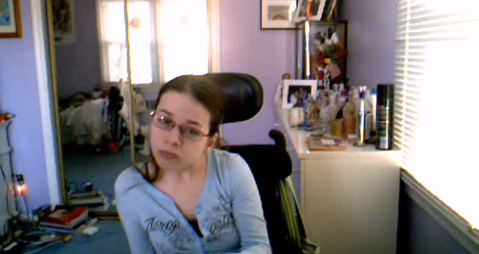
    She has a disability, but she feels grateful for her abilities, and she has an important message to share about what’s “normal” and judging by appearances.

  • When You Don’t Fit In: The Value of Being Different

    When You Don’t Fit In: The Value of Being Different

    Accept Yourself

    “No one can make you feel inferior without your consent.” ~Eleanor Roosevelt

    When I was ten, my blonde, blue-eyed best friend gave me a label.

    “I never thought I’d make friends with anyone brown,” she said. She was clearly embarrassed by her revelation and had summoned the courage to own up.

    I was dumbstruck for a moment. I never really thought of myself as brown, or indeed, as anything. I was just me.

    Then, wanting to get us both out of this awkward situation, and thinking of how my Sri Lankan mother would compliment my beautiful golden brown skin, I blurted out, “Well, I’m not really brown, I’m golden.”

    Immediately my friend collapsed into laughter, as she imagined me with bright orange skin. I suspect she was glad to divert the shame away from herself.

    And I did feel ashamed. Ashamed of being labelled as something I didn’t particularly identify with, but also ashamed of denying my brown skin, of unwittingly playing along with this casual racism.

    Over the years I have discovered that it’s not unusual to be judged as different.

    I still encounter many situations where people make incorrect assessments of me based on my looks.

    The question “where are you from” is sadly very common, as if the origin of my ancestors will give people the most important clues about who I am.

    My kids and I have picked up some Sri Lankan characteristics (age four, my third generation daughter called her little brother “darling” with a decidedly Asian lilt), but on the two occasions I have travelled to Sri Lanka, I was definitely a foreign tourist.

    Of course, my family history does partly define me, but mostly not in the way that those people think.

    Instead, it defines me as different.

    Being mixed-race is only one of the factors that make me different. I tend to be more outspoken than my peers, less religious, more bookish, more alternative… Apart from being married with two kids and a mortgage, there are plenty of things about me that are not “normal.” 

    Being different is a self-definition I struggled with for years, which I now deeply appreciate.

    Although it is not always an easy path, I hold my differences as precious. Conformity would be stifling. I want to be me, not some mythical “normal” that only exists in my imagination.

    Being different has tremendous value. Here is how.

    1. Being different is a source of connection and belonging.

    I find shared experiences when I speak with people who know what it is like to feel different—people with disabilities, migrants, creative people, gay people, introverts, recovering addicts, and many others.

    Though we don’t share those particular characteristics, our mutual understanding of what it is like to be different connects us, powerfully.

    We know what it is like to be judged because of who we are. We know what it is like to feel like outsiders or freaks. We know what it is like to try and hide our differences to fit in.

    But fitting in is the opposite of being yourself. It leaves you sick inside.

    What we really crave is to belong. When we are accepted despite or even because of our differences, we have found true belonging.

    2. What we have in common easily trumps our differences.

    We have empathy built into our brains. Mirror neurons mean that when we hear someone tell a moving story, we feel what they feel.

    Heck, Tiny Buddha is built on our ability to care, learn from and identify with the experiences of others!

    We all want to be understood. And science has proven what we instinctively know: we are more alike than different.

    So, take the risk of hearing and being heard. By telling your story you invite others to understand you, and to understand themselves better, too.

    3. My differences are a source of motivation.

    Looking back on the life choices I have made, I can see how my desire to help others feel they belong and are valued has influenced my career and relationships.

    One of my favorite jobs involved providing careers and business guidance to refugees, amongst the most stigmatized and stereotyped people in our society.

    These were often highly qualified and had been doctors, lawyers, and businessmen and women in their country of origin. Having left that behind, they found themselves without the respect, financial security, and social standing they had previously known.

    They were portrayed as scroungers, while being excluded from working by regulation, discrimination, and lack of confidence. I found a vocation helping them navigate these obstacles.

    Many of my colleagues were refugees themselves, who, having found their own way, wanted to pass on the learning to the next generation. Our differences motivated us to help others in the same boat.

    4. Being different is intensely creative.

    As I began to take more pride in what made me different, I began to research other people who went against the social norms.

    I discovered that artists, entrepreneurs, innovators, and other world-changers were always different from the people that surrounded them. Like me, they had often felt excluded from the “popular” kids group at school.

    They thought differently. They made connections (with other people, or between ideas) that others had not previously made.

    And they had the courage and resilience to put those ideas out into the world—the courage to take the risk of being judged, and the resilience to try again when they were.

    In the process, their ideas were tested and improved and tested again.

    Some made it big (think Steve Jobs, Lady Gaga, Barack Obama) appealing to a mass audience with their new ways of seeing; others appealed to a niche with similar tastes. In every case their creativity was rooted in their differences.

    You, too, have value hidden in your differences.

    Though we may never escape all judgment and discrimination, we can learn to value our own unique perspective.

    Then at least we can stop judging ourselves.

    Photo by Hamad Al-Mohanna

  • Create New Opportunities by Challenging Your Judgments and Reactions

    Create New Opportunities by Challenging Your Judgments and Reactions

    New Day

    “Taking responsibility for your beliefs and judgments gives you the power to change them.” ~Byron Katie

    “Alright, it’s time to break into groups,” said the professor.

    Immediately, I thought, “I hate group work. I can’t trust other students.” Before even meeting the other members of the group, I was sabotaging the opportunity with negativity.

    How often do you do this?

    The six of us waited, looking at each other with blank faces.

    “Okay, now it’s time to pick a group leader,” said the professor. “Each group will be assigned a psychologist to present his or her major contributions to psychology. You all have ten minutes to present, no more. AND NO READING OFF POWERPOINT OR NOTECARDS,” he screamed. “We present in four weeks. Be prepared.”

    Without even realizing it, I let out a huge sigh and dug my face into my hands. “Finals, papers, work, and now this?” The moment I realized what I was doing, I was embarrassed, because what kind of body language was I signaling? How automatic was that?

    I took a breath. I thought, “Is this how you want to lead by example? How ridiculous are you acting right now? Look back on your principles and follow them.” And so I did: one of my principles in life is learning how to flip negative situations into positive.

    Adversity is really a challenge in disguise. And challenges build character, facilitate growth, and teach us important lessons in life.

    My professor also said something that motivated me: “Out of all my years of teaching, I have never given a group a 100.”

    Challenge accepted.

    Be Mindful Of Your Default Setting

    David Foster Wallace talked about our “default settings” in his “This Is Water” Kenyon Commencement speech.

    Our default setting is how we react to the events in our lives. When we’re bored, we find solace in our phones. When someone cuts us off on the road, we drive up next to their window to see what they look like. And for me, when told that there is group work, I let out huge sighs and roll my eyes.

    This is, however, something we ought to overcome; we decide what has meaning in our lives or what doesn’t.

    I went home really thinking about this assignment—is this really about getting an A, or is it something more meaningful, like practicing organization, leadership, communication, teamwork, and, most of all, public speaking?

    Throughout our lives we will meet people that we don’t like right away or may be in a situation where we feel uncomfortable

    Instead of reveling in this negativity, it would be infinitely more rewarding to take a step back and realize what we’re telling ourselves about this particular situation or person. Is this how we really want to look at it or perhaps is there another way?

    1. Pause and focus on being mindful.

    Take a breath. What are you telling yourself? What do you feel? Getting to the bottom of your feelings, becoming self-aware, is step one; making the conscious decision to change your mind will be tough but necessary.

    Once you become aware of what you’re telling yourself, only then can you start changing the inner dialogue.

    2. Let go.

    Okay, so there was no way of getting out of this presentation, not unless I was okay with failing the class. So now I accept what I cannot change. What can I do to make this moment better? Keep dancing in my discomfort and insecurities or step up and lead?

    Our default setting is to complain and whine, but we’ve all done this so many times in our lives that it’s obvious it doesn’t lead to anything fruitful. Probably best to do the more difficult task instead.

    Negative Judgment Into Compassion & Humility

    We all, to an extent, judge people automatically. We look at their clothing, body language, skin color, and age. This isn’t necessarily bad; this is just how our minds work. We process and organize information in categories to save mental energy, process new information, avoid danger, or approach new friends.

    But this automatic prejudging could be self-defeating at times. I automatically judged one of my group members to be the least active because of her demanding medical job and being a mother of two.

    And I was dead wrong. They were passionate, organized, and although tired after a long day of work, attentive and committed. I was humbled.

    1. Give chances.

    This is where empathy plays a big role: How would you want to be treated? Would you want strangers to give you a chance or not? From a leadership standpoint, I had no choice but to remove my negative judgments and exercise compassion and humility.

    You will have expectations, sure, but don’t let it cloud your judgment so deeply that you forget you’re working with human beings.

    2. Teamwork is also about compassion and humility.

    Depending on the way you are, working with others is difficult because your ideas get challenged. People may not agree with you, and the very feeling of friction against what you contribute is enough to put you on the defensive.

    The idiosyncratic and often deluded belief that we are the most important and knowledgeable person is something we have to let go. Once I truly embraced the suggestions and feedback from my group members, the presentation evolved in ways I couldn’t have previously imagined.

    Choose What Has Meaning

    After many weeks of rehearsal, I’ve never felt more confident in my group. I reflected on how I was thinking, feeling, and behaving just weeks ago, and I realized how foolish I acted and how I nearly sabotaged a great opportunity to exercise important, fundamental skills in life.

    I learned how to work with other people, how to listen, how to give and take feedback, and how to turn strangers into friends.

    We were the last group to present. One by one groups would go up and follow very similar routines, read off their notecards, and hide behind the podium.

    “Is this what you were so afraid of?” I thought to myself. My group, during our rehearsal, was the complete opposite: strong eye contact, no words on the PowerPoint, barely any notecards, and lots of engagement. How? A lot of practice.

    When it was our turn to present, of course, the fear crept right in; I even saw it in the eyes of my group members. Before we all walked up, I looked at each of them. We didn’t even have to say anything. We all gave each other a little nod, smiled, and walked up to the front of the room.

    One by one, each of us presented our section, and by the end the class roared with applause, even a few murmurs like, “That was the best one.”

    At the end of the class the professor walked up to us and said, “I have a problem with your presentation. You didn’t read off notecards, you didn’t read off the PowerPoint slide, and you didn’t have blocks of text on it either. I’m going to have to give you all a 100.”

    My group jumped with joy, hugging one another and congratulating each other. As I was soaking in the moment I thought, “See? What were you afraid of? Why those negative judgments? Look at what was accomplished and how it was done. Now apply this in other areas of your life.”

    To me, this wasn’t so much about the grade, although I originally believed it to be. No, the real joy was the experience of overcoming my fear of public speaking, turning strangers into friends, exercising teamwork, leadership, humility, and compassion.

    The challenge, of course, is applying this same mindset to new and upcoming endeavors. It’s easy to fall back on our default setting without being aware of it, but the more we practice mindfulness, the more likely it will become our new default setting.

    Just imagine if I stuck to my default setting? Imagine if I let negativity overwhelm me and guide my actions? This experience, this story, would have ceased to exist. So would the lessons that I’ve shared.

    Photo by Alejandra Mavroski