Tag: judge
-
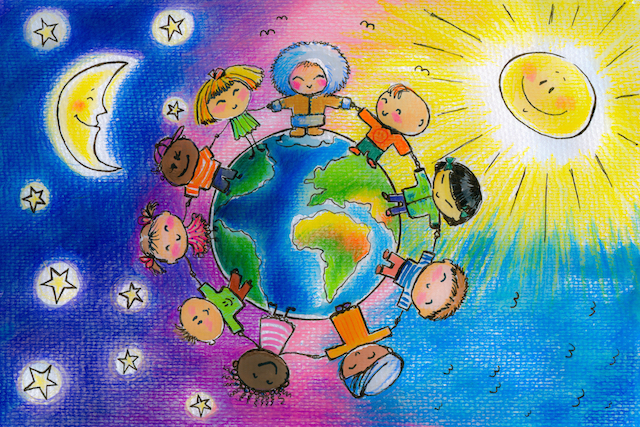
What If We Listened and Opened Our Minds Instead of Shouting and Judging?
“If you can laugh with somebody and relate to somebody, it becomes harder to dehumanize them. I think that most of what we are constantly bombarded with in terms of media leads you to a creation of ‘the Other’ and a dehumanization of ‘the Other,’ and it’s very much an us-versus-them conversation.” ~Jehane Noujaim
People are really hard to hate up close.
In today’s acrimonious political climate, whole groups of people seem to be pitted against one another based on various political, ideological, class, geographic and racial classifications. And yet, spend a day with “the other” and it’s difficult to resist the gravitational forces of our shared humanity that make those walls come a’ tumbling down.
New York State, like many others, has a wonderful tradition of civilian run elections. Each polling precinct is manned by four election inspectors—two Democrats and two Republicans.
From 5:30am to 9:00pm—other than the two thirty-minute breaks to which each inspector is entitled—these four individuals spend every moment together sharing responsibility over the most minute of tasks, from opening packets of ballots to recording the serial number of the dozen or so seals on various documents and pieces of equipment.
Once the polls are closed, vote tallies recorded and everything securely stowed, usually round 9:30pm, everyone goes home. It’s a long day.
For these sixteen hours of work, all inspectors are earn $225, or around $14 per hour—not bad, but well below the earning potential of most of the inspectors. Many of the inspectors are “old-timers” who have been doing this three or four times a year (in addition to the big November elections, there are primary elections and other local referendums) for many years.
Last year, sort of in between jobs and living in the United States for the first time in many years, I decided to become an election inspector.
Far removed from America’s increasingly bitter political divide, I was a little bit apprehensive about what to expect or how this was all going to work so harmoniously. After all, the America I left after graduating from college was one in which people from all segments of our political spectrum—which compared to other countries’ is surprisingly narrow—could have a discussion without being branded white supremacists, snowflakes, fascists, or traitors.
Once upon a time in the quaint old days less than twenty years ago, political talk was sometimes pleasant and not always so insufferable and divisive.
Like all others, my polling station had three other inspectors. One of the other inspectors turned out to be the father of a girl I’d grown up with from our Hebrew school days but had not seen in nearly twenty years, once a close family friend.
Another was a retired school administrator, an Irish guy who had grown up in the Bronx and slowly migrated ten miles or so north to Westchester County over the course of his life.
Finally, there was an African American lady who had been born, raised, and was still living in Mount Vernon, a nearby city perhaps most notable as the sometime home of Malcolm X.
As the hours passed and different members of the team shared the various responsibilities and each took his or her break time, everyone found themselves getting to know the others one by one.
With the one guy whose daughter I used to know, reconnecting was fun, and nothing seemed to have changed other than that we were all older.
The Irish guy shared my love and knowledge of the local waterways (I’m a sailor and he’s a diver). He was a Republican who didn’t vote for and viscerally disliked President Trump; he was more of a John McCain or Nelson Rockefeller kind of guy who felt Trump was an abomination to his lifelong political affiliation.
The African-American lady was a Democrat who, judging by her apparent age, may very well have remembered or even met Malcolm X during the tumultuous Civil Rights Era, didn’t like Trump either but also didn’t understand the current white supremacy scare. She remembered a lot worse racial tension and fear in her lifetime and thought that all the recent talk was based in reality but overblown.
During the slow portions of those sixteen hours, even when politics came up, nobody raised their voices nor found anything to get angry about. Politics was sprinkled around more immediately pressing topics like family, local community developments, and lunch.
And, where there were disagreements, after talking it all out with the copious amount of time that we had on our hands, it became clear that there was a strong foundation of shared values—respect for individual freedoms, belief in racial equality, etc.—on top of which the (relatively minor) disagreements were built. There was much more in common than there was different.
You would never know it from reading the headlines, but this observation is actually reflective of society at large, as political science studies and public opinion polls over the years have consistently shown a clustering of public sentiment on most major issues toward the center.
And yet, the loudest and most extreme voices seem to be the one that dominate the debate. Controversies erupt over smaller and smaller issues, such as symbols of past oppression as actual oppression becomes less prevalent.
It’s not that today’s issues are trivial—you would certainly be concerned if you were a gender non-conforming person being forced into using a bathroom based on your biological sex or an African American who had to pass by a statue of Jefferson Davis every day on your way to work—but that the final 10% of every issue, namely the public policy prescription for how to “solve” it, is nowadays typically built on top of an agreement over 90% of the multiple facets and relevant fundamental questions involved.
Only the most extreme fringe elements of society support institutionalized discrimination, secession from the nation, limitation of basic rights, etc. In most instances, the disagreement is over the “how to get there” as opposed to the “where we are going” or “who we are.”
More importantly, whatever people’s political beliefs, it is exceedingly rare to find people today who are consciously bigoted. He might think men are men and women are women like in the good old days, but faced with an actual person—maybe his son or nephew—undergoing a struggle with gender, those fixed opinions usually soften.
She might not get her sister-in-law’s “churchiness” but nevertheless appreciate the values it seems to instill.
These prejudices are borne from ignorance and isolation, not hate.
Moreover, even among people affiliated with bigoted or extreme views or organizations, it is my firm belief that what is at work is more an unfortunate facet of group psychology: it is easy to hate a distant group, a faceless enemy, or a caricature of a supposed threat.
It is even easier when riled up by a group of like-minded people, an all-too-common phenomenon as America self-segregates by class, culture, and geography.
And, to pour gasoline on top of this whole incendiary situation, it is still easier when these types of conflicts sell papers and generate clicks, especially within marginalized communities suffering economic or cultural dislocation.
Not surprisingly, the most extreme and bigoted views are typically found in relatively homogenous and often economically distressed communities far away from many of the problems or “bad guys” they fear. When people get together, hate becomes difficult to maintain, and it is difficult not to relate with one another on some level.
I wonder how fixed all of these angry opinions would be if we all at least once spent sixteen hours at a polling station or had to live and work in ideologically integrated communities or even share a meal with “the other.”
I wonder how long it would take the narrative of this hopelessly divided nation to unravel before the truth that we all share so much more than what divides us.
Perhaps there is a small duty we should take on each and every day from now on.
If you’re reading this, you probably already accept the most basic spiritual truism that we are all part of something greater, and the goal of nirvana or heaven or whatever you choose to call it is the oneness without separation from all life.
Why not endeavor to keep that in mind the next time you are in a heated political argument or shouting at the television? After all, the concept of oneness isn’t meant to be merely a comforting idea but a way to live, a view of a better earth.
Even better, why not go out of your way to break down the daunting barriers that divide us? Reach out and engage or listen to someone outside of the type of person who would normally be inclined to agree with your point of view.
And, your engagement need not be about politics. Maybe it would be even better to focus on something that’s shared. You’ll probably find the “daunting barrier” is more like a “thin veneer.”
There is also gratitude, an indispensable daily practice in a spiritually oriented life. Once again, the issues involved in politics today are not trivial—injustice is alive and well in this world, and so much needs fixing. However, can we not each day take a moment and realize how far we have come?
For example, white supremacists were able to muster a few hundred people to march on Charlottesville, VA in the largest such rally in decades. Have we forgotten that less than a century ago the majority of America—not a fringe group—shared most of their uglier points of view?
Likewise, while poverty in America remains a stubborn problem, can we not be thankful that we are indisputably living in an age of unprecedented prosperity among humankind?
The point of this gratitude is not to engender complacency. There is simply too much at stake. However, if we can find space for gratitude, perhaps even the most strident voice of the most passionate advocate of whatever policy could be softened. The angry activist could become the happy warrior.
And that’s one of the major ironies of today’s politics, that with such an air of negativity, even the most just cause will repel fair-minded people. Gratitude can help us to stop shouting and start listening and speaking with one another with respect and love.
This is how spirituality and consciousness, which are as a genre of writing or literary interest so often completely divorced from current affairs, can help heal our poisonous political atmosphere.
After all, spirituality isn’t about escaping the world and self-soothing by occupying a peaceful place in the clouds; it’s about gaining the strength to thrive in a challenging world and even doing the hard work to make it better.
As I found, after sitting in an overtly political setting for sixteen hours with three other apparently very different people who disagreed on a lot of topics, the work isn’t always so hard. It can even be fun.
-
There’s No Such Thing as Normal (and Other Lessons from Living Abroad)
“If you judge people, you have no time to love them.” ~Mother Theresa
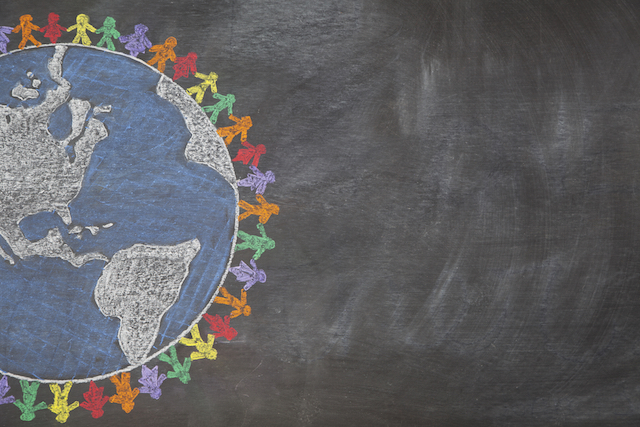
By passport and birth, I am Romanian. By soul, I am a citizen of the world.
I’ve always been fascinated by cultures, traditions, mentalities, and different ways of doing things and perceiving the world. So when I got my first working contract in Sweden seven years ago, I embraced it with tremendous joy.
Four years later I took one of the biggest steps in my life and moved to Shanghai. I was an Eastern-European woman leading a Chinese team, in an entirely new environment, so different from anything I had experienced before.
Today, I am sharing these insights from my current home in South Korea, knowing that I will start a new, very exciting chapter of my life in Mexico in a few months.
Looking back on my life, I’ve come to realize I was very judgmental of others. I expected others to behave in certain predefined ways, and I stereotyped people based on their country of origin. For example, I assumed that all Italians would speak a lot and loudly. All Swedish would be blond and shy. All Greeks would be cheese lovers, and all Chinese were supposed to eat dog meat.
The truth is, I was putting labels on people and seeing the world in black and white. As if I was the only one holding the absolute truth and the “right” way of perceiving the world, and anything else was either strange or abnormal.
Cognitive distortions like labeling or stereotyping separate us and shut us down. When I was meeting the world with a “my way or no way” approach, I was stuck on my ego. My mind was too busy judging, so it had no time to listen or understand other points of view, and everything outside my comfort zone scared me.
The real shift happened the day I decided to meet new people with the eyes of a child, with curiosity and a genuine interest to know them and connect with them, from the heart.
I started to ask questions, like: “What makes you say this?” “What makes you do that?” or “I’m not sure I understand. Can you tell me more about that?”
New insights and new perspectives came to life that I’d like to share with you today.
1. We judge what we don’t understand.
During my first year in China, I was outraged to see people spitting in public spaces. I saw this behavior in the middle of the day, right on the streets, and at work, in the ladies room. I found it extremely rude and disgusting.
Later, my colleagues explained that this is how people clean their throats from extreme pollution. I didn’t have to like it, but understanding the reason helped me become less judgmental.
All behaviors are attempts to meet needs. We might not condone the action, but we can usually relate to the need a person is trying to meet, whether it’s self-protection or something else.
When you find yourself in a blaming or judging mode, act as an observer. Get curious and ask questions. Look at the situation from this perspective: “I don’t have to agree with this, but I know where this comes from. I understand.” See the difference and how much lighter you feel.
2. Normalcy is an illusion.
As babies, we know nothing about the world. We’re all shaped by the societies we grow up in (family, religion, and schooling system), and everything we know to be true comes from the environment that raised us.
In reality, things are as they are. Not good or bad, normal or strange, ugly or beautiful, stupid or smart. “Normal” is relative to each individual because we all filter the world through our own lenses and system of belief.
To me, knowing this was such a relief! I’ve stopped trying to impose my views and convictions on others. I’ve also stopped judging silly little things that seemed odd to me—like how the Chinese eat tomatoes with sugar because, to them, the cherry tomato is not a vegetable, but a fruit.
3. Beauty is subjective.
They say beauty is in the eye of the beholder, and I believe this is true. Knowing this helped me stop judging the Chinese, South Korean, or Japanese for hiding themselves under big umbrellas during summer.
As an Eastern-European woman, I was raised to believe “summer beauty” was all about getting a nice, sexy chocolate-like complexion. However, during my stay in Asia, I was always complimented on my “gorgeous white skin” because here beautiful often means “white.” So if you visit this part of the world, don’t get surprised to see lots of whitening products in beauty shops.
Each time you think you’re not beautiful enough, your nose is too long, or your hips are too big, remember that beauty is a norm, shaped by societies and cultures. Spend your precious time by finding your own kind of beauty. You are what you believe. Decide you are gorgeous and see what happens.
4. Feedback is just an opinion.
If you are concerned with what other people think about you, know this and set yourself free: If they find you intelligent, stupid, ugly, or average, that has nothing to do with you. It’s all about them and what they see in you after they evaluate you through their personal standards and expectations.
Take my example: a Swedish colleague once told me I was “scary”—“too emotional, too talkative, and too intense.” I wanted to know more about myself, so I asked colleagues from Romania what they thought about that feedback. They found it funny: “What? You, scary? You, intense? Who told you that? You must be kidding!”
To them, I was normal. Showing vulnerability and expressing emotions at work was not common in Sweden, but it was normal to me.
That’s where the differences came from. It wasn’t right or wrong; it was just different. Every time people tell you that you are “too little of this” or “too much of that,” know that it has nothing to do with you. It’s about how they’re reacting to you, so don’t take it personally.
5. We’re all influenced by our culture’s values.
Every culture holds a set of primary values that influence the way we act and think. In Sweden, for example, I learned the word “lagom” (meaning “not too much”), which is an expression of humbleness.
In other words, one should not stick out and be too much out of anything, or believe they are “some kind of special.” On the opposite side, if you were raised in a country that puts a high focus on acknowledging and praising your individuality, acting and thinking “lagom” about yourself might be hard.
Countries such as China or South Korea value harmony: let us all agree and collaborate, so it’s a win-win for everybody and no one has to lose. Kind of “me happy, you happy.” So don’t get surprised if people tell you they agree with you when, in fact, they don’t. It’s all about avoiding conflict and “keeping face,” for the sake of the collective harmony.
Knowing the cultural values in a given country is another way to understand why people behave differently.
We all have our own historical, social background, but diversity doesn’t have to be scary. Imagine how boring life would be if everyone thought the same: no learning from each other, no brainstorming of new ideas, no evolution and growth.
It’s essential that we embrace our differences with compassion and accept diversity as a reality of the world we all live in. Souls don’t hold a passport. In spirit, there’s no separation, no nationality or religion. Those have been assigned to each of us at birth. Hurting you is hurting myself. Loving you is loving myself. We are all one.
-

How We Suffer When We Judge Other People’s Choices
“The greatest gift you can give to others is the gift of unconditional love and acceptance.” ~Brian Tracy
Two months ago I travelled back home to Connecticut to care for a sick parent. My dad was preparing for cancer treatment, trying to figure out the medical system, and packing up to move all at the same time. He was overwhelmed with stress and exhausted from his pain medication. As a caring and health-conscious daughter, I was eager to help.
I had visions of cooking him meals of steamed greens and healthy soups. And I stocked my suitcase with supplements that would ease the pain and help his body detoxify. Growing up, I suffered from an autoimmune disorder called Celiac disease, which made any food with gluten in it toxic to me, so I deeply understood the link between what we consume and how the body functions.
It excited me to be able to pass this knowledge on to my dad. We always had a close bond, and in times of illness it’s easy to feel helpless. I figured this could be my contribution.
I was afraid to see my dad ill. I’d been living in Arizona for the past two years so I didn’t have to see the change in his appearance. The butterflies in my stomach expanded as I drove to his house the first time. Thinking of him being unable to move freely, work, and have a regular life tore me up inside.
My plan was to visit him every day for three weeks and to do whatever I could to help. Luckily, seeing him in person lifted some of my worry. He seemed motivated to try new things, like trade in his meat for vegetables. And he even listened intently while I showed him what supplements to take and when.
That set up didn’t last, though. As the days went on I noticed that the bottles of pills and their color-coded instructions didn’t move. I saw that the dirty pans in the kitchen were covered in grease. Once again, my stomach was in knots and I felt panicked.
The heaviness I felt about my dad’s illness subsided when I thought he was on board with my amateur health plan. And I was only suggesting what seemed like common sense. When he didn’t wholeheartedly take my advice, a feeling of grief took me over. I felt like he wasn’t taking care of himself and that I had wasted my time in coming to see him.
It felt like he was rejecting me.
One night about a week into my trip I spoke with my boyfriend on the phone. He was upset about a plumbing issue at the house and that our cat might be sick. Tears started streaming down my face involuntarily.
“It’s not so easy here, either,” I said with a wilt in my voice. It seemed that the stress my dad felt about his condition melted into me. And the fact that my plan to save him wasn’t working made me feel overextended.
And then it hit me: I was suffering because I judged the situation.
In my mind he wasn’t doing what he could to get better, and that was wrong. And by assigning that judgment, I suffered. As soon as I accepted that he could navigate this journey in any way he wished and that was okay, my internal pain disappeared. It was like magic.
Suddenly I felt my boundaries coming back. It was easier to go to visit him when I felt like it instead of being motivated by fear and obligation. I found a way to precook some meals for him that he could add into his meat dishes. I worked with and respected his choices.
He appreciated my new attitude. I wasn’t another person telling him what to do. What he really wanted was someone to listen, and I was now capable of doing that.
This made me more of a comfort and support to him and it gave me back the ability to actually enjoy myself. Before this epiphany I was choosing to stay in, feeling depressed instead of visiting with friends I hadn’t seen in months. Releasing judgment on my father’s situation gave me a multidimensional gift.
When I thought back to other times when I’ve suffered, I saw that the pattern held up. Addiction is a great example of this.
I’ve had a few close friends and family members battle drug and alcohol demons, and the feeling in my belly was the same. I felt heavy and sick when I thought about the choices those people were making and how hard their lives must be. But it wasn’t them giving me the feeling; it was my own judgment of their situation.
I was making their life path wrong.
There are plenty of things in my past that could have garnered the same judgment. I used to smoke cigarettes, I dropped out of high school and took my GED instead of graduating, I got married young and then got divorced. My life wasn’t picture perfect, but I wouldn’t trade those experiences for anything. They taught me valuable lessons, and without them, I wouldn’t be me.
The suffering I felt was my creation. It was a choice. And just as easily as the heavy feeling came on, it left as I reminded myself of that. I realized that true compassion can be felt without taking on any negative feeling. Compassion is love and acceptance of where a person is; it should feel good.
Do you have friends and family members that you feel are making the wrong choices? It’s an easy trap to get into when gossip magazines and shows feel like the cornerstone of our culture. Everyone is supposed to have an opinion on the lives of others. So don’t feel badly if you have taken on that task.
The next time you feel yourself sinking because of another person’s decisions, remember to pause. Ask yourself if you are taking on this feeling of heaviness because you are judging them. If the answer is yes, then see if you can let it go. You can turn your concern into acceptance and still serve your loved one in the way they most need.
There may be times when you recognize that someone is inflicting harm on themselves or others, and in this case you need to use your best judgment. Get a professional opinion or call the authorities when the moment warrants it. Trying to help in the best way you know how is also a way to ease suffering. Acting on your observation doesn’t make you the bad guy; it frees you of holding accountability for what’s happening.
Coming out of judgment allows you to communicate without attacking. You can hold your own boundaries better and decide from an unemotional place if there needs to be any further intervention. And don’t forget to share with your loved one that you care about them. Hearing that someone loves you is often the best medicine.
-
The Truth Behind Judging Others and Why We Do It
“Judging is preventing us from understanding a new truth. Free yourself from the rules of old judgments and create the space for new understanding.” ~Steve Maraboli
For a long time, I was a judgmental person. I would look at other people walking along the street—who had no idea I was even paying them any attention—and make all kinds of comments based on their appearance, their dress sense, the way they talk, walk, their weight—anything that took my fancy.
“She shouldn’t be wearing that skirt—it’s too short.”
“She should focus on losing weight, not scarfing down that bar of chocolate.”
“Her hair’s such a mess. Why doesn’t she comb it or something?”
The list of secret and harsh criticism was endless, but I didn’t think I was doing any harm. They didn’t know what I was saying about them, and I’m sure some of them would have had a few choice words to say about me, had they found out.
That may have been true, but what was the reason behind my unnecessary tearing down of these other people? It’s not as if they had done anything to me. They were simply going about their own business.
I didn’t think about why I was doing it. If you asked me at the time, I would have answered something along the lines of “because they should/shouldn’t be doing ‘that thing.’ ” I thought I was perfectly within my rights to make judgments about them and think exactly what I wanted to think.
And yes, up until today, I still think whatever I want—I’m entitled to have my own opinions after all, but I’m making more of a conscious effort not to be so unkind about people who do things differently. Truth be told, I’m human, so it’s not always the easiest thing in the world, but making that decision has given me a freedom I never expected.
Back then, after all the judgment and cruel comments flowed effortlessly from my mouth while I was out and about, I would go back to the comfort of my home. Only, as comfortable as I felt inside the safety of my own home, there was a distinct level of discomfort I felt within myself.
Watching TV, I would see women that I thought were beautiful, smart, or simply doing well in life, and the comparing would start. All of a sudden, I was stupid or ugly or failing miserably at being a woman and a mum more than ever.
When looking at myself in the mirror, I would see my entire body covered in unwanted imperfections: the wobbly thighs, the seemingly endless stretch marks, the not-flat-enough stomach, and the butt that was becoming closer and closer friends with gravity.
I disliked myself on a major scale. I didn’t think I was good enough, and as harsh as I was to the people out there on the street, I was exactly the same to myself.
I was unkind and cruel and I mentally beat myself up every single day. The only difference between what I said about people and what I regularly said about myself was that I could hear it—there was no escape.
It took many years to finally reach a point in my life where I could be honest about the reason I was choosing to be so mean. It was a hard pill to swallow, which is often the case when it comes to the truth. I wanted to ignore it and I tried my hardest but once I came to the realization, I had no other choice but to accept it.
Putting other people down made me feel better about myself.
“If I were that size, I would exercise every day.”
“If I had legs like that, I’d wear trousers.”
“I wouldn’t step out the house with such messy hair…”
By making them wrong for being who they were, I somehow gave myself a temporary boost—a feeling of being okay—because I apparently knew what the correct behavior was to undertake in each of their situations and they didn’t have a clue.
In those moments, I became everything I thought I wasn’t: clever, a great mother, a beautiful woman. I couldn’t see or feel those qualities within myself, so I had to use what I considered another person’s faults as the way to reach a point where I could give myself permission to briefly bask in the qualities I thought were lacking.
From then on, every time a thought about someone entered my mind, I would immediately go to work drowning out the words with lots of pleasant thoughts about that person instead. I no longer wanted to be that other kind of person; I wanted to enjoy being me and know I had lots of great qualities without having to latch onto what I perceived as something bad in others.
But that proved to be mentally exhausting. There were so many thoughts flying in that I thought I’d never stop being that person after all. I was so used to making ongoing comments about other people that it’s as if a tap had been turned on and it was now stuck.
But I wasn’t going to give in. I wasn’t prepared to continue as normal now that I could clearly see the reasons behind my behavior, so I changed my approach.
I started to let the thoughts come in and pass as best I could. I purposely paid them little to no attention. This immediately felt easier—no trying to swap them quickly with something else, no fighting, no resisting…
And that’s when I felt the unexpected benefit of freedom, a newly formed space in my mind that wasn’t being taken up with unfair comments. By not holding on to those thoughts, I believed them less and less and in turn, I was able to accept what I saw in front of me—another person living their life in the best way they could in that moment.
If they’re getting on with their life and doing no harm, then let them be. They are who they are and I am who I am. That doesn’t mean I feel this way every time. There are some days where I hold on to those thoughts like they’re the last ones I’ll ever have—until I catch myself days later.
So no, it’s not all rainbows, unicorns, sunshine, and flowers all day, every day.
The most important thing is that in the moments when I become aware that I’m holding on to unkind thoughts about someone a bit too much, I understand that it’s not really about them, it’s about me and the way I’m feeling about myself.
And that acts as my reminder to get and stay on my side so that I can continue to see the best in who I am.
If you ever find yourself being overly critical about someone—especially someone you don’t know—ask yourself why you feel the need. What’s stopping you from accepting a person exactly as they are?
We certainly need to be discerning, for example, between right and wrong, but is it otherwise fair to make people wrong for being different than us or not living their lives in accordance with our ideals?
The more we give a person space to be who they are, the more we give ourselves permission to be who we are.
-

How We Can Stop Judging Others and Ourselves
“There is no path to peace. Peace is the path.” ~Mahatma Gandhi
We live in a world of ticker headlines, 24/7 news, and constantly updating Instagram and Facebook feeds. We are constantly making snap-decision judgment calls, categorizing what we see into “good,” “bad,” or “unimportant.”
In a second, we can see an image and believe we have all we need to form a fully realized opinion.
It’s in our biological wiring to judge everything we see—it’s how we have survived for generations upon generations. We are in a constant state of scanning our environment for threats and attempting to efficiently neutralize them when we do come across them.
And yet, ironically, we seem to have gotten to a point in our evolution where our judgments are doing us more harm than good, keeping us more unsafe than safe, and keeping us more in fear than in love.
When we get down to it, fear and love are the only two emotions we really have. They are our roots, the seeds of our souls, our most base and primal instincts.
All others are just off-shoots and iterations of the same.
We fear what we judge as bad; we love what we judge as good.
When we are in a state of fear, our bodies and minds do whatever they need to keep us safe. That may mean avoiding it, destroying it, or simply making it as different from us in our minds as possible. This is where the roots of racism, sexism, homophobia, and all other fear-based rationalizations are planted and nurtured.
I, like all other humans, have lived much of my life in this place of fear.
Only I didn’t call it fear.
I felt that I judged people fairly, that I saw in them things I would never be or do or feel in myself.
Though I have done deep work within myself to live in a place of love, forgiveness, and unconditional acceptance, I, like all people, still struggle with it from time to time.
It happened as recently as this morning.
I took my daughters to the grocery store for our weekly shopping trip and plunked them in a shopping cart shaped like a car. My eighteen month old daughter immediately ripped my list in half causing me to have to hold the two parts together every time I needed to check it.
I pushed the behemoth cart up and down the isles, cramming things in until I felt overwhelmed by both decision and physical fatigue.
My daughters were generally well-behaved but still did their part to act like kids: fighting over who got to hold the cereal, then both refusing to hold the cereal and throwing it on the floor in an attempt to throw it in the cart, pushing each other for more elbow room, asking to buy flowers and cookies and ice pops and a stuffed animal and tacos and pistachios and Finding Dora shaped Pirate’s Booty.
By the time I got to the register, I was ready for the trip to be done. It was still early in the morning, so only a few lines were open. I chose what appeared to be the shortest line and began unloading my stuff onto the belt.
That’s when I noticed that although I had chosen the shortest line, I had also chosen the one with the slowest cashier.
She and the woman in front of me were chatting and making small talk as if they were out on a coffee date, not in an increasingly crowded supermarket line with cranky kids and customers that were waiting to pay for their food and get on with their lives.
I did my best to surrender to the moment and keep it together. I reminded myself that I was waiting to pay for a cart full of healthy, nutritious food for my family—a position many women would do anything to be in. I smiled at my daughters and thought about how lucky I am to have them.
But still…
The clerk was really getting to me.
Finally, she started scanning my food and putting it into bags. And making small talk. And as she talked, she slowed down. Then she stopped and got out a roll of paper towels from under the register and started wiping down the belt where the frozen food had left a puddle of condensation.
I couldn’t help it: I rolled my eyes. I didn’t respond to her chatter. I refused to make eye contact.
Who the hell was this woman? She had a job to do and she was stubbornly refusing to do it in the efficient manner I know she had been trained to do it in.
I judged her. Harshly. And then I judged myself even more harshly for judging her.
As always, my judgments of her came from a place of fear:
- That I was going to lose control of my kids who were getting bored and cranky.
- That I might actually lose control of myself and say something I would later regret.
- That I never have enough time.
- That the situation could get worse and then it would feel even harder.
And then my frustration with her turned into frustration with myself and fear about myself:
- I’m not patient enough.
- I’m not kind enough.
- I’m too much of an introvert.
- I don’t appreciate what I have.
People who are in a state of fear can be vicious.
So what is the answer?
Love.
Love means unconditional acceptance of the light and the dark that we all have as humans and understanding that one cannot exist without the other.
Sure, it’s fair to say that the clerk should have been fully present and doing her job in a way that was efficient and respectful of the customers’ time. But I was making her responsible for my fear-based reaction.
The clerk was chatty and slow, just like I’ve been many times. Therefore, I really couldn’t condemn her without automatically condemning the same qualities in myself. This was probably why I was judging myself even more harshly than her!
In reality, there is nothing positive or negative that exists in someone else that doesn’t also exist in us because we are all human.
Perhaps instead of giving the clerk dagger eyes, I needed to see the experience she was giving me with gratitude. Maybe she was there to remind me that when we allow others to hurt us, we hurt ourselves. This was clearly illustrated by the fact that I quickly turned my anger toward her into anger toward myself.
Luckily because of my mindset work, I was able to move from seeing the clerk as an opponent and source of frustration to seeing her as a teacher for me and myself as a teacher for her, and also for my daughters who were a captive audience in the car cart.
Teaching is done mainly by example, and what we teach others we are also re-learning ourselves. What we share is strengthened in us, and so I had the choice to allow peace and love to happen in a moment that felt very un-peaceful by being peace and love.
Love is the remembering of who we all are at our core. Looking at a situation with love reminds us that our “flaws” are universal and therefore irrelevant.
Peace in that moment meant recognizing that I was having a vulnerable, overwhelmed moment, which put me squarely in the category of being human just like everyone else.
I took the lesson of having compassion for myself and for others that the clerk was teaching me and began to see things differently.
I gave myself a lot of grace and told myself that a moment of being annoyed and an exasperated eye roll didn’t make me a bad or ungrateful person. I reminded myself that both the clerk and I can do things imperfectly still be worthy of love anyway.
When you find yourself in a judgment/shame spiral, determine that you are willing to see things differently: with love.
Do this, and you will be guided by the most powerful force there is.
-

6 Lessons to Remember When Someone Judges or Criticizes You
“Every judgment, all of them, point back to a judgment we hold against ourselves.” ~Lynne Forrest
I sat across from my good friend Anna over a cup of coffee. We had been having issues in our friendship and had finally gotten together to discuss them. I’m not a fan of conflict and call myself a “recovering people pleaser,” so I was very nervous.
I noticed immediately that the conversation didn’t seem to be going very well. I addressed my issues concerning our friendship and tried hard to own my part. But Anna kept saying things like, “There are things that you do that really bother me as well, but I don’t say anything about saying them.”
After hearing a variation of this phrase for a third time, I asked what she was talking about. She had never addressed any of these issues with me.
She took a deep breath and said, “Angela, I don’t think your relationship with your higher power is very strong. Also, you know those Facebook posts you write about peace and mindfulness? I don’t see that reflected in your personality. One more thing: Your relationship with your mother seems poor, and I think that’s why you are emotionally needy.”
I stared at her in absolute shock. I felt like I was punched in the face. The worst part is this girl was a very genuine person, so the fact that she saw these qualities in me broke my heart.
My spirituality and my sense of peace are things I have been cultivating intensely since I was sixteen. Here I was sitting across from this girl, who’s supposedly my best friend, and she doesn’t even see these positive qualities in me. I was devastated.
I walked out of that get-together saying I needed some time to be alone and process. I was deeply hurt.
Before we met, I had envisioned us having a positive conversation, fixing our relationship, and spending the rest of the coffee date laughing. Instead, I left feeling like someone had ripped out my heart and like I was going to throw up.
It’s been quite a process wrestling with this event, and I’ve had the opportunity to learn (and relearn) some amazing lessons.
1. Someone’s criticisms and judgments aren’t the problem. Believing them is the problem.
I’ve been criticized before, but these judgments particularly crushed me. I couldn’t stop crying. I felt exposed.
I realized the reason I was having such a hard time with what she had said was because there’s a part of me that believes her judgments about me. For example, if she had told me I was mean, I would have shrugged it off, because I do not believe that about myself.
On the other hand, I do have insecurities concerning my spirituality and sense of peace in the world. While I try to cultivate both of these aspects in my personal life, I’m not perfect. I struggle just like everyone else.
Once I realized I was upset because I believed her accusations to be true, I could stop blaming her. I was in pain because I was torturing myself with these beliefs and blindly believing them.
2. When someone shows us how we’re out of alignment with ourselves, we have an opportunity to change our beliefs.
I’ve seen again and again that the world is a mirror. When we think a thought and believe it, the world will give us an example to prove that thought to be true. Anna showed me the part of me that believed these insecurities. She gave me the beautiful gift of questioning if I wanted to hold onto these beliefs. Remember, we do not have to believe our thoughts.
I heard an example about thoughts once that has stuck with me. Thoughts are like cars zooming on a highway. The highway represents the mind. We get to decide which car we want to jump into. Do we want to jump into the car and believe the negative thought? Or do we want to take the positive route? (Highway pun intended.)
So, I get to decide. Do I really want to hold onto the belief that I don’t have a strong spiritual relationship? That seems like a painful story to believe about me. Instead, I am choosing to reframe the belief. Instead of believing that my spiritual relationship is weak, I choose to believe that it’s a work in progress. It’s beautiful because it’s not perfect, but even still, I spend time cultivating it every day.
3. It’s not our business how other people see us; it’s our business how we see ourselves.
A lot of the time when we are feeling in emotional pain, we are not in our business. It’s not my business what other people think of me. My thoughts and assumptions of me are my responsibility, and that’s enough to keep me busy.
Once I get clear on what’s actually my business, it’s amazing how many of my troubles simply vanish. It also gives me the opportunity and the time to change my thinking and take care of myself.
4. Look for the truth in the criticism and leave behind the rest.
Take this piece of advice with a grain of salt. If you can find what’s true about the negative things people tell you, it can be a great tool to strengthen your character. But it’s not an excuse for self-abuse.
For example, some of the things Anna said, I don’t find to be true for me. But I do sense that sometimes I can be emotionally needy with my friends. This doesn’t mean I beat myself up about this character quality. I can reevaluate how I am sharing my emotions and with whom I’m sharing them, and see if I am becoming co-dependent with certain people in my life.
I believe the depth of my emotions makes me beautiful, and sharing it with others has positively deepened many of my relationships. But it’s a good reminder for me to evaluate if I was sharing my emotions in a healthy way or if I was dumping them onto my friends to make me feel better.
5. Find gratitude in every situation.
I believe it’s important to find the gift in every event so we can grow. If we look deep enough, we can find the seed of gratitude in any situation. I realized after sitting with this experience for a week how thankful I was for my friend, for giving me the opportunity to see the painful beliefs I held about myself. Now I had the opportunity to clear them. What a blessing!
I also realized how thankful I am to have a friend who will be honest with me and tell me what she believes to be true. This does not mean that I have to take her judgments on as my own, but her reflections of me are pertinent in my journey to releasing these painful beliefs.
6. Always try your hardest to forgive people and yourself.
Forgiveness is one of the most difficult but powerful processes. I believe forgiveness is twofold. Not only did I need to forgive her, I needed to forgive myself. While I realized it was a blessing that she said these things, letting go of my anger for “exposing me” was hard. I knew intellectually I needed to forgive her, but actually doing it was a different story.
Once I realized I needed to forgive myself first, letting go of my anger became easier. I had to forgive myself for blindly believing these judgments about myself and not questioning if they were true. I had been holding myself hostage; she had just shown me that I was the one keeping myself behind bars.
—
Our relationship is not back to the way it was before we started having issues. While I hold a deep sense of respect and love for Anna, I realized at this point in my life that I didn’t want to be best friends with someone who saw me that way.
This doesn’t mean I don’t love and respect her. I have a deep sense of gratitude for what she has shown me about myself, and I have hope that our relationship will be even greater one day, because it will be more honest.
I still have to questions these judgments about myself, because after carrying them for so long, they don’t magically go away.
Once I become secure about these qualities and come into a more loving relationship with myself, I will think about rekindling the friendship, but maybe not. Only time can tell. Till then, I will keep on forgiving myself, questioning these beliefs, and reframing them to come into a more loving relationship with myself.
What has helped you respond well to criticism and judgment?