Tag: intuition

  • Escaping a Toxic Relationship: My Intuition Was Right All Along

    Escaping a Toxic Relationship: My Intuition Was Right All Along

    “Owning our story can be hard but not nearly as difficult as spending our lives running from it.” ~Brené Brown

    What is the exact point when you realize you are in a toxic relationship? For me, it was a process that took almost a year. I thought I was mindful and “awake.” I did have an internal dialogue with myself, but I had a thick layer of deception around me. Today, I call it a fog because I’m on the other side, and I see much more clearly.

    Looking back, I see that my inner voice was guiding me, but I saw it as self-sabotage then because a part of me wanted to prove that I was right, that I was worthy, that I was a good and kind person who only wanted love and family. Unfortunately, the more I looked to get love from the outside world, the further I was from the source.

    Today, I can confidently say that I can sense the difference between my intuition and the distracting voice of my ego, who wants to be right. Now I can finally hear what my inner guide is telling me. But it wasn’t always this way.

    As a result of the separation from the toxic relationship, I lost everything. I had to give up my old lifestyle to save my soul. I had to let go of my home and all my belongings, escaping with just one bag of clothes and my laptop.

    I lost money in a property settlement and had no car or place to live. I found a refuge in a women’s shelter with my eight-month-old baby and started my new life from a humble place. But I found something through all this—a connection to my inner voice, a connection that gave me the strength to accept the loss, own my story, and say goodbye to the old version of myself. And I’d like to share with you the process.

    September 2021

    Me: Wow, this is beautiful! I’ve always wanted to try new things. I can get used to this kind of life. I feel this thrill in my tummy. It’s fun, it’s exciting, it’s new! What is this? Love?

    My inner self (very quietly): This is a carousel.

    Me: Well, I don’t know what you’re talking about. This is fun. He already said he loves me. I told him it’s too early to say that; we barely know each other. So, I asked him why he’s in love with me. And do you know what he said? “Because you are you.” He gets me; finally, someone who loves me for who I truly am. No doubt, no proving. I’m so lucky.

    My inner self (very quietly): Watch out—it’s too good to be true.

    Me: I don’t know what you’re talking about. I’m finally alive again. This is it. I think I’m in love with him too. He already wants to move in together and have a child. He chose me, and I’m so excited. So please stop being so negative and let me lead.

    Six months quiet

    Me: He’s what I wanted. He’s spiritual and he meditates. He looks after himself, and he’s so assertive and ambitious. He listens to me when I talk. But then when I ask for something, he says, “I think you should check your energy before you speak to me.” It’s really confusing. There are ups and downs, but I guess every relationship is like this… (very quietly): Isn’t it?

    My inner self (very quietly): No.

    Me: What do you know? You haven’t even had a healthy relationship before, so how would you know?

    My inner self (lovingly): Neither have you, sweetheart.

    Me: Well, to be honest, I feel like I can’t get a word in sometimes. It’s never a good time to mention things that are important to me, or he just dismisses the topic quickly, and I don’t know how to introduce it again.

    I guess I just have to get better at communicating. Let’s do some courses for that. I always get this feeling in my stomach—massive pain, like a black hole, when I sense I’m losing him, and I fear that I’ll die not having him in my life. I can only calm down when I know things are good between us and when he hugs me again.

    I’ll just lean in with more love and kindness, and I’ll figure it out. He’ll see how much I love him even though he’s stressed and doesn’t have time for me anymore. He’ll see that I’m here for him through good and bad, and then he’ll be here for me when I need it. I’m sure we just hit a rough patch, and all will be good again soon.

    Actually, stop being so negative. I have everything I’ve always wanted. Now, with the baby on the way, we’ll make such a wonderful family, and I’ll see what a great father he’ll be and how much fun we’ll have.

    Six months later

    Me: It’s still kind of up and down, isn’t it? Some days things go well and we’re happy, but then comes a big fall. One day he says that I’m the best partner he’s ever had because all his exes are crazy. Other days, he comments really hurtfully on what I say or who my friends are. And it goes round and round.

    My inner self (very quietly): Like on that wheel?

    Me: What wheel? The Power and Control Wheel I saw? Nah, not like that. I wouldn’t do that to myself. I was already in an emotionally abusive relationship, and I wouldn’t be so stupid as to repeat it.

    Things are fine. I just need to be nicer to him. It’s kind of my fault. It must be my hormones. It will pass after the birth. He’ll be with us at home, and we’ll restore the peace and calm. Easy. I feel so much love for him. I won’t ruin this relationship by being too sensitive. I’ve got this. I’ll do more visualizations and affirmations.

    Three months later

    Me: Hello, are you there? I’m so confused. I think I’m losing my mind.

    My inner self (very quietly): I know, honey.

    Me: What’s going on? My life is a mess. I don’t know what to do. I don’t know why I’m ruining everything all the time. I used to be fun, happy, and confident… Now all I feel is disoriented and dizzy.

    My inner self: A bit like on a carousel?

    Me: No, I’m not. I told you—he’s helping me. He’s the best. I want him. I don’t have anyone else. And I love him so much I can’t imagine my life without him. It’s impossible. He’s got all the money, he’s signed on the lease, the car is under his name, and I’m not even employed…

    My inner self (patiently): Alright, honey. Go again. I’ll be here when you need me.

    Two months later

    Me: I don’t recognize my life or myself anymore. Everything is kind of fuzzy. I’ve had this headache for the last week or so. I can’t feel or think clearly; I can’t feel my body. I’m unwell.

    My inner self: I know, my dear.

    Me: What’s going on? Please help me, someone.

    My inner self (very quietly): You are on a carousel.

    Me: Why do you keep repeating that? I told you he’s helping. Well, sometimes. He’s just a bit stressed, but it’s also my fault because I’m not as much fun as I used to be. I don’t know why I feel so numb or why I can’t just laugh anymore.

    He’s the only person left. I don’t see anyone else anymore. I’m scared to speak to anyone; no one would believe me anyway. My life is so extreme compared to last year, with court cases and police and debts and signing documents I don’t understand. What am I doing wrong? Why is this happening to me?

    My inner self (barely loud enough to hear): Have you noticed the same things happening over and over?

    Me: Yes. But I’d die not having him. Stop telling me he’s the problem when I know I’m the problem.

    One month later

    Me: Are you there?

    My inner self: Of course.

    Me: The same things are happening over and over again. I thought he was helping and that I was crying every night because I’m depressed and I have so much drama in my life, but I don’t bring up any of that. He always talks and talks until I feel like the worst person in the world.

    The other day he came to me with an idea to have children with other women because he wants more kids than I can give him since I’m turning forty this year. He claims it’s because more women should have children with such fantastic genetic material. This is too much for me, and it’s not getting better but harder and faster. But how do I get out? Please help!

    My inner self: Are you ready?

    Me: I think so.

    My inner self: Then jump.

    Me: Where?

    My inner self: Off the carousel, sweetie.

    Me: Can you slow it down, please!? This is going to hurt.

    My inner self (most lovingly): It will, honey, but you are not alone. I’m here. I will guide you and help you heal.

    And so I did.

    Four Takeaways from Those Conversations with My Intuition

    First: Intuition is usually quiet, gentle, and subtle. I recommend going back in your memory and noticing when you heard your intuition. What was the quality and the tone? What else can you notice and learn about it?

    Second: Intuition doesn’t argue. It often disappears when you disbelieve or argue back. It’s very sensitive to criticism and attitude, meaning what seems to be right or more logical or more convenient. If you want to be guided by intuition, you have to let go of thinking that you ‘know.’

    Third: It grows stronger if you connect with it like your life depends on it. If you surrender and quiet your overthinking, you will be surprised by how quickly your intuition can guide you to where you need to go.

    Fourth: Your relationship with your intuition is like any other relationship; it needs time, care, and attention to build it solid. But once you do, you’ll have an invaluable asset for life.

  • What Happened When I Let Go of My Big Plan

    What Happened When I Let Go of My Big Plan

    “Surrender to what is. Let go of what was. Have faith in what will be.” ~Sonia Ricotti

    Turning fifty felt like a milestone worth celebrating—a time to honor myself, reflect on my five decades of life, and embrace the journey ahead.

    For someone who had never believed I was worth the fuss of a big celebration, choosing to honor myself in this way felt like a profound shift. I wanted this celebration to affirm that I am worth the effort and expense.

    The way I envisioned this milestone? Hosting a retreat for women like me, who were born in 1975 and at a similar life stage. But what began as an exciting idea turned into a chance for surrender, growth, and unexpected self-discovery.

    The Vision: A Retreat for Reflection, Celebration, and Pampering

    The idea hit me all at once, clear and undeniable. Why not create a customized birthday retreat experience to mark the milestone? The retreat would be intimate, luxurious, and restorative—a space where women could reflect and celebrate together.

    I spent weeks researching, contacting venues, and considering every detail meticulously:

    • A stunning eco-conscious venue blending luxury with nature
    • A top-rated plant-based chef to nourish us
    • Thoughtfully designed activities that honor our individual and collective needs, including a group birthday celebration and opportunities for deep introspective work

    The host venue I found was a gem, exceeding my list of must-haves, but it was meeting the owner of the venue that felt truly serendipitous.

    From our first conversation, we shared a kindred energy that was both grounding and inspiring, and I knew I was meant to find her. Our connection felt like a sign—one that I wouldn’t fully understand until much later.

    I joyfully secured the dates with a deposit, brimming with excitement to share this beautiful offering with others.

    Every Project Has Its Challenges, Right?

    Despite my enthusiasm, something didn’t feel quite right. The response from my friends and acquaintances was lukewarm. Cost and personal preferences were barriers for some, and others simply didn’t resonate with the idea.

    From others, I received unsolicited advice that the retreat just wasn’t compelling. My ego bristled at their comments, interpreting them as doubts in my capability and vision.

    Adding to this, I encountered bureaucratic issues and had to navigate compliance with the retreat regulating body in my province, bringing unexpected stress and layers of complexity I hadn’t anticipated. If this piece wasn’t sorted, the retreat would put me in the red beyond what made sense.

    I believed in my vision, though, or at least, I believed in that strong feeling of alignment I had whenever I spoke with the retreat venue owner.

    After perseverance and more hours of work, I was able to solve the compliance issue. I also revised the retreat to reduce the cost to attendees and broaden the audience to include women born in 1974 and 1976, editing all of the marketing materials and recosting everything.

    After my modifications, I informally launched to my circle again, and this time… drum roll please… more crickets.

    A Moment of Truth: To Let Go or Double Down?

    I knew that the retreat would be magical for the right women, but I considered calling it off anyway. Anyone who’s marketed a retreat knows it’s no small feat. To make it happen, I’d need to pour in more time, energy, and finances—yet something in me just didn’t want to.

    When I really tuned in, the idea of letting go and surrendering to the quiet message my heart was sending brought an unexpected sense of relief.

    My ego whispered reasons to keep pushing forward: proving the doubters wrong, justifying the time and money I’d already invested, and showing myself I could make it work. But my heart’s quiet, persistent voice urged me to release it.

    The Gift of Letting Go

    After weeks of introspection, I made the decision to cancel the retreat. It wasn’t easy—old patterns of shame and fear of failure surfaced, and I had to really sit with them. But over time, I found peace with my choice.

    Since I had planned so far ahead, I was able to redirect my deposit toward attending a retreat at the same venue—this time, for myself.

    And THAT decision changed everything.

    The retreat opened up a new path in my healing journey, guiding me toward a piece of the puzzle I’d been trying to figure out but hadn’t yet understood. The deep connection that I felt with the retreat host made sense in a new way. She was meant to be one of my guides, and I would be returning to retreat with her many more times in my future.

    A Powerful Learning

    My experience also highlighted an area of growth asking for my attention. In my professional life, giving of myself is at the heart of what I do. I continually work on myself to strengthen my capacity to hold space for others to do their work.

    I love this calling deeply, and I receive so much in return for my giving—but I’ve realized that I still struggle outside of this context with receiving. That is, receiving without feeling the need to give something back. I also find it hard to surrender to others caring for me and holding space for me to be my messy, human self.

    The truth is, my intention behind planning the retreat was misguided. I convinced myself I was finally allowing myself to deserve a celebration, but I still felt I had to earn it by planning something for others. Yes, I would enjoy it, but I would be receiving through giving—which is beautiful, but not the same.

    By trusting my intuition and listening to the message from my heart—that I didn’t need to pursue this—I gave myself permission to let it go. And in doing so, I recognized a deep need to learn how to truly receive.

    What better way to mark the transition into my fiftieth year than by learning this essential self-care skill?

    My Takeaways from a Lesson in Letting Go

    1. Find the value.

    Letting go can feel like you’ve wasted your time, money, or energy when you don’t ‘achieve’ the outcome you set out to create, but if every experience carries value, then it’s not a waste. In my case, I gained impactful insights into the women I serve, learned how to navigate retreat regulations in my province, and met a pivotal person on my path to healing.

    2. Trust your intuition.

    Letting go of control created space for something unexpected: a profound healing experience and invaluable clarity and guidance that wouldn’t have happened otherwise. My decision to cancel wasn’t analytical—it was intuitive. But leaning into that inner voice led me to something far more meaningful than the original plan. I got what my heart knew I needed, not what my thinking self thought that I needed.

    3. Honor the balance of giving and receiving.

    Letting myself receive requires surrender. And while offering space for others to receive is deeply fulfilling, allowing myself to be cared for fills a far-reaching need I hadn’t fully acknowledged. As I enter this milestone year, I realize that true wholeness comes from honoring both sides of the equation.

    Trusting my heart and letting go is an ongoing practice for me, as it is for many women who have been socialized in a ‘fixing’ and ‘doing’ culture such as what is typical of North America.

    The gift of remembering to trust was a deeper understanding of what I truly need in my next phase. Sometimes, the most powerful way to meet our needs is to stop striving and simply allow ourselves to receive—both from others and from the wisdom of our own intuition.

  • Free New Year Meditation & Writing Challenge

    Free New Year Meditation & Writing Challenge

    Hi friend! As you might recall, last fall I shared an empowering five-day meditation and writing challenge from Tiny Buddha contributor Nadia Colburn. This month, she’s back with another free meditation and writing challenge, designed for the new year, focused on transformation, and I can’t recommend it enough!

    Founder of the online creative writing school Align Your Story, Nadia is a poet, memoirist, and yogi who has a talent for helping people create inner calm and access their most authentic voice.

    That’s what I love about her challenges—they allow us to turn down the mental noise that creates stress and confusion and tune into the gold of our intuition and creative genius.

    Each day’s fifteen-minute recording includes a short meditation, an evocative poem, and a prompt-based writing exercise inspired by that day’s piece.

    Though the meditation practices all vary, they all gave me quick access to increased calm and focus. And the poems and prompts are all perfect for this season of transformation, when so many of us are looking to get unstuck and create positive change.

    Like last time, I recognized common themes in my writing—blocks I need to address, fears I need to face, beliefs I need to challenge, and truths I need to accept.

    Life has been particularly overwhelming in recent months, due to significant challenges in every area of my life, and I’ve often felt lost in the haze of my own mind. Each day’s challenge elicited a new aha moment for me, giving me hope that greater clarity is coming.

    You don’t need to even think of yourself as a writer to enjoy and get something out of this challenge. It’s for anyone who wants to connect with themselves more deeply and perhaps find some of the answers they’ve been seeking externally within the quiet of their own mind.

    Some of Nadia’s past participants have noted how easily their writing flowed after meditation and how the prompts brought them unexpected insights.

    If you decide to give this challenge a try, I have a feeling it could do the same for you. You can access it for free here.

    Happy writing!

  • How Following Our Instincts Now Can Protect Us from Pain Down the Line

    How Following Our Instincts Now Can Protect Us from Pain Down the Line

    “There is a voice inside of you that whispers all day long, I feel this is right for me, I know that this is wrong. No teacher, preacher, parent, friend or wise man can decide what’s right for you. Just listen to the voice that speaks inside.” ~Shel Silverstein

    Some time ago, a guy I knew suggested I go swimming with him and a friend of his. I accepted.

    I didn’t know him well. Sometimes he would say hello and be warm, while other times he would ignore me. Since he was a longtime friend of a girl I knew, I was looking forward to getting to know him better so we could become friends too.

    He and his friend dived several times from the ten-meter diving board. When it was my turn to jump, I was petrified.

    I was standing on the diving board with a firm will to jump, but the emptiness below me paralyzed me.

    My new friend climbed the stairs of the diving platform, came on the board, and kissed me on the mouth to encourage me. It was cute of him, but the situation stressed me even more. I knew him very little, and the fact that he blew hot and cold did not give me confidence.

    When I finally got off the diving board, without having jumped, I told him how much I appreciated that he came to encourage me, but I preferred that we stay friends.

    In the following months, whenever I bumped into him, he ignored me.

    About six months later, as I was walking down the street, he ran out of a restaurant to greet me and offer to ski with him and his friends, which I accepted. I was surprised at his change in attitude and relieved that he was no longer mad at me for sending him away at the pool.

    We spent a wonderful day of skiing, during which he was particularly friendly.

    In the evening, we met at the local pub, where he told me of his desire to go out with me. I replied, again, that I preferred that we stay friends.

    Later that evening, when I passed him on the pub stairs, he walked straight past without looking at me. It hurt me. I knew he was hurt, but it was unfair to ignore me again. I had spent a wonderful day with him and wished we could stay on good terms.

    Following this, I felt uneasy and ended up telling him that I had changed my mind about him because I wanted things to go back how they were earlier that day, when he was warm and charming. That’s how our relationship started, but I quickly realized something was wrong.

    I noticed that when he needed me or when we were planning to spend the night together, he was warm and generous with compliments. On the other hand, when I was useless to him, he was cold and distant. The sudden shift between the two extremes made me doubt his sincerity and feel manipulated.

    Moreover, he did things secretively, which created an atmosphere of mistrust.

    Also, he always created a busy schedule for himself, in which he assigned me time slots in advance.

    If I suggested that we see each other at a time other than what he had initially planned, he did not let go until I gave in.

    I felt like a pawn on his chessboard, and I was tiring of the lows but growing addicted to the highs.

    When I would bring up issues in our relationship, he was not open to questioning himself. Each time, he managed to convince me that I was the cause of the problem. The argument ended with me crying and begging him to forgive me.

    As a result, after each argument, I felt that the problem was still unsolved, and my frustration escalated.

    He ended up leaving me, which was legitimate since we were constantly arguing.

    The breakups I had experienced with other ex-boyfriends had left me either relieved or heartbroken, or both. This breakup left me with an identity crisis.

    During our relationship, when my ex-partner found a flaw in my personality, he could not help but amplify it and remind me of it all the time.

    That is when I started to doubt myself. Who was right, him or me? Maybe he was right, and I was this person he was describing.

    It took me a while to realize that this relationship was toxic. Looking back, I wondered how I could have come to this.

    How could I have been left by a man I had never wanted to be with and for whom I had never had romantic feelings?

    Also, why had I tried so hard to make this relationship work when I was miserable throughout its course?

    In other relationships, I’ve always had feelings for my partners. Those magical feelings that make you euphoric at the beginning, and every time you see someone who looks a little like your loved one, you think it’s him.

    In this case, the unease after being ignored made me change my mind.

    In his defense, my ex-partner never forced me to be in a relationship with him, and as an adult, I am responsible for my choices.

    Yet, his strong-willed character always ended up defeating my decisions.

    This experience taught me why you should listen to your inner voice and be in tune with yourself. The voice inside tells you what feels right and wrong for you.

    Don’t be afraid to follow your intuition, even when people insist you go against it. Does that mean that you should think only of yourself? No, obviously. However, if what is being asked of you goes against your intuition, and even if you do not understand why, it is better not to do it.

    If I had listened to my intuition and refused to go out with this guy, I would have hurt him briefly but saved him from a relationship that did not suit him. Moreover, I would have spared myself unnecessary suffering.

    When you make decisions with your heart, you have no or fewer regrets if things go wrong.

    It can take time to learn to listen to your inner voice and follow your instincts without feeling guilty—especially if you learned growing up to put other people before yourself, as I did.

    If you feel that someone or something isn’t right for you but worry about upsetting someone else, remind yourself that a little short-term discomfort can often save you a lot of pain down the line.

  • The Power of Waiting When You Don’t Know What to Do

    The Power of Waiting When You Don’t Know What to Do

    “Waiting is not mere empty hoping. It has the inner certainty of reaching the goal.” ~I Ching 

    Waiting has a bad rap in modern Western society. It’s not surprising that I had to look to an ancient Chinese text (the I Ching) in order to find a suitable quote to begin this article. We don’t like to wait! It’s far easier to find quotes on the Internet about “seizing the day” and making something happen.

    I’ve been an impatient person for much of my life. I wanted things to happen to me! I had a definite agenda in my twenties: finish college, start my career, get married, and have a family. So I declared a major and started knocking off my goals. When it was “time” to get married, I picked the most suitable person available and got on with it.

    I really didn’t know much about waiting. I thought it was something you did if you didn’t have courage or conviction. It was just an excuse not to take action. I know better now.

    What I’ve learned since then is that waiting is one of the most powerful tools we have for creating the life we want.  

    The ego, or mind, is very uncomfortable with waiting. This is the part of you that fairly screams, “Do something! Anything is better than nothing!” And, because we are a very ego-driven society, you’ll find plenty of external voices that back up that message.

    The mind hates uncertainty, and would rather make a mistake than simply live in a state of “not knowing” while the right course unfolds.

    There’s a term I love that describes this place of uncertainty: liminal. A liminal space is at the border or threshold between possibilities. It’s a place of pure potential: we could go any direction from here. There are no bright lights and obvious signs saying “Walk this way.”

    Liminal spaces can be deeply uncomfortable, and most of us tend to rush through them as quickly as possible.

    If we can slow down instead, the landscape gradually becomes clearer, the way it does when your eyes adjust to a darkened room. We start to use all of our senses. The ego wants a brightly lit super-highway to the future, but real life is more like a maze. We take one or two steps in a certain direction, and then face another turning point. Making our way forward requires an entirely different set of skills, and waiting is one of the most important!

    There’s a proper timing to all things, and it’s often not the timing we want (now—or maybe even yesterday). There are things that happen on a subconscious level, in ourselves and in others, that prepare us for the next step. Oddly, when the time to act does come, there’s often a sense of inevitability about it, as if it was always meant to be this way.

    Look back over your life and you’ll see this pattern. First, look at the decisions that you forced: how did those turn out? Then look for times when you just “knew” what to do, without even thinking about it. What happened then?

    The key to the second kind of decision is waiting for that deep sense of inner knowing.

    That doesn’t mean you’re certain that everything will turn out exactly the way you want it. Or that you don’t feel fear. But there is a sense of “yes, now’s the time” in your body that I liken to the urge that migratory birds get when it’s time to leave town. They don’t stand around debating whether to go, consulting maps and calendars. They just go when the time is right.

    We’re animals too—we have and can cultivate that inner sensitiveness that lets us simply know what to do when the time is right. But to do that we have to unhook from the mind. Thinking is useful up to a point, but we usually take it far beyond the point of usefulness!

    We go over and over various options, trying to predict the future based solely on our hopes and fears.

    We talk endlessly with others about what we should do, hoping that they have the answers for us (and, ideally, trying to get everyone to agree).

    We think about what we “should” do, based on any number of external measures: common sense, morality, religion, family values, finances, and so on.

    And then usually we add this all up and just take our best shot.

    A better way is to take stock of what you know (and, even more importantly, what you don’t know) and then… wait.

    If there’s some action that calls to you, even if it’s seemingly unrelated to the question at hand, do it! Then wait again for another urge to move. Wait actively rather than passively. That means: keep your inner senses tuned to urges or intuitions. Expect that an answer will come. As the I Ching says, wait with the “inner certainty of reaching the goal.”

    This is not the same kind of dithering and procrastination that come when we want to try something new but are afraid to step out into the unknown. If your intuition is pulling you in a certain direction and your mind is screaming at you to “Stop!” by all means ignore your mind.

    There’s a subtle but very real difference between the feeling of fear (which holds you back from doing something you long to do) and misgivings (which warn you that a decision that looks good on the surface is not right for you).

    In both cases, look for and trust that deep sense of inner knowing, even if your thoughts are telling you different. A friend once told me that her father’s best piece of advice to her was: “Deciding to get married should be the easiest decision of your life.” How I wish I had known that when I made my own (highly ambivalent) decision!

    My head was telling me that this was the sensible thing to do, and he was a good man. My gut, however, was far from on board. I still vividly recall the many inward debates I held about whether to marry him, and even the dreams I had that revealed my inner reluctance. Unfortunately, I went with my thoughts over my instincts.

    Now I know this: If you have to talk yourself into something, try waiting instead. More will be revealed, if you give it some time.

    Ignore that voice in your head that says you need to make a decision now. Don’t rush through life. Linger in the liminal spaces and see what becomes clear as you sit with uncertainty. Learn to trust your gut more than your head. Have faith that the right course will unfold at the perfect time. And then, when the time comes, just do it, as simply and naturally as the birds take flight.

  • Why I Didn’t Trust Myself to Make Decisions (and What If It’s All Okay?)

    Why I Didn’t Trust Myself to Make Decisions (and What If It’s All Okay?)

    “Tell me, what is it you plan to do with your one wild and precious life?” ~Mary Oliver

    Lately, I’ve been taking time to think about what I actually want. Not what I “should” want or what other people want for me.

    One thing I have learned is that mistakes happen when you choose not to follow your inner guidance system. The problem is that, for many years, I chose not to listen to mine.

    Whenever it screamed and pulled at me, desperate to get my attention (“Don’t purchase a car from that shady car dealership! Don’t go out with that person who makes you feel very uneasy! Don’t spend thousands of dollars on a degree that doesn’t make you happy!”), I would simply override it. I would tune out everything my gut was telling me, and instead, justify in my head why doing xyz would be a perfectly fine idea.

    After enough of these experiences piled up, rather than arriving at the realization that I willfully chose to ignore my intuition and that’s what got me into trouble… I arrived at a somewhat different conclusion. I decided that I simply wasn’t good at making decisions.

    So I stopped trusting myself. Before making an important decision about anything, I’d always have another person “validate” it. You know, just in case. My justification was, if I end up making a totally messed up decision, well, I don’t need to feel too badly about it since it was backed by another human being. Evading personal responsibility at its best.

    Now, short term, this sort of worked.

    The people offering guidance and helping me with my decisions were sound-of-mind individuals who cared about me. In fact, some of their guidance was largely beneficial to me, and I’m glad I listened.

    The thing is, while listening to others can be very helpful, it should not be used as a crutch. If someone gently encourages you to make a decision that you know, deep down, is good for you, that is perfectly fine. However, if you are relying solely on input from others because you’re afraid to make the “wrong decision,” that needs to be examined.

    Three problems started to slowly arise for me.

    One, I started to lose my own voice. I started to forget my own taste and what I liked, disliked, agreed with, or disagreed with. I convinced myself that I honestly didn’t know. But oh, I knew. I just was terrified of admitting it to others, much less myself.

    Two, there were occasionally moments where someone’s advice did not resonate with what I wanted. Wait, disagreeing with someone?! Feeling like I might have a separate, completely valid opinion that is different than another human’s?? TOO MUCH TO HANDLE.

    And three, chaos ensued when multiple people had multiple opinions about how I should live my life. And every single person expected me to honor their advice and guidance. And oh my god, what do I even do now?

    After years of dealing with the anxiety caused by trying to do everything everyone wanted, as well as the deep depression that arose as I realized I had become a former shell of who I was, unsure of who I was or what I wanted, I knew that something needed to change. I was lost and slipping away.

    I started making small decisions. It felt terrifying.

    I would like to buy this shirt. I would like to eat sushi for lunch. I would like to stay in this evening, rather than go out.

    Little wins for self-advocacy!

    Then I started making bigger decisions.

    I would like a new job. I would like to stop “hustling” during my non-work hours and just do things that make me happy. I’d like to take more abstract, nature photos than cookie-cutter family photos.

    With each little decision I made, I also made sure to pay close attention to how I was feeling.

    If I felt a tightness in my chest and a feeling of uneasiness, I would pay attention to that. I’d think to myself, “You know what, brain… I know you might object to this for various reasons, but the heart is telling me to steer clear of this decision.”

    I slowly started becoming much more aware of everything my body was feeling at any given moment.

    I also started to realize something else. Maybe there truly are no “shoulds.”

    No matter what decision you make, there will be someone who is all for it and someone who disagrees completely. There are thousands of choices that a person can make in a day. It’s impossible to guarantee that everyone will like or approve of all of these little choices. From the decision to order a cinnamon dulce latte at Starbucks (yes, I see all you Dunkin’ Donuts diehards out there cringing), to the decision to dye your hair purple.

    What about the even bigger decisions? Such as the choice to work a certain job, have a family or not have a family, follow a certain political party, etc.

    What if the whole point is to simply live in accordance with our values, and honor other peoples’ desire to do the same?

    What if it is literally all okay?

    To plant down roots. To fly with wings.

    To be financially abundant and have more than you could need. To have just enough to live happily and comfortably.

    To be tall, short, skinny, fat, lean, muscular, and everything in between.

    To live on your own or to live with others. To be in a relationship or to be single. To work sixty hours a week or five hours a week. To have a job you adore or a job that pays the bills.

    To be a work in progress. To be sure. To be unsure.

    To still be learning. To still be searching. To be saved. To not believe. To be straight, gay, bi, or none of the above. To love men. To love women. To love animals. To simply love.

    What if it is okay to have hard ambition and dreams that are larger than life?

    What if it is okay to have soft ambition and dreams that are just right, which make us happy and honor our capacity?

    What if it is okay to not have any “ambitions,” per se, and to simply focus on cultivating habits rather than reaching goals?

    To experience satisfaction on our own terms without needing to prove anything to anyone, ever.

    What if being enough isn’t about trying to be everything to everyone? Rather, it is about being who you want to be, unstoppably, and nothing more?

  • How I Knew It Was Emotional Abuse: The Subtle Signs I Almost Missed

    How I Knew It Was Emotional Abuse: The Subtle Signs I Almost Missed

    “I hope you find love, but more importantly, I hope you’re strong enough to walk away from what love isn’t.” ~Tiffany Tomiko

    A few weeks after breaking up from what I thought was a loving relationship that in reality was sliding into an emotionally abusive one, I had a dream.

    In it, I was hiding from a group of dangerous people, but could see the footsteps of one of them coming toward me. Suddenly they saw me, and I pleaded to them, “Please, don’t kill me,” and they turned and left. When I emerged, I could see the victims all around me suffering from a fate I had been spared.

    I believe dreams relay information from our unconscious to our conscious mind, and that they hold huge significance in the processing that occurs while we sleep. I have no doubt at all that this dream signified the narrow escape I had from a man who was being emotionally abusive.

    The Cognitive Dissonance of Emotional Abuse

    I don’t use the term “emotional abuse” lightly, and I have struggled to apply it to the man I shared so much love with. Yet, one of the resources I used to understand what had been happening in my relationship was a podcast called “Love and Abuse,” which sums it all up so perfectly.

    Emotional abuse is a cycle that flips between loving moments and abusive ones, sending you on a rollercoaster ride toward a place you never wanted to end up. A result of the constant highs and lows is a state of mind that is unbalanced, ungrounded, and permanently confused. In this state, it becomes very hard to understand what’s happening.

    You’re caught between wanting to appease the person whose behavior is so hard to read and staying true to yourself. There is no part of you that wants to connect with your intuition; you only want to fix things and make them go back to the loving part.

    My relationship became a fog of confusion, as my brain struggled to understand how one moment it was loving and another it was abusive. This is a state of mind called “cognitive dissonance.” In the immediate aftermath of the relationship I read something that perfectly resonated with me—cognitive dissonance is when your heart needs time to catch up to what the mind already knows.

    Once I surfaced from the relationship, I could finally see the abusive part, as subtle as it was, and understand that it wasn’t healthy, without my heart getting in the way.

    The Moment I Knew It Was Emotional Abuse

    The realization that something was very wrong in my relationship dawned on me in the most fortunate way. We had been watching a program on Netflix called Maid. The series was about a young woman, isolated with a child and an emotionally abusive partner.

    You never see him hit her, yet the controlling behavior and shouting are there. Even though she doesn’t know that he’s abusive, she knows she needs to leave.

    As we watched, I could feel something shifting in my subconscious. I was seeing something playing out on screen that ran parallel to my life. I wasn’t with someone who was breaking things or yelling in my face, yet I was right on the edge of the cliff and he was about to lead me over the ledge.

    I just know, intuitively, that if I hadn’t gotten out of there, I would have slid downward to a place that would have been much harder to leave.

    The other lucky thing that happened to me was meeting someone who picked up the pieces of what I told her and showed me all the red flags. I had dismissed them before, not wanting to judge him for his choices, yet they were all there.

    He didn’t have any friends, he wasn’t close with his parents, he didn’t like me making plans without him, he got tense and silent, he would raise his voice at me, he was moody, he questioned my beliefs, he spoke badly about my family… all the signs were there.

    The Trauma Bond

    The trouble is, when you’re deep in it with someone, when they’ve love-bombed you so hard and fast that you’ve barely had time to breathe, when they’ve called you their soulmate and moved you in within months of dating and declare they want to marry you, you just can’t see the wood through the trees.

    Being loved feels so good, and that’s dangerous because love can blind you. Worse than that, when you’re in a cycle of love and abuse, whether or not the abuse is emotional or physical, the chemicals in your brain become severely dysregulated. This is called a trauma bond.

    The trauma bond is a chemical concoction made up from the abusive cycle—the bonding phase, where you’re showered with love, promises, and romance; the stress during the abuse; and the making up period afterward.

    It’s why making up feels so good after they’ve been angry or given you the silent treatment, and it’s why leaving someone hurts so very much. You’ve gone into withdrawal from your dopamine fix, and it’s horrific. You’re also stuck in that foggy state of confusion where you’re trying to align the messages you’re getting from your heart and your brain.

    The trouble is, they don’t match, and in this state of cognitive dissonance, which feels so deeply uncomfortable, you reach for the easiest, simplest, and safest answer—you listen to your heart. After all, what the heart wants, it gets.

    It’s this trauma bond that keeps people going back to an abusive partner. To add to this confusing chemistry, the emotional abuser will do everything to win you back, from bombarding you with messages and emails proclaiming their love and inability to live without you, to hurling their hurt and anger at you, guilt-tripping you right back into their arms.

    For someone whose self-esteem has been slowly whittled down in a relationship, this behavior is like a balm to your fragile soul. You feel so loved and needed that you fall right back into their trap. They say you’re their soulmate and you believe them, but after a period of making up, they can then continue the cycle of abuse right where they left off.

    They know you’re fragile, they know what you want to hear, and they are masters of manipulation. They pull at your heartstrings in every way they can, so be ready for it, and stay strong.

    Waking Up and Leaving

    I had no idea that it was emotional abuse, or what emotional abuse even was, until I started sharing my experience and reading about what others had been through. I think I was extremely lucky, because after seven intense months I gradually began to wake up to the spell I’d been under.

    It hasn’t been easy, and the feelings are still fresh and raw, which is why I wanted to write them down so quickly, as it’s powering my resolve to stay away from him.

    I also want to share the red flags that were there right under my nose that I couldn’t bring myself to examine at the time. I still have trouble believing that what transpired in our relationship wasn’t normal or healthy, which I think is all part of the process when leaving someone abusive. Recovery is starting to trust yourself rather than the person who was the source of your pain.

    Of course, I doubt myself and think I misunderstood it all. Part of me still thinks I’m exaggerating and making a fuss. A part of me also thinks about ways I could have responded to the abuse differently and what might have happened if I had. I also still miss him. Love doesn’t just switch off, but I know that’s my altered brain chemistry rather than true love.

    Then I remember the list I made of all the red flags—all the little incidents that happened, all the uneasy feelings of confusion, sadness, and wariness I felt—and I know I made the right decision to leave.

    Alarm Bells and Red Flags

    One of the main alarm bells that began to ring was how wary I was of what I said. I didn’t know what mood he would be in, so I was always trying to read the signals. If there was a tense silence, I knew it wasn’t good and tried to make myself as inconspicuous as possible to avoid triggering him and making his mood worse.

    I also noticed that I was tiptoeing around on eggshells and making myself small and quiet, appeasing him and putting his happiness before mine. Putting someone first through fear of making them angry or upset isn’t love.

    I also began to tune into my mood, which was beginning to feel flat and joyless. At times, I thought I could be immune to his moods, but they affected me whether I was aware of it or not.

    I remember crying as he stormed out of the house, wondering what had gone so wrong. I remember feeling deeply confused when he picked a fight about something that made no sense to me. I remember feeling sad when he would turn from being gentle and loving to short-tempered and passive-aggressive in the flick of a switch.

    Controlling Behavior

    Another sign that slowly crept up on me were signs of control.

    I once told him about an appointment I’d made for the following day, and he became angry because I hadn’t told him sooner. One time, I was meeting a male friend who wanted to give me an acupressure treatment, and he said he felt uncomfortable having another man’s hands on me. He once mentioned how he didn’t like waiting to receive a reply to his messages, so I became nervous to always message him back as soon as possible.

    It got to the point where I felt scared to mention plans to see friends or see my family, and this is very wrong.

    The examples go on and on and, as you can see, they are small things, but added together they make up a very clear picture. We should all have the freedom to see who we choose, when we want, yet he wanted to spend every evening together, as that, in his opinion, was what a ‘proper relationship’ was about. It seemed he wanted me to feel guilty for needing my space.

    The last red flag was speaking badly of my family, who I am very close to. He used my need for independence from my family as a driving wedge between us. When my parents asked me to house-sit, he got angry, said they were using me, and made very subtle putdowns against them.

    Even I noticed how my behavior was changing and how I was spending less and less time seeing my family, a warning sign if ever there was one.

    Making the Decision to Leave

    Whether all his actions were conscious or unconscious, I know I made the right decision to leave. I thought I loved him, but I love myself far too much to ever put myself in a position like that again.

    I have a huge amount of empathy for him and remember the parts of him that are kind and loving, so I feel no anger, just sadness that he’s pushed love away through no fault but his own. I am not here to save or heal anyone, and if anyone places that responsibility on my shoulders or wants me to feel guilty that I am not helping them, then I am walking away.

    So my advice for you is this: If you feel like something isn’t right, it isn’t. This is your intuition talking to you, and it may save your life.
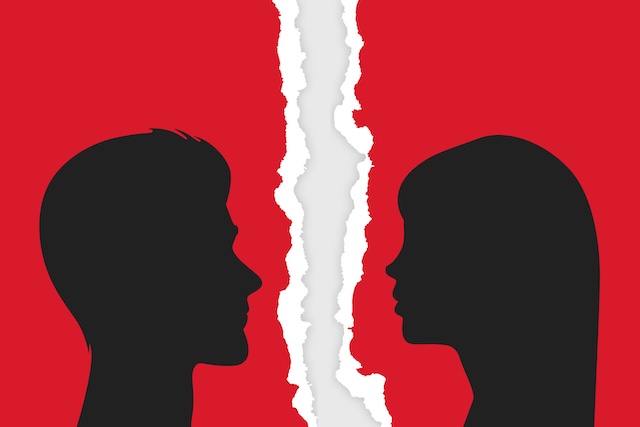
    You need to get away from the emotionally abusive person as soon as you can and surround yourself with friends and family. This gives you time and space to lift the fog that has been clouding your judgment, and to sever the trauma bond.

    Your relationship doesn’t need to contain every sign of emotional abuse for it to be so. Just knowing how you feel—wary, confused, scared, tearful, and all those other emotions—is enough. No one should feel fearful or trapped in a relationship.

    There is nothing more powerful in a situation like this than an outside perspective. In an emotionally abusive relationship, you are on a rollercoaster ride of chemicals, emotions, stress, love, and pain. There is very little chance you’re going to be able to decipher this on your own, so speak out, whether it’s to a friend, family member, therapist, or anyone at all—just speak to someone.

    As soon as you start to share how you’ve been feeling and what you’ve been experiencing, you will start to see the signs of emotional abuse in your relationship, like I did in mine, and hopefully will get away as fast as you can.

  • 5 Life Lessons from a Brain Tumor That Could Have Killed Me

    5 Life Lessons from a Brain Tumor That Could Have Killed Me

    “Life is a balance between what we can control and what we cannot. I am learning to live between effort and surrender.” ~Danielle Orner

    I was slumped against a wall at Oxford Circus Station early one Sunday evening when an irritated male voice suddenly barked, “MOVE!”

    Moments beforehand, I had lost my vision.

    Without conscious thought, I muttered, “RUDE!” and staggered off without clearly seeing where I was going.

    It was only months later, on retracing my steps at Oxford Circus, that I realized I’d been blocking his view of some street art.

    I’d allowed a guy to bully me out of the way while in a vulnerable state so that he could take a picture for social media.

    Lesson 1: Not all disabilities are visible.

    We can never fully know what someone else is experiencing. Mental health, chronic pain, and disabilities are not always apparent. So, when we come from a place of not knowing and are patient with others by default, we open up a window of possibility that exists outside of our judgment.

    Minutes prior, I’d stepped off an underground train and onto an upward escalator. A pain hit my right temple like a bullet. It took my breath away, everything went black, and I felt I might faint.

    Desperately, I clung to the railing. And as the top of the escalator approached, my right foot went floppy, and my vision disappeared. I could see light and color, but the world was blurry, lacking definition.

    I used what little vision I had to follow the distinctive white curve of Regent Street down to a spot where I’d arranged to meet a friend

    Panic finally set in when I realized that my friend was walking toward me, and I could recognize his voice but I could not see his face at all.

    We sat down in a restaurant, and a concerned waitress brought a sugary drink.

    My mind went into overdrive: “Had I cycled too much? Was my blood sugar low? Had I eaten/drank enough? Given myself a stroke? Was I just stressed?”

    Twenty minutes later, my vision slowly returned.

    Relieved but freaked out, I asked my friend if he thought I should go to A&E (ER). He said, “Only if you think you need to.” I felt silly. Scared to take up space. Afraid of being a drama queen. I didn’t trust myself or my experience.

    LESSON 2: Don’t seek external validation.

    The opinions of others are helpful, but only you see and experience life from your own unique perspective. Learning to trust and validate our own experience first and foremost is how we step in our power.

    Later I went back home but couldn’t shake it off.

    The next morning, I visited my doctor, who sent me straight to A&E (ER). The hospital admitted me overnight, concerned it was a mini stroke or aneurysm. But the following morning they discharged me, citing dehydration as the cause.

    One week later, I was back in A&E. More dizziness, more foot numbness, more blurred vision. A doctor described it as “classic Migraine Aura.”

    My gut leapt; that didn’t feel right. “I don’t get headaches,” I protested. “I rarely take painkillers. Why so many all of a sudden?”

    They seemed confident it wasn’t serious, but booked an MRI scan, just to be certain.

    Twenty-five minutes of buzzing, clanking, and humming later, I glided out of an MRI scanner.

    I thanked the technician. “All good?” I asked.

    “It’s very clear,” she replied.

    LESSON 3: Listen to your gut.

    If your gut says that something is off, listen to it. A gut feeling is typically a lurch from your stomach rather than chatter from the mind.

    My gut knew it wasn’t migraines; it told me so, and if I hadn’t strongly advocated for myself, then I may not have got that MRI scan.

    A week later, I was back with my local doctor, experiencing vertigo and earache.

    Did I have an ear infection? Was that the issue all along, some sort of horrible virus affecting my sight and balance?

    The GP opened my records up on his computer and his face immediately dropped.

    “Do you mind if I take a moment to read this?”

    “Of course,” I said.

    He composed himself but his face was ashen.

    “Has anyone spoken to you about your MRI result?” he ventured at last.

    I found myself detaching from reality, like I was watching a movie.

    He told me that they’d found a lesion on my brain and there was a possibility of brain cancer. “I’m so sorry,” he offered finally.

    I left and immediately burst into tears.

    Six days I lived with the idea of having brain cancer.

    Had it spread? How would they treat it? Could they treat it?

    More dizziness, more vertigo ensued, and a wise friend firmly told me to go back to the emergency room and refuse to leave until I got answers.

    Reluctantly, I entered A&E (ER) for the third time.

    After a long wait, a neurologist sprang from nowhere, took me to a room, and showed me my MRI scan. I was shocked by the large white circle in the middle of it.

    “How big is that?” I gasped.

    “About the size of a pea,” the doctor said casually. “I believe it’s a colloid cyst, a rare, benign, non-cancerous tumor. It can be removed by operation, using a minimally invasive, endoscopic camera.”

    Relief flowed through me. “It’s not cancer?”

    After reassuring me it was not, the doctor sent me away, telling me to await further news.

    Outside the hospital I hung around updating loved ones by phone. Suddenly a withheld number rang.

    It was the neurologist: “I’ve spoken with neurosurgeons, and they think you should be admitted to the hospital for emergency surgery. If the cyst bursts you have one to two hours max, or that’s it.”

    “Okay,” I stammered. “I’m actually still at the hospital.”

    “Not this hospital,” he said. “A different one.”

    A taxi ride later, it was 5 p.m., and I was in an emergency room for the second time that day and fourth time that month. Despite the chaos around me, I eventually curled up and got a little sleep.

    Suddenly it was 3.30 a.m. and I was still in A&E. Staff rushed in, grabbed my bed, and hurtled me through corridors. Bright lights from London’s skyscrapers flashed past windows, everything surreal and movie-like again

    The next day, surgeons explained that they wouldn’t be sure that they could reach the tumor until they operated, and there were four different options for surgery, ranging from a minimal endoscopic camera through to opening my skull up with major surgery.

    I hoped and prayed for endoscopy but wouldn’t know the outcome until I woke up.

    The operation was planned for 8 a.m. the following morning. I said an emotional goodnight to my sister. Suddenly a lady interrupted us and said, “I hope you don’t mind me saying, but I saw you earlier and you don’t look sick enough to be on this ward.”

    And there it was—the trigger again, the gift, the insight, the lightbulb moment:

    “Despite how bad I feel on the inside, I don’t look ill enough to have a brain tumor.”

    I didn’t look ill enough to the guy at Oxford Circus taking a selfie.

    I didn’t look ill enough to my friend.

    I didn’t look ill enough to the doctors who turned me away initially.

    And now I didn’t look ill enough for this lady’s expectations of who should be in a head trauma ward.

    I breathed into that pain. Into the feeling of not being seen. Of not being heard.  Of not being validated. Of feeling like a fraud, an imposter. Of not deserving to take up space. Of not trusting my experience.

    And when I found my center, I quietly replied, “Actually, I’m having surgery to remove a brain tumor tomorrow morning.”

    Her face fell, then she wished me luck and moved on.

    LESSON 4: Our triggers are our gifts.

    When we are triggered, it shows us what needs to heal.

    It was me who felt unworthy of taking up space. It was me who felt like a fraud. She was simply my mirror. It’s up to me to heal those aspects within myself and to believe that I’m worthy of taking up space—and to then take it.

    The next morning, my operation got pushed back. It was a major trauma hospital, and bigger emergencies took precedent. I engaged in mindfulness to stay centered.

    I did an hour of breathwork to calm my nervous system. I listened to uplifting music to raise my vibration. I watched emotionally safe movies to collect warm, fuzzy vibes. I drew on my iPad and alchemized my head tumor into a cute pea cartoon character—benign, polite, and cute, not threatening at all.

    A porter arrived at 5.30 p.m. and whisked me away for surgery. After weeks of surrendering to the unknown, it was now time for the ultimate surrender of any illusion of control. I took a deep breath as anesthetic filled my veins.

    LESSON 5: Surrender.

    We can’t always control what happens to us or the outcome. We can only control what happens inside of us and how we choose to show up. We take our power back when we lean into the unknown and surrender. When we resist our current reality, we suffer more.

    I woke up two hours later and got sick.

    My brain was rebalancing after months of increased head pressure. Clutching a blue plastic bag, I looked up to see one of London’s best neurosurgeons waving cheerfully at me. “Your operation is over. We used an endoscope. Minimal invasion. We think we got it all, and it’s not likely to come back.”

    Relief, nausea, and gratitude flowed in abundance.

    I dozed a little while morphine played tricks on my mind. Delicious little dreams filled my head, and I saw the world as one big, animated garden with flowers as cartoon characters.

    I giggled at the thought of plants acting as humans do and imagined an aggressive rose bush declaring war on all of the other plants and throwing bombs. It seemed ridiculous. Humans should be more like flowers, I thought—less ego, just growing, flourishing, blooming.

    I enjoyed this magical trip a little longer, a welcome respite from the hell of the last month, and eventually they wheeled me back to the ward.

    I arrived in time to see the sun setting across London from the twelfth floor.

    It was magnificent. Its beauty, color, and intensity moved my weary body to tears.

    A nurse came to check that I was okay, and I assured her that I was crying happy tears.

    I silently watched the sun as it made its final slip over the horizon, safe in the knowledge that I’d survived another day.

  • Why Codependents Don’t Trust Themselves to Make Decisions and How to Start

    Why Codependents Don’t Trust Themselves to Make Decisions and How to Start

    “Slow, soulful living is all about coming back to your truth, the only guidance you’ll ever need. When you rush, you have the tendency to follow others. When you bring in mindfulness, you have the power to align with yourself.” ~Kris Franken

    Codependency previously created a lot of pain and agony in my life. One of the ways it manifested was in my inability to trust myself. I would overthink decisions to death, fearful that I would choose the “wrong one” or upset someone if they didn’t agree or were disappointed by my choice.
    I was terrified of “making a mistake,” and I exhausted myself trying to collect everyone’s opinion (to ensure they would be pleased with me) before finally settling on a choice.

    As annoying as it was, for me and everyone around me, I couldn’t seem to stand firm in my decisions. I longed to be more confident in my choices but couldn’t understand why it was so hard for me.

    Growing up with an authoritative, controlling parent, I didn’t have the opportunity and support I needed to feel my feelings and let my intuition guide my choices. I didn’t get to learn from my mistakes. When I made a mistake, it felt like death. I was often blamed, shamed, and criticized, all too much for my empathetic system to bear.

    I learned that if I placated and pleased, others were happy. And because I became so others-focused from such an early age, I never learned how to build my muscle for good decision-making.

    Feelings and emotions were not welcome in my world, so my only way through was to disconnect from feeling at all—though I felt responsible for others’ mood swings and feelings. I learned that sharing my needs or opinions was triggering for others, and I didn’t have the skills to navigate the weight of that. All this combined felt mentally paralyzing, so I began to look outside of myself to others for advice and guidance eventually.

    When you’re reliant on other people’s opinions and guidance, you’re much like a feather in the wind—susceptible to any small or big gust that comes along. You aren’t in control of your life, and you give others way too much power over how you feel.

    One of the best ways to begin to build self-trust and heal from codependency is to begin feeling your feelings again, living from the neck down as I like to say. Moving from our cognitive thinking brain (because I know you know making decisions shouldn’t be this hard) to the wisdom of our bodies.

    I believe that in order for us to really build this self-trust muscle, we have to learn how to trust our feelings. And that requires us to build a sense of awareness around why we might be codependent in the first place.

    Perhaps, like me, you were programmed from an early age not to trust your inner knowing, or intuition. This results in low self-worth. And this happens for a number of reasons.

    • You were abused or neglected (physically and/or emotionally).
    • Your feelings and needs were minimized.
    • You were judged, shamed, or mocked for your feelings, maybe even being called “too sensitive.”
    • Your feelings and needs weren’t as important as other people’s.
    • You didn’t have at least one parent or caregiver validating your feelings and sense of worth. You didn’t have someone mirroring back to you your value.

    If you experienced any amount of neglect, or had emotionally unavailable parents, like me, you probably learned to suppress your feelings in order to survive. And what we resist persists, so those feelings that we try to shove down only intensify.

    3 Tools to Build Self-Trust

    These three tips might help you learn to trust your inner wisdom so you can make decisions from an empowered place.

    TOOL #1: Do a daily check-in of your feelings.

    When we check in with our feelings regularly so we can meet our needs, we learn to trust in our ability to do what’s best for ourselves.

    When I first started doing this, I would set four alarms on my phone. When the alarm went off, I would do a quick check-in by asking myself, “What am I feeling? What am I experiencing right now?”

    Often, we run through life, not checking in to see how we are doing and feeling (especially if we struggle with people-pleasing and codependency). We do a lot of things every day, all day—go to work, make decisions, parent our kids—but we often don’t check in with ourselves and ask if we need to shift something.

    This is a big part of self-love, checking in and asking, before I have this conversation with my child, my partner, my boss, or customer service rep for my computer, what’s going on with me? Oh, I’m feeling ornery or hungry; here’s how I can address that before I have this conversation.

    You can also do this by journaling. Keeping track of your feelings in a journal can be a beautiful way to understand, process, and look back on your experiences.

    Here are some journaling questions to help you get started:

    • What do I need to hear from myself?
    • What do I need to do for myself to feel my best?
    • What do I love about my life right now?
    • Today I woke up feeling (fill in the blank).
    • Am I living a life aligned with my values?

    TOOL #2: Reparent your inner child.

    Reparenting your inner child is a beautiful way of giving your inner little one the things that he or she needed and never received in childhood. You become the parent you needed when you were a child. And, by giving to yourself what you didn’t receive then, you free yourself from the past.

    So much of reparenting yourself is about making choices every day in your own best interest. It’s becoming aware of your patterns and behaviors, understanding why you do what you do, and carving out time to give yourself what you really need. When you give yourself what you need, you start worrying less about other people abandoning you because you know you won’t abandon yourself.

    One of my favorite ways to reparent myself is to give myself the words I never got to hear as a small young child.  Words like:

    • I love you.
    • I hear you.
    • You are perfect and complete.
    • You didn’t deserve that.
    • I see that really hurt you.
    • What do you need right now?
    • That must have been very difficult for you.
    • I’m so sorry that happened to you.
    • You are smart.
    • You did your best.

    TOOL #3: Practice creating safety within.

    Because we, as codependents, were raised by either emotionally unavailable or narcissistic caregivers/parents, we developed what I refer to as “a hole in the soul.”

    Our parents’ responsibility is to mirror back to us our worth and value, but when they fail to do that, we will look to someone or something outside of ourselves to show us our worth and, in essence, feel safe.

    It’s an endless battle of trying to fill that hole. Low self-worth, self-value, self-esteem, and self-regard are typical for codependents. We look outside of ourselves for safety and approval, becoming dependent on that next hit or rush. That safety might last for five minutes, five hours, and if we’re lucky, a whole day.

    One of my trusted and reliable systems for safety was shopping. I would spend frivolously, buying things we didn’t need with money we didn’t necessarily have. This created a lot of stress and conflict between my husband and me, and further decreased my self-trust.

    He couldn’t understand why I had this insatiable push to spend, and I didn’t either. I just knew that my system felt safe and relaxed once I made my purchases—until the excitement wore off, which usually happened quite quickly, and I was back in the store, searching and spending, trying to get my next fix.

    I had a lot of stress and guilt because I knew what I was doing wasn’t healthy. Yet it was compulsive. I couldn’t stop.

    I longed for the connection and safety that I never received as a child but didn’t know how to get it in healthy ways. So I suppressed my needs in relationships and tried to fill that hole with shopping.

    It didn’t happen overnight, but once I learned how to create that feeling of safety within myself (with lots of support through trauma-informed coaching, therapy, breathwork, meditation, and proper nutrition, and after learning to speak up for myself), my codependent strategies (shopping, relationship addiction) slowly seemed to disappear.

    I no longer needed to rely on my old strategies because I knew how to trust myself and offer myself what I truly needed.

    I invite you to try this: Close your eyes and imagine something that makes you feel at ease, calm, and safe (maybe your favorite forest or beach, perhaps a little cabin nestled in the woods). Notice where the sensation of ease lives in your body. Be with it for a moment—just sit with and experience it. That feeling you just created was created by you. It is yours.

    Every time you do this exercise you release the belief that you can’t create this feeling alone. That you can’t be trusted, and that you must rely on things outside of you to create safety.

    When I first started this practice, I had to implement it every time I entered a store. I took a few moments while I sat in my car and created that feeling of safety within. That way, I felt a sense of calm and ease as I was shopping, keeping my prefrontal cortex online so that I could make rational purchases that I felt confident and good about.

    I started to build evidence that I could, in fact, trust myself to make healthy decisions. It was incredibly empowering and freeing to walk into a shop and simply admire the textures, patterns, scents, and products without feeling an overwhelming compulsion to put things in my cart that I simply didn’t need.

    Every time we connect with ourselves this way, we prove to ourselves that we can create safety within. And every time we make healthy choices from that place of internal safety, we deepen our trust in our ability to discern and do what’s best for us.

  • Confessions of an Extrovert: Why I Now Love My Alone Time

    Confessions of an Extrovert: Why I Now Love My Alone Time

    “Allow yourself to grow and change. Your future self is waiting.” -Unknown

    Not to be dramatic, but I really mean it when I say that solitude changed my life. I am an extrovert who loves humans, socializing, and learning from people and experiences. I’ve always enjoyed being around others, and don’t get me wrong, I still thrive this way. But when I got Covid in 2021, life completely changed, and it’s not the only way I thrive now.

    Before Covid, I’d been living my life in a way that wasn’t serving me. I was partying a lot, not eating well, and living in chaos, with very little rest. I constantly had my schedule booked, leaving no time for self-care. I felt like I was living life for others, ignoring what I needed.

    I made mistakes, like blowing off my priorities because I was in a terrible headspace, and I continued living an unhealthy lifestyle until I finally had a talk with myself and realized this wasn’t right for me (then Covid came along, and sh*t got serious).

    I didn’t immediately enjoy quarantining and being stuck at home, away from friends and family, but before I got sick, I knew change was coming. And though I felt a lot of resistance, I also felt that a new version of myself was on the way.

    While I’m usually not one to fight change, there was so much going on at once, and it was a lot. I also learned that I was one of the people who suffered from panic attacks and anxiety as a side effect of Covid. The aftermath was worse than having the virus itself.

    This lasted almost a year. I felt so bad for myself; I couldn’t believe that this is what life had come to for me. I was even losing my hair. Some days I’d wonder if this dark tunnel would ever come to an end and show me light. Things felt very heavy, but I also had some of the most beautiful things going on at the same time, like living in the city with my now fiancé, so it was all very confusing.

    I began to lose sleep, which was unusual for me. My inner world felt like chaos. There were lots of tears and weekly therapy sessions (which also changed my life). Therapy and journaling became my safe spaces to release and understand myself.

    Throughout the year of that inner chaos, what did I learn? Surrender. I was trying to maintain full control of my life and keeping busy while actively avoiding working through suppressed emotions from times when younger Naila would over-extend for others, and completely forget to take care of herself. I didn’t want to listen because I was afraid. And that’s human nature, to fear the unknown.

    So, here’s a reminder that the Universe forces you to slow down and redirect when you’re not listening. This also means it may hurt more since we didn’t consciously welcome the change.

    Over time, I have gone through so many phases and such inner growth. I began working with my wonderful therapist and quit a job that was not working out for me as expected (which hurt). I’ve lost people and my relationships changed, thankfully most of them for the better.

    As soon as I let go of control and put in the hard work, things got better, and I saw results—even if they were just small victories. I was starting to see that light I’d been waiting for. My body felt lighter as I began to release dead weight from my body and I began to feel like myself again, but this time, better than ever.

    I chose watering myself over destructive behaviors. Instead of focusing on the anxiety attacks and trying to force myself back to sleep at night, I meditated. I chose solitude over socializing. This was the peak of my growth. 

    Sometimes, we get lost in the chaos of this busy world. We get sucked into conversations and company we don’t actually enjoy. Society tells us to be productive 24/7. Our worth is based off money, accomplishments, and what social media sees. Conversations are about what we are instead of who we are.

    Long before this journey, I was used to overbooking my schedule, always very busy. I would work two jobs, scheduling anything I could in between and going to school at the same time. I enjoyed it then.

    Solitude and self-reflection taught me what I truly care about: genuine connections, giving and receiving love, nurturing myself just as I do others, and living, not just surviving.

    My higher self told me that the world’s expectations are not my own, and that it’s okay to choose a different path than I once wanted (or society told me I wanted). As I’ve learned in therapy, I am my own worst critic, so my new path is all about letting life unfold naturally, without constantly criticizing myself for where I thought I’d be in life, especially in my career.

    I began to reflect on my life, my inner child, and current self. Most importantly, I began to heal from things I’d stored away from childhood pains and days long ago during an abusive relationship. I let go of self-sabotaging behaviors and decided to finally listen and release, then the inner turmoil started to calm.

    Because I was spending much more time alone, I learned a lot about myself. Solitude helps us build trust with ourselves and teaches us about our true desires. We begin to tolerate less and prioritize differently. I value very different things now than I once did. I’m getting to know my true self, and that’s something no one can teach you or prepare you for. 

    I also want to emphasize that solitude is possible while you’re in a healthy relationship.

    Throughout my dark days, I had my now-fiancé supporting me through it all while letting me heal and grow. Him supporting my solitude made me that much more successful on my journey. When someone around you offers love, respect, and support, it makes it easier. Their company becomes a bonus and not a burden. Previous Naila didn’t think this was possible, and I’m grateful things panned out differently.

    Overall, I have learned that the “dark” times were actually just lessons and periods that catapulted my growth and healing. The tough times are temporary, and there is strength and clarity in solitude. As of today, I cherish my solitude; it’s a vital part of my being. I also learned that there is light at the end of the dark tunnel. Yes, even when it’s long and scary.

    In this new chapter of my life, rest is high on my priority list, not overworking and overbooking. I am much pickier about who/what I surround myself with, much more productive, and still growing and ever-changing.

    My life is much more peaceful and calm, and my boundary-setting skills are much stronger. These are lessons I couldn’t learn as an unbalanced extrovert. I’m a better version of myself now.

    So, if you’re an extrovert who forgets to prioritize yourself, someone who’s going through a dark tunnel, or someone who avoids change, this post is for you. Instead of being afraid of solitude and change, learn to accept them and watch how they transform your life for the better.

    As my dad once told me, change is the only constant in life, so get comfortable with the uncomfortable.

    I believe in you. ♥

  • How to Get Comfortable Being Alone and Get the Most Out of Solitude

    How to Get Comfortable Being Alone and Get the Most Out of Solitude

    “The act of sitting down is an act of revolution. By sitting down, you stop that state of being: losing yourself, not being yourself. And when you sit down, you connect to yourself. And you don’t need an iPhone or a computer to do that. You just need to sit down mindfully and breathe in mindfully.” ~Thich Nhat Hanh

    The day my ex-wife moved out was also the day when our dog moved out and when I was laid off from my bankrupt ex-company. It felt like everything around me had suddenly died. Many of our common friends and loved ones distanced themselves from me, and I felt abandoned.

    As I took my first few steps through the rubble, I felt the full force of this new solitude that was now forced upon me. And it wasn’t going anywhere soon.

    I immediately lost my appetite and my desire to cook. I started taking irresponsibly long hot showers and baths till my skin burned. I decluttered. I threw away pictures and memorabilia, love notes and cutlery, teabags and cushion covers. I stopped vacuuming.

    But I continued running. I started reading. I read anything that looked like it held a secret to end my suffering.

    I lost interest in my job. I’d wake up every morning with dread, sometimes not sleeping entire nights.

    I kept running. I got faster and stronger. I also got injured and had to stop. The darkness stayed even as the days started to get longer. While I lived abroad, the second wave of covid had just hit back home. One of my best friends from childhood died. Also a cousin. A friend lost his father and never saw the body. My dad got very sick and almost died. I sank further.

    But I kept meditating in solitude. Every time the void of existence hit me with boredom, anxiety, and restlessness, something deep within forced me to continue sitting through it. It started feeling familiar. And I slowly started to come back to life. My sense of taste returned. I started cooking again. I started having friends over.
    Still, some days I would collapse on the floor and cry till I got thirsty. Then I’d hydrate and go back to my laptop to run the next zoom meeting, smiling through it.

    I realized what a shell of a person I was now that my ex-wife had left me. At the same time, I continued to befriend the solitude and get comfortable with my aching heart—to sit with it, have a conversation with it, and see what it had to say and what it had learned.

    I was starting to get to know myself from a brand new perspective. It was almost like getting to know this new person who had been living in the basement all these years and I had no idea! And this person sure was interesting!

    The solitude soaked in all my tears so I could laugh again with people. It became my duvet in the winters, my picnic blanket in the summer. The solitude and I would often do karaoke at 7:00 on a Sunday morning till the neighbors started complaining. We went on bike trips together, dipped in cold lakes, went to eat at buffets, and sat through boring dates.

    It became my best friend when there was no one around. It taught me to write, to read, to think, to philosophize, to know what’s good for me, to love everyone unconditionally, and to be kind.

    It showed me things as they truly are and caught me when I was being judgmental. It took away my anger and my desperation. It carried my dreams and filled me with hope.

    Solitude has the power to teach us about ourselves. It is the gym where we must go to train.

    A century ago, people would look forward to solitary periods of relaxation on their porch after a long day of work. But today, we devote most of our conscious time to the pursuit of feeling connected with other people, either offline or online. A simple notification instantly pulls us away from the present moment. We are constantly everywhere but here and now. But our true self lives in the here and now, though we seem to spend less and less time with it.

    In the raw moments of loneliness that succeed a breakup or a bereavement, when we have nowhere to run, we encounter our true self. Like I did. And it was scary. It felt like sitting in the corner of a dungeon with a chain locked around my ankle as a stranger towered over me. I wanted to run away, but there was nowhere good enough to run to. I went scuba diving in the tropics, but my broken, ghost-of-a-self found me under water too.

    The key to cultivating fearlessness in these moments is getting to know yourself through solitude. It means deliberately taking time out to sit alone so you feel comfortable with yourself, connected to yourself, and at peace with yourself.

    To practice solitude, try this.

    1. Think of your favorite meditative activity.

    Ideally, it should involve interaction with physical objects, not digital ones. And definitely not a phone or something with a screen. It should be mundane and not involve rational thinking. This provides the ideal setting for your true self to emerge. An example is doing the dishes, focusing on your breath, or just sitting out in the garden, hearing and seeing what’s around you.

    2. Set aside a fixed time during the day.

    This is especially important if you are just starting out, because a strict regime is helpful to cultivate a habit. A good time is early in the morning. A recent study showed that early morning is the ideal time for alpha wave activity in the brain, which is associated with restful attentiveness. But depending on your schedule or your routine, any other time of the day is good enough to start with. Start with ten minutes and slowly make your way up to an hour. There’s no right or wrong duration, but the more the better.

    3. Start with an intention.

    Make a decision to consciously choose solitude. Embrace it like it’s your best friend. Know that it is good for you, that it is the right thing for you. That there is nothing better you’d rather do right now, and no one more important to talk to than yourself.

    Most importantly, don’t get too serious. Develop a sense of joy, a sense of humor about the whole thing.

    Sometimes it all may seem impossible, especially when painful memories and a sense of loss come back with profound pain. It may feel hopeless as the thoughts and feelings overwhelm you. But believe that those thoughts and feelings are like a movie playing in your head. They do not define your reality in the present moment. Do not let them consume you.

    Believe you are the mountain in the storm. And when the thoughts and feelings eventually pass, which they will, come back to your practice. Develop almost a blind devotion to it in the beginning, because it may take many sittings to feel the first signs of solidity and bliss coming back.

    If you are finding it tough to start by yourself, go to a local yoga or meditation class and work on your basic form. Then come back and try it again.

    4. Start enjoying your company whenever the opportunity arises.

    As you start building a regiment for solitude, you will start to appreciate moments to yourself. While you wait for your friend at the subway before you head to that party together. While you wait for your favorite burger to arrive after deciding to eat out by yourself.

    Think of those fleeting minutes as a gift, as an opportunity to see if you can appreciate the world around you. Wait before you flip out your phone or put on your music. Can you see how solid and calm you feel now, compared to before? How rich the world around you is? Give yourself a high-five for putting in all those hours of solitude practice.

    And if by chance that solitude is forced upon you by a tragedy or unforeseen event, even better! Because when your heart is broken it’s the most open, and ripe for new wisdom and the richness of the world to take root. Acclaimed author and Buddhist nun Pema Chödrön says, “To stay with that shakiness—to stay with a broken heart, with a rumbling stomach, with the feeling of hopelessness and wanting to get revenge—that is the path of true awakening,”

    Be deliberate. Be disciplined. And you will soon get to know the most interesting person you have ever met! One who will always be with you, no matter what else you lose.

  • How I Stopped Feeling Sorry for Myself and Shifted from Victim to Survivor

    How I Stopped Feeling Sorry for Myself and Shifted from Victim to Survivor

    “When we deny our stories, they define us. When we own our stories, we get to write a brave new ending.” ~Brené Brown

    There was a time when I felt really sorry for myself. I had good reason to be. My life had been grim. There had been so much tragedy in my life from a young age. I had lost all my grandparents young, lived in a home with alcoholism and domestic abuse, and to top it all off, my dad killed himself.

    I could write you a long list of how life did me wrong. I threw myself a pity party daily in my thirties, with a load of food and wine. The story I was telling myself was that all this bad stuff had happened and I was unlucky in life and love. I told myself my life was doomed.

    I believed if there was a God, he must have hated me because everybody around me had a perfect-looking life compared to me.

    I felt like I was the only person who felt like this and couldn’t see any goodness in my life. I kept telling myself I was destined to be lonely and unfulfilled in my work life because I was just not good enough.
    I took care of others in my family to give myself purpose, but inside I loathed it. It made me bitter and resentful. I didn’t do these things because I wanted to. I did them because I felt like I had to.

    I thought this was who I was meant to be—the side act in everyone else’s story.

    My peers were moving on with their lives, getting married, having babies, and buying houses. I was stuck in my pity party, in the sadness of the past, unable to move on. I felt like I did as a child—powerless, out of control of my life, and sad.

    For as long as I could remember I felt anxiety and sadness. I would distract myself from these uncomfortable feelings with other people, TV, busyness, food, and later in life, alcohol.

    I was a victim in childhood and then I continued to live as a victim into my thirties, blaming everyone else and God for my poor start in life. I blamed myself as well. If only I was enough, then my life would better.
    There came a time when I couldn’t carry on the way I had been and had to take responsibility for my own life. My own story. It was time to get out of my own way. I was hitting rock bottom, and the time had come to either fight for my own happiness or follow the road my dad had taken.

    My life felt pointless, but I finally listened to a voice within me that told me there was a way forward and got out of my own way.

    This was the start of my spiritual and healing journey.

    It all started with a simple internet search on how to feel better—mind, body, and soul.

    Amongst the tips I found was the suggestion to practice daily gratitude. I started by writing down everything I had in that moment.

    For a long time, I focused on all I didn’t have rather than what I did. But I had so much—great friendships, travel, love, a well-paid job, a nice home, and so much more. I ignored all the good stuff and it robbed me of what I did have. The present moment. But now my eyes were opening to all the light in my life.

    I began to see and appreciate sunsets and sunrises. I looked for the good everywhere. Even in the darkness. I was searching for the light in every day. The more I looked the more I found.

    I practiced gratitude when I found new information and practices. Podcasts, books, teachers, healers, therapy, and so much more. The more I said thank you, the more good things I found.

    The story I was telling myself was changing.

    Then I added meditation and mindfulness to my daily routine and began hearing my intuition more.

    Before all I could hear was my fear, but this inner whisper was getting louder. Ideas would pop into my head like “I just don’t love myself,” and then I would see a quote from Louise Hay that resonated on social media. One led me to her book You Can Heal Your Life. I implemented the strategies in her book and then more tiny steps occurred to me in the quiet.

    I said thank you every single time. I felt more supported by myself and the universe and less like a victim in my story.

    The better I felt on the inside, the more opportunities I noticed.  I saw a job I liked advertised and rather than letting fear stop me, I listened to my intuition, which guided me “to just try.”

    In the past I would have ignored it and thought “I wish.” This time I just went for it. Just like that I left a toxic work environment for a job more aligned with my values, offering more money.

    I attracted better relationships and in time found love. After searching for more ways to feel good on the inside and change the way I saw my life and my world, I incorporated daily affirmations and walks in nature.

    My reality kept changing as I changed within.  

    Have you ever noticed how your body feels when you say, “My life is crap”? Your body contracts and you can almost feel the fear rising. But when you tell yourself, “There’s a lot of good in my life,” your body almost expands, and you can breathe.

    Our words have a profound impact on us. Changing that narrative we tell ourselves changes everything.

    The new information that I discovered through my personal quest helped me to understand my past. I found people like Gabor Maté who explained concepts such as intergenerational trauma and addiction. This information helped me change the story I told myself around my childhood. It helped me understand my trauma.

    I remember knowing from my intuition that my relationship with my dad needed my attention. Then I saw an advertisement for a new book, Father Therapy, by Doreen Virtue, which led me to inner child work. This helped me heal my younger self.

    As I continued my quest to heal and feel better, I found new healing modalities like breathwork, EFT (emotional freedom tapping technique), and eye movement techniques.

    I said thank you again and again and again.

    All those years I spent as a victim to my story kept me stuck and unable to move forward. But now I was ready to change and expressing gratitude for the process. More was always finding its way to me. I now had so many tools that I never knew existed in the depths of my pity party.

    It was not easy. I cried. Fear took over some days and I couldn’t access my intuition. But I would just start my quest again the next day, journaling to connect with myself and see what had happened the day before. What my feelings were and what I needed.

    I showed myself love and compassion for my bad days and celebrated the good ones. No longer was I a victim of childhood abuse but a powerful survivor.

    Yes, bad things happened to me. But they are not who I am; they are just part of my story. That story is what led me here, to this place where I’m now writing to you. I hope to inspire you and show you that it is possible to change your story, whatever it is; that there is so much guidance and support available to you when you are ready to find it. You really will see it everywhere when you start paying attention.

    You too will see you also have an inner voice guiding you and access to everything you need to heal. When you start recognizing all the tools available to you, you’ll feel less alone and supported on your journey.

    I no longer feel bitter about my experiences in my childhood, but proud. They made me who I am and have allowed me to help many others on their journey to heal from their past.

    I have found forgiveness, love, and compassion for the people that hurt me, like my dad, which helps me feel happier. I didn’t have to forgive him. He did awful things, but I understand now they came from his trauma. This has given me great inner peace.

    It takes courage and time to transform on the inside and become a trauma cycle breaker in your family. This means that your children will have a different experience. How amazing is that? What a great gift to give them.

    The information, tips, guidance, and light are waiting for you to discover them. You just need to take the first step and decide to become the hero of your story and find your own heart’s happiness.

  • Feeling Burnt Out? How to Slow Down and Reclaim Your Peace

    Feeling Burnt Out? How to Slow Down and Reclaim Your Peace

    “Burnout is a sign that something needs to change.” ~Sarah Forgrave

    Fifteen years ago, my doctor informed me I was in the early stages of adrenal exhaustion. In no uncertain terms, she warned that if I failed to address the stress I was under, my adrenals might not recover. This was hard to hear, but it forced me to face the fact that eating well, exercising religiously, and keeping up with the latest research on wellness was not enough.

    I had to ask myself a defining question that day: Am I ready to go down with the ship?

    At the time, I was teaching an average of fourteen classes a week at my wellness studio. I had been exceeding my threshold for so long that I had pain in every joint and muscle in my body. I was completely exhausted, physically, mentally, and emotionally, but slowing down or cutting back was just not an option.

    Or so I believed.

    The problem was that every time I would even begin to consider addressing the reality of my situation, my head would instantly fill with all the reasons I couldn’t possibly stop.

    There was the dream for a business I couldn’t imagine giving up. The huge amounts of time and money I had invested in realizing that dream. And most of all, there were the clients I was serving, a community of amazing women I loved working with and didn’t want to let go.

    Meanwhile, my thirty-year marriage to a man struggling with an opioid addiction was falling apart. My kids were distressed. My body was completely breaking down, and my life had become a tangled mess of fears, conflicted feelings, and obligations I just didn’t have the heart for anymore.

    As the growing pressure to do something about my situation increased, my anxiety increased right along with it. Talk about a pressure cooker!

    I couldn’t even imagine the courage I would need to tell my husband I wanted a divorce. And whenever I got anywhere close to that courage, my mind would flood with anxiety over the uncertainty.

    How would he react?

    How would it affect my children?

    Where would I live?

    How would I ever rebuild my life?

    It felt as if I was being buried alive under a growing mountain of complexity with no way out. So, the pain continued to get worse, and I kept trudging forward, blindly hoping against hope that somehow it would all work itself out (without changing anything about the way I was living).

    Growing up, I had learned to take the offensive and power through obstacles. I had always seen myself as someone who could do anything she put her mind to. Now I found myself stuck between the person who thought she was responsible for everyone’s experience but her own and the person I might actually become if I started making self-valuing, authentic choices.

    Then one morning, the dam broke.

    I was walking up to the door of my studio to teach the 6:00 a.m. class, asking myself (like I did every morning) how I was going to get through the day with all the pain I was in.

    As I turned the key in the lock of the business I had dreamed of creating for over a decade—the business I had built out of everything I believed in and everything I knew I wanted to offer to the world—I could see the consequences of my resistance to change about to swallow me whole. I could see that my fear of change was completely blocking my ability to see anything past that.

    And suddenly… everything went quiet. All the reasons for not stopping that typically flooded my mind just fell away.

    The only thought I had in that moment was, The way you stop… is you stop.

    I didn’t just hear these words; I felt an absolute acceptance of them. One minute it was impossible to stop; the next, it felt like the simplest thing in the world.

    In the quiet of this moment, I became so aware of my own breath that I felt it everywhere in my body. For the first time in as long as I could remember, I stopped. And when I did, I found the courage to listen to my aching heart.

    I felt a depth of longing for peace I had never allowed myself to experience before. I stood there breathing and felt an acceptance of the reality of everything that was happening wash over me. The pressure to control it all was gone!

    My mind was clear, and my body felt relaxed even as I faced the same facts of my situation, but without all the usual stories and justifications overwhelming me. It felt like a miracle.

    Suddenly the door to my studio, which I had been walking through for years, felt like the door to an entirely new way. Standing there with my key in my hand, in the profound quiet of that moment, I was flooded with a new sense of possibility.

    As I set up for the 6:00 a.m. class, I stayed focused on my breathing and continued to listen to my body. It became clear to me that when I wasn’t being honest with myself, my body responded by restricting my breath. And I was able to see how all the years of unaddressed tension were expressing themselves as escalating physical pain.

    A New Direction

    That morning, I didn’t just take a first step toward interrupting the old way. I began heading in a new direction.

    But it still took me a year and a half to wind down my commitments and extricate myself from the studio. This was a massive transformation involving every aspect of my life, but it began with just one step—accepting that the old way was broken. Once I accepted this wholeheartedly, I moved to the next step.

    I had a friend who had moved back to town to take care of her aging mother. She was looking for a place to establish her yoga school and had already been teaching a couple of classes a week at my studio while she looked for a more permanent place. On that pivotal morning, after I taught the 6:00 a.m. class, I called my friend and told her that I was stepping down and that she could hold all her classes there.

    I continued to pull back, one step at a time, constantly asking myself, “What can I let go of today?” (One day, the answer to this question was “my hair”!) Eventually my friend bought out my lease and took over completely.

    This is not to say I did not continue to wrestle with self-doubt. But my intention to slow down and to stop ignoring my tension became my guiding compass point.

    In the years that followed, I relied on this compass to dive more deeply into the mind-body connection and what it truly means to take care of myself and be happy. My primary tool was the simple mindfulness practice of paying attention to my posture (whether it was tense or at ease) and my breath (restricted or free). I found strong community for this priority in the study and practice of Qigong, Tai Chi, and Continuum.

    In the process, it became clear to me that to access the wisdom within, the first thing I had to do was slow down and calm down. This priority allowed me to be honest about the pressure I was putting on myself to keep doing things I no longer had the heart for and to recognize the emotional reasons I was hanging onto them.

    We all come to thresholds in our lives, times when we’re faced with tremendous pressure to change (or go down with the ship). When we refuse to change, the only other option is to increase our tolerance for suffering while convincing ourselves that it’s not affecting us as much as it really is. In this fantasy we tell ourselves we’ll make it (somehow) if we just keep powering through.

    I’ve come to realize that it’s not about avoiding stress. It’s about increasing your ability to remain present and functional while stressful events are happening. The calmer you can be in the face of stress, the more resilient you’ll be and the less likely you’ll be to end up teetering on the edge of complete burnout like I was.

    When we practice being present, we’re able to make more accurate moment-to-moment choices. We’re able to slow down and take an honest look at what needs to change. Which isn’t to say that it’s going to change in a minute, or a day, or a week, or even a year. The truth is that lasting change can often be a very gradual process.

    How to Stop

    I was able to stop by establishing new priorities. I made it a point to slow down, calm down, and really be honest about what I could eliminate. My process was essentially as follows:

    1. Stop. (For the moment, anyway.) Acknowledge that before a new way can show itself, you have to find a way to stop the old way.

    2. Acknowledge the pain you are in—emotional and physical.

    3. Ask what you can let go of now and in the near future. (If the answer is “nothing,” then ask again.)

    4. With “something has to give” as your mantra, what can you let go of next?

    • Consider what you are physically and mentally capable of doing right now. (If the answer is “everything, if I push myself,” then ask again.)
    • Consider your life priorities and what you need to make room for.
    • Consider what you no longer have a heart for.
    • Consider that what you are holding on to tightest might be what really needs to go. Letting go of smaller things first often helps to relax your grip on even your strongest (and often unhealthy) attachments.

    5. When the “yes, but…” voice shows up, be aware of it and do your best not to listen or take action based on what this voice says. This is the voice of your attachment to keeping an unsustainable system on life support. It’s fueled by your fear of uncertainty because if you stop what you’re doing, you’re not sure what will happen (and your “yes, but…” voice is certain it will be awful!).

    6. Gather tools to help yourself detach enough from this voice to move toward accepting reality and make the changes needed to live a more authentic and satisfying life. (The Serenity Prayer is a good one.)

    7. Remember that change is a process, not a single event. Start small, then graduate to bigger things that need to go.

    I hope you’ll continue to play with the concept of stopping (the old way) to start (a better way). Every meaningful change hinges on your ability to interrupt the old pattern. You’ll learn to rely on this ability the more you practice using it.

    Also keep in mind that you won’t necessarily know anything about the new way when you stop the old one. Change usually happens very slowly, and patience can be the hardest thing.

    Good luck, and feel free to reach out with questions or comments!

  • The Benefits of Solitude and How to Get the Most from Your Alone Time

    The Benefits of Solitude and How to Get the Most from Your Alone Time

    “Understand that healing and growing can distance you from people who you once had a bond with, and it can also bring you closer to those who will heal and grow with you. The time in between can be difficult, but there is so much to learn in solitude.” ~ @themoontarot

    There have been many occasions in my life where I’ve felt lonely. Some of these times I remember as incredibly painful; other times, I’ve relished in my solitude.

    During some periods, I’ve even forced myself into seclusion, which comes easily to me as an introvert.

    One thing all of these solo experiences have taught me is that it’s okay to be alone. In fact, with solitude, there’s a lot of self-growth to be had.

    In today’s day and age, we’re expected to be social creatures. With the rise of instant messaging and social media, it’s easy (and addicting) to stay connected all the time.

    This doesn’t mean it’s healthy, though. In fact, I’ve come to realize that solitude can be incredibly rewarding in a vast number of ways.

    The Benefits of Solitude

    Many nights of solitude have brought me epiphany moments. Ones where I have figured out what I actually want to do with my life. Ones where I’ve realized my spiritual path, and ones that have fueled new, exciting creative ideas.

    Many authors, artists, musicians, and philosophers have attributed their best work to time spent in solitude. As Aldous Huxley once said, “The more powerful and original a mind, the more it will incline towards the religion of solitude.”

    We need time alone because…

    1. We can gain a deeper sense of self-knowledge when we are alone and can see what is important for us as well as what we need.
    2. We are better able to acknowledge our feelings and deep desires when nothing external, such as other people’s thoughts, perceptions, or expectations, stands in our way.
    3. We get space to quietly reflect and reassess, asking ourselves the questions that truly matter.
    4. We recuperate and recharge (especially necessary for introverts) when alone, which allows us to be more present with others when socializing.
    5. We can tap into our intuition and learn to trust ourselves and our decision-making.

    By no means am I encouraging isolation. It’s not healthy to spend all our time alone.

    However, I do want to challenge those feelings of discomfort that often arise when thinking of solitude.

    Why Are So Many People Fearful of Solitude?

    There’s no denying that for some, the idea of spending a day alone, without interaction, isn’t appealing whatsoever. Why is this?

    Being busy, out and about with others, is a good distraction technique. When we’re surrounded by people, engaged in activity, we don’t face to face ourselves or our feelings.

    Are you the type of person who has to be on the phone with others when walking to the store? Or, perhaps you feel a strong sense of disconnection after a few hours of no in-person interaction. Either way, you’re not alone.

    Many people fear solitude because it’s unfamiliar. We don’t know what will happen when we finally face ourselves and are left alone with our thoughts and feelings, so we avoid it. But when we avoid being alone, we miss out on all the growth, healing, and creative inspiration that solitude can facilitate.

    So, how do we move away from a place of fear when thinking about solitude to embracing its possibilities?

    My Own Experience of Solitude

    As a child, I was often content spending time alone drawing, writing, reading, and exploring the great outdoors.

    During my school years I leaned into spending time with others, growing neglectful of my time with myself. The pressures of friendship groups, being sociable, and even ‘normal’ all took over my love for being alone.

    By the time I’d graduated from university and stepped into the working world, I was so accustomed to spending time surrounded by people, I barely knew who I was anymore.

    Coupled with confusion surrounding my career, a few failed relationships, and trauma from my childhood, I found myself in my mid-twenties reaching a pit of despair.

    Following a messy breakup after a toxic relationship, living back at my parents’ house with no money, no job, and no self-love, I was forced into solitude.

    I found myself alone in one of the darkest periods of my life, and it led to what I believed at the time to be an inescapable depression.

    Each morning I’d wake up and lock myself away in my parents’ spare bedroom. I had few friends in town since I’d previously moved away to London, and I didn’t reach out to those I was still connected with because I was afraid they’d judge me.

    It was just me and my cat spending hours alone in a small, dark bedroom. I cried a lot and I continually isolated myself. I hated the feeling of being alone, but in hindsight I needed solitude.

    I was about to discover something magical—my inner strength and an infinite love of the universe.

    What Solitude Brought into My Life

    My story of the most profound period of solitude in my life isn’t a necessarily pleasant one, but I now recognize it as a turning point in my life.

    When my depression hit rock bottom and I was feeling suicidal, I was overwhelmed with this inner strength that seemed to come from nowhere. It urged me to listen to what solitude was trying to teach me and helped me reconnect with my true self.

    I had a new determination to pull myself out of my current state of despair and step into new territory. Unbeknown to me, I was about to enhance my spiritual journey and discover peace.

    It was during a meditation session one night that I felt a warmth and deep love within me. I knew that there was a way out of my sadness, that being alone had the potential to teach me more than any book could.

    In the days following my realization and connection with a power I still can’t describe to this day, I gained the courage to step outside the house.

    I started noticing things around me on my solo walks like the vividness of nature’s colors, the soothing sounds of the river, and the tangible beauty everywhere around me.

    I also noticed for the first time that everything is connected. All that is in the universe, is the universe itself.

    How to Embrace Solitude

    Even if you live with family, a partner, or roommates, there is always an opportunity to implement some intentional alone time.

    For the most experienced spiritual folk, silence and solitude go hand in hand. However, for the sake of accustoming yourself to the intentional practice of solitude, you can start with the basics.

    Here are three practices that can heighten your alone time:

    1. Meditation

    Meditating in solitude can be an extraordinary experience. It enhances your ability to be present as you focus on just being.

    Sitting in silence and stillness can also decrease your stress, boost your mental health, increase your self-awareness, help you foster self-acceptance, and deepen your self-compassion.

    For me, meditation has been an ongoing practice, though not always consistent, that has brought about a deeper connection with myself and the universe.

    2. Journaling

    Daily writing is a wonderful practice to enhance your solitude. Writing leads to self-awareness and personal insight and facilitates creativity because inspiration often arises during quiet moments of reflection.

    Writing allows you to listen to the quiet voice inside your head, and it encourages you to ask yourself questions about what you truly want.

    Journaling continues to be one of the biggest tools I use in my moments of solitude. I gain creative insights and feel attuned to my emotions thanks to penning my journal each day.

    3. Connect with nature

    Taking a meditative walk in nature is soothing for the soul and a guaranteed way to perk up our mood.

    It may also lead to a greater sense of spiritual connection as you consider the larger, powerful natural force behind everything within the universe.

    A lot of my inner happiness is dependent on the time I spend outdoors alone. I find I’m at my most peaceful when walking in the woods or by the sea.

    However you choose to practice solitude, I encourage you to do the following.

    1. Get rid of distractions

    When you choose to spend time alone, really commit to your solitude. It’s tempting to grab your phone and mindlessly scroll social media or watch a YouTube video, but be disciplined and keep distractions at bay.

    Your time in solitude won’t be valuable if you’re just distracting yourself. Instead, lean into spending time on your own and what the space can teach you.

    2. Make it a priority.

    Everyone has the time to dedicate to themselves. Even if it feels uncomfortable, or you feel strange rejecting a social invitation, don’t make excuses to avoid being with yourself.

    The more comfortable you get with spending time alone doing things you love and reconnecting with yourself, the more connected you’ll feel to others. Self-love comes from solitude and with this love, you can give more to those you want to share it with.

    I Challenge You to Spend Time Alone Intentionally

    It probably won’t feel great the first time, and you’re likely to look for a way out of it, but spending time alone is one of the greatest gifts you can give yourself.

    There is so much self-growth to be had when you spend time nourishing the relationship you have with yourself.

    I’m sending you the warmest wishes and all the good vibes as you embark upon spending (and loving) your time in solitude.

  • Making Big Decisions: How to Discern the Whispers of Your Soul

    Making Big Decisions: How to Discern the Whispers of Your Soul

    “Intuition is the whisper of the soul.” ~Jiddu Krishnamurti

    “I can’t believe they are taking her side over mine. I gave this job so many years, and she decides to walk in and mess it all up for me,” I said to my husband.

    A few years back, when I was working full time at my corporate job, I got into a disagreement with a team member. It spiraled out of control to the point where my boss then had to have a sit-down with us. I was so humiliated and angry that he could not see my side.

    They will realize when they lose you, whispered my ego.

    That was when I decided to leave. I started to look for new jobs and got offers.

    Now here is the thing—I did have a great job, I had a great team, no long hours, and I liked what I did. But at that moment, due to that disagreement, I made a decision to leave it all from a place of anger.

    Tony Robbins often says It is in your moments of decisions that your destiny is shaped. I wish I knew this back then. I took the new job, but the moment I accepted the offer, I realized the colossal mistake I had made. I remember going to my farewell party and feeling like I might throw up. I remember trying to hide my tears.

    Your intuition often speaks to you through your body, and my body was clearly saying no. Unfortunately, the voice of my ego was stronger. It was too late to turn back. That wrong decision cost me two years of my life that I could have used toward my personal goals and business.

    Instead, I was stuck at the wrong job, working long hours, in misery, and hating every minute of it.

    There are many times when we feel the need to react, and the need to feel validated. The untrained mind often reacts the way I did, from fear and from anger. This is where the process of discernment comes in—discernment between whether you are making a decision to sate your ego or to truly evolve and expand yourself.

    The primitive, reactionary mind is not the best for making decisions because we are in a downward spiral and are tackling multiple negative thoughts in our heads. Nothing good can come out of this space—we are neither neutral nor can we listen to our intuition.

    In the grand scheme of things, when we ignore our intuition, we introduce complexities to our path. The reality is that in order to get to the next level, we must get out of victim mode and learn to take
    responsibility for our actions. There is always a choice in any decision that you make. That choice is between fear and love, between blame-shifting and personal responsibility.

    The easiest way to listen to your intuition is to ask yourself if you are making the decision out of fear or out of love. While this experience was unfortunate, it also taught me a very important life lesson. I rarely make big decisions in my life without “consulting” with my inner guidance or when I am not in the right headspace.

    The tool that I use for this is meditation. Over years, I have learned to use the art of meditation to hear the whispers of my soul. Anytime I get into a conflict or my life spirals out of control, I turn to my
    meditation pillow.

    Before I get into the meditation, I ask myself: Why is this happening to me? What is the lesson that I need to learn from this? Help me see the way. I am willing to do what it takes to feel and do better.

    And then I go into silence and complete surrender, without expectations that any insights or solutions will come through. The answer usually comes quite unexpectedly when the world around me is reduced to a silent hum. It is usually not the answer I was hoping for, but the answer I need at that moment.

    I often get asked what to do if the answer does not come. This just means that you are not detached enough and that you are still expecting an answer to come. This is fear itself.

    “Why is the answer not coming?”

    “Am I not doing this right?”

    “Maybe my intuition is broken?”

    Intuition comes when you are in a place of faith rather than fear.

    If this happens, try working out or watching or movie, anything that helps you not think about your problem. Then go back into meditation again with zero expectations, and you will be surprised at how soon the answer comes to you.

    It will be a quiet whisper, an inner knowing. It will happen in complete silence or when you are thinking about something completely different.

    It is akin to that little whisper that tells you that it may be a good idea to take the umbrella before you leave the house. But then you choose to ignore that whisper, and you later wish you hadn’t because it
    rained so much.

    One of the biggest benefits of meditation aside from intuition is that it helps you silence your mind. This helps you take bigger and bolder actions because there is no silent critic in your head judging and second-guessing your every move. Meditation helps you become more mindful and present. What others say or do does not affect your as much.

    Over time, you start experiencing the “observer effect,” where you feel as if you are directly experiencing life as a series of moments rather than evaluating and analyzing it.

    If you cannot meditate, journaling can help with this process too. Put on trance music in the background and free write. The trick to journaling is to let your pen flow without thinking.  You will notice that twenty to thirty minutes into it, your handwriting will start changing and your words will start looking different. The message will become more loving and compassionate. This is when you know that you are tapping into your intuition.

    Intuition is a powerful gift, but one that you can experience and learn how to recognize only in silence.

  • Start Your Day Right with the Magic Morning Mindset

    Start Your Day Right with the Magic Morning Mindset

    “What nine months of attention does for an embryo forty early mornings alone will do for your gradually growing wholeness.” ~Rumi

    We would likely all agree that manicures, baths, and cozy movie nights on the couch all fall under the umbrella of self-care. But I believe that it’s time—actually, beyond time—to go deeper and re-claim what self-care truly means. It’s also time to see self-care as imperative, and to move it from the lonely bottom of our to-do list and plant it firmly at the very top.

    For me, self-care has become my fuel and my fire. When I claim time on my calendar on a regular basis for things like play, sister time, and self-reflection, I stay in connection with myself and the things I actually want to say yes and no to.

    Self-care is about clearing out the cobwebs in my mind with daily journaling and going to the gym. It’s about telling my husband, “I can’t make dinner for us tonight, my love; I need to go and have some time alone and take a bath after a long day.” And doing so without guilt.

    And the miraculous thing is, the more I claim time for myself, the more I overflow with generosity and patience for the people I love most. See how that works? The more I give to myself, the more I can give to others from a place of fullness.

    We would never dream of driving cross-country without stopping for fuel, snacks, and water—or trying to make the drive on an empty tank. Yet we seem to think that we can keep pushing through our own exhaustion without consequences.

    When I look back at my own journey from physically, emotionally, and spiritually falling apart, to reclaiming myself on all levels, I see it all began with a decision to stop caring so much about what others thought, and to make my own wellness, happiness, and voice priorities again.

    I began to notice that when I gave myself permission to speak up for myself in the moment, even as my voice was shaking, I left the conversation with a sense of wholeness, without any lingering emotions that were not honored.

    When I didn’t speak my mind, and held in my opinions and needs, I ended up at Best Buy yelling at the customer service manager because I had so much pent up sadness and anger from stuffing things down and being “nice.”

    The more I was honest with myself about my self-care needs, the more I could be myself with those around me.

    It all started over a decade ago. I had just dropped my son off at pre-school. As I sat in my car in front of the coffee shop where I had intended to work for a few hours, I found myself unable to get out of the car.

    I felt the tears start bubbling up, but they weren’t quite ready to flow yet. After all, I didn’t really have anything to cry about, did I? My son was healthy, my husband loved me, we had a steady income from his job, and I had the freedom to create a business.

    Our home was warm and furnished. We had friends and family to call on. Admittedly, my sister and mother were both thousands of miles away. And my best friends were on opposite coasts. But I’d thankfully found a few new friends to share the early motherhood journey with, and they were truly lifesavers for me. I’m sure I was that for them as well.

    Yet, there I sat in my car, stuck in a fog of confusion, unable to step inside the coffee shop. All I could think was, “Who the hell am I now? Where did the me that I knew so well go? And who the hell am I about to become?”

    That’s when the phone rang. It was my sister (i.e. divine intervention). She asked me how I was, and that’s all I needed to hear. The floodgates broke wide open and the waterfall of tears began.

    “What’s wrong??? Are you okay???” she asked.

    “Yes, no, yes… well, everyone is fine, I’m fine, it’s just…I don’t know what the hell I’m feeling… I’m just… sad.” There was some kind of relief in letting myself cry and saying it out loud. It felt like a valve that had been screwed on too tightly had suddenly been released.

    I realized during our conversation that part of me had been hiding for a while. This was the part of me that had been letting go of who I was little by little. As I became a wife, a mother, a resident of a new state, and a homeowner, the parts of me that were used to more freedom, more expression, and less constraint in speaking my truth, began to emerge. And this part of me was pissed, hurt, sad, and ready to run.

    But I knew that I couldn’t run back to who I was before I got married and became a mama. And I couldn’t run forward either because the ground in front of me had become uncertain; I didn’t know how I was going to step into all of these new roles while still maintaining a sense of myself. All of my attention was now focused on keeping another human alive, and being the wife of this man who was now my only family in this new place.

    Instead of running, I just imploded, but it happened slowly, over time, so that I hadn’t noticed.

    Over the last several years of hustling to build a business, raise a baby, and build a home, my body had taken a backseat to my brain and my to-do list. And now, at this very moment, after years of pain in my belly, and sheer exhaustion, my body was ready to be honored again.

    Back in the car, my sister asked me the one thing that would shift the trajectory of my life: She asked me if I felt like going to a yoga class. She said she remembered a time in our lives when I was shouting my enthusiasm for yoga from the rooftops. And admittedly, it had been years since I stood at the top of my mat and held my hands in front of my heart.

    After I stopped crying, I promised her I would get me to a class.

    The very next morning I was in this gorgeous azure blue and gold studio that would become my anchor over the next two years.

    I cried at some point during almost every yoga class for the next six months. And I slowly began to feel my body arrive in the moment again. I could feel the parts of myself that had been hiding begin to show up and talk to me on that mat. Each pose was slowly coaxing me back to myself, and molding me into the new self that I was becoming.

    About six months into my new yoga habit, Deborah, my powerhouse yoga teacher, offered a six-month yoga teacher training intensive. Even though I had no desire to teach yoga, I felt an instant yes in my heart and body.

    We met every other Saturday and every other Wednesday evening. This was the first time I committed to being away from my son on a regular basis. The guilt I spread on myself was thick, but I knew I had to do this. I knew it would be what I needed so that I could actually be present when I was home and give to my family in the way that they deserved.

    One of the aspects of the yoga teacher training was to commit to doing yoga every day. More specifically, every morning. As the mama of a young kiddo who was still not committing to a regular sleep schedule, my morning sleep time was not something I was willing to give up.

    But I trusted Deborah as my guide and mentor. She had taught me to connect with my body and emotions on a deeper level than I had ever considered before. Through movement, writing, and meditations, she showed me how to recognize my emotional triggers and to release my tension so that I did not hold it in my body for years to come (as I had been doing all of my life). So I begrudgingly decided that I was willing to try this morning yoga thing.

    I thought, “I could give up five minutes of sleep and start there.” And that is exactly how it all started. The magic was born in those first five minutes.

    I noticed something shifting for me during those first few days of my new morning commitment to be someone who wakes up a little earlier to move my body, meditate, and breathe.

    I noticed that my patience level with my son was expanding. I noticed that the things I had normally found frustrating became amusing. I was more peaceful during transitions, and my son began to notice as well. Even at three to four years old, he told me I looked happy. That was all the motivation I needed.

    Next, I committed to ten to fifteen minutes of this morning routine. And on days when my son woke up earlier, I began leaving out a little basket of toys and books that would occupy him while I finished. There were definitely mornings when he just needed me to hold him or cuddle. And that was just fine.

    I realized that this was truly an evolving practice and that he wouldn’t be four years old forever. There was no use in getting rigid about something that was meant to help me find more peace and joy.

    Over the next decade, my morning yoga turned into the Magic Morning Mindset because the more I practiced, the more I found that synchronicity, laughter, abundance, and much more began to arrive with ease and grace.

    I believe this is true for everyone. If you’re looking to take better care of yourself, mind, body, and spirit, the morning is where it starts.

    Whether your morning mindset practice is short or long, includes yoga or dance, includes writing for an hour or for just five minutes, there’s always a benefit beyond the morning hours.

    The way you start your day sets the tone for your day. Starting with the Magic Morning Mindset prepares you to be calmer, more joyful, more connected to yourself, and better able to voice your needs. By prioritizing self-care and putting it at the top of your to-do list, you’re telling yourself that your needs matter.

    What is My MAGIC Morning Mindset?

    M – Movement
    A – Alignment
    G – Gratitude
    I – Intuition (or Intention)
    C – Connection

    How Can You Start?

    1. First, set the intention that you want to create a three-step Magic Morning Mindset.

    2. If you have a hard time waking up, commit to going to bed a bit earlier (even fifteen to twenty minutes will make a difference)

    3. Decide what you want to do for your mind, body, and soul (you can find some ideas below).

    4. Set yourself up for success—lay out a yoga mat the night before, or have your journal and a few pens ready. (I can’t tell you how many pens I’ve gone through over the years.)

    5. Stay gentle by starting with five minutes.

    6. Notice how you feel throughout the day after doing the Magic Morning Mindset practice.

    Some Ideas To Get You Started

    Mind

    • Write down your dreams.
    • Just write without editing, even if it feels really weird and you’re writing nonsensical words. Just write.
    • Write ten to fifteen I AM statements: ex: I am committed, I am loved, I am happy, I am light.
    • Write any thoughts or ideas floating around in your mind until you feel lighter.
    • Journal about anything that comes up while doing these practices so that you can reflect on your journey as you go.

    Body

    • Put on your favorite song and dance.
    • Do three to five yoga sun salutations.
    • Stretch and move any way that feels good in your body.
    • Do some push-ups and jumping jacks until you feel warm in your body.
    • Journal about anything that comes up while doing these practices so that you can reflect on your journey as you go.

    Spirit

    • Sit quietly for three to five minutes just noticing your breath.
    • Choose a guided meditation.
    • Meditate any way that feels good to you (there are countless resources).
    • Start with even one minute of stillness and see how it feels.
    • Journal about anything that comes up while doing these practices so that you can reflect on your journey as you go.

    As with all new things in life, you may feel excited about starting your morning with some magic at first, but then find you have less time on some days than others. Over the last decade of practicing this Magic Morning Mindset, I’ve had long stretches where I’ve felt fired up and have woken up early enough to enjoy a luxurious sixty to ninety-minute morning practice. But on some days, I’ve only been able to squeeze in five to ten minutes.

    I can feel the difference in my day when I choose to invest more time in my morning. But I don’t give myself a hard time when it has to be shorter. The secret sauce is to stay open and flexible, and to take it one day at a time.

    As long as you are showing up for yourself in some meaningful way each morning, you are saying yes to your wellness and your joy, and staying connected with yourself.

    Make this practice your own and notice the changes in your day and in your life as you prioritize your own needs and get you back on the top of your to-do list.

  • Why I Relied on My Ego to Survive but Now Need My Soul to Thrive

    Why I Relied on My Ego to Survive but Now Need My Soul to Thrive

    “Create a life that feels good on the inside, not one that just looks good on the outside.” ~ Unknown

    Since childhood I have been a high achiever. As a kid I was a perfectionist, driven to succeed, to be the best at what I did. I wanted to do well so that both my parents would be proud of me and love me, especially after they divorced.

    At school and college I worked hard to get straight A’s. Anything less seemed like a failure to me. I was always top of my class, and I won awards. However, this didn’t do me any favors with my classmates. They teased me for being a teacher’s pet and bullied me to bring me down a peg or two. I found it difficult to make friends, and I was often left out.

    I spent a lot of my time alone reading, drawing, and painting. These things helped me escape into different world. However, my real passion was dance and my dream was to be a dancer, but I knew how difficult it was to be successful enough to make a career at it.

    My egos job was to protect me and make sure my needs for survival, safety, and security were met.

    It told me I needed to be practical, to go to university and get a degree that would help me get a job with good career prospects and income. However, I found my studies difficult, I struggled, and the voice of my ego, my inner critic, told me that I wasn’t clever enough.

    After university, I didn’t have a gap year to go off traveling or to find myself, like a lot of people did. I did what was expected of me—use my degree to get a good job straight away to start earning my way.

    I wanted to do well in my new job and impress people. However, when I was given feedback in an appraisal, if nine things were positive and only one was negative, I only remembered the one negative. My ego did not handle criticism well. I took everything personally and would get upset.

    I continued to progress in my career, but I felt insecure, and my ego needed praise and recognition from others that I was doing a good job.

    I lived by the saying “Dress for the job you want, not for the job you have.” The managers dressed in smart, expensive clothes, which put mine to shame, and I felt inferior and not good enough.

    I wanted to look the part so I’d have the confidence to apply for promotions and new jobs, so I started to dress like them too, even though I couldn’t afford it.

    When I started a new job, I wore my new clothes as armor, to make a good impression, so that I looked like I could do the job, even though on the inside I was worried that I would fail.

    Society and the media judge success on beauty, thinness, qualifications, wealth, status, and popularity. I compared myself to others and felt I was lacking.

    My self-esteem was tied up in external and material things—getting the highest marks, awards, the best career; how many promotions I got, how much money I earned, weight loss, my appearance, romance, what type of car and house I had… I falsely believed that if I had more, I was worth more.

    By listening to the voice of my ego, I had made my life all about being a successful career woman; however, that came at a price. It was very stressful, and the higher up the ladder I went, the less I liked my job. I didn’t have any friends at work to socialize with, so I used to go shopping at lunchtime and buy things to make myself feel better, although that feeling didn’t last long.

    As I reached middle age, younger people were biting at my heels for my job and started to get the promotions I wanted. They ended up overtaking me and became my boss, even though I felt I was better qualified and more experienced for the role, which was humiliating. I got overlooked and became invisible, excluded, ignored, and bullied. I felt devalued, unappreciated, and worthless. This led to anxiety and depression, and I was let go.

    The rug had been pulled out from under me: I suddenly found myself out of a job. Life events had beaten me down, and my ego was bruised. I went into a downward spiral, I lost my self-esteem and self-confidence, and I wasn’t in a good place mentally to be able to look for another job.

    I felt that I had lost my identity, as it had been built around my career. My ego had always presented my best self and best life to others, so that they could see how well I had done and would be impressed.

    Now that I had no job, my ego told me I was a failure, I was useless, I had no value. My life felt meaningless. I was suffering from depression and anxiety and believed everything my inner critic said.

    As I now spent most of my time at home, I knew I needed to use this time wisely, to take stock of my life, to find out what I truly wanted deep down inside—what would make me happy—but I also needed to start looking after myself.

    I now listen to relaxing music and do guided meditations. I enjoy swimming, as it helps me switch off. I take long walks with my dog in nature or along the beach. While walking, I often talk to myself about what’s on my mind or what’s worrying me, and I pay attention to what’s around me.

    The answers to my problems or ideas just pop into my head, or I see a sign that means something to me, or I have a dream that gives me a message or shows me what I should do next. I realize that this is my intuition talking to me.

    Intuition is an innate sense that we are all born with, but often we dont know how to connect with it. It is an ability to understand or know something immediately based on our feelings rather than facts.

    It is the voice of our heart and soul, the voice of truth and love. Since it is quiet, calm, and peaceful, I didn’t used to hear it. I only heard my ego’s loud, dominant, critical voice and believed everything it said. We can often feel our intuition in our stomach area as a “gut instinct.”

    My soul told me I was loveable. I didn’t need to be perfect or prove myself to others, I was valuable and good enough just as I was, and I was necessary to this life. I could never be worthless, because worth is part of my true self, and no one can take that away from me. I just had to start believing in myself.

    I am a logical, analytical person and good at solving problems and coming up with rational solutions, which made me very successful in my career. I never used to pay attention to my intuition, as it didn’t make sense logically.

    So many times, when going for a new job or buying a house or a new car, I have had a gut instinct that this was not right for me, but my ego has ignored that and done it anyway. My ego’s decision was based on what would look most impressive to others and not what was best for me. Most of the time I later regretted it and wished I’d gone with my gut instinct.

    Problems begin when our soul and our ego are in conflict or out of balance. We feel one thing but do another; we self-sabotage. Our actions are not in line with our true values. We need to align our inner and outer selves to lead an authentic life. Knowing the difference between our soul talk and our ego talk can be the key to finding fulfillment. 

    Our soul knows our true needs before we do. It can clarify what we really want and improve our life. It can point us in the right direction when we don’t know what to do. If we feel off about something, most often that’s our soul telling us it’s not something we should do.

    All we have to do is listen to our intuition and trust it enough to go where it leads. When we are on the right path everything feels effortless and starts to fall into place. The right people, places, and circumstances often turn up just when we need them because we’re putting ourselves in the path of what’s best for us.

    When I first met my husband, he wasn’t my usual type, but I had a good feeling about him. My intuition told me to give him a chance, and I’m so glad I listened to it. He loves me and wants what’s best for me. He is my greatest supporter and is there for me through difficult times, as I am for him.

    Now I just need to work out the other areas of my life.

    I have learned that it’s important when making a decision to base it on logic and facts, but also to listen to my intuition. What is my gut instinct telling me? If all three are aligned, then this is the right decision for me.

    I now recognize when my ego is talking to me, as it is loud, negative, critical, and the voice of doom and gloom, and I try not to pay attention to it. The more I slow down, quiet my mind, and hear and trust my intuition, the stronger and more noticeable it becomes. 

    My intuition told me to start writing as a way to get in touch with my inner most thoughts and feelings, understand myself better, learn from my experiences, and try to make sense of my life, something I hadn’t done before.

    Once I started writing, I couldn’t stop. Words started pouring out of me and triggered strong emotions. I realized that I had unresolved issues from my childhood—fear of abandonment, low self-esteem, and other insecurities—which I had buried and now needed to work on to heal myself.

    I know now that my ego is just my outer self, it is not who I really am. It’s the mask I wear to face the world, to hide my imperfections from others. It’s my position in society, all my titles and roles.

    My soul is my inner self, who I really am behind all of that. It’s my true self. It is something we are all born with; it doesn’t change and it will be with us forever.

    Our soul knows what’s best for us. It is always there for us, to love, protect, and support us, to give us answers and guide us onto the right path, once we learn how to hear and trust it.

    In the first half of my life my ego was in the driver’ seat, and I focused on my outer self. However, it was not a wasted journey, as I learned valuable lessons along the way, and it brought me to where I am today.

    I have now reached a crossroad. It’s time for my ego to take a back seat and for my soul to take over so I can focus on my inner self and begin the journey of finding more meaning in my life.

    I hope whatever journey you are on, you can follow your soul’s wisdom too.

  • How We Can Overcome Our Obstacles When We Don’t Believe It’s Possible

    How We Can Overcome Our Obstacles When We Don’t Believe It’s Possible

    “If we can see past perceived limitations, then the possibilities are endless.” ~Amy Purdy

    Nature inspires me. There are hidden messages consistently on display. On my daily walks, I find myself interpreting these messages in relation to my life.

    One day, near the end of my walk, I was paying attention to the trees. A giant one caught my eye. Its magnificence was portrayed as morning sunlight peeked through the branches and bright green leaves.

    I noticed the enormity of its trunk, and then I saw the crooked fence.

    The giant tree trunk had grown so big that it pushed a section of the fence up off the ground. The fence barely had any balance left and looked as if it could topple over at any moment.

    As I watched all of this, I remembered another tree I had seen on one of my walks. The tree’s branches had grown so long and so thick, they struck through the slats on a metal fence. Big brown wooden knobs stuck out, encapsulating the thin wires. I was in such awe, I reached out and touched the chunky parts of the tree, thinking I could unwrap it from the fence. Not a chance. The fence had become a part of the tree.

    In seeing this tree, I thought, “Trees just do what they do. They continue to grow despite any objects that happen to be next to them.”

    These objects could appear as obstacles, but that does not stop the tree from growing. The tree adapts to its surroundings and keeps on keeping on. Depending on the barrier, the tree either continues to grow around it, or the tree ends up wiping out whatever is in its way.

    How is this symbolic in the life of a human?

    The nature of our true essence is to grow. Life seems to contain many events that are beyond our control. We find ourselves in situations where it seems we are being tested. Obstacles show up on our path, and we are faced with the question, “What do I do now?”

    But it really isn’t the obstacle that is in our way. It’s our beliefs about the obstacle that can stop us in our tracks. The tree doesn’t come up against the fence and stop growing. It just keeps doing what it’s supposed to do.

    Here is how this relates to an experience I went through in my early twenties. It was a true test of following my inner guidance instead of listening to the doubts of others around me, as well as my own uncertainties.

    At the age of twenty-two, I found myself pregnant, single, and living back at home with my mother. I was working an office job forty hours a week, making ten dollars an hour. Luckily, I had good health insurance, but what I didn’t have was a lot of self-confidence. I carried around shame.

    This was in the year 2001. Times had changed, right? Why was I so ashamed of being a young, pregnant, unwed girl?

    Because even in current times, that stigma was carried around deep in the trenches of society. And my own mother and older sisters had been through it, too. You could say the feeling of shame was passed down in many generations.

    After my son was born, I knew I had to do something different with my life. I received government help for food and baby formula, and my son was on government health insurance. Again, this only added to my shame because of the looks I would get at the checkout counter in the stores.

    But I knew I wanted to provide a better life for my son, and I knew there was something inside of me that wanted to grow beyond what I thought my potential was.

    I felt an inner calling to go into the medical field. So I decided to go back to college. Many obstacles showed up on my path once I decided to go for it.

    I hadn’t even enrolled in college yet, but when I began speaking aloud about my plan, fear set in, and people’s opinions fueled that fear.

    How would I attend college full-time with a four-month-old baby, work to provide for us, and find childcare in the meantime? Could I do it?

    Some people didn’t think so. They told me it would be too hard. They told me my son was too little, that I should wait until he was older.

    Attending college and raising my son would be too stressful. How did I plan to pay for tuition? Could I even get accepted into the highly competitive program, especially since I was already on academic probation?

    Right out of high school, I proved to lack ambition, and along with poor grades, I ended up dropping out of college after just two years of study. Now, how in the world was I going to get the university to accept me back, especially as a newly single parent?

    The obstacles kept appearing, left and right. A university advisor even told me that the program I wanted into was extremely challenging. He asked me, “Do you have family who can help you with your son? Because this program is rigorous and requires a lot of time.”

    Imagine, all of these stumbling blocks could have made me believe that I was not capable of pulling it off. I could have chosen to believe what I was hearing.

    I could have formed beliefs telling me my plan wouldn’t work. I had the choice to follow my inner guidance, my true essence, which pushed me ahead to grow, or I could believe my thoughts about it all being too hard. I could buy into the shame and the collective idea that I had no future.

    But there was something deep inside of me that knew I was meant to do this. I was meant to challenge all of the belief systems put in place that could hold me back.

    Back then, I did not know the power of positive thinking. I had never heard of manifestation. There were no tools in my toolbox to help push through any doubts. All I had was my inner guidance system and the strong desire to grow and show myself that I could do something really challenging.

    Four years later, after a lot of hard work, I graduated from college with a bachelor’s degree in respiratory therapy and was already employed at a local trauma hospital. I was living out on my own with my son and supporting us with my single income. I had found my passion for life, too. I was helping people who were sick.

    Our lives are a reflection of what we believe is true and possible. The belief systems we have in place guide our thoughts, desires, and the actions we take or do not take to make things happen.

    Instead of letting your beliefs hold you back, use this process to grow around them.

    How To See Through Your Belief System

    1. Choose a specific goal you would like to meet or choose a current situation you would like to change.

    2. Write down every belief you have about that goal or situation, specifically, any beliefs you sense are holding you back.

    These beliefs include:

    “I don’t have enough time.”

    “I’m not smart enough.”

    “I’m too old.”

    “I don’t have enough experience yet.”

    “My family would never approve.”

    3. Take some quiet time to engage with these beliefs. Sometimes I find it helpful to think about these during walks, while driving, or while I’m out in nature.

    4. Question where these beliefs came from. Usually, you will see the restrictive beliefs come from somewhere outside of you. They are ingrained from childhood, simply adopted from your parents and caregivers. You will even see a lot of beliefs come from society on a collective level.

    5. Once you can see where the beliefs come from, you have a choice whether to keep believing in them. What worked for me was not to try to change my beliefs into the opposite but to keep identifying that the belief was outside myself. The belief was not a part of my inner guidance. And then I would choose to move past it, not allowing it to hold me back.

    Forward Movement

    Seeing through your belief system is not an overnight process. More than likely, the systems have been with you for a long time. It can take discipline and effort to recognize them when they arise.

    Recognition of your inner guidance during this process is vital. It will not fail you.

    Keep listening to your inner guidance, your true essence. It will take you beyond your wildest dreams. It will be the tree that grows through fences.

  • How to Trust Yourself After the Trauma of Being Dismissed and Invalidated

    How to Trust Yourself After the Trauma of Being Dismissed and Invalidated

    “Have the courage to follow your heart and intuition. They somehow already know what you truly want to become.” ~Steve Jobs

    I was a sensitive child growing up, and I felt everything deeply. Unfortunately, my childhood home was dominated by chronic tension, fear, and anger—not an ideal environment for anyone, let alone a perceptive and empathic child.

    My father was rather authoritative and controlling, and he disciplined us harshly. I was raised to obey without questioning and punished for mistakes or not falling in line.

    Love was only assumed but never shared, and so I grew up feeling alone, unsupported, and like I was never enough. Craving my parents’ love and attention, I became the good girl, the overachiever, the people pleaser, the caretaker—the chameleon who knew how to morph herself to fit the environment in order to feel accepted. Over the years, I lost a sense of who I was, never really feeling like I belonged.

    Instead, I felt like I had no voice. My feelings were chronically dismissed or invalidated—there was no room for what I wanted, felt, or needed.

    I grew up thinking others knew what was good for me better than I did myself. I grew up seeking their approval, attention, and affection. I grew up disconnected from my own feelings and instead hyper-attuned to what others needed from me. Disconnected from my emotions and judgments, I second-guessed myself, never quite trusting my instincts about what was healthy and what was not.

    Loyal to a fault, I tolerated toxic relationships, unable to leave people who gave me just enough attention to keep me around but not enough for me to feel fulfilled. I ended up chasing people who were unavailable, invalidating, and unsupportive; love entangled with pain was all I knew.

    I became a caretaker who forgot she has needs too. I compromised my values, kept giving chances to people who’d take me for granted, eventually erecting walls to protect myself from the world that just didn’t get me, didn’t value me—a world that didn’t care.

    Isolated, lost, and depressed, I finally realized that the hurt inside me was hurting the people I love the most—my own children. I didn’t want to pass my trauma and my parents’ trauma down to the next generation, so I made a promise to myself to heal as best I could.

    This was the first step on my journey back to myself. It took me years, but I eventually came home.

    Trauma Leaves an Imprint on the Body, Mind, Heart, and Soul

    Adverse experiences in childhood leave a mark on a developing brain, personality, and a sense of self, especially if we did not receive adequate support and nurturing through the crisis. Worse yet if the trauma was chronic.

    The reality is that trauma during childhood affects us to the core and rattles our sense of self. Not receiving the love, care, support and validation we need at our most vulnerable time leaves us feeling less than, undeserving, abandoned, and broken.

    We often grow up internalizing fear, anger, guilt, shame, helplessness and a feeling of being unsafe in the world. Overwhelmed, we push the pain away and put on masks in order to survive. This isolates us and disconnects us from ourselves and the world around us, keeping us small, scared, and unfulfilled.

    Growing up in an unstable or abusive home means we often become hypersensitive to stress, emotionally reactive, and unable to assert ourselves or go after what we want in life. We’re ridden with self-doubt, anxiety, and chronic overwhelm.

    We lose our sense of agency and safety. We stop trusting our own judgment and trusting in the flow of life.

    We become overly controlling, perfecting, pleasing, and performing. Desperately trying to mask our shame and the feeling like we don’t belong, we become a warped version of ourselves, stuck in a cycle of fight-and-flight, push and pull, constantly negotiating between states of avoiding and reacting.

    This affects us on physical, mental, emotional, and energetic levels. We get cut off from our intuition, our authenticity, and our higher self. We lose sight of who we are and what makes us happy.

    Childhood Trauma Destroys Trust

    When those who are supposed to love and protect us harm or neglect us instead, trust is broken. When our caregivers don’t reflect our worth back to us, we never learn to internalize it. We grow up believing that we don’t deserve love, care, and attention.

    If our feelings and emotions are not validated growing up, we begin to believe that they are invalid, that we shouldn’t feel them, that they are wrong. We begin to doubt ourselves and how we feel. Our sense of trust in our own experience is shaken.

    Instead of listening to our inner voice, we let the outside world dictate how to live, feel, and behave. We lose a sense of who we are, what we want, and how we feel. This disconnect from our innermost self means that we end up living a life that isn’t really ours—it’s perhaps a successful life by modern standards, but not an authentic and fulfilling life.

    This was my experience—until I learned to tune into my intuition.

    Your Intuition is Your Superpower

    Our intuition is the bridge connecting our body, mind, and soul. This is not the loud voice of our ego, but the quiet yet steady one underneath our judgments, assumptions, and interpretations.

    Just as our body communicates through our senses, our spirit speaks to us through insights, hunches, dreams, and gut feelings—our intuition. Listening to that inner wisdom and allowing it to guide us toward what is best for us in the moment—and then following that intuitive knowing—opens the doorways for higher knowledge to enter our consciousness.

    Aligning with the higher self this way doesn’t remove challenges and difficulties from our lives, but it fortifies our strength and courage and helps us find a path toward fulfillment.

    Rebuilding Self-Trust

    Trust is the foundation of any relationship, and that includes the one we have with ourselves. Without being able to trust ourselves, we’re unable to make decisions, we lack confidence, and we feel like we have no control over our own lives. Instead, we are plagued with confusion, fear, and self-doubt.

    Fortunately, self-trust can be nurtured and strengthened. Here’s what helped me learn to trust my emotions, intuition, and judgment after the trauma of being dismissed and invalidated as a kid.

    Spend time alone and reconnect with yourself.

    Carve out some time in the day to just be and enjoy yourself—without any distractions. This may mean sitting in silence in your garden, meditating, or just listening to nature. Maybe you best connect with yourself on long walks. Or maybe you best hear yourself by writing your thoughts out—journaling about what matters to you, the lessons you learned from the past, or dreams you have for the future.

    Whatever you choose, daily alone time will help you reset and renew, reconnect with who you are, and realign you with your true nature. The goal is to silence your mind and create space so that insight can come into your awareness.

    Practice mindfulness.

    Slow down and check in with yourself throughout the day. Sense into your body. How does it feel right now? What sensations are you noticing? What emotions are coming up? What wants to be heard? Fully tune into your inner experience in the moment. Consciously observe what is happening internally and take in any messages that you are receiving.

    For example, you may find that you need to put up a boundary with a friend or a loved one. Perhaps you need to say no to an expectation in order to protect your mental health. Maybe you need to speak your truth or let something go if it no longer serves you. Follow these internal cues—they are your guides to what you want and don’t want in your life.

    By tuning in and listening to your inner voice, you stay true to yourself. Instead of reacting habitually out of fear—saying yes out of a sense of obligation, staying quiet in order to keep the peace, or choosing others over yourself—you learn to respond from your inner wisdom and become more aligned with your wants and needs. You learn to have your own back.

    Process stuck energies.

    Take the time to feel any pain and trauma you’re still holding onto instead of repressing your feelings and distracting yourself with work, mindless scrolling, or substances. Gently and lovingly, acknowledge what happened and allow the hurt to come up, whether through physical sensations, feelings, or thoughts.

    Sit with the discomfort watching it ebb and flow through your body. Observe it, embrace it, and surround it with kindness. Extend compassion to yourself for going through that experience alone. Give yourself the love and nurturing you needed but never received. Finally, consciously release it as if it’s just a cloud in the sky passing through, imagining feeling lighter and lighter.

    Allowing the stuck energies to move through your physical body dissolves their power so that you’re no longer controlled by your past conditioning, painful experiences, and knee-jerk reactions. The trick is learning to surrender and allow the process to complete, one breath at a time.

    The more painful the experience, the more time it takes to heal it. Be patient with yourself. You may have to sit with your pain again and again, but each time you will get closer to releasing its grip and finding peace.

    Put yourself first.

    This isn’t selfish—it’s taking ownership. And it’s empowering. Nurture your body, mind, and heart, prioritizing your own needs before you give to anyone else.

    Create boundaries to protect your energy. Love yourself enough to keep commitments to yourself, your healing journey, and your growth—by showing up to do the work no matter how hard it gets.

    Have your own back and stand up for yourself. Encourage yourself through hard times and celebrate your successes. Practice kindness, not perfection. Become your best friend and your loudest supporter. Be authentically you!

    When I started putting myself first, my whole energy shifted. Instead of looking to others for validation and approval, I reached within. Instead of waiting for them to fulfill me, I started giving myself the love, care, and attention I craved. By focusing on meeting my own needs first, I was able to give to others from a place of love instead of obligation.

    I used to feel anxious, burnt out, resentful, and taken for granted. Now I was showing others how I wanted to be treated.

    By prioritizing myself, I was sending a message that my needs are just as important, and I deserve love and care too. The more I showed up for myself, the more I trusted that I was worth showing up for. As I drew boundaries, released the need to hold onto toxic or one-sided relationships, and started building the life I wanted to have, I found inner peace. I found my worth. I came home to myself.

    Reclaiming your sense of self and the ability to trust your feelings and intuition is not only paramount to healing but also creating a fulfilling life.

    By reconnecting with myself, practicing mindfulness, processing stuck energies, and putting myself first, I’ve learned to access and trust my intuition about what I need and what’s best for me. I reclaimed my worth and rebuilt a strong sense of self. As a result, I no longer attract or accept toxic relationships or situations. I trust that I deserve better—and I know you do too.

  • How a Simple Action Word Can Guide You Through Even the Hardest Days

    How a Simple Action Word Can Guide You Through Even the Hardest Days

     “Our intention creates our reality.” ~Wayne Dyer

    What if you only had one thing you needed to accomplish today? One over-arching objective that encapsulates the multiple items on your to-do list or the meetings on your calendar? One word that you set in the morning and carry throughout the day to stay in focus and on purpose?

    Actors know that in order to convey a story well, they have to play an action versus an emotion. There has to be a verb involved in order to act. This might include something like provoke, seduce, destroy, or flatter, versus trying to portray an adjective such as humble, confident, or sad, which read neither truthful nor clear on stage or film.

    Simple action words, kept at the forefront of thought, can be powerful allies in keeping our thoughts, intentions, and actions clear as we move throughout the day.

    If you have a morning meditation, study, or stillness practice, the action word can come out of inspiration gained there and can be targeted to what the need of the day is calling for. Words might include focus, bless, or harmonize to name a few.

    What matters is that the word sits as an overlay atop the to-dos and the schedule for the day so that it infuses all of those seemingly disparate actions with a unified purpose, intent, and energy.

    If you hold a verb like harmonize at the top of your mind as you go about the activities of your day, you’ll see how the action of that verb seeps through in your tone, what you say, and how you treat people.

    I have seen action words come in handy when working with public speakers and executives giving presentations because they help to focus the energy, the intention, and the message.

    Most people don’t get up in front of others just to hear themselves speak. Most have an objective that is often obscured by data or too many slides. Identifying an action word at the outset of content creation, and keeping it top of mind as the story develops, is a simple and powerful way to keep a talk on track and achieve the objective the talk wants to achieve.

    Examples might include: motivate them to make their number, inspire them to serve in their community, or educate them on the hazards of too much sitting.

    I remember a time pre-Covid, where holding one word simply helped me to breathe through a perfect storm week of overwhelm and over-scheduling.

    I was in the middle of a tight-turnaround project with a grueling Fortune 10 client that demanded late nights. I was in tech week for a play opening in Silicon Valley. I was preparing a talk for an L.A. entertainment company, which required air travel, and I was trying to be present for a much-needed (and non-refundable) workshop getaway with my husband.

    While all of these commitments were of my choosing and were essentially positive when viewed separately, they were crashing and colliding in my mind. I couldn’t find the hours or the space that each seemed to need.

    My habitual physical reaction to such overwhelm is to lie awake in bed consecutive nights ruminating, catastrophizing, and fixing. And we all know that fixing anything in the middle of the night or during a day following a night of no sleep is about as effective as pouring hot water into a chocolate teapot.

    The word I leaned on? Surrender. I had to surrender the outcomes I wanted, or believed I needed, in order to relax and breathe.

    A wise mentor once used a golfing analogy to say that all we can do is execute the perfect swing and let the ball go where it will. By surrendering, I was allowing the balls to go where they would. I would show up and do the best I could do with each piece one by one as the demands arose and release the outcomes. The word surrender is also a powerful antidote to cortisol surges of stress. And it’s a great word to hold before bed if sleep stress is an issue.

    Holding an action word in mind can be applied to problems and demands as they crop up during the day. Try applying a word like release to traffic jams, cranky customers, or impatient bosses. Calling up the word to the forefront of thought can re-focus how you want to show up in the world. Or the moment. Scribble it on a post-it note and stick it to your monitor, workspace, or dashboard where you can prominently see it to be reminded throughout the day.

    In our distracted, hyper-connected world, sometimes the simplicity of one little word can help to cut through the mental static.

    Be.

    Serve.

    Listen.

    Simple in form, powerful in practice. Choose a word and lean on it for a full month. Or pick three verbs that define your year. Or change your mind at lunchtime and come up with a new verb for the second half of your day. The only rules are to choose something, keep it alive in your thinking, and ensure it is a verb so that it’s actionable.

    My favorite three verbs right now? Connect. Release. Love.

    What are yours?