Tag: interview

  • 3 Steps to a Happier Life: Interview with Kristi Ling and Book Giveaway

    3 Steps to a Happier Life: Interview with Kristi Ling and Book Giveaway

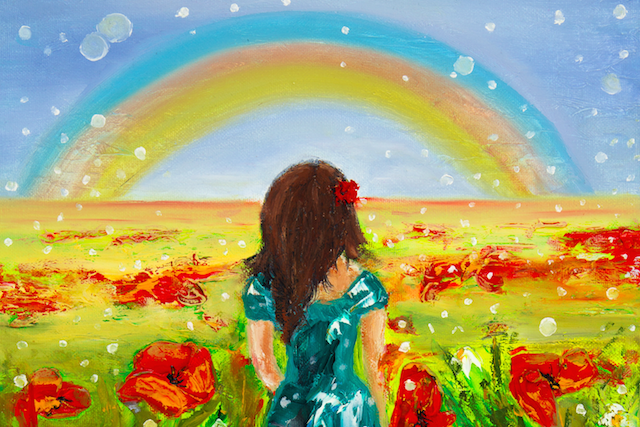
    Girl and a rainbow

    The winners for this giveaway have already been chosen. They are:

    • Stuart Dods
    • Sheldon Dwyer

    People often tell us we have to choose to be happy, but what they don’t always tell us is how.

    How do we choose happiness when we’re dealing with life’s everyday struggles and devastating traumas and tragedies?

    How can we choose happiness when we’re grappling with persistent negative thoughts and overwhelming emotions?

    What exactly do we need to do—or not do—to overcome our challenges and demons and experience more joy in our daily lives?

    Tiny Buddha contributor Kristi Ling, a renowned happiness strategist and life coach, has created an amazing resource that answers those questions.

    In her book Operation Happiness: The 3-Step Plan to Creating a Life of Lasting Joy, Abundant Energy, and Radical Bliss, Kristi shares how she rebounded from a long-term illness, a divorce, and the sudden deaths of loved ones.

    Part memoir and part how-to guide, Operation Happiness blends personal storytelling, powerful insights, and practical tools and tips to help us live happier lives.

    I’m grateful that Kristi took the time to answer some questions about her book, and also that she’s provided two free copies for Tiny Buddha readers.
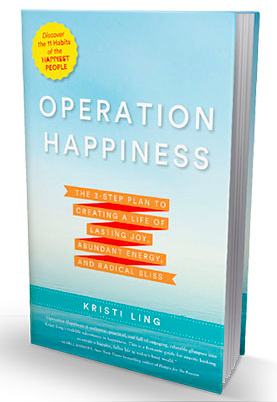
    Operation Happiness CoverThe Giveaway

    To enter to win one of two free copies of Operation Happiness:

    • Leave a comment below. You don’t have to share anything specific; “count me in” is enough. But if you feel inclined, share something that always makes you happy.
    • For an extra entry, share this interview on one of your social media pages and include the link in a second comment.

    You can enter until midnight PST on Sunday, January 15th.

    The Interview

    1. Tell us a little about yourself and what inspired you to write this book.

    I’d always struggled trying to be happy until my early thirties. Then, there was a point when I became so stressed, unhappy, and unwell that I hit a wall. I knew if I didn’t do something to change, I’d stay caught in that downward spiral. So, I quit my job at that point and went on a mission to decode happiness and change my life. That mission lasted several years.

    When I finally experienced a huge positive shift after discovering that happiness is actually a skill we can learn to do, rather than just something we feel, I knew that idea needed to be shared far and wide.

    Happiness really wasn’t being talked about in this way. So, that turned into blogging, coaching, and public speaking. Things kept expanding to the point where I knew it needed to be a book, which lead to writing Operation Happiness.

    2. In your book, you wrote that happiness is a skill—something that can be learned, improved upon, and even mastered. Do you believe anyone can master this skill, even those struggling with depression and anxiety?

    Absolutely. Just as those who are suffering from depression and anxiety can learn to play a musical instrument if they dedicate themselves, they can also learn and become better at the skill of happiness through a series of new habits, mindset shifts, and practice.

    I suffered from depression and anxiety on and off all through my twenties and early thirites. I tried everything from medical treatment to yoga retreats. Some of it helped temporarily, but nothing offered the sustainable sense of happiness and wellbeing I was seeking.

    A drastic, determined, permanent change to the way I approach, view, and do life on a daily basis is what finally created the change.

    3. Why do you think depression and anxiety have been on the rise in recent years?

    Truthfully, I think in part it has to do with social media and electronic overwhelm. We’re vulnerable to more negativity, comparison, and fear energy than ever before. Not to mention hundreds of emails a week, texts, and voicemails claiming our attention and focus.

    It’s all robbing our minds of the chance to have open space. I talk quite a bit in the book about how to reduce that and turn social media and media in general into a more positive experience. Having a practice such as meditation to allow your mind time to rest and clear is more important than ever.

    I also believe the economy has been a factor these past few years. There are real struggles going on for many people. I’ve found being willing to take on some positive new habits and simple supportive shifts can be truly helpful, even in the middle of a storm.

    Happiness is always there for us, it just takes extra effort to tap into it during the tough times. Nobody wants to say that sometimes we actually have to fight for happiness, but it’s true. And, it’s worth fighting for.

    4. In your TEDx Talk, you share the story of how an illness helped you to finally find the answers you were looking for when it came to the keys for creating lasting, sustainable happiness. What was it that you discovered?

    There were two key things that created a massive shift in my happiness. One, as I mentioned, is that happiness is a skill.

    Aristotle said, “Happiness is a state of activity.” That is so true! I get a little irked when I hear the saying, “Happiness is a choice,” because I think it sends the wrong message to people who feel like they’re choosing happiness but it’s still not happening. It’s not a choice, it only begins with one—the rest involves taking action.

    The second key is the power we have to change the neuropathways in our brain to re-wire ourselves for more happiness, positivity, and self-love.

    Through focusing on and practicing these things for an extended period of time, we can literally train our minds to work that way naturally. This is called neuroplasticity, and it’s a surprisingly simple, incredible process that anyone can do.

    5. Some people make happiness look easy. Do you think some people are just naturally happy? Is it possible to become naturally happy?

    I do think some people are naturally happy, but it has much to do with lifestyle and outlook. People who are naturally optimistic are generally happier. People who meditate and exercise regularly are naturally happier.

    The good news is that by creating deliberate, positive shifts in our lives and forming habits that support happiness, we can become naturally happier.

    That’s not to say we’ll all be happy 24/7, because then we’d be robots. Even the happiest people experience sad days and occasional hard times, but the way they think about them is a bit different. They’ve developed skills to bounce back in healthy ways.

    6. Can you talk a little about the link between mindfulness and happiness?

    There is such a strong connection here. Mindfulness is about being present in the moment and paying attention to life. Noticing all that’s around us, and choosing a lens of love. Happiness is much the same.

    I truly believe that becoming more mindful is one of the most important bricks in the foundation of a happy life. There are studies that show that the quality of our consciousness and ability to be present in the moment are directly linked to the levels of happiness we feel.

    We also have the ability to choose our thoughts deliberately, and this is also part of mindfulness. Choosing positive thoughts can produce great results both physically and emotionally.

    7. You’ve experienced some major transitions in your life over the past few years, including a divorce. What do you think is the most important thing to remember when it comes to finding light during the dark times?

    That our happiness is always there for us, even under layers of darkness.

    A while back while going through a hard time, I received a fortune in a fortune cookie that said, “The cloud will rain success upon you.” This is so powerful if you think about it; because it’s not saying when the cloud is gone you’ll feel good again. It’s literally saying it will rain success upon you—while you’re under it!

    It’s about being willing to see, seek, and receive goodness when it’s still raining, even when it feels impossible. Willingness to open our hearts to love and joy when we are at our lowest points can be so supportive. It can create miraculous shifts, really. I write about this quite a bit in Operation Happiness.

    8. I think a lot of us assume if we’re feeling unhappy it means we’re doing something wrong—or that we need to change something, and fast. Do you think it’s possible to be happy all the time?

    Nobody but a cartoon character is happy all the time, and I’d even question that. I still have difficult times and even sad-for-no-reason days now and then. But, there are subtle differences for me now.

    For example, I used to feel depressed on days where I was feeling reflective. Now I feel peaceful and even joyful, because I understand the need for reflection and how important it is to examine life in order to grow. So, I embrace and honor it.

    It is true that sometimes sadness is there to tell us something important. Ignoring something that needs to be changed can sometimes bring sadness, as well as anxiety, and so can neglecting our self-care.

    I’ve learned to pay close attention to sadness when it appears. I’ve found that simply allowing myself to feel that way sometimes for short periods, rather than trying to fight it, allows it to serve its purpose and to pass. If it doesn’t pass fairly quickly, I remember what Aristotle said about happiness being an activity, and I start to take action.

    9. What would you say are the top three habits that compromise our happiness?

    This is a great question. One is looking for external things to bring happiness without first doing the work within. Yes, external things can sometimes contribute to happiness, but it’s only temporary unless we’re at peace and emotionally fit within, so this is where to focus.

    I’d say another is overlooking gratitude for what is. Gratitude is a huge source of joy, and when we’re too focused on the next accomplishment or thing, we lose out on the happiness we can feel in this moment by simply feeling grateful for what we already have. It’s very powerful.

    Finally, I’d say to take a look at your eating habits. Crappy food doesn’t just lead to feeling crappy physically, but emotionally as well.

    What we eat is directly linked to our happiness. Foods have the power to affect our brain chemistry as well as physical energy. I think this is so important that I included an entire chapter on it in my book. When we learn which foods help boost happiness and make us feel better across the board, it makes a huge difference. And, it becomes so much easier to say no to the junk.

    10. If someone is looking to be happier in his or her life, where is the first place to begin creating change?

    I think we’ve covered quite a bit here, but I’d say the best place to begin is with your mornings. The way we experience our mornings is the way we will experience life. So, focusing on those first couple hours of the day and making them positive and healthy will support you in feeling great for the rest of the day.

    Also, just focusing on those first couple of hours seems so doable, right? I love the simplicity in this concept. For me, changing my mornings truly did change my life. And, it’s something anyone can do.

    You can learn more about Operation Happiness and grab a copy on Amazon here.

    FTC Disclosure: I receive complimentary books for reviews and interviews on tinybuddha.com, but I am not compensated for writing or obligated to write anything specific. I am an Amazon affiliate, meaning I earn a percentage of all books purchased through the links I provide on this site. 

  • Finding Freedom in Illness: A Guide to Suffering Less When Sick (Interview & Giveaway)

    Finding Freedom in Illness: A Guide to Suffering Less When Sick (Interview & Giveaway)

    Sick

    UPDATE: The winners for this giveaway include:

    • Naomi
    • KC
    • Lisa Pellegrino
    • Caroline Létourneau
    • Viktor Dmitriv
    • Kristin Kollinger
    • Heather S
    • Erica Lombard
    • Christine
    • Bridget Howe

    If you’ve ever been sick for a prolonged period of time, you understand how physically, mentally, and emotionally draining it can be.

    Maybe you don’t know what’s causing your illness, or how to treat it, and you’re tired of searching for answers.

    Maybe you blame yourself for repressing emotions, not exercising, or otherwise potentially causing your condition; or maybe you don’t hold yourself responsible, but fear that others do.

    Maybe you can no longer do the things you love; or maybe you can do them, but it’s much harder, and therefore, far less satisfying.

    While I’ve never struggled with a long-term physical illness, I’ve watched loved ones grapple with serious challenges; I’ve sympathized with their feelings, fears, and frustrations; and I’ve wished I could do something to help.

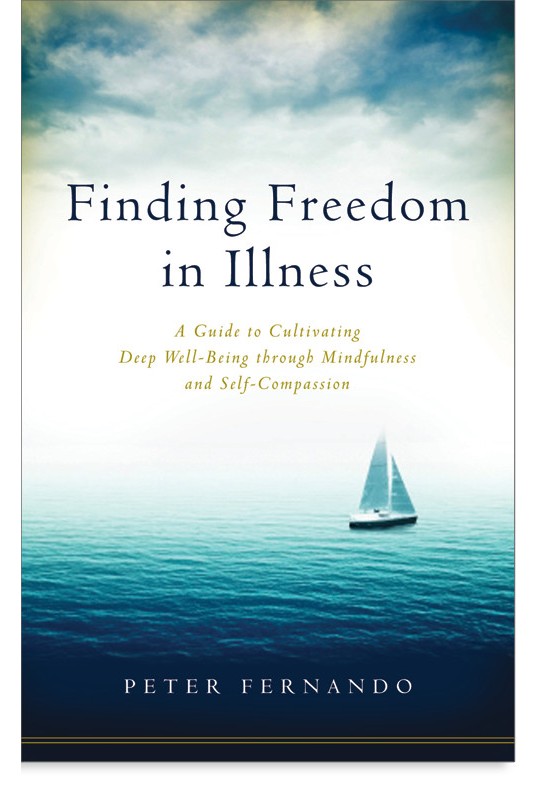
    Going forward, I will point them to Tiny Buddha contributor Peter Fernando’s new book, Finding Freedom in Illness: A Guide to Cultivating Deep Well-Being through Mindfulness and Self-Compassion. 

    Having struggled with various chronic illnesses through the years, Peter knows what it’s like to live a life that’s full of challenges and losses. He’s experienced prolonged periods of darkness, despair, desperation, and discomfort—and yet he still believes he’s lived a wonderful life.

    Why? Because he chooses to see his illnesses as spiritual teachers. And though he admits he would not have chosen them, he’s learned, through them, to free himself from the mental suffering that comes from judging the present.

    Profoundly insightful, Finding Freedom in Illness explores how anyone can free themselves from their suffering and access the liberating power of here-and-now awareness. Though the book is clearly intended for others dealing with physical conditions, anyone can benefit from the teachings related to mindfulness and self-compassion. I know I certainly have.

    I’m grateful that Peter took the time to answer some questions about his book, and that he’s offered ten free copies to Tiny Buddha readers.

    Finding freedom in illnessTHE GIVEAWAY

    To enter to win one of ten free copies of Finding Freedom in Illness:

    • Leave a comment below
    • For an extra entry, share this interview on Twitter or Facebook, and post a second comment with the link

    You can enter until midnight PST on Monday, May 9th.

    *Winners in the US will receive a print copy. Winners outside the US will receive a gift card to order a free digital copy.

    THE INTERVIEW

     1. Tell us a little about yourself and what inspired you to write this book.

    I’m a guy in his late thirties who was a Buddhist monk in his twenties. I’ve been living with various health conditions for most of my life, and bodily challenges have been a huge part of the path for me. I teach meditation in Wellington, NZ with Original Nature Meditation Centre, and run an online course, A Month of Mindfulness.

    The book arose of out conversations I had been having with other folks on the spiritual path, people who also have been living with illness—and a sense of the disorientation, distress, and confusion that can ensue when faced with such challenges and limitations. So, the main inspiration was wanting so share some love!

    On another level, my own situation has highlighted the difficulty in attending retreats or groups on a regular basis, and a need for a home-based practice that is tailored to the specific issues, emotions, and challenges that accompany the experience of being physically unwell.

    For example: When you can’t sit up for long periods of time, how do you meditate?

    When you are exhausted, how do you open your heart and find a real sense of kindness for yourself and others?

    When you are in pain, how do you find a place in yourself that is still okay?

    So I wanted to share some of the practices and perspectives I have developed through trial and error since my twenties, with the hope that they will be useful for folks in similar situations.

    2. I really appreciated your opening chapter, as I think a lot of spiritual people blame themselves for their physical ailments. Can you talk a little bit about the mind/body connection and the difference between taking responsibility for our part in healing and blaming ourselves for being sick?

    This subtle difference has and (continues to be) a central piece of living with illness, for me personally. The bottom line, I think, is don’t beat yourself up for being ill.

    Shame and guilt are so destructive and painful, and yet can easily follow theories of being absolutely responsible for being ill or healthy. Whatever makes you feel ashamed or guilty isn’t going to lead to well-being in the long run.

    From the perspective of the mind that wants to understand our illness (and of course, be as well as we can, on all levels), there is another key piece, for me: any belief is just a belief. It’s not experience.

    So the belief “I’m creating this illness—it’s my fault” is just an idea, right now. The belief “My mind has no bearing on the state of my body” is also just an idea.

    If there are certain mind-body connections that are contributing to our illness, they can only be known by us. Not through a theory, a doctrine, or even trying to mimic someone else’s healing journey. Of course, they are all useful as hypotheses, but not as fixed beliefs about what is going on.

    Awareness practice, on the other hand, takes us right into our own experience, where we begin to know directly what effects certain mind states have on the body, and what effects they don’t have.

    We become curious, and even innocent in our exploration. We don’t have to have a fixed belief in anything, which allows the tendency toward shame or self-blame to relax, and is also where the feeling of freedom begins to emerge. Curiosity and genuine interest in our mind, body, and heart, in this moment, is where the power lies.

    What the process of paying attention reveals about the mind/body connection is different for everyone. There may be one, and there may not be—that’s just how it is.

    Many enlightened teachers have died following long illnesses, such as the teacher of my teachers, Ajahn Chah. Many uptight and stressed out people live physically healthy, outwardly successful lives.

    So the only touchstone for what is real is our own experience, our own body-mind, in the intimacy of awareness. No shoulds, no guilt-trips, and no identity of being a failure. To me, that is what taking responsibility is about.

    3. How does mindfulness help us cope with physical illness, and what’s a simple mindfulness practice anyone can do daily?

    Mindful awareness helps us cope in every way possible! Without being aware of our reactions to pain, loss, social isolation, or fatigue, those reactions will take over.

    When we are aware of what is happening in the present moment, with an embodied awareness, there is a natural inclination to abide in states of being that feel good, and to relax those that don’t.

    If we don’t see them, they take on a life of their own and can become our entire identity, rather than the momentary arising of emotion or perception that they actually were.

    A simple practice I do daily is to stop, close my eyes, and take stock of what’s going on in the mind and heart, for five minutes. No agenda or desire for a specific outcome—just a real curiosity.

    I ask, “What am I doing, right now, in my heart?” And then, “Is this kindness to myself, or is it something else?”

    This is the gateway to authentic mindfulness, in my opinion. To me, an open, kind heart is an essential part of mindful awareness. Attending to its presence or absence goes a long way in tracking the quality of the mind throughout the course of a day.

    4. In chapter 3, you talk about the stories our minds tell us about the present, the past, and the future. Can you elaborate a little on these stories, how they keep us stuck, and how we can start letting them go?

    The word “stories” is a kind of shorthand to refer to the psychological narratives that arise in the mind’s eye, with regard to “Who I am, what others think of me, what I will be, what I was,” and so on.

    They are the first indicator of underlying heart-drives or emotions that are stirring in us. It’s important to say here that the word doesn’t refer to functional stories, which we need to survive. These are useful, when imbued with creativity and wellness of heart.

    Our psychological narratives, on the other hand, are habitual and don’t come from a sense of choice—they are knee-jerk reactions, often with deep historical roots, that take us into some form of stress, suffering, or emotional stuck-ness.

    The habitual, seemingly out-of-control nature of these is their defining characteristic. Starting to let these go is a process that requires sensitivity and patience, in my experience. It’s easy to say, “Just be present,” but to actually do it requires a journey into our own heart. Otherwise, it can become dissociation or avoidance, which doesn’t lead to well-being.

    For me, there are always three stages to the process. The first is mindfulness: seeing what is happening, with objectivity, rather then being caught in it. It’s a kind of stepping back. We realize we can see the mind, not just be caught in it. This is the miracle of mindful awareness, really.

    But seeing a story is one thing. Freeing attention from its grip is another. So the second part of the process is a receptive awareness, feeling how the energy feels in the body.

    This is more than seeing—it’s sensing, which requires a kind of awareness we may not be used to. So we can begin experimenting with it.

    When we feel what’s going on, we can then pan out to recognize that a story is just the branches of a core root feeling.

    For example, the story “I’m going to have a terrible time seeing my friends tomorrow” could just be the root energy of fear. Knowing it as such makes the story seem less personal, and we recognize that these are forces at work in the present, not realities that will happen in the future. It’s all happening now.

    The third stage in the process is relaxation. When we feel the root of a story we can consciously incline toward relaxing around it. Relaxation is another word for letting go. When we relax around an emotion or an energy, it begins to calm. It also has less power to solidify into a full-blown story. We find we can be with instead of be in. Life frees up as a result.

    5. In chapter 4, you wrote, “openness is courage.” Can you expand on this?

    Being open to what is here is perhaps what is most scary for us as humans, I think. Our lives are geared toward distraction, intellect, and ideas—so much so that sitting somewhere without checking our phone, for example, can feel disorienting and uncomfortable.

    It feels uncomfortable and scary because it means being open to what is actually here—including the body and mind and emotions, just as they are. So cultivating that ability is a courageous act.

    When it comes to illness, the stakes are even higher. We’re not just cultivating an openness to “boring life as it is,” but very often to unpleasant sensations, depleted energy, and physical pain.

    Trusting that our own compassionate awareness can meet that, too, is always an act of courage. Sometimes we just can’t, which is okay. And sometimes it’s just not the right thing to do—especially if it heightens the discomfort in the body or the stress in the mind.

    But when we feel resourced enough to rest in awareness, and be with the pure experience of this moment, we gain vistas into new worlds of possibility. If we remain there for a period of time, we may be surprised by a quiet sense of peace and ease that begins to emerge.

    6. In the section on meeting our dark emotions, you wrote that we need to stop judging anger, fear, and despair as “bad.” What do you think is the key to embracing these feelings without getting lost in them?

    Oh, good question! It’s a fine line isn’t it? For me it always comes back to the Buddhist maxim of the “Middle Way”: that poise in the middle of indulging in destructive emotions on the one hand and repressing them on the other.

    My tendency has been more toward the latter, so learning how to actually feel and un-shame them has been a big part of my own journey. However, if one’s tendency is to feed them, get lost in them, and rail against illness, some discernment and wise discrimination can be really useful.

    But most of us have a default setting that judges dark emotions and tries to push them away, to some extent. We believe this is what being “strong” means.

    From the meditative perspective, we are looking for strength in presence, not just strength of will, however. When presence, grounded in the body, meets a force like anger or fear, there is a transformation that can happen. Through not indulging the story, and not trying to push the energy down, we feel what is here, as just so.

    In Buddhist teachings, this is the essence of the third foundation of mindfulness—mindfulness of the heart. Through this poise, the primal energies of dark emotion begin to dissolve, and transfer their energy back to our core presence. They relax and calm without being pushed away. It’s an alchemy of sorts.

    Of course, sometimes we need to push them away temporarily, just to function. The above isn’t an absolute statement about what we should always do.

    But when we gradually train ourselves in the skill of meeting dark emotions as just so, and feel them in the body, we discover a new place in ourselves that can handle their intensity without resorting to self-judgment. This makes living with illness much easier in the long run, in my experience.

    7. Why do you think so many of us deny ourselves rest when we’re drained or unwell, and what mental shift do we need to make to start taking care of ourselves in this way?

    I think it’s something to do with the way we are conditioned to value ourselves. Modern society puts most value on doing, achieving, and “being somebody,” it seems, and very little on “just being.” So we get hooked into it.

    Rest means relaxing an identity of being useful or productive, which can be scary. If our identity is entirely dependent on value-through-doing, then it can feel intolerable to really rest and take care of ourselves. We believe it’s lazy, or self-indulgent, or that we are a failure and there are other people somewhere out there judging us.

    From the perspective of inner well-being and harmonizing with the limitations of our physical condition, however, we can find a different way of viewing conscious rest.

    On the level of the body, it just feels good, so that’s one thing. On the heart level, we realize that it actually reminds us of our real value rather than takes us away from it.

    Our deepest value is just in being us. When we feel that in our hearts, and relax the need to prove ourselves, be approved of, or the opposite sides to that coin, then paradoxically, a new kind of value emerges. It’s one that feels peaceful and meaningful through just being here.

    When we get a sense of that, it becomes much easier to feel confident about consciously resting.

    There’s always a bit of friction involved in changing gears, particularly if our lives are very busy, but it lessens the more we can tune in to the deeper kind of value that comes through letting go of the need to always be someone doing something useful. And weirdly, when we do that, energy to do useful things, within our capacity, often comes back quite naturally.

    8. Can you tell us a little about the difference between pain and suffering, and how we can suffer less?

    Well, that’s a huge topic, with a lot of subtlety involved, I think. For myself, the Buddhist teaching around the difference between painful or unpleasant sensation in itself, on a sensory level, and the existential dis-ease that usually accompanies it, has been very potent.

    Basically, the teaching says that they are two different things. We tend to think they are one in the same, but when we attend carefully and with sensitivity, we begin to notice that while physical pain or discomfort very often conditions suffering in the heart, it doesn’t ultimately have to. So, it’s a freeing teaching.

    It doesn’t mean liking pain, though, or trying to be fit into some kind of equanimous ideal where we never suffer in the face of it. As an ideal, that doesn’t go very far.

    The journey to suffering less around pain involves meeting exactly what is here, including our reactions to it. But by being curious about them, we discover how to relax the heart-contraction around pain.

    Very often, relaxing the contraction (and the stories, judgments, self-images, or predictions that come with it) can lead to more space opening up in our awareness. In this space, physical pain doesn’t have the same hold over the mind. We suffer less.

    9. It’s easy to get down on ourselves when we feel we’re not at our best. What has helped you stay out of this trap?

    Well, it’s a trap I am very familiar with, and definitely not free of! But it’s something I have gradually learned to relate to rather than be completely identified with.

    For myself, self-compassion has been the guiding light in this regard. I first used it as a concept, which, in itself, was very powerful. It’s a radical shift from the default position of inner-tyranny many of us live within. On the conceptual level, it takes a bit of reflection to come alive.

    I remember feeling like it was indulgent or selfish to be compassionate with myself, in the beginning. But it slowly started to make good sense, particularly when I saw directly that it actually increased my ability to relate to others in the same way.

    Then on the heart level, it’s been a cultivation—creating space around the identity of the me who is “wrong” in some way, and really holding that sense with a sense of great warmth and kindness.

    In this space, I began to feel what tyrannical mind actually does in the present moment: it generates pain. Compassion began to arise when I started being aware of this pain in a very direct but tender and patient way.

    It started to teach me. It was like, “Oh, okay. When I hold on to these self-images, this is the result. Wow—that’s really painful. Maybe I could start to relax that?”

    So the heart began to learn, naturally, when I took the time to bring awareness to bear upon what often seemed so real and true that I never questioned it.

    10. What’s the main message you hope readers take from this book?

    I think the main message I would like to communicate is that being physically ill doesn’t mean we can’t have a rich inner life. There are ways of living with the limitations of illness that can open us right into the magic of this existence.

    We don’t need to feel like we’ve failed, we are wrong, or there is no hope. The real treasures are right here underneath the surface—for all of us, healthy or not.

    FTC Disclosure: I receive complimentary books for reviews and interviews on tinybuddha.com, but I am not compensated for writing or obligated to write anything specific. I am an Amazon affiliate, meaning I earn a percentage of all books purchased through the links I provide on this site. 

    You can learn more about Finding Freedom in Illness on Amazon here.

  • Clear Your Emotional Clutter and Open Up to Joy (Interview and Giveaway)

    Clear Your Emotional Clutter and Open Up to Joy (Interview and Giveaway)

    Woman Jumping

    UPDATE – The winners for this giveaway are:

    • C
    • Lori Pacheco

    When I was in my early twenties, I spent three months in a residential treatment center in a last-ditch effort to heal from depression and bulimia. Among many different treatment modalities, I participated in an experiential therapy that involved a ropes course and other adventure activities.

    One day, along with a dozen other frail women, I strapped a backpack full of tennis balls on my back and climbed to the top of a rock wall. It was hard enough to walk on some days; getting to the top with what felt like ten cats clinging to my back took everything I had in me.

    It was only when I completed the task, exhausted, that I understood the point of this draining exercise.

    Our therapist then instructed us, one by one, to open our backpacks and toss each ball down to the ground, naming each an emotion that had caused us pain.

    “This is my shame,” I yelled. “This is my anger. And this is my self-loathing.”

    This metaphorical emotional unloading, combined with the energetic release that often follows extreme exertion, brought me a lightness of being that I’d never before experienced.

    I had lived my life like the climb up that wall—weighed down by my emotions—and I had a glimpse of what it felt like to be free of them.

    Still, while the exercise was liberating, I didn’t know how to recreate that feeling of emotional freedom in my everyday life.

    Years later, I learned that mindfulness could provide the peace I desperately craved. I learned that I could fully embody the present moment, and see the people and things right in front of me without filtering them through my fickle emotions. I learned that I no longer had to live trapped inside a mind that constantly bombarded me with disempowering stories about my painful past.

    No one has to live that way. And the good news is, clearing that “emotional clutter” doesn’t require a daily trip up a rock wall.

    We can all overcome our toxic patterns and find freedom from the old pains and traumas that have weighed us down. Mindfulness is the key, and anyone, at any age, in any circumstances, can learn to practice it and reap the benefits.

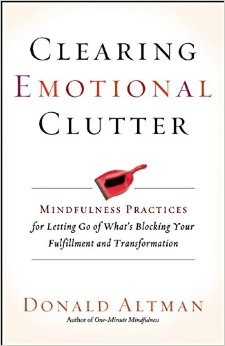
    In his new book Clearing Emotional Clutter: Mindfulness Practices for Letting Go of What’s Blocking Your Fulfillment and Transformation, author Donald Altman combines modern neuroscience with ancient practices to show how habits and patterns can be modified with only a few minutes of attention daily.

    It’s a powerful book that can hep anyone release their emotional pain to find happiness, fulfillment, and peace.

    I wish I’d found this book, and these practices, years ago, as they truly are life-changing.

    I’m grateful that Donald took the time to answer some questions about his work and his book, and that he’s offered two free copies for Tiny Buddha readers.

    Clearing Emotional ClutterTHE GIVEAWAY

    To enter to win one of two free copies of Clearing Emotional Clutter:

    • Leave a comment below
    • For an extra entry, tweet: Enter the @tinybuddha giveaway to win a free copy of Clearing Emotional Clutter http://bit.ly/1SLXcyB

    *US winners will receive a physical book in the mail; winners outside the US will receive an eBook.

    THE INTERVIEW

     1. Tell us a little about yourself and what inspired you to write this book.

    Mindfulness has helped me immensely in my life. I got on this path when I was going through a difficult life transition and found myself repeating an old, toxic pattern. It’s that idea that wherever you go, your problems always follow you. That is, unless you do something about it!

    Around that time I met a Burmese Buddhist monk—the Venerable U. Silananda—who had been teaching mindfulness in the U.S. since the 1970s. He possessed a palpable sense of compassion and availability that made me ask the question: How does someone become like that?

    When I had the opportunity to ordain with him as the head of the monastery, I jumped at it. Although I was in the monastery for a short period of time, it was an experience that changed my life direction because I was primed and ripe for the experience of looking inward.

    I wrote my first spiritual book while at the monastery, and continued to train with one of the monks afterward. I’m very grateful for the transformative experience the monks provided for me, which helped me nurture greater compassion and connect with my purpose. Now, my writing is focused on helping others find joy and fulfillment.

    Clearing Emotional Clutter is an important book for me because it integrates cutting edge brain science and research with the ancient practice of mindfulness. It shows that you don’t have to go into a monastery to transform your life, overcome past negative clutter, and rewire your brain.

    2. How do we accumulate “emotional clutter,” and why do we need to clear it out?

    No one can control what happens in life. There are losses, aging, and challenges throughout every stage of life, not to mention the daily wear and tear of stress. What we can do is to respond skillfully by not letting the emotional clutter pull us into states of dis-ease and unhappiness.

    By clearing out clutter, we can transform even difficult moments and respond to life in a way that helps us find the inherent joy that is present.

    3. You talk about getting off the emotional elevator. What do you mean by that?

    You can think of your emotions like an elevator that takes you up and down. What moves the elevator? What old programs are running in your head that push the buttons on your elevator to that it moves you up and down? Something good happens in your life and the elevator goes up. Something bad—even a perception of something being bad—and the elevator shoots down. But what if you could control that yourself?

    This book helps you decide who and what you are going to let push your emotional elevator buttons. Letting others push our mood elevator buttons can be exhausting. We’re not in control of our own elevator. Clearing away clutter means you get free from old emotional clutter programming and ways of thinking.

    4. In Chapter Two, you introduced a tool called “Inner-Facebooking.” Can you elaborate a little on this and share an example of how it’s helped you personally?

    Facebook is a wonderful way to post and put up for others what’s happening in our lives. In the same way, we are constantly putting up mental posts in our minds—through our thoughts and beliefs—that represent a kind of second Facebook: An Inner-Facebook, which shapes how we experience the world, ourselves, and others.

    If your Inner-Facebook posts are unhappy and unflattering, no wonder you feel bad and depressed. I have a whole chapter about noticing your Inner-Facebook posts so you can be more aware. Inner-Facebooking is a skill that helps you to emotionally regulate. Then you can change your Inner-Facebook posts to be more positive and accurate.

    Personally, I’ve gotten better at noticing my own inner-Facebooking posts. For example, my luggage was lost when traveling recently. But rather than respond to the highly reactive and anxious thoughts that my mind posted in that moment, I was able to step back and make a new, more realistic and helpful post that said, “My luggage is going to be found. Besides, in the big scope of things, losing my luggage isn’t that big a deal.”

    5. In Chapter Four, you wrote, “Much of the clutter of discomfort, discontent, and conflict that we experience in life comes from our unwillingness to accept things as they are.” I think we often equate acceptance with giving up. How can we simultaneously reduce the clutter of resistance while working to make positive changes in our lives?

    Acceptance is about realistically viewing your situation. It’s about surrendering to the truth that you may not have control over the situation. You recognize that it is what it is. That does not mean you are giving up. Submission, on the other hand, is about giving up.

    Acceptance allows us to surrender to the truth of our situation. So, if you’re frustrated at being caught in a traffic jam on the freeway, for example, you can have acceptance of what you’re experiencing instead of fighting with it. This means that you can then move forward in a more realistic and effective way instead of getting all stressed out and carrying the experience with you throughout your day.

    6. You devoted an entire chapter to “family emotional clutter.” How do we accumulate this type of clutter, and how does it negatively impact our lives?

    In my workshops I always ask, “Does anyone here have a difficult person in your life?” Everyone raises their hands.

    Family emotional clutter can negatively impact our future relationships and how safe we feel around others. If you’ve had negative relationship issues that have been a pattern in your life, that’s a sign you need to work on that clutter. Repairing this will lead to more loving, healthy, fulfilling, and secure relationships.

    7. What’s one thing we can do to begin releasing “family emotional clutter” to avoid these negative consequences?

    First, we can recognize that all people have suffered, even that person in your family who may have mistreated you. In fact, your family’s suffering may go back centuries. So, rather than feeling permanently victimized, it’s important not to pass on the wave of suffering in your family, and to know that you can heal.

    I believe that we can get a new brain download by finding benefactors in our lives. We can learn how to attune and alter our brain’s social and emotional rewiring. It’s a helpful process that I describe in one of the Lifestyle Tools found in Clearing Emotional Clutter.

    8. You talk about friendships as a tool to release emotional clutter. How and why can our relationships help with this, and how can we help other people release their emotional clutter as well?

    Research shows that having friends is the key to a happier life. The three seeds that make friendship grow and mature are the seeds of trust, acceptance, and empathy.

    Trust is essential, and that takes time to develop, so you need patience and real mutuality in a relationship.

    Acceptance means not being so demanding. It means accepting that everyone has flaws. Sometimes you need to let things to as a foundation for friendship.

    Lastly is empathy. Empathy is what lets you really feel connected to a friend. Develop these and you’ll develop friendship.

    9. In the chapter devoted to listening, you shared an acronym, HEAR, that can help us keep our emotional clutter out of conversations and “enter a more spacious and less defensive awareness.” Can you tell us a little about that and how it helps?

    Talking can be clutter that sometimes blocks understanding and deeper meaning. If we are to remove clutter in the moment, we need to be present with all our senses, especially listening. This acronym is designed to help us when we’ve stopped listening—like during an argument, or when we’re feeling defensive or caught up in our own opinion. It goes as follows:

    H- Hold all assumptions. Empty your ego and get curious. Set your personal beliefs and assumptions aside for a few minutes and take a more objective perspective as you listen.

    E- Empathy to engage, not enrage. With empathy, you can enter the emotional world of the other person so you can understand them better rather than try to deny or devalue what they are feeling.

    A- Absorb and accept. Understanding, with openness. Let in the ideas of the other person. Acceptance doesn’t mean you have to agree, but that you can accept this is the other’s belief.

    R- Reflect, then respect. Take time to pause before you respond. Take a step back so that you can think about what you’ve heard. Then, respond respectfully and with kindness.

    10. In Part 3 of the book, you explore ways to prevent new emotional clutter. What’s one practical thing we can all do daily to de-clutter?

    I especially like the idea of being faithful to this moment. You can be 100% committed to whatever you are doing. Uni-task, so you are fully present with this moment. This means fidelity to the breath, to walking, to eating, to working. Whatever you are doing, you can do so fully, without your mind being one place and your body being someplace else.

    That means that when you walk, walk. When you eat, eat. When you drive your car, drive. Cut down on the distractions and do one thing fully. In this way you can appreciate and savor even the most ordinary moments and that “in-between” time that is an important part of our days and lives.

    You can read more about Clearing Emotional Clutter on Amazon here.

    FTC Disclosure: I receive complimentary books for reviews and interviews on tinybuddha.com, but I am not compensated for writing or obligated to write anything specific. I am an Amazon affiliate, meaning I earn a percentage of all books purchased through the links I provide on this site. 

    Woman jumping image via Shutterstock

  • Interview with Dani DiPirro and Book Giveaway: The Positively Present Guide to Life

    Interview with Dani DiPirro and Book Giveaway: The Positively Present Guide to Life

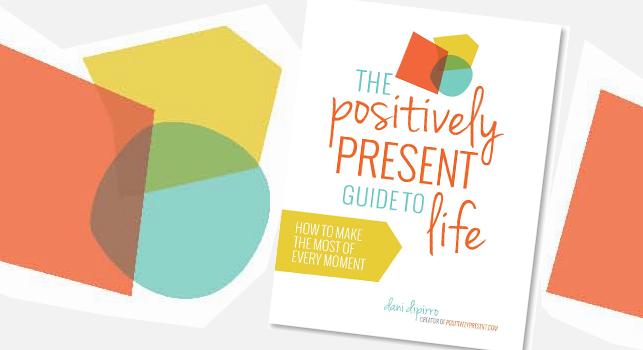
    Positively Present Guide to Life

    Update: The winners for this giveaway are:

    If you’re a fan of uplifting, action-oriented blog posts, you may have stumbled upon Positively Present at some point in time.

    I “met” the site’s founder, Dani DiPirro, around the time I started Tiny Buddha. Over time, I grew to admire her dedication, both to personal development and her blog.

    Since 2009, she’s shared countless helpful, inspiring posts, empowering readers to live mindfully and positively in the face of life’s inevitable challenges.

    Now she’s preparing to launch a new book, The Positively Present Guide to Life, which offers practical ideas to enhance our home life, work, and relationships for an all-around happier, more fulfilled life.

    I’m grateful that Dani took the time to answer some questions about herself and her book, and that she’s provided two copies for Tiny Buddha readers.

    The Giveaway

    To enter to win one of two free copies:

    • Leave a comment sharing one thing that always helps you stay positive.
    • For an extra entry, tweet: Enter the @tinybuddha giveaway to win a free copy of The Positively Present Guide to Life http://bit.ly/17oIQDY

    You can enter until midnight PST on Friday, February 27th.

    The Interview

     1. Tell us a little bit about yourself and your blog, Positively Present. 

    I’m an author, blogger, and designer living in a suburb of Washington, DC. In 2009, when I was at a particularly low point in my life—I didn’t love my job, my relationship status wasn’t ideal, and I was struggling a lot to feel happy—I launched PositivelyPresent.com with the intention of documenting my journey toward a more positive and present life.

    In 2012, I left my full-time job in Marketing to pursue a career as a blogger and writer. While working to create a beautiful online space for my readers, I discovered how much I loved illustrating and graphic design.

    Last year, I launched my design studio, Twenty3, where I work with individuals and business to create modern, uplifting design. My love of design and my desire to help myself and others live more positive, present lives comes together in my latest book, The Positively Present Guide to Life, which pairs inspiring illustrations with action-oriented advice for living a more positive, more present life.

     2. What inspired you to write The Positively Present Guide to Life, and how does it differ from your blog?

    Books have been my greatest teachers, and I love the tangibility of them of in our digital world. I’ve learned so much about life—and about myself—from books, and writing The Positively Present Guide to Life was the best way I could think of to take the lessons I’ve learned from PositivelyPresent.com and explore them at a deeper level.

    And my blog has inspired this book in another way: all my advice here is presented in easy-to-follow lists, to make sure this guide is as simple to use and as practical as possible.

    3. What have you found to be the biggest obstacles to being positive and present—and how have you overcome them?

    One of the biggest obstacles for being positive and present can be other people. Just because you’re trying to live a more positive, present life, that doesn’t mean that those around you are striving for the same thing, and the negativity of others can be draining.

    Overcoming this can be difficult if it’s not possible to avoid negative people. If possible, I’ve found it helps to limit your interactions with them. If that’s not an option, I recommend reminding yourself that you do not have to be ruled by others’ moods or attitudes. Even when others are negative, you can choose to focus on the positive and to stay in the moment.

    4. I think there’s a misconception that “be positive” means “don’t ever feel bad.” What are your thoughts on this?

    This is definitely a huge misconception when it comes to positivity. It’s for this reason, in fact, that I focus on positivity rather than happiness.

    When you are happy, you are in a state where you don’t feel bad and when even the not-so-great things seem bearable. Positivity, on the other hand, is not about putting on rose-colored glasses and pretending that everything is okay. It’s about accepting whatever’s happening in your current situation and trying to make the most of it.

    No matter how difficult the situation, it’s possible to find something of value—even if the value is only that you’re getting stronger by going through difficulties.

    5. In Chapter One of your book, you talk about creating a positive home. What advice would you give to someone who wants to create a positive home but lives with people who are often negative?

    Living with negative people can really challenge efforts to live a more positive, present life, but there are things you can do to make the most of the situation.

    I’ve dedicated an entire section of my book to this topic because I believe it’s something many people encounter. Even if people at home are generally positive, we all have our bad days (or weeks!). When dealing with negativity at home, I recommend trying your best to speak with love, and not to mirror the tone or attitude of those who are in a negative state of mind.

    This can be difficult (we tend to react in a way that mirrors others), but choosing loving words and tone can make a huge difference.

    Also, it’s important to try not to take others’ negativity personally. Often, stress and negativity between cohabitants is a result of issues that take place outside of the home (such as work), and it can be helpful to consider that another’s negative reaction or snippy tone might be related to something that has nothing to do with you.

    6. In the next chapter, you talk about being positively present at work. What do you think is the most important thing someone can do to stay positive and present when they’re not happy at their job?

    Even if you don’t love your job, you can learn from it. Any job offers the opportunity to learn how to cooperate with and overcome challenges.

    Being around others—some you like, some you don’t—teaches important people skills, from how to collaborate, negotiate, and compromise with those who view things differently, to how to get a job done with someone who would rather chat away the day.

    Processing so many viewpoints and opinions from coworkers opens our eyes to new ways of thinking. If you like your industry but not your position, you can also learn a lot by talking to those you admire or who hold positions you aspire to.

    7. In the chapter on relationships, you talk about learning to say no. Why is this so important to staying positive and present?

    There are many reasons why saying no, negative as it sounds, can be a more positive response. For example, it might save you from having to spend time with people who bring negativity into your life, or it might ensure that you don’t overload your schedule.

    It can also strengthen relationships because it lets other people know you have boundaries and will enforce them. It helps others know where they stand—and if they don’t cross the line, your relationship is all the more positive for it.

    Keep in mind: when you say no to one thing, you’re really saying yes to something more worthy of your time and energy.

     8. What do you think is the most essential habit for staying positive and present?

    One of the most essential habits for living a positive, present life is to cultivate gratitude. No matter how difficult a situation, there is always something to be grateful for. It’s very difficult to be negative or distracted from the moment when you’re focusing on what you have to be thankful for.

     9. What’s the main message you hope people take from your book?

    When people read my book, I hope they’ll realize how important a shift in attitude can be. It can transform all aspects of your life, from home to work to relationships to love to how you cope with change.

    I hope readers will see that, even if positivity and mindfulness doesn’t come easily to them, with the right tactics and inspiration, it’s possible to cultivate a positive attitude and stay in the moment more often.

    I’m not a naturally positive person and I work hard at staying positive and present. If I can do it, anyone can—and I hope this book will inspire readers to see that they, too, can live more positive, present lives.

    You can learn more about The Positively Present Guide to Life (and pre-order a copy) on Amazon.

    FTC Disclosure: I receive complimentary books for reviews and interviews on tinybuddha.com, but I am not compensated for writing or obligated to write anything specific. I am an Amazon affiliate, meaning I earn a percentage of all books purchased through the links I provide on this site. 

  • Tiny Buddha’s Guide to Loving Yourself Interview: Amyra Mah

    Tiny Buddha’s Guide to Loving Yourself Interview: Amyra Mah

    amyra-mah

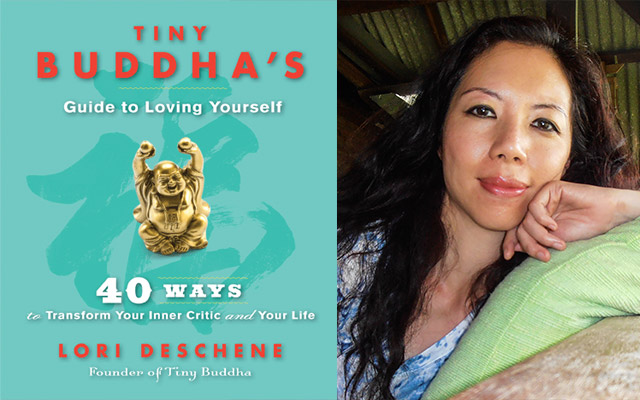
    It’s day four in the pre-order promotion for Tiny Buddha’s Guide to Loving Yourself, a book about taming your inner critic that features 40 stories from Tiny Buddha contributors. 

    Over the next month, you’ll have a chance to meet some of them through daily interviews here on the blog.

    Today’s featured contributor is Amyra Mah of unusualwisdom.com. Having formerly struggled with depression, addiction, and body image issues, she now works as a spiritual coach, addiction therapist, intuitive counselor, writer, and blogger.

    Her contribution for the book focuses on feeling our feelings instead of running away from them (and ourselves).

    A little more about Amyra…

    1. Tell us a little about yourself and your self-love journey. 

    Loving myself was a perplexing concept, since I had spent most of my life believing that I was unworthy of anyone loving me. I saw myself as “damaged goods” and spent many years abusing myself through self-destructive thoughts and behaviors.

    When I first came across the idea of self-love, I really struggled to understand where this love was to come from. My entire journey of healing and spiritual growth has been about finding this source of love within myself.

    Through trials and tribulations, as well as unexpected miracles, I met different aspects of myself and discovered, bit by bit, my worthiness.

    Years ago, I reached a point where I wasn’t driven so intensely to sabotage myself anymore. Today, I’m still finding new aspects of myself in my ongoing journey of coming home to wholeness.

    2. Have you ever felt there’s “something wrong with you”? If so, why, and what’s helped you change your perception?

    I remember as a child being very creative and expressive. I saw colors, energies, felt connected to nature, had an expanded understanding of life. At some point, I received the message that it was not okay to be myself, and I started to judge all that I was to be bad.

    One of the processes that really helped me in my recovery from depression and addictions is reconnecting to those qualities. In reclaiming them as part of my innate self, I learned to stop rejecting myself.

    I realized that in denying my natural traits, I had become someone I was not; that misalignment with my natural self had translated into feeling there was something wrong with me.

    3. Have you ever thought something was a flaw only to realize that other people actually appreciate that about you? What was the “flaw”?

    When I was a teenager suffering from depression, I felt trapped in a world I couldn’t escape from. So I escaped into my mind, where I pretty much lived for the rest of my childhood. I developed an introspective, deep-thinking ability as I sought alternative ways to perceive the world.

    I had a knowing that somehow we are limiting ourselves as people and that what we see isn’t the full picture. In other words, there must be more to life than what we’re putting up with.

    Mentally, I became very creative in exploring the philosophy of life, challenging what most people have accepted as the truth. It became my default throughout most of my adult life, as well.

    Since it was borne out of the bleakness of my depression, I associated this tendency with being dark, depressing, and too intense. I saw it as a flaw that needed to be eradicated.

    It wasn’t until I started being a writer and a therapist that I realized how much people appreciate that about me. It gave me the ability to write good material and create many innovative processes that have allowed me to help many people.

    4. What was your biggest mistake (that you’re willing to share), and what helped you forgive yourself?

    In earlier years, I was so afraid of people getting close to me that I hurt a lot of people who cared about me. I remember a few of my colleagues organized a small party for me after I had resigned and was about to relocate to another country.

    I was so entrenched in my feelings of inadequacy that I couldn’t bring myself to go out and be around people. So I didn’t show up; I didn’t even tell them that I wasn’t coming.

    I felt so guilty that I couldn’t bear to talk to them again. Several years later, I was told that my friends were very hurt and disappointed. They’d even bought a cake for me.

    For a long time after that, I couldn’t get the image of my friends sitting around a cake waiting for me out of my mind. In time, I allowed myself to feel the full remorse of my actions, and heal myself from the guilt of this and many other events.

    I realized that in those days, I simply did not have the resources to act otherwise because I was crippled by pain. Learning to accept this fact helped me to forgive myself.

    5. Complete this sentence: When other people don’t like me, I…

    …no longer get angry. I used to feel so much rage in me whenever I perceived people to judge me and I would act out harshly toward them. But it only intensified my self-hatred and I ended up beating myself up over and over.

    I’ve learned to be calmer about what people think about me. I try to see everything from a spiritual perspective these days, which helps me to recognize the spirit in everyone, no matter how we’re operating in the physical world.

    Whenever I find myself reacting internally to others, I know it points to somewhere in me that needs more healing. So I use that as a “gateway” for more healing and transformation.

    6. What are some areas in your life where you’ve compared yourself to other people, and what’s helped you let go of these comparisons?

    I used to envy others who appeared to be relaxed, light-hearted, and free in expressing themselves in social situations, whereas I would battle constantly with self-berating thoughts, even as I put on a performance outwardly.

    The conflict between the anguish I felt inside and how I wanted to be made me perceive other people superficially.

    As I learned to accept myself, I began to relate to people on a deeper level and saw that everyone comes with their own pains and struggles. I learned to appreciate them for their “flaws” as much as their strengths, which in turn helped me to accept myself more.

    7. What’s one thing you would tell your younger self about looking to other people to complete you?

    Looking to other people to complete you is dangerous. If you rely on others to validate you and make you feel good about yourself, the wounds in you are still there.

    They are begging to be healed and your soul will bring you opportunities to return to more wholeness. So if you’ve been covering up your inadequacy with external validations, you’ll come to a point where you’re stripped of the false, quick-fix cover-ups.

    It could come in the form of people abandoning, deceiving, or betraying you, which are ultimately a loving gift from your soul, but you can avoid ending up in that soul-directed “last resort” by addressing and healing your deep inadequacy before such painful events become necessary.

    8. Have you ever felt afraid to show people your “real” self? Why—and what’s helped you move beyond that?

    In my mind, I was flawed, and didn’t fit in. It was a lonely place to be in. I wanted to fit in, yet didn’t want to fit in. It made me awkward, being pulled by two opposing forces.

    I didn’t know how to be in this world. I didn’t even know who the “real me” was.  Nothing felt authentic about me, so I covered up my insecurity with an image of perfection, decked up with materialism.

    For some time, I tried to convince myself that I was happy and secure living this way. But there was a strong drive in me to break out of this false self I had constructed.

    Within a relatively short period of time, I managed to deconstruct this life, and I began a journey of discovering who I really was. But what was underneath the façade was all the pain I’d been trying to cover up.

    So my “real self” then was really just a person in a lot of pain. It was challenging for me to show my vulnerability: that I am far from perfect, that I haven’t figured it all out yet, that I am still wounded and capable of behaving in stupid ways.

    I am still learning, and ironically, it is through this process that I’ve been able to connect with my true beauty and worth.

    9. What are the top three things you personally need to do to take good of yourself, mentally and emotionally?

    • Taking time out, no matter how busy I am, to sit in silence, meditate, still my mind, connect with my emotions, bring in positive energies.
    • Getting together with friends.
    • Physical exercises.

    10. What’s something you do regularly that makes you feel proud of the difference you’re making in the world?

    I am constantly looking for new, creative ways to help people transform their experience in life and grow spiritually.

    My passion to help liberate people from their suffering has come out of my own struggles. Thus, it’s usually easy for me to respond with compassion and empathy whenever I see people in need of some guidance. Being in a position to make a difference in someone else’s life is both humbling and moving for me.

    *Note: I edited this post to remove info about the pre-order promotion, which ended on October 8, 2013. You can learn more about Tiny Buddha’s Guide to Loving Yourself here.

  • Tiny Buddha’s Guide to Loving Yourself Interview: An Bourmanne

    Tiny Buddha’s Guide to Loving Yourself Interview: An Bourmanne

    an-bourmanne

    It’s day three in the pre-order promotion for Tiny Buddha’s Guide to Loving Yourself, a book about taming your inner critic that features 40 stories from Tiny Buddha contributors. 

    Over the next month, you’ll have a chance to meet some of them through daily interviews here on the blog.

    Today’s featured contributor is An Bourmanne of ownyourlifecoaching.com. Born in Belgium, she now lives in Brussels where she works as a consultant-coach in a financial services company and mentors people pleasing perfectionists so they can do their thing, unapologetically.

    Her contribution for the book explores how we often get stuck by stressing about everything we think we should be doing—and what we can do to both relieve that pressure and live up to our potential.

    A little more about An…

    1. Tell us a little about yourself and your self-love journey.

    Well, if I would describe the me I was about 15 years ago, I’d describe her as a chameleon, always adapting and blending in, striving for perfection and working hard to be a good girl, living the life she was supposed to live, doing the things she was supposed to do, forgetting what she wanted and needed, evaluating herself through the eyes of others, analyzing their every move for signs of approval or—oh, drama!—disapproval.

    And the interesting thing is, I didn’t realize that I was being a chameleon.

    It was only when lightning struck (as in being seriously ill), that I started to question the way I lived my life.

    And no, I didn’t turn my life upside down—on the outside, very little changed in those first few years, but on the inside, things started shifting.

    I read every self-development book I could get my hands on (after I managed to overcome my Everest-high resistance against anything that even remotely looked like self-help). I absorbed blogs.  And most of all, I started seeing things from a fresh perspective—an empowering, nurturing one instead of that exhausting people-pleasing-perfection-driven one.

    I allowed myself to do things that fascinated me (even though my mind screamed “silly!”). I allowed myself to do things that made me lose track of time (even though my mind screamed “waste of time!”). I allowed myself to do new things, make mistakes, and fail.  I allowed myself to not being liked by everyone. I allowed myself not getting approval from everyone.

    And gradually, things started shifting in my outside world too. I took photography classes, I reconnected with my long-lost love for writing, I took loads of personal development classes, I started mentoring and teaching.

    2. Have you ever felt there’s “something wrong with you”? If so, why, and what’s helped you change your perception?

    Oh my! I sure have! That’s what that sneaky voice of people-pleasing perfection tends to do with us—finding flaws everywhere.

    Don’t like the books they like? You are such a failure. Haven’t been to that hip restaurant yet? What’s wrong with you? Haven’t got those bigger-than-life stories to tell? You are so boring and ah, well, let’s just face it—there is something wrong with you.

    What changed my perception were the self-loving, compassionate, empowering perspectives I read in books and blogs.

    It was embracing some harsh, yet undeniable truths—you will fail, not everyone will like you, you will be judged.

    It was questioning my crappy thoughts—seeing how they were (most of the time) not true and (all of the time) not helpful. It was taking lots of teeny tiny actions that brought clarity, confidence, and the quiet trust that I got what it takes to do my thing.

    3. Have you ever thought something was a flaw only to realize that other people actually appreciate that about you? What was the “flaw”?

    Ah, reconnecting with my writing has been a real struggle. I believed I was no good and that writing was just a waste of time and not something worthy and valuable. But I allowed myself to start playing with it nonetheless.

    The beginning of my writing journey looked a lot like a game of “attract and repel”! I’d start writing a thousand times, I’d stop a thousand times, only to be pulled toward the writing again so much that I’d pick it up time and again.

    And gradually, I started uncovering my voice (if you’d have asked me upfront, I never ever would have thought I’d be writing poem-styled perfection busters—that is the magic of allowing yourself play!) and owning that I am a writer. And that feels so good.

    4. What was your biggest mistake (that you’re willing to share), and what helped you forgive yourself?

    Did you know I am an engineer? No? Well, I am, even though engineering is not my thing.  Yet, engineering felt like logical thing to do. I was good at math (and you need a lot of that!), got good grades, and sailed smoothly through the one week of entry exams. So what’s a girl gotta do? Right!

    Am I angry with myself or anyone else for having done these five year-long intense studies only to find out it was not my thing? No, I am not.

    Do I forgive myself for making that choice so many years ago? Well, the funny thing is that I don’t tend to argue with the past, but rather focus on creating what lies ahead of me.

    And so I actually don’t feel any need to forgive as I feel there’s nothing that needs to be forgiven. It was part of my journey and I fully accept and honor that. And there’s so much I gained—a bunch of good friends, loads of skills, and a ton of maturity and persistence.

    5. Complete this sentence: When other people don’t like me, I…

    …accept that they don’t.

    6. What are some areas in your life where you’ve compared yourself to other people, and what’s helped you let go of these comparisons?

    Oooh, I used to be in comparing mode quite often, even though I didn’t realize it back then.  I was always looking at others, and, most importantly, falling short in comparison. Not fast enough, not good enough, not creative enough, not funny enough, not serious enough…

    It was when I started to see how draining and exhausting and unfulfilling it was to live in constant comparing mode that I promised myself to start doing my thing, at my pace, with my voice and my style.

    Does that mean that I don’t look at others, ever? Sure I do. But instead of using their achievements and unique style as a reason to bring myself down, I use it to get inspired, to ignite fresh ideas, to learn from their stories and wisdom.

    Instead of seeing them as a measure of my worth, I started to see them as an example of what is possible. And that is much more fun and helpful!

    7. What’s one thing you would tell your younger self about looking to other people to complete you?

    Looking at other people to complete you just depletes you and makes you less of you. You are complete and you don’t need anybody else to complete you, nor can you complete anybody else.

    Let more of your unique you out, so others can genuinely love you for you.

    8. Have you ever felt afraid to show people your “real” self? Why—and what’s helped you move beyond that?

    Sure! I was afraid that they might not like what they saw, that they would walk away and that I would end up alone.

    But the irony is that I when I don’t show my real self, but some manufactured version of myself, I still feel alone, even though I’m surrounded by other people. I just find myself working hard to get a conversation going on some topic that doesn’t really interest me, and I don’t feel that genuine sense of connection and belonging.

    Now the amazing thing is that when I talk about something that genuinely interests me, and they get me, that is where the magic of genuine connection happens.

    And yes, as I started sharing more of me, some people disappeared from my life or connections just faded out, because all of a sudden it showed that they were never the nurturing connections I pretended and hoped they were.

    But there are also old connections that have gotten deeper and better, because we now really see each other. And there are new ones that feel like “home.”

    9. What are the top three things you personally need to do to take good of yourself, mentally and emotionally?

    • Writing (I just love it!)
    • Resting (I often need to remind myself! though)
    • Hiking (I love soaking up the fresh air and the beauty of nature!)
    • And – sneaking in a 4th one 🙂 – taking pictures (I love Instagram!) 

    10. What’s something you do regularly that makes you feel proud of the difference you’re making in the world?

    Writing my weekly poetry-style blog posts. Sharing nurturing, self-loving, and empowering perspectives to inspire brilliant women (that forgot how brilliant they are) to do their thing in the world (because they are so much more than they give themselves credit for!).

    *Note: I edited this post to remove info about the pre-order promotion, which ended on October 8, 2013. You can learn more about Tiny Buddha’s Guide to Loving Yourself here.

  • Tiny Buddha’s Guide to Loving Yourself Interview: Alison Hummel

    Tiny Buddha’s Guide to Loving Yourself Interview: Alison Hummel

    alison-hummel

    Today marks day two of the pre-order promotion for Tiny Buddha’s Guide to Loving Yourself, a book about taming your inner critic that features 40 stories from Tiny Buddha contributors. 

    Over the next month, you’ll have a chance to meet some of the book’s contributors through daily interviews here on the blog.

    Today’s featured contributor is Alison Hummel of the thedreamadventure.com. Formerly an alcoholic who felt like an outsider looking in, Alison now works offers “Dream Catchers Sessions” to help people live their own “Dream Adventures.”

    Her contribution for the book focuses on accepting ourselves and finding gifts in our struggles.

    A little more about Alison…

    1. Tell us a little about yourself and your self-love journey.

    I have come a very long way, but I’m definitely still on my way.

    One of the ways I have learned to accept and love myself is through being in service to others. When I see another person struggling with a similar problem—low self-esteem, anger, anxiety, or some other form of negativity—I find it easier to love them through it than I would if I were just trying to love myself through the same thing.

    By developing compassion for others, I have learned to apply that to myself.

    2. Have you ever felt there’s “something wrong with you”? If so, why, and what’s helped you change your perception?

    Yes, absolutely. I believe that is one of my greatest lessons to learn: I am completely fine just the way I am. I think this feeling that there is something wrong with me stemmed from looking outside of myself for validation and acceptance.

    When I look to others to validate and accept me and I see other people with different, perhaps better “stuff” or a better body or job, I subconsciously believe I need to have that in order to feel loved.

    Acknowledging that this is happening helps me defuse it.

    Also, being in nature has been a great tool to accept myself because in nature there is beauty in all things, not just the perfect flower or tree, or perfect sunny day. The best trees for climbing don’t stand straight up and the coziest days happen when it rains.

    3. Have you ever thought something was a flaw only to realize that other people actually appreciate that about you? What was the “flaw”?

    Probably my ability to speak up for myself and others. At times I fear that I am saying “too much” by speaking up, but I know that other people appreciate it because they have thanked me for my honesty and energy. They have said that it gave them the courage to speak up for themselves, too.

    4. What was your biggest mistake (that you’re willing to share), and what helped you forgive yourself?

    My biggest mistake was definitely hurting the people I love the most throughout my active addiction to alcohol. I am still working through completely forgiving myself. I have heard people say that forgiveness is a journey, not a destination. And I can really agree with that.

    I have begun to forgive myself by being there for my family now. By staying sober. By accepting other people’s flaws. By talking to myself in a kinder way about my past.

    If I have a memory of something that brings up shame, instead of running away from it through shopping, eating junk, or lashing out at someone else, I do my best to just sit with the uncomfortable emotion and practice present moment awareness.

    5. Complete this sentence: When other people don’t like me, I…

    Must be getting better at being myself, because we are all unique and some people might not like me. I can’t please everyone.

    6. What are some areas in your life where you’ve compared yourself to other people, and what’s helped you let go of these comparisons?

    Oh goodness—every area of my life. I have actually been able to let go of those comparisons through actively trying to be someone I am not. That is very painful. And through that pain, I have had to look for other answers. Being myself is the only show in town these days.

    7. What’s one thing you would tell your younger self about looking to other people to complete you?

    You will learn your greatest lessons through experience, so if you need to look outside of yourself for completion, do it with complete fervor. This way, you will always have your own experiences to draw upon to make better choices in the future.

    I’ve seen a lot of people flounder in just crummy situations because they were trying to make their life decisions through other people’s mistakes. It’s okay to make your own mistakes.

    8. Have you ever felt afraid to show people your “real” self? Why—and what’s helped you move beyond that?

    Yes, absolutely. I talk about this in my article in the book. The therapy I had for my OCD helped me deal with anxiety and general discomfort. In reality, I don’t fear what others think of me; I fear being uncomfortable. Because that is really the worst that could happen. Learning tools to deal with feeling uncomfortable has helped me the most.

    9. What are the top three things you personally need to do to take good of yourself, mentally and emotionally?

    • Stay connected to my sober brothers and sisters.
    • Meditate.
    • Work out.

    10. What’s something you do regularly that makes you feel proud of the difference you’re making in the world?

    I would have to say staying sober. I don’t necessarily feel “proud,” because I believe sobriety is truly a gift, but I will say without it, I would have nothing. My family is so important to me. With it, I can accomplish anything I set my mind on.

    *Note: I edited this post to remove info about the pre-order promotion, which ended on October 8, 2013. You can learn more about Tiny Buddha’s Guide to Loving Yourself here.

  • Tiny Buddha’s Guide to Loving Yourself Interview: Alesha Chilton

    Tiny Buddha’s Guide to Loving Yourself Interview: Alesha Chilton

    alesha-chilton

    Today is an exciting day here at Tiny Buddha! It’s the pre-order launch day for Tiny Buddha’s Guide to Loving Yourself, a book about taming your inner critic that features 40 stories from Tiny Buddha contributors.

    Throughout the September, I plan to publish 21 “self-love profiles,” introducing you to some of the book’s contributors.

    I’m excited to start with an interview with Tiny Buddha member Alesha Chilton, a mother and MBA graduate whose contribution for the book focuses on believing that we’re good enough.

    A little more about Alesha…

    The Interview

    1. Tell us a little about yourself and your self-love journey.

    It has taken a while to dig down deep and love myself just as I am. And it didn’t happen magically, miraculously, or suddenly. It happened a little at a time, slower than a snail it seemed, over the course of many years.

    I battled bulimia, bullying, and self-belittling. My eyes are still being opened every day—and that’s the joy of life. We get to have revelations and light bulb moments in the midst of enshrouding darkness, just when we have almost given up hope.

    Through the bad and good, realize that this too shall pass.

    2. Have you ever felt there’s “something wrong with you”? If so, why, and what’s helped you change your perception?

    Of course I have felt—and sometimes still feel—like there is something wrong with me. Being a perfectionist doesn’t lend or cut you any slack. However, I’ve learned to lower my expectations about my body, my time, and my abilities.

    So what if I don’t look like a supermodel in a bikini? What’s important is that I am healthy, which I am. And I’m not supermom by any means, but my child is happy and healthy. That’s all that really matters at the end of the day.

    3. Have you ever thought something was a flaw only to realize that other people actually appreciate that about you? What was the “flaw”?

    I used to think that being short was a flaw because I couldn’t reach the dishes on the top shelf or play the hitter position in volleyball. But I practiced a lot and did a lot of conditioning, becoming the fastest player. Soon my coaches appreciated my hard work ethic and my quickness, and so did I.

    4. What was your biggest mistake (that you’re willing to share), and what helped you forgive yourself?

    My biggest mistake was getting into and being involved in an abusive relationship. I felt so ashamed, hurt, confused, and guilty.

    I forgave myself in many different ways as I learned more about why people get into abusive relationships. I realized that I was young and insecure. I thought that I could “fix” or change him if I was loving and caring enough. I didn’t know what red flags to look for when dating. I didn’t truly believe that I could find a “soul mate.”

    5. Complete this sentence: When other people don’t like me, I…

    …do some self reflection to see if the problem lies in my attitude, tone, words, or actions. Sometimes other people can shed light on our not so attractive qualities, and thus help us become a better person.

    I try to be understanding and compassionate with others, even though I fail sometimes. I don’t let someone not liking me ruin my day. Often the problem lies within themselves.

    Whenever I’m annoyed or don’t like someone, I try to do some self-reflection as to why. Once you understand why you dislike someone, you can learn and grow into a better, less judgmental person.

    6. What are some areas in your life where you’ve compared yourself to other people, and what’s helped you let go of these comparisons?

    I’ve compared myself to the strong, independent woman traveling around the world. I’ve compared myself to the mom with perfect abs, who still finds time to make organic meals. And I’ve compared myself to the summa cum laude Harvard lawyer graduate earning six figures.

    I’ve learned to let go and not compare myself to these people in varying ways. They are on a different journey than I am. That doesn’t make my journey less valuable, less successful, or less meaningful.

    I judge my success on happiness and being able to provide the basics for my family. Recently, I have become enlightened enough to take more risks. Taking risks is scary, but taking healthy risks—like applying for jobs and calling potential employers—is good for the soul.

    If we doubt our capabilities, we doubt ourselves. Although you may encounter many failures, you can also encounter great success! Idleness will keep you on the same boring road.

    7. What’s one thing you would tell your younger self about looking to other people to complete you?

    I would tell myself that it’s nice to have someone by your side, but it’s more important to learn to be happy on your own. You have to be with yourself every single day. There is no escaping yourself.

    8. Have you ever felt afraid to show people your “real” self? Why—and what’s helped you move beyond that?

    I was bullied for being “weird” when I was younger and I let that define me. I was afraid of revealing my whole true self for fear of rejection. But I’ve learned that the world has a place for everyone and that people appreciate confidence, even if you are a little strange compared to others. You just have to accept yourself first. There are lots of people like you, but it’s up to you to see the similarities, not only the differences.

    9. What are the top three things you personally need to do to take good of yourself, mentally and emotionally?

    I need sleep, intellectual stimulation, and reflection.

    Getting a good night’s sleep allows for clearer thinking and deeper reflection. I need intellectual stimulation so that my mind doesn’t focus on trivial worries and negative things. I need reflection in order to become a more mentally stable and happy individual.

    10. What’s something you do regularly that makes you feel proud of the difference you’re making in the world?

    Lately I have been making and putting anonymous love letters in random public places (see www.moreloveletters.com). It helps me feel good knowing that my letter can help inspire someone, give them hope in humanity, and help them have a better day.

    The smallest differences are sometimes the biggest in the end. I try to smile and be friendly with people, even if I’m feeling grouchy myself. People need to know that others care about and appreciate them.

    *Note: I edited this post to remove info about the pre-order promotion, which ended on October 8, 2013. You can learn more about Tiny Buddha’s Guide to Loving Yourself here.

  • The Possibility of Today Video Interview with Lori Deschene

    I have done everything in my power to avoid video interviews. When I did my blog tour for my book, Tiny Buddha: Simple Wisdom for Life’s Hard Questions, I did mostly written interviews, after pushing for that. As a writer, I enjoy taking time to gather my thoughts and communicate precisely what I want to say.

    But I’m far less enthused when it comes to being on camera—especially when that camera is a webcam that’s two feet away from my face.

    Still, when my new friend Sibyl of The Possibility of Today suggested a video interview, I decided to oblige; after all, comfort zones are meant for stretching.

    After we spoke, I felt confident I spoke straight my heart, and I was excited to see the interview once it was edited. Then I saw it. And I seriously considered not sharing it.

    Because I was a little nervous on that day, I found myself feeling distracted by my own face in the tiny box on Skype. So instead of looking directly at Sibyl while I spoke, I darted my eyes back and forth in an attempt to keep my focus.

    When I first watched this video, I felt insecure and self-conscious. As a perfectionist, I sometimes find it tempting to scrutinize things I do in ways I doubt other people would. Then I watched the video again and listened to my words—particularly this one part about learning not to be hard on myself.

    There I was, doing just that.

    I realized then that this is a perfect result for this video interview I was nervous to give, because it provides an opportunity to reflect my own words back to myself and really walk my walk.

    So here it is: a tiny video, straight from my heart.

    (more…)

  • Giveaway and Interview: Hike Your Own Hike by Francis Tapon

    Giveaway and Interview: Hike Your Own Hike by Francis Tapon

    Note: The winners for this giveaway have already been chosen. Subscribe to Tiny Buddha to receive free daily or weekly emails and to learn about future giveaways!

    The Winners:

    If you’ve spent any time traveling, you likely know the amazing sense of freedom and possibility that comes from exploring the world.

    My boyfriend likes to note the distinction between vacationing and traveling.

    Vacations often entail relaxation, rejuvenation, and recreation, and we usually plan them well in advance. Travel, on the other hand, tends to involve more spontaneity, uncertainty, and adventure, whether that means spending hours taking trains or hiking, or sightseeing without a clear sense of where you’ll stay for the night.

    The closest I’ve gotten to this type of travel experience was back in college, when I spent a semester in Europe.

    I remember thinking that I’d later regret it if I didn’t do it then, because never is international travel more convenient than it is during college. In fact, travel in general seems a lot easier when you don’t yet have responsibilities.

    This is partly why I was fascinated to read Hike Your Own Hike: 7 Life Lessons from Backpacking across America: The author, Francis Tapon, has made travel a priority and a way of life, and has fostered an adventurous spirit and a contagious passion as a result.

    But his book isn’t just about seeing the world; it’s about living life on your own terms, and taking time to evaluate whether you’re following fear or following your bliss.

    Francis has generously offered to give away three copies of Hike Your Own Hike: one hard-copy book, one eBook, and one audio book.

    The Giveaway

    To win one of three copies of Hike Your Own Hike:

    • Leave a comment on this post. (You must be a subscriber to win–it’s free to join the list!)
    • Tweet: RT @tinybuddha Giveaway and Interview: Hike Your Own Hike by Francis Tapon http://bit.ly/GAV261

    You can enter until midnight PST on Sunday, March 25th. If you don’t have a Twitter account, you can still enter by completing the first step. (more…)

  • Book Giveaway and Interview: Rewire Your Brain for Love

    Book Giveaway and Interview: Rewire Your Brain for Love

    Update: The winners for this giveaway have already been chosen. Subscribe to Tiny Buddha for free daily or weekly emails and to learn about future giveaways!

    The winners:

    An old friend once told me that women frequently say all the men they’ve dated have been jerks; and men frequently say all the women they’ve dated have been crazy.

    You could chalk this up to gender differences, men being from Mars, women being from Venus and all that. But maybe there’s more to it. Maybe it’s actually our biology that influences how we act and interact—and why we often repeat unhealthy patterns with our romantic partners.

    In her book, Rewire Your Brain for Love: Creating Vibrant Relationships Using the Science of Mindfulness, Marsha Lucas explains how our inner workings can sabotage our relationships, and how we can change that through meditation.

    According to Rick Hanson, PhD, reading Rewire Your Brain for Love is “like having a best friend who is both savvy about the brain and a world-class therapist.”

    I haven’t yet finished this book; I’m publishing this interview today because this is the official launch date. Based on what I’ve read so far, I can say with absolute certainty this is the most fascinating, helpful relationship book I have ever read.

    Both educational and insightful, Rewire Your Brain for Love explains why we struggle in matters of the heart, and exactly what we need to do for healthier, happier relationships.

    The Giveaway:

    To enter to win 1 of 2 free copies of Rewire Your Brain for Love:

    1. Leave a comment below.

    2. Tweet: RT @tinybuddha Book Giveaway and Interview: Rewire Your Brain for Love http://bit.ly/yCvNBJ

    If you don’t have a Twitter account, you can still enter by completing the first step. You can enter until midnight PST on Sunday February 5th.

    The Interview:

    1. What inspired you to write this book?

    The inspiration came from seeing the changes in my psychotherapy patients when mindfulness practice was added to the mix. It was sometimes a challenge to get past the resistance some people had to meditation—my psychotherapy office is just a half-dozen blocks from the White House, so I see a lot of people who are very intellectually-driven, “show me the evidence” folks with no room for any “woo” stuff.

    It was a whole lot easier when we talked about the neurological bases of relationships, the peer-reviewed research coming out of neuroscience labs at universities they respected, and about this simple, well-documented practice that they could use to create actual changes in the brain—and that those changes support healthier, more successful relationships. Approaching it this way made it a much more empowering choice for them.

    Writing the book came out of my wish to share this with more than just the people I could see in my psychotherapy office. On the micro level, I want more people to have the healing experience that healthy relationships offer. At the macro level, my wish is to be a part of helping create a world that’s driven more by empathy than by fear.

    2. Why do we need to rewire our brains for love?

    Unfortunately, lots of us didn’t have an optimal experience of healthy, attuned attachment in that early, critical time when our “relationship brains” develop (mostly before age 2).

    By the way, it’s not necessarily about really bad experiences—it can be subtle, passed along by well-meaning parents who may not have had that optimal experience themselves.

    And because of the way our brains develop, those very early experiences aren’t readily accessible through memory or insight, so it’s difficult to get any traction just by trying to think or “will” our way through.

    If you can change that wiring, though—and mindfulness practice seems to help a great deal with that—then you can have a brain with better neural pathways that creates and supports better relationships.

    3. Your book focuses on making improvements in our relationships with other people. Can we also rewire our brains for greater self-love?

    Absolutely! I’d go farther to say that improving your relationship within yourself is the first step to being able to have better connections with others. I think of the practice of mindfulness as a way of cultivating more loving, compassionate relationships with everyone, and that includes you.

    4. Is traditional meditation necessary to rewire our brains for love, or are other mindfulness practices equally effective?

    The mindfulness practices that I’ve used to the best effect in my work (and that are in my book) are from the insight-meditation tradition. That approach has (in my view) the most compelling neuroscience research to date supporting the types of changes that I talk about and see in my work.

    Other forms of contemplative practice are also being studied. They all definitely have benefits—and I’m very interested in seeing more about their benefits to the brain.

    5. Can you talk a little about the seven “high-voltage” benefits of practicing mindfulness?

    The “high-voltage” relationships benefits get me really excited, so much so that they form the framework of my book.

    First thing to know: there are essential characteristics seen in people who had healthy, attuned childhood relationships—characteristics that bode incredibly well for their ability to have healthy relationships as adults.

    Now, add to that: Those same characteristics are seen in people who practice mindfulness.

    Then, to top it all off: the latest scientific research has increasingly been showing that these characteristics are associated with areas of the brain that change as a result of mindfulness practice.

    I’ve found that the most helpful way to think about these characteristics is to group them into a list of seven acquirable skills. (Yep: acquirable.)

    • Better management of your body’s reactions
    • Improved regulation of fear
    • Greater emotional resilience
    • Increased response flexibility
    • Improved insight (self-knowing)
    • Deeper and clearer empathy and attunement—within yourself and with others
    • Perspective shift from “me” to “we”

    Daniel Siegel, MD, a Harvard-trained psychiatrist and an expert on childhood attachment was the person who first made me aware of the connection between these documented and compelling characteristics of well-being, seen in people who grew up with healthy, attuned attachments, and the brain structures and pathways shown to change with mindfulness practice.

    I’ve been seeing the results confirmed through my psychology practice, in myself, and in the lives of my friends and colleagues. Very, very cool.

    6. I know a lot of people who stay in unhealthy relationships, constantly looking for ways to “fix” them. How can one recognize when the problem is faulty wiring and when it’s best to walk away?

    My first response is to share an anecdote from a friend of mine, Gay Hendricks, who’s also a psychologist: A middle-aged man came to his first therapy session, and talked about how lousy women were—he presented a long list of women in his life who’d just used him. Close to the end of the session he leaned in and quietly said, “But y’know… I’m beginning to wonder if it might have something to do with me.”

    We all have our relationship wiring issues—our own styles of attachment that developed early on. In part, mindfulness practice helps you increase your capacity to look at your relationship patterns with honesty and self-compassion (not excuses or blame). That’s necessary whether you’re going to stay in the relationship or end it. Otherwise, you end up staging the same play with the same script over and over again, whether it’s with the same actors or new ones.

    7. In Chapter 8, you explore empathy and how you misunderstood it when you were younger. I saw myself in your words, as I had the same experience! Can you tell us a little about what empathy is and what it isn’t—and why it’s important to our relationships to understand the difference?

    Healthy, balanced empathy is a tough one for a lot of people, especially those whose role in life leans heavily toward helping others. It’s easy to get lost in the feelings and needs of the other person, and end up not holding on to any empathy for yourself—and that often leads to feelings of burnout, resentment, depression, all kinds of un-fun stuff.

    My take on empathy is heavily influenced by the way that Frans de Waal, PhD talks about it—he’s a world-renowned primatologist and director of the Yerkes Living Links Center at Emory University, and he looks at empathy as an evolutionary advancement. As you go “up” in evolutionary terms, there are increasingly developed levels of empathic abilities, starting with the kind of “emotional contagion” that you might see in a herd of zebras, on up to through being able to take someone else’s perspective (though as Frans points out, psychopaths are good at this, too).

    Where many of us get off track is taking it to the next level, empathic perspective taking—what is s/he feeling and why might that be? And what am I feeling in response, and why might that be? If you lose sight of either one, you’re more likely to react out of old, unhealthy relationships habits—what can be called “autopilot.”

    Empathy’s not just about insight, and not just about feeling—it’s about an integration of those, happening in the space between you and your partner. Or, between you and more people in your community, however large that community may be—we’re all in this together, after all.

    Choosing to cultivate more empathy doesn’t mean losing your own integrity or point of view—it just means that you’re no longer governed by lower-order, fear-based reactivity. Now that’s empowering!


    Learn more about Rewire Your Brain for Love on Amazon.

    FTC Disclosure: I receive complimentary books for reviews and interviews on tinybuddha.com, but I am not compensated for writing or obligated to write anything specific. I am an Amazon affiliate, meaning I earn a percentage of all books purchased through the links I provide on this site.
  • Giveaway and Interview: Spirit Junkie by Gabrielle Bernstein

    Giveaway and Interview: Spirit Junkie by Gabrielle Bernstein

    Update: The winners have already been chosen for this giveaway. They are:

    Have you ever met someone, and then instantly felt a sense of rapport and respect? That’s how I felt earlier this year when I met best-selling author and speaker Gabrielle Bernstein.

    After a stellar introduction from a mutual friend, I felt intrigued to meet this woman, known as a “happiness guru” in the mainstream media. Much to my dismay, I woke up that day feeling slightly under the weather and far less, well, happy, than usual.

    It was just one of those days. And for better or worse, I am someone who acknowledges what I’m really feeling. So I told her when we met, “I’m feeling less than 100%, with incredibly low energy today, but please know I am truly thrilled to connect with you!” (Except without the exclamation point—really low energy, remember?)

    Despite meeting a shadow of my bubbliest self, Gabrielle exuded non-judgmental kindness and love, and engaged with me in an insightful conversation about living an empowered life. I didn’t yet know much about her writing or speaking, but I knew there was something beautiful motivating them.

    Earlier this year, I received a copy of Gabrielle’s latest book, Spirit Junkie: A Radical Road to Self-Love and Miracles. Part memoir and part self-help guide, Spirit Junkie offers a modern twist on the teachings of A Course in Miracles.

    Touted as a role model for Gen-Y women, Gabrielle writes in a casual, down-to-earth tone, almost like a loving sister imparting wisdom for inner peace and joy. Throughout the book, she takes readers on a journey through her former drug abuse and romance-addiction, exploring the spiritual path that has helped her transform her perceptions and her life.

    With unflinching honesty and self-awareness, Gabrielle inspires us to all to challenge our egos and live joyful, authentic lives.

    Though she explores some weighty topics, the book has a light-hearted tone and empowering message–that we can choose to cower in fear or create miracles through love. (more…)

  • Giveaway and Interview: The Book of (Even More) Awesome

    Giveaway and Interview: The Book of (Even More) Awesome

    Update: The winners have been chosen! If you didn’t win, you can purchase a copy of The Book of (Even More) Awesome on Amazon.

    Last year, I posted a review of The Book of Awesome, by Neil Pasricha—a compilation of blog posts from his wildly popular website, 1000 Awesome Things.

    I was so inspired by his ability to recognize simple pleasures where I never even thought to look that I decided to follow suit with a post I titled 50 Peaceful Things.

    Neil’s blog has been one of my favorites since he first launched three years back, partly because it’s the exact opposite of the type of writing I often do.

    While I generally write a lot about all the messy things under the surface—our struggles, fears, and instincts—Neil has a gift for highlighting all the beautiful things we often don’t notice above it.

    From my original review:

    He doesn’t just appreciate all-you-can-eat buffets–he explains how to navigate them for maximum enjoyment. He doesn’t just acknowledge it’s cool when the parking meter still has time on it–he explains the different types of meter-feeding styles, and how awesome it is that they all exist.

    The result is an encyclopedia of joy, from observations to interpretations to experiences. Some moments are silly, some poignant, some nostalgic–but everything is familiar. The book is a brilliant reminder of everything that inspires a smile without treading into saccharine-sweet, Pollyanna territory.

    The Book of (Even More) Awesome picks up where the first book left off, and I’m pleased to offer two copies to Tiny Buddha readers. But first, a little from Neil: (more…)