Tag: insecure

  • Healing Anxious Attachment Patterns to Create Space for Love

    Healing Anxious Attachment Patterns to Create Space for Love

    “Anxious attachment stems from a deep sense of inner instability where old wounds make people anticipate that they will be abandoned again and again.” ~Jessica Baum

    I have recently met the love of my life. Yay!!! He is the person I’ve been imagining for as long as I can remember, hoping and praying that one day I would find him.

    It took such a long time that I began to suspect I was delusional for imagining that such a love was possible, and I almost gave up on the idea of him. But now he is here, and we share the most incredibly beautiful love and my soul is so vibrantly happy to be next to him.

    But the story isn’t so simple because my soul shares this space with my conditioned mind (old parts of myself that developed their own ways of being). To these parts of my ego mind, love feels alien and threatening. When these parts take over, I fall out of alignment with the frequency of our love and tumble back into the fears and worries that trigger me to play out old patterns.

    Until quite recently, I believed myself to be unworthy of loving or of being loved. I was born into a toxic family, to parents who were mentally and emotionally unwell, and as a result, I experienced much neglect and abuse. As is usual after such childhood trauma, I developed a deeply ingrained insecure attachment style, a deep mistrust and fear of others, and a consuming sense of unworthiness.

    For decades, these wounds led me unconsciously down the same paths I had witnessed around me as a child. My idea of love was deeply confused. I sought validation and reassurance of my worth continuously, while feeling in my core that I was unworthy of love. I was only attracted to unavailable men who couldn’t, didn’t, or wouldn’t love me, confirming my idea that I was unlovable and unwanted.

    As a therapist, I knew enough to try to manage my thoughts and feelings and work on myself. But in all truth these patterns of being anxiously and obsessively codependent continued to play out, making me both deeply miserable and also ashamed of my inability to fix, change, or manage them well enough.

    After my divorce four years ago I was so broken, vulnerable, and devastated and so tired of these repeated patterns within myself that I made the decision to invest wholeheartedly into my relationship with myself. I wanted to heal these old childhood wounds that still haunted me so powerfully.

    While these old parts still nudge me with their thoughts and feelings of being unlovable, of not feeling safe, of needing to remain vigilant and needing to perform as they always did, they are now way less consuming. I’ve healed enough that I’ve been able to find my love, and I’m able to separate enough from them that I can see them as they arise and support myself as they do.

    I want to share with others the things I do to ride this inevitable wave of oscillating between the old patterns and the new emerging, more securely attached version of myself.

    Last week our plans changed because his daughter was sad and needed him. It meant that I didn’t hear from him for the rest of that day and a little through the next one.

    I imagined that he would realize that he had been neglecting his daughter, hence her sadness, and that he would decide that he needed to end our love so that he could better focus on his important role of being a good father to her. I felt so saddened by the thought of him leaving that I cried as the anxiety coursed through my body and the old familiar feelings of abandonment threatened to overwhelm me.

    The good news is that I knew that I could soothe and support myself, so I stepped into the following action.

    I listened.

    I spent a good hour or so writing about my thoughts, feelings, and fears and letting this part of myself know that I was there and I was listening.

    I gave her (this young part of myself) space to process what she was experiencing without jumping in to judge her. I approached her with open, compassionate curiosity by asking her a variety of what, why, how, and when type questions.

    I let her write and share and come up with a plan to deal with what might happen (in the worst-case scenario), and I sat with all the heavy feelings it brought with it.

    I offered reassurance.

    I told her that it would be okay, that whatever happened I would be there and I would support and love her through this.

    I asked her to breathe and be in this moment with me—to just breathe.

    I reminded her that whatever happened was for our highest good.

    I reminded her of the journey we had been on and how far we’d come to get to this loving self relationship.

    I reminded her that she was just a ghost from the past, that she had already served her time in trying to protect me from harm, and that she could relax now because she was safe.

    I refocused my attention.

    All this managed to ease my anxiety a little so I could get on with my day; seeing friends, doing a little work, and keeping myself busy. While I could feel the panic and anxiety within, it wasn’t debilitating, not like it used to be. But it was definitely still there. I couldn’t quite shift the sense that I should pay attention to the uneasy feelings in my body.

    I resisted the urge to text him seeking reassurance. I simply gave him space (with some phone stalking) and respected that he was having a process.

    I planned to talk with him, when he was ready, to shift our connection so that we could stay together and make more space for his important connection with his daughter. If that was what he wanted too. By now I was pretty sure he wouldn’t, and I reminded myself that if he didn’t, I would be okay.

    He arrived later that day, and I was ready for whatever was about to happen, but not actually what did happen.

    He was just the same—happy to see me, feeling good in our love—and absolutely nothing had changed for him. His daughter was fine, and he had none of the problems or concerns that I imagined he had had.

    And I was completely thrown!

    I had gotten so involved in the story, with a whole plan of how we could move forward from this place, that it took me completely by surprise that NONE of it was real or necessary.

    I just wasn’t able to see that the part of me that learned to be so vigilant of hurt or harm had imagined the whole thing.  I was so focused on practicing self-compassion and support that I hadn’t really stopped to question its validity.

    I guess the next level of my process is about recognizing when it is important and necessary to offer myself gentle compassion and support and when is it time for a tougher kind of loving compassion by saying “That’s enough, no more!” I’m pretty certain that both have their place and are necessary!

    What I’m learning is that loving and being loved is a huge process for the old parts of my ego mind, and maintaining the frequency of love is going to take some practice. And that my mind is really, really tricky!

    For now, I am oscillating in and out of higher and lower states of energy, thoughts, and feelings about intimacy, love, and connection. I am both in the process of becoming a higher vibrational version of myself AND of releasing the old ways of being that no longer serve me.

    I am choosing to remind myself that all these old energies, thoughts, feelings, and patterns are coming up in order to be released, and as long as I don’t believe in them, they will eventually pass.

    I want to detach completely from any shame I have about my humanness, so I am leaning into my humor and watching myself with loving curiosity as these energies pass by.

    For now, I am choosing to commit more fully to my daily mindfulness practice so that I can train my traumatized mind to stay present and enjoy this beautiful love.

    I write this for all of us who are brave enough to face our own ghosts so that we can love and be loved, just as we deserve. My hope is that by sharing my journey, it will help you with yours. 
  • How to Wake Up from the Painful Trance of Unworthiness

    How to Wake Up from the Painful Trance of Unworthiness

    “When we experience our lives through this lens of personal insufficiency, we are imprisoned in what I call the trance of unworthiness. Trapped in this trance, we are unable to perceive the truth of who we really are.” ~Tara Brach

    Breaking free from the trance of unworthiness is a key part of our evolution process, both at an individual and collective level.

    Let me explain why.

    What I observe with clients and what resonates with my own experiences is that most (if not all) triggers, limitations we impose on ourselves, and fears of failure or success stem from a deep and profound trance we all find ourselves in at various points in our lives: the trance of feeling “not good enough.”

    Once we’re enmeshed in this trance, where we truly feel that low vibration of unworthiness, and the shame that comes with it, we want to hide.

    We want to ensure that no one discovers our perceived worthlessness, because that would mean rejection. And rejection is oh so painful. Because we still feel it as being abandoned from the tribe in our emotional body, emotion that’s imprinted during our formative years when our samskaras (impressions or patterns of thinking/feeling/reacting) are being created.

    Therefore, humans naturally want to avoid rejection as much as possible.

    From then on, we mask. We hide. We reject our true selves and put on a façade that we believe is valuable to the tribe, thinking that we’ll be loved for it. There are different types of masks we can opt for depending on our “culturescape” and family patterns of beliefs.

    Your mask might resemble being an achiever. Constantly doing, constantly setting yourself up for success in whatever way your tribe defines it (a university degree, money in your bank account, the size of your house…).

    Or your mask might be that of a “good girl” or “good boy,” a people pleaser. Staying nice, acting nice, not too ambitious, not too lazy, making sure you do not make mistakes or get in trouble because getting in trouble would be bad.

    Or it could be a mask of service. You serve others, forgetting yourself in the process because thinking of yourself might be seen as selfish.

    But all masks have limits. There comes a time when your mask does not serve you, or them. It serves no one because it is not you. So you end up fooling yourself and others into believing that the mask is you. And this misalignment feels awkward, tight, rigid, and stressful because it is stressful not to be yourself. It takes effort to constantly put on an act. It is tiring.

    So there comes a time when you get really tired of it. Maybe you call this the mid-life crisis or the dark night of the soul.

    It’s just that your soul is tired of the constant acting.

    But your mask is really holding on, fearing that if it were to fall off, everyone would discover how worthless you are. So it works hard to stay and punishes you with harsh self-criticism each time you go off track and maybe show a bit more vulnerability, a bit more of yourself.

    So how do you remove your mask? Well, it’s not easy. It takes effort and dedication. It’s a long, non-linear journey, more like a spiraling up and down movement. But it’s oh so worth it.

    I too had a big mask on for a long time, and figuring out who I was without it was uncomfortable. So much resistance. So much fear. So many limiting beliefs.

    I wore a perfectionist mask to keep myself safe for years.

    I had a perfect body (according to the standards that were imposed on me at the time through magazines, society’s comments, women’s comments on their bodies), a perfect level of fitness (monitoring what I ate, struggling with anorexia), a perfect job (engineering, as per my family’s expectations).

    I was a feminist, working woman (the strict version of feminism that was transmitted to me was to work full-time and not be at home because it was not valued) and an independent woman (able to do everything myself).

    On the other side of the trance of unworthiness, life is so different from what your mask was expecting you to live. Maybe the big house you live in is not what lights you up anymore, or maybe it is. But you might find more joy and love in the small moments of life.

    It’s so much nicer on the other side, so much more authentic; more energizing, fluid, and beautiful. Not all happy. But authenticity brings some lightness to your life even in the midst of life’s messiness.

    Here are a few key steps to practice to break free from the trance and rediscover your true self.

    1. Check in with your readiness.

    First you need to be ready for it. You need to be willing. You need a strong energy of yes to change and no to staying the same, in that loop of constant self-doubt and feeling unworthy.

    2. Practice radical honesty.

    Be radically honest with yourself that you have been wearing a mask that kept you safe for a while but was inauthentic.

    Feel the mask in your body. How do you feel when you wear it? What physical sensations do you experience? What’s the voice in your head like? What is your inner critic telling you?

    Observe all of it. Each time you are back in this sensation, with this inner voice, catch it. Thank it for all the good work and beautiful protective intention all those years but be firm: you are in charge now.

    3. Allow the feeling of discomfort.

    Spend some time in the discomfort of removing the mask and being formless. Feel the resistance. Observe the internal battle. Feel it in your body.

    After the internal resistance, there will be grief. Feel the grief fully. You are letting go of a part of yourself that defined you for most of your life. You will need to feel the loss. Take your time. There is no rushing grief.

    4. Ask yourself: Who do I choose to be?

    In your redefinition process, ask yourself who you want to be, what quality of being you want to embody. What lit you up when you were young, and what is lighting you up now? How do you want to show up in the world? How do you want to feel? You have the power to be whoever you want to be. What will you choose?

    5. Remember your inherent worth.

    Remember that you are inherently worthy of love. You were born worthy—a little newborn, a bubble of love. And you still are. Just as worthy of love, regardless of your age and the mistakes you made along the way. You are worthy of love because you exist.

    6. Embrace forgiveness.

    Forgive yourself for your mistakes. Forgive yourself for abandoning yourself so many times. Forgive others for anything they said or did that caused you to want to hide.

    7. Decide that it’s time to shine.

    It’s time to wear that new skin. It will feel weird for a while, but it will settle into something beautiful and relaxing. Eventually. Like when you meet someone you can be yourself with, it feels so easy and beautiful. Same feeling.

    The world needs the whole of you. Your unique identity. Your unique vibration. Live authentically. Cry when you need to cry. Share how you feel with love and courage, without blaming others. Shine brightly when you feel that energy. Follow those steps that take you toward the vision of yourself you’ve set, those inspiring, energizing steps.

    The journey is not going to be all rosy, but acknowledge the impermanence of the ebbs and flows in life so you can move through the challenging parts with trust.

    8. Do what lights you up.

    Do the things that make you feel awesome, whatever they are. For me, it’s yoga, walks, nature, spending time with good friends, and connecting with my kids.

    9. Spend time in nature.

    Nature brings out our authentic nature, our worthy nature, because nature is non-judgmental. Nature is authentic. Nature is powerfully beautiful. Nature is healing.

    10. Surround yourself with a supportive tribe.

    As you remove your masks, as you grow and heal, your relationships will shift. You might find that you cannot hang out with the same people you used to—because they might still be wearing their masks, and because they might struggle with your “new” vibration. That is okay and part of the process. Learn to let go. This will create space for new relationships to come through.

    Find a tribe where you feel worthy and valued!

    11. Be compassionate to yourself. 

    Because the mask will want to come back for a while, on and off, in different forms. Your inner critic will get loud. Be patient. Hold this part of yourself and the part s/he is protecting tight. You got this… until the next time where you peel another layer and release another mask.

    Don’t forget, the journey isn’t meant to be tackled alone. Getting support from friends, a coach, or therapist is incredibly valuable. It speeds up growth and makes it easier to have someone to guide and cheer you on along the way.

  • 6 Things to Remember When You Feel Anxious in Your Relationships

    6 Things to Remember When You Feel Anxious in Your Relationships

    “Our anxiety does not come from thinking about the future, but from wanting to control it.” ~Kahlil Gibran

    Relationships have always been anxiety-inducing for me, and I know it stems from my childhood.

    As a kid I would often silently mouth words I’d just said, hearing them in my mind and evaluating whether I’d said something stupid or wrong. I was always afraid of saying something that might make someone upset.

    Junior high was a particularly rough time in my life. I was insecure and had low self-esteem, and I was desperate for approval from other kids, which made me an easy target for bullying.

    To make matters worse, an authority figure in my life told me, “If I was your age, I wouldn’t be your friend.”

    I had always believed there was something wrong with me, but at that point I was certain that no one would like me, let alone love me, if they really knew me. But I also felt deeply lonely in my little bubble of self-loathing and envied the popular kids. The likable kids. The kids who didn’t seem so clingy and awkward, who seemed to easily fit in.

    Thus began an internal battle I’m guessing many of you know all too well: the deep desire to feel seen and secure juxtaposed with the feared being judged and rejected.

    As I got older, I found myself in all kinds of unhealthy relationships, making friends with other emotionally damaged, self-destructive women, thinking they’d be less likely to judge me, and dating emotionally unavailable men, whose behavior reinforced that I didn’t deserve love.

    I was always afraid they were mad at me. That I did something wrong. That they might realize I was too needy and eventually walk away.

    And it wasn’t just in my closest relationships that I felt insecure. I also felt a deep sense of unease around their friends—when we all went to a party or bar, for example. It all felt like a performance or a test, and I was afraid of failing.

    Constantly in fight-or-flight mode, I tried to numb my anxiety in social situations with alcohol. Far more times than I care to admit, I ended a night black-out drunk, only to wake up the next morning to mortifying stories of things I’d done that I didn’t recall.

    The irony is that this jeopardized my relationships—because people had to babysit and take care of me—when I was binge-drinking mainly because I was scared of being rejected.

    Maybe you can relate to the extreme anxiety I felt in relationships. Or maybe for you, it’s less debilitating, but you worry, nonetheless.

    Whatever your personal experience, perhaps it will help to read these six things—things I wish I understood sooner.

    1. Your anxiety is likely about more than just this one relationship.

    Even if the other person has said or done things that have left you feeling insecure, odds are, your anxiety stems from your past, as was true for me.

    We all form attachment styles as children; many of us become anxiously attached as a result of growing up with abusive, neglectful, or unreliable caregivers who aren’t responsive to our needs. If you often feel anxious in relationships, you might be stuck in a pattern you formed as a kid.

    2. If the other person is emotionally unavailable, it’s not your fault, and not within your power to change them.

    It’s tempting to think that your behavior is responsible for theirs, and if you do everything right, they’ll give you the love you crave. On the flipside, you might constantly blame yourself when they withdraw. You said something wrong. Or did something wrong. Or it’s just you being you—because you are wrong.

    But emotionally unavailable people have their own painful pasts that make them act the way they do. It started way before you, and it will likely continue when your relationship inevitably breaks under the strain of too much tension.

    Instead of trying to earn their love and prove you’re worthy, remind yourself that you deserve love you don’t have to work for. And that it’s worth the wait to find someone who is willing and able to give you their all.

    3. Things might not be as they seem.

    While some people truly are pulling away and looking for an easy exit, other times we just think they are.

    When we fear abandonment, we often read into little things and assume the worst. We over-analyze text messages, worry about a change in tone or facial expressions, and generally look for signs that we might have upset someone. But there’s a good chance that thing you’re worrying about has nothing to do with you.

    Maybe they’re not texting back right away because they’re afraid of writing the ‘wrong’ thing to you. Maybe they haven’t called recently because they’re going through something hard. Whatever you’re interpreting as proof of imminent rejection, consider that you might have it all wrong.

    4. Sometimes anxious behavior creates a self-fulfilling prophecy.

    When you’re feeling anxious, you might cling, act controlling, or argue over minor issues that make you feel neglected or rejected—all behaviors that can cause someone to withdraw. I can’t even count the number of times I caused unnecessary drama because I assumed that because I felt insecure, someone else had done something to make me feel that way.

    Everything changed when I recognized I could pause, recognize how I was feeling (and why), and then choose to respond from a place of calm awareness.

    If you can learn to recognize when you’re feeling triggered, you can practice regulating your own nervous system—through deep breathing, for example—instead of inadvertently pushing the other person away.

    5. Often, the best thing you can do is sit with your anxiety.

    This one has been hard for me. When I feel anxious, my instinct is often to seek reassurance from someone else to make it go away. But that means my peace is dependent on what someone else says or does.

    Ultimately, we need to believe that our relationships are strong enough to handle a little conflict if there truly is a problem–and that if our relationship isn’t strong enough to last, we’re strong enough to handle that.

    6. Sometimes when someone is pulling away, it’s actually in your best interest.

    People with an anxious attachment style will often try to do everything in their power to hold onto a relationship, even if someone isn’t good for them.

    In my twenties I spent many nights crying over emotionally abusive men, some of them friends with benefits who I hoped would eventually want more; others, men I was dating who thought even less of me than I thought of myself.

    The wrong men always left me because I didn’t see my worth and wasn’t strong enough to leave them first. And the pain was always unbearable because it reinforced that I wasn’t lovable—just as I’d feared all along.

    Though it can be agonizing when someone triggers an old abandonment wound, letting the wrong person walk away is the first step to believing you deserve more.

    As someone with deep core wounds, I still struggle with relationship anxiety at times. I don’t know if it will ever go away completely. But I know I’ve come a long way and that I’m a lot stronger now.

    I also know that when I inevitably feel that familiar fear—the racing heart, the sense of dread, the triggered shame coursing through my trembling veins—I will love myself through it. I won’t judge myself or put myself down or tell myself I deserve to be hurt. I may fear that someone might abandon me, but no matter what happens, I won’t abandon myself.

  • If You’re Feeling Judged: One Thing You Need to Understand

    If You’re Feeling Judged: One Thing You Need to Understand

    “Peace cannot be kept by force; it can only be achieved by understanding.” ~Albert Einstein

    Most of us feel judged at times. We might feel judged for the way we look, the things we do (or don’t do), the things we say (and the way we say them), or for the things we believe.

    We might respond to feeling judged by retreating inside ourselves, hiding, and silencing our voice, or we might react in defense or retaliation as if we’re being attacked.

    It doesn’t feel good to feel judged. It can hurt, make us feel like we’re not good enough, and drain our energy.

    But if we want to be free of the heavy burden of feeling judged, there’s something very important we need to understand.

    Feeling judged and being judged are not the same thing!

    This is such an important distinction. And understanding it can make the difference between feeling insecure or stable.

    It’s the difference between hiding and shining.

    Feeling Judged vs. Being Judged

    When we feel judged, it’s something we experience inside ourselves.

    It’s a feeling, not necessarily a fact.

    It’s important to understand that how we feel and react to others is up to us. It’s a result of our conditioning, traumas, fears, emotions, insecurities, attitudes, and the things we believe (whether they’re actually true or not), but it’s ours.

    It may be triggered by what someone says, but the feeling is still ours.

    Being judged is something else. It’s something people outside of us do. Whether someone passes judgment on us through their words, actions, a certain look, or a sneering sound under their breath, it’s an external thing… and we can react to it, or not.

    I’m not suggesting it’s easy to not react or take it personally, but understanding the distinction is important.

    Taking Things Personally

    If someone questions something we’ve said or done or why we believe something, we might take it personally and feel like that person is judging us.

    Have you ever felt judged because someone asked you a question?

    Be honest!

    We might act defensively or angrily when someone questions something we believe, but that person may genuinely want to understand us better.

    If we’re insecure about who we are, or if our sense of self is deeply attached to our beliefs, then any question can feel like an attack or judgment.

    But that doesn’t mean it was a judgment.

    I’m a very curious person. I’ve always been curious to understand myself, my mind and emotions. I know this comes through self-inquiry—meaning to question myself and my beliefs—and sometimes that is uncomfortable.

    But it’s more than just understanding myself, it’s a curiosity to understand the human experience. This also means understanding others. This curiosity to understand is also the desire to connect on a deep, authentic level.

    As Thich Nhat Hanh said: “Understanding is love’s other name. If you don’t understand, you can’t love.”

    Because of who I am and what I do, I often ask people questions about who they are and why they believe what they believe.

    Most of the time I’ve found people are quite open with me; however, occasionally people take my questions personally. Now, I know I had no sense of judgment in my questions, only my curiosity to understand and connect, yet there are times when the people I’m talking to become defensive.

    Even though I understand, when this happens, I can sometimes still feel a sense of being judged. Judged for something I didn’t do. But this is my reaction. I perceive their reaction as a judgment for my perceived judgment.

    I know, it sounds a little complicated, but that’s what happens sometimes. If I catch myself and feel what’s happening inside, I’m able to move through it and let it go.

    But it starts with recognizing and being mindful of my reaction.

    We Have a Choice

    In times when we feel judged, we can react, defend, and justify our emotions by trying to blame someone else, or we can use it as an opportunity to be curious about ourselves—to understand so we can learn and grow.

    Choosing to grow does not mean we don’t feel our emotions. We do. We feel them, and it can be uncomfortable at times. But choosing to grow means we feel our emotions consciously and recognize our reactions so we can take responsibility for them. Because we understand our emotions and reactions are ours.

    As long as we try to blame others for how we feel, we will always be the victim, because it will feel like we don’t have a choice.

    By learning to own our emotions by being present with them, we have the power to transform our relationship to them. We can then learn to navigate the landscapes of our mind.

    Let Go by Being Curious

    If you’re feeling judged—assuming someone is thinking badly of you and feeling bad about yourself in response—engage your curiosity.

    Follow your emotions mindfully. Just feel them. Be present with them (to the degree that you are able). Let them take you deeper into yourself.

    Ask yourself:

    Why do I feel judged?

    What beliefs am I holding onto?

    What do I not want to see about myself?

    What do I not want to admit?

    Am I judging myself? If so, for what?

    Why does it matter what someone else thinks?

    Don’t underestimate the power of our curiosity. It’s a superpower!

    It really can shift us from a closed and reactive state of mind into an open and receptive state of mind. Open and receptive is the place where we can break our self-imposed limits, connect to our heart, and grow.

    It’s also the place where understanding becomes love. Both within ourselves and within our relationships and interactions. It’s the place where we can heal our collective separation and bring back a sense of unity.

    Curiosity is the magic that can facilitate it.

    Journaling is a great assistant to curiosity. It helps us connect more deeply to what’s happening inside us. Any time you feel judged, take some time to sit quietly and reflect on your emotions, thoughts, and feelings. Writing them down can help to make it more tangible.

    Do this enough and you’ll start to see familiar patterns emerging.

    Find Your Strength

    It’s likely that people will judge you at some point. But remember, that doesn’t mean you have to take it personally or feel bad about yourself.

    Whenever you’re feeling judged, whether someone else is judging you or not, remember, it’s just a feeling. Use these times as opportunities to deconstruct your limits and insecurities.

    By doing this you connect with your true self and allow the strength of your heart to emerge.

    And the world needs your heart to shine!

  • Why Codependents Don’t Trust Themselves to Make Decisions and How to Start

    Why Codependents Don’t Trust Themselves to Make Decisions and How to Start

    “Slow, soulful living is all about coming back to your truth, the only guidance you’ll ever need. When you rush, you have the tendency to follow others. When you bring in mindfulness, you have the power to align with yourself.” ~Kris Franken

    Codependency previously created a lot of pain and agony in my life. One of the ways it manifested was in my inability to trust myself. I would overthink decisions to death, fearful that I would choose the “wrong one” or upset someone if they didn’t agree or were disappointed by my choice.

    I was terrified of “making a mistake,” and I exhausted myself trying to collect everyone’s opinion (to ensure they would be pleased with me) before finally settling on a choice.

    As annoying as it was, for me and everyone around me, I couldn’t seem to stand firm in my decisions. I longed to be more confident in my choices but couldn’t understand why it was so hard for me.

    Growing up with an authoritative, controlling parent, I didn’t have the opportunity and support I needed to feel my feelings and let my intuition guide my choices. I didn’t get to learn from my mistakes. When I made a mistake, it felt like death. I was often blamed, shamed, and criticized, all too much for my empathetic system to bear.

    I learned that if I placated and pleased, others were happy. And because I became so others-focused from such an early age, I never learned how to build my muscle for good decision-making.

    Feelings and emotions were not welcome in my world, so my only way through was to disconnect from feeling at all—though I felt responsible for others’ mood swings and feelings. I learned that sharing my needs or opinions was triggering for others, and I didn’t have the skills to navigate the weight of that. All this combined felt mentally paralyzing, so I began to look outside of myself to others for advice and guidance eventually.

    When you’re reliant on other people’s opinions and guidance, you’re much like a feather in the wind—susceptible to any small or big gust that comes along. You aren’t in control of your life, and you give others way too much power over how you feel.

    One of the best ways to begin to build self-trust and heal from codependency is to begin feeling your feelings again, living from the neck down as I like to say. Moving from our cognitive thinking brain (because I know you know making decisions shouldn’t be this hard) to the wisdom of our bodies.

    I believe that in order for us to really build this self-trust muscle, we have to learn how to trust our feelings. And that requires us to build a sense of awareness around why we might be codependent in the first place.

    Perhaps, like me, you were programmed from an early age not to trust your inner knowing, or intuition. This results in low self-worth. And this happens for a number of reasons.

    • You were abused or neglected (physically and/or emotionally).
    • Your feelings and needs were minimized.
    • You were judged, shamed, or mocked for your feelings, maybe even being called “too sensitive.”
    • Your feelings and needs weren’t as important as other people’s.
    • You didn’t have at least one parent or caregiver validating your feelings and sense of worth. You didn’t have someone mirroring back to you your value.

    If you experienced any amount of neglect, or had emotionally unavailable parents, like me, you probably learned to suppress your feelings in order to survive. And what we resist persists, so those feelings that we try to shove down only intensify.

    3 Tools to Build Self-Trust

    These three tips might help you learn to trust your inner wisdom so you can make decisions from an empowered place.

    TOOL #1: Do a daily check-in of your feelings.

    When we check in with our feelings regularly so we can meet our needs, we learn to trust in our ability to do what’s best for ourselves.

    When I first started doing this, I would set four alarms on my phone. When the alarm went off, I would do a quick check-in by asking myself, “What am I feeling? What am I experiencing right now?”

    Often, we run through life, not checking in to see how we are doing and feeling (especially if we struggle with people-pleasing and codependency). We do a lot of things every day, all day—go to work, make decisions, parent our kids—but we often don’t check in with ourselves and ask if we need to shift something.

    This is a big part of self-love, checking in and asking, before I have this conversation with my child, my partner, my boss, or customer service rep for my computer, what’s going on with me? Oh, I’m feeling ornery or hungry; here’s how I can address that before I have this conversation.

    You can also do this by journaling. Keeping track of your feelings in a journal can be a beautiful way to understand, process, and look back on your experiences.

    Here are some journaling questions to help you get started:

    • What do I need to hear from myself?
    • What do I need to do for myself to feel my best?
    • What do I love about my life right now?
    • Today I woke up feeling (fill in the blank).
    • Am I living a life aligned with my values?

    TOOL #2: Reparent your inner child.

    Reparenting your inner child is a beautiful way of giving your inner little one the things that he or she needed and never received in childhood. You become the parent you needed when you were a child. And, by giving to yourself what you didn’t receive then, you free yourself from the past.

    So much of reparenting yourself is about making choices every day in your own best interest. It’s becoming aware of your patterns and behaviors, understanding why you do what you do, and carving out time to give yourself what you really need. When you give yourself what you need, you start worrying less about other people abandoning you because you know you won’t abandon yourself.

    One of my favorite ways to reparent myself is to give myself the words I never got to hear as a small young child.  Words like:

    • I love you.
    • I hear you.
    • You are perfect and complete.
    • You didn’t deserve that.
    • I see that really hurt you.
    • What do you need right now?
    • That must have been very difficult for you.
    • I’m so sorry that happened to you.
    • You are smart.
    • You did your best.

    TOOL #3: Practice creating safety within.

    Because we, as codependents, were raised by either emotionally unavailable or narcissistic caregivers/parents, we developed what I refer to as “a hole in the soul.”

    Our parents’ responsibility is to mirror back to us our worth and value, but when they fail to do that, we will look to someone or something outside of ourselves to show us our worth and, in essence, feel safe.

    It’s an endless battle of trying to fill that hole. Low self-worth, self-value, self-esteem, and self-regard are typical for codependents. We look outside of ourselves for safety and approval, becoming dependent on that next hit or rush. That safety might last for five minutes, five hours, and if we’re lucky, a whole day.

    One of my trusted and reliable systems for safety was shopping. I would spend frivolously, buying things we didn’t need with money we didn’t necessarily have. This created a lot of stress and conflict between my husband and me, and further decreased my self-trust.

    He couldn’t understand why I had this insatiable push to spend, and I didn’t either. I just knew that my system felt safe and relaxed once I made my purchases—until the excitement wore off, which usually happened quite quickly, and I was back in the store, searching and spending, trying to get my next fix.

    I had a lot of stress and guilt because I knew what I was doing wasn’t healthy. Yet it was compulsive. I couldn’t stop.

    I longed for the connection and safety that I never received as a child but didn’t know how to get it in healthy ways. So I suppressed my needs in relationships and tried to fill that hole with shopping.

    It didn’t happen overnight, but once I learned how to create that feeling of safety within myself (with lots of support through trauma-informed coaching, therapy, breathwork, meditation, and proper nutrition, and after learning to speak up for myself), my codependent strategies (shopping, relationship addiction) slowly seemed to disappear.

    I no longer needed to rely on my old strategies because I knew how to trust myself and offer myself what I truly needed.

    I invite you to try this: Close your eyes and imagine something that makes you feel at ease, calm, and safe (maybe your favorite forest or beach, perhaps a little cabin nestled in the woods). Notice where the sensation of ease lives in your body. Be with it for a moment—just sit with and experience it. That feeling you just created was created by you. It is yours.

    Every time you do this exercise you release the belief that you can’t create this feeling alone. That you can’t be trusted, and that you must rely on things outside of you to create safety.

    When I first started this practice, I had to implement it every time I entered a store. I took a few moments while I sat in my car and created that feeling of safety within. That way, I felt a sense of calm and ease as I was shopping, keeping my prefrontal cortex online so that I could make rational purchases that I felt confident and good about.

    I started to build evidence that I could, in fact, trust myself to make healthy decisions. It was incredibly empowering and freeing to walk into a shop and simply admire the textures, patterns, scents, and products without feeling an overwhelming compulsion to put things in my cart that I simply didn’t need.

    Every time we connect with ourselves this way, we prove to ourselves that we can create safety within. And every time we make healthy choices from that place of internal safety, we deepen our trust in our ability to discern and do what’s best for us.

  • A Simple Guide for Introverts: How to Embrace Your Personality

    A Simple Guide for Introverts: How to Embrace Your Personality

    “To be yourself in a world that is constantly trying to make you something else is the greatest accomplishment.” ~Ralph Waldo Emerson

    The world has a preference for the extroverted among us. In school we learn public speaking, and we are expected to raise our hand and participate in discussions. We act as if what we hear and see from a person can tell us everything there is to know about them. But what about the unspoken, that magical light that lives within us?

    Here’s what I’ve learned about being an introvert that has helped me embrace, value, and honor myself.

    1. It’s okay not to love small talk.

    As an introvert, I grew up sometimes wondering why I was different. Quiet time felt like sustenance for my soul. I would relish in the serene morning glow, breathing in the fresh stillness in glorious solitude.

    Then I would go about my day. Often, I could get lost in my thoughts, which were then suddenly interrupted by small talk and chatter from those around me. It took me a while to learn how to do small talk in a way that felt comfortable but still authentic to who I am.

    It’s not that I don’t have a personality or don’t enjoy (meaningful) conversations with other people; it’s just that there is a rich, inner world inside that needs tending, like a garden needs water.

    2. Don’t feel pressured to change who you are.

    “You’re really funny when you come out of your shell!” my classmate told me. Wait? Does that mean I need to change? Should I try to be funny more often? It’s not uncommon for these types of comments to be directed at introverted personality types, like me.

    My classmate had the type of personality that was loud, boisterous, but also charming at times. A much more outgoing personality type, definitely. Luckily, the world has room for all of us, I learned. Not only that, but it needs all of us.

    “Why are you so quiet?” a new acquaintance asked. I tried to make some conversation but felt an awkward pressure to find just the right thing to say.

    I now know there’s nothing wrong with being quiet. It’s just the way I am, and I don’t need to analyze or defend it.

    3. Sometimes silence is best.

    A friend was telling me about the death of her father. Unfortunately, I know this kind of pain and loss myself. No words could change or take away those emotions for her, so I simply sat with her in the silence, just existing and letting it be.

    “I know this is hard,” I said. “Thank you,” she said. There was no more to say at that moment. Only the silence could speak just then. It said enough, and there was no need to interrupt it.

    Introverts don’t shy away from silence, which makes us well equipped to hold space for other people when others might attempt to talk them out of their feelings.

    4. A quiet presence can be powerful.

    While in training to become a teacher, I was told to “be more authoritative” and commanding. At the time I felt hurt by this comment. Now, years later, I look back at that and realize that who I am at my core is not in line with that type of persona. And that’s okay.

    It’s not even a bad thing. It’s just a misunderstood thing. Introversion is not good or bad. It’s just an orientation. The world doesn’t need only extroverts or only introverts. We need each other.

    Now, rather than feeling ashamed of my quiet presence, I know that the world values and needs my good listening skills. I’m good at making observations about people and the world around me. I think deeply and carefully craft what I say.

    5. Choose your environment and your people wisely.

    In college, I spent some time working in a busy restaurant that required a lot of juggling, constant interaction with many different people, and multi-tasking. I learned quickly that this was not the type of environment I could thrive in. It would take me an hour or more after coming home to just feel myself come out of the overwhelm.

    Now, I know that that was a good learning experience about the type of work atmosphere that isn’t compatible with my long-term happiness. I like working with people, but if I fully deplete my battery at work and then use my free time to recover from that, it’s an exhausting way to live.

    The time that we spend at work, at home, and with friends is precious. Choose where you spend your energy and invest wisely. Understand what overstimulates you and where you thrive. Keeping that balance helps to protect you from too much stress and overwhelm.

    6. Be kind to yourself.

    As an introvert, I spend a lot of time with my thoughts. Sometimes these thoughts can feel self-critical. We all have this tendency to be down on ourselves at times. It can feel easy to do this, especially when people are telling you to be more outgoing.

    Rather than being down on myself and self-critical about my skills, I try to leave more room for self-compassion and awareness. I may have a different style or way of being, but there’s just as much room for me in the world as there is for more extroverted types.

    7. Dare to be yourself.

    To my fellow introverts out there, know that you are enough and your rich inner world is beautiful. Don’t let the world pressure you into feeling that you should be louder, more outgoing, or different than you are. It’s the rich diversity of people and personalities that makes the world interesting.

    Also, be sure to take care of yourself so you can be your best. As an introvert, quiet and solitude recharge and energize you—it’s how you’re wired. It’s okay to tend to your need for space and quiet contemplation . Having enough alone time is as important of a need as sleep, food, or other areas of replenishment in your life.

    Sometimes living in a world of extroverted personality types can feel challenging or draining to navigate as an introvert. It’s okay to be different and allow space for that part of you. With time, those special extroverts around you may even get to know you and learn to respect and value you for just the skills and qualities that make you unique.

    “Introverts are collectors of thoughts, and solitude is where the collection is curated and rearranged to make sense of the present and future.” ~Laurie Helgoe

  • Why People-Pleasers Lie and What We Gain When We Share Our Truth

    Why People-Pleasers Lie and What We Gain When We Share Our Truth

    “You’re a liar. People-pleasers are liars,” a friend said to me. I felt like I was punched in the gut. “You say yes when you mean no. You say it’s okay when it’s not okay.” My friend challenged me, “In your gentle way, begin to be more honest.”

    I believed the lie that pleasing people would make my relationships better. It didn’t.

    I decided to take my friend’s challenge to tell the truth. People didn’t have a relationship with me; they had a relationship with another version of someone else. They didn’t know me.

    People-pleasing was safe; it was how I hid and protected myself so I could belong. Besides wanting to belong, pleasing-people is a bargain for love. If I kept people happy, I believed I would be loved. If I took care of others, I believed I would be loved.

    Showing up differently in relationships is like learning a new dance. You may feel clumsy and awkward at first, but the old dance, while comfortable, is unhealthy. The old dance creates overwhelm, frustration, and resentment.

    I am now a recovering people-pleaser. My journey started when I faced the truth that I was a liar. The first step in change begins with self-awareness. Once you are aware, you can learn new dance steps. The new dance looked like saying no, tolerating less, and telling my truth.

    As I told the truth, here’s what I noticed in my relationships:

    First, I experienced true intimacy.

    As I was more engaged in being honest, others began to know me, not a fake version of me.

    In his book, Seven Levels of Intimacy, Matthew Kelly describes intimacy as “In-to-me-see.” I started saying things I’d never felt comfortable saying before—like “I see things differently” and “that doesn’t work for me.” Secret-keeping was killing my soul, so I also started opening up about the pain and brokenness I felt regarding my former spouse’s addiction and how I’d protected him at a cost to myself.

    When we share more of who we are with others, then we are known and loved, which is a powerful need in humans. I was not broken as a people-pleaser but broken open. I allowed myself to receive the love of others as I allowed them to see me. As a result, I experienced intimacy in a new way.

    Secondly, when we stop lying to others and ourselves, it builds trust.

    It is hard to love someone when you don’t trust them. Trust is the foundation of all relationships. When we are real, others trust our words and actions, and we become more trustworthy. We are no longer chameleons, adapting and saying what others want to hear when interacting with us, and trust grows.

    Lastly, when we pay attention to being more real, we are more fully engaged in our relationships.

    We are wired for connection. When we are engaged in bringing a greater depth to our relationships, the investment pays off. It’s like we are making a deposit in the relationship when we allow others to “see us,” and they in turn feel closer to us. As I began to share more in my relationships, it helped others to open up. One friend said, “Keep sharing; it helps us too!”

    Being more honest in our relationships is a dance worth learning. It improves intimacy, trust, and closeness in our relationships. After all, the alternative is being called a liar!

  • Why I Gave Myself Permission to Suck at New Things

    Why I Gave Myself Permission to Suck at New Things

    “Never be afraid to try new things and make some mistakes. It’s all part of life and learning.” ~Unknown

    A few months ago, I was warming up for a dance class. It was a beginners’ class, but the instructor was one of those people who have been dancing all their life, so movement came easy to her. This was the ninth week of a ten-week term, and we’d been working on a choreography for a while now.

    Then, the reception girl came in with a new student. She introduced the new girl to the instructor. “Hey B. This is Nat. She is new to the studio, and I offered her a trial class. Do you think you can take care of her?”

    “Of course. Hi Nat. We have been working on this “coreo” for a while, but I’ll explain each move as we go. I promise I’ll go really slow. Besides, everyone here is a beginner.”

    A little uncertain, Nat came in and took a spot at the back of the class. You could see she wasn’t very comfortable. But everyone encouraged her to stay, so she did.

    The truth is that the cues were confusing and the moves were hard to perform. Even though we were all beginners at that particular class, many of us had taken other classes before. Besides, we have been working on this choreography for eight weeks.

    Unable to follow the class, Nat burst out of the room in tears after only ten minutes. And on her way out, she said, “I’m sorry. I can’t do this. I’m clearly not good enough.”

    Have you ever been through anything like that? Feeling out of place and inadequate?

    I know I have. You see, I’ve never been what you call an athletic kid. Mostly because I never had the opportunity to become one.

    In my school, during PE classes, only the talented kids were chosen to play. Everyone else stayed in the sidelines. Watching.

    Also, I never participated in extra-curricular sports activities because my parents couldn’t afford it. So I grew up believing that I was not good with sports. Just a scrawny girl, uncoordinated and awkward.

    And that was my belief until my late twenties. But then, something happened.

    When I was twenty-eight, I decided to give the gym another try. Because I had no previous experience, I carefully chose classes that I believed I could follow. But apparently, the universe has a sense of humor.

    Through a mistake on the timetable printout, I ended up on an Advanced Step class.  Oh my. I’ve never been so embarrassed in my whole life. I was so bad at it that one of the ladies stopped following the class to try teaching me how to do the basic moves. I was mortified, but… I stayed until the end.

    At the end of the class, many of the ladies came to talk to me. I explained how I ended up in that class and was repeatedly apologizing for my lack of coordination. But the truth was that no one cared about my inability to perform the moves.

    I was welcomed into their group and encouraged to come again. They assured me that it would become easier with practice.

    Long story short, I was the one doing all the judging and criticizing. Nobody else. I was feeling inadequate because I believed that making mistakes would make me look bad in front of people. As if I was only allowed to do things that I could do well.

    But hey! You only learn through practice, right? And before you become good at something, chances are that you will suck at first. Or were you born knowing how to ride a bicycle?

    Anyway, that experience changed my life. Even though, it was “traumatic” in some ways (I still blush when I think of it), I learned so much from it.

    Before, I thought that I needed to be perfect at everything that I did. I had this belief that making mistakes was shameful and that people would think that I wasn’t good enough. Consequently, I shied away from trying new things, just in case I, well, “sucked.”

    The truth was that this misbelief was holding me back big time. If I wasn’t allowed to make mistakes, that meant that I was stuck with whatever I’d learned when I was a child. But I haven’t learned everything I wanted just yet, have I?

    No. I wanted to learn more, to become better, to grow. I was curious about lots of things but at the same time afraid to fail. Can you relate?

    I was at a crossroad. Be perfect but still, or imperfect but moving. So I chose growth. I chose to see mistakes as part of the process of learning. I chose to live a life of discovery and excitement rather than perfection and dullness. 

    The experience at the group class showed me that I was my worst critic, not others. And if I could be kinder to myself, I would find much easier to navigate the world.

    When I stopped taking myself too seriously, I started enjoying life more. Taking more risks and getting bigger rewards.

    Because of these learnings, I had the courage to continue my fitness path and become a personal trainer. Even though I was never an athletic kid. And despite my lack of coordination. (Which got better, by the way. With practice.)

    To remind myself what is to be a beginner, I often take classes that push me way out of my comfort zone. I call them my “vulnerability” classes. I step into these classes with no expectations to perform. In fact, I give myself full permission to “suck.” To look lost, to feel goofy, to not understand the instructor’s cues.

    It’s my way of being comfortable with feeling uncomfortable. The more I challenge myself, the stronger I get. This works not only for the body but also for the mind.

    So go ahead. Give yourself permission to “suck” and jump into that Zumba class you’ve always wanted to try. There is nothing shameful in being a beginner. No matter how old you are.

  • 7 Reasons I Was Scared to Take up Space and How I Boosted My Confidence

    7 Reasons I Was Scared to Take up Space and How I Boosted My Confidence

    “You are allowed to take up space. Own who you are and what you want for yourself. Stop downplaying the things you care about, the hopes you have.” ~Bianca Sparacino

    I deserve to take up more space. Plain and simple. By taking the space I deserve, I further build the confidence I need to live a rich life that resonates with who I truly am.

    Over the past several years, I’ve had to navigate a new life after hard breakups, difficult career transitions, and moving back home. I’ve had to face the feeling that I’m not doing enough. That I am not enough. That I don’t deserve to take up space. To be seen, felt, and heard with all of the faults that scatter among all my strengths.

    I know I owe it to myself to show up. I know I owe it to myself to be present as I am. I know I owe it to myself to finally come out from the back curtains and take center stage where my heart can shine.

    I deserve to take more space in my presence around others and to be truly seen.

    I deserve to take more space in my voice in a loud world and to be truly heard.

    I deserve to take more space in my heart and take care of my needs first.

    Because I know these things, I now try not to make my voice small when I want to speak so loudly that it hurts.

    I try not to be apologetic for taking the time to express what I feel to others when the person I should be accommodating first is myself.

    I try not to bottle up my emotions because the longer I do, the longer it will take to get past ignoring them.

    After taking moments to pause and breathe, I gently remind myself again that I am enough. That I deserve to speak from the heart and to be heard. That my thoughts, opinions, and voice matter.

    Over time, I’ve recognized the reasons why I lacked the confidence to take the space I deserved, and I’ve also identified what I need to do to change.

    7 Reasons I Was Scared to Take up Space (And How I Changed)

    1. I lacked confidence in my communication and overused apologetic terms, which minimized my opinions.

    I used to say sorry a lot in my interactions, if I thought I’d made a mistake or I interrupted a conversation, for example.

    Research shows that when you say sorry, people tend to think less of you. I may have thought that I was displaying myself as a nice and caring person, but I was actually sending the message that I lacked confidence.

    “Sorry” isn’t the only word I needed to watch out for. These 25 limiting words diminished my statements. For example, with the word “just”—if I was “just wondering” or telling someone it will “just take me a minute.”

    There’s no need to use minimizing words. My needs and opinions are as important as others’. I built more awareness and confidence by flipping the script and being firmer in my conversations. I started saying phrases like “Thanks for pointing that out” or “Here, let me get out of the way” or “It will be a minute.”

    2. I thought it was unkind to say no, even if something didn’t align with my priorities.

    By consciously saying no to one area, I am confidently saying yes to another more important one. I don’t want to give my space away without consideration of what the true cost is. I need to protect my time like it is my most valuable commodity.

    Saying no is not a natural response for many of us, though. We often feel nervous about creating conflict with others and tend to value others’ needs more highly than our own.

    At least for me, I have learned to please others by being kind and helping those who ask for it. I tend to say yes because I want to be seen as caring, selfless, and generous. I didn’t realize that the ability to say no is closely linked to self-esteem.

    So how did I start to say no without feeling bad about it? I kept my responses simple and to the point. I learned how to strengthen my delivery and not over-apologize.

    Sometimes, when I provide too many details, I get caught up in the why behind my decision to say no. I’ve learned that there’s no need to overanalyze, and that I have the right to say no as much as yes. I just need to remember that I’m not saying no to the person, I’m saying no to the request. Also, I’ve learned not to take someone else’s no personally. Sometimes their no means “no for now.”

    3. I didn’t realize my thoughts can contribute to a richer conversation.

    Sometimes, it’s been easier for me to keep quiet and listen to the entire conversation without saying a word. I’ve learned that I have a seat at the table, and with every word I speak, the more confidence I gain.

    I know I have many valuable thoughts that could add a new perspective to the conversation at hand. Whether it’s in a work meeting or hanging out with friends, I consciously remind myself not to hold back my voice.

    The world benefits when we all find our voice. Whether it’s to elevate good ideas or discuss alternatives to bad ones, speaking up is how we arrive at the best outcomes.

    4. I struggled with being vulnerable because I worried about what people thought of me.

    Vulnerability is consciously choosing not to hide your emotions and desires from others.

    Being vulnerable with others is scary and uncomfortable for me because it’s letting go of what people think of me. When I’m not afraid of what other people think, that’s when true confidence begins to grow.

    Vulnerability bridges connections and helps me build confidence in the relationships I am creating. Vulnerability frees me up to share personal stories that others can relate to. Vulnerability sparks conversations that allow me to move beyond fear to a place of shared experiences.

    Connecting with others by being vulnerable—as opposed to overcompensating and trying to get everyone to like you—will result in some of the best interactions and relationships of your life.

    5. I felt insecure about sharing my dreams and achievements along with my mistakes and failures.

    I needed to let myself be excited and proud in order to build confidence in what I’ve accomplished. Sometimes I have to be my own cheerleader to keep the confidence going and be okay with that.

    By sharing my successes, I hope to inspire others and kickstart them in a direction that helps them on their journey.

    By sharing my failures, I accept the mistakes I’ve made along the way. I’ve built confidence by taking the lessons learned and continuing to strive toward my dreams.

    6. I felt uncomfortable asking for help.

    It’s hard to ask people for help. Like most people, I’ve been taught to carry all the weight on my own. To be independent. To be self-sufficient. When you ask for help, people may say no, but it doesn’t hurt to simply ask. Each ask will give you confidence for the next.

    Most people like helping others by sharing their time, knowledge, and experiences. I realized I am in a village where others look to help me, which in turn helps the entire village.

    Asking for help isn’t a sign of weakness, it’s a sign of strength. Asking for help is uncomfortable because it’s a behavior I wasn’t used to. But it gives me the confidence to know others are there along the way to support my dreams and goals.

    7. I didn’t realize how much I have to offer.

    There are times I thought I didn’t have much to offer to others, but I now know I do. I possess a wealth of experiences that can help others live a brighter, more confident life. Whether it’s sharing how I aced a job interview or how I created a fine-tuned budget, there are people out there seeking my help.

    As I started to offer my knowledge to others, I was surprised by how many people I began to help. By being of service to others, I built confidence that I have more to give than I realized. I am a wealth of knowledge and experience that can help others build their own confidence.

    I’ve learned that my thoughts and needs matter—that I matter. That I can speak up unapologetically, say no when I need to, share my successes and failures, ask for help when I need it, and make a real difference for other people. I just need to let myself take up space, knowing I deserve it, and the world is better off because of it.

  • My Secret to Overcoming the Painful Trap of Perfectionism

    My Secret to Overcoming the Painful Trap of Perfectionism

    “A meaningful life is not being rich, being popular, or being perfect. It’s about being real, being humble, being able to share ourselves and touch the lives of others.” ~Unknown

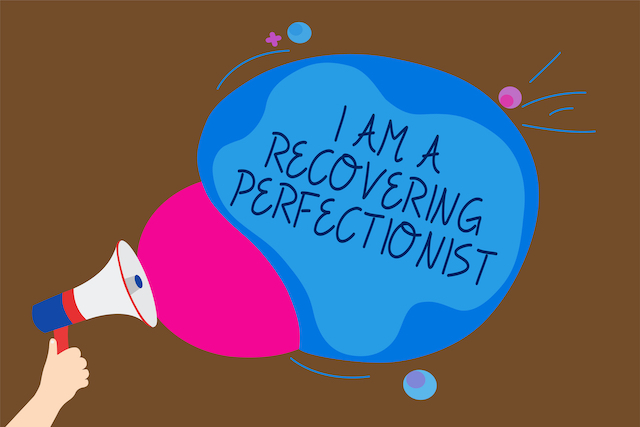
    Hello, I’m Kortney, and I’m a recovering perfectionist.

    Like so many of us, I spent the greater part of my life believing that unless something was perfect, it wasn’t good at all. There was really no in-between. If it wasn’t perfect, it was a failure.

    One of the problems with perfectionism is that it’s common to believe it’s a positive thing. In our society, people tend to value it. If you’re someone that aims for perfection, you must be accomplished. Driven. Smart.

    Have you ever had a sense of pride over being called a perfectionist?

    I have.

    Have you ever thought about why?

    Speaking for my own experience, when someone called me a perfectionist, I felt like even though I didn’t believe I was perfect, it meant that they were perceiving me as being perfect. They saw me as being one of the best, or as someone who was talented. It was validation that I was seen as someone who was good at things.

    My rabid thirst for this sort of validation fed the perfectionist machine for years.

    If you’re wondering what it means to be a perfectionist, here are a few traits:

    • Perfectionists obsess over mistakes, even when it’s not likely that anyone else even noticed.
    • Their self-confidence depends on being perfect.
    • They think in black and white—things are either good or bad. Perfect or failure.
    • They have unrealistic expectations and crazy-high standards for themselves and beat themselves up when they don’t meet them.
    • They put up a front that everything is perfect, even when it’s not, because the thought of someone else seeing their imperfection is unbearable.
    • Despite their quest for perfection, they don’t feel anywhere close to perfect.
    • They can’t accept being second-best at something. That’s failure.
    • They spend excessive time on projects because they’re always perfecting one last thing.
    • They spend a lot of time searching for external approval.
    • No matter what they do, they don’t feel good enough.

    At one point in my life, all of those bullet points described me well. I wasted so much time worrying about approval and validation so that I could feel like I was awesome. But I never felt even close to awesome. I never felt good enough at anything.

    Sure, there were times when I felt like I was good at something, but then I had to raise the bar. Just being good at something wasn’t enough. There was always another level to reach. The bar kept getting higher and higher, which isn’t necessarily a bad thing for people who are striving to make improvements in a healthy way, but for a perfectionist whose self-worth hinges on reaching the bar every time it’s raised, it’s not a positive.

    It was exhausting.

    After a lot of struggle in my life, I knew I needed to explore my perfectionist ways and find a way to be more compassionate toward myself. Perfectionism was holding me back from loving my life. And to be honest, I don’t think I intentionally set out to rid myself of the perfectionist mentality specifically. It came as a byproduct of a great deal of other personal work.

    I began to realize that I had many beliefs that were etched into my brain that weren’t helpful. Beliefs that I never thought to question. These beliefs also severely hindered my ability to be happy and to live the life I wanted to live.

    We all have belief systems that we don’t really think to question. We’ve grown up with them. We’ve learned them from the media, culture and society. But if we actually take a step back to notice that these thought patterns that inhibit our ability to grow and progress are there, we can start to question them.

    Some common limiting beliefs that keep people stuck in perfectionism are:

    • People reward me for having high standards. They are impressed and I gain approval.
    • The only time I get positive attention is when I am striving for big things or achieving.
    • If I make a mistake, I’m a failure.
    • If only I can make so-and-so proud with my achievements, he/she will love me, and I’ll be happy.
    • If I fail, I am worthless. Failing is not okay.
    • If I don’t check over everything multiple times, I’ll miss something and look like an idiot.
    • My accomplishments are worthless if they’re not perfect (i.e.: receiving a “B” instead of an “A” in a class is a failure),
    • If others see my flaws, I won’t be accepted. They won’t like me.

    The good news is that thoughts like these are examples of faulty thinking—faulty belief systems that keep you stuck in perfectionism. By identifying the specific thoughts and beliefs that keep you stuck in perfectionism, you can start to build new, more helpful thought patterns and belief systems.

    I also stumbled upon another secret for overcoming perfectionism.

    The secret is that I became okay with being average. I worked to embrace average.

    If you’re a perfectionist, you know that being called average feels like the end of the world. It’s a terrible word to hear. My inner critic was not having it. “How dare you even think average is okay?” it hissed.

    As a teenager, a twenty-something, and even a thirty-something, my world would have come to an end if I had accepted being average.

    But sometimes life has a way of making you better.

    Life has a way of putting things into your path and it presents opportunities for you to grow. Everyone has these opportunities at one point or another, but you have to notice them and choose to take advantage of them.

    There was a time not too long ago when I went through a really difficult time and had to rebuild my life.

    Looking back, I can see that the situation was an abrupt “lane-changer”—a push in a new direction to make a change. I was not living my best life and I wasn’t meant to stay stuck in that lane. I struggled with depression and anxiety, much of which was triggered by perfectionism.

    By working on thoughts like the ones I listed above, and working to accept lowering my standards—the ones that told me that achievement and success were the only way I would be worth anything—I gradually learned to replace my old standards with this one:

    Just be happy.

    Learning to make this my standard led me to a place where I am okay with being average. Eek! I said it. Average.

    Today, I can honestly say that I’m pretty happy with being average. Do I like to do well? Sure. But it doesn’t define my self-worth. While it’s created more space for me to fail, at the same time it’s created the space for me to succeed.

    The difference is that my self-worth isn’t tied to whether I succeed or fail.

    Here’s how I look at it:

    I’m really good at some things, but I’m not very good at other things. You are really good at some things.  And you aren’t very good at other things too. The good and the not-so-good all average out.

    At the end of the day, we are all just average humans. We are all the same. We’re humans trying to live the best life we can. We are more similar than we are different.

    Don’t you think that if we all ditched our quest to be perfect, or better than everyone else, we’d feel a little happier? Don’t you feel like we’d all be a little more connected?

    If you struggle with perfectionism, I invite you to take a look at the list of limiting beliefs above and see what resonates for you. What evidence can you find that can disprove these limiting beliefs? What would you like to believe instead? Try on those new beliefs and build them up with new evidence to support them.

    And along the way, work on accepting that you are enough, even if you’re average.

  • If You’re Insecure and Afraid of Rejection Like Me…

    If You’re Insecure and Afraid of Rejection Like Me…

    “How brave the moon shines in her skin; outnumbered by the stars.” ~Angie Welland-Crosby

    I have this reoccurring dream where I am about to teach a yoga class. I stand to teach, and no one is paying any attention to me. They are all distracted or in deep conversation with one another and have no interest in engaging in the class.

    As I begin, one by one the students get up and leave. I am mortified and discouraged, though I continue to teach anyway.

    I wake up from the dream with a sinking feeling in my stomach and heaviness in my heart. Rather than indulge and spiral into sadness, I turn directly toward the aching.

    “Where is this coming from?” This is the question I ask myself as I dive into self-healing. Just as the body has the ability to heal itself on a cellular level when injured, we too have the ability to heal our emotional wounds.

    I have never been fired, from a job or relationship. I have always been the one to leave. This is not something I take pride in, rather I see a pattern that has developed over the course of my life since childhood.

    When I receive criticism, my insecurities are triggered. It must be because I am not good enough, as an employee, teacher, friend, partner. Clearly there is something wrong with me. My instinct in these situations is to run, to leave before anyone discovers my flaws, before I feel more hurt.

    I fear being abandoned or rejected, so at the first sign of conflict I retreat, like a turtle that goes into its shell the moment it senses danger.

    When I look back at my past I am left with overwhelming grief. As I peel back the layers further, I see more clearly the origins. Beliefs deeply rooted in childhood and cemented in adolescence. False beliefs of being replaceable, unworthy, not enough.

    Underneath the protective armor is an extremely sensitive and hurt little girl.

    A girl whose older sister locked her out of her room and refused to play.

    A girl who was teased by neighborhood kids for being weird.

    A girl whose best friend started an “I hate Shannon club” in fourth grade.

    A girl who always saw her friends as smarter, prettier, cooler, and more likeable.

    A girl who was desperate to be accepted.

    These deeply rooted wounds need proper acknowledgement in order to be healed.

    When we feel vulnerable or hurt, we tend to close off our hearts, gossip, turn to anger, or run away rather than address the discomfort. None of these behaviors will heal our emotional wounds. They are only temporary means of alleviating the pain. In order to break these old, conditioned patterns, first we must identify where the feelings are coming from.

    When We Feel Rejected

    Let’s face it, people can be mean. We ourselves can be mean.

    It can be hurtful and scarring to be left out, rejected, or on the receiving end of another’s harsh comments or behavior. But often, it isn’t as personal as we think. Often, others hurt us because they themselves are hurting. Perhaps it isn’t even intentional and the other is unaware they are inflicting pain.

    When we look beneath the surface of rejection, we ultimately discover feelings of fear and abandonment. But we can choose to change how we think about rejection, and consequently, what we feel.

    While we can’t control what other people think, say, or do, we can control how we receive and perceive. We get to choose whether we allow another’s comments to define who we are or how we feel about ourselves.

    There are some situations where walking away is the right thing to do. But not out of fear, spite, or in defense, but rather from a place of surrender and acceptance.

    We can redirect our energy to people and situations that are positive and enriching. Mutually loving relationships and situations where we treat one another with kindness, support, and encouragement. Where, rather than tear one another (or ourselves) down, we lift each other into the highest version of ourselves.

    There are countless situations that can trigger feelings of unworthiness, but I’d like to focus on two specific ones that have been particularly challenging for me.

    When a Relationship Ends

    Whether we chose to leave or not, there is often a deep sense of loss when a relationship ends. These feelings of loss can reappear at any time after we think we have moved on, especially when we witness someone else taking our place. A place that once made us feel special, valued, adored.

    I experienced this as I watched my ex’s new girlfriend move into a home that was once mine. The feeling of being replaceable. Even if ultimately, a relationship isn’t good for us and is no longer what we want for our future, watching someone move on can bring up grief and insecurity.

    Rather than indulge in these feelings, we can choose to be happy for the other. Happy they have found love and comfort in someone else. Happy at their own ability to heal and move forward with their life.

    Not always easy when we haven’t found love or comfort in another, we haven’t healed, and we aren’t moving forward with our own life. What makes it even harder is that we often reject ourselves when we feel rejected by someone we loved. The antidote? Focus on finding love and comfort in ourselves to reinforce that we are still worthy of love, and we don’t deserve to be or feel rejected—by anyone, including ourselves.

    When We Compare Ourselves to Others

    Jealousy is a destructive emotion and can be triggered by an off-hand comment, a sideways look, or a social media post.

    We are happy and content one moment, the next our ex updates their Facebook status to “in a relationship,” or we see a post from someone who appears to be doing better in life, and we are sent into a downward spiral that involves stalking profiles, comparing ourselves to another, anger, questioning our decisions, feelings of regret… the list goes on.

    In order to overcome the green-eyed monster, we must stop comparing ourselves to others and see our own unique gifts.

    Often it is the desire to be someone special that drives unhealthy behavior and thought patterns. Consider this: You already are special. You already are good enough, just as you are. Without having to change or do anything different. You can stop trying to be good enough and allow yourself to just be.

    When I recently experienced conflict in an interpersonal relationship, I was talking with my mom and I said to her in defeat, “I just try so hard to be a good person.”

    She said to me, “Well then stop trying. You already are a good person. You don’t have to try, it’s who you are.”

    The truth is, no one has come before you or will come after you with your exact qualities. You don’t need to prove yourself to anyone else or to yourself. The fact that you even exist is a miracle. What a gift. Allow who you are to shine, and allow others to shine, without insecurities, jealousy, or fear. Our true gifts are revealed when we recognize we are each perfect just as we are.

    It’s Time to Write a New Story

    Those old stories from childhood, the hateful words on the playground or rejection from others, they don’t fit any more. They never did. We unfortunately allowed them to mean something about us and replayed the same story over and over again. As adults we have the ability and awareness to see and break these old patterns.

    Just recognizing our old stories is a great first step. The next step is to create new stories that better align with who we want to be and how we want to feel. And the last step is supporting those new stories with our perceptions and interpretations.

    Instead of interpreting a breakup or layoff as proof of our unworthiness, we can tell ourselves there’s something better out there for us—and we deserve it. Instead of expecting people to reject us, we can focus on all the reasons we’re worth accepting, and recognize that if they don’t, it’s their loss.

    We can also help ourselves engrain these new stories by surrounding ourselves with people who support, value, and encourage us.

    As I continue on my own path to healing, I am so grateful for an amazingly supportive boyfriend and network of friends and family (including my sister, who has become my best friend over the years), as well as an incredible puppy who teaches me the meaning of unconditional love daily (I highly recommend a dog for healing emotional wounds). Even when I retreat or fall into old patterns, I continue to be surrounded by people who accept me, challenge me, lift me, and inspire me to be the best version of myself.

    My new dream goes like this: I show up to class to teach yoga and students arrive ready and willing to practice. They are engaged and excited to be there, and so am I. I am no longer insecure and fearful of rejection or abandonment. In this new dream, I give everything I have and allow my gifts to shine. In doing this I give others permission to do the same.

    We are the authors of our own story. The kind of story where we get to live our best life. We can rewrite our story if it no longer fits as we continue to grow and evolve on our path. What will your story say about you?

  • 8 Ways to Stop Worrying About What Other People Think of You

    8 Ways to Stop Worrying About What Other People Think of You

    “You can’t force anyone to value, respect, understand, or support you, but you can choose to spend your time around people who do.” ~Lori Deschene

    It can be paralyzing.

    The worry about what other people think about you, I mean. That worry can hinder you from pursuing your dreams. It can stop you from expressing your true nature and stand in the way of the life you so badly want to create.

    This worry can easily get your mind wandering to dark places and trigger feelings of insecurity, anxiety, and self-doubt. When it has a grip on you, you do anything to avoid rejection, ridicule, and potential embarrassment. Better to be unseen than negatively judged, right?

    You know that you shouldn’t worry about what others think of you. But that’s just easier said than done.

    For a long time, I felt stuck because I was afraid of other people’s opinions. Due to this fear, I was terrified of pursuing a new career path. Eventually, I reached a point where I couldn’t take it anymore.

    I knew I had to deal with the fear and worry of other people’s judgment, or I wouldn’t be able to live the life I wanted. And I was not willing to compromise on that—neither should you.

    To help you move past the fear of other people’s opinions, I’ve put together a list of ideas that have helped me. Use this list as your go-to whenever your worries about what other people’s opinions get the best of you.

    1. Know that you’re not a mind reader.

    I used to assume that I knew what other people thought of me. But assumptions often lead to bad conclusions.

    When I left my corporate job to travel and pursue my own entrepreneurial endeavor, I was afraid of ex-colleagues judging my decision. I thought they would see me as naive, reckless, or foolish for making that decision.

    Turned out I couldn’t have been more wrong. During the following months and years, many of them became my greatest supporters! Some said I was brave for walking my own path, others opened up about their desires to do something similar. The takeaway here is: You never know what people think about you unless you give them a chance to speak.

    2. Understand that it’s never about you.

    This has been a game-changer for me! Hear this: Another person’s judgment about you is never about you—it’s about them. It’s a reflection of their fears, limitations, and perceptions.

    One of the closest people in my life told me that I was making a mistake by quitting my corporate job to start my own business.

    First, I felt that he judged me and didn’t support my decision. Later on, I realized that his reaction was a mirror of his beliefs, fears, and view on the world. For him, staying at a corporate job meant security, safety, and a good life.

    When I realized that he always had my best interest at heart, I felt nothing but compassion and love for him. To make sure you navigate your choices right, ask yourself: What do I want? What is the right thing for me to do?

    3. Stop judging yourself.

    Many times, we’re so aware of what we find awkward about ourselves that we look for others to confirm our beliefs. So, the judgment we fear from others is really a reflection of what we judge ourselves for. Sneaky, right?

    Be honest with yourself, what do you judge yourself for? It can be related to your health, career, relationship status, living situation, or looks. Then ask yourself why you judge yourself for this. What beliefs are driving the judgments? Do you believe it’s wrong to prioritize career over family? Do you believe it’s bad to be the center of attention?

    Once you challenge these beliefs and stop judging yourself, you’ll be able to make peace with who you are and the choices you’ve made, good and bad. Once you’ve reached acceptance, you won’t fear the judgment of others because you stand behind yourself.

    4. Stop judging others.

    The more we judge others, the more we tend to believe that they judge us. It’s a vicious cycle. So, instead of judging others for their choices, character, religious views, ways to dress, or something else, choose to be curious about the differences and diversity.

    Ask yourself what you can learn from this person? Why this person is in a certain way? Maybe there are reasons for it. As Wayne Dyer said, “When you judge another, you do not define them, you define yourself.”

    5. Use your worry as guidance.

    What is it that you worry other people will judge you for? Perhaps it’s your job position, living situation, relationship status, insecurities, looks, or intelligence. That worry tells you there’s either something you need to accept and make peace with or something you need to change.

    For example, maybe you can start pursuing a new career path that feels more aligned with your values. Or maybe you can choose to view your situation today as a stepping stone to something better. When you approve of yourself and your life, other people’s opinions won’t matter as much.

    6. Expect reactions from others.

    Instead of trying to avoid getting reactions from others, expect them! If you try a new plant-based diet, change career paths, or decide to go all-in on that geeky hobby of yours, expect people to say something about it. And take it as a good sign because it means you’re doing what’s right for you, even though people will have opinions about it.

    As Aristotle said, “There is only one way to avoid criticism: do nothing, say nothing, and be nothing.” And that’s not you, right? You are here to live to the fullest, follow what excites you, and be the incredible person that you are.

    7. Focus on long-term happiness.

    Judgment and criticism from others can hurt. But it will never hurt as much as regret. Do you know what most people regret on their deathbed? This: “I wish I’d had the courage to live a life true to myself, not the life others expected of me.

    Be willing to take judgment and criticism in the short term, in exchange for what will serve you long term. Focus on living life true to yourself and not on the life others expect of you.

    8. Approve of yourself.

    Acceptance of yourself is what it all comes down to, right? Once you approve of yourself, you stop worrying about other people’s opinions. You have the one approval that matters most: your own.

    Look at your imperfections, flaws, and the choices you wish you had made differently and accept it all. Know that you are enough. Know that you’ve done the best you can, from where you once were. We all want you to be the person you are meant to be—including the quirks, flaws, and imperfections.

    Living with the worry that other people will judge you is hard. It can keep you stuck, paralyzed, and separated from the life you want to live.

    It’s time to take your power back. Use this list, choose one or two points that resonate, and practice them. Then, once you’re ready, come back to the list and choose another point.

    Stop living in accordance with other people’s expectations and start living life true to yourself.

    Now, go out and show the world what you’re made of. We are waiting eagerly.

  • What You Need to Do If You Feel Insecure in Relationships

    What You Need to Do If You Feel Insecure in Relationships

    “The key is in learning how to live a healthy, satisfying, and serene life without being dependent on another person for happiness.” ~Robin Norwood

    When it comes to relationships, people can call you “crazy” and “needy” all they want. I can only guess some people don’t know how crazy it feels when every cell in your body feels like the only way to breathe is to stop this person you desire from abandoning you right now.

    You may not realize it as the emotions hijack your mind and body, but unconsciously, you only have one job in that moment—to stop history from repeating itself by keeping this person close. And so, you do and say everything you can to try and control the situation: the incessant texting, questioning, crying, overthinking, over-pleasing, phone checking, and the list goes on.

    Of course, in most cases, this person cannot leave you because they were never with you in the first place, either physically or emotionally. Either way, as soon as you get even the slightest hint of rejection and abandonment, you experience what I call “The Emotional Takeover.”

    Now, not for one second am I defending the unhealthy behaviors that you have in place in that instant, but I do understand them.

    Because it used to be me. I used to feel so insecure when I felt there was even the slightest threat to my relationship, and I would become preoccupied with ‘fixing’ the situation in any way I could. It was draining, upsetting, and hugely unsettling.

    I know you are not crazy because who you are in those times is not you. You must know that, while it is you that has not yet learned how to break free from that toxic pattern, how to walk away from people who are no good for you, or the art of self-soothing, it is not you.

    Sadly, you might not realize that, because it is likely you don’t know who the real you is. You’ve lost yourself to the fear of abandonment.

    If you relate to this, it is highly possible that, like me, you fall into the attachment style that is “anxious attachment.”

    We tend to experience anxious attachment when we had inconsistent love as a child. It is likely your relationship with your caregivers was unpredictable. As an adult, you struggle with feeling secure in relationships and may find that you experience a ‘need’ to be wanted and intense emotions of anxiety and jealousy when you sense this is being taken away from you.

    In a bid to keep people from leaving you, even the wrong ones, your internal blueprint is designed to put others first, to take on their feelings as your own, to prioritize what they want and need, to ‘fix’ them, to mother them, and to do what needs to be done in order to never be abandoned.

    I can honestly tell you the science of adult attachment styles has transformed my life. Not only does everything now make more sense to me, but I now understand that my perception of love was totally warped.

    For the anxiously attached, it’s hard to know what love is. Chances are, you haven’t had much experience of stability in love, especially from those you desired it most.

    It’s probably fair to say you’ve felt intense feelings you believed to be true love. You may have even felt this with one person and become fixated on them, or you may have felt this many times in your life, with different people. Yet there is always a question mark over it because deep down, you know that the love hurts and/or is not reciprocated.

    That is often what makes this attachment style so hard: the excruciating moments when you know you are being treated poorly, the times you consider you are in the wrong relationship, and the lack the belief you could ever leave.

    What makes it even tougher is how skilled you are at pushing that truth back down and fully convincing yourself that this person does love you back, and if you just work harder, it will eventually turn it to the right relationship.

    Often, the anxiously attached are attracted to the avoidants (hot and cold, suddenly not interested, giving you crumbs), and this makes for an incredibly difficult time. It’s not a match made in heaven because you have very different intimacy needs, and much to your dismay, you cannot change the way they feel about you or love.

    Trust me, I know how much that hurts to hear, but it’s best you hear it before you meet the next one, or the same one comes back around (again).

    I have come across many others with the same attachment style as me, all with a very distorted view of what love is, and I can’t help but notice just how much we love love.

    We love it so much, we think that without it, we are not worthy. Without it, we cannot be happy.

    That is why you settle for people who don’t meet your needs or chase the person that doesn’t see you or never allow yourself time to just be on your own.

    As impossible as it sometimes feels, I can tell you with absolute certainty that you can break free of this pattern.

    I’m not saying I’m perfect, and that I don’t feel the feels or drop the ball from time to time, but I now know how to manage the intense emotions, how to recognize the unavailable guy before I’m in too deep, and how to live life as securely as possible (note: secure attachment is considered the healthy style).

    You are no different than me; you too can tap into the mind-set of the secure attachment style so you can be happy on your own, invite in sustainable love, or where possible, save your relationship.

    Below, you will find the top seven tips that have helped me to become happy in myself and more secure in my relationships:

    1. Try to resist overthinking.

    If you’re insecure in love, one pattern we have in common is overthinking. Thinking about the potential of the person you ‘love’, overthinking why it ended, overthinking why they haven’t texted, overthinking why they canceled on you, overthinking their latest Instagram post, overthinking how you can get them back, overthinking what they really feel… overthinking.

    Your brain feels threatened, and you are trying to think of every single reason this could be happening and of every single solution to solve it. But it’s an impossible job because there is nothing to figure out right now. Remind yourself that the stories you are making up are adding to your stress, and as much as you can, be in reality rather than wasting your precious time searching for closure or answers that do not exist.

    2. Beware of chemistry.

    You know when you’re with someone and you have that rush of love and excitement even though you hardly know them or they are treating you poorly? That feeling is not love.

    That feeling is what you perceive to be love, but it is not love. It’s the rush of an activated attachment system, the feeling of familiarity. Feel like you’ve met this person before? You have, in many of your other relationships from childhood through to now.

    It’s your job to re-wire your pathways to see that this feeling is not love. That ‘chemistry’ you feel must instead become your warning sign that this may be the kind of person you need to consider backing away from.

    3. Give up on the love you desire most.

    This is usually the love of a parent. No matter how many of these people you attract, they will never be the love you desire the most. I know that’s sad, but I can’t sugar-coat it for you (us). I’m not saying miracles don’t happen, but I just think you have so much potential in this life, and seeking that love and approval is holding you back.

    We all know how parents and caregivers ‘should’ love, but it is simply true that not everyone is able to or knows how to. Rather than try and fix the past or change your past experience with love, your time is better spent figuring out a more realistic and secure view on love. You cannot change your past, but you can influence your future.

    4. Pick yourself.

    If you ever felt in any way that one or both of your parents did not pick you, you may find you have a mission to get picked now.

    Ever feel like you are second best to the person you desire? You are attracted to that. On a subconscious level, you have found a person where you can continue your fight to be picked.

    Deep down, way beyond any conscious level, you believe that if you can get this person to pick you then it undoes the very abandonment that got you here in the first place.

    As a child, I wanted to be picked over drugs. As an adult, I found people who were ‘too busy’ with work, sports, and/or drinking. I spent my time trying to make them pick me because I thought I needed that to prove my worth.

    Learning to pick myself and quit seeking that external validation meant I am able to live my life confidently and not settle with anyone that has a highly different values system to me.

    5. Master the art of emotional intelligence.

    Here’s the thing, those with anxious attachments styles do possess a very unique skill in noticing when there is a slight shift or indication that there is a threat to the relationship. As soon as that is noticed, you get triggered, the old familiar feelings take over your whole being, and your only mission is to do what you can to save this relationship.

    You must come to understand that the emotion you feel is simply a stored memory from your past. This is your bodily response to abandonment.

    Take time to notice where you feel it in your body, and what happens to you physically, and name the emotions that you feel in those times. These symptoms should become your greatest warning sign that your anxious attachment system is activated, and it’s time to soothe yourself, the same way you would a child who is feeling overwhelmed because their mother has popped to the kitchen for five minutes.

    6. Own your needs.

    It’s time to get real about your own needs because I have news for you, your needs count too.

    Life isn’t enjoyable for anyone that goes through it without their own needs being met.
    So, get to work and write out what needs you have in your relationships.

    Not only will this exercise highlight to your subconscious mind that you actually have needs, it will make it more likely that you admit it to yourself when they aren’t being met—so when you do find yourself back in the unhealthy pattern, it will be harder to lie to yourself about what this person brings to the table and how real this relationship really is.

    It will become less likely that you will stay in the situation when you are working on this kind of conscious level and understanding.

    7. Create something bigger for yourself.

    I call this “Following Your Fire.” Whether you know it or not, you have a purpose, you have desires, and you have unique gifts to bring to this world.

    When it comes to experiencing a real level of contentment and being able to walk away from crumbs, finding what lights me up as an individual has been the greatest move I have ever made.

    I created a life that I care about. I nurtured the right relationships, I found the activities that I truly enjoy on a soul level, and I followed my deepest dreams that I had otherwise buried. While a healthy love is something I desire, I know for sure that my life is way more than that. That makes it so much easier to walk away from what does not serve me.

    ***

    When you begin to practice the tips above, you likely won’t see progress straight away, but every now and then you will have monumental moments where you’ll see your growth and give yourself a high five.

    When you get to know your attachment style and build a life that you adore, your confidence and self-worth will grow, and you’ll find yourself at a point where you won’t sacrifice your happiness for a person that doesn’t see your value.

    You’ll decide that being single is nowhere near as bad as the anxiety that comes from the unhealthy relationships you’re used to. The fear of spending your life with someone who cannot meet your needs will become scarier than being single.

    We may always be anxiously attached, but we can learn to live a secure life. So what are you waiting for?

  • I Will No Longer Allow My Doubt to Convince Me I’m Not Good Enough

    I Will No Longer Allow My Doubt to Convince Me I’m Not Good Enough

    “Whether you think you can, or you think you can’t, you’re right.” ~Henry Ford

    Self-doubt is a killer. It may start off quietly in the back of your mind when you’re a kid. You may not even notice its presence, but if you let it, it can keep growing bigger and bigger like a balloon that never pops.

    “Did I make the right decision?”

    “Should I have said that out loud?”

    “Should I apply for that job?”

    “Am I good enough?”

    For most (including myself), it’s that last question that haunts you no matter what you’re trying to do.

    Growing up, my self-doubt tiptoed into my mind by silently questioning my dancing. After I satisfied my inner critic by quitting dance practice, it moved on to question my grades, my personality, and everything else about myself.

    Fast-forward to my mid-twenties, and my self-doubt grew considerably in size. Amped with a larger space in my mind, my self-doubt attacked my writing and my job as a writer and questioned if my articles were even worth reading.

    The belief that I wasn’t good enough stopped me from sharing any of my work with my friends and family. It stopped me from even looking at my own articles.

    Over the next few months, I went on to write about twenty opinion pieces on global politics, none of which were a source of pride for me, because that is what I told myself.

    A few months after I quit my job to focus on personal health issues, I decided to go back to the website that published my work. “Maybe I can look at my writing with a fresher perspective,” I thought.

    Unfortunately for me, the company that I’d worked for decided to change their business model and redirect their efforts to create an app. All my articles had been wiped clean. Months of hard work, research, and slaving away over 700-word articles vanished at the click of a button.

    “Why didn’t I save any of this?” I asked myself. Because my self-doubt told me it wasn’t worth saving.

    It was only then that I realized, every hobby, passion, or profession I’d tried had been stunted by my own debilitating inner monologue. Moreover, I had failed to recognize that even if my articles weren’t “good enough” by someone else’s standards, they were still mine. They were still a product of my mind and tangible proof that I had ability to create something despite the obnoxious voice in my head.

    At first I thought, “What am I doing that keeps making that bubble grow bigger?” But I already knew the answer. I was feeding it. Right from the moment I quit dancing, my doubt bubble began growing bigger and bigger till it became the only thing I knew.

    I’m currently in the process of restarting my work, hobbies, and passions, with a different mindset. Here are some of the things that have immensely helped me change the way I perceive myself and my work.

    1. Keep showing up.

    Your doubt grows bigger every time you let it win. Every passion you give up, every offer you decline because you think you’re not equipped to handle it, only fuels the machine that produces more self-doubt.

    Stop yourself from going round and round the vicious cycle by understanding that even if you’re not good at something today, that does not mean that you will not be good at it tomorrow. I can’t stress enough the importance of keeping at something every day. No one starts at their best; they build to it. So show up, do it again, then do it again, and your defeatist inner voice will quiet over time. Nothing slows down that inner monologue faster than being aware of its presence and choosing to ignore it.

    2. Focus on your successes, not your failures.

    Many of us fail to see all we’ve accomplished in our lifetime because we let our failures eclipse our achievements. For me, my mind would shine a light on the missteps in my dance practice, the mistakes in my writing, pinpointing and ridiculing even the smallest of grammatical errors.

    Only upon closer inspection of my own thoughts did I begin to notice the pattern of ‘selective memory,’ where the humiliating, humbling, and haunting memories of failure and shame were constantly at the forefront of my brain.

    Now, I consciously and purposefully shine a light on the hours of effort, focus, and perseverance it took me to even get this far. I remember that, good or bad, I didn’t give up. Like everything else, it takes a bit of practice. The reward? The warmth of the realization that you are not your mistakes.

    Instead of reminding yourself over and over how you’ve fallen short, hold on tightly to the things you’re proud of. Keep reminding yourself of the things you’ve excelled at, because your focus will guide your choices.

    If you berate yourself for your failures you’ll feel too scared to try anything new. If you celebrate your successes you’ll feel empowered to keep doing your best.

    3. Trust the journey.

    For me, comparison has always been the biggest killer of ambition. When I think I’m not good enough, it’s often because I’m comparing myself to someone who’s made strides in their own journey.

    What I fail to realize, every single time, is that everyone’s journey is different. You don’t know where someone’s been and you also don’t know where they’re going. You don’t know how many ‘failures’ came before their success, or if they even feel successful in the life they’re living now.

    As cliché as it sounds, trusting your journey (failures and all) is an integral part of dissolving self-doubt. All you need to do is focus on moving forward in your own journey, trusting that you’re always where you need to be, moving at the best pace for you, learning the lessons essential for your own growth.

    If you stop yourself from moving just because someone else seems to have gone further, you will never know how far you can go.

    I lost my articles because I didn’t see the value in my work, because I thought it wasn’t good enough. I now know that they were proof I was trying—which is the only way to learn and grow. And realizing I’m learning and growing helps me move forward in spite of my doubt.

  • What Helps Me When I’m Tempted to Compare Myself to Others

    What Helps Me When I’m Tempted to Compare Myself to Others

    “A flower does not think of competing with the flower next to it. It just blooms.” ~Zen Shen

    Wow, you’re a bit of a loser compared to this guy, aren’t you, Will?

    He’s winning at life—great job, great house, obviously making better money than you.

    I sigh deeply and continue scrolling.

    He takes care of himself, no Buddha belly, unlike you.

    It’s true. I begin to feel like a useless lump. I keep scrolling.

    No yellow and crooked teeth, either.

    “His teeth are pretty straight,” I think to myself, staring at the guy’s mouth on the screen.

    Damn right, they’re straight, like tic-tacs coming out of his gums. Perfect and white, not like yours.                                                                                                                     
    I sigh once again and continue to scroll on Facebook.

    Above is a typical dialogue between what I refer to as my Gremlin and me.

    Does this voice sound familiar to you?

    I’m talking about the troublesome terror that pops up like an unwelcome guest at the front door.

    This nasty voice that loves to commentate and condemn—the voice that leaves us feeling unworthy and inferior, if we listen long enough. This, my friends, is the Gremlin of Self-Comparison.

    I Imagine how different an exchange would unfold if it were another person (outside of my head) giving me the bashing.

    If, for example, I was sitting on a park bench and a complete stranger walked up to me and said, ”Hey loser,” before pointing out how those around were superior to me. I imagine I’d walk off confused and leave this stranger alone after his unprovoked attack.

    ”Who is he to talk about me like that? He doesn’t even know me!” I would say to myself as I walk off.

    I’d tell myself he must be deeply unhappy to treat other people this way, and I certainly wouldn’t take his comments to heart.

    Most of us wouldn’t. We’d either ignore such criticism or defend ourselves.

    So, here is the million-dollar question: Why do we accept talking to ourselves like this?

    My belief is this: because it feels real, and we believe we are the voice. The truth is, however, we’re the listener, not the speaker.

    But the voice of the Gremlin seems like a credible source. I mean, the voice comes from inside of us, why wouldn’t we trust it?

    It helps to understand why we compare in the first place.

    We are programmed that way. Comparing ourselves to others is a natural and inherent instinct. In prehistoric times this innate ability allowed us to swiftly analyze others and identify possible threats, yet in today’s society these quick critiques could be causing harm rather than preventing it.

    Let’s face it: Facebook and Instagram newsfeeds are perfect catalysts for those episodes of self-pity and dissatisfaction, when we’re staring at our phone screens alone late at night, admiring how well everyone else seems to be doing.

    We have to wonder, who are the newsfeeds feeding?

    Could it be our Gremlins? Our insecurities? Our ego?

    It dawned on me a while ago that I will never win playing the game of self-comparison.

    No matter how much money I make, there will always be someone richer.

    Even if I get in better shape, there will always be someone fitter and stronger.

    But just knowing these things doesn’t mean I am able to stop comparing myself to others. I’ve had to accept my Gremlin is here to stay.
    So what’s the alternative to trying to win against the Self-Comparison Gremlin?

    I do my best to live by the following three mantras, as they serve me well in living with my Gremlin. Not “beating” or “silencing” my Gremlin. Living with him.

    1. If I’m going to compare, I will compare who I am today with who I was in the past.

    We’re forever growing, learning, and achieving. However, we fail to recognize and celebrate this when we’re listening to the Gremlin and concentrating on other people’s lives. Compared to who I was in the past, today I’m happier, wiser, and stronger. I’ve overcome anxiety, debt, disappointments, and heartbreak, and you know what? I’m still here.
    We’ve all had challenges and we’re all still here. When we rate ourselves by the accomplishments of others, we overlook our own successes.

    There’s one risk in comparing our current selves to our past selves: When revisiting the past, I may recognize that some areas of my life were better previously than they are now. I then have a choice. If I want to improve this area, I’ll set a goal. If right now I don’t wish to change, I’ll accept where I am. But what I won’t do is focus on everyone else’s progress and feel bad about myself as a result.

    2. The people I’m comparing myself to are not flawless.

    No matter how infallible and perfect others may seem, I’ll bet good money they have their Gremlins too. We are all equal in life. I’m no better than anybody else but I’m certainly not any worse. It’s important to remember that social media is only a highlight reel.

    We all know real life is far more messy, raw, and flawed.

    This is the beauty of being human.

    3. I love and accept myself as I am right now (including my Gremlin).

    Our Gremlins mean us well. Really, they’re trying to protect us by identifying areas where we may be “falling behind.” They’re only cruel because they’re scared—that we’ll somehow miss out if we don’t keep up with other people.

    I named mine Colin. What I find helpful about naming the voice is I’m able to check in and ask, “Okay, who is talking up there? Is this my trail of thought or is Colin going off on one?” The more I learn to love Colin and appreciate his good intentions, the less he pops up. When he does, I thank him and send him a little love for being a part of me. I let him know I hear him, although I may not choose to listen.

    I do my best to accept myself as I am, with my Buddha belly and less than perfect teeth. Because our imperfections make us who we are. My new favorite word currently is flawsome—meaning we are all awesome despite our flaws. Cool, right?

    Wouldn’t life be boring if we were all exactly the same? Plus, if we were all exactly the same, perhaps there wouldn’t be any more Gremlins, and to be honest, I kind of like mine now.

  • Why Insecurity & Approval-Seeking Lead to Unhealthy Relationships

    Why Insecurity & Approval-Seeking Lead to Unhealthy Relationships

    “Your relationship with yourself sets the tone for every other relationship you have.” ~Robert Holden

    As a child I was carefree and enthusiastic. Aren’t most kids? At some point, though, life began to impact me and to affect how I felt about myself.

    For as long as I can remember, I was a chubby kid. I began using food as a means of coping, and my family didn’t seem to see it as an issue. Coming from an Italian family, food was correlated with love.

    As I moved into my adolescent years, being chubby was no longer “cute,” and other kids picked on me consistently.

    I began to realize the world was not so kind. My peers were mean, and so were some people who should have been mentors. I began to feel isolated and alone.

    I couldn’t understand why people were so cruel, and I began to turn my pain inward. I thought there had to be something wrong with me.

    I began trying to change in an attempt to win people over. I was able to do this easily, largely because I was very giving. Looking back, I realize I was buying friendships. I still know many of those people today, but I’m sad to say they eventually became acquaintances.

    Though I wasn’t attracting bad people, my relationships with them negatively impacted my sense of self because I wasn’t being authentic. I now know that trying to prove our worth to others increases our feelings of isolation and shame, because it reinforces that we aren’t valuable without their approval.

    My dysfunctional relationship with food continued throughout my college years. Eventually, I stopped coping through overeating and began to restrict and over-exercise instead—again, trying to change myself in and attempt to gain acceptance from others.

    Yet I never felt accepted. I continued to attract relationships that were not healthy for me.

    When we feel insecure, we often will attract people who feed into that insecurity.

    In my case, I attracted people who were either emotionally unavailable or critical of me. I would make them a priority, even though I was only their option. Because I had low self-worth, I gravitated toward people who treated me the way I saw myself, and ultimately, felt more alone.

    All my relationships were codependent, and this bred insecurity and pain. If healthy individuals crossed my path, I repelled their love and their support.

    I just wanted to be liked. I just wanted to be loved.

    I married the first person who showed me a taste of what I thought love was, and nine months after we said “I do,” we divorced. I was walking through the script of what I thought was supposed to happen in life, without any connection to whom I was and what I needed.

    Needless to say, divorce was a rough time, but it was also a blessing in disguise. I was forced to get acquainted with myself. I went through terrible financial strain, lost friends, got into some legal trouble, and really just lost myself. But, did I ever have myself? I don’t think I did.

    I never knew what it meant to be a true friend because I wasn’t being a good friend to myself.

    During this time, I became even more scared and lost. I disconnected from people that potentially cared for me, and I couldn’t blame them for ending our friendships.

    Many assumed I was disingenuous because I was constantly shifting who I was around different people. They also assumed I was being selfish and a bad friend when I skipped social gatherings, when in actuality, I only stayed home because I felt anxious, insecure, or depressed.

    Though their rejection hurt, I understand why they didn’t trust me. When we don’t know and trust ourselves, how can we expect others to do so?

    Through years of falling down and getting back up, I learned what it meant to be there for myself. I was looking to others to give me worth, without trusting that I had any.

    One of the hardest things we have to do in life is get to know ourselves and love ourselves through that process.

    Once you learn about yourself, you learn what and whom you need in your life.

    It takes honesty, humility, and accountability to develop a true relationship with yourself. You have to be able to dig deep and recognize your faults. You have to show yourself the loving-kindness you show the people you care about.

    I became very familiar with myself. It took time, and it was painful, but I truly have become my own best friend.

    When we learn about what makes us tick, what motivates us, and what we will and will not tolerate, the right people come into our lives.

    People treat us the way we allow them to treat us. When we love ourselves, we set healthy boundaries with others. We don’t accept, tolerate, or reinforce what is potentially harmful to us.

    So, how do we start loving ourselves? How do we stop trying to change who we are to get other people to like us?

    First, we need to become acquainted with ourselves.

    We need understand our feelings and learn to listen to our intuition.

    We cannot run away from our feelings through self-judgment, numbing, or lashing out. We have to meet our feelings with compassion.

    Moreover, once we hear our intuition, we have to be able to honor that by setting boundaries with others. We cannot be afraid to say no. The best rule of thumb is that saying yes to others should not be saying no to yourself.

    We need to make time for ourselves.

    It’s important to fulfill our own needs. We need to do things that we love and take good care of ourselves. We need to learn to enjoy our own company. We need to learn how to dig deep and be honest with ourselves so that we don’t lose ourselves in relationships with others.

    We have to practice forgiveness.

    We have to learn to forgive ourselves and others. We need to process old wounds and resentments. We have to trust that our mistakes bring lessons, and understand that we are all ever-changing works-in-progress.

    We have to be able to accept where we are right now, while striving for where we may want to be.

    The person at the top of the mountain did not fall there. It’s important to be patient with ourselves through the different chapters of our lives. We cannot compare our beginning to someone else’s middle.

    We have to realize we are beautiful just as we are.

    There is no need for a mask, and no benefit of pretending to be someone you are not. You have nothing to prove to others. Dr. Seuss once said “Be who you are and say what you feel because those who mind don’t matter and those who matter don’t mind.”

    We have to love the parts of ourselves that brings no applause from others.

    Our beauty lies in our imperfections, vulnerabilities, and insecurities. When we embrace who we are and show up authentically, we open ourselves up to real love, relationships, and happiness.

    I have learned that I am worthy of love and acceptance regardless of my past.

    Once we fully grasp this, we only allow people into our lives who reinforce our worth.

    My circle has changed regularly and has become quite small, but the quality has improved greatly.

    When you love yourself, you won’t allow anyone or anything to get in the way of that love.

  • How to Stop Feeling Like You’re Not Good Enough

    How to Stop Feeling Like You’re Not Good Enough

    Woman Smiling

    “Shame is the most powerful, master emotion. It’s the fear that we’re not good enough.” ~Brene Brown

    I’ve always had a temper for as long as I can remember. It would show up at the most innocuous times—when playing a board game with my family, at the dinner table, or sometimes right in the middle of a shopping mall.

    At the time I had no idea why I would get so frustrated, so red-in-the-face with pure rage and an intense feeling of absolute helplessness. Even more puzzling was the triggers to these episodes.

    Usually it involved losing at something as trivial as Trivial Pursuit. Sometimes it was because I was struggling to get my point across and felt dismissed. Other times it could be out of pure jealousy of something or somebody.

    The victims of my ire would be widespread and varied, from my dear sweet elderly grandmother, to my passive cool dude of an elder brother, and many family members, teachers, and friends in between.

    It wasn’t until years later that I began to realize that all these events and triggers had something in common: I didn’t feel good enough.

    Let me give you a shining example that I hope you can relate to.

    I was fourteen years old and in my art class, fooling around as usual. (I later came to realize that was another modus operandi to get attention and distract people from my perceived flaws and real feelings. In later life I even made a successful career as a professional stand-up comedian out of it!)

    We were making the classic piece of art every kid in every school at some time make—sticking macaroni to paper using glue. Yes, it wasn’t exactly Jackson Pollock or Andy Warhol, but I was told it was art all the same.

    The teacher was like a lot of teachers I had, complimentary of the kids she liked, dismissive and frustrated with the ones that challenged her. Guess which category I fell into?

    I empathized with my teacher, as it was easy to get frustrated with me. I could be belligerent, defensive, grumpy, and sometimes downright offensive. However, I never knew why.

    On this particular afternoon, I decided it would be fun to place the macaroni on the paper, but not actually use any glue. When it was my turn to stand up and show my work, the result would be a macaroni tsunami of epic proportions!

    Yes, the kids laughed and I was the clown, the jester, the hero—for a while. Then I became the laughing stock as the teacher berated me for not following instructions. Now I felt angry! From the comedian swept away in adulation to the scolded victim seething with bitterness in less than five seconds!

    I vowed to fail every art class I attended, to make every class difficult for the teacher, to show her she was wrong to dare challenge me.

    The thing is, I was only hurting myself. This is where I learned the idea of projection. I thought I was attacking the teacher, but in reality I was attacking myself.

    It took many years of work, struggle, upset, despair, and hope to get to where I am today. Here’s what I learned to be true: to understand why I was behaving this way, I had to look at when I first experienced trauma.

    Nobody gets out of childhood unscathed. There is no such thing as a “normal upbringing.” We can suffer large scale events that are memorably traumatic, or smaller, more frequent events that are less memorable but no less damaging. I fell into the latter category.

    What I learned is that my mother never really listened to me. She was just too busy. Too busy working nights as a nurse, too busy trying to pay bills, too busy cooking, clothing, and feeding us.

    It really must have been hard for her. At the time I never realized this—of course, which kid does! Now I know that she did her best. She is innocent. I believe every parent is, despite the damage they cause.

    In fact, I realized we are all innocent, and no human being ever sets out to hurt anyone. Our circumstances and experiences make us this way.

    By not being listened to I was denied love, attention, and care. It was a form of subtle neglect. I also learned that when we experience such feelings (that let’s face it, aren’t very nice!) we find ways to cut them off and stop them happening again.

    We do this by deflection. Shutting down, running away, or getting angry are all great deflection techniques that work—for a while. Getting angry was a convenient way of hiding my real feelings. Hiding what pain I was experiencing inside. Hiding the trauma I’d suffered.

    I also learned that humor is another defense mechanism that works well for hiding from the truth. However, like anger, it only serves us for so long. Eventually you can’t operate like that anymore. It simply takes too much energy, costs too many relationships, and feels too painful.

    Now I follow these simple (but not always easy!) rules to help me overcome my struggles:

    1. Recognize triggers.

    When we are triggered, our limbic brain (emotional brain) gets first bite at the trigger. I now know that if I can get past this part of the process, I’ll be fine.

    One technique I’ve learned is to simply excuse myself from any given situation, take stock, and ask myself a few questions.

    These are: What’s the trigger, and what is it triggering? What am I feeling here, and can I allow myself to feel it, understand it, and soothe it? Finally, what’s the truth? Often our emotional brain tells us lies!

    What kind of things trigger you to feel not good enough? Minor rejections? Being around people who seem to have achieved more than you? Receiving unsolicited advice? Recognizing your triggers is the key to taking back your power.

    2. Revisit the situation.

    One of the best ways to bypass and overcome our emotional brain is to revisit what’s making us emotional. Your emotional brain will calm down when forced to see things again in a different light.

    Here’s where you can revisit the situation and calmly and rationally explain how you really feel. This is where you get to be vulnerable and communicate what’s going on for you. The aim here is to be met with empathy.

    The first step is to practice by yourself in the mirror beforehand. So, in a highly charged or triggered situation, immediately take yourself out of harm’s way (for example, make an excuse to visit the bathroom).

    Next, take a few slow, deep breaths, calmly and rationally explaining how you really feel about the situation to yourself in front of a mirror. You can do this out loud (privacy and confidence permitting) or in your head.

    The great thing about this step is the empowerment you’ll feel. By looking inward at yourself and talking to yourself, you learn so much about what’s going on for you.

    If you are still feeling charged, simply repeat the process above again, but a little slower this time and with more feeling.

    When you are ready, take yourself back to the person who triggered you and repeat the process above in front of them. Again, the aim here is to be met with empathy. And because you’ve just practiced this speech and now are more confident and calm, your chances of success will increase dramatically!

    3. Be thankful to your trigger.

    When I’ve gotten the empathy I need, when I’ve been listened to, I’ll thank the person who triggered me. After all, they are never the problem, the trigger is. I’ll acknowledge them and, circumstances permitting, give them an embrace—or at least a smile—with lots of eye contact.

    Here’s where you get to spread your love for yourself onto others. By working on your part of the relationship, you can acknowledge another human being for being understanding, patient, and present for you.

    It’s difficult for people to be vulnerable and show empathy. We’re usually conditioned not to do this through our experiences. So make this step an important one and recognize other people’s bravery. They’ll not forget that in a hurry!

    4. Now forgive yourself!

    Finally, forgive yourself and congratulate yourself for having flaws, for not being perfect, for being simply human. It’s your way of making shame ashamed of itself for ever showing up.

    You see, shame makes us feel not good enough. But the truth is that our greatest fear isn’t being not good enough, it’s actually that we might just be powerful, wonderful, and capable of anything we put our minds to.

    Today, believe what is true. You are an amazing, wonderful, and powerful human being who the planet is lucky to have walking on it.

    Woman smiling image via Shutterstock

  • Why Self-Love Is The Key To Finding True Love

    Why Self-Love Is The Key To Finding True Love

    “The way you treat yourself sets the standard for others.” ~Sonya Friedman

    The moon was shining brightly that balmy summer’s night in the park. He’d arranged a meeting to “sort things out.” Little did he know I’d finally built the courage to walk away. And that’s exactly what I did.

    I was devastated but mostly relieved. Finally, I was free.

    For the longest time I’d craved his love. I needed his approval. I wanted the happy ending so badly.

    Why? I meant something when I was with him. I felt worthy and kind of secure.

    But I wasn’t. I’d given away all of my power. I was dependent on him to feel love.

    And he knew it, so he treated me however he wanted. For him it was a game, and every problem in our relationship somehow always came back to me.

    I was needy, insecure, and completely out of touch with who I was and what I really wanted. I’d sacrificed everything about me in an effort to try to please another being.

    He told me I wasn’t sexy enough, so I read book after book about how to be more feminine and alluring. He told me I was too quiet, so I went out of my way to be outgoing, happy, and bubbly. He told me I took up too much time, so I made other plans and disappeared for a while.

    He could have told me anything and I would have accepted it. There wasn’t an ounce of self-respect in my bones. My misery was born from this very fact.

    I’d let this happen for so long. It wasn’t entirely his fault. My neediness and lack of self-worth had created and perpetuated our problems. But for some reason that I can’t explain, that evening a spark had been ignited and I’d finally had enough.

    I’d reached my pain threshold. I was completely done with feeling miserable, doubting myself, and feeling disrespected. I was so over letting someone else control my decisions, emotions, and self-worth.

    I’d begun to love myself a little more than I loved him. A butterfly was emerging from the cold, dark cocoon I’d been hiding in my whole life. It felt new and scary but ridiculously empowering and liberating.

    In a moment of clarity a string of epiphanies melted my confusion:

    • Deep love comes from within.
    • I’ll never be satisfied just with love from someone else.
    • If I don’t authentically love myself, I can’t expect anyone else to truly love me.
    • The way I treat myself shows others how I expect to be treated.

    That evening I vowed to put myself first and to be kind, loving, and generous with myself. This is the way I wanted to be treated. Out of self-respect and needing a fresh start, I walked away. From that point on it was my intention to live my life on my terms.

    It might sound selfish, but it was completely the opposite. And it eventually led me to the life-long relationship of my dreams.

    What’s The Real Impact Of Neediness On Relationships?

    I wholeheartedly believe that sharing the joys and wonder of life with another being who lights up your world is absolutely priceless. There’s nothing like it. It’s one of the greatest joys on Earth, and something every human being deserves to experience.

    But it’s extremely hard to find this happiness with another if you’re in a relationship with a need to be filled up by someone else.

    Being needy, insecure, and trying to gain approval and a sense of self-worth from your partner puts a huge amount of pressure on them, and it’s a major turn-off.

    It’s an unachievable task because feeling inherently loved and worthy comes from within. Not from your partner.

    An outstanding love doesn’t come from two half-fulfilled people coming together to make one whole, complete life. Outstanding love comes from two whole people coming together to share and enhance their already full and beautiful lives.

    An amazing relationship comes about when we own and appreciate who we are and completely accept the other person for who they are.

    So loving and putting you first is not selfish, it’s necessary. It’s imperative to creating the wonderful love and life we all desire. And let’s get something straight—loving yourself doesn’t deplete the love tank; it actually fills it up so we have even more to give.

    What Does Self-Love Really Look Like?

    It’s prioritizing your dreams and making an effort to do things that inspire and light you up.

    It’s saying no to things you don’t agree with or that don’t fit in with your plans.

    It’s deciding to spend time with people who support, encourage, and motivate you to be the best version of you.

    It’s owning your thoughts and opinions and refusing to be swayed in order to please others.

    It’s being gentle with and talking kindly and sweetly to yourself.

    It’s having the courage to try new things that you’ve always wanted to experience.

    It’s taking time out to nourish your mind, body, and soul—exercise, eating well, alone time.

    It’s trusting your intuition and honoring your own truth.

    It’s spending money on things that make you feel amazing while investing in your future.

    It’s daring to believe that you’re capable of achieving and creating the life you visualize.

    It’s choosing to see the good and refusing to let others bring you down.

    It’s gifting yourself forgiveness and accepting yourself for all of your beautiful and not-so-cool quirks and qualities.

    How Does Self-Love Create A Great Relationship?

    When we truly love and respect ourselves, we’re free from doubt and endless worry, so we trust our feelings and decisions. It allows us to be courageous and authentic.

    We begin to live from the heart and play a bigger, kinder, more generous version of life. We forget our self-imposed boundaries and dare to dream larger and wilder.

    We stop focusing on negativity and become present to the beauty and possibilities within and outside of ourselves. We realize how great our lives are and open the doors for gratitude to flow in abundance.

    We start to emanate happiness, confidence, playfulness, peace, and positivity.

    It’s electric and like a powerful magnet to others. Your ideal partner will be drawn to you like a bear fresh out of hibernation looking for his first meal.

    And once you find that special one, love will be easy.

    It’ll be natural. It’ll flow freely without judgment or pretense. It’ll inspire and nourish you. Your lives will be even richer, happier, and more vibrant than ever.

    And you’ll wonder why you didn’t take the time to fall radically in love with you just a little bit sooner.

  • How to Live a Full Life and Smile Your Way Through It

    How to Live a Full Life and Smile Your Way Through It

    Smiling

    “There are only two mantras, yum and yuck, mine is yum.” ~Tom Robbins

    I recently had my thirty-first birthday. I am officially in my thirties. This leads to reflection; what have I accomplished with my time as an adult?

    I recently started over yet again, making this the fifth state I’ve lived in seven years. I have a roommate, half of the stuff in my room is hers, and I’m temping for a living. I was more prosperous at twenty friggin’ three…

    …externally.

    If you were to see a photo of me at the age of eighteen next to a current photo, you’d notice a few changes. I’m obviously older and have gained some weight. I finally got those braces off, and my skin cleared up nicely.

    However, if you were super-perceptive you’d say, “The young one is nervously smiling. She doesn’t look genuinely happy.” You’d be correct. 

    The young one is bulimic. She doesn’t believe in herself. She has no clue who she is. She’s recovering from the trauma of her mother’s suicide. She babbles about boys, gossip, and that’s about it. After nearly everything she says, she glances at those around her like, “right?”, and a nervous laugh sputters out.

    Poor dear. She’s scared to death and she doesn’t even know it.

    I, the older and curvier one, am honest to goodness happy. Even though things in life don’t look just how I’d like them to yet, I’m excited to see how it plays out.

    I know I can have, be, and do whatever I want; I have faith in myself, the forces of life, and divine timing. I’m enjoying checking out experiences as they arrive, and I feel grateful for what they are teaching my soul. That nervous giggle has transformed into a satisfying and hearty belly laugh.

    So how did I go from a fake laugh to a real one, and how can you, too?

    1. Embrace rock bottom.

    I left my hometown in Alaska to go to college in Vegas, sans the childhood friends that handled my traumatized self with kid gloves. I hid in booze, drugs, and boys the best I could; but depression started bubbling halfway through the year, and quickly ignited to a full-on boil.

    I binged and purged daily. I would scratch my skin until it bled, because the pain hurt less than the thoughts it was distracting me from.

    It all finally erupted and I realized I had to stop hiding and numbing myself. In facing my depression and self-hatred head on, I was able to rebuild my life from a new foundation. It wasn’t easy, but letting myself hit rock bottom was the key to my growth and healing.

    If you are having a difficult time, if it feels like everything is crumbling, it’s okay. Weak structures need to break down in order to be rebuilt with strength.

    Release the pieces of you that are no longer self-serving, knowing that you are not your past. You are whoever you choose to be, and going through the hard parts just makes that person all the stronger.

    2. Create dreams and goals.

    Compared to that first year, the rest of college went by fairly uneventfully. I was soon a college graduate, with a corporate job, living with a man I loved. These things were all dreams up until I got them, but as dreams often go, once they came true I quickly outgrew them. I wanted more.

    I spent a lot of time articulating what I wanted, trying situations on in my head like outfits. I came to the conclusion that I wanted to move to California on my own, make another 12K a year, and organize fundraisers for charity. So I did.

    Then I wanted more again. That’s how dreams go. Love, appreciate, and enjoy them when they come to fruition. Your heart will eventually stir again, signaling time to conjure up some new ones.

    3. Take risks.

    After a few successful charity fundraisers, being flown to New York twice in recognition, and writing about it all in a national magazine, I realized Southern California didn’t suit this here Alaskan chick. I decided to move to Colorado. The branch of the corporation I was working for serendipitously shut down shortly after that decision.

    I used my severance package to start over in Denver. I didn’t know anyone, and I had never been there.  I wanted to see how I’d react to the challenge.

    If you never put yourself out there, you’ll never have the space you need to truly grow. Exposing yourself to life’s contrasts is crucial to living it fully, and you can’t do that without involving a little risk.

    4. Make the best of any situation.

    I thought the lay-offs I witnessed were an isolated incident…it was 2008. My confidence approached arrogance as I surfed into Denver. What I didn’t know is I was riding the first tidal waves of the recession.

    I was honest-to-goodness shocked that no one cared about my three years of corporate ladder climbing.  Shocked! I tried desperately for a year, getting only one interview out of hundreds of cover letters. It should have been the worst year ever. It was incredibly stressful, don’t get me wrong, but it was also one of the best years yet.

    I met some the raddest people I know, soaked up all Denver had to offer, dreamed new dreams, started meditating, and learned that when I sought strength internally, it was always there. It wound up being a year of delightful transformation.

    It’s always our choice what we make of any situation. We can stare at our worries and fret; or we can figure out how to enjoy even dire circumstances, while doing our very best to correct them.

    When I could try no longer, I had to head back home to Alaska. I could have done so with my tail betwixt my legs, but I went tail a waggin’ and my chin held high.

    5. Face yourself.

    Returning to my small hometown was really challenging. I felt like everyone thought they knew me, even though I’d been gone for nearly a decade. I hated the feeling of trying to overcome these preconceived notions; yet at the same time, I was projecting old experiences onto others right back, assuming I knew who they were.

    I felt confined, and defined. My joie de vivre eventually faded, slowly, almost too slow to notice; but by the time I left I could barely summon a spark.

    I felt incredibly alone, like the only person I had to turn to was myself—which was okay, because turning to face ourselves is exactly what we have to do to overcome the darkness.

    Shadow work, or “casting a light on your dark side,” is best done during tough times. Think about how why things are so dark; how did you contribute to it? Ask yourself if you have patterns in your behaviors, thoughts, or beliefs that are getting in your way.

    What emotions are you experiencing? Isolate them, and then lean in to them, really feel them. This will help you process them, and only then will they be released, allowing you to move on.

    6. Truly and wholly love yourself, all of yourself.

    I’ve messed up, many, many times. I chose the proverbial scenic route, for sure. I haven’t even scratched the surface of the missteps I’ve made. You know what? I love myself for it. Those “mistakes” have led me to a place of true self-understanding and knowledge. We can only ever truly love what we truly know.

    Embrace your detours, as they are life’s clearest education. We may not choose to learn the hard way in the future, but we should never regret our past. Own it.

    Apply the wisdom that you have gained from trying experiences to create awesome ones. Most importantly, have a sense of humor about it all; the hard times, the great times, your achievements, and your shortcomings. They make you you, and you are beautiful.

    So I sit here, thirty-one, six months into starting over in Portland Oregon, nary a possession to my name, with a sense of fearless excitement about what’s coming. I live to grow, and I grow to live. I am open to whatever experience life has in store for me, ready to get a great laugh at whatever’s coming next.

    Photo by Irina Patrascu

  • 4 Tips to Help You Keep Going When You’re Filled with Doubt

    4 Tips to Help You Keep Going When You’re Filled with Doubt

    “Begin doing what you want to do now. We are not living in eternity. We have only this moment, sparkling like a star in our hand-and melting like a snowflake.” ~Francis Bacon Sr.

    “Just research, research, research. That’s what grad school is.”

    It seemed as though that was all I was hearing from my professors, and it wasn’t helpful.

    Since returning to school to get my master’s degree, I had maintained a 4.0 average, but I also hadn’t taken more than two classes at a time. Until now.

    When I enrolled for the fall semester, I chose to take twelve hours, or one full class more than the nine maximum hours recommended. I did this against the advice of my advisor, and I did this knowing that I also had three jobs and three children.

    I told myself then that it was only sixteen weeks, and anyone could get through sixteen weeks. I told myself that my kids were older (sophomore, junior, and out of school) and didn’t need me like they used to. I told myself that I was unstoppable.

    And I did feel unstoppable. Until I actually started the semester. Suddenly, juggling fifty hours of work, ten hours of commute, and twelve hours of school seemed like the dumbest thing I could do to myself. I had no days off. I had to budget my time down to each hour. I rarely saw my kids.

    My husband travels for work and he was on a long job in Canada, so that helped as far as my guilt over not being around for him, but he was due to come back soon, and I was going to be too busy to spend quality time with him.

    So it was, upon hearing the seminar speaker recommend researching exhaustively, that I felt dangerously close to tears.

    What am I doing? I thought to myself. Why am I even here? There’s no guarantee I’ll find a job after graduation. A master’s degree doesn’t equal a guarantee. Why am I doing this and missing all this time with my kids? Why am I doing this at my age? I have no right to be here. I’m too old. I’m not smart enough. Everyone else seems so with it. How much longer can I fake my way through this?

    If I hadn’t already paid (and that was another thing, why did I waste this money that could have gone toward something worthier, like my children?), I would have dropped out. I continued to go to every class, feeling like I was losing my grip a little more week by week, growing ever closer to complete panic.

    Then one day I walked into my International Communication class, and a fellow student asked if she could share a video. The professor agreed, and so it was that I watched something that changed my thinking.

    The video was called “Your Body Language Shapes Who You Are,” and it was a beautiful speech by Amy Cuddy about learning to understand your own abilities. It was very motivational, dealing with power poses and teaching yourself confidence.

    The video itself put me in my place. But it was one line in particular that really struck me.

    “Fake it until you make it,” Cuddy said, “and if you don’t, fake it until you become it.”

    She was speaking of her own journey returning to school after a debilitating brain injury, but she was also speaking of a student she had advised who had come into her office ready to drop out because she just wasn’t smart enough to keep going in her program.

    Seeing this woman, who had once been told her head injury was so great that college would no longer be an option for her, who had been told that she would be lucky to hold a job, speaking about her long battle to return to school, really hit me.

    Here was someone who had fought a real battle. She had struggled for years to be able to return to school, and here I was whining about sixteen weeks? I didn’t even have a disability to overcome—except the power of my own negative thinking.

    From that point forth, I decided that I did have a right to be sitting in that classroom. I did have a right to be enrolled in the graduate program, and I did have what it took to graduate. So I made myself a little list of motivators.

    1. Give up attachment.

    In my case, it was crippling fear, but in generalization, it’s attachment to any negative self-talk you have.

    I attached fear to my enrollment in the graduate program, and it had been overriding everything and holding me down.

    By giving up my attachment to that abusive inner dialogue, I was able to release some of that fear and anxiety I associated with school. I was able to look at it objectively by removing myself from it emotionally. I have to remind myself every day to hold onto that objectivity and release the fear, but so far it’s working.

    2. Fake it until you make it.

    This is obviously right out of Cuddy’s playbook, but she was right. When I started to pretend like I was just as smart as everyone else in my classes, I felt a little ridiculous. But after a couple of weeks, I started to realize that I had just as much to contribute as anyone else.

    We’re all different people, so wouldn’t it make sense that we approached the class differently? Once I realized that different didn’t mean smarter, I was able to relax and actually absorb some knowledge.

    3. Remember that nothing lasts forever.

    If I had dropped out of the program, I obviously wouldn’t graduate. This stress is only temporary. When it’s over, I’ll have a master’s degree, and nobody can take that away from me. It will be worth it in the end, and I’ll be a stronger person for it.

    4. Take it one day at a time.

    There is no use holding onto stress and misery over something in the future. Do what you can today. Then repeat it the next day. But this moment is all we have. Seize it.

    Am I magically a more well-adjusted, intelligent, and super-fun person as a result of all of this? Absolutely not. I still struggle almost daily, but it’s different now.

    I know what I have to do, and I broke it all down into manageable pieces. I tell myself, “This is all you have to do today.” It truly makes a difference.

    If you’re struggling over an obstacle in your life, remind yourself that all you can do is live in the moment you’re in right now. Don’t believe everything that you think. And you are good enough. We all have anxiety and we all have stumbling blocks. Think of them as inner strength boosters.

    As for me, well, I’m halfway through. But that doesn’t matter. The only thing that matters is today. And it’s a pretty good day.