Tag: inner critic

  • The Truth About My Inner Critic: It Was Trauma Talking

    The Truth About My Inner Critic: It Was Trauma Talking

    “I will not let the bullies and critics of my early life win by joining and agreeing with them.” ~Pete Walker

    For most of my life, there was a voice in my head that narrated everything I did, and it was kind of an a**hole.

    You know the one. That voice that jumps in before you even finish a thought:

    “Don’t say that. You’ll sound stupid.”

    “Why would anyone care what you think?”

     “You’re too much. You’re not enough. You’re a mess.”

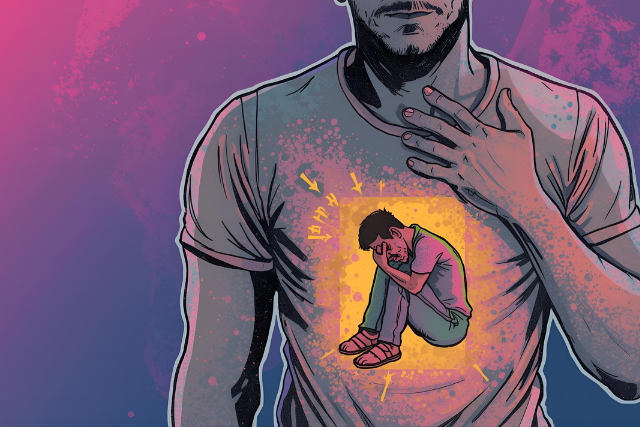
    No matter what I did, the critic had notes. Brutal ones. And the worst part? I believed every word. I didn’t know it was a critic. I thought I just had “realistic self-awareness.” Like everyone else had a little tape playing in their head on repeat, telling them how flawed they were. Turns out, that voice was trauma talking, and it never seemed to stop.

    My Inner Critic Wasn’t Born, It Was Built

    CPTSD doesn’t just mess with your sense of safety. It hijacks your internal dialogue. When your early life feels unsafe or unpredictable, criticism becomes your compass. You learn to scan for danger, to anticipate what might trigger rejection or anger. You start blaming yourself for things that weren’t your fault, just to keep the peace.

    Over time, you don’t need anyone else to tear you down; you’ve got that covered all on your own. The critic lives inside. It’s relentless. It’s like a hyper-alert security guard that’s been working overtime for decades. One who has a bone to pick.

    My inner critic wasn’t trying to be cruel. It was trying to protect me. Twisted, but true. It believed if it shamed me first, I’d beat everyone else to it. If I kept myself small, or perfect, or invisible, I wouldn’t become a target. If I could control myself enough, maybe the chaos would leave me alone.

    That voice became familiar. And familiarity, even when it’s toxic, can feel like home.

    The Turning Point: When I Realized That Voice Was Lying

    Healing began the day I noticed a strange disconnect. The people I cared about didn’t talk to me the way my inner critic did. They weren’t disgusted when I made mistakes. They didn’t roll their eyes when I showed up with all my messy feelings. They didn’t act like I was a problem to be solved or a disappointment to be managed. In fact, they were… pretty warm. Even when I wasn’t “on.”

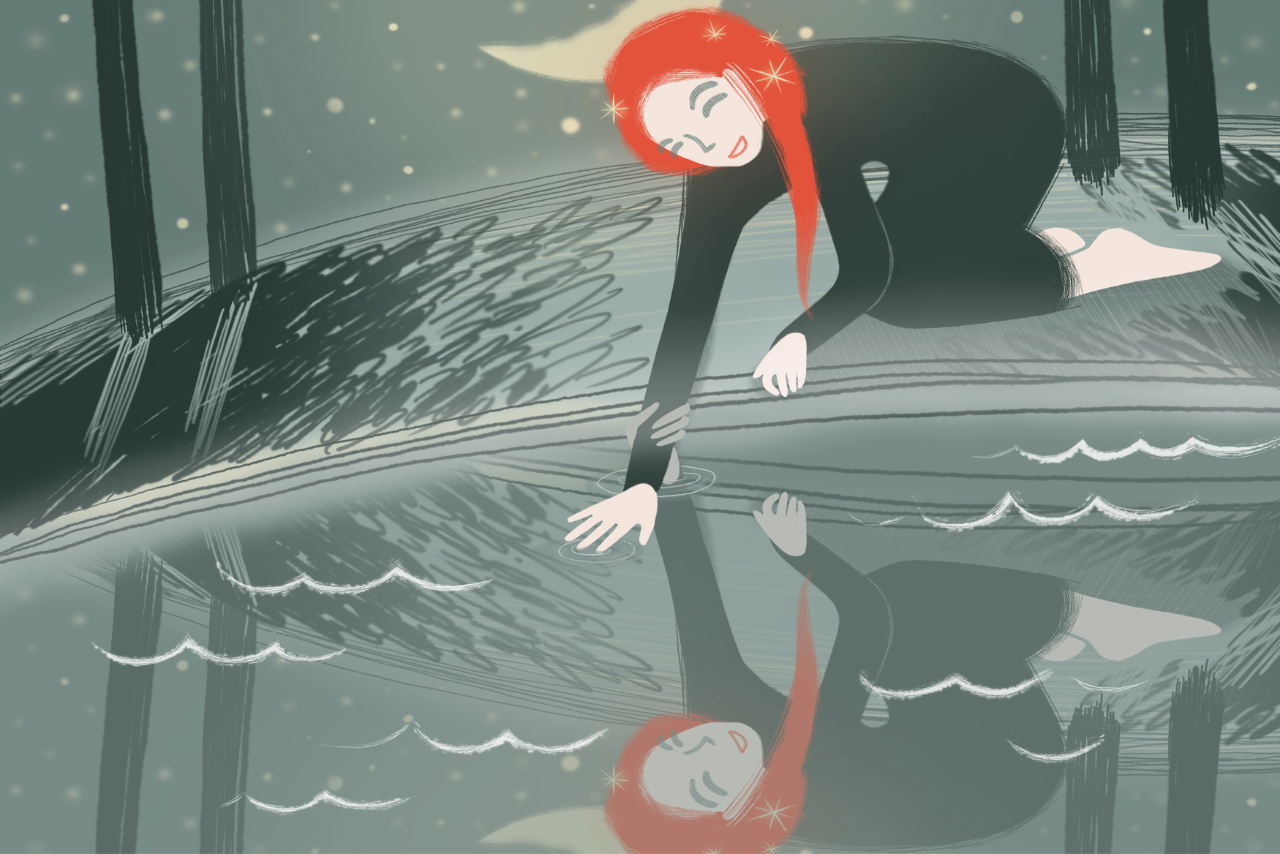
    This realization felt like looking in a funhouse mirror and suddenly seeing my true reflection. If they weren’t seeing me through the lens of judgment and shame, who was I really listening to? That voice in my head, or the people who cared?

    That was the moment I started to doubt the inner critic’s authority. Because that voice? It wasn’t truth. It was trauma. A protective but outdated part of me that no longer needed to run the show.

    How I Actually Started Healing (the real first steps)

    The very first real step wasn’t dramatic. I noticed the mismatch, my head yelling “you’re a mess” while everyone around me treated me like a person, not a problem. Once I noticed that disconnect, things shifted from “this is just how I am” to “oh, maybe this is something I can change.”

    So my early moves were small and boring, but they mattered.

    I booked a therapist who knew trauma work and stayed long enough to stop the band-aid fixes. I learned one therapy that actually landed for me, Internal Family Systems, which helped me stop fighting the critic and start talking with it. I started writing, not to fix myself, but to give that voice a page to vomit onto so I could see how ridiculous and repetitive it sounded in black and white.

    I also leaned on a few safe people, friends and a therapist who would call me out when the critic lied and remind me I wasn’t actually the person I believed I was, over clouded with shame.

    The harder work, though, was going underneath the critic. The voice was just a symptom. What sat beneath it was grief, anger, and fear I’d carried since childhood. For the first time in therapy, I wasn’t just trying to outsmart the critic, I was learning to sit with those younger parts of me who never felt safe. That’s when healing really started to shift: not by silencing the critic, but by finally listening to the trauma underneath it.

    I Didn’t “Silence” My Inner Critic, But I Did Start Questioning It

    Some days, that voice still shows up, loud and obnoxious. Healing didn’t make it disappear. It’s still there, popping up like an annoying pop-up ad you can’t quite close.

    For years, the critic zeroed in on my appearance. I carried so much shame and self-hatred that I didn’t need anyone else to tear me down, I was already doing the job for them. Trauma and CPTSD made sure of it. Even when no one said a word, the critic filled in the silence with insults.

    But I learned to give it a pause button. Instead of obeying it automatically, I started getting curious.

    One morning, I caught my reflection and the critic immediately sneered: ‘You look disgusting.’ Normally, I’d believe it and spiral. But that time, I paused and asked: Whose voice is this really? It felt like my child abusers. What’s it trying to protect me from? Probably the fear and shame rooted in that abuse. Is it true, or just familiar? Familiar. That shift didn’t erase the shame instantly, but it gave me a crack of daylight. Instead of hating myself all day, I was able to shrug and think, yeah, that’s the critic, not the truth. That tiny pause was progress

    Sometimes I imagine my inner critic as a grumpy, overworked security guard who’s stuck in the past. He’s cranky and exhausted, working overtime to keep me “safe,” but he’s also out of touch with the present. I don’t hate him. I just don’t hand him the mic anymore. These days, I keep him behind the glass with metaphorical noise-canceling headphones on. He can rant all he wants, but I’ve got Otis Redding and boundaries turned all the way up.

    What Actually Helped Me Push Back

    Therapy: Internal Family Systems (IFS) therapy helped me see the critic as just one part of me, not my whole self. It gave me tools to speak with that part, instead of battling it.

    Writing: Putting the critic’s voice on paper was a game changer. Seeing those harsh words in black and white helped me realize how cruel they really were.

    Safe People: Talking openly with trusted friends and therapists helped shatter the illusion that I was unlovable or broken.

    New Scripts: Instead of empty affirmations, I practiced gentle reality checks: “It’s okay that part of me feels that way. That doesn’t mean it’s true.”

    Compassion: Learning to treat myself like a friend rather than an enemy—clumsy, imperfect, but worthy.

    Why This Matters: The Cost of Believing the Critic

    Believing that inner voice isn’t just uncomfortable, it’s dangerous. It shapes how you show up in the world. It keeps you stuck in self-doubt. It makes you shrink when you want to grow. It convinces you to stay silent when your voice needs to be heard.

    For years, I hid behind that critic’s fog. I avoided risks, pushed down feelings, and avoided intimacy because I thought I wasn’t enough. That voice stole years of my life. I lost people I cared about because I couldn’t believe I was good enough or deserving of love, and that does a number on you.

    Healing isn’t about erasing the critic, it’s about learning when to listen, when to question, and when to change the channel.

    I’m thankful that, with therapy and the work I’ve put into my healing, I’ve been able to reclaim some of that space for myself. It’s by no means easy and there are a lot of starts and stops, but it is worth it. I am here today testament to that.

    If You’re Living With That Voice Right Now

    If your inner critic sounds convincing, like it has a PhD in your failures, I get it. I lived there. But here’s the truth:

    You are not the sum of your worst thoughts. You are not the voice that calls you a burden.You are not unworthy just because you’ve been told that.

    That critic might be loud, but it’s not honest. It’s scared. And scared doesn’t get the final say.

    You get to question it. You get to rewrite the script. You get to take up space, even if your voice shakes. Even if it whispers, “Who do you think you are?”

    Because the answer is: Someone healing. Someone trying. Someone finally learning that voice isn’t the truth anymore.

  • The Consequences of Perfectionism and How to Embrace Life’s Messiness

    The Consequences of Perfectionism and How to Embrace Life’s Messiness

    “Perfectionism doesn’t make you feel perfect. It makes you feel inadequate.” ~Maria Shriver

    My name is Steffi, and I am a recovering perfectionist. This might come as a surprise to those who know me because I don´t fit the stereotype. The inside of my bag is as messy as my hair, and I always give off the impression that I left the house five minutes too late (which is usually true). My wardrobe is not color-coordinated, and I haven’t organized a flawless birthday party yet.

    It also goes against how I have always seen myself. My greatest life skill is my ability to freestyle—to think on my feet and go with the flow. Because it goes against everything I believed about myself, it took me a long time to recognize and accept my perfectionism.

    And yet, in the areas that I truly care about, I hold myself to the highest standards. I become rigid and controlling. I feel no joy or flow, just a crippling pressure to be perfect.

    In my work, I am always analyzing where I need to do better. I constantly wonder whether I am a good enough partner, friend, and family member (and the answer is usually no). And I really want to live a sustainable life and feel guilty when I am not meeting my own standards.

    Even in the areas where I seem to have embraced my own messiness, I kind of wish it was different. I judge the inside of my bag and my mediocre event planning skills. I feel judgment about all the parts of my life that don´t feel perfectly put together.

    To my great frustration, my perfectionism has the opposite of the desired effect: I become worse at what I do. I am no longer able to be flexible, experimental, and curious. I notice that when my perfectionist tendencies are at their strongest, my creativity doesn’t flow, and I can’t show up in my relationships the way I want to.

    When my perfectionism feels extra strong, I self-sabotage by just not showing up at all. I choose the disappointment of what could have been over the potential pain of being confronted with my own shortcomings.

    The difference between healthy self-reflection and perfectionism feels very clear to me. When my perfectionist tendencies show up, my body becomes tense, my breathing shallow, and my thoughts scattered. I want to immediately go and fix things and drop whatever else I was doing in that moment.

    Perfectionism can be seen as a positive force for improvement and progress, but it does not come from a positive place. It is a fear-based approach, and underneath it lies a fear that if we are not perfect at what we set out to do, we are not good enough. And because we set the standards impossibly high for ourselves, we will probably not live up to them.

    Underneath it lies a fear of criticism, not just from others but mostly from ourselves. When someone finds fault in what we do, that is the confirmation of what we feared all along: that we simply are not good enough at what we care about the most.

    While, for some people, perfectionism brings them great success in their career, it often comes with a high cost. It can lead to frustration, exhaustion, and burnout. The intense pressure we put on ourselves can rob us of our joy and peace.

    When the pressure gets really intense, it can even lead to procrastination. As we are convinced that we can never live up to the standards we put on ourselves, we stop trying altogether. This way, we avoid criticism from ourselves and others, but it also robs us of the chance of achieving something meaningful.

    Perfectionism is, in essence, the fear of not being good enough. We believe that if only we are perfect in that area, we will finally be worthy of good things: a successful career, money, love from other people, or health and well-being. We subconsciously believe that by giving it our all, we can protect ourselves and our loved ones from the pain of feeling that we are falling short.

    The problem is that, eventually, we do fall short. Because perfectionism means we have set standards for ourselves that we can´t always fulfill. Life and other people and their opinions are simply not always within our control.

    The irony is that perfectionism not only can’t stop us from falling short, but it can also encourage it. Oftentimes, we become so critical of ourselves that we don´t even try, or when we do, it stops us from fully showing up.

    While my perfectionism pops up from time to time, I now know how to recognize it and stop myself from spiraling. I focus on calming my mind and body and making space for the joy and messiness of life. If you recognize this feeling of your perfectionism running the show, here are some things you can do.

    1. Learn to recognize your own critical voice.

    What are the areas of life that you feel most protective of? What are the fears and doubts that come up when you think about those areas of life? What do you believe it says about you when you don´t live up to your standards?

    You can even go back and see if you can remember when you first heard that critical voice. Does it sound like your own, or like the voice of a teacher, parent, or someone else you know?

    Reflecting on what your critical voice sounds like and becoming familiar with it will give you insight into where it comes from. It also helps you recognize your perfectionism when it comes up in your day-to-day life.

    2. When your perfectionism shows up, pause and take a deep breath.

    This might feel counterintuitive, as your perfectionism probably wants to propel you into action. It can be very tempting to follow the voice and fix what you feel needs fixing. But this only supports your perfectionism.

    Focusing on your breath gets you out of your head and your critical thoughts, even if it is just for a moment. It then gives you a choice: Do you want to act from a place of fear or move forward with more kindness toward yourself?

    3. Notice the sensations in your body and make loving space for them.

    When you have taken a moment to breathe, see if you can notice your physical sensations.

    Perfectionism means your nervous system feels activated, so where do you notice that in your body? Where do you feel tension or contraction?

    Give yourself the space to really experience what you are feeling. It does not need to go away or be any different. Make loving space for your experience. Just breathe and feel.

    As you breathe into the tension, you might feel emotions coming up. Just let them flow. With some loving attention, you will probably feel the tension dissolve, even if it is just a little.

    Your perfectionism is a form of self-protection. It is there to keep you safe from pain, disappointment, and rejection. By giving the experience your gentle care, you are giving it the opposite from the criticism it usually receives.

    4. Implement a calming practice.

    Perfectionism is fear-based, which means you are no longer looking at your situation from a neutral perspective. Calming your nervous system helps you open up to a new perspective, as your mind feels calmer when your body is relaxed.

    It is really helpful to find out what feels calming to you. It could be humming, taking deep breaths, practicing gentle movement, or looking at the clouds. For me personally, it is walking barefoot, feeling soft fabrics around my body, and hearing the sound of the ocean.

    Finding your own calm resources means you will always be able to access them. Over time, this will help you feel triggered for shorter periods of time, and it will be less intense.

    5. Allow yourself to be a little messy.

    Make the conscious choice to be a little messy in the areas that you feel most perfectionist about. Life is a little messy, and so are we. When you choose your messy moments, you become more equipped to handle them when they inevitably happen.

    Now, I am not saying “let everything go and be messy.” Instead, I encourage you to choose flexibility where before you felt rigid. It is like you are gently stretching your resilience for messiness.

    That could mean leaving the laundry for the next day, buying a birthday cake rather than making one, or allowing your unfinished art projects to be seen by your loved ones. Maybe it means giving yourself a day to eat unhealthy food, starting a new hobby that you have no talent for, or freestyling a presentation at work.

    6. Connect with your joy.

    Perfectionism and fear are the opposites of joy. Finding a little bit of joy in the areas you feel perfectionist about changes the narrative that you have about those areas. It can be incredibly liberating to invite in joy where you previously just felt pressure.

    So, whether your source of pressure is parenting, cooking, cleaning, your work, or all of the above, see where you can be a little creative. Try out a new recipe, make cleaning more fun with music, or go crazy with the decorations at the event you are organizing. Do a course that you enjoy, give yourself space to experiment at work, or take your kids to a theme park that you love.

  • Beyond the Inner Critic: Choosing a New Reality

    Beyond the Inner Critic: Choosing a New Reality

    “To think new thoughts, you have to break the bones in your head.” ~Jean-Paul Sartre

    Respectfully, Mr. Sartre, I disagree. This is that story, and it’s not for the faint of heart.

    Today Was a Bad Day

    Oh no, not again!

    The walls were closing in on me, and I could see their faces all flustered and red.

    Why are they yelling at me? I mean, are they yelling at me?

    I could feel the tension in the room; I just couldn’t hear anything. Well, actually, yeah, I could.

    I could hear her.

    I could hear Annabelle.

    I knew it was my turn to say something. But what if my voice shook? What if they laughed at me? What if I opened my mouth but the words wouldn’t come?

    Seriously?! You’re quoting Eminem now? What the hell… What’s wrong with you? Say something, anything, goddamn it!

    Meet Annabelle, the charming voice of my inner critic. Unlike my parents, she is always… well, there. Unwelcome, but there.

    I could tell it was happening all over again. And I just froze.

    Why can’t you get anything right? You’re such a mistake. No wonder you don’t have any real friends!

    At this point, my thoughts were beyond saving. Annabelle was leading them. And between us? This twenty-something-year-old just wanted a break!

    You better believe that on the ride home, Annabelle kept drilling my mind over and over, like a relentless woodpecker.

    Congratulations! You are now the laughing stock of your cute little debate club. Lol, don’t even bother showing up next time!

    I hurried to my room and slammed the door shut. Maybe that would drown Annabelle out.

    “Okay, okay, start saying your affirmations quick! Maybe that’ll do the trick,” I said to myself, anxiously pacing back and forth around my desk.

    I am confident. I am strong. My life has meaning…

    But nothing worked. No amount of positive thinking did anything for me. So, I did what anyone in my shoes would do. I gave in to Annabelle and wallowed!

    It’s funny how I can almost see her smug face smiling down on me. Good on her. She got what she wanted—a broken plaything.

    Self-pity, check.

    Self-hate, double-check.

    A crushed spirit with no will to carry on? Checks through the roof.

    I had hit rock bottom again. And my once-vibrant eyes turned cold, staring into the void.

    Before I tell you how I moved past this, let me tell you what really went down with me.

    I Was Visited by a Familiar Friend

    … dear ol’ anxiety!

    I like to think of anxiety as this beast with two heads.

    One head always wants to manage other people’s perceptions of us. It craves their thumbs up or nods of approval because it cannot survive without them.

    The other is always in a place of no trust—no trust in ourselves, others, or the process of life. It believes that nothing has ever worked out for us or ever will.

    Maybe that’s what Annabelle was doing to me that day—jumping to the worst-case scenarios, dramatizing the whole thing in my head.

    That’s anxiety for ya.

    My Door Went Knocking a Second Time

    Of course, it’s not a party without depression.

    Depression is like that uninvited guest with a gloom and doom sign stamped on its forehead.

    When I trapped myself in my room for hours after coming home from the club, I felt horrible.

    There was no light at the end of the tunnel for me. This was it. I couldn’t see the point in anything anymore, and I was convinced that the world would be better off without me.

    That’s what depression does.

    Actually, Louise Hay got it right when she defined depression as “anger you feel you do not have the right to have.”

    It is anger stuffed down in the body somewhere—suppressed anger that seeks an outlet for release.

    That’s why, in the middle of my meltdown, saying affirmations didn’t work for me. It was too soon for that.

    I guess the best way I can describe my two companions to you is this: If depression were a person, it would be someone who waves the white flag—someone who feels defeated and all given up. Anxiety, on the other hand, would be someone who tightly holds on to the flag and refuses to let go.

    Now, if you saw glimpses of yourself in my experience, please know these feelings are very real in the body. Chemically speaking, the body would be in a state of imbalance, running on low levels of the happy hormones like serotonin and dopamine and high levels of the stress chemicals.

    These conditions will give anyone the impression that they won’t survive this storm. But that cannot be any further from the truth.

    So, how did I make it to greener pastures?

    #1: I gave myself permission to feel anger.

    Why am I angry?

    When was the last time I felt robbed of a right? The right to feel, the right to mess up, the right to express, the right to make mistakes?

    Is it possible that I am angry with myself for feeling angry because I learned growing up that it was wrong to feel that way?

    Thinking about these things was enough to get me to scream. It was like every part of my soul begged to reconnect with my throat chakra and get my voice back, or at least some of it.

    Within the first minute or so, I felt my lungs give in. Who knew that screaming into a pillow could be this exhausting?

    But I needed to scream. It felt good. Really, really good.

    #2: I accepted my emotions.

    There was no fuel left in me to go against the grain anymore. I couldn’t keep denying what I was feeling. I had to name it to tame it.

    So I looked in the mirror and unburdened: I feel anxious. And I feel depressed. Okay? There.

    But that’s not all I did.

    I reminded myself that depression and anxiety are my body’s way of letting me know that there is a dis-ease within me.

    Dis-ease means a lack of ease or an absence of harmony. It’s how the body signals to a person that they are far from optimal health. Great!

    With that in mind, I accepted these feelings and thanked my body for communicating them to me.

    Even though our feelings are always valid, our assessment of the situation—the thoughts behind those feelings—may not be.

    This led me to my third strategy.

    #3: I observed my thoughts.

    Like I said before, this wasn’t my first rodeo.

    Thanks to my journal, I went over The List—my list of unshakeable truths I had outlined in times of emergency. And this was definitely an emergency.

    That’s when I stumbled upon a quote from Eckhart Tolle:

    “Observe your thoughts, don’t believe them.”

    Eureka!

    It’s very likely that when someone feels depressed or anxious, they will be bombarded with a sea of negative thoughts that ring true for them. Garbage thoughts, really.

    But should they believe their every thought?

    This is also at the heart of Dr. Joe Dispenza’s work. He advocates that not every thought we think is necessarily true.

    “Most thoughts,” he says,are just old circuits in your brain that have become hardwired by your repetitive volition.”

    And so, I didn’t fight Annabelle. I didn’t try to reason with the negative thoughts she was feeding my brain.

    I didn’t even justify them or resist them.

    Like passing clouds, I observed them without judgment. And when I felt ready, I saw them fade into the background.

    It’s common knowledge that when we’re calm and relaxed, we make room for magic and healing. It is the quickest and easiest way to build better habits and restructure our minds.

    #4: I chose better thoughts.

    Thoughts are the mental movies we play in our minds. And the mental movie I was running up there was less than ideal.

    Did Annabelle’s useless chatter help me or hurt me? Did her thoughts empower me or keep me small? Did they breathe life into me or slowly lay me on my deathbed?

    If I really wanted to change this circumstance, I had to change the thought patterns that made me perceive it in the first place.

    Instead of saying affirmations that were lifeless to me, I chose phrases that felt good to say aloud—phrases I had little to no resistance to.

    These are some of my favorites!

    • Divine love in me casts out all discord. I am at peace now.
    • I am guided by the divine presence within me. It created me and is restoring me to perfection now.
    • Infinite intelligence reveals the perfect solution to my problem.
    • I breathe deeply and fully. As I take in the breath of life, I am nourished.

    These affirmations remind me that I am always whole, loved, and supported, even in a moment where I might feel embarrassed or inferior.

    This was my rule of thumb: If a thought doesn’t empower you or fill you with love, question it.

    #5: I made a promise to myself to stay consistent with my new story.

    Consistency is the name of the game.

    Once I decided on my new thoughts, I wanted to repeat them daily.

    I didn’t force myself to immediately accept these new thoughts. I knew Annabelle would fight me on them tooth and nail.

    So the effort was gradual and accumulative. Easy does it!

    As always, a relaxed body and a calm mind are much more susceptible to change than a stressful body and mind.

    I promised myself that whenever depression or anxiety crept in, and boy, how they did, especially in the beginning, I would feel them without entertaining the thoughts associated with them.

    Those were the moments when I’d tell myself: I am capable of change. I can learn new ways of thinking. I am teachable. 

    Bit by bit, through consistent repetition, the old, tired thoughts got replaced with new, vibrant ones.

    Final Thoughts

    Notice how I didn’t say “my” anxiety or “my” depression? How I said, “I felt anxious or depressed,” and not “I am anxious or depressed?”

    That’s because you and I are NOT the depression or the anxiety. We are the beings experiencing these conditions.

    So no, Mr. Sartre. You don’t have to break the bones in your head to think new thoughts.

    You just have to move forward with loving awareness. And the rest will fall into place.

  • The Amazing Power of Listening to Your Inner Critic

    The Amazing Power of Listening to Your Inner Critic

    “Knowing yourself is the beginning of all wisdom.” ~Aristotle

    Over the past few years, I began to feel a shift in my career. Despite spending years earning certifications and degrees and building skills, my work no longer felt meaningful.

    As I contemplated a change, a persistent thought echoed in my mind: “Why can’t you just be grateful for what you have?” I had many things to be grateful for, yet I wasn’t happy and constantly judged myself for it. After months of unsuccessfully trying to push this thought away, I decided to sit with the feeling of guilt and approach it with curiosity.

    Here’s what I discovered: This was actually an inner critic part of myself that was created to keep me safe.

    My critic was telling me to feel grateful because it didn’t want me to make a change. If I was grateful for what I had, then, it reasoned, I wouldn’t pursue the things I really wanted, and I couldn’t fail. I also wouldn’t be seen, so I couldn’t be judged. These things were crucial to that part of me. And this is why ignoring it didn’t help.

    Understanding Your Inner Critic

    We’ve all heard the advice to silence our inner critic. For years, we’ve been told to push through and dismiss that critical voice. But ignoring your inner critic is one of the worst things you can do. It’s tempting, I know, because that voice can be harsh and relentless. However, pushing it aside is like telling a scared child to stop making noise and go away.

    Parts of you, like your inner critic or the parts that feel shame or guilt, were created during childhood to keep you safe. And they are really effective.

    If my inner critic tells me I’ll never be able to do something and I listen, I won’t try, and therefore, I can’t fail. It’s done its job of keeping me safe. However, if I ignore it and go for it anyway, I might make some progress, but it can feel exhausting and overwhelming because that part wasn’t on board. This creates a split in my energy.

    When these parts aren’t integrated, your self-worth takes a dip. That’s the key—you’ve got to start listening to and integrating these parts.

    Listening to Your Inner Critic

    So what do you do with a scared child? You listen. You sit with them, ask what they need, and provide comfort. When you do this, they start to calm down. The same principle applies to your inner critic. Instead of pushing it away, try listening to it.

    When you acknowledge your inner critic, you begin to understand where it’s coming from. Often, it’s trying to protect you from perceived danger or failure. By listening, you can address your underlying fears and anxieties. This doesn’t mean you have to agree with everything it says, but understanding its perspective can help you find more compassionate ways to respond to yourself.

    Practical Steps to Embrace Your Inner Critic

    Acknowledge Its Presence

    When your inner critic pipes up, take a moment to recognize it. Say to yourself, “I hear you. I see that you are scared.” This simple acknowledgment can start to defuse the intensity.

    Identify the Source

    Try to understand why your inner critic is being so loud. You could focus on it and journal in response to the prompt, “What do you need from me to feel safer?” Being curious and open can provide you with some understanding of what you might need to move forward in a more powerful way.

    Dialogue with Compassion

    Imagine your inner critic as a younger version of yourself who’s scared and needs reassurance. Speak kindly and offer the support you would to a friend or a child.

    Practice Self-Compassion

    Remind yourself that it’s okay to feel what you’re feeling. Validate your emotions and give yourself permission to rest, take a break, or seek help.

    Shift Your Perspective

    Instead of seeing your inner critic as an enemy, view it as a part of you that needs healing. This shift can transform the way you interact with your inner voice.

    The Power of Self-Compassion

    Embracing your inner critic is a powerful step toward greater self-compassion. When you listen to and address this critical voice with kindness, you create a more nurturing internal environment. This approach can lead to profound changes in how you handle stress, challenges, and setbacks.

    Remember, self-compassion isn’t about being complacent or lazy. It’s about recognizing you are a human being rather than a human doing and treating yourself with the same care and understanding you would offer to a loved one. It’s about finding balance and allowing yourself the space to rest and recharge when needed.

    My Journey to Self-Compassion

    Reflecting on my own experience, I realize that the more I’ve listened to my inner critic rather than pushing it away, the quieter it has become. With my inner critic on board, I’ve experienced significantly higher levels of creativity and productivity. This has been a clear reminder that taking care of myself leads to better outcomes.

    As I practiced self-compassion, I noticed a positive shift in my life. Tasks that once felt daunting became manageable, and I found joy in activities that previously seemed burdensome. By listening to my inner critic with empathy and understanding, I created a harmonious relationship with myself, leading to a more fulfilling and balanced life.

    The journey to embracing your inner critic is not always easy. It requires patience, practice, and a willingness to be vulnerable. But the rewards are immense. By listening to and understanding your inner critic, you open the door to greater self-compassion, which in turn enhances your overall well-being and productivity.

    The next time you hear that critical voice, take a moment to pause and listen. Ask what it needs and respond with kindness. Remember, your inner critic is a part of you that’s seeking love and reassurance. By embracing it, you take a significant step toward a more compassionate and fulfilling life.

    I encourage you to reflect on your relationship with your inner critic. How do you typically respond to it? What changes can you make to start embracing it with compassion?

  • 5 Ways to Heal from a Highly Critical, Controlling Parent

    5 Ways to Heal from a Highly Critical, Controlling Parent

    “You’ve been criticizing yourself for years and it hasn’t worked. Try approving of yourself and see what happens.” ~Louise Hay

    When I was growing up, it felt like nothing was good enough for my dad. And all I longed for was his acceptance and love.

    He had this temper that would blow up, and he’d blame me for how he felt. He would outright tell me his behavior was my fault. That if I’d behaved better, he wouldn’t have had an outburst.

    When he told me I wasn’t enough or worthy, I believed him. I was constantly walking on eggshells around him, trying to not annoy him, as his angry words would really hurt.

    The confusing thing about my dad was that he wasn’t like this all the time. Sometimes he was loving, affectionate, and warm, and then in a moment he would switch to cold, controlling, and cruel.

    As a child, I believed to my core that I was the problem. The only way I thought I could keep myself safe was to try and please him and be the perfect daughter.

    I became obsessed with achievement. It started first with my grades and school, and then it was getting the job he wanted me to have. Because sometimes an achievement would get me a crumb of love from him. I would push myself as a child, forsaking rest and hydration at times, so he would see how hard I’d worked.

    But it was never enough for him. He would lose his temper on the one day that I was taking a break, telling me that I would never amount to anything.

    He would even tell other people how awful his family was when he was drunk. It was beyond humiliating.

    Now, at forty-one, these memories with my dad are in the past, but they still haunt me. He has since passed—he took his life fifteen years ago. Turns out my dad wasn’t okay and was struggling with the impact of his own childhood trauma.

    But rather than seeking help, he took it out on his family and himself through addiction and, ultimately, his suicide.

    His controlling, critical voice still lives in my subconscious mind. It’s his voice that tells me to work harder or that I am not good enough, or questions, “Who do you think you are?”

    Even though I consciously know now, as a trauma transformation coach, that his behavior was due to his pain and his words were not the truth, the younger parts of me still believe him. Because those younger parts still feel blamed, shamed, and not enough.

    After his passing, I found myself in relationships where others would criticize, control, and deny my reality, and found myself powerless again, just as I’d felt as a little girl.

    But by investing in various safe spaces, like support groups, therapy, and coaching, I have been able to step away from these relationships or maintain boundaries so that my younger self is no longer triggered by the pain of the past. This has created space for kinder, more loving relationships to come in.

    However, more recently I noticed that even though I’d stepped away from toxic relationships, I had become him to myself. I would speak to myself critically and put myself down. Nothing was good enough, and I would push myself to achieve at any cost, going through cycles of overworking and burnout.

    I would push myself to have the ‘perfect body’ with extreme exercise and diet. But then my inner rebel would push back and sabotage the diet and my health through emotional eating.

    Constantly pushing myself to be better, I realized, unconsciously, I was still chasing his love. His acceptance even though he wasn’t here.

    I had become the controlling critical parent to myself. It was time for me to become the parent I’d longed for and not the parent I’d had.

    Here are the five practices that are helping me to heal from my controlling, critical parent—practices that could help you too.

    1. I ask myself: Am I being kind to myself?

    I have created a pattern interrupter by asking myself, at least three times a day, if I am being kind to myself and, if not, how I can be. I notice my behaviors and inner dialogue and explore how I can shift into kindness.

    For example, if I don’t sleep well, is it kind to push myself with a cardio workout and long day of work, or would it be better to go for a walk in nature and take a slower pace?

    Or, if I am speaking to myself without self-compassion, is there a more loving way to communicate with myself rather than being nasty?

    Each day I make a conscious choice to step into that kind energy. I treat myself how I wish he had treated me.

    2. I celebrate myself weekly.

    Each Sunday, I reflect on what I am proud of and celebrate myself, even if I’ve done something small, like being consistently kind to myself. I become the cheerleading parent I longed for, and this builds self-esteem.

    3. I use affirmations.

    I affirm throughout the day that I am safe and enough. That I don’t have to prove my worth or people-please. I can just be me. This helps soothe the critical voice that goes into past fear stories.

    I use affirmations to say I love and care for myself. That I am my biggest priority.

    4. I listen to my body and choose to take care of it.

    Instead of pushing myself physically, I ask myself: How should I nourish myself? Or how should I move my body? What shouldn’t I put into it out of love? I check in with myself if I need rest or if a certain relationship or situation is causing me physical and mental stress. I speak kindly about my body rather than shaming it for not being enough.

    5. I reparent the parts of me that are in pain from the past.

    My dad will always be part of my story. I can’t change the past, but I can take care of the different parts of me that were hurt. I can show those parts kindness and love through reparenting and inner-child work.

    My favorite practice is going back in time to visit my younger self. I give her a hug, ask her how she feels, and then do whatever I can to fulfill her needs. I soothe the hurting parts of her rather than getting her to perform and achieve.

    Some days my old behaviors come out, but I use the question “Am I being kind to myself?” to get myself back on track. I also practice self-compassion and forgiveness, as I would never say the things I have said to myself to others.

    If you can relate to what I wrote because you had a similar parent, step into being the parent you wished for yourself. Because a happy, loved, affirmed child is better able to live a happy, healthy life than a bullied child that hates herself. Give yourself the gift of love and kindness and watch your story transform.

  • If You’re Feeling Judged: One Thing You Need to Understand

    If You’re Feeling Judged: One Thing You Need to Understand

    “Peace cannot be kept by force; it can only be achieved by understanding.” ~Albert Einstein

    Most of us feel judged at times. We might feel judged for the way we look, the things we do (or don’t do), the things we say (and the way we say them), or for the things we believe.

    We might respond to feeling judged by retreating inside ourselves, hiding, and silencing our voice, or we might react in defense or retaliation as if we’re being attacked.

    It doesn’t feel good to feel judged. It can hurt, make us feel like we’re not good enough, and drain our energy.

    But if we want to be free of the heavy burden of feeling judged, there’s something very important we need to understand.

    Feeling judged and being judged are not the same thing!

    This is such an important distinction. And understanding it can make the difference between feeling insecure or stable.

    It’s the difference between hiding and shining.

    Feeling Judged vs. Being Judged

    When we feel judged, it’s something we experience inside ourselves.

    It’s a feeling, not necessarily a fact.

    It’s important to understand that how we feel and react to others is up to us. It’s a result of our conditioning, traumas, fears, emotions, insecurities, attitudes, and the things we believe (whether they’re actually true or not), but it’s ours.

    It may be triggered by what someone says, but the feeling is still ours.

    Being judged is something else. It’s something people outside of us do. Whether someone passes judgment on us through their words, actions, a certain look, or a sneering sound under their breath, it’s an external thing… and we can react to it, or not.

    I’m not suggesting it’s easy to not react or take it personally, but understanding the distinction is important.

    Taking Things Personally

    If someone questions something we’ve said or done or why we believe something, we might take it personally and feel like that person is judging us.

    Have you ever felt judged because someone asked you a question?

    Be honest!

    We might act defensively or angrily when someone questions something we believe, but that person may genuinely want to understand us better.

    If we’re insecure about who we are, or if our sense of self is deeply attached to our beliefs, then any question can feel like an attack or judgment.

    But that doesn’t mean it was a judgment.

    I’m a very curious person. I’ve always been curious to understand myself, my mind and emotions. I know this comes through self-inquiry—meaning to question myself and my beliefs—and sometimes that is uncomfortable.

    But it’s more than just understanding myself, it’s a curiosity to understand the human experience. This also means understanding others. This curiosity to understand is also the desire to connect on a deep, authentic level.

    As Thich Nhat Hanh said: “Understanding is love’s other name. If you don’t understand, you can’t love.”

    Because of who I am and what I do, I often ask people questions about who they are and why they believe what they believe.

    Most of the time I’ve found people are quite open with me; however, occasionally people take my questions personally. Now, I know I had no sense of judgment in my questions, only my curiosity to understand and connect, yet there are times when the people I’m talking to become defensive.

    Even though I understand, when this happens, I can sometimes still feel a sense of being judged. Judged for something I didn’t do. But this is my reaction. I perceive their reaction as a judgment for my perceived judgment.

    I know, it sounds a little complicated, but that’s what happens sometimes. If I catch myself and feel what’s happening inside, I’m able to move through it and let it go.

    But it starts with recognizing and being mindful of my reaction.

    We Have a Choice

    In times when we feel judged, we can react, defend, and justify our emotions by trying to blame someone else, or we can use it as an opportunity to be curious about ourselves—to understand so we can learn and grow.

    Choosing to grow does not mean we don’t feel our emotions. We do. We feel them, and it can be uncomfortable at times. But choosing to grow means we feel our emotions consciously and recognize our reactions so we can take responsibility for them. Because we understand our emotions and reactions are ours.

    As long as we try to blame others for how we feel, we will always be the victim, because it will feel like we don’t have a choice.

    By learning to own our emotions by being present with them, we have the power to transform our relationship to them. We can then learn to navigate the landscapes of our mind.

    Let Go by Being Curious

    If you’re feeling judged—assuming someone is thinking badly of you and feeling bad about yourself in response—engage your curiosity.

    Follow your emotions mindfully. Just feel them. Be present with them (to the degree that you are able). Let them take you deeper into yourself.

    Ask yourself:

    Why do I feel judged?

    What beliefs am I holding onto?

    What do I not want to see about myself?

    What do I not want to admit?

    Am I judging myself? If so, for what?

    Why does it matter what someone else thinks?

    Don’t underestimate the power of our curiosity. It’s a superpower!

    It really can shift us from a closed and reactive state of mind into an open and receptive state of mind. Open and receptive is the place where we can break our self-imposed limits, connect to our heart, and grow.

    It’s also the place where understanding becomes love. Both within ourselves and within our relationships and interactions. It’s the place where we can heal our collective separation and bring back a sense of unity.

    Curiosity is the magic that can facilitate it.

    Journaling is a great assistant to curiosity. It helps us connect more deeply to what’s happening inside us. Any time you feel judged, take some time to sit quietly and reflect on your emotions, thoughts, and feelings. Writing them down can help to make it more tangible.

    Do this enough and you’ll start to see familiar patterns emerging.

    Find Your Strength

    It’s likely that people will judge you at some point. But remember, that doesn’t mean you have to take it personally or feel bad about yourself.

    Whenever you’re feeling judged, whether someone else is judging you or not, remember, it’s just a feeling. Use these times as opportunities to deconstruct your limits and insecurities.

    By doing this you connect with your true self and allow the strength of your heart to emerge.

    And the world needs your heart to shine!

  • I Worry I’ll Never Change – Here’s Why I Still Accept Myself

    I Worry I’ll Never Change – Here’s Why I Still Accept Myself

    “Our journey is not about changing into the person we want to become. It’s about letting go of all we are not.” ~Nikki van Schyndel, Becoming Wild

    I recently went on personal retreat to once again try to heal my wounds, see my patterns, and find my purpose. I loaded my car with journals from the last two decades and a book of poetry dating back to 1980. I packed my cooler full of nourishing food, but then added a six pack of beer and an expensive bottle of wine—completely unaware that I was about to sabotage my personal growth by continuing to numb my pain.

    I had decided to use my retreat time to review my journal writings, pull out any wisdom I wanted to keep, and release the rest in a burning ceremony. On my first day, I labeled each journal with the year it was written and organized them all chronologically. This task felt arduous yet satisfying when I sat back and looked at the twenty-five volumes all laid out neatly in order.

    I spent the next three days re-reading each and every one. Re-living the emotional angst of problems in this relationship, then the next … and the next. Teasing out the patterns of insecurity, sabotage, and grieving. Re-visiting the same themes and my same desire and commitment, after the ending of each relationship, to be this person who stopped drinking in excess, meditated daily, ate healthy foods, and took good care of her body.

    Over and over, I had glimpses of this centered, calm, wise woman who I’d like to think is the real me. Yet over and over, I’d jumped into another relationship, lost myself, and repeated the pattern. Pages and pages full of the same story, only with different characters and at different times. As I read each journal, I tore out pages to burn, cut out sections to keep, and drank to numb the pain.

    On the fourth day I finished organizing the scraps of paper I wanted to keep and sat back with immense satisfaction. By early afternoon I had my fire going and drank my first beer of the day as I burned … and burned … and burned. Words turning into ashes. I stayed emotionally distant, cut off from my feelings, not making much of a ceremony of it after all.

    Feeling restless, I downed the last of my beer and pulled on my hiking boots. The trail outside my cabin began with a steep decline, winding along the side of the mountain and deep into the woods. As I walked, I kept thinking, “I haven’t changed. I’m still the same. What will it take to change? Why can’t I be that person I say I want to be? My life is one big loop.”

    I thought maybe the answer was that I just needed to be more self-disciplined. However, I immediately noticed the word “discipline” repelled me. If there is one thing I know about myself, I am not one to obey rules or codes of behavior—and I already punish myself enough. So, no, self-discipline wasn’t the answer. It was clear that I had spent a lifetime trying that approach and beating myself up for not succeeding. I kept on walking.

    At some point I questioned if maybe this was what life was really all about: the striving to be someone we are not. By that time, I was walking back uphill and had to stop frequently to catch my breath.

    Standing alone in the woods with my heart beating hard, staring blankly at the trees, I wondered if maybe the answer was just to embrace who I am. It’s pretty clear, after reading over my life for twenty years, I haven’t been able to change.

    My mind continued to whirl: But I’m not able to accept those parts of myself that drink too much or can’t stay focused. I don’t want to be that person who is overweight. I really do want to meditate. I stopped again, looking down the mountainside from which I had come. Apparently embracing myself wasn’t quite the answer either.

    By the time I had returned to my cabin, I no longer wanted to drink. I reflected again on the common thread throughout the years and suddenly saw the essence of myself that is timeless.

    It was there in my poetry from over forty years ago, in the heartbreak when I sabotaged yet another relationship, and in the yearning to be different.

    In a flash of insight, I recognized—contrary to the self-criticism that had been running through my head—the unchanged me was not a bad self. She is someone who wants to do better, who wants to be better, who recognizes the impermanence of time and seeks to grow.

    As I saw her, I knew this was the me I could totally embrace. I briefly thought about starting a new journal with this great insight, then laughed because I knew, if I did, I’d be reading it in twenty years, shaking my head, and saying “nothing has changed.” Then I would beat myself up for not being who I thought I wanted to be, and the cycle would just continue.

    In this recognition, I knew that those parts of me I so strongly criticized weren’t going to go away. And while I couldn’t embrace them, I could accept them with greater compassion and love.

    I saw the truth that even if I don’t meditate daily, exercise, eat healthy all the time, and have a full and balanced life, the part of me that strives to do those things is always there. She was in every page where I said I wanted to make those choices, and she’s been with me all along. She is the one I need to accept and embrace; it’s not who I want to be, it’s who I am.

    The review of my life helped me understand it’s a process. That timeless part of me may come and go, just like I have my moments of awakening to my wisdom and then forgetting it all. Sometimes the me who struggles to make healthy choices is going to hijack my life. I can accept that is a part of being human. It’s not self-discipline I need, it’s self-acceptance of my duality. Both my wise woman and my saboteur.

    I am a wise and powerful woman. I am a kind, sensitive, and caring soul. I love deeply. I care deeply. I feel deeply. I don’t need to escape from who I am; I simply need to remember. Ultimately, what really needs to change is that I need to nurture self-compassion and self-acceptance at the deepest level.

    My last day at the cabin, I awoke to sunshine and blue skies. I felt good and strong. I spent part of the day shopping in the craft stores of the nearby village, and before I knew it, I was halfway to the liquor store. I kept trying to convince myself it was okay, but recognizing I wanted to make a different choice, I managed to turn around before it was too late.

    I chose a waterfall hike and scrambled past the tourists, up to the top of the falls. The rocks were a slippery slope, but the irony of that and the potential of me drinking didn’t quite register until later. When I reached the top, I sat a moment to meditate. As I closed my eyes, I embraced this timeless essence and felt so much peace and gratitude for her presence.

    My inner saboteur tried to take over again when I got back to my car. Sitting in the parking lot, I asked myself, “What do you hope to accomplish by getting a drink?” Then, I laughed at the quick and witty answer, “A hangover.” I drove back to my cabin, made myself a healthy meal, and drank a glass of water.

    I understand now this journey is a day-by-day, moment-by-moment reclaiming of who I am. I also understand the part of me that has been in control when I’ve forgotten my essence isn’t going to disappear overnight.

    However, I no longer fool myself into thinking anything is wrong with me. I recognize and embrace my commitment to growing in wisdom, strength, and joy. And I embrace all of who I am, while having compassion for the parts of me that struggle.

  • 10 Highly Sensitive People Share What Helps Them Take the Sting Out of Criticism

    10 Highly Sensitive People Share What Helps Them Take the Sting Out of Criticism

    Criticism can be especially hard for highly sensitive people because we try so hard and we care so much. It’s really fascinating how much it can affect HSPs in particular.

    I want to share that because it normalizes our experience, to know we’re not alone in how we experience things. I certainly have developed some tools to help with criticism but can still be impacted at times.

    On an anonymous survey I posted, someone wrote that they find my voice so shrill that they could not stand listening to me. I felt the sting.

    But it’s important to realize criticisms are opinions that vary from person to person, and therefore, we have to be careful about what we take in and what we believe. To provide an example of that, many others have shared my voice is soothing, calm, and nurturing. Notice how opposite those opinions are?

    So the next time you receive criticism, I want you to remember this example and know that criticism has nothing to do with us personally and usually comes from a painful place inside another. People are going to have many different types of opinions. What’s important is that we don’t soak them in.

    It’s helped a lot to do my own personal growth work and build my self-esteem. When my self-esteem was low, criticisms knocked me down hard, and for a long time. When I had no personal value, I believed the criticism.

    It took time to build up my sense of self, and it will take time to build yours if that’s an issue for you too.

    When you feel the sting, acknowledge it and give yourself some compassion. Remind yourself of your value and your intentions. Also, focus on some positives about you so that negativity bias of the brain doesn’t take over. Remember, it takes eight positives to neutralize one negative.

    Not everyone is going to like us, and that’s okay. What’s important is that we learn to love and support our sensitive hearts and know our intentions come from good places.

    I don’t think anyone is completely immune to the impacts of criticism. Case in point, here’s what some HSPs in my Sensitive Empowerment Community commented after reading some of my thoughts on criticism:

    1. The power of self-compassion

    “I remember when I would be hurt when I was a kid my mom would tell me to ‘get over it.’ I remember that being invalidating, unhelpful, and actually hurt me more. I think it would be powerful to teach our sensitive children the art of self-compassion. Can you imagine a whole generation of sensitive children raised with self-compassion? I have found that skill to be one of the best things that I’ve developed. It helps me with everything now. I think that it’s probably a tool that we can constantly sharpen.”

    2. The importance of self-care

    “Criticism is still extremely hard on me to the point where it will put me out of commission for a minute (or days even). I’m working on not letting others’ criticism flatten me. I just know, when my rest and my health are in order, it’s much easier to shake it off. When I feel criticized, I’m starting to immediately make a list of people who support me and think differently than people who criticize me and speak unkindly.”

    3. It’s more about them than us

    “I find criticism extremely difficult. For me, there is a family wound around criticism, so I can have a deep, painful reaction. Self-compassion has really helped me work through those reactions. I heard something once that often comes to my mind these days—what someone says about us tells us more about them and how they see the world than it is information about us. I find this really helpful because I used to take every single thing someone said about me as truth, but seeing that people are seeing us through the lens of all their wounds and experiences takes the sting away a bit.”

    4. Perfectionism vs. our innate drive for excellence

    “What you said resonated so much with me (and a big yes to the knife in the heart analogy!)— especially that the desire to avoid criticism is what has caused or contributed to your perfectionism. I feel exactly the same way. Now I work really hard on trying to figure out when something is just my innate drive for excellence or when it’s more a perfectionism driven by fear/avoidance.”

    5. How it helps to build our self-esteem

    “I used to hold onto criticism much more when I was younger, and it hurt terribly. Working on myself and building up my self-esteem was integral to healing. I used to work with a boss who was critical of everything I did, and I dreaded going to work every day. One day I decided to begin therapy, and soon I built up enough energies to apply to graduate school. Once I got in, I put n my two-weeks notice. Going back to school was an investment in myself.”

    6. Other people’s opinions are none of our business

    “This is still something I’m working on for myself, although I’ve had huge growth in this area. I once read somewhere or heard someone say that ‘what other people think of you is none of your business,’ and I try to remember that if I get that sting.”

    7. People who criticize often lack courage

    “Criticism can indeed be hurtful. It can be good to remember that people who criticize are often either unaware of how much work you put into doing that which they are criticizing, or they are taking out their own frustration on you. For many people, it’s more ‘comfortable’ to criticize others who have the courage to do something than to actually do something themselves.”

    8. Criticism isn’t always true

    “I’ve come a long way working with the deep sting of criticism and feeling the knife in my heart. There are moments I still feel the deep sting, but it doesn’t ‘take me out’ in the way it used to. Often, I ask myself ‘is this really true what they said?’ That helps me to come back to myself, along with breathing. I am soothed when I see the criticism is simply not about me! A work in progress going forward.”

    9. Hurt people hurt people

    “Criticism is so hard, especially because everybody wants to be accepted and respected for who they are, and the judgments of others can be hard to bear. Depending on our mindset and self-acceptance/self-confidence, it can make us see ourselves as less than if we do not have the right tools in place. I always try to remember the simple truth that ‘hurt people hurt people.’”

    10. When criticism gets to you, it’s because you care

    “I found it quite emotional reading all the posts and having my intense and long-lasting reaction to criticism normalized. I have struggled with this for a long time. I had a similar thing to you, Julie, with a comment in a survey. It was a really mean, unthoughtful commentf about a presentation I gave, and coming from someone well respected in my field of work, it was hard to take and still gets to me years later. It is helping so much to reframe it as an issue they have rather than a failing of mine! It’s a very empowering feeling. I am also trying to celebrate the fact I find criticism hard knowing that it’s because I care so deeply about doing things well and with care.”

    What about you? What helps you take the sting off criticism?

    **Some of the community comments have been edited for clarity and grammar.

  • 4 Things I Needed to Accept to Let Go and Heal After Trauma

    4 Things I Needed to Accept to Let Go and Heal After Trauma

    TRIGGER WARNING: This post references sexual abuse and may be triggered to some people.

    The truth is, unless you let go, unless you forgive yourself, unless you forgive the situation, unless you realize that the situation is over, you cannot move forward.” ~Steve Maraboli

    My family immigrated to the U.S. from India when I was sixteen. Being Indian, my traditional family expected me to have an arranged marriage.

    At twenty-two, as a graduate music student, I fell in love with an American man. When my family found out about our secret relationship, they took me back to India and put me under house arrest. For a year.

    That year of imprisonment and isolation was severely traumatizing. I shut down from my acute distress and pain. I dissociated from myself, my truth, my power, my body, my heart, and my sexuality.

    Two years after they let me out, I escaped to the US but was emotionally imprisoned by my past. I lived dissociated, afraid, and ashamed for eighteen years. Eventually, I broke free from an abusive marriage and my family.

    Since then, I have been on a path of healing and empowerment.

    Beginning my healing journey was like walking through a long, dark tunnel. I was and felt like a victim but was determined to heal.

    To heal from dissociation, I needed to feel again. I felt the bottomless grief, loss, and heartbreak of all that I didn’t get to experience and enjoy.

    I faced and began to address my childhood history of sexual abuse.

    I set boundaries with my family. I started therapy and studied psychology. I learned my mother is a narcissist and my father an enabler.

    Coming from a traditional patriarchal, colonial culture, I had grown up with codes of obedience, sacrifice, and duty. I questioned and challenged my deep internalized beliefs of who I am, what I can do, and what is possible for me as a person of color.

    I learned about my rights. Growing up in India, I had a very different understanding of my rights than those born in Western countries.

    Therapy helped me reconnect with my body, with my needs, wants, and desires. I learned to identify and feel my sensations and emotions. I learned to discern who and what was safe and what wasn’t safe.

    I learned to listen to and trust myself and become more embodied through my dance practice. This allowed me to dance out my rage, shame, grief, and everything I had disconnected from and suppressed. I came alive and opened to pleasure and passion.

    I’ve struggled with low self-worth, people-pleasing, caretaking, perfectionism, fear, shame, guilt, and codependency. One of my most painful realizations was that my inner critic had become as severe as those who abused me. I continue to practice being kind and gentle to myself, loving myself and my inner child and encouraging my artistic self.

    In relationships, it has been hard for me to discern whom to trust and not trust. I had an emotionally abusive marriage and have given my power away in relationships. In romantic relationships, I projected my goodness and integrity and supported my partners’ dreams instead of my own.

    I have finally learned that I can choose myself and honor my needs, wants, desires, dreams, and goals. I continue to shed other people’s projections that I internalized. I am realizing that I am worthy of and can have, dream, aspire for, and achieve what white women can. And finally, I believe in my goodness, of others, and of life.

    Having emerged from the long, dark tunnel of healing, every day is a triumph for my freedom and a priceless gift. Every day I have the opportunity to be true to myself, face a fear, shift a perspective, and love, encourage, and enjoy myself.

    Acceptance

    There are so many steps and milestones on the journey of healing. Of the five stages of grief, acceptance is the final one.

    Acceptance is a choice and a practice. Acceptance is letting go, forgiving yourself and others, and honoring, claiming, and loving every twist and turn of your journey. Acceptance is treasuring all you have learned from your experience no matter how painful it was and how meaningless it seemed.

    Here are some things I have learned to accept.

    Accept the deep impact of trauma

    Coming from a family and culture that valued perfectionism and purity, I wasn’t aware of and wanted to gloss over and hide my trauma, shadow, and coping behaviors. Because I could live a life that seemed relatively high-functioning, I was ashamed to admit and address my childhood sexual trauma to myself for years. I was afraid and ashamed to share my trauma with others because I didn’t want to be seen as broken, damaged, or crazy.

    Once I acknowledged and faced my sexual trauma, I began my healing journey. Healing and acceptance mean seeing, claiming, and loving each and every part of ourselves, however broken or ashamed we feel. As we do that, we liberate ourselves from believing we needed to fit into other people’s ideas to be loved and accepted.

    When we don’t admit and accept our traumas, we can cycle through life alive but not living, succeeding but not fulfilled, and live according to programs we’ve inherited but not from our truths. As a result, joy, pleasure, passion, and true power escape us.

    Accepting that I didn’t get to have the life and dreams I expected

    As a victim, I was stuck in grief, loss, anger, denial, disillusionment, blame, and resentment. Life seemed unfair.

    These feelings are natural after trauma, especially extended severe trauma. But despite years of therapy and healing, I continued to cycle and swim in them and didn’t know how to not have those feelings.

    I was fighting to accept what I had lost. I kept ruminating on who I might have been and what my life would have been like had it not been interrupted or derailed. It was how my subconscious mind tried to control and “correct” the past to have the outcome I desired and stay connected to my past dreams.

    I was tightly holding on to what I had lost—to who I was then and my dreams. I was terrified that if I let go of what was most precious, I would be left with nothing.

    But the reverse happened. When I decided to let go of my past dreams, regrets, and lost opportunities, I stepped into the river of life anew, afresh, and in the now. I opened to who I am now and what is possible now.

    We don’t let go of trauma because, on a deep level, we believe we will condone what happened, and forget or lose what was so precious.

    Not letting go keeps us stuck like a monkey clutching peanuts in a narrow-mouthed jar. We don’t want to let go of what we had then for fear that we will be left with nothing at all. It keeps us stuck in blame and resentment. It keeps us from joy, pleasure, and possibility.

    But to live and breathe and come alive again, we need to unclench our past. By no means is this forgetting, or condoning, but allowing, receiving, and welcoming new, fresh beginnings, possibilities, and life.

    Accepting the character, mental illness, and wounds of my abusers

    Though my family had been brutal, my inner child wanted to believe in their goodness. I couldn’t accept that people I loved, who were supposed to love, care for, and protect me, could treat me that way.

    I was in a trauma bond and in denial. I had to come to terms with and accept that my mother is a narcissist and my father an enabler. And that the rest of my family only looked the other way.

    I had to let go of my illusion of my family, see through the fog of gaslighting, and accept the truth of who they are.

    Acceptance is learning to see our abusers with clear eyes beyond our expectations, illusions, and stories of what we needed and desired from them, and who we want them to be.

    No matter what was done to or happened to me, I am responsible for my life.

    Staying stuck in a cycle of blame, resentment, and anger told me I wasn’t taking responsibility for myself.

    After severe trauma, it’s painful and challenging to look at ourselves and realize that we played a part in it. Trauma is something that happens to us, but we are the ones who make conclusions about ourselves, others, and life because of it. My beliefs and perspectives about myself, especially about my self-worth, self-esteem, body, and sexuality, drastically changed after the trauma.

    I had to take responsibility for creating my beliefs. I needed to accept every time I didn’t choose, value, and honor myself and my gifts. I realized that just as I had adopted others’ projections of myself, creating a negative self-perception, I could shift to regard myself in a positive light.

    Accepting my part in my trauma set me free from blame and resentment. And it set me free from the power my abusers had over me and my connection to them.

    Acknowledge what I don’t have control over

    My inner child and I wanted to believe in the goodness, love, and protectiveness of my family and partners. But I have no control over who my parents, family, and culture are, or their mental health, values, and behaviors. I had no control over my culture’s beliefs and attitudes toward women and sexuality.

    Because of deep shame from childhood abuse, I felt bad at my core and had a low sense of self-worth. Subconsciously, I tried to control how I was seen. I lived a life acceptable to my family and culture and followed what the world defined as successful, believing it would make me feel good about myself and be accepted and loved.

    But my happiness, freedom, and success lie in my own truth. I learned to honor and follow that. I learned to mother and father myself. I learned about mental illness and mental health and reached out for support from therapists and friends.

    As I let go of trying to please others, pursuing my own needs, talents, and interests, I found myself, my joy, and my purpose.

    Forgive myself

    Looking back, I see so many roads I could have taken but didn’t. I see many ways I could have taken help but didn’t. I was filled with regret for past choices and decisions. I was angry with and judged myself.

    We can be our own harshest critics. I needed to forgive myself.

    I learned to see and be compassionate with my inner child and younger self, steeped as she was in family binds and cultural beliefs. I learned to hold her with tenderness and love for all the ways she didn’t know how to protect and choose herself. And for all she wanted but didn’t know how to reach for and have, for what she wanted to say and do but couldn’t or didn’t.

    As I held my younger selves with understanding, compassion, and love, and forgave them, they began to trust me and offer their gifts, which allowed me to open to joy, innocence, freedom, and play again.

  • Why I Had to Stop Judging Myself to Start Healing from Childhood Trauma

    Why I Had to Stop Judging Myself to Start Healing from Childhood Trauma

    “I now see how owning our story and loving ourselves through that process is the bravest thing that we will ever do.” ~Brené Brown

    A few years ago, when I began recovering from childhood trauma, the first thing I learned was that I needed to master the skill of self-awareness.

    However, becoming aware came with some pretty hard truths about who I was, what I did, and how I acted because of what had happened to me.

    Although I eventually found the courage to face some challenging experiences from my past, I wasn’t ready to forgive and accept myself.

    When I acknowledged the impact of my past trauma and abuse on my current life, I immediately started blaming myself. It was difficult to accept that I pleased people to gain validation and stayed in toxic relationships since I didn’t feel worthy or lovable. Therefore, I went straight for what I knew and was accustomed to—judgment, guilt, and shame.

    As Bessel van der Kolk explained in his book The Body Keeps the Score:

    “While we all want to move beyond trauma, the part of our brain that is devoted to ensuring our survival (deep below our rational brain) is not very good at denial. Long after a traumatic experience is over, it may be reactivated at the slightest hint of danger and mobilize disturbed brain circuits and secrete massive amounts of stress hormones. This precipitates unpleasant emotions, intense physical sensations, and impulsive and aggressive actions. These posttraumatic reactions feel incomprehensible and overwhelming. Feeling out of control, survivors of trauma often begin to fear that they are damaged to the core and beyond redemption.”

    Although self-awareness is the first step toward nurturing change in our lives, many of us reach for judgment when faced with uncomfortable truths about ourselves and our past experiences. Ironically, the lack of self-acceptance blocks us from healing and moving past what happened to us.

    Is it possible we sabotage our healing by being overly hard on ourselves?

    For example, victims of sexual assault are often held hostage by the shame they carry around. Since speaking about the assault is terrifying, they remain silent while secretly taking responsibility for the abuse.

    If guilt and shame are predominating emotions we carry inside, how can we move toward successful recovery and accept our wounded inner child?

    We do it by letting go of judgment for what happened to us and, instead of taking responsibility for the harm we experienced, we become responsible for our recovery.

    I remember when I was about seven years old, my father got angry because my brother and I were playing around the house and making noise. He slammed our bedroom door so hard that the glass shattered. As he was moving toward me with his face red and furious, I urinated.

    Any time I looked back at this experience, I felt an overwhelming sense of shame and promised myself that I would never get weak and scared of anyone.

    As I got older, I adopted a survival mechanism of being a toughie. I would put on the mask of a strong woman while suffocating on the inside since I felt fragile, weak, easily offended, and anxious.

    However, I couldn’t stand facing my weaknesses.

    Anytime I felt sad, vulnerable, or emotional, I would judge myself harshly. In a sense, I became my biggest internal abuser.

    After I got divorced, I was haunted by self-judgment and felt worthless because of what I allowed while being married. Disrespect, pain, neglect, and lies. How can a worthy person allow such things? I couldn’t stop judging myself.

    Eventually, I began working on my guilt through writing and daily forgiveness meditations. Although I started to understand the importance of acceptance and forgiveness in my healing and recovery, I was only scratching the surface.

    The real challenge arose when I confronted who I was because of what happened to me. My focus started to shift from blame to self-responsibility. Although it was a healthy step forward, it was a long and intimidating process. Since I was deeply absorbed in my victim mentality and filled with shame and judgment, accepting myself seemed like a dream I would never reach.

    It was difficult to admit that I had stayed in a toxic relationship by choice, manipulated people with my tears, and created chaos and drama in my closest relationships to gain attention and feel loved. However, the discomfort I felt was a sign that I was on the right track. If I was willing to keep my ego at bay, I could achieve progress.

    Here’s how I overcame self-judgment and began healing my childhood wounds.

    1. I began to open up and speak the truth.

    At first, I had to face how disgusted I felt with myself. Once I began talking about what happened to me while finding the space of refuge with my therapist, coach, and close friends, judgment began subsiding and acceptance took over.

    My favorite piece of advice from Brené Brown is to share our story with people who deserve to hear it. Whether you speak to a therapist, a coach, a support group, or a very close friend or a family member, make sure this person has earned the right to hear your deepest and most vulnerable feelings and memories.

    Speaking our truth in the space of acceptance is one of the most beautiful ways to heal and process traumatic memories and experiences. A safe space and deep connections are fundamental when healing ourselves, especially if we get hurt within interpersonal relationships.

    2. I acknowledged what happened to me.

    The breakthrough during my recovery happened after I read a book by Oprah Winfrey and Dr. Bruce Perry titled What Happened to You? Suddenly, so much of my behavior started to make sense.

    I wasn’t the sick, disgusting, heartless human being I considered myself to be. I was a wounded adult who didn’t address her traumatic experiences from her childhood while acting from a place of survival and fear.

    When we begin healing ourselves and find the causes behind our (often) unconscious and self-sabotaging behaviors, we become more understanding of who we are and move away from judgment. There is a power in asking, “What happened to me?” instead of “What is wrong with me?”

    Understanding yourself from an open and compassionate place allows you to reach for the love and acceptance your inner child craves. I don’t believe that we are broken or need to be fixed. We are worthy and whole souls whose purpose is to find our way back to ourselves and reconnect with who we are at our core.

    3. I learned to silence my inner critic.

    Learning to recognize the little mean voice inside my head was challenging. My thoughts of judgment were so subtle that they passed by me without awareness.

    The easiest time to spot critical thoughts was when I was meditating. Even during meditation, I judged myself: “Sit up, make sure you focus on your breath. Oh, come on, Silvia, do it better. You aren’t good at meditating. Your mind just wandered again!”

    Since we have about 60 000 thoughts in a day, I decided to focus on my feelings. By observing my emotional state, I became better at identifying what I was thinking and was able to step in to change it .

    I remember one particular night when I was feeling very depressed and hopeless. I asked myself, “What am I thinking that’s making me feel this way?” The answer I observed was, “No one will ever truly love you.” It was the first time I decided not to believe these thoughts. I sat down and made a list of people who showed me love, care, and compassion.

    If you often judge yourself, you may need some practice  and loving patience. However, if you are working on your healing, understanding and accepting yourself is a way of telling your inner child, “I love you, I am here for you, and there is nothing wrong with you.”

    Once I discovered the positive effects of self-acceptance on my recovery, I realized that being overly hard on myself had nothing to do with healing but everything to do with the trauma I’d experienced.

    Today I understand that the little voice inside my head giving me all the reasons to stay stuck in survival mode is my inner child screaming, “Someone please love me.” And I am ready to do just that.

  • My Deepest, Darkest Secret: Why I Never Felt Good Enough

    My Deepest, Darkest Secret: Why I Never Felt Good Enough

    “Loving ourselves through the process of owning our story is the bravest thing we’ll ever do.” ~Brené Brown

    Lunge, turn, reverse, jump, land and rebound, push, pull, cut, run, double turn, fling, pause…

    Not good enough! Smooth the transitions, make it cleaner, find more ease!

    Heart pounds, ragged breath, muscles burn…

    You need more weight on the lunge and point your damn feet when you jump. Do it again.

    Repeat. Lunge, turn, reverse, jump, land and rebound, push, pull, cut, run, double turn, fling, pause…

    What is your problem? Why is it so sloppy? Clean it up! Do it again.

    Not good enough, do it again carved a deep groove into my brain, branding it like a wild bull by a hot iron. Not good enough. My mind, not my teacher, was brutalizing me, taunting me, teaching me “discipline” to improve my dancing.

    I improved—enough to become a professional dancer—but I couldn’t internalize or recognize any of my accomplishments. 

    Even after being asked to join a dance company before I graduated college, I continued to struggle with “not being good enough.” Despite the many compliments I received for my performance and choreography, I brushed them away thinking that they were lying to me, just placating me with false praise.

    I faltered in my performance, felt paralyzed by fear that would not always fade away once the performance began, distrusted my ability to remember the choreography, always fought the anxiety of being in front of an audience, and cried oceans of tears because I could never reach the bar I had set for myself. My confidence and faith in my ability to perform to the level that I wanted to plummeted.

    I loved dancing so much. I loved moving my body through space, the creative process, and working with a group of talented dancers to create shows. I loved rehearsals because I felt relaxed and at ease, like I could perform with the freedom that I couldn’t feel onstage. I loved refining and smoothing transitions and was described as a “liquid” dancer. I loved expressing my style through my movement.

    But the tension between my passion and my insecurity created an internal trip cord. I didn’t trust myself. In rehearsal I was militant about practicing the steps over and over, even when everyone was exhausted, because I still didn’t trust that I knew the choreography.

    I had made mistakes before, blanked out onstage, and felt deep humiliation and shame for not performing someone else’s choreography as well as I should have or meeting a paying audience’s expectations. I was proud that I had so much stamina to rehearse twice as hard as I needed to. If I rehearsed extra. then maybe it would finally quiet the critical voice in my head.

    It didn’t quiet the critic and the cycle continued.

    The shame of being a mediocre dancer led to working harder, but fear of making mistakes or not reaching the goal led to fear of being seen as mediocre, which led, once again, to shame. Shame is dark, subtle, slippery. Over and over, I went through this cycle, the shame cave becoming deeper and darker, until I was lost in it, burned out from so much effort and so little reward.  

    After ten years of pushing myself to learn, pushing against my fears, pushing myself to excel, and beating myself up along the way, I couldn’t push through any longer. I had nothing left to give. The trickling current of anxiety and depression became a flood and swallowed me up into a profound depression. Everything felt arduous, even the simplest daily tasks.

    I looked at people in the streets around me and thought, “How is everybody not depressed? How is anybody smiling?” But they were—smiling, laughing, moving through their days effortlessly, accomplishing wonderful things—and I was not. I was depleted of all vitality.

    I quit performing and turned to my yoga practice to help heal from the burnout. I learned therapeutic yogic principles about balancing effort and ease, surrender, non-grasping, contentment, non-violence (even toward oneself).

    It seemed only natural to become certified as a yoga teacher and, as I began to teach, I encountered the same insecurities. The same thoughts arose—I need to be an excellent yoga teacher, need to create excellent sequences, have excellent pacing, use excellent language to help guide students into an excellent experience. I felt the same performance anxiety—debilitating self-consciousness

    What are they thinking about me? Am I giving them what they need? There are so many different people in my class. They are different ages with different bodies and different life experiences. What do I know to teach other people?  I have only ever been a dancer so how do I know what other people need for their bodies?  

    I didn’t want to harm anyone because I didn’t know enough or have enough information and, once again, I quit after a couple of years.

    My deepest darkest secret, feeling inherently flawed and chronically inadequate, took up space in my heart and my throat. Rent-free. In fact, I was paying for its unwelcome residence. 

    My next strategy was simply to take the pressure off myself. I chose low-pressure jobs that didn’t require a big performance from me. I was lucky and these were jobs that I liked that suited me well as I slowly healed from years of chronic self-abuse.

    In my early forties I came across a term that I identified with—imposter syndrome.

    High achievers’ fear of being exposed as a fraud or imposter. Unable to accept accolades or compliments or awards for one’s talent, skill, or experience.

    Imposters suffer from chronic self-doubt and a sense of intellectual fraudulence that override any feelings of success or external proof of their competence.

    I thought, “That sounds like something I can relate to,” but I wasn’t ready to face it head on. I was finally feeling contented in a job that I liked, without the pressures of performing in ways that touched that deep insecurity, and I wanted to soak that contentment in.

    And then Covid-19 happened, and I lost that job.

    Midway through the pandemic, in an effort to be proactive about the next phase of my life, I turned my attention to developing a yoga therapy practice. Create a mission and vision. Come up with content and language. Identify my audience. Create a website and so on. And again, I came up against the deepest darkest secret that had been so blissfully dormant for several years. I was surprised at its potency, but I decided I was ready to face it head on.

    I remembered imposter syndrome and started researching again. Again, I checked all the boxes—except one. In so many articles that I read, examples were given of well-known people who struggled with imposter syndrome. These are people who have achieved extraordinary things, are in the public eye, and have either overcome or pushed through their demons to go on to incredible accomplishments.

    Naturally, I thought, “Well, I’m no celebrity, have no major awards or accomplishments to speak of, and I haven’t achieved that much in my career, so this probably doesn’t actually apply to me.”  

    Such is imposter syndrome.

    Comparison to others (who we deem higher achieving than we are) will trigger a cascade of shame and doubt. 

    Few people actually talk about imposter syndrome—either they don’t know about it or don’t want to discuss it because of the deep feelings of shame or insecurity that accompany it.

    I want you who silently struggle with imposter syndrome or dysmorphia or profound shame and insecurity to know that I, too, have struggled, but it’s getting better.

    Drop by drop, my cup fills as I take every opportunity to be kind to myself where in the past I would have criticized.

    Having studied positive neuroplasticity, I now understand our brains’ negativity bias and the protective role of the inner critic. I have a newfound appreciation for our natural protective mechanisms and gratitude for the ability of the brain to learn and grow new skills.

    I’m starting small, taking small steps to create an inner garden of welcome. A beautiful nurturing place where I invite one or two for tea and laugh and share experiences and stories.

    And after some time, I hope the garden will expand and the walls begin to crumble a little and I can have a small group for tea, stories, and dancing. And then gradually over time, the garden will expand further so that I can host more people in for tea, stories, dancing, and games.

    I can imagine that remnants of the walls will remain as a reminder of where I’ve been, and I can look at them with gratitude for keeping me safe for a while as I softened and settled and tended to the garden within.

  • How Embracing a Good Enough Life Gave Me the Life of My Dreams

    How Embracing a Good Enough Life Gave Me the Life of My Dreams

    Acknowledging the good that you already have in your life is the foundation for all abundance.” ~Eckart Tolle

    It was perfect. Well, almost.

    I was doing the work I love, with someone I love, my two boys were thriving, and we seemed to finally be on the road to retirement. What could possibly be wrong with this picture?

    A lot, apparently.

    I was waking up worried and unsatisfied. Always feeling like life was missing something, like I was missing something, not doing enough, asking: How can my business be better? What will my kids do next year? Is my partner gaining weight? Did I run yesterday?

    Anxiety crept into my mind and contracted my body before I had a chance to get ahead of it. It was an unease that something just wasn’t quite right. And if it was, then it wouldn’t be for long.

    I knew enough about neuroscience and anxiety to know what was happening.

    Negative thoughts are a protective pattern that come from scanning our environment for potential threats.

    Our ancestors were wired this way to survive, thankfully, and we are probably in the first generation that can even talk about the word “abundance,” at least in this part of the world. The intergenerational trauma of feeling unsafe is in the recent past and runs deep in our DNA, especially for women.

    But even armed with all the knowledge of trauma and all the best practices of breathing, meditation, and yoga, there was still a missing link.

    My worries seemed trivial given the war that was raging in the world. It seemed self-indulgent to want more, to even consider that this was not enough. Even when it felt enough, it was because all the factors were lining up in that moment, but it felt precarious, like a house of cards—even though I knew it wasn’t.

    All the self-help books promised I could “reach for my dreams” and “have my best life ever” if I only changed my habits and my mindset and lived like I thought all the people around me were.

    In fact, I was so busy working on my life that I felt exhausted and still felt like I wasn’t doing or giving enough. Even when deciding what charity to donate to, to help those in need, I felt like I had to choose the “right” one!

    It was through my work with people in chronic pain that one day something shifted. I was teaching about the difference between acceptance and giving up in the search for a cure, and I said something like “It’s not so much what you are doing but how you are doing it.”

    Doing something from a place of pressure and intensity, with a worry about making a mistake or not getting it right, creates fear. Fear creates more fear in the end, and it creates pain.

    My inner perfectionist gasped and took a step back. She was outed.

    Not only did I see how my inner perfectionist had been running the show, I knew that if I wanted to negotiate with her, I was going to have to come from a different energy other than “getting this right.”

    She had helped me; she had worked so hard to stay on top of everything and got me through some tough times.

    She had guilted me when I felt like a bad mother, a bad friend, a less-than therapist, or a mediocre spouse and showed me all the ways I could be better. She even lent her expertise to my family, telling them how they should behave, what they should eat and not eat, and how they should conduct their lives.

    This was sometimes done directly, but she also worked coercively behind the scenes through people-pleasing, manipulation, and other passive-aggressive behaviors.

    She was based in fear and shame as a trauma response, learned early on in my childhood years, that told me my authentic self was clearly not good enough. So I employed her services to keep me safe, help me fit in at school, get good marks, and be an all around “good girl” on the outside. But the inner pressure of a perfectionist is unbearable and soon morphed into an eating disorder when life felt out of control.

    Many of us live in a nasty triangle that can be difficult to see and even more difficult to disrupt. It goes: shame-inner critic-perfection, and it balances itself precariously inside our mind and body leaving its imprint of “not good enough” to guide our lives.

    This is compounded by a culture that primes us to feel like we’re not okay and there is always something to buy, change, or fix, because it is not normal to just be okay.

    Even though my trauma happened decades ago, the vestiges remained. I could not quite relax into my life without something or someone, mostly myself, feeling “not quite good enough.” I also found this same core belief to be at the root of many if not all of my clients’ struggles with anxiety, depression, and chronic pain.

    It was the constant feeling of being here but wanting to be… somewhere or someone else. A knee-jerk resistance to life or an inability to truly sink into all life has to offer without finding fault or a hiccup somewhere. Or worse, thinking that I had to earn my worth by doing more and being more, and all without effort!

    Not. Good. Enough.

    Not good enough for what? For whom? This is an unanswerable question because it is a lie. But it is one thing to know that and another to let my inner perfectionist know I was safe now and she could take a backseat because, well, I’m good enough.

    I thought about the times I felt free and at peace.

    I thought about the people I knew whose lives had the biggest impact on me.

    I had a chat with my future self twenty years from now about the qualities she had, how she moved, and what she valued.

    And it came down to a word: simplicity.

    Here is where I had to tread carefully. My inner perfectionist would make finding simplicity very, very complicated and approach it with an all-in attitude, as she did everything: live in a tiny house, two chairs, two sets of cutlery, and a bed.

    No, there had to be another way, an easier way.

    It turns out, it was the easiest way possible: Embrace what is here now.

    What if everything was good enough, just as it is, in this moment? What if I was good enough, just as I am, in this moment? What if my body, my health, my relationships, all the ways I tried, were just good enough?

    It felt radical, revolutionary. It felt like I was disrupting all my programming about what it means to live a good life. It was not the energy of giving up or rationalizing that I didn’t deserve more and I should settle for less. It wasn’t even the energy of gratitude or appreciating what I have and how privileged I am.

    It was the opposite.

    Embracing my life as good enough busted the myth of inferiority and superiority that tells us some people are more or less worthy than others. It let me relax into the fact that we are all doing the best we can with what we know at that moment. If I was good enough, then others were too.

    It busted the myth of needing more and being more, because I didn’t have anything to prove to anyone. It also busted the myth that if I truly accepted my life as it is, I would just lie down on the couch and never get up. Again, the opposite happened.

    Energy was freed up for more of what I love, not what I should do. Worry and struggle were replaced with self-forgiveness.

    Embracing my life as good enough gave me the doorway I needed to a quality of life I couldn’t imagine.

    I realized I was good enough to show up just as I am.

    I realized I was good enough to set boundaries around what and who aligned with me.

    I realized I could write, speak, and create in a messy, fun, good enough way.

    I realized I was good enough to rest.

    I realized I was good enough to embrace my own wants, needs, and desires.

    I realized I was already good enough for pleasure right here and now in a million ways I couldn’t see before.

    I realized my life was not about being better, improved, fixed… it was about being who I am, and that was enough.

    I realized I could work less and make more money.

    I realized my body was a remarkable organism that was to be loved and held, not manipulated.

    I realized that every decision I made was right for me because it was good enough.

    I realized that struggle was never meant to be my life, but giving, loving, and contributing were.

    I realized I was already good enough to live a life of joy, comfort, and ease.

    One of the most beautiful parts of this is looking in my children’s eyes and knowing that they, too, are so perfectly good enough just as they are. They don’t need to prove their worth to anyone.

    Embracing my good enough life has allowed me to enter my life, just as I am, and has turned “good enough” into “how good can it get?” It gave me the safety I needed to “do what I can, with what I have, where I am” (Theodore Roosevelt).

    Can you imagine a world where everyone knew they were just good enough? Where we all lived life from a place of forgiveness, grace, and compassion for ourselves?

    What are you already good enough for that life is just waiting to give you?

  • The Lies We Tell Ourselves About Our Worth and How I’ve Let Them Go

    The Lies We Tell Ourselves About Our Worth and How I’ve Let Them Go

    “You either walk inside your story and own it or you stand outside and hustle for your worthiness.” Brene Brown

    I was shaking and sweating with fear as I stood in front of my graduate professor for the final test of the semester. I was twenty-two years old at the time and felt like a fish out of water in my graduate program. I dreamed of being a professor, studying, and writing, but deep down I thought, “I’m not smart enough. I don’t fit in here.  No one likes me.”

    When my religion professor announced that the final wasn’t a sit-down, bubble-in quiz, but a one-on-one translation, and I’d need to answer questions aloud, I knew I’d fail it epically, and I did. To add oil to the fire, I ran out of the room in tears.

    I failed it before I even started because my fear was so great. My hands were shaking, and soon my teacher would know the truth: I didn’t belong there.

    My professor was incredibly intelligent, and I was intimidated from our first meeting. The way I thought he spoke down to others, probably because his tone, diction, and vocabulary were academic (whether intentional or not), triggered a deep wound.

    Since childhood I had developed a limiting belief: “I am not intelligent.” This followed me wherever I went.

    In school, at work, and in relationships, I constantly trusted others to make decisions and discounted my own opinion. I looked to others for the answers and then compared myself to them. This left me feeling insecure and dependent on others. Not at all the leader I envisioned for myself.

    It was the root of the shame I felt, and I allowed it to mean that I was stupid, I wasn’t worthy, and I would never succeed. My inner critic was loud and eager to prove to me why I was less-than.

    There are a few memories I have from childhood that I can recognize as the start of this limiting belief.

    I remember my first-grade teacher passing back a math worksheet. I received a zero at the top in red letters. I still remember that red marker, the questions, and feeling unworthy. I didn’t understand the questions or why my classmates got ten out of ten, and I was too shy to ask or listen to the answer.

    This happened throughout my schooling. It took me more time than my classmates to understand concepts. I wanted to ask questions but was afraid I would look stupid or that I still wouldn’t understand, so I just avoided traditional learning all together.

    I always looked around and thought, “If they understand it, so should I.” In other words, there is something wrong with me.

    Growing up in the nineties, I was teased for being blonde and ditzy. I was friendly, silly, and loved to laugh, so I was labeled as a stereotype blonde airhead. It hurt my feelings more than I ever let on.

    Even when the teasing was lighthearted and done by friends who loved me, it reinforced my belief that I wasn’t smart or good enough. This belief made me feel small and kept me locked in a cage because no matter what I achieved and how much love I received, I still felt like a failure.

    This limiting belief even made its way into my friendships because I held this insecurity about myself and felt that I could not be my truest self in front of others. I wanted to please my friends by listening, supporting, and championing their dreams rather than risk showing my leadership abilities and the intellectual pursuits I yearned for deep within me.

    Looking back now, I see that I was capable of excelling at school and in relationships, but due to my misconceptions about my worth, it felt safer not to stand out. Drawing attention to myself was too dangerous for my nervous system, which was always in survival mode.

    I preferred to fly under the radar and pass classes without anyone noticing me. I preferred to focus on my friends’ problems and dreams because it felt safer than vulnerably sharing my own.

    I never attended my graduate school graduation, nor did I complete all my finals. I still passed, but I didn’t celebrate my accomplishment.

    In fact, I wanted to write a thesis, but my guidance counselor (a different professor) discouraged me. She told me how much work it would be and that it wasn’t necessary to pass instead of motivating me to challenge myself. Since writing was always important to me, I actually wanted to do it but never spoke up or believed in myself enough to tell her.

    I have heard from many people like me and know that I am one of many sensitive souls that have been discouraged by a teacher. I mistakenly thought my differences made me less capable than others, but I am happy to say that none of these experiences stopped me from moving forward.

    With time and building awareness I took steps to heal these wounds and to change my limiting beliefs about myself.

    Learning about shame is the biggest step you can take to change this for yourself. Whether the shame you carry is from childhood, a traumatic event, struggles with addiction, coming out with your sexuality, or anything else, there is healing to be done here, and you are not alone.

    At the present moment, I don’t allow this feeling of shame to run my life. I am aware of it when it arises and no longer value its protection. I have done the inner work to heal.

    The first step I took was talking to someone about it. Letting it out. Shining a light down upon it. If we want to heal or change anything in our lives, we have to be honest about what we want and what we’re afraid of.

    Once I did that I realized many other people had the same fear and that it wasn’t true.

    It wasn’t true that I wasn’t smart enough. I had evidence that proved this. I’d been accepted to programs; I’d passed classes; I understood challenging ideas. I liked research and writing and was open to feedback in order to improve. I even had a graduate degree.

    I was able to learn new skills in environments that felt safe and supportive to me and my sensitive nervous system. I realized I did better in small groups and with one-on-one support.

    Knowing that didn’t mean the wound was no longer triggered, but it meant that I had the awareness to soothe myself when it was.

    It meant that it hurt, but I didn’t allow it to stop me from moving forward. Instead, I let myself feel the pain while supporting myself and reminding myself of the truth: that I am unlimited and worthy of love, acceptance, and approval.

    Whenever we believe a lie about ourselves it creates major internal pain for us. That pain is an invitation to dig deeper, expose the lie, challenge it, and adopt a new belief that makes us feel proud instead of ashamed.

    The person that I most longed for approval from was myself. I had to be the one that finally accepted my differences without labeling myself as unworthy. I had to love myself even if I felt unsafe or unsure. Once I did that, it was reflected back to me tenfold.

    We all have fears and limiting beliefs and carry the burden of shame within us. These are human qualities, meaning this is a natural challenge shared by all healthy people.

    Instead of hiding them, numbing them, and burying them deep within, share them in a safe space, shine a light on them so the truth can emerge, and take your power back by feeling the emotions while knowing the truth: No matter what lies you’ve told yourself, you are good enough and worthy of love.

  • Healing from Shame: How to Stop Feeling Like You’re Fundamentally Wrong

    Healing from Shame: How to Stop Feeling Like You’re Fundamentally Wrong

    “If you put shame in a petri dish, it needs three ingredients to grow exponentially: secrecy, silence, and judgment. If you put the same amount of shame in the petri dish and douse it with empathy, it can’t survive.” ~Brené Brown

    There is a special type of shame that activates within me when I am around some family members. It’s the kind of shame where I am back in my childhood body, feeling utterly wicked for being such a disaster of a human. A terrible child that is worthless, stupid, and perhaps, if I am honest, more than a touch disgusting.

    The feeling of shame in my body feels a bit like I am drowning and being pulverized from the inside at the same time. I have a deep, awful nausea too, like a literal sickness about who I am.

    In an effort to save myself from drowning in shame, I might try to ingratiate myself to the person I am talking to. Make myself sound more palatable, more decent, less dreadful. Or maybe become argumentative to try to kill the feeling in my body by drowning out the voice that seems to be activating the sensation.

    These experiences became like shame vortexes in my life. The place where my true spirit, whatever self-love or esteem I had, went to get pulverized in a pit of torment. A reminder of what a truly dreadful and disgusting person I really was.

    Families are such incredible quagmires of emotional activation. Generations of repressed emotions—of blame, shame, guilt, resentment, rage, frustration, etc.—constantly simmering, occasionally boiling up, being thrown at each other, activating more emotion.

    And yet family are often the people we yearn to receive acceptance and unconditional love from the most. But they’re often the people who find it the hardest to give it to each other.

    My journey with shame has been lengthy because, for a long time, I didn’t know how to work with it. For many years I felt like I was bumping into shame in every corner of my life. And there were many corners.

    In my work, I struggled to be seen, to be what I wanted, to do what I wanted.

    In my relationships, I struggled to relax because I was ashamed about being a pudgy woman who wasn’t wild, free, and fascinating.

    In my friendships, I was often the helpful, problem-solving friend—because to be the messy, chaotic human that I was would jeopardize who I thought my friends wanted me to be.

    In my parenting, it was overwhelming. I wasn’t a calm, healthy-eating, active, patient goddess. I was impatient and distracted, and I dreaded having to play with my kids.

    I was terrified of being rejected, resentful of feeling used by people, and scared of going nowhere in my life because perfectionism gripped me so tightly that I struggled to get started on anything.

    I see now that underpinning all of this was shame. Shame that I was getting life wrong on a number of levels, and really, I just wasn’t trying hard enough. But when I tried harder, it never worked. I would lose energy, fall apart, and then I’d want to hide alone in a room, where no one could see me.

    I didn’t even realize that it was shame. I thought I was just self-conscious, a bit shy, needing to get my act together. I was a perfectionist. I had high standards. I wanted to get things right.

    But now that I know more about emotions, I can see I was drenched in shame. Utterly drenched around this basic concept that I was doing it all wrong, and it was all my fault.

    Shame is in that desire to be invisible, to disappear, to remain unseen.

    Shame is in that desire to hide. To not be looked at. Because being looked at means people might see who we are underneath the veneer. The mask we put on.

    Shame often breeds when it becomes unsafe to be who we are, usually as little children, or when things are happening around us that we don’t understand, that don’t feel normal. When we feel we have to hide who we are or who our families are. When our parents don’t feel comfortable being who they are, there we see shame.

    The thing about shame is that we don’t realize how much of it there is around us. As Brené Brown says, it thrives in secrecy and judgment. Most people aren’t walking around saying, “Hey, look at my shame! Come see the deep, dark crevices of my soul that feel so wrong and awful.”

    Many people aren’t aware that shame is even present for them, as it hides underneath other emotions like anger, fear, or sadness.

    But even though it is hiding, even if we can’t see it, it can control our life like gravity controls us on this earth. We don’t think about gravity, but its powerful force keeps us rooted to the ground. Shame can act in a similar way, its force dictating our actions and behaviors, pulling us in directions that work for shame, but not for the authentic, free-spirited people that we yearn to be.

    Shame serves shame, and only shame. Shame doesn’t care about your desire for authenticity and for being calm, zen, peaceful, joyful, and in love with life. That sounds deeply scary and awful to shame.

    Shame wants us to stay small, to stay hidden, and to be inauthentic. That sounds way safer.

    It doesn’t want us to leap up and say, “Look at me! Look at me as an individual, doing things that are new and wonderful!”

    It doesn’t want us to be free and happy and full of love and light.

    It wants to keep us safe by reminding us how terribly awful we really are.

    Shame is at the root of so many things that plague us—a lack of intimacy in our relationships, an inability to go for what we want in life and have relaxed, authentic friendships, and a sense of stuckness in work.

    It can come out as a sense of persistently feeling rejected, drowning in deep wells of inadequacy, lashing out in anger as a way to hide the shame response, or hiding behind crippling shyness or social anxiety.

    Shame is your worst nightmare talking to you all the time about the ever-present list of limitations in your life.

    Shame is your worst critic analyzing your performance in all things.

    The reason shame feels so horrendous is that it’s not like guilt, which induces feelings about what we’ve done wrong. Shame is so much more pervasive than that. Shame is a feeling that we ourselves are wrong.

    To experience shame is a tremendously reducing experience

    How do we get rid of shame? Well, it’s not something that is quick to shift. It’s a process, and it takes time and emotional safety.

    Emotional safety is an awareness in our bodies, brains, and nervous systems that it is safe to have an emotion. Many of us don’t have emotional safety, so we run, hide, suppress, ignore, and distract ourselves or try to propel ourselves in any way away from an emotion. Many of us learned at a young age that certain emotions are not safe, and shame is usually one of them.

    But to work with shame, to reduce its presence in our bodies and our lives, we need to bring it to the light. We need to expose it to love, acceptance, and empathy. Bit by bit, little by little.

    One effective way to do that is to share little bits of our shame with our most trusted and loved people. Once the shame comes out, it’s out! We are free of it.

    We talk about our shame only with people we feel utterly safe with. We don’t talk to people we don’t feel safe with. Not the stranger on the bus, the friend who gossips to everyone, or your blind date.

    You only give people access to your shame if they have shown you that they are completely responsible with your trust; if you can tell them things and they won’t blame or judge you (which is a re-shaming experience). They come with empathy, acceptance, and love.

    They are honored that you would share your deepest secrets with them. They are prepared for the responsibility that that entails.

    And if we don’t have a person like that in our life? Sometimes when we have so much shame it can be hard to form these types of intimate, vulnerable, and trusting relationships. Shame wants to keep us apart, and separate. That’s how it keeps us alive and safe, by never showing anyone who we really are. Because probably once, long ago, we learned that being ourselves wasn’t safe. And so we chose a safer path—to hide.

    So while we work on shame, we can start this journey with ourselves. Talk to ourselves about what we find when we think about our shame. Have tender, generous, and loving conversations with ourselves. Write or record remembrances.

    And we do this when we know we can be empathic with ourselves.

    Because we all know those conversations when we are down in the depths of shame and we talk to ourselves and make it so much worse—we add more shame, more judgment, more guilt.

    “Why did I do that? Why did I sleep with that guy / not show up for work / send that client brief in late? I know why—because I am such a loser. I always do stupid stuff like this. Always.”

    That’s not an empathetic conversation.

    Shame breeds in conversations like that.

    Shame needs this:

    “Why did I do that! I can’t believe it! Oh wow, now that I think about it, I am feeling ashamed that I slept with that guy / didn’t show up for work / was late with that client brief. And this shame really hurts. So you know what, shame? I am going to stay with you, give you some love, some support, some tenderness, because wow, shame. That’s so painful.”

    We can’t de-shame ourselves by constantly re-shaming ourselves.

    We can’t remove shame by improving either. By doing more things, becoming better incarnations of the humans we are. We can only remove shame with empathy, love, acceptance, and connection.

    That is a pill we have to be willing to swallow. That we are worthy of empathy, love, connection, and acceptance.

    We have to start ignoring what the shame is telling us.

    Shame’s advice is that we should just spend the rest of our lives trying to become better humans. But let’s be honest, we’ve followed that advice our whole lives, and look where it’s gotten us—deeper in the shame well.

    So how about instead of castigating ourselves on a constant basis, we try to interrupt our shame spirals with a bit of love and empathy instead?

    How about we decide that maybe it’s just a feeling, and not an indication of a deep flaw in who we are as humans? How about we try out not whipping ourselves for every small transgression.

    Taking a step toward loving ourselves means working with the vicious, judgmental, potent force of shame.

    But it’s work that can be done. It’s completely possible, and I know because I have drained a ton of shame from my body these past few years.

    We need to not abandon ourselves when we are in shame. We need to take a little tiny bit at a time, just a touch, and bring it out into the light. Share with someone, with ourselves, become familiar with it, look at it, feel it, touch it—and hear it.

    We need to bring love and support to our shame. Bring acceptance and understanding.

    That is what our shame is yearning for, and when we shift our way of seeing it, we can start to shift the power it has over our lives.

  • How I’m Winning Over My Inner Critic by Letting It Exist

    How I’m Winning Over My Inner Critic by Letting It Exist

    “Winning the war of words inside your soul means learning to defy your inner critic.” ~Steven Furtick

    We all have that voice in our head, the voice that’s always negative about ourselves. Our inner voice.  Our inner critic.

    The one that tells us we’re not good enough, not smart enough, not attractive enough. That voice that continuously compares us to other people, so we come up lacking and feeling less than.

    Sometimes that voice is our own. Other times, and for some people, maybe those of us who have felt unloved or disliked by a significant person in our lives, that voice belongs to them.

    Then there are times when that inner critic will take on the voice of multiple people. A parent, a past lover who jilted us, and an abusive boss, for example. It can be quite the party in our heads, and not always a good one!

    For a while, the voice in my head belonged to my mom.

    It became a lot more frequent after she passed away. And a lot more persistent. Her best times to chat with me were always during my morning and evening routines. 

    Why? I haven’t quite figured that out yet. Maybe it was because, during those times, especially with my morning ritual, I was prepping to present my best self to my world, doing my makeup and fixing up my hair. What better time to be critical, right?

    In the mornings as I prepared for the day, I heard how my skin care routine didn’t matter, I was going to get old anyway, and look old. The makeup I applied didn’t make me look any better. The affirmations I wrote on the bathroom mirror were stupid and useless.

    Anything I did to make myself better and healthier didn’t matter. I could never change, and I could never improve myself. Regardless of how much I tried, or how much effort I put in, I would never be good enough. Never enough period.

    At times, I think there was an undercurrent of jealousy. Maybe because I wanted to improve my life, that I wanted so much more from life. More than what she wanted for herself and for me.

    When she was alive, I definitely felt this was why she found so many faults with me and pointed out all my shortcomings. It would make sense, then, that any critical thoughts I had about myself could so easily be transferred to her image, and in her voice.

    I can understand those feelings and see why her feelings came out the way they did. Fears held her back from becoming more, from wanting more. And just possibly, those were my fears too, but now being heard via her voice. Fears of never really becoming who I want to be, of never being enough.

    Sometimes it’s easier to deal with our negative thoughts if we can make someone else responsible for them. Have someone else own them. It takes the burden off of me to change my thinking if I can tell myself these negative thoughts are coming from my mom.

    For a long time, during those morning and evening chats, I argued back. I got very defensive. And I felt like everything I was doing was useless and worthless. During those times it felt like she was right. That my inner critic was spot-on.

    Then one day I got quiet. Maybe I was exhausted with this daily dialogue. I don’t know. But I got quiet. I decided to just let her talk without reacting to what she said. No more arguing. I just smiled, a gentle unconcerned smile, and continued with my routine.

    I let everything that was being said just sit in the space around us. I heard it but didn’t take it in.

    My intention now was to observe. I wasn’t belittling her feelings by ignoring her, I just simply observed and let her talk, giving her voice the space to speak and to be heard. Periodically, I responded with something like, “Yeah, I can see why you think that.”

    For a while this became the style of our regular chats. The new dialogue that the voice in my head was speaking. The negative remarks, the catty remarks, and the put-downs, all drawing a quiet and unconcerned smile, with no negative response from me.

    Before long it changed again. My mom-in-my-head, instead of chastising me for wasting my efforts, became inquisitive. The voice started making positive remarks about the products I used and the affirmations I wrote on the mirror. She became curious. That voice started asking positive questions, empowering questions. Questions that were now on my side—with me, not against me.

    It’s very possible that the reason my inner voice, my inner critic, has taken on the voice of my mom is that I still very much want the approval from her that I felt I never received while she was alive. I will never actually get it now that she is gone, and that’s something I have to accept. But this may be another way that I can maybe feel like I get it, even just a little.

    Perhaps it’s how I can get the approval from myself that I’m seeking too. The belief that I am indeed becoming the person I want to be. That I am indeed enough.

    I’m reminded of this saying, “We can’t control how other people act; we can only control our own reaction.”

    Sure, this inner voice is mine, maybe sounding like someone I know. And one would think we can control our inner voices. But if it were only as easy as that, no one would ever struggle with self-doubt, and at times self-loathing.

    Learning to control that inner voice is like controlling a temper-tantrum-filled two-year-old. Eventually do-able, but it takes herculean effort!

    The method that’s currently working for me is to let that voice speak. Meeting it with a gentle smile and letting it flow around me, without landing on me. Being observant but unconcerned. 

    Over and over, as long as it takes. Because soon that inner voice will be curious about what’s happening with me, what’s working for me, what it is that is bringing me such peace.

    Perhaps the same is true for you. Maybe instead of trying to make your inner critic go away, you just need to let it exist. When you observe your self-critical thoughts without fighting or attaching to them, you take a little of their power away. And maybe as you take your power back your inner voice will slowly transform into something softer, gentler, and on your side, because it can finally see it’s a good place to be.

  • Where Our Inner Critic Comes from and How to Tame It

    Where Our Inner Critic Comes from and How to Tame It

    “Your inner critic is simply a part of you that needs more self-love.” ~Amy Leigh Mercee

    We all have that critical and judgmental inner voice that tells us we’re not good enough, smart enough, pretty enough, etc.

    It tells us we don’t do anything right. It calls us stupid. It compares us to other people and speaks harshly about ourselves and our bodies. It tells us all the things we did or said “wrong” after communicating or connecting with someone.

    Sometimes it projects criticism outward onto others so we can feel better about ourselves. Other times we try to suppress our inner critic through overachieving, being busy, and accumulating more and more things.

    Sometimes it’s a protective mechanism that’s trying to keep us focused on our self-judgments so we won’t be authentic, because, if we are, we may be rejected and not get the love and acceptance we want.

    But, by doing this, we’re creating even more pain and suffering because we’re disconnecting from and rejecting our own essence.

    Just ignoring the critical voice doesn’t always make it go away. It may initially, but soon enough it will resurface if we haven’t healed/embraced our hurts, traumas, and wounds and shifted our internal patterning, which is where it comes from. 

    Have you ever heard the expression “What we resist persists?” Have you ever told an angry person to “just calm down” or a screaming child to stop crying? Does it work? Not when our energy is in a heightened state.

    Why is someone angry? Why is a child screaming and crying? Because there’s something going on internally that’s creating how they’re behaving. There’s often an unmet need or pain that’s asking for attention.

    Thinking a more positive thought to compensate can sometimes work, but sometimes it just creates an inner debate and mistrust in ourselves because deep inside we don’t believe what we’re saying.

    As children, many of us were taught to suppress those “bad” feelings because if we expressed them, we may have been or were punished. Welcome to the beginning of the critical voice; it’s often a frightened part of us that’s wounded and asking for attention. It wants to be seen, heard, and understood.

    My dad used to get really frustrated with me and constantly told me, “Damn it, Deb, you never do anything right.” Hearing that many times left an imprint in my subconscious. I started living with that interpretation of myself, and the critical voice kept me “in check” with being this way.

    For me, the critical voice was my dad’s voice as well as the deep shame I was feeling for making mistakes and not doing things the “right way.”

    I was holding in suppressed anger, sadness, guilt, unforgiveness, resentment, traumas, and pain that I tried to keep hidden with a smile on my face, but eventually it turned into a shame-based identity.

    My inner voice criticized me whenever I fell short or wasn’t perfect according to society or my family’s expectations.

    Just like when we’re triggered by another person, our critical voice is asking for our attention and guiding us to what needs healing, resolving, forgiving, understanding, compassion, and unconditional love.

    When it comes to the surface, we’re experiencing an automatic regression; it’s a part of us that’s frozen in time. It’s a reflection of our unhealed wounds, which created ideas of not being enough or that something’s wrong with us. Basically, it’s a trance of unworthiness.

    When we’re in a trance of unworthiness, we try to soothe ourselves with addictive behaviors. It’s hard to relax because we think we need to do something to be better and prove ourselves, so not doing anything, resting, isn’t safe.

    When we’re in a trance of unworthiness, it’s hard to be intimate with others. Deep inside we think there’s something wrong with us, so we don’t get close because they may find out and leave. This keeps us from being authentic because we don’t feel okay with who we are.

    Deep down I felt unworthy, unlovable, and undeserving, and the critical voice showed me what I was feeling and believing. I didn’t feel safe in life or in my body. How could I? I was living with so much hurt, pain, and shame inside.

    The critical voice is often stronger for those of us with unhealed wounds and who are hard on ourselves, and it tries to get us with shame and guilt. We’re always looking at ourselves as the “good self” or “bad self,” and if we’re identified with a “bad self,” we’ll act in accordance with that in all areas of our life.

    If we’ve become identified with the critical voice, it’s who we think we are; it just seems normal. And when we start to be more kind and loving, it doesn’t seem right because our identity becomes threatened and our system registers that as danger.

    That happened for me. Eventually I became identified with being a “bad girl” who’s critical and hard on herself, and, even when I started being a little kinder, more compassionate, and more loving, I felt an angst in my body. It wasn’t familiar, and even deeper, it wasn’t okay for me to be this way. My survival was at stake, so I would automatically go back to self-criticizing and judging, without conscious awareness.

    The critical voice didn’t only speak to me harshly; it also told me to do self-abusive things like cutting my wrists and face, starving my body or eating lots of sweets, and exercising for hours like a mad woman to get rid of the food I ate, whether it was a carrot or sweets, because I felt guilty. 

    Even after twenty-three years of going in and out of hospitals and treatment centers, taking medication, and doing traditional therapy, nothing ever changed; the critical voice had a hold on me.

    It was a powerful force, and when I tried to stop it, it would get louder. It thought it was protecting me in a backwards sort of way; if it hurt me first, no one else would be able to do so.

    When people used to say to me, “Debra, you just need to love yourself,” I looked at them like they were crazy. I had no concept of what that even meant because I had no experience of it.

    What I’ve come to see with myself and those I assist in their healing is that the more we keep our deep hurts, traumas, anger, guilt, shame, and pain hidden, the more the critical voice chimes in.

    And, for some, like me, it seems overpowering, so we try to find relief through smoking, drinking, eating, or being busy, and/or we experience severe depression, anxiety, or self-harming.

    When we’re consumed by the critical voice, we’re disconnected from our true essence, and when we’re disconnected from our true essence, the love within, we feel a sense of separation; we don’t feel safe with ourselves or others, and we don’t feel lovable for who we are, as we are.

    This is why many people can change, be happy for a day, but then go back to their critical and/or judgmental ways. Our automatic programming, stemming from our core beliefs, kicks in. It’s just like an addiction, and in a sense it is.

    We can try meditating, deep breathing, and positive thinking, but, unless we address the underlying cause, we’re likely to keep thinking the thoughts our internal patterning dictates. They come from a part of us that doesn’t feel loved or safe.

    So, what do we do when the critical voice comes to visit?

    What do we do when it’s what we’re used to, and it just happens automatically?

    What do we do when we don’t know how to be with ourselves and how we’re feeling in a kind and compassionate way?

    What do we do when we have no concept of what it even means to experience self-love or ease in our bodies?

    First off, please don’t blame yourself for how you’re being. Awareness isn’t about judgment; it’s about kindness, compassion, and love.

    Working with and healing our traumas, where the critical voice was formed, is key in shifting our internal energy patterning. Many people call this inner child healing and/or shadow working. 

    This is a soft and gentle process of moving through the layers of trauma with compassion and love and making peace with our protector parts.

    Through inner child healing, we can shift and transform that “negative” patterning and how the energy is flowing in our body. We can help that part of us that’s frightened, hurting, and maybe feeling separate have a new and true understanding so we can feel loved and safe in our bodies.

    When we pause and take a deep breath when we first hear or sense the critical voice, it allows our nervous systems to reset and helps us come back to the present moment; this allows space for compassion, healing, and investigation.

    Why do I believe that?

    Where did I learn that?

    Is it true?

    How does my higher self see this and me?

    Does the critical voice totally go away? No, it may still chime in; it’s part of being human. But once we realize where it’s coming from and heal/shift that energy pattern, more love can flow through, and we can experience our truth. When we learn how to be our own loving parent and meet the needs our caregivers didn’t meet when we were children, the critical voice often softens.

    Remember, the critical voice is just a scared part of us who really wants attention, love, and a way to feel safe. When we no longer take it personally, when we’re no longer attached to it as our identity, we can offer ourselves compassion, understanding, love, truth, and whatever else we’re needing.

    Life can be messy, and our thoughts can be too. This isn’t about perfection; this is about experiencing a deeper connection with our loving essence.

    There’s a sweet and tender spirit that lives within you. This spirit is your deepest truth. This spirit is the essence of you. You’re naturally lovable, valuable, and worthy. You’re a gift to humanity. So please be kind, gentle, loving, and caring with yourself.

  • How to Motivate Yourself with Kindness Instead of Criticism

    How to Motivate Yourself with Kindness Instead of Criticism

    I don’t always make the best choices, but today I choose compassion over intolerance, sympathy over hatred, and love over fear.” ~LJ Vanier

    It’s crazy to me now, to look back and realize how freaking hard I was on myself for decades.

    Had I ever talked to anyone else the way I talked to myself, it would surely have left me friendless and jobless, and I definitely would have been kicked out of school.

    Basically, I was a bully. Just to myself.

    If I said something awkward, I called myself an idiot.

    When I couldn’t find the motivation to clean my house, I called myself a lazy slob.

    If I wasn’t invited to a party, I told myself it’s because no one liked me.

    When work projects were hard, and I had to make it up as I went, I told myself that I was going to get fired as soon as my boss figured out that I had no idea what I was doing.

    My parents set high expectations of me. A’s were rewarded and B’s were questioned: “Why didn’t you get an A?”

    They are successful, intelligent people (who somehow also are able to keep a clean house, like all the time), so if I did anything that didn’t meet what I assumed were their expectations, I told myself, “I’m not good enough, I’ll never be good enough.”

    At a certain point, I realized this “strategy” wasn’t working out for me.

    It wasn’t making me any smarter or more successful.

    It wasn’t making people like me more.

    It wasn’t getting my house any cleaner.

    What it was doing was making me feel like crap. Every day. And it got old.

    Looking back, I realize now my catalyst for change was when I finally pushed past my social anxiety and found the courage to take classes at the gym.

    I found that I performed better when in a group because of the positive energy of people cheering me on.

    After a while I noticed I didn’t cheer people on quite as much as they cheered me on, and since it felt good for me to hear it, I busted through my fears and started cheering on everyone else in the class.

    It felt really good.

    It felt even better when it dawned on me that I could talk to myself that way too.

    And that is what self-compassion really is.

    What is Self-Compassion, Anyway?

    Self-compassion is speaking to yourself as kindly and empathetically as you would a friend.

    It involves consciously directing kindness inward.

    Self-compassionate people recognize that being imperfect, failing, and experiencing challenges are all inevitable parts of life, so they’re gentle with themselves when confronted with painful experiences rather than getting angry when life falls short of their expectations.

    Therefore, they speak in kind words—intentionally—to themselves.

    It is recognizing the shared humanity in our suffering and difficult experiences.

    When we’re being compassionate toward someone who is going through a hard time or has made a mistake, we say things like:

    • “You’re not alone.”
    • “Everyone makes mistakes.”
    • “You’re only human.”
    • “I’ve been there too.”

    Because there is comfort in recognizing that pain and making mistakes is part of life, it’s part of the process, it’s how we grow, and we all do it—literally every human.

    When we don’t take the time to say that to ourselves when we misstep, we feel isolated, and isolation breeds shame and separation and makes us feel worthless.

    Why We Are So Darn Hard on Ourselves

    We live in a success-driven, “no pain no gain,” “win at all costs,” “if you have time to lean you have time to clean,” “failure isn’t an option” kind of culture.

    There is nothing wrong with pushing ourselves and driving success.

    The problem is, we are a mimicking species, and when all we see are examples of people being hard on themselves and few or no examples of people being kind to themselves, we don’t know what that looks like.

    So the idea of self-compassion is foreign to most people. As such, we have these misconceptions that keep us from being self-compassionate.

    Myth #1: I need high self-esteem to feel good about myself.

    One of the biggest misconceptions about self-compassion is that it is the same as self-esteem.

    We grow up believing that high self-esteem is the key to feeling good about ourselves.

    The problem is, in our culture, to have high self-esteem, we have to be above average or special in some way.

    It’s almost an insult to be considered “average.” If someone were to say, “There’s nothing special about her” that would make a person feel especially bad.

    So, by this measure, self-esteem is conditional to everyone else’s status in comparison to ours. Our self-esteem (and therefore self-worth) go up and down as those around us go up and down.

    That’s why there are so many bullies in our society—because putting others down is one way to make your self-esteem go up.

    (There are literally studies showing an increase in bullies and narcissism in our society in the past several years, and many psychologists point to the “self-esteem” movement as a big factor.)

    Myth #2: I need to be hard on myself, or I’ll let myself get away with anything.

    A lot of people have the misconception that self-compassion is self-indulgence.

    They worry that they could be too self-compassionate and too soft on themselves, that they need to be hard on themselves in order to keep on track.

    But self-compassion enhances motivation, it doesn’t hinder it.

    Let’s say your friend is upset that she texted someone, and they haven’t texted her back.

    Do you say to her, “That’s probably because you did something wrong. I bet she doesn’t like you anymore, or maybe she never really did. You should apologize even though you don’t know what you did wrong, since she is most likely mad at you for something.”

    Absolutely not!

    Not only is it a mean thing to say, you know objectively that this is almost certainly not true.

    You would likely say, “I know that feeling too. I get disappointed when I don’t get a response from someone. But she likely forgot or is busy, just like a lot of people. Her not replying isn’t a reflection of you, it’s an inaction by her. Don’t worry, she still might message you back, or you can message her again later!”

    Which one of those feels more motivating? Which one feels more stressful?

    Which way do you talk to yourself when you slip up?

    The motivational power of your inner bully comes from fear, whereas the motivational power of self-compassion comes from love.

    How to Practice Self-Compassion

    1. Mindfully recognize when you hear your inner critic talking.

    We get so used to using negative self-talk that we don’t even notice it. We just run with the critical stories we’re telling ourselves.

    But you can’t change anything unless you recognize when you’re doing it by mindfully bringing attention to your thoughts, without judgment.

    First, notice how you feel. Because self-criticism feels crappy. That’s your sign that you need to do a little mindful digging.

    Now, the best tool you can use when you get that sign is to ask, “What is the story I’m telling myself?”

    • The story I’m telling myself is that people at work think I’m a fraud because I’m making everything up as I go, and I’m not giving myself any credit for all that I do know and have achieved.
    • The story I’m telling myself is that I’m not a good mom because I let my house get messy, and I’m not thinking about how happy and healthy my kids actually are.
    • The story I’m telling myself is that I’ll never lose weight because I ate those cookies, and I’m not giving myself permission to make a mistake.

    What is the story you’re telling yourself, and what language are you using to tell it?

    2. Understand the positive intent behind your negative self-talk.

    This is going to help you reframe your negative self-talk into self-compassion.

    Let’s say you’ve been wanting to lose weight, but you look down and realize you just ate an entire box of cookies.

    And now your harsh inner critic is saying, “You’re disgusting, you’ll never be able to lose weight, you have no self-control, this is why you’re so fat.”

    Again, words we would never say to someone else.

    What is the positive intent, what is that self-critic voice trying to achieve?

    • It wants me to be more conscious of when I’m eating and what I’m eating.
    • It wants me to be a little stronger when I have these cravings so I can lose weight.
    • It wants me to make a better choice in the future.

    Right? It’s not trying to beat you up for the sake of beating you up. That voice has a purpose, it’s just using the wrong words.

    3. Reframe that positive intent with self-compassion.

    Restate what your self-critic is saying with the voice of self-compassion by talking to yourself as you would a friend or loved one, recognizing the shared humanity in the experience, and consoling in the fact that this too shall pass.

    Can you look inward and say, “I see what you’re doing here. Thanks, subconscious, for the reminder, I know you’re just looking out for me. Now that we’ve heard what you have to say through the self-critic voice, let’s hear what the self-compassion voice has to say…”

    What would that sound like?

    “I get it, I’ve had a stressful day, I skipped lunch, and I’m tired, so I just fell back on an old habit—I made a mistake. Now that I know why I ate all those cookies, I can make a better decision tomorrow. All is not lost.”

    Which one of these feels better? Which one would motivate you to do better tomorrow?

    4. If you think you can’t be self-compassionate…

    If and when during this growth process, you find yourself thinking, “I just can’t stop talking to myself in that negative way, it doesn’t feel natural to speak positively to myself,” I want you to understand two things…

    First, self-compassion is a habit.

    That negative self-talk you’ve been doing for years has simply become a habit.

    It’s become your habitual reaction to stress, adversity, and failure. And that’s what we’re doing here: breaking old habits and creating new ones.

    It will be a challenge at first, as are all new habits. But with some practice, this is going to get easier and easier. It’s making self-compassion your new default mode.

    It will feel weird and unnatural at first. Don’t let that make you think it isn’t working. The more you practice this, the more you are training your brain to focus on compassionate self-talk instead of criticism, meaning you’ll spend less and less time with that critical language and more time with the compassionate language. In time, this will become your new, natural response.

    Eventually, you’ll reach a point where you say, “Hm, if I did that a year ago, I would have beat myself up for days. Good for me!”

    Second, you have a natural negativity bias that is working hard right now.

    When you feel like you can’t be self-compassionate, understand our natural negativity bias.

    We all have a negativity bias. It’s there with the intention to keep us safe. Your ancestors who were on the lookout for mountain lions lived longer than those who sniffed flowers all day.

    But we are centuries beyond the point in our evolution where we need to be on guard in order to keep safe at all times. When you’re living with chronic stress and anxiety, your negativity bias is sticking in the on position.

    Meaning, all you can see are threats. What could go wrong. What is wrong. What might be wrong. If you get a ninety on a test, you look at that ten that you missed and not the ninety that you achieved.

    Know that you have blinders on to positivity, that your negativity bias is making you focus solely on challenges instead of achievements.

    It’s what I call wearing poop-colored glasses instead of rose-colored glasses. Mindfully notice when you’re wearing them. Then take the glasses off! (They smell and they aren’t helping anything, anyway!)

  • How to Stop Procrastinating When Things Feel Hard or Scary

    How to Stop Procrastinating When Things Feel Hard or Scary

    “You’ve been criticizing yourself for years and it hasn’t worked. Try approving of yourself and see what happens.” ~Louise L. Hay

    I dreamed of starting my own business for years. Ten years, exactly.

    While there are a few reasons it took so long to take the plunge, procrastination is at the top of the list.

    It’s hard work to change careers, uncomfortable to leave a steady paycheck, and nerve-wracking to think of failure.

    Even after spending months and years learning, studying, and getting certified, when it was no longer a matter of having the skills, the uncertainty of success was enough for me to keep kicking the can down the road to start marketing myself.

    I was afraid of failing. I was afraid of not being perfect. I was afraid that people would think I was a joke. And I was afraid that I wasn’t going to be capable of all the work it entailed.

    So I dragged my feet and kept passing my work off to “Future Me.”

    I did this for everything, though.

    “Tomorrow Sandy” can do the dishes. She’ll take care of scheduling that doctor’s appointment. Oh, and sign her up for that tough conversation I need to have with my mom too.

    At one point I recognized that I often procrastinated because I needed everything to be perfect.

    • I wouldn’t work on a craft project or cook a new recipe unless I knew it would come out flawless.
    • Or I would keep tweaking projects at work up to the last second and beyond, at the sacrifice of getting more work done.
    • Or I would agonize over every text and email I sent, often opting not to send any message unless I knew exactly what to say.

    But, as you can see, I’ve come a long way from that version of me.

    I’ve since started my own business (and I’m loving it!), and I’ve pulled my best tools together on paper for how to stop procrastinating—even though I actually procrastinated on writing this post (ironic, I know!).

    Today, I didn’t let my fear of “good enough” hold me back from sharing actual, helpful advice and mindset shifts to get moving and stop staying stuck.

    Because when we’re stuck, we start telling ourselves stories. So that’s where we’ll start, with this story we tell ourselves about why we procrastinate.

    What We Think Procrastination Is

    We have this misconception that procrastination is laziness.

    But procrastination is an active process. You choose to do something else instead of the task that you know you should be doing.

    In contrast, laziness is not caring. It’s apathy, inactivity, and an unwillingness to act. It’s an “I could, I just don’t wanna” kind of attitude.

    But when you’re procrastinating, you feel even more stressed because you do care about getting the task done. You’re just avoiding stress and having difficulty with motivation.

    Because that is why we procrastinate.

    What Procrastination Really Is and Why We Do It

    Procrastination is a stress-avoidance technique. It is an active process to temporarily avoid discomfort.

    We subconsciously are saying, “Present Me is not willing to experience this discomfort, so I will pass it on to Future Me.”

    (We do this as though we’re asking a stranger to do the work for us. Researchers have seen on fMRI that when we think about our future selves, it lights up the same part of the brain as when we think about strangers.)

    The really cool news is that by working toward overcoming your procrastination habit, you’re building your overall resilience to distress.

    That is how I define resilience: a willingness to experience discomfort.

    Examples of Procrastination

    Procrastination is tricky. Sometimes it’s obvious that we’re doing it. Sometimes we don’t quite realize it (like when I had to water the plants right then and there instead of writing this blog post).

    So here are some examples:

    • Scrolling through Instagram instead of getting started on important tasks
    • Putting off work assignments until the last minute
    • Wanting to start a new positive habit (dieting, exercising, or saving money), but repeatedly delaying it while telling yourself that “I’ll start soon
    • Wanting to start a business but wasting time in “research mode” instead of taking action
    • Doing an easy, less important task that “needs to be done” before getting started
    • Waiting until you’re “in the mood” to do the task

    5 Steps to Stop Procrastinating

    Now that we know what it is and why we do it, let’s look at how to stop.

    1. Motivate yourself with kindness instead of criticism.

    What really holds us back from moving forward is the language we use when talking to ourselves.

    Thoughts like:

    • I don’t want to.
    • It will be hard.
    • I don’t know how to do it.
    • It might not come out as good as I want it to.
    • I’ll probably fail.
    • This will be so boring.

    This is what we think that drives us to procrastinate. I mean, really, when you read those thoughts, they just feel so demotivating, right?

    This negative self-talk has a good intent. It is trying to save us from discomfort.

    Unfortunately, it’s achieving the opposite because it adds to the stress by making us feel bad.

    If you speak to yourself with kindness, just as you would a friend, it will feel so much more motivating.

    So think about what you would say to that friend. It might sound like:

    • I get it, it will be uncomfortable, but you’ll be done soon and then you can relax.
    • Once you get started, it will be easier.
    • You can do it!!
    • If it doesn’t come out perfect, at least you’ll have practiced more.
    • If you fail, you’ll have learned so much.

    2. Create a pattern interrupter.

    That negative self-talk has simply become part of your procrastination habit.

    Because that is what procrastination becomes—a habit—and habits are comprised of a cue, a routine, and a reward.

    • The cue is thinking about a task that needs to be done.
    • The routine is to speak that negative self-talk that leads to procrastination.
    • The reward is less stress. (Not no stress, because avoiding the task is still somewhat stressful because we know it eventually needs to be done.)

    In order to break the habit and create a new one, you need to introduce a pattern interrupter.

    Mel Robbins has a great one she calls the 5 Second Rule. When you think “I should do this,” before the negative self-talk starts in, count backwards, “5-4-3-2-1-GO” and move.

    I find this helpful when I’m having a hard time getting out of bed in the morning.

    If I’m having trouble getting motivated to do something difficult like write a post about procrastination, my pattern interrupter is “I can do hard things.” Not only am I interrupting the pattern, I’m motivating myself positively as well.

    If I’m having trouble doing a boring and tedious task like my taxes, I use something like “I’m willing to be uncomfortable now so that Future Me can be at peace.”

    3. Break down the task.

    One of the big drivers of procrastination is overwhelm. Overwhelm happens when we’re looking at a project in full scope, either not knowing where to start or feeling like all the work involved will be too much.

    If the next task at hand is too big, or if you don’t know where to start, your first task really is to either 1) make a list, or 2) figure out the smallest thing you can do first.

    The whole house is a mess? I bet you know where that one sock goes!

    Another example, I had social anxiety and going to the gym was overwhelming to me.

    So I broke it down into:

    • I just need to put gym clothes in my car, that’s it.
    • I just need to drive to the gym. I can turn around if I want once I get there.
    • I just need to walk in the door. I can always leave.
    • I just need to get changed in the locker room I can do that.

    Honestly, I never turned around and went home. Because once I’d taken the small, easy step, the next small easy step was doable.

    Which leads me to the next step…

    4. Just commit to five minutes.

    Studies show that if we commit to five minutes only, 80% of us are likely to continue with the task.

    Five minutes is nothing. You can do anything for five minutes.

    There is an 80% chance you’ll continue working once you put in those five minutes, but even if you don’t, you’re still five minutes closer to your goal.

    And, you’ve taken one more step to breaking the old habit of not starting.

    It’s a big win-win!

    5. Reward yourself or make the task more enjoyable.

    Another problem with looking at a big task in scope instead of the next five minutes is that the reward is too far away or not satisfying enough.

    When you’re trying to lose weight, twenty pounds is weeks and months away.

    Or, when you’re putting off your taxes, if you aren’t expecting a return then the reward is “not going to jail.”

    So bringing in more rewards sooner will fast track creating the new habit of getting started.

    But also, making the task itself more pleasant will make it a less monotonous task.

    • To write this post, I put on my softest bathrobe and grabbed my baby’s tub from when he was an infant to make an Epsom salt foot bath under my desk while I write.
    • I’ll be starting my taxes in the next few weeks, and I already plan to have a glass of wine and super fancy cheese and crackers while I sit down to do them.
    • I save listening to super nostalgic nineties music for when I’m exercising just so that it makes that time extra special and fun.

    What Would Open Up for You If You Stopped Procrastinating?

    We spend so much more time avoiding the discomfort of a task than we do stepping into what it will be like once the task is complete.

    If you were to stop procrastinating, what would open up in your life?

    • Would you start your business because you’re no longer afraid of experiencing any discomfort if you “fail”?
    • Would you simply enjoy life more if you weren’t in a perpetual state of stress because there is a list of things you’re putting off?
    • Would you finally lose weight or get in shape and feel good once you push through being able to get started?

    The Bottom Line

    Procrastination is an active process to temporarily avoid discomfort (it is not laziness!)

    By overcoming your procrastination habit, you are building your emotional resilience.

    Notice the negative, demotivating self-talk and motivate yourself with kindness over criticism.

    Create a pattern interrupter before the negative self-talk starts weighing you down.

    Commit to just five minutes and you’ll either keep going to do more, or you’ll at least be five minutes closer to done.

    Reward yourself or make the task more enjoyable so there is less discomfort to avoid.

  • Tips from a Former Addict: How I Made a Change for Good

    Tips from a Former Addict: How I Made a Change for Good

    I was a drug addict. Yes, I did it all. No, my childhood was not full of abuse, I was actually a pretty lucky kid, and I had it no worse and no better than anyone else, except for maybe some “daddy issues.”

    I am not much for blame. I know who was smoking, sniffing, and popping, and it wasn’t the bad angel on my shoulder who made me do it, it was just me.

    I can give you the exact reason why I started doing drugs. I was afraid to just be myself, simple enough. Everyone else’s thoughts of who I needed to be or what made me cool was more important than embracing my authentic self.

    Drugs were a huge part of my life, and they influenced the places, people, and pain I endured, but again, this was still all a choice.

    I had wonderful opportunities at my fingertips but let them go for a long-term abusive relationship.

    I lost jobs, burned bridges, and hurt my family.

    I stole, lied, and fought.

    Had random sex, lost respect, and wanted to die.

    On a good note, I still maintained a relationship with my higher power. Even though I checked out on him, he was always there to check in on me, and I always had my mother’s, sister’s, and best friend’s support. This is major because we are not meant to do this alone.

    Change Is a Brewin’

    Before any change happens, most people need something extreme to take place, like a near-death experience or hitting rock bottom.

    Unfortunately, I had to hit rock bottom—a couple of times.

    The first time, I had started doing heroin for a good three weeks, and as my whole world was spiraling out of control—like breaking my boyfriend’s hand for what looked like a piece of black tar heroin… only to find out it was just a piece of stepped-on gum on the floor—a glimpse of light still managed to show through, and I made a decision right there.

    I quit… for good. Yes, it happened that fast. Turns out I’m not about that life.

    The second time, I was homeless with my sister. My mom was tired; who could blame her? She had two daughters she loved with all her heart who continued to make the worst choices, despite what she taught us. So, she kicked us out.

    Subconsciously, I was desperately seeking a better path. My actions would say otherwise, but deep down we all know what we really need. I was finally ready to make the choice to make a change.

    Change for Good

    “No matter how hard the past, you can always begin again.” ~Buddha

    If you want change, if you truly want it, it will be so. Don’t say I’m “trying.” That implies you are still holding resistance, and as Buddha also says:

    “Change is not painful, only resistance to change is painful.”

    A drug addict, or anyone who has ever been addicted to anything in their lives, knows they will stop when they want to. This is at no one else’s will but their own. That doesn’t mean it will be easy or they won’t need help. Just that it starts with a choice—their own.

    If you have ever seen the show Intervention, you know it is very rare that someone who was brought to rehab by the petition of their family ever stays away from drugs for good.

    This is a dire truth, but I can tell you from experience that when you don’t make this commitment for yourself, the decision loses its empowering effect, and you won’t know the feeling of having sovereignty over your own life.

    Whether you are a drug addict or just know you need something to change, accept that you need change and start searching (like you’re doing now, and luckily it brought you to me).

    I am not perfect now… or am I, since I am finally being me? There are days I still get stuck in a mood, but the difference now is I have learned to acknowledge it.

    Acknowledge It… Whatever You’re Feeling

    After I stopped doing drugs completely, and I mean completely, I realized my anxiety was at an all-time high every day. What I needed to do first was acknowledge it, but I kept trying to hide it. Like I was trying to convince myself that I didn’t feel the way I was feeling. I guess because I hadn’t realized yet that I really didn’t know who I was without drugs.

    Say it out loud, even if it’s weird, “I feel so anxious right now” or “I am feeling sad”—it dissipates faster, and maybe if you say it to someone you trust, they can help dig up what the issue is. My boyfriend and I do this with each other and found that sometimes a hug does the trick.

    Once you start admitting that you’re not feeling okay—right when your body is signaling you—you can search deeper into why and find out by paying attention to patterns.

    First, I started acknowledging that I was feeling crappy. I began to also pay attention to the thought patterns that led up to the feeling, or what happened just before the feeling commenced.

    This gives you glimpse into the type of thoughts you are ruminating on. Is there something you have not let go? Is there an irrational thought that keeps coming up? Is your self-talk demeaning?

    When you suppress it, it comes out in lots of different ways, trust me.

    I am the queen of looking crazy because I blew up randomly at a co-worker, overreacted completely to a joke (and made it awkwaaaard), yelled at my boyfriend when he wasn’t giving me the right responses to a story I was telling, and my favorite phrase as the broken girl was, “No one gets me…” Acting like a victim is not the same as admitting what you are really feeling, though it may be easier.

    Find the Good, and Self-Love Will Follow

    During your search, you will find an abundance of “ways to make yourself happy” and outlandish claims of instant happy pills or whatever.

    The important thing right now is to adopt good habits—go toward good and good things will follow. The key is learning to love yourself. The hard part is finding ways to apply this.

    There are two main ways I’ve learned to be good to myself: yoga and meditation.

    This dynamic duo is popular for a reason, guys.

    I recommend Yoga with Adriene, all day. She is amazing. She always says, “Find what feels good.” To a drug addict like me, I/m like, that’s what got me in this mess, Adriene, but if you insist.

    All joking aside, if you have ever done something like drugs, impulse buying, or even eating a donut, it makes you feel good for a short period of time, right?

    And then you seem to need more, feel guilty, or crash (maybe all three). Finding what feels good, in Adriene’s terms, is listening to your body, not your impulses.

    For example, you know when you stretch after you’ve been sitting down for a while, you just seem to know exactly how and which way to move because you know what feels good? Start there. If you practice both yoga and meditation, take all your expectations and trash them. Just listen to whomever is teaching you and follow their guidance.

    Turn Those Good Habits into a Ritual

    After I found yoga and meditation, I started to enjoy taking care of myself. This was more than an addiction; it soon became second nature.

    I recommend you start with:

    • Yoga in the morning. Yoga with Adriene has a ton of beginner videos I started with
    • Mediate whenever you can. I recommend Dr. Tara Brach, who teaches mediation and emotional healing so you can learn easily to do it on your own
    • Make time to do something you really love. Mine was drawing and painting.

    You would think eating healthy would be on the list, right?

    Stopping drugs cold turkey made me lose my appetite, so I was proud if I ate anything at all. But, before I knew it, the chemicals in my brain changed and I started to crave healthy food, and in abundance.

    I didn’t just jump into some random diet because I was “doing everything good for me” now. I knew I needed to take things step by step when making such a big life change and let healthy habits naturally build on top of each other. When we try to do too much at once, and try to form new habits without intrinsic motivation, we often fail.

    Inc.com explains about 60% of us make New Year’s resolutions but only about 8% of us actually achieve them. We are humans, not technology; we can’t click on a software update and “you are now equipped to achieve your goals”—in my best Google Home voice.

    Give yourself some time and be kind to yourself. Once you start making healthy choices, you will naturally want to make more. Honestly, I was proud of myself for already achieving what I had, and my soul couldn’t get enough. I was treating myself with respect, then came love, and then came a deep connection to everything and everyone around me.

    Though you might start feeling happier with yourself and your life, this doesn’t mean you’ll be happy all the time.

    If you need to cry, let the tears flow. There were some days I would ball my eyes out non-stop but feel so cleansed afterward. Actually, there are even some days now when I feel I need to cry and I just do it. And you know what? My anxiety disappears when I didn’t even realize it was building up in the first place.

    Learn Your Triggers and Avoid Them for Now

    During my transformation I had to start identifying my triggers and avoiding situations I knew would start the cycle all over. I realized this meant the difference between change for now and change for good.

    Whatever you are struggling with, identify what triggers you the most into doing it. This will involve you really being honest with yourself, and not judging yourself for what you find out. Right now is not the time to be your own worst critic.

    I hope you know that just reading through this shows how strong you are and how capable you are of living life as yourself and truly at peace.

    I am the first to call myself out, beat myself up, and feel guilty as hell. Don’t do this to yourself.

    This is a vulnerable time, and you need all the love you can get—giving yourself love is the only way to conquer what is causing you pain.

    So instead of going out when everyone else was, I stayed home because I knew that social scenes would make me want to grab a drink; I would start smoking a cigarette (which I also quit), and then who knows what I would want to get my hands on once I was on a roll.

    I waited months before I trusted myself to get out and hang. The power you attain when you realize you can say no—without FOMO—is greater than any feeling you are chasing by giving in.

    If I can do it, so can you.

    You have a whole support system available to you, and yeah, maybe it’s full of strangers in a meeting. But once you get in touch with yourself, you will realize we’re not really strangers at all; we all come from the same energy, and we all mean way more to each other than you’ve ever thought.

    If you ever need support from somewhere, you can always get it from me. The real me. Without drugs. Finally unafraid to be myself, because I finally love myself.

    **This post represents one person’s personal experience and may or may not reflect your unique situation. Especially f you’ve experienced trauma or abuse, you may need professional help to address the root cause of your addiction. There is no shame in getting help, or in struggling as you work toward recovery. Be good to yourself, be patient with yourself, and keep reaching out if you’ve yet to find the right people to help you!

  • To Do What You Really Want to Do, You Need to Befriend your Inner Critic

    To Do What You Really Want to Do, You Need to Befriend your Inner Critic

    “Our ‘inside critics’ have intimate knowledge of us and can zero in on our weakest spots.” ~SARK

    We live in a world that often glorifies the power of positive thinking and affirmations.

    Don’t get me wrong, affirmations can be a powerful tool to help us acknowledge our self-worth. We need to learn to look for the positive and to be grateful for all the beautiful things in our lives if we want to be happy. Befriending your inner critic may seem to be in contradiction to these goals.

    A couple of years ago I began to pursue the creative life I had always dreamed about. I wanted to be happy and change the circumstances that weren’t bringing me joy. I had always wanted to be a writer, but I struggled with blocks on every level. Every book and blog I read seemed to agree that I needed to practice gratitude. They offered affirmations to help me get unstuck. But it didn’t seem to work.

    I struggled to be grateful. I couldn’t bring myself to believe the things I wanted to affirm in my life. My inner critic had long been in control of my thought patterns; trying to ignore the negativity seemed only to make it louder and more insistent.

    My inner critic is, at times, a little kid who will do anything to get the attention it craves. Sometimes it is a bitter old woman, muttering to herself in the corner about all the ways life has wronged her. Until I began to pay attention, I had no idea just how constant this background noise was in my brain.

    And it turns out I couldn’t learn to be a happier, more positive person without learning how to talk to my inner critic first. She was whispering in my ear all the time, trying to hold me back. I had to learn to listen to her fears and start to talk back and challenge what she said.

    The more adept I got at the process of befriending my inner critic, the more gratitude started to come naturally. It had been there all along but had been drowned out by all the negative noise I had been doing my best to ignore.

    Who or What is Your Inner Critic?

    Scientists tell us that we have a negativity bias. We are hardwired to anticipate danger and take action to avoid it.

    In the days when big brown bears were out to eat us for lunch, this was a useful adaptation. But when it comes to writing or any other creative pursuit, we are rarely in mortal danger.

    No one will die if I take the risk to write about the things in my heart. But my inner critic is aligned with my negativity bias and will do her best to tell me all the dangers that await me when I step out of my comfort zone and open myself to the creative possibilities of my life.

    Within my body the dangers can feel the same; it can feel as if I might die every time someone points out a missed comma. My inner critic is something of a drama queen, blowing everything out of proportion. The fear of criticism, the fear of judgment for every misspelled word, and the fear of rejection when I put myself out there all feel like they could be the end of the world.

    Your inner critic may also sound a lot like a hyper-critical parent or sibling or friend. Someone who let their own fears have too much power and tried to project them onto you. But it’s not helpful to blame others, or yourself, for negative thinking. Treating your inner critic with compassion and understanding does not mean you have to believe what she says.

    Once I knew this, I could see that my inner critic meant well but was misguided in her approach. She was trying to do her best for me, not wanting me to get hurt or disappointed if life failed to live up to my dreams. But I didn’t have to give her any power over whether or not I pursued my writing.

    Before I understood who my inner critic was and how to respond to her, the dialogue in my head went something like this:

    Me: “My writing is important, even if only to me.”

    Inner critic: “No, it isn’t. Who are you to create anything? Stop wasting your time. You don’t have what it takes.”

    And before I even get to be grateful to have the time and resources to be a writer, I’ve been stopped in my tracks. I may as well go check out cat videos on YouTube and distract myself back to feeling okay. What’s the point in wasting my time on this writing thing?

    And I was blocked and unable to move forward.

    What is it that you want to pursue in this life? How is your inner critic holding you back?

    What to Do About Your Inner Critic?

    In her book The Artist’s Way, Julia Cameron calls these critical thoughts “blurts.” They seem to come from nowhere and blurt out. I am calling the voice of my thoughts my inner critic; I find it helpful to personify the critical voices in my mind. Others use the phrase inner tribunal, or even your inner mean girl.

    In The Artist’s Way Cameron suggests that you make a list of all your blurts. First, find an affirmation about who you want to be, e.g.: “I am a creative being who has the power to create the life of her dreams.” Then write down all the negative things your inner critic throws at you when you think about the creative work you long to do.

    We often think giving too much attention to our negative thoughts amplifies them. But our aim is not to dwell on those things. And trying to push them to the back of your mind rarely makes them go away. Knowing what your inner critic is telling you gives you the power to turn those thoughts around.

    So once you have a list of all the things your inner critic is telling you, the next thing you need to do is gently approach each thought and ask if it is true.

    Maybe it could go something like this:

    Me: “I have the power to create the life of my dreams.”

    Inner critic: “But you never finish anything, and you’re disorganized, and you just don’t have the talent.”

    Me: “Thanks for the positive feedback. But yeah, I mean you may have a point, I’m always starting new things and….WAIT! That’s not right. I finish the important stuff. I finish the things that matter to me; not every idea I have is worth pursuing. And I’m organized enough. I can learn to be more organized if I need to, but I achieved x,y,z and …”

    Inner critic: “You’re wasting your time trying to write.”

    Me: “Am I? Watching cat videos on Facebook, that is wasting time. Although cats are cute. But trying to write? That’s growing, learning, and doing the thing I keep saying I want to do. How is that wasting time?”

    You get the picture. You can talk back to your inner critic. You don’t have to believe anything it says. Your power comes through questioning every negative thought and asking if it’s true. Once you know it isn’t true you can start moving forward with your plans.

    My inner critic is a needy child who wants attention. But I no longer believe what she says, and I don’t let her negativity control what I do and don’t do with my time.

    Stop Fighting Your Demons and Make Peace with Yourself

    We are often told to fight our demons, or slay the dragon of our negativity and break up with our inner critic. I no longer find this way of thinking helpful, for two reasons:

    1. It puts us to war against ourselves.

    2. It doesn’t work. My inner critic is amazingly tenacious!

    I have found it more helpful to befriend my inner critic. She really is just doing her best and trying to save me from me. The problem is she has no idea how to do this. I am learning to treat her like we all want to be treated—with kindness, understanding, and curiosity.

    She is free to believe whatever she wants even though it doesn’t make her happy. I’m listening but not letting her define the way I think anymore. Maybe she needs reassuring that everything is going to be okay. She lives in the most primitive part of our brains, the lizard brain that has no reason or logic, just fear.
    Her fears are just that, fears. What’s the worst that can happen? You work on your dreams, and it doesn’t work out. That’s going to hurt, but no one will die. You’ll be fine, and you will get over the disappointment. Besides, you’ve faced setbacks before and come out of them stronger.
    Which would bring you more regret? To have let your inner critic have the upper hand and never have tried? Or to have tried and failed and tried again?