Tag: inner child

  • How Menopause Exposed the Hidden Trauma I Spent Years Ignoring

    How Menopause Exposed the Hidden Trauma I Spent Years Ignoring

    “There is no way to be whole without first embracing our brokenness. Wounds transform us, if we let them.” ~Sue Monk Kidd

    Menopause flagged up everything unresolved, unmet, and unchallenged and asked me to meet it with grace.

    I’m not saying it was an overnight thing—more like a ten-year process of discovery, rollercoaster style. One of those “strap yourself in, no brakes, no seatbelt, possibly no survival” rides.

    If I’m honest, the process is still unfolding, but with less “aaaaggggghhhhh” and more “oh.”

    Having mentally swapped Nemesis Inferno for It’s a Small World, I can now look back with deep compassion for that younger version of me at the start of perimenopause.  She was the one frantically Googling her way through a vortex of symptoms, never quite able to figure out whether it was a brain tumor or an underactive thyroid gland.

    It all started when I was around thirty-five (for context, I’m now forty-nine). I’d just moved to Brighton from Cheshire to do a degree in songwriting at BIMM and threw myself into it with all the gusto of a twenty-four-year-old; after all, I had it…the gusto, that is.

    That first year was wild, to say the least, but then, the ground beneath me started to fracture.

    My mind would go blank on stage. The keyboard started looking like a fuzzy blob of jelly. My heart would pound through the night for no apparent reason. I gained a spare tire around my middle. I’d walk into town and have a panic attack, clutching the wall of a bank while strangers side-eyed me with pity or concern.

    My libido shot through the roof like a horny teenager. The rage was volcanic, and my poor partner couldn’t even breathe next to me without triggering a tirade (I see the dichotomy too).

    It was a maelstrom of symptoms that even Dr. Google couldn’t unpack, and yeah, neither could my actual doctor, but that’s for another time.

    The real unraveling came when I went on tour with a band at age forty-two.

    It was supposed to be fun-fun-fun, except it wasn’t. It was hell-hell-hell. Ten days, and I slept properly for only one of them. I came home wrecked, assuming that once I returned to my bed and the stability of my beloved, I’d be fine.

    But I wasn’t. That’s when insomnia truly began. I’d ‘learned’ how not to sleep, and now my mind was sabotaging me on a loop.

    In desperation, I booked in with a functional medicine practitioner who ran some lab tests. The results were “low everything,” and that was the first time I heard the word perimenopause.

    I didn’t think much of it at the time—standard denial. But the word lodged itself somewhere.

    Around the same time, I was running a speaker event in Brighton and immersing myself in therapeutic modalities as part of my own healing.

    Music, my first (well, actually second) career, had started to feel more frightening than exhilarating. In my search for calm, I stumbled upon a modality called RTT, a kind of deep subconscious reset done under hypnosis, which changed everything for me and launched me into a new career pathway.

    As I continued learning and applying what I was discovering, a huge lightbulb moment landed:

    “Hang on… A lot of the stories I’m hearing from women in midlife involve more than just symptoms; they involve deep, relational wounds.  I wonder if there’s a link between menopause symptom severity and childhood experiences?”

    So, I turned to Google Scholar to see if anyone else had spotted this link, and sure enough, there it was.

    I came across a 2021 study in Maturitas that found women with higher ACE (Adverse Childhood Experiences) scores were up to 9.6 times more likely to experience severe menopausal symptoms, even when things like anxiety, depression, and HRT were factored in. That blew my mind.

    Another 2023 study from Emory University showed that perimenopausal women with trauma histories demonstrated significantly higher levels of PTSD and depression than those in other hormonal phases. That explained so much of what I was feeling too. 

    And then I found a 2017 paper in the Journal of Clinical Psychiatry showing that women who experienced two or more ACEs were over 2.5 times more likely to have their first major depressive episode during menopause, even if they had no prior history of depression. 

    Finally, a recent 2024 review framed early trauma as a key driver of hormonal sensitivity, especially during life transitions like perimenopause. It helped me see that my struggles weren’t random or my fault; there was something a lot deeper at play.

    But I was still confused. What was the biological mechanism behind all of this?

    Dun dun dah… I found a peer-reviewed paper in Frontiers in Medicine that helped me connect the dots. Take a breath.

    In trauma-exposed women, our GABA receptors become altered. These receptors, which help calm the nervous system, rely on a metabolite of progesterone called allopregnanolone. But trauma can disrupt both our ability to break down progesterone into allopregnanolone and our ability to receive its effects at the cellular level (because the GABA receptors become dysfunctional).

    So basically, that means even if we have enough progesterone, we might not be able to use it properly. The ensuing result is that we become more sensitive to hormonal fluctuations, and we can’t receive the soothing effects we should be getting from progesterone.

    As I began to piece all this together, I was forced to confront something in my own history.

    Because frankly, I thought I had a happy childhood.

    That is, until I came across a concept that stopped me in my tracks. It felt so close to home, I literally clapped the book shut.

    It’s called enmeshment trauma.

    It’s a type of relational trauma that often leads to symptoms of CPTSD (which, just to remind you, tends to flare up during menopause). But the thing is, enmeshment hides in plain sight often under the guise of “closeness.” We prided ourselves on being a close family… too close, in fact.

    I was an only child with nothing to buffer me from the scrutiny of my parents and the emotional load they placed on me. They’d confide in me about each other as if I were their best friend or therapist. I didn’t know it then, but their lack of emotional maturity meant they were leaning on me for unconditional emotional support. I was a good listener and a very tuned-in child.

    I became parentified. Praised and validated for my precociousness, while being robbed of the ability to safely individuate. I was “allowed” to find myself, but the price I paid was emotional withdrawal from my father, equally painful as we’d been so close.

    It was confusing and overwhelming, and I had no one to help me metabolize those feelings. It wired me for hyper-responsibility, anxiety, and guilt. Not exactly the best recipe for a smooth menopause transition, which requires slowness, ease, and softness.

    As a textbook “daddy’s girl,” I unconsciously sought out older men, bosses, teachers, even married guys. Their energy felt familiar. Meanwhile, emotionally available prospects seemed boring, even if they were safer. That attachment chaos added more voltage to the CPTSD pot I had no idea was simmering under the surface of my somewhat narcissistic facade.

    The final ingredient in this complex trauma marinade was a stunted ability to individuate financially. I was still clinging to my parents’ purse strings at age forty-four. The shame, frustration, and despair all came to a head when I dove into the biggest self-sabotaging episode of my life:

    I decided to leave my long-term relationship.

    He was my rock and my stability. But “daddy’s girl” wanted one last encore. And when he refused to take me back, despite my pleading, it was a mess. But, in a twist of grace, my father had taught me grit. How to get out of a hole. And that’s exactly what I did.

    I learned to stand on my own two feet financially. I learned the power of committing to one person and treating them with respect. I learned to set boundaries and become deliciously self-preserving with my energy, because that’s what the menopause transition demanded of me.

    And if it weren’t for those wild hormonal shifts, I’m not sure I’d have learned any of this.

    Through my experience, I’ve come to see that menopause isn’t just a hormonal event. It’s a complete life transition, both inner and outer. A transition deeply influenced by the state of our nervous system and our capacity for resilience and emotional flexibility.

    For those of us with trauma, this resilience and flexibility is often impaired. Hormone therapy can help, yes, but for sensitive systems, it’s only part of the puzzle. And sometimes, it can even make things worse, especially if not dosed correctly.

    As sensitive, trauma-aware women navigating these hormonal shifts, there’s so much we can do to support ourselves outside of the medical model.

    Slowing it all down is one of the most powerful ways we can create space for the ‘busy work’ our bodies are diligently undertaking during this transition. Gentle, nourishing movement. Yoga Nidra. Early nights. Simple, healthy meals. Earthing and grounding in nature. Magnesium baths. Dry body brushing. Castor oil packs. Vaginal steaming. Think: self-care on steroids.

    But perhaps the most radical thing I ever did was to carve out more space in my diary just to S.L.O.W.  D.O.W.N.

    Now, eighteen months post-menopause, I find myself reflecting.

    What did she teach me?

    She flagged up everything unresolved, unmet, and unchallenged.

    She showed me where I was still saying yes to others and no to myself.

    She taught me that I need more space than society finds comfortable.

    She helped me let go of beauty standards and gave me time for rest.

    She absolved me of guilt for not living according to others’ expectations.

    She reframed my symptoms as love letters from my inner child, calling me home to myself.

  • Learning to Be Seen After a Childhood Spent Disappearing

    Learning to Be Seen After a Childhood Spent Disappearing

    “The habits you created to survive will no longer serve you when it’s time to thrive.” ~Eboni Davis

    I learned early how to measure the danger in a room. With a narcissistic mother, the air could shift in an instant—her tone slicing through me, reminding me that my feelings had no place.

    With an alcoholic stepfather, the threat was louder, heavier, and more unpredictable. I still remember the slam of bottles on the counter, the crack of his voice turning to fists, the way I would hold my breath in the dark, hoping the storm would pass without landing on me.

    In that house, love wasn’t safe. Love was survival. And survival meant disappearing—making myself small, silent, and invisible so I wouldn’t take up too much space in a world already drowning in chaos.

    In a home like that, there was no space to simply be a child. My mother’s moods came first—her pain, her need for control. With her, I learned to hide the parts of myself that were “too much” because nothing I did was ever enough. With my stepfather, I learned to walk carefully, always scanning for danger, always bracing for the next eruption.

    So I became the quiet one. The peacekeeper. The invisible daughter who tried to keep the house from falling apart, even when it already was. I carried a weight far too heavy for my small shoulders, believing it was my job to make things okay, even though deep down, I knew I couldn’t.

    Those patterns didn’t stay in the walls of my childhood home; they followed me into adulthood. I carried silence like a second skin, disappearing in relationships whenever love began to feel unsafe. I learned to give until I was empty, to lose myself in caring for others, to believe that if I stayed quiet enough, small enough, I might finally be loved.

    But love that required me to vanish was never love at all. It was survival all over again. I found myself repeating the same patterns, choosing partners who mirrored the chaos I had grown up with, shutting down whenever I felt too much. I confused pain for love, silence for safety, and in doing so, I abandoned myself again and again.

    The cost was heavy: years of feeling invisible, unworthy, and unseen. Years of believing my voice didn’t matter, my needs were too much, and my story was something to hide.

    For a long time, I believed this was just who I was—invisible, unworthy, built to carry pain. But there came a night when even survival felt too heavy. I was sitting in the cold, in a tent I was calling home, with nothing but silence pressing in around me. The air was damp, my body shivering beneath thin blankets, every sound outside reminding me how unsafe and alone I felt.

    And for the first time, instead of disappearing into that silence, I whispered, “I can’t keep living like this.” The words were shaky, but they felt like a lifeline—the first honest thing I had said to myself in years.

    It wasn’t a dramatic transformation. Nothing changed overnight. But something inside me cracked open, a small ember of truth I hadn’t let myself feel before: I deserved more than this. I was worthy of more than surviving.

    That whisper became a seed. I started writing again, pouring the words I could never say onto paper. Slowly, those words became a lifeline—a way of reclaiming the voice I had silenced for so long. Every page reminded me that my story mattered, even if no one else had ever said it. And piece by piece, I began to believe it.

    Survival patterns protect us, but they don’t have to define us. For years, disappearing kept me safe. Staying quiet shielded me from conflict I couldn’t control. But surviving isn’t the same as living, and the patterns that once protected me no longer have to shape who I am becoming.

    Writing can be a way of reclaiming your voice. When I couldn’t speak, I wrote. Every sentence became proof that I existed, that my story was real, that I had something worth saying. Sometimes healing begins with a pen and a page—the simple act of letting your truth take shape outside of you.

    It is not selfish to take up space. Growing up, I believed my needs were too much, my presence a burden. But the truth is that we all deserve to be seen, to be heard, to take up space in the world without apology.

    We don’t have to heal alone. So much of my pain came from carrying everything in silence. Healing has taught me that there is strength in being witnessed, in letting others hold us when the weight is too much to carry by ourselves.

    I still carry the echoes of that house—the silence, the chaos, the parts of me that once believed I wasn’t worthy of love. But today, I hold them differently. They no longer define me; they remind me of how far I’ve come.

    I cannot change the family I was born into or the pain that shaped me. But I can choose how I grow from it. And that choice—to soften instead of harden, to speak instead of disappear, to heal instead of carry it all in silence—has changed everything.

    I am still learning, still growing, still coming home to myself. But I no longer disappear. I know now that my story matters—and so does yours.
    So I invite you to pause and ask yourself: Where have you mistaken survival for love? What parts of you have learned to stay silent, and what might happen if you gave them a voice?

    Even the smallest whisper of truth can be the beginning of a new life. Your story matters too. May you find the courage to stop surviving and begin truly living.

    May we all learn to take up space without apology, to speak our truths without fear, and to find safety not in silence, but in love.

  • The Child I Lost and the Inner Child I’m Now Learning to Love

    The Child I Lost and the Inner Child I’m Now Learning to Love

    “Our sorrows and wounds are healed only when we touch them with compassion.” ~Jack Kornfield

    Her absence lingers in the stillness of early mornings, in the moments between tasks, in the hush of evening when the day exhales. I’ve gotten good at moving. At staying busy. At producing. But sometimes, especially lately, the quiet catches me—and I fall in.

    Grief doesn’t always roar. Sometimes it’s a whisper, one you barely hear until it’s grown into a wind that bends your bones.

    It’s been nearly three years since my daughter passed. People told me time would help. That the firsts—first holidays, first birthday without her—would be the hardest. And maybe that was true.

    But what no one prepared me for was how her absence would echo into the years that followed. How grief would evolve, shape-shift, and sometimes grow heavier—not lighter—with time. How her loss would uncover older wounds. Ones that predate her birth. Wounds that go back to a little girl who never quite felt safe enough to just be.

    I’d like to say I’ve spent the past few years healing. Meditating. Journaling. Growing. And I did—sort of. Inconsistently. Mostly as a checkmark, doing what a healthy, mindful person is supposed to do, but without much feeling. I went through the motions, hoping healing would somehow catch up.

    What I found instead was a voice I hadn’t truly listened to in years—my inner child, angry and waiting. While this year’s whirlwind pace pulled me further away, the truth is, I began losing touch with her long before.

    She waited, quietly at first. But ignored long enough, she began to stir. Her protest wasn’t loud. It was physical—tight shoulders, shallow breath, scattered thoughts, restless sleep. A kind of anxious disconnection I kept trying to “fix” by doing more.

    I filled my days with obligations and outward-focused energy, thinking productivity might shield me from the ache.

    But the ache never left.

    It just got smarter—showing up in my body, in my distracted mind, in the invisible wall between me and the world.

    Until the day I finally stopped. I don’t know if I was too tired to keep running or if my grief finally had its way with me. But I paused long enough to pull a card from my self-healing oracle deck. It read:

    “Hear and know me.”

    I stared at the words and wept.

    This was her. The little girl in me. The one who had waited through years of striving and performing and perfecting. The one who wasn’t sure she was lovable unless she earned it. The one who held not just my pain but my joy, too. My tenderness. My creativity. My curiosity.

    She never left. She just waited—watching, hurting, hoping I’d remember.

    For so long, I thought healing meant fixing. Erasing. Becoming “better” so I wouldn’t have to feel the ache anymore.

    But she reminded me that healing is less about removing pain and more about returning to myself.

    I’m still learning how to be with her. I don’t always know what she needs. But I’m listening now.

    Sometimes, she just wants to color or lie on the grass. Sometimes she wants to cry. Sometimes she wants pancakes for dinner. And sometimes, she wants nothing more than to be told she’s safe. That I see her. That I won’t leave again.

    These small, ordinary acts feel like re-parenting. I’m learning how to mother myself, even as I continue grieving my daughter. It’s a strange thing—to give the care I long to give her, to the parts of me that were once just as small, just as tender, just as in need.

    I’ve spoken so much about the loss of my daughter. The space she once filled echoes every day. But what also lingers is her way of being—her authenticity. She was always exactly who she was in each moment. No apologies. No shrinking.

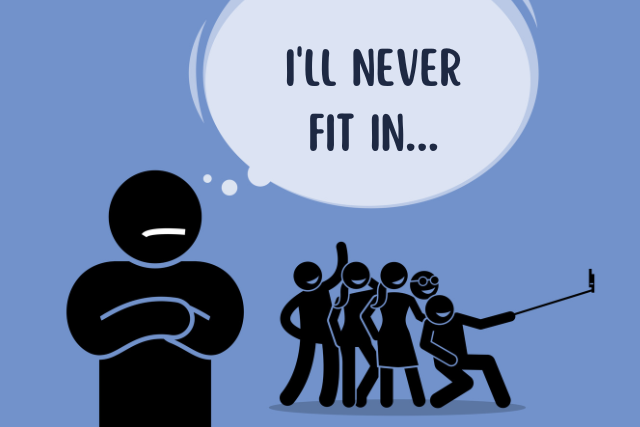
    In my own journey of trying to fit in, of not wanting to be different, I let go of parts of myself just to be accepted.

    She, on the other hand, stood out—fearlessly. The world called her special needs. I just called her Lily.

    Her authenticity reminded me of something I had lost in myself. And now, authenticity is what my inner child has been waiting for—for so, so long.

    Sometimes I wonder if the universe gave me Lily not just to teach her but to be taught by her. Maybe our children don’t just inherit from us—we inherit from them, too.

    Her gift, her legacy, wasn’t just love. It was truth. The kind of truth that comes from living as you are.

    Maybe her lesson for me is the one I’m just now beginning to accept: that being fully myself is the most sacred way I can honor her.

    It’s not easy. The adult in me wants a checklist, a result, a clean timeline. But she reminds me: healing isn’t a destination. It’s a relationship.

    It’s a relationship with the past—yes—but also with the present moment. With the part of me that still flinches under pressure. With the softness I once thought I had to abandon in order to survive.

    I’m learning that my softness was never the problem. It was the silence that followed when no one responded to it.

    She is the key. The key to my own heart.

    It doesn’t always come in waves.

    Sometimes it’s a flicker, a breath, a quiet knowing that I’m still here—and that they are, too.

    My daughter, in the memories that move like wind through my life. And my inner child, in the softness I’m learning to reclaim. In the space where grief and love hold hands, we all meet.

    Maybe that’s the lesson she’s been shouting all along: that we can’t truly love others if we abandon ourselves. That within our own hearts—tender, bruised, still beating—lies the key to beginning again.

    We can’t mother our lost children the way we once did.

    But maybe, in their absence, we can begin to mother the small, forgotten parts of ourselves—with the same love, the same patience, the same fierce devotion.

    Maybe that’s how we honor them—not by moving on, but by moving inward.

  • Dancing with Darkness: How to Reclaim Your Whole Self

    Dancing with Darkness: How to Reclaim Your Whole Self

    “Shadow work is the way to illumination. When we become aware of all that is buried within us, that which is lurking beneath the surface no longer has power over us.” ~Aletheia Luna

    For years, I believed healing was about transcending pain. I took the courses, read the books, learned every energy-healing technique I could find, and became a healer myself.

    And for a while, I felt better. I had breakthroughs. My anxiety lessened.

    My depressive episodes became fewer. But they never fully disappeared. Even after all the inner work, there were still days when I felt unbearably low. Days and nights when my thoughts raced, full of fear and doubt.

    I told myself that if I was truly healing, these feelings shouldn’t exist anymore. That if I was really evolving, I wouldn’t feel this way.

    And worst of all, if I was a healer, how could I possibly still struggle?

    Surely, I was doing something wrong.

    I started questioning myself. Maybe I wasn’t “good enough” as a healer. Maybe I wasn’t doing enough inner work. MaybeI just wasn’t meant to be on this path.

    So I doubled down. I meditated longer. Journaled more. Cleared my energy. Did affirmations.

    And yet, the sadness still found me. The anxiety still whispered its fears. No matter how much I tried to fix myself, these emotions refused to leave.

    It wasn’t until I stopped fighting my pain that something shifted. I realized I had spent years treating my emotions as something to get rid of. But healing isn’t about eliminating pain: it’s about becoming intimate with it.

    So instead of suppressing my darkness, I started getting to know it. Instead of running from my emotions, I sat with them—fully present, without trying to fix them.

    I let my sadness speak through poetry.

    I let my anxiety move through dance.

    I let my shadows express themselves through art, writing, and stillness.

    And something unexpected happened. The more I embraced my pain, the less power it had over me. The more I let myself feel without judgment, the more compassion I had for myself.

    I learned that healing isn’t about reaching some perfect, pain-free version of yourself. It’s about integrating every part of you—even the ones you used to reject.

    I realized that being a healer doesn’t mean being free of struggle. It means having the courage to meet yourself exactly as you are—without shame, without resistance, and with deep, unwavering love.

    Because healing isn’t about erasing your darkness.

    It’s about learning to dance with it.

    What is the Shadow Self?

    Our shadow consists of the parts of ourselves that we’ve been taught to hide: our fears, suppressed emotions, unprocessed pain, and even our untapped strengths.

    Maybe you were told as a child that expressing anger was “bad,” so you learned to suppress it.

    Maybe you grew up believing that vulnerability was weakness, so you built walls around your heart.

    The shadow isn’t just made up of things we perceive as negative; it can also include hidden gifts. Some of us hide our power because we were taught it wasn’t safe to shine.

    Some of us suppress our intuition because we fear being wrong. Some of us bury our true desires because we’ve been conditioned to think they’re unrealistic or selfish.

    But here’s the thing: Whatever we suppress doesn’t disappear. It just works against us in unconscious ways.

    Our unhealed wounds can show up as:

    • Feeling stuck in the same painful patterns
    • Emotional triggers that seem to come out of nowhere
    • Self-sabotage, procrastination, or fear of success
    • Overreacting to certain behaviors in others (often mirroring what we reject in ourselves)
    • Feeling disconnected, numb, or unfulfilled despite “doing the work”

    So how do we begin integrating our shadow instead of fearing or avoiding it?

    5 Ways to Begin Shadow Integration

    1. Get curious about your triggers.

    One of the easiest ways to identify our shadow is to pay attention to what triggers us.

    Have you ever felt an irrationally strong reaction to something? Maybe a passing comment made you feel deeply insecure, or someone else’s confidence irritated you.

    Our triggers are messengers. They reveal wounds that are still waiting to be healed and integrated.

    Reflection prompt:

    • Think about the last time something upset or irritated you. What was the deeper emotion beneath it?
    • Does this remind you of a past experience or belief?
    • If this was a message from your inner self, what would it be saying?

    When we can sit with our reactions instead of judging them, we open the door to healing.

    2. Identify what youve been taught to suppress.

    Many of our shadow aspects were created in childhood. We learned that certain emotions, traits, or desires weren’t “acceptable,” so we buried them.

    Ask yourself:

    • What parts of myself did I feel I had to hide growing up?
    • What qualities do I judge in others (and could these be aspects I’ve rejected in myself)?
    • What dreams or desires have I talked myself out of because they feel “unrealistic” or “selfish”?

    For example, if you were taught that being sensitive meant being weak, you might suppress your emotions and struggle with vulnerability. If you were raised in an environment where success was met with jealousy, you might unconsciously fear stepping into your full potential.

    By bringing awareness to these patterns, you can begin to rewrite them.

    3. Practice sitting with uncomfortable emotions.

    Most of us weren’t taught how to sit with our emotions. We were taught how to suppress, avoid, or “fix” them.

    But emotions are not problems. They are messages.

    Instead of pushing away sadness, frustration, or fear, try welcoming them as temporary visitors.

    Try this:

    • When a difficult emotion arises, pause, and say, I see you. I hear you. I am listening.
    • Notice what sensations arise in your body.
    • Breathe deeply and allow yourself to sit with it, without rushing to change it.

    The more you practice this, the less power your emotions will have over you.

    4. Reconnect with your inner child.

    Much of our shadow is rooted in childhood experiences—times when we felt abandoned, unworthy, or unsafe.

    Healing these wounds requires reparenting ourselves with love and compassion.

    A simple inner child exercise:

    • Close your eyes and imagine your younger self standing in front of you.
    • Picture them at an age when they felt most vulnerable.
    • Ask: What do you need to hear right now?
    • Offer them the love, validation, and reassurance they may not have received.

    This simple practice can be incredibly powerful in healing past wounds and integrating your shadow.

    5. Express what youve been holding back.

    Shadow integration isn’t just about recognizing our hidden parts. It’s about allowing ourselves to express them in healthy ways.

    If you’ve suppressed your voice, start speaking up.

    If you’ve buried your creativity, allow yourself to create freely.

    If you’ve been afraid of taking up space, start owning your worth.

    Challenge yourself:

    • Identify one way you’ve been keeping yourself small.
    • Take one small step toward expressing that part of yourself this week.

    When we integrate our shadow, we reclaim the full spectrum of who we are.

    Embracing Your Whole Self

    Healing isn’t about becoming perfect. It’s about becoming whole.

    The parts of us that we once rejected hold immense wisdom, creativity, and strength. When we integrate them, we unlock a new level of self-awareness, freedom, and inner peace.

    So, the next time your shadows appear, instead of running from them, try sitting with them.

    Instead of fighting your fears, try listening to what they have to teach you.

    Instead of rejecting the parts of you that feel unworthy, try offering them love.

    Because healing isn’t about erasing your darkness.

    It’s about learning to dance with it until it, too, becomes light.

    I would love to hear from you: What’s one part of yourself you’re learning to embrace? Drop a comment below.

  • 4 Things You Need to Know About Your Hurting Inner Child

    4 Things You Need to Know About Your Hurting Inner Child

    “She held herself until the sobs of the child inside subsided entirely. I love you, she told herself. It will all be okay.” ~H. Raven Rose

    The first time I heard about inner child work was in a random article I found on the internet.

    It caught my attention because I was struggling to develop loving and compassionate feelings toward myself. Although I understood the role of limiting beliefs and unhealthy habits in my healing process and how to overcome them, I couldn’t feel love and empathy for myself.

    Most of the time, I was either very harsh toward myself for any minor mistake or denied feelings that came up.

    For example, as a teenager and a young adult, I struggled with anger. As I got older, I realized that emotional outbursts aren’t healthy, so I began to mask my anger with passive aggressiveness. However, the shame around anger remained because there were times when I still felt strong and intense anger. I just got better at hiding it. Or so I thought.

    I felt anger quite often, and I couldn’t stand it. I got angry with myself for being angry.

    The same denial and frustration applied to other emotions that made me feel vulnerable, like shame, guilt, or judgment.

    Because of the work I was doing with women, I thought I should be somewhere else, focusing on blooming flowers and appreciating the sunshine. In the meantime, I didn’t feel like I was walking my talk. And that, with no surprise, brought more shame and anger.

    Then, one day, my fridge broke down.

    I began to deal with the issue, trying to schedule maintenance. As I was driving to meet with a client, I received an email regarding appointment times that wouldn’t work for me, and there wasn’t a lot of flexibility in rescheduling.

    Suddenly, I felt an intense upsurge of anger and frustration flooding my body. Although I was able to witness it without reacting, it alarmed me since I hadn’t felt this way in a long time. Tears started to run down my cheeks.

    I felt defeated while asking myself,  “Why am I feeling this way? Why are these emotions still here? When is it going to stop?”

    As I was trying to wipe my tears while navigating rush-hour traffic, a thought came to mind: “It’s okay to feel angry.”

    I placed my hand on my chest, briefly closed my eyes as I was waiting at a red light, and whispered, “I see you” (referring to my inner child, recognizing her acting up by being angry).

    Soon after, something unexpected happened.

    I opened my eyes and felt a profound sense of lightness. The anger had left my body.

    I was in awe. More tears began rolling down my face, but this time from gratitude for the acceptance and grace I was able to give to myself.
    I realized that the whole time I was suppressing my anger, the inner version of me was asking for acceptance. She wanted to be seen and acknowledged, without judgment. It felt as if my inner child had been trying to get my attention and show me something (as kids do), but I kept pushing her away while being busy with other stuff.

    The moment I turned to her and gave her the attention she needed, she settled down.

    After this profound experience, I began to dive deeper into this healing modality and understood four things about the inner child in all of us.

    1. Our inner child wants to be seen.

    When we are acting on our triggers and behaving in ways that we know are not healthy for us, it means that our inner child is acting up. I always visualize a scene of a little girl or boy pulling their mom’s sleeve, trying to show her something. It’s like they are saying, “Mom, look. Mom, pay attention to me. There is something important I want to show you.”

    When emotions we don’t like come up, or we act in the same old ways that bring judgment, our inner child is simply trying to get our attention. He or she wants to be seen, recognized, and acknowledged.

    One of the questions I ask my inner child when she is (I am) acting up is, “What are you trying to tell me?” When I do it with my eyes closed, the answer is almost instant.

    2. Our inner child wants to be validated.

    Most of us have had experiences when we got hurt but didn’t receive an apology.

    We’ve also had experiences when the person who hurt us apologized with sincerity. I’m guessing that at least half of our healing took place at that very moment. Instead of being ridiculed or dismissed, we were validated.

    The same applies to our inner children. As I previously described, only when I justified my little girl’s emotions instead of dismissing her did I experience emotional release and healing.

    Since inner child work is about reparenting ourselves, this is how we can understand it. I look at my subconscious mind as my inner child. That’s where all my beliefs, perceptions, and triggers are stored. My conscious mind is my parent. This part of me is logical, able to question my limiting beliefs and actively acknowledge and heal the wounds that are there.

    The beauty of inner child work is that we don’t need apologies from those who we feel wronged us.

    Since we are in the position of a parent and a child, we can give our inner child anything s/he needs.

    3. Our inner child is missing and seeking love.

    Love is the most resilient emotion. It gives us courage, strength, determination, gratitude, and acceptance, and it is often the emotion that our inner child craves the most.

    After we acknowledge and validate our inner child, we can soothe them with loving affirmations and words of encouragement.

    Here is a simple exercise I learned from a guided meditation.

    Close your eyes and take three deep, cleansing breaths. Bring into your vision a simple bench where you and your inner child are sitting together. First, ask your inner child if you can hold his or her hand. Once you receive permission, gently stroke your child’s hand and say the ancient Hawaiian Ho’oponopono mantra three times.

    I am sorry.

    Please forgive me.

    I love you.

    Thank you.

    When I practice this mantra, I use the first affirmation, “I am sorry,” to apologize to my inner child for any pain and hurt I caused her by not paying attention to her when she needed me. Then, I ask her to forgive me for denying her presence and the healing she was so desperately asking for.

    These first two mantras are deeply healing because once I forgive myself for betraying myself and my inner child, I feel instant relief and more drive to keep going. I am not paralyzed by subtle guilt anymore.

    In the end, I reassure her that I am here for her by saying that I love her and then thank her for giving me this opportunity to heal both of us.

    4. Our inner child is a gateway to heartfelt emotions.

    Often, when I see a child, there is a level of softness that enters my body. I attribute it to the innocence and sweetness children represent.

    Imagine yourself being upset, and suddenly a three-year-old comes in front of you and starts smiling. Whether you want it or not, it will affect you to some extent, and you may even smile back.

    We can embrace the same dynamic with our inner child and use it as a way to feel heartfelt emotions. One of those ways is to use the visualization exercise I shared with you earlier.

    The more we practice feeling love, compassion, and empathy toward our little selves, the more accustomed we become to feeling these emotions.

    Although guilt, judgment, shame, or anger may still arise, instead of judging or denying them, we can use compassion and curiosity to understand what these emotions are trying to tell us.

    By validating and accepting what we feel, we can reparent ourselves, heal our wounds, and start living from the most powerful place there is—the place of love.

  • How I Stopped Feeling Like an Outsider by Being Honest with Myself

    How I Stopped Feeling Like an Outsider by Being Honest with Myself

    “Be who you are and say what you feel, because those who mind don’t matter, and those who matter don’t mind.” ~Bernard M. Baruch

    As a young boy, maybe in fourth or fifth grade, I came to the realization that I was an outsider.

    I didn’t like playing video games after school, I played basketball while the other boys played soccer, and most of all, I didn’t like the unpleasant and sometimes bullying tone that had formed amongst my good friends.

    One good friend in particular—let’s call him Theo—I considered to be my best friend.

    For years, we celebrated birthdays, played together, laughed together, and held each other’s hands walking from school to the after-school club. I was proud to say that he was my best friend, and I was his, but lately I had sensed a change in Theo’s behavior towards me.

    One day, walking the usual half-a-mile-long walk to the afterschool club, our other friend Sebastian tagged along. Sebastian and Theo lived in the same neighborhood, their parents knew each other well, and they even played on the same soccer team.

    Trudging down the narrow sidewalk, I let the two of them walk side by side in front of me as they laughed and pushed each other jokingly as young boys that age do, and suddenly I was hit by a wave of sadness. It felt like they had completely forgotten about my presence.

    I felt invisible.

    I decided to gradually sag behind to see if they would notice that I was no longer walking behind them.

    My assumption had been confirmed. I was invisible, and to make matters worse, I realized in that moment that my best friend was no longer my best friend.

    I detached from the usual route and walked to a small treehouse near the after-school club that we built earlier in the year. The tree house was unoccupied because of a fine rain that quietly fell from the gray clouds that day.

    I threw my bag on the ground and climbed the tree effortlessly. Here, I sat on a branch in silence, watching innocent tears trickle down my cheeks and splash onto the ground. I felt overwhelmed with the realization that I was somehow different.

    Something inside me, very close to the core of who I am, was no longer accepted or appreciated by my closest friends. But why? I was always kind and caring. Patient and tolerant. Compassionate. And now I was lonely—an outsider; an old soul caught in a crowd of young boys.

    So… what do children do when they realize they don’t fit in? They adapt. They become whoever they need to become to “survive.”

    This is a simple defense mechanism that all human beings possess that is deeply rooted in the subconscious mind to protect themselves from additional hurt.

    As a teenager, I recall the daily challenge of fitting in. I altered the way I talked, the clothes I wore, and my opinions and personal values. Depending on who I was talking to, I would change my words to meet their expectations and kept my true self in hiding from myself and the world around me.

    A big part of me feared that if I showed my true, gentle nature, I would be called a wimp, get bullied, or ostracized; it was a profound fear that pushed me to blend in anywhere as best as I could—even if it meant I had to lie, be rude, or a little violent.

    I got so used to putting on different masks that they became my identity, and my true, loving self was concealed behind a hurt child.

    What is interesting is that all of this took place on a subconscious level. I wasn’t overtly telling myself to alter my actions just to fit in. In fact, I didn’t even realize that this was happening until years later.

    It wasn’t until a few months ago that I, like a flash from the past, remembered this image of a young boy sitting in a tree, and I have been thinking about its significance ever since.

    That boy went through something that all people go through sooner or later…

    It’s called heartbreak.

    Heartbreak is an inevitable part of the human experience. It might just be the most important part because heartbreak teaches us how to deal with pain.

    Pain is natural, but pain that we hold on to becomes suffering, and suffering is a choice because we always have the ability to work through the pain.

    As adults, we hold the power and responsibility to examine the pain we experienced as children. We are presented with a choice: To work through the pain or hide behind it? To suppress our internalized fears or express them?

    To heal and reconnect with our true selves again—our “inner child”—we must look inward and courageously face the pain of the past, however uncomfortable this may be.

    Why?

    Because we cannot heal if we do not admit that we are bleeding.

    For me, things changed when I made one transformational decision: I started being brutally honest with myself.

    Suddenly, I started noticing when I altered my behavior simply to meet the expectations of others. I noticed when I twisted a truth to make myself look better. I noticed my overarching fear of exclusion. And then I finally accepted the uncomfortable truth that I was so afraid of what others thought of me, always people-pleasing and seeking acceptance.

    When I didn’t find that acceptance, fear would set in, and enter: defense mechanism.

    The best thing you can do when you feel fear is to question it. Analyze it, and ask: “Why does this harmless thing trigger me so deeply?”

    I also noticed how draining not being my true self was. I would leave conversations energetically drained or avoid certain people because I knew I would have to “put on a show.” Acting is tiring, and I was tired of being tired.

    I got the idea to make a list of all the things that I do during a full day, and I crossed off the things that I knew wasn’t in alignment with the person I wanted to become. I also asked myself which activities bring me peace, passion, and positive energy.

    Journaling, meditation, and yoga became a part of my daily routine, and so did practices like honesty, integrity, and compassion. I found myself in the depths of a spiritual awakening, and the finding of my true self was resurfacing. It felt empowering and inspiring!

    On my growth journey, I discovered many new things about myself that I had never acknowledged before. I learned about my love for music, books, reading, and writing, and my growing passion for sharing my knowledge with the world around me to make a difference—even if it’s just a small one.

    And finally, I reached the paradoxical truth: The moment I stopped trying to fit in was the moment I stopped feeling like an outsider.

  • 5 Ways to Heal from a Highly Critical, Controlling Parent

    5 Ways to Heal from a Highly Critical, Controlling Parent

    “You’ve been criticizing yourself for years and it hasn’t worked. Try approving of yourself and see what happens.” ~Louise Hay

    When I was growing up, it felt like nothing was good enough for my dad. And all I longed for was his acceptance and love.

    He had this temper that would blow up, and he’d blame me for how he felt. He would outright tell me his behavior was my fault. That if I’d behaved better, he wouldn’t have had an outburst.

    When he told me I wasn’t enough or worthy, I believed him. I was constantly walking on eggshells around him, trying to not annoy him, as his angry words would really hurt.

    The confusing thing about my dad was that he wasn’t like this all the time. Sometimes he was loving, affectionate, and warm, and then in a moment he would switch to cold, controlling, and cruel.

    As a child, I believed to my core that I was the problem. The only way I thought I could keep myself safe was to try and please him and be the perfect daughter.

    I became obsessed with achievement. It started first with my grades and school, and then it was getting the job he wanted me to have. Because sometimes an achievement would get me a crumb of love from him. I would push myself as a child, forsaking rest and hydration at times, so he would see how hard I’d worked.

    But it was never enough for him. He would lose his temper on the one day that I was taking a break, telling me that I would never amount to anything.

    He would even tell other people how awful his family was when he was drunk. It was beyond humiliating.

    Now, at forty-one, these memories with my dad are in the past, but they still haunt me. He has since passed—he took his life fifteen years ago. Turns out my dad wasn’t okay and was struggling with the impact of his own childhood trauma.

    But rather than seeking help, he took it out on his family and himself through addiction and, ultimately, his suicide.

    His controlling, critical voice still lives in my subconscious mind. It’s his voice that tells me to work harder or that I am not good enough, or questions, “Who do you think you are?”

    Even though I consciously know now, as a trauma transformation coach, that his behavior was due to his pain and his words were not the truth, the younger parts of me still believe him. Because those younger parts still feel blamed, shamed, and not enough.

    After his passing, I found myself in relationships where others would criticize, control, and deny my reality, and found myself powerless again, just as I’d felt as a little girl.

    But by investing in various safe spaces, like support groups, therapy, and coaching, I have been able to step away from these relationships or maintain boundaries so that my younger self is no longer triggered by the pain of the past. This has created space for kinder, more loving relationships to come in.

    However, more recently I noticed that even though I’d stepped away from toxic relationships, I had become him to myself. I would speak to myself critically and put myself down. Nothing was good enough, and I would push myself to achieve at any cost, going through cycles of overworking and burnout.
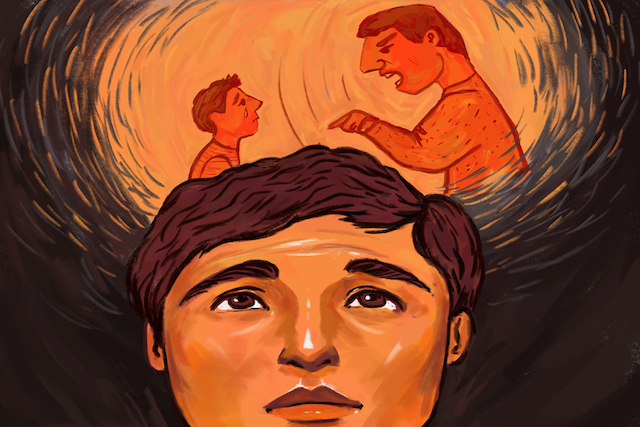
    I would push myself to have the ‘perfect body’ with extreme exercise and diet. But then my inner rebel would push back and sabotage the diet and my health through emotional eating.

    Constantly pushing myself to be better, I realized, unconsciously, I was still chasing his love. His acceptance even though he wasn’t here.

    I had become the controlling critical parent to myself. It was time for me to become the parent I’d longed for and not the parent I’d had.
    Here are the five practices that are helping me to heal from my controlling, critical parent—practices that could help you too.

    1. I ask myself: Am I being kind to myself?

    I have created a pattern interrupter by asking myself, at least three times a day, if I am being kind to myself and, if not, how I can be. I notice my behaviors and inner dialogue and explore how I can shift into kindness.

    For example, if I don’t sleep well, is it kind to push myself with a cardio workout and long day of work, or would it be better to go for a walk in nature and take a slower pace?

    Or, if I am speaking to myself without self-compassion, is there a more loving way to communicate with myself rather than being nasty?

    Each day I make a conscious choice to step into that kind energy. I treat myself how I wish he had treated me.

    2. I celebrate myself weekly.

    Each Sunday, I reflect on what I am proud of and celebrate myself, even if I’ve done something small, like being consistently kind to myself. I become the cheerleading parent I longed for, and this builds self-esteem.
    3. I use affirmations.

    I affirm throughout the day that I am safe and enough. That I don’t have to prove my worth or people-please. I can just be me. This helps soothe the critical voice that goes into past fear stories.

    I use affirmations to say I love and care for myself. That I am my biggest priority.
    4. I listen to my body and choose to take care of it.

    Instead of pushing myself physically, I ask myself: How should I nourish myself? Or how should I move my body? What shouldn’t I put into it out of love? I check in with myself if I need rest or if a certain relationship or situation is causing me physical and mental stress. I speak kindly about my body rather than shaming it for not being enough.

    5. I reparent the parts of me that are in pain from the past.

    My dad will always be part of my story. I can’t change the past, but I can take care of the different parts of me that were hurt. I can show those parts kindness and love through reparenting and inner-child work.

    My favorite practice is going back in time to visit my younger self. I give her a hug, ask her how she feels, and then do whatever I can to fulfill her needs. I soothe the hurting parts of her rather than getting her to perform and achieve.

    Some days my old behaviors come out, but I use the question “Am I being kind to myself?” to get myself back on track. I also practice self-compassion and forgiveness, as I would never say the things I have said to myself to others.

    If you can relate to what I wrote because you had a similar parent, step into being the parent you wished for yourself. Because a happy, loved, affirmed child is better able to live a happy, healthy life than a bullied child that hates herself. Give yourself the gift of love and kindness and watch your story transform.

  • One Missing Ingredient in My Recovery and Why I Relapsed

    One Missing Ingredient in My Recovery and Why I Relapsed

    “The Phoenix must burn to emerge.” ~Janet Fitch

    Many people were shocked when I relapsed after twenty-three years of recovery. After all, I was the model of doing it right. I did everything I was told: went to treatment, followed instructions, prayed for help, and completed the assignments.

    After returning home from treatment, I joined a recovery program and went to therapy. Once again, I followed all the suggestions, which worked when it came to staying sober. I had no desire to drink or do drugs—well, at least for a long while.

    When I went to treatment, I was an emotional wreck. I would have done anything to get rid of the pain. But substances only intensified the pain and prevented healing.

    The worse I felt, the more I needed to medicate those emotions, but it was only causing the ache in my heart to be prolonged, driving me to suicidal thoughts. The moment I stopped using substances, the pain immediately subsided. I’d gone from struggling to get out of bed to engaging in my life fully.

    But going to treatment was only the tip of the iceberg. There was something much deeper underneath my addiction that I wrongly thought a relationship could fix. There was an underlying malaise and sense of shame I couldn’t identify. I knew something was wrong, so I kept searching for answers but couldn’t find the magic formula.

    Without the solution, relapse was inevitable.

    Most recovery programs address a single addiction, but I had many. After two years of sobriety, I stopped smoking but then started compulsive exercising. I didn’t eat right, spent too much, was codependent with needy people, and went from one addictive relationship to the next, never healthy enough to attract someone who could problem solve with me.

    I didn’t realize I was still substituting addictions for love.

    I wanted to make up for my troubled childhood, and I thought getting married and having kids would fix the problem, but after several attempts, it only made me feel more inadequate. Worse, I was a therapist and felt like a hypocrite. It wasn’t like I didn’t work at getting better; self-help was like a part-time job

    I spent decades in different kinds of therapy, not only as a patient but expanding my education in other modalities. I attended dozens of workshops and seminars doing inner-child work. I fully immersed myself in over twenty years of therapy, including psychoanalysis. My toolbox was overflowing, but I still felt disconnected for some reason.

    I didn’t realize those tools weren’t teaching me how to love myself.
    My journey took me on a lifelong spiritual quest. I found a higher power in recovery. I attended various churches and did some mission work in Haiti. I went to Brazil to be healed by John of God (later convicted of multiple cases of sexual abuse), on to a spiritual quest in Peru, on a visit to the Holy Land in Israel, and to Fiji to find my destiny but still felt something was missing.

    I read every spirituality book I could get my hands on and studied A Course in Miracles, but I was still disconnected from myself and others.

    Discouraged, I began to drift further away from all sources of help. I resigned myself to being an unhealed healer.

    I didn’t realize that all the therapy and spirituality were simply another form of addiction for me.

    Relapse began when I got breast cancer and was prescribed opiates after surgery. I got a taste of that forgotten high and made sure I took all the pills, whether I needed them or not. I also forgot how mood-altering substances affected my judgment.

    Instead of facing my fears about being ill and moving forward with my life, I reconciled with my ex-husband. I had little to no regard for how this affected my children. Like a piece of dust suctioned into a vacuum, despite feeling uncomfortable, I allowed my thoughts to suck me back into unhealthy choices—all the while in therapy.

    The next seven years were dark. Another divorce was followed by my former husband’s death, though I was grateful to bring him to our home and care for him until he passed. Then, a fire turned our newly renovated home into a mass of black and burnt-out walls, forcing another relocation for myself and youngest. Soon after, one of my businesses suffered severe damage from another fire resulting in six months of work and restoration.

    Three devastating hurricanes over two years damaged our home and business. One caused the foyer ceiling to cave in, another landed a large tree on our roof, and the third made our yard look like it had been run through a giant blender. One of my businesses was twice flooded and everything had to be thrown away.

    Soon after, our home was ransacked and burglarized. The stress of managing repairs, insurance claims, child-rearing, and working full-time felt like I was repeatedly set on fire and drowned.

    I kept trying to get better but felt emotionally shredded from the struggle. Desperate for support, poor decisions kept me in a whirlwind of insanity—more bad relationships. I was tired of trying, sick of hurting, and anger brewed within me.

    I stopped therapy, recovery meetings, and my spiritual quest, and decided to throw it all away. I went on a rebellious rampage. I’d been married at age sixteen and had a child, and now I was entirely alone. I decided to return to my pre-recovery lifestyle and live it up.

    Looking back, I lived a dual life of selfishness and a thirty-year career of helping others. I was self-will run riot but couldn’t see myself. I’d lived a life of making things happen and simultaneously wondered why my higher power didn’t deliver everything I wanted.
    Spirituality is a tricky thing. It’s so easy to think that God or some higher power is in control, but I believe, with free will, it’s a collaborative effort. Do the footwork and wait… if only I’d waited; impatience was my Achilles heel.

    My party life added a new heap of problems: disappointed children, bad judgment, and wrecked relationships. It didn’t take long to wind up in the same place that took me to treatment twenty-three years earlier, an emotional bottom. But this time, I was ready for the miracle of change.

    I finally found the missing ingredient to a happy life.

    The night was pitch black as I drove around emotionally deranged from grief and substances. After a near accident, I pulled into a parking lot and sobbed uncontrollably. I railed, “Whatever you are out there, why did you abandon me? Why haven’t you helped me? Why don’t you love me?”

    Immediately, a thought shot through my brain like an arrow through a cloud. “It’s not me that doesn’t love you. You don’t love yourself.” And for the first time in my life, I realized two things: I didn’t love myself and didn’t know what loving myself even meant.

    How would I learn to love myself? It never occurred to me that I didn’t. But now, I was armed with the missing ingredient to my happiness, and I intended to figure it out.

    Psychoanalysts are taught the importance of an infant’s basic needs for nurturing and bonding, but I’d never applied any of those concepts to myself. There were some missing parts in my childhood, so I had to learn how to provide for my physical, emotional, and spiritual needs,  as well as get proper nutrition, rest, and activity, in addition to responsibilities, play time, creative and quiet time, gratitude and appreciation, and loss of tolerance for unkind behavior (to and from others), all of which places I started the journey to self-love.
    I let go of what I wanted and focused on doing the next right thing for myself and others. The results were miraculous; peace engulfed me for the first time. By being the love I’d always wanted, I felt loved.

    I was always a doer and thought that spirituality was like getting a degree. Follow the steps, and everything will be okay. Whether or not that’s true, there’s a lot more to staying sober than following a set of directions. It’s important to find a higher power, clean up our act, apologize to those we’ve hurt, and stop using, but that won’t keep us sober if we don’t know how to love ourselves. My higher power became love.

    Correct behavior and self-love are not the same. Loving oneself starts with giving thanks to the sunrise and the sunset, cuddling with your pillow and those you love, acknowledging a universal intelligence and trusting guidance from your conscience, discovering and loving your mission, and nourishing your body, mind, and soul.

    Feed your body with nontoxic food; feed your mind with positive, stimulating information; and feed your soul with nature, good friends, healthy partners, and a higher power (of your own understanding) that inspires and uplifts you.

    If you’ve struggled with staying sober, you probably haven’t learned to love yourself. It’s never too late to start. When I started loving myself like a small child, I lost all substitutes for that godly love, and I finally began to blossom and grow.
    It took decades of failure to discover the missing ingredient to staying sober. I had to learn that love isn’t something I get. Love is an action I give to myself and others.

    Through being the love that I want, I then receive love. There’s a difference between staying sober and recovering. For all like me, who failed to stay sober, learn how to love yourself and then you will recover from the lack of self-love at the root of this tragic disease.

    It’s not enough to just stay sober, and life without happiness makes no sense. You were meant to have a life of love and joy. If you’ve tried everything and something’s still missing, try learning how to love.

  • How Grieving My Parents’ Divorce (20 Years Later) Changed Me for the Better

    How Grieving My Parents’ Divorce (20 Years Later) Changed Me for the Better

    “There are years that ask questions and years that answer.” ~Zora Neale Hurston

    At the age of thirteen, my childhood as I knew it came to an end. My parents sat my brother and me down at the kitchen table and told us they were getting a divorce. In that moment, I could acutely feel the pain of losing the only family unit I knew.

    Although my teenage self was devastated by this news, it would take another twenty years for me to realize the full extent of what I had lost. And to acknowledge that I had never fully grieved this loss.

    While divorce is so common in the United States, it is not a benign experience for children or adolescents. In fact, divorce is even considered a type of adverse childhood experience, or childhood trauma, that can have long-term behavioral, health, and income consequences. Children of divorced families have an increased risk of developing psychological disorders, attaining lower levels of education, and experiencing relationship difficulties.

    However, not all divorce is equal and will impact children in the same way. And if the children still feel loved, protected, and supported by the parents following the divorce, this can act as a buffer against long-term harm.

    But in many cases following a divorce, parents are not in an emotional or financial state to continue meeting the children’s needs at the same level as prior to the divorce. In these circumstances, children are less likely to receive the emotional support needed to properly grieve—which is what I personally experienced.

    After receiving news that my parents were planning to divorce, I did begin the grieving process. I was in denial that they would actually go through with it. Then I felt anger that they were uprooting my entire world. And then after the anger settled, I remember pleading with them for weeks to stay together. But I think I got stuck somewhere in the stage of depression, never being able to fully reach acceptance.

    Then, twenty years later, after a series of stressful life events, I realized how much the divorce of my parents still impacted me—and how I still had grieving to do. So, at thirty-two years old, I faced a childhood head-on that I had spent my entire adult life attempting to avoid. And I gave myself everything that the thirteen-year-old me had needed twenty years ago but had never received.

    I gained social support through my husband, friends, and therapist. I showed myself compassion. And after two decades, I finally gave myself permission to grieve the childhood and family of origin that I never had and never will.

    I believe the reason that divorce can be so harmful for children is because there is a prevalent belief that children are resilient and they’ll always bounce back. When provided the right support and care, this may be true. However, children don’t have the emotional maturity to manage their emotions on their own when experiencing such an intense loss. This is particularly true when the divorce precipitates or is accompanied by other types of adverse childhood experiences.

    Since divorce can oftentimes lead to intense upheaval and disruption in the family structure, this makes children more susceptible to other types of trauma. Financial difficulties, abuse from stepparents, or a parent suddenly becoming absent can all amplify an already distressing situation for a child. And since children are programmed to rely on their parents for survival, what may seem like a mildly stressful incident for an adult could feel life-threatening for a child.

    I never fully grieved and accepted my parents’ divorce because I lacked the social support I needed to do so. And since the breakdown of the family also led to a breakdown in parenting, I was focused on survival, not grieving. However, it took me many years to realize that my parents were also focused on survival, which can take precedence over ensuring your children are prepared for adulthood. 

    I know my parents did the best they could with the tools they had at the time. But it has been difficult to understand why a parent wouldn’t do everything in their power to shield their child from trauma.

    I was not old enough to understand that it was mental illness and substance abuse that caused a parent’s partner to go into violent rages. My parents had to pretend everything was normal for their own survival—all while neglecting to consider the long-term impacts of trauma during such formative, developmental years.

    To avoid the instability and chaos of the post-divorce homes, from the age of fourteen, I bounced around living from friend’s house to friend’s house. And by the age of sixteen, I had left school and was working nearly full-time in restaurants.

    I didn’t have any plans for my life, but working gave me a sense of safety and an alternate identity. No one had to know that I was a teenager from a broken home living in a trailer park. They only cared that I came in on time and did the job.

    Looking back, it’s clear that my desire to leave school and work was very much a means to gain some control over my chaotic and troubled home life. I felt as though I had to support and protect myself because I had no one to fall back on. And this has been a consistent feeling throughout my life.

    When I began the process of grieving my parents’ divorce as an adult, I realized how many of my beliefs about the world and myself were connected to the aftermath of this traumatic experience.

    My early years instilled beliefs in me that the world is not a safe place—and that I’m not worthy of safety or protection. And it was through the process of grieving that I realized that the thirteen-year-old girl that feared for her safety was still inside me wanting to be heard and comforted.

    I wanted to tell her that she had nothing to fear. But that wouldn’t be the truth. Because the decade following the divorce would be filled with intense distress and tumult. And she would be expected to endure challenges beyond her years.

    While I couldn’t tell her that she would have nothing to fear, I could tell her that she would get through it with courage. And she would become an adult with the ability to love, and a devotion to the health and preservation of her own marriage. And that she would put herself through college and grad school and have a professional career and travel the world.

    I could tell her that some stressful life experiences in her early thirties would open up wounds that she had kept closed for decades. But that she would be strong enough to constructively deal with her past and accept the loss of a childhood cut too short. And that through this journey, she would learn to forgive and show compassion—to herself and to others.

    Grieving my parents’ divorce changed me. I’m no longer waiting for the other shoe to drop. And I’m no longer blaming myself for a truncated childhood. I’m also learning that the world is not as scary and unpredictable as I’ve spent my entire adult life thinking it was.

    I’ve discovered that while there was a point in my young life when I experienced hardships that exceeded my ability to cope, I now have all the tools I need inside of me. And I know that it is possible to reach a point in life where you are no longer focused on surviving but rather on thriving.

  • 9 Things I Would Tell My Younger Self to Help Her Change Her Life

    9 Things I Would Tell My Younger Self to Help Her Change Her Life

    “You are one decision away from a completely different life.” ~Mel Robbins

    At twenty-six years old, I lost my dad to suicide. I was heartbroken and so angry.

    My dad was not the best. Ever since I was little, he would criticize everything I did. I was never good enough for him, and I was a place he discharged his anger through emotional insults.

    It never stopped, and I was always on high alert around him. Right until the moment he took his life.

    He could also be loving, kind, funny, and warm, but my nervous system could never relax around him. He was a Jekyll and Hyde. I never knew what behavior would set him off.

    Then all of a sudden, he was gone.

    I was angry because he had caused me a lot of pain growing up, and now he had left me.

    I was angry that I loved this man so much and felt such deep pain without him. It made no sense to me. Surely my life should be better now that his constant abuse was over.

    But it was just the beginning of my emotional breakdown. Children love their parents unconditionally, no matter how we are treated. But if our parents project their pain on to us, we end up not loving ourselves.

    Now that the abuse had stopped, it was time to deal with all the emotional wounds he’d inflicted over the years.

    But I resisted this and got stuck. I struggled in romantic relationships, unconsciously dating versions of my dad.

    I was full of self-hate. He may have died, but his criticism was very much alive in my head! And I was the one now persecuting myself for everything.

    I may have loved him, but I had no love for myself, as he had taught me that I wasn’t worth that.

    I felt powerless and in so much pain. I numbed this pain with the tools he had given me—wine, TV, food, and caretaking others. I had the busiest diary so I would never have to feel.

    I had no idea how to stop feeling so awful and like I was doomed for life because of this childhood trauma I had suffered. I was in denial that I had even experienced childhood trauma.

    The man who had caused me the pain had gone, so why did I feel the same, if not worse?

    I would lie in bed at night with this huge ache, longing to be loved by someone but looking for it in all the wrong places.

    I felt trapped in my emotions and like there was no way out.

    I sit in my front room now, over fifteen years later, in a life I didn’t think was possible, in a home that feels safe and peaceful. No longer abusing myself. Doing a job that I love and married to the most amazing man.
    I feel like life is a gift and there is no dream I cannot make a reality. That pain that kept me awake at night is no longer there but replaced with love for myself, and even for my dad.

    If I could go back in time, I would tell myself these nine things to get me moving forward to the life I’ve since created. If you also grew up with an abusive parent, my list may help you too.

    1. It was not your fault.

    We put our parents on a pedestal as children because we have no choice. We need them to survive. When my dad persecuted me for not being quiet enough or not pleasing him, I translated that as “I am not good enough” and that everything was my fault.

    We often take all the blame when our parents mistreat us. But what were their stories? How did they grow up? Did someone teach them how to balance their emotions?

    I see now that my dad was struggling. He was grieving the loss of his parents and a difficult childhood. He was not given any tools to manage his emotions. He was shown how to lash out and project them. He was shown how to drink to numb them out.

    He would come home from a job he felt he had to do, feeling tired and stressed, and blame others to help himself calm down.

    Realizing this helped me let myself off the hook. It has also helped me forgive him, which has brought me peace. I started to understand him and his traumas. He was repeating a pattern of survival that his parents had taught him.

    This is generational trauma, and it wasn’t his fault. But it was his responsibility to keep his children safe, which he didn’t fulfill because he had no idea he was traumatizing them!

    2. Reparent the wounded child within.

    The versions of me that still hurt and felt this ache to be loved still lived within me, many years later. The seven-year-old who was shouted at for being too loud, the thirteen-year-old who didn’t study enough, and the twenty-five-year-old that wasn’t there for my dad. All these parts of me had unmet needs and were in pain.

    We can’t change the past, but we can go back in time in our imagination and be the parent we needed.

    I have imagined taking baby-me out of the house where I was born to live with adult me. Telling my parents to get some therapy and sort themselves out before they can have the baby back.

    I’ve imagined holding her and telling her how special she is. Over time, this helped that deeper pain to heal.

    3. Work on self-love.

    I was always seeking love and validation outside of myself.
    I was never taught or shown that self-love and self-care are necessities. You have to be able to fill up your own cup in order to love others.

    I would tell my younger self to take a step back from pleasing others and finding a man. I would tell her to focus on giving herself the love she longed for.

    For example, speaking to myself with love and kindness, having quality alone time, buying myself gifts—these were all things I longed for from a man, but I needed to start doing them for myself.

    I needed to spend time every day giving myself love and listening to my needs, not ignoring them. Do I need rest? Water? A healthy meal? To just breathe? To be in nature to calm my anxiety?

    Learning to listen to my own needs and fulfill them took time. It felt unnatural. It was a new behavior I had to repeat every day, and then soon enough it became second nature.

    4. Get to know your shadow.

    We all have parts of us that are dysfunctional and behaviors that are not serving us.

    For me, it was emotional eating, drinking wine, pursuing emotionally unavailable men, and caretaking my family. The last two made me miserable.

    But I blamed the men and my family for being needy. I didn’t take responsibility for my own behavior.

    I felt powerless over how others treated me. I was trapped in this victim state, and then I would numb with food and booze.

    Getting to know my shadow and recognizing my toxic behaviors were the first two steps to change.

    When a man didn’t treat me well, I stopped trying to prove my worth and changed my behavior to move away from the relationship.

    When it hurt, I learned how to love myself instead of chasing someone else’s love.

    Ask yourself: What am I doing that hurts me? Then work on a step-by-step plan to change the behavior. Baby steps are key in this process, as you can get overwhelmed by trying to do too much at once.

    5. Get support.

    It takes time and work to change toxic behavior and heal. I would give my younger self permission to get help when I was struggling with a change. For example, giving up toxic relationships and booze was a real challenge for me. Finding people who had already been through the transformation I was seeking was so valuable.

    Sometimes this would mean listening to a podcast or reading a book, blogs like this one, or posts on social media, and other times it would be investing in working with someone who had already done the work.

    When you work with someone who’s already made the change you’re seeking, they can outline the steps they took, which saves time and energy and makes you feel less alone.

    6. Get in your body.

    I once was a floating head and very disconnected from my body. It didn’t feel safe to feel fear, so I had to be that way to survive my life!

    I would tell my younger self to slow down and notice how her body feels. That it was safe to do that now.

    For example, certain relationships made my heart race out of fear. This was a sign that they weren’t good for me.

    I would also tell her to find ways to bring the body back into balance by discharging the stress and fear.

    For example, breathwork techniques, movement, and Emotional Freedom Technique (EFT) tapping all help us process our emotions rather than running away from them.

    7. It’s safe to speak your truth.

    I have always been incredibly loyal in relationships. Growing up with a dad who was awful meant I had few boundaries and expectations in relationships. This was the only way I could have some form of a relationship with my dad.

    I would let my younger self know it is okay to step back or walk away from relationships that don’t feel good or safe, even family.

    I would let her know that she can always express her truth in relationships and explain when a boundary has been crossed, but that also it’s okay to walk away. Especially in relationships that feel unsafe and abusive.

    8. Celebrate all your progress.

    A journey of healing and transformation takes time! It’s a marathon, not a sprint. It’s so important to celebrate the smallest of wins daily. For example, “I meditated every day this week,” or “I said no to an invite so I could take care of myself when I used to say yes all the time.” Change starts small and grows big.

    At the beginning especially it is so important to track everything because it feels like such a mountain to climb. It will motivate you to carry on. Seeing the little changes shows your efforts are paying off.

    Younger me didn’t have a family that celebrated small wins and growth. They focused on my imperfections and were highly critical. By celebrating myself, I help that little girl feel enough!

    9. Set intentions and dream big.

    Each month, set little goals to improve your life and keep you moving forward. This could be for your personal growth, relationships, physical health, emotional health, money, love, or work.

    Make the goal super small, for example, “In January, I will not text my ex.”

    You may want to set an intention to take better care of yourself. Break this down into daily tasks to repeat for the month. And if you don’t know what you need to work on, maybe your task for the month is to read a book to help you find out.

    With intention you can create the life you dream of. But often we don’t know what our dreams are. Get still and explore what would bring you happiness.

    I think of younger-me who looked out of her bedroom window wishing for a safe home.  I think of that little girl and the life she deserves. A full, fulfilling life, just like I’d want for my own child. This has helped me to dream bigger to create a life that is not only safe but also makes me happy.

    You too deserve an amazing life! Not a life stuck in patterns of surviving and playing it small, but one where you heal and thrive. Your parents treated you the way they did not because you were not enough but because they were wounded. You were always enough, and now you have the power to take daily steps to change your reality so it is not longer tainted by trauma.

    I have the most incredible life now, and it has and continues to be a journey of healing. I wish I would have done these things sooner, but it’s never too late to take the first steps on a new path! There is hope, and I believe in you.

  • 4 Things I Needed to Accept to Let Go and Heal After Trauma

    4 Things I Needed to Accept to Let Go and Heal After Trauma

    TRIGGER WARNING: This post references sexual abuse and may be triggered to some people.

    The truth is, unless you let go, unless you forgive yourself, unless you forgive the situation, unless you realize that the situation is over, you cannot move forward.” ~Steve Maraboli

    My family immigrated to the U.S. from India when I was sixteen. Being Indian, my traditional family expected me to have an arranged marriage.

    At twenty-two, as a graduate music student, I fell in love with an American man. When my family found out about our secret relationship, they took me back to India and put me under house arrest. For a year.

    That year of imprisonment and isolation was severely traumatizing. I shut down from my acute distress and pain. I dissociated from myself, my truth, my power, my body, my heart, and my sexuality.

    Two years after they let me out, I escaped to the US but was emotionally imprisoned by my past. I lived dissociated, afraid, and ashamed for eighteen years. Eventually, I broke free from an abusive marriage and my family.

    Since then, I have been on a path of healing and empowerment.

    Beginning my healing journey was like walking through a long, dark tunnel. I was and felt like a victim but was determined to heal.

    To heal from dissociation, I needed to feel again. I felt the bottomless grief, loss, and heartbreak of all that I didn’t get to experience and enjoy.

    I faced and began to address my childhood history of sexual abuse.

    I set boundaries with my family. I started therapy and studied psychology. I learned my mother is a narcissist and my father an enabler.

    Coming from a traditional patriarchal, colonial culture, I had grown up with codes of obedience, sacrifice, and duty. I questioned and challenged my deep internalized beliefs of who I am, what I can do, and what is possible for me as a person of color.

    I learned about my rights. Growing up in India, I had a very different understanding of my rights than those born in Western countries.

    Therapy helped me reconnect with my body, with my needs, wants, and desires. I learned to identify and feel my sensations and emotions. I learned to discern who and what was safe and what wasn’t safe.

    I learned to listen to and trust myself and become more embodied through my dance practice. This allowed me to dance out my rage, shame, grief, and everything I had disconnected from and suppressed. I came alive and opened to pleasure and passion.

    I’ve struggled with low self-worth, people-pleasing, caretaking, perfectionism, fear, shame, guilt, and codependency. One of my most painful realizations was that my inner critic had become as severe as those who abused me. I continue to practice being kind and gentle to myself, loving myself and my inner child and encouraging my artistic self.

    In relationships, it has been hard for me to discern whom to trust and not trust. I had an emotionally abusive marriage and have given my power away in relationships. In romantic relationships, I projected my goodness and integrity and supported my partners’ dreams instead of my own.

    I have finally learned that I can choose myself and honor my needs, wants, desires, dreams, and goals. I continue to shed other people’s projections that I internalized. I am realizing that I am worthy of and can have, dream, aspire for, and achieve what white women can. And finally, I believe in my goodness, of others, and of life.

    Having emerged from the long, dark tunnel of healing, every day is a triumph for my freedom and a priceless gift. Every day I have the opportunity to be true to myself, face a fear, shift a perspective, and love, encourage, and enjoy myself.

    Acceptance

    There are so many steps and milestones on the journey of healing. Of the five stages of grief, acceptance is the final one.

    Acceptance is a choice and a practice. Acceptance is letting go, forgiving yourself and others, and honoring, claiming, and loving every twist and turn of your journey. Acceptance is treasuring all you have learned from your experience no matter how painful it was and how meaningless it seemed.

    Here are some things I have learned to accept.

    Accept the deep impact of trauma

    Coming from a family and culture that valued perfectionism and purity, I wasn’t aware of and wanted to gloss over and hide my trauma, shadow, and coping behaviors. Because I could live a life that seemed relatively high-functioning, I was ashamed to admit and address my childhood sexual trauma to myself for years. I was afraid and ashamed to share my trauma with others because I didn’t want to be seen as broken, damaged, or crazy.

    Once I acknowledged and faced my sexual trauma, I began my healing journey. Healing and acceptance mean seeing, claiming, and loving each and every part of ourselves, however broken or ashamed we feel. As we do that, we liberate ourselves from believing we needed to fit into other people’s ideas to be loved and accepted.

    When we don’t admit and accept our traumas, we can cycle through life alive but not living, succeeding but not fulfilled, and live according to programs we’ve inherited but not from our truths. As a result, joy, pleasure, passion, and true power escape us.

    Accepting that I didn’t get to have the life and dreams I expected

    As a victim, I was stuck in grief, loss, anger, denial, disillusionment, blame, and resentment. Life seemed unfair.

    These feelings are natural after trauma, especially extended severe trauma. But despite years of therapy and healing, I continued to cycle and swim in them and didn’t know how to not have those feelings.

    I was fighting to accept what I had lost. I kept ruminating on who I might have been and what my life would have been like had it not been interrupted or derailed. It was how my subconscious mind tried to control and “correct” the past to have the outcome I desired and stay connected to my past dreams.

    I was tightly holding on to what I had lost—to who I was then and my dreams. I was terrified that if I let go of what was most precious, I would be left with nothing.

    But the reverse happened. When I decided to let go of my past dreams, regrets, and lost opportunities, I stepped into the river of life anew, afresh, and in the now. I opened to who I am now and what is possible now.

    We don’t let go of trauma because, on a deep level, we believe we will condone what happened, and forget or lose what was so precious.

    Not letting go keeps us stuck like a monkey clutching peanuts in a narrow-mouthed jar. We don’t want to let go of what we had then for fear that we will be left with nothing at all. It keeps us stuck in blame and resentment. It keeps us from joy, pleasure, and possibility.

    But to live and breathe and come alive again, we need to unclench our past. By no means is this forgetting, or condoning, but allowing, receiving, and welcoming new, fresh beginnings, possibilities, and life.

    Accepting the character, mental illness, and wounds of my abusers

    Though my family had been brutal, my inner child wanted to believe in their goodness. I couldn’t accept that people I loved, who were supposed to love, care for, and protect me, could treat me that way.

    I was in a trauma bond and in denial. I had to come to terms with and accept that my mother is a narcissist and my father an enabler. And that the rest of my family only looked the other way.

    I had to let go of my illusion of my family, see through the fog of gaslighting, and accept the truth of who they are.

    Acceptance is learning to see our abusers with clear eyes beyond our expectations, illusions, and stories of what we needed and desired from them, and who we want them to be.

    No matter what was done to or happened to me, I am responsible for my life.

    Staying stuck in a cycle of blame, resentment, and anger told me I wasn’t taking responsibility for myself.

    After severe trauma, it’s painful and challenging to look at ourselves and realize that we played a part in it. Trauma is something that happens to us, but we are the ones who make conclusions about ourselves, others, and life because of it. My beliefs and perspectives about myself, especially about my self-worth, self-esteem, body, and sexuality, drastically changed after the trauma.

    I had to take responsibility for creating my beliefs. I needed to accept every time I didn’t choose, value, and honor myself and my gifts. I realized that just as I had adopted others’ projections of myself, creating a negative self-perception, I could shift to regard myself in a positive light.

    Accepting my part in my trauma set me free from blame and resentment. And it set me free from the power my abusers had over me and my connection to them.

    Acknowledge what I don’t have control over

    My inner child and I wanted to believe in the goodness, love, and protectiveness of my family and partners. But I have no control over who my parents, family, and culture are, or their mental health, values, and behaviors. I had no control over my culture’s beliefs and attitudes toward women and sexuality.

    Because of deep shame from childhood abuse, I felt bad at my core and had a low sense of self-worth. Subconsciously, I tried to control how I was seen. I lived a life acceptable to my family and culture and followed what the world defined as successful, believing it would make me feel good about myself and be accepted and loved.

    But my happiness, freedom, and success lie in my own truth. I learned to honor and follow that. I learned to mother and father myself. I learned about mental illness and mental health and reached out for support from therapists and friends.

    As I let go of trying to please others, pursuing my own needs, talents, and interests, I found myself, my joy, and my purpose.

    Forgive myself

    Looking back, I see so many roads I could have taken but didn’t. I see many ways I could have taken help but didn’t. I was filled with regret for past choices and decisions. I was angry with and judged myself.

    We can be our own harshest critics. I needed to forgive myself.

    I learned to see and be compassionate with my inner child and younger self, steeped as she was in family binds and cultural beliefs. I learned to hold her with tenderness and love for all the ways she didn’t know how to protect and choose herself. And for all she wanted but didn’t know how to reach for and have, for what she wanted to say and do but couldn’t or didn’t.

    As I held my younger selves with understanding, compassion, and love, and forgave them, they began to trust me and offer their gifts, which allowed me to open to joy, innocence, freedom, and play again.

  • Why I Had to Stop Judging Myself to Start Healing from Childhood Trauma

    Why I Had to Stop Judging Myself to Start Healing from Childhood Trauma

    “I now see how owning our story and loving ourselves through that process is the bravest thing that we will ever do.” ~Brené Brown

    A few years ago, when I began recovering from childhood trauma, the first thing I learned was that I needed to master the skill of self-awareness.

    However, becoming aware came with some pretty hard truths about who I was, what I did, and how I acted because of what had happened to me.

    Although I eventually found the courage to face some challenging experiences from my past, I wasn’t ready to forgive and accept myself.

    When I acknowledged the impact of my past trauma and abuse on my current life, I immediately started blaming myself. It was difficult to accept that I pleased people to gain validation and stayed in toxic relationships since I didn’t feel worthy or lovable. Therefore, I went straight for what I knew and was accustomed to—judgment, guilt, and shame.

    As Bessel van der Kolk explained in his book The Body Keeps the Score:

    “While we all want to move beyond trauma, the part of our brain that is devoted to ensuring our survival (deep below our rational brain) is not very good at denial. Long after a traumatic experience is over, it may be reactivated at the slightest hint of danger and mobilize disturbed brain circuits and secrete massive amounts of stress hormones. This precipitates unpleasant emotions, intense physical sensations, and impulsive and aggressive actions. These posttraumatic reactions feel incomprehensible and overwhelming. Feeling out of control, survivors of trauma often begin to fear that they are damaged to the core and beyond redemption.”

    Although self-awareness is the first step toward nurturing change in our lives, many of us reach for judgment when faced with uncomfortable truths about ourselves and our past experiences. Ironically, the lack of self-acceptance blocks us from healing and moving past what happened to us.

    Is it possible we sabotage our healing by being overly hard on ourselves?

    For example, victims of sexual assault are often held hostage by the shame they carry around. Since speaking about the assault is terrifying, they remain silent while secretly taking responsibility for the abuse.

    If guilt and shame are predominating emotions we carry inside, how can we move toward successful recovery and accept our wounded inner child?

    We do it by letting go of judgment for what happened to us and, instead of taking responsibility for the harm we experienced, we become responsible for our recovery.

    I remember when I was about seven years old, my father got angry because my brother and I were playing around the house and making noise. He slammed our bedroom door so hard that the glass shattered. As he was moving toward me with his face red and furious, I urinated.

    Any time I looked back at this experience, I felt an overwhelming sense of shame and promised myself that I would never get weak and scared of anyone.

    As I got older, I adopted a survival mechanism of being a toughie. I would put on the mask of a strong woman while suffocating on the inside since I felt fragile, weak, easily offended, and anxious.

    However, I couldn’t stand facing my weaknesses.

    Anytime I felt sad, vulnerable, or emotional, I would judge myself harshly. In a sense, I became my biggest internal abuser.

    After I got divorced, I was haunted by self-judgment and felt worthless because of what I allowed while being married. Disrespect, pain, neglect, and lies. How can a worthy person allow such things? I couldn’t stop judging myself.

    Eventually, I began working on my guilt through writing and daily forgiveness meditations. Although I started to understand the importance of acceptance and forgiveness in my healing and recovery, I was only scratching the surface.

    The real challenge arose when I confronted who I was because of what happened to me. My focus started to shift from blame to self-responsibility. Although it was a healthy step forward, it was a long and intimidating process. Since I was deeply absorbed in my victim mentality and filled with shame and judgment, accepting myself seemed like a dream I would never reach.

    It was difficult to admit that I had stayed in a toxic relationship by choice, manipulated people with my tears, and created chaos and drama in my closest relationships to gain attention and feel loved. However, the discomfort I felt was a sign that I was on the right track. If I was willing to keep my ego at bay, I could achieve progress.

    Here’s how I overcame self-judgment and began healing my childhood wounds.

    1. I began to open up and speak the truth.

    At first, I had to face how disgusted I felt with myself. Once I began talking about what happened to me while finding the space of refuge with my therapist, coach, and close friends, judgment began subsiding and acceptance took over.

    My favorite piece of advice from Brené Brown is to share our story with people who deserve to hear it. Whether you speak to a therapist, a coach, a support group, or a very close friend or a family member, make sure this person has earned the right to hear your deepest and most vulnerable feelings and memories.

    Speaking our truth in the space of acceptance is one of the most beautiful ways to heal and process traumatic memories and experiences. A safe space and deep connections are fundamental when healing ourselves, especially if we get hurt within interpersonal relationships.

    2. I acknowledged what happened to me.

    The breakthrough during my recovery happened after I read a book by Oprah Winfrey and Dr. Bruce Perry titled What Happened to You? Suddenly, so much of my behavior started to make sense.

    I wasn’t the sick, disgusting, heartless human being I considered myself to be. I was a wounded adult who didn’t address her traumatic experiences from her childhood while acting from a place of survival and fear.

    When we begin healing ourselves and find the causes behind our (often) unconscious and self-sabotaging behaviors, we become more understanding of who we are and move away from judgment. There is a power in asking, “What happened to me?” instead of “What is wrong with me?”

    Understanding yourself from an open and compassionate place allows you to reach for the love and acceptance your inner child craves. I don’t believe that we are broken or need to be fixed. We are worthy and whole souls whose purpose is to find our way back to ourselves and reconnect with who we are at our core.

    3. I learned to silence my inner critic.

    Learning to recognize the little mean voice inside my head was challenging. My thoughts of judgment were so subtle that they passed by me without awareness.

    The easiest time to spot critical thoughts was when I was meditating. Even during meditation, I judged myself: “Sit up, make sure you focus on your breath. Oh, come on, Silvia, do it better. You aren’t good at meditating. Your mind just wandered again!”

    Since we have about 60 000 thoughts in a day, I decided to focus on my feelings. By observing my emotional state, I became better at identifying what I was thinking and was able to step in to change it .

    I remember one particular night when I was feeling very depressed and hopeless. I asked myself, “What am I thinking that’s making me feel this way?” The answer I observed was, “No one will ever truly love you.” It was the first time I decided not to believe these thoughts. I sat down and made a list of people who showed me love, care, and compassion.

    If you often judge yourself, you may need some practice  and loving patience. However, if you are working on your healing, understanding and accepting yourself is a way of telling your inner child, “I love you, I am here for you, and there is nothing wrong with you.”

    Once I discovered the positive effects of self-acceptance on my recovery, I realized that being overly hard on myself had nothing to do with healing but everything to do with the trauma I’d experienced.

    Today I understand that the little voice inside my head giving me all the reasons to stay stuck in survival mode is my inner child screaming, “Someone please love me.” And I am ready to do just that.

  • Why My Boyfriend and I Play Like Kids and Are Happier for It

    Why My Boyfriend and I Play Like Kids and Are Happier for It

    “Play is the foundation of learning, creativity, self-expression, and constructive problem-solving. It’s how children wrestle with life to make it meaningful.” ~Susan Linn, Psychiatrist

    We met at a job interview for a summer camp. At the time, I was twenty-two years old and pursuing a bachelor’s degree in English literature and psychology at UBC. On the other hand, H was attending college in the hopes of one day becoming a high school history teacher. He also “liked to promote and support the development of children.”

    During our first date, we grabbed coffee and spent some time at Indigo Books & Music. I was impressed. I had not only found a boy who was willing to tolerate my endless browsing, but genuinely seemed to enjoy it.

    H was funny, dressed nicely, and most importantly, didn’t know much about me. Later, he would learn that I’d grown up a perfectionist, that I became overwhelmed easily, and that I always took life too seriously. I valued the art of productivity and felt self-conscious when acting silly.

    In our early days, we enjoyed sunbathing at the beach and went “playground hopping,” a term coined after spending an entire afternoon going from playground to playground, sitting on the swings, flirting. We climbed the various structures and found out we could no longer get across the monkey bars.

    We had a typical “summer romance.” We sent each other flirty texts at work, and I chased him around the jungle gym during one of our outings with the kids. We played Connect 4 instead of strip poker and went to the candy store to buy samples of all our favorite childhood treats. He loved to make blanket forts and was always to blame for the ensuing pillow fight. We put on music and danced in our underwear in my bedroom late at night.

    He brought out my inner child. We played handshake games while waiting for the bus without caring about the other commuters’ glances. We painted cheap wooden frames from the dollar store and bought a puzzle at Toys R Us. We went to the kid’s arcade and had a playful Skee-Ball competition.

    After a few months of dating, and as a result of my interest into Acceptance and Commitment Therapy (ACT), H and I sat down and made a list of what would become our Common Core Values. Out of sixty values, we picked about a dozen. Then, we talked about them.

    Connecting with our values adds meaning to our lives, but clarifying values can be challenging, because most values are words that are vague. Take, for example, the value of respect. Most people I know value respect. But what does it look like? And what does respect look like specifically in a romantic relationship? We recorded our choices in our newly bought couple’s journal.

    Our values included words such as connection (physical, emotional), equality, boundaries, safety, teamwork, gratitude, humility, and kindness, as well as trust, courage, and vulnerability.

    The value that stood out to me the most, though, was play.

    Play has been one of the core tenets of our relationship. When we first met, he had no idea that I was heavily involved in the mental health community.

    I worked at the hospital where I did peer support work and supported children as well as their families navigate the (highly complex) mental health system. I heard devastating stories of families trying to access care.

    I sat on the board of a non-profit organization that held support groups for students every week and spent a lot of my time holding space for others, while at the same time admiring their resilience. Outside of that, I was busy taking classes, and trying my best to care for my own mental health.

    A few years ago, when I fell in love with Brené Brown’s The Gifts of Imperfection, the chapter that stood out the most to me was: “Wholehearted Living Guidepost 7: Cultivating Rest and Play.”

    In the chapter, she introduced Dr. Stuart Brown, a psychiatrist who has studied play. He explained that play is time spent without purpose and can include a variety of “frivolous activities.”

    As a young adult, overachiever, and university student, I spend most of my time working hard, trying to achieve the definition of “success” society has defined for me. At times, there are sleepless nights, two cups of coffee, and skipped breakfasts.

    When H and I play, we lose track of time. We become immersed in our decorating of gratitude jars, tickle fights, and me chasing him down with an ice cream cone.

    My relationship with H has given me one of the greatest gifts: the ability to lose myself in laughter, and permission to focus on leisure without feeling guilt or anxiety. In the words of Brené Brown, it is all about “letting go of exhaustion as a status symbol and productivity as self-worth.”

    I like to refer to H as “Mr. Fun” because it’s the part I love most about him. If it wasn’t for him, I would rarely allow myself to play. I often feel self-conscious and judge myself harshly whenever I feel the urge to do something “childish,” like coloring. I tell myself, “Don’t be ridiculous. Grow up. You’re not a child anymore.”

    At the time of our discovering our common core values, we had only been dating for three months. Since then, we’ve grown enormously as a couple. The wonderful thing about our common core values is that we now have a silent agreement. We have both committed to living by those values, so we refer to them as needed, especially during a conflict. When we make mistakes, we refer to the value of forgiveness. It lessens the guilt and shame while still holding us accountable.

    Essentially, play encourages self-enquiry, social connection, and being curious about the world.

    Play has allowed us to cultivate a relationship that is based on vulnerability and helps us cope with the uncertainty of the world. It has enhanced our intimacy and helped us relax during stressful times. After all, we are realistic, and understand that our relationship will encounter many obstacles in the future, including having to cope with economic and political instability.

    From an outsider perspective, I am described as responsible, punctual, and can be found balancing my budget with an Excel sheet, every month. You are more likely to find me writing professional emails than singing in the shower or expressing my creativity.

    Sometimes H and I argue about the pros and cons of having carpet in our future dream home and sometimes we make lists of supplies to buy, like Play-Doh, or Legos. Sometimes we discuss Canadian politics while drinking apple juice in plastic cups. We eat Kraft Dinner as a snack and calculate the cost of a one-bedroom apartment. We are both children at heart and young adults trying to navigate the world.

    And not too long ago, H surprised me with a heart shape made of colourful melted beads.

  • How I Healed My Mother Wound and My Daughters Are Healing Theirs

    How I Healed My Mother Wound and My Daughters Are Healing Theirs

    “Your children are not your children. They are the sons and daughters of Life’s longing for itself… You may give them your love but not your thoughts, for they have their own thoughts. You may house their bodies but not their souls, for their souls dwell in the house of tomorrow…” ~Kahlil Gibran

    Now that my daughters are in therapy trying to heal their relationship with me, I have more compassion than ever for my mom. I haven’t felt angry at her in years. But when I was a teen, I earnestly desired to kill her more than once.

    I was in my forties when my mom died. Afterward, I had frequent dreams about her chasing me around, telling me I wasn’t good enough. The dreams lasted nightly for about six months and occurred for a few more years when I felt stressed. The last one I remember, she was chasing me under the covers of the bed, screaming my worst fears—that I was unlovable and unworthy—reinforcing my wounded child.

    About twelve years after she died, I was able to come to a place of comfort with her. While in deep meditation I saw a vision of her spirit bathed with light and love. Freed from her mental and physical sufferings, I saw her as I had seen her when I was a child—my universe.

    Unfortunately, she couldn’t see herself as I did in those days. I knew that she was beautiful. I remember thinking about it as a young child, and when she was dying. How often I’d searched her face, looking for her to see me.

    Like my dad, I have prominent facial features. I wished I had her cute small nose and her pretty lips that always looked beautiful in her Berry Berry Avon lipstick. She had blue eyes, which I rarely saw straight on. She was uncomfortable with her looks. I don’t remember any direct eye contact with her unless she was angry, though I realized there must have been.

    She was born with a crossed eye. Her story was that her parents were accused of having a sexually transmitted disease that caused it, which brought great shame. My mom was also dyslexic. Sometimes at school, she had to wear a dunce cap and stand in the corner or hall because she couldn’t spell. These challenges shaped her self-worth from a young age.

    I loved looking at pictures of her in her twenties with long dark wavy hair, stylish glasses, and a beautiful smile.

    When she died, I didn’t cry. I proclaimed that her reign of terror had ended, and I held on to my anger for twelve more years. That day in meditation, when I was able to break through the veil of outrage that kept me in my darkness, I saw her as a bright light in my life. 

    I had known for years that some of my healing depended on letting go of the story of my time with my mom—one of mental health issues, abuse, and unhappiness. I needed to take time to process our relationship and see her beyond her earthly life. When I was finally able to, I felt better than I expected.

    Through my experience and my work with other women, I’ve learned that the mother wound—our unresolved anger at the flawed woman who birthed or raised us—is two or threefold.

    Our first challenge is processing the actual events that happened as we were growing up.

    The second is letting go of our reluctance to be fully responsible for our mental and physical health as adults.

    And, if we have children, the third is not wounding ourselves—realizing that there was never a scenario where we could be the perfect parent we had hoped to be, no matter how self-sacrificing we were.

    Processing Our Childhood

    Our work as adults is to make a conscious effort to process the hurt, anger, and betrayal that we endured from the female authority figure that raised us (or the figure who was our primary caregiver).

    Even if we resolve that our mother did her best, we are still left to sort through our shame over not feeling loveable or good enough, and the feeling that we missed out on the experience we should have had growing up. Processing and healing could mean seeing a therapist, journaling, or even stopping all contact with our mother.

    I moved far away from my mom, which minimized my contact and gave me space to process. But I kept the past alive in my thoughts. Now when I look back, I see that holding on to my anger well into adulthood added to the years of feeling like I was missing out on a normal life. In the end, I was responsible for my own healing, and it didn’t happen overnight.

    Now, at this place in my life journey, I see the hard parts of my life as the foundation for my life’s purpose, and I don’t feel like I’m missing out.

    I’ve met enough people to know that even those who had the perfect parents—like we all wanted—also have challenges as adults. My work to heal has led me to a deep understanding of the human condition and fueled my passion to love and to help uplift the suffering of all.

    How Our Commitment to Self-Care Helps Heal Our Mother Wound

    We looked to our mother to provide emotional and physical nourishment. Her inability to do this (or do it consistently) created our feeling that we were wronged by our mother. Now, as adults, we need to let go of thinking our mother will take care of us and do our own nurturing work for ourselves. That might seem like a harsh statement, but it enables us to move on.

    The second part of healing my mother wound was letting go of the part of me that doesn’t take care of myself. That little voice in my head that apathetically whispers, “I don’t care” about little things that would improve my health, help me sleep better, or feel successful.

    That little voice doesn’t have as much power over me anymore. So instead of overeating in the evening, which would affect my ability to sleep well, I can override it—most days. I’m also able to notice that when I don’t take care of myself, I open myself up to being the wounded child again.

    We didn’t have a choice when we were young, but now the choice is ours. We need to decide when and how we take up the torch.

    When Our Mother Wound Becomes a Mothering Wound

    My mother wound turned into a mothering wound when I didn’t live up to my hopes of being a perfect parent. Of course, I had intended to be the loving, nurturing, protecting mother, who produced adults without any challenges, but alas, I was not. How could this happen? I tried so hard. 

    I was able to find alternatives to the punitive, violent punishments, shaming, and blaming tactics that my mother used, but as a young parent, I was still challenged with low self-worth issues and an eating disorder.

    Although some of the things that occurred during the three marriages and two divorces that my daughters and I experienced together were horrific, we were luckily able to process a lot of them in real time with therapy and tears.

    Now, with their adult awareness, my daughters are processing their childhood, including my addictions, insecurities, and mistakes. It is almost torture to watch them do that, even though I know they must. And they are so busy with their lives now—as they should be. I miss them.

    To weather this time of my life and continue to grow, I need to employ my practices of understanding, compassion, and detachment, and take deep care of myself. Continuing to love my daughters deeply, to be on call whenever they need me, and at the same time be detached from needing them, has called me to deeper depths of my character.

    We all deserve to be treated respectfully and kindly. As daughters and mothers, we can role model compassion—empathy in action—and boundaries with our mother and our children. We can strive to create relationships that mutually nourish loving-kindness.

    We can focus on healing our past and taking care of our future. We all need to communicate this clearly to our mothers, partners, and children. And, although we can’t walk away from our underage children, we can set boundaries that facilitate healthy relationships now.

    We can be clear—our children don’t need their lives or their mother to be perfect. They need to know that they are loved, and they need to see us love ourselves. Holding on to this love for them and for ourselves when our children are troubled, distant, or even estranged is one of our biggest tests as parents. My heart goes out to any mother dealing with these challenges, especially if you are dealing with them alone.

    I never stopped wanting my mom to be happy. She is now at peace, maybe even joyful. I strive to let myself be at peace. I let myself live in this place of deep tenderness for her—and now for me. I understand that my experience is universal. I needn’t feel alone.

    I realized that this confident and peaceful version of me is the best I can do for my daughters as they heal their mother wounds and take care of themselves, as I am doing for myself.

    To heal our mother wound is to remember that it is ultimately a spiritual journey. Not only are we trying to figure out the depths of our own purpose, but we are bound to the journeys of our kin.

    As with all spiritual journeys, there will be rough passages that tear our heart open and ask us to become more. The journey of the mother is the journey of love. We need to remember, no matter what rough journey is behind us, we are the designers of the path ahead.

  • From Bombs to Bliss: Peeling Off the Layers of Childhood Trauma

    From Bombs to Bliss: Peeling Off the Layers of Childhood Trauma

    TRIGGER WARNING: This post mentions bombs and executions and may be triggering to some people.

    “Into your darkest corner, you are safe in my love, you are protected. I am the openness you seek, I am your doorway. Come sit in the circular temple of my heart, and let yourself be calm.” ~Agapi Stassinopoulos

    I was six years old. My mother and I entered the bus to head home from downtown. Suddenly the sirens went off.

    I felt a knot in my stomach. People started running around. A cloud of dust formed in the air. I could taste the panic. Sirens meant that it was time to seek shelter. They were the very loud sound of the thin veil between life and death. A moment in time where our brief existence on earth felt palatable.

    My father and twelve other family members had been in one of the worst political prisons for almost five years. Ever since his arrest and as far as I can remember, the bitter taste of fear and distrust has never left my side.

    I caught a breath when my mother squeezed my hand. I could feel my little heart racing in my chest. When we finally got home, I saw my grandmother running through the yard. Tears were rolling down her face.

    “I was worried sick,” she said.

    We weren’t sure they had made it either. We all felt temporary relief. We had survived.

    It’s hard to think about life without smartphones in the eighties. You never knew if someone was going to make it back home alive. Not until they physically walked through the door.

    For the years to come, the government ordered the execution of all political prisoners. My father miraculously survived while his family was executed. The war ended when I was eight years old. The sound of the sirens and terrifying moments passed. As a young girl, I witnessed a lot of physical beatings, oppression, and abuse of young people by the religious guard in my country.

    Experiencing war and turmoil in Iran as a child shaped my adult life in so many ways. The feeling of not being safe never left my body, and I continued to live in survival mode as my body carried years of trauma like a heavy weight.

    Living in survival mode meant that I was in a constant state of fight, flight, or fawn. I was angry. I lashed out at people very easily. When things got tough, I either fought or froze.

    For years, I had a tough time getting out of bed in the morning. I also had a tough time with my identity. I didn’t know who I was. I was a people-pleaser. I did anything to keep the peace around me, and when it got chaotic, I got angry and threw whatever I could get my hands on at the wall.

    Suffering was the only thing that made me feel alive. It was the only thing that made sense.

    We immigrated to Germany when I was fourteen years old. A whole lot had happened to me up until that point, but now there also was the added pressure of surviving in a new culture. Two worlds collided. German kids weren’t very nice to the foreign girl from Iran. Once again, I was in complete survival mode.

    Years passed. My family immigrated to the United States, and I met my American husband (a male wounded version of myself) as a twenty-five-year-old exchange student in Arizona. We instantly connected over our childhood traumas.

    Six years into the marriage I got pregnant. I didn’t know it back then, but becoming a mother was the best thing that ever happened to me.

    The birth of my daughters became the turning point in my life. Symbolically speaking, I gave birth to a new me. The process was physically and mentally difficult, and when my first birth didn’t go as planned, I struggled with my post-partum recovery and suffered from depression.

    Experiencing a difficult time meant that I was feeling all my emotions including the anger that already lived within me. And as my anger got louder, I realized that I had given birth to a child who now was depending on me to survive. I saw love for myself through the eyes of that child, and for the first time I saw the possibility of a new life.

    The possibility of a life where I would find the real me underneath all the layers of trauma. The possibility of a life where I could see my childhood in a new light: A light of appreciation. A light of love for who I had become. A celebration of my strength and perseverance.

    I didn’t have to hate myself anymore. “It is safe for me to be me,” I declared to myself.

    Becoming a mother gave me the strength to push through everything from my past that was holding me hostage for so many years. I was determined to break free the cycle of suffering for my daughter. It wasn’t just about me anymore. Healing doesn’t happen overnight, but life conspired to make it happen for me.

    While I was pregnant with my second child, tired from many sleepless nights with my first baby, and stuck in a stressful job in finance, the climate at my corporate job took a turn for the worst. I got rejected from a promotion I was more than qualified for because I was pregnant (or at least that was my perception at the time).

    At the same time, my husband received an incredible out-of-town job opportunity. It was an easy decision. I quit my job, and we packed up and moved.

    Not knowing what I wanted to do with my life, I got my real estate license in hopes for a new career that would allow me to have a more flexible work schedule. This was the beginning of my healing journey.

    Although real estate and healing have nothing seemingly obvious in common, what led to my new journey was the fact that for the first time ever, I was depending fully on myself. 

    I wasn’t going to have a consistent paycheck, PTO, and personal days. I was the only one in charge of what my days looked like. I was in charge of my own mind. If I didn’t wake myself up in the morning, aside from my children, no one else would.

    On the day of my orientation at my new real estate office, the company owner played a motivational video for the class. I remember thinking, wow, this makes me feel good on the inside.

    I felt a fire burning in me that I had never felt before.

    YouTube became my best friend after that. I consumed every motivational video compilation that I could find. I felt alive. Possibly for the first time ever. What came after this time, aside from my childhood, turned out to be some of the hardest but most rewarding times of my life.

    As I learned about how my thoughts and emotions create my reality, I became more self-aware. I was able to distinguish between what was my trauma and what was truly me by observing how certain situations and people made me feel

    I understood that what triggers me comes from a subconscious part of me that needs to be heard and seen. I started to take radical responsibility for my own feelings and emotions.

    For example, if my daughter did something that triggered anger in me, I would explore what within me was unhealed to cause such a reaction. Was it because I wasn’t heard or seen as a child? Was it because I didn’t feel safe to process my anger in a healthy way?

    I would sit with these thoughts and give myself permission to feel my anger, my fears, and my sadness. It was all going to be okay. I am safe. I am loved. I am supported. These became my new daily mantras.

    Underneath the weight of anger, there was that little six-year-old. I could finally see her with new eyes and wrap her in a soft blanket of pure love. I started to appreciate my childhood for making me the person that I am today. Brave. Strong. And worthy of a happy life!

    This work isn’t over yet. It probably never will be. If you have experienced trauma like I did and you have embarked on a healing journey, know that it takes time to become whole again. And that is okay.

    This work is ongoing because the subconscious mind has many layers, and there are always opportunities to explore what is deep within them.

    Just as the layers start peeling off, just as you hear, see, and hold your wounded inner child, you will start to see yourself and your life more clearly and feel safe in your body. By bringing those dark aspects of yourself to the light, you’ll start recognizing and addressing your triggers so you won’t feel so emotionally charged all the time.

    As you try to visualize a different life for yourself—one less limited and defined by your trauma—you will see what emotions pop up to the surface. You will need you to sit with those emotions so you can identify the harmful self-beliefs that aren’t yours. Beliefs about your worth, your capabilities, your potential. Ideas that are hidden deeply in your subconscious mind that you only adopted as your own because of what you endured in the past.

    The more you up level your life and the bigger your dreams get, the more you will unpack. You will unpack all the lies that were fed to you to hold you small, and you will start finding the strength and confidence required to become the person you want to be.

    Healing is a journey, don’t rush it. Trust the process and take time to sit with your emotions to feel them fully. And if things get tough just keep going. One foot in front of the other. One moment at a time. The past is behind you, and it made you who you are today. Love yourself and honor your journey. You can overcome the darkness and see the light. If I did it, so can you!

  • Who Are You Protecting? Why Telling Your Story Is Powerful

    Who Are You Protecting? Why Telling Your Story Is Powerful

    “There is no greater agony than bearing an untold story inside you.” ~Maya Angelou

    Throughout my childhood experiences I did what every child does and rejected parts of myself. It makes sense because kids depend on adults for survival, so I was in no position to reject my parents. But as an adult I feel it is now my job to reclaim those parts of myself.

    While I had two parents that loved me and what I’d describe as a normal childhood, nonetheless I became hyper-attuned to others, over-sensitive to criticism, and a perfectionist, particularly under stress. It led to all sorts of pain within relationships and, upon becoming parent, I could see I needed to address some things. I had little sense of self and had to learn about having and holding healthy boundaries.

    I have been fortunate not to have been directly subjected to any of the more readily recognized trauma (sometimes known as big-T trauma), like addiction, violence, or sexual abuse. But my childhood was dominated by the kind of trauma that descends from the big stuff.

    The aspects of my dysfunctional persona I mention above come under the heading of developmental trauma. I think it’s important to expose these aspects of who we become in the world as they have been getting perpetuated subtly throughout families all over the world for generations and they prohibit our collective growth.

    Yet, for all the personal experiences I have shared, one I have never spoken of until recently is probably the one that shaped me more than anything else. Simply put, I had a mother who did not cope well when looking after us kids on her own. I learned to think ten steps ahead and project into the future in order to avoid any major meltdown. It drove perfectionist behavior in me, and I learned to choose my words carefully.

    Why have I never spoken about it? I suspect this is multifaceted and ranges from things like not wanting to air dirty laundry, so to speak, to knowing that both my parents (like most parents) did the best they could with what they knew and the resources they had available to them at the time. Yet these were my experiences, for better or worse they shaped me, and if I tell my story it might help someone else.

    To be more specific, mum used to often drop into this hyper tense state when she was alone with my brother and me; something I now readily recognize as a trauma state. She would say she was “up to high doh” (an old Scots expression) with our behavior, then snap at us, scream and yell, and chunter on afterward for a period of time somewhere else in the house.

    When she would yell at me or chunter afterward, I now know it was most likely a deflection of her own pain. As my bedroom was above the kitchen I could hear the aggressive slights about me “being a bitch” or a “slut” or “a selfish cow” even though I was only a child.

    When my father got home she would immediately approach him using a baby voice, another thing I could hear from my bedroom, conveying just how stressed she was (we kids usually being at fault). In the evenings Mum would then sit in front of the TV sucking her thumb, which I suspect were signs that she was likely regressing into her child self.

    Watching this cycle, at the time, made me feel disgust and anger on top of the fear I already felt in being under her watch each day. My nervous system was under constant alert not knowing what aspect of her would show up.

    Everything was our fault because we had broken the rules. With hindsight, and far more knowledge of children’s development, I now know we were just going through the normal growth and development cycles that kids go through rather than being bad kids.

    Because it was probably a dissociative state that emerged when my mother was in flight-or-fight mode, it is possible (especially since Mum never did any meditation or therapy around this) that she had no clear memory of acting like that, or the frequency with which it occurred. I expect she was too identified with the thoughts of how bad we were and how bad it made her feel.

    Dr. Gabor Maté’s words ring true: “It is often not our children’s behavior, but our inability to tolerate their negative responses that creates difficulties. The only thing the parent needs to gain control over is our own anxiety and lack of self-control.”

    My mother was not able to do that, and nor are most people to be fair. It is far easier to blame people or circumstances than take a good hard look at ourselves and have a willingness to explore the hidden depths that we are held hostage to.

    All this was unspoken with my mum. It is like it never happened, as if my brother and I somehow lived in a parallel universe.

    Likely looking after young kids on her own was overwhelming and activated the trauma stored within her, perhaps in response to her own father’s violence and/or possibly the disgust at my grandmother’s passivity about it, or her own guilt in not doing something more (even although she was incredibly young at the time and couldn’t possibly have intervened).

    However, when she was diagnosed with cancer my mum did say, “You know how I like to stick my head in the ground” when I tried to share with her the metaphysical possibilities related to the disease. Since my mother was most often too open with her opinions and usually gave us direct answers to questions we asked, sticking her head in the proverbial sand wasn’t something I immediately associated with her.

    But now in retrospect I wonder whether, on some level, she may have been acknowledging her dissociative behavior when bringing us up, and the effects it may have had on us kids. Certainly it wasn’t something she ever directly acknowledged.

    Though she did not readily share details during her life, she was simply what I would have called very dark on her father and her eldest brother. Just before she died I discovered her father was an abusive alcoholic. I also knew her eldest brother, a half sibling, abandoned the family as his father before him had abandoned him.

    My mum, like a lot of people, never saw any value in revisiting those childhood experiences; she couldn’t fathom why anyone would partake in coaching never mind counseling, perhaps because she felt herself adequate enough and externalized her feelings. She certainly did not believe she was in any way held hostage to her experiences, which is what most of us would like to believe I expect.

    As a result, I felt very alone and invalidated. My parents had each other, whereas my brother and I were left to deal with our emotions alone. Certainly it often felt our needs were not important (which was the predominant theme of the “do as I say and do not argue/we know best” approach to childrearing that had gone on for centuries).

    While, like anyone, I could express many more things in my childhood that have stuck with me, experiencing my mother’s own trauma when we were alone with her, which was for significant amounts of our early life, elicited a feeling of constantly being on edge.

    As I grew I spoke up more, unwilling to accept the emotional load being put on me, which resulted in a lot of raging arguments in my teenage years.

    No one except my brother would have much of an appreciation for this, because around others my mother was quite different. In fact, around others, especially my father, she would have felt safer and, therefore, calmer. This Jekyll and Hyde behavior obviously made it very difficult for me to bond with a mum who, for all that I knew loved me, because my internal shields were well and truly up.

    While I did not have the words for any of this back then, having caught myself descending into this chuntering state with both my partner and our own kids at times was a red flag for me. I knew I had to address my own reactions to break the cycle.

    All that said, I feel blessed with my experiences because they helped shape me and to relate to others’ struggles and other dysfunctional behavior. I feel strongly that I have come into this life to shine a light on this more insidious type of trauma, one that lives in all of us in various guises, and help break the chain of pain that is occurring in pretty much every home across the planet. So in this sense, um was the perfect mother for me.

    I also recognize that this was but one facet of my mum, one I have come to see with compassion, and she had many more that were far more positive. As a grandparent she was generous and loving, as a friend she was insightful and loyal, and as my parent she was all those things too; I always knew I was wanted and loved, it just did not always feel that way, especially when she was “up to high doh.”

    It seems to me that through shame, guilt, and pain very few of us talk about our experiences, not realizing the person next to us is living their own twisted version of the same. The systemic issues we face in society today are all fed by the ongoing cycles of trauma within us and can only be solved by bringing them into the light. 

    We don’t all have to share our stories publicly. Even just opening up to a trusted friend or therapist can help us understand what we experienced, chip away at our shame, and break the cycle of pain so we don’t unknowingly repeat the same patterns.

    So who are you protecting? What trauma shaped you? Is it time to tell your own story? Maybe sharing is the key to your healing, or helping heal someone else.

  • Why I Couldn’t Find Love and What Helped Me (That Might Help You Too)

    Why I Couldn’t Find Love and What Helped Me (That Might Help You Too)

    “You can’t go back and change the beginning, but you can start from where you are and change the end.” ~C.S. Lewis 

    It was a dark January day in 2008 when my auntie called with the news “He did it.”

    I felt so confused. “Did he try? Or did he succeed?” I asked as my body moved into shock.

    “He succeeded,” she said. And in that moment my whole life changed.

    This was a moment I often wished for—my dad was gone.

    Dad had taken his life on January 8th, 2008, two days after my twenty-sixth birthday. He had even told me of his plans, I just didn’t believe him. I thought he was far too selfish to ever kill himself. 

    How wrong I was. I was consumed by guilt, but I felt like maybe my life would get easier now that he was gone.

    My mum had left him after twenty-six years of marriage, just months before his suicide, after reaching the brink of a breakdown. She couldn’t handle his behavior anymore. The putdowns. The nasty comments. Not just to her but to her children too.

    She stayed all those years for us. And we stayed for her. To protect her from him, as he could be a really mean drunk. We kept telling each other he didn’t hit us, so it wasn’t that bad.

    I had gotten used to holding my breath around him, not knowing what I would do to set him off.

    Maybe I didn’t shut the door. Maybe I wasn’t working hard enough for him. Or sometimes I was just in the room where he would lose his temper.

    I grew up walking on eggshells since I was a little girl. I thought that was normal. Living in constant fear of an outburst.

    I learned from a young age to do whatever he wanted so that he would not shout. I lived to please him. I did the studies he wanted. Was on track to find a groom he would like. Literally everything I did was to please this man.

    And just like that, one day he took his life.

    As a young girl I would fantasize about the moment when it would be just me, my mum, and my brother. It would be quiet, it would be calm, and there would be no shouting. I got my wish, but I was wrong that life would get easier without him.

    I had literally lost my reason for living.

    Unconsciously, I had lived to please my dad, and without him I became so very lost. I was numb to the core, and I wouldn’t allow myself to grieve him. After all, he had caused me so much pain right until the end.

    As I moved into my thirties things got much worse. I was the world’s biggest people-pleaser after years of perfecting this skill with my dad. I was always seeking outside approval and validation but was full of self-loathing.

    He may have been gone, but it was his voice I heard inside my head. You’re too fat. You’re ugly. No one will want you. 

    I was desperate for love and affection, yet I looked in all the wrong places, often chasing men who didn’t show me love back. I was always single but would obsess over unavailable men.

    Maybe he was in an unhappy relationship or had issues with drugs and alcohol or depression. These men were my drug! I found them every time and tried my best to fix them with my endless love and kindness, getting very little back.

    I took any small crumb of love someone would give me and then hated myself for it. Sometimes I even wished I could die.

    I didn’t just do this with men, I also did this with friendships, spending so much time trying to save others and resenting it. I felt worthless and like I was here for everyone else and just a spectator of other people’s happiness.

    I felt unfixable. Like I was some broken human. And I loathed myself for feeling that way.

    Everyone around me was getting married and having children, and I was just stuck. Obsessing about some guy, losing weight and then putting it back on, in this constant cycle of unhappiness. I’d numb the pain with my fantasies, food, people-pleasing, and wine, keeping myself stuck in it all.

    I felt so trapped in my own pain.

    One day I read somewhere that self-love was sexy, and that was the way to get the man you loved to leave their relationship. So I bought The Miracle of Self-Love by Barbel Mohr and Manfred Mohr and began to do some of the exercises in the book—affirmations and asking myself questions like “What do I enjoy?” I soon discovered I had no idea who I was, what I liked, or what I needed.

    This kicked off my journey of healing, self-discovery, and learning how to love myself.  

    I discovered that I was super co-dependent and began to attend CODA (co-dependents anonymous) meetings. I tried to stop pleasing-people, learn to say no, and have boundaries.

    At the beginning this would cause a full-on panic attack. Turns out years of living in fear with my dad had given me complex PTSD.

    I discovered Melody Beattie’s books on codependency and began doing all the exercises so I could stop self-medicating with addictive behaviors and make real changes. I learned how to incorporate daily self-care including rituals like affirmations, meditation, and grounding my feet to the earth.

    The shock was I didn’t think I had ever been abused. But I soon learned, by working with various therapists and healers, that I had suffered emotional abuse, gaslighting. and some narcissistic abuse.

    The way I felt wasn’t my fault. I wasn’t a broken human. I was a traumatized child in a grown-up body.

    Living in a home where my dad abused my mum had pushed me into a caretaker role. I was always protecting her. It was like I was trying to save both my parents in some way.

    Such a heavy weight I had carried my whole life.

    Their example made me terrified of relationships, which is why I unconsciously sought love from unavailable men—I was afraid of how toxic relationships were. That was all I knew. So I found relationships that wouldn’t go anywhere. To keep myself safe.

    I chased their love like I did with own dad. My first unavailable love. 

    I began to recover from the codependency, love addiction, and disordered eating by investing my time, money, and energy in myself. I was so good at showering others with love but didn’t ever show it for myself. So I worked hard to change this and began to shine that light within.

    I connected with my inner child through self-healing and reparenting practices, and this was life-changing for me.

    I found it hard to love and accept adult-me, but the little girl in my childhood pictures, I could love her. I put pictures of her everywhere and talked to her daily, telling her that I loved her.

    I would do inner child meditations and write letters to her. Someway, somehow, I began to build a connection to my younger self, and through that my self-love grew. I found a way back to myself.

    I became fiercely protective of the little girl within me. No more unavailable men for her. My little girl deserved the best. 

    Before finding romantic love, though, I needed to find love and forgiveness for myself regarding my dad and his suicide. I had to allow myself to grieve him. When I did, I realized how much I truly loved him. I was heartbroken without him. His darkness was only one side of him; there was so much love he gave me too. He was such a Jekyll and Hyde.

    To learn to forgive him and all the awful things he had done to me, I began to connect to his inner child and the trauma he had faced. I realized that unhealed trauma had been repeating for generations.

    My dad too was traumatized by his parents, and he survived by projecting that pain onto others. I had learned to please to survive, and he had learnt to fight. His dad was physically abusive and an alcoholic. Even my mum was repeating patterns in her own family by allowing herself to suffer domestic abuse.

    Learning about intergenerational trauma helped me to forgive and understand those who caused me pain. They were just repeating patterns and behaviors, but I decided to change them and heal.

    Slowly, relationships got easier as I became more conscious of my relationship with my dad and the impact he’d had on me. I found love with a healthy man who has my dad’s best qualities, is 100% available and no drama. I didn’t even know love like this existed. Just like that, I was no longer attracted to unavailable men.

    For those of you who struggle in relationships with others and yourself, the magic ingredient is connecting to your inner child and reparenting them. Give them all the things they need. The validation. The love. The comfort. Learn to emotionally regulate so you can teach them how to self-soothe. Be the parent you longed for.

    Be honest with yourself about the behavior that keeps you stuck and causes you pain. Then invest your energy in yourself to slowly change these behaviors and heal the wounds beneath them.

    Just sit there and listen to your feelings and your pain. Give yourself what you need. Validate yourself.

    You’ll soon find the power within and learn that anything is possible.

    As C.S Lewis wrote, “You can’t go back and change the beginning, but you can start from where you are and change the end.” That is what reparenting your inner child does.

    You learn to give yourself the life your little one deserves—a life that is safe and full of joy, where their voice can be heard, allowing them to be their authentic self.

    Choose different than the generations before you and the repeating patterns of unhealed trauma. Choose to let love and light in.

    My dad let the darkness ruin his life. He sabotaged his family life and his relationships by projecting his pain onto us, using alcohol to push it down, and then it exploded in his suicide.

    I hope his story and mine inspire you to keep going and to find love for the child within you so you can find your own heart’s happiness.

  • How Meeting and Re-Parenting My Inner Child Helped Me Love Myself

    How Meeting and Re-Parenting My Inner Child Helped Me Love Myself

    “To love oneself is the beginning of a lifelong romance.” ~Oscar Wilde

    The journey to meeting, loving, and re-parenting my inner child was a long time coming.

    In 2018, I went through a devastating breakup. I’d been through breakups before. They suck, they hurt, some of them left me in deep abysses of sadness for a long time, but this one was something different.

    I can honestly say I felt levels of pain I did not know were survivable for a human being. Many days, I did not want to survive; I couldn’t imagine continuing to be in that level of pain for another moment. It is indeed a miracle I survived and came out on the other side thriving!

    So, what was the cause of so much pain?

    Well, it wasn’t him, I’ll tell you that much. While I loved that man more deeply than I previously knew possible to love someone, and so it made sense for it to be more painful, it didn’t make sense for me to be crying non-stop for months. I felt like I was being ripped to shreds from the inside out. The pain was relentless and wasn’t lifting even a tiny bit as time went on.

    So, I sought help to get to the root issue. The real cause of my pain was the tremendous amount of unresolved trauma I was carrying, a complete inability to love myself—in fact, I had no real understanding of what it meant to love oneself—and a massively wounded and scared little girl running the show at my core.

    To sum up: I had a great amount of sexual trauma, abandonment trauma, complex PTSD, and low self-worth, and I only understood validation as coming from outside of me. This breakup unearthed all these issues in one violent movement, like ripping a Band-Aid off a scab.

    All this ugly, unhealed stuff was exposed and shot into my awareness like a volcanic eruption, and I had no means of escape. All I could do was deal and heal. So that’s what I did.

    There were a lot of things I did, and still do, to facilitate this healing. Therapies, somatic healing modalities, and spiritual methods. None are necessarily better than the other. They all worked together to weave a rich tapestry of healing approaches to choose from at any moment.

    But since this is about inner child work, that’s what I am going to talk about.

    I believe many of us have wounded inner children running the show. Everyone we meet has an inner child expressing themselves through adult bodies. To what degree that inner child is wounded ranges on a wide spectrum, mostly based on how well their needs were met by their caregivers.

    My therapist suggested I purchase The Abandonment Recovery Workbook by Susan Anderson and begin working through it on my own in between our sessions. I furiously raced through the chapters, hoping that once I finished, I could date and find someone to hopefully mitigate the unrelenting pain. However, as I worked through and neared the end of the book, it became clear to me that I was in no way ready for someone else yet.

    The workbook contains several exercises, but there were a few dedicated specifically to identifying, visualizing, or meeting your inner child—a younger, more tender, innocent version of yourself that just needed to be seen, heard, and accepted for who they are.

    It helped for me to find photographs of myself from three to five years of age to aid in visualizing this child. Looking at that little girl and imagining she still lived inside me, deep inside my being.

    Once adult me was able to see her, I had to learn how to hear her and how to communicate with her. Via meditation, I’d visualize her and ask her questions:

    What does she need right now?

    How can I make things better for her right now?

    What is she feeling about this situation?

    I’d have to sit until I received an answer from her. This came as a thought or a feeling, sometimes a visual image or memory. Oftentimes, all she wanted was to be held, so I’d visualize my adult-self holding this small girl and giving her the comfort and compassion she desperately needed.

    This is the re-parenting. The part where we respond to ourselves in the ways that we would have wanted or needed when we were small children. To be seen and heard, rather than molded to act or behave a certain way. To be truly responded to, based on the needs we were expressing.

    The dialogue exercises with my little girl continued daily, sometimes multiple times in a day. It just depended on how intensely my inner child needed something from me that day, or how intently I was listening at the time.

    Sometime after I’d begun this dialogue, I was at work and delivered a small thank-you token to a colleague for doing a quick project for my office. He kissed me on the forehead in return. It made me very uncomfortable, and I quickly exited his workspace.

    I walked out to the street to run an errand, and within me, my little girl was raging. It felt like there was an inferno of anger brewing within my gut. I recognized in that moment I was not listening to my inner child, and she wasn’t having it, now that we had begun communicating with each other.

    So, I stopped. I tuned in. I asked her what she needed.

    She told me this man had violated her space and she felt unsafe, and I’d promised, capital “P” promised, she said, stomping her feet as young children often do, that I would take care of her from now on, and I hadn’t when I allowed someone to violate my physical space without saying something. She would not be appeased until the matter was resolved.

    The inferno continued to rage inside my belly until I walked back down the street, back into his office, and told him, “I do not want to be kissed by my coworkers. I’m sure others may not be bothered by it, but this is a boundary for me.”

    Of course, he apologized profusely, and we have never had any inappropriate run-ins again. But more importantly, immediately upon taking care of myself and my little girl, the inferno subsided.

    I took care of her and made her feel safe and secure. I continue to do so in my day-to-day life now.

    The above example was an extreme one. She is not always so easily heard. Sometimes I ask her what she needs, and it’s just to move the body, go for a walk. Other times it’s a cookie she wants. Often, it’s just to be acknowledged. Validated. To be told, “I hear you, I see you, your feelings matter.”

    As with any relationship, the needs, communication, and dynamics are ever-evolving.

    But I can say without a doubt, the connection between my adult-self and my inner child is the most valuable relationship I have, and today the amount of love I have for myself, due to inner child work, is above and beyond anything I could have ever imagined.

    I used to feel, most of the time, that I was not enough. Since doing this healing work, I now know I am enough, in all situations and places.

    Where there was typically a sense of impending doom and danger, there is now a lightness and delight and a true, deep happiness that has nothing to do with outside circumstances—just the pure joy of an inner wholeness I never even could have dreamed of.

    That’s what happens when we truly see and hear our inner child and respond to their needs without judgment. We feel love and safety like we’ve never known, and we finally realize we deserve nothing less.

  • The Fascinating Reason We Sabotage Ourselves and Hold Ourselves Back

    The Fascinating Reason We Sabotage Ourselves and Hold Ourselves Back

    Sometimes we self-sabotage just when things seem to be going smoothly. Perhaps this is a way to express our fear about whether it is okay for us to have a better life.” ~Maureen Brady

    Have you ever decided to try something new—like getting into a new relationship or doing something that would help you experience success in your career/mission or offer you more vibrant health and well-being—and you were able to follow through for a bit, but then you stopped? Was this self-sabotage? Was it procrastination?

    Did you know that self-sabotage and procrastination can be survival mechanisms, and they’re actually our friends? They’re meeting some type of need, and it happens to all of us to a certain degree.

    Every behavior we do serves us in one way or another. We self-sabotage and procrastinate for many reasons, and it’s different for everybody; most often it’s coming from a part of us that just wants to feel safe.

    The key is working with these parts, not against them, and not trying to get rid of them. When we work with them and integrate them, we experience more energy, and they become a source of great strength and wisdom.

    The “symptoms” of self-sabotage and procrastination carry important messages; most often they’re a cry out from our inner child.

    Sometimes what we think we want isn’t what we truly want. Self-sabotage and procrastination may be our inner guidance saying, “Hey, I have another way.”

    Sometimes we’ve had many disappointments in the past, so our subconscious puts the brakes on and says, “What’s the use? I never win; I always lose.”

    If we’re overindulging in alcohol and food, using distracting activities, and not doing what we say we want to do, then there’s a reason. The key to healing and shifting that energy patterning is discovering the reasons and what that part of us needs.

    We often experience self-sabotage and procrastination when our unconscious needs aren’t being acknowledged or met.

    Trying to change the outer and/or push through with positive thinking takes a lot of efforting, and it often wears us out. Why? Because we’re fighting against our own biology, which creates self-doubt, self-judgment, inner conflict, fear, and insecurity. They all play together “on the same team” in that same energy.

    Most of our programming was created before we turned seven. This was when we formed our beliefs about who we are, what we deserve and don’t deserve, and how life works.

    When we want to experience something new, our subconscious goes into its “memory files” to see if what we want is “safe.” Safety can mean many things—maybe familiarity, or not speaking our truth or sharing our creativity, or using substances, like food, cigarettes, drugs, or alcohol, to numb our feelings and/or keep pain away.

    If we’ve had painful experiences in the past that were similar to what we want now, that may be the reason a part of us is procrastinating and/or self-sabotaging. Why? We have a built-in survival system, and when we’ve had a negative/painful experience, our protector part will keep that from happening again.

    We learn through the law of association, and this gets stored in our subconscious. If, as a child, we put our hand on the stove and got burned, our brain then created neurons that associated a stove with pain, so the next time we got close to a stove, we’d remember that pain and we’d be more careful.

    Our brain operates the same with physical or emotional pain. The problem is the brain may misinterpret the amount of danger we’re really in by operating on a neuro pattern that’s outdated.

    If the experience we want brought us pain in the past or we don’t feel good enough to experience it, we’ll either sabotage it or our brain will provide us with a list of reasons why it won’t happen. (But keep in mind it may not be in your best interest anyway.)

    If we found a way to soothe ourselves or find relief through addictions in the past, then we’ll automatically go back to those substances when things seem challenging if we haven’t learned how to comfort ourselves and feel, process, and express our emotions in healthy ways.

    When I was a child, my dad constantly told me, “If you don’t do it right, don’t do it at all.” The problem was, in his eyes, I never did anything right. He also told me that I wasn’t good enough or smart enough, I would never amount to anything, and I was a selfish human being.

    He blamed me for everything that happened, even if it wasn’t my fault, and if I “talked back” or shared how I felt, he either punished me or gave me the silent treatment.

    These experiences became my blueprint; I became fearful of myself, everyone, and everything, and this affected me greatly. I ended up disconnecting from my authenticity, and I became a very lost and confused being.

    The fear became so strong that if I had a thought about buying myself anything, asking for what I wanted or needed, expressing what I was thinking or feeling, or doing anything self-loving or self-nurturing, I’d self-sabotage, procrastinate, and feel anxiety and a sick feeling in my stomach.

    I wasn’t doing this consciously; my subconscious was signaling to me that wanting anything wasn’t safe because I may be punished, abandoned, or even hurt if I did any of these things I mentioned.

    As a child, I used food for my comfort and safety until age thirteen, when I was told to go on a diet and lose weight. At age fifteen I became a full-blown anorexic. Then my new comfort and safety became starving myself and exercising all day.

    From that point on, whenever I was faced with new choices or ways of being, I would push them away. I thought I was dealing with the fear of failure or not doing it right, but it went even deeper; I recognized it was really the fear of being punished, rejected, not loved, and abandoned, and to a child that’s the worst experience.

    I was stuck in an internal prison, thinking, “What’s the use of living? If I can’t be me or do anything, why even be in this reality?” This led to almost twenty-three years of self-abuse, suppression, anorexia, anxiety, and depression.

    My mom used to say to me, “Debra, you always climb halfway up the mountain, then you stop and climb back down.”

    This is what many people do: They stop before they even start, or they start something new and don’t continue to follow through, and this is because of our “emotional glue.” What’s emotional glue? Unresolved issues “buried” in us; it’s where our energy patterning is frozen in time, and it’s from where we’re filtering and dictating our lives. 

    Most often we don’t even know it’s there; we’re just living in the energy of “I can’t,” “beware,” or “it’s just not fair.” And/or we become judgmental of ourselves because we’re not able to do what we say we want to do.

    None of our symptoms are bad or wrong, and neither are we if we’re having them. In fact, “creating them” makes us pretty damn smart human beings; it’s our inner guidance asking for our attention, to notice what’s really going on inside that’s asking for compassion, love, healing, understanding, resolving, integrating, and revising.

    When I was struggling with anorexia, self-harming, depression, and anxiety, going to traditional therapy and spending time in numerous hospitals and treatment centers, nothing changed. Why? They were more focused on symptom relief than understanding what was going on inside of me.

    I was afraid, I was hurting, I didn’t feel safe in my body, and I didn’t feel safe in this reality. I didn’t need to be forced to eat and put on weight; that only triggered my traumas of being teased for being fat and unlovable when I was a child.

    I would gain weight in treatment centers and then lose it when I left; some may have called it self-sabotage; I call it survival.

    My deep-rooted fear about gaining weight, which meant “If I’m fat, I’ll be abandoned, and no one will love me,” was the driver for most of my life journey. All my focus was on controlling my food and weight.

    I was numbing and suppressing; I was existing but not living; I was depressed and anxious. I was running away from life and myself. I didn’t want to feel hurt by those negative things that were said to me, so I stayed away from other human beings.

    I didn’t want to face the hurt and pain I was feeling internally, especially the fear of being punished and abandoned again; but really, I was doing this to myself. I was punishing and abandoning myself, but I couldn’t stop the cycle with my conscious thinking.

    Self-sabotaging, procrastination, and the anorexia, anxiety, and depression, well, they were my friends; they were keeping me from being punished and abandoned. They were keeping me safe in kind of a backwards way.

    I wish I knew then what I know now—that in order to help someone, we can’t force them to change their unhealthy behaviors; we need to be kind and gentle and notice how the symptoms of self-sabotage, procrastination, eating disorders, anxiety, addictions, and depression are serving them. 

    What’s the underlying cause that’s creating them?

    What needs healing/loving, resolving, and revising?

    What do we need that we never got from our parents when we were little beings? How can we give this to ourselves today?

    When we see our symptoms as catalysts to understanding ourselves better and we integrate internally by giving ourselves what we truly need, we’re able to heal and overcome self-sabotage.

    All parts of us are valuable and need to be heard, seen, loved, and accepted unconditionally. Each part has an important message for us.

    If you’re experiencing any of the symptoms I mentioned, please be kind and gentle with yourself. Instead of feeling down on yourself for sabotaging yourself, dig below the surface to understand what you’re really afraid of and how your behavior may feel like safety. When you understand why you’re hurting yourself and holding yourself back, you’ll finally be able to let go of what doesn’t serve you and get what you want and need.

  • The Wounded Child Who’s Scared and Running Your Life

    The Wounded Child Who’s Scared and Running Your Life

    “The cry we hear from deep in our hearts comes from the wounded child within. Healing this inner child’s pain is the key to transforming anger, sadness, and fear.” ~Thich Nhat Hanh

    We all have a wounded inner child. Recently, my wounded child was hurt that my sister hadn’t called or texted me for several weeks. It seems like I’m always the one who has to reach out to her, and my wounded child feels like she doesn’t really care about me.

    My wounded child was also scared the other day, because I didn’t have a lot of work in the coming week, and I was afraid that I wouldn’t have enough money. The wounded child inside me felt frightened and alone in a big, scary world.

    And then my wounded child was angry, but I really know it was about fear and hurt again. You see, my ex-husband is refusing to send the spousal support he’s supposed to give me, and he won’t answer my emails. Feeling helpless and victimized, my wounded child wants to yell and scream and get even with him!

    The wounded child is another, and more accurate, way to think about your ego.

    This wounded child isn’t “wrong” or “bad.” It’s really just a child trying to take care of its needs in the best way it can. The problem starts when we let the child run our reactions and our lives without seeing it for what it is.

    The fact that you and I have wounded children inside doesn’t necessarily mean that we were neglected or physically abused as children—there are plenty of emotional wounds that we all experience growing up. The tender little child that you once were lives on in your adult body, experiencing the world as a place of danger and fear, always ready to defend or attack in order to “survive.”

    Your wounded child probably doesn’t show itself much when life is going well and you feel in control, but when something important to you is threatened, or you feel left out or disrespected or taken advantage of, that small child inside can make itself felt in a big way!

    The surge of negative emotions you feel in these situations is your cue that the wounded child is taking over. Typically, the emotions are fear, hurt, or shame, but each of these can also masquerade as anger. In fact, you can almost always count on anger to be a cover for a deeper, scarier emotion.

    This is because the child inside feels stronger and safer putting on a show of anger than actually admitting to the fear, hurt, and shame underneath.

    To make matters worse, consider the domino effect that takes place when my wounded child’s instinctive reactions trigger your own wounded child!

    We respond to our outsized emotions of fear and hurt, often with an equally outsized reaction of anger—which leads directly to another round of fear and hurt in you, and another, probably even greater, display of anger in response. And this happens all day, every day, in homes, businesses, and even governments around the world.

    But what can we do about it? The first and most important thing is simply to become aware of your wounded child and when it has been triggered. When you feel an outsized emotion, or one that lingers inexplicably, tune in to it rather than accepting it without question. If the emotion is anger, look deeper.

    Does it feel as if someone is threatening you in some way? Do you feel unseen, overlooked, taken advantage of? Just as with real children, these are all situations that trigger the wounded child inside.

    Do you feel lonely, scared, ashamed or embarrassed? Children often feel inherently powerless and alone in a large and bewildering world.

    Remembering your own childhood, or thinking of the children in your life today, is the key to learning how to care for your own inner child. If there was a sad, frightened two-year-old in front of you right now, or even a very angry two-year-old, would you ignore or berate them? Would that help?

    The wounded child inside of you is exactly the same. He or she is trying very hard to make it in that large and bewildering world. When you take this perspective, it’s easy to see how our reactions are ruled by emotions that seem out of proportion to the events that triggered them. We aren’t reacting as the adults that we are, but as the powerless children we once were.

    When that happens, the best thing you can do to soothe your inner child is to have compassion for yourself. Recognize that you feel angry, hurt, or scared, and that your initial reactions are probably coming from your wounded child. Take a step back, take a deep breath, even put your hands over your heart.

    As with actual children, although we may not be able to solve the problem for them, compassion and recognition from an adult go a long way toward making it easier to bear.

    You can be that adult for your inner child, once you become aware of their needs. Often the emotions that felt so overwhelming in the moment will simply melt away once you understand their true cause. And, when you’ve acknowledged and cared for your inner child, you’ll be able to choose a reaction rather than letting it choose you!

    The process works in reverse as well:

    When you see that it is really a wounded child driving the actions of others, you can have compassion for them and cut off the cycle of action and reaction even before you’re triggered.

    This is (usually) what happens for me around my ex-husband now. I recognize that he’s actually feeling scared and ashamed, which leads directly to his anger and unkindness. It’s much easier to forgive him when I remember that he is also a wounded child! Nothing is served when I let my wounded child react in turn. At the very least, I suffer. At worst, the situation blows up even further.

    Any social arena you fear can also be made easier by remembering that other people, no matter how successful and confident they may appear, are harboring a wounded child who is every bit as scared and vulnerable as yours. This is especially true of people who appear aggressive and intimidating.

    Becoming aware of your own and others’ wounded children will transform your relationships and your experience of life. It is the key to self-compassion, which in turn leads to compassion for everyone else.