Tag: inadequate

  • Embracing Equality: How to Stop Putting People on Pedestals

    Embracing Equality: How to Stop Putting People on Pedestals

    “The most common ego identifications have to do with possessions, the work you do, social status and recognition, knowledge and education, physical appearance, special abilities, relationships, personal and family history, belief systems, and often also political, nationalistic, racial, religious, and other collective identifications. None of these is you.” ~Eckhart Tolle

    Growing up in a patriarchal and hierarchical society, I learned to see certain people as superior to me and therefore placed them on pedestals: teachers, authority figures, managers… This behavior transformed me into a quite reserved, almost submissive version of myself, in contrast to my outspoken feminist persona outside of those circles.

    I noticed a shift even in interactions with peers who had previously been of “equal rank.” Once they assumed higher positions, I would adopt a quiet, subordinate demeanor. This left me feeling frustrated with myself and diminished, unable to express myself freely in their presence.

    Sadly, this tendency to idolize some people isn’t unique to me. It’s a societal phenomenon I’ve observed not only within myself but also among clients and peers. Especially women. We often elevate individuals, attributing to them qualities we admire or perceive as superior to our own.

    This hierarchical mindset is deeply entrenched in our society’s values, which prioritize certain external things such as wealth, success, gender, ethnicity, fame, and appearance. Hierarchies rank individuals according to certain criteria, perpetuating inequality and often leading to abuse and trauma.

    We see echoes of this in racial and gender discrimination, religious abuse scandals, and instances of power abuse in various fields like the field I love and teach, yoga.

    It’s imperative to dismantle this hierarchical ranking of human worth. Every individual, regardless of title, gender, race, or ability, is inherently deserving of love and respect simply by virtue of being human. This seems obvious and a bit silly to write really, but we’ve yet to truly understand and embody this as a collective. And until we internalize this truth on an individual level, systemic change will remain elusive.

    Today, I rarely feel invisible or submissive in front of anyone. I don’t see anyone as better or worse than me. We’re all just humans living different life experiences. And if I find myself going back to feeling inadequate or superior to someone, I am able to observe my bias and release that judgment. This is an empowering, loving way to live.

    It took a bit of effort, studying and applying neuro-linguistic programming (NLP), and practicing yoga not just as an exercise but as a way of living, but I now know it is possible, with patience, awareness, and practice.

    Here are some key steps to start unlearning this hierarchical model and embrace the truth of your inherent worthiness.

    1. Recognize hierarchical thinking and be curious.

    Begin by identifying any limiting beliefs or assumptions related to hierarchy or judgment of others. These beliefs may include ideas such as “some people are inherently better or worse than others.” Ask yourself with radical honesty: Who do I see as better or worse than me?

    When you catch yourself judging others negatively, replace it with curiosity. Explore why you perceive their behaviors as unacceptable, where this belief of yours is coming from, and consider their perspective.

    When you catch yourself putting others on a pedestal, be curious. Explore why you perceive them as “better” than you. What about what they have or do makes them better? Where is this belief of yours coming from? What is the limiting belief you hold about yourself?

    Recognize that both ends of judgment come from a place of hurt or insecurity within yourself.

    In my formative years, I put on a pedestal individuals who held roles as educators and those who belonged to families with greater financial means than my own. Subconsciously, there was also a strong tendency to put men on that pedestal.

    As I transitioned into adulthood, this pattern persisted in the workplace, where I found myself placing male superiors on pedestals, and in my early relationships, where I did the same with romantic partners and forgot myself in the process. It required a significant amount of introspection and self-awareness to recognize and address these deeply ingrained hierarchical biases, particularly those operating at an unconscious level.

    To bring awareness to your own beliefs, simply observe those moments when you feel small, invisible, or incapable of speaking out or being authentically yourself because you are in front of a specific person or group of persons. Those are the people you put on pedestal.

    2. Explore and address unconscious bias.

    It’s important to investigate our unconscious biases, especially those toward specific races, genders, disabilities, ages, and other identities. These biases often lurk beneath the surface, making them challenging to identify.

    Engage in discussions with friends from diverse backgrounds to gain insight into their experiences and perspectives. Listen attentively to their stories of bias, discrimination, and the barriers they face.

    For example, challenge your assumptions by questioning who you perceive as capable professionals or leaders. If your mental image primarily consists of tall white men, it’s a sign of an unconscious bias that needs addressing. Similarly, if your workplace lacks diversity at the top and claims to be unbiased, it’s essential to recognize the discrepancy. Approach this exploration with curiosity and kindness toward yourself. Don’t hesitate to seek assistance along the way.

    After becoming aware of my biases, I felt compelled to engage in difficult conversations, particularly with the men in my life. I vividly recall a discomforting dialogue with a high-ranking manager at a large corporation, during which I highlighted the noticeable lack of diversity in the upper echelons, consisting predominantly of tall white men. I confronted the inherent bias within the company’s structure, particularly its disposition toward women.

    These are the hard but necessary conversations you can have when you reestablish your connection to yourself and a non-hierarchical mindset. These conversations can be uncomfortable, especially when you are in front of people who have not uncovered their unconscious bias, but they are seeds of change. Choose discomfort over staying small.

    3. Humanize those on pedestals.

    If you find yourself placing someone on a pedestal, remind yourself that they are human too, prone to mistakes and vulnerabilities. Reflect on the qualities you admire in them and recognize that you possess those qualities too.

    Perhaps you find yourself admiring someone for their confidence and outspokenness, their beautiful home, or the loving family they’ve built. Consider this a message to introspect: why do these aspects hold value for you? It could be a learned belief that no longer serves you, which you can reframe or release. Alternatively, it might represent a genuine longing within your heart. In that case, view it as an intention—something to nurture within yourself, such as confidence—rather than a cause for feeling inferior.

    Or, if you’ve always seen authority figures as infallible, challenge this notion by recalling instances of their fallibility or unjust actions. Similarly, if you tend to idealise a partner or someone else in your life, reflect on whether this pattern echoes a past relationship dynamic, possibly with a parental figure. Question the reasons behind this pedestal and consider releasing any outdated beliefs associated with it.

    Keep in mind that liberating someone from the burden of unrealistic expectations can be empowering for both parties. Embrace their humanity, allowing room for growth and imperfection within the relationship.

    However, be prepared for the possibility that a shift in your belief might alter or even end the relationship—and that’s okay. Relationships evolve, and sometimes letting go is necessary for personal and mutual growth.

    Moreover, if you encounter inappropriate behaviour from someone in authority, refuse to normalize such conduct.

    Lastly, challenge any notions of superiority based on personality types, such as extroversion over introversion. Remind yourself that everyone experiences moments of insecurity and doubt. Whether you’re an extrovert or introvert, recognize your inherent worth and value as a unique individual.

    4. Reconnect with self-love.

    Once you find within yourself a place of love and acceptance, despite your differences, quirks, and the challenges you face, you will be able to be loving and accepting of others’ differences.

    Many mindfulness or somatic practices have supported my journey to acknowledge my innate worth and lovability.

    Here is one of my favorite ones: place one hand on your heart and the other on your belly, breathe deeply, and remember the warmth and love you experienced in your mother’s womb. Acknowledge the truth that you are deserving of love and respect, regardless of external measures of success or worth.

    If this is hard for you because you have been lost in the trance of unworthiness for a long time, it is okay. Maybe start modeling the behavior of someone who embodies equality, empowerment, and self-love. Spend time in nature; nature is healing and non-judgmental.

    I know from personal and coaching experience that this is not the easiest step. It is a daily practice. It is a daily remembrance. This is how I found true liberation. And some days are easier than others. On the hard days, I come back to my heart space, to my center, reminding myself that I am loved, with conviction, sincerity, and compassion.

    Once you truly embody that knowing, not much can shake you to the core and make you feel invisible. You can see yourself for who you are, and you can see people where they are, at their level of consciousness. No more getting lost in the trance of unworthiness when certain people show up.

    5. Rewire your mind. 

    Choose a new set of beliefs regarding yourself and others. Like the belief that everyone is worthy of love, respect, and compassion. Visualize yourself interacting confidently and assertively with others in situations where hierarchical thinking may have previously held you back.

    One potent technique from NLP that I frequently practice myself and with my clients involves creating positive anchors associated with certain states of being or feelings—for this specific example, feelings of equality, empowerment, and self-worth.

    An anchor can be as simple as taking a deep breath, adopting an empowering posture such as standing tall with hands on hips, using a discreet point on your body (like pressing a point on your hand or using a finger) while remembering or imagining and feeling the sensation in your body of a time with you felt loved and empowered. Amplify that feeling as much as you can while you activate that posture, breath, point in your body.

    Since the body retains these associations, whenever hierarchical thinking creeps in, triggering these anchors can serve as a powerful reminder of your inherent value and equality with others.

    You can also use a mantra in combination to those anchors (an affirmation you repeat to yourself). A few examples: I am worthy of love, I deserve to be here, I am loved….

    Let’s envision a new system of horizontal hierarchy—one where each individual’s unique gifts and strengths are celebrated, and differences are embraced. By dismantling hierarchical systems and embracing equality, we can create a more just, fulfilling world for all.

  • What Toxic Shame Feels Like: 9 People Share Their Experiences

    What Toxic Shame Feels Like: 9 People Share Their Experiences

    “The curious paradox is that when I accept myself just as I am, then I change.” ~Carl Rogers

    My heart races as I raise my hand, eager to contribute yet terrified of the attention it brings. When the teacher picks me, the entire classroom turns toward me, putting me in the spotlight. I feel exposed. Shame floods over me like hot lava, twisting my stomach into knots and flushing my face with heat. I try desperately to stop it, but the throbbing intensity only grows. 

    I mutter words I can barely comprehend, feeling like a stranger in my own skin.

    In that moment of shame, I was an embarrassment to myself and all I wanted to do was vanish. This forty-year-old memory is as fresh as if it happened yesterday.

    Growing up in a status-oriented, conflicted home where love and connection were both unpredictable and scarce, I learned early on that I wasn’t safe to be myself in this world. I learned that to get my needs met, I had to change myself. That love and connection were unpredictable, and that I couldn’t just relax and be myself; I had to hustle for it.

    So, when the eyes of the classroom turned toward me, I couldn’t just be myself and answer the question. My programming told me that being myself equals abandonment and leads to rejection and pain. So I hustled to do things “right” to control the situation and avoid the pain of being exposed.

    But here’s the thing:

    When we’re disconnected from our authentic selves, we’re like a house on a shaky foundation—insecure, weak, and ready to fall into a mess at any moment.  And we feel that instability deep within. It’s precisely because of this disconnection that we’re overwhelmed with fear and anxiety, stumbling like fools through unfamiliar territory.

    These moments of shame were a regular part of my childhood. And it wasn’t limited to the classroom.

    When my piano teacher made eye contact, I instinctively looked away, wanting to vanish into the bench.

    When police cars passed me on the street, I’d quickly hide behind parked cars, fearing arrest for finding change under a school vending machine.

    I couldn’t explain these feelings; all I knew was the desperate need to escape that painful exposure.

    The constant anticipation of shame, never knowing when I would be engulfed in excruciating humiliation and loneliness, consumed me. It felt like a full-time job, and I fought against it with everything I had, desperate to regain control over the unpredictable.

    At school, I excelled, earning straight-A grades; at home, I became the perfect peacemaker, striving to manage the chaos of conflict. Eventually, I turned inward, seeking solace in a world consumed by counting calories, restricting food intake, and obsessing over numbers on the scale—a world where I exerted absolute control.

    Anorexia, perfectionism, and peacekeeping became my shields against shame for years. Despite the hospitalizations and brushes with death, they seemed like a safer refuge compared to confronting the raw agony of shame head-on, even if it wasn’t a conscious choice.

    There came a turning point in my journey. After years of battling anorexia, perfectionism, and the relentless pursuit of control, I hit a moment of truth. I realized the shields I’d built to protect myself were suffocating me, trapping me in a cycle of self-destruction.

    I then faced my inner turmoil head-on. With my boyfriend’s (now husband’s) support, I dove deep into studying everything I could about shame, healing, and self-discovery, eventually finding the most success with my own mix of radical acceptance, mindfulness, and somatic emotional release.

    Slowly, I started tearing down the walls I’d built, opting for vulnerability and authenticity instead. It wasn’t easy, and was full of setbacks, but it was a journey that enabled me to reclaim my true self from shame’s grip.

    Looking back, I wish I had known that shame is a fundamental part of the human experience—a challenging emotion that is especially prevalent among shame-sensitive individuals and those of us who’ve endured childhood trauma. Perhaps then, I wouldn’t have overlaid my shame with harsh self-judgment, letting those moments of shame carve themselves so deeply into my self-image.

    Instead, I might have understood that shame, while incredibly tough, is a universal emotion, particularly prevalent among those of us who’ve faced childhood traumas.

    As a culture, we need to grow in our collective understanding of shame. It’s high time we engage in open conversations about shame, fostering empathy and support for those struggling with it.

    That’s why I reached out to my newsletter subscribers and asked those who are living with shame to describe how it feels for them. Nine people shared their experiences. I hope through reading their quotes, it will help you deepen your own understanding of shame, and perhaps help you feel less alone. Here’s what they shared.

    1. Im constantly trying to hide how messed up I am.

    Shame feels like a constant pressure to not just do well but to go all out, trying to hide how messed up I am. I’m always worried that if someone sticks around or sees the cracks in my armor, they’ll never really love the true me. It’s like climbing this impossible mountain, always striving for perfection just to deserve love.” —Shelly P., 36

    2. I feel like I dont belong with normal” people.

    I feel like I don’t belong with others. I cringe when I hear myself talking. I read too much into facial expressions and the look in people’s eyes, and it’s a constant reminder that I’m different from everybody else. It’s as if I’m from another species and I don’t belong with ‘normal’ people. I get this overwhelming feeling of being an alien, of being wrong, of being off, of having no right and place to belong. I have the urge to disappear. I want to curl into a ball, be smaller, and evaporate.” —Jen R., 24

    3. Its discrediting any success I have.

    I discredit any success I have as being expected. I view it more asGreat! You did what a normal person should be able to do’ or Wow, am I that far gone in life that I’m celebrating bottom of the barrel normal behavior??’” —Kalisha C., 49

    4. It feels like every setback is deserved, even expected.

    It’s a never-ending feeling of unworthiness, being unwanted, and an overall feeling that I’m utterly disgusting in every conceivable way. It’s feeling like I don’t deserve happiness; that every setback is deserved, even expected, because I’m so terrible. It’s not being able to look in the mirror without cringing, and every photo I see of myself is a reminder of my disappointment and failure.” —Angela H., 52

    5. It’s like Im at war with myself.

    There’s always something that needs to be changed, improved. If I’m shy, something is wrong with my shyness. If I speak up, I sound stupid. If my opinion isn’t popular, my opinion must be wrong. Everything about me is invalidated. It feels like I live in a self-imposed prison of self-hatred.” —Michele L., 50

    6. I’m always curating myself.

    It feels like wanting to hide, to be unseen, unheard, and nonexistent to others. I’m always very cautious about what bit of information about myself I share, and with whom. When people get to know me, they’re often surprised by what I’m really like and they tell me how they had a different image of me in their minds. It’s like how I show up doesn’t match who I really am.” —Tina R., 28

    7. I cant make eye contact.

    It’s very physical for me: My skin feels hot and tingly, especially on my chest, my face, upper back, and the backs of my upper arms. I hunch forward, my head and eyes lower, and I feel frozen. I can’t make eye contact. My mind goes blank, and I struggle to think properly. And I often get angry and start blaming others. I get resentful and bitter. I hate everyone and I hate myself. It’s awful.” —John T., 32

    8. I’m always anticipating more shame.

    Shame feels like being sucked into a black hole. It feels like everyone’s looking at me and judging me because I’m so pathetic. It’s so painful that I’ll do anything to avoid it. Anticipating shame and trying to avoid it causes me a huge amount of anxiety.” —Brianna F., 47

    9. And it feels like it will never go away.

    I’ve done so much work on myself, had so many years of therapy, but it still feels like shame is untouchable, like nothing will ever make it go away  People tell me it’s possible to overcome chronic shame, but I’m not so sure. No matter how hard I try, every day still feels like a struggle. I feel like I’m broken, and nothing can fix me.” —Julia G., 32

    Can You Relate?

    If you’re nodding along with those quotes, rest assured you’re not alone in your journey to heal from shame. It’s entirely possible to heal, though it takes time and dedicated effort. Surround yourself with people, books, or therapists who understand shame from a positive perspective—those who can guide you with empathy and insight.

    It’s crucial to work with professionals who are at peace with their own relationship with shame. Therapists or friends who approach it with fear or condemnation may unintentionally perpetuate the cycle of self-loathing and judgment you’re striving to overcome. Seek out those who offer a non-judgmental space for exploration and healing.

    By engaging with shame compassionately and curiously, you open the door to profound transformation. Embracing shame as a teacher rather than an enemy reveals its hidden wisdom and leads to genuine self-acceptance and empowerment.

    After years of battling shame, I found my way out of the suffocating darkness not by burying or suppressing it, but by turning toward it. Educating myself about shame, I learned that it isn’t merely a byproduct of trauma; it’s a misunderstood yet inherently normal emotion with its own intrinsic value. This new understanding shifted my perspective from fighting against shame to approaching it with curiosity.

    I discovered that, despite its weight, shame holds invaluable power because it can teach us how to love ourselves—even in the darkest of times. When we experience ourselves as inherently flawed, it’s the perfect training ground for cultivating compassion and true self-love. And by caring for ourselves during the hardest moments, we’re reminded that even in our most vulnerable states, we are deserving of love and acceptance.

    Just as we cannot understand light without darkness, we learn to love ourselves through moments of feeling utterly inadequate. These moments, though excruciating, serve as catalysts for profound personal growth and transformation.

    Today, when I raise my hand to speak up in a public forum, I expect to feel a bit awkward and shy, and my face may even blush a little. But it doesn’t stop me from speaking up because I am no longer at war with shame. I know it’s just part of being the exquisitely sensitive human that I am. And I’m okay with that.

    *These quotes have been edited and condensed for length and clarity. 

  • Why Self-Help Might Not Help, and What Will (Interview & Book Giveaway)

    Why Self-Help Might Not Help, and What Will (Interview & Book Giveaway)

    the-end-of-self-help

    Update: The winners for this giveaway have been chosen. They are:

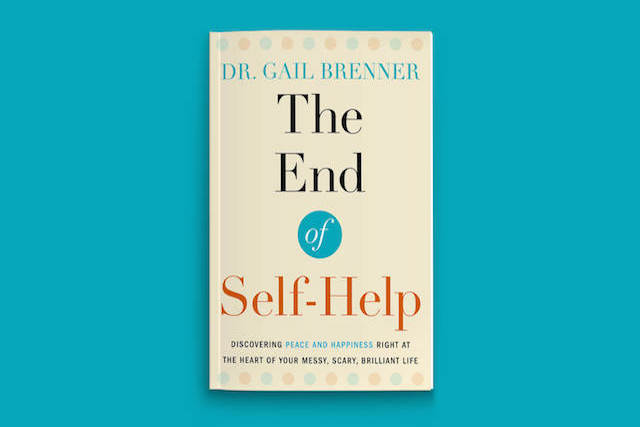
    When I first found what looked like a self-help book called The End of Self-Help, I thought it was a tad ironic. And I wondered if perhaps the author was suggesting that self-help is inherently harmful.

    As someone who’s bounced back from overwhelming adversity using some very powerful self-help tools, this didn’t quite sit right with me.

    Then I decided to stop wondering what this book was all about and instead find out by reading it. I couldn’t be more grateful that I did.

    Powerful and insightful, Dr. Gail Brenner’s book touches upon a common misconception that might lead us to self-help resources—the idea that we’re broken and need to be fixed.

    This mindset keeps us focused on the possibility of happiness in the future instead of enabling us to create happiness and fulfillment right now.

    But there is another way. We don’t need to embrace personal development from a place of inadequacy. It is possible to simultaneously empower ourselves to grow and allow ourselves to feel whole and happy in the present.

    The End of Self-Help teaches us how to do the latter.

    If you’ve ever felt trapped by your thoughts and feelings, if you’ve ever felt fundamentally damaged, if you’ve ever felt incapable of feeling peace in the present, The End of Self-Help could be life-changing for you.

    I’m grateful that Gail took the time to provide some incredibly detailed answers to my questions, and that she’s provided five free copies of her book for Tiny Buddha readers.

    The Giveaway

    To enter to win one of five free copies of The End of Self-Help:

    • Leave a comment below
    • For an extra entry, tweet: Enter the @tinybuddha giveaway to win a free copy of The End of Self-Help http://bit.ly/1iNkb2f

    You can enter until midnight PST on Monday, September 28th.

    The Interview

     1. Tell us a little bit about yourself and what inspired you to write this book.

    First, Lori, I’d like to thank you so much for this opportunity to connect with your readers. We get to talk about my favorite topic—peace and happiness!

    By profession, I’m a clinical psychologist based in Santa Barbara, and I’ve loved my work with the elderly and their families, specializing in aging, loss, and dying.

    For as long as I can remember, I’ve been on a quest to be happy. Even after fifteen years of psychotherapy and reading many self-help books, I was still experiencing anxiety and wondering how I could truly feel happy and fulfilled.

    Like many of us, I was a self-help failure, but I kept searching!

    Finally, I turned to spiritual teachings where I discovered this truth: that unhappiness is a case of mistaken identity. When we suffer, we’re defining ourselves by conditioned ways of thinking that aren’t necessarily true. And when we stop clinging to these identities, we’re happy.

    I’m passionate about the liberating fact that who we are is not the limited, unlovable person our thoughts tell us we are. I wrote this book because I want everyone to have the opportunity to live fully, without fear, in openhearted contentment and love.

    2. What differentiates your book from most self-help books—and do you believe self-help can be positive and, well, helpful?

    The intention of self-help is pure—we just want to be happy. We don’t want to live our lives feeling broken and inadequate. It makes sense that we look to self-help offerings to help us discover the peace we’re so desperately looking for.

    But here’s the problem. The phrase “self-help” contains an incorrect assumption about who we are. It assumes that we are broken and damaged selves who need to be helped.

    And while we’re searching for help and trying to fix ourselves, what is our present moment experience? It’s not happiness, fulfillment, and the simple enjoyment of life. We feel anxious and inadequate, and we mistakenly think we’re missing what we need to be whole.

    The premise of The End of Self-Help is that we can always find our way to happiness and peace in any moment. Instead of waiting for happiness, we get to live it right now. This is a marvelous discovery!

    That said, self-help can teach us about specific topics, such as communication skills, strategies to change habits, or ways to maintain healthy boundaries.

    But if we spin our wheels relentlessly looking outside ourselves for that one tip—or person or situation—that will finally make us happy, we’re believing we need to be fixed, and we won’t be successful.

    The solution is to make a U-turn with our attention inward to discover the inner aliveness always here at the core of our being. Every time we return here, we’re naturally happy.

    3. As someone with a tendency to overanalyze, I found the section on thinking to be quite powerful—particularly the idea that we don’t need to stop our minds to be peaceful and happy. Can you elaborate a little on this?

    Trying to get rid of thoughts resists the fact that thinking is present. And as the saying goes, what we resist persists.

    Instead of fighting with our thinking, the way to find peace is to be unattached to the content of our thoughts, to not take them as true. Then it doesn’t matter if thoughts are present or not.

    I know that sounds challenging, so let’s start with some bold truths about most of our thinking.

    It’s useless and repetitive.

    • It’s fear-based.
    • It doesn’t actually solve problems.
    • It’s negative and critical.
    • It’s distorted and not based on facts.

    The most authentic, palpably alive experience of this precious life is right here, outside the thinking mind. But when our attention is absorbed into thinking, mostly about the past and future, sadly we miss it.

    It’s possible, in any moment, to consciously lose interest in thoughts. Instead of compulsively thinking, we can take a breath and open our attention to what this now moment is actually offering us outside of our thoughts about it. Because this topic is so important, I devote a whole chapter of the book on ways to undo our attachment to thoughts.

    In case you’re wondering, life is just fine without all our thinking about it. If I’m wrestling with a problem, I find that creative solutions come not from thinking, but from resting my attention in the space of silence and stillness underneath the thoughts—and listening for the answers.

    4. I’ve always believed that happiness has a lot to do with the questions we ask ourselves, so I especially appreciated the section on curiosity. How can shifting from “why?” to “what?” decrease our suffering and increase our happiness?

    I love curiosity, too, Lori. It was a huge moment of transformation for me when I started being genuinely curious about my inner experience. Being curious means that we explore what’s present from a place of deep openness with no expectations about what we will find.

    When we ask why we feel a certain way or why things are as they are, we answer with the mind, which only feeds more mental activity. We blame ourselves, others, the situation, or our childhood, and these thoughts don’t lead us to peace.

    But asking “what” changes everything. Instead of going into more story, we get curious about our in-the-moment experience, asking:

    • What exactly is happening right now?
    • What thoughts are present?
    • How does this experience feel in my body?
    • Can I just be here, breathing and aware?
    • What do I really want for this moment?

    As we go beyond our stories and wake up to the reality of right now, we realize the possibility of being peaceful with things just as they are.

    5. As you wrote in Chapter Seven, we’re constantly bombarded with messages about what we’re lacking. How can we start to experience freedom from our feelings of inadequacy?

    This is such an important topic because people have so much pain around inadequacy. And we start by understanding exactly what we’re experiencing in those moments when we feel inadequate.

    When we shine the laser light of our awareness on this experience of inadequacy, we’ll find a subtle stream of thoughts that may be barely conscious that convince us we’re inadequate. These thoughts tell us a distorted story about ourselves that criticizes, compares, and doubts.

    Then we might find some bodily sensations of contraction and tension that physically make us feel small and separate.

    Now we get to follow these breadcrumbs to freedom.

    • First, when this pattern arises, take a breath and shift your attention to being present.
    • Notice that when you observe these thoughts and sensations, there’s a gap between you and them. You’re not completely gripped by them.
    • When you feel stable in observing, shift your attention to the observing presence itself, and expand into this peaceful awareness.
    • Rinse and repeat, a thousand times a day if necessary, as each time chips away at the power of this pattern.

    Over time, we’re less driven by this conditioned belief that we’re lacking. And we become more transparent to our natural vibrancy and uniqueness that starts shining out everywhere!

    6. The crux of your book, it seems, is that separation disconnects us from the truth of who we are and leads to suffering. What’s the alternative to living life this way?

    As we shed our false and distorted identities about who we think we are, we become more available to life as it’s unfolding right now. I have found that everyday living becomes so delicious!

    Where before we were fear-driven, constantly needing to protect and defend ourselves, now we come from wholeness and love. We encounter familiar relationships, some with their familiar, unsatisfying dynamics, but we can show up in them freshly, which changes everything.

    We no longer need to spend energy avoiding difficult feelings or analyzing ourselves and other people. Welcoming everything without resistance, there is free space for creativity to arise, for simply enjoying ourselves, and for love and appreciation.

    We stop taking life situations so seriously, so we don’t need to ruminate about them. Stress diminishes, as it’s seen as the product of a busy, anxious mind. And without our attention being occupied by worry and regret, we are quiet, listening within, and moving in the world with greater clarity.

    It’s not at all that we’re eternally blissful and that difficult situations and feelings never again arise. But we open up to our experience rather than avoid it, meeting our emotional reactions with love and understanding so they no longer control us.

    7. What’s the main message you hope readers take from your book?

    No matter what your mind tells you, you are not broken or damaged, and you don’t need to be fixed. Be diligent about looking within to discover your essential wholeness, which is boundless, unlimited by any ideas, luminous, and infinitely peaceful.

    Then go out there and enjoy your life!

    You can learn more about The End of Self-Help on Amazon here.

    FTC Disclosure: I receive complimentary books for reviews and interviews on tinybuddha.com, but I am not compensated for writing or obligated to write anything specific. I am an Amazon affiliate, meaning I earn a percentage of all books purchased through the links I provide on this site. 

  • How to Stop Feeling Inadequate and Let Go of Heavy Expectations

    How to Stop Feeling Inadequate and Let Go of Heavy Expectations

    “No one is useless in this world who lightens the burdens of another.” ~Charles Dickens

    When I was seven years old, my parents had me take an IQ test for an application to a private school near our new home.

    I vaguely remember sitting with the proctor, answering question after question about vocabulary and spatial recognition. To seven-year-old me, the test was nothing more than a fun logic puzzle, and I delighted at each question I knew the answer to, bright eyed and enthusiastic.

    While I don’t recall my exact score, the numbers were unusually high—in fact, so high that the proctor expressed her surprise to my parents that I was not suffering from some form of high-functioning autism.

    From age seven on, I was placed in the most gifted classes in both public and private school. I enjoyed the challenge, and the attention I received, until I became a teenager.

    In my transition to adolescence, I became aware of the incredible teenagers around the world writing novels, promoting peace, and inventing the types of machinery and technology that change the world.

    These individuals inspired me, but secretly implanted a deep sense of fear and angst in my mind.

    For as long as I could remember, people had been telling me, “Avery, you are going to do amazing things with your life,” while I spent my life like any other teenager: school, sports practice, homework, food, bed, repeat. I was not accomplishing any great feats.

    I slowly began to feel like I was failing to fulfill my full potential as a human being.

    Being exceptionally gifted, once a joy and privilege, had become a toxin to my emotional well-being. I was all consumed by my ego telling me that I should be more—or I was wasting my intellect.

    This led me to sporadically start novels, blogs, articles, anything to prove myself worthy of my intelligence. I would give up on each one quickly and move on to my next idea, as unsuccessful as the first.

    No matter what I tried, the world still did not know my name—the only thing, I thought, that could make feel adequate.

    About a year ago, it dawned on me that my pattern of self-dissatisfaction and disappointment was unsustainable.

    No matter what I did, no matter how many people knew my name, it made no difference. I always craved more, and anything less than becoming the next Einstein was a personal failure.

    So, with that in mind, I began the arduous process of redefining success in my life. The only way I could do this, I learned, was to help others realize their own goodness.

    I began with my personal mantra:

    “It is better to change one person’s life than to have 1,000 know your name.”

    I stumbled upon this realization somewhat suddenly, after taking a two-week long trip with my grade. I invested myself in helping my friends with sickness and fear, and I came away changed; I finally felt like I’d accomplished something permanent and meaningful.

    Instead of living for recognition from the world, I began to look for satisfaction through my personal relationships. I no longer needed to change the world to be successful; I just needed to know that I had changed someone’s life for the better.

    Surprisingly, this is a relatively easy task to accomplish with discipline. By investing myself in relationships with my friends, acquaintances, and partner, I began to receive incredible feedback.

    People genuinely began to thank me—not for being kind, but for literally changing their lives.

    The key for me was genuinely listening to others, and caring about their needs and opinions. Helping people came naturally to me, and remains the best gift I can give to others; not some profound piece of writing or technological advancement.

    Typically, the people around me who I listened to had similar issues of inadequacy. I was not alone. They too believed themselves to be failures, unable achieve their potential, whether that potential was straight A’s or a sports scholarship or being kind.

    I could see the innate goodness of the people around me shining through, and it pained me to see them suffer from feelings of inadequacy. I knew, deep down, that everyone around me was good and pure and beautiful, as all children of this earth are.

    As a result, I realized through time that if the people around me were all beautiful and good, as all people are, then I must be good too—just the way I am and always will be.

    By loving others, I had already achieved my purpose on this earth: to be the inherently sympathetic and kind creature that all human beings are.

    I now actively seek people around me who need my care, and indulge them when necessary. Love has taken precedence in my life over material accomplishment, as it truly should. I have closer, more meaningful relationships, more acquaintances, and an exponentially higher self esteem.

    The beauty is, people reciprocate genuine love: the people you help will be there for you in your times of need, too. Love is a self-fulfilling prophecy that can only be positive for all parties involved.

    At the end of the day, people simply want to receive love and attention; and through giving others these things, I not only improved their lives but also my own perception of myself.

    I was able to focus on the immediate positive impact my life was making on that of others, and I finally felt purposeful and that I was leading a meaningful life.

    The truth is, not everyone can change the entire world, and not everyone needs to. All we can do is give as much love in our lives as possible, treat ourselves kindly, and leave the world a more positive place than we entered it.

    That is all I can ask of myself, and I try to leave all other expectations of myself behind—the ones of impermanent success that can only bring me dissatisfaction and suffering.

    Maybe thousands do not know your name, but you have the power to completely change the lives of those around you with love; and that, I’ve learned, is far more gratifying and important.

  • Silencing Your Lizard Brain: Stop Feeling Pressured and Inadequate

    Silencing Your Lizard Brain: Stop Feeling Pressured and Inadequate

    Holding Head

    “Serenity comes when you trade expectations for acceptance.” ~Unknown

    Damn lizard brain, I hate you sometimes. Why do you always have this thirst for more? Why must you have such impossibly high expectations for everything?

    It’s good to have standards, but when is it too much?

    Things can be going great for me and I could have the entire world love me, yet it wouldn’t be enough.

    I still wouldn’t be happy even every human on Earth left me a voicemail to tell me I’m wonderful. Instead, I’d be wondering how everyone got my number.

    Why is it never enough? It’s because the moment it slows down, my lizard brain is going to eat at me again. It always wants more.

    My mind needs to be constantly bombarded with success and pleasure.

    It will tell me I’m not good enough; it will tell me how I should probably just give up, because what’s the use if I’m not constantly getting results?  

    Yesterday, I had around ten new people follow me on Twitter, six new people subscribe to my newsletter, and over twenty new comments on an article. Today, I had only four more people follow me, several others unfollow, no new newsletter subscribers, and two new comments.

    Lizard brain, I’m so sorry. I’m sorry I didn’t beat yesterday’s achievements.

    The problem with this is that I set high expectations in at least 10,000 areas on a daily basis. This is draining because it is unrealistic to be able to hit all those marks and exceed all the time.

    This adds up and really affects my happiness, because there are these expectations I feel I have to meet.

    Over the years, I’ve noticed this about myself and try my best to stop my lizard brain during its peak hours.

    You probably have an annoying lizard brain too. It’s the part of you that controls you, makes you afraid, and pushes you because it says you’re a failure.

    If your lizard brain is bothering you, here are some reminders that might help:

    You can’t always win.

    I have to constantly remind myself it is simply impossible to always beat yesterday’s achievements. Think about it. If you land on the moon today, what are the odds of you going to Mars tomorrow?

    Celebrate your victories from today and don’t worry about the next day. You can worry about going to Mars maybe a month from now. You already made it to the moon, relax.

    Celebrate and truly appreciate your accomplishment.

    Besides, you can’t always win. So even when you fall just remind yourself you’re growing and you’re a work in progress. Use your failure as a motivator or a marker for where you need to be.

    You can’t always win. Accept that.

    Stop comparing.

    “The reason we struggle with insecurity is because we compare our behind-the-scenes with everyone else’s highlight reel.” ~Steve Furtick

    Steve Furtick’s quote is gushing with truth. We often compare ourselves to others’ achievements and then we beat ourselves up.

    Well, chances are we’re all just comparing our weakest moments to everybody else’s strongest. See how ridiculous that is?

    You can’t possibly outshine everyone’s highlight reel. You have your own highlight reels too, but they’re not always playing. Stop comparing yourself to others because that is a sure way to feel dissatisfied.

    What you can do instead is focus on your own highlight reels and then work on your behind-the-scenes by learning from them.

    Eventually, others will be in awe at your highlight reels and they won’t even notice when you’re not at your best. It’s okay to slow down every now and then because not every day has to be breaking new ground.

    Don’t let the journey bring you down or the end of the path won’t be as great as it could have been.

    Remind yourself that no one cares.

    This is a harsh truth, but in reality, no one cares. No one will realize how many times you’ve failed or every time you smile funny. Everyone else is the protagonist in his or her own story and you’re just a side character.

    When you remind yourself that you’re not in the center of the universe and not everything revolves around you, things get easier.

    This may be the hardest part for me. For some reason, I always feel like all eyes are on me and that every micro-movement will be noted by literally everyone in the room and eyes will be rolled as I adjust my leg positions. “Ugh, who does Vincent think he is? Sitting all cool like that…”

    See how ridiculous that is? I highly doubt thirty people are constantly watching me for as little as a leg twitch. Chances are people just don’t care or are too busy with their own problems.

    Keep reminding yourself that others have things going on too. You’re not the protagonist in their book; they are.

    Meditate.

    When I’m meditating, my lizard brain just does what it wants, but I act as the detached observer. I let it talk but I don’t interact. I watch it babble on and on as I crack a smile, because when I meditate, I no longer care.

    Then I take it to the next level by focusing in on my breath. I make sure that the only thing I’m worrying about is breathing. My lizard brain doesn’t have anything on me now because it slowly starts to fade away.

    There are tons of extensive guides on how to meditate. Pick a method that seems interesting to you and try it out. You can be the detached observer or the silencer.

    What do you do to silence your lizard brain?

    Photo by Gibson Regester