Tag: improve

  • My New Approach to Setting Goals and Why It Works Better for Me

    My New Approach to Setting Goals and Why It Works Better for Me

    “The journey is long, but the goal is in each step.” ~Sri Sri Ravi Shankar

    I have a daughter, she is nine.

    A few months ago, I started to feel like we weren’t as close as we used to. I felt like we weren’t spending enough time together, and honestly, when we were I almost didn’t know what to do with her. It felt like our emotional connection was falling apart, like we didn’t have enough topics to discuss or enough games to play.

    Moreover, I was getting stressed and annoyed with her easily, and it definitely wasn’t helping. I could raise my voice and then would immediately feel terrible, and of course she would get frustrated too.

    I knew it was my fault. I’d been too focused on my work, and I just hadn’t been leaving enough time and energy to our interaction. I hadn’t been prioritizing it.

    I realized that I needed to fix it.

    And as I am very much into goal setting, I sat down and started writing down a goal to improve my relationship with my daughter.

    There are many different techniques people use while creating their goals. One of the famous and commonly used ones is called SMART, which stands for Specific, Measurable, Attainable, Relevant, and Time-Based. I used to apply this technique a lot in the past. So I thought I’d use it again.

    But as soon as I started, I immediately got in trouble.

    I was saying to myself, “Okay, it’s definitely relevant to me. And I guess it’s also time-based (ummm, really?). But how am I supposed to measure it? And how do I make something like ‘relationship’ specific enough?”

    And here is the biggest problem. The whole purpose of my goal was not just to get to some specific point in the future when my relationship with my daughter would be perfect. The purpose was to have continuous (this word really matters here), daily improvement in our relationship so that we could enjoy our time together today, tomorrow. and every day!

    And suddenly the following realization hit me like a strike of lightning:

    “My goal is not a result of some process—my goal is the process!”

    The issue with SMART goals is that they make us focus purely on the end result rather than pay attention to the process!

    Please get me right, there is nothing wrong with focusing on the end result. But I do believe that it is wrong to not focus on the journey that gets us there.

    As I was thinking about it further, I discovered more limitations of the SMART technique:

    We miss out on the important goals that don’t fit into the framework.

    The goal about my relationship with my daughter is the perfect example of this limitation. It’s obviously very important to me, but it can hardly be measured or timeboxed.

    Missing the deadline means failure.

    Whenever we deal with deadlines, we automatically tend to believe that missing this deadline is a failure. And our goals are no exception. But the truth is, there are many factors outside of our control that can affect our ability to meet the deadline.

    So instead of focusing too much on the deadline, I prefer to measure success by how consistently I make progress, regardless of how fast it goes.

    Missing the start date means failure.

    We already talked about the deadlines, but as soon as timelines are involved, we also happen to have a start date. And we start to face the same problem here—if we don’t start on the date that we defined for ourselves as a “start date,” we feel like losers.

    I actually think that this is one of the biggest reasons why we give up on our New Year’s resolutions so often. We just seem to believe that if we didn’t start working on our goal on January 1, then it automatically means that we failed. But that’s just not true—it’s never too late to start working on your goals!

    We often roll back to where we started.

    When we focus on the end result too much, it’s too easy to stop paying attention and therefore roll back to the previous state once we achieve that result.

    Raise your hand if you ever worked on the goal to “lose ten/twenty/fifty (choose your variant) pounds before the summer.” Okay, and how soon did those pounds come back?

    I myself struggled with losing weight for many years. I was always a little bit overweight. Not enough to make me do something about it, but definitely enough to make me feel uncomfortable. I tried to lose weight multiple times, I was even able to make progress for a few months in a row, but then I would stop. And again, and again.

    About three years ago I got to my highest weight ever, and it is when I finally said to myself, “Okay, now you really gotta do something about it.” But I approached it differently this time—I decided to make it part of my lifestyle.

    I started working out regularly with a personal trainer (hello accountability!). I started paying attention to what I was eating and drinking. But the most important mental shift that I had to make was that I wasn’t doing it as a temporary thing anymore, or wasn’t trying to achieve a particular “result.” My goal was to learn to appreciate the journey!

    Now, three years later, I am forty pounds lighter than when I started. I am stronger, happier, and more confident than ever before. I still exercise at least four times a week, and I enjoy it! I truly do! I even workout when I travel, and I would’ve never expected that from myself.

    I feel like I am at the point in my personal growth journey when I don’t need the boundaries of specific frameworks anymore.

    So, from now on, whenever I create a new goal, I make sure it’s all about the continuous, consistent, sustainable improvement in one particular area of my life.

    I make sure it’s all about the process, because I strongly believe that the process is where the true success and happiness reside.

    And if you are curious whether I was able to improve my relationship with my daughter… Well, I am still working on it. There is always room for improvement, but I have been able to almost completely stop raising my voice at her, we are definitely spending more time together these days, and I am appreciating this time so much more. Which I am extremely grateful for!
  • Why We Often Fail When We Set Big Goals and What Actually Works

    Why We Often Fail When We Set Big Goals and What Actually Works

    “You do not rise to the level of your goals, you fall to the level of your systems.” ~James Clear

    If you pull up any popular motivational video today, you’ll probably hear things like “Set big goals!” and “Aim high and don’t stop until you get there!”

    After watching a video like this, you may get inspired and start mapping out your plan to leave the 99% in the dust.

    And typically, because you’re riding a wave of motivation, you’ll write out these monstrous, Mount-Everest-like goals. These goals paint a picture of your life that is so exciting that you can’t wait to wake up and get to work the next morning. But when you roll out of bed and take a look at the goals you set the day before, reality hits you like a truck.

    Instead of being motivated to take action, you feel a massive wall of internal resistance. You want to take action. You know you need to take action. But for some reason you just can’t force yourself to muster up the discipline necessary to make progress.

    So instead, you choose the path of least resistance. You retreat to the comfortable and the familiar, and then decide that you’re going to wait “just one more day.” One day turns into two, two days turn into weeks, and weeks turn into months.

    But luckily, time heals all wounds, and six months later you get another surge of motivation and try it all over again. This is where most people find themselves in life—stuck on the self-improvement hamster wheel.

    How do you stop this vicious cycle? What’s the best way to facilitate lifestyle changes that you actually stick to?

    How Big Goals Ruined My Life

    When I was a sophomore in high school, I had ambitions to become an NBA basketball player. Despite the fact that I was 5 feet 6 inches tall, had below average quickness, and could barely jump over a stack of books, I was determined to prove everyone wrong.

    At this point, I didn’t have my driver’s license yet, so my wonderful mother would get up at 4:30 a.m. and drive me to my school gym early enough to get up shots before class. To make a long story short, I was cut from the team a few months into my sophomore year, and my NBA aspirations died right then and there.

    When I was a freshman in college, my focus had shifted to day trading the stock market. Once again, I had complete confidence that I was going to turn day trading into a full-time income. And once again, I was wrong. The $1,000 I had deposited into my Robinhood account disappeared in about two months, leaving me with no financial flexibility to invest into my dream of becoming a full-time day trader.

    During my sophomore year of college, I made the biggest decision I had ever made in my life up to that point. Despite having good grades, I decided to drop out of school and start my own marketing agency. Let me tell you, that phone call with my parents is undoubtedly the most emotional conversation I’ve ever had in my life.

    I even distinctly remember my own cousin telling me, “I think that you’re going to regret this decision for the rest of your life.” Still, I was unbothered, because I knew in my heart that I needed to give this a shot. A month after telling my parents I wanted to drop out of school, I was on a flight back home to California.

    Yet again, I found myself in a familiar spot—just a kid following his heart with some colossal goals.

    Filled with passion and drive, I set myself a goal to build the agency to $50,000/month in revenue by the following year. To reach that goal, I committed to at least two hours per day of prospecting, and another two hours of educating myself on the real estate marketing industry.

    By now, I think you can see where this is going. For fifteen months, I worked at trying to achieve my goals, but the highest monthly revenue target I was able to achieve was a measly $6,000/month. Despite desperately wanting to taste wealth and success, I had failed yet again.

    It was at this point in my life where I really took a step back and engaged in deep reflection. After all, I had just been following the wisdom that successful people had been preaching for decades—set big goals and don’t stop working until you accomplish them.

    Was it me that was a failure or was it my system? Why is it that so many people including me continually set big goals that they never accomplish? Pondering these questions drove me to explore the world of self-development.

    The Power of Identity

    I had always been passionate about self-improvement, but I had never really delved into the science and research behind what actually facilitates true behavior change. My research eventually led me to reach two life-changing conclusions:

    • Setting big goals does more harm than good for people who want to change their lives.
    • True behavior change occurs when you commit to small, seemingly insignificant shifts in your daily behavior.

    After spending hundreds of hours combing through research on habits, behavior change, and neuroscience, I finally had the “aha” moment that shifted my entire perspective on life. The fatal problem with setting big goals is that they focus on the outcomes we want to achieve as opposed to the type of person we want to become.

    The most powerful force in the human body is the desire to be consistent with who we’ve been in the past. Behavior that is incongruent with the self will not last, which is why big goals are often so hard to accomplish.

    You may have a goal to build a million-dollar business, but if your identity is that of someone who procrastinates on important work, it’s unlikely you’re ever going to hit that goal. You may have a goal to lose weight, but if your identity is consistent with someone who eats fast food regularly and lives a sedentary lifestyle, you’ll continue to be pulled toward actions that sabotage your weight-loss goals.

    You may have some new goals, but you still haven’t changed who you are. I wanted to build a marketing agency even though I was the type of person who procrastinated and refused to get out of my comfort zone. It was the inability to change those underlying beliefs that ultimately led to my failure.

    How to Achieve Your Biggest Goals by Thinking Small

    If big goals aren’t the answer, then what is? The key is to focus on who you want to be as opposed to the outcomes you want to achieve. You need to become the type of person who can reach the standards you have set for yourself.

    Your identity emerges out of your daily habits. You don’t come out of the womb with a preset identity. Whoever you are right now is a direct result of the daily habits that you’ve developed up to this point.

    In order to start forming new beliefs about yourself, you need to start building new habits. The formula for changing your identity is a simple two-step process:

    • Figure out the type of person that you want to become
    • Commit to small changes that align with your ideal self

    First off, you have to decide what kind of person you want to be. When setting goals, most people are guided by the question “What do I want to achieve?” Instead, try asking yourself, “Who is the type of person that can get the kind of outcomes I want?”

    Instead of setting a goal to lose fifty pounds, ask yourself, “Who is the type of person that can lose fifty pounds?” Instead of setting a goal to build a million-dollar business, ask yourself, “Who is the type of person that can build a million-dollar business?”

    The beauty of focusing on identity change is that your success is no longer tied to arbitrary targets. Let’s say that you set a goal to lose fifty pounds in six months. As you pursue this goal, you start walking every day and improve your diet. At the end of six months, you step on the scale and you’ve lost thirty-seven pounds.

    Did you achieve your goal? Nope, you’re thirteen pounds short. However, what if your goal was simply to become a healthy individual? Did you achieve that goal? Absolutely!

    Once you’ve figured out what kind of person you want to become, the next step is to commit to small shifts in your daily behavior. Too often we convince ourselves that massive success requires massive action. This is the principle that guided my life for nineteen years.

    Through constant trial and error, I’ve realized that true behavior change is the product of small, incremental changes compounded over time. We tend to dismiss the effectiveness of small actions because they don’t make an immediate impact.

    If you walk for two minutes per day for a week, you’re not going to see the number on the scale move much. If you meditate for sixty seconds for a few days in a row, you’re not going to turn into the Dalai Lama. However, what you will do is to give your brain concrete evidence that you’re a different person.

    James Clear puts this beautifully when he says, “Every action you take is a vote for the type of person you want to become. No single instance will transform your beliefs, but as the votes build up, so does evidence of your new identity.”

    Once you’ve nailed down your desired identity, come up with a daily habit that you can perform no matter how you feel. When you set big goals, your brain tricks you into thinking that the present level of motivation you feel will carry over to when it’s time to take action. By focusing on shrinking your daily targets, you’re taking motivation and willpower out of the equation.

    Here’s a few practical examples of this concept in action:

    • Meditating for ten minutes per day becomes meditating for sixty seconds per day
    • Walking for thirty minutes per day becomes walking for two minutes per day
    • Reading for thirty minutes per day becomes reading one page
    • Journaling for fifteen minutes every night becomes writing one sentence
    • Writing 1,000 words per day becomes writing fifty words per day

    It really doesn’t matter how successful you are right now, all that matters is that you’re on the right path. Once these small habits are solidified into your daily life, you’ll have mastered the art of showing up and acting in alignment with your desired identity.

    Since your brain now has some new evidence, you’ll be able to stretch yourself and gradually aim higher. That’s the true power of small habits. The same way that money multiplies through compound interest, the positive effects of your habits multiply as they become a part of who you are.

    So, the next time you get motivated to change your life, forget setting huge goals. If you do this, the power of your identity will loom large over you and prevent you from taking action. Harness the power of small, incremental change.

    Have the courage to set the bar low enough and aim at targets that you can actually hit on a daily basis. Solidify this small habit into your life, and then do the same thing with another habit. And then another. And then another.

    Soon enough, you’ll become someone unrecognizable.

  • A Life-Changing Insight: You Are Not a Problem to Be Fixed

    A Life-Changing Insight: You Are Not a Problem to Be Fixed

    “I decided that the single most subversive, revolutionary thing I could do was to show up for my life and not be ashamed.” ~Anne Lamott

    I remember one particular clear, cold winter morning as I returned home from a walk. I suddenly realized that I had missed the whole experience.

    The blue, clear sky.

    The lake opening up before me.

    The whisper of the trees that I love so much.

    I was there in body but not embodied. I was totally, completely wrapped up in the thoughts running rampant in my mind. The worries about others, work, the future; about everything I thought I should be doing better and wanted to change about myself… it was exhausting.

    Alive, but not present to my life. Breathing, but my life force was suffocated.

    This was not new. In fact, up until that point I had mostly approached life as something to figure out, tackle, and wrestle to the ground. This included my body, my career, and the people around me. 

    My tentacles of control, far-reaching in pursuit of a better place, said loudly, “What is here now is not acceptable. You are not acceptable.”

    “You can improve. You can figure it out. You can always make it better.”

    But this time, rather than indulging in the content of this particular struggle, I observed the process I was in and realized profoundly that even though the issues of the day changed regularly, the experience of struggle never did.

    And I would continue struggling until I stopped resisting and judging everything and started accepting myself and my life.

    This wasn’t the first time I’d had thoughts like these, but this time there was no “but I still need to change this…” or “I can accept everything except for this thing.” I knew it was 100% or nothing.

    I knew then I only had two choices:

    I could continue to resist reality, which now seemed impossible and exhausting (because it was). Or I could accept myself and the moment and make the best of it.

    “What if there is actually nothing to struggle against? What if I let go of the tug-of-war that I called my life?”

    The choice was before me. The one that comes to people when they have suffered enough and are tired: to put down the arms.

    This doesn’t have to mean accepting unhealthy relationships or situations. It just means we stop living in a constant state of needing things to change in order to accept ourselves and our lives. It means we learn to let things be—and even harder, to let ourselves be.

    Whenever I have a conversation with people who are struggling, I’ve recognized that they have this innate feeling of I should be doing better than this. Or, I should not be feeling like this.

    It might seem obvious that “shoulds” keep us in a contracted position of never-being-enough.

    But I have found that letting them go is not as simple as a quick change of thought.

    It seems like denying ourselves has become the generally accepted and encouraged modus operandi of our culture.

    Denying our feelings.

    Minimizing our pain.

    Hating our body parts.

    This leads to disconnection from the life that is here, the life that is us.

    Self-loathing has become the biggest dis-ease of our time.

    When we are disconnected from who we are in this moment, there is a tension between right here and the idealized self/state.

    This disconnection or gap is a rupture in our life force that presents itself as a physical contraction, a shortness of breath, an inner critic that lashes out harshly and creates a war within. This war contributes to pain, illness, and I’d guess 80% of visits to a medical doctor.

    Even some of the best self-help books promote this gap…

    Don’t think those thoughts.

    Don’t feel those negative feelings.

    Don’t just sit there—you should be doing something to improve yourself and your life

    All of the statements above might seem like wise advice. But we’ve missed the biggest step of all—mending the gap between who we are and who we think we should be so that we don’t feel so disconnected from ourselves.

    Disconnection is the shame that tells you that you’ve got it wrong, that it is not okay to feel or think the way you do in this moment. That you have to beat yourself up so you can improve, be more than you are now, be better.

    That you are a problem to fix.  

    This is the catch-22 of self-help when taken too much like boot camp. Self-help can be helpful, but it can create an antagonistic relationship with our true selves if it doesn’t include a full acceptance of who we are in this moment.

    The belief of “not-enoughness” is at the root of so much physical and emotional pain, and I, for one, have had enough of it.

    What if we allowed ourselves to be, or do, in the knowing that we are okay, that we are doing the best we can, given what we know at this point in time?

    Do you feel the fear-gremlins coming out that tell you that you will lie down on the couch and never get up again? Or perhaps you will never amount to anything or be good enough?

    This is the biggest secret of all: It’s all a lie to keep the consumer culture alive. 

    People who are scared and in scarcity need to consume something outside of themselves to gain fulfillment. But it never really comes because there’s always something new to change or attain.

    It can be so difficult for us humans to accept not only ourselves, but that everything just might be okay in this moment.

    That this feeling is just right. Even if it hurts.

    It’s okay to be right here, right now. Pain is here, and I don’t have to fight it.

    Our relationship with ourselves is the most important relationship we will ever have.

    Because we are truly sacred, no matter how we feel.

    Maybe the only question to ask today is not “What do I need to do to change?” but “How can I love myself, just as I am?”

    Maybe the act of loving ourselves is as simple as taking a breath to regulate our nervous system and come back to the present moment.

    Maybe healing involves not so much changing ourselves but allowing ourselves to be who we are.

    Which is exactly what I did that day when I realized I had missed my whole walk because I was caught up in my mind, worrying about everything I wanted to change. I shifted my focus from the thoughts I was thinking to the feelings in my body. I realized that I was enough in this step, in this breath, and that’s all there is.

    I promise the results of moving into acceptance will feel far better than the shame, disconnection, and cruelty that come from the constant pursuit of self-improvement.

    The truth is…

    You are not a problem to fix.

    You are a human to be held.

    To be held in your own arms and loved into wholeness.

    Take care of your human.

  • A Simple Yet Powerful Method for Making Big Changes

    A Simple Yet Powerful Method for Making Big Changes

    Time for Change

    “Whenever I go on a ride, Im always thinking of whats wrong with the thing and how it can be improved.” ~Walt Disney

    As a kid, I never realized how lucky I was to grow up less than an hour away from Disneyland.

    I was spoiled by how often I would visit the park and get the whole Disney. Unsurprisingly, I have been a fan of Walt Disney and Disneyland since I was young. He was even the subject of my first book report.

    When I was about seventeen years old I had an annual pass and spent countless hours in the park trying to absorb all the history and nerdy trivia I could.

    This was about ten years ago, which also happened to be the same summer of their fiftieth anniversary celebration. Even during all the commotion of the fiftieth, I couldn’t get enough Disney! I decided to go back and learn more about Walt and his life.

    Looking back, his accomplishments were both awe-inspiring and seemingly inevitable.

    It was his determination and ingenuity that led to his almost guaranteed success, despite his limited education and resources. Especially when he was just starting out, despite some setbacks, he was always moving forward. 

    There are many great stories, quotes, and anecdotes about Walt’s life that made an impression on me, but one in particular has always stuck with me.

    Walt knew that his business was risky and that the best way to stay successful was to constantly improve what he was creating. This led to a principle known to all Disney employees as “plussing.”

    It’s the idea that you start a project the best way you know how, even if it’s not perfect.

    Day by day you make small adjustments to your project. Your focus becomes all about improving the project as you build momentum toward your goal. Even if you start slow, momentum is always progress and anytime you can see progress, it gives you confidence to keep going.

    You don’t have to make movies or build theme parks to take advantage of this principle though. I have seen this play out and be extremely effective in my own life.

    In August of 2014 I moved from Las Vegas to Denver. I went from living on my own to a spare room in my mother’s house.

    I didn’t have a job when I made the move, but I quickly landed a part-time job in addition to the work I was doing on an online business I was building.

    At the time I weighed about 280 pounds and had way more debt than I was comfortable with. I didn’t really want to admit it at the time (who does), but it was obviously an extremely low point in my life. My “scorecard” was not looking great.

    Its not that I hadnt been trying to improve these situations; I had tried a lot of different solutions to my situation. The mistake I was making, which I can clearly see now, was that I was trying to pull off dramatic change overnight instead of working on steady progress. 

    I found a new diet that a lot of people had success with and I immediately ordered the supplies to give it a shot. After a few days of trying the diet and trying to stick with the dramatic change, I felt like I was failing, so I gave up.

    Sound familiar to anyone else out there?

    Trying to quit or stop something suddenly often doesn’t work out. If you haven’t created any momentum or new habits, it’s extremely difficult to make dramatic changes in short periods of time.

    Changing your life is no small thing and it takes time. It may start slow but once you build momentum you also pick up speed.

    Even if you set a simple goal of making your mornings less hectic and you don’t feel like you have a energy to make a change. That’s okay!

    Start with the smallest change possible; all that matters is that you start. If all you can do today is untie your shoes, great! Take that step today and see what else you can add in tomorrow. 

    This principle has been working for me since I moved to Colorado, even before I was aware of it.

    Instead of jumping into a drastic diet, I decided to go slow. I started wearing a Fitbit, which encouraged me to walk more and challenge friends to see who could walk more during the week. After a few months, that was my new habit, I started paying more attention to calories and how much I was over eating.

    Even though I ended up losing the majority of those competitions, I was losing weight, which is all I really cared about.

    In fact, as of a few days ago I am down to a little over 240 pounds. It’s not where I’m stopping, but it is drastically better than any progress I’ve made and without any of the guilt or struggle that I had experienced before.

    After living in Colorado for less than a month, I decided to scrap the website I had been working on. I was trying to build a community through this website, without first being involved in that community—rookie mistake. Things weren’t panning out like I had hoped (duh) and I realized I needed to go in a new direction.

    From this new direction I’ve continued to make constant but minor changes, and I can clearly see the progress I’ve made. The results are not immediate, but they continue to improve more and more over time.

    I am still living with my mother which is not where I want to live at twenty-seven years old, but I’ve definitely moved closer to my goals since arriving in Colorado. In fact, my car is even paid off, another first for me!

    The positive changes Ive experienced since that move and really throughout my entire life are because of small but constant adjustments. When you think about it, thats how all great things are achieved. One small improvement at a time.  

    It’s the principle behind the couch to 5k training program, it’s what led Edison to a working light bulb. It’s the principle that guided a relatively poor and uneducated farmers son from obscurity to being one of the most successful and iconic businessmen of the 20th century.

    I figure, if “plussing” worked to make Disneyland a success, it can probably help you make a positive change in your life.

    Actually, that’s my challenge to you. Wherever you are in life, whatever you are trying to achieve, take a minute to think about how this principle can help you reach your goal.

    What one action can you take today? It doesn’t matter how small it is; take that step. Even if that means that all you do is untie your shoes so it makes tomorrow morning a little less hectic.

    Start there and keep going, take tomorrow’s benefit and turn that into even more progress the following day. If you miss a day, it doesn’t mean progress is over or you’ve failed. It is only a delay, treat it as such and keep moving toward your goals.

     Time for change image via Shutterstock
  • Celebrate Your Strengths Instead of Pushing Yourself to Be Better

    Celebrate Your Strengths Instead of Pushing Yourself to Be Better

    Excited

    “Make the best use of what is in your power and take the rest as it happens.” ~Epictetus

    Performance reviews. Assessments. Evaluations. The dreaded annual review. Most of us have run into some kind of quality assurance technique while employed in the American workforce, or at least know someone who has.

    Evaluations are a regular part of life at my place of employment and something that I am very used to by now. Typically I get good scores and the evaluation includes plenty of praise and positive acknowledgement, along with whatever constructive criticism is appropriate to the work that is being evaluated.

    Usually I can look through the evaluation form, note what needs to be noted, and move on. I can accept feedback when needed, use it appropriately, and in turn notice the strengths of others and acknowledge them along the way. I do pretty well, really.

    Most days, doing pretty well is enough. But sometimes I get the feeling that there is something missing. That I could still do better. That enough isn’t actually satisfactory. That if I’m not constantly evaluating how I’m doing and striving for something better, there’s something wrong. That in acknowledging others, my voice gets tired and there’s not much left for acknowledging myself.

    Even though I can plainly see the strengths in others and even verbalize them regularly, I don’t always notice and acknowledge them in myself. I have a tendency to want acknowledgement but brush it off when it arrives. 

    I crave being recognized for doing well but hardly know how to react when that craving is satisfied.

    When I receive feedback—even when it’s positive—my default reaction is usually set to “how could I do this better?” It’s easy to get stuck inside the idea that there’s always room for improvement, and then turn a blind eye to what has already been improved or what doesn’t need to be.

    There is nothing wrong with striving to better one’s self, growing professionally, building skills, or figuring out how to be more effective at what we choose to spend our time doing. But I think that sometimes we spend all of our time figuring out how to better ourselves, how to grow professionally, how to build even better skills, or how to be even more effective.

    We get so caught up in growing and getting better that we forget to honor the life we have right now.

    I know I get caught up in our culture’s mantra of “more, better, faster” more often than I care to admit.

    What if I could take my usually positive outlook and mold it into a way of being that sets my default to accepting wherever I am in my job, or my relationships, or my life situation? What if I could celebrate what is?

    What if I could put the focus on the strengths and gifts that I have—like being able to see the good in a challenging situation, or finding the joy that hides under anxiety, or baking a really good loaf of bread, or always knowing where the keys are—and then accept whatever comes from that focus?

    What if we all focused on what we already excel at, or what we have bettered already, instead of that thing we feel is a weakness that needs fixing? 

    Perhaps the intent to celebrate the perfection that we already are would allow us to evolve into a collective that is founded on acceptance and peace and less focused on longing.

    Maybe accepting the perfection that lies beneath our struggles can help move us into a space beyond what we think is possible—a space that knows no limits and a space that is simply enough. Period.

    Seeking to grow and building on knowledge and presence of being invites excellence by creating space for that excellence to exist and thrive. But perhaps we cannot expand without first truly seeing ourselves as complete. 

    It could be that the excellence I invite by way of acceptance is different from what I have been taught to strive for over the years. It could be that “living my strengths” means moving slower, or pushing forward less. It could mean resisting the urge to try to be something I’m not. It could mean listening to understand more and listening to respond less.

    I think it also means stopping to notice the beauty of a pebble in the rain, or hearing the gentle rustle of leaves when the wind changes direction, or feeling the warmth of the sun after the fog lifts.

    It means looking into the eyes of someone different and seeing truth reflected back.

    It means accepting myself as whole and complete, and letting that acceptance grow into my own version of perfection.

    I could say there is no such thing as a perfect life and that there is always room for improvement and growth. I think I’d be right.

    I could say that every life is perfect if allowed to be. And I think I’d still be right.

    Living through strengths is not easy. But living through our strengths sets us up to find our unique version of perfection. Accepting whatever that perfections looks like reminds us that we are enough.

    Photo by Gregory Tonon

  • Realizing You’re Enough Instead of Trying to Fix Yourself

    Realizing You’re Enough Instead of Trying to Fix Yourself

    You Are Good Enough

    “If you concentrate on what you don’t have, you will never, ever have enough.” ~Oprah Winfrey

    Seven years ago I discovered a world of healing, energy, and spirituality. It came at a particularly hard time in my life. Everything that could go wrong seemed to have.

    First, I picked up a bug while travelling, which left me unable to hold down food for over eight weeks, and doctors told me there was nothing more they could do.

    Then, there were secondary infections, which I learned I might have to live with for life.

    I was being bullied at work and then walked away from my friends. Both of these experiences were extremely stressful and a great source of pain. Then, two weeks after moving to a new country to start afresh, one of my best friends died suddenly.

    The first twenty-five carefree years of my life exploded in my face, and confusion set in.

    In a desperate quest to find answers, happiness, and peace again I went searching, and what an awesome world I found!

    It started with discovering kinesiology and developed into a learning of healing foods, chakras, and energy healing. Yoga and meditation followed, along with personal development seminars and stacks of self-development books.

    And all for a good reason—each of these disciplines was quite literally changing my life.

    One by one, they helped me unravel subconscious layers from the past and release old stagnant energy, emotions, and beliefs that were no longer needed.

    For example, if I felt angry and frustrated from work, I would pop in for a kinesiology session and walk away upbeat and happy. If I got upset after an argument with my husband, I’d run off to heal the part of me that was causing this to arise, and skip home loving and free.

    To say these quick fixes became addictive would be an understatement.

    Then, over the last year I kept getting the same lines repeated to me over and over again. Healers telling me my work with them “was done,” my kinesiologist telling me I’d “got it” a while ago now, and friends reflecting left, right, and center that “I’m there.”

    The problem was that I could not see it. Surely there is no final destination, and besides, there were still so many things to fix. I didn’t feel “there.”

    My addiction to fixing myself had kicked in. Even though I know we are all human and will never be perfect, I felt the need to keep on clearing as much of the imperfect away until I got “there.”

    But “there” was not coming, at least not in my eyes, and frustration started building. I believe this addiction formed due to a deeply hidden belief that I was not fundamentally good enough.

    I thought that if I healed enough, sooner or later I would be “fixed.” I would be good enough—but I was missing the truth, the truth that we are always good enough exactly as we are.

    We will all encounter lessons as we walk through life and, of course, healing can help us move through these, but fundamentally, we are always already good enough. This part I was slow to grasp.

    Along this journey I had walked away from a career in advertising to follow my passion for nutrition, leveraging all I had learned to become a coach. What I didn’t see coming was the second cousin to “healing” and the old pattern formed under the guise of “business development.”

    All of a sudden I would never be a success unless I had mastered a zillion courses on marketing, sales, coaching, webinars, and list building.

    No matter what I did I couldn’t hold on to the money I was making—so I looped back into the healing world looking for answers to my money blocks.

    Then came the clincher: My income dramatically increased—and, you guessed it, I still spent every cent each month on the next skill I needed to learn or block I needed to clear.

    At the same time I noticed I was getting angry with healers and “experts,” as they repeatedly told me what I already knew.

    Something wasn’t adding up any longer. Luckily, the person I turned to for advice supported me to process the most amazing realization for myself:

    I discovered that I had been through an intense period of learning, that over the last seven years I had been absorbing “universe lessons.”

    It was time to step out of the Universe-ity classroom and start truly living all that I had learned. And with so much knowledge under my belt, it was also time to pass it on to others.

    It’s not that we will ever stop learning—it’s just that we have to start using the tools in our everyday lives, as opposed to conducting an ongoing search to fix ourselves.

    Through my journey, I have learned that it is common for us to get these lessons in the spiritual realm, but not bring them to life in the physical world.

    At some stage along the path I had started focusing on what was still “broken” instead of how amazing things had become.

    I was so blinded by this thought pattern that I was unable to receive the joy and pleasure already surrounding me.

    By shifting from the energy of “not enough yet” to realizing I already am, I’ve found the peace to step forward and apply all that I’ve learned, and inspire others to do the same.

    I now know that I am already so much more than “enough,” and it’s now time to graduate from Universe-ity!

    So I invite you to check in on your own motive for healing. Are you desperately trying to fix a part of you that you deem wrong, shameful, or bad? Or, can you accept that you are already perfect exactly as you are now, shadow and all, even if you still have room to grow?

    Are you ready to relax and let your journey unfold exactly as it is supposed to?

    Photo here

  • You Have the Power to Change Someone’s Day for the Better

    You Have the Power to Change Someone’s Day for the Better

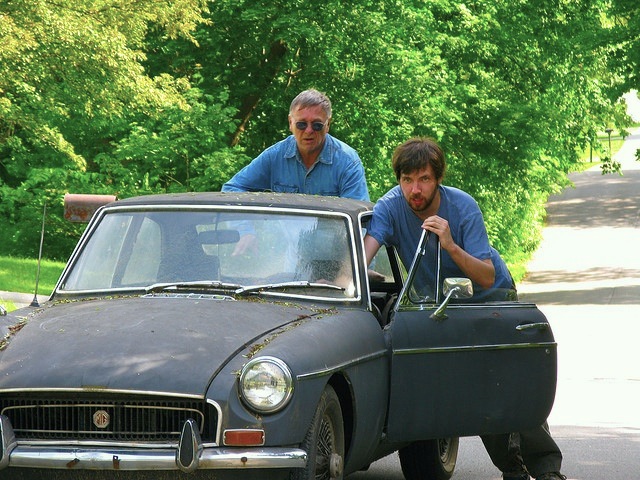
    Pushing Car

    “It is one of the most beautiful compensations of life that no man can sincerely try to help another without helping himself.” ~Ralph Waldo Emerson

    It’s a feeling of dread. Maybe you’ve experienced it before.

    You’re driving down the highway and suddenly something goes wrong. You’re stepping on the gas pedal but nothing is happening.

    All the little lights on the dashboard come on and you notice one particular gauge you’ve been meaning to address sooner.

    The needle is just past the E. You’re out of gas. 

    It’s a helpless feeling. Desperation flashes through your mind as the wheels begin to slow. Other cars start passing you as you attempt to merge over to the emergency lane to get out of the way, the whole time hoping you can coast just a little farther, ever closer to the oasis of fuel at the next exit.

    Maybe that isn’t how it felt for you or perhaps you’ve never been through this little peril. But that’s how it felt when I ran out of gas recently.

    I was four or five miles from home, cruising down a long hill on the interstate when I realized my car wasn’t responding to my foot’s orders. 

    Fortunately, I was able to get over and coast all the way to the next exit and even up the ramp.  My mind raced, wondering how far I was going to have to push the car, and worse, if it would be uphill.

    When my vehicle’s momentum finally slowed to a stop, I was relieved to see the gas station only a few hundred yards away and that I’d only have to overcome a slight incline to get there.

    So, I got out and started pushing. As I grunted and heaved I was unpleasantly surprised at how heavy my little car was on a relatively flat stretch of road. But I pressed on, inching my way towards the plastic gas station sign that signaled my salvation. 

    My muscles strained against the heavy burden, legs and arms burning from the exertion. I thought about the times I’d seen other people who were out of gas. I always felt bad for them, maybe even a little embarrassed for them.

    Now I felt the shame I’d always imagined those people felt.

    More than a few times, I’d actually stopped and helped them push their vehicles to the nearest station. While I lumbered forward, one particular instance popped into my head from several years before.

    I was in Austin, Texas for a convention. A friend and I had been hopping around to different bars (like any good convention-goers) when, from the sidewalk, we saw a guy pushing a monstrosity of a car. It was a big convertible from the 1970s. 

    I don’t recall what make or model the behemoth was. All I know is that it was the heaviest object I’ve ever tried to move in my life.

    Still, my friend and I started pushing with the guy. He hadn’t seen us at first and was surprised that his task had been suddenly lightened. He smiled back at my buddy and I as we kept pounding our feet across the pavement, one foot in front of the other.

    “Just steer,” I told him as we kept easing the car towards a section of the road that began to slope downhill. “Once you get to where it starts slanting down you’ll be fine,” I said. 

    After several exhausting minutes, we reached the crest in the road and the car began to coast on its own. The driver thanked us and offered us money, which we declined. He waved back to us as he hopped in and guided the wheeled boat to the station.

    We went on about the rest of our night and didn’t give the event much thought. In fact, I hadn’t thought about it in years.

    Now here I was, in the same predicament, out of gas and trying to reach a little section of the road up ahead where it started to slope downward, the whole time trying to steer and push, a difficult pair to manage at once.

    Suddenly, the car felt like it was half its weight. I first looked down to see if I’d reached some kind of a little down slope or something. Then I heard a guy’s voice from behind me. 

    “Thought you could use a little help.”

    I turned around to see a total stranger, in his mid-thirties, pushing hard against the back end of my car. I smiled broadly. “Thanks man!” I shouted over the passing traffic.

    He had parked his truck just off the exit, probably as soon as he had seen my plight. He hadn’t hesitated or thought about helping me for more than a second. His instant thought had been to help.

    “You should be okay once we get to that little down slope up ahead,” he commented. 

    Inside, I laughed, remembering how I’d said those exact words to the guy in Austin a few years before.

    A minute or so later, we reached the downhill section of road and my car began coast itself towards its haven. “I think you’re good,” he yelled and waved.

    I thanked the man again and hopped in my car, steering it into the station on nothing but gravity’s sweet momentum.

    I don’t know much about karma, but I do know this: life presents us with opportunities, little moments where we can make the world a better place with a simple action.

    That stranger made my day better by lending a hand. He lightened my load and thus, lifted my spirits.

    Had he not helped, I may have become annoyed at the situation and more easily bothered the rest of the day, even irritable. I could have returned home less happy and let those feelings pass from me to the people around me, making their day worse.

    You have an extraordinary power to change someone’s day for better or worse, and you have no idea how far reaching that impact will be. 

    Another thing I took away from the gas incident is that good deeds never seem to go un-repaid.  It is an indelible truth that I’ve noticed time and again. Call it karma or mitzvah or comeuppance, it all works the same way.

    I kept smiling as I filled up my tank. I felt grateful that a random stranger had helped me. It gave me a good feeling inside, a sense that everything would be okay, no matter what.

    I started to replace the gas cap when I heard a familiar sound on the other side of the pump. A police officer in an old, beat-up pickup truck was trying in vain to get the engine to turn over.

    “Battery dead?” I asked. “If you need a jump, I have some jumper cables in the trunk,” I offered.  The man’s frustration visibly eased a little.

    “Thanks man,” he replied.  “I’d appreciate that.”

    “No problem,” I said as I reached in the trunk and grabbed the cables. “It’s always good to help someone out.”

    Photo Geoffrey Callaway