Tag: imperfection

  • The Power of Imperfect Work in an AI-Driven, Perfection-Obsessed World

    The Power of Imperfect Work in an AI-Driven, Perfection-Obsessed World

    “Have no fear of perfection—you’ll never reach it.” ~Salvador Dalí

    We live in a world that worships polish.

    Perfect photos on Instagram. Seamless podcasts with no awkward pauses. Articles that read like they’ve passed through a dozen editors.

    And now, with AI tools that can produce mistake-free writing in seconds, the bar feels even higher. Machines can generate flawless sentences, perfect grammar, and shiny ideas on demand. Meanwhile, I’m over here second-guessing a paragraph, rewriting the same sentence six different ways, and still wondering if “Best” or “Warmly” is the less awkward email sign-off.

    It’s easy to feel like our messy, human work doesn’t measure up.

    I’ve fallen into that trap plenty of times. I’ve delayed publishing because “it’s not ready.” I’ve rerecorded podcasts because I stumbled on a word. I’ve tweaked and reformatted things no one else would even notice.

    Perfectionism whispers: If it isn’t flawless, don’t share it.

    But over time, I’ve learned something else: imperfection is not a liability. It’s the whole point.

    A Table Full of Flaws

    One of the best lessons I’ve ever learned about imperfection came not from writing or technology, but from woodworking.

    About a decade ago, I decided to build a dining table. I spent hours measuring, cutting, sanding, and staining. I wanted it to be perfect.

    But here’s the truth about woodworking: nothing ever turns out perfect. Ever.

    That table looks solid from across the room. But if you step closer, you’ll notice the flaws. The board I mismeasured by a quarter inch. The corner I over-sanded. The stain that didn’t set evenly.

    At first, I saw those flaws as failures. Proof that I wasn’t skilled enough, patient enough, or careful enough.

    But then something surprising happened. My wife walked into the room, saw the finished table, and said she loved it. She didn’t see the mistakes. She saw something that had been made with love and care.

    And slowly, I began to see it that way, too.

    That table isn’t just furniture. It’s proof of effort, process, and patience. It carries my fingerprints, my sweat, and my imperfect humanity.

    And here’s the kicker: it’s way more fulfilling than anything mass-produced or manufactured as machine-perfect.

    Why Imperfection Connects Us

    That table taught me something AI never could: flaws tell a story.

    Machines can produce flawless outputs, but they can’t create meaning. They can’t replicate the pride of sanding wood with your own hands or the laughter around a table that wobbled for the first month.

    Imperfections are what make something ours. They carry our fingerprints, quirks, and lived experiences.

    In contrast, perfection is sterile. It might be impressive, but it rarely feels alive.

    Think about the things that move us most—a friend’s vulnerable story, a laugh that turns into a snort, a talk where the speaker loses their train of thought but recovers with honesty. When was the last time you felt closest to someone? Chances are, it wasn’t when they were polished, it was when they were real. Those moments connect us precisely because they are imperfect.

    They remind us we’re not alone in our flaws.

    The AI Contrast

    AI dazzles us because it never stutters. It never doubts. It never sends an awkward text or spills coffee on its keyboard. AI can do flawless. But flawless isn’t the same as meaningful.

    But here’s what it doesn’t do:

    • It doesn’t feel the mix of pride and embarrassment in showing someone your wobbly table.
    • It doesn’t understand the joy of cooking a meal that didn’t go exactly to plan.
    • It doesn’t know what it’s like to hit “publish” while your stomach churns with nerves, only to get a message later that says, “This made me feel less alone.”

    Flawlessness might be a machine’s strength. But humanity is ours.

    The very things I used to try to hide—the quirks, the rough edges, the imperfections—are the things that make my work worth sharing.

    A Different Kind of Readiness

    I used to think I needed to wait until something was “ready.” The blog post polished just right. The podcast that’s perfectly edited. The message refined until it couldn’t possibly be criticized.

    But I’ve learned that readiness is a mirage. It’s often just perfectionism in disguise.

    The truth is, most of the things that resonated most with people—my most-downloaded podcast episode, the articles that readers emailed me about months later—were the ones I almost didn’t share. The ones that felt too messy, too vulnerable, too real.

    And yet, those are the ones people said, “This is exactly what I needed to hear.”

    Not the flawless ones. The human ones.

    How We Can Embrace Imperfection

    I’m not saying it’s easy. Perfectionism is sneaky. It wears the disguise of “high standards” or “being thorough.”

    Here’s what I’ve found helps me. Not rules, but reminders I keep returning to:

    Share before you feel ready.If it feels 80% good enough, release it. The last 20% is often just endless polishing.

    Reframe mistakes as stories.My table’s flaws? Now they’re conversation starters. What mistakes of yours might carry meaning, too?

    Notice where imperfection builds connection.The things that make people feel closer to you usually aren’t the shiny parts. They’re the honest ones.

    The Bigger Picture

    We live in a culture obsessed with speed, optimization, and polish. AI accelerates that pressure. It tempts us to compete on machine terms: flawless, instant, infinite.

    But that’s not the game we’re meant to play.

    Our advantage—our only real advantage—is that we’re human. We bring nuance, empathy, humor, vulnerability, and lived experience.

    Robots don’t laugh until they snort. They don’t ugly cry during Pixar movies. They don’t mismeasure wood or forget to use the wood glue and build a table that their partner loves anyway.

    You do. I do. That’s the point.

    So maybe we don’t need to sand down every rough edge. Perhaps we don’t need to hide every flaw.

    Because when the world is flooded with flawless, machine-polished work, the imperfect, human things will stand out.

    And those are the things people will remember.
  • How to Embrace the Glorious Mess of Everyday Life

    How to Embrace the Glorious Mess of Everyday Life

    “Embrace the glorious mess that you are.” ~Elizabeth Gilbert

    Let’s begin with a simple fact: life is inherently messy. Despite our best efforts to organize, control, and perfect, life has a way of surprising us and tossing our neatly folded plans into disarray. I used to think that if I worked hard enough, if I was good enough, if I did everything right, I could keep the chaos at bay. But life, as it turns out, doesn’t work that way.

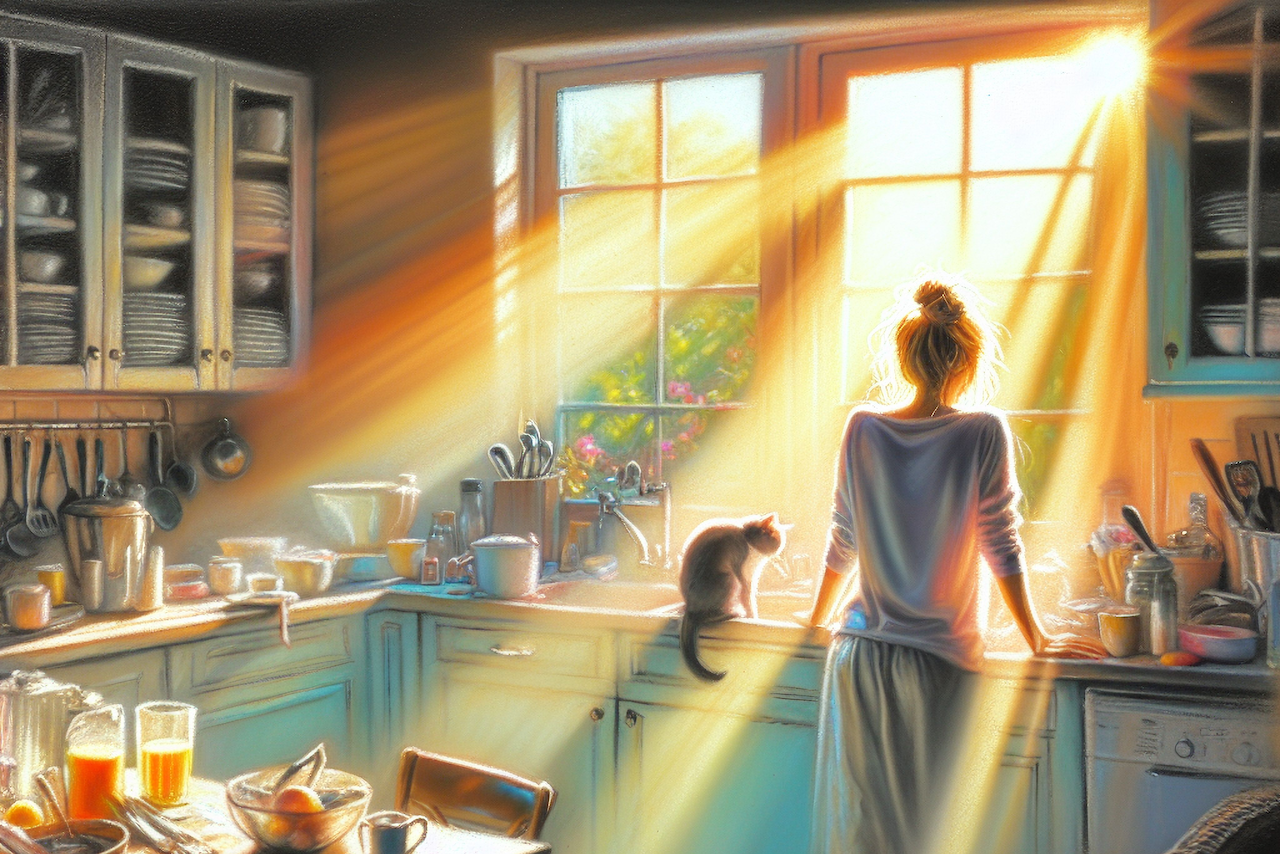
    My kitchen, for instance, is a testament to the beautiful chaos of daily living. There are dishes in the sink, crumbs on the counter, and perpetually sticky spots on the floor from toddler and puppy splashes.

    For the longest time, I let these imperfections bother me, believing they were reflections of my failure to maintain control. A sign I was falling short as a mother, a wife, a homeowner, a professional person, an adult. Then one day, I was relieved by a revelation. This mess is not a sign of failure but of life being lived. The chaos is evidence that I am showing up, day after day, doing my best, and this is more than enough.

    The Beauty of Showing Up

    Showing up, as it turns out, is half the battle. We often get so caught up in the pursuit of perfection that we forget the importance of simply being present.

    I have learned that life isn’t a quest for perfection, but a journey of embracing the mess and the inevitable chaos. True beauty lies in finding grace in the everyday moments, those uncelebrated instances that may never make it to Instagram but form the very fabric of our existence.

    For me, this realization came during a particularly difficult period in my life. I was dealing with a career transition, an injury that stopped me from participating in my beloved outlet—running, family issues, and a general sense of being utterly overwhelmed.

    I felt like I was drowning in a sea of responsibilities, unable to keep my head above water. Then, one day, a wise friend gave me a piece of advice that changed everything: “Just show up,” she said. “Show up and do your best. That’s all you can do.”

    Lessons from the Mess

    Embrace Imperfection

    We live in a world that glorifies perfection, but the truth is, perfection is an illusion. Embrace your imperfections, your mistakes, and your failures. They are part of your story and make you who you are.

    The Japanese concept of wabi-sabi, which finds beauty in imperfection, inspires me to accept my flaws and see them as unique marks of my journey. A cracked bowl is repaired with gold and revered for the richness of the story and life it represents. Its imperfections set it apart in beauty, just as yours do.

    Find Beauty in the Ordinary

    Life is made up of small, ordinary moments. Find beauty in these moments, whether it’s the warming way light filters through your kitchen window in the morning or the delightful screech of your child’s laughter. This is what matters.

    One of my most cherished memories is of a simple evening spent baking cookies with my two-year-old son. Flour was everywhere, the cookies were slightly burnt, and my shirt was blotched with butter, but when I let go of my ideal of cleanliness and order, I tapped into a priceless and memorable joy.

    Be Kind to Yourself

    We are often our own harshest critics. Practice self-compassion and be kind to yourself. Acknowledge your efforts and give yourself credit for showing up, even when things are difficult.

    During this tough period, I started a habit of writing myself small notes of encouragement: “You can handle this. You are a good mom. A caring therapist. A worthy person.” It felt awkward at first, but over time, it became a powerful tool for self-kindness.

    Let Go of Control

    Trying to control everything is exhausting and ultimately futile. Let go of the need to control and learn to go with the flow. Trust that things will work out, even if it’s not in the way you expected.

    I used to plan every detail of family vacations, but the most memorable trips were the spontaneous ones, where we let go, embraced the adventure, and followed our curiosities as they surfaced.

    Practical Tips for Embracing the Mess

    Practice Mindfulness

    Mindfulness involves being present in the moment and accepting it without judgment. When you find yourself overwhelmed by the chaos, take a few deep breaths and focus on the present moment. Notice the sights, sounds, and smells around you.

    I started a daily mindfulness practice, spending just two minutes each morning in quiet reflection. That’s right—two! That’s all I can manage before I hear “Mommy, Mommy,” but it makes a marked difference in my ability to be present and receptive. This simple act has transformed how I approach my day.

    Set Realistic Expectations

    It’s easy to get caught up in unrealistic expectations, both for yourself and for others. Set realistic goals and be flexible when things don’t go as planned.

    I learned this lesson the hard way when I tried to juggle my counseling practice, family responsibilities, and my new exercise and rehab routine. It was only when I scaled back, created a list of true priorities, and focused on one meaningful task at a time that I found a sustainable balance.

    Celebrate Small Victories

    Acknowledge and celebrate your achievements, no matter how small they may seem. Every step forward is progress, and it’s important to recognize and appreciate your efforts.

    My husband and I have created a gratitude practice at the end of the day where we share even the smallest victories, like finishing a task or having a good conversation. It helps us rise above the inevitable frustrations and disappointments of the day and reminds us of our blessings and progress.

    Learn to Say No

    It’s okay to say no to things that don’t serve you or that you don’t have the capacity for. Prioritize your well-being and focus on what truly matters to you. I used to say yes to every request, stretching myself thin. Learning to say no was liberating and allowed me to invest my energy in what truly mattered.

    Moving Forward with Grace

    As I stand in my kitchen, surrounded by the beautiful chaos of daily life, I am reminded of the profound lessons that come from embracing the mess. The crumbs on the counter and the sticky spots on the floor are not symbols of failure but of life being fully lived. They show that I am present, day after day, doing my best.

    Life’s messiness is where we find our true selves—where we learn to embrace imperfection, find beauty in the ordinary, and show kindness to ourselves. It’s where we let go of control and learn to go with the flow, trusting that things will work out, even if it’s not in the way we expected.

    Embracing change and the chaos that comes with it has taught me that the most beautiful moments often arise from the most unexpected places. It has shown me that resilience, adaptability, and strength are born from facing our fears and stepping into the unknown.

    Recently, a wise friend gifted me a fridge magnet that reads, “A clean house is a sign of a wasted life.” There was a time when I might have felt defeated or even insulted by this message. Instead, I now see it as a gentle reminder to exhale and accept myself and my messy life as they are—worthy, unique, and filled with rich lessons and avenues for growth.

    If you find yourself struggling with the messiness of life, I encourage you to look for the grace in the chaos. Embrace the imperfections, show up, and do your best. Remember that you are enough, just as you are. Life doesn’t have to be perfect to be beautiful.

    So, the next time you find yourself overwhelmed by the crumbs on the counter or the sticky spots on the floor, take a moment to breathe and appreciate the life being lived in those messy, imperfect spaces. Show up, do your best, and trust that this is more than enough.

  • How I Overcame Self-Hatred and 6 Ways to Love Yourself

    How I Overcame Self-Hatred and 6 Ways to Love Yourself

    “You yourself, as much as anybody in the entire universe, deserve your love and affection.” ~Sharon Salzberg

    When was the last time you looked at your reflection and extended love to yourself? Before I discovered the life-changing power of self-love, I had not extended love to myself for years. This is the story of how I transformed my self-hatred into self-love, how it changed my life, and several tips to practice in your life.

    For a long time, I believed self-love was something to be avoided at all costs. Like many, I had become habituated to the “hustle and grind” mindset. Little did I know, I used this as an excuse to continue with my same habits of self-hatred.

    I was surrounded by voices telling me I needed to work harder. There was no escaping the voice that said, “You are not good enough yet! You’re a loser! You don’t deserve success! Keep working harder, or you will remain the same!”

    Was this voice telling the truth?

    I isolated myself because I thought I did not deserve to have time with friends. The needs of myself and my loved ones were disregarded.

    Every day was a constant struggle to get through. There was nothing to look forward to. I was living the same day repeatedly, constantly engulfed with an overwhelming feeling of shame and guilt.

    Of course, this only made my circumstances worse, although I overlooked the issue. All that mattered was getting things done.

    Self-punishment became my first response if I got off track, lost focus, or made a mistake.  

    One tiny mistake would throw my whole day into chaos. I would feel like there was no point in continuing the day because “I already failed.” It felt like a sober rain cloud circled over me, raining down with all its might.

    Even more saddening was how this affected the way I treated others.

    The hatred I extended to myself snowballed into how I perceived and treated my fellow humans, including friends and family.

    I had set extremely high standards and expected others to have the same standards. I was judgmental, critical, and rude to others, all without realizing it.

    I was living in a state of unconsciousness. I had no idea what harm I was inflicting on myself and others. I thought I was doing the right thing, but I only created more struggle.

    Things had gotten to a point where I didn’t know if I could continue to move on. The feelings of guilt, shame, and anger became the only thing I was familiar with. It had been ages since I experienced joy.

    Like many, I dwelled in these familiar feelings because they had been part of my life for so long. Only briefly would I feel happy, but I would quickly return to despair and hopelessness not long after.

    I suspected life was supposed to be like this, that I was supposed to suffer. I made things so much more challenging than they needed to be without even knowing.

    The Realization 

    After becoming acutely aware of the damage my lack of self-love created, I knew something needed to change. I didn’t know how much longer I could keep up with this.

    I was not making the progress I expected to be making. Never did I pause to reflect on my purpose, values, or goals. All that mattered to me was productivity, not relationships, happiness, or health.

    My current behaviors had landed me here. Clearly, I was doing something wrong.

    This is when it hit me.

    My perfectionism and negative self-talk were the creators of my pain, hindered my personal growth, and created constant challenges and hopelessness.

    The hatred I was extending to myself not only made me less kind to others. It made me harder on myself.

    The anger I inflicted on myself took away the self-encouragement, optimism, and positivity needed to move in a new direction, so I remained stuck in the same patterns.

    After witnessing accomplished individuals change history with love, I decided to take a different approach. Few have achieved beauty in a state of lack and anger.

    Let us not forget about Gandhi, Martin Luther King Jr., and Mother Teresa. Every one of these transformational leaders changed the world without using violence. They experienced extreme forms of struggle but continued to move forward with peace, stillness, and determination.

    It was time to break free and take a different approach, an approach these history-changers would take.

    The Switch 

    After realizing that I had been doing things wrong for so long, I began making subtle changes in my life.

    I started to change how I viewed myself. Instead of seeing myself as some monster, undeserving of happiness or success, I began to see myself as another human being on a journey, just like everyone else.

    Embracing Imperfections 

    We are all imperfect beings on a journey. What we need is not more hatred. We need more encouragement, love, kindness, and compassion.

    My imperfections were not an obstacle or something to be angry about; they were beautiful opportunities to learn, grow, and develop. Every flaw I uncovered became a powerful motivator to keep pushing forward.

    My imperfections were not something to be upset about; they were something to celebrate and appreciate. Without my flaws, I could not enjoy the journey of personal development. Flaws inspire us to become a better version of ourselves, but only if we change our perception of them.

    Self-Love: The Portal to Transformation 

    Self-love did not just help me uncover the beauty of imperfections. It opened a magnificent portal to transformation.

    Self-love is like the key to the door of development. It frees us from our past mistakes and allows us to soar into the future with excitement, gratitude, and joy.

    I started to see just how powerful this whole self-love thing is. The more loving I was to myself, the more inspired and motivated I felt to overcome my limitations.

    At last, I could escape from the negativity loop instead of repeating the same thoughts, feeling the same feelings, and acting in the same ways.

    Transforming how we think about ourselves daily influences how we feel. How we feel affects what we do. What we do determines the results we get, and the results we get determine our future.

    I chose to embrace self-compassion and self-encouragement instead of the usual self-aggrandizement. Do not get me wrong, this was hard to do, but it helped me tremendously.

    Having embraced imperfections and recognizing the transformational power of self-love, I embarked on the journey of redefining it.

    Redefining Self-Love 

    One of the most challenging changes I had to make was how I viewed self-love. I previously viewed it as a weakness or something that would not help me. I held the belief that self-love would move me farther back.

    Many of us hold beliefs like these, but they are largely incorrect.

    Self-love is simply about doing what is best for us regardless of how we feel. It is a habit, just like self-discipline.

    I started to see self-love as a catalyst for growth, not something that would hold me back. I was already holding myself back tremendously with my current behaviors, so something had to change.

    Self-love is like a healthy, nourishing meal that energizes and motivates us to keep moving forward. The more nutritious the meals we consume, the more energy we obtain to transform our lives.

    How can we become the best version of ourselves if we neglect to nourish ourselves?

    A Catalyst for Compassion

    After discovering the unwavering power of self-love, I came to realize that the more love and compassion I gave myself, the easier it became for me to show empathy toward others. This was one of the most immediate and valuable lessons I learned from practicing self-love.

    When we cease to hold ourselves to impossible standards, we stop doing the same to others. Breaking free from my high standards was difficult but necessary to reduce my constant misery.

    We are all unique human beings with different goals, values, and visions. We each have our own standards and purpose in life. Just because I might have higher standards does not make me a better person.

    Shifting My Mindset

    Self-love even made it easier to overcome challenges. Approaching challenges with a mindset of optimism, positivity, and trust produces much better results than pessimism.

    It became easier to see opportunities and possibilities. Before, everything felt like an insurmountable obstacle. Instead of giving up like usual, I chose to persevere, trusting that things would be okay.

    I encountered a plethora of obstacles along my journey. There were times when practicing self-love became a burden, but I knew that all I needed to do was trust in the transformational power of it.

    It is time for us all to step into the portal of self-love. Doing so will change our lives in more ways than we can imagine.

    How to Practice Self-Love 

    1. Honor your intentions.

    This is one of the most essential aspects of self-love. To show how much we love ourselves, we must keep the promises we made to ourselves. Extending love to yourself is about staying committed to your goals, values, purpose, and vision.

    2. Get clear on your values and purpose.

    Knowing who you are, what matters to you, your life’s mission, and the person you want to become allows you to align your actions with these values. The more you know about yourself, the easier it will be to love yourself. Self-understanding is the key to self-love.

    3. Embrace self-appreciation and gratitude.

    Dedicate a few minutes to write characteristics or qualities you admire about yourself. These can be material or nonmaterial. You may even enjoy writing something seemingly unimportant, such as “I am proud of myself for getting out of bed this morning.” Only when we reflect on our achievements and honorable qualities do we recognize how accomplished we are.

    4. Encourage yourself.

    Instead of resorting to self-hatred or self-criticism after making a mistake, move into a state of encouragement. Encourage yourself to keep moving forward despite obstacles. Encourage yourself to try a little bit harder. Move forward in a state of love, joy, and forgiveness.

    5. Embrace your imperfections and flaws.

    The more imperfect we are, the more opportunities we gain to learn, grow, and evolve. Imperfections are a gift to be cherished, not an obstacle to be pushed aside. Without imperfections, we would not get to enjoy the journey of personal growth. Life would be monotonous and boring.

    6. Surround yourself with love.

    Spend time with people who encourage you, hold you accountable, and inspire you. The people we spend time with influence who we become. If we surround ourselves with optimistic and loving people, we will cultivate the same qualities in ourselves. Not only should we surround ourselves with loving people, but we should also alter our outer environment to support our habits. This might be hard to do at first, but making minuscule changes to our environment and friend group will program us to engage in self-love.

    Before I go, remember, “You yourself, as much as anybody in the universe, deserve your love and affection.” ~Sharon Salzberg

    I look forward to hearing which self-love practice you will implement!  

  • Thinner is Not Better – Healthy, Connected, and Happy Is

    Thinner is Not Better – Healthy, Connected, and Happy Is

    “Standards of beauty are arbitrary. Body shame exists only to the extent that our physiques don’t match our own beliefs about how we should look.” ~Martha Beck

    I have so many women around me right now—friends, mothers, clients that are on a diet—constantly talking about their weight and how their bodies look, struggling with body image.

    I am profoundly sad about the frequency and theme of those discussions.

    At the same time, I deeply get it; it is hard to detach from our conditioning.

    I too struggled with body image at one point in my life, and for a very long time. I suffered from anorexia in my late teens and early twenties. I was skinny as a rail and thought I was not thin enough. I hated the way I looked. I was never perfect enough.

    I controlled my food intake as a way to regain control over my life, as a way to maybe one day be perfect enough that I might feel loved. I almost ended up in the hospital, as my weight impacted my health, physically and mentally. I had no period, no healthy bowel movement. I was so unhappy and depressed. I had no energy.

    The messed-up thing is that the skinnier I looked, the more compliments I received from a lot of people, from family to friends: “You are so slim and gorgeous.” To me, this just validated the way I treated my body—and myself—with control, self-criticism, and harshness.

    Then there were the magazines, showing skinny models, getting so much positive attention. I was obsessed. The more my body looked like those magazine pictures, the better; though I could never quite get to a point where I looked at myself in the mirror and liked what I saw. It was an endless circle of judgment, control, and unhappiness. 

    It took me many years to change the way I saw my body and debunk the standards created by “society” for women.

    For many years I bit my tongue each time I would hear other women around me comparing and judging their body size and shape, repeating the same narrative of needing to lose weight. These conversations felt like an unbearable ringing in my ears, a knot in my stomach, the story in my head of “I am not good enough.”

    I was in the process of creating a new set of standards for myself, of what it was to be a woman in this world, but the old stories were hard to escape and easier to follow because they were the gold standard. I did not have any role models of women out there, younger or older, loving their body just the way it was.

    There was a point, though, when it was just too draining. I noticed that it was not the striving to get to a perfect body that brought me love. What brought me love was being vulnerable, authentic, sharing my inner life, supporting others, having deep talks, being kind with myself and others, and doing the things I loved.

    From then on, I started to soften and release all those standards that had been gifted to me. I allowed myself to be okay with how my body looked, to enjoy food, to enjoy movement, to enjoy my body. I learned to truly love my body, and with that came a different type of respect: I learned to rest when my body was tired. I learned to eat really nourishing food. I learned to move every day in a way that was respectful to my body and that I enjoyed.

    Thinner is not better. Healthy, connected, and happy is.

    Practicing yoga helped me so much in embodying this new belief, and studying neuro-linguistic programming as well.

    The truth is we are “society”—all of us, women and men—which means we are the agents of change. So let’s pause, reflect, and choose new standards. Is this constant need to lose weight healthy or serving anyone?

    There are a few different things to separate and highlight here.

    If your weight negatively impacts your health or your life, if you feel heavy in an unhealthy way and can’t do the activities you’d like to do, that is a different story; and yes, please, take care of your body, through what you think will work best for you: exercise, nutrition, mindset, support.

    Your body is your vessel to experience life, so finding your way to a healthy body is a worthwhile investment. And daily movement and good nutrition will have such a positive impact on your vitality and health, physical and mental, so yes, go for it, with love, softness and kindness—no control, judgment, or harshness.

    But if you feel that your body is strong and healthy, but you don’t like the way it looks… I feel you. I was there. I felt the shame, the discomfort, the sadness, the feeling of not being good enough. Allow yourself to feel this pain. It is okay, and human nature, to feel concerned about your appearance. We all want to be part of the tribe, to be loved and admired.

    But then, ask yourself, is it me that does not like the way my body looks, or is it because of society’s beauty standards? Is it because of all the noise from my friends, constantly talking about weight and looks? Do I want to transmit those standards to the next generation? To my sons? To my daughters? Is it really the most important thing for us women, to look thin and good? Is this story serving us all? Is it love?

    No, it is not love, and it serves no one. Not the women suffering in silence because they believe their body is not slim enough. Not the partners of those women who can’t appreciate their true beauty and fullness. Not the daughters that will believe the same messages and suffer as well. Not the sons that will not know how to recognize beauty in its diverse shapes and forms. Not society as a whole, which will be robbed of having a happy, compassionate, loving, self-confident population.

    So let’s choose differently. Let’s celebrate our different body shapes and weights and strength. Let’s feel good and enjoy life, movement, and food without counting and restricting and denying love to our bodies and selves.

    Let’s stop talking about our weight constantly and find other ways to connect.

    Some might say that I am too slim to really speak about this subject, that I have it easy. This is not quite true. My body has changed so much throughout the years. I went from an ultra-skinny teenager and twenty-year-old with anorexia, to a healthy weight in my thirties, to ups and downs with weight throughout my two pregnancies and breastfeeding journeys. I have seen my body change quite a lot and have been judged for how I looked oh so many times. I have been judged for being skinny, or envied for being slim, and I have been judged for gaining weight.

    Today I am forty-three. My body is not as slim as it used to be. I have a bit of fat around my belly, and my breasts are not as round and firm as they once were, but I feel strong and healthy. And I am SO grateful for my body for enabling me to experience life so far, and for creating life and feeding life, that I don’t want to ever criticize or shame my body again.

    I have learned to love every scar, my stretch marks, my extra skin, because they are the witness of my life, my loves, my years.

    So thank you, body, for everything you allow me to experience.

    The alternative to loving my body—the constant internal criticism and self-doubt—is too draining.

    We, as humans, are society, so let’s change this conditioning. Let’s never transmit this idea of what a woman’s body should look like to our daughters, to our sons. Let’s invent a world where it does not matter what you weigh as long as you feel healthy and good within. Let’s change the chattering from what diet we are on to how our heart is feeling.

    Let’s celebrate bodies, in their diverse beauty and forms.

  • Everything I’m So, So Sorry About (and Why I Think Apologies Are Hard)

    Everything I’m So, So Sorry About (and Why I Think Apologies Are Hard)

    “There’s the way that light shows in darkness, and it is extremely beautiful. And I think it essentializes the experience of being human, to see light in darkness.” ~Emil Ferris

    I was leading a yoga training in a small village in Greece near the Aegean Sea. One of the trainees was practicing a mindfulness workshop she designed. She led us through a guided meditation based on a beautiful Hawaiian practice for reconciliation and forgiveness called Ho’oponopono. As we sat in the yoga space, she repeated over and over:

    I love you.
    Please forgive me.
    I’m sorry.
    Thank you.

    There was something about how she slowly said, “I’m so, so sorry” that at one point I felt my heart break open, and tears flowed from its depths.

    I have a wellspring of personal and societal hurts tucked in the back of my heartspace that I am so, so sorry about.

    I’m sorry that children and animals are abused for no reason except the amusement or the sickness of adults.

    I’m sorry that women and children are molested and raped by men whose brains can’t process compassion, and that their need for power is so destructive that they can justify their actions.

    I’m sorry that people aren’t given equal access to food, education, and healthcare because of the color of their skin or biases.

    I’m sorry for the learned bias that keep us from treating everyone equally.

    I’m sorry that children don’t tell adults they have been bullied and base their self-worth on their shame about how their peers treated them.

    I’m sorry for daughters whose mothers try to keep them small.

    I’m sorry for the boys who’ve been told that they can’t cry.

    I’m sorry that saying sorry is sometimes too vulnerable.

    I’m sorry for any time I have ever said or done something that was hurtful because I was trying to make myself look good.

    I’m so, so sorry

    The Vulnerability of Being Sorry

    Saying I’m sorry is a vulnerable place. We have to admit that we were not perfect. We have to disclose that we made mistakes.

    Sometimes I’ve raced around my brain desperately looking for some way to justify my actions so that I didn’t have to apologize because it felt too vulnerable. But sometimes, even in a relationship where I wanted to be vulnerable and close to someone, I have defaulted to not apologizing—sometimes out of habit.

    During the pandemic, I came down with COVID-19 and had to call the people I’d been around and tell them. It was hard. One of my friends was very upset with me. It was during the holidays, and after spending a lot of time alone, she had plans for New Year’s Eve.

    I didn’t blame her for being mad. The isolation was driving us all crazy. I was sorry. Apologizing and listening to her anger was uncomfortable. Her friendship was more valuable than the temporary discomfort of her processing her disappointment. I was grateful that I had the courage to be present.

    If we want a relationship to grow, we—the one who erred—need to own the mistake and the apology, no matter how uncomfortable it feels. Without the apology, it’s one more brick in the barrier to growing closer in a relationship.

    We all know people that never say I’m sorry—it just feels too exposed. Alternatively, more worrisome, is that they feel beyond reproach.

    Cindy Frantz, a professor of psychology and environmental studies at Oberlin College and Conservatory, said that when we do something wrong and skirt responsibility by not admitting our wrongdoing, the interaction feels incomplete.

    I know from experience that waiting for an apology can cause a relationship to feel like it is hanging in midair, waiting to get grounded.

    She also warned, “Don’t apologize as a way to shut down the conversation and wipe the slate clean. That’s a shortcut that won’t work.”

    When It Isn’t Safe to Say I’m Sorry

    Some people will use our apology against us—so we keep ourselves safe by not apologizing. Self-preservation might be the best choice when dealing with someone with mental health and abusive issues. It can take a toll on how we feel about ourselves though.

    In the eighties, I was in a twelve-step program for my eating disorder. I wasn’t able to fully complete the fifth step by making amends to my parents for all the extra food I ate to fuel my bulimia. It just didn’t feel safe. Now that I’m in my sixties I could do it, but my parents are deceased.

    I found some comfort in apologizing “in spirit.” I’m still in the process of fully letting go of the conversation that I wish I could have had.

    Over-Apologizing

    I was in a coffee house, writing this article, when I overheard a conversation. A man asked a woman if he could reach across her to get a chess board from a shelf that was next to her. She said yes and then said, “I’m sorry.” His friend said to her, “Why are you apologizing? He’s the one inconveniencing you.”

    Like this woman, I can be very free with my apologies.

    Saying things like “I’m sorry to bother you” instead of “Do you have a minute to talk?” can be a sign of our sense of self-worth or the habits we developed when we weren’t confident.

    Findings show that women report offering more apologies than men, even though there is no evidence that women create more offenses than men.

    For women, over-apologizing can be just a matter of learned language. But when we hear ourselves apologize for taking up space when someone else bumps into us, or apologize for being late rather than thanking people for waiting for us, or apologize just for saying no when someone crosses our boundaries, this can be a sign of self-worth challenges.

    If we listen to ourselves apologize repeatedly, we literally talk ourselves into low self-worth.

    What a Sincere Apology Feels Like

    I can offer a sincere apology when I know the mistakes I make are just a part of being human. I truly don’t want to hurt others. I don’t want them to be suffering from my words or actions.

    I can offer a sincere apology when I forgive myself for not being perfect. I seek to learn from my mistakes and apply insights to my future responses and actions. I refrain from using my mistakes to bring up all my past mistakes and emotionally beat myself up.

    Psychotherapist Sara Kubric says that a genuine apology is more than a statement. It has to be sincere, vulnerable, and intentional. She offers an apology recipe that could look something like:

    1. Taking responsibility for making a mistake
    2. Acknowledging that we have hurt someone
    3. Validating their feelings
    4. Expressing remorse
    5. Being explicit about our desire to make amends

    Apology as a Test of Confidence

    When I sincerely apologize, I know that I am confident. No one is beyond making mistakes. I know that my spiritual growth depends on my ability to be vulnerable.

    I continue to learn new ways of communicating that don’t involve over-apologizing for taking up space or being a normal human being. I know that there are pain, challenges, and injustices in the world that I can’t control, and I can be sorry, sad, and discouraged when they happen. This is the way I can live consciously and compassionately in this, my community.

  • I Worry I’ll Never Change – Here’s Why I Still Accept Myself

    I Worry I’ll Never Change – Here’s Why I Still Accept Myself

    “Our journey is not about changing into the person we want to become. It’s about letting go of all we are not.” ~Nikki van Schyndel, Becoming Wild

    I recently went on personal retreat to once again try to heal my wounds, see my patterns, and find my purpose. I loaded my car with journals from the last two decades and a book of poetry dating back to 1980. I packed my cooler full of nourishing food, but then added a six pack of beer and an expensive bottle of wine—completely unaware that I was about to sabotage my personal growth by continuing to numb my pain.

    I had decided to use my retreat time to review my journal writings, pull out any wisdom I wanted to keep, and release the rest in a burning ceremony. On my first day, I labeled each journal with the year it was written and organized them all chronologically. This task felt arduous yet satisfying when I sat back and looked at the twenty-five volumes all laid out neatly in order.

    I spent the next three days re-reading each and every one. Re-living the emotional angst of problems in this relationship, then the next … and the next. Teasing out the patterns of insecurity, sabotage, and grieving. Re-visiting the same themes and my same desire and commitment, after the ending of each relationship, to be this person who stopped drinking in excess, meditated daily, ate healthy foods, and took good care of her body.

    Over and over, I had glimpses of this centered, calm, wise woman who I’d like to think is the real me. Yet over and over, I’d jumped into another relationship, lost myself, and repeated the pattern. Pages and pages full of the same story, only with different characters and at different times. As I read each journal, I tore out pages to burn, cut out sections to keep, and drank to numb the pain.

    On the fourth day I finished organizing the scraps of paper I wanted to keep and sat back with immense satisfaction. By early afternoon I had my fire going and drank my first beer of the day as I burned … and burned … and burned. Words turning into ashes. I stayed emotionally distant, cut off from my feelings, not making much of a ceremony of it after all.

    Feeling restless, I downed the last of my beer and pulled on my hiking boots. The trail outside my cabin began with a steep decline, winding along the side of the mountain and deep into the woods. As I walked, I kept thinking, “I haven’t changed. I’m still the same. What will it take to change? Why can’t I be that person I say I want to be? My life is one big loop.”

    I thought maybe the answer was that I just needed to be more self-disciplined. However, I immediately noticed the word “discipline” repelled me. If there is one thing I know about myself, I am not one to obey rules or codes of behavior—and I already punish myself enough. So, no, self-discipline wasn’t the answer. It was clear that I had spent a lifetime trying that approach and beating myself up for not succeeding. I kept on walking.

    At some point I questioned if maybe this was what life was really all about: the striving to be someone we are not. By that time, I was walking back uphill and had to stop frequently to catch my breath.

    Standing alone in the woods with my heart beating hard, staring blankly at the trees, I wondered if maybe the answer was just to embrace who I am. It’s pretty clear, after reading over my life for twenty years, I haven’t been able to change.

    My mind continued to whirl: But I’m not able to accept those parts of myself that drink too much or can’t stay focused. I don’t want to be that person who is overweight. I really do want to meditate. I stopped again, looking down the mountainside from which I had come. Apparently embracing myself wasn’t quite the answer either.

    By the time I had returned to my cabin, I no longer wanted to drink. I reflected again on the common thread throughout the years and suddenly saw the essence of myself that is timeless.

    It was there in my poetry from over forty years ago, in the heartbreak when I sabotaged yet another relationship, and in the yearning to be different.

    In a flash of insight, I recognized—contrary to the self-criticism that had been running through my head—the unchanged me was not a bad self. She is someone who wants to do better, who wants to be better, who recognizes the impermanence of time and seeks to grow.

    As I saw her, I knew this was the me I could totally embrace. I briefly thought about starting a new journal with this great insight, then laughed because I knew, if I did, I’d be reading it in twenty years, shaking my head, and saying “nothing has changed.” Then I would beat myself up for not being who I thought I wanted to be, and the cycle would just continue.

    In this recognition, I knew that those parts of me I so strongly criticized weren’t going to go away. And while I couldn’t embrace them, I could accept them with greater compassion and love.

    I saw the truth that even if I don’t meditate daily, exercise, eat healthy all the time, and have a full and balanced life, the part of me that strives to do those things is always there. She was in every page where I said I wanted to make those choices, and she’s been with me all along. She is the one I need to accept and embrace; it’s not who I want to be, it’s who I am.

    The review of my life helped me understand it’s a process. That timeless part of me may come and go, just like I have my moments of awakening to my wisdom and then forgetting it all. Sometimes the me who struggles to make healthy choices is going to hijack my life. I can accept that is a part of being human. It’s not self-discipline I need, it’s self-acceptance of my duality. Both my wise woman and my saboteur.

    I am a wise and powerful woman. I am a kind, sensitive, and caring soul. I love deeply. I care deeply. I feel deeply. I don’t need to escape from who I am; I simply need to remember. Ultimately, what really needs to change is that I need to nurture self-compassion and self-acceptance at the deepest level.
    My last day at the cabin, I awoke to sunshine and blue skies. I felt good and strong. I spent part of the day shopping in the craft stores of the nearby village, and before I knew it, I was halfway to the liquor store. I kept trying to convince myself it was okay, but recognizing I wanted to make a different choice, I managed to turn around before it was too late.

    I chose a waterfall hike and scrambled past the tourists, up to the top of the falls. The rocks were a slippery slope, but the irony of that and the potential of me drinking didn’t quite register until later. When I reached the top, I sat a moment to meditate. As I closed my eyes, I embraced this timeless essence and felt so much peace and gratitude for her presence.

    My inner saboteur tried to take over again when I got back to my car. Sitting in the parking lot, I asked myself, “What do you hope to accomplish by getting a drink?” Then, I laughed at the quick and witty answer, “A hangover.” I drove back to my cabin, made myself a healthy meal, and drank a glass of water.

    I understand now this journey is a day-by-day, moment-by-moment reclaiming of who I am. I also understand the part of me that has been in control when I’ve forgotten my essence isn’t going to disappear overnight.

    However, I no longer fool myself into thinking anything is wrong with me. I recognize and embrace my commitment to growing in wisdom, strength, and joy. And I embrace all of who I am, while having compassion for the parts of me that struggle.

  • My Deepest, Darkest Secret: Why I Never Felt Good Enough

    My Deepest, Darkest Secret: Why I Never Felt Good Enough

    “Loving ourselves through the process of owning our story is the bravest thing we’ll ever do.” ~Brené Brown

    Lunge, turn, reverse, jump, land and rebound, push, pull, cut, run, double turn, fling, pause…

    Not good enough! Smooth the transitions, make it cleaner, find more ease!

    Heart pounds, ragged breath, muscles burn…

    You need more weight on the lunge and point your damn feet when you jump. Do it again.

    Repeat. Lunge, turn, reverse, jump, land and rebound, push, pull, cut, run, double turn, fling, pause…

    What is your problem? Why is it so sloppy? Clean it up! Do it again.

    Not good enough, do it again carved a deep groove into my brain, branding it like a wild bull by a hot iron. Not good enough. My mind, not my teacher, was brutalizing me, taunting me, teaching me “discipline” to improve my dancing.

    I improved—enough to become a professional dancer—but I couldn’t internalize or recognize any of my accomplishments. 

    Even after being asked to join a dance company before I graduated college, I continued to struggle with “not being good enough.” Despite the many compliments I received for my performance and choreography, I brushed them away thinking that they were lying to me, just placating me with false praise.

    I faltered in my performance, felt paralyzed by fear that would not always fade away once the performance began, distrusted my ability to remember the choreography, always fought the anxiety of being in front of an audience, and cried oceans of tears because I could never reach the bar I had set for myself. My confidence and faith in my ability to perform to the level that I wanted to plummeted.

    I loved dancing so much. I loved moving my body through space, the creative process, and working with a group of talented dancers to create shows. I loved rehearsals because I felt relaxed and at ease, like I could perform with the freedom that I couldn’t feel onstage. I loved refining and smoothing transitions and was described as a “liquid” dancer. I loved expressing my style through my movement.

    But the tension between my passion and my insecurity created an internal trip cord. I didn’t trust myself. In rehearsal I was militant about practicing the steps over and over, even when everyone was exhausted, because I still didn’t trust that I knew the choreography.

    I had made mistakes before, blanked out onstage, and felt deep humiliation and shame for not performing someone else’s choreography as well as I should have or meeting a paying audience’s expectations. I was proud that I had so much stamina to rehearse twice as hard as I needed to. If I rehearsed extra. then maybe it would finally quiet the critical voice in my head.

    It didn’t quiet the critic and the cycle continued.

    The shame of being a mediocre dancer led to working harder, but fear of making mistakes or not reaching the goal led to fear of being seen as mediocre, which led, once again, to shame. Shame is dark, subtle, slippery. Over and over, I went through this cycle, the shame cave becoming deeper and darker, until I was lost in it, burned out from so much effort and so little reward.  

    After ten years of pushing myself to learn, pushing against my fears, pushing myself to excel, and beating myself up along the way, I couldn’t push through any longer. I had nothing left to give. The trickling current of anxiety and depression became a flood and swallowed me up into a profound depression. Everything felt arduous, even the simplest daily tasks.

    I looked at people in the streets around me and thought, “How is everybody not depressed? How is anybody smiling?” But they were—smiling, laughing, moving through their days effortlessly, accomplishing wonderful things—and I was not. I was depleted of all vitality.

    I quit performing and turned to my yoga practice to help heal from the burnout. I learned therapeutic yogic principles about balancing effort and ease, surrender, non-grasping, contentment, non-violence (even toward oneself).

    It seemed only natural to become certified as a yoga teacher and, as I began to teach, I encountered the same insecurities. The same thoughts arose—I need to be an excellent yoga teacher, need to create excellent sequences, have excellent pacing, use excellent language to help guide students into an excellent experience. I felt the same performance anxiety—debilitating self-consciousness

    What are they thinking about me? Am I giving them what they need? There are so many different people in my class. They are different ages with different bodies and different life experiences. What do I know to teach other people?  I have only ever been a dancer so how do I know what other people need for their bodies?  

    I didn’t want to harm anyone because I didn’t know enough or have enough information and, once again, I quit after a couple of years.

    My deepest darkest secret, feeling inherently flawed and chronically inadequate, took up space in my heart and my throat. Rent-free. In fact, I was paying for its unwelcome residence. 

    My next strategy was simply to take the pressure off myself. I chose low-pressure jobs that didn’t require a big performance from me. I was lucky and these were jobs that I liked that suited me well as I slowly healed from years of chronic self-abuse.

    In my early forties I came across a term that I identified with—imposter syndrome.

    High achievers’ fear of being exposed as a fraud or imposter. Unable to accept accolades or compliments or awards for one’s talent, skill, or experience.

    Imposters suffer from chronic self-doubt and a sense of intellectual fraudulence that override any feelings of success or external proof of their competence.

    I thought, “That sounds like something I can relate to,” but I wasn’t ready to face it head on. I was finally feeling contented in a job that I liked, without the pressures of performing in ways that touched that deep insecurity, and I wanted to soak that contentment in.

    And then Covid-19 happened, and I lost that job.

    Midway through the pandemic, in an effort to be proactive about the next phase of my life, I turned my attention to developing a yoga therapy practice. Create a mission and vision. Come up with content and language. Identify my audience. Create a website and so on. And again, I came up against the deepest darkest secret that had been so blissfully dormant for several years. I was surprised at its potency, but I decided I was ready to face it head on.

    I remembered imposter syndrome and started researching again. Again, I checked all the boxes—except one. In so many articles that I read, examples were given of well-known people who struggled with imposter syndrome. These are people who have achieved extraordinary things, are in the public eye, and have either overcome or pushed through their demons to go on to incredible accomplishments.

    Naturally, I thought, “Well, I’m no celebrity, have no major awards or accomplishments to speak of, and I haven’t achieved that much in my career, so this probably doesn’t actually apply to me.”  

    Such is imposter syndrome.

    Comparison to others (who we deem higher achieving than we are) will trigger a cascade of shame and doubt. 

    Few people actually talk about imposter syndrome—either they don’t know about it or don’t want to discuss it because of the deep feelings of shame or insecurity that accompany it.

    I want you who silently struggle with imposter syndrome or dysmorphia or profound shame and insecurity to know that I, too, have struggled, but it’s getting better.

    Drop by drop, my cup fills as I take every opportunity to be kind to myself where in the past I would have criticized.

    Having studied positive neuroplasticity, I now understand our brains’ negativity bias and the protective role of the inner critic. I have a newfound appreciation for our natural protective mechanisms and gratitude for the ability of the brain to learn and grow new skills.

    I’m starting small, taking small steps to create an inner garden of welcome. A beautiful nurturing place where I invite one or two for tea and laugh and share experiences and stories.

    And after some time, I hope the garden will expand and the walls begin to crumble a little and I can have a small group for tea, stories, and dancing. And then gradually over time, the garden will expand further so that I can host more people in for tea, stories, dancing, and games.

    I can imagine that remnants of the walls will remain as a reminder of where I’ve been, and I can look at them with gratitude for keeping me safe for a while as I softened and settled and tended to the garden within.

  • “Old” Isn’t a Bad Word: The Beauty of Aging (Gracefully or Not)

    “Old” Isn’t a Bad Word: The Beauty of Aging (Gracefully or Not)

    “Mrs. Miniver suddenly understood why she was enjoying the forties so much better than she had enjoyed the thirties: it was the difference between August and October, between the heaviness of late summer and the sparkle of early autumn, between the ending of an old phase and the beginning of a fresh one.” ~Jan Struther, Mrs. Miniver

    As an adolescent, I was always keen on looking and acting older than my age.

    As the youngest amongst three, I always felt that my siblings held more power and their grown up lives seemed more glamorous to me. They would prance off to college or to high school, carrying their own bags and packing their own lunches, while I had to wait for my mother to drop me off, holding her hand as we crossed the street!

    Naturally, I looked forward to my birthday each year, waiting for a sense of “grownup”ness to take me over even as I got giddy at the thought of opening gifts. Yet, over the past few years, my birthday gifts have come wrapped in a vague fear, that of becoming invisible.

    In a society that values youth to the point of insanity, reaching that terrible “middle age” seems like a ticket to the circus of Forget-Me Land!

    As I journal and reflect my way through all this, I wonder why this is a big deal at all. In fact, in many families across nature, growing older is a good sign. It’s a symbol of status and respect.

    Take the example of the silverback gorilla: all that gray hair on their back gives them the authority to make decisions for the group! Wolf leaders, elephant mothers, and older dolphins are all instances where nature favors age.

    Why, then, are humans obsessed with youth? From creams that remove wrinkles to references like “well-maintained” (as if we were a car!), we are told repeatedly that being younger is somehow better.

    Personally, growing older has taught me a few things, and I wish I could go back in time and share them with my younger self. However, that’s not possible unless we invent a time machine, so I’ll list them here and you can take what you will.

    To begin with, don’t obsess over beauty. Or rather, what society tells you beauty is.

    All through my growing up years, I pursued being beautiful even at the cost of my true talents. I underplayed my reading habit, and I acted meek so men would perceive me as “more beautiful.” I have no idea where I received these ideas, but they were debilitating. I wanted to be beautiful so I would be chosen by men, but I never stopped to ask myself: Which man?

    It is sad that I desperately wanted to be chosen by someone even as I rejected myself, day in and out. After battling toxic relationships and severe blows to my self-esteem, I realized that the pursuit of beauty has been absolutely useless.

    What really helped me during difficult times was my sheer bullheadedness and foolish optimism. Surprisingly, being myself, with gray hair, crooked teeth, and a few extra pounds, is easy to do and has also earned me some beautiful friendships, with men and women alike.

    Secondly, age is really just a number.

    My dog doesn’t know how old she is, so she is free to act as she pleases. She jumps on beds, goes crazy over sweets, and gets jealous. She runs if she wants and as much as her body allows. It’s easy for her to do all this and more because she doesn’t have that limiting belief called “age.”

    Ellen Langer, a Harvard psychologist, conducted an unusual experiment where elderly subjects were asked to live like it was twenty years earlier, in a simulated environment. The men who underwent the experiment supposedly showed improvement in memory, cognition, and much more.

    Even if the experiment seems outlandish to you, there’s an important takeaway: How you perceive your age makes a huge difference in how you approach it. So why not approach it with positivity?

    A few months ago, I read a very powerful quote, and it made a huge impression on me: Do not regret growing older; it’s a privilege denied to many.

    How true! My mind immediately goes to my own father, who passed away before he fulfilled many of his dreams. I am sure he would have welcomed many more years with open arms, warts and all.

    For a patient with a terminal illness, each day growing older can only be a blessing, even when the body feels frail. We don’t have to wait for something like this to feel grateful for our age. We have that opportunity each day and in each moment.

    You don’t have to ‘maintain’ yourself.

    You don’t have to look younger.
    You can be thin, overweight, or anything in between or beyond.

    Don’t hold yourself back from things you love just because you feel older/younger.
    Don’t feel the pressure to age gracefully or anything else that society tells you to do. You have the freedom to age messily if you like. Heck, it’s your life, and it’s in chaos that order is born!

    Maybe you don’t have a head full of black hair, but so what? You probably sucked your thumb at six, but you don’t do that anymore, do you? It’s the same thing.

    Nostalgia is only helpful if it uplifts you. If it’s taking you on a downward spiral of “how I wish I was that age again!”, then it’s high time you closed that album of old photos. New sunrises and sunsets await you. Make yourself some frothy cold coffee and move on!

    There’s nothing that you need to tick off by a certain age. We all have our own trajectories and our own truths to learn. Take inspiration from plants and animals. They don’t strive; they just are and their lives pan out beautifully! Be courageous enough to own your messy self and your messy life.

  • When Positive Messages Feel Bad: Why I’m Changing How I Use Social Media

    When Positive Messages Feel Bad: Why I’m Changing How I Use Social Media

    “How wonderful that we have met with a paradox. Now we have some hope of making progress.” ~Niels Bohr

    Social media is indeed a paradox in that it has the power to be both good and evil simultaneously. Ironically, one of the most harmful things about social media is the abundance of “positive” messages.

    You’re probably wondering how something that creates so much comparison, self-doubt, and anxiety can be “too positive.” What I mean is that social media messaging is starting to put a lot of pressure on us to be grateful and optimistic about our life no matter what we’re going through—also known as “toxic positivity.” This seems to especially be applied to mothers.

    Optimism and happiness are of course wonderful when they’re authentic for you. However, if you try to pass over your uncomfortable emotions or ignore what you’re going through, it’s similar to spiritual bypassing, where you try to skip over being a human and struggling through life’s challenging times.

    What feels like toxic positivity to one person can feel completely empowering to another. It depends on where you’re at in this moment and how a specific message lands with you.

    There does seem to be an overall trend, however, of emphasizing how grateful and fulfilled we should be without the counter-messaging that sometimes life just sucks.

    One of the hardest things about social media is staying in tune with ourselves. We go to our phone for comfort, distraction, and entertainment. Once we arrive, our brain gets hijacked by the content, and we have to buckle up for whatever ride the algorithm sends us on. Even with the best intentions going in, we can get turned around by one video or post and find ourselves feeling like we aren’t measuring up.

    When I first became I mother I was obsessed with the idea of gentle parenting. I consumed everything I could find on this parenting style. I gave it my best go, but every day I felt like a complete and worthless failure.

    I was bombarding myself with an idealized version of this parenting style that social media made look so easy. After reading any social post, I felt like I was an idiot for sucking at it.

    How hard is it to just speak in a calm voice and not lose your patience with your one-year-old? He’s literally an innocent baby! One that hits the dog, bites you while breastfeeding, or turns and runs into the street with a mischievous smirk on his face.

    In my frustration I would go straight to social media to flagellate myself with messaging that had a toxic effect on me. I pivoted against my husband who had a more relaxed attitude toward parenting and put more pressure on myself to be a “perfect” mom. This created tension in my marriage and physical and emotional burnout for me.

    Don’t get me wrong here’; I don’t think there is anything inherently wrong with social media. The way it connects us with each other is truly wonderful. The current messaging to parents and mothers sounds so beautiful at first glance.

    “Your babies grow up fast, so you should savor each moment.”

    Motherhood is the most challenging job, but so worthwhile.”

    “Your house is a disaster, but you shouldn’t care about that when you have young children.”

    My issue is that we are using social media as a weapon to inflict self-harm. Instead of taking these messages in the way they are intended—to inspire us—we criticize and judge ourselves against them. 

    We can start to feel bad that we actually care if our house is a giant mess or that we don’t enjoy every moment.

    Or we might feel guilty for not feeling grateful. Or bad about feeling sad. Or frustrated because we can’t just “choose to be happy” when we’re feeling down.

    My solution is not to delete all your social media apps (but go for it if that sounds amazing to you). What I recommend is to start actually noticing how each reel, TikTok, or post feels in your body. It doesn’t matter that it has beautiful music, photos, or a positive message.

    If your brain is twisting that message to be used against you, it is not yours to absorb.

    It is easier to spot the types of messages that we instantly don’t agree with. Any time I see a perfectly put-together mom with three kids in matching, neutral-toned outfits, I mentally reject it. It doesn’t matter what the content is; this is always a pass for me. What messaging bothers you or feels toxic is completely personal.

    Our brain gets conflicted when something seems really positive, but doesn’t feel good to us. Since our brain doesn’t like being confused, we unknowingly spend mental energy trying to make sense of the discordance that we feel. Becoming aware of your emotional reactions helps you quickly accept or reject the messaging coming at you, so you aren’t as negatively affected by it.

    We don’t need to villainize the content creators here either. I don’t think anyone (hopefully) is going out there intentionally using pretty messaging to turn us against ourselves. So much of the messaging we see is meant to be inspiring and helpful.

    A lot of times I feel connected and motivated by the positivity I encounter on social media.  Especially content that is less perfected and less filtered.

    When you come across a “positive” message that makes you feel critical of yourself, I suggest you mentally “pass” on it and move on. 

    I like to compare social media messaging to a food sensitivity. Tomatoes are not inherently bad, but if your body doesn’t react well to them, then they aren’t for you right now. You may heal or grow out of some particular food sensitivities and be fine with them in the future.

    Giving yourself the power to pass on or to accept every message that comes your way gives you complete control over your experience on social media, regardless of what you scroll through.

    You get to decide what “positive” things feel good to absorb and what “positive” things aren’t for you right now. My wish for each of you reading this is that you update your relationship with social media to be one that fully empowers and supports you.

  • We Are Allowed to Age: Why I Don’t Care That I Look Old

    We Are Allowed to Age: Why I Don’t Care That I Look Old

    “When there is no enemy within, the enemies outside cannot hurt you.” ~African Proverb

    It is just past ten in the morning on a Tuesday.

    My wet boardshorts and blue tank top are drying at lightning speed in the sweltering South Indian sun.

    I am feeling alive and exhilarated after my surf session in the surreal blue, bathtub-warm Arabian Sea.

    Surfing waves consistently has been my goal for the past two years, and I’m doing it. Which is pretty awesome considering that I never thought I would surf again.

    The trauma and fear from a surfing accident ten years ago, that nearly knocked my teeth out, was still lodged in my body for years, and my life’s focus had shifted from sports to yoga.

    When I landed in Kerala, India, my intention was to do an intensive period of study with my Ashtanga yoga teacher for ten weeks and then return to Rishikesh in Northern India, where I had been basing myself.

    A chance invitation brought me to the coastal town I have been living in for the past two-plus years because of the pandemic.

    And it just so happens there is good surf here.

    My reentry into surfing has been slow and steady.

    For my fiftieth birthday present I gave myself ten surf lessons.

    I decided I needed to start off as a beginner and took basic lessons to ease myself back into things and get comfortable back on a surfboard.

    An Indian man in his mid-thirties who was in my surf class asked, “How old are you?”

    “Fifty,” I replied.

    “I hope I am still surfing at your age,” he said back.

    I think he maybe meant this as a compliment, but I took it self-consciously and wondered why it mattered what my age was.

    It is now two years later.

    I have slowly gone from a beginner to an intermediate surfer.

    As I sipped a hot chai out of a dixie cup on the side of a busy fishing village road, after my morning surf, an older Indian gentleman with grey hair asked me, “What is your age?”

    “Fifty-two,” I replied.

    His jaw dropped and he said, “I thought you were seventy. You have really bad skin.”

    Yes, this really happened.

    And it has happened more than once.

    Every time it’s happened, I have allowed it to knock the wind out of my sails.

    Wow, I think, how is it even possible that I look seventy years old when I feel better than when I was twenty-one?

    In all honesty, good skin genetics are not in my favor. Coupled with my love of the sun and spending most of my life outside, it has left me with the skin of an alligator.

    I lied about my age up until my mid-forties.

    On my forty-sixth birthday, I told a woman who asked about my age that I was forty. She laughed and asked if I was sixty.

    But this chai-guy encounter sparked me to lie in the other direction.

    What if I start telling these men I am eighty-five? I thought to myself as I drove my Mahindra scooter away from the chai shop. This idea made me smile, and I immediately felt more empowered.

    Instead of feeling ashamed of my skin, I decided to hand it right back to them.

    I no longer care what they or you think about how I look, and I put zero energy into my appearance.

    It doesn’t matter to me because inside I feel amazing.

    I practice the whole of Ashtanga yoga’s challenging intermediate series six days a week, which is something I never in my wildest dreams thought would be possible in my forties, and I surf every day.

    The young twenty-something Indian surf guys are now giving me fist pumps and saying, “You are really surfing and catching some big waves now!”

    And they have stopped asking about my age.

    I felt called to share this story because it made me wonder: Why are we not allowed to age?

    Why is it an embarrassment to have old-looking skin?

    Why can’t I have wrinkles and grey hair and own it?

    This is what the body does.

    It ages.

    So then why are we not meant to look our age? Or in my case even older!

    I have decided to take a stand and turn the tides.

    I am claiming my age and my place in the surf line and voicing my truth.

    We are allowed to age.

  • How Embracing a Good Enough Life Gave Me the Life of My Dreams

    How Embracing a Good Enough Life Gave Me the Life of My Dreams

    Acknowledging the good that you already have in your life is the foundation for all abundance.” ~Eckart Tolle

    It was perfect. Well, almost.

    I was doing the work I love, with someone I love, my two boys were thriving, and we seemed to finally be on the road to retirement. What could possibly be wrong with this picture?

    A lot, apparently.

    I was waking up worried and unsatisfied. Always feeling like life was missing something, like I was missing something, not doing enough, asking: How can my business be better? What will my kids do next year? Is my partner gaining weight? Did I run yesterday?

    Anxiety crept into my mind and contracted my body before I had a chance to get ahead of it. It was an unease that something just wasn’t quite right. And if it was, then it wouldn’t be for long.

    I knew enough about neuroscience and anxiety to know what was happening.

    Negative thoughts are a protective pattern that come from scanning our environment for potential threats.

    Our ancestors were wired this way to survive, thankfully, and we are probably in the first generation that can even talk about the word “abundance,” at least in this part of the world. The intergenerational trauma of feeling unsafe is in the recent past and runs deep in our DNA, especially for women.

    But even armed with all the knowledge of trauma and all the best practices of breathing, meditation, and yoga, there was still a missing link.

    My worries seemed trivial given the war that was raging in the world. It seemed self-indulgent to want more, to even consider that this was not enough. Even when it felt enough, it was because all the factors were lining up in that moment, but it felt precarious, like a house of cards—even though I knew it wasn’t.

    All the self-help books promised I could “reach for my dreams” and “have my best life ever” if I only changed my habits and my mindset and lived like I thought all the people around me were.

    In fact, I was so busy working on my life that I felt exhausted and still felt like I wasn’t doing or giving enough. Even when deciding what charity to donate to, to help those in need, I felt like I had to choose the “right” one!

    It was through my work with people in chronic pain that one day something shifted. I was teaching about the difference between acceptance and giving up in the search for a cure, and I said something like “It’s not so much what you are doing but how you are doing it.”

    Doing something from a place of pressure and intensity, with a worry about making a mistake or not getting it right, creates fear. Fear creates more fear in the end, and it creates pain.

    My inner perfectionist gasped and took a step back. She was outed.

    Not only did I see how my inner perfectionist had been running the show, I knew that if I wanted to negotiate with her, I was going to have to come from a different energy other than “getting this right.”

    She had helped me; she had worked so hard to stay on top of everything and got me through some tough times.

    She had guilted me when I felt like a bad mother, a bad friend, a less-than therapist, or a mediocre spouse and showed me all the ways I could be better. She even lent her expertise to my family, telling them how they should behave, what they should eat and not eat, and how they should conduct their lives.

    This was sometimes done directly, but she also worked coercively behind the scenes through people-pleasing, manipulation, and other passive-aggressive behaviors.

    She was based in fear and shame as a trauma response, learned early on in my childhood years, that told me my authentic self was clearly not good enough. So I employed her services to keep me safe, help me fit in at school, get good marks, and be an all around “good girl” on the outside. But the inner pressure of a perfectionist is unbearable and soon morphed into an eating disorder when life felt out of control.

    Many of us live in a nasty triangle that can be difficult to see and even more difficult to disrupt. It goes: shame-inner critic-perfection, and it balances itself precariously inside our mind and body leaving its imprint of “not good enough” to guide our lives.

    This is compounded by a culture that primes us to feel like we’re not okay and there is always something to buy, change, or fix, because it is not normal to just be okay.

    Even though my trauma happened decades ago, the vestiges remained. I could not quite relax into my life without something or someone, mostly myself, feeling “not quite good enough.” I also found this same core belief to be at the root of many if not all of my clients’ struggles with anxiety, depression, and chronic pain.

    It was the constant feeling of being here but wanting to be… somewhere or someone else. A knee-jerk resistance to life or an inability to truly sink into all life has to offer without finding fault or a hiccup somewhere. Or worse, thinking that I had to earn my worth by doing more and being more, and all without effort!

    Not. Good. Enough.

    Not good enough for what? For whom? This is an unanswerable question because it is a lie. But it is one thing to know that and another to let my inner perfectionist know I was safe now and she could take a backseat because, well, I’m good enough.

    I thought about the times I felt free and at peace.

    I thought about the people I knew whose lives had the biggest impact on me.

    I had a chat with my future self twenty years from now about the qualities she had, how she moved, and what she valued.

    And it came down to a word: simplicity.

    Here is where I had to tread carefully. My inner perfectionist would make finding simplicity very, very complicated and approach it with an all-in attitude, as she did everything: live in a tiny house, two chairs, two sets of cutlery, and a bed.

    No, there had to be another way, an easier way.

    It turns out, it was the easiest way possible: Embrace what is here now.

    What if everything was good enough, just as it is, in this moment? What if I was good enough, just as I am, in this moment? What if my body, my health, my relationships, all the ways I tried, were just good enough?

    It felt radical, revolutionary. It felt like I was disrupting all my programming about what it means to live a good life. It was not the energy of giving up or rationalizing that I didn’t deserve more and I should settle for less. It wasn’t even the energy of gratitude or appreciating what I have and how privileged I am.

    It was the opposite.

    Embracing my life as good enough busted the myth of inferiority and superiority that tells us some people are more or less worthy than others. It let me relax into the fact that we are all doing the best we can with what we know at that moment. If I was good enough, then others were too.

    It busted the myth of needing more and being more, because I didn’t have anything to prove to anyone. It also busted the myth that if I truly accepted my life as it is, I would just lie down on the couch and never get up. Again, the opposite happened.

    Energy was freed up for more of what I love, not what I should do. Worry and struggle were replaced with self-forgiveness.

    Embracing my life as good enough gave me the doorway I needed to a quality of life I couldn’t imagine.

    I realized I was good enough to show up just as I am.

    I realized I was good enough to set boundaries around what and who aligned with me.

    I realized I could write, speak, and create in a messy, fun, good enough way.

    I realized I was good enough to rest.

    I realized I was good enough to embrace my own wants, needs, and desires.

    I realized I was already good enough for pleasure right here and now in a million ways I couldn’t see before.

    I realized my life was not about being better, improved, fixed… it was about being who I am, and that was enough.

    I realized I could work less and make more money.

    I realized my body was a remarkable organism that was to be loved and held, not manipulated.

    I realized that every decision I made was right for me because it was good enough.

    I realized that struggle was never meant to be my life, but giving, loving, and contributing were.

    I realized I was already good enough to live a life of joy, comfort, and ease.

    One of the most beautiful parts of this is looking in my children’s eyes and knowing that they, too, are so perfectly good enough just as they are. They don’t need to prove their worth to anyone.

    Embracing my good enough life has allowed me to enter my life, just as I am, and has turned “good enough” into “how good can it get?” It gave me the safety I needed to “do what I can, with what I have, where I am” (Theodore Roosevelt).

    Can you imagine a world where everyone knew they were just good enough? Where we all lived life from a place of forgiveness, grace, and compassion for ourselves?

    What are you already good enough for that life is just waiting to give you?

  • Feeling Weighed Down by Regret? What Helps Me Let Go

    Feeling Weighed Down by Regret? What Helps Me Let Go

    “Be kind to past versions of yourself that didn’t know the things you know now.” ~Unknown

    When I taught yoga classes in jails in Colorado and New Jersey, I would end class with the Metta Meditation:

    May we all feel forgiveness.

    May we all feel happiness.

    May we all feel loved.

    May all our sufferings be healed.

    May we feel at peace.

    The women, all clothed in light gray sweatpants, would be in a relaxed yoga posture, usually lying on their yoga mat with their legs up the wall. The fluorescent lights would be full blast, as they always are in a jail or prison. Some women would feel comfortable closing their eyes. Some wouldn’t.

    With quiet meditative music playing, I led the meditation with the gentlest voice that I could, taking into consideration that the noise outside the room would be loud. Often, we could hear the incessant dribbling of basketballs in the men’s gym. Someone in the complex might be yelling, and we all would have to work past it.

    As I spoke that first line, “May I feel forgiveness,” their tears would start, steady streams rolling down their faces. When we would talk afterward, they said that the most challenging part of the practice was forgiving themselves.

    If these inmates had been allowed to dress as they wanted, they would have seemed like any other group of yoga students.

    I couldn’t tell who had murdered someone—because their life felt so desperate; or who had too many DWIs—because their addictions (the ones that they used to cover up abuse and trauma) were out of control; or who got a restraining order against an abuser, and then violated it herself—because she was sure he would be loving this time.

    Now that they were incarcerated, their parents and children were also suffering the consequences.

    Choices That Become Regrets

    We can all understand that our personal choices have sometimes created challenges for others. Some of us were just lucky that we weren’t incarcerated for our decisions.

    We have all made decisions that we wish we could reverse. We have said things that we want to take back. We neglected something important, sacred, and cherished, and there were consequences. We might have been too naive or too absorbed in principle or perfection, and there were emotional casualties.

    These regrets lurk in the backs of our minds. They are like dark shadows stalking our heart space, with ropes binding our self-acceptance, keeping us from flying high. We might still be feeling the repercussions of choices made twenty, thirty, forty years ago. And even today, the shame and guilt impact our decision-making.

    The mistakes I made that affected my children are the most challenging to process. The abuse in my second marriage was harmful to my children, my community, and me. The fallout took years to unwind.

    When life seemed back to normal, I had time to see my part in the trauma—mainly the red flags that I ignored when I was dating him. Ignoring what went on in his first marriage and the comments that he said, that made me feel uncomfortable, but I didn’t respond to, are my hindsight, my ball and chain, dragging on my self-worth. Time was healing, but I could also be triggered by even little mistakes. Even if I said something wrong in a conversation, like we all do, I could be pulled down the slippery slope to a pile of unresolved remorse.

    I have come to enough resolve not to think about those stories most of the time. I’m not sure that I will ever find total peace with some of them. I know that they still have the power to sabotage my peace of mind.

    I know that it is worth the effort to come to some resolution of our regrets, even if we have to keep chipping away at them over time.

    Processing Regrets Consciously

    One way that I have processed regret is to write out the story. Dump it all out of my head—including the hard stuff. If possible, I write out what I would do or say differently the next time. I find that there is healing in knowing that I have learned from my past mistakes.

    Writing the story out can also give me a clear picture of what amends I need to make.

    Is there someone to say I’m sorry to? Do I need to muster the courage to have a heartfelt dialogue with the other player in the story? Or if I have already said I’m sorry, do I need to forgive myself? Do I need to consciously let the story go now? Do I need to remind myself that it doesn’t do me any good to dwell on the story?

    I also take my regrets to my meditation practice.

    One of my most potent times of processing regret happened when I was sitting on the garden roof of our stone home, early one morning in the spring. I was feeling heavy. The weight of the abuse in my second marriage, and the resulting divorce, was pulling me down once again.

    Listening to the birds singing to each other, I felt a sudden inspiration to recite the Metta Meditation—the one that had brought tears to the inmates’ eyes in those faraway jails.

    “May we all feel forgiveness,” I began. This time, the wonderment of my surroundings combined with the ancient familiar words to give me a feeling of release and freedom I hadn’t felt before. The sound of birdsong let me know that I could let go of another piece of my remorse over what I could have done differently. My tears welled up. My heart relaxed.

    Accepting that I might not see complete harmony with my regrets is, itself, part of letting them go. I have heard this from other clients.

    A common challenge for women in the second half of life is not feeling close to their children. Marcia, the mother of five adult children, regrets how hard she was on her oldest daughter. Her attempts to repair the relationship haven’t had the results she wanted. Accepting that this estrangement might or might not be temporary is challenging. She has assured her daughter that she wishes to be closer, and that is the peace that she can find each day.

    We also might need to find a resolution with someone who has already passed. I came to peace with my mother, twelve years after she died, using the Metta Meditation. That completely surprised me and freed up my heart more than I ever thought possible.

    Becoming Whole

    Every regret, memory of shame, and overwhelming guilt are part of who we are. When we are driven by them, we might make choices that aren’t in our best interest. We might believe that we don’t merit good things or that we deserve to be relentlessly punished. If we fuel our regrets by reiterating them, we reinforce our shame and increase the emotional charge. Our spirit will continue to be fragmented, tethered to the past, and we will feel incomplete.

    If we can process our regrets with tenderness and compassion, we can use these hard memories as a part of our wisdom bank.

    Wholehearted living is accepting ourselves with all the mistakes that we have made. Wholehearted living is compassion for all the times in our life when we made mistakes. It is understanding that we are not alone—every single adult has regrets. When we live wholeheartedly, we can have healthier relationships and make wiser decisions in all our endeavors.

  • Rethinking Masculinity: Why I Want More Than Bachelor Parties and Football

    Rethinking Masculinity: Why I Want More Than Bachelor Parties and Football

    “Patriarchy is the expression of the immature masculine. It is the expression of Boy psychology, and, in part, the shadow—or crazy—side of masculinity. It expresses the stunted masculine, fixated at immature levels.” ~ Robert Moore & Doug Gillette

    Seventy eggs, packs of bacon, and multiple types of beer filled the fridge. On the counter lay handles of liquor and energy drinks. The dining table was lined with snacks galore: chips, Cheese-its, popcorn, Oreos, Doritos, and dozens of Fireball nips.

    I’ve been to many bachelor parties, and it’s not surprising that health is never a priority. Yet this time, things felt different, or at least they should have. Most of the men present were fathers approaching forty. Everyone was married, had highly respectable careers, and lived in nice homes across the US.

    It was clear that this weekend wouldn’t be a free-for-all of strip clubs. We no longer had the beer guzzling metabolism of our twenties or the naivete of our youth. But if not late-night revelry, what would it be? Accepting that we were older and in a much different place in life seemed to be in tension with what this weekend was supposed to be all about.

    The expectations, unspoken and unexamined, were looming over each of us. We were supposed to act as if we were decades younger back in college. The story we were unconsciously telling ourselves was that honoring a man’s last single days was to be full of drinking and debauchery.

    We didn’t come here to be emotionally vulnerable and eat salads. We came together to get rowdy.

    The question on my mind is whether there is space in our current paradigm of masculinity to do both?

    * As grown men, do we have to revert to childish ways of interacting?

    * Do we have to reduce ourselves to the lowest common denominator of health and wellness to have fun together?

    * Are there not other ways of being together that better fit our present realities as mature, adults?

    Still more questions drifted through my mind:

    * Can we take a responsible approach to caring for our body and still make room to party?

    * Can we find a balance between celebrating our friend’s last days of being single without making marriage out to be a ball and chain?

    * Can we eat salads together and still be “manly enough”?

    I believe we can do all of these things, but first we need to unravel some deeply held social norms about how men are supposed to interact together in groups.

    The Undiscussed Rules of Bachelor Parties

    The unspoken rule of bachelor parties is that there are no rules. Go wild. Get f*cked up. Have as much fun as possible because you’re about to lose all your freedom. Or at least that’s how the story goes.

    But where did this story come from?

    How did all of us guys end up with this template of bachelor parties as a drug-fueled escape from responsibility?

    What’s more, how did we end up with this notion of marriage as impending shackles or the stereotype of men running away from long-term relationships?

    Movies?

    Media?

    Watching older generations go through their failed marriages and broken relationships?

    Probably all of the above and more.

    The stereotypes of men acting like boys is a sad reflection of our present reality. We have strayed from the mythic stories of men as responsible, powerful actors in the world and settled on a version of manhood that seems woefully incomplete. 

    Perhaps the most noteworthy archetype framing masculinity is that of a hero’s journey. It is the quintessential growing-up quest where men discover their strength through adventure and adversity. Endless movies from Star Wars to Harry Potter rift upon this classic template of human development.

    Yet what is notably missing from all these sagas is the hero as a family man, caring for himself and his world responsibly as an adult. We are obsessed with heroic journeys and completely unenthusiastic about domestic life.

    I get one makes for a much better motion picture, but it is this void in our present mythology that leaves men hanging on boyish and incomplete ideas of what it means to be a mature man. How does the hero turned father integrate into society, build a family, connect with other men, and take responsibility for doing good in the world?

    If the hero’s journey is the fundamental process by which a boy becomes a man, the question of how to actually enact manhood remains.

    This void is exacerbated when groups of men come together. The expectation is that of unhealthy behavior. The bachelor party is just one manifestation of this—groups of men acting like teenage boys… hedonistic, rebellious, and immature.

    Yet the world doesn’t need more rowdy teenagers. It needs strong, healthy men. Men, it’s time we grow the f*ck up. The problem as I see it, is that we don’t know how.

    No Models, No Vision, No Manhood

    When I look around for good templates on how to spend time together, all I see is sports, fraternities, and bachelor parties. There is nothing inherently wrong with any of these, but as the only models for men to exist together, they leave a lot to be desired.

    Sports teams and bachelor parties may be suitable for the single twenty-something, but where are the role models for men trying to be a good husband or trying to make ends meet?

    I want more meaning and depth than our current cultural templates afford. I want to hang out with other men in a way that calls upon our higher qualities, not our lower ones.

    Yet I fear that the little boy in me so badly wants to be accepted by the other guys that I will continue to squeeze myself into outdated beliefs and unhealthy ideals that have me ripping shots of fireball just feel accepted—the policing of the proverbial “man box.”

    As men we must deconstruct this box and give ourselves permission to act differently. This includes

    * Learning to have drink without being irresponsible to our body, our friends, or our partners.

    * Learning to talk about our feelings as much as we talk about football.

    * Allowing ourselves to strive professionally without feeling like our self-worth is dependent on our ability to provide.

    * Feeling comfortable sharing our struggles with other men, so we don’t unconsciously accept that suffering alone is an inevitable part of being a man.

    Creating New Templates for Men to Be Together

    Loneliness is an epidemic. And for men, the feeling that you’ve got to “man up” and deal with all of life’s challenges on your own is a legacy of patriarchy that needs to be released.

    We need each other. More importantly, we need to learn how to be together in a relationship without feeling like beer and sports are the only way.

    Can you imagine a world where men hang out and actually come out stronger, healthier, and more sound in mind and body?

    I can. It’s not only possible, it is necessary.

    I can imagine the eye rolling among some guys. “That’s why there’s men’s groups. Don’t take away my bachelor parties or Sunday football.”

    To be clear, I’m not at all against bachelor parties. The “wild and free” mindset makes sense as a time-bounded final hurrah.

    I’m not advocating for less fun. I’m advocating for more opportunities for men (and women) to gather in a way that challenges the scripts and roles that have kept us prisoners to immature ways of interacting. 

    The current social pressure not only makes it difficult for men to be emotionally available, it also squashes so many of the joyful parts of our inner child—the playfulness, adventure, and energy of boyhood. It’s keeping us from our embodied selves.

    But we need to grow and integrate that into new rites of passage that allow men to avoid blindly accepting patriarchal norms.

    I don’t want to have to hide my softer, more vulnerable parts. I believe we can discuss how our social conditioning as men impacts our body and mind alongside discussing our fantasy picks and favorite cars. There’s room for it all if we can let go of outdated notions about how men can spend time together.

    If we can help each other evolve into a more integrated expression of what it means to be a healthy man, everyone will benefit—the boys who are coming of age, the men who are struggling to find their place in the world, and the partners who deserve men that are nurturing and generative, not hostile and destructive.

    Learning to be a better man, together.

  • The Messiness of Being Human and Why We Shouldn’t Judge Each Other

    The Messiness of Being Human and Why We Shouldn’t Judge Each Other

    “Those who understand will never judge, and those who judge will never understand.” ~Wilson Kanadi

    I’m waiting for my mother’s nurse to pick up. The hospital recording has been on a loop for twenty minutes: “Our hospital is committed to integrity, to the destitute, the sick. Our physicians and nurses have trained at some of the most prestigious colleges in the country. Our patients’ health and comfort is our #1 priority.”

    The woman on the recording sounds so clear and passionate. I can picture her in the recording studio. Maybe she had to audition for the part. Maybe she got paid a lot of money to say these things. Finally, a nurse picks up. She sounds exhausted. Would never have gotten the part.

    “Has anyone been in to see my mother? She’s hysterical and can’t breathe.”

    “Your mother is getting a new nurse.”

    “But the nurse I spoke with earlier said she was on her way with meds!”

    “Someone will be there within the hour.”

    “She’s got to suffer for an hour?”

    “Someone will be there as soon as they can.”

    “That’s not what your hospital recording says!”

    The nurse takes a deep breath. “Oh god,” she mutters. Then I hear the phone land on a hard surface.

    I know from experience what happens when the recording ends. When the recording ends, individuals take over.

    Recordings are usually neat and tidy. Real individuals are not. There may still be a commitment to life, to kindness, but unscripted commitments are harder to decipher. I think because behind the slogans and edited promises, everyone has to deal with their own relationship between the way we are told things are going to be and the way things are.

    My mother, for example, has a slogan that goes something like: I am a strong as sh*t individual with impeccable judgment. And she often is. But behind the scenes, in the moments of reality when whatever pain sets in and there’s no one around to slogan to, she cannot handle her anxiety and has a tendency to drink herself nearly to death and wind up in the hospital on life support.

    Me, for example, when I’m writing this, I’m pretty grounded in my ideas for about ten minutes at a time. But in between those moments, when the vastness of everything collides with the tininess of who I think I am, when my insane restlessness causes unbearable pain, I clench and then go to places like Amazon to look for things to better organize my pantry.

    I think of the nurse, obviously in no mood to hear about slogans. Perhaps she hasn’t slept in days and has been taking care of so many sick and destitute people that she has not been able to take care of herself. Maybe I caught her at one of those moments when she didn’t have enough energy to pretend to be a spokesperson for anything. Who knows what people have to deal with behind their job descriptions?

    There’s the slogan, and then the fractaling inward to a more intimate reality, to those minutes in secrecy behind all closed doors, where there are individuals dealing with themselves and other individuals.

    My mother’s neighbor has visited my mother every day in the hospital. He cares about my mother. And yet, he’s the one who gives her the vodka. He says he figures if she doesn’t get it from him, she’ll get it from someone else. He doesn’t think of himself as being a bad person; he’s just doing what he does based on the equipment and experiences he has.

    Just like the woman who called from the Special Olympics on the other line who got upset with me because I didn’t have time to listen to her slogan. “Thanks a lot,” she told me. “Now I won’t meet my quota.”

    I laughed to myself, thinking I must be attracting every fed-up person in the country. And I couldn’t wait to dismiss her as horrible, to throw her in that bin in my mind where ridiculously horrible people go. But if I dismissed everyone for being horrible, who would be left? Not even me. And I wouldn’t be able to call anyone to commiserate with, because they’d all be in my trash can.

    I think my expectations for people were learned from television. I grew up on television. Life on television always had a beginning, middle, and end, then applause and credits. People on television were always who they said they were, and if they weren’t, everyone would band together and help get them back.

    I remember when the television shows would end, resenting the real people around me for not being recognizable from one day to the next. What I didn’t realize was that the people on television were dependent on a budget, on someone to write their lines, on rehearsals. I didn’t understand that in real life people were dealing with their own thoughts and doing their best to express them in some manner that didn’t get them made fun of, divorced, in jail, or all alone.

    In reality, things are messy. In reality, the judgments we make of each other are judgments based on each other’s slogans and worldly circumstances. 

    I think of this wealthy relative of mine who says things like, “I feel so badly for your mother. It’s so sad.” And then I think of my mother, who says about this same person, “That poor sap. I am so grateful not to be her. She’s never had to survive any sort of malignancy. She’s just so blasé. So benign.”

    Sometimes I don’t think we really know each other. At best, I think we know our experiences of each other. Or maybe, just our experiences of ourselves experiencing each other. Perhaps the only way to really and truly be neat and tidy is to admit that we’re not. When we are honest about our shortcomings, maybe then we become real. And when we are real, maybe then we can be there for each other in ways that don’t disappoint as much.

  • My New Approach to Setting Goals and Why It Works Better for Me

    My New Approach to Setting Goals and Why It Works Better for Me

    “The journey is long, but the goal is in each step.” ~Sri Sri Ravi Shankar

    I have a daughter, she is nine.

    A few months ago, I started to feel like we weren’t as close as we used to. I felt like we weren’t spending enough time together, and honestly, when we were I almost didn’t know what to do with her. It felt like our emotional connection was falling apart, like we didn’t have enough topics to discuss or enough games to play.

    Moreover, I was getting stressed and annoyed with her easily, and it definitely wasn’t helping. I could raise my voice and then would immediately feel terrible, and of course she would get frustrated too.

    I knew it was my fault. I’d been too focused on my work, and I just hadn’t been leaving enough time and energy to our interaction. I hadn’t been prioritizing it.

    I realized that I needed to fix it.

    And as I am very much into goal setting, I sat down and started writing down a goal to improve my relationship with my daughter.

    There are many different techniques people use while creating their goals. One of the famous and commonly used ones is called SMART, which stands for Specific, Measurable, Attainable, Relevant, and Time-Based. I used to apply this technique a lot in the past. So I thought I’d use it again.

    But as soon as I started, I immediately got in trouble.

    I was saying to myself, “Okay, it’s definitely relevant to me. And I guess it’s also time-based (ummm, really?). But how am I supposed to measure it? And how do I make something like ‘relationship’ specific enough?”

    And here is the biggest problem. The whole purpose of my goal was not just to get to some specific point in the future when my relationship with my daughter would be perfect. The purpose was to have continuous (this word really matters here), daily improvement in our relationship so that we could enjoy our time together today, tomorrow. and every day!

    And suddenly the following realization hit me like a strike of lightning:

    “My goal is not a result of some process—my goal is the process!”

    The issue with SMART goals is that they make us focus purely on the end result rather than pay attention to the process!

    Please get me right, there is nothing wrong with focusing on the end result. But I do believe that it is wrong to not focus on the journey that gets us there.

    As I was thinking about it further, I discovered more limitations of the SMART technique:

    We miss out on the important goals that don’t fit into the framework.

    The goal about my relationship with my daughter is the perfect example of this limitation. It’s obviously very important to me, but it can hardly be measured or timeboxed.

    Missing the deadline means failure.

    Whenever we deal with deadlines, we automatically tend to believe that missing this deadline is a failure. And our goals are no exception. But the truth is, there are many factors outside of our control that can affect our ability to meet the deadline.

    So instead of focusing too much on the deadline, I prefer to measure success by how consistently I make progress, regardless of how fast it goes.

    Missing the start date means failure.

    We already talked about the deadlines, but as soon as timelines are involved, we also happen to have a start date. And we start to face the same problem here—if we don’t start on the date that we defined for ourselves as a “start date,” we feel like losers.

    I actually think that this is one of the biggest reasons why we give up on our New Year’s resolutions so often. We just seem to believe that if we didn’t start working on our goal on January 1, then it automatically means that we failed. But that’s just not true—it’s never too late to start working on your goals!

    We often roll back to where we started.

    When we focus on the end result too much, it’s too easy to stop paying attention and therefore roll back to the previous state once we achieve that result.

    Raise your hand if you ever worked on the goal to “lose ten/twenty/fifty (choose your variant) pounds before the summer.” Okay, and how soon did those pounds come back?

    I myself struggled with losing weight for many years. I was always a little bit overweight. Not enough to make me do something about it, but definitely enough to make me feel uncomfortable. I tried to lose weight multiple times, I was even able to make progress for a few months in a row, but then I would stop. And again, and again.

    About three years ago I got to my highest weight ever, and it is when I finally said to myself, “Okay, now you really gotta do something about it.” But I approached it differently this time—I decided to make it part of my lifestyle.

    I started working out regularly with a personal trainer (hello accountability!). I started paying attention to what I was eating and drinking. But the most important mental shift that I had to make was that I wasn’t doing it as a temporary thing anymore, or wasn’t trying to achieve a particular “result.” My goal was to learn to appreciate the journey!

    Now, three years later, I am forty pounds lighter than when I started. I am stronger, happier, and more confident than ever before. I still exercise at least four times a week, and I enjoy it! I truly do! I even workout when I travel, and I would’ve never expected that from myself.

    I feel like I am at the point in my personal growth journey when I don’t need the boundaries of specific frameworks anymore.

    So, from now on, whenever I create a new goal, I make sure it’s all about the continuous, consistent, sustainable improvement in one particular area of my life.

    I make sure it’s all about the process, because I strongly believe that the process is where the true success and happiness reside.

    And if you are curious whether I was able to improve my relationship with my daughter… Well, I am still working on it. There is always room for improvement, but I have been able to almost completely stop raising my voice at her, we are definitely spending more time together these days, and I am appreciating this time so much more. Which I am extremely grateful for!

  • Why I’d Rather Be Vulnerable with People Than Pretend I’m Perfect

    Why I’d Rather Be Vulnerable with People Than Pretend I’m Perfect

    “Give up being perfect, for being authentic. Give up the need to be perfect, for the opportunity to be authentic. Be who you are. Love who you are. Others will too.” ~Hal Elrod

    I’m not perfect. Not that this would come as any kind of surprise to anyone who knows me. But I often feel pushed in the direction of trying to represent myself as someone who has it all together. Especially because of the nature of my work as a coach and facilitator. What about you? Do you ever feel like you’re putting on a show for others?

    The more I find myself trying to represent a perfectly put-together person, the less confident I feel in who I am because I know I am being inauthentic. It’s a big part of what took me off social media a few years ago.

    I don’t like that social media has the ability to mold what you think about yourself by way of comparison and encourage posturing. It’s a slippery slope, as we’re hardwired to yearn for love and connection as part of our survival. For me, it didn’t feel like the kinda place I wanted my love and connection to come from.

    Having the ability to talk about our flaws, what’s going wrong in our lives and where we’re getting stuck, is a huge part of human evolution that we often forget about. If we don’t have an environment to talk about our vulnerabilities, the wounds never get a chance to heal.

    Before getting into therapy, my life was a bloody mess because I pretended like these wounds didn’t exist.

    I don’t remember a period in my life without depression. Even as a teen it followed me around like a shadow.

    I believed the world would be better without me. I felt worthless—like I shouldn’t even have a seat at the table with other humans. I should have been in an alley eating scraps of food with sewer rats. No matter what I did or how hard I tried, the shadow mocked me for dreaming of a better future. My unwillingness to unpack those thoughts meant the infection spread to all areas of my life.

    I grew up in the nineties, when no one was talking about mental health. You struggled in silence.

    I battled demons in high school. I only lasted till eleventh grade before dropping out. I couldn’t stand the thought of spending another day being somewhere that made my life hell—but really, hell was inside me.

    The voice inside my head was (and still is at times) vicious. Every day it was like the Vikings raided and settled into my thoughts to destroy my existence. Those thoughts have left scars that would look like battle wounds of lobbed-off arms if you could see them.

    The voice inside my head was a reminder that I sure as hell would never do anything my parents would be proud of. It was easier to do nothing so that nothing was expected of me. I didn’t feel stupid if I didn’t try, so it made my reality an easier pill to swallow.

    I did graduate and made my way to university, but my life became increasingly dysfunctional. My love for being black-out drunk on Sailor Jerry rum became the perfect way to cope with a chaotic mind I didn’t understand.

    This comes back to not treating open wounds. Everything I resisted continue to persist.

    I had next to no insight into what I was going through because I wasn’t willing to share that I was struggling.

    At the time, my problems took on the weight of the world because I didn’t let people stand by my side to support me. I burned through relationships like a brushfire. I had no idea how to be in an open and communicative relationship because I barely had a relationship with myself.

    Once the wounds became visible through therapy, I could stop the infection from poisoning my ability to think and function. Vulnerability saved my life. I have no doubt that if I didn’t get that support, I would not be here today.

    We forget that our survival depends on being vulnerable. Author Brad Stulberg talks about this in his book, The Practice of Groundedness. He writes, “Our ancestors who survived weren’t those who were the strongest by traditional measures, but those who were most effectively able to share their weaknesses with one another and work together to overcome them.”

    If I didn’t share what I’ve been through, would you still be reading this? Probably not. It would be just another fluff piece on embracing your vulnerability.

    Without openness, there is no love and connection.

    Without openness, you and I wouldn’t be sharing this moment.

    Without openness, you and I can’t heal and grow together.

    The idea of being vulnerable scares the sh*t out of most of us. No one wants to be perceived as weak or admit they have flaws. We’re afraid that the lions of the world will sense our weaknesses and pick us off one by one.

    Except I’ve never actually been mauled by a wild animal when I’ve asked for help, or taken responsibility for a mistake. It’s actually had the opposite effect. Through my writing and vulnerability, I’ve connected with people on every continent of earth.

    It becomes impossible for me to pretend my vulnerabilities are mine alone if people from all over the world have said I’ve captured what they’re struggling with.

    This idea is backed up by research from The University of Mannheim, in Germany, that Stulberg references in his book.

    He writes, “They repeatedly found that the individual doing the sharing felt that their vulnerability would be perceived as weak, as a negative. But the person on the other end of the conversation, the listener, felt the exact opposite: the more vulnerable the sharer was, the more courageous they perceived him or her to be. The listener viewed vulnerability as an unambiguously positive trait.”

    And I think this is why a lot of us continue to feel stuck. We’re so damn wrapped up in worrying about what others will think of us when we open up that we miss the chance to connect.

    When we feel we need to be perfect, it becomes impossible to grow because we’re not being honest with ourselves about how we’re struggling and what would help. My life couldn’t move forward if I refused to see the reality that partying, substance abuse, and pleasure chasing was an attempt to escape depression.

    When you choose the illusion of perfection over vulnerability, you become a stunted version of who you’re capable of becoming.

    The first place you get to take the armor off is when you’re staring at the reflection you see in the mirror.

    Are you willing to be vulnerable with the person staring back at you?

    Are you willing to admit that life is not going the way you want it to?

    Are you willing to put aside judgment so you can get the help and support you need?

    We all want changes, but are we willing to make the choices that give us that change?

    These questions have the potential to shake the core of your foundation free from all the bullsh*t that accumulates over the years. It’s bloody liberating to let go of stories that no longer serve you—stories about who you need to be and what you need to do or have in order to be happy and loved.

    I didn’t need to achieve a promotion or drive a sports car to receive love from my parents. I didn’t have to do anything to show the world that I mattered. I needed to ground myself in vulnerability, rather than an image of perfection, so I could show up as my authentic self and make a difference for other people by being the real, imperfect me.

    Pretending to be somebody you’re not is exhausting work. Not to mention it does the complete opposite of what you want it to do. If vulnerability gives you the power to connect, lead, and grow, that means the inverse is also true. A lack of vulnerability means you end up feeling disconnected, a fraud, forever stuck with a fragile version of what you’re capable of because your ego is afraid of getting hurt.

    Putting a name to what you’re facing puts the power back in your hands. So recognize that you too may be pretending to be perfect to avoid admitting you’re struggling and feeling vulnerable. That single choice to embrace vulnerability could be the most important decision you ever make in your life. And it just may give you the confidence to know you can face anything and rise above it.

  • How Perfectionism and Anxiety Made Me Sick and What I Wish I Knew Sooner

    How Perfectionism and Anxiety Made Me Sick and What I Wish I Knew Sooner

    “Perfectionism is the exhausting state of pretending to know it all and have it all together, all the time. I’d rather be a happy mess than an anxious stress case who’s always trying to hide my flaws and mistakes.” ~Lori Deschene 

    “That’s not how you do it!” I slammed the door as I headed outside, making sure my husband understood what an idiot he was. He’d made the appalling mistake of roasting potatoes for Thanksgiving instead of making stuffing.

    He was cooking while I studied, trying to make sure I got a semblance of a holiday. We lived away from our families, and I had exams coming up. I was on the verge of losing it most of the time—and he was walking on eggshells. Or roasted potatoes.

    I was in my first year of law school. Every student knows that if you look to your left and then to your right that one of those people won’t be there next year—they will have dropped out or failed. I was terrified of failing.

    Every morning, I had a pounding headache that no amount of painkillers touched. My shoulders sat permanently around my ears (try it, you’ll see what I mean). I had insomnia, was highly irritable, and often felt panicked. 

    My friendly barista made me a triple vanilla latte each morning at 7:00, and by 10:00, I was out of energy. I bought Red Bull by the case to get through the rest of the day, and in the evening, I’d switch to red wine. My digestive system was distressed to say the least.

    I was hustling so hard, trying to get it all right. And then, I got a C on my Torts midterm. And sobbed for three days.

    I know this must sound ridiculous. A big part of me thought it was. I beat myself up for being such a “drama queen” and not being able to move past it.

    But at the time it was devastating. My sense of self-worth was so inherently tied to my achievements that I felt like a giant failure.

    I didn’t tell anyone. I was too embarrassed. What would they think of someone who got that upset?

    I knew that I appeared to be highly functioning externally, and that was something. I had friends, I went out to dinner, I went to the gym, I walked on the beach. Internally, though, I was in turmoil.

    My husband encouraged me to go to the doctor. He could see how hard I was on myself and how it was impacting me. As I relayed my physical symptoms, she asked whether I was under much stress. I replied, “No, not really. Just the usual.”

    I didn’t know what to tell her. Partly because I’d lived much of my life this way and didn’t know it was anxiety, partly because I felt so out of control, partly because I was ashamed, partly because I assumed she’d only be able to help with the physical.

    And … part of me knew that saying it out loud would shatter the illusion of having it all together. 

    So, I went away with a diagnosis of irritable bowel syndrome. It wasn’t funny, but it makes me laugh now. My bowel was definitely irritable, but that irritability was nothing compared to what was going on in my head. It was a piece of the problem, but certainly not the whole problem.

    It wasn’t so long ago that I figured out I’d struggled with anxiety for a long time before I even knew what it was. Like many of us, I learned that if a feeling wasn’t “positive,” it wasn’t acceptable. So I stuffed down all the “negative” emotions we’re not supposed to have: fear, rage, jealousy, and sadness.

    Because I’m a highly sensitive person, I have a lot of big, deep feelings. A lot to shove down, or suppress, deny or project. I was good at this, and I looked down on people who expressed their feelings.

    I thought they must be needy. The truth is, I was scared of my feelings. And I didn’t know I had needs.

    Rather than daring to let either my feelings or needs show, I used perfectionism to make it seem like I had it all together. Perfectionism made me feel like an anxious mess. But I couldn’t admit that because it would be acknowledging a problem.

    That makes it hard to ask for help. It’s also exhausting. As Lori Deschene said in her quote at the beginning, “I’d rather be a happy mess than an anxious stress case always trying to hide my flaws and mistakes.”

    Life is hard enough without stressing about how we appear to everyone else. It’s just not worth it. When I allow myself to be fully human, I can laugh at myself, talk about my struggles, and show up in my imperfections. It makes life so much easier.

    Here are five things I wish I’d known earlier:

    1. Perfection is unattainable because it can’t be quantified.

    What is perfection anyway? Do we actually know? I don’t.

    It’s something I kept setting up for myself—an arbitrary standard I thought I was supposed to meet. But once I’d achieved something, I was already looking for the next thing.

    Where does it end? It doesn’t, and that’s the problem.

    2. No one looks back on their life and wishes they’d had worse relationships.

    This seems obvious, but it’s something I think about. I don’t know if I’ll ever completely untie my self-worth from my achievements, or find an amazing balance where I feel fulfilled yet not striving. Maybe? One can hope.

    I do know that when I’m on my deathbed, that’s not what’s going to matter. My people will matter. And I don’t want my striving or perfectionist tendencies to get in the way of those important relationships.

    3. Anxiety feels very real, and it’s just a feeling.

    If you’ve experienced anxiety you’ll know how awful it feels. For me, it’s a racing heart, shaking hands, flushed face, and a feeling of dread.

    It’s important to remind yourself to breathe. And to keep breathing. It will pass.

    Anxiety is fear, and fear can’t hurt you, as much as it can seem like it might.

    4. Anxiety is the stress response in action. It’s physiological and nothing to be ashamed of.

    Anxiety was my brain telling my body that it believed there was a dangerous situation. That’s it.

    While the fear of falling short is hardly a saber toothed tiger running toward you (as our cavemen ancestors had to worry about), my brain didn’t know the difference. And where’s the big stigma in that? To be clear, I believe there should be no stigma around mental health either, but I’m painfully aware that there is.

    Reminding myself there was no tiger, and thus no real danger, was useful.

    5. Imagining the worst in every situation isn’t as helpful as you’d think.

    Going straight to the worst-case scenario did seem helpful at the time. On some level, I believed if I could plan for the worst, I’d be prepared for it. But it can also create a lot of unnecessary anxiety about unlikely (even extremely unlikely) possibilities.

    For example:

    “If I get a C, I’m not going to make it through the first year. I’ll get kicked out. That would be a disaster. It also means I’m a failure. People might pity me. They will definitely think differently of me.”

    Helpful thoughts would have been:

    “If I get a C, that means … I got a C. Nothing more. Perhaps I could learn differently. Perhaps I could seek extra help. Or perhaps I could remember that I’m doing my best and that is enough.”

    Unravelling what fuels anxiety, learning to manage it differently, and being able to extend a lot of compassion to myself has been a journey. Wherever you’re at with yours, I hope something here makes a difference for you.

  • How I’ve Released the Heavy Weight of My Persistent Guilt

    How I’ve Released the Heavy Weight of My Persistent Guilt

    “No amount of guilt can change the past and no amount of worry can change the future.” ~Umar

    Every emotion is felt by the body in a different way.

    Pain can be sharp and biting, with a desire to lash out. Anxiety can also be sharp and biting, but with a desire to lash within. Sadness can feel like your body turning into stone, making every step seem impossible.

    We all feel these emotions at times, but holding onto them is what causes damage. We must learn to shed them, as any “negative” emotion, if held on for too long, can release toxins that destroy our bodies over time.

    Often, emotions like anger and anxiety and even sadness are symptoms of a more destructive emotion that destroys the human spirit. Robs us of our joy. And is unquestionably the heaviest of all emotional sensations we feel.

    That emotion is guilt. An emotion I carried around for so many years that was the root cause of many other destructive emotions I felt.

    Before I went on this journey within, I was always vacillating between feeling anger and anxiety. After I started clearing my mind, I spent several months letting go of both emotions, only to determine both were manifestations of the guilt I was carrying around inside.

    Once I realized that, my focus changed to defeating guilt. My first step there: understanding what guilt is.

    Sure, I knew what guilt felt like. After all, I had carried around different forms of guilt all of my life. But I didn’t really understand what guilt was.

    So, I began to dig. I knew what caused guilt: doing something wrong. But why did doing something wrong make me feel guilty?

    To figure that out, I started analyzing the feelings around the guilt, which is really a persistent feeling of “I should’ve …” or “I shouldn’t have…”

    For example, I should’ve been nicer to the customer service rep. I shouldn’t have made fun of that person behind their back. I should’ve remembered that person’s birthday.

    Additionally, I realized guilt stayed with me far longer than other emotions. Anger, for instance, came and went. But guilt persisted.

    That’s when it clicked, and I understood what guilt really is: denial. Persistent denial. And that meant the antidote to guilt was obvious: acceptance.

    I realized that to solve guilt, I had to accept what had happened. It’s that simple.

    I’ll give an example to illustrate my point.

    A couple of years ago, an older man I’m friends with got into a motorcycle accident and suffered a severe neck injury. After a week in the hospital and then several weeks recovering at home, he was able to walk again, and he had me and several other people over to his home for dinner to celebrate.

    Our friend was wearing a neck brace and was taking painkillers, which made him a bit woozy. After dinner, we were sitting around his coffee table, and he stood up and walked over to get a bowl of chips. My feet were in his path, I was talking with someone else, and he tripped over them.

    Thankfully, a person was alert and caught him before he fell. Otherwise, he would’ve seriously injured himself. Maybe even died.

    Thank God he was okay. But I felt incredible guilt about tripping him, which I carried for several years. In my mind, all I wanted was to redo that moment and move my feet out of his path. I kept replaying in my head what I should’ve done.

    To move past this, I had to accept what had happened, without self-judgment: I didn’t mean to hurt him. I just wasn’t paying attention. So I tripped him. And nearly killed him.

    That’s what happened; nothing I can do about it.

    It’s therapeutic, in this moment, to write that out. It’s full acceptance of what actually happened. And it also makes the lesson of the situation obvious—I need to be more aware of my surroundings.

    Now, the truth is, I’ve done far worse things than accidentally trip a man. But still, the process is the same.

    That’s one form of guilt, which is usually brought on by a horrible outcome. There’s also another form of guilt I needed to shed, which was far more common and persistent.

    This guilt revolved around my relationships with other people.

    What do I mean by this?

    Here’s one example. Previously, when I hung out with people socially, I almost always had a headache afterward.

    This headache, I later realized, was caused by guilt.

    See, when I would hang out with people socially, I’d really want them to have a good time. I’d put pressure on myself to be “on” and to keep them entertained the whole night.

    After the night would end, I’d beat myself up for all the perceived mistakes I made. Wish I would’ve said this or said that, done this or done that. I’d literally feel guilty about not being entertaining enough.

    To remove this guilt, I needed to come clean with myself and accept the truth. Yes, I wasn’t entertaining every minute of the night. Maybe the people did have a bad time. So what?

    Perhaps they’d never hang out with me again, sure. But, honestly, the bigger issue was why was I putting so much pressure on myself in the first place. I’m not responsible for them having a good time; I’m only responsible for myself having a good time. And this pressure was robbing me of that.

    That realization helped me shed my guilt in social situations.

    Beyond feelings of guilt from hanging out with people generally, there were specific people in my life I felt guilty around.

    Often, I saw people I cared about who were struggling with some demon. Rather than accept them and the situation they were in, I was constantly wishing they would magically rid themselves of all impurities and never be sad again, and thought it was my job to help them with this.

    This created guilt, because I wasn’t accepting who they actually were and the situation they were in. I was always wishing for it to change. This put them on the defensive and made it hard for me to help in a meaningful way.

    The second thing I began to realize is, yes, they were struggling. But then again, wasn’t I struggling too?

    It was ironic, really. Here I was, feeling guilty about other people’s struggles. And yet, I had my own struggles in front of me that I wasn’t addressing

    It reminds me of these conversations I have with this couple I’m close with. I’ll talk to the husband one-on-one, and he’ll list the things he wishes his wife should work on, and how he feels bad for her. Then I’ll talk to the wife one-on-one, and she’ll list the things her husband should work on, and how she feels bad for him.

    They both feel bad about something they have no control over while ignoring their own issues, which they have complete control over. I always laugh to myself when they start doing this.

    And yet, I was doing the exact same thing.

    The realization: I needed to stop trying to save other people because I can’t. They will do what they do, and all I can do is accept them for who they are.

    Instead, I realized I needed to focus on what I actually have control over, which is “saving” myself.

    As I continued on this journey, I began to see how much guilt I was carrying around in my mind. Which is to say, how much mind space I was dedicating to rethinking what I should’ve said or done in various situations from my past.

    This, I’m now realizing, is complete madness. I cannot change the past. I must accept it.

    I admit, accepting my full past can be painful at times. There are some dark things I’d rather not address. But it’s far better than wasting my life trying to redo something that already happened.

    The good news? By accepting the difficult parts of my past, I’m able to quickly glean insights from those mistakes. And that’s further helped me remove attachments and clear my mind.

    The point: Guilt is just denial. The reason it’s so heavy is because our denial prevents us from processing the reality of the situation in a meaningful way.

    To process reality, we must first accept it, which sheds the guilt. And then, as we process what happened, we can learn from it and move forward.

  • Why I Gave Myself Permission to Suck at New Things

    Why I Gave Myself Permission to Suck at New Things

    “Never be afraid to try new things and make some mistakes. It’s all part of life and learning.” ~Unknown

    A few months ago, I was warming up for a dance class. It was a beginners’ class, but the instructor was one of those people who have been dancing all their life, so movement came easy to her. This was the ninth week of a ten-week term, and we’d been working on a choreography for a while now.

    Then, the reception girl came in with a new student. She introduced the new girl to the instructor. “Hey B. This is Nat. She is new to the studio, and I offered her a trial class. Do you think you can take care of her?”

    “Of course. Hi Nat. We have been working on this “coreo” for a while, but I’ll explain each move as we go. I promise I’ll go really slow. Besides, everyone here is a beginner.”

    A little uncertain, Nat came in and took a spot at the back of the class. You could see she wasn’t very comfortable. But everyone encouraged her to stay, so she did.

    The truth is that the cues were confusing and the moves were hard to perform. Even though we were all beginners at that particular class, many of us had taken other classes before. Besides, we have been working on this choreography for eight weeks.

    Unable to follow the class, Nat burst out of the room in tears after only ten minutes. And on her way out, she said, “I’m sorry. I can’t do this. I’m clearly not good enough.”

    Have you ever been through anything like that? Feeling out of place and inadequate?

    I know I have. You see, I’ve never been what you call an athletic kid. Mostly because I never had the opportunity to become one.

    In my school, during PE classes, only the talented kids were chosen to play. Everyone else stayed in the sidelines. Watching.

    Also, I never participated in extra-curricular sports activities because my parents couldn’t afford it. So I grew up believing that I was not good with sports. Just a scrawny girl, uncoordinated and awkward.

    And that was my belief until my late twenties. But then, something happened.

    When I was twenty-eight, I decided to give the gym another try. Because I had no previous experience, I carefully chose classes that I believed I could follow. But apparently, the universe has a sense of humor.

    Through a mistake on the timetable printout, I ended up on an Advanced Step class.  Oh my. I’ve never been so embarrassed in my whole life. I was so bad at it that one of the ladies stopped following the class to try teaching me how to do the basic moves. I was mortified, but… I stayed until the end.

    At the end of the class, many of the ladies came to talk to me. I explained how I ended up in that class and was repeatedly apologizing for my lack of coordination. But the truth was that no one cared about my inability to perform the moves.

    I was welcomed into their group and encouraged to come again. They assured me that it would become easier with practice.

    Long story short, I was the one doing all the judging and criticizing. Nobody else. I was feeling inadequate because I believed that making mistakes would make me look bad in front of people. As if I was only allowed to do things that I could do well.

    But hey! You only learn through practice, right? And before you become good at something, chances are that you will suck at first. Or were you born knowing how to ride a bicycle?

    Anyway, that experience changed my life. Even though, it was “traumatic” in some ways (I still blush when I think of it), I learned so much from it.

    Before, I thought that I needed to be perfect at everything that I did. I had this belief that making mistakes was shameful and that people would think that I wasn’t good enough. Consequently, I shied away from trying new things, just in case I, well, “sucked.”

    The truth was that this misbelief was holding me back big time. If I wasn’t allowed to make mistakes, that meant that I was stuck with whatever I’d learned when I was a child. But I haven’t learned everything I wanted just yet, have I?

    No. I wanted to learn more, to become better, to grow. I was curious about lots of things but at the same time afraid to fail. Can you relate?

    I was at a crossroad. Be perfect but still, or imperfect but moving. So I chose growth. I chose to see mistakes as part of the process of learning. I chose to live a life of discovery and excitement rather than perfection and dullness. 

    The experience at the group class showed me that I was my worst critic, not others. And if I could be kinder to myself, I would find much easier to navigate the world.

    When I stopped taking myself too seriously, I started enjoying life more. Taking more risks and getting bigger rewards.

    Because of these learnings, I had the courage to continue my fitness path and become a personal trainer. Even though I was never an athletic kid. And despite my lack of coordination. (Which got better, by the way. With practice.)

    To remind myself what is to be a beginner, I often take classes that push me way out of my comfort zone. I call them my “vulnerability” classes. I step into these classes with no expectations to perform. In fact, I give myself full permission to “suck.” To look lost, to feel goofy, to not understand the instructor’s cues.

    It’s my way of being comfortable with feeling uncomfortable. The more I challenge myself, the stronger I get. This works not only for the body but also for the mind.

    So go ahead. Give yourself permission to “suck” and jump into that Zumba class you’ve always wanted to try. There is nothing shameful in being a beginner. No matter how old you are.

  • How I’m Winning Over My Inner Critic by Letting It Exist

    How I’m Winning Over My Inner Critic by Letting It Exist

    “Winning the war of words inside your soul means learning to defy your inner critic.” ~Steven Furtick

    We all have that voice in our head, the voice that’s always negative about ourselves. Our inner voice.  Our inner critic.

    The one that tells us we’re not good enough, not smart enough, not attractive enough. That voice that continuously compares us to other people, so we come up lacking and feeling less than.

    Sometimes that voice is our own. Other times, and for some people, maybe those of us who have felt unloved or disliked by a significant person in our lives, that voice belongs to them.

    Then there are times when that inner critic will take on the voice of multiple people. A parent, a past lover who jilted us, and an abusive boss, for example. It can be quite the party in our heads, and not always a good one!

    For a while, the voice in my head belonged to my mom.

    It became a lot more frequent after she passed away. And a lot more persistent. Her best times to chat with me were always during my morning and evening routines. 

    Why? I haven’t quite figured that out yet. Maybe it was because, during those times, especially with my morning ritual, I was prepping to present my best self to my world, doing my makeup and fixing up my hair. What better time to be critical, right?

    In the mornings as I prepared for the day, I heard how my skin care routine didn’t matter, I was going to get old anyway, and look old. The makeup I applied didn’t make me look any better. The affirmations I wrote on the bathroom mirror were stupid and useless.

    Anything I did to make myself better and healthier didn’t matter. I could never change, and I could never improve myself. Regardless of how much I tried, or how much effort I put in, I would never be good enough. Never enough period.

    At times, I think there was an undercurrent of jealousy. Maybe because I wanted to improve my life, that I wanted so much more from life. More than what she wanted for herself and for me.

    When she was alive, I definitely felt this was why she found so many faults with me and pointed out all my shortcomings. It would make sense, then, that any critical thoughts I had about myself could so easily be transferred to her image, and in her voice.

    I can understand those feelings and see why her feelings came out the way they did. Fears held her back from becoming more, from wanting more. And just possibly, those were my fears too, but now being heard via her voice. Fears of never really becoming who I want to be, of never being enough.

    Sometimes it’s easier to deal with our negative thoughts if we can make someone else responsible for them. Have someone else own them. It takes the burden off of me to change my thinking if I can tell myself these negative thoughts are coming from my mom.

    For a long time, during those morning and evening chats, I argued back. I got very defensive. And I felt like everything I was doing was useless and worthless. During those times it felt like she was right. That my inner critic was spot-on.

    Then one day I got quiet. Maybe I was exhausted with this daily dialogue. I don’t know. But I got quiet. I decided to just let her talk without reacting to what she said. No more arguing. I just smiled, a gentle unconcerned smile, and continued with my routine.

    I let everything that was being said just sit in the space around us. I heard it but didn’t take it in.

    My intention now was to observe. I wasn’t belittling her feelings by ignoring her, I just simply observed and let her talk, giving her voice the space to speak and to be heard. Periodically, I responded with something like, “Yeah, I can see why you think that.”

    For a while this became the style of our regular chats. The new dialogue that the voice in my head was speaking. The negative remarks, the catty remarks, and the put-downs, all drawing a quiet and unconcerned smile, with no negative response from me.

    Before long it changed again. My mom-in-my-head, instead of chastising me for wasting my efforts, became inquisitive. The voice started making positive remarks about the products I used and the affirmations I wrote on the mirror. She became curious. That voice started asking positive questions, empowering questions. Questions that were now on my side—with me, not against me.

    It’s very possible that the reason my inner voice, my inner critic, has taken on the voice of my mom is that I still very much want the approval from her that I felt I never received while she was alive. I will never actually get it now that she is gone, and that’s something I have to accept. But this may be another way that I can maybe feel like I get it, even just a little.

    Perhaps it’s how I can get the approval from myself that I’m seeking too. The belief that I am indeed becoming the person I want to be. That I am indeed enough.

    I’m reminded of this saying, “We can’t control how other people act; we can only control our own reaction.”

    Sure, this inner voice is mine, maybe sounding like someone I know. And one would think we can control our inner voices. But if it were only as easy as that, no one would ever struggle with self-doubt, and at times self-loathing.

    Learning to control that inner voice is like controlling a temper-tantrum-filled two-year-old. Eventually do-able, but it takes herculean effort!

    The method that’s currently working for me is to let that voice speak. Meeting it with a gentle smile and letting it flow around me, without landing on me. Being observant but unconcerned. 

    Over and over, as long as it takes. Because soon that inner voice will be curious about what’s happening with me, what’s working for me, what it is that is bringing me such peace.

    Perhaps the same is true for you. Maybe instead of trying to make your inner critic go away, you just need to let it exist. When you observe your self-critical thoughts without fighting or attaching to them, you take a little of their power away. And maybe as you take your power back your inner voice will slowly transform into something softer, gentler, and on your side, because it can finally see it’s a good place to be.